
Showing 948 items matching "guilding"
-
 Flagstaff Hill Maritime Museum and Village
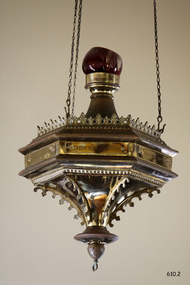
Functional object - Sanctuary Lamp, ca. 1944
... The Guild continued its work until the 1960s. ...The Guild continued its work until the 1960s. ...The sanctuary lamp was part of the original furnishings of St Nicholas Seamen's Church, Williamstown, Victoria. The church was operated by the Missions to Seamen organisation. The lamp was donated by Miss C. Roberts to St Nicholas Seamen's Church, Williamstown, as a memorial to Edward Roberts, who passed away on August 7th, 1905, as stated on the plaque. THE MISSIONS TO SEAMEN (Brief History): - The Missions to Seamen was an Anglican charity in Great Britain that has served the world's seafarers since 1856. Its symbol is a Flying Angel, inspired by a Bible verse. Today, there are centres in over 200 ports worldwide where seamen of all backgrounds are offered a warm welcome and provided with a wide range of facilities. In Victoria, the organisation began in Williamstown in 1857 as a Sailors’ Church, also known as ‘Bethel’ or the ‘Floating Church’ in an old hulk floating in Hobson’s Bay, Port of Melbourne. It soon became part of the Missions to Seamen, Victoria. In 2000, the organisation, now named Mission to Seafarers, still operated locally in Melbourne, Portland, Geelong and Hastings. The Ladies’ Harbour Lights Guild was formed in 1906 to support the Missions to Seamen in Melbourne and other centres, such as Williamstown. Two of the most significant ladies of the Guild were founder Ethel Augusta Godfrey and foundation member Alice Sibthorpe Tracy (who established a branch of the Guild in Warrnambool in 1920). The Guild continued its work until the 1960s. In 1943, a former Williamstown bank was purchased for the Missions to Seamen Club. The chapel was named St Nicholas’ Seamen’s Church and was supported by the Ladies’ Harbour Lights Guild, the Williamstown Lightkeepers’ Auxiliary and the League of Soldiers’ and Sailors’ Friends. It ceased operation in 1966. A Missions to Seamen Chapel and Recreation Room was a significant feature of ports during the late 1800s and 1900s. It seemed appropriate for Flagstaff Hill to include such a representation within the new Maritime Village, and the Melbourne Board of Management of Missions to Seamen Victoria gave its permission on 21st May 1979 for the entire furnishings of the Williamstown chapel to be transferred to Flagstaff Hill. The St Nicholas Seamen’s Church was officially opened on October 11, 1981, and resembles the Williamstown chapel. The lamp is socially significant as a lasting memorial to Edward Roberts. It is also significant historically for its origin in the St Nicholas Mission to Seamen's Church in Williamstown, established in 1857 to cater for the physical, social, and spiritual needs of seafarers. It originated in Bristol, England when a Seamen's Mission was formed in 1837. The lamp is historically significant for its connection to the Ladies Lightkeepers’ Auxiliary, an organisation of women formed to support seafarers. The connection of this lamp to the Mission to Seamen highlights the strong community awareness of the life of people at sea, their dangers and hardships, and their need for physical, financial, spiritual and moral support. Sanctuary Lamp, a brass six-sided lamp supported by three chains to a main disc, with a single chain above. Base ring. Ruby glass bowl on top. Inscribed glass plates on the sides. The lamp bowl is lit by an electric lamp. Made in England. It is now part of the St. Nicholas Seamen's Church Collection. Marked on plates "In Loving Memory of Edward Roberts who passed away 7 August 1905 Nearer My God To Thee"flagstaff hill, warrnambool, shipwrecked coast, flagstaff hill maritime museum, maritime museum, shipwreck coast, flagstaff hill maritime village, great ocean road, religion, religious service, sailors rest, bethel sailors’ church, bethel floating church, ladies harbour light guild, harbor lights guild, joy club for fighters, ladies lightkeepers’ auxiliary, missions to seamen victoria, mission to seafarers, flying angel’s club, st nicholas seamen’s church williamstown, st nicholas mission to seamen church williamstown, mission to seamen williamstown, st nicholas seamen’s church flagstaff hill, 139 nelson place williamstown, sanctuary lamp, electric lamp, church lighting, pendant lamp, edward roberts, memorial plaque, 7-08-1905, c. roberts -
 Flagstaff Hill Maritime Museum and Village
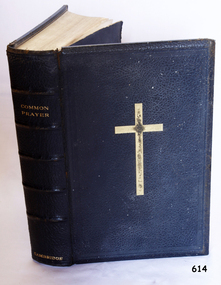
Book - Religious Book, Cambridge University Press, The Book of Common Prayer, 1952-1953
... The Guild continued its work until the 1960s. ...The Guild continued its work until the 1960s. ...Book, titled The Book of Common Prayer. It has a textured black leather cover with embossed lettering on the spine and an embossed gold cross on the front cover. The spine is decorated with horizontal ribs. The fly page has a printed red shield with animal figures in each quadrant and a cross in the shield's centre. The book was printed by Cambridge University Press. Inscriptions and the emblem of a large cross are inlaid in gold on the cover. The edges of the 591 pages are gold leaf. There is an inscription on the inside of the front cover. The book was dedicated to John Thomas and Rev A Gurney Goldsmith. The book is one of forty-eight similar books in the St Nicholas Seamen’s Church Collection.flagstaff hill maritime museum and village, flagstaff hill, warrnambool, maritime museum, maritime village, shipwreck coast, great ocean road, religion, religious service, prayer book, the book of common prayer, cambridge university, john thomas, rev a gurney goldsmith, book 47 -
 Flagstaff Hill Maritime Museum and Village
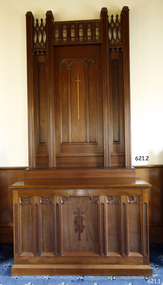
Furniture - Altar and Reredos, Hadwen and Houghton, ca 1944
... The Guild continued its work until the 1960s. ...The Guild continued its work until the 1960s. ...This altar and rear reredos were part of the original furnishings of the St Nicholas' Mission to Seamen's Church at 139 Nelson Place, Williamstown, Victoria. The Mission to Seamen organisation operated the Church. The reredos was donated to the Williamstown chapel by Miss. M. Breaks, in memoriam Miss. L.A. Breaks, who served a very active part in the Seamen's Mission, and the altar was donated by Mrs and Miss J R Schutt. THE MISSIONS TO SEAMEN (Brief History): - The Missions to Seamen was an Anglican charity in Great Britain that has served the world's seafarers since 1856. Its symbol is a Flying Angel, inspired by a Bible verse. Today, there are centres in over 200 ports worldwide where seamen of all backgrounds are offered a warm welcome and provided with a wide range of facilities. In Victoria, the organisation began in Williamstown in 1857 as a Sailors’ Church, also known as ‘Bethel’ or the ‘Floating Church’ in an old hulk floating in Hobson’s Bay, Port of Melbourne. It soon became part of the Missions to Seamen, Victoria. In 2000, the organisation, now named Mission to Seafarers, still operated locally in Melbourne, Portland, Geelong and Hastings. The Ladies’ Harbour Lights Guild was formed in 1906 to support the Missions to Seamen in Melbourne and other centres, such as Williamstown. Two of the most significant ladies of the Guild were founder Ethel Augusta Godfrey and foundation member Alice Sibthorpe Tracy (who established a branch of the Guild in Warrnambool in 1920). The Guild continued its work until the 1960s. In 1943, a former Williamstown bank was purchased for the Missions to Seamen Club. The chapel was named St Nicholas’ Seamen’s Church and was supported by the Ladies’ Harbour Lights Guild, the Williamstown Lightkeepers’ Auxiliary and the League of Soldiers’ and Sailors’ Friends. It ceased operation in 1966. A Missions to Seamen Chapel and Recreation Room was a significant feature of ports during the late 1800s and 1900s. It seemed appropriate for Flagstaff Hill to include such a representation within the new Maritime Village, and the Melbourne Board of Management of Missions to Seamen Victoria gave its permission on 21st May 1979 for the entire furnishings of the Williamstown chapel to be transferred to Flagstaff Hill. The St Nicholas Seamen’s Church was officially opened on October 11, 1981, and resembles the Williamstown chapel.This altar and reredos are significant historically for its origin in the St Nicholas Mission to Seamen's Church in Williamstown, established in 1857 to cater for the physical, social, and spiritual needs of seafarers. It originated in Bristol, England when a Seamen's Mission was formed in 1837. They are historically significant for their connection to the Ladies Lightkeepers’ Auxiliary, an organisation of women, formed to support seafarers. The connection of this furniture to the Mission to Seamen and to the Ladies Lightkeepers’ Auxiliary highlights the strong community awareness of the life of people at sea, their dangers and hardships, and their need for physical, financial, spiritual and moral support. Altar and reredos or altar panel, wooden. The timber is panelled, stained and has a varnished finish. The base has a detachable vertical panel with the decoration of a sword and two anchors, the reredos has a cross on a panel. It was made by Hadwen and Houghton, Malvern, Victoria. A plaque at the bottom right edge is marked with the maker's name. The altar is part of the St Nicholas Seamen's Church collection.On removable panel; logo of [sword and two anchors] On bottom right of base: "Hadwen and Houghton, Malvern"flagstaff hill maritime museum and village, flagstaff hill, warrnambool, maritime museum, maritime village, shipwreck coast, great ocean road, religion, religious service, st nicholas seamen’s church, williamstown, missions to seamen victoria, altar, reredos, church furniture, religious furniture, miss m breaks, miss l a breaks, worship service, mrs and miss j.r. schutt -
 Flagstaff Hill Maritime Museum and Village
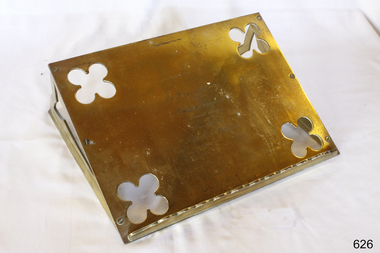
Functional object - Table-top Missal stand, after 1938
... The Guild continued its work until the 1960s. ...The Guild continued its work until the 1960s. ...This decorative brass table-top Missal stand was presented to the Missions to Seamen in Williamstown in memory of Richard Hodgkiss, after his death on December 14th 1938, by Mrs M A Hodgkiss. Decorative book rests like this one were used to support the Bible during services at the Williamstown Missions to Seamen and is now part of the St. Nicholas Seamen's Church Collection. THE MISSIONS TO SEAMEN (Brief History): - The Missions to Seamen was an Anglican charity in Great Britain that has served the world's seafarers since 1856. Its symbol is a Flying Angel, inspired by a Bible verse. Today, there are centres in over 200 ports worldwide where seamen of all backgrounds are offered a warm welcome and provided with a wide range of facilities. In Victoria, the organisation began in Williamstown in 1857 as a Sailors’ Church, also known as ‘Bethel’ or the ‘Floating Church’ in an old hulk floating in Hobson’s Bay, Port of Melbourne. It soon became part of the Missions to Seamen, Victoria. In the year 2000, the organisation, now named Mission to Seafarers, still operated locally in Melbourne, Portland, Geelong and Hastings. The Ladies’ Harbour Lights Guild was formed in 1906 to support the Missions to Seamen in Melbourne and other centres, such as Williamstown. Two of the most significant ladies of the Guild were founder Ethel Augusta Godfrey and foundation member Alice Sibthorpe Tracy (who established a branch of the Guild in Warrnambool in 1920). The Guild continued its work until the 1960s. In 1943, a former Williamstown bank was purchased for the Missions to Seaman Club. The chapel was named St Nicholas’ Seamen’s Church and was supported by the Ladies’ Harbour Lights Guild, the Williamstown Lightkeepers’ Auxiliary and the League of Soldiers’ and Sailors’ Friends. It ceased operation in 1966. A Missions to Seamen Chapel and Recreation Room was a significant feature of ports during the late 1800s and into the 1900s. It seemed appropriate for Flagstaff Hill to include such a representation within the new Maritime Village, so the Melbourne Board of Management of Missions to Seamen Victoria gave its permission on 21st May 1979 for the entire furnishings of the Williamstown chapel to be transferred to Flagstaff Hill. The St Nicholas Seamen’s Church was officially opened on October 11, 1981, and closely resembles the Williamstown chapel.This table-top Missal stand is historically significant for its origin in the St Nicholas Mission to Seamen's Church in Williamstown, established in 1857 to cater for the physical, social, and spiritual needs of seafarers. It originated in Bristol, England, when a Seamen's Mission was formed in 1837. It is socially important for its connection to the Williamstown St. Nicholas Seamen's church as it was dedicated to a family member.Table-top Missal stand, also called a Bible rest, book rest or table top stand: brass, rectangular surface with clover motifs holes in each corner. The triangular leg frames are screwed beneath the short sides to create a slope. The lower edge has a vertical, decorative shelf. The inscription on the top surface dedicates the book stand to Richard Hodgkiss, 1938. This book stand is part of the St. Nicholas Seamen's Church Collection. "In Loving Memory of Richard Hodgkiss - passed away 14 12 38. Presented by Mrs M A Hodgkiss."flagstaff hill, warrnambool, shipwrecked coast, flagstaff hill maritime museum, maritime museum, shipwreck coast, flagstaff hill maritime village, great ocean road, religious service, missions to seamen victoria, st nicholas seaman’s church williamstown, church furniture, religious worship, bible rest, tabletop lectern, bible reading, preaching accessory, book rest, memorial object, m a hodgkiss, richard hodgkiss, missel table book stand, book stand, bible stand, table-top stand, table-top book rest, table-top missal stand, missal desk -
 Flagstaff Hill Maritime Museum and Village
Badge - Religious Book, The Book of Common Prayer, 1928-1944
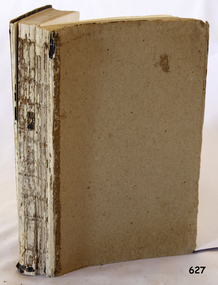
... The Guild continued its work until the 1960s. ...The Guild continued its work until the 1960s. ...Prayer book, cardboard front cover, textured black cover, rice paper pages with gold leaf edges. "The Book of Common Prayer with the additions and deviations proposed in 1928".There is an image on the fly page. Published in Oxford at the University Press London. The book was owned by Florence Harrison. The book is now part of the St Nicholas Seamen's Church Collection. flagstaff hill maritime museum and village, flagstaff hill, warrnambool, maritime museum, maritime village, shipwreck coast, great ocean road, religion, religious service, st nicholas seamen’s church, williamstown, missions to seamen victoria, prayer book, the book of common prayer, oxford university press, florence harrison, church service -
 Flagstaff Hill Maritime Museum and Village
Book - Religious Book, William Clowes & Sons, Limited, "Hymns, Ancient and Modern Standard Edition", Mid-20th century
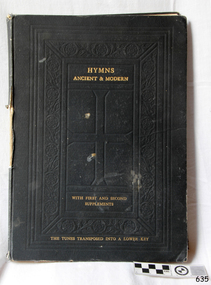
... The Guild continued its work until the 1960s. ...The Guild continued its work until the 1960s. ...This hymn book was part of the services held at the St Nicholas' Mission to Seamen's Church at 139 Nelson Place, Williamstown, Victoria. The Church was operated by the Mission to Seamen organisation. THE MISSIONS TO SEAMEN (Brief History: for more, see our Reg. No. 611, Set of Pews) The Missions to Seamen, an Anglican charity, has served seafarers of the world since 1856 in Great Britain. It symbol is a Flying Angel, inspired by a Bible verse. Today there are centr4es in over 200 ports world-wide where seamen of all backgrounds are offered a warm welcome and provided with a wide range of facilities. In Victoria the orgainsation began in Williamstown in 1857. It was as a Sailors’ Church, also known as ‘Bethel’ or the ‘Floating Church’. Its location was an old hulk floating in Hobson’s Bay, Port of Melbourne. It soon became part of the Missions to Seamen, Victoria. In the year 2000 the organisation, now named Mission to Seafarers, still operated locally in Melbourne, Portland, Geelong and Hastings. The Ladies’ Harbour Lights Guild was formed in 1906 to support the Missions to Seamen in Melbourne and other centres such as Williamstown. Two of the most significant ladies of the Guild were founder Ethel Augusta Godfrey and foundation member Alice Sibthorpe Tracy (who established a branch of the Guild in Warrnambool in 1920). The Guild continued its work until the 1960s. In 1943 a former Williamstown bank was purchased for the Missions to Seaman Club. The chapel was named St Nicholas’ Seamen’s Church and was supported by the Ladies’ Harbour Lights Guild, the Williamstown Lightkeepers’ Auxiliary and the League of Soldiers’ and Sailors’ Friends. It ceased operation in 1966. A Missions to Seamen Chapel and Recreation Room was a significant feature of ports during the late 1800s and into the 1900s. It seemed appropriate for Flagstaff Hill to include such a representation within the new Maritime Village, so the Melbourne Board of Management of Missions to Seamen Victoria gave its permission on 21st May 1979 for the entire furnishings of the Williamstown chapel to be transferred to Flagstaff Hill. The St Nicholas Seamen’s Church was officially opened on October 11, 1981 and closely resembles the Williamstown chapel. This hymn book is significant historically for its origin in the St Nicholas Mission to Seamen's Church in Williamstown, established in 1857 to cater for the physical, social, and spiritual needs of seafarers. It originated in Bristol, England when a Seamen's Mission was formed in 1837. The item is historically significant for its connection to the Ladies Lightkeepers’ Auxiliary, an organisation of women, formed to support seafarers. Title "Hymns, Ancient and Modern Standard Edition", Dark cloth-covered cover featuring floral inlay decoration and gold leaf lettering. Stamped inside "From the Missions to Seamen, Williamstown, Melbourne." Publisher William Clowes and Sons Ltd London. This is one of the original items in our ‘St Nicholas Seamen's Church Williamstown Collection’.Stamped inside "From the Missions to Seamen, Williamstown, Melbourne."flagstaff hill, warrnambool, shipwrecked-coast, flagstaff-hill, flagstaff-hill-maritime-museum, maritime-museum, shipwreck-coast, flagstaff-hill-maritime-village, hymns, ancient and modern standard edition, book, st nicholas seamen's church williamstown collection, hymn book, religious service, religion, sailors rest, bethel sailors’ church, bethel floating church, ladies harbour light guild, harbor lights guild, joy club for fighters, ladies lightkeepers’ auxiliary, missions to seamen victoria, mission to seafarers, flying angel’s club, st nicholas seaman’s church williamstown, st nicholas mission to seamen church williamstown, mission to seamen williamstown, st nicholas seamen’s church flagstaff hill, 139 nelson place williamstown, worship, praise, hymns ancient and modern -
 Flagstaff Hill Maritime Museum and Village
Furniture - Credence Table, c. 1944
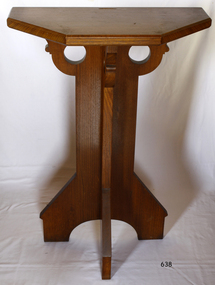
... The Guild continued its work until the 1960s. ...The Guild continued its work until the 1960s. ...Mrs F Clark donated this Credence Table to the original St Nicholas Seamen's Church, Williamstown, Victoria, operated by the Missions to Seamen organisation. The oak table is decorated with Gothic trefoils and shaped to fit against the Sanctuary wall. Its purpose is to hold the Eucarist plate and chalice for the Holy Communion service of the Anglican Church. THE MISSIONS TO SEAMEN (Brief History): - The Missions to Seamen was an Anglican charity in Great Britain that has served the world's seafarers since 1856. Its symbol is a Flying Angel, inspired by a Bible verse. Today, there are centres in over 200 ports worldwide where seamen of all backgrounds are offered a warm welcome and provided with a wide range of facilities. In Victoria, the organisation began in Williamstown in 1857 as a Sailors’ Church, also known as ‘Bethel’ or the ‘Floating Church’ in an old hulk floating in Hobson’s Bay, Port of Melbourne. It soon became part of the Missions to Seamen, Victoria. In the year 2000, the organisation, now named Mission to Seafarers, still operated locally in Melbourne, Portland, Geelong and Hastings. The Ladies’ Harbour Lights Guild was formed in 1906 to support the Missions to Seamen in Melbourne and other centres, such as Williamstown. Two of the most significant ladies of the Guild were founder Ethel Augusta Godfrey and foundation member Alice Sibthorpe Tracy (who established a branch of the Guild in Warrnambool in 1920). The Guild continued its work until the 1960s. In 1943, a former Williamstown bank was purchased for the Missions to Seaman Club. The chapel was named St Nicholas’ Seamen’s Church and was supported by the Ladies’ Harbour Lights Guild, the Williamstown Lightkeepers’ Auxiliary and the League of Soldiers’ and Sailors’ Friends. It ceased operation in 1966. A Missions to Seamen Chapel and Recreation Room was a significant feature of ports during the late 1800s and into the 1900s. It seemed appropriate for Flagstaff Hill to include such a representation within the new Maritime Village, so the Melbourne Board of Management of Missions to Seamen Victoria gave its permission on 21st May 1979 for the entire furnishings of the Williamstown chapel to be transferred to Flagstaff Hill. The St Nicholas Seamen’s Church was officially opened on October 11, 1981, and closely resembles the Williamstown chapel. This Chrdence table is historically significant for its origin in the St Nicholas Mission to Seamen's Church in Williamstown, established in 1857 to cater for seafarers’ physical, social, and spiritual needs. The organisation originated in Bristol, England, when a Seamen's Mission was formed in 1837. It is also significant for its connection with the church Eucharist service still being performed in the Anglican church as part of its traditional worship.Credence table; traditional design in timber. The solid oak pedestal is shaped like half an octagon with the long side fitting against a flat, vertical surface. The column support has decorative Gothic trefoil cut-away holes. This item is part of the St. Nicholas Seamen's Church Collection. flagstaff hill, warrnambool, religious service, missions to seamen victoria, church furniture, religious worship, pedestal, book rest, book stand, bible rest, church service, shipwrecked coast, flagstaff hill maritime museum, maritime museum, shipwreck coast, flagstaff hill maritime village, great ocean road, credence table, pentagonal table, half-table, eucarist, holy communion, anglican church, communion service, tradition, ritual, worship, mrs f clark, ecclesiastical furniture, side table, small table -
 Flagstaff Hill Maritime Museum and Village
Painting - Religious Portrait, P Butcher, artist, The Infant Samuel, ca. 1943
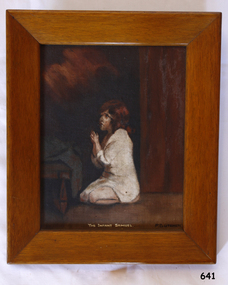
... The Guild continued its work until the 1960s. ...The Guild continued its work until the 1960s. ...This painting was part of the original furnishings of the St Nicholas' Mission to Seamen's Church at 139 Nelson Place, Williamstown, Victoria. The Church was operated by the Mission to Seamen organisation. It was donated to the Church by the Williamstown Lightkeepers' Auxiliary. THE MISSIONS TO SEAMEN (Brief History: for more, see our Reg. No. 611, Set of Pews) The Missions to Seamen was an Anglican charity that served seafarers of the world since 1856 in Great Britain. It symbol is a Flying Angel, inspired by a Bible verse. Today there are centres in over 200 ports worldwide where seamen of all backgrounds are offered a warm welcome and provided with a wide range of facilities. In Victoria, the organisation began in Williamstown in 1857 as a Sailors’ Church, also known as ‘Bethel’ or the ‘Floating Church’ in an old hulk floating in Hobson’s Bay, Port of Melbourne. It soon became part of the Missions to Seamen, Victoria. In the year 2000 the organisation, now named Mission to Seafarers, still operated locally in Melbourne, Portland, Geelong and Hastings. The Ladies’ Harbour Lights Guild was formed in 1906 to support the Missions to Seamen in Melbourne and other centres such as Williamstown. Two of the most significant ladies of the Guild were founder Ethel Augusta Godfrey and foundation member Alice Sibthorpe Tracy (who established a branch of the Guild in Warrnambool in 1920). The Guild continued its work until the 1960s. In 1943 a former Williamstown bank was purchased for the Missions to Seaman Club. The chapel was named St Nicholas’ Seamen’s Church and was supported by the Ladies’ Harbour Lights Guild, the Williamstown Lightkeepers’ Auxiliary and the League of Soldiers’ and Sailors’ Friends. It ceased operation in 1966. A Missions to Seamen Chapel and Recreation Room was a significant feature of ports during the late 1800s and into the 1900s. It seemed appropriate for Flagstaff Hill to include such a representation within the new Maritime Village, so the Melbourne Board of Management of Missions to Seamen Victoria gave its permission on 21st May 1979 for the entire furnishings of the Williamstown chapel to be transferred to Flagstaff Hill. The St Nicholas Seamen’s Church was officially opened on October 11, 1981, and closely resembles the Williamstown chapel. This painting is significant historically for its origin in the St Nicholas Mission to Seamen's Church in Williamstown, established in 1857 to cater for the physical, social, and spiritual needs of seafarers. It originated in Bristol, England when a Seamen's Mission was formed in 1837. The painting is historically significant for its connection to the Williamstown Lightkeepers’ Auxiliary, an organisation of women, formed to support seafarers. The connection of this painting to the Mission to Seamen and to the Ladies Lightkeepers’ Auxiliary highlights the strong community awareness of the life of people at sea, their dangers and hardships, and their need for physical, financial, spiritual and moral support. Painting, oil on board, behind glass framed with wood. Portrait of a child dressed in white, kneeling in prayer, within a dark room. The artist, P Butcher, titled the picture "The Infant Samuel". This object is part of the St Nicholas Seamen's Church Collection.Painted at centre bottom edge "THE INFANT SAMUEL.", and right bottom edge "B. BUTCHER"flagstaff hill maritime museum and village, flagstaff hill, warrnambool, maritime museum, maritime village, shipwreck coast, great ocean road, religion, religious service, st nicholas seamen’s church, williamstown, missions to seamen victoria, painting, oil painting, religious painting, infant samuel, p butcher, religious worship, worship service, mission to seafarers, st nicholas missions to seamen’s church williamstown, missions to seamen, st nicholas missions to seamen’s church flagstaff hill, 139 nelson place williamstown, anglican church, church furnishings, religious furnishings -
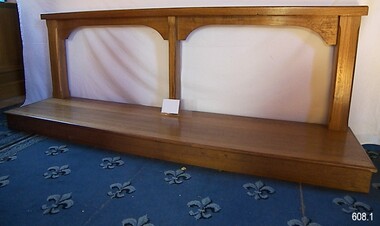 Flagstaff Hill Maritime Museum and Village
Furniture - Rail and Base, circa 1944
... The Guild continued its work until the 1960s. ...The Guild continued its work until the 1960s. ...This pair of kneeling rails was part of the original furnishings of the St Nicholas' Mission to Seamen's Church at 139 Nelson Place, Williamstown, Victoria. A kneeling rail is part of the furniture of a church and is used during religious prayer, assisting the person to be in the position of kneeling. A padded kneeling mat or cushion would also be provided for comfort. THE MISSIONS TO SEAMEN (Brief History): - The Missions to Seamen was an Anglican charity in Great Britain that has served the world's seafarers since 1856. Its symbol is a Flying Angel, inspired by a Bible verse. Today, there are centres in over 200 ports worldwide where seamen of all backgrounds are offered a warm welcome and provided with a wide range of facilities. In Victoria, the organisation began in Williamstown in 1857 as a Sailors’ Church, also known as ‘Bethel’ or the ‘Floating Church’ in an old hulk floating in Hobson’s Bay, Port of Melbourne. It soon became part of the Missions to Seamen, Victoria. In 2000, the organisation, now named Mission to Seafarers, still operated locally in Melbourne, Portland, Geelong and Hastings. The Ladies’ Harbour Lights Guild was formed in 1906 to support the Missions to Seamen in Melbourne and other centres, such as Williamstown. Two of the most significant ladies of the Guild were founder Ethel Augusta Godfrey and foundation member Alice Sibthorpe Tracy (who established a branch of the Guild in Warrnambool in 1920). The Guild continued its work until the 1960s. In 1943, a former Williamstown bank was purchased for the Missions to Seamen Club. The chapel was named St Nicholas’ Seamen’s Church and was supported by the Ladies’ Harbour Lights Guild, the Williamstown Lightkeepers’ Auxiliary and the League of Soldiers’ and Sailors’ Friends. It ceased operation in 1966. A Missions to Seamen Chapel and Recreation Room was a significant feature of ports during the late 1800s and 1900s. It seemed appropriate for Flagstaff Hill to include such a representation within the new Maritime Village, and the Melbourne Board of Management of Missions to Seamen Victoria gave its permission on 21st May 1979 for the entire furnishings of the Williamstown chapel to be transferred to Flagstaff Hill. The St Nicholas Seamen’s Church was officially opened on October 11, 1981, and resembles the Williamstown chapel. This pair of kneeling rails is significant through its association with the St Nicholas' Mission to Seamen Church in Williamstown, Melbourne, established in 1857. The items in our collection from the Missions to Seamen in Williamstown, Victoria, have historical and social significance. They show that people of the 1800s and 1900s cared about the seafarers’ religious, moral, and social welfare, no matter what the religion, social status or nationality. It had its origins in Bristol, England when a Seamen's Mission was formed in 1837. The first Australian branch was started in 1856 by the Rev. Kerr Johnston, a Church of England clergyman, and operated from a hulk moored in Hobson’s Bay; later the Mission occupied buildings in Williamstown and Port Melbourne. Rail and base; one of a pair of two kneeling rails. Three varnished wood pillars and a cap rail, mounted on a rectangular box-shaped base: a kneeling rail used in religious worship. These are part of the St Nicholas Seamen's Church Williamstown Collection.flagstaff hill, warrnambool, shipwrecked-coast, flagstaff-hill, flagstaff-hill-maritime-museum, maritime-museum, shipwreck-coast, flagstaff-hill-maritime-village, rail for kneeling, rail, kneeling rail, religion, religious service, sailors rest, bethel sailors’ church, bethel floating church, ladies harbour light guild, missions to seamen victoria, mission to seafarers, st nicholas seaman’s church williamstown, st nicholas mission to seamen church williamstown, mission to seamen williamstown, st nicholas seamen’s church flagstaff hill, 139 nelson place williamstown, church furniture, religious furniture, religious worship, flying angel club, altar rail, kneeler, prayer, ceremonial furniture -
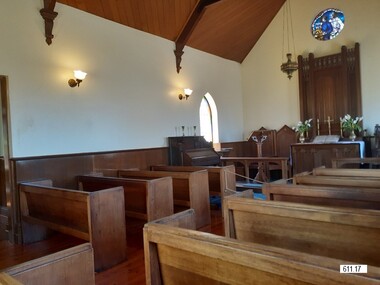 Flagstaff Hill Maritime Museum and Village
Furniture - Set of Pews, c.1944
... The Guild continued its work until the 1960s. ...The Guild continued its work until the 1960s. ...This set of seventeen church pews was originally used in St. Nicholas Seamen’s Church, 139 Nelson Place, Williamstown, Victoria, during religious services operated by the Missions to Seamen organisation. The pews were donated to the St Nicholas Seamen’s Church by the Williamstown Lightkeepers’ Auxiliary, founded by Ethel Margaret Musther, M.B.E.. THE MISSIONS TO SEAMEN (Brief History): - The Missions to Seamen was an Anglican charity in Great Britain that has served the world's seafarers since 1856. Its symbol is a Flying Angel, inspired by a Bible verse. Today, there are centres in over 200 ports worldwide where seamen of all backgrounds are offered a warm welcome and provided with a wide range of facilities. In Victoria, the organisation began in Williamstown in 1857 as a Sailors’ Church, also known as ‘Bethel’ or the ‘Floating Church’ in an old hulk floating in Hobson’s Bay, Port of Melbourne. It soon became part of the Missions to Seamen, Victoria. In 2000, the organisation, now named Mission to Seafarers, still operated locally in Melbourne, Portland, Geelong and Hastings. The Ladies’ Harbour Lights Guild was formed in 1906 to support the Missions to Seamen in Melbourne and other centres, such as Williamstown. Two of the most significant ladies of the Guild were founder Ethel Augusta Godfrey and foundation member Alice Sibthorpe Tracy (who established a branch of the Guild in Warrnambool in 1920). The Guild continued its work until the 1960s. In 1943, a former Williamstown bank was purchased for the Missions to Seamen Club. The chapel was named St Nicholas’ Seamen’s Church and was supported by the Ladies’ Harbour Lights Guild, the Williamstown Lightkeepers’ Auxiliary and the League of Soldiers’ and Sailors’ Friends. It ceased operation in 1966. A Missions to Seamen Chapel and Recreation Room was a significant feature of ports during the late 1800s and 1900s. It seemed appropriate for Flagstaff Hill to include such a representation within the new Maritime Village, and the Melbourne Board of Management of Missions to Seamen Victoria gave its permission on 21st May 1979 for the entire furnishings of the Williamstown chapel to be transferred to Flagstaff Hill. The St Nicholas Seamen’s Church was officially opened on October 11, 1981, and resembles the Williamstown chapel. The set of pews is significant historically for its origin in the St Nicholas Mission to Seamen's Church in Williamstown, established in 1857 to cater for the physical, social, and spiritual needs of seafarers. It originated in Bristol, England when a Seamen's Mission was formed in 1837. The set of pews id historically significant for their connection to the Ladies Lightkeepers’ Auxiliary, an organisation of women, formed to support seafarers. The connection of these pews to the Mission to Seamen and to the Williamstown Lightkeepers’ Auxiliary highlights the strong community awareness of the life of people at sea, their dangers and hardships, and their need for physical, financial, spiritual and moral support. Set of seventeen varnished oak wood church high back pews. The pews have a shelf fitted behind the backrest. This is a set of original items in our ‘St Nicholas Seamen's Church Williamstown Collection’.flagstaff hill, warrnambool, shipwrecked coast, flagstaff hill maritime museum, maritime museum, shipwreck coast, flagstaff hill maritime village, great ocean road, religion, religious service, lightkeepers’ auxiliary, mrs musther, missions to seamen victoria, mission to seafarers, flying angel’s club, st nicholas seaman’s church williamstown, st nicholas mission to seamen church williamstown, mission to seamen williamstown, st nicholas seamen’s church flagstaff hill, 139 nelson place williamstown, church furniture, church seats, church pew, religious furniture, religious worship, anglican church -
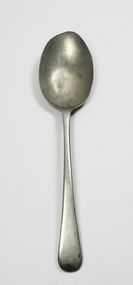 Mission to Seafarers Victoria
Domestic object - Spoon, Mid 20th
... Possible remnant of the dinner equipment used at mealtimes for seafarers at the Mission to Seafarers during the first half of the 20th C. and hosted and prepared by Ladies Harbour Light Guild members. Found early 21st C amongst several examples in a box of miscellaneous items labelled Ladies Harbour Lights....Possible remnant of the dinner equipment used at mealtimes for seafarers at the Mission to Seafarers during the first half of the 20th C. and hosted and prepared by Ladies Harbour Light Guild members. Found early 21st C amongst several examples in a box of miscellaneous items labelled Ladies Harbour Lights. ...Possible remnant of the dinner equipment used at mealtimes for seafarers at the Mission to Seafarers during the first half of the 20th C. and hosted and prepared by Ladies Harbour Light Guild members. Found early 21st C amongst several examples in a box of miscellaneous items labelled Ladies Harbour Lights.See images this collection for examples of mealtimes at the MTS hosted by the LHLG.Deep bowled plain metal spoon Makers mark on underside of handlemeals, lhlg -
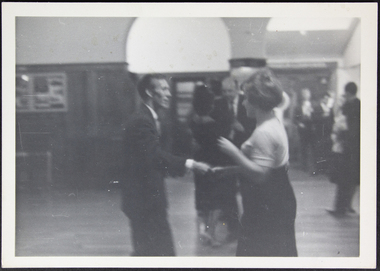 Mission to Seafarers Victoria
Photograph - Photograph, Black and white, Bill Doyle (Reverend C.J. Eldridge-Doyle), c. 1955
... The dance shown here is an example of the work of the Ladies Harbour Lights Guild, which held fundfraisers and social events at the Mission....The dance shown here is an example of the work of the Ladies Harbour Lights Guild, which held fundfraisers and social events at the Mission. ...The image shows us one of the many dances, or functions, held at the Mission to Seafarers Melbourne, It shows the main hall in its original condition and the way it was used at the time. The dance shown here is an example of the work of the Ladies Harbour Lights Guild, which held fundfraisers and social events at the Mission.This photograph is a reflection of the main hall, in original condition, and its use circa mid-1950s. The photograph is of historical significance as it is a documentation of one of many social events held by the Ladies Harbour Lights Guild at the Mission to SeafarersBlack and white photograph of a dance held in the Mission to Seafarers main hall. The foreground shows A man to the left and a woman to the right dancing together. There is another couple dancing behind them. The background shows two of the archways leading out of the main hall. The floors are the original hardwood floorboards.dance, lhlg, flying angel club, seamen, flinders street -
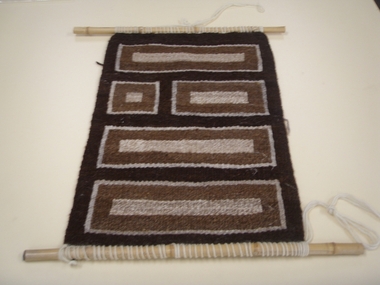 National Wool Museum
Wall Hanging, Lilian Joyce Mann
... She was a gounding and life member of the Geelong Handweavers and Spinners Guild. She died on the 17th July 2007 in her 92nd year....She was a gounding and life member of the Geelong Handweavers and Spinners Guild. She died on the 17th July 2007 in her 92nd year. ...The hanging was handwoven by Lilian Joyce Mann. Ms Mann owned a shop in Jacob Street which sold handmade soft toys and hand woven items. She was a gounding and life member of the Geelong Handweavers and Spinners Guild. She died on the 17th July 2007 in her 92nd year.A tightly woven brown wall handing with a geometric design of rectangles and squares and a bamboo rod at each end. There is a length of undyed wool on each rod to hand the piece, but on one end it had been cut and hangs loose.handicrafts, geelong handweavers and spinners guild inc., weaving, mann, ms lilian joyce, geelong, victoria -
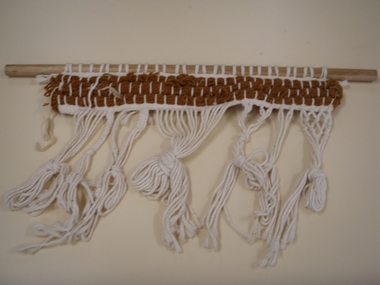 National Wool Museum
Wall Hanging
... She was a founding and life member of the Geelong Handweavers and Spinners Guild. She died in the 17th July 2007 in her 92nd year....Handicrafts Geelong Handweavers and Spinners Guild Inc. Weaving Mann Ms Lilian Joyce W7222 Wall Hanging ...The hanging was handwoven by Lilian Joyce Mann. Ms Mann owned a shop in Jacob Street which sold handmade soft toys and hand woven items. She was a founding and life member of the Geelong Handweavers and Spinners Guild. She died in the 17th July 2007 in her 92nd year.W7222handicrafts, geelong handweavers and spinners guild inc., weaving, mann, ms lilian joyce -
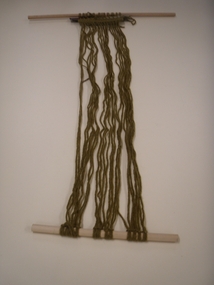 National Wool Museum
Wall Hanging
... She was a founding and life member of the Geelong Handweavers and Spinners Guild. She died on the 17th July 2007 in her 92nd year....Handicrafts Geelong Handweavers and Spinners Guild Inc. Weaving Mann Ms Lilian Joyce W7223 Wall Hanging ...The hanging was handwoven by Lilian Joyce Mann. Ms Mann owned a shop in Jacob Street which sold handmade soft toys and hand woven items. She was a founding and life member of the Geelong Handweavers and Spinners Guild. She died on the 17th July 2007 in her 92nd year.W7223handicrafts, geelong handweavers and spinners guild inc., weaving, mann, ms lilian joyce -
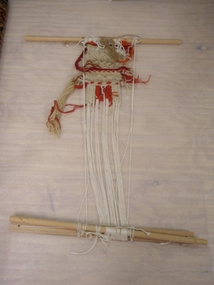 National Wool Museum
Wall Hanging
... She was a founding and life member of the Geelong Handweavers and Spinners Guild. She died on the 17th July 2007 in her 92nd year....Handicrafts Geelong Handweavers and Spinners Guild Inc. Weaving Jehne Ms Roslyn Francine K W7224 Wall Hanging ...The hanging was handwoven by Lilian Joyce Mann. Ms Mann owned a shop in Jacob Street which sold handmade soft toys and hand woven items. She was a founding and life member of the Geelong Handweavers and Spinners Guild. She died on the 17th July 2007 in her 92nd year.W7224Khandicrafts, geelong handweavers and spinners guild inc., weaving, jehne, ms roslyn francine -
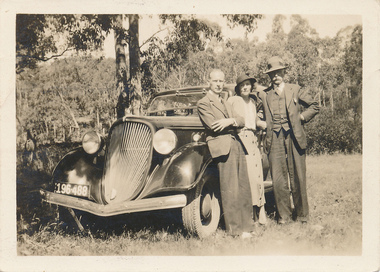 Mission to Seafarers Victoria
Photograph - Gelatin silver photograph, Henry Hall, Olive, David Hood Duncan, c. 1940
... This photograph is part of a donated sub-collection relating to the history of the Ladies Harbour Lights Guild and Olive Hall (nee Duncan) who was a member. ...This photograph is part of a donated sub-collection relating to the history of the Ladies Harbour Lights Guild and Olive Hall (nee Duncan) who was a member. ...This photograph is part of a donated sub-collection relating to the history of the Ladies Harbour Lights Guild and Olive Hall (nee Duncan) who was a member. Olive Duncan was Lillie Duncan young sister. Here she stands next to her husband, David Hall, and her father, David Hood Duncan.This is a photograph of social and historic significance, being part of a sub-collection of material that provides a snapshot of the type of individuals involved in the LHLG and the activities carried out by that organisation. It is also an insight into Olive Hall's (nee Duncan's) personal life as well as the fashion of the period.Small black and white photograph of two men, Henry Hall and David Hood Duncan, and one woman, Olive Hall (nee Duncan) standing in front of a motor car in a bush setting.On the reverse of the photograph in biro is written "Harry Hall and Olive and David Hood Duncan" The marking F 597 is also printed ladies harbour lights guild, olive duncan, olive hall, 20th century, lillie duncan, harry hall, david hood duncan, lhlg, seamen mission -
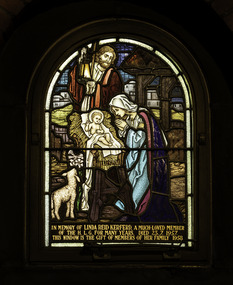 Mission to Seafarers Victoria
Artwork, other - Stained glass window, George H. Dancey, Nativity - In memory of Linda Reid Kerferd, 1958
... Linda Reid Kerferd (born 1875) was a long time member of the Harbour Lights Guild. She died 23 July 1957. Daughter of George B. ...Linda Reid Kerferd (born 1875) was a long time member of the Harbour Lights Guild. She died 23 July 1957. Daughter of George B. ...Linda Reid Kerferd (born 1875) was a long time member of the Harbour Lights Guild. She died 23 July 1957. Daughter of George B. Kerferd and Ann Martindale. The window was taken from an old cartoon drawn up by George H. Dancey and adapted for the opening with a new background.Arch stained glass window depicting the birth of Jesus with a text in memory of Linda KerferdIn memory of Linda Reid Kerferd A much loved member of the H.L.G. for many years Died 23.7.52 This window is the gift of members of her family 1958 st peter chapel, flinders street, mission to seafarers, seamen's mission, mission to seamen, st peter, sailors, seamen, stained glass windows, win, memorial chapel, linda reid kerferd, hlg, harbour lights guild, nativity -
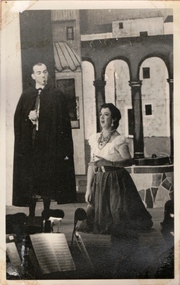 Kew Historical Society Inc
Photograph, The "Q" Theatre Guild, Maritana, 1958
... The "Q" Theatre Guild was formed out of the Kew Light Opera Company in 1957. ...The "Q" Theatre Guild...The "Q" Theatre Guild was formed out of the Kew Light Opera Company in 1957. ...The "Q" Theatre Guild was formed out of the Kew Light Opera Company in 1957. It marked the transition of the company that had initially been directed by Lance Nicholls to one directed by Beatrice Oakley. It continued to perform in the Kew Recreation Hall, but, with its demolition in 1960, and the opening of the new Kew City Hall in Cotham Road, moved its productions to that venue. Productions of the "Q" Theatre Guild included The Geisha (1957), Maritana (1958), They All Do It (1959), Blossom Time (1959), Love's A Luxury (1959), There And Back & The Bohemian Girl (1960), Die Fledermaus (1960), Gay Rosalinda (1961), The Land Of Smiles (1961), Kisses For A Kid & Hansel And Gretel (1961), Die Fledermaus (1962), Monsieur Beaucaire (1964), Macbeath or The Beggar's Opera, and So To Bed.The scrapbook of annotated photographs, programmes, and newspaper reviews of which this item is a part was assembled by Marion Tilley, wardrobe mistress for, and performer in, productions by the Kew Light Opera Company and the "Q" Theatre Guild. It is significant as a remarkably complete document of theatre performances in Kew, Victoria during the 1950s and 1960s. The scrapbook, and the items individually catalogued within it, have artistic and aesthetic significance within the history of performing arts in Victoria in the middle of the 20th Century. They have social significance in that they reveal socio-cultural values and preoccupations during the period. The records also act as a history of arts activities in the Kew Recreation Hall and later in the Kew City Hall as entertainment and community arts and music precincts.Marion Tilley, the creator of the scrapbook, wrote the following underneath the photograph: "Stan Wilson, Carla Jeffries". Tilley also records that: "Carla sang a solo at Joan's Wedding".Marion Tilley, the creator of the scrapbook, wrote the following underneath the photograph: "Carla Jeffries, Stan Wilson - I made the men's and women's costumes including hats".marion tilley, kew recreation hall -- wellington street -- kew (vic.), performing arts -- kew (vic.), theatre memorabilia, "q" theatre guild -
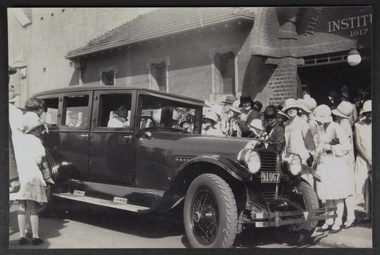 Mission to Seafarers Victoria
Photograph, 14 February 1928
... Wedding of Dora Walker , a member of the Ladies Harbour Lights Guild and Harry Simpson, 14 February 1928...Wedding of Dora Walker , a member of the Ladies Harbour Lights Guild and Harry Simpson, 14 February 1928 Dora Simpson nee Walker was a long time Lady from the Guild becoming the Honorary Secretary and being awarded an Order of the British Empire car entrance wedding lhlg dora walker harry simpson dora simpson 717 flinders street mission to seafarers seamen's mission david simpson 1928 marriages st peter chapel dora simpson nee walker Reserve: manufacturer's inscription: FUJICOLOR CRYSTAL ARCHIVE / PAPER Black and white photograph taken outside the Mission to Seafarer's entrance. ...The photograph depicts how the Mission entry looked at the time the photograph was taken circa 1920s. It shows that the Mission was used for formal occasions as well as showing a car model and clothing styles typical of the era. Wedding of Dora Walker , a member of the Ladies Harbour Lights Guild and Harry Simpson, 14 February 1928Dora Simpson nee Walker was a long time Lady from the Guild becoming the Honorary Secretary and being awarded an Order of the British EmpireBlack and white photograph taken outside the Mission to Seafarer's entrance. The photograph depicts a group of people surrounding a car. The photograph may have been taken at a wedding or similar function due to the formal wear of the mean and women.Reserve: manufacturer's inscription: FUJICOLOR CRYSTAL ARCHIVE / PAPERcar, entrance, wedding, lhlg, dora walker, harry simpson, dora simpson, 717 flinders street, mission to seafarers, seamen's mission, david simpson, 1928, marriages, st peter chapel, dora simpson nee walker -
 Flagstaff Hill Maritime Museum and Village
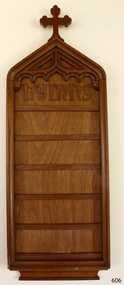
Furniture - Hymn Board, 1944-1966
... The Guild continued its work until the 1960s. ...The Guild continued its work until the 1960s. ...This hymn board is attached to the wall. Numbers referring to the hymn or hymns for the current religious service would have been placed onto the rails and would be visible to the congregation. It is used for showing the hymn number or numbers that will be sung during the service. This hymn board was part of the original furnishings of the St Nicholas' Mission to Seamen's Church at 139 Nelson Place, Williamstown, Victoria. THE MISSIONS TO SEAMEN (Brief History: for more, see our Reg. No. 611, Set of Pews) The Missions to Seamen, an Anglican charity, has served seafarers of the world since 1856 in Great Britain. It symbol is a Flying Angel, inspired by a Bible verse. Today there are centr4es in over 200 ports world-wide where seamen of all backgrounds are offered a warm welcome and provided with a wide range of facilities. In Victoria the orgainsation began in Williamstown in 1857. It was as a Sailors’ Church, also known as ‘Bethel’ or the ‘Floating Church’. Its location was an old hulk floating in Hobson’s Bay, Port of Melbourne. It soon became part of the Missions to Seamen, Victoria. In the year 2000 the organisation, now named Mission to Seafarers, still operated locally in Melbourne, Portland, Geelong and Hastings. The Ladies’ Harbour Lights Guild was formed in 1906 to support the Missions to Seamen in Melbourne and other centres such as Williamstown. Two of the most significant ladies of the Guild were founder Ethel Augusta Godfrey and foundation member Alice Sibthorpe Tracy (who established a branch of the Guild in Warrnambool in 1920). The Guild continued its work until the 1960s. In 1943 a former Williamstown bank was purchased for the Missions to Seaman Club. The chapel was named St Nicholas’ Seamen’s Church and was supported by the Ladies’ Harbour Lights Guild, the Williamstown Lightkeepers’ Auxiliary and the League of Soldiers’ and Sailors’ Friends. It ceased operation in 1966. A Missions to Seamen Chapel and Recreation Room was a significant feature of ports during the late 1800s and into the 1900s. It seemed appropriate for Flagstaff Hill to include such a representation within the new Maritime Village, so the Melbourne Board of Management of Missions to Seamen Victoria gave its permission on 21st May 1979 for the entire furnishings of the Williamstown chapel to be transferred to Flagstaff Hill. The St Nicholas Seamen’s Church was officially opened on October 11, 1981 and closely resembles the Williamstown chapel. This hymn board is significant through its association with the St Nicholas' Mission to Seamen Church in Williamstown, Melbourne, established in 1857. The items in our collection from the Missions to Seamen in Williamstown, Victoria, have historical and social significance. They show that people of the 1800s and 1900s cared about the seafarers’ religious, moral, and social welfare, no matter what the religion, social status or nationality. It had its origins in Bristol, England when a Seamen's Mission was formed in 1837. The first Australian branch was started in 1856 by the Rev. Kerr Johnston, a Church of England clergyman, and operated from a hulk moored in Hobson’s Bay; later the Mission occupied buildings in Williamstown and Port Melbourne. Hymn board; arch-shaped wooden board with relief decorative wood and decorative cross on top of the peak. The word 'hymns' is raised in decorative wood on the top. The board has six rails. This is one of the original items in our ‘St Nicholas Seamen's Church Williamstown Collection’.Carved into the wood "hymns"flagstaff hill, warrnambool, shipwrecked-coast, flagstaff-hill, flagstaff-hill-maritime-museum, maritime-museum, shipwreck-coast, flagstaff-hill-maritime-village, religion, religious service, sailors rest, bethel sailors’ church, bethel floating church, ladies harbour light guild, missions to seamen victoria, mission to seafarers, st nicholas seaman’s church williamstown, st nicholas mission to seamen church williamstown, mission to seamen williamstown, st nicholas seamen’s church flagstaff hill, 139 nelson place williamstown, church furniture, religious furniture, anglican church, flying angel club, hymn board, song board, religious worship, worship service, worship music -
 Flagstaff Hill Maritime Museum and Village
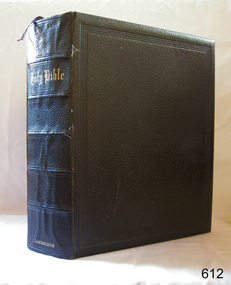
Book - Religious Book, Cambridge University Press, The Holy Bible containing the Old and New Testaments, circa 1942
... The Guild continued its work until the 1960s. ...The Guild continued its work until the 1960s. ...Book with black textured leather cover, ribbed spine, gold embossed letters, and logo on spine. Titled The Holy Bible containing the Old and New Testaments. The inside section has a list of signatures (after page 872). An inscription is written inside the front opening and three pages of inscriptions within the pages. The book was presented by R.J. Ewart in 1942. The book now forms part of the St. Nicholas Seamen's Church Collection. flagstaff hill, warrnambool, shipwrecked-coast, flagstaff-hill, flagstaff-hill-maritime-museum, maritime-museum, shipwreck-coast, flagstaff-hill-maritime-village, the holy bible containing the old and new testaments, book, bible, the bible, r j ewart, cambridge bible, holy bible, st nicholas seamen’s church williamstown, centaur, pembena, jolten, kooringa, niriana, hobart -
 Flagstaff Hill Maritime Museum and Village
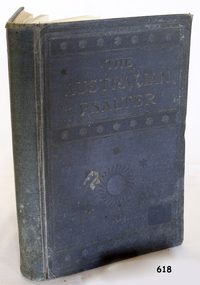
Book - Religious Book, Novello and Company Limited, The Australian Psalter, Early 20th century
... The Guild continued its work until the 1960s. ...The Guild continued its work until the 1960s. ...The Book, The Australian Psalter, was published by Novello and Company, London. Blue fabric-covered book with gold-embossed text, two bands of seven stars, and an emblem of the sun surrounded by stars on the front cover. The book contains the Psalms of David and the Canticles and Proper Psalms Pointed for Chanting. It is stamped with the library stamp Missions and Seamen, Melbourne. The book is now part of the St Nicholas Seamen's Church Collection.flagstaff hill maritime museum and village, flagstaff hill, warrnambool, maritime museum, maritime village, shipwreck coast, great ocean road, religion, religious service, st nicholas seamen’s church, williamstown, missions to seamen victoria, psalter, hymn book, worship service, songs of worship, novello & co. london, worship music, the australian psalter -
 Flagstaff Hill Maritime Museum and Village
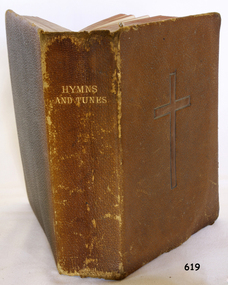
Book - Religious Book, William Clowes & Sons, Limited, Hymns Ancient and Modern, bef. Sept 8th 1884
... The Guild continued its work until the 1960s. ...The Guild continued its work until the 1960s. ...The brown leather-covered bound book has an embossed inscription on the spine and an impressed cross symbol on the front cover. It has red leaf pages (681 pages). The music and words were compiled and arranged by editor William Henry Monk, and published in London. This Revised and Enlarged edition was printed in London by William Clowes & Sons Ltd. The book's title is "Hymns Ancient and Modern". The inscription shows it was given as a gift in 1884. It has since been added to our St Nicholas Seamen's Church Collection. flagstaff hill maritime museum and village, flagstaff hill, warrnambool, maritime museum, maritime village, shipwreck coast, great ocean road, religion, religious service, st nicholas seamen’s church, williamstown, missions to seamen victoria, worship service, worship music, hymn book, music book, william clowes and sons, st nicholas seamen's church, london, hymns ancient and modern, revised and enlarged edition, 1884 -
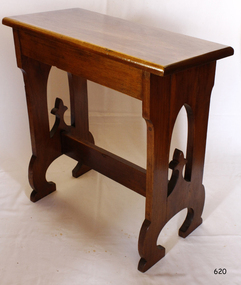 Flagstaff Hill Maritime Museum and Village
Furniture - Stool, circa 1880
... The Guild continued its work until the 1960s. ...The Guild continued its work until the 1960s. ...This organ stool was part of the original furnishings of the St Nicholas' Mission to Seamen's Church at 139 Nelson Place, Williamstown, Victoria. The Church was operated by the Mission to Seamen organisation. The stool was possibly donated together with the Mason & Hamilton reed organ, which was generously donated by the Joy Club for Fighters, a charity organisation in Williamstown. THE MISSIONS TO SEAMEN (Brief History: for more, see our Reg. No. 611, Set of Pews) The Missions to Seamen, an Anglican charity, has served seafarers of the world since 1856 in Great Britain. It symbol is a Flying Angel, inspired by a Bible verse. Today there are centr4es in over 200 ports world-wide where seamen of all backgrounds are offered a warm welcome and provided with a wide range of facilities. In Victoria the orgainsation began in Williamstown in 1857. It was as a Sailors’ Church, also known as ‘Bethel’ or the ‘Floating Church’. Its location was an old hulk floating in Hobson’s Bay, Port of Melbourne. It soon became part of the Missions to Seamen, Victoria. In the year 2000 the organisation, now named Mission to Seafarers, still operated locally in Melbourne, Portland, Geelong and Hastings. The Ladies’ Harbour Lights Guild was formed in 1906 to support the Missions to Seamen in Melbourne and other centres such as Williamstown. Two of the most significant ladies of the Guild were founder Ethel Augusta Godfrey and foundation member Alice Sibthorpe Tracy (who established a branch of the Guild in Warrnambool in 1920). The Guild continued its work until the 1960s. In 1943 a former Williamstown bank was purchased for the Missions to Seaman Club. The chapel was named St Nicholas’ Seamen’s Church and was supported by the Ladies’ Harbour Lights Guild, the Williamstown Lightkeepers’ Auxiliary and the League of Soldiers’ and Sailors’ Friends. It ceased operation in 1966. A Missions to Seamen Chapel and Recreation Room was a significant feature of ports during the late 1800s and into the 1900s. It seemed appropriate for Flagstaff Hill to include such a representation within the new Maritime Village, so the Melbourne Board of Management of Missions to Seamen Victoria gave its permission on 21st May 1979 for the entire furnishings of the Williamstown chapel to be transferred to Flagstaff Hill. The St Nicholas Seamen’s Church was officially opened on October 11, 1981 and closely resembles the Williamstown chapel. This organ stool is significant historically for its origin in the St Nicholas Mission to Seamen's Church in Williamstown, established in 1857 to cater for the physical, social, and spiritual needs of seafarers. It originated in Bristol, England when a Seamen's Mission was formed in 1837. The stool is historically significant for its connection to the 1880s Mason & Hamilton reed organ that was also in the St Nicholas Seamen's Church in Williamstown. The connection of this stool to the Mission to Seamen and to the Ladies Lightkeepers’ Auxiliary, and possibly to the Joy Club for Fighters, highlights the strong community awareness of the life of people at sea, their dangers and hardships, and their need for physical, financial, spiritual and moral support. Stool; mahogany organ stool, angled seat with two legs reinforced by horizontal wooden bar. Legs have a decorative cut away design. This stool is in our St Nicholas Seamen's Church Collection.flagstaff hill, warrnambool, maritime museum, maritime village, shipwreck coast, great ocean road, church furniture, religious furniture, religious worship, missions to seamen victoria, st nicholas seamen’s church williamstown, st nicholas seamen’s church flagstaff hill, church music, stool, organ stool, piano stool -
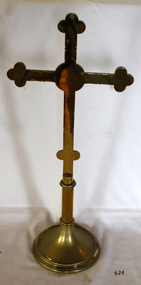 Flagstaff Hill Maritime Museum and Village
Ceremonial object - Cross, Circa 1942
... The Guild continued its work until the 1960s. ...The Guild continued its work until the 1960s. ...This cross or crucifix is part of the original furnishings of the St Nicholas Missions to Seamen's Church in Williamstown, Victoria. Mrs R J Ewart presented it to the church in 1942 to commemorate the lives of those lost at sea. On 29th May 1979, the cross was donated to Flagstaff Hill Maritime and Village by the Missions to Seamen Victoria, along with many other items from the St. Nicholas Mission to Seamen's Church. THE MISSIONS TO SEAMEN (Brief History): - The Missions to Seamen, an Anglican charity, has served seafarers of the world since 1856 in Great Britain. Its symbol is a Flying Angel, inspired by a Bible verse. Today, there are centres in over 200 ports worldwide where seamen of all backgrounds are offered a warm welcome and provided with a wide range of facilities. In Victoria, the organisation began in Williamstown in 1857. It was a Sailors’ Church, also known as ‘Bethel’ or the ‘Floating Church’. Its location was an old hulk floating in Hobson’s Bay, Port of Melbourne. It soon became part of the Missions to Seamen, Victoria. In the year 2000 the organisation, now named Mission to Seafarers, still operated locally in Melbourne, Portland, Geelong and Hastings. The Ladies’ Harbour Lights Guild was formed in 1906 to support the Missions to Seamen in Melbourne and other centres, such as Williamstown. Two of the most significant ladies of the Guild were founder Ethel Augusta Godfrey and foundation member Alice Sibthorpe Tracy (who established a branch of the Guild in Warrnambool in 1920). The Guild continued its work until the 1960s. In 1943, a former Williamstown bank was purchased for the Missions to Seaman Club. The chapel was named St Nicholas’ Seamen’s Church and was supported by the Ladies’ Harbour Lights Guild, the Williamstown Lightkeepers’ Auxiliary and the League of Soldiers’ and Sailors’ Friends. It ceased operation in 1966. A Missions to Seamen Chapel and Recreation Room was a significant feature of ports during the late 1800s and into the 1900s. It seemed appropriate for Flagstaff Hill to include such a representation within the new Maritime Village. Hence, the Melbourne Board of Management of Missions to Seamen Victoria gave its permission on 21st May 1979 for the entire furnishings of the Williamstown chapel to be transferred to Flagstaff Hill. The St Nicholas Seamen’s Church was officially opened on October 11, 1981 and closely resembles the Williamstown chapel. This brass cross is historically significant for its origin in the St. Nicholas Mission to Seamen's Church in Williamstown, established in 1857 to cater for the physical, social, and spiritual needs of seafarers. It originated in Bristol, England, when a Seamen's Mission was formed in 1837. The cross is historically significant for its connection to the Ladies Lightkeepers’ Auxiliary, an organisation of women formed to support seafarers. The connection highlights the strong community awareness of the life of people at sea, their dangers and hardships, and their need for physical, financial, spiritual and moral support. Polished brass altar cross on a round base with top and side branch ends shaped like three-leafed clovers. The Centre of the cross is a circular shape. An inscription is engraved in script on the base. Mrs R.J. Ewart presented the cross to the church in 1942 to commemorate those lost at sea. This is now part of the St Nicholas Seamen's Church Collection. "Presented by / Mrs. R.J. Ewart, / M.N. / In Memory of those lost at sea. / 1942"flagstaff hill, warrnambool, shipwrecked coast, flagstaff hill maritime museum, maritime museum, shipwreck coast, flagstaff hill maritime village, great ocean road, religion, church furnishings, mission to seamen victoria, cross, crucifix, r j ewart, st nicholas church williamstown, religious symbol, church furnishing, flagstaff hill maritime museum and village, maritime village, religious service, religious worship, worship service, st nicholas seamen’s church, williamstown, missions to seamen victoria, mission to seafarers, st nicholas missions to seamen’s church williamstown, missions to seamen, st nicholas missions to seamen’s church flagstaff hill, 139 nelson place williamstown, anglican church, religious furnishing -
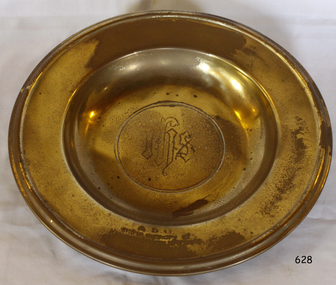 Flagstaff Hill Maritime Museum and Village
Ceremonial object - Plate, circa 1943
... The Guild continued its work until the 1960s. ...The Guild continued its work until the 1960s. ...This plate, a polished brass altar salver, is part of the original furnishings of St Nicholas Church, Williamstown, Victoria. The church was operated by the Missions to Seamen organisation. The plate is sometimes called a salver, a paten or a communion plate. It is used for serving the communion bread. The plate was presented to the Mission to Seamen, in memory of Kenneth Wyatt McVilly, who passed away on December 4th 1943. The letters on the lip of the plate, A.D.G., stand for the Greek Alpha Delta Gamma, and are used to represent "For the Glory of God". THE MISSIONS TO SEAMEN (Brief History): - The Missions to Seamen was an Anglican charity in Great Britain that has served the world's seafarers since 1856. Its symbol is a Flying Angel, inspired by a Bible verse. Today, there are centres in over 200 ports worldwide where seamen of all backgrounds are offered a warm welcome and provided with a wide range of facilities. In Victoria, the organisation began in Williamstown in 1857 as a Sailors’ Church, also known as ‘Bethel’ or the ‘Floating Church’ in an old hulk floating in Hobson’s Bay, Port of Melbourne. It soon became part of the Missions to Seamen, Victoria. In 2000, the organisation, now named Mission to Seafarers, still operated locally in Melbourne, Portland, Geelong and Hastings. The Ladies’ Harbour Lights Guild was formed in 1906 to support the Missions to Seamen in Melbourne and other centres, such as Williamstown. Two of the most significant ladies of the Guild were founder Ethel Augusta Godfrey and foundation member Alice Sibthorpe Tracy (who established a branch of the Guild in Warrnambool in 1920). The Guild continued its work until the 1960s. In 1943, a former Williamstown bank was purchased for the Missions to Seamen Club. The chapel was named St Nicholas’ Seamen’s Church and was supported by the Ladies’ Harbour Lights Guild, the Williamstown Lightkeepers’ Auxiliary and the League of Soldiers’ and Sailors’ Friends. It ceased operation in 1966. A Missions to Seamen Chapel and Recreation Room was a significant feature of ports during the late 1800s and 1900s. It seemed appropriate for Flagstaff Hill to include such a representation within the new Maritime Village, and the Melbourne Board of Management of Missions to Seamen Victoria gave its permission on 21st May 1979 for the entire furnishings of the Williamstown chapel to be transferred to Flagstaff Hill. The St Nicholas Seamen’s Church was officially opened on October 11, 1981, and resembles the Williamstown chapel. This memorial plate is significant as it is associated with a member of the community, Kenneth McVilly, and was presented in his memory after he died in o1943. This plate is significant historically for its origin in the St Nicholas Mission to Seamen's Church in Williamstown, established in 1857 to cater for the physical, social, and spiritual needs of seafarers. It originated in Bristol, England when a Seamen's Mission was formed in 1837. Plate, polished brass altar salver, or communion plate. It is round with decorative initials in the centre. Outer lip has an inscription of dedication to Kenneth Wyatt McVilly, December 4th 1943. This plate is in our St Nicholas Seamen's Church Collection. “A.D.G. / and in memory of / KENNETH WYATT MCVILLY / December 4th 1943” and initials "I H S"flagstaff hill, warrnambool, shipwrecked coast, flagstaff hill maritime museum, maritime museum, shipwreck coast, flagstaff hill maritime village, great ocean road, religion, church furnishings, mission to seamen victoria, st nicholas church williamstown, brass plate, kenneth wyatt mcvilly, altar salvar, religious service, memorial plate, altar salver, communion plate, paten, communion service, a d g -
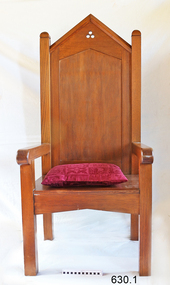 Flagstaff Hill Maritime Museum and Village
Furniture - Set of Chairs, circa 1944
... The Guild continued its work until the 1960s. ...The Guild continued its work until the 1960s. ...This set of three chairs, often called sanctuary chairs, thrones or bishop's chairs, was part of the original furnishings of St. Nicholas Seamen's Church, Williamstown, Victoria. The church was operated by the Missions to Seamen organisation. The three chairs were donated to that church by Mr and Mrs F H Twist. The chairs are now part of the St. Nicholas Seamen's Church Collection at Flagstaff Hill Maritime Museum and Village. THE MISSIONS TO SEAMEN (Brief History): - The Missions to Seamen, an Anglican charity, has served seafarers of the world since 1856 in Great Britain. Its symbol is a Flying Angel, inspired by a Bible verse. Today, there are centres in over 200 ports worldwide where seamen of all backgrounds are offered a warm welcome and provided with a wide range of facilities. In Victoria, the orgainsation began in Williamstown in 1857. It was a Sailors’ Church, also known as ‘Bethel’ or the ‘Floating Church’. Its location was an old hulk floating in Hobson’s Bay, Port of Melbourne. It soon became part of the Missions to Seamen, Victoria. In the year 2000, the organisation, now named Mission to Seafarers, still operated locally in Melbourne, Portland, Geelong and Hastings. The Ladies’ Harbour Lights Guild was formed in 1906 to support the Missions to Seamen in Melbourne and other centres, such as Williamstown. Two of the most significant ladies of the Guild were founder Ethel Augusta Godfrey and foundation member Alice Sibthorpe Tracy (who established a branch of the Guild in Warrnambool in 1920). The Guild continued its work until the 1960s. In 1943, a former Williamstown bank was purchased for the Missions to Seaman Club. The chapel was named St Nicholas’ Seamen’s Church and was supported by the Ladies’ Harbour Lights Guild, the Williamstown Lightkeepers’ Auxiliary and the League of Soldiers’ and Sailors’ Friends. It ceased operation in 1966. A Missions to Seamen Chapel and Recreation Room was a significant feature of ports during the late 1800s and into the 1900s. It seemed appropriate for Flagstaff Hill to include such a representation within the new Maritime Village, so the Melbourne Board of Management of Missions to Seamen Victoria gave its permission on 21st May 1979 for the entire furnishings of the Williamstown chapel to be transferred to Flagstaff Hill. The St Nicholas Seamen’s Church was officially opened on October 11, 1981, and closely resembles the Williamstown chapel. This set of chairs is historically significant for its origin in the St Nicholas Mission to Seamen's Church in Williamstown, established in 1857 to cater for the physical, social, and spiritual needs of seafarers. It originated in Bristol, England, when a Seamen's Mission was formed in 1837. The set of chairs is historically significant for its connection to the Ladies Lightkeepers’ Auxiliary, an organisation of women formed to support seafarers. The connection of this item to the Mission to Seamen and the Ladies Lightkeepers’ Auxiliary highlights the strong community awareness of the life of people at sea, their dangers and hardships, and their need for physical, financial, spiritual and moral support.Chair, set of three Sanctuary Chairs, also called Thrones or Bishop's Chairs. Large, wooden chairs with simple, straight wooden legs and armrests. The back support features a peak design and three decorative cutaway holes. This set is part of the St. Nicholas Seamen's Church Collection.flagstaff hill, warrnambool, maritime-museum, church furniture, throne, bishop's chair, mission to seamen, williamstown, st nicholas seamen's church, religious furniture, sanctuary chair, church service, religious worship, ladies lightkeepers' auxiliary, thrones, bishop's chairs, mr and mrs f h twist -
 Flagstaff Hill Maritime Museum and Village
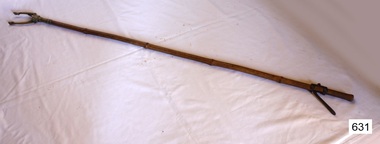
Tool - Candle Snuffer, Harris and Sheldon, circa 1840
... The Guild continued its work until the 1960s. ...The Guild continued its work until the 1960s. ...This mechanical candle snuffer tool was made in Birmingham, England, by Harris and Sheldon Ltd. The candle snuffer was part of the original furnishings of the St Nicholas' Mission to Seamen's Church at 139 Nelson Street, Williamstown, Victoria. It was donated to Flagstaff Hill and is part of the St Nicholas Seamen's Church Collection The enterprise of Harris and Sheldon was established in 1880 by Sydney Harris. They made shop fittings such as cabinets, shelving, cupboards, tables and stationery. During WWII, they made aircraft parts, ammunition boxes and pumps. THE MISSIONS TO SEAMEN (Brief History): - The Missions to Seamen was an Anglican charity in Great Britain that has served the world's seafarers since 1856. Its symbol is a Flying Angel, inspired by a Bible verse. Today, there are centres in over 200 ports worldwide where seamen of all backgrounds are offered a warm welcome and provided with a wide range of facilities. In Victoria, the organisation began in Williamstown in 1857 as a Sailors’ Church, also known as ‘Bethel’ or the ‘Floating Church’ in an old hulk floating in Hobson’s Bay, Port of Melbourne. It soon became part of the Missions to Seamen, Victoria. In 2000, the organisation, now named Mission to Seafarers, still operated locally in Melbourne, Portland, Geelong and Hastings. The Ladies’ Harbour Lights Guild was formed in 1906 to support the Missions to Seamen in Melbourne and other centres, such as Williamstown. Two of the most significant ladies of the Guild were founder Ethel Augusta Godfrey and foundation member Alice Sibthorpe Tracy (who established a branch of the Guild in Warrnambool in 1920). The Guild continued its work until the 1960s. In 1943, a former Williamstown bank was purchased for the Missions to Seamen Club. The chapel was named St Nicholas’ Seamen’s Church and was supported by the Ladies’ Harbour Lights Guild, the Williamstown Lightkeepers’ Auxiliary and the League of Soldiers’ and Sailors’ Friends. It ceased operation in 1966. A Missions to Seamen Chapel and Recreation Room was a significant feature of ports during the late 1800s and 1900s. It seemed appropriate for Flagstaff Hill to include such a representation within the new Maritime Village, and the Melbourne Board of Management of Missions to Seamen Victoria gave its permission on 21st May 1979 for the entire furnishings of the Williamstown chapel to be transferred to Flagstaff Hill. The St Nicholas Seamen’s Church was officially opened on October 11, 1981, and resembles the Williamstown chapel. This candle snuffing tool is significant historically for its origin in the St Nicholas Mission to Seamen's Church in Williamstown, established in 1857 to cater for the physical, social, and spiritual needs of seafarers. It originated in Bristol, England when a Seamen's Mission was formed in 1837. It is also significant as a rare Candle snuffer tool. A bamboo and brass pole with a spring-action handle that operates a brass pinching mechanism at the other end. The mechanism has been inserted into the hollow bamboo handle. Maker's inscription on the pinching mechanism. Made in Birmingham, England, by Harris & Sheldon Ltd. This is one of the original items in our st Nicholas Seamen's Church Collection."HARRIS & SHELDON LTD.", "BIRMINGHAM"religious service, harris and sheldon ltd, birmingham manufacturer, sydney harris, sailors rest, ladies harbour light guild, mission to seamen williamstown, library tool, flagstaff hill, warrnambool, shipwrecked coast, flagstaff hill maritime museum, maritime museum, shipwreck coast, flagstaff hill maritime village, great ocean road, religion, bethel sailors’ church, bethel floating church, joy club for fighters, ladies lightkeepers’ auxiliary, mission to seafarers, flying angel’s club, st nicholas seamen’s church williamstown, st nicholas seamen’s church flagstaff hill, candle snuffer, candle extinguisher, flame snuffer, flame extinguisher, lighting, domestic lighting, extinguisher -
 Flagstaff Hill Maritime Museum and Village
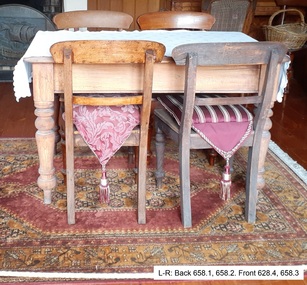
Furniture - Set of Chairs, ca. 1949
... The Guild continued its work until the 1960s. ...The Guild continued its work until the 1960s. ...This set of four dining chairs was part of the original furnishings of the St Nicholas' Mission to Seamen's Church at 139 Nelson Place, Williamstown, Victoria. The chairs were provided by the Lightkeepers' Auxiliary in 1949, for the use of men in the hall. The Australian colonial wooden chairs date to the late 1880s and are most likely to have been purchased for use in the Sailors’ Rest when it moved into Ann Street, Williamstown, around the 1880s. THE MISSIONS TO SEAMEN (Brief History: for more, see our Reg. No. 611, Set of Pews) The Missions to Seamen, an Anglican charity, has served seafarers of the world since 1856 in Great Britain. Its symbol is a Flying Angel, inspired by a Bible verse. Today, there are centres in over 200 ports worldwide where seamen of all backgrounds are offered a warm welcome and provided with a wide range of facilities. In Victoria, the orgainsation began in Williamstown in 1857. It was a Sailors’ Church, also known as ‘Bethel’ or the ‘Floating Church’. Its location was an old hulk floating in Hobson’s Bay, Port of Melbourne. It soon became part of the Missions to Seamen, Victoria. In the year 2000, the organisation, now named Mission to Seafarers, still operated locally in Melbourne, Portland, Geelong and Hastings. The Ladies’ Harbour Lights Guild was formed in 1906 to support the Missions to Seamen in Melbourne and other centres such as Williamstown. Two of the most significant ladies of the Guild were founder Ethel Augusta Godfrey and foundation member Alice Sibthorpe Tracy (who established a branch of the Guild in Warrnambool in 1920). The Guild continued its work until the 1960s. In 1943, a former Williamstown bank was purchased for the Missions to Seaman Club. The chapel was named St Nicholas’ Seamen’s Church and was supported by the Ladies’ Harbour Lights Guild, the Williamstown Lightkeepers’ Auxiliary and the League of Soldiers’ and Sailors’ Friends. It ceased operation in 1966. A Missions to Seamen Chapel and Recreation Room was a significant feature of ports during the late 1800s and into the 1900s. It seemed appropriate for Flagstaff Hill to include such a representation within the new Maritime Village, so the Melbourne Board of Management of Missions to Seamen Victoria gave its permission on 21st May 1979 for the entire furnishings of the Williamstown chapel to be transferred to Flagstaff Hill. The St Nicholas Seamen’s Church was officially opened on October 11, 1981 and closely resembles the Williamstown chapel. This set of chairs is significant historically for its origin in the St Nicholas Mission to Seamen's Church in Williamstown, established in 1857 to cater for the physical, social, and spiritual needs of seafarers. It originated in Bristol, England when a Seamen's Mission was formed in 1837. The set of chairs is historically significant for its connection to the Ladies Lightkeepers’ Auxiliary, an organisation of women formed to support seafarers. The connection of this set of chairs to the Mission to Seamen and to the Ladies Lightkeepers’ Auxiliary highlights the strong community awareness of the life of people at sea, their dangers and hardships, and their need for physical, financial, spiritual and moral support. Chairs: set of four (4) cedar wood dining chairs. Each chair has a rounded rail back, flat cross rail, flat wooden seat, curved back legs and colonial turned front legs. Mid-brown colour, veneered finish. The set of chairs is part of the St Nicholas Seamen's Church Williamstown Collection. flagstaff hill, warrnambool, shipwrecked coast, flagstaff hill maritime museum, maritime museum, shipwreck coast, flagstaff hill maritime village, great ocean road, religion, religious service, sailors rest, bethel sailors’ church, bethel floating church, ladies harbour light guild, lightkeepers’ auxiliary, missions to seamen victoria, mission to seafarers, flying angel’s club, st nicholas mission to seamen church williamstown, mission to seamen williamstown, st nicholas seamen’s church flagstaff hill, 139 nelson place williamstown, church furniture, religious furniture, religious worship, anglican church, chair, dining chair, kitchen chair, domestic furniture, colonial chair, australian colonial period, set of chairs, squab chairs, sailors' church, ann street williamstown, lightkeepers' auxiliary
