
Showing 648 items matching "globalization"
-
 Plutarch Project
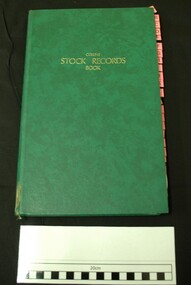
Film screening Log Book, Log Book, Collins late 1950's
... He has been President of the Cypriot Community, President of Federation of Cypriot Communities in Australia (for 18 years), President of SEKA (for 26 years) and highly regarded member of the Greek-Cypriots Diaspora since he also has been Vice-President of the Global Federation of Cypriots of Diaspora for 18 years. ...He has been President of the Cypriot Community, President of Federation of Cypriot Communities in Australia (for 18 years), President of SEKA (for 26 years) and highly regarded member of the Greek-Cypriots Diaspora since he also has been Vice-President of the Global Federation of Cypriots of Diaspora for 18 years. ...Yiannoudes Family Film Memorabilia It is normally a time consuming and difficult task to accurately assess a collection’s significance to the primary criteria, however in the case of the “Yiannoudes Family Film Memorabilia” we have no hesitation of its high significance about its historic, social, rarity, interpretive, cultural and provenance to Australia, including the country side where most of this collection memorabilia visited. From January 1959 and until 1982, “Cosmopolitan Motion Pictures”, owned by Mr Peter Yannoudes (Παναγιώτης Γιαννούδης) and Mr Stathis Raftopoulos (Στάθης Ραφτόπουλος) travelled around Australia to entertain the Greek, Turkish, Indian and Yugoslav speaking population of Australia and provide a significant cinema culture. They travelled as far as Perth in WA, Adelaide in SA, Tasmania, Darwin in Nt, Canberra in ACT and Sydney and NSW. However they found themselves also in places like Berri and Renmark in NSW, where concentrations of migrants lived and thrived during the period. Initially they were travelling by train, carrying all their equipment by hand and placing them in boxes and suitcases. However after 1962 when they acquired their first automobile, travelling became less of a burden, nevertheless cumbersome and laborious. They carried with them initially two portable projectors (second one as a backup) and at times travelled with a third in order to ensure that technology will not be letting them down at the time of film projection. At times the films were projected onto a white sheet of cloth because there was no proper screen to project it on at the venue they were using. Mr P. Yiannoudes has also published a book in October 2010, titled “Greek Cinema Across Australia – Behind the Scenes”. The book was published in two languages, English and in Greek. Details about the launch can be found on the Diasporic Literature Spot website at this address (in the Greek language) http://diasporic.org/ellinika/biblia/greek-films-in-australia/. His book is devoted to those with whom he co-operated in order to bring for the first time Greek language films into Australia. Their names are: Stathis Raftopoulos, Andreas Papadopoulos, Andreas Katopodis, Theodoros Kanellopoulos, Michael Ioannou, Fotis Hatzipavlides, Kostas Vrahnas, Evaggelos Terpenos, Dionysis Lourantos, Dimitris Georgiou, Vasilis Florias and Jim Gragie. All businessmen with the right entrepreneurial spirit to be the first and to make their mark in the making of cultural Australia. Mr P. Yiannoudes a Cypriot by descent born in the town of Vouni, a village in the area of Lemesos. In Lemesos he learned the first few things about cinema which would help him in all his later life. He migrated to Australia in 1956 has been a prominent member of the Greek & Cypriot Communities in Melbourne for many decades. He has been President of the Cypriot Community, President of Federation of Cypriot Communities in Australia (for 18 years), President of SEKA (for 26 years) and highly regarded member of the Greek-Cypriots Diaspora since he also has been Vice-President of the Global Federation of Cypriots of Diaspora for 18 years. Mr P. Yiannoudes is now working on creating a small museum of these pieces in the back of the Westgarth Theatre with the help of the Plutarch Project and …. In this collection numbering hundreds of items, we will try and capture some of the glory that was the Greek film industry in Australia for 23 years between 1959 and 1982. “Cosmopolitan Motion Pictures” also owned a large number of cinemas in Melbourne, the National Theatre in Richmond, the Westgarth Theatre in Northcote (which is still owned by the Yiannoudes family today), Sun Theatre in Yarraville, Kinema in Albert Park, Empire Theatre in Brunswick, Paramount Theatre in Oakleigh, Globe Theatre in Richmond, Galaxy Theatre in Brunswick and the Cosmopolitan Theatre in Brusnwick. At the same time they were hiring other theatres for film projections. They were the Astor Theatre in St. Kilda, Victoria Theatre in Richmond, Sunshine Theatre in Sunshine. Apart from Melbourne they were using the Pantheon Theatre in Adelaide, the Norwood Town Hall in Adelaide, the Shepparton Town Hall in Shepparton, the Premier Theatre in Perth, the Rivoli Theatre in Berri and the Renmark Theatre in Renmark. The number of films shown around Australia were over 1500 in total whilst about 1218 of them were in the Greek language. Other languages shown were in Turkish (about 150 films), Yugoslavian (about 100 films), English, French, German, Swedish, Dutch language films. “Cosmopolitan Motion Pictures” was the first company to bring Swedish and Dutch films to Australia. They also showed Martial Arts films for the first time in Australia in 1975 at the Galaxy Theatre in Melbourne. However one of the most significant pieces that tell the story with places and dates is the Show Logbook. The Show Logbook has a large number of stories to tell. It is still intact and in fair condition after all these years of travelling around Australia. It is categorised with an alphabetic index on the right by film title. Greek, Indian, Turkish and Yugoslav language film titles adorn its pages alongside the place where they were first shown, the towns and cities they visited and the dates for each one. It is an extremely significant part of history of the settlement of migrants in Australia. This Log Book is of Primary Significance to the "Cosmopolitan Motion Pictures" and the Yiannoudes family film memorabilia collection. It has a Historic, Social, Provenance and Rarity significance for the settlement of migrants in Australia and the entertainment industry.This is the Log Book, manually updated and used by "Cosmopolitan Motion Pictures" for films shown in different parts of AustraliaCollins Stock Records Booklogbook, films, shown, cultural, language, greek, australia, γιαννούδης, κατάσταση, yiannoudes -
 Federation University Historical Collection
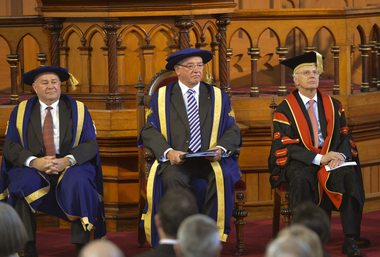
Photograph - Photograph - Colour, Installation of University of Ballarat Chancellor Paul Hemming, 2012, 17/0/2012
... But like so many other higher education institutions in Australia, the University of Ballarat is facing challenges brought about by events such as global uncertainties and the high Australian dollar that impact on the inflow of international students, and dealing with students, more and more of whom come from the lower socio economic sector. ...But like so many other higher education institutions in Australia, the University of Ballarat is facing challenges brought about by events such as global uncertainties and the high Australian dollar that impact on the inflow of international students, and dealing with students, more and more of whom come from the lower socio economic sector. ...In April 2012 former Royal Australian College of General Practitioners president Dr Paul Hemming was appointed the University of Ballarat’s new chancellor. Dr Hemming was a deputy chancellor of the university since 2011 and a member of the university council since 2007, and replaces outgoing chancellor Robert Smith. He was a founding director of Beyondblue and has been president of the Royal Australian College of General Practitioners. He was also president of the Australian Medical Association Victoria and has served on numerous federal government medical bodies and tribunals. Chancellors are appointed to chair the university's council (governing body) as the senior office holder of the University. They also confer the academic awards of the university, and represent the university at meetings, functions and ceremonies. At the installation of Dr Hemming as the Fifth Chancellor Of The University Of Ballarat Governor of Victoria Alex Chrnov said: "I join Bonnie Fagan in acknowledging the traditional owners of this land and I pay my respects to their elders past and present. It is my great pleasure, as Governor of Victoria and Visitor to the University of Ballarat, to install Dr Paul Hemming as the fifth Chancellor of this University. I extend to him and his family my warmest congratulations on this appointment and wish him all the best in his new role. I have no doubt that he will be an industrious and wise leader of this University. Although the University of Ballarat is one of Australia’s newest Universities, it is the third oldest Tertiary institution in our country with the School of Mines being established in 1870. It has much to be proud of, and should be recognised for its commitment to being one of our most outstanding regionally focused higher education institutions. It offers on six campuses a diverse, yet suitably targeted, group of learning models that include higher education, TAFE and senior secondary school education, and is one of the few universities in the country that has an associated Technology Park. This University is uniquely placed to provide higher education in Regional Victoria. For example, I understand that by 2020 the population in the Ballarat area will increase by 20% so this University will have the responsibility and opportunity to provide educational opportunities for this growing population. The role of the Governor can be divided into three parts – ceremonial, constitutional and community engagement. It is the third aspect of the role that is most time consuming and, I add, enjoyable. It includes making official visits to Regional areas of Victoria. To date Elizabeth and I have been on 16 such visits and the thing that stands out is that despite the challenges that face Regional communities whether it be through natural disasters, or the economy more broadly – the stoicism, volunteerism and self reliance are always present. Ballarat is an example of such resilience and confidence in its future that can be dated back to this University’s inception. When the School of Mines was established in 1870 on the back of the gold rush era of the 1850s, the local community had vision and faith in its future that is reflected in the building of this institution. It is not dissimilar to Melbourne, where its relatively few citizens established the iconic pillars of our society like the State Library, the University of Melbourne, Parliament Houses and the National Gallery of Victoria. The contribution by the University of Ballarat to Regional Victoria cannot be overstated. Not only does it provide top educational opportunities for students from the Region but its graduates almost invariably end up working in Regional Australia, and often in their own local communities. More specifically, almost three out of every four of the graduates from this University end up finding employment in Regional areas. Such figures highlight the University’s significant contribution to the Regional economy. But its impact is not limited to our Regional areas – it extends to other parts of Australia and overseas. But like so many other higher education institutions in Australia, the University of Ballarat is facing challenges brought about by events such as global uncertainties and the high Australian dollar that impact on the inflow of international students, and dealing with students, more and more of whom come from the lower socio economic sector. It is in those circumstances that the Chancellor must show leadership that involves, amongst others, objectively guiding the Council and supporting the Vice-Chancellor, albeit without becoming involved in the day to day micro management of the University. A strong, trusting and respectful working relationship between the Chancellor and the Vice-Chancellor is, I believe, critical to the sound progress of a University. Before I turn more specifically to Dr Hemming, I would like to reflect briefly on his immediate predecessor, Emeritus Professor Robert Smith. I am sure that Dr Hemming has already found in Professor Smith an invaluable source of assistance. He was a skilled and effective leader not only here, but also in the broader higher education sector. I mention by way of example his instigation and leadership two years ago of the much acclaimed Chancellors’ Conference that was held in Melbourne. There was great diffidence amongst the Chancellors in having it at all. It was a little like herding cats. But Bob Smith spearheaded the organisation of it, with great attention to detail. And it was his hard work and leadership that resulted in the Conference being such a success and of assistance to all Chancellors who attended. It was an illustration of Bob Smith’s skills as a leader in the sector and of this University. And the sector, just as this University remains indebted to him. And I have no doubt that Dr Hemming will similarly lead this University through the challenging, yet exciting, times that lie ahead. He is eminently qualified to do so, in terms of his personal attributes, academic achievements and experience in governance. With his extensive medical career as a General Practitioner, service on a number of Federal Government medical boards and tribunals, and having been a Founding Director of ‘Beyondblue’, President of the Royal Australian College of General Practitioners and President of the Australian Medical Association (Victoria), his list of personal and professional achievements, as well as his strong sense of public and community duty, is impressive. Importantly, Dr Hemming has a long standing connection with the Ballarat community, having moved here with his family from the United Kingdom in 1977. He is now even accepted as a “local” I am told. Given his range of experience to which I have referred and the time he has already spent on the Council and Standing Committees of this University, he is obviously well placed to take part in leading this University. So it is a great pleasure for me to install Dr Hemming as the fifth Chancellor of the University of Ballarat." (http://www.governor.vic.gov.au/victorias-governor/publications/speeches/speech/speech/104) Colour photographS of three men in academic regalia sitting inside the Ballarat Uniting Church, Lydiard Street South. Chancellor Dr Paul Hemming sit in the centre, with Vice-Chancellor Professor david Battersby on the left. Also audience images, academics and a dinner at Craig's Hotel.university of ballarat, federation university, regalia, chancellor, vice chancellor, paul hemming, david battersby, alex chrnov, todd walker, andy smith, craig's hotel, academics -
 Sunshine and District Historical Society Incorporated
Archive - City of Sunshine
... Typed Report General Information on the City of Sunshine 1987 to 1988|Newspaper Article 13 October 1993 The Age How rubish tips can be a big turn on|Envelope Town Clerk Sunshine City Council|Flyer City of Sunshine Community Day Festival 23 April 1994|Brochure City of Sunshine City of the Future Community Meeting 5 March 1994 Moonee Valley|Brochure City of Sunshine Multicultural City of Victoria Community Meeting 14 September 1991 Moonee Valley|Brochure City of Sunshine The Conferring of The Freedom of Entry to the City of Sunshine Upon The First Try City of Sunshine Regional Cadet Unit on 16 May 1987|Brochure City of Sunshine The Conferring of The Freedom of Entry to the City of Sunshine Upon No 5 Flight Air Training Corps Tottenham 18 November 1989|Photograph and photocopies of building with handwritten notes 444 $136.89|Logo of City of Sunshine Victoria|Brochure Your share in Sunshine City of Sunshine A Progressive Municipality|Brochure City of Sunshine The Conferring of the Freedom of the City of Sunshine upon 5th and 6th Battalion The Royal Victoria Regiment 12 February 1994|Hand drawings with handwritten notes 441 $32.09|Hand drawings with handwritten notes 256 $12.64|Hand drawings with handwritten notes 258 $17.233|Hand drawings with handwritten notes 250 $15.60|Hand drawings with handwritten notes 260 $19.72|Hand drawings with handwritten notes 255 $8.26|Hand drawings with handwritten notes 440 $6.19|Hand drawings with handwritten notes 387 $34.09|Hand drawings with handwritten notes 259 $12.49|Brochure City of Sunshine Development Update October 1988|Newsletter Grapewine City of Sunshine Staff Newsletter June 1992|Typed Letter City of Sunshine Community Bus Information Sheet 21 March 1979|Map Greening Sunshine Current Work in Progress 1992 to 1993|Newspaper Article A Place in the Sun Exotic plants along Railway lines|Flyer Sunshine City Council News Vol 1 No 1 August 1974 Inflation Whats happening to Councils Money|Newspaper Article Footscray Advertiser 17 February 1917 Braybrook Council|Flyer Sunshine City Council News Vol 1 No 1 April 1975 Leaping into Sunshine New World|Flyer Sunshine your city August 1961 Facts you should know Administration commended|Flyer Sunshines Gardens Parks and Streets 1991 to 1992|Invitation sent 28 June 1982 Government Reception to farewell Governor General of the Commonwealth of Australia on 8 July 1982 Commissioner AG and Mrs Gillen at National Gallery of Victoria|City of Sunshine Crest Motto is By Industry|Flyer Sunshine City Burke and Wills Camel Cup 24 April 1994 on Massey Ferguson Harvester site|Booklet Sunshine Yearbook 1972 Suburban Services Directories and Yearbooks|Enrolment form City of Sunshine Holiday Programme 7 May to 18 May 1984|Christmas Wishes Card from Chief Secretary Victoria t0 GM Prendergast Christmas 1927|Typed Letter 1 January 1984 A Personal Invitation from the Mayor|Newspaper Article The Advocate 9 September 1992 Public to have say Brooklyn tug of war|Newspaper Article Local Government Focus Special Feature November 1986 The City of Sunshine Multicultural City of Victoria Message from the Mayor|Brochure City of Sunshine Municipal Profile|Brochure City of Sunshine Accommodating the Future A Strategy for Housing Needs|Brochure Sunshine City Centre Development|Photocopy Mayors City of Sunshine|Brochure Local Solutions to a Global Problem our gift to future generations GEC ALSTHOM Energy Park Hulett St Albion|Brochure Melbournes West on the Move Melbournes Western Region Profile|Brochure Sunshine District Centre Market Square Interchange Public Transport|Certificate of Speical Civic Service for the Municipality of Sunshine|Brochure New Municipal Offices City of Sunshine Victoria|Newspaper Article Sunshine Community 1972 Can you imagine what $800 Million dollars looks like|Brochure Shire of Braybrook Office Welcome Home tendered to Maidstone Returned Services Personnel 2nd August 1946|Brochure City of Sunshine Live work and recreate in Sunshine|Sunshine City Council No 7 Council Report|Section of Minutes 24 March 199 Sunshine Logo competition won by Mr Stephen Jones of Laverton|Photocopy of Mayoral Pendant presented to City of Sunshine by Cr AG Pennel JP to commemorate its proclamatonas a city 16 May 1951|Flyer City of Sunshine Corporation Logo 24 March 1992 The logo was chosen from 94 other logos submitted as part of a community competiiton to find a new corporate logo. ...City of Sunshine Typed Report General Information on the City of Sunshine 1987 to 1988|Newspaper Article 13 October 1993 The Age How rubish tips can be a big turn on|Envelope Town Clerk Sunshine City Council|Flyer City of Sunshine Community Day Festival 23 April 1994|Brochure City of Sunshine City of the Future Community Meeting 5 March 1994 Moonee Valley|Brochure City of Sunshine Multicultural City of Victoria Community Meeting 14 September 1991 Moonee Valley|Brochure City of Sunshine The Conferring of The Freedom of Entry to the City of Sunshine Upon The First Try City of Sunshine Regional Cadet Unit on 16 May 1987|Brochure City of Sunshine The Conferring of The Freedom of Entry to the City of Sunshine Upon No 5 Flight Air Training Corps Tottenham 18 November 1989|Photograph and photocopies of building with handwritten notes 444 $136.89|Logo of City of Sunshine Victoria|Brochure Your share in Sunshine City of Sunshine A Progressive Municipality|Brochure City of Sunshine The Conferring of the Freedom of the City of Sunshine upon 5th and 6th Battalion The Royal Victoria Regiment 12 February 1994|Hand drawings with handwritten notes 441 $32.09|Hand drawings with handwritten notes 256 $12.64|Hand drawings with handwritten notes 258 $17.233|Hand drawings with handwritten notes 250 $15.60|Hand drawings with handwritten notes 260 $19.72|Hand drawings with handwritten notes 255 $8.26|Hand drawings with handwritten notes 440 $6.19|Hand drawings with handwritten notes 387 $34.09|Hand drawings with handwritten notes 259 $12.49|Brochure City of Sunshine Development Update October 1988|Newsletter Grapewine City of Sunshine Staff Newsletter June 1992|Typed Letter City of Sunshine Community Bus Information Sheet 21 March 1979|Map Greening Sunshine Current Work in Progress 1992 to 1993|Newspaper Article A Place in the Sun Exotic plants along Railway lines|Flyer Sunshine City Council News Vol 1 No 1 August 1974 Inflation Whats happening to Councils Money|Newspaper Article Footscray Advertiser 17 February 1917 Braybrook Council|Flyer Sunshine City Council News Vol 1 No 1 April 1975 Leaping into Sunshine New World|Flyer Sunshine your city August 1961 Facts you should know Administration commended|Flyer Sunshines Gardens Parks and Streets 1991 to 1992|Invitation sent 28 June 1982 Government Reception to farewell Governor General of the Commonwealth of Australia on 8 July 1982 Commissioner AG and Mrs Gillen at National Gallery of Victoria|City of Sunshine Crest Motto is By Industry|Flyer Sunshine City Burke and Wills Camel Cup 24 April 1994 on Massey Ferguson Harvester site|Booklet Sunshine Yearbook 1972 Suburban Services Directories and Yearbooks|Enrolment form City of Sunshine Holiday Programme 7 May to 18 May 1984|Christmas Wishes Card from Chief Secretary Victoria t0 GM Prendergast Christmas 1927|Typed Letter 1 January 1984 A Personal Invitation from the Mayor|Newspaper Article The Advocate 9 September 1992 Public to have say Brooklyn tug of war|Newspaper Article Local Government Focus Special Feature November 1986 The City of Sunshine Multicultural City of Victoria Message from the Mayor|Brochure City of Sunshine Municipal Profile|Brochure City of Sunshine Accommodating the Future A Strategy for Housing Needs|Brochure Sunshine City Centre Development|Photocopy Mayors City of Sunshine|Brochure Local Solutions to a Global Problem our gift to future generations GEC ALSTHOM Energy Park Hulett St Albion|Brochure Melbournes West on the Move Melbournes Western Region Profile|Brochure Sunshine District Centre Market Square Interchange Public Transport|Certificate of Speical Civic Service for the Municipality of Sunshine|Brochure New Municipal Offices City of Sunshine Victoria|Newspaper Article Sunshine Community 1972 Can you imagine what $800 Million dollars looks like|Brochure Shire of Braybrook Office Welcome Home tendered to Maidstone Returned Services Personnel 2nd August 1946|Brochure City of Sunshine Live work and recreate in Sunshine|Sunshine City Council No 7 Council Report|Section of Minutes 24 March 199 Sunshine Logo competition won by Mr Stephen Jones of Laverton|Photocopy of Mayoral Pendant presented to City of Sunshine by Cr AG Pennel JP to commemorate its proclamatonas a city 16 May 1951|Flyer City of Sunshine Corporation Logo 24 March 1992 The logo was chosen from 94 other logos submitted as part of a community competiiton to find a new corporate logo. ...Typed Report General Information on the City of Sunshine 1987 to 1988|Newspaper Article 13 October 1993 The Age How rubish tips can be a big turn on|Envelope Town Clerk Sunshine City Council|Flyer City of Sunshine Community Day Festival 23 April 1994|Brochure City of Sunshine City of the Future Community Meeting 5 March 1994 Moonee Valley|Brochure City of Sunshine Multicultural City of Victoria Community Meeting 14 September 1991 Moonee Valley|Brochure City of Sunshine The Conferring of The Freedom of Entry to the City of Sunshine Upon The First Try City of Sunshine Regional Cadet Unit on 16 May 1987|Brochure City of Sunshine The Conferring of The Freedom of Entry to the City of Sunshine Upon No 5 Flight Air Training Corps Tottenham 18 November 1989|Photograph and photocopies of building with handwritten notes 444 $136.89|Logo of City of Sunshine Victoria|Brochure Your share in Sunshine City of Sunshine A Progressive Municipality|Brochure City of Sunshine The Conferring of the Freedom of the City of Sunshine upon 5th and 6th Battalion The Royal Victoria Regiment 12 February 1994|Hand drawings with handwritten notes 441 $32.09|Hand drawings with handwritten notes 256 $12.64|Hand drawings with handwritten notes 258 $17.233|Hand drawings with handwritten notes 250 $15.60|Hand drawings with handwritten notes 260 $19.72|Hand drawings with handwritten notes 255 $8.26|Hand drawings with handwritten notes 440 $6.19|Hand drawings with handwritten notes 387 $34.09|Hand drawings with handwritten notes 259 $12.49|Brochure City of Sunshine Development Update October 1988|Newsletter Grapewine City of Sunshine Staff Newsletter June 1992|Typed Letter City of Sunshine Community Bus Information Sheet 21 March 1979|Map Greening Sunshine Current Work in Progress 1992 to 1993|Newspaper Article A Place in the Sun Exotic plants along Railway lines|Flyer Sunshine City Council News Vol 1 No 1 August 1974 Inflation Whats happening to Councils Money|Newspaper Article Footscray Advertiser 17 February 1917 Braybrook Council|Flyer Sunshine City Council News Vol 1 No 1 April 1975 Leaping into Sunshine New World|Flyer Sunshine your city August 1961 Facts you should know Administration commended|Flyer Sunshines Gardens Parks and Streets 1991 to 1992|Invitation sent 28 June 1982 Government Reception to farewell Governor General of the Commonwealth of Australia on 8 July 1982 Commissioner AG and Mrs Gillen at National Gallery of Victoria|City of Sunshine Crest Motto is By Industry|Flyer Sunshine City Burke and Wills Camel Cup 24 April 1994 on Massey Ferguson Harvester site|Booklet Sunshine Yearbook 1972 Suburban Services Directories and Yearbooks|Enrolment form City of Sunshine Holiday Programme 7 May to 18 May 1984|Christmas Wishes Card from Chief Secretary Victoria t0 GM Prendergast Christmas 1927|Typed Letter 1 January 1984 A Personal Invitation from the Mayor|Newspaper Article The Advocate 9 September 1992 Public to have say Brooklyn tug of war|Newspaper Article Local Government Focus Special Feature November 1986 The City of Sunshine Multicultural City of Victoria Message from the Mayor|Brochure City of Sunshine Municipal Profile|Brochure City of Sunshine Accommodating the Future A Strategy for Housing Needs|Brochure Sunshine City Centre Development|Photocopy Mayors City of Sunshine|Brochure Local Solutions to a Global Problem our gift to future generations GEC ALSTHOM Energy Park Hulett St Albion|Brochure Melbournes West on the Move Melbournes Western Region Profile|Brochure Sunshine District Centre Market Square Interchange Public Transport|Certificate of Speical Civic Service for the Municipality of Sunshine|Brochure New Municipal Offices City of Sunshine Victoria|Newspaper Article Sunshine Community 1972 Can you imagine what $800 Million dollars looks like|Brochure Shire of Braybrook Office Welcome Home tendered to Maidstone Returned Services Personnel 2nd August 1946|Brochure City of Sunshine Live work and recreate in Sunshine|Sunshine City Council No 7 Council Report|Section of Minutes 24 March 199 Sunshine Logo competition won by Mr Stephen Jones of Laverton|Photocopy of Mayoral Pendant presented to City of Sunshine by Cr AG Pennel JP to commemorate its proclamatonas a city 16 May 1951|Flyer City of Sunshine Corporation Logo 24 March 1992 The logo was chosen from 94 other logos submitted as part of a community competiiton to find a new corporate logo. Designer ws Mr Steve Jones of Laverton.|Sunshine District Centre Aerial Perspective Market Sqaure : Pollard Reserve : The Overpass and Railway Line sketchcity of sunshine -
 Victorian Aboriginal Corporation for Languages
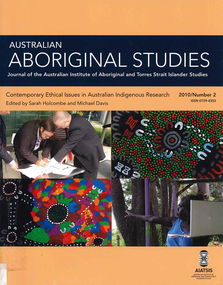
Periodical, Australian Institute of Aboriginal and Torres Strait Islander Studies, Australian Aboriginal studies : journal of the Australian Institute of Aboriginal and Torres Strait Islander Studies, 2010
... For anthropology to remain relevant, we have to engage locally with these global discourses. This paper begins to traverse some of this ground. ...For anthropology to remain relevant, we have to engage locally with these global discourses. This paper begins to traverse some of this ground. ...'Whose Ethics?':Codifying and enacting ethics in research settings Bringing ethics up to date? A review of the AIATSIS ethical guidelines Michael Davis (Independent Academic) A revision of the AIATSIS Guidelines for Ethical Research in Indigenous Studies was carried out during 2009-10. The purpose of the revision was to bring the Guidelines up to date in light of a range of critical developments that have occurred in Indigenous rights, research and knowledge management since the previous version of the Guidelines was released in 2000. In this paper I present an outline of these developments, and briefly discuss the review process. I argue that the review, and the developments that it responded to, have highlighted that ethical research needs to be thought about more as a type of behaviour and practice between engaged participants, and less as an institutionalised, document-focused and prescriptive approach. The arrogance of ethnography: Managing anthropological research knowledge Sarah Holcombe (ANU) The ethnographic method is a core feature of anthropological practice. This locally intensive research enables insight into local praxis and culturally relative practices that would otherwise not be possible. Indeed, empathetic engagement is only possible in this close and intimate encounter. However, this paper argues that this method can also provide the practitioner with a false sense of his or her own knowing and expertise and, indeed, with arrogance. And the boundaries between the anthropologist as knowledge sink - cultural translator and interpreter - and the knowledge of the local knowledge owners can become opaque. Globalisation and the knowledge ?commons?, exemplified by Google, also highlight the increasing complexities in this area of the governance and ownership of knowledge. Our stronghold of working in remote areas and/or with marginalised groups places us at the forefront of negotiating the multiple new technological knowledge spaces that are opening up in the form of Indigenous websites and knowledge centres in these areas. Anthropology is not immune from the increasing awareness of the limitations and risks of the intellectual property regime for protecting or managing Indigenous knowledge. The relevance of the Declaration on the Rights of Indigenous Peoples in opening up a ?rights-based? discourse, especially in the area of knowledge ownership, brings these issues to the fore. For anthropology to remain relevant, we have to engage locally with these global discourses. This paper begins to traverse some of this ground. Protocols: Devices for translating moralities, controlling knowledge and defining actors in Indigenous research, and critical ethical reflection Margaret Raven (Institute for Sustainability and Technology Policy (ISTP), Murdoch University) Protocols are devices that act to assist with ethical research behaviour in Indigenous research contexts. Protocols also attempt to play a mediating role in the power and control inherent in research. While the development of bureaucratically derived protocols is on the increase, critiques and review of protocols have been undertaken in an ad hoc manner and in the absence of an overarching ethical framework or standard. Additionally, actors implicated in research networks are seldom theorised. This paper sketches out a typology of research characters and the different moral positioning that each of them plays in the research game. It argues that by understanding the ways actors enact research protocols we are better able to understand what protocols are, and how they seek to build ethical research practices. Ethics and research: Dilemmas raised in managing research collections of Aboriginal and Torres Strait Islander materials Grace Koch (AIATSIS) This paper examines some of the ethical dilemmas for the proper management of research collections of Indigenous cultural materials, concentrating upon the use of such material for Native Title purposes. It refers directly to a number of points in the draft of the revised AIATSIS Guidelines for Ethical Research in Indigenous Studies and draws upon both actual and hypothetical examples of issues that may arise when requests are made for Indigenous material. Specific concerns about ethical practices in collecting data and the subsequent control of access to both the data itself and to published works based upon it are raised within the context of several types of collections, including those held by AIATSIS and by Native Title Representative Bodies. Ethics or social justice? Heritage and the politics of recognition Laurajane Smith (ANU) Nancy Fraser?s model of the politics of recognition is used to examine how ethical practices are interconnected with wider struggles for recognition and social justice. This paper focuses on the concept of 'heritage' and the way it is often uncritically linked to 'identity' to illustrate how expert knowledge can become implicated in struggles for recognition. The consequences of this for ethical practice and for rethinking the role of expertise, professional discourses and disciplinary identity are discussed. The ethics of teaching from country Michael Christie (CDU), with the assistance of Yi?iya Guyula, Kathy Gotha and Dh�?gal Gurruwiwi The 'Teaching from Country' program provided the opportunity and the funding for Yol?u (north-east Arnhem Land Aboriginal) knowledge authorities to participate actively in the academic teaching of their languages and cultures from their remote homeland centres using new digital technologies. As two knowledge systems and their practices came to work together, so too did two divergent epistemologies and metaphysics, and challenges to our understandings of our ethical behaviour. This paper uses an examination of the philosophical and pedagogical work of the Yol?u Elders and their students to reflect upon ethical teaching and research in postcolonial knowledge practices. Closing the gaps in and through Indigenous health research: Guidelines, processes and practices Pat Dudgeon (UWA), Kerrie Kelly (Australian Indigenous Psychologists Association) and Roz Walker (UWA) Research in Aboriginal contexts remains a vexed issue given the ongoing inequities and injustices in Indigenous health. It is widely accepted that good research providing a sound evidence base is critical to closing the gap in Aboriginal health and wellbeing outcomes. However, key contemporary research issues still remain regarding how that research is prioritised, carried out, disseminated and translated so that Aboriginal people are the main beneficiaries of the research in every sense. It is widely acknowledged that, historically, research on Indigenous groups by non-Indigenous researchers has benefited the careers and reputations of researchers, often with little benefit and considerably more harm for Indigenous peoples in Australia and internationally. This paper argues that genuine collaborative and equal partnerships in Indigenous health research are critical to enable Aboriginal and Torres Islander people to determine the solutions to close the gap on many contemporary health issues. It suggests that greater recognition of research methodologies, such as community participatory action research, is necessary to ensure that Aboriginal people have control of, or significant input into, determining the Indigenous health research agenda at all levels. This can occur at a national level, such as through the National Health and Medical Research Council (NHMRC) Road Map on Indigenous research priorities (RAWG 2002), and at a local level through the development of structural mechanisms and processes, including research ethics committees? research protocols to hold researchers accountable to the NHMRC ethical guidelines and values which recognise Indigenous culture in all aspects of research. Researching on Ngarrindjeri Ruwe/Ruwar: Methodologies for positive transformation Steve Hemming (Flinders University) , Daryle Rigney (Flinders University) and Shaun Berg (Berg Lawyers) Ngarrindjeri engagement with cultural and natural resource management over the past decade provides a useful case study for examining the relationship between research, colonialism and improved Indigenous wellbeing. The Ngarrindjeri nation is located in south-eastern Australia, a ?white? space framed by Aboriginalist myths of cultural extinction recycled through burgeoning heritage, Native Title, natural resource management ?industries?. Research is a central element of this network of intrusive interests and colonising practices. Government management regimes such as natural resource management draw upon the research and business sectors to form complex alliances to access funds to support their research, monitoring, policy development, management and on-ground works programs. We argue that understanding the political and ethical location of research in this contemporary management landscape is crucial to any assessment of the potential positive contribution of research to 'Bridging the Gap' or improving Indigenous wellbeing. Recognition that research conducted on Ngarrindjeri Ruwe/Ruwar (country/body/spirit) has impacts on Ngarrindjeri and that Ngarrindjeri have a right and responsibility to care for their lands and waters are important platforms for any just or ethical research. Ngarrindjeri have linked these rights and responsibilities to long-term community development focused on Ngarrindjeri capacity building and shifts in Ngarrindjeri power in programs designed to research and manage Ngarrindjeri Ruwe/Ruwar. Research agreements that protect Ngarrindjeri interests, including cultural knowledge and intellectual property, are crucial elements in these shifts in power. A preliminary review of ethics resources, with particular focus on those available online from Indigenous organisations in WA, NT and Qld Sarah Holcombe (ANU) and Natalia Gould (La Trobe University) In light of a growing interest in Indigenous knowledge, this preliminary review maps the forms and contents of some existing resources and processes currently available and under development in the Northern Territory, Queensland and Western Australia, along with those enacted through several cross-jurisdictional initiatives. A significant majority of ethics resources have been developed in response to a growing interest in the application of Indigenous knowledge in land and natural resource management. The aim of these resources is to ?manage? (i.e. protect and maintain) Indigenous knowledge by ensuring ethical engagement with the knowledge holders. Case studies are drawn on from each jurisdiction to illustrate both the diversity and commonality in the approach to managing this intercultural engagement. Such resources include protocols, guidelines, memorandums of understanding, research agreements and strategic plans. In conducting this review we encourage greater awareness of the range of approaches in practice and under development today, while emphasising that systematic, localised processes for establishing these mechanisms is of fundamental importance to ensuring equitable collaboration. Likewise, making available a range of ethics tools and resources also enables the sharing of the local and regional initiatives in this very dynamic area of Indigenous knowledge rights.b&w photographs, colour photographsngarrindjeri, ethics, ethnography, indigenous research, social justice, indigenous health -
 Bendigo Historical Society Inc.
Administrative record - Commercial Egg Producers' Association of Victoria (CEPA) Central Council Correspondence, 1979
... McKenzie (Executive Officer, Poultry Section V.F.U., Melbourne) 8504.35q This document outlines the formal hierarchy and key officials in the government. 8504.35r Newspaper article: "Stability and Efficiency in the Australian Egg IndustryDemand and supply management has made the Australian egg industry the most stable among major producers globally." 8504.35s The document is a letter from the Commercial Egg Producers' Association of Victoria expressing concerns about recent changes to the Victorian Egg Board. ...McKenzie (Executive Officer, Poultry Section V.F.U., Melbourne) 8504.35q This document outlines the formal hierarchy and key officials in the government. 8504.35r Newspaper article: "Stability and Efficiency in the Australian Egg IndustryDemand and supply management has made the Australian egg industry the most stable among major producers globally." 8504.35s The document is a letter from the Commercial Egg Producers' Association of Victoria expressing concerns about recent changes to the Victorian Egg Board. ...The Commercial Egg Producers' Association of Victoria was active by the 1930s, engaging in industry management and lobbying.The Commercial Egg Producer's Association (CEPA) had branches in Bendigo, South Bendigo, Eaglehawk, Wedderburn, Murrabit and Euroa.CEPA Commercial Egg Producer's Association (Bendigo Region) correspondence, for the year 1979. This item includes the following documents: 8504.35a Minutes of Branch half yearly conference 1979 8504.35b The document is a letter from K. Fitzgibbon, Secretary of the Central Council, addressed to Mr. C. L. Jefferson, Secretary of the Victorian Egg Marketing Board. Congratulation on Meeting Reduction:The Central Council commends the A.E.B. and C.E.M.A.A. for reducing their meetings to two per year. 8504.35c This document is a letter from K. Fitzgibbon, Secretary of the association, addressed to Mr. D. J. Foster, Chairman of the Federal Council of Poultry Farmers' Association of Australia. Gratitude for Legislative SupportThe letter expresses appreciation for Mr. Foster's persistent efforts to maintain demand and supply management legislation for poultry in the state. 8504.35d This document is a formal letter to the Poultry Research Advisory Council, dated January 6, 1980, expressing support for ongoing efforts and making key recommendations 8504.35e Letter to the Department of Agriculture, Division of Animal Healy re a possible outbreak of an exotic disease. 8504.35f The document is a letter addressed to the Minister of Agriculture, summarizing The importance of Random Sample Laying Tests 8504.35g The document is a letter from the Secretary of an agricultural association expressing concerns about the upcoming inquiry into the Egg Board. The association acknowledges the government's decision to extend the Egg Industry Stabilization Act Legislation for another 12 months. 8504.35h This document is a thank-you letter from the secretary of an association addressed to Hon. John Radford, M.L.C. The association expresses gratitude to John Radford for his support and efforts regarding the Egg Industry Stabilization Act. 8504.35i The document is a formal letter from the association to the Victorian Egg Marketing Board, proposing that with regards to the Producer Price Increase that the they suggest that the advance price paid to egg producers should be increased.The recommended increase should be in line with the Consumer Price Index (CPI), not just based on cost of production. 8504.35j Notice of half yearly conference 8504.35k The document is a letter from the Commercial Egg & Producers Association of Victoria expressing urgent concern about the government's reported intention to discontinue the Egg Industry Stabilization Act as of March 1980. The association requests that John Radford raise this issue with the Minister of Agriculture and, if the statement is accurate, arrange an immediate meeting with the Liberal Party Parliamentary Agriculture Committee to present their case. 8504.35l This document is a formal letter addressed to Mr. Cecil Burgin, Convenor of the Agricultural Committee of the Parliamentary Liberal Party. The letter is signed by K. Fitzgibbon, Secretary, and highlights the urgency and significance of resolving disagreements over the egg industry legislation. 8504.35m This document is a formal letter to the Secretary of the Liberal Party in Victoria. CPA requests the names and contact details of the Agricultural Committee of the Parliamentary Liberal Party. 8504.35n The Commercial Egg Producers' Association of Victoria expresses disappointment with the Minister of Agriculture's stance on the indefinite continuation of the Egg Industry Stabilisation Legislation. 8504.35o The document is a protest letter from the Commercial Egg Producers' Association of Victoria, addressed to Mrs. Jeanette Patrick, Secretary of the Liberal Party. The Association is protesting the selection of members for the New Victorian Egg Board. 8504.35p Notable recipients include Mr. B. Reid, Mr. D. McClure, Mr. W. Ebery, Mr. J. Radford, Mr. E. Hann (M.L.A., Echuca), Mr. P. Ross-Edwards (Leader National Party), and Mr. N. McKenzie (Executive Officer, Poultry Section V.F.U., Melbourne) 8504.35q This document outlines the formal hierarchy and key officials in the government. 8504.35r Newspaper article: "Stability and Efficiency in the Australian Egg IndustryDemand and supply management has made the Australian egg industry the most stable among major producers globally." 8504.35s The document is a letter from the Commercial Egg Producers' Association of Victoria expressing concerns about recent changes to the Victorian Egg Board. Concerns Over Appointment Process. The Association is troubled by how the new appointments were made, feeling the process lacked transparency and justification. 8504.35t The document highlights concerns about the political influence and governance of the Victorian Egg Producers Board:Board Member Changes: The Minister has replaced three Board members and the Chairman, which is the maximum allowed in a year. 8504.35u CEPA Annual Conference business Paper June 1979 8504.35v Notice of annual meeting 8504.35w This document is a formal letter from K. Fitzgibbon, Secretary of the association, addressed to the Minister of Agriculture. It responds to a previous request for nominations to fill a vacancy on the Victorian Egg Marketing Board. Three candidates are nominated for the vacancy: L. F. Bessy: Recognized for previous contributions to the Board and known qualifications.Ronald Robins (Harcourt): Has 30 years of experience in the poultry industry, currently operates 12,000 layers, is a director and past Chairman of the Commercial Egg Producers Co-operative, and is a member of the local fire brigade.John Scott (Maiden Gully): Has 21 years of experience in the poultry industry, currently operates 3,000 laying hens, involved in all aspects of poultry production, is President of the South Bendigo Branch E.P.A., and a member of the local fire brigade. 8504.35x The document is a formal letter addressed to the Minister of Agriculture, highlighting concerns about uncertainty regarding the future of the Stabilization Act in Victoria. There is widespread panic selling of hen quotas in rural areas due to rumors about possible changes, such as quotas being tied to farms, surrendered to the Licensing Committee, or prices being pegged. 8504.35y This document is a letter addressed to the Premier of Victoria, expressing concerns about uncertainty regarding the continuation of the Stabilization Act for poultry farmers. There is widespread panic selling of hen quotas among poultry farmers in rural areas due to rumors about potential changes to quota regulations, such as quotas being tied to farms, surrendered to the Licensing Committee, or prices being pegged. 8504.35z The document is a formal request addressed to the Secretary of the Federal Council of Poultry Farmers' Associations of Australia. Inclusion Request: The sender, K. Fitzgibbon (Secretary), asks for a specific item to be added to the agenda for the upcoming Annual and General Meeting.Investigation of Surplus Egg Sales:The agenda item proposes an investigation into the sale of surplus eggs from fertile egg farms. 8504.35aa This document is a formal letter from CEPA to the Victorian Egg Marketing Board. The Association is submitting research project suggestions for consideration by the Board. 8504.35ab The document is a protest letter addressed to the State Director of the Liberal Party of Australia. Objection to Ministerial Appointments:Members at a recent conference unanimously objected to V.E.B. (Victorian Egg Board) members being appointed by the Minister of Agriculture.The method is described as undemocratic. 8504.35ac The document is a formal protest letter expressing concerns about the appointment process for V.E.B. (Victorian Egg Board) members. Objection to Ministerial Appointments:The letter strongly opposes the practice of the Minister of Agriculture appointing V.E.B. members, describing it as undemocratic. 8504.35ad The document is a formal protest letter expressing concerns about the appointment process for V.E.B. (Victorian Egg Board) members. Objection to Ministerial Appointments:The letter strongly opposes the practice of the Minister of Agriculture appointing V.E.B. members, describing it as undemocratic. 8504.35ae The document is a formal protest letter expressing concerns about the appointment process for V.E.B. (Victorian Egg Board) members. Objection to Ministerial Appointments:The letter strongly opposes the practice of the Minister of Agriculture appointing V.E.B. members, describing it as undemocratic. 8504.35af The document is a letter from the Secretary of CEPA addressed to the State Director of the Liberal Party of Australia. The poultry industry in Victoria is approaching the final year of its current licensing legislation.The association is seeking political support for the continuation of Licensing and Demand Supply Management policies in Victoria. 8504.35ag The document is a letter from the Secretary of CEPA addressed to the State Director of the Liberal Party of Australia. The poultry industry in Victoria is approaching the final year of its current licensing legislation.The association is seeking political support for the continuation of Licensing and Demand Supply Management policies in Victoria. 8504.35ah The document is a letter from the Secretary of CEPA addressed to the State Director of the Liberal Party of Australia. The poultry industry in Victoria is approaching the final year of its current licensing legislation.The association is seeking political support for the continuation of Licensing and Demand Supply Management policies in Victoria. 8504.35ai The document is a letter from the Secretary of CEPA addressed to the State Director of the Liberal Party of Australia. The poultry industry in Victoria is approaching the final year of its current licensing legislation.The association is seeking political support for the continuation of Licensing and Demand Supply Management policies in Victoria. 8504.35aj The document is a letter from the Secretary of CEPA addressed to the State Director of the Liberal Party of Australia. The poultry industry in Victoria is approaching the final year of its current licensing legislation.The association is seeking political support for the continuation of Licensing and Demand Supply Management policies in Victoria. 8504.35ak The document is a letter from the Commercial Egg Producers' Association, written by Secretary K. Fitzgibbon, addressing Mr. S. McDonald regarding compensation payments for fire damage 8504.35al 8504.35ak The document is a letter from the Commercial Egg Producers' Association, written by Secretary K. Fitzgibbon, addressing Mr. B. Reid regarding compensation payments for fire damage 8504.35am The document is a letter from the Commercial Egg Producers' Association, written by Secretary K. Fitzgibbon, addressing Mr. W. Ebery regarding compensation payments for fire damage 8504.35an 8504.35am The document is a letter from the Commercial Egg Producers' Association, written by Secretary K. Fitzgibbon, addressing Mr. D. McClure regarding compensation payments for fire damage 8504.35ao This document is a formal letter from the Central Council of the Commercial Egg Producers Association of Victoria, dated January 10, 1979. The letter recommends that all non-government delegate members attending Poultry Research Advisory Council meetings should be reimbursed for out-of-pocket and travel expenses 8504.35ap The document is a letter from the Secretary of CEPA to the Director General of Agriculture, highlighting two main concerns: Retention of Genetic Laying Stock in Victoria:The Association urges efforts to retain genetic laying stock, especially in light of suggestions to sell the flock at Dookie.There is awareness of remaining pure-bred stock in Victoria, and a question is raised about their availability for sale to new breeders.Concerns About Cage-Kept Birds:The Association addresses ongoing public discussion about keeping birds in cages.They express concern that the Department of Agriculture's actions, such as inviting Dr. Linda Murphy to a Field Day, may increase publicity on this issue. 8504.35aq The document is a formal letter from the Secretary of the Commercial Egg Producers Association Co-operative Ltd. to Mr. W Cramer. The Association wishes to maintain a close relationship with the Heat Board. They express willingness to act as an agent for the Wheat Board if possible. 8504.35ar Minutes of the CEPA General Council Annual conference June 1979 8504.35as Minutes of a branch meeting of CEPA 8504.35at Government of Victoria Agnote Jan 1979 39/79 Disposal of Pesticide containers and surplus pesticide 8504.35au Government of Victoria Agnote Mar 1979 637/79 Safety with agricultural chemicals 8504.35av This document is a formal letter from the National Bank of Australasia Limited addressed to the Commercial Egg Producers Association of Victoria. Confirmation of Good Standing. The bank confirms that Bruce Noel Moresi and Robyn Elizabeth Moresi are customers considered to be in good standing for their business engagements. 8504.35aw Letter of reference from Fitzpatrick's View point Eaglehawk 8504.35ax CEPA half yearly conference Dec 1979 Agenda and Resolutions 8504.35ay Reference from the Bendigo College of Advanced Education Dec 1979 8504.35az Part minutes, report and General Business of a meeting. 8504.35aaa CEPA Notice of half yearly conference Dec 1979egg producer's information, correspondence, cepa, commercial egg producers' association -
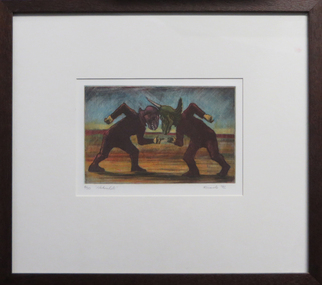 Federation University Art Collection
Work on paper - Limited Edition Coloured Print - 4/30, Geoffrey Ricardo, 'Naturalists' by Geoffrey Ricardo, 1992
... GEOFFREY RICARDO (1964- ) Born Melbourne, Australia 1984-86 Bachelor of Arts (Fine Art), Printmaking, Chisholm Institute of Technology, Melbourne 1987-89 Printing Assistant at Bill Young Studios, Editioning intaglio prints, King Valley, VIC 1988 Full-time Studio Technician at Printmaking Department, Chisholm Institute of Technology, Melbourne 1989-90 Graduate Diploma (Fine Art), Printmaking, Monash University, Melbourne 1991 Traveled to England, France, Spain and USA (Winsor & Newton International Travelling Bursary, National Students Art Prize) Worked in private studios in Gaucin, Spain and New York, USA 1994-95 Master of Fine Arts, Monash University, Melbourne 1995 Guest Lecturer, Victorian College of the Arts, Melbourne Traveled to Europe and America 1996 Guest Lecturer, Royal Melbourne Institute of Technology, Melbourne 1990-98 Sessional Lecturer, Monash University, Melbourne 1998 Traveled to America and Mexico 2001-05 Sessional Lecturer, The Victorian College of the Arts, Melbourne 2003-10 Printmaking Workshops, Warrnambool TAFE, Warrnambool, VIC 2004 Traveled to Europe, Mexico and Cuba 2005 Lecturer, National Art School (Summer School), Sydney Sessional Lecturer, Monash University, Melbourne Lecturer, Institution of Koorie Education, Deakin University, Geelong, VIC SOLO EXHIBITIONS 2012 ‘Collection of Works’ The Art Vault Mildura ‘Deeper Meanings’, The Incinerator Gallery, Melbourne ‘Three Projects’, Australian Galleries, Glenmore Road, Sydney Melbourne Art Fair Stand F33, Australian Galleries, Melbourne 2009 ‘Anno Domino, Antarctica and The Anatomy Lesson’, Australian Galleries Derby Street, Melbourne The Art Vault, Mildura, VIC 2008 MV Orlova (Quark Expeditions), The Drake Passage, Antarctica 2007 ‘Herd’, BMGArt, Adelaide ‘Herd’, Australian Galleries Painting & Sculpture, Sydney 2006 ‘Herd’, Australian Galleries Painting & Sculpture, Melbourne 2004 ‘Recent work’, BMGArt, Adelaide 2003 ‘The Rapunzel Suite and Other New Works’, Australian Galleries Works on Paper, Sydney ‘Recent Works’, Australian Galleries Painting & Sculpture, Melbourne ‘Recent works’, Cowwarr Art Space, Cowwarr, VIC 2002 ‘The Rapunzel Suite’, Australian Galleries Works on Paper, Melbourne ‘Strange Games’, Australian Galleries Works on Paper, Sydney 1999 ‘A Dark City Narrative’, Australian Galleries Works on Paper, Sydney ‘A Dark City Narrative’, Australian Galleries Works on Paper, Melbourne 1998 Cullity Gallery, School of Architecture and Fine Art, University of Western Australia, Perth 1997 Delaney Gallery, Perth Chapman Gallery, Canberra BMGArt, Adelaide ‘Menagerie’, Australian Galleries, Sydney ‘Menagerie’, Australian Galleries, Melbourne 1995 ‘Paintings, Prints and Sculpture’, Australian Galleries, Sydney ‘Prints, Paintings and Sculpture’, Australian Galleries, Melbourne 1994 Lawrence Wilson Art Gallery, University of Western Australia, Perth Graham Galleries + Editions, Brisbane ‘Wishful Thinking, Prints and Sculptures’, Lawrence Wilson Art Gallery, University of Western Australia, Perth 1992 ‘Prints, Sculptures and Watercolours’, Australian Galleries, Melbourne and Sydney 1990 ‘Watercolours, Prints and Small Bronzes’, Australian Galleries, Sydney ‘Paintings, Prints and Sculptures’, Australian Galleries, Melbourne GROUP EXHIBITIONS 2013 ‘Sculpture by the Sea’ Cottlesloe, Western Australia 2012 ‘Brave New World’, Toyota Community Spirit Gallery, Port Melbourne, VIC ‘Sculpture by the Sea’, Bondi, Sydney 2011 ‘Sculpture by the sea’, Aarhus, Denmark ‘Artwork to Tapestry’, Tarrawarra Museum of Art, Healesville, VIC Burnie Print Prize, Burnie Regional Gallery, Burnie, TAS ‘large exhibition of small works’, Australian Galleries, Roylston Street, Sydney ‘large exhibition of small works’, Australian Galleries, Derby Street, Melbourne ‘Nature of the Mark’, Australian Galleries, Smith Street, Melbourne Rick Amor Print Prize, Montsalvat, Eltham, VIC 2010 ‘Summer show’, Australian Galleries, Glenmore Road, Sydney ‘Summer stock show’, Australian Galleries, Smith Street, Melbourne ‘Sub10’, Substation, Melbourne ‘McClelland Sculpture Survey and Award 2010’, McClelland Gallery + Sculpture Park, Langwarrin, VIC ‘Artists’ Prints made with Integrity I’, Australian Galleries, Smith Street, Melbourne Montalto Sculpture Prize, Montalto Vineyard and Olive Grove, Red Hill South, VIC 2009 ‘Artists’ ink: printmaking from the Warrnambool Art Gallery Collection, 1970-2001’, Ararat Regional Art Gallery, Ararat, VIC ‘Lorne Sculpture’ (Winner), Lorne, VIC 2008 ‘Summer Stock Show’, Australian Galleries Smith Street, Melbourne 2007 ARC Biennial (Art, Design and Craft), Queensland University of Technology Art Museum, Brisbane ‘Prints Tokyo: International Print Exhibition’, Tokyo, Japan Seoul International Print, Photo and Edition Works Art Fair, Seoul, Korea Guanlan International Print Biennial, Guanlan, China ‘Summer Stock Show’, Australian Galleries Works on Paper, Sydney ‘Summer Stock Show’, Australian Galleries Painting & Sculpture, Melbourne ‘Summer Stock Show’, Australian Galleries Works on Paper, Melbourne ‘Antipodean Bestiary’, Project Space / Spare Room, RMIT University, Melbourne Montalto Sculpture Prize, Montalto Vineyard and Olive Grove, Red Hill South, VIC McClelland Sculpture Survey and Award 2007, McClelland Gallery + Sculpture Park, Langwarrin, VIC ‘2007: Works from the studio’, Lancaster Press, Melbourne ‘50 - a print exchange portfolio’, Geelong Art Gallery, Geelong, VIC ‘Small Pleasures’, Australian Galleries Painting & Sculpture, Melbourne ‘Stock Show’, Australian Galleries Painting & Sculpture, Melbourne ‘Artists for Kids Culture’, Brightspace, Melbourne 2006 ‘Partnership or perish’, Academy of the Arts, School of Visual and Performing Arts, University of Tasmania, Hobart Libris Awards, Artspace Mackay, Mackay, QLD ‘Summery’, Australian Galleries Painting & Sculpture, Sydney ‘Summer Stock Show’, Australian Galleries Works on Paper, Melbourne ‘Bookish’, Australian Galleries Works on Paper, Melbourne Melbourne Art Fair, Australian Galleries, Melbourne ‘Artists for Kids Culture’, Brightspace, Melbourne ‘50th Anniversary Exhibition’, Australian Galleries Painting & Sculpture, Melbourne 2005 ‘End of Year Group Exhibition’, Australian Galleries Painting & Sculpture, Sydney ‘Contemporary Works on Paper’, Australian Galleries Works on Paper, Melbourne ‘Expansion’, Lancaster Press, Melbourne ‘The Art of Collaboration’, Singapore Tyler Print Institute, Singapore ‘Double take’, Arts Project Australia, Melbourne ‘Small Treasures - 20 emerging and established artists’, TILT Contemporary Art, Melbourne Jacques Cadry Memorial Art Prize, Fox Studios and State Library of NSW, Sydney ‘Tales of the City’, Australian Galleries Painting & Sculpture, Melbourne ‘A Decade of Collecting 1995-2005’, Cairns Regional Gallery, Cairns, QLD ‘Artists for Kids Culture’, Brightspace, Melbourne ‘Surface Tension: 21 Contemporary Australian Printmakers’, University of Tasmania, Launceston, TAS ‘Neo-millenium’, Toyota Community Spirit Gallery, Melbourne 2004 ‘Artists for Kids Culture’, Brightspace, Melbourne ‘Group Exhibition’, Australian Galleries Painting & Sculpture, Melbourne ‘Species’, Australian Galleries Works on Paper, Melbourne ‘In the presence of creatures great and small’, Australian Galleries Works on Paper, Sydney ‘Tapestries from the Victorian Tapestry Workshop’, Australian Galleries, Melbourne ‘Sculpture’, Australian Galleries Painting & Sculpture, Sydney ‘Contemporary Australian Prints’, National Arts Club, New York, USA ‘Contemporary Australian Prints’, Gallery 101, Melbourne ‘Contemporary Australian Prints from the Collection’, Art Gallery of New South Wales, Sydney ‘Bridge’, Toyota Community Spirit Gallery, Melbourne ‘Vivid’, Fortyfive Downstairs, Melbourne Lake Gallery, Paynesville, VIC 2003 ‘Paper matters’, Lawrence Wilson Art Gallery, University of Western Australia, Perth ‘Artists for Kids Culture’, Brightspace, Melbourne ‘Less is more’, BMGArt, Adelaide ‘The ink’s on me: Bill Young master printmaker’, Wangaratta Exhibitions Gallery, Wangaratta, VIC ‘Fantastic and Visionary Art’, Touring: Global Arts Link, QLD; Ipswich Regional Gallery, QLD ; Orange Regional Gallery, NSW; Manning Regional Gallery, NSW; Parramatta Heritage Centre, Sydney; Ballarat Regional Gallery, VIC 2002 Shell Fremantle Print Award, Fremantle Arts Centre, Fremantle, WA ‘Artists for Kids Culture’, Brightspace, Melbourne 2001 Shell Fremantle Print Award, Fremantle Arts Centre, Fremantle, WA ‘Six Degrees of Collaboration’, RMIT Faculty of Art, Design and Communication Gallery, Melbourne ‘Reciprocal Moves’, Warrnambool Art Gallery, Warrnambool, VIC International Print Triennial, Kanagawa, Japan ‘Fantastic Art’, Orange Regional Gallery, Orange, NSW ‘Dancing Made a Man out of Me’, The Switchback Gallery, Monash University, Gippsland, VIC ‘Artists for Kids Culture’, Brightspace, Melbourne ‘Celebration’, Regional touring exhibition, VIC 2000-01 ‘Workings of the Mind: Melbourne Prints of the 1960s to the 1990s’, Touring: Grafton Regional Gallery, NSW; Toowoomba Regional Art Gallery, QLD; Nolan Gallery, Canberra; Bendigo Art Gallery, VIC; PercTucker Regional Gallery, QLD 2000 Shell Fremantle Print Award, Fremantle Arts Centre, Fremantle, WA The Hutchins Art Prize, Long Gallery, Hobart ‘Artists for Kids Culture’, Brightspace, Melbourne 1999 Shell Fremantle Print Award, Fremantle Arts Space, Fremantle, WA ‘We are Australian’, George Adams Gallery, Victorian Arts Centre, Melbourne Rena Ellen Jones Memorial Print Award, Warrnambool Art Gallery, Warrnambool, VIC ‘National Works on Paper’, Mornington Peninsula Gallery, Mornington, VIC ‘Artists for Kids Culture’, Brightspace, Melbourne ‘Pleasure’, Australian Galleries, Melbourne 1998-99 ‘Australian Prints’, Art Gallery of New South Wales, Sydney 1997 ‘KNOCK, KNOCK’, Australian Galleries, Melbourne ‘Woven Colour, The Art of Tapestry’, Dr Earl Lu Gallery, Singapore 1996 M.P.A.C. ...GEOFFREY RICARDO (1964- ) Born Melbourne, Australia 1984-86 Bachelor of Arts (Fine Art), Printmaking, Chisholm Institute of Technology, Melbourne 1987-89 Printing Assistant at Bill Young Studios, Editioning intaglio prints, King Valley, VIC 1988 Full-time Studio Technician at Printmaking Department, Chisholm Institute of Technology, Melbourne 1989-90 Graduate Diploma (Fine Art), Printmaking, Monash University, Melbourne 1991 Traveled to England, France, Spain and USA (Winsor & Newton International Travelling Bursary, National Students Art Prize) Worked in private studios in Gaucin, Spain and New York, USA 1994-95 Master of Fine Arts, Monash University, Melbourne 1995 Guest Lecturer, Victorian College of the Arts, Melbourne Traveled to Europe and America 1996 Guest Lecturer, Royal Melbourne Institute of Technology, Melbourne 1990-98 Sessional Lecturer, Monash University, Melbourne 1998 Traveled to America and Mexico 2001-05 Sessional Lecturer, The Victorian College of the Arts, Melbourne 2003-10 Printmaking Workshops, Warrnambool TAFE, Warrnambool, VIC 2004 Traveled to Europe, Mexico and Cuba 2005 Lecturer, National Art School (Summer School), Sydney Sessional Lecturer, Monash University, Melbourne Lecturer, Institution of Koorie Education, Deakin University, Geelong, VIC SOLO EXHIBITIONS 2012 ‘Collection of Works’ The Art Vault Mildura ‘Deeper Meanings’, The Incinerator Gallery, Melbourne ‘Three Projects’, Australian Galleries, Glenmore Road, Sydney Melbourne Art Fair Stand F33, Australian Galleries, Melbourne 2009 ‘Anno Domino, Antarctica and The Anatomy Lesson’, Australian Galleries Derby Street, Melbourne The Art Vault, Mildura, VIC 2008 MV Orlova (Quark Expeditions), The Drake Passage, Antarctica 2007 ‘Herd’, BMGArt, Adelaide ‘Herd’, Australian Galleries Painting & Sculpture, Sydney 2006 ‘Herd’, Australian Galleries Painting & Sculpture, Melbourne 2004 ‘Recent work’, BMGArt, Adelaide 2003 ‘The Rapunzel Suite and Other New Works’, Australian Galleries Works on Paper, Sydney ‘Recent Works’, Australian Galleries Painting & Sculpture, Melbourne ‘Recent works’, Cowwarr Art Space, Cowwarr, VIC 2002 ‘The Rapunzel Suite’, Australian Galleries Works on Paper, Melbourne ‘Strange Games’, Australian Galleries Works on Paper, Sydney 1999 ‘A Dark City Narrative’, Australian Galleries Works on Paper, Sydney ‘A Dark City Narrative’, Australian Galleries Works on Paper, Melbourne 1998 Cullity Gallery, School of Architecture and Fine Art, University of Western Australia, Perth 1997 Delaney Gallery, Perth Chapman Gallery, Canberra BMGArt, Adelaide ‘Menagerie’, Australian Galleries, Sydney ‘Menagerie’, Australian Galleries, Melbourne 1995 ‘Paintings, Prints and Sculpture’, Australian Galleries, Sydney ‘Prints, Paintings and Sculpture’, Australian Galleries, Melbourne 1994 Lawrence Wilson Art Gallery, University of Western Australia, Perth Graham Galleries + Editions, Brisbane ‘Wishful Thinking, Prints and Sculptures’, Lawrence Wilson Art Gallery, University of Western Australia, Perth 1992 ‘Prints, Sculptures and Watercolours’, Australian Galleries, Melbourne and Sydney 1990 ‘Watercolours, Prints and Small Bronzes’, Australian Galleries, Sydney ‘Paintings, Prints and Sculptures’, Australian Galleries, Melbourne GROUP EXHIBITIONS 2013 ‘Sculpture by the Sea’ Cottlesloe, Western Australia 2012 ‘Brave New World’, Toyota Community Spirit Gallery, Port Melbourne, VIC ‘Sculpture by the Sea’, Bondi, Sydney 2011 ‘Sculpture by the sea’, Aarhus, Denmark ‘Artwork to Tapestry’, Tarrawarra Museum of Art, Healesville, VIC Burnie Print Prize, Burnie Regional Gallery, Burnie, TAS ‘large exhibition of small works’, Australian Galleries, Roylston Street, Sydney ‘large exhibition of small works’, Australian Galleries, Derby Street, Melbourne ‘Nature of the Mark’, Australian Galleries, Smith Street, Melbourne Rick Amor Print Prize, Montsalvat, Eltham, VIC 2010 ‘Summer show’, Australian Galleries, Glenmore Road, Sydney ‘Summer stock show’, Australian Galleries, Smith Street, Melbourne ‘Sub10’, Substation, Melbourne ‘McClelland Sculpture Survey and Award 2010’, McClelland Gallery + Sculpture Park, Langwarrin, VIC ‘Artists’ Prints made with Integrity I’, Australian Galleries, Smith Street, Melbourne Montalto Sculpture Prize, Montalto Vineyard and Olive Grove, Red Hill South, VIC 2009 ‘Artists’ ink: printmaking from the Warrnambool Art Gallery Collection, 1970-2001’, Ararat Regional Art Gallery, Ararat, VIC ‘Lorne Sculpture’ (Winner), Lorne, VIC 2008 ‘Summer Stock Show’, Australian Galleries Smith Street, Melbourne 2007 ARC Biennial (Art, Design and Craft), Queensland University of Technology Art Museum, Brisbane ‘Prints Tokyo: International Print Exhibition’, Tokyo, Japan Seoul International Print, Photo and Edition Works Art Fair, Seoul, Korea Guanlan International Print Biennial, Guanlan, China ‘Summer Stock Show’, Australian Galleries Works on Paper, Sydney ‘Summer Stock Show’, Australian Galleries Painting & Sculpture, Melbourne ‘Summer Stock Show’, Australian Galleries Works on Paper, Melbourne ‘Antipodean Bestiary’, Project Space / Spare Room, RMIT University, Melbourne Montalto Sculpture Prize, Montalto Vineyard and Olive Grove, Red Hill South, VIC McClelland Sculpture Survey and Award 2007, McClelland Gallery + Sculpture Park, Langwarrin, VIC ‘2007: Works from the studio’, Lancaster Press, Melbourne ‘50 - a print exchange portfolio’, Geelong Art Gallery, Geelong, VIC ‘Small Pleasures’, Australian Galleries Painting & Sculpture, Melbourne ‘Stock Show’, Australian Galleries Painting & Sculpture, Melbourne ‘Artists for Kids Culture’, Brightspace, Melbourne 2006 ‘Partnership or perish’, Academy of the Arts, School of Visual and Performing Arts, University of Tasmania, Hobart Libris Awards, Artspace Mackay, Mackay, QLD ‘Summery’, Australian Galleries Painting & Sculpture, Sydney ‘Summer Stock Show’, Australian Galleries Works on Paper, Melbourne ‘Bookish’, Australian Galleries Works on Paper, Melbourne Melbourne Art Fair, Australian Galleries, Melbourne ‘Artists for Kids Culture’, Brightspace, Melbourne ‘50th Anniversary Exhibition’, Australian Galleries Painting & Sculpture, Melbourne 2005 ‘End of Year Group Exhibition’, Australian Galleries Painting & Sculpture, Sydney ‘Contemporary Works on Paper’, Australian Galleries Works on Paper, Melbourne ‘Expansion’, Lancaster Press, Melbourne ‘The Art of Collaboration’, Singapore Tyler Print Institute, Singapore ‘Double take’, Arts Project Australia, Melbourne ‘Small Treasures - 20 emerging and established artists’, TILT Contemporary Art, Melbourne Jacques Cadry Memorial Art Prize, Fox Studios and State Library of NSW, Sydney ‘Tales of the City’, Australian Galleries Painting & Sculpture, Melbourne ‘A Decade of Collecting 1995-2005’, Cairns Regional Gallery, Cairns, QLD ‘Artists for Kids Culture’, Brightspace, Melbourne ‘Surface Tension: 21 Contemporary Australian Printmakers’, University of Tasmania, Launceston, TAS ‘Neo-millenium’, Toyota Community Spirit Gallery, Melbourne 2004 ‘Artists for Kids Culture’, Brightspace, Melbourne ‘Group Exhibition’, Australian Galleries Painting & Sculpture, Melbourne ‘Species’, Australian Galleries Works on Paper, Melbourne ‘In the presence of creatures great and small’, Australian Galleries Works on Paper, Sydney ‘Tapestries from the Victorian Tapestry Workshop’, Australian Galleries, Melbourne ‘Sculpture’, Australian Galleries Painting & Sculpture, Sydney ‘Contemporary Australian Prints’, National Arts Club, New York, USA ‘Contemporary Australian Prints’, Gallery 101, Melbourne ‘Contemporary Australian Prints from the Collection’, Art Gallery of New South Wales, Sydney ‘Bridge’, Toyota Community Spirit Gallery, Melbourne ‘Vivid’, Fortyfive Downstairs, Melbourne Lake Gallery, Paynesville, VIC 2003 ‘Paper matters’, Lawrence Wilson Art Gallery, University of Western Australia, Perth ‘Artists for Kids Culture’, Brightspace, Melbourne ‘Less is more’, BMGArt, Adelaide ‘The ink’s on me: Bill Young master printmaker’, Wangaratta Exhibitions Gallery, Wangaratta, VIC ‘Fantastic and Visionary Art’, Touring: Global Arts Link, QLD; Ipswich Regional Gallery, QLD ; Orange Regional Gallery, NSW; Manning Regional Gallery, NSW; Parramatta Heritage Centre, Sydney; Ballarat Regional Gallery, VIC 2002 Shell Fremantle Print Award, Fremantle Arts Centre, Fremantle, WA ‘Artists for Kids Culture’, Brightspace, Melbourne 2001 Shell Fremantle Print Award, Fremantle Arts Centre, Fremantle, WA ‘Six Degrees of Collaboration’, RMIT Faculty of Art, Design and Communication Gallery, Melbourne ‘Reciprocal Moves’, Warrnambool Art Gallery, Warrnambool, VIC International Print Triennial, Kanagawa, Japan ‘Fantastic Art’, Orange Regional Gallery, Orange, NSW ‘Dancing Made a Man out of Me’, The Switchback Gallery, Monash University, Gippsland, VIC ‘Artists for Kids Culture’, Brightspace, Melbourne ‘Celebration’, Regional touring exhibition, VIC 2000-01 ‘Workings of the Mind: Melbourne Prints of the 1960s to the 1990s’, Touring: Grafton Regional Gallery, NSW; Toowoomba Regional Art Gallery, QLD; Nolan Gallery, Canberra; Bendigo Art Gallery, VIC; PercTucker Regional Gallery, QLD 2000 Shell Fremantle Print Award, Fremantle Arts Centre, Fremantle, WA The Hutchins Art Prize, Long Gallery, Hobart ‘Artists for Kids Culture’, Brightspace, Melbourne 1999 Shell Fremantle Print Award, Fremantle Arts Space, Fremantle, WA ‘We are Australian’, George Adams Gallery, Victorian Arts Centre, Melbourne Rena Ellen Jones Memorial Print Award, Warrnambool Art Gallery, Warrnambool, VIC ‘National Works on Paper’, Mornington Peninsula Gallery, Mornington, VIC ‘Artists for Kids Culture’, Brightspace, Melbourne ‘Pleasure’, Australian Galleries, Melbourne 1998-99 ‘Australian Prints’, Art Gallery of New South Wales, Sydney 1997 ‘KNOCK, KNOCK’, Australian Galleries, Melbourne ‘Woven Colour, The Art of Tapestry’, Dr Earl Lu Gallery, Singapore 1996 M.P.A.C. ...GEOFFREY RICARDO (1964- ) Born Melbourne, Australia 1984-86 Bachelor of Arts (Fine Art), Printmaking, Chisholm Institute of Technology, Melbourne 1987-89 Printing Assistant at Bill Young Studios, Editioning intaglio prints, King Valley, VIC 1988 Full-time Studio Technician at Printmaking Department, Chisholm Institute of Technology, Melbourne 1989-90 Graduate Diploma (Fine Art), Printmaking, Monash University, Melbourne 1991 Traveled to England, France, Spain and USA (Winsor & Newton International Travelling Bursary, National Students Art Prize) Worked in private studios in Gaucin, Spain and New York, USA 1994-95 Master of Fine Arts, Monash University, Melbourne 1995 Guest Lecturer, Victorian College of the Arts, Melbourne Traveled to Europe and America 1996 Guest Lecturer, Royal Melbourne Institute of Technology, Melbourne 1990-98 Sessional Lecturer, Monash University, Melbourne 1998 Traveled to America and Mexico 2001-05 Sessional Lecturer, The Victorian College of the Arts, Melbourne 2003-10 Printmaking Workshops, Warrnambool TAFE, Warrnambool, VIC 2004 Traveled to Europe, Mexico and Cuba 2005 Lecturer, National Art School (Summer School), Sydney Sessional Lecturer, Monash University, Melbourne Lecturer, Institution of Koorie Education, Deakin University, Geelong, VIC SOLO EXHIBITIONS 2012 ‘Collection of Works’ The Art Vault Mildura ‘Deeper Meanings’, The Incinerator Gallery, Melbourne ‘Three Projects’, Australian Galleries, Glenmore Road, Sydney Melbourne Art Fair Stand F33, Australian Galleries, Melbourne 2009 ‘Anno Domino, Antarctica and The Anatomy Lesson’, Australian Galleries Derby Street, Melbourne The Art Vault, Mildura, VIC 2008 MV Orlova (Quark Expeditions), The Drake Passage, Antarctica 2007 ‘Herd’, BMGArt, Adelaide ‘Herd’, Australian Galleries Painting & Sculpture, Sydney 2006 ‘Herd’, Australian Galleries Painting & Sculpture, Melbourne 2004 ‘Recent work’, BMGArt, Adelaide 2003 ‘The Rapunzel Suite and Other New Works’, Australian Galleries Works on Paper, Sydney ‘Recent Works’, Australian Galleries Painting & Sculpture, Melbourne ‘Recent works’, Cowwarr Art Space, Cowwarr, VIC 2002 ‘The Rapunzel Suite’, Australian Galleries Works on Paper, Melbourne ‘Strange Games’, Australian Galleries Works on Paper, Sydney 1999 ‘A Dark City Narrative’, Australian Galleries Works on Paper, Sydney ‘A Dark City Narrative’, Australian Galleries Works on Paper, Melbourne 1998 Cullity Gallery, School of Architecture and Fine Art, University of Western Australia, Perth 1997 Delaney Gallery, Perth Chapman Gallery, Canberra BMGArt, Adelaide ‘Menagerie’, Australian Galleries, Sydney ‘Menagerie’, Australian Galleries, Melbourne 1995 ‘Paintings, Prints and Sculpture’, Australian Galleries, Sydney ‘Prints, Paintings and Sculpture’, Australian Galleries, Melbourne 1994 Lawrence Wilson Art Gallery, University of Western Australia, Perth Graham Galleries + Editions, Brisbane ‘Wishful Thinking, Prints and Sculptures’, Lawrence Wilson Art Gallery, University of Western Australia, Perth 1992 ‘Prints, Sculptures and Watercolours’, Australian Galleries, Melbourne and Sydney 1990 ‘Watercolours, Prints and Small Bronzes’, Australian Galleries, Sydney ‘Paintings, Prints and Sculptures’, Australian Galleries, Melbourne GROUP EXHIBITIONS 2013 ‘Sculpture by the Sea’ Cottlesloe, Western Australia 2012 ‘Brave New World’, Toyota Community Spirit Gallery, Port Melbourne, VIC ‘Sculpture by the Sea’, Bondi, Sydney 2011 ‘Sculpture by the sea’, Aarhus, Denmark ‘Artwork to Tapestry’, Tarrawarra Museum of Art, Healesville, VIC Burnie Print Prize, Burnie Regional Gallery, Burnie, TAS ‘large exhibition of small works’, Australian Galleries, Roylston Street, Sydney ‘large exhibition of small works’, Australian Galleries, Derby Street, Melbourne ‘Nature of the Mark’, Australian Galleries, Smith Street, Melbourne Rick Amor Print Prize, Montsalvat, Eltham, VIC 2010 ‘Summer show’, Australian Galleries, Glenmore Road, Sydney ‘Summer stock show’, Australian Galleries, Smith Street, Melbourne ‘Sub10’, Substation, Melbourne ‘McClelland Sculpture Survey and Award 2010’, McClelland Gallery + Sculpture Park, Langwarrin, VIC ‘Artists’ Prints made with Integrity I’, Australian Galleries, Smith Street, Melbourne Montalto Sculpture Prize, Montalto Vineyard and Olive Grove, Red Hill South, VIC 2009 ‘Artists’ ink: printmaking from the Warrnambool Art Gallery Collection, 1970-2001’, Ararat Regional Art Gallery, Ararat, VIC ‘Lorne Sculpture’ (Winner), Lorne, VIC 2008 ‘Summer Stock Show’, Australian Galleries Smith Street, Melbourne 2007 ARC Biennial (Art, Design and Craft), Queensland University of Technology Art Museum, Brisbane ‘Prints Tokyo: International Print Exhibition’, Tokyo, Japan Seoul International Print, Photo and Edition Works Art Fair, Seoul, Korea Guanlan International Print Biennial, Guanlan, China ‘Summer Stock Show’, Australian Galleries Works on Paper, Sydney ‘Summer Stock Show’, Australian Galleries Painting & Sculpture, Melbourne ‘Summer Stock Show’, Australian Galleries Works on Paper, Melbourne ‘Antipodean Bestiary’, Project Space / Spare Room, RMIT University, Melbourne Montalto Sculpture Prize, Montalto Vineyard and Olive Grove, Red Hill South, VIC McClelland Sculpture Survey and Award 2007, McClelland Gallery + Sculpture Park, Langwarrin, VIC ‘2007: Works from the studio’, Lancaster Press, Melbourne ‘50 - a print exchange portfolio’, Geelong Art Gallery, Geelong, VIC ‘Small Pleasures’, Australian Galleries Painting & Sculpture, Melbourne ‘Stock Show’, Australian Galleries Painting & Sculpture, Melbourne ‘Artists for Kids Culture’, Brightspace, Melbourne 2006 ‘Partnership or perish’, Academy of the Arts, School of Visual and Performing Arts, University of Tasmania, Hobart Libris Awards, Artspace Mackay, Mackay, QLD ‘Summery’, Australian Galleries Painting & Sculpture, Sydney ‘Summer Stock Show’, Australian Galleries Works on Paper, Melbourne ‘Bookish’, Australian Galleries Works on Paper, Melbourne Melbourne Art Fair, Australian Galleries, Melbourne ‘Artists for Kids Culture’, Brightspace, Melbourne ‘50th Anniversary Exhibition’, Australian Galleries Painting & Sculpture, Melbourne 2005 ‘End of Year Group Exhibition’, Australian Galleries Painting & Sculpture, Sydney ‘Contemporary Works on Paper’, Australian Galleries Works on Paper, Melbourne ‘Expansion’, Lancaster Press, Melbourne ‘The Art of Collaboration’, Singapore Tyler Print Institute, Singapore ‘Double take’, Arts Project Australia, Melbourne ‘Small Treasures - 20 emerging and established artists’, TILT Contemporary Art, Melbourne Jacques Cadry Memorial Art Prize, Fox Studios and State Library of NSW, Sydney ‘Tales of the City’, Australian Galleries Painting & Sculpture, Melbourne ‘A Decade of Collecting 1995-2005’, Cairns Regional Gallery, Cairns, QLD ‘Artists for Kids Culture’, Brightspace, Melbourne ‘Surface Tension: 21 Contemporary Australian Printmakers’, University of Tasmania, Launceston, TAS ‘Neo-millenium’, Toyota Community Spirit Gallery, Melbourne 2004 ‘Artists for Kids Culture’, Brightspace, Melbourne ‘Group Exhibition’, Australian Galleries Painting & Sculpture, Melbourne ‘Species’, Australian Galleries Works on Paper, Melbourne ‘In the presence of creatures great and small’, Australian Galleries Works on Paper, Sydney ‘Tapestries from the Victorian Tapestry Workshop’, Australian Galleries, Melbourne ‘Sculpture’, Australian Galleries Painting & Sculpture, Sydney ‘Contemporary Australian Prints’, National Arts Club, New York, USA ‘Contemporary Australian Prints’, Gallery 101, Melbourne ‘Contemporary Australian Prints from the Collection’, Art Gallery of New South Wales, Sydney ‘Bridge’, Toyota Community Spirit Gallery, Melbourne ‘Vivid’, Fortyfive Downstairs, Melbourne Lake Gallery, Paynesville, VIC 2003 ‘Paper matters’, Lawrence Wilson Art Gallery, University of Western Australia, Perth ‘Artists for Kids Culture’, Brightspace, Melbourne ‘Less is more’, BMGArt, Adelaide ‘The ink’s on me: Bill Young master printmaker’, Wangaratta Exhibitions Gallery, Wangaratta, VIC ‘Fantastic and Visionary Art’, Touring: Global Arts Link, QLD; Ipswich Regional Gallery, QLD ; Orange Regional Gallery, NSW; Manning Regional Gallery, NSW; Parramatta Heritage Centre, Sydney; Ballarat Regional Gallery, VIC 2002 Shell Fremantle Print Award, Fremantle Arts Centre, Fremantle, WA ‘Artists for Kids Culture’, Brightspace, Melbourne 2001 Shell Fremantle Print Award, Fremantle Arts Centre, Fremantle, WA ‘Six Degrees of Collaboration’, RMIT Faculty of Art, Design and Communication Gallery, Melbourne ‘Reciprocal Moves’, Warrnambool Art Gallery, Warrnambool, VIC International Print Triennial, Kanagawa, Japan ‘Fantastic Art’, Orange Regional Gallery, Orange, NSW ‘Dancing Made a Man out of Me’, The Switchback Gallery, Monash University, Gippsland, VIC ‘Artists for Kids Culture’, Brightspace, Melbourne ‘Celebration’, Regional touring exhibition, VIC 2000-01 ‘Workings of the Mind: Melbourne Prints of the 1960s to the 1990s’, Touring: Grafton Regional Gallery, NSW; Toowoomba Regional Art Gallery, QLD; Nolan Gallery, Canberra; Bendigo Art Gallery, VIC; PercTucker Regional Gallery, QLD 2000 Shell Fremantle Print Award, Fremantle Arts Centre, Fremantle, WA The Hutchins Art Prize, Long Gallery, Hobart ‘Artists for Kids Culture’, Brightspace, Melbourne 1999 Shell Fremantle Print Award, Fremantle Arts Space, Fremantle, WA ‘We are Australian’, George Adams Gallery, Victorian Arts Centre, Melbourne Rena Ellen Jones Memorial Print Award, Warrnambool Art Gallery, Warrnambool, VIC ‘National Works on Paper’, Mornington Peninsula Gallery, Mornington, VIC ‘Artists for Kids Culture’, Brightspace, Melbourne ‘Pleasure’, Australian Galleries, Melbourne 1998-99 ‘Australian Prints’, Art Gallery of New South Wales, Sydney 1997 ‘KNOCK, KNOCK’, Australian Galleries, Melbourne ‘Woven Colour, The Art of Tapestry’, Dr Earl Lu Gallery, Singapore 1996 M.P.A.C. Print Award, Mornington Peninsula Arts Centre, Mornington, VIC Academy of Art & Culture, Calcutta, India ‘Synergy’, Touring: Lalit Kala Akademi, New Dehli, India; Jehangir Nicholson Gallery, Bombay, India; Birla, India ‘Contemporary Australian Tapestry’, Frederikshavn Kunstmuseum, Denmark; Australia House, London, UK 1995 ‘Interweave - Tapestry A Collaborative Art’, Heide Museum of Modern Art, Melbourne ‘Contemporary Printmakers’, La Trobe Regional Gallery, Morwell, VIC ‘Contemporary Australian Tapestry’, Australian High Commission, Singapore ‘Circus Capers’, Caulfield Arts Complex, Melbourne 1994 M.P.A.C. Print Award, Mornington Peninsula Arts Centre, Mornington, VIC Fremantle Print Award, Fremantle Arts Centre, Fremantle, WA Australian Universities of Visual Art, Australian High Commission, Singapore ‘Prints, Paintings and Sculpture’, BMGArt, Adelaide Fourth Australian Contemporary Art Fair, Royal Exhibition Building, Melbourne 1993 Fremantle Print Award, Fremantle Arts Centre, Fremantle, WA 1992 Fremantle Print Award, Fremantle Arts Centre, Fremantle, WA ‘Transitional Times’, Print Council of Australia, Melbourne ‘Second Kochi International Triennial Exhibition of Prints’, Japan 1991 Henry Worland Memorial Print Prize, Warrnambool Regional Art Gallery, Warrnambool, VIC Fremantle Print Award, Fremantle Arts Centre, Fremantle, WA ‘Table Top Sculpture’, Australian Galleries, Melbourne ‘Art 91’, London Contemporary Art Fair, London, UK 1990 M.P.A.C. Print Prize, Mornington Peninsula Arts Centre, Mornington, VIC Fremantle Print Prize, Fremantle Arts Centre, Fremantle WA ‘The Christmas Show’, Intaglio Printmaker, London, England ‘Australian Contemporary Art’, AZ Gallery, Tokyo, Japan 1989 National Student Art Prize, Mitchell College, Bathurst, NSW Fremantle Print Award, Fremantle Arts Centre, Fremantle, WA City of Doncaster Acquisitive Print Prize, Manningham Gallery, Melbourne ‘Affiliations’, Monash University Gallery, Melbourne 1988 M.P.A.C. Acquisitive Print Prize, Mornington Peninsula Arts Centre, Mornington, VIC Henry Worland Memorial Print Prize, Warrnambool Regional Art Gallery, Warrnambool, VIC 1987 ‘The Comedy Show’, Print Guild, Melbourne ‘Fluxus Art Flow’, Melbourne 1986 Mornington Peninsula Arts Council Acquisitive Print Prize, Mornington Peninsula, VIC Chisolm Institute of Technology, Graduating Students exhibition, Melbourne AWARDS 2013 King Valley Art Prize (printmaking) 2009 Lorne Sculpture Exhibition (Winner), Lorne, VIC 1989 Windsor and Newton International Travelling Bursary, UK Linbrook International First Prize for Printmaking, Australia COMMISSIONS 2005 Tapestry design for Bairnsdale Hospital (woven by the Victorian Tapestry Workshop, Melbourne), Bairnsdale, VIC 1999 Tapestry design ‘Emblem’ (woven by the Victorian Tapestry Workshop, Melbourne), Australia 1995 ‘A Night of Infectious Laughter’ Poster, St Kilda Festival, Melbourne 1994 Tapestry design ‘Elephant Gingham’ (woven by the Victorian Tapestry Workshop, Melbourne), Australia 1993 Tapestry design for the Festival of Perth Official Poster (woven by the Victorian Tapestry Workshop, Melbourne), Perth RESIDENCIES & PROJECTS 2013 ‘Come In Outside’, Collaboration set design for Pocketfool 2011 Mildura Wentworth Arts Festival Project, Mildura, VIC Residency, The Art Vault , Mildura, VIC 2010 ‘Wish’, Collaboration set design for Pocketfool, Artplay, Melbourne The Art Vault (included continuous public flag making workshops which were flown as part of The Wentworth Mildura Art Festival), Mildura, VIC 2009 The Art Vault (included two public printmaking workshops), Mildura, VIC 2008 Artist in residence, MV Orlova, Quark Expeditions, Antarctica 2003 Residency, Bairnsdale Regional Health Service, Bairnsdale, VIC 1998 Residency, School of Architecture & Fine Art, University of Western Australia, Perth 1997 Residency, La Salle/Fia, College of the Arts, Singapore 1996 Artist in residence, Victorian Tapestry Workshop, Melbourne 1993 Reduction Aquatint Workshop & Residency, Graphic Investigation Department, Canberra School of Art, Canberra NB: all residencies have included workshops involving students, children or the general public COLLECTIONS Artbank, Sydney Art Gallery of New South Wales, Sydney Canson Australia Pty Ltd, Australia City of Box Hill, Melbourne City of Whitehorse, Melbourne Downlands College, Toowoomba, QLD Geelong Grammar School, Geelong, VIC Gold Coast City Art Gallery, Gold Coast, QLD Griffith University, Gold Coast, QLD Helensvale High School, Brisbane Holmes à Court Collection, Perth Latrobe Regional Gallery, Morwell, VIC Monash University, Melbourne Mornington Peninsula Arts Council Collection, Mornington, VIC National Gallery of Australia, Canberra National Gallery of Victoria, Melbourne Parliament House Art Collection, Canberra Print Council of Australia, Melbourne Private collections in Australia, Switzerland, USA, UK, Singapore, Germany, Japan, Malaysia, Holland Queen Victoria Museum & Art Gallery, Launceston, TAS Queensland Art Gallery, Brisbane Queensland University of Technology, Brisbane Shire of Diamond Valley, Diamond Valley, VIC Star of the Sea College, Melbourne The Melbourne Club, Melbourne University of Central Queensland, Brisbane University of Technology, Sydney Wagga Wagga Regional Art Gallery, Wagga Wagga, NSW Warrnambool Regional Art Gallery, Warrnambool, VIC BIBLIOGRAPHY PERIODICALS AQ Journal of Contemporary Analysis, Vol. 70, Issue 4, July-August 1998 AQ Journal of Contemporary Analysis, Vol. 70, Issue 6, November-December 1998 AQ Journal of Contemporary Analysis, Vol.71, Issue 7, April 1999 Backhouse, Megan; “Going out of print and back to basics”, The Age, February 2003 Bellamy, Louise; “Renaissance of Western Art”, The Age (A2 section), 26 November 2005 Clabburn, Anna; “Fables and Foibles”, Art Monthly, September 1994 Dutkiewicz, Adam; “Edge of the sublime”, Advertiser, 1 December 2003, p. 76. Erickson, Dorothy; “The Festival that could have been”, The Bulletin, March 1994 Farmer, Alison; “Ricardo makes poster splash”, Sunday Times - Entertainment Extra, 19 September 1993 “Festival taps weaver’s art”, The West Australian, 11February 1994 Fiasco (web-page), March 2003 Jenkins, John; “A Dark City Narrative”, Imprint, Vol. 34, No. 4, 1999 Grishin, Sasha; “Multiplicity – collecting Australian prints”, Australian Art Review, Issue 13, March-June 2007, pp. 52-55 Grishin, Sasha; “Profiles in Print - Geoffrey Ricardo”, Craft Arts International, Issue 76, 2009, pp.1-4 Lloyd, Tim; “The elephant man”, The Advertiser (Review section), December 2007 Manzana Arné, Josep; “De L’Ex-Libris a L’Ex-Webis: Ex-Libris a Internet”, Ex-Libris, Associació Catalana D’Exlibristes, Barcelona, No. 27, July-December 2002, p.11 McDonald, John; “Dreams of hope and menace” The Sydney Morning Herald, 18 March 1995 McMillan, Peter; “Darkness visible”, The Age, 11September 1999 Nelson, Robert; “Circuses can be curated, but not cured”, The Age, 18 January 1995 Nelson, Robert; “Dream Weavers”, The Age, June 1995 Nelson, Robert; “Paen To Ricardo”, Imprint, Vol. 29, No.1, April, 1994 Nelson, Robert; “Revealed: Mother Nature’s vulgar past”, The Age, September 6, 2000 Nelson, Robert; “Riddled with hidden meaning”, The Age, September 8, 1999 Quadrant, April, 1995 Quadrant, Jan/Feb, 1995 Quadrant, October, 1995 Quadrant, November, 1994 “Ricardo’s surreal works at gallery”, Times-Spectator, 25 July 2003, p.7 Snell, Ted; “Art”, The Australian, 18 February1994 Snell, Ted; “Visual arts at the Festival of Perth”, Art Monthly, April 1994 Sunday Arts, ABC TV, 6 May 2007 Timms, Peter; “Geoff Ricardo: emerging from darkness”, Art Monthly, Issue 140, June 2001 Wallace, Dr Carmel; “Ways of seeing Australia”, Asian Art News, May/June 2004 BOOKS & CATALOGUES A Dark City Narrative, Australian Galleries, Melbourne, 1999 ARC Biennial Exhibition (Exhibition catalogue), Queensland University of Technology Art Museum, 2007, pp. 78-79 Clabburn, Anna; “The Collaborative Spirit”, Australian Tapestries: Victorian Tapestry Workshop, 1995, p. 37 Fantastic Art, Orange Regional Gallery, NSW, 2001 Field, Caroline; Herd, catalogue essay, Australian Galleries, Sydney, 2007 Grishin, Sasha; Australian Identities in Printmaking, Wagga Wagga Regional Art Gallery, 2000 Grishin, Sasha; Australian Printmaking in the 1990’s, Craftsman House, 1997 Havighurst, Sophie (Illustrations by Geoffrey Ricardo); When Lester lost his cool, The University of Melbourne, 2007 Kolenberg, Hendrik & Ryan, Anne; Australian Prints, Art Gallery of New South Wales, 1998 Lawrence, Michel; Framed; photographs of Australian Artists, 1998 Modern Australian Tapestries, Victorian Tapestry Workshop, 2000 The Rapunzel Suite, Australian Galleries, Melbourne, 2002 Wallace, Dr Carmel (Essay); Surface Tension, Twenty One Contemporary Australian Printmakers, Gallery 101, Melbourne, 2004 Workings of the Mind : Melbourne Prints of the 1960s to the 1990s, Queensland University of Technology Art Museum, Brisbane, 2000 TELEVISION Sunday Arts, ABC TV, 6 May 2007 Inside Art TV, Channel 31, July 2012 Framed limited edition coloured print showing two men in dinosaur masks, leaning over and heading butting each other. Edition is limited to 30, print is number four.On the left, between print and matting: 4/30 "Naturalists" On the right, between print and matting: signed Ricardo ' 92 On front upper right hand corner pale dark red stain on glass On back, left hand corner, red ink finger prints near where it appears that the backing board has been torn to remove the previous tape. On back, both vertical sides has a number of dents towards the outside of it near the tape. art, artwork, print, limited edition, geoffrey, ricardo, fantasy, colour, available, sport -
 Federation University Art Collection
Work on paper - Printmaking -Aquatint etching, 'Dog' by Geoffrey Ricardo, 1995
... GEOFFREY RICARDO Born 1964, Melbourne, Australia 1984-86 Bachelor of Arts (Fine Art), Printmaking, Chisholm Institute of Technology, Melbourne 1987-89 Printing Assistant at Bill Young Studios, Editioning intaglio prints, King Valley, VIC 1988 Full-time Studio Technician at Printmaking Department, Chisholm Institute of Technology, Melbourne 1989-90 Graduate Diploma (Fine Art), Printmaking, Monash University, Melbourne 1991 Traveled to England, France, Spain and USA (Winsor & Newton International Travelling Bursary, National Students Art Prize) Worked in private studios in Gaucin, Spain and New York, USA 1994-95 Master of Fine Arts, Monash University, Melbourne 1995 Guest Lecturer, Victorian College of the Arts, Melbourne Traveled to Europe and America 1996 Guest Lecturer, Royal Melbourne Institute of Technology, Melbourne 1990-98 Sessional Lecturer, Monash University, Melbourne 1998 Traveled to America and Mexico 2001-05 Sessional Lecturer, The Victorian College of the Arts, Melbourne 2003-10 Printmaking Workshops, Warrnambool TAFE, Warrnambool, VIC 2004 Traveled to Europe, Mexico and Cuba 2005 Lecturer, National Art School (Summer School), Sydney Sessional Lecturer, Monash University, Melbourne Lecturer, Institution of Koorie Education, Deakin University, Geelong, VIC SOLO EXHIBITIONS 2012 ‘Collection of Works’ The Art Vault Mildura ‘Deeper Meanings’, The Incinerator Gallery, Melbourne ‘Three Projects’, Australian Galleries, Glenmore Road, Sydney Melbourne Art Fair Stand F33, Australian Galleries, Melbourne 2009 ‘Anno Domino, Antarctica and The Anatomy Lesson’, Australian Galleries Derby Street, Melbourne The Art Vault, Mildura, VIC 2008 MV Orlova (Quark Expeditions), The Drake Passage, Antarctica 2007 ‘Herd’, BMGArt, Adelaide ‘Herd’, Australian Galleries Painting & Sculpture, Sydney 2006 ‘Herd’, Australian Galleries Painting & Sculpture, Melbourne 2004 ‘Recent work’, BMGArt, Adelaide 2003 ‘The Rapunzel Suite and Other New Works’, Australian Galleries Works on Paper, Sydney ‘Recent Works’, Australian Galleries Painting & Sculpture, Melbourne ‘Recent works’, Cowwarr Art Space, Cowwarr, VIC 2002 ‘The Rapunzel Suite’, Australian Galleries Works on Paper, Melbourne ‘Strange Games’, Australian Galleries Works on Paper, Sydney 1999 ‘A Dark City Narrative’, Australian Galleries Works on Paper, Sydney ‘A Dark City Narrative’, Australian Galleries Works on Paper, Melbourne 1998 Cullity Gallery, School of Architecture and Fine Art, University of Western Australia, Perth 1997 Delaney Gallery, Perth Chapman Gallery, Canberra BMGArt, Adelaide ‘Menagerie’, Australian Galleries, Sydney ‘Menagerie’, Australian Galleries, Melbourne 1995 ‘Paintings, Prints and Sculpture’, Australian Galleries, Sydney ‘Prints, Paintings and Sculpture’, Australian Galleries, Melbourne 1994 Lawrence Wilson Art Gallery, University of Western Australia, Perth Graham Galleries + Editions, Brisbane ‘Wishful Thinking, Prints and Sculptures’, Lawrence Wilson Art Gallery, University of Western Australia, Perth 1992 ‘Prints, Sculptures and Watercolours’, Australian Galleries, Melbourne and Sydney 1990 ‘Watercolours, Prints and Small Bronzes’, Australian Galleries, Sydney ‘Paintings, Prints and Sculptures’, Australian Galleries, Melbourne GROUP EXHIBITIONS 2013 ‘Sculpture by the Sea’ Cottlesloe, Western Australia 2012 ‘Brave New World’, Toyota Community Spirit Gallery, Port Melbourne, VIC ‘Sculpture by the Sea’, Bondi, Sydney 2011 ‘Sculpture by the sea’, Aarhus, Denmark ‘Artwork to Tapestry’, Tarrawarra Museum of Art, Healesville, VIC Burnie Print Prize, Burnie Regional Gallery, Burnie, TAS ‘large exhibition of small works’, Australian Galleries, Roylston Street, Sydney ‘large exhibition of small works’, Australian Galleries, Derby Street, Melbourne ‘Nature of the Mark’, Australian Galleries, Smith Street, Melbourne Rick Amor Print Prize, Montsalvat, Eltham, VIC 2010 ‘Summer show’, Australian Galleries, Glenmore Road, Sydney ‘Summer stock show’, Australian Galleries, Smith Street, Melbourne ‘Sub10’, Substation, Melbourne ‘McClelland Sculpture Survey and Award 2010’, McClelland Gallery + Sculpture Park, Langwarrin, VIC ‘Artists’ Prints made with Integrity I’, Australian Galleries, Smith Street, Melbourne Montalto Sculpture Prize, Montalto Vineyard and Olive Grove, Red Hill South, VIC 2009 ‘Artists’ ink: printmaking from the Warrnambool Art Gallery Collection, 1970-2001’, Ararat Regional Art Gallery, Ararat, VIC ‘Lorne Sculpture’ (Winner), Lorne, VIC 2008 ‘Summer Stock Show’, Australian Galleries Smith Street, Melbourne 2007 ARC Biennial (Art, Design and Craft), Queensland University of Technology Art Museum, Brisbane ‘Prints Tokyo: International Print Exhibition’, Tokyo, Japan Seoul International Print, Photo and Edition Works Art Fair, Seoul, Korea Guanlan International Print Biennial, Guanlan, China ‘Summer Stock Show’, Australian Galleries Works on Paper, Sydney ‘Summer Stock Show’, Australian Galleries Painting & Sculpture, Melbourne ‘Summer Stock Show’, Australian Galleries Works on Paper, Melbourne ‘Antipodean Bestiary’, Project Space / Spare Room, RMIT University, Melbourne Montalto Sculpture Prize, Montalto Vineyard and Olive Grove, Red Hill South, VIC McClelland Sculpture Survey and Award 2007, McClelland Gallery + Sculpture Park, Langwarrin, VIC ‘2007: Works from the studio’, Lancaster Press, Melbourne ‘50 - a print exchange portfolio’, Geelong Art Gallery, Geelong, VIC ‘Small Pleasures’, Australian Galleries Painting & Sculpture, Melbourne ‘Stock Show’, Australian Galleries Painting & Sculpture, Melbourne ‘Artists for Kids Culture’, Brightspace, Melbourne 2006 ‘Partnership or perish’, Academy of the Arts, School of Visual and Performing Arts, University of Tasmania, Hobart Libris Awards, Artspace Mackay, Mackay, QLD ‘Summery’, Australian Galleries Painting & Sculpture, Sydney ‘Summer Stock Show’, Australian Galleries Works on Paper, Melbourne ‘Bookish’, Australian Galleries Works on Paper, Melbourne Melbourne Art Fair, Australian Galleries, Melbourne ‘Artists for Kids Culture’, Brightspace, Melbourne ‘50th Anniversary Exhibition’, Australian Galleries Painting & Sculpture, Melbourne 2005 ‘End of Year Group Exhibition’, Australian Galleries Painting & Sculpture, Sydney ‘Contemporary Works on Paper’, Australian Galleries Works on Paper, Melbourne ‘Expansion’, Lancaster Press, Melbourne ‘The Art of Collaboration’, Singapore Tyler Print Institute, Singapore ‘Double take’, Arts Project Australia, Melbourne ‘Small Treasures - 20 emerging and established artists’, TILT Contemporary Art, Melbourne Jacques Cadry Memorial Art Prize, Fox Studios and State Library of NSW, Sydney ‘Tales of the City’, Australian Galleries Painting & Sculpture, Melbourne ‘A Decade of Collecting 1995-2005’, Cairns Regional Gallery, Cairns, QLD ‘Artists for Kids Culture’, Brightspace, Melbourne ‘Surface Tension: 21 Contemporary Australian Printmakers’, University of Tasmania, Launceston, TAS ‘Neo-millenium’, Toyota Community Spirit Gallery, Melbourne 2004 ‘Artists for Kids Culture’, Brightspace, Melbourne ‘Group Exhibition’, Australian Galleries Painting & Sculpture, Melbourne ‘Species’, Australian Galleries Works on Paper, Melbourne ‘In the presence of creatures great and small’, Australian Galleries Works on Paper, Sydney ‘Tapestries from the Victorian Tapestry Workshop’, Australian Galleries, Melbourne ‘Sculpture’, Australian Galleries Painting & Sculpture, Sydney ‘Contemporary Australian Prints’, National Arts Club, New York, USA ‘Contemporary Australian Prints’, Gallery 101, Melbourne ‘Contemporary Australian Prints from the Collection’, Art Gallery of New South Wales, Sydney ‘Bridge’, Toyota Community Spirit Gallery, Melbourne ‘Vivid’, Fortyfive Downstairs, Melbourne Lake Gallery, Paynesville, VIC 2003 ‘Paper matters’, Lawrence Wilson Art Gallery, University of Western Australia, Perth ‘Artists for Kids Culture’, Brightspace, Melbourne ‘Less is more’, BMGArt, Adelaide ‘The ink’s on me: Bill Young master printmaker’, Wangaratta Exhibitions Gallery, Wangaratta, VIC ‘Fantastic and Visionary Art’, Touring: Global Arts Link, QLD; Ipswich Regional Gallery, QLD ; Orange Regional Gallery, NSW; Manning Regional Gallery, NSW; Parramatta Heritage Centre, Sydney; Ballarat Regional Gallery, VIC 2002 Shell Fremantle Print Award, Fremantle Arts Centre, Fremantle, WA ‘Artists for Kids Culture’, Brightspace, Melbourne 2001 Shell Fremantle Print Award, Fremantle Arts Centre, Fremantle, WA ‘Six Degrees of Collaboration’, RMIT Faculty of Art, Design and Communication Gallery, Melbourne ‘Reciprocal Moves’, Warrnambool Art Gallery, Warrnambool, VIC International Print Triennial, Kanagawa, Japan ‘Fantastic Art’, Orange Regional Gallery, Orange, NSW ‘Dancing Made a Man out of Me’, The Switchback Gallery, Monash University, Gippsland, VIC ‘Artists for Kids Culture’, Brightspace, Melbourne ‘Celebration’, Regional touring exhibition, VIC 2000-01 ‘Workings of the Mind: Melbourne Prints of the 1960s to the 1990s’, Touring: Grafton Regional Gallery, NSW; Toowoomba Regional Art Gallery, QLD; Nolan Gallery, Canberra; Bendigo Art Gallery, VIC; PercTucker Regional Gallery, QLD 2000 Shell Fremantle Print Award, Fremantle Arts Centre, Fremantle, WA The Hutchins Art Prize, Long Gallery, Hobart ‘Artists for Kids Culture’, Brightspace, Melbourne 1999 Shell Fremantle Print Award, Fremantle Arts Space, Fremantle, WA ‘We are Australian’, George Adams Gallery, Victorian Arts Centre, Melbourne Rena Ellen Jones Memorial Print Award, Warrnambool Art Gallery, Warrnambool, VIC ‘National Works on Paper’, Mornington Peninsula Gallery, Mornington, VIC ‘Artists for Kids Culture’, Brightspace, Melbourne ‘Pleasure’, Australian Galleries, Melbourne 1998-99 ‘Australian Prints’, Art Gallery of New South Wales, Sydney 1997 ‘KNOCK, KNOCK’, Australian Galleries, Melbourne ‘Woven Colour, The Art of Tapestry’, Dr Earl Lu Gallery, Singapore 1996 M.P.A.C. ...GEOFFREY RICARDO Born 1964, Melbourne, Australia 1984-86 Bachelor of Arts (Fine Art), Printmaking, Chisholm Institute of Technology, Melbourne 1987-89 Printing Assistant at Bill Young Studios, Editioning intaglio prints, King Valley, VIC 1988 Full-time Studio Technician at Printmaking Department, Chisholm Institute of Technology, Melbourne 1989-90 Graduate Diploma (Fine Art), Printmaking, Monash University, Melbourne 1991 Traveled to England, France, Spain and USA (Winsor & Newton International Travelling Bursary, National Students Art Prize) Worked in private studios in Gaucin, Spain and New York, USA 1994-95 Master of Fine Arts, Monash University, Melbourne 1995 Guest Lecturer, Victorian College of the Arts, Melbourne Traveled to Europe and America 1996 Guest Lecturer, Royal Melbourne Institute of Technology, Melbourne 1990-98 Sessional Lecturer, Monash University, Melbourne 1998 Traveled to America and Mexico 2001-05 Sessional Lecturer, The Victorian College of the Arts, Melbourne 2003-10 Printmaking Workshops, Warrnambool TAFE, Warrnambool, VIC 2004 Traveled to Europe, Mexico and Cuba 2005 Lecturer, National Art School (Summer School), Sydney Sessional Lecturer, Monash University, Melbourne Lecturer, Institution of Koorie Education, Deakin University, Geelong, VIC SOLO EXHIBITIONS 2012 ‘Collection of Works’ The Art Vault Mildura ‘Deeper Meanings’, The Incinerator Gallery, Melbourne ‘Three Projects’, Australian Galleries, Glenmore Road, Sydney Melbourne Art Fair Stand F33, Australian Galleries, Melbourne 2009 ‘Anno Domino, Antarctica and The Anatomy Lesson’, Australian Galleries Derby Street, Melbourne The Art Vault, Mildura, VIC 2008 MV Orlova (Quark Expeditions), The Drake Passage, Antarctica 2007 ‘Herd’, BMGArt, Adelaide ‘Herd’, Australian Galleries Painting & Sculpture, Sydney 2006 ‘Herd’, Australian Galleries Painting & Sculpture, Melbourne 2004 ‘Recent work’, BMGArt, Adelaide 2003 ‘The Rapunzel Suite and Other New Works’, Australian Galleries Works on Paper, Sydney ‘Recent Works’, Australian Galleries Painting & Sculpture, Melbourne ‘Recent works’, Cowwarr Art Space, Cowwarr, VIC 2002 ‘The Rapunzel Suite’, Australian Galleries Works on Paper, Melbourne ‘Strange Games’, Australian Galleries Works on Paper, Sydney 1999 ‘A Dark City Narrative’, Australian Galleries Works on Paper, Sydney ‘A Dark City Narrative’, Australian Galleries Works on Paper, Melbourne 1998 Cullity Gallery, School of Architecture and Fine Art, University of Western Australia, Perth 1997 Delaney Gallery, Perth Chapman Gallery, Canberra BMGArt, Adelaide ‘Menagerie’, Australian Galleries, Sydney ‘Menagerie’, Australian Galleries, Melbourne 1995 ‘Paintings, Prints and Sculpture’, Australian Galleries, Sydney ‘Prints, Paintings and Sculpture’, Australian Galleries, Melbourne 1994 Lawrence Wilson Art Gallery, University of Western Australia, Perth Graham Galleries + Editions, Brisbane ‘Wishful Thinking, Prints and Sculptures’, Lawrence Wilson Art Gallery, University of Western Australia, Perth 1992 ‘Prints, Sculptures and Watercolours’, Australian Galleries, Melbourne and Sydney 1990 ‘Watercolours, Prints and Small Bronzes’, Australian Galleries, Sydney ‘Paintings, Prints and Sculptures’, Australian Galleries, Melbourne GROUP EXHIBITIONS 2013 ‘Sculpture by the Sea’ Cottlesloe, Western Australia 2012 ‘Brave New World’, Toyota Community Spirit Gallery, Port Melbourne, VIC ‘Sculpture by the Sea’, Bondi, Sydney 2011 ‘Sculpture by the sea’, Aarhus, Denmark ‘Artwork to Tapestry’, Tarrawarra Museum of Art, Healesville, VIC Burnie Print Prize, Burnie Regional Gallery, Burnie, TAS ‘large exhibition of small works’, Australian Galleries, Roylston Street, Sydney ‘large exhibition of small works’, Australian Galleries, Derby Street, Melbourne ‘Nature of the Mark’, Australian Galleries, Smith Street, Melbourne Rick Amor Print Prize, Montsalvat, Eltham, VIC 2010 ‘Summer show’, Australian Galleries, Glenmore Road, Sydney ‘Summer stock show’, Australian Galleries, Smith Street, Melbourne ‘Sub10’, Substation, Melbourne ‘McClelland Sculpture Survey and Award 2010’, McClelland Gallery + Sculpture Park, Langwarrin, VIC ‘Artists’ Prints made with Integrity I’, Australian Galleries, Smith Street, Melbourne Montalto Sculpture Prize, Montalto Vineyard and Olive Grove, Red Hill South, VIC 2009 ‘Artists’ ink: printmaking from the Warrnambool Art Gallery Collection, 1970-2001’, Ararat Regional Art Gallery, Ararat, VIC ‘Lorne Sculpture’ (Winner), Lorne, VIC 2008 ‘Summer Stock Show’, Australian Galleries Smith Street, Melbourne 2007 ARC Biennial (Art, Design and Craft), Queensland University of Technology Art Museum, Brisbane ‘Prints Tokyo: International Print Exhibition’, Tokyo, Japan Seoul International Print, Photo and Edition Works Art Fair, Seoul, Korea Guanlan International Print Biennial, Guanlan, China ‘Summer Stock Show’, Australian Galleries Works on Paper, Sydney ‘Summer Stock Show’, Australian Galleries Painting & Sculpture, Melbourne ‘Summer Stock Show’, Australian Galleries Works on Paper, Melbourne ‘Antipodean Bestiary’, Project Space / Spare Room, RMIT University, Melbourne Montalto Sculpture Prize, Montalto Vineyard and Olive Grove, Red Hill South, VIC McClelland Sculpture Survey and Award 2007, McClelland Gallery + Sculpture Park, Langwarrin, VIC ‘2007: Works from the studio’, Lancaster Press, Melbourne ‘50 - a print exchange portfolio’, Geelong Art Gallery, Geelong, VIC ‘Small Pleasures’, Australian Galleries Painting & Sculpture, Melbourne ‘Stock Show’, Australian Galleries Painting & Sculpture, Melbourne ‘Artists for Kids Culture’, Brightspace, Melbourne 2006 ‘Partnership or perish’, Academy of the Arts, School of Visual and Performing Arts, University of Tasmania, Hobart Libris Awards, Artspace Mackay, Mackay, QLD ‘Summery’, Australian Galleries Painting & Sculpture, Sydney ‘Summer Stock Show’, Australian Galleries Works on Paper, Melbourne ‘Bookish’, Australian Galleries Works on Paper, Melbourne Melbourne Art Fair, Australian Galleries, Melbourne ‘Artists for Kids Culture’, Brightspace, Melbourne ‘50th Anniversary Exhibition’, Australian Galleries Painting & Sculpture, Melbourne 2005 ‘End of Year Group Exhibition’, Australian Galleries Painting & Sculpture, Sydney ‘Contemporary Works on Paper’, Australian Galleries Works on Paper, Melbourne ‘Expansion’, Lancaster Press, Melbourne ‘The Art of Collaboration’, Singapore Tyler Print Institute, Singapore ‘Double take’, Arts Project Australia, Melbourne ‘Small Treasures - 20 emerging and established artists’, TILT Contemporary Art, Melbourne Jacques Cadry Memorial Art Prize, Fox Studios and State Library of NSW, Sydney ‘Tales of the City’, Australian Galleries Painting & Sculpture, Melbourne ‘A Decade of Collecting 1995-2005’, Cairns Regional Gallery, Cairns, QLD ‘Artists for Kids Culture’, Brightspace, Melbourne ‘Surface Tension: 21 Contemporary Australian Printmakers’, University of Tasmania, Launceston, TAS ‘Neo-millenium’, Toyota Community Spirit Gallery, Melbourne 2004 ‘Artists for Kids Culture’, Brightspace, Melbourne ‘Group Exhibition’, Australian Galleries Painting & Sculpture, Melbourne ‘Species’, Australian Galleries Works on Paper, Melbourne ‘In the presence of creatures great and small’, Australian Galleries Works on Paper, Sydney ‘Tapestries from the Victorian Tapestry Workshop’, Australian Galleries, Melbourne ‘Sculpture’, Australian Galleries Painting & Sculpture, Sydney ‘Contemporary Australian Prints’, National Arts Club, New York, USA ‘Contemporary Australian Prints’, Gallery 101, Melbourne ‘Contemporary Australian Prints from the Collection’, Art Gallery of New South Wales, Sydney ‘Bridge’, Toyota Community Spirit Gallery, Melbourne ‘Vivid’, Fortyfive Downstairs, Melbourne Lake Gallery, Paynesville, VIC 2003 ‘Paper matters’, Lawrence Wilson Art Gallery, University of Western Australia, Perth ‘Artists for Kids Culture’, Brightspace, Melbourne ‘Less is more’, BMGArt, Adelaide ‘The ink’s on me: Bill Young master printmaker’, Wangaratta Exhibitions Gallery, Wangaratta, VIC ‘Fantastic and Visionary Art’, Touring: Global Arts Link, QLD; Ipswich Regional Gallery, QLD ; Orange Regional Gallery, NSW; Manning Regional Gallery, NSW; Parramatta Heritage Centre, Sydney; Ballarat Regional Gallery, VIC 2002 Shell Fremantle Print Award, Fremantle Arts Centre, Fremantle, WA ‘Artists for Kids Culture’, Brightspace, Melbourne 2001 Shell Fremantle Print Award, Fremantle Arts Centre, Fremantle, WA ‘Six Degrees of Collaboration’, RMIT Faculty of Art, Design and Communication Gallery, Melbourne ‘Reciprocal Moves’, Warrnambool Art Gallery, Warrnambool, VIC International Print Triennial, Kanagawa, Japan ‘Fantastic Art’, Orange Regional Gallery, Orange, NSW ‘Dancing Made a Man out of Me’, The Switchback Gallery, Monash University, Gippsland, VIC ‘Artists for Kids Culture’, Brightspace, Melbourne ‘Celebration’, Regional touring exhibition, VIC 2000-01 ‘Workings of the Mind: Melbourne Prints of the 1960s to the 1990s’, Touring: Grafton Regional Gallery, NSW; Toowoomba Regional Art Gallery, QLD; Nolan Gallery, Canberra; Bendigo Art Gallery, VIC; PercTucker Regional Gallery, QLD 2000 Shell Fremantle Print Award, Fremantle Arts Centre, Fremantle, WA The Hutchins Art Prize, Long Gallery, Hobart ‘Artists for Kids Culture’, Brightspace, Melbourne 1999 Shell Fremantle Print Award, Fremantle Arts Space, Fremantle, WA ‘We are Australian’, George Adams Gallery, Victorian Arts Centre, Melbourne Rena Ellen Jones Memorial Print Award, Warrnambool Art Gallery, Warrnambool, VIC ‘National Works on Paper’, Mornington Peninsula Gallery, Mornington, VIC ‘Artists for Kids Culture’, Brightspace, Melbourne ‘Pleasure’, Australian Galleries, Melbourne 1998-99 ‘Australian Prints’, Art Gallery of New South Wales, Sydney 1997 ‘KNOCK, KNOCK’, Australian Galleries, Melbourne ‘Woven Colour, The Art of Tapestry’, Dr Earl Lu Gallery, Singapore 1996 M.P.A.C. ...GEOFFREY RICARDO Born 1964, Melbourne, Australia 1984-86 Bachelor of Arts (Fine Art), Printmaking, Chisholm Institute of Technology, Melbourne 1987-89 Printing Assistant at Bill Young Studios, Editioning intaglio prints, King Valley, VIC 1988 Full-time Studio Technician at Printmaking Department, Chisholm Institute of Technology, Melbourne 1989-90 Graduate Diploma (Fine Art), Printmaking, Monash University, Melbourne 1991 Traveled to England, France, Spain and USA (Winsor & Newton International Travelling Bursary, National Students Art Prize) Worked in private studios in Gaucin, Spain and New York, USA 1994-95 Master of Fine Arts, Monash University, Melbourne 1995 Guest Lecturer, Victorian College of the Arts, Melbourne Traveled to Europe and America 1996 Guest Lecturer, Royal Melbourne Institute of Technology, Melbourne 1990-98 Sessional Lecturer, Monash University, Melbourne 1998 Traveled to America and Mexico 2001-05 Sessional Lecturer, The Victorian College of the Arts, Melbourne 2003-10 Printmaking Workshops, Warrnambool TAFE, Warrnambool, VIC 2004 Traveled to Europe, Mexico and Cuba 2005 Lecturer, National Art School (Summer School), Sydney Sessional Lecturer, Monash University, Melbourne Lecturer, Institution of Koorie Education, Deakin University, Geelong, VIC SOLO EXHIBITIONS 2012 ‘Collection of Works’ The Art Vault Mildura ‘Deeper Meanings’, The Incinerator Gallery, Melbourne ‘Three Projects’, Australian Galleries, Glenmore Road, Sydney Melbourne Art Fair Stand F33, Australian Galleries, Melbourne 2009 ‘Anno Domino, Antarctica and The Anatomy Lesson’, Australian Galleries Derby Street, Melbourne The Art Vault, Mildura, VIC 2008 MV Orlova (Quark Expeditions), The Drake Passage, Antarctica 2007 ‘Herd’, BMGArt, Adelaide ‘Herd’, Australian Galleries Painting & Sculpture, Sydney 2006 ‘Herd’, Australian Galleries Painting & Sculpture, Melbourne 2004 ‘Recent work’, BMGArt, Adelaide 2003 ‘The Rapunzel Suite and Other New Works’, Australian Galleries Works on Paper, Sydney ‘Recent Works’, Australian Galleries Painting & Sculpture, Melbourne ‘Recent works’, Cowwarr Art Space, Cowwarr, VIC 2002 ‘The Rapunzel Suite’, Australian Galleries Works on Paper, Melbourne ‘Strange Games’, Australian Galleries Works on Paper, Sydney 1999 ‘A Dark City Narrative’, Australian Galleries Works on Paper, Sydney ‘A Dark City Narrative’, Australian Galleries Works on Paper, Melbourne 1998 Cullity Gallery, School of Architecture and Fine Art, University of Western Australia, Perth 1997 Delaney Gallery, Perth Chapman Gallery, Canberra BMGArt, Adelaide ‘Menagerie’, Australian Galleries, Sydney ‘Menagerie’, Australian Galleries, Melbourne 1995 ‘Paintings, Prints and Sculpture’, Australian Galleries, Sydney ‘Prints, Paintings and Sculpture’, Australian Galleries, Melbourne 1994 Lawrence Wilson Art Gallery, University of Western Australia, Perth Graham Galleries + Editions, Brisbane ‘Wishful Thinking, Prints and Sculptures’, Lawrence Wilson Art Gallery, University of Western Australia, Perth 1992 ‘Prints, Sculptures and Watercolours’, Australian Galleries, Melbourne and Sydney 1990 ‘Watercolours, Prints and Small Bronzes’, Australian Galleries, Sydney ‘Paintings, Prints and Sculptures’, Australian Galleries, Melbourne GROUP EXHIBITIONS 2013 ‘Sculpture by the Sea’ Cottlesloe, Western Australia 2012 ‘Brave New World’, Toyota Community Spirit Gallery, Port Melbourne, VIC ‘Sculpture by the Sea’, Bondi, Sydney 2011 ‘Sculpture by the sea’, Aarhus, Denmark ‘Artwork to Tapestry’, Tarrawarra Museum of Art, Healesville, VIC Burnie Print Prize, Burnie Regional Gallery, Burnie, TAS ‘large exhibition of small works’, Australian Galleries, Roylston Street, Sydney ‘large exhibition of small works’, Australian Galleries, Derby Street, Melbourne ‘Nature of the Mark’, Australian Galleries, Smith Street, Melbourne Rick Amor Print Prize, Montsalvat, Eltham, VIC 2010 ‘Summer show’, Australian Galleries, Glenmore Road, Sydney ‘Summer stock show’, Australian Galleries, Smith Street, Melbourne ‘Sub10’, Substation, Melbourne ‘McClelland Sculpture Survey and Award 2010’, McClelland Gallery + Sculpture Park, Langwarrin, VIC ‘Artists’ Prints made with Integrity I’, Australian Galleries, Smith Street, Melbourne Montalto Sculpture Prize, Montalto Vineyard and Olive Grove, Red Hill South, VIC 2009 ‘Artists’ ink: printmaking from the Warrnambool Art Gallery Collection, 1970-2001’, Ararat Regional Art Gallery, Ararat, VIC ‘Lorne Sculpture’ (Winner), Lorne, VIC 2008 ‘Summer Stock Show’, Australian Galleries Smith Street, Melbourne 2007 ARC Biennial (Art, Design and Craft), Queensland University of Technology Art Museum, Brisbane ‘Prints Tokyo: International Print Exhibition’, Tokyo, Japan Seoul International Print, Photo and Edition Works Art Fair, Seoul, Korea Guanlan International Print Biennial, Guanlan, China ‘Summer Stock Show’, Australian Galleries Works on Paper, Sydney ‘Summer Stock Show’, Australian Galleries Painting & Sculpture, Melbourne ‘Summer Stock Show’, Australian Galleries Works on Paper, Melbourne ‘Antipodean Bestiary’, Project Space / Spare Room, RMIT University, Melbourne Montalto Sculpture Prize, Montalto Vineyard and Olive Grove, Red Hill South, VIC McClelland Sculpture Survey and Award 2007, McClelland Gallery + Sculpture Park, Langwarrin, VIC ‘2007: Works from the studio’, Lancaster Press, Melbourne ‘50 - a print exchange portfolio’, Geelong Art Gallery, Geelong, VIC ‘Small Pleasures’, Australian Galleries Painting & Sculpture, Melbourne ‘Stock Show’, Australian Galleries Painting & Sculpture, Melbourne ‘Artists for Kids Culture’, Brightspace, Melbourne 2006 ‘Partnership or perish’, Academy of the Arts, School of Visual and Performing Arts, University of Tasmania, Hobart Libris Awards, Artspace Mackay, Mackay, QLD ‘Summery’, Australian Galleries Painting & Sculpture, Sydney ‘Summer Stock Show’, Australian Galleries Works on Paper, Melbourne ‘Bookish’, Australian Galleries Works on Paper, Melbourne Melbourne Art Fair, Australian Galleries, Melbourne ‘Artists for Kids Culture’, Brightspace, Melbourne ‘50th Anniversary Exhibition’, Australian Galleries Painting & Sculpture, Melbourne 2005 ‘End of Year Group Exhibition’, Australian Galleries Painting & Sculpture, Sydney ‘Contemporary Works on Paper’, Australian Galleries Works on Paper, Melbourne ‘Expansion’, Lancaster Press, Melbourne ‘The Art of Collaboration’, Singapore Tyler Print Institute, Singapore ‘Double take’, Arts Project Australia, Melbourne ‘Small Treasures - 20 emerging and established artists’, TILT Contemporary Art, Melbourne Jacques Cadry Memorial Art Prize, Fox Studios and State Library of NSW, Sydney ‘Tales of the City’, Australian Galleries Painting & Sculpture, Melbourne ‘A Decade of Collecting 1995-2005’, Cairns Regional Gallery, Cairns, QLD ‘Artists for Kids Culture’, Brightspace, Melbourne ‘Surface Tension: 21 Contemporary Australian Printmakers’, University of Tasmania, Launceston, TAS ‘Neo-millenium’, Toyota Community Spirit Gallery, Melbourne 2004 ‘Artists for Kids Culture’, Brightspace, Melbourne ‘Group Exhibition’, Australian Galleries Painting & Sculpture, Melbourne ‘Species’, Australian Galleries Works on Paper, Melbourne ‘In the presence of creatures great and small’, Australian Galleries Works on Paper, Sydney ‘Tapestries from the Victorian Tapestry Workshop’, Australian Galleries, Melbourne ‘Sculpture’, Australian Galleries Painting & Sculpture, Sydney ‘Contemporary Australian Prints’, National Arts Club, New York, USA ‘Contemporary Australian Prints’, Gallery 101, Melbourne ‘Contemporary Australian Prints from the Collection’, Art Gallery of New South Wales, Sydney ‘Bridge’, Toyota Community Spirit Gallery, Melbourne ‘Vivid’, Fortyfive Downstairs, Melbourne Lake Gallery, Paynesville, VIC 2003 ‘Paper matters’, Lawrence Wilson Art Gallery, University of Western Australia, Perth ‘Artists for Kids Culture’, Brightspace, Melbourne ‘Less is more’, BMGArt, Adelaide ‘The ink’s on me: Bill Young master printmaker’, Wangaratta Exhibitions Gallery, Wangaratta, VIC ‘Fantastic and Visionary Art’, Touring: Global Arts Link, QLD; Ipswich Regional Gallery, QLD ; Orange Regional Gallery, NSW; Manning Regional Gallery, NSW; Parramatta Heritage Centre, Sydney; Ballarat Regional Gallery, VIC 2002 Shell Fremantle Print Award, Fremantle Arts Centre, Fremantle, WA ‘Artists for Kids Culture’, Brightspace, Melbourne 2001 Shell Fremantle Print Award, Fremantle Arts Centre, Fremantle, WA ‘Six Degrees of Collaboration’, RMIT Faculty of Art, Design and Communication Gallery, Melbourne ‘Reciprocal Moves’, Warrnambool Art Gallery, Warrnambool, VIC International Print Triennial, Kanagawa, Japan ‘Fantastic Art’, Orange Regional Gallery, Orange, NSW ‘Dancing Made a Man out of Me’, The Switchback Gallery, Monash University, Gippsland, VIC ‘Artists for Kids Culture’, Brightspace, Melbourne ‘Celebration’, Regional touring exhibition, VIC 2000-01 ‘Workings of the Mind: Melbourne Prints of the 1960s to the 1990s’, Touring: Grafton Regional Gallery, NSW; Toowoomba Regional Art Gallery, QLD; Nolan Gallery, Canberra; Bendigo Art Gallery, VIC; PercTucker Regional Gallery, QLD 2000 Shell Fremantle Print Award, Fremantle Arts Centre, Fremantle, WA The Hutchins Art Prize, Long Gallery, Hobart ‘Artists for Kids Culture’, Brightspace, Melbourne 1999 Shell Fremantle Print Award, Fremantle Arts Space, Fremantle, WA ‘We are Australian’, George Adams Gallery, Victorian Arts Centre, Melbourne Rena Ellen Jones Memorial Print Award, Warrnambool Art Gallery, Warrnambool, VIC ‘National Works on Paper’, Mornington Peninsula Gallery, Mornington, VIC ‘Artists for Kids Culture’, Brightspace, Melbourne ‘Pleasure’, Australian Galleries, Melbourne 1998-99 ‘Australian Prints’, Art Gallery of New South Wales, Sydney 1997 ‘KNOCK, KNOCK’, Australian Galleries, Melbourne ‘Woven Colour, The Art of Tapestry’, Dr Earl Lu Gallery, Singapore 1996 M.P.A.C. Print Award, Mornington Peninsula Arts Centre, Mornington, VIC Academy of Art & Culture, Calcutta, India ‘Synergy’, Touring: Lalit Kala Akademi, New Dehli, India; Jehangir Nicholson Gallery, Bombay, India; Birla, India ‘Contemporary Australian Tapestry’, Frederikshavn Kunstmuseum, Denmark; Australia House, London, UK 1995 ‘Interweave - Tapestry A Collaborative Art’, Heide Museum of Modern Art, Melbourne ‘Contemporary Printmakers’, La Trobe Regional Gallery, Morwell, VIC ‘Contemporary Australian Tapestry’, Australian High Commission, Singapore ‘Circus Capers’, Caulfield Arts Complex, Melbourne 1994 M.P.A.C. Print Award, Mornington Peninsula Arts Centre, Mornington, VIC Fremantle Print Award, Fremantle Arts Centre, Fremantle, WA Australian Universities of Visual Art, Australian High Commission, Singapore ‘Prints, Paintings and Sculpture’, BMGArt, Adelaide Fourth Australian Contemporary Art Fair, Royal Exhibition Building, Melbourne 1993 Fremantle Print Award, Fremantle Arts Centre, Fremantle, WA 1992 Fremantle Print Award, Fremantle Arts Centre, Fremantle, WA ‘Transitional Times’, Print Council of Australia, Melbourne ‘Second Kochi International Triennial Exhibition of Prints’, Japan 1991 Henry Worland Memorial Print Prize, Warrnambool Regional Art Gallery, Warrnambool, VIC Fremantle Print Award, Fremantle Arts Centre, Fremantle, WA ‘Table Top Sculpture’, Australian Galleries, Melbourne ‘Art 91’, London Contemporary Art Fair, London, UK 1990 M.P.A.C. Print Prize, Mornington Peninsula Arts Centre, Mornington, VIC Fremantle Print Prize, Fremantle Arts Centre, Fremantle WA ‘The Christmas Show’, Intaglio Printmaker, London, England ‘Australian Contemporary Art’, AZ Gallery, Tokyo, Japan 1989 National Student Art Prize, Mitchell College, Bathurst, NSW Fremantle Print Award, Fremantle Arts Centre, Fremantle, WA City of Doncaster Acquisitive Print Prize, Manningham Gallery, Melbourne ‘Affiliations’, Monash University Gallery, Melbourne 1988 M.P.A.C. Acquisitive Print Prize, Mornington Peninsula Arts Centre, Mornington, VIC Henry Worland Memorial Print Prize, Warrnambool Regional Art Gallery, Warrnambool, VIC 1987 ‘The Comedy Show’, Print Guild, Melbourne ‘Fluxus Art Flow’, Melbourne 1986 Mornington Peninsula Arts Council Acquisitive Print Prize, Mornington Peninsula, VIC Chisolm Institute of Technology, Graduating Students exhibition, Melbourne AWARDS 2013 King Valley Art Prize (printmaking) 2009 Lorne Sculpture Exhibition (Winner), Lorne, VIC 1989 Windsor and Newton International Travelling Bursary, UK Linbrook International First Prize for Printmaking, Australia COMMISSIONS 2005 Tapestry design for Bairnsdale Hospital (woven by the Victorian Tapestry Workshop, Melbourne), Bairnsdale, VIC 1999 Tapestry design ‘Emblem’ (woven by the Victorian Tapestry Workshop, Melbourne), Australia 1995 ‘A Night of Infectious Laughter’ Poster, St Kilda Festival, Melbourne 1994 Tapestry design ‘Elephant Gingham’ (woven by the Victorian Tapestry Workshop, Melbourne), Australia 1993 Tapestry design for the Festival of Perth Official Poster (woven by the Victorian Tapestry Workshop, Melbourne), Perth RESIDENCIES & PROJECTS 2013 ‘Come In Outside’, Collaboration set design for Pocketfool 2011 Mildura Wentworth Arts Festival Project, Mildura, VIC Residency, The Art Vault , Mildura, VIC 2010 ‘Wish’, Collaboration set design for Pocketfool, Artplay, Melbourne The Art Vault (included continuous public flag making workshops which were flown as part of The Wentworth Mildura Art Festival), Mildura, VIC 2009 The Art Vault (included two public printmaking workshops), Mildura, VIC 2008 Artist in residence, MV Orlova, Quark Expeditions, Antarctica 2003 Residency, Bairnsdale Regional Health Service, Bairnsdale, VIC 1998 Residency, School of Architecture & Fine Art, University of Western Australia, Perth 1997 Residency, La Salle/Fia, College of the Arts, Singapore 1996 Artist in residence, Victorian Tapestry Workshop, Melbourne 1993 Reduction Aquatint Workshop & Residency, Graphic Investigation Department, Canberra School of Art, Canberra NB: all residencies have included workshops involving students, children or the general public COLLECTIONS Artbank, Sydney Art Gallery of New South Wales, Sydney Canson Australia Pty Ltd, Australia City of Box Hill, Melbourne City of Whitehorse, Melbourne Downlands College, Toowoomba, QLD Geelong Grammar School, Geelong, VIC Gold Coast City Art Gallery, Gold Coast, QLD Griffith University, Gold Coast, QLD Helensvale High School, Brisbane Holmes à Court Collection, Perth Latrobe Regional Gallery, Morwell, VIC Monash University, Melbourne Mornington Peninsula Arts Council Collection, Mornington, VIC National Gallery of Australia, Canberra National Gallery of Victoria, Melbourne Parliament House Art Collection, Canberra Print Council of Australia, Melbourne Private collections in Australia, Switzerland, USA, UK, Singapore, Germany, Japan, Malaysia, Holland Queen Victoria Museum & Art Gallery, Launceston, TAS Queensland Art Gallery, Brisbane Queensland University of Technology, Brisbane Shire of Diamond Valley, Diamond Valley, VIC Star of the Sea College, Melbourne The Melbourne Club, Melbourne University of Central Queensland, Brisbane University of Technology, Sydney Wagga Wagga Regional Art Gallery, Wagga Wagga, NSW Warrnambool Regional Art Gallery, Warrnambool, VIC BIBLIOGRAPHY PERIODICALS AQ Journal of Contemporary Analysis, Vol. 70, Issue 4, July-August 1998 AQ Journal of Contemporary Analysis, Vol. 70, Issue 6, November-December 1998 AQ Journal of Contemporary Analysis, Vol.71, Issue 7, April 1999 Backhouse, Megan; “Going out of print and back to basics”, The Age, February 2003 Bellamy, Louise; “Renaissance of Western Art”, The Age (A2 section), 26 November 2005 Clabburn, Anna; “Fables and Foibles”, Art Monthly, September 1994 Dutkiewicz, Adam; “Edge of the sublime”, Advertiser, 1 December 2003, p. 76. Erickson, Dorothy; “The Festival that could have been”, The Bulletin, March 1994 Farmer, Alison; “Ricardo makes poster splash”, Sunday Times - Entertainment Extra, 19 September 1993 “Festival taps weaver’s art”, The West Australian, 11February 1994 Fiasco (web-page), March 2003 Jenkins, John; “A Dark City Narrative”, Imprint, Vol. 34, No. 4, 1999 Grishin, Sasha; “Multiplicity – collecting Australian prints”, Australian Art Review, Issue 13, March-June 2007, pp. 52-55 Grishin, Sasha; “Profiles in Print - Geoffrey Ricardo”, Craft Arts International, Issue 76, 2009, pp.1-4 Lloyd, Tim; “The elephant man”, The Advertiser (Review section), December 2007 Manzana Arné, Josep; “De L’Ex-Libris a L’Ex-Webis: Ex-Libris a Internet”, Ex-Libris, Associació Catalana D’Exlibristes, Barcelona, No. 27, July-December 2002, p.11 McDonald, John; “Dreams of hope and menace” The Sydney Morning Herald, 18 March 1995 McMillan, Peter; “Darkness visible”, The Age, 11September 1999 Nelson, Robert; “Circuses can be curated, but not cured”, The Age, 18 January 1995 Nelson, Robert; “Dream Weavers”, The Age, June 1995 Nelson, Robert; “Paen To Ricardo”, Imprint, Vol. 29, No.1, April, 1994 Nelson, Robert; “Revealed: Mother Nature’s vulgar past”, The Age, September 6, 2000 Nelson, Robert; “Riddled with hidden meaning”, The Age, September 8, 1999 Quadrant, April, 1995 Quadrant, Jan/Feb, 1995 Quadrant, October, 1995 Quadrant, November, 1994 “Ricardo’s surreal works at gallery”, Times-Spectator, 25 July 2003, p.7 Snell, Ted; “Art”, The Australian, 18 February1994 Snell, Ted; “Visual arts at the Festival of Perth”, Art Monthly, April 1994 Sunday Arts, ABC TV, 6 May 2007 Timms, Peter; “Geoff Ricardo: emerging from darkness”, Art Monthly, Issue 140, June 2001 Wallace, Dr Carmel; “Ways of seeing Australia”, Asian Art News, May/June 2004 BOOKS & CATALOGUES A Dark City Narrative, Australian Galleries, Melbourne, 1999 ARC Biennial Exhibition (Exhibition catalogue), Queensland University of Technology Art Museum, 2007, pp. 78-79 Clabburn, Anna; “The Collaborative Spirit”, Australian Tapestries: Victorian Tapestry Workshop, 1995, p. 37 Fantastic Art, Orange Regional Gallery, NSW, 2001 Field, Caroline; Herd, catalogue essay, Australian Galleries, Sydney, 2007 Grishin, Sasha; Australian Identities in Printmaking, Wagga Wagga Regional Art Gallery, 2000 Grishin, Sasha; Australian Printmaking in the 1990’s, Craftsman House, 1997 Havighurst, Sophie (Illustrations by Geoffrey Ricardo); When Lester lost his cool, The University of Melbourne, 2007 Kolenberg, Hendrik & Ryan, Anne; Australian Prints, Art Gallery of New South Wales, 1998 Lawrence, Michel; Framed; photographs of Australian Artists, 1998 Modern Australian Tapestries, Victorian Tapestry Workshop, 2000 The Rapunzel Suite, Australian Galleries, Melbourne, 2002 Wallace, Dr Carmel (Essay); Surface Tension, Twenty One Contemporary Australian Printmakers, Gallery 101, Melbourne, 2004 Workings of the Mind : Melbourne Prints of the 1960s to the 1990s, Queensland University of Technology Art Museum, Brisbane, 2000 TELEVISION Sunday Arts, ABC TV, 6 May 2007 Inside Art TV, Channel 31, July 2012Framed limited edition print This item is part of the Federation University Art Collection. The Art Collection features over 1000 works and was listed as a 'Ballarat Treasure' in 2007.art, artwork, geoffrey ricardo, printmaking, etching, aquatint -
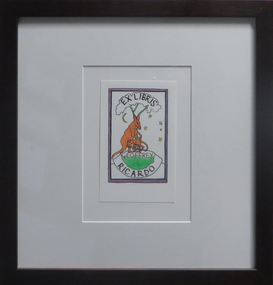 Federation University Art Collection
Artwork - bookplate, Geoffrey Ricardo, Ex Libris Geoffrey Ricardo, not dated
... GEOFFREY RICARDO (1964- ) Born Melbourne, Australia 1984-86 Bachelor of Arts (Fine Art), Printmaking, Chisholm Institute of Technology, Melbourne 1987-89 Printing Assistant at Bill Young Studios, Editioning intaglio prints, King Valley, VIC 1988 Full-time Studio Technician at Printmaking Department, Chisholm Institute of Technology, Melbourne 1989-90 Graduate Diploma (Fine Art), Printmaking, Monash University, Melbourne 1991 Traveled to England, France, Spain and USA (Winsor & Newton International Travelling Bursary, National Students Art Prize) Worked in private studios in Gaucin, Spain and New York, USA 1994-95 Master of Fine Arts, Monash University, Melbourne 1995 Guest Lecturer, Victorian College of the Arts, Melbourne Traveled to Europe and America 1996 Guest Lecturer, Royal Melbourne Institute of Technology, Melbourne 1990-98 Sessional Lecturer, Monash University, Melbourne 1998 Traveled to America and Mexico 2001-05 Sessional Lecturer, The Victorian College of the Arts, Melbourne 2003-10 Printmaking Workshops, Warrnambool TAFE, Warrnambool, VIC 2004 Traveled to Europe, Mexico and Cuba 2005 Lecturer, National Art School (Summer School), Sydney Sessional Lecturer, Monash University, Melbourne Lecturer, Institution of Koorie Education, Deakin University, Geelong, VIC SOLO EXHIBITIONS 2012 ‘Collection of Works’ The Art Vault Mildura ‘Deeper Meanings’, The Incinerator Gallery, Melbourne ‘Three Projects’, Australian Galleries, Glenmore Road, Sydney Melbourne Art Fair Stand F33, Australian Galleries, Melbourne 2009 ‘Anno Domino, Antarctica and The Anatomy Lesson’, Australian Galleries Derby Street, Melbourne The Art Vault, Mildura, VIC 2008 MV Orlova (Quark Expeditions), The Drake Passage, Antarctica 2007 ‘Herd’, BMGArt, Adelaide ‘Herd’, Australian Galleries Painting & Sculpture, Sydney 2006 ‘Herd’, Australian Galleries Painting & Sculpture, Melbourne 2004 ‘Recent work’, BMGArt, Adelaide 2003 ‘The Rapunzel Suite and Other New Works’, Australian Galleries Works on Paper, Sydney ‘Recent Works’, Australian Galleries Painting & Sculpture, Melbourne ‘Recent works’, Cowwarr Art Space, Cowwarr, VIC 2002 ‘The Rapunzel Suite’, Australian Galleries Works on Paper, Melbourne ‘Strange Games’, Australian Galleries Works on Paper, Sydney 1999 ‘A Dark City Narrative’, Australian Galleries Works on Paper, Sydney ‘A Dark City Narrative’, Australian Galleries Works on Paper, Melbourne 1998 Cullity Gallery, School of Architecture and Fine Art, University of Western Australia, Perth 1997 Delaney Gallery, Perth Chapman Gallery, Canberra BMGArt, Adelaide ‘Menagerie’, Australian Galleries, Sydney ‘Menagerie’, Australian Galleries, Melbourne 1995 ‘Paintings, Prints and Sculpture’, Australian Galleries, Sydney ‘Prints, Paintings and Sculpture’, Australian Galleries, Melbourne 1994 Lawrence Wilson Art Gallery, University of Western Australia, Perth Graham Galleries + Editions, Brisbane ‘Wishful Thinking, Prints and Sculptures’, Lawrence Wilson Art Gallery, University of Western Australia, Perth 1992 ‘Prints, Sculptures and Watercolours’, Australian Galleries, Melbourne and Sydney 1990 ‘Watercolours, Prints and Small Bronzes’, Australian Galleries, Sydney ‘Paintings, Prints and Sculptures’, Australian Galleries, Melbourne GROUP EXHIBITIONS 2013 ‘Sculpture by the Sea’ Cottlesloe, Western Australia 2012 ‘Brave New World’, Toyota Community Spirit Gallery, Port Melbourne, VIC ‘Sculpture by the Sea’, Bondi, Sydney 2011 ‘Sculpture by the sea’, Aarhus, Denmark ‘Artwork to Tapestry’, Tarrawarra Museum of Art, Healesville, VIC Burnie Print Prize, Burnie Regional Gallery, Burnie, TAS ‘large exhibition of small works’, Australian Galleries, Roylston Street, Sydney ‘large exhibition of small works’, Australian Galleries, Derby Street, Melbourne ‘Nature of the Mark’, Australian Galleries, Smith Street, Melbourne Rick Amor Print Prize, Montsalvat, Eltham, VIC 2010 ‘Summer show’, Australian Galleries, Glenmore Road, Sydney ‘Summer stock show’, Australian Galleries, Smith Street, Melbourne ‘Sub10’, Substation, Melbourne ‘McClelland Sculpture Survey and Award 2010’, McClelland Gallery + Sculpture Park, Langwarrin, VIC ‘Artists’ Prints made with Integrity I’, Australian Galleries, Smith Street, Melbourne Montalto Sculpture Prize, Montalto Vineyard and Olive Grove, Red Hill South, VIC 2009 ‘Artists’ ink: printmaking from the Warrnambool Art Gallery Collection, 1970-2001’, Ararat Regional Art Gallery, Ararat, VIC ‘Lorne Sculpture’ (Winner), Lorne, VIC 2008 ‘Summer Stock Show’, Australian Galleries Smith Street, Melbourne 2007 ARC Biennial (Art, Design and Craft), Queensland University of Technology Art Museum, Brisbane ‘Prints Tokyo: International Print Exhibition’, Tokyo, Japan Seoul International Print, Photo and Edition Works Art Fair, Seoul, Korea Guanlan International Print Biennial, Guanlan, China ‘Summer Stock Show’, Australian Galleries Works on Paper, Sydney ‘Summer Stock Show’, Australian Galleries Painting & Sculpture, Melbourne ‘Summer Stock Show’, Australian Galleries Works on Paper, Melbourne ‘Antipodean Bestiary’, Project Space / Spare Room, RMIT University, Melbourne Montalto Sculpture Prize, Montalto Vineyard and Olive Grove, Red Hill South, VIC McClelland Sculpture Survey and Award 2007, McClelland Gallery + Sculpture Park, Langwarrin, VIC ‘2007: Works from the studio’, Lancaster Press, Melbourne ‘50 - a print exchange portfolio’, Geelong Art Gallery, Geelong, VIC ‘Small Pleasures’, Australian Galleries Painting & Sculpture, Melbourne ‘Stock Show’, Australian Galleries Painting & Sculpture, Melbourne ‘Artists for Kids Culture’, Brightspace, Melbourne 2006 ‘Partnership or perish’, Academy of the Arts, School of Visual and Performing Arts, University of Tasmania, Hobart Libris Awards, Artspace Mackay, Mackay, QLD ‘Summery’, Australian Galleries Painting & Sculpture, Sydney ‘Summer Stock Show’, Australian Galleries Works on Paper, Melbourne ‘Bookish’, Australian Galleries Works on Paper, Melbourne Melbourne Art Fair, Australian Galleries, Melbourne ‘Artists for Kids Culture’, Brightspace, Melbourne ‘50th Anniversary Exhibition’, Australian Galleries Painting & Sculpture, Melbourne 2005 ‘End of Year Group Exhibition’, Australian Galleries Painting & Sculpture, Sydney ‘Contemporary Works on Paper’, Australian Galleries Works on Paper, Melbourne ‘Expansion’, Lancaster Press, Melbourne ‘The Art of Collaboration’, Singapore Tyler Print Institute, Singapore ‘Double take’, Arts Project Australia, Melbourne ‘Small Treasures - 20 emerging and established artists’, TILT Contemporary Art, Melbourne Jacques Cadry Memorial Art Prize, Fox Studios and State Library of NSW, Sydney ‘Tales of the City’, Australian Galleries Painting & Sculpture, Melbourne ‘A Decade of Collecting 1995-2005’, Cairns Regional Gallery, Cairns, QLD ‘Artists for Kids Culture’, Brightspace, Melbourne ‘Surface Tension: 21 Contemporary Australian Printmakers’, University of Tasmania, Launceston, TAS ‘Neo-millenium’, Toyota Community Spirit Gallery, Melbourne 2004 ‘Artists for Kids Culture’, Brightspace, Melbourne ‘Group Exhibition’, Australian Galleries Painting & Sculpture, Melbourne ‘Species’, Australian Galleries Works on Paper, Melbourne ‘In the presence of creatures great and small’, Australian Galleries Works on Paper, Sydney ‘Tapestries from the Victorian Tapestry Workshop’, Australian Galleries, Melbourne ‘Sculpture’, Australian Galleries Painting & Sculpture, Sydney ‘Contemporary Australian Prints’, National Arts Club, New York, USA ‘Contemporary Australian Prints’, Gallery 101, Melbourne ‘Contemporary Australian Prints from the Collection’, Art Gallery of New South Wales, Sydney ‘Bridge’, Toyota Community Spirit Gallery, Melbourne ‘Vivid’, Fortyfive Downstairs, Melbourne Lake Gallery, Paynesville, VIC 2003 ‘Paper matters’, Lawrence Wilson Art Gallery, University of Western Australia, Perth ‘Artists for Kids Culture’, Brightspace, Melbourne ‘Less is more’, BMGArt, Adelaide ‘The ink’s on me: Bill Young master printmaker’, Wangaratta Exhibitions Gallery, Wangaratta, VIC ‘Fantastic and Visionary Art’, Touring: Global Arts Link, QLD; Ipswich Regional Gallery, QLD ; Orange Regional Gallery, NSW; Manning Regional Gallery, NSW; Parramatta Heritage Centre, Sydney; Ballarat Regional Gallery, VIC 2002 Shell Fremantle Print Award, Fremantle Arts Centre, Fremantle, WA ‘Artists for Kids Culture’, Brightspace, Melbourne 2001 Shell Fremantle Print Award, Fremantle Arts Centre, Fremantle, WA ‘Six Degrees of Collaboration’, RMIT Faculty of Art, Design and Communication Gallery, Melbourne ‘Reciprocal Moves’, Warrnambool Art Gallery, Warrnambool, VIC International Print Triennial, Kanagawa, Japan ‘Fantastic Art’, Orange Regional Gallery, Orange, NSW ‘Dancing Made a Man out of Me’, The Switchback Gallery, Monash University, Gippsland, VIC ‘Artists for Kids Culture’, Brightspace, Melbourne ‘Celebration’, Regional touring exhibition, VIC 2000-01 ‘Workings of the Mind: Melbourne Prints of the 1960s to the 1990s’, Touring: Grafton Regional Gallery, NSW; Toowoomba Regional Art Gallery, QLD; Nolan Gallery, Canberra; Bendigo Art Gallery, VIC; PercTucker Regional Gallery, QLD 2000 Shell Fremantle Print Award, Fremantle Arts Centre, Fremantle, WA The Hutchins Art Prize, Long Gallery, Hobart ‘Artists for Kids Culture’, Brightspace, Melbourne 1999 Shell Fremantle Print Award, Fremantle Arts Space, Fremantle, WA ‘We are Australian’, George Adams Gallery, Victorian Arts Centre, Melbourne Rena Ellen Jones Memorial Print Award, Warrnambool Art Gallery, Warrnambool, VIC ‘National Works on Paper’, Mornington Peninsula Gallery, Mornington, VIC ‘Artists for Kids Culture’, Brightspace, Melbourne ‘Pleasure’, Australian Galleries, Melbourne 1998-99 ‘Australian Prints’, Art Gallery of New South Wales, Sydney 1997 ‘KNOCK, KNOCK’, Australian Galleries, Melbourne ‘Woven Colour, The Art of Tapestry’, Dr Earl Lu Gallery, Singapore 1996 M.P.A.C. ...GEOFFREY RICARDO (1964- ) Born Melbourne, Australia 1984-86 Bachelor of Arts (Fine Art), Printmaking, Chisholm Institute of Technology, Melbourne 1987-89 Printing Assistant at Bill Young Studios, Editioning intaglio prints, King Valley, VIC 1988 Full-time Studio Technician at Printmaking Department, Chisholm Institute of Technology, Melbourne 1989-90 Graduate Diploma (Fine Art), Printmaking, Monash University, Melbourne 1991 Traveled to England, France, Spain and USA (Winsor & Newton International Travelling Bursary, National Students Art Prize) Worked in private studios in Gaucin, Spain and New York, USA 1994-95 Master of Fine Arts, Monash University, Melbourne 1995 Guest Lecturer, Victorian College of the Arts, Melbourne Traveled to Europe and America 1996 Guest Lecturer, Royal Melbourne Institute of Technology, Melbourne 1990-98 Sessional Lecturer, Monash University, Melbourne 1998 Traveled to America and Mexico 2001-05 Sessional Lecturer, The Victorian College of the Arts, Melbourne 2003-10 Printmaking Workshops, Warrnambool TAFE, Warrnambool, VIC 2004 Traveled to Europe, Mexico and Cuba 2005 Lecturer, National Art School (Summer School), Sydney Sessional Lecturer, Monash University, Melbourne Lecturer, Institution of Koorie Education, Deakin University, Geelong, VIC SOLO EXHIBITIONS 2012 ‘Collection of Works’ The Art Vault Mildura ‘Deeper Meanings’, The Incinerator Gallery, Melbourne ‘Three Projects’, Australian Galleries, Glenmore Road, Sydney Melbourne Art Fair Stand F33, Australian Galleries, Melbourne 2009 ‘Anno Domino, Antarctica and The Anatomy Lesson’, Australian Galleries Derby Street, Melbourne The Art Vault, Mildura, VIC 2008 MV Orlova (Quark Expeditions), The Drake Passage, Antarctica 2007 ‘Herd’, BMGArt, Adelaide ‘Herd’, Australian Galleries Painting & Sculpture, Sydney 2006 ‘Herd’, Australian Galleries Painting & Sculpture, Melbourne 2004 ‘Recent work’, BMGArt, Adelaide 2003 ‘The Rapunzel Suite and Other New Works’, Australian Galleries Works on Paper, Sydney ‘Recent Works’, Australian Galleries Painting & Sculpture, Melbourne ‘Recent works’, Cowwarr Art Space, Cowwarr, VIC 2002 ‘The Rapunzel Suite’, Australian Galleries Works on Paper, Melbourne ‘Strange Games’, Australian Galleries Works on Paper, Sydney 1999 ‘A Dark City Narrative’, Australian Galleries Works on Paper, Sydney ‘A Dark City Narrative’, Australian Galleries Works on Paper, Melbourne 1998 Cullity Gallery, School of Architecture and Fine Art, University of Western Australia, Perth 1997 Delaney Gallery, Perth Chapman Gallery, Canberra BMGArt, Adelaide ‘Menagerie’, Australian Galleries, Sydney ‘Menagerie’, Australian Galleries, Melbourne 1995 ‘Paintings, Prints and Sculpture’, Australian Galleries, Sydney ‘Prints, Paintings and Sculpture’, Australian Galleries, Melbourne 1994 Lawrence Wilson Art Gallery, University of Western Australia, Perth Graham Galleries + Editions, Brisbane ‘Wishful Thinking, Prints and Sculptures’, Lawrence Wilson Art Gallery, University of Western Australia, Perth 1992 ‘Prints, Sculptures and Watercolours’, Australian Galleries, Melbourne and Sydney 1990 ‘Watercolours, Prints and Small Bronzes’, Australian Galleries, Sydney ‘Paintings, Prints and Sculptures’, Australian Galleries, Melbourne GROUP EXHIBITIONS 2013 ‘Sculpture by the Sea’ Cottlesloe, Western Australia 2012 ‘Brave New World’, Toyota Community Spirit Gallery, Port Melbourne, VIC ‘Sculpture by the Sea’, Bondi, Sydney 2011 ‘Sculpture by the sea’, Aarhus, Denmark ‘Artwork to Tapestry’, Tarrawarra Museum of Art, Healesville, VIC Burnie Print Prize, Burnie Regional Gallery, Burnie, TAS ‘large exhibition of small works’, Australian Galleries, Roylston Street, Sydney ‘large exhibition of small works’, Australian Galleries, Derby Street, Melbourne ‘Nature of the Mark’, Australian Galleries, Smith Street, Melbourne Rick Amor Print Prize, Montsalvat, Eltham, VIC 2010 ‘Summer show’, Australian Galleries, Glenmore Road, Sydney ‘Summer stock show’, Australian Galleries, Smith Street, Melbourne ‘Sub10’, Substation, Melbourne ‘McClelland Sculpture Survey and Award 2010’, McClelland Gallery + Sculpture Park, Langwarrin, VIC ‘Artists’ Prints made with Integrity I’, Australian Galleries, Smith Street, Melbourne Montalto Sculpture Prize, Montalto Vineyard and Olive Grove, Red Hill South, VIC 2009 ‘Artists’ ink: printmaking from the Warrnambool Art Gallery Collection, 1970-2001’, Ararat Regional Art Gallery, Ararat, VIC ‘Lorne Sculpture’ (Winner), Lorne, VIC 2008 ‘Summer Stock Show’, Australian Galleries Smith Street, Melbourne 2007 ARC Biennial (Art, Design and Craft), Queensland University of Technology Art Museum, Brisbane ‘Prints Tokyo: International Print Exhibition’, Tokyo, Japan Seoul International Print, Photo and Edition Works Art Fair, Seoul, Korea Guanlan International Print Biennial, Guanlan, China ‘Summer Stock Show’, Australian Galleries Works on Paper, Sydney ‘Summer Stock Show’, Australian Galleries Painting & Sculpture, Melbourne ‘Summer Stock Show’, Australian Galleries Works on Paper, Melbourne ‘Antipodean Bestiary’, Project Space / Spare Room, RMIT University, Melbourne Montalto Sculpture Prize, Montalto Vineyard and Olive Grove, Red Hill South, VIC McClelland Sculpture Survey and Award 2007, McClelland Gallery + Sculpture Park, Langwarrin, VIC ‘2007: Works from the studio’, Lancaster Press, Melbourne ‘50 - a print exchange portfolio’, Geelong Art Gallery, Geelong, VIC ‘Small Pleasures’, Australian Galleries Painting & Sculpture, Melbourne ‘Stock Show’, Australian Galleries Painting & Sculpture, Melbourne ‘Artists for Kids Culture’, Brightspace, Melbourne 2006 ‘Partnership or perish’, Academy of the Arts, School of Visual and Performing Arts, University of Tasmania, Hobart Libris Awards, Artspace Mackay, Mackay, QLD ‘Summery’, Australian Galleries Painting & Sculpture, Sydney ‘Summer Stock Show’, Australian Galleries Works on Paper, Melbourne ‘Bookish’, Australian Galleries Works on Paper, Melbourne Melbourne Art Fair, Australian Galleries, Melbourne ‘Artists for Kids Culture’, Brightspace, Melbourne ‘50th Anniversary Exhibition’, Australian Galleries Painting & Sculpture, Melbourne 2005 ‘End of Year Group Exhibition’, Australian Galleries Painting & Sculpture, Sydney ‘Contemporary Works on Paper’, Australian Galleries Works on Paper, Melbourne ‘Expansion’, Lancaster Press, Melbourne ‘The Art of Collaboration’, Singapore Tyler Print Institute, Singapore ‘Double take’, Arts Project Australia, Melbourne ‘Small Treasures - 20 emerging and established artists’, TILT Contemporary Art, Melbourne Jacques Cadry Memorial Art Prize, Fox Studios and State Library of NSW, Sydney ‘Tales of the City’, Australian Galleries Painting & Sculpture, Melbourne ‘A Decade of Collecting 1995-2005’, Cairns Regional Gallery, Cairns, QLD ‘Artists for Kids Culture’, Brightspace, Melbourne ‘Surface Tension: 21 Contemporary Australian Printmakers’, University of Tasmania, Launceston, TAS ‘Neo-millenium’, Toyota Community Spirit Gallery, Melbourne 2004 ‘Artists for Kids Culture’, Brightspace, Melbourne ‘Group Exhibition’, Australian Galleries Painting & Sculpture, Melbourne ‘Species’, Australian Galleries Works on Paper, Melbourne ‘In the presence of creatures great and small’, Australian Galleries Works on Paper, Sydney ‘Tapestries from the Victorian Tapestry Workshop’, Australian Galleries, Melbourne ‘Sculpture’, Australian Galleries Painting & Sculpture, Sydney ‘Contemporary Australian Prints’, National Arts Club, New York, USA ‘Contemporary Australian Prints’, Gallery 101, Melbourne ‘Contemporary Australian Prints from the Collection’, Art Gallery of New South Wales, Sydney ‘Bridge’, Toyota Community Spirit Gallery, Melbourne ‘Vivid’, Fortyfive Downstairs, Melbourne Lake Gallery, Paynesville, VIC 2003 ‘Paper matters’, Lawrence Wilson Art Gallery, University of Western Australia, Perth ‘Artists for Kids Culture’, Brightspace, Melbourne ‘Less is more’, BMGArt, Adelaide ‘The ink’s on me: Bill Young master printmaker’, Wangaratta Exhibitions Gallery, Wangaratta, VIC ‘Fantastic and Visionary Art’, Touring: Global Arts Link, QLD; Ipswich Regional Gallery, QLD ; Orange Regional Gallery, NSW; Manning Regional Gallery, NSW; Parramatta Heritage Centre, Sydney; Ballarat Regional Gallery, VIC 2002 Shell Fremantle Print Award, Fremantle Arts Centre, Fremantle, WA ‘Artists for Kids Culture’, Brightspace, Melbourne 2001 Shell Fremantle Print Award, Fremantle Arts Centre, Fremantle, WA ‘Six Degrees of Collaboration’, RMIT Faculty of Art, Design and Communication Gallery, Melbourne ‘Reciprocal Moves’, Warrnambool Art Gallery, Warrnambool, VIC International Print Triennial, Kanagawa, Japan ‘Fantastic Art’, Orange Regional Gallery, Orange, NSW ‘Dancing Made a Man out of Me’, The Switchback Gallery, Monash University, Gippsland, VIC ‘Artists for Kids Culture’, Brightspace, Melbourne ‘Celebration’, Regional touring exhibition, VIC 2000-01 ‘Workings of the Mind: Melbourne Prints of the 1960s to the 1990s’, Touring: Grafton Regional Gallery, NSW; Toowoomba Regional Art Gallery, QLD; Nolan Gallery, Canberra; Bendigo Art Gallery, VIC; PercTucker Regional Gallery, QLD 2000 Shell Fremantle Print Award, Fremantle Arts Centre, Fremantle, WA The Hutchins Art Prize, Long Gallery, Hobart ‘Artists for Kids Culture’, Brightspace, Melbourne 1999 Shell Fremantle Print Award, Fremantle Arts Space, Fremantle, WA ‘We are Australian’, George Adams Gallery, Victorian Arts Centre, Melbourne Rena Ellen Jones Memorial Print Award, Warrnambool Art Gallery, Warrnambool, VIC ‘National Works on Paper’, Mornington Peninsula Gallery, Mornington, VIC ‘Artists for Kids Culture’, Brightspace, Melbourne ‘Pleasure’, Australian Galleries, Melbourne 1998-99 ‘Australian Prints’, Art Gallery of New South Wales, Sydney 1997 ‘KNOCK, KNOCK’, Australian Galleries, Melbourne ‘Woven Colour, The Art of Tapestry’, Dr Earl Lu Gallery, Singapore 1996 M.P.A.C. ...GEOFFREY RICARDO (1964- ) Born Melbourne, Australia 1984-86 Bachelor of Arts (Fine Art), Printmaking, Chisholm Institute of Technology, Melbourne 1987-89 Printing Assistant at Bill Young Studios, Editioning intaglio prints, King Valley, VIC 1988 Full-time Studio Technician at Printmaking Department, Chisholm Institute of Technology, Melbourne 1989-90 Graduate Diploma (Fine Art), Printmaking, Monash University, Melbourne 1991 Traveled to England, France, Spain and USA (Winsor & Newton International Travelling Bursary, National Students Art Prize) Worked in private studios in Gaucin, Spain and New York, USA 1994-95 Master of Fine Arts, Monash University, Melbourne 1995 Guest Lecturer, Victorian College of the Arts, Melbourne Traveled to Europe and America 1996 Guest Lecturer, Royal Melbourne Institute of Technology, Melbourne 1990-98 Sessional Lecturer, Monash University, Melbourne 1998 Traveled to America and Mexico 2001-05 Sessional Lecturer, The Victorian College of the Arts, Melbourne 2003-10 Printmaking Workshops, Warrnambool TAFE, Warrnambool, VIC 2004 Traveled to Europe, Mexico and Cuba 2005 Lecturer, National Art School (Summer School), Sydney Sessional Lecturer, Monash University, Melbourne Lecturer, Institution of Koorie Education, Deakin University, Geelong, VIC SOLO EXHIBITIONS 2012 ‘Collection of Works’ The Art Vault Mildura ‘Deeper Meanings’, The Incinerator Gallery, Melbourne ‘Three Projects’, Australian Galleries, Glenmore Road, Sydney Melbourne Art Fair Stand F33, Australian Galleries, Melbourne 2009 ‘Anno Domino, Antarctica and The Anatomy Lesson’, Australian Galleries Derby Street, Melbourne The Art Vault, Mildura, VIC 2008 MV Orlova (Quark Expeditions), The Drake Passage, Antarctica 2007 ‘Herd’, BMGArt, Adelaide ‘Herd’, Australian Galleries Painting & Sculpture, Sydney 2006 ‘Herd’, Australian Galleries Painting & Sculpture, Melbourne 2004 ‘Recent work’, BMGArt, Adelaide 2003 ‘The Rapunzel Suite and Other New Works’, Australian Galleries Works on Paper, Sydney ‘Recent Works’, Australian Galleries Painting & Sculpture, Melbourne ‘Recent works’, Cowwarr Art Space, Cowwarr, VIC 2002 ‘The Rapunzel Suite’, Australian Galleries Works on Paper, Melbourne ‘Strange Games’, Australian Galleries Works on Paper, Sydney 1999 ‘A Dark City Narrative’, Australian Galleries Works on Paper, Sydney ‘A Dark City Narrative’, Australian Galleries Works on Paper, Melbourne 1998 Cullity Gallery, School of Architecture and Fine Art, University of Western Australia, Perth 1997 Delaney Gallery, Perth Chapman Gallery, Canberra BMGArt, Adelaide ‘Menagerie’, Australian Galleries, Sydney ‘Menagerie’, Australian Galleries, Melbourne 1995 ‘Paintings, Prints and Sculpture’, Australian Galleries, Sydney ‘Prints, Paintings and Sculpture’, Australian Galleries, Melbourne 1994 Lawrence Wilson Art Gallery, University of Western Australia, Perth Graham Galleries + Editions, Brisbane ‘Wishful Thinking, Prints and Sculptures’, Lawrence Wilson Art Gallery, University of Western Australia, Perth 1992 ‘Prints, Sculptures and Watercolours’, Australian Galleries, Melbourne and Sydney 1990 ‘Watercolours, Prints and Small Bronzes’, Australian Galleries, Sydney ‘Paintings, Prints and Sculptures’, Australian Galleries, Melbourne GROUP EXHIBITIONS 2013 ‘Sculpture by the Sea’ Cottlesloe, Western Australia 2012 ‘Brave New World’, Toyota Community Spirit Gallery, Port Melbourne, VIC ‘Sculpture by the Sea’, Bondi, Sydney 2011 ‘Sculpture by the sea’, Aarhus, Denmark ‘Artwork to Tapestry’, Tarrawarra Museum of Art, Healesville, VIC Burnie Print Prize, Burnie Regional Gallery, Burnie, TAS ‘large exhibition of small works’, Australian Galleries, Roylston Street, Sydney ‘large exhibition of small works’, Australian Galleries, Derby Street, Melbourne ‘Nature of the Mark’, Australian Galleries, Smith Street, Melbourne Rick Amor Print Prize, Montsalvat, Eltham, VIC 2010 ‘Summer show’, Australian Galleries, Glenmore Road, Sydney ‘Summer stock show’, Australian Galleries, Smith Street, Melbourne ‘Sub10’, Substation, Melbourne ‘McClelland Sculpture Survey and Award 2010’, McClelland Gallery + Sculpture Park, Langwarrin, VIC ‘Artists’ Prints made with Integrity I’, Australian Galleries, Smith Street, Melbourne Montalto Sculpture Prize, Montalto Vineyard and Olive Grove, Red Hill South, VIC 2009 ‘Artists’ ink: printmaking from the Warrnambool Art Gallery Collection, 1970-2001’, Ararat Regional Art Gallery, Ararat, VIC ‘Lorne Sculpture’ (Winner), Lorne, VIC 2008 ‘Summer Stock Show’, Australian Galleries Smith Street, Melbourne 2007 ARC Biennial (Art, Design and Craft), Queensland University of Technology Art Museum, Brisbane ‘Prints Tokyo: International Print Exhibition’, Tokyo, Japan Seoul International Print, Photo and Edition Works Art Fair, Seoul, Korea Guanlan International Print Biennial, Guanlan, China ‘Summer Stock Show’, Australian Galleries Works on Paper, Sydney ‘Summer Stock Show’, Australian Galleries Painting & Sculpture, Melbourne ‘Summer Stock Show’, Australian Galleries Works on Paper, Melbourne ‘Antipodean Bestiary’, Project Space / Spare Room, RMIT University, Melbourne Montalto Sculpture Prize, Montalto Vineyard and Olive Grove, Red Hill South, VIC McClelland Sculpture Survey and Award 2007, McClelland Gallery + Sculpture Park, Langwarrin, VIC ‘2007: Works from the studio’, Lancaster Press, Melbourne ‘50 - a print exchange portfolio’, Geelong Art Gallery, Geelong, VIC ‘Small Pleasures’, Australian Galleries Painting & Sculpture, Melbourne ‘Stock Show’, Australian Galleries Painting & Sculpture, Melbourne ‘Artists for Kids Culture’, Brightspace, Melbourne 2006 ‘Partnership or perish’, Academy of the Arts, School of Visual and Performing Arts, University of Tasmania, Hobart Libris Awards, Artspace Mackay, Mackay, QLD ‘Summery’, Australian Galleries Painting & Sculpture, Sydney ‘Summer Stock Show’, Australian Galleries Works on Paper, Melbourne ‘Bookish’, Australian Galleries Works on Paper, Melbourne Melbourne Art Fair, Australian Galleries, Melbourne ‘Artists for Kids Culture’, Brightspace, Melbourne ‘50th Anniversary Exhibition’, Australian Galleries Painting & Sculpture, Melbourne 2005 ‘End of Year Group Exhibition’, Australian Galleries Painting & Sculpture, Sydney ‘Contemporary Works on Paper’, Australian Galleries Works on Paper, Melbourne ‘Expansion’, Lancaster Press, Melbourne ‘The Art of Collaboration’, Singapore Tyler Print Institute, Singapore ‘Double take’, Arts Project Australia, Melbourne ‘Small Treasures - 20 emerging and established artists’, TILT Contemporary Art, Melbourne Jacques Cadry Memorial Art Prize, Fox Studios and State Library of NSW, Sydney ‘Tales of the City’, Australian Galleries Painting & Sculpture, Melbourne ‘A Decade of Collecting 1995-2005’, Cairns Regional Gallery, Cairns, QLD ‘Artists for Kids Culture’, Brightspace, Melbourne ‘Surface Tension: 21 Contemporary Australian Printmakers’, University of Tasmania, Launceston, TAS ‘Neo-millenium’, Toyota Community Spirit Gallery, Melbourne 2004 ‘Artists for Kids Culture’, Brightspace, Melbourne ‘Group Exhibition’, Australian Galleries Painting & Sculpture, Melbourne ‘Species’, Australian Galleries Works on Paper, Melbourne ‘In the presence of creatures great and small’, Australian Galleries Works on Paper, Sydney ‘Tapestries from the Victorian Tapestry Workshop’, Australian Galleries, Melbourne ‘Sculpture’, Australian Galleries Painting & Sculpture, Sydney ‘Contemporary Australian Prints’, National Arts Club, New York, USA ‘Contemporary Australian Prints’, Gallery 101, Melbourne ‘Contemporary Australian Prints from the Collection’, Art Gallery of New South Wales, Sydney ‘Bridge’, Toyota Community Spirit Gallery, Melbourne ‘Vivid’, Fortyfive Downstairs, Melbourne Lake Gallery, Paynesville, VIC 2003 ‘Paper matters’, Lawrence Wilson Art Gallery, University of Western Australia, Perth ‘Artists for Kids Culture’, Brightspace, Melbourne ‘Less is more’, BMGArt, Adelaide ‘The ink’s on me: Bill Young master printmaker’, Wangaratta Exhibitions Gallery, Wangaratta, VIC ‘Fantastic and Visionary Art’, Touring: Global Arts Link, QLD; Ipswich Regional Gallery, QLD ; Orange Regional Gallery, NSW; Manning Regional Gallery, NSW; Parramatta Heritage Centre, Sydney; Ballarat Regional Gallery, VIC 2002 Shell Fremantle Print Award, Fremantle Arts Centre, Fremantle, WA ‘Artists for Kids Culture’, Brightspace, Melbourne 2001 Shell Fremantle Print Award, Fremantle Arts Centre, Fremantle, WA ‘Six Degrees of Collaboration’, RMIT Faculty of Art, Design and Communication Gallery, Melbourne ‘Reciprocal Moves’, Warrnambool Art Gallery, Warrnambool, VIC International Print Triennial, Kanagawa, Japan ‘Fantastic Art’, Orange Regional Gallery, Orange, NSW ‘Dancing Made a Man out of Me’, The Switchback Gallery, Monash University, Gippsland, VIC ‘Artists for Kids Culture’, Brightspace, Melbourne ‘Celebration’, Regional touring exhibition, VIC 2000-01 ‘Workings of the Mind: Melbourne Prints of the 1960s to the 1990s’, Touring: Grafton Regional Gallery, NSW; Toowoomba Regional Art Gallery, QLD; Nolan Gallery, Canberra; Bendigo Art Gallery, VIC; PercTucker Regional Gallery, QLD 2000 Shell Fremantle Print Award, Fremantle Arts Centre, Fremantle, WA The Hutchins Art Prize, Long Gallery, Hobart ‘Artists for Kids Culture’, Brightspace, Melbourne 1999 Shell Fremantle Print Award, Fremantle Arts Space, Fremantle, WA ‘We are Australian’, George Adams Gallery, Victorian Arts Centre, Melbourne Rena Ellen Jones Memorial Print Award, Warrnambool Art Gallery, Warrnambool, VIC ‘National Works on Paper’, Mornington Peninsula Gallery, Mornington, VIC ‘Artists for Kids Culture’, Brightspace, Melbourne ‘Pleasure’, Australian Galleries, Melbourne 1998-99 ‘Australian Prints’, Art Gallery of New South Wales, Sydney 1997 ‘KNOCK, KNOCK’, Australian Galleries, Melbourne ‘Woven Colour, The Art of Tapestry’, Dr Earl Lu Gallery, Singapore 1996 M.P.A.C. Print Award, Mornington Peninsula Arts Centre, Mornington, VIC Academy of Art & Culture, Calcutta, India ‘Synergy’, Touring: Lalit Kala Akademi, New Dehli, India; Jehangir Nicholson Gallery, Bombay, India; Birla, India ‘Contemporary Australian Tapestry’, Frederikshavn Kunstmuseum, Denmark; Australia House, London, UK 1995 ‘Interweave - Tapestry A Collaborative Art’, Heide Museum of Modern Art, Melbourne ‘Contemporary Printmakers’, La Trobe Regional Gallery, Morwell, VIC ‘Contemporary Australian Tapestry’, Australian High Commission, Singapore ‘Circus Capers’, Caulfield Arts Complex, Melbourne 1994 M.P.A.C. Print Award, Mornington Peninsula Arts Centre, Mornington, VIC Fremantle Print Award, Fremantle Arts Centre, Fremantle, WA Australian Universities of Visual Art, Australian High Commission, Singapore ‘Prints, Paintings and Sculpture’, BMGArt, Adelaide Fourth Australian Contemporary Art Fair, Royal Exhibition Building, Melbourne 1993 Fremantle Print Award, Fremantle Arts Centre, Fremantle, WA 1992 Fremantle Print Award, Fremantle Arts Centre, Fremantle, WA ‘Transitional Times’, Print Council of Australia, Melbourne ‘Second Kochi International Triennial Exhibition of Prints’, Japan 1991 Henry Worland Memorial Print Prize, Warrnambool Regional Art Gallery, Warrnambool, VIC Fremantle Print Award, Fremantle Arts Centre, Fremantle, WA ‘Table Top Sculpture’, Australian Galleries, Melbourne ‘Art 91’, London Contemporary Art Fair, London, UK 1990 M.P.A.C. Print Prize, Mornington Peninsula Arts Centre, Mornington, VIC Fremantle Print Prize, Fremantle Arts Centre, Fremantle WA ‘The Christmas Show’, Intaglio Printmaker, London, England ‘Australian Contemporary Art’, AZ Gallery, Tokyo, Japan 1989 National Student Art Prize, Mitchell College, Bathurst, NSW Fremantle Print Award, Fremantle Arts Centre, Fremantle, WA City of Doncaster Acquisitive Print Prize, Manningham Gallery, Melbourne ‘Affiliations’, Monash University Gallery, Melbourne 1988 M.P.A.C. Acquisitive Print Prize, Mornington Peninsula Arts Centre, Mornington, VIC Henry Worland Memorial Print Prize, Warrnambool Regional Art Gallery, Warrnambool, VIC 1987 ‘The Comedy Show’, Print Guild, Melbourne ‘Fluxus Art Flow’, Melbourne 1986 Mornington Peninsula Arts Council Acquisitive Print Prize, Mornington Peninsula, VIC Chisolm Institute of Technology, Graduating Students exhibition, Melbourne AWARDS 2013 King Valley Art Prize (printmaking) 2009 Lorne Sculpture Exhibition (Winner), Lorne, VIC 1989 Windsor and Newton International Travelling Bursary, UK Linbrook International First Prize for Printmaking, Australia COMMISSIONS 2005 Tapestry design for Bairnsdale Hospital (woven by the Victorian Tapestry Workshop, Melbourne), Bairnsdale, VIC 1999 Tapestry design ‘Emblem’ (woven by the Victorian Tapestry Workshop, Melbourne), Australia 1995 ‘A Night of Infectious Laughter’ Poster, St Kilda Festival, Melbourne 1994 Tapestry design ‘Elephant Gingham’ (woven by the Victorian Tapestry Workshop, Melbourne), Australia 1993 Tapestry design for the Festival of Perth Official Poster (woven by the Victorian Tapestry Workshop, Melbourne), Perth RESIDENCIES & PROJECTS 2013 ‘Come In Outside’, Collaboration set design for Pocketfool 2011 Mildura Wentworth Arts Festival Project, Mildura, VIC Residency, The Art Vault , Mildura, VIC 2010 ‘Wish’, Collaboration set design for Pocketfool, Artplay, Melbourne The Art Vault (included continuous public flag making workshops which were flown as part of The Wentworth Mildura Art Festival), Mildura, VIC 2009 The Art Vault (included two public printmaking workshops), Mildura, VIC 2008 Artist in residence, MV Orlova, Quark Expeditions, Antarctica 2003 Residency, Bairnsdale Regional Health Service, Bairnsdale, VIC 1998 Residency, School of Architecture & Fine Art, University of Western Australia, Perth 1997 Residency, La Salle/Fia, College of the Arts, Singapore 1996 Artist in residence, Victorian Tapestry Workshop, Melbourne 1993 Reduction Aquatint Workshop & Residency, Graphic Investigation Department, Canberra School of Art, Canberra NB: all residencies have included workshops involving students, children or the general public COLLECTIONS Artbank, Sydney Art Gallery of New South Wales, Sydney Canson Australia Pty Ltd, Australia City of Box Hill, Melbourne City of Whitehorse, Melbourne Downlands College, Toowoomba, QLD Geelong Grammar School, Geelong, VIC Gold Coast City Art Gallery, Gold Coast, QLD Griffith University, Gold Coast, QLD Helensvale High School, Brisbane Holmes à Court Collection, Perth Latrobe Regional Gallery, Morwell, VIC Monash University, Melbourne Mornington Peninsula Arts Council Collection, Mornington, VIC National Gallery of Australia, Canberra National Gallery of Victoria, Melbourne Parliament House Art Collection, Canberra Print Council of Australia, Melbourne Private collections in Australia, Switzerland, USA, UK, Singapore, Germany, Japan, Malaysia, Holland Queen Victoria Museum & Art Gallery, Launceston, TAS Queensland Art Gallery, Brisbane Queensland University of Technology, Brisbane Shire of Diamond Valley, Diamond Valley, VIC Star of the Sea College, Melbourne The Melbourne Club, Melbourne University of Central Queensland, Brisbane University of Technology, Sydney Wagga Wagga Regional Art Gallery, Wagga Wagga, NSW Warrnambool Regional Art Gallery, Warrnambool, VIC BIBLIOGRAPHY PERIODICALS AQ Journal of Contemporary Analysis, Vol. 70, Issue 4, July-August 1998 AQ Journal of Contemporary Analysis, Vol. 70, Issue 6, November-December 1998 AQ Journal of Contemporary Analysis, Vol.71, Issue 7, April 1999 Backhouse, Megan; “Going out of print and back to basics”, The Age, February 2003 Bellamy, Louise; “Renaissance of Western Art”, The Age (A2 section), 26 November 2005 Clabburn, Anna; “Fables and Foibles”, Art Monthly, September 1994 Dutkiewicz, Adam; “Edge of the sublime”, Advertiser, 1 December 2003, p. 76. Erickson, Dorothy; “The Festival that could have been”, The Bulletin, March 1994 Farmer, Alison; “Ricardo makes poster splash”, Sunday Times - Entertainment Extra, 19 September 1993 “Festival taps weaver’s art”, The West Australian, 11February 1994 Fiasco (web-page), March 2003 Jenkins, John; “A Dark City Narrative”, Imprint, Vol. 34, No. 4, 1999 Grishin, Sasha; “Multiplicity – collecting Australian prints”, Australian Art Review, Issue 13, March-June 2007, pp. 52-55 Grishin, Sasha; “Profiles in Print - Geoffrey Ricardo”, Craft Arts International, Issue 76, 2009, pp.1-4 Lloyd, Tim; “The elephant man”, The Advertiser (Review section), December 2007 Manzana Arné, Josep; “De L’Ex-Libris a L’Ex-Webis: Ex-Libris a Internet”, Ex-Libris, Associació Catalana D’Exlibristes, Barcelona, No. 27, July-December 2002, p.11 McDonald, John; “Dreams of hope and menace” The Sydney Morning Herald, 18 March 1995 McMillan, Peter; “Darkness visible”, The Age, 11September 1999 Nelson, Robert; “Circuses can be curated, but not cured”, The Age, 18 January 1995 Nelson, Robert; “Dream Weavers”, The Age, June 1995 Nelson, Robert; “Paen To Ricardo”, Imprint, Vol. 29, No.1, April, 1994 Nelson, Robert; “Revealed: Mother Nature’s vulgar past”, The Age, September 6, 2000 Nelson, Robert; “Riddled with hidden meaning”, The Age, September 8, 1999 Quadrant, April, 1995 Quadrant, Jan/Feb, 1995 Quadrant, October, 1995 Quadrant, November, 1994 “Ricardo’s surreal works at gallery”, Times-Spectator, 25 July 2003, p.7 Snell, Ted; “Art”, The Australian, 18 February1994 Snell, Ted; “Visual arts at the Festival of Perth”, Art Monthly, April 1994 Sunday Arts, ABC TV, 6 May 2007 Timms, Peter; “Geoff Ricardo: emerging from darkness”, Art Monthly, Issue 140, June 2001 Wallace, Dr Carmel; “Ways of seeing Australia”, Asian Art News, May/June 2004 BOOKS & CATALOGUES A Dark City Narrative, Australian Galleries, Melbourne, 1999 ARC Biennial Exhibition (Exhibition catalogue), Queensland University of Technology Art Museum, 2007, pp. 78-79 Clabburn, Anna; “The Collaborative Spirit”, Australian Tapestries: Victorian Tapestry Workshop, 1995, p. 37 Fantastic Art, Orange Regional Gallery, NSW, 2001 Field, Caroline; Herd, catalogue essay, Australian Galleries, Sydney, 2007 Grishin, Sasha; Australian Identities in Printmaking, Wagga Wagga Regional Art Gallery, 2000 Grishin, Sasha; Australian Printmaking in the 1990’s, Craftsman House, 1997 Havighurst, Sophie (Illustrations by Geoffrey Ricardo); When Lester lost his cool, The University of Melbourne, 2007 Kolenberg, Hendrik & Ryan, Anne; Australian Prints, Art Gallery of New South Wales, 1998 Lawrence, Michel; Framed; photographs of Australian Artists, 1998 Modern Australian Tapestries, Victorian Tapestry Workshop, 2000 The Rapunzel Suite, Australian Galleries, Melbourne, 2002 Wallace, Dr Carmel (Essay); Surface Tension, Twenty One Contemporary Australian Printmakers, Gallery 101, Melbourne, 2004 Workings of the Mind : Melbourne Prints of the 1960s to the 1990s, Queensland University of Technology Art Museum, Brisbane, 2000 TELEVISION Sunday Arts, ABC TV, 6 May 2007 Inside Art TV, Channel 31, July 2012Framed bookplategeoffrey ricardo, bookplates, kangaroo -
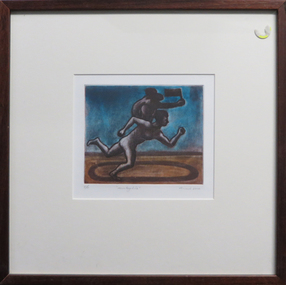 Federation University Art Collection
Work on paper - Artwork - Printmaking, Geoffrey Ricardo, 'Monkeyshine' by Geoffrey Ricardo, 2000
... GEOFFREY RICARDO (1964- ) Born Melbourne, Australia 1984-86 Bachelor of Arts (Fine Art), Printmaking, Chisholm Institute of Technology, Melbourne 1987-89 Printing Assistant at Bill Young Studios, Editioning intaglio prints, King Valley, VIC 1988 Full-time Studio Technician at Printmaking Department, Chisholm Institute of Technology, Melbourne 1989-90 Graduate Diploma (Fine Art), Printmaking, Monash University, Melbourne 1991 Traveled to England, France, Spain and USA (Winsor & Newton International Travelling Bursary, National Students Art Prize) Worked in private studios in Gaucin, Spain and New York, USA 1994-95 Master of Fine Arts, Monash University, Melbourne 1995 Guest Lecturer, Victorian College of the Arts, Melbourne Traveled to Europe and America 1996 Guest Lecturer, Royal Melbourne Institute of Technology, Melbourne 1990-98 Sessional Lecturer, Monash University, Melbourne 1998 Traveled to America and Mexico 2001-05 Sessional Lecturer, The Victorian College of the Arts, Melbourne 2003-10 Printmaking Workshops, Warrnambool TAFE, Warrnambool, VIC 2004 Traveled to Europe, Mexico and Cuba 2005 Lecturer, National Art School (Summer School), Sydney Sessional Lecturer, Monash University, Melbourne Lecturer, Institution of Koorie Education, Deakin University, Geelong, VIC SOLO EXHIBITIONS 2012 ‘Collection of Works’ The Art Vault Mildura ‘Deeper Meanings’, The Incinerator Gallery, Melbourne ‘Three Projects’, Australian Galleries, Glenmore Road, Sydney Melbourne Art Fair Stand F33, Australian Galleries, Melbourne 2009 ‘Anno Domino, Antarctica and The Anatomy Lesson’, Australian Galleries Derby Street, Melbourne The Art Vault, Mildura, VIC 2008 MV Orlova (Quark Expeditions), The Drake Passage, Antarctica 2007 ‘Herd’, BMGArt, Adelaide ‘Herd’, Australian Galleries Painting & Sculpture, Sydney 2006 ‘Herd’, Australian Galleries Painting & Sculpture, Melbourne 2004 ‘Recent work’, BMGArt, Adelaide 2003 ‘The Rapunzel Suite and Other New Works’, Australian Galleries Works on Paper, Sydney ‘Recent Works’, Australian Galleries Painting & Sculpture, Melbourne ‘Recent works’, Cowwarr Art Space, Cowwarr, VIC 2002 ‘The Rapunzel Suite’, Australian Galleries Works on Paper, Melbourne ‘Strange Games’, Australian Galleries Works on Paper, Sydney 1999 ‘A Dark City Narrative’, Australian Galleries Works on Paper, Sydney ‘A Dark City Narrative’, Australian Galleries Works on Paper, Melbourne 1998 Cullity Gallery, School of Architecture and Fine Art, University of Western Australia, Perth 1997 Delaney Gallery, Perth Chapman Gallery, Canberra BMGArt, Adelaide ‘Menagerie’, Australian Galleries, Sydney ‘Menagerie’, Australian Galleries, Melbourne 1995 ‘Paintings, Prints and Sculpture’, Australian Galleries, Sydney ‘Prints, Paintings and Sculpture’, Australian Galleries, Melbourne 1994 Lawrence Wilson Art Gallery, University of Western Australia, Perth Graham Galleries + Editions, Brisbane ‘Wishful Thinking, Prints and Sculptures’, Lawrence Wilson Art Gallery, University of Western Australia, Perth 1992 ‘Prints, Sculptures and Watercolours’, Australian Galleries, Melbourne and Sydney 1990 ‘Watercolours, Prints and Small Bronzes’, Australian Galleries, Sydney ‘Paintings, Prints and Sculptures’, Australian Galleries, Melbourne GROUP EXHIBITIONS 2013 ‘Sculpture by the Sea’ Cottlesloe, Western Australia 2012 ‘Brave New World’, Toyota Community Spirit Gallery, Port Melbourne, VIC ‘Sculpture by the Sea’, Bondi, Sydney 2011 ‘Sculpture by the sea’, Aarhus, Denmark ‘Artwork to Tapestry’, Tarrawarra Museum of Art, Healesville, VIC Burnie Print Prize, Burnie Regional Gallery, Burnie, TAS ‘large exhibition of small works’, Australian Galleries, Roylston Street, Sydney ‘large exhibition of small works’, Australian Galleries, Derby Street, Melbourne ‘Nature of the Mark’, Australian Galleries, Smith Street, Melbourne Rick Amor Print Prize, Montsalvat, Eltham, VIC 2010 ‘Summer show’, Australian Galleries, Glenmore Road, Sydney ‘Summer stock show’, Australian Galleries, Smith Street, Melbourne ‘Sub10’, Substation, Melbourne ‘McClelland Sculpture Survey and Award 2010’, McClelland Gallery + Sculpture Park, Langwarrin, VIC ‘Artists’ Prints made with Integrity I’, Australian Galleries, Smith Street, Melbourne Montalto Sculpture Prize, Montalto Vineyard and Olive Grove, Red Hill South, VIC 2009 ‘Artists’ ink: printmaking from the Warrnambool Art Gallery Collection, 1970-2001’, Ararat Regional Art Gallery, Ararat, VIC ‘Lorne Sculpture’ (Winner), Lorne, VIC 2008 ‘Summer Stock Show’, Australian Galleries Smith Street, Melbourne 2007 ARC Biennial (Art, Design and Craft), Queensland University of Technology Art Museum, Brisbane ‘Prints Tokyo: International Print Exhibition’, Tokyo, Japan Seoul International Print, Photo and Edition Works Art Fair, Seoul, Korea Guanlan International Print Biennial, Guanlan, China ‘Summer Stock Show’, Australian Galleries Works on Paper, Sydney ‘Summer Stock Show’, Australian Galleries Painting & Sculpture, Melbourne ‘Summer Stock Show’, Australian Galleries Works on Paper, Melbourne ‘Antipodean Bestiary’, Project Space / Spare Room, RMIT University, Melbourne Montalto Sculpture Prize, Montalto Vineyard and Olive Grove, Red Hill South, VIC McClelland Sculpture Survey and Award 2007, McClelland Gallery + Sculpture Park, Langwarrin, VIC ‘2007: Works from the studio’, Lancaster Press, Melbourne ‘50 - a print exchange portfolio’, Geelong Art Gallery, Geelong, VIC ‘Small Pleasures’, Australian Galleries Painting & Sculpture, Melbourne ‘Stock Show’, Australian Galleries Painting & Sculpture, Melbourne ‘Artists for Kids Culture’, Brightspace, Melbourne 2006 ‘Partnership or perish’, Academy of the Arts, School of Visual and Performing Arts, University of Tasmania, Hobart Libris Awards, Artspace Mackay, Mackay, QLD ‘Summery’, Australian Galleries Painting & Sculpture, Sydney ‘Summer Stock Show’, Australian Galleries Works on Paper, Melbourne ‘Bookish’, Australian Galleries Works on Paper, Melbourne Melbourne Art Fair, Australian Galleries, Melbourne ‘Artists for Kids Culture’, Brightspace, Melbourne ‘50th Anniversary Exhibition’, Australian Galleries Painting & Sculpture, Melbourne 2005 ‘End of Year Group Exhibition’, Australian Galleries Painting & Sculpture, Sydney ‘Contemporary Works on Paper’, Australian Galleries Works on Paper, Melbourne ‘Expansion’, Lancaster Press, Melbourne ‘The Art of Collaboration’, Singapore Tyler Print Institute, Singapore ‘Double take’, Arts Project Australia, Melbourne ‘Small Treasures - 20 emerging and established artists’, TILT Contemporary Art, Melbourne Jacques Cadry Memorial Art Prize, Fox Studios and State Library of NSW, Sydney ‘Tales of the City’, Australian Galleries Painting & Sculpture, Melbourne ‘A Decade of Collecting 1995-2005’, Cairns Regional Gallery, Cairns, QLD ‘Artists for Kids Culture’, Brightspace, Melbourne ‘Surface Tension: 21 Contemporary Australian Printmakers’, University of Tasmania, Launceston, TAS ‘Neo-millenium’, Toyota Community Spirit Gallery, Melbourne 2004 ‘Artists for Kids Culture’, Brightspace, Melbourne ‘Group Exhibition’, Australian Galleries Painting & Sculpture, Melbourne ‘Species’, Australian Galleries Works on Paper, Melbourne ‘In the presence of creatures great and small’, Australian Galleries Works on Paper, Sydney ‘Tapestries from the Victorian Tapestry Workshop’, Australian Galleries, Melbourne ‘Sculpture’, Australian Galleries Painting & Sculpture, Sydney ‘Contemporary Australian Prints’, National Arts Club, New York, USA ‘Contemporary Australian Prints’, Gallery 101, Melbourne ‘Contemporary Australian Prints from the Collection’, Art Gallery of New South Wales, Sydney ‘Bridge’, Toyota Community Spirit Gallery, Melbourne ‘Vivid’, Fortyfive Downstairs, Melbourne Lake Gallery, Paynesville, VIC 2003 ‘Paper matters’, Lawrence Wilson Art Gallery, University of Western Australia, Perth ‘Artists for Kids Culture’, Brightspace, Melbourne ‘Less is more’, BMGArt, Adelaide ‘The ink’s on me: Bill Young master printmaker’, Wangaratta Exhibitions Gallery, Wangaratta, VIC ‘Fantastic and Visionary Art’, Touring: Global Arts Link, QLD; Ipswich Regional Gallery, QLD ; Orange Regional Gallery, NSW; Manning Regional Gallery, NSW; Parramatta Heritage Centre, Sydney; Ballarat Regional Gallery, VIC 2002 Shell Fremantle Print Award, Fremantle Arts Centre, Fremantle, WA ‘Artists for Kids Culture’, Brightspace, Melbourne 2001 Shell Fremantle Print Award, Fremantle Arts Centre, Fremantle, WA ‘Six Degrees of Collaboration’, RMIT Faculty of Art, Design and Communication Gallery, Melbourne ‘Reciprocal Moves’, Warrnambool Art Gallery, Warrnambool, VIC International Print Triennial, Kanagawa, Japan ‘Fantastic Art’, Orange Regional Gallery, Orange, NSW ‘Dancing Made a Man out of Me’, The Switchback Gallery, Monash University, Gippsland, VIC ‘Artists for Kids Culture’, Brightspace, Melbourne ‘Celebration’, Regional touring exhibition, VIC 2000-01 ‘Workings of the Mind: Melbourne Prints of the 1960s to the 1990s’, Touring: Grafton Regional Gallery, NSW; Toowoomba Regional Art Gallery, QLD; Nolan Gallery, Canberra; Bendigo Art Gallery, VIC; PercTucker Regional Gallery, QLD 2000 Shell Fremantle Print Award, Fremantle Arts Centre, Fremantle, WA The Hutchins Art Prize, Long Gallery, Hobart ‘Artists for Kids Culture’, Brightspace, Melbourne 1999 Shell Fremantle Print Award, Fremantle Arts Space, Fremantle, WA ‘We are Australian’, George Adams Gallery, Victorian Arts Centre, Melbourne Rena Ellen Jones Memorial Print Award, Warrnambool Art Gallery, Warrnambool, VIC ‘National Works on Paper’, Mornington Peninsula Gallery, Mornington, VIC ‘Artists for Kids Culture’, Brightspace, Melbourne ‘Pleasure’, Australian Galleries, Melbourne 1998-99 ‘Australian Prints’, Art Gallery of New South Wales, Sydney 1997 ‘KNOCK, KNOCK’, Australian Galleries, Melbourne ‘Woven Colour, The Art of Tapestry’, Dr Earl Lu Gallery, Singapore 1996 M.P.A.C. ...GEOFFREY RICARDO (1964- ) Born Melbourne, Australia 1984-86 Bachelor of Arts (Fine Art), Printmaking, Chisholm Institute of Technology, Melbourne 1987-89 Printing Assistant at Bill Young Studios, Editioning intaglio prints, King Valley, VIC 1988 Full-time Studio Technician at Printmaking Department, Chisholm Institute of Technology, Melbourne 1989-90 Graduate Diploma (Fine Art), Printmaking, Monash University, Melbourne 1991 Traveled to England, France, Spain and USA (Winsor & Newton International Travelling Bursary, National Students Art Prize) Worked in private studios in Gaucin, Spain and New York, USA 1994-95 Master of Fine Arts, Monash University, Melbourne 1995 Guest Lecturer, Victorian College of the Arts, Melbourne Traveled to Europe and America 1996 Guest Lecturer, Royal Melbourne Institute of Technology, Melbourne 1990-98 Sessional Lecturer, Monash University, Melbourne 1998 Traveled to America and Mexico 2001-05 Sessional Lecturer, The Victorian College of the Arts, Melbourne 2003-10 Printmaking Workshops, Warrnambool TAFE, Warrnambool, VIC 2004 Traveled to Europe, Mexico and Cuba 2005 Lecturer, National Art School (Summer School), Sydney Sessional Lecturer, Monash University, Melbourne Lecturer, Institution of Koorie Education, Deakin University, Geelong, VIC SOLO EXHIBITIONS 2012 ‘Collection of Works’ The Art Vault Mildura ‘Deeper Meanings’, The Incinerator Gallery, Melbourne ‘Three Projects’, Australian Galleries, Glenmore Road, Sydney Melbourne Art Fair Stand F33, Australian Galleries, Melbourne 2009 ‘Anno Domino, Antarctica and The Anatomy Lesson’, Australian Galleries Derby Street, Melbourne The Art Vault, Mildura, VIC 2008 MV Orlova (Quark Expeditions), The Drake Passage, Antarctica 2007 ‘Herd’, BMGArt, Adelaide ‘Herd’, Australian Galleries Painting & Sculpture, Sydney 2006 ‘Herd’, Australian Galleries Painting & Sculpture, Melbourne 2004 ‘Recent work’, BMGArt, Adelaide 2003 ‘The Rapunzel Suite and Other New Works’, Australian Galleries Works on Paper, Sydney ‘Recent Works’, Australian Galleries Painting & Sculpture, Melbourne ‘Recent works’, Cowwarr Art Space, Cowwarr, VIC 2002 ‘The Rapunzel Suite’, Australian Galleries Works on Paper, Melbourne ‘Strange Games’, Australian Galleries Works on Paper, Sydney 1999 ‘A Dark City Narrative’, Australian Galleries Works on Paper, Sydney ‘A Dark City Narrative’, Australian Galleries Works on Paper, Melbourne 1998 Cullity Gallery, School of Architecture and Fine Art, University of Western Australia, Perth 1997 Delaney Gallery, Perth Chapman Gallery, Canberra BMGArt, Adelaide ‘Menagerie’, Australian Galleries, Sydney ‘Menagerie’, Australian Galleries, Melbourne 1995 ‘Paintings, Prints and Sculpture’, Australian Galleries, Sydney ‘Prints, Paintings and Sculpture’, Australian Galleries, Melbourne 1994 Lawrence Wilson Art Gallery, University of Western Australia, Perth Graham Galleries + Editions, Brisbane ‘Wishful Thinking, Prints and Sculptures’, Lawrence Wilson Art Gallery, University of Western Australia, Perth 1992 ‘Prints, Sculptures and Watercolours’, Australian Galleries, Melbourne and Sydney 1990 ‘Watercolours, Prints and Small Bronzes’, Australian Galleries, Sydney ‘Paintings, Prints and Sculptures’, Australian Galleries, Melbourne GROUP EXHIBITIONS 2013 ‘Sculpture by the Sea’ Cottlesloe, Western Australia 2012 ‘Brave New World’, Toyota Community Spirit Gallery, Port Melbourne, VIC ‘Sculpture by the Sea’, Bondi, Sydney 2011 ‘Sculpture by the sea’, Aarhus, Denmark ‘Artwork to Tapestry’, Tarrawarra Museum of Art, Healesville, VIC Burnie Print Prize, Burnie Regional Gallery, Burnie, TAS ‘large exhibition of small works’, Australian Galleries, Roylston Street, Sydney ‘large exhibition of small works’, Australian Galleries, Derby Street, Melbourne ‘Nature of the Mark’, Australian Galleries, Smith Street, Melbourne Rick Amor Print Prize, Montsalvat, Eltham, VIC 2010 ‘Summer show’, Australian Galleries, Glenmore Road, Sydney ‘Summer stock show’, Australian Galleries, Smith Street, Melbourne ‘Sub10’, Substation, Melbourne ‘McClelland Sculpture Survey and Award 2010’, McClelland Gallery + Sculpture Park, Langwarrin, VIC ‘Artists’ Prints made with Integrity I’, Australian Galleries, Smith Street, Melbourne Montalto Sculpture Prize, Montalto Vineyard and Olive Grove, Red Hill South, VIC 2009 ‘Artists’ ink: printmaking from the Warrnambool Art Gallery Collection, 1970-2001’, Ararat Regional Art Gallery, Ararat, VIC ‘Lorne Sculpture’ (Winner), Lorne, VIC 2008 ‘Summer Stock Show’, Australian Galleries Smith Street, Melbourne 2007 ARC Biennial (Art, Design and Craft), Queensland University of Technology Art Museum, Brisbane ‘Prints Tokyo: International Print Exhibition’, Tokyo, Japan Seoul International Print, Photo and Edition Works Art Fair, Seoul, Korea Guanlan International Print Biennial, Guanlan, China ‘Summer Stock Show’, Australian Galleries Works on Paper, Sydney ‘Summer Stock Show’, Australian Galleries Painting & Sculpture, Melbourne ‘Summer Stock Show’, Australian Galleries Works on Paper, Melbourne ‘Antipodean Bestiary’, Project Space / Spare Room, RMIT University, Melbourne Montalto Sculpture Prize, Montalto Vineyard and Olive Grove, Red Hill South, VIC McClelland Sculpture Survey and Award 2007, McClelland Gallery + Sculpture Park, Langwarrin, VIC ‘2007: Works from the studio’, Lancaster Press, Melbourne ‘50 - a print exchange portfolio’, Geelong Art Gallery, Geelong, VIC ‘Small Pleasures’, Australian Galleries Painting & Sculpture, Melbourne ‘Stock Show’, Australian Galleries Painting & Sculpture, Melbourne ‘Artists for Kids Culture’, Brightspace, Melbourne 2006 ‘Partnership or perish’, Academy of the Arts, School of Visual and Performing Arts, University of Tasmania, Hobart Libris Awards, Artspace Mackay, Mackay, QLD ‘Summery’, Australian Galleries Painting & Sculpture, Sydney ‘Summer Stock Show’, Australian Galleries Works on Paper, Melbourne ‘Bookish’, Australian Galleries Works on Paper, Melbourne Melbourne Art Fair, Australian Galleries, Melbourne ‘Artists for Kids Culture’, Brightspace, Melbourne ‘50th Anniversary Exhibition’, Australian Galleries Painting & Sculpture, Melbourne 2005 ‘End of Year Group Exhibition’, Australian Galleries Painting & Sculpture, Sydney ‘Contemporary Works on Paper’, Australian Galleries Works on Paper, Melbourne ‘Expansion’, Lancaster Press, Melbourne ‘The Art of Collaboration’, Singapore Tyler Print Institute, Singapore ‘Double take’, Arts Project Australia, Melbourne ‘Small Treasures - 20 emerging and established artists’, TILT Contemporary Art, Melbourne Jacques Cadry Memorial Art Prize, Fox Studios and State Library of NSW, Sydney ‘Tales of the City’, Australian Galleries Painting & Sculpture, Melbourne ‘A Decade of Collecting 1995-2005’, Cairns Regional Gallery, Cairns, QLD ‘Artists for Kids Culture’, Brightspace, Melbourne ‘Surface Tension: 21 Contemporary Australian Printmakers’, University of Tasmania, Launceston, TAS ‘Neo-millenium’, Toyota Community Spirit Gallery, Melbourne 2004 ‘Artists for Kids Culture’, Brightspace, Melbourne ‘Group Exhibition’, Australian Galleries Painting & Sculpture, Melbourne ‘Species’, Australian Galleries Works on Paper, Melbourne ‘In the presence of creatures great and small’, Australian Galleries Works on Paper, Sydney ‘Tapestries from the Victorian Tapestry Workshop’, Australian Galleries, Melbourne ‘Sculpture’, Australian Galleries Painting & Sculpture, Sydney ‘Contemporary Australian Prints’, National Arts Club, New York, USA ‘Contemporary Australian Prints’, Gallery 101, Melbourne ‘Contemporary Australian Prints from the Collection’, Art Gallery of New South Wales, Sydney ‘Bridge’, Toyota Community Spirit Gallery, Melbourne ‘Vivid’, Fortyfive Downstairs, Melbourne Lake Gallery, Paynesville, VIC 2003 ‘Paper matters’, Lawrence Wilson Art Gallery, University of Western Australia, Perth ‘Artists for Kids Culture’, Brightspace, Melbourne ‘Less is more’, BMGArt, Adelaide ‘The ink’s on me: Bill Young master printmaker’, Wangaratta Exhibitions Gallery, Wangaratta, VIC ‘Fantastic and Visionary Art’, Touring: Global Arts Link, QLD; Ipswich Regional Gallery, QLD ; Orange Regional Gallery, NSW; Manning Regional Gallery, NSW; Parramatta Heritage Centre, Sydney; Ballarat Regional Gallery, VIC 2002 Shell Fremantle Print Award, Fremantle Arts Centre, Fremantle, WA ‘Artists for Kids Culture’, Brightspace, Melbourne 2001 Shell Fremantle Print Award, Fremantle Arts Centre, Fremantle, WA ‘Six Degrees of Collaboration’, RMIT Faculty of Art, Design and Communication Gallery, Melbourne ‘Reciprocal Moves’, Warrnambool Art Gallery, Warrnambool, VIC International Print Triennial, Kanagawa, Japan ‘Fantastic Art’, Orange Regional Gallery, Orange, NSW ‘Dancing Made a Man out of Me’, The Switchback Gallery, Monash University, Gippsland, VIC ‘Artists for Kids Culture’, Brightspace, Melbourne ‘Celebration’, Regional touring exhibition, VIC 2000-01 ‘Workings of the Mind: Melbourne Prints of the 1960s to the 1990s’, Touring: Grafton Regional Gallery, NSW; Toowoomba Regional Art Gallery, QLD; Nolan Gallery, Canberra; Bendigo Art Gallery, VIC; PercTucker Regional Gallery, QLD 2000 Shell Fremantle Print Award, Fremantle Arts Centre, Fremantle, WA The Hutchins Art Prize, Long Gallery, Hobart ‘Artists for Kids Culture’, Brightspace, Melbourne 1999 Shell Fremantle Print Award, Fremantle Arts Space, Fremantle, WA ‘We are Australian’, George Adams Gallery, Victorian Arts Centre, Melbourne Rena Ellen Jones Memorial Print Award, Warrnambool Art Gallery, Warrnambool, VIC ‘National Works on Paper’, Mornington Peninsula Gallery, Mornington, VIC ‘Artists for Kids Culture’, Brightspace, Melbourne ‘Pleasure’, Australian Galleries, Melbourne 1998-99 ‘Australian Prints’, Art Gallery of New South Wales, Sydney 1997 ‘KNOCK, KNOCK’, Australian Galleries, Melbourne ‘Woven Colour, The Art of Tapestry’, Dr Earl Lu Gallery, Singapore 1996 M.P.A.C. ...GEOFFREY RICARDO (1964- ) Born Melbourne, Australia 1984-86 Bachelor of Arts (Fine Art), Printmaking, Chisholm Institute of Technology, Melbourne 1987-89 Printing Assistant at Bill Young Studios, Editioning intaglio prints, King Valley, VIC 1988 Full-time Studio Technician at Printmaking Department, Chisholm Institute of Technology, Melbourne 1989-90 Graduate Diploma (Fine Art), Printmaking, Monash University, Melbourne 1991 Traveled to England, France, Spain and USA (Winsor & Newton International Travelling Bursary, National Students Art Prize) Worked in private studios in Gaucin, Spain and New York, USA 1994-95 Master of Fine Arts, Monash University, Melbourne 1995 Guest Lecturer, Victorian College of the Arts, Melbourne Traveled to Europe and America 1996 Guest Lecturer, Royal Melbourne Institute of Technology, Melbourne 1990-98 Sessional Lecturer, Monash University, Melbourne 1998 Traveled to America and Mexico 2001-05 Sessional Lecturer, The Victorian College of the Arts, Melbourne 2003-10 Printmaking Workshops, Warrnambool TAFE, Warrnambool, VIC 2004 Traveled to Europe, Mexico and Cuba 2005 Lecturer, National Art School (Summer School), Sydney Sessional Lecturer, Monash University, Melbourne Lecturer, Institution of Koorie Education, Deakin University, Geelong, VIC SOLO EXHIBITIONS 2012 ‘Collection of Works’ The Art Vault Mildura ‘Deeper Meanings’, The Incinerator Gallery, Melbourne ‘Three Projects’, Australian Galleries, Glenmore Road, Sydney Melbourne Art Fair Stand F33, Australian Galleries, Melbourne 2009 ‘Anno Domino, Antarctica and The Anatomy Lesson’, Australian Galleries Derby Street, Melbourne The Art Vault, Mildura, VIC 2008 MV Orlova (Quark Expeditions), The Drake Passage, Antarctica 2007 ‘Herd’, BMGArt, Adelaide ‘Herd’, Australian Galleries Painting & Sculpture, Sydney 2006 ‘Herd’, Australian Galleries Painting & Sculpture, Melbourne 2004 ‘Recent work’, BMGArt, Adelaide 2003 ‘The Rapunzel Suite and Other New Works’, Australian Galleries Works on Paper, Sydney ‘Recent Works’, Australian Galleries Painting & Sculpture, Melbourne ‘Recent works’, Cowwarr Art Space, Cowwarr, VIC 2002 ‘The Rapunzel Suite’, Australian Galleries Works on Paper, Melbourne ‘Strange Games’, Australian Galleries Works on Paper, Sydney 1999 ‘A Dark City Narrative’, Australian Galleries Works on Paper, Sydney ‘A Dark City Narrative’, Australian Galleries Works on Paper, Melbourne 1998 Cullity Gallery, School of Architecture and Fine Art, University of Western Australia, Perth 1997 Delaney Gallery, Perth Chapman Gallery, Canberra BMGArt, Adelaide ‘Menagerie’, Australian Galleries, Sydney ‘Menagerie’, Australian Galleries, Melbourne 1995 ‘Paintings, Prints and Sculpture’, Australian Galleries, Sydney ‘Prints, Paintings and Sculpture’, Australian Galleries, Melbourne 1994 Lawrence Wilson Art Gallery, University of Western Australia, Perth Graham Galleries + Editions, Brisbane ‘Wishful Thinking, Prints and Sculptures’, Lawrence Wilson Art Gallery, University of Western Australia, Perth 1992 ‘Prints, Sculptures and Watercolours’, Australian Galleries, Melbourne and Sydney 1990 ‘Watercolours, Prints and Small Bronzes’, Australian Galleries, Sydney ‘Paintings, Prints and Sculptures’, Australian Galleries, Melbourne GROUP EXHIBITIONS 2013 ‘Sculpture by the Sea’ Cottlesloe, Western Australia 2012 ‘Brave New World’, Toyota Community Spirit Gallery, Port Melbourne, VIC ‘Sculpture by the Sea’, Bondi, Sydney 2011 ‘Sculpture by the sea’, Aarhus, Denmark ‘Artwork to Tapestry’, Tarrawarra Museum of Art, Healesville, VIC Burnie Print Prize, Burnie Regional Gallery, Burnie, TAS ‘large exhibition of small works’, Australian Galleries, Roylston Street, Sydney ‘large exhibition of small works’, Australian Galleries, Derby Street, Melbourne ‘Nature of the Mark’, Australian Galleries, Smith Street, Melbourne Rick Amor Print Prize, Montsalvat, Eltham, VIC 2010 ‘Summer show’, Australian Galleries, Glenmore Road, Sydney ‘Summer stock show’, Australian Galleries, Smith Street, Melbourne ‘Sub10’, Substation, Melbourne ‘McClelland Sculpture Survey and Award 2010’, McClelland Gallery + Sculpture Park, Langwarrin, VIC ‘Artists’ Prints made with Integrity I’, Australian Galleries, Smith Street, Melbourne Montalto Sculpture Prize, Montalto Vineyard and Olive Grove, Red Hill South, VIC 2009 ‘Artists’ ink: printmaking from the Warrnambool Art Gallery Collection, 1970-2001’, Ararat Regional Art Gallery, Ararat, VIC ‘Lorne Sculpture’ (Winner), Lorne, VIC 2008 ‘Summer Stock Show’, Australian Galleries Smith Street, Melbourne 2007 ARC Biennial (Art, Design and Craft), Queensland University of Technology Art Museum, Brisbane ‘Prints Tokyo: International Print Exhibition’, Tokyo, Japan Seoul International Print, Photo and Edition Works Art Fair, Seoul, Korea Guanlan International Print Biennial, Guanlan, China ‘Summer Stock Show’, Australian Galleries Works on Paper, Sydney ‘Summer Stock Show’, Australian Galleries Painting & Sculpture, Melbourne ‘Summer Stock Show’, Australian Galleries Works on Paper, Melbourne ‘Antipodean Bestiary’, Project Space / Spare Room, RMIT University, Melbourne Montalto Sculpture Prize, Montalto Vineyard and Olive Grove, Red Hill South, VIC McClelland Sculpture Survey and Award 2007, McClelland Gallery + Sculpture Park, Langwarrin, VIC ‘2007: Works from the studio’, Lancaster Press, Melbourne ‘50 - a print exchange portfolio’, Geelong Art Gallery, Geelong, VIC ‘Small Pleasures’, Australian Galleries Painting & Sculpture, Melbourne ‘Stock Show’, Australian Galleries Painting & Sculpture, Melbourne ‘Artists for Kids Culture’, Brightspace, Melbourne 2006 ‘Partnership or perish’, Academy of the Arts, School of Visual and Performing Arts, University of Tasmania, Hobart Libris Awards, Artspace Mackay, Mackay, QLD ‘Summery’, Australian Galleries Painting & Sculpture, Sydney ‘Summer Stock Show’, Australian Galleries Works on Paper, Melbourne ‘Bookish’, Australian Galleries Works on Paper, Melbourne Melbourne Art Fair, Australian Galleries, Melbourne ‘Artists for Kids Culture’, Brightspace, Melbourne ‘50th Anniversary Exhibition’, Australian Galleries Painting & Sculpture, Melbourne 2005 ‘End of Year Group Exhibition’, Australian Galleries Painting & Sculpture, Sydney ‘Contemporary Works on Paper’, Australian Galleries Works on Paper, Melbourne ‘Expansion’, Lancaster Press, Melbourne ‘The Art of Collaboration’, Singapore Tyler Print Institute, Singapore ‘Double take’, Arts Project Australia, Melbourne ‘Small Treasures - 20 emerging and established artists’, TILT Contemporary Art, Melbourne Jacques Cadry Memorial Art Prize, Fox Studios and State Library of NSW, Sydney ‘Tales of the City’, Australian Galleries Painting & Sculpture, Melbourne ‘A Decade of Collecting 1995-2005’, Cairns Regional Gallery, Cairns, QLD ‘Artists for Kids Culture’, Brightspace, Melbourne ‘Surface Tension: 21 Contemporary Australian Printmakers’, University of Tasmania, Launceston, TAS ‘Neo-millenium’, Toyota Community Spirit Gallery, Melbourne 2004 ‘Artists for Kids Culture’, Brightspace, Melbourne ‘Group Exhibition’, Australian Galleries Painting & Sculpture, Melbourne ‘Species’, Australian Galleries Works on Paper, Melbourne ‘In the presence of creatures great and small’, Australian Galleries Works on Paper, Sydney ‘Tapestries from the Victorian Tapestry Workshop’, Australian Galleries, Melbourne ‘Sculpture’, Australian Galleries Painting & Sculpture, Sydney ‘Contemporary Australian Prints’, National Arts Club, New York, USA ‘Contemporary Australian Prints’, Gallery 101, Melbourne ‘Contemporary Australian Prints from the Collection’, Art Gallery of New South Wales, Sydney ‘Bridge’, Toyota Community Spirit Gallery, Melbourne ‘Vivid’, Fortyfive Downstairs, Melbourne Lake Gallery, Paynesville, VIC 2003 ‘Paper matters’, Lawrence Wilson Art Gallery, University of Western Australia, Perth ‘Artists for Kids Culture’, Brightspace, Melbourne ‘Less is more’, BMGArt, Adelaide ‘The ink’s on me: Bill Young master printmaker’, Wangaratta Exhibitions Gallery, Wangaratta, VIC ‘Fantastic and Visionary Art’, Touring: Global Arts Link, QLD; Ipswich Regional Gallery, QLD ; Orange Regional Gallery, NSW; Manning Regional Gallery, NSW; Parramatta Heritage Centre, Sydney; Ballarat Regional Gallery, VIC 2002 Shell Fremantle Print Award, Fremantle Arts Centre, Fremantle, WA ‘Artists for Kids Culture’, Brightspace, Melbourne 2001 Shell Fremantle Print Award, Fremantle Arts Centre, Fremantle, WA ‘Six Degrees of Collaboration’, RMIT Faculty of Art, Design and Communication Gallery, Melbourne ‘Reciprocal Moves’, Warrnambool Art Gallery, Warrnambool, VIC International Print Triennial, Kanagawa, Japan ‘Fantastic Art’, Orange Regional Gallery, Orange, NSW ‘Dancing Made a Man out of Me’, The Switchback Gallery, Monash University, Gippsland, VIC ‘Artists for Kids Culture’, Brightspace, Melbourne ‘Celebration’, Regional touring exhibition, VIC 2000-01 ‘Workings of the Mind: Melbourne Prints of the 1960s to the 1990s’, Touring: Grafton Regional Gallery, NSW; Toowoomba Regional Art Gallery, QLD; Nolan Gallery, Canberra; Bendigo Art Gallery, VIC; PercTucker Regional Gallery, QLD 2000 Shell Fremantle Print Award, Fremantle Arts Centre, Fremantle, WA The Hutchins Art Prize, Long Gallery, Hobart ‘Artists for Kids Culture’, Brightspace, Melbourne 1999 Shell Fremantle Print Award, Fremantle Arts Space, Fremantle, WA ‘We are Australian’, George Adams Gallery, Victorian Arts Centre, Melbourne Rena Ellen Jones Memorial Print Award, Warrnambool Art Gallery, Warrnambool, VIC ‘National Works on Paper’, Mornington Peninsula Gallery, Mornington, VIC ‘Artists for Kids Culture’, Brightspace, Melbourne ‘Pleasure’, Australian Galleries, Melbourne 1998-99 ‘Australian Prints’, Art Gallery of New South Wales, Sydney 1997 ‘KNOCK, KNOCK’, Australian Galleries, Melbourne ‘Woven Colour, The Art of Tapestry’, Dr Earl Lu Gallery, Singapore 1996 M.P.A.C. Print Award, Mornington Peninsula Arts Centre, Mornington, VIC Academy of Art & Culture, Calcutta, India ‘Synergy’, Touring: Lalit Kala Akademi, New Dehli, India; Jehangir Nicholson Gallery, Bombay, India; Birla, India ‘Contemporary Australian Tapestry’, Frederikshavn Kunstmuseum, Denmark; Australia House, London, UK 1995 ‘Interweave - Tapestry A Collaborative Art’, Heide Museum of Modern Art, Melbourne ‘Contemporary Printmakers’, La Trobe Regional Gallery, Morwell, VIC ‘Contemporary Australian Tapestry’, Australian High Commission, Singapore ‘Circus Capers’, Caulfield Arts Complex, Melbourne 1994 M.P.A.C. Print Award, Mornington Peninsula Arts Centre, Mornington, VIC Fremantle Print Award, Fremantle Arts Centre, Fremantle, WA Australian Universities of Visual Art, Australian High Commission, Singapore ‘Prints, Paintings and Sculpture’, BMGArt, Adelaide Fourth Australian Contemporary Art Fair, Royal Exhibition Building, Melbourne 1993 Fremantle Print Award, Fremantle Arts Centre, Fremantle, WA 1992 Fremantle Print Award, Fremantle Arts Centre, Fremantle, WA ‘Transitional Times’, Print Council of Australia, Melbourne ‘Second Kochi International Triennial Exhibition of Prints’, Japan 1991 Henry Worland Memorial Print Prize, Warrnambool Regional Art Gallery, Warrnambool, VIC Fremantle Print Award, Fremantle Arts Centre, Fremantle, WA ‘Table Top Sculpture’, Australian Galleries, Melbourne ‘Art 91’, London Contemporary Art Fair, London, UK 1990 M.P.A.C. Print Prize, Mornington Peninsula Arts Centre, Mornington, VIC Fremantle Print Prize, Fremantle Arts Centre, Fremantle WA ‘The Christmas Show’, Intaglio Printmaker, London, England ‘Australian Contemporary Art’, AZ Gallery, Tokyo, Japan 1989 National Student Art Prize, Mitchell College, Bathurst, NSW Fremantle Print Award, Fremantle Arts Centre, Fremantle, WA City of Doncaster Acquisitive Print Prize, Manningham Gallery, Melbourne ‘Affiliations’, Monash University Gallery, Melbourne 1988 M.P.A.C. Acquisitive Print Prize, Mornington Peninsula Arts Centre, Mornington, VIC Henry Worland Memorial Print Prize, Warrnambool Regional Art Gallery, Warrnambool, VIC 1987 ‘The Comedy Show’, Print Guild, Melbourne ‘Fluxus Art Flow’, Melbourne 1986 Mornington Peninsula Arts Council Acquisitive Print Prize, Mornington Peninsula, VIC Chisolm Institute of Technology, Graduating Students exhibition, Melbourne AWARDS 2013 King Valley Art Prize (printmaking) 2009 Lorne Sculpture Exhibition (Winner), Lorne, VIC 1989 Windsor and Newton International Travelling Bursary, UK Linbrook International First Prize for Printmaking, Australia COMMISSIONS 2005 Tapestry design for Bairnsdale Hospital (woven by the Victorian Tapestry Workshop, Melbourne), Bairnsdale, VIC 1999 Tapestry design ‘Emblem’ (woven by the Victorian Tapestry Workshop, Melbourne), Australia 1995 ‘A Night of Infectious Laughter’ Poster, St Kilda Festival, Melbourne 1994 Tapestry design ‘Elephant Gingham’ (woven by the Victorian Tapestry Workshop, Melbourne), Australia 1993 Tapestry design for the Festival of Perth Official Poster (woven by the Victorian Tapestry Workshop, Melbourne), Perth RESIDENCIES & PROJECTS 2013 ‘Come In Outside’, Collaboration set design for Pocketfool 2011 Mildura Wentworth Arts Festival Project, Mildura, VIC Residency, The Art Vault , Mildura, VIC 2010 ‘Wish’, Collaboration set design for Pocketfool, Artplay, Melbourne The Art Vault (included continuous public flag making workshops which were flown as part of The Wentworth Mildura Art Festival), Mildura, VIC 2009 The Art Vault (included two public printmaking workshops), Mildura, VIC 2008 Artist in residence, MV Orlova, Quark Expeditions, Antarctica 2003 Residency, Bairnsdale Regional Health Service, Bairnsdale, VIC 1998 Residency, School of Architecture & Fine Art, University of Western Australia, Perth 1997 Residency, La Salle/Fia, College of the Arts, Singapore 1996 Artist in residence, Victorian Tapestry Workshop, Melbourne 1993 Reduction Aquatint Workshop & Residency, Graphic Investigation Department, Canberra School of Art, Canberra NB: all residencies have included workshops involving students, children or the general public COLLECTIONS Artbank, Sydney Art Gallery of New South Wales, Sydney Canson Australia Pty Ltd, Australia City of Box Hill, Melbourne City of Whitehorse, Melbourne Downlands College, Toowoomba, QLD Geelong Grammar School, Geelong, VIC Gold Coast City Art Gallery, Gold Coast, QLD Griffith University, Gold Coast, QLD Helensvale High School, Brisbane Holmes à Court Collection, Perth Latrobe Regional Gallery, Morwell, VIC Monash University, Melbourne Mornington Peninsula Arts Council Collection, Mornington, VIC National Gallery of Australia, Canberra National Gallery of Victoria, Melbourne Parliament House Art Collection, Canberra Print Council of Australia, Melbourne Private collections in Australia, Switzerland, USA, UK, Singapore, Germany, Japan, Malaysia, Holland Queen Victoria Museum & Art Gallery, Launceston, TAS Queensland Art Gallery, Brisbane Queensland University of Technology, Brisbane Shire of Diamond Valley, Diamond Valley, VIC Star of the Sea College, Melbourne The Melbourne Club, Melbourne University of Central Queensland, Brisbane University of Technology, Sydney Wagga Wagga Regional Art Gallery, Wagga Wagga, NSW Warrnambool Regional Art Gallery, Warrnambool, VIC BIBLIOGRAPHY PERIODICALS AQ Journal of Contemporary Analysis, Vol. 70, Issue 4, July-August 1998 AQ Journal of Contemporary Analysis, Vol. 70, Issue 6, November-December 1998 AQ Journal of Contemporary Analysis, Vol.71, Issue 7, April 1999 Backhouse, Megan; “Going out of print and back to basics”, The Age, February 2003 Bellamy, Louise; “Renaissance of Western Art”, The Age (A2 section), 26 November 2005 Clabburn, Anna; “Fables and Foibles”, Art Monthly, September 1994 Dutkiewicz, Adam; “Edge of the sublime”, Advertiser, 1 December 2003, p. 76. Erickson, Dorothy; “The Festival that could have been”, The Bulletin, March 1994 Farmer, Alison; “Ricardo makes poster splash”, Sunday Times - Entertainment Extra, 19 September 1993 “Festival taps weaver’s art”, The West Australian, 11February 1994 Fiasco (web-page), March 2003 Jenkins, John; “A Dark City Narrative”, Imprint, Vol. 34, No. 4, 1999 Grishin, Sasha; “Multiplicity – collecting Australian prints”, Australian Art Review, Issue 13, March-June 2007, pp. 52-55 Grishin, Sasha; “Profiles in Print - Geoffrey Ricardo”, Craft Arts International, Issue 76, 2009, pp.1-4 Lloyd, Tim; “The elephant man”, The Advertiser (Review section), December 2007 Manzana Arné, Josep; “De L’Ex-Libris a L’Ex-Webis: Ex-Libris a Internet”, Ex-Libris, Associació Catalana D’Exlibristes, Barcelona, No. 27, July-December 2002, p.11 McDonald, John; “Dreams of hope and menace” The Sydney Morning Herald, 18 March 1995 McMillan, Peter; “Darkness visible”, The Age, 11September 1999 Nelson, Robert; “Circuses can be curated, but not cured”, The Age, 18 January 1995 Nelson, Robert; “Dream Weavers”, The Age, June 1995 Nelson, Robert; “Paen To Ricardo”, Imprint, Vol. 29, No.1, April, 1994 Nelson, Robert; “Revealed: Mother Nature’s vulgar past”, The Age, September 6, 2000 Nelson, Robert; “Riddled with hidden meaning”, The Age, September 8, 1999 Quadrant, April, 1995 Quadrant, Jan/Feb, 1995 Quadrant, October, 1995 Quadrant, November, 1994 “Ricardo’s surreal works at gallery”, Times-Spectator, 25 July 2003, p.7 Snell, Ted; “Art”, The Australian, 18 February1994 Snell, Ted; “Visual arts at the Festival of Perth”, Art Monthly, April 1994 Sunday Arts, ABC TV, 6 May 2007 Timms, Peter; “Geoff Ricardo: emerging from darkness”, Art Monthly, Issue 140, June 2001 Wallace, Dr Carmel; “Ways of seeing Australia”, Asian Art News, May/June 2004 BOOKS & CATALOGUES A Dark City Narrative, Australian Galleries, Melbourne, 1999 ARC Biennial Exhibition (Exhibition catalogue), Queensland University of Technology Art Museum, 2007, pp. 78-79 Clabburn, Anna; “The Collaborative Spirit”, Australian Tapestries: Victorian Tapestry Workshop, 1995, p. 37 Fantastic Art, Orange Regional Gallery, NSW, 2001 Field, Caroline; Herd, catalogue essay, Australian Galleries, Sydney, 2007 Grishin, Sasha; Australian Identities in Printmaking, Wagga Wagga Regional Art Gallery, 2000 Grishin, Sasha; Australian Printmaking in the 1990’s, Craftsman House, 1997 Havighurst, Sophie (Illustrations by Geoffrey Ricardo); When Lester lost his cool, The University of Melbourne, 2007 Kolenberg, Hendrik & Ryan, Anne; Australian Prints, Art Gallery of New South Wales, 1998 Lawrence, Michel; Framed; photographs of Australian Artists, 1998 Modern Australian Tapestries, Victorian Tapestry Workshop, 2000 The Rapunzel Suite, Australian Galleries, Melbourne, 2002 Wallace, Dr Carmel (Essay); Surface Tension, Twenty One Contemporary Australian Printmakers, Gallery 101, Melbourne, 2004 Workings of the Mind : Melbourne Prints of the 1960s to the 1990s, Queensland University of Technology Art Museum, Brisbane, 2000 TELEVISION Sunday Arts, ABC TV, 6 May 2007 Inside Art TV, Channel 31, July 2012Framed coloured aquatint on paper. Donated through the Australian Government's Cultural Gifts Programme by Katherine Littlewood.Under image in pencil ' T/P "Monkeyshine" Ricardo 2000'geoffrey ricardo, framed print -
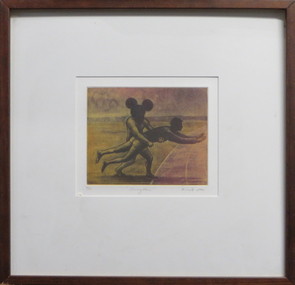 Federation University Art Collection
Work on paper - Artwork - Printmaking, Geoffrey Ricardo, 'Dummy Throw' by Geoffrey Ricardo, 2000
... GEOFFREY RICARDO (1964- ) Born 1964, Melbourne, Australia 1984-86 Bachelor of Arts (Fine Art), Printmaking, Chisholm Institute of Technology, Melbourne 1987-89 Printing Assistant at Bill Young Studios, Editioning intaglio prints, King Valley, VIC 1988 Full-time Studio Technician at Printmaking Department, Chisholm Institute of Technology, Melbourne 1989-90 Graduate Diploma (Fine Art), Printmaking, Monash University, Melbourne 1991 Traveled to England, France, Spain and USA (Winsor & Newton International Travelling Bursary, National Students Art Prize) Worked in private studios in Gaucin, Spain and New York, USA 1994-95 Master of Fine Arts, Monash University, Melbourne 1995 Guest Lecturer, Victorian College of the Arts, Melbourne Traveled to Europe and America 1996 Guest Lecturer, Royal Melbourne Institute of Technology, Melbourne 1990-98 Sessional Lecturer, Monash University, Melbourne 1998 Traveled to America and Mexico 2001-05 Sessional Lecturer, The Victorian College of the Arts, Melbourne 2003-10 Printmaking Workshops, Warrnambool TAFE, Warrnambool, VIC 2004 Traveled to Europe, Mexico and Cuba 2005 Lecturer, National Art School (Summer School), Sydney Sessional Lecturer, Monash University, Melbourne Lecturer, Institution of Koorie Education, Deakin University, Geelong, VIC SOLO EXHIBITIONS 2012 ‘Collection of Works’ The Art Vault Mildura ‘Deeper Meanings’, The Incinerator Gallery, Melbourne ‘Three Projects’, Australian Galleries, Glenmore Road, Sydney Melbourne Art Fair Stand F33, Australian Galleries, Melbourne 2009 ‘Anno Domino, Antarctica and The Anatomy Lesson’, Australian Galleries Derby Street, Melbourne The Art Vault, Mildura, VIC 2008 MV Orlova (Quark Expeditions), The Drake Passage, Antarctica 2007 ‘Herd’, BMGArt, Adelaide ‘Herd’, Australian Galleries Painting & Sculpture, Sydney 2006 ‘Herd’, Australian Galleries Painting & Sculpture, Melbourne 2004 ‘Recent work’, BMGArt, Adelaide 2003 ‘The Rapunzel Suite and Other New Works’, Australian Galleries Works on Paper, Sydney ‘Recent Works’, Australian Galleries Painting & Sculpture, Melbourne ‘Recent works’, Cowwarr Art Space, Cowwarr, VIC 2002 ‘The Rapunzel Suite’, Australian Galleries Works on Paper, Melbourne ‘Strange Games’, Australian Galleries Works on Paper, Sydney 1999 ‘A Dark City Narrative’, Australian Galleries Works on Paper, Sydney ‘A Dark City Narrative’, Australian Galleries Works on Paper, Melbourne 1998 Cullity Gallery, School of Architecture and Fine Art, University of Western Australia, Perth 1997 Delaney Gallery, Perth Chapman Gallery, Canberra BMGArt, Adelaide ‘Menagerie’, Australian Galleries, Sydney ‘Menagerie’, Australian Galleries, Melbourne 1995 ‘Paintings, Prints and Sculpture’, Australian Galleries, Sydney ‘Prints, Paintings and Sculpture’, Australian Galleries, Melbourne 1994 Lawrence Wilson Art Gallery, University of Western Australia, Perth Graham Galleries + Editions, Brisbane ‘Wishful Thinking, Prints and Sculptures’, Lawrence Wilson Art Gallery, University of Western Australia, Perth 1992 ‘Prints, Sculptures and Watercolours’, Australian Galleries, Melbourne and Sydney 1990 ‘Watercolours, Prints and Small Bronzes’, Australian Galleries, Sydney ‘Paintings, Prints and Sculptures’, Australian Galleries, Melbourne GROUP EXHIBITIONS 2013 ‘Sculpture by the Sea’ Cottlesloe, Western Australia 2012 ‘Brave New World’, Toyota Community Spirit Gallery, Port Melbourne, VIC ‘Sculpture by the Sea’, Bondi, Sydney 2011 ‘Sculpture by the sea’, Aarhus, Denmark ‘Artwork to Tapestry’, Tarrawarra Museum of Art, Healesville, VIC Burnie Print Prize, Burnie Regional Gallery, Burnie, TAS ‘large exhibition of small works’, Australian Galleries, Roylston Street, Sydney ‘large exhibition of small works’, Australian Galleries, Derby Street, Melbourne ‘Nature of the Mark’, Australian Galleries, Smith Street, Melbourne Rick Amor Print Prize, Montsalvat, Eltham, VIC 2010 ‘Summer show’, Australian Galleries, Glenmore Road, Sydney ‘Summer stock show’, Australian Galleries, Smith Street, Melbourne ‘Sub10’, Substation, Melbourne ‘McClelland Sculpture Survey and Award 2010’, McClelland Gallery + Sculpture Park, Langwarrin, VIC ‘Artists’ Prints made with Integrity I’, Australian Galleries, Smith Street, Melbourne Montalto Sculpture Prize, Montalto Vineyard and Olive Grove, Red Hill South, VIC 2009 ‘Artists’ ink: printmaking from the Warrnambool Art Gallery Collection, 1970-2001’, Ararat Regional Art Gallery, Ararat, VIC ‘Lorne Sculpture’ (Winner), Lorne, VIC 2008 ‘Summer Stock Show’, Australian Galleries Smith Street, Melbourne 2007 ARC Biennial (Art, Design and Craft), Queensland University of Technology Art Museum, Brisbane ‘Prints Tokyo: International Print Exhibition’, Tokyo, Japan Seoul International Print, Photo and Edition Works Art Fair, Seoul, Korea Guanlan International Print Biennial, Guanlan, China ‘Summer Stock Show’, Australian Galleries Works on Paper, Sydney ‘Summer Stock Show’, Australian Galleries Painting & Sculpture, Melbourne ‘Summer Stock Show’, Australian Galleries Works on Paper, Melbourne ‘Antipodean Bestiary’, Project Space / Spare Room, RMIT University, Melbourne Montalto Sculpture Prize, Montalto Vineyard and Olive Grove, Red Hill South, VIC McClelland Sculpture Survey and Award 2007, McClelland Gallery + Sculpture Park, Langwarrin, VIC ‘2007: Works from the studio’, Lancaster Press, Melbourne ‘50 - a print exchange portfolio’, Geelong Art Gallery, Geelong, VIC ‘Small Pleasures’, Australian Galleries Painting & Sculpture, Melbourne ‘Stock Show’, Australian Galleries Painting & Sculpture, Melbourne ‘Artists for Kids Culture’, Brightspace, Melbourne 2006 ‘Partnership or perish’, Academy of the Arts, School of Visual and Performing Arts, University of Tasmania, Hobart Libris Awards, Artspace Mackay, Mackay, QLD ‘Summery’, Australian Galleries Painting & Sculpture, Sydney ‘Summer Stock Show’, Australian Galleries Works on Paper, Melbourne ‘Bookish’, Australian Galleries Works on Paper, Melbourne Melbourne Art Fair, Australian Galleries, Melbourne ‘Artists for Kids Culture’, Brightspace, Melbourne ‘50th Anniversary Exhibition’, Australian Galleries Painting & Sculpture, Melbourne 2005 ‘End of Year Group Exhibition’, Australian Galleries Painting & Sculpture, Sydney ‘Contemporary Works on Paper’, Australian Galleries Works on Paper, Melbourne ‘Expansion’, Lancaster Press, Melbourne ‘The Art of Collaboration’, Singapore Tyler Print Institute, Singapore ‘Double take’, Arts Project Australia, Melbourne ‘Small Treasures - 20 emerging and established artists’, TILT Contemporary Art, Melbourne Jacques Cadry Memorial Art Prize, Fox Studios and State Library of NSW, Sydney ‘Tales of the City’, Australian Galleries Painting & Sculpture, Melbourne ‘A Decade of Collecting 1995-2005’, Cairns Regional Gallery, Cairns, QLD ‘Artists for Kids Culture’, Brightspace, Melbourne ‘Surface Tension: 21 Contemporary Australian Printmakers’, University of Tasmania, Launceston, TAS ‘Neo-millenium’, Toyota Community Spirit Gallery, Melbourne 2004 ‘Artists for Kids Culture’, Brightspace, Melbourne ‘Group Exhibition’, Australian Galleries Painting & Sculpture, Melbourne ‘Species’, Australian Galleries Works on Paper, Melbourne ‘In the presence of creatures great and small’, Australian Galleries Works on Paper, Sydney ‘Tapestries from the Victorian Tapestry Workshop’, Australian Galleries, Melbourne ‘Sculpture’, Australian Galleries Painting & Sculpture, Sydney ‘Contemporary Australian Prints’, National Arts Club, New York, USA ‘Contemporary Australian Prints’, Gallery 101, Melbourne ‘Contemporary Australian Prints from the Collection’, Art Gallery of New South Wales, Sydney ‘Bridge’, Toyota Community Spirit Gallery, Melbourne ‘Vivid’, Fortyfive Downstairs, Melbourne Lake Gallery, Paynesville, VIC 2003 ‘Paper matters’, Lawrence Wilson Art Gallery, University of Western Australia, Perth ‘Artists for Kids Culture’, Brightspace, Melbourne ‘Less is more’, BMGArt, Adelaide ‘The ink’s on me: Bill Young master printmaker’, Wangaratta Exhibitions Gallery, Wangaratta, VIC ‘Fantastic and Visionary Art’, Touring: Global Arts Link, QLD; Ipswich Regional Gallery, QLD ; Orange Regional Gallery, NSW; Manning Regional Gallery, NSW; Parramatta Heritage Centre, Sydney; Ballarat Regional Gallery, VIC 2002 Shell Fremantle Print Award, Fremantle Arts Centre, Fremantle, WA ‘Artists for Kids Culture’, Brightspace, Melbourne 2001 Shell Fremantle Print Award, Fremantle Arts Centre, Fremantle, WA ‘Six Degrees of Collaboration’, RMIT Faculty of Art, Design and Communication Gallery, Melbourne ‘Reciprocal Moves’, Warrnambool Art Gallery, Warrnambool, VIC International Print Triennial, Kanagawa, Japan ‘Fantastic Art’, Orange Regional Gallery, Orange, NSW ‘Dancing Made a Man out of Me’, The Switchback Gallery, Monash University, Gippsland, VIC ‘Artists for Kids Culture’, Brightspace, Melbourne ‘Celebration’, Regional touring exhibition, VIC 2000-01 ‘Workings of the Mind: Melbourne Prints of the 1960s to the 1990s’, Touring: Grafton Regional Gallery, NSW; Toowoomba Regional Art Gallery, QLD; Nolan Gallery, Canberra; Bendigo Art Gallery, VIC; PercTucker Regional Gallery, QLD 2000 Shell Fremantle Print Award, Fremantle Arts Centre, Fremantle, WA The Hutchins Art Prize, Long Gallery, Hobart ‘Artists for Kids Culture’, Brightspace, Melbourne 1999 Shell Fremantle Print Award, Fremantle Arts Space, Fremantle, WA ‘We are Australian’, George Adams Gallery, Victorian Arts Centre, Melbourne Rena Ellen Jones Memorial Print Award, Warrnambool Art Gallery, Warrnambool, VIC ‘National Works on Paper’, Mornington Peninsula Gallery, Mornington, VIC ‘Artists for Kids Culture’, Brightspace, Melbourne ‘Pleasure’, Australian Galleries, Melbourne 1998-99 ‘Australian Prints’, Art Gallery of New South Wales, Sydney 1997 ‘KNOCK, KNOCK’, Australian Galleries, Melbourne ‘Woven Colour, The Art of Tapestry’, Dr Earl Lu Gallery, Singapore 1996 M.P.A.C. ...GEOFFREY RICARDO (1964- ) Born 1964, Melbourne, Australia 1984-86 Bachelor of Arts (Fine Art), Printmaking, Chisholm Institute of Technology, Melbourne 1987-89 Printing Assistant at Bill Young Studios, Editioning intaglio prints, King Valley, VIC 1988 Full-time Studio Technician at Printmaking Department, Chisholm Institute of Technology, Melbourne 1989-90 Graduate Diploma (Fine Art), Printmaking, Monash University, Melbourne 1991 Traveled to England, France, Spain and USA (Winsor & Newton International Travelling Bursary, National Students Art Prize) Worked in private studios in Gaucin, Spain and New York, USA 1994-95 Master of Fine Arts, Monash University, Melbourne 1995 Guest Lecturer, Victorian College of the Arts, Melbourne Traveled to Europe and America 1996 Guest Lecturer, Royal Melbourne Institute of Technology, Melbourne 1990-98 Sessional Lecturer, Monash University, Melbourne 1998 Traveled to America and Mexico 2001-05 Sessional Lecturer, The Victorian College of the Arts, Melbourne 2003-10 Printmaking Workshops, Warrnambool TAFE, Warrnambool, VIC 2004 Traveled to Europe, Mexico and Cuba 2005 Lecturer, National Art School (Summer School), Sydney Sessional Lecturer, Monash University, Melbourne Lecturer, Institution of Koorie Education, Deakin University, Geelong, VIC SOLO EXHIBITIONS 2012 ‘Collection of Works’ The Art Vault Mildura ‘Deeper Meanings’, The Incinerator Gallery, Melbourne ‘Three Projects’, Australian Galleries, Glenmore Road, Sydney Melbourne Art Fair Stand F33, Australian Galleries, Melbourne 2009 ‘Anno Domino, Antarctica and The Anatomy Lesson’, Australian Galleries Derby Street, Melbourne The Art Vault, Mildura, VIC 2008 MV Orlova (Quark Expeditions), The Drake Passage, Antarctica 2007 ‘Herd’, BMGArt, Adelaide ‘Herd’, Australian Galleries Painting & Sculpture, Sydney 2006 ‘Herd’, Australian Galleries Painting & Sculpture, Melbourne 2004 ‘Recent work’, BMGArt, Adelaide 2003 ‘The Rapunzel Suite and Other New Works’, Australian Galleries Works on Paper, Sydney ‘Recent Works’, Australian Galleries Painting & Sculpture, Melbourne ‘Recent works’, Cowwarr Art Space, Cowwarr, VIC 2002 ‘The Rapunzel Suite’, Australian Galleries Works on Paper, Melbourne ‘Strange Games’, Australian Galleries Works on Paper, Sydney 1999 ‘A Dark City Narrative’, Australian Galleries Works on Paper, Sydney ‘A Dark City Narrative’, Australian Galleries Works on Paper, Melbourne 1998 Cullity Gallery, School of Architecture and Fine Art, University of Western Australia, Perth 1997 Delaney Gallery, Perth Chapman Gallery, Canberra BMGArt, Adelaide ‘Menagerie’, Australian Galleries, Sydney ‘Menagerie’, Australian Galleries, Melbourne 1995 ‘Paintings, Prints and Sculpture’, Australian Galleries, Sydney ‘Prints, Paintings and Sculpture’, Australian Galleries, Melbourne 1994 Lawrence Wilson Art Gallery, University of Western Australia, Perth Graham Galleries + Editions, Brisbane ‘Wishful Thinking, Prints and Sculptures’, Lawrence Wilson Art Gallery, University of Western Australia, Perth 1992 ‘Prints, Sculptures and Watercolours’, Australian Galleries, Melbourne and Sydney 1990 ‘Watercolours, Prints and Small Bronzes’, Australian Galleries, Sydney ‘Paintings, Prints and Sculptures’, Australian Galleries, Melbourne GROUP EXHIBITIONS 2013 ‘Sculpture by the Sea’ Cottlesloe, Western Australia 2012 ‘Brave New World’, Toyota Community Spirit Gallery, Port Melbourne, VIC ‘Sculpture by the Sea’, Bondi, Sydney 2011 ‘Sculpture by the sea’, Aarhus, Denmark ‘Artwork to Tapestry’, Tarrawarra Museum of Art, Healesville, VIC Burnie Print Prize, Burnie Regional Gallery, Burnie, TAS ‘large exhibition of small works’, Australian Galleries, Roylston Street, Sydney ‘large exhibition of small works’, Australian Galleries, Derby Street, Melbourne ‘Nature of the Mark’, Australian Galleries, Smith Street, Melbourne Rick Amor Print Prize, Montsalvat, Eltham, VIC 2010 ‘Summer show’, Australian Galleries, Glenmore Road, Sydney ‘Summer stock show’, Australian Galleries, Smith Street, Melbourne ‘Sub10’, Substation, Melbourne ‘McClelland Sculpture Survey and Award 2010’, McClelland Gallery + Sculpture Park, Langwarrin, VIC ‘Artists’ Prints made with Integrity I’, Australian Galleries, Smith Street, Melbourne Montalto Sculpture Prize, Montalto Vineyard and Olive Grove, Red Hill South, VIC 2009 ‘Artists’ ink: printmaking from the Warrnambool Art Gallery Collection, 1970-2001’, Ararat Regional Art Gallery, Ararat, VIC ‘Lorne Sculpture’ (Winner), Lorne, VIC 2008 ‘Summer Stock Show’, Australian Galleries Smith Street, Melbourne 2007 ARC Biennial (Art, Design and Craft), Queensland University of Technology Art Museum, Brisbane ‘Prints Tokyo: International Print Exhibition’, Tokyo, Japan Seoul International Print, Photo and Edition Works Art Fair, Seoul, Korea Guanlan International Print Biennial, Guanlan, China ‘Summer Stock Show’, Australian Galleries Works on Paper, Sydney ‘Summer Stock Show’, Australian Galleries Painting & Sculpture, Melbourne ‘Summer Stock Show’, Australian Galleries Works on Paper, Melbourne ‘Antipodean Bestiary’, Project Space / Spare Room, RMIT University, Melbourne Montalto Sculpture Prize, Montalto Vineyard and Olive Grove, Red Hill South, VIC McClelland Sculpture Survey and Award 2007, McClelland Gallery + Sculpture Park, Langwarrin, VIC ‘2007: Works from the studio’, Lancaster Press, Melbourne ‘50 - a print exchange portfolio’, Geelong Art Gallery, Geelong, VIC ‘Small Pleasures’, Australian Galleries Painting & Sculpture, Melbourne ‘Stock Show’, Australian Galleries Painting & Sculpture, Melbourne ‘Artists for Kids Culture’, Brightspace, Melbourne 2006 ‘Partnership or perish’, Academy of the Arts, School of Visual and Performing Arts, University of Tasmania, Hobart Libris Awards, Artspace Mackay, Mackay, QLD ‘Summery’, Australian Galleries Painting & Sculpture, Sydney ‘Summer Stock Show’, Australian Galleries Works on Paper, Melbourne ‘Bookish’, Australian Galleries Works on Paper, Melbourne Melbourne Art Fair, Australian Galleries, Melbourne ‘Artists for Kids Culture’, Brightspace, Melbourne ‘50th Anniversary Exhibition’, Australian Galleries Painting & Sculpture, Melbourne 2005 ‘End of Year Group Exhibition’, Australian Galleries Painting & Sculpture, Sydney ‘Contemporary Works on Paper’, Australian Galleries Works on Paper, Melbourne ‘Expansion’, Lancaster Press, Melbourne ‘The Art of Collaboration’, Singapore Tyler Print Institute, Singapore ‘Double take’, Arts Project Australia, Melbourne ‘Small Treasures - 20 emerging and established artists’, TILT Contemporary Art, Melbourne Jacques Cadry Memorial Art Prize, Fox Studios and State Library of NSW, Sydney ‘Tales of the City’, Australian Galleries Painting & Sculpture, Melbourne ‘A Decade of Collecting 1995-2005’, Cairns Regional Gallery, Cairns, QLD ‘Artists for Kids Culture’, Brightspace, Melbourne ‘Surface Tension: 21 Contemporary Australian Printmakers’, University of Tasmania, Launceston, TAS ‘Neo-millenium’, Toyota Community Spirit Gallery, Melbourne 2004 ‘Artists for Kids Culture’, Brightspace, Melbourne ‘Group Exhibition’, Australian Galleries Painting & Sculpture, Melbourne ‘Species’, Australian Galleries Works on Paper, Melbourne ‘In the presence of creatures great and small’, Australian Galleries Works on Paper, Sydney ‘Tapestries from the Victorian Tapestry Workshop’, Australian Galleries, Melbourne ‘Sculpture’, Australian Galleries Painting & Sculpture, Sydney ‘Contemporary Australian Prints’, National Arts Club, New York, USA ‘Contemporary Australian Prints’, Gallery 101, Melbourne ‘Contemporary Australian Prints from the Collection’, Art Gallery of New South Wales, Sydney ‘Bridge’, Toyota Community Spirit Gallery, Melbourne ‘Vivid’, Fortyfive Downstairs, Melbourne Lake Gallery, Paynesville, VIC 2003 ‘Paper matters’, Lawrence Wilson Art Gallery, University of Western Australia, Perth ‘Artists for Kids Culture’, Brightspace, Melbourne ‘Less is more’, BMGArt, Adelaide ‘The ink’s on me: Bill Young master printmaker’, Wangaratta Exhibitions Gallery, Wangaratta, VIC ‘Fantastic and Visionary Art’, Touring: Global Arts Link, QLD; Ipswich Regional Gallery, QLD ; Orange Regional Gallery, NSW; Manning Regional Gallery, NSW; Parramatta Heritage Centre, Sydney; Ballarat Regional Gallery, VIC 2002 Shell Fremantle Print Award, Fremantle Arts Centre, Fremantle, WA ‘Artists for Kids Culture’, Brightspace, Melbourne 2001 Shell Fremantle Print Award, Fremantle Arts Centre, Fremantle, WA ‘Six Degrees of Collaboration’, RMIT Faculty of Art, Design and Communication Gallery, Melbourne ‘Reciprocal Moves’, Warrnambool Art Gallery, Warrnambool, VIC International Print Triennial, Kanagawa, Japan ‘Fantastic Art’, Orange Regional Gallery, Orange, NSW ‘Dancing Made a Man out of Me’, The Switchback Gallery, Monash University, Gippsland, VIC ‘Artists for Kids Culture’, Brightspace, Melbourne ‘Celebration’, Regional touring exhibition, VIC 2000-01 ‘Workings of the Mind: Melbourne Prints of the 1960s to the 1990s’, Touring: Grafton Regional Gallery, NSW; Toowoomba Regional Art Gallery, QLD; Nolan Gallery, Canberra; Bendigo Art Gallery, VIC; PercTucker Regional Gallery, QLD 2000 Shell Fremantle Print Award, Fremantle Arts Centre, Fremantle, WA The Hutchins Art Prize, Long Gallery, Hobart ‘Artists for Kids Culture’, Brightspace, Melbourne 1999 Shell Fremantle Print Award, Fremantle Arts Space, Fremantle, WA ‘We are Australian’, George Adams Gallery, Victorian Arts Centre, Melbourne Rena Ellen Jones Memorial Print Award, Warrnambool Art Gallery, Warrnambool, VIC ‘National Works on Paper’, Mornington Peninsula Gallery, Mornington, VIC ‘Artists for Kids Culture’, Brightspace, Melbourne ‘Pleasure’, Australian Galleries, Melbourne 1998-99 ‘Australian Prints’, Art Gallery of New South Wales, Sydney 1997 ‘KNOCK, KNOCK’, Australian Galleries, Melbourne ‘Woven Colour, The Art of Tapestry’, Dr Earl Lu Gallery, Singapore 1996 M.P.A.C. ...GEOFFREY RICARDO (1964- ) Born 1964, Melbourne, Australia 1984-86 Bachelor of Arts (Fine Art), Printmaking, Chisholm Institute of Technology, Melbourne 1987-89 Printing Assistant at Bill Young Studios, Editioning intaglio prints, King Valley, VIC 1988 Full-time Studio Technician at Printmaking Department, Chisholm Institute of Technology, Melbourne 1989-90 Graduate Diploma (Fine Art), Printmaking, Monash University, Melbourne 1991 Traveled to England, France, Spain and USA (Winsor & Newton International Travelling Bursary, National Students Art Prize) Worked in private studios in Gaucin, Spain and New York, USA 1994-95 Master of Fine Arts, Monash University, Melbourne 1995 Guest Lecturer, Victorian College of the Arts, Melbourne Traveled to Europe and America 1996 Guest Lecturer, Royal Melbourne Institute of Technology, Melbourne 1990-98 Sessional Lecturer, Monash University, Melbourne 1998 Traveled to America and Mexico 2001-05 Sessional Lecturer, The Victorian College of the Arts, Melbourne 2003-10 Printmaking Workshops, Warrnambool TAFE, Warrnambool, VIC 2004 Traveled to Europe, Mexico and Cuba 2005 Lecturer, National Art School (Summer School), Sydney Sessional Lecturer, Monash University, Melbourne Lecturer, Institution of Koorie Education, Deakin University, Geelong, VIC SOLO EXHIBITIONS 2012 ‘Collection of Works’ The Art Vault Mildura ‘Deeper Meanings’, The Incinerator Gallery, Melbourne ‘Three Projects’, Australian Galleries, Glenmore Road, Sydney Melbourne Art Fair Stand F33, Australian Galleries, Melbourne 2009 ‘Anno Domino, Antarctica and The Anatomy Lesson’, Australian Galleries Derby Street, Melbourne The Art Vault, Mildura, VIC 2008 MV Orlova (Quark Expeditions), The Drake Passage, Antarctica 2007 ‘Herd’, BMGArt, Adelaide ‘Herd’, Australian Galleries Painting & Sculpture, Sydney 2006 ‘Herd’, Australian Galleries Painting & Sculpture, Melbourne 2004 ‘Recent work’, BMGArt, Adelaide 2003 ‘The Rapunzel Suite and Other New Works’, Australian Galleries Works on Paper, Sydney ‘Recent Works’, Australian Galleries Painting & Sculpture, Melbourne ‘Recent works’, Cowwarr Art Space, Cowwarr, VIC 2002 ‘The Rapunzel Suite’, Australian Galleries Works on Paper, Melbourne ‘Strange Games’, Australian Galleries Works on Paper, Sydney 1999 ‘A Dark City Narrative’, Australian Galleries Works on Paper, Sydney ‘A Dark City Narrative’, Australian Galleries Works on Paper, Melbourne 1998 Cullity Gallery, School of Architecture and Fine Art, University of Western Australia, Perth 1997 Delaney Gallery, Perth Chapman Gallery, Canberra BMGArt, Adelaide ‘Menagerie’, Australian Galleries, Sydney ‘Menagerie’, Australian Galleries, Melbourne 1995 ‘Paintings, Prints and Sculpture’, Australian Galleries, Sydney ‘Prints, Paintings and Sculpture’, Australian Galleries, Melbourne 1994 Lawrence Wilson Art Gallery, University of Western Australia, Perth Graham Galleries + Editions, Brisbane ‘Wishful Thinking, Prints and Sculptures’, Lawrence Wilson Art Gallery, University of Western Australia, Perth 1992 ‘Prints, Sculptures and Watercolours’, Australian Galleries, Melbourne and Sydney 1990 ‘Watercolours, Prints and Small Bronzes’, Australian Galleries, Sydney ‘Paintings, Prints and Sculptures’, Australian Galleries, Melbourne GROUP EXHIBITIONS 2013 ‘Sculpture by the Sea’ Cottlesloe, Western Australia 2012 ‘Brave New World’, Toyota Community Spirit Gallery, Port Melbourne, VIC ‘Sculpture by the Sea’, Bondi, Sydney 2011 ‘Sculpture by the sea’, Aarhus, Denmark ‘Artwork to Tapestry’, Tarrawarra Museum of Art, Healesville, VIC Burnie Print Prize, Burnie Regional Gallery, Burnie, TAS ‘large exhibition of small works’, Australian Galleries, Roylston Street, Sydney ‘large exhibition of small works’, Australian Galleries, Derby Street, Melbourne ‘Nature of the Mark’, Australian Galleries, Smith Street, Melbourne Rick Amor Print Prize, Montsalvat, Eltham, VIC 2010 ‘Summer show’, Australian Galleries, Glenmore Road, Sydney ‘Summer stock show’, Australian Galleries, Smith Street, Melbourne ‘Sub10’, Substation, Melbourne ‘McClelland Sculpture Survey and Award 2010’, McClelland Gallery + Sculpture Park, Langwarrin, VIC ‘Artists’ Prints made with Integrity I’, Australian Galleries, Smith Street, Melbourne Montalto Sculpture Prize, Montalto Vineyard and Olive Grove, Red Hill South, VIC 2009 ‘Artists’ ink: printmaking from the Warrnambool Art Gallery Collection, 1970-2001’, Ararat Regional Art Gallery, Ararat, VIC ‘Lorne Sculpture’ (Winner), Lorne, VIC 2008 ‘Summer Stock Show’, Australian Galleries Smith Street, Melbourne 2007 ARC Biennial (Art, Design and Craft), Queensland University of Technology Art Museum, Brisbane ‘Prints Tokyo: International Print Exhibition’, Tokyo, Japan Seoul International Print, Photo and Edition Works Art Fair, Seoul, Korea Guanlan International Print Biennial, Guanlan, China ‘Summer Stock Show’, Australian Galleries Works on Paper, Sydney ‘Summer Stock Show’, Australian Galleries Painting & Sculpture, Melbourne ‘Summer Stock Show’, Australian Galleries Works on Paper, Melbourne ‘Antipodean Bestiary’, Project Space / Spare Room, RMIT University, Melbourne Montalto Sculpture Prize, Montalto Vineyard and Olive Grove, Red Hill South, VIC McClelland Sculpture Survey and Award 2007, McClelland Gallery + Sculpture Park, Langwarrin, VIC ‘2007: Works from the studio’, Lancaster Press, Melbourne ‘50 - a print exchange portfolio’, Geelong Art Gallery, Geelong, VIC ‘Small Pleasures’, Australian Galleries Painting & Sculpture, Melbourne ‘Stock Show’, Australian Galleries Painting & Sculpture, Melbourne ‘Artists for Kids Culture’, Brightspace, Melbourne 2006 ‘Partnership or perish’, Academy of the Arts, School of Visual and Performing Arts, University of Tasmania, Hobart Libris Awards, Artspace Mackay, Mackay, QLD ‘Summery’, Australian Galleries Painting & Sculpture, Sydney ‘Summer Stock Show’, Australian Galleries Works on Paper, Melbourne ‘Bookish’, Australian Galleries Works on Paper, Melbourne Melbourne Art Fair, Australian Galleries, Melbourne ‘Artists for Kids Culture’, Brightspace, Melbourne ‘50th Anniversary Exhibition’, Australian Galleries Painting & Sculpture, Melbourne 2005 ‘End of Year Group Exhibition’, Australian Galleries Painting & Sculpture, Sydney ‘Contemporary Works on Paper’, Australian Galleries Works on Paper, Melbourne ‘Expansion’, Lancaster Press, Melbourne ‘The Art of Collaboration’, Singapore Tyler Print Institute, Singapore ‘Double take’, Arts Project Australia, Melbourne ‘Small Treasures - 20 emerging and established artists’, TILT Contemporary Art, Melbourne Jacques Cadry Memorial Art Prize, Fox Studios and State Library of NSW, Sydney ‘Tales of the City’, Australian Galleries Painting & Sculpture, Melbourne ‘A Decade of Collecting 1995-2005’, Cairns Regional Gallery, Cairns, QLD ‘Artists for Kids Culture’, Brightspace, Melbourne ‘Surface Tension: 21 Contemporary Australian Printmakers’, University of Tasmania, Launceston, TAS ‘Neo-millenium’, Toyota Community Spirit Gallery, Melbourne 2004 ‘Artists for Kids Culture’, Brightspace, Melbourne ‘Group Exhibition’, Australian Galleries Painting & Sculpture, Melbourne ‘Species’, Australian Galleries Works on Paper, Melbourne ‘In the presence of creatures great and small’, Australian Galleries Works on Paper, Sydney ‘Tapestries from the Victorian Tapestry Workshop’, Australian Galleries, Melbourne ‘Sculpture’, Australian Galleries Painting & Sculpture, Sydney ‘Contemporary Australian Prints’, National Arts Club, New York, USA ‘Contemporary Australian Prints’, Gallery 101, Melbourne ‘Contemporary Australian Prints from the Collection’, Art Gallery of New South Wales, Sydney ‘Bridge’, Toyota Community Spirit Gallery, Melbourne ‘Vivid’, Fortyfive Downstairs, Melbourne Lake Gallery, Paynesville, VIC 2003 ‘Paper matters’, Lawrence Wilson Art Gallery, University of Western Australia, Perth ‘Artists for Kids Culture’, Brightspace, Melbourne ‘Less is more’, BMGArt, Adelaide ‘The ink’s on me: Bill Young master printmaker’, Wangaratta Exhibitions Gallery, Wangaratta, VIC ‘Fantastic and Visionary Art’, Touring: Global Arts Link, QLD; Ipswich Regional Gallery, QLD ; Orange Regional Gallery, NSW; Manning Regional Gallery, NSW; Parramatta Heritage Centre, Sydney; Ballarat Regional Gallery, VIC 2002 Shell Fremantle Print Award, Fremantle Arts Centre, Fremantle, WA ‘Artists for Kids Culture’, Brightspace, Melbourne 2001 Shell Fremantle Print Award, Fremantle Arts Centre, Fremantle, WA ‘Six Degrees of Collaboration’, RMIT Faculty of Art, Design and Communication Gallery, Melbourne ‘Reciprocal Moves’, Warrnambool Art Gallery, Warrnambool, VIC International Print Triennial, Kanagawa, Japan ‘Fantastic Art’, Orange Regional Gallery, Orange, NSW ‘Dancing Made a Man out of Me’, The Switchback Gallery, Monash University, Gippsland, VIC ‘Artists for Kids Culture’, Brightspace, Melbourne ‘Celebration’, Regional touring exhibition, VIC 2000-01 ‘Workings of the Mind: Melbourne Prints of the 1960s to the 1990s’, Touring: Grafton Regional Gallery, NSW; Toowoomba Regional Art Gallery, QLD; Nolan Gallery, Canberra; Bendigo Art Gallery, VIC; PercTucker Regional Gallery, QLD 2000 Shell Fremantle Print Award, Fremantle Arts Centre, Fremantle, WA The Hutchins Art Prize, Long Gallery, Hobart ‘Artists for Kids Culture’, Brightspace, Melbourne 1999 Shell Fremantle Print Award, Fremantle Arts Space, Fremantle, WA ‘We are Australian’, George Adams Gallery, Victorian Arts Centre, Melbourne Rena Ellen Jones Memorial Print Award, Warrnambool Art Gallery, Warrnambool, VIC ‘National Works on Paper’, Mornington Peninsula Gallery, Mornington, VIC ‘Artists for Kids Culture’, Brightspace, Melbourne ‘Pleasure’, Australian Galleries, Melbourne 1998-99 ‘Australian Prints’, Art Gallery of New South Wales, Sydney 1997 ‘KNOCK, KNOCK’, Australian Galleries, Melbourne ‘Woven Colour, The Art of Tapestry’, Dr Earl Lu Gallery, Singapore 1996 M.P.A.C. Print Award, Mornington Peninsula Arts Centre, Mornington, VIC Academy of Art & Culture, Calcutta, India ‘Synergy’, Touring: Lalit Kala Akademi, New Dehli, India; Jehangir Nicholson Gallery, Bombay, India; Birla, India ‘Contemporary Australian Tapestry’, Frederikshavn Kunstmuseum, Denmark; Australia House, London, UK 1995 ‘Interweave - Tapestry A Collaborative Art’, Heide Museum of Modern Art, Melbourne ‘Contemporary Printmakers’, La Trobe Regional Gallery, Morwell, VIC ‘Contemporary Australian Tapestry’, Australian High Commission, Singapore ‘Circus Capers’, Caulfield Arts Complex, Melbourne 1994 M.P.A.C. Print Award, Mornington Peninsula Arts Centre, Mornington, VIC Fremantle Print Award, Fremantle Arts Centre, Fremantle, WA Australian Universities of Visual Art, Australian High Commission, Singapore ‘Prints, Paintings and Sculpture’, BMGArt, Adelaide Fourth Australian Contemporary Art Fair, Royal Exhibition Building, Melbourne 1993 Fremantle Print Award, Fremantle Arts Centre, Fremantle, WA 1992 Fremantle Print Award, Fremantle Arts Centre, Fremantle, WA ‘Transitional Times’, Print Council of Australia, Melbourne ‘Second Kochi International Triennial Exhibition of Prints’, Japan 1991 Henry Worland Memorial Print Prize, Warrnambool Regional Art Gallery, Warrnambool, VIC Fremantle Print Award, Fremantle Arts Centre, Fremantle, WA ‘Table Top Sculpture’, Australian Galleries, Melbourne ‘Art 91’, London Contemporary Art Fair, London, UK 1990 M.P.A.C. Print Prize, Mornington Peninsula Arts Centre, Mornington, VIC Fremantle Print Prize, Fremantle Arts Centre, Fremantle WA ‘The Christmas Show’, Intaglio Printmaker, London, England ‘Australian Contemporary Art’, AZ Gallery, Tokyo, Japan 1989 National Student Art Prize, Mitchell College, Bathurst, NSW Fremantle Print Award, Fremantle Arts Centre, Fremantle, WA City of Doncaster Acquisitive Print Prize, Manningham Gallery, Melbourne ‘Affiliations’, Monash University Gallery, Melbourne 1988 M.P.A.C. Acquisitive Print Prize, Mornington Peninsula Arts Centre, Mornington, VIC Henry Worland Memorial Print Prize, Warrnambool Regional Art Gallery, Warrnambool, VIC 1987 ‘The Comedy Show’, Print Guild, Melbourne ‘Fluxus Art Flow’, Melbourne 1986 Mornington Peninsula Arts Council Acquisitive Print Prize, Mornington Peninsula, VIC Chisolm Institute of Technology, Graduating Students exhibition, Melbourne AWARDS 2013 King Valley Art Prize (printmaking) 2009 Lorne Sculpture Exhibition (Winner), Lorne, VIC 1989 Windsor and Newton International Travelling Bursary, UK Linbrook International First Prize for Printmaking, Australia COMMISSIONS 2005 Tapestry design for Bairnsdale Hospital (woven by the Victorian Tapestry Workshop, Melbourne), Bairnsdale, VIC 1999 Tapestry design ‘Emblem’ (woven by the Victorian Tapestry Workshop, Melbourne), Australia 1995 ‘A Night of Infectious Laughter’ Poster, St Kilda Festival, Melbourne 1994 Tapestry design ‘Elephant Gingham’ (woven by the Victorian Tapestry Workshop, Melbourne), Australia 1993 Tapestry design for the Festival of Perth Official Poster (woven by the Victorian Tapestry Workshop, Melbourne), Perth RESIDENCIES & PROJECTS 2013 ‘Come In Outside’, Collaboration set design for Pocketfool 2011 Mildura Wentworth Arts Festival Project, Mildura, VIC Residency, The Art Vault , Mildura, VIC 2010 ‘Wish’, Collaboration set design for Pocketfool, Artplay, Melbourne The Art Vault (included continuous public flag making workshops which were flown as part of The Wentworth Mildura Art Festival), Mildura, VIC 2009 The Art Vault (included two public printmaking workshops), Mildura, VIC 2008 Artist in residence, MV Orlova, Quark Expeditions, Antarctica 2003 Residency, Bairnsdale Regional Health Service, Bairnsdale, VIC 1998 Residency, School of Architecture & Fine Art, University of Western Australia, Perth 1997 Residency, La Salle/Fia, College of the Arts, Singapore 1996 Artist in residence, Victorian Tapestry Workshop, Melbourne 1993 Reduction Aquatint Workshop & Residency, Graphic Investigation Department, Canberra School of Art, Canberra NB: all residencies have included workshops involving students, children or the general public COLLECTIONS Artbank, Sydney Art Gallery of New South Wales, Sydney Canson Australia Pty Ltd, Australia City of Box Hill, Melbourne City of Whitehorse, Melbourne Downlands College, Toowoomba, QLD Geelong Grammar School, Geelong, VIC Gold Coast City Art Gallery, Gold Coast, QLD Griffith University, Gold Coast, QLD Helensvale High School, Brisbane Holmes à Court Collection, Perth Latrobe Regional Gallery, Morwell, VIC Monash University, Melbourne Mornington Peninsula Arts Council Collection, Mornington, VIC National Gallery of Australia, Canberra National Gallery of Victoria, Melbourne Parliament House Art Collection, Canberra Print Council of Australia, Melbourne Private collections in Australia, Switzerland, USA, UK, Singapore, Germany, Japan, Malaysia, Holland Queen Victoria Museum & Art Gallery, Launceston, TAS Queensland Art Gallery, Brisbane Queensland University of Technology, Brisbane Shire of Diamond Valley, Diamond Valley, VIC Star of the Sea College, Melbourne The Melbourne Club, Melbourne University of Central Queensland, Brisbane University of Technology, Sydney Wagga Wagga Regional Art Gallery, Wagga Wagga, NSW Warrnambool Regional Art Gallery, Warrnambool, VIC BIBLIOGRAPHY PERIODICALS AQ Journal of Contemporary Analysis, Vol. 70, Issue 4, July-August 1998 AQ Journal of Contemporary Analysis, Vol. 70, Issue 6, November-December 1998 AQ Journal of Contemporary Analysis, Vol.71, Issue 7, April 1999 Backhouse, Megan; “Going out of print and back to basics”, The Age, February 2003 Bellamy, Louise; “Renaissance of Western Art”, The Age (A2 section), 26 November 2005 Clabburn, Anna; “Fables and Foibles”, Art Monthly, September 1994 Dutkiewicz, Adam; “Edge of the sublime”, Advertiser, 1 December 2003, p. 76. Erickson, Dorothy; “The Festival that could have been”, The Bulletin, March 1994 Farmer, Alison; “Ricardo makes poster splash”, Sunday Times - Entertainment Extra, 19 September 1993 “Festival taps weaver’s art”, The West Australian, 11February 1994 Fiasco (web-page), March 2003 Jenkins, John; “A Dark City Narrative”, Imprint, Vol. 34, No. 4, 1999 Grishin, Sasha; “Multiplicity – collecting Australian prints”, Australian Art Review, Issue 13, March-June 2007, pp. 52-55 Grishin, Sasha; “Profiles in Print - Geoffrey Ricardo”, Craft Arts International, Issue 76, 2009, pp.1-4 Lloyd, Tim; “The elephant man”, The Advertiser (Review section), December 2007 Manzana Arné, Josep; “De L’Ex-Libris a L’Ex-Webis: Ex-Libris a Internet”, Ex-Libris, Associació Catalana D’Exlibristes, Barcelona, No. 27, July-December 2002, p.11 McDonald, John; “Dreams of hope and menace” The Sydney Morning Herald, 18 March 1995 McMillan, Peter; “Darkness visible”, The Age, 11September 1999 Nelson, Robert; “Circuses can be curated, but not cured”, The Age, 18 January 1995 Nelson, Robert; “Dream Weavers”, The Age, June 1995 Nelson, Robert; “Paen To Ricardo”, Imprint, Vol. 29, No.1, April, 1994 Nelson, Robert; “Revealed: Mother Nature’s vulgar past”, The Age, September 6, 2000 Nelson, Robert; “Riddled with hidden meaning”, The Age, September 8, 1999 Quadrant, April, 1995 Quadrant, Jan/Feb, 1995 Quadrant, October, 1995 Quadrant, November, 1994 “Ricardo’s surreal works at gallery”, Times-Spectator, 25 July 2003, p.7 Snell, Ted; “Art”, The Australian, 18 February1994 Snell, Ted; “Visual arts at the Festival of Perth”, Art Monthly, April 1994 Sunday Arts, ABC TV, 6 May 2007 Timms, Peter; “Geoff Ricardo: emerging from darkness”, Art Monthly, Issue 140, June 2001 Wallace, Dr Carmel; “Ways of seeing Australia”, Asian Art News, May/June 2004 BOOKS & CATALOGUES A Dark City Narrative, Australian Galleries, Melbourne, 1999 ARC Biennial Exhibition (Exhibition catalogue), Queensland University of Technology Art Museum, 2007, pp. 78-79 Clabburn, Anna; “The Collaborative Spirit”, Australian Tapestries: Victorian Tapestry Workshop, 1995, p. 37 Fantastic Art, Orange Regional Gallery, NSW, 2001 Field, Caroline; Herd, catalogue essay, Australian Galleries, Sydney, 2007 Grishin, Sasha; Australian Identities in Printmaking, Wagga Wagga Regional Art Gallery, 2000 Grishin, Sasha; Australian Printmaking in the 1990’s, Craftsman House, 1997 Havighurst, Sophie (Illustrations by Geoffrey Ricardo); When Lester lost his cool, The University of Melbourne, 2007 Kolenberg, Hendrik & Ryan, Anne; Australian Prints, Art Gallery of New South Wales, 1998 Lawrence, Michel; Framed; photographs of Australian Artists, 1998 Modern Australian Tapestries, Victorian Tapestry Workshop, 2000 The Rapunzel Suite, Australian Galleries, Melbourne, 2002 Wallace, Dr Carmel (Essay); Surface Tension, Twenty One Contemporary Australian Printmakers, Gallery 101, Melbourne, 2004 Workings of the Mind : Melbourne Prints of the 1960s to the 1990s, Queensland University of Technology Art Museum, Brisbane, 2000 TELEVISION Sunday Arts, ABC TV, 6 May 2007 Inside Art TV, Channel 31, July 2012Framed coloured aquatint on paperUnder image in pencil '4/20 "Dummy Throw" Ricardo 2000' geoffrey ricardo, framed print, printmaking, available, available framed, sport -
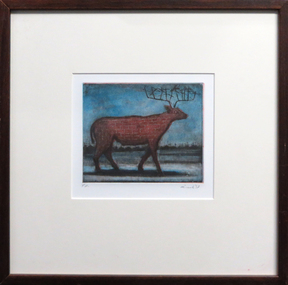 Federation University Art Collection
Work on paper - Artwork - Printmaking, Geoffrey Ricardo, 'Antelope' by Geoffrey Ricardo, 1997
... GEOFFREY RICARDO (1964- ) Born Melbourne, Australia 1984-86 Bachelor of Arts (Fine Art), Printmaking, Chisholm Institute of Technology, Melbourne 1987-89 Printing Assistant at Bill Young Studios, Editioning intaglio prints, King Valley, VIC 1988 Full-time Studio Technician at Printmaking Department, Chisholm Institute of Technology, Melbourne 1989-90 Graduate Diploma (Fine Art), Printmaking, Monash University, Melbourne 1991 Traveled to England, France, Spain and USA (Winsor & Newton International Travelling Bursary, National Students Art Prize) Worked in private studios in Gaucin, Spain and New York, USA 1994-95 Master of Fine Arts, Monash University, Melbourne 1995 Guest Lecturer, Victorian College of the Arts, Melbourne Traveled to Europe and America 1996 Guest Lecturer, Royal Melbourne Institute of Technology, Melbourne 1990-98 Sessional Lecturer, Monash University, Melbourne 1998 Traveled to America and Mexico 2001-05 Sessional Lecturer, The Victorian College of the Arts, Melbourne 2003-10 Printmaking Workshops, Warrnambool TAFE, Warrnambool, VIC 2004 Traveled to Europe, Mexico and Cuba 2005 Lecturer, National Art School (Summer School), Sydney Sessional Lecturer, Monash University, Melbourne Lecturer, Institution of Koorie Education, Deakin University, Geelong, VIC SOLO EXHIBITIONS 2012 ‘Collection of Works’ The Art Vault Mildura ‘Deeper Meanings’, The Incinerator Gallery, Melbourne ‘Three Projects’, Australian Galleries, Glenmore Road, Sydney Melbourne Art Fair Stand F33, Australian Galleries, Melbourne 2009 ‘Anno Domino, Antarctica and The Anatomy Lesson’, Australian Galleries Derby Street, Melbourne The Art Vault, Mildura, VIC 2008 MV Orlova (Quark Expeditions), The Drake Passage, Antarctica 2007 ‘Herd’, BMGArt, Adelaide ‘Herd’, Australian Galleries Painting & Sculpture, Sydney 2006 ‘Herd’, Australian Galleries Painting & Sculpture, Melbourne 2004 ‘Recent work’, BMGArt, Adelaide 2003 ‘The Rapunzel Suite and Other New Works’, Australian Galleries Works on Paper, Sydney ‘Recent Works’, Australian Galleries Painting & Sculpture, Melbourne ‘Recent works’, Cowwarr Art Space, Cowwarr, VIC 2002 ‘The Rapunzel Suite’, Australian Galleries Works on Paper, Melbourne ‘Strange Games’, Australian Galleries Works on Paper, Sydney 1999 ‘A Dark City Narrative’, Australian Galleries Works on Paper, Sydney ‘A Dark City Narrative’, Australian Galleries Works on Paper, Melbourne 1998 Cullity Gallery, School of Architecture and Fine Art, University of Western Australia, Perth 1997 Delaney Gallery, Perth Chapman Gallery, Canberra BMGArt, Adelaide ‘Menagerie’, Australian Galleries, Sydney ‘Menagerie’, Australian Galleries, Melbourne 1995 ‘Paintings, Prints and Sculpture’, Australian Galleries, Sydney ‘Prints, Paintings and Sculpture’, Australian Galleries, Melbourne 1994 Lawrence Wilson Art Gallery, University of Western Australia, Perth Graham Galleries + Editions, Brisbane ‘Wishful Thinking, Prints and Sculptures’, Lawrence Wilson Art Gallery, University of Western Australia, Perth 1992 ‘Prints, Sculptures and Watercolours’, Australian Galleries, Melbourne and Sydney 1990 ‘Watercolours, Prints and Small Bronzes’, Australian Galleries, Sydney ‘Paintings, Prints and Sculptures’, Australian Galleries, Melbourne GROUP EXHIBITIONS 2013 ‘Sculpture by the Sea’ Cottlesloe, Western Australia 2012 ‘Brave New World’, Toyota Community Spirit Gallery, Port Melbourne, VIC ‘Sculpture by the Sea’, Bondi, Sydney 2011 ‘Sculpture by the sea’, Aarhus, Denmark ‘Artwork to Tapestry’, Tarrawarra Museum of Art, Healesville, VIC Burnie Print Prize, Burnie Regional Gallery, Burnie, TAS ‘large exhibition of small works’, Australian Galleries, Roylston Street, Sydney ‘large exhibition of small works’, Australian Galleries, Derby Street, Melbourne ‘Nature of the Mark’, Australian Galleries, Smith Street, Melbourne Rick Amor Print Prize, Montsalvat, Eltham, VIC 2010 ‘Summer show’, Australian Galleries, Glenmore Road, Sydney ‘Summer stock show’, Australian Galleries, Smith Street, Melbourne ‘Sub10’, Substation, Melbourne ‘McClelland Sculpture Survey and Award 2010’, McClelland Gallery + Sculpture Park, Langwarrin, VIC ‘Artists’ Prints made with Integrity I’, Australian Galleries, Smith Street, Melbourne Montalto Sculpture Prize, Montalto Vineyard and Olive Grove, Red Hill South, VIC 2009 ‘Artists’ ink: printmaking from the Warrnambool Art Gallery Collection, 1970-2001’, Ararat Regional Art Gallery, Ararat, VIC ‘Lorne Sculpture’ (Winner), Lorne, VIC 2008 ‘Summer Stock Show’, Australian Galleries Smith Street, Melbourne 2007 ARC Biennial (Art, Design and Craft), Queensland University of Technology Art Museum, Brisbane ‘Prints Tokyo: International Print Exhibition’, Tokyo, Japan Seoul International Print, Photo and Edition Works Art Fair, Seoul, Korea Guanlan International Print Biennial, Guanlan, China ‘Summer Stock Show’, Australian Galleries Works on Paper, Sydney ‘Summer Stock Show’, Australian Galleries Painting & Sculpture, Melbourne ‘Summer Stock Show’, Australian Galleries Works on Paper, Melbourne ‘Antipodean Bestiary’, Project Space / Spare Room, RMIT University, Melbourne Montalto Sculpture Prize, Montalto Vineyard and Olive Grove, Red Hill South, VIC McClelland Sculpture Survey and Award 2007, McClelland Gallery + Sculpture Park, Langwarrin, VIC ‘2007: Works from the studio’, Lancaster Press, Melbourne ‘50 - a print exchange portfolio’, Geelong Art Gallery, Geelong, VIC ‘Small Pleasures’, Australian Galleries Painting & Sculpture, Melbourne ‘Stock Show’, Australian Galleries Painting & Sculpture, Melbourne ‘Artists for Kids Culture’, Brightspace, Melbourne 2006 ‘Partnership or perish’, Academy of the Arts, School of Visual and Performing Arts, University of Tasmania, Hobart Libris Awards, Artspace Mackay, Mackay, QLD ‘Summery’, Australian Galleries Painting & Sculpture, Sydney ‘Summer Stock Show’, Australian Galleries Works on Paper, Melbourne ‘Bookish’, Australian Galleries Works on Paper, Melbourne Melbourne Art Fair, Australian Galleries, Melbourne ‘Artists for Kids Culture’, Brightspace, Melbourne ‘50th Anniversary Exhibition’, Australian Galleries Painting & Sculpture, Melbourne 2005 ‘End of Year Group Exhibition’, Australian Galleries Painting & Sculpture, Sydney ‘Contemporary Works on Paper’, Australian Galleries Works on Paper, Melbourne ‘Expansion’, Lancaster Press, Melbourne ‘The Art of Collaboration’, Singapore Tyler Print Institute, Singapore ‘Double take’, Arts Project Australia, Melbourne ‘Small Treasures - 20 emerging and established artists’, TILT Contemporary Art, Melbourne Jacques Cadry Memorial Art Prize, Fox Studios and State Library of NSW, Sydney ‘Tales of the City’, Australian Galleries Painting & Sculpture, Melbourne ‘A Decade of Collecting 1995-2005’, Cairns Regional Gallery, Cairns, QLD ‘Artists for Kids Culture’, Brightspace, Melbourne ‘Surface Tension: 21 Contemporary Australian Printmakers’, University of Tasmania, Launceston, TAS ‘Neo-millenium’, Toyota Community Spirit Gallery, Melbourne 2004 ‘Artists for Kids Culture’, Brightspace, Melbourne ‘Group Exhibition’, Australian Galleries Painting & Sculpture, Melbourne ‘Species’, Australian Galleries Works on Paper, Melbourne ‘In the presence of creatures great and small’, Australian Galleries Works on Paper, Sydney ‘Tapestries from the Victorian Tapestry Workshop’, Australian Galleries, Melbourne ‘Sculpture’, Australian Galleries Painting & Sculpture, Sydney ‘Contemporary Australian Prints’, National Arts Club, New York, USA ‘Contemporary Australian Prints’, Gallery 101, Melbourne ‘Contemporary Australian Prints from the Collection’, Art Gallery of New South Wales, Sydney ‘Bridge’, Toyota Community Spirit Gallery, Melbourne ‘Vivid’, Fortyfive Downstairs, Melbourne Lake Gallery, Paynesville, VIC 2003 ‘Paper matters’, Lawrence Wilson Art Gallery, University of Western Australia, Perth ‘Artists for Kids Culture’, Brightspace, Melbourne ‘Less is more’, BMGArt, Adelaide ‘The ink’s on me: Bill Young master printmaker’, Wangaratta Exhibitions Gallery, Wangaratta, VIC ‘Fantastic and Visionary Art’, Touring: Global Arts Link, QLD; Ipswich Regional Gallery, QLD ; Orange Regional Gallery, NSW; Manning Regional Gallery, NSW; Parramatta Heritage Centre, Sydney; Ballarat Regional Gallery, VIC 2002 Shell Fremantle Print Award, Fremantle Arts Centre, Fremantle, WA ‘Artists for Kids Culture’, Brightspace, Melbourne 2001 Shell Fremantle Print Award, Fremantle Arts Centre, Fremantle, WA ‘Six Degrees of Collaboration’, RMIT Faculty of Art, Design and Communication Gallery, Melbourne ‘Reciprocal Moves’, Warrnambool Art Gallery, Warrnambool, VIC International Print Triennial, Kanagawa, Japan ‘Fantastic Art’, Orange Regional Gallery, Orange, NSW ‘Dancing Made a Man out of Me’, The Switchback Gallery, Monash University, Gippsland, VIC ‘Artists for Kids Culture’, Brightspace, Melbourne ‘Celebration’, Regional touring exhibition, VIC 2000-01 ‘Workings of the Mind: Melbourne Prints of the 1960s to the 1990s’, Touring: Grafton Regional Gallery, NSW; Toowoomba Regional Art Gallery, QLD; Nolan Gallery, Canberra; Bendigo Art Gallery, VIC; PercTucker Regional Gallery, QLD 2000 Shell Fremantle Print Award, Fremantle Arts Centre, Fremantle, WA The Hutchins Art Prize, Long Gallery, Hobart ‘Artists for Kids Culture’, Brightspace, Melbourne 1999 Shell Fremantle Print Award, Fremantle Arts Space, Fremantle, WA ‘We are Australian’, George Adams Gallery, Victorian Arts Centre, Melbourne Rena Ellen Jones Memorial Print Award, Warrnambool Art Gallery, Warrnambool, VIC ‘National Works on Paper’, Mornington Peninsula Gallery, Mornington, VIC ‘Artists for Kids Culture’, Brightspace, Melbourne ‘Pleasure’, Australian Galleries, Melbourne 1998-99 ‘Australian Prints’, Art Gallery of New South Wales, Sydney 1997 ‘KNOCK, KNOCK’, Australian Galleries, Melbourne ‘Woven Colour, The Art of Tapestry’, Dr Earl Lu Gallery, Singapore 1996 M.P.A.C. ...GEOFFREY RICARDO (1964- ) Born Melbourne, Australia 1984-86 Bachelor of Arts (Fine Art), Printmaking, Chisholm Institute of Technology, Melbourne 1987-89 Printing Assistant at Bill Young Studios, Editioning intaglio prints, King Valley, VIC 1988 Full-time Studio Technician at Printmaking Department, Chisholm Institute of Technology, Melbourne 1989-90 Graduate Diploma (Fine Art), Printmaking, Monash University, Melbourne 1991 Traveled to England, France, Spain and USA (Winsor & Newton International Travelling Bursary, National Students Art Prize) Worked in private studios in Gaucin, Spain and New York, USA 1994-95 Master of Fine Arts, Monash University, Melbourne 1995 Guest Lecturer, Victorian College of the Arts, Melbourne Traveled to Europe and America 1996 Guest Lecturer, Royal Melbourne Institute of Technology, Melbourne 1990-98 Sessional Lecturer, Monash University, Melbourne 1998 Traveled to America and Mexico 2001-05 Sessional Lecturer, The Victorian College of the Arts, Melbourne 2003-10 Printmaking Workshops, Warrnambool TAFE, Warrnambool, VIC 2004 Traveled to Europe, Mexico and Cuba 2005 Lecturer, National Art School (Summer School), Sydney Sessional Lecturer, Monash University, Melbourne Lecturer, Institution of Koorie Education, Deakin University, Geelong, VIC SOLO EXHIBITIONS 2012 ‘Collection of Works’ The Art Vault Mildura ‘Deeper Meanings’, The Incinerator Gallery, Melbourne ‘Three Projects’, Australian Galleries, Glenmore Road, Sydney Melbourne Art Fair Stand F33, Australian Galleries, Melbourne 2009 ‘Anno Domino, Antarctica and The Anatomy Lesson’, Australian Galleries Derby Street, Melbourne The Art Vault, Mildura, VIC 2008 MV Orlova (Quark Expeditions), The Drake Passage, Antarctica 2007 ‘Herd’, BMGArt, Adelaide ‘Herd’, Australian Galleries Painting & Sculpture, Sydney 2006 ‘Herd’, Australian Galleries Painting & Sculpture, Melbourne 2004 ‘Recent work’, BMGArt, Adelaide 2003 ‘The Rapunzel Suite and Other New Works’, Australian Galleries Works on Paper, Sydney ‘Recent Works’, Australian Galleries Painting & Sculpture, Melbourne ‘Recent works’, Cowwarr Art Space, Cowwarr, VIC 2002 ‘The Rapunzel Suite’, Australian Galleries Works on Paper, Melbourne ‘Strange Games’, Australian Galleries Works on Paper, Sydney 1999 ‘A Dark City Narrative’, Australian Galleries Works on Paper, Sydney ‘A Dark City Narrative’, Australian Galleries Works on Paper, Melbourne 1998 Cullity Gallery, School of Architecture and Fine Art, University of Western Australia, Perth 1997 Delaney Gallery, Perth Chapman Gallery, Canberra BMGArt, Adelaide ‘Menagerie’, Australian Galleries, Sydney ‘Menagerie’, Australian Galleries, Melbourne 1995 ‘Paintings, Prints and Sculpture’, Australian Galleries, Sydney ‘Prints, Paintings and Sculpture’, Australian Galleries, Melbourne 1994 Lawrence Wilson Art Gallery, University of Western Australia, Perth Graham Galleries + Editions, Brisbane ‘Wishful Thinking, Prints and Sculptures’, Lawrence Wilson Art Gallery, University of Western Australia, Perth 1992 ‘Prints, Sculptures and Watercolours’, Australian Galleries, Melbourne and Sydney 1990 ‘Watercolours, Prints and Small Bronzes’, Australian Galleries, Sydney ‘Paintings, Prints and Sculptures’, Australian Galleries, Melbourne GROUP EXHIBITIONS 2013 ‘Sculpture by the Sea’ Cottlesloe, Western Australia 2012 ‘Brave New World’, Toyota Community Spirit Gallery, Port Melbourne, VIC ‘Sculpture by the Sea’, Bondi, Sydney 2011 ‘Sculpture by the sea’, Aarhus, Denmark ‘Artwork to Tapestry’, Tarrawarra Museum of Art, Healesville, VIC Burnie Print Prize, Burnie Regional Gallery, Burnie, TAS ‘large exhibition of small works’, Australian Galleries, Roylston Street, Sydney ‘large exhibition of small works’, Australian Galleries, Derby Street, Melbourne ‘Nature of the Mark’, Australian Galleries, Smith Street, Melbourne Rick Amor Print Prize, Montsalvat, Eltham, VIC 2010 ‘Summer show’, Australian Galleries, Glenmore Road, Sydney ‘Summer stock show’, Australian Galleries, Smith Street, Melbourne ‘Sub10’, Substation, Melbourne ‘McClelland Sculpture Survey and Award 2010’, McClelland Gallery + Sculpture Park, Langwarrin, VIC ‘Artists’ Prints made with Integrity I’, Australian Galleries, Smith Street, Melbourne Montalto Sculpture Prize, Montalto Vineyard and Olive Grove, Red Hill South, VIC 2009 ‘Artists’ ink: printmaking from the Warrnambool Art Gallery Collection, 1970-2001’, Ararat Regional Art Gallery, Ararat, VIC ‘Lorne Sculpture’ (Winner), Lorne, VIC 2008 ‘Summer Stock Show’, Australian Galleries Smith Street, Melbourne 2007 ARC Biennial (Art, Design and Craft), Queensland University of Technology Art Museum, Brisbane ‘Prints Tokyo: International Print Exhibition’, Tokyo, Japan Seoul International Print, Photo and Edition Works Art Fair, Seoul, Korea Guanlan International Print Biennial, Guanlan, China ‘Summer Stock Show’, Australian Galleries Works on Paper, Sydney ‘Summer Stock Show’, Australian Galleries Painting & Sculpture, Melbourne ‘Summer Stock Show’, Australian Galleries Works on Paper, Melbourne ‘Antipodean Bestiary’, Project Space / Spare Room, RMIT University, Melbourne Montalto Sculpture Prize, Montalto Vineyard and Olive Grove, Red Hill South, VIC McClelland Sculpture Survey and Award 2007, McClelland Gallery + Sculpture Park, Langwarrin, VIC ‘2007: Works from the studio’, Lancaster Press, Melbourne ‘50 - a print exchange portfolio’, Geelong Art Gallery, Geelong, VIC ‘Small Pleasures’, Australian Galleries Painting & Sculpture, Melbourne ‘Stock Show’, Australian Galleries Painting & Sculpture, Melbourne ‘Artists for Kids Culture’, Brightspace, Melbourne 2006 ‘Partnership or perish’, Academy of the Arts, School of Visual and Performing Arts, University of Tasmania, Hobart Libris Awards, Artspace Mackay, Mackay, QLD ‘Summery’, Australian Galleries Painting & Sculpture, Sydney ‘Summer Stock Show’, Australian Galleries Works on Paper, Melbourne ‘Bookish’, Australian Galleries Works on Paper, Melbourne Melbourne Art Fair, Australian Galleries, Melbourne ‘Artists for Kids Culture’, Brightspace, Melbourne ‘50th Anniversary Exhibition’, Australian Galleries Painting & Sculpture, Melbourne 2005 ‘End of Year Group Exhibition’, Australian Galleries Painting & Sculpture, Sydney ‘Contemporary Works on Paper’, Australian Galleries Works on Paper, Melbourne ‘Expansion’, Lancaster Press, Melbourne ‘The Art of Collaboration’, Singapore Tyler Print Institute, Singapore ‘Double take’, Arts Project Australia, Melbourne ‘Small Treasures - 20 emerging and established artists’, TILT Contemporary Art, Melbourne Jacques Cadry Memorial Art Prize, Fox Studios and State Library of NSW, Sydney ‘Tales of the City’, Australian Galleries Painting & Sculpture, Melbourne ‘A Decade of Collecting 1995-2005’, Cairns Regional Gallery, Cairns, QLD ‘Artists for Kids Culture’, Brightspace, Melbourne ‘Surface Tension: 21 Contemporary Australian Printmakers’, University of Tasmania, Launceston, TAS ‘Neo-millenium’, Toyota Community Spirit Gallery, Melbourne 2004 ‘Artists for Kids Culture’, Brightspace, Melbourne ‘Group Exhibition’, Australian Galleries Painting & Sculpture, Melbourne ‘Species’, Australian Galleries Works on Paper, Melbourne ‘In the presence of creatures great and small’, Australian Galleries Works on Paper, Sydney ‘Tapestries from the Victorian Tapestry Workshop’, Australian Galleries, Melbourne ‘Sculpture’, Australian Galleries Painting & Sculpture, Sydney ‘Contemporary Australian Prints’, National Arts Club, New York, USA ‘Contemporary Australian Prints’, Gallery 101, Melbourne ‘Contemporary Australian Prints from the Collection’, Art Gallery of New South Wales, Sydney ‘Bridge’, Toyota Community Spirit Gallery, Melbourne ‘Vivid’, Fortyfive Downstairs, Melbourne Lake Gallery, Paynesville, VIC 2003 ‘Paper matters’, Lawrence Wilson Art Gallery, University of Western Australia, Perth ‘Artists for Kids Culture’, Brightspace, Melbourne ‘Less is more’, BMGArt, Adelaide ‘The ink’s on me: Bill Young master printmaker’, Wangaratta Exhibitions Gallery, Wangaratta, VIC ‘Fantastic and Visionary Art’, Touring: Global Arts Link, QLD; Ipswich Regional Gallery, QLD ; Orange Regional Gallery, NSW; Manning Regional Gallery, NSW; Parramatta Heritage Centre, Sydney; Ballarat Regional Gallery, VIC 2002 Shell Fremantle Print Award, Fremantle Arts Centre, Fremantle, WA ‘Artists for Kids Culture’, Brightspace, Melbourne 2001 Shell Fremantle Print Award, Fremantle Arts Centre, Fremantle, WA ‘Six Degrees of Collaboration’, RMIT Faculty of Art, Design and Communication Gallery, Melbourne ‘Reciprocal Moves’, Warrnambool Art Gallery, Warrnambool, VIC International Print Triennial, Kanagawa, Japan ‘Fantastic Art’, Orange Regional Gallery, Orange, NSW ‘Dancing Made a Man out of Me’, The Switchback Gallery, Monash University, Gippsland, VIC ‘Artists for Kids Culture’, Brightspace, Melbourne ‘Celebration’, Regional touring exhibition, VIC 2000-01 ‘Workings of the Mind: Melbourne Prints of the 1960s to the 1990s’, Touring: Grafton Regional Gallery, NSW; Toowoomba Regional Art Gallery, QLD; Nolan Gallery, Canberra; Bendigo Art Gallery, VIC; PercTucker Regional Gallery, QLD 2000 Shell Fremantle Print Award, Fremantle Arts Centre, Fremantle, WA The Hutchins Art Prize, Long Gallery, Hobart ‘Artists for Kids Culture’, Brightspace, Melbourne 1999 Shell Fremantle Print Award, Fremantle Arts Space, Fremantle, WA ‘We are Australian’, George Adams Gallery, Victorian Arts Centre, Melbourne Rena Ellen Jones Memorial Print Award, Warrnambool Art Gallery, Warrnambool, VIC ‘National Works on Paper’, Mornington Peninsula Gallery, Mornington, VIC ‘Artists for Kids Culture’, Brightspace, Melbourne ‘Pleasure’, Australian Galleries, Melbourne 1998-99 ‘Australian Prints’, Art Gallery of New South Wales, Sydney 1997 ‘KNOCK, KNOCK’, Australian Galleries, Melbourne ‘Woven Colour, The Art of Tapestry’, Dr Earl Lu Gallery, Singapore 1996 M.P.A.C. ...GEOFFREY RICARDO (1964- ) Born Melbourne, Australia 1984-86 Bachelor of Arts (Fine Art), Printmaking, Chisholm Institute of Technology, Melbourne 1987-89 Printing Assistant at Bill Young Studios, Editioning intaglio prints, King Valley, VIC 1988 Full-time Studio Technician at Printmaking Department, Chisholm Institute of Technology, Melbourne 1989-90 Graduate Diploma (Fine Art), Printmaking, Monash University, Melbourne 1991 Traveled to England, France, Spain and USA (Winsor & Newton International Travelling Bursary, National Students Art Prize) Worked in private studios in Gaucin, Spain and New York, USA 1994-95 Master of Fine Arts, Monash University, Melbourne 1995 Guest Lecturer, Victorian College of the Arts, Melbourne Traveled to Europe and America 1996 Guest Lecturer, Royal Melbourne Institute of Technology, Melbourne 1990-98 Sessional Lecturer, Monash University, Melbourne 1998 Traveled to America and Mexico 2001-05 Sessional Lecturer, The Victorian College of the Arts, Melbourne 2003-10 Printmaking Workshops, Warrnambool TAFE, Warrnambool, VIC 2004 Traveled to Europe, Mexico and Cuba 2005 Lecturer, National Art School (Summer School), Sydney Sessional Lecturer, Monash University, Melbourne Lecturer, Institution of Koorie Education, Deakin University, Geelong, VIC SOLO EXHIBITIONS 2012 ‘Collection of Works’ The Art Vault Mildura ‘Deeper Meanings’, The Incinerator Gallery, Melbourne ‘Three Projects’, Australian Galleries, Glenmore Road, Sydney Melbourne Art Fair Stand F33, Australian Galleries, Melbourne 2009 ‘Anno Domino, Antarctica and The Anatomy Lesson’, Australian Galleries Derby Street, Melbourne The Art Vault, Mildura, VIC 2008 MV Orlova (Quark Expeditions), The Drake Passage, Antarctica 2007 ‘Herd’, BMGArt, Adelaide ‘Herd’, Australian Galleries Painting & Sculpture, Sydney 2006 ‘Herd’, Australian Galleries Painting & Sculpture, Melbourne 2004 ‘Recent work’, BMGArt, Adelaide 2003 ‘The Rapunzel Suite and Other New Works’, Australian Galleries Works on Paper, Sydney ‘Recent Works’, Australian Galleries Painting & Sculpture, Melbourne ‘Recent works’, Cowwarr Art Space, Cowwarr, VIC 2002 ‘The Rapunzel Suite’, Australian Galleries Works on Paper, Melbourne ‘Strange Games’, Australian Galleries Works on Paper, Sydney 1999 ‘A Dark City Narrative’, Australian Galleries Works on Paper, Sydney ‘A Dark City Narrative’, Australian Galleries Works on Paper, Melbourne 1998 Cullity Gallery, School of Architecture and Fine Art, University of Western Australia, Perth 1997 Delaney Gallery, Perth Chapman Gallery, Canberra BMGArt, Adelaide ‘Menagerie’, Australian Galleries, Sydney ‘Menagerie’, Australian Galleries, Melbourne 1995 ‘Paintings, Prints and Sculpture’, Australian Galleries, Sydney ‘Prints, Paintings and Sculpture’, Australian Galleries, Melbourne 1994 Lawrence Wilson Art Gallery, University of Western Australia, Perth Graham Galleries + Editions, Brisbane ‘Wishful Thinking, Prints and Sculptures’, Lawrence Wilson Art Gallery, University of Western Australia, Perth 1992 ‘Prints, Sculptures and Watercolours’, Australian Galleries, Melbourne and Sydney 1990 ‘Watercolours, Prints and Small Bronzes’, Australian Galleries, Sydney ‘Paintings, Prints and Sculptures’, Australian Galleries, Melbourne GROUP EXHIBITIONS 2013 ‘Sculpture by the Sea’ Cottlesloe, Western Australia 2012 ‘Brave New World’, Toyota Community Spirit Gallery, Port Melbourne, VIC ‘Sculpture by the Sea’, Bondi, Sydney 2011 ‘Sculpture by the sea’, Aarhus, Denmark ‘Artwork to Tapestry’, Tarrawarra Museum of Art, Healesville, VIC Burnie Print Prize, Burnie Regional Gallery, Burnie, TAS ‘large exhibition of small works’, Australian Galleries, Roylston Street, Sydney ‘large exhibition of small works’, Australian Galleries, Derby Street, Melbourne ‘Nature of the Mark’, Australian Galleries, Smith Street, Melbourne Rick Amor Print Prize, Montsalvat, Eltham, VIC 2010 ‘Summer show’, Australian Galleries, Glenmore Road, Sydney ‘Summer stock show’, Australian Galleries, Smith Street, Melbourne ‘Sub10’, Substation, Melbourne ‘McClelland Sculpture Survey and Award 2010’, McClelland Gallery + Sculpture Park, Langwarrin, VIC ‘Artists’ Prints made with Integrity I’, Australian Galleries, Smith Street, Melbourne Montalto Sculpture Prize, Montalto Vineyard and Olive Grove, Red Hill South, VIC 2009 ‘Artists’ ink: printmaking from the Warrnambool Art Gallery Collection, 1970-2001’, Ararat Regional Art Gallery, Ararat, VIC ‘Lorne Sculpture’ (Winner), Lorne, VIC 2008 ‘Summer Stock Show’, Australian Galleries Smith Street, Melbourne 2007 ARC Biennial (Art, Design and Craft), Queensland University of Technology Art Museum, Brisbane ‘Prints Tokyo: International Print Exhibition’, Tokyo, Japan Seoul International Print, Photo and Edition Works Art Fair, Seoul, Korea Guanlan International Print Biennial, Guanlan, China ‘Summer Stock Show’, Australian Galleries Works on Paper, Sydney ‘Summer Stock Show’, Australian Galleries Painting & Sculpture, Melbourne ‘Summer Stock Show’, Australian Galleries Works on Paper, Melbourne ‘Antipodean Bestiary’, Project Space / Spare Room, RMIT University, Melbourne Montalto Sculpture Prize, Montalto Vineyard and Olive Grove, Red Hill South, VIC McClelland Sculpture Survey and Award 2007, McClelland Gallery + Sculpture Park, Langwarrin, VIC ‘2007: Works from the studio’, Lancaster Press, Melbourne ‘50 - a print exchange portfolio’, Geelong Art Gallery, Geelong, VIC ‘Small Pleasures’, Australian Galleries Painting & Sculpture, Melbourne ‘Stock Show’, Australian Galleries Painting & Sculpture, Melbourne ‘Artists for Kids Culture’, Brightspace, Melbourne 2006 ‘Partnership or perish’, Academy of the Arts, School of Visual and Performing Arts, University of Tasmania, Hobart Libris Awards, Artspace Mackay, Mackay, QLD ‘Summery’, Australian Galleries Painting & Sculpture, Sydney ‘Summer Stock Show’, Australian Galleries Works on Paper, Melbourne ‘Bookish’, Australian Galleries Works on Paper, Melbourne Melbourne Art Fair, Australian Galleries, Melbourne ‘Artists for Kids Culture’, Brightspace, Melbourne ‘50th Anniversary Exhibition’, Australian Galleries Painting & Sculpture, Melbourne 2005 ‘End of Year Group Exhibition’, Australian Galleries Painting & Sculpture, Sydney ‘Contemporary Works on Paper’, Australian Galleries Works on Paper, Melbourne ‘Expansion’, Lancaster Press, Melbourne ‘The Art of Collaboration’, Singapore Tyler Print Institute, Singapore ‘Double take’, Arts Project Australia, Melbourne ‘Small Treasures - 20 emerging and established artists’, TILT Contemporary Art, Melbourne Jacques Cadry Memorial Art Prize, Fox Studios and State Library of NSW, Sydney ‘Tales of the City’, Australian Galleries Painting & Sculpture, Melbourne ‘A Decade of Collecting 1995-2005’, Cairns Regional Gallery, Cairns, QLD ‘Artists for Kids Culture’, Brightspace, Melbourne ‘Surface Tension: 21 Contemporary Australian Printmakers’, University of Tasmania, Launceston, TAS ‘Neo-millenium’, Toyota Community Spirit Gallery, Melbourne 2004 ‘Artists for Kids Culture’, Brightspace, Melbourne ‘Group Exhibition’, Australian Galleries Painting & Sculpture, Melbourne ‘Species’, Australian Galleries Works on Paper, Melbourne ‘In the presence of creatures great and small’, Australian Galleries Works on Paper, Sydney ‘Tapestries from the Victorian Tapestry Workshop’, Australian Galleries, Melbourne ‘Sculpture’, Australian Galleries Painting & Sculpture, Sydney ‘Contemporary Australian Prints’, National Arts Club, New York, USA ‘Contemporary Australian Prints’, Gallery 101, Melbourne ‘Contemporary Australian Prints from the Collection’, Art Gallery of New South Wales, Sydney ‘Bridge’, Toyota Community Spirit Gallery, Melbourne ‘Vivid’, Fortyfive Downstairs, Melbourne Lake Gallery, Paynesville, VIC 2003 ‘Paper matters’, Lawrence Wilson Art Gallery, University of Western Australia, Perth ‘Artists for Kids Culture’, Brightspace, Melbourne ‘Less is more’, BMGArt, Adelaide ‘The ink’s on me: Bill Young master printmaker’, Wangaratta Exhibitions Gallery, Wangaratta, VIC ‘Fantastic and Visionary Art’, Touring: Global Arts Link, QLD; Ipswich Regional Gallery, QLD ; Orange Regional Gallery, NSW; Manning Regional Gallery, NSW; Parramatta Heritage Centre, Sydney; Ballarat Regional Gallery, VIC 2002 Shell Fremantle Print Award, Fremantle Arts Centre, Fremantle, WA ‘Artists for Kids Culture’, Brightspace, Melbourne 2001 Shell Fremantle Print Award, Fremantle Arts Centre, Fremantle, WA ‘Six Degrees of Collaboration’, RMIT Faculty of Art, Design and Communication Gallery, Melbourne ‘Reciprocal Moves’, Warrnambool Art Gallery, Warrnambool, VIC International Print Triennial, Kanagawa, Japan ‘Fantastic Art’, Orange Regional Gallery, Orange, NSW ‘Dancing Made a Man out of Me’, The Switchback Gallery, Monash University, Gippsland, VIC ‘Artists for Kids Culture’, Brightspace, Melbourne ‘Celebration’, Regional touring exhibition, VIC 2000-01 ‘Workings of the Mind: Melbourne Prints of the 1960s to the 1990s’, Touring: Grafton Regional Gallery, NSW; Toowoomba Regional Art Gallery, QLD; Nolan Gallery, Canberra; Bendigo Art Gallery, VIC; PercTucker Regional Gallery, QLD 2000 Shell Fremantle Print Award, Fremantle Arts Centre, Fremantle, WA The Hutchins Art Prize, Long Gallery, Hobart ‘Artists for Kids Culture’, Brightspace, Melbourne 1999 Shell Fremantle Print Award, Fremantle Arts Space, Fremantle, WA ‘We are Australian’, George Adams Gallery, Victorian Arts Centre, Melbourne Rena Ellen Jones Memorial Print Award, Warrnambool Art Gallery, Warrnambool, VIC ‘National Works on Paper’, Mornington Peninsula Gallery, Mornington, VIC ‘Artists for Kids Culture’, Brightspace, Melbourne ‘Pleasure’, Australian Galleries, Melbourne 1998-99 ‘Australian Prints’, Art Gallery of New South Wales, Sydney 1997 ‘KNOCK, KNOCK’, Australian Galleries, Melbourne ‘Woven Colour, The Art of Tapestry’, Dr Earl Lu Gallery, Singapore 1996 M.P.A.C. Print Award, Mornington Peninsula Arts Centre, Mornington, VIC Academy of Art & Culture, Calcutta, India ‘Synergy’, Touring: Lalit Kala Akademi, New Dehli, India; Jehangir Nicholson Gallery, Bombay, India; Birla, India ‘Contemporary Australian Tapestry’, Frederikshavn Kunstmuseum, Denmark; Australia House, London, UK 1995 ‘Interweave - Tapestry A Collaborative Art’, Heide Museum of Modern Art, Melbourne ‘Contemporary Printmakers’, La Trobe Regional Gallery, Morwell, VIC ‘Contemporary Australian Tapestry’, Australian High Commission, Singapore ‘Circus Capers’, Caulfield Arts Complex, Melbourne 1994 M.P.A.C. Print Award, Mornington Peninsula Arts Centre, Mornington, VIC Fremantle Print Award, Fremantle Arts Centre, Fremantle, WA Australian Universities of Visual Art, Australian High Commission, Singapore ‘Prints, Paintings and Sculpture’, BMGArt, Adelaide Fourth Australian Contemporary Art Fair, Royal Exhibition Building, Melbourne 1993 Fremantle Print Award, Fremantle Arts Centre, Fremantle, WA 1992 Fremantle Print Award, Fremantle Arts Centre, Fremantle, WA ‘Transitional Times’, Print Council of Australia, Melbourne ‘Second Kochi International Triennial Exhibition of Prints’, Japan 1991 Henry Worland Memorial Print Prize, Warrnambool Regional Art Gallery, Warrnambool, VIC Fremantle Print Award, Fremantle Arts Centre, Fremantle, WA ‘Table Top Sculpture’, Australian Galleries, Melbourne ‘Art 91’, London Contemporary Art Fair, London, UK 1990 M.P.A.C. Print Prize, Mornington Peninsula Arts Centre, Mornington, VIC Fremantle Print Prize, Fremantle Arts Centre, Fremantle WA ‘The Christmas Show’, Intaglio Printmaker, London, England ‘Australian Contemporary Art’, AZ Gallery, Tokyo, Japan 1989 National Student Art Prize, Mitchell College, Bathurst, NSW Fremantle Print Award, Fremantle Arts Centre, Fremantle, WA City of Doncaster Acquisitive Print Prize, Manningham Gallery, Melbourne ‘Affiliations’, Monash University Gallery, Melbourne 1988 M.P.A.C. Acquisitive Print Prize, Mornington Peninsula Arts Centre, Mornington, VIC Henry Worland Memorial Print Prize, Warrnambool Regional Art Gallery, Warrnambool, VIC 1987 ‘The Comedy Show’, Print Guild, Melbourne ‘Fluxus Art Flow’, Melbourne 1986 Mornington Peninsula Arts Council Acquisitive Print Prize, Mornington Peninsula, VIC Chisolm Institute of Technology, Graduating Students exhibition, Melbourne AWARDS 2013 King Valley Art Prize (printmaking) 2009 Lorne Sculpture Exhibition (Winner), Lorne, VIC 1989 Windsor and Newton International Travelling Bursary, UK Linbrook International First Prize for Printmaking, Australia COMMISSIONS 2005 Tapestry design for Bairnsdale Hospital (woven by the Victorian Tapestry Workshop, Melbourne), Bairnsdale, VIC 1999 Tapestry design ‘Emblem’ (woven by the Victorian Tapestry Workshop, Melbourne), Australia 1995 ‘A Night of Infectious Laughter’ Poster, St Kilda Festival, Melbourne 1994 Tapestry design ‘Elephant Gingham’ (woven by the Victorian Tapestry Workshop, Melbourne), Australia 1993 Tapestry design for the Festival of Perth Official Poster (woven by the Victorian Tapestry Workshop, Melbourne), Perth RESIDENCIES & PROJECTS 2013 ‘Come In Outside’, Collaboration set design for Pocketfool 2011 Mildura Wentworth Arts Festival Project, Mildura, VIC Residency, The Art Vault , Mildura, VIC 2010 ‘Wish’, Collaboration set design for Pocketfool, Artplay, Melbourne The Art Vault (included continuous public flag making workshops which were flown as part of The Wentworth Mildura Art Festival), Mildura, VIC 2009 The Art Vault (included two public printmaking workshops), Mildura, VIC 2008 Artist in residence, MV Orlova, Quark Expeditions, Antarctica 2003 Residency, Bairnsdale Regional Health Service, Bairnsdale, VIC 1998 Residency, School of Architecture & Fine Art, University of Western Australia, Perth 1997 Residency, La Salle/Fia, College of the Arts, Singapore 1996 Artist in residence, Victorian Tapestry Workshop, Melbourne 1993 Reduction Aquatint Workshop & Residency, Graphic Investigation Department, Canberra School of Art, Canberra NB: all residencies have included workshops involving students, children or the general public COLLECTIONS Artbank, Sydney Art Gallery of New South Wales, Sydney Canson Australia Pty Ltd, Australia City of Box Hill, Melbourne City of Whitehorse, Melbourne Downlands College, Toowoomba, QLD Geelong Grammar School, Geelong, VIC Gold Coast City Art Gallery, Gold Coast, QLD Griffith University, Gold Coast, QLD Helensvale High School, Brisbane Holmes à Court Collection, Perth Latrobe Regional Gallery, Morwell, VIC Monash University, Melbourne Mornington Peninsula Arts Council Collection, Mornington, VIC National Gallery of Australia, Canberra National Gallery of Victoria, Melbourne Parliament House Art Collection, Canberra Print Council of Australia, Melbourne Private collections in Australia, Switzerland, USA, UK, Singapore, Germany, Japan, Malaysia, Holland Queen Victoria Museum & Art Gallery, Launceston, TAS Queensland Art Gallery, Brisbane Queensland University of Technology, Brisbane Shire of Diamond Valley, Diamond Valley, VIC Star of the Sea College, Melbourne The Melbourne Club, Melbourne University of Central Queensland, Brisbane University of Technology, Sydney Wagga Wagga Regional Art Gallery, Wagga Wagga, NSW Warrnambool Regional Art Gallery, Warrnambool, VIC PERIODICALS AQ Journal of Contemporary Analysis, Vol. 70, Issue 4, July-August 1998 AQ Journal of Contemporary Analysis, Vol. 70, Issue 6, November-December 1998 AQ Journal of Contemporary Analysis, Vol.71, Issue 7, April 1999 Backhouse, Megan; “Going out of print and back to basics”, The Age, February 2003 Bellamy, Louise; “Renaissance of Western Art”, The Age (A2 section), 26 November 2005 Clabburn, Anna; “Fables and Foibles”, Art Monthly, September 1994 Dutkiewicz, Adam; “Edge of the sublime”, Advertiser, 1 December 2003, p. 76. Erickson, Dorothy; “The Festival that could have been”, The Bulletin, March 1994 Farmer, Alison; “Ricardo makes poster splash”, Sunday Times - Entertainment Extra, 19 September 1993 “Festival taps weaver’s art”, The West Australian, 11February 1994 Fiasco (web-page), March 2003 Jenkins, John; “A Dark City Narrative”, Imprint, Vol. 34, No. 4, 1999 Grishin, Sasha; “Multiplicity – collecting Australian prints”, Australian Art Review, Issue 13, March-June 2007, pp. 52-55 Grishin, Sasha; “Profiles in Print - Geoffrey Ricardo”, Craft Arts International, Issue 76, 2009, pp.1-4 Lloyd, Tim; “The elephant man”, The Advertiser (Review section), December 2007 Manzana Arné, Josep; “De L’Ex-Libris a L’Ex-Webis: Ex-Libris a Internet”, Ex-Libris, Associació Catalana D’Exlibristes, Barcelona, No. 27, July-December 2002, p.11 McDonald, John; “Dreams of hope and menace” The Sydney Morning Herald, 18 March 1995 McMillan, Peter; “Darkness visible”, The Age, 11September 1999 Nelson, Robert; “Circuses can be curated, but not cured”, The Age, 18 January 1995 Nelson, Robert; “Dream Weavers”, The Age, June 1995 Nelson, Robert; “Paen To Ricardo”, Imprint, Vol. 29, No.1, April, 1994 Nelson, Robert; “Revealed: Mother Nature’s vulgar past”, The Age, September 6, 2000 Nelson, Robert; “Riddled with hidden meaning”, The Age, September 8, 1999 Quadrant, April, 1995 Quadrant, Jan/Feb, 1995 Quadrant, October, 1995 Quadrant, November, 1994 “Ricardo’s surreal works at gallery”, Times-Spectator, 25 July 2003, p.7 Snell, Ted; “Art”, The Australian, 18 February1994 Snell, Ted; “Visual arts at the Festival of Perth”, Art Monthly, April 1994 Sunday Arts, ABC TV, 6 May 2007 Timms, Peter; “Geoff Ricardo: emerging from darkness”, Art Monthly, Issue 140, June 2001 Wallace, Dr Carmel; “Ways of seeing Australia”, Asian Art News, May/June 2004 BOOKS & CATALOGUES A Dark City Narrative, Australian Galleries, Melbourne, 1999 ARC Biennial Exhibition (Exhibition catalogue), Queensland University of Technology Art Museum, 2007, pp. 78-79 Clabburn, Anna; “The Collaborative Spirit”, Australian Tapestries: Victorian Tapestry Workshop, 1995, p. 37 Fantastic Art, Orange Regional Gallery, NSW, 2001 Field, Caroline; Herd, catalogue essay, Australian Galleries, Sydney, 2007 Grishin, Sasha; Australian Identities in Printmaking, Wagga Wagga Regional Art Gallery, 2000 Grishin, Sasha; Australian Printmaking in the 1990’s, Craftsman House, 1997 Havighurst, Sophie (Illustrations by Geoffrey Ricardo); When Lester lost his cool, The University of Melbourne, 2007 Kolenberg, Hendrik & Ryan, Anne; Australian Prints, Art Gallery of New South Wales, 1998 Lawrence, Michel; Framed; photographs of Australian Artists, 1998 Modern Australian Tapestries, Victorian Tapestry Workshop, 2000 The Rapunzel Suite, Australian Galleries, Melbourne, 2002 Wallace, Dr Carmel (Essay); Surface Tension, Twenty One Contemporary Australian Printmakers, Gallery 101, Melbourne, 2004 Workings of the Mind : Melbourne Prints of the 1960s to the 1990s, Queensland University of Technology Art Museum, Brisbane, 2000 TELEVISION Sunday Arts, ABC TV, 6 May 2007 Inside Art TV, Channel 31, July 2012Framed coloured aquatint on paperunder image in pencil 'G.P. Ricardo '97'geoffrey ricardo, framed print, printmaking -
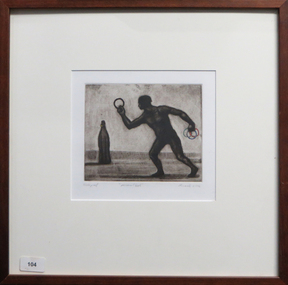 Federation University Art Collection
Work on paper - Artwork - Printmaking, 'Personal Best' by Geoffrey Ricardo, 2000
... GEOFFREY RICARDO (1964- ) Born Melbourne, Australia 1984-86 Bachelor of Arts (Fine Art), Printmaking, Chisholm Institute of Technology, Melbourne 1987-89 Printing Assistant at Bill Young Studios, Editioning intaglio prints, King Valley, VIC 1988 Full-time Studio Technician at Printmaking Department, Chisholm Institute of Technology, Melbourne 1989-90 Graduate Diploma (Fine Art), Printmaking, Monash University, Melbourne 1991 Traveled to England, France, Spain and USA (Winsor & Newton International Travelling Bursary, National Students Art Prize) Worked in private studios in Gaucin, Spain and New York, USA 1994-95 Master of Fine Arts, Monash University, Melbourne 1995 Guest Lecturer, Victorian College of the Arts, Melbourne Traveled to Europe and America 1996 Guest Lecturer, Royal Melbourne Institute of Technology, Melbourne 1990-98 Sessional Lecturer, Monash University, Melbourne 1998 Traveled to America and Mexico 2001-05 Sessional Lecturer, The Victorian College of the Arts, Melbourne 2003-10 Printmaking Workshops, Warrnambool TAFE, Warrnambool, VIC 2004 Traveled to Europe, Mexico and Cuba 2005 Lecturer, National Art School (Summer School), Sydney Sessional Lecturer, Monash University, Melbourne Lecturer, Institution of Koorie Education, Deakin University, Geelong, VIC SOLO EXHIBITIONS 2012 ‘Collection of Works’ The Art Vault Mildura ‘Deeper Meanings’, The Incinerator Gallery, Melbourne ‘Three Projects’, Australian Galleries, Glenmore Road, Sydney Melbourne Art Fair Stand F33, Australian Galleries, Melbourne 2009 ‘Anno Domino, Antarctica and The Anatomy Lesson’, Australian Galleries Derby Street, Melbourne The Art Vault, Mildura, VIC 2008 MV Orlova (Quark Expeditions), The Drake Passage, Antarctica 2007 ‘Herd’, BMGArt, Adelaide ‘Herd’, Australian Galleries Painting & Sculpture, Sydney 2006 ‘Herd’, Australian Galleries Painting & Sculpture, Melbourne 2004 ‘Recent work’, BMGArt, Adelaide 2003 ‘The Rapunzel Suite and Other New Works’, Australian Galleries Works on Paper, Sydney ‘Recent Works’, Australian Galleries Painting & Sculpture, Melbourne ‘Recent works’, Cowwarr Art Space, Cowwarr, VIC 2002 ‘The Rapunzel Suite’, Australian Galleries Works on Paper, Melbourne ‘Strange Games’, Australian Galleries Works on Paper, Sydney 1999 ‘A Dark City Narrative’, Australian Galleries Works on Paper, Sydney ‘A Dark City Narrative’, Australian Galleries Works on Paper, Melbourne 1998 Cullity Gallery, School of Architecture and Fine Art, University of Western Australia, Perth 1997 Delaney Gallery, Perth Chapman Gallery, Canberra BMGArt, Adelaide ‘Menagerie’, Australian Galleries, Sydney ‘Menagerie’, Australian Galleries, Melbourne 1995 ‘Paintings, Prints and Sculpture’, Australian Galleries, Sydney ‘Prints, Paintings and Sculpture’, Australian Galleries, Melbourne 1994 Lawrence Wilson Art Gallery, University of Western Australia, Perth Graham Galleries + Editions, Brisbane ‘Wishful Thinking, Prints and Sculptures’, Lawrence Wilson Art Gallery, University of Western Australia, Perth 1992 ‘Prints, Sculptures and Watercolours’, Australian Galleries, Melbourne and Sydney 1990 ‘Watercolours, Prints and Small Bronzes’, Australian Galleries, Sydney ‘Paintings, Prints and Sculptures’, Australian Galleries, Melbourne GROUP EXHIBITIONS 2013 ‘Sculpture by the Sea’ Cottlesloe, Western Australia 2012 ‘Brave New World’, Toyota Community Spirit Gallery, Port Melbourne, VIC ‘Sculpture by the Sea’, Bondi, Sydney 2011 ‘Sculpture by the sea’, Aarhus, Denmark ‘Artwork to Tapestry’, Tarrawarra Museum of Art, Healesville, VIC Burnie Print Prize, Burnie Regional Gallery, Burnie, TAS ‘large exhibition of small works’, Australian Galleries, Roylston Street, Sydney ‘large exhibition of small works’, Australian Galleries, Derby Street, Melbourne ‘Nature of the Mark’, Australian Galleries, Smith Street, Melbourne Rick Amor Print Prize, Montsalvat, Eltham, VIC 2010 ‘Summer show’, Australian Galleries, Glenmore Road, Sydney ‘Summer stock show’, Australian Galleries, Smith Street, Melbourne ‘Sub10’, Substation, Melbourne ‘McClelland Sculpture Survey and Award 2010’, McClelland Gallery + Sculpture Park, Langwarrin, VIC ‘Artists’ Prints made with Integrity I’, Australian Galleries, Smith Street, Melbourne Montalto Sculpture Prize, Montalto Vineyard and Olive Grove, Red Hill South, VIC 2009 ‘Artists’ ink: printmaking from the Warrnambool Art Gallery Collection, 1970-2001’, Ararat Regional Art Gallery, Ararat, VIC ‘Lorne Sculpture’ (Winner), Lorne, VIC 2008 ‘Summer Stock Show’, Australian Galleries Smith Street, Melbourne 2007 ARC Biennial (Art, Design and Craft), Queensland University of Technology Art Museum, Brisbane ‘Prints Tokyo: International Print Exhibition’, Tokyo, Japan Seoul International Print, Photo and Edition Works Art Fair, Seoul, Korea Guanlan International Print Biennial, Guanlan, China ‘Summer Stock Show’, Australian Galleries Works on Paper, Sydney ‘Summer Stock Show’, Australian Galleries Painting & Sculpture, Melbourne ‘Summer Stock Show’, Australian Galleries Works on Paper, Melbourne ‘Antipodean Bestiary’, Project Space / Spare Room, RMIT University, Melbourne Montalto Sculpture Prize, Montalto Vineyard and Olive Grove, Red Hill South, VIC McClelland Sculpture Survey and Award 2007, McClelland Gallery + Sculpture Park, Langwarrin, VIC ‘2007: Works from the studio’, Lancaster Press, Melbourne ‘50 - a print exchange portfolio’, Geelong Art Gallery, Geelong, VIC ‘Small Pleasures’, Australian Galleries Painting & Sculpture, Melbourne ‘Stock Show’, Australian Galleries Painting & Sculpture, Melbourne ‘Artists for Kids Culture’, Brightspace, Melbourne 2006 ‘Partnership or perish’, Academy of the Arts, School of Visual and Performing Arts, University of Tasmania, Hobart Libris Awards, Artspace Mackay, Mackay, QLD ‘Summery’, Australian Galleries Painting & Sculpture, Sydney ‘Summer Stock Show’, Australian Galleries Works on Paper, Melbourne ‘Bookish’, Australian Galleries Works on Paper, Melbourne Melbourne Art Fair, Australian Galleries, Melbourne ‘Artists for Kids Culture’, Brightspace, Melbourne ‘50th Anniversary Exhibition’, Australian Galleries Painting & Sculpture, Melbourne 2005 ‘End of Year Group Exhibition’, Australian Galleries Painting & Sculpture, Sydney ‘Contemporary Works on Paper’, Australian Galleries Works on Paper, Melbourne ‘Expansion’, Lancaster Press, Melbourne ‘The Art of Collaboration’, Singapore Tyler Print Institute, Singapore ‘Double take’, Arts Project Australia, Melbourne ‘Small Treasures - 20 emerging and established artists’, TILT Contemporary Art, Melbourne Jacques Cadry Memorial Art Prize, Fox Studios and State Library of NSW, Sydney ‘Tales of the City’, Australian Galleries Painting & Sculpture, Melbourne ‘A Decade of Collecting 1995-2005’, Cairns Regional Gallery, Cairns, QLD ‘Artists for Kids Culture’, Brightspace, Melbourne ‘Surface Tension: 21 Contemporary Australian Printmakers’, University of Tasmania, Launceston, TAS ‘Neo-millenium’, Toyota Community Spirit Gallery, Melbourne 2004 ‘Artists for Kids Culture’, Brightspace, Melbourne ‘Group Exhibition’, Australian Galleries Painting & Sculpture, Melbourne ‘Species’, Australian Galleries Works on Paper, Melbourne ‘In the presence of creatures great and small’, Australian Galleries Works on Paper, Sydney ‘Tapestries from the Victorian Tapestry Workshop’, Australian Galleries, Melbourne ‘Sculpture’, Australian Galleries Painting & Sculpture, Sydney ‘Contemporary Australian Prints’, National Arts Club, New York, USA ‘Contemporary Australian Prints’, Gallery 101, Melbourne ‘Contemporary Australian Prints from the Collection’, Art Gallery of New South Wales, Sydney ‘Bridge’, Toyota Community Spirit Gallery, Melbourne ‘Vivid’, Fortyfive Downstairs, Melbourne Lake Gallery, Paynesville, VIC 2003 ‘Paper matters’, Lawrence Wilson Art Gallery, University of Western Australia, Perth ‘Artists for Kids Culture’, Brightspace, Melbourne ‘Less is more’, BMGArt, Adelaide ‘The ink’s on me: Bill Young master printmaker’, Wangaratta Exhibitions Gallery, Wangaratta, VIC ‘Fantastic and Visionary Art’, Touring: Global Arts Link, QLD; Ipswich Regional Gallery, QLD ; Orange Regional Gallery, NSW; Manning Regional Gallery, NSW; Parramatta Heritage Centre, Sydney; Ballarat Regional Gallery, VIC 2002 Shell Fremantle Print Award, Fremantle Arts Centre, Fremantle, WA ‘Artists for Kids Culture’, Brightspace, Melbourne 2001 Shell Fremantle Print Award, Fremantle Arts Centre, Fremantle, WA ‘Six Degrees of Collaboration’, RMIT Faculty of Art, Design and Communication Gallery, Melbourne ‘Reciprocal Moves’, Warrnambool Art Gallery, Warrnambool, VIC International Print Triennial, Kanagawa, Japan ‘Fantastic Art’, Orange Regional Gallery, Orange, NSW ‘Dancing Made a Man out of Me’, The Switchback Gallery, Monash University, Gippsland, VIC ‘Artists for Kids Culture’, Brightspace, Melbourne ‘Celebration’, Regional touring exhibition, VIC 2000-01 ‘Workings of the Mind: Melbourne Prints of the 1960s to the 1990s’, Touring: Grafton Regional Gallery, NSW; Toowoomba Regional Art Gallery, QLD; Nolan Gallery, Canberra; Bendigo Art Gallery, VIC; PercTucker Regional Gallery, QLD 2000 Shell Fremantle Print Award, Fremantle Arts Centre, Fremantle, WA The Hutchins Art Prize, Long Gallery, Hobart ‘Artists for Kids Culture’, Brightspace, Melbourne 1999 Shell Fremantle Print Award, Fremantle Arts Space, Fremantle, WA ‘We are Australian’, George Adams Gallery, Victorian Arts Centre, Melbourne Rena Ellen Jones Memorial Print Award, Warrnambool Art Gallery, Warrnambool, VIC ‘National Works on Paper’, Mornington Peninsula Gallery, Mornington, VIC ‘Artists for Kids Culture’, Brightspace, Melbourne ‘Pleasure’, Australian Galleries, Melbourne 1998-99 ‘Australian Prints’, Art Gallery of New South Wales, Sydney 1997 ‘KNOCK, KNOCK’, Australian Galleries, Melbourne ‘Woven Colour, The Art of Tapestry’, Dr Earl Lu Gallery, Singapore 1996 M.P.A.C. ...GEOFFREY RICARDO (1964- ) Born Melbourne, Australia 1984-86 Bachelor of Arts (Fine Art), Printmaking, Chisholm Institute of Technology, Melbourne 1987-89 Printing Assistant at Bill Young Studios, Editioning intaglio prints, King Valley, VIC 1988 Full-time Studio Technician at Printmaking Department, Chisholm Institute of Technology, Melbourne 1989-90 Graduate Diploma (Fine Art), Printmaking, Monash University, Melbourne 1991 Traveled to England, France, Spain and USA (Winsor & Newton International Travelling Bursary, National Students Art Prize) Worked in private studios in Gaucin, Spain and New York, USA 1994-95 Master of Fine Arts, Monash University, Melbourne 1995 Guest Lecturer, Victorian College of the Arts, Melbourne Traveled to Europe and America 1996 Guest Lecturer, Royal Melbourne Institute of Technology, Melbourne 1990-98 Sessional Lecturer, Monash University, Melbourne 1998 Traveled to America and Mexico 2001-05 Sessional Lecturer, The Victorian College of the Arts, Melbourne 2003-10 Printmaking Workshops, Warrnambool TAFE, Warrnambool, VIC 2004 Traveled to Europe, Mexico and Cuba 2005 Lecturer, National Art School (Summer School), Sydney Sessional Lecturer, Monash University, Melbourne Lecturer, Institution of Koorie Education, Deakin University, Geelong, VIC SOLO EXHIBITIONS 2012 ‘Collection of Works’ The Art Vault Mildura ‘Deeper Meanings’, The Incinerator Gallery, Melbourne ‘Three Projects’, Australian Galleries, Glenmore Road, Sydney Melbourne Art Fair Stand F33, Australian Galleries, Melbourne 2009 ‘Anno Domino, Antarctica and The Anatomy Lesson’, Australian Galleries Derby Street, Melbourne The Art Vault, Mildura, VIC 2008 MV Orlova (Quark Expeditions), The Drake Passage, Antarctica 2007 ‘Herd’, BMGArt, Adelaide ‘Herd’, Australian Galleries Painting & Sculpture, Sydney 2006 ‘Herd’, Australian Galleries Painting & Sculpture, Melbourne 2004 ‘Recent work’, BMGArt, Adelaide 2003 ‘The Rapunzel Suite and Other New Works’, Australian Galleries Works on Paper, Sydney ‘Recent Works’, Australian Galleries Painting & Sculpture, Melbourne ‘Recent works’, Cowwarr Art Space, Cowwarr, VIC 2002 ‘The Rapunzel Suite’, Australian Galleries Works on Paper, Melbourne ‘Strange Games’, Australian Galleries Works on Paper, Sydney 1999 ‘A Dark City Narrative’, Australian Galleries Works on Paper, Sydney ‘A Dark City Narrative’, Australian Galleries Works on Paper, Melbourne 1998 Cullity Gallery, School of Architecture and Fine Art, University of Western Australia, Perth 1997 Delaney Gallery, Perth Chapman Gallery, Canberra BMGArt, Adelaide ‘Menagerie’, Australian Galleries, Sydney ‘Menagerie’, Australian Galleries, Melbourne 1995 ‘Paintings, Prints and Sculpture’, Australian Galleries, Sydney ‘Prints, Paintings and Sculpture’, Australian Galleries, Melbourne 1994 Lawrence Wilson Art Gallery, University of Western Australia, Perth Graham Galleries + Editions, Brisbane ‘Wishful Thinking, Prints and Sculptures’, Lawrence Wilson Art Gallery, University of Western Australia, Perth 1992 ‘Prints, Sculptures and Watercolours’, Australian Galleries, Melbourne and Sydney 1990 ‘Watercolours, Prints and Small Bronzes’, Australian Galleries, Sydney ‘Paintings, Prints and Sculptures’, Australian Galleries, Melbourne GROUP EXHIBITIONS 2013 ‘Sculpture by the Sea’ Cottlesloe, Western Australia 2012 ‘Brave New World’, Toyota Community Spirit Gallery, Port Melbourne, VIC ‘Sculpture by the Sea’, Bondi, Sydney 2011 ‘Sculpture by the sea’, Aarhus, Denmark ‘Artwork to Tapestry’, Tarrawarra Museum of Art, Healesville, VIC Burnie Print Prize, Burnie Regional Gallery, Burnie, TAS ‘large exhibition of small works’, Australian Galleries, Roylston Street, Sydney ‘large exhibition of small works’, Australian Galleries, Derby Street, Melbourne ‘Nature of the Mark’, Australian Galleries, Smith Street, Melbourne Rick Amor Print Prize, Montsalvat, Eltham, VIC 2010 ‘Summer show’, Australian Galleries, Glenmore Road, Sydney ‘Summer stock show’, Australian Galleries, Smith Street, Melbourne ‘Sub10’, Substation, Melbourne ‘McClelland Sculpture Survey and Award 2010’, McClelland Gallery + Sculpture Park, Langwarrin, VIC ‘Artists’ Prints made with Integrity I’, Australian Galleries, Smith Street, Melbourne Montalto Sculpture Prize, Montalto Vineyard and Olive Grove, Red Hill South, VIC 2009 ‘Artists’ ink: printmaking from the Warrnambool Art Gallery Collection, 1970-2001’, Ararat Regional Art Gallery, Ararat, VIC ‘Lorne Sculpture’ (Winner), Lorne, VIC 2008 ‘Summer Stock Show’, Australian Galleries Smith Street, Melbourne 2007 ARC Biennial (Art, Design and Craft), Queensland University of Technology Art Museum, Brisbane ‘Prints Tokyo: International Print Exhibition’, Tokyo, Japan Seoul International Print, Photo and Edition Works Art Fair, Seoul, Korea Guanlan International Print Biennial, Guanlan, China ‘Summer Stock Show’, Australian Galleries Works on Paper, Sydney ‘Summer Stock Show’, Australian Galleries Painting & Sculpture, Melbourne ‘Summer Stock Show’, Australian Galleries Works on Paper, Melbourne ‘Antipodean Bestiary’, Project Space / Spare Room, RMIT University, Melbourne Montalto Sculpture Prize, Montalto Vineyard and Olive Grove, Red Hill South, VIC McClelland Sculpture Survey and Award 2007, McClelland Gallery + Sculpture Park, Langwarrin, VIC ‘2007: Works from the studio’, Lancaster Press, Melbourne ‘50 - a print exchange portfolio’, Geelong Art Gallery, Geelong, VIC ‘Small Pleasures’, Australian Galleries Painting & Sculpture, Melbourne ‘Stock Show’, Australian Galleries Painting & Sculpture, Melbourne ‘Artists for Kids Culture’, Brightspace, Melbourne 2006 ‘Partnership or perish’, Academy of the Arts, School of Visual and Performing Arts, University of Tasmania, Hobart Libris Awards, Artspace Mackay, Mackay, QLD ‘Summery’, Australian Galleries Painting & Sculpture, Sydney ‘Summer Stock Show’, Australian Galleries Works on Paper, Melbourne ‘Bookish’, Australian Galleries Works on Paper, Melbourne Melbourne Art Fair, Australian Galleries, Melbourne ‘Artists for Kids Culture’, Brightspace, Melbourne ‘50th Anniversary Exhibition’, Australian Galleries Painting & Sculpture, Melbourne 2005 ‘End of Year Group Exhibition’, Australian Galleries Painting & Sculpture, Sydney ‘Contemporary Works on Paper’, Australian Galleries Works on Paper, Melbourne ‘Expansion’, Lancaster Press, Melbourne ‘The Art of Collaboration’, Singapore Tyler Print Institute, Singapore ‘Double take’, Arts Project Australia, Melbourne ‘Small Treasures - 20 emerging and established artists’, TILT Contemporary Art, Melbourne Jacques Cadry Memorial Art Prize, Fox Studios and State Library of NSW, Sydney ‘Tales of the City’, Australian Galleries Painting & Sculpture, Melbourne ‘A Decade of Collecting 1995-2005’, Cairns Regional Gallery, Cairns, QLD ‘Artists for Kids Culture’, Brightspace, Melbourne ‘Surface Tension: 21 Contemporary Australian Printmakers’, University of Tasmania, Launceston, TAS ‘Neo-millenium’, Toyota Community Spirit Gallery, Melbourne 2004 ‘Artists for Kids Culture’, Brightspace, Melbourne ‘Group Exhibition’, Australian Galleries Painting & Sculpture, Melbourne ‘Species’, Australian Galleries Works on Paper, Melbourne ‘In the presence of creatures great and small’, Australian Galleries Works on Paper, Sydney ‘Tapestries from the Victorian Tapestry Workshop’, Australian Galleries, Melbourne ‘Sculpture’, Australian Galleries Painting & Sculpture, Sydney ‘Contemporary Australian Prints’, National Arts Club, New York, USA ‘Contemporary Australian Prints’, Gallery 101, Melbourne ‘Contemporary Australian Prints from the Collection’, Art Gallery of New South Wales, Sydney ‘Bridge’, Toyota Community Spirit Gallery, Melbourne ‘Vivid’, Fortyfive Downstairs, Melbourne Lake Gallery, Paynesville, VIC 2003 ‘Paper matters’, Lawrence Wilson Art Gallery, University of Western Australia, Perth ‘Artists for Kids Culture’, Brightspace, Melbourne ‘Less is more’, BMGArt, Adelaide ‘The ink’s on me: Bill Young master printmaker’, Wangaratta Exhibitions Gallery, Wangaratta, VIC ‘Fantastic and Visionary Art’, Touring: Global Arts Link, QLD; Ipswich Regional Gallery, QLD ; Orange Regional Gallery, NSW; Manning Regional Gallery, NSW; Parramatta Heritage Centre, Sydney; Ballarat Regional Gallery, VIC 2002 Shell Fremantle Print Award, Fremantle Arts Centre, Fremantle, WA ‘Artists for Kids Culture’, Brightspace, Melbourne 2001 Shell Fremantle Print Award, Fremantle Arts Centre, Fremantle, WA ‘Six Degrees of Collaboration’, RMIT Faculty of Art, Design and Communication Gallery, Melbourne ‘Reciprocal Moves’, Warrnambool Art Gallery, Warrnambool, VIC International Print Triennial, Kanagawa, Japan ‘Fantastic Art’, Orange Regional Gallery, Orange, NSW ‘Dancing Made a Man out of Me’, The Switchback Gallery, Monash University, Gippsland, VIC ‘Artists for Kids Culture’, Brightspace, Melbourne ‘Celebration’, Regional touring exhibition, VIC 2000-01 ‘Workings of the Mind: Melbourne Prints of the 1960s to the 1990s’, Touring: Grafton Regional Gallery, NSW; Toowoomba Regional Art Gallery, QLD; Nolan Gallery, Canberra; Bendigo Art Gallery, VIC; PercTucker Regional Gallery, QLD 2000 Shell Fremantle Print Award, Fremantle Arts Centre, Fremantle, WA The Hutchins Art Prize, Long Gallery, Hobart ‘Artists for Kids Culture’, Brightspace, Melbourne 1999 Shell Fremantle Print Award, Fremantle Arts Space, Fremantle, WA ‘We are Australian’, George Adams Gallery, Victorian Arts Centre, Melbourne Rena Ellen Jones Memorial Print Award, Warrnambool Art Gallery, Warrnambool, VIC ‘National Works on Paper’, Mornington Peninsula Gallery, Mornington, VIC ‘Artists for Kids Culture’, Brightspace, Melbourne ‘Pleasure’, Australian Galleries, Melbourne 1998-99 ‘Australian Prints’, Art Gallery of New South Wales, Sydney 1997 ‘KNOCK, KNOCK’, Australian Galleries, Melbourne ‘Woven Colour, The Art of Tapestry’, Dr Earl Lu Gallery, Singapore 1996 M.P.A.C. ...GEOFFREY RICARDO (1964- ) Born Melbourne, Australia 1984-86 Bachelor of Arts (Fine Art), Printmaking, Chisholm Institute of Technology, Melbourne 1987-89 Printing Assistant at Bill Young Studios, Editioning intaglio prints, King Valley, VIC 1988 Full-time Studio Technician at Printmaking Department, Chisholm Institute of Technology, Melbourne 1989-90 Graduate Diploma (Fine Art), Printmaking, Monash University, Melbourne 1991 Traveled to England, France, Spain and USA (Winsor & Newton International Travelling Bursary, National Students Art Prize) Worked in private studios in Gaucin, Spain and New York, USA 1994-95 Master of Fine Arts, Monash University, Melbourne 1995 Guest Lecturer, Victorian College of the Arts, Melbourne Traveled to Europe and America 1996 Guest Lecturer, Royal Melbourne Institute of Technology, Melbourne 1990-98 Sessional Lecturer, Monash University, Melbourne 1998 Traveled to America and Mexico 2001-05 Sessional Lecturer, The Victorian College of the Arts, Melbourne 2003-10 Printmaking Workshops, Warrnambool TAFE, Warrnambool, VIC 2004 Traveled to Europe, Mexico and Cuba 2005 Lecturer, National Art School (Summer School), Sydney Sessional Lecturer, Monash University, Melbourne Lecturer, Institution of Koorie Education, Deakin University, Geelong, VIC SOLO EXHIBITIONS 2012 ‘Collection of Works’ The Art Vault Mildura ‘Deeper Meanings’, The Incinerator Gallery, Melbourne ‘Three Projects’, Australian Galleries, Glenmore Road, Sydney Melbourne Art Fair Stand F33, Australian Galleries, Melbourne 2009 ‘Anno Domino, Antarctica and The Anatomy Lesson’, Australian Galleries Derby Street, Melbourne The Art Vault, Mildura, VIC 2008 MV Orlova (Quark Expeditions), The Drake Passage, Antarctica 2007 ‘Herd’, BMGArt, Adelaide ‘Herd’, Australian Galleries Painting & Sculpture, Sydney 2006 ‘Herd’, Australian Galleries Painting & Sculpture, Melbourne 2004 ‘Recent work’, BMGArt, Adelaide 2003 ‘The Rapunzel Suite and Other New Works’, Australian Galleries Works on Paper, Sydney ‘Recent Works’, Australian Galleries Painting & Sculpture, Melbourne ‘Recent works’, Cowwarr Art Space, Cowwarr, VIC 2002 ‘The Rapunzel Suite’, Australian Galleries Works on Paper, Melbourne ‘Strange Games’, Australian Galleries Works on Paper, Sydney 1999 ‘A Dark City Narrative’, Australian Galleries Works on Paper, Sydney ‘A Dark City Narrative’, Australian Galleries Works on Paper, Melbourne 1998 Cullity Gallery, School of Architecture and Fine Art, University of Western Australia, Perth 1997 Delaney Gallery, Perth Chapman Gallery, Canberra BMGArt, Adelaide ‘Menagerie’, Australian Galleries, Sydney ‘Menagerie’, Australian Galleries, Melbourne 1995 ‘Paintings, Prints and Sculpture’, Australian Galleries, Sydney ‘Prints, Paintings and Sculpture’, Australian Galleries, Melbourne 1994 Lawrence Wilson Art Gallery, University of Western Australia, Perth Graham Galleries + Editions, Brisbane ‘Wishful Thinking, Prints and Sculptures’, Lawrence Wilson Art Gallery, University of Western Australia, Perth 1992 ‘Prints, Sculptures and Watercolours’, Australian Galleries, Melbourne and Sydney 1990 ‘Watercolours, Prints and Small Bronzes’, Australian Galleries, Sydney ‘Paintings, Prints and Sculptures’, Australian Galleries, Melbourne GROUP EXHIBITIONS 2013 ‘Sculpture by the Sea’ Cottlesloe, Western Australia 2012 ‘Brave New World’, Toyota Community Spirit Gallery, Port Melbourne, VIC ‘Sculpture by the Sea’, Bondi, Sydney 2011 ‘Sculpture by the sea’, Aarhus, Denmark ‘Artwork to Tapestry’, Tarrawarra Museum of Art, Healesville, VIC Burnie Print Prize, Burnie Regional Gallery, Burnie, TAS ‘large exhibition of small works’, Australian Galleries, Roylston Street, Sydney ‘large exhibition of small works’, Australian Galleries, Derby Street, Melbourne ‘Nature of the Mark’, Australian Galleries, Smith Street, Melbourne Rick Amor Print Prize, Montsalvat, Eltham, VIC 2010 ‘Summer show’, Australian Galleries, Glenmore Road, Sydney ‘Summer stock show’, Australian Galleries, Smith Street, Melbourne ‘Sub10’, Substation, Melbourne ‘McClelland Sculpture Survey and Award 2010’, McClelland Gallery + Sculpture Park, Langwarrin, VIC ‘Artists’ Prints made with Integrity I’, Australian Galleries, Smith Street, Melbourne Montalto Sculpture Prize, Montalto Vineyard and Olive Grove, Red Hill South, VIC 2009 ‘Artists’ ink: printmaking from the Warrnambool Art Gallery Collection, 1970-2001’, Ararat Regional Art Gallery, Ararat, VIC ‘Lorne Sculpture’ (Winner), Lorne, VIC 2008 ‘Summer Stock Show’, Australian Galleries Smith Street, Melbourne 2007 ARC Biennial (Art, Design and Craft), Queensland University of Technology Art Museum, Brisbane ‘Prints Tokyo: International Print Exhibition’, Tokyo, Japan Seoul International Print, Photo and Edition Works Art Fair, Seoul, Korea Guanlan International Print Biennial, Guanlan, China ‘Summer Stock Show’, Australian Galleries Works on Paper, Sydney ‘Summer Stock Show’, Australian Galleries Painting & Sculpture, Melbourne ‘Summer Stock Show’, Australian Galleries Works on Paper, Melbourne ‘Antipodean Bestiary’, Project Space / Spare Room, RMIT University, Melbourne Montalto Sculpture Prize, Montalto Vineyard and Olive Grove, Red Hill South, VIC McClelland Sculpture Survey and Award 2007, McClelland Gallery + Sculpture Park, Langwarrin, VIC ‘2007: Works from the studio’, Lancaster Press, Melbourne ‘50 - a print exchange portfolio’, Geelong Art Gallery, Geelong, VIC ‘Small Pleasures’, Australian Galleries Painting & Sculpture, Melbourne ‘Stock Show’, Australian Galleries Painting & Sculpture, Melbourne ‘Artists for Kids Culture’, Brightspace, Melbourne 2006 ‘Partnership or perish’, Academy of the Arts, School of Visual and Performing Arts, University of Tasmania, Hobart Libris Awards, Artspace Mackay, Mackay, QLD ‘Summery’, Australian Galleries Painting & Sculpture, Sydney ‘Summer Stock Show’, Australian Galleries Works on Paper, Melbourne ‘Bookish’, Australian Galleries Works on Paper, Melbourne Melbourne Art Fair, Australian Galleries, Melbourne ‘Artists for Kids Culture’, Brightspace, Melbourne ‘50th Anniversary Exhibition’, Australian Galleries Painting & Sculpture, Melbourne 2005 ‘End of Year Group Exhibition’, Australian Galleries Painting & Sculpture, Sydney ‘Contemporary Works on Paper’, Australian Galleries Works on Paper, Melbourne ‘Expansion’, Lancaster Press, Melbourne ‘The Art of Collaboration’, Singapore Tyler Print Institute, Singapore ‘Double take’, Arts Project Australia, Melbourne ‘Small Treasures - 20 emerging and established artists’, TILT Contemporary Art, Melbourne Jacques Cadry Memorial Art Prize, Fox Studios and State Library of NSW, Sydney ‘Tales of the City’, Australian Galleries Painting & Sculpture, Melbourne ‘A Decade of Collecting 1995-2005’, Cairns Regional Gallery, Cairns, QLD ‘Artists for Kids Culture’, Brightspace, Melbourne ‘Surface Tension: 21 Contemporary Australian Printmakers’, University of Tasmania, Launceston, TAS ‘Neo-millenium’, Toyota Community Spirit Gallery, Melbourne 2004 ‘Artists for Kids Culture’, Brightspace, Melbourne ‘Group Exhibition’, Australian Galleries Painting & Sculpture, Melbourne ‘Species’, Australian Galleries Works on Paper, Melbourne ‘In the presence of creatures great and small’, Australian Galleries Works on Paper, Sydney ‘Tapestries from the Victorian Tapestry Workshop’, Australian Galleries, Melbourne ‘Sculpture’, Australian Galleries Painting & Sculpture, Sydney ‘Contemporary Australian Prints’, National Arts Club, New York, USA ‘Contemporary Australian Prints’, Gallery 101, Melbourne ‘Contemporary Australian Prints from the Collection’, Art Gallery of New South Wales, Sydney ‘Bridge’, Toyota Community Spirit Gallery, Melbourne ‘Vivid’, Fortyfive Downstairs, Melbourne Lake Gallery, Paynesville, VIC 2003 ‘Paper matters’, Lawrence Wilson Art Gallery, University of Western Australia, Perth ‘Artists for Kids Culture’, Brightspace, Melbourne ‘Less is more’, BMGArt, Adelaide ‘The ink’s on me: Bill Young master printmaker’, Wangaratta Exhibitions Gallery, Wangaratta, VIC ‘Fantastic and Visionary Art’, Touring: Global Arts Link, QLD; Ipswich Regional Gallery, QLD ; Orange Regional Gallery, NSW; Manning Regional Gallery, NSW; Parramatta Heritage Centre, Sydney; Ballarat Regional Gallery, VIC 2002 Shell Fremantle Print Award, Fremantle Arts Centre, Fremantle, WA ‘Artists for Kids Culture’, Brightspace, Melbourne 2001 Shell Fremantle Print Award, Fremantle Arts Centre, Fremantle, WA ‘Six Degrees of Collaboration’, RMIT Faculty of Art, Design and Communication Gallery, Melbourne ‘Reciprocal Moves’, Warrnambool Art Gallery, Warrnambool, VIC International Print Triennial, Kanagawa, Japan ‘Fantastic Art’, Orange Regional Gallery, Orange, NSW ‘Dancing Made a Man out of Me’, The Switchback Gallery, Monash University, Gippsland, VIC ‘Artists for Kids Culture’, Brightspace, Melbourne ‘Celebration’, Regional touring exhibition, VIC 2000-01 ‘Workings of the Mind: Melbourne Prints of the 1960s to the 1990s’, Touring: Grafton Regional Gallery, NSW; Toowoomba Regional Art Gallery, QLD; Nolan Gallery, Canberra; Bendigo Art Gallery, VIC; PercTucker Regional Gallery, QLD 2000 Shell Fremantle Print Award, Fremantle Arts Centre, Fremantle, WA The Hutchins Art Prize, Long Gallery, Hobart ‘Artists for Kids Culture’, Brightspace, Melbourne 1999 Shell Fremantle Print Award, Fremantle Arts Space, Fremantle, WA ‘We are Australian’, George Adams Gallery, Victorian Arts Centre, Melbourne Rena Ellen Jones Memorial Print Award, Warrnambool Art Gallery, Warrnambool, VIC ‘National Works on Paper’, Mornington Peninsula Gallery, Mornington, VIC ‘Artists for Kids Culture’, Brightspace, Melbourne ‘Pleasure’, Australian Galleries, Melbourne 1998-99 ‘Australian Prints’, Art Gallery of New South Wales, Sydney 1997 ‘KNOCK, KNOCK’, Australian Galleries, Melbourne ‘Woven Colour, The Art of Tapestry’, Dr Earl Lu Gallery, Singapore 1996 M.P.A.C. Print Award, Mornington Peninsula Arts Centre, Mornington, VIC Academy of Art & Culture, Calcutta, India ‘Synergy’, Touring: Lalit Kala Akademi, New Dehli, India; Jehangir Nicholson Gallery, Bombay, India; Birla, India ‘Contemporary Australian Tapestry’, Frederikshavn Kunstmuseum, Denmark; Australia House, London, UK 1995 ‘Interweave - Tapestry A Collaborative Art’, Heide Museum of Modern Art, Melbourne ‘Contemporary Printmakers’, La Trobe Regional Gallery, Morwell, VIC ‘Contemporary Australian Tapestry’, Australian High Commission, Singapore ‘Circus Capers’, Caulfield Arts Complex, Melbourne 1994 M.P.A.C. Print Award, Mornington Peninsula Arts Centre, Mornington, VIC Fremantle Print Award, Fremantle Arts Centre, Fremantle, WA Australian Universities of Visual Art, Australian High Commission, Singapore ‘Prints, Paintings and Sculpture’, BMGArt, Adelaide Fourth Australian Contemporary Art Fair, Royal Exhibition Building, Melbourne 1993 Fremantle Print Award, Fremantle Arts Centre, Fremantle, WA 1992 Fremantle Print Award, Fremantle Arts Centre, Fremantle, WA ‘Transitional Times’, Print Council of Australia, Melbourne ‘Second Kochi International Triennial Exhibition of Prints’, Japan 1991 Henry Worland Memorial Print Prize, Warrnambool Regional Art Gallery, Warrnambool, VIC Fremantle Print Award, Fremantle Arts Centre, Fremantle, WA ‘Table Top Sculpture’, Australian Galleries, Melbourne ‘Art 91’, London Contemporary Art Fair, London, UK 1990 M.P.A.C. Print Prize, Mornington Peninsula Arts Centre, Mornington, VIC Fremantle Print Prize, Fremantle Arts Centre, Fremantle WA ‘The Christmas Show’, Intaglio Printmaker, London, England ‘Australian Contemporary Art’, AZ Gallery, Tokyo, Japan 1989 National Student Art Prize, Mitchell College, Bathurst, NSW Fremantle Print Award, Fremantle Arts Centre, Fremantle, WA City of Doncaster Acquisitive Print Prize, Manningham Gallery, Melbourne ‘Affiliations’, Monash University Gallery, Melbourne 1988 M.P.A.C. Acquisitive Print Prize, Mornington Peninsula Arts Centre, Mornington, VIC Henry Worland Memorial Print Prize, Warrnambool Regional Art Gallery, Warrnambool, VIC 1987 ‘The Comedy Show’, Print Guild, Melbourne ‘Fluxus Art Flow’, Melbourne 1986 Mornington Peninsula Arts Council Acquisitive Print Prize, Mornington Peninsula, VIC Chisolm Institute of Technology, Graduating Students exhibition, Melbourne AWARDS 2013 King Valley Art Prize (printmaking) 2009 Lorne Sculpture Exhibition (Winner), Lorne, VIC 1989 Windsor and Newton International Travelling Bursary, UK Linbrook International First Prize for Printmaking, Australia COMMISSIONS 2005 Tapestry design for Bairnsdale Hospital (woven by the Victorian Tapestry Workshop, Melbourne), Bairnsdale, VIC 1999 Tapestry design ‘Emblem’ (woven by the Victorian Tapestry Workshop, Melbourne), Australia 1995 ‘A Night of Infectious Laughter’ Poster, St Kilda Festival, Melbourne 1994 Tapestry design ‘Elephant Gingham’ (woven by the Victorian Tapestry Workshop, Melbourne), Australia 1993 Tapestry design for the Festival of Perth Official Poster (woven by the Victorian Tapestry Workshop, Melbourne), Perth RESIDENCIES & PROJECTS 2013 ‘Come In Outside’, Collaboration set design for Pocketfool 2011 Mildura Wentworth Arts Festival Project, Mildura, VIC Residency, The Art Vault , Mildura, VIC 2010 ‘Wish’, Collaboration set design for Pocketfool, Artplay, Melbourne The Art Vault (included continuous public flag making workshops which were flown as part of The Wentworth Mildura Art Festival), Mildura, VIC 2009 The Art Vault (included two public printmaking workshops), Mildura, VIC 2008 Artist in residence, MV Orlova, Quark Expeditions, Antarctica 2003 Residency, Bairnsdale Regional Health Service, Bairnsdale, VIC 1998 Residency, School of Architecture & Fine Art, University of Western Australia, Perth 1997 Residency, La Salle/Fia, College of the Arts, Singapore 1996 Artist in residence, Victorian Tapestry Workshop, Melbourne 1993 Reduction Aquatint Workshop & Residency, Graphic Investigation Department, Canberra School of Art, Canberra NB: all residencies have included workshops involving students, children or the general public COLLECTIONS Artbank, Sydney Art Gallery of New South Wales, Sydney Canson Australia Pty Ltd, Australia City of Box Hill, Melbourne City of Whitehorse, Melbourne Downlands College, Toowoomba, QLD Geelong Grammar School, Geelong, VIC Gold Coast City Art Gallery, Gold Coast, QLD Griffith University, Gold Coast, QLD Helensvale High School, Brisbane Holmes à Court Collection, Perth Latrobe Regional Gallery, Morwell, VIC Monash University, Melbourne Mornington Peninsula Arts Council Collection, Mornington, VIC National Gallery of Australia, Canberra National Gallery of Victoria, Melbourne Parliament House Art Collection, Canberra Print Council of Australia, Melbourne Private collections in Australia, Switzerland, USA, UK, Singapore, Germany, Japan, Malaysia, Holland Queen Victoria Museum & Art Gallery, Launceston, TAS Queensland Art Gallery, Brisbane Queensland University of Technology, Brisbane Shire of Diamond Valley, Diamond Valley, VIC Star of the Sea College, Melbourne The Melbourne Club, Melbourne University of Central Queensland, Brisbane University of Technology, Sydney Wagga Wagga Regional Art Gallery, Wagga Wagga, NSW Warrnambool Regional Art Gallery, Warrnambool, VIC BIBLIOGRAPHY PERIODICALS AQ Journal of Contemporary Analysis, Vol. 70, Issue 4, July-August 1998 AQ Journal of Contemporary Analysis, Vol. 70, Issue 6, November-December 1998 AQ Journal of Contemporary Analysis, Vol.71, Issue 7, April 1999 Backhouse, Megan; “Going out of print and back to basics”, The Age, February 2003 Bellamy, Louise; “Renaissance of Western Art”, The Age (A2 section), 26 November 2005 Clabburn, Anna; “Fables and Foibles”, Art Monthly, September 1994 Dutkiewicz, Adam; “Edge of the sublime”, Advertiser, 1 December 2003, p. 76. Erickson, Dorothy; “The Festival that could have been”, The Bulletin, March 1994 Farmer, Alison; “Ricardo makes poster splash”, Sunday Times - Entertainment Extra, 19 September 1993 “Festival taps weaver’s art”, The West Australian, 11February 1994 Fiasco (web-page), March 2003 Jenkins, John; “A Dark City Narrative”, Imprint, Vol. 34, No. 4, 1999 Grishin, Sasha; “Multiplicity – collecting Australian prints”, Australian Art Review, Issue 13, March-June 2007, pp. 52-55 Grishin, Sasha; “Profiles in Print - Geoffrey Ricardo”, Craft Arts International, Issue 76, 2009, pp.1-4 Lloyd, Tim; “The elephant man”, The Advertiser (Review section), December 2007 Manzana Arné, Josep; “De L’Ex-Libris a L’Ex-Webis: Ex-Libris a Internet”, Ex-Libris, Associació Catalana D’Exlibristes, Barcelona, No. 27, July-December 2002, p.11 McDonald, John; “Dreams of hope and menace” The Sydney Morning Herald, 18 March 1995 McMillan, Peter; “Darkness visible”, The Age, 11September 1999 Nelson, Robert; “Circuses can be curated, but not cured”, The Age, 18 January 1995 Nelson, Robert; “Dream Weavers”, The Age, June 1995 Nelson, Robert; “Paen To Ricardo”, Imprint, Vol. 29, No.1, April, 1994 Nelson, Robert; “Revealed: Mother Nature’s vulgar past”, The Age, September 6, 2000 Nelson, Robert; “Riddled with hidden meaning”, The Age, September 8, 1999 Quadrant, April, 1995 Quadrant, Jan/Feb, 1995 Quadrant, October, 1995 Quadrant, November, 1994 “Ricardo’s surreal works at gallery”, Times-Spectator, 25 July 2003, p.7 Snell, Ted; “Art”, The Australian, 18 February1994 Snell, Ted; “Visual arts at the Festival of Perth”, Art Monthly, April 1994 Sunday Arts, ABC TV, 6 May 2007 Timms, Peter; “Geoff Ricardo: emerging from darkness”, Art Monthly, Issue 140, June 2001 Wallace, Dr Carmel; “Ways of seeing Australia”, Asian Art News, May/June 2004 BOOKS & CATALOGUES A Dark City Narrative, Australian Galleries, Melbourne, 1999 ARC Biennial Exhibition (Exhibition catalogue), Queensland University of Technology Art Museum, 2007, pp. 78-79 Clabburn, Anna; “The Collaborative Spirit”, Australian Tapestries: Victorian Tapestry Workshop, 1995, p. 37 Fantastic Art, Orange Regional Gallery, NSW, 2001 Field, Caroline; Herd, catalogue essay, Australian Galleries, Sydney, 2007 Grishin, Sasha; Australian Identities in Printmaking, Wagga Wagga Regional Art Gallery, 2000 Grishin, Sasha; Australian Printmaking in the 1990’s, Craftsman House, 1997 Havighurst, Sophie (Illustrations by Geoffrey Ricardo); When Lester lost his cool, The University of Melbourne, 2007 Kolenberg, Hendrik & Ryan, Anne; Australian Prints, Art Gallery of New South Wales, 1998 Lawrence, Michel; Framed; photographs of Australian Artists, 1998 Modern Australian Tapestries, Victorian Tapestry Workshop, 2000 The Rapunzel Suite, Australian Galleries, Melbourne, 2002 Wallace, Dr Carmel (Essay); Surface Tension, Twenty One Contemporary Australian Printmakers, Gallery 101, Melbourne, 2004 Workings of the Mind : Melbourne Prints of the 1960s to the 1990s, Queensland University of Technology Art Museum, Brisbane, 2000 TELEVISION Sunday Arts, ABC TV, 6 May 2007 Inside Art TV, Channel 31, July 2012Framed coloured etchingon paper. Donated through the Australian Government's Cultural Gifts Programme by Katherine Littlewood.Under image in pencil ' state proof ', "personal best" Ricardo 2000'. From Strange Games series. geoffrey ricardo, printmaking, framed print, available framed, available, sport -
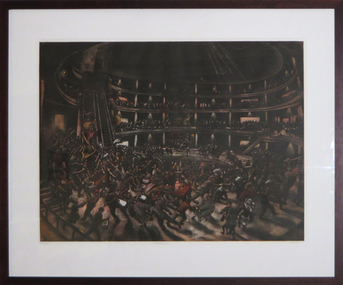 Federation University Art Collection
Work on paper - Artwork - Printmaking, Geoffrey Ricardo, "The Urbane Heart" by Geoffrey Ricardo, 1999
... GEOFFREY RICARDO (1964- ) Born Melbourne, Australia 1984-86 Bachelor of Arts (Fine Art), Printmaking, Chisholm Institute of Technology, Melbourne 1987-89 Printing Assistant at Bill Young Studios, Editioning intaglio prints, King Valley, VIC 1988 Full-time Studio Technician at Printmaking Department, Chisholm Institute of Technology, Melbourne 1989-90 Graduate Diploma (Fine Art), Printmaking, Monash University, Melbourne 1991 Traveled to England, France, Spain and USA (Winsor & Newton International Travelling Bursary, National Students Art Prize) Worked in private studios in Gaucin, Spain and New York, USA 1994-95 Master of Fine Arts, Monash University, Melbourne 1995 Guest Lecturer, Victorian College of the Arts, Melbourne Traveled to Europe and America 1996 Guest Lecturer, Royal Melbourne Institute of Technology, Melbourne 1990-98 Sessional Lecturer, Monash University, Melbourne 1998 Traveled to America and Mexico 2001-05 Sessional Lecturer, The Victorian College of the Arts, Melbourne 2003-10 Printmaking Workshops, Warrnambool TAFE, Warrnambool, VIC 2004 Traveled to Europe, Mexico and Cuba 2005 Lecturer, National Art School (Summer School), Sydney Sessional Lecturer, Monash University, Melbourne Lecturer, Institution of Koorie Education, Deakin University, Geelong, VIC SOLO EXHIBITIONS 2012 ‘Collection of Works’ The Art Vault Mildura ‘Deeper Meanings’, The Incinerator Gallery, Melbourne ‘Three Projects’, Australian Galleries, Glenmore Road, Sydney Melbourne Art Fair Stand F33, Australian Galleries, Melbourne 2009 ‘Anno Domino, Antarctica and The Anatomy Lesson’, Australian Galleries Derby Street, Melbourne The Art Vault, Mildura, VIC 2008 MV Orlova (Quark Expeditions), The Drake Passage, Antarctica 2007 ‘Herd’, BMGArt, Adelaide ‘Herd’, Australian Galleries Painting & Sculpture, Sydney 2006 ‘Herd’, Australian Galleries Painting & Sculpture, Melbourne 2004 ‘Recent work’, BMGArt, Adelaide 2003 ‘The Rapunzel Suite and Other New Works’, Australian Galleries Works on Paper, Sydney ‘Recent Works’, Australian Galleries Painting & Sculpture, Melbourne ‘Recent works’, Cowwarr Art Space, Cowwarr, VIC 2002 ‘The Rapunzel Suite’, Australian Galleries Works on Paper, Melbourne ‘Strange Games’, Australian Galleries Works on Paper, Sydney 1999 ‘A Dark City Narrative’, Australian Galleries Works on Paper, Sydney ‘A Dark City Narrative’, Australian Galleries Works on Paper, Melbourne 1998 Cullity Gallery, School of Architecture and Fine Art, University of Western Australia, Perth 1997 Delaney Gallery, Perth Chapman Gallery, Canberra BMGArt, Adelaide ‘Menagerie’, Australian Galleries, Sydney ‘Menagerie’, Australian Galleries, Melbourne 1995 ‘Paintings, Prints and Sculpture’, Australian Galleries, Sydney ‘Prints, Paintings and Sculpture’, Australian Galleries, Melbourne 1994 Lawrence Wilson Art Gallery, University of Western Australia, Perth Graham Galleries + Editions, Brisbane ‘Wishful Thinking, Prints and Sculptures’, Lawrence Wilson Art Gallery, University of Western Australia, Perth 1992 ‘Prints, Sculptures and Watercolours’, Australian Galleries, Melbourne and Sydney 1990 ‘Watercolours, Prints and Small Bronzes’, Australian Galleries, Sydney ‘Paintings, Prints and Sculptures’, Australian Galleries, Melbourne GROUP EXHIBITIONS 2013 ‘Sculpture by the Sea’ Cottlesloe, Western Australia 2012 ‘Brave New World’, Toyota Community Spirit Gallery, Port Melbourne, VIC ‘Sculpture by the Sea’, Bondi, Sydney 2011 ‘Sculpture by the sea’, Aarhus, Denmark ‘Artwork to Tapestry’, Tarrawarra Museum of Art, Healesville, VIC Burnie Print Prize, Burnie Regional Gallery, Burnie, TAS ‘large exhibition of small works’, Australian Galleries, Roylston Street, Sydney ‘large exhibition of small works’, Australian Galleries, Derby Street, Melbourne ‘Nature of the Mark’, Australian Galleries, Smith Street, Melbourne Rick Amor Print Prize, Montsalvat, Eltham, VIC 2010 ‘Summer show’, Australian Galleries, Glenmore Road, Sydney ‘Summer stock show’, Australian Galleries, Smith Street, Melbourne ‘Sub10’, Substation, Melbourne ‘McClelland Sculpture Survey and Award 2010’, McClelland Gallery + Sculpture Park, Langwarrin, VIC ‘Artists’ Prints made with Integrity I’, Australian Galleries, Smith Street, Melbourne Montalto Sculpture Prize, Montalto Vineyard and Olive Grove, Red Hill South, VIC 2009 ‘Artists’ ink: printmaking from the Warrnambool Art Gallery Collection, 1970-2001’, Ararat Regional Art Gallery, Ararat, VIC ‘Lorne Sculpture’ (Winner), Lorne, VIC 2008 ‘Summer Stock Show’, Australian Galleries Smith Street, Melbourne 2007 ARC Biennial (Art, Design and Craft), Queensland University of Technology Art Museum, Brisbane ‘Prints Tokyo: International Print Exhibition’, Tokyo, Japan Seoul International Print, Photo and Edition Works Art Fair, Seoul, Korea Guanlan International Print Biennial, Guanlan, China ‘Summer Stock Show’, Australian Galleries Works on Paper, Sydney ‘Summer Stock Show’, Australian Galleries Painting & Sculpture, Melbourne ‘Summer Stock Show’, Australian Galleries Works on Paper, Melbourne ‘Antipodean Bestiary’, Project Space / Spare Room, RMIT University, Melbourne Montalto Sculpture Prize, Montalto Vineyard and Olive Grove, Red Hill South, VIC McClelland Sculpture Survey and Award 2007, McClelland Gallery + Sculpture Park, Langwarrin, VIC ‘2007: Works from the studio’, Lancaster Press, Melbourne ‘50 - a print exchange portfolio’, Geelong Art Gallery, Geelong, VIC ‘Small Pleasures’, Australian Galleries Painting & Sculpture, Melbourne ‘Stock Show’, Australian Galleries Painting & Sculpture, Melbourne ‘Artists for Kids Culture’, Brightspace, Melbourne 2006 ‘Partnership or perish’, Academy of the Arts, School of Visual and Performing Arts, University of Tasmania, Hobart Libris Awards, Artspace Mackay, Mackay, QLD ‘Summery’, Australian Galleries Painting & Sculpture, Sydney ‘Summer Stock Show’, Australian Galleries Works on Paper, Melbourne ‘Bookish’, Australian Galleries Works on Paper, Melbourne Melbourne Art Fair, Australian Galleries, Melbourne ‘Artists for Kids Culture’, Brightspace, Melbourne ‘50th Anniversary Exhibition’, Australian Galleries Painting & Sculpture, Melbourne 2005 ‘End of Year Group Exhibition’, Australian Galleries Painting & Sculpture, Sydney ‘Contemporary Works on Paper’, Australian Galleries Works on Paper, Melbourne ‘Expansion’, Lancaster Press, Melbourne ‘The Art of Collaboration’, Singapore Tyler Print Institute, Singapore ‘Double take’, Arts Project Australia, Melbourne ‘Small Treasures - 20 emerging and established artists’, TILT Contemporary Art, Melbourne Jacques Cadry Memorial Art Prize, Fox Studios and State Library of NSW, Sydney ‘Tales of the City’, Australian Galleries Painting & Sculpture, Melbourne ‘A Decade of Collecting 1995-2005’, Cairns Regional Gallery, Cairns, QLD ‘Artists for Kids Culture’, Brightspace, Melbourne ‘Surface Tension: 21 Contemporary Australian Printmakers’, University of Tasmania, Launceston, TAS ‘Neo-millenium’, Toyota Community Spirit Gallery, Melbourne 2004 ‘Artists for Kids Culture’, Brightspace, Melbourne ‘Group Exhibition’, Australian Galleries Painting & Sculpture, Melbourne ‘Species’, Australian Galleries Works on Paper, Melbourne ‘In the presence of creatures great and small’, Australian Galleries Works on Paper, Sydney ‘Tapestries from the Victorian Tapestry Workshop’, Australian Galleries, Melbourne ‘Sculpture’, Australian Galleries Painting & Sculpture, Sydney ‘Contemporary Australian Prints’, National Arts Club, New York, USA ‘Contemporary Australian Prints’, Gallery 101, Melbourne ‘Contemporary Australian Prints from the Collection’, Art Gallery of New South Wales, Sydney ‘Bridge’, Toyota Community Spirit Gallery, Melbourne ‘Vivid’, Fortyfive Downstairs, Melbourne Lake Gallery, Paynesville, VIC 2003 ‘Paper matters’, Lawrence Wilson Art Gallery, University of Western Australia, Perth ‘Artists for Kids Culture’, Brightspace, Melbourne ‘Less is more’, BMGArt, Adelaide ‘The ink’s on me: Bill Young master printmaker’, Wangaratta Exhibitions Gallery, Wangaratta, VIC ‘Fantastic and Visionary Art’, Touring: Global Arts Link, QLD; Ipswich Regional Gallery, QLD ; Orange Regional Gallery, NSW; Manning Regional Gallery, NSW; Parramatta Heritage Centre, Sydney; Ballarat Regional Gallery, VIC 2002 Shell Fremantle Print Award, Fremantle Arts Centre, Fremantle, WA ‘Artists for Kids Culture’, Brightspace, Melbourne 2001 Shell Fremantle Print Award, Fremantle Arts Centre, Fremantle, WA ‘Six Degrees of Collaboration’, RMIT Faculty of Art, Design and Communication Gallery, Melbourne ‘Reciprocal Moves’, Warrnambool Art Gallery, Warrnambool, VIC International Print Triennial, Kanagawa, Japan ‘Fantastic Art’, Orange Regional Gallery, Orange, NSW ‘Dancing Made a Man out of Me’, The Switchback Gallery, Monash University, Gippsland, VIC ‘Artists for Kids Culture’, Brightspace, Melbourne ‘Celebration’, Regional touring exhibition, VIC 2000-01 ‘Workings of the Mind: Melbourne Prints of the 1960s to the 1990s’, Touring: Grafton Regional Gallery, NSW; Toowoomba Regional Art Gallery, QLD; Nolan Gallery, Canberra; Bendigo Art Gallery, VIC; PercTucker Regional Gallery, QLD 2000 Shell Fremantle Print Award, Fremantle Arts Centre, Fremantle, WA The Hutchins Art Prize, Long Gallery, Hobart ‘Artists for Kids Culture’, Brightspace, Melbourne 1999 Shell Fremantle Print Award, Fremantle Arts Space, Fremantle, WA ‘We are Australian’, George Adams Gallery, Victorian Arts Centre, Melbourne Rena Ellen Jones Memorial Print Award, Warrnambool Art Gallery, Warrnambool, VIC ‘National Works on Paper’, Mornington Peninsula Gallery, Mornington, VIC ‘Artists for Kids Culture’, Brightspace, Melbourne ‘Pleasure’, Australian Galleries, Melbourne 1998-99 ‘Australian Prints’, Art Gallery of New South Wales, Sydney 1997 ‘KNOCK, KNOCK’, Australian Galleries, Melbourne ‘Woven Colour, The Art of Tapestry’, Dr Earl Lu Gallery, Singapore 1996 M.P.A.C. ...GEOFFREY RICARDO (1964- ) Born Melbourne, Australia 1984-86 Bachelor of Arts (Fine Art), Printmaking, Chisholm Institute of Technology, Melbourne 1987-89 Printing Assistant at Bill Young Studios, Editioning intaglio prints, King Valley, VIC 1988 Full-time Studio Technician at Printmaking Department, Chisholm Institute of Technology, Melbourne 1989-90 Graduate Diploma (Fine Art), Printmaking, Monash University, Melbourne 1991 Traveled to England, France, Spain and USA (Winsor & Newton International Travelling Bursary, National Students Art Prize) Worked in private studios in Gaucin, Spain and New York, USA 1994-95 Master of Fine Arts, Monash University, Melbourne 1995 Guest Lecturer, Victorian College of the Arts, Melbourne Traveled to Europe and America 1996 Guest Lecturer, Royal Melbourne Institute of Technology, Melbourne 1990-98 Sessional Lecturer, Monash University, Melbourne 1998 Traveled to America and Mexico 2001-05 Sessional Lecturer, The Victorian College of the Arts, Melbourne 2003-10 Printmaking Workshops, Warrnambool TAFE, Warrnambool, VIC 2004 Traveled to Europe, Mexico and Cuba 2005 Lecturer, National Art School (Summer School), Sydney Sessional Lecturer, Monash University, Melbourne Lecturer, Institution of Koorie Education, Deakin University, Geelong, VIC SOLO EXHIBITIONS 2012 ‘Collection of Works’ The Art Vault Mildura ‘Deeper Meanings’, The Incinerator Gallery, Melbourne ‘Three Projects’, Australian Galleries, Glenmore Road, Sydney Melbourne Art Fair Stand F33, Australian Galleries, Melbourne 2009 ‘Anno Domino, Antarctica and The Anatomy Lesson’, Australian Galleries Derby Street, Melbourne The Art Vault, Mildura, VIC 2008 MV Orlova (Quark Expeditions), The Drake Passage, Antarctica 2007 ‘Herd’, BMGArt, Adelaide ‘Herd’, Australian Galleries Painting & Sculpture, Sydney 2006 ‘Herd’, Australian Galleries Painting & Sculpture, Melbourne 2004 ‘Recent work’, BMGArt, Adelaide 2003 ‘The Rapunzel Suite and Other New Works’, Australian Galleries Works on Paper, Sydney ‘Recent Works’, Australian Galleries Painting & Sculpture, Melbourne ‘Recent works’, Cowwarr Art Space, Cowwarr, VIC 2002 ‘The Rapunzel Suite’, Australian Galleries Works on Paper, Melbourne ‘Strange Games’, Australian Galleries Works on Paper, Sydney 1999 ‘A Dark City Narrative’, Australian Galleries Works on Paper, Sydney ‘A Dark City Narrative’, Australian Galleries Works on Paper, Melbourne 1998 Cullity Gallery, School of Architecture and Fine Art, University of Western Australia, Perth 1997 Delaney Gallery, Perth Chapman Gallery, Canberra BMGArt, Adelaide ‘Menagerie’, Australian Galleries, Sydney ‘Menagerie’, Australian Galleries, Melbourne 1995 ‘Paintings, Prints and Sculpture’, Australian Galleries, Sydney ‘Prints, Paintings and Sculpture’, Australian Galleries, Melbourne 1994 Lawrence Wilson Art Gallery, University of Western Australia, Perth Graham Galleries + Editions, Brisbane ‘Wishful Thinking, Prints and Sculptures’, Lawrence Wilson Art Gallery, University of Western Australia, Perth 1992 ‘Prints, Sculptures and Watercolours’, Australian Galleries, Melbourne and Sydney 1990 ‘Watercolours, Prints and Small Bronzes’, Australian Galleries, Sydney ‘Paintings, Prints and Sculptures’, Australian Galleries, Melbourne GROUP EXHIBITIONS 2013 ‘Sculpture by the Sea’ Cottlesloe, Western Australia 2012 ‘Brave New World’, Toyota Community Spirit Gallery, Port Melbourne, VIC ‘Sculpture by the Sea’, Bondi, Sydney 2011 ‘Sculpture by the sea’, Aarhus, Denmark ‘Artwork to Tapestry’, Tarrawarra Museum of Art, Healesville, VIC Burnie Print Prize, Burnie Regional Gallery, Burnie, TAS ‘large exhibition of small works’, Australian Galleries, Roylston Street, Sydney ‘large exhibition of small works’, Australian Galleries, Derby Street, Melbourne ‘Nature of the Mark’, Australian Galleries, Smith Street, Melbourne Rick Amor Print Prize, Montsalvat, Eltham, VIC 2010 ‘Summer show’, Australian Galleries, Glenmore Road, Sydney ‘Summer stock show’, Australian Galleries, Smith Street, Melbourne ‘Sub10’, Substation, Melbourne ‘McClelland Sculpture Survey and Award 2010’, McClelland Gallery + Sculpture Park, Langwarrin, VIC ‘Artists’ Prints made with Integrity I’, Australian Galleries, Smith Street, Melbourne Montalto Sculpture Prize, Montalto Vineyard and Olive Grove, Red Hill South, VIC 2009 ‘Artists’ ink: printmaking from the Warrnambool Art Gallery Collection, 1970-2001’, Ararat Regional Art Gallery, Ararat, VIC ‘Lorne Sculpture’ (Winner), Lorne, VIC 2008 ‘Summer Stock Show’, Australian Galleries Smith Street, Melbourne 2007 ARC Biennial (Art, Design and Craft), Queensland University of Technology Art Museum, Brisbane ‘Prints Tokyo: International Print Exhibition’, Tokyo, Japan Seoul International Print, Photo and Edition Works Art Fair, Seoul, Korea Guanlan International Print Biennial, Guanlan, China ‘Summer Stock Show’, Australian Galleries Works on Paper, Sydney ‘Summer Stock Show’, Australian Galleries Painting & Sculpture, Melbourne ‘Summer Stock Show’, Australian Galleries Works on Paper, Melbourne ‘Antipodean Bestiary’, Project Space / Spare Room, RMIT University, Melbourne Montalto Sculpture Prize, Montalto Vineyard and Olive Grove, Red Hill South, VIC McClelland Sculpture Survey and Award 2007, McClelland Gallery + Sculpture Park, Langwarrin, VIC ‘2007: Works from the studio’, Lancaster Press, Melbourne ‘50 - a print exchange portfolio’, Geelong Art Gallery, Geelong, VIC ‘Small Pleasures’, Australian Galleries Painting & Sculpture, Melbourne ‘Stock Show’, Australian Galleries Painting & Sculpture, Melbourne ‘Artists for Kids Culture’, Brightspace, Melbourne 2006 ‘Partnership or perish’, Academy of the Arts, School of Visual and Performing Arts, University of Tasmania, Hobart Libris Awards, Artspace Mackay, Mackay, QLD ‘Summery’, Australian Galleries Painting & Sculpture, Sydney ‘Summer Stock Show’, Australian Galleries Works on Paper, Melbourne ‘Bookish’, Australian Galleries Works on Paper, Melbourne Melbourne Art Fair, Australian Galleries, Melbourne ‘Artists for Kids Culture’, Brightspace, Melbourne ‘50th Anniversary Exhibition’, Australian Galleries Painting & Sculpture, Melbourne 2005 ‘End of Year Group Exhibition’, Australian Galleries Painting & Sculpture, Sydney ‘Contemporary Works on Paper’, Australian Galleries Works on Paper, Melbourne ‘Expansion’, Lancaster Press, Melbourne ‘The Art of Collaboration’, Singapore Tyler Print Institute, Singapore ‘Double take’, Arts Project Australia, Melbourne ‘Small Treasures - 20 emerging and established artists’, TILT Contemporary Art, Melbourne Jacques Cadry Memorial Art Prize, Fox Studios and State Library of NSW, Sydney ‘Tales of the City’, Australian Galleries Painting & Sculpture, Melbourne ‘A Decade of Collecting 1995-2005’, Cairns Regional Gallery, Cairns, QLD ‘Artists for Kids Culture’, Brightspace, Melbourne ‘Surface Tension: 21 Contemporary Australian Printmakers’, University of Tasmania, Launceston, TAS ‘Neo-millenium’, Toyota Community Spirit Gallery, Melbourne 2004 ‘Artists for Kids Culture’, Brightspace, Melbourne ‘Group Exhibition’, Australian Galleries Painting & Sculpture, Melbourne ‘Species’, Australian Galleries Works on Paper, Melbourne ‘In the presence of creatures great and small’, Australian Galleries Works on Paper, Sydney ‘Tapestries from the Victorian Tapestry Workshop’, Australian Galleries, Melbourne ‘Sculpture’, Australian Galleries Painting & Sculpture, Sydney ‘Contemporary Australian Prints’, National Arts Club, New York, USA ‘Contemporary Australian Prints’, Gallery 101, Melbourne ‘Contemporary Australian Prints from the Collection’, Art Gallery of New South Wales, Sydney ‘Bridge’, Toyota Community Spirit Gallery, Melbourne ‘Vivid’, Fortyfive Downstairs, Melbourne Lake Gallery, Paynesville, VIC 2003 ‘Paper matters’, Lawrence Wilson Art Gallery, University of Western Australia, Perth ‘Artists for Kids Culture’, Brightspace, Melbourne ‘Less is more’, BMGArt, Adelaide ‘The ink’s on me: Bill Young master printmaker’, Wangaratta Exhibitions Gallery, Wangaratta, VIC ‘Fantastic and Visionary Art’, Touring: Global Arts Link, QLD; Ipswich Regional Gallery, QLD ; Orange Regional Gallery, NSW; Manning Regional Gallery, NSW; Parramatta Heritage Centre, Sydney; Ballarat Regional Gallery, VIC 2002 Shell Fremantle Print Award, Fremantle Arts Centre, Fremantle, WA ‘Artists for Kids Culture’, Brightspace, Melbourne 2001 Shell Fremantle Print Award, Fremantle Arts Centre, Fremantle, WA ‘Six Degrees of Collaboration’, RMIT Faculty of Art, Design and Communication Gallery, Melbourne ‘Reciprocal Moves’, Warrnambool Art Gallery, Warrnambool, VIC International Print Triennial, Kanagawa, Japan ‘Fantastic Art’, Orange Regional Gallery, Orange, NSW ‘Dancing Made a Man out of Me’, The Switchback Gallery, Monash University, Gippsland, VIC ‘Artists for Kids Culture’, Brightspace, Melbourne ‘Celebration’, Regional touring exhibition, VIC 2000-01 ‘Workings of the Mind: Melbourne Prints of the 1960s to the 1990s’, Touring: Grafton Regional Gallery, NSW; Toowoomba Regional Art Gallery, QLD; Nolan Gallery, Canberra; Bendigo Art Gallery, VIC; PercTucker Regional Gallery, QLD 2000 Shell Fremantle Print Award, Fremantle Arts Centre, Fremantle, WA The Hutchins Art Prize, Long Gallery, Hobart ‘Artists for Kids Culture’, Brightspace, Melbourne 1999 Shell Fremantle Print Award, Fremantle Arts Space, Fremantle, WA ‘We are Australian’, George Adams Gallery, Victorian Arts Centre, Melbourne Rena Ellen Jones Memorial Print Award, Warrnambool Art Gallery, Warrnambool, VIC ‘National Works on Paper’, Mornington Peninsula Gallery, Mornington, VIC ‘Artists for Kids Culture’, Brightspace, Melbourne ‘Pleasure’, Australian Galleries, Melbourne 1998-99 ‘Australian Prints’, Art Gallery of New South Wales, Sydney 1997 ‘KNOCK, KNOCK’, Australian Galleries, Melbourne ‘Woven Colour, The Art of Tapestry’, Dr Earl Lu Gallery, Singapore 1996 M.P.A.C. ...GEOFFREY RICARDO (1964- ) Born Melbourne, Australia 1984-86 Bachelor of Arts (Fine Art), Printmaking, Chisholm Institute of Technology, Melbourne 1987-89 Printing Assistant at Bill Young Studios, Editioning intaglio prints, King Valley, VIC 1988 Full-time Studio Technician at Printmaking Department, Chisholm Institute of Technology, Melbourne 1989-90 Graduate Diploma (Fine Art), Printmaking, Monash University, Melbourne 1991 Traveled to England, France, Spain and USA (Winsor & Newton International Travelling Bursary, National Students Art Prize) Worked in private studios in Gaucin, Spain and New York, USA 1994-95 Master of Fine Arts, Monash University, Melbourne 1995 Guest Lecturer, Victorian College of the Arts, Melbourne Traveled to Europe and America 1996 Guest Lecturer, Royal Melbourne Institute of Technology, Melbourne 1990-98 Sessional Lecturer, Monash University, Melbourne 1998 Traveled to America and Mexico 2001-05 Sessional Lecturer, The Victorian College of the Arts, Melbourne 2003-10 Printmaking Workshops, Warrnambool TAFE, Warrnambool, VIC 2004 Traveled to Europe, Mexico and Cuba 2005 Lecturer, National Art School (Summer School), Sydney Sessional Lecturer, Monash University, Melbourne Lecturer, Institution of Koorie Education, Deakin University, Geelong, VIC SOLO EXHIBITIONS 2012 ‘Collection of Works’ The Art Vault Mildura ‘Deeper Meanings’, The Incinerator Gallery, Melbourne ‘Three Projects’, Australian Galleries, Glenmore Road, Sydney Melbourne Art Fair Stand F33, Australian Galleries, Melbourne 2009 ‘Anno Domino, Antarctica and The Anatomy Lesson’, Australian Galleries Derby Street, Melbourne The Art Vault, Mildura, VIC 2008 MV Orlova (Quark Expeditions), The Drake Passage, Antarctica 2007 ‘Herd’, BMGArt, Adelaide ‘Herd’, Australian Galleries Painting & Sculpture, Sydney 2006 ‘Herd’, Australian Galleries Painting & Sculpture, Melbourne 2004 ‘Recent work’, BMGArt, Adelaide 2003 ‘The Rapunzel Suite and Other New Works’, Australian Galleries Works on Paper, Sydney ‘Recent Works’, Australian Galleries Painting & Sculpture, Melbourne ‘Recent works’, Cowwarr Art Space, Cowwarr, VIC 2002 ‘The Rapunzel Suite’, Australian Galleries Works on Paper, Melbourne ‘Strange Games’, Australian Galleries Works on Paper, Sydney 1999 ‘A Dark City Narrative’, Australian Galleries Works on Paper, Sydney ‘A Dark City Narrative’, Australian Galleries Works on Paper, Melbourne 1998 Cullity Gallery, School of Architecture and Fine Art, University of Western Australia, Perth 1997 Delaney Gallery, Perth Chapman Gallery, Canberra BMGArt, Adelaide ‘Menagerie’, Australian Galleries, Sydney ‘Menagerie’, Australian Galleries, Melbourne 1995 ‘Paintings, Prints and Sculpture’, Australian Galleries, Sydney ‘Prints, Paintings and Sculpture’, Australian Galleries, Melbourne 1994 Lawrence Wilson Art Gallery, University of Western Australia, Perth Graham Galleries + Editions, Brisbane ‘Wishful Thinking, Prints and Sculptures’, Lawrence Wilson Art Gallery, University of Western Australia, Perth 1992 ‘Prints, Sculptures and Watercolours’, Australian Galleries, Melbourne and Sydney 1990 ‘Watercolours, Prints and Small Bronzes’, Australian Galleries, Sydney ‘Paintings, Prints and Sculptures’, Australian Galleries, Melbourne GROUP EXHIBITIONS 2013 ‘Sculpture by the Sea’ Cottlesloe, Western Australia 2012 ‘Brave New World’, Toyota Community Spirit Gallery, Port Melbourne, VIC ‘Sculpture by the Sea’, Bondi, Sydney 2011 ‘Sculpture by the sea’, Aarhus, Denmark ‘Artwork to Tapestry’, Tarrawarra Museum of Art, Healesville, VIC Burnie Print Prize, Burnie Regional Gallery, Burnie, TAS ‘large exhibition of small works’, Australian Galleries, Roylston Street, Sydney ‘large exhibition of small works’, Australian Galleries, Derby Street, Melbourne ‘Nature of the Mark’, Australian Galleries, Smith Street, Melbourne Rick Amor Print Prize, Montsalvat, Eltham, VIC 2010 ‘Summer show’, Australian Galleries, Glenmore Road, Sydney ‘Summer stock show’, Australian Galleries, Smith Street, Melbourne ‘Sub10’, Substation, Melbourne ‘McClelland Sculpture Survey and Award 2010’, McClelland Gallery + Sculpture Park, Langwarrin, VIC ‘Artists’ Prints made with Integrity I’, Australian Galleries, Smith Street, Melbourne Montalto Sculpture Prize, Montalto Vineyard and Olive Grove, Red Hill South, VIC 2009 ‘Artists’ ink: printmaking from the Warrnambool Art Gallery Collection, 1970-2001’, Ararat Regional Art Gallery, Ararat, VIC ‘Lorne Sculpture’ (Winner), Lorne, VIC 2008 ‘Summer Stock Show’, Australian Galleries Smith Street, Melbourne 2007 ARC Biennial (Art, Design and Craft), Queensland University of Technology Art Museum, Brisbane ‘Prints Tokyo: International Print Exhibition’, Tokyo, Japan Seoul International Print, Photo and Edition Works Art Fair, Seoul, Korea Guanlan International Print Biennial, Guanlan, China ‘Summer Stock Show’, Australian Galleries Works on Paper, Sydney ‘Summer Stock Show’, Australian Galleries Painting & Sculpture, Melbourne ‘Summer Stock Show’, Australian Galleries Works on Paper, Melbourne ‘Antipodean Bestiary’, Project Space / Spare Room, RMIT University, Melbourne Montalto Sculpture Prize, Montalto Vineyard and Olive Grove, Red Hill South, VIC McClelland Sculpture Survey and Award 2007, McClelland Gallery + Sculpture Park, Langwarrin, VIC ‘2007: Works from the studio’, Lancaster Press, Melbourne ‘50 - a print exchange portfolio’, Geelong Art Gallery, Geelong, VIC ‘Small Pleasures’, Australian Galleries Painting & Sculpture, Melbourne ‘Stock Show’, Australian Galleries Painting & Sculpture, Melbourne ‘Artists for Kids Culture’, Brightspace, Melbourne 2006 ‘Partnership or perish’, Academy of the Arts, School of Visual and Performing Arts, University of Tasmania, Hobart Libris Awards, Artspace Mackay, Mackay, QLD ‘Summery’, Australian Galleries Painting & Sculpture, Sydney ‘Summer Stock Show’, Australian Galleries Works on Paper, Melbourne ‘Bookish’, Australian Galleries Works on Paper, Melbourne Melbourne Art Fair, Australian Galleries, Melbourne ‘Artists for Kids Culture’, Brightspace, Melbourne ‘50th Anniversary Exhibition’, Australian Galleries Painting & Sculpture, Melbourne 2005 ‘End of Year Group Exhibition’, Australian Galleries Painting & Sculpture, Sydney ‘Contemporary Works on Paper’, Australian Galleries Works on Paper, Melbourne ‘Expansion’, Lancaster Press, Melbourne ‘The Art of Collaboration’, Singapore Tyler Print Institute, Singapore ‘Double take’, Arts Project Australia, Melbourne ‘Small Treasures - 20 emerging and established artists’, TILT Contemporary Art, Melbourne Jacques Cadry Memorial Art Prize, Fox Studios and State Library of NSW, Sydney ‘Tales of the City’, Australian Galleries Painting & Sculpture, Melbourne ‘A Decade of Collecting 1995-2005’, Cairns Regional Gallery, Cairns, QLD ‘Artists for Kids Culture’, Brightspace, Melbourne ‘Surface Tension: 21 Contemporary Australian Printmakers’, University of Tasmania, Launceston, TAS ‘Neo-millenium’, Toyota Community Spirit Gallery, Melbourne 2004 ‘Artists for Kids Culture’, Brightspace, Melbourne ‘Group Exhibition’, Australian Galleries Painting & Sculpture, Melbourne ‘Species’, Australian Galleries Works on Paper, Melbourne ‘In the presence of creatures great and small’, Australian Galleries Works on Paper, Sydney ‘Tapestries from the Victorian Tapestry Workshop’, Australian Galleries, Melbourne ‘Sculpture’, Australian Galleries Painting & Sculpture, Sydney ‘Contemporary Australian Prints’, National Arts Club, New York, USA ‘Contemporary Australian Prints’, Gallery 101, Melbourne ‘Contemporary Australian Prints from the Collection’, Art Gallery of New South Wales, Sydney ‘Bridge’, Toyota Community Spirit Gallery, Melbourne ‘Vivid’, Fortyfive Downstairs, Melbourne Lake Gallery, Paynesville, VIC 2003 ‘Paper matters’, Lawrence Wilson Art Gallery, University of Western Australia, Perth ‘Artists for Kids Culture’, Brightspace, Melbourne ‘Less is more’, BMGArt, Adelaide ‘The ink’s on me: Bill Young master printmaker’, Wangaratta Exhibitions Gallery, Wangaratta, VIC ‘Fantastic and Visionary Art’, Touring: Global Arts Link, QLD; Ipswich Regional Gallery, QLD ; Orange Regional Gallery, NSW; Manning Regional Gallery, NSW; Parramatta Heritage Centre, Sydney; Ballarat Regional Gallery, VIC 2002 Shell Fremantle Print Award, Fremantle Arts Centre, Fremantle, WA ‘Artists for Kids Culture’, Brightspace, Melbourne 2001 Shell Fremantle Print Award, Fremantle Arts Centre, Fremantle, WA ‘Six Degrees of Collaboration’, RMIT Faculty of Art, Design and Communication Gallery, Melbourne ‘Reciprocal Moves’, Warrnambool Art Gallery, Warrnambool, VIC International Print Triennial, Kanagawa, Japan ‘Fantastic Art’, Orange Regional Gallery, Orange, NSW ‘Dancing Made a Man out of Me’, The Switchback Gallery, Monash University, Gippsland, VIC ‘Artists for Kids Culture’, Brightspace, Melbourne ‘Celebration’, Regional touring exhibition, VIC 2000-01 ‘Workings of the Mind: Melbourne Prints of the 1960s to the 1990s’, Touring: Grafton Regional Gallery, NSW; Toowoomba Regional Art Gallery, QLD; Nolan Gallery, Canberra; Bendigo Art Gallery, VIC; PercTucker Regional Gallery, QLD 2000 Shell Fremantle Print Award, Fremantle Arts Centre, Fremantle, WA The Hutchins Art Prize, Long Gallery, Hobart ‘Artists for Kids Culture’, Brightspace, Melbourne 1999 Shell Fremantle Print Award, Fremantle Arts Space, Fremantle, WA ‘We are Australian’, George Adams Gallery, Victorian Arts Centre, Melbourne Rena Ellen Jones Memorial Print Award, Warrnambool Art Gallery, Warrnambool, VIC ‘National Works on Paper’, Mornington Peninsula Gallery, Mornington, VIC ‘Artists for Kids Culture’, Brightspace, Melbourne ‘Pleasure’, Australian Galleries, Melbourne 1998-99 ‘Australian Prints’, Art Gallery of New South Wales, Sydney 1997 ‘KNOCK, KNOCK’, Australian Galleries, Melbourne ‘Woven Colour, The Art of Tapestry’, Dr Earl Lu Gallery, Singapore 1996 M.P.A.C. Print Award, Mornington Peninsula Arts Centre, Mornington, VIC Academy of Art & Culture, Calcutta, India ‘Synergy’, Touring: Lalit Kala Akademi, New Dehli, India; Jehangir Nicholson Gallery, Bombay, India; Birla, India ‘Contemporary Australian Tapestry’, Frederikshavn Kunstmuseum, Denmark; Australia House, London, UK 1995 ‘Interweave - Tapestry A Collaborative Art’, Heide Museum of Modern Art, Melbourne ‘Contemporary Printmakers’, La Trobe Regional Gallery, Morwell, VIC ‘Contemporary Australian Tapestry’, Australian High Commission, Singapore ‘Circus Capers’, Caulfield Arts Complex, Melbourne 1994 M.P.A.C. Print Award, Mornington Peninsula Arts Centre, Mornington, VIC Fremantle Print Award, Fremantle Arts Centre, Fremantle, WA Australian Universities of Visual Art, Australian High Commission, Singapore ‘Prints, Paintings and Sculpture’, BMGArt, Adelaide Fourth Australian Contemporary Art Fair, Royal Exhibition Building, Melbourne 1993 Fremantle Print Award, Fremantle Arts Centre, Fremantle, WA 1992 Fremantle Print Award, Fremantle Arts Centre, Fremantle, WA ‘Transitional Times’, Print Council of Australia, Melbourne ‘Second Kochi International Triennial Exhibition of Prints’, Japan 1991 Henry Worland Memorial Print Prize, Warrnambool Regional Art Gallery, Warrnambool, VIC Fremantle Print Award, Fremantle Arts Centre, Fremantle, WA ‘Table Top Sculpture’, Australian Galleries, Melbourne ‘Art 91’, London Contemporary Art Fair, London, UK 1990 M.P.A.C. Print Prize, Mornington Peninsula Arts Centre, Mornington, VIC Fremantle Print Prize, Fremantle Arts Centre, Fremantle WA ‘The Christmas Show’, Intaglio Printmaker, London, England ‘Australian Contemporary Art’, AZ Gallery, Tokyo, Japan 1989 National Student Art Prize, Mitchell College, Bathurst, NSW Fremantle Print Award, Fremantle Arts Centre, Fremantle, WA City of Doncaster Acquisitive Print Prize, Manningham Gallery, Melbourne ‘Affiliations’, Monash University Gallery, Melbourne 1988 M.P.A.C. Acquisitive Print Prize, Mornington Peninsula Arts Centre, Mornington, VIC Henry Worland Memorial Print Prize, Warrnambool Regional Art Gallery, Warrnambool, VIC 1987 ‘The Comedy Show’, Print Guild, Melbourne ‘Fluxus Art Flow’, Melbourne 1986 Mornington Peninsula Arts Council Acquisitive Print Prize, Mornington Peninsula, VIC Chisolm Institute of Technology, Graduating Students exhibition, Melbourne AWARDS 2013 King Valley Art Prize (printmaking) 2009 Lorne Sculpture Exhibition (Winner), Lorne, VIC 1989 Windsor and Newton International Travelling Bursary, UK Linbrook International First Prize for Printmaking, Australia COMMISSIONS 2005 Tapestry design for Bairnsdale Hospital (woven by the Victorian Tapestry Workshop, Melbourne), Bairnsdale, VIC 1999 Tapestry design ‘Emblem’ (woven by the Victorian Tapestry Workshop, Melbourne), Australia 1995 ‘A Night of Infectious Laughter’ Poster, St Kilda Festival, Melbourne 1994 Tapestry design ‘Elephant Gingham’ (woven by the Victorian Tapestry Workshop, Melbourne), Australia 1993 Tapestry design for the Festival of Perth Official Poster (woven by the Victorian Tapestry Workshop, Melbourne), Perth RESIDENCIES & PROJECTS 2013 ‘Come In Outside’, Collaboration set design for Pocketfool 2011 Mildura Wentworth Arts Festival Project, Mildura, VIC Residency, The Art Vault , Mildura, VIC 2010 ‘Wish’, Collaboration set design for Pocketfool, Artplay, Melbourne The Art Vault (included continuous public flag making workshops which were flown as part of The Wentworth Mildura Art Festival), Mildura, VIC 2009 The Art Vault (included two public printmaking workshops), Mildura, VIC 2008 Artist in residence, MV Orlova, Quark Expeditions, Antarctica 2003 Residency, Bairnsdale Regional Health Service, Bairnsdale, VIC 1998 Residency, School of Architecture & Fine Art, University of Western Australia, Perth 1997 Residency, La Salle/Fia, College of the Arts, Singapore 1996 Artist in residence, Victorian Tapestry Workshop, Melbourne 1993 Reduction Aquatint Workshop & Residency, Graphic Investigation Department, Canberra School of Art, Canberra NB: all residencies have included workshops involving students, children or the general public COLLECTIONS Artbank, Sydney Art Gallery of New South Wales, Sydney Canson Australia Pty Ltd, Australia City of Box Hill, Melbourne City of Whitehorse, Melbourne Downlands College, Toowoomba, QLD Geelong Grammar School, Geelong, VIC Gold Coast City Art Gallery, Gold Coast, QLD Griffith University, Gold Coast, QLD Helensvale High School, Brisbane Holmes à Court Collection, Perth Latrobe Regional Gallery, Morwell, VIC Monash University, Melbourne Mornington Peninsula Arts Council Collection, Mornington, VIC National Gallery of Australia, Canberra National Gallery of Victoria, Melbourne Parliament House Art Collection, Canberra Print Council of Australia, Melbourne Private collections in Australia, Switzerland, USA, UK, Singapore, Germany, Japan, Malaysia, Holland Queen Victoria Museum & Art Gallery, Launceston, TAS Queensland Art Gallery, Brisbane Queensland University of Technology, Brisbane Shire of Diamond Valley, Diamond Valley, VIC Star of the Sea College, Melbourne The Melbourne Club, Melbourne University of Central Queensland, Brisbane University of Technology, Sydney Wagga Wagga Regional Art Gallery, Wagga Wagga, NSW Warrnambool Regional Art Gallery, Warrnambool, VIC BIBLIOGRAPHY PERIODICALS AQ Journal of Contemporary Analysis, Vol. 70, Issue 4, July-August 1998 AQ Journal of Contemporary Analysis, Vol. 70, Issue 6, November-December 1998 AQ Journal of Contemporary Analysis, Vol.71, Issue 7, April 1999 Backhouse, Megan; “Going out of print and back to basics”, The Age, February 2003 Bellamy, Louise; “Renaissance of Western Art”, The Age (A2 section), 26 November 2005 Clabburn, Anna; “Fables and Foibles”, Art Monthly, September 1994 Dutkiewicz, Adam; “Edge of the sublime”, Advertiser, 1 December 2003, p. 76. Erickson, Dorothy; “The Festival that could have been”, The Bulletin, March 1994 Farmer, Alison; “Ricardo makes poster splash”, Sunday Times - Entertainment Extra, 19 September 1993 “Festival taps weaver’s art”, The West Australian, 11February 1994 Fiasco (web-page), March 2003 Jenkins, John; “A Dark City Narrative”, Imprint, Vol. 34, No. 4, 1999 Grishin, Sasha; “Multiplicity – collecting Australian prints”, Australian Art Review, Issue 13, March-June 2007, pp. 52-55 Grishin, Sasha; “Profiles in Print - Geoffrey Ricardo”, Craft Arts International, Issue 76, 2009, pp.1-4 Lloyd, Tim; “The elephant man”, The Advertiser (Review section), December 2007 Manzana Arné, Josep; “De L’Ex-Libris a L’Ex-Webis: Ex-Libris a Internet”, Ex-Libris, Associació Catalana D’Exlibristes, Barcelona, No. 27, July-December 2002, p.11 McDonald, John; “Dreams of hope and menace” The Sydney Morning Herald, 18 March 1995 McMillan, Peter; “Darkness visible”, The Age, 11September 1999 Nelson, Robert; “Circuses can be curated, but not cured”, The Age, 18 January 1995 Nelson, Robert; “Dream Weavers”, The Age, June 1995 Nelson, Robert; “Paen To Ricardo”, Imprint, Vol. 29, No.1, April, 1994 Nelson, Robert; “Revealed: Mother Nature’s vulgar past”, The Age, September 6, 2000 Nelson, Robert; “Riddled with hidden meaning”, The Age, September 8, 1999 Quadrant, April, 1995 Quadrant, Jan/Feb, 1995 Quadrant, October, 1995 Quadrant, November, 1994 “Ricardo’s surreal works at gallery”, Times-Spectator, 25 July 2003, p.7 Snell, Ted; “Art”, The Australian, 18 February1994 Snell, Ted; “Visual arts at the Festival of Perth”, Art Monthly, April 1994 Sunday Arts, ABC TV, 6 May 2007 Timms, Peter; “Geoff Ricardo: emerging from darkness”, Art Monthly, Issue 140, June 2001 Wallace, Dr Carmel; “Ways of seeing Australia”, Asian Art News, May/June 2004 BOOKS & CATALOGUES A Dark City Narrative, Australian Galleries, Melbourne, 1999 ARC Biennial Exhibition (Exhibition catalogue), Queensland University of Technology Art Museum, 2007, pp. 78-79 Clabburn, Anna; “The Collaborative Spirit”, Australian Tapestries: Victorian Tapestry Workshop, 1995, p. 37 Fantastic Art, Orange Regional Gallery, NSW, 2001 Field, Caroline; Herd, catalogue essay, Australian Galleries, Sydney, 2007 Grishin, Sasha; Australian Identities in Printmaking, Wagga Wagga Regional Art Gallery, 2000 Grishin, Sasha; Australian Printmaking in the 1990’s, Craftsman House, 1997 Havighurst, Sophie (Illustrations by Geoffrey Ricardo); When Lester lost his cool, The University of Melbourne, 2007 Kolenberg, Hendrik & Ryan, Anne; Australian Prints, Art Gallery of New South Wales, 1998 Lawrence, Michel; Framed; photographs of Australian Artists, 1998 Modern Australian Tapestries, Victorian Tapestry Workshop, 2000 The Rapunzel Suite, Australian Galleries, Melbourne, 2002 Wallace, Dr Carmel (Essay); Surface Tension, Twenty One Contemporary Australian Printmakers, Gallery 101, Melbourne, 2004 Workings of the Mind : Melbourne Prints of the 1960s to the 1990s, Queensland University of Technology Art Museum, Brisbane, 2000 TELEVISION Sunday Arts, ABC TV, 6 May 2007 Inside Art TV, Channel 31, July 2012Framed intaglio print from Geoffrey Ricardo's 'A Dark City, A Narrative' suite'. Donated through the Australian Government's Cultural Gifts Programme by Katherine Littlewood.Under image in pencil ' artists proof "The Urban Heart" Ricardo 99,geoffrey ricardo, printmaking, framed print, intaglio -
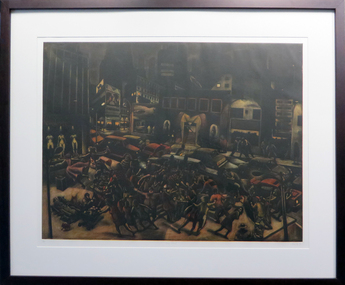 Federation University Art Collection
Work on paper - Artwork - Printmaking, Geoffrey Ricardo, 'Love Street' by Geoffrey Ricardo, 1999
... GEOFFREY RICARDO Born 1964, Melbourne, Australia 1984-86 Bachelor of Arts (Fine Art), Printmaking, Chisholm Institute of Technology, Melbourne 1987-89 Printing Assistant at Bill Young Studios, Editioning intaglio prints, King Valley, VIC 1988 Full-time Studio Technician at Printmaking Department, Chisholm Institute of Technology, Melbourne 1989-90 Graduate Diploma (Fine Art), Printmaking, Monash University, Melbourne 1991 Traveled to England, France, Spain and USA (Winsor & Newton International Travelling Bursary, National Students Art Prize) Worked in private studios in Gaucin, Spain and New York, USA 1994-95 Master of Fine Arts, Monash University, Melbourne 1995 Guest Lecturer, Victorian College of the Arts, Melbourne Traveled to Europe and America 1996 Guest Lecturer, Royal Melbourne Institute of Technology, Melbourne 1990-98 Sessional Lecturer, Monash University, Melbourne 1998 Traveled to America and Mexico 2001-05 Sessional Lecturer, The Victorian College of the Arts, Melbourne 2003-10 Printmaking Workshops, Warrnambool TAFE, Warrnambool, VIC 2004 Traveled to Europe, Mexico and Cuba 2005 Lecturer, National Art School (Summer School), Sydney Sessional Lecturer, Monash University, Melbourne Lecturer, Institution of Koorie Education, Deakin University, Geelong, VIC SOLO EXHIBITIONS 2012 ‘Collection of Works’ The Art Vault Mildura ‘Deeper Meanings’, The Incinerator Gallery, Melbourne ‘Three Projects’, Australian Galleries, Glenmore Road, Sydney Melbourne Art Fair Stand F33, Australian Galleries, Melbourne 2009 ‘Anno Domino, Antarctica and The Anatomy Lesson’, Australian Galleries Derby Street, Melbourne The Art Vault, Mildura, VIC 2008 MV Orlova (Quark Expeditions), The Drake Passage, Antarctica 2007 ‘Herd’, BMGArt, Adelaide ‘Herd’, Australian Galleries Painting & Sculpture, Sydney 2006 ‘Herd’, Australian Galleries Painting & Sculpture, Melbourne 2004 ‘Recent work’, BMGArt, Adelaide 2003 ‘The Rapunzel Suite and Other New Works’, Australian Galleries Works on Paper, Sydney ‘Recent Works’, Australian Galleries Painting & Sculpture, Melbourne ‘Recent works’, Cowwarr Art Space, Cowwarr, VIC 2002 ‘The Rapunzel Suite’, Australian Galleries Works on Paper, Melbourne ‘Strange Games’, Australian Galleries Works on Paper, Sydney 1999 ‘A Dark City Narrative’, Australian Galleries Works on Paper, Sydney ‘A Dark City Narrative’, Australian Galleries Works on Paper, Melbourne 1998 Cullity Gallery, School of Architecture and Fine Art, University of Western Australia, Perth 1997 Delaney Gallery, Perth Chapman Gallery, Canberra BMGArt, Adelaide ‘Menagerie’, Australian Galleries, Sydney ‘Menagerie’, Australian Galleries, Melbourne 1995 ‘Paintings, Prints and Sculpture’, Australian Galleries, Sydney ‘Prints, Paintings and Sculpture’, Australian Galleries, Melbourne 1994 Lawrence Wilson Art Gallery, University of Western Australia, Perth Graham Galleries + Editions, Brisbane ‘Wishful Thinking, Prints and Sculptures’, Lawrence Wilson Art Gallery, University of Western Australia, Perth 1992 ‘Prints, Sculptures and Watercolours’, Australian Galleries, Melbourne and Sydney 1990 ‘Watercolours, Prints and Small Bronzes’, Australian Galleries, Sydney ‘Paintings, Prints and Sculptures’, Australian Galleries, Melbourne GROUP EXHIBITIONS 2013 ‘Sculpture by the Sea’ Cottlesloe, Western Australia 2012 ‘Brave New World’, Toyota Community Spirit Gallery, Port Melbourne, VIC ‘Sculpture by the Sea’, Bondi, Sydney 2011 ‘Sculpture by the sea’, Aarhus, Denmark ‘Artwork to Tapestry’, Tarrawarra Museum of Art, Healesville, VIC Burnie Print Prize, Burnie Regional Gallery, Burnie, TAS ‘large exhibition of small works’, Australian Galleries, Roylston Street, Sydney ‘large exhibition of small works’, Australian Galleries, Derby Street, Melbourne ‘Nature of the Mark’, Australian Galleries, Smith Street, Melbourne Rick Amor Print Prize, Montsalvat, Eltham, VIC 2010 ‘Summer show’, Australian Galleries, Glenmore Road, Sydney ‘Summer stock show’, Australian Galleries, Smith Street, Melbourne ‘Sub10’, Substation, Melbourne ‘McClelland Sculpture Survey and Award 2010’, McClelland Gallery + Sculpture Park, Langwarrin, VIC ‘Artists’ Prints made with Integrity I’, Australian Galleries, Smith Street, Melbourne Montalto Sculpture Prize, Montalto Vineyard and Olive Grove, Red Hill South, VIC 2009 ‘Artists’ ink: printmaking from the Warrnambool Art Gallery Collection, 1970-2001’, Ararat Regional Art Gallery, Ararat, VIC ‘Lorne Sculpture’ (Winner), Lorne, VIC 2008 ‘Summer Stock Show’, Australian Galleries Smith Street, Melbourne 2007 ARC Biennial (Art, Design and Craft), Queensland University of Technology Art Museum, Brisbane ‘Prints Tokyo: International Print Exhibition’, Tokyo, Japan Seoul International Print, Photo and Edition Works Art Fair, Seoul, Korea Guanlan International Print Biennial, Guanlan, China ‘Summer Stock Show’, Australian Galleries Works on Paper, Sydney ‘Summer Stock Show’, Australian Galleries Painting & Sculpture, Melbourne ‘Summer Stock Show’, Australian Galleries Works on Paper, Melbourne ‘Antipodean Bestiary’, Project Space / Spare Room, RMIT University, Melbourne Montalto Sculpture Prize, Montalto Vineyard and Olive Grove, Red Hill South, VIC McClelland Sculpture Survey and Award 2007, McClelland Gallery + Sculpture Park, Langwarrin, VIC ‘2007: Works from the studio’, Lancaster Press, Melbourne ‘50 - a print exchange portfolio’, Geelong Art Gallery, Geelong, VIC ‘Small Pleasures’, Australian Galleries Painting & Sculpture, Melbourne ‘Stock Show’, Australian Galleries Painting & Sculpture, Melbourne ‘Artists for Kids Culture’, Brightspace, Melbourne 2006 ‘Partnership or perish’, Academy of the Arts, School of Visual and Performing Arts, University of Tasmania, Hobart Libris Awards, Artspace Mackay, Mackay, QLD ‘Summery’, Australian Galleries Painting & Sculpture, Sydney ‘Summer Stock Show’, Australian Galleries Works on Paper, Melbourne ‘Bookish’, Australian Galleries Works on Paper, Melbourne Melbourne Art Fair, Australian Galleries, Melbourne ‘Artists for Kids Culture’, Brightspace, Melbourne ‘50th Anniversary Exhibition’, Australian Galleries Painting & Sculpture, Melbourne 2005 ‘End of Year Group Exhibition’, Australian Galleries Painting & Sculpture, Sydney ‘Contemporary Works on Paper’, Australian Galleries Works on Paper, Melbourne ‘Expansion’, Lancaster Press, Melbourne ‘The Art of Collaboration’, Singapore Tyler Print Institute, Singapore ‘Double take’, Arts Project Australia, Melbourne ‘Small Treasures - 20 emerging and established artists’, TILT Contemporary Art, Melbourne Jacques Cadry Memorial Art Prize, Fox Studios and State Library of NSW, Sydney ‘Tales of the City’, Australian Galleries Painting & Sculpture, Melbourne ‘A Decade of Collecting 1995-2005’, Cairns Regional Gallery, Cairns, QLD ‘Artists for Kids Culture’, Brightspace, Melbourne ‘Surface Tension: 21 Contemporary Australian Printmakers’, University of Tasmania, Launceston, TAS ‘Neo-millenium’, Toyota Community Spirit Gallery, Melbourne 2004 ‘Artists for Kids Culture’, Brightspace, Melbourne ‘Group Exhibition’, Australian Galleries Painting & Sculpture, Melbourne ‘Species’, Australian Galleries Works on Paper, Melbourne ‘In the presence of creatures great and small’, Australian Galleries Works on Paper, Sydney ‘Tapestries from the Victorian Tapestry Workshop’, Australian Galleries, Melbourne ‘Sculpture’, Australian Galleries Painting & Sculpture, Sydney ‘Contemporary Australian Prints’, National Arts Club, New York, USA ‘Contemporary Australian Prints’, Gallery 101, Melbourne ‘Contemporary Australian Prints from the Collection’, Art Gallery of New South Wales, Sydney ‘Bridge’, Toyota Community Spirit Gallery, Melbourne ‘Vivid’, Fortyfive Downstairs, Melbourne Lake Gallery, Paynesville, VIC 2003 ‘Paper matters’, Lawrence Wilson Art Gallery, University of Western Australia, Perth ‘Artists for Kids Culture’, Brightspace, Melbourne ‘Less is more’, BMGArt, Adelaide ‘The ink’s on me: Bill Young master printmaker’, Wangaratta Exhibitions Gallery, Wangaratta, VIC ‘Fantastic and Visionary Art’, Touring: Global Arts Link, QLD; Ipswich Regional Gallery, QLD ; Orange Regional Gallery, NSW; Manning Regional Gallery, NSW; Parramatta Heritage Centre, Sydney; Ballarat Regional Gallery, VIC 2002 Shell Fremantle Print Award, Fremantle Arts Centre, Fremantle, WA ‘Artists for Kids Culture’, Brightspace, Melbourne 2001 Shell Fremantle Print Award, Fremantle Arts Centre, Fremantle, WA ‘Six Degrees of Collaboration’, RMIT Faculty of Art, Design and Communication Gallery, Melbourne ‘Reciprocal Moves’, Warrnambool Art Gallery, Warrnambool, VIC International Print Triennial, Kanagawa, Japan ‘Fantastic Art’, Orange Regional Gallery, Orange, NSW ‘Dancing Made a Man out of Me’, The Switchback Gallery, Monash University, Gippsland, VIC ‘Artists for Kids Culture’, Brightspace, Melbourne ‘Celebration’, Regional touring exhibition, VIC 2000-01 ‘Workings of the Mind: Melbourne Prints of the 1960s to the 1990s’, Touring: Grafton Regional Gallery, NSW; Toowoomba Regional Art Gallery, QLD; Nolan Gallery, Canberra; Bendigo Art Gallery, VIC; PercTucker Regional Gallery, QLD 2000 Shell Fremantle Print Award, Fremantle Arts Centre, Fremantle, WA The Hutchins Art Prize, Long Gallery, Hobart ‘Artists for Kids Culture’, Brightspace, Melbourne 1999 Shell Fremantle Print Award, Fremantle Arts Space, Fremantle, WA ‘We are Australian’, George Adams Gallery, Victorian Arts Centre, Melbourne Rena Ellen Jones Memorial Print Award, Warrnambool Art Gallery, Warrnambool, VIC ‘National Works on Paper’, Mornington Peninsula Gallery, Mornington, VIC ‘Artists for Kids Culture’, Brightspace, Melbourne ‘Pleasure’, Australian Galleries, Melbourne 1998-99 ‘Australian Prints’, Art Gallery of New South Wales, Sydney 1997 ‘KNOCK, KNOCK’, Australian Galleries, Melbourne ‘Woven Colour, The Art of Tapestry’, Dr Earl Lu Gallery, Singapore 1996 M.P.A.C. ...GEOFFREY RICARDO Born 1964, Melbourne, Australia 1984-86 Bachelor of Arts (Fine Art), Printmaking, Chisholm Institute of Technology, Melbourne 1987-89 Printing Assistant at Bill Young Studios, Editioning intaglio prints, King Valley, VIC 1988 Full-time Studio Technician at Printmaking Department, Chisholm Institute of Technology, Melbourne 1989-90 Graduate Diploma (Fine Art), Printmaking, Monash University, Melbourne 1991 Traveled to England, France, Spain and USA (Winsor & Newton International Travelling Bursary, National Students Art Prize) Worked in private studios in Gaucin, Spain and New York, USA 1994-95 Master of Fine Arts, Monash University, Melbourne 1995 Guest Lecturer, Victorian College of the Arts, Melbourne Traveled to Europe and America 1996 Guest Lecturer, Royal Melbourne Institute of Technology, Melbourne 1990-98 Sessional Lecturer, Monash University, Melbourne 1998 Traveled to America and Mexico 2001-05 Sessional Lecturer, The Victorian College of the Arts, Melbourne 2003-10 Printmaking Workshops, Warrnambool TAFE, Warrnambool, VIC 2004 Traveled to Europe, Mexico and Cuba 2005 Lecturer, National Art School (Summer School), Sydney Sessional Lecturer, Monash University, Melbourne Lecturer, Institution of Koorie Education, Deakin University, Geelong, VIC SOLO EXHIBITIONS 2012 ‘Collection of Works’ The Art Vault Mildura ‘Deeper Meanings’, The Incinerator Gallery, Melbourne ‘Three Projects’, Australian Galleries, Glenmore Road, Sydney Melbourne Art Fair Stand F33, Australian Galleries, Melbourne 2009 ‘Anno Domino, Antarctica and The Anatomy Lesson’, Australian Galleries Derby Street, Melbourne The Art Vault, Mildura, VIC 2008 MV Orlova (Quark Expeditions), The Drake Passage, Antarctica 2007 ‘Herd’, BMGArt, Adelaide ‘Herd’, Australian Galleries Painting & Sculpture, Sydney 2006 ‘Herd’, Australian Galleries Painting & Sculpture, Melbourne 2004 ‘Recent work’, BMGArt, Adelaide 2003 ‘The Rapunzel Suite and Other New Works’, Australian Galleries Works on Paper, Sydney ‘Recent Works’, Australian Galleries Painting & Sculpture, Melbourne ‘Recent works’, Cowwarr Art Space, Cowwarr, VIC 2002 ‘The Rapunzel Suite’, Australian Galleries Works on Paper, Melbourne ‘Strange Games’, Australian Galleries Works on Paper, Sydney 1999 ‘A Dark City Narrative’, Australian Galleries Works on Paper, Sydney ‘A Dark City Narrative’, Australian Galleries Works on Paper, Melbourne 1998 Cullity Gallery, School of Architecture and Fine Art, University of Western Australia, Perth 1997 Delaney Gallery, Perth Chapman Gallery, Canberra BMGArt, Adelaide ‘Menagerie’, Australian Galleries, Sydney ‘Menagerie’, Australian Galleries, Melbourne 1995 ‘Paintings, Prints and Sculpture’, Australian Galleries, Sydney ‘Prints, Paintings and Sculpture’, Australian Galleries, Melbourne 1994 Lawrence Wilson Art Gallery, University of Western Australia, Perth Graham Galleries + Editions, Brisbane ‘Wishful Thinking, Prints and Sculptures’, Lawrence Wilson Art Gallery, University of Western Australia, Perth 1992 ‘Prints, Sculptures and Watercolours’, Australian Galleries, Melbourne and Sydney 1990 ‘Watercolours, Prints and Small Bronzes’, Australian Galleries, Sydney ‘Paintings, Prints and Sculptures’, Australian Galleries, Melbourne GROUP EXHIBITIONS 2013 ‘Sculpture by the Sea’ Cottlesloe, Western Australia 2012 ‘Brave New World’, Toyota Community Spirit Gallery, Port Melbourne, VIC ‘Sculpture by the Sea’, Bondi, Sydney 2011 ‘Sculpture by the sea’, Aarhus, Denmark ‘Artwork to Tapestry’, Tarrawarra Museum of Art, Healesville, VIC Burnie Print Prize, Burnie Regional Gallery, Burnie, TAS ‘large exhibition of small works’, Australian Galleries, Roylston Street, Sydney ‘large exhibition of small works’, Australian Galleries, Derby Street, Melbourne ‘Nature of the Mark’, Australian Galleries, Smith Street, Melbourne Rick Amor Print Prize, Montsalvat, Eltham, VIC 2010 ‘Summer show’, Australian Galleries, Glenmore Road, Sydney ‘Summer stock show’, Australian Galleries, Smith Street, Melbourne ‘Sub10’, Substation, Melbourne ‘McClelland Sculpture Survey and Award 2010’, McClelland Gallery + Sculpture Park, Langwarrin, VIC ‘Artists’ Prints made with Integrity I’, Australian Galleries, Smith Street, Melbourne Montalto Sculpture Prize, Montalto Vineyard and Olive Grove, Red Hill South, VIC 2009 ‘Artists’ ink: printmaking from the Warrnambool Art Gallery Collection, 1970-2001’, Ararat Regional Art Gallery, Ararat, VIC ‘Lorne Sculpture’ (Winner), Lorne, VIC 2008 ‘Summer Stock Show’, Australian Galleries Smith Street, Melbourne 2007 ARC Biennial (Art, Design and Craft), Queensland University of Technology Art Museum, Brisbane ‘Prints Tokyo: International Print Exhibition’, Tokyo, Japan Seoul International Print, Photo and Edition Works Art Fair, Seoul, Korea Guanlan International Print Biennial, Guanlan, China ‘Summer Stock Show’, Australian Galleries Works on Paper, Sydney ‘Summer Stock Show’, Australian Galleries Painting & Sculpture, Melbourne ‘Summer Stock Show’, Australian Galleries Works on Paper, Melbourne ‘Antipodean Bestiary’, Project Space / Spare Room, RMIT University, Melbourne Montalto Sculpture Prize, Montalto Vineyard and Olive Grove, Red Hill South, VIC McClelland Sculpture Survey and Award 2007, McClelland Gallery + Sculpture Park, Langwarrin, VIC ‘2007: Works from the studio’, Lancaster Press, Melbourne ‘50 - a print exchange portfolio’, Geelong Art Gallery, Geelong, VIC ‘Small Pleasures’, Australian Galleries Painting & Sculpture, Melbourne ‘Stock Show’, Australian Galleries Painting & Sculpture, Melbourne ‘Artists for Kids Culture’, Brightspace, Melbourne 2006 ‘Partnership or perish’, Academy of the Arts, School of Visual and Performing Arts, University of Tasmania, Hobart Libris Awards, Artspace Mackay, Mackay, QLD ‘Summery’, Australian Galleries Painting & Sculpture, Sydney ‘Summer Stock Show’, Australian Galleries Works on Paper, Melbourne ‘Bookish’, Australian Galleries Works on Paper, Melbourne Melbourne Art Fair, Australian Galleries, Melbourne ‘Artists for Kids Culture’, Brightspace, Melbourne ‘50th Anniversary Exhibition’, Australian Galleries Painting & Sculpture, Melbourne 2005 ‘End of Year Group Exhibition’, Australian Galleries Painting & Sculpture, Sydney ‘Contemporary Works on Paper’, Australian Galleries Works on Paper, Melbourne ‘Expansion’, Lancaster Press, Melbourne ‘The Art of Collaboration’, Singapore Tyler Print Institute, Singapore ‘Double take’, Arts Project Australia, Melbourne ‘Small Treasures - 20 emerging and established artists’, TILT Contemporary Art, Melbourne Jacques Cadry Memorial Art Prize, Fox Studios and State Library of NSW, Sydney ‘Tales of the City’, Australian Galleries Painting & Sculpture, Melbourne ‘A Decade of Collecting 1995-2005’, Cairns Regional Gallery, Cairns, QLD ‘Artists for Kids Culture’, Brightspace, Melbourne ‘Surface Tension: 21 Contemporary Australian Printmakers’, University of Tasmania, Launceston, TAS ‘Neo-millenium’, Toyota Community Spirit Gallery, Melbourne 2004 ‘Artists for Kids Culture’, Brightspace, Melbourne ‘Group Exhibition’, Australian Galleries Painting & Sculpture, Melbourne ‘Species’, Australian Galleries Works on Paper, Melbourne ‘In the presence of creatures great and small’, Australian Galleries Works on Paper, Sydney ‘Tapestries from the Victorian Tapestry Workshop’, Australian Galleries, Melbourne ‘Sculpture’, Australian Galleries Painting & Sculpture, Sydney ‘Contemporary Australian Prints’, National Arts Club, New York, USA ‘Contemporary Australian Prints’, Gallery 101, Melbourne ‘Contemporary Australian Prints from the Collection’, Art Gallery of New South Wales, Sydney ‘Bridge’, Toyota Community Spirit Gallery, Melbourne ‘Vivid’, Fortyfive Downstairs, Melbourne Lake Gallery, Paynesville, VIC 2003 ‘Paper matters’, Lawrence Wilson Art Gallery, University of Western Australia, Perth ‘Artists for Kids Culture’, Brightspace, Melbourne ‘Less is more’, BMGArt, Adelaide ‘The ink’s on me: Bill Young master printmaker’, Wangaratta Exhibitions Gallery, Wangaratta, VIC ‘Fantastic and Visionary Art’, Touring: Global Arts Link, QLD; Ipswich Regional Gallery, QLD ; Orange Regional Gallery, NSW; Manning Regional Gallery, NSW; Parramatta Heritage Centre, Sydney; Ballarat Regional Gallery, VIC 2002 Shell Fremantle Print Award, Fremantle Arts Centre, Fremantle, WA ‘Artists for Kids Culture’, Brightspace, Melbourne 2001 Shell Fremantle Print Award, Fremantle Arts Centre, Fremantle, WA ‘Six Degrees of Collaboration’, RMIT Faculty of Art, Design and Communication Gallery, Melbourne ‘Reciprocal Moves’, Warrnambool Art Gallery, Warrnambool, VIC International Print Triennial, Kanagawa, Japan ‘Fantastic Art’, Orange Regional Gallery, Orange, NSW ‘Dancing Made a Man out of Me’, The Switchback Gallery, Monash University, Gippsland, VIC ‘Artists for Kids Culture’, Brightspace, Melbourne ‘Celebration’, Regional touring exhibition, VIC 2000-01 ‘Workings of the Mind: Melbourne Prints of the 1960s to the 1990s’, Touring: Grafton Regional Gallery, NSW; Toowoomba Regional Art Gallery, QLD; Nolan Gallery, Canberra; Bendigo Art Gallery, VIC; PercTucker Regional Gallery, QLD 2000 Shell Fremantle Print Award, Fremantle Arts Centre, Fremantle, WA The Hutchins Art Prize, Long Gallery, Hobart ‘Artists for Kids Culture’, Brightspace, Melbourne 1999 Shell Fremantle Print Award, Fremantle Arts Space, Fremantle, WA ‘We are Australian’, George Adams Gallery, Victorian Arts Centre, Melbourne Rena Ellen Jones Memorial Print Award, Warrnambool Art Gallery, Warrnambool, VIC ‘National Works on Paper’, Mornington Peninsula Gallery, Mornington, VIC ‘Artists for Kids Culture’, Brightspace, Melbourne ‘Pleasure’, Australian Galleries, Melbourne 1998-99 ‘Australian Prints’, Art Gallery of New South Wales, Sydney 1997 ‘KNOCK, KNOCK’, Australian Galleries, Melbourne ‘Woven Colour, The Art of Tapestry’, Dr Earl Lu Gallery, Singapore 1996 M.P.A.C. ...GEOFFREY RICARDO Born 1964, Melbourne, Australia 1984-86 Bachelor of Arts (Fine Art), Printmaking, Chisholm Institute of Technology, Melbourne 1987-89 Printing Assistant at Bill Young Studios, Editioning intaglio prints, King Valley, VIC 1988 Full-time Studio Technician at Printmaking Department, Chisholm Institute of Technology, Melbourne 1989-90 Graduate Diploma (Fine Art), Printmaking, Monash University, Melbourne 1991 Traveled to England, France, Spain and USA (Winsor & Newton International Travelling Bursary, National Students Art Prize) Worked in private studios in Gaucin, Spain and New York, USA 1994-95 Master of Fine Arts, Monash University, Melbourne 1995 Guest Lecturer, Victorian College of the Arts, Melbourne Traveled to Europe and America 1996 Guest Lecturer, Royal Melbourne Institute of Technology, Melbourne 1990-98 Sessional Lecturer, Monash University, Melbourne 1998 Traveled to America and Mexico 2001-05 Sessional Lecturer, The Victorian College of the Arts, Melbourne 2003-10 Printmaking Workshops, Warrnambool TAFE, Warrnambool, VIC 2004 Traveled to Europe, Mexico and Cuba 2005 Lecturer, National Art School (Summer School), Sydney Sessional Lecturer, Monash University, Melbourne Lecturer, Institution of Koorie Education, Deakin University, Geelong, VIC SOLO EXHIBITIONS 2012 ‘Collection of Works’ The Art Vault Mildura ‘Deeper Meanings’, The Incinerator Gallery, Melbourne ‘Three Projects’, Australian Galleries, Glenmore Road, Sydney Melbourne Art Fair Stand F33, Australian Galleries, Melbourne 2009 ‘Anno Domino, Antarctica and The Anatomy Lesson’, Australian Galleries Derby Street, Melbourne The Art Vault, Mildura, VIC 2008 MV Orlova (Quark Expeditions), The Drake Passage, Antarctica 2007 ‘Herd’, BMGArt, Adelaide ‘Herd’, Australian Galleries Painting & Sculpture, Sydney 2006 ‘Herd’, Australian Galleries Painting & Sculpture, Melbourne 2004 ‘Recent work’, BMGArt, Adelaide 2003 ‘The Rapunzel Suite and Other New Works’, Australian Galleries Works on Paper, Sydney ‘Recent Works’, Australian Galleries Painting & Sculpture, Melbourne ‘Recent works’, Cowwarr Art Space, Cowwarr, VIC 2002 ‘The Rapunzel Suite’, Australian Galleries Works on Paper, Melbourne ‘Strange Games’, Australian Galleries Works on Paper, Sydney 1999 ‘A Dark City Narrative’, Australian Galleries Works on Paper, Sydney ‘A Dark City Narrative’, Australian Galleries Works on Paper, Melbourne 1998 Cullity Gallery, School of Architecture and Fine Art, University of Western Australia, Perth 1997 Delaney Gallery, Perth Chapman Gallery, Canberra BMGArt, Adelaide ‘Menagerie’, Australian Galleries, Sydney ‘Menagerie’, Australian Galleries, Melbourne 1995 ‘Paintings, Prints and Sculpture’, Australian Galleries, Sydney ‘Prints, Paintings and Sculpture’, Australian Galleries, Melbourne 1994 Lawrence Wilson Art Gallery, University of Western Australia, Perth Graham Galleries + Editions, Brisbane ‘Wishful Thinking, Prints and Sculptures’, Lawrence Wilson Art Gallery, University of Western Australia, Perth 1992 ‘Prints, Sculptures and Watercolours’, Australian Galleries, Melbourne and Sydney 1990 ‘Watercolours, Prints and Small Bronzes’, Australian Galleries, Sydney ‘Paintings, Prints and Sculptures’, Australian Galleries, Melbourne GROUP EXHIBITIONS 2013 ‘Sculpture by the Sea’ Cottlesloe, Western Australia 2012 ‘Brave New World’, Toyota Community Spirit Gallery, Port Melbourne, VIC ‘Sculpture by the Sea’, Bondi, Sydney 2011 ‘Sculpture by the sea’, Aarhus, Denmark ‘Artwork to Tapestry’, Tarrawarra Museum of Art, Healesville, VIC Burnie Print Prize, Burnie Regional Gallery, Burnie, TAS ‘large exhibition of small works’, Australian Galleries, Roylston Street, Sydney ‘large exhibition of small works’, Australian Galleries, Derby Street, Melbourne ‘Nature of the Mark’, Australian Galleries, Smith Street, Melbourne Rick Amor Print Prize, Montsalvat, Eltham, VIC 2010 ‘Summer show’, Australian Galleries, Glenmore Road, Sydney ‘Summer stock show’, Australian Galleries, Smith Street, Melbourne ‘Sub10’, Substation, Melbourne ‘McClelland Sculpture Survey and Award 2010’, McClelland Gallery + Sculpture Park, Langwarrin, VIC ‘Artists’ Prints made with Integrity I’, Australian Galleries, Smith Street, Melbourne Montalto Sculpture Prize, Montalto Vineyard and Olive Grove, Red Hill South, VIC 2009 ‘Artists’ ink: printmaking from the Warrnambool Art Gallery Collection, 1970-2001’, Ararat Regional Art Gallery, Ararat, VIC ‘Lorne Sculpture’ (Winner), Lorne, VIC 2008 ‘Summer Stock Show’, Australian Galleries Smith Street, Melbourne 2007 ARC Biennial (Art, Design and Craft), Queensland University of Technology Art Museum, Brisbane ‘Prints Tokyo: International Print Exhibition’, Tokyo, Japan Seoul International Print, Photo and Edition Works Art Fair, Seoul, Korea Guanlan International Print Biennial, Guanlan, China ‘Summer Stock Show’, Australian Galleries Works on Paper, Sydney ‘Summer Stock Show’, Australian Galleries Painting & Sculpture, Melbourne ‘Summer Stock Show’, Australian Galleries Works on Paper, Melbourne ‘Antipodean Bestiary’, Project Space / Spare Room, RMIT University, Melbourne Montalto Sculpture Prize, Montalto Vineyard and Olive Grove, Red Hill South, VIC McClelland Sculpture Survey and Award 2007, McClelland Gallery + Sculpture Park, Langwarrin, VIC ‘2007: Works from the studio’, Lancaster Press, Melbourne ‘50 - a print exchange portfolio’, Geelong Art Gallery, Geelong, VIC ‘Small Pleasures’, Australian Galleries Painting & Sculpture, Melbourne ‘Stock Show’, Australian Galleries Painting & Sculpture, Melbourne ‘Artists for Kids Culture’, Brightspace, Melbourne 2006 ‘Partnership or perish’, Academy of the Arts, School of Visual and Performing Arts, University of Tasmania, Hobart Libris Awards, Artspace Mackay, Mackay, QLD ‘Summery’, Australian Galleries Painting & Sculpture, Sydney ‘Summer Stock Show’, Australian Galleries Works on Paper, Melbourne ‘Bookish’, Australian Galleries Works on Paper, Melbourne Melbourne Art Fair, Australian Galleries, Melbourne ‘Artists for Kids Culture’, Brightspace, Melbourne ‘50th Anniversary Exhibition’, Australian Galleries Painting & Sculpture, Melbourne 2005 ‘End of Year Group Exhibition’, Australian Galleries Painting & Sculpture, Sydney ‘Contemporary Works on Paper’, Australian Galleries Works on Paper, Melbourne ‘Expansion’, Lancaster Press, Melbourne ‘The Art of Collaboration’, Singapore Tyler Print Institute, Singapore ‘Double take’, Arts Project Australia, Melbourne ‘Small Treasures - 20 emerging and established artists’, TILT Contemporary Art, Melbourne Jacques Cadry Memorial Art Prize, Fox Studios and State Library of NSW, Sydney ‘Tales of the City’, Australian Galleries Painting & Sculpture, Melbourne ‘A Decade of Collecting 1995-2005’, Cairns Regional Gallery, Cairns, QLD ‘Artists for Kids Culture’, Brightspace, Melbourne ‘Surface Tension: 21 Contemporary Australian Printmakers’, University of Tasmania, Launceston, TAS ‘Neo-millenium’, Toyota Community Spirit Gallery, Melbourne 2004 ‘Artists for Kids Culture’, Brightspace, Melbourne ‘Group Exhibition’, Australian Galleries Painting & Sculpture, Melbourne ‘Species’, Australian Galleries Works on Paper, Melbourne ‘In the presence of creatures great and small’, Australian Galleries Works on Paper, Sydney ‘Tapestries from the Victorian Tapestry Workshop’, Australian Galleries, Melbourne ‘Sculpture’, Australian Galleries Painting & Sculpture, Sydney ‘Contemporary Australian Prints’, National Arts Club, New York, USA ‘Contemporary Australian Prints’, Gallery 101, Melbourne ‘Contemporary Australian Prints from the Collection’, Art Gallery of New South Wales, Sydney ‘Bridge’, Toyota Community Spirit Gallery, Melbourne ‘Vivid’, Fortyfive Downstairs, Melbourne Lake Gallery, Paynesville, VIC 2003 ‘Paper matters’, Lawrence Wilson Art Gallery, University of Western Australia, Perth ‘Artists for Kids Culture’, Brightspace, Melbourne ‘Less is more’, BMGArt, Adelaide ‘The ink’s on me: Bill Young master printmaker’, Wangaratta Exhibitions Gallery, Wangaratta, VIC ‘Fantastic and Visionary Art’, Touring: Global Arts Link, QLD; Ipswich Regional Gallery, QLD ; Orange Regional Gallery, NSW; Manning Regional Gallery, NSW; Parramatta Heritage Centre, Sydney; Ballarat Regional Gallery, VIC 2002 Shell Fremantle Print Award, Fremantle Arts Centre, Fremantle, WA ‘Artists for Kids Culture’, Brightspace, Melbourne 2001 Shell Fremantle Print Award, Fremantle Arts Centre, Fremantle, WA ‘Six Degrees of Collaboration’, RMIT Faculty of Art, Design and Communication Gallery, Melbourne ‘Reciprocal Moves’, Warrnambool Art Gallery, Warrnambool, VIC International Print Triennial, Kanagawa, Japan ‘Fantastic Art’, Orange Regional Gallery, Orange, NSW ‘Dancing Made a Man out of Me’, The Switchback Gallery, Monash University, Gippsland, VIC ‘Artists for Kids Culture’, Brightspace, Melbourne ‘Celebration’, Regional touring exhibition, VIC 2000-01 ‘Workings of the Mind: Melbourne Prints of the 1960s to the 1990s’, Touring: Grafton Regional Gallery, NSW; Toowoomba Regional Art Gallery, QLD; Nolan Gallery, Canberra; Bendigo Art Gallery, VIC; PercTucker Regional Gallery, QLD 2000 Shell Fremantle Print Award, Fremantle Arts Centre, Fremantle, WA The Hutchins Art Prize, Long Gallery, Hobart ‘Artists for Kids Culture’, Brightspace, Melbourne 1999 Shell Fremantle Print Award, Fremantle Arts Space, Fremantle, WA ‘We are Australian’, George Adams Gallery, Victorian Arts Centre, Melbourne Rena Ellen Jones Memorial Print Award, Warrnambool Art Gallery, Warrnambool, VIC ‘National Works on Paper’, Mornington Peninsula Gallery, Mornington, VIC ‘Artists for Kids Culture’, Brightspace, Melbourne ‘Pleasure’, Australian Galleries, Melbourne 1998-99 ‘Australian Prints’, Art Gallery of New South Wales, Sydney 1997 ‘KNOCK, KNOCK’, Australian Galleries, Melbourne ‘Woven Colour, The Art of Tapestry’, Dr Earl Lu Gallery, Singapore 1996 M.P.A.C. Print Award, Mornington Peninsula Arts Centre, Mornington, VIC Academy of Art & Culture, Calcutta, India ‘Synergy’, Touring: Lalit Kala Akademi, New Dehli, India; Jehangir Nicholson Gallery, Bombay, India; Birla, India ‘Contemporary Australian Tapestry’, Frederikshavn Kunstmuseum, Denmark; Australia House, London, UK 1995 ‘Interweave - Tapestry A Collaborative Art’, Heide Museum of Modern Art, Melbourne ‘Contemporary Printmakers’, La Trobe Regional Gallery, Morwell, VIC ‘Contemporary Australian Tapestry’, Australian High Commission, Singapore ‘Circus Capers’, Caulfield Arts Complex, Melbourne 1994 M.P.A.C. Print Award, Mornington Peninsula Arts Centre, Mornington, VIC Fremantle Print Award, Fremantle Arts Centre, Fremantle, WA Australian Universities of Visual Art, Australian High Commission, Singapore ‘Prints, Paintings and Sculpture’, BMGArt, Adelaide Fourth Australian Contemporary Art Fair, Royal Exhibition Building, Melbourne 1993 Fremantle Print Award, Fremantle Arts Centre, Fremantle, WA 1992 Fremantle Print Award, Fremantle Arts Centre, Fremantle, WA ‘Transitional Times’, Print Council of Australia, Melbourne ‘Second Kochi International Triennial Exhibition of Prints’, Japan 1991 Henry Worland Memorial Print Prize, Warrnambool Regional Art Gallery, Warrnambool, VIC Fremantle Print Award, Fremantle Arts Centre, Fremantle, WA ‘Table Top Sculpture’, Australian Galleries, Melbourne ‘Art 91’, London Contemporary Art Fair, London, UK 1990 M.P.A.C. Print Prize, Mornington Peninsula Arts Centre, Mornington, VIC Fremantle Print Prize, Fremantle Arts Centre, Fremantle WA ‘The Christmas Show’, Intaglio Printmaker, London, England ‘Australian Contemporary Art’, AZ Gallery, Tokyo, Japan 1989 National Student Art Prize, Mitchell College, Bathurst, NSW Fremantle Print Award, Fremantle Arts Centre, Fremantle, WA City of Doncaster Acquisitive Print Prize, Manningham Gallery, Melbourne ‘Affiliations’, Monash University Gallery, Melbourne 1988 M.P.A.C. Acquisitive Print Prize, Mornington Peninsula Arts Centre, Mornington, VIC Henry Worland Memorial Print Prize, Warrnambool Regional Art Gallery, Warrnambool, VIC 1987 ‘The Comedy Show’, Print Guild, Melbourne ‘Fluxus Art Flow’, Melbourne 1986 Mornington Peninsula Arts Council Acquisitive Print Prize, Mornington Peninsula, VIC Chisolm Institute of Technology, Graduating Students exhibition, Melbourne AWARDS 2013 King Valley Art Prize (printmaking) 2009 Lorne Sculpture Exhibition (Winner), Lorne, VIC 1989 Windsor and Newton International Travelling Bursary, UK Linbrook International First Prize for Printmaking, Australia COMMISSIONS 2005 Tapestry design for Bairnsdale Hospital (woven by the Victorian Tapestry Workshop, Melbourne), Bairnsdale, VIC 1999 Tapestry design ‘Emblem’ (woven by the Victorian Tapestry Workshop, Melbourne), Australia 1995 ‘A Night of Infectious Laughter’ Poster, St Kilda Festival, Melbourne 1994 Tapestry design ‘Elephant Gingham’ (woven by the Victorian Tapestry Workshop, Melbourne), Australia 1993 Tapestry design for the Festival of Perth Official Poster (woven by the Victorian Tapestry Workshop, Melbourne), Perth RESIDENCIES & PROJECTS 2013 ‘Come In Outside’, Collaboration set design for Pocketfool 2011 Mildura Wentworth Arts Festival Project, Mildura, VIC Residency, The Art Vault , Mildura, VIC 2010 ‘Wish’, Collaboration set design for Pocketfool, Artplay, Melbourne The Art Vault (included continuous public flag making workshops which were flown as part of The Wentworth Mildura Art Festival), Mildura, VIC 2009 The Art Vault (included two public printmaking workshops), Mildura, VIC 2008 Artist in residence, MV Orlova, Quark Expeditions, Antarctica 2003 Residency, Bairnsdale Regional Health Service, Bairnsdale, VIC 1998 Residency, School of Architecture & Fine Art, University of Western Australia, Perth 1997 Residency, La Salle/Fia, College of the Arts, Singapore 1996 Artist in residence, Victorian Tapestry Workshop, Melbourne 1993 Reduction Aquatint Workshop & Residency, Graphic Investigation Department, Canberra School of Art, Canberra NB: all residencies have included workshops involving students, children or the general public COLLECTIONS Artbank, Sydney Art Gallery of New South Wales, Sydney Canson Australia Pty Ltd, Australia City of Box Hill, Melbourne City of Whitehorse, Melbourne Downlands College, Toowoomba, QLD Geelong Grammar School, Geelong, VIC Gold Coast City Art Gallery, Gold Coast, QLD Griffith University, Gold Coast, QLD Helensvale High School, Brisbane Holmes à Court Collection, Perth Latrobe Regional Gallery, Morwell, VIC Monash University, Melbourne Mornington Peninsula Arts Council Collection, Mornington, VIC National Gallery of Australia, Canberra National Gallery of Victoria, Melbourne Parliament House Art Collection, Canberra Print Council of Australia, Melbourne Private collections in Australia, Switzerland, USA, UK, Singapore, Germany, Japan, Malaysia, Holland Queen Victoria Museum & Art Gallery, Launceston, TAS Queensland Art Gallery, Brisbane Queensland University of Technology, Brisbane Shire of Diamond Valley, Diamond Valley, VIC Star of the Sea College, Melbourne The Melbourne Club, Melbourne University of Central Queensland, Brisbane University of Technology, Sydney Wagga Wagga Regional Art Gallery, Wagga Wagga, NSW Warrnambool Regional Art Gallery, Warrnambool, VIC BIBLIOGRAPHY PERIODICALS AQ Journal of Contemporary Analysis, Vol. 70, Issue 4, July-August 1998 AQ Journal of Contemporary Analysis, Vol. 70, Issue 6, November-December 1998 AQ Journal of Contemporary Analysis, Vol.71, Issue 7, April 1999 Backhouse, Megan; “Going out of print and back to basics”, The Age, February 2003 Bellamy, Louise; “Renaissance of Western Art”, The Age (A2 section), 26 November 2005 Clabburn, Anna; “Fables and Foibles”, Art Monthly, September 1994 Dutkiewicz, Adam; “Edge of the sublime”, Advertiser, 1 December 2003, p. 76. Erickson, Dorothy; “The Festival that could have been”, The Bulletin, March 1994 Farmer, Alison; “Ricardo makes poster splash”, Sunday Times - Entertainment Extra, 19 September 1993 “Festival taps weaver’s art”, The West Australian, 11February 1994 Fiasco (web-page), March 2003 Jenkins, John; “A Dark City Narrative”, Imprint, Vol. 34, No. 4, 1999 Grishin, Sasha; “Multiplicity – collecting Australian prints”, Australian Art Review, Issue 13, March-June 2007, pp. 52-55 Grishin, Sasha; “Profiles in Print - Geoffrey Ricardo”, Craft Arts International, Issue 76, 2009, pp.1-4 Lloyd, Tim; “The elephant man”, The Advertiser (Review section), December 2007 Manzana Arné, Josep; “De L’Ex-Libris a L’Ex-Webis: Ex-Libris a Internet”, Ex-Libris, Associació Catalana D’Exlibristes, Barcelona, No. 27, July-December 2002, p.11 McDonald, John; “Dreams of hope and menace” The Sydney Morning Herald, 18 March 1995 McMillan, Peter; “Darkness visible”, The Age, 11September 1999 Nelson, Robert; “Circuses can be curated, but not cured”, The Age, 18 January 1995 Nelson, Robert; “Dream Weavers”, The Age, June 1995 Nelson, Robert; “Paen To Ricardo”, Imprint, Vol. 29, No.1, April, 1994 Nelson, Robert; “Revealed: Mother Nature’s vulgar past”, The Age, September 6, 2000 Nelson, Robert; “Riddled with hidden meaning”, The Age, September 8, 1999 Quadrant, April, 1995 Quadrant, Jan/Feb, 1995 Quadrant, October, 1995 Quadrant, November, 1994 “Ricardo’s surreal works at gallery”, Times-Spectator, 25 July 2003, p.7 Snell, Ted; “Art”, The Australian, 18 February1994 Snell, Ted; “Visual arts at the Festival of Perth”, Art Monthly, April 1994 Sunday Arts, ABC TV, 6 May 2007 Timms, Peter; “Geoff Ricardo: emerging from darkness”, Art Monthly, Issue 140, June 2001 Wallace, Dr Carmel; “Ways of seeing Australia”, Asian Art News, May/June 2004 BOOKS & CATALOGUES A Dark City Narrative, Australian Galleries, Melbourne, 1999 ARC Biennial Exhibition (Exhibition catalogue), Queensland University of Technology Art Museum, 2007, pp. 78-79 Clabburn, Anna; “The Collaborative Spirit”, Australian Tapestries: Victorian Tapestry Workshop, 1995, p. 37 Fantastic Art, Orange Regional Gallery, NSW, 2001 Field, Caroline; Herd, catalogue essay, Australian Galleries, Sydney, 2007 Grishin, Sasha; Australian Identities in Printmaking, Wagga Wagga Regional Art Gallery, 2000 Grishin, Sasha; Australian Printmaking in the 1990’s, Craftsman House, 1997 Havighurst, Sophie (Illustrations by Geoffrey Ricardo); When Lester lost his cool, The University of Melbourne, 2007 Kolenberg, Hendrik & Ryan, Anne; Australian Prints, Art Gallery of New South Wales, 1998 Lawrence, Michel; Framed; photographs of Australian Artists, 1998 Modern Australian Tapestries, Victorian Tapestry Workshop, 2000 The Rapunzel Suite, Australian Galleries, Melbourne, 2002 Wallace, Dr Carmel (Essay); Surface Tension, Twenty One Contemporary Australian Printmakers, Gallery 101, Melbourne, 2004 Workings of the Mind : Melbourne Prints of the 1960s to the 1990s, Queensland University of Technology Art Museum, Brisbane, 2000 TELEVISION Sunday Arts, ABC TV, 6 May 2007 Inside Art TV, Channel 31, July 2012Framed intaglio print from Geoffrey Ricardo's 'A Dark City, A Narrative' suite. Donated through the Australian Government's Cultural Gifts Programme by Katherine Littlewood.Under image in pencil '7/25 "Love street" Ricardo 99'geoffrey ricardo, printmaking, artworks, artist -
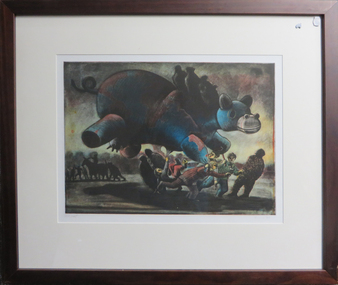 Federation University Art Collection
Work on paper - Artwork - Printmaking, Geoffrey Ricardo, Not known (Geoffrey Ricardo), 1997
... GEOFFREY RICARDO (1964- ) Born Melbourne, Australia 1984-86 Bachelor of Arts (Fine Art), Printmaking, Chisholm Institute of Technology, Melbourne 1987-89 Printing Assistant at Bill Young Studios, Editioning intaglio prints, King Valley, VIC 1988 Full-time Studio Technician at Printmaking Department, Chisholm Institute of Technology, Melbourne 1989-90 Graduate Diploma (Fine Art), Printmaking, Monash University, Melbourne 1991 Traveled to England, France, Spain and USA (Winsor & Newton International Travelling Bursary, National Students Art Prize) Worked in private studios in Gaucin, Spain and New York, USA 1994-95 Master of Fine Arts, Monash University, Melbourne 1995 Guest Lecturer, Victorian College of the Arts, Melbourne Traveled to Europe and America 1996 Guest Lecturer, Royal Melbourne Institute of Technology, Melbourne 1990-98 Sessional Lecturer, Monash University, Melbourne 1998 Traveled to America and Mexico 2001-05 Sessional Lecturer, The Victorian College of the Arts, Melbourne 2003-10 Printmaking Workshops, Warrnambool TAFE, Warrnambool, VIC 2004 Traveled to Europe, Mexico and Cuba 2005 Lecturer, National Art School (Summer School), Sydney Sessional Lecturer, Monash University, Melbourne Lecturer, Institution of Koorie Education, Deakin University, Geelong, VIC SOLO EXHIBITIONS 2012 ‘Collection of Works’ The Art Vault Mildura ‘Deeper Meanings’, The Incinerator Gallery, Melbourne ‘Three Projects’, Australian Galleries, Glenmore Road, Sydney Melbourne Art Fair Stand F33, Australian Galleries, Melbourne 2009 ‘Anno Domino, Antarctica and The Anatomy Lesson’, Australian Galleries Derby Street, Melbourne The Art Vault, Mildura, VIC 2008 MV Orlova (Quark Expeditions), The Drake Passage, Antarctica 2007 ‘Herd’, BMGArt, Adelaide ‘Herd’, Australian Galleries Painting & Sculpture, Sydney 2006 ‘Herd’, Australian Galleries Painting & Sculpture, Melbourne 2004 ‘Recent work’, BMGArt, Adelaide 2003 ‘The Rapunzel Suite and Other New Works’, Australian Galleries Works on Paper, Sydney ‘Recent Works’, Australian Galleries Painting & Sculpture, Melbourne ‘Recent works’, Cowwarr Art Space, Cowwarr, VIC 2002 ‘The Rapunzel Suite’, Australian Galleries Works on Paper, Melbourne ‘Strange Games’, Australian Galleries Works on Paper, Sydney 1999 ‘A Dark City Narrative’, Australian Galleries Works on Paper, Sydney ‘A Dark City Narrative’, Australian Galleries Works on Paper, Melbourne 1998 Cullity Gallery, School of Architecture and Fine Art, University of Western Australia, Perth 1997 Delaney Gallery, Perth Chapman Gallery, Canberra BMGArt, Adelaide ‘Menagerie’, Australian Galleries, Sydney ‘Menagerie’, Australian Galleries, Melbourne 1995 ‘Paintings, Prints and Sculpture’, Australian Galleries, Sydney ‘Prints, Paintings and Sculpture’, Australian Galleries, Melbourne 1994 Lawrence Wilson Art Gallery, University of Western Australia, Perth Graham Galleries + Editions, Brisbane ‘Wishful Thinking, Prints and Sculptures’, Lawrence Wilson Art Gallery, University of Western Australia, Perth 1992 ‘Prints, Sculptures and Watercolours’, Australian Galleries, Melbourne and Sydney 1990 ‘Watercolours, Prints and Small Bronzes’, Australian Galleries, Sydney ‘Paintings, Prints and Sculptures’, Australian Galleries, Melbourne GROUP EXHIBITIONS 2013 ‘Sculpture by the Sea’ Cottlesloe, Western Australia 2012 ‘Brave New World’, Toyota Community Spirit Gallery, Port Melbourne, VIC ‘Sculpture by the Sea’, Bondi, Sydney 2011 ‘Sculpture by the sea’, Aarhus, Denmark ‘Artwork to Tapestry’, Tarrawarra Museum of Art, Healesville, VIC Burnie Print Prize, Burnie Regional Gallery, Burnie, TAS ‘large exhibition of small works’, Australian Galleries, Roylston Street, Sydney ‘large exhibition of small works’, Australian Galleries, Derby Street, Melbourne ‘Nature of the Mark’, Australian Galleries, Smith Street, Melbourne Rick Amor Print Prize, Montsalvat, Eltham, VIC 2010 ‘Summer show’, Australian Galleries, Glenmore Road, Sydney ‘Summer stock show’, Australian Galleries, Smith Street, Melbourne ‘Sub10’, Substation, Melbourne ‘McClelland Sculpture Survey and Award 2010’, McClelland Gallery + Sculpture Park, Langwarrin, VIC ‘Artists’ Prints made with Integrity I’, Australian Galleries, Smith Street, Melbourne Montalto Sculpture Prize, Montalto Vineyard and Olive Grove, Red Hill South, VIC 2009 ‘Artists’ ink: printmaking from the Warrnambool Art Gallery Collection, 1970-2001’, Ararat Regional Art Gallery, Ararat, VIC ‘Lorne Sculpture’ (Winner), Lorne, VIC 2008 ‘Summer Stock Show’, Australian Galleries Smith Street, Melbourne 2007 ARC Biennial (Art, Design and Craft), Queensland University of Technology Art Museum, Brisbane ‘Prints Tokyo: International Print Exhibition’, Tokyo, Japan Seoul International Print, Photo and Edition Works Art Fair, Seoul, Korea Guanlan International Print Biennial, Guanlan, China ‘Summer Stock Show’, Australian Galleries Works on Paper, Sydney ‘Summer Stock Show’, Australian Galleries Painting & Sculpture, Melbourne ‘Summer Stock Show’, Australian Galleries Works on Paper, Melbourne ‘Antipodean Bestiary’, Project Space / Spare Room, RMIT University, Melbourne Montalto Sculpture Prize, Montalto Vineyard and Olive Grove, Red Hill South, VIC McClelland Sculpture Survey and Award 2007, McClelland Gallery + Sculpture Park, Langwarrin, VIC ‘2007: Works from the studio’, Lancaster Press, Melbourne ‘50 - a print exchange portfolio’, Geelong Art Gallery, Geelong, VIC ‘Small Pleasures’, Australian Galleries Painting & Sculpture, Melbourne ‘Stock Show’, Australian Galleries Painting & Sculpture, Melbourne ‘Artists for Kids Culture’, Brightspace, Melbourne 2006 ‘Partnership or perish’, Academy of the Arts, School of Visual and Performing Arts, University of Tasmania, Hobart Libris Awards, Artspace Mackay, Mackay, QLD ‘Summery’, Australian Galleries Painting & Sculpture, Sydney ‘Summer Stock Show’, Australian Galleries Works on Paper, Melbourne ‘Bookish’, Australian Galleries Works on Paper, Melbourne Melbourne Art Fair, Australian Galleries, Melbourne ‘Artists for Kids Culture’, Brightspace, Melbourne ‘50th Anniversary Exhibition’, Australian Galleries Painting & Sculpture, Melbourne 2005 ‘End of Year Group Exhibition’, Australian Galleries Painting & Sculpture, Sydney ‘Contemporary Works on Paper’, Australian Galleries Works on Paper, Melbourne ‘Expansion’, Lancaster Press, Melbourne ‘The Art of Collaboration’, Singapore Tyler Print Institute, Singapore ‘Double take’, Arts Project Australia, Melbourne ‘Small Treasures - 20 emerging and established artists’, TILT Contemporary Art, Melbourne Jacques Cadry Memorial Art Prize, Fox Studios and State Library of NSW, Sydney ‘Tales of the City’, Australian Galleries Painting & Sculpture, Melbourne ‘A Decade of Collecting 1995-2005’, Cairns Regional Gallery, Cairns, QLD ‘Artists for Kids Culture’, Brightspace, Melbourne ‘Surface Tension: 21 Contemporary Australian Printmakers’, University of Tasmania, Launceston, TAS ‘Neo-millenium’, Toyota Community Spirit Gallery, Melbourne 2004 ‘Artists for Kids Culture’, Brightspace, Melbourne ‘Group Exhibition’, Australian Galleries Painting & Sculpture, Melbourne ‘Species’, Australian Galleries Works on Paper, Melbourne ‘In the presence of creatures great and small’, Australian Galleries Works on Paper, Sydney ‘Tapestries from the Victorian Tapestry Workshop’, Australian Galleries, Melbourne ‘Sculpture’, Australian Galleries Painting & Sculpture, Sydney ‘Contemporary Australian Prints’, National Arts Club, New York, USA ‘Contemporary Australian Prints’, Gallery 101, Melbourne ‘Contemporary Australian Prints from the Collection’, Art Gallery of New South Wales, Sydney ‘Bridge’, Toyota Community Spirit Gallery, Melbourne ‘Vivid’, Fortyfive Downstairs, Melbourne Lake Gallery, Paynesville, VIC 2003 ‘Paper matters’, Lawrence Wilson Art Gallery, University of Western Australia, Perth ‘Artists for Kids Culture’, Brightspace, Melbourne ‘Less is more’, BMGArt, Adelaide ‘The ink’s on me: Bill Young master printmaker’, Wangaratta Exhibitions Gallery, Wangaratta, VIC ‘Fantastic and Visionary Art’, Touring: Global Arts Link, QLD; Ipswich Regional Gallery, QLD ; Orange Regional Gallery, NSW; Manning Regional Gallery, NSW; Parramatta Heritage Centre, Sydney; Ballarat Regional Gallery, VIC 2002 Shell Fremantle Print Award, Fremantle Arts Centre, Fremantle, WA ‘Artists for Kids Culture’, Brightspace, Melbourne 2001 Shell Fremantle Print Award, Fremantle Arts Centre, Fremantle, WA ‘Six Degrees of Collaboration’, RMIT Faculty of Art, Design and Communication Gallery, Melbourne ‘Reciprocal Moves’, Warrnambool Art Gallery, Warrnambool, VIC International Print Triennial, Kanagawa, Japan ‘Fantastic Art’, Orange Regional Gallery, Orange, NSW ‘Dancing Made a Man out of Me’, The Switchback Gallery, Monash University, Gippsland, VIC ‘Artists for Kids Culture’, Brightspace, Melbourne ‘Celebration’, Regional touring exhibition, VIC 2000-01 ‘Workings of the Mind: Melbourne Prints of the 1960s to the 1990s’, Touring: Grafton Regional Gallery, NSW; Toowoomba Regional Art Gallery, QLD; Nolan Gallery, Canberra; Bendigo Art Gallery, VIC; PercTucker Regional Gallery, QLD 2000 Shell Fremantle Print Award, Fremantle Arts Centre, Fremantle, WA The Hutchins Art Prize, Long Gallery, Hobart ‘Artists for Kids Culture’, Brightspace, Melbourne 1999 Shell Fremantle Print Award, Fremantle Arts Space, Fremantle, WA ‘We are Australian’, George Adams Gallery, Victorian Arts Centre, Melbourne Rena Ellen Jones Memorial Print Award, Warrnambool Art Gallery, Warrnambool, VIC ‘National Works on Paper’, Mornington Peninsula Gallery, Mornington, VIC ‘Artists for Kids Culture’, Brightspace, Melbourne ‘Pleasure’, Australian Galleries, Melbourne 1998-99 ‘Australian Prints’, Art Gallery of New South Wales, Sydney 1997 ‘KNOCK, KNOCK’, Australian Galleries, Melbourne ‘Woven Colour, The Art of Tapestry’, Dr Earl Lu Gallery, Singapore 1996 M.P.A.C. ...GEOFFREY RICARDO (1964- ) Born Melbourne, Australia 1984-86 Bachelor of Arts (Fine Art), Printmaking, Chisholm Institute of Technology, Melbourne 1987-89 Printing Assistant at Bill Young Studios, Editioning intaglio prints, King Valley, VIC 1988 Full-time Studio Technician at Printmaking Department, Chisholm Institute of Technology, Melbourne 1989-90 Graduate Diploma (Fine Art), Printmaking, Monash University, Melbourne 1991 Traveled to England, France, Spain and USA (Winsor & Newton International Travelling Bursary, National Students Art Prize) Worked in private studios in Gaucin, Spain and New York, USA 1994-95 Master of Fine Arts, Monash University, Melbourne 1995 Guest Lecturer, Victorian College of the Arts, Melbourne Traveled to Europe and America 1996 Guest Lecturer, Royal Melbourne Institute of Technology, Melbourne 1990-98 Sessional Lecturer, Monash University, Melbourne 1998 Traveled to America and Mexico 2001-05 Sessional Lecturer, The Victorian College of the Arts, Melbourne 2003-10 Printmaking Workshops, Warrnambool TAFE, Warrnambool, VIC 2004 Traveled to Europe, Mexico and Cuba 2005 Lecturer, National Art School (Summer School), Sydney Sessional Lecturer, Monash University, Melbourne Lecturer, Institution of Koorie Education, Deakin University, Geelong, VIC SOLO EXHIBITIONS 2012 ‘Collection of Works’ The Art Vault Mildura ‘Deeper Meanings’, The Incinerator Gallery, Melbourne ‘Three Projects’, Australian Galleries, Glenmore Road, Sydney Melbourne Art Fair Stand F33, Australian Galleries, Melbourne 2009 ‘Anno Domino, Antarctica and The Anatomy Lesson’, Australian Galleries Derby Street, Melbourne The Art Vault, Mildura, VIC 2008 MV Orlova (Quark Expeditions), The Drake Passage, Antarctica 2007 ‘Herd’, BMGArt, Adelaide ‘Herd’, Australian Galleries Painting & Sculpture, Sydney 2006 ‘Herd’, Australian Galleries Painting & Sculpture, Melbourne 2004 ‘Recent work’, BMGArt, Adelaide 2003 ‘The Rapunzel Suite and Other New Works’, Australian Galleries Works on Paper, Sydney ‘Recent Works’, Australian Galleries Painting & Sculpture, Melbourne ‘Recent works’, Cowwarr Art Space, Cowwarr, VIC 2002 ‘The Rapunzel Suite’, Australian Galleries Works on Paper, Melbourne ‘Strange Games’, Australian Galleries Works on Paper, Sydney 1999 ‘A Dark City Narrative’, Australian Galleries Works on Paper, Sydney ‘A Dark City Narrative’, Australian Galleries Works on Paper, Melbourne 1998 Cullity Gallery, School of Architecture and Fine Art, University of Western Australia, Perth 1997 Delaney Gallery, Perth Chapman Gallery, Canberra BMGArt, Adelaide ‘Menagerie’, Australian Galleries, Sydney ‘Menagerie’, Australian Galleries, Melbourne 1995 ‘Paintings, Prints and Sculpture’, Australian Galleries, Sydney ‘Prints, Paintings and Sculpture’, Australian Galleries, Melbourne 1994 Lawrence Wilson Art Gallery, University of Western Australia, Perth Graham Galleries + Editions, Brisbane ‘Wishful Thinking, Prints and Sculptures’, Lawrence Wilson Art Gallery, University of Western Australia, Perth 1992 ‘Prints, Sculptures and Watercolours’, Australian Galleries, Melbourne and Sydney 1990 ‘Watercolours, Prints and Small Bronzes’, Australian Galleries, Sydney ‘Paintings, Prints and Sculptures’, Australian Galleries, Melbourne GROUP EXHIBITIONS 2013 ‘Sculpture by the Sea’ Cottlesloe, Western Australia 2012 ‘Brave New World’, Toyota Community Spirit Gallery, Port Melbourne, VIC ‘Sculpture by the Sea’, Bondi, Sydney 2011 ‘Sculpture by the sea’, Aarhus, Denmark ‘Artwork to Tapestry’, Tarrawarra Museum of Art, Healesville, VIC Burnie Print Prize, Burnie Regional Gallery, Burnie, TAS ‘large exhibition of small works’, Australian Galleries, Roylston Street, Sydney ‘large exhibition of small works’, Australian Galleries, Derby Street, Melbourne ‘Nature of the Mark’, Australian Galleries, Smith Street, Melbourne Rick Amor Print Prize, Montsalvat, Eltham, VIC 2010 ‘Summer show’, Australian Galleries, Glenmore Road, Sydney ‘Summer stock show’, Australian Galleries, Smith Street, Melbourne ‘Sub10’, Substation, Melbourne ‘McClelland Sculpture Survey and Award 2010’, McClelland Gallery + Sculpture Park, Langwarrin, VIC ‘Artists’ Prints made with Integrity I’, Australian Galleries, Smith Street, Melbourne Montalto Sculpture Prize, Montalto Vineyard and Olive Grove, Red Hill South, VIC 2009 ‘Artists’ ink: printmaking from the Warrnambool Art Gallery Collection, 1970-2001’, Ararat Regional Art Gallery, Ararat, VIC ‘Lorne Sculpture’ (Winner), Lorne, VIC 2008 ‘Summer Stock Show’, Australian Galleries Smith Street, Melbourne 2007 ARC Biennial (Art, Design and Craft), Queensland University of Technology Art Museum, Brisbane ‘Prints Tokyo: International Print Exhibition’, Tokyo, Japan Seoul International Print, Photo and Edition Works Art Fair, Seoul, Korea Guanlan International Print Biennial, Guanlan, China ‘Summer Stock Show’, Australian Galleries Works on Paper, Sydney ‘Summer Stock Show’, Australian Galleries Painting & Sculpture, Melbourne ‘Summer Stock Show’, Australian Galleries Works on Paper, Melbourne ‘Antipodean Bestiary’, Project Space / Spare Room, RMIT University, Melbourne Montalto Sculpture Prize, Montalto Vineyard and Olive Grove, Red Hill South, VIC McClelland Sculpture Survey and Award 2007, McClelland Gallery + Sculpture Park, Langwarrin, VIC ‘2007: Works from the studio’, Lancaster Press, Melbourne ‘50 - a print exchange portfolio’, Geelong Art Gallery, Geelong, VIC ‘Small Pleasures’, Australian Galleries Painting & Sculpture, Melbourne ‘Stock Show’, Australian Galleries Painting & Sculpture, Melbourne ‘Artists for Kids Culture’, Brightspace, Melbourne 2006 ‘Partnership or perish’, Academy of the Arts, School of Visual and Performing Arts, University of Tasmania, Hobart Libris Awards, Artspace Mackay, Mackay, QLD ‘Summery’, Australian Galleries Painting & Sculpture, Sydney ‘Summer Stock Show’, Australian Galleries Works on Paper, Melbourne ‘Bookish’, Australian Galleries Works on Paper, Melbourne Melbourne Art Fair, Australian Galleries, Melbourne ‘Artists for Kids Culture’, Brightspace, Melbourne ‘50th Anniversary Exhibition’, Australian Galleries Painting & Sculpture, Melbourne 2005 ‘End of Year Group Exhibition’, Australian Galleries Painting & Sculpture, Sydney ‘Contemporary Works on Paper’, Australian Galleries Works on Paper, Melbourne ‘Expansion’, Lancaster Press, Melbourne ‘The Art of Collaboration’, Singapore Tyler Print Institute, Singapore ‘Double take’, Arts Project Australia, Melbourne ‘Small Treasures - 20 emerging and established artists’, TILT Contemporary Art, Melbourne Jacques Cadry Memorial Art Prize, Fox Studios and State Library of NSW, Sydney ‘Tales of the City’, Australian Galleries Painting & Sculpture, Melbourne ‘A Decade of Collecting 1995-2005’, Cairns Regional Gallery, Cairns, QLD ‘Artists for Kids Culture’, Brightspace, Melbourne ‘Surface Tension: 21 Contemporary Australian Printmakers’, University of Tasmania, Launceston, TAS ‘Neo-millenium’, Toyota Community Spirit Gallery, Melbourne 2004 ‘Artists for Kids Culture’, Brightspace, Melbourne ‘Group Exhibition’, Australian Galleries Painting & Sculpture, Melbourne ‘Species’, Australian Galleries Works on Paper, Melbourne ‘In the presence of creatures great and small’, Australian Galleries Works on Paper, Sydney ‘Tapestries from the Victorian Tapestry Workshop’, Australian Galleries, Melbourne ‘Sculpture’, Australian Galleries Painting & Sculpture, Sydney ‘Contemporary Australian Prints’, National Arts Club, New York, USA ‘Contemporary Australian Prints’, Gallery 101, Melbourne ‘Contemporary Australian Prints from the Collection’, Art Gallery of New South Wales, Sydney ‘Bridge’, Toyota Community Spirit Gallery, Melbourne ‘Vivid’, Fortyfive Downstairs, Melbourne Lake Gallery, Paynesville, VIC 2003 ‘Paper matters’, Lawrence Wilson Art Gallery, University of Western Australia, Perth ‘Artists for Kids Culture’, Brightspace, Melbourne ‘Less is more’, BMGArt, Adelaide ‘The ink’s on me: Bill Young master printmaker’, Wangaratta Exhibitions Gallery, Wangaratta, VIC ‘Fantastic and Visionary Art’, Touring: Global Arts Link, QLD; Ipswich Regional Gallery, QLD ; Orange Regional Gallery, NSW; Manning Regional Gallery, NSW; Parramatta Heritage Centre, Sydney; Ballarat Regional Gallery, VIC 2002 Shell Fremantle Print Award, Fremantle Arts Centre, Fremantle, WA ‘Artists for Kids Culture’, Brightspace, Melbourne 2001 Shell Fremantle Print Award, Fremantle Arts Centre, Fremantle, WA ‘Six Degrees of Collaboration’, RMIT Faculty of Art, Design and Communication Gallery, Melbourne ‘Reciprocal Moves’, Warrnambool Art Gallery, Warrnambool, VIC International Print Triennial, Kanagawa, Japan ‘Fantastic Art’, Orange Regional Gallery, Orange, NSW ‘Dancing Made a Man out of Me’, The Switchback Gallery, Monash University, Gippsland, VIC ‘Artists for Kids Culture’, Brightspace, Melbourne ‘Celebration’, Regional touring exhibition, VIC 2000-01 ‘Workings of the Mind: Melbourne Prints of the 1960s to the 1990s’, Touring: Grafton Regional Gallery, NSW; Toowoomba Regional Art Gallery, QLD; Nolan Gallery, Canberra; Bendigo Art Gallery, VIC; PercTucker Regional Gallery, QLD 2000 Shell Fremantle Print Award, Fremantle Arts Centre, Fremantle, WA The Hutchins Art Prize, Long Gallery, Hobart ‘Artists for Kids Culture’, Brightspace, Melbourne 1999 Shell Fremantle Print Award, Fremantle Arts Space, Fremantle, WA ‘We are Australian’, George Adams Gallery, Victorian Arts Centre, Melbourne Rena Ellen Jones Memorial Print Award, Warrnambool Art Gallery, Warrnambool, VIC ‘National Works on Paper’, Mornington Peninsula Gallery, Mornington, VIC ‘Artists for Kids Culture’, Brightspace, Melbourne ‘Pleasure’, Australian Galleries, Melbourne 1998-99 ‘Australian Prints’, Art Gallery of New South Wales, Sydney 1997 ‘KNOCK, KNOCK’, Australian Galleries, Melbourne ‘Woven Colour, The Art of Tapestry’, Dr Earl Lu Gallery, Singapore 1996 M.P.A.C. ...GEOFFREY RICARDO (1964- ) Born Melbourne, Australia 1984-86 Bachelor of Arts (Fine Art), Printmaking, Chisholm Institute of Technology, Melbourne 1987-89 Printing Assistant at Bill Young Studios, Editioning intaglio prints, King Valley, VIC 1988 Full-time Studio Technician at Printmaking Department, Chisholm Institute of Technology, Melbourne 1989-90 Graduate Diploma (Fine Art), Printmaking, Monash University, Melbourne 1991 Traveled to England, France, Spain and USA (Winsor & Newton International Travelling Bursary, National Students Art Prize) Worked in private studios in Gaucin, Spain and New York, USA 1994-95 Master of Fine Arts, Monash University, Melbourne 1995 Guest Lecturer, Victorian College of the Arts, Melbourne Traveled to Europe and America 1996 Guest Lecturer, Royal Melbourne Institute of Technology, Melbourne 1990-98 Sessional Lecturer, Monash University, Melbourne 1998 Traveled to America and Mexico 2001-05 Sessional Lecturer, The Victorian College of the Arts, Melbourne 2003-10 Printmaking Workshops, Warrnambool TAFE, Warrnambool, VIC 2004 Traveled to Europe, Mexico and Cuba 2005 Lecturer, National Art School (Summer School), Sydney Sessional Lecturer, Monash University, Melbourne Lecturer, Institution of Koorie Education, Deakin University, Geelong, VIC SOLO EXHIBITIONS 2012 ‘Collection of Works’ The Art Vault Mildura ‘Deeper Meanings’, The Incinerator Gallery, Melbourne ‘Three Projects’, Australian Galleries, Glenmore Road, Sydney Melbourne Art Fair Stand F33, Australian Galleries, Melbourne 2009 ‘Anno Domino, Antarctica and The Anatomy Lesson’, Australian Galleries Derby Street, Melbourne The Art Vault, Mildura, VIC 2008 MV Orlova (Quark Expeditions), The Drake Passage, Antarctica 2007 ‘Herd’, BMGArt, Adelaide ‘Herd’, Australian Galleries Painting & Sculpture, Sydney 2006 ‘Herd’, Australian Galleries Painting & Sculpture, Melbourne 2004 ‘Recent work’, BMGArt, Adelaide 2003 ‘The Rapunzel Suite and Other New Works’, Australian Galleries Works on Paper, Sydney ‘Recent Works’, Australian Galleries Painting & Sculpture, Melbourne ‘Recent works’, Cowwarr Art Space, Cowwarr, VIC 2002 ‘The Rapunzel Suite’, Australian Galleries Works on Paper, Melbourne ‘Strange Games’, Australian Galleries Works on Paper, Sydney 1999 ‘A Dark City Narrative’, Australian Galleries Works on Paper, Sydney ‘A Dark City Narrative’, Australian Galleries Works on Paper, Melbourne 1998 Cullity Gallery, School of Architecture and Fine Art, University of Western Australia, Perth 1997 Delaney Gallery, Perth Chapman Gallery, Canberra BMGArt, Adelaide ‘Menagerie’, Australian Galleries, Sydney ‘Menagerie’, Australian Galleries, Melbourne 1995 ‘Paintings, Prints and Sculpture’, Australian Galleries, Sydney ‘Prints, Paintings and Sculpture’, Australian Galleries, Melbourne 1994 Lawrence Wilson Art Gallery, University of Western Australia, Perth Graham Galleries + Editions, Brisbane ‘Wishful Thinking, Prints and Sculptures’, Lawrence Wilson Art Gallery, University of Western Australia, Perth 1992 ‘Prints, Sculptures and Watercolours’, Australian Galleries, Melbourne and Sydney 1990 ‘Watercolours, Prints and Small Bronzes’, Australian Galleries, Sydney ‘Paintings, Prints and Sculptures’, Australian Galleries, Melbourne GROUP EXHIBITIONS 2013 ‘Sculpture by the Sea’ Cottlesloe, Western Australia 2012 ‘Brave New World’, Toyota Community Spirit Gallery, Port Melbourne, VIC ‘Sculpture by the Sea’, Bondi, Sydney 2011 ‘Sculpture by the sea’, Aarhus, Denmark ‘Artwork to Tapestry’, Tarrawarra Museum of Art, Healesville, VIC Burnie Print Prize, Burnie Regional Gallery, Burnie, TAS ‘large exhibition of small works’, Australian Galleries, Roylston Street, Sydney ‘large exhibition of small works’, Australian Galleries, Derby Street, Melbourne ‘Nature of the Mark’, Australian Galleries, Smith Street, Melbourne Rick Amor Print Prize, Montsalvat, Eltham, VIC 2010 ‘Summer show’, Australian Galleries, Glenmore Road, Sydney ‘Summer stock show’, Australian Galleries, Smith Street, Melbourne ‘Sub10’, Substation, Melbourne ‘McClelland Sculpture Survey and Award 2010’, McClelland Gallery + Sculpture Park, Langwarrin, VIC ‘Artists’ Prints made with Integrity I’, Australian Galleries, Smith Street, Melbourne Montalto Sculpture Prize, Montalto Vineyard and Olive Grove, Red Hill South, VIC 2009 ‘Artists’ ink: printmaking from the Warrnambool Art Gallery Collection, 1970-2001’, Ararat Regional Art Gallery, Ararat, VIC ‘Lorne Sculpture’ (Winner), Lorne, VIC 2008 ‘Summer Stock Show’, Australian Galleries Smith Street, Melbourne 2007 ARC Biennial (Art, Design and Craft), Queensland University of Technology Art Museum, Brisbane ‘Prints Tokyo: International Print Exhibition’, Tokyo, Japan Seoul International Print, Photo and Edition Works Art Fair, Seoul, Korea Guanlan International Print Biennial, Guanlan, China ‘Summer Stock Show’, Australian Galleries Works on Paper, Sydney ‘Summer Stock Show’, Australian Galleries Painting & Sculpture, Melbourne ‘Summer Stock Show’, Australian Galleries Works on Paper, Melbourne ‘Antipodean Bestiary’, Project Space / Spare Room, RMIT University, Melbourne Montalto Sculpture Prize, Montalto Vineyard and Olive Grove, Red Hill South, VIC McClelland Sculpture Survey and Award 2007, McClelland Gallery + Sculpture Park, Langwarrin, VIC ‘2007: Works from the studio’, Lancaster Press, Melbourne ‘50 - a print exchange portfolio’, Geelong Art Gallery, Geelong, VIC ‘Small Pleasures’, Australian Galleries Painting & Sculpture, Melbourne ‘Stock Show’, Australian Galleries Painting & Sculpture, Melbourne ‘Artists for Kids Culture’, Brightspace, Melbourne 2006 ‘Partnership or perish’, Academy of the Arts, School of Visual and Performing Arts, University of Tasmania, Hobart Libris Awards, Artspace Mackay, Mackay, QLD ‘Summery’, Australian Galleries Painting & Sculpture, Sydney ‘Summer Stock Show’, Australian Galleries Works on Paper, Melbourne ‘Bookish’, Australian Galleries Works on Paper, Melbourne Melbourne Art Fair, Australian Galleries, Melbourne ‘Artists for Kids Culture’, Brightspace, Melbourne ‘50th Anniversary Exhibition’, Australian Galleries Painting & Sculpture, Melbourne 2005 ‘End of Year Group Exhibition’, Australian Galleries Painting & Sculpture, Sydney ‘Contemporary Works on Paper’, Australian Galleries Works on Paper, Melbourne ‘Expansion’, Lancaster Press, Melbourne ‘The Art of Collaboration’, Singapore Tyler Print Institute, Singapore ‘Double take’, Arts Project Australia, Melbourne ‘Small Treasures - 20 emerging and established artists’, TILT Contemporary Art, Melbourne Jacques Cadry Memorial Art Prize, Fox Studios and State Library of NSW, Sydney ‘Tales of the City’, Australian Galleries Painting & Sculpture, Melbourne ‘A Decade of Collecting 1995-2005’, Cairns Regional Gallery, Cairns, QLD ‘Artists for Kids Culture’, Brightspace, Melbourne ‘Surface Tension: 21 Contemporary Australian Printmakers’, University of Tasmania, Launceston, TAS ‘Neo-millenium’, Toyota Community Spirit Gallery, Melbourne 2004 ‘Artists for Kids Culture’, Brightspace, Melbourne ‘Group Exhibition’, Australian Galleries Painting & Sculpture, Melbourne ‘Species’, Australian Galleries Works on Paper, Melbourne ‘In the presence of creatures great and small’, Australian Galleries Works on Paper, Sydney ‘Tapestries from the Victorian Tapestry Workshop’, Australian Galleries, Melbourne ‘Sculpture’, Australian Galleries Painting & Sculpture, Sydney ‘Contemporary Australian Prints’, National Arts Club, New York, USA ‘Contemporary Australian Prints’, Gallery 101, Melbourne ‘Contemporary Australian Prints from the Collection’, Art Gallery of New South Wales, Sydney ‘Bridge’, Toyota Community Spirit Gallery, Melbourne ‘Vivid’, Fortyfive Downstairs, Melbourne Lake Gallery, Paynesville, VIC 2003 ‘Paper matters’, Lawrence Wilson Art Gallery, University of Western Australia, Perth ‘Artists for Kids Culture’, Brightspace, Melbourne ‘Less is more’, BMGArt, Adelaide ‘The ink’s on me: Bill Young master printmaker’, Wangaratta Exhibitions Gallery, Wangaratta, VIC ‘Fantastic and Visionary Art’, Touring: Global Arts Link, QLD; Ipswich Regional Gallery, QLD ; Orange Regional Gallery, NSW; Manning Regional Gallery, NSW; Parramatta Heritage Centre, Sydney; Ballarat Regional Gallery, VIC 2002 Shell Fremantle Print Award, Fremantle Arts Centre, Fremantle, WA ‘Artists for Kids Culture’, Brightspace, Melbourne 2001 Shell Fremantle Print Award, Fremantle Arts Centre, Fremantle, WA ‘Six Degrees of Collaboration’, RMIT Faculty of Art, Design and Communication Gallery, Melbourne ‘Reciprocal Moves’, Warrnambool Art Gallery, Warrnambool, VIC International Print Triennial, Kanagawa, Japan ‘Fantastic Art’, Orange Regional Gallery, Orange, NSW ‘Dancing Made a Man out of Me’, The Switchback Gallery, Monash University, Gippsland, VIC ‘Artists for Kids Culture’, Brightspace, Melbourne ‘Celebration’, Regional touring exhibition, VIC 2000-01 ‘Workings of the Mind: Melbourne Prints of the 1960s to the 1990s’, Touring: Grafton Regional Gallery, NSW; Toowoomba Regional Art Gallery, QLD; Nolan Gallery, Canberra; Bendigo Art Gallery, VIC; PercTucker Regional Gallery, QLD 2000 Shell Fremantle Print Award, Fremantle Arts Centre, Fremantle, WA The Hutchins Art Prize, Long Gallery, Hobart ‘Artists for Kids Culture’, Brightspace, Melbourne 1999 Shell Fremantle Print Award, Fremantle Arts Space, Fremantle, WA ‘We are Australian’, George Adams Gallery, Victorian Arts Centre, Melbourne Rena Ellen Jones Memorial Print Award, Warrnambool Art Gallery, Warrnambool, VIC ‘National Works on Paper’, Mornington Peninsula Gallery, Mornington, VIC ‘Artists for Kids Culture’, Brightspace, Melbourne ‘Pleasure’, Australian Galleries, Melbourne 1998-99 ‘Australian Prints’, Art Gallery of New South Wales, Sydney 1997 ‘KNOCK, KNOCK’, Australian Galleries, Melbourne ‘Woven Colour, The Art of Tapestry’, Dr Earl Lu Gallery, Singapore 1996 M.P.A.C. Print Award, Mornington Peninsula Arts Centre, Mornington, VIC Academy of Art & Culture, Calcutta, India ‘Synergy’, Touring: Lalit Kala Akademi, New Dehli, India; Jehangir Nicholson Gallery, Bombay, India; Birla, India ‘Contemporary Australian Tapestry’, Frederikshavn Kunstmuseum, Denmark; Australia House, London, UK 1995 ‘Interweave - Tapestry A Collaborative Art’, Heide Museum of Modern Art, Melbourne ‘Contemporary Printmakers’, La Trobe Regional Gallery, Morwell, VIC ‘Contemporary Australian Tapestry’, Australian High Commission, Singapore ‘Circus Capers’, Caulfield Arts Complex, Melbourne 1994 M.P.A.C. Print Award, Mornington Peninsula Arts Centre, Mornington, VIC Fremantle Print Award, Fremantle Arts Centre, Fremantle, WA Australian Universities of Visual Art, Australian High Commission, Singapore ‘Prints, Paintings and Sculpture’, BMGArt, Adelaide Fourth Australian Contemporary Art Fair, Royal Exhibition Building, Melbourne 1993 Fremantle Print Award, Fremantle Arts Centre, Fremantle, WA 1992 Fremantle Print Award, Fremantle Arts Centre, Fremantle, WA ‘Transitional Times’, Print Council of Australia, Melbourne ‘Second Kochi International Triennial Exhibition of Prints’, Japan 1991 Henry Worland Memorial Print Prize, Warrnambool Regional Art Gallery, Warrnambool, VIC Fremantle Print Award, Fremantle Arts Centre, Fremantle, WA ‘Table Top Sculpture’, Australian Galleries, Melbourne ‘Art 91’, London Contemporary Art Fair, London, UK 1990 M.P.A.C. Print Prize, Mornington Peninsula Arts Centre, Mornington, VIC Fremantle Print Prize, Fremantle Arts Centre, Fremantle WA ‘The Christmas Show’, Intaglio Printmaker, London, England ‘Australian Contemporary Art’, AZ Gallery, Tokyo, Japan 1989 National Student Art Prize, Mitchell College, Bathurst, NSW Fremantle Print Award, Fremantle Arts Centre, Fremantle, WA City of Doncaster Acquisitive Print Prize, Manningham Gallery, Melbourne ‘Affiliations’, Monash University Gallery, Melbourne 1988 M.P.A.C. Acquisitive Print Prize, Mornington Peninsula Arts Centre, Mornington, VIC Henry Worland Memorial Print Prize, Warrnambool Regional Art Gallery, Warrnambool, VIC 1987 ‘The Comedy Show’, Print Guild, Melbourne ‘Fluxus Art Flow’, Melbourne 1986 Mornington Peninsula Arts Council Acquisitive Print Prize, Mornington Peninsula, VIC Chisolm Institute of Technology, Graduating Students exhibition, Melbourne AWARDS 2013 King Valley Art Prize (printmaking) 2009 Lorne Sculpture Exhibition (Winner), Lorne, VIC 1989 Windsor and Newton International Travelling Bursary, UK Linbrook International First Prize for Printmaking, Australia COMMISSIONS 2005 Tapestry design for Bairnsdale Hospital (woven by the Victorian Tapestry Workshop, Melbourne), Bairnsdale, VIC 1999 Tapestry design ‘Emblem’ (woven by the Victorian Tapestry Workshop, Melbourne), Australia 1995 ‘A Night of Infectious Laughter’ Poster, St Kilda Festival, Melbourne 1994 Tapestry design ‘Elephant Gingham’ (woven by the Victorian Tapestry Workshop, Melbourne), Australia 1993 Tapestry design for the Festival of Perth Official Poster (woven by the Victorian Tapestry Workshop, Melbourne), Perth RESIDENCIES & PROJECTS 2013 ‘Come In Outside’, Collaboration set design for Pocketfool 2011 Mildura Wentworth Arts Festival Project, Mildura, VIC Residency, The Art Vault , Mildura, VIC 2010 ‘Wish’, Collaboration set design for Pocketfool, Artplay, Melbourne The Art Vault (included continuous public flag making workshops which were flown as part of The Wentworth Mildura Art Festival), Mildura, VIC 2009 The Art Vault (included two public printmaking workshops), Mildura, VIC 2008 Artist in residence, MV Orlova, Quark Expeditions, Antarctica 2003 Residency, Bairnsdale Regional Health Service, Bairnsdale, VIC 1998 Residency, School of Architecture & Fine Art, University of Western Australia, Perth 1997 Residency, La Salle/Fia, College of the Arts, Singapore 1996 Artist in residence, Victorian Tapestry Workshop, Melbourne 1993 Reduction Aquatint Workshop & Residency, Graphic Investigation Department, Canberra School of Art, Canberra NB: all residencies have included workshops involving students, children or the general public COLLECTIONS Artbank, Sydney Art Gallery of New South Wales, Sydney Canson Australia Pty Ltd, Australia City of Box Hill, Melbourne City of Whitehorse, Melbourne Downlands College, Toowoomba, QLD Geelong Grammar School, Geelong, VIC Gold Coast City Art Gallery, Gold Coast, QLD Griffith University, Gold Coast, QLD Helensvale High School, Brisbane Holmes à Court Collection, Perth Latrobe Regional Gallery, Morwell, VIC Monash University, Melbourne Mornington Peninsula Arts Council Collection, Mornington, VIC National Gallery of Australia, Canberra National Gallery of Victoria, Melbourne Parliament House Art Collection, Canberra Print Council of Australia, Melbourne Private collections in Australia, Switzerland, USA, UK, Singapore, Germany, Japan, Malaysia, Holland Queen Victoria Museum & Art Gallery, Launceston, TAS Queensland Art Gallery, Brisbane Queensland University of Technology, Brisbane Shire of Diamond Valley, Diamond Valley, VIC Star of the Sea College, Melbourne The Melbourne Club, Melbourne University of Central Queensland, Brisbane University of Technology, Sydney Wagga Wagga Regional Art Gallery, Wagga Wagga, NSW Warrnambool Regional Art Gallery, Warrnambool, VIC BIBLIOGRAPHY PERIODICALS AQ Journal of Contemporary Analysis, Vol. 70, Issue 4, July-August 1998 AQ Journal of Contemporary Analysis, Vol. 70, Issue 6, November-December 1998 AQ Journal of Contemporary Analysis, Vol.71, Issue 7, April 1999 Backhouse, Megan; “Going out of print and back to basics”, The Age, February 2003 Bellamy, Louise; “Renaissance of Western Art”, The Age (A2 section), 26 November 2005 Clabburn, Anna; “Fables and Foibles”, Art Monthly, September 1994 Dutkiewicz, Adam; “Edge of the sublime”, Advertiser, 1 December 2003, p. 76. Erickson, Dorothy; “The Festival that could have been”, The Bulletin, March 1994 Farmer, Alison; “Ricardo makes poster splash”, Sunday Times - Entertainment Extra, 19 September 1993 “Festival taps weaver’s art”, The West Australian, 11February 1994 Fiasco (web-page), March 2003 Jenkins, John; “A Dark City Narrative”, Imprint, Vol. 34, No. 4, 1999 Grishin, Sasha; “Multiplicity – collecting Australian prints”, Australian Art Review, Issue 13, March-June 2007, pp. 52-55 Grishin, Sasha; “Profiles in Print - Geoffrey Ricardo”, Craft Arts International, Issue 76, 2009, pp.1-4 Lloyd, Tim; “The elephant man”, The Advertiser (Review section), December 2007 Manzana Arné, Josep; “De L’Ex-Libris a L’Ex-Webis: Ex-Libris a Internet”, Ex-Libris, Associació Catalana D’Exlibristes, Barcelona, No. 27, July-December 2002, p.11 McDonald, John; “Dreams of hope and menace” The Sydney Morning Herald, 18 March 1995 McMillan, Peter; “Darkness visible”, The Age, 11September 1999 Nelson, Robert; “Circuses can be curated, but not cured”, The Age, 18 January 1995 Nelson, Robert; “Dream Weavers”, The Age, June 1995 Nelson, Robert; “Paen To Ricardo”, Imprint, Vol. 29, No.1, April, 1994 Nelson, Robert; “Revealed: Mother Nature’s vulgar past”, The Age, September 6, 2000 Nelson, Robert; “Riddled with hidden meaning”, The Age, September 8, 1999 Quadrant, April, 1995 Quadrant, Jan/Feb, 1995 Quadrant, October, 1995 Quadrant, November, 1994 “Ricardo’s surreal works at gallery”, Times-Spectator, 25 July 2003, p.7 Snell, Ted; “Art”, The Australian, 18 February1994 Snell, Ted; “Visual arts at the Festival of Perth”, Art Monthly, April 1994 Sunday Arts, ABC TV, 6 May 2007 Timms, Peter; “Geoff Ricardo: emerging from darkness”, Art Monthly, Issue 140, June 2001 Wallace, Dr Carmel; “Ways of seeing Australia”, Asian Art News, May/June 2004 BOOKS & CATALOGUES A Dark City Narrative, Australian Galleries, Melbourne, 1999 ARC Biennial Exhibition (Exhibition catalogue), Queensland University of Technology Art Museum, 2007, pp. 78-79 Clabburn, Anna; “The Collaborative Spirit”, Australian Tapestries: Victorian Tapestry Workshop, 1995, p. 37 Fantastic Art, Orange Regional Gallery, NSW, 2001 Field, Caroline; Herd, catalogue essay, Australian Galleries, Sydney, 2007 Grishin, Sasha; Australian Identities in Printmaking, Wagga Wagga Regional Art Gallery, 2000 Grishin, Sasha; Australian Printmaking in the 1990’s, Craftsman House, 1997 Havighurst, Sophie (Illustrations by Geoffrey Ricardo); When Lester lost his cool, The University of Melbourne, 2007 Kolenberg, Hendrik & Ryan, Anne; Australian Prints, Art Gallery of New South Wales, 1998 Lawrence, Michel; Framed; photographs of Australian Artists, 1998 Modern Australian Tapestries, Victorian Tapestry Workshop, 2000 The Rapunzel Suite, Australian Galleries, Melbourne, 2002 Wallace, Dr Carmel (Essay); Surface Tension, Twenty One Contemporary Australian Printmakers, Gallery 101, Melbourne, 2004 Workings of the Mind : Melbourne Prints of the 1960s to the 1990s, Queensland University of Technology Art Museum, Brisbane, 2000 TELEVISION Sunday Arts, ABC TV, 6 May 2007 Inside Art TV, Channel 31, July 2012Etching with aquatint on paper depicting a group of people pulling along a giant inflatable cow. Donated through the Australian Government's Cultural Gifts Programme by Katherine Littlewood.Lower left "State Proof" Lower right "Ricardo '97"geoffrey ricardo, printmaking, balloon, cow -
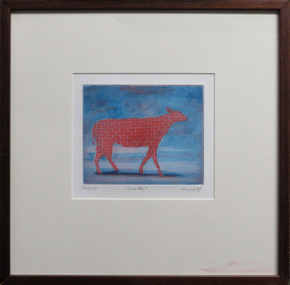 Federation University Art Collection
Work on paper - Artwork - Printmaking, Ricardo, Geoffrey, 'Veneer Deer' by Geoffrey Ricardo, 1997
... GEOFFREY RICARDO (1964- ) Born Melbourne, Australia 1984-86 Bachelor of Arts (Fine Art), Printmaking, Chisholm Institute of Technology, Melbourne 1987-89 Printing Assistant at Bill Young Studios, Editioning intaglio prints, King Valley, VIC 1988 Full-time Studio Technician at Printmaking Department, Chisholm Institute of Technology, Melbourne 1989-90 Graduate Diploma (Fine Art), Printmaking, Monash University, Melbourne 1991 Traveled to England, France, Spain and USA (Winsor & Newton International Travelling Bursary, National Students Art Prize) Worked in private studios in Gaucin, Spain and New York, USA 1994-95 Master of Fine Arts, Monash University, Melbourne 1995 Guest Lecturer, Victorian College of the Arts, Melbourne Traveled to Europe and America 1996 Guest Lecturer, Royal Melbourne Institute of Technology, Melbourne 1990-98 Sessional Lecturer, Monash University, Melbourne 1998 Traveled to America and Mexico 2001-05 Sessional Lecturer, The Victorian College of the Arts, Melbourne 2003-10 Printmaking Workshops, Warrnambool TAFE, Warrnambool, VIC 2004 Traveled to Europe, Mexico and Cuba 2005 Lecturer, National Art School (Summer School), Sydney Sessional Lecturer, Monash University, Melbourne Lecturer, Institution of Koorie Education, Deakin University, Geelong, VIC SOLO EXHIBITIONS 2012 ‘Collection of Works’ The Art Vault Mildura ‘Deeper Meanings’, The Incinerator Gallery, Melbourne ‘Three Projects’, Australian Galleries, Glenmore Road, Sydney Melbourne Art Fair Stand F33, Australian Galleries, Melbourne 2009 ‘Anno Domino, Antarctica and The Anatomy Lesson’, Australian Galleries Derby Street, Melbourne The Art Vault, Mildura, VIC 2008 MV Orlova (Quark Expeditions), The Drake Passage, Antarctica 2007 ‘Herd’, BMGArt, Adelaide ‘Herd’, Australian Galleries Painting & Sculpture, Sydney 2006 ‘Herd’, Australian Galleries Painting & Sculpture, Melbourne 2004 ‘Recent work’, BMGArt, Adelaide 2003 ‘The Rapunzel Suite and Other New Works’, Australian Galleries Works on Paper, Sydney ‘Recent Works’, Australian Galleries Painting & Sculpture, Melbourne ‘Recent works’, Cowwarr Art Space, Cowwarr, VIC 2002 ‘The Rapunzel Suite’, Australian Galleries Works on Paper, Melbourne ‘Strange Games’, Australian Galleries Works on Paper, Sydney 1999 ‘A Dark City Narrative’, Australian Galleries Works on Paper, Sydney ‘A Dark City Narrative’, Australian Galleries Works on Paper, Melbourne 1998 Cullity Gallery, School of Architecture and Fine Art, University of Western Australia, Perth 1997 Delaney Gallery, Perth Chapman Gallery, Canberra BMGArt, Adelaide ‘Menagerie’, Australian Galleries, Sydney ‘Menagerie’, Australian Galleries, Melbourne 1995 ‘Paintings, Prints and Sculpture’, Australian Galleries, Sydney ‘Prints, Paintings and Sculpture’, Australian Galleries, Melbourne 1994 Lawrence Wilson Art Gallery, University of Western Australia, Perth Graham Galleries + Editions, Brisbane ‘Wishful Thinking, Prints and Sculptures’, Lawrence Wilson Art Gallery, University of Western Australia, Perth 1992 ‘Prints, Sculptures and Watercolours’, Australian Galleries, Melbourne and Sydney 1990 ‘Watercolours, Prints and Small Bronzes’, Australian Galleries, Sydney ‘Paintings, Prints and Sculptures’, Australian Galleries, Melbourne GROUP EXHIBITIONS 2013 ‘Sculpture by the Sea’ Cottlesloe, Western Australia 2012 ‘Brave New World’, Toyota Community Spirit Gallery, Port Melbourne, VIC ‘Sculpture by the Sea’, Bondi, Sydney 2011 ‘Sculpture by the sea’, Aarhus, Denmark ‘Artwork to Tapestry’, Tarrawarra Museum of Art, Healesville, VIC Burnie Print Prize, Burnie Regional Gallery, Burnie, TAS ‘large exhibition of small works’, Australian Galleries, Roylston Street, Sydney ‘large exhibition of small works’, Australian Galleries, Derby Street, Melbourne ‘Nature of the Mark’, Australian Galleries, Smith Street, Melbourne Rick Amor Print Prize, Montsalvat, Eltham, VIC 2010 ‘Summer show’, Australian Galleries, Glenmore Road, Sydney ‘Summer stock show’, Australian Galleries, Smith Street, Melbourne ‘Sub10’, Substation, Melbourne ‘McClelland Sculpture Survey and Award 2010’, McClelland Gallery + Sculpture Park, Langwarrin, VIC ‘Artists’ Prints made with Integrity I’, Australian Galleries, Smith Street, Melbourne Montalto Sculpture Prize, Montalto Vineyard and Olive Grove, Red Hill South, VIC 2009 ‘Artists’ ink: printmaking from the Warrnambool Art Gallery Collection, 1970-2001’, Ararat Regional Art Gallery, Ararat, VIC ‘Lorne Sculpture’ (Winner), Lorne, VIC 2008 ‘Summer Stock Show’, Australian Galleries Smith Street, Melbourne 2007 ARC Biennial (Art, Design and Craft), Queensland University of Technology Art Museum, Brisbane ‘Prints Tokyo: International Print Exhibition’, Tokyo, Japan Seoul International Print, Photo and Edition Works Art Fair, Seoul, Korea Guanlan International Print Biennial, Guanlan, China ‘Summer Stock Show’, Australian Galleries Works on Paper, Sydney ‘Summer Stock Show’, Australian Galleries Painting & Sculpture, Melbourne ‘Summer Stock Show’, Australian Galleries Works on Paper, Melbourne ‘Antipodean Bestiary’, Project Space / Spare Room, RMIT University, Melbourne Montalto Sculpture Prize, Montalto Vineyard and Olive Grove, Red Hill South, VIC McClelland Sculpture Survey and Award 2007, McClelland Gallery + Sculpture Park, Langwarrin, VIC ‘2007: Works from the studio’, Lancaster Press, Melbourne ‘50 - a print exchange portfolio’, Geelong Art Gallery, Geelong, VIC ‘Small Pleasures’, Australian Galleries Painting & Sculpture, Melbourne ‘Stock Show’, Australian Galleries Painting & Sculpture, Melbourne ‘Artists for Kids Culture’, Brightspace, Melbourne 2006 ‘Partnership or perish’, Academy of the Arts, School of Visual and Performing Arts, University of Tasmania, Hobart Libris Awards, Artspace Mackay, Mackay, QLD ‘Summery’, Australian Galleries Painting & Sculpture, Sydney ‘Summer Stock Show’, Australian Galleries Works on Paper, Melbourne ‘Bookish’, Australian Galleries Works on Paper, Melbourne Melbourne Art Fair, Australian Galleries, Melbourne ‘Artists for Kids Culture’, Brightspace, Melbourne ‘50th Anniversary Exhibition’, Australian Galleries Painting & Sculpture, Melbourne 2005 ‘End of Year Group Exhibition’, Australian Galleries Painting & Sculpture, Sydney ‘Contemporary Works on Paper’, Australian Galleries Works on Paper, Melbourne ‘Expansion’, Lancaster Press, Melbourne ‘The Art of Collaboration’, Singapore Tyler Print Institute, Singapore ‘Double take’, Arts Project Australia, Melbourne ‘Small Treasures - 20 emerging and established artists’, TILT Contemporary Art, Melbourne Jacques Cadry Memorial Art Prize, Fox Studios and State Library of NSW, Sydney ‘Tales of the City’, Australian Galleries Painting & Sculpture, Melbourne ‘A Decade of Collecting 1995-2005’, Cairns Regional Gallery, Cairns, QLD ‘Artists for Kids Culture’, Brightspace, Melbourne ‘Surface Tension: 21 Contemporary Australian Printmakers’, University of Tasmania, Launceston, TAS ‘Neo-millenium’, Toyota Community Spirit Gallery, Melbourne 2004 ‘Artists for Kids Culture’, Brightspace, Melbourne ‘Group Exhibition’, Australian Galleries Painting & Sculpture, Melbourne ‘Species’, Australian Galleries Works on Paper, Melbourne ‘In the presence of creatures great and small’, Australian Galleries Works on Paper, Sydney ‘Tapestries from the Victorian Tapestry Workshop’, Australian Galleries, Melbourne ‘Sculpture’, Australian Galleries Painting & Sculpture, Sydney ‘Contemporary Australian Prints’, National Arts Club, New York, USA ‘Contemporary Australian Prints’, Gallery 101, Melbourne ‘Contemporary Australian Prints from the Collection’, Art Gallery of New South Wales, Sydney ‘Bridge’, Toyota Community Spirit Gallery, Melbourne ‘Vivid’, Fortyfive Downstairs, Melbourne Lake Gallery, Paynesville, VIC 2003 ‘Paper matters’, Lawrence Wilson Art Gallery, University of Western Australia, Perth ‘Artists for Kids Culture’, Brightspace, Melbourne ‘Less is more’, BMGArt, Adelaide ‘The ink’s on me: Bill Young master printmaker’, Wangaratta Exhibitions Gallery, Wangaratta, VIC ‘Fantastic and Visionary Art’, Touring: Global Arts Link, QLD; Ipswich Regional Gallery, QLD ; Orange Regional Gallery, NSW; Manning Regional Gallery, NSW; Parramatta Heritage Centre, Sydney; Ballarat Regional Gallery, VIC 2002 Shell Fremantle Print Award, Fremantle Arts Centre, Fremantle, WA ‘Artists for Kids Culture’, Brightspace, Melbourne 2001 Shell Fremantle Print Award, Fremantle Arts Centre, Fremantle, WA ‘Six Degrees of Collaboration’, RMIT Faculty of Art, Design and Communication Gallery, Melbourne ‘Reciprocal Moves’, Warrnambool Art Gallery, Warrnambool, VIC International Print Triennial, Kanagawa, Japan ‘Fantastic Art’, Orange Regional Gallery, Orange, NSW ‘Dancing Made a Man out of Me’, The Switchback Gallery, Monash University, Gippsland, VIC ‘Artists for Kids Culture’, Brightspace, Melbourne ‘Celebration’, Regional touring exhibition, VIC 2000-01 ‘Workings of the Mind: Melbourne Prints of the 1960s to the 1990s’, Touring: Grafton Regional Gallery, NSW; Toowoomba Regional Art Gallery, QLD; Nolan Gallery, Canberra; Bendigo Art Gallery, VIC; PercTucker Regional Gallery, QLD 2000 Shell Fremantle Print Award, Fremantle Arts Centre, Fremantle, WA The Hutchins Art Prize, Long Gallery, Hobart ‘Artists for Kids Culture’, Brightspace, Melbourne 1999 Shell Fremantle Print Award, Fremantle Arts Space, Fremantle, WA ‘We are Australian’, George Adams Gallery, Victorian Arts Centre, Melbourne Rena Ellen Jones Memorial Print Award, Warrnambool Art Gallery, Warrnambool, VIC ‘National Works on Paper’, Mornington Peninsula Gallery, Mornington, VIC ‘Artists for Kids Culture’, Brightspace, Melbourne ‘Pleasure’, Australian Galleries, Melbourne 1998-99 ‘Australian Prints’, Art Gallery of New South Wales, Sydney 1997 ‘KNOCK, KNOCK’, Australian Galleries, Melbourne ‘Woven Colour, The Art of Tapestry’, Dr Earl Lu Gallery, Singapore 1996 M.P.A.C. ...GEOFFREY RICARDO (1964- ) Born Melbourne, Australia 1984-86 Bachelor of Arts (Fine Art), Printmaking, Chisholm Institute of Technology, Melbourne 1987-89 Printing Assistant at Bill Young Studios, Editioning intaglio prints, King Valley, VIC 1988 Full-time Studio Technician at Printmaking Department, Chisholm Institute of Technology, Melbourne 1989-90 Graduate Diploma (Fine Art), Printmaking, Monash University, Melbourne 1991 Traveled to England, France, Spain and USA (Winsor & Newton International Travelling Bursary, National Students Art Prize) Worked in private studios in Gaucin, Spain and New York, USA 1994-95 Master of Fine Arts, Monash University, Melbourne 1995 Guest Lecturer, Victorian College of the Arts, Melbourne Traveled to Europe and America 1996 Guest Lecturer, Royal Melbourne Institute of Technology, Melbourne 1990-98 Sessional Lecturer, Monash University, Melbourne 1998 Traveled to America and Mexico 2001-05 Sessional Lecturer, The Victorian College of the Arts, Melbourne 2003-10 Printmaking Workshops, Warrnambool TAFE, Warrnambool, VIC 2004 Traveled to Europe, Mexico and Cuba 2005 Lecturer, National Art School (Summer School), Sydney Sessional Lecturer, Monash University, Melbourne Lecturer, Institution of Koorie Education, Deakin University, Geelong, VIC SOLO EXHIBITIONS 2012 ‘Collection of Works’ The Art Vault Mildura ‘Deeper Meanings’, The Incinerator Gallery, Melbourne ‘Three Projects’, Australian Galleries, Glenmore Road, Sydney Melbourne Art Fair Stand F33, Australian Galleries, Melbourne 2009 ‘Anno Domino, Antarctica and The Anatomy Lesson’, Australian Galleries Derby Street, Melbourne The Art Vault, Mildura, VIC 2008 MV Orlova (Quark Expeditions), The Drake Passage, Antarctica 2007 ‘Herd’, BMGArt, Adelaide ‘Herd’, Australian Galleries Painting & Sculpture, Sydney 2006 ‘Herd’, Australian Galleries Painting & Sculpture, Melbourne 2004 ‘Recent work’, BMGArt, Adelaide 2003 ‘The Rapunzel Suite and Other New Works’, Australian Galleries Works on Paper, Sydney ‘Recent Works’, Australian Galleries Painting & Sculpture, Melbourne ‘Recent works’, Cowwarr Art Space, Cowwarr, VIC 2002 ‘The Rapunzel Suite’, Australian Galleries Works on Paper, Melbourne ‘Strange Games’, Australian Galleries Works on Paper, Sydney 1999 ‘A Dark City Narrative’, Australian Galleries Works on Paper, Sydney ‘A Dark City Narrative’, Australian Galleries Works on Paper, Melbourne 1998 Cullity Gallery, School of Architecture and Fine Art, University of Western Australia, Perth 1997 Delaney Gallery, Perth Chapman Gallery, Canberra BMGArt, Adelaide ‘Menagerie’, Australian Galleries, Sydney ‘Menagerie’, Australian Galleries, Melbourne 1995 ‘Paintings, Prints and Sculpture’, Australian Galleries, Sydney ‘Prints, Paintings and Sculpture’, Australian Galleries, Melbourne 1994 Lawrence Wilson Art Gallery, University of Western Australia, Perth Graham Galleries + Editions, Brisbane ‘Wishful Thinking, Prints and Sculptures’, Lawrence Wilson Art Gallery, University of Western Australia, Perth 1992 ‘Prints, Sculptures and Watercolours’, Australian Galleries, Melbourne and Sydney 1990 ‘Watercolours, Prints and Small Bronzes’, Australian Galleries, Sydney ‘Paintings, Prints and Sculptures’, Australian Galleries, Melbourne GROUP EXHIBITIONS 2013 ‘Sculpture by the Sea’ Cottlesloe, Western Australia 2012 ‘Brave New World’, Toyota Community Spirit Gallery, Port Melbourne, VIC ‘Sculpture by the Sea’, Bondi, Sydney 2011 ‘Sculpture by the sea’, Aarhus, Denmark ‘Artwork to Tapestry’, Tarrawarra Museum of Art, Healesville, VIC Burnie Print Prize, Burnie Regional Gallery, Burnie, TAS ‘large exhibition of small works’, Australian Galleries, Roylston Street, Sydney ‘large exhibition of small works’, Australian Galleries, Derby Street, Melbourne ‘Nature of the Mark’, Australian Galleries, Smith Street, Melbourne Rick Amor Print Prize, Montsalvat, Eltham, VIC 2010 ‘Summer show’, Australian Galleries, Glenmore Road, Sydney ‘Summer stock show’, Australian Galleries, Smith Street, Melbourne ‘Sub10’, Substation, Melbourne ‘McClelland Sculpture Survey and Award 2010’, McClelland Gallery + Sculpture Park, Langwarrin, VIC ‘Artists’ Prints made with Integrity I’, Australian Galleries, Smith Street, Melbourne Montalto Sculpture Prize, Montalto Vineyard and Olive Grove, Red Hill South, VIC 2009 ‘Artists’ ink: printmaking from the Warrnambool Art Gallery Collection, 1970-2001’, Ararat Regional Art Gallery, Ararat, VIC ‘Lorne Sculpture’ (Winner), Lorne, VIC 2008 ‘Summer Stock Show’, Australian Galleries Smith Street, Melbourne 2007 ARC Biennial (Art, Design and Craft), Queensland University of Technology Art Museum, Brisbane ‘Prints Tokyo: International Print Exhibition’, Tokyo, Japan Seoul International Print, Photo and Edition Works Art Fair, Seoul, Korea Guanlan International Print Biennial, Guanlan, China ‘Summer Stock Show’, Australian Galleries Works on Paper, Sydney ‘Summer Stock Show’, Australian Galleries Painting & Sculpture, Melbourne ‘Summer Stock Show’, Australian Galleries Works on Paper, Melbourne ‘Antipodean Bestiary’, Project Space / Spare Room, RMIT University, Melbourne Montalto Sculpture Prize, Montalto Vineyard and Olive Grove, Red Hill South, VIC McClelland Sculpture Survey and Award 2007, McClelland Gallery + Sculpture Park, Langwarrin, VIC ‘2007: Works from the studio’, Lancaster Press, Melbourne ‘50 - a print exchange portfolio’, Geelong Art Gallery, Geelong, VIC ‘Small Pleasures’, Australian Galleries Painting & Sculpture, Melbourne ‘Stock Show’, Australian Galleries Painting & Sculpture, Melbourne ‘Artists for Kids Culture’, Brightspace, Melbourne 2006 ‘Partnership or perish’, Academy of the Arts, School of Visual and Performing Arts, University of Tasmania, Hobart Libris Awards, Artspace Mackay, Mackay, QLD ‘Summery’, Australian Galleries Painting & Sculpture, Sydney ‘Summer Stock Show’, Australian Galleries Works on Paper, Melbourne ‘Bookish’, Australian Galleries Works on Paper, Melbourne Melbourne Art Fair, Australian Galleries, Melbourne ‘Artists for Kids Culture’, Brightspace, Melbourne ‘50th Anniversary Exhibition’, Australian Galleries Painting & Sculpture, Melbourne 2005 ‘End of Year Group Exhibition’, Australian Galleries Painting & Sculpture, Sydney ‘Contemporary Works on Paper’, Australian Galleries Works on Paper, Melbourne ‘Expansion’, Lancaster Press, Melbourne ‘The Art of Collaboration’, Singapore Tyler Print Institute, Singapore ‘Double take’, Arts Project Australia, Melbourne ‘Small Treasures - 20 emerging and established artists’, TILT Contemporary Art, Melbourne Jacques Cadry Memorial Art Prize, Fox Studios and State Library of NSW, Sydney ‘Tales of the City’, Australian Galleries Painting & Sculpture, Melbourne ‘A Decade of Collecting 1995-2005’, Cairns Regional Gallery, Cairns, QLD ‘Artists for Kids Culture’, Brightspace, Melbourne ‘Surface Tension: 21 Contemporary Australian Printmakers’, University of Tasmania, Launceston, TAS ‘Neo-millenium’, Toyota Community Spirit Gallery, Melbourne 2004 ‘Artists for Kids Culture’, Brightspace, Melbourne ‘Group Exhibition’, Australian Galleries Painting & Sculpture, Melbourne ‘Species’, Australian Galleries Works on Paper, Melbourne ‘In the presence of creatures great and small’, Australian Galleries Works on Paper, Sydney ‘Tapestries from the Victorian Tapestry Workshop’, Australian Galleries, Melbourne ‘Sculpture’, Australian Galleries Painting & Sculpture, Sydney ‘Contemporary Australian Prints’, National Arts Club, New York, USA ‘Contemporary Australian Prints’, Gallery 101, Melbourne ‘Contemporary Australian Prints from the Collection’, Art Gallery of New South Wales, Sydney ‘Bridge’, Toyota Community Spirit Gallery, Melbourne ‘Vivid’, Fortyfive Downstairs, Melbourne Lake Gallery, Paynesville, VIC 2003 ‘Paper matters’, Lawrence Wilson Art Gallery, University of Western Australia, Perth ‘Artists for Kids Culture’, Brightspace, Melbourne ‘Less is more’, BMGArt, Adelaide ‘The ink’s on me: Bill Young master printmaker’, Wangaratta Exhibitions Gallery, Wangaratta, VIC ‘Fantastic and Visionary Art’, Touring: Global Arts Link, QLD; Ipswich Regional Gallery, QLD ; Orange Regional Gallery, NSW; Manning Regional Gallery, NSW; Parramatta Heritage Centre, Sydney; Ballarat Regional Gallery, VIC 2002 Shell Fremantle Print Award, Fremantle Arts Centre, Fremantle, WA ‘Artists for Kids Culture’, Brightspace, Melbourne 2001 Shell Fremantle Print Award, Fremantle Arts Centre, Fremantle, WA ‘Six Degrees of Collaboration’, RMIT Faculty of Art, Design and Communication Gallery, Melbourne ‘Reciprocal Moves’, Warrnambool Art Gallery, Warrnambool, VIC International Print Triennial, Kanagawa, Japan ‘Fantastic Art’, Orange Regional Gallery, Orange, NSW ‘Dancing Made a Man out of Me’, The Switchback Gallery, Monash University, Gippsland, VIC ‘Artists for Kids Culture’, Brightspace, Melbourne ‘Celebration’, Regional touring exhibition, VIC 2000-01 ‘Workings of the Mind: Melbourne Prints of the 1960s to the 1990s’, Touring: Grafton Regional Gallery, NSW; Toowoomba Regional Art Gallery, QLD; Nolan Gallery, Canberra; Bendigo Art Gallery, VIC; PercTucker Regional Gallery, QLD 2000 Shell Fremantle Print Award, Fremantle Arts Centre, Fremantle, WA The Hutchins Art Prize, Long Gallery, Hobart ‘Artists for Kids Culture’, Brightspace, Melbourne 1999 Shell Fremantle Print Award, Fremantle Arts Space, Fremantle, WA ‘We are Australian’, George Adams Gallery, Victorian Arts Centre, Melbourne Rena Ellen Jones Memorial Print Award, Warrnambool Art Gallery, Warrnambool, VIC ‘National Works on Paper’, Mornington Peninsula Gallery, Mornington, VIC ‘Artists for Kids Culture’, Brightspace, Melbourne ‘Pleasure’, Australian Galleries, Melbourne 1998-99 ‘Australian Prints’, Art Gallery of New South Wales, Sydney 1997 ‘KNOCK, KNOCK’, Australian Galleries, Melbourne ‘Woven Colour, The Art of Tapestry’, Dr Earl Lu Gallery, Singapore 1996 M.P.A.C. ...GEOFFREY RICARDO (1964- ) Born Melbourne, Australia 1984-86 Bachelor of Arts (Fine Art), Printmaking, Chisholm Institute of Technology, Melbourne 1987-89 Printing Assistant at Bill Young Studios, Editioning intaglio prints, King Valley, VIC 1988 Full-time Studio Technician at Printmaking Department, Chisholm Institute of Technology, Melbourne 1989-90 Graduate Diploma (Fine Art), Printmaking, Monash University, Melbourne 1991 Traveled to England, France, Spain and USA (Winsor & Newton International Travelling Bursary, National Students Art Prize) Worked in private studios in Gaucin, Spain and New York, USA 1994-95 Master of Fine Arts, Monash University, Melbourne 1995 Guest Lecturer, Victorian College of the Arts, Melbourne Traveled to Europe and America 1996 Guest Lecturer, Royal Melbourne Institute of Technology, Melbourne 1990-98 Sessional Lecturer, Monash University, Melbourne 1998 Traveled to America and Mexico 2001-05 Sessional Lecturer, The Victorian College of the Arts, Melbourne 2003-10 Printmaking Workshops, Warrnambool TAFE, Warrnambool, VIC 2004 Traveled to Europe, Mexico and Cuba 2005 Lecturer, National Art School (Summer School), Sydney Sessional Lecturer, Monash University, Melbourne Lecturer, Institution of Koorie Education, Deakin University, Geelong, VIC SOLO EXHIBITIONS 2012 ‘Collection of Works’ The Art Vault Mildura ‘Deeper Meanings’, The Incinerator Gallery, Melbourne ‘Three Projects’, Australian Galleries, Glenmore Road, Sydney Melbourne Art Fair Stand F33, Australian Galleries, Melbourne 2009 ‘Anno Domino, Antarctica and The Anatomy Lesson’, Australian Galleries Derby Street, Melbourne The Art Vault, Mildura, VIC 2008 MV Orlova (Quark Expeditions), The Drake Passage, Antarctica 2007 ‘Herd’, BMGArt, Adelaide ‘Herd’, Australian Galleries Painting & Sculpture, Sydney 2006 ‘Herd’, Australian Galleries Painting & Sculpture, Melbourne 2004 ‘Recent work’, BMGArt, Adelaide 2003 ‘The Rapunzel Suite and Other New Works’, Australian Galleries Works on Paper, Sydney ‘Recent Works’, Australian Galleries Painting & Sculpture, Melbourne ‘Recent works’, Cowwarr Art Space, Cowwarr, VIC 2002 ‘The Rapunzel Suite’, Australian Galleries Works on Paper, Melbourne ‘Strange Games’, Australian Galleries Works on Paper, Sydney 1999 ‘A Dark City Narrative’, Australian Galleries Works on Paper, Sydney ‘A Dark City Narrative’, Australian Galleries Works on Paper, Melbourne 1998 Cullity Gallery, School of Architecture and Fine Art, University of Western Australia, Perth 1997 Delaney Gallery, Perth Chapman Gallery, Canberra BMGArt, Adelaide ‘Menagerie’, Australian Galleries, Sydney ‘Menagerie’, Australian Galleries, Melbourne 1995 ‘Paintings, Prints and Sculpture’, Australian Galleries, Sydney ‘Prints, Paintings and Sculpture’, Australian Galleries, Melbourne 1994 Lawrence Wilson Art Gallery, University of Western Australia, Perth Graham Galleries + Editions, Brisbane ‘Wishful Thinking, Prints and Sculptures’, Lawrence Wilson Art Gallery, University of Western Australia, Perth 1992 ‘Prints, Sculptures and Watercolours’, Australian Galleries, Melbourne and Sydney 1990 ‘Watercolours, Prints and Small Bronzes’, Australian Galleries, Sydney ‘Paintings, Prints and Sculptures’, Australian Galleries, Melbourne GROUP EXHIBITIONS 2013 ‘Sculpture by the Sea’ Cottlesloe, Western Australia 2012 ‘Brave New World’, Toyota Community Spirit Gallery, Port Melbourne, VIC ‘Sculpture by the Sea’, Bondi, Sydney 2011 ‘Sculpture by the sea’, Aarhus, Denmark ‘Artwork to Tapestry’, Tarrawarra Museum of Art, Healesville, VIC Burnie Print Prize, Burnie Regional Gallery, Burnie, TAS ‘large exhibition of small works’, Australian Galleries, Roylston Street, Sydney ‘large exhibition of small works’, Australian Galleries, Derby Street, Melbourne ‘Nature of the Mark’, Australian Galleries, Smith Street, Melbourne Rick Amor Print Prize, Montsalvat, Eltham, VIC 2010 ‘Summer show’, Australian Galleries, Glenmore Road, Sydney ‘Summer stock show’, Australian Galleries, Smith Street, Melbourne ‘Sub10’, Substation, Melbourne ‘McClelland Sculpture Survey and Award 2010’, McClelland Gallery + Sculpture Park, Langwarrin, VIC ‘Artists’ Prints made with Integrity I’, Australian Galleries, Smith Street, Melbourne Montalto Sculpture Prize, Montalto Vineyard and Olive Grove, Red Hill South, VIC 2009 ‘Artists’ ink: printmaking from the Warrnambool Art Gallery Collection, 1970-2001’, Ararat Regional Art Gallery, Ararat, VIC ‘Lorne Sculpture’ (Winner), Lorne, VIC 2008 ‘Summer Stock Show’, Australian Galleries Smith Street, Melbourne 2007 ARC Biennial (Art, Design and Craft), Queensland University of Technology Art Museum, Brisbane ‘Prints Tokyo: International Print Exhibition’, Tokyo, Japan Seoul International Print, Photo and Edition Works Art Fair, Seoul, Korea Guanlan International Print Biennial, Guanlan, China ‘Summer Stock Show’, Australian Galleries Works on Paper, Sydney ‘Summer Stock Show’, Australian Galleries Painting & Sculpture, Melbourne ‘Summer Stock Show’, Australian Galleries Works on Paper, Melbourne ‘Antipodean Bestiary’, Project Space / Spare Room, RMIT University, Melbourne Montalto Sculpture Prize, Montalto Vineyard and Olive Grove, Red Hill South, VIC McClelland Sculpture Survey and Award 2007, McClelland Gallery + Sculpture Park, Langwarrin, VIC ‘2007: Works from the studio’, Lancaster Press, Melbourne ‘50 - a print exchange portfolio’, Geelong Art Gallery, Geelong, VIC ‘Small Pleasures’, Australian Galleries Painting & Sculpture, Melbourne ‘Stock Show’, Australian Galleries Painting & Sculpture, Melbourne ‘Artists for Kids Culture’, Brightspace, Melbourne 2006 ‘Partnership or perish’, Academy of the Arts, School of Visual and Performing Arts, University of Tasmania, Hobart Libris Awards, Artspace Mackay, Mackay, QLD ‘Summery’, Australian Galleries Painting & Sculpture, Sydney ‘Summer Stock Show’, Australian Galleries Works on Paper, Melbourne ‘Bookish’, Australian Galleries Works on Paper, Melbourne Melbourne Art Fair, Australian Galleries, Melbourne ‘Artists for Kids Culture’, Brightspace, Melbourne ‘50th Anniversary Exhibition’, Australian Galleries Painting & Sculpture, Melbourne 2005 ‘End of Year Group Exhibition’, Australian Galleries Painting & Sculpture, Sydney ‘Contemporary Works on Paper’, Australian Galleries Works on Paper, Melbourne ‘Expansion’, Lancaster Press, Melbourne ‘The Art of Collaboration’, Singapore Tyler Print Institute, Singapore ‘Double take’, Arts Project Australia, Melbourne ‘Small Treasures - 20 emerging and established artists’, TILT Contemporary Art, Melbourne Jacques Cadry Memorial Art Prize, Fox Studios and State Library of NSW, Sydney ‘Tales of the City’, Australian Galleries Painting & Sculpture, Melbourne ‘A Decade of Collecting 1995-2005’, Cairns Regional Gallery, Cairns, QLD ‘Artists for Kids Culture’, Brightspace, Melbourne ‘Surface Tension: 21 Contemporary Australian Printmakers’, University of Tasmania, Launceston, TAS ‘Neo-millenium’, Toyota Community Spirit Gallery, Melbourne 2004 ‘Artists for Kids Culture’, Brightspace, Melbourne ‘Group Exhibition’, Australian Galleries Painting & Sculpture, Melbourne ‘Species’, Australian Galleries Works on Paper, Melbourne ‘In the presence of creatures great and small’, Australian Galleries Works on Paper, Sydney ‘Tapestries from the Victorian Tapestry Workshop’, Australian Galleries, Melbourne ‘Sculpture’, Australian Galleries Painting & Sculpture, Sydney ‘Contemporary Australian Prints’, National Arts Club, New York, USA ‘Contemporary Australian Prints’, Gallery 101, Melbourne ‘Contemporary Australian Prints from the Collection’, Art Gallery of New South Wales, Sydney ‘Bridge’, Toyota Community Spirit Gallery, Melbourne ‘Vivid’, Fortyfive Downstairs, Melbourne Lake Gallery, Paynesville, VIC 2003 ‘Paper matters’, Lawrence Wilson Art Gallery, University of Western Australia, Perth ‘Artists for Kids Culture’, Brightspace, Melbourne ‘Less is more’, BMGArt, Adelaide ‘The ink’s on me: Bill Young master printmaker’, Wangaratta Exhibitions Gallery, Wangaratta, VIC ‘Fantastic and Visionary Art’, Touring: Global Arts Link, QLD; Ipswich Regional Gallery, QLD ; Orange Regional Gallery, NSW; Manning Regional Gallery, NSW; Parramatta Heritage Centre, Sydney; Ballarat Regional Gallery, VIC 2002 Shell Fremantle Print Award, Fremantle Arts Centre, Fremantle, WA ‘Artists for Kids Culture’, Brightspace, Melbourne 2001 Shell Fremantle Print Award, Fremantle Arts Centre, Fremantle, WA ‘Six Degrees of Collaboration’, RMIT Faculty of Art, Design and Communication Gallery, Melbourne ‘Reciprocal Moves’, Warrnambool Art Gallery, Warrnambool, VIC International Print Triennial, Kanagawa, Japan ‘Fantastic Art’, Orange Regional Gallery, Orange, NSW ‘Dancing Made a Man out of Me’, The Switchback Gallery, Monash University, Gippsland, VIC ‘Artists for Kids Culture’, Brightspace, Melbourne ‘Celebration’, Regional touring exhibition, VIC 2000-01 ‘Workings of the Mind: Melbourne Prints of the 1960s to the 1990s’, Touring: Grafton Regional Gallery, NSW; Toowoomba Regional Art Gallery, QLD; Nolan Gallery, Canberra; Bendigo Art Gallery, VIC; PercTucker Regional Gallery, QLD 2000 Shell Fremantle Print Award, Fremantle Arts Centre, Fremantle, WA The Hutchins Art Prize, Long Gallery, Hobart ‘Artists for Kids Culture’, Brightspace, Melbourne 1999 Shell Fremantle Print Award, Fremantle Arts Space, Fremantle, WA ‘We are Australian’, George Adams Gallery, Victorian Arts Centre, Melbourne Rena Ellen Jones Memorial Print Award, Warrnambool Art Gallery, Warrnambool, VIC ‘National Works on Paper’, Mornington Peninsula Gallery, Mornington, VIC ‘Artists for Kids Culture’, Brightspace, Melbourne ‘Pleasure’, Australian Galleries, Melbourne 1998-99 ‘Australian Prints’, Art Gallery of New South Wales, Sydney 1997 ‘KNOCK, KNOCK’, Australian Galleries, Melbourne ‘Woven Colour, The Art of Tapestry’, Dr Earl Lu Gallery, Singapore 1996 M.P.A.C. Print Award, Mornington Peninsula Arts Centre, Mornington, VIC Academy of Art & Culture, Calcutta, India ‘Synergy’, Touring: Lalit Kala Akademi, New Dehli, India; Jehangir Nicholson Gallery, Bombay, India; Birla, India ‘Contemporary Australian Tapestry’, Frederikshavn Kunstmuseum, Denmark; Australia House, London, UK 1995 ‘Interweave - Tapestry A Collaborative Art’, Heide Museum of Modern Art, Melbourne ‘Contemporary Printmakers’, La Trobe Regional Gallery, Morwell, VIC ‘Contemporary Australian Tapestry’, Australian High Commission, Singapore ‘Circus Capers’, Caulfield Arts Complex, Melbourne 1994 M.P.A.C. Print Award, Mornington Peninsula Arts Centre, Mornington, VIC Fremantle Print Award, Fremantle Arts Centre, Fremantle, WA Australian Universities of Visual Art, Australian High Commission, Singapore ‘Prints, Paintings and Sculpture’, BMGArt, Adelaide Fourth Australian Contemporary Art Fair, Royal Exhibition Building, Melbourne 1993 Fremantle Print Award, Fremantle Arts Centre, Fremantle, WA 1992 Fremantle Print Award, Fremantle Arts Centre, Fremantle, WA ‘Transitional Times’, Print Council of Australia, Melbourne ‘Second Kochi International Triennial Exhibition of Prints’, Japan 1991 Henry Worland Memorial Print Prize, Warrnambool Regional Art Gallery, Warrnambool, VIC Fremantle Print Award, Fremantle Arts Centre, Fremantle, WA ‘Table Top Sculpture’, Australian Galleries, Melbourne ‘Art 91’, London Contemporary Art Fair, London, UK 1990 M.P.A.C. Print Prize, Mornington Peninsula Arts Centre, Mornington, VIC Fremantle Print Prize, Fremantle Arts Centre, Fremantle WA ‘The Christmas Show’, Intaglio Printmaker, London, England ‘Australian Contemporary Art’, AZ Gallery, Tokyo, Japan 1989 National Student Art Prize, Mitchell College, Bathurst, NSW Fremantle Print Award, Fremantle Arts Centre, Fremantle, WA City of Doncaster Acquisitive Print Prize, Manningham Gallery, Melbourne ‘Affiliations’, Monash University Gallery, Melbourne 1988 M.P.A.C. Acquisitive Print Prize, Mornington Peninsula Arts Centre, Mornington, VIC Henry Worland Memorial Print Prize, Warrnambool Regional Art Gallery, Warrnambool, VIC 1987 ‘The Comedy Show’, Print Guild, Melbourne ‘Fluxus Art Flow’, Melbourne 1986 Mornington Peninsula Arts Council Acquisitive Print Prize, Mornington Peninsula, VIC Chisolm Institute of Technology, Graduating Students exhibition, Melbourne AWARDS 2013 King Valley Art Prize (printmaking) 2009 Lorne Sculpture Exhibition (Winner), Lorne, VIC 1989 Windsor and Newton International Travelling Bursary, UK Linbrook International First Prize for Printmaking, Australia COMMISSIONS 2005 Tapestry design for Bairnsdale Hospital (woven by the Victorian Tapestry Workshop, Melbourne), Bairnsdale, VIC 1999 Tapestry design ‘Emblem’ (woven by the Victorian Tapestry Workshop, Melbourne), Australia 1995 ‘A Night of Infectious Laughter’ Poster, St Kilda Festival, Melbourne 1994 Tapestry design ‘Elephant Gingham’ (woven by the Victorian Tapestry Workshop, Melbourne), Australia 1993 Tapestry design for the Festival of Perth Official Poster (woven by the Victorian Tapestry Workshop, Melbourne), Perth RESIDENCIES & PROJECTS 2013 ‘Come In Outside’, Collaboration set design for Pocketfool 2011 Mildura Wentworth Arts Festival Project, Mildura, VIC Residency, The Art Vault , Mildura, VIC 2010 ‘Wish’, Collaboration set design for Pocketfool, Artplay, Melbourne The Art Vault (included continuous public flag making workshops which were flown as part of The Wentworth Mildura Art Festival), Mildura, VIC 2009 The Art Vault (included two public printmaking workshops), Mildura, VIC 2008 Artist in residence, MV Orlova, Quark Expeditions, Antarctica 2003 Residency, Bairnsdale Regional Health Service, Bairnsdale, VIC 1998 Residency, School of Architecture & Fine Art, University of Western Australia, Perth 1997 Residency, La Salle/Fia, College of the Arts, Singapore 1996 Artist in residence, Victorian Tapestry Workshop, Melbourne 1993 Reduction Aquatint Workshop & Residency, Graphic Investigation Department, Canberra School of Art, Canberra NB: all residencies have included workshops involving students, children or the general public COLLECTIONS Artbank, Sydney Art Gallery of New South Wales, Sydney Canson Australia Pty Ltd, Australia City of Box Hill, Melbourne City of Whitehorse, Melbourne Downlands College, Toowoomba, QLD Geelong Grammar School, Geelong, VIC Gold Coast City Art Gallery, Gold Coast, QLD Griffith University, Gold Coast, QLD Helensvale High School, Brisbane Holmes à Court Collection, Perth Latrobe Regional Gallery, Morwell, VIC Monash University, Melbourne Mornington Peninsula Arts Council Collection, Mornington, VIC National Gallery of Australia, Canberra National Gallery of Victoria, Melbourne Parliament House Art Collection, Canberra Print Council of Australia, Melbourne Private collections in Australia, Switzerland, USA, UK, Singapore, Germany, Japan, Malaysia, Holland Queen Victoria Museum & Art Gallery, Launceston, TAS Queensland Art Gallery, Brisbane Queensland University of Technology, Brisbane Shire of Diamond Valley, Diamond Valley, VIC Star of the Sea College, Melbourne The Melbourne Club, Melbourne University of Central Queensland, Brisbane University of Technology, Sydney Wagga Wagga Regional Art Gallery, Wagga Wagga, NSW Warrnambool Regional Art Gallery, Warrnambool, VIC BIBLIOGRAPHY PERIODICALS AQ Journal of Contemporary Analysis, Vol. 70, Issue 4, July-August 1998 AQ Journal of Contemporary Analysis, Vol. 70, Issue 6, November-December 1998 AQ Journal of Contemporary Analysis, Vol.71, Issue 7, April 1999 Backhouse, Megan; “Going out of print and back to basics”, The Age, February 2003 Bellamy, Louise; “Renaissance of Western Art”, The Age (A2 section), 26 November 2005 Clabburn, Anna; “Fables and Foibles”, Art Monthly, September 1994 Dutkiewicz, Adam; “Edge of the sublime”, Advertiser, 1 December 2003, p. 76. Erickson, Dorothy; “The Festival that could have been”, The Bulletin, March 1994 Farmer, Alison; “Ricardo makes poster splash”, Sunday Times - Entertainment Extra, 19 September 1993 “Festival taps weaver’s art”, The West Australian, 11February 1994 Fiasco (web-page), March 2003 Jenkins, John; “A Dark City Narrative”, Imprint, Vol. 34, No. 4, 1999 Grishin, Sasha; “Multiplicity – collecting Australian prints”, Australian Art Review, Issue 13, March-June 2007, pp. 52-55 Grishin, Sasha; “Profiles in Print - Geoffrey Ricardo”, Craft Arts International, Issue 76, 2009, pp.1-4 Lloyd, Tim; “The elephant man”, The Advertiser (Review section), December 2007 Manzana Arné, Josep; “De L’Ex-Libris a L’Ex-Webis: Ex-Libris a Internet”, Ex-Libris, Associació Catalana D’Exlibristes, Barcelona, No. 27, July-December 2002, p.11 McDonald, John; “Dreams of hope and menace” The Sydney Morning Herald, 18 March 1995 McMillan, Peter; “Darkness visible”, The Age, 11September 1999 Nelson, Robert; “Circuses can be curated, but not cured”, The Age, 18 January 1995 Nelson, Robert; “Dream Weavers”, The Age, June 1995 Nelson, Robert; “Paen To Ricardo”, Imprint, Vol. 29, No.1, April, 1994 Nelson, Robert; “Revealed: Mother Nature’s vulgar past”, The Age, September 6, 2000 Nelson, Robert; “Riddled with hidden meaning”, The Age, September 8, 1999 Quadrant, April, 1995 Quadrant, Jan/Feb, 1995 Quadrant, October, 1995 Quadrant, November, 1994 “Ricardo’s surreal works at gallery”, Times-Spectator, 25 July 2003, p.7 Snell, Ted; “Art”, The Australian, 18 February1994 Snell, Ted; “Visual arts at the Festival of Perth”, Art Monthly, April 1994 Sunday Arts, ABC TV, 6 May 2007 Timms, Peter; “Geoff Ricardo: emerging from darkness”, Art Monthly, Issue 140, June 2001 Wallace, Dr Carmel; “Ways of seeing Australia”, Asian Art News, May/June 2004 BOOKS & CATALOGUES A Dark City Narrative, Australian Galleries, Melbourne, 1999 ARC Biennial Exhibition (Exhibition catalogue), Queensland University of Technology Art Museum, 2007, pp. 78-79 Clabburn, Anna; “The Collaborative Spirit”, Australian Tapestries: Victorian Tapestry Workshop, 1995, p. 37 Fantastic Art, Orange Regional Gallery, NSW, 2001 Field, Caroline; Herd, catalogue essay, Australian Galleries, Sydney, 2007 Grishin, Sasha; Australian Identities in Printmaking, Wagga Wagga Regional Art Gallery, 2000 Grishin, Sasha; Australian Printmaking in the 1990’s, Craftsman House, 1997 Havighurst, Sophie (Illustrations by Geoffrey Ricardo); When Lester lost his cool, The University of Melbourne, 2007 Kolenberg, Hendrik & Ryan, Anne; Australian Prints, Art Gallery of New South Wales, 1998 Lawrence, Michel; Framed; photographs of Australian Artists, 1998 Modern Australian Tapestries, Victorian Tapestry Workshop, 2000 The Rapunzel Suite, Australian Galleries, Melbourne, 2002 Wallace, Dr Carmel (Essay); Surface Tension, Twenty One Contemporary Australian Printmakers, Gallery 101, Melbourne, 2004 Workings of the Mind : Melbourne Prints of the 1960s to the 1990s, Queensland University of Technology Art Museum, Brisbane, 2000 TELEVISION Sunday Arts, ABC TV, 6 May 2007 Inside Art TV, Channel 31, July 2012Framed coloured aquatint.geoffrey ricardo, printmaking -
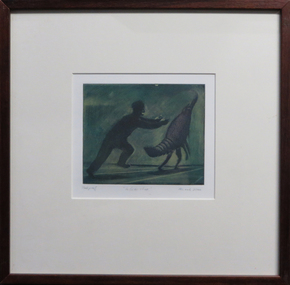 Federation University Art Collection
Work on paper - Artwork - Printmaking, Ricardo, Geoffrey, 'Lobster Chase' by Geoffrey Ricardo, 2000
... GEOFFREY RICARDO (1964- ) Born Melbourne, Australia 1984-86 Bachelor of Arts (Fine Art), Printmaking, Chisholm Institute of Technology, Melbourne 1987-89 Printing Assistant at Bill Young Studios, Editioning intaglio prints, King Valley, VIC 1988 Full-time Studio Technician at Printmaking Department, Chisholm Institute of Technology, Melbourne 1989-90 Graduate Diploma (Fine Art), Printmaking, Monash University, Melbourne 1991 Traveled to England, France, Spain and USA (Winsor & Newton International Travelling Bursary, National Students Art Prize) Worked in private studios in Gaucin, Spain and New York, USA 1994-95 Master of Fine Arts, Monash University, Melbourne 1995 Guest Lecturer, Victorian College of the Arts, Melbourne Traveled to Europe and America 1996 Guest Lecturer, Royal Melbourne Institute of Technology, Melbourne 1990-98 Sessional Lecturer, Monash University, Melbourne 1998 Traveled to America and Mexico 2001-05 Sessional Lecturer, The Victorian College of the Arts, Melbourne 2003-10 Printmaking Workshops, Warrnambool TAFE, Warrnambool, VIC 2004 Traveled to Europe, Mexico and Cuba 2005 Lecturer, National Art School (Summer School), Sydney Sessional Lecturer, Monash University, Melbourne Lecturer, Institution of Koorie Education, Deakin University, Geelong, VIC SOLO EXHIBITIONS 2012 ‘Collection of Works’ The Art Vault Mildura ‘Deeper Meanings’, The Incinerator Gallery, Melbourne ‘Three Projects’, Australian Galleries, Glenmore Road, Sydney Melbourne Art Fair Stand F33, Australian Galleries, Melbourne 2009 ‘Anno Domino, Antarctica and The Anatomy Lesson’, Australian Galleries Derby Street, Melbourne The Art Vault, Mildura, VIC 2008 MV Orlova (Quark Expeditions), The Drake Passage, Antarctica 2007 ‘Herd’, BMGArt, Adelaide ‘Herd’, Australian Galleries Painting & Sculpture, Sydney 2006 ‘Herd’, Australian Galleries Painting & Sculpture, Melbourne 2004 ‘Recent work’, BMGArt, Adelaide 2003 ‘The Rapunzel Suite and Other New Works’, Australian Galleries Works on Paper, Sydney ‘Recent Works’, Australian Galleries Painting & Sculpture, Melbourne ‘Recent works’, Cowwarr Art Space, Cowwarr, VIC 2002 ‘The Rapunzel Suite’, Australian Galleries Works on Paper, Melbourne ‘Strange Games’, Australian Galleries Works on Paper, Sydney 1999 ‘A Dark City Narrative’, Australian Galleries Works on Paper, Sydney ‘A Dark City Narrative’, Australian Galleries Works on Paper, Melbourne 1998 Cullity Gallery, School of Architecture and Fine Art, University of Western Australia, Perth 1997 Delaney Gallery, Perth Chapman Gallery, Canberra BMGArt, Adelaide ‘Menagerie’, Australian Galleries, Sydney ‘Menagerie’, Australian Galleries, Melbourne 1995 ‘Paintings, Prints and Sculpture’, Australian Galleries, Sydney ‘Prints, Paintings and Sculpture’, Australian Galleries, Melbourne 1994 Lawrence Wilson Art Gallery, University of Western Australia, Perth Graham Galleries + Editions, Brisbane ‘Wishful Thinking, Prints and Sculptures’, Lawrence Wilson Art Gallery, University of Western Australia, Perth 1992 ‘Prints, Sculptures and Watercolours’, Australian Galleries, Melbourne and Sydney 1990 ‘Watercolours, Prints and Small Bronzes’, Australian Galleries, Sydney ‘Paintings, Prints and Sculptures’, Australian Galleries, Melbourne GROUP EXHIBITIONS 2013 ‘Sculpture by the Sea’ Cottlesloe, Western Australia 2012 ‘Brave New World’, Toyota Community Spirit Gallery, Port Melbourne, VIC ‘Sculpture by the Sea’, Bondi, Sydney 2011 ‘Sculpture by the sea’, Aarhus, Denmark ‘Artwork to Tapestry’, Tarrawarra Museum of Art, Healesville, VIC Burnie Print Prize, Burnie Regional Gallery, Burnie, TAS ‘large exhibition of small works’, Australian Galleries, Roylston Street, Sydney ‘large exhibition of small works’, Australian Galleries, Derby Street, Melbourne ‘Nature of the Mark’, Australian Galleries, Smith Street, Melbourne Rick Amor Print Prize, Montsalvat, Eltham, VIC 2010 ‘Summer show’, Australian Galleries, Glenmore Road, Sydney ‘Summer stock show’, Australian Galleries, Smith Street, Melbourne ‘Sub10’, Substation, Melbourne ‘McClelland Sculpture Survey and Award 2010’, McClelland Gallery + Sculpture Park, Langwarrin, VIC ‘Artists’ Prints made with Integrity I’, Australian Galleries, Smith Street, Melbourne Montalto Sculpture Prize, Montalto Vineyard and Olive Grove, Red Hill South, VIC 2009 ‘Artists’ ink: printmaking from the Warrnambool Art Gallery Collection, 1970-2001’, Ararat Regional Art Gallery, Ararat, VIC ‘Lorne Sculpture’ (Winner), Lorne, VIC 2008 ‘Summer Stock Show’, Australian Galleries Smith Street, Melbourne 2007 ARC Biennial (Art, Design and Craft), Queensland University of Technology Art Museum, Brisbane ‘Prints Tokyo: International Print Exhibition’, Tokyo, Japan Seoul International Print, Photo and Edition Works Art Fair, Seoul, Korea Guanlan International Print Biennial, Guanlan, China ‘Summer Stock Show’, Australian Galleries Works on Paper, Sydney ‘Summer Stock Show’, Australian Galleries Painting & Sculpture, Melbourne ‘Summer Stock Show’, Australian Galleries Works on Paper, Melbourne ‘Antipodean Bestiary’, Project Space / Spare Room, RMIT University, Melbourne Montalto Sculpture Prize, Montalto Vineyard and Olive Grove, Red Hill South, VIC McClelland Sculpture Survey and Award 2007, McClelland Gallery + Sculpture Park, Langwarrin, VIC ‘2007: Works from the studio’, Lancaster Press, Melbourne ‘50 - a print exchange portfolio’, Geelong Art Gallery, Geelong, VIC ‘Small Pleasures’, Australian Galleries Painting & Sculpture, Melbourne ‘Stock Show’, Australian Galleries Painting & Sculpture, Melbourne ‘Artists for Kids Culture’, Brightspace, Melbourne 2006 ‘Partnership or perish’, Academy of the Arts, School of Visual and Performing Arts, University of Tasmania, Hobart Libris Awards, Artspace Mackay, Mackay, QLD ‘Summery’, Australian Galleries Painting & Sculpture, Sydney ‘Summer Stock Show’, Australian Galleries Works on Paper, Melbourne ‘Bookish’, Australian Galleries Works on Paper, Melbourne Melbourne Art Fair, Australian Galleries, Melbourne ‘Artists for Kids Culture’, Brightspace, Melbourne ‘50th Anniversary Exhibition’, Australian Galleries Painting & Sculpture, Melbourne 2005 ‘End of Year Group Exhibition’, Australian Galleries Painting & Sculpture, Sydney ‘Contemporary Works on Paper’, Australian Galleries Works on Paper, Melbourne ‘Expansion’, Lancaster Press, Melbourne ‘The Art of Collaboration’, Singapore Tyler Print Institute, Singapore ‘Double take’, Arts Project Australia, Melbourne ‘Small Treasures - 20 emerging and established artists’, TILT Contemporary Art, Melbourne Jacques Cadry Memorial Art Prize, Fox Studios and State Library of NSW, Sydney ‘Tales of the City’, Australian Galleries Painting & Sculpture, Melbourne ‘A Decade of Collecting 1995-2005’, Cairns Regional Gallery, Cairns, QLD ‘Artists for Kids Culture’, Brightspace, Melbourne ‘Surface Tension: 21 Contemporary Australian Printmakers’, University of Tasmania, Launceston, TAS ‘Neo-millenium’, Toyota Community Spirit Gallery, Melbourne 2004 ‘Artists for Kids Culture’, Brightspace, Melbourne ‘Group Exhibition’, Australian Galleries Painting & Sculpture, Melbourne ‘Species’, Australian Galleries Works on Paper, Melbourne ‘In the presence of creatures great and small’, Australian Galleries Works on Paper, Sydney ‘Tapestries from the Victorian Tapestry Workshop’, Australian Galleries, Melbourne ‘Sculpture’, Australian Galleries Painting & Sculpture, Sydney ‘Contemporary Australian Prints’, National Arts Club, New York, USA ‘Contemporary Australian Prints’, Gallery 101, Melbourne ‘Contemporary Australian Prints from the Collection’, Art Gallery of New South Wales, Sydney ‘Bridge’, Toyota Community Spirit Gallery, Melbourne ‘Vivid’, Fortyfive Downstairs, Melbourne Lake Gallery, Paynesville, VIC 2003 ‘Paper matters’, Lawrence Wilson Art Gallery, University of Western Australia, Perth ‘Artists for Kids Culture’, Brightspace, Melbourne ‘Less is more’, BMGArt, Adelaide ‘The ink’s on me: Bill Young master printmaker’, Wangaratta Exhibitions Gallery, Wangaratta, VIC ‘Fantastic and Visionary Art’, Touring: Global Arts Link, QLD; Ipswich Regional Gallery, QLD ; Orange Regional Gallery, NSW; Manning Regional Gallery, NSW; Parramatta Heritage Centre, Sydney; Ballarat Regional Gallery, VIC 2002 Shell Fremantle Print Award, Fremantle Arts Centre, Fremantle, WA ‘Artists for Kids Culture’, Brightspace, Melbourne 2001 Shell Fremantle Print Award, Fremantle Arts Centre, Fremantle, WA ‘Six Degrees of Collaboration’, RMIT Faculty of Art, Design and Communication Gallery, Melbourne ‘Reciprocal Moves’, Warrnambool Art Gallery, Warrnambool, VIC International Print Triennial, Kanagawa, Japan ‘Fantastic Art’, Orange Regional Gallery, Orange, NSW ‘Dancing Made a Man out of Me’, The Switchback Gallery, Monash University, Gippsland, VIC ‘Artists for Kids Culture’, Brightspace, Melbourne ‘Celebration’, Regional touring exhibition, VIC 2000-01 ‘Workings of the Mind: Melbourne Prints of the 1960s to the 1990s’, Touring: Grafton Regional Gallery, NSW; Toowoomba Regional Art Gallery, QLD; Nolan Gallery, Canberra; Bendigo Art Gallery, VIC; PercTucker Regional Gallery, QLD 2000 Shell Fremantle Print Award, Fremantle Arts Centre, Fremantle, WA The Hutchins Art Prize, Long Gallery, Hobart ‘Artists for Kids Culture’, Brightspace, Melbourne 1999 Shell Fremantle Print Award, Fremantle Arts Space, Fremantle, WA ‘We are Australian’, George Adams Gallery, Victorian Arts Centre, Melbourne Rena Ellen Jones Memorial Print Award, Warrnambool Art Gallery, Warrnambool, VIC ‘National Works on Paper’, Mornington Peninsula Gallery, Mornington, VIC ‘Artists for Kids Culture’, Brightspace, Melbourne ‘Pleasure’, Australian Galleries, Melbourne 1998-99 ‘Australian Prints’, Art Gallery of New South Wales, Sydney 1997 ‘KNOCK, KNOCK’, Australian Galleries, Melbourne ‘Woven Colour, The Art of Tapestry’, Dr Earl Lu Gallery, Singapore 1996 M.P.A.C. ...GEOFFREY RICARDO (1964- ) Born Melbourne, Australia 1984-86 Bachelor of Arts (Fine Art), Printmaking, Chisholm Institute of Technology, Melbourne 1987-89 Printing Assistant at Bill Young Studios, Editioning intaglio prints, King Valley, VIC 1988 Full-time Studio Technician at Printmaking Department, Chisholm Institute of Technology, Melbourne 1989-90 Graduate Diploma (Fine Art), Printmaking, Monash University, Melbourne 1991 Traveled to England, France, Spain and USA (Winsor & Newton International Travelling Bursary, National Students Art Prize) Worked in private studios in Gaucin, Spain and New York, USA 1994-95 Master of Fine Arts, Monash University, Melbourne 1995 Guest Lecturer, Victorian College of the Arts, Melbourne Traveled to Europe and America 1996 Guest Lecturer, Royal Melbourne Institute of Technology, Melbourne 1990-98 Sessional Lecturer, Monash University, Melbourne 1998 Traveled to America and Mexico 2001-05 Sessional Lecturer, The Victorian College of the Arts, Melbourne 2003-10 Printmaking Workshops, Warrnambool TAFE, Warrnambool, VIC 2004 Traveled to Europe, Mexico and Cuba 2005 Lecturer, National Art School (Summer School), Sydney Sessional Lecturer, Monash University, Melbourne Lecturer, Institution of Koorie Education, Deakin University, Geelong, VIC SOLO EXHIBITIONS 2012 ‘Collection of Works’ The Art Vault Mildura ‘Deeper Meanings’, The Incinerator Gallery, Melbourne ‘Three Projects’, Australian Galleries, Glenmore Road, Sydney Melbourne Art Fair Stand F33, Australian Galleries, Melbourne 2009 ‘Anno Domino, Antarctica and The Anatomy Lesson’, Australian Galleries Derby Street, Melbourne The Art Vault, Mildura, VIC 2008 MV Orlova (Quark Expeditions), The Drake Passage, Antarctica 2007 ‘Herd’, BMGArt, Adelaide ‘Herd’, Australian Galleries Painting & Sculpture, Sydney 2006 ‘Herd’, Australian Galleries Painting & Sculpture, Melbourne 2004 ‘Recent work’, BMGArt, Adelaide 2003 ‘The Rapunzel Suite and Other New Works’, Australian Galleries Works on Paper, Sydney ‘Recent Works’, Australian Galleries Painting & Sculpture, Melbourne ‘Recent works’, Cowwarr Art Space, Cowwarr, VIC 2002 ‘The Rapunzel Suite’, Australian Galleries Works on Paper, Melbourne ‘Strange Games’, Australian Galleries Works on Paper, Sydney 1999 ‘A Dark City Narrative’, Australian Galleries Works on Paper, Sydney ‘A Dark City Narrative’, Australian Galleries Works on Paper, Melbourne 1998 Cullity Gallery, School of Architecture and Fine Art, University of Western Australia, Perth 1997 Delaney Gallery, Perth Chapman Gallery, Canberra BMGArt, Adelaide ‘Menagerie’, Australian Galleries, Sydney ‘Menagerie’, Australian Galleries, Melbourne 1995 ‘Paintings, Prints and Sculpture’, Australian Galleries, Sydney ‘Prints, Paintings and Sculpture’, Australian Galleries, Melbourne 1994 Lawrence Wilson Art Gallery, University of Western Australia, Perth Graham Galleries + Editions, Brisbane ‘Wishful Thinking, Prints and Sculptures’, Lawrence Wilson Art Gallery, University of Western Australia, Perth 1992 ‘Prints, Sculptures and Watercolours’, Australian Galleries, Melbourne and Sydney 1990 ‘Watercolours, Prints and Small Bronzes’, Australian Galleries, Sydney ‘Paintings, Prints and Sculptures’, Australian Galleries, Melbourne GROUP EXHIBITIONS 2013 ‘Sculpture by the Sea’ Cottlesloe, Western Australia 2012 ‘Brave New World’, Toyota Community Spirit Gallery, Port Melbourne, VIC ‘Sculpture by the Sea’, Bondi, Sydney 2011 ‘Sculpture by the sea’, Aarhus, Denmark ‘Artwork to Tapestry’, Tarrawarra Museum of Art, Healesville, VIC Burnie Print Prize, Burnie Regional Gallery, Burnie, TAS ‘large exhibition of small works’, Australian Galleries, Roylston Street, Sydney ‘large exhibition of small works’, Australian Galleries, Derby Street, Melbourne ‘Nature of the Mark’, Australian Galleries, Smith Street, Melbourne Rick Amor Print Prize, Montsalvat, Eltham, VIC 2010 ‘Summer show’, Australian Galleries, Glenmore Road, Sydney ‘Summer stock show’, Australian Galleries, Smith Street, Melbourne ‘Sub10’, Substation, Melbourne ‘McClelland Sculpture Survey and Award 2010’, McClelland Gallery + Sculpture Park, Langwarrin, VIC ‘Artists’ Prints made with Integrity I’, Australian Galleries, Smith Street, Melbourne Montalto Sculpture Prize, Montalto Vineyard and Olive Grove, Red Hill South, VIC 2009 ‘Artists’ ink: printmaking from the Warrnambool Art Gallery Collection, 1970-2001’, Ararat Regional Art Gallery, Ararat, VIC ‘Lorne Sculpture’ (Winner), Lorne, VIC 2008 ‘Summer Stock Show’, Australian Galleries Smith Street, Melbourne 2007 ARC Biennial (Art, Design and Craft), Queensland University of Technology Art Museum, Brisbane ‘Prints Tokyo: International Print Exhibition’, Tokyo, Japan Seoul International Print, Photo and Edition Works Art Fair, Seoul, Korea Guanlan International Print Biennial, Guanlan, China ‘Summer Stock Show’, Australian Galleries Works on Paper, Sydney ‘Summer Stock Show’, Australian Galleries Painting & Sculpture, Melbourne ‘Summer Stock Show’, Australian Galleries Works on Paper, Melbourne ‘Antipodean Bestiary’, Project Space / Spare Room, RMIT University, Melbourne Montalto Sculpture Prize, Montalto Vineyard and Olive Grove, Red Hill South, VIC McClelland Sculpture Survey and Award 2007, McClelland Gallery + Sculpture Park, Langwarrin, VIC ‘2007: Works from the studio’, Lancaster Press, Melbourne ‘50 - a print exchange portfolio’, Geelong Art Gallery, Geelong, VIC ‘Small Pleasures’, Australian Galleries Painting & Sculpture, Melbourne ‘Stock Show’, Australian Galleries Painting & Sculpture, Melbourne ‘Artists for Kids Culture’, Brightspace, Melbourne 2006 ‘Partnership or perish’, Academy of the Arts, School of Visual and Performing Arts, University of Tasmania, Hobart Libris Awards, Artspace Mackay, Mackay, QLD ‘Summery’, Australian Galleries Painting & Sculpture, Sydney ‘Summer Stock Show’, Australian Galleries Works on Paper, Melbourne ‘Bookish’, Australian Galleries Works on Paper, Melbourne Melbourne Art Fair, Australian Galleries, Melbourne ‘Artists for Kids Culture’, Brightspace, Melbourne ‘50th Anniversary Exhibition’, Australian Galleries Painting & Sculpture, Melbourne 2005 ‘End of Year Group Exhibition’, Australian Galleries Painting & Sculpture, Sydney ‘Contemporary Works on Paper’, Australian Galleries Works on Paper, Melbourne ‘Expansion’, Lancaster Press, Melbourne ‘The Art of Collaboration’, Singapore Tyler Print Institute, Singapore ‘Double take’, Arts Project Australia, Melbourne ‘Small Treasures - 20 emerging and established artists’, TILT Contemporary Art, Melbourne Jacques Cadry Memorial Art Prize, Fox Studios and State Library of NSW, Sydney ‘Tales of the City’, Australian Galleries Painting & Sculpture, Melbourne ‘A Decade of Collecting 1995-2005’, Cairns Regional Gallery, Cairns, QLD ‘Artists for Kids Culture’, Brightspace, Melbourne ‘Surface Tension: 21 Contemporary Australian Printmakers’, University of Tasmania, Launceston, TAS ‘Neo-millenium’, Toyota Community Spirit Gallery, Melbourne 2004 ‘Artists for Kids Culture’, Brightspace, Melbourne ‘Group Exhibition’, Australian Galleries Painting & Sculpture, Melbourne ‘Species’, Australian Galleries Works on Paper, Melbourne ‘In the presence of creatures great and small’, Australian Galleries Works on Paper, Sydney ‘Tapestries from the Victorian Tapestry Workshop’, Australian Galleries, Melbourne ‘Sculpture’, Australian Galleries Painting & Sculpture, Sydney ‘Contemporary Australian Prints’, National Arts Club, New York, USA ‘Contemporary Australian Prints’, Gallery 101, Melbourne ‘Contemporary Australian Prints from the Collection’, Art Gallery of New South Wales, Sydney ‘Bridge’, Toyota Community Spirit Gallery, Melbourne ‘Vivid’, Fortyfive Downstairs, Melbourne Lake Gallery, Paynesville, VIC 2003 ‘Paper matters’, Lawrence Wilson Art Gallery, University of Western Australia, Perth ‘Artists for Kids Culture’, Brightspace, Melbourne ‘Less is more’, BMGArt, Adelaide ‘The ink’s on me: Bill Young master printmaker’, Wangaratta Exhibitions Gallery, Wangaratta, VIC ‘Fantastic and Visionary Art’, Touring: Global Arts Link, QLD; Ipswich Regional Gallery, QLD ; Orange Regional Gallery, NSW; Manning Regional Gallery, NSW; Parramatta Heritage Centre, Sydney; Ballarat Regional Gallery, VIC 2002 Shell Fremantle Print Award, Fremantle Arts Centre, Fremantle, WA ‘Artists for Kids Culture’, Brightspace, Melbourne 2001 Shell Fremantle Print Award, Fremantle Arts Centre, Fremantle, WA ‘Six Degrees of Collaboration’, RMIT Faculty of Art, Design and Communication Gallery, Melbourne ‘Reciprocal Moves’, Warrnambool Art Gallery, Warrnambool, VIC International Print Triennial, Kanagawa, Japan ‘Fantastic Art’, Orange Regional Gallery, Orange, NSW ‘Dancing Made a Man out of Me’, The Switchback Gallery, Monash University, Gippsland, VIC ‘Artists for Kids Culture’, Brightspace, Melbourne ‘Celebration’, Regional touring exhibition, VIC 2000-01 ‘Workings of the Mind: Melbourne Prints of the 1960s to the 1990s’, Touring: Grafton Regional Gallery, NSW; Toowoomba Regional Art Gallery, QLD; Nolan Gallery, Canberra; Bendigo Art Gallery, VIC; PercTucker Regional Gallery, QLD 2000 Shell Fremantle Print Award, Fremantle Arts Centre, Fremantle, WA The Hutchins Art Prize, Long Gallery, Hobart ‘Artists for Kids Culture’, Brightspace, Melbourne 1999 Shell Fremantle Print Award, Fremantle Arts Space, Fremantle, WA ‘We are Australian’, George Adams Gallery, Victorian Arts Centre, Melbourne Rena Ellen Jones Memorial Print Award, Warrnambool Art Gallery, Warrnambool, VIC ‘National Works on Paper’, Mornington Peninsula Gallery, Mornington, VIC ‘Artists for Kids Culture’, Brightspace, Melbourne ‘Pleasure’, Australian Galleries, Melbourne 1998-99 ‘Australian Prints’, Art Gallery of New South Wales, Sydney 1997 ‘KNOCK, KNOCK’, Australian Galleries, Melbourne ‘Woven Colour, The Art of Tapestry’, Dr Earl Lu Gallery, Singapore 1996 M.P.A.C. ...GEOFFREY RICARDO (1964- ) Born Melbourne, Australia 1984-86 Bachelor of Arts (Fine Art), Printmaking, Chisholm Institute of Technology, Melbourne 1987-89 Printing Assistant at Bill Young Studios, Editioning intaglio prints, King Valley, VIC 1988 Full-time Studio Technician at Printmaking Department, Chisholm Institute of Technology, Melbourne 1989-90 Graduate Diploma (Fine Art), Printmaking, Monash University, Melbourne 1991 Traveled to England, France, Spain and USA (Winsor & Newton International Travelling Bursary, National Students Art Prize) Worked in private studios in Gaucin, Spain and New York, USA 1994-95 Master of Fine Arts, Monash University, Melbourne 1995 Guest Lecturer, Victorian College of the Arts, Melbourne Traveled to Europe and America 1996 Guest Lecturer, Royal Melbourne Institute of Technology, Melbourne 1990-98 Sessional Lecturer, Monash University, Melbourne 1998 Traveled to America and Mexico 2001-05 Sessional Lecturer, The Victorian College of the Arts, Melbourne 2003-10 Printmaking Workshops, Warrnambool TAFE, Warrnambool, VIC 2004 Traveled to Europe, Mexico and Cuba 2005 Lecturer, National Art School (Summer School), Sydney Sessional Lecturer, Monash University, Melbourne Lecturer, Institution of Koorie Education, Deakin University, Geelong, VIC SOLO EXHIBITIONS 2012 ‘Collection of Works’ The Art Vault Mildura ‘Deeper Meanings’, The Incinerator Gallery, Melbourne ‘Three Projects’, Australian Galleries, Glenmore Road, Sydney Melbourne Art Fair Stand F33, Australian Galleries, Melbourne 2009 ‘Anno Domino, Antarctica and The Anatomy Lesson’, Australian Galleries Derby Street, Melbourne The Art Vault, Mildura, VIC 2008 MV Orlova (Quark Expeditions), The Drake Passage, Antarctica 2007 ‘Herd’, BMGArt, Adelaide ‘Herd’, Australian Galleries Painting & Sculpture, Sydney 2006 ‘Herd’, Australian Galleries Painting & Sculpture, Melbourne 2004 ‘Recent work’, BMGArt, Adelaide 2003 ‘The Rapunzel Suite and Other New Works’, Australian Galleries Works on Paper, Sydney ‘Recent Works’, Australian Galleries Painting & Sculpture, Melbourne ‘Recent works’, Cowwarr Art Space, Cowwarr, VIC 2002 ‘The Rapunzel Suite’, Australian Galleries Works on Paper, Melbourne ‘Strange Games’, Australian Galleries Works on Paper, Sydney 1999 ‘A Dark City Narrative’, Australian Galleries Works on Paper, Sydney ‘A Dark City Narrative’, Australian Galleries Works on Paper, Melbourne 1998 Cullity Gallery, School of Architecture and Fine Art, University of Western Australia, Perth 1997 Delaney Gallery, Perth Chapman Gallery, Canberra BMGArt, Adelaide ‘Menagerie’, Australian Galleries, Sydney ‘Menagerie’, Australian Galleries, Melbourne 1995 ‘Paintings, Prints and Sculpture’, Australian Galleries, Sydney ‘Prints, Paintings and Sculpture’, Australian Galleries, Melbourne 1994 Lawrence Wilson Art Gallery, University of Western Australia, Perth Graham Galleries + Editions, Brisbane ‘Wishful Thinking, Prints and Sculptures’, Lawrence Wilson Art Gallery, University of Western Australia, Perth 1992 ‘Prints, Sculptures and Watercolours’, Australian Galleries, Melbourne and Sydney 1990 ‘Watercolours, Prints and Small Bronzes’, Australian Galleries, Sydney ‘Paintings, Prints and Sculptures’, Australian Galleries, Melbourne GROUP EXHIBITIONS 2013 ‘Sculpture by the Sea’ Cottlesloe, Western Australia 2012 ‘Brave New World’, Toyota Community Spirit Gallery, Port Melbourne, VIC ‘Sculpture by the Sea’, Bondi, Sydney 2011 ‘Sculpture by the sea’, Aarhus, Denmark ‘Artwork to Tapestry’, Tarrawarra Museum of Art, Healesville, VIC Burnie Print Prize, Burnie Regional Gallery, Burnie, TAS ‘large exhibition of small works’, Australian Galleries, Roylston Street, Sydney ‘large exhibition of small works’, Australian Galleries, Derby Street, Melbourne ‘Nature of the Mark’, Australian Galleries, Smith Street, Melbourne Rick Amor Print Prize, Montsalvat, Eltham, VIC 2010 ‘Summer show’, Australian Galleries, Glenmore Road, Sydney ‘Summer stock show’, Australian Galleries, Smith Street, Melbourne ‘Sub10’, Substation, Melbourne ‘McClelland Sculpture Survey and Award 2010’, McClelland Gallery + Sculpture Park, Langwarrin, VIC ‘Artists’ Prints made with Integrity I’, Australian Galleries, Smith Street, Melbourne Montalto Sculpture Prize, Montalto Vineyard and Olive Grove, Red Hill South, VIC 2009 ‘Artists’ ink: printmaking from the Warrnambool Art Gallery Collection, 1970-2001’, Ararat Regional Art Gallery, Ararat, VIC ‘Lorne Sculpture’ (Winner), Lorne, VIC 2008 ‘Summer Stock Show’, Australian Galleries Smith Street, Melbourne 2007 ARC Biennial (Art, Design and Craft), Queensland University of Technology Art Museum, Brisbane ‘Prints Tokyo: International Print Exhibition’, Tokyo, Japan Seoul International Print, Photo and Edition Works Art Fair, Seoul, Korea Guanlan International Print Biennial, Guanlan, China ‘Summer Stock Show’, Australian Galleries Works on Paper, Sydney ‘Summer Stock Show’, Australian Galleries Painting & Sculpture, Melbourne ‘Summer Stock Show’, Australian Galleries Works on Paper, Melbourne ‘Antipodean Bestiary’, Project Space / Spare Room, RMIT University, Melbourne Montalto Sculpture Prize, Montalto Vineyard and Olive Grove, Red Hill South, VIC McClelland Sculpture Survey and Award 2007, McClelland Gallery + Sculpture Park, Langwarrin, VIC ‘2007: Works from the studio’, Lancaster Press, Melbourne ‘50 - a print exchange portfolio’, Geelong Art Gallery, Geelong, VIC ‘Small Pleasures’, Australian Galleries Painting & Sculpture, Melbourne ‘Stock Show’, Australian Galleries Painting & Sculpture, Melbourne ‘Artists for Kids Culture’, Brightspace, Melbourne 2006 ‘Partnership or perish’, Academy of the Arts, School of Visual and Performing Arts, University of Tasmania, Hobart Libris Awards, Artspace Mackay, Mackay, QLD ‘Summery’, Australian Galleries Painting & Sculpture, Sydney ‘Summer Stock Show’, Australian Galleries Works on Paper, Melbourne ‘Bookish’, Australian Galleries Works on Paper, Melbourne Melbourne Art Fair, Australian Galleries, Melbourne ‘Artists for Kids Culture’, Brightspace, Melbourne ‘50th Anniversary Exhibition’, Australian Galleries Painting & Sculpture, Melbourne 2005 ‘End of Year Group Exhibition’, Australian Galleries Painting & Sculpture, Sydney ‘Contemporary Works on Paper’, Australian Galleries Works on Paper, Melbourne ‘Expansion’, Lancaster Press, Melbourne ‘The Art of Collaboration’, Singapore Tyler Print Institute, Singapore ‘Double take’, Arts Project Australia, Melbourne ‘Small Treasures - 20 emerging and established artists’, TILT Contemporary Art, Melbourne Jacques Cadry Memorial Art Prize, Fox Studios and State Library of NSW, Sydney ‘Tales of the City’, Australian Galleries Painting & Sculpture, Melbourne ‘A Decade of Collecting 1995-2005’, Cairns Regional Gallery, Cairns, QLD ‘Artists for Kids Culture’, Brightspace, Melbourne ‘Surface Tension: 21 Contemporary Australian Printmakers’, University of Tasmania, Launceston, TAS ‘Neo-millenium’, Toyota Community Spirit Gallery, Melbourne 2004 ‘Artists for Kids Culture’, Brightspace, Melbourne ‘Group Exhibition’, Australian Galleries Painting & Sculpture, Melbourne ‘Species’, Australian Galleries Works on Paper, Melbourne ‘In the presence of creatures great and small’, Australian Galleries Works on Paper, Sydney ‘Tapestries from the Victorian Tapestry Workshop’, Australian Galleries, Melbourne ‘Sculpture’, Australian Galleries Painting & Sculpture, Sydney ‘Contemporary Australian Prints’, National Arts Club, New York, USA ‘Contemporary Australian Prints’, Gallery 101, Melbourne ‘Contemporary Australian Prints from the Collection’, Art Gallery of New South Wales, Sydney ‘Bridge’, Toyota Community Spirit Gallery, Melbourne ‘Vivid’, Fortyfive Downstairs, Melbourne Lake Gallery, Paynesville, VIC 2003 ‘Paper matters’, Lawrence Wilson Art Gallery, University of Western Australia, Perth ‘Artists for Kids Culture’, Brightspace, Melbourne ‘Less is more’, BMGArt, Adelaide ‘The ink’s on me: Bill Young master printmaker’, Wangaratta Exhibitions Gallery, Wangaratta, VIC ‘Fantastic and Visionary Art’, Touring: Global Arts Link, QLD; Ipswich Regional Gallery, QLD ; Orange Regional Gallery, NSW; Manning Regional Gallery, NSW; Parramatta Heritage Centre, Sydney; Ballarat Regional Gallery, VIC 2002 Shell Fremantle Print Award, Fremantle Arts Centre, Fremantle, WA ‘Artists for Kids Culture’, Brightspace, Melbourne 2001 Shell Fremantle Print Award, Fremantle Arts Centre, Fremantle, WA ‘Six Degrees of Collaboration’, RMIT Faculty of Art, Design and Communication Gallery, Melbourne ‘Reciprocal Moves’, Warrnambool Art Gallery, Warrnambool, VIC International Print Triennial, Kanagawa, Japan ‘Fantastic Art’, Orange Regional Gallery, Orange, NSW ‘Dancing Made a Man out of Me’, The Switchback Gallery, Monash University, Gippsland, VIC ‘Artists for Kids Culture’, Brightspace, Melbourne ‘Celebration’, Regional touring exhibition, VIC 2000-01 ‘Workings of the Mind: Melbourne Prints of the 1960s to the 1990s’, Touring: Grafton Regional Gallery, NSW; Toowoomba Regional Art Gallery, QLD; Nolan Gallery, Canberra; Bendigo Art Gallery, VIC; PercTucker Regional Gallery, QLD 2000 Shell Fremantle Print Award, Fremantle Arts Centre, Fremantle, WA The Hutchins Art Prize, Long Gallery, Hobart ‘Artists for Kids Culture’, Brightspace, Melbourne 1999 Shell Fremantle Print Award, Fremantle Arts Space, Fremantle, WA ‘We are Australian’, George Adams Gallery, Victorian Arts Centre, Melbourne Rena Ellen Jones Memorial Print Award, Warrnambool Art Gallery, Warrnambool, VIC ‘National Works on Paper’, Mornington Peninsula Gallery, Mornington, VIC ‘Artists for Kids Culture’, Brightspace, Melbourne ‘Pleasure’, Australian Galleries, Melbourne 1998-99 ‘Australian Prints’, Art Gallery of New South Wales, Sydney 1997 ‘KNOCK, KNOCK’, Australian Galleries, Melbourne ‘Woven Colour, The Art of Tapestry’, Dr Earl Lu Gallery, Singapore 1996 M.P.A.C. Print Award, Mornington Peninsula Arts Centre, Mornington, VIC Academy of Art & Culture, Calcutta, India ‘Synergy’, Touring: Lalit Kala Akademi, New Dehli, India; Jehangir Nicholson Gallery, Bombay, India; Birla, India ‘Contemporary Australian Tapestry’, Frederikshavn Kunstmuseum, Denmark; Australia House, London, UK 1995 ‘Interweave - Tapestry A Collaborative Art’, Heide Museum of Modern Art, Melbourne ‘Contemporary Printmakers’, La Trobe Regional Gallery, Morwell, VIC ‘Contemporary Australian Tapestry’, Australian High Commission, Singapore ‘Circus Capers’, Caulfield Arts Complex, Melbourne 1994 M.P.A.C. Print Award, Mornington Peninsula Arts Centre, Mornington, VIC Fremantle Print Award, Fremantle Arts Centre, Fremantle, WA Australian Universities of Visual Art, Australian High Commission, Singapore ‘Prints, Paintings and Sculpture’, BMGArt, Adelaide Fourth Australian Contemporary Art Fair, Royal Exhibition Building, Melbourne 1993 Fremantle Print Award, Fremantle Arts Centre, Fremantle, WA 1992 Fremantle Print Award, Fremantle Arts Centre, Fremantle, WA ‘Transitional Times’, Print Council of Australia, Melbourne ‘Second Kochi International Triennial Exhibition of Prints’, Japan 1991 Henry Worland Memorial Print Prize, Warrnambool Regional Art Gallery, Warrnambool, VIC Fremantle Print Award, Fremantle Arts Centre, Fremantle, WA ‘Table Top Sculpture’, Australian Galleries, Melbourne ‘Art 91’, London Contemporary Art Fair, London, UK 1990 M.P.A.C. Print Prize, Mornington Peninsula Arts Centre, Mornington, VIC Fremantle Print Prize, Fremantle Arts Centre, Fremantle WA ‘The Christmas Show’, Intaglio Printmaker, London, England ‘Australian Contemporary Art’, AZ Gallery, Tokyo, Japan 1989 National Student Art Prize, Mitchell College, Bathurst, NSW Fremantle Print Award, Fremantle Arts Centre, Fremantle, WA City of Doncaster Acquisitive Print Prize, Manningham Gallery, Melbourne ‘Affiliations’, Monash University Gallery, Melbourne 1988 M.P.A.C. Acquisitive Print Prize, Mornington Peninsula Arts Centre, Mornington, VIC Henry Worland Memorial Print Prize, Warrnambool Regional Art Gallery, Warrnambool, VIC 1987 ‘The Comedy Show’, Print Guild, Melbourne ‘Fluxus Art Flow’, Melbourne 1986 Mornington Peninsula Arts Council Acquisitive Print Prize, Mornington Peninsula, VIC Chisolm Institute of Technology, Graduating Students exhibition, Melbourne AWARDS 2013 King Valley Art Prize (printmaking) 2009 Lorne Sculpture Exhibition (Winner), Lorne, VIC 1989 Windsor and Newton International Travelling Bursary, UK Linbrook International First Prize for Printmaking, Australia COMMISSIONS 2005 Tapestry design for Bairnsdale Hospital (woven by the Victorian Tapestry Workshop, Melbourne), Bairnsdale, VIC 1999 Tapestry design ‘Emblem’ (woven by the Victorian Tapestry Workshop, Melbourne), Australia 1995 ‘A Night of Infectious Laughter’ Poster, St Kilda Festival, Melbourne 1994 Tapestry design ‘Elephant Gingham’ (woven by the Victorian Tapestry Workshop, Melbourne), Australia 1993 Tapestry design for the Festival of Perth Official Poster (woven by the Victorian Tapestry Workshop, Melbourne), Perth RESIDENCIES & PROJECTS 2013 ‘Come In Outside’, Collaboration set design for Pocketfool 2011 Mildura Wentworth Arts Festival Project, Mildura, VIC Residency, The Art Vault , Mildura, VIC 2010 ‘Wish’, Collaboration set design for Pocketfool, Artplay, Melbourne The Art Vault (included continuous public flag making workshops which were flown as part of The Wentworth Mildura Art Festival), Mildura, VIC 2009 The Art Vault (included two public printmaking workshops), Mildura, VIC 2008 Artist in residence, MV Orlova, Quark Expeditions, Antarctica 2003 Residency, Bairnsdale Regional Health Service, Bairnsdale, VIC 1998 Residency, School of Architecture & Fine Art, University of Western Australia, Perth 1997 Residency, La Salle/Fia, College of the Arts, Singapore 1996 Artist in residence, Victorian Tapestry Workshop, Melbourne 1993 Reduction Aquatint Workshop & Residency, Graphic Investigation Department, Canberra School of Art, Canberra NB: all residencies have included workshops involving students, children or the general public COLLECTIONS Artbank, Sydney Art Gallery of New South Wales, Sydney Canson Australia Pty Ltd, Australia City of Box Hill, Melbourne City of Whitehorse, Melbourne Downlands College, Toowoomba, QLD Geelong Grammar School, Geelong, VIC Gold Coast City Art Gallery, Gold Coast, QLD Griffith University, Gold Coast, QLD Helensvale High School, Brisbane Holmes à Court Collection, Perth Latrobe Regional Gallery, Morwell, VIC Monash University, Melbourne Mornington Peninsula Arts Council Collection, Mornington, VIC National Gallery of Australia, Canberra National Gallery of Victoria, Melbourne Parliament House Art Collection, Canberra Print Council of Australia, Melbourne Private collections in Australia, Switzerland, USA, UK, Singapore, Germany, Japan, Malaysia, Holland Queen Victoria Museum & Art Gallery, Launceston, TAS Queensland Art Gallery, Brisbane Queensland University of Technology, Brisbane Shire of Diamond Valley, Diamond Valley, VIC Star of the Sea College, Melbourne The Melbourne Club, Melbourne University of Central Queensland, Brisbane University of Technology, Sydney Wagga Wagga Regional Art Gallery, Wagga Wagga, NSW Warrnambool Regional Art Gallery, Warrnambool, VIC BIBLIOGRAPHY PERIODICALS AQ Journal of Contemporary Analysis, Vol. 70, Issue 4, July-August 1998 AQ Journal of Contemporary Analysis, Vol. 70, Issue 6, November-December 1998 AQ Journal of Contemporary Analysis, Vol.71, Issue 7, April 1999 Backhouse, Megan; “Going out of print and back to basics”, The Age, February 2003 Bellamy, Louise; “Renaissance of Western Art”, The Age (A2 section), 26 November 2005 Clabburn, Anna; “Fables and Foibles”, Art Monthly, September 1994 Dutkiewicz, Adam; “Edge of the sublime”, Advertiser, 1 December 2003, p. 76. Erickson, Dorothy; “The Festival that could have been”, The Bulletin, March 1994 Farmer, Alison; “Ricardo makes poster splash”, Sunday Times - Entertainment Extra, 19 September 1993 “Festival taps weaver’s art”, The West Australian, 11February 1994 Fiasco (web-page), March 2003 Jenkins, John; “A Dark City Narrative”, Imprint, Vol. 34, No. 4, 1999 Grishin, Sasha; “Multiplicity – collecting Australian prints”, Australian Art Review, Issue 13, March-June 2007, pp. 52-55 Grishin, Sasha; “Profiles in Print - Geoffrey Ricardo”, Craft Arts International, Issue 76, 2009, pp.1-4 Lloyd, Tim; “The elephant man”, The Advertiser (Review section), December 2007 Manzana Arné, Josep; “De L’Ex-Libris a L’Ex-Webis: Ex-Libris a Internet”, Ex-Libris, Associació Catalana D’Exlibristes, Barcelona, No. 27, July-December 2002, p.11 McDonald, John; “Dreams of hope and menace” The Sydney Morning Herald, 18 March 1995 McMillan, Peter; “Darkness visible”, The Age, 11September 1999 Nelson, Robert; “Circuses can be curated, but not cured”, The Age, 18 January 1995 Nelson, Robert; “Dream Weavers”, The Age, June 1995 Nelson, Robert; “Paen To Ricardo”, Imprint, Vol. 29, No.1, April, 1994 Nelson, Robert; “Revealed: Mother Nature’s vulgar past”, The Age, September 6, 2000 Nelson, Robert; “Riddled with hidden meaning”, The Age, September 8, 1999 Quadrant, April, 1995 Quadrant, Jan/Feb, 1995 Quadrant, October, 1995 Quadrant, November, 1994 “Ricardo’s surreal works at gallery”, Times-Spectator, 25 July 2003, p.7 Snell, Ted; “Art”, The Australian, 18 February1994 Snell, Ted; “Visual arts at the Festival of Perth”, Art Monthly, April 1994 Sunday Arts, ABC TV, 6 May 2007 Timms, Peter; “Geoff Ricardo: emerging from darkness”, Art Monthly, Issue 140, June 2001 Wallace, Dr Carmel; “Ways of seeing Australia”, Asian Art News, May/June 2004 BOOKS & CATALOGUES A Dark City Narrative, Australian Galleries, Melbourne, 1999 ARC Biennial Exhibition (Exhibition catalogue), Queensland University of Technology Art Museum, 2007, pp. 78-79 Clabburn, Anna; “The Collaborative Spirit”, Australian Tapestries: Victorian Tapestry Workshop, 1995, p. 37 Fantastic Art, Orange Regional Gallery, NSW, 2001 Field, Caroline; Herd, catalogue essay, Australian Galleries, Sydney, 2007 Grishin, Sasha; Australian Identities in Printmaking, Wagga Wagga Regional Art Gallery, 2000 Grishin, Sasha; Australian Printmaking in the 1990’s, Craftsman House, 1997 Havighurst, Sophie (Illustrations by Geoffrey Ricardo); When Lester lost his cool, The University of Melbourne, 2007 Kolenberg, Hendrik & Ryan, Anne; Australian Prints, Art Gallery of New South Wales, 1998 Lawrence, Michel; Framed; photographs of Australian Artists, 1998 Modern Australian Tapestries, Victorian Tapestry Workshop, 2000 The Rapunzel Suite, Australian Galleries, Melbourne, 2002 Wallace, Dr Carmel (Essay); Surface Tension, Twenty One Contemporary Australian Printmakers, Gallery 101, Melbourne, 2004 Workings of the Mind : Melbourne Prints of the 1960s to the 1990s, Queensland University of Technology Art Museum, Brisbane, 2000 TELEVISION Sunday Arts, ABC TV, 6 May 2007 Inside Art TV, Channel 31, July 2012Framed coloured etching.geoffrey ricardo, printmaking, available, lobster -
 Flagstaff Hill Maritime Museum and Village
Book - Reference Book/History, Henry Smith Williams, The Historians History of the World Vol 14 set 1 - Edited by Henry Smith Williams L.L.D. Published by “The Times” 1908, 1908
... This volume moves the focus of the global narrative toward the Germanic heartland, which would become the dominant force in 20th-century history and at the time highly relevant to the 1908 readers. ...Henry Smith Williams’ “The Historians' History of the World” is a chronological and geographical "tapestry" of human events, these twenty five volumes occupy a very specific and prestigious place in historical research. Volume 14 serves as a bridge between the late early-modern period and the height of the imperial era for two major European powers. It is titled "The Netherlands (concluded), The Germanic Empires."The Book is part of a 25 volume set with red cloth bindings and gold filigree design to rib.non-fictionHenry Smith Williams’ “The Historians' History of the World” is a chronological and geographical "tapestry" of human events, these twenty five volumes occupy a very specific and prestigious place in historical research. Volume 14 serves as a bridge between the late early-modern period and the height of the imperial era for two major European powers. It is titled "The Netherlands (concluded), The Germanic Empires."flagstaff hill, warrnambool, flagstaff-hill-maritime-museum, maritime-museum, shipwreck-coast, flagstaff-hill-maritime-village, book, the historians history of the world vol 14 set 1, henry smith williams -
 Flagstaff Hill Maritime Museum and Village
Book - Reference Book/History, Henry Smith Williams, The Historians History of the World Vol 18 set 1 - Edited by Henry Smith Williams L.L.D. Published by “The Times” 1908, 1908
... Its significance lies in its role as the starting point for the English narrative, setting the stage for the global influence of the British Empire detailed in later volumes. ...Henry Smith Williams’ “The Historians' History of the World” is a chronological and geographical "tapestry" of human events, these twenty five volumes occupy a very specific and prestigious place in historical research. Volume 18 specifically focuses on the history of England to 1485, it serves as the foundational text for British history within the series. It chronicles the evolution of the English nation from its earliest recorded beginnings through the end of the Middle Ages.The Book is part of a 25 volume set with red cloth bindings and gold filigree design to rib.non-fictionHenry Smith Williams’ “The Historians' History of the World” is a chronological and geographical "tapestry" of human events, these twenty five volumes occupy a very specific and prestigious place in historical research. Volume 18 specifically focuses on the history of England to 1485, it serves as the foundational text for British history within the series. It chronicles the evolution of the English nation from its earliest recorded beginnings through the end of the Middle Ages.flagstaff hill, warrnambool, shipwrecked-coast, flagstaff-hill, flagstaff-hill-maritime-museum, maritime-museum, shipwreck-coast, flagstaff-hill-maritime-village, book, the historians history of the world vol 18 set 1 -
 Flagstaff Hill Maritime Museum and Village
Book - Reference Book/History, Henry Smith Williams, The Historians History of the World Vol 19 set 1 - Edited by Henry Smith Williams L.L.D. Published by “The Times” 1908, 1908
... While earlier volumes cover the "Ancient World" (Vols. 1–4), the "Roman Empire" (Vols. 5–7), and "Continental Europe" (Vols. 9–17), Volume 19 shifts the focus to the emergence of England as a global super power. It is the primary volume within the set for the English renaissance and the reformation. ...Henry Smith Williams’ “The Historians' History of the World” is a chronological and geographical "tapestry" of human events, these twenty five volumes occupy a very specific and prestigious place in historical research. Volume 19 is a pivotal component of the series, focusing specifically on a trans-formative era of British history from 1485 to 1642 covering the history of England from the rise of the Tudor Dynasty to the eve of the English Civil War.The Book is part of a 25 volume set with red cloth bindings and gold filigree design to rib.non-fictionHenry Smith Williams’ “The Historians' History of the World” is a chronological and geographical "tapestry" of human events, these twenty five volumes occupy a very specific and prestigious place in historical research. Volume 19 is a pivotal component of the series, focusing specifically on a trans-formative era of British history from 1485 to 1642 covering the history of England from the rise of the Tudor Dynasty to the eve of the English Civil War.flagstaff hill, warrnambool, shipwrecked-coast, flagstaff-hill-maritime-museum, maritime-museum, shipwreck-coast, flagstaff-hill-maritime-village, book, the historians history of the world vol 19 set 1, henry smith williams -
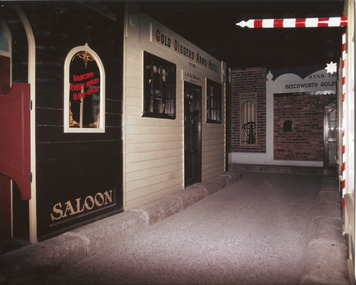 The Beechworth Burke Museum
Photograph, c1990
... Beechworth itself is acknowledged as Victoria's best-preserved gold mining town and deserves recognition of its significance. it also showcases the great significance of social develpment and globalization that occured throughout the state during this period. ...Taken in the 1990's, this photograph depicts a row of shop fronts in the 'Street of Shops' exhibition in the Burke Museum in Beechworth. This exhibition was created and opened in 1979 and was intended to reflect and imitate a historic peirod in the town's past. The time period decpicted is that of the Gold Rush which swept through many Victorian towns from the 1850's onwards. For the town of Beechworth, the gold rush began in 1852, when gold was discovered in Spring Creek, drawing in many new residents seeking to make a fortune and transforming a once remote town into a bustling centre brimming with hope and opportunity. By 1857, the town contained over 200,000 residents and with this, the need for more amenities and intsitutions arose. Multiple churches, banks, schools, shops, hospitals and other essential buildings appearing over the years. The wealth acquired through the gold rush is largely responsible for the vast development of the town and many of its significant buildings which still remain to this day. This photograph also highlights the significance of this type of exhibition, providing a new mode of experiencing and learning about the past. The street depicts the many supporting trades and industries that arose from the mass migration during the gold rush. The creation of the Street of Shops in 1979 was envisioned by Roy Harvey who was the curator at the time, with the intention of recreating an authentic feel to the environment while collecting from the community to accurately portray the multiculturalism that is ingrainded in many towns and communities of Victoria. This photograph contains historical significance as it relates to and portrays an especially important period of time within Beechworth and Victoria's history. The gold rush phenomena ushered in a wave of hope and prosperity for citizens and immigrants alike. It provided many with the opportunity to strike it rich, while the town prospered and grew in many ways. This widespread development that accompanied the gold rush occured throughout Victoria and holds great historical importance when recording the social, economic and communal developments that occured throughout the time period which gave way to the beloved towns and communities we know today. Beechworth itself is acknowledged as Victoria's best-preserved gold mining town and deserves recognition of its significance. it also showcases the great significance of social develpment and globalization that occured throughout the state during this period. Coloured rectangular photograph printed on matte photographic paper and unmounted. Obverse: Dancing every night 8pm-6am [mirror] / Gold Diggers Arms Hotel façade / Star / Beechworth Gold / J. Davidson / Saloon Reverse: 3306 beechworth, burke museum, street of shops, gold rush, indigo shire gold rush, 1850s beechworth, burke museum exhibitions, saloon, gold buyer, hotel, historical streetscape, gold rush immigration -
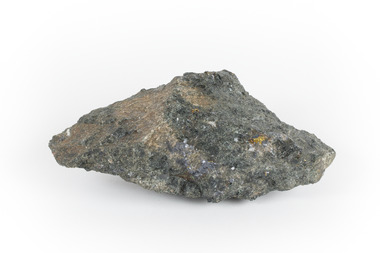 The Beechworth Burke Museum
Geological specimen - Mangan Hedenbergite
... Manganese is the world’s fourth most used mineral after iron, aluminium, and copper primarily because it has no satisfactory substitute in its major applications. Globally, the steel industry is the primary user of manganese metal, utilizing it as an alloy to enhance the strength and workability of steel and in the manufacture of tin cans. ...This specimen was recovered from Broken Hill, NSW. It was given the name Mangan Hedenbergite in 1819 by Jöns Jakob Berzelius in honor of Mr. Anders Ludvig of Hedenberg who was the first to define hedenbergite as a mineral. Hedenbergite, belongs in the pyroxene group having a monoclinic crystal system. The mineral is extremely rarely found as a pure substance. Mangan Hedenbergite is a manganese bearing variety of Hedenbergite. Manganese is the world’s fourth most used mineral after iron, aluminium, and copper primarily because it has no satisfactory substitute in its major applications. Globally, the steel industry is the primary user of manganese metal, utilizing it as an alloy to enhance the strength and workability of steel and in the manufacture of tin cans. Manganese is a key component of certain widely used aluminium alloys and, in oxide form, dry cell batteries used in electric vehicles. These batteries are in high demand. Another potential use for manganese may as an additive to help coat and protect a car’s engine. Manganese is also used for non-metallurgical purposes such as plant fertilizers, animal feed, and colorants for bricks. This specimen is part of a larger collection of geological and mineral specimens collected from around Australia (and some parts of the world) and donated to the Burke Museum between 1868-1880. A large percentage of these specimens were collected in Victoria as part of the Geological Survey of Victoria that begun in 1852 (in response to the Gold Rush) to study and map the geology of Victoria. Collecting geological specimens was an important part of mapping and understanding the scientific makeup of the earth. Many of these specimens were sent to research and collecting organisations across Australia, including the Burke Museum, to educate and encourage further study.A hand-sized mineral specimen in shades of silver and blackmanganese, open cut mine, manganese ore processing, bell bay, tasmania, northern territory, steel industry, zinc-carbon batteries, alkaline batteries, tin cans -
 Federation University Historical Collection
Pamphlet - Pamphlet - Promotion, RUN: Regional Universities Network; Research regionally embedded, globally engaged, c2014
... Colour photographs RUN: Regional Universities Network; Research regionally embedded, globally engaged, c2014. Pamphlet Pamphlet - Promotion ...The Regional Universities Network (RUN) is a group of six regionally-based Australian universities committed to delivering the research that matters most to regional and rural communities. They include CQ University, Federation University, University of New England, Southern Cross University, University of Southern Queensland and University of the Sunshine Coast. The Network was formed c2014.12 printed pages - A4. Colour photographsUniversity symbolsrun, regional iniversities network, cq university, federation university, university of southern queensland, university of the sunshine coast, university of new england, southern cross university, professor sally ferguson, professor caroline finch, dr terry rose, assoc professor myfonwy maple, dr cheryl mccarthy, assoc professor adam polkinghorne -
Federation University Historical Collection
Book, Jeremy Smith, Debating Civilisations: Interrogating Civilisational Analysis in a Global Age, 2017
... Debating Civilisations: Interrogating Civilisational Analysis in a Global Age...Civilisational Analysis Jeremy Smith Staff author Federation University Staff Author 205 page book on civilisational analysis Debating Civilisations: Interrogating Civilisational Analysis in a Global Age Book Jeremy Smith Manchester University Press ...205 page book on civilisational analysisnon-fictioncivilisational analysis, jeremy smith, staff author, federation university staff author -
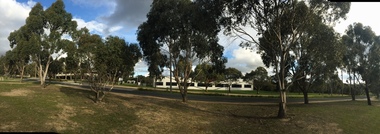 Federation University Historical Collection
Photograph - Colour Photograph, Clare Gervasoni, Ballarat Technology Park, 2015, 13/08/2015
... ballarat technology park federation university technology park state revenue office ibm canadian wetlands berry street ibm-issc-southern data centre plaque roger hallam geoffrey blainey david james global innovation centre cic greenhill Colour photographs of buildings and landscape associated with the Federation University Technology Park. ...Colour photographs of buildings and landscape associated with the Federation University Technology Park.ballarat technology park, federation university technology park, state revenue office, ibm, canadian wetlands, berry street, ibm-issc-southern data centre plaque, roger hallam, geoffrey blainey, david james, global innovation centre, cic, greenhill -
Federation University Historical Collection
Book, University of Ballarat Annual Report, 2000, 2000
... David Caro was the Chancellor, David James was the Vice-Chancellor until the end of the year, and Kerry Cox was announced as the next Vice Chancellor. university of ballarat annual report establishment university of ballarat establishment david caro david james 130th anniversary kerry cox centre for rural and regional health john keller honorary doctorate - mary atkinson shenzhen craig hurley jeff kennett felicity kennett barry wemyss kerry Cox appointment david James retirement IBM Global Services Greenhill Enterprise Centre Learning City Initiative Camp Street Precinct Arts Academy Science Industry Building Canadian Wetlands Student Union Building refurbishment W.J. ...Soft covered Annual Report.non-fictionuniversity of ballarat, annual report, establishment, university of ballarat establishment, david caro, david james, 130th anniversary, kerry cox, centre for rural and regional health, john keller, honorary doctorate - mary atkinson, shenzhen, craig hurley, jeff kennett, felicity kennett, barry wemyss, kerry cox appointment, david james retirement, ibm global services, greenhill enterprise centre, learning city initiative, camp street precinct, arts academy, science industry building, canadian wetlands, student union building refurbishment, w.j. gribble building, horsham campus, university brewery, aboriginal education centre, mary atkinson, roy over, woo wai man, william pryor, bill pryor, mary modeen -
Federation University Historical Collection
Photograph, 08/12/1999
... mount helen campus david curry paul foxcrom ross davey helen danes noel mccormack ibm global services Photograph ...mount helen campus, david curry, paul foxcrom, ross davey, helen danes, noel mccormack, ibm global services -
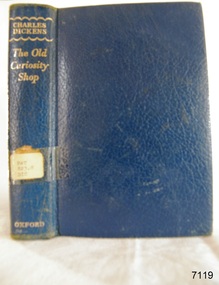 Flagstaff Hill Maritime Museum and Village
Book - A Fictional story, Charles Dickens, The Old Curiosity Shop, 1997
... It sold 100,000 copies weekly and inspired global excitement comparable to modern blockbusters. ...Charles Dickens (1812–1870) was one of the great English novelists of the Victorian era, famous for vivid characters, social criticism, and stories that were first published in serial form. He began as a journalist, rose to enormous popularity during his lifetime, and wrote major works such as Oliver Twist, David Copperfield, and Great Expectations. The Old Curiosity Shop is about Nell Trent, a young girl, and her grandfather, who live in a London curiosity shop. After her grandfather’s gambling and debts bring danger from the moneylender Daniel Quilp, they flee and travel through hardship, poverty, and misfortune, the novel is best known for its emotional portrayal of Nell. It was written and published in serial form in “Master Humphrey’s Clock” magazine from 1840 to 1841, then issued as a book in 1841. The subject book published by the Oxford University Press. The subject book in hardback edition was published on 13th November 1997 by the same publisher.The Old Curiosity Shop Author: Charles Dickens Publisher: Oxford University Press Date: 1997 Light blue leather embossed hardcover with a blue spine and lettering in gold. The spine has a Library label.fictionCharles Dickens (1812–1870) was one of the great English novelists of the Victorian era, famous for vivid characters, social criticism, and stories that were first published in serial form. He began as a journalist, rose to enormous popularity during his lifetime, and wrote major works such as Oliver Twist, David Copperfield, and Great Expectations. The Old Curiosity Shop is about Nell Trent, a young girl, and her grandfather, who live in a London curiosity shop. After her grandfather’s gambling and debts bring danger from the moneylender Daniel Quilp, they flee and travel through hardship, poverty, and misfortune, the novel is best known for its emotional portrayal of Nell. It was written and published in serial form in “Master Humphrey’s Clock” magazine from 1840 to 1841, then issued as a book in 1841. The subject book published by the Oxford University Press. The subject book in hardback edition was published on 13th November 1997 by the same publisher.book, the old curiosity shop, charles dickens, shipwrecked-coast, flagstaff-hill, flagstaff-hill-maritime-museum, warrnambool, maritime-museum, flagstaff-hill-maritime-village, pattison collection, warrnambool library, warrnambool mechanics’ institute, ralph eric pattison, corangamite regional library service, warrnambool city librarian, mechanics’ institute library, victorian library board, warrnambool books and records, warrnambool children’s library, great ocean road -
 Flagstaff Hill Maritime Museum and Village
Book - Reference Travel Diary/History, Sir Francis Leopold M'Clintock, The Voyage of The 'Fox'. Fate of Sir John Franklin, 1881
... Schwatka's 1878–1880 expedition, in particular, had just returned to global headlines right before this book was printed, having discovered more graves, bones, and the remains of Franklin's camp. ...This classic 1859 maritime narrative with the subject copy being the 1881 fifth edition details one of the most significant moments in Arctic exploration. It follows the definitive discovery of what happened to Sir John Franklin’s lost expedition. The Voyage of the 'Fox' is a first-hand travel diary and official report written by Captain Francis Leopold McClintock.The Voyage of The 'Fox'. The Fate of Sir John Franklin Author: Sir F Leopold M'Clintock Publisher: John Murray, Albemarle Street, London. Publisher to the Admiralty Date: 1881 Blue embossed hardcover with a blue spine and lettering in gold. The spine has a Library label with an inscription.non-fictionThis classic 1859 maritime narrative with the subject copy being the 1881 fifth edition details one of the most significant moments in Arctic exploration. It follows the definitive discovery of what happened to Sir John Franklin’s lost expedition. The Voyage of the 'Fox' is a first-hand travel diary and official report written by Captain Francis Leopold McClintock.flagstaff hill, warrnambool, shipwrecked coast, flagstaff hill maritime museum, maritime museum, shipwreck coast, flagstaff hill maritime village, great ocean road, book, pattison collection, warrnambool library, warrnambool mechanics’ institute, ralph eric pattison, corangamite regional library service, warrnambool city librarian, mechanics’ institute library, victorian library board, warrnambool books and records, warrnambool children’s library, the voyage of the 'fox'. the fate of sir john franklin, sir f leopold m'clintock, arctic exploration -
 Flagstaff Hill Maritime Museum and Village
Book - Reference Encyclopedic Compendium, Peter Heylyn, Cosmography in Four Books, 1674
... (For more information on the Pattison Collection see item 3678 Flagstaff Hill collections) https://victoriancollections.net.au/items/5580c7e72162f114d8b758db flagstaff hill warrnambool shipwrecked coast flagstaff hill maritime museum maritime museum shipwreck coast flagstaff hill maritime village great ocean road book pattison collection warrnambool library warrnambool mechanics’ institute ralph eric pattison corangamite regional library service warrnambool city librarian mechanics’ institute library victorian library board warrnambool books and records warrnambool children’s library cosmography in four books philip chetwind Anne Seile Cosmography in Four Books was originally published as Cosmographie and is one of the most famous and comprehensive English encyclopedic compendiums of global geography, history, and chorography, meaning regional topography, produced in the 17th century. ...Cosmography in Four Books was originally published as Cosmographie and is one of the most famous and comprehensive English encyclopedic compendiums of global geography, history, and chorography, meaning regional topography, produced in the 17th century. The work was first published in 1652 and attempts to document every known region of the world at the time. The information is bound together as a single large folio volume and divided into four main sections or books: Book I: Europe and its surrounding islands. Book II: Asia and its kingdoms. Book III: Africa, its provinces, and coastal regions. Book IV: America, split into Northern and Southern America. Book IV features an Appendix speculating on Terra Australis Incognita (the unknown Southern Continent). Each section outlines geographical coordinates, local climates, political histories, royal lineages, cultures, and notable geographical features, accompanied by four large folding engraved maps, one for each continent.Hard cover book,Cosmography in Four Books Author: Peter Heylyn Publisher: Philip Cherwind & Anne Seile, London. Date: (MDCLXXIV) 1674 Further Information: Brown Leather bound volume, library label to spine, spine has raised ribbing front cover has border in gilt.non-fictionCosmography in Four Books was originally published as Cosmographie and is one of the most famous and comprehensive English encyclopedic compendiums of global geography, history, and chorography, meaning regional topography, produced in the 17th century. The work was first published in 1652 and attempts to document every known region of the world at the time. The information is bound together as a single large folio volume and divided into four main sections or books: Book I: Europe and its surrounding islands. Book II: Asia and its kingdoms. Book III: Africa, its provinces, and coastal regions. Book IV: America, split into Northern and Southern America. Book IV features an Appendix speculating on Terra Australis Incognita (the unknown Southern Continent). Each section outlines geographical coordinates, local climates, political histories, royal lineages, cultures, and notable geographical features, accompanied by four large folding engraved maps, one for each continent.flagstaff hill, warrnambool, shipwrecked coast, flagstaff hill maritime museum, maritime museum, shipwreck coast, flagstaff hill maritime village, great ocean road, book, pattison collection, warrnambool library, warrnambool mechanics’ institute, ralph eric pattison, corangamite regional library service, warrnambool city librarian, mechanics’ institute library, victorian library board, warrnambool books and records, warrnambool children’s library, cosmography in four books, philip chetwind, anne seile
