
Showing 2662 items matching "society records"
-
 Orbost & District Historical Society
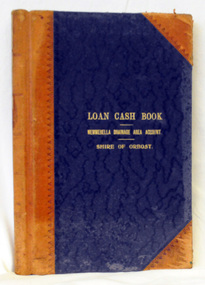
cash book, first half 20th century
... This ledger was used by the Shire of Orbost to record transactions relating bto the Newmerella Drainage Area from 1927 to 1950. The item was donated to Orbost & District Historical society from P.R.O.V. as a Place of Deposit (POD) item for safe keeping by a local history group or museum. ...This ledger was used by the Shire of Orbost to record transactions relating bto the Newmerella Drainage Area from 1927 to 1950. The item was donated to Orbost & District Historical society from P.R.O.V. as a Place of Deposit (POD) item for safe keeping by a local history group or museum. ...This ledger was used by the Shire of Orbost to record transactions relating bto the Newmerella Drainage Area from 1927 to 1950. The item was donated to Orbost & District Historical society from P.R.O.V. as a Place of Deposit (POD) item for safe keeping by a local history group or museum. The shire covered an area of 9,347 square kilometres and existed from 1892 until 1994 when it became part of the East Gippsland Shire Council. Orbost was at first included in the Bairnsdale Shire from 1882 and was later part of the Tambo Shire. Because of travelling distances the Croajingalong Shire was created in 1892 (name changed to Orbost Shire 17.2.1893 with James Cameron as the first Shire President. In 1994 it amalgamated to become part of East Gippsland Shire Council.This item is a hand-written record of the accounts of the Orbost Shire local government. It pre-dates computer records. The Orbost Shire Council no longer exists having been absorbed into the East Gippsland Shire Council. A ledger with a black cover and brown binding. It has marbled end covers. It contains handwritten records of transactions relating to the Newmerella Drainage Area. On the front cover in gold print is "LOAN CASH BOOK (underlined) NEWMERELLA DRAINAGE AREA ACCOUNT (underlined) SHIRE OF ORBOST". on spine - "Newmerella Drainage Area Cash Book" in gold print.orbost-shire-council ledger accounts newmerella-drainage-area -
 Orbost & District Historical Society
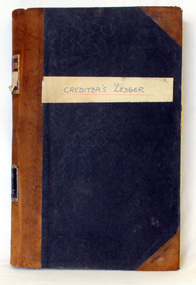
creditors' ledger, 1901 - 1960
... records information about Shire purchases. The purpose of the Creditors Ledger is to provide knowledge about which suppliers the Shire has paid money to. This ledger was used by the Shire of Orbost pound keeper from 1901 -1960. The item was donated to Orbost & District Historical society...records information about Shire purchases. The purpose of the Creditors Ledger is to provide knowledge about which suppliers the Shire has paid money to. This ledger was used by the Shire of Orbost pound keeper from 1901 -1960. The item was donated to Orbost & District Historical society ...This creditors' ledger records information about Shire purchases. The purpose of the Creditors Ledger is to provide knowledge about which suppliers the Shire has paid money to. This ledger was used by the Shire of Orbost pound keeper from 1901 -1960. The item was donated to Orbost & District Historical society from P.R.O.V. as a Place of Deposit (POD) item for safe keeping by a local history group or museum. The shire covered an area of 9,347 square kilometres and existed from 1892 until 1994 when it became part of the East Gippsland Shire Council. Orbost was at first included in the Bairnsdale Shire from 1882 and was later part of the Tambo Shire. Because of travelling distances the Croajingalong Shire was created in 1892 (name changed to Orbost Shire 17.2.1893 with James Cameron as the first Shire President. In 1994 it amalgamated to become part of East Gippsland Shire Council. This item is a hand-written record of the accounts of the Orbost Shire local government. It pre-dates computer records. The Orbost Shire council no longer exists having been absorbed by the East Gippsland Shire council.A large book with a black patterned cover with brown binding, it contains records handwritten in ink. These are records of money paid out by the local government. There are typewritten sheets of sundry creditors added to the back section of the book.hand-written on front cover on white sticker - " Creditor's Ledger" on spine in gold on red - "Ledger" ; on black - "Shire of Orbost" accounts ledger orbost-shire-council -
 Orbost & District Historical Society
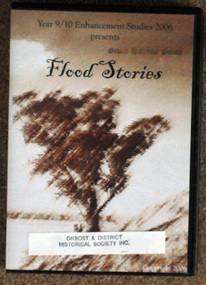
D.V.D, Flood Stories, 2006
... These stories record impressions of local people. sticker and stamp - Orbost & District Historical Society A D.V.D. in a black plastic case. ...In October 2006, Orbost Secondary College 9/10 Enhancement Studies Class worked to preserve the memories of the Orbost community with three short films describing recollections of Orbost floods. There are ten stories including memories of the 1952, 1971 and 1991 floods. They are narrated by various Orbost identities - Anne Bridges; Kay Lynn; Ken Edlington; Margaret Adams; Max Reynols; Shirley Reynolds and Ngaere Donald.Floods have been part of the history of Orbost since settlement. These stories record impressions of local people.A D.V.D. in a black plastic case. On the cover ia a brown sketch of a tree. Above in black print is the title, "Flood Stories" with " Year 9/10 Enhancement Studies 2006 presents" at the top.sticker and stamp - Orbost & District Historical Society -
 Orbost & District Historical Society
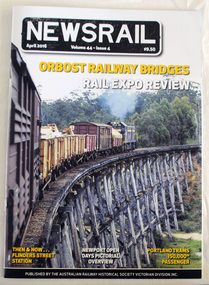
magazine, NEWSRAIL Vol 44 Issue 4 April 2016, April 2016
... Society Victorian Division Inc. has a proud history of over 70 years of catering for all who have an interest in the railway history of Victoria. It has a membership of over 500 members throughout Australia and overseas. This item was donated at the Centenary of the Orbost - Bairnsdale Railway exhibition held in Orbost April 2016. This item is a record ...Established in 1945, the Australian Railway Historical Society Victorian Division Inc. has a proud history of over 70 years of catering for all who have an interest in the railway history of Victoria. It has a membership of over 500 members throughout Australia and overseas. This item was donated at the Centenary of the Orbost - Bairnsdale Railway exhibition held in Orbost April 2016. This item is a record of the the history of the Orbost-Bairnsdale railway line and therefore reflects the role that the rail line played in the social and economic history of Orbost. A magazine/booklet titled, NEWSRAIL. It is Vol. 44 Issue 4 dated April, 2016. There is an article on 'Orbost Railway Bridges. The magazine has a cost of $9.50. On the front cover is a coloured photograph of a train passing over the Wairewa trestle bridge on the Bairnsdale - Orbost line. -
 Flagstaff Hill Maritime Museum and Village
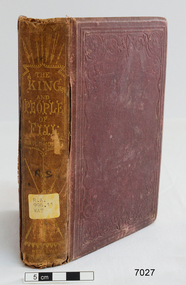
Book - Reference Book/History/Missionary Journal, Rev Joseph Waterhouse, The King and People of Fiji, 1866
... (For more information on the Pattison Collection see item 3678 Flagstaff Hill collections) https://victoriancollections.net.au/items/5580c7e72162f114d8b758db warrnambool shipwrecked-coast flagstaff-hill flagstaff-hill-maritime-museum maritime-museum flagstaff-hill-maritime-village shipwrecked-artefact book warrnambool library warrnambool mechanics’ institute mechanics’ institute library victorian library board warrnambool books and records warrnambool public library the king and people of fiji Rev Joseph Waterhouse The King and People of Fiji (1866) centres on the biography of Thakombau (Cakobau), Fiji's chief from 1817-1883, blending it with ethnographic details of Fijian society before the 1854 Christian reformation. ...The King and People of Fiji (1866) centres on the biography of Thakombau (Cakobau), Fiji's chief from 1817-1883, blending it with ethnographic details of Fijian society before the 1854 Christian reformation. It covers pre Christian manners, customs, superstitions, court politics, mythology, community structures, inter-island warfare, cannibalism rituals (like consuming war captives and widows), and hospitality toward missionaries and visitors. Chapters open dramatically, such as "First Blood" depicting young Thakombau's initiation in revenge killings.The King and People of Fiji Author: Rev Joseph Waterhouse Publisher: Wesleyan Conference Office Date: 1866 Further Information: Red leather embossed covers and spine with title to spinenon-fictionThe King and People of Fiji (1866) centres on the biography of Thakombau (Cakobau), Fiji's chief from 1817-1883, blending it with ethnographic details of Fijian society before the 1854 Christian reformation. It covers pre Christian manners, customs, superstitions, court politics, mythology, community structures, inter-island warfare, cannibalism rituals (like consuming war captives and widows), and hospitality toward missionaries and visitors. Chapters open dramatically, such as "First Blood" depicting young Thakombau's initiation in revenge killings.warrnambool, shipwrecked-coast, flagstaff-hill, flagstaff-hill-maritime-museum, maritime-museum, flagstaff-hill-maritime-village, shipwrecked-artefact, book, warrnambool library, warrnambool mechanics’ institute, mechanics’ institute library, victorian library board, warrnambool books and records, warrnambool public library, the king and people of fiji, rev joseph waterhouse -
 Flagstaff Hill Maritime Museum and Village
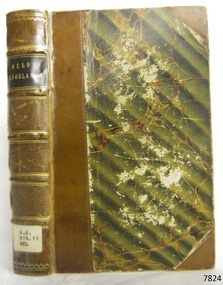
Book - Reference Book/History/Travel, Charles Richard Weld, Two months in the Highlands, Orcadia and Skye, 1860
... (For more information on the Pattison Collection see item 3678 Flagstaff Hill collections) https://victoriancollections.net.au/items/5580c7e72162f114d8b758db warrnambool shipwrecked-coast flagstaff-hill flagstaff-hill-maritime-museum maritime-museum great ocean road warrnambool library warrnambool mechanics’ institute mechanics’ institute library warrnambool books and records warrnambool public library Weld's Highlands Two Months in the Highlands Orcadia and Skye Charles Richard Weld 1860 Longman Green Longman and Roberts Charles Richard Weld (1813–1869) was an English writer and legal‑trained man who became best known for “A History of the Royal Society”, with Memoirs of the Presidents (1848), which is regarded as the first substantial institutional history of the Royal Society and remains a standard reference on early British science. ...Charles Richard Weld (1813–1869) was an English writer and legal‑trained man who became best known for “A History of the Royal Society”, with Memoirs of the Presidents (1848), which is regarded as the first substantial institutional history of the Royal Society and remains a standard reference on early British science. Two Months in the Highlands, Orcadia, and Skye is a 1860 travel book by him, published in London and listed as a first edition. Weld is also known as an historian of the Royal Society. It should be noted that the subject work is sometimes catalogued with “Orcadia” and sometimes with “Orcadia and Skye” in slightly different punctuation, but the core bibliographic details are the same. With Weld as author and 1860 as the publication year, and Longman, Green, Longman, and Roberts as publisher.Weld's Highlands: Two Months in the Highlands Orcadia and Skye Author: Charles Richard Weld Publisher: Longman Green Longman Roberts Date: 1860 Light and dark diagonally striped hardcover with a brown spine and reinforced corners. The spine has a label with an inscription.non-fictionCharles Richard Weld (1813–1869) was an English writer and legal‑trained man who became best known for “A History of the Royal Society”, with Memoirs of the Presidents (1848), which is regarded as the first substantial institutional history of the Royal Society and remains a standard reference on early British science. Two Months in the Highlands, Orcadia, and Skye is a 1860 travel book by him, published in London and listed as a first edition. Weld is also known as an historian of the Royal Society. It should be noted that the subject work is sometimes catalogued with “Orcadia” and sometimes with “Orcadia and Skye” in slightly different punctuation, but the core bibliographic details are the same. With Weld as author and 1860 as the publication year, and Longman, Green, Longman, and Roberts as publisher. warrnambool, shipwrecked-coast, flagstaff-hill, flagstaff-hill-maritime-museum, maritime-museum, great ocean road, warrnambool library, warrnambool mechanics’ institute, mechanics’ institute library, warrnambool books and records, warrnambool public library, weld's highlands, two months in the highlands orcadia and skye, charles richard weld, 1860, longman green longman and roberts -
 Flagstaff Hill Maritime Museum and Village
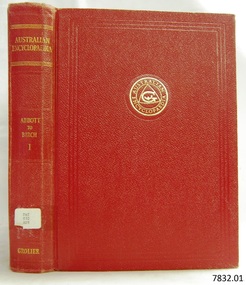
Book, The Australian Encyclopaedia Vol 1
... records warrnambool children’s library great ocean road The Australian Encyclopaedia Vol 1 Alec H. Chisholm Label on spine cover with typed text PAT 032 AUS Pastedown front endpaper has sticker from Corangamite Regional Library Service Front loose endpaper has a stamp from Warrnambool Public Library The Australian Encyclopaedia Vol 1 set 1 ( Abbott to Birch) Editor-In - Chief: Alec H. Chisholm Publisher: The Grolier Society ...This item is from the ‘Pattison Collection’, a collection of books and records that was originally owned by the Warrnambool Mechanics’ Institute, which was founded in Warrnambool in 1853. By 1886 the Warrnambool Mechanics’ Institute (WMI) had grown to have a Library, Museum and Fine Arts Gallery, with a collection of “… choice productions of art, and valuable specimens in almost every branch and many wonderful national curiosities are now to be seen there, including historic relics of the town and district.” It later included a School of Design. Although it was very well patronised, the lack of financial support led the WMI in 1911 to ask the City Council to take it over. In 1935 Ralph Pattison was appointed as City Librarian to establish and organise the Warrnambool Library as it was then called. When the WMI building was pulled down in 1963 a new civic building was erected on the site and the new Warrnambool Library, on behalf of the City Council, took over all the holdings of the WMI. At this time some of the items were separated and identified as the ‘Pattison Collection’, named after Ralph Pattison. Eventually the components of the WMI were distributed from the Warrnambool Library to various places, including the Art Gallery, Historical Society and Flagstaff Hill. Later some were even distributed to other regional branches of Corangamite Regional Library and passed to and fro. It is difficult now to trace just where all of the items have ended up. The books at Flagstaff Hill Maritime Village generally display stamps and markings from Pattison as well as a variety of other institutions including the Mechanics’ Institute itself. RALPH ERIC PATTISON Ralph Eric Pattison was born in Rockhampton, Queensland, in 1891. He married Maude Swan from Warrnambool in 1920 and they set up home in Warrnambool. In 1935 Pattison accepted a position as City Librarian for the Warrnambool City Council. His huge challenge was to make a functional library within two rooms of the Mechanics’ Institute. He tirelessly cleaned, cleared and sorted a disarrayed collection of old books, jars of preserved specimens and other items reserved for exhibition in the city’s museum. He developed and updated the library with a wide variety of books for all tastes, including reference books for students; a difficult task to fulfil during the years following the Depression. He converted all of the lower area of the building into a library, reference room and reading room for members and the public. The books were sorted and stored using a cataloguing and card index system that he had developed himself. He also prepared the upper floor of the building and established the Art Gallery and later the Museum, a place to exhibit the many old relics that had been stored for years for this purpose. One of the treasures he found was a beautiful ancient clock, which he repaired, restored and enjoyed using in his office during the years of his service there. Ralph Pattison was described as “a meticulous gentleman whose punctuality, floorless courtesy and distinctive neat dress were hallmarks of his character, and ‘his’ clock controlled his daily routine, and his opening and closing of the library’s large heavy doors to the minute.” Pattison took leave during 1942 to 1945 to serve in the Royal Australian Navy, Volunteer Reserve as Lieutenant. A few years later he converted one of the Museum’s rooms into a Children’s Library, stocking it with suitable books for the younger generation. This was an instant success. In the 1950’s he had the honour of being appointed to the Victorian Library Board and received more inspiration from the monthly conferences in Melbourne. He was sadly retired in 1959 after over 23 years of service, due to the fact that he had gone over the working age of council officers. However he continued to take a very keen interest in the continual development of the Library until his death in 1969. The Pattison Collection, along with other items at Flagstaff Hill Maritime Village, was originally part of the Warrnambool Mechanics' Institute’s collection. The Warrnambool Mechanics’ Institute Collection is primarily significant in its totality, rather than for the individual objects it contains. Its contents are highly representative of the development of Mechanics' Institute libraries across Australia, particularly Victoria. A diversity of publications and themes has been amassed, and these provide clues to our understanding of the nature of and changes in the reading habits of Victorians from the 1850s to the middle of the 20th century. The collection also highlights the Warrnambool community’s commitment to the Mechanics’ Institute, reading, literacy and learning in the regions, and proves that access to knowledge was not impeded by distance. These items help to provide a more complete picture of our community’s ideals and aspirations. The Warrnambool Mechanics Institute book collection has historical and social significance for its strong association with the Mechanics Institute movement and the important role it played in the intellectual, cultural and social development of people throughout the latter part of the nineteenth century and the early twentieth century. The collection of books is a rare example of an early lending library and its significance is enhanced by the survival of an original collection of many volumes. The Warrnambool Mechanics' Institute’s publication collection is of both local and state significance. The Australian Encyclopaedia Vol 1 set 1 ( Abbott to Birch) Editor-In - Chief: Alec H. Chisholm Publisher: The Grolier Society of Aus Date: 1965Label on spine cover with typed text PAT 032 AUS Pastedown front endpaper has sticker from Corangamite Regional Library Service Front loose endpaper has a stamp from Warrnambool Public Librarywarrnambool, shipwrecked-coast, flagstaff-hill, flagstaff-hill-maritime-museum, maritime-museum, shipwreck-coast, flagstaff-hill-maritime-village, shipwrecked-artefact, book, pattison collection, warrnambool library, warrnambool mechanics’ institute, ralph eric pattison, corangamite regional library service, warrnambool city librarian, mechanics’ institute library, victorian library board, warrnambool books and records, warrnambool children’s library, great ocean road, the australian encyclopaedia vol 1, alec h. chisholm -
 Flagstaff Hill Maritime Museum and Village
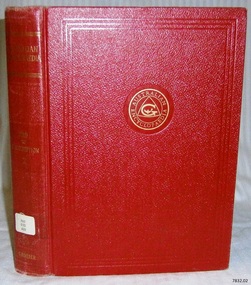
Book, The Australian Encyclopaedia Vol 2
... The Warrnambool Mechanics' Institute’s publication collection is of both local and state significance. warrnambool shipwrecked-coast flagstaff-hill flagstaff-hill-maritime-museum maritime-museum shipwreck-coast flagstaff-hill-maritime-village shipwrecked-artefact book pattison collection warrnambool library warrnambool mechanics’ institute ralph eric pattison corangamite regional library service warrnambool city librarian mechanics’ institute library victorian library board warrnambool books and records warrnambool children’s library great ocean road the australian encyclopaedia vol 2 alec h. chisholm Label on spine cover with typed text PAT 032 AUS Pastedown front endpaper has sticker from Corangamite Regional Library Service Front loose endpaper has a stamp from Warrnambool Public Library The Australian Encyclopaedia Vol 2 set 1 ( Bird to Conscription) Editor-In - Chief: Alec H. Chisholm Publisher: The Grolier Society ...This item is from the ‘Pattison Collection’, a collection of books and records that was originally owned by the Warrnambool Mechanics’ Institute, which was founded in Warrnambool in 1853. By 1886 the Warrnambool Mechanics’ Institute (WMI) had grown to have a Library, Museum and Fine Arts Gallery, with a collection of “… choice productions of art, and valuable specimens in almost every branch and many wonderful national curiosities are now to be seen there, including historic relics of the town and district.” It later included a School of Design. Although it was very well patronised, the lack of financial support led the WMI in 1911 to ask the City Council to take it over. In 1935 Ralph Pattison was appointed as City Librarian to establish and organise the Warrnambool Library as it was then called. When the WMI building was pulled down in 1963 a new civic building was erected on the site and the new Warrnambool Library, on behalf of the City Council, took over all the holdings of the WMI. At this time some of the items were separated and identified as the ‘Pattison Collection’, named after Ralph Pattison. Eventually the components of the WMI were distributed from the Warrnambool Library to various places, including the Art Gallery, Historical Society and Flagstaff Hill. Later some were even distributed to other regional branches of Corangamite Regional Library and passed to and fro. It is difficult now to trace just where all of the items have ended up. The books at Flagstaff Hill Maritime Village generally display stamps and markings from Pattison as well as a variety of other institutions including the Mechanics’ Institute itself. RALPH ERIC PATTISON Ralph Eric Pattison was born in Rockhampton, Queensland, in 1891. He married Maude Swan from Warrnambool in 1920 and they set up home in Warrnambool. In 1935 Pattison accepted a position as City Librarian for the Warrnambool City Council. His huge challenge was to make a functional library within two rooms of the Mechanics’ Institute. He tirelessly cleaned, cleared and sorted a disarrayed collection of old books, jars of preserved specimens and other items reserved for exhibition in the city’s museum. He developed and updated the library with a wide variety of books for all tastes, including reference books for students; a difficult task to fulfil during the years following the Depression. He converted all of the lower area of the building into a library, reference room and reading room for members and the public. The books were sorted and stored using a cataloguing and card index system that he had developed himself. He also prepared the upper floor of the building and established the Art Gallery and later the Museum, a place to exhibit the many old relics that had been stored for years for this purpose. One of the treasures he found was a beautiful ancient clock, which he repaired, restored and enjoyed using in his office during the years of his service there. Ralph Pattison was described as “a meticulous gentleman whose punctuality, floorless courtesy and distinctive neat dress were hallmarks of his character, and ‘his’ clock controlled his daily routine, and his opening and closing of the library’s large heavy doors to the minute.” Pattison took leave during 1942 to 1945 to serve in the Royal Australian Navy, Volunteer Reserve as Lieutenant. A few years later he converted one of the Museum’s rooms into a Children’s Library, stocking it with suitable books for the younger generation. This was an instant success. In the 1950’s he had the honour of being appointed to the Victorian Library Board and received more inspiration from the monthly conferences in Melbourne. He was sadly retired in 1959 after over 23 years of service, due to the fact that he had gone over the working age of council officers. However he continued to take a very keen interest in the continual development of the Library until his death in 1969. The Pattison Collection, along with other items at Flagstaff Hill Maritime Village, was originally part of the Warrnambool Mechanics' Institute’s collection. The Warrnambool Mechanics’ Institute Collection is primarily significant in its totality, rather than for the individual objects it contains. Its contents are highly representative of the development of Mechanics' Institute libraries across Australia, particularly Victoria. A diversity of publications and themes has been amassed, and these provide clues to our understanding of the nature of and changes in the reading habits of Victorians from the 1850s to the middle of the 20th century. The collection also highlights the Warrnambool community’s commitment to the Mechanics’ Institute, reading, literacy and learning in the regions, and proves that access to knowledge was not impeded by distance. These items help to provide a more complete picture of our community’s ideals and aspirations. The Warrnambool Mechanics Institute book collection has historical and social significance for its strong association with the Mechanics Institute movement and the important role it played in the intellectual, cultural and social development of people throughout the latter part of the nineteenth century and the early twentieth century. The collection of books is a rare example of an early lending library and its significance is enhanced by the survival of an original collection of many volumes. The Warrnambool Mechanics' Institute’s publication collection is of both local and state significance. The Australian Encyclopaedia Vol 2 set 1 ( Bird to Conscription) Editor-In - Chief: Alec H. Chisholm Publisher: The Grolier Society of Aus Date: 1965Label on spine cover with typed text PAT 032 AUS Pastedown front endpaper has sticker from Corangamite Regional Library Service Front loose endpaper has a stamp from Warrnambool Public Library warrnambool, shipwrecked-coast, flagstaff-hill, flagstaff-hill-maritime-museum, maritime-museum, shipwreck-coast, flagstaff-hill-maritime-village, shipwrecked-artefact, book, pattison collection, warrnambool library, warrnambool mechanics’ institute, ralph eric pattison, corangamite regional library service, warrnambool city librarian, mechanics’ institute library, victorian library board, warrnambool books and records, warrnambool children’s library, great ocean road, the australian encyclopaedia vol 2, alec h. chisholm -
 Flagstaff Hill Maritime Museum and Village
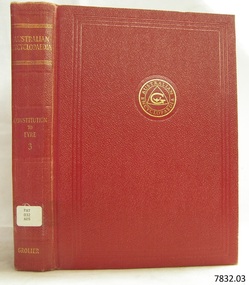
Book, The Australian Encyclopaedia Vol 3
... records warrnambool children’s library great ocean road The Australian Encyclopaedia Vol 3 Alec H. Chisholm Label on spine cover with typed text PAT 032 AUS Pastedown front endpaper has sticker from Corangamite Regional Library Service Front loose endpaper has a stamp from Warrnambool Public Library The Australian Encyclopaedia Vol 3 set 1 (Constitution to Eyre) Editor-In - Chief: Alec H. Chisholm Publisher: The Grolier Society ...This item is from the ‘Pattison Collection’, a collection of books and records that was originally owned by the Warrnambool Mechanics’ Institute, which was founded in Warrnambool in 1853. By 1886 the Warrnambool Mechanics’ Institute (WMI) had grown to have a Library, Museum and Fine Arts Gallery, with a collection of “… choice productions of art, and valuable specimens in almost every branch and many wonderful national curiosities are now to be seen there, including historic relics of the town and district.” It later included a School of Design. Although it was very well patronised, the lack of financial support led the WMI in 1911 to ask the City Council to take it over. In 1935 Ralph Pattison was appointed as City Librarian to establish and organise the Warrnambool Library as it was then called. When the WMI building was pulled down in 1963 a new civic building was erected on the site and the new Warrnambool Library, on behalf of the City Council, took over all the holdings of the WMI. At this time some of the items were separated and identified as the ‘Pattison Collection’, named after Ralph Pattison. Eventually the components of the WMI were distributed from the Warrnambool Library to various places, including the Art Gallery, Historical Society and Flagstaff Hill. Later some were even distributed to other regional branches of Corangamite Regional Library and passed to and fro. It is difficult now to trace just where all of the items have ended up. The books at Flagstaff Hill Maritime Village generally display stamps and markings from Pattison as well as a variety of other institutions including the Mechanics’ Institute itself. RALPH ERIC PATTISON Ralph Eric Pattison was born in Rockhampton, Queensland, in 1891. He married Maude Swan from Warrnambool in 1920 and they set up home in Warrnambool. In 1935 Pattison accepted a position as City Librarian for the Warrnambool City Council. His huge challenge was to make a functional library within two rooms of the Mechanics’ Institute. He tirelessly cleaned, cleared and sorted a disarrayed collection of old books, jars of preserved specimens and other items reserved for exhibition in the city’s museum. He developed and updated the library with a wide variety of books for all tastes, including reference books for students; a difficult task to fulfil during the years following the Depression. He converted all of the lower area of the building into a library, reference room and reading room for members and the public. The books were sorted and stored using a cataloguing and card index system that he had developed himself. He also prepared the upper floor of the building and established the Art Gallery and later the Museum, a place to exhibit the many old relics that had been stored for years for this purpose. One of the treasures he found was a beautiful ancient clock, which he repaired, restored and enjoyed using in his office during the years of his service there. Ralph Pattison was described as “a meticulous gentleman whose punctuality, floorless courtesy and distinctive neat dress were hallmarks of his character, and ‘his’ clock controlled his daily routine, and his opening and closing of the library’s large heavy doors to the minute.” Pattison took leave during 1942 to 1945 to serve in the Royal Australian Navy, Volunteer Reserve as Lieutenant. A few years later he converted one of the Museum’s rooms into a Children’s Library, stocking it with suitable books for the younger generation. This was an instant success. In the 1950’s he had the honour of being appointed to the Victorian Library Board and received more inspiration from the monthly conferences in Melbourne. He was sadly retired in 1959 after over 23 years of service, due to the fact that he had gone over the working age of council officers. However he continued to take a very keen interest in the continual development of the Library until his death in 1969. The Pattison Collection, along with other items at Flagstaff Hill Maritime Village, was originally part of the Warrnambool Mechanics' Institute’s collection. The Warrnambool Mechanics’ Institute Collection is primarily significant in its totality, rather than for the individual objects it contains. Its contents are highly representative of the development of Mechanics' Institute libraries across Australia, particularly Victoria. A diversity of publications and themes has been amassed, and these provide clues to our understanding of the nature of and changes in the reading habits of Victorians from the 1850s to the middle of the 20th century. The collection also highlights the Warrnambool community’s commitment to the Mechanics’ Institute, reading, literacy and learning in the regions, and proves that access to knowledge was not impeded by distance. These items help to provide a more complete picture of our community’s ideals and aspirations. The Warrnambool Mechanics Institute book collection has historical and social significance for its strong association with the Mechanics Institute movement and the important role it played in the intellectual, cultural and social development of people throughout the latter part of the nineteenth century and the early twentieth century. The collection of books is a rare example of an early lending library and its significance is enhanced by the survival of an original collection of many volumes. The Warrnambool Mechanics' Institute’s publication collection is of both local and state significance. The Australian Encyclopaedia Vol 3 set 1 (Constitution to Eyre) Editor-In - Chief: Alec H. Chisholm Publisher: The Grolier Society of Aus Date: 1965Label on spine cover with typed text PAT 032 AUS Pastedown front endpaper has sticker from Corangamite Regional Library Service Front loose endpaper has a stamp from Warrnambool Public Librarywarrnambool, shipwrecked-coast, flagstaff-hill, flagstaff-hill-maritime-museum, maritime-museum, shipwreck-coast, flagstaff-hill-maritime-village, shipwrecked-artefact, book, pattison collection, warrnambool library, warrnambool mechanics’ institute, ralph eric pattison, corangamite regional library service, warrnambool city librarian, mechanics’ institute library, victorian library board, warrnambool books and records, warrnambool children’s library, great ocean road, the australian encyclopaedia vol 3, alec h. chisholm -
 Flagstaff Hill Maritime Museum and Village
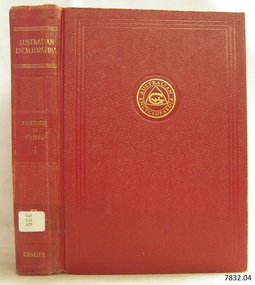
Book, The Australian Encyclopaedia Vol 4
... records warrnambool children’s library great ocean road The Australian Encyclopaedia Vol 4 Alec H. Chisholm Label on spine cover with typed text PAT 032 AUS Front loose endpaper has a stamp from Warrnambool Public Library The Australian Encyclopaedia Vol 4 set 1 ( Fairbairn to Hoskins) Editor-In - Chief: Alec H. Chisholm Publisher: The Grolier Society ...This item is from the ‘Pattison Collection’, a collection of books and records that was originally owned by the Warrnambool Mechanics’ Institute, which was founded in Warrnambool in 1853. By 1886 the Warrnambool Mechanics’ Institute (WMI) had grown to have a Library, Museum and Fine Arts Gallery, with a collection of “… choice productions of art, and valuable specimens in almost every branch and many wonderful national curiosities are now to be seen there, including historic relics of the town and district.” It later included a School of Design. Although it was very well patronised, the lack of financial support led the WMI in 1911 to ask the City Council to take it over. In 1935 Ralph Pattison was appointed as City Librarian to establish and organise the Warrnambool Library as it was then called. When the WMI building was pulled down in 1963 a new civic building was erected on the site and the new Warrnambool Library, on behalf of the City Council, took over all the holdings of the WMI. At this time some of the items were separated and identified as the ‘Pattison Collection’, named after Ralph Pattison. Eventually the components of the WMI were distributed from the Warrnambool Library to various places, including the Art Gallery, Historical Society and Flagstaff Hill. Later some were even distributed to other regional branches of Corangamite Regional Library and passed to and fro. It is difficult now to trace just where all of the items have ended up. The books at Flagstaff Hill Maritime Village generally display stamps and markings from Pattison as well as a variety of other institutions including the Mechanics’ Institute itself. RALPH ERIC PATTISON Ralph Eric Pattison was born in Rockhampton, Queensland, in 1891. He married Maude Swan from Warrnambool in 1920 and they set up home in Warrnambool. In 1935 Pattison accepted a position as City Librarian for the Warrnambool City Council. His huge challenge was to make a functional library within two rooms of the Mechanics’ Institute. He tirelessly cleaned, cleared and sorted a disarrayed collection of old books, jars of preserved specimens and other items reserved for exhibition in the city’s museum. He developed and updated the library with a wide variety of books for all tastes, including reference books for students; a difficult task to fulfil during the years following the Depression. He converted all of the lower area of the building into a library, reference room and reading room for members and the public. The books were sorted and stored using a cataloguing and card index system that he had developed himself. He also prepared the upper floor of the building and established the Art Gallery and later the Museum, a place to exhibit the many old relics that had been stored for years for this purpose. One of the treasures he found was a beautiful ancient clock, which he repaired, restored and enjoyed using in his office during the years of his service there. Ralph Pattison was described as “a meticulous gentleman whose punctuality, floorless courtesy and distinctive neat dress were hallmarks of his character, and ‘his’ clock controlled his daily routine, and his opening and closing of the library’s large heavy doors to the minute.” Pattison took leave during 1942 to 1945 to serve in the Royal Australian Navy, Volunteer Reserve as Lieutenant. A few years later he converted one of the Museum’s rooms into a Children’s Library, stocking it with suitable books for the younger generation. This was an instant success. In the 1950’s he had the honour of being appointed to the Victorian Library Board and received more inspiration from the monthly conferences in Melbourne. He was sadly retired in 1959 after over 23 years of service, due to the fact that he had gone over the working age of council officers. However he continued to take a very keen interest in the continual development of the Library until his death in 1969. The Pattison Collection, along with other items at Flagstaff Hill Maritime Village, was originally part of the Warrnambool Mechanics' Institute’s collection. The Warrnambool Mechanics’ Institute Collection is primarily significant in its totality, rather than for the individual objects it contains. Its contents are highly representative of the development of Mechanics' Institute libraries across Australia, particularly Victoria. A diversity of publications and themes has been amassed, and these provide clues to our understanding of the nature of and changes in the reading habits of Victorians from the 1850s to the middle of the 20th century. The collection also highlights the Warrnambool community’s commitment to the Mechanics’ Institute, reading, literacy and learning in the regions, and proves that access to knowledge was not impeded by distance. These items help to provide a more complete picture of our community’s ideals and aspirations. The Warrnambool Mechanics Institute book collection has historical and social significance for its strong association with the Mechanics Institute movement and the important role it played in the intellectual, cultural and social development of people throughout the latter part of the nineteenth century and the early twentieth century. The collection of books is a rare example of an early lending library and its significance is enhanced by the survival of an original collection of many volumes. The Warrnambool Mechanics' Institute’s publication collection is of both local and state significance. The Australian Encyclopaedia Vol 4 set 1 ( Fairbairn to Hoskins) Editor-In - Chief: Alec H. Chisholm Publisher: The Grolier Society of Aus Date: 1965Label on spine cover with typed text PAT 032 AUS Front loose endpaper has a stamp from Warrnambool Public Library warrnambool, shipwrecked-coast, flagstaff-hill, flagstaff-hill-maritime-museum, maritime-museum, shipwreck-coast, flagstaff-hill-maritime-village, shipwrecked-artefact, book, pattison collection, warrnambool library, warrnambool mechanics’ institute, ralph eric pattison, corangamite regional library service, warrnambool city librarian, mechanics’ institute library, victorian library board, warrnambool books and records, warrnambool children’s library, great ocean road, the australian encyclopaedia vol 4, alec h. chisholm -
 Flagstaff Hill Maritime Museum and Village
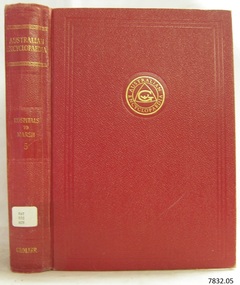
Book, The Australian Encyclopaedia Vol 5
... records warrnambool children’s library great ocean road The Australian Encyclopaedia Vol 5 Alec H. Chisholm Label on spine cover with typed text PAT 032 AUS Front loose endpaper has a stamp from Warrnambool Public Library Pastedown front endpaper has sticker from Corangamite Regional Library Service The Australian Encyclopaedia Vol 5 set 1 (Hospitals to Marsh) Editor-In - Chief: Alec H. Chisholm Publisher: The Grolier Society ...This item is from the ‘Pattison Collection’, a collection of books and records that was originally owned by the Warrnambool Mechanics’ Institute, which was founded in Warrnambool in 1853. By 1886 the Warrnambool Mechanics’ Institute (WMI) had grown to have a Library, Museum and Fine Arts Gallery, with a collection of “… choice productions of art, and valuable specimens in almost every branch and many wonderful national curiosities are now to be seen there, including historic relics of the town and district.” It later included a School of Design. Although it was very well patronised, the lack of financial support led the WMI in 1911 to ask the City Council to take it over. In 1935 Ralph Pattison was appointed as City Librarian to establish and organise the Warrnambool Library as it was then called. When the WMI building was pulled down in 1963 a new civic building was erected on the site and the new Warrnambool Library, on behalf of the City Council, took over all the holdings of the WMI. At this time some of the items were separated and identified as the ‘Pattison Collection’, named after Ralph Pattison. Eventually the components of the WMI were distributed from the Warrnambool Library to various places, including the Art Gallery, Historical Society and Flagstaff Hill. Later some were even distributed to other regional branches of Corangamite Regional Library and passed to and fro. It is difficult now to trace just where all of the items have ended up. The books at Flagstaff Hill Maritime Village generally display stamps and markings from Pattison as well as a variety of other institutions including the Mechanics’ Institute itself. RALPH ERIC PATTISON Ralph Eric Pattison was born in Rockhampton, Queensland, in 1891. He married Maude Swan from Warrnambool in 1920 and they set up home in Warrnambool. In 1935 Pattison accepted a position as City Librarian for the Warrnambool City Council. His huge challenge was to make a functional library within two rooms of the Mechanics’ Institute. He tirelessly cleaned, cleared and sorted a disarrayed collection of old books, jars of preserved specimens and other items reserved for exhibition in the city’s museum. He developed and updated the library with a wide variety of books for all tastes, including reference books for students; a difficult task to fulfil during the years following the Depression. He converted all of the lower area of the building into a library, reference room and reading room for members and the public. The books were sorted and stored using a cataloguing and card index system that he had developed himself. He also prepared the upper floor of the building and established the Art Gallery and later the Museum, a place to exhibit the many old relics that had been stored for years for this purpose. One of the treasures he found was a beautiful ancient clock, which he repaired, restored and enjoyed using in his office during the years of his service there. Ralph Pattison was described as “a meticulous gentleman whose punctuality, floorless courtesy and distinctive neat dress were hallmarks of his character, and ‘his’ clock controlled his daily routine, and his opening and closing of the library’s large heavy doors to the minute.” Pattison took leave during 1942 to 1945 to serve in the Royal Australian Navy, Volunteer Reserve as Lieutenant. A few years later he converted one of the Museum’s rooms into a Children’s Library, stocking it with suitable books for the younger generation. This was an instant success. In the 1950’s he had the honour of being appointed to the Victorian Library Board and received more inspiration from the monthly conferences in Melbourne. He was sadly retired in 1959 after over 23 years of service, due to the fact that he had gone over the working age of council officers. However he continued to take a very keen interest in the continual development of the Library until his death in 1969. The Pattison Collection, along with other items at Flagstaff Hill Maritime Village, was originally part of the Warrnambool Mechanics' Institute’s collection. The Warrnambool Mechanics’ Institute Collection is primarily significant in its totality, rather than for the individual objects it contains. Its contents are highly representative of the development of Mechanics' Institute libraries across Australia, particularly Victoria. A diversity of publications and themes has been amassed, and these provide clues to our understanding of the nature of and changes in the reading habits of Victorians from the 1850s to the middle of the 20th century. The collection also highlights the Warrnambool community’s commitment to the Mechanics’ Institute, reading, literacy and learning in the regions, and proves that access to knowledge was not impeded by distance. These items help to provide a more complete picture of our community’s ideals and aspirations. The Warrnambool Mechanics Institute book collection has historical and social significance for its strong association with the Mechanics Institute movement and the important role it played in the intellectual, cultural and social development of people throughout the latter part of the nineteenth century and the early twentieth century. The collection of books is a rare example of an early lending library and its significance is enhanced by the survival of an original collection of many volumes. The Warrnambool Mechanics' Institute’s publication collection is of both local and state significance. The Australian Encyclopaedia Vol 5 set 1 (Hospitals to Marsh) Editor-In - Chief: Alec H. Chisholm Publisher: The Grolier Society of Aus Date: 1965Label on spine cover with typed text PAT 032 AUS Front loose endpaper has a stamp from Warrnambool Public Library Pastedown front endpaper has sticker from Corangamite Regional Library Service warrnambool, shipwrecked-coast, flagstaff-hill, flagstaff-hill-maritime-museum, maritime-museum, shipwreck-coast, flagstaff-hill-maritime-village, shipwrecked-artefact, book, pattison collection, warrnambool library, warrnambool mechanics’ institute, ralph eric pattison, corangamite regional library service, warrnambool city librarian, mechanics’ institute library, victorian library board, warrnambool books and records, warrnambool children’s library, great ocean road, the australian encyclopaedia vol 5, alec h. chisholm -
 Flagstaff Hill Maritime Museum and Village
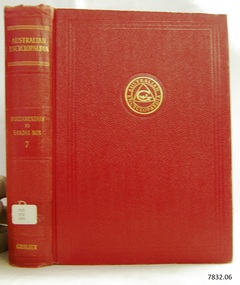
Book, The Australian Encyclopaedia Vol 7
... records warrnambool children’s library great ocean road Alec H. Chisholm the australian encyclopaedia vol 7 Label on spine cover with typed text PAT 032 AUS Pastedown front endpaper has sticker from Corangamite Regional Library Service Front loose endpaper has a stamp from Warrnambool Public Library The Australian Encyclopaedia Vol 7 set 1 (Parliamentary Government to Sandal Box) Editor-In - Chief: Alec H. Chisholm Publisher: The Grolier Society ...This item is from the ‘Pattison Collection’, a collection of books and records that was originally owned by the Warrnambool Mechanics’ Institute, which was founded in Warrnambool in 1853. By 1886 the Warrnambool Mechanics’ Institute (WMI) had grown to have a Library, Museum and Fine Arts Gallery, with a collection of “… choice productions of art, and valuable specimens in almost every branch and many wonderful national curiosities are now to be seen there, including historic relics of the town and district.” It later included a School of Design. Although it was very well patronised, the lack of financial support led the WMI in 1911 to ask the City Council to take it over. In 1935 Ralph Pattison was appointed as City Librarian to establish and organise the Warrnambool Library as it was then called. When the WMI building was pulled down in 1963 a new civic building was erected on the site and the new Warrnambool Library, on behalf of the City Council, took over all the holdings of the WMI. At this time some of the items were separated and identified as the ‘Pattison Collection’, named after Ralph Pattison. Eventually the components of the WMI were distributed from the Warrnambool Library to various places, including the Art Gallery, Historical Society and Flagstaff Hill. Later some were even distributed to other regional branches of Corangamite Regional Library and passed to and fro. It is difficult now to trace just where all of the items have ended up. The books at Flagstaff Hill Maritime Village generally display stamps and markings from Pattison as well as a variety of other institutions including the Mechanics’ Institute itself. RALPH ERIC PATTISON Ralph Eric Pattison was born in Rockhampton, Queensland, in 1891. He married Maude Swan from Warrnambool in 1920 and they set up home in Warrnambool. In 1935 Pattison accepted a position as City Librarian for the Warrnambool City Council. His huge challenge was to make a functional library within two rooms of the Mechanics’ Institute. He tirelessly cleaned, cleared and sorted a disarrayed collection of old books, jars of preserved specimens and other items reserved for exhibition in the city’s museum. He developed and updated the library with a wide variety of books for all tastes, including reference books for students; a difficult task to fulfil during the years following the Depression. He converted all of the lower area of the building into a library, reference room and reading room for members and the public. The books were sorted and stored using a cataloguing and card index system that he had developed himself. He also prepared the upper floor of the building and established the Art Gallery and later the Museum, a place to exhibit the many old relics that had been stored for years for this purpose. One of the treasures he found was a beautiful ancient clock, which he repaired, restored and enjoyed using in his office during the years of his service there. Ralph Pattison was described as “a meticulous gentleman whose punctuality, floorless courtesy and distinctive neat dress were hallmarks of his character, and ‘his’ clock controlled his daily routine, and his opening and closing of the library’s large heavy doors to the minute.” Pattison took leave during 1942 to 1945 to serve in the Royal Australian Navy, Volunteer Reserve as Lieutenant. A few years later he converted one of the Museum’s rooms into a Children’s Library, stocking it with suitable books for the younger generation. This was an instant success. In the 1950’s he had the honour of being appointed to the Victorian Library Board and received more inspiration from the monthly conferences in Melbourne. He was sadly retired in 1959 after over 23 years of service, due to the fact that he had gone over the working age of council officers. However he continued to take a very keen interest in the continual development of the Library until his death in 1969. The Pattison Collection, along with other items at Flagstaff Hill Maritime Village, was originally part of the Warrnambool Mechanics' Institute’s collection. The Warrnambool Mechanics’ Institute Collection is primarily significant in its totality, rather than for the individual objects it contains. Its contents are highly representative of the development of Mechanics' Institute libraries across Australia, particularly Victoria. A diversity of publications and themes has been amassed, and these provide clues to our understanding of the nature of and changes in the reading habits of Victorians from the 1850s to the middle of the 20th century. The collection also highlights the Warrnambool community’s commitment to the Mechanics’ Institute, reading, literacy and learning in the regions, and proves that access to knowledge was not impeded by distance. These items help to provide a more complete picture of our community’s ideals and aspirations. The Warrnambool Mechanics Institute book collection has historical and social significance for its strong association with the Mechanics Institute movement and the important role it played in the intellectual, cultural and social development of people throughout the latter part of the nineteenth century and the early twentieth century. The collection of books is a rare example of an early lending library and its significance is enhanced by the survival of an original collection of many volumes. The Warrnambool Mechanics' Institute’s publication collection is of both local and state significance. The Australian Encyclopaedia Vol 7 set 1 (Parliamentary Government to Sandal Box) Editor-In - Chief: Alec H. Chisholm Publisher: The Grolier Society of Aus Date: 1965Label on spine cover with typed text PAT 032 AUS Pastedown front endpaper has sticker from Corangamite Regional Library Service Front loose endpaper has a stamp from Warrnambool Public Library warrnambool, shipwrecked-coast, flagstaff-hill, flagstaff-hill-maritime-museum, maritime-museum, shipwreck-coast, flagstaff-hill-maritime-village, shipwrecked-artefact, book, pattison collection, warrnambool library, warrnambool mechanics’ institute, ralph eric pattison, corangamite regional library service, warrnambool city librarian, mechanics’ institute library, victorian library board, warrnambool books and records, warrnambool children’s library, great ocean road, alec h. chisholm, the australian encyclopaedia vol 7 -
 Flagstaff Hill Maritime Museum and Village
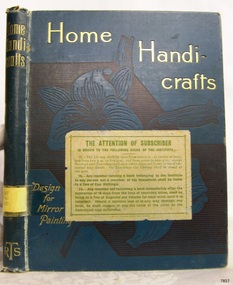
Book, Home Handicrafts
... The Warrnambool Mechanics' Institute’s publication collection is of both local and state significance. warrnambool shipwrecked-coast flagstaff-hill flagstaff-hill-maritime-museum maritime-museum shipwreck-coast flagstaff-hill-maritime-village shipwrecked-artefact book pattison collection warrnambool library warrnambool mechanics’ institute ralph eric pattison corangamite regional library service warrnambool city librarian mechanics’ institute library victorian library board warrnambool books and records warrnambool children’s library great ocean road Home Handicrafts Charles Peters Label on spine cover with typed text PAT 740 PET Pastedown front endpaper has sticker from Warrnambool Mechanics Institute and Free Library covered by a sticker from Corangamite Regional Library Service Front loose endpaper has a stamp from Corangamite Regional Library Service Home Handicrafts Edited by Charles Peters Publisher: The Religious Tract Society Date: 1890 Home Handicrafts Book ...This item is from the ‘Pattison Collection’, a collection of books and records that was originally owned by the Warrnambool Mechanics’ Institute, which was founded in Warrnambool in 1853. By 1886 the Warrnambool Mechanics’ Institute (WMI) had grown to have a Library, Museum and Fine Arts Gallery, with a collection of “… choice productions of art, and valuable specimens in almost every branch and many wonderful national curiosities are now to be seen there, including historic relics of the town and district.” It later included a School of Design. Although it was very well patronised, the lack of financial support led the WMI in 1911 to ask the City Council to take it over. In 1935 Ralph Pattison was appointed as City Librarian to establish and organise the Warrnambool Library as it was then called. When the WMI building was pulled down in 1963 a new civic building was erected on the site and the new Warrnambool Library, on behalf of the City Council, took over all the holdings of the WMI. At this time some of the items were separated and identified as the ‘Pattison Collection’, named after Ralph Pattison. Eventually the components of the WMI were distributed from the Warrnambool Library to various places, including the Art Gallery, Historical Society and Flagstaff Hill. Later some were even distributed to other regional branches of Corangamite Regional Library and passed to and fro. It is difficult now to trace just where all of the items have ended up. The books at Flagstaff Hill Maritime Village generally display stamps and markings from Pattison as well as a variety of other institutions including the Mechanics’ Institute itself. RALPH ERIC PATTISON Ralph Eric Pattison was born in Rockhampton, Queensland, in 1891. He married Maude Swan from Warrnambool in 1920 and they set up home in Warrnambool. In 1935 Pattison accepted a position as City Librarian for the Warrnambool City Council. His huge challenge was to make a functional library within two rooms of the Mechanics’ Institute. He tirelessly cleaned, cleared and sorted a disarrayed collection of old books, jars of preserved specimens and other items reserved for exhibition in the city’s museum. He developed and updated the library with a wide variety of books for all tastes, including reference books for students; a difficult task to fulfil during the years following the Depression. He converted all of the lower area of the building into a library, reference room and reading room for members and the public. The books were sorted and stored using a cataloguing and card index system that he had developed himself. He also prepared the upper floor of the building and established the Art Gallery and later the Museum, a place to exhibit the many old relics that had been stored for years for this purpose. One of the treasures he found was a beautiful ancient clock, which he repaired, restored and enjoyed using in his office during the years of his service there. Ralph Pattison was described as “a meticulous gentleman whose punctuality, floorless courtesy and distinctive neat dress were hallmarks of his character, and ‘his’ clock controlled his daily routine, and his opening and closing of the library’s large heavy doors to the minute.” Pattison took leave during 1942 to 1945 to serve in the Royal Australian Navy, Volunteer Reserve as Lieutenant. A few years later he converted one of the Museum’s rooms into a Children’s Library, stocking it with suitable books for the younger generation. This was an instant success. In the 1950’s he had the honour of being appointed to the Victorian Library Board and received more inspiration from the monthly conferences in Melbourne. He was sadly retired in 1959 after over 23 years of service, due to the fact that he had gone over the working age of council officers. However he continued to take a very keen interest in the continual development of the Library until his death in 1969. The Pattison Collection, along with other items at Flagstaff Hill Maritime Village, was originally part of the Warrnambool Mechanics' Institute’s collection. The Warrnambool Mechanics’ Institute Collection is primarily significant in its totality, rather than for the individual objects it contains. Its contents are highly representative of the development of Mechanics' Institute libraries across Australia, particularly Victoria. A diversity of publications and themes has been amassed, and these provide clues to our understanding of the nature of and changes in the reading habits of Victorians from the 1850s to the middle of the 20th century. The collection also highlights the Warrnambool community’s commitment to the Mechanics’ Institute, reading, literacy and learning in the regions, and proves that access to knowledge was not impeded by distance. These items help to provide a more complete picture of our community’s ideals and aspirations. The Warrnambool Mechanics Institute book collection has historical and social significance for its strong association with the Mechanics Institute movement and the important role it played in the intellectual, cultural and social development of people throughout the latter part of the nineteenth century and the early twentieth century. The collection of books is a rare example of an early lending library and its significance is enhanced by the survival of an original collection of many volumes. The Warrnambool Mechanics' Institute’s publication collection is of both local and state significance. Home Handicrafts Edited by Charles Peters Publisher: The Religious Tract Society Date: 1890Label on spine cover with typed text PAT 740 PET Pastedown front endpaper has sticker from Warrnambool Mechanics Institute and Free Library covered by a sticker from Corangamite Regional Library Service Front loose endpaper has a stamp from Corangamite Regional Library Service warrnambool, shipwrecked-coast, flagstaff-hill, flagstaff-hill-maritime-museum, maritime-museum, shipwreck-coast, flagstaff-hill-maritime-village, shipwrecked-artefact, book, pattison collection, warrnambool library, warrnambool mechanics’ institute, ralph eric pattison, corangamite regional library service, warrnambool city librarian, mechanics’ institute library, victorian library board, warrnambool books and records, warrnambool children’s library, great ocean road, home handicrafts, charles peters -
 Flagstaff Hill Maritime Museum and Village
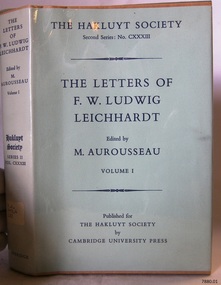
Book, The Letters of F W Ludwig Leichhardt Vol 1
... The Warrnambool Mechanics' Institute’s publication collection is of both local and state significance. warrnambool shipwrecked-coast flagstaff-hill flagstaff-hill-maritime-museum maritime-museum shipwreck-coast flagstaff-hill-maritime-village shipwrecked-artefact book pattison collection warrnambool library warrnambool mechanics’ institute ralph eric pattison corangamite regional library service warrnambool city librarian mechanics’ institute library victorian library board warrnambool books and records warrnambool children’s library great ocean road the letters of f w ludwig leichhardt vol 1 m. aurousseau ludwig leichhardt Hakluyt Society Label on spine cover with typed text RA 919.4 LEI Front loose endpaper has typed paper clued on that reads "With compliments of M Aurousseau, 229 Woodland Street, Balgowlah N.S.W. 2093, Australia. ...This item is from the ‘Pattison Collection’, a collection of books and records that was originally owned by the Warrnambool Mechanics’ Institute, which was founded in Warrnambool in 1853. By 1886 the Warrnambool Mechanics’ Institute (WMI) had grown to have a Library, Museum and Fine Arts Gallery, with a collection of “… choice productions of art, and valuable specimens in almost every branch and many wonderful national curiosities are now to be seen there, including historic relics of the town and district.” It later included a School of Design. Although it was very well patronised, the lack of financial support led the WMI in 1911 to ask the City Council to take it over. In 1935 Ralph Pattison was appointed as City Librarian to establish and organise the Warrnambool Library as it was then called. When the WMI building was pulled down in 1963 a new civic building was erected on the site and the new Warrnambool Library, on behalf of the City Council, took over all the holdings of the WMI. At this time some of the items were separated and identified as the ‘Pattison Collection’, named after Ralph Pattison. Eventually the components of the WMI were distributed from the Warrnambool Library to various places, including the Art Gallery, Historical Society and Flagstaff Hill. Later some were even distributed to other regional branches of Corangamite Regional Library and passed to and fro. It is difficult now to trace just where all of the items have ended up. The books at Flagstaff Hill Maritime Village generally display stamps and markings from Pattison as well as a variety of other institutions including the Mechanics’ Institute itself. RALPH ERIC PATTISON Ralph Eric Pattison was born in Rockhampton, Queensland, in 1891. He married Maude Swan from Warrnambool in 1920 and they set up home in Warrnambool. In 1935 Pattison accepted a position as City Librarian for the Warrnambool City Council. His huge challenge was to make a functional library within two rooms of the Mechanics’ Institute. He tirelessly cleaned, cleared and sorted a disarrayed collection of old books, jars of preserved specimens and other items reserved for exhibition in the city’s museum. He developed and updated the library with a wide variety of books for all tastes, including reference books for students; a difficult task to fulfil during the years following the Depression. He converted all of the lower area of the building into a library, reference room and reading room for members and the public. The books were sorted and stored using a cataloguing and card index system that he had developed himself. He also prepared the upper floor of the building and established the Art Gallery and later the Museum, a place to exhibit the many old relics that had been stored for years for this purpose. One of the treasures he found was a beautiful ancient clock, which he repaired, restored and enjoyed using in his office during the years of his service there. Ralph Pattison was described as “a meticulous gentleman whose punctuality, floorless courtesy and distinctive neat dress were hallmarks of his character, and ‘his’ clock controlled his daily routine, and his opening and closing of the library’s large heavy doors to the minute.” Pattison took leave during 1942 to 1945 to serve in the Royal Australian Navy, Volunteer Reserve as Lieutenant. A few years later he converted one of the Museum’s rooms into a Children’s Library, stocking it with suitable books for the younger generation. This was an instant success. In the 1950’s he had the honour of being appointed to the Victorian Library Board and received more inspiration from the monthly conferences in Melbourne. He was sadly retired in 1959 after over 23 years of service, due to the fact that he had gone over the working age of council officers. However he continued to take a very keen interest in the continual development of the Library until his death in 1969. The Pattison Collection, along with other items at Flagstaff Hill Maritime Village, was originally part of the Warrnambool Mechanics' Institute’s collection. The Warrnambool Mechanics’ Institute Collection is primarily significant in its totality, rather than for the individual objects it contains. Its contents are highly representative of the development of Mechanics' Institute libraries across Australia, particularly Victoria. A diversity of publications and themes has been amassed, and these provide clues to our understanding of the nature of and changes in the reading habits of Victorians from the 1850s to the middle of the 20th century. The collection also highlights the Warrnambool community’s commitment to the Mechanics’ Institute, reading, literacy and learning in the regions, and proves that access to knowledge was not impeded by distance. These items help to provide a more complete picture of our community’s ideals and aspirations. The Warrnambool Mechanics Institute book collection has historical and social significance for its strong association with the Mechanics Institute movement and the important role it played in the intellectual, cultural and social development of people throughout the latter part of the nineteenth century and the early twentieth century. The collection of books is a rare example of an early lending library and its significance is enhanced by the survival of an original collection of many volumes. The Warrnambool Mechanics' Institute’s publication collection is of both local and state significance. The Letters of F W Ludwig Leichhardt Vol 1 Collected and Newly translated by M. Aurousseau Published for the Hakluyt Society Editied by M Aurousseau Publisher: Cambridge University Press Date: 1967Label on spine cover with typed text RA 919.4 LEI Front loose endpaper has typed paper clued on that reads "With compliments of M Aurousseau, 229 Woodland Street, Balgowlah N.S.W. 2093, Australia. Telephone 94-2145 Front loose endpaper has a stamp from Warrnambool Public Library warrnambool, shipwrecked-coast, flagstaff-hill, flagstaff-hill-maritime-museum, maritime-museum, shipwreck-coast, flagstaff-hill-maritime-village, shipwrecked-artefact, book, pattison collection, warrnambool library, warrnambool mechanics’ institute, ralph eric pattison, corangamite regional library service, warrnambool city librarian, mechanics’ institute library, victorian library board, warrnambool books and records, warrnambool children’s library, great ocean road, the letters of f w ludwig leichhardt vol 1, m. aurousseau, ludwig leichhardt, hakluyt society -
 Flagstaff Hill Maritime Museum and Village
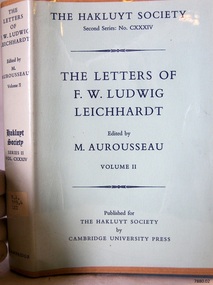
Book, The Letters of F W Ludwig Leichhardt Vol 2
... The Warrnambool Mechanics' Institute’s publication collection is of both local and state significance. warrnambool shipwrecked-coast flagstaff-hill flagstaff-hill-maritime-museum maritime-museum shipwreck-coast flagstaff-hill-maritime-village shipwrecked-artefact book pattison collection warrnambool library warrnambool mechanics’ institute ralph eric pattison corangamite regional library service warrnambool city librarian mechanics’ institute library victorian library board warrnambool books and records warrnambool children’s library great ocean road the letters of f w ludwig leichhardt vol 2 m aurousseau ludwig leichhardt Hakluyt Society Label on spine cover with typed text RA 919.4 LEI Front loose endpaper has a stamp from Warrnambool Public Library The Letters of F W Ludwig Leichhardt Vol 2 Collected and Newly translated by M. ...This item is from the ‘Pattison Collection’, a collection of books and records that was originally owned by the Warrnambool Mechanics’ Institute, which was founded in Warrnambool in 1853. By 1886 the Warrnambool Mechanics’ Institute (WMI) had grown to have a Library, Museum and Fine Arts Gallery, with a collection of “… choice productions of art, and valuable specimens in almost every branch and many wonderful national curiosities are now to be seen there, including historic relics of the town and district.” It later included a School of Design. Although it was very well patronised, the lack of financial support led the WMI in 1911 to ask the City Council to take it over. In 1935 Ralph Pattison was appointed as City Librarian to establish and organise the Warrnambool Library as it was then called. When the WMI building was pulled down in 1963 a new civic building was erected on the site and the new Warrnambool Library, on behalf of the City Council, took over all the holdings of the WMI. At this time some of the items were separated and identified as the ‘Pattison Collection’, named after Ralph Pattison. Eventually the components of the WMI were distributed from the Warrnambool Library to various places, including the Art Gallery, Historical Society and Flagstaff Hill. Later some were even distributed to other regional branches of Corangamite Regional Library and passed to and fro. It is difficult now to trace just where all of the items have ended up. The books at Flagstaff Hill Maritime Village generally display stamps and markings from Pattison as well as a variety of other institutions including the Mechanics’ Institute itself. RALPH ERIC PATTISON Ralph Eric Pattison was born in Rockhampton, Queensland, in 1891. He married Maude Swan from Warrnambool in 1920 and they set up home in Warrnambool. In 1935 Pattison accepted a position as City Librarian for the Warrnambool City Council. His huge challenge was to make a functional library within two rooms of the Mechanics’ Institute. He tirelessly cleaned, cleared and sorted a disarrayed collection of old books, jars of preserved specimens and other items reserved for exhibition in the city’s museum. He developed and updated the library with a wide variety of books for all tastes, including reference books for students; a difficult task to fulfil during the years following the Depression. He converted all of the lower area of the building into a library, reference room and reading room for members and the public. The books were sorted and stored using a cataloguing and card index system that he had developed himself. He also prepared the upper floor of the building and established the Art Gallery and later the Museum, a place to exhibit the many old relics that had been stored for years for this purpose. One of the treasures he found was a beautiful ancient clock, which he repaired, restored and enjoyed using in his office during the years of his service there. Ralph Pattison was described as “a meticulous gentleman whose punctuality, floorless courtesy and distinctive neat dress were hallmarks of his character, and ‘his’ clock controlled his daily routine, and his opening and closing of the library’s large heavy doors to the minute.” Pattison took leave during 1942 to 1945 to serve in the Royal Australian Navy, Volunteer Reserve as Lieutenant. A few years later he converted one of the Museum’s rooms into a Children’s Library, stocking it with suitable books for the younger generation. This was an instant success. In the 1950’s he had the honour of being appointed to the Victorian Library Board and received more inspiration from the monthly conferences in Melbourne. He was sadly retired in 1959 after over 23 years of service, due to the fact that he had gone over the working age of council officers. However he continued to take a very keen interest in the continual development of the Library until his death in 1969. The Pattison Collection, along with other items at Flagstaff Hill Maritime Village, was originally part of the Warrnambool Mechanics' Institute’s collection. The Warrnambool Mechanics’ Institute Collection is primarily significant in its totality, rather than for the individual objects it contains. Its contents are highly representative of the development of Mechanics' Institute libraries across Australia, particularly Victoria. A diversity of publications and themes has been amassed, and these provide clues to our understanding of the nature of and changes in the reading habits of Victorians from the 1850s to the middle of the 20th century. The collection also highlights the Warrnambool community’s commitment to the Mechanics’ Institute, reading, literacy and learning in the regions, and proves that access to knowledge was not impeded by distance. These items help to provide a more complete picture of our community’s ideals and aspirations. The Warrnambool Mechanics Institute book collection has historical and social significance for its strong association with the Mechanics Institute movement and the important role it played in the intellectual, cultural and social development of people throughout the latter part of the nineteenth century and the early twentieth century. The collection of books is a rare example of an early lending library and its significance is enhanced by the survival of an original collection of many volumes. The Warrnambool Mechanics' Institute’s publication collection is of both local and state significance. The Letters of F W Ludwig Leichhardt Vol 2 Collected and Newly translated by M. Aurousseau Published for the Hakluyt Society Editied by M Aurousseau Publisher: Cambridge University Press Date: 1968Label on spine cover with typed text RA 919.4 LEI Front loose endpaper has a stamp from Warrnambool Public Library warrnambool, shipwrecked-coast, flagstaff-hill, flagstaff-hill-maritime-museum, maritime-museum, shipwreck-coast, flagstaff-hill-maritime-village, shipwrecked-artefact, book, pattison collection, warrnambool library, warrnambool mechanics’ institute, ralph eric pattison, corangamite regional library service, warrnambool city librarian, mechanics’ institute library, victorian library board, warrnambool books and records, warrnambool children’s library, great ocean road, the letters of f w ludwig leichhardt vol 2, m aurousseau, ludwig leichhardt, hakluyt society -
 Flagstaff Hill Maritime Museum and Village
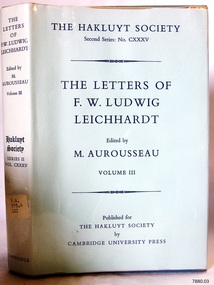
Book, The Letters of F W Ludwig Leichhardt Vol 3
... The Warrnambool Mechanics' Institute’s publication collection is of both local and state significance. warrnambool shipwrecked-coast flagstaff-hill flagstaff-hill-maritime-museum maritime-museum shipwreck-coast flagstaff-hill-maritime-village shipwrecked-artefact book pattison collection warrnambool library warrnambool mechanics’ institute ralph eric pattison corangamite regional library service warrnambool city librarian mechanics’ institute library victorian library board warrnambool books and records warrnambool children’s library great ocean road The Letters of F W Ludwig Leichhardt Vol 3 M Aurousseau Hakluyt Society Ludwig Leichhardt Label on spine cover with typed text RA 919.4 LEI Front loose endpaper has a stamp from Warrnambool Public Library The Letters of F W Ludwig Leichhardt Vol 3 Collected and Newly translated by M. ...This item is from the ‘Pattison Collection’, a collection of books and records that was originally owned by the Warrnambool Mechanics’ Institute, which was founded in Warrnambool in 1853. By 1886 the Warrnambool Mechanics’ Institute (WMI) had grown to have a Library, Museum and Fine Arts Gallery, with a collection of “… choice productions of art, and valuable specimens in almost every branch and many wonderful national curiosities are now to be seen there, including historic relics of the town and district.” It later included a School of Design. Although it was very well patronised, the lack of financial support led the WMI in 1911 to ask the City Council to take it over. In 1935 Ralph Pattison was appointed as City Librarian to establish and organise the Warrnambool Library as it was then called. When the WMI building was pulled down in 1963 a new civic building was erected on the site and the new Warrnambool Library, on behalf of the City Council, took over all the holdings of the WMI. At this time some of the items were separated and identified as the ‘Pattison Collection’, named after Ralph Pattison. Eventually the components of the WMI were distributed from the Warrnambool Library to various places, including the Art Gallery, Historical Society and Flagstaff Hill. Later some were even distributed to other regional branches of Corangamite Regional Library and passed to and fro. It is difficult now to trace just where all of the items have ended up. The books at Flagstaff Hill Maritime Village generally display stamps and markings from Pattison as well as a variety of other institutions including the Mechanics’ Institute itself. RALPH ERIC PATTISON Ralph Eric Pattison was born in Rockhampton, Queensland, in 1891. He married Maude Swan from Warrnambool in 1920 and they set up home in Warrnambool. In 1935 Pattison accepted a position as City Librarian for the Warrnambool City Council. His huge challenge was to make a functional library within two rooms of the Mechanics’ Institute. He tirelessly cleaned, cleared and sorted a disarrayed collection of old books, jars of preserved specimens and other items reserved for exhibition in the city’s museum. He developed and updated the library with a wide variety of books for all tastes, including reference books for students; a difficult task to fulfil during the years following the Depression. He converted all of the lower area of the building into a library, reference room and reading room for members and the public. The books were sorted and stored using a cataloguing and card index system that he had developed himself. He also prepared the upper floor of the building and established the Art Gallery and later the Museum, a place to exhibit the many old relics that had been stored for years for this purpose. One of the treasures he found was a beautiful ancient clock, which he repaired, restored and enjoyed using in his office during the years of his service there. Ralph Pattison was described as “a meticulous gentleman whose punctuality, floorless courtesy and distinctive neat dress were hallmarks of his character, and ‘his’ clock controlled his daily routine, and his opening and closing of the library’s large heavy doors to the minute.” Pattison took leave during 1942 to 1945 to serve in the Royal Australian Navy, Volunteer Reserve as Lieutenant. A few years later he converted one of the Museum’s rooms into a Children’s Library, stocking it with suitable books for the younger generation. This was an instant success. In the 1950’s he had the honour of being appointed to the Victorian Library Board and received more inspiration from the monthly conferences in Melbourne. He was sadly retired in 1959 after over 23 years of service, due to the fact that he had gone over the working age of council officers. However he continued to take a very keen interest in the continual development of the Library until his death in 1969. The Pattison Collection, along with other items at Flagstaff Hill Maritime Village, was originally part of the Warrnambool Mechanics' Institute’s collection. The Warrnambool Mechanics’ Institute Collection is primarily significant in its totality, rather than for the individual objects it contains. Its contents are highly representative of the development of Mechanics' Institute libraries across Australia, particularly Victoria. A diversity of publications and themes has been amassed, and these provide clues to our understanding of the nature of and changes in the reading habits of Victorians from the 1850s to the middle of the 20th century. The collection also highlights the Warrnambool community’s commitment to the Mechanics’ Institute, reading, literacy and learning in the regions, and proves that access to knowledge was not impeded by distance. These items help to provide a more complete picture of our community’s ideals and aspirations. The Warrnambool Mechanics Institute book collection has historical and social significance for its strong association with the Mechanics Institute movement and the important role it played in the intellectual, cultural and social development of people throughout the latter part of the nineteenth century and the early twentieth century. The collection of books is a rare example of an early lending library and its significance is enhanced by the survival of an original collection of many volumes. The Warrnambool Mechanics' Institute’s publication collection is of both local and state significance. The Letters of F W Ludwig Leichhardt Vol 3 Collected and Newly translated by M. Aurousseau Published for the Hakluyt Society Editied by M Aurousseau Publisher: Cambridge University Press Date: 1968Label on spine cover with typed text RA 919.4 LEI Front loose endpaper has a stamp from Warrnambool Public Library warrnambool, shipwrecked-coast, flagstaff-hill, flagstaff-hill-maritime-museum, maritime-museum, shipwreck-coast, flagstaff-hill-maritime-village, shipwrecked-artefact, book, pattison collection, warrnambool library, warrnambool mechanics’ institute, ralph eric pattison, corangamite regional library service, warrnambool city librarian, mechanics’ institute library, victorian library board, warrnambool books and records, warrnambool children’s library, great ocean road, the letters of f w ludwig leichhardt vol 3, m aurousseau, hakluyt society, ludwig leichhardt -
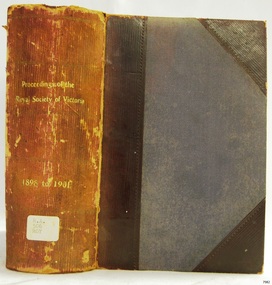 Flagstaff Hill Maritime Museum and Village
Book, Proceedings of The Royal Society of Victoria Vol 10
... The Warrnambool Mechanics' Institute Library book collection is deemed to be of great importance because it is one of the few collections in an almost intact state, and many of the books are now very rare and of great value. warrnambool shipwrecked-coast flagstaff-hill flagstaff-hill-maritime-museum maritime-museum shipwreck-coast flagstaff-hill-maritime-village shipwrecked-artefact great ocean road book warrnambool library warrnambool mechanics’ institute mechanics’ institute library victorian library board warrnambool books and records warrnambool children’s library warrnambool public library Proceedings of The Royal Society of Victoria Vol 10 Label on spine cover with typed text R.A. 506 ROY Pastedown front endpaper has sticker from Warrnambool Mechanics Institute and Free Library On a paper between page 16 and 17 there is a stamp from the Warrnambool Public Museum Proceedings of The Royal Society of Victoria Vol 10 1898 to 1901 Publisher: Ford & Son, Printers Date: 1898 Proceedings of The Royal Society of Victoria Vol 10 Book ...WARRNAMBOOL MECHANICS’ INSTITUTE Warrnambool's Mechanics' Institute (or Institution as it was sometimes called) was one of the earliest in Victoria. On 17th October 1853 a meeting was held where it was resolved to request the Lieutenant Governor of the Colony to grant land for the erection of a Mechanics' Institutes building. A committee was formed at the meeting and Richard Osburne chaired the first meeting of this committee. The land on the North West corner of Banyan and Merri Streets was granted but there were no funds to erect the building. The Formal Rights of the Warrnambool Mechanics' Institute's encompassed its aims and these were officially adopted in1859; "This Institution has for its object the diffusion of literary, scientific, and other useful knowledge amongst its members, excluding all controversial subjects, religious or political. These objects are sought to be obtained by means of a circulating library, a reading room, the establishment of classes, debates, and the occasional delivery of lectures on natural and experimental philosophy, mechanics, astronomy, chemistry, natural history, literature, and the useful and ornamental arts, particularly those which have a more immediate reference to the colony." The Warrnambool Mechanics' Institute opened its first reading room in November1884 in the National School building at the corner of Banyan and Timor Streets. The Institute was funded by member subscription, payable on a quarterly, half yearly or yearly basis. Samuel Hannaford, the Manager of the Warrnambool Bank of Australasia, was the first Honorary Secretary of the Mechanics' Institutes, and an early President and Vice-President. He also gave several of the early lectures in the Reading Room. Another early Secretary, Librarian and lecturer was Marmaduke Fisher, the teacher at the National School. Lecture topics included The Poets and Poetry of Ireland', 'The Birth and Development of the Earth', 'The Vertebrae - with Remarks on the pleasures resulting from the study of Natural History' and 'Architecture'. In 1856 the Reading Room was moved to James Hider's shop in Timor Street, and by 1864 it was located in the bookshop of Davies and Read. In the 1860's the Mechanics' Institute struggled as membership waned but in 1866, after a series of fund raising efforts, the committee was able to purchase land in Liebig Street, on a site then called Market Square, between the weighbridge and the fire station. A Mechanics' Institute building was opened at this site in August 1871. The following year four more rooms were added to the main Reading Room and in 1873 the Artisan School of Design was incorporated into the Institute. The same year Joseph Archibald established a Museum; however it deteriorated when he was transferred to Bendigo in 1877. In 1880, with Archibald's return to Warrnambool, the Museum was re-established, and in 1885 a new building was built at the back of the Institute to accommodate the re-created School of Design, the Art Gallery and the Museum. In 1887 the Museum section was moved to the former court house in Timor Street (for some time the walls of the building formed part of the TAFE cafeteria but all is now demolished)). In 1911 the Museum was transferred back to the original building and the management of the Mechanics' Institute was handed over to the Warrnambool City Council. The Museum and Art Gallery became one and housed many fine works of art, and the Library continued to grow. The building was well patronised, with records showing that at the beginning of the 20th century there were between 500 and 800 visitors. During World War One the monthly figures were in the thousands, with 3,400 people visiting in January 1915. The Museum was a much loved Institution in Warrnambool until the contents of the Museum and Art Gallery were removed to make room for the Warrnambool City Council Engineers' Department. The contents were stored but many of the items were scattered or lost. When the original building was demolished the site became occupied by the Civic Centre, which included the new City Library. (The library was temporarily located in the old Palais building in Koroit Street.) In the process of reorganisation the Collection was distributed amongst the community groups: -The new City Library took some of the historic books and some important documents, historic photographs and newspapers. -The Art Gallery kept the 19th Century art collection and some of the artefacts from the museum. -The Historic Society has some items -The State Museum has some items -Some items were destroyed -Flagstaff Hill Maritime Village has old newspapers, Government Gazettes, most of the Mechanics' Institute Library, ledgers and documents connected to the Mechanics' Institute Library, some framed and unframed art works and some photographs. The Warrnambool Mechanics' Institute Library book collection is deemed to be of great importance because it is one of the few collections in an almost intact state, and many of the books are now very rare and of great value. Proceedings of The Royal Society of Victoria Vol 10 1898 to 1901 Publisher: Ford & Son, Printers Date: 1898Label on spine cover with typed text R.A. 506 ROY Pastedown front endpaper has sticker from Warrnambool Mechanics Institute and Free Library On a paper between page 16 and 17 there is a stamp from the Warrnambool Public Museum warrnambool, shipwrecked-coast, flagstaff-hill, flagstaff-hill-maritime-museum, maritime-museum, shipwreck-coast, flagstaff-hill-maritime-village, shipwrecked-artefact, great ocean road, book, warrnambool library, warrnambool mechanics’ institute, mechanics’ institute library, victorian library board, warrnambool books and records, warrnambool children’s library, warrnambool public library, proceedings of the royal society of victoria vol 10 -
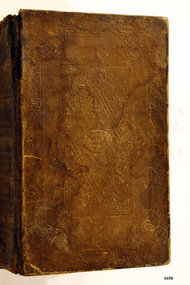 Flagstaff Hill Maritime Museum and Village
Book - Bible, George Eyre and Andrew Spottiswoode, The Holy Bible, 1834
... Society, which was instituted in 1804. This Bible was published for use in Church readings. In the words of the donor, Betty Stone, "This Bible, published in London in 1834, is the Chamberlain family Bible which was brought out by Joshua and Susan Chamberlain from Thriplow, Cambridgeshire, England when they migrated with their family to Australia. In the Bible, on page 969, the birth dates of Joshua and Susan's family of two sons and six daughters are recorded...Society, which was instituted in 1804. This Bible was published for use in Church readings. In the words of the donor, Betty Stone, "This Bible, published in London in 1834, is the Chamberlain family Bible which was brought out by Joshua and Susan Chamberlain from Thriplow, Cambridgeshire, England when they migrated with their family to Australia. In the Bible, on page 969, the birth dates of Joshua and Susan's family of two sons and six daughters are recorded ...The printers of this Bible, George Eyre and Andrew Spotswood, were appointed printers to the King's Most Excellent Majesty. Copies of this Bible were only sold to subscribes of the British and Foreign Bible Society, which was instituted in 1804. This Bible was published for use in Church readings. In the words of the donor, Betty Stone, "This Bible, published in London in 1834, is the Chamberlain family Bible which was brought out by Joshua and Susan Chamberlain from Thriplow, Cambridgeshire, England when they migrated with their family to Australia. In the Bible, on page 969, the birth dates of Joshua and Susan's family of two sons and six daughters are recorded on two pages and also on an inserted loose page. Written by Joshua Chamberlain, the exact time each child was born has been included in each entry. There are also a few other entries and death dates recorded in different handwriting. Joshua Chamberlain (baptized 24 August 1804 Thriplow) and Susan Ellis {baptized 24 July 1808 lckleton, Cambridgeshire) were married 25 October 1828 at the parish church of St. George or All Saints,Thriplow. Joshua and Susan (nee Ellis) Chamberlain and family left their home in the rural village ofThriplow in October 1854 and arrived in Australia as assisted migrants per SS Shand January 1855. After Joshua Chamberlain had fulfilled his contract to work on a property at Woodford for a year or so, he purchased a small farm of approximately twenty acres at Wangoom, situated adjacent to the Warrnambool racecourse. Here, the family settled in their cottage with their personal and household possessions, including the family Bible, which they had brought from Thriplow. Joshua Chamberlain died October 1871; after the death of her husband Susan continued to live in her own home for some years before she eventually moved -with her possessions which of course included this Bible - to her daughter Sarah and son-in-law Lees Lees' home where she died on 13 November 1900 aged 94 years. (Note: For additional information please refer to Betty Stone’s book “Pioneers and Places - A History of three Warrnambool Pioneering Families” ie. Chamberlain, Dale and Lees Families)This item is associated with families of Chamberlain, Dale and Lees. These families are listed in the "Pioneers' Register" for Warrnambool Township and Shire, 1835-1900, published by A.I.G.S. Warrnambool Branch.Book, Bible, with thick, embossed front cover and deep binding. This Chamberlain Family Bible has some handwritten notes included on some pages. The Holy Bible, containing the Old and New Testaments, Translated out of the original Tongues - by HIs Majesty's Special Command. Appointed to be read in churches. Printed by George Eyre and Andrew Spottiswoode Published by the British and Foreign Bible Society in 1834. Part of the 'Chamberlain, Dale and Lees Collection'Page 969 lists family history of Joshua and Susan Chamberlain and family, on two pages plus an inserted page, noting the exact time of birth for each of eight children.flagstaff hill, warrnambool, shipwrecked coast, flagstaff hill maritime museum, maritime museum, shipwreck coast, flagstaff hill maritime village, great ocean road, chamberlain, dale, lees, stone, betty stone, warrnambool pioneers, holy bible, 1834 bible, chamberlain family bible, church bible, family history, george eyre and, andrew spottiswoode, british and foreign bible society, religious book -
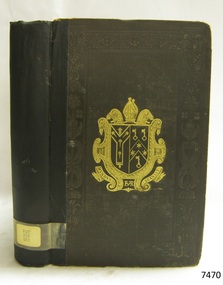 Flagstaff Hill Maritime Museum and Village
Book, The Remains of Edmund Grindal
... Warrnambool Shipwrecked-coast Flagstaff-Hill Flagstaff-Hill-Maritime-Museum Maritime-Museum Shipwreck-coast Flagstaff-Hill-Maritime-Village Shipwrecked-artefact Book Warrnambool Mechanics’ Institute Pattison Collection Warrnambool Library Ralph Eric Pattison Warrnambool City Librarian Mechanics’ Institute Library Victorian Library Board Warrnambool books and records Warrnambool Children’s Library The Remains of Edmund Grindal Rev. William Nicholson The Parker Society Label on spine cover with typed text PAT 252 GRI Pastedown end page has sticker from Warrnambool Mechanics Institute and Free Library Front loose endpaper has a sticker from Corangamite Regional Library Service The Remains of Edmund Grindal, D.D. ...This item is from the ‘Pattison Collection’, a collection of books and records that was originally owned by the Warrnambool Mechanics’ Institute, which was founded in Warrnambool in 1853. By 1886 the Warrnambool Mechanics’ Institute (WMI) had grown to have a Library, Museum and Fine Arts Gallery, with a collection of “… choice productions of art, and valuable specimens in almost every branch and many wonderful national curiosities are now to be seen there, including historic relics of the town and district.” It later included a School of Design. Although it was very well patronised, the lack of financial support led the WMI in 1911 to ask the City Council to take it over. In 1935 Ralph Pattison was appointed as City Librarian to establish and organise the Warrnambool Library as it was then called. When the WMI building was pulled down in 1963 a new civic building was erected on the site and the new Warrnambool Library, on behalf of the City Council, took over all the holdings of the WMI. At this time some of the items were separated and identified as the ‘Pattison Collection’, named after Ralph Pattison. Eventually the components of the WMI were distributed from the Warrnambool Library to various places, including the Art Gallery, Historical Society and Flagstaff Hill. Later some were even distributed to other regional branches of Corangamite Regional Library and passed to and fro. It is difficult now to trace just where all of the items have ended up. The books at Flagstaff Hill Maritime Village generally display stamps and markings from Pattison as well as a variety of other institutions including the Mechanics’ Institute itself. RALPH ERIC PATTISON Ralph Eric Pattison was born in Rockhampton, Queensland, in 1891. He married Maude Swan from Warrnambool in 1920 and they set up home in Warrnambool. In 1935 Pattison accepted a position as City Librarian for the Warrnambool City Council. His huge challenge was to make a functional library within two rooms of the Mechanics’ Institute. He tirelessly cleaned, cleared and sorted a disarrayed collection of old books, jars of preserved specimens and other items reserved for exhibition in the city’s museum. He developed and updated the library with a wide variety of books for all tastes, including reference books for students; a difficult task to fulfil during the years following the Depression. He converted all of the lower area of the building into a library, reference room and reading room for members and the public. The books were sorted and stored using a cataloguing and card index system that he had developed himself. He also prepared the upper floor of the building and established the Art Gallery and later the Museum, a place to exhibit the many old relics that had been stored for years for this purpose. One of the treasures he found was a beautiful ancient clock, which he repaired, restored and enjoyed using in his office during the years of his service there. Ralph Pattison was described as “a meticulous gentleman whose punctuality, floorless courtesy and distinctive neat dress were hallmarks of his character, and ‘his’ clock controlled his daily routine, and his opening and closing of the library’s large heavy doors to the minute.” Pattison took leave during 1942 to 1942 to serve in the Royal Australian Navy, Volunteer Reserve as Lieutenant. A few years later he converted one of the Museum’s rooms into a Children’s Library, stocking it with suitable books for the younger generation. This was an instant success. In the 1950’s he had the honour of being appointed to the Victorian Library Board and received more inspiration from the monthly conferences in Melbourne. He was sadly retired in 1959 after over 23 years of service, due to the fact that he had gone over the working age of council officers. However he continued to take a very keen interest in the continual development of the Library until his death in 1969. The Pattison Collection, along with other items at Flagstaff Hill Maritime Village, was originally part of the Warrnambool Mechanics' Institute’s collection. The Warrnambool Mechanics’ Institute Collection is primarily significant in its totality, rather than for the individual objects it contains. Its contents are highly representative of the development of Mechanics' Institute libraries across Australia, particularly Victoria. A diversity of publications and themes has been amassed, and these provide clues to our understanding of the nature of and changes in the reading habits of Victorians from the 1850s to the middle of the 20th century. The collection also highlights the Warrnambool community’s commitment to the Mechanics’ Institute, reading, literacy and learning in the regions, and proves that access to knowledge was not impeded by distance. These items help to provide a more complete picture of our community’s ideals and aspirations. The Warrnambool Mechanics Institute book collection has historical and social significance for its strong association with the Mechanics Institute movement and the important role it played in the intellectual, cultural and social development of people throughout the latter part of the nineteenth century and the early twentieth century. The collection of books is a rare example of an early lending library and its significance is enhanced by the survival of an original collection of many volumes. The Warrnambool Mechanics' Institute’s publication collection is of both local and state significance. The Remains of Edmund Grindal, D.D. Successively Bishop of London and Archbishop of York and Canterbury Edited for The Parker Society by Rev. William Nicholson Publisher: Cambridge University Press Date: 1843 Label on spine cover with typed text PAT 252 GRI Pastedown end page has sticker from Warrnambool Mechanics Institute and Free Library Front loose endpaper has a sticker from Corangamite Regional Library Servicewarrnambool, shipwrecked-coast, flagstaff-hill, flagstaff-hill-maritime-museum, maritime-museum, shipwreck-coast, flagstaff-hill-maritime-village, shipwrecked-artefact, book, warrnambool mechanics’ institute, pattison collection, warrnambool library, ralph eric pattison, warrnambool city librarian, mechanics’ institute library, victorian library board, warrnambool books and records, warrnambool children’s library, the remains of edmund grindal, rev. william nicholson, the parker society -
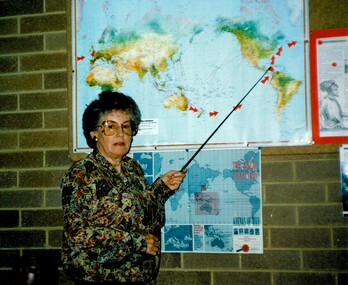 Phillip Island and District Historical Society Inc.
Photograph, Marcia Tanswell family talk to PIDHS
... Marcia spoke about her family and life on the Island to the Historical Society on 6/6/1990 Historical Marcia Tanswell Clothing War records maps farming social life and customs 8 coloured photographs and negatives of Marcia Tanswell and items displayed at her talk Marcia Tanswell family talk to PIDHS Photograph ...Marcia spoke about her family and life on the Island to the Historical Society on 6/6/1990Historical8 coloured photographs and negatives of Marcia Tanswell and items displayed at her talkmarcia tanswell, clothing, war records, maps, farming, social life and customs -
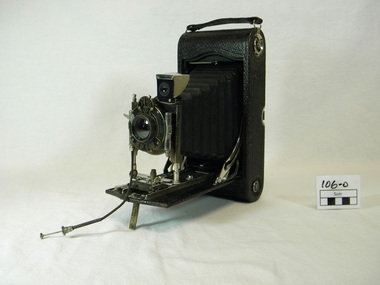 Hamilton Pastoral Museum
camera, Eastman Kodak, 1907
... Google kodak manufactured from about 1900 to today No. 3 Cartridge KODAK Camera (metal front slide block focus) (Improved metal front, bed extension, longer bellow and rack pinion focus 1901) This item recorded pictorial information on the life and times of our society. advertising ,social events, news items ,scientific work, engineering ,medical field ,agriculture ,fires , famine, floods ,drought...Google kodak manufactured from about 1900 to today No. 3 Cartridge KODAK Camera (metal front slide block focus) (Improved metal front, bed extension, longer bellow and rack pinion focus 1901) This item recorded pictorial information on the life and times of our society. advertising ,social events, news items ,scientific work, engineering ,medical field ,agriculture ,fires , famine, floods ,drought pictorial information 1907 camera kodak Name plate printed on assembly lens "EASTMAN KODAK / COMPANY/ ROCHESTER U.S.A." ...Google kodak manufactured from about 1900 to today No. 3 Cartridge KODAK Camera (metal front slide block focus) (Improved metal front, bed extension, longer bellow and rack pinion focus 1901) This item recorded pictorial information on the life and times of our society. advertising ,social events, news items ,scientific work, engineering ,medical field ,agriculture ,fires , famine, floods ,droughtkodak film camera. Leather look case, lens assembly with cable release folds out of case with expandable concertina lens.Name plate printed on assembly lens "EASTMAN KODAK / COMPANY/ ROCHESTER U.S.A." Printed on top of lens "KODAK / PAT / MAY 7 / 1907 / AUTOMATIC"pictorial, information, 1907, camera, kodak -
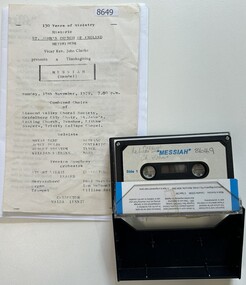 Greensborough Historical Society
Mixed media - Audio Cassette and Program, Diamond Valley Choral Society, Handel's Messiah, performed by Diamond Valley Choral Society 1979, 18/11/1979
... This performance by the Diamond Valley Choral Society and combined choirs was recorded at St John's Church of England, Heidelberg 18/11/1979 to celebrate 150 years of ministry at St John's. ...This performance by the Diamond Valley Choral Society and combined choirs was recorded at St John's Church of England, Heidelberg 18/11/1979 to celebrate 150 years of ministry at St John's. diamond valley choral society Messiah (oratorio) st john's church of england heidelberg Handwritten on case: "79 Messiah - St Johns, Commercial tape" 2 audio cassettes in clear plastic case and 3 copies of a printed program Handel's Messiah, performed by Diamond Valley Choral Society 1979 Mixed media Audio Cassette and Program Diamond Valley Choral Society ...A recording of 'Messiah', an English language oratorio by George Frederic Handel, composed in 1741. The text was compiled from the King James Bible; it contains 3 parts and part 2 ends with the 'Hallelujah' chorus. This performance by the Diamond Valley Choral Society and combined choirs was recorded at St John's Church of England, Heidelberg 18/11/1979 to celebrate 150 years of ministry at St John's. 2 audio cassettes in clear plastic case and 3 copies of a printed programHandwritten on case: "79 Messiah - St Johns, Commercial tape"diamond valley choral society, messiah (oratorio), st john's church of england heidelberg -
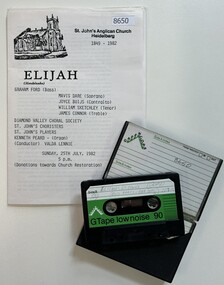 Greensborough Historical Society
Mixed media - Audio Cassette and Program, Diamond Valley Choral Society, Mendelssohn's Elijah, performed by Diamond Valley Choral Society 1982, 25/07/1982
... This performance by the Diamond Valley Choral Society and combined choirs was recorded at St John's Church of England, Heidelberg 25/07/1982 to support renovations at St John's. ...This performance by the Diamond Valley Choral Society and combined choirs was recorded at St John's Church of England, Heidelberg 25/07/1982 to support renovations at St John's. ...A recording of 'Elijah', an oratorio by Felix Mendelssohn, first performed in 1846, depicting events in the life of the Prophet Elijah as told in the Old Testament book of Kings. The work is scored for eight vocal soloists (two each of bass, tenor, alto and soprano). This performance by the Diamond Valley Choral Society and combined choirs was recorded at St John's Church of England, Heidelberg 25/07/1982 to support renovations at St John's. Conductor: Val Lennie.2 audio cassettes in clear plastic case and 35copies of a printed programHandwritten on case: "DVCS. St Johns. Elijah (3) 25.7.82"diamond valley choral society, st john's church of england heidelberg, elijah (oratorio) -
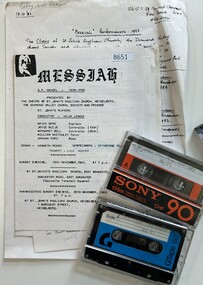 Greensborough Historical Society
Mixed media - Audio Cassette and Program, Diamond Valley Choral Society, Handel's Messiah, performed by Diamond Valley Choral Society 1983, 1983
... This performance by the Diamond Valley Choral Society and combined choirs was recorded at St John's Church of England, Heidelberg 13/11/1983 and at St David's East Doncaster 20/11/1983....This performance by the Diamond Valley Choral Society and combined choirs was recorded at St John's Church of England, Heidelberg 13/11/1983 and at St David's East Doncaster 20/11/1983. diamond valley choral society Messiah (oratorio) st john's church of england heidelberg Handwritten on case: "Messiah rehearsals '83" and "St John's 1983". 3 audio cassettes in clear plastic case, 4 copies of a printed program and an invitation to join the singers. ...A recording of 'Messiah', an English language oratorio by George Frederic Handel, composed in 1741. The text was compiled from the King James Bible; it contains 3 parts and part 2 ends with the 'Hallelujah' chorus. This performance by the Diamond Valley Choral Society and combined choirs was recorded at St John's Church of England, Heidelberg 13/11/1983 and at St David's East Doncaster 20/11/1983.3 audio cassettes in clear plastic case, 4 copies of a printed program and an invitation to join the singers.Handwritten on case: "Messiah rehearsals '83" and "St John's 1983".diamond valley choral society, messiah (oratorio), st john's church of england heidelberg -
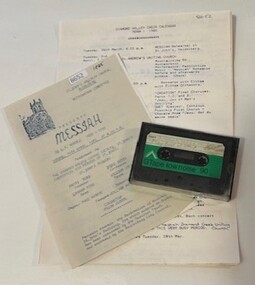 Greensborough Historical Society
Mixed media - Audio Cassette and Program, Diamond Valley Choral Society, Handel's Messiah, performed by Diamond Valley Choral Society 1983-1993, 14/04/1985
... This performance by the Diamond Valley Choral Society and combined choirs was recorded at St John's Church of England, Heidelberg 14/04/1985 (date on program)....This performance by the Diamond Valley Choral Society and combined choirs was recorded at St John's Church of England, Heidelberg 14/04/1985 (date on program). diamond valley choral society Messiah (oratorio) st john's church of england heidelberg Handwritten on case: "DVCS 1983-1993 for CD" 1 audio cassette in clear plastic case, planning notes and printed program Handel's Messiah, performed by Diamond Valley Choral Society 1983-1993 Mixed media Audio Cassette and Program Diamond Valley Choral Society ...A recording of 'Messiah', an English language oratorio by George Frederic Handel, composed in 1741. The text was compiled from the King James Bible; it contains 3 parts and part 2 ends with the 'Hallelujah' chorus. This performance by the Diamond Valley Choral Society and combined choirs was recorded at St John's Church of England, Heidelberg 14/04/1985 (date on program).1 audio cassette in clear plastic case, planning notes and printed programHandwritten on case: "DVCS 1983-1993 for CD"diamond valley choral society, messiah (oratorio), st john's church of england heidelberg -
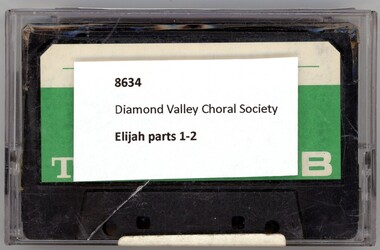 Greensborough Historical Society
Audio - Audio Cassette, Diamond Valley Choral Society, Elijah Parts 1 and 2, performed by Diamond Valley Choral Society, 1980s
... This performance by the Diamond Valley Choral Society has no date or venue recorded....This performance by the Diamond Valley Choral Society has no date or venue recorded. diamond valley choral society Elijah (oratorio) Handwritten on side A: "Elijah. 1 + 2" 1 audio cassette in clear plastic case Elijah Parts 1 and 2, performed by Diamond Valley Choral Society Audio Audio Cassette Diamond Valley Choral Society ...A recording of 'Elijah', an oratorio by Felix Mendelssohn, first performed in 1846, depicting events in the life of the Prophet Elijah as told in the Old Testament book of Kings. The work is scored for eight vocal soloists (two each of bass, tenor, alto and soprano). This performance by the Diamond Valley Choral Society has no date or venue recorded.1 audio cassette in clear plastic caseHandwritten on side A: "Elijah. 1 + 2"diamond valley choral society, elijah (oratorio) -
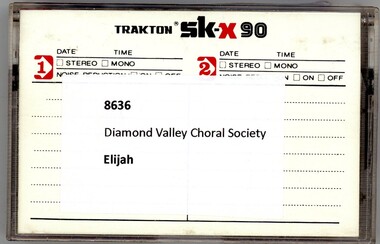 Greensborough Historical Society
Audio - Audio Cassette, Diamond Valley Choral Society, Elijah, performed by Diamond Valley Choral Society, 1980s
... This performance by the Diamond Valley Choral Society has no date or venue recorded....This performance by the Diamond Valley Choral Society has no date or venue recorded. diamond valley choral society Elijah (oratorio) Handwritten on cassette: "Elijah." 1 audio cassette in clear plastic case Elijah, performed by Diamond Valley Choral Society Audio Audio Cassette Diamond Valley Choral Society ...A recording of 'Elijah', an oratorio by Felix Mendelssohn, first performed in 1846, depicting events in the life of the Prophet Elijah as told in the Old Testament book of Kings. The work is scored for eight vocal soloists (two each of bass, tenor, alto and soprano). This performance by the Diamond Valley Choral Society has no date or venue recorded.1 audio cassette in clear plastic caseHandwritten on cassette: "Elijah."diamond valley choral society, elijah (oratorio) -
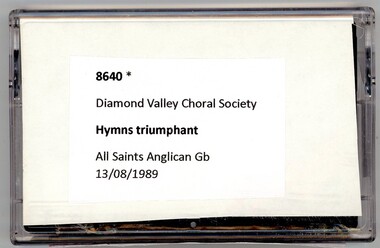 Greensborough Historical Society
Audio - Audio Cassette, Diamond Valley Choral Society, Hymns Triumphant, performed by Diamond Valley Choral Society 1989, 13/08/1989
... A recording of Hymns Triumphant, a collection of hymns originally recorded by the London Philharmonic Choir and Orchestra. This performance is by the Diamond Valley Choral Society at All Saints Anglican Church Greensborough on 13/08/1989....A recording of Hymns Triumphant, a collection of hymns originally recorded by the London Philharmonic Choir and Orchestra. This performance is by the Diamond Valley Choral Society at All Saints Anglican Church Greensborough on 13/08/1989. diamond valley choral society hymns all saints anglican church greensborough Handwritten on cassette: "Hymns Triumphant"; on insert: "Hymns Triumphant: sung by DVCS with orchestra at All Saints Anglican Church Greensborough. ...A recording of Hymns Triumphant, a collection of hymns originally recorded by the London Philharmonic Choir and Orchestra. This performance is by the Diamond Valley Choral Society at All Saints Anglican Church Greensborough on 13/08/1989.1 audio cassette in clear plastic caseHandwritten on cassette: "Hymns Triumphant"; on insert: "Hymns Triumphant: sung by DVCS with orchestra at All Saints Anglican Church Greensborough. Sunday 13th August 1989 at 7.30pm"diamond valley choral society, hymns, all saints anglican church greensborough -
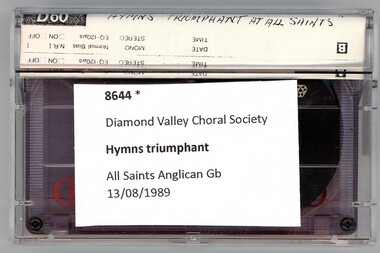 Greensborough Historical Society
Audio - Audio Cassette, Diamond Valley Choral Society, Hymns Triumphant, performed by Diamond Valley Choral Society 1989, 13/08/1989
... A recording of Hymns Triumphant, a collection of hymns originally recorded by the London Philharmonic Choir and Orchestra. This performance is by the Diamond Valley Choral Society and orchestra at All Saints Anglican Church Greensborough on 13/08/1989....A recording of Hymns Triumphant, a collection of hymns originally recorded by the London Philharmonic Choir and Orchestra. This performance is by the Diamond Valley Choral Society and orchestra at All Saints Anglican Church Greensborough on 13/08/1989. diamond valley choral society hymns all saints anglican church greensborough Handwritten on cassette: "Hymns Triumphant"; on insert: "Hymns Triumphant: sung by DVCS with orchestra at All Saints Anglican Church Greensborough. ...A recording of Hymns Triumphant, a collection of hymns originally recorded by the London Philharmonic Choir and Orchestra. This performance is by the Diamond Valley Choral Society and orchestra at All Saints Anglican Church Greensborough on 13/08/1989.1 audio cassette in clear plastic caseHandwritten on cassette: "Hymns Triumphant"; on insert: "Hymns Triumphant: sung by DVCS with orchestra at All Saints Anglican Church Greensborough. Sunday 13th August 1989 at 7.30pm"diamond valley choral society, hymns, all saints anglican church greensborough -
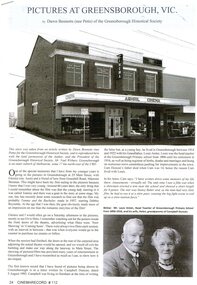 Greensborough Historical Society
Article - Article, Journal, Dawn Bennetts, Pictures at Greensborough, Vic, 2021_12
... Reprinted from Cinema Record, Issue 112, December 2021 Pictures at Greensborough, Vic. Article Article, Journal Dawn Bennetts Cinema and Theatre Historical Society of Australia ...Record of film showings at various locations in Greensborough from 1921 to the current Hoyts multiplex cinema at Greensborough Plaza in 1995. This article is based on Dawn Bennetts' earlier article for GHS.4 p. photocopy, text and photographs, some in colour. Reprinted from Cinema Record, Issue 112, December 2021moving pictures, greensborough, ashril theatre, greensborough picture theatres, cinemas
