
Showing 2483 items matching " royal navy"
-
 Flagstaff Hill Maritime Museum and Village
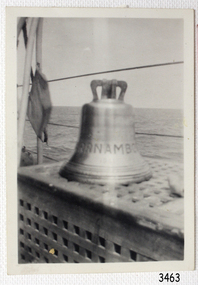
Photograph - Ship's Bell, Royal Australian Navy (RAN), HMAS Warrnambool 1941, 1948
... ...Royal Australian Navy...The bell was recovered in 1948 by the Royal Australian Navy. The ship's bell has been of great importance to a ship for hundreds of years. ...Royal Australian Navy (RAN)...The bell was recovered in 1948 by the Royal Australian Navy. The ship's bell has been of great importance to a ship for hundreds of years. ...This photograph was taken at the wreck site of the HMAS Warrnambool J202, wrecked on September 13th 1947. The bell was recovered in 1948 by the Royal Australian Navy. The ship's bell has been of great importance to a ship for hundreds of years. The bell is used for the timing of ships watches, for emergencies and many other purposes. It is also a prized possession when a ship is wrecked or broken up, as lasting memorial of the ship's existence. The HMAS Warrnambool J202 was commissioned by the Royal Australian Navy for use as a minesweeper during World War II. The Bathurst Class Corvette, fitted out with a range of armaments, was launched in Sydney 1941 and was. The ship began service in Bass Strait in 1941. At the end of the year it called into its namesake city, Warrnambool, where the crew paraded for the public marching eastwards along Timor Street. A gift of books for the ship’s personnel and a plaque bearing the City of Warrnambool’s Coat of Arms were presented to the ship. The ship was involved in evacuating a family of nine from the Dutch East Indies that was later successful in its challenge of Australia’s Immigration Restriction Act (White Australia Polity). The ship had many other appointments around Australia. On 13th September 1947 HMAS Warrnambool was leading a flotilla of minesweepers in northern Queensland’s coastal waters, clearing mines previously laid to defend Australia. The ship hit a mine, which exploded and very quickly sunk the ship. Boats from the nearby ships rescued most of the seamen although one was killed at the time. The survivors were taken by the HMAS Swan II to Darwin, and they went from there to hospitals in Brisbane and Sydney. Three of these men later died from their injuries. A number of items were recovered by Navy divers in 1948 including the ship’s bell and a plaque with Warrnambool’s Coat of Arms. In 1972-75 the wreck was sold and other items were salvaged. In 1995 a memorial plaque was erected in Warrnambool near the RSL. NOTE: The RAN built a second HMAS Warrnambool FCPB204, launched in 1981 and decommissioned in 2005. There was also a steam ship SS Warrnambool built in London 1892 and broken up in 1926. [A more detailed history can be found in our Collection Record 3477.] This photograph is significant for its association with the lifesaving rescue of the crew and the sinking Royal Australian Navy vessel, HMAS Warrnambool (J202). The HMAS Warrnambool played a nationally significant role in overturning Australia’s Immigration Restriction Act 1901 (colloquially known as the White Australia policy). The ship rescued, and brought to Australia, Samuel and Annie Jacob and their family after they evacuated Dutch East India. The family was threatened with deportation and made the first successful appeal to High Court regarding that Act. The HMAS Warrnambool has - Local significance for being the namesake of the City of Warrnambool - Local significance, having docked in Warrnambool Harbour - Local significance, the crew having paraded in Timor Street, Warrnambool - State significance for its first patrol being in Bass Strait. - National significance, being present in Timor at the Japanese surrender - National significance, shown by the significance of the ship’s bell being curated as Military Heritage and Technology at the Australian War Memorial. - National significance as part of Australia’s defence force history, being one of only four Bathurst class corvettes lost while in Australian service, the only Bathurst class corvette lost after World War II, the only RAN vessel to be sunk by a mine, and associated with the last four Navy deaths of WWII Photograph of ship bell from shipwreck of HMAS Warrnambool, sunk on 13-09-1947. The black and white photograph of the bell shows its inverted 'U' shaped fitting on top and inscribed letters around it. The flared base of the bell has concentric rings as decoration. In photograph, inscription on bell "- ARNAMB-" [WARRNAMBOOL]flagstaff hill, maritime village, maritime museum, warrnambool, shipwreck coast, mort's dock & engineering co ltd, h.m.a.s. warrnambool, hmas warrnambool, hmas warrnambool i, hmas warrnambool j202, hmas swan ii, j202, world war ii, bathurst class corvette, royal australian navy, ran, sydney built ship, bass strait patrol, sea mine patrol, mine sweeper, mine clearance, navy divers, great barrier reef, cockburn reef, southern cross diving and salvage, warrnambool city council, cr j r astbury, mayor j r astbury, warrnambool patriotic fund, seal, coat of arms, dedicatory plaque, hmas warrnambool 1941, shipwreck by sea mine 1947, sinking ship, sunk ship, sea rescue, life saving, lifesaving, hmas warrnambool ship’s bell, ship’s bell, minesweeper -
 Monbulk RSL Sub Branch
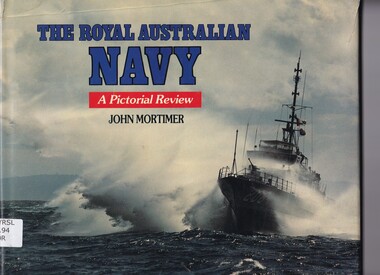
Book, John Mortimer, The Royal Australian Navy: A pictorial review, 1987
... The Royal Australian Navy: A pictorial review...royal australian navy - anniversary...Monbulk RSL Sub Branch 48 Main Road Monbulk yarra-valley-and-the-dandenong-ranges royal australian navy - anniversary royal australian navy - pictorial works A collection of photographs to commemorate the 75th anniversary of the Royal Australian Navy ill (mainly col plates), p.123. ...A collection of photographs to commemorate the 75th anniversary of the Royal Australian Navyill (mainly col plates), p.123.non-fictionA collection of photographs to commemorate the 75th anniversary of the Royal Australian Navyroyal australian navy - anniversary, royal australian navy - pictorial works -
 Monbulk RSL Sub Branch
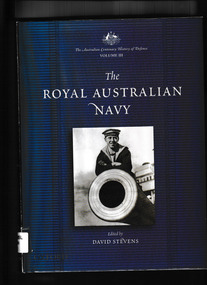
Book, Oxford University Press, The Royal Australian Navy, 2001
... The Royal Australian Navy...Royal Australia Navy - History...Monbulk RSL Sub Branch 48 Main Road Monbulk yarra-valley-and-the-dandenong-ranges Royal Australia Navy - History royal australian navy - pictorial works The centenary history of the Royal Australian Navy Index, ill, p.336. ...The centenary history of the Royal Australian NavyIndex, ill, p.336.non-fictionThe centenary history of the Royal Australian Navyroyal australia navy - history, royal australian navy - pictorial works -
 National Vietnam Veterans Museum (NVVM)
Film - Film, DVD, Get the bloody job done: the Royal Australian Navy Helicopter Flight Vietnam and the 135th Assault Helicopter Co. 1967-1972
... Get the bloody job done: the Royal Australian Navy Helicopter Flight Vietnam and the 135th Assault Helicopter Co. 1967-1972...Royal Australian Navy helicopters...National Vietnam Veterans Museum (NVVM) 25 Veterans Drive Newhaven phillip-island-and-the-bass-coast Royal Australian Navy helicopters Australia. Royal Australian Navy Helicopter Flight -Vietnam -- History Get the bloody job done: the Royal Australian Navy Helicopter Flight Vietnam and the 135th Assault Helicopter Co. 1967-1972 Film Film, DVD ...royal australian navy helicopters, australia. royal australian navy helicopter flight -vietnam -- history -
 Bendigo Historical Society Inc.
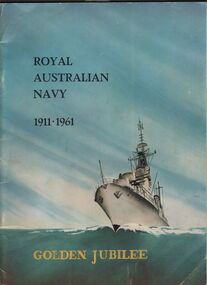
Book - AILEEN AND JOHN ELLISON COLLECTION: ROYAL AUSTRALIAN NAVY
... AILEEN AND JOHN ELLISON COLLECTION: ROYAL AUSTRALIAN NAVY...Royal Australian Navy 1911-1961 Golden jubilee. Royal Australian Navy Jubilee Souvenir. ...History House 11 Mackenzie Street Bendigo goldfields BOOKS Military navy Royal Australian Navy 1911-1961 Golden jubilee. ...Royal Australian Navy 1911-1961 Golden jubilee. Royal Australian Navy Jubilee Souvenir. Highlights from the past, an account of the present, a glimpse of the future. The book has 49 pages.books, military, navy -
 Flagstaff Hill Maritime Museum and Village
Photograph - Shipwreck rescue, Royal Australian Navy (RAN), 13-09-1947
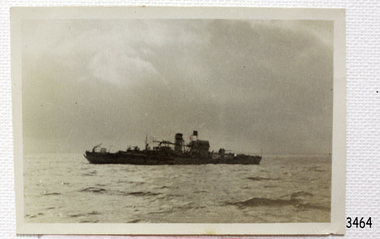
... ...Royal Australian Navy...The HMAS Warrnambool J202 was commissioned by the Royal Australian Navy for use as a minesweeper during World War II. ...Royal Australian Navy (RAN)...The HMAS Warrnambool J202 was commissioned by the Royal Australian Navy for use as a minesweeper during World War II. ...This photograph was taken at the scene of the wreck of the HMAS Warrnambool J202 on September 13th 1947. The photographer has captured the ship as it sinks at sea. The HMAS Warrnambool J202 was commissioned by the Royal Australian Navy for use as a minesweeper during World War II. The Bathurst Class Corvette, fitted out with a range of armaments, was launched in Sydney in 1941. The ship began service in Bass Strait in 1941. At the end of the year it called into its namesake city, Warrnambool, where the crew paraded for the public marching eastwards along Timor Street. A gift of books for the ship’s personnel and a plaque bearing the City of Warrnambool’s Coat of Arms were presented to the ship. The ship was involved in evacuating a family of nine from the Dutch East Indies that was later successful in its challenge of Australia’s Immigration Restriction Act (White Australia Polity). The ship had many other appointments around Australia. On 13th September 1947 HMAS Warrnambool was leading a flotilla of minesweepers in northern Queensland’s coastal waters, clearing mines previously laid to defend Australia. The ship hit a mine, which exploded and very quickly sunk the ship. Boats from the nearby ships rescued most of the seamen although one was killed at the time. The survivors were taken by the HMAS Swan II to Darwin, and they went from there to hospitals in Brisbane and Sydney. Three of these men later died from their injuries. A number of items were recovered by Navy divers in 1948 including the ship’s bell and a plaque with Warrnambool’s Coat of Arms. In 1972-75 the wreck was sold and other items were salvaged. In 1995 a memorial plaque was erected in Warrnambool near the RSL. NOTE: The RAN built a second HMAS Warrnambool FCPB204, launched in 1981 and decommissioned in 2005. There was also a steam ship SS Warrnambool built in London 1892 and broken up in 1926. [A more detailed history can be found in our Collection Record 3477.] This photograph is significant for its association with the lifesaving rescue of the crew and the sinking Royal Australian Navy vessel, HMAS Warrnambool (J202). The HMAS Warrnambool played a nationally significant role in overturning Australia’s Immigration Restriction Act 1901 (colloquially known as the White Australia policy). The ship rescued, and brought to Australia, Samuel and Annie Jacob and their family after they evacuated Dutch East India. The family was threatened with deportation and made the first successful appeal to High Court regarding that Act. The HMAS Warrnambool has - Local significance for being the namesake of the City of Warrnambool - Local significance, having docked in Warrnambool Harbour - Local significance, the crew having paraded in Timor Street, Warrnambool - State significance for its first patrol being in Bass Strait. - National significance, being present in Timor at the Japanese surrender - National significance, shown by the significance of the ship’s bell being curated as Military Heritage and Technology at the Australian War Memorial. - National significance as part of Australia’s defence force history, being one of only four Bathurst class corvettes lost while in Australian service, the only Bathurst class corvette lost after World War II, the only RAN vessel to be sunk by a mine, and associated with the last four Navy deaths of WWII Photograph of the sinking of the ship HMAS Warrnambool, sunk on 13-09-1947. This black and white photograph showing the vessel at sea is one of a series of photographs taken at the time.flagstaff hill, maritime village, maritime museum, warrnambool, shipwreck coast, mort's dock & engineering co ltd, h.m.a.s. warrnambool, hmas warrnambool, hmas warrnambool i, hmas warrnambool j202, hmas swan ii, j202, world war ii, bathurst class corvette, royal australian navy, ran, sydney built ship, bass strait patrol, sea mine patrol, mine sweeper, mine clearance, navy divers, great barrier reef, cockburn reef, southern cross diving and salvage, warrnambool city council, cr j r astbury, mayor j r astbury, warrnambool patriotic fund, seal, coat of arms, dedicatory plaque, hmas warrnambool 1941, shipwreck by sea mine 1947, sinking ship, sunk ship, minesweeper -
 Flagstaff Hill Maritime Museum and Village
Photograph - Shipwreck rescue, Royal Australian Navy (RAN), 13-09-1947
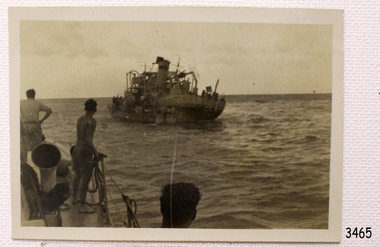
... ...Royal Australian Navy...The HMAS Warrnambool J202 was commissioned by the Royal Australian Navy for use as a minesweeper during World War II. ...Royal Australian Navy (RAN)...The HMAS Warrnambool J202 was commissioned by the Royal Australian Navy for use as a minesweeper during World War II. ...This photograph was taken at the scene of the wreck of the HMAS Warrnambool J202 on September 13th 1947. The photographer has captured the ship as it sinks at sea. The photograph is taken from a nearby vessel, likely to be the HMAS Swan II, which took the survivors onboard. The HMAS Warrnambool J202 was commissioned by the Royal Australian Navy for use as a minesweeper during World War II. The Bathurst Class Corvette, fitted out with a range of armaments, was launched in Sydney in 1941. The ship began service in Bass Strait in 1941. At the end of the year it called into its namesake city, Warrnambool, where the crew paraded for the public marching eastwards along Timor Street. A gift of books for the ship’s personnel and a plaque bearing the City of Warrnambool’s Coat of Arms were presented to the ship. The ship was involved in evacuating a family of nine from the Dutch East Indies that was later successful in its challenge of Australia’s Immigration Restriction Act (White Australia Polity). The ship had many other appointments around Australia. On 13th September 1947 HMAS Warrnambool was leading a flotilla of minesweepers in northern Queensland’s coastal waters, clearing mines previously laid to defend Australia. The ship hit a mine, which exploded and very quickly sunk the ship. Boats from the nearby ships rescued most of the seamen although one was killed at the time. The survivors were taken by the HMAS Swan II to Darwin, and they went from there to hospitals in Brisbane and Sydney. Three of these men later died from their injuries. A number of items were recovered by Navy divers in 1948 including the ship’s bell and a plaque with Warrnambool’s Coat of Arms. In 1972-75 the wreck was sold and other items were salvaged. In 1995 a memorial plaque was erected in Warrnambool near the RSL. NOTE: The RAN built a second HMAS Warrnambool FCPB204, launched in 1981 and decommissioned in 2005. There was also a steam ship SS Warrnambool built in London 1892 and broken up in 1926. [A more detailed history can be found in our Collection Record 3477.] This photograph is significant for its association with the lifesaving rescue of the crew and the sinking Royal Australian Navy vessel, HMAS Warrnambool (J202). The HMAS Warrnambool played a nationally significant role in overturning Australia’s Immigration Restriction Act 1901 (colloquially known as the White Australia policy). The ship rescued, and brought to Australia, Samuel and Annie Jacob and their family after they evacuated Dutch East India. The family was threatened with deportation and made the first successful appeal to High Court regarding that Act. The HMAS Warrnambool has - Local significance for being the namesake of the City of Warrnambool - Local significance, having docked in Warrnambool Harbour - Local significance, the crew having paraded in Timor Street, Warrnambool - State significance for its first patrol being in Bass Strait. - National significance, being present in Timor at the Japanese surrender - National significance, shown by the significance of the ship’s bell being curated as Military Heritage and Technology at the Australian War Memorial. - National significance as part of Australia’s defence force history, being one of only four Bathurst class corvettes lost while in Australian service, the only Bathurst class corvette lost after World War II, the only RAN vessel to be sunk by a mine, and associated with the last four Navy deaths of WWII Photograph of the sinking of the ship HMAS Warrnambool, sunk on 13-09-1947. Figures onboard a vessel are looking towards figures on the sinking vessel. This black and white photograph is one of a series of photographs taken at the time.flagstaff hill, maritime village, maritime museum, warrnambool, shipwreck coast, mort's dock & engineering co ltd, h.m.a.s. warrnambool, hmas warrnambool, hmas warrnambool i, hmas warrnambool j202, hmas swan ii, j202, world war ii, bathurst class corvette, royal australian navy, ran, sydney built ship, bass strait patrol, sea mine patrol, mine sweeper, mine clearance, navy divers, great barrier reef, cockburn reef, southern cross diving and salvage, warrnambool city council, cr j r astbury, mayor j r astbury, warrnambool patriotic fund, seal, coat of arms, dedicatory plaque, hmas warrnambool 1941, shipwreck by sea mine 1947, sinking ship, sunk ship, sea rescue, life saving, lifesaving, minesweeper -
 Flagstaff Hill Maritime Museum and Village
Photograph - Shipwreck rescue, Royal Australian Navy (RAN), HMAS Warrnambool J202, 13-09-1947
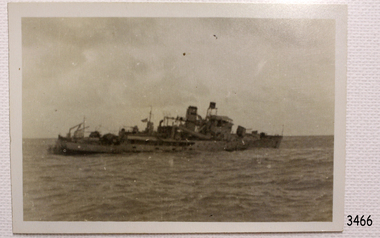
... ...Royal Australian Navy...The HMAS Warrnambool J202 was commissioned by the Royal Australian Navy for use as a minesweeper during World War II. ...Royal Australian Navy (RAN)...The HMAS Warrnambool J202 was commissioned by the Royal Australian Navy for use as a minesweeper during World War II. ...This photograph was taken at the scene of the wreck of the HMAS Warrnambool J202 on September 13th 1947. The photographer has captured the ship as it sinks at sea. The HMAS Warrnambool J202 was commissioned by the Royal Australian Navy for use as a minesweeper during World War II. The Bathurst Class Corvette, fitted out with a range of armaments, was launched in Sydney in 1941. The ship began service in Bass Strait in 1941. At the end of the year it called into its namesake city, Warrnambool, where the crew paraded for the public marching eastwards along Timor Street. A gift of books for the ship’s personnel and a plaque bearing the City of Warrnambool’s Coat of Arms were presented to the ship. The ship was involved in evacuating a family of nine from the Dutch East Indies that was later successful in its challenge of Australia’s Immigration Restriction Act (White Australia Polity). The ship had many other appointments around Australia. On 13th September 1947 HMAS Warrnambool was leading a flotilla of minesweepers in northern Queensland’s coastal waters, clearing mines previously laid to defend Australia. The ship hit a mine, which exploded and very quickly sunk the ship. Boats from the nearby ships rescued most of the seamen although one was killed at the time. The survivors were taken by the HMAS Swan II to Darwin, and they went from there to hospitals in Brisbane and Sydney. Three of these men later died from their injuries. A number of items were recovered by Navy divers in 1948 including the ship’s bell and a plaque with Warrnambool’s Coat of Arms. In 1972-75 the wreck was sold and other items were salvaged. In 1995 a memorial plaque was erected in Warrnambool near the RSL. NOTE: The RAN built a second HMAS Warrnambool FCPB204, launched in 1981 and decommissioned in 2005. There was also a steam ship SS Warrnambool built in London 1892 and broken up in 1926. [A more detailed history can be found in our Collection Record 3477.] This photograph is significant for its association with the lifesaving rescue of the crew and the sinking Royal Australian Navy vessel, HMAS Warrnambool (J202). The HMAS Warrnambool played a nationally significant role in overturning Australia’s Immigration Restriction Act 1901 (colloquially known as the White Australia policy). The ship rescued, and brought to Australia, Samuel and Annie Jacob and their family after they evacuated Dutch East India. The family was threatened with deportation and made the first successful appeal to High Court regarding that Act. The HMAS Warrnambool has - Local significance for being the namesake of the City of Warrnambool - Local significance, having docked in Warrnambool Harbour - Local significance, the crew having paraded in Timor Street, Warrnambool - State significance for its first patrol being in Bass Strait. - National significance, being present in Timor at the Japanese surrender - National significance, shown by the significance of the ship’s bell being curated as Military Heritage and Technology at the Australian War Memorial. - National significance as part of Australia’s defence force history, being one of only four Bathurst class corvettes lost while in Australian service, the only Bathurst class corvette lost after World War II, the only RAN vessel to be sunk by a mine, and associated with the last four Navy deaths of WWII Photograph of the starboard side of the sinking ship HMAS Warrnambool, sunk on 13-09-1947. This black and white photograph is one of a series of photographs taken at the time.flagstaff hill, maritime village, maritime museum, warrnambool, shipwreck coast, mort's dock & engineering co ltd, h.m.a.s. warrnambool, hmas warrnambool, hmas warrnambool i, hmas warrnambool j202, hmas swan ii, j202, world war ii, bathurst class corvette, royal australian navy, ran, sydney built ship, bass strait patrol, sea mine patrol, mine sweeper, mine clearance, navy divers, great barrier reef, cockburn reef, southern cross diving and salvage, warrnambool city council, cr j r astbury, mayor j r astbury, warrnambool patriotic fund, seal, coat of arms, dedicatory plaque, hmas warrnambool 1941, shipwreck by sea mine 1947, sinking ship, sunk ship, sea rescue, life saving, lifesaving, minesweeper -
 Flagstaff Hill Maritime Museum and Village
Photograph - Shipwreck rescue, Royal Australian Navy (RAN), HMAS Warrnambool J202, 13-09-1947
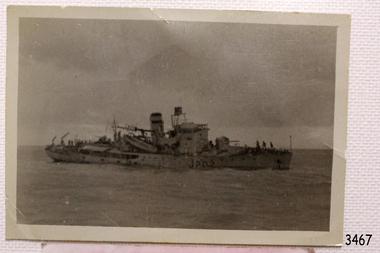
... ...Royal Australian Navy...The HMAS Warrnambool J202 was commissioned by the Royal Australian Navy for use as a minesweeper during World War II. ...Royal Australian Navy (RAN)...The HMAS Warrnambool J202 was commissioned by the Royal Australian Navy for use as a minesweeper during World War II. ...This photograph was taken at the scene of the wreck of the HMAS Warrnambool J202 on September 13th 1947. The photographer has captured the sinking ship with the crew still onboard. The HMAS Warrnambool J202 was commissioned by the Royal Australian Navy for use as a minesweeper during World War II. The Bathurst Class Corvette, fitted out with a range of armaments, was launched in Sydney in 1941 . The ship began service in Bass Strait in 1941. At the end of the year it called into its namesake city, Warrnambool, where the crew paraded for the public marching eastwards along Timor Street. A gift of books for the ship’s personnel and a plaque bearing the City of Warrnambool’s Coat of Arms were presented to the ship. The ship was involved in evacuating a family of nine from the Dutch East Indies that was later successful in its challenge of Australia’s Immigration Restriction Act (White Australia Polity). The ship had many other appointments around Australia. On 13th September 1947 HMAS Warrnambool was leading a flotilla of minesweepers in northern Queensland’s coastal waters, clearing mines previously laid to defend Australia. The ship hit a mine, which exploded and very quickly sunk the ship. Boats from the nearby ships rescued most of the seamen although one was killed at the time. The survivors were taken by the HMAS Swan II to Darwin, and they went from there to hospitals in Brisbane and Sydney. Three of these men later died from their injuries. A number of items were recovered by Navy divers in 1948 including the ship’s bell and a plaque with Warrnambool’s Coat of Arms. In 1972-75 the wreck was sold and other items were salvaged. In 1995 a memorial plaque was erected in Warrnambool near the RSL. NOTE: The RAN built a second HMAS Warrnambool FCPB204, launched in 1981 and decommissioned in 2005. There was also a steam ship SS Warrnambool built in London 1892 and broken up in 1926. [A more detailed history can be found in our Collection Record 3477.] This photograph is significant for its association with the lifesaving rescue of the crew and the sinking Royal Australian Navy vessel, HMAS Warrnambool (J202). The HMAS Warrnambool played a nationally significant role in overturning Australia’s Immigration Restriction Act 1901 (colloquially known as the White Australia policy). The ship rescued, and brought to Australia, Samuel and Annie Jacob and their family after they evacuated Dutch East India. The family was threatened with deportation and made the first successful appeal to High Court regarding that Act. The HMAS Warrnambool has - Local significance for being the namesake of the City of Warrnambool - Local significance, having docked in Warrnambool Harbour - Local significance, the crew having paraded in Timor Street, Warrnambool - State significance for its first patrol being in Bass Strait. - National significance, being present in Timor at the Japanese surrender - National significance, shown by the significance of the ship’s bell being curated as Military Heritage and Technology at the Australian War Memorial. - National significance as part of Australia’s defence force history, being one of only four Bathurst class corvettes lost while in Australian service, the only Bathurst class corvette lost after World War II, the only RAN vessel to be sunk by a mine, and associated with the last four Navy deaths of WWII Photograph of the sinking ship HMAS Warrnambool, sunk on 13-09-1947. Figures can be seen onboard the damaged vessel. The number of the ship-type is clearly visible on this starboard profile of the ship. This black and white photograph is one of a series of photographs taken at the time.Text on side of ship "J202"flagstaff hill, maritime village, maritime museum, warrnambool, shipwreck coast, mort's dock & engineering co ltd, h.m.a.s. warrnambool, hmas warrnambool, hmas warrnambool i, hmas warrnambool j202, hmas swan ii, j202, world war ii, bathurst class corvette, royal australian navy, ran, sydney built ship, bass strait patrol, sea mine patrol, mine sweeper, mine clearance, navy divers, great barrier reef, cockburn reef, southern cross diving and salvage, warrnambool city council, cr j r astbury, mayor j r astbury, warrnambool patriotic fund, seal, coat of arms, dedicatory plaque, hmas warrnambool 1941, shipwreck by sea mine 1947, sinking ship, sunk ship, sea rescue, life saving, lifesaving, minesweeper -
 Flagstaff Hill Maritime Museum and Village
Photograph - Shipwreck rescue, Royal Australian Navy (RAN), HMAS Warrnambool J202, 13-09-947
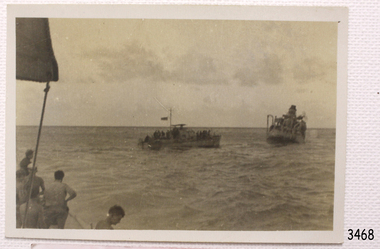
... ...Royal Australian Navy...The HMAS Warrnambool J202 was commissioned by the Royal Australian Navy for use as a minesweeper during World War II. ...Royal Australian Navy (RAN)...The HMAS Warrnambool J202 was commissioned by the Royal Australian Navy for use as a minesweeper during World War II. ...This photograph was taken at the scene of the wreck of the HMAS Warrnambool J202 on September 13th 1947. The photographer has captured the rescue boat approaching the sinking ship with the crew onboard. There small boat has several figures onboard. The HMAS Warrnambool J202 was commissioned by the Royal Australian Navy for use as a minesweeper during World War II. The Bathurst Class Corvette, fitted out with a range of armaments, was launched in Sydney in 1941. The ship began service in Bass Strait in 1941. At the end of the year it called into its namesake city, Warrnambool, where the crew paraded for the public marching eastwards along Timor Street. A gift of books for the ship’s personnel and a plaque bearing the City of Warrnambool’s Coat of Arms were presented to the ship. The ship was involved in evacuating a family of nine from the Dutch East Indies that was later successful in its challenge of Australia’s Immigration Restriction Act (White Australia Polity). The ship had many other appointments around Australia. On 13th September 1947 HMAS Warrnambool was leading a flotilla of minesweepers in northern Queensland’s coastal waters, clearing mines previously laid to defend Australia. The ship hit a mine, which exploded and very quickly sunk the ship. Boats from the nearby ships rescued most of the seamen although one was killed at the time. The survivors were taken by the HMAS Swan II to Darwin, and they went from there to hospitals in Brisbane and Sydney. Three of these men later died from their injuries. A number of items were recovered by Navy divers in 1948 including the ship’s bell and a plaque with Warrnambool’s Coat of Arms. In 1972-75 the wreck was sold and other items were salvaged. In 1995 a memorial plaque was erected in Warrnambool near the RSL. NOTE: The RAN built a second HMAS Warrnambool FCPB204, launched in 1981 and decommissioned in 2005. There was also a steam ship SS Warrnambool built in London 1892 and broken up in 1926. [A more detailed history can be found in our Collection Record 3477.] This photograph is significant for its association with the lifesaving rescue of the crew and the sinking Royal Australian Navy vessel, HMAS Warrnambool (J202). The HMAS Warrnambool played a nationally significant role in overturning Australia’s Immigration Restriction Act 1901 (colloquially known as the White Australia policy). The ship rescued, and brought to Australia, Samuel and Annie Jacob and their family after they evacuated Dutch East India. The family was threatened with deportation and made the first successful appeal to High Court regarding that Act. The HMAS Warrnambool has - Local significance for being the namesake of the City of Warrnambool - Local significance, having docked in Warrnambool Harbour - Local significance, the crew having paraded in Timor Street, Warrnambool - State significance for its first patrol being in Bass Strait. - National significance, being present in Timor at the Japanese surrender - National significance, shown by the significance of the ship’s bell being curated as Military Heritage and Technology at the Australian War Memorial. - National significance as part of Australia’s defence force history, being one of only four Bathurst class corvettes lost while in Australian service, the only Bathurst class corvette lost after World War II, the only RAN vessel to be sunk by a mine, and associated with the last four Navy deaths of WWII Photograph of rescue of the crew from shipwreck HMAS Warrnambool, sunk on 13-09-1947. Figures onboard a larger vessel look across at rescue vessel heading towards the sinking ship. This black and white photograph is one of a series of photographs taken at the time.flagstaff hill, maritime village, maritime museum, warrnambool, shipwreck coast, mort's dock & engineering co ltd, h.m.a.s. warrnambool, hmas warrnambool, hmas warrnambool i, hmas warrnambool j202, hmas swan ii, j202, world war ii, bathurst class corvette, royal australian navy, ran, sydney built ship, bass strait patrol, sea mine patrol, mine sweeper, mine clearance, navy divers, great barrier reef, cockburn reef, southern cross diving and salvage, warrnambool city council, cr j r astbury, mayor j r astbury, warrnambool patriotic fund, seal, coat of arms, dedicatory plaque, hmas warrnambool 1941, shipwreck by sea mine 1947, sinking ship, sunk ship, sea rescue, life saving, lifesaving, minesweeper -
 Flagstaff Hill Maritime Museum and Village
Photograph - Shipwreck rescue, Royal Australian Navy (RAN), HMAS Warrnambool J202, 13-09-1947
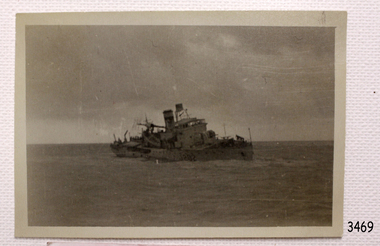
... ...Royal Australian Navy...The HMAS Warrnambool J202 was commissioned by the Royal Australian Navy for use as a minesweeper during World War II. ...Royal Australian Navy (RAN)...The HMAS Warrnambool J202 was commissioned by the Royal Australian Navy for use as a minesweeper during World War II. ...This photograph was taken at the scene of the wreck of the HMAS Warrnambool J202 on September 13th 1947. The photographer has captured the ship as it sinks at sea. The HMAS Warrnambool J202 was commissioned by the Royal Australian Navy for use as a minesweeper during World War II. The Bathurst Class Corvette, fitted out with a range of armaments, was launched in Sydney in 1941. The ship began service in Bass Strait in 1941. At the end of the year it called into its namesake city, Warrnambool, where the crew paraded for the public marching eastwards along Timor Street. A gift of books for the ship’s personnel and a plaque bearing the City of Warrnambool’s Coat of Arms were presented to the ship. The ship was involved in evacuating a family of nine from the Dutch East Indies that was later successful in its challenge of Australia’s Immigration Restriction Act (White Australia Polity). The ship had many other appointments around Australia. On 13th September 1947 HMAS Warrnambool was leading a flotilla of minesweepers in northern Queensland’s coastal waters, clearing mines previously laid to defend Australia. The ship hit a mine, which exploded and very quickly sunk the ship. Boats from the nearby ships rescued most of the seamen although one was killed at the time. The survivors were taken by the HMAS Swan II to Darwin, and they went from there to hospitals in Brisbane and Sydney. Three of these men later died from their injuries. A number of items were recovered by Navy divers in 1948 including the ship’s bell and a plaque with Warrnambool’s Coat of Arms. In 1972-75 the wreck was sold and other items were salvaged. In 1995 a memorial plaque was erected in Warrnambool near the RSL. NOTE: The RAN built a second HMAS Warrnambool FCPB204, launched in 1981 and decommissioned in 2005. There was also a steam ship SS Warrnambool built in London 1892 and broken up in 1926. [A more detailed history can be found in our Collection Record 3477.] This photograph is significant for its association with the lifesaving rescue of the crew and the sinking Royal Australian Navy vessel, HMAS Warrnambool (J202). The HMAS Warrnambool played a nationally significant role in overturning Australia’s Immigration Restriction Act 1901 (colloquially known as the White Australia policy). The ship rescued, and brought to Australia, Samuel and Annie Jacob and their family after they evacuated Dutch East India. The family was threatened with deportation and made the first successful appeal to High Court regarding that Act. The HMAS Warrnambool has - Local significance for being the namesake of the City of Warrnambool - Local significance, having docked in Warrnambool Harbour - Local significance, the crew having paraded in Timor Street, Warrnambool - State significance for its first patrol being in Bass Strait. - National significance, being present in Timor at the Japanese surrender - National significance, shown by the significance of the ship’s bell being curated as Military Heritage and Technology at the Australian War Memorial. - National significance as part of Australia’s defence force history, being one of only four Bathurst class corvettes lost while in Australian service, the only Bathurst class corvette lost after World War II, the only RAN vessel to be sunk by a mine, and associated with the last four Navy deaths of WWII Photograph of the sinking ship HMAS Warrnambool, sunk on 13-09-1947. The image shows the damaged ship tilting down on the starboard side. The ship-type number is still mostly visible. This black and white photograph is one of a series of photographs taken at the time.flagstaff hill, maritime village, maritime museum, warrnambool, shipwreck coast, mort's dock & engineering co ltd, h.m.a.s. warrnambool, hmas warrnambool, hmas warrnambool i, hmas warrnambool j202, hmas swan ii, j202, world war ii, bathurst class corvette, royal australian navy, ran, sydney built ship, bass strait patrol, sea mine patrol, mine sweeper, mine clearance, navy divers, great barrier reef, cockburn reef, southern cross diving and salvage, warrnambool city council, cr j r astbury, mayor j r astbury, warrnambool patriotic fund, seal, coat of arms, dedicatory plaque, hmas warrnambool 1941, shipwreck by sea mine 1947, sinking ship, sunk ship, sea rescue, life saving, lifesaving, minesweeper -
 Flagstaff Hill Maritime Museum and Village
Photograph - Shipwreck rescue, Royal Australian Navy (RAN), HMAS Warrnambool J202, 13-09-1947
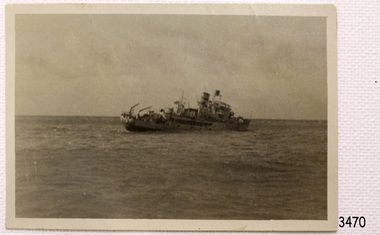
... ...Royal Australian Navy...The HMAS Warrnambool J202 was commissioned by the Royal Australian Navy for use as a minesweeper during World War II. ...Royal Australian Navy (RAN)...The HMAS Warrnambool J202 was commissioned by the Royal Australian Navy for use as a minesweeper during World War II. ...This photograph was taken at the scene of the wreck of the HMAS Warrnambool J202 on September 13th 1947. The photographer has captured the ship as it sinks at sea, with, it seems, crew still on board.. The HMAS Warrnambool J202 was commissioned by the Royal Australian Navy for use as a minesweeper during World War II. The Bathurst Class Corvette, fitted out with a range of armaments, was launched in Sydney in 1941. The ship began service in Bass Strait in 1941. At the end of the year it called into its namesake city, Warrnambool, where the crew paraded for the public marching eastwards along Timor Street. A gift of books for the ship’s personnel and a plaque bearing the City of Warrnambool’s Coat of Arms were presented to the ship. The ship was involved in evacuating a family of nine from the Dutch East Indies that was later successful in its challenge of Australia’s Immigration Restriction Act (White Australia Polity). The ship had many other appointments around Australia. On 13th September 1947 HMAS Warrnambool was leading a flotilla of minesweepers in northern Queensland’s coastal waters, clearing mines previously laid to defend Australia. The ship hit a mine, which exploded and very quickly sunk the ship. Boats from the nearby ships rescued most of the seamen although one was killed at the time. The survivors were taken by the HMAS Swan II to Darwin, and they went from there to hospitals in Brisbane and Sydney. Three of these men later died from their injuries. A number of items were recovered by Navy divers in 1948 including the ship’s bell and a plaque with Warrnambool’s Coat of Arms. In 1972-75 the wreck was sold and other items were salvaged. In 1995 a memorial plaque was erected in Warrnambool near the RSL. NOTE: The RAN built a second HMAS Warrnambool FCPB204, launched in 1981 and decommissioned in 2005. There was also a steam ship SS Warrnambool built in London 1892 and broken up in 1926. [A more detailed history can be found in our Collection Record 3477.] This photograph is significant for its association with the lifesaving rescue of the crew and the sinking Royal Australian Navy vessel, HMAS Warrnambool (J202). The HMAS Warrnambool played a nationally significant role in overturning Australia’s Immigration Restriction Act 1901 (colloquially known as the White Australia policy). The ship rescued, and brought to Australia, Samuel and Annie Jacob and their family after they evacuated Dutch East India. The family was threatened with deportation and made the first successful appeal to High Court regarding that Act. The HMAS Warrnambool has - Local significance for being the namesake of the City of Warrnambool - Local significance, having docked in Warrnambool Harbour - Local significance, the crew having paraded in Timor Street, Warrnambool - State significance for its first patrol being in Bass Strait. - National significance, being present in Timor at the Japanese surrender - National significance, shown by the significance of the ship’s bell being curated as Military Heritage and Technology at the Australian War Memorial. - National significance as part of Australia’s defence force history, being one of only four Bathurst class corvettes lost while in Australian service, the only Bathurst class corvette lost after World War II, the only RAN vessel to be sunk by a mine, and associated with the last four Navy deaths of WWII Photograph of the sinking ship HMAS Warrnambool, sunk on 13-09-1947. The image shows the ship leaning at an angle towards the sea. There appears to be figures near the bow. This black and white photograph is one of a series of photographs taken at the time.flagstaff hill, maritime village, maritime museum, warrnambool, shipwreck coast, mort's dock & engineering co ltd, h.m.a.s. warrnambool, hmas warrnambool, hmas warrnambool i, hmas warrnambool j202, hmas swan ii, j202, world war ii, bathurst class corvette, royal australian navy, ran, sydney built ship, bass strait patrol, sea mine patrol, mine sweeper, mine clearance, navy divers, great barrier reef, cockburn reef, southern cross diving and salvage, warrnambool city council, cr j r astbury, mayor j r astbury, warrnambool patriotic fund, seal, coat of arms, dedicatory plaque, hmas warrnambool 1941, shipwreck by sea mine 1947, sinking ship, sunk ship, sea rescue, life saving, lifesaving, minesweeper -
 Flagstaff Hill Maritime Museum and Village
Photograph - Shipwreck rescue, Royal Australian Navy (RAN), HMAS Warrnambool J202, 13-09-1947
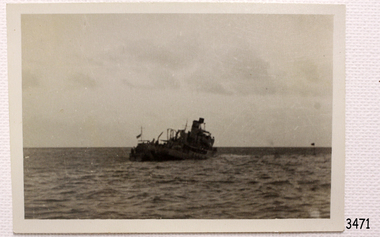
... ...Royal Australian Navy...The HMAS Warrnambool J202 was commissioned by the Royal Australian Navy for use as a minesweeper during World War II. ...Royal Australian Navy (RAN)...The HMAS Warrnambool J202 was commissioned by the Royal Australian Navy for use as a minesweeper during World War II. ...This photograph was taken at the scene of the wreck of the HMAS Warrnambool J202 on September 13th 1947. The photographer has captured the ship as it sinks at sea. The HMAS Warrnambool J202 was commissioned by the Royal Australian Navy for use as a minesweeper during World War II. The Bathurst Class Corvette, fitted out with a range of armaments, was launched in Sydney in 1941. The ship began service in Bass Strait in 1941. At the end of the year it called into its namesake city, Warrnambool, where the crew paraded for the public marching eastwards along Timor Street. A gift of books for the ship’s personnel and a plaque bearing the City of Warrnambool’s Coat of Arms were presented to the ship. The ship was involved in evacuating a family of nine from the Dutch East Indies that was later successful in its challenge of Australia’s Immigration Restriction Act (White Australia Polity). The ship had many other appointments around Australia. On 13th September 1947 HMAS Warrnambool was leading a flotilla of minesweepers in northern Queensland’s coastal waters, clearing mines previously laid to defend Australia. The ship hit a mine, which exploded and very quickly sunk the ship. Boats from the nearby ships rescued most of the seamen although one was killed at the time. The survivors were taken by the HMAS Swan II to Darwin, and they went from there to hospitals in Brisbane and Sydney. Three of these men later died from their injuries. A number of items were recovered by Navy divers in 1948 including the ship’s bell and a plaque with Warrnambool’s Coat of Arms. In 1972-75 the wreck was sold and other items were salvaged. In 1995 a memorial plaque was erected in Warrnambool near the RSL. NOTE: The RAN built a second HMAS Warrnambool FCPB204, launched in 1981 and decommissioned in 2005. There was also a steam ship SS Warrnambool built in London 1892 and broken up in 1926. [A more detailed history can be found in our Collection Record 3477.] This photograph is significant for its association with the lifesaving rescue of the crew and the sinking Royal Australian Navy vessel, HMAS Warrnambool (J202). The HMAS Warrnambool played a nationally significant role in overturning Australia’s Immigration Restriction Act 1901 (colloquially known as the White Australia policy). The ship rescued, and brought to Australia, Samuel and Annie Jacob and their family after they evacuated Dutch East India. The family was threatened with deportation and made the first successful appeal to High Court regarding that Act. The HMAS Warrnambool has - Local significance for being the namesake of the City of Warrnambool - Local significance, having docked in Warrnambool Harbour - Local significance, the crew having paraded in Timor Street, Warrnambool - State significance for its first patrol being in Bass Strait. - National significance, being present in Timor at the Japanese surrender - National significance, shown by the significance of the ship’s bell being curated as Military Heritage and Technology at the Australian War Memorial. - National significance as part of Australia’s defence force history, being one of only four Bathurst class corvettes lost while in Australian service, the only Bathurst class corvette lost after World War II, the only RAN vessel to be sunk by a mine, and associated with the last four Navy deaths of WWII Photograph of the sinking ship HMAS Warrnambool, sunk on 13-09-1947. The image shows the ship tilting towards port side and the bow dipping. This black and white photograph is one of a series of photographs taken at the time.flagstaff hill, maritime village, maritime museum, warrnambool, shipwreck coast, mort's dock & engineering co ltd, h.m.a.s. warrnambool, hmas warrnambool, hmas warrnambool i, hmas warrnambool j202, hmas swan ii, j202, world war ii, bathurst class corvette, royal australian navy, ran, sydney built ship, bass strait patrol, sea mine patrol, mine sweeper, mine clearance, navy divers, great barrier reef, cockburn reef, southern cross diving and salvage, warrnambool city council, cr j r astbury, mayor j r astbury, warrnambool patriotic fund, seal, coat of arms, dedicatory plaque, hmas warrnambool 1941, shipwreck by sea mine 1947, sinking ship, sunk ship, sea rescue, life saving, lifesaving, minesweeper -
 Flagstaff Hill Maritime Museum and Village
Photograph - Shipwreck rescue, Royal Australian Navy (RAN), 13-09-1947
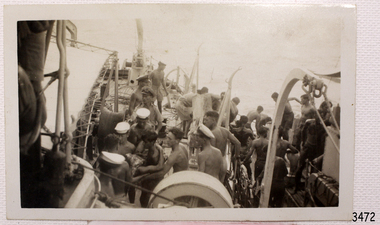
... ...Royal Australian Navy...The HMAS Warrnambool J202 was commissioned by the Royal Australian Navy for use as a minesweeper during World War II. ...Royal Australian Navy (RAN)...The HMAS Warrnambool J202 was commissioned by the Royal Australian Navy for use as a minesweeper during World War II. ...This photograph was taken at the scene of the wreck of the HMAS Warrnambool J202 on September 13th 1947. The photographer has captured the crew being rescued, transferring from one vessel to another, which is likely to be the HMAS Swan II. The HMAS Warrnambool J202 was commissioned by the Royal Australian Navy for use as a minesweeper during World War II. The Bathurst Class Corvette, fitted out with a range of armaments, was launched in Sydney 1941. The ship began service in Bass Strait in 1941. At the end of the year it called into its namesake city, Warrnambool, where the crew paraded for the public marching eastwards along Timor Street. A gift of books for the ship’s personnel and a plaque bearing the City of Warrnambool’s Coat of Arms were presented to the ship. The ship was involved in evacuating a family of nine from the Dutch East Indies that was later successful in its challenge of Australia’s Immigration Restriction Act (White Australia Polity). The ship had many other appointments around Australia. On 13th September 1947 HMAS Warrnambool was leading a flotilla of minesweepers in northern Queensland’s coastal waters, clearing mines previously laid to defend Australia. The ship hit a mine, which exploded and very quickly sunk the ship. Boats from the nearby ships rescued most of the seamen although one was killed at the time. The survivors were taken by the HMAS Swan II to Darwin, and they went from there to hospitals in Brisbane and Sydney. Three of these men later died from their injuries. A number of items were recovered by Navy divers in 1948 including the ship’s bell and a plaque with Warrnambool’s Coat of Arms. In 1972-75 the wreck was sold and other items were salvaged. In 1995 a memorial plaque was erected in Warrnambool near the RSL. NOTE: The RAN built a second HMAS Warrnambool FCPB204, launched in 1981 and decommissioned in 2005. There was also a steam ship SS Warrnambool built in London 1892 and broken up in 1926. [A more detailed history can be found in our Collection Record 3477.] This photograph is significant for its association with the lifesaving rescue of the crew and the sinking Royal Australian Navy vessel, HMAS Warrnambool (J202). The HMAS Warrnambool played a nationally significant role in overturning Australia’s Immigration Restriction Act 1901 (colloquially known as the White Australia policy). The ship rescued, and brought to Australia, Samuel and Annie Jacob and their family after they evacuated Dutch East India. The family was threatened with deportation and made the first successful appeal to High Court regarding that Act. The HMAS Warrnambool has - Local significance for being the namesake of the City of Warrnambool - Local significance, having docked in Warrnambool Harbour - Local significance, the crew having paraded in Timor Street, Warrnambool - State significance for its first patrol being in Bass Strait. - National significance, being present in Timor at the Japanese surrender - National significance, shown by the significance of the ship’s bell being curated as Military Heritage and Technology at the Australian War Memorial. - National significance as part of Australia’s defence force history, being one of only four Bathurst class corvettes lost while in Australian service, the only Bathurst class corvette lost after World War II, the only RAN vessel to be sunk by a mine, and associated with the last four Navy deaths of WWII Photograph of the rescue of the crew from shipwreck HMAS Warrnambool, sunk on 13-09-1947. Survivors are helped from one vessel to another by seamen. This black and white photograph is one of a series of photographs taken at the time.flagstaff hill, maritime village, maritime museum, warrnambool, shipwreck coast, mort's dock & engineering co ltd, h.m.a.s. warrnambool, hmas warrnambool, hmas warrnambool i, hmas warrnambool j202, hmas swan ii, j202, world war ii, bathurst class corvette, royal australian navy, ran, sydney built ship, bass strait patrol, sea mine patrol, mine sweeper, mine clearance, navy divers, great barrier reef, cockburn reef, southern cross diving and salvage, warrnambool city council, cr j r astbury, mayor j r astbury, warrnambool patriotic fund, seal, coat of arms, dedicatory plaque, hmas warrnambool 1941, shipwreck by sea mine 1947, sinking ship, sunk ship, sea rescue, life saving, lifesaving, minesweeper -
 Flagstaff Hill Maritime Museum and Village
Photograph - Shipwreck rescue, Royal Australian Navy (RAN), 13-09-1947
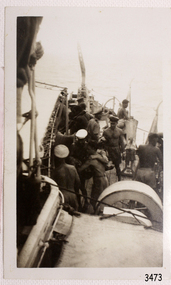
... ...Royal Australian Navy...The HMAS Warrnambool J202 was commissioned by the Royal Australian Navy for use as a minesweeper during World War II. ...Royal Australian Navy (RAN)...The HMAS Warrnambool J202 was commissioned by the Royal Australian Navy for use as a minesweeper during World War II. ...This photograph was taken at the scene of the wreck of the HMAS Warrnambool J202 on September 13th 1947. The photographer has captured the crew being rescued. The HMAS Warrnambool J202 was commissioned by the Royal Australian Navy for use as a minesweeper during World War II. The Bathurst Class Corvette, fitted out with a range of armaments, was launched in Sydney, 1941. The ship began service in Bass Strait in 1941. At the end of the year it called into its namesake city, Warrnambool, where the crew paraded for the public marching eastwards along Timor Street. A gift of books for the ship’s personnel and a plaque bearing the City of Warrnambool’s Coat of Arms were presented to the ship. The ship was involved in evacuating a family of nine from the Dutch East Indies that was later successful in its challenge of Australia’s Immigration Restriction Act (White Australia Polity). The ship had many other appointments around Australia. On 13th September 1947 HMAS Warrnambool was leading a flotilla of minesweepers in northern Queensland’s coastal waters, clearing mines previously laid to defend Australia. The ship hit a mine, which exploded and very quickly sunk the ship. Boats from the nearby ships rescued most of the seamen although one was killed at the time. The survivors were taken by the HMAS Swan II to Darwin, and they went from there to hospitals in Brisbane and Sydney. Three of these men later died from their injuries. A number of items were recovered by Navy divers in 1948 including the ship’s bell and a plaque with Warrnambool’s Coat of Arms. In 1972-75 the wreck was sold and other items were salvaged. In 1995 a memorial plaque was erected in Warrnambool near the RSL. NOTE: The RAN built a second HMAS Warrnambool FCPB204, launched in 1981 and decommissioned in 2005. There was also a steam ship SS Warrnambool built in London 1892 and broken up in 1926. [A more detailed history can be found in our Collection Record 3477.] This photograph is significant for its association with the lifesaving rescue of the crew and the sinking Royal Australian Navy vessel, HMAS Warrnambool (J202). The HMAS Warrnambool played a nationally significant role in overturning Australia’s Immigration Restriction Act 1901 (colloquially known as the White Australia policy). The ship rescued, and brought to Australia, Samuel and Annie Jacob and their family after they evacuated Dutch East India. The family was threatened with deportation and made the first successful appeal to High Court regarding that Act. The HMAS Warrnambool has - Local significance for being the namesake of the City of Warrnambool - Local significance, having docked in Warrnambool Harbour - Local significance, the crew having paraded in Timor Street, Warrnambool - State significance for its first patrol being in Bass Strait. - National significance, being present in Timor at the Japanese surrender - National significance, shown by the significance of the ship’s bell being curated as Military Heritage and Technology at the Australian War Memorial. - National significance as part of Australia’s defence force history, being one of only four Bathurst class corvettes lost while in Australian service, the only Bathurst class corvette lost after World War II, the only RAN vessel to be sunk by a mine, and associated with the last four Navy deaths of WWII Photograph of the rescue of the crew from shipwreck HMAS Warrnambool, sunk on 13-09-1947. The image shows injured men being assisted onboard a vessel at sea. This black and white photograph is one of a series of photographs taken at the time.flagstaff hill, maritime village, maritime museum, warrnambool, shipwreck coast, mort's dock & engineering co ltd, h.m.a.s. warrnambool, hmas warrnambool, hmas warrnambool i, hmas warrnambool j202, hmas swan ii, j202, world war ii, bathurst class corvette, royal australian navy, ran, sydney built ship, bass strait patrol, sea mine patrol, mine sweeper, mine clearance, navy divers, great barrier reef, cockburn reef, southern cross diving and salvage, warrnambool city council, cr j r astbury, mayor j r astbury, warrnambool patriotic fund, seal, coat of arms, dedicatory plaque, hmas warrnambool 1941, shipwreck by sea mine 1947, sinking ship, sunk ship, sea rescue, life saving, lifesaving, minesweeper -
 Flagstaff Hill Maritime Museum and Village
Photograph - Shipwreck rescue, Royal Australian Navy (RAN), 13-09-1947
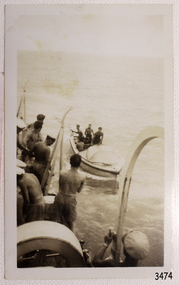
... ...Royal Australian Navy...The HMAS Warrnambool J202 was commissioned by the Royal Australian Navy for use as a minesweeper during World War II. ...Royal Australian Navy (RAN)...The HMAS Warrnambool J202 was commissioned by the Royal Australian Navy for use as a minesweeper during World War II. ...This photograph was taken at the scene of the wreck of the HMAS Warrnambool J202 on September 13th 1947. The photographer has captured the crew being rescued. The HMAS Warrnambool J202 was commissioned by the Royal Australian Navy for use as a minesweeper during World War II. The Bathurst Class Corvette, fitted out with a range of armaments, was launched in Sydney 1941. The ship began service in Bass Strait in 1941. At the end of the year it called into its namesake city, Warrnambool, where the crew paraded for the public marching eastwards along Timor Street. A gift of books for the ship’s personnel and a plaque bearing the City of Warrnambool’s Coat of Arms were presented to the ship. The ship was involved in evacuating a family of nine from the Dutch East Indies that was later successful in its challenge of Australia’s Immigration Restriction Act (White Australia Polity). The ship had many other appointments around Australia. On 13th September 1947 HMAS Warrnambool was leading a flotilla of minesweepers in northern Queensland’s coastal waters, clearing mines previously laid to defend Australia. The ship hit a mine, which exploded and very quickly sunk the ship. Boats from the nearby ships rescued most of the seamen although one was killed at the time. The survivors were taken by the HMAS Swan II to Darwin, and they went from there to hospitals in Brisbane and Sydney. Three of these men later died from their injuries. A number of items were recovered by Navy divers in 1948 including the ship’s bell and a plaque with Warrnambool’s Coat of Arms. In 1972-75 the wreck was sold and other items were salvaged. In 1995 a memorial plaque was erected in Warrnambool near the RSL. NOTE: The RAN built a second HMAS Warrnambool FCPB204, launched in 1981 and decommissioned in 2005. There was also a steam ship SS Warrnambool built in London 1892 and broken up in 1926. [A more detailed history can be found in our Collection Record 3477.] This photograph is significant for its association with the lifesaving rescue of the crew and the sinking Royal Australian Navy vessel, HMAS Warrnambool (J202). The HMAS Warrnambool played a nationally significant role in overturning Australia’s Immigration Restriction Act 1901 (colloquially known as the White Australia policy). The ship rescued, and brought to Australia, Samuel and Annie Jacob and their family after they evacuated Dutch East India. The family was threatened with deportation and made the first successful appeal to High Court regarding that Act. The HMAS Warrnambool has - Local significance for being the namesake of the City of Warrnambool - Local significance, having docked in Warrnambool Harbour - Local significance, the crew having paraded in Timor Street, Warrnambool - State significance for its first patrol being in Bass Strait. - National significance, being present in Timor at the Japanese surrender - National significance, shown by the significance of the ship’s bell being curated as Military Heritage and Technology at the Australian War Memorial. - National significance as part of Australia’s defence force history, being one of only four Bathurst class corvettes lost while in Australian service, the only Bathurst class corvette lost after World War II, the only RAN vessel to be sunk by a mine, and associated with the last four Navy deaths of WWII Photograph of the rescue of the crew from shipwreck HMAS Warrnambool, sunk on 13-09-1947. Image shows men in a lifeboat beside men in a ship, at sea. This black and white photograph is one of a series of photographs taken at the time.flagstaff hill, maritime village, maritime museum, warrnambool, shipwreck coast, mort's dock & engineering co ltd, h.m.a.s. warrnambool, hmas warrnambool, hmas warrnambool i, hmas warrnambool j202, hmas swan ii, j202, world war ii, bathurst class corvette, royal australian navy, ran, sydney built ship, bass strait patrol, sea mine patrol, mine sweeper, mine clearance, navy divers, great barrier reef, cockburn reef, southern cross diving and salvage, warrnambool city council, cr j r astbury, mayor j r astbury, warrnambool patriotic fund, seal, coat of arms, dedicatory plaque, hmas warrnambool 1941, shipwreck by sea mine 1947, sinking ship, sunk ship, sea rescue, life saving, lifesaving, minesweeper -
 Flagstaff Hill Maritime Museum and Village
Photograph - Shipwreck rescue, Royal Australian Navy (RAN), 13-09-1947
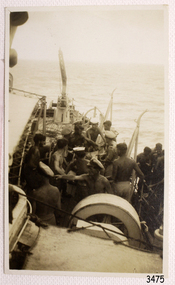
... ...Royal Australian Navy...The HMAS Warrnambool J202 was commissioned by the Royal Australian Navy for use as a minesweeper during World War II. ...Royal Australian Navy (RAN)...The HMAS Warrnambool J202 was commissioned by the Royal Australian Navy for use as a minesweeper during World War II. ...This photograph was taken at the scene of the wreck of the HMAS Warrnambool J202 on September 13th 1947. The photographer has captured the crew being rescued, transferring from a lifeboat to the ship. The HMAS Warrnambool J202 was commissioned by the Royal Australian Navy for use as a minesweeper during World War II. The Bathurst Class Corvette, fitted out with a range of armaments, was launched in Sydney 1941. The ship began service in Bass Strait in 1941. At the end of the year it called into its namesake city, Warrnambool, where the crew paraded for the public marching eastwards along Timor Street. A gift of books for the ship’s personnel and a plaque bearing the City of Warrnambool’s Coat of Arms were presented to the ship. The ship was involved in evacuating a family of nine from the Dutch East Indies that was later successful in its challenge of Australia’s Immigration Restriction Act (White Australia Polity). The ship had many other appointments around Australia. On 13th September 1947 HMAS Warrnambool was leading a flotilla of minesweepers in northern Queensland’s coastal waters, clearing mines previously laid to defend Australia. The ship hit a mine, which exploded and very quickly sunk the ship. Boats from the nearby ships rescued most of the seamen although one was killed at the time. The survivors were taken by the HMAS Swan II to Darwin, and they went from there to hospitals in Brisbane and Sydney. Three of these men later died from their injuries. A number of items were recovered by Navy divers in 1948 including the ship’s bell and a plaque with Warrnambool’s Coat of Arms. In 1972-75 the wreck was sold and other items were salvaged. In 1995 a memorial plaque was erected in Warrnambool near the RSL. NOTE: The RAN built a second HMAS Warrnambool FCPB204, launched in 1981 and decommissioned in 2005. There was also a steam ship SS Warrnambool built in London 1892 and broken up in 1926. [A more detailed history can be found in our Collection Record 3477.] This photograph is significant for its association with the lifesaving rescue of the crew and the sinking Royal Australian Navy vessel, HMAS Warrnambool (J202). The HMAS Warrnambool played a nationally significant role in overturning Australia’s Immigration Restriction Act 1901 (colloquially known as the White Australia policy). The ship rescued, and brought to Australia, Samuel and Annie Jacob and their family after they evacuated Dutch East India. The family was threatened with deportation and made the first successful appeal to High Court regarding that Act. The HMAS Warrnambool has - Local significance for being the namesake of the City of Warrnambool - Local significance, having docked in Warrnambool Harbour - Local significance, the crew having paraded in Timor Street, Warrnambool - State significance for its first patrol being in Bass Strait. - National significance, being present in Timor at the Japanese surrender - National significance, shown by the significance of the ship’s bell being curated as Military Heritage and Technology at the Australian War Memorial. - National significance as part of Australia’s defence force history, being one of only four Bathurst class corvettes lost while in Australian service, the only Bathurst class corvette lost after World War II, the only RAN vessel to be sunk by a mine, and associated with the last four Navy deaths of WWII Photograph of the rescue of the crew from shipwreck HMAS Warrnambool, sunk on 13-09-1947. The image shows men being taken onboard a ship from a small boat. This black and white photograph is one of a series of photographs taken at the time.flagstaff hill, maritime village, maritime museum, warrnambool, shipwreck coast, mort's dock & engineering co ltd, h.m.a.s. warrnambool, hmas warrnambool, hmas warrnambool i, hmas warrnambool j202, hmas swan ii, j202, world war ii, bathurst class corvette, royal australian navy, ran, sydney built ship, bass strait patrol, sea mine patrol, mine sweeper, mine clearance, navy divers, great barrier reef, cockburn reef, southern cross diving and salvage, warrnambool city council, cr j r astbury, mayor j r astbury, warrnambool patriotic fund, seal, coat of arms, dedicatory plaque, hmas warrnambool 1941, shipwreck by sea mine 1947, sinking ship, sunk ship, sea rescue, life saving, lifesaving, minesweeper -
 Flagstaff Hill Maritime Museum and Village
Photograph - Shipwreck rescue, Royal Australian Navy (RAN), HMAS Warrnambool J202, 13-09-1947
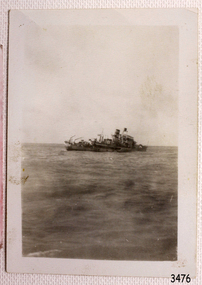
... ...Royal Australian Navy...The HMAS Warrnambool J202 was commissioned by the Royal Australian Navy for use as a minesweeper during World War II. ...Royal Australian Navy (RAN)...The HMAS Warrnambool J202 was commissioned by the Royal Australian Navy for use as a minesweeper during World War II. ...This photograph was taken at the scene of the wreck of the HMAS Warrnambool J202 on September 13th 1947. Figures can be seen on deck. The photographer has captured the ship as it sinks at sea. The HMAS Warrnambool J202 was commissioned by the Royal Australian Navy for use as a minesweeper during World War II. The Bathurst Class Corvette, fitted out with a range of armaments, was launched in Sydney 1941. The ship began service in Bass Strait in 1941. At the end of the year it called into its namesake city, Warrnambool, where the crew paraded for the public marching eastwards along Timor Street. A gift of books for the ship’s personnel and a plaque bearing the City of Warrnambool’s Coat of Arms were presented to the ship. The ship was involved in evacuating a family of nine from the Dutch East Indies that was later successful in its challenge of Australia’s Immigration Restriction Act (White Australia Polity). The ship had many other appointments around Australia. On 13th September 1947 HMAS Warrnambool was leading a flotilla of minesweepers in northern Queensland’s coastal waters, clearing mines previously laid to defend Australia. The ship hit a mine, which exploded and very quickly sunk the ship. Boats from the nearby ships rescued most of the seamen although one was killed at the time. The survivors were taken by the HMAS Swan II to Darwin, and they went from there to hospitals in Brisbane and Sydney. Three of these men later died from their injuries. A number of items were recovered by Navy divers in 1948 including the ship’s bell and a plaque with Warrnambool’s Coat of Arms. In 1972-75 the wreck was sold and other items were salvaged. In 1995 a memorial plaque was erected in Warrnambool near the RSL. NOTE: The RAN built a second HMAS Warrnambool FCPB204, launched in 1981 and decommissioned in 2005. There was also a steam ship SS Warrnambool built in London 1892 and broken up in 1926. [A more detailed history can be found in our Collection Record 3477.] This photograph is significant for its association with the lifesaving rescue of the crew and the sinking Royal Australian Navy vessel, HMAS Warrnambool (J202). The HMAS Warrnambool played a nationally significant role in overturning Australia’s Immigration Restriction Act 1901 (colloquially known as the White Australia policy). The ship rescued, and brought to Australia, Samuel and Annie Jacob and their family after they evacuated Dutch East India. The family was threatened with deportation and made the first successful appeal to High Court regarding that Act. The HMAS Warrnambool has - Local significance for being the namesake of the City of Warrnambool - Local significance, having docked in Warrnambool Harbour - Local significance, the crew having paraded in Timor Street, Warrnambool - State significance for its first patrol being in Bass Strait. - National significance, being present in Timor at the Japanese surrender - National significance, shown by the significance of the ship’s bell being curated as Military Heritage and Technology at the Australian War Memorial. - National significance as part of Australia’s defence force history, being one of only four Bathurst class corvettes lost while in Australian service, the only Bathurst class corvette lost after World War II, the only RAN vessel to be sunk by a mine, and associated with the last four Navy deaths of WWII Photograph of the sinking ship HMAS Warrnambool, sunk on 13-09-1947. The image shows the damaged and listing ship in the sea with figures on deck. This black and white photograph is one of a series of photographs taken at the time. "HMAS Warrnambool being sunk by mine", "sunk in Queensland waters 13 September 1947"flagstaff hill, maritime village, maritime museum, warrnambool, shipwreck coast, mort's dock & engineering co ltd, h.m.a.s. warrnambool, hmas warrnambool, hmas warrnambool i, hmas warrnambool j202, hmas swan ii, j202, world war ii, bathurst class corvette, royal australian navy, ran, sydney built ship, bass strait patrol, sea mine patrol, mine sweeper, mine clearance, navy divers, great barrier reef, cockburn reef, southern cross diving and salvage, warrnambool city council, cr j r astbury, mayor j r astbury, warrnambool patriotic fund, seal, coat of arms, dedicatory plaque, hmas warrnambool 1941, shipwreck by sea mine 1947, sinking ship, sunk ship, sea rescue, life saving, lifesaving, minesweeper -
 Bendigo Military Museum
Book - ROYAL AUSTRALIAN NAVY, John PERRYMAN CSM, "KIT MUSTER", 2011
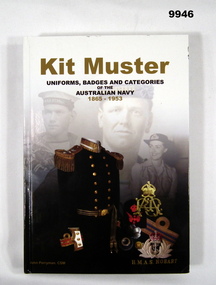
... ROYAL AUSTRALIAN NAVY......Royal Australian Navy..."KIT MUSTER" Book ROYAL AUSTRALIAN NAVY John PERRYMAN CSM Sea Power Centre ...From the front cover; "Kit Muster/ UNIFORMS, BADGES AND CATEGORIES/ OF THE/ AUSTRALIAN NAVY/ 1865-1953."Hard cover book. Card - cardboard grey colour background. Gold and black colour print on front spine and back. Illustrated montage of colour photograph of naval uniforms, badges and rank badges. Background - three portrait photographs. 305 pages - cut, plain, white colour paper. Illustrated - colour and black and white photographs, illustrations and maps.publication, book, royal australian navy, uniforms -
 Whitehorse Historical Society Inc.
Uniform - Royal Australian Navy, Sailor Collar, C 1942
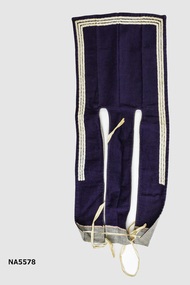
... Royal Australian Navy, Sailor Collar......Royal Australian Navy...Date of birth 6 Nov. 1913 - Box Hill Place of enlist - Melbourne- leading wireman Died 29 January 1981 Buried: Springvale Botanical Cemetery Copy of research - National Archives of Australia WW2 Royal Australian Navy Uniform Allan Edward Beach Allan Beach Nil - Service uniform collar - Hand detailing, 3 white stripes - Gabardine fabric, plain dark navy face - Gabardine fabric, plain dark navy/white back - Cotton tape ties front & rear See also NA5582 Tunic, NA5585 Trousers, NA5581 Dicky front, NA5578 Collar, NA5586 Lanyard, NA5589 Two Ribbons, NA5591 Hat band (HMAS), NA5583 Hat band (HMAS Cerberus), NA5593 Ribbon (HMS Repulse), NA5590 Ribbon Uniform Royal Australian Navy, Sailor Collar ...Part of the uniform worn by Beach, Allan Edward, Service no. 25718. Date of birth 6 Nov. 1913 - Box Hill Place of enlist - Melbourne- leading wireman Died 29 January 1981 Buried: Springvale Botanical Cemetery Copy of research - National Archives of Australia- Service uniform collar - Hand detailing, 3 white stripes - Gabardine fabric, plain dark navy face - Gabardine fabric, plain dark navy/white back - Cotton tape ties front & rear See also NA5582 Tunic, NA5585 Trousers, NA5581 Dicky front, NA5578 Collar, NA5586 Lanyard, NA5589 Two Ribbons, NA5591 Hat band (HMAS), NA5583 Hat band (HMAS Cerberus), NA5593 Ribbon (HMS Repulse), NA5590 RibbonNilww2, royal australian navy, uniform, allan edward beach, allan beach -
 Whitehorse Historical Society Inc.
Uniform - Royal Australian Navy uniform (tunic), C 1979
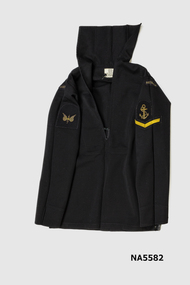
... Royal Australian Navy uniform (tunic)......Royal Australian Navy...Date of birth 6 Nov. 1913 - Box Hill Place of enlist - Melbourne- leading wireman Died 29 January 1981 Buried: Springvale Botanical Cemetery Copy of research - National Archives of Australia Uniform Royal Australian Navy Allan Edward Beach Allan Beach A. ...Part of the uniform worn by Beach, Allan Edward, Service no. 25718. Date of birth 6 Nov. 1913 - Box Hill Place of enlist - Melbourne- leading wireman Died 29 January 1981 Buried: Springvale Botanical Cemetery Copy of research - National Archives of Australia Worsted wool black tunic with sailor collar and open ended zipper left hand side seam The Rank insignia (Wireman) & Australia are on the right hand shoulder The left hand shoulder Insignias are Australia and RAN, Corporal See also NA5582 Tunic, NA5585 Trousers, NA5581 Dicky front, NA5578 Collar, NA5586 Lanyard, NA5589 Two Ribbons, NA5591 Hat band (HMAS), NA5583 Hat band (HMAS Cerberus), NA5593 Ribbon (HMS Repulse), NA5590 RibbonA. G.C.F. Vic 1979 size 86L CH86 H33.173 8405.66.094 7753 R.A.N. Made in Australiauniform, royal australian navy, allan edward beach, allan beach -
 Williamstown Historical Society Inc
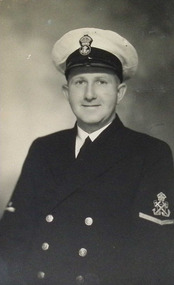
Photograph - Petty Officer Ronald John MCGREGOR, Royal Australian Navy
... Petty Officer Ronald John MCGREGOR, Royal Australian Navy...Royal Australian Navy...Royal Australian Navy Petty Officer Ronald John MCGREGOR Petty Officer Ronald John MCGREGOR, (Service no: W/650) was born in Williamstown on 15 June 1913 and enlisted in the RAN on 6 September 1939. ...Petty Officer Ronald John MCGREGOR, (Service no: W/650) was born in Williamstown on 15 June 1913 and enlisted in the RAN on 6 September 1939. He served on the HMAS Kanimbla, SS George Peat, and at HMAS Basilisk Source: vwma.org,au royal australian navy, petty officer ronald john mcgregor -
Port Melbourne Historical & Preservation Society
Document - Invitation, Cocktail party, Anzac centenary first convoy, Royal Australian Navy, 19 Oct 2014
... ...royal australian navy...Royal Australian Navy...Sunday 19th October 2014 Document Invitation, Cocktail party, Anzac centenary first convoy Royal Australian Navy ...Invitation to the ANZAC Centernary. First Convoy. Cocktail party. On board HMAS Arunta. Sunday 19th October 2014piers and wharves - station pier, war - world war i, armed services - army, celebrations fetes and exhibitions, royal australian navy, captain stephen bowater, hmas arunta, renee cowling -
 National Vietnam Veterans Museum (NVVM)
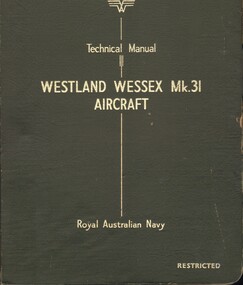
Manual, Royal Australian Navy, Technical Manual: Westland Wessex Mk.31 Aircraft: Repair and Overhaul Information Flight Control System MK.3. Wessex MK.31A and MK.31B Aircraft
... Royal Australian Navy - technical manuals...Royal Australian Navy...Wessex MK.31A and MK.31B Aircraft Manual Manual Royal Australian Navy ...A dark green covered mannual with gold writing on the front cover, The word RESTRICTED is in the bottom right hand cornerroyal australian navy - technical manuals, westland wessex mk.3 aircraft -
 National Vietnam Veterans Museum (NVVM)
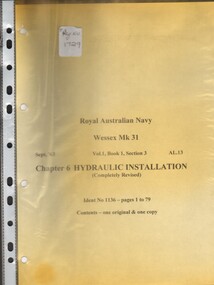
Manual, Royal Australian Navy, Wessex Mk31: Chapter 6, Hydraulic installation, Sept. 1963, 1963
... ...Royal Australian Navy...Royal Australian Navy...Wessex Mk31: Chapter 6, Hydraulic installation, Sept. 1963 Manual Manual Royal Australian Navy ...Manual has a yellow cover with black writing on it. Manual is enclosed in a A4 plastic cover.wessex (helicopter), royal australian navy -
 Mrs Aeneas Gunn Memorial Library
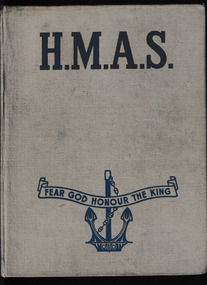
Book, Australian War Memorial, HMAS, 1942
... Royal Australian Navy - History......Royal Australian Navy...Mrs Aeneas Gunn Memorial Library via Monbulk RSL, 48 Main Rd Monbulk yarra-valley-and-the-dandenong-ranges Royal Australian Navy - History World War 1939-1945 - Naval operations - Australia The Royal Australian Navy during World War Two Ill, p.200. ...The Royal Australian Navy during World War TwoIll, p.200.non-fictionThe Royal Australian Navy during World War Tworoyal australian navy - history, world war 1939-1945 - naval operations - australia -
 Mrs Aeneas Gunn Memorial Library
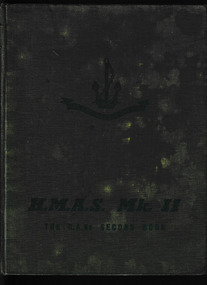
Book, Australian War Memorial, HMAS Mk II, 1942
... Royal Australian Navy - History......Royal Australian Navy...Mrs Aeneas Gunn Memorial Library via Monbulk RSL, 48 Main Rd Monbulk yarra-valley-and-the-dandenong-ranges Royal Australian Navy - History World War 1939-1945 - Naval operations - Australia The Royal Australian Navy during World War Two Ill, p.200. ...The Royal Australian Navy during World War TwoIll, p.200.non-fictionThe Royal Australian Navy during World War Tworoyal australian navy - history, world war 1939-1945 - naval operations - australia -
 Mrs Aeneas Gunn Memorial Library
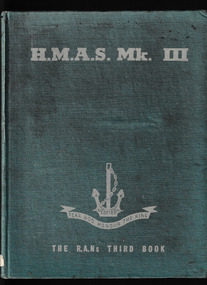
Book, Australian War Memorial, HMAS Mk III, 1942
... Royal Australian Navy - History......Royal Australian Navy...Mrs Aeneas Gunn Memorial Library via Monbulk RSL, 48 Main Rd Monbulk yarra-valley-and-the-dandenong-ranges Royal Australian Navy - History World War 1939-1945 - Naval operations - Australia The Royal Australian Navy during World War Two Ill, p.200. ...The Royal Australian Navy during World War TwoIll, p.200.non-fictionThe Royal Australian Navy during World War Tworoyal australian navy - history, world war 1939-1945 - naval operations - australia -
 Mrs Aeneas Gunn Memorial Library
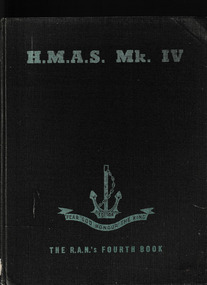
Book, Australian War Memorial, HMAS Mk IV, 1942
... Royal Australian Navy - History......Royal Australian Navy...Mrs Aeneas Gunn Memorial Library via Monbulk RSL, 48 Main Rd Monbulk yarra-valley-and-the-dandenong-ranges Royal Australian Navy - History World War 1939-1945 - Naval operations - Australia The Royal Australian Navy during World War Two Ill, p.200. ...The Royal Australian Navy during World War TwoIll, p.200.non-fictionThe Royal Australian Navy during World War Tworoyal australian navy - history, world war 1939-1945 - naval operations - australia -
Port Melbourne Historical & Preservation Society
Photograph - Royal Australian Navy vessels at Station Pier, Port Melbourne, Ron Laing, c. 2000
... Royal Australian Navy vessels at Station Pier, Port Melbourne...Four colour photographs of various Royal Australian Navy vessels which have visited Station Pier....Photograph Royal Australian Navy vessels at Station Pier, Port Melbourne Ron Laing ...Further updates of Ron Laing's photographic coverage of Port MelbourneFour colour photographs of various Royal Australian Navy vessels which have visited Station Pier.piers and wharves - station pier, hmas darwin, hmas adelaide, hmas anzac, hmas warramunga, hmna te kaha, hmas wallaroo, hmas bandicoot, hmas fremantle
