
Showing 73 items matching "moscow"
-
 Ballarat Tramway Museum
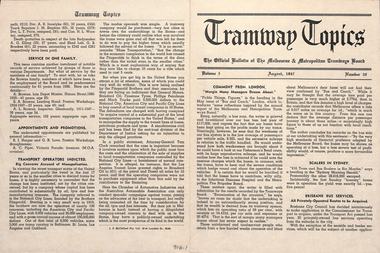
Magazine, Melbourne and Metropolitan Tramways Board (MMTB), "Tramway Topics" - M&MTB, 1947 and 1948
... No profit - no sharing (Kansas City), Just why - prices and fares in the US, MMTB staff needs from 5 day week, Section fares in the US, trams at L5,500 each (Sheffield), The unfinished dance (Perth and Hay St.), Thanks from Bristol, Interest in Melbourne trams (letters to the Board), Adelaide's Deficit, Fares up in Sydney and Adelaide, Moscow transport, No trolleybuses thankyou in Belgium, thanks to the Traffic staff, the Late Inspector Boardman, 24,000 irregularities (passengers), Sth London trams, Melbourne's trams amazing, Winnipeg's transport Growth and Standing passengers - London. 918.9 - 59 - July 1948 - 4 pages - The Red Light - RACV and red lights on trams, A request from Argentina,, where our SW6's are, the last 5c fare (New York), Work in the Fog, Traffic headaches in the US, Brisbane's Streamlined tram, Safety glass, Now for La Trobe St. ...No profit - no sharing (Kansas City), Just why - prices and fares in the US, MMTB staff needs from 5 day week, Section fares in the US, trams at L5,500 each (Sheffield), The unfinished dance (Perth and Hay St.), Thanks from Bristol, Interest in Melbourne trams (letters to the Board), Adelaide's Deficit, Fares up in Sydney and Adelaide, Moscow transport, No trolleybuses thankyou in Belgium, thanks to the Traffic staff, the Late Inspector Boardman, 24,000 irregularities (passengers), Sth London trams, Melbourne's trams amazing, Winnipeg's transport Growth and Standing passengers - London. 918.9 - 59 - July 1948 - 4 pages - The Red Light - RACV and red lights on trams, A request from Argentina,, where our SW6's are, the last 5c fare (New York), Work in the Fog, Traffic headaches in the US, Brisbane's Streamlined tram, Safety glass, Now for La Trobe St. ...16 issues of the, "Tramway Topics" - "The Official Bulletin of The Melbourne & Metropolitan Tramways Board", issues 50, 51, 53 to 61, issued between August 1947 and October 1948. All printed on cream coloured paper. Headings of significance are listed below. Common items were; Retiring and Death Gratuities, Appointments and Promotions, long service records. 918.1 - 50 - August 1947 - 4 pages - Comment from London, Scalers in Sydney, Brisbane Services, PAYE to go, Newcastle wants to own the trams, Diesels in favour, Fares in London and Melbourne, Something like a deficit, a remarkable record (substations), Work of Testing Department, Accidents are Expensive, and Transport Operations Indicted (National City Lines - USA) 918.2 - 51 - Sept. 1947 - 4 pages - Our SW6 tram, Transport in the US, Conductresses again, How bus costs have risen, Footscray Extensions, Of Course you are good (drivers and driving), How Fares Go, 40-Hour week. 918.3 - 53 - November 1947 - 4 pages - No increase in fares, an unusually interesting tram (Glasgow), alcohol and driving do not mix, pedestrian crossing case, how wages have increased, Russia prefers trams, Sydney's "Honesty" joke, Higher Fares wanted, Tramcars as hearses, an editor on Trolley buses, buses lead - but at a cost (Leicester), the Non paying passenger (Sydney) 918.4 - 54 - December 1947 - 4 pages - Christmas 1947 (Chairman's notes on the future), New Stockholm tram, according to use and wont - Birmingham, Trams in the USA, Board re-appointed, Buses few, so coaches are hired (London), transport from Footscray, "Philadelphians must have the best" - so they are given trams!, The Merri Creek Bridge and appreciations. 918.5 - 55 - March 1948 - 4 pages - That 4/- doubts arising over the 5-day week, Buses carried pick-a-back, Sydney to lose L500,000 this year, Trolleybuses, Rapid transit with PCC trams, another compliment (rosters in Perth), the bill for it all (Melbourne tram strike), an Extraordinary award (Washington DC), Prison tram's last load (Sydney), Douglas horse trams, Lord Ashfield, Glasgow's all night buses. 918.6 -56 - April 1948 - 4 pages - The Board's ambassadors (MMTB Conductors), Brisbane's bus routes, Another deficit in sight (Liverpool UK), Poor Paris, The resilient wheel, the 5-day week rosters, a subway and its costs (Detroit), PCC's in Belgium, South London Trams. 918.7 -57 -May 1948 - 4 pages - Spread of Hours Payment - 5 day week, weak breaks, Buses multiply - losses expand (Manchester UK), Static Electricity, L750,000 deficit in Sydney, praise for conductresses, no purchase by Newcastle, a loss at Adelaide, Transport in Switzerland, Denmark's giant bus, new trams for Glasgow, Grants for sports, single deckers out of favour (UK buses), Transport by Water (London). 918.8 - 58 - June 1948 - 8 pages - Stirring up strife (Melb.) No profit - no sharing (Kansas City), Just why - prices and fares in the US, MMTB staff needs from 5 day week, Section fares in the US, trams at L5,500 each (Sheffield), The unfinished dance (Perth and Hay St.), Thanks from Bristol, Interest in Melbourne trams (letters to the Board), Adelaide's Deficit, Fares up in Sydney and Adelaide, Moscow transport, No trolleybuses thankyou in Belgium, thanks to the Traffic staff, the Late Inspector Boardman, 24,000 irregularities (passengers), Sth London trams, Melbourne's trams amazing, Winnipeg's transport Growth and Standing passengers - London. 918.9 - 59 - July 1948 - 4 pages - The Red Light - RACV and red lights on trams, A request from Argentina,, where our SW6's are, the last 5c fare (New York), Work in the Fog, Traffic headaches in the US, Brisbane's Streamlined tram, Safety glass, Now for La Trobe St. The Tramways Band (South St.), Transport Losses in Sydney. 918.10 - 60 - August 1948 - 4 pages - from Pretoria (Comments on Melbourne), Buses with sliding Doors (OPS1), PCC trams, trams of the future (Glasgow), new trams in Rome, Clearing up the Parking Problem (Sacramento), Fantastic figures - world tram car figures - anti tram, Trainer Drivers, the railway trams and disaster to Liverpool trams, Monte Video trams purchased. 918.11 - 61 - September 1948 - 4 pages - The Year's Work (Melbourne), How Absurd (transport management), items from Britain, Tramway Band News, Food from Melbourne (to Scotland floods), London's Extraordinary traffic, New trams for The Hague, who are the road hogs, the La Trobe St. extension, out clothing factory, Preston Workshops, Toil on the tracks, how the money comes in (fares distribution). 918.12 - 62 - October 1948 - 4 pages - Melbourne's tram fares, Bourke St., Sydney's Street Transport, Scientist or Baker (London), Trolleybuses out of favour, London's poor bus fleet, tram and bus fares, The band at Wattle Park, Madras tramway deal, 121 decide for 6000 (Sydney Sunday trams), Preston workshops, A Engineer's tribute, Was the Street Quiz on trams faked? (The Sun). 918.3 - No. 31 - September 1945 - Year in review - trams more reliable than buses, loss on buses to munitions and Fisherman's bend, ticket checking, Hawthorn clothing factory SW6 trams construction, news from cities in Europe, sub-stations. 918.14 - 64 - September 1949 - higher operating expenses and revenue, school children behaviour, headway recording system - communication issues, golf at Wattle Park, Mr Bell lives in Riversdale Rd. 918.15 - 67 - December 1949 - Record Payment to Consolidated Revenue, payment to MFB etc, flat fares, Latrobe St extension - delayed, fare concessions - who pays, 918.16 - 68 - January 1950 - Bourke St conversion - Risson looking for an early start, fitting of radios to MMTB vehicles, Resilient wheels 918.4 - on top edge in pencil is "Mr Russell", and 918.10 ditto.trams, tramways, mmtb, melbourne, tramways -
 Melton City Libraries
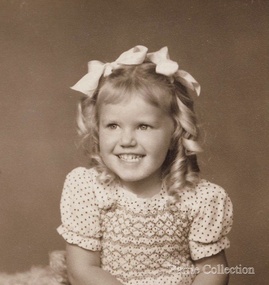
Photograph, Wendy Barrie, Unknown
... In the spring of 1969 visiting Norway, Sweden and Finland joining an organised camping group to the Artic Circle, entered Russia at Leningrad (St Petersburg) Moscow, Minsk, to Poland and Czechoslovakia. ...In the spring of 1969 visiting Norway, Sweden and Finland joining an organised camping group to the Artic Circle, entered Russia at Leningrad (St Petersburg) Moscow, Minsk, to Poland and Czechoslovakia. ...Eldest daughter of Edna and Bon Barrie, born on 03 November 1943 in Melbourne, Victoria, Memoirs of Wendy Barrie, recalling the early formative years of life in Melton: In 1949 I started school at Melton State School no 430 and was driven the 2½ miles to there by my parents at first. Later we walked home in the afternoons or were picked up by car as we made our way home along the Western Highway. In 1956 I went to Bacchus Marsh High School. There were 4 students in grade 6 and 3 of us went to the High School. The students from Melton, Melton South and Toolern Vale State Schools went by bus to Bacchus Marsh High School as far a fifth form. My parents drove me to the pick up point and during the five years of travel to High School. The bus travelled via Toolern Vale and later went through Exford and through Parwan. On the return journey in the afternoon the bus went in the reverse direction. The bridge at Exford was an old narrow wooden one, and the students had to get off the bus and walk across, with the driver crossing in the empty bus for safety reasons. There was a travelling allowance paid to parents and it was estimated from the distance the crow flies, a straight line. We lived a Ferris Lane, just where the Harness Racing entrance is now situated about 2 ½ miles by road to school too close to qualify for the subsidy. While at State School Melton we would walk home in a group with the Nixon and Gillespie children, along the main road over the bridge near the Shire Offices and down a hill. I was being dinked on Joyce Gillespie’s bike while holding onto the seat, toppled off the bike striking my chin and teeth on the bitumen and cracking my jaw. I was about 9 years old and stayed a couple of days in the Quamby Hospital in Bacchus Marsh, it seemed like and eternity at the time and quite traumatic being separated from my family. I can remember contemplating how I could get out of the window and run away but realised it was too far to walk home. Often we would cut across the Common on our way home from school picking up stray golf balls and collecting them from the creek when it dried out. We were warned about not accepting lifts from strangers passing along the Melbourne/ Ballarat Road. The only danger we faced was being swooped by the magpies particularly on the open ground on the Common. We were also fairly cautious when the Gypsies camped on the Common in the area just about opposite the small reservoir. “Mum” grandma Myers loved to have us call in on our way home, and usually would cut a slice of Jongebloed’s bread and spread it with home made butter. Sometimes we waited there until we were collected by car, usually driven by our mother. Margaret Nixon and Joyce Gillespie were a few grades ahead of me and Barbara Nixon was born just two months earlier than me. Our mothers were great friends for over 6o years, born in the same month three years apart. They lived within a few days of the same age as each other at the time their deaths. Dad and George Nixon attended Melton school at the same time. Sarah nee Hornbuckle Nixon and my grandfather Frederick Myers Snr were at school together at the same in the 1880s. The Nixon family lived in Keilor Road just past the Toolern Creek near the turnoff. Tom and Ann Collins lived on the southern side of the Western highway and Keilor road intersection. Jim and Ruby Gillespie’s house was further long Keilor road on the right. They backed onto the Myers who lived on the north side of Western Highway east of Myers Gully (Ryans Creek). The Bridge over the Toolern Creek as very narrow and as truck traffic increased there were accidents. One truck took out the side railing and plunged upside down into the bank and into the shallow water. Another fatal accident happened between a car and a truck right in front of the Myers house. Grandfather Fred had been a bike rider all his life, as far as the Riverina in his younger years, wryly made the comment about the drivers the speeding along the Ballarat Road were setting out to kill themselves. The road was busy particularly after the Races at Ballarat when the crowds were hurrying home to Melbourne. Train travel had changed very little from the time my mothers generation to mine. The timetable meant the usual rush to Melton South by bike in her case and if she was running late the train pulled up on the crossing. I was driven to the Station from home past Keith and Mary Gillespie’s house near the Ferris Road rail crossing to Bridge road to Melton South for the 7.32 train. While attending Sunshine High School in 1961 I would meet up with three other students, two of whom I knew from Bacchus Marsh High School days. We usually got into the same compartment on the train, it was a typical country train with a corridor along the side and compartments with a door, roof racks and sometimes heated metal containers for the feet in the winter. Some of the trains came through from Horsham and Ballarat, and the Overland from Adelaide passed through in the evening, we could hear it in the distance from the Ferris Lane home. The carriages had 1st and economy class compartments showing photographs of county scenes and holiday destinations. The engine was the large A class diesel. They are still running to Bacchus Marsh 50 years later, due to the need for the greatly increased number of commuters travelling to work in the city. Sometimes the carriages were pull by a Steam engine, these were a problem in the summer time because the sparks caused fires along the train lines and then quickly spread into the dry grass, crops and stubble. The Motor Train left Spencer Street at 4.23 pm and was the best train for me to catch. Ferris Road was a designated stop and train pulled up on the road crossing. It had steps at the door and rungs to hold while alighting to the ground. The ballast along the tracks was rough and uneven and awkward to land on. The train was painted blue and yellow with the letters VR pained on the front. This saved may parents the afternoon trip to collect me from the Station. On the walk home on the gravel road I would pass Uncle Tom and Aunty May’s house before reaching home. Melva Gillespie was studying at Sunshine Technical School and we sometimes both got off the train at the same time. On other occasions the Motor Train was replaced with a diesel engine with carriages, it was also required to stop and the driver had to be notified in advance. This meant getting into the guards van a Rockbank. It was more difficult alighting from the carriage as the gap was greater and more precarious to swing out and land on the ground. A few times in my last year of study at Melbourne Teachers College in Grattan Street Carlton. I managed to catch the 2.30 pm train to Serviceton, it was express to Melton and was very quick trip. The last train, was the 5.25 pm diesel to Ballarat and I usually caught this train to Melton South Station. On one occasion after being held up on the tram in Bourke street I had to make a mad dash to the platform chasing the train as it was just moving off and yelling to the guard, fortunately I was noticed and the train ground to halt. I scrambled into the end door and took most of the journey home to recover. After the last year at High School I continued to travel on the train, 2 years to Prahran Technical School changing at North Melbourne. There were a lot school children travelling to private schools and some at the primary level and mainly from Bacchus Marsh. Rockbank children also travelled by train from the beginning of their high school years, quite a few went to Sunshine High School. During my third year of teacher training I travelled to Flinders Street to RMIT for ceramics classes and Grattan St Teachers College located in the grounds of Melbourne University. There were many teachers being trained at the Secondary Teachers College due to the baby bulge creating a great shortage of teachers. Sunshine High School was very well represented amongst the different courses in Primary, Secondary and Art and Crafts. I attended Melbourne University lectures, studying a Fine Art subject. Bernard Smith was the most notable of the lecturers. he replaced Professor Joseph Bourke who had taken leave for the years. In 1962 he published the art book “Australian Painting”. The secondary art and craft student teachers from the College were in the majority, taking this subject and were well regarded due to their practical art and craft methods and their teaching round experience. In December 1964 I graduated as a Trained Secondary Teacher – Art and Crafts. The graduating ceremony was held at Wilson Hall. I received my appointment to work at Maryborough High School. Uncle Max and Aunty Rosemary Myers arranged my accommodation. Uncle Max was a teacher at the Maryborough Technical School fat the time. The appointment was suddenly changed when just before the school year was about to start when I received notification that I was now required to move to Warracknabeal High School. I was subject to a bond for the three years of training and three years of teaching and was under an obligation to comply with the directive of the Education Department. My father stood as guarantor when I was accepted as student at the Melbourne Teachers’ College, thus enabling me to receive my teacher training, and a 5 pounds a week allowance for expenses. After teaching for two years at Warracknabeal High School I was fortunate enough the gain a transfer to Sunshine West High School, returning to live at home in Melton and travelling by car to work with a fellow colleague, Jock Smith who lived at Station road Melton. I completed bond obligation and resigned at the end of the year. The employment regulations at that time did not allow the option of leave of absence for, indefinite overseas travel. I returned to Australia in October 1969. Visiting Arthur Hart the Principal of Sunshine High School he arranged with the Education Department for my re-employment at Sunshine High School until the end of the year. In 1970 I was transferred, and returned to Sunshine West High School where I worked for the next three years. In January 1968 I sailed on the “Oriana” to South Hampton with two teaching friends from Warracknabeal High School on a travelling and working holiday. Doreen Kiely, a former Bacchus Marsh High student and fellow train traveller from Bacchus Marsh, was already working in London, had arranged our accommodation at the London Travellers Club Hotel, Braham Gardens, Earls Court SW5. We based our stay at this address in London and travelled around Scotland, Ireland and England. In the summer we took a four month trip around the Continent and the Mediterranean. I registered with The Royal Borough Of Kingston Upon Thames as a Supply teacher, and worked at Chessington School form autumn to spring the following year and living with Mrs Rose Gillies at Kinross Avenue, Worcester Park, Surrey. In the spring of 1969 visiting Norway, Sweden and Finland joining an organised camping group to the Artic Circle, entered Russia at Leningrad (St Petersburg) Moscow, Minsk, to Poland and Czechoslovakia. In August returning to Worcester Park for the flight to Montreal to stay with cousin Lynette and husband Jurgen. A side trip was taken to Toronto, Niagara Falls and New York. The flight home from Montreal to Melbourne took 52 hours. A ½ day break in Vancouver before boarding the Qantas boeing 707 via San Francisco, Honolulu, Fiji, Sydney to Melbourne. Around the world in 21 months. Photographs of Wendy local identities -
 Monbulk RSL Sub Branch
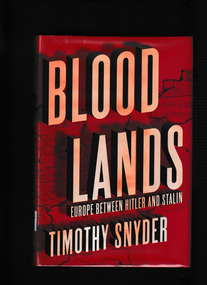
Book, The Bodley head, Bloodlands : Europe between Hitler and Stalin, 2010
... eastern europe - history - twentieth century massacres - eastern europe - twentieth century In the middle of the 20th century the Nazi and Soviet regimes starved, shot and gassed, 14 million people in the zone of death between Berlin and Moscow ... today's Ukraine, Belarus, Poland, western Russia and the eastern Baltic coast Index, bibliography, notes, maps, p.524. ...In the middle of the 20th century the Nazi and Soviet regimes starved, shot and gassed, 14 million people in the zone of death between Berlin and Moscow ... today's Ukraine, Belarus, Poland, western Russia and the eastern Baltic coastIndex, bibliography, notes, maps, p.524.non-fictionIn the middle of the 20th century the Nazi and Soviet regimes starved, shot and gassed, 14 million people in the zone of death between Berlin and Moscow ... today's Ukraine, Belarus, Poland, western Russia and the eastern Baltic coasteastern europe - history - twentieth century, massacres - eastern europe - twentieth century -
 Monbulk RSL Sub Branch
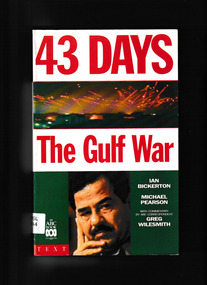
Book, Text Publishing in association with the Australian Broadcasting Corporation, 43 days : the Gulf War, 1991
... Includes extracts from reports filed by ABC correspondents in Washington, Moscow, London and the Middle East, and an appendix of key documents. ...An illustrated account of the Gulf War written by two Australian Middle East specialists with contributions from experienced journalists who covered the war. Includes extracts from reports filed by ABC correspondents in Washington, Moscow, London and the Middle East, and an appendix of key documents.Index, bibliography, ill, maps, p.249.non-fictionAn illustrated account of the Gulf War written by two Australian Middle East specialists with contributions from experienced journalists who covered the war. Includes extracts from reports filed by ABC correspondents in Washington, Moscow, London and the Middle East, and an appendix of key documents.iraq kuwait crisis 1990-1991, operation desert shield -
 Monbulk RSL Sub Branch
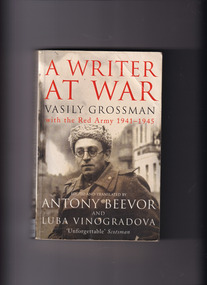
Book, Antony Beevor, The writer at war: Vasily Grossman with the red army 1941-195, 2006
... "Grossman witnessed almost all the major events on the Eastern Front: the appalling defeats and desperate retreats of 1941, the defense of Moscow, and the fighting in the Ukraine. In August 1942 he was posted to Stalingrad, where he remained during four months of brutal street fighting. ...Based on the notebooks in which Vasily Grossman gathered the raw material for his newspaper articles, A Writer at War depicts the crushing conditions on the Eastern Front during World War II and the lives and deaths of infantrymen, tank drivers, pilots, snipers, and civilians. Deemed unfit for service when the Germans invaded the Soviet Union in 1941, Grossman became a special correspondent for The Red Star, the Red Army newspaper. A portly novelist in his mid-thirties with no military experience, he was given a uniform and hastily taught how to use a pistol. Remarkably, he spent three of the next four years at the front, observing with a writer's eye the most pitiless fighting ever recorded.". "Grossman witnessed almost all the major events on the Eastern Front: the appalling defeats and desperate retreats of 1941, the defense of Moscow, and the fighting in the Ukraine. In August 1942 he was posted to Stalingrad, where he remained during four months of brutal street fighting. Grossman was present at the battle of Kursk (the largest tank engagement in history), and, as the Red Army advanced, he reached Berdichev, where his worst fears for his mother and other relatives were confirmed. A Jew himself, he undertook the faithful recording of Holocaust atrocities as their extent dawned. His report "The Hell of Treblinka" was used in evidence at the Nuremberg tribunalIndex, ill, maps, p.378.non-fictionBased on the notebooks in which Vasily Grossman gathered the raw material for his newspaper articles, A Writer at War depicts the crushing conditions on the Eastern Front during World War II and the lives and deaths of infantrymen, tank drivers, pilots, snipers, and civilians. Deemed unfit for service when the Germans invaded the Soviet Union in 1941, Grossman became a special correspondent for The Red Star, the Red Army newspaper. A portly novelist in his mid-thirties with no military experience, he was given a uniform and hastily taught how to use a pistol. Remarkably, he spent three of the next four years at the front, observing with a writer's eye the most pitiless fighting ever recorded.". "Grossman witnessed almost all the major events on the Eastern Front: the appalling defeats and desperate retreats of 1941, the defense of Moscow, and the fighting in the Ukraine. In August 1942 he was posted to Stalingrad, where he remained during four months of brutal street fighting. Grossman was present at the battle of Kursk (the largest tank engagement in history), and, as the Red Army advanced, he reached Berdichev, where his worst fears for his mother and other relatives were confirmed. A Jew himself, he undertook the faithful recording of Holocaust atrocities as their extent dawned. His report "The Hell of Treblinka" was used in evidence at the Nuremberg tribunalworld war 1939-1945 - campaigns - eastern europe, soviet union - german occupation - 1941-1944 -
 Monbulk RSL Sub Branch
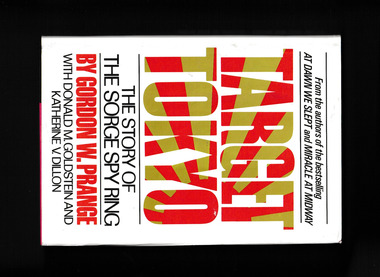
Book, Gordon W Prange, Target Tokyo: The story of the Sorge spy ring, 1984
... World war 1939-1945 - Espionage Espionage - Soviet Union Richard Sorge was a Russian spy in Tokyo who had infiltrated the German embassy and was able to pass sensitive information to Moscow Index, ill, notes, p.502. Target Tokyo: The story of the Sorge spy ring Book Gordon W Prange McGraw Hill ...Richard Sorge was a Russian spy in Tokyo who had infiltrated the German embassy and was able to pass sensitive information to MoscowIndex, ill, notes, p.502.Richard Sorge was a Russian spy in Tokyo who had infiltrated the German embassy and was able to pass sensitive information to Moscowworld war 1939-1945 - espionage, espionage - soviet union -
 Moorabbin Air Museum
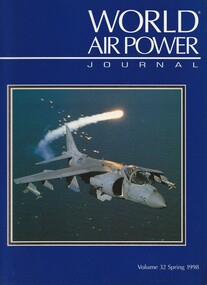
Book (item) - (SP) World Air Power Journal 32 Spring 1998
... Briefings: Finnish Air Force weapons camp Moscow Aerospace Salon 1997 Eagle’s Talon ’97 – combined NATO/Polish air exercise Air Power Analysis Update: Lithuania E-2 Hawkeye feature Belgian Air Force photo feature Focus Aircraft: Second-generation Harriers (54 pages) Irish Air Corps photo feature Variant Briefing: Panavia Tornado part 3 – operators US Navy Warfighters photo feature Air Power Analysis: Central America Book (SP) World Air Power Journal 32 Spring 1998 ...briefings: finnish air force weapons camp, moscow aerospace salon 1997, eagle’s talon ’97 – combined nato/polish air exercise, air power analysis update: lithuania, e-2 hawkeye feature, belgian air force photo feature, focus aircraft: second-generation harriers (54 pages), irish air corps photo feature, variant briefing: panavia tornado part 3 – operators, us navy warfighters photo feature, air power analysis: central america -
 Moorabbin Air Museum
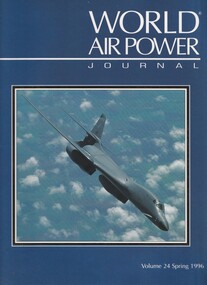
Book (item) - (SP) World Air Power Journal 24 Spring 1996
... Combat Report: Operation Deliberate Force Briefings: Saab JAS 39B Gripen McDonnell Douglas RF-4C retirement Rockwell/MBB X-31A feature Djibouti photo feature Focus Aircraft: Rockwell B-1B (62 pages) Moscow Air Show photo feature Variant Briefing: Lockeed F-16 Operators part 2 Croatia photo feature Air Power Analysis: Portugal Book (SP) World Air Power Journal 24 Spring 1996 ...combat report: operation deliberate force, briefings: saab jas 39b gripen, mcdonnell douglas rf-4c retirement, rockwell/mbb x-31a feature, djibouti photo feature, focus aircraft: rockwell b-1b (62 pages), moscow air show photo feature, variant briefing: lockeed f-16 operators part 2, croatia photo feature, air power analysis: portugal -
 Unions Ballarat
Philby: the long road to Moscow (Don Woodward), Seale, Patrick et al, 1973
... Philby: the long road to Moscow (Don Woodward) Seale, Patrick McConville, Maureen ...Kim Philby (AKA Harold Adrian Russell Philby) was a double agent, serving as a British spy. He defected to the Soviet Union in the 1960s.International intelligence and political affiliations. Biographical interest.Book: 349 pages. Front cover: black and white background; picture of Philby; white and red text; authors' names and title. btlc, ballarat trades hall, ballarat trades and labour council, philby, kim, intelligence agencies - britain, intelligence agencies - soviet union, philby, harold adrian russell, biography -
 Hymettus Cottage & Garden Ballarat
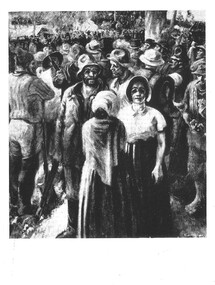
Postcard - Noel Counihan exhibition Moscow 1960 souvenir, Bakery Hill 1854
... Eureka Stockade Ballarat Reform League Socialism Australian Art Ballarat Russia Black and white image of Noel Counihan's painting of Bakery Hill Ballarat Bakery Hill 1854 Postcard Noel Counihan exhibition Moscow 1960 souvenir ...One of a series of postcards from an exhibition of works by Australian Social Realist artists held in Russia in 1960. This postcard is significant to Ballarat as it links to the linocuts Counihan and others produced to commemorate the centenary of the Eureka Stockade in 1954. As this depicts a painting of an event at Ballarat significant in its context to protest for social equality that would be understood by the soviet audience. A link between Australian socialist artists and the Russian political sensibilities of the time.Black and white image of Noel Counihan's painting of Bakery Hill Ballarateureka stockade, ballarat reform league, socialism, australian art, ballarat, russia -
 Hymettus Cottage & Garden Ballarat
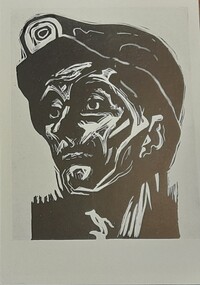
Work on paper - Postcard
... This postcard links to the linocuts Counihan and others produced to commemorate the centenary of the Eureka Stockade in 1954 and was exhibited in Moscow. Eureka Stockade Socialism Australian Art Ballarat Russia Work on paper Postcard ...One of a series of postcards from an exhibition of works by Australian Social Realist artists held in Russia in 1960. This postcard links to the linocuts Counihan and others produced to commemorate the centenary of the Eureka Stockade in 1954 and was exhibited in Moscow.eureka stockade, socialism, australian art, ballarat, russia -
 Mrs Aeneas Gunn Memorial Library
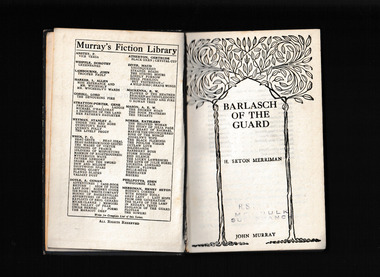
H Seton Murray, Barlasch of the guard, 1922
... England - Fiction Napoleonic wars Napoleons retreat from Moscow in all its terrible detail p.348. Barlasch of the guard H Seton Murray John Murray ...Napoleons retreat from Moscow in all its terrible detailp.348.fictionNapoleons retreat from Moscow in all its terrible detailengland - fiction, napoleonic wars -
 Mrs Aeneas Gunn Memorial Library
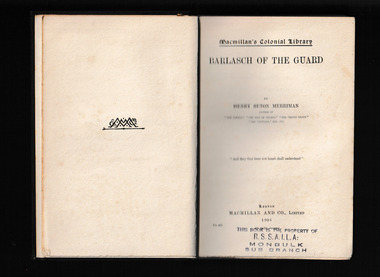
Book, H Seton Murray, Barlasch of the guard, 1904
... England - Fiction Napoleonic wars Napoleons retreat from Moscow in all its terrible detail p.348. Barlasch of the guard Book H Seton Murray McMillan ...Napoleons retreat from Moscow in all its terrible detailp.348.fictionNapoleons retreat from Moscow in all its terrible detailengland - fiction, napoleonic wars
