
Showing 709 items matching "home to ballarat"
-
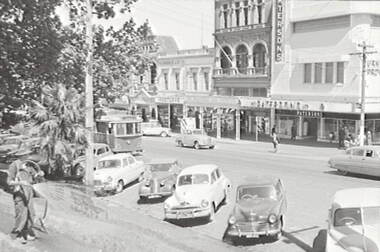 Allan Doney Collection, Bendigo Historical Society Inc.
Negative - Ballarat - Street - Paterson’s, Allan Doney, 1950 -1970
... homes with ornate verandahs, trams and much more. Above all, his photographs show how much of the city has survived from the 19th century – and how much has not. Through two decades of great change, Allan Doney was there to capture ways people interacted with it. Although he travelled to many other places in Northern Victoria and beyond in search of subjects for his art, he seemed to always return to Bendigo for inspiration. Negative Ballarat ...In the years of Allan Doney’s photography, landmark buildings succumbed to fire, neglect and redevelopment. He photographed the grey sand hills from Bendigo’s mining past, the streetscapes, poppet heads, miners’ cottages, gracious homes with ornate verandahs, trams and much more. Above all, his photographs show how much of the city has survived from the 19th century – and how much has not. Through two decades of great change, Allan Doney was there to capture ways people interacted with it. Although he travelled to many other places in Northern Victoria and beyond in search of subjects for his art, he seemed to always return to Bendigo for inspiration. -
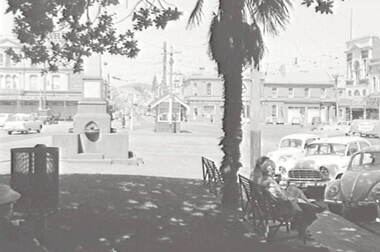 Allan Doney Collection, Bendigo Historical Society Inc.
Negative - Ballarat - Street - Statue, Allan Doney, 1950 -1970
... homes with ornate verandahs, trams and much more. Above all, his photographs show how much of the city has survived from the 19th century – and how much has not. Through two decades of great change, Allan Doney was there to capture ways people interacted with it. Although he travelled to many other places in Northern Victoria and beyond in search of subjects for his art, he seemed to always return to Bendigo for inspiration. Negative Ballarat ...In the years of Allan Doney’s photography, landmark buildings succumbed to fire, neglect and redevelopment. He photographed the grey sand hills from Bendigo’s mining past, the streetscapes, poppet heads, miners’ cottages, gracious homes with ornate verandahs, trams and much more. Above all, his photographs show how much of the city has survived from the 19th century – and how much has not. Through two decades of great change, Allan Doney was there to capture ways people interacted with it. Although he travelled to many other places in Northern Victoria and beyond in search of subjects for his art, he seemed to always return to Bendigo for inspiration. -
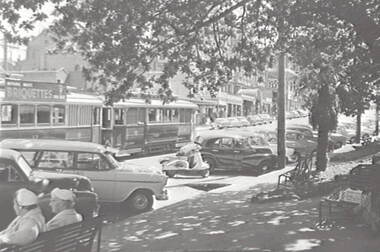 Allan Doney Collection, Bendigo Historical Society Inc.
Negative - Ballarat - Street - Tram, Allan Doney, 1950 -1970
... homes with ornate verandahs, trams and much more. Above all, his photographs show how much of the city has survived from the 19th century – and how much has not. Through two decades of great change, Allan Doney was there to capture ways people interacted with it. Although he travelled to many other places in Northern Victoria and beyond in search of subjects for his art, he seemed to always return to Bendigo for inspiration. Negative Ballarat ...In the years of Allan Doney’s photography, landmark buildings succumbed to fire, neglect and redevelopment. He photographed the grey sand hills from Bendigo’s mining past, the streetscapes, poppet heads, miners’ cottages, gracious homes with ornate verandahs, trams and much more. Above all, his photographs show how much of the city has survived from the 19th century – and how much has not. Through two decades of great change, Allan Doney was there to capture ways people interacted with it. Although he travelled to many other places in Northern Victoria and beyond in search of subjects for his art, he seemed to always return to Bendigo for inspiration. -
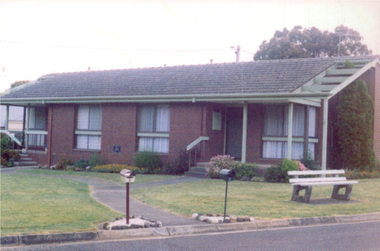 Old Colonists' Association of Ballarat Inc.
Photograph - Image, Clare Gervasoni, Ballarat Old Colonists' Association Retirement Village Residence - Ian Rollo Currie Homes, 2016
... The Currie Home has been constructed with the generous assistance of The Ian Rollo Currie Foundation The COmmonealth of Australia Department of Social Security The Old Colonists' Association, Ballarat 1st July, 1981 Senator The Hon. ...Ballarat Old Colonists' Association Retirement Village Residence - Ian Rollo Currie Homes Photograph Image Clare Gervasoni ...These homes were built in 1981. One of the first objectives of the Association was "to provide the shelter of a hose for those Pioneers of the Goldfields whom the reverses of fortune have deprived of the means of procuring the comforts of life in their declining years." The first home at Charles Anderson Grove was built in 1925. Before that time the Association provided relief for needy pioneers. relief included monthly monetary payments, loads of firewood, medical assistance and distribution of Christmas bosed of groceries to deserving pensioners, and in some cases payment of burial costs. ::a) The dominant purpose of the Association is to give public benevolent relief as a charity, but providing independent living accommodation in our Retirement Village for person in need who are over 65. ::b) To raise funds by membership subscription, commercial and residential rents, donations, gifts and voluntary work, for the purpose of providing direct relief of poverty, distress, misfortune or helplessness. ::c) To maintain the important heritage and ongoing viability of the Old Colonists' Association. (Revised Rules of the Old Colonists' Association of Ballarat Inc., 2016) Colour photograph of the Ian Rollo Currie Foundation Cottage at The Old Colonists' Assiation of Ballarat Inc retirement village at Charles Anderson Grove, Ballarat.The Currie Home has been constructed with the generous assistance of The Ian Rollo Currie Foundation The COmmonealth of Australia Department of Social Security The Old Colonists' Association, Ballarat 1st July, 1981 Senator The Hon. F.M. Chaney Minister for Social Security Dr D.L. Morton President 1980-1 J.B. Mildren, M.P., Member for Ballarat F.A. Peebles, Prisent 1978-20old colonists' association, ballarat, ian rollo currie foundation, charles anderson grove, ian rollo currie homes, old colonists' association retirement village, john mildren, d.l. morton, f.a. peebles, f.m. chaney -
 Old Colonists' Association of Ballarat Inc.
Photograph - Image, Joe White Homes at the Ballarat Old Colonists' Association Retirement Village, 23/09/2017
... Joe White Homes at the Ballarat Old Colonists' Association Retirement Village Photograph Image Clare Gervasoni ...These homes were built in 1969. One of the first objectives of the Association was "to provide the shelter of a those for those Pioneers of the Goldfields whom the reverses of fortune have deprived of the means of procuring the comforts of life in their declining years." The first home at Charles Anderson Grove was built in 1925. Before that time the Association provided relief for needy pioneers. relief included monthly monetary payments, loads of firewood, medical assistance and distribution of Christmas bosed of groceries to deserving pensioners, and in some cases payment of burial costs. ::a) The dominant purpose of the Association is to give public benevolent relief as a charity, but providing independent living accommodation in our Retirement Village for person in need who are over 65. ::b) To raise funds by membership subscription, commercial and residential rents, donations, gifts and voluntary work, for the purpose of providing direct relief of poverty, distress, misfortune or helplessness. ::c) To maintain the important heritage and ongoing viability of the Old Colonists' Association. (Revised Rules of the Old Colonists' Association of Ballarat Inc., 2016) The Joe White Cottage in the Ballarat Old Colonists' Association Retirement Village at Charles Anderson Grove, Ballarat.old colonists' association, ballarat, ballarat old colonists' club, joe white, charles anderson grove, joe white cottage, joe white homes -
 Old Colonists' Association of Ballarat Inc.
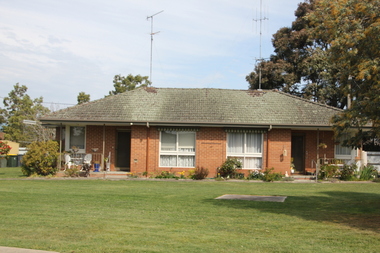
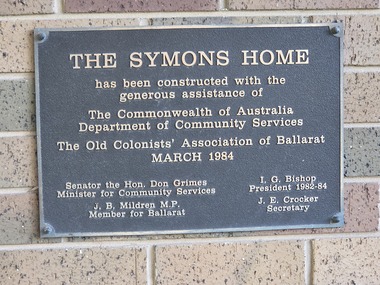
Photograph, Symons Cottage, 14 Charles Anderson Grv, Wendouree, 2026, 22/05/2026
... The Symons Home has been contructed with the generous assistance of The Commonwealth of Australia Department of Community Services The Old Colonists' Association of Ballarat March 1984 Senator the Hon. ...Symons home The Symons Home has been contructed with the generous assistance of The Commonwealth of Australia Department of Community Services The Old Colonists' Association of Ballarat March 1984 Senator the Hon. ...The Symons home was opened in March 1984. The Symons Cottage is part of the Old Colonists' Retirement Village and is located at 14 Charles Anderson Grove, Wendouree. The Symons Home has been contructed with the generous assistance of The Commonwealth of Australia Department of Community Services The Old Colonists' Association of Ballarat March 1984 Senator the Hon. Don Grimes Minister for Community Services I.G. Bishop President 1982-4 J.B. Mildren Member for Ballarat J.E. Crocker Secretarysymons home -
 Sunshine and District Historical Society Incorporated
Administrative record - City of Sunshine - Commissioner Mr Alexander Alex George Gillon Collection 1976 - 1982 - Minutes of the ordinary meeting of council held on 14th November 1978, City of Sunshine, 14th November 1978
... Meats & Paper Pty Ltd & Ready Mix Concrete Somerville Road Plan of Subdivision Melissa Nook Deer Park Subdivision Camperdown Avenue and Sandford Avenue Damaged to Road, Kerb & channel, Etc Justin Road, Frederick Street and Amanda Road Flow Gauging Instrument Tottenham Branch Sewer Purchase of Ranger's Vehicle Outdoor Staff Christmas Break Up Half Cost Kerb & Channel Neale Road between Oakwood Road and Opie Road Elimination of Level Crossing Ashley Street Tottenham Farnsworth Avenue Deviation Footscray for New Bridge Over the Maribyrnong River and Extension to Footscray Institute of Technology Municipal Association of Victoria Mines Bill Amendment Report of the Building Surveyor Application to Build Over Easement 16 Tania Street Sunshine North Application to Build Over Easement Lot 19 McIntyre Road Sunshine Application to Install Underground Tanks Lot 2 Ballarat Road Corner of Hampshire Road Sunshine Application to Install Underground Tank Lot 1 Geelong Road Brooklyn Report of the Director of Parks & Recreation Request by Sunshine Cricket Club for Dempster Park Alteration of Fences Around Oval Orders of the Day Accounts Submitted for Payment as at 25th October 1978 Proposal to Construct Dickson Street (Part) Under the Provisions of Division 10 of Part XIX of the Local Government Act 1958 Extraordinary Business Report of the City Engineer Proposed New Road Connection Main Road East to Buckley Street Country Road Board Planning Permit Application 40 Bed Nursing Home and Matrons Residence Lot 4 Devonshire Road Report of the Building Surveyor 28 - 30 Ridley Street Albion 41 Wright Street Sunshine...Meats & Paper Pty Ltd & Ready Mix Concrete Somerville Road Plan of Subdivision Melissa Nook Deer Park Subdivision Camperdown Avenue and Sandford Avenue Damaged to Road, Kerb & channel, Etc Justin Road, Frederick Street and Amanda Road Flow Gauging Instrument Tottenham Branch Sewer Purchase of Ranger's Vehicle Outdoor Staff Christmas Break Up Half Cost Kerb & Channel Neale Road between Oakwood Road and Opie Road Elimination of Level Crossing Ashley Street Tottenham Farnsworth Avenue Deviation Footscray for New Bridge Over the Maribyrnong River and Extension to Footscray Institute of Technology Municipal Association of Victoria Mines Bill Amendment Report of the Building Surveyor Application to Build Over Easement 16 Tania Street Sunshine North Application to Build Over Easement Lot 19 McIntyre Road Sunshine Application to Install Underground Tanks Lot 2 Ballarat Road Corner of Hampshire Road Sunshine Application to Install Underground Tank Lot 1 Geelong Road Brooklyn Report of the Director of Parks & Recreation Request by Sunshine Cricket Club for Dempster Park Alteration of Fences Around Oval Orders of the Day Accounts Submitted for Payment as at 25th October 1978 Proposal to Construct Dickson Street (Part) Under the Provisions of Division 10 of Part XIX of the Local Government Act 1958 Extraordinary Business Report of the City Engineer Proposed New Road Connection Main Road East to Buckley Street Country Road Board Planning Permit Application 40 Bed Nursing Home and Matrons Residence Lot 4 Devonshire Road Report of the Building Surveyor 28 - 30 Ridley Street Albion 41 Wright Street Sunshine Foolscap sized document. ...Minutes of the Ordinary Meeting of Council held on 14th November 1978 Report of the Town Clerk's Department Report of the Town Clerk Name of Proposed Railway Station between Albion and St. Albans. The name Furlong has been Gazetted Land Transfer Ainsworth Reserve Land Transfer Discontinued Right of Way between Marsh Street and Emu Road Maintenance of Buildings Report of the Co-Ordinator Welfare Services Albion North Kindergarten Thomas Hall Furlong Road Victorian Youth Employment Committee Outreach Project Y.M.C.A. Braybrook Report of the Chief Health Inspector Brooklyn infant Welfare Centre Use by Pre-School Centre as an All-Day Child Minding Centre in 1979 Health Act Registrations Application for Transfer of Proprietorship of Premises under the Health Act Prosecution Proceedings Sunshine Magistrates Court Health (Hearing Conservation) Regulations 1978 Application for Installation of gas fired Dry septic Tank Units H. W. Greenham & Sons Pty Ltd Abattoirs Lots 7 & 8 Doherty's Road Removal of Habitable Building Granny Flat 38 Robyn Avenue Albanvale to 32 Queens Avenue Doncaster Report of the Chief By-Laws Officer Proposed Limited Parking Corio Street Prohibited Parking Lurg Avenue Sunshine North Report of the Municipal Recreation Officer Use of Robert Barrett Reserve by the George Cross Soccer Club Sassella Park Use of Reserve and Buildings Removal of Fence which was erected around the Proposed Swimming Pool, Layout of the Running Track used by Deer Park Little Athletics Centre and making provision for the area inside the tracks for the Sunshine Hockey Club. The Sundowers Marching Girl Group, the Deer Park Unemployment Group & Deer Park Play Group also use the ground and buildings Land Committee Report Howard Kingham Lodge Moving of the Fence Line and Offer of Sale of Chaplin Reserve To Council by the Railways Department Report of the City Engineer Land Conservation Council Recommendations Melbourne Study Area Town Planning Appeal Tribunal and the Uniform Building Regulations Proposed Extension to Sunshine Shopping Centre Planning Permit Application 64 Bed Nursing Home Killara Street & Mernda Street Sunshine West Planning Permit Application Office and Warehouses Lot 1 Sunshine Road South East Corner of Olympia Street Planning Permit Application Extension to Existing Sunshine Wesleyan Methodist Church 139 - 143 Devonshire Road Planning Permit Application Detached House within 60M of the Maribyrnong River Lot 88 Chifley Drive Planning Permit Application Consulting Rooms Dental Surgery Lot 173 Fairbairn Road Proposed Public Open Space Along the Maribyrnong River South Side between Duke Street and Evans Street Proposed Amendment Planning Permit Application 2 Lot Subdivision Lot 5 Justin Street Planning Permit Application Factory Lot 307 Hawthorn Avenue Planning Permit Application 4 Villa Units Lots 23 & 25 Madden Street Maidstone Planning Permit Application 40 Bed Nursing Home and Matrons Residence Lot 4 Devonshire Road Planning Permit Application Flats 15 Bardsley Street Sunshine West Planning Permit Application Sky Sign Highpoint Shopping Centre Lots 8, 9, 10, 11, 13 and Part 12 Rosamond Road Planning Permit Application Consulting Rooms Lot 7 Devonshire Road Consolidation of Title 2, 4 & 6 Killara Street Plan of Transfer and Consolidation S.C.I. Meats & Paper Pty Ltd & Ready Mix Concrete Somerville Road Plan of Subdivision Melissa Nook Deer Park Subdivision Camperdown Avenue and Sandford Avenue Damaged to Road, Kerb & channel, Etc Justin Road, Frederick Street and Amanda Road Flow Gauging Instrument Tottenham Branch Sewer Purchase of Ranger's Vehicle Outdoor Staff Christmas Break Up Half Cost Kerb & Channel Neale Road between Oakwood Road and Opie Road Elimination of Level Crossing Ashley Street Tottenham Farnsworth Avenue Deviation Footscray for New Bridge Over the Maribyrnong River and Extension to Footscray Institute of Technology Municipal Association of Victoria Mines Bill Amendment Report of the Building Surveyor Application to Build Over Easement 16 Tania Street Sunshine North Application to Build Over Easement Lot 19 McIntyre Road Sunshine Application to Install Underground Tanks Lot 2 Ballarat Road Corner of Hampshire Road Sunshine Application to Install Underground Tank Lot 1 Geelong Road Brooklyn Report of the Director of Parks & Recreation Request by Sunshine Cricket Club for Dempster Park Alteration of Fences Around Oval Orders of the Day Accounts Submitted for Payment as at 25th October 1978 Proposal to Construct Dickson Street (Part) Under the Provisions of Division 10 of Part XIX of the Local Government Act 1958 Extraordinary Business Report of the City Engineer Proposed New Road Connection Main Road East to Buckley Street Country Road Board Planning Permit Application 40 Bed Nursing Home and Matrons Residence Lot 4 Devonshire Road Report of the Building Surveyor 28 - 30 Ridley Street Albion 41 Wright Street Sunshine city of sunshine, alexander "alex" george gillon, marsh street, maidstone, ainsworth reserve, vernon street, sunshine west, emu road, furlong railway station, st. albans, albion north kindergarten, thomas hall, furlong road, sunshine north, brooklyn infant welfare centre, cypress avenue, brooklyn, h. w. greenham & sons pty ltd, doherty's road, robyn avenue, albanvale, lurg avenue, robert barrett reserve, rosamond road, maribyrnong, george cross soccer club, sassella park, station road, deer park, deer park little athletics centre, sunshine hockey club, sundowers marching girl group, deer park unemployment group, deer park play grou, kingham lodge, darnley street, chaplin reserve, anderson road, sunshine, killara street, mernda street, sunshine road, olympia street, tottenham, sunshine wesleyan methodist church, devonshire road, maribyrnong river, chifley drive, fairbairn road, duke street, evans street, justin street, hawthorn avenue, madden street, bardsley street, consolidation s.c.i. meats, melissa nook, camperdown avenue, sandford avenue, frederick street, amanda road, neale road, oakwood road, opie road, ashley street, tania street, mcintyre road, ballarat road, hampshire road, geelong road, sunshine cricket club, dempster park, phoenix street, dickson street, main road east, buckley street, ridley street, albion, wright street -
 Sunshine and District Historical Society Incorporated
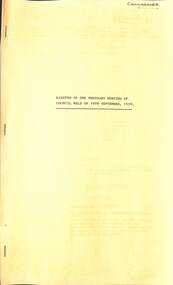
Administrative record - City of Sunshine - Commissioner Mr Alexander "Alex" George Gillon Collection 1976 - 1982 - Minutes of the Ordinary Meeting of Council Held on 19th September 1978, City of Sunshine, 19th September 1978
... Albans Planning Permit Application Maintenance Office Churchill Avenue Situated Between Churchill Avenue and Hargraves Crescent Planning Permit Application Place of Assembly for Unemployed Youth Contact Centre 818 Ballarat Road Deer Park Planning Permit Application Nursing Home Thomson Street Maidstone Planning Permit Sky Sign 86 Mitchell Street Planning Permit Application Private Tip Part Lot 35 Reid Street Albion & Advice to Denton Avenue Residents Planning Permit Flats 19 King Edward Avenue Planning Permit Application 21 Factories Lot 2 Burke Street & Lot 8 Mullenger Road Royal Australian Planning Institute 15th Congress Report Plan of Subdivision Reno Auto Sales Hampshire Road Corner Ballarat Road Plan of Subdivision Stage 8 Nickson's Estate Consolidated of Title Ballarat Road, Alford Street & Victor Street Shell Co of Aust Creation of Easement Lot 382 Newbury Street Consolidated of Title Glengala Road Between Links Street and Evelyn Crescent Consolidated of Title Verdun Street Plan of Transfer and Consolidation S.C.I. ...Albans Planning Permit Application Maintenance Office Churchill Avenue Situated Between Churchill Avenue and Hargraves Crescent Planning Permit Application Place of Assembly for Unemployed Youth Contact Centre 818 Ballarat Road Deer Park Planning Permit Application Nursing Home Thomson Street Maidstone Planning Permit Sky Sign 86 Mitchell Street Planning Permit Application Private Tip Part Lot 35 Reid Street Albion & Advice to Denton Avenue Residents Planning Permit Flats 19 King Edward Avenue Planning Permit Application 21 Factories Lot 2 Burke Street & Lot 8 Mullenger Road Royal Australian Planning Institute 15th Congress Report Plan of Subdivision Reno Auto Sales Hampshire Road Corner Ballarat Road Plan of Subdivision Stage 8 Nickson's Estate Consolidated of Title Ballarat Road, Alford Street & Victor Street Shell Co of Aust Creation of Easement Lot 382 Newbury Street Consolidated of Title Glengala Road Between Links Street and Evelyn Crescent Consolidated of Title Verdun Street Plan of Transfer and Consolidation S.C.I. ...Minutes of the Ordinary Meeting of Council Held on 19th September 1978 Report of the Town Clerk's Department Report of the Town Clerk Proposed Western Region Refuse Disposal Group Constitution of Representation on the Melbourne and Metropolitan Board of Works Municipal Clerks Conference Tasmania 13th to 17th November 1978 Home Help and Welfare Officers Subsidies Appointment of Auditor for Year 1978/79 Municipal Association Increase in Annual Subscriptions Federal Budget Effect on Municipal Finances Compulsory Acquisition Lots 43 & 44 Northumberland Road Compensation Report of the Chief Health Inspector Health Act Registrations Applications for Transfer of Proprietorship of Premises under the Health Act Prosecution Proceedings Sunshine Magistrates Court Approval to Use a Septic Tank System at Factory Premises Lot 310 Ayton Street Sunshine North Closure of Albion North Infant Welfare Centre Protean Environment Protection Appeal Application for Approval to Install a Septic Tank Recirculation Sand Filter System at the Stansfield Steel Product Fairbairn Road Sunshine West Application for Permission to Permit a Garage to be Occupied for Human Habitation at 19 Bardsley Street Sunshine West Report of the Medical Officer of Health Report of the Chief By-Laws Officer Court Proceedings Parking Infringements By-Laws Officer Course R.M.I.T. 20th October 1978 Limited Parking Ballarat Road Between Butler Street and Errol Street Braybrook Report of the City Librarian 1978 Library Week Amnesty Report of the City Engineer Planning Permit Flats North West Corner Cornwall Road and Monash Street Town Planning Appeal Planning Permit Flats Lot 9 Mernda Street Planning Permit Application Panel Beating Works & Spray-Painting Lot 219 McIntyre Road Sunshine North Planning Permit Application Sky Sign 556 Ballarat Road Albion Planning Permit Application Advertising Sign Highpoint Shopping Centre Lots 8, 9, 10, 11 & Part 12 Rosamond Road Melbourne Metropolitan Outline Plan for Cities of Keilor and Sunshine Amendment 70 Part 4A to the Melbourne Metropolitan Planning Scheme Planning Permit Application Nursing Home Lots 100 & 101 North Road Ardeer Proposed Shopping Centre Taylors Road St. Albans Planning Permit Application Maintenance Office Churchill Avenue Situated Between Churchill Avenue and Hargraves Crescent Planning Permit Application Place of Assembly for Unemployed Youth Contact Centre 818 Ballarat Road Deer Park Planning Permit Application Nursing Home Thomson Street Maidstone Planning Permit Sky Sign 86 Mitchell Street Planning Permit Application Private Tip Part Lot 35 Reid Street Albion & Advice to Denton Avenue Residents Planning Permit Flats 19 King Edward Avenue Planning Permit Application 21 Factories Lot 2 Burke Street & Lot 8 Mullenger Road Royal Australian Planning Institute 15th Congress Report Plan of Subdivision Reno Auto Sales Hampshire Road Corner Ballarat Road Plan of Subdivision Stage 8 Nickson's Estate Consolidated of Title Ballarat Road, Alford Street & Victor Street Shell Co of Aust Creation of Easement Lot 382 Newbury Street Consolidated of Title Glengala Road Between Links Street and Evelyn Crescent Consolidated of Title Verdun Street Plan of Transfer and Consolidation S.C.I. Meat & Paper Pty Ltd and Ready Mix Concrete Somerville Road Strata Subdivision 17 St. Albans Road Tenders for Annual Supplies Annual Supply Bituminous Concrete Contract Contract Reconstruction of Sydney Street Contract Cypress Avenue Reinstatement Contract Cumberland Street Private Street Scheme Contract Sheffield Estate Private Street Scheme Finalisation of Cumberland Street Private Street Scheme Finalisation of Sheffield Estate Private Street Scheme Sewerage Facilities M.M.B.W. Statcon Signal Remodel Programme Deferred Payment of Costs Scheme Signal Installation Programme 1978/79 and Reranking of Statewide Listing for Deferred Payment Scheme Station Road Outfall Drain Through Commonwealth Property 9th A.R.R.B. Conference Brisbane Report Establishment of Recycling Depot at Sunshine Tip Bon Thomas Reserve Pre-School Centre Report of the Building Surveyor Australian Wool Corporation Francis Street Brooklyn 60 Allison Street Sunshine West Uniform Buildings Regulations Draft Amendment No 10 Report of the Director of Parks & Recreation Bon Thomas Reserve Development Barclay Reserve Metering od Facilities Orders of the Day Accounts Submitted for Payment as at 31st August 1978 Extraordinary Business Report of the Town Clerk Supplementary Valuations by Approved Report of the City Engineer Planning Permit Application Place of Assembly for Community Youth Support Scheme 20 Barnes Crescent Sunshine West Planning Permit Application Institutional Home Tallintyre Road Sunshine West Planning Permit Application Factory Extension to Existing Industrial Complex Scotland Street, Hillary Street & Rutland Street Braybrook Mines (Amendment) Bill 1978 Federated Municipal and Shire Council Employees Union National Safety Council of Australia city of sunshine, alexander "alex" george gillon, northumberland road, sunshine north, albion north infant welfare centre, stansfield steel product, fairbairn road, sunshine west, bardsley street, ballarat road, butler street, errol street, braybrook, cornwall road, monash street, sunshine, mernda street, mcintyre road, albion, highpoint shopping centre, rosamond road, maribyrnong, north road, ardeer, taylors road, st. albans, churchill avenue, hargraves crescent, deer park, thomson street, maidstone, mitchell street, reid street, denton avenue, king edward avenue, burke street, mullenger road, hampshire road, alford street, victor street, newbury street, links street, glengala road, evelyn crescent, verdun street, consolidation s.c.i. meat & paper pty ltd, somerville road, brooklyn, st. albans road, sydney street, cypress avenue, cumberland street, station road, bon thomas reserve pre-school centre, quinn street, sunshine tip, australian wool corporation, francis street, allison street, barclay reserve, barnes crescent, scotland street, hillary street, rutland street -
 Sunshine and District Historical Society Incorporated
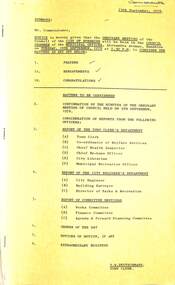
Administrative record - City of Sunshine - Commissioner Mr Alexander "Alex" George Gillon Collection 1976 - 1982 - Notice of the ordinary meeting of the Council of the city of Sunshine on 19th September 1978, City of Sunshine, 13th September 1978
... Albans Planning Permit Application Maintenance Office Churchill Avenue Situated Between Churchill Avenue and Hargraves Crescent Planning Permit Application Place of Assembly for Unemployed Youth Contact Centre 818 Ballarat Road Deer Park Planning Permit Application Nursing Home Thomson Street Maidstone Planning Permit Sky Sign 86 Mitchell Street Planning Permit Application Private Tip Part Lot 35 Reid Street Albion & Advice to Denton Avenue Residents Planning Permit Flats 19 King Edward Avenue Planning Permit Application 21 Factories Lot 2 Burke Street & lot 8 Mullender Road Royal Australian Planning Institute 15th Congress Report Plan of Subdivision Reno Auto Sales Hampshire Road Corner Hampshire Road Plan of Subdivision Stage 8 Nickson's Estate Consolidated of Title Ballarat Road, Alford Street & Victor Street Shell Co of Aust Creation of Easement Lot 382 Newbury Street Consolidated of Title Glengala Road Between Links Street and Evelyn Crescent Consolidated of Title Verdun Street Plan of Transfer and Consolidation S.C.I. ...Albans Planning Permit Application Maintenance Office Churchill Avenue Situated Between Churchill Avenue and Hargraves Crescent Planning Permit Application Place of Assembly for Unemployed Youth Contact Centre 818 Ballarat Road Deer Park Planning Permit Application Nursing Home Thomson Street Maidstone Planning Permit Sky Sign 86 Mitchell Street Planning Permit Application Private Tip Part Lot 35 Reid Street Albion & Advice to Denton Avenue Residents Planning Permit Flats 19 King Edward Avenue Planning Permit Application 21 Factories Lot 2 Burke Street & lot 8 Mullender Road Royal Australian Planning Institute 15th Congress Report Plan of Subdivision Reno Auto Sales Hampshire Road Corner Hampshire Road Plan of Subdivision Stage 8 Nickson's Estate Consolidated of Title Ballarat Road, Alford Street & Victor Street Shell Co of Aust Creation of Easement Lot 382 Newbury Street Consolidated of Title Glengala Road Between Links Street and Evelyn Crescent Consolidated of Title Verdun Street Plan of Transfer and Consolidation S.C.I. ...Notice of the ordinary meeting of the Council of the city of Sunshine on 19th September 1978 Report of the Town Clerk's Department Report of the Town Clerk Proposed Western Region Refuse Disposal Group Constitution of Representation on the Melbourne and Metropolitan Board of Works Municipal Clerks Conference Tasmania 13th to 17th November 1978 Home Help and Welfare Officers Subsidies Appointment of Auditor for Year 1978/79 Municipal Association Increase in Annual Subscriptions Federal Budget Effect on Municipal Finances Compulsory Acquisition Lots 43 & 44 Northumberland Road Compensation Report of the Chief Health Inspector Health Act Registrations Applications for Transfer of Proprietorship of Premises under the Health Act Prosecution Proceedings Sunshine Magistrates Court Approval to Use a Septic Tank System at Factory Premises Lot 310 Ayton Street Sunshine North Closure of Albion North Infant Welfare Centre Protean Environment Protection Appeal Application for Approval to Install a Septic Tank Recirculation Sand Filter System at the Stansfield Steel Product Fairbairn Road Sunshine West Application for Permission to Permit a Garage to be Occupied for Human Habitation at 19 Bardsley Street Sunshine West Report of the Medical Officer of Health Report of the Chief By-Laws Officer Court Proceedings Parking Infringements By-Laws Officer Course R.M.I.T. 20th October 1978 Limited Parking Ballarat Road Between Butler Street and Errol Street Braybrook Report of the City Librarian 1978 Library Week Amnesty Report of the City Engineer Planning Permit Flats North West Corner Cornwall Road and Monash Street Town Planning Appeal Planning Permit Flats Lot 9 Mernda Street Planning Permit Application Panel Beating Works & Spray-Painting Lot 219 McIntyre Road Sunshine North Planning Permit Application Sky Sign 556 Ballarat Road Albion Planning Permit Application Advertising Sign Highpoint Shopping Centre Lots 8, 9, 10, 11 & Part 12 Rosamond Road Melbourne Metropolitan Outline Plan for Cities of Keilor and Sunshine Amendment 70 Part 4A to the Melbourne Metropolitan Planning Scheme Planning Permit Application Nursing Home Lots 100 & 101 North Road Ardeer Proposed Shopping Centre Taylors Road St. Albans Planning Permit Application Maintenance Office Churchill Avenue Situated Between Churchill Avenue and Hargraves Crescent Planning Permit Application Place of Assembly for Unemployed Youth Contact Centre 818 Ballarat Road Deer Park Planning Permit Application Nursing Home Thomson Street Maidstone Planning Permit Sky Sign 86 Mitchell Street Planning Permit Application Private Tip Part Lot 35 Reid Street Albion & Advice to Denton Avenue Residents Planning Permit Flats 19 King Edward Avenue Planning Permit Application 21 Factories Lot 2 Burke Street & lot 8 Mullender Road Royal Australian Planning Institute 15th Congress Report Plan of Subdivision Reno Auto Sales Hampshire Road Corner Hampshire Road Plan of Subdivision Stage 8 Nickson's Estate Consolidated of Title Ballarat Road, Alford Street & Victor Street Shell Co of Aust Creation of Easement Lot 382 Newbury Street Consolidated of Title Glengala Road Between Links Street and Evelyn Crescent Consolidated of Title Verdun Street Plan of Transfer and Consolidation S.C.I. Meat & Paper Pty Ltd and Ready Mix Concrete Somerville Road Strata Subdivision 17 St. Albans Road Tenders for Annual Supplies Annual Supply Bituminous Concrete Contract Contract Reconstruction of Sydney Street Contract Cypress Avenue Reinstatement Contract Cumberland Street Private Street Scheme Contract Sheffield Estate Private Street Scheme Finalisation of Cumberland Street Private Street Scheme Finalisation of Sheffield Estate Private Street Scheme Sewerage Facilities M.M.B.W. Statcon Signal Remodel Programme Deferred Payment of Costs Scheme Signal Installation Programme 1978/79 and Reranking of Statewide Listing for Deferred Payment Scheme Station Road Outfall Drain Through Commonwealth Property 9th A.R.R.B. Conference Brisbane Report Establishment of Recycling Depot at Sunshine Tip Bon Thomas Reserve Pre-School Centre Report of the Building Surveyor Australian Wool Corporation Francis Street Brooklyn 60 Allison Street Sunshine West Uniform Buildings Regulations Draft Amendment No 10 Report of the Director of Parks & Recreation Bon Thomas Reserve Development Barclay Reserve Metering od Facilities Orders of the Day Accounts Submitted for Payment as at 31st August 1978 city of sunshine, alexander "alex" george gillon, macedon street, maidstone, fairbairn road pre-school, parsons reserve, stanford street, ralph street, robert bruce reserve, sunshine west, station road, deer park, tallingtyre reserve, kermeen street, bon thomas pre-school, quinn street, diamond avenue pre-school, diamond avenue, albanvale, orama street pre-school, orama street, st. albans, highpoint city pre-school, rosamond road, maribyrnong, errington reserve, main road east, sunshine city band, fairbairn road, ballarat road, thomson street, king edward avenue, albion, cumberland street, sunshine tip, bon thomas reserve pre-school centre -
 Sunshine and District Historical Society Incorporated
Administrative record - City of Sunshine - Commissioner Mr Alexander "Alex" George Gillon Collection 1976 - 1982 - Minutes of the ordinary meeting of council held on 22nd August 1978, City of Sunshine, 22nd August 1978
... Minutes of the Ordinary Meeting of Council held on 22nd August 1978 Report of the Town Clerk's Department Report of the Town Clerk Review of Role and Structure of Local Government Federal Finance for Local Government Use of Melbourne & Metropolitan Board of Works Quarters at O'Shannassy, Wallaby Creek and Robertson Land Transfer Discontinued Right of Way Rear of Railway Parade and Wood Street Deer Park Dickson Street Part Private Street Scheme Loan Programme 1978/79 Hulett Street Construction Scheme Report of the Co-Ordinator of Welfare Services Toddler Groups Toddler Group for Children At Risk Social Work Students Maribyrnong Senior Citizens Club Resource Centre / Toy Library Establishment of a Multi-Cultural Senior Citizens Club in Sunshine West Youth Counselling Service Report of the Acting Chief Health Inspector Quarterly Return of Food Samples Keep Australian Beautiful Council Head Lice Campaign Health Act Registrations Application for Transfer of Proprietorship of Premises under the Health Act Annual Inspections Infant Welfare Centres Sewage Overflow 2 Bruce Street Sunshine Report of the Chief By-Laws Officer Removal of Fire Hazards 1978/79 Dog Act Fixing of Registration Fees Report of the City Librarian Bookmobile Maidstone Branch Library Yardley Street to be Closed 29th September and Replaced with Bookmobile Report of the Municipal Recreation Officer Student's Representative Council University of Melbourne Summer School Seminar Multiple Sclerosis Society of Victoria Request for Land Provision of Minibuses for Community Groups Interim Planning Committee Albanvale Primary School Diamond Avenue Reserve Sunshine West High School Community Use Agreement Report of the City Engineer Preferred Development Areas Newmarket Relocation Proposal Planning Permit Application Subdivision and Detached Houses Oakwood Road Town Planning Appeal Planning Permit Application Extension to Factory Graingers Street Sunshine North Planning Permit Application East Side of Hampshire Road North of Existing Sunshine Shopping Cente Generally Bounded by Hampshire Road, Hertford Road, George Street and Service Street Including the Property Occupied by Massey Ferguson Spare Parts Store South of Service Street Rezoning Application Planning Permit Application Service station and Factory 784 Ballarat Road North West Corner Glencairn Avenue Planning Permit Application Warehouse and Workshop Hawthorn Avenue Planning Permit Application Neale Road Subdivision and Detached Houses Town Planning Appeal Home Occupation Three Phase Power Connection 170 Wright Street Planning Permit Flats 17 King Edward Avenue Planning Permit Application Institutional Home Lot 509 Tallintyre Road Planning Permit Application Nursing Home Thompson Street Maidstone Planning Permit Medical Consultation Room South East Corner Percy Street and Main Road East Planning Permit Application Extension to Existing Factory Marshall Street Plan of Subdivision Ballarat Road and Anderson Road Plan of Subdivision Robinsons Road Strata Subdivision Lot 59 Fabian Court Contract Fire Service Sunshine Tip Consolidation of Title Trafalgar Street Employment of Engineering Students for Vocational Training Provision of Footbridge Over Kororoit Creek Reconstruction of South Road Flooding 7th & 8th August 1978 Establishment of Recycling Depot at Sunshine Tip Provision of Spoil for Sunshine Tip Billingham Road Drain Kororoit Creek to Robinsons Road Resitting of Public Telephones Sunshine Road Declaration of Sewage Area No 3550 Footscray West Mail Centre Hampstead Road Closure of Right of Way Between Chicago Street and Chifley Drive Construction of Right of Way Between Randall Street and Barb Street Derelict Cars and Domestic Ferrous Scrap Report of the Building Surveyor 28 - 30 Ridley Street Albion Cancellation of Permit Lot 119 Ballarat Road Application to Build Over Easement 7 Bella Court Sunshine West Application to Build Over Easement 15 Beech Court Sunshine West Building Permit Fees for Council Buildings Report of the Director of Parks & Recreation Bon Thomas Subdivision and Reserve Development Orders of the Day Accounts Submitted for Payment as at 1st July 1978 & 5th August 1978 Proposal to Construct Hulett Street Under The Provisions of Division 10 of Pary XIX of the Local Government Act 1958 Proposal to Construct Dickson Street Under The Provisions of Division 10 of Pary XIX of the Local Government Act 1958 Proposal to Construct Warrs Road (Northern Section) Under The Provisions of Division 10 of Pary XIX of the Local Government Act 1958 Extraordinary Business Report of the Acting Chief Health Officer The Australian Institute of Health Surveyors' 5th National Conference Report of the City Engineer Planning Permit Application Office and Extension of Amenities Building Railway Siding Wright Street Planning Permit Application Car Port Belvedere Close Maribyrnong...Albans Marshall Street Anderson Road Robinsons Road Fabian Court Maribyrnong Sunshine Tip Trafalgar Street Kororoit Creek South Road Braybrook Sunshine Road Tottenham Hampstead Road Chicago Street Chifley Drive Randall Street Barb Street Ridley Street Bella Court Beech Court Bon Thomas Reserve Quinn Street Warrs Road Belvedere Close Minutes of the Ordinary Meeting of Council held on 22nd August 1978 Report of the Town Clerk's Department Report of the Town Clerk Review of Role and Structure of Local Government Federal Finance for Local Government Use of Melbourne & Metropolitan Board of Works Quarters at O'Shannassy, Wallaby Creek and Robertson Land Transfer Discontinued Right of Way Rear of Railway Parade and Wood Street Deer Park Dickson Street Part Private Street Scheme Loan Programme 1978/79 Hulett Street Construction Scheme Report of the Co-Ordinator of Welfare Services Toddler Groups Toddler Group for Children At Risk Social Work Students Maribyrnong Senior Citizens Club Resource Centre / Toy Library Establishment of a Multi-Cultural Senior Citizens Club in Sunshine West Youth Counselling Service Report of the Acting Chief Health Inspector Quarterly Return of Food Samples Keep Australian Beautiful Council Head Lice Campaign Health Act Registrations Application for Transfer of Proprietorship of Premises under the Health Act Annual Inspections Infant Welfare Centres Sewage Overflow 2 Bruce Street Sunshine Report of the Chief By-Laws Officer Removal of Fire Hazards 1978/79 Dog Act Fixing of Registration Fees Report of the City Librarian Bookmobile Maidstone Branch Library Yardley Street to be Closed 29th September and Replaced with Bookmobile Report of the Municipal Recreation Officer Student's Representative Council University of Melbourne Summer School Seminar Multiple Sclerosis Society of Victoria Request for Land Provision of Minibuses for Community Groups Interim Planning Committee Albanvale Primary School Diamond Avenue Reserve Sunshine West High School Community Use Agreement Report of the City Engineer Preferred Development Areas Newmarket Relocation Proposal Planning Permit Application Subdivision and Detached Houses Oakwood Road Town Planning Appeal Planning Permit Application Extension to Factory Graingers Street Sunshine North Planning Permit Application East Side of Hampshire Road North of Existing Sunshine Shopping Cente Generally Bounded by Hampshire Road, Hertford Road, George Street and Service Street Including the Property Occupied by Massey Ferguson Spare Parts Store South of Service Street Rezoning Application Planning Permit Application Service station and Factory 784 Ballarat Road North West Corner Glencairn Avenue Planning Permit Application Warehouse and Workshop Hawthorn Avenue Planning Permit Application Neale Road Subdivision and Detached Houses Town Planning Appeal Home Occupation Three Phase Power Connection 170 Wright Street Planning Permit Flats 17 King Edward Avenue Planning Permit Application Institutional Home Lot 509 Tallintyre Road Planning Permit Application Nursing Home Thompson Street Maidstone Planning Permit Medical Consultation Room South East Corner Percy Street and Main Road East Planning Permit Application Extension to Existing Factory Marshall Street Plan of Subdivision Ballarat Road and Anderson Road Plan of Subdivision Robinsons Road Strata Subdivision Lot 59 Fabian Court Contract Fire Service Sunshine Tip Consolidation of Title Trafalgar Street Employment of Engineering Students for Vocational Training Provision of Footbridge Over Kororoit Creek Reconstruction of South Road Flooding 7th & 8th August 1978 Establishment of Recycling Depot at Sunshine Tip Provision of Spoil for Sunshine Tip Billingham Road Drain Kororoit Creek to Robinsons Road Resitting of Public Telephones Sunshine Road Declaration of Sewage Area No 3550 Footscray West Mail Centre Hampstead Road Closure of Right of Way Between Chicago Street and Chifley Drive Construction of Right of Way Between Randall Street and Barb Street Derelict Cars and Domestic Ferrous Scrap Report of the Building Surveyor 28 - 30 Ridley Street Albion Cancellation of Permit Lot 119 Ballarat Road Application to Build Over Easement 7 Bella Court Sunshine West Application to Build Over Easement 15 Beech Court Sunshine West Building Permit Fees for Council Buildings Report of the Director of Parks & Recreation Bon Thomas Subdivision and Reserve Development Orders of the Day Accounts Submitted for Payment as at 1st July 1978 & 5th August 1978 Proposal to Construct Hulett Street Under The Provisions of Division 10 of Pary XIX of the Local Government Act 1958 Proposal to Construct Dickson Street Under The Provisions of Division 10 of Pary XIX of the Local Government Act 1958 Proposal to Construct Warrs Road (Northern Section) Under The Provisions of Division 10 of Pary XIX of the Local Government Act 1958 Extraordinary Business Report of the Acting Chief Health Officer The Australian Institute of Health Surveyors' 5th National Conference Report of the City Engineer Planning Permit Application Office and Extension of Amenities Building Railway Siding Wright Street Planning Permit Application Car Port Belvedere Close Maribyrnong Foolscap plain paper sheets stapled along the left edge into booklet format. ...Minutes of the Ordinary Meeting of Council held on 22nd August 1978 Report of the Town Clerk's Department Report of the Town Clerk Review of Role and Structure of Local Government Federal Finance for Local Government Use of Melbourne & Metropolitan Board of Works Quarters at O'Shannassy, Wallaby Creek and Robertson Land Transfer Discontinued Right of Way Rear of Railway Parade and Wood Street Deer Park Dickson Street Part Private Street Scheme Loan Programme 1978/79 Hulett Street Construction Scheme Report of the Co-Ordinator of Welfare Services Toddler Groups Toddler Group for Children At Risk Social Work Students Maribyrnong Senior Citizens Club Resource Centre / Toy Library Establishment of a Multi-Cultural Senior Citizens Club in Sunshine West Youth Counselling Service Report of the Acting Chief Health Inspector Quarterly Return of Food Samples Keep Australian Beautiful Council Head Lice Campaign Health Act Registrations Application for Transfer of Proprietorship of Premises under the Health Act Annual Inspections Infant Welfare Centres Sewage Overflow 2 Bruce Street Sunshine Report of the Chief By-Laws Officer Removal of Fire Hazards 1978/79 Dog Act Fixing of Registration Fees Report of the City Librarian Bookmobile Maidstone Branch Library Yardley Street to be Closed 29th September and Replaced with Bookmobile Report of the Municipal Recreation Officer Student's Representative Council University of Melbourne Summer School Seminar Multiple Sclerosis Society of Victoria Request for Land Provision of Minibuses for Community Groups Interim Planning Committee Albanvale Primary School Diamond Avenue Reserve Sunshine West High School Community Use Agreement Report of the City Engineer Preferred Development Areas Newmarket Relocation Proposal Planning Permit Application Subdivision and Detached Houses Oakwood Road Town Planning Appeal Planning Permit Application Extension to Factory Graingers Street Sunshine North Planning Permit Application East Side of Hampshire Road North of Existing Sunshine Shopping Cente Generally Bounded by Hampshire Road, Hertford Road, George Street and Service Street Including the Property Occupied by Massey Ferguson Spare Parts Store South of Service Street Rezoning Application Planning Permit Application Service station and Factory 784 Ballarat Road North West Corner Glencairn Avenue Planning Permit Application Warehouse and Workshop Hawthorn Avenue Planning Permit Application Neale Road Subdivision and Detached Houses Town Planning Appeal Home Occupation Three Phase Power Connection 170 Wright Street Planning Permit Flats 17 King Edward Avenue Planning Permit Application Institutional Home Lot 509 Tallintyre Road Planning Permit Application Nursing Home Thompson Street Maidstone Planning Permit Medical Consultation Room South East Corner Percy Street and Main Road East Planning Permit Application Extension to Existing Factory Marshall Street Plan of Subdivision Ballarat Road and Anderson Road Plan of Subdivision Robinsons Road Strata Subdivision Lot 59 Fabian Court Contract Fire Service Sunshine Tip Consolidation of Title Trafalgar Street Employment of Engineering Students for Vocational Training Provision of Footbridge Over Kororoit Creek Reconstruction of South Road Flooding 7th & 8th August 1978 Establishment of Recycling Depot at Sunshine Tip Provision of Spoil for Sunshine Tip Billingham Road Drain Kororoit Creek to Robinsons Road Resitting of Public Telephones Sunshine Road Declaration of Sewage Area No 3550 Footscray West Mail Centre Hampstead Road Closure of Right of Way Between Chicago Street and Chifley Drive Construction of Right of Way Between Randall Street and Barb Street Derelict Cars and Domestic Ferrous Scrap Report of the Building Surveyor 28 - 30 Ridley Street Albion Cancellation of Permit Lot 119 Ballarat Road Application to Build Over Easement 7 Bella Court Sunshine West Application to Build Over Easement 15 Beech Court Sunshine West Building Permit Fees for Council Buildings Report of the Director of Parks & Recreation Bon Thomas Subdivision and Reserve Development Orders of the Day Accounts Submitted for Payment as at 1st July 1978 & 5th August 1978 Proposal to Construct Hulett Street Under The Provisions of Division 10 of Pary XIX of the Local Government Act 1958 Proposal to Construct Dickson Street Under The Provisions of Division 10 of Pary XIX of the Local Government Act 1958 Proposal to Construct Warrs Road (Northern Section) Under The Provisions of Division 10 of Pary XIX of the Local Government Act 1958 Extraordinary Business Report of the Acting Chief Health Officer The Australian Institute of Health Surveyors' 5th National Conference Report of the City Engineer Planning Permit Application Office and Extension of Amenities Building Railway Siding Wright Street Planning Permit Application Car Port Belvedere Close Maribyrnong city of sunshine, alexander "alex" george gillon, railway parade, wood street, deer park, dickson street, sunshine, hulett street, albion, maribyrnong senior citizens club, multi-cultural senior citizens club, bruce street, maidstone branch library, yardley street, albanvale primary school, diamond avenue reserve, diamond avenue, albanvale, sunshine west high school, lachlan street, sunshine west, oakwood road, graingers street, sunshine north, hampshire road, hertford road, george street, service street, massey ferguson, ballarat road, glencairn avenue, hawthorn avenue, neale road, wright street, king edward avenue, tallintyre road, thompson street, maidstone, percy street, main road east, st. albans, marshall street, anderson road, robinsons road, fabian court, maribyrnong, sunshine tip, trafalgar street, kororoit creek, south road, braybrook, sunshine road, tottenham, hampstead road, chicago street, chifley drive, randall street, barb street, ridley street, bella court, beech court, bon thomas reserve, quinn street, warrs road, belvedere close -
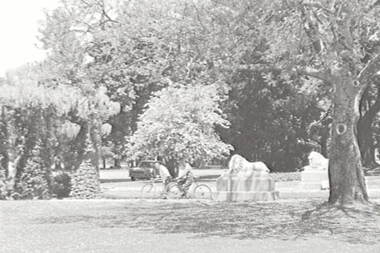 Allan Doney Collection, Bendigo Historical Society Inc.
Negative - Ballarat - Gardens - Statues - Lions, Allan Doney, 1950 -1970
... homes with ornate verandahs, trams and much more. Above all, his photographs show how much of the city has survived from the 19th century – and how much has not. Through two decades of great change, Allan Doney was there to capture ways people interacted with it. Although he travelled to many other places in Northern Victoria and beyond in search of subjects for his art, he seemed to always return to Bendigo for inspiration. Negative Ballarat ...In the years of Allan Doney’s photography, landmark buildings succumbed to fire, neglect and redevelopment. He photographed the grey sand hills from Bendigo’s mining past, the streetscapes, poppet heads, miners’ cottages, gracious homes with ornate verandahs, trams and much more. Above all, his photographs show how much of the city has survived from the 19th century – and how much has not. Through two decades of great change, Allan Doney was there to capture ways people interacted with it. Although he travelled to many other places in Northern Victoria and beyond in search of subjects for his art, he seemed to always return to Bendigo for inspiration. -
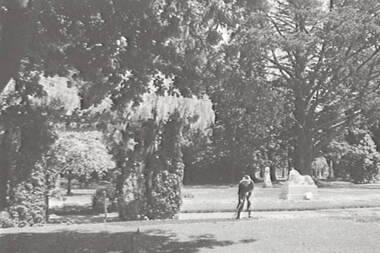 Allan Doney Collection, Bendigo Historical Society Inc.
Negative - Ballarat - Gardens - Statues - Lions, Allan Doney, 1950 -1970
... homes with ornate verandahs, trams and much more. Above all, his photographs show how much of the city has survived from the 19th century – and how much has not. Through two decades of great change, Allan Doney was there to capture ways people interacted with it. Although he travelled to many other places in Northern Victoria and beyond in search of subjects for his art, he seemed to always return to Bendigo for inspiration. Negative Ballarat ...In the years of Allan Doney’s photography, landmark buildings succumbed to fire, neglect and redevelopment. He photographed the grey sand hills from Bendigo’s mining past, the streetscapes, poppet heads, miners’ cottages, gracious homes with ornate verandahs, trams and much more. Above all, his photographs show how much of the city has survived from the 19th century – and how much has not. Through two decades of great change, Allan Doney was there to capture ways people interacted with it. Although he travelled to many other places in Northern Victoria and beyond in search of subjects for his art, he seemed to always return to Bendigo for inspiration. -
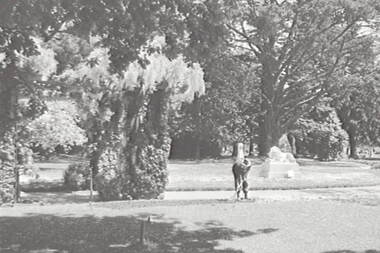 Allan Doney Collection, Bendigo Historical Society Inc.
Negative - Ballarat - Gardens - Statues - House, Allan Doney, 1950 -1970
... homes with ornate verandahs, trams and much more. Above all, his photographs show how much of the city has survived from the 19th century – and how much has not. Through two decades of great change, Allan Doney was there to capture ways people interacted with it. Although he travelled to many other places in Northern Victoria and beyond in search of subjects for his art, he seemed to always return to Bendigo for inspiration. Negative Ballarat ...In the years of Allan Doney’s photography, landmark buildings succumbed to fire, neglect and redevelopment. He photographed the grey sand hills from Bendigo’s mining past, the streetscapes, poppet heads, miners’ cottages, gracious homes with ornate verandahs, trams and much more. Above all, his photographs show how much of the city has survived from the 19th century – and how much has not. Through two decades of great change, Allan Doney was there to capture ways people interacted with it. Although he travelled to many other places in Northern Victoria and beyond in search of subjects for his art, he seemed to always return to Bendigo for inspiration. -
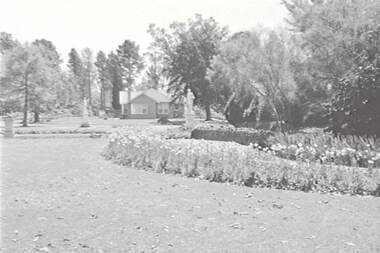 Allan Doney Collection, Bendigo Historical Society Inc.
Negative - Ballarat - Businesses - Russo’s - Madame Beer Frocks, Allan Doney, 1950 -1970
... homes with ornate verandahs, trams and much more. Above all, his photographs show how much of the city has survived from the 19th century – and how much has not. Through two decades of great change, Allan Doney was there to capture ways people interacted with it. Although he travelled to many other places in Northern Victoria and beyond in search of subjects for his art, he seemed to always return to Bendigo for inspiration. Negative Ballarat ...In the years of Allan Doney’s photography, landmark buildings succumbed to fire, neglect and redevelopment. He photographed the grey sand hills from Bendigo’s mining past, the streetscapes, poppet heads, miners’ cottages, gracious homes with ornate verandahs, trams and much more. Above all, his photographs show how much of the city has survived from the 19th century – and how much has not. Through two decades of great change, Allan Doney was there to capture ways people interacted with it. Although he travelled to many other places in Northern Victoria and beyond in search of subjects for his art, he seemed to always return to Bendigo for inspiration. -
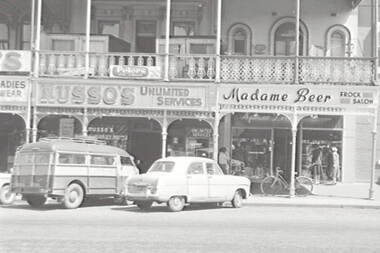 Allan Doney Collection, Bendigo Historical Society Inc.
Negative - Ballarat - Swans, Allan Doney, 1950 -1970
... homes with ornate verandahs, trams and much more. Above all, his photographs show how much of the city has survived from the 19th century – and how much has not. Through two decades of great change, Allan Doney was there to capture ways people interacted with it. Although he travelled to many other places in Northern Victoria and beyond in search of subjects for his art, he seemed to always return to Bendigo for inspiration. Negative Ballarat ...In the years of Allan Doney’s photography, landmark buildings succumbed to fire, neglect and redevelopment. He photographed the grey sand hills from Bendigo’s mining past, the streetscapes, poppet heads, miners’ cottages, gracious homes with ornate verandahs, trams and much more. Above all, his photographs show how much of the city has survived from the 19th century – and how much has not. Through two decades of great change, Allan Doney was there to capture ways people interacted with it. Although he travelled to many other places in Northern Victoria and beyond in search of subjects for his art, he seemed to always return to Bendigo for inspiration. -
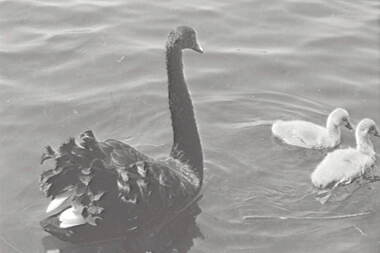 Allan Doney Collection, Bendigo Historical Society Inc.
Negative - Ballarat - Swans, Allan Doney, 1950 -1970
... homes with ornate verandahs, trams and much more. Above all, his photographs show how much of the city has survived from the 19th century – and how much has not. Through two decades of great change, Allan Doney was there to capture ways people interacted with it. Although he travelled to many other places in Northern Victoria and beyond in search of subjects for his art, he seemed to always return to Bendigo for inspiration. Negative Ballarat ...In the years of Allan Doney’s photography, landmark buildings succumbed to fire, neglect and redevelopment. He photographed the grey sand hills from Bendigo’s mining past, the streetscapes, poppet heads, miners’ cottages, gracious homes with ornate verandahs, trams and much more. Above all, his photographs show how much of the city has survived from the 19th century – and how much has not. Through two decades of great change, Allan Doney was there to capture ways people interacted with it. Although he travelled to many other places in Northern Victoria and beyond in search of subjects for his art, he seemed to always return to Bendigo for inspiration. -
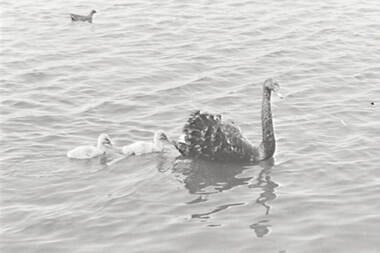 Allan Doney Collection, Bendigo Historical Society Inc.
Negative - Ballarat - Swans, Allan Doney, 1950 -1970
... homes with ornate verandahs, trams and much more. Above all, his photographs show how much of the city has survived from the 19th century – and how much has not. Through two decades of great change, Allan Doney was there to capture ways people interacted with it. Although he travelled to many other places in Northern Victoria and beyond in search of subjects for his art, he seemed to always return to Bendigo for inspiration. Negative Ballarat ...In the years of Allan Doney’s photography, landmark buildings succumbed to fire, neglect and redevelopment. He photographed the grey sand hills from Bendigo’s mining past, the streetscapes, poppet heads, miners’ cottages, gracious homes with ornate verandahs, trams and much more. Above all, his photographs show how much of the city has survived from the 19th century – and how much has not. Through two decades of great change, Allan Doney was there to capture ways people interacted with it. Although he travelled to many other places in Northern Victoria and beyond in search of subjects for his art, he seemed to always return to Bendigo for inspiration. -
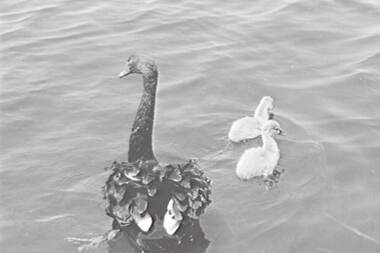 Allan Doney Collection, Bendigo Historical Society Inc.
Negative - Ballarat - Swans, Allan Doney, 1950 -1970
... homes with ornate verandahs, trams and much more. Above all, his photographs show how much of the city has survived from the 19th century – and how much has not. Through two decades of great change, Allan Doney was there to capture ways people interacted with it. Although he travelled to many other places in Northern Victoria and beyond in search of subjects for his art, he seemed to always return to Bendigo for inspiration. Negative Ballarat ...In the years of Allan Doney’s photography, landmark buildings succumbed to fire, neglect and redevelopment. He photographed the grey sand hills from Bendigo’s mining past, the streetscapes, poppet heads, miners’ cottages, gracious homes with ornate verandahs, trams and much more. Above all, his photographs show how much of the city has survived from the 19th century – and how much has not. Through two decades of great change, Allan Doney was there to capture ways people interacted with it. Although he travelled to many other places in Northern Victoria and beyond in search of subjects for his art, he seemed to always return to Bendigo for inspiration. -
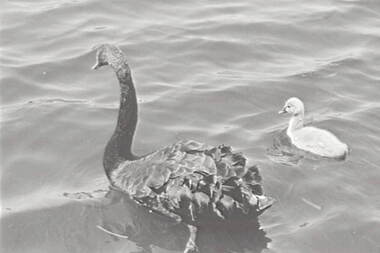 Allan Doney Collection, Bendigo Historical Society Inc.
Negative - Ballarat - Swans, Allan Doney, 1950 -1970
... homes with ornate verandahs, trams and much more. Above all, his photographs show how much of the city has survived from the 19th century – and how much has not. Through two decades of great change, Allan Doney was there to capture ways people interacted with it. Although he travelled to many other places in Northern Victoria and beyond in search of subjects for his art, he seemed to always return to Bendigo for inspiration. Negative Ballarat ...In the years of Allan Doney’s photography, landmark buildings succumbed to fire, neglect and redevelopment. He photographed the grey sand hills from Bendigo’s mining past, the streetscapes, poppet heads, miners’ cottages, gracious homes with ornate verandahs, trams and much more. Above all, his photographs show how much of the city has survived from the 19th century – and how much has not. Through two decades of great change, Allan Doney was there to capture ways people interacted with it. Although he travelled to many other places in Northern Victoria and beyond in search of subjects for his art, he seemed to always return to Bendigo for inspiration. -
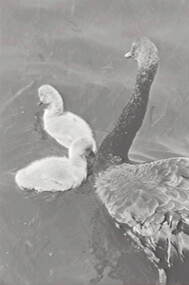 Allan Doney Collection, Bendigo Historical Society Inc.
Negative - Ballarat - Swans, Allan Doney, 1950 -1970
... homes with ornate verandahs, trams and much more. Above all, his photographs show how much of the city has survived from the 19th century – and how much has not. Through two decades of great change, Allan Doney was there to capture ways people interacted with it. Although he travelled to many other places in Northern Victoria and beyond in search of subjects for his art, he seemed to always return to Bendigo for inspiration. Negative Ballarat ...In the years of Allan Doney’s photography, landmark buildings succumbed to fire, neglect and redevelopment. He photographed the grey sand hills from Bendigo’s mining past, the streetscapes, poppet heads, miners’ cottages, gracious homes with ornate verandahs, trams and much more. Above all, his photographs show how much of the city has survived from the 19th century – and how much has not. Through two decades of great change, Allan Doney was there to capture ways people interacted with it. Although he travelled to many other places in Northern Victoria and beyond in search of subjects for his art, he seemed to always return to Bendigo for inspiration. -
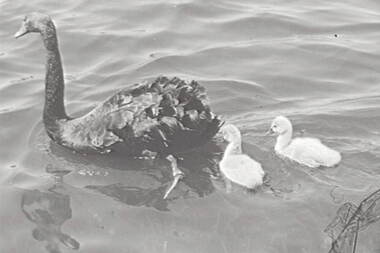 Allan Doney Collection, Bendigo Historical Society Inc.
Negative - Ballarat - Swans, Allan Doney, 1950 -1970
... homes with ornate verandahs, trams and much more. Above all, his photographs show how much of the city has survived from the 19th century – and how much has not. Through two decades of great change, Allan Doney was there to capture ways people interacted with it. Although he travelled to many other places in Northern Victoria and beyond in search of subjects for his art, he seemed to always return to Bendigo for inspiration. Negative Ballarat ...In the years of Allan Doney’s photography, landmark buildings succumbed to fire, neglect and redevelopment. He photographed the grey sand hills from Bendigo’s mining past, the streetscapes, poppet heads, miners’ cottages, gracious homes with ornate verandahs, trams and much more. Above all, his photographs show how much of the city has survived from the 19th century – and how much has not. Through two decades of great change, Allan Doney was there to capture ways people interacted with it. Although he travelled to many other places in Northern Victoria and beyond in search of subjects for his art, he seemed to always return to Bendigo for inspiration. -
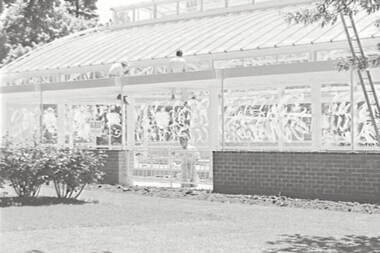 Allan Doney Collection, Bendigo Historical Society Inc.
Negative - Ballarat - Conservatory, Allan Doney, 1950 -1970
... homes with ornate verandahs, trams and much more. Above all, his photographs show how much of the city has survived from the 19th century – and how much has not. Through two decades of great change, Allan Doney was there to capture ways people interacted with it. Although he travelled to many other places in Northern Victoria and beyond in search of subjects for his art, he seemed to always return to Bendigo for inspiration. Negative Ballarat ...In the years of Allan Doney’s photography, landmark buildings succumbed to fire, neglect and redevelopment. He photographed the grey sand hills from Bendigo’s mining past, the streetscapes, poppet heads, miners’ cottages, gracious homes with ornate verandahs, trams and much more. Above all, his photographs show how much of the city has survived from the 19th century – and how much has not. Through two decades of great change, Allan Doney was there to capture ways people interacted with it. Although he travelled to many other places in Northern Victoria and beyond in search of subjects for his art, he seemed to always return to Bendigo for inspiration. -
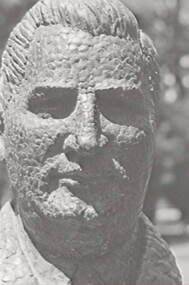 Allan Doney Collection, Bendigo Historical Society Inc.
Negative - Ballarat - Statue - Bust, Allan Doney, 1950 -1970
... homes with ornate verandahs, trams and much more. Above all, his photographs show how much of the city has survived from the 19th century – and how much has not. Through two decades of great change, Allan Doney was there to capture ways people interacted with it. Although he travelled to many other places in Northern Victoria and beyond in search of subjects for his art, he seemed to always return to Bendigo for inspiration. Negative Ballarat ...In the years of Allan Doney’s photography, landmark buildings succumbed to fire, neglect and redevelopment. He photographed the grey sand hills from Bendigo’s mining past, the streetscapes, poppet heads, miners’ cottages, gracious homes with ornate verandahs, trams and much more. Above all, his photographs show how much of the city has survived from the 19th century – and how much has not. Through two decades of great change, Allan Doney was there to capture ways people interacted with it. Although he travelled to many other places in Northern Victoria and beyond in search of subjects for his art, he seemed to always return to Bendigo for inspiration. -
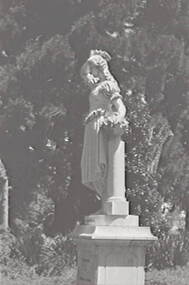 Allan Doney Collection, Bendigo Historical Society Inc.
Negative - Ballarat - Statue - Lady, Allan Doney, 1950 -1970
... homes with ornate verandahs, trams and much more. Above all, his photographs show how much of the city has survived from the 19th century – and how much has not. Through two decades of great change, Allan Doney was there to capture ways people interacted with it. Although he travelled to many other places in Northern Victoria and beyond in search of subjects for his art, he seemed to always return to Bendigo for inspiration. Negative Ballarat ...In the years of Allan Doney’s photography, landmark buildings succumbed to fire, neglect and redevelopment. He photographed the grey sand hills from Bendigo’s mining past, the streetscapes, poppet heads, miners’ cottages, gracious homes with ornate verandahs, trams and much more. Above all, his photographs show how much of the city has survived from the 19th century – and how much has not. Through two decades of great change, Allan Doney was there to capture ways people interacted with it. Although he travelled to many other places in Northern Victoria and beyond in search of subjects for his art, he seemed to always return to Bendigo for inspiration. -
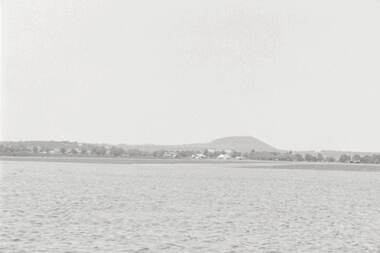 Allan Doney Collection, Bendigo Historical Society Inc.
Negative - Ballarat - Lake Wendouree, Allan Doney, 1950 -1970
... homes with ornate verandahs, trams and much more. Above all, his photographs show how much of the city has survived from the 19th century – and how much has not. Through two decades of great change, Allan Doney was there to capture ways people interacted with it. Although he travelled to many other places in Northern Victoria and beyond in search of subjects for his art, he seemed to always return to Bendigo for inspiration. Negative Ballarat ...In the years of Allan Doney’s photography, landmark buildings succumbed to fire, neglect and redevelopment. He photographed the grey sand hills from Bendigo’s mining past, the streetscapes, poppet heads, miners’ cottages, gracious homes with ornate verandahs, trams and much more. Above all, his photographs show how much of the city has survived from the 19th century – and how much has not. Through two decades of great change, Allan Doney was there to capture ways people interacted with it. Although he travelled to many other places in Northern Victoria and beyond in search of subjects for his art, he seemed to always return to Bendigo for inspiration. -
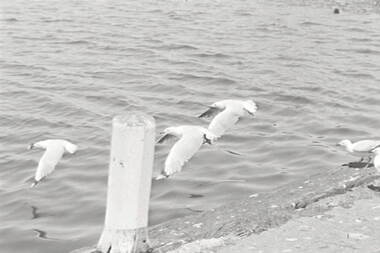 Allan Doney Collection, Bendigo Historical Society Inc.
Negative - Ballarat - Lake Wendouree - Seagulls, Allan Doney, 1950 -1970
... homes with ornate verandahs, trams and much more. Above all, his photographs show how much of the city has survived from the 19th century – and how much has not. Through two decades of great change, Allan Doney was there to capture ways people interacted with it. Although he travelled to many other places in Northern Victoria and beyond in search of subjects for his art, he seemed to always return to Bendigo for inspiration. Negative Ballarat ...In the years of Allan Doney’s photography, landmark buildings succumbed to fire, neglect and redevelopment. He photographed the grey sand hills from Bendigo’s mining past, the streetscapes, poppet heads, miners’ cottages, gracious homes with ornate verandahs, trams and much more. Above all, his photographs show how much of the city has survived from the 19th century – and how much has not. Through two decades of great change, Allan Doney was there to capture ways people interacted with it. Although he travelled to many other places in Northern Victoria and beyond in search of subjects for his art, he seemed to always return to Bendigo for inspiration. -
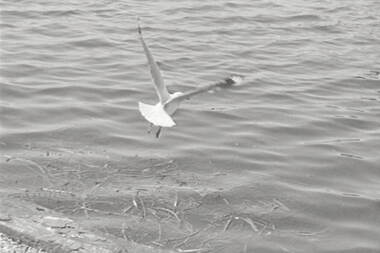 Allan Doney Collection, Bendigo Historical Society Inc.
Negative - Ballarat - Lake Wendouree - Seagull, Allan Doney, 1950 -1970
... homes with ornate verandahs, trams and much more. Above all, his photographs show how much of the city has survived from the 19th century – and how much has not. Through two decades of great change, Allan Doney was there to capture ways people interacted with it. Although he travelled to many other places in Northern Victoria and beyond in search of subjects for his art, he seemed to always return to Bendigo for inspiration. Negative Ballarat ...In the years of Allan Doney’s photography, landmark buildings succumbed to fire, neglect and redevelopment. He photographed the grey sand hills from Bendigo’s mining past, the streetscapes, poppet heads, miners’ cottages, gracious homes with ornate verandahs, trams and much more. Above all, his photographs show how much of the city has survived from the 19th century – and how much has not. Through two decades of great change, Allan Doney was there to capture ways people interacted with it. Although he travelled to many other places in Northern Victoria and beyond in search of subjects for his art, he seemed to always return to Bendigo for inspiration. -
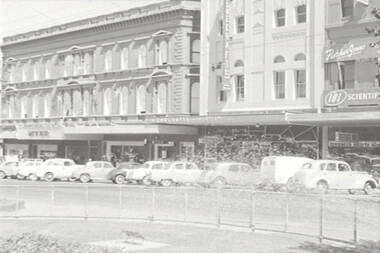 Allan Doney Collection, Bendigo Historical Society Inc.
Negative - Ballarat - Sturt Street - Myer, Allan Doney, 1950 -1970
... homes with ornate verandahs, trams and much more. Above all, his photographs show how much of the city has survived from the 19th century – and how much has not. Through two decades of great change, Allan Doney was there to capture ways people interacted with it. Although he travelled to many other places in Northern Victoria and beyond in search of subjects for his art, he seemed to always return to Bendigo for inspiration. Negative Ballarat ...In the years of Allan Doney’s photography, landmark buildings succumbed to fire, neglect and redevelopment. He photographed the grey sand hills from Bendigo’s mining past, the streetscapes, poppet heads, miners’ cottages, gracious homes with ornate verandahs, trams and much more. Above all, his photographs show how much of the city has survived from the 19th century – and how much has not. Through two decades of great change, Allan Doney was there to capture ways people interacted with it. Although he travelled to many other places in Northern Victoria and beyond in search of subjects for his art, he seemed to always return to Bendigo for inspiration. -
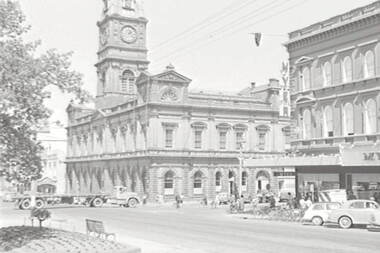 Allan Doney Collection, Bendigo Historical Society Inc.
Negative - Ballarat - Sturt Street - Myer - Town Hall, Allan Doney, 1950 -1970
... homes with ornate verandahs, trams and much more. Above all, his photographs show how much of the city has survived from the 19th century – and how much has not. Through two decades of great change, Allan Doney was there to capture ways people interacted with it. Although he travelled to many other places in Northern Victoria and beyond in search of subjects for his art, he seemed to always return to Bendigo for inspiration. Negative Ballarat ...In the years of Allan Doney’s photography, landmark buildings succumbed to fire, neglect and redevelopment. He photographed the grey sand hills from Bendigo’s mining past, the streetscapes, poppet heads, miners’ cottages, gracious homes with ornate verandahs, trams and much more. Above all, his photographs show how much of the city has survived from the 19th century – and how much has not. Through two decades of great change, Allan Doney was there to capture ways people interacted with it. Although he travelled to many other places in Northern Victoria and beyond in search of subjects for his art, he seemed to always return to Bendigo for inspiration. -
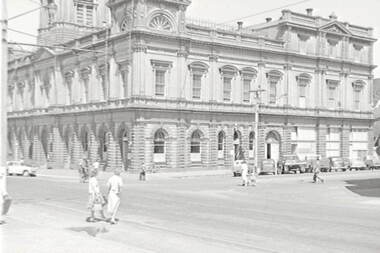 Allan Doney Collection, Bendigo Historical Society Inc.
Negative - Ballarat - Sturt Street - Town Hall, Allan Doney, 1950 -1970
... homes with ornate verandahs, trams and much more. Above all, his photographs show how much of the city has survived from the 19th century – and how much has not. Through two decades of great change, Allan Doney was there to capture ways people interacted with it. Although he travelled to many other places in Northern Victoria and beyond in search of subjects for his art, he seemed to always return to Bendigo for inspiration. Negative Ballarat ...In the years of Allan Doney’s photography, landmark buildings succumbed to fire, neglect and redevelopment. He photographed the grey sand hills from Bendigo’s mining past, the streetscapes, poppet heads, miners’ cottages, gracious homes with ornate verandahs, trams and much more. Above all, his photographs show how much of the city has survived from the 19th century – and how much has not. Through two decades of great change, Allan Doney was there to capture ways people interacted with it. Although he travelled to many other places in Northern Victoria and beyond in search of subjects for his art, he seemed to always return to Bendigo for inspiration.
