
Showing 1095 items matching " channel"
-
 Sunshine and District Historical Society Incorporated
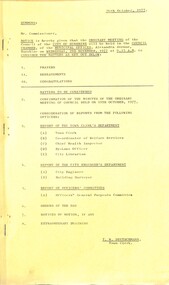
Administrative record - City of Sunshine - Commissioner Mr Alexander Alex George Gillon Collection 1976 - 1982 - Notice of ordinary meeting of the council of the City of Sunshine to be held on 2nd November 1977, City of Sunshine, 26th October 1977
... Albans Road Adjacent to Existing Shopping Plaza Lot 3 Princess Street Land Use Permit Application Subdivision and Detached Houses Furlong Road Land Use Permit Application Addition of Sun Blind 323 Main Road West Land Use Permit Application Stan Cash Furniture and Carpet Sales and Buildings Hardware Corner Halstead Street and Ashley Street Land Use Permit Application Sky Sign Lot 1 Duke Street Land Use Permit Application Extension to Existing Office and Amenities Block Serving Fuel Oil Depot Lot 1 Duke Street Car Parking Hampstead Road near Mitchell Street Damage to Kerb & Channel and Road Payment Andrew Street Financial Assistance Restoration Works Easter Flooding Treasury of Victoria Joint Works Robinsons Road Reconstruction and Maintenance Country Roads Board Funded Project Outdoor Employees Christmas Holidays Break-up 1977 Sixteenth Municipal Superintendents' of Works Conference Statcon Signal Program Intersection of Ashley Street, Sunshine Road & Dempster Street Royal Victorian Institute of the Blind Work Experience Programs Bon Thomas Reserve Development National Safety Council of Australia Senior Management Local Government Authority National Safety Council of Australia Accident Control Course Royal Australian Insitiute Parks and Recreation Vicitorian Division Seminar Turf Wickets Half Cost Footpath and Kerb and Channel Neale Road Half Cost Footpath and Kerb and Channel Northumberland Road Neale Road Construction Tenders Car Parking Willey Street and Rufford Street Part Olny Private Street Scheme (Drainage) Steer Street Group Objection Variations to Contract Fourth Aveneue Furlong Road Estate Stages 1 & 2 Report of the Building Surveyor Uniform Building Regulations Draft Amendment Fency Lot 343 Anley Place Alteration to Grandstand Skinner Reserve Churchill Avenue Braybrook Dempster Park Cricket Pavilion Ainsworth Reserve Child Care Centre / Pavilion Glengala Road Sunshine West Deer Park Pre-School Centre Cash in Lieu Flats Lot 472 Hendry Street Sunshine West Orders of the Day Accounts Submitted for Payment 15th October 1977 & 16th October 1977 Confirmation of Loan with State Insurance...Albans Road Adjacent to Existing Shopping Plaza Lot 3 Princess Street Land Use Permit Application Subdivision and Detached Houses Furlong Road Land Use Permit Application Addition of Sun Blind 323 Main Road West Land Use Permit Application Stan Cash Furniture and Carpet Sales and Buildings Hardware Corner Halstead Street and Ashley Street Land Use Permit Application Sky Sign Lot 1 Duke Street Land Use Permit Application Extension to Existing Office and Amenities Block Serving Fuel Oil Depot Lot 1 Duke Street Car Parking Hampstead Road near Mitchell Street Damage to Kerb & Channel and Road Payment Andrew Street Financial Assistance Restoration Works Easter Flooding Treasury of Victoria Joint Works Robinsons Road Reconstruction and Maintenance Country Roads Board Funded Project Outdoor Employees Christmas Holidays Break-up 1977 Sixteenth Municipal Superintendents' of Works Conference Statcon Signal Program Intersection of Ashley Street, Sunshine Road & Dempster Street Royal Victorian Institute of the Blind Work Experience Programs Bon Thomas Reserve Development National Safety Council of Australia Senior Management Local Government Authority National Safety Council of Australia Accident Control Course Royal Australian Insitiute Parks and Recreation Vicitorian Division Seminar Turf Wickets Half Cost Footpath and Kerb and Channel Neale Road Half Cost Footpath and Kerb and Channel Northumberland Road Neale Road Construction Tenders Car Parking Willey Street and Rufford Street Part Olny Private Street Scheme (Drainage) Steer Street Group Objection Variations to Contract Fourth Aveneue Furlong Road Estate Stages 1 & 2 Report of the Building Surveyor Uniform Building Regulations Draft Amendment Fency Lot 343 Anley Place Alteration to Grandstand Skinner Reserve Churchill Avenue Braybrook Dempster Park Cricket Pavilion Ainsworth Reserve Child Care Centre / Pavilion Glengala Road Sunshine West Deer Park Pre-School Centre Cash in Lieu Flats Lot 472 Hendry Street Sunshine West Orders of the Day Accounts Submitted for Payment 15th October 1977 & 16th October 1977 Confirmation of Loan with State Insurance Foolscap sized document. ...Notice of Ordinary Meeting of the Council of the City of Sunshine to be held on 2nd November 1977 Report of the Town Clerk's Department Report of the Town Clerk Purchase of Goods Preference to Local Manufacturer Loan Authority Railway Land Corner Devonshire Road and Alexandra Avenue Closure of Warrs Road to Through Traffic Appointment of Auditor Regionalisation of Refuge Disposal Proposed Legislation Land Acquisition Agreement Proposed Open Space Lot 23 Disraeli Street Approved of General Valuation Proposed Purchase of Sunshine Tip Approval of Overdraft Sanitary and Interest Abandonments for 1976/1977 Community Arts Officers' Discussion Day Outreach 77 Refund of Payments to Rosamond Bowling Club & Maribyrnong RSL Report of the Co-Ordinator of Welfare Services Emergency Relief Report of the Chief Health Inspector Application for Install of Gas Fired Dry Septic Tank Units Prosecution Proceedings Sunshine Magistrate Court Report of Weights & Measures Inspector Prosecution Proceedings Sunshine Magistrates Court Registration of Premises Petrol Station Complaint Municipal Refuse Composting Symposium 9th November 1977 Melbourne & Metropolitan Board of Works Pollution Report of the By-Laws Officer Fire Hazard Removal Tenders Season Snake Eradication Authorisations for Council Officers Report of the City Engineer Land Use Permit Application Flats 52B Forrest Street Land Use Permit Application Flats Lot 1 Monash Street North West Corner Cornwall Road Land Use Permit Application Stan Cash Sale and Distribution of Floor Coverings, Building's Hardware and Electrical Domestic Appliances and Furniture Corner Halstead Street and Ashley Street Land Use Permit Sky Sign Somerville Road Land Use Permit Application Subdivision and Detached Houses Albanvale Estate Land Use Permit Application Car Sales Yard Lots 8, 9, 10, 11, 12 & 13 Rosamond Road Land Use Permit Application Office and Warehouse Complex Fairbairn Road and Land Use Permit Application Subdivision Fairbairn Road Land Use Permit Application Addition to Existing Shopping Plaza Lot 4 St. Albans Road Adjacent to Existing Shopping Plaza Lot 3 Princess Street Land Use Permit Application Subdivision and Detached Houses Furlong Road Land Use Permit Application Addition of Sun Blind 323 Main Road West Land Use Permit Application Stan Cash Furniture and Carpet Sales and Buildings Hardware Corner Halstead Street and Ashley Street Land Use Permit Application Sky Sign Lot 1 Duke Street Land Use Permit Application Extension to Existing Office and Amenities Block Serving Fuel Oil Depot Lot 1 Duke Street Car Parking Hampstead Road near Mitchell Street Damage to Kerb & Channel and Road Payment Andrew Street Financial Assistance Restoration Works Easter Flooding Treasury of Victoria Joint Works Robinsons Road Reconstruction and Maintenance Country Roads Board Funded Project Outdoor Employees Christmas Holidays Break-up 1977 Sixteenth Municipal Superintendents' of Works Conference Statcon Signal Program Intersection of Ashley Street, Sunshine Road & Dempster Street Royal Victorian Institute of the Blind Work Experience Programs Bon Thomas Reserve Development National Safety Council of Australia Senior Management Local Government Authority National Safety Council of Australia Accident Control Course Royal Australian Insitiute Parks and Recreation Vicitorian Division Seminar Turf Wickets Half Cost Footpath and Kerb and Channel Neale Road Half Cost Footpath and Kerb and Channel Northumberland Road Neale Road Construction Tenders Car Parking Willey Street and Rufford Street Part Olny Private Street Scheme (Drainage) Steer Street Group Objection Variations to Contract Fourth Aveneue Furlong Road Estate Stages 1 & 2 Report of the Building Surveyor Uniform Building Regulations Draft Amendment Fency Lot 343 Anley Place Alteration to Grandstand Skinner Reserve Churchill Avenue Braybrook Dempster Park Cricket Pavilion Ainsworth Reserve Child Care Centre / Pavilion Glengala Road Sunshine West Deer Park Pre-School Centre Cash in Lieu Flats Lot 472 Hendry Street Sunshine West Orders of the Day Accounts Submitted for Payment 15th October 1977 & 16th October 1977 Confirmation of Loan with State Insurance city of sunshine, alexander "alex" george gillon, devonshire road, sunshine, warrs road, maribyrnong, disraeli street, st. albans, alexandra avenue, rosamond bowling club, rosamond road, maribyrnong rsl, raleigh road, forrest street, albion, monash street, cornwall road, stan cash, halstead street, ashley street, maidstone, somerville road, brooklyn, albanvale, fairbairn road, sunshine west, st. albans road, princess street, furlong road, duke street, sunshine north, mitchell street, hampstead road, andrew street, sunshine road, dempster street, tottenham, bon thomas reserve, quinn street, deer park, neale road, northumberland road, willey street, rufford street, fourth aveneue, skinner reserve, churchill avenue, braybrook, ainsworth reserve child care centre, deer park pre-school centre, hendry street, sunshine tip -
 Sunshine and District Historical Society Incorporated
Administrative record - City of Sunshine - Commissioner Mr Alexander Alex George Gillon Collection 1976 - 1982 - Minutes of the ordinary meeting of council held on 2nd November 1977, City of Sunshine, 2nd November 1977
... Albans Road Adjacent to Existing Shopping Plaza Lot 3 Princess Street Land Use Permit Application Subdivision and Detached Houses Furlong Road Land Use Permit Application Addition of Sun Blind 323 Main Road West Land Use Permit Application Stan Cash Furniture and Carpet Sales and Buildings Hardware Corner Halstead Street and Ashley Street Land Use Permit Application Sky Sign Lot 1 Duke Street Land Use Permit Application Extension to Existing Office and Amenities Block Serving Fuel Oil Depot Lot 1 Duke Street Car Parking Hampstead Road near Mitchell Street Damage to Kerb & Channel and Road Payment Andrew Street Financial Assistance Restoration Works Easter Flooding Treasury of Victoria Joint Works Robinsons Road Reconstruction and Maintenance Country Roads Board Funded Project Outdoor Employees Christmas Holidays Break-up 1977 Sixteenth Municipal Superintendents' of Works Conference Statcon Signal Program Intersection of Ashley Street, Sunshine Road & Dempster Street Royal Victorian Institute of the Blind Work Experience Programs Bon Thomas Reserve Development National Safety Council of Australia Senior Management Local Government Authority National Safety Council of Australia Accident Control Course Royal Australian Insitiute Parks and Recreation Vicitorian Division Seminar Turf Wickets Half Cost Footpath and Kerb and Channel Neale Road Half Cost Footpath and Kerb and Channel Northumberland Road Neale Road Construction Tenders Car Parking Willey Street and Rufford Street Part Olny Private Street Scheme (Drainage) Steer Street Group Objection Variations to Contract Fourth Aveneue Furlong Road Estate Stages 1 & 2 Report of the Building Surveyor Uniform Building Regulations Draft Amendment Fency Lot 343 Anley Place Alteration to Grandstand Skinner Reserve Churchill Avenue Braybrook Dempster Park Cricket Pavilion Ainsworth Reserve Child Care Centre / Pavilion Glengala Road Sunshine West Deer Park Pre-School Centre Cash in Lieu Flats Lot 472 Hendry Street Sunshine West Orders of the Day Accounts Submitted for Payment 15th October 1977 & 16th October 1977 Confirmation of Loan with State Insurance Extraordinary Business Financial Assistance for Persons Affected by the Recent S.E.C. ...Albans Road Adjacent to Existing Shopping Plaza Lot 3 Princess Street Land Use Permit Application Subdivision and Detached Houses Furlong Road Land Use Permit Application Addition of Sun Blind 323 Main Road West Land Use Permit Application Stan Cash Furniture and Carpet Sales and Buildings Hardware Corner Halstead Street and Ashley Street Land Use Permit Application Sky Sign Lot 1 Duke Street Land Use Permit Application Extension to Existing Office and Amenities Block Serving Fuel Oil Depot Lot 1 Duke Street Car Parking Hampstead Road near Mitchell Street Damage to Kerb & Channel and Road Payment Andrew Street Financial Assistance Restoration Works Easter Flooding Treasury of Victoria Joint Works Robinsons Road Reconstruction and Maintenance Country Roads Board Funded Project Outdoor Employees Christmas Holidays Break-up 1977 Sixteenth Municipal Superintendents' of Works Conference Statcon Signal Program Intersection of Ashley Street, Sunshine Road & Dempster Street Royal Victorian Institute of the Blind Work Experience Programs Bon Thomas Reserve Development National Safety Council of Australia Senior Management Local Government Authority National Safety Council of Australia Accident Control Course Royal Australian Insitiute Parks and Recreation Vicitorian Division Seminar Turf Wickets Half Cost Footpath and Kerb and Channel Neale Road Half Cost Footpath and Kerb and Channel Northumberland Road Neale Road Construction Tenders Car Parking Willey Street and Rufford Street Part Olny Private Street Scheme (Drainage) Steer Street Group Objection Variations to Contract Fourth Aveneue Furlong Road Estate Stages 1 & 2 Report of the Building Surveyor Uniform Building Regulations Draft Amendment Fency Lot 343 Anley Place Alteration to Grandstand Skinner Reserve Churchill Avenue Braybrook Dempster Park Cricket Pavilion Ainsworth Reserve Child Care Centre / Pavilion Glengala Road Sunshine West Deer Park Pre-School Centre Cash in Lieu Flats Lot 472 Hendry Street Sunshine West Orders of the Day Accounts Submitted for Payment 15th October 1977 & 16th October 1977 Confirmation of Loan with State Insurance Extraordinary Business Financial Assistance for Persons Affected by the Recent S.E.C. ...Minutes of the Ordinary Meeting of Council held on 2nd November 1977 Report of the Town Clerk's Department Report of the Town Clerk Purchase of Goods Preference to Local Manufacturer Loan Authority Railway Land Corner Devonshire Road and Alexandra Avenue Closure of Warrs Road to Through Traffic Appointment of Auditor Regionalisation of Refuge Disposal Proposed Legislation Land Acquisition Agreement Proposed Open Space Lot 23 Disraeli Street Approved of General Valuation Proposed Purchase of Sunshine Tip Approval of Overdraft Sanitary and Interest Abandonments for 1976/1977 Community Arts Officers' Discussion Day Outreach 77 Refund of Payments to Rosamond Bowling Club & Maribyrnong RSL Report of the Co-Ordinator of Welfare Services Emergency Relief Report of the Chief Health Inspector Application for Install of Gas Fired Dry Septic Tank Units Prosecution Proceedings Sunshine Magistrate Court Report of Weights & Measures Inspector Prosecution Proceedings Sunshine Magistrates Court Registration of Premises Petrol Station Complaint Municipal Refuse Composting Symposium 9th November 1977 Melbourne & Metropolitan Board of Works Pollution Report of the By-Laws Officer Fire Hazard Removal Tenders Season Snake Eradication Authorisations for Council Officers Report of the City Engineer Land Use Permit Application Flats 52B Forrest Street Land Use Permit Application Flats Lot 1 Monash Street North West Corner Cornwall Road Land Use Permit Application Stan Cash Sale and Distribution of Floor Coverings, Building's Hardware and Electrical Domestic Appliances and Furniture Corner Halstead Street and Ashley Street Land Use Permit Sky Sign Somerville Road Land Use Permit Application Subdivision and Detached Houses Albanvale Estate Land Use Permit Application Car Sales Yard Lots 8, 9, 10, 11, 12 & 13 Rosamond Road Land Use Permit Application Office and Warehouse Complex Fairbairn Road and Land Use Permit Application Subdivision Fairbairn Road Land Use Permit Application Addition to Existing Shopping Plaza Lot 4 St. Albans Road Adjacent to Existing Shopping Plaza Lot 3 Princess Street Land Use Permit Application Subdivision and Detached Houses Furlong Road Land Use Permit Application Addition of Sun Blind 323 Main Road West Land Use Permit Application Stan Cash Furniture and Carpet Sales and Buildings Hardware Corner Halstead Street and Ashley Street Land Use Permit Application Sky Sign Lot 1 Duke Street Land Use Permit Application Extension to Existing Office and Amenities Block Serving Fuel Oil Depot Lot 1 Duke Street Car Parking Hampstead Road near Mitchell Street Damage to Kerb & Channel and Road Payment Andrew Street Financial Assistance Restoration Works Easter Flooding Treasury of Victoria Joint Works Robinsons Road Reconstruction and Maintenance Country Roads Board Funded Project Outdoor Employees Christmas Holidays Break-up 1977 Sixteenth Municipal Superintendents' of Works Conference Statcon Signal Program Intersection of Ashley Street, Sunshine Road & Dempster Street Royal Victorian Institute of the Blind Work Experience Programs Bon Thomas Reserve Development National Safety Council of Australia Senior Management Local Government Authority National Safety Council of Australia Accident Control Course Royal Australian Insitiute Parks and Recreation Vicitorian Division Seminar Turf Wickets Half Cost Footpath and Kerb and Channel Neale Road Half Cost Footpath and Kerb and Channel Northumberland Road Neale Road Construction Tenders Car Parking Willey Street and Rufford Street Part Olny Private Street Scheme (Drainage) Steer Street Group Objection Variations to Contract Fourth Aveneue Furlong Road Estate Stages 1 & 2 Report of the Building Surveyor Uniform Building Regulations Draft Amendment Fency Lot 343 Anley Place Alteration to Grandstand Skinner Reserve Churchill Avenue Braybrook Dempster Park Cricket Pavilion Ainsworth Reserve Child Care Centre / Pavilion Glengala Road Sunshine West Deer Park Pre-School Centre Cash in Lieu Flats Lot 472 Hendry Street Sunshine West Orders of the Day Accounts Submitted for Payment 15th October 1977 & 16th October 1977 Confirmation of Loan with State Insurance Extraordinary Business Financial Assistance for Persons Affected by the Recent S.E.C. Strike city of sunshine, alexander "alex" george gillon, devonshire road, alexandra avenue, sunshine, warrs road, maribyrnong, disraeli street, st. albans, maribyrnong rsl, rosamond road, raleigh road, forrest street, albion, monash street, cornwall road, stan cash, sunshine tip, halstead street, ashley street, maidstone, somerville road, brooklyn, albanvale, fairbairn road, sunshine west, st. albans road, princess street, main road west, duke street, sunshine north, hampstead road, mitchell street, andrew street, sunshine road, dempster street, tottenham, bon thomas reserve, quinn street, deer park, neale road, northumberland road, willey street, rufford street, fourth aveneue, anley place, skinner reserve, churchill avenue, braybrook, dempster park, phoenix street, ainsworth reserve child care centre, deer park pre-school centre, hendry street -
 Mission to Seafarers Victoria
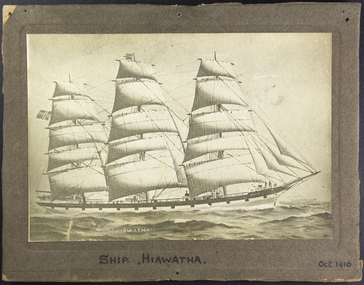
Photograph - Photograph, Sepia, Mounted, Ship Hiawatha Oct.1910, 1910
... Reckoned from the time she cleared the English Channel, her passage occupied only 76 days. ...Reckoned from the time she cleared the English Channel, her passage occupied only 76 days. ...The Hiawatha was a Norwegian windjammer sailing from Fredrikstadt. End of September 1910 the ship arrive nearly two weeks before its anticipated arrival date, making the trip in 81 days instead of a 100. Her arrival made the news in the Argus : SHIP HIAWATHA : A SMART VOYAGE. Seeing that she was not expected to arrive here for another couple of weeks or so the appear ance of the Norwegian ship Hiawatha at Port Phillip Heads yesterday morning caused some surprise. It was anticipated by shipping folk that her voyage from Fredrikstadt would occupy about 100 days which is a fair average passage but clipping a big slice off this allowance, the Hiawatha completed her long run from the Nor wegian port in the excellent time of 811/2 days, or within about 36 hours of the best effort previously made by a "windjammer" between these ports. An appropriate finish was given by the Hiawatha to this creditable voyage by a run of a little under three hours from the Heads up to Hobson's Bay, where she dropped anchor at about noon amid squalls of rain, which at times almost blinded her out from view. Few more 'racy' looking sailors than the Hiawatha have visited this port, and as she has proved on the present and many previous occasions sions, her looks do not belie her. Being laden with Baltic timber and in splendid sailing trim, the ship only required favourable winds to make a good voyage. These fell to her lot, and taking full advantage of every opportunity the vessel bowled across the ocean at steamboat speed. Reckoned from the time she cleared the English Channel, her passage occupied only 76 days. Her best work was performed after passing Tristan d'Acunha in the South Atlantic Ocean. From that stage to the meridian of the Cape of Good Hope she was only a week, whilst from the latter point to Hobson's Bay the ship made an equally capital run of 27 days, her best daily record being 29 knots, representing an hourly average speed of 12 knots. Several periods of exceptionally rough weather were passed through, but the ship suffered no ill effects. She will discharge at a berth up the river.One of the ships photograph that crew would leave at the Mission as a souvenir of their visit.Sepia photograph in cardboard frame of a three-masted full-rigged barque.On the photographic in white : Hiawatha On the frame in black: Ship Hiawatha - Oct. 1910hiawatha, windjammer, norway, full rigged barque, ships, crews and ships -
 Flagstaff Hill Maritime Museum and Village
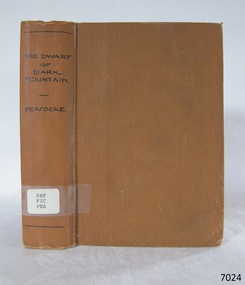
Book - Fictional Story, Isabel Maude Peacocke et al, The Dwarf Of Dark Mountain, 1932-1939
... They maintained dedicated distribution channels in Melbourne and London, making them the primary gateway for Australian and New Zealand writers seeking publication across the Empire. ...They maintained dedicated distribution channels in Melbourne and London, making them the primary gateway for Australian and New Zealand writers seeking publication across the Empire. ...The Dwarf of Dark Mountain is a children's adventure novel illustrated by Norman Sutcliffe. Set against the backdrop of the New Zealand bush and rural landscapes, the story follows a group of young protagonists on a mystery-filled adventure centred around a local geological landmark known as "Dark Mountain". Typical of Isabel Maud Peacocke's popular juvenile fiction of the 1930s (such as The Cruise of the Crazy Jane and Cathleen with a C), the book weaves together themes of bush navigation and exploration. The children venture through dense ti-tree scrub and native fern gullies, with the narrative centring around the titular "dwarf" of the mountain blending rural Australian and New Zealand family life with wholesome mystery, moral growth, and outdoor adventure.The Dwarf Of Dark Mountain Author: Isabel Maude Peacocke Illustrator: Norman Sutcliffe Publisher: Ward Lock & Co Date: Further Information: Plain brown/tan cloth binding with the title and author hand-lettered directly onto the spine with no decorative illustration, gilt stamping, or pictorial design. The spine has a Library label with an inscription.fictionThe Dwarf of Dark Mountain is a children's adventure novel illustrated by Norman Sutcliffe. Set against the backdrop of the New Zealand bush and rural landscapes, the story follows a group of young protagonists on a mystery-filled adventure centred around a local geological landmark known as "Dark Mountain". Typical of Isabel Maud Peacocke's popular juvenile fiction of the 1930s (such as The Cruise of the Crazy Jane and Cathleen with a C), the book weaves together themes of bush navigation and exploration. The children venture through dense ti-tree scrub and native fern gullies, with the narrative centring around the titular "dwarf" of the mountain blending rural Australian and New Zealand family life with wholesome mystery, moral growth, and outdoor adventure.warrnambool, shipwrecked-coast, flagstaff-hill, flagstaff-hill-maritime-museum, maritime-museum, shipwreck-coast, flagstaff-hill-maritime-village, shipwrecked-artefact, book, the dwarf of dark mountain, isabel maude peacocke, warrnambool mechanics’ institute, pattison collection, warrnambool library, ralph eric pattison, corangamite regional library service, warrnambool city librarian, mechanics’ institute library, victorian library board, warrnambool books and records, warrnambool children’s library, i. m. cluett., illustrator norman sutcliffe -
 Ringwood and District Historical Society
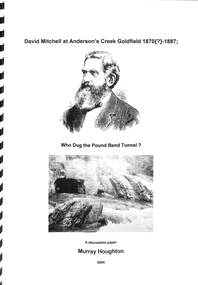
Book, David Mitchell at Anderson's Creek Goldfield, 1870-1887 - Who Dug the Pound Bend Tunnel?, 2004
... Campbell mentions that "In 1890 (sic) Mitchell formed a company to mine a channel and tunnel on the Yarra River at Pound Bend, Warrandyte," i.e., at a period some 18 or so years after it is known that the Evelyn Tunnel Gold-Mining Company had actually ceased operations. ...Campbell mentions that "In 1890 (sic) Mitchell formed a company to mine a channel and tunnel on the Yarra River at Pound Bend, Warrandyte," i.e., at a period some 18 or so years after it is known that the Evelyn Tunnel Gold-Mining Company had actually ceased operations. ...Suggested reading - David Mitchell, A Forfar Man - Pamela Vestey. (National Library of Australia ISBN No. 0646104977 Second edition - 1996.A discussion paper by Murray Houghton, Warrandyte Historical Society, on the excavation of Pound Bend tunnel and examination of information sources suggesting David Mitchell's association with gold mining at Warrandyte." ... Just what then was Mitchell's actual association with mining in the Anderson's Creek goldfield? As an initial means to determining this, a number of biographies devoted to the man's lifetime achievements have been consulted. Some two of these were found to contain rather brief references to his involvement at Warrandyte. In the 1992 booklet entitled "David Mitchell a Forfar Man" written by a Mitchell family member, viz., Pamela, Lady Vestey, of Coombe Cottage, there is included a passge which commences "Another of David Mitchell's early interests was gold mining". This is appended by the bald statement "In 1870 he formed the Evelyn Tunnel Gold-Mining Company with a capital of £16,000." The other account of a Mitchell involvement with an unnamed Warrandyte company is contained in Joan Campbell's 1974 biographical article entitled, "Mitchell, David (1829- 1916) builder, contractor and businessman, etc.", in Volume 5 of the "Australian Dictionary of Biogaraphy". Campbell mentions that "In 1890 (sic) Mitchell formed a company to mine a channel and tunnel on the Yarra River at Pound Bend, Warrandyte," i.e., at a period some 18 or so years after it is known that the Evelyn Tunnel Gold-Mining Company had actually ceased operations. She then continues with the bizarre statement that "he employed gangs of Chinese to work three miles of river bed for gold". Neither of these respective excerpts indicate evidence of having been directly referenced from a legitimate original source, from which either author's contained comments might be authenticated. For any historian with an enquiring mind these statements demand further clarification. ..." - Murray Houghton -
 Sunshine and District Historical Society Incorporated
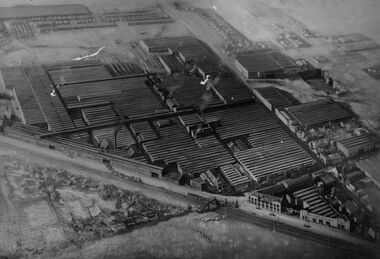
Photograph - Aerial view of HV McKay Massey Harris Factory, 1942
... Aerial view of HV McKay Massey Harris Factory building administration office and Sunshine including Sunshine Gardens and gardeners residence This photograph shows many other points of historical nature Top Left 1 Storage shed stacks of timber air drying 2 Old clock tower and new factory office block 3 Main or head office block opposite clock tower Then along Devonshire Road Adjacent to Head Office new drawing office on 1st floor over new workshop for experimental department These two later amalgamated and formed what became known as The Engineering Department Right Centre 4 on both sides of Devonshire Road 5 State Savings Bank before rebuilding 6 Blair Athol guesthouse with National Bank on ground floor opposite State Savings Bank 7 Along Hampshire away from Blair Athol some houses then McKays laboratory Duplicates department Service Street Morgue Steel Storage and Pickling Annex and Roberts Quarry and some houses in background top right Top Left to Right 8 In front of timber stacks Stony Creek winds through factory site to dam fire fighting before running under Hampshire Road in front of Annexe and Quarry across Service Street Creek was diverted through a channel and tunnel not shown Also Railway lines to Bendigo and Mildura show McKays railway engine hauling trucks from factory...McKay Massey Harris Sunshine Devonshire Road Aerial view of HV McKay Massey Harris Factory building administration office and Sunshine including Sunshine Gardens and gardeners residence This photograph shows many other points of historical nature Top Left 1 Storage shed stacks of timber air drying 2 Old clock tower and new factory office block 3 Main or head office block opposite clock tower Then along Devonshire Road Adjacent to Head Office new drawing office on 1st floor over new workshop for experimental department These two later amalgamated and formed what became known as The Engineering Department Right Centre 4 on both sides of Devonshire Road 5 State Savings Bank before rebuilding 6 Blair Athol guesthouse with National Bank on ground floor opposite State Savings Bank 7 Along Hampshire away from Blair Athol some houses then McKays laboratory Duplicates department Service Street Morgue Steel Storage and Pickling Annex and Roberts Quarry and some houses in background top right Top Left to Right 8 In front of timber stacks Stony Creek winds through factory site to dam fire fighting before running under Hampshire Road in front of Annexe and Quarry across Service Street Creek was diverted through a channel and tunnel not shown Also Railway lines to Bendigo and Mildura show McKays railway engine hauling trucks from factory Aerial view of HV McKay Massey Harris Factory Photograph Aerial view of HV McKay Massey Harris Factory ...Aerial view of HV McKay Massey Harris Factory building administration office and Sunshine including Sunshine Gardens and gardeners residence This photograph shows many other points of historical nature Top Left 1 Storage shed stacks of timber air drying 2 Old clock tower and new factory office block 3 Main or head office block opposite clock tower Then along Devonshire Road Adjacent to Head Office new drawing office on 1st floor over new workshop for experimental department These two later amalgamated and formed what became known as The Engineering Department Right Centre 4 on both sides of Devonshire Road 5 State Savings Bank before rebuilding 6 Blair Athol guesthouse with National Bank on ground floor opposite State Savings Bank 7 Along Hampshire away from Blair Athol some houses then McKays laboratory Duplicates department Service Street Morgue Steel Storage and Pickling Annex and Roberts Quarry and some houses in background top right Top Left to Right 8 In front of timber stacks Stony Creek winds through factory site to dam fire fighting before running under Hampshire Road in front of Annexe and Quarry across Service Street Creek was diverted through a channel and tunnel not shown Also Railway lines to Bendigo and Mildura show McKays railway engine hauling trucks from factoryh.v. mckay massey harris, sunshine, devonshire road -
 Flagstaff Hill Maritime Museum and Village
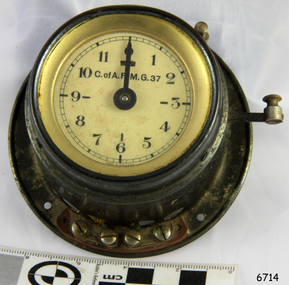
Timer, 1940s
... Initially, trunk channels linked different manual trunk exchanges. ...Initially, trunk channels linked different manual trunk exchanges. ...Australia's first telephone exchange was opened in Melbourne in August 1880. It was operated by the Melbourne Telephone Exchange Company. Owned by W. H. Masters and T. T. Draper, the Manager of the Company was H. Byron Moore. This was only two years after the world's first exchange in the United States, and just four years after Bell first spoke on a telephone. The exchange was located in the old Stock Exchange building at 367 Collins Street, a site now occupied by the Commonwealth Bank. In 1884, the operations of the Company, by then known as the Victorian Telephone Exchange Company, had grown considerably and were transferred to Wills Street, Melbourne. Private ownership of this company continued until 1887 when it was bought out by the Victorian Colonial Government. Other colonial governments followed this example. By 1910, the growth in telephone services made additional accommodation necessary. This could not be provided in the existing building in Wills Street and arrangements were made for a new exchange in Lonsdale Street. Alexander Graham Bell visited Australia in 1910 to advise the Federal Government's Postal Commission. Telephone exchanges were established in Adelaide with (48 subscribers), Hobart (10 subscribers) and Launceston (35 subscribers). The first exchange in Western Australia was established in 1887 and located in a small three-room cottage in Wellington Street, Perth with 17 subscribers. The year 1888 marked the opening of the Fremantle exchange in a small room at the rear of the Town Hall. There were nine subscribers. Australia's first automatic exchange was installed in the GPO in Sydney, in 1911, for internal use. But the first automatic exchange for public use was opened at Geelong in Victoria in the next year July 1912 with 800 subscribers. Melbourne's first automatic exchange was opened in the suburb of Brighton in 1914; the first public automatic exchange in NSW began operating at Newtown, Sydney in 1915; and Queensland's first was installed at South Brisbane in 1925. 1929 saw the opening of Tasmania's first automatic exchange in Hobart. an automatic telephone service. In June 1977, the manual telephone exchange at Swansea was replaced with an automatic service and made Tasmania the first State in Australia to have a fully automatic net work. The half-century following Federation saw the growth of the automatic operation; a great extension of trunk line services; The automatic telephone contributed greatly to the early popularity of telephones in Australia. It was a quicker and more convenient way of communicating with another person on the same exchange — instead of having to go through tedious processes with the operator. From its introduction, the number of automatic telephones in operation grew to a remarkable extent. In 1886, the first trunk link of 16 km was connected to the exchanges of Adelaide and Port Adelaide in South Australia. Then, in 1907, the first inter-capital telephone trunk line was opened between Sydney and Melbourne. It was followed by a line between Melbourne and Adelaide in 1914. Sydney and Brisbane were linked in 1923, and Perth and Adelaide in 1930. In 1930, the first overseas calls from Australia came possible with the introduction of a radio telephone service to England, and through there to Europe and America. A similar service opened to New Zealand in the same year. Initially, trunk channels linked different manual trunk exchanges. It was necessary for a succession of trunk operators to connect the appropriate channels, one after the other until the connection was made. As trunk traffic grew. the system became increasingly unsuitable. More trunk operators had to be employed and so labour costs increased. It was a tedious and slow way of making a long-distance call, and it was sometimes hard to hear, particularly when several exchanges were linked With technical advances, trunk switching moved from manual operation through a partly automatic phase. Automatic transit switching equipment was used and only a single operator was required to connect a trunk call to a wanted automatic subscriber. Until well beyond the middle of this century, the majority of trunk traffic went through this single telephonist control. In 1953, the number of telephones in use in Australia passed the one million mark. By then, the need for improvement in the automatic exchanges was be coming well recognised. The need was for a telephone switching system which would do a better job more economically than the conventional step-by-step ex-change. This led to the adoption of the Crossbar system as the standard in automatic telephone exchanges in 1960. The introduction of Crossbar switching was a big step forward in the automation of trunk calls. It substituted automatic switching and charging equipment for the originating trunk operator, and improved the quality of the system radically. Before the introduction of the Crossbar system there were often very long delays in obtaining a booked trunk call, and the quality of sound was often very poor. With Crossbar, Subscriber Trunk Dialing (STD) became a reality. A trunk call by STD was as easy to make and almost as fast to connect as a local call.The item was made around the 1940s and used up until the 1970s in manual cord telephone exchanges as a way to time and charge users for trunk calls made over the telecom system of the time. Post Master General dept. - Trunk Call Timer.Inscribed PMG, C. of A, 37. Bell chimes at 3 min increments.flagstaff hill, warrnambool, shipwrecked-coast, flagstaff-hill, flagstaff-hill-maritime-museum, maritime-museum, shipwreck-coast, flagstaff-hill-maritime-village, timer, trunk call, telephone, cord exchange -
 Ballarat Tramway Museum
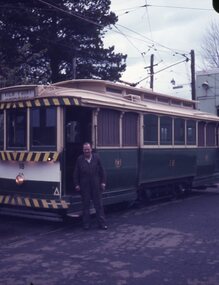
Slide - 27 mm sq slide/s - set of 22 - moving 18 to Sebastopol, Lilian Butler, 30/09/1971
... Lakey cleaning out the points. .10 - being towed across Sturt St .11 - being towed along Drummond St South .12 - workmen at Victory Park preparing the section of track. .13 - ditto .14 - being derailed near Vickers St with an Alsco Linen Service van in the background - note the overhead appears to have been removed. .15 - towing the tram across Albert St. .16 - towing the tram along Victory St, .17 - ditto .18 - moving steel channel along the street, with a tram sitting on one already. .19 - moving the tram .20 - ditto .21 - turning the track to align up with the storage track. .22 - Group of 7 men (see slide 2 for some of the names) and three children with the tram in position. ...Lakey cleaning out the points. .10 - being towed across Sturt St .11 - being towed along Drummond St South .12 - workmen at Victory Park preparing the section of track. .13 - ditto .14 - being derailed near Vickers St with an Alsco Linen Service van in the background - note the overhead appears to have been removed. .15 - towing the tram across Albert St. .16 - towing the tram along Victory St, .17 - ditto .18 - moving steel channel along the street, with a tram sitting on one already. .19 - moving the tram .20 - ditto .21 - turning the track to align up with the storage track. .22 - Group of 7 men (see slide 2 for some of the names) and three children with the tram in position. ...Yields information about the transfer of tram 18 to Victory Park Sebastopol.Set of 22 Agfa blue and white plastic mount slides of tram 18 being moved to Victory Park for the Borough of Sebastopol - 30/9/1971. See Reg Item 2909 for the actual Newspaper cutting and 3778 for a photograph of the move. See Reg Item 3929 for list of dates of tram disposal, though this item gives the date as 2/10/71 .1 - No. 18 parked on the depot fan, with E. Davis alongside. .2 - group of 6 men standing alongside 18 - left to right - N. Lorensini, ? W. Trusler, S. Lakey, B.Peart and E. Davis .3 - tram being driven into Wendouree Parade. .4 - ditto .5 - turning from Macarthur St into Drummond St south with a SEC bucket truck following. .6 - ditto - with the Lisette Beauty Salon on the corner. .7 - Drummond St North .8 - Coupling a SEC tractor to the tram with the Ballarat Base Hospital in the background. .9 - Ditto with S. Lakey cleaning out the points. .10 - being towed across Sturt St .11 - being towed along Drummond St South .12 - workmen at Victory Park preparing the section of track. .13 - ditto .14 - being derailed near Vickers St with an Alsco Linen Service van in the background - note the overhead appears to have been removed. .15 - towing the tram across Albert St. .16 - towing the tram along Victory St, .17 - ditto .18 - moving steel channel along the street, with a tram sitting on one already. .19 - moving the tram .20 - ditto .21 - turning the track to align up with the storage track. .22 - Group of 7 men (see slide 2 for some of the names) and three children with the tram in position. Photo from the collection of Lilian Butler. See also Reg Item 6857 for a digital image. ballarat, tramways, trams, sec, depot, tram disposal, sebastopol, victory park, albert st, moving trams, drummond st, macarthur st, tram 18 -
 Federation University Art Collection
Artwork, other - Artwork, "West Park Proposition' by Ash Keating, 2013
... 'West Park Proposition', 2012, is a three channel and screen video installation, utilising multiple camera video documentation of an endurance painting intervention undertaken on the morning of 01 September 2012 on the east facing wall of a newly built tilt-slab industrial building, situated on the direct edge of the current urban and rural boundary in Truganina, Victoria. ...Frequently working beyond the gallery, and often harnessing community narrative and energy, his work also draws upon myth, ritual and ceremony. artist artwork keating ash keating guirguis guirguis new art prize gnap gnap13 'West Park Proposition', 2012, is a three channel and screen video installation, utilising multiple camera video documentation of an endurance painting intervention undertaken on the morning of 01 September 2012 on the east facing wall of a newly built tilt-slab industrial building, situated on the direct edge of the current urban and rural boundary in Truganina, Victoria. ...Ash KEATING Among fifteen finalists this artwork won the 2012 Guirguis New Art Prize, a prestigious national acquisitive biennial art prize administered by Federation University Australia. The Guirguis New Art Prize (GNAP) is a national acquisitive $20,000 contemporary art prize which presents a selection of Australia's most exciting contemporary artists with works that explore and embrace new ways of artistic expression, utilising existing mediums and new technologies in innovative ways. Initiated and generously supported by local Ballarat surgeon Mr Mark Guirguis, this prestigious art prize is administered by the Federation University Australia (FedUni). As a local philanthropist and art collector, in developing the Prize, Mark Guirguis' aims were to celebrate the significance of the arts to communities and to Ballarat, emphasising contemporary art and 'living' culture, and to highlight FedUni's Arts Academy. Artist Ash Keating works across a conceptual, site-responsive and often collaborative art practice that incorporates painting, sculpture, installation, video, performance and public interventions, and has referenced a wide range of social and environmental issues within his art. Frequently working beyond the gallery, and often harnessing community narrative and energy, his work also draws upon myth, ritual and ceremony. 'West Park Proposition', 2012, is a three channel and screen video installation, utilising multiple camera video documentation of an endurance painting intervention undertaken on the morning of 01 September 2012 on the east facing wall of a newly built tilt-slab industrial building, situated on the direct edge of the current urban and rural boundary in Truganina, Victoria. The multi-screen work documents an endurance guerilla-style action painting intervention and ritualised painting performance in which a symbolic violence is enacted against a storehouse of commodity production and consumption. Upon winning the award artists Ash Keating said; “The work was made near Ballarat on the Deer Park bypass. It is an aesthetic comment about the way these new tilt-slab industrial buildings spring up without caring for the environment." The work, which took eight hours to create, was about reclaiming the space from “cost-effective architecture” without any aesthetics. The inaugural judge for the Prize, Jason Smith, Director, Heide Museum of Modern Art (MoMA) said, "Selecting the winner of this inaugural GNAP was exhilarating and excruciating: exhilarating because the seriousness of each artist's enterprise, and their uncompromising resolution of concepts, has created an inaugural exhibition of exceptional power. This first GNAP is a survey of some of the most poetic and provocative imaginations working in Australia today. Selecting one winner from such a show in which each of these artists has in some way transformed my thinking about the world was the excruciating part. Ash Keating's work West Park Proposition, 2012 kept drawing me back in the several hours I spent viewing the works. It simultaneously affirms the political and critical role of the artist as a key agent of change and action, and someone who reminds us of the beauty and resilience of humanity and nature in the face of unrelenting change. As a work combining performance, collaboration and hope, Keating's West Park Proposition is a work of immense and compelling poetry."artist, artwork, keating, ash keating, guirguis, guirguis new art prize, gnap, gnap13 -
 Sunshine and District Historical Society Incorporated
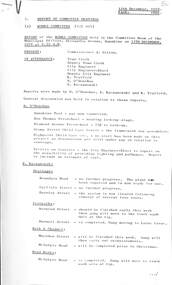
Administrative record - City of Sunshine - Commissioner Mr Alexander Alex George Gillon Collection 1976 - 1982 - Report of committee meetings 12th December 1978, City of Sunshine, 12th December 1978
... Report of Committee Meetings 12th December 1978 Report of the Works Committee Sunshine Swimming Pool Gas now connected Bon Thomas Reserve Pre-School Nearing lock up stage Diamond Avenue Pre-School 95% to lock up stage Orama Street Child Care Centre The frame work is now assembled Highpoint West Child Care Centre No Start Toilets on Reserves City Engineer to report on the possibility of providing lighting and pathways Drainage Boundary Road No further progress, the plant has been repaired Drainage Carlisle Street No further progress Drainage Darnley Street The system is now clear following removal of several tree roots Footpath Norwood Street Should be finished early this week Footpath Burnett Street Completed, gang moving to Lorne Crescent Kerb & Channel Macedon Street Will be finished this week Kerb & Channel McIntyre Road Will be completed prior to Christmas Road Works McIntyre Road Competed, gang to move to truck wash up area at Sunshine Tip Dempster Park Cricket wicket nets will be completed this week Dempster Park Tennis courts fence to be relocated and car park to be established Dempster Park Sealing ot the aprons around building will be completed before Christmas Castley Reserve Reconstruction has commenced Report of the Finance Committee Financial Report for the Period Ended 20th November 1978 Report of the City Engineer Berkshire Road Loan Transfer of Balance to McIntyre Road / Sunshine Avenue Acquisition of Property 88 Station Road Deer Park Damaged to Crawler Dozer Massey Ferguson (Aust) Ltd Purchase of Tandem Trailer Parks & Recreation Matters Arising from the Agenda & Forward Planning Committee Meeting Held on 11th December 1978 Report of the Town Clerk Lease 2 - 4 Burton Crescent Translation Secretariat for the Western Region Request for Financial Assistance Proposed Subdivision of Land Fairbairn Road Report of the Co-Ordinator of Welfare Service Handicapped Persons' Parking Report of the Chief Health Inspector Infant Welfare Herbicides 2-4-D & 2-45-T Report of the Municipal Recreation Officer Sunshine Indoor Heated Swimming Pool Report of the City Engineer Proposed Rezoning of Land Laurel Street Planning Permit National Bank of Australia Extension 248 Hampshire Road Planning Permit Application Hairdressing Salon Lot 66 Hampshire Road Planning Permit Application Factory Lot 22 Cromer Avenue Planning Permit Community Health Centre Andrea Street (Temporary Child Minding Centre) Planning Permit Community Health Centre Andrea Street (Full Day Care Centre) Planning Permit Application Factory Lot 208 Cromer Avenue Planning Permit Educational Establishment Navigator Street Planning Permit Additions to Existing Church Ballarat Road Deer Park Planning Permit Entertainment Complex (Malibu grand Prix) Ballarat Road and Geelong Road Planning Permit Place of Assembly Hutchinson Street Construction of Justin Road Purchase of Mini Bus Clearing Vacant Land 8 Corio Street Sunshine Construction of Laneway Rear of Sydney Street between King Edward Avenue and Ridley Street Extraordinary Business Planning Permit Flats Warrs Road and Fabian Court Stages 1 & 4 only Neale Road Construction Stage 2...Albans Hampshire Road Sunshine Cromer Avenue Sunshine North Andrea Street Navigator Street Ballarat Road Deer Park Geelong Road Braybrook Brooklyn Hutchinson Street Albion Justin Road Sydney Street King Edward Avenue Warrs Road Fabian Court Tottenham Bon Thomas Reserve Pre-School Quinn Street Diamond Avenue Pre-School Diamond Avenue Albanvale Orama Street Child Care Centre Orama Street Highpoint West Child Care Centre Rosamond Road Boundary Road Carlisle Street Maidstone Darnley Street Norwood Street Burnett Street Lorne Crescent Macedon Street McIntyre Road Sunshine Tip Dempster Park Phoenix Street Castley Reserve Simmie Street Sunshine Avenue Station Road Sunshine Indoor Heated Swimming Pool Service Street Corio Street Neale Road Report of Committee Meetings 12th December 1978 Report of the Works Committee Sunshine Swimming Pool Gas now connected Bon Thomas Reserve Pre-School Nearing lock up stage Diamond Avenue Pre-School 95% to lock up stage Orama Street Child Care Centre The frame work is now assembled Highpoint West Child Care Centre No Start Toilets on Reserves City Engineer to report on the possibility of providing lighting and pathways Drainage Boundary Road No further progress, the plant has been repaired Drainage Carlisle Street No further progress Drainage Darnley Street The system is now clear following removal of several tree roots Footpath Norwood Street Should be finished early this week Footpath Burnett Street Completed, gang moving to Lorne Crescent Kerb & Channel Macedon Street Will be finished this week Kerb & Channel McIntyre Road Will be completed prior to Christmas Road Works McIntyre Road Competed, gang to move to truck wash up area at Sunshine Tip Dempster Park Cricket wicket nets will be completed this week Dempster Park Tennis courts fence to be relocated and car park to be established Dempster Park Sealing ot the aprons around building will be completed before Christmas Castley Reserve Reconstruction has commenced Report of the Finance Committee Financial Report for the Period Ended 20th November 1978 Report of the City Engineer Berkshire Road Loan Transfer of Balance to McIntyre Road / Sunshine Avenue Acquisition of Property 88 Station Road Deer Park Damaged to Crawler Dozer Massey Ferguson (Aust) Ltd Purchase of Tandem Trailer Parks & Recreation Matters Arising from the Agenda & Forward Planning Committee Meeting Held on 11th December 1978 Report of the Town Clerk Lease 2 - 4 Burton Crescent Translation Secretariat for the Western Region Request for Financial Assistance Proposed Subdivision of Land Fairbairn Road Report of the Co-Ordinator of Welfare Service Handicapped Persons' Parking Report of the Chief Health Inspector Infant Welfare Herbicides 2-4-D & 2-45-T Report of the Municipal Recreation Officer Sunshine Indoor Heated Swimming Pool Report of the City Engineer Proposed Rezoning of Land Laurel Street Planning Permit National Bank of Australia Extension 248 Hampshire Road Planning Permit Application Hairdressing Salon Lot 66 Hampshire Road Planning Permit Application Factory Lot 22 Cromer Avenue Planning Permit Community Health Centre Andrea Street (Temporary Child Minding Centre) Planning Permit Community Health Centre Andrea Street (Full Day Care Centre) Planning Permit Application Factory Lot 208 Cromer Avenue Planning Permit Educational Establishment Navigator Street Planning Permit Additions to Existing Church Ballarat Road Deer Park Planning Permit Entertainment Complex (Malibu grand Prix) Ballarat Road and Geelong Road Planning Permit Place of Assembly Hutchinson Street Construction of Justin Road Purchase of Mini Bus Clearing Vacant Land 8 Corio Street Sunshine Construction of Laneway Rear of Sydney Street between King Edward Avenue and Ridley Street Extraordinary Business Planning Permit Flats Warrs Road and Fabian Court Stages 1 & 4 only Neale Road Construction Stage 2 Foolscap sized document. ...Report of Committee Meetings 12th December 1978 Report of the Works Committee Sunshine Swimming Pool Gas now connected Bon Thomas Reserve Pre-School Nearing lock up stage Diamond Avenue Pre-School 95% to lock up stage Orama Street Child Care Centre The frame work is now assembled Highpoint West Child Care Centre No Start Toilets on Reserves City Engineer to report on the possibility of providing lighting and pathways Drainage Boundary Road No further progress, the plant has been repaired Drainage Carlisle Street No further progress Drainage Darnley Street The system is now clear following removal of several tree roots Footpath Norwood Street Should be finished early this week Footpath Burnett Street Completed, gang moving to Lorne Crescent Kerb & Channel Macedon Street Will be finished this week Kerb & Channel McIntyre Road Will be completed prior to Christmas Road Works McIntyre Road Competed, gang to move to truck wash up area at Sunshine Tip Dempster Park Cricket wicket nets will be completed this week Dempster Park Tennis courts fence to be relocated and car park to be established Dempster Park Sealing ot the aprons around building will be completed before Christmas Castley Reserve Reconstruction has commenced Report of the Finance Committee Financial Report for the Period Ended 20th November 1978 Report of the City Engineer Berkshire Road Loan Transfer of Balance to McIntyre Road / Sunshine Avenue Acquisition of Property 88 Station Road Deer Park Damaged to Crawler Dozer Massey Ferguson (Aust) Ltd Purchase of Tandem Trailer Parks & Recreation Matters Arising from the Agenda & Forward Planning Committee Meeting Held on 11th December 1978 Report of the Town Clerk Lease 2 - 4 Burton Crescent Translation Secretariat for the Western Region Request for Financial Assistance Proposed Subdivision of Land Fairbairn Road Report of the Co-Ordinator of Welfare Service Handicapped Persons' Parking Report of the Chief Health Inspector Infant Welfare Herbicides 2-4-D & 2-45-T Report of the Municipal Recreation Officer Sunshine Indoor Heated Swimming Pool Report of the City Engineer Proposed Rezoning of Land Laurel Street Planning Permit National Bank of Australia Extension 248 Hampshire Road Planning Permit Application Hairdressing Salon Lot 66 Hampshire Road Planning Permit Application Factory Lot 22 Cromer Avenue Planning Permit Community Health Centre Andrea Street (Temporary Child Minding Centre) Planning Permit Community Health Centre Andrea Street (Full Day Care Centre) Planning Permit Application Factory Lot 208 Cromer Avenue Planning Permit Educational Establishment Navigator Street Planning Permit Additions to Existing Church Ballarat Road Deer Park Planning Permit Entertainment Complex (Malibu grand Prix) Ballarat Road and Geelong Road Planning Permit Place of Assembly Hutchinson Street Construction of Justin Road Purchase of Mini Bus Clearing Vacant Land 8 Corio Street Sunshine Construction of Laneway Rear of Sydney Street between King Edward Avenue and Ridley Street Extraordinary Business Planning Permit Flats Warrs Road and Fabian Court Stages 1 & 4 only Neale Road Construction Stage 2 city of sunshine, alexander "alex" george gillon, burton crescent, maribyrnong, fairbairn road, sunshine west, laurel street, st. albans, hampshire road, sunshine, cromer avenue, sunshine north, andrea street, navigator street, ballarat road, deer park, geelong road, braybrook, brooklyn, hutchinson street, albion, justin road, sydney street, king edward avenue, warrs road, fabian court, tottenham, bon thomas reserve pre-school, quinn street, diamond avenue pre-school, diamond avenue, albanvale, orama street child care centre, orama street, highpoint west child care centre, rosamond road, boundary road, carlisle street, maidstone, darnley street, norwood street, burnett street, lorne crescent, macedon street, mcintyre road, sunshine tip, dempster park, phoenix street, castley reserve, simmie street, sunshine avenue, station road, sunshine indoor heated swimming pool, service street, corio street, neale road -
 Flagstaff Hill Maritime Museum and Village
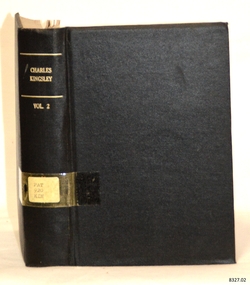
Book - Letters/Journals, Charles Kingsley, Charles Kingsley: His Letters and Memories of His Life Vol 2, 1879
... The volume documents his later progressive causes through his letters and journals, revealing that while his radical Chartist days had cooled, Kingsley channelled his energy into new progressive areas. ...The volume documents his later progressive causes through his letters and journals, revealing that while his radical Chartist days had cooled, Kingsley channelled his energy into new progressive areas. ...While Volume 1 introduces Charles Kingsley’s early development and his explosive rise as a radical social reformer, Volume 2 pivots to his mature years as an established public figure. It focuses on his high-profile intellectual battles and his global travels. The transition from Volume 1 to Volume 2 charts a shift from a young, controversial outsider to a celebrated, busy member of the Victorian elite. Volume 1 covers his early life from 1819 to 1856, while Volume 2 spans the years between 1857 and 1875. It documents his mature family life, his appointment as Royal Chaplain to Queen Victoria, his tenure as a professor of Modern History at Cambridge, and his time as Canon of Westminster. It was during these later years that his children's classic, The Water-Babies (1863), and his late historical fiction were published.Charles Kingsley: His Letters and Memories of His Life Vol 2 Author: Charles Kingsley Edited by his wife ( Frances "Fanny" Grenfell) Publisher: C Kegan Paul & Co Date: 1879 Further Information: Sixth Abridged Editionnon-fictionWhile Volume 1 introduces Charles Kingsley’s early development and his explosive rise as a radical social reformer, Volume 2 pivots to his mature years as an established public figure. It focuses on his high-profile intellectual battles and his global travels. The transition from Volume 1 to Volume 2 charts a shift from a young, controversial outsider to a celebrated, busy member of the Victorian elite. Volume 1 covers his early life from 1819 to 1856, while Volume 2 spans the years between 1857 and 1875. It documents his mature family life, his appointment as Royal Chaplain to Queen Victoria, his tenure as a professor of Modern History at Cambridge, and his time as Canon of Westminster. It was during these later years that his children's classic, The Water-Babies (1863), and his late historical fiction were published.flagstaff hill, warrnambool, shipwrecked coast, flagstaff hill maritime museum, maritime museum, shipwreck coast, flagstaff hill maritime village, great ocean road, book, pattison collection, warrnambool library, warrnambool mechanics’ institute, ralph eric pattison, corangamite regional library service, warrnambool city librarian, mechanics’ institute library, victorian library board, warrnambool books and records, warrnambool children’s library, charles kingsley: his letters and memories of his life vol 1, frances "fanny" grenfell, mrs kingsley -
 Bendigo Historical Society Inc.
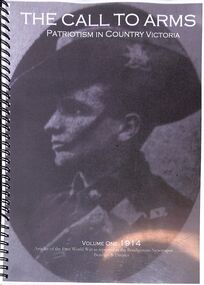
Book - "The Call to Arms. Patriotism in Country Victoria. Volume 1.", 2011
... Germany's strategy in 1914 was to quickly defeat France, but its advance was halted in September, and the Western Front solidified into a near-continuous line of fortified trenches from the English Channel to Switzerland. The Eastern Front was more dynamic, but neither side gained a decisive advantage, despite costly offensives. ...Germany's strategy in 1914 was to quickly defeat France, but its advance was halted in September, and the Western Front solidified into a near-continuous line of fortified trenches from the English Channel to Switzerland. The Eastern Front was more dynamic, but neither side gained a decisive advantage, despite costly offensives. ...World War one began in 1914, and ended in 1918. World War I or the First World War (28 July 1914 – 11 November 1918), also known as the Great War, was a global conflict between two coalitions: the Allies (or Entente) and the Central Powers. One of the deadliest conflicts in history, World War I resulted in an estimated 15 to 22 million deaths, including those in war crimes and genocides. The war also helped spread the Spanish flu pandemic. The conflict saw important developments in weaponry, including the first large-scale use of machine guns, artillery, aircraft, chemical weapons, and tanks. The causes of World War I included the rise of the German Empire, which disturbed the long-standing balance of power in Europe, and the exacerbation of imperial rivalries, as reflected in new alliances and an arms race between the great powers. Tensions in the Balkans reached a breaking point on 28 June 1914 when Gavrilo Princip, a Bosnian Serb, assassinated Franz Ferdinand, the heir to the Austro-Hungarian throne. Austria-Hungary blamed Serbia and declared war on 28 July, upon which the Russian Empire mobilised in Serbia's defence. In early August, Germany declared war on Russia and France; the United Kingdom entered the war after Germany invaded Belgium. Germany's strategy in 1914 was to quickly defeat France, but its advance was halted in September, and the Western Front solidified into a near-continuous line of fortified trenches from the English Channel to Switzerland. The Eastern Front was more dynamic, but neither side gained a decisive advantage, despite costly offensives. The Ottoman Empire joined the Central Powers in November, which was followed by a failed Allied campaign at Gallipoli. Japan and Italy also joined the Allies. Major battles, including those at Verdun, the Somme, and Passchendaele, failed to break the stalemate on the Western Front. In April 1917, the United States joined the Allies after Germany resumed unrestricted submarine warfare against Atlantic shipping. Later that year, the Bolsheviks seized power in Russia in the October Revolution; Soviet Russia signed an armistice with the Central Powers in December, followed by a separate peace in March 1918. That month, Germany launched a spring offensive in the west, which despite initial successes left the German Army exhausted and demoralised. The Allied Hundred Days Offensive, beginning in August 1918, caused a collapse of the German front line. By early November, the Allies had signed armistices with the Ottomans and with Austria-Hungary, leaving Germany isolated. Facing a revolution at home, Kaiser Wilhelm II abdicated on 9 November, and the war ended with the Armistice of 11 November 1918. Metal spiral bound book. Plastic clear cover, and black cardboard back cover. Soft cover. Cover has an image of a black and white image of the bust of a soldier looking to the left. Titles in white. 121 pages. Contains articles of the First World War as reported in the 'Bendigonian Newspaper'. Contains a timeline of significant events during WW1. Has index. Transcribed by Pamela Houston. Printed by Bendigo Copy Centre, Bendigo. Volume one deals with 1914.world war one, soldiers, bendigonian newspapaper -
 Bendigo Historical Society Inc.
Document - Amy Huxtable Memorial Committee - Correspondence, 1981-90
... Page 11-13 Letter from the committee to BCV TV Channel 8 10/11/1981, asking them to advertise the event on their community noticeboard, the wording enclosed; and also an article for the news. ...Page 11-13 Letter from the committee to BCV TV Channel 8 10/11/1981, asking them to advertise the event on their community noticeboard, the wording enclosed; and also an article for the news. ...Amy Huxtable was born at Cheltenham in 1918, to Robert Henry Huxtable and Violet A Dagg. Her father was an installer for an oil company and travelled the State. taking his family with him. She completed her education at the Bendigo High School and later attended the Bendigo Business College, becoming an expert shorthand writer. Her first position was as a copy writer with Radio 3BO, in the mid 1930s. She worked with an advertising agency in Melbourne and then with the Age,newspaper. In 1953, Miss Huxtable was appointed temporarily to succeed Miss E B Millane as social editress of the Bendigo Advertiser, during the latter's absence abroad. In 1956, Amy travelled abroad and on her return in 1957 was appointed permanently as Women's editor, a position she held for twenty-three ears. During her early years with The Advertiser she wrote under the name Toora, but in later years her own name became widely known. Miss Huxtable was well known both in her professional capacity and through a interest and involvement in community activites. She was life governor of the Bendigo Hospital, the Bendigo Home for the Aged, and Mirridong Home for the Blind, she was a member of Soroptimist International and the Business and Professional Women's Club. Amy was also a tireless worker for the spastic society and a strong supporter of the YWCA. When Amy Huxtable died at Mt AJvernia Hospital on 16 January 1980 Mayor Campbell ordered the city flag to be flown at half-mast. "Lowering the flag is the least we can do for such a lady" Cr Campbell said. Douglas Lockwood, editor of the Bendigo Advertiser said, "She was a devot d colleague who gave her craft and her newspaper the kind of service which identified a rare and generous spirit." She was a true professional who decided to make Bendigo her home. More than 300 people packed St Paul's Church for her funeral ervice the bell tolled as the casket was carried from the church. At a ceremony in the Conservatory Gardens on No ember 22 1981 The Amy Huxtable Memorial Committee presented to the City of Bendigo, a garden seat in memory of the late Miss Huxtable. This Bendigo manufactured seat was a fitting tribute to one ofBendigo's most loved and esteemed citizens. All Miss Huxtable's Advertiser articles were microfilmed and presented to the Library by the above committee. Amy Huxtable Memorial Committee - Correspondence - 18 Pages Page 1 Letter to Andrew Taylor, Superintendent, Bendigo City Parks and Gardens 2/6/1981 re siting of the Memorial Seat. Page 2 Reply to the above letter 2/7/1981 Page 3-4 Letter to the Council suggesting the seat be placed in the Conservatory gardens 7/7/1981 Page 5 Letter from the committee to Denis O'Hoy thanking them for supplying clay and plaster for the prep work 7/7/1981 Page 6 Letter from Andrew Taylor, Bendigo City Council 22/7/1981 advising the committee that the council has approved two seats and a vandal proof sign be placed up against the Conservatory facing the Bendigo Advertiser offices. Page 7 Letter 14/8/1981 from the committee to the council re the plaque design Page 8 To the Bendigo council 8/9/1981 suggesting a date and time for the handover of the seat. Page 9 From the council 12/10/1981 thankyou letter from the Mayor agreeing to the time of the memorial seat handover. Page 10 Letter back to the Mayor on 10/7/1981 from the committee with a suggested program for the afternoon. Page 11-13 Letter from the committee to BCV TV Channel 8 10/11/1981, asking them to advertise the event on their community noticeboard, the wording enclosed; and also an article for the news. Page 14-15 The wording on the plaque Page 16 Letter to the Bendigo Council 16/8/1984 asking for some repairs to be done to the seat due to weathering. Page 16 Letter back from the council 23/8/1984 advising the committee that it is on the list of maintenance for later in the year. Page 17 Letter from the Bendigo Regional Arts Centre to the committee 28/6/1990 adising receipt of $1000 for seats ion the re-vamperd Capital Theatre; seat inscription to be "Donated by:- Amy Huxtable Memorial Committee In Memory of :- Amy Huxtablehistory, amy huxtable, bendigo, amy huxtable memorial committee, bendigo conservatory gardens, capital theatre, bendigo regional arts centre -
 Flagstaff Hill Maritime Museum and Village
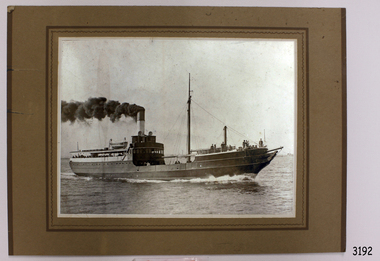
Photograph - Vessel, Steam Ship, after 1890
... SS Edina’s interesting history includes English Channel runs, serving in the Crimean War carrying ammunition, horses and stores to the Black Sea, and further service in the American Civil War and later, serving in the western district of Victoria as well as in Queensland and carried gold, currency and gold prospectors Australia to New Zealand. ...SS Edina’s interesting history includes English Channel runs, serving in the Crimean War carrying ammunition, horses and stores to the Black Sea, and further service in the American Civil War and later, serving in the western district of Victoria as well as in Queensland and carried gold, currency and gold prospectors Australia to New Zealand. ...This photograph was donated by Mrs Nancy Mason, daughter-in-law of the last owner, Arnold Mason. Andrew Mason had been given the photograph by Mr. Mac Fordham, who was the Chief Engineer of the SS Edina. Both men had been Engineers in WW I. The configuration of the SS Edina in the photograph is post 1890. ABOUT THE S S EDINA The three-masted iron screw steamer SS Edina was built in Glasgow, Scotland, in 1854 by Barclay and Curle. She was adorned with the figurehead of ‘fair maid of Judea’. The many years of service made SS Edina famous worldwide as the longest-serving screw steamer. (The term screw steamer comes from being driven by a single propeller, sometimes called a screw, driven by a steam engine.) SS Edina’s interesting history includes English Channel runs, serving in the Crimean War carrying ammunition, horses and stores to the Black Sea, and further service in the American Civil War and later, serving in the western district of Victoria as well as in Queensland and carried gold, currency and gold prospectors Australia to New Zealand. SS Edina had the privilege of being an escort vessel to H.R.H. the Duke of Edinburgh during his visit to Australia in 1867. In March 1863, SS Edina arrived in Port Phillip Bay, Melbourne and was bought by Stephen Henty, of Portland fame, to work the cargo and passenger run from Melbourne – Warrnambool – Port Fairy - Portland. After a short time of working the run from Australia to New Zealand, with passengers and cargo that included gold and currency, she returned to her Melbourne - Warrnambool – Port Fairy run, with cargo including bales of wool produced in the western district of Victoria. The Warrnambool Steam Packet Company purchased SS Edina in 1867; she was now commanded by Captain John Thompson and Chief Engineer John Davies. She survived several mishaps at sea, had a complete service and overhaul and several changes of commanders. In 1870 SS Edina was in Lady Bay, Warrnambool, when a gale sprung up and caused a collision with the iron screw steamer SS Dandenong. SS Edina’s figurehead was broken into pieces and it was not ever replaced. SS Edina was refitted in 1870 then was used as a coastal trader in Queensland for a period. She was then brought to Melbourne to carry cargo and passengers between Melbourne and Geelong and performed this service 1880-1938. During this time (1917) she was again refitted with a new mast, funnel, bridge and promenade deck, altering her appearance. In 1938, after more collisions, SS Edina was taken out of service. However, she was later renamed Dinah and used as a ‘lighter’ (a vessel without engine or superstructure) to be towed and carry wool and general cargo between Melbourne and Geelong. In 1957, after 104 years, the SS Edina was broken up at Footscray, Melbourne. Remains of SS Edina’s hull can be found in the Maribyrnong River, Port Phillip Bay. This photograph of the SS Edina is significant for its association with the screw steamer SS Edina. The SS Edina is heritage listed on the Victorian Heritage Database VHR S199. She had endeared herself to the people of Port Phillip Bay as a passenger ferry, part of their history and culture. She played a significant role in the Crimean War, the American Civil War and the gold rush in New Zealand. She also served western Victoria for many years in her cargo and passenger runs. The SS Edina is famous for being the longest serving screw steamer in the world. After spending her first nine years overseas she arrived in Melbourne and her work included running the essential service of transporting cargo and passengers between Melbourne and the western Victoria ports of Warrnambool, Port Fairy and Portland. The SS Edina was purchased in the late 1860’s by local Warrnambool business, the Warrnambool Steam Packet Co. and continued trading from there as part of the local business community. The SS Edina’s original ‘fair maid of Judea’ figurehead was broken to pieces in a collision with another vessel (the SS Dandenong) in a gale off Warrnambool, Victoria, in 1870.Black and White photograph mounted on brown card of SS Edina. Inscription on the reverse side. The photograph shows the SS Edina moving under steam power, with many people on both the bow and stern and a few people in the centre of the vessel. There are buildings on the shore in the background. The ship's configuration is dated post 1890.Inscription on the reverse: "Donated by Mrs. Nancy Mason, Bayview. Receipt 409a. Owned by Mac Fordham, Chief Engineer, 'Edina', then given to Mrs. Mason's father-in-law Arnold Mason. (both Engineers W.W 1)."warrnambool, shipwrecked coast, flagstaff hill, flagstaff hill maritime museum, maritime museum, shipwreck coast, flagstaff hill maritime village, shipwrecked artefact, barclay & curle, figurehead 'fair maid of judea', centenary maritime exhibition 1934, a brief review of steam navigation in victoria, pleasure steamer edina, trade and travel late 19th and early 20th century, trade melbourne to geelong, screw steamer edina, coastal trader edina, lighter dinah, cargo carrying for cremean war, cargo carrying for american civil war, passenger and trade in western district of victoria, export gold and currency and gold diggers to new zealand, export vessel to h r h the duke of edinburgh, melbourne - warrnambool - port fairy - portland cargo run, warrnambool steam packet company, stephen henty, captain john thompson, chief engineer john davies, lady bay warrnambool, lighter edina, shipping victoria, port phillip bay steamers, steamship great britain, edina, vhr s199 victorian heritage database, photograph of ss edina post 1890, photograph australian screw steamer, pleasure vessel victoria post 1890 -
 Flagstaff Hill Maritime Museum and Village
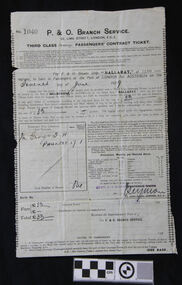
Document - Ticket, voyage, P & O Branch Service, P & O, Australia via The Cape Service, Bef.3rd June 1929
... Ballarat sailed down the Thames estuary and into the English Channel. The next port of call was Southampton, UK, to take on board some technical equipment. ...Ballarat sailed down the Thames estuary and into the English Channel. The next port of call was Southampton, UK, to take on board some technical equipment. ...The bearer of this ticket was George Thomas Henry Phillpot, who was only 17 years old when he sailed on the S.S. Ballarat (II), built in 1921. (The first S.S. Ballarat was built in 1911 and sunk after being hit by a torpedo in 1917 while serving during WWI). George relates his trip from England to Australia, summarised as follows: He caught a bus from Bolton to Manchester, in the north west U.K., then the train from Manchester to London and the boat train to Tilbury Docks (near Gravesend). On the morning of June 7th 1929, the ship S.S. Ballarat sailed down the Thames estuary and into the English Channel. The next port of call was Southampton, UK, to take on board some technical equipment. The S.S. Ballarat then sailed through the Bay of Biscay. Instead of taking the customary route around the Cape of Good Hope, this trip, on her maiden voyage, was through the Suez Canal. She sailed through the Straits of Gibraltar, into the Mediterranean Sea and on to Malta, where George and others paid a local boat owner to take them ashore for a short time. They then sailed to Port Said, stopping to load cargo, then at night through the Suez Canal. They woke up early the next morning to watch the locals working on the banks of the canal. The excessive heat on board the ship caused much illness. As they travelled through the Red Sea, the heat and the smell of oil also caused sickness. On they went through the Arabian Sea to Colombo, the capital of Sri Lanka (which at that time was called Ceylon). A Navigation Slip, donated together with this ticket, shows the coordinates for a location 16 miles from Colombo. They again went ashore for a meal at four-pence a head and a bottle of lemonade for a penny. George and another passenger walked to the slums area and were shocked at the state of it compared to Britain’s slums. They then sailed via the Indian Ocean to Fremantle, stopping again for goods to be unloaded. While ashore, they played a game of soccer against the ship’s crew. Then on to Port Adelaide via the Great Australian Bight. Here they shopped for suitable clothing under the advice of some Australian passengers. They then arrived at Port of Melbourne on July 20th 1929, and two days later (on George’s mother’s birthday). George left for Warrnambool. He received his Citizenship Award in 1971. He conducted an electrical retail business in Liebig Street for many years. His son William became principal of the accounting business Sinclair and Wilson, on the retirement of Bill Sinclair, and was actively involved in support of many community organisations. His daughter-in-law, Glenys Phillpot, is actively involved in the Warrnambool community and local government. George was one of 3 orphans on the S.S. Ballarat. (The daughter and son-in-law of one of the other orphans also live in Warrnambool.) Herbert B.G. Larkin, whose rubber-stamped name appears on the ticket, later migrated to Australia and passed away in NSW in 1944. Of Historical Significance, this ticket is for the ship’s maiden voyage via the Suez Canal route (previously the ship travelled via the Cape of Good Hope). It is also the only existing ticket for the "S.S. Ballarat"(3rd) in our collection. Socially, it shows the fare, luggage restrictions, conditions and weekly provisions for a third-class passenger’s voyage from London to Melbourne, which has research potential. This ticket is also of significance to the Local Community, giving the background of the ancestor of a local family. It was also of Personal Significance to the bearer as he kept and preserved it in his possession for at least 46 years before donating it to our museum, together with a Navigation Slip, a map and a summary of his journey to Australia.Third Class steerage Passenger’s Contract Ticket, accompanied by the Navigation Slip, for passage on board the P & O line’s steamer, S.S. Ballarat, to Australia via the Cape Service, from Port of London to Port of Melbourne. The ticket contract is printed on both sides of a thin paper page. The documents have been completed by hand, and the pages have creases as though they have been folded. Details include the date of sailing, amount paid, and the signature of the P & O Branch Service’s representative. The contract ticket lists weekly provisions for the voyage, a disclaimer of the shipping company, a list of dangerous goods not to be carried on board, and fines. The page has straight edges, top and bottom, and perforated edges on the sides; some perforation holes are complete. A small fleur de lies is printed along the inside of each perforation, forming a decorative left and right border. Stamps and inscriptions are on the contract ticket and navigation slip, which also has a black and white photo of a steam ship.The ticket has been stamped in black, No. ‘1040’. Handwritten details are in black pen and ink. Date of departure: ‘Seventh June [192]9’ for the cost of,’33’ [poind], and the sum of ‘33’ pounds is acknowledged as received. ‘Mr George T.H. PHILLPOT’, the age is written as ‘17’, equal to the status of ‘1’ adult, the total number of persons is ‘One’. The fare is handwritten in pen £’33’ and the total £’33’. It has a purple stamp ‘HERBT. B G LARKIN’ and a crossed out stamp ‘FREDERICK WHITE, A handwritten signature ‘_Seymore’. Under the signature, the date is stamped ‘3 JUNE 1929’.warrnambool, shipwrecked coast, flagstaff hill, flagstaff hill maritime museum, maritime museum, shipwreck coast, flagstaff hill maritime village, s.s.ballarat, phillpot, 7 june 1929, george phillpot, george t.h. phillpot, third class passenger, steerage passenger, herbert b g larkin, ticket, voyage, p & o, australia via the cape, cape of good hope, suez canal, passengers’ contract ticket, navigation slip, s.s. ballarat, steamship, 1929, 3-6-1929, 7-6-1929, third-class, steerage, port of london, port of melboune, 33 pounds, george thomas henry phillpot, herbt. b g larkin, _seymore, bolton, manchester, english channel, southampton, bay of biscay, straits of gibraltar, maritia, port said, arabian sea, colombo, sri lanka, ceylon, indian ocean, fremantle, port adelaide, citizenship, 1971, herbert b.g. larkin, s.s. ballarat ii, -
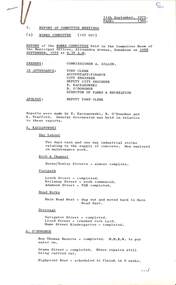 Sunshine and District Historical Society Incorporated
Administrative record - City of Sunshine - Commissioner Mr Alexander Alex George Gillon Collection 1976 - 1982 - Reports of committee meetings 11th September 1979, City of Sunshine, 11th September 1979
... Reports of Committee Meetings 11th September 1979 Report of the Works Committee Day Labour Two Days Rain & One Day Industrial Strike Kerb & Channel Burns Street & Sonley Street Almost Complete Footpath Lynch Street Completed Footpath Kellaway Street Work Commenced Footpath Adamson Street 85% Completed Road Works Main Road West Dug out and moved back to Main Road East Drainage Navigator Street Completed Drainage Lloyd Street Crush Rock Laid Drainage Hume Street Kindergarten Completed Bon Thomas Reserve Completed M.M.B.W. to put water on Orama Street Completed, minor repairs still be carried out Highpoint West Schedule to finish in 8 weeks Ballarat Road I.W.C. ahead of schedule by 3 - 4 weeks Depot Amenities Building Expected to be completed with 3 - 4 weeks Discussions were held on a plan for basic sports grounds pavilions instead of tin sheds Diamond Avenue Pre-School Centre Landscaping delayed Landscaping at other centres ready to go Tree Planting completed Tree Pruning 89% complete Emergency Work and other Tree Maintenance Work to be done All Ovals have been aerated in past week with fertilizer Report of the Finance Committee Report of Town Clerk Use of Council Vehicles Rate Payments Report of the City Librarian Workroom Backlog Central Library Report of the City Engineer & Planner Bon Thomas Reserve Proposition for the Partial Initial Development Report of the Agenda & Forward Planning Committee Meeting Report of the Chief Health Officer Sanitary Contract Report of the City Engineer & Planner Planning Permit Application Extension of Existing Pavilion (Place of Assembly) Kinder Smith Reserve Lily Street Braybrook Planning Permit Application Railways Siding Wright Street Sunshine Robert Barrett Reserve Sewerage Facilities...Albans Navigator Street Maribyrnong Lloyd Street Deer Park Hume Street Bon Thomas Reserve Quinn Street Orama Street Ballarat Road Diamond Avenue Pre-School Centre Diamond Avenue Albanvale Kinder Smith Reserve Lily Street Wright Street Robert Barrett Reserve Rosamond Road Reports of Committee Meetings 11th September 1979 Report of the Works Committee Day Labour Two Days Rain & One Day Industrial Strike Kerb & Channel Burns Street & Sonley Street Almost Complete Footpath Lynch Street Completed Footpath Kellaway Street Work Commenced Footpath Adamson Street 85% Completed Road Works Main Road West Dug out and moved back to Main Road East Drainage Navigator Street Completed Drainage Lloyd Street Crush Rock Laid Drainage Hume Street Kindergarten Completed Bon Thomas Reserve Completed M.M.B.W. to put water on Orama Street Completed, minor repairs still be carried out Highpoint West Schedule to finish in 8 weeks Ballarat Road I.W.C. ahead of schedule by 3 - 4 weeks Depot Amenities Building Expected to be completed with 3 - 4 weeks Discussions were held on a plan for basic sports grounds pavilions instead of tin sheds Diamond Avenue Pre-School Centre Landscaping delayed Landscaping at other centres ready to go Tree Planting completed Tree Pruning 89% complete Emergency Work and other Tree Maintenance Work to be done All Ovals have been aerated in past week with fertilizer Report of the Finance Committee Report of Town Clerk Use of Council Vehicles Rate Payments Report of the City Librarian Workroom Backlog Central Library Report of the City Engineer & Planner Bon Thomas Reserve Proposition for the Partial Initial Development Report of the Agenda & Forward Planning Committee Meeting Report of the Chief Health Officer Sanitary Contract Report of the City Engineer & Planner Planning Permit Application Extension of Existing Pavilion (Place of Assembly) Kinder Smith Reserve Lily Street Braybrook Planning Permit Application Railways Siding Wright Street Sunshine Robert Barrett Reserve Sewerage Facilities Foolscap sized document. ...Reports of Committee Meetings 11th September 1979 Report of the Works Committee Day Labour Two Days Rain & One Day Industrial Strike Kerb & Channel Burns Street & Sonley Street Almost Complete Footpath Lynch Street Completed Footpath Kellaway Street Work Commenced Footpath Adamson Street 85% Completed Road Works Main Road West Dug out and moved back to Main Road East Drainage Navigator Street Completed Drainage Lloyd Street Crush Rock Laid Drainage Hume Street Kindergarten Completed Bon Thomas Reserve Completed M.M.B.W. to put water on Orama Street Completed, minor repairs still be carried out Highpoint West Schedule to finish in 8 weeks Ballarat Road I.W.C. ahead of schedule by 3 - 4 weeks Depot Amenities Building Expected to be completed with 3 - 4 weeks Discussions were held on a plan for basic sports grounds pavilions instead of tin sheds Diamond Avenue Pre-School Centre Landscaping delayed Landscaping at other centres ready to go Tree Planting completed Tree Pruning 89% complete Emergency Work and other Tree Maintenance Work to be done All Ovals have been aerated in past week with fertilizer Report of the Finance Committee Report of Town Clerk Use of Council Vehicles Rate Payments Report of the City Librarian Workroom Backlog Central Library Report of the City Engineer & Planner Bon Thomas Reserve Proposition for the Partial Initial Development Report of the Agenda & Forward Planning Committee Meeting Report of the Chief Health Officer Sanitary Contract Report of the City Engineer & Planner Planning Permit Application Extension of Existing Pavilion (Place of Assembly) Kinder Smith Reserve Lily Street Braybrook Planning Permit Application Railways Siding Wright Street Sunshine Robert Barrett Reserve Sewerage Facilitiesburns street, sonley street, maidstone, lynch street, sunshine, kellaway street, adamson street, braybrook, main road west, main road east, st. albans, navigator street, maribyrnong, lloyd street, deer park, hume street, bon thomas reserve, quinn street, orama street, ballarat road, diamond avenue pre-school centre, diamond avenue, albanvale, kinder smith reserve, lily street, wright street, robert barrett reserve, rosamond road -
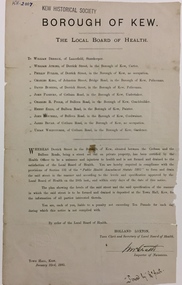 Kew Historical Society Inc
Document, Holland Loxton, Notification to the Residents of Derrick Street by the Local Board of Health, 1885, 1885
... They felt the Council was partly responsible for the state of the street due to a channel on Bulleen Road, which deposited sand in the street. ...They felt the Council was partly responsible for the state of the street due to a channel on Bulleen Road, which deposited sand in the street. ...Streets and drains were the basic infrastructure problems for Kew in the 1880s. Decent streets and drains were fundamental to the quality of life of the residents. Without drainage, streets became muddy, boggy and sometimes impassable. Pools and puddles of stagnant water became smelly. The run off water, mixed with human and animal wastes, because there was no sewerage, became a health hazard. Streets and drains then became what were known as 'a nuisance'. Kew suffered from bouts of typhoid fever during the 1880s. Derrick Street was a private street on the margin of the business district of Kew and a well-used thoroughfare. We hear first about Derrick Street when the ratepayers applied to Council to have the street 'taken over' in January 1881. The Council agreed, after much debate, but ratepayers had to pay half the costs. The argument of the majority of the Council was that there was an established policy that ratepayers of private streets either had to hand over the street fully-formed or pay half the costs if Council did the work. It was felt that to make an exception for Derrick Street would create a precedent for ratepayers of other private streets. On the other hand the ratepayers, and a minority of Council, believed that there were extenuating circumstances in the case of Derrick Street. They believed that the costing by the Borough Surveyor was excessive. They felt the Council was partly responsible for the state of the street due to a channel on Bulleen Road, which deposited sand in the street. The Council had also put in some kerbing at the entrance to the street. Finally, the ratepayers believed that the street had become an important and convenient thoroughfare in Kew, and thus should be an exception to the policy on private streets. In the end a decision was delayed to allow the ratepayers to drain and form the street themselves. And there the matter stood till September 1882, when Miss Reilly complained about rubbish on a block of land in Derrick Street. So, in October 1882 the Council agreed to take over and form the street with the ratepayers paying half the costs. The ratepayers did not want to pay, so the argument continued in Council into 1883. There was a standoff for a further 18 months, until the problem could no longer be ignored. In October 1884 the Inspector of Nuisances and the Health Officer reported that Derrick Street was a health hazard as there was no drainage outlet for waste water. These reports changed the status of the problem of Derrick Street. It became an issue of public health, and thus the Council, acting as the Local Board of Health, had power to prepare plans and order the ratepayers to drain the street and pay all the costs, or let the Council do the work and charge ratepayers half the costs of the works. By April 1885, the time for ratepayers to complete the works themselves had expired, so the Council proceeded with the work and required ratepayers to pay for their share of the costs. All ratepayers had paid by the end of April except Mr Whiddycombe, who refused to pay. Mr Whiddycombe was warned to pay in October 1885. Legal action was taken against him in November. The Council lost the case on technical grounds. The Council, acting as the Local Board of Health, relaunched the legal action and won. The last we hear of Derrick Street is that seven day’s notice was given to Derrick Street ratepayers to pay for the drainage works in May 1887. We presume that Mr Whiddycombe paid. (Research: Andrew Frost)Rare and historic publication issued by the Board of Health in the Borough of Kew in 1885 to residents of Derrick street regarding the need for proper drainage for the purpose of improving public health.Printed formal notice sent by the Board of Health of the Borough of Kew to landowners in Derrick Street, Kew. The notice advised the owners that they were required to form and drain the street according to the levels and specifications approved by the Board. The letter was sent on January 23rd 1885, and signed by the Inspector of Nuisances.borough of kew -- greater melbourne (vic.), council notices -- public health, derrick street -- kew (vic.) -
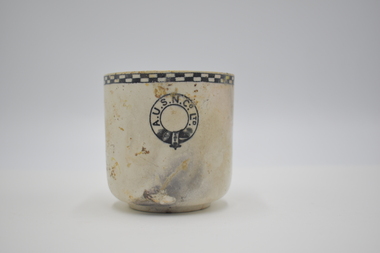 Geelong Naval and Maritime Museum
Teacup
... On its final voyage arriving at Port Phillip Heads from Sydney, Captain Gilling was attempting to enter the Heads ahead of a worsening south-westerly storm and, with a minefield known to have been laid in the area, had been warned by the Navy not to deviate from the swept channel. The captain and crew held fears that in the stormy seas a mine may have been carried away. ...On its final voyage arriving at Port Phillip Heads from Sydney, Captain Gilling was attempting to enter the Heads ahead of a worsening south-westerly storm and, with a minefield known to have been laid in the area, had been warned by the Navy not to deviate from the swept channel. The captain and crew held fears that in the stormy seas a mine may have been carried away. ...The Orungal was originally built in Glasgow in 1923 for the Khedival Mail Steamship & Graving Dock Company of Egypt and named the S.S. Fezara. Due to the effects on steamship companies of the Great Depression including the steep costs of building new ships and increases in running costs and port charges, no new passenger ships had been ordered in Australia since before World War One. To meet demand for passenger berths, the Fezara (5826 tons) along with its sister ship the Famaka (5856 tons, renamed Ormiston), were chartered by the Australasian United Steam Navigation Company Ltd (A.U.S.N.Co.) in 1927. Both the A.U.S.N.Co and the Khedival Mail Steamship Co. were part of the P&O Group. The Orungal operated in this role as an interstate passenger and mail steamer between 1927 and 1940, being used mainly on the Melbourne to Queensland and Western Australian runs, with 240 single class berths. Following the outbreak of World War Two six of the nine large passenger liners servicing mainland Australian passenger and mail trades were requisitioned by the Government to ferry equipment, troops and supplies. Some of them were converted to armed merchant cruisers and used for patrol work and escort duties in the Indian and Pacific Oceans. The Orungal had originally been requisitioned by the government along with the Zealandia on 25 June 1940, to transport troops to Darwin, but was returned to commercial service because "of her unsuitability", perhaps too slow for the demands of the work. Despite being rejected for patrol and convoy duties the Orungal still had a vital role as one of only three passenger liners left to service the mainland Australian trade. Following its requisitioning by the Government shortly after war broke out, it had been fitted out with defensive armament. On its final voyage arriving at Port Phillip Heads from Sydney, Captain Gilling was attempting to enter the Heads ahead of a worsening south-westerly storm and, with a minefield known to have been laid in the area, had been warned by the Navy not to deviate from the swept channel. The captain and crew held fears that in the stormy seas a mine may have been carried away. In the worsening weather a blur of lights at Barwon Heads was mistaken for Port Lonsdale, and the Orungal steamed ashore onto Formby Reef, just east of the entrance of the Barwon River - instead of passing safely through the middle of the Rip. At the Marine Board Inquiry Capt. Gilling - who had been master of the Orungal since 1926 - stated that after becoming uneasy about his position and changing course to starboard one point: " At 10.21 pm I ordered the engine room to stand by and gave instructions for the patent log to be hauled in and for the sounding-gear to be got ready. Approximately two minutes later, in a flash of lightning, I saw land off the port beam. I immediately recognised it as Barwon Heads, and ordered the helm to be put hard to starboard, but the vessel struck before she had time to answer the helm" Barwon Heads and Ocean Grove residents were startled to hear the shrill blast of the ship's whistle, followed by the bright flares and explosions of signal rockets. The Queenscliff lifeboat crew, who had responded to the tragic collision between the Goorangai and another passenger liner the Duntroon in Port Phillip Bay less than 24 hours earlier, were later praised for their efforts in safely taking off all the passengers and crew. Most of the passengers were asleep at the time of the wreck, and were woken up by the commotion, the ship shaking "from stem to stern" and stewards ordering them to lifeboat stations in driving rain. It was a dramatic time with the ship siren wailing and distress rockets being fired. It was reported that "When it was found the ship was safe, the passengers all went to the music room. There they sang and danced for several hours. The ship's orchestra played merrily, and amateur performers among the passengers clowned, danced and sang to keep the laughter going. In the early hours of the morning passengers went to their cabins, most of them to sleep soundly while the keel grated on the rocks". At dawn the Queenscliff lifeboat arrived at the scene having been launched at 2.30am, and cautiously approached the ship which was being "battered by mountainous seas". By 5am oil from a burst oil line was helping to calm seas around the Orungal sufficiently enough for the lifeboat to approach, and all the passengers and crew were taken off in several trips by the lifeboat. A Court of Inquiry later found that the wreck was caused by an abnormal set of current to the north-west and cleared the officers and crew of neglect of duty. The sight of a huge liner almost on the beach saw an unprecedented amount of traffic as people drove an estimated 10,000 cars, using some 60,000 gallons of fuel in a time of strict petrol rationing, to see the spectacle. Salvage operations began in an attempt to refloat the vessel, scheduled for the high tide on 15 December 1940. However, during these operations, at 2.30 am on 13 December 1940, a major fire broke out, believed to have been caused by spontaneous combustion in the boiler room. The ship was soon ablaze, with smoke pouring from its hatches and ventilators, and at mid-morning the magazine exploded fiercely. Of the 60 men working aboard the vessel two were severely burned and had to be taken to Geelong Hospital. The gathered spectators witnessed the eerie sight of the ship's hull glowing red when night fell. The well-known building demolition contractor Whelan the Wrecker bought the salvage rights, and methodically proceeded to dismantle the ship and its fittings. The drama was not yet over for the wreckers when - without warning - the burnt-out hulk was 'attacked' by RAAF for strafing practice. Salvage rights were transferred to another private owner in 1963. By 1945 the combined effects of the exposed location, fire and salvage had seen what was left of the wreck disappear beneath the waves. The site today is marked by two of the four Scotch type boilers sitting upright and exposed at low tide, just north-east of the small boats channel at the entrance to Barwon Heads. Large sections of steel hull plating and framing, and impressively large pieces of ships structure and machinery including masts, booms, deck winches, propeller shaft, flywheel, and a thrust block lie scattered about and make the site an interesting shallow dive. It is interesting to compare the site of the Orungal with the intact remains of similar large passenger ships scuttled in deep water in the Ships' Graveyard, such as the Milora and Malaita. The site is subject to waves and surge, and is best dived on flat calm days The teacup originated from the SS Orungal and was likely used heavily in the ship's life as a passenger, mail and cargo carrier around Australia. The teacup is significant for its connections to SS Orungal and of this ships connected story of being sunk in extraordinary circumstances in the local region. A.U.S.N. Co. Ltd. Teacup salvaged from SS Orungal ss orungal, fezara, world war two, barwon heads, ocean grove -
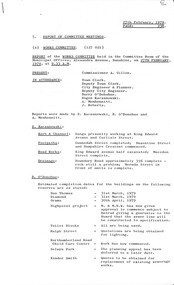 Sunshine and District Historical Society Incorporated
Administrative record - City of Sunshine - Commissioner Mr Alexander Alex George Gillon Collection 1976 - 1982 - Report of committee meetings 27th February 1979, City of Sunshine, 27th February 1979
... Report of Committee Meetings 27th February 1979 Report of the Works Committee Meeting Kerb & Channel Gangs presently working at King Edward Avenue and Carlisle Street Footpath Gunnedah Street completed Footpath Bazentine Street commenced Footpath Hampshire Crescent commenced Road Work King Edward Avenue half excavated Road Work Macedon Street Completed Drainage Boundary Road Approximately 35% completed Drainage Mernda Street in front of units completed Bon Thomas Reserve Building completion date 31st March 1979 Diamond Avenue Reserve Building completion date 31st March 1979 Orama Street Building completion date 30th April 1979 Highpoint West Project M.M.B.W. has given approval Toilet Blocks all are being used Ralph Street Reserve Quotations are being obtained Northumberland Road Child Care Centre work has commenced Selwyn Park planning appeal deferred Kinder Smith Reserve quotes being obtained for replacement of existing sewerage works Skinner Reserve has been top dressed Dobson Reserve has been top dressed Ralph Street Reserve soil for top dressing has been ordered Castley Reserve work has been delayed as ground is not dry enough Fire Hazards 30 Lots out of total of 116 have yet to be cleared Bon Thomas Reserve Pre-School Centre Landscaping plans not yet finalised Diamond Reserve Pre-School Centre Landscaping plans completed Rhodes Street plans completed Report of the Finance Committee Meeting Report of the Town Clerk Additional Staff Requirements Financial Reports for the Period Ended 12th February 1979 Report of the City Engineer Overdraft Facilities Traffic Lights Cherry's Drain (Rear of Hogan Street Deer Park) Subsidiary Drain M.M.B.W. ...Albans Cherry's Drain Hogan Street Glengala Road Marian College Duke Street Report of Committee Meetings 27th February 1979 Report of the Works Committee Meeting Kerb & Channel Gangs presently working at King Edward Avenue and Carlisle Street Footpath Gunnedah Street completed Footpath Bazentine Street commenced Footpath Hampshire Crescent commenced Road Work King Edward Avenue half excavated Road Work Macedon Street Completed Drainage Boundary Road Approximately 35% completed Drainage Mernda Street in front of units completed Bon Thomas Reserve Building completion date 31st March 1979 Diamond Avenue Reserve Building completion date 31st March 1979 Orama Street Building completion date 30th April 1979 Highpoint West Project M.M.B.W. has given approval Toilet Blocks all are being used Ralph Street Reserve Quotations are being obtained Northumberland Road Child Care Centre work has commenced Selwyn Park planning appeal deferred Kinder Smith Reserve quotes being obtained for replacement of existing sewerage works Skinner Reserve has been top dressed Dobson Reserve has been top dressed Ralph Street Reserve soil for top dressing has been ordered Castley Reserve work has been delayed as ground is not dry enough Fire Hazards 30 Lots out of total of 116 have yet to be cleared Bon Thomas Reserve Pre-School Centre Landscaping plans not yet finalised Diamond Reserve Pre-School Centre Landscaping plans completed Rhodes Street plans completed Report of the Finance Committee Meeting Report of the Town Clerk Additional Staff Requirements Financial Reports for the Period Ended 12th February 1979 Report of the City Engineer Overdraft Facilities Traffic Lights Cherry's Drain (Rear of Hogan Street Deer Park) Subsidiary Drain M.M.B.W. ...Report of Committee Meetings 27th February 1979 Report of the Works Committee Meeting Kerb & Channel Gangs presently working at King Edward Avenue and Carlisle Street Footpath Gunnedah Street completed Footpath Bazentine Street commenced Footpath Hampshire Crescent commenced Road Work King Edward Avenue half excavated Road Work Macedon Street Completed Drainage Boundary Road Approximately 35% completed Drainage Mernda Street in front of units completed Bon Thomas Reserve Building completion date 31st March 1979 Diamond Avenue Reserve Building completion date 31st March 1979 Orama Street Building completion date 30th April 1979 Highpoint West Project M.M.B.W. has given approval Toilet Blocks all are being used Ralph Street Reserve Quotations are being obtained Northumberland Road Child Care Centre work has commenced Selwyn Park planning appeal deferred Kinder Smith Reserve quotes being obtained for replacement of existing sewerage works Skinner Reserve has been top dressed Dobson Reserve has been top dressed Ralph Street Reserve soil for top dressing has been ordered Castley Reserve work has been delayed as ground is not dry enough Fire Hazards 30 Lots out of total of 116 have yet to be cleared Bon Thomas Reserve Pre-School Centre Landscaping plans not yet finalised Diamond Reserve Pre-School Centre Landscaping plans completed Rhodes Street plans completed Report of the Finance Committee Meeting Report of the Town Clerk Additional Staff Requirements Financial Reports for the Period Ended 12th February 1979 Report of the City Engineer Overdraft Facilities Traffic Lights Cherry's Drain (Rear of Hogan Street Deer Park) Subsidiary Drain M.M.B.W. Bus Bays Glengala Road (Marian College) Duke Street Widening and Re-sheeting Including Drainageking edward avenue, albion, carlisle street, maidstone, gunnedah street, bazentine street, hampshire crescent, sunshine, macedon street, boundary road, brooklyn, mernda street, sunshine west, bon thomas reserve, quinn street, diamond avenue reserve, diamond avenue, albanvale, orama street, deer park, ralph street reserve, ralph street, northumberland road child care centre, northumberland road, sunshine north, selwyn park, selwyn street, kinder smith reserve, lily street, braybrook, skinner reserve, churchill avenue, dobson reserve, castley reserve, simmie street, bon thomas reserve pre-school centre, diamond reserve pre-school centre, rhodes street, st. albans, cherry's drain, hogan street, glengala road, marian college, duke street -
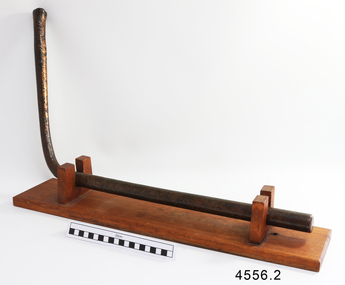 Flagstaff Hill Maritime Museum and Village
Nail, circa 1810
... Nearing the end of their journey on 10th April 1835 the “George III” was headed through the D'Entrecasteaux Channel, south east Tasmania, between the mainland and Bruny Island. ...Nearing the end of their journey on 10th April 1835 the “George III” was headed through the D'Entrecasteaux Channel, south east Tasmania, between the mainland and Bruny Island. ...This copper nail, sometimes known as a ‘Dumpy Bolt’ or spike, was salvaged from the hull of the wreck of the “George III”. It dates back to at least 1810. It was found by an abalone diver on the south east coast of Tasmania. The nail would have been used to hold the layers of the ship’s keel frame and the planking together. The nail has been passed from the abalone diver to an interested business man on a trip to the south of Hobart, on again to the business man’s close friend who then donated it to Flagstaff Hill Maritime Village. The metal of nails such as this one, after being in the sea for a long time, become affected by the natural reaction of the sea water, causing it to degenerate and thin, and the stress from the force of the sea over the years alters its shape. Iron nails had been used on ships previously, but they quickly corroded in the salt; ships needed regular, costly and time-consuming maintenance to replace the iron nails. Towards the end of the 18th century the British Navy trialled the use of copper nails, finding them to be very successful. Merchant ships began to adopt this process in the early 19th century, although it made ship building very expensive and was more often used for ships such as the “George III” that sailed on long voyages. The three masted sailing ship “George III” was a convict transport ship built in Deptford, England, in 1810. On 14th December 1834 she left Woolwich, England, bound for Hobart Town, Van Diemen’s Land (Tasmania), under Captain William Hall Moxey. She was carrying 220 male convicts plus crew, guards and their families, totalling 294 persons (another 2 were during the voyage). Amongst the cargo were military stores including several copper drums of gun powder. On 27th January 1835 the “George III” was near the Equator, about half way into her journey. A fire broke out and the gun powder was in danger of explosion, threatening the whole ship. Two convicts braved the heat and smoke, entered the store and seized the gun powder drums, suffering burns for their efforts but saving a probable disaster. The fire destroyed some of the provisions and food was scarce. Many became ill with scurvy and some died during the journey. Nearing the end of their journey on 10th April 1835 the “George III” was headed through the D'Entrecasteaux Channel, south east Tasmania, between the mainland and Bruny Island. She was sailing in the moonlit night to hasten her arrival in port due to the great number of sick on board. She struck uncharted rocks, known only to the local whalers, between Actaeon Reef and Southport Lagoon and within hours began to break up. The ship’s boats were used to first rescue the women and children. Firearms were used to help quell the panic of the convicts below decks and some were killed by the shots. Many convicts, including the sick, were drowned. In all, 133 lives were lost including 5 of the crew, guards and their families. It was the third worst shipping disaster in Tasmanian waters. A monument in honour of the prisoners who perished in the “George III” has been erected, noting the date of the wreck as “Friday 10th April 1835.” (NOTE: there are a few differences between sources regarding dates of the shipwreck, some saying March and others April 1835. There are also differences in the figures of those on board and the number of lives lost.) The copper nail is significant as an example of sailing ship construction; fasteners used in the early 19th century on ships carrying convicts to Australia. The nail is also significant for its association with the ship “George III”. The “George III” is registered on the Australian National Shipwreck Database, ID 7195 as an Historic Shipwreck. She is the third worst shipwreck in Tasmanian waters. She is also associated with Early Australian History and the transportation of convicts to Australia. The incident of the fire on board and the bravery of the convicts in making the gun powder safe is an example of the social character of the people in early Tasmanian colonisation. Copper nail (also called a Dumpy bolt or spike) from the convict ship George III, wrecked in 1835. Nail is long, bent in an ‘L’ shape about 3/5ths along, tapering from both ends to the bend. Both ends are flat and do not taper to a point, nor have a thread. The shorter end has been polished, showing bright copper. There is pitting along the nail and virdigris is evident on the longer, unpolished end. The nail is displayed with the longer section resting on a wooden board between two ‘U’ shaped uprights, the shorter section upright. flagstaff hill, warrnambool, shipwrecked coast, flagstaff hill maritime museum, maritime museum, shipwreck coast, flagstaff hill maritime village, great ocean road, george iii, ship construction, ship nail, 1835 shipwreck, 19th century shipwreck, william moxey, d'entrecasteaux channel, convict transportation, copper nail, dumpy bolt, spike, keel nail -
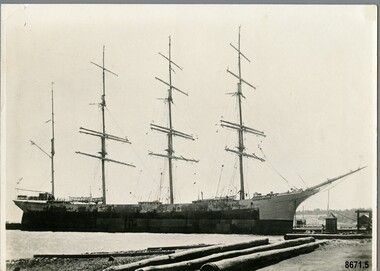 Flagstaff Hill Maritime Museum and Village
Photograph - Vessel "Strathgryfe", late 19th or early 20th century
... It continued to operate in Australian ports until 1914 when it left Sydney for the English Channel with 42,438 bags of wheat. However owing to W.W.1 breaking out, it made for the port of St Michael's where it remained for twenty-one months. ...It continued to operate in Australian ports until 1914 when it left Sydney for the English Channel with 42,438 bags of wheat. However owing to W.W.1 breaking out, it made for the port of St Michael's where it remained for twenty-one months. ...This photograph was one of ten photographs donated to Flagstaff Hill Maritime Museum and Village by Fred Trewartha. Frederick John Fox Trewartha (Fred) was a well-known Warrnambool businessman. He was born in Beeac near Geelong in 1920 and came to Warrnambool with his family as a very young child. He was apprenticed to his father John, as a saddler and later opened his own shop on Raglan Parade. He then moved into working with tarpaulins and canvases for the trucking industry. Fred was keenly interested in photography (and was a member of the Warrnambool Cine Club), yachting and boat building. He kept his yacht moored at Port Fairy for many years and participated in sailing events locally and interstate. He also built boats with his sons. He had the opportunity to meet many older sailors and it's thought this photo (and others in the set) may have been given to him by one of these men. Fred Trewartha died in 2016 in Warrnambool. The "Strathgryfe" was a four masted steel barque built in 1890 by "Russell and Company", Port Glasgow and was owned by Duncan McGillivray (The Strathgryfe Ship Company Limited), Greenock. It arrived in Melbourne in December 1891 from New York. Between 1891 and 1910 it carried merchandise in and out of Australia to ports around the world - Melbourne to London (1892), Newcastle to San Francisco (1894), Capetown to Newcastle (1894), New York to Shanghai (1897), New York to Melbourne (1898), Frederickstadt to Melbourne (1899), Liverpool to Sydney (1900), San Francisco to Brisbane (1903), Newcastle to Pisagna, Chile (1905) and Rotterdam to Melbourne (1910). It carried breadstuffs from San Francisco, coal from Newcastle, wool from Sydney, saltpetre from Hamburg and wheat from Brisbane and Melbourne as well as a variety of general merchandise. In 1898, whilst on route between New York and Melbourne, it came across the Captain and crew of the missing barque "Glen Huntley" which had been reported as "lost" several months earlier. They had been marooned at Tristan D'Acunha (a remote group of volcanic islands in the South Atlantic ocean). Captain McIntyre, of the Strathgryfe, offered to bring Captain Shaw (of the Glen Huntly) on to Melbourne with them but the "old mariner" decided to stay on with his crew till arrangements could be made for rescuing the whole of them. In 1899, when in Melbourne, seven of its crew refused to go to sea in it due to its unsafe conditions. They said the vessel was unseaworthy and that the rigging was unsafe and the lifeboats, not watertight. The Captain (Donald McIntyre) denied the allegations and produced a marine surveyor's certificate as evidence of the condition of the vessel. The men were sentenced to three weeks imprisonment. In 1901 there was a fire on board the Strathgryfe just after it left Sydney for London which resulted in many bales of wool being destroyed. In 1902 it was beached at Shellback island (near Wilson's promontory) for several weeks and had to be considerably dismantled in order to lighten its load enough to allow tugs to pull it back into deep water. In 1910 it was sold to a German firm and renamed "Margretha". It continued to operate in Australian ports until 1914 when it left Sydney for the English Channel with 42,438 bags of wheat. However owing to W.W.1 breaking out, it made for the port of St Michael's where it remained for twenty-one months. Later it was seized by the Portuguese Government and renamed "Graciosa" and was leased back to the English Government. It was sunk by two German submarines in 1918.This photograph is significant as a record of the world wide mercantile trade Australia was engaged in at the end of the nineteenth century and beginning of the twentieth century.Black and white photograph of a four masted barque moored at a dock. The rigging and two lifeboats are clearly visible. Three large timber logs are in the foreground. On the back of the photograph, the donor's name and telephone number have been written in black ballpoint pen and the name of the ship has been handwritten (incorrectly) in pencil in cursive script.Back of Photo - donor's name and telephone number "Strarthgryfe" [Strathgryfe] / "late" / "Margurita" [Margretha]flagstaff hill maritime museum and village, warrnambool, great ocean road, shipwreck coast, strathgryfe, barque, steel barque, margretha, graciosa, frederick trewartha, mercantile trade, russell and company, merchandise, cargo ship, glen huntly, w. w. 1 -
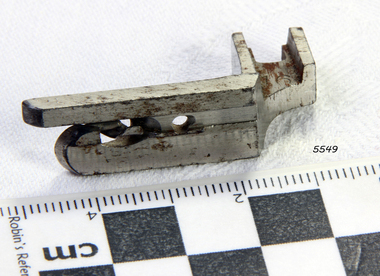 Flagstaff Hill Maritime Museum and Village
Accessory - Hemmer Foot, Joseph Wertheim, ca. 1891
... The piano factory closed in 1935, becoming a Heinz food processing plant and in 1955, GTV Channel 9 studios and offices. The Wertheim Sewing Machine Company – Joseph Wertheim (1804–1899) founded the company in 1868 in Frankfurt, Germany. ...The piano factory closed in 1935, becoming a Heinz food processing plant and in 1955, GTV Channel 9 studios and offices. The Wertheim Sewing Machine Company – Joseph Wertheim (1804–1899) founded the company in 1868 in Frankfurt, Germany. ...This sewing machine accessory was donated with our collection's Wertheim sewing machine accessory box. The box contains twelve accessories, the instruction book and the receipt for the purchase of a Wertheim sewing machine. The receipt was written on July 23rd 1891 by the Wertheim distributor in Melbourne, Hugo Wertheim. His business was the Wertheim Sewing Machine and Hapsburg Piano Depot, trading at 173 Williams Street, Melbourne. The purchaser was Mrs Burrowes from Burrumbeet, Victoria, a district northwest of Ballarat. She paid £6-6 (six pounds and six shillings) in cash. The receipt was signed by H. Wertheim and the other signatory looks like John A. Cherry. Hugo Wertheim (1854-1919) was an agent for his father’s cousin Joseph Wertheim, a well-established sewing machine manufacturer in Germany. He was born in Lispenhausen, Germany, and migrated to Melbourne in October 1875, where he opened a merchandising business at 39 Flinders Lane East. He returned to Germany in 1885 to marry Joseph Wertheim's daughter Sophie Emilie. The couple came back to Melbourne, and Hugo quickly established a substantial business selling sewing machines, bicycles, pianos and other mechanical devices, under brands such as Wertheim, Electra, Planet, Griffin and Hapsburg. He exhibited at agricultural shows and in 1901 at the Pan American Exposition, Buffalo, United States of America. One of his staff was O. C. Beale, who later set up his own piano business in New South Wales. Hugo continued to own 25 per cent of one of Beale's companies, which became Wertheim's Queensland business. In 1908 Hugo Wertheim opened a piano factory in Richmond, Melbourne, aiming to produce 2000 pianos and player pianos a year, predominantly using Australian materials. In laying the foundation stone, Prime Minister Alfred Deakin observed that “few men with such opportunities for a life of ease would have embarked on such an enterprise” Hugo died of chronic hepatitis in 1919 at his home in South Yarra. His eldest son, Herbert Joseph (1886-1972), continued the business. The piano factory closed in 1935, becoming a Heinz food processing plant and in 1955, GTV Channel 9 studios and offices. The Wertheim Sewing Machine Company – Joseph Wertheim (1804–1899) founded the company in 1868 in Frankfurt, Germany. At this time Joseph was the Frankfurt city delegate for the Democratic Party. At its height, the Wertheim factory employed approximately 650 workers. The company used a trademark of a dwarf holding a hammer which is known to have been used until at least 1925, however in 1909 a Star of David was also registered. In 1870 a Wertheim subsidiary was formed in Barcelona, Spain. The business imported and sold complete machines, including the English Jones machine. Locals began calling the sewing machines “las rapidas”, and the business became known as “las casa de las rapidas”. In 1915 production began of a totally manufactured Spanish Wertheim machine. Wertheim in Germany continued manufacturing machines until 1932 when the Wertheim family fled to Spain. Despite converting to Christianity from Judaism, they feared the political unrest in Germany during that time. Wertheim Spain became Rapida SA and was then the sole manufacturer of the Wertheim machines. The factory was managed by Karl Wertheim under the alias Carlos Vallin. The sewing machine accessory is part of a donation that connected to domestic life in 1891 during the Victorian era. It is significant for connecting the Melbourne distributor of Wertheim sewing machines, Hugo Wertheim, to Victoria’s northwest district where the purchaser lived. It is also significant for connecting the Melbourne distributor to the importing of goods from the well-known German manufacturer of early domestic sewing machines, Joseph Wertheim. Broad Hemmer Foot for a Wertheim sewing machine. Joseph Wertheim manufacturer, Germany, distributed by Hugo Wertheim William Street Melbourne. Circa 1891flagstaff hill, flagstaff hill maritime museum and village, warrnambool, maritime museum, maritime village, great ocean road, shipwreck coast, wertheim, sewing machine, victorian era, sewing machine accessory, wertheim sewing machine and hapsburg piano depot, wertheim sewing machines, sewing machine foot, domestic machines, dressmaking, home industry, fashion -
 Flagstaff Hill Maritime Museum and Village
Accessory - Small Corder Foot, ca. 1891
... The piano factory closed in 1935, becoming a Heinz food processing plant and in 1955, GTV Channel 9 studios and offices. The Wertheim Sewing Machine Company – Joseph Wertheim (1804–1899) founded the company in 1868 in Frankfurt, Germany. ...The piano factory closed in 1935, becoming a Heinz food processing plant and in 1955, GTV Channel 9 studios and offices. The Wertheim Sewing Machine Company – Joseph Wertheim (1804–1899) founded the company in 1868 in Frankfurt, Germany. ...This sewing machine accessory was donated with our collection's Wertheim sewing machine accessory box. The box contains twelve accessories, the instruction book and the receipt for the purchase of a Wertheim sewing machine. The receipt was written on July 23rd 1891 by the Wertheim distributor in Melbourne, Hugo Wertheim. His business was the Wertheim Sewing Machine and Hapsburg Piano Depot, trading at 173 Williams Street, Melbourne. The purchaser was Mrs Burrowes from Burrumbeet, Victoria, a district northwest of Ballarat. She paid £6-6 (six pounds and six shillings) in cash. The receipt was signed by H. Wertheim and the other signatory looks like John A. Cherry. Hugo Wertheim (1854-1919) was an agent for his father’s cousin Joseph Wertheim, a well-established sewing machine manufacturer in Germany. He was born in Lispenhausen, Germany, and migrated to Melbourne in October 1875, where he opened a merchandising business at 39 Flinders Lane East. He returned to Germany in 1885 to marry Joseph Wertheim's daughter Sophie Emilie. The couple came back to Melbourne, and Hugo quickly established a substantial business selling sewing machines, bicycles, pianos and other mechanical devices, under brands such as Wertheim, Electra, Planet, Griffin and Hapsburg. He exhibited at agricultural shows and in 1901 at the Pan American Exposition, Buffalo, United States of America. One of his staff was O. C. Beale, who later set up his own piano business in New South Wales. Hugo continued to own 25 per cent of one of Beale's companies, which became Wertheim's Queensland business. In 1908 Hugo Wertheim opened a piano factory in Richmond, Melbourne, aiming to produce 2000 pianos and player pianos a year, predominantly using Australian materials. In laying the foundation stone, Prime Minister Alfred Deakin observed that “few men with such opportunities for a life of ease would have embarked on such an enterprise” Hugo died of chronic hepatitis in 1919 at his home in South Yarra. His eldest son, Herbert Joseph (1886-1972), continued the business. The piano factory closed in 1935, becoming a Heinz food processing plant and in 1955, GTV Channel 9 studios and offices. The Wertheim Sewing Machine Company – Joseph Wertheim (1804–1899) founded the company in 1868 in Frankfurt, Germany. At this time Joseph was the Frankfurt city delegate for the Democratic Party. At its height, the Wertheim factory employed approximately 650 workers. The company used a trademark of a dwarf holding a hammer which is known to have been used until at least 1925, however in 1909 a Star of David was also registered. In 1870 a Wertheim subsidiary was formed in Barcelona, Spain. The business imported and sold complete machines, including the English Jones machine. Locals began calling the sewing machines “las rapidas”, and the business became known as “las casa de las rapidas”. In 1915 production began of a totally manufactured Spanish Wertheim machine. Wertheim in Germany continued manufacturing machines until 1932 when the Wertheim family fled to Spain. Despite converting to Christianity from Judaism, they feared the political unrest in Germany during that time. Wertheim Spain became Rapida SA and was then the sole manufacturer of the Wertheim machines. The factory was managed by Karl Wertheim under the alias Carlos Vallin.The sewing machine accessory is part of a donation that connected to domestic life in 1891 during the Victorian era. It is significant for connecting the Melbourne distributor of Wertheim sewing machines, Hugo Wertheim, to Victoria’s northwest district where the purchaser lived. It is also significant for connecting the Melbourne distributor to the importing of goods from the well-known German manufacturer of early domestic sewing machines, Joseph Wertheim. Small corder foot for a Wertheim sewing machine. Joseph Wertheim manufacturer, Germany, distributed by Hugo Wertheim William Street Melbourne. Circa 1891flagstaff hill, flagstaff hill maritime museum and village, warrnambool, maritime museum, maritime village, great ocean road, shipwreck coast, wertheim, sewing machine, victorian era, sewing machine accessory, wertheim sewing machine and hapsburg piano depot, wertheim sewing machines, sewing machine foot, small corder foot, domestic machines, dressmaking, home industry, fashion -
 Flagstaff Hill Maritime Museum and Village
Accessory - Seamer Foot, Joseph Wertheim, ca. 1891
... The piano factory closed in 1935, becoming a Heinz food processing plant and in 1955, GTV Channel 9 studios and offices. The Wertheim Sewing Machine Company – Joseph Wertheim (1804–1899) founded the company in 1868 in Frankfurt, Germany. ...The piano factory closed in 1935, becoming a Heinz food processing plant and in 1955, GTV Channel 9 studios and offices. The Wertheim Sewing Machine Company – Joseph Wertheim (1804–1899) founded the company in 1868 in Frankfurt, Germany. ...This sewing machine accessory was donated with our collection's Wertheim sewing machine accessory box. The box contains twelve accessories, the instruction book and the receipt for the purchase of a Wertheim sewing machine. The receipt was written on July 23rd 1891 by the Wertheim distributor in Melbourne, Hugo Wertheim. His business was the Wertheim Sewing Machine and Hapsburg Piano Depot, trading at 173 Williams Street, Melbourne. The purchaser was Mrs Burrowes from Burrumbeet, Victoria, a district northwest of Ballarat. She paid £6-6 (six pounds and six shillings) in cash. The receipt was signed by H. Wertheim and the other signatory looks like John A. Cherry. Hugo Wertheim (1854-1919) was an agent for his father’s cousin Joseph Wertheim, a well-established sewing machine manufacturer in Germany. He was born in Lispenhausen, Germany, and migrated to Melbourne in October 1875, where he opened a merchandising business at 39 Flinders Lane East. He returned to Germany in 1885 to marry Joseph Wertheim's daughter Sophie Emilie. The couple came back to Melbourne, and Hugo quickly established a substantial business selling sewing machines, bicycles, pianos and other mechanical devices, under brands such as Wertheim, Electra, Planet, Griffin and Hapsburg. He exhibited at agricultural shows and in 1901 at the Pan American Exposition, Buffalo, United States of America. One of his staff was O. C. Beale, who later set up his own piano business in New South Wales. Hugo continued to own 25 per cent of one of Beale's companies, which became Wertheim's Queensland business. In 1908 Hugo Wertheim opened a piano factory in Richmond, Melbourne, aiming to produce 2000 pianos and player pianos a year, predominantly using Australian materials. In laying the foundation stone, Prime Minister Alfred Deakin observed that “few men with such opportunities for a life of ease would have embarked on such an enterprise” Hugo died of chronic hepatitis in 1919 at his home in South Yarra. His eldest son, Herbert Joseph (1886-1972), continued the business. The piano factory closed in 1935, becoming a Heinz food processing plant and in 1955, GTV Channel 9 studios and offices. The Wertheim Sewing Machine Company – Joseph Wertheim (1804–1899) founded the company in 1868 in Frankfurt, Germany. At this time Joseph was the Frankfurt city delegate for the Democratic Party. At its height, the Wertheim factory employed approximately 650 workers. The company used a trademark of a dwarf holding a hammer which is known to have been used until at least 1925, however in 1909 a Star of David was also registered. In 1870 a Wertheim subsidiary was formed in Barcelona, Spain. The business imported and sold complete machines, including the English Jones machine. Locals began calling the sewing machines “las rapidas”, and the business became known as “las casa de las rapidas”. In 1915 production began of a totally manufactured Spanish Wertheim machine. Wertheim in Germany continued manufacturing machines until 1932 when the Wertheim family fled to Spain. Despite converting to Christianity from Judaism, they feared the political unrest in Germany during that time. Wertheim Spain became Rapida SA and was then the sole manufacturer of the Wertheim machines. The factory was managed by Karl Wertheim under the alias Carlos Vallin. The sewing machine accessory is part of a donation that connected to domestic life in 1891 during the Victorian era. It is significant for connecting the Melbourne distributor of Wertheim sewing machines, Hugo Wertheim, to Victoria’s northwest district where the purchaser lived. It is also significant for connecting the Melbourne distributor to the importing of goods from the well-known German manufacturer of early domestic sewing machines, Joseph Wertheim. Seamer foot; feller single seamer for a Wertheim sewing machine. Made by Joseph Wertheim, Germany, and distributed by Hugo Wertheim, William Street Melbourne. Circa 1891flagstaff hill, flagstaff hill maritime museum and village, warrnambool, maritime museum, maritime village, great ocean road, shipwreck coast, wertheim, sewing machine, victorian era, sewing machine accessory, wertheim sewing machine and hapsburg piano depot, wertheim sewing machines, sewing machine foot, seamer foot, domestic machines, dressmaking, home industry, fashion -
 Flagstaff Hill Maritime Museum and Village
Accessory - Braider foot, Joseph Wertheim, ca. 1891
... The piano factory closed in 1935, becoming a Heinz food processing plant and in 1955, GTV Channel 9 studios and offices. The Wertheim Sewing Machine Company – Joseph Wertheim (1804–1899) founded the company in 1868 in Frankfurt, Germany. ...The piano factory closed in 1935, becoming a Heinz food processing plant and in 1955, GTV Channel 9 studios and offices. The Wertheim Sewing Machine Company – Joseph Wertheim (1804–1899) founded the company in 1868 in Frankfurt, Germany. ...This sewing machine accessory was donated with our collection's Wertheim sewing machine accessory box. The box contains twelve accessories, the instruction book and the receipt for the purchase of a Wertheim sewing machine. The receipt was written on July 23rd 1891 by the Wertheim distributor in Melbourne, Hugo Wertheim. His business was the Wertheim Sewing Machine and Hapsburg Piano Depot, trading at 173 Williams Street, Melbourne. The purchaser was Mrs Burrowes from Burrumbeet, Victoria, a district northwest of Ballarat. She paid £6-6 (six pounds and six shillings) in cash. The receipt was signed by H. Wertheim and the other signatory looks like John A. Cherry. Hugo Wertheim (1854-1919) was an agent for his father’s cousin Joseph Wertheim, a well-established sewing machine manufacturer in Germany. He was born in Lispenhausen, Germany, and migrated to Melbourne in October 1875, where he opened a merchandising business at 39 Flinders Lane East. He returned to Germany in 1885 to marry Joseph Wertheim's daughter Sophie Emilie. The couple came back to Melbourne, and Hugo quickly established a substantial business selling sewing machines, bicycles, pianos and other mechanical devices, under brands such as Wertheim, Electra, Planet, Griffin and Hapsburg. He exhibited at agricultural shows and in 1901 at the Pan American Exposition, Buffalo, United States of America. One of his staff was O. C. Beale, who later set up his own piano business in New South Wales. Hugo continued to own 25 per cent of one of Beale's companies, which became Wertheim's Queensland business. In 1908 Hugo Wertheim opened a piano factory in Richmond, Melbourne, aiming to produce 2000 pianos and player pianos a year, predominantly using Australian materials. In laying the foundation stone, Prime Minister Alfred Deakin observed that “few men with such opportunities for a life of ease would have embarked on such an enterprise” Hugo died of chronic hepatitis in 1919 at his home in South Yarra. His eldest son, Herbert Joseph (1886-1972), continued the business. The piano factory closed in 1935, becoming a Heinz food processing plant and in 1955, GTV Channel 9 studios and offices. The Wertheim Sewing Machine Company – Joseph Wertheim (1804–1899) founded the company in 1868 in Frankfurt, Germany. At this time Joseph was the Frankfurt city delegate for the Democratic Party. At its height, the Wertheim factory employed approximately 650 workers. The company used a trademark of a dwarf holding a hammer which is known to have been used until at least 1925, however in 1909 a Star of David was also registered. In 1870 a Wertheim subsidiary was formed in Barcelona, Spain. The business imported and sold complete machines, including the English Jones machine. Locals began calling the sewing machines “las rapidas”, and the business became known as “las casa de las rapidas”. In 1915 production began of a totally manufactured Spanish Wertheim machine. Wertheim in Germany continued manufacturing machines until 1932 when the Wertheim family fled to Spain. Despite converting to Christianity from Judaism, they feared the political unrest in Germany during that time. Wertheim Spain became Rapida SA and was then the sole manufacturer of the Wertheim machines. The factory was managed by Karl Wertheim under the alias Carlos Vallin.The sewing machine accessory is part of a donation that connected to domestic life in 1891 during the Victorian era. It is significant for connecting the Melbourne distributor of Wertheim sewing machines, Hugo Wertheim, to Victoria’s northwest district where the purchaser lived. It is also significant for connecting the Melbourne distributor to the importing of goods from the well-known German manufacturer of early domestic sewing machines, Joseph Wertheim.Wertheim braider; an accessory for a Wertheim sewing machine. Made by Joseph Wertheim, Germany, and distributed by Hugo Wertheim, William Street Melbourne. Circa 1891flagstaff hill, flagstaff hill maritime museum and village, warrnambool, maritime museum, maritime village, great ocean road, shipwreck coast, wertheim, sewing machine, victorian era, sewing machine accessory, wertheim sewing machine and hapsburg piano depot, wertheim sewing machines, sewing machine foot, seamer foot, domestic machines, dressmaking, home industry, fashion -
 Flagstaff Hill Maritime Museum and Village
Accessory - Sewing Machine Foot, Joseph Wertheim, ca. 1891
... The piano factory closed in 1935, becoming a Heinz food processing plant and in 1955, GTV Channel 9 studios and offices. The Wertheim Sewing Machine Company – Joseph Wertheim (1804–1899) founded the company in 1868 in Frankfurt, Germany. ...The piano factory closed in 1935, becoming a Heinz food processing plant and in 1955, GTV Channel 9 studios and offices. The Wertheim Sewing Machine Company – Joseph Wertheim (1804–1899) founded the company in 1868 in Frankfurt, Germany. ...This sewing machine accessory was donated with our collection's Wertheim sewing machine accessory box. The box contains twelve accessories, the instruction book and the receipt for the purchase of a Wertheim sewing machine. The receipt was written on July 23rd 1891 by the Wertheim distributor in Melbourne, Hugo Wertheim. His business was the Wertheim Sewing Machine and Hapsburg Piano Depot, trading at 173 Williams Street, Melbourne. The purchaser was Mrs Burrowes from Burrumbeet, Victoria, a district northwest of Ballarat. She paid £6-6 (six pounds and six shillings) in cash. The receipt was signed by H. Wertheim and the other signatory looks like John A. Cherry. Hugo Wertheim (1854-1919) was an agent for his father’s cousin Joseph Wertheim, a well-established sewing machine manufacturer in Germany. He was born in Lispenhausen, Germany, and migrated to Melbourne in October 1875, where he opened a merchandising business at 39 Flinders Lane East. He returned to Germany in 1885 to marry Joseph Wertheim's daughter Sophie Emilie. The couple came back to Melbourne, and Hugo quickly established a substantial business selling sewing machines, bicycles, pianos and other mechanical devices, under brands such as Wertheim, Electra, Planet, Griffin and Hapsburg. He exhibited at agricultural shows and in 1901 at the Pan American Exposition, Buffalo, United States of America. One of his staff was O. C. Beale, who later set up his own piano business in New South Wales. Hugo continued to own 25 per cent of one of Beale's companies, which became Wertheim's Queensland business. In 1908 Hugo Wertheim opened a piano factory in Richmond, Melbourne, aiming to produce 2000 pianos and player pianos a year, predominantly using Australian materials. In laying the foundation stone, Prime Minister Alfred Deakin observed that “few men with such opportunities for a life of ease would have embarked on such an enterprise” Hugo died of chronic hepatitis in 1919 at his home in South Yarra. His eldest son, Herbert Joseph (1886-1972), continued the business. The piano factory closed in 1935, becoming a Heinz food processing plant and in 1955, GTV Channel 9 studios and offices. The Wertheim Sewing Machine Company – Joseph Wertheim (1804–1899) founded the company in 1868 in Frankfurt, Germany. At this time Joseph was the Frankfurt city delegate for the Democratic Party. At its height, the Wertheim factory employed approximately 650 workers. The company used a trademark of a dwarf holding a hammer which is known to have been used until at least 1925, however in 1909 a Star of David was also registered. In 1870 a Wertheim subsidiary was formed in Barcelona, Spain. The business imported and sold complete machines, including the English Jones machine. Locals began calling the sewing machines “las rapidas”, and the business became known as “las casa de las rapidas”. In 1915 production began of a totally manufactured Spanish Wertheim machine. Wertheim in Germany continued manufacturing machines until 1932 when the Wertheim family fled to Spain. Despite converting to Christianity from Judaism, they feared the political unrest in Germany during that time. Wertheim Spain became Rapida SA and was then the sole manufacturer of the Wertheim machines. The factory was managed by Karl Wertheim under the alias Carlos Vallin. The sewing machine accessory is part of a donation that connected to domestic life in 1891 during the Victorian era. It is significant for connecting the Melbourne distributor of Wertheim sewing machines, Hugo Wertheim, to Victoria’s northwest district where the purchaser lived. It is also significant for connecting the Melbourne distributor to the importing of goods from the well-known German manufacturer of early domestic sewing machines, Joseph Wertheim. Foot accessory, metal, for a Wertheim sewing machine. Made by Joseph Wertheim, Germany, and distributed by Hugo Wertheim, William Street Melbourne. Circa 1891flagstaff hill, flagstaff hill maritime museum and village, warrnambool, maritime museum, maritime village, great ocean road, shipwreck coast, wertheim, sewing machine, victorian era, sewing machine accessory, wertheim sewing machine and hapsburg piano depot, wertheim sewing machines, sewing machine foot, seamer foot, domestic machines, dressmaking, home industry, fashion -
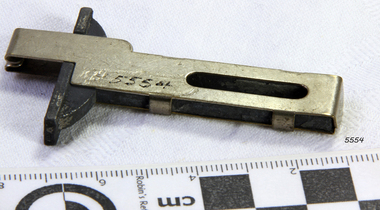 Flagstaff Hill Maritime Museum and Village
Accessory - Binder, Joseph Wertheim, ca. 1891
... The piano factory closed in 1935, becoming a Heinz food processing plant and in 1955, GTV Channel 9 studios and offices. The Wertheim Sewing Machine Company – Joseph Wertheim (1804–1899) founded the company in 1868 in Frankfurt, Germany. ...The piano factory closed in 1935, becoming a Heinz food processing plant and in 1955, GTV Channel 9 studios and offices. The Wertheim Sewing Machine Company – Joseph Wertheim (1804–1899) founded the company in 1868 in Frankfurt, Germany. ...This sewing machine accessory was donated with our collection's Wertheim sewing machine accessory box. The box contains twelve accessories, the instruction book and the receipt for the purchase of a Wertheim sewing machine. The receipt was written on July 23rd 1891 by the Wertheim distributor in Melbourne, Hugo Wertheim. His business was the Wertheim Sewing Machine and Hapsburg Piano Depot, trading at 173 Williams Street, Melbourne. The purchaser was Mrs Burrowes from Burrumbeet, Victoria, a district northwest of Ballarat. She paid £6-6 (six pounds and six shillings) in cash. The receipt was signed by H. Wertheim and the other signatory looks like John A. Cherry. Hugo Wertheim (1854-1919) was an agent for his father’s cousin Joseph Wertheim, a well-established sewing machine manufacturer in Germany. He was born in Lispenhausen, Germany, and migrated to Melbourne in October 1875, where he opened a merchandising business at 39 Flinders Lane East. He returned to Germany in 1885 to marry Joseph Wertheim's daughter Sophie Emilie. The couple came back to Melbourne, and Hugo quickly established a substantial business selling sewing machines, bicycles, pianos and other mechanical devices, under brands such as Wertheim, Electra, Planet, Griffin and Hapsburg. He exhibited at agricultural shows and in 1901 at the Pan American Exposition, Buffalo, United States of America. One of his staff was O. C. Beale, who later set up his own piano business in New South Wales. Hugo continued to own 25 per cent of one of Beale's companies, which became Wertheim's Queensland business. In 1908 Hugo Wertheim opened a piano factory in Richmond, Melbourne, aiming to produce 2000 pianos and player pianos a year, predominantly using Australian materials. In laying the foundation stone, Prime Minister Alfred Deakin observed that “few men with such opportunities for a life of ease would have embarked on such an enterprise” Hugo died of chronic hepatitis in 1919 at his home in South Yarra. His eldest son, Herbert Joseph (1886-1972), continued the business. The piano factory closed in 1935, becoming a Heinz food processing plant and in 1955, GTV Channel 9 studios and offices. The Wertheim Sewing Machine Company – Joseph Wertheim (1804–1899) founded the company in 1868 in Frankfurt, Germany. At this time Joseph was the Frankfurt city delegate for the Democratic Party. At its height, the Wertheim factory employed approximately 650 workers. The company used a trademark of a dwarf holding a hammer which is known to have been used until at least 1925, however in 1909 a Star of David was also registered. In 1870 a Wertheim subsidiary was formed in Barcelona, Spain. The business imported and sold complete machines, including the English Jones machine. Locals began calling the sewing machines “las rapidas”, and the business became known as “las casa de las rapidas”. In 1915 production began of a totally manufactured Spanish Wertheim machine. Wertheim in Germany continued manufacturing machines until 1932 when the Wertheim family fled to Spain. Despite converting to Christianity from Judaism, they feared the political unrest in Germany during that time. Wertheim Spain became Rapida SA and was then the sole manufacturer of the Wertheim machines. The factory was managed by Karl Wertheim under the alias Carlos Vallin.The sewing machine accessory is part of a donation that connected to domestic life in 1891 during the Victorian era. It is significant for connecting the Melbourne distributor of Wertheim sewing machines, Hugo Wertheim, to Victoria’s northwest district where the purchaser lived. It is also significant for connecting the Melbourne distributor to the importing of goods from the well-known German manufacturer of early domestic sewing machines, Joseph Wertheim. Adjustable binder for a Wertheim sewing machine. Made by Joseph Wertheim, Germany, and distributed by Hugo Wertheim, William Street Melbourne. Circa 1891flagstaff hill, flagstaff hill maritime museum and village, warrnambool, maritime museum, maritime village, great ocean road, shipwreck coast, wertheim, sewing machine, victorian era, sewing machine accessory, wertheim sewing machine and hapsburg piano depot, wertheim sewing machines, sewing machine foot, seamer foot, domestic machines, dressmaking, home industry, fashion, binder -
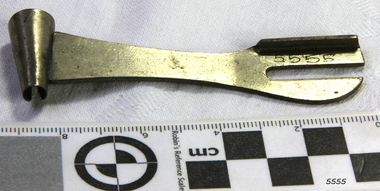 Flagstaff Hill Maritime Museum and Village
Accessory - Tool Part, Joseph Wertheim, ca. 1891
... The piano factory closed in 1935, becoming a Heinz food processing plant and in 1955, GTV Channel 9 studios and offices. The Wertheim Sewing Machine Company – Joseph Wertheim (1804–1899) founded the company in 1868 in Frankfurt, Germany. ...The piano factory closed in 1935, becoming a Heinz food processing plant and in 1955, GTV Channel 9 studios and offices. The Wertheim Sewing Machine Company – Joseph Wertheim (1804–1899) founded the company in 1868 in Frankfurt, Germany. ...This sewing machine accessory was donated with our collection's Wertheim sewing machine accessory box. The box contains twelve accessories, the instruction book and the receipt for the purchase of a Wertheim sewing machine. The receipt was written on July 23rd 1891 by the Wertheim distributor in Melbourne, Hugo Wertheim. His business was the Wertheim Sewing Machine and Hapsburg Piano Depot, trading at 173 Williams Street, Melbourne. The purchaser was Mrs Burrowes from Burrumbeet, Victoria, a district northwest of Ballarat. She paid £6-6 (six pounds and six shillings) in cash. The receipt was signed by H. Wertheim and the other signatory looks like John A. Cherry. Hugo Wertheim (1854-1919) was an agent for his father’s cousin Joseph Wertheim, a well-established sewing machine manufacturer in Germany. He was born in Lispenhausen, Germany, and migrated to Melbourne in October 1875, where he opened a merchandising business at 39 Flinders Lane East. He returned to Germany in 1885 to marry Joseph Wertheim's daughter Sophie Emilie. The couple came back to Melbourne, and Hugo quickly established a substantial business selling sewing machines, bicycles, pianos and other mechanical devices, under brands such as Wertheim, Electra, Planet, Griffin and Hapsburg. He exhibited at agricultural shows and in 1901 at the Pan American Exposition, Buffalo, United States of America. One of his staff was O. C. Beale, who later set up his own piano business in New South Wales. Hugo continued to own 25 per cent of one of Beale's companies, which became Wertheim's Queensland business. In 1908 Hugo Wertheim opened a piano factory in Richmond, Melbourne, aiming to produce 2000 pianos and player pianos a year, predominantly using Australian materials. In laying the foundation stone, Prime Minister Alfred Deakin observed that “few men with such opportunities for a life of ease would have embarked on such an enterprise” Hugo died of chronic hepatitis in 1919 at his home in South Yarra. His eldest son, Herbert Joseph (1886-1972), continued the business. The piano factory closed in 1935, becoming a Heinz food processing plant and in 1955, GTV Channel 9 studios and offices. The Wertheim Sewing Machine Company – Joseph Wertheim (1804–1899) founded the company in 1868 in Frankfurt, Germany. At this time Joseph was the Frankfurt city delegate for the Democratic Party. At its height, the Wertheim factory employed approximately 650 workers. The company used a trademark of a dwarf holding a hammer which is known to have been used until at least 1925, however in 1909 a Star of David was also registered. In 1870 a Wertheim subsidiary was formed in Barcelona, Spain. The business imported and sold complete machines, including the English Jones machine. Locals began calling the sewing machines “las rapidas”, and the business became known as “las casa de las rapidas”. In 1915 production began of a totally manufactured Spanish Wertheim machine. Wertheim in Germany continued manufacturing machines until 1932 when the Wertheim family fled to Spain. Despite converting to Christianity from Judaism, they feared the political unrest in Germany during that time. Wertheim Spain became Rapida SA and was then the sole manufacturer of the Wertheim machines. The factory was managed by Karl Wertheim under the alias Carlos Vallin. The sewing machine accessory is part of a donation that connected to domestic life in 1891 during the Victorian era. It is significant for connecting the Melbourne distributor of Wertheim sewing machines, Hugo Wertheim, to Victoria’s northwest district where the purchaser lived. It is also significant for connecting the Melbourne distributor to the importing of goods from the well-known German manufacturer of early domestic sewing machines, Joseph Wertheim. Tool part for a Wertheim sewing machine. Made by Joseph Wertheim, Germany, and distributed by Hugo Wertheim, William Street Melbourne. Circa 1891flagstaff hill, flagstaff hill maritime museum and village, warrnambool, maritime museum, maritime village, great ocean road, shipwreck coast, wertheim, sewing machine, victorian era, sewing machine accessory, wertheim sewing machine and hapsburg piano depot, wertheim sewing machines, sewing machine foot, seamer foot, domestic machines, dressmaking, home industry, fashion -
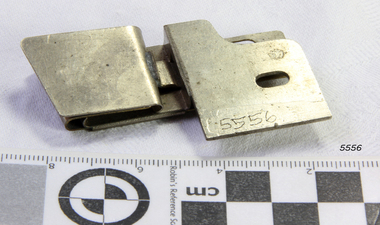 Flagstaff Hill Maritime Museum and Village
Accessory - Needle Plate, Joseph Wertheim, ca. 1891
... The piano factory closed in 1935, becoming a Heinz food processing plant and in 1955, GTV Channel 9 studios and offices. The Wertheim Sewing Machine Company – Joseph Wertheim (1804–1899) founded the company in 1868 in Frankfurt, Germany. ...The piano factory closed in 1935, becoming a Heinz food processing plant and in 1955, GTV Channel 9 studios and offices. The Wertheim Sewing Machine Company – Joseph Wertheim (1804–1899) founded the company in 1868 in Frankfurt, Germany. ...This sewing machine accessory was donated with our collection's Wertheim sewing machine accessory box. The box contains twelve accessories, the instruction book and the receipt for the purchase of a Wertheim sewing machine. The receipt was written on July 23rd 1891 by the Wertheim distributor in Melbourne, Hugo Wertheim. His business was the Wertheim Sewing Machine and Hapsburg Piano Depot, trading at 173 Williams Street, Melbourne. The purchaser was Mrs Burrowes from Burrumbeet, Victoria, a district northwest of Ballarat. She paid £6-6 (six pounds and six shillings) in cash. The receipt was signed by H. Wertheim and the other signatory looks like John A. Cherry. Hugo Wertheim (1854-1919) was an agent for his father’s cousin Joseph Wertheim, a well-established sewing machine manufacturer in Germany. He was born in Lispenhausen, Germany, and migrated to Melbourne in October 1875, where he opened a merchandising business at 39 Flinders Lane East. He returned to Germany in 1885 to marry Joseph Wertheim's daughter Sophie Emilie. The couple came back to Melbourne, and Hugo quickly established a substantial business selling sewing machines, bicycles, pianos and other mechanical devices, under brands such as Wertheim, Electra, Planet, Griffin and Hapsburg. He exhibited at agricultural shows and in 1901 at the Pan American Exposition, Buffalo, United States of America. One of his staff was O. C. Beale, who later set up his own piano business in New South Wales. Hugo continued to own 25 per cent of one of Beale's companies, which became Wertheim's Queensland business. In 1908 Hugo Wertheim opened a piano factory in Richmond, Melbourne, aiming to produce 2000 pianos and player pianos a year, predominantly using Australian materials. In laying the foundation stone, Prime Minister Alfred Deakin observed that “few men with such opportunities for a life of ease would have embarked on such an enterprise” Hugo died of chronic hepatitis in 1919 at his home in South Yarra. His eldest son, Herbert Joseph (1886-1972), continued the business. The piano factory closed in 1935, becoming a Heinz food processing plant and in 1955, GTV Channel 9 studios and offices. The Wertheim Sewing Machine Company – Joseph Wertheim (1804–1899) founded the company in 1868 in Frankfurt, Germany. At this time Joseph was the Frankfurt city delegate for the Democratic Party. At its height, the Wertheim factory employed approximately 650 workers. The company used a trademark of a dwarf holding a hammer which is known to have been used until at least 1925, however in 1909 a Star of David was also registered. In 1870 a Wertheim subsidiary was formed in Barcelona, Spain. The business imported and sold complete machines, including the English Jones machine. Locals began calling the sewing machines “las rapidas”, and the business became known as “las casa de las rapidas”. In 1915 production began of a totally manufactured Spanish Wertheim machine. Wertheim in Germany continued manufacturing machines until 1932 when the Wertheim family fled to Spain. Despite converting to Christianity from Judaism, they feared the political unrest in Germany during that time. Wertheim Spain became Rapida SA and was then the sole manufacturer of the Wertheim machines. The factory was managed by Karl Wertheim under the alias Carlos Vallin. The sewing machine accessory is part of a donation that connected to domestic life in 1891 during the Victorian era. It is significant for connecting the Melbourne distributor of Wertheim sewing machines, Hugo Wertheim, to Victoria’s northwest district where the purchaser lived. It is also significant for connecting the Melbourne distributor to the importing of goods from the well-known German manufacturer of early domestic sewing machines, Joseph Wertheim. Adjustable needle plate for a Wertheim sewing machine, made by Joseph Wertheim, Germany, and distributed by Hugo Wertheim, William Street Melbourne. Circa 1891.flagstaff hill, flagstaff hill maritime museum and village, warrnambool, maritime museum, maritime village, great ocean road, shipwreck coast, wertheim, sewing machine, victorian era, sewing machine accessory, wertheim sewing machine and hapsburg piano depot, wertheim sewing machines, needle plate, domestic machines, dressmaking, home industry, fashion -
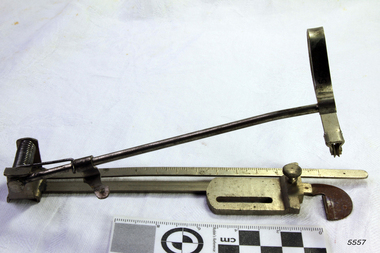 Flagstaff Hill Maritime Museum and Village
Accessory - Sewing Tuck Marker, Joseph Wertheim, ca. 1891
... The piano factory closed in 1935, becoming a Heinz food processing plant and in 1955, GTV Channel 9 studios and offices. The Wertheim Sewing Machine Company – Joseph Wertheim (1804–1899) founded the company in 1868 in Frankfurt, Germany. ...The piano factory closed in 1935, becoming a Heinz food processing plant and in 1955, GTV Channel 9 studios and offices. The Wertheim Sewing Machine Company – Joseph Wertheim (1804–1899) founded the company in 1868 in Frankfurt, Germany. ...The tuck making tool is part of a set of tools and Instructions for a Wertheim New High Arm Sewing Machine as well as the "B' Medium, Cylinder Arm and Titania Machines. This sewing machine accessory was donated with our collection's Wertheim sewing machine accessory box. The box contains twelve accessories, the instruction book and the receipt for the purchase of a Wertheim sewing machine. The receipt was written on July 23rd 1891 by the Wertheim distributor in Melbourne, Hugo Wertheim. His business was the Wertheim Sewing Machine and Hapsburg Piano Depot, trading at 173 Williams Street, Melbourne. The purchaser was Mrs Burrowes from Burrumbeet, Victoria, a district northwest of Ballarat. She paid £6-6 (six pounds and six shillings) in cash. The receipt was signed by H. Wertheim and the other signatory looks like John A. Cherry. Hugo Wertheim (1854-1919) was an agent for his father’s cousin Joseph Wertheim, a well-established sewing machine manufacturer in Germany. He was born in Lispenhausen, Germany, and migrated to Melbourne in October 1875, where he opened a merchandising business at 39 Flinders Lane East. He returned to Germany in 1885 to marry Joseph Wertheim's daughter Sophie Emilie. The couple came back to Melbourne, and Hugo quickly established a substantial business selling sewing machines, bicycles, pianos and other mechanical devices, under brands such as Wertheim, Electra, Planet, Griffin and Hapsburg. He exhibited at agricultural shows and in 1901 at the Pan American Exposition, Buffalo, United States of America. One of his staff was O. C. Beale, who later set up his own piano business in New South Wales. Hugo continued to own 25 per cent of one of Beale's companies, which became Wertheim's Queensland business. In 1908 Hugo Wertheim opened a piano factory in Richmond, Melbourne, aiming to produce 2000 pianos and player pianos a year, predominantly using Australian materials. In laying the foundation stone, Prime Minister Alfred Deakin observed that “few men with such opportunities for a life of ease would have embarked on such an enterprise” Hugo died of chronic hepatitis in 1919 at his home in South Yarra. His eldest son, Herbert Joseph (1886-1972), continued the business. The piano factory closed in 1935, becoming a Heinz food processing plant and in 1955, GTV Channel 9 studios and offices. The Wertheim Sewing Machine Company – Joseph Wertheim (1804–1899) founded the company in 1868 in Frankfurt, Germany. At this time Joseph was the Frankfurt city delegate for the Democratic Party. At its height, the Wertheim factory employed approximately 650 workers. The company used a trademark of a dwarf holding a hammer which is known to have been used until at least 1925, however in 1909 a Star of David was also registered. In 1870 a Wertheim subsidiary was formed in Barcelona, Spain. The business imported and sold complete machines, including the English Jones machine. Locals began calling the sewing machines “las rapidas”, and the business became known as “las casa de las rapidas”. In 1915 production began of a totally manufactured Spanish Wertheim machine. Wertheim in Germany continued manufacturing machines until 1932 when the Wertheim family fled to Spain. Despite converting to Christianity from Judaism, they feared the political unrest in Germany during that time. Wertheim Spain became Rapida SA and was then the sole manufacturer of the Wertheim machines. The factory was managed by Karl Wertheim under the alias Carlos Vallin. The sewing machine accessory is part of a donation that connected to domestic life in 1891 during the Victorian era. It is significant for connecting the Melbourne distributor of Wertheim sewing machines, Hugo Wertheim, to Victoria’s northwest district where the purchaser lived. It is also significant for connecting the Melbourne distributor to the importing of goods from the well-known German manufacturer of early domestic sewing machines, Joseph Wertheim. Tuck marker or creaser for a Wertheim sewing machine. Made by Joseph Wertheim , Germany, and distributed by Hugo Wertheim, William Street Melbourne. Circa 1891flagstaff hill, flagstaff hill maritime museum and village, warrnambool, maritime museum, maritime village, great ocean road, shipwreck coast, sewing machine tool, sewing machine accessory, tucker, tuck maker, creaser, wertheim, joseph wertheim, germany, hugo wertheim, victorian era, sewing machine, wertheim sewing machine and hapsburg piano depot, wertheim sewing machines, domestic machines, dressmaking, home industry, fashion
