
Showing 2232 items matching " build"
-
 Flagstaff Hill Maritime Museum and Village
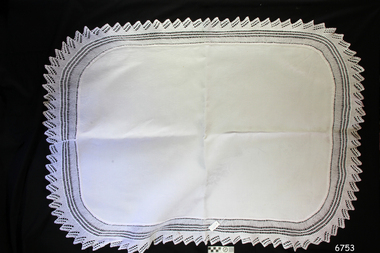
Textile - Trunk Cover, Mary Jane Giles (Mrs Harry Giles), Late 19th to Early 20th Century
... Henry was born at Tower Hill in 1858, and was a labourer on the construction of the Warrnambool Breakwater before leaving in 1895 for around seven years to build bridges in NSW. Mary Jane was born in 1860 at Cooramook and she attended Mailor’s Flat State School and where she eventually was to become a student teacher. ...Henry was born at Tower Hill in 1858, and was a labourer on the construction of the Warrnambool Breakwater before leaving in 1895 for around seven years to build bridges in NSW. Mary Jane was born in 1860 at Cooramook and she attended Mailor’s Flat State School and where she eventually was to become a student teacher. ...This item of linen is one of many 19th century items of furniture, linen and crockery donated to Flagstaff Hill Maritime Village by, Vera and Aurelin Giles. The items are associated with Warrnambool and the Giles Family history. Items donated by the family have come to be known as the “Giles Collection”. Many items in the Lighthouse Keeper’s Cottage were donated by Vera and Aurelin Giles and mostly came from the home of Vera’s parents-in-law, Henry Giles and his wife Mary Jane (nee Freckleton) who married in 1880 and whose photos are on display in the parlour. Henry was born at Tower Hill in 1858, and was a labourer on the construction of the Warrnambool Breakwater before leaving in 1895 for around seven years to build bridges in NSW. Mary Jane was born in 1860 at Cooramook and she attended Mailor’s Flat State School and where she eventually was to become a student teacher. After which she became a governess at “Injemiara” where her grandfather, Francis Freckleton, had once owned land. Henry and Mary’s family consisted of six, some of the children were born at Mailor’s Flat and later some children at Wangoom. They lived with their parents at Wangoom and Purnim west, and this is where Henry died in 1933 and Mary Jane in 1940. The Giles family collection is of social significance at a local level, because it not only illustrates the level of material support the Warrnambool community gave to Flagstaff Hill during it’s establishment. But the Giles collection also gives us today a snapshot into what domestic life was like in early colonial times prior to Federation.Cabin Trunk Cover, white with knitted lace fringe on all sidesNoneflagstaff hill, warrnambool, flagstaff-hill-maritime-museum, shipwreck-coast, flagstaff-hill-maritime-village, trunk cover, giles collection, henry giles, tower hill, cooramook, mailor’s flat, wangoom, 19th century household goods, textile -
 Flagstaff Hill Maritime Museum and Village
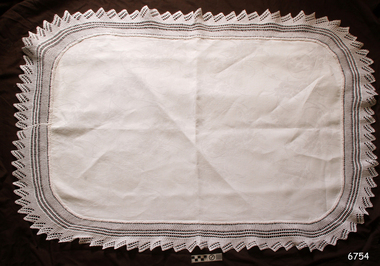
Textile - Trunk Cover, Mary Jane Giles (Mrs Harry Giles), Late 19th to Early 20th Century
... Henry was born at Tower Hill in 1858, and was a labourer on the construction of the Warrnambool Breakwater before leaving in 1895 for around seven years to build bridges in NSW. Mary Jane was born in 1860 at Cooramook and she attended Mailor’s Flat State School and where she eventually was to become a student teacher. ...Henry was born at Tower Hill in 1858, and was a labourer on the construction of the Warrnambool Breakwater before leaving in 1895 for around seven years to build bridges in NSW. Mary Jane was born in 1860 at Cooramook and she attended Mailor’s Flat State School and where she eventually was to become a student teacher. ...This textile is one of many 19th century items of furniture, linen and crockery donated to Flagstaff Hill Maritime Village by, Vera and Aurelin Giles. The items are associated with Warrnambool and the Giles Family history. Items donated by the family have come to be known as the “Giles Collection”. Many items in the Lighthouse Keeper’s Cottage were donated by Vera and Aurelin Giles and mostly came from the home of Vera’s parents-in-law, Henry Giles and his wife Mary Jane (nee Freckleton) who married in 1880 and whose photos are on display in the parlour. Henry was born at Tower Hill in 1858, and was a labourer on the construction of the Warrnambool Breakwater before leaving in 1895 for around seven years to build bridges in NSW. Mary Jane was born in 1860 at Cooramook and she attended Mailor’s Flat State School and where she eventually was to become a student teacher. After which she became a governess at “Injemiara” where her grandfather, Francis Freckleton, had once owned land. Henry and Mary’s family consisted of six, some of the children were born at Mailor’s Flat and later some children at Wangoom. They lived with their parents at Wangoom and Purnim west, and this is where Henry died in 1933 and Mary Jane in 1940.The Giles family collection is of social significance at a local level, because it not only illustrates the level of material support the Warrnambool community gave to Flagstaff Hill during it’s establishment. But the Giles collection also gives us today a snapshot into what domestic life was like in early colonial times prior to Federation.Cabin Trunk Cover, white with knitted lace fringe on all sidesNoneflagstaff hill, warrnambool, shipwrecked-coast, flagstaff-hill-maritime-museum, flagstaff-hill-maritime-village, trunk cover, giles collection, henry giles, tower hill, cooramook, warrnambool breakwater, mailor’s flat, wangoom, 19th century household goods, textile -
 Flagstaff Hill Maritime Museum and Village
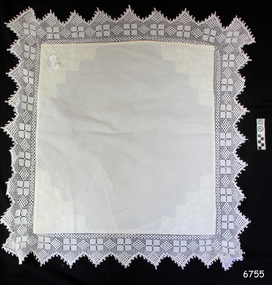
Textile - Tablecloth, Mary Jane Giles (Mrs Harry Giles), Late 19th to Early 20th Century
... Henry was born at Tower Hill in 1858, and was a labourer on the construction of the Warrnambool Breakwater before leaving in 1895 for around seven years to build bridges in NSW. Mary Jane was born in 1860 at Cooramook and she attended Mailor’s Flat State School and where she eventually was to become a student teacher. ...Henry was born at Tower Hill in 1858, and was a labourer on the construction of the Warrnambool Breakwater before leaving in 1895 for around seven years to build bridges in NSW. Mary Jane was born in 1860 at Cooramook and she attended Mailor’s Flat State School and where she eventually was to become a student teacher. ...This small table cloth is one of many 19th century items of furniture, linen and crockery donated to Flagstaff Hill Maritime Village by, Vera and Aurelin Giles. The items are associated with Warrnambool and the Giles Family history. Items donated by the family have come to be known as the “Giles Collection”. Many items in the Lighthouse Keeper’s Cottage were donated by Vera and Aurelin Giles and mostly came from the home of Vera’s parents-in-law, Henry Giles and his wife Mary Jane (nee Freckleton) who married in 1880 and whose photos are on display in the parlour. Henry was born at Tower Hill in 1858, and was a labourer on the construction of the Warrnambool Breakwater before leaving in 1895 for around seven years to build bridges in NSW. Mary Jane was born in 1860 at Cooramook and she attended Mailor’s Flat State School and where she eventually was to become a student teacher. After which she became a governess at “Injemiara” where her grandfather, Francis Freckleton, had once owned land. Henry and Mary’s family consisted of six, some of the children were born at Mailor’s Flat and later some children at Wangoom. They lived with their parents at Wangoom and Purnim west, and this is where Henry died in 1933 and Mary Jane in 1940.The Giles family collection is of social significance at a local level, because it not only illustrates the level of material support the Warrnambool community gave to Flagstaff Hill during it’s establishment. But the Giles collection also gives us today a snapshot into what domestic life was like in early colonial times prior to Federation.Tablecloth, white with lace fringe, for a small table.Nonewarrnambool, shipwrecked-coast, flagstaff-hill, flagstaff-hill-maritime-museum, shipwreck-coast, flagstaff-hill-maritime-village, tablecloth, manchester, table linen, giles collection, henry giles, tower hill, cooramook, warrnambool breakwater, mailor’s flat, wangoom, 19th century household goods -
 Flagstaff Hill Maritime Museum and Village
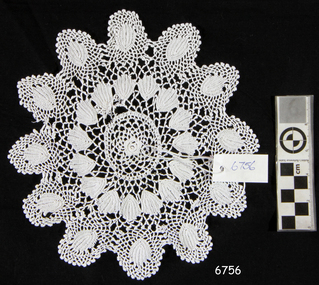
Textile - Doily, Mary Jane Giles (Mrs Harry Giles), Late 19th to Early 20th Century
... Henry was born at Tower Hill in 1858, and was a labourer on the construction of the Warrnambool Breakwater before leaving in 1895 for around seven years to build bridges in NSW. Mary Jane was born in 1860 at Cooramook and she attended Mailor’s Flat State School and where she eventually was to become a student teacher. ...Henry was born at Tower Hill in 1858, and was a labourer on the construction of the Warrnambool Breakwater before leaving in 1895 for around seven years to build bridges in NSW. Mary Jane was born in 1860 at Cooramook and she attended Mailor’s Flat State School and where she eventually was to become a student teacher. ...This doily is one of many 19th century items of furniture, linen and crockery donated to Flagstaff Hill Maritime Village by, Vera and Aurelin Giles. The items are associated with Warrnambool and the Giles Family history. Items donated by the family have come to be known as the “Giles Collection”. Many items in the Lighthouse Keeper’s Cottage were donated by Vera and Aurelin Giles and mostly came from the home of Vera’s parents-in-law, Henry Giles and his wife Mary Jane (nee Freckleton) who married in 1880 and whose photos are on display in the parlour. Henry was born at Tower Hill in 1858, and was a labourer on the construction of the Warrnambool Breakwater before leaving in 1895 for around seven years to build bridges in NSW. Mary Jane was born in 1860 at Cooramook and she attended Mailor’s Flat State School and where she eventually was to become a student teacher. After which she became a governess at “Injemiara” where her grandfather, Francis Freckleton, had once owned land. Henry and Mary’s family consisted of six, some of the children were born at Mailor’s Flat and later some children at Wangoom. They lived with their parents at Wangoom and Purnim west, and this is where Henry died in 1933 and Mary Jane in 1940.The Giles family collection is of social significance at a local level, because it not only illustrates the level of material support the Warrnambool community gave to Flagstaff Hill during it’s establishment. But the Giles collection also gives us today a snapshot into what domestic life was like in early colonial times prior to Federation.Doily, made of very fine lace, white. From the Giles Collection.Nonewarrnambool, shipwrecked-coast, flagstaff-hill, flagstaff-hill-maritime-museum, shipwreck-coast, flagstaff-hill-maritime-village, doily, haberdashery, manchester, linen, giles collection, henry giles, tower hill, cooramook, mailor’s flat, wangoom, 19th century household goods -
 Flagstaff Hill Maritime Museum and Village
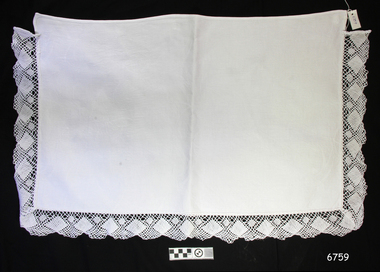
Textile - Sideboard Cover, Mary Jane Giles (Mrs Harry Giles), Late 19th to Early 20th Century
... Henry was born at Tower Hill in 1858, and was a labourer on the construction of the Warrnambool Breakwater before leaving in 1895 for around seven years to build bridges in NSW. Mary Jane was born in 1860 at Cooramook and she attended Mailor’s Flat State School and where she eventually was to become a student teacher. ...Henry was born at Tower Hill in 1858, and was a labourer on the construction of the Warrnambool Breakwater before leaving in 1895 for around seven years to build bridges in NSW. Mary Jane was born in 1860 at Cooramook and she attended Mailor’s Flat State School and where she eventually was to become a student teacher. ...This cot cover is one of many 19th century items of furniture, linen and crockery donated to Flagstaff Hill Maritime Village by, Vera and Aurelin Giles. The items are associated with Warrnambool and the Giles Family history. Items donated by the family have come to be known as the “Giles Collection”. Many items in the Lighthouse Keeper’s Cottage were donated by Vera and Aurelin Giles and mostly came from the home of Vera’s parents-in-law, Henry Giles and his wife Mary Jane (nee Freckleton) who married in 1880 and whose photos are on display in the parlour. Henry was born at Tower Hill in 1858, and was a labourer on the construction of the Warrnambool Breakwater before leaving in 1895 for around seven years to build bridges in NSW. Mary Jane was born in 1860 at Cooramook and she attended Mailor’s Flat State School and where she eventually was to become a student teacher. After which she became a governess at “Injemiara” where her grandfather, Francis Freckleton, had once owned land. Henry and Mary’s family consisted of six, some of the children were born at Mailor’s Flat and later some children at Wangoom. They lived with their parents at Wangoom and Purnim west, and this is where Henry died in 1933 and Mary Jane in 1940.The Giles family collection is of social significance at a local level, because it not only illustrates the level of material support the Warrnambool community gave to Flagstaff Hill during it’s establishment. But the Giles collection also gives us today a snapshot into what domestic life was like in early colonial times prior to Federation.Sideboard cover, white with crocheted lace on three sides.Nonewarrnambool, shipwrecked-coast, flagstaff-hill, flagstaff-hill-maritime-museum, shipwreck-coast, flagstaff-hill-maritime-village, sideboard cover, giles collection, henry giles, tower hill, cooramook, mailor’s flat, wangoom, 19th century household goods, textile -
 Flagstaff Hill Maritime Museum and Village
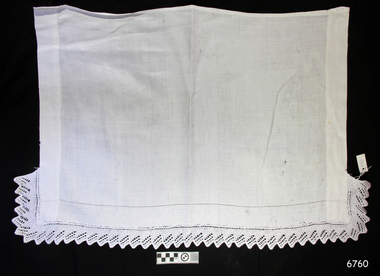
Textile - Food Safe Cover, Mary Jane Giles (Mrs Harry Giles), Late 19th to Early 20th Century
... Henry was born at Tower Hill in 1858, and was a labourer on the construction of the Warrnambool Breakwater before leaving in 1895 for around seven years to build bridges in NSW. Mary Jane was born in 1860 at Cooramook and she attended Mailor’s Flat State School and where she eventually was to become a student teacher. ...Henry was born at Tower Hill in 1858, and was a labourer on the construction of the Warrnambool Breakwater before leaving in 1895 for around seven years to build bridges in NSW. Mary Jane was born in 1860 at Cooramook and she attended Mailor’s Flat State School and where she eventually was to become a student teacher. ...This food safe cover is one of many 19th century items of furniture, linen and crockery donated to Flagstaff Hill Maritime Village by, Vera and Aurelin Giles. The items are associated with Warrnambool and the Giles Family history. Items donated by the family have come to be known as the “Giles Collection”. Many items in the Lighthouse Keeper’s Cottage were donated by Vera and Aurelin Giles and mostly came from the home of Vera’s parents-in-law, Henry Giles and his wife Mary Jane (nee Freckleton) who married in 1880 and whose photos are on display in the parlour. Henry was born at Tower Hill in 1858, and was a labourer on the construction of the Warrnambool Breakwater before leaving in 1895 for around seven years to build bridges in NSW. Mary Jane was born in 1860 at Cooramook and she attended Mailor’s Flat State School and where she eventually was to become a student teacher. After which she became a governess at “Injemiara” where her grandfather, Francis Freckleton, had once owned land. Henry and Mary’s family consisted of six, some of the children were born at Mailor’s Flat and later some children at Wangoom. They lived with their parents at Wangoom and Purnim west, and this is where Henry died in 1933 and Mary Jane in 1940. The Giles family collection is of social and historical significance at a local level, because it not only illustrates the level of material support the Warrnambool community gave to Flagstaff Hill during it’s establishment. But the Giles collection also gives us today a snapshot into what domestic life was like in early colonial times prior to Federation.Food safe cover, white with knitted lace on the front and part of the two sides.Noneflagstaff hill, warrnambool, shipwrecked-coast, flagstaff-hill-maritime-museum, flagstaff-hill-maritime-village, safe cover, giles collection, henry giles, tower hill, cooramook, mailor’s flat, wangoom, 19th century household goods -
 Flagstaff Hill Maritime Museum and Village
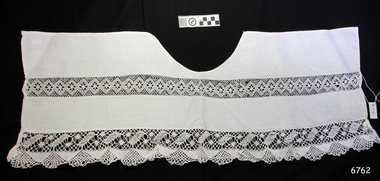
Textile - Washstand Cover, Mary Jane Giles (Mrs Harry Giles), Late 19th to Early 20th Century
... Henry was born at Tower Hill in 1858, and was a labourer on the construction of the Warrnambool Breakwater before leaving in 1895 for around seven years to build bridges in NSW. Mary Jane was born in 1860 at Cooramook and she attended Mailor’s Flat State School and where she eventually was to become a student teacher. ...Henry was born at Tower Hill in 1858, and was a labourer on the construction of the Warrnambool Breakwater before leaving in 1895 for around seven years to build bridges in NSW. Mary Jane was born in 1860 at Cooramook and she attended Mailor’s Flat State School and where she eventually was to become a student teacher. ...This washstand cover is one of many 19th century items of furniture, linen and crockery donated to Flagstaff Hill Maritime Village by, Vera and Aurelin Giles. The items are associated with Warrnambool and the Giles Family history. Items donated by the family have come to be known as the “Giles Collection”. Many items in the Lighthouse Keeper’s Cottage were donated by Vera and Aurelin Giles and mostly came from the home of Vera’s parents-in-law, Henry Giles and his wife Mary Jane (nee Freckleton) who married in 1880 and whose photos are on display in the parlour. Henry was born at Tower Hill in 1858, and was a labourer on the construction of the Warrnambool Breakwater before leaving in 1895 for around seven years to build bridges in NSW. Mary Jane was born in 1860 at Cooramook and she attended Mailor’s Flat State School and where she eventually was to become a student teacher. After which she became a governess at “Injemiara” where her grandfather, Francis Freckleton, had once owned land. Henry and Mary’s family consisted of six, some of the children were born at Mailor’s Flat and later some children at Wangoom. They lived with their parents at Wangoom and Purnim west, and this is where Henry died in 1933 and Mary Jane in 1940. The Giles family collection is of social significance at a local level, because it not only illustrates the level of material support the Warrnambool community gave to Flagstaff Hill during it’s establishment. But the Giles collection also gives us today a snapshot into what domestic life was like in early colonial times prior to Federation.Washstand cover, white.Nonewarrnambool, shipwrecked-coast, flagstaff-hill, flagstaff-hill-maritime-museum, shipwreck-coast, flagstaff-hill-maritime-village, washstand cover, giles collection, henry giles, tower hill, cooramook, mailor’s flat, wangoom, 19th century household goods, textile -
 Flagstaff Hill Maritime Museum and Village
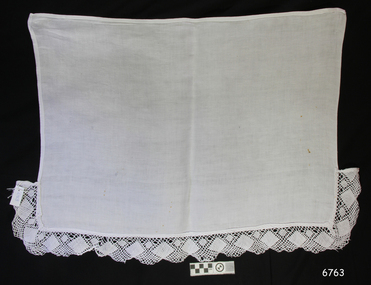
Textile - Safe Cover, Mary Jane Giles (Mrs Harry Giles), Late 19th to Early 20th Century
... Henry was born at Tower Hill in 1858, and was a labourer on the construction of the Warrnambool Breakwater before leaving in 1895 for around seven years to build bridges in NSW. Mary Jane was born in 1860 at Cooramook and she attended Mailor’s Flat State School and where she eventually was to become a student teacher. ...Henry was born at Tower Hill in 1858, and was a labourer on the construction of the Warrnambool Breakwater before leaving in 1895 for around seven years to build bridges in NSW. Mary Jane was born in 1860 at Cooramook and she attended Mailor’s Flat State School and where she eventually was to become a student teacher. ...This food safe cover is one of many 19th century items of furniture, linen and crockery donated to Flagstaff Hill Maritime Village by, Vera and Aurelin Giles. The items are associated with Warrnambool and the Giles Family history. Items donated by the family have come to be known as the “Giles Collection”. Many items in the Lighthouse Keeper’s Cottage were donated by Vera and Aurelin Giles and mostly came from the home of Vera’s parents-in-law, Henry Giles and his wife Mary Jane (nee Freckleton) who married in 1880 and whose photos are on display in the parlour. Henry was born at Tower Hill in 1858, and was a labourer on the construction of the Warrnambool Breakwater before leaving in 1895 for around seven years to build bridges in NSW. Mary Jane was born in 1860 at Cooramook and she attended Mailor’s Flat State School and where she eventually was to become a student teacher. After which she became a governess at “Injemiara” where her grandfather, Francis Freckleton, had once owned land. Henry and Mary’s family consisted of six, some of the children were born at Mailor’s Flat and later some children at Wangoom. They lived with their parents at Wangoom and Purnim west, and this is where Henry died in 1933 and Mary Jane in 1940.The Giles family collection is of social significance at a local level, because it not only illustrates the level of material support the Warrnambool community gave to Flagstaff Hill during it’s establishment. But the Giles collection also gives us today a snapshot into what domestic life was like in early colonial times prior to Federation.Food safe cover, white with knitted lace on the front and part of the two sides.Nonewarrnambool, shipwrecked-coast, flagstaff-hill, flagstaff-hill-maritime-museum, shipwreck-coast, flagstaff-hill-maritime-village, safe cover, giles collection, henry giles, tower hill, cooramook, mailor’s flat, wangoom, 19th century household goods, textile -
 Flagstaff Hill Maritime Museum and Village
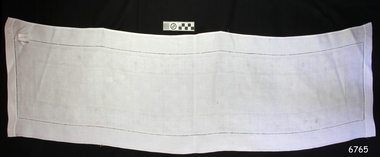
Textile - Table Runner, Mary Jane Giles (Mrs Harry Giles)
... Henry was born at Tower Hill in 1858, and was a labourer on the construction of the Warrnambool Breakwater before leaving in 1895 for around seven years to build bridges in NSW. Mary Jane was born in 1860 at Cooramook and she attended Mailor’s Flat State School and where she eventually was to become a student teacher. ...Henry was born at Tower Hill in 1858, and was a labourer on the construction of the Warrnambool Breakwater before leaving in 1895 for around seven years to build bridges in NSW. Mary Jane was born in 1860 at Cooramook and she attended Mailor’s Flat State School and where she eventually was to become a student teacher. ...This table runner is one of many 19th century items of furniture, linen and crockery donated to Flagstaff Hill Maritime Village by, Vera and Aurelin Giles. The items are associated with Warrnambool and the Giles Family history. Items donated by the family have come to be known as the “Giles Collection”. Many items in the Lighthouse Keeper’s Cottage were donated by Vera and Aurelin Giles and mostly came from the home of Vera’s parents-in-law, Henry Giles and his wife Mary Jane (nee Freckleton) who married in 1880 and whose photos are on display in the parlour. Henry was born at Tower Hill in 1858, and was a labourer on the construction of the Warrnambool Breakwater before leaving in 1895 for around seven years to build bridges in NSW. Mary Jane was born in 1860 at Cooramook and she attended Mailor’s Flat State School and where she eventually was to become a student teacher. After which she became a governess at “Injemiara” where her grandfather, Francis Freckleton, had once owned land. Henry and Mary’s family consisted of six, some of the children were born at Mailor’s Flat and later some children at Wangoom. They lived with their parents at Wangoom and Purnim west, and this is where Henry died in 1933 and Mary Jane in 1940.The Giles family collection is of social significance at a local level, because it not only illustrates the level of material support the Warrnambool community gave to Flagstaff Hill during it’s establishment. But the Giles collection also gives us today a snapshot into what domestic life was like in early colonial times prior to Federation.Table Runner, white cottonNonewarrnambool, shipwrecked-coast, flagstaff-hill, flagstaff-hill-maritime-museum, flagstaff-hill-maritime-village, table runner, giles collection, henry giles, tower hill, cooramook, mailor’s flat, wangoom, 19th century household goods, textile -
 Flagstaff Hill Maritime Museum and Village
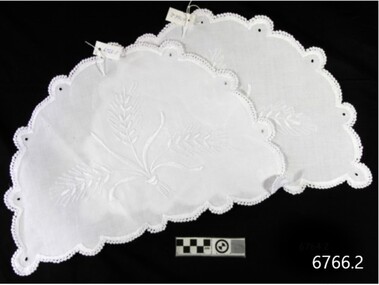
Textile - Tea Cosy, Mary Jane Giles (Mrs Harry Giles), Late 19th to Early 20th Century
... Henry was born at Tower Hill in 1858, and was a labourer on the construction of the Warrnambool Breakwater before leaving in 1895 for around seven years to build bridges in NSW. Mary Jane was born in 1860 at Cooramook and she attended Mailor’s Flat State School and where she eventually was to become a student teacher. ...Henry was born at Tower Hill in 1858, and was a labourer on the construction of the Warrnambool Breakwater before leaving in 1895 for around seven years to build bridges in NSW. Mary Jane was born in 1860 at Cooramook and she attended Mailor’s Flat State School and where she eventually was to become a student teacher. ...This textile is one of many 19th century items of furniture, linen and crockery donated to Flagstaff Hill Maritime Village by, Vera and Aurelin Giles. The items are associated with Warrnambool and the Giles Family history. Items donated by the family have come to be known as the “Giles Collection”. Many items in the Lighthouse Keeper’s Cottage were donated by Vera and Aurelin Giles and mostly came from the home of Vera’s parents-in-law, Henry Giles and his wife Mary Jane (nee Freckleton) who married in 1880 and whose photos are on display in the parlour. Henry was born at Tower Hill in 1858, and was a labourer on the construction of the Warrnambool Breakwater before leaving in 1895 for around seven years to build bridges in NSW. Mary Jane was born in 1860 at Cooramook and she attended Mailor’s Flat State School and where she eventually was to become a student teacher. After which she became a governess at “Injemiara” where her grandfather, Francis Freckleton, had once owned land. Henry and Mary’s family consisted of six, some of the children were born at Mailor’s Flat and later some children at Wangoom. They lived with their parents at Wangoom and Purnim west, and this is where Henry died in 1933 and Mary Jane in 1940.The Giles family collection is of social significance at a local level, because it not only illustrates the level of material support the Warrnambool community gave to Flagstaff Hill during it’s establishment. But the Giles collection also gives us today a snapshot into what domestic life was like in early colonial times prior to Federation.Tea Cosy Cover, white, two pieces that are secured by small ribbons(not included).Noneflagstaff hill, warrnambool, shipwrecked-coast, flagstaff-hill-maritime-museum, shipwreck-coast, flagstaff-hill-maritime-village, tea cosy cover, giles collection, henry giles, tower hill, cooramook, warrnambool breakwater, mailor’s flat, wangoom, 19th century household goods, textile, tea cosy, teapot cover, linen, tea service -
 Flagstaff Hill Maritime Museum and Village
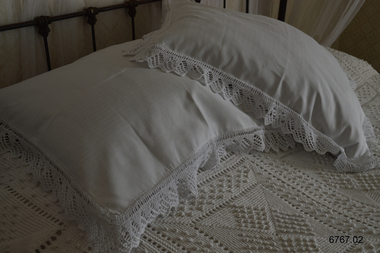
Textile - Pillow Case, Mary Jane Giles (Mrs Harry Giles), Late 19th to Early 20th Century
... Henry was born at Tower Hill in 1858, and was a labourer on the construction of the Warrnambool Breakwater before leaving in 1895 for around seven years to build bridges in NSW. Mary Jane was born in 1860 at Cooramook and she attended Mailor’s Flat State School and where she eventually was to become a student teacher. ...Henry was born at Tower Hill in 1858, and was a labourer on the construction of the Warrnambool Breakwater before leaving in 1895 for around seven years to build bridges in NSW. Mary Jane was born in 1860 at Cooramook and she attended Mailor’s Flat State School and where she eventually was to become a student teacher. ...These pillow cases are are of many 19th century items of furniture, linen and crockery donated to Flagstaff Hill Maritime Village by, Vera and Aurelin Giles. The items are associated with Warrnambool and the Giles Family history. Items donated by the family have come to be known as the “Giles Collection”. Many items in the Lighthouse Keeper’s Cottage were donated by Vera and Aurelin Giles and mostly came from the home of Vera’s parents-in-law, Henry Giles and his wife Mary Jane (nee Freckleton) who married in 1880 and whose photos are on display in the parlour. Henry was born at Tower Hill in 1858, and was a labourer on the construction of the Warrnambool Breakwater before leaving in 1895 for around seven years to build bridges in NSW. Mary Jane was born in 1860 at Cooramook and she attended Mailor’s Flat State School and where she eventually was to become a student teacher. After which she became a governess at “Injemiara” where her grandfather, Francis Freckleton, had once owned land. Henry and Mary’s family consisted of six, some of the children were born at Mailor’s Flat and later some children at Wangoom. They lived with their parents at Wangoom and Purnim west, and this is where Henry died in 1933 and Mary Jane in 1940. The Giles family collection is of social significance at a local level, because it not only illustrates the level of material support the Warrnambool community gave to Flagstaff Hill during it’s establishment. But the Giles collection also gives us today a snapshot into what domestic life was like in early colonial times prior to Federation.Pillow Cases (2), white, with hand knitted lace border. (Giles Collection)Nonewarrnambool, shipwrecked-coast, flagstaff-hill, flagstaff-hill-maritime-museum, shipwreck-coast, flagstaff-hill-maritime-village, manchester, pillowcases, hand crafted pillowcases, bed linen, giles collection, henry giles, tower hill, warrnambool breakwater, mailor’s flat, wangoom, 19th century household goods, textiles -
 Flagstaff Hill Maritime Museum and Village
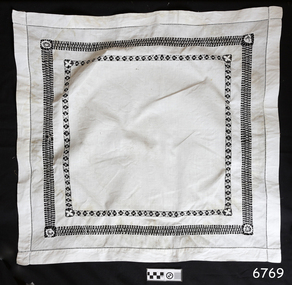
Textile - Tablecloth, Mary Jane Giles (Mrs Harry Giles), Late 19th to Early 20th Century
... Henry was born at Tower Hill in 1858, and was a labourer on the construction of the Warrnambool Breakwater before leaving in 1895 for around seven years to build bridges in NSW. Mary Jane was born in 1860 at Cooramook and she attended Mailor’s Flat State School and where she eventually was to become a student teacher. ...Henry was born at Tower Hill in 1858, and was a labourer on the construction of the Warrnambool Breakwater before leaving in 1895 for around seven years to build bridges in NSW. Mary Jane was born in 1860 at Cooramook and she attended Mailor’s Flat State School and where she eventually was to become a student teacher. ...This table cloth is one of many 19th century items of furniture, linen and crockery donated to Flagstaff Hill Maritime Village by, Vera and Aurelin Giles. The items are associated with Warrnambool and the Giles Family history. Items donated by the family have come to be known as the “Giles Collection”. Many items in the Lighthouse Keeper’s Cottage were donated by Vera and Aurelin Giles and mostly came from the home of Vera’s parents-in-law, Henry Giles and his wife Mary Jane (nee Freckleton) who married in 1880 and whose photos are on display in the parlour. Henry was born at Tower Hill in 1858, and was a labourer on the construction of the Warrnambool Breakwater before leaving in 1895 for around seven years to build bridges in NSW. Mary Jane was born in 1860 at Cooramook and she attended Mailor’s Flat State School and where she eventually was to become a student teacher. After which she became a governess at “Injemiara” where her grandfather, Francis Freckleton, had once owned land. Henry and Mary’s family consisted of six, some of the children were born at Mailor’s Flat and later some children at Wangoom. They lived with their parents at Wangoom and Purnim west, and this is where Henry died in 1933 and Mary Jane in 1940.The Giles family collection is of social significance at a local level, because it not only illustrates the level of material support the Warrnambool community gave to Flagstaff Hill during it’s establishment. But the Giles collection also gives us today a snapshot into what domestic life was like in early colonial times prior to Federation.Small Tablecloth, whiteNonewarrnambool, shipwrecked-coast, flagstaff-hill, flagstaff-hill-maritime-museum, shipwreck-coast, flagstaff-hill-maritime-village, tablecloth, table linen, manchester, giles collection, henry giles, tower hill, cooramook, mailor’s flat, wangoom, 19th century household goods, textiles -
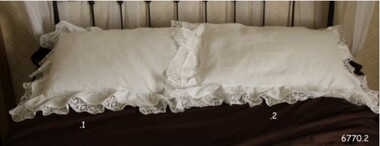 Flagstaff Hill Maritime Museum and Village
Textile - Pillow Case, Mary Jane Giles (Mrs Harry Giles), Late 19th to Early 20th Century
... Henry was born at Tower Hill in 1858, and was a labourer on the construction of the Warrnambool Breakwater before leaving in 1895 for around seven years to build bridges in NSW. Mary Jane was born in 1860 at Cooramook and she attended Mailor’s Flat State School and where she eventually was to become a student teacher. ...Henry was born at Tower Hill in 1858, and was a labourer on the construction of the Warrnambool Breakwater before leaving in 1895 for around seven years to build bridges in NSW. Mary Jane was born in 1860 at Cooramook and she attended Mailor’s Flat State School and where she eventually was to become a student teacher. ...These pillow cases are one of many 19th century items of furniture, linen and crockery donated to Flagstaff Hill Maritime Village by, Vera and Aurelin Giles. The items are associated with Warrnambool and the Giles Family history. Items donated by the family have come to be known as the “Giles Collection”. Many items in the Lighthouse Keeper’s Cottage were donated by Vera and Aurelin Giles and mostly came from the home of Vera’s parents-in-law, Henry Giles and his wife Mary Jane (nee Freckleton) who married in 1880 and whose photos are on display in the parlour. Henry was born at Tower Hill in 1858, and was a labourer on the construction of the Warrnambool Breakwater before leaving in 1895 for around seven years to build bridges in NSW. Mary Jane was born in 1860 at Cooramook and she attended Mailor’s Flat State School and where she eventually was to become a student teacher. After which she became a governess at “Injemiara” where her grandfather, Francis Freckleton, had once owned land. Henry and Mary’s family consisted of six, some of the children were born at Mailor’s Flat and later some children at Wangoom. They lived with their parents at Wangoom and Purnim west, and this is where Henry died in 1933 and Mary Jane in 1940.The Giles family collection is of social significance at a local level, because it not only illustrates the level of material support the Warrnambool community gave to Flagstaff Hill during it’s establishment. But the Giles collection also gives us today a snapshot into what domestic life was like in early colonial times prior to Federation.Pair of Pillow Cases, white, (Giles Collection)Noneflagstaff hill, warrnambool, shipwrecked-coast, flagstaff-hill-maritime-museum, shipwreck-coast, flagstaff-hill-maritime-village, pillow case, giles collection., henry giles, tower hill, cooramook, mailor’s flat, wangoom, 19th century household goods, textile -
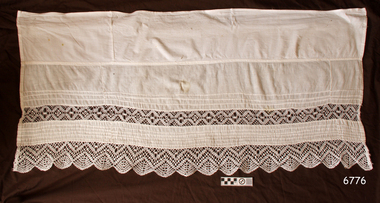 Flagstaff Hill Maritime Museum and Village
Textile - Sideboard Top Cover, Mary Jane Giles (Mrs Harry Giles), Late 19th century
... Henry was born at Tower Hill in 1858, and was a labourer on the construction of the Warrnambool Breakwater before leaving in 1895 for around seven years to build bridges in NSW. Mary Jane was born in 1860 at Cooramook and she attended Mailor’s Flat State School and where she eventually was to become a student teacher. ...Henry was born at Tower Hill in 1858, and was a labourer on the construction of the Warrnambool Breakwater before leaving in 1895 for around seven years to build bridges in NSW. Mary Jane was born in 1860 at Cooramook and she attended Mailor’s Flat State School and where she eventually was to become a student teacher. ...This textile is one of many 19th century items of furniture, linen and crockery donated to Flagstaff Hill Maritime Village by, Vera and Aurelin Giles. The items are associated with Warrnambool and the Giles Family history. Items donated by the family have come to be known as the “Giles Collection”. Many items in the Lighthouse Keeper’s Cottage were donated by Vera and Aurelin Giles and mostly came from the home of Vera’s parents-in-law, Henry Giles and his wife Mary Jane (nee Freckleton) who married in 1880 and whose photos are on display in the parlour. Henry was born at Tower Hill in 1858, and was a labourer on the construction of the Warrnambool Breakwater before leaving in 1895 for around seven years to build bridges in NSW. Mary Jane was born in 1860 at Cooramook and she attended Mailor’s Flat State School and where she eventually was to become a student teacher. After which she became a governess at “Injemiara” where her grandfather, Francis Freckleton, had once owned land. Henry and Mary’s family consisted of six, some of the children were born at Mailor’s Flat and later some children at Wangoom. They lived with their parents at Wangoom and Purnim west, and this is where Henry died in 1933 and Mary Jane in 1940.The Giles family collection is of social significance at a local level, because it not only illustrates the level of material support the Warrnambool community gave to Flagstaff Hill during it’s establishment. But the Giles collection also gives us today a snapshot into what domestic life was like in early colonial times prior to Federation.Sideboard cover, white with crocheted lace on sides. (Part of the Giles Collection)Noneflagstaff hill, warrnambool, shipwrecked-coast, flagstaff-hill-maritime-museum, shipwreck-coast, flagstaff-hill-maritime-village, giles collection, linen, 19th century linen, furnishings, 19th century fashion, decor, henry giles, tower hill, cooramook, mailor’s flat, wangoom, 19th century household goods -
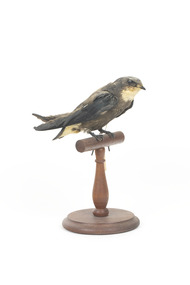 The Beechworth Burke Museum
Animal specimen - White-Throated Needletail, Trustees of the Australian Museum, 1860-1880
... Needle-tailed Swifts get their name from the spined end of their tail, which is not forked as it is in the more common Swifts of the genus Apus. They build their nests in rock crevices in cliffs or hollow trees. ...Needle-tailed Swifts get their name from the spined end of their tail, which is not forked as it is in the more common Swifts of the genus Apus. They build their nests in rock crevices in cliffs or hollow trees. ...The white-throated Needletail is a migratory bird, breeding in Central Asia and southern Siberia, and wintering south in the Indian Subcontinent, Southeast Asia and Australia. This large swift is often mistaken in flight for a small predatory bird, but its long curved wings and white markings help to identify it. Needle-tailed Swifts get their name from the spined end of their tail, which is not forked as it is in the more common Swifts of the genus Apus. They build their nests in rock crevices in cliffs or hollow trees. These birds do not like to sit on the ground, spending spend most of their time in the air. This specimen is part of a collection of almost 200 animal specimens that were originally acquired as skins from various institutions across Australia, including the Australian Museum in Sydney and the National Museum of Victoria (known as Museums Victoria since 1983), as well as individuals such as amateur anthropologist Reynell Eveleigh Johns between 1860-1880. These skins were then mounted by members of the Burke Museum Committee and put-on display in the formal space of the Museum’s original exhibition hall where they continue to be on display. This display of taxidermy mounts initially served to instruct visitors to the Burke Museum of the natural world around them, today it serves as an insight into the collecting habits of the 19th century.This specimen is part of a significant and rare taxidermy mount collection in the Burke Museum. This collection is scientifically and culturally important for reminding us of how science continues to shape our understanding of the modern world. They demonstrate a capacity to hold evidence of how Australia’s fauna history existed in the past and are potentially important for future environmental research. This collection continues to be on display in the Museum and has become a key part to interpreting the collecting habits of the 19th century. This white-throated Needletail is predominantly grey-brown in colour. The throat and under tail of he bird are dusky-white. This specimen has a white spot on the lower rim of each of its wings. The eyes are made from glass and the specimen has been styalised standing on a wooden mount.Label: 3a/ Spine-tailed Swift / See catalogue page 7.stormbird, taxidermy mount, taxidermy, animalia, burke museum, beechworth, australian museum, skin, reynell eveleigh johns, bird, quail, migratory bird, white-throated needletail, needle-tailed swift, spine-tailed swift, hirundapus caudacutus -
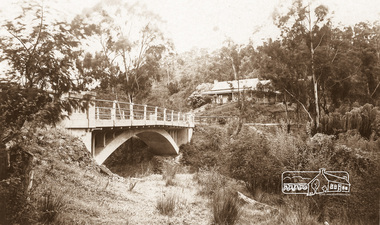 Eltham District Historical Society Inc
Photograph - Postcard, The Bridge, Hurstbridge, Vic
... By March 7, the remaining blocks were advertised at £17.10.0 The Wattle Valley Estate took over 20 years to sell and then people could not build on them....By March 7, the remaining blocks were advertised at £17.10.0 The Wattle Valley Estate took over 20 years to sell and then people could not build on them. michael aitken collection postcards hurstbridge monash bridge Bridge Diamond Creek (Creek) Mia Mia Shire of Eltham Pioneers Photograph Collection Wattle Valley Estate Digital file only Postcards scanned from the collection of Michael Aitken on loan to EDHS, 13 Feb 2018 The Bridge, Hurstbridge, Vic. ...Arched Bridge (Monash Bridge) The Rose Series P. 4036 Reproduced in a brochure advertising the "Wattle Valley Estate" 7 minutes from the bridge. The new bridge designed by Sir John Monash over the Diamond Creek near Hurst's original home "Mia Mia" seen in the distance. The Wattle Valley Estate was first advertised in August 1925 as weekend building allotments by the Greater Melbourne Land and Development Company. Advertised from £28.10.0 or £60 per block. In August 1926, 30 picked allotments of 60x150 feet were put up for auction Saturday August 14, 1926 with frontages to Valley View Road and Fawkner Crescent advertised in the “Heart of the Glorious Wattle Country” and “Within 15 Minutes of the Newly Electrified Railway Station”. The Advertiser on August 13, 1926 in an article promoting the auction stated “the estate is regarded as one of the best in the district, and will be sold practically without reserve.” It is noted that an advertisement running in The Argus February 22, 1951 offered the remaining 16 blocks for sale at £12.10.0 or £200 the lot. By March 7, the remaining blocks were advertised at £17.10.0 The Wattle Valley Estate took over 20 years to sell and then people could not build on them.Digital file only Postcards scanned from the collection of Michael Aitken on loan to EDHS, 13 Feb 2018michael aitken collection, postcards, hurstbridge, monash bridge, bridge, diamond creek (creek), mia mia, shire of eltham pioneers photograph collection, wattle valley estate -
 Glen Eira Historical Society
Article - ELSTERNWICK RAILWAY STATION AND LINE
... The pupils from Gardenvale and Elsternwick schools were congregated around the subway, and the Brighton municipal Brass Band rendered selections. 2/Newspaper clipping (source not stated perhaps Melbourne Sun), ‘Elsternwick to get underpass’, dated 25/02/1959, stating that ‘work has begun to build an underpass that will abolish the Glenhuntly Road level crossing’, with photograph and a map of the level crossing. 3/Handwritten note, signed ‘FEC, 17/11/2006’, headed ‘To be researched – Shooting in foot underpass-policeman killed-murder last man to be hanged in Victoria’, with note on Glenhuntly Road underpass....The pupils from Gardenvale and Elsternwick schools were congregated around the subway, and the Brighton municipal Brass Band rendered selections. 2/Newspaper clipping (source not stated perhaps Melbourne Sun), ‘Elsternwick to get underpass’, dated 25/02/1959, stating that ‘work has begun to build an underpass that will abolish the Glenhuntly Road level crossing’, with photograph and a map of the level crossing. 3/Handwritten note, signed ‘FEC, 17/11/2006’, headed ‘To be researched – Shooting in foot underpass-policeman killed-murder last man to be hanged in Victoria’, with note on Glenhuntly Road underpass. ...Contains three items about this: 1/A photocopied article (across 3 long columns) from the Southern Cross newspaper dated 21/07/1928. The article contains details of the opening of the Gardenvale Martin Street subway ceremony. Mention is made of the Caulfield Council’s spontaneous assistance, harmony working alongside Brighton and their financial assistance, as well. Councillor E.F. England (Mayor of Caulfield) attended on behalf of the Caulfield Council. He referred to the large patronage on the Brighton line, also mentioning similar issues for the Elsternwick level crossing. There are brief summaries from the many speakers. The pupils from Gardenvale and Elsternwick schools were congregated around the subway, and the Brighton municipal Brass Band rendered selections. 2/Newspaper clipping (source not stated perhaps Melbourne Sun), ‘Elsternwick to get underpass’, dated 25/02/1959, stating that ‘work has begun to build an underpass that will abolish the Glenhuntly Road level crossing’, with photograph and a map of the level crossing. 3/Handwritten note, signed ‘FEC, 17/11/2006’, headed ‘To be researched – Shooting in foot underpass-policeman killed-murder last man to be hanged in Victoria’, with note on Glenhuntly Road underpass.‘southern cross’, gardenvale progress league, point nepean road, newspapers, caulfield council, north road, ‘made in australia’ week, railways department, parliamentary representative, railway crossings, councillors, gardenvale school, elsternwick school, schools, market gardens, gardenvale progress association, england e.f.(mayor), elsternwick, caulfield, hoyts theatre, theatres, glenhuntly road, elsternwick station, police, murders, executions, shops, elsternwick plaza, petrol stations, ‘the hub’, flats, brothels, ‘the daily planet’ (sic), car parks -
 Numurkah & District Historical Society
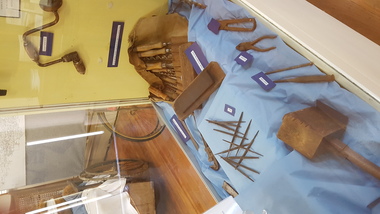
Carpentry Tools & Storage Box
... Returning to Numurkah, Mick joined a Mr Murray as carpenter and painter to build and repair houses. He then joined another builder for 4 years (We think this was Jim Tuttle). ...Returning to Numurkah, Mick joined a Mr Murray as carpenter and painter to build and repair houses. He then joined another builder for 4 years (We think this was Jim Tuttle). ...These carpentry items were owned and used by Archibald (Mick) Blackley, a local long-time resident of Numurkah. Born 1912 in Numurkah, Mick was the son of Archibald (Senior) and Grace Blackley, also residents of Numurkah. Archie Senior was a carter, horse-breaker, conducted a livery stable and worked at Brown Corke & Co for a number of years. Archie also served in the Veterinary Corps in WW1. Some of the tools donated belonged to Archie Senior eg wooden hand planes. Mick Blackley used his dad’s tools (and also added some of his own) when he worked in various carpentry jobs during the 1930’s and 1940’s. One particular carpentry job was during the depression when Mick relocated to the Wonthaggi State Coal Mines building stables for the horses, and also completing some building works inside the mines. Returning to Numurkah, Mick joined a Mr Murray as carpenter and painter to build and repair houses. He then joined another builder for 4 years (We think this was Jim Tuttle). Mick then went on to work at the Butter Factory (originally called Holdenson & Nielsen) where some of his carpentry skills were still used. Item list: • Wooden box for carpentry tools • 1 x steel pliers • 2 x wooden hand planes • 1 x tin snips • 1 x wooden spirit level in canvas bag • 1 x small wooden spirit level • 5 x wooden handled hand-saws • 1 x wooden handled right- angle square • 1 x wooden handled tenon-saw • 1 x steel plumbers wrench • 1 x wooden handled hedge-clippers • 1 x cloth & leather measuring tape • 1 x wooden mallet • 1 x narrow wooden plane • 1 x plastic handled hand-saw • 1 x plane blade sharpening stone • 1 x brace hand drill • 1 x compass for marking wood • 1 x cold chisel • 1 x set of various chisels and hand drill bits in a canvas bag • 1 x steel sike • Various other drill bits, chisels, files • 1 x wooden handled trowel • • 2 x steel garden secateurs • carpentry, building, wood, tools, planes, levels, chisels, hammers, saws, drills, drill bits -
 Puffing Billy Railway
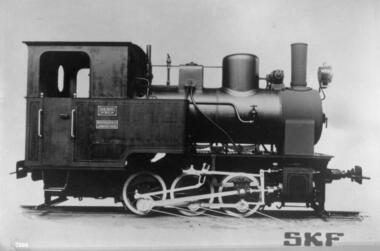
Steam Locomotive, Orenstein & Koppel 0-6-0 Well Tank 2'6" Gauge, 1931
... Sub Nigel Gold Mines No. 3 Wheels: 0-6-0 WT Builder: Orenstein & Koppel Build Date: June 1931 Construction No.: 12331 Empty Weight: 10 tons 7 cwt Weight in working order: 12 I/2 tons Driver Diameter: Unknown Tractive Effort: Unknown Boiler Pressure: 185 lbs Cylinders: Unknown Fuel: Coal Gauge: 2 ft 6 in (760mm) Builders Number 12331 Used to haul gold bearing ore from mine to reduction works at the Sub Nigel Mine at Dunnattar, Transvaal, South Africa. ...Sub Nigel Gold Mines No. 3 Wheels: 0-6-0 WT Builder: Orenstein & Koppel Build Date: June 1931 Construction No.: 12331 Empty Weight: 10 tons 7 cwt Weight in working order: 12 I/2 tons Driver Diameter: Unknown Tractive Effort: Unknown Boiler Pressure: 185 lbs Cylinders: Unknown Fuel: Coal Gauge: 2 ft 6 in (760mm) Builders Number 12331 Used to haul gold bearing ore from mine to reduction works at the Sub Nigel Mine at Dunnattar, Transvaal, South Africa. ...Sub Nigel Gold Mines No. 3 Wheels: 0-6-0 WT Builder: Orenstein & Koppel Build Date: June 1931 Construction No.: 12331 Empty Weight: 10 tons 7 cwt Weight in working order: 12 I/2 tons Driver Diameter: Unknown Tractive Effort: Unknown Boiler Pressure: 185 lbs Cylinders: Unknown Fuel: Coal Gauge: 2 ft 6 in (760mm) Builders Number 12331 Used to haul gold bearing ore from mine to reduction works at the Sub Nigel Mine at Dunnattar, Transvaal, South Africa. It was the first locomotive fitted by roller bearings by SKF and featured in the SKF catalogue at the time. This interesting 0-6-0WT locomotive was built by Orenstein & Koppel in 1931 as their builder's number 12331, becoming No.3 in the locomotive fleet at the Sub Nigel Gold Mines Ltd, South Africa. No.3 was obtained by the Puffing Billy Preservation Society and imported to Australia in the early 1970s. It arrived at the museum on 30th Jan 1973. It has since been displayed at the Puffing Billy Museum, Menzies Creek. Details from http://www.australiansteam.com/ok12331.htm Donated by Gold Fields Property Co. Ltd South Africa in 1973.Historic - Industrial Narrow Gauge railway - Steam Locomotive with SKF Roller bearings - used at the Sub Nigel Mine at Dunnattar, Transvaal, South Africa.Steam Locomotive - Steel (Painted)The Sub Nigel Ltd / 12331puffing billy, steam, locomotive, orenstein, koppel, sub nigel mine, skf roller bearings, sub nigel no. 3 -
 Puffing Billy Railway
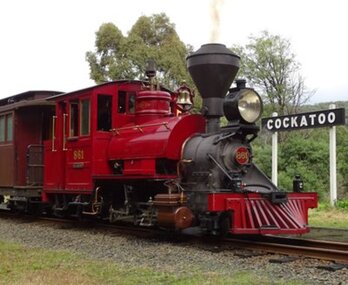
861 - John Rees - Decauville Steam Locomotive - formerly John Benn, 1886
... Wheels: 2-4-2ST Builder: Couillet Build Date: 1886 Construction No.: 861 Empty Weight: Unknown Weight on Drivers: Unknown Driver Diameter: Unknown Tractive Effort: Unknown Boiler Pressure: Unknown Cylinders: Unknown Fuel: Coal Gauge: 30 inches...Wheels: 2-4-2ST Builder: Couillet Build Date: 1886 Construction No.: 861 Empty Weight: Unknown Weight on Drivers: Unknown Driver Diameter: Unknown Tractive Effort: Unknown Boiler Pressure: Unknown Cylinders: Unknown Fuel: Coal Gauge: 30 inches Historic - Industrial railways - Metropolitan Gas Company Ltd, Melbourne Steam Locomotive puffing billy narrow gauge industrial narrow gauge railway metropolitan gas company decauville 43 steam locomotive john rees john benn 861 locomotive couillet 861 861 John Rees Decauville Steam Locomotive 861 - John Rees - Decauville Steam Locomotive - formerly John Benn Soc. ...861 John Benn Locomotive - in active service - Emerald Station Built in 1886 by Société Anonyme Usines Métallurgiques du Hainaut - Locomotives Couillet for the West Melbourne site of the Metropolitan Gas Company, as a four-wheel tank locomotive similar to 986 and named “John Benn”. The West Melbourne gas works sourced its coal from Maitland, New South Wales, and the coal was brought by ship to a wharf adjacent to the West Melbourne gas plant. John Benn and Carbon were used to haul the coal over a 762 mm (2 ft 6 in) gauge railway from the wharf to the gasworks, a distance of about 450 metres (500 yards). It was withdrawn from service in the 1930s and stored until sold privately in 1962. It was rebuilt by its new owners in the style of an American locomotive of the 1880s and was used for some years at Walhalla. It currently has the name “J.C. Rees” and is used in active service for the 861 Footplate Experience. Wheels: 2-4-2ST Builder: Couillet Build Date: 1886 Construction No.: 861 Empty Weight: Unknown Weight on Drivers: Unknown Driver Diameter: Unknown Tractive Effort: Unknown Boiler Pressure: Unknown Cylinders: Unknown Fuel: Coal Gauge: 30 inchesHistoric - Industrial railways - Metropolitan Gas Company Ltd, Melbourne Steam LocomotiveDecauville Steam Locomotive 861 John Reespuffing billy, narrow gauge, industrial narrow gauge railway, metropolitan gas company, decauville 43, steam locomotive, john rees, john benn, 861 locomotive, couillet, 861 -
 Puffing Billy Railway
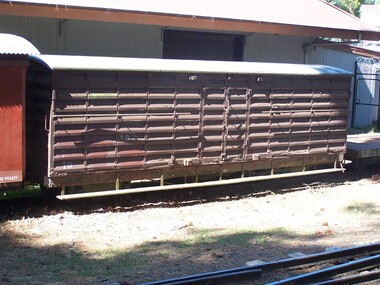
10 NU - Louvred Truck, 30/12/1911
... VR Service History : *NUU 10.VA - 30/12/1911 NWS Built new - / /1926 - To NU 10.VA - NU 10.VA - / 5/1926 - Modified AC Malco /12/1972 BEL To NW 10.VA Sec72/3400, RS72/9371 NW 10.VA - 26/ 8/1976 CLS Photograph #662.2-.4: and end detail 1/10/1977 - Off Register To ETRB Sec76/3630 RS77/4223 Build Date: 30/12/1911 NWS Built new Victorian Heritage Register (VHR) Number H2187 NW 10 is a 1972 reclassification of NU 10. ...VR Service History : *NUU 10.VA - 30/12/1911 NWS Built new - / /1926 - To NU 10.VA - NU 10.VA - / 5/1926 - Modified AC Malco /12/1972 BEL To NW 10.VA Sec72/3400, RS72/9371 NW 10.VA - 26/ 8/1976 CLS Photograph #662.2-.4: and end detail 1/10/1977 - Off Register To ETRB Sec76/3630 RS77/4223 Build Date: 30/12/1911 NWS Built new Victorian Heritage Register (VHR) Number H2187 NW 10 is a 1972 reclassification of NU 10. ...10 NU Louvre Van - Louvred Truck (11) Untrafficable NUU LOUVRED TRUCK. Seven louvre vans for carrying general goods were built during 1899-1901, with another one in 1906 and a further six in 1911, a total of 14 louvre vans numbered 1-14. The term Louvred Truck describes the sides which consist of fixed louvres for ventilation. The aim was to keep the goods inside cool. VR Service History : *NUU 10.VA - 30/12/1911 NWS Built new - / /1926 - To NU 10.VA - NU 10.VA - / 5/1926 - Modified AC Malco /12/1972 BEL To NW 10.VA Sec72/3400, RS72/9371 NW 10.VA - 26/ 8/1976 CLS Photograph #662.2-.4: and end detail 1/10/1977 - Off Register To ETRB Sec76/3630 RS77/4223 Build Date: 30/12/1911 NWS Built new Victorian Heritage Register (VHR) Number H2187 NW 10 is a 1972 reclassification of NU 10. It is presumed the van was used to store tools and equipment. In 1977, the van was removed from railway records and control handed to the Puffing Billy group.Historic - Victorian Railways Narrow Gauge - Rolling Stock - Louvered Van Victorian Heritage Register (VHR) Number H2187 Puffing Billy Locomotives and Rolling Stock CollectionWooden Louvered Van - Made of Timber on a Wrought iron frame - current condition Untrafficable10 NU puffing billy, louvered van, 10nu, victorian railways, 2'6" gauge, narrow gauge rolling stock -
 Vision Australia
Painting - Artwork, Portrait of David Robertson, 2002
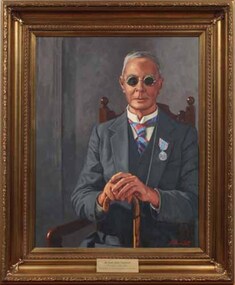
... He was one of eight foundation members of the Association for the Advancement of the Blind (now Vision Australia Foundation ) which was formed in 1895 in order to encourage blind people to manage their own affairs and build their self esteem. He was appointed the inaugural president and served as such from 1895 to 1899 and again in 1913 as well as acting as vice president from 1900 to 1902 and in 1911 and 1915. ...He was one of eight foundation members of the Association for the Advancement of the Blind (now Vision Australia Foundation ) which was formed in 1895 in order to encourage blind people to manage their own affairs and build their self esteem. He was appointed the inaugural president and served as such from 1895 to 1899 and again in 1913 as well as acting as vice president from 1900 to 1902 and in 1911 and 1915. ...Framed portrait of David Robertson who was the first President of the Association for the Advancement of the Blind, from 1895-1899. It is part of a series of paintings commissioned by the VAF Board to commemorate the work of past presidents of the organisation. Mr Robertson sits with his hands resting upon a wooden cane. He is wearing dark spectacles, a gray suit and waistcoat, white shirt with starched collar and pleated front, and a red and blue striped necktie. On his left lapel is a blue and red medal. David Robertson was educated at the Royal Victorian Institute for the Blind and was trained as a basket maker. He was one of eight foundation members of the Association for the Advancement of the Blind (now Vision Australia Foundation ) which was formed in 1895 in order to encourage blind people to manage their own affairs and build their self esteem. He was appointed the inaugural president and served as such from 1895 to 1899 and again in 1913 as well as acting as vice president from 1900 to 1902 and in 1911 and 1915. Known as a level headed and wise peacemaker he was elected chairman of the first interstate conference of blind people, which took place in Melbourne in 1913. From this evolved the Federal Council of Organizations of the Blind, which undertook to consider all matters affecting blind people. 1 art original in gold frameThe plaque at the base of the painting reads 'David Robertson / Inaugural President of / Association for Advancement of the Blind'.david robertson, association for the advancement of the blind -
 Surrey Hills Historical Society Collection
Domestic object - Milk Bottle, Wattle Park Dairy milk bottle
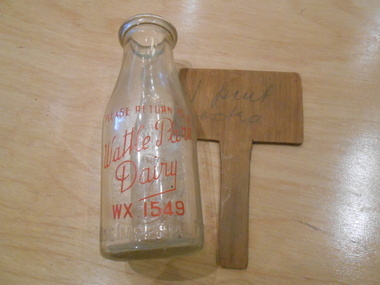
... In the 1920s Horrie built the first house in Goodwood Street. He went on to build others in the street including his own at No 7 Goodwood Street. ...In the 1920s Horrie built the first house in Goodwood Street. He went on to build others in the street including his own at No 7 Goodwood Street. ...The Breeden family came to Surrey Hills in 1905, first to Guildford Road, then Middlesex Road where Horrie Breeden lived as a boy. He sometimes used to help with milking at the adjoining Kenneally's dairy in Highfield Road. Sometimes he and his brother drove the cows from there to Schneider's property near Florence Road on the way to Surrey Hills Primary School. The cows would graze here until the boys took them back after school. At other times he would deliver milk from the Croydon Road dairy (Isherwood's or Bovill's) to St Joseph's Boys Home before school. Horrie became an apprentice in woodwork / carpentry at Vine's timber yard before serving in World War 1. Horrie's father died in 1919 and in the same year he bought 3 cows and established his own dairy on his mother's property on the corner of Goodwood Street and Boisdale Road. In the 1920s Horrie built the first house in Goodwood Street. He went on to build others in the street including his own at No 7 Goodwood Street. He did all the joinery and internal fittings for this. [Oral testimony: Horrie Breeden to Jocelyn Hall in 1979.] In the first half of the 20th century there were many local dairies in Surrey Hills and Mont Albert. Milk bottles such as this one that include the name of the producer or retailer are historically significant as they represent the period in Surrey Hills' history before milk production was centralised. A glass milk bottle of the style typical between the 1920s and 1940s. Embossed around base: "ONE PINT IMPERIAL". Has a heavy lip on top. the bottle was designed to be sealed with a circular cardboard wad. In red enamel: "PLEASE RETURN TO / Wattle Park / Dairy / WX.1549"goodwood street, horrie breeden, wattle park dairy, dairies, horace breeden -
 Falls Creek Historical Society
Photograph - Ernest Forras and Julian Brown at Julian's Lodge with Beth Brown and Marnie Searles
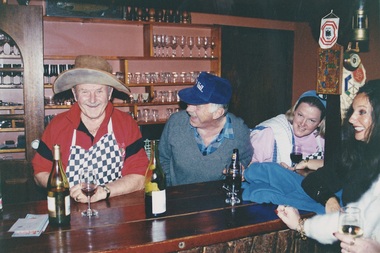
... By working several jobs, Julian was able to build a small lodge of 10 beds named “Arundel”, located at 18 Slalom Street, Falls Creek. ...By working several jobs, Julian was able to build a small lodge of 10 beds named “Arundel”, located at 18 Slalom Street, Falls Creek. ...Julian Newton-Brown arrived at Falls Creek in 1957. He had studied Pharmacy at Melbourne University. After developing a love for the mountains, Julian moved to Mt. Beauty and then Falls Creek. He worked for the SEC in the test laboratory at Rocky Valley reading weather instruments. By working several jobs, Julian was able to build a small lodge of 10 beds named “Arundel”, located at 18 Slalom Street, Falls Creek. The lodge is now the “Elk at Falls”. Arundel prospered and Julian extended it to include 32 beds and changed its name to "Julian’s” in 1961. When alcohol restrictions were eased in Falls Creek, Julian built a night club which he called “Big Julian’s” and later “THE MAN”. When Julian and his wife Beth retired and left Falls Creek, their son took over running the lodge. An active community man, Julian was a member of the Falls Creek Chamber of Commerce, a member of the SES, a stakeholder in Falls Creek, an author and a documentary maker. Julian Newton-Brown died in May 2020. Ernest Forras built Kooroora Chalet at Mount Buller with his brother, Aurel in 1953. They were both ski instructors and contributed greatly to the development of the ski industry.This item is significant because it gives details of an important lodge at Falls Creek, Victoria.A colour photograph of four friends inside Julian's Lodge, Falls Creekjulian's lodge, julian newton brown, falls creek ski lodges, earnest forrer -
 Falls Creek Historical Society
Document - Bob Hymans' Correspondence Collection
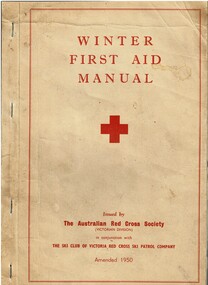
... It took Bob two years to build his Grand Coeur Chalet but, tragically, it was burned down in August 1961. ...It took Bob two years to build his Grand Coeur Chalet but, tragically, it was burned down in August 1961. ...Bob (Herman) Hymans (a former member of the Royal Netherlands Navy) was born in Bloemendaal, Holland on 30th September 1922. During World War II he fought against the Japanese in the Dutch East Indies (now Indonesia) and was imprisoned in Changi and on the Burma Railway. After gaining qualifications as a Ski Instructor, Bob arrived in Falls Creek in July 1950. Working as an Instructor and Supervisor at Bogong Lodge, Bob decided his future was in accommodation. He was successful in negotiating an indenture for land from the State Electricity Commission (SEC). It took Bob two years to build his Grand Coeur Chalet but, tragically, it was burned down in August 1961. Bob also built the first Chairlift in Australia. This was a single chairlift and the structure was built from wooden electricity poles. He was constantly full of new ideas and proposals for the village. Bob Hymans died on 7th July 2007. This collection of between 200 - 300 items includes documents from Bob Hymans' correspondence whilst he was pioneering developments at Falls Creek, Victoria. It consists of Aerogrammes, telegrams, maps and communication with American and French companies related to issues ranging from licences, ski tows, international visits and developments at Falls Creek.This Collection is significant because it contains correspondence records of a Falls Creek pioneer who played an active role in the development of Falls Creek Village, including the first ski lift as well as Grand Coeur and Four Seasons lodges.A collection of letters and other documents from the personal records of Bob Hymansbob hymans, falls creek pioneers -
 Falls Creek Historical Society
Functional object - Peacock Hand Warmers
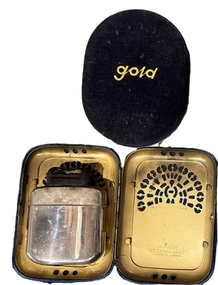
... After you fill the reservoir with lighter fluid, vapor pressure builds up. The device ignites by heating the grill with a match or lighter until it glows red. ...After you fill the reservoir with lighter fluid, vapor pressure builds up. The device ignites by heating the grill with a match or lighter until it glows red. ...These mid-1960s Peacock and Gold brand lighter fuel hand warmers were used in Falls Creek to keep out the cold. The concept behind the hand warmer is that through combustion (ignition) of lighter fluid (light petrol distillate) it becomes a catalytic heater, relying on a catalysed chemical reaction to break down molecules and create heat. The devices could get quite hot, not hot enough to set paper on fire, but hot enough to give a nasty burn if sustained contact against your skin occurred. The construction of the device is very simple. There is very fine rolled wire mesh which fits on top of the reservoir body. After you fill the reservoir with lighter fluid, vapor pressure builds up. The device ignites by heating the grill with a match or lighter until it glows red. There is no open flame. The hand warmer also had a velvet bag to place it in after igniting to prevent direct skin contact. They were able to generate heat for up to a whole day. The Japanese company Yamato Shokai Ltd was founded in 1923 in the city of Osaka. Destroyed during air raids in 1945, the factory was rebuilt in 1946. They manufactured the Peacock brand pocket-warmer and sold it internationally.These items are significant because they were commonly used at Falls Creek.The pocket warmer is a small, relatively flat device with a tank at the bottom and a burner mechanism a t the top. "PEACOCK/MADE IN JAPAN" is engraved near the burner. The warmer fits into a metal case which features a series of ventilation holes in the shape of a peacock's tail. JAPANESE PAT. 237413.483177 MADE IN JAPANhand warmers, ski equipment 1960s -
 Falls Creek Historical Society
Photograph - Nissen Rope Tow August 1954
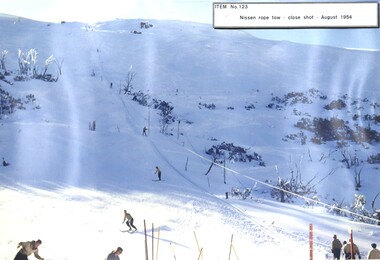
... He engaged Phil Nowell to build the original Koki Alpine Lodge which opened in 1965 with 14 beds. ...He engaged Phil Nowell to build the original Koki Alpine Lodge which opened in 1965 with 14 beds. ...This item is from the private collection of George Shirling of Red Onion, Falls Creek. It depicts skiers using the Nissen Rope Tow in August 1954. The tow was operated from the early 1950s by Skippy and Tony St. Elmo. George Shirling arrived in Falls Creek in 1962. He engaged Phil Nowell to build the original Koki Alpine Lodge which opened in 1965 with 14 beds. George operated the lodge with Michael “Baldy” Blackwell as manager. He also graduated in sport psychology in 1981 and was invited to become team psychologist for the Australian Winter Olympic team which went to Albertville, France, in 1992. He later owned the Red Onion Chalet. George credited the success of Koki to “Baldy” Blackwell. “Baldy” and Phil Nowell started the Trackers Mountain Lodge in partnership during the 1980s. In 1971 George sold Koki Lodge to Sigi Doerr. In 2024 the renamed Koki Alpine resort remains a highly popular destination in Falls Creek. George Shirling passed away on 27th February 2023. He had remained actively involved in Falls Creek and was generous with his time and knowledge, always an amazing supporter of The Falls Creek Museum and Falls Creek Village.This item is significant because it is an early image of the Nissen Rope Tow at Falls Creek.A photograph of the Nissen Rope Tow taken in August 1954. It includes several skiers either on the rope tow or descending the slopes. The sign explaining the image in the collection at Red Onion, Falls Creek is also included.george shirling, red onion, nissen rope tow, toni and skippy st. elmo -
 Falls Creek Historical Society
Photograph - Falls Creek Ski Instructor Badge
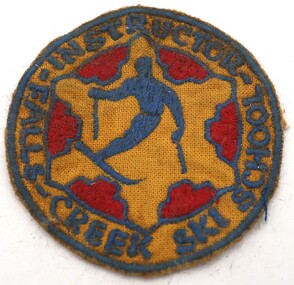
... He engaged Phil Nowell to build the original Koki Alpine Lodge which opened in 1965 with 14 beds. ...He engaged Phil Nowell to build the original Koki Alpine Lodge which opened in 1965 with 14 beds. ...This item is from the private collection of George Shirling of Red Onion, Falls Creek. It was an important element of the Falls Creek Ski School Instructor uniform from 1969.This enabled skiers to identify authorised instructors. George Shirling arrived in Falls Creek in 1962. He engaged Phil Nowell to build the original Koki Alpine Lodge which opened in 1965 with 14 beds. George operated the lodge with Michael “Baldy” Blackwell as manager. He also graduated in sport psychology in 1981 and was invited to become team psychologist for the Australian Winter Olympic team which went to Albertville, France, in 1992. He later owned the Red Onion Chalet. George credited the success of Koki to “Baldy” Blackwell. “Baldy” and Phil Nowell started the Trackers Mountain Lodge in partnership during the 1980s. In 1971 George sold Koki Lodge to Sigi Doerr. In 2024 the renamed Koki Alpine resort remains a highly popular destination in Falls Creek. George Shirling passed away on 27th February 2023. He had remained actively involved in Falls Creek and was generous with his time and knowledge, always an amazing supporter of The Falls Creek Museum and Falls Creek Village.This item is significant because it was an important feature of the Falls Creek Ski School Instructor uniform.A circular yellow cloth badge with blue and red stitching. The blue stitching features a skier and text around the edge. The red stitching creates the impression of a snowflake. On blue stitching: INSTRUCTOR - FALLS CREEK SKI SCHOOL On sign" ITEM No. 99 Falls Creek Ski School - Instructor - Cloth badge c1969george shirling, red onion, ski instructor badge, falls creek ski instructor -
 Falls Creek Historical Society
Photograph - Bob Hymans' Chair Lift, c1950s
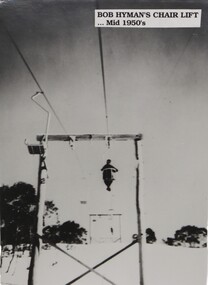
... He engaged Phil Nowell to build the original Koki Alpine Lodge which opened in 1965 with 14 beds. ...He engaged Phil Nowell to build the original Koki Alpine Lodge which opened in 1965 with 14 beds. ...This photo is from the private collection of George Shirling of Red Onion, Falls Creek. It is an image of the first Chair Lift built in Australia by Bob Hymans. This was a single chair lift and the structure was built from wooden electricity poles. George Shirling arrived in Falls Creek in 1962. He engaged Phil Nowell to build the original Koki Alpine Lodge which opened in 1965 with 14 beds. George operated the lodge with Michael “Baldy” Blackwell as manager. He also graduated in sport psychology in 1981 and was invited to become team psychologist for the Australian Winter Olympic team which went to Albertville, France, in 1992. He later owned the Red Onion Chalet. George credited the success of Koki to “Baldy” Blackwell. “Baldy” and Phil Nowell started the Trackers Mountain Lodge in partnership during the 1980s. In 1971 George sold Koki Lodge to Sigi Doerr. In 2024 the renamed Koki Alpine resort remains a highly popular destination in Falls Creek. George Shirling passed away on 27th February 2023. He had remained actively involved in Falls Creek and was generous with his time and knowledge, always an amazing supporter of The Falls Creek Museum and Falls Creek Village.This photo is significant because it features the first chair lift built at Falls Creek, Victoria.A black and white image of a skier riding on Bob Hymans' first chair lift at Falls CreekOn Label: BOB HYMANS' CHAIR LIFT Mid 1950sgeorge shirling, bob hymans' chair lift, bob hymans -
 Falls Creek Historical Society
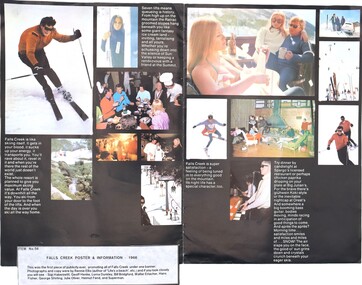
Poster - Falls Creek Information, 1966
... He engaged Phil Nowell to build the original Koki Alpine Lodge which opened in 1965 with 14 beds. ...He engaged Phil Nowell to build the original Koki Alpine Lodge which opened in 1965 with 14 beds. ...This item is from the private collection of George Shirling of Red Onion, Falls Creek. This brochure was the first promotional material jointly published by operators at Falls Creek. The attached label makes reference to many pioneers of the Falls Creek Village. George Shirling arrived in Falls Creek in 1962. He engaged Phil Nowell to build the original Koki Alpine Lodge which opened in 1965 with 14 beds. George operated the lodge with Michael “Baldy” Blackwell as manager. He also graduated in sport psychology in 1981 and was invited to become team psychologist for the Australian Winter Olympic team which went to Albertville, France, in 1992. He later owned the Red Onion Chalet. George credited the success of Koki to “Baldy” Blackwell. “Baldy” and Phil Nowell started the Trackers Mountain Lodge in partnership during the 1980s. In 1971 George sold Koki Lodge to Sigi Doerr. In 2024 the renamed Koki Alpine resort remains a highly popular destination in Falls Creek. George Shirling passed away on 27th February 2023. He had remained actively involved in Falls Creek and was generous with his time and knowledge, always an amazing supporter of The Falls Creek Museum and Falls Creek Village.This poster is significant because it was the first joint promotional material used to market Falls Creek in 1966.A coloured information brochure for Falls Creek including a map and images. It has been made into a poster for display. A typed label is attached. On label: ITEM NO 56 This was the first piece of publicity ever, promoting all of Falls Creek under one banner. Photographs and copy were by Rennie Ellis (author of "Life's a beach", etc) and if you look closely see you will see - Sigi Haberzetti, Geoff Henke, Loma Dunkley, Bill Bridgford, Walter Erlacher, Hans Fisher, George Shirling, Julie Oliver, Helmut Fend, and Superman. george shirling, falls creek marketing, falls creek 1966
