
Showing 3404 items matching " boyd "
-
 Robin Boyd Foundation
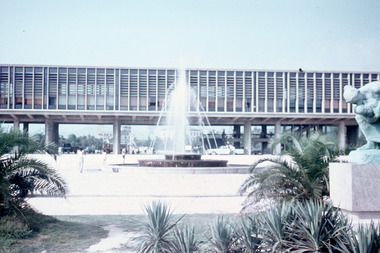
Slide, Robin Boyd, 1961
... Robin Boyd wrote two books on Japanese architects and architecture - “Kenzo Tange” published by George Braziller in 1962 and “New Directions in Japanese Architecture” published by Studio Vista in 1968. ...Robin Boyd...(Architect: Kenzo Tange.) Slide Robin Boyd ...Robin Boyd wrote two books on Japanese architects and architecture - “Kenzo Tange” published by George Braziller in 1962 and “New Directions in Japanese Architecture” published by Studio Vista in 1968. During the 1960s he travelled several times to Japan to research these books and as part of his role as Exhibits Architect for the Australian Pavilion at Expo ‘70 in Osaka.Colour slide in a mount. Hiroshima Peace Memorial Museum 1951-3, Hiroshima, Japan. (Architect: Kenzo Tange.)4japan research trip, slide -
 Robin Boyd Foundation
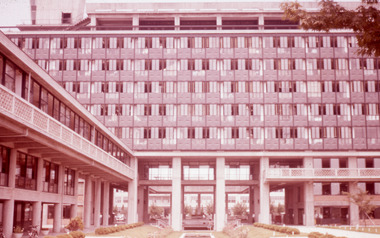
Slide, Robin Boyd, 1961
... Robin Boyd wrote two books on Japanese architects and architecture - “Kenzo Tange” published by George Braziller in 1962 and “New Directions in Japanese Architecture” published by Studio Vista in 1968. ...Robin Boyd...Okayama Prefectural Government Building, Okayama, Japan, 1957 (Architect: Kunio Maekawa.) Slide Robin Boyd ...Robin Boyd wrote two books on Japanese architects and architecture - “Kenzo Tange” published by George Braziller in 1962 and “New Directions in Japanese Architecture” published by Studio Vista in 1968. During the 1960s he travelled several times to Japan to research these books and as part of his role as Exhibits Architect for the Australian Pavilion at Expo ‘70 in Osaka. Colour slide in a mount. Okayama Prefectural Government Building, Okayama, Japan, 1957 (Architect: Kunio Maekawa.)Made in Australia / 3 (Handwritten) robin boyd, slide, japan -
 Robin Boyd Foundation
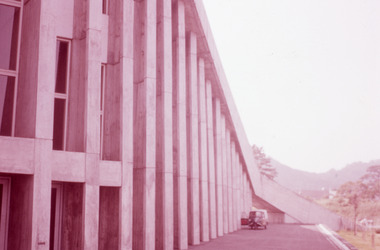
Slide, Robin Boyd, 1961
... Robin Boyd wrote two books on Japanese architects and architecture - “Kenzo Tange” published by George Braziller in 1962 and “New Directions in Japanese Architecture” published by Studio Vista in 1968. ...Robin Boyd...(Architect: Kenzo Tange.) Slide Robin Boyd ...Robin Boyd wrote two books on Japanese architects and architecture - “Kenzo Tange” published by George Braziller in 1962 and “New Directions in Japanese Architecture” published by Studio Vista in 1968. During the 1960s he travelled several times to Japan to research these books and as part of his role as Exhibits Architect for the Australian Pavilion at Expo ‘70 in Osaka.Colour slide in a mount. Auditorium, Japan. (Architect: Kenzo Tange.)Made in Australia / 5japan, slide -
 Robin Boyd Foundation
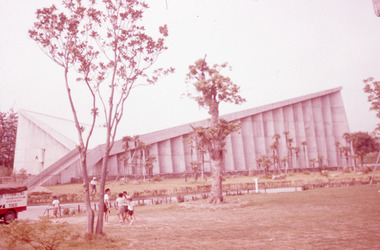
Slide, Robin Boyd, 1961
... Robin Boyd wrote two books on Japanese architects and architecture - “Kenzo Tange” published by George Braziller in 1962 and “New Directions in Japanese Architecture” published by Studio Vista in 1968. ...Robin Boyd...(Architect: Kenzo Tange.) Slide Robin Boyd ...Robin Boyd wrote two books on Japanese architects and architecture - “Kenzo Tange” published by George Braziller in 1962 and “New Directions in Japanese Architecture” published by Studio Vista in 1968. During the 1960s he travelled several times to Japan to research these books and as part of his role as Exhibits Architect for the Australian Pavilion at Expo ‘70 in Osaka.Colour slide in a mount. Auditorium, Japan. (Architect: Kenzo Tange.)Made in Australia / 3japan, slide -
 Robin Boyd Foundation
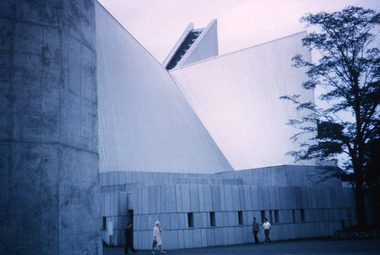
Slide, Robin Boyd, 1965
... Robin Boyd wrote two books on Japanese architects and architecture - “Kenzo Tange” published by George Braziller in 1962 and “New Directions in Japanese Architecture” published by Studio Vista in 1968. ...Robin Boyd...(Architect: Kenzo Tange.) Slide Robin Boyd ...Robin Boyd wrote two books on Japanese architects and architecture - “Kenzo Tange” published by George Braziller in 1962 and “New Directions in Japanese Architecture” published by Studio Vista in 1968. During the 1960s he travelled several times to Japan to research these books and as part of his role as Exhibits Architect for the Australian Pavilion at Expo ‘70 in Osaka.Colour slide in a mount. St Mary's Catholic Cathedral, Tokyo (1964). (Architect: Kenzo Tange.)tokyo, slide -
 Robin Boyd Foundation
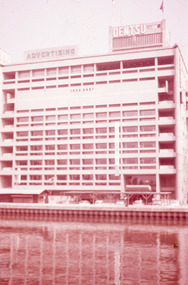
Slide, Robin Boyd, 1961
... Robin Boyd wrote two books on Japanese architects and architecture - “Kenzo Tange” published by George Braziller in 1962 and “New Directions in Japanese Architecture” published by Studio Vista in 1968. ...Robin Boyd...(Architect: Kenzo Tange.) Slide Robin Boyd ...Robin Boyd wrote two books on Japanese architects and architecture - “Kenzo Tange” published by George Braziller in 1962 and “New Directions in Japanese Architecture” published by Studio Vista in 1968. During the 1960s he travelled several times to Japan to research these books and as part of his role as Exhibits Architect for the Australian Pavilion at Expo ‘70 in Osaka.Colour slide in a mount. Dentsu Osaka Branch, Osaka, Japan, 1960. (Architect: Kenzo Tange.)Made in Australia / 6 / 8 (Handwritten)japan, slide -
 Robin Boyd Foundation
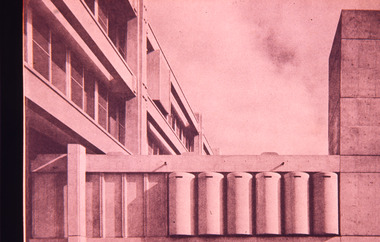
Slide, Robin Boyd
... Robin Boyd wrote two books on Japanese architects and architecture - “Kenzo Tange” published by George Braziller in 1962 and “New Directions in Japanese Architecture” published by Studio Vista in 1968. ...Robin Boyd...Robin Boyd wrote two books on Japanese architects and architecture - “Kenzo Tange” published by George Braziller in 1962 and “New Directions in Japanese Architecture” published by Studio Vista in 1968. ...Robin Boyd wrote two books on Japanese architects and architecture - “Kenzo Tange” published by George Braziller in 1962 and “New Directions in Japanese Architecture” published by Studio Vista in 1968. During the 1960s he travelled several times to Japan to research these books and as part of his role as Exhibits Architect for the Australian Pavilion at Expo ‘70 in Osaka.Colour slide in a mount. Taisekiji Temple, exterior view of shower room and lodging house, Fujimiya City, Japan (Architect: Kimio Yokoyama)Encircled 21 (Handwritten)slide, robin boyd -
 Robin Boyd Foundation
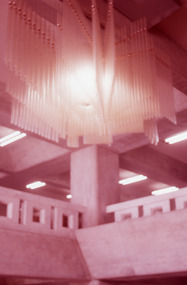
Slide, Robin Boyd, 1961
... Robin Boyd wrote two books on Japanese architects and architecture - “Kenzo Tange” published by George Braziller in 1962 and “New Directions in Japanese Architecture” published by Studio Vista in 1968. ...Robin Boyd...Interior, Okayama Prefectural Government Building, Okayama, Japan, 1957 (Architect: Kunio Maekawa.) Slide Robin Boyd ...Robin Boyd wrote two books on Japanese architects and architecture - “Kenzo Tange” published by George Braziller in 1962 and “New Directions in Japanese Architecture” published by Studio Vista in 1968. During the 1960s he travelled several times to Japan to research these books and as part of his role as Exhibits Architect for the Australian Pavilion at Expo ‘70 in Osaka. Colour slide in a mount. Interior, Okayama Prefectural Government Building, Okayama, Japan, 1957 (Architect: Kunio Maekawa.)Made in Australia / 7slide, robin boyd, japan -
 Robin Boyd Foundation
Slide, Robin Boyd, 1964
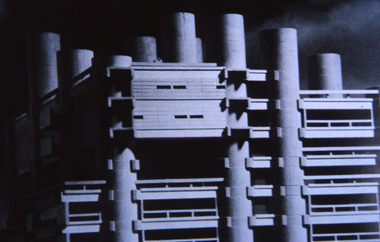
... Robin Boyd wrote two books on Japanese architects and architecture - “Kenzo Tange” published by George Braziller in 1962 and “New Directions in Japanese Architecture” published by Studio Vista in 1968. ...Robin Boyd...(Architect: Kenzo Tange.) Slide Robin Boyd ...Robin Boyd wrote two books on Japanese architects and architecture - “Kenzo Tange” published by George Braziller in 1962 and “New Directions in Japanese Architecture” published by Studio Vista in 1968. During the 1960s he travelled several times to Japan to research these books and as part of his role as Exhibits Architect for the Australian Pavilion at Expo ‘70 in Osaka.Colour slide in a mount. Magazine image of the Communications Centre in Kofu, Japan 1966. Now known as the Yamanashi Broadcasting and Press centre (model). (Architect: Kenzo Tange.)Made in Australia / 2 / OCT 64M / Encircled 61 (Handwritten)japan, slide -
 Robin Boyd Foundation
Document - Manuscript, Robin Boyd, Imported Archi…
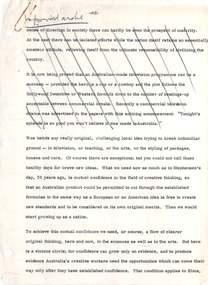
... Boyd argues that Australia needs confidence in creative thinking so our products can cut through established formulas to contribute to our growth as a nation. ...Robin Boyd...Boyd argues that Australia needs confidence in creative thinking so our products can cut through established formulas to contribute to our growth as a nation. ...Boyd argues that Australia needs confidence in creative thinking so our products can cut through established formulas to contribute to our growth as a nation. He outlines four stages of architectural development in every community, and describes Canada in these terms. He posits that Australia overall is only at stage two (imported sophisticated), Brisbane/Hobart/Adelaide at stage one. Boyd argues the Australian dream of individual identity is impossible now, to move to stage 3 Australia needs to be encouraged to have confidence in Australian artists of all kinds, allowing creative people to flourish, be themselves. He indicates that Canberra is close to third stage, with architecture designed by international figures in 1960s but now Australian John Andrews brought out to do an architecturally creative office complex in Belconnen - Canberra, signalling growth of a national identity.Typewritten (c copy), pencil edits and additions, quarto, 7 pages - p12-18confidence in creative thinking, australian national identity, four stages in architectural development, canberra architecture, john andrews, robin boyd, manuscript -
 Robin Boyd Foundation
Document - Manuscript, Robin Boyd, The Vision and the Anger, 1965
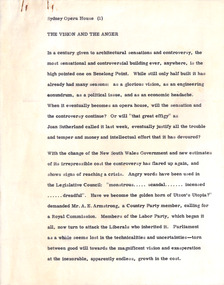
... Piece discussing and defending the construction of the Sydney Opera House and Jorn Utzon. Boyd recounts how the impatience of Sydney and necessity to show the progress of the building have resulted in premature construction and inflation of the cost. ...Robin Boyd...Jorn Utzon Sydney Opera House Sydney Opera House Project International Architecture Competition Cost of building robin boyd manuscript Typewritten, quarto, 10 pages The Vision and the Anger Document Manuscript Robin Boyd ...Piece discussing and defending the construction of the Sydney Opera House and Jorn Utzon. Boyd recounts how the impatience of Sydney and necessity to show the progress of the building have resulted in premature construction and inflation of the cost. Piece ends with questioning whether the Opera House will be worth it. A copy of the published article was in the Sydney Opera House scrapbook in the desk cupboard (item P1378.19).Original manuscript of an article published in The Australian on 18.09.1965. This is the first part of a three part series called 'This Opera House' published 18th, 19th and 21st September 1965 (see D175 and D176).Typewritten, quarto, 10 pagesjorn utzon, sydney opera house, sydney opera house project, international architecture competition, cost of building, robin boyd, manuscript -
 Robin Boyd Foundation
Audio - Recording, The Gramaphone Company Limited, Sydney NSW
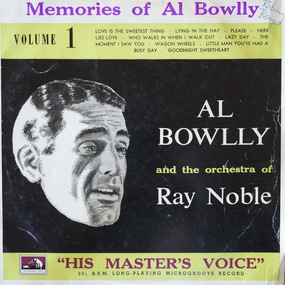
... The Boyds purchased their record player and sound system from Thomas’s in Melbourne. ...Robin Boyd' handwritten on top right front cover, 'EARL' handwritten on top right back cover...The Boyds purchased their record player and sound system from Thomas’s in Melbourne. ...The Boyds purchased their record player and sound system from Thomas’s in Melbourne. Patricia Boyd (later Davies) was very interested in opera and was later appointed to the Board of the Australian Opera.Memories of Al Bowlly. LP 33RPM vinyl, Catalogue Number: ODLP 7517, Record cover (78 size), no plastic sleeve, back cover notes (no author listed). Al Bowlly and the Orchestra of Ray Noble.Robin Boyd' handwritten on top right front cover, 'EARL' handwritten on top right back coverlp, sound recording -
 Robin Boyd Foundation
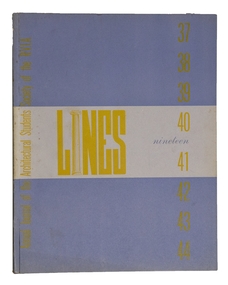
Journal, Ruskin Press (Melbourne), Lines, 1940/1941
... Robin Boyd was editor with PE Newell in 1940 and 1941. ...Possible sketch in pencil of Boyd's Camberwell house with '51 addition on rear cover....Robin Boyd was editor with PE Newell in 1940 and 1941. ...Robin Boyd was editor with PE Newell in 1940 and 1941. RB was President Architectural Students Society of the RVIA in 1941.Possible sketch in pencil of Boyd's Camberwell house with '51 addition on rear cover.rvia, architecture, walter gropius, roy grounds, roy simpson, walsh st library -
 Robin Boyd Foundation
Slide, Robin Boyd, 1961
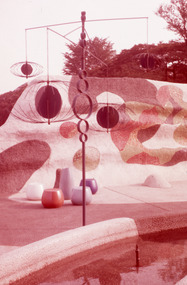
... The Sogetsu Artistic Center was designed by Kenzo Tange. Robin Boyd wrote two books on Japanese architects and architecture - “Kenzo Tange” published by George Braziller in 1962 and “New Directions in Japanese Architecture” published by Studio Vista in 1968. ...Robin Boyd...(Architect: Isamu Noguchi.). Slide Robin Boyd ...The Sogetsu Artistic Center was designed by Kenzo Tange. Robin Boyd wrote two books on Japanese architects and architecture - “Kenzo Tange” published by George Braziller in 1962 and “New Directions in Japanese Architecture” published by Studio Vista in 1968. During the 1960s he travelled several times to Japan to research these books and as part of his role as Exhibits Architect for the Australian Pavilion at Expo ‘70 in Osaka. Colour slide in a mount. Garden at Sogetsu Artistic Center, Tokyo, Japan. (Architect: Isamu Noguchi.). Made in Australia / 17 / 1tokyo, slide -
 Robin Boyd Foundation
Document - Manuscript, Robin Boyd, Current Architecture, c. 1970
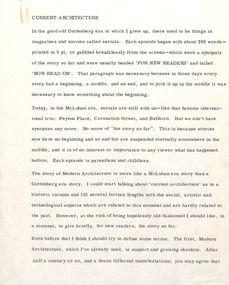
... It discusses utilitarian and creative architecture. Boyd proposes architecture is between science and art, and that architecture by itself means the architecture of this age....Robin Boyd...It discusses utilitarian and creative architecture. Boyd proposes architecture is between science and art, and that architecture by itself means the architecture of this age. modern architecture social evolution utilitarian architecture creative architecture Mcluhan era Glutternberg era Henry Russell Hitchcock Paul Rudolph Philip Johnson Kenzo Tange Archigram Sydney Opera House Reston robin boyd manuscript Typewritten, quarto, 11 pages (Note: Mentions the 1960s, possibly implying it was written late 1960s-1970/1971) Current Architecture Document Manuscript Robin Boyd ...This text summarises the differences in architecture and proposes, unlike in other art forms, that architecture has a mainstream which has consistency in it, yet is also ever changing. The term 'modern architecture' is becoming suspect and obsolete. Visual art is inevitably involved with social evolution. It discusses utilitarian and creative architecture. Boyd proposes architecture is between science and art, and that architecture by itself means the architecture of this age.Typewritten, quarto, 11 pages (Note: Mentions the 1960s, possibly implying it was written late 1960s-1970/1971)modern architecture, social evolution, utilitarian architecture, creative architecture, mcluhan era, glutternberg era, henry russell hitchcock, paul rudolph, philip johnson, kenzo tange, archigram, sydney opera house, reston, robin boyd, manuscript -
 Robin Boyd Foundation
Document - Manuscript, Robin Boyd, Architecture, 1962
... Boyd explores the evolution of Australia's architecture and the constant search for an 'Australian' style of architecture. ...Robin Boyd...Boyd explores the evolution of Australia's architecture and the constant search for an 'Australian' style of architecture. ...Boyd explores the evolution of Australia's architecture and the constant search for an 'Australian' style of architecture. Influences includes the isolation of Australia, natural resources that would require experimentation in order to make it buildable, and most importantly the imports and exports of foreign material that increased the building boom. Comparisons of Australian's architecture landscape to USA and Sweden in his commentary aims to reflect Australia's dilemma to search for an architectural identity.Original manuscript published as 'Architecture in Australia’ in Texas Quarterly Vol. 5, No 2, Summer 1962, pp 61-76.Typewritten (p/copy), quarto, 11 (+title page) pagesrobert haddon, harold desbrowe annear, 'antipodean isolation', sweden, california, housing, australian architecture, natural resources, building boom, american architecture, robin boyd, manuscript -
 Robin Boyd Foundation
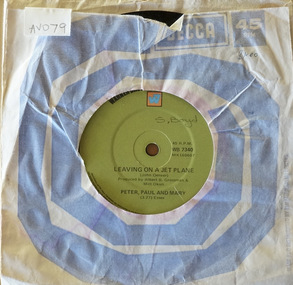
Audio - Recording, Warner Brothers- Seven Arts Records
... Suzy Boyd was Patricia and Robin's daughter....S. Boyd' handwritten on both sides of centre vinyl. '$1.00' handwritten on one side of paper sleeve...Suzy Boyd was Patricia and Robin's daughter. LP sound recording S. ...Suzy Boyd was Patricia and Robin's daughter.Leaving on a Jet Plane. B side: The House Song. Single 45 RPM, Catalogue Number: WB 7340 MX 160607, small 45 paper sleeve, 1 vinyl disk. Peter, Paul and Mary.S. Boyd' handwritten on both sides of centre vinyl. '$1.00' handwritten on one side of paper sleevelp, sound recording -
 Robin Boyd Foundation
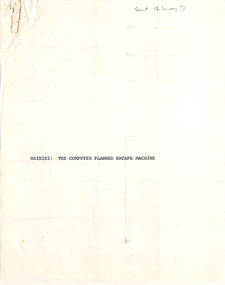
Document - Manuscript, Robin Boyd, Waikiki: The Computer Planned Escape Machine, 1971
... Extols the virtues of Waikiki as a holiday destination/escape machine, the less-than-Good Taste of the resort combined with its virtues/religious dogma of American middle-class vacation standards. Boyd describes a day of the typical young American hotel occupant, and Honolulu's uniform air of confidence attracting American tourists. ...Robin Boyd...Waikiki Honolulu American tourism second rate Californian architecture American middle-class vacation standards robin boyd manuscript OHM2022 OHM2022_16 Sent 12 May 71 - in pencil on front page Typewritten (1 c copy and 1 p/copy), pencil edits, quarto, 11 pages Waikiki: The Computer Planned Escape Machine Document Manuscript Robin Boyd ...Extols the virtues of Waikiki as a holiday destination/escape machine, the less-than-Good Taste of the resort combined with its virtues/religious dogma of American middle-class vacation standards. Boyd describes a day of the typical young American hotel occupant, and Honolulu's uniform air of confidence attracting American tourists. This manuscript was published in 'The Sunday Australian' with the title ‘Why I love Waikiki’ on 23/05/1971.Original manuscript of ‘Why I love Waikiki’ published in 'The Sunday Australian', 23/05/1971.Typewritten (1 c copy and 1 p/copy), pencil edits, quarto, 11 pagesSent 12 May 71 - in pencil on front pagewaikiki, honolulu, american tourism, second rate californian architecture, american middle-class vacation standards, robin boyd, manuscript, ohm2022, ohm2022_16 -
 Robin Boyd Foundation
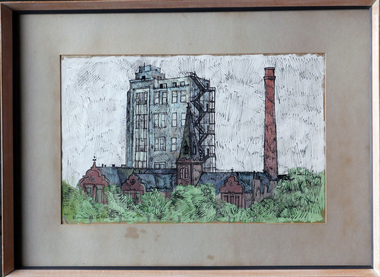
Work on paper, Michael Shannon, The Alfred Hospital, 1957
... This artwork was a gift from Michael Shannon to Robin Boyd, (thought to be in thanks for opening Shannon's 1961 exhibition at South Yarra Gallery)....Signature "Shannon '57, for Robin Boyd 1961" in lower left hand corner. ...This artwork was a gift from Michael Shannon to Robin Boyd, (thought to be in thanks for opening Shannon's 1961 exhibition at South Yarra Gallery). michael shannon south yarra gallery robyn boyd walsh st artwork OHM2022 OHM2022_23 Signature "Shannon '57, for Robin Boyd 1961" in lower left hand corner. ...This artwork was a gift from Michael Shannon to Robin Boyd, (thought to be in thanks for opening Shannon's 1961 exhibition at South Yarra Gallery).Buildings and chimney in a landscape.Signature "Shannon '57, for Robin Boyd 1961" in lower left hand corner. michael shannon, south yarra gallery, robyn boyd, walsh st artwork, ohm2022, ohm2022_23 -
 Robin Boyd Foundation
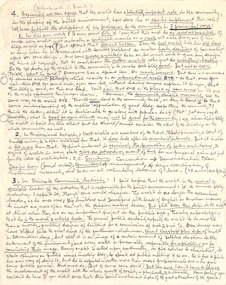
Document - Manuscript, Robin Boyd, (4. Assuming we can agree that the architect’s has a potentially important role in the community...), 1971
... Boyd proposes that the architect can play an important role in the community, engaging through: 1. his own work; 2. in voluntary professional activity in the RAIA; and 3. in private community activity, eg giving advice to charities and giving public talks. ...Robin Boyd...Document Manuscript Robin Boyd ...Boyd proposes that the architect can play an important role in the community, engaging through: 1. his own work; 2. in voluntary professional activity in the RAIA; and 3. in private community activity, eg giving advice to charities and giving public talks. He argues that although architects are often no longer project leaders (a role now taken by big builders and developers) they nonetheless are, and should remain, moral and artistic leaders.Original manuscript of article published in Bulletin, 2 Oct 1971. The Bulletin page is attached.Handwritten (pencil), quarto, 1 (handwritten), 1 torn out page of the Bulletin Reviewraia, architectural professional conduct, volunteering, robin boyd, manuscript -
 Robin Boyd Foundation
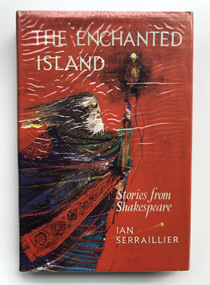
Book, Ian Serraillier, The Enchanted Island, 1964
... Suzy was the youngest of the Boyds’ three children - this is one of her childhood books....Glued-in bookplate - "ABC TV Partyland First Prize April Competition Award to Suzy Boyd"....Suzy was the youngest of the Boyds’ three children - this is one of her childhood books. ...Suzy was the youngest of the Boyds’ three children - this is one of her childhood books.Hardcover book.Glued-in bookplate - "ABC TV Partyland First Prize April Competition Award to Suzy Boyd".walsh st library, ohm2022, ohm2022_40 -
 Robin Boyd Foundation
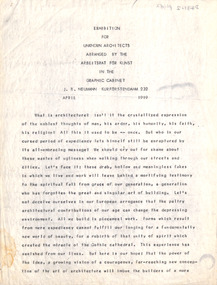
Article, Walter Gropius, Exhibition for Unknown Architects, April 1919
... Ise Gropius, wife of Walter Gropius, thought this translation of a 1919 article by Walter Gropius would be of interest to Robin Boyd because it touches on Gropius's preoccupation with 'beauty'. ...The article is corrected in pencil on page 2, in Robin Boyd's hand....The article is corrected in pencil on page 2, in Robin Boyd's hand. Exhibition for Unknown Architects Article Walter Gropius ...Ise Gropius, wife of Walter Gropius, thought this translation of a 1919 article by Walter Gropius would be of interest to Robin Boyd because it touches on Gropius's preoccupation with 'beauty'. A letter by Ise Gropius accompanies this article (item D431.1).The article is corrected in pencil on page 2, in Robin Boyd's hand. -
 Robin Boyd Foundation
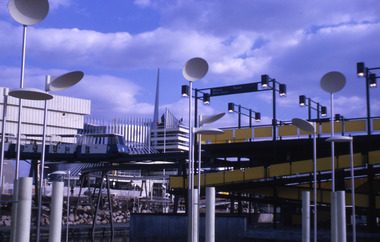
Slide, Robin Boyd, 1967
... Robin Boyd was appointed Exhibits Architect for the Australian Pavilion at Expo ‘67 in Montreal. ...Robin Boyd...Robin Boyd was appointed Exhibits Architect for the Australian Pavilion at Expo ‘67 in Montreal. ...Robin Boyd was appointed Exhibits Architect for the Australian Pavilion at Expo ‘67 in Montreal. The garden outside the pavilion featured a sculptural pool, a coral display, animal pool, a pit for kangaroos and Eucalypts and other native plants. The indoor exhibits covered aspects of Australian art and culture, architecture, industrial design and scientific innovation, such as the Snowy Mountains Hydro-Electric Power Scheme, the Parkes radio telescope, the design of Canberra, and the Australian way of life.Colour slide in a mount. Uplights of the British Pavilion (foreground), French Pavilion (background) Expo 67, Montreal, CanadaMade in Australia / 27 / MAY 67M6 / 16 (Handwritten) / 3 (Handwritten)expo 67, montreal, robin boyd, slide -
 Robin Boyd Foundation
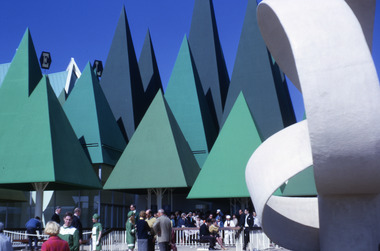
Slide, Robin Boyd, 1967
... Robin Boyd was appointed Exhibits Architect for the Australian Pavilion at Expo ‘67 in Montreal. ...Robin Boyd...Robin Boyd was appointed Exhibits Architect for the Australian Pavilion at Expo ‘67 in Montreal. ...Robin Boyd was appointed Exhibits Architect for the Australian Pavilion at Expo ‘67 in Montreal. The garden outside the pavilion featured a sculptural pool, a coral display, animal pool, a pit for kangaroos and Eucalypts and other native plants. The indoor exhibits covered aspects of Australian art and culture, architecture, industrial design and scientific innovation, such as the Snowy Mountains Hydro-Electric Power Scheme, the Parkes radio telescope, the design of Canberra, and the Australian way of life.Colour slide in a mount. Canadian Pulp and Paper Pavilion, Montreal Expo '67, Canada. (Architect: William Kissiloff.)Made in Australia / 31 / MAY 67M6 / 6 (Handwritten) / 42 (Handwritten)expo 67, montreal, robin boyd, slide -
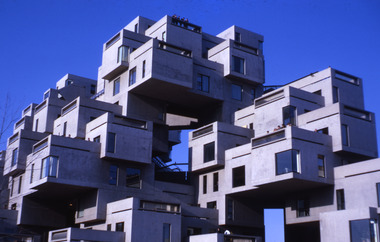 Robin Boyd Foundation
Slide, Robin Boyd, 1967
... Robin Boyd was appointed Exhibits Architect for the Australian Pavilion at Expo ‘67 in Montreal. ...Robin Boyd...Robin Boyd was appointed Exhibits Architect for the Australian Pavilion at Expo ‘67 in Montreal. ...Robin Boyd was appointed Exhibits Architect for the Australian Pavilion at Expo ‘67 in Montreal. The garden outside the pavilion featured a sculptural pool, a coral display, animal pool, a pit for kangaroos and Eucalypts and other native plants. The indoor exhibits covered aspects of Australian art and culture, architecture, industrial design and scientific innovation, such as the Snowy Mountains Hydro-Electric Power Scheme, the Parkes radio telescope, the design of Canberra, and the Australian way of life.Colour slide in a mount. Habitat 67, Montreal, Canada. (Architect: Moshe Safdie.)Made in Australia / 37 / MAY 67M6 / Encircled 6 (Handwritten) / 24 (Handwritten) / 10 (Handwritten)expo 67, montreal, robin boyd, slide -
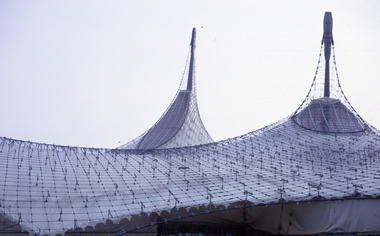 Robin Boyd Foundation
Slide, Robin Boyd, 1967
... Robin Boyd was appointed Exhibits Architect for the Australian Pavilion at Expo ‘67 in Montreal. ...Robin Boyd...Robin Boyd was appointed Exhibits Architect for the Australian Pavilion at Expo ‘67 in Montreal. ...Robin Boyd was appointed Exhibits Architect for the Australian Pavilion at Expo ‘67 in Montreal. The garden outside the pavilion featured a sculptural pool, a coral display, animal pool, a pit for kangaroos and Eucalypts and other native plants. The indoor exhibits covered aspects of Australian art and culture, architecture, industrial design and scientific innovation, such as the Snowy Mountains Hydro-Electric Power Scheme, the Parkes radio telescope, the design of Canberra, and the Australian way of life.Colour slide in a mount. West German Pavilion, Montreal Expo '67, Canada. (Architects: Frei Otto and Rolf Gutbrod.)Made in Australia / 5 / APR 67M4 / Encircled 27 (Handwritten)expo 67, montreal, robin boyd, slide -
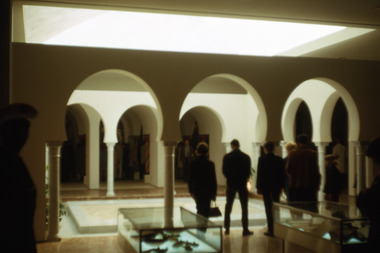 Robin Boyd Foundation
Slide, Robin Boyd, 1967
... Robin Boyd was appointed Exhibits Architect for the Australian Pavilion at Expo ‘67 in Montreal. ...Robin Boyd...Robin Boyd was appointed Exhibits Architect for the Australian Pavilion at Expo ‘67 in Montreal. ...Robin Boyd was appointed Exhibits Architect for the Australian Pavilion at Expo ‘67 in Montreal. The garden outside the pavilion featured a sculptural pool, a coral display, animal pool, a pit for kangaroos and Eucalypts and other native plants. The indoor exhibits covered aspects of Australian art and culture, architecture, industrial design and scientific innovation, such as the Snowy Mountains Hydro-Electric Power Scheme, the Parkes radio telescope, the design of Canberra, and the Australian way of life.Colour slide in a mount. Tunisia Pavilion, Expo '67, Montreal, CanadaMade in Australia / 28 / MAY 67M6expo 67, montreal, robin boyd, slide -
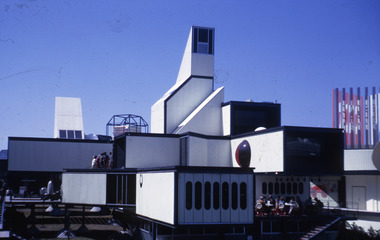 Robin Boyd Foundation
Slide, Robin Boyd, 1967
... Robin Boyd was appointed Exhibits Architect for the Australian Pavilion at Expo ‘67 in Montreal. ...Robin Boyd...Robin Boyd was appointed Exhibits Architect for the Australian Pavilion at Expo ‘67 in Montreal. ...Robin Boyd was appointed Exhibits Architect for the Australian Pavilion at Expo ‘67 in Montreal. The garden outside the pavilion featured a sculptural pool, a coral display, animal pool, a pit for kangaroos and Eucalypts and other native plants. The indoor exhibits covered aspects of Australian art and culture, architecture, industrial design and scientific innovation, such as the Snowy Mountains Hydro-Electric Power Scheme, the Parkes radio telescope, the design of Canberra, and the Australian way of life.Colour slide in a mount. Cuban Pavilion, Expo '67, Montreal, Canada. (Architects: Vittorio Garatti, Sergio Baroni und Hugo D'Acosta)Made in Australia / 3 / JUL 67M6 / 15 (Handwritten) / Encircled 9 (Handwritten) / 41 (Handwritten)expo 67, montreal, robin boyd, slide -
 Robin Boyd Foundation
Slide, Robin Boyd, 1967
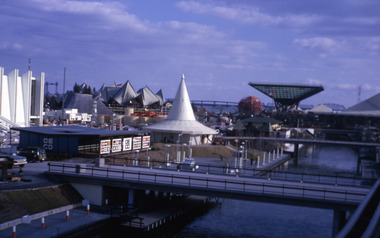
... Robin Boyd was appointed Exhibits Architect for the Australian Pavilion at Expo ‘67 in Montreal. ...Robin Boyd...Robin Boyd was appointed Exhibits Architect for the Australian Pavilion at Expo ‘67 in Montreal. ...Robin Boyd was appointed Exhibits Architect for the Australian Pavilion at Expo ‘67 in Montreal. The garden outside the pavilion featured a sculptural pool, a coral display, animal pool, a pit for kangaroos and Eucalypts and other native plants. The indoor exhibits covered aspects of Australian art and culture, architecture, industrial design and scientific innovation, such as the Snowy Mountains Hydro-Electric Power Scheme, the Parkes radio telescope, the design of Canberra, and the Australian way of life.Colour slide in a mount. Ontario Pavilion (rear left, Fairfield & Dubois); Katimavik, Canada Pavilion (rear right, Ashworth Robbie Vaughan & Williams), Expo 67, Montreal, CanadaMade in Australia / 28 / MAY 67M6 / Encircled 24 (Handwritten) / 15 (Handwritten)expo 67, montreal, robin boyd, slide -
 Robin Boyd Foundation
Slide, Robin Boyd, 1967
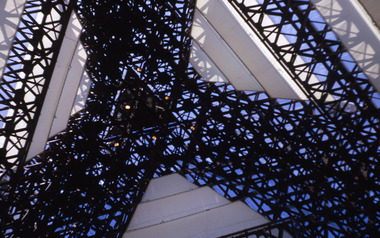
... Robin Boyd was appointed Exhibits Architect for the Australian Pavilion at Expo ‘67 in Montreal. ...Robin Boyd...Robin Boyd was appointed Exhibits Architect for the Australian Pavilion at Expo ‘67 in Montreal. ...Robin Boyd was appointed Exhibits Architect for the Australian Pavilion at Expo ‘67 in Montreal. The garden outside the pavilion featured a sculptural pool, a coral display, animal pool, a pit for kangaroos and Eucalypts and other native plants. The indoor exhibits covered aspects of Australian art and culture, architecture, industrial design and scientific innovation, such as the Snowy Mountains Hydro-Electric Power Scheme, the Parkes radio telescope, the design of Canberra, and the Australian way of life.Colour slide in a mount. Expo '67, Montreal, CanadaMade in Australia / 6 / MAY 67M6 / Encircled 38 (Handwritten) / 14 (Handwritten)expo 67, montreal, robin boyd, slide
