
Showing 505 items matching "dignitaries"
-
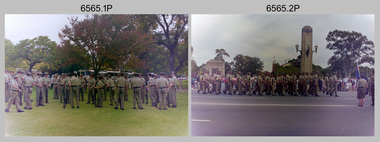 Bendigo Military Museum
Photograph - 4th Field Survey Squadron ANZAC Day Parade. Adelaide, SA, 1994
... Eyes right as unit passes dignitaries on the dais. .3) - Photo, colour, 1994. ...Eyes right as unit passes dignitaries on the dais. .3) - Photo, colour, 1994. ...This is a set of 32 photographs of 4th Field Survey Squadron personnel parading through the streets of the Adelaide CBD on ANZAC Day, on the 25th of April 1994. The march concluded at the Cross of Sacrifice in Pennington Gardens East followed by the ANZAC Day Service of Remembrance. See items 6566.14P and 6567.11P for more photos taken during ANZAC Day, 1994.This is a set of 32 photographs of 4th Field Survey Squadron personnel parading through the streets of the Adelaide CBD on ANZAC Day, on the 25th of April 1994. The colour photographs are on 35mm negative film and are part of the Army Survey Regiment’s Collection. The photographs were scanned at 96 dpi. .1) - Photo, colour, 1994. Preparation. Bayonets fixed on SLR rifles. .2) - Photo, colour, 1994. Eyes right as unit passes dignitaries on the dais. .3) - Photo, colour, 1994. Eyes right as unit passes dignitaries on the dais. CAPT Rob Gray, centre of photo, OC MAJ Peter Demaine on right. .4) to .7) - Photo, colour, 1994. Eyes right as unit passes dignitaries on the dais. .8) - Photo, colour, 1994. Unit marches along the parade route. .9) to .13) - Photo, colour, 1994. Eyes right as unit passes dignitaries. .14) - Photo, colour, 1994. Unit marches along the parade route. Right file L to R: WO2 Peter Hammer, unidentified, SGT Dave Longbottom, SGT Paul Baker, unidentified. .15) - Photo, colour, 1994. Unit marches along the parade route. Right file L to R: SGT Paul Baker, unidentified (x2), SPR Fran Calvert, SPR Greg Richards, SGT H. Evertz. Centre file: SGT Mark Donnelly, SPR Mark McInerney, unidentified (x2), SPR Matt Arnold. .16) - Photo, colour, 1994. Unit marking time. Right file L to R: SGT Paul Baker, unidentified (x2), SPR Fran Calvert, SPR Greg Richards, SGT H. Evertz, CPL Brett Parkin. Centre file L to R: SPR Matt Arnold, SPR Mark Linwood. Right file L to R: unidentified, SPR Mark Sinderberry. Officers L to R: unidentified (x2), CAPT Rob Gray, CAPT Tony Stephens. .17) - Photo, colour, 1994. Unit marking time. L to R: SGT Paul Baker, unidentified, SSGT John ‘Shep’ Shephard, SGT Dave Longbottom, SPR Daryl Miller, CPL Steve Wegener, unidentified (x2), CPL Jeremy Archer, WO2 Peter Hammer, unidentified Warrant Officers (x2). .18) - Photo, colour, 1994. Unit marking time. L to R: SPR Mark Linwood, SPR Greg Richards, SPR Matt Arnold, SPR Mark Sinderberry, unidentified (x5), SPR Chris Pearse, unidentified, CPL Dick Crawford, unidentified, SSGT John ‘Shep’ Shephard, CPL Steve Wegener, unidentified, CPL Jeremy Archer, unidentified Warrant Officer. .19) - Photo, colour, 1994. Unit marking time. Officers L to R: unidentified (x2), CAPT Tony Stephens. L to R: SPR Mark Linwood, SPR Greg Richards, SPR Matt Arnold, SPR Mark Sinderberry, remainder unidentified. .20) - Photo, colour, 1994. Unit marched along the parade route. L to R: CAPT Rob Gray, unidentified officer. .21) - Photo, colour, 1994. Unit marches along the parade route. OC MAJ Peter Demaine. .22) - Photo, colour, 1994. Unit marches along the parade route. L to R: CAPT Tony Stephens, SPR Mark Linwood, SPR Matt Arnold, SPR Mark Sinderberry, unidentified (x3), SPR Chris Pearse, unidentified, CPL Dick Crawford, unidentified, SGT Dave Longbottom, SSGT John ‘Shep’ Shephard, CPL Steve Wegener, CPL Jeremy Archer, unidentified Warrant Officers (x2). .23) - Photo, colour, 1994. Unit marches along the parade route. L to R: SSGT John ‘Shep’ Shephard, SPR Daryl Miller, CPL Steve Wegener, unidentified, CPL Jeremy Archer, unidentified Warrant Officers (x2). .24) - Photo, colour, 1994. Unit marches along the parade route. L to R: unidentified, CPL Dick Crawford, SGT Dave Longbottom, SSGT John ‘Shep’ Shephard, unidentified, CPL Steve Wegener, WO2 Peter Hammer, CPL Jeremy Archer, unidentified Warrant Officers (x2). .25) - Photo, colour, 1994. Unit marches along the parade route. L to R: unidentified (x3), SPR Fran Calvert, unidentified (x2), SPR Chris Pearse, unidentified, CPL Dick Crawford, SPR Daryl Miller, SSGT John ‘Shep’ Shephard. .26) - Photo, colour, 1994. Unit marches along the parade route. L to R: CAPT Tony Stephens, CPL Brett Parkin, SPR Mark Linwood, SGT H. Evertz, SPR Mark Sinderberry, unidentified (x2). .27) - Photo, colour, 1994. Unit marches along the parade route. L to R: CPL Brett Parkin, CAPT Tony Stephens, SPR Mark Linwood, SPR Greg Richards, SPR Matt Arnold, unidentified, SPR Mark Sinderberry, unidentified (x3), SPR Chris Pearse, unidentified, CPL Dick Crawford, unidentified, SGT SSGT John ‘Shep’ Shephard, CPL Steve Wegener, CPL Jeremy Archer, unidentified Warrant Officer. .28) - Photo, colour, 1994. Unit marches along the parade route. L to R: Officers - OC MAJ Peter Demaine, unidentified (x2), CAPT Rob Gray, CAPT Tony Stephens. L to R: CPL Brett Parkin, SGT H. Evertz, SPR Mark Linwood, SSGT Pat ‘Fuji’ Drover, SPR Mark Sinderberry, unidentified. .29) - Photo, colour, 1994. Unit preparing to halt. .30) to .32) - Photo, colour, 1994. Unit ‘stand easy’..1P to .32P – There are no personnel identified. ‘1994 ANZAC DAY’ annotated on negatives sleeve.royal australian survey corps, rasvy, 4 fd svy sqn -
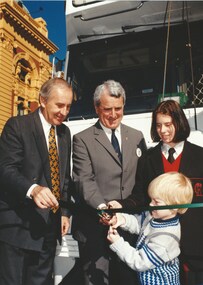 Melbourne Legacy
Photograph, Legacy Tram, 1995
... Another photo is a group of dignitaries in front of the tram. The tram was painted to promote Legacy in 1995 which was the 50th Anniversary of the end of World War II. ...Another photo is a group of dignitaries in front of the tram. The tram was painted to promote Legacy in 1995 which was the 50th Anniversary of the end of World War II. ...Photos from the 2 May 1995 when the Transport Minister, Mr Alan Brown and Legacy President David Millie unveiled banners at Flinders St Station saying "Australia Remembers". Also the launch of a tram by Junior Legatees Kim Anderson and Peter Hazelager. Another photo is a group of dignitaries in front of the tram. The tram was painted to promote Legacy in 1995 which was the 50th Anniversary of the end of World War II. Wording on the tram says: "This year - Australia remembers the Heroes of World War II / 50 years on / Legacy never forgets to care for the widows and children of those who fought for our freedom". It appeared in The Answer in June 1995 after it had been launched on May 2nd by President David Millie and Public Transport Minister, Mr Alan Brown. The ribbon was cut by Junior Legatees Kim Anderson and Peter Hazelager. "The distinctive white tram will be running on routes around Melbourne for at least six months and our thanks go to the Public Transport Corporation for making it possible." 01809.1 shows President Millie, Kim Anderson and Peter Hazelager. 01809.2 is Peter Hazelager being held by his mother, Margaret Anderson and Kim Anderson. 01809.4 is a Legatee, Minister Alan Brown, President Millie, a man in The MET uniform, Legatee Roger Greene.A record of a way to promote Legacy during Legacy Week in 1995.Colour photo x 6 of the launch of a tram painted to promote to Legacy at Flinders St Station.legacy promotion, answer, tram -
 Emerald Museum & Nobelius Heritage Park
Book - Scrap Book presented to Mrs. Olive Hamilton, 1954, Victorian Amateur Cinema Society, 1954
... After this film tour, the scrapbook was then gifted to Mrs Hamilton as a memento of the official events, dignitaries and audiences associated with the tour. ...After this film tour, the scrapbook was then gifted to Mrs Hamilton as a memento of the official events, dignitaries and audiences associated with the tour. ...The Victorian Amateur Cinema Society created this scrapbook for Mrs Olive Hamilton in 1954. Mrs Hamilton was an Emerald local who was an official photographer for the 1954 Royal Visit by Queen Elizabeth II. Mrs Hamilton (with the help of Mr Hamilton as film producer) created the ‘Vivat Regina’ film to document the 1954 Royal Visit. The film was shown by the couple around Australia for those to enjoy who could not experience the visit first-hand. After this film tour, the scrapbook was then gifted to Mrs Hamilton as a memento of the official events, dignitaries and audiences associated with the tour. On Mrs Hamilton’s death, this scrapbook, along with other associated material, was donated to the Emerald Museum.. Although scrapbooks are commonly found in museum collections, this is a rare example for its type, containing newspaper and magazine clippings of the 1954 Royal Visit that are not found in other collections. Together with other Olive Hamilton material in the collection, the scrapbook has a high interpretive capacity, by contributing to the Museum’s purpose of presenting the stories of important individuals from the Emerald community throughout its history. Scrap book contains a working record of the Hamilton's documentary making. The contents document the various screening venues, endorsements and accolades given to Olive (mostly) and William Hamilton. It should be noted that signatures of important persons are within this album.The scrapbook is of historic, artistic and social significance. It contains a record of Olive Hamilton’s working life as an official photographer of Queen Elizabeth II’s 1954 Royal Visit, an important historical event given Elizabeth II was the first reigning monarch to ever visit Australia. The scrapbook holds social significance as a record of the Royal Family’s importance to the Australian public at the time. This is demonstrated through the large number and types of places the scrapbook toured, as well as the diversity of people who contributed to the book. The scrapbook holds artistic significance by celebrating photography as an art form, in particular some of the many photographs taken by Olive Hamilton during the 1954 Royal Visit and on other occasions. It is also socially significant to the Emerald community as a record of the contribution to Australian history made by an Emerald resident.This hard cover scrapbook is bound in deep red velvet. It has 165 pages, several of which are bookmarked by yellow, red and pink ribbon. Its first page reads ‘in appreciation this book was presented to Mrs Olive Hamilton of Emerald by the Victorian Amateur Cine Society at the screening of Vivat Regina in appreciation of her services on behalf of the society, signed President, Secretary, 1954’. The scrapbook pages contain a mixture of ‘visitor book’ style accolades written in pen, along with newspaper clippings, invites and other cut outs that have been stuck on the pages using glue or tape.Front page: Victorian Amateur Cine. Society in appreciation. This book was presented to Mrs. Olive Hamilton of Emerald by the Victorian Amateur Cine. Society of the screening of 'Vivat Regina' in appreciation of her services on behalf of the society signed by the President, Secretary 1954.mrs. olive hamilton, william hamilton, silver wells, victorian amateur cine. society, vivat regina, royal tour 1954 -
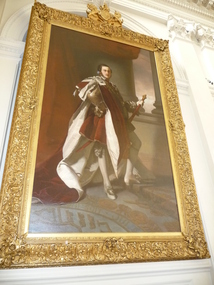 Parliament of Victoria
Portrait of Prince Albert, Coutts, Gordon 1865-1938 et al, Prince Albert, after Winterhalter, 1896
... Accordingly, between 1842 and 1861 he made fifteen visits to England and painted over 100 portraits of Her Majesty, the royal family and other friends and dignitaries. There are a number of notable differences in the original Winterhalter work and this painting. ...Accordingly, between 1842 and 1861 he made fifteen visits to England and painted over 100 portraits of Her Majesty, the royal family and other friends and dignitaries. There are a number of notable differences in the original Winterhalter work and this painting. ...In 1895 artist Gordon Coutts was commissioned by Elizabeth Harding (Mrs. Silas Harding), a wealthy pastoralist, to paint this portrait of Prince Albert. The portrait was completed by 1896 and is a copy of an original by German artist Franz Xaver Winterhalter (1805-1873). In 1843 Winterhalter was commissioned to paint matching portraits of Queen Victoria and Albert, the Prince Consort. These originals hang in the Garter Throne Room at Windsor Castle and are part of the UK Royal Collection. Queen Victoria’s appreciation of Winterhalter began after she saw portraits by him of other European monarchs. Accordingly, between 1842 and 1861 he made fifteen visits to England and painted over 100 portraits of Her Majesty, the royal family and other friends and dignitaries. There are a number of notable differences in the original Winterhalter work and this painting. The local artist Coutts has changed the colour of the Prince’s cloak from deep blue/black to red (perhaps as a result of working from a black and white photograph). Other differences include extra satin shoulder ribbons, a simplification of the furnishings, notably the floor, and an inexact representation of the medallions worn; collars of the Order of the Garter, Bath, and the Golden Fleece. The painting is framed to match the official copy portrait of Queen Victoria, with the coat of arms of Prince Albert of Saxe-Coburg and Gotha, fixed atop the frame in place of the royal crown.Framed portrait, oil on cotton, of Prince Albert. The Prince Consort wears the robes of the Order of the Garter, holds a Field-Marshal’s baton, and is posed in front of a curtain and colonnade. Timber frame with a layer of gesso and decorative composition ornaments. There are rose, scotch thistle, clover leaf and Acanthus ornaments. The coat of arms that sits on top of the frame is a combination of carved timber and composition elements.Signed lower right corner in red brushpoint: ‘after Winterhalter / By Gordon Coutts / 1896’.albert, prince consort of victoria, queen of great britain, 1819-1861, winterhalter, franz xaver, 1805-1873, coutts, gordon (1865-1938) -
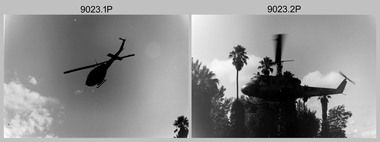 Bendigo Military Museum
Photograph - Visit by Australian Major General Hughes and US General Keith to the Army Survey Regiment, Fortuna, Bendigo, c1984
... Visiting dignitaries and their wives alight from the RAAF Iroquois Helicopter at the Bendigo Airport. .21) & .22) - Photo, black & white, c1984. ...Visiting dignitaries and their wives alight from the RAAF Iroquois Helicopter at the Bendigo Airport. .21) & .22) - Photo, black & white, c1984. ...Army Survey Regiment, Fortuna Villa, Bendigo circa 1984. As there are limited annotations with the photo set, the names of the aide de camp officer, guests and the media are unknown. The Australian Army’s MAJ GEN James Hughes AO DSO MC and the US Army’s GEN Keith are identified by their name tags. Given GEN Keith was a high ranking four-star General, it is likely they were attending a Five Nations Conference held at the Regiment. MAJ GEN James Hughes AO DSO MC held the position of Controller of Establishments from 1978 to 1984. The generals were accompanied by their wives and travelled by RAAF Iroquois helicopter.This is a set of 24 photographs taken on the occasion of Australian Army Major General Hughes and US General Keith visit to the Army Survey Regiment, Bendigo circa 1984. The black & white photographs are on 35mm negative film and are part of the Army Survey Regiment’s Collection. The photographs .1) to .18) were scanned at 96 dpi and photographs .19) to .24) were scanned at 300 dpi.. .1) to .5) - Photo, black & white, c1984. Royal Australian Air Force (RAAF) Iroquois Helicopter landing on the Army Survey Regiment’s parade ground. .6) - Photo, black & white, c1984. US Army’s GEN Keith departs from RAAF Iroquois Helicopter at Army Survey Regiment’s parade ground. RSM WO1 Bob Mason appears at far right. .7) to .9) - Photo, black & white, c1984. L to R: Army Survey Regiment’s 2IC MAJ Bob Roche greets MAJ GEN James Hughes AO DSO MC, US Army’s GEN Keith appears at far right. .10) & .11) - Photo, black & white, c1984. L to R: Army Survey Regiment’s 2IC MAJ Bob Roche, MAJ GEN James Hughes AO DSO MC, US Army’s GEN Keith at the front steps of Fortuna Villa. .12) - Photo, black & white, c1984. OC MAJ Graham Baker escorts the touring party along the pathway outside Air Survey Squadron. .13) & .14) - Photo, black & white, c1984. US Army’s GEN Keith being interviewed by the media. Air Survey Squadron’s OC MAJ Graham Baker appears at far right. .15) - Photo, black & white, c1984. Royal Australian Air Force (RAAF) Iroquois Helicopter in readiness for departure from the Army Survey Regiment’s parade ground. RSM WO1 Bob Mason appears at far right. .16) - Photo, black & white, c1984. MAJ GEN James Hughes AO DSO MC on the Army Survey Regiment’s parade ground before departure. .17) & .18) - Photo, black & white, c1984. Visiting dignitaries and their wives board the RAAF Iroquois Helicopter at the Army Survey Regiment’s parade ground. .19) & .20) - Photo, black & white, c1984. Visiting dignitaries and their wives alight from the RAAF Iroquois Helicopter at the Bendigo Airport. .21) & .22) - Photo, black & white, c1984. Royal Australian Air Force (RAAF) Iroquois Helicopter landing on the Army Survey Regiment’s parade ground. .23) - Photo, black & white, c1984. Royal Australian Air Force (RAAF) Iroquois Helicopter landing at the Bendigo Airport. .24) - Photo, black & white, c1984. US Army’s GEN Keith and Mrs Keith after alighting from the RAAF Iroquois Helicopter at the Bendigo Airport.The annotation ‘Gen Keith’s Visit’ is written on the cover sheet.royal australian survey corps, rasvy, army survey regiment, army svy regt, fortuna -
 Bendigo Military Museum
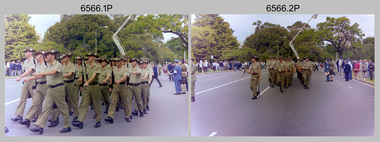
Photograph - 4th Field Survey Squadron ANZAC Day Parade. Adelaide, SA, 1994
... Eyes right as unit passes dignitaries on the dais. L to R: unidentified officers (x2), CAPT Tony Stephens. ...Eyes right as unit passes dignitaries on the dais. L to R: unidentified officers (x2), CAPT Tony Stephens. ...This is a set of 14 photographs of 4th Field Survey Squadron personnel parading through the streets of the Adelaide CBD on ANZAC Day, on the 25th of April 1994. The march concluded at the Cross of Sacrifice in Pennington Gardens East followed by the ANZAC Day Service of Remembrance. See items 6565.32P and 6567.11P for more photos taken during ANZAC Day, 1994.This is a set of 14 photographs of 4th Field Survey Squadron personnel parading through the streets of the Adelaide CBD on ANZAC Day, on the 25th of April 1994. The colour photographs are on 35mm negative film and are part of the Army Survey Regiment’s Collection. The photographs were scanned at 96 dpi. .1) - Photo, colour, 1994. Unit right wheeling on the parade route. L to R: CPL Brett Parkin, SPR Mark Linwood, SPR Mark Sinderberry, SPR Greg Richards, SPR Matt Arnold, unidentified, SSGT Pat ‘Fuji’ Drover, unidentified (x4), SPR Chris Pearse. .2) - Photo, colour, 1994. Unit right wheeling on the parade route. Officers L to R: OC MAJ Peter Demaine, unidentified, CAPT Rob Gray, unidentified, CAPT Tony Stephens. Markers L to R: CPL Brett Parkin, SPR Mark Linwood. .3) - Photo, colour, 1994. Unit marches along the parade route. L to R: unidentified (x2), SPR Chris Pearse, SPR Mark McInerney, unidentified (x2), SGT Paul Baker, CPL Dick Crawford, unidentified, SSGT John ‘Shep’ Shephard, unidentified, CPL Steve Wegener, unidentified Warrant Officer, CPL Jeremy Archer, unidentified Warrant Officer. .4) - Photo, colour, 1994. Eyes right as unit passes dignitaries on the dais. L to R: unidentified officers (x2), CAPT Tony Stephens. Markers L to R: CPL Brett Parkin, SPR Mark Sinderberry, remainder unidentified. .5) - Photo, colour, 1994. Eyes right as unit passes dignitaries on the dais. L to R: OC MAJ Peter Demaine, CAPT Rob Gray, unidentified officers (x2), unidentified, Marker: SPR Mark Linwood. .6) - Photo, colour, 1994. Unit marches along the parade route. .7) - Photo, colour, 1994. Unit marches along the parade route. L to R: SPR Daryl Miller, CPL Steve Wegener, unidentified, WO2 Peter Hammer (background), CPL Jeremy Archer, unidentified Warrant Officers (x2). .8) - Photo, colour, 1994. Unit marches along the parade route. L to R: unidentified (x2), SPR Chris Pearse, SPR Mark McInerney, unidentified (x2), SGT Paul Baker, CPL Dick Crawford, SSGT John ‘Shep’ Shephard. .9) - Photo, colour, 1994. Unit marches along the parade route. Officers L to R: CAPT Rob Gray, unidentified (x2), CAPT Tony Stephens. .10) - Photo, colour, 1994. Unit marches along the parade route. Officers L to R: OC MAJ Peter Demaine, CAPT Rob Gray, unidentified (x2), unidentified soldier, Marker: SPR Mark Linwood. .11) & .12) - Photo, colour, 1994. Unit marches along the parade route. .13) & .14) - Photo, colour, 1994. Other units march along the parade route..1P to .14P – There are no personnel identified. ‘1994 ANZAC DAY’ annotated on negatives sleeve.royal australian survey corps, rasvy, 4 fd svy sqn -
Ringwood and District Historical Society
Administrative record, Minutes of Meeting - Borough of Ringwood sub-committee and Tintern CEGS representatives re Opening Ceremony. Meeting date May 9th 1950. F. R. Lucas Engineer
... Official guests include the Minister of Education, and Members of Parliament, the Mayor and Councillors of Ringwood, leading Church dignitaries including Archbishop Booth, and prominent business men. ...Official guests include the Minister of Education, and Members of Parliament, the Mayor and Councillors of Ringwood, leading Church dignitaries including Archbishop Booth, and prominent business men. ...Quarto page - carbon copy of Minutes. BOROUGH OF RINGWOOD, Town Hall, RINGWOOD MINUTES of the meeting of sub‑committee appointed to meet representatives from Tintern Girls Church of England School held at the Town Hall on Tuesday May 9th at 8 p.m. 1950. PRESENT – Councillors Purser, McCaskill and Hall, and Messrs Stuart and Daniel from the School Committee. Mr. Stuart gave an outline of the proposed opening ceremony on June 10th at which they expected approximately 150 official guests. His Excellency the Governor had consented to open the school. Official guests include the Minister of Education, and Members of Parliament, the Mayor and Councillors of Ringwood, leading Church dignitaries including Archbishop Booth, and prominent business men. Formal introduction to the Governor will take place about 2.50 p.m. after which a programme will be opened with hymn and prayer to be followed with opening ceremony by the Governor and inspection of school and grounds. The School Council has requested that route along Knaith Road and Alexander Road should be cleaned up and a few loads of gravel or screenings placed in pot holes and newly graded section at junction of Victoria and Knaith Road. The Council has a quantity of dirty screenings which were taken up from Wonga Park Road and it is recommended that they be used for this purpose. Yours faithfully, F. R. Lucas, ENGINEER. -
 Waverley RSL Sub Branch
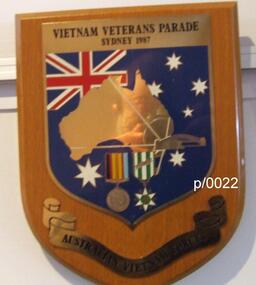
Plaque Vietnam Vererans Parade Sydney 1987, Vietnam Vererans Parade Sydney 1987
... In fact, large numbers actually returned on HMAS Sydney, to a welcome by dignitaries and a parade. The manner of their homecoming affected the way in which veterans recovered from the war, those who did arrive late at night to no fanfare and the seeming indifference of the military had more trouble adjusting to life at home than did those whose return was more public and who had had the benefit of a couple of weeks unwinding on board Sydney before reaching Australia. ...In fact, large numbers actually returned on HMAS Sydney, to a welcome by dignitaries and a parade. The manner of their homecoming affected the way in which veterans recovered from the war, those who did arrive late at night to no fanfare and the seeming indifference of the military had more trouble adjusting to life at home than did those whose return was more public and who had had the benefit of a couple of weeks unwinding on board Sydney before reaching Australia. ...Anecdotal evidence holds that most men returned from Vietnam in the dead of night, hidden from the public. In fact, large numbers actually returned on HMAS Sydney, to a welcome by dignitaries and a parade. The manner of their homecoming affected the way in which veterans recovered from the war, those who did arrive late at night to no fanfare and the seeming indifference of the military had more trouble adjusting to life at home than did those whose return was more public and who had had the benefit of a couple of weeks unwinding on board Sydney before reaching Australia. But the return home was only the beginning of a long period of readjustment. For a long time after the war large numbers of Vietnam veterans felt that many in Australia blamed them, rather than politicians, for the war and the way it had been conducted. Images of the war, many still familiar, of children burned by napalm, of the dead of My Lai, of a South Vietnamese general summarily executing a member of the Viet Cong in the streets of Saigon, had an effect on public opinion and public understanding. The fact that these images related more to the American/Vietnamese experience in Vietnam was less remarked upon. People associated the role of Australians in the war with that of the Americans in a way that failed to recognise the two countries’ different approaches to fighting in Vietnam. see https://www.google.com.au/url?sa=t&rct=j&q=&esrc=s&source=web&cd=3&cad=rja&ved=0CDwQtwIwAg&url=http%3A%2F%2Fwww.youtube.com%2Fwatch%3Fv%3DYL06ddRmiJE&ei=O9OJUYnxC5GaiQeey4HQCA&usg=AFQjCNEjq876qAoYu0WnWslDSNRUJlmuBw&bvm=bv.46226182,d.aGc Wooden Plaque 15cm x 13cmVietnam Vererans Parade Sydney 1987 -
 Bendigo Historical Society Inc.
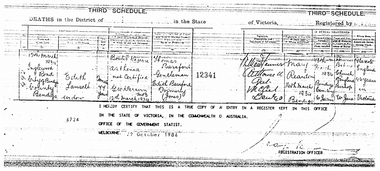
Certificate - Fortuna - Death Certificate of Edith Lansell, 12 March 1934
... However Bedelia could not handle the wealth, dignitaries or the pressure of George’s success and turned to the bottle which lead to her untimely death. ...However Bedelia could not handle the wealth, dignitaries or the pressure of George’s success and turned to the bottle which lead to her untimely death. ...Theodore Ballerstedt originally purchased the Fortuna site from the Crown in 1857. The firstimprovements at Fortuna were undertaken by the Ballerstedt family and consisted of a small mill and house. At the peak of the mining era (c.1860s) Fortuna was central to the deep alluvial gold mining operations of Bendigo. In 1871 Theodore Ballerstedt sold the house, mine and associated works to George Lansell 'The Quartz King'. During his time at Fortuna, Lansell owned 13 mines and directed a further 73 in Bendigo. Edith was George Lansell’s second wife. His first wife Bedelia was once George’s maid who later fell in love with him. However Bedelia could not handle the wealth, dignitaries or the pressure of George’s success and turned to the bottle which lead to her untimely death. Lansell's first marriage to Bedelia Mary Mulganney was troubled, marked by her alcoholism and early death, with her will contested by Lansell despite its modest value. Bedelia's death was lonely, with her death registered by an undertaker's assistant rather than family. Edith Lansell (née Bassford)Edith, from a respectable but financially struggling family, became Lansell's housekeeper and later his wife. Their relationship began before marriage, with Edith giving birth to their son shortly after their wedding. Lansell was significantly older than Edith, and their union was met with mixed reactions from family and the public. Edith was a strong woman, who raised six children and managed George’s affairs with great success after his death. Fortuna - Death Certificate of Edith Lansell This item contains the following documents: 11217.85a Part of Photo copy of The Death Certificate of Edith Lansell is from the State of Victoria. Edith, a widow lived in Inglewood Road, City of Bendigo. She died on March 12th 1934. She had lived for 46 years in Victoria. 11217.85b Part of Photo copy of The Death Certificate of Edith Lansell is from the State of Victoria. Edith, a widow lived in Inglewood Road, City of Bendigo. She died on March 12th 1934. She had lived for 46 years in Victoria.non-fictionbendigo, fortuna, george lansell, edith lansell, edith bassford -
 Parliament of Victoria
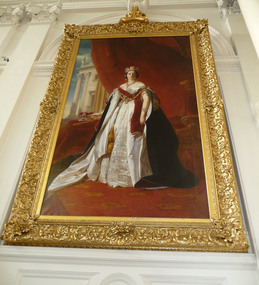
Portrait of Queen Victoria, Winterhalter, Franz Xaver (After), Queen Victoria, after Winterhalter, c.1859
... Accordingly, between 1842 and 1861 he made fifteen visits to England and painted over 100 portraits of Her Majesty, the royal family and other friends and dignitaries. In 1843 Winterhalter was commissioned to paint matching portraits of Queen Victoria and Albert, the Prince Consort. ...Accordingly, between 1842 and 1861 he made fifteen visits to England and painted over 100 portraits of Her Majesty, the royal family and other friends and dignitaries. In 1843 Winterhalter was commissioned to paint matching portraits of Queen Victoria and Albert, the Prince Consort. ...Queen Victoria’s appreciation of German artist Franz Xaver Winterhalter (1805-1873) began after she saw portraits by him of other European monarchs. Accordingly, between 1842 and 1861 he made fifteen visits to England and painted over 100 portraits of Her Majesty, the royal family and other friends and dignitaries. In 1843 Winterhalter was commissioned to paint matching portraits of Queen Victoria and Albert, the Prince Consort. These originals hang in the Garter Throne Room at Windsor Castle and are part of the UK Royal Collection. Many legitimate copies of Winterhalter’s portrait were produced and presented to the Parliaments of the British Empire, including the Parliament of Victoria. Such copies are referred to as “After F. X. Winterhalter” and artists responsible include William Corden and John Prescott Knight. When creating copies, artists were not restricted by the size of the original portrait. Walterhalter’s original is 2.7m x 1.7m whereas copies can reach an impressive 4.5 metres in height. The portrait that hangs in Queens Hall at the Parliament of Victoria is not signed. Comparison with other copies of the work suggest that the Parliament’s painting may have been completed by William Corden. The Government Art Collection (United Kingdom), has a Queen Victoria copy in their collection and Parliament’s portrait has similar traits. A copy by John Prescott Knight which hangs in the Legislative Council in the Parliament of Tasmania is quite different, particularly with reference to the shape of the young Queen’s face, which is rounder in the Corden portraits.This portrait of Queen Victoria was presented as a gift by the British Government to the Parliament of Victoria in April 1860. Painted on fine linen supplied under Royal Warrant by the workshop Winsor and Newton, London, the frame has been embellished with elaborate wooden carvings. Framed portrait, oil on linen, of Queen Victoria. Victoria is posed in front of a curtain partially obscuring a building (possibly Buckingham Palace) in the background. Timber frame with a layer of gesso and decorative composition ornaments. There are rose, scotch thistle, clover leaf and Acanthus ornaments. A carved wood and composition element crown, resting on a tassled pillow sits on top of the frame.Canvas unsigned. Verso printed: ‘WINSOR AND NEWTON / Rathbone Place, London’. Embossed stamp into stretcher wood, stamped ‘Winsor and Newton’ in black ink.victoria queen of great britain, 1819-1901, winterhalter, franz xaver, 1805-1873, corden, william, queens hall, parliament of victoria -
 Wodonga & District Historical Society Inc
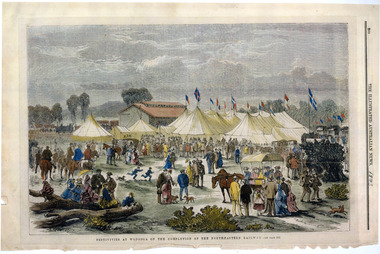
Article - Festivities for arrival of North-Eastern Railway in Wodonga, The Illustrated Australian News, 1873
... Four special trains had departed Melbourne to bring dignitaries to Wodonga. The Governor Sir George Bowen, Lady Bowen and, two Misses Bowen, were among the guests. ...Four special trains had departed Melbourne to bring dignitaries to Wodonga. The Governor Sir George Bowen, Lady Bowen and, two Misses Bowen, were among the guests. ...The arrival of the railway from Melbourne to Wodonga was celebrated on 21st November 1873. The railway line between Melbourne and Wodonga was constructed in three sections. The first section from Essendon to Seymour was fifty-six miles. It was constructed by Messrs. O'Grady, Leggatt and Noonan at a cost of £305,558. The second section from Seymour to Benalla was sixty miles under contract to Messrs. Styles, Murray and Co. for £314,994. The final section of sixty six miles to Wodonga was constructed by Messrs. Cain, Dalrymple and Holton for £350,100. The Illustrated Australian News for Home Readers 4 December 1873 reported extensively on the event. The Victorian Government was determined to celebrate the event with a banquet, to which twelve hundred guests were invited. Four special trains had departed Melbourne to bring dignitaries to Wodonga. The Governor Sir George Bowen, Lady Bowen and, two Misses Bowen, were among the guests. Sir George Bowen proposed a toast to the “Prosperity to the North-eastern railway”. The banquet was held in marquees erected for the event, although the facilities struggled to cater adequately for the more than 5,000 people who arrived to celebrate. The estimated population of Wodonga was 500 only people. That evening a ball was held in the goods' shed, which was handsomely decorated with flags, evergreens and flowers. About five hundred guests were present. It would be another decade before New South Wales completed the line from Sydney to Albury and a connecting rail bridge was built over the Murray River.This item is significant because it documents the festivities celebrating the arrival of the railway line in Wodonga.A colourised version of a newspaper article documenting the celebrations for the arrival of the North Eastern Railway to Wodonga. It depicts crowds of people congregated near the railway line area. Large tents have been erected to house visitors and special activities. The railway goods shed can be seen in the background and a steam locomotive is on the track. The image was accompanied by a lengthy article which detailed the development of the railway line.northeast railway line, wodonga transport -
 Eltham District Historical Society Inc
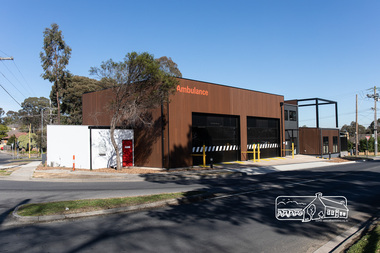
Photograph, Peter Pidgeon, Official opening of the new Eltham Ambulance Branch, Apex Way, Montmorency, 29 August 2018, 29 Aug 2018
... Dignitaries included Ambulance Victoria CEO Tony Walker, Vicki Ward MP for Eltham and Jill Hennessey State Ambulance Services Minister The Eltham Apex Club conducted a Community Service Project (1965-1968) to raise funds for a new Ambulance Station to service the community. ...Dignitaries included Ambulance Victoria CEO Tony Walker, Vicki Ward MP for Eltham and Jill Hennessey State Ambulance Services Minister The Eltham Apex Club conducted a Community Service Project (1965-1968) to raise funds for a new Ambulance Station to service the community. ...Dignitaries included Ambulance Victoria CEO Tony Walker, Vicki Ward MP for Eltham and Jill Hennessey State Ambulance Services Minister The Eltham Apex Club conducted a Community Service Project (1965-1968) to raise funds for a new Ambulance Station to service the community. A site bounded by the intersection of Main Road, Grand Boulevard and Looker Road at Montmorency was purchased in 1969. In 1970, Eltham Shire Council undertook roadworks to construct Apex Way in preparation for the new station as well as duplicate Main Road, Lower Plenty, east of Grand Boulevard including the new Lower Plenty Bridge, which had been opened in November 1966, bordering with the City of Heidelberg. Diamond Valley Leader, September 5, 2018, p4. MONTMORENCY $1.6mil station unveiled A REVAMPED Montmorency ambulance station has been unveiled. State Ambulance Services Minister Jill Hennessy and Eltham State Labor MP Vicki Ward revealed the $1.6 million complex at the corner of Grand Boulevard and Apex Way in Montmorency. It replaces the 50-year-old station and now includes four ambulance bays, four rest and recline rooms, a large training room and offstreet parking for staff. “The community campaigned long and hard for this new ambulance station and I’m delighted to have stood with them all the way,” Ms Ward said. The latest quarterly performance data showed 90.4 per cent of ambulances in Banyule arrived within 15 minutes of Code 1 emergencies — up from 89.2 per cent three months earlier. Ms Hennessy said paramedics had worked in “cramped” facilities. “We’ve fixed that,” she said.55 born digital imagesambulance victoria ceo, apex way, apex-diamond valley ambulance station, eltham ambulance station, eltham apex club, jill hennessey, montmorency, mp for eltham, state ambulance services minister, tony walker, vicki ward -
 Federation University Historical Collection
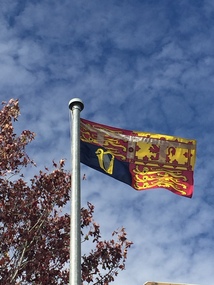
Photograph - Photograph - Colour, Suzanne Godfrey, The Royal Standard Flying at Federation University Mt Helen Campus, 2018, 09/04/2018
... The University’s student leaders and academics joined other dignitaries and business representatives for the special event. ...The University’s student leaders and academics joined other dignitaries and business representatives for the special event. ...Federation University Australia showcased its students and research at a luncheon for His Royal Highness The Prince Edward, Earl of Wessex KG GCVO, at the Mt Helen Campus on Sunday, 8 April. The University’s student leaders and academics joined other dignitaries and business representatives for the special event. “The University is deeply honoured to host HRH The Earl of Wessex and share his passion for volunteerism and The Duke of Edinburgh’s International Award,” Professor Helen Bartlett, Vice-Chancellor, said. Prior to the luncheon HRH The Earl of Wessex experienced a Welcome to Country and Smoking Ceremony at the University. The program included showing HRH The Earl of Wessex concept plans for a refurbished Sports Science facility at the Mt Helen Campus. Guests were treated to a performance by the Arts Academy’s renowned vocal ensemble Word of Mouth. At the conclusion of the luncheon, HRH The Earl of Wessex planted a tree at the Student Commons Courtyard. The visit to the University by HRH The Earl of Wessex was the first by a member of the Royal Family since Prince Charles visited in 1974. HRH The Earl of Wessex was in Australia to attend the Commonwealth Games and undertake additional engagements to recognise and promote The Duke of Edinburgh’s International Award in Australia. HRH The Earl of Wessex, who is the Chair of The Board of Trustees of The Duke of Edinburgh’s International Award Foundation, attended 32 engagements across Melbourne, Ballarat, Hobart, Brisbane, and Adelaide, from formal receptions, Award presentations, meetings with government officials and the community sector, to meeting Award Participants and their families at community centres. The events enabled HRH The Earl of Wessex to engage with over 1,000 young people undertaking the Award, and over 3,400 Award volunteers and supporters who will have the opportunity to discuss their activities and showcase the work being done to help young Australians dream big, challenge themselves and find their purpose, passion and place in the world. HRH The Earl of Wessex’s visit celebrates significant milestones and growth in the diversity of The Duke of Edinburgh’s International Award program in Australia. “The Award’s relevance to all young Australians is as important today as it was when it started over 60 years ago,” Mr Peter Kaye AM, Chief Executive Officer of The Duke of Edinburgh’s International Award – Australia, said. “Employers in particular are recognising the ‘soft skills’ that are so necessary for a well prepared future employee.”Photograph of the Royal Standard Flying on the Federation University Mt Helen Campus flagpoles during the visit of HRH the Prince Edward, Earl of Wessex, KG GCVO. Prince Edward visited the Mount Helen campus as the Chair of the trustees of The Duke of Edinburgh's International Award Foundation. The award is the world's leading youth achievement award. It has helped inspired, empower, connect and recognise the achievements of more than 8 million young people in more than 140 countries. The Award presents a balanced, non-competititive program of voluntary activites that encourage personal discovery, growth, resilience, perseverance, responsibility and community service. It is about individual challenge and encouraging young people to become mature and active citizens who positively contribute to society, through activities that inspire them.prince edward, earl of wessex, royal visitor, duke of edinburgh's international award foundation, federation university, royalty -
 Federation University Historical Collection
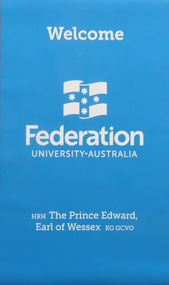
Poster, Federation University Australia Welcome to HRH Prince Edward, 2018, 09/04/2018
... The University’s student leaders and academics joined other dignitaries and business representatives for the special event. ...The University’s student leaders and academics joined other dignitaries and business representatives for the special event. ...Federation University Australia showcased its students and research at a luncheon for His Royal Highness The Prince Edward, Earl of Wessex KG GCVO, at the Mt Helen Campus on Sunday, 8 April. The University’s student leaders and academics joined other dignitaries and business representatives for the special event. “The University is deeply honoured to host HRH The Earl of Wessex and share his passion for volunteerism and The Duke of Edinburgh’s International Award,” Professor Helen Bartlett, Vice-Chancellor, said. Prior to the luncheon HRH The Earl of Wessex experienced a Welcome to Country and Smoking Ceremony at the University. The program included showing HRH The Earl of Wessex concept plans for a refurbished Sports Science facility at the Mt Helen Campus. Guests were treated to a performance by the Arts Academy’s renowned vocal ensemble Word of Mouth. At the conclusion of the luncheon, HRH The Earl of Wessex planted a tree at the Student Commons Courtyard. The visit to the University by HRH The Earl of Wessex was the first by a member of the Royal Family since Prince Charles visited in 1974. HRH The Earl of Wessex was in Australia to attend the Commonwealth Games and undertake additional engagements to recognise and promote The Duke of Edinburgh’s International Award in Australia. HRH The Earl of Wessex, who is the Chair of The Board of Trustees of The Duke of Edinburgh’s International Award Foundation, attended 32 engagements across Melbourne, Ballarat, Hobart, Brisbane, and Adelaide, from formal receptions, Award presentations, meetings with government officials and the community sector, to meeting Award Participants and their families at community centres. The events enabled HRH The Earl of Wessex to engage with over 1,000 young people undertaking the Award, and over 3,400 Award volunteers and supporters who will have the opportunity to discuss their activities and showcase the work being done to help young Australians dream big, challenge themselves and find their purpose, passion and place in the world. HRH The Earl of Wessex’s visit celebrates significant milestones and growth in the diversity of The Duke of Edinburgh’s International Award program in Australia. “The Award’s relevance to all young Australians is as important today as it was when it started over 60 years ago,” Mr Peter Kaye AM, Chief Executive Officer of The Duke of Edinburgh’s International Award – Australia, said. “Employers in particular are recognising the ‘soft skills’ that are so necessary for a well prepared future employee.”Blue Federation University poster created to welcome HRH Prince Edward to the Mount Helen Campus poster, banner, prince edward, royal visitor -
 Federation University Historical Collection
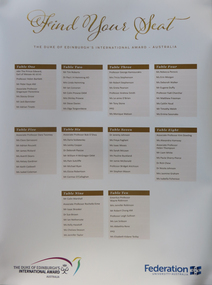
Photograph - Colour, Clare Gervasoni, Federation University Seating Arrangement for lunch with HRH Prince Edward, 2018, 09/04/2018
... The University’s student leaders and academics joined other dignitaries and business representatives for the special event. ...The University’s student leaders and academics joined other dignitaries and business representatives for the special event. ...Federation University Australia showcased its students and research at a luncheon for His Royal Highness The Prince Edward, Earl of Wessex KG GCVO, at the Mt Helen Campus on Sunday, 8 April. The University’s student leaders and academics joined other dignitaries and business representatives for the special event. “The University is deeply honoured to host HRH The Earl of Wessex and share his passion for volunteerism and The Duke of Edinburgh’s International Award,” Professor Helen Bartlett, Vice-Chancellor, said. Prior to the luncheon HRH The Earl of Wessex experienced a Welcome to Country and Smoking Ceremony at the University. The program included showing HRH The Earl of Wessex concept plans for a refurbished Sports Science facility at the Mt Helen Campus. Guests were treated to a performance by the Arts Academy’s renowned vocal ensemble Word of Mouth. At the conclusion of the luncheon, HRH The Earl of Wessex planted a tree at the Student Commons Courtyard. The visit to the University by HRH The Earl of Wessex was the first by a member of the Royal Family since Prince Charles visited in 1974. HRH The Earl of Wessex was in Australia to attend the Commonwealth Games and undertake additional engagements to recognise and promote The Duke of Edinburgh’s International Award in Australia. HRH The Earl of Wessex, who is the Chair of The Board of Trustees of The Duke of Edinburgh’s International Award Foundation, attended 32 engagements across Melbourne, Ballarat, Hobart, Brisbane, and Adelaide, from formal receptions, Award presentations, meetings with government officials and the community sector, to meeting Award Participants and their families at community centres. The events enabled HRH The Earl of Wessex to engage with over 1,000 young people undertaking the Award, and over 3,400 Award volunteers and supporters who will have the opportunity to discuss their activities and showcase the work being done to help young Australians dream big, challenge themselves and find their purpose, passion and place in the world. HRH The Earl of Wessex’s visit celebrates significant milestones and growth in the diversity of The Duke of Edinburgh’s International Award program in Australia. “The Award’s relevance to all young Australians is as important today as it was when it started over 60 years ago,” Mr Peter Kaye AM, Chief Executive Officer of The Duke of Edinburgh’s International Award – Australia, said. “Employers in particular are recognising the ‘soft skills’ that are so necessary for a well prepared future employee.”Photograph of the seating arrangements for the dinner with HRH Prince Edward at Federation University Mount Helen Campus poster, prince edward, royal visitor, seating arrangement -
 Federation University Historical Collection
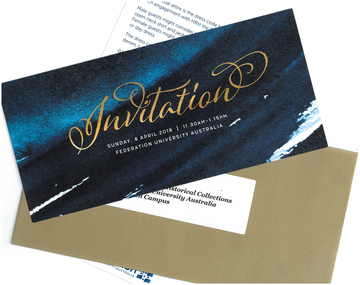
Invitation, Invitation to Attend a Luncheon with HRH Prince Edward at Federation University Mt Helen Campus, 2018, 2018
... The University’s student leaders and academics joined other dignitaries and business representatives for the special event. ...The University’s student leaders and academics joined other dignitaries and business representatives for the special event. ...Federation University Australia showcased its students and research at a luncheon for His Royal Highness The Prince Edward, Earl of Wessex KG GCVO, at the Mt Helen Campus on Sunday, 8 April. The University’s student leaders and academics joined other dignitaries and business representatives for the special event. “The University is deeply honoured to host HRH The Earl of Wessex and share his passion for volunteerism and The Duke of Edinburgh’s International Award,” Professor Helen Bartlett, Vice-Chancellor, said. Prior to the luncheon HRH The Earl of Wessex experienced a Welcome to Country and Smoking Ceremony at the University. The program included showing HRH The Earl of Wessex concept plans for a refurbished Sports Science facility at the Mt Helen Campus. Guests were treated to a performance by the Arts Academy’s renowned vocal ensemble Word of Mouth. At the conclusion of the luncheon, HRH The Earl of Wessex planted a tree at the Student Commons Courtyard. The visit to the University by HRH The Earl of Wessex was the first by a member of the Royal Family since Prince Charles visited in 1974. HRH The Earl of Wessex was in Australia to attend the Commonwealth Games and undertake additional engagements to recognise and promote The Duke of Edinburgh’s International Award in Australia. HRH The Earl of Wessex, who is the Chair of The Board of Trustees of The Duke of Edinburgh’s International Award Foundation, attended 32 engagements across Melbourne, Ballarat, Hobart, Brisbane, and Adelaide, from formal receptions, Award presentations, meetings with government officials and the community sector, to meeting Award Participants and their families at community centres. The events enabled HRH The Earl of Wessex to engage with over 1,000 young people undertaking the Award, and over 3,400 Award volunteers and supporters who will have the opportunity to discuss their activities and showcase the work being done to help young Australians dream big, challenge themselves and find their purpose, passion and place in the world. HRH The Earl of Wessex’s visit celebrates significant milestones and growth in the diversity of The Duke of Edinburgh’s International Award program in Australia. “The Award’s relevance to all young Australians is as important today as it was when it started over 60 years ago,” Mr Peter Kaye AM, Chief Executive Officer of The Duke of Edinburgh’s International Award – Australia, said. “Employers in particular are recognising the ‘soft skills’ that are so necessary for a well prepared future employee.”Invitation and dress code in a gold envelope. Addressed "Ms Clare Gervasoni Curator, Art & Historical Colelctions Federation University Australia Mt Helen Campus"prince edward, earl of wessex, helen bartlett, visitors, royal visit -
 Wodonga & District Historical Society Inc
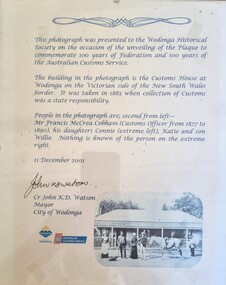
Certificate - 100 Years of Federation and the Australian Customs Service, 2001
... The ceremony was attended by several dignitaries including the sitting Members of Parliament Mr Tony Plowman and Mr Bill Baxter. ...The ceremony was attended by several dignitaries including the sitting Members of Parliament Mr Tony Plowman and Mr Bill Baxter. ...On 11th December 2001 an event was held in Wodonga to celebrate 100 years of the Australian Customs Service. It was held at the former Customs House building in Wodonga. The ceremony was attended by several dignitaries including the sitting Members of Parliament Mr Tony Plowman and Mr Bill Baxter. Speeches were made by Cr John Watson and Mr Bob Morgan, Supervisor of Australian Customs. A commemorative plaque was also unveiled. The Australian Customs Service played an important role in the history of Wodonga and a major part in the federation of the colonies of Australia. In 1852 the colonies were given the right to collect import duties on items such as coffee, tea, tobacco, chocolate and spirits. NSW was first to impose collection of duties in 1853. At that time Wodonga was not an official port of entry and was not allowed to collect duties. This regulation made it illegal for people to transport dutiable goods across the Murray River from NSW which provided an incentive for smuggling, while at the same time strangling the legitimate trade. Merchants and settlers along the Murray River complained and petitioners approached Melbourne to establish a Customs House on the Murray River so that trade could resume. Belvoir (later to become Wodonga) was a made a port of entry with its own Customs House gazetted on 22nd December 1854. The Government set aside 500 Pounds in 1859 to build Belvoir's own Customs House J P Hanify was appointed as sub-collector at Belvoir. The Customs House was built near the end of Union Bridge over the Murray River in 1859. Tariffs or customs duties greatly angered residents and it was little wonder the customs officer of the day was always an unpopular man. Tariffs had to be paid on articles such as tobacco, many food items and new clothing that were carried across the Border. The range of items was extended over time, leading to some farmers even swimming their livestock across the river to avoid duties at the Customs House. The levying of duties ended with Federation in 1901. Francis Cobham depicted in this photograph, took up the position of Customs Officer in 1867 and remained there until his retirement in 1890. The building was originally a 2-roomed Customs House in 1856 but was extended to provide living quarters for the Cobham family while a nearby cottage became the Customs House. The building was moved to a position south of the lagoon in the mid-1980s and is now a restaurant.This item is significant because it documents the commemoration ceremony for the Australian Custom Service held in Wodonga on 11th December 2001.An A4 size certificate created to acknowledge the centenary of the Australian Customs Service officially established at the time of Federation in 1901. The certificate accompanied the donation of a photo of the Wodonga Customs House including the Customs Officer and his family. It has been mounted in a clear frame.This photograph was presented to the Wodonga Historical Society on the occasion of the unveiling of the Plaque to commemorate 100 years of Federation and 100 years of the Australian Customs Service. The building in the photograph is the Customs House at Wodonga on the Victorian side of the New South Wales border. It was taken in 1883 when collection of Customs wàs a state responsibility. People in the photograph are; second from left- Mr Francis McCrea Cobham (Customs Officer from 1877 to 1890), his daughters Connie (extreme, left), Katie and son Willie. Nothing is known of the person on the extreme right. 11 December 2001 Cr John K.D. Watson Mayor City of Wodonga Insignias of the City of Wodonga and Australian Customs Serviceaustralian customs service, customs house wodonga -
 Bendigo Military Museum
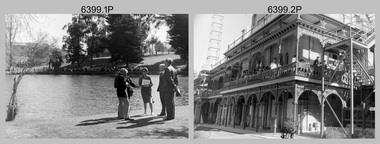
Photograph - Army Survey Regiment Open Day, Fortuna, Bendigo, 1982
... Unidentified civilian visitors. Unidentified dignitary delivers his speech. .18) - Photo, black and white, 1982. ...Unidentified civilian visitors. Unidentified dignitary delivers his speech. .18) - Photo, black and white, 1982. ...This is a set of 25 photographs of an Open Day held at the Army Survey Regiment, Bendigo in 1982. Although most of the photos were taken outdoors, a technical tour may have been conducted through the production areas of Air Survey, Cartographic and Lithographic Squadrons. .1) - Photo, black and white, 1982. Unidentified civilian visitors. CO LTCOL Peter Eddy on right. .2) - Photo, black and white, 1982. Unidentified personnel and civilian visitors. .3) &.4) - Photos, black and white, 1982. Unidentified personnel and civilian visitors, SPR Janet (Chopping) Justin, .5) - Photo, black and white, 1982. Unidentified personnel and civilian visitors. .6) - Photo, black and white, 1982. Unidentified personnel and civilian visitors by CPL Le-Anne (Smallshaw) Shirley. .7) to .10) - Photos, black and white, 1982. Unidentified personnel and civilian visitors. .11) - Photo, black and white, 1982. Unidentified personnel and civilian visitors. Centre of photo - Bendigo Lord Mayor Dr. Joseph Pearce, CO LTCOL Peter Eddy on right. .12) - Photo, black and white, 1982. Unidentified personnel and civilian visitors. Bendigo Lord Mayor Dr. Joseph Pearce delivers his speech. .13) to .14) - Photos, black and white, 1982. Unidentified civilian visitors. Centre of photo - Bendigo Lord Mayor Dr. Joseph Pearce delivers his speech, CO LTCOL Peter Eddy on right. .15) - Photo, black and white, 1982. Unidentified personnel and civilian visitors. Bendigo Lord Mayor Dr. Joseph Pearce delivers his speech. .16) - Photo, black and white, 1982. Unidentified civilian visitors. CO LTCOL Peter Eddy delivers his speech. .17) - Photo, black and white, 1982. Unidentified civilian visitors. Unidentified dignitary delivers his speech. .18) - Photo, black and white, 1982. CO LTCOL Peter Eddy leads unidentified civilian visitors and Bendigo Lord Mayor Dr. Joseph Pearce to Fortuna’s front steps. .19) &..20) - Photos, black and white, 1982. CO LTCOL Peter Eddy on Fortuna’s front steps briefs Bendigo Lord Mayor Dr. Joseph Pearce and unidentified civilian visitors. .21) - Photo, black and white, 1982. CO LTCOL Peter Eddy on briefs Bendigo Lord Mayor Dr. Joseph Pearce and unidentified civilian visitors in Fortuna’s front foyer. .22) &..23) - Photos, black and white, 1982. Unidentified pipes and drums band. .24) &..25) - Photos, black and white, 1982. CPL Megan (McBurney) Reynolds briefs unidentified civilian visitors at the front of Fortuna Villa near the Pompeii Fountain.royal australian survey corps, rasvy, army survey regiment, army svy regt, fortuna, asr -
 Tramway Heritage Centre
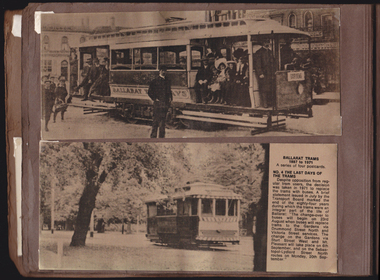
Photograph Album (part of), Ray Pearson's Photo Album - Trams of Victorian Railways, Ballarat, Bendigo, Geelong
... As the / line of cars came down Camp / Hill (Sturt Street) filled with / local dignitaries, the brakes on / the last car failed and it crashed / into the one in front. ...As the / line of cars came down Camp / Hill (Sturt Street) filled with / local dignitaries, the brakes on / the last car failed and it crashed / into the one in front. ...Page 4 of Ray Pearson's Photo Album. Brown card page with two metallic look postcards (landscape format) placed on page using clear plastic photo corners. Both postcard images depict trams in Ballarat. Both postcards have come loose of two of their photo corners (top and bottom on the left) and are not secure on the page.Printed text to back of postcard at top: BALLARAT TRAMS / 1887 to 1971 / A series of four postcards. / NO. 2 EARLY ELECTRIC TRAMS / Electric trams first ran in / Ballarat on 18th Aigust, 1905. / Twelve of the horse trams were / converted to electric cars by lengthening them at both ends. / Eight of the remaining horse / trams were used as trailers to / the motor cars. / The electric trams were / given a secret trial during the / previous night to the opening / date, but the drivers clanged / the gongs so much that it / brought people out of their / beds in night attire. They / formed an unofficial guard of / honour around Wendouree / Parade. / The trams were gaily decor- / ated for Opening Day. As the / line of cars came down Camp / Hill (Sturt Street) filled with / local dignitaries, the brakes on / the last car failed and it crashed / into the one in front. The win- / dows of both cars were / smashed, and the occupants / who had been sitting in state / made an undignified exit. / Seating accommodation was / from 32 to 36. Six small electric / trams were purchased from the / Sydney Tramways in 1905 and / were converted to a similar / pattern to the 12 re-built / Ballarat horse trams. In 1906 / two open summer cars with / open cross seats (popularly / called toast racks) / were intro- / duced. These trams were packed at week-ends with / families en route to picnic by / the lake. A fine printed vertical line runs down the centre of the blank writing space to the left of the body text. Above is written: POSTCARD Printed text to right of image on bottom postcard: BALLARAT TRAMS / 1887 to 1971 / A series of four postcards. / NO. 4 THE LAST DAYS OF THE TRAMS / Despite opposition from reg- / ular tram users, the decision / was taken in 1971 to replace / the trams with buses. A brief / statement issued in July by the / Transport Boar marked the / end of the eighty-four years / during which the trams were an / integral part of the life of / Ballarat: “The change-over to / buses will begin on 23rd / August when buses will replace / trams to the Gardens via / Drummond Street North and / Victoria Street services. The / change on the Gardens via / Sturt Street West and Mt. / Pleasant will take place on 6th / September, and on the Sebas- / topol-Lydiard Street North / routes on Monday, 20th Sep- / tember.” A fine printed vertical line runs down the centre of the blank writing space to the left of the body text. Above is written: POSTCARDpostcard, ballarat trams, ballarat tramways, vintage trams, tram postcard, electric trams -
 Ballarat Heritage Services
Photograph - Colour, Knowth and New Grange, Ireland, World Heritage Centre
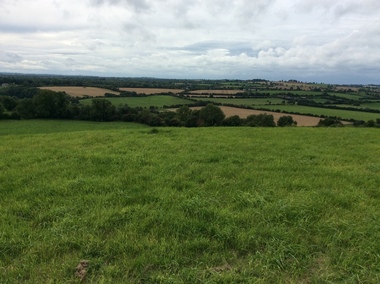
... Judging from the splendour and magnificence of Newgrange and Knowth it is likely that these temples of the ancestors were places of astrological, spiritual, religious and ceremonial importance, much as present day cathedrals are places of worship where dignitaries may be laid to rest. There is a lively debate about whether these wonderful megalithic structures were built primarily as burial tombs, sacred temples or astronomical observatories. ...Judging from the splendour and magnificence of Newgrange and Knowth it is likely that these temples of the ancestors were places of astrological, spiritual, religious and ceremonial importance, much as present day cathedrals are places of worship where dignitaries may be laid to rest. There is a lively debate about whether these wonderful megalithic structures were built primarily as burial tombs, sacred temples or astronomical observatories. ...The Megalithic Passage Tombs of Newgrange, Knowth, Dowth, Fourknocks, Loughcrew and Tara are located in the present day County Meath in Ireland's Ancient East. The Boyne Valley Mounds at Newgrange, Knowth and Dowth were built around 3200BC making them older than Stonehenge in England and the Pyramids of Giza in Egypt. Built by Neolithic farming communities about 5000 years ago, the passage tombs have clear astronomical alignments such as the Winter Solstice Sunrise at Newgrange and the Equinox Sunrise at Loughcrew. Judging from the splendour and magnificence of Newgrange and Knowth it is likely that these temples of the ancestors were places of astrological, spiritual, religious and ceremonial importance, much as present day cathedrals are places of worship where dignitaries may be laid to rest. There is a lively debate about whether these wonderful megalithic structures were built primarily as burial tombs, sacred temples or astronomical observatories. While passage tomb is the traditional description for Newgrange and similar structures, chambered cairn or passage mound are the descriptions favoured by those who consider the passage tomb description too narrow. The large stones surrounding and inside the Passage Tombs are decorated with Megalithic Art such as spirals, concentric circles, triangles, zigzags and images which have been interpreted as the sun, moon and the human face. Irish passage tombs tend to occur in clusters traditionally described as a Necropolis or cemetery. The Boyne cluster includes Newgrange, Knowth, Dowth and Townleyhall. The other great clusters in County Meath are on the hills around Loughcrew. The ancient Boyne Valley passage tomb mounds at Newgrange, Knowth and Dowth have been designated World Heritage Site status by UNESCO and attract 200,000 visitors per year. The sites and Visitor Centre are managed by the OPW (Office of Public Works). Newgrange is best known for the illumination of its passage and chamber by the winter solstice sun. The site is open to the public with controlled access to the passage and chamber. Tours of Newgrange start at the Brú na Bóinne Visitor Centre located near the village of Donore, Co. Meath. Knowth has two passages and is surrounded by seventeen satellite cairns. The site is open to the public; however there is no public access to the interior passages and chambers. Tours of Knowth also start at the Brú na Bóinne Visitor Centre. Dowth is the only one of the three large Brú na Bóinne Passage Tombs which is not accessible from the Visitor Centre situated on the south bank of the river. Visitors to Dowth must drive directly to the site on the north bank, a couple of miles from the Slane / Drogheda road. Fourknocks with its short passage leading into a wide pear shaped chamber is in similar style to Tombs in Portugal. Just inside the main chamber to the left of the entrance is one of the few representations of a human face from the Neolithic Period in ancient Ireland. Entrance to Fourknocks Megalithic Passage Tomb. Megalithic Art - Loughcrew, Co. Meath Loughcrew Cairns form the largest complex of Megalithic structures in Ireland. The Cairns contain symbolic engravings similar in style to Newgrange. Like other Passage Tombs in ancient Ireland, they have clear astrological alignments.Tara was the seat of the High Kings of Ireland in the first millennium A.D. however Tara is also the site of a Passage Tomb known as the Mound of the Hostages that was built about 2,500 B.C. knowth, newgrange, megalith, ireland, world heritage, neolithic -
 Ballarat Heritage Services
Photograph - Colour, Knowth and New Grange, Ireland, World Heritage Centre
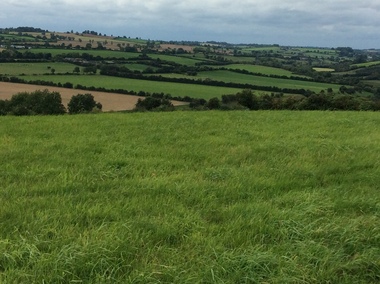
... Judging from the splendour and magnificence of Newgrange and Knowth it is likely that these temples of the ancestors were places of astrological, spiritual, religious and ceremonial importance, much as present day cathedrals are places of worship where dignitaries may be laid to rest. There is a lively debate about whether these wonderful megalithic structures were built primarily as burial tombs, sacred temples or astronomical observatories. ...Judging from the splendour and magnificence of Newgrange and Knowth it is likely that these temples of the ancestors were places of astrological, spiritual, religious and ceremonial importance, much as present day cathedrals are places of worship where dignitaries may be laid to rest. There is a lively debate about whether these wonderful megalithic structures were built primarily as burial tombs, sacred temples or astronomical observatories. ...The Megalithic Passage Tombs of Newgrange, Knowth, Dowth, Fourknocks, Loughcrew and Tara are located in the present day County Meath in Ireland's Ancient East. The Boyne Valley Mounds at Newgrange, Knowth and Dowth were built around 3200BC making them older than Stonehenge in England and the Pyramids of Giza in Egypt. Built by Neolithic farming communities about 5000 years ago, the passage tombs have clear astronomical alignments such as the Winter Solstice Sunrise at Newgrange and the Equinox Sunrise at Loughcrew. Judging from the splendour and magnificence of Newgrange and Knowth it is likely that these temples of the ancestors were places of astrological, spiritual, religious and ceremonial importance, much as present day cathedrals are places of worship where dignitaries may be laid to rest. There is a lively debate about whether these wonderful megalithic structures were built primarily as burial tombs, sacred temples or astronomical observatories. While passage tomb is the traditional description for Newgrange and similar structures, chambered cairn or passage mound are the descriptions favoured by those who consider the passage tomb description too narrow. The large stones surrounding and inside the Passage Tombs are decorated with Megalithic Art such as spirals, concentric circles, triangles, zigzags and images which have been interpreted as the sun, moon and the human face. Irish passage tombs tend to occur in clusters traditionally described as a Necropolis or cemetery. The Boyne cluster includes Newgrange, Knowth, Dowth and Townleyhall. The other great clusters in County Meath are on the hills around Loughcrew. The ancient Boyne Valley passage tomb mounds at Newgrange, Knowth and Dowth have been designated World Heritage Site status by UNESCO and attract 200,000 visitors per year. The sites and Visitor Centre are managed by the OPW (Office of Public Works). Newgrange is best known for the illumination of its passage and chamber by the winter solstice sun. The site is open to the public with controlled access to the passage and chamber. Tours of Newgrange start at the Brú na Bóinne Visitor Centre located near the village of Donore, Co. Meath. Knowth has two passages and is surrounded by seventeen satellite cairns. The site is open to the public; however there is no public access to the interior passages and chambers. Tours of Knowth also start at the Brú na Bóinne Visitor Centre. Dowth is the only one of the three large Brú na Bóinne Passage Tombs which is not accessible from the Visitor Centre situated on the south bank of the river. Visitors to Dowth must drive directly to the site on the north bank, a couple of miles from the Slane / Drogheda road. Fourknocks with its short passage leading into a wide pear shaped chamber is in similar style to Tombs in Portugal. Just inside the main chamber to the left of the entrance is one of the few representations of a human face from the Neolithic Period in ancient Ireland. Entrance to Fourknocks Megalithic Passage Tomb. Megalithic Art - Loughcrew, Co. Meath Loughcrew Cairns form the largest complex of Megalithic structures in Ireland. The Cairns contain symbolic engravings similar in style to Newgrange. Like other Passage Tombs in ancient Ireland, they have clear astrological alignments.Tara was the seat of the High Kings of Ireland in the first millennium A.D. however Tara is also the site of a Passage Tomb known as the Mound of the Hostages that was built about 2,500 B.C. knowth, newgrange, megalith, ireland, world heritage, neolithic -
 Ballarat Heritage Services
Photograph - Colour, Knowth and New Grange, Ireland, World Heritage Centre
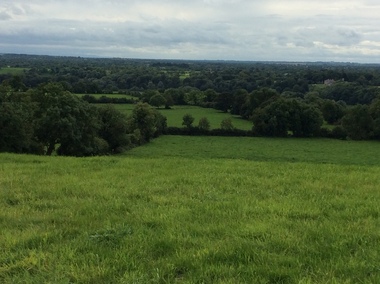
... Judging from the splendour and magnificence of Newgrange and Knowth it is likely that these temples of the ancestors were places of astrological, spiritual, religious and ceremonial importance, much as present day cathedrals are places of worship where dignitaries may be laid to rest. There is a lively debate about whether these wonderful megalithic structures were built primarily as burial tombs, sacred temples or astronomical observatories. ...Judging from the splendour and magnificence of Newgrange and Knowth it is likely that these temples of the ancestors were places of astrological, spiritual, religious and ceremonial importance, much as present day cathedrals are places of worship where dignitaries may be laid to rest. There is a lively debate about whether these wonderful megalithic structures were built primarily as burial tombs, sacred temples or astronomical observatories. ...The Megalithic Passage Tombs of Newgrange, Knowth, Dowth, Fourknocks, Loughcrew and Tara are located in the present day County Meath in Ireland's Ancient East. The Boyne Valley Mounds at Newgrange, Knowth and Dowth were built around 3200BC making them older than Stonehenge in England and the Pyramids of Giza in Egypt. Built by Neolithic farming communities about 5000 years ago, the passage tombs have clear astronomical alignments such as the Winter Solstice Sunrise at Newgrange and the Equinox Sunrise at Loughcrew. Judging from the splendour and magnificence of Newgrange and Knowth it is likely that these temples of the ancestors were places of astrological, spiritual, religious and ceremonial importance, much as present day cathedrals are places of worship where dignitaries may be laid to rest. There is a lively debate about whether these wonderful megalithic structures were built primarily as burial tombs, sacred temples or astronomical observatories. While passage tomb is the traditional description for Newgrange and similar structures, chambered cairn or passage mound are the descriptions favoured by those who consider the passage tomb description too narrow. The large stones surrounding and inside the Passage Tombs are decorated with Megalithic Art such as spirals, concentric circles, triangles, zigzags and images which have been interpreted as the sun, moon and the human face. Irish passage tombs tend to occur in clusters traditionally described as a Necropolis or cemetery. The Boyne cluster includes Newgrange, Knowth, Dowth and Townleyhall. The other great clusters in County Meath are on the hills around Loughcrew. The ancient Boyne Valley passage tomb mounds at Newgrange, Knowth and Dowth have been designated World Heritage Site status by UNESCO and attract 200,000 visitors per year. The sites and Visitor Centre are managed by the OPW (Office of Public Works). Newgrange is best known for the illumination of its passage and chamber by the winter solstice sun. The site is open to the public with controlled access to the passage and chamber. Tours of Newgrange start at the Brú na Bóinne Visitor Centre located near the village of Donore, Co. Meath. Knowth has two passages and is surrounded by seventeen satellite cairns. The site is open to the public; however there is no public access to the interior passages and chambers. Tours of Knowth also start at the Brú na Bóinne Visitor Centre. Dowth is the only one of the three large Brú na Bóinne Passage Tombs which is not accessible from the Visitor Centre situated on the south bank of the river. Visitors to Dowth must drive directly to the site on the north bank, a couple of miles from the Slane / Drogheda road. Fourknocks with its short passage leading into a wide pear shaped chamber is in similar style to Tombs in Portugal. Just inside the main chamber to the left of the entrance is one of the few representations of a human face from the Neolithic Period in ancient Ireland. Entrance to Fourknocks Megalithic Passage Tomb. Megalithic Art - Loughcrew, Co. Meath Loughcrew Cairns form the largest complex of Megalithic structures in Ireland. The Cairns contain symbolic engravings similar in style to Newgrange. Like other Passage Tombs in ancient Ireland, they have clear astrological alignments.Tara was the seat of the High Kings of Ireland in the first millennium A.D. however Tara is also the site of a Passage Tomb known as the Mound of the Hostages that was built about 2,500 B.C. knowth, newgrange, megalith, ireland, world heritage, neolithic -
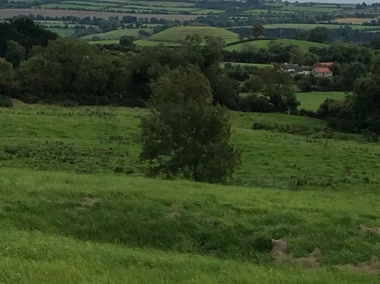 Ballarat Heritage Services
Photograph - Colour, Knowth and New Grange, Ireland, World Heritage Centre
... Judging from the splendour and magnificence of Newgrange and Knowth it is likely that these temples of the ancestors were places of astrological, spiritual, religious and ceremonial importance, much as present day cathedrals are places of worship where dignitaries may be laid to rest. There is a lively debate about whether these wonderful megalithic structures were built primarily as burial tombs, sacred temples or astronomical observatories. ...Judging from the splendour and magnificence of Newgrange and Knowth it is likely that these temples of the ancestors were places of astrological, spiritual, religious and ceremonial importance, much as present day cathedrals are places of worship where dignitaries may be laid to rest. There is a lively debate about whether these wonderful megalithic structures were built primarily as burial tombs, sacred temples or astronomical observatories. ...The Megalithic Passage Tombs of Newgrange, Knowth, Dowth, Fourknocks, Loughcrew and Tara are located in the present day County Meath in Ireland's Ancient East. The Boyne Valley Mounds at Newgrange, Knowth and Dowth were built around 3200BC making them older than Stonehenge in England and the Pyramids of Giza in Egypt. Built by Neolithic farming communities about 5000 years ago, the passage tombs have clear astronomical alignments such as the Winter Solstice Sunrise at Newgrange and the Equinox Sunrise at Loughcrew. Judging from the splendour and magnificence of Newgrange and Knowth it is likely that these temples of the ancestors were places of astrological, spiritual, religious and ceremonial importance, much as present day cathedrals are places of worship where dignitaries may be laid to rest. There is a lively debate about whether these wonderful megalithic structures were built primarily as burial tombs, sacred temples or astronomical observatories. While passage tomb is the traditional description for Newgrange and similar structures, chambered cairn or passage mound are the descriptions favoured by those who consider the passage tomb description too narrow. The large stones surrounding and inside the Passage Tombs are decorated with Megalithic Art such as spirals, concentric circles, triangles, zigzags and images which have been interpreted as the sun, moon and the human face. Irish passage tombs tend to occur in clusters traditionally described as a Necropolis or cemetery. The Boyne cluster includes Newgrange, Knowth, Dowth and Townleyhall. The other great clusters in County Meath are on the hills around Loughcrew. The ancient Boyne Valley passage tomb mounds at Newgrange, Knowth and Dowth have been designated World Heritage Site status by UNESCO and attract 200,000 visitors per year. The sites and Visitor Centre are managed by the OPW (Office of Public Works). Newgrange is best known for the illumination of its passage and chamber by the winter solstice sun. The site is open to the public with controlled access to the passage and chamber. Tours of Newgrange start at the Brú na Bóinne Visitor Centre located near the village of Donore, Co. Meath. Knowth has two passages and is surrounded by seventeen satellite cairns. The site is open to the public; however there is no public access to the interior passages and chambers. Tours of Knowth also start at the Brú na Bóinne Visitor Centre. Dowth is the only one of the three large Brú na Bóinne Passage Tombs which is not accessible from the Visitor Centre situated on the south bank of the river. Visitors to Dowth must drive directly to the site on the north bank, a couple of miles from the Slane / Drogheda road. Fourknocks with its short passage leading into a wide pear shaped chamber is in similar style to Tombs in Portugal. Just inside the main chamber to the left of the entrance is one of the few representations of a human face from the Neolithic Period in ancient Ireland. Entrance to Fourknocks Megalithic Passage Tomb. Megalithic Art - Loughcrew, Co. Meath Loughcrew Cairns form the largest complex of Megalithic structures in Ireland. The Cairns contain symbolic engravings similar in style to Newgrange. Like other Passage Tombs in ancient Ireland, they have clear astrological alignments.Tara was the seat of the High Kings of Ireland in the first millennium A.D. however Tara is also the site of a Passage Tomb known as the Mound of the Hostages that was built about 2,500 B.C. knowth, newgrange, megalith, ireland, world heritage, neolithic -
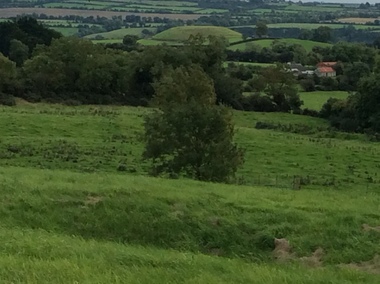 Ballarat Heritage Services
Photograph - Colour, Knowth and New Grange, Ireland, World Heritage Centre
... Judging from the splendour and magnificence of Newgrange and Knowth it is likely that these temples of the ancestors were places of astrological, spiritual, religious and ceremonial importance, much as present day cathedrals are places of worship where dignitaries may be laid to rest. There is a lively debate about whether these wonderful megalithic structures were built primarily as burial tombs, sacred temples or astronomical observatories. ...Judging from the splendour and magnificence of Newgrange and Knowth it is likely that these temples of the ancestors were places of astrological, spiritual, religious and ceremonial importance, much as present day cathedrals are places of worship where dignitaries may be laid to rest. There is a lively debate about whether these wonderful megalithic structures were built primarily as burial tombs, sacred temples or astronomical observatories. ...The Megalithic Passage Tombs of Newgrange, Knowth, Dowth, Fourknocks, Loughcrew and Tara are located in the present day County Meath in Ireland's Ancient East. The Boyne Valley Mounds at Newgrange, Knowth and Dowth were built around 3200BC making them older than Stonehenge in England and the Pyramids of Giza in Egypt. Built by Neolithic farming communities about 5000 years ago, the passage tombs have clear astronomical alignments such as the Winter Solstice Sunrise at Newgrange and the Equinox Sunrise at Loughcrew. Judging from the splendour and magnificence of Newgrange and Knowth it is likely that these temples of the ancestors were places of astrological, spiritual, religious and ceremonial importance, much as present day cathedrals are places of worship where dignitaries may be laid to rest. There is a lively debate about whether these wonderful megalithic structures were built primarily as burial tombs, sacred temples or astronomical observatories. While passage tomb is the traditional description for Newgrange and similar structures, chambered cairn or passage mound are the descriptions favoured by those who consider the passage tomb description too narrow. The large stones surrounding and inside the Passage Tombs are decorated with Megalithic Art such as spirals, concentric circles, triangles, zigzags and images which have been interpreted as the sun, moon and the human face. Irish passage tombs tend to occur in clusters traditionally described as a Necropolis or cemetery. The Boyne cluster includes Newgrange, Knowth, Dowth and Townleyhall. The other great clusters in County Meath are on the hills around Loughcrew. The ancient Boyne Valley passage tomb mounds at Newgrange, Knowth and Dowth have been designated World Heritage Site status by UNESCO and attract 200,000 visitors per year. The sites and Visitor Centre are managed by the OPW (Office of Public Works). Newgrange is best known for the illumination of its passage and chamber by the winter solstice sun. The site is open to the public with controlled access to the passage and chamber. Tours of Newgrange start at the Brú na Bóinne Visitor Centre located near the village of Donore, Co. Meath. Knowth has two passages and is surrounded by seventeen satellite cairns. The site is open to the public; however there is no public access to the interior passages and chambers. Tours of Knowth also start at the Brú na Bóinne Visitor Centre. Dowth is the only one of the three large Brú na Bóinne Passage Tombs which is not accessible from the Visitor Centre situated on the south bank of the river. Visitors to Dowth must drive directly to the site on the north bank, a couple of miles from the Slane / Drogheda road. Fourknocks with its short passage leading into a wide pear shaped chamber is in similar style to Tombs in Portugal. Just inside the main chamber to the left of the entrance is one of the few representations of a human face from the Neolithic Period in ancient Ireland. Entrance to Fourknocks Megalithic Passage Tomb. Megalithic Art - Loughcrew, Co. Meath Loughcrew Cairns form the largest complex of Megalithic structures in Ireland. The Cairns contain symbolic engravings similar in style to Newgrange. Like other Passage Tombs in ancient Ireland, they have clear astrological alignments.Tara was the seat of the High Kings of Ireland in the first millennium A.D. however Tara is also the site of a Passage Tomb known as the Mound of the Hostages that was built about 2,500 B.C. knowth, newgrange, megalith, ireland, world heritage, neolithic -
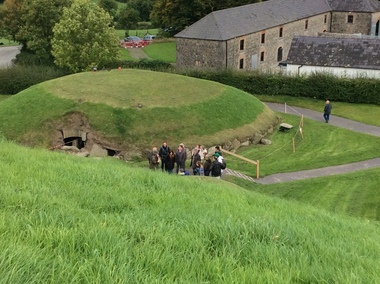 Ballarat Heritage Services
Photograph - Colour, Knowth and New Grange, Ireland, World Heritage Centre
... Judging from the splendour and magnificence of Newgrange and Knowth it is likely that these temples of the ancestors were places of astrological, spiritual, religious and ceremonial importance, much as present day cathedrals are places of worship where dignitaries may be laid to rest. There is a lively debate about whether these wonderful megalithic structures were built primarily as burial tombs, sacred temples or astronomical observatories. ...Judging from the splendour and magnificence of Newgrange and Knowth it is likely that these temples of the ancestors were places of astrological, spiritual, religious and ceremonial importance, much as present day cathedrals are places of worship where dignitaries may be laid to rest. There is a lively debate about whether these wonderful megalithic structures were built primarily as burial tombs, sacred temples or astronomical observatories. ...The Megalithic Passage Tombs of Newgrange, Knowth, Dowth, Fourknocks, Loughcrew and Tara are located in the present day County Meath in Ireland's Ancient East. The Boyne Valley Mounds at Newgrange, Knowth and Dowth were built around 3200BC making them older than Stonehenge in England and the Pyramids of Giza in Egypt. Built by Neolithic farming communities about 5000 years ago, the passage tombs have clear astronomical alignments such as the Winter Solstice Sunrise at Newgrange and the Equinox Sunrise at Loughcrew. Judging from the splendour and magnificence of Newgrange and Knowth it is likely that these temples of the ancestors were places of astrological, spiritual, religious and ceremonial importance, much as present day cathedrals are places of worship where dignitaries may be laid to rest. There is a lively debate about whether these wonderful megalithic structures were built primarily as burial tombs, sacred temples or astronomical observatories. While passage tomb is the traditional description for Newgrange and similar structures, chambered cairn or passage mound are the descriptions favoured by those who consider the passage tomb description too narrow. The large stones surrounding and inside the Passage Tombs are decorated with Megalithic Art such as spirals, concentric circles, triangles, zigzags and images which have been interpreted as the sun, moon and the human face. Irish passage tombs tend to occur in clusters traditionally described as a Necropolis or cemetery. The Boyne cluster includes Newgrange, Knowth, Dowth and Townleyhall. The other great clusters in County Meath are on the hills around Loughcrew. The ancient Boyne Valley passage tomb mounds at Newgrange, Knowth and Dowth have been designated World Heritage Site status by UNESCO and attract 200,000 visitors per year. The sites and Visitor Centre are managed by the OPW (Office of Public Works). Newgrange is best known for the illumination of its passage and chamber by the winter solstice sun. The site is open to the public with controlled access to the passage and chamber. Tours of Newgrange start at the Brú na Bóinne Visitor Centre located near the village of Donore, Co. Meath. Knowth has two passages and is surrounded by seventeen satellite cairns. The site is open to the public; however there is no public access to the interior passages and chambers. Tours of Knowth also start at the Brú na Bóinne Visitor Centre. Dowth is the only one of the three large Brú na Bóinne Passage Tombs which is not accessible from the Visitor Centre situated on the south bank of the river. Visitors to Dowth must drive directly to the site on the north bank, a couple of miles from the Slane / Drogheda road. Fourknocks with its short passage leading into a wide pear shaped chamber is in similar style to Tombs in Portugal. Just inside the main chamber to the left of the entrance is one of the few representations of a human face from the Neolithic Period in ancient Ireland. Entrance to Fourknocks Megalithic Passage Tomb. Megalithic Art - Loughcrew, Co. Meath Loughcrew Cairns form the largest complex of Megalithic structures in Ireland. The Cairns contain symbolic engravings similar in style to Newgrange. Like other Passage Tombs in ancient Ireland, they have clear astrological alignments.Tara was the seat of the High Kings of Ireland in the first millennium A.D. however Tara is also the site of a Passage Tomb known as the Mound of the Hostages that was built about 2,500 B.C. knowth, newgrange, megalith, ireland, world heritage, neolithic -
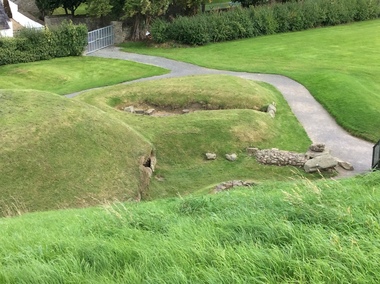 Ballarat Heritage Services
Photograph - Colour, Knowth and New Grange, Ireland, World Heritage Centre
... Judging from the splendour and magnificence of Newgrange and Knowth it is likely that these temples of the ancestors were places of astrological, spiritual, religious and ceremonial importance, much as present day cathedrals are places of worship where dignitaries may be laid to rest. There is a lively debate about whether these wonderful megalithic structures were built primarily as burial tombs, sacred temples or astronomical observatories. ...Judging from the splendour and magnificence of Newgrange and Knowth it is likely that these temples of the ancestors were places of astrological, spiritual, religious and ceremonial importance, much as present day cathedrals are places of worship where dignitaries may be laid to rest. There is a lively debate about whether these wonderful megalithic structures were built primarily as burial tombs, sacred temples or astronomical observatories. ...The Megalithic Passage Tombs of Newgrange, Knowth, Dowth, Fourknocks, Loughcrew and Tara are located in the present day County Meath in Ireland's Ancient East. The Boyne Valley Mounds at Newgrange, Knowth and Dowth were built around 3200BC making them older than Stonehenge in England and the Pyramids of Giza in Egypt. Built by Neolithic farming communities about 5000 years ago, the passage tombs have clear astronomical alignments such as the Winter Solstice Sunrise at Newgrange and the Equinox Sunrise at Loughcrew. Judging from the splendour and magnificence of Newgrange and Knowth it is likely that these temples of the ancestors were places of astrological, spiritual, religious and ceremonial importance, much as present day cathedrals are places of worship where dignitaries may be laid to rest. There is a lively debate about whether these wonderful megalithic structures were built primarily as burial tombs, sacred temples or astronomical observatories. While passage tomb is the traditional description for Newgrange and similar structures, chambered cairn or passage mound are the descriptions favoured by those who consider the passage tomb description too narrow. The large stones surrounding and inside the Passage Tombs are decorated with Megalithic Art such as spirals, concentric circles, triangles, zigzags and images which have been interpreted as the sun, moon and the human face. Irish passage tombs tend to occur in clusters traditionally described as a Necropolis or cemetery. The Boyne cluster includes Newgrange, Knowth, Dowth and Townleyhall. The other great clusters in County Meath are on the hills around Loughcrew. The ancient Boyne Valley passage tomb mounds at Newgrange, Knowth and Dowth have been designated World Heritage Site status by UNESCO and attract 200,000 visitors per year. The sites and Visitor Centre are managed by the OPW (Office of Public Works). Newgrange is best known for the illumination of its passage and chamber by the winter solstice sun. The site is open to the public with controlled access to the passage and chamber. Tours of Newgrange start at the Brú na Bóinne Visitor Centre located near the village of Donore, Co. Meath. Knowth has two passages and is surrounded by seventeen satellite cairns. The site is open to the public; however there is no public access to the interior passages and chambers. Tours of Knowth also start at the Brú na Bóinne Visitor Centre. Dowth is the only one of the three large Brú na Bóinne Passage Tombs which is not accessible from the Visitor Centre situated on the south bank of the river. Visitors to Dowth must drive directly to the site on the north bank, a couple of miles from the Slane / Drogheda road. Fourknocks with its short passage leading into a wide pear shaped chamber is in similar style to Tombs in Portugal. Just inside the main chamber to the left of the entrance is one of the few representations of a human face from the Neolithic Period in ancient Ireland. Entrance to Fourknocks Megalithic Passage Tomb. Megalithic Art - Loughcrew, Co. Meath Loughcrew Cairns form the largest complex of Megalithic structures in Ireland. The Cairns contain symbolic engravings similar in style to Newgrange. Like other Passage Tombs in ancient Ireland, they have clear astrological alignments.Tara was the seat of the High Kings of Ireland in the first millennium A.D. however Tara is also the site of a Passage Tomb known as the Mound of the Hostages that was built about 2,500 B.C. knowth, newgrange, megalith, ireland, world heritage, neolithic -
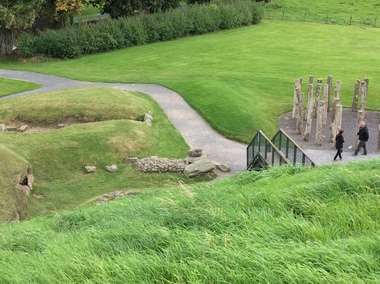 Ballarat Heritage Services
Photograph - Colour, Knowth and New Grange, Ireland, World Heritage Centre
... Judging from the splendour and magnificence of Newgrange and Knowth it is likely that these temples of the ancestors were places of astrological, spiritual, religious and ceremonial importance, much as present day cathedrals are places of worship where dignitaries may be laid to rest. There is a lively debate about whether these wonderful megalithic structures were built primarily as burial tombs, sacred temples or astronomical observatories. ...Judging from the splendour and magnificence of Newgrange and Knowth it is likely that these temples of the ancestors were places of astrological, spiritual, religious and ceremonial importance, much as present day cathedrals are places of worship where dignitaries may be laid to rest. There is a lively debate about whether these wonderful megalithic structures were built primarily as burial tombs, sacred temples or astronomical observatories. ...The Megalithic Passage Tombs of Newgrange, Knowth, Dowth, Fourknocks, Loughcrew and Tara are located in the present day County Meath in Ireland's Ancient East. The Boyne Valley Mounds at Newgrange, Knowth and Dowth were built around 3200BC making them older than Stonehenge in England and the Pyramids of Giza in Egypt. Built by Neolithic farming communities about 5000 years ago, the passage tombs have clear astronomical alignments such as the Winter Solstice Sunrise at Newgrange and the Equinox Sunrise at Loughcrew. Judging from the splendour and magnificence of Newgrange and Knowth it is likely that these temples of the ancestors were places of astrological, spiritual, religious and ceremonial importance, much as present day cathedrals are places of worship where dignitaries may be laid to rest. There is a lively debate about whether these wonderful megalithic structures were built primarily as burial tombs, sacred temples or astronomical observatories. While passage tomb is the traditional description for Newgrange and similar structures, chambered cairn or passage mound are the descriptions favoured by those who consider the passage tomb description too narrow. The large stones surrounding and inside the Passage Tombs are decorated with Megalithic Art such as spirals, concentric circles, triangles, zigzags and images which have been interpreted as the sun, moon and the human face. Irish passage tombs tend to occur in clusters traditionally described as a Necropolis or cemetery. The Boyne cluster includes Newgrange, Knowth, Dowth and Townleyhall. The other great clusters in County Meath are on the hills around Loughcrew. The ancient Boyne Valley passage tomb mounds at Newgrange, Knowth and Dowth have been designated World Heritage Site status by UNESCO and attract 200,000 visitors per year. The sites and Visitor Centre are managed by the OPW (Office of Public Works). Newgrange is best known for the illumination of its passage and chamber by the winter solstice sun. The site is open to the public with controlled access to the passage and chamber. Tours of Newgrange start at the Brú na Bóinne Visitor Centre located near the village of Donore, Co. Meath. Knowth has two passages and is surrounded by seventeen satellite cairns. The site is open to the public; however there is no public access to the interior passages and chambers. Tours of Knowth also start at the Brú na Bóinne Visitor Centre. Dowth is the only one of the three large Brú na Bóinne Passage Tombs which is not accessible from the Visitor Centre situated on the south bank of the river. Visitors to Dowth must drive directly to the site on the north bank, a couple of miles from the Slane / Drogheda road. Fourknocks with its short passage leading into a wide pear shaped chamber is in similar style to Tombs in Portugal. Just inside the main chamber to the left of the entrance is one of the few representations of a human face from the Neolithic Period in ancient Ireland. Entrance to Fourknocks Megalithic Passage Tomb. Megalithic Art - Loughcrew, Co. Meath Loughcrew Cairns form the largest complex of Megalithic structures in Ireland. The Cairns contain symbolic engravings similar in style to Newgrange. Like other Passage Tombs in ancient Ireland, they have clear astrological alignments.Tara was the seat of the High Kings of Ireland in the first millennium A.D. however Tara is also the site of a Passage Tomb known as the Mound of the Hostages that was built about 2,500 B.C. knowth, newgrange, megalith, ireland, world heritage, neolithic -
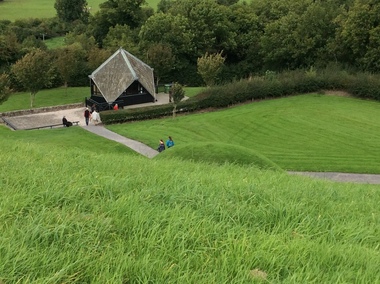 Ballarat Heritage Services
Photograph - Photograph - Colour, Knowth and New Grange, Ireland, World Heritage Centre, 2017
... Judging from the splendour and magnificence of Newgrange and Knowth it is likely that these temples of the ancestors were places of astrological, spiritual, religious and ceremonial importance, much as present day cathedrals are places of worship where dignitaries may be laid to rest. There is a lively debate about whether these wonderful megalithic structures were built primarily as burial tombs, sacred temples or astronomical observatories. ...Judging from the splendour and magnificence of Newgrange and Knowth it is likely that these temples of the ancestors were places of astrological, spiritual, religious and ceremonial importance, much as present day cathedrals are places of worship where dignitaries may be laid to rest. There is a lively debate about whether these wonderful megalithic structures were built primarily as burial tombs, sacred temples or astronomical observatories. ...The Megalithic Passage Tombs of Newgrange, Knowth, Dowth, Fourknocks, Loughcrew and Tara are located in the present day County Meath in Ireland's Ancient East. The Boyne Valley Mounds at Newgrange, Knowth and Dowth were built around 3200BC making them older than Stonehenge in England and the Pyramids of Giza in Egypt. Built by Neolithic farming communities about 5000 years ago, the passage tombs have clear astronomical alignments such as the Winter Solstice Sunrise at Newgrange and the Equinox Sunrise at Loughcrew. Judging from the splendour and magnificence of Newgrange and Knowth it is likely that these temples of the ancestors were places of astrological, spiritual, religious and ceremonial importance, much as present day cathedrals are places of worship where dignitaries may be laid to rest. There is a lively debate about whether these wonderful megalithic structures were built primarily as burial tombs, sacred temples or astronomical observatories. While passage tomb is the traditional description for Newgrange and similar structures, chambered cairn or passage mound are the descriptions favoured by those who consider the passage tomb description too narrow. The large stones surrounding and inside the Passage Tombs are decorated with Megalithic Art such as spirals, concentric circles, triangles, zigzags and images which have been interpreted as the sun, moon and the human face. Irish passage tombs tend to occur in clusters traditionally described as a Necropolis or cemetery. The Boyne cluster includes Newgrange, Knowth, Dowth and Townleyhall. The other great clusters in County Meath are on the hills around Loughcrew. The ancient Boyne Valley passage tomb mounds at Newgrange, Knowth and Dowth have been designated World Heritage Site status by UNESCO and attract 200,000 visitors per year. The sites and Visitor Centre are managed by the OPW (Office of Public Works). Newgrange is best known for the illumination of its passage and chamber by the winter solstice sun. The site is open to the public with controlled access to the passage and chamber. Tours of Newgrange start at the Brú na Bóinne Visitor Centre located near the village of Donore, Co. Meath. Knowth has two passages and is surrounded by seventeen satellite cairns. The site is open to the public; however there is no public access to the interior passages and chambers. Tours of Knowth also start at the Brú na Bóinne Visitor Centre. Dowth is the only one of the three large Brú na Bóinne Passage Tombs which is not accessible from the Visitor Centre situated on the south bank of the river. Visitors to Dowth must drive directly to the site on the north bank, a couple of miles from the Slane / Drogheda road. Fourknocks with its short passage leading into a wide pear shaped chamber is in similar style to Tombs in Portugal. Just inside the main chamber to the left of the entrance is one of the few representations of a human face from the Neolithic Period in ancient Ireland. Entrance to Fourknocks Megalithic Passage Tomb. Megalithic Art - Loughcrew, Co. Meath Loughcrew Cairns form the largest complex of Megalithic structures in Ireland. The Cairns contain symbolic engravings similar in style to Newgrange. Like other Passage Tombs in ancient Ireland, they have clear astrological alignments.Tara was the seat of the High Kings of Ireland in the first millennium A.D. however Tara is also the site of a Passage Tomb known as the Mound of the Hostages that was built about 2,500 B.C. Colour photograph of Knowth and New Grange, Ireland, World Heritage Centreknowth, newgrange, megalith, ireland, world heritage, neolithic -
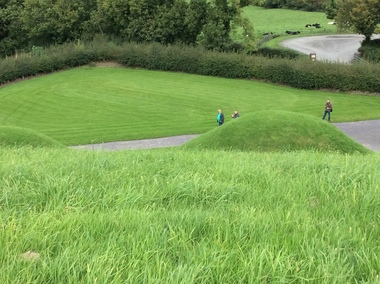 Ballarat Heritage Services
Photograph - Colour, Knowth and New Grange, Ireland, World Heritage Centre
... Judging from the splendour and magnificence of Newgrange and Knowth it is likely that these temples of the ancestors were places of astrological, spiritual, religious and ceremonial importance, much as present day cathedrals are places of worship where dignitaries may be laid to rest. There is a lively debate about whether these wonderful megalithic structures were built primarily as burial tombs, sacred temples or astronomical observatories. ...Judging from the splendour and magnificence of Newgrange and Knowth it is likely that these temples of the ancestors were places of astrological, spiritual, religious and ceremonial importance, much as present day cathedrals are places of worship where dignitaries may be laid to rest. There is a lively debate about whether these wonderful megalithic structures were built primarily as burial tombs, sacred temples or astronomical observatories. ...The Megalithic Passage Tombs of Newgrange, Knowth, Dowth, Fourknocks, Loughcrew and Tara are located in the present day County Meath in Ireland's Ancient East. The Boyne Valley Mounds at Newgrange, Knowth and Dowth were built around 3200BC making them older than Stonehenge in England and the Pyramids of Giza in Egypt. Built by Neolithic farming communities about 5000 years ago, the passage tombs have clear astronomical alignments such as the Winter Solstice Sunrise at Newgrange and the Equinox Sunrise at Loughcrew. Judging from the splendour and magnificence of Newgrange and Knowth it is likely that these temples of the ancestors were places of astrological, spiritual, religious and ceremonial importance, much as present day cathedrals are places of worship where dignitaries may be laid to rest. There is a lively debate about whether these wonderful megalithic structures were built primarily as burial tombs, sacred temples or astronomical observatories. While passage tomb is the traditional description for Newgrange and similar structures, chambered cairn or passage mound are the descriptions favoured by those who consider the passage tomb description too narrow. The large stones surrounding and inside the Passage Tombs are decorated with Megalithic Art such as spirals, concentric circles, triangles, zigzags and images which have been interpreted as the sun, moon and the human face. Irish passage tombs tend to occur in clusters traditionally described as a Necropolis or cemetery. The Boyne cluster includes Newgrange, Knowth, Dowth and Townleyhall. The other great clusters in County Meath are on the hills around Loughcrew. The ancient Boyne Valley passage tomb mounds at Newgrange, Knowth and Dowth have been designated World Heritage Site status by UNESCO and attract 200,000 visitors per year. The sites and Visitor Centre are managed by the OPW (Office of Public Works). Newgrange is best known for the illumination of its passage and chamber by the winter solstice sun. The site is open to the public with controlled access to the passage and chamber. Tours of Newgrange start at the Brú na Bóinne Visitor Centre located near the village of Donore, Co. Meath. Knowth has two passages and is surrounded by seventeen satellite cairns. The site is open to the public; however there is no public access to the interior passages and chambers. Tours of Knowth also start at the Brú na Bóinne Visitor Centre. Dowth is the only one of the three large Brú na Bóinne Passage Tombs which is not accessible from the Visitor Centre situated on the south bank of the river. Visitors to Dowth must drive directly to the site on the north bank, a couple of miles from the Slane / Drogheda road. Fourknocks with its short passage leading into a wide pear shaped chamber is in similar style to Tombs in Portugal. Just inside the main chamber to the left of the entrance is one of the few representations of a human face from the Neolithic Period in ancient Ireland. Entrance to Fourknocks Megalithic Passage Tomb. Megalithic Art - Loughcrew, Co. Meath Loughcrew Cairns form the largest complex of Megalithic structures in Ireland. The Cairns contain symbolic engravings similar in style to Newgrange. Like other Passage Tombs in ancient Ireland, they have clear astrological alignments.Tara was the seat of the High Kings of Ireland in the first millennium A.D. however Tara is also the site of a Passage Tomb known as the Mound of the Hostages that was built about 2,500 B.C. knowth, newgrange, megalith, ireland, world heritage, neolithic -
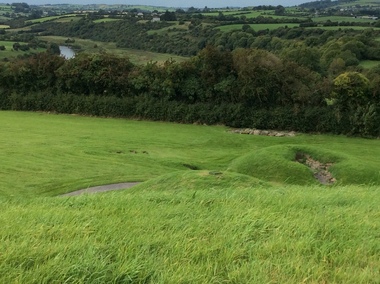 Ballarat Heritage Services
Photograph - Colour, Knowth and New Grange, Ireland, World Heritage Centre
... Judging from the splendour and magnificence of Newgrange and Knowth it is likely that these temples of the ancestors were places of astrological, spiritual, religious and ceremonial importance, much as present day cathedrals are places of worship where dignitaries may be laid to rest. There is a lively debate about whether these wonderful megalithic structures were built primarily as burial tombs, sacred temples or astronomical observatories. ...Judging from the splendour and magnificence of Newgrange and Knowth it is likely that these temples of the ancestors were places of astrological, spiritual, religious and ceremonial importance, much as present day cathedrals are places of worship where dignitaries may be laid to rest. There is a lively debate about whether these wonderful megalithic structures were built primarily as burial tombs, sacred temples or astronomical observatories. ...The Megalithic Passage Tombs of Newgrange, Knowth, Dowth, Fourknocks, Loughcrew and Tara are located in the present day County Meath in Ireland's Ancient East. The Boyne Valley Mounds at Newgrange, Knowth and Dowth were built around 3200BC making them older than Stonehenge in England and the Pyramids of Giza in Egypt. Built by Neolithic farming communities about 5000 years ago, the passage tombs have clear astronomical alignments such as the Winter Solstice Sunrise at Newgrange and the Equinox Sunrise at Loughcrew. Judging from the splendour and magnificence of Newgrange and Knowth it is likely that these temples of the ancestors were places of astrological, spiritual, religious and ceremonial importance, much as present day cathedrals are places of worship where dignitaries may be laid to rest. There is a lively debate about whether these wonderful megalithic structures were built primarily as burial tombs, sacred temples or astronomical observatories. While passage tomb is the traditional description for Newgrange and similar structures, chambered cairn or passage mound are the descriptions favoured by those who consider the passage tomb description too narrow. The large stones surrounding and inside the Passage Tombs are decorated with Megalithic Art such as spirals, concentric circles, triangles, zigzags and images which have been interpreted as the sun, moon and the human face. Irish passage tombs tend to occur in clusters traditionally described as a Necropolis or cemetery. The Boyne cluster includes Newgrange, Knowth, Dowth and Townleyhall. The other great clusters in County Meath are on the hills around Loughcrew. The ancient Boyne Valley passage tomb mounds at Newgrange, Knowth and Dowth have been designated World Heritage Site status by UNESCO and attract 200,000 visitors per year. The sites and Visitor Centre are managed by the OPW (Office of Public Works). Newgrange is best known for the illumination of its passage and chamber by the winter solstice sun. The site is open to the public with controlled access to the passage and chamber. Tours of Newgrange start at the Brú na Bóinne Visitor Centre located near the village of Donore, Co. Meath. Knowth has two passages and is surrounded by seventeen satellite cairns. The site is open to the public; however there is no public access to the interior passages and chambers. Tours of Knowth also start at the Brú na Bóinne Visitor Centre. Dowth is the only one of the three large Brú na Bóinne Passage Tombs which is not accessible from the Visitor Centre situated on the south bank of the river. Visitors to Dowth must drive directly to the site on the north bank, a couple of miles from the Slane / Drogheda road. Fourknocks with its short passage leading into a wide pear shaped chamber is in similar style to Tombs in Portugal. Just inside the main chamber to the left of the entrance is one of the few representations of a human face from the Neolithic Period in ancient Ireland. Entrance to Fourknocks Megalithic Passage Tomb. Megalithic Art - Loughcrew, Co. Meath Loughcrew Cairns form the largest complex of Megalithic structures in Ireland. The Cairns contain symbolic engravings similar in style to Newgrange. Like other Passage Tombs in ancient Ireland, they have clear astrological alignments.Tara was the seat of the High Kings of Ireland in the first millennium A.D. however Tara is also the site of a Passage Tomb known as the Mound of the Hostages that was built about 2,500 B.C. knowth, newgrange, megalith, ireland, world heritage, neolithic
