
Showing 2294 items matching "england their england"
-
 Uniting Church Archives - Synod of Victoria
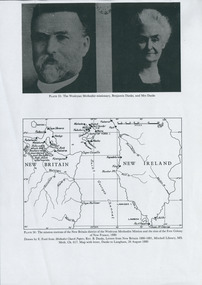
Photograph, Rev. Benjamin Danks, 19th C
... Benjamin Danks was b. 1853 England, ordained 1878, and died 1921 in Rookwood, NSW. DANKS, Benjamin (1853-1921) Michael Horsburgh, DANKS, BENJAMIN (b. Wednesbury, England...Benjamin Danks was b. 1853 England, ordained 1878, and died 1921 in Rookwood, NSW. DANKS, Benjamin (1853-1921) Michael Horsburgh, DANKS, BENJAMIN (b. Wednesbury, England ...Benjamin Danks was b. 1853 England, ordained 1878, and died 1921 in Rookwood, NSW. DANKS, Benjamin (1853-1921) Michael Horsburgh, DANKS, BENJAMIN (b. Wednesbury, England, 12 Feb 1853; d. Sydney, NSW, 12 April 1921). Methodist missionary in New Britain and missionary administrator. Benjamin Danks migrated to Vic with his family when a young child. He entered the Wesleyan Methodist ministry in 1878 and was sent with his wife, Emma, daughter of John and Elizabeth Watsford, to join the Rev George Brown in the newly established missionary venture on the Duke of York group in New Britain, where he remained for nine years. An opponent of 'blackbirding', the traffic in indentured island labour for the Australian sugar cane industry, he warned local inhabitants not to go aboard any vessel recruiting labour for distant places, much to the displeasure of the labour traders. In 1880 he participated in the rescue of the survivors of the ill-fated settlement established by the Marquis de Rays. In 1907 he succeeded George Brown as the general secretary of Foreign Missions for the Methodist Church of Australasia and was president of the NSW Conference in 1908. He retired in 1918 and died in 1921 after a long illness attributed to the privations of his missionary career. Danks was highly regarded as a linguist and published the first book in the Tolai language of New Britain. He was a strong supporter of state legislation to control social evils, and to ensure pure food and drugs. He was an ardent temperance advocate. George Brown, An Autobiography (London, 1908); New South Wales Methodist Conference, Souvenir of the Presidency of the Rev. Benjamin Danks (Sydney, 1909); Wallace Deane (ed), In Wild New Britain (Sydney, 1933); Neville Threlfall, One Hundred Years in the Islands (Rabaul, 1975). MICHAEL HORSBURGH Electronic Version © Southern Cross College, 2004. Content © Evangelical History Association of Australia and the author, 2004.Photocopy of page from a book (A4 size) with pictures of Danks and Mrs. Danks and a map showing New Britain and New Ireland and the mission stations of the New Britain district of the Wesleyan Methodist Mission and the sites of the Free Colony of New France.danks, benjamin, new britain -
 Uniting Church Archives - Synod of Victoria
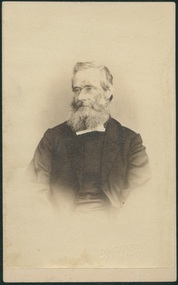
Photograph, Undated c.1875
... Edward King (1825 - 1905) Wesleyan minister born in England. Entered the ministry in 1846 in England. Came to Australia in 1857. ...Edward King (1825 - 1905) Wesleyan minister born in England. Entered the ministry in 1846 in England. Came to Australia in 1857. ...Rev. Edward King (1825 - 1905) Wesleyan minister born in England. Entered the ministry in 1846 in England. Came to Australia in 1857. Stationed at: Melbourne East, Brighton, Creswick, Tarnagulla, Castlemaine, Williamstown, Geelong West, Daylesford, Warrnambool, Williamstown, Preston, Drysdale, Colac, Maldon, Beechworth. President of the Victorian Conference of the Methodist Church of Australasia in 1877. Made a supernumerary in 1893. Died at Armadale in 1905.Sepia toned waist length carte de visite studio portrait of the Rev. Edward King."With love from Ed. King" -
 Uniting Church Archives - Synod of Victoria
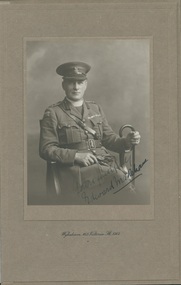
Photograph, Undate c.1914 - 1918
... England minister. Chaplain to the Mission to Seamen Kobe Japan. In 1903 was appointed Rector of St. Mary's Perth. Joined the A.I.F. and served in Cairo and the United Kingdom. Returned from military service in 1920. Returned to the United Kingdom in 1922. Rector of Hedgerley, Bucks., at the time of his death on 9 November 1934. Edward Wykeham, Church of England ...Edward Wykeham born 31 January 1861. Church of England minister. Chaplain to the Mission to Seamen Kobe Japan. In 1903 was appointed Rector of St. Mary's Perth. Joined the A.I.F. and served in Cairo and the United Kingdom. Returned from military service in 1920. Returned to the United Kingdom in 1922. Rector of Hedgerley, Bucks., at the time of his death on 9 November 1934.Sepia toned three quarter length seated studio portrait of the Rev. Edward Makeham dressed in W.W.I chaplain's uniform. Photo is mounted in a brown card presentation folder.Yours faithfully Edward Makehamedward wykeham, church of england, minister, chaplain, a.i.f. mission to seamen -
 Uniting Church Archives - Synod of Victoria
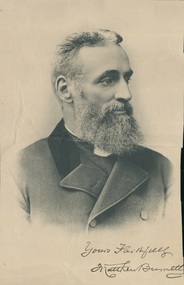
Photograph
... England in 1873, meeting leading temperance reformers. He returned to Australia in the mid-1870s. He went to South Australia, Western Australia, Tasmania and New Zealand as a temperance campaigner, and claimed to have received pledges from 140,000 people. He returned to England...England in 1873, meeting leading temperance reformers. He returned to Australia in the mid-1870s. He went to South Australia, Western Australia, Tasmania and New Zealand as a temperance campaigner, and claimed to have received pledges from 140,000 people. He returned to England ...Matthew Burnett (1839 - 1896). Wesleyan temperance evangelist. Born in Yorkshire, came to Australia in 1857 with his wife Sarah Gibson. He spent the years 1864 to 1867 on the goldfields evangelising against drink and securing temperance pledges. Sarah Burnett died in 1871 and Matthew returned to England in 1873, meeting leading temperance reformers. He returned to Australia in the mid-1870s. He went to South Australia, Western Australia, Tasmania and New Zealand as a temperance campaigner, and claimed to have received pledges from 140,000 people. He returned to England in 1890 and died at Scarborough in 1896.Sepia toned head and shoulders studio portrait of Matthew Burnett in three quarter profile."Yours faithfully Matthew Burnett"matthew burnett, sarah gibson, temperance, evangelist, wesleyan -
 Uniting Church Archives - Synod of Victoria
Engraving from photograph, Undated
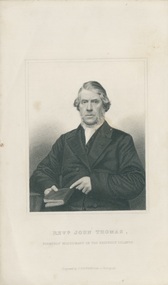
... Following a visit to England his influence with King Tupou waned in the 1850's and he retired to England and became a supernumerary minister at Stourbridge, Worcestershire, where he died in 1881. ...Following a visit to England his influence with King Tupou waned in the 1850's and he retired to England and became a supernumerary minister at Stourbridge, Worcestershire, where he died in 1881. ...John Thomas was born at Worcester, England in 1796 and he became a blacksmith at Hagley, Worcestershire before becoming a Methodist and he soon started to preach. He married Sarah Hartshorn who predeceased him in 1867. He was accepted by the Wesleyan Methodist Missionary Society (WMMS) in 1824 and he became a pioneering missionary to Tonga (the Friendly Isles) in the South Pacific. He sailed first to Australia, and eventually arrived in Tonga in 1826, together with his wife and fellow missionary John Hutchinson.Initially he preached in Hihifo, Tongatapu from 1826 to 1828 and then moved to the island of Ha’apai in 1829. He baptised the chief Taufa’ahua Tupou in 1831 and enthroned him with English rites as the first King of all Tonga in 1845. Although the WMMS withdrew from Samoa in 1839, Thomas advocated its re-entry and he supported the King’s policy of sending Tongan Wesleyan missionaries to Fiji and Samoa. John Thomas also persuaded the Australasian Wesleyan Conference ( which took over the Pacific region from the British in 1855) to reverse the London Missionary Society’s decision regarding Samoa. John Thomas had 2 periods in Tonga from 1826 to 1850 and 1855 to 1859. Following a visit to England his influence with King Tupou waned in the 1850's and he retired to England and became a supernumerary minister at Stourbridge, Worcestershire, where he died in 1881. His wife Sarah had been a partner in his missionary work until she died 14 years earlier than he did. John Thomas’ name is honoured by having one of the 12 dormitory houses of Toupou College in the capitol of Tonga named after him. John Thomas House is House #1, and it is customary for the Head Prefect to reside in this dormitory. B & W engraving from a photograph of the Rev. John Thomas, formerly missionary in the Friendly IslandsRevd. John Thomas, Formerly Missionary in the Friendly Islands, Engraved by J. Cochran from a Photograph.rev. john thomas, methodist, tonga, friendly islands, wesleyan, missionary, wesleyan methodist missionary society -
 Uniting Church Archives - Synod of Victoria
Photograph, Undated c.1915 - 1918
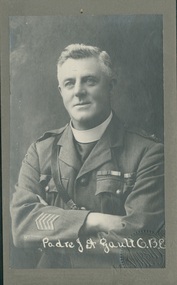
... England. After the war, he continued to show great interest in returned soldiers and work in training camps. When he retired in February, 1934, Mr. Gault had been in the ministry for 40 years. Bom at Manchester. England...England. After the war, he continued to show great interest in returned soldiers and work in training camps. When he retired in February, 1934, Mr. Gault had been in the ministry for 40 years. Bom at Manchester. England ...Born 26 June 1865 at Manchester, England Husband of Mrs. Edith Ann Maria GAULT Of 'The Inglenook', Sea Parade, Cheltenham, Vic. Aged 50 years Enlisted 01 July 1915 for Continuous Service Embarked 16 July 1915 per 'HMAT Demosthenes' from Melbourne, Vic Pay rate of 19s 0d after embarkation Embarked 29 March 1916 per 'RMS Orontes' from Melbourne, Vic. Served in Egypt and on the Western Front Returned to Australia 01 November 1919 Awarded OBE Death of Rev. J. A. Gault The Rev. J. A. Gault, a Methodist minister, who was widely known to Australian soldiers as Padre Gault, died yesterday after a long illness. One of the best-loved padres in the AIF, Mr. Gault served for four years with the Australians, at first in Egypt and later in France and England. After the war, he continued to show great interest in returned soldiers and work in training camps. When he retired in February, 1934, Mr. Gault had been in the ministry for 40 years. Bom at Manchester. England on June 10, 1865 he came to Australia when aged three years in the sailing-ship Antiope. He was educated at Gold street State school and later at Wesley College. After his appointment as a minister, he served the church in many circuits in Tasmania and Victoria. Before the war he was superintendent of the Methodist Mission at Collingwood,and after his return from overseas he occupied important positions, including those of superintendent minister in the Brunswick, Port Melbourne, and Yarra street, Geelong, circuits. His last charge was at Camberwell. After ill-health caused him to retire, he lived at Mentone. He has left a widow, a son, and two daughters. Dr. Edward Gault. of Collins street, is a brother, and there are two sisters in New Zealand. The funeral will leave Mr. Gault's home In Sea parade, Mentone, tomorrow, at 2p.m., for the Methodist Church, Mentone. It will then proceed to the Springvale Crematorium. W. D. Rose and Son. Cheltenham, are making the arrangemnts. R.S.L. Tribute "Returned soldiers will learn of the death of Padre Gault with deep regret," said the president of the Returned Soldiers' League (Mr. G. W. Holland) lastnight. "He was revered by the AIF. for his unfailing sympathy, understanding, and comradeship." - from the Melbourne Argus 02 Feb 1938 "REV. J. A. GAULT. BELOVED A.I.F."PADRE." Death After A Long Illness. After a long Illness, the death occurred at his home at Mentone yesterday afternoon, of Rev. James Archibald ("Padre") Gault, one of the best known and beloved Methodist chaplains to the A.I.F. at Galllpoli and in France. Sorrow at the "padre's" demise, at the age of 72 years, will be shared not only by the thousands to whom he rendered, both spiritual and temporal comfort during the war, but, also by a host of friends won during a long and. fruitful, ministry at many centres in the State, and as chaplain at military camps after the war. He retired from the ministry three years ago, and had suffered Ill-health from that time. Deceased entered the Methodist ministry in 1894, and was ordained four years later. After a successful year as conference evangelist. he was stationed at Mansfield, then at Richmond. Following a ministry at Richmond he was transferred to Tasmania, where for twelve years he exercised his ministry at Mt Lyell Launceston, Penguin and Hobart. Returning to Victoria, Mr. Gault was stationed at St. Kilda, and when the war broke out he was associated with the Colllngwood Mission. He left on active service as a chaplain with the first troops, and was ' present ' throughout the Galllpoli campaign. Later he was with the forces In France, and remained on active service until the last of the troops were demobilised to 1920. He was affectionately known as "padre"after the war to the thousands of soldiers who had learned to regard him as guide, philosopher and friend In the trenches. He was noted always for the good cheer he invariably brought to the troops, and his famous "stunts" among the men were subsequently recorded by him in his publication, "The Stunt Book." For services rendered he was made a member of the Order of the British Empire. On his return to Australia In 1920 he was stationed at Brunswick for three years, and then followed ministries at Port Melbourne, Spring-road, Malvern and finally at Camberwell. A deeply spiritual man, he brought a rare devotion to his ministry, and was beloved by his congregations and ministerial brethren alike. He shunned the limelight, and was one of the most retiring men in conference affairs. The deceased is survived by a widow, two daughters and, one, son. Dr. Edward L. Gaul is a brother." - from the Melbourne Age 02 Feb 1938 B & W waist length studio portrait of the Rev. James Archibald Gault dressed in uniform as Chaplain to the A.I.F. Mounted on grey card.Padre J.A. Gault OBE -
 Robin Boyd Foundation
Certificate, Degree of Doctor of Letters University of New England, 1967
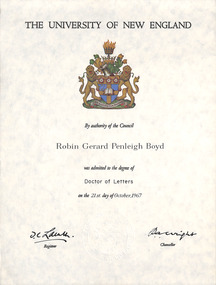
... England. The family attended the outdoor ceremony and have slides of Robin Boyd in full academic dress. The Academic dress hood is part of the Walsh Street Archive (item F069). Zelman Cowen was Vice Chancellor at University of New England...England. The family attended the outdoor ceremony and have slides of Robin Boyd in full academic dress. The Academic dress hood is part of the Walsh Street Archive (item F069). Zelman Cowen was Vice Chancellor at University of New England 1967-1970. Robin Boyd designed Zelman Cohen House at 34 Yarravale Road in Kew in 1959. UNE University of New England ...Robin Gerard Penleigh Boyd was admitted to the degree of Doctor of Letters on the 21st day of October 1967 at University of New England. The family attended the outdoor ceremony and have slides of Robin Boyd in full academic dress. The Academic dress hood is part of the Walsh Street Archive (item F069). Zelman Cowen was Vice Chancellor at University of New England 1967-1970. Robin Boyd designed Zelman Cohen House at 34 Yarravale Road in Kew in 1959. Certificate from The University of New England, with University crest, signed by two people. Rolled into a red leather cylindrical holder with Robin Gerard Penleigh Boyd embossed in gold along long axis (item F168).The University of New England. By authority of the Council Robin Gerard Penleigh Boyd was admitted to the Degree of Doctor of Letters on the 21st day of October 1967. Signature of the Registrar JC Lainth (indecipherable) and Chancellor PA Wright.une, university of new england, zelman cowen, doctor of letters, robin boyd, ohm2022, ohm2022_42 -
 Robin Boyd Foundation
Slide, Robin Boyd, 1964
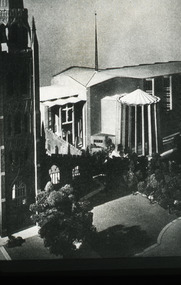
... The Boyds then travelled on to England, Finland (especially to see Tapiola), Russia and India to see Le Corbusier's Chandigarh, and also Hong Kong and Thailand. UK slide Made in Australia / Encircled 20 (Handwritten) Colour slide in a mount. Coventry Cathedral, Coventry, England ...In 1964, Robin and Patricia Boyd spent several weeks on a world tour - Boyd took a leading role at the International Design Conference in Aspen and he also visited Chicago, Yale University, and New York’s World Fair. The Boyds then travelled on to England, Finland (especially to see Tapiola), Russia and India to see Le Corbusier's Chandigarh, and also Hong Kong and Thailand.Colour slide in a mount. Coventry Cathedral, Coventry, England, 1962. (Architect: Basil Spence.)Made in Australia / Encircled 20 (Handwritten)uk, slide -
 Robin Boyd Foundation
Slide, Robin Boyd, 1950
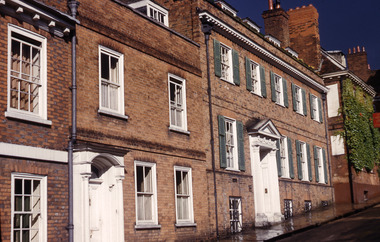
... Haddon Travelling Scholarship Haddon robin boyd slide England Street (Handwritten) / Street in Hertfordshire Leading to Hatfield House (Marquess of Salisbury) (Handwritten) Colour slide in a mount. Street in Hatfield, Hertfordshire, leading to Hatfield House, Hatfield, England Slide Robin Boyd ...Penleigh Boyd, Robin and Patricia Boyd's son, writes “Prior to 1950 Robin, like most other amateur or hobby photographers, took black and white printed photographs. The oldest slides date from 1950 when Robin and Patricia travelled to Europe on Robin’s Robert Haddon Travelling Scholarship.” In 1948 Robin Boyd was awarded ‘joint first place’ in the Robert Haddon competition for his design of Mildura art gallery. The scholarship helped fund their first overseas trip. Robin and Patricia were passengers on the Greek ship “Cyrenia” departing in May 1950, passing through the Suez Canal and landing in Genoa five weeks later. For six months, they travelled extensively throughout Europe (predominantly driving themselves) - France, Italy, United Kingdom, Sweden, Denmark, Germany, Austria, Switzerland and Spain.Colour slide in a mount. Street in Hatfield, Hertfordshire, leading to Hatfield House, Hatfield, EnglandEngland Street (Handwritten) / Street in Hertfordshire Leading to Hatfield House (Marquess of Salisbury) (Handwritten)haddon travelling scholarship, haddon, robin boyd, slide -
 Robin Boyd Foundation
Slide, Robin Boyd, 1950
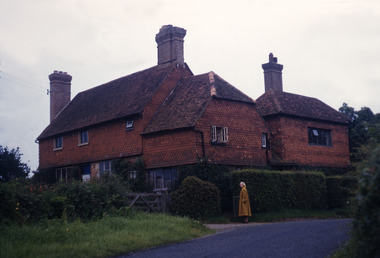
... Haddon Travelling Scholarship Haddon robin boyd slide England Surrey (Handwritten) / 'Yew Tree Cottage' Surrey (Handwritten) Colour slide in a mount. "Yew Tree Cottage", Surrey, England Slide Robin Boyd ...Penleigh Boyd, Robin and Patricia Boyd's son, writes “Prior to 1950 Robin, like most other amateur or hobby photographers, took black and white printed photographs. The oldest slides date from 1950 when Robin and Patricia travelled to Europe on Robin’s Robert Haddon Travelling Scholarship.” In 1948 Robin Boyd was awarded ‘joint first place’ in the Robert Haddon competition for his design of Mildura art gallery. The scholarship helped fund their first overseas trip. Robin and Patricia were passengers on the Greek ship “Cyrenia” departing in May 1950, passing through the Suez Canal and landing in Genoa five weeks later. For six months, they travelled extensively throughout Europe (predominantly driving themselves) - France, Italy, United Kingdom, Sweden, Denmark, Germany, Austria, Switzerland and Spain.Colour slide in a mount. "Yew Tree Cottage", Surrey, EnglandEngland Surrey (Handwritten) / 'Yew Tree Cottage' Surrey (Handwritten)haddon travelling scholarship, haddon, robin boyd, slide -
 Robin Boyd Foundation
Slide, Robin Boyd, 1950
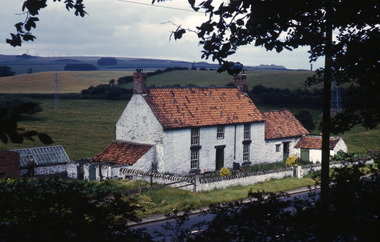
... Haddon Travelling Scholarship Haddon robin boyd slide England Cottage (Handwritten) Colour slide in a mount. Unknown Cottage, England Slide Robin Boyd ...Penleigh Boyd, Robin and Patricia Boyd's son, writes “Prior to 1950 Robin, like most other amateur or hobby photographers, took black and white printed photographs. The oldest slides date from 1950 when Robin and Patricia travelled to Europe on Robin’s Robert Haddon Travelling Scholarship.” In 1948 Robin Boyd was awarded ‘joint first place’ in the Robert Haddon competition for his design of Mildura art gallery. The scholarship helped fund their first overseas trip. Robin and Patricia were passengers on the Greek ship “Cyrenia” departing in May 1950, passing through the Suez Canal and landing in Genoa five weeks later. For six months, they travelled extensively throughout Europe (predominantly driving themselves) - France, Italy, United Kingdom, Sweden, Denmark, Germany, Austria, Switzerland and Spain.Colour slide in a mount. Unknown Cottage, EnglandEngland Cottage (Handwritten)haddon travelling scholarship, haddon, robin boyd, slide -
 Robin Boyd Foundation
Slide, Robin Boyd, 1950
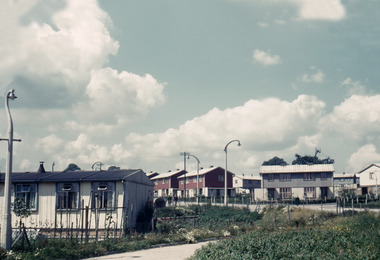
... Haddon Travelling Scholarship Haddon robin boyd slide England Prefab (Handwritten) / Nottingham: 'Miners' Prefab & Semi-Permanents / 1950 (Handwritten) Colour slide in a mount. "Miners" Prefab and semi-permanent housing, possibly Aspley Council Estate, Nottingham, England Slide Robin Boyd ...Penleigh Boyd, Robin and Patricia Boyd's son, writes “Prior to 1950 Robin, like most other amateur or hobby photographers, took black and white printed photographs. The oldest slides date from 1950 when Robin and Patricia travelled to Europe on Robin’s Robert Haddon Travelling Scholarship.” In 1948 Robin Boyd was awarded ‘joint first place’ in the Robert Haddon competition for his design of Mildura art gallery. The scholarship helped fund their first overseas trip. Robin and Patricia were passengers on the Greek ship “Cyrenia” departing in May 1950, passing through the Suez Canal and landing in Genoa five weeks later. For six months, they travelled extensively throughout Europe (predominantly driving themselves) - France, Italy, United Kingdom, Sweden, Denmark, Germany, Austria, Switzerland and Spain.Colour slide in a mount. "Miners" Prefab and semi-permanent housing, possibly Aspley Council Estate, Nottingham, EnglandEngland Prefab (Handwritten) / Nottingham: 'Miners' Prefab & Semi-Permanents / 1950 (Handwritten)haddon travelling scholarship, haddon, robin boyd, slide -
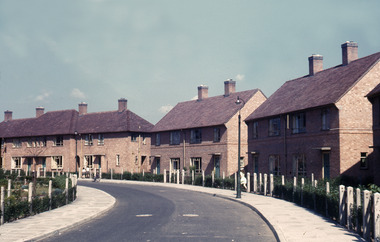 Robin Boyd Foundation
Slide, Robin Boyd, 1950
... Haddon Travelling Scholarship Haddon robin boyd slide England Houses (Handwritten) / Nottingham Workers' Houses / 1950 (Handwritten) Colour slide in a mount. "Nottingham Workers' Houses", possibly Aspley Estate, Nottingham, England Slide Robin Boyd ...Penleigh Boyd, Robin and Patricia Boyd's son, writes “Prior to 1950 Robin, like most other amateur or hobby photographers, took black and white printed photographs. The oldest slides date from 1950 when Robin and Patricia travelled to Europe on Robin’s Robert Haddon Travelling Scholarship.” In 1948 Robin Boyd was awarded ‘joint first place’ in the Robert Haddon competition for his design of Mildura art gallery. The scholarship helped fund their first overseas trip. Robin and Patricia were passengers on the Greek ship “Cyrenia” departing in May 1950, passing through the Suez Canal and landing in Genoa five weeks later. For six months, they travelled extensively throughout Europe (predominantly driving themselves) - France, Italy, United Kingdom, Sweden, Denmark, Germany, Austria, Switzerland and Spain.Colour slide in a mount. "Nottingham Workers' Houses", possibly Aspley Estate, Nottingham, EnglandEngland Houses (Handwritten) / Nottingham Workers' Houses / 1950 (Handwritten)haddon travelling scholarship, haddon, robin boyd, slide -
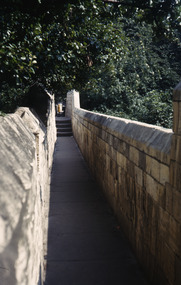 Robin Boyd Foundation
Slide, Robin Boyd, 1950
... Haddon Travelling Scholarship Haddon robin boyd slide England (Handwritten) / York (Handwritten) / City Walls (Handwritten) Colour slide in a mount. City Walls, York, England Slide Robin Boyd ...Penleigh Boyd, Robin and Patricia Boyd's son, writes “Prior to 1950 Robin, like most other amateur or hobby photographers, took black and white printed photographs. The oldest slides date from 1950 when Robin and Patricia travelled to Europe on Robin’s Robert Haddon Travelling Scholarship.” In 1948 Robin Boyd was awarded ‘joint first place’ in the Robert Haddon competition for his design of Mildura art gallery. The scholarship helped fund their first overseas trip. Robin and Patricia were passengers on the Greek ship “Cyrenia” departing in May 1950, passing through the Suez Canal and landing in Genoa five weeks later. For six months, they travelled extensively throughout Europe (predominantly driving themselves) - France, Italy, United Kingdom, Sweden, Denmark, Germany, Austria, Switzerland and Spain.Colour slide in a mount. City Walls, York, EnglandEngland (Handwritten) / York (Handwritten) / City Walls (Handwritten)haddon travelling scholarship, haddon, robin boyd, slide -
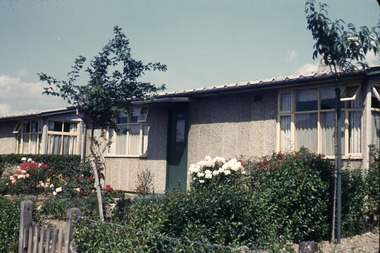 Robin Boyd Foundation
Slide, Robin Boyd, 1950
... Haddon Travelling Scholarship Haddon robin boyd slide England (Handwritten) / Prefab (Handwritten) / Nottingham (Handwritten) Colour slide in a mount. Unknown prefab Housing, Nottingham, England Slide Robin Boyd ...Penleigh Boyd, Robin and Patricia Boyd's son, writes “Prior to 1950 Robin, like most other amateur or hobby photographers, took black and white printed photographs. The oldest slides date from 1950 when Robin and Patricia travelled to Europe on Robin’s Robert Haddon Travelling Scholarship.” In 1948 Robin Boyd was awarded ‘joint first place’ in the Robert Haddon competition for his design of Mildura art gallery. The scholarship helped fund their first overseas trip. Robin and Patricia were passengers on the Greek ship “Cyrenia” departing in May 1950, passing through the Suez Canal and landing in Genoa five weeks later. For six months, they travelled extensively throughout Europe (predominantly driving themselves) - France, Italy, United Kingdom, Sweden, Denmark, Germany, Austria, Switzerland and Spain.Colour slide in a mount. Unknown prefab Housing, Nottingham, EnglandEngland (Handwritten) / Prefab (Handwritten) / Nottingham (Handwritten)haddon travelling scholarship, haddon, robin boyd, slide -
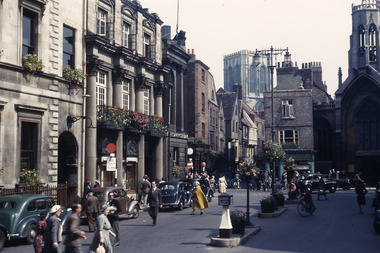 Robin Boyd Foundation
Slide, Robin Boyd, 1950
... Haddon Travelling Scholarship Haddon robin boyd slide England (Handwritten) / York (Handwritten) Colour slide in a mount. York Minster, York, England Slide Robin Boyd ...Penleigh Boyd, Robin and Patricia Boyd's son, writes “Prior to 1950 Robin, like most other amateur or hobby photographers, took black and white printed photographs. The oldest slides date from 1950 when Robin and Patricia travelled to Europe on Robin’s Robert Haddon Travelling Scholarship.” In 1948 Robin Boyd was awarded ‘joint first place’ in the Robert Haddon competition for his design of Mildura art gallery. The scholarship helped fund their first overseas trip. Robin and Patricia were passengers on the Greek ship “Cyrenia” departing in May 1950, passing through the Suez Canal and landing in Genoa five weeks later. For six months, they travelled extensively throughout Europe (predominantly driving themselves) - France, Italy, United Kingdom, Sweden, Denmark, Germany, Austria, Switzerland and Spain.Colour slide in a mount. York Minster, York, EnglandEngland (Handwritten) / York (Handwritten)haddon travelling scholarship, haddon, robin boyd, slide -
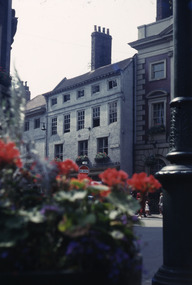 Robin Boyd Foundation
Slide, Robin Boyd, 1950
... Haddon Travelling Scholarship Haddon robin boyd slide England (Handwritten) / York (Handwritten) Colour slide in a mount. York, England Slide Robin Boyd ...Penleigh Boyd, Robin and Patricia Boyd's son, writes “Prior to 1950 Robin, like most other amateur or hobby photographers, took black and white printed photographs. The oldest slides date from 1950 when Robin and Patricia travelled to Europe on Robin’s Robert Haddon Travelling Scholarship.” In 1948 Robin Boyd was awarded ‘joint first place’ in the Robert Haddon competition for his design of Mildura art gallery. The scholarship helped fund their first overseas trip. Robin and Patricia were passengers on the Greek ship “Cyrenia” departing in May 1950, passing through the Suez Canal and landing in Genoa five weeks later. For six months, they travelled extensively throughout Europe (predominantly driving themselves) - France, Italy, United Kingdom, Sweden, Denmark, Germany, Austria, Switzerland and Spain.Colour slide in a mount. York, EnglandEngland (Handwritten) / York (Handwritten)haddon travelling scholarship, haddon, robin boyd, slide -
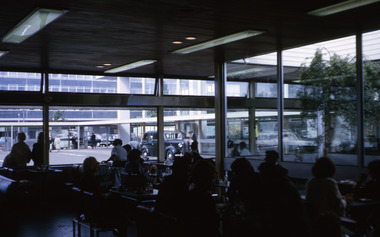 Robin Boyd Foundation
Slide, Robin Boyd, 1964
... The Boyds then travelled on to England, Finland (especially to see Tapiola), Russia and India to see Le Corbusier's Chandigarh, and also Hong Kong and Thailand. slide robin boyd Made in Australia / 21 / AUG 64M Colour slide in a mount. Possibly a transit hub, probably London, England ...In 1964, Robin and Patricia Boyd spent several weeks on a world tour - Boyd took a leading role at the International Design Conference in Aspen and he also visited Chicago, Yale University, and New York’s World Fair. The Boyds then travelled on to England, Finland (especially to see Tapiola), Russia and India to see Le Corbusier's Chandigarh, and also Hong Kong and Thailand.Colour slide in a mount. Possibly a transit hub, probably London, EnglandMade in Australia / 21 / AUG 64Mslide, robin boyd -
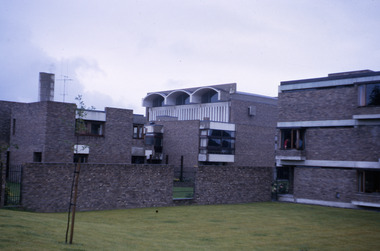 Robin Boyd Foundation
Slide, Robin Boyd, 1964
... England, Finland (especially to see Tapiola), Russia and India to see Le Corbusier's Chandigarh, and also Hong Kong and Thailand. Cambridge slide robin boyd Made in Australia / 23 / AUG 64M / Encircled 25 (Handwritten) Colour slide in a mount. Churchill College, Cambridge University, Cambridge, England ...In 1964, Robin and Patricia Boyd spent several weeks on a world tour - Boyd took a leading role at the International Design Conference in Aspen and he also visited Chicago, Yale University, and New York’s World Fair. The Boyds then travelled on to England, Finland (especially to see Tapiola), Russia and India to see Le Corbusier's Chandigarh, and also Hong Kong and Thailand.Colour slide in a mount. Churchill College, Cambridge University, Cambridge, England (1962-8). (Architect: Sheppard Robson.)Made in Australia / 23 / AUG 64M / Encircled 25 (Handwritten)cambridge, slide, robin boyd -
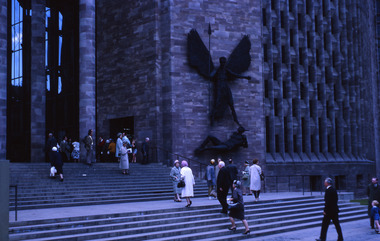 Robin Boyd Foundation
Slide, Robin Boyd, 1964
... The Boyds then travelled on to England, Finland (especially to see Tapiola), Russia and India to see Le Corbusier's Chandigarh, and also Hong Kong and Thailand. UK slide Made in Australia / 19 / AUG 64M Colour slide in a mount. New Coventry Cathedral 1950, Coventry, England ...In 1964, Robin and Patricia Boyd spent several weeks on a world tour - Boyd took a leading role at the International Design Conference in Aspen and he also visited Chicago, Yale University, and New York’s World Fair. The Boyds then travelled on to England, Finland (especially to see Tapiola), Russia and India to see Le Corbusier's Chandigarh, and also Hong Kong and Thailand.Colour slide in a mount. New Coventry Cathedral 1950, Coventry, England. (Architect: Basil Spence.)Made in Australia / 19 / AUG 64Muk, slide -
 Robin Boyd Foundation
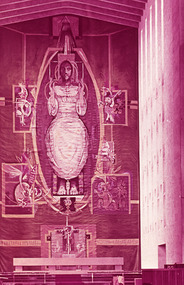
Slide, Commercial, 1964
... The Boyds then travelled on to England, Finland (especially to see Tapiola), Russia and India to see Le Corbusier's Chandigarh, and also Hong Kong and Thailand. UK slide Coventry Cathedral / The Tapestry- Graham Sutherland / Encircled 23 (Handwritten) Colour slide in a mount. Coventry Cathedral Tapestry (1952), Coventry, England ...In 1964, Robin and Patricia Boyd spent several weeks on a world tour - Boyd took a leading role at the International Design Conference in Aspen and he also visited Chicago, Yale University, and New York’s World Fair. The Boyds then travelled on to England, Finland (especially to see Tapiola), Russia and India to see Le Corbusier's Chandigarh, and also Hong Kong and Thailand.Colour slide in a mount. Coventry Cathedral Tapestry (1952), Coventry, England. (Architect: Graham Sutherland.)Coventry Cathedral / The Tapestry- Graham Sutherland / Encircled 23 (Handwritten)uk, slide -
 Robin Boyd Foundation
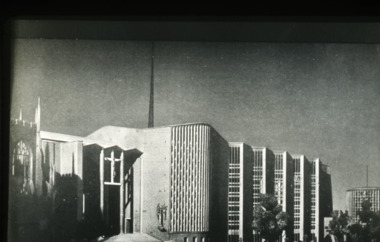
Slide, Robin Boyd, 1964
... England, Finland (especially to see Tapiola), Russia and India to see Le Corbusier's Chandigarh, and also Hong Kong and Thailand. UK slide Made in Australia / Encircled 22 (Handwritten) Colour slide in a mount. Magazine image of link between the old and new Coventry Cathedral, 1950, Coventry, England ...In 1964, Robin and Patricia Boyd spent several weeks on a world tour - Boyd took a leading role at the International Design Conference in Aspen and he also visited Chicago, Yale University, and New York’s World Fair. The Boyds then travelled on to England, Finland (especially to see Tapiola), Russia and India to see Le Corbusier's Chandigarh, and also Hong Kong and Thailand.Colour slide in a mount. Magazine image of link between the old and new Coventry Cathedral, 1950, Coventry, England. (Architect: Basil Spence.)Made in Australia / Encircled 22 (Handwritten)uk, slide -
 Robin Boyd Foundation
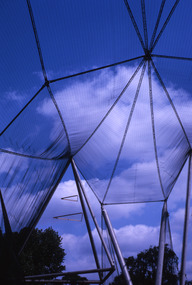
Slide, Robin Boyd, 1964
... The Boyds then travelled on to England, Finland (especially to see Tapiola), Russia and India to see Le Corbusier's Chandigarh, and also Hong Kong and Thailand. London slide Made in Australia / 12 / AUG 64M / END (Handwritten) Colour slide in a mount. Snowden Aviary, London Zoo, London, England ...In 1964, Robin and Patricia Boyd spent several weeks on a world tour - Boyd took a leading role at the International Design Conference in Aspen and he also visited Chicago, Yale University, and New York’s World Fair. The Boyds then travelled on to England, Finland (especially to see Tapiola), Russia and India to see Le Corbusier's Chandigarh, and also Hong Kong and Thailand.Colour slide in a mount. Snowden Aviary, London Zoo, London, England. (Architects: Cedric Price and Frank Newby.)Made in Australia / 12 / AUG 64M / END (Handwritten)london, slide -
 Robin Boyd Foundation
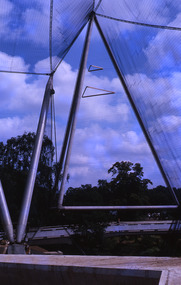
Slide, Robin Boyd, 1964
... The Boyds then travelled on to England, Finland (especially to see Tapiola), Russia and India to see Le Corbusier's Chandigarh, and also Hong Kong and Thailand. London robin boyd slide Made in Australia / 11 / AUG 64M Colour slide in a mount. Snowdon Aviary (1962), London Zoo, London, England ...In 1964, Robin and Patricia Boyd spent several weeks on a world tour - Boyd took a leading role at the International Design Conference in Aspen and he also visited Chicago, Yale University, and New York’s World Fair. The Boyds then travelled on to England, Finland (especially to see Tapiola), Russia and India to see Le Corbusier's Chandigarh, and also Hong Kong and Thailand.Colour slide in a mount. Snowdon Aviary (1962), London Zoo, London, England. (Architects: Cedric Price and Frank Newby.)Made in Australia / 11 / AUG 64Mlondon, robin boyd, slide -
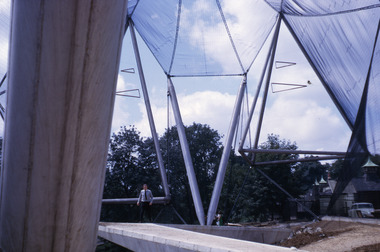 Robin Boyd Foundation
Slide, Robin Boyd, 1964
... The Boyds then travelled on to England, Finland (especially to see Tapiola), Russia and India to see Le Corbusier's Chandigarh, and also Hong Kong and Thailand. London robin boyd slide Made in Australia / 10 / AUG 64M / 27 (Handwritten) Colour slide in a mount. Snowdon Aviary (1962), London Zoo, London, England ...In 1964, Robin and Patricia Boyd spent several weeks on a world tour - Boyd took a leading role at the International Design Conference in Aspen and he also visited Chicago, Yale University, and New York’s World Fair. The Boyds then travelled on to England, Finland (especially to see Tapiola), Russia and India to see Le Corbusier's Chandigarh, and also Hong Kong and Thailand.Colour slide in a mount. Snowdon Aviary (1962), London Zoo, London, England. (Architects: Cedric Price and Frank Newby.)Made in Australia / 10 / AUG 64M / 27 (Handwritten)london, robin boyd, slide -
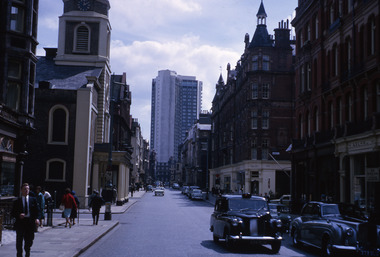 Robin Boyd Foundation
Slide, Robin Boyd, 1964
... The Boyds then travelled on to England, Finland (especially to see Tapiola), Russia and India to see Le Corbusier's Chandigarh. London robin boyd slide Made in Australia / 15 / AUG 64M Colour slide in a mount. London Hilton (1963), London, England ...In 1964, Robin and Patricia Boyd spent several weeks on a world tour - Boyd took a leading role at the International Design Conference in Aspen and he also visited Chicago, Yale University, and New York’s World Fair. The Boyds then travelled on to England, Finland (especially to see Tapiola), Russia and India to see Le Corbusier's Chandigarh.Colour slide in a mount. London Hilton (1963), London, England. (Photo taken from South Audley St, Mayfair - Grosvenor Chapel (1730) is in the foreground. (Architect: William Tabler.)Made in Australia / 15 / AUG 64Mlondon, robin boyd, slide -
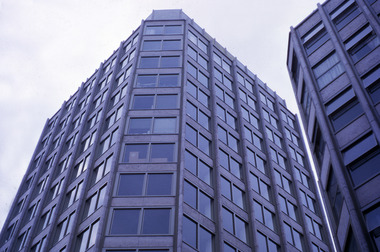 Robin Boyd Foundation
Slide, Robin Boyd, 1964
... England, Finland (especially to see Tapiola), Russia and India to see Le Corbusier's Chandigarh, and also Hong Kong and Thailand. London robin boyd slide Made in Australia / 2 / AUG 64M / London (Handwritten) / SLB 7/1 (Handwritten) Colour slide in a mount. The Economist Buildings (1964), London, England ...In 1964, Robin and Patricia Boyd spent several weeks on a world tour - Boyd took a leading role at the International Design Conference in Aspen and he also visited Chicago, Yale University, and New York’s World Fair. The Boyds then travelled on to England, Finland (especially to see Tapiola), Russia and India to see Le Corbusier's Chandigarh, and also Hong Kong and Thailand.Colour slide in a mount. The Economist Buildings (1964), London, England. (Architect: Alison and Peter Smithson.)Made in Australia / 2 / AUG 64M / London (Handwritten) / SLB 7/1 (Handwritten)london, robin boyd, slide -
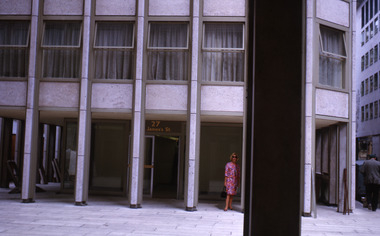 Robin Boyd Foundation
Slide, Robin Boyd, 1964
... The Boyds then travelled on to England, Finland (especially to see Tapiola), Russia and India to see Le Corbusier's Chandigarh, and also Hong Kong and Thailand. London robin boyd slide Made in Australia / 4 / AUG 64M Colour slide in a mount. The Economist Buildings (1964), London, England ...In 1964, Robin and Patricia Boyd spent several weeks on a world tour - Boyd took a leading role at the International Design Conference in Aspen and he also visited Chicago, Yale University, and New York’s World Fair. The Boyds then travelled on to England, Finland (especially to see Tapiola), Russia and India to see Le Corbusier's Chandigarh, and also Hong Kong and Thailand.Colour slide in a mount. The Economist Buildings (1964), London, England. (Architects: Alison and Peter Smithson.)Made in Australia / 4 / AUG 64Mlondon, robin boyd, slide -
 Robin Boyd Foundation
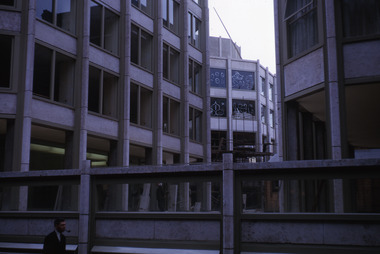
Slide, Robin Boyd, 1964
... The Boyds then travelled on to England, Finland (especially to see Tapiola), Russia and India to see Le Corbusier's Chandigarh, and also Hong Kong and Thailand. London robin boyd slide Made in Australia / 3 / AUG 64M / Encircled 52 (Handwritten) Colour slide in a mount. The Economist Buildings (1964), London, England ...In 1964, Robin and Patricia Boyd spent several weeks on a world tour - Boyd took a leading role at the International Design Conference in Aspen and he also visited Chicago, Yale University, and New York’s World Fair. The Boyds then travelled on to England, Finland (especially to see Tapiola), Russia and India to see Le Corbusier's Chandigarh, and also Hong Kong and Thailand.Colour slide in a mount. The Economist Buildings (1964), London, England. (Architects: Alison and Peter Smithson.)Made in Australia / 3 / AUG 64M / Encircled 52 (Handwritten)london, robin boyd, slide -
 Robin Boyd Foundation
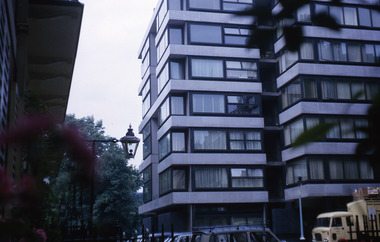
Slide, Robin Boyd, 1964
... The Boyds then travelled on to England, Finland (especially to see Tapiola), Russia and India to see Le Corbusier's Chandigarh, and also Hong Kong and Thailand. London robin boyd slide Made in Australia / 38 / AUG 64M Colour slide in a mount. London, England ...In 1964, Robin and Patricia Boyd spent several weeks on a world tour - Boyd took a leading role at the International Design Conference in Aspen and he also visited Chicago, Yale University, and New York’s World Fair. The Boyds then travelled on to England, Finland (especially to see Tapiola), Russia and India to see Le Corbusier's Chandigarh, and also Hong Kong and Thailand.Colour slide in a mount. London, EnglandMade in Australia / 38 / AUG 64Mlondon, robin boyd, slide
