
Showing 2011 items matching "social service"
-
 Melbourne Legacy
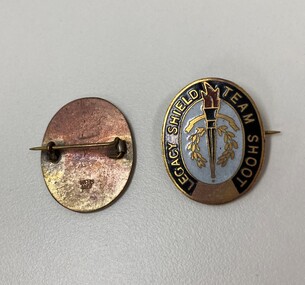
Badge, Legacy Shield Team Shoot Badge, 1960s
... social event for Legatees. An article in the Weekly Bulletin in April 1963 shows there was a Clay Target Shoot day at the Point Cook RAAF Station. The winners of the first Legacy Shield was the Croydon Gun Club. The event raised £425 and was going to be an annual event. The badge of Legacy is the Torch and Wreath of Laurel. The Torch signifies the undying flame of service...social event for Legatees. An article in the Weekly Bulletin in April 1963 shows there was a Clay Target Shoot day at the Point Cook RAAF Station. The winners of the first Legacy Shield was the Croydon Gun Club. The event raised £425 and was going to be an annual event. The badge of Legacy is the Torch and Wreath of Laurel. The Torch signifies the undying flame of service ...An example of a Legacy badge issued to participants in a clay target shooting competition. It appears it was an event organised by Legacy as a social event for Legatees. An article in the Weekly Bulletin in April 1963 shows there was a Clay Target Shoot day at the Point Cook RAAF Station. The winners of the first Legacy Shield was the Croydon Gun Club. The event raised £425 and was going to be an annual event. The badge of Legacy is the Torch and Wreath of Laurel. The Torch signifies the undying flame of service and sacrifice of those who gave their lives for their country. The Wreath of Laurel is the symbol of our remembrance of them.A record of a badge made for a sporting competition that Legacy participated in.Gold badge x 20 of the Legacy torch with black, red and white enamel containing the words Legacy Shield Team Shoot. legatee event, competition, prize -
 Melton City Libraries
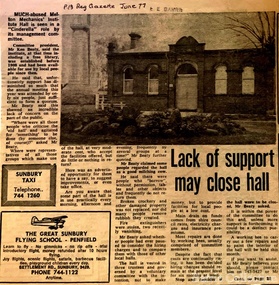
Newspaper, Lack of support may close hall, 1977
... services also eroded the need for free libraries. While over 500 Mechanics’ Institutes or halls are extant, very few of these retain their original role as ‘diffusers of useful knowledge’. Most are still available for community purposes, as venues for meetings, socials...services also eroded the need for free libraries. While over 500 Mechanics’ Institutes or halls are extant, very few of these retain their original role as ‘diffusers of useful knowledge’. Most are still available for community purposes, as venues for meetings, socials ..."The Mechanics Institute movement flourished in Victoria from 1839 to 1950. It was based on the development of Mechanics’ Institutes in Scotland and England from the 1820s, which were intended to educate and enlighten the working classes. The term ‘mechanic’ in those days meant an artisan, craftsman or working man, especially those who had moved from rural areas to work in new city factories during the Industrial Revolution. The early Institutes were usually equipped with a reading room, a library and a lecture room. Although enjoying mixed success in Britain, they contributed to the development of public education and library services. The movement was adopted more enthusiastically in the colonies. It began slowly in Victoria but its expansion after the gold rushes population influx was rapid, especially in rural areas. Every suburb and town wanted to have a Mechanics’ Institute. During the 1850s approximately forty Institutes were established, with even greater growth in the period 1860 to 1900. By 1900 there were 400 Institutes in Victoria. The establishment of a Mechanics’ Institute was often a great achievement for a local community, requiring organising committees to raise substantial funds for a building site (where this had not been granted by the Government), and the building. Once built, the committee then had to purchase books, provide a caretaker or librarian, and finance the ongoing use of and improvements to the building. ‘The history of many Institutes is a story of tremendous community effort, and often, financial difficulties’. In addition to being monuments to local enterprise and community life, the Mechanics’ Institutes played a vital role as an intellectual forum, and in contributing to an informed and participatory democracy in the late nineteenth and early twentieth centuries. They provided journals and other reading matter on local, state, national and international issues, and hosted of lectures and held debates about wider issues such as Federation, colonial nationalism, defence, female suffrage, the price of land and labour. With the development of the school and technical education in the latter part of the nineteenth century, the need for community technical and adult education declined. As a result of the introduction of government library grants in 1867, many Mechanics’ Institutes incorporated a free library in their buildings to finance collection of their books. By 1884-85, there were 257 free libraries in Victoria. However, government support and library grants dropped off in the 1890s depression. Entertainment took on a greater role in the 1890s, with the introduction of moving pictures, billiards rooms, games rooms (chess), concerts and dances. The First World War had a devastating impact on many rural communities, and some Mechanics’ Institutes were no longer viable. On the other hand the early twentieth century was also a time of agricultural development, and many country towns were growing in this period. The 1930s depression further limited growth of many libraries and reduced grants substantially. In response many Mechanics’ Institutes were renamed, for example as memorial halls, in order to retain and attract more patrons (eg at nearby Sunbury). The diminishing role for Mechanics’ Institutes and the preference for larger and better appointed halls (with supper rooms, cloak rooms etc) resulted in demolition of some small Institutes. The advent of cars, radios, and television also provided other opportunities for recreation, learning and entertainment. The greater role of municipalities in providing library services also eroded the need for free libraries. While over 500 Mechanics’ Institutes or halls are extant, very few of these retain their original role as ‘diffusers of useful knowledge’. Most are still available for community purposes, as venues for meetings, socials, civic occasions etc, while others are employed as museums, shops and theatres. Most buildings are on Crown land, and managed by a delegated committee of management, who are responsible for raising revenue to maintain aging buildings. Many of those which were originally established on private land, such as Melton, have since reverted back to the Crown, and municipal Councils. The most common Mechanics Institute building form is the simple weatherboard gable building with iron roofs, notable for their ‘honest simplicity’ rather than as ‘monuments of the ancients’. At the other extreme there are some magnificent two storeyed brick and stucco structures with elaborate ornamentation (as was apparently envisaged by some in Melton in 1905-10)". The future of Melton Mechanic Institute Gazette articlelocal architecture -
 Canterbury History Group
Book, Priestley, Susan, Shifts in a turning wheel
... Canterbury Rochester Road Conochie> John Morgan> Fred Morgan> Colleen Fox> Rhys Fox> Jean Gibb> Don Wightwick> Thelma St Barnabas Anglican Church St Pauls Anglican Church Highfield Road Methodist Church Canterbury Methodist Church Canterbury Presbyterian Church Canterbury Congregational Church Canterbury Salvation Army Corps Social Services The story of the service to the aged by the Canterbury Centre from it's beginnings in 1957 as the Canterbury Citizens Welfare Centre. ...The story of the service to the aged by the Canterbury Centre from it's beginnings in 1957 as the Canterbury Citizens Welfare Centre.Includes an introduction by Sir Rupert Hamer and many black and white photographsnon-fictionThe story of the service to the aged by the Canterbury Centre from it's beginnings in 1957 as the Canterbury Citizens Welfare Centre. canterbury, rochester road, conochie> john, morgan> fred, morgan> colleen, fox> rhys, fox> jean, gibb> don, wightwick> thelma, st barnabas anglican church, st pauls anglican church, highfield road methodist church, canterbury methodist church, canterbury presbyterian church, canterbury congregational church, canterbury salvation army corps, social services -
 Royal District Nursing Service (now known as Bolton Clarke)
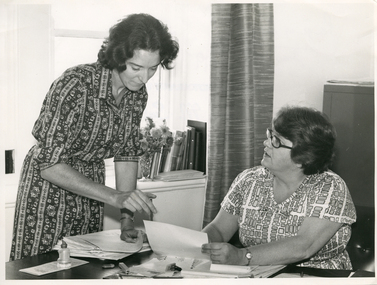
Photograph - Photograph, black and white, Barry Sutton, 25.03.1974
... service...rdns medical records...rdns librarian...rdns social...The Society were unable to obtain a replacement due to the shortage of trained Almoners so a Social Service Department was set up and a Social Service Officer, Sister Tupper, was employed at the After-Care Home; she successfully gained better housing from the Housing Commission for families living under unsuitable conditions. ...Ms. J. Caeli is the RDNS Medical Records Librarian and is visiting Ms.Val Douglas, the RDNS Social Worker, in her Office at RDNS Headquarters, 452 St. Kilda Road,Melbourne. Ms. Caeli is giving instruction to Ms. Douglas regarding statistics for Social Work. The Melbourne District Nursing Society (MDNS) were the first in Melbourne, in early 1928, to recognize some patients leaving the MDNS After-Care Home, and many at home, needed further social care. They set up ‘Almoners’ from their Committee to visit these patients and be intermediaries in getting them social assistance. It was late the following year before the first training of Almoners took place in Melbourne. In 1930 the Society employed a full time kindergarten teacher to visit poor children in their homes. In December 1934 the first full-time trained district Almoner, Miss Una Riall, was employed and carried out a great deal of work with the Society’s Midwifery patients. In 1935 she resigned as she felt the amount of work required needed more than one person. The Society were unable to obtain a replacement due to the shortage of trained Almoners so a Social Service Department was set up and a Social Service Officer, Sister Tupper, was employed at the After-Care Home; she successfully gained better housing from the Housing Commission for families living under unsuitable conditions. By 1941 conditions had improved with full employment of breadwinners and Sr. Tupper was appointed the Matron of the District Nursing Division of MDNS. In 1974, now as Royal District Nursing Service (RDNS), it was recognized the Service needed allied health workers and Ms. Val Douglas was employed as the RDNS first Social Worker.On the left of this black and white photograph is Royal District Nursing Service (RDNS), Ms. J. Caeli, who has collar length dark curled hair and is wearing a light and dark patterned and striped shirt style frock. She is standing with her left hand resting on a desk, and looking down at a pen in her right hand which is poised over a sheet of white paper held by Ms Val Douglas who is sitting to her right behind her desk. Ms Douglas is wearing dark rimmed glasses; has short wavy dark hair and is wearing a white with small grey oblong patterned dress. She is looking up at Ms. Caeli and is holding the piece of paper with her left hand. There is a large blotter, sheets of folded papers, a stapler and a small bottle of glue on the desk. In the left background is a low white cupboard with a vase of flowers and books, standing upright, on it. Behind this is white framed window.and an open long dark curtain. In the rear far right is part of a dark grey filing cabinet.Barry Sutton LY 64rdns, royal district nursing service, rdns medical records, rdns librarian, rdns social worker, mdns, melbourne district nursing society, ms j. caeli, ms val douglas -
Kew Historical Society Inc
Archive (Sub-series) - Subject File, Foster Parents Plan (Kew), 1980
... Typically files will contain primary and secondary sources. kew (vic) - history social welfare - kew (vic) child services - kew (vic) Single item archive file, with a newspaper article/clipping stating that the organisation Foster Parents Plan of Australia (PLAN) was located on the corner of Cotham and Highbury Grove. ...Various partiesReference, Research, InformationSecondary Values (KHS Imposed Order)Single item subject file, with a newspaper article/clipping stating that the organisation Foster Parents Plan of Australia (PLAN) was located on the corner of Cotham and Highbury Grove. The organisation was located in what had been the Kew Presbyterian Church.kew (vic) - history, social welfare - kew (vic), child services - kew (vic)kew (vic) - history, social welfare - kew (vic), child services - kew (vic) -
Kew Historical Society Inc
Archive (Sub-series) - Subject File, Kew Historical Society et al, Human Services, 1997
... Typically files will contain primary and secondary sources. kew historical society - archives kew - history social services - kew (vic) local government amalgamations - kew (vic) Archive file containing a three-part ‘Field Analysis’ / Major Assignment for RMIT Coursework by Lisa D’Acri and Simon Chambers on the History of Kew. ...Various partiesReference, Research, InformationSecondary Values (KHS Imposed Order)Subject file containing a three-part ‘Field Analysis’ / Major Assignment for RMIT Coursework by Lisa D’Acri and Simon Chambers on the History of Kew. Part 1 covers a ‘Community Area Profile’ (8 pages), Part 2 covers ‘Community Issues - The Effects of Amalgamation’ (4 pages), Part 3 covers ‘Human Service Organisation: Kew Residential Services’ (9 Pages). The research includes an analysis of demographic change over time, and summaries of interviews with residents and council officers. The file also includes the text of a talk provided by Lisa D’Acri to the Society in 1997 on Researching Kew’s History. Specific organisations covered include: Kew Cottages, St Nicholas Parents Assn. Inc.kew historical society - archives, kew - history, social services - kew (vic), local government amalgamations - kew (vic)kew historical society - archives, kew - history, social services - kew (vic), local government amalgamations - kew (vic) -
 Kew Historical Society Inc
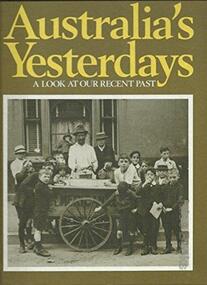
Book, Cyril Pearl, Australia's Yesterdays: a look at our recent past, 1974
... Australia -- Social conditions 1901-1970 Cyril Pearl provided historical guidance and contributed much of the text Sydney : Readers Digest Services Pty Ltd, 1974 360 p. : ill. ...Cyril Pearl provided historical guidance and contributed much of the textSydney : Readers Digest Services Pty Ltd, 1974 360 p. : ill.(some col.), facsims., maps, ports. ; 31 cm. non-fictionCyril Pearl provided historical guidance and contributed much of the textaustralia -- social conditions -- 20th century, australia -- social life and customs -- 20th century, australia -- biography., australia -- social conditions 1901-1970 -
RMIT GSBL Justice Smith Collection
Reports, Australian Law Reform Commission, The recognition of Aboriginal customary laws, 1986
... customary law -- australia aboriginal australians -- social life and customs aboriginal australians -- legal status: laws: etc ISBN: 0644013486 No. of volumes: 3 Volume range: Summary report & Vols. 1-3 Missing volumes: 3 Report no. 31 The recognition of Aboriginal customary laws Reports Australian Law Reform Commission Australian Government Publishing Service ...No. of volumes: 3 Volume range: Summary report & Vols. 1-3 Missing volumes: 3 Report no. 31ISBN: 0644013486customary law -- australia, aboriginal australians -- social life and customs, aboriginal australians -- legal status: laws: etc -
RMIT GSBL Justice Smith Collection
Report, Council for Aboriginal Reconciliation (Australia), Going forward : social justice for the first Australians : a submission to the Commonwealth Government from the Council for Aboriginal Reconciliation, 1995
... aboriginal australians -- government policy aboriginal australians -- government relations torres strait islanders -- government policy -- australia torres strait islanders -- government relations social justice -- australia ISBN: 0642226423 Going forward : social justice for the first Australians : a submission to the Commonwealth Government from the Council for Aboriginal Reconciliation Report Council for Aboriginal Reconciliation (Australia) Australian Government Publishing Service ...ISBN: 0642226423aboriginal australians -- government policy, aboriginal australians -- government relations, torres strait islanders -- government policy -- australia, torres strait islanders -- government relations, social justice -- australia -
RMIT GSBL Justice Smith Collection
Report, The Family Court of Australia, Family Court of Australia : annual report 1997-1998, 1998
... australia. family court -- periodicals family law -- australia -- periodicals family counselling -- australia -- periodicals domestic relations -- australia -- periodicals family social work -- australia -- periodicals ISSN: 10359060 Family Court of Australia : annual report 1997-1998 Report The Family Court of Australia Australian Government Publishing Service ...ISSN: 10359060australia. family court -- periodicals, family law -- australia -- periodicals, family counselling -- australia -- periodicals, domestic relations -- australia -- periodicals, family social work -- australia -- periodicals -
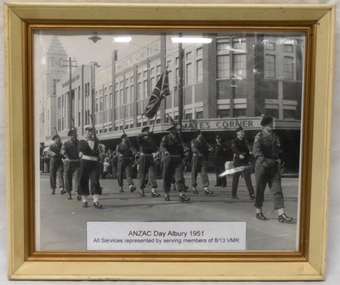 8th/13th Victorian Mounted Rifles Regimental Collection
Photograph - Anzac Day 1951, 1951 circa
... service. The colour party commander is Lieutenant Ian (Kiltie) McKie; the flag bearer is Hal Slaney. Photograph of social ...The 8/13 VMR was raised in May 1948 and was a participant in the Anzac Day marches in the district from that day forward. The sailor is John Neale wearing his WWII RAN uniform; the airman is Jack Larkin wearing his WWII RAAF uniform. The soldier (as yet unknown) also had WWII service. The colour party commander is Lieutenant Ian (Kiltie) McKie; the flag bearer is Hal Slaney.Photograph of social and historic interest to the Albury community showing citizen soldiers including returned servicemen who had volunteered for the Citizen Military Forces in the period immediately following the Second World War. It signifies the return of citizen soldiers to Albury following the war.Two black and white photographs (one framed) of colour party drawn from 8th/13th Victorian Mounted Rifles Regiment at the Anzac Day march at Albury NSW 1951. Three members of the front rank are dressed in WWII uniforms representing Navy, Army and Air Force. The flag bearer is carrying a Union Jack. The party photographed forming up in Dean Street near the intersection with Spencer Street and later passing Albury landmark, Mates Corner in Dean Street.Panel at lower centre of frame: "ANZAC Day Albury 1951 / All services represented by serving members of 8/13 VMR"anzac day, albury, neale john, larkin j d jack, slaney hal, mckie, mate's corner -
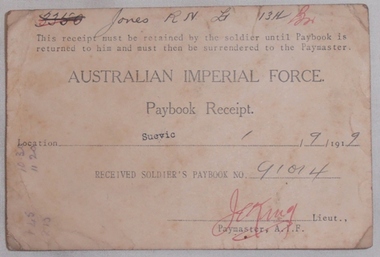 8th/13th Victorian Mounted Rifles Regimental Collection
Receipt, 1919 circa
... Part of a collection of objects relating to the service of Lieutenant Russell Jones, 13th Battalion. The collection gives an interesting insight into the social life of a young officer immediately following the end of the war. jones russell n 13th battalion aif paybook ss suevic Across top of card "3350" crossed out and "Jones RN Lt 13th Bn" White card being paybook Receipt dated 1 September 1919 for Lieutenant RN Jones 13th Battalion issued by paymaster on board SS Suevic on the voyage home following the end of WWI. ...Regimental No 3350 later Lieutenant Russel Norman Jones was a 20 year old linotype operator when he enlisted in the 13th Battalion AIF 6 August 1915. He had 4 years cadet service and two years CMF prior to enlistment. He was wounded in action on two occasions and returned to Australia in September 1919 on SS Suevic.Part of a collection of objects relating to the service of Lieutenant Russell Jones, 13th Battalion. The collection gives an interesting insight into the social life of a young officer immediately following the end of the war.White card being paybook Receipt dated 1 September 1919 for Lieutenant RN Jones 13th Battalion issued by paymaster on board SS Suevic on the voyage home following the end of WWI. Across top of card "3350" crossed out and "Jones RN Lt 13th Bn" jones russell n, 13th battalion aif, paybook, ss suevic -
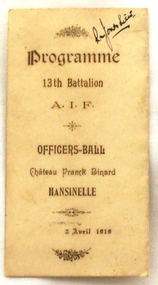 8th/13th Victorian Mounted Rifles Regimental Collection
Invitation, 1919
... Part of a collection of objects relating to the service of Lieutenant Russell Jones, 13th Battalion. The collection gives an interesting insight into the social life of a young officer immediately following the end of the war. jones russell n 13th battalion aif On cover "RN Jones Lieut" on back cover in blue pencil "Edg'cliffe 5.24 / Res" Buff coloured single fold card being Programme 13th Battalion AIF Officers-Ball Chateau Franck Binard Hansinelle dated 2 April 1919. ...Regimental No 3350 later Lieutenant Russel Norman Jones was a 20 year old linotype operator when he enlisted in the 13th Battalion AIF 6 August 1915. He had 4 years cadet service and two years CMF prior to enlistment. He was wounded in action on two occasions and returned to Australia in September 1919 on SS Suevic.Part of a collection of objects relating to the service of Lieutenant Russell Jones, 13th Battalion. The collection gives an interesting insight into the social life of a young officer immediately following the end of the war.Buff coloured single fold card being Programme 13th Battalion AIF Officers-Ball Chateau Franck Binard Hansinelle dated 2 April 1919.On cover "RN Jones Lieut" on back cover in blue pencil "Edg'cliffe 5.24 / Res"jones russell n, 13th battalion aif -
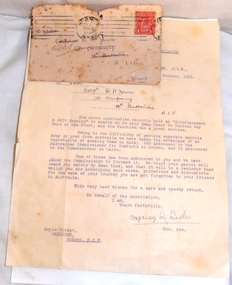 8th/13th Victorian Mounted Rifles Regimental Collection
letter
... Part of a collection of objects relating to the service of Lieutenant Russell Jones, 13th Battalion. The collection gives an interesting insight into the social life of a young officer during and immediately following the end of the war. ...Part of a collection of objects relating to the service of Lieutenant Russell Jones, 13th Battalion. The collection gives an interesting insight into the social life of a young officer during and immediately following the end of the war. ...Part of a collection of objects relating to the service of Lieutenant Russell Jones, 13th Battalion. The collection gives an interesting insight into the social life of a young officer during and immediately following the end of the war. Regimental No 3350 later Lieutenant Russel Norman Jones was a 20 year old linotype operator when he enlisted in the 13th Battalion AIF 6 August 1915. He had 4 years cadet service and two years CMF prior to enlistment. He was wounded in action on two occasions and returned to Australia in September 1919 on SS Suevic. Example of community support for men serving overseas in World War 1 (1914-1918). Letter from Neutral Bay Parents' & Citizens' Association dated October 1917 to 3350 Corporal R N Jones D Company 13th Battalion AIF advising him that a parcel has been forwarded to London to be delivered to him for Xmas. The parcel was one of 100 sent by the Association following a successful fund raising "Entertainment & Gift Evening". Attached to the letter is an envelope addressed to Corporal Jones with a one penny postage stamp affixed.jones russell n, neutral bay parents' & citizens' association -
 8th/13th Victorian Mounted Rifles Regimental Collection
Photograph
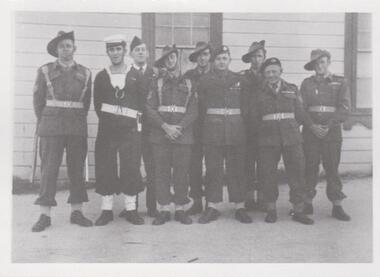
... service in RAN and RAAF. Unique collection of photographs showing the first years of an armoured regiment of the post-Second World War era Citizen Military Forces showing equipment, uniforms, training and social activity and some personalities. anzac day " Anzac Day Albury: Left Sgt.Purcell, Sgt. ...The 8th/13th Victorian Mounted Rifles was raised as a regiment of the Royal Australian Armoured Corps on 1 May 1948 with Headquarters in Melbourne and squadrons in Sale, Benalla/Wangaratta and Albury. In 1955 Regimental Headquarters moved to Wangaratta and a second squadron was located at Albury. The Sale squadron transferred to 4th/19th Prince of Wales’s Light Horse. In 1977 8/13 VMR Regiment was reduced to an independent squadron A Squadron 8th/13th Victorian Mounted Rifles and in 1991 was linked with 4th/19th Prince of Wales’s Light Horse forming the VMR Squadron of that regiment. Anzac Day parades were a regular part of regimental life. The regiment was able to call on members who had previous service in RAN and RAAF.Unique collection of photographs showing the first years of an armoured regiment of the post-Second World War era Citizen Military Forces showing equipment, uniforms, training and social activity and some personalities.Black and white photograph of group of nine servicemen, seven in Army uniform, one in RAAF uniform and one in Navy uniform. One of a collection of photographs of 8th/13th Victorian Mounted Rifles Regiment between 1948 and 1951." Anzac Day Albury: Left Sgt.Purcell, Sgt. Larkin, Sgt. Cunningham, Lt. McKay, Sgt. Vietch, Tpr. Davies, Cpl. Giles, Sgt. Neale and Sgt. Kothoff. "anzac day -
 8th/13th Victorian Mounted Rifles Regimental Collection
Photograph - Neale 8/13 VMR
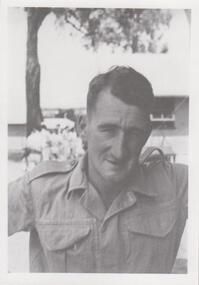
... service in WWII John Neale joined 8th/13th Victorian Mounted Rifles in 1948. He progressed through the ranks and postings in the regiment becoming Commanding Officer 1969-76, and later served as Honorary Colonel. Unique collection of photographs showing the first years of an armoured regiment of the post-Second World War era Citizen Military Forces showing equipment, uniforms, training and social activity and some personalities. neale 8/13 VMR CMF Sgt. ...The 8th/13th Victorian Mounted Rifles was raised as a regiment of the Royal Australian Armoured Corps on 1 May 1948 with Headquarters in Melbourne and squadrons in Sale, Benalla/Wangaratta and Albury. In 1955 Regimental Headquarters moved to Wangaratta and a second squadron was located at Albury. The Sale squadron transferred to 4th/19th Prince of Wales’s Light Horse. In 1977 8/13 VMR Regiment was reduced to an independent squadron A Squadron 8th/13th Victorian Mounted Rifles and in 1991 was linked with 4th/19th Prince of Wales’s Light Horse forming the VMR Squadron of that regiment. Following RAN service in WWII John Neale joined 8th/13th Victorian Mounted Rifles in 1948. He progressed through the ranks and postings in the regiment becoming Commanding Officer 1969-76, and later served as Honorary Colonel. Unique collection of photographs showing the first years of an armoured regiment of the post-Second World War era Citizen Military Forces showing equipment, uniforms, training and social activity and some personalities.Black and white photograph of soldier in khaki drill shirt. One of a collection of photographs of 8th/13th Victorian Mounted Rifles Regiment between 1948 and 1951.Sgt. J. Neale neale, 8/13, vmr, cmf -
 8th/13th Victorian Mounted Rifles Regimental Collection
Photograph
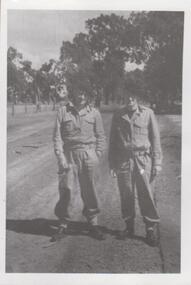
... service in RAAF and RAN respectively, Lieutenant Ian McKay and Sergeant John Neale served in 8th/13th Victorian Mounted Rifles. Unique collection of photographs showing the first years of an armoured regiment of the post-Second World War era Citizen Military Forces showing equipment, uniforms, training and social activity and some personalities. mckay ian neale john " Lt. ...The 8th/13th Victorian Mounted Rifles was raised as a regiment of the Royal Australian Armoured Corps on 1 May 1948 with Headquarters in Melbourne and squadrons in Sale, Benalla/Wangaratta and Albury. In 1955 Regimental Headquarters moved to Wangaratta and a second squadron was located at Albury. The Sale squadron transferred to 4th/19th Prince of Wales’s Light Horse. In 1977 8/13 VMR Regiment was reduced to an independent squadron A Squadron 8th/13th Victorian Mounted Rifles and in 1991 was linked with 4th/19th Prince of Wales’s Light Horse forming the VMR Squadron of that regiment. Following WWII service in RAAF and RAN respectively, Lieutenant Ian McKay and Sergeant John Neale served in 8th/13th Victorian Mounted Rifles.Unique collection of photographs showing the first years of an armoured regiment of the post-Second World War era Citizen Military Forces showing equipment, uniforms, training and social activity and some personalities.Black ands white photograph of two soldiers in khaki drill uniforms, boots, web anklets and berets. One of a collection of photographs of 8th/13th Victorian Mounted Rifles Regiment between 1948 and 1951." Lt. McKay. Sgt. Neale :mckay ian, neale john -
 8th/13th Victorian Mounted Rifles Regimental Collection
Photograph
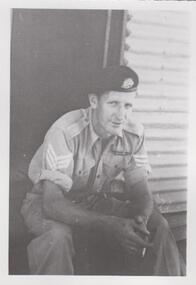
... service in WWII Sergeant Alan Veitch served in 8th/13th Victorian Mounted Rifles. Unique collection of photographs showing the first years of an armoured regiment of the post-Second World War era Citizen Military Forces showing equipment, uniforms, training and social activity and some personalities. 8/13 VMR Veitch CMF " Sgt. ...The 8th/13th Victorian Mounted Rifles was raised as a regiment of the Royal Australian Armoured Corps on 1 May 1948 with Headquarters in Melbourne and squadrons in Sale, Benalla/Wangaratta and Albury. In 1955 Regimental Headquarters moved to Wangaratta and a second squadron was located at Albury. The Sale squadron transferred to 4th/19th Prince of Wales’s Light Horse. In 1977 8/13 VMR Regiment was reduced to an independent squadron A Squadron 8th/13th Victorian Mounted Rifles and in 1991 was linked with 4th/19th Prince of Wales’s Light Horse forming the VMR Squadron of that regiment. Following service in WWII Sergeant Alan Veitch served in 8th/13th Victorian Mounted Rifles.Unique collection of photographs showing the first years of an armoured regiment of the post-Second World War era Citizen Military Forces showing equipment, uniforms, training and social activity and some personalities.Black and white photograph of soldier in khaki drill uniform and beret with silver Rising Sun hat badge. One of a collection of photographs of 8th/13th Victorian Mounted Rifles Regiment between 1948 and 1951." Sgt. A. Veitch8/13 vmr, veitch, cmf -
 8th/13th Victorian Mounted Rifles Regimental Collection
Photograph - Braddy 8/13 VMR
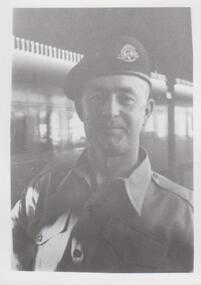
... service Sergeant Ron Braddy joined the Citizen Military Forces and served in 8th/13th Victorian Mounted Rifles. Unique collection of photographs showing the first years of an armoured regiment of the post-Second World War era Citizen Military Forces showing equipment, uniforms, training and social activity and some personalities. ...The 8th/13th Victorian Mounted Rifles was raised as a regiment of the Royal Australian Armoured Corps on 1 May 1948 with Headquarters in Melbourne and squadrons in Sale, Benalla/Wangaratta and Albury. In 1955 Regimental Headquarters moved to Wangaratta and a second squadron was located at Albury. The Sale squadron transferred to 4th/19th Prince of Wales’s Light Horse. In 1977 8/13 VMR Regiment was reduced to an independent squadron A Squadron 8th/13th Victorian Mounted Rifles and in 1991 was linked with 4th/19th Prince of Wales’s Light Horse forming the VMR Squadron of that regiment. Following WWII service Sergeant Ron Braddy joined the Citizen Military Forces and served in 8th/13th Victorian Mounted Rifles. Unique collection of photographs showing the first years of an armoured regiment of the post-Second World War era Citizen Military Forces showing equipment, uniforms, training and social activity and some personalities.Black and white photograph of s0ldier in khaki drill shirt and beret with silver Rising Sun hat badge. One of a collection of photographs of 8th/13th Victorian Mounted Rifles Regiment between 1948 and 1951. Ron Braddybraddy, 8/13 vmr, cmf -
 8th/13th Victorian Mounted Rifles Regimental Collection
Photograph - Neale 8/13 VMR, 1950 circa
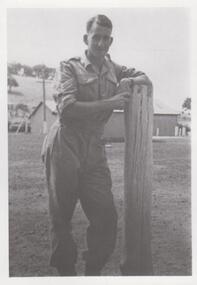
... service in WWII, John Neale joined 8th/13th Victorian Mounted Rifles at a trooper in 1948. He went on to command the regiment with the rank of lieutenant colonel 1969-1976. He later served as Honorary Colonel of the regiment. Unique collection of photographs showing the first years of an armoured regiment of the post-Second World War era Citizen Military Forces showing equipment, uniforms, training and social activity and some personalities. ...The 8th/13th Victorian Mounted Rifles was raised as a regiment of the Royal Australian Armoured Corps on 1 May 1948 with Headquarters in Melbourne and squadrons in Sale, Benalla/Wangaratta and Albury. In 1955 Regimental Headquarters moved to Wangaratta and a second squadron was located at Albury. The Sale squadron transferred to 4th/19th Prince of Wales’s Light Horse. In 1977 8/13 VMR Regiment was reduced to an independent squadron A Squadron 8th/13th Victorian Mounted Rifles and in 1991 was linked with 4th/19th Prince of Wales’s Light Horse forming the VMR Squadron of that regiment. Following RAN service in WWII, John Neale joined 8th/13th Victorian Mounted Rifles at a trooper in 1948. He went on to command the regiment with the rank of lieutenant colonel 1969-1976. He later served as Honorary Colonel of the regiment.Unique collection of photographs showing the first years of an armoured regiment of the post-Second World War era Citizen Military Forces showing equipment, uniforms, training and social activity and some personalities.Black and white photograph of soldier in khaki drill uniform with sergeant's chevrons on sleeve. One of a collection of photographs of 8th/13th Victorian Mounted Rifles Regiment between 1948 and 1951. One of a collection of photographs of 8th/13th Victorian Mounted Rifles Regiment between 1948 and 1951.John Nealeneale, 8/13 vmr, cmf -
 8th/13th Victorian Mounted Rifles Regimental Collection
Photograph - WO2 Ernie Grant
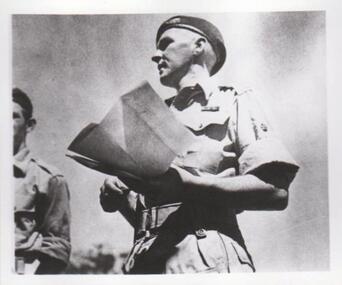
... Unique collection of photographs showing the first years of an armoured regiment of the post-Second World War era Citizen Military Forces showing equipment, uniforms, training and social activity and some personalities Uniform royal australian armoured corps Grant WO 11 Ernie Grant Black and white photograph of soldier with map, Khaki drill uniform, w3b belt, beret, service ribbons.One of a collection of photographs of 8th/13th Victorian Mounted Rifles Regiment between 1948 and 1951. ...The 8th/13th Victorian Mounted Rifles was raised as a regiment of the Royal Australian Armoured Corps on 1 May 1948 with Headquarters in Melbourne and squadrons in Sale, Benalla/Wangaratta and Albury. In 1955 Regimental Headquarters moved to Wangaratta and a second squadron was located at Albury. The Sale squadron transferred to 4th/19th Prince of Wales’s Light Horse. In 1977 8/13 VMR Regiment was reduced to an independent squadron A Squadron 8th/13th Victorian Mounted Rifles and in 1991 was linked with 4th/19th Prince of Wales’s Light Horse forming the VMR Squadron of that regiment.Unique collection of photographs showing the first years of an armoured regiment of the post-Second World War era Citizen Military Forces showing equipment, uniforms, training and social activity and some personalitiesBlack and white photograph of soldier with map, Khaki drill uniform, w3b belt, beret, service ribbons.One of a collection of photographs of 8th/13th Victorian Mounted Rifles Regiment between 1948 and 1951.WO 11 Ernie Grantuniform, royal australian armoured corps, grant -
8th/13th Victorian Mounted Rifles Regimental Collection
Photograph
... Unique collection of photographs showing the first years of an armoured regiment of the post-Second World War era Citizen Military Forces showing equipment, uniforms, training and social activity and some personalities. military vmr cmf uniform anzac day " Anzac Day duties. Sgt. Bill Purcell. " Black and white photograph of soldier in service dress uniform, boots, web anklets, belt and shoulder straps, slouch hat, .303 rifle.One of a collection of photographs of 8th/13th Victorian Mounted Rifles Regiment between 1948 and 1951. ...The 8th/13th Victorian Mounted Rifles was raised as a regiment of the Royal Australian Armoured Corps on 1 May 1948 with Headquarters in Melbourne and squadrons in Sale, Benalla/Wangaratta and Albury. In 1955 Regimental Headquarters moved to Wangaratta and a second squadron was located at Albury. The Sale squadron transferred to 4th/19th Prince of Wales’s Light Horse. In 1977 8/13 VMR Regiment was reduced to an independent squadron A Squadron 8th/13th Victorian Mounted Rifles and in 1991 was linked with 4th/19th Prince of Wales’s Light Horse forming the VMR Squadron of that regiment.Unique collection of photographs showing the first years of an armoured regiment of the post-Second World War era Citizen Military Forces showing equipment, uniforms, training and social activity and some personalities.Black and white photograph of soldier in service dress uniform, boots, web anklets, belt and shoulder straps, slouch hat, .303 rifle.One of a collection of photographs of 8th/13th Victorian Mounted Rifles Regiment between 1948 and 1951." Anzac Day duties. Sgt. Bill Purcell. "military, vmr, cmf, uniform, anzac day -
 8th/13th Victorian Mounted Rifles Regimental Collection
Photograph
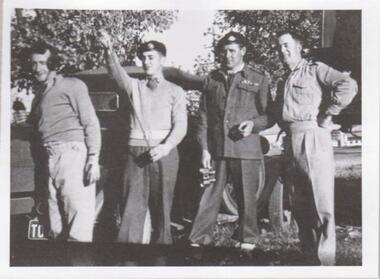
... social activity and some personalities. " Cunningham Alternative Command Vehicle. No. 1 Set Training. John Neale, George Atkinson, Bill Purcell, Ron Braddy. " Black and white photograph of four soldiers in variety of uniforms standing beside civilian utility vehicle. One is wearing winter service ...The 8th/13th Victorian Mounted Rifles was raised as a regiment of the Royal Australian Armoured Corps on 1 May 1948 with Headquarters in Melbourne and squadrons in Sale, Benalla/Wangaratta and Albury. In 1955 Regimental Headquarters moved to Wangaratta and a second squadron was located at Albury. The Sale squadron transferred to 4th/19th Prince of Wales’s Light Horse. In 1977 8/13 VMR Regiment was reduced to an independent squadron A Squadron 8th/13th Victorian Mounted Rifles and in 1991 was linked with 4th/19th Prince of Wales’s Light Horse forming the VMR Squadron of that regiment.Unique collection of photographs showing the first years of an armoured regiment of the post-Second World War era Citizen Military Forces showing equipment, uniforms, training and social activity and some personalities.Black and white photograph of four soldiers in variety of uniforms standing beside civilian utility vehicle. One is wearing winter service dress, one in khaki drill uniform, two are wearing V neck Army jumpers. One is wearing headphones, one haslength of radio aerial. One of a collection of photographs of 8th/13th Victorian Mounted Rifles Regiment between 1948 and 1951." Cunningham Alternative Command Vehicle. No. 1 Set Training. John Neale, George Atkinson, Bill Purcell, Ron Braddy. " -
Vision Australia
Text, The Association for the Blind Illawarra Community Centre annual meeting minutes 24/9/1976 to 10/9/1993, 1976-1993
... At 1985 the Centre had the following user groups Association for the Blind (AFB), Better hearing Australia, Department of Community Services - Rehabilitation unit, Diabetes Found of Victoria, Epilepsy Foundation of Victoria, Paraplegic and Quadriplegic Association of Victoria, Social Organisation for the Handicapped, Victorian Deaf Society and Yooralla Society of Victoria. ...At 1985 the Centre had the following user groups Association for the Blind (AFB), Better hearing Australia, Department of Community Services - Rehabilitation unit, Diabetes Found of Victoria, Epilepsy Foundation of Victoria, Paraplegic and Quadriplegic Association of Victoria, Social Organisation for the Handicapped, Victorian Deaf Society and Yooralla Society of Victoria. ...These meetings were held at the Illawarra Community Centre and the minutes include Present, National Anthem, Tributes, Apologies, Notice of convening the meeting, Life Governors, Confirmation of previous minutes and Reports from The Chairman, Financial. 1/10/1985 Mrs Heath, founding chairman of the Illawarra Community Centre highlighted that the Centre is based on a unique concept of integrating organisations which traditionally functioned in isolation. The outstanding success of the Centre at this time is consistent with the initial planning and development. At 1985 the Centre had the following user groups Association for the Blind (AFB), Better hearing Australia, Department of Community Services - Rehabilitation unit, Diabetes Found of Victoria, Epilepsy Foundation of Victoria, Paraplegic and Quadriplegic Association of Victoria, Social Organisation for the Handicapped, Victorian Deaf Society and Yooralla Society of Victoria. 2 paper registersassociation for the blind -
 Vision Australia
Image, National Information Library Service Vision, 200
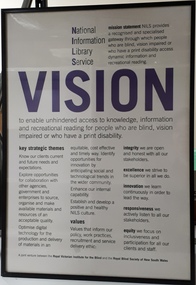
... social and technological trends in the wider community. Enhance our internal capability. Establish and develop a positive and healthy NILS culture. Values: our values inform our policy, work practices, recruitment and service delivery ethic. ...social and technological trends in the wider community. Enhance our internal capability. Establish and develop a positive and healthy NILS culture. Values: our values inform our policy, work practices, recruitment and service delivery ethic. ...The duplication of services between state based blindness and low vision agencies was not viable in the long term, with telecommunications and technology improving rapidly in the late 20th century. In 1999, a decision was made to merge the library and alternative production services of the RVIB and RBS, as a precursor to a possible larger merger in the future. Thus the National Information Library Service (NILS) was created. As part of establishing a new culture between staff who had retained their positions, a vision, mission and values statement was created under the new service name.1 digital imageNational Information Library Service Mission statement: NILS provides a recognised and specialised gateway through which people who are blind, vision impaired or who have a print disability access dynamic information and recreational reading. Vision: to enable unhindered access to knowledge, information and recreational reading for people who are blind, vision impaired or who have a print disability. Key strategic themes: Know our clients current and future needs and expectations. Explore opportunities for collaboration with other agencies, government and enterprises to source, organise and make available materials and resources of an acceptable quality. Optimise digital technology for the production and delivery of materials in an equitable, cost effective and timely way, identify opportunities for innovation by anticipating social and technological trends in the wider community. Enhance our internal capability. Establish and develop a positive and healthy NILS culture. Values: our values inform our policy, work practices, recruitment and service delivery ethic. Integrity - we are open and honest with all our stakeholders. Excellence - we strive to be superior in all we do. Innovation - we learn continuously in order to lead the way. Responsiveness - we actively listen to all our stakeholders. Equity - we focus on inclusiveness and participation for all our clients and staff. A joint venture between the Royal Victorian Institute for the Blind and the Royal Blind Society of New South Wales. royal blind society of new south wales, royal victorian institute for the blind, national information library service -
 Vision Australia
Ceremonial object - Image, Proclamation, 1985
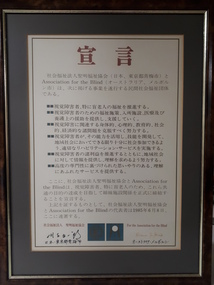
... Proclamation Whereas the Association for the Blind, Melbourne, Australia & The Seimei Association for the Welfare of the Aged Blind Inc, Oume City, Japan, are organisations which: - promote the welfare of people who are blind or visually impaired especially the elderly; - provide welfare programs, accomodation, medical and nursing assistance, and support to people who are blind or visually impaired; - strive to overcome problems associated with blindness, whether physical, psychological, educational, social or economic; - provide appropriate rehabilitation services to enable people to use their capabilities and to develop their skills so that they can participate as fully as possible in the community; - promote the interests of people who are blind or visually impaired and provide information to the general community; and - provide at all times services to a high professional standard with a spirit of care and understanding. ...Association for the Blind Proclamation Whereas the Association for the Blind, Melbourne, Australia & The Seimei Association for the Welfare of the Aged Blind Inc, Oume City, Japan, are organisations which: - promote the welfare of people who are blind or visually impaired especially the elderly; - provide welfare programs, accomodation, medical and nursing assistance, and support to people who are blind or visually impaired; - strive to overcome problems associated with blindness, whether physical, psychological, educational, social or economic; - provide appropriate rehabilitation services to enable people to use their capabilities and to develop their skills so that they can participate as fully as possible in the community; - promote the interests of people who are blind or visually impaired and provide information to the general community; and - provide at all times services to a high professional standard with a spirit of care and understanding. ...Copies of the Proclamation of understanding between the Association for the Blind and the Seimei Association for the Welfare of Aged Blind, Inc., in both English and Japanese. These agreements were a symbol of the exchanges of each organisation, and the growing trend of agencies to link more to compatriots overseas as telecommunications improved.2 digital images of memorandum of understanding between Association for the Blind, Melbourne, Australia & The Seimei Association for the Welfare of the Aged Blind IncProclamation Whereas the Association for the Blind, Melbourne, Australia & The Seimei Association for the Welfare of the Aged Blind Inc, Oume City, Japan, are organisations which: - promote the welfare of people who are blind or visually impaired especially the elderly; - provide welfare programs, accomodation, medical and nursing assistance, and support to people who are blind or visually impaired; - strive to overcome problems associated with blindness, whether physical, psychological, educational, social or economic; - provide appropriate rehabilitation services to enable people to use their capabilities and to develop their skills so that they can participate as fully as possible in the community; - promote the interests of people who are blind or visually impaired and provide information to the general community; and - provide at all times services to a high professional standard with a spirit of care and understanding. Therefore let is be known publicly that the Association for the Blind and The Seimei Association for the Welfare of Aged Blind, Inc. formally establish a sister organisation relationship for the attainment of these common aspirations for people who are blind or visually impaired, especially the elderly. In Witness Thereof the Association for the Blind & The Seimei Association for the Welfare of the Aged Blind, Inc. cause their representatives to set their hands hereto on the 8th June, 1985. (Diana Jones) For the Association for the Blind, Melbourne Australia (signature) For The Seimei Association for the Welfare of the Aged Blind, Inc., Oume City, Tokyo, Japanseimei association for the welfare of aged blind inc., association for the blind -
 Vision Australia
Administrative record - Text, Fifth Annual Report of the Association for the Advancement of the Blind 1900, 1900
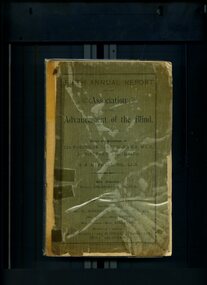
... Taylor, 120 members on the roll, a successful social held at Dr Strong's church, some small loans granted to members, three concerts held in the Western District were not profitable however those around Melbourne were favourably attended, changes to the Constitution to provide for honorary members, 180 visits were made across 12 metro districts, the Tea Agency now has ten members using this service, and the Industrial Depot has been hampered by the war efforts but the Association has agreed to a further trial and thanks the VABW for letting them store some books for members who are unable to travel to the Collins Street office....Taylor, 120 members on the roll, a successful social held at Dr Strong's church, some small loans granted to members, three concerts held in the Western District were not profitable however those around Melbourne were favourably attended, changes to the Constitution to provide for honorary members, 180 visits were made across 12 metro districts, the Tea Agency now has ten members using this service, and the Industrial Depot has been hampered by the war efforts but the Association has agreed to a further trial and thanks the VABW for letting them store some books for members who are unable to travel to the Collins Street office. ...Annual report of the Association for the Advancement of the Blind outlined activities and events over the year, including the death of one of the original members Charles D. Taylor, 120 members on the roll, a successful social held at Dr Strong's church, some small loans granted to members, three concerts held in the Western District were not profitable however those around Melbourne were favourably attended, changes to the Constitution to provide for honorary members, 180 visits were made across 12 metro districts, the Tea Agency now has ten members using this service, and the Industrial Depot has been hampered by the war efforts but the Association has agreed to a further trial and thanks the VABW for letting them store some books for members who are unable to travel to the Collins Street office.1 volume of printed material with some illustrationsassociation for the advancement of the blind, annual reports -
Vision Australia
Audio - Sound recording, Vision Australia Foundation Telelink - Linking people .... building communities, c2003
... Promotional material produced to expand awareness of Vision Australia Foundation as a provider of Telelink services to help people with low vision and blindness, to maintain social connections....Promotional material produced to expand awareness of Vision Australia Foundation as a provider of Telelink services to help people with low vision and blindness, to maintain social connections. ...Promotional material produced to expand awareness of Vision Australia Foundation as a provider of Telelink services to help people with low vision and blindness, to maintain social connections.1 MP3 audio recording for use on radiovision australia foundation, rehabilitation -
 Vision Australia
Certificate - Text, Association for the Blind Certificate of Honour
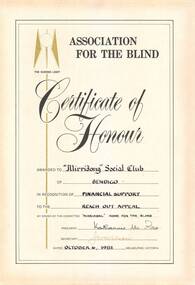
... These certificates reflect the financial support of the Reach Out Appeal by the Mirridong Social Club in 1981 (signed by Kitty Rose and John Wilson), Elanora, Head Office and George Vowell Centre staff in recognition of their services to residents and blind members in 1982 (signed by John Wicking and John Wilson)....These certificates reflect the financial support of the Reach Out Appeal by the Mirridong Social Club in 1981 (signed by Kitty Rose and John Wilson), Elanora, Head Office and George Vowell Centre staff in recognition of their services to residents and blind members in 1982 (signed by John Wicking and John Wilson). ...The Guiding Light symbol appears on the next issue of certificates from the Association, using the sphere and triangle shapes that would also become part of name badges and other items around the organisation. These certificates reflect the financial support of the Reach Out Appeal by the Mirridong Social Club in 1981 (signed by Kitty Rose and John Wilson), Elanora, Head Office and George Vowell Centre staff in recognition of their services to residents and blind members in 1982 (signed by John Wicking and John Wilson).A4 sized certificates with guiding light logoassociation for the blind, john wicking, john wilson, katharine (kitty) rose -
 Vision Australia
Administrative record - Image, Association for the Blind Philosophy (and) Objectives
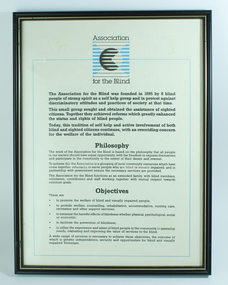
... Objectives These are - to promote the welfare of blind and visually impaired people; - to provide welfare, counselling, rehabilitation, accommodation, nursing care, recreation and other support services; - to minimise the harmful effects of blindness whether physical, psychological, social or economic; - to facilitate the prevention of blindness; - to utilise the experience and talent of blind people in the community in assessing needs, evaluating and improving the value of services to the blind. ...Objectives These are - to promote the welfare of blind and visually impaired people; - to provide welfare, counselling, rehabilitation, accommodation, nursing care, recreation and other support services; - to minimise the harmful effects of blindness whether physical, psychological, social or economic; - to facilitate the prevention of blindness; - to utilise the experience and talent of blind people in the community in assessing needs, evaluating and improving the value of services to the blind. ...This printed philosophy served to remind sighted people what the organisation was working towards and how it sought to achieve it.A3 printed page on cream coloured paper with black writing and black and blue logoThe Association for the Blind was founded in 1895 by 8 blind people of strong spirit as a self help group and in protest against discriminatory attitudes and practices of society at that time. This small group sought and obtained the assistance of sighted citizens. Together they achieved reforms which greatly enhanced the status and rights of blind people. Today, this tradition of self help and active involvement of both blind and sighted citizens continues, with an overriding concern for the welfare of the individual. Philosophy The work of the Association for the Blind is based on the philosophy that all people in our society should have equal opportunity, with the freedom to express themselves and participate in the community to the extent of their desire and interest. To achieve this the Association is a grouping of local community resources which have come together voluntarily to serve people who are blind or visually impaired, and in partnership with government ensure the necessary services are provided. The Association for the Blind functions as an extended family, with blind members, volunteers, contributors and staff working together with mutual respect towards common goals. Objectives These are - to promote the welfare of blind and visually impaired people; - to provide welfare, counselling, rehabilitation, accommodation, nursing care, recreation and other support services; - to minimise the harmful effects of blindness whether physical, psychological, social or economic; - to facilitate the prevention of blindness; - to utilise the experience and talent of blind people in the community in assessing needs, evaluating and improving the value of services to the blind. A wide range of services is necessary to achieve these objectives, the outcome of which is greater independence, security and opportunities for blind and visually impaired Victorians.association for the blind, corporation records
