
Showing 4427 items matching "melbourne history"
-
 Bendigo Historical Society Inc.
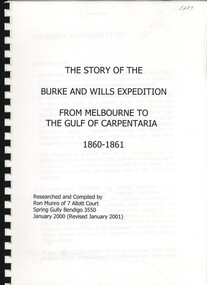
Book - THE STORY OF THE BURKE AND WILLS EXPEDITION, 2000
... AUSTRALIA History explorers Australia-History-Explorers Ron Munro The Story of the Burke and Wills expedition, from Melbourne to the Gulf of Carpentaria 1860-1861 189 pages with photographs and maps. ...The Story of the Burke and Wills expedition, from Melbourne to the Gulf of Carpentaria 1860-1861 189 pages with photographs and maps.Ron Munroaustralia, history, explorers, australia-history-explorers -
 Bendigo Historical Society Inc.
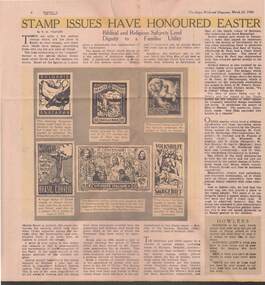
Document - BUSH COLLECTION: EPHEMERA
... Scrapbook with cuttings from papers relating to Australia's history, scenery, flora and fauna, Farming, Industry, Rodeo, Horse Racing, Rural, Surf Life Saving, Religion, Federation, Explorers, Gold, Birds, - some loose cuttings in back; g. Land Tax Act, Schedule L 1910 (blank sheet); h. Commission of Public Health - three day tour of Western District (Warrnambool, port Fairy, Colac) from Melbourne...Scrapbook with cuttings from papers relating to Australia's history, scenery, flora and fauna, Farming, Industry, Rodeo, Horse Racing, Rural, Surf Life Saving, Religion, Federation, Explorers, Gold, Birds, - some loose cuttings in back; g. Land Tax Act, Schedule L 1910 (blank sheet); h. Commission of Public Health - three day tour of Western District (Warrnambool, port Fairy, Colac) from Melbourne ...Ephemera from Original Box 313; This is not a catalogued description of the contents but a broad-brush overall description. a. Book with 'Ledger' on cover; has newspaper cuttings re stage and screen on 8 of 94 pages (remaining, mostly blank); b. Gordon & Gotch - Sample Calendar No. 3 1935.( 61 cm x 50 cm) x2; c. Gordon & Gotch - Sample Calendar No. 2 (61 cm x 50 cm) x 2; d. Victorian Act of Parliament No 3041 (amending the Law relating to Public Health, 1919, 176 pages; e. Victorian Act of Parliament -(amending the Sewerage District Acts No 3437, 1925, 5 pages ; f. Scrapbook with cuttings from papers relating to Australia's history, scenery, flora and fauna, Farming, Industry, Rodeo, Horse Racing, Rural, Surf Life Saving, Religion, Federation, Explorers, Gold, Birds, - some loose cuttings in back; g. Land Tax Act, Schedule L 1910 (blank sheet); h. Commission of Public Health - three day tour of Western District (Warrnambool, port Fairy, Colac) from Melbourne; i. Collection of cuttings, envelopes; j. Newspapers - Argus, Advertiser pages late 1930s; (not scanned) k. Collection of newspaper cuttings; l. Collection of Public Health Regulations, 7 parts; m. Act of Parliament, Victoria No. 2632 - Law relating to Amendment of the Constitution; n. Folder containing issues of The Bendigo Church News, 25 parts 1930s-1950s; o. Collection of book lists/catalogues; p. AA (Automobile Association) Members Handbook 1963; q. Collection of varied sheets and pamphlets; r. Articles of Association - Ocean Salt Company; s.. Sydney Symphony Orchestra program 1953; t. Queen Mary's Message to the people, Jan 1936; u. various notices for display of historical items (BHS Collection)ephemera, mementoes -
 Bendigo Historical Society Inc.
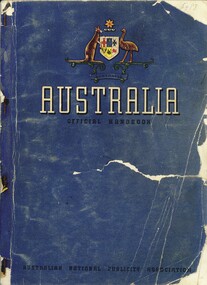
Book - AUSTRALIA OFFICIAL HANDBOOK, 1941
... AUSTRALIA History Australian National Publicity Assoc Australia Official Handbook, a publication issued with the authority of the minister for commerce by the Australian National Publicity Association, Railway Building Flinders St Melbourne telling the story of the progress and development of Australia. ...Australia Official Handbook, a publication issued with the authority of the minister for commerce by the Australian National Publicity Association, Railway Building Flinders St Melbourne telling the story of the progress and development of Australia. Contains 140 pages with black & white photographs, illustrations & colour maps. Dark blueAustralian National Publicity Assocaustralia, history -
 Bendigo Historical Society Inc.
Book - THE STRAND MUSICAL MAGAZINE RE MRS LUCY HILL, BENDIGO, 1897 -1954
... history The Strand Musical Magazine a musical monthly published by George Newnes, Strand, WC (London) . Inside cover is plate for 'School Choir: First Prize' won by Gravel Hill State School, Austral Competitions, Bendigo, May 1897 (Presented to Lucy Robotham - 'a member of the successful choir'). Inside cover: penned detailed inscriptions relating to Mrs Lucy Hill, journalist for Bendigo Advertiser, especially in relation to Dec. 1953 Anniversary of the Advertiser. Stuck on to first page of book is cutting from Advertiser (1954) re farewell of Lucy Hill from Bendigo for Melbourne ...The Strand Musical Magazine a musical monthly published by George Newnes, Strand, WC (London) . Inside cover is plate for 'School Choir: First Prize' won by Gravel Hill State School, Austral Competitions, Bendigo, May 1897 (Presented to Lucy Robotham - 'a member of the successful choir'). Inside cover: penned detailed inscriptions relating to Mrs Lucy Hill, journalist for Bendigo Advertiser, especially in relation to Dec. 1953 Anniversary of the Advertiser. Stuck on to first page of book is cutting from Advertiser (1954) re farewell of Lucy Hill from Bendigo for Melbourne.bendigo, history, city history -
 Bendigo Historical Society Inc.
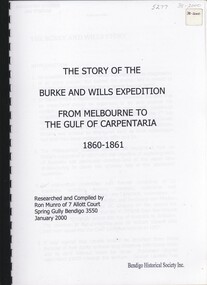
Book - THE STORY OF THE BURKE AND WILLS EXPEDITION, 2000
... AUSTRALIA pioneer history and early australia Ron Munro The Story of the Burke and Wills Expedition. From Melbourne to the Gulf of Ccarpentaria, 1860 - 1861. ...The Story of the Burke and Wills Expedition. From Melbourne to the Gulf of Ccarpentaria, 1860 - 1861.Ron Munroaustralia, pioneer history and early australia -
 Bendigo Historical Society Inc.
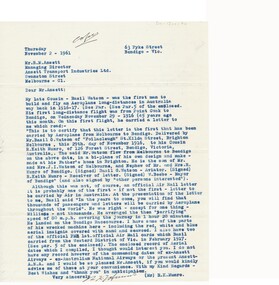
Document - BASIL WATSON COLLECTION: LETTER (R K MUNRO TO R M ANSETT), 1961
... Copy of typed letter dated November 2, 1961 from R K Munro to R M Ansett, re Basil Watson's aircraft flight 'the first man to build and fly an aeroplane long distances in Australia way back in 1916-17' The letter details Basil's flight from Melbourne (Point Cook) to Bendigo on 29th November, and carried the first letter to be carried by aeroplane in Australia. 1916 and discusses the carriage of mail by aeroplane. R. Keith Munro also writes of a list of significant aeronautical history...basil watson airmail R.Keith Munro Bendigo Copy of typed letter dated November 2, 1961 from R K Munro to R M Ansett, re Basil Watson's aircraft flight 'the first man to build and fly an aeroplane long distances in Australia way back in 1916-17' The letter details Basil's flight from Melbourne (Point Cook) to Bendigo on 29th November, and carried the first letter to be carried by aeroplane in Australia. 1916 and discusses the carriage of mail by aeroplane. R. Keith Munro also writes of a list of significant aeronautical history ...Copy of typed letter dated November 2, 1961 from R K Munro to R M Ansett, re Basil Watson's aircraft flight 'the first man to build and fly an aeroplane long distances in Australia way back in 1916-17' The letter details Basil's flight from Melbourne (Point Cook) to Bendigo on 29th November, and carried the first letter to be carried by aeroplane in Australia. 1916 and discusses the carriage of mail by aeroplane. R. Keith Munro also writes of a list of significant aeronautical history dates that he encloses ( not with item ) and requesting details about commencement dates of Ansett Airways and ANA. 'Copy' written at top. Signed 'R K Munro, address 63 Pyke Street,Bendigo.basil watson, airmail, r.keith munro, bendigo -
 Bendigo Historical Society Inc.
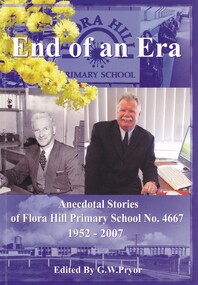
Book - END OF AN ERA, 2007
... SCHOOL History flora hill primary school Flora Hill Primary School opened 1952 closed 2007 150th Anniversary of Victoria Time Capsule Bi-Centenary Tree 1988 Geoff W Pryor End of an Era, Anecdotal Stories of Flora Hill Primary School No. 4667 1952-2007. Edited By G. W. Pryor. ISBN: 978-0-975187-3-5 Inscription: For Bendigo Historical Social, Geoff W Pryor 18/11/2007. Photographs: color & black and white. Photos of paintings, copy of cover of 'the School Paper, grades V and VI, No 514 Melbourne ...End of an Era, Anecdotal Stories of Flora Hill Primary School No. 4667 1952-2007. Edited By G. W. Pryor. ISBN: 978-0-975187-3-5 Inscription: For Bendigo Historical Social, Geoff W Pryor 18/11/2007. Photographs: color & black and white. Photos of paintings, copy of cover of 'the School Paper, grades V and VI, No 514 Melbourne Sept 1, 1952.Geoff W Pryorschool, history, flora hill primary school, flora hill primary school, opened 1952 closed 2007, 150th anniversary of victoria time capsule, bi-centenary tree 1988 -
 Bendigo Historical Society Inc.
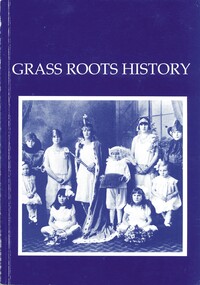
Book - GRASS ROOTS HISTORY, 1991
... Grass Roots History, proceedings of the joint conference of the Federation of Australian Historical Societies and the Royal Historical Society of Victoria in Melbourne 1989....Alan Roberts Grass Roots History, proceedings of the joint conference of the Federation of Australian Historical Societies and the Royal Historical Society of Victoria in Melbourne 1989. ...Grass Roots History, proceedings of the joint conference of the Federation of Australian Historical Societies and the Royal Historical Society of Victoria in Melbourne 1989.Alan Robertsbook, historical societies, historical societies. -
 Bendigo Historical Society Inc.
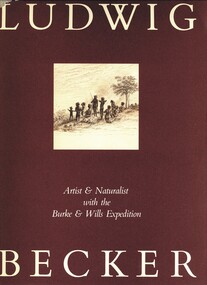
Book - LUDWIG BECKER, ARTIST AND NATURALIST WITH THE BURKE & WILLS EXPEDITION, c1979
... history flora fauna Marjorie Tipping Ludwig Becker. Artist & Naturalist with the Burke & Wills Expedition. Brown Dust jacket and clear plastic jacket. Publisher: Melbourne ...Ludwig Becker. Artist & Naturalist with the Burke & Wills Expedition. Brown Dust jacket and clear plastic jacket. Publisher: Melbourne University Press, Carlton. Edited with an Introduction by Marjorie Tipping. Sketches & paintings. Markings/Inscriptions: Bendigo Historical Society stamp. Book signed by Marjorie Tipping. 21st Birthday gift card (business card size): With all Best Wishes on this most important occasion, H C Lee-Archer, Nov 1979. Pres RHSVMarjorie Tippingbook, burke & wills, ludwig becker, burke & wills expedition, h c lee-archer rhsv, australia history, flora fauna -
 Bendigo Historical Society Inc.
Book - BENDIGO & VICINITY, c1895
... A comprehensive history of her past, and a resume of her resources: Together with the Biographies of her representative pioneers, public, commercial, and professional men. Author: W B Kimberly. Publisher: F W Niven & Co Printers and Publishers, Melbourne...A comprehensive history of her past, and a resume of her resources: Together with the Biographies of her representative pioneers, public, commercial, and professional men. Author: W B Kimberly. Publisher: F W Niven & Co Printers and Publishers, Melbourne ...Bendigo and Vicinity. A comprehensive history of her past, and a resume of her resources: Together with the Biographies of her representative pioneers, public, commercial, and professional men. Author: W B Kimberly. Publisher: F W Niven & Co Printers and Publishers, Melbourne. C1895. 273 pages. Illustrations: Photographs, illustrations, listing of dividends, copies of collages. Markings/Inscriptions: In front; To be offered to the Bendigo Branch of the Historical Society if they already have a copy to be given to Timothy Buick of Woorookoobanya, Majorca. Bendigo Historical stamp. Page 9; James Buick went to Golden Valley Dec 1851 and they with his party of 3 other and New Chum Valley called after them. In back; On page 273; family tree also next page family tree.W B Kimberlybook, bendigo, bendigo history & its people, bendigo history, family tree, councilor, gold, biographies, travel to australia -
 Bendigo Historical Society Inc.
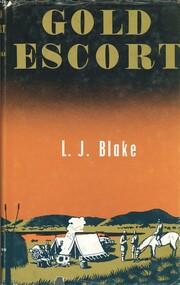
Book - GOLD ESCORT, c1971
... BOOK Bendigo gold escort Gold Escort gold rush history Victoria South Australia L J Blake Gold Escort by L J Blake. Publisher The Hawthorn Press, Melbourne. ...Gold Escort by L J Blake. Publisher The Hawthorn Press, Melbourne. Date 1971. ISBN: 7256 0043 8. Pages 228. Photographs, illustrations & Map. Signed by: L J Blake. Hard cover, green gold embossed print on spine, glossy dust jacket.L J Blakebook, bendigo, gold escort, gold escort, gold rush, history, victoria, south australia -
 Bendigo Historical Society Inc.
Book - GETTING GOLD, 1935
... History helpful hints in prospecting Getting Gold. Information for the 'Green' prospector trying his hand for the first time. Issued bt y Geo. Brown for the Mines Department, Melbourne ...Getting Gold. Information for the 'Green' prospector trying his hand for the first time. Issued bt y Geo. Brown for the Mines Department, Melbourne. 1935. Brown cover. 42 pages. Name J W Anderson written in pencil on front cover.victoria, history, helpful hints in prospecting -
 Bendigo Historical Society Inc.
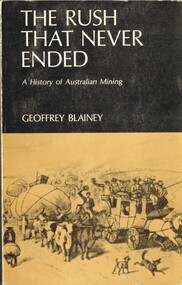
Book - THE RUSH THAT NEVER ENDED, c1969
... The Rush That Never Ended A History of Australian Mining. Publisher: Melbourne University Press, Carlton. ...AUSTRALIA gold mining Australian gold mining Geoffrey Blainey The Rush That Never Ended A History of Australian Mining. Publisher: Melbourne University Press, Carlton. ...The Rush That Never Ended A History of Australian Mining. Publisher: Melbourne University Press, Carlton. Edition: 2nd. Photographs, Illustrations and Maps. Cost $2.85 Markings/Inscriptions: Bendigo Historiacal Society. Harold Currnow 19-8-69. SBN: 522 83930 4. Notations on pae 35, 2 lines underlined.Geoffrey Blaineyaustralia, gold mining, australian gold mining -
 Bendigo Historical Society Inc.
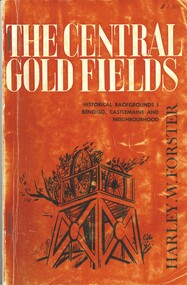
Book - THE CENTRAL GOLD FIELDS, c1969
... HISTORY mining central goldfields Harley W Forster Harley W Forster The Central Goldfields, Historical Backgrounds Bendigo, Castlemaine and neighbourhood. Publisher Cypress Books, printed by Cambridge Press, Melbourne ...The Central Goldfields, Historical Backgrounds Bendigo, Castlemaine and neighbourhood. Publisher Cypress Books, printed by Cambridge Press, Melbourne. 80 pages. Photographs, illustrations and maps. Inscriptions: $1.20, Bendigo Historical Society. With IndexHarley W Forsterhistory, mining, central goldfields, harley w forster -
 Bendigo Historical Society Inc.
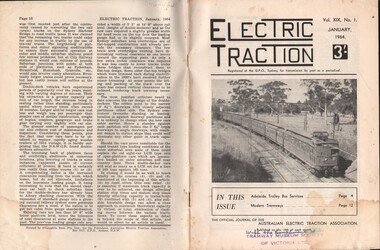
Document - BASIL MILLER COLLECTION: TRAMS - JOURNAL 'ELECTRIC TRACTION', Janaury 1964
... History of document: Part of 'Basil Miller Collection'. Cover picture was a seven-car suburban electric train of original "swing door" rolling stock passing through parklands in the suburb of Burnley on its way to Melbourne....History of document: Part of 'Basil Miller Collection'. Cover picture was a seven-car suburban electric train of original "swing door" rolling stock passing through parklands in the suburb of Burnley on its way to Melbourne. ...Journal of Australian Electric Traction Association. Volume XIX, No. 1, January 1964. 16 pages. History of document: Part of 'Basil Miller Collection'. Cover picture was a seven-car suburban electric train of original "swing door" rolling stock passing through parklands in the suburb of Burnley on its way to Melbourne.Pub: Australian Electric Traction Asscn. Printer: O'Loughlin Bros. Pty. Ltd., Sydney NSWdocument -
 Bendigo Historical Society Inc.
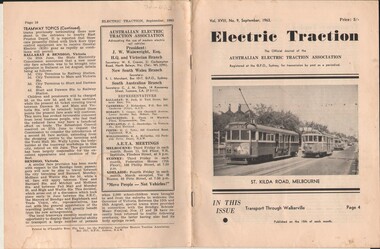
Document - BASIL MILLER COLLECTION: TRAMS - JOURNAL 'ELECTRIC TRACTION', September 1963
... History of document: Part of 'Basil Miller Tramways Collection'. Cover picture: most of the tram services to Melbourne's South Eastern suburbs operate along tree lined St. ...History of document: Part of 'Basil Miller Tramways Collection'. Cover picture: most of the tram services to Melbourne's South Eastern suburbs operate along tree lined St. ...Journal of Australian Electric Traction Association. Volume XVII, No. 9, September 1963, 16 pages. History of document: Part of 'Basil Miller Tramways Collection'. Cover picture: most of the tram services to Melbourne's South Eastern suburbs operate along tree lined St. Kilda Road. W4 Class car 672 is about to pass four inbound cars in this road during the weekend of the Royal Visit earlier that year.Pub: Australian Electric Traction Asscn. Printer: O'Loughlin Bros. Pty. Ltd., Sydney, NSW.document -
 Bendigo Historical Society Inc.
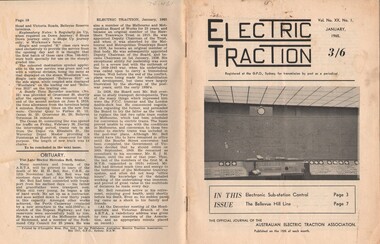
Document - BASIL MILLER COLLECTION: TRAMS - JOURNAL 'ELECTRIC TRACTION', January 1965
... History of document: Part of 'Basil Miller Tramways Collection'. Cover picture shows the Melbourne and Metropolitan Tramway Board's new supervisory electrical control room at Carlton near city. ...History of document: Part of 'Basil Miller Tramways Collection'. Cover picture shows the Melbourne and Metropolitan Tramway Board's new supervisory electrical control room at Carlton near city. ...Journal of Australian Electric Traction Association. Volume XX, No. 1, January 1965, 16 pages. History of document: Part of 'Basil Miller Tramways Collection'. Cover picture shows the Melbourne and Metropolitan Tramway Board's new supervisory electrical control room at Carlton near city. This photograph was taken during a visit to the incomplete centre during the A.E.T.A.'s Easter Convention, 1964.Pub: Australian Electric Traction Association, Printer: O'Loughlin Bros. Pty. Ltd., Sydney NSWdocument -
 Bendigo Historical Society Inc.
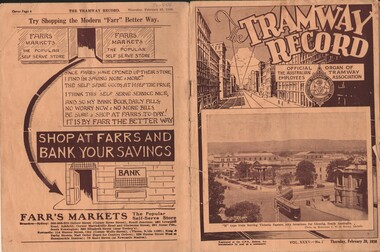
Document - BASIL MILLER COLLECTION: TRAMS - 'THE TRAMWAY RECORD', Feb 20, 1930
... Melbourne Journal of Australian Tramway Employee Association, Volume XXXV - No. 2 Thursday February 20, 1930. Front cover photo of H type train leaving Victoria Square, city terminus, for Glenelg, South Australia. Photo by Motman C.W.D. Brown, Adelaide. History ...Journal of Australian Tramway Employee Association, Volume XXXV - No. 2 Thursday February 20, 1930. Front cover photo of H type train leaving Victoria Square, city terminus, for Glenelg, South Australia. Photo by Motman C.W.D. Brown, Adelaide. History of document: Part of 'Basil Miller Collection'.Publisher: Fraser & Jenkinson Pty. Ltd., 345 Queen St., Melbournedocument -
 Bendigo Historical Society Inc.
Document - BASIL MILLER COLLECTION: TRAMS - 'THE TRAMWAY RECORD', Thursday May 9th, 1935
... DOCUMENT Publisher, Fraser & Jenkinson Pty Ltd., 345 Queen St., Melbourne Journal of Australian Tramway Employee Association. Volume XXX - No. 5. Thursday May 9, 1935. 36 pages, plus 4 cover pages. History ...Journal of Australian Tramway Employee Association. Volume XXX - No. 5. Thursday May 9, 1935. 36 pages, plus 4 cover pages. History of document: Part of 'Basil Miller Tramways Collection'.Publisher, Fraser & Jenkinson Pty Ltd., 345 Queen St., Melbournedocument -
 Bendigo Historical Society Inc.
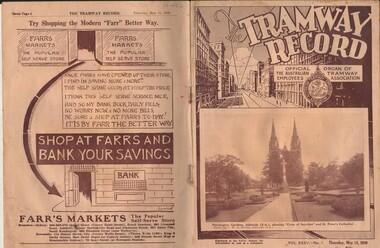
Document - BASIL MILLER COLLECTION: TRAMS - 'THE TRAMWAY RECORD', May 15, 1930
... Melbourne Journal of Australian Tramway Employee Association, Volume XXXV - No. 5. Thursday May 15, 1930. 32 pages plus 4 cover pages. Front cover shows picture of Pennington Gardens, Adelaide (S.A.), showing "Cross of Sacricfice" and St. Peter's Cathedral. Photo by C.W.D. Brown Adelaide (S.A.) History ...Journal of Australian Tramway Employee Association, Volume XXXV - No. 5. Thursday May 15, 1930. 32 pages plus 4 cover pages. Front cover shows picture of Pennington Gardens, Adelaide (S.A.), showing "Cross of Sacricfice" and St. Peter's Cathedral. Photo by C.W.D. Brown Adelaide (S.A.) History of document: Part of 'Basil Miller Tramways Collection'.Publisher: Fraser & Jenkinson Pty Ltd, 345 Queen St., Melbournedocument -
 Bendigo Historical Society Inc.
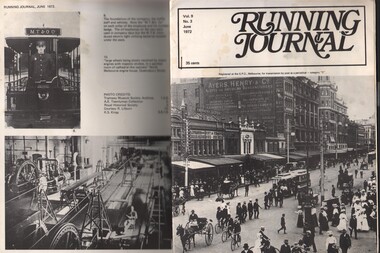
Document - BASIL MILLER COLLECTION: TRAMS - 'RUNNING JOURNAL', June 1972
... Melbourne in the era of the American system of painless dentistry,cobbled streets, verandah posts and cable tram. From 1888 the brightly painted car from city to Prahran and St. Kilda until December 1925 when the line was back to conversion to electric traction. History...Melbourne in the era of the American system of painless dentistry,cobbled streets, verandah posts and cable tram. From 1888 the brightly painted car from city to Prahran and St. Kilda until December 1925 when the line was back to conversion to electric traction. History ...Journal of the Tramway Museum society of Victoria. Ltd. Volume 9, No. 3, June 1972. Thirty five cents. Twenty pages. Front cover (right) shows photo of Swanston Street Melbourne in the era of the American system of painless dentistry,cobbled streets, verandah posts and cable tram. From 1888 the brightly painted car from city to Prahran and St. Kilda until December 1925 when the line was back to conversion to electric traction. History of document: part of 'Basil Miller Tramways Collection'.document -
 Bendigo Historical Society Inc.
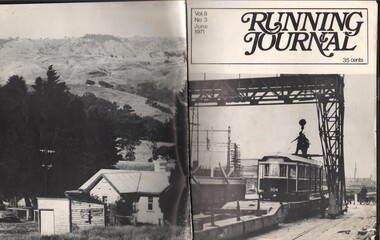
Document - BASIL MILLER COLLECTION: TRAMS - 'RUNNING JOURNAL', June 1971
... Melbourne then lifted onto horse-drawn vehicles for the final stage of their journey. On back cover (left) photo by R. Prentice. Picture of Bylands where the society is building a tramway museum for Victoria. History...Melbourne then lifted onto horse-drawn vehicles for the final stage of their journey. On back cover (left) photo by R. Prentice. Picture of Bylands where the society is building a tramway museum for Victoria. History ...Journal of the Tramway Museum Society of Victoria. Ltd. Volume 8, No. 3, June 1971. Thirty five cents. Sixteen pages. Front cover picture (right) from Victorian Railways, shows tram no. 304 which was one of 100 W class tramcars. 60 of them, including this one, were built by Holden's Body Builders of Adelaide. They were transported by rail to Melbourne then lifted onto horse-drawn vehicles for the final stage of their journey. On back cover (left) photo by R. Prentice. Picture of Bylands where the society is building a tramway museum for Victoria. History of document: Part of 'Basil Miller Tramways Collection'document -
 Bendigo Historical Society Inc.
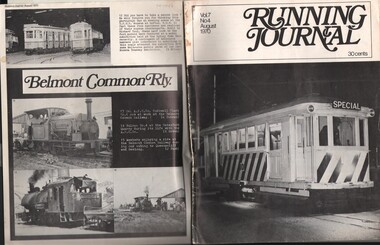
Document - BASIL MILLER COLLECTION: TRAMS - 'RUNNING JOURNAL', August 1970
... Transport Dept. brought to Melbourne after the closure of the Sydney tramways. History of document: Part of 'Basil Miller Tramways Collection'....Transport Dept. brought to Melbourne after the closure of the Sydney tramways. History of document: Part of 'Basil Miller Tramways Collection'. ...Journal of the Tramway Museum Society of Victoria. Ltd. Volume 7, No. 4. August 1970. Thirty cents. Sixteen pages. Front cover (right) photo by J Rush. Rail scrubber no. 10 captured on night exercise on the M.M.T.B. system. A former passenger car of the N.S.W. Transport Dept. brought to Melbourne after the closure of the Sydney tramways. History of document: Part of 'Basil Miller Tramways Collection'.document -
 Bendigo Historical Society Inc.
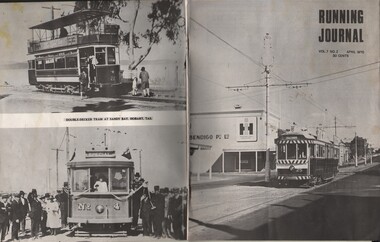
Document - BASIL MILLER COLLECTION: TRAMS - 'RUNNING JOURNAL', April 1970
... Built in 1917 for the Hawthorn Tramways Trust, the car saw service in Melbourne until 1947 when it was purchased by the S.E.C. History of document: Part of 'Basil Miller Tramways Collection'....Built in 1917 for the Hawthorn Tramways Trust, the car saw service in Melbourne until 1947 when it was purchased by the S.E.C. History of document: Part of 'Basil Miller Tramways Collection'. ...Journal of the Tramway Museum Society of Victoria. Ltd. Volume 7, No. 2. April 1970. Thirty cents, seventeen pages. Front cover (right) took by Mal Rowe. Showing maximum traction bogie car no. 25 of the S.E.C. Bendigo system rumbles over the stone pavement of Mitchell Street bound for the Borough of Eaglehawk. Built in 1917 for the Hawthorn Tramways Trust, the car saw service in Melbourne until 1947 when it was purchased by the S.E.C. History of document: Part of 'Basil Miller Tramways Collection'.document -
 Bendigo Historical Society Inc.
Document - BASIL MILLER COLLECTION: TRAMS - 'RUNNING JOURNAL', December 1972
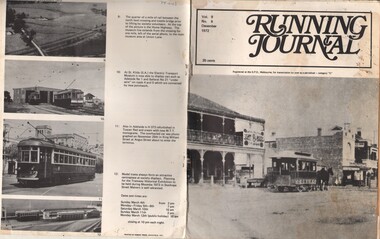
... Purchased by the Coburg Council in 1911 they operated until 1916 when replaced by the electric trams of the Melbourne Brunswick and Coburg Tramway Trust. History of document: Part of 'Basil Miller Tramways Collection'....Purchased by the Coburg Council in 1911 they operated until 1916 when replaced by the electric trams of the Melbourne Brunswick and Coburg Tramway Trust. History of document: Part of 'Basil Miller Tramways Collection'. ...Journal of the Tramway Museum Society of Victoria. Ltd. Volume 9, No. 6. December 1972, 35 cents, thirteen pages. Cover photo (right) shows Sydney Road Coburg looking south from Bell Street with horse tram bound for the Brunswick cable tram terminus at Moreland Road. The horse tram was established by the Northern Tramway Company in 1889. Purchased by the Coburg Council in 1911 they operated until 1916 when replaced by the electric trams of the Melbourne Brunswick and Coburg Tramway Trust. History of document: Part of 'Basil Miller Tramways Collection'.document -
 Bendigo Historical Society Inc.
Document - THE OLIVIERS, A BRIEF CHRONICLE, 1948
... Melbourne... Sydney... Cape Town. Australia... 1948. booklet a history...London, New York, Melbourne, Sydney, Cape Town. Australia, 1948. This booklet gives a history of Laurence Olivier and Vivien Leigh (Sir and Lady Olivier), pictures of Laurence from childhood through his career. ...London, New York, Melbourne, Sydney, Cape Town. Australia, 1948. This booklet gives a history of Laurence Olivier and Vivien Leigh (Sir and Lady Olivier), pictures of Laurence from childhood through his career. ...The Oliviers, A Brief Chronicle. As featured in the Saturday Book No. 6 here produced as A Tribute to The British Council and to assist The food for Britain Appeal. Price two shillings and sixpence. Huthinson & Co. (Publishers) Ltd. London, New York, Melbourne, Sydney, Cape Town. Australia, 1948. This booklet gives a history of Laurence Olivier and Vivien Leigh (Sir and Lady Olivier), pictures of Laurence from childhood through his career. Also pictures of Vivien Leigh working with Laurence Olivier. b/ 'Olivers To Make Nation Wide Broadcast.' Paper cutting, section from a paper 'The Listener In' July 24-30, 1948. c/ 'Food Appeal By Oliviers In Farewell Broadcast. ' The Olivier's will contribute their fee of about 5000 pounds to the Food Appeal. In Melbourne it will be relayed through 3DB, 3AW, 3XY & 3AR. The sponsors of the Lux Radio Theatre have donated 1000 pounds. Paper cutting 4 September, 1948. What the Oliviers Will Remember. d/ What the Oliviers Will Remember. Oliviers thank Australia and told of their memories of Australia and it's people in a Nation wide broadcast over the ABC and some B class stations. Australian banks will cooperate by receiving money for food parcels. Company leaves.Huthinson & Co. (Publishers) Ltd.program, theatre, sir laurance & lady olivier, the oliviers, saturday book no. 6 a tribute to the british council the food for britain appeal. huthinson & co. (publishers) ltd. london, new york, melbourne, sydney, cape town. australia, 1948. booklet a history of laurence olivier & vivien leigh (sir & lady olivier), pictures of laurence from childhood & career. pictures of vivien leigh working with laurence olivier. 'olivers to make nation wide broadcast.' 'the listener in' july 24-30, 1948. 'food appeal by oliviers in farewell broadcast. 'the olivier's will contribute their fee of about 5000 pounds to the food appeal. in melbourne it will be relayed through 3db, 3aw, 3xy & 3ar. the sponsors of the lux radio theatre have donated 1000 pounds. paper cutting 4 september, 1948. what the oliviers will remember. d/ what the oliviers will remember. oliviers thank australia and told of their memories of australia and it's people in a nation wide broadcast over the abc & some b class stations. australian banks will receiving money for food parcels -
Bendigo Historical Society Inc.
Document - GIRL GUIDES & SCOUTS, SOUVENIR PROGRAMME, November, 1947
... History of the Girl Guides of Victoria... includes photo of Lady Chauvel... State Commissioner and Miss M McL. Burns... State Secretary. Page 10to 12 Guides own service. Advertising: The State Savings Bank of Victoria... Evan Evans Pty Ltd... 680 Elizabeth Street... Melbourne...History of the Girl Guides of Victoria, includes photo of Lady Chauvel, State Commissioner and Miss M McL. Burns, State Secreatary. Page 10to 12 Guides own service. Inside rear cover advertising for The State Savings Bank of Victoria. Rear cover Evan Evans Pty Ltd, 680 Elizabeth Street, Melbourne...History of the Girl Guides of Victoria includes photo of Lady Chauvel State Commissioner and Miss M McL. Burns State Secretary. Page 10to 12 Guides own service. Advertising: The State Savings Bank of Victoria Evan Evans Pty Ltd 680 Elizabeth Street Melbourne. ...Girl Guides & Scouts, Souvenir Programme World Chief Guide's Visit to Victoria. November 21st - December 5th, 1947. Official Programme. Includes Official Programme with activities for the Rally. Inside front cover information on the Girl Guides Association property between Yarra Junction and Warbuton, including a photo. Page 4 photo and wirte up on the Founder Robert Baden-Powell. Page 5 photo and write up on Lady Baden-Powell, GBE. The World Chief Guide. Pages 6 & 7, History of the Girl Guides of Victoria, includes photo of Lady Chauvel, State Commissioner and Miss M McL. Burns, State Secreatary. Page 10to 12 Guides own service. Inside rear cover advertising for The State Savings Bank of Victoria. Rear cover Evan Evans Pty Ltd, 680 Elizabeth Street, Melbourne, C.1. Manufactures of flags, tents & flys, Haversacks & camping equipment. Appionted Flagmakers to the Girl Guides Association. b/ Letter.Old Mate of mine together we have roughed it through the bush for twenty years and time begins to lay his frosting brush upon the heads. But in our hearts the flowers of friendship grow its fresh as when we planted then in dear old Bendigo. I sigh when ever I think upon - Jack pats along the grub the music of the puddling mill, the cradle and tub, the hurdy gurdies german bands and mistletoe toe, why blow it. You're upset the tea on dear old Bendigo the back of life is sometimes smooth and at other times tis rough. But we must take as it comes this beef is rather tough, I feel a spider on my cheek, I've cought the varment _ 'No' Why bless me, if it ain't a tear for dear old Bendigo.J Batten, Print, Melb.event, official, guides scouts, world chief guide's, girl guides & scouts, official souvenir programme world chief guide's visit to victoria. november 21st - december 5th, 1947. activities for the rally. information on the girl guides association property between yarra junction and warbuton, including a photo. page 4 photo and write up on the founder robert baden-powell. page 5 photo and write up on lady baden-powell, gbe. the world chief guide. pages 6 & 7, history of the girl guides of victoria, includes photo of lady chauvel, state commissioner and miss m mcl. burns, state secretary. page 10to 12 guides own service. advertising: the state savings bank of victoria, evan evans pty ltd, 680 elizabeth street, melbourne. appointed flagmakers to the girl guides association. b/ letter. -
 Bendigo Historical Society Inc.
Book - BOOK - SALE CATALOGUE FOR 'HOLLYBANK', 25/06/1962
... In the front of the book is the Conditions of Sale, directions from Melbourne, price of catalogue and the history of the collection....In the front of the book is the Conditions of Sale, directions from Melbourne, price of catalogue and the history of the collection. ...Auctioneers sale catalogue for an auction held at 'Hollybank' 135 Myrtle Street, Bendigo on Monday, 25th June, 1962. Auctioneers were Leonard Joel Pty. Ltd, Auctioneers and Valuers, 17 McKillop Street, Melbourne. Catalogue has black printing on yellow paper, sixteen pages of items for sale including furniture, crockery, glassware, clocks and other household items. Some items have their price written in beside them. Printed by Wellman Print, St. Kilda. In the front of the book is the Conditions of Sale, directions from Melbourne, price of catalogue and the history of the collection.bendigo, house, hollybank, sale catalogue for 'hollybank', miss marian jones, leonard joel pty ltd, hollybank, wellman print st kilda, 135 mytle street. -
 Bendigo Historical Society Inc.
Book - ALEC H CHISHOLM COLLECTION: BOOK ''THE FORLORN HOPE'' BY FRANK CLUNE
... history ALEC H CHISHOLM COLLECTION FRANK CLUNE Frank Clune Book. ALEC H CHISHOLM COLLECTION. 31 page booklet called The Forlorn Hope, a sea saga of the 1860s by Frank Clune. Published in 1945 by The Hawthorn Press, Melbourne ...Book. ALEC H CHISHOLM COLLECTION. 31 page booklet called The Forlorn Hope, a sea saga of the 1860s by Frank Clune. Published in 1945 by The Hawthorn Press, Melbourne and printed by John Gartner at the Hawthorn Press. Cover design by Allan Jordan. Catalogue sticker ''2188 CLU'' on front cover.Frank Clunebooks, collections, history, alec h chisholm collection, frank clune -
 Otway Districts Historical Society
Book, Light Railway Research Society of Australia, Sawdust and Steam. Norman Houghton, December 1975
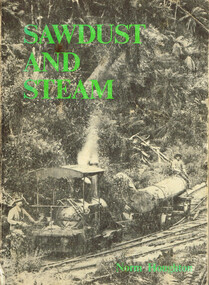
... A history of the railways and tramways of the eastern Otway Ranges. Norman Houghton. IBSN 0 909340 03 X. Soft cover. iv, 106 p.; illus, maps. Melbourne...A history of the railways and tramways of the eastern Otway Ranges. Norman Houghton. IBSN 0 909340 03 X. Soft cover. iv, 106 p.; illus, maps. Melbourne ...Sawdust and steam. A history of the railways and tramways of the eastern Otway Ranges. Norman Houghton. IBSN 0 909340 03 X. Soft cover. iv, 106 p.; illus, maps. Melbourne, 1975. Cartography: Alan Strempel.steam and society; norman houghton; railways, east otways; tramways, east otways; tramways, forrest; coastal tramways;
