
Showing 4095 items matching " war history"
-
 Monbulk RSL Sub Branch
Book, Boston Publishing Company, The army at war, 1987
... war 1961-1975...Vietnam - History - 20th century...Vietnam war 1961-1975 Vietnam - History - 20th century Photography, maps, and eyewitness accounts describe the War in Vietnam. ...Photography, maps, and eyewitness accounts describe the War in Vietnam.Index, Bibliography, ill, maps, p.192.non-fictionPhotography, maps, and eyewitness accounts describe the War in Vietnam.vietnam war 1961-1975, vietnam - history - 20th century -
 Monbulk RSL Sub Branch
Book, Boston Publishing Company, Pawns of war, 1987
... war 1961-1975...Vietnam - History - 20th century...Vietnam war 1961-1975 Vietnam - History - 20th century Photography, maps, and eyewitness accounts describe the War in Vietnam. ...Photography, maps, and eyewitness accounts describe the War in Vietnam.Index, Bibliography, ill, maps, p.192.non-fictionPhotography, maps, and eyewitness accounts describe the War in Vietnam.vietnam war 1961-1975, vietnam - history - 20th century -
 Monbulk RSL Sub Branch
Book, Boston Publishing Company, Words of war, 1987
... war 1961-1975...Vietnam - History - 20th century...Vietnam war 1961-1975 Vietnam - History - 20th century Photography, maps, and eyewitness accounts describe the War in Vietnam. ...Photography, maps, and eyewitness accounts describe the War in Vietnam.Index, Bibliography, ill, maps, p.192.non-fictionPhotography, maps, and eyewitness accounts describe the War in Vietnam.vietnam war 1961-1975, vietnam - history - 20th century -
 Monbulk RSL Sub Branch
Book, Boston Publishing Company, War in the shadows, 1987
... war 1961-1975...Vietnam - History - 20th century...Vietnam war 1961-1975 Vietnam - History - 20th century Photography, maps, and eyewitness accounts describe the War in Vietnam. ...Photography, maps, and eyewitness accounts describe the War in Vietnam.Index, Bibliography, ill, maps, p.192.non-fictionPhotography, maps, and eyewitness accounts describe the War in Vietnam.vietnam war 1961-1975, vietnam - history - 20th century -
 Monbulk RSL Sub Branch
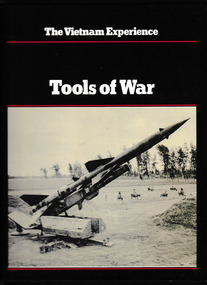
Book, Boston Publishing Company, Tools of war, 1987
... war 1961-1975...Vietnam - History - 20th century...Vietnam war 1961-1975 Vietnam - History - 20th century Photography, maps, and eyewitness accounts describe the War in Vietnam. ...Photography, maps, and eyewitness accounts describe the War in Vietnam.Index, Bibliography, ill, maps, p.176.non-fictionPhotography, maps, and eyewitness accounts describe the War in Vietnam.vietnam war 1961-1975, vietnam - history - 20th century -
 Monbulk RSL Sub Branch
Book, Time-Life Books, The aftermath: Europe, 1982
... Diplomatic history - Europe World politics - 1945 The geopolitical consequences of the European war Index, bib, ill, p.208. ...The geopolitical consequences of the European warIndex, bib, ill, p.208.non-fictionThe geopolitical consequences of the European wardiplomatic history - europe, world politics - 1945 -
 Monbulk RSL Sub Branch
Book, Time-Life Books, The aftermath: Asia, 1982
... Diplomatic history - Asia Asia - History - 1945 The geopolitical consequences of the war in the east Index, bib, ill, p.208. ...The geopolitical consequences of the war in the eastIndex, bib, ill, p.208.non-fictionThe geopolitical consequences of the war in the east diplomatic history - asia, asia - history - 1945 -
 Monbulk RSL Sub Branch
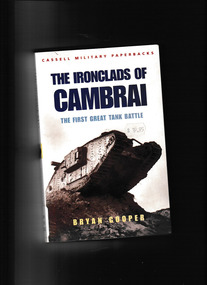
Book, Bryan Cooper, The ironclads of Cambrai: The first great tank battle, 2002
... Tanks - History france - campaigns - passchaendaele When tanks, the newly invented British weapon, were used for the first time in a mass attack on November 20 1917, they not only achieved one of the most remarkable successes of the First World War but set the pattern for the future of mechanized warfare. ...When tanks, the newly invented British weapon, were used for the first time in a mass attack on November 20 1917, they not only achieved one of the most remarkable successes of the First World War but set the pattern for the future of mechanized warfare. For the first time in three years of bloody trench warfare, epitomized by the slaughter at Passchendaele which was then reaching its climax, tanks brought about a breakthrough of the massive German defense system of the Hindenburg Line, followed up by British infantry and cavalry divisions. They were supported for the first time by low flying.Index, ill, maps, p.303.non-fictionWhen tanks, the newly invented British weapon, were used for the first time in a mass attack on November 20 1917, they not only achieved one of the most remarkable successes of the First World War but set the pattern for the future of mechanized warfare. For the first time in three years of bloody trench warfare, epitomized by the slaughter at Passchendaele which was then reaching its climax, tanks brought about a breakthrough of the massive German defense system of the Hindenburg Line, followed up by British infantry and cavalry divisions. They were supported for the first time by low flying. tanks - history, france - campaigns - passchaendaele -
 Monbulk RSL Sub Branch
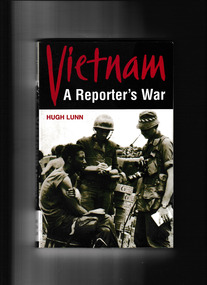
Book, Hugh Lunn, Vietnam: A reporters war, 1985
... History Saigon,1967. Fresh-faced 25-year-old Hugh Lunn arrives in Vietnam at the height of the war to cover it for Reuters and quickly meets a fascinating cast of characters: journalists, Vietnamese, military and best of all, Dinh, the Vietnamese reporter and guide who spoke his own brand of English (Dinglish) and whose wisdom and humour become inextricably bound up with the young reporter's view of the war. ...Saigon,1967. Fresh-faced 25-year-old Hugh Lunn arrives in Vietnam at the height of the war to cover it for Reuters and quickly meets a fascinating cast of characters: journalists, Vietnamese, military and best of all, Dinh, the Vietnamese reporter and guide who spoke his own brand of English (Dinglish) and whose wisdom and humour become inextricably bound up with the young reporter's view of the war. Before long the author experiences the full horror and tragedy of war, and finds himself questioning not only the US/Australian role in Vietnam, but his own role in a war where images and words could be as powerful as bullets.p.258.non-fictionSaigon,1967. Fresh-faced 25-year-old Hugh Lunn arrives in Vietnam at the height of the war to cover it for Reuters and quickly meets a fascinating cast of characters: journalists, Vietnamese, military and best of all, Dinh, the Vietnamese reporter and guide who spoke his own brand of English (Dinglish) and whose wisdom and humour become inextricably bound up with the young reporter's view of the war. Before long the author experiences the full horror and tragedy of war, and finds himself questioning not only the US/Australian role in Vietnam, but his own role in a war where images and words could be as powerful as bullets. vietnam conflict 1961-1975 - personal recollections, vietnam conflict 1961-1975 - history -
 Monbulk RSL Sub Branch
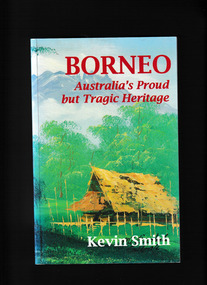
Book, Kevin Smith, Borneo: Australias proud but tragic heritage, 1999
... World War 1939-1945 - Prisoners of war - Sandakan World war 1939 – 1945 - Prisons and prisoners - Japanese History of Australian POW's in Borneo during WWII. ...History of Australian POW's in Borneo during WWII.Index, ill, maps, p.402.non-fictionHistory of Australian POW's in Borneo during WWII. world war 1939-1945 - prisoners of war - sandakan, world war 1939 – 1945 - prisons and prisoners - japanese -
 Monbulk RSL Sub Branch
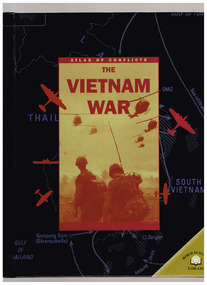
Book, World Almanac Library, The Vietnam war, 2005
... Vietnam conflict - Australian involvement Vietnam conflict - 1961-1975 - Pictorial works A short illustrated history of the Vietnam war Index, ill, maps, p.63. The Vietnam war Book World Almanac Library Reg G Grant ...A short illustrated history of the Vietnam warIndex, ill, maps, p.63.non-fictionA short illustrated history of the Vietnam warvietnam conflict - australian involvement, vietnam conflict - 1961-1975 - pictorial works -
 Monbulk RSL Sub Branch
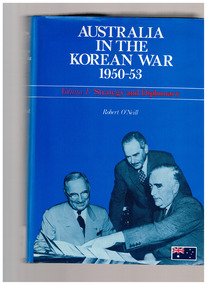
Book, Robert O'Neill, Australia in the Korean war of 1950-1953, 1981
... Korean war 1950-1953 - Australian involvement Korean war - Commonwealth forces Comprehensive history of the Australian involvement in the Korean conflict Index, ill, p.548. ...Comprehensive history of the Australian involvement in the Korean conflictIndex, ill, p.548.non-fictionComprehensive history of the Australian involvement in the Korean conflictkorean war 1950-1953 - australian involvement, korean war - commonwealth forces -
 Monbulk RSL Sub Branch
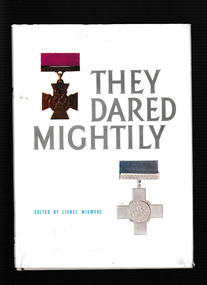
Book, Lionel Wigmore, They dared mightily, 1963
... Victoria Cross Soldiers - Australia - Biography Biographical histories of Australian Victoria Cross recepients Index, ill, maps, p.317. They dared mightily Book Lionel Wigmore Australian War memorial ...Biographical histories of Australian Victoria Cross recepientsIndex, ill, maps, p.317.non-fictionBiographical histories of Australian Victoria Cross recepientsvictoria cross, soldiers - australia - biography -
 Monbulk RSL Sub Branch
Book, Suzanne Brooks-Pinćević, Britain and the Bleiburg tragedy : an artist's impression, 1998
... Croatia - History Balkan wars - History Outlines the significance of the Bleiburg tragedy to Croatia's independence ... combines contemporary history with art, prose and poetry Ill, p.76. ...Outlines the significance of the Bleiburg tragedy to Croatia's independence ... combines contemporary history with art, prose and poetryIll, p.76.Outlines the significance of the Bleiburg tragedy to Croatia's independence ... combines contemporary history with art, prose and poetrycroatia - history, balkan wars - history -
 Monbulk RSL Sub Branch
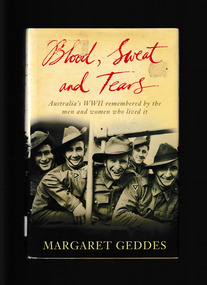
Book, Viking, Blood, sweat and tears : Australia's WWII remembered by the men and women who lived it, 2004
... World War 1939-1945 - Australia - History...World War 1939-1945 - Australia - History Australia 1939-1945 - Social conditions Blood, Sweat and Tears brings together the first-hand accounts of more than seventy-five ordinary Australians who did extraordinary things during World War II. ...Blood, Sweat and Tears brings together the first-hand accounts of more than seventy-five ordinary Australians who did extraordinary things during World War II. Prisoners of war, airmen, nurses, landgirls, internees, schoolchildren, soldiers, sailors and volunteers of every description share their memories of a time of horror, tragedy, love and excitement. BIndex, ill, p.403.non-fictionBlood, Sweat and Tears brings together the first-hand accounts of more than seventy-five ordinary Australians who did extraordinary things during World War II. Prisoners of war, airmen, nurses, landgirls, internees, schoolchildren, soldiers, sailors and volunteers of every description share their memories of a time of horror, tragedy, love and excitement. Bworld war 1939-1945 - australia - history, australia 1939-1945 - social conditions -
 Monbulk RSL Sub Branch
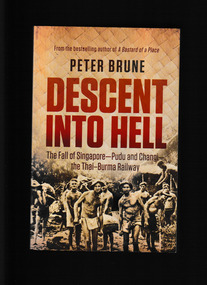
Book, Allen and Unwin, Descent into hell : the fall of Singapore--Pudu and Changi--the Thai Burma railway, 2014
... World War 1939-1945 - Australia - Military history...World War 1939-1945 - Australia - Military history World war 1939 – 1945 - Prisons and prisoners – Australia The definitive story of the Australian campaign in Southeast Asia during World War II from a leading military writer. ...The definitive story of the Australian campaign in Southeast Asia during World War II from a leading military writer. Impressive, compelling, and rich in human spirit, this is a scrupulously researched and groundbreaking account of one of the most traumatic calamities in Australian history-the Malayan Campaign, the fall of Singapore, and the subsequent horrors of the Thai-Burma Railway.Index, ill, maps, p.802.non-fictionThe definitive story of the Australian campaign in Southeast Asia during World War II from a leading military writer. Impressive, compelling, and rich in human spirit, this is a scrupulously researched and groundbreaking account of one of the most traumatic calamities in Australian history-the Malayan Campaign, the fall of Singapore, and the subsequent horrors of the Thai-Burma Railway. world war 1939-1945 - australia - military history, world war 1939 – 1945 - prisons and prisoners – australia -
 Monbulk RSL Sub Branch
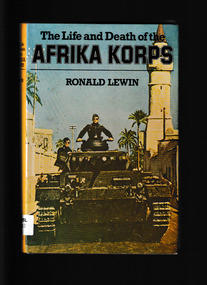
Book, Ronald Lewin, The Life and Death of the Afrika Corps, 1977
... World War 1939-1945 - Campaigns - Germany...Afrika Korps - History...World War 1939-1945 - Campaigns - Germany Afrika Korps - History History of the Afrika Korps - The German army in North Africa Index, ill, maps, p.207. ...History of the Afrika Korps - The German army in North AfricaIndex, ill, maps, p.207.non-fictionHistory of the Afrika Korps - The German army in North Africaworld war 1939-1945 - campaigns - germany, afrika korps - history -
 Monbulk RSL Sub Branch
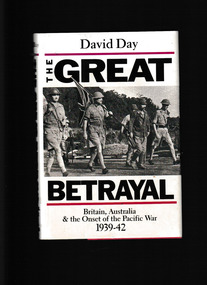
Book, Angus and Robertson, The great betrayal : Britain, Australia and the onset of the Pacific War, 1939-42, 1988
... Worls War 1939-1945 - Diplomatic history...Worls War 1939-1945 - Diplomatic history Australia - Foreign relations - Britain The ignominious fall of Singapore to the Japanese in February 1942 marked the climax of the greatese crisis in Anglo-Australian relations - Britain's inexcusable betrayal of Australia in time of war. ...The ignominious fall of Singapore to the Japanese in February 1942 marked the climax of the greatese crisis in Anglo-Australian relations - Britain's inexcusable betrayal of Australia in time of war. Until World War II, Australia had always rushed to the Imperial colours, confident that just as Australian blood was shed for the Mother Country, so too would British Blood be in the defence of Australia. But in 1939 Australia lay wide open to attack, her defences practically non-existent, and she was reluctant to commit her meagre forces overseas. Her objections were overcome, however, by an unequivocal British promise to protect her from a Japanese attack, so she sent troops and ships to the northern hemisphere, leaving Singapore naval base as the cornerstone of her own defence policy. Britain's promise to defend Australia was made with little concern for the possibility of its ever being implemented and, certainly, in 1939 a direct threat to Australia looked unlikely. During 1940 and 1941, however, the threat from Japan increased, while Britain's ability to counter it weakened. Yet the British government resisted calls to strengthen the Far Eastern Defence, continually reassuring Australia that the Japanese threat would not materialize and that, even if it did, Britain could still contain it. Then the inconceivable happened: in December 1941 the Japanese decimated the US fleet at Pearl Harbour and in early 1942 took Singapore, leaving Australia suddenly in immediate peril. But the oft-repeated promise to defend the Dominion came to nought. And, at the most crucial time in Australia's history, Churchill tried to prevent substantial American forces from being sent to the pacific, and even attempted to delay the repatriation of Australian troops needed for defence. Thus Britain deliberately left Australia at the mercy of Japan, using her to divert and delay the Japanese thrust westwards towards India and the Middle East...[inside front and back cover]. This compelling and controversial book reveals how in 1942 Churchill, in an attempt to delay an attack on India, left Australia at the mercy of the Japanese by trying to prevent American forces being sent to the Pacific. Drawing on a wealth of sources, including many previously unavailable to historians, David Day exposes a saga of empty promises and asks serious questions about the past and future relationship between Britain and Australia. Collapse summaryIndex, p.388.non-fictionThe ignominious fall of Singapore to the Japanese in February 1942 marked the climax of the greatese crisis in Anglo-Australian relations - Britain's inexcusable betrayal of Australia in time of war. Until World War II, Australia had always rushed to the Imperial colours, confident that just as Australian blood was shed for the Mother Country, so too would British Blood be in the defence of Australia. But in 1939 Australia lay wide open to attack, her defences practically non-existent, and she was reluctant to commit her meagre forces overseas. Her objections were overcome, however, by an unequivocal British promise to protect her from a Japanese attack, so she sent troops and ships to the northern hemisphere, leaving Singapore naval base as the cornerstone of her own defence policy. Britain's promise to defend Australia was made with little concern for the possibility of its ever being implemented and, certainly, in 1939 a direct threat to Australia looked unlikely. During 1940 and 1941, however, the threat from Japan increased, while Britain's ability to counter it weakened. Yet the British government resisted calls to strengthen the Far Eastern Defence, continually reassuring Australia that the Japanese threat would not materialize and that, even if it did, Britain could still contain it. Then the inconceivable happened: in December 1941 the Japanese decimated the US fleet at Pearl Harbour and in early 1942 took Singapore, leaving Australia suddenly in immediate peril. But the oft-repeated promise to defend the Dominion came to nought. And, at the most crucial time in Australia's history, Churchill tried to prevent substantial American forces from being sent to the pacific, and even attempted to delay the repatriation of Australian troops needed for defence. Thus Britain deliberately left Australia at the mercy of Japan, using her to divert and delay the Japanese thrust westwards towards India and the Middle East...[inside front and back cover]. This compelling and controversial book reveals how in 1942 Churchill, in an attempt to delay an attack on India, left Australia at the mercy of the Japanese by trying to prevent American forces being sent to the Pacific. Drawing on a wealth of sources, including many previously unavailable to historians, David Day exposes a saga of empty promises and asks serious questions about the past and future relationship between Britain and Australia. Collapse summary worls war 1939-1945 - diplomatic history, australia - foreign relations - britain -
 Monbulk RSL Sub Branch
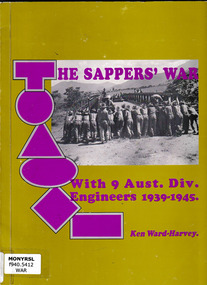
Book, Sakoga in conjunction with 9th Division RAE Association, The sappers' war with Ninth Australian Division Engineers 1939-1945, 1992
... Australian army - Engineers World war 1939-1945 - Regimental histories - Australia Traces the activities of the 9th Australian Division Engineers during World War Two Ill, maps, p.224. ...Traces the activities of the 9th Australian Division Engineers during World War TwoIll, maps, p.224.non-fictionTraces the activities of the 9th Australian Division Engineers during World War Twoaustralian army - engineers, world war 1939-1945 - regimental histories - australia -
 Monbulk RSL Sub Branch
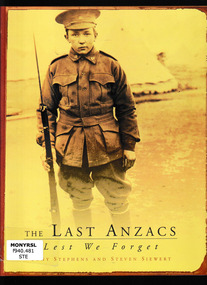
Book, Fremantle Arts Centre Press, The last Anzacs : lest we forget, 2003
... ANZAC - History ANZACS - Biographies ANZAC Soldiers - More than 75,000 Australians and New Zealanders went to war on the Gallipoli Peninsula in 1915. ...ANZAC Soldiers - More than 75,000 Australians and New Zealanders went to war on the Gallipoli Peninsula in 1915. They shared a horror, but their courage and deeds on a battlefield of tragic errors and unimaginable suffering helped build a legend, the legend of the Anzacs. The British lost more men on Gallipoli than did the Anzacs. The Anzacs lost more men on the Western Front than they did against the Turks at Gallipoli. Yet, rightly or wrongly, Gallipoli is etched deepest into the Australian and New Zealand psyches. Now, all the original Anzacs, the men of Gallipoli, are gone. This book records the lives of the last of them."--Provided by publisher. More than 75,000 Australians and New Zealanders went to war on the Gallipoli Peninsula in 1915. They shared a horror, but their courage and deeds on a battlefield of tragic errors and unimaginable suffering helped build a legend, the legend of the Anzacs. The British lost more men on Gallipoli than did the Anzacs. The Anzacs lost more men on the Western Front than they did against the Turks at Gallipoli. Yet, rightly or wrongly, Gallipoli is etched deepest into the Australian and New Zealand psyches. Now, all the original Anzacs, the men of Gallipoli, are gone. This book records the lives of the last of them.Ill, p.106.non-fictionANZAC Soldiers - More than 75,000 Australians and New Zealanders went to war on the Gallipoli Peninsula in 1915. They shared a horror, but their courage and deeds on a battlefield of tragic errors and unimaginable suffering helped build a legend, the legend of the Anzacs. The British lost more men on Gallipoli than did the Anzacs. The Anzacs lost more men on the Western Front than they did against the Turks at Gallipoli. Yet, rightly or wrongly, Gallipoli is etched deepest into the Australian and New Zealand psyches. Now, all the original Anzacs, the men of Gallipoli, are gone. This book records the lives of the last of them."--Provided by publisher. More than 75,000 Australians and New Zealanders went to war on the Gallipoli Peninsula in 1915. They shared a horror, but their courage and deeds on a battlefield of tragic errors and unimaginable suffering helped build a legend, the legend of the Anzacs. The British lost more men on Gallipoli than did the Anzacs. The Anzacs lost more men on the Western Front than they did against the Turks at Gallipoli. Yet, rightly or wrongly, Gallipoli is etched deepest into the Australian and New Zealand psyches. Now, all the original Anzacs, the men of Gallipoli, are gone. This book records the lives of the last of them.anzac - history, anzacs - biographies -
 Monbulk RSL Sub Branch
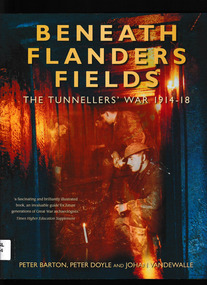
Book, Peter Barton, Beneath Flanders fields the tunnellers' war, 1914-1918, 2005
... War 1914-1918 - Tunnellers In the Ypres Salient, the secret struggle beneath no man's land became one of engineering, technology and science - and of carefully calculated assassination. This book reveals how this most intense of battles was fought and won. Few on the surface knew the horrific details of the tunnellers work, yet this silent, claustrophobic conflict was a barbaric struggle that raged day and night for almost two and a half years. On 7 June 1917 the most dramatic mine offensive in history ...In the Ypres Salient, the secret struggle beneath no man's land became one of engineering, technology and science - and of carefully calculated assassination. This book reveals how this most intense of battles was fought and won. Few on the surface knew the horrific details of the tunnellers work, yet this silent, claustrophobic conflict was a barbaric struggle that raged day and night for almost two and a half years. On 7 June 1917 the most dramatic mine offensive in history at Messines Ridge opened. After Messines, the tunnellers turned to the construction of deep dugouts, structures which housed tens of thousands of troops, men for whom life on the surface had become almost untenable. Often electrically lit and ventilated, they incorporated headquarters, cookhouses, soup kitchens, hospitals, drying rooms and workshops. Hundreds were built, and thanks to the Flanders geology many still survive today, and are can be seen in photographs in this book.Index, ill, maps, p.305.non-fictionIn the Ypres Salient, the secret struggle beneath no man's land became one of engineering, technology and science - and of carefully calculated assassination. This book reveals how this most intense of battles was fought and won. Few on the surface knew the horrific details of the tunnellers work, yet this silent, claustrophobic conflict was a barbaric struggle that raged day and night for almost two and a half years. On 7 June 1917 the most dramatic mine offensive in history at Messines Ridge opened. After Messines, the tunnellers turned to the construction of deep dugouts, structures which housed tens of thousands of troops, men for whom life on the surface had become almost untenable. Often electrically lit and ventilated, they incorporated headquarters, cookhouses, soup kitchens, hospitals, drying rooms and workshops. Hundreds were built, and thanks to the Flanders geology many still survive today, and are can be seen in photographs in this book. world war 1914-1918 - campaigns - france, world war 1914-1918 - tunnellers -
 Monbulk RSL Sub Branch
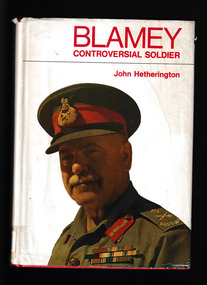
Book, Australian War Memorial and the Australian Government Publishing. Service, Blamey, controversial soldier: a biography of field marshal Sir Thomas Blamey, GBE, KCB CMG DSO ED, 1973
... General Blamey - Biography Australia - Armed forces - History Frank and searching study of a brilliant soldier and controversial man Index, ill, p.414. Blamey, controversial soldier: a biography of field marshal Sir Thomas Blamey, GBE, KCB CMG DSO ED Book Australian War Memorial and the Australian Government Publishing. ...Frank and searching study of a brilliant soldier and controversial manIndex, ill, p.414.non-fictionFrank and searching study of a brilliant soldier and controversial mangeneral blamey - biography, australia - armed forces - history -
 Monbulk RSL Sub Branch
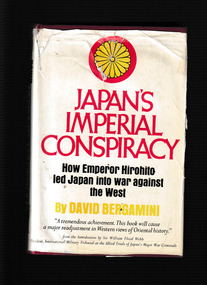
Book, David Bergamin, Japan's Imperial Conspiracy : How Emperor Hirohito led Japan into war against the West, 1972
... Japan - History - 1912-1945 japan - foreign relations - 1941-1945 Japan's Imperial Conspiracy completely shatters all previous accounts of Japanese history before and during World War II Ill, index, maps, p.1235. ...Japan's Imperial Conspiracy completely shatters all previous accounts of Japanese history before and during World War IIIll, index, maps, p.1235.non-fictionJapan's Imperial Conspiracy completely shatters all previous accounts of Japanese history before and during World War IIjapan - history - 1912-1945, japan - foreign relations - 1941-1945 -
 Monbulk RSL Sub Branch
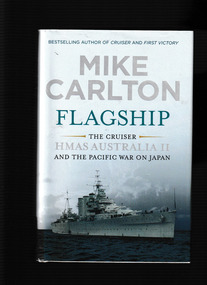
Book, Penguin Random House Australia, Flagship : the cruiser HMAS Australia II and the Pacific war on Japan, 2016
... History - Military - Naval - Australia In 1928 the Royal Australian Navy (RAN) acquired the fast and heavy cruiser HMAS Australia, the second RAN ship to bear this name. After being virtually mothballed in the Depression years she would come in to her own as the flagship of the Australian fleet when the world awoke to the menace of Hitler's Germany. Ill, maps, index, p.642. Flagship : the cruiser HMAS Australia II and the Pacific war ...In 1928 the Royal Australian Navy (RAN) acquired the fast and heavy cruiser HMAS Australia, the second RAN ship to bear this name. After being virtually mothballed in the Depression years she would come in to her own as the flagship of the Australian fleet when the world awoke to the menace of Hitler's Germany.Ill, maps, index, p.642.non-fictionIn 1928 the Royal Australian Navy (RAN) acquired the fast and heavy cruiser HMAS Australia, the second RAN ship to bear this name. After being virtually mothballed in the Depression years she would come in to her own as the flagship of the Australian fleet when the world awoke to the menace of Hitler's Germany.royal australia navy - history, history - military - naval - australia -
 Monbulk RSL Sub Branch
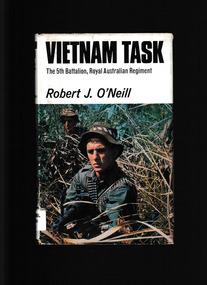
Book, Robert J. O'Neill, Vietnam task : the 5th Battalion, the Royal Australian Regiment, 1966/67, 1968
... Vietnam conflict - Australian involvement Vietnam war 1961-1975 – Regimental histories - Australia On 24 May 1966, eight hundred men of the 5th Battalion, The Royal Australian Regiment, landed at Nui Dat, in Viet Cong territory. ...On 24 May 1966, eight hundred men of the 5th Battalion, The Royal Australian Regiment, landed at Nui Dat, in Viet Cong territory. For the next 12 months they were faced with the task of restoring peace, civil law and regular commerce to the Vietnamese of Phuoc Tuy province. This book is a detailed record of those months in the monsoon jungles--of the problems that were faced and the solutions that were found.Ill, index, maps, p.256.non-fictionOn 24 May 1966, eight hundred men of the 5th Battalion, The Royal Australian Regiment, landed at Nui Dat, in Viet Cong territory. For the next 12 months they were faced with the task of restoring peace, civil law and regular commerce to the Vietnamese of Phuoc Tuy province. This book is a detailed record of those months in the monsoon jungles--of the problems that were faced and the solutions that were found. vietnam conflict - australian involvement, vietnam war 1961-1975 – regimental histories - australia -
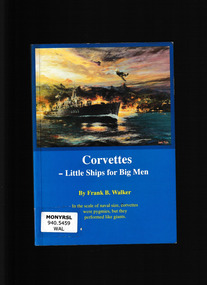 Monbulk RSL Sub Branch
Book, Frank B. Walker, Corvettes : little ships for big men, 1995
... History...World War 1939-1945 - Naval operations - Australia...Australia - Royal Australian Navy - History World War 1939-1945 - Naval operations - Australia A look at the role of these Australian - built and Australian - manned ships in WW II. ...A look at the role of these Australian - built and Australian - manned ships in WW II.Ill, p.108non-fictionA look at the role of these Australian - built and Australian - manned ships in WW II. australia - royal australian navy - history, world war 1939-1945 - naval operations - australia -
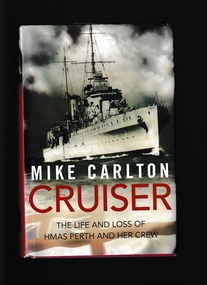 Monbulk RSL Sub Branch
Book, Random House Australia, Cruiser : the life and loss of HMAS Perth and her crew, 2010
... Royal Australia Navy - History HMSS Perth Of all the Australians who fought in the Second World War, none saw more action nor endured so much of its hardship and horror as the crew of the cruiser HMAS Perth. ...Of all the Australians who fought in the Second World War, none saw more action nor endured so much of its hardship and horror as the crew of the cruiser HMAS Perth. Most were young - many were still teenagers - from cities and towns, villages and farms across the nation. In three tumultuous years they did battle with the forces of Nazi Germany, Fascist Italy, the Vichy French and, finally, the Imperial Japanese Navy. Off the coast of Java in March 1942 she met an overwhelming enemy naval force. Firing until her ammunition literally ran out, she was sunk with the loss of 353 of her crew, including her much-loved captain. Another 328 men were taken into Japanese captivity, most to become slave labourers in the infinite hell of the Burma-Thai railway. Many died there. Only 218 men, less than a third of her crew, survived to return home at war's end. This is their story.Index, ill, maps, p.706.non-fictionOf all the Australians who fought in the Second World War, none saw more action nor endured so much of its hardship and horror as the crew of the cruiser HMAS Perth. Most were young - many were still teenagers - from cities and towns, villages and farms across the nation. In three tumultuous years they did battle with the forces of Nazi Germany, Fascist Italy, the Vichy French and, finally, the Imperial Japanese Navy. Off the coast of Java in March 1942 she met an overwhelming enemy naval force. Firing until her ammunition literally ran out, she was sunk with the loss of 353 of her crew, including her much-loved captain. Another 328 men were taken into Japanese captivity, most to become slave labourers in the infinite hell of the Burma-Thai railway. Many died there. Only 218 men, less than a third of her crew, survived to return home at war's end. This is their story. royal australia navy - history, hmss perth -
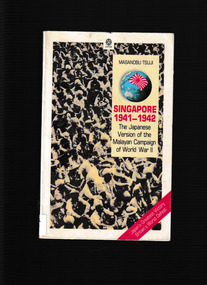 Monbulk RSL Sub Branch
Book, Oxford University Press, Singapore 1941-1942 : the Japanese version of the Malayan Campaign of World War II, 1988
... In it, he "unreservedly attributes Japan's victory in Malaya to the patriotic fervour and self-sacrifice of the frontline officers and men of her 25th Army, which, in advancing six hundred miles and capturing Singapore in seventy days, achieved one of the decisive victories of World War II and accomplished a feat unparalleled in military history. Ill, maps, index, p.358. ...Originally published in 1960, the author of this book is one of the planners of the Imperial Japanese Army's invasion of Malaya and the capture of Singapore-Colonel Masanobu Tsuji himself. In it, he "unreservedly attributes Japan's victory in Malaya to the patriotic fervour and self-sacrifice of the frontline officers and men of her 25th Army, which, in advancing six hundred miles and capturing Singapore in seventy days, achieved one of the decisive victories of World War II and accomplished a feat unparalleled in military history.Ill, maps, index, p.358.non-fictionOriginally published in 1960, the author of this book is one of the planners of the Imperial Japanese Army's invasion of Malaya and the capture of Singapore-Colonel Masanobu Tsuji himself. In it, he "unreservedly attributes Japan's victory in Malaya to the patriotic fervour and self-sacrifice of the frontline officers and men of her 25th Army, which, in advancing six hundred miles and capturing Singapore in seventy days, achieved one of the decisive victories of World War II and accomplished a feat unparalleled in military history. world war 1939-1945 - campaigns - singapore, world war 1939-1945 - campaigns - malaya -
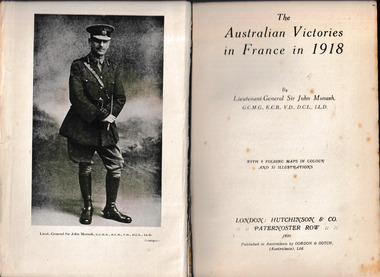 Monbulk RSL Sub Branch
Book, John Monash, The Australian Victories in France in 1918, 1920
... World War 1914-1918 - Campaigns - France world war 1914-1918- regimental histories - australia 1918 was a great period of success for the five divisions of the newly formed ‘Australian Corps’. ...1918 was a great period of success for the five divisions of the newly formed ‘Australian Corps’. From May 1918, they had been under the command of an Australian, Lieutenant General John Monash. Monash was knighted at his headquarters at the Chateau de Bertangles after the British success at the Battle of Amiens in August 1918, and he later wrote this influential book on his experiences. The major victories are listed as Defence of Amiens Dernancourt Villers-Bretonneux Battle of Hamel Battle of Mont St Quentin Battle of Hindenburg Line Mountbrehain. In June 1918 he was promoted to Lieutenant-General and appointed to command the Australian Corps in France. He led his Australians through a series of victorious actions until the end of the war. He is the greatest soldier Australia has ever bred and at the time was regarded as a military tactical genius. At no time before or after WW1 has Australia ever held such prominence or power on the world stage as it did at the end of WW1.Index, ill, maps, p.351.non-fiction1918 was a great period of success for the five divisions of the newly formed ‘Australian Corps’. From May 1918, they had been under the command of an Australian, Lieutenant General John Monash. Monash was knighted at his headquarters at the Chateau de Bertangles after the British success at the Battle of Amiens in August 1918, and he later wrote this influential book on his experiences. The major victories are listed as Defence of Amiens Dernancourt Villers-Bretonneux Battle of Hamel Battle of Mont St Quentin Battle of Hindenburg Line Mountbrehain. In June 1918 he was promoted to Lieutenant-General and appointed to command the Australian Corps in France. He led his Australians through a series of victorious actions until the end of the war. He is the greatest soldier Australia has ever bred and at the time was regarded as a military tactical genius. At no time before or after WW1 has Australia ever held such prominence or power on the world stage as it did at the end of WW1.world war 1914-1918 - campaigns - france, world war 1914-1918- regimental histories - australia -
 Monbulk RSL Sub Branch
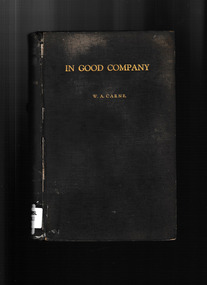
Book, 6th Machine Gun Company (A.I.F.) Association (Incorporating the 2nd Macine Gun Battalion), In good company : an account of the 6th Machine Gun Company A.I.F. in search of peace 1915-19, 1937
... World War 1939-1945 - Campaigns - France world war 1914-1918 - regimental histories Regimental history of the 6th Machine Gun Company A.I.F. ...Regimental history of the 6th Machine Gun Company A.I.F.Ill, maps, p.424.non-fictionRegimental history of the 6th Machine Gun Company A.I.F. world war 1939-1945 - campaigns - france, world war 1914-1918 - regimental histories
