
Showing 5849 items matching " wife"
-
 Flagstaff Hill Maritime Museum and Village
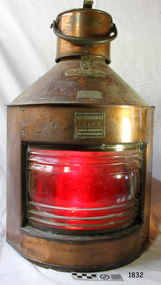
Equipment - Navigation Lamp, W. T George and Co. Ltd, ca 1941
... William Thomas George was born in Birmingham in 1884 and was a tin plate worker. He and his wife Ellene had a son Leslie Thomas George. ...William Thomas George was born in Birmingham in 1884 and was a tin plate worker. He and his wife Ellene had a son Leslie Thomas George. ...William Thomas George was born in Birmingham in 1884 and was a tin plate worker. He and his wife Ellene had a son Leslie Thomas George. The firm W T George & Co was formed sometime later. In 1939 his firm produced ship lamps. The Patent Number GB546575 on the lamp's plate was assigned to Leslie Thomas George in 1941 for improvements in, or relating to, ships' lanterns. From that time the patent number was affixed to their namufactured Meteorite lights. The ship navigation lamp is important as an example of the evolution of marine safety technology. Countries began passing laws and regulations in the 1830s that required ships to show navigation lights at night or in poor weather. From the late 1840s colours were standardised; red for portside of the vessel and green for starboard, a white masthead light, and a white light at anchor. By 1914 the International Convention for the Safety of Life at Sea was formed and continues, with decisions and notifications on improvements and changes.. Lamp; Portside ship's lamp is rounded in the front with two flat sides coming to a point at the rear. Glass has circular ridging. Metal handle with lid and clasp. The reflector has red colouring. Inscribed on fixed plates on the front, with maker's details and Patent number. This Meteorite lantern was made by W T George and Co Ltd, of Birmingham. "Port" "W T George and Co Ltd" "Sherlock Street Birmingham" "Meteorite 68990 Patented No 546575 and others pending"warrnambool, shipwreck coast, flagstaff hill, flagstaff hill maritime museum, flagstaff hill maritime village, portside ships lamp, portside, port lamp, ship's lamp, marine lamp, navigation lamp, w t george & co, coloured lens, red lens, ship fitting, marine technology, navigation light, signal lamp, leslie thomas george, gb546575, patent gb546575, meteorite, lantern, lamp, light -
 Federation University Historical Collection
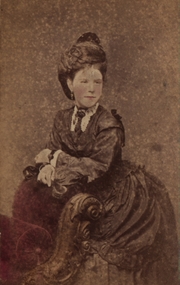
Photograph - Photograph-sepia, Stewart & Co, Portrait of a Woman, c1850"s
... Within a year of arrival she had married Richard Phillips whose 1st wife had died in childbirth, leaving behind a 4 year old son. ...Within a year of arrival she had married Richard Phillips whose 1st wife had died in childbirth, leaving behind a 4 year old son. ...Elizabeth Goodenough came to Australia aged 16/17 having paid 5 pounds to the government to secure a paid position in the colony of NSW. Within a year of arrival she had married Richard Phillips whose 1st wife had died in childbirth, leaving behind a 4 year old son. Richard was a coach plater by trade and was a publican in Sydney and Geelong. One of Elizabeth's daughters Emma Eliza Jane, married Thomas Watson in Ballarat.Portrait of a young woman, circa 1840's. Sepia photograph.verso - Stewart & Co. Probably Elizabeth Phillips b Goodenoughelizabeth goodenough, elizabeth anne phiilips, emma eliza jane phillips, emma eliza jane watson, richard phillips -
![Sketch - Digital image, William Poulter's Bonnie Vale [sketch], 1925c](/media/collectors/4f729f5697f83e03086015b8/items/54d0485a2162f10e70db9490/item-media/54d0489e2162f10e70db9ed3/item-fit-380x285.jpg?cb=6) Greensborough Historical Society
Greensborough Historical SocietySketch - Digital image, William Poulter's Bonnie Vale [sketch], 1925c
... William Poulter and his wife Mary arrived in Victoria in 1849 and settled in Greensborough in 1853, constructing "Bonnie Vale" soon after their arrival. ...William Poulter and his wife Mary arrived in Victoria in 1849 and settled in Greensborough in 1853, constructing "Bonnie Vale" soon after their arrival. ...Copy of sketch of William Poulter's property "Bonnie Vale". William Poulter and his wife Mary arrived in Victoria in 1849 and settled in Greensborough in 1853, constructing "Bonnie Vale" soon after their arrival. The old house was completely destroyed by fire circa 1960. Bonnie Vale, if existent in modern times would have been found in south eastern centre of Poulter Reserve, over the Plenty River is the house property known as 'Blackjack' on 59 Hume Street.Greensborough pioneer family Digital copy of black and white sketch. -
 City of Moorabbin Historical Society (Operating the Box Cottage Museum)
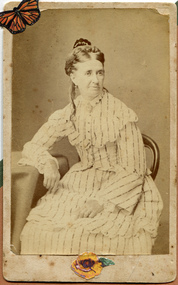
Photograph - Photograph, Black & White, Caroline Box c1855, c1855
... George Box, of Sussex England, his wife Mary Cripps Box and 3 three of their 4 four sons and 3 three of their 4 four daughters left Liverpool in the Sailing Ship 'Atlanta' in March 1856 to begin a new life in Melbourne, Victoria , Australia Their baby daughter Cecilia Lydia died a few days later. ...George Box, of Sussex England, his wife Mary Cripps Box and 3 three of their 4 four sons and 3 three of their 4 four daughters left Liverpool in the Sailing Ship 'Atlanta' in March 1856 to begin a new life in Melbourne, Victoria , Australia Their baby daughter Cecilia Lydia died a few days later. ...George Box, of Sussex England, his wife Mary Cripps Box and 3 three of their 4 four sons and 3 three of their 4 four daughters left Liverpool in the Sailing Ship 'Atlanta' in March 1856 to begin a new life in Melbourne, Victoria , Australia Their baby daughter Cecilia Lydia died a few days later. Caroline Box, the eldest daughter, remained in England . working as a cook until she joined the family in Australia in 1863 Box Cottage Museum, a reconstruction of an early settler hut, is named after the Box family who resided there 1865 -1913 . George Box was the father of William Box who with his wife Elizabeth Avis Box and 13 children lived and farmed on the block of land in Jasper Road, East Brighton ( now McKinnon / Ormond) that was part of the Henry Dendy Special Survey 1841 Black and white photograph of Caroline Box taken in Tunbridge Wells England c 1855Album inside cover ; Donated to / Moorabbin / Historical Society / by / Avis Box Leighbox george, box mary, box william, box elizabeth, box alonzo, box mary louisa, dendy henry, were j b, dendy's special survey 1841, brighton, moorabbin, bentleigh, mckinnon, ormond, market gardeners, dairy farms, early settlers, pioneers, jasper road, gurr jabez, gurr eliza, pay henry, pay anna, ward willam, box henry, ward elizabeth emma, box john, sheldrake martha, rushall eleanor, box caroline -
 Glen Eira Historical Society
Newspaper - Yorston, J.S., Councillor
... Filed also includes the entire issue (eight pages) of the same ADVERTISER, on the front page of which is a report of a domestic violence charge proven at Caulfield Court of Petty Sessions against Herbert Charles Woodbridge, who assaulted his wife and daughter....Filed also includes the entire issue (eight pages) of the same ADVERTISER, on the front page of which is a report of a domestic violence charge proven at Caulfield Court of Petty Sessions against Herbert Charles Woodbridge, who assaulted his wife and daughter. Yorston J.S. Caulfield Council Woodbridge Herbert Charles Domestic Violence Dickson and Yorston Lempriere Avenue Building and Construction Company Victorian Scottish Union Newspaper Yorston, J.S., Councillor ...Photocopy of page three of CAULFIELD ADVERTISER (17th April 1947) carrying potted biography and photograph of Councillor J.S. Yorston, Father of the Council, which was number two in the newspaper’s KNOW YOUR COUNCIL series. Filed also includes the entire issue (eight pages) of the same ADVERTISER, on the front page of which is a report of a domestic violence charge proven at Caulfield Court of Petty Sessions against Herbert Charles Woodbridge, who assaulted his wife and daughter.yorston j.s., caulfield council, woodbridge herbert charles, domestic violence, dickson and yorston, lempriere avenue, building and construction company, victorian scottish union -
 Eltham District Historical Society Inc
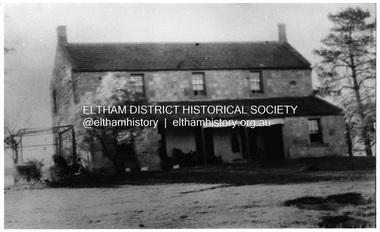
Photograph, "Pretty Hill", Kangaroo Ground. James Johnston's homestead
... Kangaroo Ground pioneers James Johnston (died 1895) with his wife Elizabeth commenced building this stone house on his Pretty Hill property, Kangaroo Ground in 1842. ...Kangaroo Ground pioneers James Johnston (died 1895) with his wife Elizabeth commenced building this stone house on his Pretty Hill property, Kangaroo Ground in 1842. ...Kangaroo Ground pioneers James Johnston (died 1895) with his wife Elizabeth commenced building this stone house on his Pretty Hill property, Kangaroo Ground in 1842. It was one of the oldest homes in the district till 1938 when new owner Mr Percy Cope, a master builder demolished the old building and a new brick building was erected in its place. Pretty Hill is one of the highest spots in the district with splendid views of the surrounding country.This photo forms part of a collection of photographs gathered by the Shire of Eltham for their centenary project book,"Pioneers and Painters: 100 years of the Shire of Eltham" by Alan Marshall (1971). The collection of over 500 images is held in partnership between Eltham District Historical Society and Yarra Plenty Regional Library (Eltham Library) and is now formally known as 'The Shire of Eltham Pioneers Photograph Collection'. It is significant in being the first community sourced collection representing the places and people of the Shire's first one hundred years.Digital imagesepp, shire of eltham pioneers photograph collection, kangaroo ground, pretty hill, stonen house, homestead, johnston family, james johnston -
 Warrnambool and District Historical Society Inc.
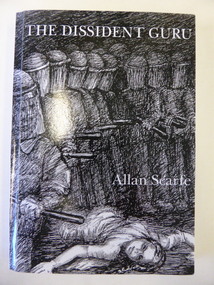
Book, Allan Scarfe, The Dissident Guru, 2004
... He taught in India, England and Australia (including several years at Warrnambool High School) and was the joint author with his wife Wendy of 12 non-fiction books published in Australia, India, England and the U.S.A. ...He taught in India, England and Australia (including several years at Warrnambool High School) and was the joint author with his wife Wendy of 12 non-fiction books published in Australia, India, England and the U.S.A. ...An anti-globalisation thriller drawing on the author's experiences in India.This is a soft cover book of 328 pages. It was written by Allan Scarfe. The cover is black, grey and white and the lettering is white on the front cover and black on the spine. The front cover has an illustration of masked figures and a body and the back cover has excerpts from critics’ remarks about other Scarfe books. fictionAn anti-globalisation thriller drawing on the author's experiences in India.allan scarfe, warrnambool author -
 Eltham District Historical Society Inc
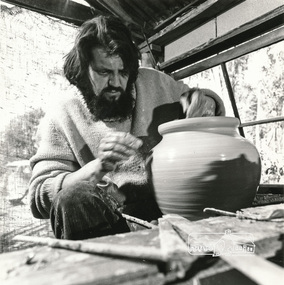
Photograph, Peter Laycock, 1971ca
... Meanwhile a group was developing at Cottles Bridge, making their own kick-wheels and kilns and producing pots and models by what often began as a co-operative system, two or more artists co-operating in making each article... Husband and wife teams predominated.. Laycock and Alma Shanahan have been responsible for the now thriving reputation of the "Dunmoochin" pottery.."...Meanwhile a group was developing at Cottles Bridge, making their own kick-wheels and kilns and producing pots and models by what often began as a co-operative system, two or more artists co-operating in making each article... Husband and wife teams predominated.. Laycock and Alma Shanahan have been responsible for the now thriving reputation of the "Dunmoochin" pottery.." pioneers and painters peter laycock dunmoochin pottery Black and white photograph reproduced on p131 of 'Pioneers & Painters: One Hundred years of Eltham and its Shire' by Alan Marshall (1971) Peter Laycock Photograph ...Page 133: "..Studio potters and ceramic artists began settling in this area (Warrandyte) from about 1945.. Meanwhile a group was developing at Cottles Bridge, making their own kick-wheels and kilns and producing pots and models by what often began as a co-operative system, two or more artists co-operating in making each article... Husband and wife teams predominated.. Laycock and Alma Shanahan have been responsible for the now thriving reputation of the "Dunmoochin" pottery.."Black and white photograph reproduced on p131 of 'Pioneers & Painters: One Hundred years of Eltham and its Shire' by Alan Marshall (1971)pioneers and painters, peter laycock, dunmoochin, pottery -
 Bendigo Historical Society Inc.
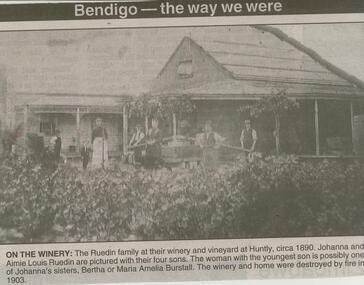
Newspaper - JENNY FOLEY COLLECTION: ON THE WINERY
... Aime Louis Ruedin (1847- 5/6/1896) was the son of Swiss immigrants Louis and his wife Catherine Schiener. Aime married Johanna Haemsen (1850 - 1909). in 1870. ...Aime Louis Ruedin (1847- 5/6/1896) was the son of Swiss immigrants Louis and his wife Catherine Schiener. Aime married Johanna Haemsen (1850 - 1909). in 1870. ...Aime Louis Ruedin (1847- 5/6/1896) was the son of Swiss immigrants Louis and his wife Catherine Schiener. Aime married Johanna Haemsen (1850 - 1909). in 1870. They planted extensive vineyards at Huntly and supplemented their income by selling fruit from their orchards. They had 7 children. In May 1903, fire began in the Ruedin home and spread to the winery. Some vats and winemaking equipment were save but approx 4000 gallons of casked wine was lost.Bendigo Advertiser ''The way we were'' from Tuesday, December 9, 2003. On the winery: the Ruedin family at their winery and vineyard at Huntly, circa 1890, Johanna and Aimie Louis Ruedin are pictured with their four sons. The woman with the youngest son is possibly one of Johanna's sisters, Bertha or Maria Amelia Burstall. The winery and home were destroyed by fire in 1903. The clip is in a folder.newspaper, bendigo advertiser, the way we were -
 Ithacan Historical Society
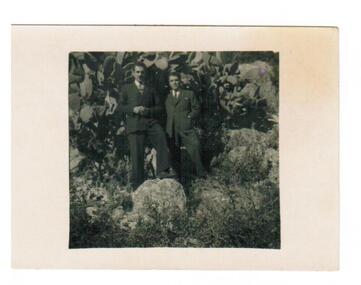
Photograph, Alexandratos brothers - Ithaca, c1950s
... Pictured in Ithaca are Stathi and Spiro Alexandratos who are the brothers of Yianni Alexandratos who lived in Melbourne until returning to live permanently in Greece with his wife Zoi and children Penny and George in the early 1970s. ...Pictured in Ithaca are Stathi and Spiro Alexandratos who are the brothers of Yianni Alexandratos who lived in Melbourne until returning to live permanently in Greece with his wife Zoi and children Penny and George in the early 1970s. ...Pictured in Ithaca are Stathi and Spiro Alexandratos who are the brothers of Yianni Alexandratos who lived in Melbourne until returning to live permanently in Greece with his wife Zoi and children Penny and George in the early 1970s. In the early 1900s their father Giorgos Alexandratos was a partner in the 'Alexandra Bros' London Café at 25 Elizabeth Street. Giorgos was a founding member of the Ithacan Philanthropic Society. He eventually returned permanently to Ithaca where his three sons were born.A small black and white photograph of two men dressed in suits standing in a rock garden and in front of a tall prickly pear cactus. The small photograph is surrounded with a white frame.Written in Greek on the back: STATHIS ALEXANDROS SPIROS ALEXANDROScafes, alexandratos brothers -
 Warrnambool and District Historical Society Inc.
Mallet, Croquet Mallet, Late 19th century/early 20th century
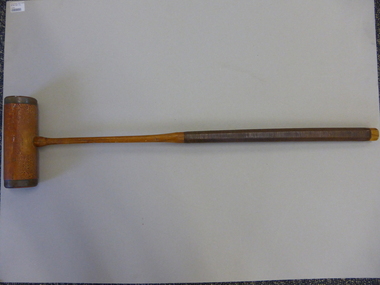
... This croquet mallet belonged to Martha Beatrice McCullough (nee Barker), wife of George McCullough, who died in November 1931 at the age of 50. ...This croquet mallet belonged to Martha Beatrice McCullough (nee Barker), wife of George McCullough, who died in November 1931 at the age of 50. ...This croquet mallet belonged to Martha Beatrice McCullough (nee Barker), wife of George McCullough, who died in November 1931 at the age of 50. She lived at the house at 113 Koroit Street named ‘Heatherlie’ (the site of the current retirement residential units) and owned and managed the Silver Stream Café in Liebig Street. The mallet was used by her and may have been used by her mother before her. Croquet was a popular sport, especially for women after the 1880s. This is a significant item as it is an artefact associated with women’s sport in the late 19th century and early 20th century. It is also important as it belonged to a local Warrnambool resident and businesswoman whose granddaughter resides in Warrnambool today.This is a brown-coloured wooden croquet mallet. The handle has ribbed leather binding and the mallet has brass edging and brass on the under section attached with twelve brass screws. The handle is octagonal shaped. The lower section of the handle and the mallet have been varnished. On the mallet: ‘The Reel’croquet, warrnambool -
 Warrnambool and District Historical Society Inc.
Photograph Album, 1920s +
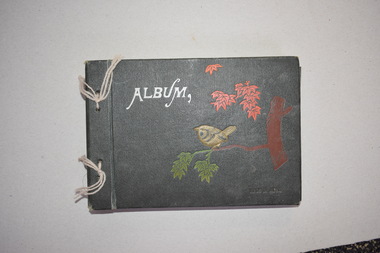
... Dorothy Ardlie (1910-1993) was the daughter of Ethel and Arthur Ardlie, the granddaughter of the well-known Warrnambool lawyer, William Ardlie and his wife, Mary and the great granddaughter of John and Mary Ardlie, pioneer settlers in Warrnambool. ...Dorothy Ardlie (1910-1993) was the daughter of Ethel and Arthur Ardlie, the granddaughter of the well-known Warrnambool lawyer, William Ardlie and his wife, Mary and the great granddaughter of John and Mary Ardlie, pioneer settlers in Warrnambool. ...This album came from the estate of Dorothy Ardlie of Warrnambool. It contains photographs of her childhood with her sister Agnes and other family members and later photographs in their adulthood. Dorothy Ardlie (1910-1993) was the daughter of Ethel and Arthur Ardlie, the granddaughter of the well-known Warrnambool lawyer, William Ardlie and his wife, Mary and the great granddaughter of John and Mary Ardlie, pioneer settlers in Warrnambool. Dorothy lived for some time at Aroona, 19 Princess Street in Warrnambool. This album is of interest, firstly as a memento of Dorothy Ardlie, a member of a prominent 20th century Warrnambool family, and secondly as a good example of a photograph album showing the typical social history of an upper middle class family in the mid 20th century. The keeping of a photograph album was a hobby of many women in the 20th century.This is a hard cover photograph album of 39 pages. The cover is brown with coloured images of a bird, tree and leaves on the front cover. The album is bound with string. There are 133 black and white photographs pasted in. The album is slightly stained and some photographs are missing. Album Made in Japan This album belongs to Dorothy Alys Ardlie ardlie family,, history of warrnambool -
 Warrnambool and District Historical Society Inc.
Book - Family Bible, John Murphy Company, The Holy Bible Douay Version, 1899
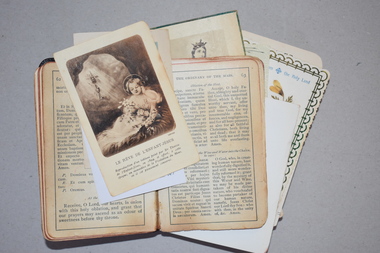
... Arthur Ardlie was the son of the prominent Warrnambool lawyer, William Ardlie and his wife Mary and the grandson of John and Mary Ardlie, pioneer settlers in Warrnambool. ...Arthur Ardlie was the son of the prominent Warrnambool lawyer, William Ardlie and his wife Mary and the grandson of John and Mary Ardlie, pioneer settlers in Warrnambool. ...This Bible and cover belonged to Ethel Ardlie, nee Ryan (1880-1967). In 1903 she married Arthur Stanley Ardlie of Warrnambool. Arthur Ardlie was the son of the prominent Warrnambool lawyer, William Ardlie and his wife Mary and the grandson of John and Mary Ardlie, pioneer settlers in Warrnambool. Ethel and Arthur Ardlie had three daughters, Olive (1905-1912), Dorothy (1910-1993) and Agnes (1915-1993). They lived at Aroona, Princess Street, Warrnambool.These items are of great interest firstly because they are examples of the type of Bible and cover that families owned in the mid 20th century. Also they are mementoes of a prominent family in Warrnambool in the 20th century, with the Bible containing important information on this family. .1 This is a Bible with a black cover with gold lettering on the spine. The cover is stained. The pages contain the Old Testament (1086 pages), a Family Register section, the New Testament (306 pages) and some coloured maps. Amongst the pages are two pressed pansies and two loose sheets. .2 This is a brown tooled leather cover for the Bible with a brown silk lining and a brown cord attached to the top of the spine for use as a bookmark. The front cover has an embossed image of seven figures. The edges of the spine of the cover are torn. Ethel M. Ardlie (x2) Aroona, Warrnambool ardlie family, history of warrnambool -
 Warrnambool and District Historical Society Inc.
Book, 055 Telephone Directory 1969, 1969
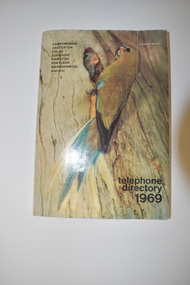
... The directory came from the Nullawarre Post Office at the time when Charles Williams was the Post Master (mid 20th century) and delivered two runs of mail a day. His wife, Vida was the Post Mistress. Nullawarre is a small agricultural settlement 25 kilometres south east of Warrnambool and today has a general store, Post Office and school. ...The directory came from the Nullawarre Post Office at the time when Charles Williams was the Post Master (mid 20th century) and delivered two runs of mail a day. His wife, Vida was the Post Mistress. Nullawarre is a small agricultural settlement 25 kilometres south east of Warrnambool and today has a general store, Post Office and school. ...This telephone directory of 1969 has entries from the Camperdown, Casterton, Colac, Edenhope, Hamilton, Portland and Warrnambool districts. The directory came from the Nullawarre Post Office at the time when Charles Williams was the Post Master (mid 20th century) and delivered two runs of mail a day. His wife, Vida was the Post Mistress. Nullawarre is a small agricultural settlement 25 kilometres south east of Warrnambool and today has a general store, Post Office and school. This telephone directory, which has local provenance (Nullawarre Post Office), will be of great use to researchers as it contains the names and addresses of private individuals and businesses in the Western District of Victoria in 1969. It is also of interest as many of the entries give the names of the country properties at that time and the entries are listed separately under the names of the various towns. This is a soft-cover booklet of 392 pages. The front cover is multi-coloured and has a photograph of a parrot and the back cover has an advertisement in blue and white. There are 200 white pages and 192 pink pages of telephone numbers in Western Victoria in 1969. The printing throughout is black and the pages are very faded. communications, warrnambool, history of warrnambool, 055 telephone directory -
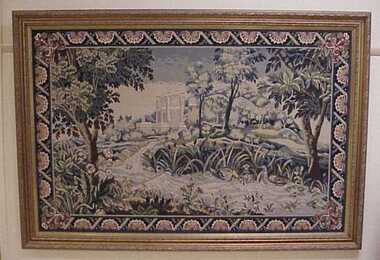 National Wool Museum
Picture, La Verdure aux Canards
... "La Verdure Aux Canards" (Greenery with Ducks) is a large scale, needlepoint picture created by the late Mrs Marion Averay (wife of the donor) between January 1971 and April 1972 whilst she and her husband were living in France. ..."La Verdure Aux Canards" (Greenery with Ducks) is a large scale, needlepoint picture created by the late Mrs Marion Averay (wife of the donor) between January 1971 and April 1972 whilst she and her husband were living in France. ..."La Verdure Aux Canards" (Greenery with Ducks) is a large scale, needlepoint picture created by the late Mrs Marion Averay (wife of the donor) between January 1971 and April 1972 whilst she and her husband were living in France. It has been worked in Gobelin stitch on a 19hpi linen canvas. The canvas and threads (wool and silk) were purchased from the Langlois tapestry manufacturers of France. The design is a copy of a handwoven 18th century Aubusson tapestry.handicrafts, langlois, averay, mrs marion -
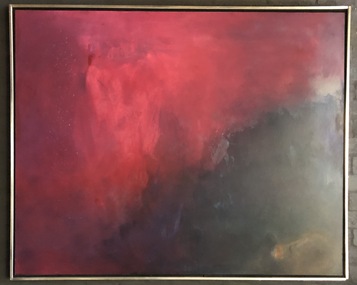 Robin Boyd Foundation
Painting, Donald Laycock, Nights of Love, 1965
... This painting is dedicated to Patricia Boyd, Robin Boyd's wife, on the reverse side. "Night of Love" was exhibited as a complimentary pair with "Days of Gold" at Laycock's 1965 exhibition at South Yarra Gallery, where Robin Boyd purchased it. ...This painting is dedicated to Patricia Boyd, Robin Boyd's wife, on the reverse side. "Night of Love" was exhibited as a complimentary pair with "Days of Gold" at Laycock's 1965 exhibition at South Yarra Gallery, where Robin Boyd purchased it. ...This painting is dedicated to Patricia Boyd, Robin Boyd's wife, on the reverse side. "Night of Love" was exhibited as a complimentary pair with "Days of Gold" at Laycock's 1965 exhibition at South Yarra Gallery, where Robin Boyd purchased it. It hangs in the living/dining room. "Three of the Players", the 1953 painting by John Brack, hung in this position in the Mark Strizic photograph in Robin Boyd's book "Living in Australia" p 80. The Brack was in the Boyd home until 2010, when it was sold.Abstract composition, predominantly in red tones but with blue tones in the bottom right hand corner.Initials and date (DL 65) in centre at the bottom. On the reverse side - "1506" ; label on rear with cutting instructions, and" To Pat".donald laycock, south yarra gallery, paricia boyd, robin boyd, walsh st artwork, ohm2022, ohm2022_18 -
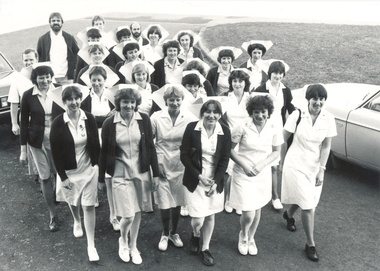 Ballarat Base Hospital Trained Nurses League
1982, Graduation, Nurses approaching Civic Hall, Ballarat
... The 38th Annual Graduation was held in the Civic Hall on Friday, 16th July, 1982 in the presence of Lady Murray, wife of the Governor of Victoria. A large crowd was in attendance and the Guest Speaker, Mr R.M. ...The 38th Annual Graduation was held in the Civic Hall on Friday, 16th July, 1982 in the presence of Lady Murray, wife of the Governor of Victoria. A large crowd was in attendance and the Guest Speaker, Mr R.M. ...Ballarat Base Hospital, School of Nursing Graduation. (BBH Annual Report, 1982, page 9.) The 38th Annual Graduation was held in the Civic Hall on Friday, 16th July, 1982 in the presence of Lady Murray, wife of the Governor of Victoria. A large crowd was in attendance and the Guest Speaker, Mr R.M. Horner, Headmaster of Ballarat and Clarendon College, presented a very interesting and stimulating address to the Graduates. There were 41 General, 21 Fourth Year and 13 Midwifery Graduates.Photo1982, nurses, graduation, civic hall, annual report, ballarat base hospital -
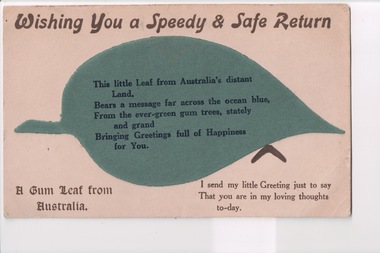 Wangaratta RSL Sub Branch
Postcard, 1917
... This postcard, addressed to soldier William West, was written by his wife on behalf of their young daughter. The final line reads, 'When are you coming home Daddy dear?' ...This postcard, addressed to soldier William West, was written by his wife on behalf of their young daughter. The final line reads, 'When are you coming home Daddy dear?' ...From the album of WWI soldier William West (1268) of the 29 Infantry Battalion, 5th Pioneers Battalion. This postcard, addressed to soldier William West, was written by his wife on behalf of their young daughter. The final line reads, 'When are you coming home Daddy dear?' This collection of postcards, photographs and clippings were sent between William and his family and loved ones during the years he was on active service. See also 207 and 220. Cheaper and more efficient than traditional letters, postcards were an enormously popular means of communication between families and those at the front. Postcard with white background and cut out of a green gum leaf"wishing you a speedy and safe return" "A gum leaf from Australia"album, photo album, newspaper clippings, postcard, wwi, remembrance, gum leaf, gumleaf, australia -
 Whitehorse Historical Society Inc.
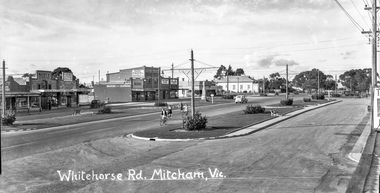
Photograph - Black and white negative - Whitehorse Road Mitcham c. 1949, Harold Ernest Millane, Whitehorse Road Mitcham, Vic. c. 1949, circa. 1949
... Mary Millane, Harold's wife, printed captions on each negative with Indian ink. ...Mary Millane, Harold's wife, printed captions on each negative with Indian ink. ...This image was one of a series taken by Harold Millane in the late 1940's. They were printed onto post cards. Mary Millane, Harold's wife, printed captions on each negative with Indian ink. The series includes a variety of views of Mitcham, Vermont, Nunawading, Park Orchards and Doncaster East. The post cards were sold as souvenirs in the Millane shop on the N-E corner of Station Street and Whitehorse Road, Mitcham (originally the Mitcham Post Office).Clear photograph showing details of shops, vehicles, streetscape, lighting.Celluloid half plate B + W negative.Whitehorse Road Mitcham, Vic. hardy scott, h. s .beckwith, richards drapers, d. g. williamson, r. gracie, s. kelly, cenotaph, mitcham memorial hall -
 Melbourne Legacy
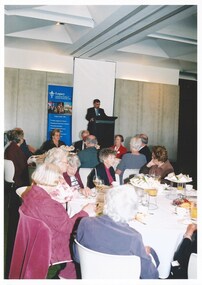
Photograph - Photo, Widows Lunch 2005, 2005
... The photos show tables of widows at a lunch, the Governor of Victoria, John Landy, and his wife are in some of the photos talking to the ladies. ...The photos show tables of widows at a lunch, the Governor of Victoria, John Landy, and his wife are in some of the photos talking to the ladies. ...Photos of Legacy Widows at a luncheon function after the Widows Sunday ceremony at the Shrine and a service at a church. This is an annual event for Legacy widows at the start of Legacy Week, which is the first week in September. The photos show tables of widows at a lunch, the Governor of Victoria, John Landy, and his wife are in some of the photos talking to the ladies. Same event as other photos of 2005 (00710, 00711). The venue is possibly Zinc at Federation Square, which was written on a post it note with the photos.A record of a event for the Legacy widows in 2005.Colour photo x 2 of widows at a luncheon following the Shrine ceremony.Printed on the back widows, governor of victoria, widows' sunday -
![Photograph, Ann [Dowling] Myers, c.1918](/media/collectors/5b29fbbc21ea6714f814b353/items/628a005d1b6dacfccb86f356/item-media/628a01041b6dacfccb86fc3e/item-fit-380x285.jpg?cb=6) Melton City Libraries
Melton City LibrariesPhotograph, Ann [Dowling] Myers, c.1918
... Built c 1870. it remained in the family until a demolition order was placed on it in 1969 when vacated by Martha wife of Frederick 4th son of Ann and Henry. ...Built c 1870. it remained in the family until a demolition order was placed on it in 1969 when vacated by Martha wife of Frederick 4th son of Ann and Henry. ...Western Highway – north side Burnbank 1 – Cottage of Henri and Ann nee Dowling Myers side of road east of Myers Gully the junction of Reserve Rd. now known as Ryans Creek. Built c 1870. it remained in the family until a demolition order was placed on it in 1969 when vacated by Martha wife of Frederick 4th son of Ann and Henry. Her new house was built in McKenzie St on the south side near the corner of Smith St. Portrait photo of Annlocal identities, pioneer families -
 Rutherglen Historical Society
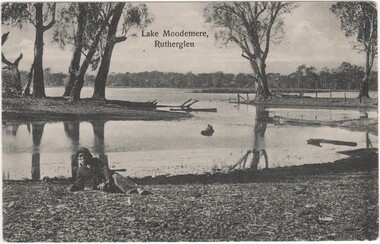
Postcard, Lake Moodemere, Rutherglen, 1900-1908
... Neddy spent the latter part of his life here, especially after his Wife Charlotte and children Thomas, Harry, Dolly and Kate were taken from him in the Kiewa Valley and taken to Lake Tyers.The Aboriginal Protection Board would provide travel passes for him to visit his Country. ...Neddy spent the latter part of his life here, especially after his Wife Charlotte and children Thomas, Harry, Dolly and Kate were taken from him in the Kiewa Valley and taken to Lake Tyers.The Aboriginal Protection Board would provide travel passes for him to visit his Country. ...This photo is of Neddy Wheeler - Dhudhuroa man and language informant to RH Matthews. The photo was taken at Lake Moodemere. Neddy spent the latter part of his life here, especially after his Wife Charlotte and children Thomas, Harry, Dolly and Kate were taken from him in the Kiewa Valley and taken to Lake Tyers.The Aboriginal Protection Board would provide travel passes for him to visit his Country. He died in April 1908Black and white photograph, printed on postcard, showing view of Lake Moodemere, with a man wearing a jacket and hat, reclining on the bank in the foreground.Printed at top of photo: "Lake Moodemere, Rutherglen"lake moodemere, neddy wheeler, dhudhuroa, charlotte wheeler, thomas wheeler, harry wheeler, dolly wheeler, kate wheeler, kiewa valley, lake tyres, aboriginal protection board -
 Vision Australia
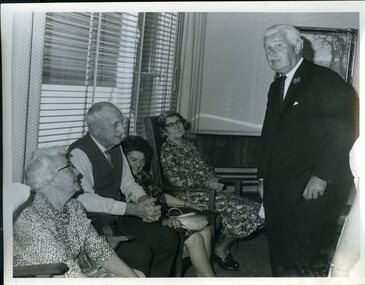
Photograph - Image, Opening of new Kitty Rose wing at Mirridong, March 5, 1971
... Pictures show Sir Rohan meeting residents, addressing the crowd, unveiling the plaque, walking through the wing and signing the visitors book, accompanied by his wife, Mrs Delacombe, Katharine Rose and a man in military dress. ...Pictures show Sir Rohan meeting residents, addressing the crowd, unveiling the plaque, walking through the wing and signing the visitors book, accompanied by his wife, Mrs Delacombe, Katharine Rose and a man in military dress. ...Sir Rohan Delacombe opens the new wing of Mirridong Nursing home, named in honour of long-time and tireless worker, Katharine Rose. Pictures show Sir Rohan meeting residents, addressing the crowd, unveiling the plaque, walking through the wing and signing the visitors book, accompanied by his wife, Mrs Delacombe, Katharine Rose and a man in military dress. The last image is of Katharine Rose addressing the crowd under the 'Mirridong Home for the Blind' sign.10 x Black and White photographs of people at the openingE.P Cameronassociation for the blind, mirridong home (bendigo), katharine (kitty) rose, sir rohan delacombe -
 Ballarat Heritage Services
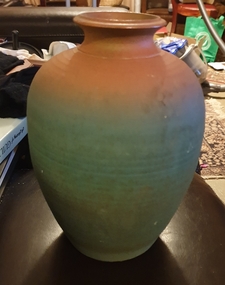
Photograph, Vessel by Mark Reid, 1989
... In 1985, he and his wife Robyn set up the Torvil Pottery at Buninyong near Ballarat in Victoria. ...In 1985, he and his wife Robyn set up the Torvil Pottery at Buninyong near Ballarat in Victoria. ...Mark Reid began potting in the early 1980s, working for a time in North Queensland. In 1985, he and his wife Robyn set up the Torvil Pottery at Buninyong near Ballarat in Victoria. In 1991, they relocated to a 10 acre property in nearby Magpie and set up the Ballarat Clayfire Gallery with a working studio, gallery and residence. In 2005, he Clayfire Gallery was located to Daylesford. Mark Reid signs his work with an incised 'Mark Reid' or 'MR'.mark reid, australia studio pottery, ceramics, torvil pottery, buninyong, magpie, clayfire gallery, ballarat clayfire gallery, daylesford -
 Ballarat Heritage Services
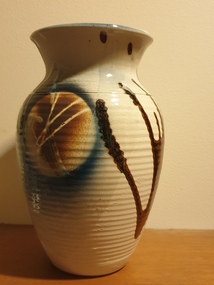
Ceramic - Artwork - Ceramics, Pottery Vase by Mark Reid
... In 1985, he and his wife Robyn set up the Torvil Pottery at Buninyong, Victoria. ...In 1985, he and his wife Robyn set up the Torvil Pottery at Buninyong, Victoria. ...Mark REID Mark Reid began working with clay in the early 1980s, working for a time at Kairi Pottery in North Queensland. In 1985, he and his wife Robyn set up the Torvil Pottery at Buninyong, Victoria. In 1991, they relocated to a 10 acre property in nearby Magpie and set up the Ballarat Clayfire Gallery with a working studio, gallery and residence. In 2005, the Clayfire Gallery was located to Daylesford. Reid signs his work with an incised 'Mark Reid' or 'MR'. Photograph of a hand thrown ceramic vase. australian landscape pottery, gilbert buchanan, graham wood, landscape, redbyrne pottery, ceramics, shepparton, torvil pottery, ballarat clayfire gallery -
 Sunbury Family History and Heritage Society Inc.
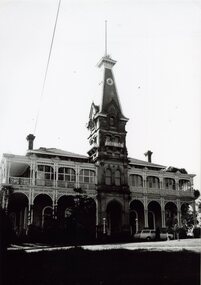
Photograph, Rupertswood Mansion
... W.J. Clarke the first wife of W.J.Clarke. The property along with the Clarke family have been interwoven with Sunbury's history over the decades and remained in the Clarke family until 1922 when H.V. ...W.J. Clarke the first wife of W.J.Clarke. The property along with the Clarke family have been interwoven with Sunbury's history over the decades and remained in the Clarke family until 1922 when H.V. ...The grand building is Rupertswood Mansion which was the Sunbury home of the Clarke family. The foundation stone was laid29th August 1874 by Mrs. W.J. Clarke the first wife of W.J.Clarke. The property along with the Clarke family have been interwoven with Sunbury's history over the decades and remained in the Clarke family until 1922 when H.V. McKay of Sunshine Harvester fame purchased the property. The Salesian Fathers purchased it in 1927 and since that time the property has been a school. Many important events have taken place in Sunbury within the Rupertswood grounds over the years. A non-digital black and white photograph of a double storey grand mansion with a return verandah on the ground floor and a balcony with decorative iron lace across the front. An elegant tower is over the main entrance.rupertswood estate, rupertswood mansion, w.j.clarke -
 Ballarat RSL Sub-Branch Inc.
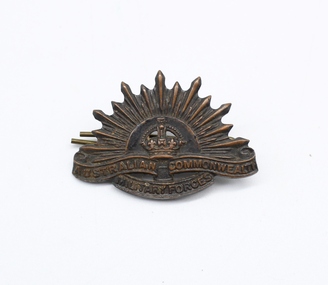
Hat Badge - Rising Sun
... His next of kin is Mrs Sarah Ann MURPHY - Wife....His next of kin is Mrs Sarah Ann MURPHY - Wife. first world war (ww1) 1914 - 1918 uniforms ballarat rsl ballarat On front: “AUSTRALIAN COMMONWEALTH/MILITARY FORCES” Badge with motif of the Rising Sun, for use on Australian Army slouch hats. ...This object relates to Oliver Charles MURPHY. He was born on 1/01/1879 in Lexton, VIC. Oliver Charles served in the Army (6047) enlisting on, 20/03/1916 in Swan Hill, VIC before being discharged from duties with the 5 BATTALION as a Army Non-Commissioned Corporal / Bombardier (CPL/LBDR) on 23/06/1919. Oliver Charles MURPHY was not a prisoner of war. His next of kin is Mrs Sarah Ann MURPHY - Wife.Badge with motif of the Rising Sun, for use on Australian Army slouch hats. Rising Sun includes rays of sunshine in an arch around a crown, below which there is a scroll bearing text. On reverse, two loops are soldered to the badge and a pin is fed through both loops, used for attachment to slouch hat. On front: “AUSTRALIAN COMMONWEALTH/MILITARY FORCES”first world war (ww1), 1914 - 1918, uniforms, ballarat rsl, ballarat -
 Ballarat RSL Sub-Branch Inc.
Dog Tags
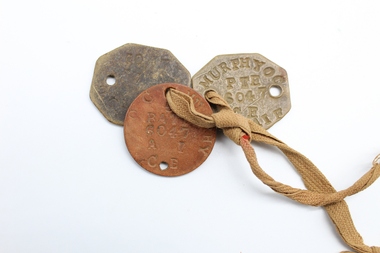
... His next of kin is Mrs Sarah Ann MURPHY - Wife....His next of kin is Mrs Sarah Ann MURPHY - Wife. first world war (ww1) 1914 - 1918 uniforms ballarat rsl ballarat Round tag: “O C MURPHY (on outer)/5/BATT/6047/A I/ C E” Hexangonal tag: “MURPHY OC/ PTE/6047/C E/5 AIF” Hexagonal tag: “6047/5/ OC MURPHY” Three tags of leather attached via a light brown cotton tape. ...This object relates to Oliver Charles MURPHY. He was born on 1/01/1879 in Lexton, VIC. Oliver Charles served in the Army (6047) enlisting on, 20/03/1916 in Swan Hill, VIC before being discharged from duties with the 5 BATTALION as a Army Non-Commissioned Corporal / Bombardier (CPL/LBDR) on 23/06/1919. Oliver Charles MURPHY was not a prisoner of war. His next of kin is Mrs Sarah Ann MURPHY - Wife.Three tags of leather attached via a light brown cotton tape. Two tags are hexagonal in shape with two holes punched in opposite sides; the third tag is round with two holes punched at 12 o’clock and 6 o’clock. The tags are embossed/branded with text.Round tag: “O C MURPHY (on outer)/5/BATT/6047/A I/ C E” Hexangonal tag: “MURPHY OC/ PTE/6047/C E/5 AIF” Hexagonal tag: “6047/5/ OC MURPHY”first world war (ww1), 1914 - 1918, uniforms, ballarat rsl, ballarat -
 Ballarat RSL Sub-Branch Inc.
Soldier's Pay Book - AIF
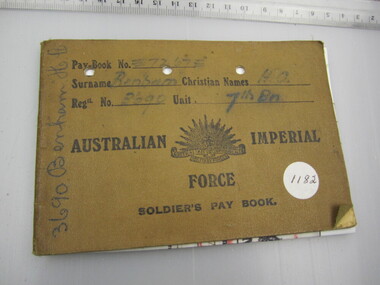
... His next of kin is Mrs Sarah Ann MURPHY - Wife....His next of kin is Mrs Sarah Ann MURPHY - Wife. First World War (WW1) 1914 - 1918 Literature Ballarat RSL Ballarat Soldier's Pay Book - AIF ...This object relates to Oliver Charles MURPHY. He was born on 1/01/1879 in Lexton, VIC. Oliver Charles served in the Army (6047) enlisting on, 20/03/1916 in Swan Hill, VIC before being discharged from duties with the 5 BATTALION as a Army Non-Commissioned Corporal / Bombardier (CPL/LBDR) on 23/06/1919. Oliver Charles MURPHY was not a prisoner of war. His next of kin is Mrs Sarah Ann MURPHY - Wife.first world war (ww1), 1914 - 1918, literature, ballarat rsl, ballarat -
 Falls Creek Historical Society
Clothing - Falls Creek Souvenir Caps
... These caps were donated by Blake Thompson who with his wife started skiing at Falls Creek in 1979 and were members of Aurora Lodge for many years. ...These caps were donated by Blake Thompson who with his wife started skiing at Falls Creek in 1979 and were members of Aurora Lodge for many years. ...These caps were donated by Blake Thompson who with his wife started skiing at Falls Creek in 1979 and were members of Aurora Lodge for many years. They wore these hats at Falls Creek and Cedarwood Lodge which had a bar in the 1990s and was seen as “the place to go.” Cedarwood was built about 1979 by Peter Hyndman. It was a large lodge with over 100 beds. Like many lodges it has now been renovated to become studio and self-contained apartments.These caps are significant because they are representative of the range of memorabilia available at Falls Creek.Two souvenir caps from Falls Creek and Cedarwood Lodge. The Falls Creek Cap is made from green tartan fabric with a green suede peak and the Falls Creek logo. The Cedarwood Lodge cap is made from blue corduroy fabric and features the multi-coloured Cedarwood Lodge logoCap1 - Below logo - FALLS CREEK Cap 2 - Cedar Wood LODGE / FALLS CREEK / AUSTRALIAfalls creek memorabilia, cedarwood lodge
