
Showing 625 items matching "unit history"
-
 Bendigo Military Museum
Postcard, c.1916
... Embark for England 20.6.1916, embark for France 22.11.1916, WIA 11.8.1918 Shell wounds (unclear), rejoin unit 23.9.1918, hospital while on leave 1.12.1918 with Bronchitis, return too Australia 24.12.1918 with Influenza, discharged from the AIF 21.3.1919 medically unfit. documents - postcards photography-photographs military history - army On photo itself is a small number 4072. ...Alexander Norman Cummin (Sandy) No 18 enlisted in the AIF in the 38th Batt HQ on 22.2.1916 age 19 years 4 months. Embark for England 20.6.1916, embark for France 22.11.1916, WIA 11.8.1918 Shell wounds (unclear), rejoin unit 23.9.1918, hospital while on leave 1.12.1918 with Bronchitis, return too Australia 24.12.1918 with Influenza, discharged from the AIF 21.3.1919 medically unfit.Portrait black & white of soldier standing. Australian soldier has no head dress, name Sandy. ALEXANDER NORMAN CUMMIN.On photo itself is a small number 4072. The bottom RHS has T L FULLER AMESBURY. The rear: Larkhill Camp Amesbury Salisbury Plain England. To Mr Harvey with love and best wishes Sandy 29.8.16. Sailed June 20/16documents - postcards, photography-photographs, military history - army -
 Bendigo Military Museum
Letter - LETTER, VIETNAM, 3.8.1992
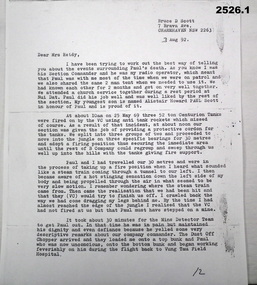
... Australian Regular Army served Vietnam first in 1 ARU from 10.3.1969 - 1.4.1969 and then posted to B Coy 9 RAR 2.4.1969 until being Medivaced home on 2.6.1969. 1 ARU (1st Australian Reinforcement Unit) 9 RAR (9th Battalion of the Royal Australian Regiment) Refer 1189.5, 2224, 2237.2P re Paul Reidy. documents - letters military history Copy of typed two page letter on A4 paper from BRUCE D SCOTT to Mrs Reidy. ...Letter written to Mrs Reidy by her son Paul's Section Commander BRUCE D SCOTT. It details the circumstances of PAUL REIDY'S death in Vietnam on 25.5.1969. It was during “Operation Reynella” around the Long Hai Mountains. Paul Francis Reidy (born Bendigo) No 3793403. A National Serviceman Paul served Vietnam first in 1 ARU from 24.2.1969 - 17.3.1969 and then posted to B Coy 9 RAR 18.3.1969 until his death. Bruce Donaldson Scott No 213485. Australian Regular Army served Vietnam first in 1 ARU from 10.3.1969 - 1.4.1969 and then posted to B Coy 9 RAR 2.4.1969 until being Medivaced home on 2.6.1969. 1 ARU (1st Australian Reinforcement Unit) 9 RAR (9th Battalion of the Royal Australian Regiment) Refer 1189.5, 2224, 2237.2P re Paul Reidy. Copy of typed two page letter on A4 paper from BRUCE D SCOTT to Mrs Reidy.documents - letters, military history -
 Bendigo Military Museum
Photograph - PHOTOGRAPHS WW1, c. 1915 - 1919
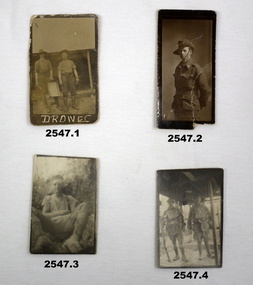
... unit 12.3.1918, KIA 1.8.1918. On the right, Harold James Fraser. He had 5 years pre war service in the Cadets and Citizens Forces. Enlisted on 27.10.1916 No 2802 6th reinforcements 38th Batt age 22 years. Embark for England 16.12.1916, moves through 10th, 14th Training Batt’s then 66th Batt on 28.4.1917, promoted Sgt and alloted No 2802A, embark for France 25.8.1917 as reinforcement 38th Batt, awarded the Military medal (MM)) 12.10.1917 East of Eypres, KIA 1.8.1918. Both were buried at Vaire Wood near Corbie. photography-photographs military history ...Items relating to the collection re Alexander Norman Cummin No 18, 38th Batt AIF, his brother Harold Nesbit Cummin No 1239 Camel Corp. Refer 2535P (Alexander) 2530.3P (Harold) for their service details. .6) Graves photo. On the left, Sydney Graham Issell. He had 4 years pre war service in Senior cadets and Citizens Forces reaching the rank of Sgt. Enlisted on 8.2.1916 No 912 with the rank of Cpl, C Coy 38th Batt age 21 years 11 months. Embark for England 20.6.1916, promoted L/Sgt, embark for France 22.11.1916, hospital 13.5.1917 (NYD) rejoin unit 19.5.1917, WIA 29.5.1917 GSW chest then restated GSW Back, severe, rejoin unit 12.3.1918, KIA 1.8.1918. On the right, Harold James Fraser. He had 5 years pre war service in the Cadets and Citizens Forces. Enlisted on 27.10.1916 No 2802 6th reinforcements 38th Batt age 22 years. Embark for England 16.12.1916, moves through 10th, 14th Training Batt’s then 66th Batt on 28.4.1917, promoted Sgt and alloted No 2802A, embark for France 25.8.1917 as reinforcement 38th Batt, awarded the Military medal (MM)) 12.10.1917 East of Eypres, KIA 1.8.1918. Both were buried at Vaire Wood near Corbie. .1) 2 Australian soldiers in fatigues with what looks like a cooking apparatus, with letters below DROW EC (stylised). .2) 1/2 length portrait of an Australian soldier. .3) Casual portrait of a soldier sitting in fatigues, probably Sandy. Boots look muddy, scrub in background. .4) Portrait of 2 soldiers (allied) fully armed & wearing helmets. .5) Portrait of a soldier (allied) fully armed & dangerous. .6) Black & white photo of 2 graves with white crosses. Soldiers left cross: No 912 SGT SG ISSELL 38 BN AIF, Soldier right cross: No 2802 SGT HJ FRASER 38 BN AIF. .7) Black & white photo showing 2 Australian soldiers casually dressed in the ruins of an old factory. .8) Black & white mini photo showing building ruins & what appears to be derelict boilers. .9) Black & white mini photo showing what appears to be a WWI German soldier kamerading (surrendering). This is probably posing in captured enemy clothing. 10.) Black & white mini photo showing camels at rest. .11) Black & white mini photo showing a blown up British pattern tank MK1 on sandy terrain. A track has detached & curled up over the front of the tank. .1) verso: “Me & Sandy Port De Nieppe May 1917” .2) verso: “Taken in Liverpool, England while on <> leave Jan 1918. To Mother Father & all at home with love from Sandy”photography-photographs, military history - army, 38th -
 Bendigo Military Museum
Postcard - POSTCARDS, PHOTOGRAPHIC WW1, 1) & .2) J E Barnes, 1) & .2) 1916; .3) c.1914-1918
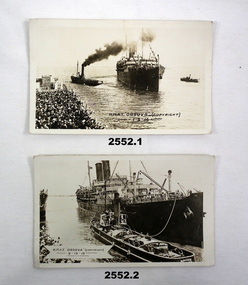
... Refer Cat No 2548.2P for his service details. .1) & .2) WILLIAM HOLMES returned to Australia on HMAT ORSOVA. .3) WILLIAM HOLMES visited Windsor Castle on 23.4.1918 2 days before rejoining his unit after being in hospital. documents - postcards photography-photographs military history - navy .3) Blue ink stamp from Windsor Castle dated 23.4.1918 Signature of "W HOLMES" in bottom RH corner, both marking on back of post card. .1) & .2) Photographs of HMAT ORSOVA taken 6.12.16. .3) Photograph in clear plastic wallet of Windsor Castle from Home Park. ...Part of WILLIAM HOLMES Collection. Refer Cat No 2548.2P for his service details. .1) & .2) WILLIAM HOLMES returned to Australia on HMAT ORSOVA. .3) WILLIAM HOLMES visited Windsor Castle on 23.4.1918 2 days before rejoining his unit after being in hospital..1) & .2) Photographs of HMAT ORSOVA taken 6.12.16. .3) Photograph in clear plastic wallet of Windsor Castle from Home Park..3) Blue ink stamp from Windsor Castle dated 23.4.1918 Signature of "W HOLMES" in bottom RH corner, both marking on back of post card.documents - postcards, photography-photographs, military history - navy -
 Bendigo Military Museum
Photograph - PHOTOGRAPHS WW1, 2) Kitchener Studio - Ainar Studio Auburn, c.WWI
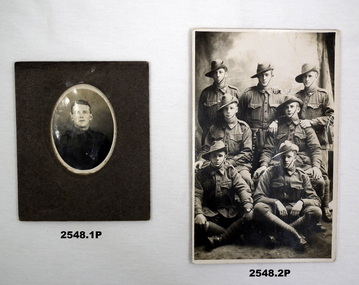
... unit 25.4.1918, embark for France 29.4.1918, WIA 17.7.1918 Gassed, move to overseas Training Brigade 2.11.1918, embark for Australia 8.1.1919, discharged medically unfit 14.3.1919. He again enlisted in the Volunteer Defence Corp on 28.3.1942 as No V352711, promoted to Lieutenant 10.12.1942, discharged from the Corp on 31.10.1945. Items are part of a collection. photography-photographs military history ...William HOLMES served 6 months in the Junior Cadets prior to WW1(National Archives records) As No 6826 he enlisted in the AIF in 20th reinforcements 22nd Batt on 28.7.1917 age 18 years 10 months. Embarked 21.11.1917 and arrived Suez 15.12.1917, embark for England 9.1.1918, allotted letter A on Regt No due to duplication (6826A), hospital 16.4.1918 (unclear), rejoin unit 25.4.1918, embark for France 29.4.1918, WIA 17.7.1918 Gassed, move to overseas Training Brigade 2.11.1918, embark for Australia 8.1.1919, discharged medically unfit 14.3.1919. He again enlisted in the Volunteer Defence Corp on 28.3.1942 as No V352711, promoted to Lieutenant 10.12.1942, discharged from the Corp on 31.10.1945. Items are part of a collection. .1) Small oval portrait in dark grey mount. .2) Group photo of WWI uniformed soldiers. WILLIAM HOLMES marked with blue ink above his head - middle row RHS..1) Handwritten: “W HOLMES, Dad when a boy” .2) Handwritten: “Dad when away” Stamped in blue ink: - Kitchener Studio Broadmeadows Camp - Ainar Studio Auburnphotography-photographs, military history - army -
 Bendigo Military Museum
Memorabilia - PHOTOGRAPH, FRAMED, MEDALS, IDENTITY, Bethany Gallery - Terry & Beverley Jarvis, c.WWI
... unit 13.7.1915, KIA 29.8.1915. Refer Cat No 1860 & 4342P photography-photographs, frame accessories military history Above photo on white label with black print: W WILLIAMS No 1442 - 1st AIF 2nd Bn Below photo handwritten with grey lead pencil: PT WALTER WILLIAMS nobly FFL THAT WE MIGHT LIVE Attached white printed label: WALTER WILLIAMS Killed in Action 29.8.1915 Refer book 4. ...WALTER WILLIAMS No 1442 enlisted in 2nd reinforcements 2nd Batt AIF on 27.11.1914 aged 23 years 9 months. Embarked for Egypt 11.2.1915, embarked for Gallipoli 5.4.1915. Transferred to Stretcher Bearers 8.4.1915 & hospitalised 9.6.1915 with a twisted instep. Returned to unit 13.7.1915, KIA 29.8.1915. Refer Cat No 1860 & 4342P Original photo of W WILLIAMS with Identity disc and medals mounted beneath. Mid brown colour timber frame with dark green mount & glass.Above photo on white label with black print: W WILLIAMS No 1442 - 1st AIF 2nd Bn Below photo handwritten with grey lead pencil: PT WALTER WILLIAMS nobly FFL THAT WE MIGHT LIVE Attached white printed label: WALTER WILLIAMS Killed in Action 29.8.1915 Refer book 4. photography-photographs, frame accessories, military history -
 Bendigo Military Museum
Memorabilia - MEMORABILIA, FRAMED, Memorabilia for Rupert Henry Treganowan
... Refer 1862.5 for service history also 1863, 1864. photography-photographs numismatics-medals, military, badges Framed memorabilia WW1 History Below collection, in black print "RUPERT HENRY TREGANOWAN"/SERVICE NUMBER - 18321/RANK - SAPPER/UNIT/SIGNAL SQUADRON ENGINEERS/ December 1916 to October 1919/Ship name -HMAT PORT SYDNEY - NO. ...Rupert Henry Treganowan No 18321. Refer 1862.5 for service history also 1863, 1864. Mounted and framed selection of items relating to Rupert Henry Treganowan, WW1, including photograph, New Testament, memorial card, medals, badge and envelope package. Frame - Timber, mid brown stain, plain moulding. Mount - dark green cardboard, red inner mount, glass front.Below collection, in black print "RUPERT HENRY TREGANOWAN"/SERVICE NUMBER - 18321/RANK - SAPPER/UNIT/SIGNAL SQUADRON ENGINEERS/ December 1916 to October 1919/Ship name -HMAT PORT SYDNEY - NO. A15 - Embarkation - Sydney" photography-photographs, numismatics-medals, military, badges, framed memorabilia, ww1, history -
 Bendigo Military Museum
Card - CARD, NCO MESS, c.1.1970
... Refer 2436.2P for his service history. documents - cards NCO Mess Vung Tau Jan 1970 No 000840 Member Vung Tau N C O / Open Mess Vung Tau Viet-Nam No 96291 Name: DODD, P J Rank: CPL Unit: 17 Const SQN RAE Membership card for Vung Tau N C O / Open Mess, Jan 1970. ...The card was used by Peter James Dodd No 217842 while serving in South Vietnam. Refer 2436.2P for his service history.Membership card for Vung Tau N C O / Open Mess, Jan 1970. Cream coloured card with black print. Membership details in blue ink.Jan 1970 No 000840 Member Vung Tau N C O / Open Mess Vung Tau Viet-Nam No 96291 Name: DODD, P J Rank: CPL Unit: 17 Const SQN RAEdocuments - cards, nco mess, vung tau -
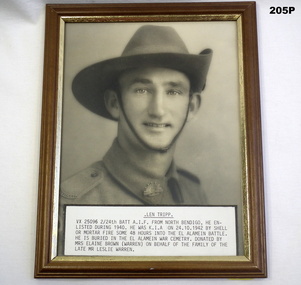 Bendigo Military Museum
Photograph - MILITARY PHOTOGRAPH, 1939-42
... unit 29.4.1941, embark for the Middle East 28.6.1941, disembark 25.7.1941, posted to 2/24th Bn 23.8.1941, DOW’s 24.10.1942. His records offer nothing else re wounding or death. He is buried at El Alamein Box Cemetery grave No 8, plot 4, row A, map reference 1/50000- 88602946. Refer also Cat No 2336.8P photography-photographs portraits military history ...Leonard Jordan TRIPP No VX25096 (born Bendigo, enlisted Caulfield) in the 2nd AIF on 11.6.1940. Posted to 2/21st Bn on 15.7.1940, hospital 23.1.1941 with Fractured Tibula, rejoin unit 29.4.1941, embark for the Middle East 28.6.1941, disembark 25.7.1941, posted to 2/24th Bn 23.8.1941, DOW’s 24.10.1942. His records offer nothing else re wounding or death. He is buried at El Alamein Box Cemetery grave No 8, plot 4, row A, map reference 1/50000- 88602946. Refer also Cat No 2336.8PPhotograph of Len Tripp VX25096 2/24 Battalion A.I.F. in uniform. Slouch hat. Frame is simple wooden design with gold rim.photography-photographs, portraits, military history -
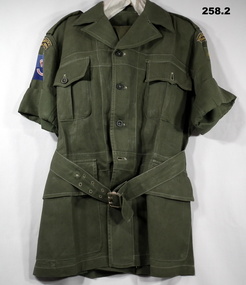 Bendigo Military Museum
Uniform - TROPICAL UNIFORM, 1954
... Refer Cat No 118.5 for his service details and RSL, Council history. Uniforms Tropical Unit Arm Patches, “Royal Australian Electrical and mechanical Engineers” Left sleeve, “Australian Military Forces” Right sleeve, “Commonwealth” .1) Tropical green jacket, cotton drill with shoulder rank epaulettes with “Major” insignia, Unit arm patches on both upper arms, left sleeve has embroidered Rising Sun with lettering under, right sleeve has a blue patch with red crown and lettering, a waist let and metal buckle. .2) Tropical green shorts, cotton drill Uniform TROPICAL UNIFORM ...Uniform issued to “Maj Andrew John BALSILLIE MBE”. Refer Cat No 118.5 for his service details and RSL, Council history..1) Tropical green jacket, cotton drill with shoulder rank epaulettes with “Major” insignia, Unit arm patches on both upper arms, left sleeve has embroidered Rising Sun with lettering under, right sleeve has a blue patch with red crown and lettering, a waist let and metal buckle. .2) Tropical green shorts, cotton drillUnit Arm Patches, “Royal Australian Electrical and mechanical Engineers” Left sleeve, “Australian Military Forces” Right sleeve, “Commonwealth”uniforms, tropical -
 Eltham District Historical Society Inc
Photograph, Jim Connor, Main Road, Eltham, 14 Jan 2017
... Eltham Gateway, Unit complex, 836 Main Road, Eltham at corner of York Street - site of the original old bakehouse and shop Tomorrow's history documented today eltham jim connor collection main road eltham gateway york street Born digital Main Road, Eltham Photograph Photograph Jim Connor ...Eltham Gateway, Unit complex, 836 Main Road, Eltham at corner of York Street - site of the original old bakehouse and shopTomorrow's history documented todayeltham, jim connor collection, main road, eltham gateway, york street -
 Eltham District Historical Society Inc
Photograph, Jim Connor, Main Road, Eltham, 14 Jan 2017
... Unit complex at 72-74 Bridge Street, Eltham at corner of Main Road. Before reconstruction of Main Road, this intersection had deep cutting embankments on all four corners. Roadworks and private development have levelled the land on the low side of the road. The Eltham War Memorial was originally located on the north western corner. Tomorrow's history ...Eltham Gateway, Unit complex at 72-74 Bridge Street, Eltham at corner of Main Road. Before reconstruction of Main Road, this intersection had deep cutting embankments on all four corners. Roadworks and private development have levelled the land on the low side of the road. The Eltham War Memorial was originally located on the north western corner.Tomorrow's history documented todayeltham, jim connor collection, main road, eltham gateway, bridge street -
 Eltham District Historical Society Inc
Photograph, Jim Connor, Main Road, Eltham, 14 Jan 2017
... Eltham Gateway, Unit complex at 72-74 Bridge Street, Eltham at corner of Main Road Tomorrow's history documented today eltham jim connor collection main road eltham gateway bridge street Born digital Main Road, Eltham Photograph Photograph Jim Connor ...Eltham Gateway, Unit complex at 72-74 Bridge Street, Eltham at corner of Main RoadTomorrow's history documented todayeltham, jim connor collection, main road, eltham gateway, bridge street -
 Eltham District Historical Society Inc
Photograph, Jim Connor, Main Road, Eltham, 14 Jan 2017
... Eltham Gateway, Unit complex at 72-74 Bridge Street, Eltham at corner of Main Road Tomorrow's history documented today eltham jim connor collection main road eltham gateway Born digital Main Road, Eltham Photograph Photograph Jim Connor ...Eltham Gateway, Unit complex at 72-74 Bridge Street, Eltham at corner of Main RoadTomorrow's history documented todayeltham, jim connor collection, main road, eltham gateway -
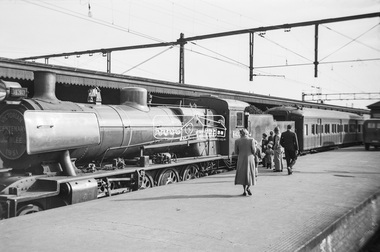 Eltham District Historical Society Inc
Photograph, George Coop, Steam locomotive N-430 and the Victorian Centenary Jubilee train at Spencer Street Railway Station, Feb. 1951
... history of gold production, and models and illustrations of national projects controlled by the various departments of this State. The Commonwealth section included displays by the Army, Navy, Air Force and Post Office; a war materials exhibit from the Supply Department; and diagrams and maps of the Snowy Mountains Hydro-Electric scheme. The Railways exhibit portrayed the century's growth and development of railways in Victoria and their influence on the prosperity of the State. During its 6,000 miles tour, from 1st February to 30th June, the train visited 168 stations and was inspected by 547,978 people. An entertainment unit...history of gold production, and models and illustrations of national projects controlled by the various departments of this State. The Commonwealth section included displays by the Army, Navy, Air Force and Post Office; a war materials exhibit from the Supply Department; and diagrams and maps of the Snowy Mountains Hydro-Electric scheme. The Railways exhibit portrayed the century's growth and development of railways in Victoria and their influence on the prosperity of the State. During its 6,000 miles tour, from 1st February to 30th June, the train visited 168 stations and was inspected by 547,978 people. An entertainment unit ...The Centenary-Jubilee Train. The Centenary-Jubilee train was one of the outstanding successes of the Centenary and Jubilee celebrations in Victoria. The train, attractively painted green and gold, consisted of eleven cars, and toured Victoria to take to people in the country exhibits of interest associated with the celebrations. National Art Gallery paintings, rare manuscripts and pictures were displayed, as well as models showing the history of gold production, and models and illustrations of national projects controlled by the various departments of this State. The Commonwealth section included displays by the Army, Navy, Air Force and Post Office; a war materials exhibit from the Supply Department; and diagrams and maps of the Snowy Mountains Hydro-Electric scheme. The Railways exhibit portrayed the century's growth and development of railways in Victoria and their influence on the prosperity of the State. During its 6,000 miles tour, from 1st February to 30th June, the train visited 168 stations and was inspected by 547,978 people. An entertainment unit accompanied the train and gave 100 performances which were attended by 96,400 people. Source: Report of The Victorian Railways Commissioners for the Year Ended 30th June 1951Digital TIFF file Scan of Kopdak 620 black and white negative transparencygeorge coop collection, n-430, n-class steam locomotive, victorian centenary jubilee 1951 -
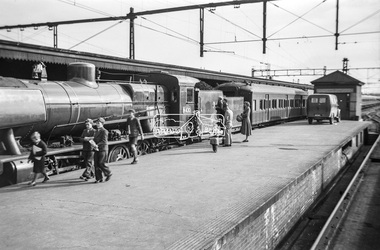 Eltham District Historical Society Inc
Photograph, George Coop, Steam locomotive N-430 and the Victorian Centenary Jubilee train at Spencer Street Railway Station, Feb. 1951
... history of gold production, and models and illustrations of national projects controlled by the various departments of this State. The Commonwealth section included displays by the Army, Navy, Air Force and Post Office; a war materials exhibit from the Supply Department; and diagrams and maps of the Snowy Mountains Hydro-Electric scheme. The Railways exhibit portrayed the century's growth and development of railways in Victoria and their influence on the prosperity of the State. During its 6,000 miles tour, from 1st February to 30th June, the train visited 168 stations and was inspected by 547,978 people. An entertainment unit...history of gold production, and models and illustrations of national projects controlled by the various departments of this State. The Commonwealth section included displays by the Army, Navy, Air Force and Post Office; a war materials exhibit from the Supply Department; and diagrams and maps of the Snowy Mountains Hydro-Electric scheme. The Railways exhibit portrayed the century's growth and development of railways in Victoria and their influence on the prosperity of the State. During its 6,000 miles tour, from 1st February to 30th June, the train visited 168 stations and was inspected by 547,978 people. An entertainment unit ...The Centenary-Jubilee Train. The Centenary-Jubilee train was one of the outstanding successes of the Centenary and Jubilee celebrations in Victoria. The train, attractively painted green and gold, consisted of eleven cars, and toured Victoria to take to people in the country exhibits of interest associated with the celebrations. National Art Gallery paintings, rare manuscripts and pictures were displayed, as well as models showing the history of gold production, and models and illustrations of national projects controlled by the various departments of this State. The Commonwealth section included displays by the Army, Navy, Air Force and Post Office; a war materials exhibit from the Supply Department; and diagrams and maps of the Snowy Mountains Hydro-Electric scheme. The Railways exhibit portrayed the century's growth and development of railways in Victoria and their influence on the prosperity of the State. During its 6,000 miles tour, from 1st February to 30th June, the train visited 168 stations and was inspected by 547,978 people. An entertainment unit accompanied the train and gave 100 performances which were attended by 96,400 people. Source: Report of The Victorian Railways Commissioners for the Year Ended 30th June 1951Digital TIFF file Scan of Kopdak 620 black and white negative transparencygeorge coop collection, n-430, n-class steam locomotive, victorian centenary jubilee 1951 -
 Eltham District Historical Society Inc
Photograph, Jim Connor, Main Road, Eltham, 14 Jan 2017
... Eltham Gateway, View across Main Road to Sweet D Lites at 820 Main Road and unit complex at 72-74 Bridge Street, Eltham Tomorrow's history documented today eltham jim connor collection main road eltham gateway Bridge Street Burgoyne's Shop Sweeet D Lites Born digital Main Road, Eltham Photograph Photograph Jim Connor ...Eltham Gateway, View across Main Road to Sweet D Lites at 820 Main Road and unit complex at 72-74 Bridge Street, ElthamTomorrow's history documented todayeltham, jim connor collection, main road, eltham gateway, bridge street, burgoyne's shop, sweeet d lites -
 Eltham District Historical Society Inc
Photograph, Jim Connor, Main Road, Eltham, 14 Jan 2017
... Eltham Gateway, View across Main Road to Sweet D Lites at 820 Main Road and unit complex at 72-74 Bridge Street, Eltham Tomorrow's history documented today eltham jim connor collection main road eltham gateway bridge street burgoyne's shop sweeet d lites Born digital Main Road, Eltham Photograph Photograph Jim Connor ...Eltham Gateway, View across Main Road to Sweet D Lites at 820 Main Road and unit complex at 72-74 Bridge Street, ElthamTomorrow's history documented todayeltham, jim connor collection, main road, eltham gateway, bridge street, burgoyne's shop, sweeet d lites -
 Eltham District Historical Society Inc
Photograph, Jim Connor, Main Road, Eltham, 14 Jan 2017
... Eltham Gateway, Unit complex at 72-74 Bridge Street, Eltham at corner of Main Road Tomorrow's history documented today eltham jim connor collection main road eltham gateway bridge street Born digital Main Road, Eltham Photograph Photograph Jim Connor ...Eltham Gateway, Unit complex at 72-74 Bridge Street, Eltham at corner of Main RoadTomorrow's history documented todayeltham, jim connor collection, main road, eltham gateway, bridge street -
 Eltham District Historical Society Inc
Photograph, Jim Connor, Main Road, Eltham, 14 Jan 2017
... Eltham Gateway, Unit complex, 836 Main Road, Eltham Tomorrow's history documented today eltham jim connor collection main road eltham gateway Born digital Main Road, Eltham Photograph Photograph Jim Connor ...Eltham Gateway, Unit complex, 836 Main Road, ElthamTomorrow's history documented todayeltham, jim connor collection, main road, eltham gateway -
 Glen Eira Historical Society
Letter - Kooyong Road, 75, Caulfield North
... A handwritten report, 2 pages, by Dorothea E Hancock dated 24/11/1982 concerning the Conferring of the Freedom of Entry to the City of Caulfield upon the Third Ordnance Services Unit Royal Australian Army Ordnance Corps ceremony held in Caulfield Park on 4 August 1978. Provides history of the occupation of the Units premises at 75 Kooyong Road, North Caulfield and information about the Red Cab company which occupied the premises in the 1930’s....A handwritten report, 2 pages, by Dorothea E Hancock dated 24/11/1982 concerning the Conferring of the Freedom of Entry to the City of Caulfield upon the Third Ordnance Services Unit Royal Australian Army Ordnance Corps ceremony held in Caulfield Park on 4 August 1978. Provides history of the occupation of the Units premises at 75 Kooyong Road, North Caulfield and information about the Red Cab company which occupied the premises in the 1930’s. ...A handwritten report, 2 pages, by Dorothea E Hancock dated 24/11/1982 concerning the Conferring of the Freedom of Entry to the City of Caulfield upon the Third Ordnance Services Unit Royal Australian Army Ordnance Corps ceremony held in Caulfield Park on 4 August 1978. Provides history of the occupation of the Units premises at 75 Kooyong Road, North Caulfield and information about the Red Cab company which occupied the premises in the 1930’s.hancock dorothea e, kooyong road, north caulfield, red cab company, yellow cab company, brick houses, caulfield park, city of caulfield, caulfield, taxi’s, armed forces, public transport, third ordnance services unit royal australian army ordnance corps, tanks corps, world war 1939 – 1945 -
 Waverley RSL Sub Branch
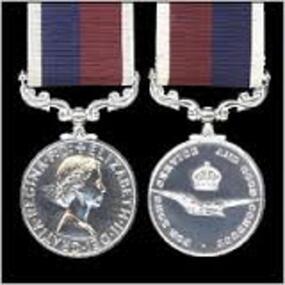
R.A.A.F. Long Service Medal
... History of the RAAF Dental Branch It took six years following the formation of the RAAF in 1921 for the first Dental Clinic to be established at Point Cook, Victoria. On 10th June 1927 Flying Officer James Carl Rosenbrock commenced work as an RAAF Dental Officer for the FlyingTraining School at Point Cook. As personnel numbers were still relatively small, Rosenbrock was also responsible for the dental care of all Victorian RAAF units ...Awarded to Alan Bowers (A236814) who was a R.A.A.F. dental mechanic who serverd during WWII including service in Darwin, and then continued in the R.A.A.F. for some years after the end of WWII The Royal Australian Air Force (and all Commonwealth Air Forces) Long Service and Good Conduct Medal: Awarded to NCOs and ORs of the RAAF (RAF, RCAF etc) for 15 years service. A cupro-nickel plated medal, the obverse features the sovereign's head, the reverse features the crown and eagle emblem of the RAAF (and RAF). Officers are eligible for the award provided they have served a minimum 12 years in the ranks. The riband is dark blue and maroon with white edges. This medal ceased to be awarded in Australia in 1975 when it was replaced by the National Medal (and sbsequently the DFSM and DLSM) in the Australian system of honours and awards. http://www.heritagemedals.com.au/medals-1/service-long-service/air-force-long-service-and-good-conduct-medal.html History of the RAAF Dental Branch It took six years following the formation of the RAAF in 1921 for the first Dental Clinic to be established at Point Cook, Victoria. On 10th June 1927 Flying Officer James Carl Rosenbrock commenced work as an RAAF Dental Officer for the FlyingTraining School at Point Cook. As personnel numbers were still relatively small, Rosenbrock was also responsible for the dental care of all Victorian RAAF units, which involved treating members at 1AD Laverton, as well as Air Force Headquarters at Victoria Barracks in Melbourne. As Army Dental Officers were currently caring for RAAF personnel at Richmond, NSW, the Senior Dental Officer of the 3rd Military District in Victoria (SDO 3MD) requested through the military board that a similar arrangement be established, where that the newly appointed RAAF Dentist provide part time dental services to the Army units stationed at Queenscliff. This was seen as an effective reciprocal arrangement, with both units having a Dental Officer in attendance for, in total, around 3-4 weeks a year. Rosenbrock continued to serve as the sole RAAF Dental Officer until the middle of 1933, when the Air Board asked for his service to be terminated following ‘behaviour unbecoming of a RAAF officer'. He had borrowed several sums of money, of around 40 Pounds or so, from junior ranks on base (as well as from the Regimental Sergeant Major) and had failed to pay the money back. He was replaced by a fellow Victorian, FLGOFF Norman Henry Andrews, on the 18th Sep 1933, who went on to become our first Director of Dental Services, and was instrumental in establishing the organisations and conditions of the Branch that are still present today. Through a fair amount of persistence and hard work on the part of Norman Andrews, the RAAF Dental Branch began to expand from 1937, with the introduction of 2 additional positions, at RAAF station Richmond, and at the FlyingTraining School at Point Cook. This gave the RAAF 3 uniformed Dental Officers, which was expanded to 5 in the months leading up to WW2. 4 of these Dental Officers were based in Victoria and 1 at Richmond, with the other two RAAF units being cared for by the Army (as in the case of Pearce in WA) or by civilians (as in Darwin). With the sudden increase in RAAF personnel required at the outbreak of WW2, the number of RAAF Dental Officers increased dramatically, from 5 in 1939, 28 in 1940, 64 in 1941, 147 in 1942, 193 in 1943, 219 in 1944, and peaking at 227 in 1945. RAAF Dental Officers were required to work in a variety of locations, both in and out of Australia. Between 1940 and 1942 a massive construction programme occurred, with new dental clinics being established around Australia. Priority was given to aircrew training units in order to get these personnel dentally fit for operational deployment, but Dental Officers could equally find themselves posted to recruit depots, fixed stations, medical clearance stations, mobile dental sections, and RAAF and civilian hospitals. RAAF Dental Officers were posted to the large dental centres at Ascot Vale (Vic) and Bradfield Park (NSW) when first appointed, where they received military and clinical training, before being deployed to their needed location. Mobile Dental Units When Japan entered the war in 1941, the rapid deployment of troops to northern operational areas with less than ideal dental fitness was extremely high. As a result, the RAAF deployed a range of mobile dental units, either alone or with medical sections, to support the increasing number of isolated deployed personnel within Australia and overseas. There were three types of mobile unit used: a. Mobile Dental Unit – relied on using either a semi-trailer to get around or by building a surgery directly on to the truck chassis, and installing hydraulic chairs, units, x-rays, and laboratory equipment. They were able to move around between small units, such as RAAF radar stations, where they could plug into the local power supply and work immediately. b. Transportable Dental Units – used for stops of longer duration, where field equipment was carried in panniers from one unit to another by road or rail and housed in whatever accommodation was available at the destination. They were often carried within Australia on Tiger Moths and Dakota aircraft. c. Itinerant Dental Units – in some areas, the dental equipment was installed at the RAAF unit and the Dental Officer and their staff would travel from unit to unit, using the equipment available at each location. RAAF Dental BadgeAs the war developed in Europe, it soon became obvious that the RAF Dental support was not capable of supporting the increasing numbers of RAAF aircrew that were being sent for service with the RAF, with only enough Dental Officers available to provide one to every 2000 men ( instead of the preferred 1 to 600). As a result, the RAAF provided a mobile dental unit, fitted out in a caravan and pulled by a Ford V8 Coupe, to travel around England in support of RAAF personnel at various squadrons. Some degree of tact was needed to ensure that the RAF did not take this as a comment on the treatment they were providing, but it proved successful in maintaining a satisfactory state of dental fitness in RAAF personnel, and a second mobile unit was soon dispatched. They were also set up with a laboratory on board as well as the surgery, which was a major difference between the RAF and RAAF, as the RAF did not provide dentures for their troops (the RAAF would, providing they had served for 6 years). In 1943 the RAF was no longer able to provide Dental support to Australian troops in the Middle East, which resulted in the need for a transportable dental unit to be deployed from Australia. It functioned in a similar manner to the RAF, by moving from one squadron to another. It served in the Middle East and Africa, from Cairo across North Africa, to Italy, and eventually back to England to treat returned prisoners of war. GPCAPT Norman Andrews The growth and development of the RAAF Dental Branch owes a debt to one man in particular, GPCAPT Norman Andrews. As the second RAAF Dental Officer to enlist on 18 Sep 1933, Andrews became the principal architect of the structure and organisation of the RAAF Dental Branch leading up to and during WW2. Until early 1940, the RAAF Dental Branch was administered by the Director of Medical Services (Air), which placed it under the control of the Army Medical staff. The Army would provide their Inspector of Dental Services for advice whenever needed. In April 1940, the RAAF Medical service separated from the Army, resulting in the control of the RAAF Dental Branch shifting back to the RAAF. Andrews became the first Director of Dental Services, when the position was created in 1943 as recognition of the higher profile the Dental Branch was now playing in the RAAF Medical service. Until this time, Andrews's title had been as the Dental Staff Officer to the RAAF Medical Service. Andrews was responsible for the establishment of the war-time structure of the Dental service, establishing new dental centres at all major bases, creating mobile and transportable dental units, ensuring the continual growth of the Branch, maintaining professional development of staff through the establishment of a professional journal, and by organising renowned lecturers to speak at RAAF bases. He also believed in visiting as many dental units as possible to see for himself what conditions were like and to talk first-hand to staff in remote units. His itinerary during the war years, both in and out of Australia, shows a large number of trips in a variety of modes of transport in order to reach remote areas where units were serving. He was promoted to GPCAPT in July 1944, as the numbers of Dental Officers soon peaked at 227 towards the end of the war (1 GPCAPT, 9 WGCDRs, 60 SQNLDRs, and 157 FLTLTs). After the war, with the reduction in RAAF personnel required in uniform, the Dental Branch also reduced its numbers significantly. By 1947 there were only 18 Dental Officers serving (many part-time), with 1 GPCAPT, 1 WGCDR, 10 SQNLDRs, and 6 FLTLTs, and only 13 by 1950. With the decrease in Branch personnel numbers, the ‘powers to be' saw fit to reduce the Director of Dental Service rank to WGCDR, and as a result Norman Andrews found that in order to continue serving in the RAAF he would have to wear a reduced rank. This appears to have been a contributing factor in his decision to discharge at the relatively early age of 43 and accept an administrative job as Director of the Victorian Government's School Dental Service. Norman Andrews holds the proud honour of being the founder of the RAAF Dental Branch, which during the war was instrumental in educating servicemen of the importance of dental health and maintaining the dental fitness of troops in a variety of areas. Dental Orderlies (Assistants) The dental orderly mustering was first introduced in 1937. Until that time, medical orderlies were assigned to assist the Dental officer with their duties. As early as 1931 it had been noted by both RAAF and Army Dental Officers working in Victoria and Richmond that a lot of the troubles they were having would be solved by appointing a permanent Dental Orderly. Often they would find that the medical orderly they were assigned was a different one each day, and as a result the administration and work in general was very inefficient. By 1937, with the increase in Dental Officers to 3, it was realised that a Dental Orderly mustering needed to be created. Dental Mechanics/Technicians Before WW2, dental laboratory work was provided by civilian laboratories, as most RAAF units were stationed around metropolitan areas. At this time, service personnel were still required to pay for their own dentures, unless they had served for six years or had their dentures damaged during performance of their duties. In July 1940, mainly in response to the development of more remote RAAF dental units and the increasing demand for dental prostheses, the Dental Mechanic mustering was established. Unfortunately there was a very limited pool of civilian dental mechanics to recruit from, and as a result the RAAF set up a training school at Laverton (which was later moved to Ascot Vale) in June 1941 which conducted an intensive 6 month course in Dental mechanics. Dental mechanics were quickly in demand. In all fixed and mobile dental units at least 1 Mechanic was supplied for each Dental Officer, and indeed the RAAF supplied Dental Mechanics throughout all its deployments, something the RAF were unwilling, or unable, to do. Two grades of dental mechanic existed: the Senior Mechanic (with the rank of NCO), who was competent in all phases of laboratory work; and the Junior Mechanic, who could only handle routine work and not more advanced denture work. The progression to Senior required a further trade test in techniques including setting up, clasp-forming, casting and backing teeth. During the course of the War, two special courses were held for Mechanics. The first, directed at senior mechanics so that they could instruct others, was in 1942 when Acrylic Resin was first introduced as a denture base material, as an alternative to the current option of vulcanite. Later, towards the end of the War, a ‘refresher' course was provided for those that had served for the greatest period of time in order to allow them retraining in techniques that they had not practised during their service and which were common in civilian life. This included cast base dentures, crowns and bridges, partial dentures, and retainers. Towards the end of the War, a course was held with WAAAF trainees to train them as Mechanics. However, as the War was soon to end they never had the opportunity to progress within the mustering to become Senior Mechanics. The RAAF Dental Branch has survived 75 years of turbulence, with reviews of its viability occurring regularly every few years from as early as 1937. The Branch continues to provide excellent service to the ADF community and, despite reduced manpower, will continue to play an important role in Air Force Health operations. http://www.defence.gov.au/health/about/docs/RAAFDental.pdf40cm cupro-nickel plated medal, the obverse features the sovereign's head, the reverse features the crown and eagle emblem of the RAAF (and RAF). A23814 BOWERS.A. A. F.r.a.a.f long service medal, r.a.a.f good conduct, r.a.a.f. dental service medal -
 Bendigo Military Museum
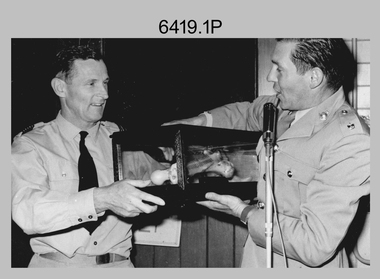
Photograph - Bones Day - Army Survey Regiment Versus RAAF School of Radio, 1969
... The 3-hour bus trip for the visiting unit on their return was typically very raucous. The history of the Bones Day competition is best described in the booklet titled - Bones of Contention Souvenir Program. 1965. ...The 3-hour bus trip for the visiting unit on their return was typically very raucous. The history of the Bones Day competition is best described in the booklet titled - Bones of Contention Souvenir Program. 1965. ...These two photographs were taken at Bones Day, an annual sports competition between the Army Survey Regiment and the RAAF School of Radio in 1969. The two units took turns each year to host the event and on this occasion was held at the RAAF School of Radio, Laverton. The day competition usually comprised basketball, cross country, golf, sailing, squash, softball, tennis, touch football, rifle shooting, tug-of-war and volleyball. The “big bone” trophy comprising a large bone from a beast housed inside a wooden framed glass case, was awarded to the winner of the day competition. The evening competition often included darts, carpet bowls, hookey, quoits and billiards/snooker. The “little bone” (a mounted chicken bone) was the consolation trophy awarded to the winner of the evening competition. The 3-hour bus trip for the visiting unit on their return was typically very raucous. The history of the Bones Day competition is best described in the booklet titled - Bones of Contention Souvenir Program. 1965. Refer to Item 6267. The winner of the two trophies in 1969 is not known. MAJ Donald Ridge was probably on this occasion was the 2IC of the Army Headquarters Survey Regiment, He was subsequently promoted to the rank of LTCOL was the CO of the unit from 1972 to 1973; and continued as the CO of the renamed Army Survey Regiment from 1974 to 1975. He served from 1946 to 1975.These two photographs were taken at Bones Day, an annual sports competition between the Army Survey Regiment the RAAF School of Radio in 1969. The photographs were printed on photographic paper and are part of the Army Survey Regiment’s Collection. They were scanned at 300 dpi. .1) - Photo, black & white, 1969. L to R: Unidentified CO or representative from the RAAF School of Radio, MAJ Don Ridge. .2) - Photo, black & white, 1969. L to R: MAJ Don Ridge, unidentified CO or representative from the RAAF School of Radio..1P to .9P – no annotationsroyal australian survey corps, rasvy, army survey regiment, army svy regt, fortuna, asr, bones day, raaf school of radio -
 Bendigo Military Museum
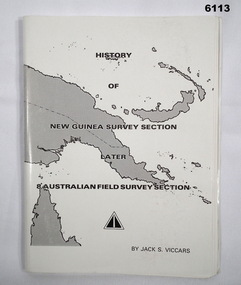
Booklet - History of the New Guinea Survey Section 1967 by LT Jack Viccars, Lt Jack Stewart Viccars, Circa 1967
... This history was written by LT Jack Viccars and member of the Unit....This history was written by LT Jack Viccars and member of the Unit. Royal Australian Survey Corps RASvy Fortuna Army Survey Regiment ASR Forward by Brigadier D. ...Military surveying in New Guinea began in in WWII with the formation of the New Guinea Force Field Survey Section which later became 8th Australian Field Survey Section and later 2 Field Survey Section of 6th Army Topographical Survey Section. This history was written by LT Jack Viccars and member of the Unit.A4 Booklet, Black and white, 43 Pages, 4 Annexes, Map Indexes, Gloss Paper Cover, Bound by staplesForward by Brigadier D. Macdonald (Retd) AM, Royal Australian Survey Corps 1936-1967, Preface by LT Jack J.S. Viccarsroyal australian survey corps, rasvy, fortuna, army survey regiment, asr -
 Kiewa Valley Historical Society
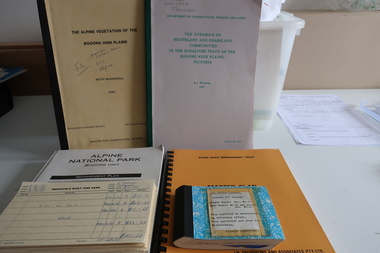
Collection - Ian Roper
... Unit -Management Plan 1992.6. Alpine Vegetation of the Bogong High Plains - Bogong High Plains 1982. 7. Early 1970s onwards, records of banking, receipts, landing fees, letters, photos, key, minutes, visitor book, record of landings (book), postcards, SEC Victoria's Kiewa Valley Brochure - Mt Beauty Airport History 1`977+...Unit -Management Plan 1992.6. Alpine Vegetation of the Bogong High Plains - Bogong High Plains 1982. 7. Early 1970s onwards, records of banking, receipts, landing fees, letters, photos, key, minutes, visitor book, record of landings (book), postcards, SEC Victoria's Kiewa Valley Brochure - Mt Beauty Airport History 1`977+ Collection - Ian Roper ...Various reports and studies ordered by the Victorian Government and the Alpine shire.History of the Kiewa Valley and North East Victoria including the airport at Mount BeautyA collection of publications and Items significant to the Kiewa Valley Including Kiewa Valley and Surrounds, the Kiewa River, and Pygmy Possums. Also items and reports relating to the North East of Victoria. 1. Kiewa River Improvement Trust- Master Plan 1984. 2. Guidelines Conservation Mountain Pygmy Possum -Management Strategy 1989. 3. Proposed Interim Management Plan -Bogong National Park 1983. 4. The Dynamics of Heathland and Grassland Communities in the Subalpine Tract - Bogong High Plains 1987. 5. Alpine National Park Bogong Unit -Management Plan 1992.6. Alpine Vegetation of the Bogong High Plains - Bogong High Plains 1982. 7. Early 1970s onwards, records of banking, receipts, landing fees, letters, photos, key, minutes, visitor book, record of landings (book), postcards, SEC Victoria's Kiewa Valley Brochure - Mt Beauty Airport History 1`977+ian roper, mount beauty airport, pygmy possums, vegetation -
 Warrnambool and District Historical Society Inc.
Numismatics, Coin Collection
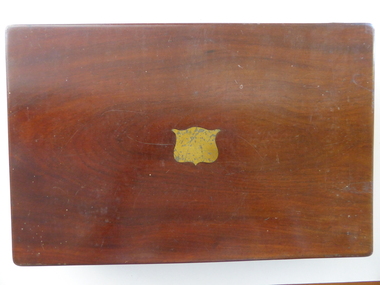
... unit being the dollar (equivalent in value to half a pound or ten shillings). This collection of coins shows what coins looked like in Australia before the introduction of decimal currency. It is a very useful display item. Decimal Currency in Australia Pre-Decimal Currency in Australia History ...These coins were in use in Australia during the 20th century up to 1965. The coinage was based on the imperial system with the basic currency unit being the pound. In February 1966 decimal coinage was introduced in Australia with the basic currency unit being the dollar (equivalent in value to half a pound or ten shillings). This collection of coins shows what coins looked like in Australia before the introduction of decimal currency. It is a very useful display item. This is a collection of coins in a wooden box. The wood is polished and has brass hinges on the lid and a brass lock and keyhole on the box’s side. The lid is lined with blue felt and on the top of the lid is a much-scratched brass shield (intended for inscribing a name). Inside the box there is a clear piece of glass over the coins which are pasted onto a piece of buff-coloured paper. There are 40 coins in the box. The heading is hand written (calligraphy) in black ink and the other information is type-written. ‘Australian Pre-Decimal Coinage’ ‘Edward V11, Threepence & Sixpence, 1910’ ‘George V, Halfpenny, Penny, Threepence, Sixpence, Shilling, Florin, 1911-1936’ ‘George V1, Halfpenny, Penny, Threepence, Sixpence, Shilling, Florin, 1938-1952’ ‘Elizabeth 11, Halfpenny, Penny, Threepence, Sixpence, Shilling, Florin. 1963-1963’ decimal currency in australia, pre-decimal currency in australia, history of warrnambool -
 Bendigo Military Museum
Award - CITATION CERTIFICATE, SOUTH VIETNAMESE, FRAMED, Post vietnam
... Details a brief history of the Australian Army Training Team Vietnam, reason for the award of the South Vietnam Cross of Gallantry with Palm. AATTV was the highest decorated Unit...Details a brief history of the Australian Army Training Team Vietnam, reason for the award of the South Vietnam Cross of Gallantry with Palm. AATTV was the highest decorated Unit ...Details a brief history of the Australian Army Training Team Vietnam, reason for the award of the South Vietnam Cross of Gallantry with Palm. AATTV was the highest decorated Unit in the Australian Army during Vietnam being awarded among others 4 Victoria Crosses.Famed certificate for Republic of Vietnam Cross of Gallantry with Palm Unit Citation. Award given to the Australian Army Training Team Vietnam. Frame is brown stained wood.cross of gallantry, aattv, vietnam -
 Bendigo Military Museum
Print - PRINT, AATTV FRAMED, Post 1970
... history, WW2, Korea, Malaya, Vietnam. This portrait came as an extra to a large framed print of Australia’s 96 at the time Victoria Cross winners. portraits illustrations-watercolour AATTV VC Black print on gold name plate: SIMPSON Rayene Stewart VC Rank Warrant Officer Class II Unit: Australian Army Training Team: Vietnam Date: 6 and 11 May 1969 Place: Kontum Province, South Vietnam (now the Socialist Republic of Vietnam) Dark brown marbled effect timber frame, with gold inner edge glass, gold metal look name plate glued to glass at lower edge. ...Ray Simpson VC, DCM. Refer 630 for his service history, WW2, Korea, Malaya, Vietnam. This portrait came as an extra to a large framed print of Australia’s 96 at the time Victoria Cross winners.Dark brown marbled effect timber frame, with gold inner edge glass, gold metal look name plate glued to glass at lower edge. Coloured print of a water colour painting of soldier RAYENE STEWART SIMPSON in uniform. Black print on gold name plate: SIMPSON Rayene Stewart VC Rank Warrant Officer Class II Unit: Australian Army Training Team: Vietnam Date: 6 and 11 May 1969 Place: Kontum Province, South Vietnam (now the Socialist Republic of Vietnam)portraits, illustrations-watercolour, aattv, vc -
 Bendigo Military Museum
Award - CITATION CERTIFICATE, U.S PRESIDENTIAL, FRAMED, 1951
... military history-army Korea Kapyong Australia Document re. "Special General Order. Battle honours-Citation of Units 28 June 51". ...Document re. "Special General Order. Battle honours-Citation of Units 28 June 51". Document relates to the Battle of Kapyong 24/25 April 51 and the 3rd Btn RAR. The battalion was awarded the US Presidential Unit Citation. Document is in a wooden frame with gold edge.military history-army, korea, kapyong, australia
