
Showing 361 items matching " 19 october"
-
 8th/13th Victorian Mounted Rifles Regimental Collection
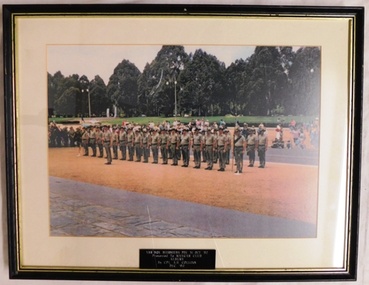
Photograph - Beersheba Day AWM 1992, November 1992
... Framed coloured photograph of gaurd drawn from Victorian Mounted Rifles Squadron 4/19 Prince of Wales's Light Horse drawn up at the Beersheba Day parade at the Australian War Memorial 31 October 1992....October 92. Presented to Maygar Club Albury by Cpl AH Collins Dec 92" Framed coloured photograph of gaurd drawn from Victorian Mounted Rifles Squadron 4/19 Prince of Wales's Light Horse drawn up at the Beersheba Day parade at the Australian War Memorial 31 October 1992. ...The 8th/13th Victorian Mounted Rifles was raised as a regiment of the Royal Australian Armoured Corps on 1 May 1948. It was linked with 4th/19th Prince of Wales’s Light Horse in 1991 forming the VMR Squadron of the regiment. Captain Kel Robertson commanded the guard. It was the first occasion at which the squadron wore slouch hats in lieu of berets.Good photograph of Army Reserve unit on parade on a significant day for Australian Light Horse.Framed coloured photograph of gaurd drawn from Victorian Mounted Rifles Squadron 4/19 Prince of Wales's Light Horse drawn up at the Beersheba Day parade at the Australian War Memorial 31 October 1992.On plaque at bottom centre of frame: "VMR Sqn Beersheba Pde 31 October 92. Presented to Maygar Club Albury by Cpl AH Collins Dec 92"vmr squadron, 4th/19th prince of wales's light horse, beersheba, parade, slouch hat -
 8th/13th Victorian Mounted Rifles Regimental Collection
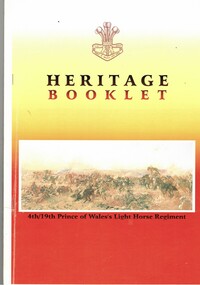
Book, Heritage Booklet 4th/19th Prince of Wales's Light Horse Regiment
... October 1917". The booklet is a compilation of various official documents and articles from publications to give serving soldiers a history and heritage of their regiment which was formed on 1 April 1991 with the linking of 4/19 Prince of Wales's Light Horse and 8/13 Victorian Mounted Rifles....October 1917". The booklet is a compilation of various official documents and articles from publications to give serving soldiers a history and heritage of their regiment which was formed on 1 April 1991 with the linking of 4/19 Prince of Wales's Light Horse and 8/13 Victorian Mounted Rifles. ...Soft cover 72 page booklet stapled along left side. Cover has image of George Lambert's painting: The charge of the Australian Light Horse at Beersheba, 31 October 1917". The booklet is a compilation of various official documents and articles from publications to give serving soldiers a history and heritage of their regiment which was formed on 1 April 1991 with the linking of 4/19 Prince of Wales's Light Horse and 8/13 Victorian Mounted Rifles.pwlh, vmr, history -
 8th/13th Victorian Mounted Rifles Regimental Collection
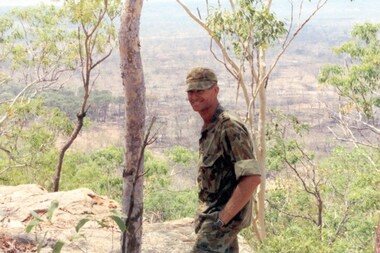
Born digital image, September 1993
... 19 PWLH based at Latchford Barracks Bonegilla. He was awarded the Defence Long Service Medal (DLSM) in 2014. Highlights of his career included being Parade Commander for the 75th anniversary Beersheba parade in Canberra on 31 October 1992. ...19 PWLH based at Latchford Barracks Bonegilla. He was awarded the Defence Long Service Medal (DLSM) in 2014. Highlights of his career included being Parade Commander for the 75th anniversary Beersheba parade in Canberra on 31 October 1992. ...The Dibb Report into mainland defence of Australia,1986, among other things identified the requirement for protection of key assets in Northern Australia and the possibility of involving Army Reserve (Ares) units in this thus releasing regular forces for offensive operations. Dibb also pointed out that this defined role would result in a huge lift in Ares morale. In June 1988, the 3rd Division (3Div) conducted a Tactical Exercise without Troops (TEWT), Exercise ‘Distant Trumpet’ in the Katherine- Darwin area to study problems associated with defence against low level incursions against Tindal RAAF Base. Exercise ‘Northern Explorer’ followed in October of that year when units of the 3Div including A Squadron 8/13 Victorian Mounted Rifles sent patrol groups to get a first taste of environment and conditions. Post-Exercise reports had to include recommendations re: health, equipment and adaptation of Standing Operating Procedures (SOPs) in preparation for the new role deploying to Northern Australia. The first deployment by 8/13 Vistorian Mounted Rifles was in 1988. Deployments continued i following years. In September 1993, 3 Troop (Wangaratta) VMR Squadron 4/19 PWLH commanded by Captain Kelvin Robertson deployed to NT. The training began with airfield defence at Tindal followed by a 1000km recon into Arnhem Land in four Landrovers. The troop reported on the conditions of the roads, airfields, bridges (mainly causeways) resources such as fuel supplies in the towns and infrastructure. Each troop taking different route. 3 Troop had the Northern route through Kakadu National park across the East Alligator River to Oenpelli then to Maningrida and Ramangining and south to the Central Arnhem Road and back to Tindal Air force Base. Kelvin Robertson enlisted on 6 April 1981 at Cobram where Lieutenant Dan Wyborn was the troop leader at 2 Troop A Squadron 8th/13th Victorian Mounted Rifles (2TP A SQN 8/13 VMR). He completed the Initial Employment Training Course (IET) and then an M113A1 driver’s course in March 1982. Course Senior Instructor (SI) was Captain (CAPT) John McLean and wing instructor Warrant Officer Class 2 (WO2) Mick Baxter (ex-Driving & Servicing Wing instructor at the School of Armour). He served with 2TP at Cobram as a trooper Driver/Signaller until June 1982 when he was selected for officer training. He served two years as an Officer Cadet in Course 21 at Officer Cadet Training Unit (OCTU) graduating in June 1984. He returned to 8/13 VMR and completed the 1/85 Army Reserve (ARES) Regimental Officers Basic Course (ROBC Reconnaissance), then was posted immediately as 1 TP LDR for the Hay Booligal Annual Field Exercise (AFX). In 1985 he took command of 2TP at Cobram until Nov 1987 when he transferred to C Squadron First Armoured Regiment (CSQN 1AR). This began six months full time duty in which Lieutenant (LT) Robertson completed the regular army 1/88 (ROBC Tank), and then served as CSQN's first and only ARES Leopard Tank TP LDR until the next ARES LT was trained up as 2TP LDR. He later served as the CSQN Liaison Officer (LO) on the First Brigade (1 Bde) exercise ‘Predators Advance’ and as a staff officer on a Second Division (2Div) exercise. In Jan 1991 he studied at the Reserve Command and Staff College (RCSC). Upon completion of Grade 3 he was promoted to CAPT and transferred back to a reconnaissance troop, 3TP VMR SQN 4th/19th Prince of Wales’s Light Horse (4/19PWLH) at Wangaratta. CAPT Robertson transferred to the Inactive List in 1994, but in 2011 returned to the Active List serving as Operations Captain (OPS CAPT) at Regimental Headquarters (RHQ) 12th/16th Hunter River Lancers (12/16 HRL)and later Second-In-Command (2IC) Tamworth-based Operations Support Squadron (OPSPT SQN), and at 9 day exercises at Singleton range and an exercise at Townville High Range in Protective Mobility Vehicle (PMV) Bushmasters. In 2013 after completing the ARES Grade 3 Staff Officers course in Brisbane he returned home to Jerilderie and served as 2IC A SQN 4/19 PWLH based at Latchford Barracks Bonegilla. He was awarded the Defence Long Service Medal (DLSM) in 2014. Highlights of his career included being Parade Commander for the 75th anniversary Beersheba parade in Canberra on 31 October 1992. The guard, drawn from the VMR SQN 4/19 PWLH represented the 4th Light Horse Regiment, a participant of the Charge. Then twenty years later, 2012, he was invited to speak at the Quirindi Anzac Day ceremony. On this occasion he was serving with 12/16 HRL, so in two ceremonies, 20 years apart, he had represented both the 4th LHR and the 12th LHR, the two lead Regiments that charged Beersheba. CAPT Robertson was placed on the Inactive List again in 2015. Illustrates Reserve training in NT.Colour image of soldier with landscape in background being Captain Kelvin Robertson 3 Troop Leader (Wangaratta) VMR Squadron 4th/19th Prince of Wales’s Light Horse Regiment looking out over the Arafura swamp near the Maningrida to Ramingining road in Arnhem Land during exercise in the Northern Territory, September 1993.tindal, robertson -
 8th/13th Victorian Mounted Rifles Regimental Collection
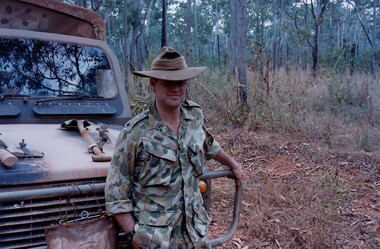
Photograph
... October of that year when units of the 3Div including A Squadron 8/13 Victorian Mounted Rifles sent patrol groups to get a first taste of environment and conditions. Post-Exercise reports had to include recommendations re: health, equipment and adaptation of Standing Operating Procedures (SOPs) in preparation for the new role deploying to Northern Australia. The first deployment by 8/13 Victorian Mounted Rifles was in 1988. Deployments continued in following years. In September 1993, 3 Troop (Wangaratta) VMR Squadron 4/19...October of that year when units of the 3Div including A Squadron 8/13 Victorian Mounted Rifles sent patrol groups to get a first taste of environment and conditions. Post-Exercise reports had to include recommendations re: health, equipment and adaptation of Standing Operating Procedures (SOPs) in preparation for the new role deploying to Northern Australia. The first deployment by 8/13 Victorian Mounted Rifles was in 1988. Deployments continued in following years. In September 1993, 3 Troop (Wangaratta) VMR Squadron 4/19 ...The Dibb Report into mainland defence of Australia,1986, among other things identified the requirement for protection of key assets in Northern Australia and the possibility of involving Army Reserve (Ares) units in this thus releasing regular forces for offensive operations. Dibb also pointed out that this defined role would result in a huge lift in Ares morale. In June 1988, the 3rd Division (3Div) conducted a Tactical Exercise without Troops (TEWT), Exercise ‘Distant Trumpet’ in the Katherine- Darwin area to study problems associated with defence against low level incursions against Tindal RAAF Base. Exercise ‘Northern Explorer’ followed in October of that year when units of the 3Div including A Squadron 8/13 Victorian Mounted Rifles sent patrol groups to get a first taste of environment and conditions. Post-Exercise reports had to include recommendations re: health, equipment and adaptation of Standing Operating Procedures (SOPs) in preparation for the new role deploying to Northern Australia. The first deployment by 8/13 Victorian Mounted Rifles was in 1988. Deployments continued in following years. In September 1993, 3 Troop (Wangaratta) VMR Squadron 4/19 PWLH commanded by Captain Kelvin Robertson deployed to NT. The training began with airfield defence at Tindal followed by a 1000km recon into Arnhem Land in four Landrovers. The troop reported on the conditions of the roads, airfields, bridges (mainly causeways) resources such as fuel supplies in the towns and infrastructure. Each troop taking different route. 3 Troop had the Northern route through Kakadu National park across the East Alligator River to Oenpelli then to Maningrida and Ramangining and south to the Central Arnhem Road and back to Tindal Air force Base Major Annett later commanded 4/19 Prince of Wales's Light Horse, and later again 4th Brigade 2nd Division.. Colour photograph of Major M. Annett, Officer Commanding VMR Squadron 4/19Prince of Wales's Light Horse during annual exercise Northern Territory 1994. -
 8th/13th Victorian Mounted Rifles Regimental Collection
Photograph
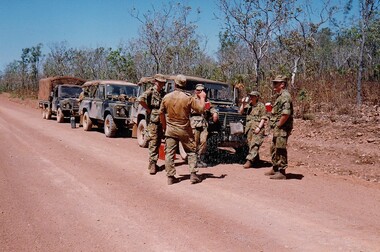
... October of that year when units of the 3Div including A Squadron 8/13 Victorian Mounted Rifles sent patrol groups to get a first taste of environment and conditions. Post-Exercise reports had to include recommendations re: health, equipment and adaptation of Standing Operating Procedures (SOPs) in preparation for the new role deploying to Northern Australia. The first deployment by 8/13 Victorian Mounted Rifles was in 1988. Deployments continued in following years. In September 1993, 3 Troop (Wangaratta) VMR Squadron 4/19...October of that year when units of the 3Div including A Squadron 8/13 Victorian Mounted Rifles sent patrol groups to get a first taste of environment and conditions. Post-Exercise reports had to include recommendations re: health, equipment and adaptation of Standing Operating Procedures (SOPs) in preparation for the new role deploying to Northern Australia. The first deployment by 8/13 Victorian Mounted Rifles was in 1988. Deployments continued in following years. In September 1993, 3 Troop (Wangaratta) VMR Squadron 4/19 ...The Dibb Report into mainland defence of Australia,1986, among other things identified the requirement for protection of key assets in Northern Australia and the possibility of involving Army Reserve (Ares) units in this thus releasing regular forces for offensive operations. Dibb also pointed out that this defined role would result in a huge lift in Ares morale. In June 1988, the 3rd Division (3Div) conducted a Tactical Exercise without Troops (TEWT), Exercise ‘Distant Trumpet’ in the Katherine- Darwin area to study problems associated with defence against low level incursions against Tindal RAAF Base. Exercise ‘Northern Explorer’ followed in October of that year when units of the 3Div including A Squadron 8/13 Victorian Mounted Rifles sent patrol groups to get a first taste of environment and conditions. Post-Exercise reports had to include recommendations re: health, equipment and adaptation of Standing Operating Procedures (SOPs) in preparation for the new role deploying to Northern Australia. The first deployment by 8/13 Victorian Mounted Rifles was in 1988. Deployments continued in following years. In September 1993, 3 Troop (Wangaratta) VMR Squadron 4/19 PWLH commanded by Captain Kelvin Robertson deployed to NT. The training began with airfield defence at Tindal followed by a 1000km recon into Arnhem Land in four Landrovers. The troop reported on the conditions of the roads, airfields, bridges (mainly causeways) resources such as fuel supplies in the towns and infrastructure. Each troop taking different route. 3 Troop had the Northern route through Kakadu National park across the East Alligator River to Oenpelli then to Maningrida and Ramangining and south to the Central Arnhem Road and back to Tindal Air force Base. Colour photograph of five soldiers and three vehicles of VMR Squadron,4/19 Prince of Wales's Light Horse on roadside during annual exercise in Northern Territory 1994.military, vehicles, soldiers, northern territory, training, vmr -
 8th/13th Victorian Mounted Rifles Regimental Collection
Photograph
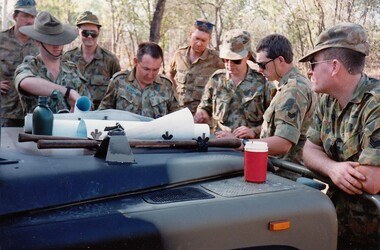
... October of that year when units of the 3Div including A Squadron 8/13 Victorian Mounted Rifles sent patrol groups to get a first taste of environment and conditions. Post-Exercise reports had to include recommendations re: health, equipment and adaptation of Standing Operating Procedures (SOPs) in preparation for the new role deploying to Northern Australia. The first deployment by 8/13 Victorian Mounted Rifles was in 1988. Deployments continued in following years. In September 1993, 3 Troop (Wangaratta) VMR Squadron 4/19...October of that year when units of the 3Div including A Squadron 8/13 Victorian Mounted Rifles sent patrol groups to get a first taste of environment and conditions. Post-Exercise reports had to include recommendations re: health, equipment and adaptation of Standing Operating Procedures (SOPs) in preparation for the new role deploying to Northern Australia. The first deployment by 8/13 Victorian Mounted Rifles was in 1988. Deployments continued in following years. In September 1993, 3 Troop (Wangaratta) VMR Squadron 4/19 ...The Dibb Report into mainland defence of Australia,1986, among other things identified the requirement for protection of key assets in Northern Australia and the possibility of involving Army Reserve (Ares) units in this thus releasing regular forces for offensive operations. Dibb also pointed out that this defined role would result in a huge lift in Ares morale. In June 1988, the 3rd Division (3Div) conducted a Tactical Exercise without Troops (TEWT), Exercise ‘Distant Trumpet’ in the Katherine- Darwin area to study problems associated with defence against low level incursions against Tindal RAAF Base. Exercise ‘Northern Explorer’ followed in October of that year when units of the 3Div including A Squadron 8/13 Victorian Mounted Rifles sent patrol groups to get a first taste of environment and conditions. Post-Exercise reports had to include recommendations re: health, equipment and adaptation of Standing Operating Procedures (SOPs) in preparation for the new role deploying to Northern Australia. The first deployment by 8/13 Victorian Mounted Rifles was in 1988. Deployments continued in following years. In September 1993, 3 Troop (Wangaratta) VMR Squadron 4/19 PWLH commanded by Captain Kelvin Robertson deployed to NT. The training began with airfield defence at Tindal followed by a 1000km recon into Arnhem Land in four Landrovers. The troop reported on the conditions of the roads, airfields, bridges (mainly causeways) resources such as fuel supplies in the towns and infrastructure. Each troop taking different route. 3 Troop had the Northern route through Kakadu National park across the East Alligator River to Oenpelli then to Maningrida and Ramangining and south to the Central Arnhem Road and back to Tindal Air force Base. Colour photograph of group of soldiers of VMR Squadron 4/19Prince of Wales's Light Horse studying maps on bonnet of Land Rover during annual exercise in Northern Territory 1994.Major M. Annett wearing slouch hat, Sergeant Gary Wynn,without hat,,on his left. -
 8th/13th Victorian Mounted Rifles Regimental Collection
Photograph
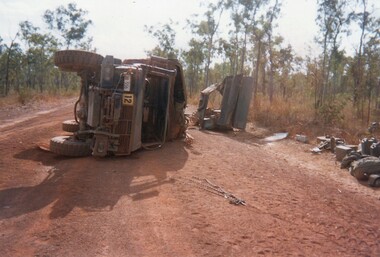
... October of that year when units of the 3Div including A Squadron 8/13 Victorian Mounted Rifles sent patrol groups to get a first taste of environment and conditions. Post-Exercise reports had to include recommendations re: health, equipment and adaptation of Standing Operating Procedures (SOPs) in preparation for the new role deploying to Northern Australia. The first deployment by 8/13 Victorian Mounted Rifles was in 1988. Deployments continued in following years. In September 1993, 3 Troop (Wangaratta) VMR Squadron 4/19...October of that year when units of the 3Div including A Squadron 8/13 Victorian Mounted Rifles sent patrol groups to get a first taste of environment and conditions. Post-Exercise reports had to include recommendations re: health, equipment and adaptation of Standing Operating Procedures (SOPs) in preparation for the new role deploying to Northern Australia. The first deployment by 8/13 Victorian Mounted Rifles was in 1988. Deployments continued in following years. In September 1993, 3 Troop (Wangaratta) VMR Squadron 4/19 ...The Dibb Report into mainland defence of Australia,1986, among other things identified the requirement for protection of key assets in Northern Australia and the possibility of involving Army Reserve (Ares) units in this thus releasing regular forces for offensive operations. Dibb also pointed out that this defined role would result in a huge lift in Ares morale. In June 1988, the 3rd Division (3Div) conducted a Tactical Exercise without Troops (TEWT), Exercise ‘Distant Trumpet’ in the Katherine- Darwin area to study problems associated with defence against low level incursions against Tindal RAAF Base. Exercise ‘Northern Explorer’ followed in October of that year when units of the 3Div including A Squadron 8/13 Victorian Mounted Rifles sent patrol groups to get a first taste of environment and conditions. Post-Exercise reports had to include recommendations re: health, equipment and adaptation of Standing Operating Procedures (SOPs) in preparation for the new role deploying to Northern Australia. The first deployment by 8/13 Victorian Mounted Rifles was in 1988. Deployments continued in following years. In September 1993, 3 Troop (Wangaratta) VMR Squadron 4/19 PWLH commanded by Captain Kelvin Robertson deployed to NT. The training began with airfield defence at Tindal followed by a 1000km recon into Arnhem Land in four Landrovers. The troop reported on the conditions of the roads, airfields, bridges (mainly causeways) resources such as fuel supplies in the towns and infrastructure. Each troop taking different route. 3 Troop had the Northern route through Kakadu National park across the East Alligator River to Oenpelli then to Maningrida and Ramangining and south to the Central Arnhem Road and back to Tindal Air force Base. Two colour photographs of vehicle mishap during VMR Squadron 4/19Prince of Wales's Light Horse annual exercise in Northern Territory 1994.Second photo shows driver receiving medical attention. -
 8th/13th Victorian Mounted Rifles Regimental Collection
Photograph
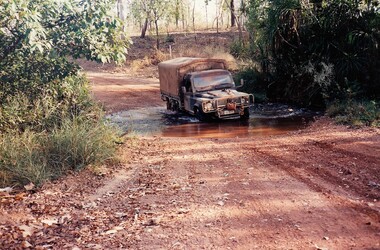
... October of that year when units of the 3Div including A Squadron 8/13 Victorian Mounted Rifles sent patrol groups to get a first taste of environment and conditions. Post-Exercise reports had to include recommendations re: health, equipment and adaptation of Standing Operating Procedures (SOPs) in preparation for the new role deploying to Northern Australia. The first deployment by 8/13 Victorian Mounted Rifles was in 1988. Deployments continued in following years. In September 1993, 3 Troop (Wangaratta) VMR Squadron 4/19...October of that year when units of the 3Div including A Squadron 8/13 Victorian Mounted Rifles sent patrol groups to get a first taste of environment and conditions. Post-Exercise reports had to include recommendations re: health, equipment and adaptation of Standing Operating Procedures (SOPs) in preparation for the new role deploying to Northern Australia. The first deployment by 8/13 Victorian Mounted Rifles was in 1988. Deployments continued in following years. In September 1993, 3 Troop (Wangaratta) VMR Squadron 4/19 ...The Dibb Report into mainland defence of Australia,1986, among other things identified the requirement for protection of key assets in Northern Australia and the possibility of involving Army Reserve (Ares) units in this thus releasing regular forces for offensive operations. Dibb also pointed out that this defined role would result in a huge lift in Ares morale. In June 1988, the 3rd Division (3Div) conducted a Tactical Exercise without Troops (TEWT), Exercise ‘Distant Trumpet’ in the Katherine- Darwin area to study problems associated with defence against low level incursions against Tindal RAAF Base. Exercise ‘Northern Explorer’ followed in October of that year when units of the 3Div including A Squadron 8/13 Victorian Mounted Rifles sent patrol groups to get a first taste of environment and conditions. Post-Exercise reports had to include recommendations re: health, equipment and adaptation of Standing Operating Procedures (SOPs) in preparation for the new role deploying to Northern Australia. The first deployment by 8/13 Victorian Mounted Rifles was in 1988. Deployments continued in following years. In September 1993, 3 Troop (Wangaratta) VMR Squadron 4/19 PWLH commanded by Captain Kelvin Robertson deployed to NT. The training began with airfield defence at Tindal followed by a 1000km recon into Arnhem Land in four Landrovers. The troop reported on the conditions of the roads, airfields, bridges (mainly causeways) resources such as fuel supplies in the towns and infrastructure. Each troop taking different route. 3 Troop had the Northern route through Kakadu National park across the East Alligator River to Oenpelli then to Maningrida and Ramangining and south to the Central Arnhem Road and back to Tindal Air force Base. Two colour photographs of creek crossings, one more challenging than the other,during the annual exercise in Northern Territory, conducted by VMR Squadron 4/19 Prince of Wales's Light horse, 1994. -
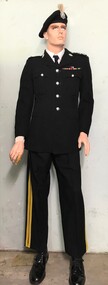 8th/13th Victorian Mounted Rifles Regimental Collection
Uniform - Blues uniform
... 19 PWLH prior to taking command of 8/13 VMR. He maintained close contact with the Regimental Association and following his death in October 2018 at age 98 his family donated this uniform to the museum. ...19 PWLH prior to taking command of 8/13 VMR. He maintained close contact with the Regimental Association and following his death in October 2018 at age 98 his family donated this uniform to the museum. ...This uniform was worn by Lieutenant Colonel J Allard who commanded 8/13 Victorian Mounted Rifles 1959-1962. Col Allard had served in the pre-WW2 militia, then in 2/4th Armoured Regiment (AIF). Following the war he joined the CMF and served as 2i/c 4/19 PWLH prior to taking command of 8/13 VMR. He maintained close contact with the Regimental Association and following his death in October 2018 at age 98 his family donated this uniform to the museum. The uniform was known as 'mess undress' but served as formal winter dress until 'mess dress' was made available in 1970s. Mannequin dressed in Blues uniform with beret and 8/13 Victorian Mounted Rifles badge with emu plume tuft behind badge. Uniform has 8/13 VMR regimental buttons, lieutenant colonel badges of rank and WWII service ribbon bar. military, uniform, allard, vmr, blues -
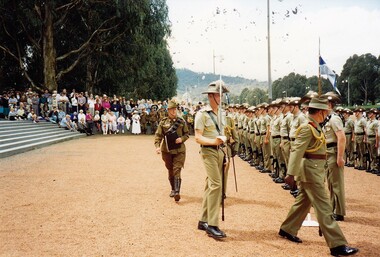 8th/13th Victorian Mounted Rifles Regimental Collection
Photograph - Beersheba Day 1992
... On 31 October 1992, a parade was held at Australian War Memorial to commemorate the 75th anniversary of the charge at Beersheba, Egypt (present day Israel) on 31 October 1917 during the second battle of Gaza, by two regiments of Australian Light Horse, 4th ALH and 12th ALH to capture the all-important wells in the town. An Honour Guard drawn from the Victorian Mounted Rifles Squadron of 4/19...On 31 October 1992, a parade was held at Australian War Memorial to commemorate the 75th anniversary of the charge at Beersheba, Egypt (present day Israel) on 31 October 1917 during the second battle of Gaza, by two regiments of Australian Light Horse, 4th ALH and 12th ALH to capture the all-important wells in the town. An Honour Guard drawn from the Victorian Mounted Rifles Squadron of 4/19 ...On 31 October 1992, a parade was held at Australian War Memorial to commemorate the 75th anniversary of the charge at Beersheba, Egypt (present day Israel) on 31 October 1917 during the second battle of Gaza, by two regiments of Australian Light Horse, 4th ALH and 12th ALH to capture the all-important wells in the town. An Honour Guard drawn from the Victorian Mounted Rifles Squadron of 4/19 Prince of Wales’s Light Horse, commanded by Lieutenant Kelvin Robertson, paraded in the forecourt of the AWM together with a body of horsemen from the Light Horse Association. Host for the parade was Mrs Elyne Mitchell OAM, daughter of wartime commander Lieutenant General Harry Chauvel. The reviewing officer was Lieutenant General J C Grey OA Chief of the General Staff. Concurrently, a parade was held in Melbourne where 4/19 Prince of Wales’s Light Horse and other units and services exercised their right to freedom of the city. The parade concluded at the Shrine where wreaths were laid at the Light Horse memorial and the water trough.Colour photograph of Lieutenant General J Gray inspecting Honour Guard, AWM Beersheba Day, 31 October 1992awm, gray, robertson, beersheba -
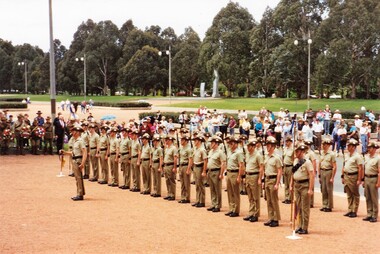 8th/13th Victorian Mounted Rifles Regimental Collection
Photograph - Beersheba Day 1992
... On 31 October 1992, a parade was held at Australian War Memorial to commemorate the 75th anniversary of the charge at Beersheba, Egypt (present day Israel) on 31 October 1917 during the second battle of Gaza, by two regiments of Australian Light Horse, 4th ALH and 12th ALH to capture the all-important wells in the town. An Honour Guard drawn from the Victorian Mounted Rifles Squadron of 4/19...On 31 October 1992, a parade was held at Australian War Memorial to commemorate the 75th anniversary of the charge at Beersheba, Egypt (present day Israel) on 31 October 1917 during the second battle of Gaza, by two regiments of Australian Light Horse, 4th ALH and 12th ALH to capture the all-important wells in the town. An Honour Guard drawn from the Victorian Mounted Rifles Squadron of 4/19 ...On 31 October 1992, a parade was held at Australian War Memorial to commemorate the 75th anniversary of the charge at Beersheba, Egypt (present day Israel) on 31 October 1917 during the second battle of Gaza, by two regiments of Australian Light Horse, 4th ALH and 12th ALH to capture the all-important wells in the town. An Honour Guard drawn from the Victorian Mounted Rifles Squadron of 4/19 Prince of Wales’s Light Horse, commanded by Lieutenant Kelvin Robertson, paraded in the forecourt of the AWM together with a body of horsemen from the Light Horse Association. Host for the parade was Mrs Elyne Mitchell OAM, daughter of wartime commander Lieutenant General Harry Chauvel. The reviewing officer was Lieutenant General J C Grey OA Chief of the General Staff. Concurrently, a parade was held in Melbourne where 4/19 Prince of Wales’s Light Horse and other units and services exercised their right to freedom of the city. The parade concluded at the Shrine where wreaths were laid at the Light Horse memorial and the water trough.Colour photograph of VMR Squadron Honour Guard on Beersheba Day parade , Australian War memorial, 31 October 1992.awm, vmr, beersheba day, robertson -
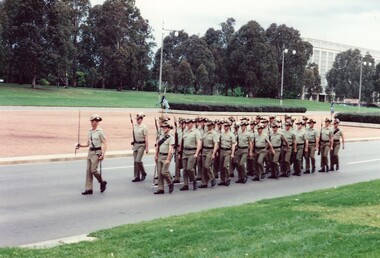 8th/13th Victorian Mounted Rifles Regimental Collection
Photograph - Beersheba Day 1992
... On 31 October 1992, a parade was held at Australian War Memorial to commemorate the 75th anniversary of the charge at Beersheba, Egypt (present day Israel) on 31 October 1917 during the second battle of Gaza, by two regiments of Australian Light Horse, 4th ALH and 12th ALH to capture the all-important wells in the town. An Honour Guard drawn from the Victorian Mounted Rifles Squadron of 4/19...19 Prince of Wales’s Light Horse and other units and services exercised their right to freedom of the city. The parade concluded at the Shrine where wreaths were laid at the Light Horse memorial and the water trough. awm vmr parade beersheba day robertson Colour photo of Honour Guard marching at Australian War Memorial, Beersheba Day, 31 October 1992. ...On 31 October 1992, a parade was held at Australian War Memorial to commemorate the 75th anniversary of the charge at Beersheba, Egypt (present day Israel) on 31 October 1917 during the second battle of Gaza, by two regiments of Australian Light Horse, 4th ALH and 12th ALH to capture the all-important wells in the town. An Honour Guard drawn from the Victorian Mounted Rifles Squadron of 4/19 Prince of Wales’s Light Horse, commanded by Lieutenant Kelvin Robertson, paraded in the forecourt of the AWM together with a body of horsemen from the Light Horse Association. Host for the parade was Mrs Elyne Mitchell OAM, daughter of wartime commander Lieutenant General Harry Chauvel. The reviewing officer was Lieutenant General J C Grey OA Chief of the General Staff. Concurrently, a parade was held in Melbourne where 4/19 Prince of Wales’s Light Horse and other units and services exercised their right to freedom of the city. The parade concluded at the Shrine where wreaths were laid at the Light Horse memorial and the water trough.Colour photo of Honour Guard marching at Australian War Memorial, Beersheba Day, 31 October 1992. awm, vmr, parade, beersheba day, robertson -
 8th/13th Victorian Mounted Rifles Regimental Collection
Photograph - Beersheba Day 1992
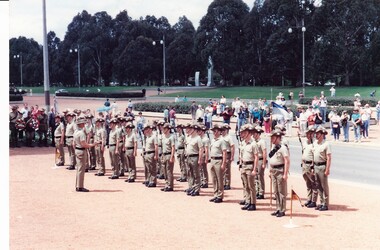
... On 31 October 1992, a parade was held at Australian War Memorial to commemorate the 75th anniversary of the charge at Beersheba, Egypt (present day Israel) on 31 October 1917 during the second battle of Gaza, by two regiments of Australian Light Horse, 4th ALH and 12th ALH to capture the all-important wells in the town. An Honour Guard drawn from the Victorian Mounted Rifles Squadron of 4/19...Colour photograph of Honour Guard drawn for VMR Squadron 4/19 Prince of Wales's Light Horse dressing ranks at Australian War Memorial, Beersheba Day 31 October 1992....The parade concluded at the Shrine where wreaths were laid at the Light Horse memorial and the water trough. beersheba day awm vmr parade Colour photograph of Honour Guard drawn for VMR Squadron 4/19 Prince of Wales's Light Horse dressing ranks at Australian War Memorial, Beersheba Day 31 October 1992. ...On 31 October 1992, a parade was held at Australian War Memorial to commemorate the 75th anniversary of the charge at Beersheba, Egypt (present day Israel) on 31 October 1917 during the second battle of Gaza, by two regiments of Australian Light Horse, 4th ALH and 12th ALH to capture the all-important wells in the town. An Honour Guard drawn from the Victorian Mounted Rifles Squadron of 4/19 Prince of Wales’s Light Horse, commanded by Lieutenant Kelvin Robertson, paraded in the forecourt of the AWM together with a body of horsemen from the Light Horse Association. Host for the parade was Mrs Elyne Mitchell OAM, daughter of wartime commander Lieutenant General Harry Chauvel. The reviewing officer was Lieutenant General J C Grey OA Chief of the General Staff. Concurrently, a parade was held in Melbourne where 4/19 Prince of Wales’s Light Horse and other units and services exercised their right to freedom of the city. The parade concluded at the Shrine where wreaths were laid at the Light Horse memorial and the water trough.Colour photograph of Honour Guard drawn for VMR Squadron 4/19 Prince of Wales's Light Horse dressing ranks at Australian War Memorial, Beersheba Day 31 October 1992.beersheba day, awm, vmr, parade -
 8th/13th Victorian Mounted Rifles Regimental Collection
Photograph - Lt Burvill Melbourne parade
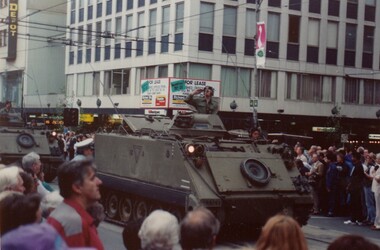
... Burvill, VMR Squadron, 4/19 Prince of Wales Light Horse during parade through Melbourne 31 October 1992...Burvill, VMR Squadron, 4/19 Prince of Wales Light Horse during parade through Melbourne 31 October 1992 Photograph Lt Burvill Melbourne parade ...Parade was part of 150th Anniversary of City of MelbourneColour photograph of Lieutenant H. Burvill, VMR Squadron, 4/19 Prince of Wales Light Horse during parade through Melbourne 31 October 1992melbourne, parade, military, burvill -
 8th/13th Victorian Mounted Rifles Regimental Collection
Photograph - Capt Jackel Melbourne parade
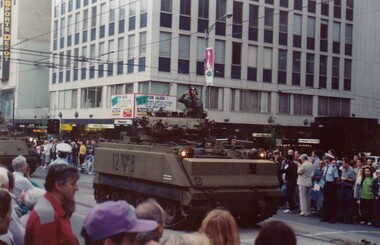
... Jackel, VMR Squadron, 4/19 Prince of Wales Light Horse during parade through Melbourne 31 October 1992....Jackel, VMR Squadron, 4/19 Prince of Wales Light Horse during parade through Melbourne 31 October 1992. ...Parade was part of 150th Anniversary of City of MelbourneColour photograph of Captain L. Jackel, VMR Squadron, 4/19 Prince of Wales Light Horse during parade through Melbourne 31 October 1992.military, jackel, parade, melbourne -
 8th/13th Victorian Mounted Rifles Regimental Collection
Card
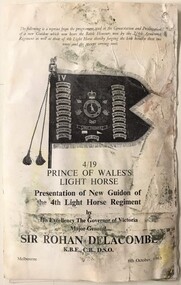
... Single fold card being Order of Service for the presentation of new Guidon of 4th Light Horse Regiment to 4/19 Prince of Wales Light Horse at Melbourne 6th October 1963. Badly water damaged. ...Guidon 4th Light Horse Parade Single fold card being Order of Service for the presentation of new Guidon of 4th Light Horse Regiment to 4/19 Prince of Wales Light Horse at Melbourne 6th October 1963. Badly water damaged. ...Single fold card being Order of Service for the presentation of new Guidon of 4th Light Horse Regiment to 4/19 Prince of Wales Light Horse at Melbourne 6th October 1963. Badly water damaged. guidon, 4th light horse, parade -
 Vision Australia
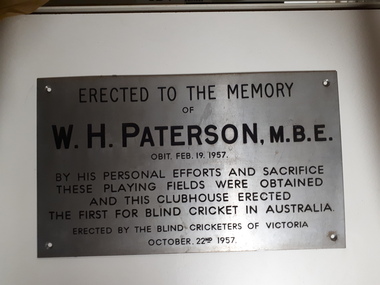
Photograph - Image, W.H. Paterson - Blind Cricketers of Australia, 1957
... Feb. 19 1957 By his personal efforts and sacrifice these playing fields were obtained and this clubhouse erected The first for blind cricket in Australia Erected by the Blind Cricketers of Victoria October 22nd 1957...Feb. 19 1957 By his personal efforts and sacrifice these playing fields were obtained and this clubhouse erected The first for blind cricket in Australia Erected by the Blind Cricketers of Victoria October 22nd 1957 Digital image of metal plaque W.H. ...When the Victorian Blind Cricket Association approached Mr Paterson for assistance in gaining access to a permanent cricket pitch upon which games could be played, it set in chain a series of events that remain in place today. Mr Paterson had been heavily involved in the formation of the Association for the Blind and saw this as a problem to be solved. Raising money through public donation and door knocking, Mr Paterson arranged the purchase of land on the banks of Gardiner's Creek, and adjacent to the tram and train lines. The land was raised, to avoid flooding, and a surface prepared. The sportsground was adjacent to the AAB, however due to the interest of Malvern Council in the land and knowing that the AAB at that time was in financial difficulties, a Trust was set up to handle the management with Mr Paterson, Mr Gould the Malvern Council Town Clerk and George Maxwell as trustees. A clubhouse was also needed to allow players to take shelter during matches and once again, Mr Paterson came to the rescue. Using their personal funds, Mr and Mrs Paterson loaned the Trust the monies required for the building. This plaque recognises the dedication and support that Mr Paterson gave to help establish the first blind cricket playing ground in Australia.Digital image of metal plaqueErected to the Memory of W.H. Paterson, M.B.E. Obit. Feb. 19 1957 By his personal efforts and sacrifice these playing fields were obtained and this clubhouse erected The first for blind cricket in Australia Erected by the Blind Cricketers of Victoria October 22nd 1957william paterson, victorian blind cricket association -
 Kew Historical Society Inc
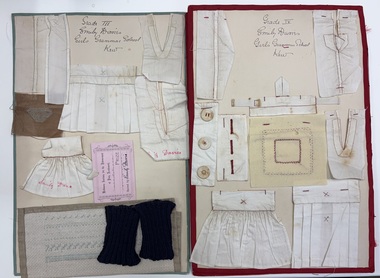
Textile - Australian Exhibition of Women's Work, Emily Davies, c.1907
... October and closed on 30 November at the Royal Exhibition Building. Emily Davies Baldur Grammar School Plain Sewing competitions Schools -- materials technology knitting Australian Exhibition of Women's Work A prize-winning collection of early 20th century embroideries created by Emily Muriel Grace Davies, the daughter of the Mayor of Richmond. Most of the embroideries were created while Emily was a student of Baldur Grammar in Kew. Baldur Grammar was founded in 1897 and was located at 17-19 ...The first Australian Exhibition of Women's Work was a national exhibition held over thirty-nine days in 1907 in Melbourne, and in the seventh year of the country's Federation. The exhibition was a celebration of the creativity and productivity of women in the manual and fine arts. It was visited by over 250,000 people who saw 16,000 exhibits by women from around Australia in competition for prizes, and 3,000 (non-competitive) entries from the rest of the world. It was one of the largest women's exhibitions ever mounted. The exhibition opened on 23 October and closed on 30 November at the Royal Exhibition Building.A prize-winning collection of early 20th century embroideries created by Emily Muriel Grace Davies, the daughter of the Mayor of Richmond. Most of the embroideries were created while Emily was a student of Baldur Grammar in Kew. Baldur Grammar was founded in 1897 and was located at 17-19 Denmark Street. emily davies, baldur grammar school, plain sewing competitions, schools -- materials technology, knitting, australian exhibition of women's work -
 Unions Ballarat
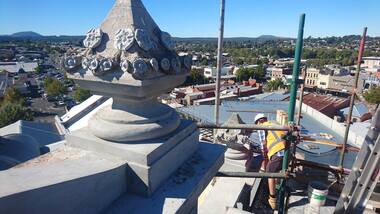
Photographs: Unions Ballarat building renovations 2018, 2018
... October 1887. (Architects were Messrs James and Piper and builders were Messrs Lietch and Outtrim.) Over several decades, the façade of the building has fallen into disrepair and was posing a safety risk. Thanks to Victorian heritage grants and ongoing public donations, refurbishment of the façade is currently underway by Troon Pty Ltd. The photos in this entry show the deterioration of the building and the progress in restoring it to its former state. Progress catalogued by date: 13 February 2018 - 1 photo 19...October 1887. (Architects were Messrs James and Piper and builders were Messrs Lietch and Outtrim.) Over several decades, the façade of the building has fallen into disrepair and was posing a safety risk. Thanks to Victorian heritage grants and ongoing public donations, refurbishment of the façade is currently underway by Troon Pty Ltd. The photos in this entry show the deterioration of the building and the progress in restoring it to its former state. Progress catalogued by date: 13 February 2018 - 1 photo 19 ...The Ballarat Trades Hall building is located at 24 Camp Street, Ballarat. The foundation stone was laid in October 1887. (Architects were Messrs James and Piper and builders were Messrs Lietch and Outtrim.) Over several decades, the façade of the building has fallen into disrepair and was posing a safety risk. Thanks to Victorian heritage grants and ongoing public donations, refurbishment of the façade is currently underway by Troon Pty Ltd. The photos in this entry show the deterioration of the building and the progress in restoring it to its former state. Progress catalogued by date: 13 February 2018 - 1 photo 19 February 2018 - 1 photo 23 February 2018 - 1-6 photos 5 March 2018 - 1-5 photos 12 March - 1 photo 4 April 2018 - 1-6 photos 18 April 2018 - 1-7 photos 23 April 2018 - 1 photo. The top of our restored building starts to poke out as the scaffold comes down level by level - the rendered wash-coat colour looks fantastic in the sun - as close as we can get to the original 1887 colour.The Hall is a community hub in Ballarat as well as being the point of contact and activism for unions and unionists in the area. These photographs are a critical part of the building's history.Photographs of Ballarat Trades Hall renovations. btlc, ballarat regional trades and labour council, ballarat trades hall, building, building fund, james and piper, lietch and outtrim, troon pty ltd, building - resoration, heritage victoria, grants -
 Ballarat Heritage Services
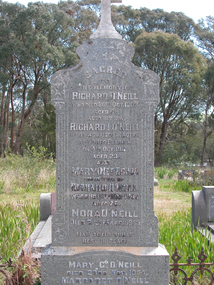
Photograph - Photograph - Colour, Clare Gervasoni, Richard O'Neill's Gravestone, Eganstown Catholic Cemetery, 26/09/2004
... Richard O'Neill died on 20 October 1908 aged 61, and his wife, Mary Egan died on 19 May 1922. Their son Richard Francis O'Neill was killed in action at Ypres, Belgium on 04 October 1917, aged 23....Richard O'Neill died on 20 October 1908 aged 61, and his wife, Mary Egan died on 19 May 1922. Their son Richard Francis O'Neill was killed in action at Ypres, Belgium on 04 October 1917, aged 23. ...Gravestone in the Eganstown Catholic Cemetery for Richard O'Neill, Richard O'Neill (Junior) and Mary Neill nee Mary Egan. Richard O'Neill died on 20 October 1908 aged 61, and his wife, Mary Egan died on 19 May 1922. Their son Richard Francis O'Neill was killed in action at Ypres, Belgium on 04 October 1917, aged 23.eganstown catholic cemetery, richard o'neill, mary egan, mary o'neill, ypres, belgium -
 Dandenong/Cranbourne RSL Sub Branch
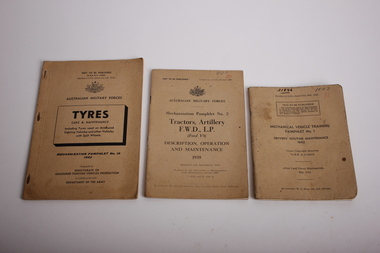
Booklet - Military operation and maintenance handbooks, The Specialty Press Pty Ltd, 1939-1945
... October 1939./ *A.M.R and O. 1588 B./ Bu Authority: The Specialty Press Pty Ltd., 174 Little Collins Street, Melbourne" 3. "NOT TO BE PUBLISHED/ (A.M.R. & O. 1588B)/Notified in G.O's dated 31st July, 1942/ AUSTRALIAN MILITARY FORCES/ TYRES/CARE & MAINTENANCE/ Including Tyres used on Armoured Fighting Vehicles and other Vehicles with Split Wheels/ MECHANIZATION PAMPHLET No. 19/1942/ Prepared by/ DIRECTORIATE OF ARMOURED FIGHTING VEHICLES PRODUCTION/in collaboration with/DEPARTMENT OF THE ARMY"...October 1939./ *A.M.R and O. 1588 B./ Bu Authority: The Specialty Press Pty Ltd., 174 Little Collins Street, Melbourne" 3. "NOT TO BE PUBLISHED/ (A.M.R. & O. 1588B)/Notified in G.O's dated 31st July, 1942/ AUSTRALIAN MILITARY FORCES/ TYRES/CARE & MAINTENANCE/ Including Tyres used on Armoured Fighting Vehicles and other Vehicles with Split Wheels/ MECHANIZATION PAMPHLET No. 19/1942/ Prepared by/ DIRECTORIATE OF ARMOURED FIGHTING VEHICLES PRODUCTION/in collaboration with/DEPARTMENT OF THE ARMY" Three military operation and maintenance handbooks including Mechanical Vehicle Training, Tractors, Artillery and Tyres Care and Maintenance. ...Three military operation and maintenance handbooks including Mechanical Vehicle Training, Tractors, Artillery and Tyres Care and Maintenance.1. "Notified in G.O's, dated 31st July, 1942/ *NOT TO BE PUBLISHED/The information given in this document is not to be communicated, either directly or indirectly, to the Press or to any person not holding an official position in His Majesty's Service/ MECHANICAL VEHICLE TRAINING/PAMPHLET No.1/DRIVER'S ROUTINE MAINTENANCE/1942/Crown Copyright Reserved/*A.M.R. & O 1588 B./Allied Land Forces Headquarters,/May 1942/ By Authority: W.A Hamer Pty. Ltd, Printers." 2. "NOT TO BE PUBLISHED Notified in A.A.Os, October 1939/AUSTRALIAN MILITARY FORCES/ Mechanization Pamphlet No.2/Tractors, Artillery, F.W.D., L.P (Ford V8)/DESCRIPTION, OPERATION/AND MAINTENANCE/1939/ (Reprinted with Amendments, 1940)/ Prepared by the Directorate of Mechanization, Army Headquarters, October 1939./ *A.M.R and O. 1588 B./ Bu Authority: The Specialty Press Pty Ltd., 174 Little Collins Street, Melbourne" 3. "NOT TO BE PUBLISHED/ (A.M.R. & O. 1588B)/Notified in G.O's dated 31st July, 1942/ AUSTRALIAN MILITARY FORCES/ TYRES/CARE & MAINTENANCE/ Including Tyres used on Armoured Fighting Vehicles and other Vehicles with Split Wheels/ MECHANIZATION PAMPHLET No. 19/1942/ Prepared by/ DIRECTORIATE OF ARMOURED FIGHTING VEHICLES PRODUCTION/in collaboration with/DEPARTMENT OF THE ARMY"handbooks, maintenance, mechanical, training -
 Ballarat Heritage Services
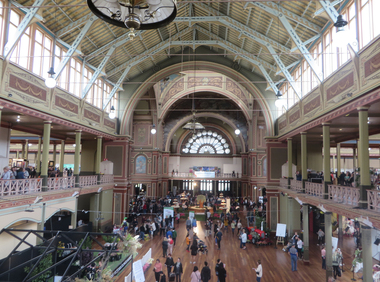
Photograph - Photograph -Colour, Clare Gervasoni, Interior of the Melbourne Exhibition Building, 2019, 31/03/2019
... 19 February 1879. Prominent Melbounre builder David Mitchell, father of Dame Nellie Melba, won the tender to construct the main building. Exhibitors were able to move in by May 1880. On 01 October...19 February 1879. Prominent Melbounre builder David Mitchell, father of Dame Nellie Melba, won the tender to construct the main building. Exhibitors were able to move in by May 1880. On 01 October ...A competition was announced to design a suitable building for the proposed Melbourne International Exhibition in December 1877. Eighteen entries were received. The winner of 300 pounds was Joseph Reed of the architectual firm Reed and Barnes. The foundation stone was laid by Governor Sir George Bowen on 19 February 1879. Prominent Melbounre builder David Mitchell, father of Dame Nellie Melba, won the tender to construct the main building. Exhibitors were able to move in by May 1880. On 01 October 1880 the Melbourne International Exhibition opened, when over 6000 people entered the main hall to see the Governor, the Marquess of Normanby open the show. Thirty three nations participated and ofver 32,000 exhibits were displayed. At the close of the exhibition on 30 April 1881 over 1.3 million people had visited the exhibition. In 1881 Victoria's population was just over 250,000. The management of the Exhibition Building and eight hectares of the Carlton Gardens was handed to the Exhibition Trustees by the Melbourne International Exhibition Commissioners on 01 OCtober 1881. The Trustees maintained the building for 'future public exhibitions and ... general public instruction and recreation' until 1996 when management of the building was transferred to Museum Victoria. In 1901 when the Australian colonies federated there was no capital and no federal parliament building. The Federal Parliament moved into the Victorian State Parliament building, and the State Parliament moved into the Western Annexe of the Exhibition Building for 26 years. After World War One, on 04 February 1919, the exhibition Building was turned into a hospital to treat Melbournians struck down with the Spanis 'Flu'. Initially housing 500 beds, the hospital grew to accomodate 2000 patients. Femals were located between the concert platform in the western nave and the done; male patients occupied the spaces beyond. The basement was used a a morgue. With the departure of the State Parliament in 1927 the western annexe became home to the Country Roads Board. In 1932 it was joined by the MOtor Registration Branch, and the Transport Regulation Board in 1934. They co-existedin cramped offices until the 1960s. In 1949 the oval at the rear of the ExhibitionBuilding was leased to the Commonealth Government for the establishment of the Migrant Reception Centre. When it closed in 1961-62, the centre comrised 29 bungalows over 1.4 hectare. The centre provided temporary accomodation for thousands of new arrivals from Britain. On 01 July 2004 the Royal Exhibition Building and Carlton Gardens were inscribed on the World Heritage List. It is the only 19th century Great Hall to survive largely intact, still in its original landscape setting, and still used as a palace of industry. The Melbourne International Flower and Garden Show is a flower show held annually since 1995 in early April each year, in Melbourne, Australia. It is located in the World Heritage Site of Carlton Gardens and the Royal Exhibition Building.[1] It is the largest horticultural event in the southern hemisphere, attracting over 100,000 visitors. It is rated among the top five flower and garden shows in the world. (Wikipedia)Colour photograph of the interior of the Melbourne Exhibition Buildings during the 2019 Melbourne Flower and Garden Show.melbourne international flower and garden show, carlton gardens, melbourne exhibition building, royal exhibition buildings -
 Ballarat Heritage Services
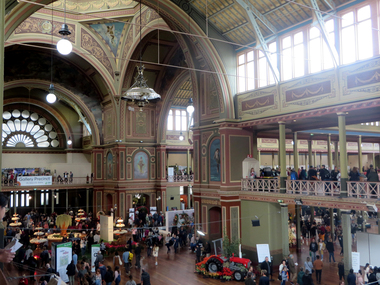
Photograph -Colour, Clare Gervasoni, Interior of the Melbourne Exhibition Building, 2019, 31/03/2019
... 19 February 1879. Prominent Melbounre builder David Mitchell, father of Dame Nellie Melba, won the tender to construct the main building. Exhibitors were able to move in by May 1880. On 01 October...19 February 1879. Prominent Melbounre builder David Mitchell, father of Dame Nellie Melba, won the tender to construct the main building. Exhibitors were able to move in by May 1880. On 01 October ...A competition was announced to design a suitable building for the proposed Melbourne International Exhibition in December 1877. Eighteen entries were received. The winner of 300 pounds was Joseph Reed of the architectual firm Reed and Barnes. The foundation stone was laid by Governor Sir George Bowen on 19 February 1879. Prominent Melbounre builder David Mitchell, father of Dame Nellie Melba, won the tender to construct the main building. Exhibitors were able to move in by May 1880. On 01 October 1880 the Melbourne International Exhibition opened, when over 6000 people entered the main hall to see the Governor, the Marquess of Normanby open the show. Thirty three nations participated and ofver 32,000 exhibits were displayed. At the close of the exhibition on 30 April 1881 over 1.3 million people had visited the exhibition. In 1881 Victoria's population was just over 250,000. The management of the Exhibition Building and eight hectares of the Carlton Gardens was handed to the Exhibition Trustees by the Melbourne International Exhibition Commissioners on 01 OCtober 1881. The Trustees maintained the building for 'future public exhibitions and ... general public instruction and recreation' until 1996 when management of the building was transferred to Museum Victoria. In 1901 when the Australian colonies federated there was no capital and no federal parliament building. The Federal Parliament moved into the Victorian State Parliament building, and the State Parliament moved into the Western Annexe of the Exhibition Building for 26 years. After World War One, on 04 February 1919, the exhibition Building was turned into a hospital to treat Melbournians struck down with the Spanis 'Flu'. Initially housing 500 beds, the hospital grew to accomodate 2000 patients. Femals were located between the concert platform in the western nave and the done; male patients occupied the spaces beyond. The basement was used a a morgue. With the departure of the State Parliament in 1927 the western annexe became home to the Country Roads Board. In 1932 it was joined by the MOtor Registration Branch, and the Transport Regulation Board in 1934. They co-existedin cramped offices until the 1960s. In 1949 the oval at the rear of the ExhibitionBuilding was leased to the Commonealth Government for the establishment of the Migrant Reception Centre. When it closed in 1961-62, the centre comrised 29 bungalows over 1.4 hectare. The centre provided temporary accomodation for thousands of new arrivals from Britain. On 01 July 2004 the Royal Exhibition Building and Carlton Gardens were inscribed on the World Heritage List. It is the only 19th century Great Hall to survive largely intact, still in its original landscape setting, and still used as a palace of industry. The Melbourne International Flower and Garden Show is a flower show held annually since 1995 in early April each year, in Melbourne, Australia. It is located in the World Heritage Site of Carlton Gardens and the Royal Exhibition Building.[1] It is the largest horticultural event in the southern hemisphere, attracting over 100,000 visitors. It is rated among the top five flower and garden shows in the world. (Wikipedia)Colour photograph of the interior of the Melbourne Exhibition Buildings during the 2019 Melbourne Flower and Garden Show. Four mottoes are painted under teh windows of the dome: Dei Grecia (By the grace of God), Carpe diem (Make the most of the day), Aude sapere (Dare to be wise) and Benigno numine (With benighn power)melbourne international flower and garden show, carlton gardens, melbourne exhibition building, royal exhibition buildings -
 Ballarat Heritage Services
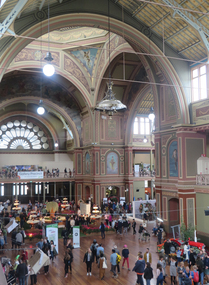
Photograph - Photograph -Colour, Clare Gervasoni, Interior of the Melbourne Exhibition Building, 2019, 31/03/2019
... 19 February 1879. Prominent Melbounre builder David Mitchell, father of Dame Nellie Melba, won the tender to construct the main building. Exhibitors were able to move in by May 1880. On 01 October...19 February 1879. Prominent Melbounre builder David Mitchell, father of Dame Nellie Melba, won the tender to construct the main building. Exhibitors were able to move in by May 1880. On 01 October ...A competition was announced to design a suitable building for the proposed Melbourne International Exhibition in December 1877. Eighteen entries were received. The winner of 300 pounds was Joseph Reed of the architectual firm Reed and Barnes. The foundation stone was laid by Governor Sir George Bowen on 19 February 1879. Prominent Melbounre builder David Mitchell, father of Dame Nellie Melba, won the tender to construct the main building. Exhibitors were able to move in by May 1880. On 01 October 1880 the Melbourne International Exhibition opened, when over 6000 people entered the main hall to see the Governor, the Marquess of Normanby open the show. Thirty three nations participated and ofver 32,000 exhibits were displayed. At the close of the exhibition on 30 April 1881 over 1.3 million people had visited the exhibition. In 1881 Victoria's population was just over 250,000. The management of the Exhibition Building and eight hectares of the Carlton Gardens was handed to the Exhibition Trustees by the Melbourne International Exhibition Commissioners on 01 OCtober 1881. The Trustees maintained the building for 'future public exhibitions and ... general public instruction and recreation' until 1996 when management of the building was transferred to Museum Victoria. In 1901 when the Australian colonies federated there was no capital and no federal parliament building. The Federal Parliament moved into the Victorian State Parliament building, and the State Parliament moved into the Western Annexe of the Exhibition Building for 26 years. After World War One, on 04 February 1919, the exhibition Building was turned into a hospital to treat Melbournians struck down with the Spanis 'Flu'. Initially housing 500 beds, the hospital grew to accomodate 2000 patients. Femals were located between the concert platform in the western nave and the done; male patients occupied the spaces beyond. The basement was used a a morgue. With the departure of the State Parliament in 1927 the western annexe became home to the Country Roads Board. In 1932 it was joined by the MOtor Registration Branch, and the Transport Regulation Board in 1934. They co-existedin cramped offices until the 1960s. In 1949 the oval at the rear of the ExhibitionBuilding was leased to the Commonealth Government for the establishment of the Migrant Reception Centre. When it closed in 1961-62, the centre comrised 29 bungalows over 1.4 hectare. The centre provided temporary accomodation for thousands of new arrivals from Britain. On 01 July 2004 the Royal Exhibition Building and Carlton Gardens were inscribed on the World Heritage List. It is the only 19th century Great Hall to survive largely intact, still in its original landscape setting, and still used as a palace of industry. The Melbourne International Flower and Garden Show is a flower show held annually since 1995 in early April each year, in Melbourne, Australia. It is located in the World Heritage Site of Carlton Gardens and the Royal Exhibition Building.[1] It is the largest horticultural event in the southern hemisphere, attracting over 100,000 visitors. It is rated among the top five flower and garden shows in the world. (Wikipedia)Colour photograph of the interior of the Melbourne Exhibition Buildings during the 2019 Melbourne Flower and Garden Show. Four mottoes are painted under teh windows of the dome: Dei Grecia (By the grace of God), Carpe diem (Make the most of the day), Aude sapere (Dare to be wise) and Benigno numine (With benighn power)melbourne international flower and garden show, carlton gardens, melbourne exhibition building, royal exhibition buildings -
 Unions Ballarat
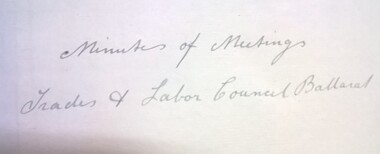
Minutes of meetings of the Ballarat Trades and Labour Council, 6 April 1883-1 November 1951
... Vol 3: 11 June 1886-9 November 1888 Vol 4: 14 December 1888-5 December 1890 Vol 5: 19 December-1 April 1898 Vol 6: 6 October-5 March 1909 Vol 7: 19 March 1909-16 February 1912 Vol 8: 1 March 1912-8 March 1917 - Melbourne Trades Hall Directory June 1912 pasted in front. ...Vol 3: 11 June 1886-9 November 1888 Vol 4: 14 December 1888-5 December 1890 Vol 5: 19 December-1 April 1898 Vol 6: 6 October-5 March 1909 Vol 7: 19 March 1909-16 February 1912 Vol 8: 1 March 1912-8 March 1917 - Melbourne Trades Hall Directory June 1912 pasted in front. ...The Ballarat Trades and Labour Council was formed in May 1882 and known as the Eight Hours Anniversary Committee. The Ballarat Regional Trades and Labour Council has been in existence from 1883 to the present day.The minutes are a core historical source of information from the inception of BTLC, representing the history of unionism in the Ballarat region. The minutes include items relating to industrial campaigns, social justice and of political significance to the region. Hard cover (bound); 12 volumes. Vol 1: 6 April 1883-17 April 1885 - heading Eight Hours Anniversary Committee. Vol 2: 20 April 1885-14 May 1886 - heading Trades Hall and Literary Institute. Vol 3: 11 June 1886-9 November 1888 Vol 4: 14 December 1888-5 December 1890 Vol 5: 19 December-1 April 1898 Vol 6: 6 October-5 March 1909 Vol 7: 19 March 1909-16 February 1912 Vol 8: 1 March 1912-8 March 1917 - Melbourne Trades Hall Directory June 1912 pasted in front. Vol 9: 22 March 1917-8 August 1929 - Melbourne Trades Hall Directory May 1917 pasted in front. Vol 10: 22 August 1929-15 July 1937. Vol 11: 29 July 1937-6 June 1946. Vol 12: 20 June 1946-1 November 1951.ballarat trades and labour council;, btlc, eight hours anniversary committee, unions, ballarat trades hall, trades hall and literary institute -
 Unions Ballarat
Leaflets, pamphlets, periodicals, newspapers, cuttings and roneoed material retained by the Council, 1891-1962
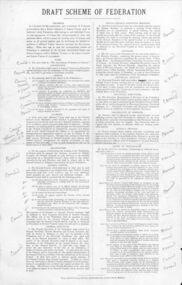
... October 1962. Report on Peking, Melbourne. 1962. (2 copies). 18. Australian Bureau of Census and Statistics. Labour and Industrial Statistics, Melbourne. 1911. 19. ...October 1962. Report on Peking, Melbourne. 1962. (2 copies). 18. Australian Bureau of Census and Statistics. Labour and Industrial Statistics, Melbourne. 1911. 19. ...TBATBATwo boxes, paper. 1. Anti-Hanging Committee - regarding hanging. 1962. 2. Ballarat Banking Co. Ltd. Chairman's address and 145th report. August 1954. 3. Country Municipal Association circular regarding conference on centralisation, Ballarat. 22 November 1916. 4. Geelong Town Band's weekly performance programme. n.d. 5. Ironmasters' Association of Victoria rules and regulations agreed upon at the General Iron Trades' Conference, Melbourne. 1891. 6. Melbourne Eight Hours Anniversary programme. 1901. 7. Museum of Applied Science of Victoria, on gas from our brown coal. n.d. 8. New Australian Trade Unionist Committee regarding rally to protect shooting of Polish workers. 195-? 9. Circular from Ballarat Trades and Labour Council to Ironmoulders' Society regarding the Congress. 1891. 10. List of subjects to be discussed at Congress. 11. Circular from Melbourne Trades Hall Council regarding financial help for Congress. 1891. 12. Reports of Standing Orders Committee appointed by the Congress, 23-29 April 1891. 13. Trade Mark Committee report. 14. Committee on Federation report. 15. Draft scheme of Federation (Australasian Federation of Labor). 16. Draft scheme of Federation (Australasian Federation of Labor) to the Labour Councils and Unions of Australasia. (2 copies.) 17. Asian and Pacific Regions Peace Conference, Peking, October 1962. Report on Peking, Melbourne. 1962. (2 copies). 18. Australian Bureau of Census and Statistics. Labour and Industrial Statistics, Melbourne. 1911. 19. Australia. Laws, Statutes, etc Trade Marks Bill, 1905. Workers' Trade Marks. Melbourne, 1905. 20. Australian Council of Trade Unions. Agenda paper for ... Congress, 1953. Melbourne, 1953. 21. Australian Labor Party. Work of the Labor government. Melbourne, 1928. 22. Australian Textile Union, Victorian Branch. Wages Sheet. Melbourne, 1953? 23. Baker, W.A. The Commonwealth Basic Wage. 1907-1953. Sydney, 1953? 24. Building Workers' Industrial Union. Building Workers support your convention. n.p. 1954? 25. Carters' and Drivers' Union. Committee of Management. Important to members of Carters and Drivers' Union. Melbourne, 1936. 26. Dougherty, Tom. Santamaria unmasked. Melbourne, 1954? 27. Eight Hours' Anniversary Sports Programme, 1893. Ballarat 1893. 28. Eight Hours' Anniversary Programme, 1894. Ballarat, 1894. 29. Fadden, Arthur W. The menace of political banking. Sydney, 1945. 30. Federated Clerks' Union, Victoria Branch. The Fennessy Story. The Braun Story. n.p., 1954. 31. Federated Clerks' Union, Victoria Branch. Manifesto, n.p., 1955. 32. Greater Ballarat Association. Seventeenth annual report. Ballarat, 1954. 33. Langridge, H.E. Employers in the Labor Party. Melbourne, 1914. 34. Metal Trades Federation. National Conference of Federal Council and delegates from State branches. Sydney, 1960. 35. Municipal Association of Victoria. Arbitration aware regarding employment of members of the Municipal Officers Association of Australia. Melbourne, 1950. 36. Municipality of the Town of Ballarat East. Annual report, 1919. Ballarat, 1919. 37. Plumbers and Gasfitters Employees' Association of Australia. Melbourne Branch. Why did Menzies abdicate when he had a working majority and 18 months to go? Melbourne, 1955? 38. Plumbers and Gasfitters Employees Union of Australia, Melbourne Branch. Who are the wreckers in the Australian Labor Party? Melbourne, 1955. 39. Spence, W.G. The ethics of New Unionism. Sydney, 1892. (42 copies) 40. Trades Hall Council, Melbourne. Statement of accounts, 1959. Melbourne, 1959. 41. Universal Business Directories (Australia) Pty. Ltd. Home edition for Ballarat. Melbourne, 1954. 42. Victoria, Apprenticeship Commission. Twenty-seventh annual report. Melbourne, 1956. 43. Victorian Labor College. Labor Colleges. Melbourne 191? (3 copies) 44. W.F. Williams. An appeal to the workers of Victoria. n.p., 19?? 45. Workers' Industrial Union of Australia. Preamble, classification and rules. Melbourne 1919? 46. ACTU Bulletin, 1955, Vol 2, No. 2 47. Amalgamated Engineering Union monthly journal, 1954, No. 3. March 48. American Economist, (New York), 1893, Vol 12, No 12, September 49. Australian Worker, (Sydney), 1955, Vol 64, No. 10, May; No. 15, September (held by ANU and at Trove online) 50. Building Workers' Organiser, official organ of the Building Trades Federation, 1954, June 51. Bulletin issued by the Economic Information Service, Melbourne. No. 2 1954, Nos. 10, September; 13 August; 1956, No 14, January 52. Ballarat Courier, 1890, Vol 46, No. 7096, April 53. Ballarat Star, 1888, Vol 33, No. 95, April 54. The Clerk, official journal of Federated Clerks' Union, Victorian Branch, 1955, Vol 10, No. 2, February/March 55. Common Cause, official journal of the Miners' Federation of Australia 1954 Vol 19, No. 10, March; No. 12, April 1955 Vol 20, No. 12, April; No. 19, May 1955 Vol 20, No. 23, June; No 28 July 1955 Vol 20, No. 29, August 1956 Vol 21, No. 17, May 56. Evening Echo, Ballarat, 1915, No. 6673, September 57. Evening Post, Ballarat, 1889, Vol 38, No. 6326, March 58. Industrial Herald, published by Labor Press, Geelong 1952 Vol 34, No. 35, June 1954 Vol 36, No. 20, March; No. 23, April 1954 No. 36, July; No. 39 July 1958 Vol 40, No. 19, March 59. Labor Call, published by Industrial Printing and Publicity Co., Melbourne. 1953, Vol 46, No. 2417, September 60. Labor Supplement. 1952, November 1954, February; March 61. Light, Ballarat diocesan journal. 1955, September. 62. Locomotive journal, published by the Australian Federated Union of Locomotive Enginemen. 1954, Vol. 16, No. 4, January. 63. People's Tribune Supplement, ed. by E.E. Jones, Melbourne. 1886, Vol 5, No. 20, April. 64. Railways' Union Gazette, published by J.D. Michie, Melbourne. 1919, June, Frank Byett in memoriam edition. 65. Rehab News issued by Central Ex-Servicemen's Office, Melbourne. 1946, Vol 2, No. 30, May. 66. Sheet Metal Workers, official organ of the Sheet Metal Working, Agricultural Implement and Stovemaking Union of Australia, Sydney. 1954, No. 107, February. 67. Socialist Comment, Socialist Party of Australia, Melbourne. 1937, No. 2, February. 68. Tocsin, A.L.P. Victorian Branch. 1955?, No. 2, October; No. 4, December. 1956, No. 5, February. 69. Tribune, CPA Sydney. 1965, No. 958, August. 70. UN World, published by Egbert White, New York. 1948, Vol 2, No. 11, December. 71. Miscellaneous newspaper cuttings. Posters 72. Eight Hours' Anniversary, Ballarat, 22 April 1892. 73. Eight Hours' Anniversary, Ballarat, 21 April 1894. 74. Eight Hours' Anniversary, Ballarat, 21 April 1913. 75A. Eight Hours' Anniversary, Ballarat, 3 April 1922. 75B. Electoral Rolls, persons entitled to be enrolled and to vote, 1922. 76. Progress, prospectus of debentures to publish a daily Labour paper to be called "Progress". 1904, Vol 1, No. 1, December. Cards 87. Smoke night social 88. Bi-election 89. How to vote card Roneoed material 77. Circular letter regarding new morning newspaper. n.d. 78. Circular letter from Trades Hall Council, Melbourne. 21 March 1955. 79. Article, History of the recent ALP dispute. n.d. 80. Article: What is freemasonry (from Ballarat St. Patrick's Gazette, October 1854). (2 copies) 81. Information summary of HRH Duke of Edinburgh's study conference on the human problems of industrial communities. ALP Broadcasts from Station 3KZ 82. Incentive payments by Norman A. Gibbs. 17 August 1953. 83. Escalating wages by F.J. Riley. 25 February 1954. 84. Margins by F.J. Riley. 4 March 1954. 85. Freezing margins by F.J. Riley. 17 March 1954. 86. The struggle across the Ages (No. 2) by F.J. Riley. 7 May 1954. ballarat trades and labour council, ballarat trades hall, unions, anti-hanging committee, hanging, ballarat banking co. ltd., country municipal association, geelong town band, ironmasters' association of victoria, general iron trades' conference, museum of applied science of victoria, new australian trade unionist committee, ironmoulders' society, melbourne trades hall council, btlc, intercolonial trades and labor union congress, 7th., trade mark committee report, committee on federation report, australasian federation of labor, asian and pacific regions peace conference, australian bureau of census and statistics, abs, australian bureau of statistics, trade marks bill, actu, australian council of trade unions, australian labor party, alp, australian textile union, w.a. baker, building workers' industrial union, carters and drivers' union, tom dougherty, eight hours' anniversary sports programme, labour and industrial statistics, workers' trade marks, building workers, santamaria, arthur w. fadden, federated clerks' union, fennessy, braun, greater ballarat association, h.e. langridge, metal trades federation, municipal association of victoria, ballarat east, plumbers and gasfitters employees' union of australia, menzies, w.g. spence, new unionism, universal business directories, victoria apprenticeship commission, victorian labor college, w.f. williams, workers' industrial union of australia. preamble, classification and rules. melbourne, 1919?, amalgamated engineering union, american economist, australian worker, building workers' organiser, building trades federation, economic information service, the courier, ballarat star, the clerk, common cause, miners' federation of australia, evening echo, evening post, industrial herald, labor call, labor supplement, light journal, locomotive journal, australian federated union of locomotive enginemen, people's tribune supplement, railways union gazette, frank hyett, rehab news, central ex-servicemen's office, sheet metal worker, sheet metal working, agricultural implement and stovemaking union of australia, socialist comment, tocsin, tribune, un world, eight hour anniversary, electoral rolls, progress, freemasonry, st patrick's gazette, hrh duke of edinburgh, incentive payments, wages, f.j. riley -
 Whitehorse Historical Society Inc.
Functional object - Toiletries Pack, c.2000
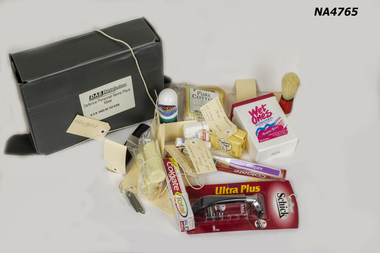
... October 2000 from collection at Mitcham R.S.L. Sub Branch personal effects travel goods uniforms army personal effects-toilet requisites shaving Defence personal items pack. Male NSN 8465 66 145 6306 Dark grey cardboard box containing: .2 wet ones, .3 schick ultra plus shaver blades pack, .4 Mitcham deodorant pack,.5, .6 Johnson's cotton buds, .7 & .8 shaving soap stick, .9 Colgate tooth brush, .10 Colgate total toothpaste, .11 & .12 Palmolive soap, .13 & .14 Cashmere Bouquet soap, .15 Green plastic nail brush, .16 black plastic comb, .17 shaving brush, .18 lip balm, .19 Colgate dental ribbon, .20 chrome nail clippers, .21 White small towel.Defence personal items pack Functional object Toiletries Pack ...Presented to Lance Corporal Rahman, on deployment to East Timor April-October 2000 from collection at Mitcham R.S.L. Sub BranchDark grey cardboard box containing: .2 wet ones, .3 schick ultra plus shaver blades pack, .4 Mitcham deodorant pack,.5, .6 Johnson's cotton buds, .7 & .8 shaving soap stick, .9 Colgate tooth brush, .10 Colgate total toothpaste, .11 & .12 Palmolive soap, .13 & .14 Cashmere Bouquet soap, .15 Green plastic nail brush, .16 black plastic comb, .17 shaving brush, .18 lip balm, .19 Colgate dental ribbon, .20 chrome nail clippers, .21 White small towel.Defence personal items packDefence personal items pack. Male NSN 8465 66 145 6306personal effects, travel goods, uniforms, army, personal effects-toilet requisites, shaving -
 Whitehorse Historical Society Inc.
Leisure object - Land Title, Moffatt land, 1907
... 19 November 1907. Incl. transfers to MMBW 4 August 1926 and Arthur Vernon Moffatt 30 October 1934 by William James Moffatt....19 November 1907. Incl. transfers to MMBW 4 August 1926 and Arthur Vernon Moffatt 30 October 1934 by William James Moffatt...19 November 1907. Incl. transfers to MMBW 4 August 1926 and Arthur Vernon Moffatt 30 October 1934 by William James Moffatt. ...Certificate of Title Vol. 3247 Fol. 346.Certificate of Title Vol. 3247 Fol. 346, 9 acres, 25 perches, Mahonys Road Burwood, 19 November 1907. Incl. transfers to MMBW 4 August 1926 and Arthur Vernon Moffatt 30 October 1934 by William James MoffattCertificate of Title Vol. 3247 Fol. 346.moffatt, arthur vernon, melbourne and metropolitan board of works, moffatt, william james, mahoneys road burwood east -
 Lilydale RSL Sub Branch
Photograph, Thomas Whiteway Earles DCM (841) (Lieutenant)
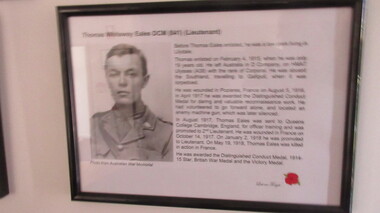
... 19 years old. He left Australia in D Company, on HMAT Ulysses (A38) with the rank of Corporal. He was aboard The Southland, travelling to Gallipoli when it was torpedoed. He was wounded in Pozieres, France on August 5, 1916. In April 1917 he was awarded the Distinguished Conduct Medal for daring and valuable reconnaissance work. He had volunteered to go forward alone and located an enemy machine gun, which was later silenced. In August 1917, Thomas Earles was sent to Queens Collage Cambridge, England for Officer training and was promoted to 2nd lieutenant. He was wounded in France on October...19 years old. He left Australia in D Company, on HMAT Ulysses (A38) with the rank of Corporal. He was aboard The Southland, travelling to Gallipoli when it was torpedoed. He was wounded in Pozieres, France on August 5, 1916. In April 1917 he was awarded the Distinguished Conduct Medal for daring and valuable reconnaissance work. He had volunteered to go forward alone and located an enemy machine gun, which was later silenced. In August 1917, Thomas Earles was sent to Queens Collage Cambridge, England for Officer training and was promoted to 2nd lieutenant. He was wounded in France on October ...Before Thomas Eales enlisted, he was a law clerk living in Lilydale. Thomas enlisted on February 4,1915 when he was only 19 years old. He left Australia in D Company, on HMAT Ulysses (A38) with the rank of Corporal. He was aboard The Southland, travelling to Gallipoli when it was torpedoed. He was wounded in Pozieres, France on August 5, 1916. In April 1917 he was awarded the Distinguished Conduct Medal for daring and valuable reconnaissance work. He had volunteered to go forward alone and located an enemy machine gun, which was later silenced. In August 1917, Thomas Earles was sent to Queens Collage Cambridge, England for Officer training and was promoted to 2nd lieutenant. He was wounded in France on October 14th, 1917. On January 2, 1918 he was promoted to Lieutenant. On May 19th, 1918, Thomas Eales was killed in action in France. He was awarded The Distinguished Conduct Medal and the Victory Medal.Framed photocopy of photograph and precis of military service of Lieutenant Thomas Whiteway Eales' -
Surrey Hills Historical Society Collection
Work on paper - Vertical file, Awards
... 19. ‘Local Traders win Oz awards!’ SHNN 142, June/July 2006 (1 page). 20. Centenary Medal Presentation 24.3.2003 at Ashwood Secondary College, 12 page booklet provided by Anna Burke, MP, Federal member for Chisholm. Note Elizabeth Meredith. 21. ‘Father of the Year!’ SHNN 138, October...19. ‘Local Traders win Oz awards!’ SHNN 142, June/July 2006 (1 page). 20. Centenary Medal Presentation 24.3.2003 at Ashwood Secondary College, 12 page booklet provided by Anna Burke, MP, Federal member for Chisholm. Note Elizabeth Meredith. 21. ‘Father of the Year!’ SHNN 138, October ...A vertical file containing the following items regarding awards of various nature; all individuals having some local connection: 1. ‘Proudly humble retiree’, re Antonio Trivisonno paper and date unknown (1 page); and ‘OAM for seniors work’ Whitehorse Leader, 2.2.2011 (1 page). 2. ‘Antonio Trivisonno - enthusiasm for life’, SHNN, No. 170, Feb./March 2011 (1 page). 3. ‘Boroondara‘s Queen’s Birthday Honours list’, (re David Bottomley and William Swinson) Progress Leader, 14.6.2016 (1 page). 4. ‘Order of Australia awards’, (re David Kissane and John Payne) SHNN c. Feb. 2018 (1 page). 5. ‘Conservator honoured’, (re John Payne) Age ?, 26.1.2018 (1 page). 6. ‘Making world a better place’, (re David Kissane and others) Whitehorse Leader, 29.1.2018 (1 page). 7. ‘Honours for local people’, re Dr Hari Harayan Sinha and Stanley Bruce McKenzie, SHNN 44, Feb./March 1990 (1 page). 8. ‘Congratulations’, re Martin Culkin, Andrew Wall and Jean Jackson, SHNN No. 185 Aug./Sept. 2013 (1 page). 9. ‘A bloomin’ good life’, re Mr. Vivian Bennett, 1989 (source unknown), (1 page). 10. “Know your plants” medallist advises re Mr. Vivian Bennett, 1979 (source unknown), (1 page). 11. ‘Community contributions recognised’ re Caroline Carroll and Jack Ma, SHNN No. 188, Feb./March 2014 (2 pages). 12. Christopher Thorn, SHNN No. 206, Feb./March 2017 (1 page). 13. ‘Calculation is worth a medal’ re Prof. Kate Smith-Miles, Progress Leader, 23.11.2010 (1 page). 14. ‘Reward for dedicated work a dream once thought impossible for Caroline’, re Caroline Carroll, Progress Leader, 28.1.2014 (1 page). 15. ‘Community service – with a smile’, re Nina Buscombe, SHNN No. 92, Feb./March 1998 (1 page). 16. ‘Local resident awarded OAM’, re Charlie Wei Quan Xu, SHNN 225 April/May 2020 (1 page). 17. ‘David Winter, Whitehorse Citizen of the Year’, SHNN 230, Feb./March 2021 (1 page). 18. Gwen Smith Victorian Senior of the Year 2016, The Senior, November, 2016 (1 page). 19. ‘Local Traders win Oz awards!’ SHNN 142, June/July 2006 (1 page). 20. Centenary Medal Presentation 24.3.2003 at Ashwood Secondary College, 12 page booklet provided by Anna Burke, MP, Federal member for Chisholm. Note Elizabeth Meredith. 21. ‘Father of the Year!’ SHNN 138, October/November 2005 re Robert Moodie (1 page). 22. Burwood Bulletin Inc., Issue 159, Autumn 2021, re David Winter (3 sheets). 23. ‘Mont Albert Resident receives Order of Australia’, SHNN 158 re Dr. Rodney Arambewela (1 page). 24. ‘Citizen of the year 2000’, SHNN 106, June/July 2000 re Gert Rainey (1 page). 25. “’Best Friend’ award for Philip Crohn, SHNN 181, Dec. 2012/Jan./2013 (1 page). 26. ‘Surrey Hills Citizen of the Year 2002’, SHNN 118, June/July 2002 re Suzanna Henman (1 page). 27. ‘Bill Chandler awarded OAM’, SHNN 191, August/September, 2014 (1 page). 28. Kevin Donnelly AM, SHNN 206, February/March, 2017 (1 page). 29. ‘Just her cup of tea’, Progress Press, 1.5.2000. (1 page). 30. ‘Congratulations Greg Buchanan!’, SHNN No. 236, February, 2022 (1 page), and Citizenship Ceremony 26.1.2022. (A4 folded sheet). 31. ‘Meet our 2022 Citizens of the Year’, Boroondara Bulletin, March, 2022: Greg Buchanan, Rhea Werner and Belinda Battey (2 sheets). 32. ‘Order of Australia awards’: John Grace AO; Lesley (Pat) Farrant AM; Helen Buckingham OAM; Margaret Zacharin OAM; SHHN No. 215, August-September 2018 (1 page). 33. ‘It’s an Honour!’ Graeme Davison AM; Graham Bartle OAM; Stephen Dinham OAM; SHHN No. 173 August-September 2011 (1 page). 34. Mrs. Anne Patricia Murphy, awarded OAM, (no date), (1 page). 35. Citizen of the year 2023 Maxine Gross, Boroondara Bulletin, March, 2023 (1 page). 36. ‘Citizen of the year 2000’, Gert Rainey, SHNN No. 106, June/July 2000 (1 page). 37. ‘Arthur Tonkin Surrey Hills Citizen of the year 2001’, SHNN No. 112, June/July 2001 (1 page). 38. ‘Surrey Hills Citizen of the year 2001’, Suzanna Henman, SHNN No. 118, June/July 2002 (1 page). 39. ‘Surrey Hills Citizens of the year 2004’, Sue Barnett and Andrew White, SHNN No. 130, June/July 2004 (1 page). 40. ‘A creative and rich life’, Peter Hardham OAM, SHNN ? , June 2019 (1 page). 41. ‘Australia Day Honours’, Craig Kenny and Jillian Wright both OAM and of Mont Albert, SHNN No. 219, April/May 2019, (1 page). 42. Professor Marilyn Liddell, AM, Progress Press, Feb. 2010 (1 page). antonio trivisonno, david bottomley, william swinson, david kissane, dr hari harayan sinha, stanley bruce mckenzie, andrew wall, martin culkin, jean jackson, vivian bennett, caroline carroll, jack ma, christopher thorn, prof. kate smith-miles, nina buscombe, charlie wei quan xu, gwen smith, david winter, robert moodie, elizabeth meredith, rodney arambewela, philip crohn, suzanna henman, gert rainey, bill chandler, kevin donnelly, greg buchanan, rhea werner, belinda battey, john grace, lesley (pat) farrant, helen buckingham, margaret zacharin, graeme davison, graham bartle, stephen dinham, anne patricia murphy, maxine gross, arthur tonkin, peter hardham, andrew white, craig kenny, sue barnett, jillian wright, marilyn liddell, john payne
