
Showing 8 items matching " guy fawkes"
-
 Bendigo Historical Society Inc.
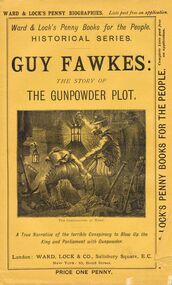
Book - LYDIA CHANCELLOR COLLECTION: GUY FAWKES
... LYDIA CHANCELLOR COLLECTION: GUY FAWKES......guy fawkes...Guy Fawkes was one of a group of Catholics who planned to assassinate James 1 and restore England to Catholic rule. ...A book titled ' Guy Fawkes: The story of The Gunpowder Plot. A True Narrative of the terrible Conspiracy to Blow Up the King and Parliament with Gunpowder.' ...Book LYDIA CHANCELLOR COLLECTION: GUY FAWKES ...Guy Fawkes was one of a group of Catholics who planned to assassinate James 1 and restore England to Catholic rule. Fawkes was in charge of the gunpowder stock beneath the Houses of Parliament. However an anonymous tip off saw 8 plotters including Fawkes, captured and tried for treason. All were executed.A book titled ' Guy Fawkes: The story of The Gunpowder Plot. A True Narrative of the terrible Conspiracy to Blow Up the King and Parliament with Gunpowder.' Published London: Ward, Lock & Co., Salisbury Square, E.C. New York : 10 Bond Street. 513 - 528 pgs.(ill.) . This booklet is one of a series of 37 Ward & Lock's Penny Books for the People.' ' Historical Series.' Price one penny. There are also advertisements of note.books, biography, guy fawkes, lydia chancellor, collection, person, individual, male, history, british history, ward & lock's penny biographies, penny books, ward & lock's penny books for the people, historical series, guy fawkes, gunpowder plot, advertisements, book, books -
 Sunshine and District Historical Society Incorporated
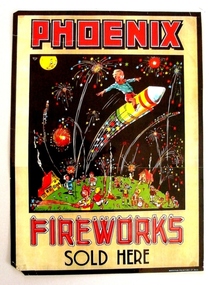
Poster - Phoenix Fireworks Advertisement
... ...Guy Fawkes...Fireworks were readily sold by shops to the general public, including children, for celebrating Empire Day on May 24 and Guy Fawkes Day on November 5. Because of injuries, damages, and fires, sales to the general public of exploding fireworks such as bangers and crackers, were banned in Victoria in 1974. ...For safety reasons this attitude is now frowned upon by the authorities. fireworks crackers sky rockets sales poster Phoenix Guy Fawkes Empire Day PHOENIX FIREWORKS SOLD HERE Colour printed paper poster that is laminated within a glossy plastic film. ...Fireworks were manufactured in Sunshine Victoria from the early 1890's by the PHOENIX FIREWORKS CO. The factory was located a short distance to the north of Ballarat Rd, on the corner of Phoenix St and McIntyre Rd, North Sunshine. For safety reasons the factory consisted of small separated huts to minimise the damage in case one blew up. Images of the factory and the workers from Circa 1920s can be seen in the 3rd and 4th photos. Fireworks were readily sold by shops to the general public, including children, for celebrating Empire Day on May 24 and Guy Fawkes Day on November 5. Because of injuries, damages, and fires, sales to the general public of exploding fireworks such as bangers and crackers, were banned in Victoria in 1974. By 1982 sales of other fireworks, except for items such as sparklers, were also banned. Despite the bans some of the public still manages to obtain fireworks from other sources to this day, as evidenced by the many discharges on each New Year eve. The factory no longer exists and ironically part of the site is now occupied by the Metropolitan Fire Brigade and several small businesses, including a smash repair business and a tyre retailer. There were at least two different coloured posters depicting the same images, a yellow poster and a grey poster. It is unknown whether these were in use at the same time or whether one type preceded the other. Repaired images of the two posters placed side by side can be seen in the 2nd photo. The repair work was done by a volunteer at our Society with the aid of Microsoft Paint.The poster shows the attitude that previously existed, where children and the general public could readily purchase and legally discharge fireworks. For safety reasons this attitude is now frowned upon by the authorities.PHOENIX FIREWORKS SOLD HEREfireworks, crackers, sky rockets, sales poster, phoenix, guy fawkes, empire day -
 Bendigo Historical Society Inc.
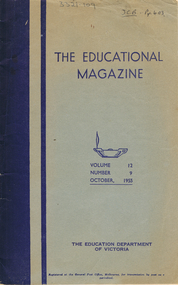
Book - LA TROBE UNIVERSITY BENDIGO COLLECTION: THE EDUCATIONAL MAGAZINE
... ... Guy Fawkes...BENDIGO Education magazine La Trobe University Bendigo Collection collection Bendigo education tertiary education teachers teaching reading magazine magazine United Nations literature Brontes schools poliomyelitis disease diseases Guy Fawkes history Bendigo Teachers' College parenting female mother mothering women children clocks mathematics subtraction disability Young Farmers' Club farming pre-school education kindergartens Frank Madigan Donald McLean Hollis A. ...A blue magazine titled ' The Educational Magazine.' Volume 12 No. 9, 1955. Published by The Education Department of Victoria. This magazine covers a wide variety of educational articles for teachers for general reading. The contents are listed as - The United Nations: tenth birthday; The Disappearance of zoological species by Jean-Paul Harroy; The Brontes and the Yorkshire Moors by Frank Madigan; An Australian looks at America's Schools by Donald McLean; Schools help in battle against poliomyelitis by Hollis A. Moore; Gunpowder, Treason and Plot by D.J.S.; End of a Decade. Ten years at a Provincial Teachers' College by Jessie C. Burnett; Four o'clock and After by various contributors; Mother and Child by anonymous; Clock Watching for a Purpose by K. Norman; Essayist at Work by E.T. Brown, Concerning the Time-Book by E. Elliott; Subtraction in Arithmetic by Carl Petterson; Here's What a Good Teacher Does by Albert J. Phillips; A disabled Children's Young Farmers' Club Project by D. R. Newman and Train up a Child by Alice Downward. 432 pgs. photographsbendigo, education, magazine, la trobe university bendigo collection, collection, bendigo, education, tertiary education, teachers, teaching, reading, magazine, magazine, united nations, literature, brontes, schools, poliomyelitis, disease, diseases, guy fawkes, history, bendigo teachers' college, parenting, female, mother, mothering, women, children, clocks, mathematics, subtraction, disability, young farmers' club, farming, pre-school education, kindergartens, frank madigan, donald mclean, hollis a. moore, d.j.s., jessie c. burnett, k. norman, e.t. brown, e. elliott, carl petterson, albert j. phillips, d. r. newman, alice downward -
 Kew Historical Society Inc
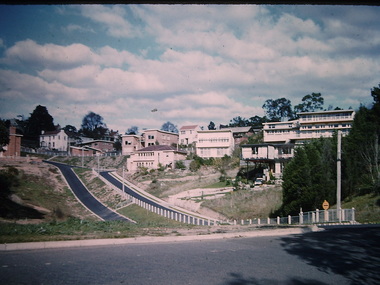
Photograph - Yarra Street, Kew, Ron Setford, 1960
... Until then, the gully was used as a dump, a shortcut to the river, and for communal Guy Fawkes night bonfires. The open landscape in the photo reflects near-total clearing by the original estate owners for grazing livestock. ...Until then, the gully was used as a dump, a shortcut to the river, and for communal Guy Fawkes night bonfires. The open landscape in the photo reflects near-total clearing by the original estate owners for grazing livestock. ...Ron Setford and his wife Grace Setford lived in Tanner Avenue, East Kew, from c.1946 to c.1995. A keen photographer, he recorded the changing face of Kew over a 20 year period. Apart from 30 photographs of built structures and places in Kew dating from 1960 and 1961, 145 of his 35mm colour slides chronicle the development of the Eastern Freeway through the Yarra Valley over a five year period from c.1972 to c.1977. This important collection was donated to the Society by his granddaughter in 2025.This collection of 175 35mm slides is of local and statewide significance, owing to its subject matter, particularly the major development of road transport infrastructure during the 1970s with the construction of the Eastern Freeway. The photographer also took care to annotate and date most of his slides which enable the researcher to pinpoint temporal and spatial locations.Yarra Street was not made a trafficable thoroughfare until October 1956. Until then, the gully was used as a dump, a shortcut to the river, and for communal Guy Fawkes night bonfires. The open landscape in the photo reflects near-total clearing by the original estate owners for grazing livestock. Post-war homes fronting Stawell St dot the landscape. Of particular note are the Broons House (c.1952–54) by Anatol Kagan (top right), and the homes of two architects, Kurt Elsner (c.1950) (middle) and Geoffrey Danne (c.1954) (lower right). Dual carriageways made blocks accessible, but building was difficult due to steeply sloping land and complex drainage easements. Nevertheless, these challenges resulted in highly innovative designs, making Yarra Street the core of the Yarra Boulevard Heritage Precinct."Yarra St Kew"ron setford, photographs -- kew (vic.) -- 1960s, yarra street -- kew (vic.) -
 Sunshine and District Historical Society Incorporated
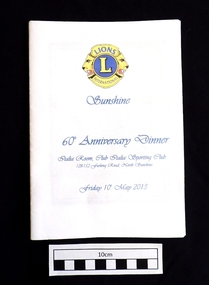
Booklet - LIONS CLUB of SUNSHINE 60th Anniversary Dinner, 10 May 2013, 2013
... Some of the activities to raise funds included Guy Fawkes bonfire nights, rodeos, paper and bottle drives, jumble sales,Tivoli Gala Nights, car raffles, and sausage sizzles. ...Some of the activities to raise funds included Guy Fawkes bonfire nights, rodeos, paper and bottle drives, jumble sales,Tivoli Gala Nights, car raffles, and sausage sizzles. ...On 12th May 1953 a meeting was arranged by the Lions Club of Footscray, and was held at the home of Bill Harvey in Sunshine, with the intention of forming a club in the Sunshine area. The first official luncheon was held on 3rd June 1953 at the Sunshine Town Hall and was attended by representatives from Melbourne, Footscray and Essendon Clubs. After the membership reached 25 the Lions Club of Sunshine was Chartered on 21st July 1953, and became the 5th Club in Victoria and the 17th in Australia. Over the years the club raised funds through various activities to provide charitable donations to organisations, people, and disaster areas, as well as to purchase house and land for a Senior Citizens Club. It became necessary to sell the house and land years later. The Lions Club also contributed to the Sunshine Swimming Pool which was opened in December 1960, and was welcomed by the children of Sunshine. Some of the activities to raise funds included Guy Fawkes bonfire nights, rodeos, paper and bottle drives, jumble sales,Tivoli Gala Nights, car raffles, and sausage sizzles. Over the past 10 years the Sunshine Lions have put in thousands of hours of work, and have disbursed in excess of $200,000 for charitable purposes. As well as supporting overseas projects and natural disasters, the Lions have continued their community work. Funds have been donated to care providers such as the Mercy Hospice and Scope, and also used to provide Christmas hampers and dinners, and for underprivileged children to have holidays. Some of the organisations that have recently received funds were Helping Hands Across the Pacific, Gellibrand Services, Royal District Nursing Service, and the Sunshine Mission. During 1960/61 the club membership reached a record 58, however at the time of the 60th Anniversary dinner the membership was 17, three of which were in their seventies and 3 in their eighties. The above brief historical information was sourced from the 60th Anniversary Dinner booklet.This booklet is significant because it contains an 11 page summarised historical record of the 60 years of activities of the Lions Club of Sunshine. It also contains an Honour Roll of past members and of members who received awards, as well as the names of the 61 people who served as Club Presidents from W.T. Harvey (1953-54) to P. Green (2012-13). The booklet can be used as a starting reference source for anybody seeking information about the Lions Club of Sunshine Inc.White paper booklet of 20 pages with blue printing and a blue and yellow Lions International emblem on the front cover. The booklet contains the dinner Menu and the Programme for the evening, as well as a summary of the 60 years of activities of the LIONS CLUB of SUNSHINE. It also features the names of the 61 Club Presidents, the members who received awards, and an Honour Roll.LIONS L INTERNATIONAL / Sunshine / 60th Anniversary Dinner / Italia Room, Club Italia Sporting Club 128-152 Furlong Road, North Sunshine / Friday 10th May 2013lions club of sunshine, 60th anniversary dinner, lions sunshine presidents 1953-2013, lions sunshine honour roll, historical activities of lions sunshine -
 Federation University Historical Collection
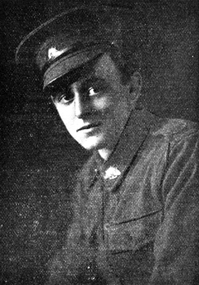
Magazine - Photograph - Black and White, Ballarat School of Mines Students' Magazine, 1916-1923, 1916-1924
... Hesiltine, Editorial Staff, Feathertop and Mt Buffalo trip, Plumbing, frequency changer, Melbourne excursion, Melbourne Electric Railways, Dawn of Modern Art, Moorabool Trip, Guy Fawkes, Bush Camp, Caricatures, manual art, past students, SMB Athletic Team, Cadet camp at Broadmeadows, Ballarat Junior Technical School Athletics Team. 1922 Editorial Staff, Assaying, Plasticity of Clay, Lal Lal V Morwell, Cheap Electricity, Clyde Lukeis Obituary, Ken Moss Obituary, Past Students, Old Boy's Association, Reunion, SMB Athletic Team, Military News, Athletics 1923 Editorial Staff, Alfred Mica Smith Biography, caricature, Robert James Dowling Obituary, Chemistry, America, SM Football Team, Ballarat Junior Technical School, Wireless Telegraphy, Caricatures, ...Hesiltine, Editorial Staff, Feathertop and Mt Buffalo trip, Plumbing, frequency changer, Melbourne excursion, Melbourne Electric Railways, Dawn of Modern Art, Moorabool Trip, Guy Fawkes, Bush Camp, Caricatures, manual art, past students, SMB Athletic Team, Cadet camp at Broadmeadows, Ballarat Junior Technical School Athletics Team. 1922 Editorial Staff, Assaying, Plasticity of Clay, Lal Lal V Morwell, Cheap Electricity, Clyde Lukeis Obituary, Ken Moss Obituary, Past Students, Old Boy's Association, Reunion, SMB Athletic Team, Military News, Athletics 1923 Editorial Staff, Alfred Mica Smith Biography, caricature, Robert James Dowling Obituary, Chemistry, America, SM Football Team, Ballarat Junior Technical School, Wireless Telegraphy, Caricatures, Ballarat School of Mines Students' Magazine, 1916-1923 Magazine Photograph - Black and White ...The Ballarat School of Mines Magazine does not appear to have been publishing in 1914, 1915, 1917, 1918, and 1919.A red bound copy of the Ballarat School of Mines Students' Magazine, holding copies for years 1916 to 1923. 1916 The 1916 Students' Magazine features many references to World War One, including an image of Ted Cannon, a gifted artist attending the Ballarat Technical Art School (part of the Ballarat School of Mines [SMB] campus) from 1912. After completing his art course Ted was employed as an assistant teacher at the Art School, before taking a position as cartoonist with the Ballarat Star newspaper at the end of 1914. In 1915 Ted was awarded the prestigious Victorian Education Department Senior Technical School Scholarship. Only months into his scholarship, Ted volunteered for the AIF. He was killed in action on 14 September 1916 in France. 1917 Editorial staff, Natural Colour Motion Pictures, Chemistry, Caricatures, Old Art School Students, Old Science School Students, Broken Hill, Lal Lal Deposits, SMB Athletic Team, SMB Roll of Honor, Junior Technical School Senior Cadet Team, Ballarat, Junior Technical School; Ballarat Junior Technical School Bugle Band, A visit to Ronaldson's Workshop 1920 Historical Sketch of the Ballarat School of Mines, War Service, Editorial Staff, Maurice Copland Obituary, The Chemist, Separation of Lead and Zinc Sulphides, Explosives, Werribee Gorge Visit, Daylesford Visit, Sports Ground, Indian Art, Dressmaking, Herbert H. Smith, Drawing From the Antique, Caricatures, Ballarat School of Mines Football Team. 1921 A.F. Hesiltine, Editorial Staff, Feathertop and Mt Buffalo trip, Plumbing, frequency changer, Melbourne excursion, Melbourne Electric Railways, Dawn of Modern Art, Moorabool Trip, Guy Fawkes, Bush Camp, Caricatures, manual art, past students, SMB Athletic Team, Cadet camp at Broadmeadows, Ballarat Junior Technical School Athletics Team. 1922 Editorial Staff, Assaying, Plasticity of Clay, Lal Lal V Morwell, Cheap Electricity, Clyde Lukeis Obituary, Ken Moss Obituary, Past Students, Old Boy's Association, Reunion, SMB Athletic Team, Military News, Athletics 1923 Editorial Staff, Alfred Mica Smith Biography, caricature, Robert James Dowling Obituary, Chemistry, America, SM Football Team, Ballarat Junior Technical School, Wireless Telegraphy, Caricatures, ballarat school of mines, motion picture photography, the chemlab, ballarat school of mines students' excursion to the lead and copper mining centres, sport, military notes, ballarat junior technical school, henry j. hall, arthur m. lilburne, ballarat school of mines history, maurice copland, maurice copland obituary, l.h. archibald, g. baragwanath, r.w. richards, c.a. schache, cadets, a.w. steane, elsie j. mckissock, coliseim theatre, advertisements, mcdorney's, w. dick, t. kift and son, f. narrow, stansfield and smith, clay, reginald calister, clyde lukeisr, w.k. moss, ken moss, robert james dowling, e.j. mcconnon, raymond fricke -
 Ringwood and District Historical Society
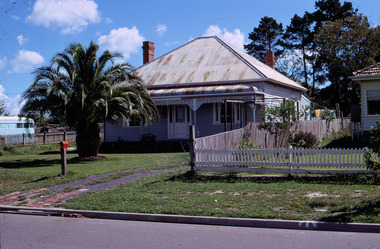
Photograph, North side of City Road, Ringwood 1969
... For the first couple of years, there was a huge bonfire in "our" paddock to mark Guy Fawkes day. It was a lot of fun, although I concede that it might have been a tad dangerous, with 3d. bungers and all that! ...For the first couple of years, there was a huge bonfire in "our" paddock to mark Guy Fawkes day. It was a lot of fun, although I concede that it might have been a tad dangerous, with 3d. bungers and all that! ...Written by Michael Anderson on RDHS Facebook on March 2016 CITY ROAD, RINGWOOD 1959 My family moved to City Road in 1959. At that time, it was a narrow rutted dirt road, with a large drain running on the northern side, and a wide nature strip complete with big wattle trees on the southern side, ideal for playing cricket and other games. There was no Salvation Army Citadel, nor was there a Lutheran Church. As you proceed from Wantirna Road towards Jubilee Park, there were no houses on the right hand side at all until you reached our house, 14 City Road, which at the time was Lot 51. On the corner where the Lutheran Church now stands, there was an old rusty farm gate, attached to a very weathered wooden post. This indicated that at some stage, City Road had been a private road. This rusty old gate was never closed, but it was a remnant of bygone days. Ireland St, Regina St, and Greenwood Avenue south of Haig Street were all narrow dirt roads as well. Jubilee Park Oval was fairly new, and there was no grandstand. The players and staff had to make do with a small wooden building that looked like a garden shed. Just beyond the southern end of the oval were growing many wild pumpkins, and I understand that the land had been a rubbish tip in the not so distant past. The park also had a couple of tennis courts. There was no road from Jubilee Park to Reilly St, and Reilly St didn't go all the way through from Wantirna Road to Great Ryrie St. It was broken by a creek. Aquinas College was an orchard. As you proceed up City Road from Wantirna Road, The Salvation Army church is on the left corner. The Hobbs family lived on that corner, in an old house on a block which was bordered by a huge hedge. The house next door in Wantirna Road, which is also Salvation Army land now, was owned by the Bayliss family. Mrs Bayliss was a teacher at Ringwood High. The first house in City Rd proper was at no. 1 to 5. The Roberts family lived there in an old weatherboard house on an acre of land. Mr Roberts was a carpenter who had built our house at No. 14, and he lived there with his wife and two sons, Graeme and Max. Eventually, they wanted more space, so they moved to the acre. Next door to the Roberts was Ted O'Regan at no. 7 to no. 9. He appears to have been a widower, and he lived by himself in an old wooden house which was surrounded by a large veranda on about 2/3 acre. Next door to Ted O'Regan lived his brother Jack O'Regan at no. 11 on about 1/2 acre, with his wife Edna, his son Alan, and his Daughter Judith. Barney Meadows lived on about 1/2 acre at no. 13. Barney was an old widower, and his front garden had a huge palm tree in it. Next to Barney lived the Reeves at no. 15, and finally there was the McDonald family at no. 17, which is on the corner of Regina St. From then on, City Rd, was a bush block down to Greenwood Ave, and the bush continued up Greenwood Ave to the Williams house, one house block from Haig St. On the right hand side of City Road it was all paddock to Ireland St, and another paddock which ended at our house was over the other side of Ireland St. Both paddocks were developed in about 1961/62, and there are about 12 houses there now, plus the Lutheran Church. When we first moved there, there was a horse and a cow grazing in the paddock beside our house. For the first couple of years, there was a huge bonfire in "our" paddock to mark Guy Fawkes day. It was a lot of fun, although I concede that it might have been a tad dangerous, with 3d. bungers and all that! Next door to us at no. 16 was the Goessling family. From now on the house blocks were normal sized. The Goesslings had one baby girl who was about 9 months old when we first moved in, but they ended up with 4 kids, all of whom would be middle aged now. They were observant Lutherans, but they were there before the church. Next door to the Goesslings at no. 18 was the Weir family on the corner of Regina St. On the other side of Regina St. at no. 20 was the Gowland family, and the last house in the street at no. 22 was owned by Arthur Johnston and his family. Arthur was an Ambulance Driver. Of course, many other people moved in and moved out in all those years. There was one particularly bad week for the street in June 1969. My brother Peter was killed in a work accident on Saturday 7th June. The next Wednesday 11th June Ted O'Regan, who lived diagonally opposite us died. Then on the next Saturday the 14th June, Ted Bell, who lived next door to us at no. 12 died from a heart attack at the age of 47. Three deaths in one week was a bit too much. It was eerie! Our old house is still standing, but I doubt for much longer. It was bought by people who wanted to develop it. Their plans were knocked back, so they sold it again. I would bet that in the not too distant future the house will be a piece of history. City Road was a paradise for kids when we moved in. We had lived in the inner suburbs, so the space and freedom were amazing for us "city slickers." I don't know where you could move to now if you wanted to bring up your children in a similar environment. Somehow, I don't think it would be possible. -
 Ringwood and District Historical Society
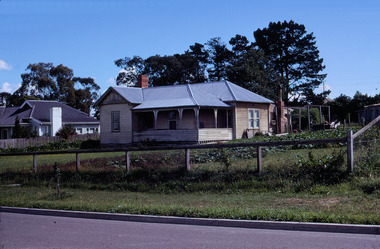
Photograph, City Road – North Side. Owned by E A (Ted) O’Regan on 23 March 1969
... For the first couple of years, there was a huge bonfire in "our" paddock to mark Guy Fawkes day. It was a lot of fun, although I concede that it might have been a tad dangerous, with 3d. bungers and all that! ...For the first couple of years, there was a huge bonfire in "our" paddock to mark Guy Fawkes day. It was a lot of fun, although I concede that it might have been a tad dangerous, with 3d. bungers and all that! ...Written by Michael Anderson on RDHS Facebook on March 2016 CITY ROAD, RINGWOOD 1959 My family moved to City Road in 1959. At that time, it was a narrow rutted dirt road, with a large drain running on the northern side, and a wide nature strip complete with big wattle trees on the southern side, ideal for playing cricket and other games. There was no Salvation Army Citadel, nor was there a Lutheran Church. As you proceed from Wantirna Road towards Jubilee Park, there were no houses on the right hand side at all until you reached our house, 14 City Road, which at the time was Lot 51. On the corner where the Lutheran Church now stands, there was an old rusty farm gate, attached to a very weathered wooden post. This indicated that at some stage, City Road had been a private road. This rusty old gate was never closed, but it was a remnant of bygone days. Ireland St, Regina St, and Greenwood Avenue south of Haig Street were all narrow dirt roads as well. Jubilee Park Oval was fairly new, and there was no grandstand. The players and staff had to make do with a small wooden building that looked like a garden shed. Just beyond the southern end of the oval were growing many wild pumpkins, and I understand that the land had been a rubbish tip in the not so distant past. The park also had a couple of tennis courts. There was no road from Jubilee Park to Reilly St, and Reilly St didn't go all the way through from Wantirna Road to Great Ryrie St. It was broken by a creek. Aquinas College was an orchard. As you proceed up City Road from Wantirna Road, The Salvation Army church is on the left corner. The Hobbs family lived on that corner, in an old house on a block which was bordered by a huge hedge. The house next door in Wantirna Road, which is also Salvation Army land now, was owned by the Bayliss family. Mrs Bayliss was a teacher at Ringwood High. The first house in City Rd proper was at no. 1 to 5. The Roberts family lived there in an old weatherboard house on an acre of land. Mr Roberts was a carpenter who had built our house at No. 14, and he lived there with his wife and two sons, Graeme and Max. Eventually, they wanted more space, so they moved to the acre. Next door to the Roberts was Ted O'Regan at no. 7 to no. 9. He appears to have been a widower, and he lived by himself in an old wooden house which was surrounded by a large veranda on about 2/3 acre. Next door to Ted O'Regan lived his brother Jack O'Regan at no. 11 on about 1/2 acre, with his wife Edna, his son Alan, and his Daughter Judith. Barney Meadows lived on about 1/2 acre at no. 13. Barney was an old widower, and his front garden had a huge palm tree in it. Next to Barney lived the Reeves at no. 15, and finally there was the McDonald family at no. 17, which is on the corner of Regina St. From then on, City Rd, was a bush block down to Greenwood Ave, and the bush continued up Greenwood Ave to the Williams house, one house block from Haig St. On the right hand side of City Road it was all paddock to Ireland St, and another paddock which ended at our house was over the other side of Ireland St. Both paddocks were developed in about 1961/62, and there are about 12 houses there now, plus the Lutheran Church. When we first moved there, there was a horse and a cow grazing in the paddock beside our house. For the first couple of years, there was a huge bonfire in "our" paddock to mark Guy Fawkes day. It was a lot of fun, although I concede that it might have been a tad dangerous, with 3d. bungers and all that! Next door to us at no. 16 was the Goessling family. From now on the house blocks were normal sized. The Goesslings had one baby girl who was about 9 months old when we first moved in, but they ended up with 4 kids, all of whom would be middle aged now. They were observant Lutherans, but they were there before the church. Next door to the Goesslings at no. 18 was the Weir family on the corner of Regina St. On the other side of Regina St. at no. 20 was the Gowland family, and the last house in the street at no. 22 was owned by Arthur Johnston and his family. Arthur was an Ambulance Driver. Of course, many other people moved in and moved out in all those years. There was one particularly bad week for the street in June 1969. My brother Peter was killed in a work accident on Saturday 7th June. The next Wednesday 11th June Ted O'Regan, who lived diagonally opposite us died. Then on the next Saturday the 14th June, Ted Bell, who lived next door to us at no. 12 died from a heart attack at the age of 47. Three deaths in one week was a bit too much. It was eerie! Our old house is still standing, but I doubt for much longer. It was bought by people who wanted to develop it. Their plans were knocked back, so they sold it again. I would bet that in the not too distant future the house will be a piece of history. City Road was a paradise for kids when we moved in. We had lived in the inner suburbs, so the space and freedom were amazing for us "city slickers." I don't know where you could move to now if you wanted to bring up your children in a similar environment. Somehow, I don't think it would be possible.
