
Showing 9795 items matching " a thomas"
-
 Bendigo Historical Society Inc.
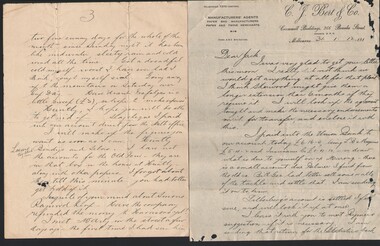
Document - LETTER FROM A. H. THOMAS 1912, 1912
... LETTER FROM A. H. THOMAS 1912......A. H. Thomas...Two page letter written by A. H. Thomas to Jack. (surname unknown). Letter is written on paper containing the letterhead of C. ...Document LETTER FROM A. H. THOMAS 1912 ...Document. Two page letter written by A. H. Thomas to Jack. (surname unknown). Letter is written on paper containing the letterhead of C. J. Bert & Co., Manufacturers Agents, Paper Bag Manufacturers, Paper and Twine Merchants, Cromwell Buildings, 366 Bourke Street, Melbourne. Letter dated 31 Jan 1912. Letter mentions the names Sherwood, LB & Maginnis, Palmer, Bill Gee, Silberberg, Rumer, Harrison, Pianta Bros, Simons, Toy & Nolan, Howell. Also mentions about McArty (engaged to be married), also mentions 'Trafalgar', a runner in the Cup.cottage, miners, a. h. thomas, c. j. bert & co., sherwood, lb + maginnis, palmer, bill gee, silberberg, rumer, harrison, pianta bros, simons, toy, nolan, howell, mcarty, trafalgar -
 Glenelg Shire Council Cultural Collection
Audio - Edison Sterling Record, Thomas A. Edison (TM), The Pullman Porters on Parade, 1913
... ... thomas a edison...Blue Amberol Records was the trademark name for cylinder records manufactured by Thomas A. Edison, Inc. in the US from 1912 to 1929. ...Front: Thomas A Edison PAT'D. 6. 2043. The Pullman Porters on Parade. ...Thomas A. Edison (TM)...Displayed at History House music amberol blue amberol thomas a edison edward meeker Front: Thomas A Edison PAT'D. 6. 2043. ...Blue Amberol Records was the trademark name for cylinder records manufactured by Thomas A. Edison, Inc. in the US from 1912 to 1929. They replaced the 4-minute black wax Amberol cylinders introduced in 1908, which had replaced the 2-minute wax cylinders that had been the standard format since the late 1880s.[citation needed] Blue Amberols can play for as long as 4 minutes and 45 seconds[citation needed] and have a surface layer of the "indestructible" plastic celluloid, which Edison tinted a trademark blue color. Edison brand phonographs designed to play Amberol cylinders were named Amberolas. Displayed at History HouseEdison Sterling Record. Blue Amberol cylinder record.Front: Thomas A Edison PAT'D. 6. 2043. The Pullman Porters on Parade. Meeker (engraved, edge)music, amberol, blue amberol, thomas a edison, edward meeker -
 Flagstaff Hill Maritime Museum and Village
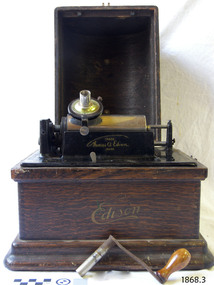
Audio - Phonograph, Thomas A. Edison, Edison Laboratory, c.1909
... ...Thomas A Edison...The phonograph machine was invented by Thomas Alva Edison in the late 19th century. ...Case front, in script, Edison’s early ‘banner’ decal “Edison” On the front of the machine “Thomas A Edison TRADE MARK” On the maker’s plate; "Edison Fireside Phonograph Combination Type" Serial number “14718” Around sound outlet; “C 4076” “REPRODUCER LICENCED FOR USE ONLY ON EDISON PHOTOGRAPHS SOLD BYT.A. ...Thomas A. Edison, Edison Laboratory...Audio Phonograph Thomas A. Edison, Edison Laboratory ...The Edison Fireside Phonograph Combination Type A model phonograph was an open horn model. This machine was produced around 1909, just after the introduction of 4-minute record cylinders in 1908.; the selection lever on the front was either 4 or 2-minute choice. This Fireside model has a fluted octagonal horn that attaches to the reproducer on the machine and is suspended by on ring by a horn crane attachment. The phonograph machine is powered purely by mechanical means, winding the crank handle on the side of the machine to start the belt-driven, spring-loaded motor inside. The sound comes from a pre-recorded, vertical cut record cylinder, which slides over the Mandle, a smooth rotating drum. The reproducer, an all-in-one needle, amplifier and speaker, is lowered onto the cylinder, the needle picks up the sound and plays it on the speaker and the attached horn amplifies the sound. The phonograph machine was invented by Thomas Alva Edison in the late 19th century. Edison adopted the idea from the technology of the telegraph machine. He patented the phonograph in early 1878. It was able to record sound and play it back. This amazing invention opened up a whole new world of entertainment, where wax cylinders of pre-recorded sound could be purchased with a wide variety of music and played over and over. The first wax cylinders were white and used a combination of bees' wax and animal fax or tallow. By 1892 Edison was using 'brown wax' cylinders that ranged from cream through to dark brown. The Edison Phonograph Company was formed in 1887 to produce these machines. He sold the company in 1855 to the North American Phonograph Company but bought that company in 1890. He then started the Edison Spring Motor factory in 1895, and the National Phonograph Company in 1896. In 1910 the company became Thomas A. Edison Inc. In 1898 Edison produced the Edison Standard Phonograph, the first phonograph to carry his own trade mark. He began mass producing duplicate copies of his wax cylinders in 1901 using moulds instead of engraving the cylinders. The wax was black and harder than the brown wax. The ends of the cylinders were bevelled so that the title's label could be added. The last phonograph machine to use an external open horn was produced in 1912 due to the much more robust round records being invented. In 1913 Edison started producing the Edison Disc Phonograph. The company stopped trading in 1929.This Edison Fireside Phonograph model is significant for being one of the last models to have an external horn. It is also significant for its connection with the invention of the phonograph, which made music and sound available for domestic enjoyment. It was used for entertainment and education, even teaching languages. It signalled a new era of music that could be reproduced and played anywhere. It is also significant for its short time span of popularity, just a few decades, due to the growing use of records, which gave a much higher quality sound and were more robust.Phonograph; Edison Fireside Phonograph, Combination Type, Model A. It is in a wooden case with a domed lid, metal catches on each side and a folding wooden handle. It has a metal drum and a reproducer mechanism. The metal and wood crank handle starts the machine’s motor. A sliding lever at the front selects the speed for four- or two-minute cylinders. The inscribed plate has the maker, serial number, patents and other information. The reproducer also has an inscription. It has a curved metal open horn attachment. Made in Orange, New Jersey in c.1909. NOTE: the fluted octagonal horn is catalogued separately.Case front, in script, Edison’s early ‘banner’ decal “Edison” On the front of the machine “Thomas A Edison TRADE MARK” On the maker’s plate; "Edison Fireside Phonograph Combination Type" Serial number “14718” Around sound outlet; “C 4076” “REPRODUCER LICENCED FOR USE ONLY ON EDISON PHOTOGRAPHS SOLD BYT.A. EDISON INC.” At the front edge “4 MINUTES 2flagstaff hill, maritime museum, maritime village, warrnambool, great ocean road, shipwreck coast, gramophone, phonograph, music player, entertainment, audio equipment, edison, thomas a edison, horn, phonograph horn, amplifier, audio, sound recording, sound playback, phonograph machine, phonograph cylinder, external horn, edison phonograph company, wax cylinders, sound reproduction, edison spring motor factory, national phonograph company, thomas a. edison inc, crank-operated motor, open horn phonograph, 4 speed, 2 speed -
 Warrnambool and District Historical Society Inc.
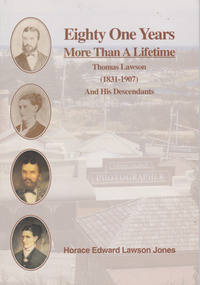
Book, Helen Lawson Jones, Eighty One Years More than a Lifetime Thomas Lawson (1831-1907) And his descendants, 1994
... Eighty One Years More than a Lifetime Thomas Lawson (1831-1907) And his descendants...Thomas and Susan Lawson (1831-1907) had a drapery and wine and spirits shop in Camperdown in the 1860s and then in Warrnanmbool in the 1870s and 80s. ...This is a paper back book with a plasticized cove which has an image of Flagstaff Hill Maritime Village (reproduction of Daniel Clarke’s Studio) in the background in muted colours, photographs and paintings of Thomas and Susan Lawson in colour on the front cover and a photograph of and information on the author on the back. ...Front Cover: ‘Eighty One Years, More Than a Lifetime, Thomas Lawson (1831-1907) and His Descendants, Horace Edward Lawson Jones’ Back Cover: ‘The Author’ (followed by two paragraphs of biographical material) ...This book is important as it gives us the details on the history of Thomas and Susan Lawson and their descendants. ...Family history of Thomas Lawson (1831-1907) and his descendantsThis is a paper back book with a plasticized cove which has an image of Flagstaff Hill Maritime Village (reproduction of Daniel Clarke’s Studio) in the background in muted colours, photographs and paintings of Thomas and Susan Lawson in colour on the front cover and a photograph of and information on the author on the back. It has 37 pages, a Lawson family tree at the back and an introduction by Helen Jones. The book included printed material, black and white photographs and illustrative material.non-fictionFamily history of Thomas Lawson (1831-1907) and his descendants lawson family, warrnambool, cobden, camperdown -
Glenelg Shire Council Cultural Collection
Certificate - Certificate - Mrs A J Thomas for services to the Portland Goldraiders, n.d
... Certificate - Mrs A J Thomas for services to the Portland Goldraiders...Certificate of appreciation to Mrs A J Thomas for services to the Portland Goldraiders. ...Certificate of appreciation to Mrs A J Thomas for services to the Portland Goldraiders. ...Certificate of appreciation to Mrs A J Thomas for services to the Portland Goldraiders. Cream card, gold script, hand written name. -
 National Vietnam Veterans Museum (NVVM)
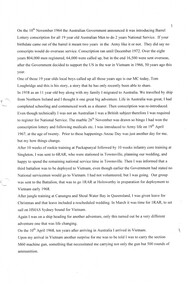
Document - A Copy of Thomas Loughridge's account of his time in the Vietnam War
... A Copy of Thomas Loughridge's account of his time in the Vietnam War....Pte Thomas Robert Loughridge...This item was donated by Pte Thomas Robert Loughridge (3791468) who did National Service with the Royal Australian Infantry Corps. ...A Copy of Thomas Loughridge's account of his time in the Vietnam War. ...Loughridge, Thomas...Loughridge, Thomas ...This item was donated by Pte Thomas Robert Loughridge (3791468) who did National Service with the Royal Australian Infantry Corps. He served in Vietnam with the 1st Battalion, The Royal Australian Regiment from March 1968 to Feb 1969.A Copy of Thomas Loughridge's account of his time in the Vietnam War. See media files for more information.pte thomas robert loughridge, 3791468, australian national serviceman, royal australian infantry corps, 1st battalion, the royal australian regiment, document, conscription, puckapunyal, infantry training, singleton, 6 rar, holsworthy, 1 rar, canungra, shoal water bay, hmas sydney, m60 machine gun, nui dat, kangaroo pad, fire support base - coral, saigon, phuoc tuy province, tet offensive, b company, killed in action, wounded in action, "dust off", centurion tanks, 3 rar, viet cong killed, vung tau ferry, malaria, welcome home parade 1987, pte bevan maxwell trimble, 3791291, coral/balmoral, anzac -
 Flagstaff Hill Maritime Museum and Village
Audio - Gramophone Cylinder, Sandy McNab, 1908
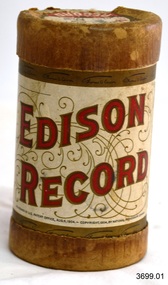
... ...thomas a. edison...The company began to lag behind its rivals in the 1920s, both technically and in the popularity of its artists, and halted production of recordings in 1929. Thomas A. Edison invented the phonograph, the first device for recording and playing back sound, in 1877. ...“This record is sold by the National Phonograph Company of Australia Ltd, at Sydney Australia.” Trade Mark Thomas A. Edison ...Thomas A. Edison, Edison Laboratory...This cylinder was made by Edison 1908 and contains Record number 53 by Sandy McNab. c. 1908 Sandy McNab Audio Gramophone Cylinder Thomas A. Edison, Edison Laboratory ...Edison Records was one of the early record labels that pioneered sound recording and reproduction, and was an important player in the early recording industry. The first phonograph cylinders were manufactured in 1888, followed by Edison's foundation of the Edison Phonograph Company in the same year. The recorded wax cylinders, later replaced by Blue Amberol cylinders, and vertical-cut Diamond Discs, were manufactured by Edison's National Phonograph Company from 1896 on, reorganized as Thomas A. Edison, Inc. in 1911. Until 1910 the recordings did not carry the names of the artists. The company began to lag behind its rivals in the 1920s, both technically and in the popularity of its artists, and halted production of recordings in 1929. Thomas A. Edison invented the phonograph, the first device for recording and playing back sound, in 1877. After patenting the invention and benefiting from the publicity and acclaim it received, Edison and his laboratory turned their attention to the commercial development of electric lighting, playing no further role in the development of the phonograph for nearly a decade. Start of the Recording Industry: In 1887, Edison turned his attention back to improving the phonograph and the phonograph cylinder. The following year, the Edison company introduced the ”Perfected Phonograph”. Edison introduced wax cylinders approximately 4+1⁄4 inches (11 cm) long and 2+1⁄4 inches (5.7 cm) in external diameter, which became the industry standard. They had a maximum playing time of about 3 minutes at 120 RPM, but around the turn of the century the standard speed was increased to (first 144) and then 160 RPM to improve clarity and volume, reducing the maximum to about 2 minutes and 15 seconds. Several experimental wax cylinder recordings of music and speech made in 1888 still exist. The wax entertainment cylinder made its commercial debut in 1889 at first, the only customers were entrepreneurs who installed nickel-in-the-slot phonographs in amusement arcades, saloons and other public places. At that time, a phonograph cost the equivalent of several months' wages for the average worker and was driven by an electric motor powered by hazardous, high-maintenance wet cell batteries. After more affordable spring-motor-driven phonographs designed for home use were introduced in 1895, the industry of producing recorded entertainment cylinders for sale to the general public began in earnest. Blank records were an important part of the business early on. Most phonographs had or could be fitted with attachments for the users to make their own recordings. One important early use, in line with the original term for a phonograph as a "talking machine", was in business for recording dictation. Attachments were added to facilitate starting, stopping, and skipping back the recording for dictation and playback by stenographers. The business phonograph eventually evolved into a separate device from the home entertainment phonograph. Edison's brand of business phonograph was called the Ediphone. The collection of three phonograph cylinders are an example of early recorded music use for domestic entertainment. They are significant as they represent the beginnings of the modern recording industry.Cardboard tube-shaped gramophone cylinder box with lid. The printed label on the outside of the box advertises the maker and patent details. The Catalogue Number and Title are either printed or hand written on the cylinder’s lid. This cylinder was made by Edison 1908 and contains Record number 53 by Sandy McNab. c. 1908On label “Edison Record No. 53, Sandy McNab" and "Form no. 1130, April 1908. Patented December 6 1904, No. 2109, and December 6 1904 No. 2110. “This record is sold by the National Phonograph Company of Australia Ltd, at Sydney Australia.” Trade Mark Thomas A. Edison warrnambool, flagstaff hill maritime museum, maritime museum, shipwreck coast, flagstaff hill maritime village, gramophone record, gramophone cylinder, edison cylinder, edison record, home entertainment, music recording, edison laboratory orange nj, usa, national phonograph company of australia ltd sydney, thomas a. edison -
Glenelg Shire Council Cultural Collection
Container - Record, cylinder - Edison Gold Moulded Record: "Where Oh Where" by Billy Williams, 1906
... Front: Thomas A Edison PAT'D. 05. 13561. The Pullman Porters on Parade. ...Thomas A. Edison (TM)...Container Record, cylinder - Edison Gold Moulded Record: "Where Oh Where" by Billy Williams Thomas A. Edison (TM) Edison, Thomas A. (TM) ...Displayed at History HouseAmberol cylinder record in cardboard case.Front: Thomas A Edison PAT'D. 05. 13561. The Pullman Porters on Parade. B. Williams (engraved, edge) -
 Flagstaff Hill Maritime Museum and Village
Book - Technical Reference, Henry Raper, Lieut. R.N, The Practice of Navigation and Nautical Astronomy, 1891
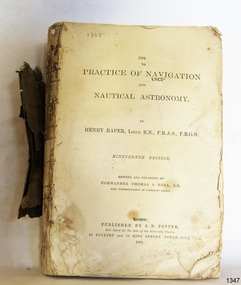
... ...Thomas A. Hull...It includes topics on nautical navigation, astronomy, navigation charts, calculations and mathematical tables, time, tides, ships, longitude, and position at sea. Thomas A. Hull, who revised and expanded this edition, was a Commander in the Royal Navy and had previously been Superintendent of Admiralty Charts used for navigation worldwide by seamen from many walks of life. ...Nineteenth Edition, revised and enlarged by Commander Thomas A. Hull, R.N., Late Superintendant of Admiralty Charts Dedication: To Rear-Admiral Sir Francis Beaufort K.C.B. ......Thomas A. Hull, Commander, R.N....Nineteenth Edition, revised and enlarged by Commander Thomas A. Hull, R.N., Late Superintendant of Admiralty Charts Dedication: To Rear-Admiral Sir Francis Beaufort K.C.B. ...This technical textbook is the nineteenth edition of the book by Henry Raper, Lieutenant in the Royal Navy with awards that include F.R.A.S. (Fellow of the Royal Astronomical Society) and F.R.G.S. (Friend of the Royal Geographical Society). The book is dedicated in honour of Rear-Admiral Sir Francis Beaufort K.C.B., Hydrographer to the Admiralty. He was awarded the title K.C.B. (King's Commander) as a Member of the Order of Bath, an order of British Chivalry, The book was first published in 1840 and soon became a resource for navigation students. It includes topics on nautical navigation, astronomy, navigation charts, calculations and mathematical tables, time, tides, ships, longitude, and position at sea. Thomas A. Hull, who revised and expanded this edition, was a Commander in the Royal Navy and had previously been Superintendent of Admiralty Charts used for navigation worldwide by seamen from many walks of life. The publisher, J D Potter of London, was at that time the sole agent for the Admiralty Charts produced by the Royal Navy. Printer Spottswoode and Co.,. was established by William Strachan in 1738. In 1819 his nephews A and R Spottswoode took over the business and bought premises in New-Street Square and Shoe Lane. In 1850 over 200 workers were employed by the firm. and five years later the business became Spottswoode & Co. Andrew Spottswoode invented the Spottswoode Press.This technical book was very popular as a textbook for students of maritime navigation, written and updated by members of the British Royal Navy and relied upon for accurate advice and information. The first edition was published in 1840, this edition was updated, expanded and published in 1891 when ports around the world were filling with travellers, merchants and business people. Title: The Practice of Navigation and Nautical Astronomy Author: Henry Raper, Lieut, R.N., F.R.A.S., F.R.G.S. Nineteenth Edition, revised and enlarged by Commander Thomas A. Hull, R.N., Late Superintendant of Admiralty Charts Dedication: To Rear-Admiral Sir Francis Beaufort K.C.B. Publisher: J D Potter, London, sole agent for the sale of Admiralty Charts Printer: Spottswoode and Co. New-Street Square, London Date: 1891 Small leather hardcover book with gold embossed text and lines on the spine. The Dedication in the book is as follows: - "To Rear-Admiral Sir Francis Beaufort K.C.B. Hydrographer to the Admiralty. Sir, The eminent station which you occupy in the naval scientific world renders it highly gratifying to me to dedicate the following Work to you as a testimony of my regard and esteem; while the general accordance of my views on the subject with those of your more experienced judgement, gives me the greater confidence in laying my labours before the Public. I have the honour to be, Sir, Your obedient servant, HENRY RAPER"flagstaff hill maritime museum, maritime museum, shipwreck coast, flagstaff hill, warrnambool, flagstaff hill maritime village, book, navigation, nautical astronomy, hydrography, nautical charts, nautical navigation, astronomical navigation, admiralty charts, henry raper, thomas a. hull, royal navy, j d potter, royal astronomical society, royal geographical society, calculations, mathematical tables, longitude, latitude, nautical time, location at sea, position at sea, maritime, practical navigation, spottswoode and co., sir francis beaufort, k.c.b., rear-admiral sir francis beaufort, hydrographer to the admiralty, scientific book, naval science -
 Rutherglen Historical Society
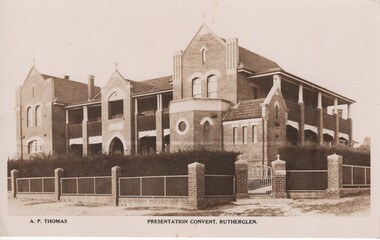
Postcard - Post Card, A P Thomas, Presentation Convent, Rutherglen
... At bottom left of photo: "A. P. Thomas"...A P Thomas...presentation convent presentation sisters mt carmel convent At bottom left of photo: "A. P. Thomas" Black and white post card photograph of Mt Carmel Convent, Rutherglen Presentation Convent, Rutherglen Postcard Post Card A P Thomas ...Black and white post card photograph of Mt Carmel Convent, RutherglenAt bottom left of photo: "A. P. Thomas"presentation convent, presentation sisters, mt carmel convent -
 Flagstaff Hill Maritime Museum and Village
Audio - Phonograph Horn, Thomas A. Edison, Edison Laboratory, c.1909
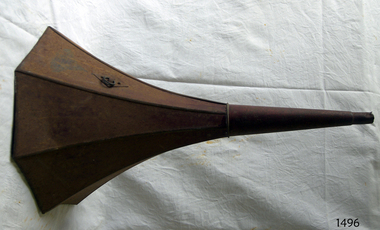
... ...Thomas A Edison...The phonograph machine was invented by Thomas Alva Edison in the late 19th century. ...Thomas A. Edison, Edison Laboratory...Audio Phonograph Horn Thomas A. Edison, Edison Laboratory ...This external horn is part of an Edison Fireside Phonograph made in c.1909. The horn was attached to the machine when in use. The rings on the side of the horn allowed the horn to be suspended above the machine. The narrow opening on the horn was attached to the sound outlet on the machine and the conical shape of the horn amplified the sound. The horn was suspended to allow a clear sound. This was done by attaching the ring fitted to the outside of the horn to a chain or chord, which in turn was attached to a curved wire fitted to the phonograph machine. The phonograph machine was invented by Thomas Alva Edison in the late 19th century. Edison adapted the idea used when sending messages over a telegraph machine. He patented the phonograph in early 1878. The phonograph was able to record sound and play it back sound. This amazing invention opened up a whole new world of entertainments, where wax cylinders of pre-recorded sound could be purchased with a wide variety of music and played over and over. The first wax cylinders were white and used a combination of bees' wax and animal fax or tallow. By 1892 Edison was using 'brown wax' cylinders that ranged from cream through to dark brown. The Edison Phonograph Company was formed in 1887 to produce these machines. He sold the company in 1855 to the North American Phonograph Company but bought that company in 1890. He started the Edison Spring Motor factory in 1895 and then the National Phonograph Company in 1896. In 1910 the company became Thomas A. Edison Inc. In 1898 Edison produced the Edison Standard Phonograph, the first phonograph to carry his own trade mark. He began mass producing duplicate copies of his wax cylinders in 1901 using moulds instead of engraving the cylinders. The wax was black and harder than the brown wax. The ends of the cylinders were bevelled so that the title's label could be added. The last phonograph machine to use an external horn was produced in 1912 due to the much more robust records being invented. In 1913 Edison started producing the Edison Disc Phonograph. The company stopped trading in 1929. [NOTE: a phonograph machine plays cylinders, a gramophone plays records]This Edison external phonograph horn is significant for its connection to the c.1909 Edison Fireside phonograph model. The phonograph machine brought a new era of music into the homes of everyday people but was only popular for a few decades due to the growing popularity of records, which gave a much higher quality sound and were more robust.Phonograph horn; open horn, a conical shape with the lower part flaring out. The horn's shape on the opening half is octagonal, made from eight joined sheets of metal with a scalloped finish at the opening. The narrow end is hollow and ready to fit onto a phonograph outlet. There are two rings attached together on the side of the horn, perhaps for storing on a hook. The inner surface of the horn has remnants of deep red paint. This horn is from the Edison Fireside phonograph. (There is a mark on the outside of the horn where the Edison brand would be)flagstaff hill, maritime museum, maritime village, warrnambool, great ocean road, shipwreck coast, gramophone, phonograph, music player, entertainment, audio equipment, edison, thomas a edison, horn, phonograph horn, amplifier, audio, sound recording, sound playback, phonograph machine, external horn, edison phonograph company, wax cylinders, edison spring motor factory, national phonograph company, thomas a. edison inc, phonographic cylinder, sound reproduction -
 Anglesea and District Historical Society
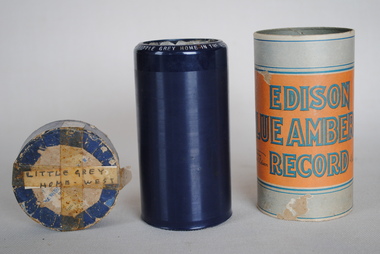
Edison Blue Amberol Record, Thomas A. Edison Inc, Exact date: 1917
... Thomas Edison...Top of cylinder has 'Thomas A Edison' / PAT' D3 / 23282 / LITTLE GREY HOME IN THE WEST / H. ...EDISON / BLUE AMBEROL RECORD / Thomas A. Edison FORM 3509 FEB. 1917....Thomas A. Edison Inc....Thomas Edison music copyright cylinder record Hughes Macklin EDISON / BLUE AMBEROL RECORD / Thomas A. ...Cylinder with surface layers of celluloid, tinted blue colour. Top of cylinder has 'Thomas A Edison' / PAT' D3 / 23282 / LITTLE GREY HOME IN THE WEST / H. MACKLIN. Packaging cylinder of cardboard with blue printing on orange background. Sticker on base - The Copyright Protection Society Mechanical Rights Ltd / ld FORM 3509 FEB. 1917.EDISON / BLUE AMBEROL RECORD / Thomas A. Edison FORM 3509 FEB. 1917.thomas edison, music, copyright, cylinder record, hughes macklin -
 Greensborough Historical Society
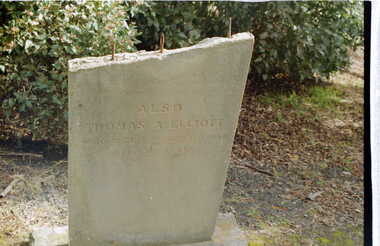
Photograph - Digital Image, Grave of Thomas A Elliott and Elizabeth Elliott, Greensborough Cemetery, 01/12/1880
... Grave of Thomas A Elliott and Elizabeth Elliott, Greensborough Cemetery...thomas a elliott...Grave of Thomas A Elliott (died 1880) and Elizabeth Elliott (died 1868) in Plot# C3 and C4 Greensborough Cemetery. ...Grave of Thomas A Elliott (died 1880) and Elizabeth Elliott (died 1868) in Plot# C3 and C4 Greensborough Cemetery. ...Grave of Thomas A Elliott (died 1880) and Elizabeth Elliott (died 1868) in Plot# C3 and C4 Greensborough Cemetery. The Elliott family arrived in Greensborough in the early 1860's.Greensborough Cemetery was created when land was given for the cemetery by Mr William Poulter, a local settler, about 1864. The cemetery holds the graves of many of the early settlers in the district. The cemetery holds approximately 250 grave sites with 350 people buried there. Digital copy of colour photograph of grave/headstone.thomas a elliott, elizabeth elliott, greensborough cemetery -
 Greensborough Historical Society
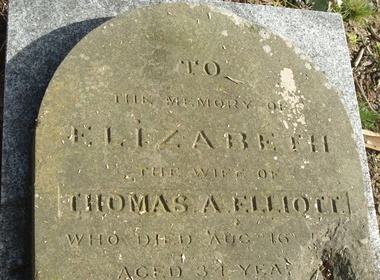
Photograph - Digital Image, Grave of Thomas A Elliott and Elizabeth Elliott, Greensborough Cemetery, 01/12/1880
... Grave of Thomas A Elliott and Elizabeth Elliott, Greensborough Cemetery...thomas a elliott...Grave of Thomas A Elliott (died 01/12/1880) and Elizabeth Elliott (died 16/08/1868) in Plot# C3 and C4 Greensborough Cemetery. ...Grave of Thomas A Elliott (died 01/12/1880) and Elizabeth Elliott (died 16/08/1868) in Plot# C3 and C4 Greensborough Cemetery. ...Grave of Thomas A Elliott (died 01/12/1880) and Elizabeth Elliott (died 16/08/1868) in Plot# C3 and C4 Greensborough Cemetery. The Elliott family arrived in Greensborough in the early 1860's.Greensborough Cemetery was created when land was given for the cemetery by Mr William Poulter, a local settler, about 1864. The cemetery holds the graves of many early settlers in the district. Digital copy of colour photograph of grave/headstone.thomas a elliott, elizabeth elliott, greensborough cemetery -
 Greensborough Historical Society
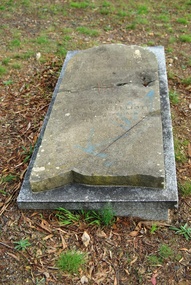
Photograph - Digital Image, Grave of Thomas A Elliott and Elizabeth Elliott, Greensborough Cemetery, 01/12/1880
... Grave of Thomas A Elliott and Elizabeth Elliott, Greensborough Cemetery...thomas a elliott...Grave of Thomas A Elliott (died 01/12/1880) and Elizabeth Elliott (died 16/08/1868) in Plot# C3 and C4 Greensborough Cemetery. ...Grave of Thomas A Elliott (died 01/12/1880) and Elizabeth Elliott (died 16/08/1868) in Plot# C3 and C4 Greensborough Cemetery. ...Grave of Thomas A Elliott (died 01/12/1880) and Elizabeth Elliott (died 16/08/1868) in Plot# C3 and C4 Greensborough Cemetery. The Elliott family arrived in Greensborough in the early 1860's.Greensborough Cemetery was created when land was given for the cemetery by Mr William Poulter, a local settler, about 1864. The cemetery holds the graves of many early settlers in the district. Digital copy of colour photograph of grave/headstone.thomas a elliott, elizabeth elliott, greensborough cemetery -
 Rutherglen Historical Society
Image, A P Thomas, 1938-1939 (Approximate)
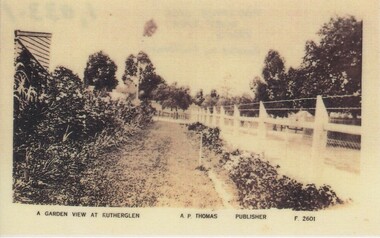
... "A Garden View at Rutherglen. A.P. Thomas Publisher F. 2601"...A P Thomas...Donated by Max Turner of Yarrambat, a former resident of Rutherglen. gardens rutherglen post office post office lane "A Garden View at Rutherglen. A.P. Thomas Publisher F. 2601" Postcard size, black & white reproduced photograph of Post Office Lane (Western side) 1930s, unframed, plasticised Image A P Thomas ...Donated by Max Turner of Yarrambat, a former resident of Rutherglen.Postcard size, black & white reproduced photograph of Post Office Lane (Western side) 1930s, unframed, plasticised"A Garden View at Rutherglen. A.P. Thomas Publisher F. 2601"gardens, rutherglen post office, post office lane -
Running Rabbits Military Museum operated by the Upwey Belgrave RSL Sub Branch
THOMAS A
... THOMAS A....Photos WW1 and WW2 plus words to "Mother Dearest" song. Arnold Thomas...Documents WW2 Army Photos WW1 and WW2 plus words to "Mother Dearest" song. Arnold Thomas THOMAS A. ...Photos WW1 and WW2 plus words to "Mother Dearest" song. Arnold Thomasdocuments, ww2, army -
 Victorian Railway History Library
Book, Stewien, Ronald et al, 600 The Pacific Locomotives of the South Australian Railways, 1971
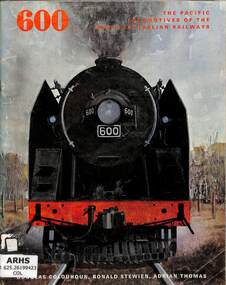
... A....Thomas, Adrian C....Steam locomotives - South Australia - history 600 class steam locomotive - South Australia - history A history of the 600 class 4-6-2 steam locomotive on the South Australian Government Railways. ill, p.46 600 The Pacific Locomotives of the South Australian Railways Book Stewien, Ronald Colquhoun, Douglas A. Thomas, Adrian C. Australian Railway Historical Society (S.A. ...A history of the 600 class 4-6-2 steam locomotive on the South Australian Government Railways.ill, p.46non-fictionA history of the 600 class 4-6-2 steam locomotive on the South Australian Government Railways. steam locomotives - south australia - history, 600 class steam locomotive - south australia - history -
 Victorian Railway History Library
Book, Stewien, Ronald et al, 500 The 4-8-2 and 4-8-4 Locomotives of the South Australian Railways, 1979
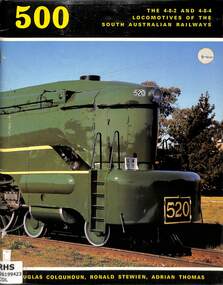
... A....Thomas, Adrian C....Steam locomotives - South Australia - history 500 class steam locomotive - South Australia - history A history of the 500 class 4-8-2 & 4-8-4 steam locomotive & the 520 streamlined 4-8-4 on the South Australian Government Railways. ill, p.46 500 The 4-8-2 and 4-8-4 Locomotives of the South Australian Railways Book Stewien, Ronald Colquhoun, Douglas A. Thomas, Adrian C. Australian Railway Historical Society (S.A. ...A history of the 500 class 4-8-2 & 4-8-4 steam locomotive & the 520 streamlined 4-8-4 on the South Australian Government Railways.ill, p.46non-fictionA history of the 500 class 4-8-2 & 4-8-4 steam locomotive & the 520 streamlined 4-8-4 on the South Australian Government Railways. steam locomotives - south australia - history, 500 class steam locomotive - south australia - history -
 Victorian Railway History Library
Book, Stewien, Ronald et al, The '700' Series Locomotives of the South Australian Railways, 1979
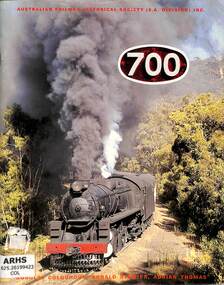
... A....Thomas, Adrian C....Steam locomotives - South Australia - history 700 series steam locomotives - South Australia - history A history of the 700 & 710 class 2-8-2 & the 720 2-8-4 steam locomotive on the South Australian Government Railways. ill, p.52 The '700' Series Locomotives of the South Australian Railways Book Stewien, Ronald Colquhoun, Douglas A. Thomas, Adrian C. Australian Railway Historical Society (S.A. ...A history of the 700 & 710 class 2-8-2 & the 720 2-8-4 steam locomotive on the South Australian Government Railways.ill, p.52non-fictionA history of the 700 & 710 class 2-8-2 & the 720 2-8-4 steam locomotive on the South Australian Government Railways. steam locomotives - south australia - history, 700 series steam locomotives - south australia - history -
 Flagstaff Hill Maritime Museum and Village
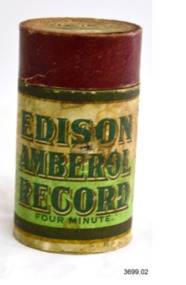
Audio - Gramophone Cylinder, National Phonograph Co, Poor old England, 1908
... ...thomas a. edison...The company began to lag behind its rivals in the 1920s, both technically and in the popularity of its artists, and halted production of recordings in 1929. Thomas A. Edison invented the phonograph, the first device for recording and playing back sound, in 1877. ...Thomas A. Edison, Edison Laboratory...C.1907 Poor old England Audio Gramophone Cylinder Thomas A. Edison, Edison Laboratory National Phonograph Co ...Edison Records was one of the early record labels that pioneered sound recording and reproduction, and was an important player in the early recording industry. The first phonograph cylinders were manufactured in 1888, followed by Edison's foundation of the Edison Phonograph Company in the same year. The recorded wax cylinders, later replaced by Blue Amberol cylinders, and vertical-cut Diamond Discs, were manufactured by Edison's National Phonograph Company from 1896 on, reorganized as Thomas A. Edison, Inc. in 1911. Until 1910 the recordings did not carry the names of the artists. The company began to lag behind its rivals in the 1920s, both technically and in the popularity of its artists, and halted production of recordings in 1929. Thomas A. Edison invented the phonograph, the first device for recording and playing back sound, in 1877. After patenting the invention and benefiting from the publicity and acclaim it received, Edison and his laboratory turned their attention to the commercial development of electric lighting, playing no further role in the development of the phonograph for nearly a decade. Start of the Recording Industry: In 1887, Edison turned his attention back to improving the phonograph and the phonograph cylinder. The following year, the Edison company introduced the ”Perfected Phonograph”. Edison introduced wax cylinders approximately 4+1⁄4 inches (11 cm) long and 2+1⁄4 inches (5.7 cm) in external diameter, which became the industry standard. They had a maximum playing time of about 3 minutes at 120 RPM, but around the turn of the century the standard speed was increased to (first 144) and then 160 RPM to improve clarity and volume, reducing the maximum to about 2 minutes and 15 seconds. Several experimental wax cylinder recordings of music and speech made in 1888 still exist. The wax entertainment cylinder made its commercial debut in 1889 at first, the only customers were entrepreneurs who installed nickel-in-the-slot phonographs in amusement arcades, saloons and other public places. At that time, a phonograph cost the equivalent of several months' wages for the average worker and was driven by an electric motor powered by hazardous, high-maintenance wet cell batteries. After more affordable spring-motor-driven phonographs designed for home use were introduced in 1895, the industry of producing recorded entertainment cylinders for sale to the general public began in earnest. Blank records were an important part of the business early on. Most phonographs had or could be fitted with attachments for the users to make their own recordings. One important early use, in line with the original term for a phonograph as a "talking machine", was in business for recording dictation. Attachments were added to facilitate starting, stopping, and skipping back the recording for dictation and playback by stenographers. The business phonograph eventually evolved into a separate device from the home entertainment phonograph. Edison's brand of business phonograph was called the Ediphone. The collection of three phonograph cylinders are an example of early recorded music use for domestic entertainment. They are significant as they represent the beginnings of the modern recording industry.Cardboard tube-shaped gramophone cylinder box with lid. The printed label on the outside of the box advertises the maker and patent details. The Catalogue Number and Title are either printed or hand written on the cylinder’s lid. This cylinder contained Record no. 13619, the recording “Poor old England” published by Castling and Godfrey, sung by Billy Williams. Made by National Phonograph Company USA. C.1907On lid “Edison Record” and “This record should turn at 160 revolutions per minute, no faster” Written on lid in blue pen “Trumpet”, “EDISON AMBEROL RECORD / FOUR MINUTE”warrnambool, flagstaff hill maritime museum, maritime museum, shipwreck coast, flagstaff hill maritime village, gramophone record, gramophone cylinder, edison cylinder, edison record, home entertainment, music recording, edison laboratory orange nj, usa, national phonograph company of australia ltd sydney, thomas a. edison -
 Flagstaff Hill Maritime Museum and Village
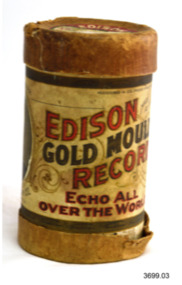
Audio - Gramophone Cylinder, B & H Jack, 1907
... ...thomas a. edison...The company began to lag behind its rivals in the 1920s, both technically and in the popularity of its artists, and halted production of recordings in 1929. Thomas A. Edison invented the phonograph, the first device for recording and playing back sound, in 1877. ...Thomas A. Edison, Edison Laboratory...C. 1905 B & H Jack Audio Gramophone Cylinder USA New Jersey Orange Thomas A. Edison, Edison Laboratory ...Edison Records was one of the early record labels that pioneered sound recording and reproduction, and was an important player in the early recording industry. The first phonograph cylinders were manufactured in 1888, followed by Edison's foundation of the Edison Phonograph Company in the same year. The recorded wax cylinders, later replaced by Blue Amberol cylinders, and vertical-cut Diamond Discs, were manufactured by Edison's National Phonograph Company from 1896 on, reorganized as Thomas A. Edison, Inc. in 1911. Until 1910 the recordings did not carry the names of the artists. The company began to lag behind its rivals in the 1920s, both technically and in the popularity of its artists, and halted production of recordings in 1929. Thomas A. Edison invented the phonograph, the first device for recording and playing back sound, in 1877. After patenting the invention and benefiting from the publicity and acclaim it received, Edison and his laboratory turned their attention to the commercial development of electric lighting, playing no further role in the development of the phonograph for nearly a decade. Start of the Recording Industry: In 1887, Edison turned his attention back to improving the phonograph and the phonograph cylinder. The following year, the Edison company introduced the ”Perfected Phonograph”. Edison introduced wax cylinders approximately 4+1⁄4 inches (11 cm) long and 2+1⁄4 inches (5.7 cm) in external diameter, which became the industry standard. They had a maximum playing time of about 3 minutes at 120 RPM, but around the turn of the century the standard speed was increased to (first 144) and then 160 RPM to improve clarity and volume, reducing the maximum to about 2 minutes and 15 seconds. Several experimental wax cylinder recordings of music and speech made in 1888 still exist. The wax entertainment cylinder made its commercial debut in 1889 at first, the only customers were entrepreneurs who installed nickel-in-the-slot phonographs in amusement arcades, saloons and other public places. At that time, a phonograph cost the equivalent of several months' wages for the average worker and was driven by an electric motor powered by hazardous, high-maintenance wet cell batteries. After more affordable spring-motor-driven phonographs designed for home use were introduced in 1895, the industry of producing recorded entertainment cylinders for sale to the general public began in earnest. Blank records were an important part of the business early on. Most phonographs had or could be fitted with attachments for the users to make their own recordings. One important early use, in line with the original term for a phonograph as a "talking machine", was in business for recording dictation. Attachments were added to facilitate starting, stopping, and skipping back the recording for dictation and playback by stenographers. The business phonograph eventually evolved into a separate device from the home entertainment phonograph. Edison's brand of business phonograph was called the Ediphone. The collection of three phonograph cylinders are an example of early recorded music use for domestic entertainment. They are significant as they represent the beginnings of the modern recording industry.Cardboard tube-shaped gramophone cylinder box with lid. The printed label on the outside of the box advertises the maker and patent details. The Catalogue Number and Title are either printed or hand written on the cylinder’s lid. This cylinder contained Record no. 49, “B & H Jack” and was made at the Edison Laboratory USA. C. 1905On lid “Edison Record No. 49”, written in pencil “B & H Jack” (it looks like this) On cylinder “EDISON GOLD MOULDED RECORDS ECHO ALL OVER THE WORLD” Patents listed for 1904 & 1905warrnambool, flagstaff hill maritime museum, maritime museum, shipwreck coast, flagstaff hill maritime village, gramophone record, gramophone cylinder, edison cylinder, edison record, home entertainment, music recording, edison laboratory orange nj, usa, national phonograph company of australia ltd sydney, thomas a. edison -
 Uniting Church Archives - Synod of Victoria
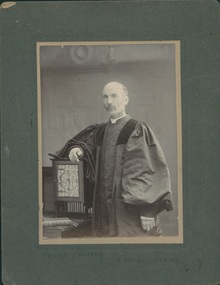
Photograph, C. 1910
... Rev. Thomas Brown (1858 - 1949) was Moderator of Victoria in 1926....Semigloss, black and white, studio portrait of Rev. Thomas Brown with inscriptions, mounted to board...Yours sincerely Thomas Brown...Rev. Thomas Brown (1858 - 1949) was Moderator of Victoria in 1926. ...Rev. Thomas Brown (1858 - 1949) was Moderator of Victoria in 1926.Semigloss, black and white, studio portrait of Rev. Thomas Brown with inscriptions, mounted to boardYours sincerely Thomas Brownpresbyterian, brown, t. -
 Clunes Museum
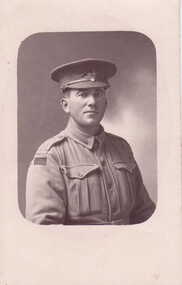
Photograph, CIRCA 1914/1918
... H.N. THOMAS WAS A MEMBER OF THE 1ST BATTALIONPIONEERS. ...BLACK & WHITE ORIGINAL PHOTOGRAPH OF PRIVATE H.N. THOMAS....PTE H.N. THOMAS NO 1982 FIRST PIONEERS BATT. A.I.F....THOMAS. Photograph PHOTOGRAPH ...H.N. THOMAS WAS A MEMBER OF THE 1ST BATTALIONPIONEERS. REGIMENTAL NO.1982BLACK & WHITE ORIGINAL PHOTOGRAPH OF PRIVATE H.N. THOMAS.PTE H.N. THOMAS NO 1982 FIRST PIONEERS BATT. A.I.F.local history, photography, photographs, military -
Tatura Irrigation & Wartime Camps Museum
Photograph - copy, Dean Clark, Thomas Hogan Home
... Thomas Hogan Home...Thomas Hogan...Copy of photograph of first home of Thomas Hogan, early pioneer of Tatura. Still standing in Hogan Street, Tatura. ...Black and white photograph of first home of Thomas Hogan. Exterior....on back: first home of Thomas Hogan...Occupied by Mr T. Hunter. Thomas Hogan on back: first home of Thomas Hogan Black and white photograph of first home of Thomas Hogan. ...Copy of photograph of first home of Thomas Hogan, early pioneer of Tatura. Still standing in Hogan Street, Tatura. Occupied by Mr T. Hunter.Black and white photograph of first home of Thomas Hogan. Exterior.on back: first home of Thomas Hoganthomas hogan -
 Robin Boyd Foundation
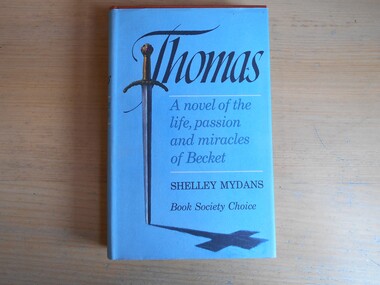
Book, Shelley Mydans, Thomas: A novel of the life, passion and miracles of Becker, 1965
... Thomas: A novel of the life, passion and miracles of Becker...Fiction based on Thomas à Becket...Fiction based on Thomas à Becket Walsh St library Hardcover w/ Dust Jacket Thomas: A novel of the life, passion and miracles of Becker Book Shelley Mydans Collins ...Hardcover w/ Dust Jacketfiction based on thomas à becket, walsh st library -
 Bendigo Military Museum
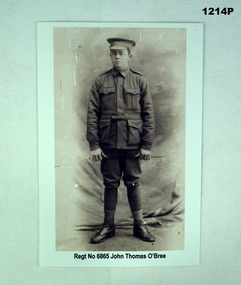
Photograph, Post 2000
... John Thomas O'Bree MM. Served in WW1 and WW11. ...B&W copy of soldier John Thomas O'Bree MM for display purposes...."Regt No 6865 John Thomas O'Bree"...John Thomas O'Bree MM. Served in WW1 and WW11. Refer Cat No 1334 for his service details and award of the “MM”. photography- photographs O’Bree MM "Regt No 6865 John Thomas O'Bree" B&W copy of soldier John Thomas O'Bree MM for display purposes. ...John Thomas O'Bree MM. Served in WW1 and WW11. Refer Cat No 1334 for his service details and award of the “MM”.B&W copy of soldier John Thomas O'Bree MM for display purposes."Regt No 6865 John Thomas O'Bree"photography- photographs, o’bree, mm -
 Whitehorse Historical Society Inc.
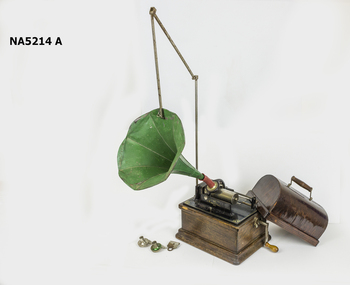
Leisure object - Phonograph, Thomas A. Edison, Edison Fireside Phonograh, c1905
... Thomas Edison...Trade Mark - Thomas A. Edison, Edison Fireside Phonograph Combination Type Serial No 18462...Thomas A. Edison...Phonograph was purchased by the donor's mother in the 1950s in an Auction Sale in Broken Hill, New South Wales. Thomas Edison Phonograph Music Trade Mark - Thomas A. ...Phonograph was purchased by the donor's mother in the 1950s in an Auction Sale in Broken Hill, New South Wales.A wooden box with handle and lid marked Edison Fireside Phonograph and a metal arm to attach the green horn. There is a folding rod and needle attachments.Trade Mark - Thomas A. Edison, Edison Fireside Phonograph Combination Type Serial No 18462thomas edison, phonograph, music -
 Port Fairy Historical Society Museum and Archives
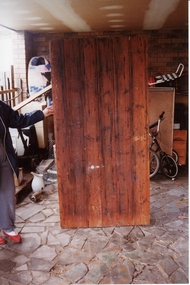
Photograph
... Door is signed by the town builders Thomas Southcombe & Alex Ingram1859 Named Wooden Doors...Coloured photograph of a wooden door with penciled names of Thomas Southcombe and Alex Ingram...The door is thought to be signed by the builders Thomas Southcombe and Alex Ingram...Door is signed by the town builders Thomas Southcombe & Alex Ingram1859 Named Wooden Doors carpentry house construction The door is thought to be signed by the builders Thomas Southcombe and Alex Ingram Coloured photograph of a wooden door with penciled names of Thomas Southcombe and Alex Ingram Photograph Photograph ...Door is signed by the town builders Thomas Southcombe & Alex Ingram1859 Named Wooden DoorsColoured photograph of a wooden door with penciled names of Thomas Southcombe and Alex IngramThe door is thought to be signed by the builders Thomas Southcombe and Alex Ingramcarpentry, house construction -
Tatura Irrigation & Wartime Camps Museum
Photograph - original, Thomas Hogan Grave
... Thomas Hogan Grave...Thomas Hogan...Original photograph of grave of Thomas Hogan and family, presented to Tatura and District Historical Society by Judith Forster, his great-grand daughter. ...Old sepia photograph of grave of Thomas Hogan and family, Tatura....on back: grave of Thomas Hogan and family, Tatura Cemetery....Old sepia photograph of grave of Thomas Hogan and family, Tatura. Thomas Hogan Grave Photograph - original ...Original photograph of grave of Thomas Hogan and family, presented to Tatura and District Historical Society by Judith Forster, his great-grand daughter. Hogan Street Tatura is named after him.Original. Old sepia photograph of grave of Thomas Hogan and family, Tatura.on back: grave of Thomas Hogan and family, Tatura Cemetery.thomas hogan, tatura cemetery
