
Showing 21 items matching " ammunition stores"
-
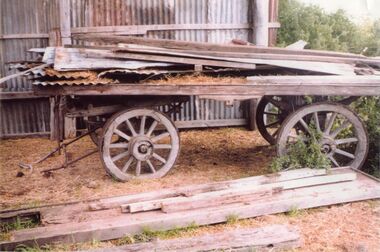 Sunshine and District Historical Society Incorporated
Photograph - Mr Des Johnson's Photographic Collection, Des Johnson
... ... Ammunition Stores...Ardeer Sunshine Deer Park ICI Kororoit Creek Ammunition Stores Des Johnson A sample of of reproduced photos from Mr Des Johnson's large private collection. ...ardeer, sunshine, deer park, ici, kororoit creek, ammunition stores, des johnson -
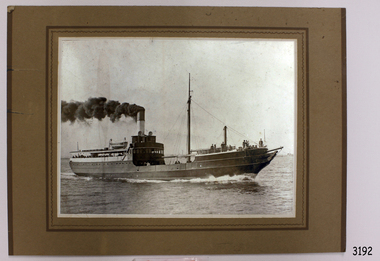 Flagstaff Hill Maritime Museum and Village
Photograph - Vessel, Steam Ship, after 1890
... SS Edina’s interesting history includes English Channel runs, serving in the Crimean War carrying ammunition, horses and stores to the Black Sea, and further service in the American Civil War and later, serving in the western district of Victoria as well as in Queensland and carried gold, currency and gold prospectors Australia to New Zealand. ...SS Edina’s interesting history includes English Channel runs, serving in the Crimean War carrying ammunition, horses and stores to the Black Sea, and further service in the American Civil War and later, serving in the western district of Victoria as well as in Queensland and carried gold, currency and gold prospectors Australia to New Zealand. ...This photograph was donated by Mrs Nancy Mason, daughter-in-law of the last owner, Arnold Mason. Andrew Mason had been given the photograph by Mr. Mac Fordham, who was the Chief Engineer of the SS Edina. Both men had been Engineers in WW I. The configuration of the SS Edina in the photograph is post 1890. ABOUT THE S S EDINA The three-masted iron screw steamer SS Edina was built in Glasgow, Scotland, in 1854 by Barclay and Curle. She was adorned with the figurehead of ‘fair maid of Judea’. The many years of service made SS Edina famous worldwide as the longest-serving screw steamer. (The term screw steamer comes from being driven by a single propeller, sometimes called a screw, driven by a steam engine.) SS Edina’s interesting history includes English Channel runs, serving in the Crimean War carrying ammunition, horses and stores to the Black Sea, and further service in the American Civil War and later, serving in the western district of Victoria as well as in Queensland and carried gold, currency and gold prospectors Australia to New Zealand. SS Edina had the privilege of being an escort vessel to H.R.H. the Duke of Edinburgh during his visit to Australia in 1867. In March 1863, SS Edina arrived in Port Phillip Bay, Melbourne and was bought by Stephen Henty, of Portland fame, to work the cargo and passenger run from Melbourne – Warrnambool – Port Fairy - Portland. After a short time of working the run from Australia to New Zealand, with passengers and cargo that included gold and currency, she returned to her Melbourne - Warrnambool – Port Fairy run, with cargo including bales of wool produced in the western district of Victoria. The Warrnambool Steam Packet Company purchased SS Edina in 1867; she was now commanded by Captain John Thompson and Chief Engineer John Davies. She survived several mishaps at sea, had a complete service and overhaul and several changes of commanders. In 1870 SS Edina was in Lady Bay, Warrnambool, when a gale sprung up and caused a collision with the iron screw steamer SS Dandenong. SS Edina’s figurehead was broken into pieces and it was not ever replaced. SS Edina was refitted in 1870 then was used as a coastal trader in Queensland for a period. She was then brought to Melbourne to carry cargo and passengers between Melbourne and Geelong and performed this service 1880-1938. During this time (1917) she was again refitted with a new mast, funnel, bridge and promenade deck, altering her appearance. In 1938, after more collisions, SS Edina was taken out of service. However, she was later renamed Dinah and used as a ‘lighter’ (a vessel without engine or superstructure) to be towed and carry wool and general cargo between Melbourne and Geelong. In 1957, after 104 years, the SS Edina was broken up at Footscray, Melbourne. Remains of SS Edina’s hull can be found in the Maribyrnong River, Port Phillip Bay. This photograph of the SS Edina is significant for its association with the screw steamer SS Edina. The SS Edina is heritage listed on the Victorian Heritage Database VHR S199. She had endeared herself to the people of Port Phillip Bay as a passenger ferry, part of their history and culture. She played a significant role in the Crimean War, the American Civil War and the gold rush in New Zealand. She also served western Victoria for many years in her cargo and passenger runs. The SS Edina is famous for being the longest serving screw steamer in the world. After spending her first nine years overseas she arrived in Melbourne and her work included running the essential service of transporting cargo and passengers between Melbourne and the western Victoria ports of Warrnambool, Port Fairy and Portland. The SS Edina was purchased in the late 1860’s by local Warrnambool business, the Warrnambool Steam Packet Co. and continued trading from there as part of the local business community. The SS Edina’s original ‘fair maid of Judea’ figurehead was broken to pieces in a collision with another vessel (the SS Dandenong) in a gale off Warrnambool, Victoria, in 1870.Black and White photograph mounted on brown card of SS Edina. Inscription on the reverse side. The photograph shows the SS Edina moving under steam power, with many people on both the bow and stern and a few people in the centre of the vessel. There are buildings on the shore in the background. The ship's configuration is dated post 1890.Inscription on the reverse: "Donated by Mrs. Nancy Mason, Bayview. Receipt 409a. Owned by Mac Fordham, Chief Engineer, 'Edina', then given to Mrs. Mason's father-in-law Arnold Mason. (both Engineers W.W 1)."warrnambool, shipwrecked coast, flagstaff hill, flagstaff hill maritime museum, maritime museum, shipwreck coast, flagstaff hill maritime village, shipwrecked artefact, barclay & curle, figurehead 'fair maid of judea', centenary maritime exhibition 1934, a brief review of steam navigation in victoria, pleasure steamer edina, trade and travel late 19th and early 20th century, trade melbourne to geelong, screw steamer edina, coastal trader edina, lighter dinah, cargo carrying for cremean war, cargo carrying for american civil war, passenger and trade in western district of victoria, export gold and currency and gold diggers to new zealand, export vessel to h r h the duke of edinburgh, melbourne - warrnambool - port fairy - portland cargo run, warrnambool steam packet company, stephen henty, captain john thompson, chief engineer john davies, lady bay warrnambool, lighter edina, shipping victoria, port phillip bay steamers, steamship great britain, edina, vhr s199 victorian heritage database, photograph of ss edina post 1890, photograph australian screw steamer, pleasure vessel victoria post 1890 -
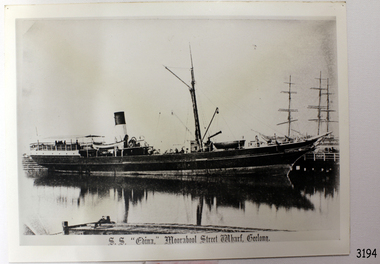 Flagstaff Hill Maritime Museum and Village
Photograph - Vessel, Steam Ship, S.S. "EDINA," Moorabool Street Wharf, Geelong, c. 1870's - 1930's
... SS Edina’s interesting history includes English Chanel runs, serving in the Crimean Ware carrying ammunition, horses and stores to the Black Sea, and further service in the American Civil War and later, serving in the western district of Victoria as well as in Queensland and carried gold, currency and gold prospectors Australia to New Zealand. ...SS Edina’s interesting history includes English Chanel runs, serving in the Crimean Ware carrying ammunition, horses and stores to the Black Sea, and further service in the American Civil War and later, serving in the western district of Victoria as well as in Queensland and carried gold, currency and gold prospectors Australia to New Zealand. ...This black and white photograph was taken when the SS Edina was as port at the Geelong Wharf in Moorabool Street. The Port of Geelong had many wool sheds alongside the wharf - wool was a major export product. ABOUT THE SS EDINA The three masted iron screw steamer SS Edina was built in Glasgow, Scotland, in 1854 by Barclay and Curle. She was adorned with the figurehead of ‘fair maid of Judea’. The many years of service made SS Edina famous world-wide as the longest serving screw steamer. (The term screw steamer comes from being driven by a single propeller, sometimes called a screw, driven by a steam engine.) SS Edina’s interesting history includes English Chanel runs, serving in the Crimean Ware carrying ammunition, horses and stores to the Black Sea, and further service in the American Civil War and later, serving in the western district of Victoria as well as in Queensland and carried gold, currency and gold prospectors Australia to New Zealand. SS Edina had the privilege of being an escort vessel to H.R.H. the Duke of Edinburgh during his visit to Australia in 1867. In March 1863 SS Edina arrived in Port Phillip Bay, Melbourne and was bought by Stephen Henty, of Portland fame, to work the cargo and passenger run from Melbourne – Warrnambool – Port Fairy - Portland. After a short time of working the run from Australia to New Zealand, with passengers and cargo that included gold and currency, she returned to her Melbourne - Warrnambool – Port Fairy run, with cargo including bales of wool produced in the western district of Victoria. The Warrnambool Steam Packet Company purchased SS Edina in 1867; she was now commanded by Captain John Thompson and Chief Engineer John Davies. She survived several mishaps at sea, had a complete service and overhaul and several changes of commanders. In 1870 SS Edina was in Lady Bay, Warrnambool, when a gale sprung up and caused a collision with the iron screw steamer SS Dandenong. SS Edina’s figurehead was broken into pieces and it was not ever replaced. SS Edina was re-fitted in 1870 then was used as a coastal trader in Queensland for a period. She was then brought to Melbourne to carry cargo and passengers between Melbourne and Geelong and performed this service 1880-1938. During this time (1917) she was again refitted with a new mast, funnel, bridge and promenade deck, altering her appearance. In 1938, after more collisions, SS Edina was taken out of service. However she was later renamed Dinah and used as a ‘lighter’ (a vessel without engine or superstructure) to be towed and carry wool and general cargo between Melbourne and Geelong. In 1957, after 104 years, the SS Edina was broken up at Footscray, Melbourne. Remains of SS Edina’s hull can be found in the Maribyrnong River, Port Phillip Bay. This postcard of the SS Edina is significant for its association with the screw steamer SS Edina and shows her at one of her trading ports on the Melbourne - Warrnambool - Port Fairy - Portland run. The SS Edina is heritage listed on the Victorian Heritage Database VHR S199. She had endeared herself to the people of Port Phillip Bay as a passenger ferry, part of their history and culture. She played a significant role in the Crimean War, the American Civil War and the gold rush in New Zealand. She also served western Victoria for many years in her cargo and passenger runs. The SS Edina is famous for being the longest serving screw steamer in the world. After spending her first nine years overseas she arrived in Melbourne and her work included running the essential service of transporting cargo and passengers between Melbourne and the western Victoria ports of Warrnambool, Port Fairy and Portland. The SS Edina was purchased in the late 1860’s by local Warrnambool business, the Warrnambool Steam Packet Co. and continued trading from there as part of the local business community. The SS Edina’s original ‘fair maid of Judea’ figurehead was broken to pieces in a collision with another vessel (the SS Dandenong) in a gale off Warrnambool, Victoria, in 1870.Black and White photograph of S.S Edina at the Moorabool Street Wharf, Geelong in calm water that shows the reflection of the steamer. Ship has no sails raised. The funnel has a light coloured base with a dark coloured top. There are people on board the steamer. Other ship masts and people are in the background. In the foreground is a jetty with a small boat beside it and a person inside the boat. There is a title printed along the base of the photograph. c. 1870's to 1930'sPrinted at base of photograph "S.S. "EDINA," Moorabool Street Wharf, Geelong"warrnambool, shipwrecked coast, flagstaff hill, flagstaff hill maritime museum, maritime museum, shipwreck coast, flagstaff hill maritime village, shipwrecked artefact, barclay & curle, figurehead 'fair maid of judea', centenary maritime exhibition 1934, a brief review of steam navigation in victoria, pleasure steamer edina, trade and travel late 19th and early 20th century, trade melbourne to geelong, screw steamer edina, coastal trader edina, lighter dinah, cargo carrying for cremean war, cargo carrying for american civil war, passenger and trade in western district of victoria, export gold and currency and gold diggers to new zealand, export vessel to h r h the duke of edinburgh, melbourne - warrnambool - port fairy - portland cargo run, warrnambool steam packet company, stephen henty, captain john thompson, chief engineer john davies, lady bay warrnambool, lighter edina, shipping victoria, port phillip bay steamers, steamship great britain, edina, vhr s199 victorian heritage database, postcard of ss edina 1870's - 1930's -
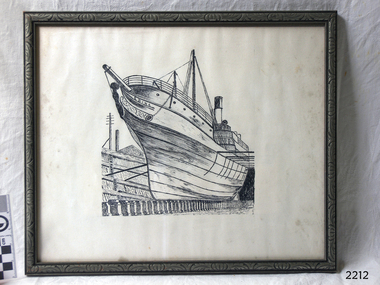 Flagstaff Hill Maritime Museum and Village
Drawing - Vessel, Sail and Steam Ship, c 1890's
... SS Edina’s interesting history includes English Chanel runs, serving in the Crimean Ware carrying ammunition, horses and stores to the Black Sea, and further service in the American Civil War and later, serving in the western district of Victoria as well as in Queensland and carried gold, currency and gold prospectors Australia to New Zealand. ...SS Edina’s interesting history includes English Chanel runs, serving in the Crimean Ware carrying ammunition, horses and stores to the Black Sea, and further service in the American Civil War and later, serving in the western district of Victoria as well as in Queensland and carried gold, currency and gold prospectors Australia to New Zealand. ...This drawing of the screw steamer SS Edina depicts the vessel in the period of service in Australia from the 1870's onward until the time when she was cut down to use as a 'lighter' to carry cargo in 1938. The artist is unknown. ABOUT THE S S EDINA The three masted iron screw steamer SS Edina was built in Glasgow, Scotland, in 1854 by Barclay and Curle. She was adorned with the figurehead of ‘fair maid of Judea’. The many years of service made SS Edina famous world-wide as the longest serving screw steamer. (The term screw steamer comes from being driven by a single propeller, sometimes called a screw, driven by a steam engine.) SS Edina’s interesting history includes English Chanel runs, serving in the Crimean Ware carrying ammunition, horses and stores to the Black Sea, and further service in the American Civil War and later, serving in the western district of Victoria as well as in Queensland and carried gold, currency and gold prospectors Australia to New Zealand. SS Edina had the privilege of being an escort vessel to H.R.H. the Duke of Edinburgh during his visit to Australia in 1867. In March 1863 SS Edina arrived in Port Phillip Bay, Melbourne and was bought by Stephen Henty, of Portland fame, to work the cargo and passenger run from Melbourne – Warrnambool – Port Fairy - Portland. After a short time of working the run from Australia to New Zealand, with passengers and cargo that included gold and currency, she returned to her Melbourne - Warrnambool – Port Fairy run, with cargo including bales of wool produced in the western district of Victoria. The Warrnambool Steam Packet Company purchased SS Edina in 1867; she was now commanded by Captain John Thompson and Chief Engineer John Davies. She survived several mishaps at sea, had a complete service and overhaul and several changes of commanders. In 1870 SS Edina was in Lady Bay, Warrnambool, when a gale sprung up and caused a collision with the iron screw steamer SS Dandenong. SS Edina’s figurehead was broken into pieces and it was not ever replaced. SS Edina was re-fitted in 1870 then was used as a coastal trader in Queensland for a period. She was then brought to Melbourne to carry cargo and passengers between Melbourne and Geelong and performed this service 1880-1938. During this time (1917) she was again refitted with a new mast, funnel, bridge and promenade deck, altering her appearance. In 1938, after more collisions, SS Edina was taken out of service. However she was later renamed Dinah and used as a ‘lighter’ (a vessel without engine or superstructure) to be towed and carry wool and general cargo between Melbourne and Geelong. In 1957, after 104 years, the SS Edina was broken up at Footscray, Melbourne. Remains of SS Edina’s hull can be found in the Maribyrnong River, Port Phillip Bay. This drawing of the SS Edina is significant for its association with the screw steamer SS Edina. The SS Edina is heritage listed on the Victorian Heritage Database VHR S199. She had endeared herself to the people of Port Phillip Bay as a passenger ferry, part of their history and culture. She played a significant role in the Crimean War, the American Civil War and the gold rush in New Zealand. She also served western Victoria for many years in her cargo and passenger runs. The SS Edina is famous for being the longest serving screw steamer in the world. After spending her first nine years overseas she arrived in Melbourne and her work included running the essential service of transporting cargo and passengers between Melbourne and the western Victoria ports of Warrnambool, Port Fairy and Portland. The SS Edina was purchased in the late 1860’s by local Warrnambool business, the Warrnambool Steam Packet Co. and continued trading from there as part of the local business community. The SS Edina’s original ‘fair maid of Judea’ figurehead was broken to pieces in a collision with another vessel (the SS Dandenong) in a gale off Warrnambool, Victoria, in 1870.Drawing in pen and ink, of screw steamer vessel SS Edina, framed in decorative timber and glass. View of bow of SS Edina with vessel's name on bow. SS Edina is in dry dock, background shows a power pole and roof. Ship configuration in the drawing was 1870's - 1938. Drawing dated c. 1890's.Drawn on bow "EDINA"warrnambool, shipwrecked coast, flagstaff hill, flagstaff hill maritime museum, maritime museum, shipwreck coast, flagstaff hill maritime village, shipwrecked artefact, barclay & curle, figurehead 'fair maid of judea', centenary maritime exhibition 1934, a brief review of steam navigation in victoria, pleasure steamer edina, trade and travel late 19th and early 20th century, trade melbourne to geelong, screw steamer edina, coastal trader edina, lighter dinah, cargo carrying for cremean war, cargo carrying for american civil war, passenger and trade in western district of victoria, export gold and currency and gold diggers to new zealand, export vessel to h r h the duke of edinburgh, melbourne - warrnambool - port fairy - portland cargo run, warrnambool steam packet company, stephen henty, captain john thompson, chief engineer john davies, lady bay warrnambool, lighter edina, shipping victoria, port phillip bay steamers, steamship great britain, edina, vhr s199 victorian heritage database, drawing of ss edina, pen and ink drawing of ss edina, pen and ink drawing 1870's - 1938, maritime drawing of screw steamer -
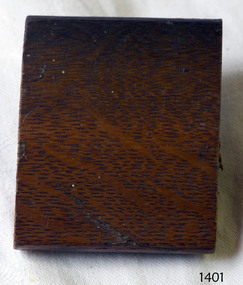 Flagstaff Hill Maritime Museum and Village
Wood Sample, c. 1854
... Byrne the LIGHTNING was used as a troop ship, taking British officers and soldiers, stores and ammunition, to fight in India. In 1859 she then returned to her run between Liverpool and Melbourne, apart from 1867 when she made a special trip between Melbourne and Port Chalmers in New Zealand. ...Byrne the LIGHTNING was used as a troop ship, taking British officers and soldiers, stores and ammunition, to fight in India. In 1859 she then returned to her run between Liverpool and Melbourne, apart from 1867 when she made a special trip between Melbourne and Port Chalmers in New Zealand. ...This sample of wood is from the American clipper ship LIGHTNING was a 3 masted, fully rigged extreme clipper ship. She was commissioned by James Baines, of the Black Ball Line in Liverpool, England, during the time of the Australian Gold Rush for the trade of passengers and cargo between England and Australia. Her cargo listed early consignments of livestock and animals, including rabbits sent to Thomas Austin of Barwon Park, Winchelsea, Victoria. The LIGHTNING was built in 1854 by shipbuilder Donald McKay, of East Boston, USA. She was described as spacious and comfortable, and one of the smartest ships known. The LIGHTNING set many speed records for her sea crossings, and became one of the most famous of the racing clippers and one of the fastest ever launched. In 1854, with Captain ‘Bully’ Forbes and Mate ‘Bully’ Bragg, LIGHTNING made the return trip from Melbourne to Liverpool in only 64 days, 3 hours and 10 minutes; a record for all time. Captain Enright became the new Master of LIGHTNING soon afterwards. He has been described as one of the finest mariners in the Australian trade. One of Captain Enright’s innovations was to publish a ship’s paper called The Lightning Gazette. (Captain Forbes had left to captain the SCHOMBERG.) In January 1855 Capt. Enright sailed the LIGHTNING from Liverpool with over 700 passengers and returned home carrying gold as her cargo. In 1857, for a very brief time under Capt. Byrne the LIGHTNING was used as a troop ship, taking British officers and soldiers, stores and ammunition, to fight in India. In 1859 she then returned to her run between Liverpool and Melbourne, apart from 1867 when she made a special trip between Melbourne and Port Chalmers in New Zealand. In 1869 the LIGHTNING was sold to Thomas Harrison of Liverpool, and she continued to sail for the Black Ball Line. Master of LIGHTNING, Captain Henry Jones, sailed her to Geelong in October 1869, and whilst docked, he had her loaded with a cargo of wool, copper, wire, tallow and other goods. At about 1am on 31st October 1869, whilst still docked and fully laden, a fire was noticed on the LIGHTNING. Efforts to extinguished the fire were unsuccessful, so she was towed to the shoals in Corio Bay, where she eventually sank, losing all cargo but no lives. The area is now known as Lightning Shoals. The LIGHTNING is listed on the Victorian Heritage Register VHR S415. She is historically significant for being one of the fastest wooden ships ever built, the first clipper built in the USA for British owners and being the worst shipping disaster in Geelong's history. It spent its whole career carrying cargo and immigrants from England to Australia.Sample, wooden, varnished, from wreck the Lightning. Has a groove along one edge.flagstaff hill, warrnambool, shipwrecked-coast, flagstaff-hill, flagstaff-hill-maritime-museum, maritime-museum, shipwreck-coast, flagstaff-hill-maritime-village, sailing ship lightning, extreme clipper ship, american clipper ship, record breaking clipper ship, james baines, black ball line, donald mckay shipbuilder, captain ‘bully’ forbes, australian immigration, liverpool to melbourne migration, captain enright, captain byrne, captain henry jones, lightning shoals geelong, rabbits introduced to australia, wood sample from a ship -
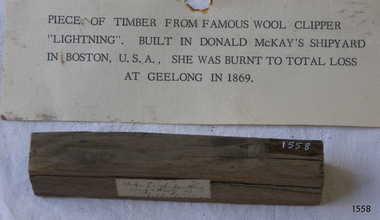 Flagstaff Hill Maritime Museum and Village
Wood Sample, c. 1854
... Byrne the LIGHTNING was used as a troop ship, taking British officers and soldiers, stores and ammunition, to fight in India. In 1859 she then returned to her run between Liverpool and Melbourne, apart from 1867 when she made a special trip between Melbourne and Port Chalmers in New Zealand. ...Byrne the LIGHTNING was used as a troop ship, taking British officers and soldiers, stores and ammunition, to fight in India. In 1859 she then returned to her run between Liverpool and Melbourne, apart from 1867 when she made a special trip between Melbourne and Port Chalmers in New Zealand. ...This piece of wood is from the American clipper ship LIGHTNING was a 3 masted, fully rigged extreme clipper ship. She was commissioned by James Baines, of the Black Ball Line in Liverpool, England, during the time of the Australian Gold Rush for the trade of passengers and cargo between England and Australia. Her cargo listed early consignments of livestock and animals, including rabbits sent to Thomas Austin of Barwon Park, Winchelsea, Victoria. The LIGHTNING was built in 1854 by shipbuilder Donald McKay, of East Boston, USA. She was described as spacious and comfortable, and one of the smartest ships known. The LIGHTNING set many speed records for her sea crossings, and became one of the most famous of the racing clippers and one of the fastest ever launched. In 1854, with Captain ‘Bully’ Forbes and Mate ‘Bully’ Bragg, LIGHTNING made the return trip from Melbourne to Liverpool in only 64 days, 3 hours and 10 minutes; a record for all time. Captain Enright became the new Master of LIGHTNING soon afterwards. He has been described as one of the finest mariners in the Australian trade. One of Captain Enright’s innovations was to publish a ship’s paper called The Lightning Gazette. (Captain Forbes had left to captain the SCHOMBERG.) In January 1855 Capt. Enright sailed the LIGHTNING from Liverpool with over 700 passengers and returned home carrying gold as her cargo. In 1857, for a very brief time under Capt. Byrne the LIGHTNING was used as a troop ship, taking British officers and soldiers, stores and ammunition, to fight in India. In 1859 she then returned to her run between Liverpool and Melbourne, apart from 1867 when she made a special trip between Melbourne and Port Chalmers in New Zealand. In 1869 the LIGHTNING was sold to Thomas Harrison of Liverpool, and she continued to sail for the Black Ball Line. Master of LIGHTNING, Captain Henry Jones, sailed her to Geelong in October 1869, and whilst docked, he had her loaded with a cargo of wool, copper, wire, tallow and other goods. At about 1am on 31st October 1869, whilst still docked and fully laden, a fire was noticed on the LIGHTNING. Efforts to extinguished the fire were unsuccessful, so she was towed to the shoals in Corio Bay, where she eventually sank, losing all cargo but no lives. The area is now known as Lightning Shoals. The LIGHTNING is listed on the Victorian Heritage Register VHR S415. She is historically significant for being one of the fastest wooden ships ever built, the first clipper built in the USA for British owners and being the worst shipping disaster in Geelong's history. It spent its whole career carrying cargo and immigrants from England to Australia.Sample of wood from the wool clipper LIGHTNING, 1854-1869, The sample has a label and a card with information about the ship and a person. Card, typewritten, "PIECE OF TIMBER FROM FAMOUS WOOL CLIPPER / "LIGHTNING". BUILD IN DONALD McKAY'S SHIPYARD / IN BOSTON, U.S.A.. SHE WAS BURNT TO TOTAL LOSS / IN GEELONG IN 1869"flagstaff hill, warrnambool, shipwrecked-coast, flagstaff-hill, flagstaff-hill-maritime-museum, maritime-museum, shipwreck-coast, flagstaff-hill-maritime-village, sailing ship lightning, extreme clipper ship, american clipper ship, record breaking clipper ship, james baines, black ball line, donald mckay shipbuilder, captain ‘bully’ forbes, australian immigration, liverpool to melbourne migration, captain enright, captain byrne, captain henry jones, lightning shoals geelong, rabbits introduced to australia, wood sample from lightning -
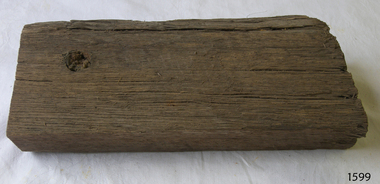 Flagstaff Hill Maritime Museum and Village
Wood Sample, c. 1854
... Byrne the LIGHTNING was used as a troop ship, taking British officers and soldiers, stores and ammunition, to fight in India. In 1859 she then returned to her run between Liverpool and Melbourne, apart from 1867 when she made a special trip between Melbourne and Port Chalmers in New Zealand. ...Byrne the LIGHTNING was used as a troop ship, taking British officers and soldiers, stores and ammunition, to fight in India. In 1859 she then returned to her run between Liverpool and Melbourne, apart from 1867 when she made a special trip between Melbourne and Port Chalmers in New Zealand. ...This sample of wood is from the American clipper ship LIGHTNING was a 3 masted, fully rigged extreme clipper ship. She was commissioned by James Baines, of the Black Ball Line in Liverpool, England, during the time of the Australian Gold Rush for the trade of passengers and cargo between England and Australia. Her cargo listed early consignments of livestock and animals, including rabbits sent to Thomas Austin of Barwon Park, Winchelsea, Victoria. The LIGHTNING was built in 1854 by shipbuilder Donald McKay, of East Boston, USA. She was described as spacious and comfortable, and one of the smartest ships known. The LIGHTNING set many speed records for her sea crossings, and became one of the most famous of the racing clippers and one of the fastest ever launched. In 1854, with Captain ‘Bully’ Forbes and Mate ‘Bully’ Bragg, LIGHTNING made the return trip from Melbourne to Liverpool in only 64 days, 3 hours and 10 minutes; a record for all time. Captain Enright became the new Master of LIGHTNING soon afterwards. He has been described as one of the finest mariners in the Australian trade. One of Captain Enright’s innovations was to publish a ship’s paper called The Lightning Gazette. (Captain Forbes had left to captain the SCHOMBERG.) In January 1855 Capt. Enright sailed the LIGHTNING from Liverpool with over 700 passengers and returned home carrying gold as her cargo. In 1857, for a very brief time under Capt. Byrne the LIGHTNING was used as a troop ship, taking British officers and soldiers, stores and ammunition, to fight in India. In 1859 she then returned to her run between Liverpool and Melbourne, apart from 1867 when she made a special trip between Melbourne and Port Chalmers in New Zealand. In 1869 the LIGHTNING was sold to Thomas Harrison of Liverpool, and she continued to sail for the Black Ball Line. Master of LIGHTNING, Captain Henry Jones, sailed her to Geelong in October 1869, and whilst docked, he had her loaded with a cargo of wool, copper, wire, tallow and other goods. At about 1am on 31st October 1869, whilst still docked and fully laden, a fire was noticed on the LIGHTNING. Efforts to extinguished the fire were unsuccessful, so she was towed to the shoals in Corio Bay, where she eventually sank, losing all cargo but no lives. The area is now known as Lightning Shoals. The LIGHTNING is listed on the Victorian Heritage Register VHR S415. She is historically significant for being one of the fastest wooden ships ever built, the first clipper built in the USA for British owners and being the worst shipping disaster in Geelong's history. It spent its whole career carrying cargo and immigrants from England to Australia.Sample wooden rectangular from the clipper Lightning, which burned out at Geelong 31 Oct 1869.flagstaff hill, warrnambool, shipwrecked-coast, flagstaff-hill, flagstaff-hill-maritime-museum, maritime-museum, sailing ship lightning, extreme clipper ship, american clipper ship, record breaking clipper ship, james baines, black ball line, donald mckay shipbuilder, captain ‘bully’ forbes, australian immigration, liverpool to melbourne migration, captain enright, captain byrne, captain henry jones, lightning shoals geelong, rabbits introduced to australia, wood from sailing ship, shipwreck-coast, flagstaff-hill-maritime-village, lightning -
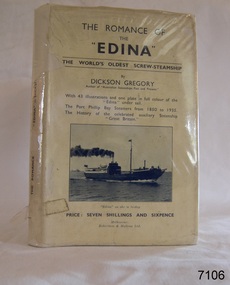 Flagstaff Hill Maritime Museum and Village
Book - Historical, maritime, The Romance of The Edina, 1935
... SS Edina’s interesting history includes English Chanel runs, serving in the Crimean Ware carrying ammunition, horses and stores to the Black Sea, and further service in the American Civil War and later, serving in the western district of Victoria as well as in Queensland and carried gold, currency and gold prospectors Australia to New Zealand. ...SS Edina’s interesting history includes English Chanel runs, serving in the Crimean Ware carrying ammunition, horses and stores to the Black Sea, and further service in the American Civil War and later, serving in the western district of Victoria as well as in Queensland and carried gold, currency and gold prospectors Australia to New Zealand. ...This book is titled "The Romance of the "Edina" and was written by author C. Dickson Gregory (Charles Dickson Gregory) in 1935. The author has also written, "Australian Steamships Past and Present". This book also contains (1) The Port Phillip Bay Steamers from 1850 to 1935 (2) The history of the celebrated auxiliary steamship "Great Britain." ABOUT THE S S EDINA The three-masted iron screw steamer SS Edina was built in Glasgow, Scotland, in 1854 by Barclay and Curle. She was adorned with the figurehead of ‘fair maid of Judea’. The many years of service made SS Edina famous world-wide as the longest-serving screw steamer. (The term screw steamer comes from being driven by a single propeller, sometimes called a screw, driven by a steam engine.) SS Edina’s interesting history includes English Chanel runs, serving in the Crimean Ware carrying ammunition, horses and stores to the Black Sea, and further service in the American Civil War and later, serving in the western district of Victoria as well as in Queensland and carried gold, currency and gold prospectors Australia to New Zealand. SS Edina had the privilege of being an escort vessel to H.R.H. the Duke of Edinburgh during his visit to Australia in 1867. In March 1863 SS Edina arrived in Port Phillip Bay, Melbourne and was bought by Stephen Henty, of Portland fame, to work the cargo and passenger run from Melbourne – Warrnambool – Port Fairy - Portland. After a short time of working the run from Australia to New Zealand, with passengers and cargo that included gold and currency, she returned to her Melbourne - Warrnambool – Port Fairy run, with cargo including bales of wool produced in the western district of Victoria. The Warrnambool Steam Packet Company purchased SS Edina in 1867; she was now commanded by Captain John Thompson and Chief Engineer John Davies. She survived several mishaps at sea, had a complete service and overhaul and several changes of commanders. In 1870 SS Edina was in Lady Bay, Warrnambool, when a gale sprung up and caused a collision with the iron screw steamer SS Dandenong. SS Edina’s figurehead was broken into pieces and it was not ever replaced. SS Edina was re-fitted in 1870 than was used as a coastal trader in Queensland for a period. She was then brought to Melbourne to carry cargo and passengers between Melbourne and Geelong and performed this service 1880-1938. During this time (1917) she was again refitted with a new mast, funnel, bridge and promenade deck, altering her appearance. In 1938, after more collisions, SS Edina was taken out of service. However, she was later renamed Dinah and used as a ‘lighter’ (a vessel without engine or superstructure) to be towed and carry wool and general cargo between Melbourne and Geelong. In 1957, after 104 years, the SS Edina was broken up at Footscray, Melbourne. Remains of SS Edina’s hull can be found in the Maribyrnong River, Port Phillip Bay. [Reference: A Brief Review of Steam Navigation in Victoria; C Dickson Gregory; Centenary Maritime Exhibition catalogue, 1934; published by Shiplovers' Society of Victoria Dandenong, Passengers in History, http://passengersinhistory.sa.gov.au/node/924034 Edina, Victorian Heritage Database VHR S199 http://vhd.heritage.vic.gov.au/shipwrecks/heritage/199 SS Edina, Coastal Trader and Passenger Ship 1853-1938, Museum Victoria Collections, https://collections.museumvictoria.com.au/articles/6227 SS ‘Edina’ – the Longest Serving Screw Steamer in the World, POI Australia, https://poi-australia.com.au/ss-edina-the-longest-serving-steamer-in-the-world/ ]This book about the SS Edina is significant for its association with the screw steamer SS Edina. The SS Edina is heritage listed on the Victorian Heritage Database VHR S199. She had endeared herself to the people of Port Phillip Bay as a passenger ferry, part of their history and culture. She played a significant role in the Crimean War, the American Civil War and the gold rush in New Zealand. She also served western Victoria for many years in her cargo and passenger runs. The SS Edina is famous for being the longest serving screw steamer in the world. After spending her first nine years overseas she arrived in Melbourne and her work included running the essential service of transporting cargo and passengers between Melbourne and the western Victoria ports of Warrnambool, Port Fairy and Portland. The SS Edina was purchased in the late 1860’s by local Warrnambool business, the Warrnambool Steam Packet Co. and continued trading from there as part of the local business community. The SS Edina’s original ‘fair maid of Judea’ figurehead was broken to pieces in a collision with another vessel (the SS Dandenong) in a gale off Warrnambool, Victoria, in 1870.The Romance of The "Edina"; the World's oldest screw-steamship, by C Dickson Gregory (Charles Dickson Gregory). Hard cover book with black print on cream coloured jacket, covered in clear plastic. Front cover has a black and white photograph of the steamship and is titled " "Edina" as she is today." With chapters on the Auxiliary Steamship "Great Britain" and the Port Phillip Bay Steamers Past and Present. Published in Melbourne by Robertson & Mullens Ltd. Opposite fly page is a picture from a painting by C. Dickson Gregory titled "Edina in the "roaring forties" in Feburary 1863" The book contains 43 illustrations and one plate in full colour showing the Edina in full sail. The price is printed on the jacket "PRICE: SEVEN SHILLINGS AND SIXPENCE"warrnambool, shipwrecked coast, flagstaff hill, flagstaff hill maritime museum, maritime museum, shipwreck coast, flagstaff hill maritime village, shipwrecked artefact, barclay & curle, figurehead 'fair maid of judea', centenary maritime exhibition 1934, a brief review of steam navigation in victoria, pleasure steamer edina, trade and travel late 19th and early 20th century, trade melbourne to geelong, screw steamer edina, coastal trader edina, lighter dinah, cargo carrying for cremean war, cargo carrying for american civil war, passenger and trade in western district of victoria, export gold and currency and gold diggers to new zealand, export vessel to h r h the duke of edinburgh, melbourne - warrnambool - port fairy - portland cargo run, warrnambool steam packet company, stephen henty, captain john thompson, chief engineer john davies, lady bay warrnambool, lighter edina, shipping victoria, port phillip bay steamers, steamship great britain, edina, vhr s199 victorian heritage database, book, the romance of the edina, c dickson gregory, robertson & mullens melbourne -
 Flagstaff Hill Maritime Museum and Village
Photograph, 31st October 1869
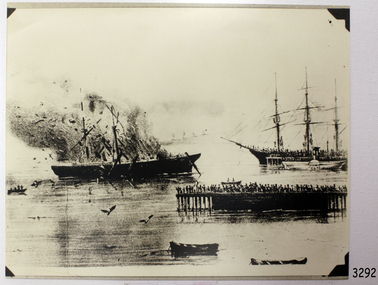
... Byrne the LIGHTNING was used as a troop ship, taking British officers and soldiers, stores and ammunition, to fight in India. In 1859 she then returned to her run between Liverpool and Melbourne, apart from 1867 when she made a special trip between Melbourne and Port Chalmers in New Zealand. ...Byrne the LIGHTNING was used as a troop ship, taking British officers and soldiers, stores and ammunition, to fight in India. In 1859 she then returned to her run between Liverpool and Melbourne, apart from 1867 when she made a special trip between Melbourne and Port Chalmers in New Zealand. ...This photograph was taken at the scene of the fire on the LIGHTNING, in Corio Bay, Geelong on 31st October 1869. The American clipper ship LIGHTNING was a 3 masted, fully rigged extreme clipper ship. She was commissioned by James Baines, of the Black Ball Line in Liverpool, England, during the time of the Australian Gold Rush for the trade of passengers and cargo between England and Australia. Her cargo listed early consignments of livestock and animals, including rabbits sent to Thomas Austin of Barwon Park, Winchelsea, Victoria. The LIGHTNING was built in 1854 by shipbuilder Donald McKay, of East Boston, USA. She was described as spacious and comfortable, and one of the smartest ships known. The LIGHTNING set many speed records for her sea crossings, and became one of the most famous of the racing clippers and one of the fastest ever launched. In 1854, with Captain ‘Bully’ Forbes and Mate ‘Bully’ Bragg, LIGHTNING made the return trip from Melbourne to Liverpool in only 64 days, 3 hours and 10 minutes; a record for all time. Captain Enright became the new Master of LIGHTNING soon afterwards. He has been described as one of the finest mariners in the Australian trade. One of Captain Enright’s innovations was to publish a ship’s paper called The Lightning Gazette. (Captain Forbes had left to captain the SCHOMBERG.) In January 1855 Capt. Enright sailed the LIGHTNING from Liverpool with over 700 passengers and returned home carrying gold as her cargo. In 1857, for a very brief time under Capt. Byrne the LIGHTNING was used as a troop ship, taking British officers and soldiers, stores and ammunition, to fight in India. In 1859 she then returned to her run between Liverpool and Melbourne, apart from 1867 when she made a special trip between Melbourne and Port Chalmers in New Zealand. In 1869 the LIGHTNING was sold to Thomas Harrison of Liverpool, and she continued to sail for the Black Ball Line. Master of LIGHTNING, Captain Henry Jones, sailed her to Geelong in October 1869, and whilst docked, he had her loaded with a cargo of wool, copper, wire, tallow and other goods. At about 1am on 31st October 1869, whilst still docked and fully laden, a fire was noticed on the LIGHTNING. Efforts to extinguished the fire were unsuccessful, so she was towed to the shoals in Corio Bay, where she eventually sank, losing all cargo but no lives. The area is now known as Lightning Shoals. The LIGHTNING is listed on the Victorian Heritage Register VHR S415. She is historically significant for being one of the fastest wooden ships ever built, the first clipper built in the USA for British owners and being the worst shipping disaster in Geelong's history. It spent its whole career carrying cargo and immigrants from England to Australia.Black and white photograph of the burning of the clipper Lightning in Corio Bay Geelong, Sunday Oct 31st 1869. Photograph shows the Lightning in the process of burning, smoke billowing above the deck. Another sailing ship, plus several small boats, are in the bay, with a crowd on the pier.flagstaff hill, warrnambool, shipwrecked-coast, flagstaff-hill, flagstaff-hill-maritime-museum, maritime-museum, sailing ship lightning, extreme clipper ship, american clipper ship, record breaking clipper ship, james baines, black ball line, donald mckay shipbuilder, captain ‘bully’ forbes, australian immigration, liverpool to melbourne migration, captain enright, captain byrne, captain henry jones, corio bay geelong, lightning shoals geelong, rabbits introduced to australia, historic photograph of shipwreck lightning, shipwreck-coast, flagstaff-hill-maritime-village, clipper lightning, photograph -
 Flagstaff Hill Maritime Museum and Village
Photograph, Lightning, 31st October 1869
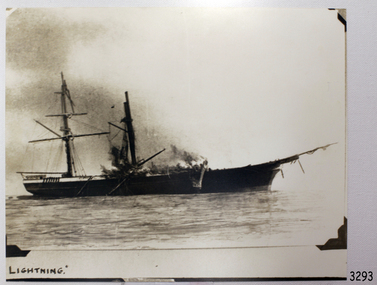
... Byrne the LIGHTNING was used as a troop ship, taking British officers and soldiers, stores and ammunition, to fight in India. In 1859 she then returned to her run between Liverpool and Melbourne, apart from 1867 when she made a special trip between Melbourne and Port Chalmers in New Zealand. ...Byrne the LIGHTNING was used as a troop ship, taking British officers and soldiers, stores and ammunition, to fight in India. In 1859 she then returned to her run between Liverpool and Melbourne, apart from 1867 when she made a special trip between Melbourne and Port Chalmers in New Zealand. ...This photograph shows the remains of the clipper ship LIGHTNING as it continues to burn to its end in Corio Bay, Geelong, 31st October 1869. The American clipper ship LIGHTNING was a 3 masted, fully rigged extreme clipper ship. She was commissioned by James Baines, of the Black Ball Line in Liverpool, England, during the time of the Australian Gold Rush for the trade of passengers and cargo between England and Australia. Her cargo listed early consignments of livestock and animals, including rabbits sent to Thomas Austin of Barwon Park, Winchelsea, Victoria. The LIGHTNING was built in 1854 by shipbuilder Donald McKay, of East Boston, USA. She was described as spacious and comfortable, and one of the smartest ships known. The LIGHTNING set many speed records for her sea crossings, and became one of the most famous of the racing clippers and one of the fastest ever launched. In 1854, with Captain ‘Bully’ Forbes and Mate ‘Bully’ Bragg, LIGHTNING made the return trip from Melbourne to Liverpool in only 64 days, 3 hours and 10 minutes; a record for all time. Captain Enright became the new Master of LIGHTNING soon afterwards. He has been described as one of the finest mariners in the Australian trade. One of Captain Enright’s innovations was to publish a ship’s paper called The Lightning Gazette. (Captain Forbes had left to captain the SCHOMBERG.) In January 1855 Capt. Enright sailed the LIGHTNING from Liverpool with over 700 passengers and returned home carrying gold as her cargo. In 1857, for a very brief time under Capt. Byrne the LIGHTNING was used as a troop ship, taking British officers and soldiers, stores and ammunition, to fight in India. In 1859 she then returned to her run between Liverpool and Melbourne, apart from 1867 when she made a special trip between Melbourne and Port Chalmers in New Zealand. In 1869 the LIGHTNING was sold to Thomas Harrison of Liverpool, and she continued to sail for the Black Ball Line. Master of LIGHTNING, Captain Henry Jones, sailed her to Geelong in October 1869, and whilst docked, he had her loaded with a cargo of wool, copper, wire, tallow and other goods. At about 1am on 31st October 1869, whilst still docked and fully laden, a fire was noticed on the LIGHTNING. Efforts to extinguished the fire were unsuccessful, so she was towed to the shoals in Corio Bay, where she eventually sank, losing all cargo but no lives. The area is now known as Lightning Shoals. The LIGHTNING is listed on the Victorian Heritage Register VHR S415. She is historically significant for being one of the fastest wooden ships ever built, the first clipper built in the USA for British owners and being the worst shipping disaster in Geelong's history. It spent its whole career carrying cargo and immigrants from England to Australia.Black and white photograph of the burning of the sailing ship LIGHTNING, 31st October 1869 in Corio Bay, Geelong. The photograph shows the ship with only 2 masts remaining, still billowing smoke. Below the photograph is the photograph's title.Title hand written 'LIGHTNING"flagstaff hill, warrnambool, shipwrecked-coast, flagstaff-hill, flagstaff-hill-maritime-museum, maritime-museum, shipwreck-coast, flagstaff-hill-maritime-village, sailing ship lightning, extreme clipper ship, american clipper ship, record breaking clipper ship, james baines, black ball line, donald mckay shipbuilder, captain ‘bully’ forbes, australian immigration, liverpool to melbourne migration, captain enright, captain byrne, captain henry jones, corio bay geelong, lightning shoals geelong, rabbits introduced to australia, burning of the lightning, historic photograph of shipwreck lightning -
 Flagstaff Hill Maritime Museum and Village
Equipment - Block (sailing), Burrows, Ship Candler, c. 1869
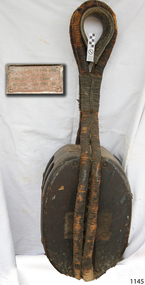
... Byrne the Lightning was used as a troopship, taking British officers and soldiers, stores and ammunition, to fight in India. In 1859 she then returned to her normal route between Liverpool and Melbourne, apart from 1867 when she made a special trip between Melbourne and Port Chalmers in New Zealand. ...Byrne the Lightning was used as a troopship, taking British officers and soldiers, stores and ammunition, to fight in India. In 1859 she then returned to her normal route between Liverpool and Melbourne, apart from 1867 when she made a special trip between Melbourne and Port Chalmers in New Zealand. ...The Lightning was an American-built sailing ship and it is believed the rope block was part of the ship’s rigging or included as cargo. The plaque on the block mentions that the item was, “as supplied by Burrows Ship Chandlers” in 1869. The plaque could also mean that the rope block was supplied by the firm Burrows, Ship Chandler and Shipping Stock, as a replacement block for the Lightning. The American vessel named “Lightning” was a 3-masted, fully rigged extreme clipper ship. She was commissioned by James Baines, of the Black Ball Line in Liverpool, England, during the time of the Australian Gold Rush for the trade of passengers and cargo between England and Australia. Her load listed on early consignments included livestock and animals, including rabbits sent to Thomas Austin of Barwon Park, Winchelsea, Victoria, where the challenging association between Australia's agriculture and the imported rabbits started. The Lightning was built in 1854 by shipbuilder Donald McKay, in East Boston, USA. She was described as spacious and comfortable and regarded as one of the smartest ships of the time. The vessel set many speed records for her voyages and became one of the most famous of racing clippers and one of the fastest ever launched. In 1854, with Captain 'Bully' Forbes and Mate 'Bully' Bragg, Lightning made the return trip from Melbourne to Liverpool in only 64 days, 3 hours and 10 minutes; a record. Captain Enright became the new Master of LIGHTNING soon after this record was established and was regarded as one of the finest mariners in the Australian trade. One of Captain Enright's innovations was to publish a ship's paper called "The Lightning Gazette". What is of additional historic interest is that captain "Bully Forbes" had left the Lightning to captain the ill-fated Schomberg. In 1857, for a very brief time under Capt. Byrne the Lightning was used as a troopship, taking British officers and soldiers, stores and ammunition, to fight in India. In 1859 she then returned to her normal route between Liverpool and Melbourne, apart from 1867 when she made a special trip between Melbourne and Port Chalmers in New Zealand. In 1869 the Lightning was sold to Thomas Harrison of Liverpool, and continued to sail for the Black Ball Line. Master of Lightning, Captain Henry Jones, sailed her to Geelong in October 1869, and whilst docked, he had her loaded with a cargo of wool, copper, wire, tallow and other goods. At about 1 am on 31st October 1869, whilst still docked and fully laden, a fire was noticed on the vessel. Efforts to extinguish the fire were unsuccessful, so she was towed to the "Lightning Shoals" in Corio Bay, where she eventually sank, losing all cargo but no lives. The Lightning is listed on the Victorian Heritage Register (Ref S 415). The vessel is historically significant for being one of the fastest wooden ships ever built. it was notable as the first clipper built in the USA for British owners and as a shipping disaster in Geelong's history. The Lightning spent its whole career carrying cargo and immigrants from England to Australia. Its documented voyages give us a snapshot into shipping history, not only of Australia in the mid-19th century but how the world's commercial transport functioned o promote trade and emigration during this time.Large ship's block, wood, with two wooden sheaves and fibre straps, eye and thimble. The metal plaque attached to the block has an inscription. The block was used on the ship "Lightning".Plaque inscription: "BLOCK OFF THE LIGHTNING / AS SUPPLIED BY / BURROWS SHIPS CHANDLERS / & SHIPPING STOCK CORIO BAY / 1863" (or 1869)flagstaff hill, warrnambool, shipwrecked coast, flagstaff hill maritime museum, maritime museum, shipwreck coast, flagstaff hill maritime village, great ocean road, sailing ship lightning, extreme clipper ship, american clipper ship, record breaking clipper ship, james baines, black ball line, donald mckay shipbuilder, captain ‘bully’ forbes, australian immigration, liverpool to melbourne migration, captain enright, captain byrne, captain henry jones, corio bay geelong, lightning shoals geelong, rabbits introduced to australia, burrows and bascombe, burrows, ship chandler, corio bay, burrow's ship chandlers and shipping stock, -
 Flagstaff Hill Maritime Museum and Village
Photograph - Vessel, Steam Ship, Between 1890 - 19-12-1937
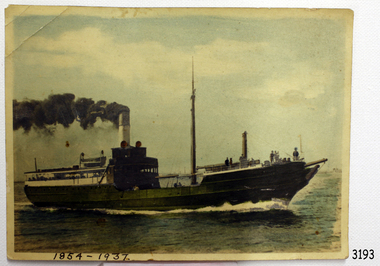
... SS Edina’s interesting history includes English Chanel runs, serving in the Crimean Ware carrying ammunition, horses and stores to the Black Sea, and further service in the American Civil War and later, serving in the western district of Victoria as well as in Queensland and carried gold, currency and gold prospectors Australia to New Zealand. ...SS Edina’s interesting history includes English Chanel runs, serving in the Crimean Ware carrying ammunition, horses and stores to the Black Sea, and further service in the American Civil War and later, serving in the western district of Victoria as well as in Queensland and carried gold, currency and gold prospectors Australia to New Zealand. ...This photographic postcard of the SS Edina was taken after the 1890’s due to the style and configuration of the vessel. There is a black and white photograph of the same image also in our Collection (RN 3192). It is most likely that both of the photographs were donated by the same person because the people mentioned in the inscription on the black and white photograph’s reverse side connect with two of the people mentioned in the letter on the reverse of the coloured photograph. * RN 3192; Black & White photograph - inscription: - "Donated by Mrs. Nancy Mason, Bay View. Owned by Mac Fordham, Chief Engineer, 'Edina', then given to Mrs. Mason's father-in-law Arnold Mason (both Engineers W.W. I)" The “Arnie” to whom the letter was addressed is likely to be Arnold Mason, Engineer. The author of the letter, “Mac”, is likely to be Mac Fordham, Chief Engineer of SS Edina. The transcribed letter tells of two men who know each other well and have an interest in the Edina. “Mac” mentions that he may be “too old” to be at sea again; this would also support the idea that the older writer would give his photographs to the perhaps younger “Arnie”. * RN 3193 (this photograph) - Transcription of pen and ink script handwriting = = = = = = = = = = = = 19-12-37 No. 1 Flat, “Goodwood Lodge” 196 Lennox Street, Richmond [Victoria] Dear Arnie , Been meaning to write for long time but you know, it’s just the usual routine of the seamen within Bay trades. Had a good trip back from Sydney. Took our time, spent almost a week coming back, rather monotonous in parts in the hill country, too many darn curves, still was a good trip. How are you all keeping? Suppose you’ve moved back to Drummoyne [erettris?], expect you can let the house in Manly easily enough. Noticed they had a strike at Cockatoo [Cockatoo Island NSW]. don’t suppose they pulled the boys out. How is Jack doing? Has [Willie?] commenced training yet, or no! too young, isn’t she? Been a lot of “paper” talk about the “Edina” finishing but nothing official that I’m aware of, but it’s always on the cards I suppose, then I suppose it will be to sea again if I’m not too old. Easy Winter only 3 trips per week, running every day from today until further notice. Trust [Mary?] Is well & all’s well with you too. Best wishes from us both for Xmas & New Year. Cheerio Mac = = = = = = = = = = = = ABOUT THE SS EDINA The three masted iron screw steamer SS Edina was built in Glasgow, Scotland, in 1854 by Barclay and Curle. She was adorned with the figurehead of ‘fair maid of Judea’. The many years of service made SS Edina famous world-wide as the longest serving screw steamer. (The term screw steamer comes from being driven by a single propeller, sometimes called a screw, driven by a steam engine.) SS Edina’s interesting history includes English Chanel runs, serving in the Crimean Ware carrying ammunition, horses and stores to the Black Sea, and further service in the American Civil War and later, serving in the western district of Victoria as well as in Queensland and carried gold, currency and gold prospectors Australia to New Zealand. SS Edina had the privilege of being an escort vessel to H.R.H. the Duke of Edinburgh during his visit to Australia in 1867. In March 1863 SS Edina arrived in Port Phillip Bay, Melbourne and was bought by Stephen Henty, of Portland fame, to work the cargo and passenger run from Melbourne – Warrnambool – Port Fairy - Portland. After a short time of working the run from Australia to New Zealand, with passengers and cargo that included gold and currency, she returned to her Melbourne - Warrnambool – Port Fairy run, with cargo including bales of wool produced in the western district of Victoria. The Warrnambool Steam Packet Company purchased SS Edina in 1867; she was now commanded by Captain John Thompson and Chief Engineer John Davies. She survived several mishaps at sea, had a complete service and overhaul and several changes of commanders. In 1870 SS Edina was in Lady Bay, Warrnambool, when a gale sprung up and caused a collision with the iron screw steamer SS Dandenong. SS Edina’s figurehead was broken into pieces and it was not ever replaced. SS Edina was re-fitted in 1870 then was used as a coastal trader in Queensland for a period. She was then brought to Melbourne to carry cargo and passengers between Melbourne and Geelong and performed this service 1880-1938. During this time (1917) she was again refitted with a new mast, funnel, bridge and promenade deck, altering her appearance. In 1938, after more collisions, SS Edina was taken out of service. However she was later renamed Dinah and used as a ‘lighter’ (a vessel without engine or superstructure) to be towed and carry wool and general cargo between Melbourne and Geelong. In 1957, after 104 years, the SS Edina was broken up at Footscray, Melbourne. Remains of SS Edina’s hull can be found in the Maribyrnong River, Port Phillip Bay. This photographic postcard with the letter on the revers tell about the SS Edina and are significant for its association with the screw steamer SS Edina. The SS Edina is heritage listed on the Victorian Heritage Database VHR S199. She had endeared herself to the people of Port Phillip Bay as a passenger ferry, part of their history and culture. She played a significant role in the Crimean War, the American Civil War and the gold rush in New Zealand. She also served western Victoria for many years in her cargo and passenger runs. The SS Edina is famous for being the longest serving screw steamer in the world. After spending her first nine years overseas she arrived in Melbourne and her work included running the essential service of transporting cargo and passengers between Melbourne and the western Victoria ports of Warrnambool, Port Fairy and Portland. The SS Edina was purchased in the late 1860’s by local Warrnambool business, the Warrnambool Steam Packet Co. and continued trading from there as part of the local business community. The SS Edina’s original ‘fair maid of Judea’ figurehead was broken to pieces in a collision with another vessel (the SS Dandenong) in a gale off Warrnambool, Victoria, in 1870.Coloured (hand coloured) photographic postcard of SS Edina. Letter on reverse, hand written in pen and ink, from Mac to Arnie, dated 19-12-37 [1937]. The photograph shows the SS Edina moving under steam power, many people on both the bow and stern and a few people in the centre of the vessel. There are buildings on the shore in the background. The ship's configuration is dated post 1890.Hand written in pen on base of front “1854-1957” Hand written on back in blue pen and crossed out “REC 409” Hand written on back in pen ‘EDINA,’ “3173,” “086.2” Hand written letter dated 19-12-37, from Mac to Arnie. Script writing in pen and ink letter on reverse of photograph – see “Context” section for transcription. warrnambool, shipwrecked coast, flagstaff hill, flagstaff hill maritime museum, maritime museum, shipwreck coast, flagstaff hill maritime village, shipwrecked artefact, barclay & curle, figurehead 'fair maid of judea', centenary maritime exhibition 1934, a brief review of steam navigation in victoria, pleasure steamer edina, trade and travel late 19th and early 20th century, trade melbourne to geelong, screw steamer edina, coastal trader edina, lighter dinah, cargo carrying for cremean war, cargo carrying for american civil war, passenger and trade in western district of victoria, export gold and currency and gold diggers to new zealand, export vessel to h r h the duke of edinburgh, melbourne - warrnambool - port fairy - portland cargo run, warrnambool steam packet company, stephen henty, captain john thompson, chief engineer john davies, lady bay warrnambool, lighter edina, shipping victoria, port phillip bay steamers, steamship great britain, edina, vhr s199 victorian heritage database, photographic postcard of ss edina 1854-1957, letter by mac fordham chief engineer ss edina, letter to arnold mason, engineer -
 Flagstaff Hill Maritime Museum and Village
Photograph - Vessels, Steam and Sail, Vessels in the bay, 1890's
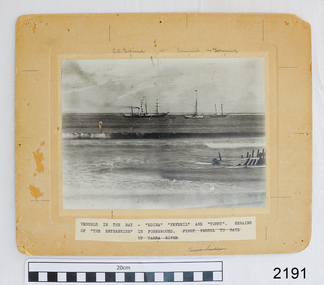
... SS Edina’s interesting history includes English Chanel runs, serving in the Crimean Ware carrying ammunition, horses and stores to the Black Sea, and further service in the American Civil War and later, serving in the western district of Victoria as well as in Queensland and carried gold, currency and gold prospectors Australia to New Zealand. ...SS Edina’s interesting history includes English Chanel runs, serving in the Crimean Ware carrying ammunition, horses and stores to the Black Sea, and further service in the American Civil War and later, serving in the western district of Victoria as well as in Queensland and carried gold, currency and gold prospectors Australia to New Zealand. ...The photograph, taken in the 1890s, shows sailing ships and a wreck in Lady Bay, Warrnambool. Lady Bay was once a very busy port of trade in Warrnambool and was also called the Port of Warrnambool or Warrnambool Harbour. ENTERPRISE (1847-1850) NOTE: The “Enterprise” wrecked in 1850 in Warrnambool should not be confused with John Pascoe Faulkner’s ‘Enterprise’, which was wrecked in NSW in 1847. The 58-ton schooner Enterprise was built by David Hay in Waiheke, New Zealand in 1847 and registered by owners John Watson and Edward Byam in Melbourne, Australia. She was a single-deck sailing ship with two masts, used for carrying cargo such as local agricultural produce and general commodities between Melbourne and other colonial ports. On September 14th, 1850 the Enterprise had sailed from Melbourne under the control of the ship’s Master, James Gardiner Caught, and was moored in at the Tramway Jetty in Lady Bay, laden with wheat and potatoes. The vessel rode out a south-easterly gale but eventually dragged anchor and was beached, bow first and then broadside. Buckwall, a local indigenous man, braved the heavy surf and reached the stricken vessel with a rescue line, saving all five crew on board. There were no passengers on board. The Enterprise wreck was in an area called Tramway Jetty in Lady Bay. Since then the area has become the location of Lady Bay Hotel and now, in 2019, it is in the grounds of the Deep Blue Apartments. In fact, with the constantly changing coastline through built-up sand, the wreck site is now apparently under the No 2 Caravan Park on Pertobe Road, perhaps 150 metres from the high tide. Its location was found by Ian McKiggan (leader of the various searches in the 1980s for the legendary Mahogany Ship). The Warrnambool Wreck Enterprise is listed on the Victorian Heritage Database VHR S238. DIFFERENTIATING the New Zealand Schooner “Enterprise” from John Fawkner’s “Enterprize“ Dr Murray Johns, Melbourne, says in his article The Mahogany Ship Story, “…the Enterprise, wrecked in Lady Bay, Warrnambool in 1850 ... was soon covered by sand but was exposed again after several storms in 1887. “Samples of timber were then cut from the wreck, which would then have been buried for 37 years. In November 1887 the Warrnambool Standard reported that “the timber looks sound and hard, a penknife scarcely making any impression.” “For many years there was confusion about the identity of that ship in Lady Bay. Most people believed it was the wreck of John Pascoe Fawkner’s Enterprize, which had sailed from Tasmania to Victoria bringing the pioneer settlers to Melbourne in 1835. “In fact, as I documented in 1985, the Warrnambool wreck was of an entirely different ship, also called Enterprize [Enterprise], but built in New Zealand in 1847. Fawkner’s ship had already been sold to Captain Sullivan in 1845 and was wrecked on the Richmond Pier in northern New South Wales early in 1847. “In 1985 a piece of timber from the local Enterprise, which had been kept at the Warrnambool Museum since 1892, was identified histologically as a New Zealand timber, not Tasmanian timber such as blue gum, from which Fawkner’s Enterprize would have been built in 1830. This confirmed the identity of the Warrnambool Enterprize.”[Dr. M.W. Johns later wrote an article called “The Schooner Enterprise: A Final Word on a Historic Wreck.”] ABOUT THE S S EDINA The three-masted iron screw steamer SS Edina was built in Glasgow, Scotland, in 1854 by Barclay and Curle. She was adorned with the figurehead of the ‘fair maid of Judea’. The many years of service made SS Edina famous worldwide as the longest-serving screw steamer. (The term screw steamer comes from being driven by a single propeller, sometimes called a screw, driven by a steam engine.) SS Edina’s interesting history includes English Chanel runs, serving in the Crimean Ware carrying ammunition, horses and stores to the Black Sea, and further service in the American Civil War and later, serving in the western district of Victoria as well as in Queensland and carried gold, currency and gold prospectors Australia to New Zealand. SS Edina had the privilege of being an escort vessel to H.R.H. the Duke of Edinburgh during his visit to Australia in 1867. In March 1863 SS Edina arrived in Port Phillip Bay, Melbourne and was bought by Stephen Henty, of Portland fame, to work the cargo and passenger run from Melbourne – Warrnambool – Port Fairy - Portland. After a short time of working the run from Australia to New Zealand, with passengers and cargo that included gold and currency, she returned to her Melbourne - Warrnambool – Port Fairy run, with cargo including bales of wool produced in the western district of Victoria. The Warrnambool Steam Packet Company purchased SS Edina in 1867; she was now commanded by Captain John Thompson and Chief Engineer John Davies. She survived several mishaps at sea, had a complete service and overhaul and several changes of commanders. In 1870 SS Edina was in Lady Bay, Warrnambool, when a gale sprung up and caused a collision with the iron screw steamer SS Dandenong. SS Edina’s figurehead was broken into pieces and it was not ever replaced. SS Edina was re-fitted in 1870 and was then used as a coastal trader in Queensland for a period. She was then brought to Melbourne to carry cargo and passengers between Melbourne and Geelong and performed this service from 1880-1938. During this time (1917) she was again refitted with a new mast, funnel, bridge and promenade deck, altering her appearance. In 1938, after more collisions, SS Edina was taken out of service. However, she was later renamed Dinah and used as a ‘lighter’ (a vessel without an engine or superstructure) to be towed and carry wool and general cargo between Melbourne and Geelong. In 1957, after 104 years, the SS Edina was broken up at Footscray, Melbourne. Remains of SS Edina’s hull can be found in the Maribyrnong River, Port Phillip Bay. This photograph is significant for its association with the screw steamer SS Edina, heritage listed on the Victorian Heritage Database VHR S199. She had endeared herself to the people of Port Phillip Bay as a passenger ferry, part of their history and culture. She played a significant role in the Crimean War, the American Civil War and the gold rush in New Zealand. She also served western Victoria for many years in her cargo and passenger runs. The SS Edina is famous for being the longest-serving screw steamer in the world. After spending her first nine years overseas she arrived in Melbourne and her work included running the essential service of transporting cargo and passengers between Melbourne and the western Victoria ports of Warrnambool, Port Fairy and Portland. The SS Edina was purchased in the late 1860s by the local Warrnambool business, the Warrnambool Steam Packet Co. and continued trading from there as part of the local business community. Her original ‘fair maid of Judea’ figurehead was broken to pieces in a collision with another vessel (the SS Dandenong) in a gale off Warrnambool, Victoria, in 1870. The photograph is significant for its association wreck of the Victorian Heritage Listed schooner Enterprise, VHR S238, being a New Zealand-built but Australian-owned coastal trader. The wreck was also significant for its association with the local indigenous hero, Buckawall, who saved the lives of the five crew on board. Photograph "Vessels in the Bay". Black and white photograph of several vessels in Lady Bay, Warrnambool, including some small vessels and "S.S. Edina", the "Peveril" and "Tommy", plus the remains of the wrecked vessel "Enterprise" in the foreground. Photograph is mounted on beige card with label describing the vessels, plus pencilled vessel names. There are several pin holes in each corner of the photograph. Typed label under the photograph “VESSELS IN THE BAY – “EDINA” “PEREVIL” AND “TOMMY”. / REMAINS OF “THE ENTERPRISE” IN FOREGROUND. (Also crossed out on the label “FIRST VESSEL TO SAIL UP YARRA RIVER). In pencil script above the vessels on the photograph “S.S. Edina”, “Peveril” “Tommy”. On the reverse is a printed sticker with “F-Ph 59/2 74”, red felt-tip pen “88”, green pen script repeating the text that is under the photograph on the front.flagstaff hill, warrnambool, shipwrecked-coast, flagstaff-hill, flagstaff-hill-maritime-museum, maritime-museum, shipwreck-coast, flagstaff-hill-maritime-village, enterprize, port of warrnambool, warrnambool harbour, peveril, tommy, ss edina, lighter dinah, warrnambool steam packet company, lady bay, pleasure steamer, edina, trade, travel, screw ship, coastal trader, cargo, victoria, buckawall, indigenous rescue, indigenous hero -
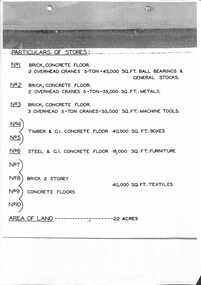 Sunshine and District Historical Society Incorporated
Album - A.D.I. Stores And Transport WWII, 1939-45
... Stores & Transport WW2 - Tottenham Aircraft Bomb Parachutes & Small Arms Ammunition. 617.030 - A.D.I. ...Stores & Transport WW2 - Tottenham Aircraft Bomb Parachutes & Small Arms Ammunition. 617.030 - A.D.I. ...617.001 - A.D.I. Stores & Transport WW2 - Maribyrnong Particular Of Stores. 617.002 - A.D.I. Stores & Transport WW2 - Maribyrnong Main Entrance & Administrative Offices. 617.003 - A.D.I. Stores & Transport WW2 - Maribyrnong No 1 Store & No 2 Store. 617.004 - A.D.I. Stores & Transport WW2 - Maribyrnong No 3 Store & Textiles Stores No 7, 8, 9 & 10. 617.005 - A.D.I. Stores & Transport WW2 - Maribyrnong Furniture Store & No 3 Store. 617.006 - A.D.I. Stores & Transport WW2 - Maribyrnong 25 Pdr Shell Steel Bar Plates & Ball Bearings. 617.007 - A.D.I. Stores & Transport WW2 - Maribyrnong Electric Cable & Tin Plate & Terne Plate. 617.008 - A.D.I. Stores & Transport WW2 - Maribyrnong Treating Tin Plate Stock & Brass Rod. 617.009 - A.D.I. Stores & Transport WW2 - Maribyrnong Non-Ferrous Rod & Coper Tubing. 617.010 - A.D.I. Stores & Transport WW2 - Maribyrnong No 2 Store Tool Steel Section. 617.011 - A.D.I. Stores & Transport WW2 - Maribyrnong No 2 Store Tool Steel Section. 617.012 - A.D.I. Stores & Transport WW2 - Maribyrnong No 2 Store Steel Section & No 3 Store Machine Tool Section. 617.013 - A.D.I. Stores & Transport WW2 - Maribyrnong No 3 Store Machine Tool Section. 617.014 - A.D.I. Stores & Transport WW2 - Maribyrnong No 3 Store Machine Tool Section. 617.015 - A.D.I. Stores & Transport WW2 - Maribyrnong Box Stores. 617.016 - A.D.I. Stores & Transport WW2 - Maribyrnong Box Stores. 617.017 - A.D.I. Stores & Transport WW2 - Maribyrnong Box Stores. 617.018 - A.D.I. Stores & Transport WW2 - Maribyrnong Domestic Maintenace Store. 617.019 - A.D.I. Stores & Transport WW2 - Maribyrnong Domestic Maintenence Store. 617.020 - A.D.I. Stores & Transport WW2 - Maribyrnong Textile Store. 617.021 - A.D.I. Stores & Transport WW2 - Maribyrnong Textile Store & Protective Clothing. 617.022 - A.D.I. Stores & Transport WW2 - Maribyrnong Cream Serge Cartridge Bags For Naval Guns. 617.023 - A.D.I. Stores & Transport WW2 - Tottenham Particular Of Stores. 617.024 - A.D.I. Stores & Transport WW2 - Tottenham Stores. 617.025 - A.D.I. Stores & Transport WW2 - Tottenham Entrance & Guard Room At Gate. 617.026 - A.D.I. Stores & Transport WW2 - Tottenham Rail Siding With Crane & Weightbridge Near Entrance. 617.027 - A.D.I. Stores & Transport WW2 - Tottenham Brass Cartridge Storage Area & Smoke Floats. 617.028 - A.D.I. Stores & Transport WW2 - Tottenham Ammunition Boxes & Shell Storage Area. 617.029 - A.D.I. Stores & Transport WW2 - Tottenham Aircraft Bomb Parachutes & Small Arms Ammunition. 617.030 - A.D.I. Stores & Transport WW2 - Tottenham Stoarge Area & Boxes. 617.031 - A.D.I. Stores & Transport WW2 - Tottenham Storage Unit Piling. 617.032 - A.D.I. Stores & Transport WW2 - Tottenham Paper Stores & Stores For Empty Storage Boxes. 617.033 - A.D.I. Stores & Transport WW2 - Tottenham Paper Stores & Stores For Empty Storage Boxes & Copper Stacking Compound. 617.034 - A.D.I. Stores & Transport WW2 - Tottenham Railway Siding & Railway Platform. 617.035 - A.D.I. Stores & Transport WW2 - Tottenham Store. 617.036 - A.D.I. Stores & Transport WW2 - Derrimut Particulars Of Buildings. 617.037 - A.D.I. Stores & Transport WW2 - Derrimut Main Entrance & Guard House & Aerial View Of Magazines. 617.038 - A.D.I. Stores & Transport WW2 - Derrimut Loading Shed & Battery Train. 617.039 - A.D.I. Stores & Transport WW2 - Derrimut Magazine Loading & Train Returning From Distant Magazines. 617.040 - A.D.I. Stores & Transport WW2 - Derrimut Electric Locomotive Battery Charging Plant. 617.041 - A.D.I. Stores & Transport WW2 - Ravenhall Explosive Siding. 617.042 - A.D.I. Stores & Transport WW2 - Ravenhall Entrance & Explosive Rail Siding & Mess Hutt. 617.043 - A.D.I. Stores & Transport WW2 - Ravenhall Railway Siding At Deer Park. 617.044 - A.D.I. Stores & Transport WW2 - Longlea Explosive Area. 617.045 - A.D.I. Stores & Transport WW2 - Longlea Main Office & Foreman's Cottage. 617.046 - A.D.I. Stores & Transport WW2 - Longlea Peace Officer's Quarters & Explosive Area Loading Shed. 617.047 - A.D.I. Stores & Transport WW2 - Longlea Repacking House & 50 Ton Magazine. 617.048 - A.D.I. Stores & Transport WW2 - Longlea Main Storage & Fire Fighting Static Pool. 617.049 - A.D.I. Stores & Transport WW2 - Longlea Fire Pump Trailer. 617.050 - A.D.I. Stores & Transport WW2 - Longlea Fire Spotting Tower. 617.051 - A.D.I. Stores & Transport WW2 - Longlea Fire Breaks & Explosive Area Fire Fighting Equipment. 617.052 - A.D.I. Stores & Transport WW2 - Footscray Magazines. 617.053 - A.D.I. Stores & Transport WW2 - Footscray Explosive Magazines & Ammunition Factory Entrance (Jacks Magazine). 617.054 - A.D.I. Stores & Transport WW2 - Footscray Explosive Store & Magazine Access Tunnels Through Mound. 617.055 - A.D.I. Stores & Transport WW2 - Footscray Mounded Magazine. 617.056 - A.D.I. Stores & Transport WW2 - Hire Stores Sites. 617.057 - A.D.I. Stores & Transport WW2 - Hire Stores Sites Olympic Park Chemical Drums & Victoria Street Melbourne Radio & Signal Store. 617.058 - A.D.I. Stores & Transport WW2 - Hire Stores Sites Victoria Street Melbourne Unit Piling & Electrical Equipment. 617.059 - A.D.I. Stores & Transport WW2 - Hire Stores Sites Victoria Street Melbourne Radio & Signals Packing & Testing. 617.060 - A.D.I. Stores & Transport WW2 - Hire Stores Sites Victoria Street Melbourne Dispatched Section & Radio & Union Street North Melbourne Signal Store. 617.061 - A.D.I. Stores & Transport WW2 - Hire Stores Sites Errol Street North Melbourne Unit Piling & Electrical Equipment. 617.062 - A.D.I. Stores & Transport WW2 - Hire Stores Sites Errol Street North Melbourne Checking & Packing Store. 617.063 - A.D.I. Stores & Transport WW2 - Hire Stores Sites Casino Dance Hall Brunswick Valves Storage Store. 617.064 - A.D.I. Stores & Transport WW2 - Hire Stores Sites Casino Dance Hall Brunswick Valves Storage Store & Haymarket Parkville Copper Storage. 617.065 - A.D.I. Stores & Transport WW2 - Hire Stores Sites Deer Park Toluol Tanks & Acetone Tanks. 617.066 - A.D.I. Stores & Transport WW2 - Hire Stores Sites Deer Park Acetone Drum Stock Shelters & Albion Drum Stocks. 617.067 - A.D.I. Stores & Transport WW2 - Hire Stores Sites Lonsdale Street Melbourne Food Service Store & Repairing Frigidaire. 617.068 - A.D.I. Stores & Transport WW2 - Hire Stores Sites Lonsdale Street Melbourne Unit Pile & Stocks For Food Service Store. 617.069 - A.D.I. Stores & Transport WW2 - Hire Stores Sites Lonsdale Street Melbourne Food Service Store. 617.070 - A.D.I. Stores & Transport WW2 - Hire Stores Sites Albion Barblock Wire Coils & Crockery. 617.071 - A.D.I. Stores & Transport WW2 - Hire Stores Sites Bendigo & Ballarat Chemical Stock Stores. 617.072 - A.D.I. Stores & Transport WW2 - Hire Stores Sites Ballarat Skating Link Kexachlorethane Storage & Ballarat Motor Garage Di-Nitro-Toluol Storage. 617.073 - A.D.I. Stores & Transport WW2 - Hire Stores Sites Rae Hill School Bendigo Amorphous Phosphorus Storage & Williamstown Racecourse Grandstand. 617.074 - A.D.I. Stores & Transport WW2 - Hire Stores Sites Williamstown Racecourse Rear Of Grandstand Chemical Stocks & Racecourse Stables Chemcial Storage. 617.075 - A.D.I. Stores & Transport WW2 - Hire Stores Sites Williamstown Racecourse Tote Chemical Storage & White Phosphorus Storage Area. 617.076 - A.D.I. Stores & Transport WW2 - Hire Stores Sites Williamstown Racecourse Scratching Board Chemical Stoage Area. 617.077 - A.D.I. Stores & Transport WW2 - Braybrook Transport Depot. 617.078 - A.D.I. Stores & Transport WW2 - Braybrook Transport Depot Entrance, Guard Room & Control Room & Petrol & Oil Filling Station. 617.079 - A.D.I. Stores & Transport WW2 - Braybrook Transport Depot Offices & Repair Shops & Light Vehicle Repair Shop. 617.080 - A.D.I. Stores & Transport WW2 - Braybrook Transport Depot Semi-Trailers Loaded For Shipment & Semi-Trailers Loaded With Tallow. 617.081 - A.D.I. Stores & Transport WW2 - Braybrook Transport Depot Parking Area & Stick-Up Area For Load Vehicles. 617.082 - A.D.I. Stores & Transport WW2 - Braybrook Transport Depot Section Of Fleet & Special Explosive Trucks. 617.083 - A.D.I. Stores & Transport WW2 - Braybrook Transport Depot Section Of Fleet & Buses. 617.084 - A.D.I. Stores & Transport WW2 - Melbourne Western Market Transport Section & Maribyrnong Passenger Car Pool. 617.085 - A.D.I. Stores & Transport WW2 - Melbourne Western Market City Parcel Delivery Service & Horse Vehicles. 617.086 - A.D.I. Stores & Transport WW2 - Horse Vehicles & Maribyrnong Horse Vehicles Leaving Stables. 617.087 - A.D.I. Stores & Transport WW2 - Maribyrnong Horse Off To Work & Types Of Horses. 617.088 - A.D.I. Stores & Transport WW2 - Maribyrnong Foal & Off To Grass For Weekend. 617.089 - A.D.I. Stores & Transport WW2 - Maribyrnong Blacksmith & Horseshoeing. 617.090 - A.D.I. Stores & Transport WW2 - Maribyrnong Shrinking Tyre & Carpenter's Work Shop. 617.091 - A.D.I. Stores & Transport WW2 - Material Handing. 617.092 - A.D.I. Stores & Transport WW2 - Material Handing Iton Stillage, Iton Elevating Truck & Hand Truck & Gravity Rollers. 617.093 - A.D.I. Stores & Transport WW2 - Material Handing Fordson Tractor & Lister Tow Motor & Trailers. 617.094 - A.D.I. Stores & Transport WW2 - Material Handing Mechical Drum Loader. 617.095 - A.D.I. Stores & Transport WW2 - Material Handing Electric Stacker. 617.096 - A.D.I. Stores & Transport WW2 - Material Handing Tottenham 5 Ton Mobile Crane. 617.097 - A.D.I. Stores & Transport WW2 - Material Handing 3 Ton Crane. 617.098 - A.D.I. Stores & Transport WW2 - Material Handing Fowler Iton Tractor Crane & 2 Ton Gibson Battle Crane. 617.099 - A.D.I. Stores & Transport WW2 - Material Handing 3 Ton Ransome Rapier Crane. 617.100 - A.D.I. Stores & Transport WW2 - Material Handing Coles 3 Ton Mobile Crane. 617.101 - A.D.I. Stores & Transport WW2 - Material Handing Fowler Iton Crane & 2 Ton Gibson Batle Crane. 617.102 - A.D.I. Stores & Transport WW2 - Material Handing Material Handing Coles 3 Ton Mobile Crane. 617.103 - A.D.I. Stores & Transport WW2 - Material Handing Lawton 3000 Lbs Hydraulic Fork Truck. 617.104 - A.D.I. Stores & Transport WW2 - Material Handing Special Explosive Truck. 617.105 - A.D.I. Stores & Transport WW2 - Material Handing Road Transport Of Explosive. 617.106 - A.D.I. Stores & Transport WW2 - Material Handing 80 Ton Transport Bogie. 617.107 - A.D.I. Stores & Transport WW2 - Material Handing Special Explosive Truck. 617.108 - A.D.I. Stores & Transport WW2 - Horse Vehicles & Maribyrnong Horse Vehicles Leaving Stables. 617.109 - A.D.I. Stores & Transport WW2 - Horse Vehicles. 617.110 - A.D.I. Stores & Transport WW2 - Semi-Trailers Loaded With Tallow For Shipment. 617.111 - A.D.I. Stores & Transport WW2 - Williamstown Racecourse White Phosphorus Storage Area. 617.112 - A.D.I. Stores & Transport WW2 - Albion Barblock Wire Coils. 617.113 - A.D.I. Stores & Transport WW2 - Rae Hill School Bendigo Amorphous Phosphorus Storage. 617.114 - A.D.I. Stores & Transport WW2 - Albion Drum Stocks. 617.115 - A.D.I. Stores & Transport WW2 - Deer Park Acetone Tanks. 617.116 - A.D.I. Stores & Transport WW2 - Footscray Explosive Store (Jacks Magazine). 617.117 - A.D.I. Stores & Transport WW2 - Derrimut Aerial View Of Magazines. 617.118 - A.D.I. Stores & Transport WW2 - Tottenham Railway Siding. 617.119 - A.D.I. Stores & Transport WW2 - Tottenham Weightbridge Near Entrance. 617.120 - A.D.I. Stores & Transport WW2 - Tottenham Rail Siding With Crane. 617.121 - A.D.I. Stores & Transport WW2 - Tottenham Entrance. 617.122 - A.D.I. Stores & Transport WW2 - Maribyrnong No 2 Store Steel Section. 617.123 - A.D.I. Stores & Transport WW2 - Maribyrnong Treating Tin Plate Stock. 617.124 - A.D.I. Stores & Transport WW2 - Maribyrnong Treating Tin Plate Stock.world war 1939 - 1945 -
 4th/19th Prince of Wales's Light Horse Regiment Unit History Room
Book, Notes on North American Equipment & Stores Section J Ammunition, 1942
... Notes on North American Equipment & Stores Section J Ammunition...Ammunition USA Hard covered book covering small arms, aircraft, artillery and armoured ammunitions Notes on North American Equipment & Stores Section J Ammunition Book ...Hard covered book covering small arms, aircraft, artillery and armoured ammunitionsammunition, usa -
Bendigo Historical Society Inc.
Document - 1925 CHRISTIAN'S COMMERCIAL CALENDAR, 1925
... Ammunition and Fishing Tackle. In the centre is a 12 month calendar and surrounding it are 26 ''Alphabet'' Advertisements for different traders in Bendigo, A-Z. Designed by Ace Ad Service, Sydney and Melbourne. Copyright Reg. The Arcade Stores...Ammunition and Fishing Tackle. In the centre is a 12 month calendar and surrounding it are 26 ''Alphabet'' Advertisements for different traders in Bendigo, A-Z. Designed by Ace Ad Service, Sydney and Melbourne. Copyright Reg. The Arcade Stores ...The Three C's, 1925 Christian's Commercial Calendar.with Compliments from A.Frigerio, Ironmonger and Wireworker,181 Mitchell Street, Bendigo. Guns, Ammunition and Fishing Tackle. In the centre is a 12 month calendar and surrounding it are 26 ''Alphabet'' Advertisements for different traders in Bendigo, A-Z. Designed by Ace Ad Service, Sydney and Melbourne. Copyright Reg. The Arcade Stores, H. Gittens, T Chamberlin, V. Broadway, William Dowel, Geo. Jalland, T.D.Cairns & Co., G.l.Bray, A. Frigerio, L.R.Hepworth, J.D.Kerr, Geo. Greaves, William Dowel, Paton's, B.T,Toy, H.Gittens, H.Greig, Warren's, Northern Seed Supply, W.Koska, P.Travenor, Frank Every, Warren's, Randall's, C.A.Waters, The Ace Ad Service. All of these traders had a small poem structured into their ad.Designed by Ace Ad Service, Sydney and Melbourne. -
Moorabbin Air Museum
Manual (Item) - Details on Candles Flares Cartridges rockets flashes floats stores signals simulators, Joint services Ammunition and ammunition package markings handbook. Section 8
... ammunition package markings handbook. Section 8. Manual Details on Candles Flares Cartridges rockets flashes floats stores signals simulators ... -
Hume City Civic Collection
Container - Bottle - Wine
... ammunition and produce. The bottle could have contained any number of fluids either produced or patented by R. A. Nelson. Bottles O'Shanassy Street Food technology 1910s R. A. Nelson General Stores ...R. A. Nelson ran a General store in O'Shannassy Street, Sunbury from 1908 until 1918 when the store was burnt down on 14 February 1918. A Robert Nelson with partner Richard Annear also ran a General Store in the same street from 1907 to 1910. Their store sold groceries, drapery, ironmongery, crockery, books, medicines, ammunition and produce. The bottle could have contained any number of fluids either produced or patented by R. A. Nelson.A green half size possibly champagne bottle with a torn blue and white printed label. Label is edged with a blue leaf design border. The base is slightly indented with F & S LTD embossed on base.on label: R.A. ../.. ANASSY ST bottles, o'shanassy street, food technology, 1910s, r. a. nelson, general stores, george evans collection -
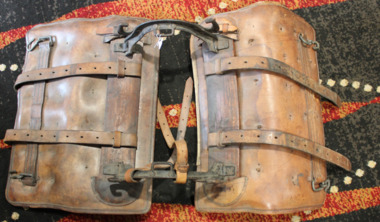 Dandenong/Cranbourne RSL Sub Branch
Memorabilia - Pack Saddle
... stores, tools and equipment, and also wounded men. The GS pack saddle was used in both world wars by both the British and Australian armies. The use of pack saddles was especially important in the campaign in Palestine during the First World War where wheeled transport was often not an option. Each machine gun carried by light horse units was transported on a pack saddle, and was accompanied by a second pack animal carrying spare ammunition...stores, tools and equipment, and also wounded men. The GS pack saddle was used in both world wars by both the British and Australian armies. The use of pack saddles was especially important in the campaign in Palestine during the First World War where wheeled transport was often not an option. Each machine gun carried by light horse units was transported on a pack saddle, and was accompanied by a second pack animal carrying spare ammunition ...Believed to have been made 1939/43. In 1904 the British Army adopted a new General Service (GS) pack saddle with an adjustable tree, known as the Mark V pack saddle. The main innovation was the adjustable tree created by having the front and back steel arches jointed to the wooden sidebars, which allowed them to turn to adjust to the size of the back of whatever animal carried the saddle, from the largest horse to the smallest donkey, and eliminated the need to manufacture saddles in different sizes. The saddle could be adapted, by the addition of hanging bars, or universal slats, to carry a wide variety of stores, tools and equipment, and also wounded men. The GS pack saddle was used in both world wars by both the British and Australian armies. The use of pack saddles was especially important in the campaign in Palestine during the First World War where wheeled transport was often not an option. Each machine gun carried by light horse units was transported on a pack saddle, and was accompanied by a second pack animal carrying spare ammunition. During the Second World War pack animals were routinely used by patrols, and larger units such as Norforce, in remote areas of northern Australia. The saddle shown here has two separate girths, which crossed under the animal's belly. Most later versions of the saddle used a shorter single girth buckled to a 'V' attachment, which was in turn buckled to the sidebars. Use of the 'V' attachment gave greater strength and stability to the saddle, and decreased 'rocking' of the load. -
 Bacchus Marsh & District Historical Society
Administrative record, Bacchus Marsh Prince of Wales Light Horse records March 1867- March 1877. Book 2
... Stores or supplies noted include shot and shell, saddle cloths, shoulder belts, bugles, leather, ammunition, uniforms and clothing details such as great coats and tunics and firearms such as rifles. ...Stores or supplies noted include shot and shell, saddle cloths, shoulder belts, bugles, leather, ammunition, uniforms and clothing details such as great coats and tunics and firearms such as rifles. ...A military unit of the Victorian Volunteer Colonial military forces was formed in Bacchus Marsh in 1860. The unit was commonly called the Bacchus Marsh Troop but was more formally known as the Bacchus Marsh Prince of Wales Light Horse.Foolscap size ledger book. Bound. Gold colored covers with rectangular red section on spine which has gold lettering inside it. The book is mainly a record of stores received by the Bacchus Marsh Light Horse Troop. Stores or supplies noted include shot and shell, saddle cloths, shoulder belts, bugles, leather, ammunition, uniforms and clothing details such as great coats and tunics and firearms such as rifles. Some pages contain details of specific firearms received such as Lancaster and Martini Henry rifles. Most entries relate to supplies received. Some pages contain specific supplies provided to each member of the troop who are individually listed by name and rank alongside their allotted supplies.'Stores Received' on spinearmed forces, bacchus marsh volunteer military troop, colonial military forces -
 Bacchus Marsh & District Historical Society
Administrative record, Bacchus Marsh Prince of Wales Light Horse records January 1867 - July 1876. Book 1
... Stores or supplies noted include shot and shell, saddle cloths, shoulder belts, bugles, leather, ammunition, uniforms and clothing details such as great coats and tunics and firearms such as rifles. ...Stores or supplies noted include shot and shell, saddle cloths, shoulder belts, bugles, leather, ammunition, uniforms and clothing details such as great coats and tunics and firearms such as rifles. ...A military unit of the Victorian Volunteer Colonial military forces was formed in Bacchus Marsh in 1860. The unit was commonly called the Bacchus Marsh Troop but was more formally known as the Bacchus Marsh Prince of Wales Light Horse.Foolscap size ledger book. Bound. Gold colored covers with rectangular red section on spine which has gold lettering inside it. The book is mainly a record of stores received by the Bacchus Marsh Light Horse Troop. Stores or supplies noted include shot and shell, saddle cloths, shoulder belts, bugles, leather, ammunition, uniforms and clothing details such as great coats and tunics and firearms such as rifles. Some pages contain details of specific firearms received such as Lancaster and Martini Henry rifles. Most entries relate to supplies received. Some pages contain specific supplies provided to each member of the troop who are individually listed by name and rank alongside their allotted supplies.'Stores Received' on spinearmed forces, bacchus marsh volunteer military troop, colonial military forces
