
Showing 75 items matching " ballerstedt's quartz mine"
-
 Bendigo Historical Society Inc.
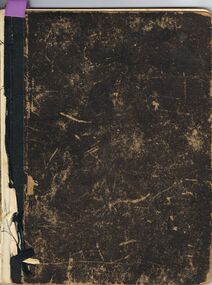
Book - GERMAN HERITAGE SOCIETY COLLECTION: ALBERT BOLDT'S DIARY
... ... Ballerstedt's Quartz Mine...BENDIGO Clubs bendigo heritage German Heritage Society Collection - Albert Boldt's Diary 'Bloomer' Grubenan Robert Grubmann Rudolph Grubmann Luffsman Dihmhad Neumann Ballerstedt's Quartz Mine Gluckmann Vahland Krohnke Dr Waldron Brauns Freitag Wunderlich Kraupe Droze Mr Cohn Loeventhel Barth Heinz Barth Brand Kirzeloig Baumbach Lost mates in the Whipstick Apr 12) Miller Buhle T Hommel Miron Heder Buhle Pohl Ohlbrecht Schulz Albert Boldt's Diary with black and buff cover with black tape spine. ...Albert Boldt's Diary with black and buff cover with black tape spine. Diary starts with his departure from Germany, his sea voyage, his march to the Bendigo Gold Diggings and his experiences of the first 16 months of his Australian life from 1854 - 55.bendigo, clubs, bendigo heritage, german heritage society collection - albert boldt's diary, 'bloomer', grubenan, robert grubmann, rudolph grubmann, luffsman, dihmhad, neumann, ballerstedt's quartz mine, gluckmann, vahland, krohnke, dr waldron, brauns, freitag, wunderlich, kraupe, droze, mr cohn, loeventhel, barth, heinz, barth, brand, kirzeloig, baumbach, lost mates in the whipstick apr 12), miller, buhle, t hommel, miron, heder, buhle, pohl, ohlbrecht, schulz -
 Bendigo Historical Society Inc.
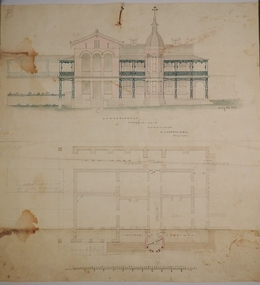
Plan - MARKS COLLECTION: PLAN GARDEN FRONT FORTUNA VILLA SANDHURST - G. LANSELL ESQ., JULY 3RD 1871
... Ballerstedt, Australia’s first mining magnates. In 1871 it was purchased by George Lansell (The Quartz King) being one of Australia’s most successful and adventurous nineteenth century gold mine owners and speculators. ...Ballerstedt, Australia’s first mining magnates. In 1871 it was purchased by George Lansell (The Quartz King) being one of Australia’s most successful and adventurous nineteenth century gold mine owners and speculators. ...Fortuna Villa was owned from 1855 to 1871 by Christopher and Theodore Ballerstedt, Australia’s first mining magnates. In 1871 it was purchased by George Lansell (The Quartz King) being one of Australia’s most successful and adventurous nineteenth century gold mine owners and speculators. Lansell made numerous alterations and extensions to the building and it remained in the Lansell family until 1935. Plan for construction of Fortuna Villa, Sandhurst Title: Garden Front, Fortuna Villa, Sandhurst for G. Lansell Esq. Dated: 3rd July 1871 Coloured plan and elevation Condition: water damage and paper tearsfortuna villa, george lansell, c & t ballerstedt, building plans -
 Bendigo Historical Society Inc.
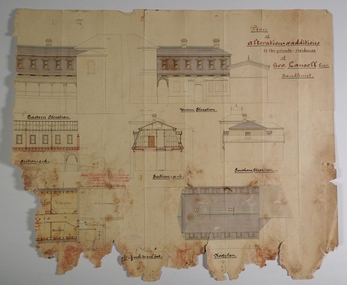
Plan - MARKS COLLECTION: PLAN OF ALTERATIONS AND ADDITIONS TO THE PRIVATE RESIDENCE OF GEO. LANSELL ESQR
... Ballerstedt, Australia’s first mining magnates. In 1871 it was purchased by George Lansell (The Quartz King) being one of Australia’s most successful and adventurous nineteenth century gold mine owners and speculators. ...Ballerstedt, Australia’s first mining magnates. In 1871 it was purchased by George Lansell (The Quartz King) being one of Australia’s most successful and adventurous nineteenth century gold mine owners and speculators. ...Fortuna Villa was owned from 1855 to 1871 by Christopher and Theodore Ballerstedt, Australia’s first mining magnates. In 1871 it was purchased by George Lansell (The Quartz King) being one of Australia’s most successful and adventurous nineteenth century gold mine owners and speculators. Lansell made numerous alterations and extensions to the building. It remained in the Lansell family until 1935Plan for the alteration and additions to Fortuna Villaa, the private residence of George Lansell Plan shows southern, eastern & western elevations, floor and roof plan for the additions to the residence Coloured hand drawn construction plan Plan is undated plan has severe damage on LHS and bottom of the sheetfortuna villa, george lansell, building plans, c & t ballerstedt -
 Bendigo Historical Society Inc.
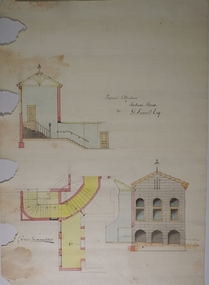
Plan - MARKS COLLECTION: PLAN FOR ADDITIONS TO FORTUNA VILLA FOR GEO. LANSELL ESQ. - STAIRCASE ADDITION
... Ballerstedt, Australia’s first mining magnates. In 1871 it was purchased by George Lansell (The Quartz King) being one of Australia’s most successful and adventurous nineteenth century gold mine owners and speculators. ...Ballerstedt, Australia’s first mining magnates. In 1871 it was purchased by George Lansell (The Quartz King) being one of Australia’s most successful and adventurous nineteenth century gold mine owners and speculators. ...Fortuna Villa was owned from 1855 to 1871 by Christopher and Theodore Ballerstedt, Australia’s first mining magnates. In 1871 it was purchased by George Lansell (The Quartz King) being one of Australia’s most successful and adventurous nineteenth century gold mine owners and speculators. Lansell made numerous alterations extensions to the building and remained in the Lansell family until 1935Plan for the addition and necessary modifications of a staircase to Fortuna Villa, the residence of George Lansell Esq. Coloured plan Plan is damaged missing several sections on the LHS of the plan and has water damage in lower LH cornerfortuna villa, lansell, stair case -
 Bendigo Historical Society Inc.
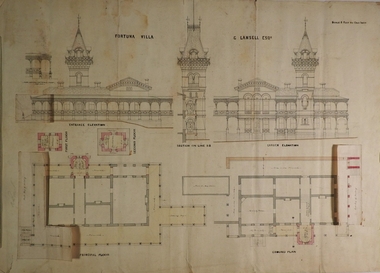
Plan - MARKS COLLECTION: PLAN FOR THE ADDITION OF A FOUR LEVEL STAIRCASE TOWER TO THE GARDEN ELEVATION OF FORTUNA VILLA FOR GEO. LANSELL ESQ
... Ballerstedt, Australia’s first mining magnates. In 1871 it was purchased by George Lansell (The Quartz King) being one of Australia’s most successful and adventurous nineteenth century gold mine owners and speculators. ...Ballerstedt, Australia’s first mining magnates. In 1871 it was purchased by George Lansell (The Quartz King) being one of Australia’s most successful and adventurous nineteenth century gold mine owners and speculators. ...Fortuna Villa was owned from 1855 to 1871 by Christopher and Theodore Ballerstedt, Australia’s first mining magnates. In 1871 it was purchased by George Lansell (The Quartz King) being one of Australia’s most successful and adventurous nineteenth century gold mine owners and speculators. Lansell made numerous alterations extensions to the building and remained in the Lansell family until 1935Plan for the addition of a four level staircase to the Garden Elevation of Fortuna Villa for George Lansell Esq. Plan shows: * Four levels of the staircase cobstructiob - Ground, Principal, First & Second levels of the staircase tower, with viewing walk at the second level * Entrance & garden elevations section showing exterior of the four level additionfortuna villa, george lansell, c & t ballerstedt, building plans -
 Bendigo Historical Society Inc.
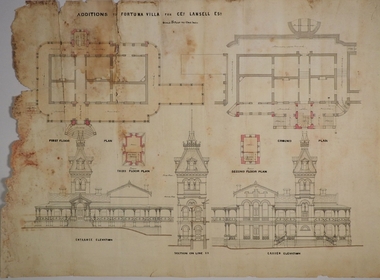
Plan - MARKS COLLECTION: PLAN FOR FOUR LEVEL STAIRCASE TOWER TO GARDEN ELEVATION AT FORTUINA VILLA FOR GEO. LANSELL ESQ
... Ballerstedt, Australia’s first mining magnates. In 1871 it was purchased by George Lansell (The Quartz King) being one of Australia’s most successful and adventurous nineteenth century gold mine owners and speculators. ...Ballerstedt, Australia’s first mining magnates. In 1871 it was purchased by George Lansell (The Quartz King) being one of Australia’s most successful and adventurous nineteenth century gold mine owners and speculators. ...Fortuna Villa was owned from 1855 to 1871 by Christopher and Theodore Ballerstedt, Australia’s first mining magnates. In 1871 it was purchased by George Lansell (The Quartz King) being one of Australia’s most successful and adventurous nineteenth century gold mine owners and speculators. Lansell made numerous alterations and extensions to the building and it remained in the Lansell family until 1935.Plan for four level staircase tower to the Garden Elevation of Fortuna Villa, Sandhurst for George Lansell Esq. Plan details: * Plan shows ground, First, second and third floor plans for the staircase construction * First and second floor house plans and location of staircase addition * Front and Garden elevations with staircase addition Plan coloured and damaged on LHS, also with water damagebendigo fortuna villa, george lansell, building plans, c & t ballerstedt -
 Bendigo Historical Society Inc.
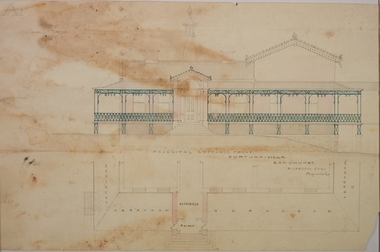
Plan - MARKS COLLECTION: PLAN FOR NEW ENTRANCE VESTIBULE TO FORTUNA VILLA FOR GEO. LANSELL ESQ
... Ballerstedt, Australia’s first mining magnates. In 1871 it was purchased by George Lansell (The Quartz King) being one of Australia’s most successful and adventurous nineteenth century gold mine owners and speculators. ...Ballerstedt, Australia’s first mining magnates. In 1871 it was purchased by George Lansell (The Quartz King) being one of Australia’s most successful and adventurous nineteenth century gold mine owners and speculators. ...Fortuna Villa was owned from 1855 to 1871 by Christopher and Theodore Ballerstedt, Australia’s first mining magnates. In 1871 it was purchased by George Lansell (The Quartz King) being one of Australia’s most successful and adventurous nineteenth century gold mine owners and speculators. Lansell made numerous alterations extensions to the building and remained in the Lansell family until 1935plan for new entrance vestibule to Fortuna Villa for George Lansell Esq. coloured plan detailing new entrance vestibule and open recess across the verandah, and entry steps RHS of page damaged/ tornfortuna villa, geo.lansell esq., building plan, c & t ballerstedt -
 Bendigo Historical Society Inc.
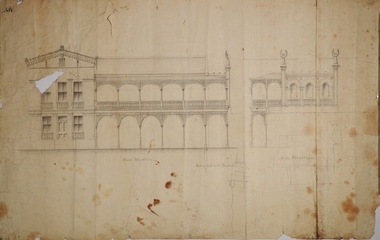
Plan - MARKS COLLECTION: PLAN FOR TWO STOREY OPEN VERANDAH ADDITION TO FRONT AND SIDE ELEVATIONS TO FOTUNA VILLA FOR GEO. LANSELL ESQ
... Ballerstedt, Australia’s first mining magnates. In 1871 it was purchased by George Lansell (The Quartz King) being one of Australia’s most successful and adventurous nineteenth century gold mine owners and speculators. ...Ballerstedt, Australia’s first mining magnates. In 1871 it was purchased by George Lansell (The Quartz King) being one of Australia’s most successful and adventurous nineteenth century gold mine owners and speculators. ...Fortuna Villa was owned from 1855 to 1871 by Christopher and Theodore Ballerstedt, Australia’s first mining magnates. In 1871 it was purchased by George Lansell (The Quartz King) being one of Australia’s most successful and adventurous nineteenth century gold mine owners and speculators. Lansell made numerous alterations extensions to the building and remained in the Lansell family until 1935Plan shows front and side elevations only for the addition of a two storey lacework verandah to Fortuna Villa for George Lansell Esq. Black ink hand drawn plan for verandah elevations Plan badly damaged with water damage, flocking, tears and a hole in the paper plan. Hand drawn additions to the plan with pencilbendigo fortuna villa, george lansell -
 Bendigo Historical Society Inc.
Plan - Victoria Quartz Gold Mine
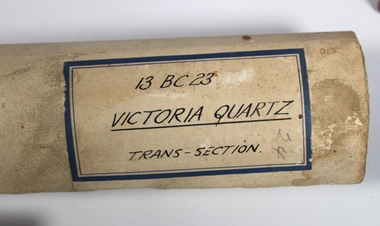
... mine supplied the initial wealth that made Lansell Bendigo's 'Quartz King'. George Lansell was such a force in Bendigo's mining history that his death was cited as one of the reasons for the decline of Bendigo as a quartz mining centre, The Victoria Hill Quartz Gold Mines are of historical, archaeological and scientific importance to the State of Victoria. The Victoria Hill Quartz Gold Mines are historically significant as the symbolic heart of Bendigo's famous goldfield. The mines are linked to nineteenth-century individuals (Christopher Ballerstedt...mine supplied the initial wealth that made Lansell Bendigo's 'Quartz King'. George Lansell was such a force in Bendigo's mining history that his death was cited as one of the reasons for the decline of Bendigo as a quartz mining centre, The Victoria Hill Quartz Gold Mines are of historical, archaeological and scientific importance to the State of Victoria. The Victoria Hill Quartz Gold Mines are historically significant as the symbolic heart of Bendigo's famous goldfield. The mines are linked to nineteenth-century individuals (Christopher Ballerstedt ...The Victoria Quartz Gold Mine was situated on Victoria Hill, Ironbark, (1877 - 1913). At the turn of the century, this was the site of one of the premier mines on the Bendigo goldfield. In 1908, it boasted the world's deepest shaft - 4,478 feet (1,365 metres). The shaft reached a depth of 4,613 feet (1,406 metres) in 1910. In 1857 eight small claims in this area had been merged to form the Victoria Reef Quartz Mining Co. Another merger in 1877 led to the formation of the Victoria Quartz Co. For the next three decades, the mine produced consistent profits. In 1910, water burst into the claim, flooding the shaft and halting operations. The company baled water for six months then handed the mine over to the tributers who worked the upper levels for the share of the profits. The mine closed in 1913, having produced over 48,000 ounces of gold and paid dividends of £99,600. (Source, Goldfield Guide https://www.goldfieldsguide.com.au/explore-location/400/victoria-hill-mining-reserve/) Victorian Heritage Register information on mine: Statement of Significance Last updated on - July 14, 2005 The story of quartz mining on Victoria Hill lies at the heart of Bendigo's historical status as the world's richest and deepest reefing field. Gold was discovered on Victoria Hill in 1854, and by early 1855 claims had been taken up over its entire extent. Shafts were first worked by windlass, whip or whim, and primitive crushing batteries were in operation. By 1861, Victoria Hill had yielded at least 1,200,000oz in gold. One of the early claims on Victoria Hill was owned by Prussian immigrants, Christopher Ballerstedt and his son Theodore. In 1854, they bought a claim on the hill for £80, to which they subsequently added other claims, and from the quartz veins (called spurs), worked both by shafts and a large open cut, obtained gold worth nearly £200,000. Christopher Ballerstedt was dubbed 'Father of the Hill' and has been credited as the first to debunk the theory at that time prevalent on the Bendigo field, that the gold content of reefs would diminish at depth. As his shafts plunged below the 200-foot level, the quartz remained rich in gold. His success inspired others, and so led the way to Bendigo's later status as the world's deepest and richest goldfield. The Ballerstedt's built Bendigo's grandest mansion, Fortuna. Theodore continued to work Victoria Hill after his father's death, but in 1871, convinced that his claim was exhausted, he sold both mine and mansion to George Lansell for £60,000. Lansell's mine on Victoria Hill was called the 180, and operated under his ownership until his death in 1906. The mine supplied the initial wealth that made Lansell Bendigo's 'Quartz King'. George Lansell was such a force in Bendigo's mining history that his death was cited as one of the reasons for the decline of Bendigo as a quartz mining centre, The Victoria Hill Quartz Gold Mines are of historical, archaeological and scientific importance to the State of Victoria. The Victoria Hill Quartz Gold Mines are historically significant as the symbolic heart of Bendigo's famous goldfield. The mines are linked to nineteenth-century individuals (Christopher Ballerstedt and George Lansell) who played prominent roles in the evolution of Bendigo. Both men's fortunes and their influence on Bendigo, originated from mining operations carried out on the hill. The Victoria Hill Quartz Gold Mines are historically and scientifically important as characteristic examples of an important form of gold mining. Gold mining sites are of crucial importance for the pivotal role they have played since 1851 in the development of Victoria. As well as being a significant producer of Victoria's nineteenth century wealth, quartz mining, with its intensive reliance on machinery, played an important role in the development of Victorian manufacturing industry. The Victoria Hill Quartz Gold Mines are important as a manifestation of this aspect of gold mining. The Victoria Hill Quartz Gold Mines are scientifically important, as they contain relics span nearly sixty years of mining (1854 to 1913), documenting the richest and most significant years of Bendigo's world-famous quartz mining industry. Enhancing the significance of the place are relics from the Victoria Quartz Company operations, ncluding, at 4,870 feet, the world's deepest nineteenth-century gold mining shaft. As a postscript to the chronology of gold mining is the surviving crushing machinery (formerly part of the Bendigo Crushing Works) which was erected near the foundations of Lansell's 180 mine in 1932, to crush quartz for nearby mines. The place has a potential to yield artefacts and evidence which will be able to provide significant information about the technological history of gold mining. [Source: Victorian Heritage Register] Hermes Number 8506 https://vhd.heritagecouncil.vic.gov.au/index.php/places/8506/download-report Hand drawn plan of the bottom section of the Victoria Quartz Gold Mine. Mine shaft shown from 2706 feet to 5200 (potential) feet shown, with annotation regarding geological features and gold obtained from different level crushings. Blue border sticker on outside of plan: '13 BC 23 Victoria Quartz Trans-Section'. Plan is not dated. The Victoria Quartz plan is part of the Margaret Roberts Collection.victoria hill quartz gold mine, victoria hill -
 Bendigo Historical Society Inc.
Document - National Trust Collection: Fortuna Bendigo, 20/10/2008
... Ballerstedt family in the 1860s, it was purchased and expanded in the 1870s by George Lansell, who was to become one of Australia's wealthiest men. Fortuna villa and gardens were once occupied and cared for by the Australia Army Survey Regiments since 1942 for over thirty years. The tour guide informs us that Fortuna Villa was originally a modest two-story villa, acquired by George Lansell in 1871 along with the 180 Mine for £230,000.Lansell, known as the "Quartz...Ballerstedt family in the 1860s, it was purchased and expanded in the 1870s by George Lansell, who was to become one of Australia's wealthiest men. Fortuna villa and gardens were once occupied and cared for by the Australia Army Survey Regiments since 1942 for over thirty years. The tour guide informs us that Fortuna Villa was originally a modest two-story villa, acquired by George Lansell in 1871 along with the 180 Mine for £230,000.Lansell, known as the "Quartz ...The Fortuna Villa is an expansive Victorian mansion built entirely on the profits of Bendigo's lucrative gold reefs. Established by the wealthy Ballerstedt family in the 1860s, it was purchased and expanded in the 1870s by George Lansell, who was to become one of Australia's wealthiest men. Fortuna villa and gardens were once occupied and cared for by the Australia Army Survey Regiments since 1942 for over thirty years. The tour guide informs us that Fortuna Villa was originally a modest two-story villa, acquired by George Lansell in 1871 along with the 180 Mine for £230,000.Lansell, known as the "Quartz King," made his fortune through deep reef gold mining in Bendigo, particularly with the New Chum Reef and other successful mines. The villa and its grounds expanded significantly as Lansell's wealth grew, incorporating architectural features inspired by his travels. The mansion is built over the New Chum Reef, with its lower floor penetrating the reef, resulting in three floors at the rear and two at the front.Notable features include the Italian water garden, tiered lakes (originally mine settling ponds), elaborate interiors (parquet floors, stained glass, marble baths), and a tunnel used for gold transport. The building underwent several phases of construction, including a reversal of its main entrance and the addition of a cupola stairwell and conservatory. Fortuna Villa hosted many notable guests, including governors and possibly the Prince of Wales.The house was lavishly furnished and decorated, reflecting Lansell's wealth and status. After Lansell's death in 1906, the villa remained in the family until 1934, then was sold and briefly used as a reception house. The property fell into disrepair before being leased by the Army in 1942 for wartime mapping and later purchased by the Commonwealth Government.It became the headquarters for the Army Survey Regiment, with parts of the building repurposed for administrative and mapping functions until the 1980s.Classification Report and Notes on the history of Fortuna from the National Trust to the Bendigo Council 20th October 2008. This item contains the following documents: 3084.46a Tourist brochure for Fortuna; 16 pages - it includes photographs and detailed history of George Lansell's involvement in the property and his mining history. 3084.45b Fortuna Bendigo re Clasification by the National Trust Detailed Letter to the Bendigo Council in 2008 contains an excellent 11 page summary of its history.history, national trust bendigo collection, bendigo, fortuna, george lansell, mining -
 Bendigo Historical Society Inc.
Document - VICTORIA REEF GOLD MINES COMPANY BENDIGO PLAN
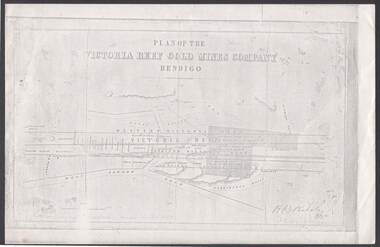
... Mines Company Lease No. 2 and Lease No. 3. The gullies are named Happy Valley, Long, Derwent, Providence and Ironbark Gullies. The reefs are: Western Victoria, Victoria, Eastern Victoria and Prince Albert Reef. Between the Eastern Victoria Reef and the Prince Albert Reef is the White Lead. Mount Korong Road is at the bottom of the plan. Other Leaseholders are: Burrows, Wybrant, Ballerstedt, Jackson,Roberts & Co, Ashley, Grant, ?rpe, ?eau, Woodward, Coath, Taylor, Cranshaw, Roberts, Gould & Co, Midway, Witscheibe, Endeavour Co, Albert Co, Ballerstedt & Son, Late Iron Bark Quartz...PLAN Bendigo victoria reef gold mines company Victoria Reef Gold Mines Company Bendigo - Plan H B Nicholas Burrows Wybrant Ballerstedt Jackson Roberts & Co Ashley Grant ?rpe ?eau Woodward Coath Taylor Cra-shaw Roberts Gou-d & Co Midway Witscheibe Endeavour Co Albert Co Ballerstedt & Son Late Iron Bark Quartz Mining Co McDougall Specimen Hill Co Hyo? ...Photocopy of a Plan of the Victoria Reef Gold Mines Company, Bendigo. Shaded area is the Victoria Reef Gold Mines Company Lease No. 2 and Lease No. 3. The gullies are named Happy Valley, Long, Derwent, Providence and Ironbark Gullies. The reefs are: Western Victoria, Victoria, Eastern Victoria and Prince Albert Reef. Between the Eastern Victoria Reef and the Prince Albert Reef is the White Lead. Mount Korong Road is at the bottom of the plan. Other Leaseholders are: Burrows, Wybrant, Ballerstedt, Jackson,Roberts & Co, Ashley, Grant, ?rpe, ?eau, Woodward, Coath, Taylor, Cranshaw, Roberts, Gould & Co, Midway, Witscheibe, Endeavour Co, Albert Co, Ballerstedt & Son, Late Iron Bark Quartz Mining Co, McDougall, Specimen Hill Co, Hygrect?, Wheadon, Evans and Bannerman. Signed by H. B. Nicholas. Location of Ballerstedt, Luffsman, Midway Co, Witscheibe and Rae & Co engine locations. Hills are shown as hatch shading. Written at the bottom left ocrner is: Accompanying prospectus issued in Nov. 1859. Signed H.B. Nicholas.plan, bendigo, victoria reef gold mines company, victoria reef gold mines company bendigo - plan, h b nicholas, burrows, wybrant, ballerstedt, jackson, roberts & co, ashley, grant, ?rpe, ?eau, woodward, coath, taylor, cra-shaw, roberts, gou-d & co, midway, witscheibe, endeavour co, albert co, ballerstedt & son, late iron bark quartz mining co, mcdougall, specimen hill co, hyo?, wheadon, evans, bannerman. -
 Bendigo Historical Society Inc.
Newspaper - Fortuna Article - "Fortuna Opens its Doors", Mar 30 1996
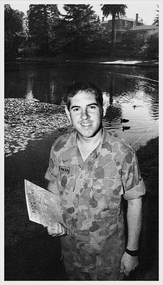
... Fortuna is a 140-year-old house with deep ties to Bendigo's history.Originally owned by Christopher and Theodore Ballerstedt (1855–1871), it is most famously associated with the Lansell family, particularly George Lansell, a prominent gold mine owner known as the "Quartz King." ...Fortuna is a 140-year-old house with deep ties to Bendigo's history.Originally owned by Christopher and Theodore Ballerstedt (1855–1871), it is most famously associated with the Lansell family, particularly George Lansell, a prominent gold mine owner known as the "Quartz King." ...Despite a report suggesting otherwise, tours of the historic Fortuna house in Bendigo will not cease when the Army Topographic Support Establishment (ATSE) takes over from the Army Survey Regiment. Both Army representatives and ATSE management confirm that public access and tours will remain unchanged. A mistaken news story led to a surge in tour attendance, with numbers tripling as people rushed to visit before the supposed closure. Recent tours have seen up to 70 visitors, including interstate travelers and descendants of the Lansell family. Fortuna is a 140-year-old house with deep ties to Bendigo's history.Originally owned by Christopher and Theodore Ballerstedt (1855–1871), it is most famously associated with the Lansell family, particularly George Lansell, a prominent gold mine owner known as the "Quartz King." The Army initiated tours 20 years ago to connect with the local community and showcase the building and the regiment's work.The tours provide an opportunity for the public to interact with soldiers and learn about their activities. After the death of George Lansell's wife, a symbolic procession with an empty coffin protested poor mine ventilation and miners' health conditions, highlighting social issues of the time.The document shares anecdotes from tours, such as Lansell's purchase of goats from local children, illustrating his character and the community's relationship with him. The homestead includes notable features like a grand entrance hall, glassroom, main staircase, Pompeii fountain, and a Roman bath.The house is known for its eclectic Victorian architecture, with many styles incorporated based on Lansell's preferences. Guided tours cover the complete history of Fortuna Villa and the Lansell family, lasting about three and a half hours on Sundays.Bookings are available by phone.Recent Military UpdatesThe Army will remain at the Fortuna site, though the military side will move out and soldiers will be reassigned or enter the workforce.Fortuna Restoration Article - "Fortuna Opens its Doors" - Bendigo Advertiser Sat Mar 30 1996 - Author Nicole Ferrie This item contains the following: 11217.2a Black and White Photo of one of the tour guides - Lance Cpl Richard Arman in the Fortuna Gardens 11217.2b Black and White Photo of one of the tour guides - Lance Cpl Richard Arman on the balcony 11217.2c Part of page 2 - Fortuna Open its Doors 11217.2d Part of page 2 - Fortuna Open its Doorsnon-fictionbendigo, fortuna, army tropographic support establishment -
Bendigo Historical Society Inc.
Document - Fortuna Article - History Notes - Author Unknown, 1990s
... Christopher Ballerstedt began systematic mining on Victoria Reef in 1855, helping to prove that gold yields could remain high at greater depths. George Lansell was Known as "The Quartz King," Lansell became one of Australia's most successful gold mine owners and speculators, significantly influencing the region's mining industry from 1871 to 1935. ...Christopher Ballerstedt began systematic mining on Victoria Reef in 1855, helping to prove that gold yields could remain high at greater depths. George Lansell was Known as "The Quartz King," Lansell became one of Australia's most successful gold mine owners and speculators, significantly influencing the region's mining industry from 1871 to 1935. ...This document provides a historical overview of the Fortuna property and the Bendigo goldfields, focusing on key figures and developments from the 1850s to the early 20th century: Christopher and Theodore Ballerstedt were early mining magnates who arrived in Bendigo after the California Gold Rush. Christopher Ballerstedt began systematic mining on Victoria Reef in 1855, helping to prove that gold yields could remain high at greater depths. George Lansell was Known as "The Quartz King," Lansell became one of Australia's most successful gold mine owners and speculators, significantly influencing the region's mining industry from 1871 to 1935. Gold was discovered in Bendigo in 1851, transforming the area from grazing land to a bustling mining hub. The initial gold rush led to rapid population growth and the establishment of government infrastructure, with Sandhurst (now Bendigo) developing as the main township. Early mining focused on alluvial gold, but as surface deposits declined by 1856, attention shifted to quartz reef mining.Victoria Reef, discovered in 1854, became the first and one of the most important quartz reefs in the area. Technological advancements, such as steam crushing plants and stem winding equipment, enabled deeper mining and increased yields, leading to the formation of mining companies by 1857. The property is notable for its association with both the Ballerstedt and Lansell families, reflecting the broader history of gold mining innovation and entrepreneurship in Bendigo. Maud Nott's husband was an investor. They had plans to develop the Ball Room at Fortuna but this did not eventuate.Fortuna Article - Handout Notes for a Tour, by the Australian Government Department of defence support group This item contains the following document: 11217.62a Nine pages of notes on: George and Edith Lansells, "The Quartz King", Bendigo Mines, Maude Nott, and the Army Survey Regiment.non-fictionbendigo, fortuna, george lansell, edith lansell, maud nott -
 Bendigo Historical Society Inc.
Photograph - Fortuna Articles - Photo of George Lansell's residence in England, 1881-1887
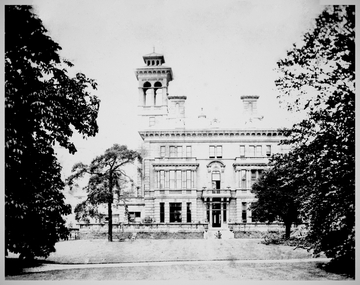
... Quartz King of Bendigo. He soon became a millionaire. For a time, he may have been the richest man in the world. In 1871 Lansell purchased the Ballerstedt mines, equipment, machinery and mansion from the now deceased Christopher’s son, for 30,000 pounds. ...Quartz King of Bendigo. He soon became a millionaire. For a time, he may have been the richest man in the world. In 1871 Lansell purchased the Ballerstedt mines, equipment, machinery and mansion from the now deceased Christopher’s son, for 30,000 pounds. ...George Lansell was persuaded to begin investing in the newly forming mining companies of Bendigo, from 1855. His first investments failed, he lost money, and refocused on his original businesses. In 1865 George re-entered mining and with substantial investment was able to dictate the mining practices of his companies. His approach, of mining ever deeper than had been reached before, was so successful that he became known as the Quartz King of Bendigo. He soon became a millionaire. For a time, he may have been the richest man in the world. In 1871 Lansell purchased the Ballerstedt mines, equipment, machinery and mansion from the now deceased Christopher’s son, for 30,000 pounds. Although this was a large sum for the times, it demonstrated Lansell’s sound judgement: under his direction, the 180 Mine was extended down to over 3000 feet, becoming the deepest mine in the southern hemisphere at the time. By 1889, it was estimated that Ballerstadt and Lansell, over the time of the mine’s operation, had taken out at least a million pounds worth of gold from it. Mr. Lansell returned to England in about 1882 and took up his residence in Surrey, just across the river from London. There, when in his sixtieth year, he married Miss Edith Bassford, who was of English birth, but who was reared in Bendigo, where he first met her and her family. After a residence of seven years in Surrey Mr. Lansell and family returned to Bendigo, having been requested to do so by many leading citizens, who felt that it needed his presence and energy to keep mining in quartzopolis on the up grade. He was heartily welcomed by them on his return. Since then he has lived a quiet, uneventful life at his beautiful residence, "Fortuna." George Lansell travelled extensively, from the 1870’s, and extended his Fortuna Villa residence greatly, embellishing it as his fancy was inspired by his travels. Likewise it was filled with unusual items acquired on those travels. The surrounds did not miss out, being extensively landscaped and developed with features like ornamental lakes, a classical fountain, enclosed Roman style baths.Fortuna Articles - Photo of George Lansell's residence in England This item contains the following document: 11217.66a Black and white Photo Print of George Lansell's residence in England 10 x 8 inches, on rear of photo is written "George Lansell's Residence in England between 1881 and 1887 11217.66b Black and white Negative of George Lansell's residence in England 10 x 8 inches - Contact BHS for detailsnon-fictionbendigo, fortuna, george lansell, edith lansell, edith bassford -
Bendigo Historical Society Inc.
Document - Fortuna - Health, Reports and Risk Assessments of the Site, 2008
... In 1871 Theodore Ballerstedt sold the house, mine and associated works to George Lansell 'The Quartz King'. ...In 1871 Theodore Ballerstedt sold the house, mine and associated works to George Lansell 'The Quartz King'. ...Theodore Ballerstedt originally purchased the Fortuna site from the Crown in 1857. The firstimprovements at Fortuna were undertaken by the Ballerstedt family and consisted of a small mill and house. At the peak of the mining era (c.1860s) Fortuna was central to the deep alluvial gold mining operations of Bendigo. In 1871 Theodore Ballerstedt sold the house, mine and associated works to George Lansell 'The Quartz King'. During his time at Fortuna, Lansell owned 13 mines and directed a further 73 in Bendigo. The primary building on the site is the Fortuna Villa. With the wealth Lansell generated from gold mining he funded the continuous expansion of the Villa and surrounding grounds. The Villa is built in a number of architectural styles, namely Victorian Italianate and Victorian Free Classical, with Federation influences. The surrounding landscape featured up to seven decorative lakes in the early 1870s, including one larger lake which still remains today. The former lakes were originally used as disposal points for tailings produced in the gold processing activities at the site. Fortuna was occupied by the Department of Defence from 1942 and was compulsorily acquired for Army use in 1957. Since that time Fortuna has been occupied by the Army and other various Defence organisations. During Defence's ownership, additional buildings were constructed and existing buildings were modified for re-use. In 1992 Defence purchased the adjoining undeveloped property, commonly known as the Bush Block. This parcel of land adjoins the main Fortuna landholding. It is approximately 0.8 hectares in size and is predominately covered in vegetation regrowth. Heritage investigations note that the uniqueness of Fortuna lies in the mixture of architectural styles of the Villa. The relationship between mining and domestic areas and the. close proximity of the two is considered rare to Australian domestic building of that time.Fortuna - Health, Reports and Risk Assessments of the Site This item contains the following documents: 11217.75a Fortuna Defense Site - Health Risk Assessment Final Report - 50 pages and appendices A to M - Contact the BHS for details 11217.75b Fortuna Defense Site - Structural inspection and report on various buildings, Department of Defence, Fortuna Site, 30 Chum Street Bendigo - Contact the BHS for details 11217.75c Fortuna Defense Site - Department of Defence Summary Report on Property Disposals Bendigo - Contact the BHS for details 11217.75d Fortuna Defense Site - Department of Defence Report on unexploded ordnance - Contact the BHS for details 11217.75e Fortuna Defense Site - Department of Defence Phase 1 Summary Report on Property Disposals Bendigo - Contact the BHS for details 11217.75f Fortuna Defense Site - Health Risk Assessment Final Report - 50 pages and appendices A to M - Contact the BHS for details 11217.75g Fortuna Defense Site - Environmental Site Assessment - Contact the BHS for detailsnon-fictionbendigo, fortuna, george lansell -
 Bendigo Historical Society Inc.
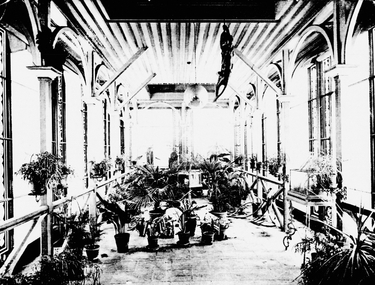
Photograph - Fortuna - Photos (Photo-copies) of Furnished Rooms, Abt 1900
... In 1871 Theodore Ballerstedt sold the house, mine and associated works to George Lansell 'The Quartz King'. ...In 1871 Theodore Ballerstedt sold the house, mine and associated works to George Lansell 'The Quartz King'. ...Theodore Ballerstedt originally purchased the Fortuna site from the Crown in 1857. The firstimprovements at Fortuna were undertaken by the Ballerstedt family and consisted of a small mill and house. At the peak of the mining era (c.1860s) Fortuna was central to the deep alluvial gold mining operations of Bendigo. In 1871 Theodore Ballerstedt sold the house, mine and associated works to George Lansell 'The Quartz King'. During his time at Fortuna, Lansell owned 13 mines and directed a further 73 in Bendigo. The primary building on the site is the Fortuna Villa. With the wealth Lansell generated from gold mining he funded the continuous expansion of the Villa and surrounding grounds. The Villa is built in a number of architectural styles, namely Victorian Italianate and Victorian Free Classical, with Federation influences. The surrounding landscape featured up to seven decorative lakes in the early 1870s, including one larger lake which still remains today. The former lakes were originally used as disposal points for tailings produced in the gold processing activities at the site. Heritage investigations note that the uniqueness of Fortuna lies in the mixture of architectural styles of the Villa. The relationship between mining and domestic areas and the. close proximity of the two is considered rare to Australian domestic building of that time.Fortuna - Photos (Photo-copies) of Furnished Rooms This item contains the following 12 documents: 11217.76a Black and White photo of the Gymnasium, a man standing between the horizontal bars and another behind sitting on the exercise bench 11217.76b Black and White photo of a living room with chairs and small table 11217.76c Black and White photo of the conservatory with pot plants 11217.76d Black and White photo of a music room with piano, chairs and a coffee table 11217.76e Black and White photo of a bedroom with sofa, chair and iron framed bed 11217.76f Black and White photo of the games room complete with Billiard Table 11217.76g Black and White photo of the living room, the walls adorned with painting and photographs 11217.76h Black and White photo of the family bedroom, with a child's bed and a large four-poseter with curtains 11217.76i Black and White photo of possibly the function or ballroom 11217.76j Black and White photo of a small room or elcove for quiet conversations 11217.76k Black and White photo of the staircase and statue 11217.76l Black and White photo of the conservatorynon-fictionbendigo, fortuna, george lansell, fortuna furnishings -
 Bendigo Historical Society Inc.
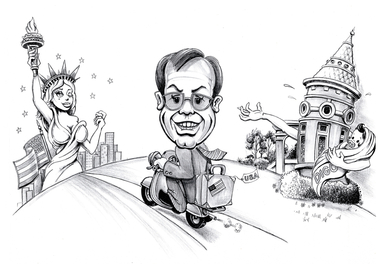
Drawing - Fortuna - Drawing Presented to Brian McLachlon, abt 2000
... In 1871 Theodore Ballerstedt sold the house, mine and associated works to George Lansell 'The Quartz King'. ...In 1871 Theodore Ballerstedt sold the house, mine and associated works to George Lansell 'The Quartz King'. ...Theodore Ballerstedt originally purchased the Fortuna site from the Crown in 1857. The firstimprovements at Fortuna were undertaken by the Ballerstedt family and consisted of a small mill and house. At the peak of the mining era (c.1860s) Fortuna was central to the deep alluvial gold mining operations of Bendigo. In 1871 Theodore Ballerstedt sold the house, mine and associated works to George Lansell 'The Quartz King'. During his time at Fortuna, Lansell owned 13 mines and directed a further 73 in Bendigo. Fortuna was occupied by the Department of Defence from 1942 and was compulsorily acquired for Army use in 1957. Since that time Fortuna has been occupied by the Army and other various Defence organisations. During Defence's ownership, additional buildings were constructed and existing buildings were modified for re-use. In 1992 Defence purchased the adjoining undeveloped property, commonly known as the Bush Block. This parcel of land adjoins the main Fortuna landholding. It is approximately 0.8 hectares in size and is predominately covered in vegetation regrowth. Heritage investigations note that the uniqueness of Fortuna lies in the mixture of architectural styles of the Villa. The relationship between mining and domestic areas and the. close proximity of the two is considered rare to Australian domestic building of that time. The primary building on the site is the Fortuna Villa. With the wealth Lansell generated from gold mining he funded the continuous expansion of the Villa and surrounding grounds. The Villa is built in a number of architectural styles, namely Victorian Italianate and Victorian Free Classical, with Federation influences. The surrounding landscape featured up to seven decorative lakes in the early 1870s, including one larger lake which still remains today. The former lakes were originally used as disposal points for tailings produced in the gold processing activities at the site. Heritage investigations note that the uniqueness of Fortuna lies in the mixture of architectural styles of the Villa. The relationship between mining and domestic areas and the. close proximity of the two is considered rare to Australian domestic building of that time.Fortuna - Drawing Presented to Brian McLachlon This item contains the following documents: 11217.77a Six copies Black and White drawing by Jason Nickson (cleaner) presented to Brian McLachlon on his transfer to the USA. Drawing shows Brian on a motor bike being farewelled by the Fortuna Villa (holding a baby named DIGO) and welcomed by the Statue of Liberty and the US flagnon-fictionbendigo, fortuna, george lansell, jason nickson fortuna cleaner, brian mclochlon fortuna -
Bendigo Historical Society Inc.
Plan - Fortuna - Survey Unit Layouts, April 1982
... In 1871 Theodore Ballerstedt sold the house, mine and associated works to George Lansell 'The Quartz King'. ...In 1871 Theodore Ballerstedt sold the house, mine and associated works to George Lansell 'The Quartz King'. ...Theodore Ballerstedt originally purchased the Fortuna site from the Crown in 1857. The firstimprovements at Fortuna were undertaken by the Ballerstedt family and consisted of a small mill and house. At the peak of the mining era (c.1860s) Fortuna was central to the deep alluvial gold mining operations of Bendigo. In 1871 Theodore Ballerstedt sold the house, mine and associated works to George Lansell 'The Quartz King'. During his time at Fortuna, Lansell owned 13 mines and directed a further 73 in Bendigo. Fortuna was occupied by the Department of Defence from 1942 and was compulsorily acquired for Army use in 1957. Since that time Fortuna has been occupied by the Army and other various Defence organisations. During Defence's ownership, additional buildings were constructed and existing buildings were modified for re-use. In 1992 Defence purchased the adjoining undeveloped property, commonly known as the Bush Block. This parcel of land adjoins the main Fortuna landholding. It is approximately 0.8 hectares in size and is predominately covered in vegetation regrowth. Heritage investigations note that the uniqueness of Fortuna lies in the mixture of architectural styles of the Villa. The relationship between mining and domestic areas and the. close proximity of the two is considered rare to Australian domestic building of that time. The primary building on the site is the Fortuna Villa. With the wealth Lansell generated from gold mining he funded the continuous expansion of the Villa and surrounding grounds. The Villa is built in a number of architectural styles, namely Victorian Italianate and Victorian Free Classical, with Federation influences. The surrounding landscape featured up to seven decorative lakes in the early 1870s, including one larger lake which still remains today. The former lakes were originally used as disposal points for tailings produced in the gold processing activities at the site. Heritage investigations note that the uniqueness of Fortuna lies in the mixture of architectural styles of the Villa. The relationship between mining and domestic areas and the. close proximity of the two is considered rare to Australian domestic building of that time.Fortuna - Survey Unit Layouts This item contains the following documents: 11217.84a Layout of workspace and equipment used by the Army Survey Group 11217.84b Layout of workspace and equipment used by the Army Survey Group 11217.84c Layout of workspace and equipment used by the Army Survey Groupnon-fictionbendigo, fortuna, george lansell -
 Bendigo Historical Society Inc.
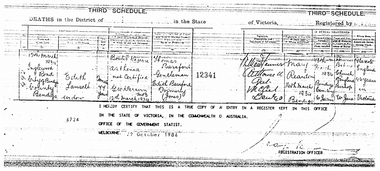
Certificate - Fortuna - Death Certificate of Edith Lansell, 12 March 1934
... In 1871 Theodore Ballerstedt sold the house, mine and associated works to George Lansell 'The Quartz King'. ...In 1871 Theodore Ballerstedt sold the house, mine and associated works to George Lansell 'The Quartz King'. ...Theodore Ballerstedt originally purchased the Fortuna site from the Crown in 1857. The firstimprovements at Fortuna were undertaken by the Ballerstedt family and consisted of a small mill and house. At the peak of the mining era (c.1860s) Fortuna was central to the deep alluvial gold mining operations of Bendigo. In 1871 Theodore Ballerstedt sold the house, mine and associated works to George Lansell 'The Quartz King'. During his time at Fortuna, Lansell owned 13 mines and directed a further 73 in Bendigo. Edith was George Lansell’s second wife. His first wife Bedelia was once George’s maid who later fell in love with him. However Bedelia could not handle the wealth, dignitaries or the pressure of George’s success and turned to the bottle which lead to her untimely death. Lansell's first marriage to Bedelia Mary Mulganney was troubled, marked by her alcoholism and early death, with her will contested by Lansell despite its modest value. Bedelia's death was lonely, with her death registered by an undertaker's assistant rather than family. Edith Lansell (née Bassford)Edith, from a respectable but financially struggling family, became Lansell's housekeeper and later his wife. Their relationship began before marriage, with Edith giving birth to their son shortly after their wedding. Lansell was significantly older than Edith, and their union was met with mixed reactions from family and the public. Edith was a strong woman, who raised six children and managed George’s affairs with great success after his death. Fortuna - Death Certificate of Edith Lansell This item contains the following documents: 11217.85a Part of Photo copy of The Death Certificate of Edith Lansell is from the State of Victoria. Edith, a widow lived in Inglewood Road, City of Bendigo. She died on March 12th 1934. She had lived for 46 years in Victoria. 11217.85b Part of Photo copy of The Death Certificate of Edith Lansell is from the State of Victoria. Edith, a widow lived in Inglewood Road, City of Bendigo. She died on March 12th 1934. She had lived for 46 years in Victoria.non-fictionbendigo, fortuna, george lansell, edith lansell, edith bassford -
Bendigo Historical Society Inc.
Certificate - Fortuna - Memorial of Conveyance, 6th May 1870
... Ballerstedt (a German migrant who arrived during the 1849 California gold rush) settled in Bendigo in 1855. He managed significant mining claims on the Victoria Reef and built a modest home on the site that would later become Fortuna Villa. Christopher and his son Theodore were among the first to prove that deep underground quartz reefs could yield massive amounts of gold. George Lansell, famously known as the "Quartz King of Bendigo," purchased the Ballerstedt mines...Ballerstedt (a German migrant who arrived during the 1849 California gold rush) settled in Bendigo in 1855. He managed significant mining claims on the Victoria Reef and built a modest home on the site that would later become Fortuna Villa. Christopher and his son Theodore were among the first to prove that deep underground quartz reefs could yield massive amounts of gold. George Lansell, famously known as the "Quartz King of Bendigo," purchased the Ballerstedt mines ...A Memorial of Conveyance is a historical legal document or deed summary used to prove property ownership under the pre-Torrens General Law system. It recorded transactions like sales, mortgages, or transfers of land, providing an official record of the chain of ownership. The Ballerstedt and Lansell names are the foundation of Bendigo’s gold rush history, intrinsically linked to the sprawling and historic Fortuna Villa. Christopher Ballerstedt (a German migrant who arrived during the 1849 California gold rush) settled in Bendigo in 1855. He managed significant mining claims on the Victoria Reef and built a modest home on the site that would later become Fortuna Villa. Christopher and his son Theodore were among the first to prove that deep underground quartz reefs could yield massive amounts of gold. George Lansell, famously known as the "Quartz King of Bendigo," purchased the Ballerstedt mines, machinery, and residence in 1870 for £20,000. Lansell expanded the modest home into a lavish 60-room, multi-story mansion and created an opulent estate featuring ornamental lakes and Roman-style bathsFortuna - Memorial of Conveyance of the Fortuna Property This item contains the following documents: 11217.87a Fortuna - Memorial of Conveyance of the Fortuna Property from Theodore Ballerstedt to George Lansell for 20 thousand pounds on the 6th May 1870non-fictionbendigo, fortuna, george lansell, ballerstedt -
 Bendigo Historical Society Inc.
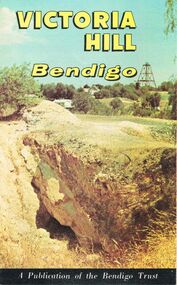
Document - JOAN O'SHEA COLLECTION: VICTORIA HILL GOLDMINING AREA BOOKLET, March 1972
... Includes Maps of the Victoria Hill Area, photographs of the remains of a twenty head crushing battery, burnt ground from quartz roasting, The Victoria Quartz Mine Photograph from Australian Mining Standard June 1899, The compressor beds and concrete foundations for the poppet legs all that remain today of the Victoria Quartz Mine deepest mine on Bendigo Goldfield 4613 feet or 1406.04 metres. Also included photograph of the view of Victoria Hill from The New Chum Hill in the 1870s. The Location of the 3 mines Ballerstedt's...Includes Maps of the Victoria Hill Area, photographs of the remains of a twenty head crushing battery, burnt ground from quartz roasting, The Victoria Quartz Mine Photograph from Australian Mining Standard June 1899, The compressor beds and concrete foundations for the poppet legs all that remain today of the Victoria Quartz Mine deepest mine on Bendigo Goldfield 4613 feet or 1406.04 metres. Also included photograph of the view of Victoria Hill from The New Chum Hill in the 1870s. The Location of the 3 mines Ballerstedt's ...Joan O'Shea Collection. Victoria Hill Bendigo Gold Mining on the Richest Quartz Reef in Bendigo, from 1854 to 1916. Colour and Black and White Booklet 16 Pages. Includes Maps of the Victoria Hill Area, photographs of the remains of a twenty head crushing battery, burnt ground from quartz roasting, The Victoria Quartz Mine Photograph from Australian Mining Standard June 1899, The compressor beds and concrete foundations for the poppet legs all that remain today of the Victoria Quartz Mine deepest mine on Bendigo Goldfield 4613 feet or 1406.04 metres. Also included photograph of the view of Victoria Hill from The New Chum Hill in the 1870s. The Location of the 3 mines Ballerstedt's open cut, North Old Chum and Lansell's 180 are marked. A depiction of Rae's Open Cut gives an understanding of the primitive nature of early workings on the Goldfields. The Booklet also provides a brief history of Victoria Hill itself.Bendigo Trust Publication March 1972. Printed in Bendigo Cambridge Press.bendigo, mining, victoria hill -
 Bendigo Historical Society Inc.
Document - LONG GULLY HISTORY GROUP COLLECTION: SOME HISTORICAL INFORMATION
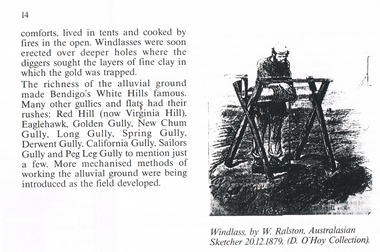
... Quartz Mining... E N Emmett... Jonathan Harris... Haris' Claim... J Hustler... George Rowe... Batchelder... La Trobe Library... Cave... Amos... New Chum Line of Reef... Edward Nucella Emmett... Bendigo City Council... All Saints... William Westgarth... Latham and Watson... Hustler's Line of Reef... Bell and Irons... Ballerstedt and Son... Young and Company... Nicholas and Bassit... Ensor... Thomas Carpenter... Quartz Crusher... Goldfields and Mineral Districts of Victoria... Richard Pope... Daniel Webster Mine...s Loyal Darling Bible Christian Church California Hill Wesleyan Methodist Church Saint Jude's Anglican Church Quartz Mining E N Emmett Jonathan Harris Haris' Claim J Hustler George Rowe Batchelder La Trobe Library Cave Amos New Chum Line of Reef Edward Nucella Emmett Bendigo City Council All Saints William Westgarth Latham and Watson Hustler's Line of Reef Bell and Irons Ballerstedt and Son Young and Company Nicholas and Bassit Ensor Thomas Carpenter Quartz Crusher Goldfields and Mineral Districts of Victoria Richard Pope Daniel Webster Mine Isaac Dyason Old Chum Mine North Old Chum Mine Young Chum Mine George Lansell Lazarus Silicosis of the lungs Eaglehawk Brass Band Victoria Hotel Mr Williams Eaglehawk Branch of the Australian Natives Association Loyal Catherine Lodge Mr James Odd Fellows in the Loyal Catherine Lodge Branch No 4935 Richard harvey Thomas Harvey Moonta Copper Mines harvey Town National Trust of Australia Eaglehawk Tree Lovers Society Saint Mungo's Methodist Church Clark's Beehive battery World War 1 Kee-Young Lady Barkly Hotel Prankhurst Bull Family Cousin Jack St Augustine's Myers Nicholls John O'Brien Around the Boree Log the Rev Dean hayes St Kilian's Bendigo Amalgamated Goldfields (B.A.G.) ...BHS Collection12 photocopied pages. Page four has acknowledgements, Page five mentions Pen-Portraist by Raly Wallace and Kevin Vallence, Page 14 mentions some rich areas: White Hills, Red Hill (now Virginia Hill), Eaglehawk, Golden Gully, New Chum Gully, Long Gully, Spring Gully, Derwent Gully, California Gully, Sailors Gully and Peg Leg Gully. There are two sketches on the page: Windless, by W. Ralston, Australasian Sketcher 20/12/1879 (D O'Hoy Collection) and a sketch of some miners in a tent with some mining equipment in front of it. There are two men in front of a fire at the front of the tent. Page 16 has a sketch of an old brick house with iron lace on the veranda and a picket fence at the front. Page 17 mentions the school and some Friendly Societies and Church. Page 22 mentions Quartz Mining. There is a Lithograph of a Quartz outcrop, New Chum Gully 1852 by George Rowe and a View of Surface Workings 1861, a Batchelder Photo. Page 23 mentions Edward Nucella Emmett, a pioneer gold digger who became involved in many important public issues. Page 25 mentions Company Mining and Crushing. It has a sketch of a Primitive Quart Crusher. Page 37 Mentions Richard Pope, a Miner who tramped from job to job in Bendigo and eventually followed the rush to Broken Hill. Page 38 mentions the Eaglehawk Brass Band and Friendly Societies in Eaglehawk. Page 39 is headed Miner's Cottage. It mentions stone miners' cottages. Page 40 has a sketch of a Georgian Style Sandstone Cottage Harvey Town. Page 41 mentions men sweeping the road to get gold, Bull Family grocery shop and a blacksmith. Page 42 is headed St. Augustine's. Page 43 has a sketch of St. Augustine's Church. Page 59 is headed Bendigo Amalgamated Goldfields (B.A.G.) Edward Clarence Dyason was largely behind a new company set up in 1917 to work the Bendigo field in an entirely new way. (B.A.G.) wished to take over all existing mining companies, and place them under a single management structure.bendigo, history, long gully history group, the long gully history group - some historical information, mr l hooley, mr l bennetts, mr w watson, mr w heraud, mr d m davies, mr w perry, mr h harvey, mr a llewellyn, mr e oates, chook temple by mr alan llewellyn, mr f cusack, tracey ipsen, ray wallace, bendigo field naturalists' club, eaglehawk tree lovers' society, bendigo historical society, university of melbourne, kevin vallence, monash university, bendigo technical college, south australian writer's fellowship, windlass, w ralston, australasian sketcher 20.12.1879, d o'hoy, mechanics institute, california gully school, bell topper hill, i.o.r. (rechabites), cobden tent, refuge tent, sutton tent, m.u.i.o.o.f.'s loyal darling, bible christian church, california hill wesleyan methodist church, saint jude's anglican church, quartz mining, e n emmett, jonathan harris, haris' claim, j hustler, george rowe, batchelder, la trobe library, cave, amos, new chum line of reef, edward nucella emmett, bendigo city council, all saints, william westgarth, latham and watson, hustler's line of reef, bell and irons, ballerstedt and son, young and company, nicholas and bassit, ensor, thomas carpenter, quartz crusher, goldfields and mineral districts of victoria, richard pope, daniel webster mine, isaac dyason, old chum mine, north old chum mine, young chum mine, george lansell, lazarus, silicosis of the lungs, eaglehawk brass band, victoria hotel, mr williams, eaglehawk branch of the australian natives association, loyal catherine lodge, mr james, odd fellows in the loyal catherine lodge branch no 4935, richard harvey, thomas harvey, moonta copper mines, harvey town, national trust of australia, eaglehawk tree lovers society, saint mungo's methodist church, clark's beehive battery, world war 1, kee-young, lady barkly hotel, prankhurst, bull family, cousin jack, st augustine's, myers, nicholls, john o'brien, around the boree log, the rev dean hayes, st kilian's, bendigo amalgamated goldfields (b.a.g.), edward clarence dyason, r h s abbott, hercules and energetic, south new moon, new chum goldfields, central red white and blue consolidated, brown john, the life and times of long gully, bendigo press, val white, megan snoop -
 Bendigo Historical Society Inc.
Document - Minutes of Army Survey Regiment Unit Historical Fund, Fortuna Villa
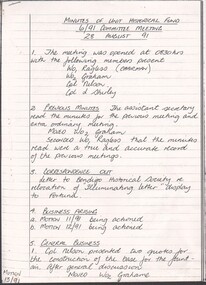
... Mine by Theodore Ballerstedt, who sold the mine and house to George Lansell in 1869. Lansell already owned the adjacent Fortuna Mine, and through deeper mining techniques greatly expanded the mine's operation, his personal wealth, and the house and grounds. Lansell was soon known as the 'Quartz...Mine by Theodore Ballerstedt, who sold the mine and house to George Lansell in 1869. Lansell already owned the adjacent Fortuna Mine, and through deeper mining techniques greatly expanded the mine's operation, his personal wealth, and the house and grounds. Lansell was soon known as the 'Quartz ...Fortuna Villa was initially commenced as a modest single storey home in 1861 next to the 180 Mine by Theodore Ballerstedt, who sold the mine and house to George Lansell in 1869. Lansell already owned the adjacent Fortuna Mine, and through deeper mining techniques greatly expanded the mine's operation, his personal wealth, and the house and grounds. Lansell was soon known as the 'Quartz King', Australia's first gold mining millionaire and credited as the driving force behind much of Bendigo's prosperity. He continuously added to and expanded the villa, decorating it extravagantly with the finest of artworks and materials, into a sprawling mansion with extensive landscaped grounds, to create a house and grounds of a size and grandeur with few rivals in Australia. After his death in 1907, his second wife Edith carried on with improvements, creating a house and grounds developed over 50 years. The attached mine also contributes to its significance, being one of the richest mines in Bendigo, and at one stage probably the deepest gold mine in the world at 3176 feet. The 1875 crushing works are attached directly to the mansion, and the mine's tailings and settling ponds (turned into ornamental lakes) represent a direct link between George Lansell's wealth and its source. Fortuna was compulsorily acquired by the Commonwealth in 1942 as the Cartographic Headquarters of the Australian Survey Corps during World War II, and many ancillary structures were added while preserving the main house and ornamental grounds. Victorian Heritage Database Report https://vhd.heritagecouncil.vic.gov.au/places/68334/download-reportMinutes of Army Survey Regiment Unit Historical Fund, Fortuna Villa (28 Aug 1991 - 25 Nov 1992) 28 August 1991 - cost of construction of base of the fountain, and letter to Bendigo Art Gallery to follow-up loan of the "Venus" statue for display in the RM's office and resurfacing of marble baths in the CO and adjutant's offices. Single undated page from Unit Historical Fund Committee in 1991. 11 Nov 1992 - discussion of Christmas tours and a plaque for hallway. 25 Nov 1992 - lights for the Company's office, and a discussion of five tasks for next year. Lansell's Fortuna flyer for tour.fortuna villa, minutes -
 Bendigo Historical Society Inc.
Administrative record - Minute records Army Survey Regiment Fortuna Historical Society
... Mine by Theodore Ballerstedt, who sold the mine and house to George Lansell in 1869. Lansell already owned the adjacent Fortuna Mine, and through deeper mining techniques greatly expanded the mine's operation, his personal wealth, and the house and grounds. Lansell was soon known as the 'Quartz...Mine by Theodore Ballerstedt, who sold the mine and house to George Lansell in 1869. Lansell already owned the adjacent Fortuna Mine, and through deeper mining techniques greatly expanded the mine's operation, his personal wealth, and the house and grounds. Lansell was soon known as the 'Quartz ...Fortuna Villa was initially commenced as a modest single storey home in 1861 next to the 180 Mine by Theodore Ballerstedt, who sold the mine and house to George Lansell in 1869. Lansell already owned the adjacent Fortuna Mine, and through deeper mining techniques greatly expanded the mine's operation, his personal wealth, and the house and grounds. Lansell was soon known as the 'Quartz King', Australia's first gold mining millionaire and credited as the driving force behind much of Bendigo's prosperity. He continuously added to and expanded the villa, decorating it extravagantly with the finest of artworks and materials, into a sprawling mansion with extensive landscaped grounds, to create a house and grounds of a size and grandeur with few rivals in Australia. After his death in 1907, his second wife Edith carried on with improvements, creating a house and grounds developed over 50 years. The attached mine also contributes to its significance, being one of the richest mines in Bendigo, and at one stage probably the deepest gold mine in the world at 3176 feet. The 1875 crushing works are attached directly to the mansion, and the mine's tailings and settling ponds (turned into ornamental lakes) represent a direct link between George Lansell's wealth and its source. Fortuna was compulsorily acquired by the Commonwealth in 1942 as the Cartographic Headquarters of the Australian Survey Corps during World War II, and many ancillary structures were added while preserving the main house and ornamental grounds. Victorian Heritage Database Report https://vhd.heritagecouncil.vic.gov.au/places/68334/download-reportMinutes of the Fortuna Historical Committee held 24 August 1994 (hand written minutes over four sheets, referenced Vol 9 Fol 3) including four pages of stakeholder feedback tabled at the meetingfortuna, historical unit -
 Bendigo Historical Society Inc.
Document - Pompeii Fountain & Adjacent Structures at "Fortuna"
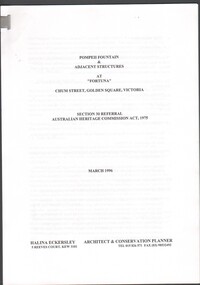
... Mine by Theodore Ballerstedt, who sold the mine and house to George Lansell in 1869. Lansell already owned the adjacent Fortuna Mine, and through deeper mining techniques greatly expanded the mine's operation, his personal wealth, and the house and grounds. Lansell was soon known as the 'Quartz...Mine by Theodore Ballerstedt, who sold the mine and house to George Lansell in 1869. Lansell already owned the adjacent Fortuna Mine, and through deeper mining techniques greatly expanded the mine's operation, his personal wealth, and the house and grounds. Lansell was soon known as the 'Quartz ...Fortuna Villa was initially commenced as a modest single storey home in 1861 next to the 180 Mine by Theodore Ballerstedt, who sold the mine and house to George Lansell in 1869. Lansell already owned the adjacent Fortuna Mine, and through deeper mining techniques greatly expanded the mine's operation, his personal wealth, and the house and grounds. Lansell was soon known as the 'Quartz King', Australia's first gold mining millionaire and credited as the driving force behind much of Bendigo's prosperity. He continuously added to and expanded the villa, decorating it extravagantly with the finest of artworks and materials, into a sprawling mansion with extensive landscaped grounds, to create a house and grounds of a size and grandeur with few rivals in Australia. After his death in 1907, his second wife Edith carried on with improvements, creating a house and grounds developed over 50 years. The attached mine also contributes to its significance, being one of the richest mines in Bendigo, and at one stage probably the deepest gold mine in the world at 3176 feet. The 1875 crushing works are attached directly to the mansion, and the mine's tailings and settling ponds (turned into ornamental lakes) represent a direct link between George Lansell's wealth and its source. Fortuna was compulsorily acquired by the Commonwealth in 1942 as the Cartographic Headquarters of the Australian Survey Corps during World War II, and many ancillary structures were added while preserving the main house and ornamental grounds. Victorian Heritage Database Report https://vhd.heritagecouncil.vic.gov.au/places/68334/download-reportConservation report for the Pompeii Fountain & Adjacent Structures at "Fortuna" Chum Street, Golden Square, Victoria. Prepared for Fortuna Historical Committee. March 1996.Halina Eckersley, Architect & Conservation Planner, Kewpompeii fountain, greenhouse, fortuna lake, gardens -
 Bendigo Historical Society Inc.
Document - Preliminary report of Structural assessment Fortuna
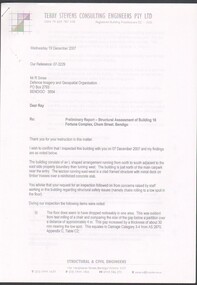
... Mine by Theodore Ballerstedt, who sold the mine and house to George Lansell in 1869. Lansell already owned the adjacent Fortuna Mine, and through deeper mining techniques greatly expanded the mine's operation, his personal wealth, and the house and grounds. Lansell was soon known as the 'Quartz...Mine by Theodore Ballerstedt, who sold the mine and house to George Lansell in 1869. Lansell already owned the adjacent Fortuna Mine, and through deeper mining techniques greatly expanded the mine's operation, his personal wealth, and the house and grounds. Lansell was soon known as the 'Quartz ...Fortuna Villa was initially commenced as a modest single storey home in 1861 next to the 180 Mine by Theodore Ballerstedt, who sold the mine and house to George Lansell in 1869. Lansell already owned the adjacent Fortuna Mine, and through deeper mining techniques greatly expanded the mine's operation, his personal wealth, and the house and grounds. Lansell was soon known as the 'Quartz King', Australia's first gold mining millionaire and credited as the driving force behind much of Bendigo's prosperity. He continuously added to and expanded the villa, decorating it extravagantly with the finest of artworks and materials, into a sprawling mansion with extensive landscaped grounds, to create a house and grounds of a size and grandeur with few rivals in Australia. After his death in 1907, his second wife Edith carried on with improvements, creating a house and grounds developed over 50 years. The attached mine also contributes to its significance, being one of the richest mines in Bendigo, and at one stage probably the deepest gold mine in the world at 3176 feet. The 1875 crushing works are attached directly to the mansion, and the mine's tailings and settling ponds (turned into ornamental lakes) represent a direct link between George Lansell's wealth and its source. Fortuna was compulsorily acquired by the Commonwealth in 1942 as the Cartographic Headquarters of the Australian Survey Corps during World War II, and many ancillary structures were added while preserving the main house and ornamental grounds. Victorian Heritage Database Report https://vhd.heritagecouncil.vic.gov.au/places/68334/download-reportPreliminary report of Structural assessment of Building 16 Fortuna Complex, Chum Street, Bendigo. Four page preliminary report finding the building is structurally safe as at Wed 19 December 2007 with three recommendations. Prepared for DIGO by Structural Engineers - Terry Stevens Consulting Engineers Pty Ltd.fortuna, structural assessment -
 Bendigo Historical Society Inc.
Ephemera - Tour Ticket
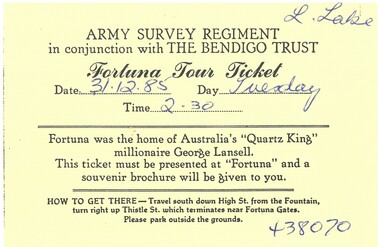
... Mine by Theodore Ballerstedt, who sold the mine and house to George Lansell in 1869. Lansell already owned the adjacent Fortuna Mine, and through deeper mining techniques greatly expanded the mine's operation, his personal wealth, and the house and grounds. Lansell was soon known as the 'Quartz...Mine by Theodore Ballerstedt, who sold the mine and house to George Lansell in 1869. Lansell already owned the adjacent Fortuna Mine, and through deeper mining techniques greatly expanded the mine's operation, his personal wealth, and the house and grounds. Lansell was soon known as the 'Quartz ...Fortuna Villa was initially commenced as a modest single storey home in 1861 next to the 180 Mine by Theodore Ballerstedt, who sold the mine and house to George Lansell in 1869. Lansell already owned the adjacent Fortuna Mine, and through deeper mining techniques greatly expanded the mine's operation, his personal wealth, and the house and grounds. Lansell was soon known as the 'Quartz King', Australia's first gold mining millionaire and credited as the driving force behind much of Bendigo's prosperity. He continuously added to and expanded the villa, decorating it extravagantly with the finest of artworks and materials, into a sprawling mansion with extensive landscaped grounds, to create a house and grounds of a size and grandeur with few rivals in Australia. After his death in 1907, his second wife Edith carried on with improvements, creating a house and grounds developed over 50 years. The attached mine also contributes to its significance, being one of the richest mines in Bendigo, and at one stage probably the deepest gold mine in the world at 3176 feet. The 1875 crushing works are attached directly to the mansion, and the mine's tailings and settling ponds (turned into ornamental lakes) represent a direct link between George Lansell's wealth and its source. Fortuna was compulsorily acquired by the Commonwealth in 1942 as the Cartographic Headquarters of the Australian Survey Corps during World War II, and many ancillary structures were added while preserving the main house and ornamental grounds. Victorian Heritage Database Report https://vhd.heritagecouncil.vic.gov.au/places/68334/download-reportTicket for Fortuna Villa Tour conducted by the Army Survey Regiment and the National Trust. 31/12/1985. Black printing on yellow card.fortuna villa, tour -
 Bendigo Historical Society Inc.
Document - Preservation proposal
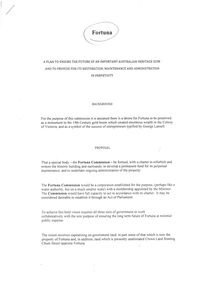
... Mine by Theodore Ballerstedt, who sold the mine and house to George Lansell in 1869. Lansell already owned the adjacent Fortuna Mine, and through deeper mining techniques greatly expanded the mine's operation, his personal wealth, and the house and grounds. Lansell was soon known as the 'Quartz...Mine by Theodore Ballerstedt, who sold the mine and house to George Lansell in 1869. Lansell already owned the adjacent Fortuna Mine, and through deeper mining techniques greatly expanded the mine's operation, his personal wealth, and the house and grounds. Lansell was soon known as the 'Quartz ...Fortuna Villa was initially commenced as a modest single storey home in 1861 next to the 180 Mine by Theodore Ballerstedt, who sold the mine and house to George Lansell in 1869. Lansell already owned the adjacent Fortuna Mine, and through deeper mining techniques greatly expanded the mine's operation, his personal wealth, and the house and grounds. Lansell was soon known as the 'Quartz King', Australia's first gold mining millionaire and credited as the driving force behind much of Bendigo's prosperity. He continuously added to and expanded the villa, decorating it extravagantly with the finest of artworks and materials, into a sprawling mansion with extensive landscaped grounds, to create a house and grounds of a size and grandeur with few rivals in Australia. After his death in 1907, his second wife Edith carried on with improvements, creating a house and grounds developed over 50 years. The attached mine also contributes to its significance, being one of the richest mines in Bendigo, and at one stage probably the deepest gold mine in the world at 3176 feet. The 1875 crushing works are attached directly to the mansion, and the mine's tailings and settling ponds (turned into ornamental lakes) represent a direct link between George Lansell's wealth and its source. Fortuna was compulsorily acquired by the Commonwealth in 1942 as the Cartographic Headquarters of the Australian Survey Corps during World War II, and many ancillary structures were added while preserving the main house and ornamental grounds. Victorian Heritage Database Report https://vhd.heritagecouncil.vic.gov.au/places/68334/download-reportProposal for the formation of a Fortuna Commission to ensure the preservation of Fortuna Villa. Written by Daryl McClure. May 2012fortuna villa, preservation, daryl mcclure -
 Bendigo Historical Society Inc.
Map - VICTORIA HILL AREA
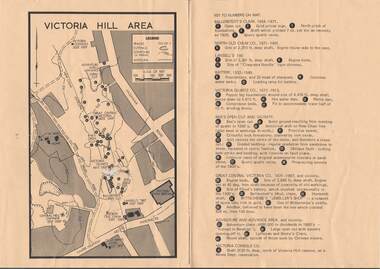
... mines, open cuts and buildings are shown. Numbers on map are: Ballerstedt's Claim 1 - 5; North Old Chum Co. 6; Lansell's 180, 7,8,11; Battery 9.10.12; Victoria Quartz Co. 13 - 17; Rae's Open Cut and Vicinity 18 - 28, Great Central Victoria Co 29 - 36, Adventure and Advance Area and vicinity 37 - 40 and Victoria Consols Co 41....MAP Bendigo victoria hill Victoria Hill Area Victoria Consols New Chum anticline Great Central Victoria Rae's Open Cut W Rae's Home Victoria Quartz Ballerstedt's Open Cut Lansell's 180 North Old Chum Central Nell Gwynne John Brown Factory Gold Mines Hotel Cleopatra Needle type chimney Floyd's Battery Ballerstedt's 24yd Claim Humboldt Shaft Wittscheibe's Jeweller's Shop Luffsman and Sterry's Claim Victoria Hill Reserve Mines Dept Reervation Map of Victoria Hill Area printed on yellow paper. ...Map of Victoria Hill Area printed on yellow paper. Details of tracks, cuttings, contours (in Metres) and Anticline. Location of mines, open cuts and buildings are shown. Numbers on map are: Ballerstedt's Claim 1 - 5; North Old Chum Co. 6; Lansell's 180, 7,8,11; Battery 9.10.12; Victoria Quartz Co. 13 - 17; Rae's Open Cut and Vicinity 18 - 28, Great Central Victoria Co 29 - 36, Adventure and Advance Area and vicinity 37 - 40 and Victoria Consols Co 41.map, bendigo, victoria hill, victoria hill area, victoria consols, new chum anticline, great central victoria, rae's open cut, w rae's home, victoria quartz, ballerstedt's open cut, lansell's 180, north old chum, central nell gwynne, john brown factory, gold mines hotel, cleopatra needle type chimney, floyd's battery, ballerstedt's 24yd claim, humboldt shaft, wittscheibe's jeweller's shop, luffsman and sterry's claim, victoria hill reserve, mines dept reervation -
 Bendigo Historical Society Inc.
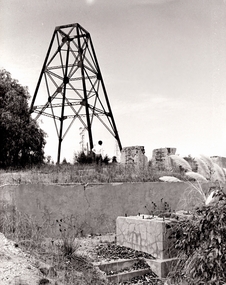
Photograph - Victoria Hill, Bendigo, 1973
... quartz crushing machinery and the foundations of George Lansell’s 180 mine. These features are characteristic of Bendigo’s mining history and represent two prominent nineteenth century miners, Christopher Ballerstedt and George Lansell, who held important roles in the development of Bendigo. ...quartz crushing machinery and the foundations of George Lansell’s 180 mine. These features are characteristic of Bendigo’s mining history and represent two prominent nineteenth century miners, Christopher Ballerstedt and George Lansell, who held important roles in the development of Bendigo. ...Gold was discovered on Victoria Hill in 1854 and by 1861, 1,200,000 ounces of gold had been extracted from the site. The first claim was bought for 80 pounds by Prussian immigrant Christopher Ballerstedt and his son Theodore. Christopher Ballerstedt was nicknamed the "Father of the Hill" and was the first to prove that gold reefs extended below the surface. His 200-foot plus mine shafts yielded quartz rich with gold, inspired other miners, and were instrumental in Bendigo becoming the world's deepest and richest goldfield. The site still features relics of nineteenth century mining including quartz crushing machinery and the foundations of George Lansell’s 180 mine. These features are characteristic of Bendigo’s mining history and represent two prominent nineteenth century miners, Christopher Ballerstedt and George Lansell, who held important roles in the development of Bendigo. Victoria Hill Quartz Gold Mines are registered as a site of significance. The site is of historical, archaeological and scientific importance to Victoria. The mines represent the symbolic heart of Bendigo’s gold mining history and the importance that mining played in wealth creation and the development of Victoria. The diggings reserve is accessed from the rear of Albert Richardson Reserve located at 40-56 Marong Road, Ironbark. The site has steep and unformed paths and is closed to the public at dusk. It is important to stay to the paths to avoid the diggings. Interpretive signs help visitors to appreciate the importance of the site and the remaining relics of Bendigo’s mining history.Victoria Hill Ironbark, Bendigo. Photos of the poppet head, sand heap, tailings, shafts and tunnels. Before development into a tourist attraction.history, bendigo, victoria hill, ironbark, diggings
