
Showing 540 items matching " blacker’s orchard "
-
 Glen Eira Historical Society
Article - COANE, JOHN MONTGOMERY
... ... Blacker’s Orchard & Cannery Co....Coane John Montgomery Blacker’s Orchard & Cannery Co. Victorian Institute of Surveyors County Donegal Ireland Mordialloc Ballyshannon Mines Department Sludge Abatement Board Coane Henry Edward Surveyors Engineers Land Surveyors Board Coane Henry James J.M. and H.E. ...This file contains one item about Coane and his family: 1/A one page extract from The Australian Dictionary of Biography Vol. 8 page 35 on John Montgomery Coane, Surveyor and Consulting Engineer, his partnership with George Hudson and later when his two sons joined the business. It details many of the projects he designed for rural Victoria and New South Wales and his other areas including Consulting to The Pacific Phosphate Co. Ltd of London and to the City of Brighton where he lived.coane john montgomery, blacker’s orchard & cannery co., victorian institute of surveyors, county donegal, ireland, mordialloc, ballyshannon, mines department sludge abatement board, coane henry edward, surveyors, engineers, land surveyors board, coane henry james, j.m. and h.e. coane, coane jane nee montgomery, coane john montgomery junior, victorian education department, australian roads, collas emma anna hunt, books, grant george hudson, coutie b.m., state electricity of victoria, melbourne, epsom racecourse, racecourses, brighton, city of brighton, brighton re-adaptation society, brighton cemetery, cemeteries, southern roger j, australian dictionary of biography vol. 8, early settlers -
Glenelg Shire Council Cultural Collection
Photograph - Compact Disc - Images of Hollis/Chapman Orchard at Gorae Victoria, c. 1934
... CD with images of Hollis/Chapman Orchard at Gorae (See Other Information_. White with black texta print. ...Front: 'Bentinck St POSTCARD + HIGGINSON ORCHARD' - black texta...Front: 'Bentinck St POSTCARD + HIGGINSON ORCHARD' - black texta CD with images of Hollis/Chapman Orchard at Gorae (See Other Information_. ...CD with images of Hollis/Chapman Orchard at Gorae (See Other Information_. White with black texta print. CD in black plastic case with clear front. Disc measures 10.4 cm diameterFront: 'Bentinck St POSTCARD + HIGGINSON ORCHARD' - black texta -
 University of Melbourne, Burnley Campus Archives
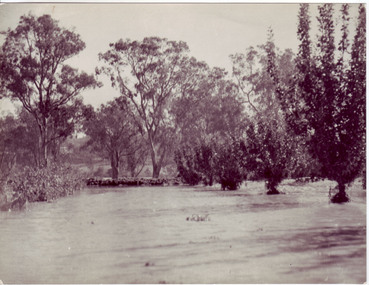
Photograph - Black and white print, Orchard in Flood, 1934
... Black and white photograph. Orchard in flood...orchard yarra river floods 1934 On reverse, "Orchard Yarra River in flood Dec 1934." Black and white photograph. ...Black and white photograph. Orchard in floodOn reverse, "Orchard Yarra River in flood Dec 1934."orchard, yarra river, floods, 1934 -
 University of Melbourne, Burnley Campus Archives
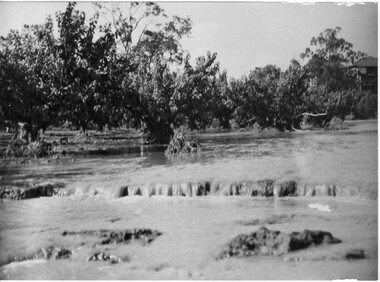
Photograph - Black and white print, Orchard in Flood, 1934
... Black and white photograph. Orchard in flood...orchard yarra river floods 1934 On reverse, "Orchard Yarra River in flood Dec 1934." Black and white photograph. ...Black and white photograph. Orchard in floodOn reverse, "Orchard Yarra River in flood Dec 1934."orchard, yarra river, floods, 1934 -
 University of Melbourne, Burnley Campus Archives
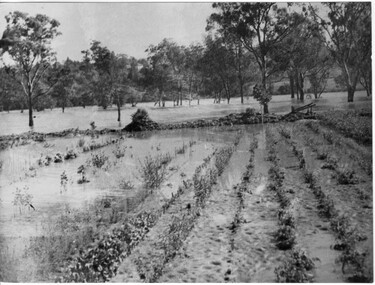
Photograph - Black and white print, Orchard in Flood, 1934
... Black and white photograph. Orchard in flood. Seedlings planted in rows....orchard yarra river floods 1934 On reverse, "Orchard Yarra River in flood Dec 1934." Black and white photograph. ...Black and white photograph. Orchard in flood. Seedlings planted in rows.On reverse, "Orchard Yarra River in flood Dec 1934."orchard, yarra river, floods, 1934 -
 University of Melbourne, Burnley Campus Archives
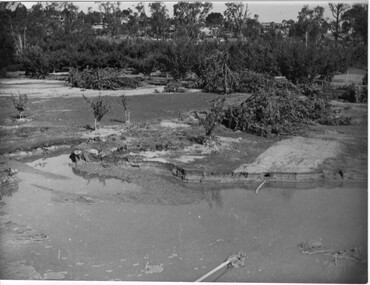
Photograph - Black and white print, Orchard in Flood, 1934
... Black and white photograph. Orchard in flood, shows uprooted trees....orchard yarra river floods 1934 Black and white photograph. ...Black and white photograph. Orchard in flood, shows uprooted trees.orchard, yarra river, floods, 1934 -
 University of Melbourne, Burnley Campus Archives
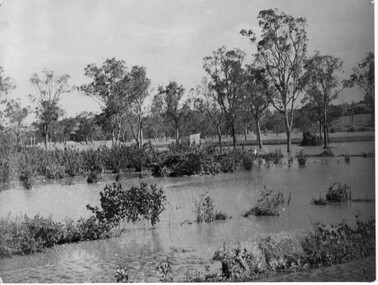
Photograph - Black and white print, Orchard in Flood, 1934
... Black and white photograph. Orchard in flood: small shed in the centre....orchard yarra river floods 1934 Black and white photograph. ...Black and white photograph. Orchard in flood: small shed in the centre.orchard, yarra river, floods, 1934 -
 University of Melbourne, Burnley Campus Archives
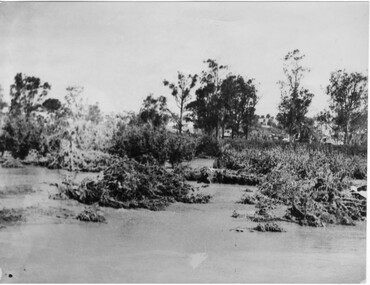
Photograph - Black and white print, Orchard in Flood, 1934
... Black and white photograph. Orchard in flood: shows uprooted trees....orchard yarra river floods 1934 fruit trees Black and white photograph. ...Black and white photograph. Orchard in flood: shows uprooted trees.orchard, yarra river, floods, 1934, fruit trees -
 University of Melbourne, Burnley Campus Archives
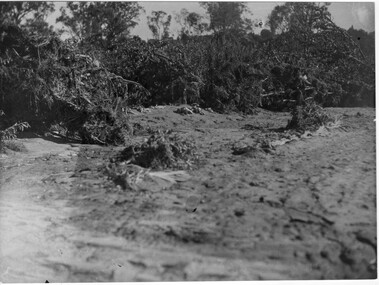
Photograph - Black and white print, Orchard After Flood, 1934
... Black and white photograph. Orchard after flood: shows uprooted trees....orchard yarra river floods 1934 fruit trees Black and white photograph. ...Black and white photograph. Orchard after flood: shows uprooted trees.orchard, yarra river, floods, 1934, fruit trees -
 University of Melbourne, Burnley Campus Archives
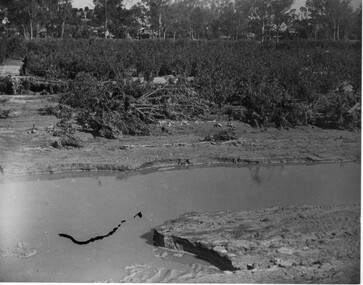
Photograph - Black and white print, Orchard After Flood, 1934
... Black and white photograph. Orchard after flood: shows soil washed away....orchard yarra river floods 1934 damage On reverse, "Orchard after flood Dec 1934." Black and white photograph. ...Black and white photograph. Orchard after flood: shows soil washed away. On reverse, "Orchard after flood Dec 1934."orchard, yarra river, floods, 1934, damage -
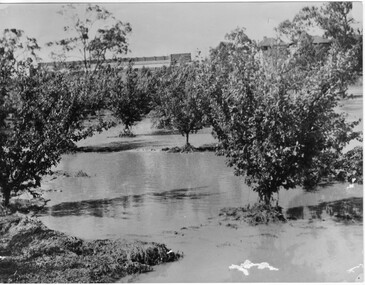 University of Melbourne, Burnley Campus Archives
Photograph - Black and white print, Orchard in Flood, 1934
... Black and white photograph. Orchard in flood: shows fruit trees standing in water....orchard yarra river floods 1934 fruit trees On reverse, "Orchard Yarra River in flood Dec 1934." Black and white photograph. ...Black and white photograph. Orchard in flood: shows fruit trees standing in water.On reverse, "Orchard Yarra River in flood Dec 1934."orchard, yarra river, floods, 1934, fruit trees -
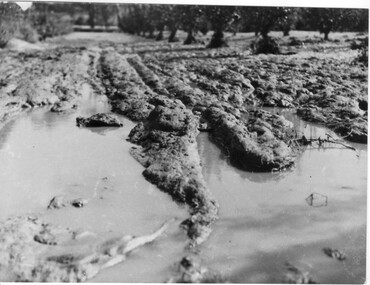 University of Melbourne, Burnley Campus Archives
Photograph - Black and white print, Orchard After Flood, 1934
... Black and white photograph. Orchard after flood: shows damage to the soil. ...orchard yarra river floods 1934 soil Black and white photograph. ...Black and white photograph. Orchard after flood: shows damage to the soil. Enlarged photograph.orchard, yarra river, floods, 1934, soil -
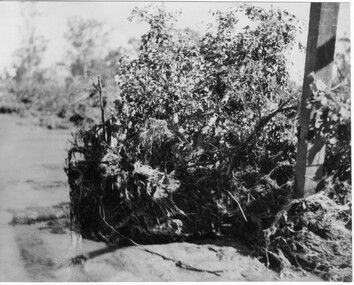 University of Melbourne, Burnley Campus Archives
Photograph - Black and white print, Orchard After Flood, 1934
... Black and white photograph. Orchard after flood: shows close up of uprooted tree....orchard yarra river floods 1934 fruit trees Black and white photograph. ...Black and white photograph. Orchard after flood: shows close up of uprooted tree.orchard, yarra river, floods, 1934, fruit trees -
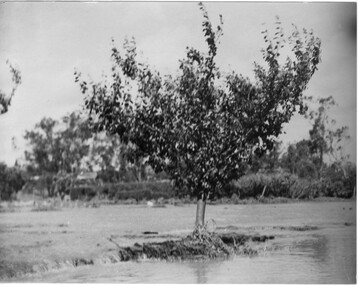 University of Melbourne, Burnley Campus Archives
Photograph - Black and white print, Orchard After Flood, 1934
... Black and white photograph. Orchard after flood: shows single fruit tree surrounded by water. ...orchard yarra river floods 1934 fruit tree Black and white photograph. ...Black and white photograph. Orchard after flood: shows single fruit tree surrounded by water. Enlargement.orchard, yarra river, floods, 1934, fruit tree -
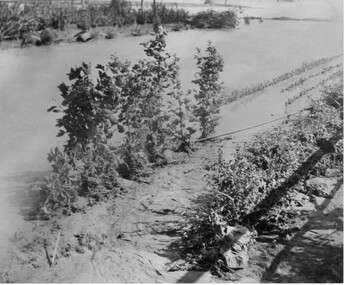 University of Melbourne, Burnley Campus Archives
Photograph - Black and white print, Orchard in Flood, 1934
... Black and white photograph. Orchard in flood: an irrigation ? ...orchard yarra river floods 1934 Black and white photograph. ...Black and white photograph. Orchard in flood: an irrigation ? Pipe is showing. Yarra River broke its bank on the night of 30.11.1934.orchard, yarra river, floods, 1934 -
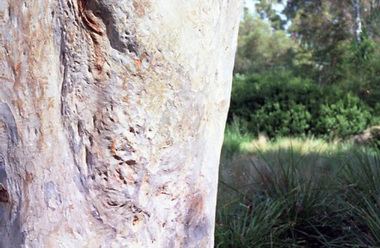 University of Melbourne, Burnley Campus Archives
Album - Colour prints, negatives and 35mm slides, Staff, Collection of Photographs Used by Staff, 1994-2000
... Pot Trial - negatives and prints; Miscellaneous plant trials, Centenial Centre Shop, Arborists, Plants, Excursions - negatives; Excursions , 1 year 2000 - negatives and prints; Orchard (older) - black and white negatives and prints; Arborists - negatives and prints; 4. ...Pot Trial - negatives and prints; Miscellaneous plant trials, Centenial Centre Shop, Arborists, Plants, Excursions - negatives; Excursions , 1 year 2000 - negatives and prints; Orchard (older) - black and white negatives and prints; Arborists - negatives and prints; 4. ...Collection of photographs in envelopes which had belonged to staff members. Some are photographs from excursions, others are teaching material, plants. Some labelled: 1. Ruth Upper Merri Creek - negatives and prints; Merri Creek - negatives and prints; Merri Creek Panorama - prints; Merri Creek Posters 1995 - negatives and prints; Plants - negatives. 2. Western District Exhibition, labelled - negatives and prints of paintings; Mt Ridley (Excursion?) - negatives and prints; Energy Education Centre 15 November 1995; Gardens - Spring 1995 negatives (mostly James Hitchmough, Native Grasslands and Luffmann Ponds) Scanned; Student Party June 1994 - negatives; 3. Pot Trial - negatives and prints; Miscellaneous plant trials, Centenial Centre Shop, Arborists, Plants, Excursions - negatives; Excursions , 1 year 2000 - negatives and prints; Orchard (older) - black and white negatives and prints; Arborists - negatives and prints; 4. Staff, Graduate students - negatives and prints; Miscellaneous: Plants, - negatives, slides and prints. 7. Native Garden and other garden views - prints and negativesstaff, excursions, teaching material, merri creek, mt ridley, energy education centre, student party, pot trial, centenial centre shop, arborists, plants, graduates, students, plant database, jill kellow, orchard, james hitchmough grasslands, horticulture shop, ruth beilin, upper merri creek, merri creek panorama, merri creek posters -
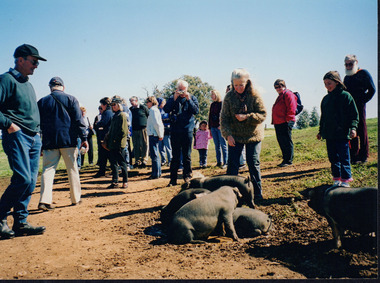 Wooragee Landcare Group
Photograph, 5 September 2004
... They are a black pig with lop ears and were prized for their superior milking and mothering abilities and soon became popular with early Dairy Farmers who fed them whey from separated milk as part of their butter making process. They proved economical to keep and, being excellent grazing pigs, were also used to pick up windfall fruit in orchards...They are a black pig with lop ears and were prized for their superior milking and mothering abilities and soon became popular with early Dairy Farmers who fed them whey from separated milk as part of their butter making process. They proved economical to keep and, being excellent grazing pigs, were also used to pick up windfall fruit in orchards ...This photograph was taken at Samaria Farm on Sunday the 5th of September when Wooragee Landcare Group took a bus trip to the Tatong area (near Benalla) to look at land use on small farms. The day trip was organised to observe land use on small farms as well as a social event for the Group. Samaria Farm at the time was a nine-hectare property located in northeast Victoria, near Mount Samaria, 130 km Northeast of Melbourne. The photograph features several pigs believed to be the breed called Large Black. The Large Black Pig breed is a traditional, heritage breed that was first imported to Australia from the UK in the early 1900's. It is believed to have originated from the Old English Hog of the 16th and 17th Centuries. The first reference to them in the Australian Pure Bred Pig Herd Book was in 1912. They are a black pig with lop ears and were prized for their superior milking and mothering abilities and soon became popular with early Dairy Farmers who fed them whey from separated milk as part of their butter making process. They proved economical to keep and, being excellent grazing pigs, were also used to pick up windfall fruit in orchards. Their black colouring also enabled them to withstand the hot Australian summers and avoid sunburn which combined with their hardiness and docile temperament made them highly suitable for free-range pork production, however Large Black pigs tend to get very fat and were not suitable for intensive farming so were often crossed with other breeds for pork production. They are now quite rare as a pure breed having been on the edge of extinction for some time. They were rescued in the early 1990s by a rare breeds farmer in the Yarra Ranges. These days they are also the focus of a small conversation effort with six registered breeders currently in Australia. For biosecurity reasons there are no imports of live pigs or pig semen permitted into Australia. This photograph shows a group of people attending one of the events that Wooragee Landcare Group has organized within the educational framework of promoting best land management practices for all types of land uses and ensuring sustainability, in addition to encouraging community interaction via social events. The Large Black pig breed is significant because of their role in early Victorian farming. They are now quite rare as a pure breed having been on the edge of extinction for some time. These days they are the focus of a small conversation effort with six registered breeders currently in Australia. For biosecurity reasons there are no imports of live pigs or pig semen permitted into Australia. Wooragee Landcare Group is important to local community landcare and environmental management practices.Colour rectangular photograph printed on paperObverse: WAN NA EONA2N2. ANN+ 3 4240/ (No. 17) 370samaria farm, wooragee landcare, wooragee landcare group, tatong, benalla, black pigs, large black, traditional breed, heritage breed, pigs, lop ears, free range pork production, early victorian farming -
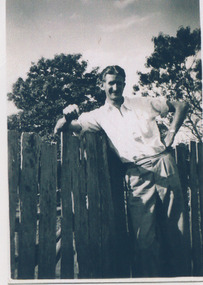 The Beechworth Burke Museum
Audio - Oral History, Jennifer Williams, Mr Harry Mason, 13th April 2000
... While the township of Beechworth is known for its history as a gold rush town, these accounts provide a unique insight into the day-to-day life of the town's residents during the 20th century, many of which will have now been lost if they had not been preserved. listen to what they say beechworth oral history burke museum harry mason stanley orchard jennifer williams asylum Mr Harry Madon / This is a digital copy of a recording that was originally captured on a cassette tape. The cassette tape is black ...Mr Harry Mason was born in Stanley, Victoria, on the 23rd of July 1925, attending the primary school in Stanley and high school in Beechworth on the mail truck. His family initially moved to the area during the initial Gold Rush period. He moved to Beechworth in 1960. For seven years after school, he worked in the local orchard full time before becoming the local gravedigger, responsible for digging the graves of Beechworth residents and Asylum for 23 years. This oral history recording was part of a project conducted by Jennifer Williams in the year 2000 to capture the everyday life and struggles in Beechworth during the twentieth century. This project involved recording seventy oral histories on cassette tapes of local Beechworth residents which were then published in a book titled: Listen to what they say: voices of twentieth-century Beechworth. These cassette tapes were digitised in July 2021 with funds made available by the Friends of the Burke.Mr Harry Mason's account of his life in Beechworth and the local area during the 20th century is historically and socially significant to the cultural heritage of the region. He details important historical events and hardships in the region's history that had a lasting local, regional and national impact, including Australia during war time, economic struggles, and women's societal roles in a rural area. Mr Mason also discusses agricultural and gravedigging practices of the time as well as what it was like growing up in rural Australia. This first-hand account is imperative to our understanding of life during the last century. This oral history account is socially and historically significant as it is a part of a broader collection of interviews conducted by Jennifer Williams which were published in the book 'Listen to what they say: voices of twentieth-century Beechworth.' While the township of Beechworth is known for its history as a gold rush town, these accounts provide a unique insight into the day-to-day life of the town's residents during the 20th century, many of which will have now been lost if they had not been preserved.This is a digital copy of a recording that was originally captured on a cassette tape. The cassette tape is black with a horizontal white strip and is currently stored in a clear flat plastic rectangular container. It holds up 40 minutes of recordings on each side.Mr Harry Madon /listen to what they say, beechworth, oral history, burke museum, harry mason, stanley, orchard, jennifer williams, asylum -
The Beechworth Burke Museum
Audio - Oral History, Jennifer Williams, Mrs Vanessa McDonald, 9 November 2000
... While the township of Beechworth is known for its history as a gold rush town, these accounts provide a unique insight into the day-to-day life of the town's residents during the 20th century, many of which will have now been lost if they had not been preserved. listen to what they say beechworth oral history burke museum emigration gold rush immigration Victorian gold rush mining families apple orchard forestry forest plantation Little Scotland Stanley twentieth century history regional australia rural australia farming harvest festival great depression dingle range the nine mile australian wildflowers high country wildflowers mothercraft nurse rural and regional women social history Collins Mrs. Vanessa McDonald Building community life Shaping cultural and creative life fruit growers family history changes to land use in regional victoria Mrs Vanessa McDonald / This is a digital copy of a recording that was originally captured on a cassette tape. The cassette tape is black ...Mrs. Vanessa McDonald was born in Beechworth in 1917. Christened, Agnes Bertha Collins, Vanessa changed her name in 1960. Mrs. McDonald's family's connection with gold mining in the district reach back to the first of Beechworth's gold rushes, when her great grandfather, a Dutchman who adopted the name Charles Collins, arrived in 1851-1852. Mrs. McDonald spent her childhood in the isolated hamlet of Stanley, in the area known as 'Little Scotland', where she recalls helping her mother to raise younger siblings, picking apples and walnuts on the family farm, and roaming the hills for wildflowers. As a young woman Mrs. McDonald attended religious and social gatherings in the local community. In 1940 she went to Melbourne to work as a mothercraft nurse during the Second World War. She met her husband at a Beechworth football match and was married at the Stanley Methodist Church in 1941. The gold diggings known as the 'Nine Mile' became the hamlet of Stanley, after the British Prime Minister, Lord Stanley, in 1858. By the late 1850s, Stanley boasted schools, an athenaeum, a church, a weekly newspaper and several hotels and other civic infrastructure to cater for a growing population. The area attracted large numbers of Chinese miners, whose presence was frequently resisted. Like other early Victorian mining settlements, Stanley was a hotbed of political and racial tensions during the gold rush. One side of the Nine Mile Creek was known as 'Little Scotland’, the other, 'Little Ireland'. A number of Christian denominations built congregations and churches in Stanley, including the Church of England, Methodist Church, the Catholic Church, and Presbyterian Church. Stanley became part of the United Shire of Beechworth in 1871. By 1880 timber was being cut and two sawmills were established by 1887. River-dredged gold mining consumed vast amounts of timber from the forests in the area, and in 1931 the first of several softwood plantations began. This oral history recording was part of a project conducted by Jennifer Williams in the year 2000 to capture the everyday life and struggles in Beechworth during the twentieth century. This project involved recording seventy oral histories on cassette tapes of local Beechworth residents which were then published in a book titled: 'Listen to what they say: voices of twentieth century Beechworth'. These cassette tapes were digitised in July 2021 with funds made available by the Friends of the Burke.Following the decline in the mining and associated industries during the early-mid-twentieth century, the Beechworth district experienced a period of general economic decline. On the east side of the Dingle Range, Mrs. McDonald's father, William Henry Collins, felled timber and the family were pioneer apple orchardists. The establishment of apple orchards in Stanley reflects changes to how land was used and contributes to our understanding of the historical development of rural communities following the gold rush. Mrs. McDonald's recollections are significant for understanding family and social life in a small rural town in years leading up to the Great Depression and prior to the Second World War. This oral history recording may be compared with other oral histories and items in the Burke Museum's collection. This oral history account is socially and historically significant as it is a part of a broader collection of interviews conducted by Jennifer Williams which were published in the book 'Listen to what they say: voices of twentieth-century Beechworth.' While the township of Beechworth is known for its history as a gold rush town, these accounts provide a unique insight into the day-to-day life of the town's residents during the 20th century, many of which will have now been lost if they had not been preserved.This is a digital copy of a recording that was originally captured on a cassette tape. The cassette tape is black with a horizontal white strip and is currently stored in a clear flat plastic rectangular container. It holds up 40 minutes of recordings on each side.Mrs Vanessa McDonald /listen to what they say, beechworth, oral history, burke museum, emigration, gold rush immigration, victorian gold rush, mining families, apple orchard, forestry, forest plantation, little scotland, stanley, twentieth century history, regional australia, rural australia, farming, harvest festival, great depression, dingle range, the nine mile, australian wildflowers, high country wildflowers, mothercraft nurse, rural and regional women, social history, collins, mrs. vanessa mcdonald, building community life, shaping cultural and creative life, fruit growers, family history, changes to land use in regional victoria -
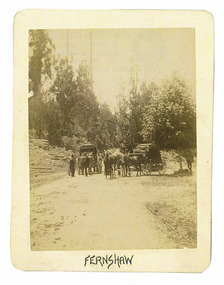 Marysville & District Historical Society
Photograph (Item) - Black and white photograph, Fernshaw, c1900
... orchard...blacks spur...black...The area was described in the 1903 Australian handbook: fernshaw healesville watts river orchard berry orchard blacks spur black spur mount juliet mount mondah maroondah dam victoria ARMSTRONG COLLECTION 42 STATION STREET/ SANDRINGHAM 3191/ TEL. (03) 9521 5442/ IAN M.L. ...An early black and white photograph taken at Fernshaw.An early black and white photograph taken at Fernshaw. Fernshaw was a rural township 63 km north-east of Melbourne and 10 km north-east of Healesville. Situated on the Watts River, near where a log had fallen making a convenient crossing, Fernshaw was settled in the 1860s. It provided good country for orchards and berry growing. The location was at the foot of Blacks Spur, with Mounts Juliet and Mondah rising on either side, providing spectacular scenery. There were nearby fern gullies giving rise to the name – ‘shaw’ is old English for thicket or wood. By 1875 Fernshaw had a post office (1865), two hotels, a school (1871) and stores. It was famed for its beauty, attracting tourists. In 1886 the Melbourne and Metropolitan Board of Works began work on the Watts River water catchment scheme – later to become Maroondah – and the Board obtained approval for the catchment country to be reserved and kept free of settlement. This required the removal of the Fernshaw township, which was completed by about 1890. The area was described in the 1903 Australian handbook:ARMSTRONG COLLECTION 42 STATION STREET/ SANDRINGHAM 3191/ TEL. (03) 9521 5442/ IAN M.L. ARMSTRONG OAMfernshaw, healesville, watts river, orchard, berry orchard, blacks spur, black spur, mount juliet, mount mondah, maroondah dam, victoria -
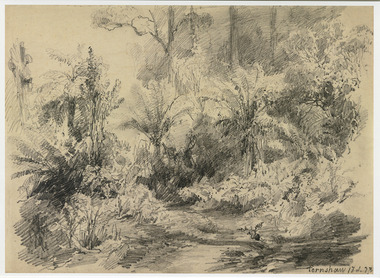 Marysville & District Historical Society
Artwork, other (Item) - Pencil Sketch, Louis Buvelot, Fernshaw 17.2.83, 1883
... It provided good country for orchards and berry growing. The location was at the foot of Blacks Spur, with Mounts Juliet and Mondah rising on either side, providing spectacular scenery. ...A copy of an early pencil sketch of Fernshaw in Victoria.A copy of an early pencil sketch of Fernshaw in Victoria by Louis Buvelot. Louis Buvelot ( 1814–1888), born Abram-Louis Buvelot, was a Swiss landscape painter who lived 17 years in Brazil and following 5 years back in Switzerland stayed 23 years in Australia, where he influenced the Heidelberg School of painters. Arriving in Melbourne in February 1865, after leaving the cold of Switzerland, which was impacting on his health, for the warmth of Australia, Buvelot was in business as a photographer in Bourke Street for a year but soon resumed his painting. He lived in Melbourne for a number of years before moving to Fitzroy. The National Gallery of Victoria purchased two of his paintings and he continued painting until his death in 1888. He was buried at the Boroondara Cemetery, where a large monument was erected in his memory. Fernshaw was a rural township 63 km northeast of Melbourne and 10 km northeast of Healesville. Situated on the Watts River, near where a log had fallen making a convenient crossing, Fernshaw was settled in the 1860s. It provided good country for orchards and berry growing. The location was at the foot of Blacks Spur, with Mounts Juliet and Mondah rising on either side, providing spectacular scenery. There were nearby fern gullies giving rise to the name – ‘shaw’ is old English for thicket or wood. By 1875 Fernshaw had a post office (1865), two hotels, a school (1871), and stores. It was famed for its beauty, attracting tourists. In 1886 the Melbourne and Metropolitan Board of Works began work on the Watts River water catchment scheme – later to become Maroondah – and the Board obtained approval for the catchment country to be reserved and kept free of settlement. This required the removal of the Fernshaw township, which was completed by about 1890.Fernshaw 17.2.83louis buvelot, fernshaw, victoria, national gallery of victoria, switzerland, boroondara cemetery, kew cemetery, artist -
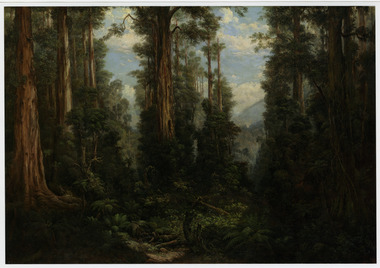 Marysville & District Historical Society
Painting (Item) - Oil painting, Isaac Whitehead, A spring morning near Fernshaw 1880, 1880
... It provided good country for orchards and berry growing. The location was at the foot of Blacks Spur, with Mounts Juliet and Mondah rising on either side, providing spectacular scenery. ...A copy of an early oil painting of Fernshaw in Victoria.A copy of an early oil painting of Fernshaw in Victoria by Isaac Whitehead. Isaac Whitehead (1819–1881) was an Irish-Australian artist who worked in watercolour and pastel. He was also a picture framer and art promoter. It is believed that Isaaz Whitehead emigrated to Australia with his family in either 1853 or 1858. Isaac Whitehead died at his home 50 Punt Road, Prahran, Melbourne, on 21 April 1881. Isaac Whitehead had established himself as the foremost picture framer in Melbourne by 1860, known for his highly ornate frames with floral decorations. Among the clients of his framing business were Louis Buvelot, Nicholas Chevalier, and Eugene von Guérard. In his own paintings, he painted a number of scenes of the forests of Gippsland, Victoria. His work focused on the rich landscapes with trees and ferns, with a high degree of botanical detail. His work won him two medals and his work was posthumously exhibited at 1884 Victorian Jubilee Exhibition, the 1886 London Colonial and Indian Exhibition, and the 1888 Melbourne Centennial Intercolonial Exhibition. Fernshaw was a rural township 63 km northeast of Melbourne and 10 km northeast of Healesville. Situated on the Watts River, near where a log had fallen making a convenient crossing, Fernshaw was settled in the 1860s. It provided good country for orchards and berry growing. The location was at the foot of Blacks Spur, with Mounts Juliet and Mondah rising on either side, providing spectacular scenery. There were nearby fern gullies giving rise to the name – ‘shaw’ is old English for thicket or wood. By 1875 Fernshaw had a post office (1865), two hotels, a school (1871), and stores. It was famed for its beauty, attracting tourists. In 1886 the Melbourne and Metropolitan Board of Works began work on the Watts River water catchment scheme – later to become Maroondah – and the Board obtained approval for the catchment country to be reserved and kept free of settlement. This required the removal of the Fernshaw township, which was completed by about 1890.isaac whitehead, fernshaw, victoria, louis buvelot, nicholas chevalier, eugene von guerard, gippsland, victorian jubilee exhibition, london colonial and indian exhibition, melbourne centennial intercolonial exhibition, watts river, healesville, blacks spur, mount juliet, mount mondah -
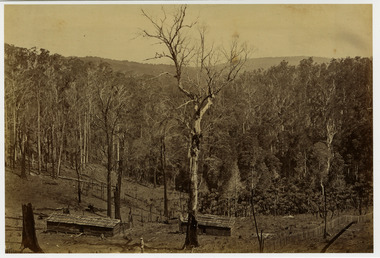 Marysville & District Historical Society
Photograph (Item) - Black and white photograph, Fred Kruger, Scene on the Watts River near Fernshaw, Unknown
... black and white photograph on the Watts River near Fernshaw in Victoria taken by Fred Kruger. Fred Kruger (born Johan Friedrich Carl Kruger, 18 April 1831 – 15 February 1888) was a German-born photographer noted for his early photography of landscape and indigenous peoples in Victoria, Australia. Fernshaw was a rural township 63 km northeast of Melbourne and 10 km northeast of Healesville. Situated on the Watts River, near where a log had fallen making a convenient crossing, Fernshaw was settled in the 1860s. It provided good country for orchards ...A copy of a black and white photograph on the Watts River near Fernshaw in Victoria.A copy of a black and white photograph on the Watts River near Fernshaw in Victoria taken by Fred Kruger. Fred Kruger (born Johan Friedrich Carl Kruger, 18 April 1831 – 15 February 1888) was a German-born photographer noted for his early photography of landscape and indigenous peoples in Victoria, Australia. Fernshaw was a rural township 63 km northeast of Melbourne and 10 km northeast of Healesville. Situated on the Watts River, near where a log had fallen making a convenient crossing, Fernshaw was settled in the 1860s. It provided good country for orchards and berry growing. The location was at the foot of Blacks Spur, with Mounts Juliet and Mondah rising on either side, providing spectacular scenery. There were nearby fern gullies giving rise to the name – ‘shaw’ is old English for thicket or wood. By 1875 Fernshaw had a post office (1865), two hotels, a school (1871), and stores. It was famed for its beauty, attracting tourists. In 1886 the Melbourne and Metropolitan Board of Works began work on the Watts River water catchment scheme – later to become Maroondah – and the Board obtained approval for the catchment country to be reserved and kept free of settlement. This required the removal of the Fernshaw township, which was completed by about 1890.fernshaw, watts river, victoria, fred kruger, photograph -
 Federation University Historical Collection
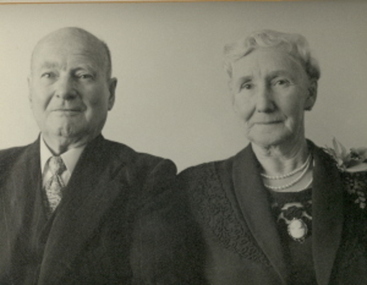
Photograph - Photograph - Black and White, Albert and Grace Steane, c1942
... Age of the couple, and Mrs Steane's orchard spray suggests it may be a Golden Wedding portrait. albert steane albert w. steane grace steane Black and white photograph of Albert W. ...Age of the couple, and Mrs Steane's orchard spray suggests it may be a Golden Wedding portrait.Black and white photograph of Albert W. Steane and his wife, Grace Steanealbert steane, albert w. steane, grace steane -
 Federation University Historical Collection
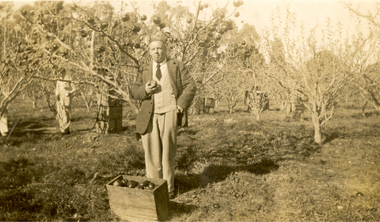
Photograph - Black and White, Alan Sonsee in a Tasmanian Orchard, c1956
... Alan Sonsee in a Tasmanian Orchard, c1956 Photograph - Black and White ...This photograph was probably taken on a Ballarat Teachers' College excursion to Tasmania.Photograph of Alan Sonsee, a lecturer of the Ballarat Teachers' College, eating an apple in a Tasmanian orchard. Wooden boxes of apples are evident.ballarat teachers' college, tasmania, apples, orchard, alan sonsee -
 Greensborough Historical Society
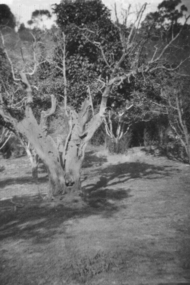
Photograph - Digital Image, Apple Tree: John Bosch, 1930c
... Photograph of the Greensborough apple tree purported to have come from John Batman's orchard around 1840s Early photograph of the Batman apple tree batman apple tree john batman john bosch Digital copy of black and white photograph. ...Photograph of the Greensborough apple tree purported to have come from John Batman's orchard around 1840sEarly photograph of the Batman apple treeDigital copy of black and white photograph.batman apple tree, john batman, john bosch -
 Greensborough Historical Society
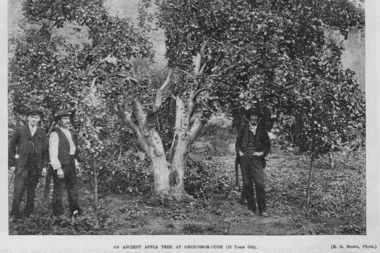
Photograph - Digital Image, John A. Bosch, 09/04/1910
... orchard circa 1840. A Melbourne Leader article about the tree was dated 9/4/1910 and this photo appeared therein. Johannes Bosch came to Australia in 1884 aged 17. He married Henrietta Duck, had 3 children and divorced in 1903. Around 1902 he anglicized the family name to Bush. john bosch batman apple tree johannes bosch Digital copy of black ...Photograph of John A. Bosch (Bush) and the Greensborough apple tree purported to have come from John Batman's orchard circa 1840. A Melbourne Leader article about the tree was dated 9/4/1910 and this photo appeared therein. Johannes Bosch came to Australia in 1884 aged 17. He married Henrietta Duck, had 3 children and divorced in 1903. Around 1902 he anglicized the family name to Bush.Digital copy of black and white photograph. john bosch, batman apple tree, johannes bosch -
 Greensborough Historical Society
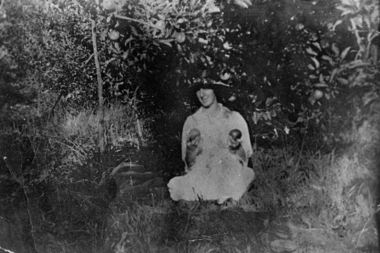
Photograph - Digital Image, Mrs Greenwood with two apples; and, older Gladys Greenwood: group of photographs, 1927c
... The area of Greensborough along the Plenty River was known for its orchards, which might explain why Mrs Greenwood is photographed holding the apples. greenwood gladys greenwood Digital copy of one black and white photograph and one colour photograph. ...A young Mrs Greenwood is seen posing with two apples; an older Miss Gladys Greenwood (daughter of Mrs Greenwood) is seen at a celebration. The Greenwood family share farmed with the Bosch family.The area of Greensborough along the Plenty River was known for its orchards, which might explain why Mrs Greenwood is photographed holding the apples.Digital copy of one black and white photograph and one colour photograph.greenwood, gladys greenwood -
 Greensborough Historical Society
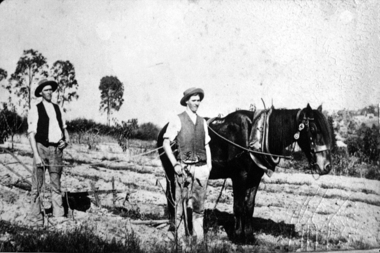
Photograph - Digital Image, Partington brothers ploughing, 1895c
... orchard fields at Willis Vale. A pioneer Greensborough family. tom partington joe partington partington family willis vale Digital copy of black and white photograph. ...Tom and Joe Partington working the horse and plough in the orchard fields at Willis Vale.A pioneer Greensborough family.Digital copy of black and white photograph.tom partington, joe partington, partington family, willis vale -
 Greensborough Historical Society
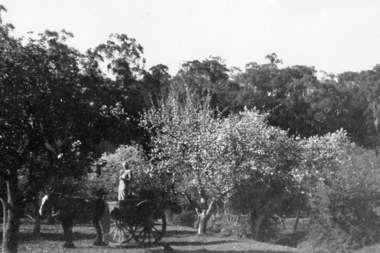
Photograph - Digital image, Apples on Partington's Flat, 1920c
... orchard owned by the Partington family. The 'picker' is believed to be Sarah Jane Price who was the mother of William Partington's first wife Mary Jane Price. William married Mary Jane Price in 1889. They had a daughter Eva in 1899, but Mary Jane died the following year, in 1900, during the birth of a second child. A pioneer Greensborough family. partingtons flat partington family willis vale apple trees Digital copy of black ...Apple trees on Partington's Flat. Part of the Willis Vale farm and orchard owned by the Partington family. The 'picker' is believed to be Sarah Jane Price who was the mother of William Partington's first wife Mary Jane Price. William married Mary Jane Price in 1889. They had a daughter Eva in 1899, but Mary Jane died the following year, in 1900, during the birth of a second child.A pioneer Greensborough family.Digital copy of black and white photograph.partingtons flat, partington family, willis vale, apple trees
