
Showing 47 items matching " bone r."
-
 Geelong RSL Sub Branch
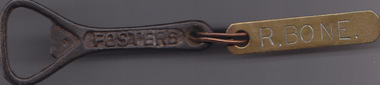
Issue Bottle Opener - VX3032 R Bone, Mid 20th Century
... Issue Bottle Opener - VX3032 R Bone......VX3032 R Bone...The Bottle Opener was military issue to VX3032 R Bone who served with the AIF Special Force during WW2...On the Opener Fosters Larger, on the Name Tag VX3032 R Bone....The Bottle Opener was military issue to VX3032 R Bone who served with the AIF Special Force during WW2 The Bottle Opener belonged to VX3032 R Bone. ...The Bottle Opener was military issue to VX3032 R Bone who served with the AIF Special Force during WW2The Bottle Opener belonged to VX3032 R Bone.An Army Issue Bottle Opener with a Name Tap attached together by a split ring.On the Opener Fosters Larger, on the Name Tag VX3032 R Bone.ww2, vx3032 r bone, aif special force -
 Glen Eira Historical Society
Ephemera - Carnegie Cricket Club
... ... Bone R....Carnegie Wishart G. Bone R. Boxshall K. Cameron H. Johnson A. Hubbard L. ...This file contains nineteen Carnegie Cricket Club season match cards owned by the club’s Honorary Secretary for 1930-1931, and life member, Mr. T. E. S. Ash. The cards encompass the years from 1930-1931, 1936-1938, 1940-1941, 1943-1951 and 1952-1960. Each of the match cards list the office bearers for the year as well as the club’s fixtures. Some contain handwritten annotations by Mr. Ash as to the outcomes of the matches.ash mr., shelton j. n., reid s. h., price c., harratt f., stevenson h., donaldson t., walker a., cakebread e., gregg r., tebbs j., tempany t., quinn p., price f., lonch w., newing s., henderson e., reader a., larter f. t., harwood h., ash t. e. s., neerim road, bone j., jenner t., paul j., richards u., diamond c., mckee w., reid s. h., robertson g., sherwood j., tyers s. w., allaway j. e., clarke t. b., goldman a., jukes a., spencer w., beaumont c., carnegie, wishart g., bone r., boxshall k., cameron h., johnson a., hubbard l., larter f., price c. l., moore d., allaway e., ash t., louch w. h., goodall m., reid g., graham j., reid m., wilde w., willison p., murrumbeena, henty street, crussell j. a., williams h., allan p., pooley p. c., greig g., pierce l., caples r. w., newbury c. j., chamberlain a., cusack r., driver w. j., mau r., moore d. c., wishart m., pummeroy k., bailey f. i., brown r. w., whelan j. g., parker c., rofe r., wilkins d., dann e., tebbs j. (junior), yenden road, loush w., neville street, williams r. h., greenway a., lewis j., rolfe d., saunders r., wishart d., st. anthony, glenhuntly, stocks w., christie a., greenway a. e., caulfield south, ireland p., mcdougall c. j., burke s., pert r. g. a., mimosa road, carn. soc., carnegie socials, caulfield sth, ormond a, sweetnam r. w., price f. n., bone r. n., burke s. r., mcintosh a., ormond, caulfield east, ormond park, murrumbeena c, murrumbeena d, elsternwick, murrumbeena e, carnegie soldiers, mccarron a., newbury c. r., middleton j., o’connor j., cakebread j., morton l., lyons street, mckinnon, carnegie traders, bone r. j., north road, caul. f’balls, caulfield north, clarke t., whitelaw w., sweetman r. w., jury j., macfarlan i., daniells j. (senior), price r., bull a. j., tranmere avenue, wakeman o. w., coorigil road, bailey i., james p. c., ormond b, james p., pert r., green w., knox h., reid street, caulfield, heib j., price v. j., elliot a., phillips n., wilde w. j., cusack s., tyers n. s., hender b., george d., ford j., castles p., rolfe d. h., cusack r. s., gamble h., louch w. h., pearce e., koornang road, koornan road, harrington a., somerville h. j., grange road, sutherland m., bent street, rowland s., chestnut street, ariadne avenue, rankin ian, caulfield city, carnegie r. s. l., caulfield foot, murrumbeena foot, whitelaw m., chilvers r., kennedy d., mclatchie h., murrumbeena z, ormond c. of c., murrumbeena b, bentleigh, crussell j., mckee g., andrews e. j., andrews n., somerville h., moonya road, murrumbeena park, sweetnan r. w., hubbard l. c., harwood h. j., wilkins d. (senior), sporting clubs, cricket, clubs and associations, volunteers -
Glen Eira Historical Society
Letter - MURRUMBEENA FOOTBALL CLUB
... ... Bone R....Simpson E. Barnes C. Bone R. Rolte H. Lamden F. Howell R. Coonerty J. ...This file contains 2 items: 1/A letter to Caulf Historical Society, requesting any history of Murrumbeena Football Club, from R. Gould. Reply from T.J. Hart advising that no information on the club is held by the society. 2/A fifty page book on the history of Murrumbeena Football Club, from foundation in 1927 to 1976. Includes 7 team photocopied photographs and one of the pavilion after completion in 1922, book written by R. Gould.gould ross, murrumbeena football club, football, football clubs, ‘dick’s horse paddock’, butchers, murrumbeena, great dandenong road, murrumbeena road, n.r. cooper, market gardens, orchards, carnegie rovers, oakleigh juniors, oakleigh district junior, football association, committees of management, murrumbeena junior football club, dick r., armstrong j., silverman dr. i., phillips r. cr., mudge les, truman v., bristow l., richardson , truman t., robertson, carnegie rovers, bentleigh, oakleigh juniors, ted pelling’s horse stables, stables, kangaroo road, moore george, armstrong fred, tinsley roy, naylor reg, ward bill, hunter mr., cox mr., scivenor mr., marian mr., wilde mr., townley mr., mudge mr., hay mr , ferguson mr., wilde wal, pelling e., watkins e., giles mr., young mr., paterson mr., reid mr., ross mr., walker mr., lyre mr., cannon mr., ronaldson tom, pearson , hall , collaghan jack, dennis, wlash, cannon, rickets, ferguson, wotes, hay, washbrooke, wilde , phillipson, welch, brown, cox, sharp, thomas, palmer, harris e., dick a., caulfield-dandenong, junior football association, metropolitan amateurs, pavilions, caulfield city council, murrumbeena amateurs, miss football queen, ralph miss, welch vic, emmins ‘titch’ g., bone r., havell, ellis r. (bob), pew t., stock a., riley wal, harris ‘codger’ roy, biddington j., nicholson a., bernes a.c., healey g., riley w., summerfield d., lee e., harris j., bass j., denning j., phillips c., king f., weatheral n.w., stewart s., rolfe h., dalgleish s., malone l., simpson e., kain a., rennie w., sloan a., painter e., bernes c., biddington g., parker c., willmott n., murrumbeena cricket club, corbett, murrumbeena districts, holden ‘rusty’, crundy, dean, taylor, bourke, moore, stewart, hause, clarke, gear, page, rowe bill, mathers alf, awards, farrell r., oakley r., escott l., callaghan t., mathers r., andrew j., halfpenny j., howland w., m -
 Glen Eira Historical Society
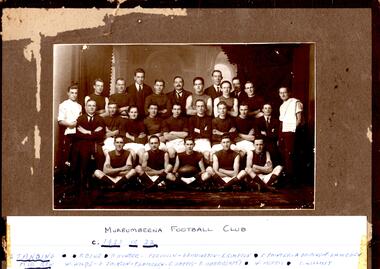
Photograph - MURRUMBEENA FOOTBALL CLUB
... ... Bone R....Murrumbeena Football Club Bone R. Ferguson Hunter A. Bioddington G. Simpson E. ...Two photographs of Murrumbeena Football Club team C 1921/1922 and 1924. Includes names of some officebearers and club mascot.murrumbeena football club, bone r., ferguson, hunter a., bioddington g., simpson e., painter e., bristowe a., lambden f., wilde w., jackson g., lambden p., harris g., harris r., morris w., willmot c., collister w., callagan l., kain a.g., colliers s., stock a., lee e., ilton h., rogers w., denning j., sloan a., wilde g., willmott n., king f., rennie w., healey g., bass j., summerfield d., fitch j., welch v., biddington j., nicholson a., wilde w.j., harris j., ellis r., pew t., barnes a., simpson e., barnes c., rolfe h., lambden f., howell r., coonerty j., barnes r., emmens h., stewart s., ‘kain’, premiership photograph -
 Warrnambool and District Historical Society Inc.
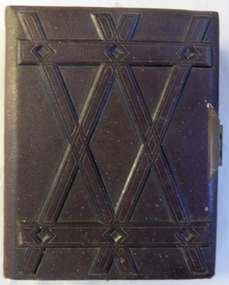
Album, Portrait, Mid-19th century
... There are photographers’ names on the backs of the photos including R Boning @ St Leonard on Sea, C Hawkins Preston St Brighton, W H Mason 21 George St Croydon, Batchelder & Co 41 Collins St, D Clarke Warrnambool, T.J.J. ...There are photographers’ names on the backs of the photos including R Boning @ St Leonard on Sea, C Hawkins Preston St Brighton, W H Mason 21 George St Croydon, Batchelder & Co 41 Collins St, D Clarke Warrnambool, T.J.J. ...This album contains photographs from a variety of sources in Scotland, England, and Australia. The date range of the photographers ranges from around 1847 to 1900. There are photos of families and individuals and some are obviously linked. This album has historic and social significance in that it appears to be a collection of family photographs which link areas of Scotland with the coming of early settlers to Australia and in some photos obviously to Warrnambool. They provide an overview of fashion and styles pertaining to the 1870’s through to around 1900’s and hence it has interpretive value.Brown leather bound hard cover with raised geometric design on the front. Back cover is plain. Edges of pages are gilded and closed with brass- coloured hinged clasp with keyhole. Contains numerous photographs of individuals and family groups. There are generally four to a page, with some empty spaces towards the back of the album. Inside front cover in grey lead 472 or/-. There are photographers’ names on the backs of the photos including R Boning @ St Leonard on Sea, C Hawkins Preston St Brighton, W H Mason 21 George St Croydon, Batchelder & Co 41 Collins St, D Clarke Warrnambool, T.J.J. Wyatt Warrnambool, and P. Dawson Warrnambool. warrnambool photo album, r boning, st leonard on sea, c hawkins, w h mason, batchelder & co, d clarke warrnambool, t.j.j. wyatt warrnambool, p. dawson warrnambool, warrnambool -
 Bendigo Military Museum
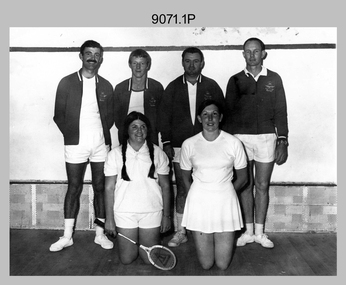
Photograph - Bones Day – Army Survey Regiment Verses RAAF School of Radio at Bendigo, Victoria, Bones Day – Army Survey Regiment Verses RAAF School of Radio at Bendigo, Victoria, c1970s
... Presentation of Little Bone trophy; L to R: LTCOL Don Ridge (CO), unidentified....Presentation of Little Bone trophy; L to R: LTCOL Don Ridge (CO), unidentified. ...These 21 photographs were taken at Bones Day, an annual sports competition between the Army Survey Regiment and the RAAF School of Radio at Bendigo in the 1970s, probably all in 1972 as LTCOL Don Ridge was the CO in 1972. The two units took turns each year to host the event. The day competition usually comprised basketball, cricket, cross country, golf, sailing, squash, softball, tennis, touch football, rifle shooting, tug-of-war and volleyball. The “big bone” trophy comprising a large bone from a beast housed inside a wooden framed glass case, was awarded to the winner of the day competition. The evening competition often included darts, carpet bowls, hookey, quoits and billiards/snooker. The “little bone” (a mounted chicken bone) was the trophy awarded to the winner of the evening competition (reportedly taken from his plate by the RAAF OC at the initial competition as consolation for Army losing the day competition, but winning the evening competition). The 3-hour bus trip for the visiting unit on their return was typically very raucous, with the drinking continuing. The history of the Bones Day competition is best described in the booklet titled - Bones of Contention Souvenir Program. 1965. Refer to Item 6267.These 21 photographs were taken at Bones Day, an annual sports competition between the Army Survey Regiment (ASR) and the RAAF School of Radio (SOR) at Bendigo in the 1970s, probably all in 1972 as LTCOL Don Ridge was the CO in 1972. The photographs were printed on photographic paper and are part of the Army Survey Regiment’s Collection. The black and white photographs were scanned at 300 dpi. .1) - Photo, black & white, 1970s, SOR Squash Team: All unidentified. .2) - Photo, black & white, 1970s, ASR Squash Team: Back row L to R: John Bennett, Kevin Kennedy, unidentified, Brian Rogers. Front row L to R: unidentified, Irene Saunders. .3) - Photo, black & white, 1970s, ASR Golf Team: Back row L to R: Ken Rich, Bob Coultard, unidentified (x2), Graeme Jeffers, unidentified. Front row L to R: Kevin (Chuck) Berry, Noel Sproles, Don Taylor, unidentified, Russ Larsen. .4) - Photo, black & white, 1970s, SOR Tug-of-War Team: All unidentified. .5) - Photo, black & white, 1970s, ASR Tug-of-War Team: Back row L to R: Peter Saunders. Noel Morrison, Jim Cook, Roy Morgan, Ken Slater, Bob Rogister, Adrian Rynberk, Tony Ellis. Front row L to R: Tom Pattison, Bob Hayden, unidentified, Phil McGuire, Peter ‘Blue’ Blaskett. .6) - Photo, colour, 1970s, ASR Rugby Team: Back row L to R: unidentified (x2), Wally Herbst, Bob Hayden, Peter Mansell, unidentified. Centre row L to R: Col Darch, Chris Parkinson, unidentified (x2), unidentified (x2). Front row L to R: unidentified (x2), Kerry Gallager, unidentified (x2), Bob Williams. .7) - Photo, black & white, 1970s, ASR Volleyball Team: Back row L to R: John Bullen, Eddie Jacobs, Bryan Taylor, unidentified, Tom Zentai, unidentified. Front row L to R: unidentified, John Winzar, Ken Slater, unidentified. .8) - Photo, black & white, 1970s, ASR Rifle Shooting Team: Back row L to R: Tony Ellis, unidentified, John Waight, Ian ‘Lofty’ Turner. Front row L to R: Warren ‘Waldo’ Shirley, unidentified(x2), Paul (Ivan) Nozaic. .9) - Photo, black & white, 1970s, SOR Rifle Shooting Team: All unidentified. .10) - Photo, black & white, 1970s, ASR Tennis Team: Back row L to R: unidentified (x2), Shirley Stephenson, unidentified, Ros Melsom. Front row L to R: Lynn Ireland, Desi Asaris, unidentified, Rita Asaris. .11) - Photo, black & white, 1970s, ASR & SOR Basketball Teams: Back row L to R: Tom Pattison, Robert Melsom, remainder unidentified. Front row L to R: Russ Larsen, Chris McCloud, John Thomas, unidentified (x2) Col Minto, unidentified. .12) - Photo, black & white, 1970s, ASR & SOR Volleyball Teams: Back row L to R: Roger Pearson, unidentified, Bill Tewson, unidentified, Bob Rogister, unidentified (x2), Greg Francis-Wright, unidentified. Front row L to R: unidentified (x3), Ken Slater, unidentified, John Bateman, unidentified, Kerry Gallagher. .13) - Photo, black & white, 1970s, SOR Cricket Team: All unidentified. .14) - Photo, black & white, 1970s, ASR Cricket Team: Rear row, Mick Dempster, Peter Mansell, unidentified, Kevin (Chuck) Berry, unidentified, John Dean, Trevor Osbourne, unidentified, Warren Chadwick, Front row Geoff Murray, Tom Zentai, Chris Bolter, Bob Fidler, unidentified, Peter Barrett. .15) - Photo, black & white, 1970s, ASR Tennis Team: Back row L to R: Noel Morrison, Adrian Rynberk, unidentified, Chris Parkinson, Terry Bulley, unidentified. Front row L to R: Mick Flynn, unidentified, Ken Slater, unidentified (x2), Bob Rogister. .16) - Photo, black & white, 1972. Presentation of Big Bone trophy; L to R: unidentified, LtCol Don Ridge (CO). .17) - Photo, black & white, 1972. Presentation of Big Bone trophy; L to R: unidentified, LtCol Don Ridge (CO). .18) - Photo, black & white, 1972. Presentation of Bones Day trophies; L to R: unidentified, WO1 John Hogan, unidentified, LtCol Don Ridge (CO). .19) - Photo, black & white, 1972. Presentation of Bones Day trophies; L to R: unidentified, LtCol Don Ridge (CO). .20) - Photo, black & white, 1972. Presentation of Little Bone trophy; L to R: unidentified, LtCol Don Ridge (CO). .21) - Photo, black & white, 1972. Presentation of Little Bone trophy; L to R: LTCOL Don Ridge (CO), unidentified..10P annotated ‘BR ? ? Shirley ? Ros FR L to Right Lynn Ireland Desi ? Retia‘ on back of photo. .16P Bones Day 1972 - unk, LTCOL Don Ridge. .20P Bones Day undated. .21P Bones Day undated. Remaining photos are not annotated.royal australian survey corps, rasvy, army survey regiment, army svy regt, fortuna, bones day, sports, raaf v army -
 Bendigo Military Museum
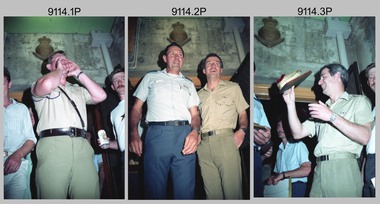
Photograph - Bones Day - Army Survey Regiment versus RAAF School of Radio, Bendigo, 1990
... Bones Day, an annual sports competition between the Army Survey Regiment (ASR) and the RAAF School of Radio (SOR), held at Bendigo in November 1990. The photographs are on 35mm negative film and were scanned at 2400 dpi. They are part of the Army Survey Regiment’s Collection. .1) - Photo, colour, 1990, ASR’s RSM WO1 Neville Stone asked the crowd for silence. .2) - Photo, colour, 1990, L to R: unidentified CO SOR, CO ASR LTCOL Rene van den Tol. .3) - Photo, colour, 1990, CO ASR LTCOL Rene van den Tol holds up an unidentified award. .4) - Photo, colour, 1990, Presentation of an unidentified award - L to R: unidentified CO SOR, CO ASR LTCOL Rene van den Tol, unidentified. .5) - Photo, colour, 1990, Presentation of an unidentified award - L to R: unidentified CO SOR, CO ASR LTCOL Rene van den Tol. .6) - Photo, colour, 1990, Awards presentation - L to R: unidentified CO SOR, CO ASR LTCOL Rene van den Tol, unidentified. .7) - Photo, colour, 1990, Presentation of the ‘Big Bone’ award - L to R: unidentified CO SOR, CO ASR LTCOL Rene van den Tol, unidentified. .8) - Photo, colour, 1990, CO ASR LTCOL Rene van den Tol holds up the ‘Big Bone’ award. .9) & .10) - Photo, colour, 1990, Unidentified Army and RAAF personnel at the Awards presentations. .11) & .12) - Photo, colour, 1990, L to R: the unidentified CO SOR presents a framed photo of RAAF aircraft to CO ASR LTCOL Rene van den Tol. ...Bones Day, an annual sports competition between the Army Survey Regiment (ASR) and the RAAF School of Radio (SOR), held at Bendigo in November 1990. The photographs are on 35mm negative film and were scanned at 2400 dpi. They are part of the Army Survey Regiment’s Collection. .1) - Photo, colour, 1990, ASR’s RSM WO1 Neville Stone asked the crowd for silence. .2) - Photo, colour, 1990, L to R: unidentified CO SOR, CO ASR LTCOL Rene van den Tol. .3) - Photo, colour, 1990, CO ASR LTCOL Rene van den Tol holds up an unidentified award. .4) - Photo, colour, 1990, Presentation of an unidentified award - L to R: unidentified CO SOR, CO ASR LTCOL Rene van den Tol, unidentified. .5) - Photo, colour, 1990, Presentation of an unidentified award - L to R: unidentified CO SOR, CO ASR LTCOL Rene van den Tol. .6) - Photo, colour, 1990, Awards presentation - L to R: unidentified CO SOR, CO ASR LTCOL Rene van den Tol, unidentified. .7) - Photo, colour, 1990, Presentation of the ‘Big Bone’ award - L to R: unidentified CO SOR, CO ASR LTCOL Rene van den Tol, unidentified. .8) - Photo, colour, 1990, CO ASR LTCOL Rene van den Tol holds up the ‘Big Bone’ award. .9) & .10) - Photo, colour, 1990, Unidentified Army and RAAF personnel at the Awards presentations. .11) & .12) - Photo, colour, 1990, L to R: the unidentified CO SOR presents a framed photo of RAAF aircraft to CO ASR LTCOL Rene van den Tol. ...These 33 photographs were taken at Bones Day, an annual sports competition between the Army Survey Regiment and the RAAF School of Radio in November 1990. The two units took turns each year to host the event. The day competition usually comprised basketball, cross country, golf, sailing, squash, softball, tennis, touch football, rifle shooting, tug-of-war and volleyball. The “big bone” trophy comprising a large bone from a beast housed inside a wooden framed glass case, was awarded to the winner of the day competition. The evening competition often included darts, carpet bowls, hookey, quoits and billiards/snooker. The “little bone” (a mounted chicken bone) was the consolation trophy awarded to the winner of the evening competition. The “O.H.A.R.A Rock” seen in photos 9114.15P and 9114.16P was awarded to the shooter for the lowest score in rifle shooting. He had to lug it with him for the rest of the evening. The 3-hour bus trip for the visiting unit on their return was typically very raucous. The history of the Bones Day competition is best described in the booklet titled - Bones of Contention Souvenir Program. 1965. Refer to Item 6267. This collection of 33 photographs was taken at Bones Day, an annual sports competition between the Army Survey Regiment (ASR) and the RAAF School of Radio (SOR), held at Bendigo in November 1990. The photographs are on 35mm negative film and were scanned at 2400 dpi. They are part of the Army Survey Regiment’s Collection. .1) - Photo, colour, 1990, ASR’s RSM WO1 Neville Stone asked the crowd for silence. .2) - Photo, colour, 1990, L to R: unidentified CO SOR, CO ASR LTCOL Rene van den Tol. .3) - Photo, colour, 1990, CO ASR LTCOL Rene van den Tol holds up an unidentified award. .4) - Photo, colour, 1990, Presentation of an unidentified award - L to R: unidentified CO SOR, CO ASR LTCOL Rene van den Tol, unidentified. .5) - Photo, colour, 1990, Presentation of an unidentified award - L to R: unidentified CO SOR, CO ASR LTCOL Rene van den Tol. .6) - Photo, colour, 1990, Awards presentation - L to R: unidentified CO SOR, CO ASR LTCOL Rene van den Tol, unidentified. .7) - Photo, colour, 1990, Presentation of the ‘Big Bone’ award - L to R: unidentified CO SOR, CO ASR LTCOL Rene van den Tol, unidentified. .8) - Photo, colour, 1990, CO ASR LTCOL Rene van den Tol holds up the ‘Big Bone’ award. .9) & .10) - Photo, colour, 1990, Unidentified Army and RAAF personnel at the Awards presentations. .11) & .12) - Photo, colour, 1990, L to R: the unidentified CO SOR presents a framed photo of RAAF aircraft to CO ASR LTCOL Rene van den Tol. ASR’s RSM WO1 Neville Stone is partially seen on far right. .13) - Photo, colour, 1990, L to R: CO ASR LTCOL Rene van den Tol, unidentified CO SOR with the ‘Big Bone’ award. .14) - Photo, colour, 1990, CO ASR LTCOL Rene van den Tol, unidentified CO SOR with an unidentified award. .15) - Photo, colour, 1990, L to R: unidentified shooter with the “O.H.A.R.A Rock” award, CO ASR LTCOL Rene van den Tol. .16) - Photo, colour, 1990, unidentified shooter with the “O.H.A.R.A Rock” award. .17) - Photo, colour, 1990, L to R: LCPL Nikki Midgley and SPR Del Madge. .18) - Photo, colour, 1990, L to R: unidentified (x3), SPR Del Madge. .19) - Photo, colour, 1990, L to R: CPL John ‘Flash’ Anderson, unidentified (x7), SPR Del Madge, unidentified. .20) - Photo, colour, 1990, L to R: LCPL Chris Woodman, SPR Del Madge. .21) - Photo, colour, 1990, L to R: LCPL Chris Woodman, WO2 Rhys De Laine. .22) - Photo, colour, 1990, L to R: SGT Brian Fauth, SGT Dale Hudson, WO1 Trevor Osborne. .23) - Photo, colour, 1990, L to R: WO1 Trevor Osborne, CO ASR LTCOL Rene van den Tol, WO1 Kevin ‘Sluggo’ Slater. In background - ASR’s RSM WO1 Neville Stone. .24) - Photo, colour, 1990, L to R: SSGT Greg Byers, WO1 Kevin ‘Sluggo’ Slater. .25) - Photo, colour, 1990, L to R: unidentified, SPR Dawn Hoadley, unidentified. .26) - Photo, colour, 1990, L to R: SPR Tony Hilbig, unidentified. .27) - Photo, colour, 1990, L to R: Ken Delmenico, unidentified. .28) - Photo, colour, 1990, unidentified (x4). .29) - Photo, colour, 1990, unidentified (x3). .30) - Photo, colour, 1990, L to R: unidentified, SPR Lee Palfrey. .31) - Photo, colour, 1990, in foreground L to R: unidentified (x2), SPR Lee Palfrey, unidentified. In background L to R: SPR Gavin Craggs, unidentified, SGT Gary Kerr, unidentified (x4). .32) - Photo, colour, 1990, L to R: unidentified, LCPL Chris Woodman, unidentified, SPR Simone Rodgers. .33) - Photo, colour, 1990, unidentified airman..1P to .33P – No personnel are identified. ‘Bones Day 1990’ is annotated on the plastic negative sleeveroyal australian survey corps, rasvy, army survey regiment, army svy regt, fortuna, bones day -
 Flagstaff Hill Maritime Museum and Village
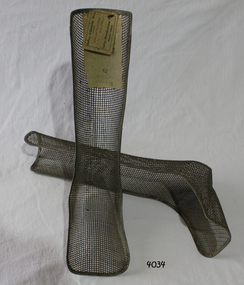
Splint, c. 1910-1920
... r angus...dr ryan...surgical instrument...t.s.s. largs bay...warrnambool base hospital...nhill base hospital...mira hospital...flying doctor...medical treatment...medical history...medical education...medical text book...wire mesh splint...wire mesh cast...orthopaedic medical equipment...bone...Dr Angus assisted Dr Tom Ryan, a pioneer in the use of X-rays and in ocular surgery. flagstaff hill warrnambool shipwrecked coast flagstaff hill maritime museum maritime museum shipwreck coast flagstaff hill maritime village great ocean road dr w r angus dr ryan surgical instrument t.s.s. largs bay warrnambool base hospital nhill base hospital mira hospital flying doctor medical treatment medical history medical education medical text book wire mesh splint wire mesh cast orthopaedic medical equipment bone setting equipment 1910’s medical equipment medical artefact "DePuy Adjustable Wire / PATENTED / Tibia and Fibula Splint / No. 32 Medium Posterior / DePuy Manufacturing Co. / Warsaw, Indiana" Splint, (pair of 2) from the W.R. ...This is a pair of vintage DePuy wire mesh splints made to support a broken leg while the bone mended. The design was in use before and during WWI. It replaced the wooden splints previously used to reset bones in the late nineteenth to early 20th century. This new splint was invented by a traveling pharmaceutical salesman, Revra DePuy. He began manufacturing in his Warsaw, Indiana in 1895; the first commercial manufacture of orthopaedic equipment in the world . The company eventually became Johnson & Johnson. This pair of splints was donated to Flagstaff Hill Maritime Village by the family of Doctor William Roy Angus, Surgeon and Oculist. It is part of the “W.R. Angus Collection” that includes historical medical equipment, surgical instruments and material once belonging to Dr Edward Ryan and Dr Thomas Francis Ryan, (both of Nhill, Victoria) as well as Dr Angus’ own belongings. The Collection’s history spans the medical practices of the two Doctors Ryan, from 1885-1926 plus that of Dr Angus, up until 1969. These splints would have belonged to Dr Tom Ryan before being passed onto Dr. W.R. Angus. ABOUT THE “W.R.ANGUS COLLECTION” Doctor William Roy Angus M.B., B.S., Adel., 1923, F.R.C.S. Edin.,1928 (also known as Dr Roy Angus) was born in Murrumbeena, Victoria in 1901 and lived until 1970. He qualified as a doctor in 1923 at University of Adelaide, was Resident Medical Officer at the Royal Adelaide Hospital in 1924 and for a period was house surgeon to Sir (then Mr.) Henry Simpson Newland. Dr Angus was briefly an Assistant to Dr Riddell of Kapunda, then commenced private practice at Curramulka, Yorke Peninsula, SA, where he was physician, surgeon and chemist. In 1926, he was appointed as new Medical Assistant to Dr Thomas Francis Ryan (T.F. Ryan, or Tom), in Nhill, Victoria, where his experiences included radiology and pharmacy. In 1927 he was Acting House Surgeon in Dr Tom Ryan’s absence. Dr Angus had become engaged to Gladys Forsyth and they decided he would take time to further his studies overseas in the UK in 1927. He studied at London University College Hospital and at Edinburgh Royal Infirmary and in 1928, was awarded FRCS (Fellow from the Royal College of Surgeons), Edinburgh. He worked his passage back to Australia as a Ship’s Surgeon on the on the Australian Commonwealth Line’s T.S.S. Largs Bay. Dr Angus married Gladys in 1929, in Ballarat. (They went on to have one son (Graham 1932, born in SA) and two daughters (Helen (died 12/07/1996) and Berenice (Berry), both born at Mira, Nhill ) Dr Angus was a ‘flying doctor’ for the A.I.M. (Australian Inland Ministry) Aerial Medical Service in 1928 . The organisation began in South Australia through the Presbyterian Church in that year, with its first station being in the remote town of Oodnadatta, where Dr Angus was stationed. He was locum tenens there on North-South Railway at 21 Mile Camp. He took up this ‘flying doctor’ position in response to a call from Dr John Flynn; the organisation was later known as the Flying Doctor Service, then the Royal Flying Doctor Service. A lot of his work during this time involved dental surgery also. Between 1928-1932 he was surgeon at the Curramulka Hospital, Yorke Peninsula, South Australia. In 1933 Dr Angus returned to Nhill where he’d previously worked as Medical Assistant and purchased a share of the Nelson Street practice and Mira hospital from Dr Les Middleton one of the Middleton Brothers, the current owners of what was once Dr Tom Ryan’s practice. Dr L Middleton was House Surgeon to the Nhill Hospital 1926-1933, when he resigned. [Dr Tom Ryan’s practice had originally belonged to his older brother Dr Edward Ryan, who came to Nhill in 1885. Dr Edward saw patients at his rooms, firstly in Victoria Street and in 1886 in Nelson Street, until 1901. The Nelson Street practice also had a 2 bed ward, called Mira Private Hospital ). Dr Edward Ryan was House Surgeon at the Nhill Hospital 1884-1902 . He also had occasions where he successfully performed veterinary surgery for the local farmers too. Dr Tom Ryan then purchased the practice from his brother in 1901. Both Dr Edward and Dr Tom Ryan work as surgeons included eye surgery. Dr Tom Ryan performed many of his operations in the Mira private hospital on his premises. He too was House Surgeon at the Nhill Hospital 1902-1926. Dr Tom Ryan had one of the only two pieces of radiology equipment in Victoria during his practicing years – The Royal Melbourne Hospital had the other one. Over the years Dr Tom Ryan gradually set up what was effectively a training school for country general-practitioner-surgeons. Each patient was carefully examined, including using the X-ray machine, and any surgery was discussed and planned with Dr Ryan’s assistants several days in advance. Dr Angus gained experience in using the X-ray machine there during his time as assistant to Dr Ryan. Dr Tom Ryan moved from Nhill in 1926. He became a Fellow of the Royal Australasian College of Surgeons in 1927, soon after its formation, a rare accolade for a doctor outside any of the major cities. He remained a bachelor and died suddenly on 7th Dec 1955, aged 91, at his home in Ararat. Scholarships and prizes are still awarded to medical students in the honour of Dr T.F. Ryan and his father, Dr Michael Ryan, and brother, John Patrick Ryan. ] When Dr Angus bought into the Nelson Street premises in Nhill he was also appointed as the Nhill Hospital’s Honorary House Surgeon 1933-1938. His practitioner’s plate from his Nhill surgery states “HOURS Daily, except Tuesdays, Fridays and Saturday afternoons, 9-10am, 2-4pm, 7-8pm. Sundays by appointment”. This plate is now mounted on the doorway to the Port Medical Office at Flagstaff Hill Maritime Village, Warrnambool. Dr Edward Ryan and Dr Tom Ryan had an extensive collection of historical medical equipment and materials spanning 1884-1926 and when Dr Angus took up practice in their old premises he obtained this collection, a large part of which is now on display at the Port Medical Office at Flagstaff Hill Maritime Village in Warrnambool. During his time in Nhill Dr Angus was involved in the merging of the Mira Hospital and Nhill Public Hospital into one public hospital and the property titles passed on to Nhill Hospital in 1939. In 1939 Dr Angus and his family moved to Warrnambool where he purchased “Birchwood,” the 1852 home and medical practice of Dr John Hunter Henderson, at 214 Koroit Street. (This property was sold in1965 to the State Government and is now the site of the Warrnambool Police Station. ). The Angus family was able to afford gardeners, cooks and maids; their home was a popular place for visiting dignitaries to stay whilst visiting Warrnambool. Dr Angus had his own silk worm farm at home in a Mulberry tree. His young daughter used his centrifuge for spinning the silk. Dr Angus was appointed on a part-time basis as Port Medical Officer (Health Officer) in Warrnambool and held this position until the 1940’s when the government no longer required the service of a Port Medical Officer in Warrnambool; he was thus Warrnambool’s last serving Port Medical Officer. (The duties of a Port Medical Officer were outlined by the Colonial Secretary on 21st June, 1839 under the terms of the Quarantine Act. Masters of immigrant ships arriving in port reported incidents of diseases, illness and death and the Port Medical Officer made a decision on whether the ship required Quarantine and for how long, in this way preventing contagious illness from spreading from new immigrants to the residents already in the colony.) Dr Angus was a member of the Australian Medical Association, for 35 years and surgeon at the Warrnambool Base Hospital 1939-1942, He served as a Surgeon Captain during WWII1942-45, in Ballarat, Victoria, and in Bonegilla, N.S.W., completing his service just before the end of the war due to suffering from a heart attack. During his convalescence he carved an intricate and ‘most artistic’ chess set from the material that dentures were made from. He then studied ophthalmology at the Royal Melbourne Eye and Ear Hospital and created cosmetically superior artificial eyes by pioneering using the intrascleral cartilage. Angus received accolades from the Ophthalmological Society of Australasia for this work. He returned to Warrnambool to commence practice as an ophthalmologist, pioneering in artificial eye improvements. He was Honorary Consultant Ophthalmologist to Warrnambool Base Hospital for 31 years. He made monthly visits to Portland as a visiting surgeon, to perform eye surgery. He represented the Victorian South-West subdivision of the Australian Medical Association as its secretary between 1949 and 1956 and as chairman from 1956 to 1958. In 1968 Dr Angus was elected member of Spain’s Barraquer Institute of Barcelona after his research work in Intrasclearal cartilage grafting, becoming one of the few Australian ophthalmologists to receive this honour, and in the following year presented his final paper on Living Intrasclearal Cartilage Implants at the Inaugural Meeting of the Australian College of Ophthalmologists in Melbourne In his personal life Dr Angus was a Presbyterian and treated Sunday as a Sabbath, a day of rest. He would visit 3 or 4 country patients on a Sunday, taking his children along ‘for the ride’ and to visit with him. Sunday evenings he would play the pianola and sing Scottish songs to his family. One of Dr Angus’ patients was Margaret MacKenzie, author of a book on local shipwrecks that she’d seen as an eye witness from the late 1880’s in Peterborough, Victoria. In the early 1950’s Dr Angus, painted a picture of a shipwreck for the cover jacket of Margaret’s book, Shipwrecks and More Shipwrecks. She was blind in later life and her daughter wrote the actual book for her. Dr Angus and his wife Gladys were very involved in Warrnambool’s society with a strong interest in civic affairs. Their interests included organisations such as Red Cross, Rostrum, Warrnambool and District Historical Society (founding members), Wine and Food Society, Steering Committee for Tertiary Education in Warrnambool, Local National Trust, Good Neighbour Council, Housing Commission Advisory Board, United Services Institute, Legion of Ex-Servicemen, Olympic Pool Committee, Food for Britain Organisation, Warrnambool Hospital, Anti-Cancer Council, Boys’ Club, Charitable Council, National Fitness Council and Air Raid Precautions Group. He was also a member of the Steam Preservation Society and derived much pleasure from a steam traction engine on his farm. He had an interest in people and the community He and his wife Gladys were both involved in the creation of Flagstaff Hill, including the layout of the gardens. After his death (28th March 1970) his family requested his practitioner’s plate, medical instruments and some personal belongings be displayed in the Port Medical Office surgery at Flagstaff Hill Maritime Village, and be called the “W. R. Angus Collection”. The pair of splints was made by the world’s oldest orthopedic company, founded in 1895. The splint was a part of Dr. Tom Ryan’s equipment that was passed onto Dr W.R. Angus. It is part of the collection of historical medical equipment used in Western Victoria in the late 19th and early 20th century. The W.R. Angus Collection is significant for still being located at the site it is connected with, Doctor Angus being the last Port Medical Officer in Warrnambool. The collection of medical instruments and other equipment is culturally significant, being an historical example of medicine from late 19th to mid-20th century. Dr Angus assisted Dr Tom Ryan, a pioneer in the use of X-rays and in ocular surgery. Splint, (pair of 2) from the W.R. Angus Collection. Stiff wire mesh with a hard metal border around the edges, shaped as a food and half leg, with printed paper labels attached to the top. Labels show manufacturer and instructions. Made for supporting Tibia and Fibula bones. Label attached to one split reads "DePuy Adjustable Wire / PATENTED / Tibia and Fibula Splint / No. 32 Medium Posterior / DePuy Manufacturing Co. / Warsaw, Indiana""DePuy Adjustable Wire / PATENTED / Tibia and Fibula Splint / No. 32 Medium Posterior / DePuy Manufacturing Co. / Warsaw, Indiana"flagstaff hill, warrnambool, shipwrecked coast, flagstaff hill maritime museum, maritime museum, shipwreck coast, flagstaff hill maritime village, great ocean road, dr w r angus, dr ryan, surgical instrument, t.s.s. largs bay, warrnambool base hospital, nhill base hospital, mira hospital, flying doctor, medical treatment, medical history, medical education, medical text book, wire mesh splint, wire mesh cast, orthopaedic medical equipment, bone setting equipment, 1910’s medical equipment, medical artefact -
 Federation University Historical Collection
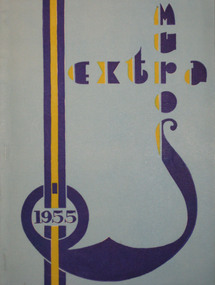
Book, Extra Muros 1955, 1955
... R. Potter, I. Neilson, K. Holloway, I. Pritchard, G. Maggs. 3rd row: C. Handreck, Keith Hamilton, J. Carter, L. Harper, E. Lynes, J. Rae, B. McCleary, M. Joyce, J. Matthews, B. Harrison, E. Lewis, B. Moore. 4th row: D. Thompson, M. Bone...R. Potter, I. Neilson, K. Holloway, I. Pritchard, G. Maggs. 3rd row: C. Handreck, Keith Hamilton, J. Carter, L. Harper, E. Lynes, J. Rae, B. McCleary, M. Joyce, J. Matthews, B. Harrison, E. Lewis, B. Moore. 4th row: D. Thompson, M. Bone ...1951 Ballarat Teachers’ College offers a two year trained Primary Teachers’ Certificate for the first time. (BTC Handbook 1965) December 1955 Ballarat Teachers’ College held its first Graduation Ceremony. The words of the Graduation Hymn were written by Mavis Canty. (BTC Handbook 1965)Light blue cover with dark blue and yellow text, back cover cream soft covered annual magazine of the Ballarat Teachers College. Includes yearly events. The Ballarat Teachers' College 1955 Second Year Students and Staff photo includes (left to right): Back row: C. ussing, R. Flavell, R. Jones, P. Dawson, W. Hughes, B. Williams, F. Tinney. 2nd row: B. Jones, B. Hancorne, R. Potter, I. Neilson, K. Holloway, I. Pritchard, G. Maggs. 3rd row: C. Handreck, Keith Hamilton, J. Carter, L. Harper, E. Lynes, J. Rae, B. McCleary, M. Joyce, J. Matthews, B. Harrison, E. Lewis, B. Moore. 4th row: D. Thompson, M. Bone, J. Cotter, C. Bolte, D. Powrie, L. Edge, S. Edwards, D. Cleary, B. McIntyre, F. Dridan, B. Connellan, L. Martin. 5th row: A. Nailon, M. McCallum, E. Medwell, M. Meagher, J. Butler, E. Dobson, J. Black, M. Anderson, W. Hanstock, M. Harris, G. Bowers. 6th Row: M. Casey, M. Crocker, B. Heath, W. Hall, U. Dempster, J. Burns, I. Bradshaw, J. Sanders, M. Williamson, Z. Walker, J. Brehaut, B. Boadle. 7th row: M. Fraser, Howard Pattenden, J. Gould, M. Byrne, A. Hancock. J. Murphy, M. Morgan, E. Ingleton, V. Rance, M. Walker, J.M. Blair, R.R. Reed. Front Row: J.M. Hill, J, Fox, A.H. Linton, Bob Croft, Ted Doney, Monica Miller, T.W.H. Turner, Mavis Canty, Alan Sonsee, E.O. Walpole, C.A. Pryor, C. Rodger, G.A. Jenkins. Has autographs on inside of back cover: John M Blair, Margaret R Chasey, Elizabeth Constable, Jean W Black, George A Jenkins, Clarice Handreckbtc, ballarat teachers' college, black, sanders, williamson, jm blair, c handreek, m meagher, e ingleton, w hall, s mclay, j roberts, bremner, flavell, chasey, mccleary, williams, ross, hamilton, keith hamilton, croft, bob croft, walpole, sonsee, canty, miller, pryor, turner, rodger, jenkins, linton, fox, hill, doney, pattenden -
 Federation University Historical Collection
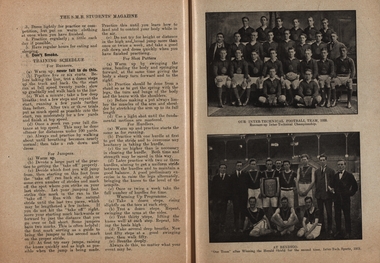
Booklet, Ballarat School of Mines Students' Magazine, 1920, 1920
... Copland, Fumes from the Lab, Arts & Crafts Gossip, Echoes of the Past, Sport, Shun Military Notes, The Junior Techs. ballarat school of mines magazine anniversary jubilee w. h. middleton e. kift k. jebb p. tromp percy trompf d. whitehead c. c. mcnamara r. l. coulter e. mckissock maurice copeland j. r. pound l. h. archibald, g. baragwanath r. w. richards dick richards richard w. richards r. l. cutter c. a. schache herbert e. smith j. c. dulfer john dulfer n. hay a. w. steane c. pearlman i. utting g. williams, ethel kift Bone soft covered magazine. ...Ballarat School of Mines celebrated their Jubilee in 1920. Editorial: Obituary - Mr M. Copland, Fumes from the Lab, Arts & Crafts Gossip, Echoes of the Past, Sport, Shun Military Notes, The Junior Techs.Bone soft covered magazine.ballarat school of mines, magazine, anniversary, jubilee, w. h. middleton, e. kift, k. jebb, p. tromp, percy trompf, d. whitehead, c. c. mcnamara, r. l. coulter, e. mckissock, maurice copeland, j. r. pound, l. h. archibald,, g. baragwanath, r. w. richards, dick richards, richard w. richards, r. l. cutter, c. a. schache, herbert e. smith, j. c. dulfer, john dulfer, n. hay, a. w. steane, c. pearlman, i. utting, g. williams,, ethel kift -
 Federation University Historical Collection
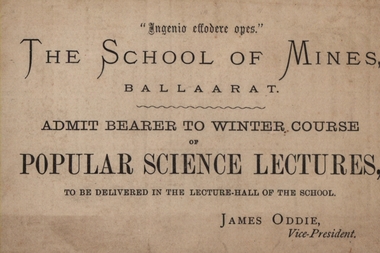
Advertising card, School of Mines: Popular Science Lectures, 1882, 1882
... G Foord (Royal Mint) - Alchemy; Rev Ick (Sandhurst) - The Wonders of Coral Life; R Ellery (Government Astronomer) - The Sun's Distances and the Transits of Venus; J Thomas (Geelong) - The Stellar Universe; J Usher (Doctor) - Physiology, Body and Bones; Baron Von Mueller (Government Botanist) - General observations on the Flora of Australia; Professor Mica Smith - Gold; Professor F Kraush - Volcanic rocks of the Ballarat District. ...G Foord (Royal Mint) - Alchemy; Rev Ick (Sandhurst) - The Wonders of Coral Life; R Ellery (Government Astronomer) - The Sun's Distances and the Transits of Venus; J Thomas (Geelong) - The Stellar Universe; J Usher (Doctor) - Physiology, Body and Bones; Baron Von Mueller (Government Botanist) - General observations on the Flora of Australia; Professor Mica Smith - Gold; Professor F Kraush - Volcanic rocks of the Ballarat District. ...The card enabled a person to attend the 'Popular Science Lectures' which were held in the lecture hall of the school. These were the Winter course of 1882. The Lectures were from 8p.m. They ran from June 9 through to October 11. The subjects were varied and a guest speaker was responsible for each session. G Foord (Royal Mint) - Alchemy; Rev Ick (Sandhurst) - The Wonders of Coral Life; R Ellery (Government Astronomer) - The Sun's Distances and the Transits of Venus; J Thomas (Geelong) - The Stellar Universe; J Usher (Doctor) - Physiology, Body and Bones; Baron Von Mueller (Government Botanist) - General observations on the Flora of Australia; Professor Mica Smith - Gold; Professor F Kraush - Volcanic rocks of the Ballarat District. This was organised by the School Councilwhen James Oddie was Vice-President.Beige coloured card written on both sidespopular science lectures, winter course 1882, guest speakers, g foord, royal mint, alchemy, reverend ick, sandhurst, coral life, r ellery, government astronomer, sun's distances, transits of venus, j thomas, stellar universe, baron von mueller, flora of australia, government botanist, mica smith, gold, f m kraush, volcanic rocks -
 Flagstaff Hill Maritime Museum and Village
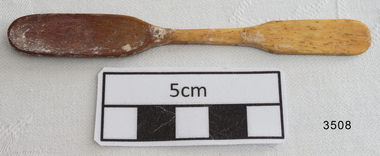
Spatula
... Dr Angus assisted Dr Tom Ryan, a pioneer in the use of X-rays and in ocular surgery. flagstaff hill warrnambool shipwrecked-coast flagstaff-hill flagstaff-hill-maritime-museum maritime-museum shipwreck-coast flagstaff-hill-maritime-village spatula dental equipment dr w r angus dr t f ryan medical history historical medical instrument nhill flying doctor flagstaff hill warrnambool shipwrecked-coast flagstaff-hill flagstaff-hill-maritime-museum maritime-museum shipwreck-coast flagstaff-hill-maritime-village spatula dental equipment dr w r angus dr t f ryan medical history historical medical instrument nhill flying doctor Small spatula made of the same light-weight material throughout, possibly bone or wood. ...The spatula was donated to Flagstaff Hill Maritime Village by the family of Doctor William Roy Angus, Surgeon and Oculist. It is part of the “W.R. Angus Collection” that includes historical medical equipment, surgical instruments and material once belonging to Dr Edward Ryan and Dr Thomas Francis Ryan, (both of Nhill, Victoria) as well as Dr Angus’ own belongings. The Collection’s history spans the medical practices of the two Doctors Ryan, from 1885-1926 plus that of Dr Angus, up until 1969. ABOUT THE “W.R.ANGUS COLLECTION” Doctor William Roy Angus M.B., B.S., Adel., 1923, F.R.C.S. Edin.,1928 (also known as Dr Roy Angus) was born in Murrumbeena, Victoria in 1901 and lived until 1970. He qualified as a doctor in 1923 at University of Adelaide, was Resident Medical Officer at the Royal Adelaide Hospital in 1924 and for a period was house surgeon to Sir (then Mr.) Henry Simpson Newland. Dr Angus was briefly an Assistant to Dr Riddell of Kapunda, then commenced private practice at Curramulka, Yorke Peninsula, SA, where he was physician, surgeon and chemist. In 1926, he was appointed as new Medical Assistant to Dr Thomas Francis Ryan (T.F. Ryan, or Tom), in Nhill, Victoria, where his experiences included radiology and pharmacy. In 1927 he was Acting House Surgeon in Dr Tom Ryan’s absence. Dr Angus had become engaged to Gladys Forsyth and they decided he would take time to further his studies overseas in the UK in 1927. He studied at London University College Hospital and at Edinburgh Royal Infirmary and in 1928, was awarded FRCS (Fellow from the Royal College of Surgeons), Edinburgh. He worked his passage back to Australia as a Ship’s Surgeon on the on the Australian Commonwealth Line’s T.S.S. Largs Bay. Dr Angus married Gladys in 1929, in Ballarat. (They went on to have one son (Graham 1932, born in SA) and two daughters (Helen (died 12/07/1996) and Berenice (Berry), both born at Mira, Nhill ) Dr Angus was a ‘flying doctor’ for the A.I.M. (Australian Inland Ministry) Aerial Medical Service in 1928 . The organisation began in South Australia through the Presbyterian Church in that year, with its first station being in the remote town of Oodnadatta, where Dr Angus was stationed. He was locum tenens there on North-South Railway at 21 Mile Camp. He took up this ‘flying doctor’ position in response to a call from Dr John Flynn; the organisation was later known as the Flying Doctor Service, then the Royal Flying Doctor Service. A lot of his work during this time involved dental surgery also. Between 1928-1932 he was surgeon at the Curramulka Hospital, Yorke Peninsula, South Australia. In 1933 Dr Angus returned to Nhill where he’d previously worked as Medical Assistant and purchased a share of the Nelson Street practice and Mira hospital from Dr Les Middleton one of the Middleton Brothers, the current owners of what was once Dr Tom Ryan’s practice. Dr L Middleton was House Surgeon to the Nhill Hospital 1926-1933, when he resigned. [Dr Tom Ryan’s practice had originally belonged to his older brother Dr Edward Ryan, who came to Nhill in 1885. Dr Edward saw patients at his rooms, firstly in Victoria Street and in 1886 in Nelson Street, until 1901. The Nelson Street practice also had a 2 bed ward, called Mira Private Hospital ). Dr Edward Ryan was House Surgeon at the Nhill Hospital 1884-1902 . He also had occasions where he successfully performed veterinary surgery for the local farmers too. Dr Tom Ryan then purchased the practice from his brother in 1901. Both Dr Edward and Dr Tom Ryan work as surgeons included eye surgery. Dr Tom Ryan performed many of his operations in the Mira private hospital on his premises. He too was House Surgeon at the Nhill Hospital 1902-1926. Dr Tom Ryan had one of the only two pieces of radiology equipment in Victoria during his practicing years – The Royal Melbourne Hospital had the other one. Over the years Dr Tom Ryan gradually set up what was effectively a training school for country general-practitioner-surgeons. Each patient was carefully examined, including using the X-ray machine, and any surgery was discussed and planned with Dr Ryan’s assistants several days in advance. Dr Angus gained experience in using the X-ray machine there during his time as assistant to Dr Ryan. Dr Tom Ryan moved from Nhill in 1926. He became a Fellow of the Royal Australasian College of Surgeons in 1927, soon after its formation, a rare accolade for a doctor outside any of the major cities. He remained a bachelor and died suddenly on 7th Dec 1955, aged 91, at his home in Ararat. Scholarships and prizes are still awarded to medical students in the honour of Dr T.F. Ryan and his father, Dr Michael Ryan, and brother, John Patrick Ryan. ] When Dr Angus bought into the Nelson Street premises in Nhill he was also appointed as the Nhill Hospital’s Honorary House Surgeon 1933-1938. His practitioner’s plate from his Nhill surgery states “HOURS Daily, except Tuesdays, Fridays and Saturday afternoons, 9-10am, 2-4pm, 7-8pm. Sundays by appointment”. This plate is now mounted on the doorway to the Port Medical Office at Flagstaff Hill Maritime Village, Warrnambool. Dr Edward Ryan and Dr Tom Ryan had an extensive collection of historical medical equipment and materials spanning 1884-1926 and when Dr Angus took up practice in their old premises he obtained this collection, a large part of which is now on display at the Port Medical Office at Flagstaff Hill Maritime Village in Warrnambool. During his time in Nhill Dr Angus was involved in the merging of the Mira Hospital and Nhill Public Hospital into one public hospital and the property titles passed on to Nhill Hospital in 1939. In 1939 Dr Angus and his family moved to Warrnambool where he purchased “Birchwood,” the 1852 home and medical practice of Dr John Hunter Henderson, at 214 Koroit Street. (This property was sold in1965 to the State Government and is now the site of the Warrnambool Police Station. ). The Angus family was able to afford gardeners, cooks and maids; their home was a popular place for visiting dignitaries to stay whilst visiting Warrnambool. Dr Angus had his own silk worm farm at home in a Mulberry tree. His young daughter used his centrifuge for spinning the silk. Dr Angus was appointed on a part-time basis as Port Medical Officer (Health Officer) in Warrnambool and held this position until the 1940’s when the government no longer required the service of a Port Medical Officer in Warrnambool; he was thus Warrnambool’s last serving Port Medical Officer. (The duties of a Port Medical Officer were outlined by the Colonial Secretary on 21st June, 1839 under the terms of the Quarantine Act. Masters of immigrant ships arriving in port reported incidents of diseases, illness and death and the Port Medical Officer made a decision on whether the ship required Quarantine and for how long, in this way preventing contagious illness from spreading from new immigrants to the residents already in the colony.) Dr Angus was a member of the Australian Medical Association, for 35 years and surgeon at the Warrnambool Base Hospital 1939-1942, He served as a Surgeon Captain during WWII1942-45, in Ballarat, Victoria, and in Bonegilla, N.S.W., completing his service just before the end of the war due to suffering from a heart attack. During his convalescence he carved an intricate and ‘most artistic’ chess set from the material that dentures were made from. He then studied ophthalmology at the Royal Melbourne Eye and Ear Hospital and created cosmetically superior artificial eyes by pioneering using the intrascleral cartilage. Angus received accolades from the Ophthalmological Society of Australasia for this work. He returned to Warrnambool to commence practice as an ophthalmologist, pioneering in artificial eye improvements. He was Honorary Consultant Ophthalmologist to Warrnambool Base Hospital for 31 years. He made monthly visits to Portland as a visiting surgeon, to perform eye surgery. He represented the Victorian South-West subdivision of the Australian Medical Association as its secretary between 1949 and 1956 and as chairman from 1956 to 1958. In 1968 Dr Angus was elected member of Spain’s Barraquer Institute of Barcelona after his research work in Intrasclearal cartilage grafting, becoming one of the few Australian ophthalmologists to receive this honour, and in the following year presented his final paper on Living Intrasclearal Cartilage Implants at the Inaugural Meeting of the Australian College of Ophthalmologists in Melbourne In his personal life Dr Angus was a Presbyterian and treated Sunday as a Sabbath, a day of rest. He would visit 3 or 4 country patients on a Sunday, taking his children along ‘for the ride’ and to visit with him. Sunday evenings he would play the pianola and sing Scottish songs to his family. One of Dr Angus’ patients was Margaret MacKenzie, author of a book on local shipwrecks that she’d seen as an eye witness from the late 1880’s in Peterborough, Victoria. In the early 1950’s Dr Angus, painted a picture of a shipwreck for the cover jacket of Margaret’s book, Shipwrecks and More Shipwrecks. She was blind in later life and her daughter wrote the actual book for her. Dr Angus and his wife Gladys were very involved in Warrnambool’s society with a strong interest in civic affairs. Their interests included organisations such as Red Cross, Rostrum, Warrnambool and District Historical Society (founding members), Wine and Food Society, Steering Committee for Tertiary Education in Warrnambool, Local National Trust, Good Neighbour Council, Housing Commission Advisory Board, United Services Institute, Legion of Ex-Servicemen, Olympic Pool Committee, Food for Britain Organisation, Warrnambool Hospital, Anti-Cancer Council, Boys’ Club, Charitable Council, National Fitness Council and Air Raid Precautions Group. He was also a member of the Steam Preservation Society and derived much pleasure from a steam traction engine on his farm. He had an interest in people and the community He and his wife Gladys were both involved in the creation of Flagstaff Hill, including the layout of the gardens. After his death (28th March 1970) his family requested his practitioner’s plate, medical instruments and some personal belongings be displayed in the Port Medical Office surgery at Flagstaff Hill Maritime Village, and be called the “W. R. Angus Collection”. The W.R. Angus Collection is significant for still being located at the site it is connected with, Doctor Angus being the last Port Medical Officer in Warrnambool. The collection of medical instruments and other equipment is culturally significant, being an historical example of medicine from late 19th to mid-20th century. Dr Angus assisted Dr Tom Ryan, a pioneer in the use of X-rays and in ocular surgery. Small spatula made of the same light-weight material throughout, possibly bone or wood. Wide ends and narrow in centre, smooth, flat surface. One end of the spatular is discoloured and there is still some residue on the tip. It was once part of Dr T.F. Ryan's medical practice. (Part of the W.R. Angus Collection) flagstaff hill, warrnambool, shipwrecked-coast, flagstaff-hill, flagstaff-hill-maritime-museum, maritime-museum, shipwreck-coast, flagstaff-hill-maritime-village, spatula, dental equipment, dr w r angus, dr t f ryan, medical history, historical medical instrument, nhill, flying doctor, flagstaff hill, warrnambool, shipwrecked-coast, flagstaff-hill, flagstaff-hill-maritime-museum, maritime-museum, shipwreck-coast, flagstaff-hill-maritime-village, spatula, dental equipment, dr w r angus, dr t f ryan, medical history, historical medical instrument, nhill, flying doctor -
 Flagstaff Hill Maritime Museum and Village
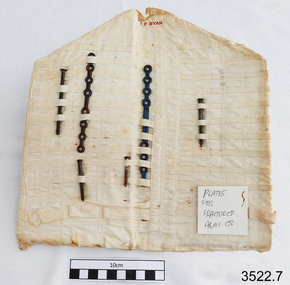
Surgical kit, early 20th century
... R. Angus Collection”. The W.R. Angus Collection is significant for still being located at the site it is connected with, Doctor Angus being the last Port Medical Officer in Warrnambool. The collection of medical instruments and other equipment is culturally significant, being an historical example of medicine from late 19th to mid-20th century. Dr Angus assisted Dr Tom Ryan, a pioneer in the use of X-rays and in ocular surgery. flagstaff hill warrnambool shipwrecked-coast flagstaff-hill flagstaff-hill-maritime-museum maritime-museum shipwreck-coast flagstaff-hill-maritime-village surgical kit dr angus dr t.f. ryan bone setting curgical case surgical instrument nhill base hospital bone setting instruments medical history medical treatment, mira hospital A cloth tag embroidered "DR T F Ryan"" is hand sewn onto the inside of the case. ...The equipment in this surgical case, kit or pouch would be used for setting bones during surgery. It has depressions where other items would have fitted. The surgical case was donated to Flagstaff Hill Maritime Village by the family of Doctor William Roy Angus, Surgeon and Oculist. It is part of the “W.R. Angus Collection” that includes historical medical equipment, surgical instruments and material once belonging to Dr Edward Ryan and Dr Thomas Francis Ryan, (both of Nhill, Victoria) as well as Dr Angus’ own belongings. The Collection’s history spans the medical practices of the two Doctors Ryan, from 1885-1926 plus that of Dr Angus, up until 1969. ABOUT THE “W.R.ANGUS COLLECTION” Doctor William Roy Angus M.B., B.S., Adel., 1923, F.R.C.S. Edin.,1928 (also known as Dr Roy Angus) was born in Murrumbeena, Victoria in 1901 and lived until 1970. He qualified as a doctor in 1923 at University of Adelaide, was Resident Medical Officer at the Royal Adelaide Hospital in 1924 and for a period was house surgeon to Sir (then Mr.) Henry Simpson Newland. Dr Angus was briefly an Assistant to Dr Riddell of Kapunda, then commenced private practice at Curramulka, Yorke Peninsula, SA, where he was physician, surgeon and chemist. In 1926, he was appointed as new Medical Assistant to Dr Thomas Francis Ryan (T.F. Ryan, or Tom), in Nhill, Victoria, where his experiences included radiology and pharmacy. In 1927 he was Acting House Surgeon in Dr Tom Ryan’s absence. Dr Angus had become engaged to Gladys Forsyth and they decided he would take time to further his studies overseas in the UK in 1927. He studied at London University College Hospital and at Edinburgh Royal Infirmary and in 1928, was awarded FRCS (Fellow from the Royal College of Surgeons), Edinburgh. He worked his passage back to Australia as a Ship’s Surgeon on the on the Australian Commonwealth Line’s T.S.S. Largs Bay. Dr Angus married Gladys in 1929, in Ballarat. (They went on to have one son (Graham 1932, born in SA) and two daughters (Helen (died 12/07/1996) and Berenice (Berry), both born at Mira, Nhill ) Dr Angus was a ‘flying doctor’ for the A.I.M. (Australian Inland Ministry) Aerial Medical Service in 1928 . The organisation began in South Australia through the Presbyterian Church in that year, with its first station being in the remote town of Oodnadatta, where Dr Angus was stationed. He was locum tenens there on North-South Railway at 21 Mile Camp. He took up this ‘flying doctor’ position in response to a call from Dr John Flynn; the organisation was later known as the Flying Doctor Service, then the Royal Flying Doctor Service. A lot of his work during this time involved dental surgery also. Between 1928-1932 he was surgeon at the Curramulka Hospital, Yorke Peninsula, South Australia. In 1933 Dr Angus returned to Nhill where he’d previously worked as Medical Assistant and purchased a share of the Nelson Street practice and Mira hospital from Dr Les Middleton one of the Middleton Brothers, the current owners of what was once Dr Tom Ryan’s practice. Dr L Middleton was House Surgeon to the Nhill Hospital 1926-1933, when he resigned. [Dr Tom Ryan’s practice had originally belonged to his older brother Dr Edward Ryan, who came to Nhill in 1885. Dr Edward saw patients at his rooms, firstly in Victoria Street and in 1886 in Nelson Street, until 1901. The Nelson Street practice also had a 2 bed ward, called Mira Private Hospital ). Dr Edward Ryan was House Surgeon at the Nhill Hospital 1884-1902 . He also had occasions where he successfully performed veterinary surgery for the local farmers too. Dr Tom Ryan then purchased the practice from his brother in 1901. Both Dr Edward and Dr Tom Ryan work as surgeons included eye surgery. Dr Tom Ryan performed many of his operations in the Mira private hospital on his premises. He too was House Surgeon at the Nhill Hospital 1902-1926. Dr Tom Ryan had one of the only two pieces of radiology equipment in Victoria during his practicing years – The Royal Melbourne Hospital had the other one. Over the years Dr Tom Ryan gradually set up what was effectively a training school for country general-practitioner-surgeons. Each patient was carefully examined, including using the X-ray machine, and any surgery was discussed and planned with Dr Ryan’s assistants several days in advance. Dr Angus gained experience in using the X-ray machine there during his time as assistant to Dr Ryan. Dr Tom Ryan moved from Nhill in 1926. He became a Fellow of the Royal Australasian College of Surgeons in 1927, soon after its formation, a rare accolade for a doctor outside any of the major cities. He remained a bachelor and died suddenly on 7th Dec 1955, aged 91, at his home in Ararat. Scholarships and prizes are still awarded to medical students in the honour of Dr T.F. Ryan and his father, Dr Michael Ryan, and brother, John Patrick Ryan. ] When Dr Angus bought into the Nelson Street premises in Nhill he was also appointed as the Nhill Hospital’s Honorary House Surgeon 1933-1938. His practitioner’s plate from his Nhill surgery states “HOURS Daily, except Tuesdays, Fridays and Saturday afternoons, 9-10am, 2-4pm, 7-8pm. Sundays by appointment”. This plate is now mounted on the doorway to the Port Medical Office at Flagstaff Hill Maritime Village, Warrnambool. Dr Edward Ryan and Dr Tom Ryan had an extensive collection of historical medical equipment and materials spanning 1884-1926 and when Dr Angus took up practice in their old premises he obtained this collection, a large part of which is now on display at the Port Medical Office at Flagstaff Hill Maritime Village in Warrnambool. During his time in Nhill Dr Angus was involved in the merging of the Mira Hospital and Nhill Public Hospital into one public hospital and the property titles passed on to Nhill Hospital in 1939. In 1939 Dr Angus and his family moved to Warrnambool where he purchased “Birchwood,” the 1852 home and medical practice of Dr John Hunter Henderson, at 214 Koroit Street. (This property was sold in1965 to the State Government and is now the site of the Warrnambool Police Station. ). The Angus family was able to afford gardeners, cooks and maids; their home was a popular place for visiting dignitaries to stay whilst visiting Warrnambool. Dr Angus had his own silk worm farm at home in a Mulberry tree. His young daughter used his centrifuge for spinning the silk. Dr Angus was appointed on a part-time basis as Port Medical Officer (Health Officer) in Warrnambool and held this position until the 1940’s when the government no longer required the service of a Port Medical Officer in Warrnambool; he was thus Warrnambool’s last serving Port Medical Officer. (The duties of a Port Medical Officer were outlined by the Colonial Secretary on 21st June, 1839 under the terms of the Quarantine Act. Masters of immigrant ships arriving in port reported incidents of diseases, illness and death and the Port Medical Officer made a decision on whether the ship required Quarantine and for how long, in this way preventing contagious illness from spreading from new immigrants to the residents already in the colony.) Dr Angus was a member of the Australian Medical Association, for 35 years and surgeon at the Warrnambool Base Hospital 1939-1942, He served as a Surgeon Captain during WWII1942-45, in Ballarat, Victoria, and in Bonegilla, N.S.W., completing his service just before the end of the war due to suffering from a heart attack. During his convalescence he carved an intricate and ‘most artistic’ chess set from the material that dentures were made from. He then studied ophthalmology at the Royal Melbourne Eye and Ear Hospital and created cosmetically superior artificial eyes by pioneering using the intrascleral cartilage. Angus received accolades from the Ophthalmological Society of Australasia for this work. He returned to Warrnambool to commence practice as an ophthalmologist, pioneering in artificial eye improvements. He was Honorary Consultant Ophthalmologist to Warrnambool Base Hospital for 31 years. He made monthly visits to Portland as a visiting surgeon, to perform eye surgery. He represented the Victorian South-West subdivision of the Australian Medical Association as its secretary between 1949 and 1956 and as chairman from 1956 to 1958. In 1968 Dr Angus was elected member of Spain’s Barraquer Institute of Barcelona after his research work in Intrasclearal cartilage grafting, becoming one of the few Australian ophthalmologists to receive this honour, and in the following year presented his final paper on Living Intrasclearal Cartilage Implants at the Inaugural Meeting of the Australian College of Ophthalmologists in Melbourne In his personal life Dr Angus was a Presbyterian and treated Sunday as a Sabbath, a day of rest. He would visit 3 or 4 country patients on a Sunday, taking his children along ‘for the ride’ and to visit with him. Sunday evenings he would play the pianola and sing Scottish songs to his family. One of Dr Angus’ patients was Margaret MacKenzie, author of a book on local shipwrecks that she’d seen as an eye witness from the late 1880’s in Peterborough, Victoria. In the early 1950’s Dr Angus, painted a picture of a shipwreck for the cover jacket of Margaret’s book, Shipwrecks and More Shipwrecks. She was blind in later life and her daughter wrote the actual book for her. Dr Angus and his wife Gladys were very involved in Warrnambool’s society with a strong interest in civic affairs. Their interests included organisations such as Red Cross, Rostrum, Warrnambool and District Historical Society (founding members), Wine and Food Society, Steering Committee for Tertiary Education in Warrnambool, Local National Trust, Good Neighbour Council, Housing Commission Advisory Board, United Services Institute, Legion of Ex-Servicemen, Olympic Pool Committee, Food for Britain Organisation, Warrnambool Hospital, Anti-Cancer Council, Boys’ Club, Charitable Council, National Fitness Council and Air Raid Precautions Group. He was also a member of the Steam Preservation Society and derived much pleasure from a steam traction engine on his farm. He had an interest in people and the community He and his wife Gladys were both involved in the creation of Flagstaff Hill, including the layout of the gardens. After his death (28th March 1970) his family requested his practitioner’s plate, medical instruments and some personal belongings be displayed in the Port Medical Office surgery at Flagstaff Hill Maritime Village, and be called the “W. R. Angus Collection”. The W.R. Angus Collection is significant for still being located at the site it is connected with, Doctor Angus being the last Port Medical Officer in Warrnambool. The collection of medical instruments and other equipment is culturally significant, being an historical example of medicine from late 19th to mid-20th century. Dr Angus assisted Dr Tom Ryan, a pioneer in the use of X-rays and in ocular surgery. Surgical kit contained in fabric case or pouch, with stiff backing. Kit includes four screws and metal plates, held in place by loops inside case. Both short and long plates have rounded ends, holes evenly distributed along them and are flat underneath. They are stamped "MADE IN ENGLAND" One also has “FLBR BROS” on it. The four screws all have a single slot for tightening. There is a hand sewn name tag inside the case with "DR T F RYAN" embroidered on it. Kit used for setting bones. (W.R. Angus Collection)A cloth tag embroidered "DR T F Ryan"" is hand sewn onto the inside of the case. MADE IN ENGLAND" is stamped on the metal plates.flagstaff hill, warrnambool, shipwrecked-coast, flagstaff-hill, flagstaff-hill-maritime-museum, maritime-museum, shipwreck-coast, flagstaff-hill-maritime-village, surgical kit, dr angus, dr t.f. ryan, bone setting, curgical case, surgical instrument, nhill base hospital, bone setting instruments, medical history, medical treatment,, mira hospital -
 Flagstaff Hill Maritime Museum and Village
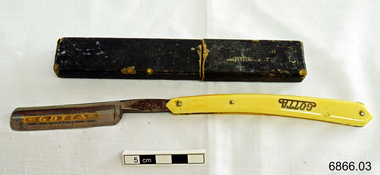
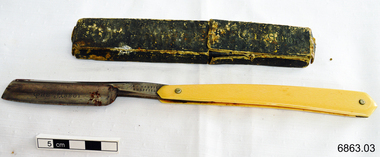
Domestic object - Razor, 1900's
... Flagstaff Hill Warrnambool Shipwrecked coast Flagstaff Hill Maritime Museum Maritime Museum Shipwreck coast Flagstaff Hill Maritime Village Great Ocean Road Dr W R Angus Dr Ryan cut-throat razor gotta razor german made razor personal effects 1900's grooming equipment 1900's Embossed on box "No. 42 / DES GERMAN MANUFACTURE", on handle "GOTTA", on blade "HAMBURG RING / REG. GOTTA REG. / SUPER FINE" and "FINEST SHEFFIELD STEEL / FORGED AND - - - HOLLOW / GROUND IN GERMANY" Cut-throat razor, part of the W.R. Angus Collection. Razor model No. 42, steel blade, in dark cardboard box, with bone ...This cut-throat razor was donated to Flagstaff Hill Maritime Village by the family of Doctor William Roy Angus, Surgeon and Oculist. It is part of the “W.R. Angus Collection” includes historical medical equipment, surgical instruments and material once belonging to Dr Edward Ryan and Dr Thomas Francis Ryan, (both of Nhill, Victoria) as well as Dr Angus’ own belongings. The Collection’s history spans the medical practices of the two Doctors Ryan, from 1885-1926 plus that of Dr Angus, up until 1969. ABOUT THE “W.R.ANGUS COLLECTION” Doctor William Roy Angus M.B., B.S., Adel., 1923, F.R.C.S. Edin.,1928 (also known as Dr Roy Angus) was born in Murrumbeena, Victoria in 1901 and lived until 1970. He qualified as a doctor in 1923 at University of Adelaide, was Resident Medical Officer at the Royal Adelaide Hospital in 1924 and for a period was house surgeon to Sir (then Mr.) Henry Simpson Newland. Dr Angus was briefly an Assistant to Dr Riddell of Kapunda, then commenced private practice at Curramulka, Yorke Peninsula, SA, where he was physician, surgeon and chemist. In 1926, he was appointed as new Medical Assistant to Dr Thomas Francis Ryan (T.F. Ryan, or Tom), in Nhill, Victoria, where his experiences included radiology and pharmacy. In 1927 he was Acting House Surgeon in Dr Tom Ryan’s absence. Dr Angus had become engaged to Gladys Forsyth and they decided he further his studies overseas in the UK in 1927. He studied at London University College Hospital and at Edinburgh Royal Infirmary and in 1928, was awarded FRCS (Fellow from the Royal College of Surgeons), Edinburgh. He worked his passage back to Australia as a Ship’s Surgeon on the on the Australian Commonwealth Line’s T.S.S. Largs Bay. Dr Angus married Gladys in 1929, in Ballarat. (They went on to have one son (Graham 1932, born in SA) and two daughters (Helen (died 12/07/1996) and Berenice (Berry), both born at Mira, Nhill ) According to Berry, her mother Gladys made a lot of their clothes. She was very talented and did some lovely embroidery including lingerie for her trousseau and beautifully handmade baby clothes. Dr Angus was a ‘flying doctor’ for the A.I.M. (Australian Inland Ministry) Aerial Medical Service in 1928 . Its first station was in the remote town of Oodnadatta, where Dr Angus was stationed. He was locum tenens there on North-South Railway at 21 Mile Camp. He took up this ‘flying doctor’ position in response to a call from Dr John Flynn; the organisation was later known as the Flying Doctor Service, then the Royal Flying Doctor Service. A lot of his work during this time involved dental surgery also. Between 1928-1932 he was surgeon at the Curramulka Hospital, Yorke Peninsula, South Australia. In 1933 Dr Angus returned to Nhill and purchased a share of the Nelson Street practice and Mira hospital (a 2 bed ward at the Nelson Street Practice) from Dr Les Middleton one of the Middleton Brothers, the current owners of what previously once Dr Tom Ryan’s practice. Dr Tom and his brother had worked as surgeons included eye surgery. Dr Tom Ryan performed many of his operations in the Mira private hospital on his premises. He had been House Surgeon at the Nhill Hospital 1902-1926. Dr Tom Ryan had one of the only two pieces of radiology equipment in Victoria during his practicing years – The Royal Melbourne Hospital had the other one. Over the years Dr Tom Ryan had gradually set up what was effectively a training school for country general-practitioner-surgeons. Each patient was carefully examined, including using the X-ray machine, and any surgery was discussed and planned with Dr Ryan’s assistants several days in advance. Dr Angus gained experience in using the X-ray machine there during his time as assistant to Dr Ryan. When Dr Angus bought into the Nelson Street premises in Nhill he was also appointed as the Nhill Hospital’s Honorary House Surgeon 1933-1938. His practitioner’s plate from his Nhill surgery is now mounted on the doorway to the Port Medical Office at Flagstaff Hill Maritime Village, Warrnambool. When Dr Angus took up practice in the Dr Edward and Dr Tom Ryan’s old premises he obtained their extensive collection of historical medical equipment and materials spanning 1884-1926. A large part of this collection is now on display at the Port Medical Office at Flagstaff Hill Maritime Village in Warrnambool. In 1939 Dr Angus and his family moved to Warrnambool where he purchased “Birchwood,” the 1852 home and medical practice of Dr John Hunter Henderson, at 214 Koroit Street. (This property was sold in1965 to the State Government and is now the site of the Warrnambool Police Station. and an ALDI sore is on the land that was once their tennis court). The Angus family was able to afford gardeners, cooks and maids; their home was a popular place for visiting dignitaries to stay whilst visiting Warrnambool. Dr Angus had his own silk worm farm at home in a Mulberry tree. His young daughter used his centrifuge for spinning the silk. Dr Angus was appointed on a part-time basis as Port Medical Officer (Health Officer) in Warrnambool and held this position until the 1940’s when the government no longer required the service of a Port Medical Officer in Warrnambool; he was thus Warrnambool’s last serving Port Medical Officer. (Masters of immigrant ships arriving in port reported incidents of diseases, illness and death and the Port Medical Officer made a decision on whether the ship required Quarantine and for how long, in this way preventing contagious illness from spreading from new immigrants to the residents already in the colony.) Dr Angus was a member of the Australian Medical Association, for 35 years and surgeon at the Warrnambool Base Hospital 1939-1942, He served as a Surgeon Captain during WWII1942-45, in Ballarat, Victoria, and in Bonegilla, N.S.W., completing his service just before the end of the war due to suffering from a heart attack. During his convalescence he carved an intricate and ‘most artistic’ chess set from the material that dentures were made from. He then studied ophthalmology at the Royal Melbourne Eye and Ear Hospital and created cosmetically superior artificial eyes by pioneering using the intrascleral cartilage. Angus received accolades from the Ophthalmological Society of Australasia for this work. He returned to Warrnambool to commence practice as an ophthalmologist, pioneering in artificial eye improvements. He was Honorary Consultant Ophthalmologist to Warrnambool Base Hospital for 31 years. He made monthly visits to Portland as a visiting surgeon, to perform eye surgery. He represented the Victorian South-West subdivision of the Australian Medical Association as its secretary between 1949 and 1956 and as chairman from 1956 to 1958. In 1968 Dr Angus was elected member of Spain’s Barraquer Institute of Barcelona after his research work in Intrasclearal cartilage grafting, becoming one of the few Australian ophthalmologists to receive this honour, and in the following year presented his final paper on Living Intrasclearal Cartilage Implants at the Inaugural Meeting of the Australian College of Ophthalmologists in Melbourne In his personal life Dr Angus was a Presbyterian and treated Sunday as a Sabbath, a day of rest. He would visit 3 or 4 country patients on a Sunday, taking his children along ‘for the ride’ and to visit with him. Sunday evenings he would play the pianola and sing Scottish songs to his family. One of Dr Angus’ patients was Margaret MacKenzie, author of a book on local shipwrecks that she’d seen as an eye witness from the late 1880’s in Peterborough, Victoria. In the early 1950’s Dr Angus, painted a picture of a shipwreck for the cover jacket of Margaret’s book, Shipwrecks and More Shipwrecks. She was blind in later life and her daughter wrote the actual book for her. Dr Angus and his wife Gladys were very involved in Warrnambool’s society with a strong interest in civic affairs. He had an interest in people and the community They were both involved in the creation of Flagstaff Hill, including the layout of the gardens. After his death (28th March 1970) his family requested his practitioner’s plate, medical instruments and some personal belongings be displayed in the Port Medical Office surgery at Flagstaff Hill Maritime Village, and be called the “W. R. Angus Collection”. The W.R. Angus Collection is significant for still being located at the site it is connected with, Doctor Angus being the last Port Medical Officer in Warrnambool. The collection of medical instruments and other equipment is culturally significant, being an historical example of medicine from late 19th to mid-20th century. Dr Angus assisted Dr Tom Ryan, a pioneer in the use of X-rays and in ocular surgery. Cut-throat razor, part of the W.R. Angus Collection. Razor model No. 42, steel blade, in dark cardboard box, with bone handle, arrow shaped end; blade swings inside the handle. Razor made in Germany with blade made in Sheffield, England, in early 1900’s.Embossed on box "No. 42 / DES GERMAN MANUFACTURE", on handle "GOTTA", on blade "HAMBURG RING / REG. GOTTA REG. / SUPER FINE" and "FINEST SHEFFIELD STEEL / FORGED AND - - - HOLLOW / GROUND IN GERMANY" flagstaff hill, warrnambool, shipwrecked coast, flagstaff hill maritime museum, maritime museum, shipwreck coast, flagstaff hill maritime village, great ocean road, dr w r angus, dr ryan, cut-throat razor, gotta razor, german made razor, personal effects 1900's, grooming equipment 1900's -
 Flagstaff Hill Maritime Museum and Village
Razor, Early 1900's
... Dr Angus assisted Dr Tom Ryan, a pioneer in the use of X-rays and in ocular surgery. flagstaff hill warrnambool shipwrecked coast flagstaff hill maritime museum maritime museum shipwreck coast flagstaff hill maritime village great ocean road dr w r angus william lawrence forsyth j and j maxfield sheffield cut-throat razor 1900's personal effects 1900's grooming equipment 1900's hair cutting equipment 1900's Written in pencil script on lid: "W. L. Forsyth". Stamped into box and on steel blade "The Abbott". Blade also inscribed "J & J MAXFIELD / SHEFFIELD" Cut-throat razor, part of the W.R. Angus Collection. Razor in dark green cardboard box. Razor has bone ...This cut-throat razor was originally owned by the father of Dr. W.R. Angus' wife Gladys. Her ,maternal father's name was William Lawrence Forsyth. The razor was inherited by Gladys and is now part of the W.R. Angus Collection, which was donated to Flagstaff Hill Maritime Village by the family of Doctor William Roy Angus, Surgeon and Oculist. The “W.R. Angus Collection” includes historical medical equipment, surgical instruments and material once belonging to Dr Edward Ryan and Dr Thomas Francis Ryan, (both of Nhill, Victoria) as well as Dr Angus’ own belongings. The Collection’s history spans the medical practices of the two Doctors Ryan, from 1885-1926 plus that of Dr Angus, up until 1969. ABOUT THE “W.R.ANGUS COLLECTION” Doctor William Roy Angus M.B., B.S., Adel., 1923, F.R.C.S. Edin.,1928 (also known as Dr Roy Angus) was born in Murrumbeena, Victoria in 1901 and lived until 1970. He qualified as a doctor in 1923 at University of Adelaide, was Resident Medical Officer at the Royal Adelaide Hospital in 1924 and for a period was house surgeon to Sir (then Mr.) Henry Simpson Newland. Dr Angus was briefly an Assistant to Dr Riddell of Kapunda, then commenced private practice at Curramulka, Yorke Peninsula, SA, where he was physician, surgeon and chemist. In 1926, he was appointed as new Medical Assistant to Dr Thomas Francis Ryan (T.F. Ryan, or Tom), in Nhill, Victoria, where his experiences included radiology and pharmacy. In 1927 he was Acting House Surgeon in Dr Tom Ryan’s absence. Dr Angus had become engaged to Gladys Forsyth and they decided he further his studies overseas in the UK in 1927. He studied at London University College Hospital and at Edinburgh Royal Infirmary and in 1928, was awarded FRCS (Fellow from the Royal College of Surgeons), Edinburgh. He worked his passage back to Australia as a Ship’s Surgeon on the on the Australian Commonwealth Line’s T.S.S. Largs Bay. Dr Angus married Gladys in 1929, in Ballarat. (They went on to have one son (Graham 1932, born in SA) and two daughters (Helen (died 12/07/1996) and Berenice (Berry), both born at Mira, Nhill ) According to Berry, her mother Gladys made a lot of their clothes. She was very talented and did some lovely embroidery including lingerie for her trousseau and beautifully handmade baby clothes. Dr Angus was a ‘flying doctor’ for the A.I.M. (Australian Inland Ministry) Aerial Medical Service in 1928 . Its first station was in the remote town of Oodnadatta, where Dr Angus was stationed. He was locum tenens there on North-South Railway at 21 Mile Camp. He took up this ‘flying doctor’ position in response to a call from Dr John Flynn; the organisation was later known as the Flying Doctor Service, then the Royal Flying Doctor Service. A lot of his work during this time involved dental surgery also. Between 1928-1932 he was surgeon at the Curramulka Hospital, Yorke Peninsula, South Australia. In 1933 Dr Angus returned to Nhill and purchased a share of the Nelson Street practice and Mira hospital (a 2 bed ward at the Nelson Street Practice) from Dr Les Middleton one of the Middleton Brothers, the current owners of what previously once Dr Tom Ryan’s practice. Dr Tom and his brother had worked as surgeons included eye surgery. Dr Tom Ryan performed many of his operations in the Mira private hospital on his premises. He had been House Surgeon at the Nhill Hospital 1902-1926. Dr Tom Ryan had one of the only two pieces of radiology equipment in Victoria during his practicing years – The Royal Melbourne Hospital had the other one. Over the years Dr Tom Ryan had gradually set up what was effectively a training school for country general-practitioner-surgeons. Each patient was carefully examined, including using the X-ray machine, and any surgery was discussed and planned with Dr Ryan’s assistants several days in advance. Dr Angus gained experience in using the X-ray machine there during his time as assistant to Dr Ryan. When Dr Angus bought into the Nelson Street premises in Nhill he was also appointed as the Nhill Hospital’s Honorary House Surgeon 1933-1938. His practitioner’s plate from his Nhill surgery is now mounted on the doorway to the Port Medical Office at Flagstaff Hill Maritime Village, Warrnambool. When Dr Angus took up practice in the Dr Edward and Dr Tom Ryan’s old premises he obtained their extensive collection of historical medical equipment and materials spanning 1884-1926. A large part of this collection is now on display at the Port Medical Office at Flagstaff Hill Maritime Village in Warrnambool. In 1939 Dr Angus and his family moved to Warrnambool where he purchased “Birchwood,” the 1852 home and medical practice of Dr John Hunter Henderson, at 214 Koroit Street. (This property was sold in1965 to the State Government and is now the site of the Warrnambool Police Station. and an ALDI sore is on the land that was once their tennis court). The Angus family was able to afford gardeners, cooks and maids; their home was a popular place for visiting dignitaries to stay whilst visiting Warrnambool. Dr Angus had his own silk worm farm at home in a Mulberry tree. His young daughter used his centrifuge for spinning the silk. Dr Angus was appointed on a part-time basis as Port Medical Officer (Health Officer) in Warrnambool and held this position until the 1940’s when the government no longer required the service of a Port Medical Officer in Warrnambool; he was thus Warrnambool’s last serving Port Medical Officer. (Masters of immigrant ships arriving in port reported incidents of diseases, illness and death and the Port Medical Officer made a decision on whether the ship required Quarantine and for how long, in this way preventing contagious illness from spreading from new immigrants to the residents already in the colony.) Dr Angus was a member of the Australian Medical Association, for 35 years and surgeon at the Warrnambool Base Hospital 1939-1942, He served as a Surgeon Captain during WWII1942-45, in Ballarat, Victoria, and in Bonegilla, N.S.W., completing his service just before the end of the war due to suffering from a heart attack. During his convalescence he carved an intricate and ‘most artistic’ chess set from the material that dentures were made from. He then studied ophthalmology at the Royal Melbourne Eye and Ear Hospital and created cosmetically superior artificial eyes by pioneering using the intrascleral cartilage. Angus received accolades from the Ophthalmological Society of Australasia for this work. He returned to Warrnambool to commence practice as an ophthalmologist, pioneering in artificial eye improvements. He was Honorary Consultant Ophthalmologist to Warrnambool Base Hospital for 31 years. He made monthly visits to Portland as a visiting surgeon, to perform eye surgery. He represented the Victorian South-West subdivision of the Australian Medical Association as its secretary between 1949 and 1956 and as chairman from 1956 to 1958. In 1968 Dr Angus was elected member of Spain’s Barraquer Institute of Barcelona after his research work in Intrasclearal cartilage grafting, becoming one of the few Australian ophthalmologists to receive this honour, and in the following year presented his final paper on Living Intrasclearal Cartilage Implants at the Inaugural Meeting of the Australian College of Ophthalmologists in Melbourne In his personal life Dr Angus was a Presbyterian and treated Sunday as a Sabbath, a day of rest. He would visit 3 or 4 country patients on a Sunday, taking his children along ‘for the ride’ and to visit with him. Sunday evenings he would play the pianola and sing Scottish songs to his family. One of Dr Angus’ patients was Margaret MacKenzie, author of a book on local shipwrecks that she’d seen as an eye witness from the late 1880’s in Peterborough, Victoria. In the early 1950’s Dr Angus, painted a picture of a shipwreck for the cover jacket of Margaret’s book, Shipwrecks and More Shipwrecks. She was blind in later life and her daughter wrote the actual book for her. Dr Angus and his wife Gladys were very involved in Warrnambool’s society with a strong interest in civic affairs. He had an interest in people and the community They were both involved in the creation of Flagstaff Hill, including the layout of the gardens. After his death (28th March 1970) his family requested his practitioner’s plate, medical instruments and some personal belongings be displayed in the Port Medical Office surgery at Flagstaff Hill Maritime Village, and be called the “W. R. Angus Collection”. The W.R. Angus Collection is significant for still being located at the site it is connected with, Doctor Angus being the last Port Medical Officer in Warrnambool. The collection of medical instruments and other equipment is culturally significant, being an historical example of medicine from late 19th to mid-20th century. Dr Angus assisted Dr Tom Ryan, a pioneer in the use of X-rays and in ocular surgery. Cut-throat razor, part of the W.R. Angus Collection. Razor in dark green cardboard box. Razor has bone handle with arrow-head shaped end; blade swings inside the handle. The razor is a design called The Abbott and was made by J & J Maxfield of Sheffield in the early 1900's. It once belonged to William Lawrence Forsyth. Written in pencil script on lid: "W. L. Forsyth". Stamped into box and on steel blade "The Abbott". Blade also inscribed "J & J MAXFIELD / SHEFFIELD" flagstaff hill, warrnambool, shipwrecked coast, flagstaff hill maritime museum, maritime museum, shipwreck coast, flagstaff hill maritime village, great ocean road, dr w r angus, william lawrence forsyth, j and j maxfield sheffield, cut-throat razor 1900's, personal effects 1900's, grooming equipment 1900's, hair cutting equipment 1900's -
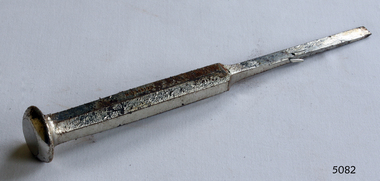 Flagstaff Hill Maritime Museum and Village
Surgical Instrument, Weiss & Son
... R Angus...Dr Ryan...surgical instrument...T.S.S. Largs Bay...Warrnambool Base Hospital...Nhill Base Hospital...Mira hospital...Flying Doctor...Department of Defence Australia...Australian Army...Army uniform...medical treatment...medical history...medical education...bone...R Angus Dr Ryan surgical instrument T.S.S. Largs Bay Warrnambool Base Hospital Nhill Base Hospital Mira hospital Flying Doctor Department of Defence Australia Australian Army Army uniform medical treatment medical history medical education bone chisel weiss & son Bone Chisel - small, Made by Weiss & Son Surgical Instrument Weiss & Son ...This Bone Chisel was donated to Flagstaff Hill Maritime Village by the family of Doctor William Roy Angus, Surgeon and Oculist. It is part of the “W.R. Angus Collection” that includes historical medical equipment, surgical instruments and material once belonging to Dr Edward Ryan and Dr Thomas Francis Ryan, (both of Nhill, Victoria) as well as Dr Angus’ own belongings. The Collection’s history spans the medical practices of the two Doctors Ryan, from 1885-1926 plus that of Dr Angus, up until 1969. ABOUT THE “W.R.ANGUS COLLECTION” Doctor William Roy Angus M.B., B.S., Adel., 1923, F.R.C.S. Edin.,1928 (also known as Dr Roy Angus) was born in Murrumbeena, Victoria in 1901 and lived until 1970. He qualified as a doctor in 1923 at University of Adelaide, was Resident Medical Officer at the Royal Adelaide Hospital in 1924 and for a period was house surgeon to Sir (then Mr.) Henry Simpson Newland. Dr Angus was briefly an Assistant to Dr Riddell of Kapunda, then commenced private practice at Curramulka, Yorke Peninsula, SA, where he was physician, surgeon and chemist. In 1926, he was appointed as new Medical Assistant to Dr Thomas Francis Ryan (T.F. Ryan, or Tom), in Nhill, Victoria, where his experiences included radiology and pharmacy. In 1927 he was Acting House Surgeon in Dr Tom Ryan’s absence. Dr Angus had become engaged to Gladys Forsyth and they decided he further his studies overseas in the UK in 1927. He studied at London University College Hospital and at Edinburgh Royal Infirmary and in 1928, was awarded FRCS (Fellow from the Royal College of Surgeons), Edinburgh. He worked his passage back to Australia as a Ship’s Surgeon on the on the Australian Commonwealth Line’s T.S.S. Largs Bay. Dr Angus married Gladys in 1929, in Ballarat. (They went on to have one son (Graham 1932, born in SA) and two daughters (Helen (died 12/07/1996) and Berenice (Berry), both born at Mira, Nhill According to Berry, her mother Gladys made a lot of their clothes. She was very talented and did some lovely embroidery including lingerie for her trousseau and beautifully handmade baby clothes. Dr Angus was a ‘flying doctor’ for the A.I.M. (Australian Inland Ministry) Aerial Medical Service in 1928. Its first station was in the remote town of Oodnadatta, where Dr Angus was stationed. He was locum tenens there on North-South Railway at 21 Mile Camp. He took up this ‘flying doctor’ position in response to a call from Dr John Flynn; the organisation was later known as the Flying Doctor Service, then the Royal Flying Doctor Service. A lot of his work during this time involved dental surgery also. Between 1928-1932 he was surgeon at the Curramulka Hospital, Yorke Peninsula, South Australia. In 1933 Dr Angus returned to Nhill and purchased a share of the Nelson Street practice and Mira hospital (a 2 bed ward at the Nelson Street Practice) from Dr Les Middleton one of the Middleton Brothers, the current owners of what previously once Dr Tom Ryan’s practice. Dr Tom and his brother had worked as surgeons included eye surgery. Dr Tom Ryan performed many of his operations in the Mira private hospital on his premises. He had been House Surgeon at the Nhill Hospital 1902-1926. Dr Tom Ryan had one of the only two pieces of radiology equipment in Victoria during his practicing years – The Royal Melbourne Hospital had the other one. Over the years Dr Tom Ryan had gradually set up what was effectively a training school for country general-practitioner-surgeons. Each patient was carefully examined, including using the X-ray machine, and any surgery was discussed and planned with Dr Ryan’s assistants several days in advance. Dr Angus gained experience in using the X-ray machine there during his time as assistant to Dr Ryan. When Dr Angus bought into the Nelson Street premises in Nhill he was also appointed as the Nhill Hospital’s Honorary House Surgeon 1933-1938. His practitioner’s plate from his Nhill surgery is now mounted on the doorway to the Port Medical Office at Flagstaff Hill Maritime Village, Warrnambool. When Dr Angus took up practice in the Dr Edward and Dr Tom Ryan’s old premises he obtained their extensive collection of historical medical equipment and materials spanning 1884-1926. A large part of this collection is now on display at the Port Medical Office at Flagstaff Hill Maritime Village in Warrnambool. In 1939 Dr Angus and his family moved to Warrnambool where he purchased “Birchwood,” the 1852 home and medical practice of Dr John Hunter Henderson, at 214 Koroit Street. (This property was sold in1965 to the State Government and is now the site of the Warrnambool Police Station and an ALDI sore is on the land that was once their tennis court). The Angus family was able to afford gardeners, cooks and maids; their home was a popular place for visiting dignitaries to stay whilst visiting Warrnambool. Dr Angus had his own silk worm farm at home in a Mulberry tree. His young daughter used his centrifuge for spinning the silk. Dr Angus was appointed on a part-time basis as Port Medical Officer (Health Officer) in Warrnambool and held this position until the 1940’s when the government no longer required the service of a Port Medical Officer in Warrnambool; he was thus Warrnambool’s last serving Port Medical Officer. (Masters of immigrant ships arriving in port reported incidents of diseases, illness and death and the Port Medical Officer made a decision on whether the ship required Quarantine and for how long, in this way preventing contagious illness from spreading from new immigrants to the residents already in the colony.) Dr Angus was a member of the Australian Medical Association, for 35 years and surgeon at the Warrnambool Base Hospital 1939-1942, He served with the Australian Department of Defence as a Surgeon Captain during WWII 1942-45, in Ballarat, Victoria, and in Bonegilla, N.S.W., completing his service just before the end of the war due to suffering from a heart attack. During his convalescence he carved an intricate and ‘most artistic’ chess set from the material that dentures were made from. He then studied ophthalmology at the Royal Melbourne Eye and Ear Hospital and created cosmetically superior artificial eyes by pioneering using the intrascleral cartilage. Angus received accolades from the Ophthalmological Society of Australasia for this work. He returned to Warrnambool to commence practice as an ophthalmologist, pioneering in artificial eye improvements. He was Honorary Consultant Ophthalmologist to Warrnambool Base Hospital for 31 years. He made monthly visits to Portland as a visiting surgeon, to perform eye surgery. He represented the Victorian South-West subdivision of the Australian Medical Association as its secretary between 1949 and 1956 and as chairman from 1956 to 1958. In 1968 Dr Angus was elected member of Spain’s Barraquer Institute of Barcelona after his research work in Intrasclearal cartilage grafting, becoming one of the few Australian ophthalmologists to receive this honour, and in the following year presented his final paper on Living Intrasclearal Cartilage Implants at the Inaugural Meeting of the Australian College of Ophthalmologists in Melbourne In his personal life Dr Angus was a Presbyterian and treated Sunday as a Sabbath, a day of rest. He would visit 3 or 4 country patients on a Sunday, taking his children along ‘for the ride’ and to visit with him. Sunday evenings he would play the pianola and sing Scottish songs to his family. One of Dr Angus’ patients was Margaret MacKenzie, author of a book on local shipwrecks that she’d seen as an eye witness from the late 1880’s in Peterborough, Victoria. In the early 1950’s Dr Angus, painted a picture of a shipwreck for the cover jacket of Margaret’s book, Shipwrecks and More Shipwrecks. She was blind in later life and her daughter wrote the actual book for her. Dr Angus and his wife Gladys were very involved in Warrnambool’s society with a strong interest in civic affairs. He had an interest in people and the community. They were both involved in the creation of Flagstaff Hill, including the layout of the gardens. After his death (28th March 1970) his family requested his practitioner’s plate, medical instruments and some personal belongings be displayed in the Port Medical Office surgery at Flagstaff Hill Maritime Village, and be called the “W. R. Angus Collection”. The W.R. Angus Collection is significant for still being located at the site it is connected with, Doctor Angus being the last Port Medical Officer in Warrnambool. The collection of medical instruments and other equipment is culturally significant, being an historical example of medicine, administration, household equipment and clothing from late 19th to mid-20th century. Dr Angus assisted Dr Tom Ryan, a pioneer in the use of X-rays and in ocular surgery. Bone Chisel - small, Made by Weiss & Sonflagstaff hill, warrnambool, shipwrecked coast, flagstaff hill maritime museum, maritime museum, shipwreck coast, flagstaff hill maritime village, great ocean road, dr w r angus, dr ryan, surgical instrument, t.s.s. largs bay, warrnambool base hospital, nhill base hospital, mira hospital, flying doctor, department of defence australia, australian army, army uniform, medical treatment, medical history, medical education, bone chisel, weiss & son -
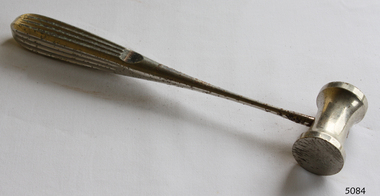 Flagstaff Hill Maritime Museum and Village
Surgical Instrument
... R Angus...Dr Ryan...surgical instrument...T.S.S. Largs Bay...Warrnambool Base Hospital...Nhill Base Hospital...Mira hospital...Flying Doctor...Department of Defence Australia...Australian Army...Army uniform...medical treatment...medical history...medical education...mallet...surgical bone...R Angus Dr Ryan surgical instrument T.S.S. Largs Bay Warrnambool Base Hospital Nhill Base Hospital Mira hospital Flying Doctor Department of Defence Australia Australian Army Army uniform medical treatment medical history medical education mallet surgical bone mallet Mallet, Surgical Bone mallet L 200mm. ...This mallet was donated to Flagstaff Hill Maritime Village by the family of Doctor William Roy Angus, Surgeon and Oculist. It is part of the “W.R. Angus Collection” that includes historical medical equipment, surgical instruments and material once belonging to Dr Edward Ryan and Dr Thomas Francis Ryan, (both of Nhill, Victoria) as well as Dr Angus’ own belongings. The Collection’s history spans the medical practices of the two Doctors Ryan, from 1885-1926 plus that of Dr Angus, up until 1969. ABOUT THE “W.R.ANGUS COLLECTION” Doctor William Roy Angus M.B., B.S., Adel., 1923, F.R.C.S. Edin.,1928 (also known as Dr Roy Angus) was born in Murrumbeena, Victoria in 1901 and lived until 1970. He qualified as a doctor in 1923 at University of Adelaide, was Resident Medical Officer at the Royal Adelaide Hospital in 1924 and for a period was house surgeon to Sir (then Mr.) Henry Simpson Newland. Dr Angus was briefly an Assistant to Dr Riddell of Kapunda, then commenced private practice at Curramulka, Yorke Peninsula, SA, where he was physician, surgeon and chemist. In 1926, he was appointed as new Medical Assistant to Dr Thomas Francis Ryan (T.F. Ryan, or Tom), in Nhill, Victoria, where his experiences included radiology and pharmacy. In 1927 he was Acting House Surgeon in Dr Tom Ryan’s absence. Dr Angus had become engaged to Gladys Forsyth and they decided he further his studies overseas in the UK in 1927. He studied at London University College Hospital and at Edinburgh Royal Infirmary and in 1928, was awarded FRCS (Fellow from the Royal College of Surgeons), Edinburgh. He worked his passage back to Australia as a Ship’s Surgeon on the on the Australian Commonwealth Line’s T.S.S. Largs Bay. Dr Angus married Gladys in 1929, in Ballarat. (They went on to have one son (Graham 1932, born in SA) and two daughters (Helen (died 12/07/1996) and Berenice (Berry), both born at Mira, Nhill According to Berry, her mother Gladys made a lot of their clothes. She was very talented and did some lovely embroidery including lingerie for her trousseau and beautifully handmade baby clothes. Dr Angus was a ‘flying doctor’ for the A.I.M. (Australian Inland Ministry) Aerial Medical Service in 1928. Its first station was in the remote town of Oodnadatta, where Dr Angus was stationed. He was locum tenens there on North-South Railway at 21 Mile Camp. He took up this ‘flying doctor’ position in response to a call from Dr John Flynn; the organisation was later known as the Flying Doctor Service, then the Royal Flying Doctor Service. A lot of his work during this time involved dental surgery also. Between 1928-1932 he was surgeon at the Curramulka Hospital, Yorke Peninsula, South Australia. In 1933 Dr Angus returned to Nhill and purchased a share of the Nelson Street practice and Mira hospital (a 2 bed ward at the Nelson Street Practice) from Dr Les Middleton one of the Middleton Brothers, the current owners of what previously once Dr Tom Ryan’s practice. Dr Tom and his brother had worked as surgeons included eye surgery. Dr Tom Ryan performed many of his operations in the Mira private hospital on his premises. He had been House Surgeon at the Nhill Hospital 1902-1926. Dr Tom Ryan had one of the only two pieces of radiology equipment in Victoria during his practicing years – The Royal Melbourne Hospital had the other one. Over the years Dr Tom Ryan had gradually set up what was effectively a training school for country general-practitioner-surgeons. Each patient was carefully examined, including using the X-ray machine, and any surgery was discussed and planned with Dr Ryan’s assistants several days in advance. Dr Angus gained experience in using the X-ray machine there during his time as assistant to Dr Ryan. When Dr Angus bought into the Nelson Street premises in Nhill he was also appointed as the Nhill Hospital’s Honorary House Surgeon 1933-1938. His practitioner’s plate from his Nhill surgery is now mounted on the doorway to the Port Medical Office at Flagstaff Hill Maritime Village, Warrnambool. When Dr Angus took up practice in the Dr Edward and Dr Tom Ryan’s old premises he obtained their extensive collection of historical medical equipment and materials spanning 1884-1926. A large part of this collection is now on display at the Port Medical Office at Flagstaff Hill Maritime Village in Warrnambool. In 1939 Dr Angus and his family moved to Warrnambool where he purchased “Birchwood,” the 1852 home and medical practice of Dr John Hunter Henderson, at 214 Koroit Street. (This property was sold in1965 to the State Government and is now the site of the Warrnambool Police Station and an ALDI sore is on the land that was once their tennis court). The Angus family was able to afford gardeners, cooks and maids; their home was a popular place for visiting dignitaries to stay whilst visiting Warrnambool. Dr Angus had his own silk worm farm at home in a Mulberry tree. His young daughter used his centrifuge for spinning the silk. Dr Angus was appointed on a part-time basis as Port Medical Officer (Health Officer) in Warrnambool and held this position until the 1940’s when the government no longer required the service of a Port Medical Officer in Warrnambool; he was thus Warrnambool’s last serving Port Medical Officer. (Masters of immigrant ships arriving in port reported incidents of diseases, illness and death and the Port Medical Officer made a decision on whether the ship required Quarantine and for how long, in this way preventing contagious illness from spreading from new immigrants to the residents already in the colony.) Dr Angus was a member of the Australian Medical Association, for 35 years and surgeon at the Warrnambool Base Hospital 1939-1942, He served with the Australian Department of Defence as a Surgeon Captain during WWII 1942-45, in Ballarat, Victoria, and in Bonegilla, N.S.W., completing his service just before the end of the war due to suffering from a heart attack. During his convalescence he carved an intricate and ‘most artistic’ chess set from the material that dentures were made from. He then studied ophthalmology at the Royal Melbourne Eye and Ear Hospital and created cosmetically superior artificial eyes by pioneering using the intrascleral cartilage. Angus received accolades from the Ophthalmological Society of Australasia for this work. He returned to Warrnambool to commence practice as an ophthalmologist, pioneering in artificial eye improvements. He was Honorary Consultant Ophthalmologist to Warrnambool Base Hospital for 31 years. He made monthly visits to Portland as a visiting surgeon, to perform eye surgery. He represented the Victorian South-West subdivision of the Australian Medical Association as its secretary between 1949 and 1956 and as chairman from 1956 to 1958. In 1968 Dr Angus was elected member of Spain’s Barraquer Institute of Barcelona after his research work in Intrasclearal cartilage grafting, becoming one of the few Australian ophthalmologists to receive this honour, and in the following year presented his final paper on Living Intrasclearal Cartilage Implants at the Inaugural Meeting of the Australian College of Ophthalmologists in Melbourne In his personal life Dr Angus was a Presbyterian and treated Sunday as a Sabbath, a day of rest. He would visit 3 or 4 country patients on a Sunday, taking his children along ‘for the ride’ and to visit with him. Sunday evenings he would play the pianola and sing Scottish songs to his family. One of Dr Angus’ patients was Margaret MacKenzie, author of a book on local shipwrecks that she’d seen as an eye witness from the late 1880’s in Peterborough, Victoria. In the early 1950’s Dr Angus, painted a picture of a shipwreck for the cover jacket of Margaret’s book, Shipwrecks and More Shipwrecks. She was blind in later life and her daughter wrote the actual book for her. Dr Angus and his wife Gladys were very involved in Warrnambool’s society with a strong interest in civic affairs. He had an interest in people and the community. They were both involved in the creation of Flagstaff Hill, including the layout of the gardens. After his death (28th March 1970) his family requested his practitioner’s plate, medical instruments and some personal belongings be displayed in the Port Medical Office surgery at Flagstaff Hill Maritime Village, and be called the “W. R. Angus Collection”. The W.R. Angus Collection is significant for still being located at the site it is connected with, Doctor Angus being the last Port Medical Officer in Warrnambool. The collection of medical instruments and other equipment is culturally significant, being an historical example of medicine, administration, household equipment and clothing from late 19th to mid-20th century. Dr Angus assisted Dr Tom Ryan, a pioneer in the use of X-rays and in ocular surgery Mallet, Surgical Bone mallet L 200mm.flagstaff hill, warrnambool, shipwrecked coast, flagstaff hill maritime museum, maritime museum, shipwreck coast, flagstaff hill maritime village, great ocean road, dr w r angus, dr ryan, surgical instrument, t.s.s. largs bay, warrnambool base hospital, nhill base hospital, mira hospital, flying doctor, department of defence australia, australian army, army uniform, medical treatment, medical history, medical education, mallet, surgical bone mallet -
Glen Eira Historical Society
Document - Carnegie Methodist Church, Neerim Rd, 252- 254, Carnegie
... R. Mrs... Addisall Joan... Bone...Rev Addisall C. R. Mrs Addisall Joan Bone Bob Johns Mrs. Gordon E. Rodgers Keith Govers Mrs Watters Graham Wesleyan Chilf Wesley Hall Carne McConachy R. ...Four items about this church: 1/ Booklet Carnegie Methodist Church 70th Anniversary "Back to Carnegie" produced as the Carnegie Methodist Monthly Vol. 3 No. 1 - May 1956. Includes history information and Office Bearers of the Church with sketch 130mm x 65mm.18 pages plus covers. 2/ Booklet Carnegie Methodist Church, 80th anniversary "Back to Carnegie" covering 1886 to 1966. It includes a brief history of the Church. Includes sketch 130mm x 65mm. 8 pages plus covers. 3/ Booklet (on foolscap-sized card folded in half) titled Neerim Road (Carnegie) - Uniting Church of Australia - Formerly Carnegie Methodist Church - Centenary 1886 – 1986. Includes order of Morning Service. Includes exterior photograph 150mm x 80mm. Information printed on all 4 sides. Also an insert for the 04/05/1986 morning service celebrating the Neerim Road Centenary Anniversary - details of service and humns included 4/ 12 page music booklet for Harvest Anthem - I will feed My Flock composed by Caleb Simper, stamped Carnegie Methodist Choir on the front cover.carnegie, carnegie methodist church, schools, parsonages, rosstown state school, churches, sunday schools, methodist church, religious groups, oakleigh circuit, uniting church, methodist circuit, neerim road, williams h. j. rev, wells w. p. rev, jamison mr., wade mr, webb mr, baker mr., wilton mr., pearson mr., barrett mr., evans mr, stables, edgar w. h., secomb w. e. rev, tratham j. rev, rowse j. w. rev., alday t. rev, turner e. rev, leslie j. rev., adamson t. rev., palamountain wid. rev, holtham w. h. rev, wellard w. e. rev, rankin f. j. rev, bridgborn w. c. rev, tregear g. rev., newbegin f. w., harris h. r rev., phillips c. r. rev., wise mr., barnett mr., woods mr., phillp. mr., retallick mr., amos mr., long mr., ellis mr., ralph mr, walker mr., butler mr., snell mr., chisholm mr., bruce mr., sparlio mr., beecham mr., spencer mr., pascoe mr, archer mr., watson mr., arneil r., harwood charles, dunn j. t., gordon r., bracher l. a., johnson a. mrs., welch don, rose frank, hussack francis, marshall noreen, newitam ron, watson lawry, mathias rex rev, churchward a. rev, wallace g. e., smith jack mrs., byron mrs., daniels mrs, williams h. j. mrs, green anne, huffer n. mrs., cawthorn h. a., hunt a. w., kemp w. r. rev, addinsall c. roy, harrison w. r. rev, addisall c. r. mrs, addisall joan, bone bob, johns mrs., gordon e., rodgers keith, govers mrs, watters graham, wesleyan chilf, wesley hall carne, mcconachy r. s. rev, williams les. mrs., festivals and celebrations, mac rae chris, moorhead k. h. rev, shepparson avenue, james street, glenhuntly, toolambool road, edgar w. h., secomb w. e., hillis geoff, barners peter, moyle bruce, barry warrick, kilgour alex, green kevin rev, mcmullin bruce, gaylard heather, byard trevor rev, wells w. p. rev, trathen j, rouse j. w, alday t, turner e, leslie j., adamson t, palamountain w. j., secomb w. e., holtham w. h, hooper r. e., lloyd g., tregear g., shackelly e, rankin f, tonkin e, churchward s, harris g. c, beckett r., hamlett j. b., camilatos p., macrae jenny -
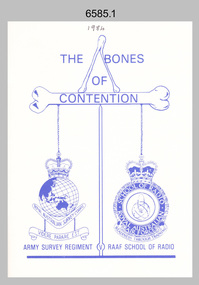 Bendigo Military Museum
Photograph - Bones Day – Army Survey Regiment Verses RAAF School of Radio at Bendigo, Victoria, 1984
... L to R: RAAF CO WGCDR McCarthy presents ‘the Big Bone’ to Army’s CO LTCOL Jorge Gruszka. .40) - Photo, black & white, Trophy presentation. ...L to R: RAAF CO WGCDR McCarthy presents ‘the Big Bone’ to Army’s CO LTCOL Jorge Gruszka. .40) - Photo, black & white, Trophy presentation. ...These 41 photographs were taken at Bones Day, an annual sports competition between the Army Survey Regiment and the RAAF School of Radio, at Bendigo on the 14th of November 1984. The two units took turns each year to host the event. The day competition usually comprised basketball, cricket, cross country, golf, pistol shooting, sailing, squash, rifle shooting, softball, tennis, touch football, tug-of-war and volleyball. The “big bone” trophy comprising a large bone from a beast housed inside a wooden framed glass case, was awarded to the winner of the day competition. The “O.H.A.R.A Rock” seen on the table in photo 6585.10P was awarded to the shooter with the lowest score in rifle shooting. The evening competition often included darts, carpet bowls, hookey, quoits and billiards/snooker. The “little bone” (a mounted chicken bone) was the consolation trophy awarded to the winner of the evening competition. The 3-hour bus trip for the visiting unit on their return was typically very raucous. The history of the Bones Day competition is best described in the booklet titled - Bones of Contention Souvenir Program. 1965. Refer to Item 6267. Photo 6585.41P is also published with Item 6276.5P.This item comprises the cover of a program booklet and a set of 40 photographs from Bones Day, an annual sports competition between the Army Survey Regiment and the RAAF School of Radio, held at Bendigo on the 14th of November 1984. The photographs were printed on photographic paper and are part of the Army Survey Regiment’s Collection. The colour A4 booklet cover and black and white photographs were scanned at 300 dpi. .1) – A5 size program booklet titled ‘The Bones of Contention’, buff card cover, graphics and internal text printed in purple. 32 pages dated 1984. .2) to .4) - Photo, black & white, 1984. Basketball. Army in darker tops, RAAF in white. .5) - Photo, black & white, 1984. Basketball. Unidentified participants from RAAF. .6) - Photo, black & white, 1984. Rifle Shooting. L to R: CPL Graham Johnston, unidentified. .7) & .8) - Photo, black & white, 1984. Rifle Shooting. Unidentified participants. .9) - Photo, black & white, 1984. Rifle Shooting. Unidentified officials at Range Control. .10) - Photo, black & white, 1984. Rifle Shooting. Unidentified participants from RAAF. The “O.H.A.R.A Rock” awarded to the shooter with the lowest score in rifle shooting is seen on the table. .11) - Photo, black & white, 1984. Pistol Shooting. Army CO LTCOL Jorge Gruszka. .12) - Photo, black & white, 1984. Pistol Shooting. L to R: Army CO LTCOL Jorge Gruszka, CPL Doug Home. .13) - Photo, black & white, 1984. Pistol Shooting. Army CO LTCOL Jorge Gruszka. .14) - Photo, black & white, 1984. Pistol Shooting. RAAF’s participants L to R: unidentified, CO WGCDR McCarthy, remainder unidentified. .15) - Photo, black & white, 1984. Pistol Shooting. ARMY’s participants L to R: CPL Doug Home, SSGT Davidson, SPR Andy Godden, CO LTCOL Jorge Gruszka. .16) & .17) - Photo, black & white, 1984. Pistol Shooting. ARMY and RAAF participants Back row L to R: CPL Doug Home, SSGT Davidson, unidentified RAAF participants (x2). Front row L to R: SPR Andy Godden, RAAF CO WGCDR McCarthy, Army CO LTCOL Jorge Gruszka. .18) to .25) - Photo, black & white, 1984. Softball. Unidentified ARMY & RAAF participants. .26) - Photo, black & white, 1984. Tennis. L to R: ARMY’s CPL John ‘Stormy’ Tempest, SPR Steve Coulson. .27) - Photo, black & white, 1984. Tennis. Unidentified participant. .28) - Photo, black & white, 1984. Tennis. CPL Ginny (Turner) Rowe, unidentified in background. .29) to .31) - Photo, black & white, 1984. Tennis. Unidentified participants. .32) - Photo, black & white, 1984. Tug-of-War. Army team lines up L to R: SPR Kerron South, CPL Leon Jackson, SPR Brett McAllister, CPL Jamie ‘Fish’ McRae, unidentified, CPL Roger Graf, CPL Peter Lefel. .33) - Photo, black & white, 1984. Tug-of-War. Army team pulling hard L to R: unidentified, CPL Jamie ‘Fish’ McRae, SPR Brett McAllister, CPL Leon Jackson, SPR Kerron South. .34) - Photo, black & white, 1984. Tug-of-War. Army and RAAF spectators. Centre foreground L to R: MAJ Bob Roche, Army CO LTCOL Jorge Gruszka, RAAF CO WGCDR McCarthy. .35) - Photo, black & white, 1984. Tug-of-War. RAAF team taking the strain on the rope. Unidentified participants. .36) - Photo, black & white, 1984. Tug-of-War. Army and RAAF teams shake hands after Army’s victory. .37) - Photo, black & white, 1984. Volleyball. Army’s team (light shirts) prepare to receive RAAF’s serve. L to R: CPL Rod Skidmore, CPL Ian Nichols, CPL Dan Cirsky, CPL Terry ‘TJ’ Wicker. .38) - Photo, black & white, 1984. Volleyball. Army’s CPL Rod Skidmore (light shirt) attempts to block a RAAF spike. Unidentified RAAF participants at left. Army team L to R: CPL Terry ‘TJ’ Wicker CPL Robin Marshall, CPL Dan Cirsky. .39) - Photo, black & white, Trophy presentation. L to R: RAAF CO WGCDR McCarthy presents ‘the Big Bone’ to Army’s CO LTCOL Jorge Gruszka. .40) - Photo, black & white, Trophy presentation. L to R: RAAF CO WGCDR McCarthy presents ‘the Little Bone’ to Army’s CO LTCOL Jorge Gruszka. .41) - Photo, black & white, Trophy presentation. L to R: RAAF CO WGCDR McCarthy presents an unidentified trophy to Army’s CO LTCOL Jorge Gruszka..1 - 'The Bones of Contention' title on booklet cover. '1984' hand written on top of cover Photos .2P to .41P – 'Bones Day 1984' annotated on cover sleeve.royal australian survey corps, rasvy, army survey regiment, army svy regt, fortuna, bones day -
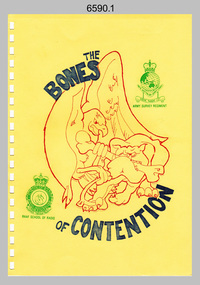 Bendigo Military Museum
Photograph - Bones Day – Army Survey Regiment Verses RAAF School of Radio at Laverton, Victoria, 1985
... The colour A4 booklet cover and black and white photographs were scanned at 300 dpi. .1) – A4 size program booklet titled ‘The Bones of Contention’, buff card cover and colour graphics, internal text and cartoon graphics printed in purple. 32 pages dated 1985. .2) - Photo, black & white, 1985. Basketball teams. Back row L to R...Front row L to R: Kerron South, unidentified, Barry Hogan, unidentified (x2), Brett McAllister. Bones Day – Army Survey Regiment Verses RAAF School of Radio at Laverton, Victoria Photograph Bones Day – Army Survey Regiment Verses RAAF School of Radio at Laverton, Victoria Army Survey Regiment ...The 10 photographs were taken at Bones Day, an annual sports competition between the Army Survey Regiment and the RAAF School of Radio, at Laverton on the 13th of November 1985. The two units took turns each year to host the event. The day competition usually comprised basketball, cricket, cross country, golf, sailing, pistol shooting, squash, rifle shooting, softball, tennis, touch football, tug-of-war and volleyball. The “big bone” trophy comprising a large bone from a beast housed inside a wooden framed glass case, was awarded to the winner of the day competition. The “O.H.A.R.A Rock” was awarded to the shooter with the lowest score in rifle shooting. The evening competition often included darts, carpet bowls, hookey, quoits and billiards/snooker. The “little bone” (a mounted chicken bone) was the consolation trophy awarded to the winner of the evening competition. The 3-hour bus trip for the visiting unit on their return was typically very raucous. The history of the Bones Day competition is best described in the booklet titled - Bones of Contention Souvenir Program. 1965. Refer to Item 6267. This item comprises the cover of a program booklet and a set of 10 photographs taken at Bones Day, an annual sports competition between the Army Survey Regiment and the RAAF School of Radio, held at Laverton on the 13th of November 1985. The photographs were printed on photographic paper and are part of the Army Survey Regiment’s Collection. The colour A4 booklet cover and black and white photographs were scanned at 300 dpi. .1) – A4 size program booklet titled ‘The Bones of Contention’, buff card cover and colour graphics, internal text and cartoon graphics printed in purple. 32 pages dated 1985. .2) - Photo, black & white, 1985. Basketball teams. Back row L to R: unidentified (x2), Bob Croxton, unidentified, Danny Galbraith, unidentified, Steve Burke. Middle row L to R: Rob Jones, unidentified (x2), Sherri (Dally) Burke, unidentified, Evan Allanson, unidentified. Front row L to R: unidentified (x4), Brenton McDonald, unidentified, Max Shaw. .3) - Photo, black & white, 1985. Cricket teams. Back row L to R: unidentified, Bill Griggs, unidentified, Mick Hogan, unidentified, Jim Ash, Dave Wright, Bob Thrower. Middle row L to R: PTE Hudson, unidentified, Brett McAllister, unidentified (x5). Front row L to R: PTE Wigg, unidentified, Brian Partridge, unidentified, Graham Hales, unidentified (x3). .4) - Photo, black & white, 1985. Cross Country teams. Back row L to R: unidentified (x3), Peter Barrett unidentified (x2), Paul Davis, unidentified. Front row L to R: unidentified, Jeff Rudd, unidentified, Greg Rowe, unidentified (x2), Steve Winner, unidentified. .5) - Photo, black & white, 1985. Golf teams. Back row L to R: unidentified (x2), Brian Johnson, unidentified (x2). Front row L to R: Doug Arman, unidentified, Graeme Dowd, unidentified, Peter Imeson, unidentified (x2). .6) - Photo, black & white, 1985. Pistol Shooting teams. Back row L to R: unidentified, Doug Home, unidentified, Tony Clark, Ben Lucas. Front row L to R: unidentified (x2), Daryl Hockings CSM, unidentified, Max Colletti. .7) - Photo, black & white, 1985. Pistol Shooting teams. Back row L to R: unidentified, Greg Sulman, unidentified, Bob Bright, Tom Bloxham, Bob Hopper, unidentified (x2). Front row L to R: unidentified (x2), Dan Cirsky, unidentified (x3), Brad Peppler, unidentified. .8) - Photo, black & white, 1985. Softball teams. Back row L to R: Scheryl Delforce, unidentified, Le-Anne (Smallshaw) Shirley, unidentified, Raelene (Munting) Brodie, Carmel (Butler) Fauth, Gill Park. Middle row L to R: unidentified (x2), Viv (Hawkins) Doherty, unidentified, Avril (Bray) Lloyd, unidentified (x6). Front row L to R: Wendy (Leitinger) McCarthy, unidentified, Leah (Hoffman) Peppler, unidentified, Lorraine (Daly) Talbot-Smith, unidentified, Chris Gordon, unidentified. .9) - Photo, black & white, 1985. Tennis teams. Back row L to R: Damien Killeen, unidentified, Ozzie Slade, unidentified, Dennis Learmonth, unidentified. Middle row L to R: Carol Dunstan, unidentified, Ginny (Turner) Rowe, unidentified (x2), Steve Coulson. Front row L to R: unidentified (x4), Col McInness, Peter Ball. .10) - Photo, black & white, 1985. Touch Football teams. Back row L to R: unidentified, Paul Baker, Jeff Willey, Per Andersen, unidentified (x4). Middle row L to R: John ’Junior’ Whaling, Simon ‘Andy’ Capp, Daryl South, Ken Talbot-Smith, unidentified (x4). Front row L to R: Frank Downie, Peter ‘Spoon’ Lefel, Roy Hicks, Greg Oaten CSC, unidentified (x4). .11) - Photo, black & white, 1985. Tug-of-War teams. Back row L to R: unidentified (x2), Steve Burke, unidentified (x3). Middle row L to R: unidentified (x2), JB Zahra, unidentified, Mal Paterson, Geunther Ebenwaldner, unidentified, Peter ‘Spoon’ Lefel. Front row L to R: Kerron South, unidentified, Barry Hogan, unidentified (x2), Brett McAllister. .1 - 'The Bones of Contention' title on booklet cover. Photos .2P to .11P – 'Bones Day 1985' annotated on cover sleeve.royal australian survey corps, rasvy, army survey regiment, army svy regt, fortuna, bones day -
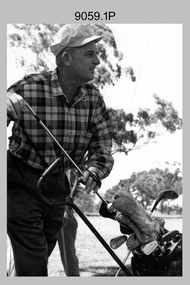 Bendigo Military Museum
Photograph - Bones Day – Army Survey Regiment Verses RAAF School of Radio at Laverton, Victoria, c1961
... L to R: unidentified RAAF School of Radio’s CO/or representative, AHQ Survey Regiment RSM WO1 De Moore, CO’s representative MAJ John Nolan. .8) - Photo, black & white, c1961, Day Competition Trophy – The Big Bone....L to R: unidentified RAAF School of Radio’s CO/or representative, AHQ Survey Regiment RSM WO1 De Moore, CO’s representative MAJ John Nolan. .8) - Photo, black & white, c1961, Day Competition Trophy – The Big Bone. ...These eight photographs were taken at Bones Day, an annual sports competition between the Army Headquarter (AHQ) Survey Regiment and the RAAF School of Radio at Laverton circa 1961. The two units took turns each year to host the event. The day competition usually comprised basketball, cricket, cross country, golf, sailing, squash, softball, tennis, touch football, rifle shooting, tug-of-war and volleyball. The “big bone” trophy comprising a large bone from a beast housed inside a wooden framed glass case, was awarded to the winner of the day competition. The evening competition often included darts, carpet bowls, hookey, quoits and billiards/snooker. The “little bone” (a mounted chicken bone) was the consolation trophy awarded to the winner of the evening competition. The 3-hour bus trip for the visiting unit on their return was typically very raucous. The history of the Bones Day competition is best described in the booklet titled - Bones of Contention Souvenir Program. 1965. Refer to Item 6267.These eight photographs were taken at Bones Day, an annual sports competition between the Army Survey Regiment and the RAAF School of Radio at Laverton circa 1961. The photographs were printed on photographic paper and are part of the Army Survey Regiment’s Collection. The black and white photographs were scanned at 300 dpi. .1) - Photo, black & white, c1961, Golf. MAJ John Nolan. .2) - Photo, black & white, c1961, Cricket. CPL Walter Mooney. .3) - Photo, black & white, c1961, Volleyball – Army v Ballarat. .4) - Photo, black & white, c1961, Squash. Back row L to R: unidentified (x3), Tom Royale. Front row L to R: unidentified, Barbara Minto. .5) - Photo, black & white, c1961, Hockey. All unidentified. .6) - Photo, black & white, c1961, Evening trophy presentations. L to R: unidentified RAAF School of Radio’s CO/or representative, AHQ Survey Regiment CO’s representative MAJ John Nolan. .7) - Photo, black & white, c1961, Evening trophy presentations. L to R: unidentified RAAF School of Radio’s CO/or representative, AHQ Survey Regiment RSM WO1 De Moore, CO’s representative MAJ John Nolan. .8) - Photo, black & white, c1961, Day Competition Trophy – The Big Bone..1P annotated ‘Nolan’ on back of photo .2P annotated ‘Mooney’ on back of photo .3P annotated ‘Volleyball – Army v Ballarat’ on back of photo .4P to .8P not annotated.royal australian survey corps, rasvy, army survey regiment, army svy regt, fortuna, bones day -
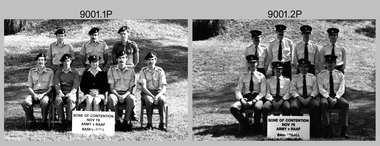 Bendigo Military Museum
Photograph - Bones Day – Army Survey Regiment Verses RAAF School of Radio at Bendigo, Victoria, 1978
... L to R: RAAF CO presents ‘the Little Bone’ to Army’s CO LTCOL Bob Skitch. ...L to R: RAAF CO presents ‘the Little Bone’ to Army’s CO LTCOL Bob Skitch. ...This set of 31 photographs was taken at Bones Day, an annual sports competition between the Army Survey Regiment and the RAAF School of Radio at Bendigo in November 1978. The two units took turns each year to host the event. The day competition usually comprised basketball, cricket, cross country, golf, sailing, squash, softball, tennis, touch football, rifle shooting, tug-of-war and volleyball. The “big bone” trophy comprising a large bone from a beast housed inside a wooden framed glass case, was awarded to the winner of the day competition. The evening competition often included darts, carpet bowls, hookey, quoits and billiards/snooker. The “little bone” (a mounted chicken bone) was the consolation trophy awarded to the winner of the evening competition. The 3-hour bus trip for the visiting unit on their return was typically very raucous. See item 6275.8P for more photographs taken on this occasion. The history of the Bones Day competition is best described in the booklet titled - Bones of Contention Souvenir Program. 1965. Refer to Item 6267.This set of 31 photographs were taken at Bones Day, an annual sports competition between the Army Survey Regiment (ASR) and the RAAF School of Radio (RSR) at Bendigo in November 1978. The photographs were printed on photographic paper and are part of the Army Survey Regiment’s Collection. The black and white photographs were scanned at 300 dpi. .1) - Photo, black & white, 1978, ASR Basketball Team Back row L to R: Jamie ‘Fish’ McRae, John Thomas, Gary Kerr. Front row L to R: Phil McGuire, Bill Jones, Gill Park, Bruce ‘Stretch’ Gordon, Stuart Symonds. .2) - Photo, black & white, 1978, RSR Basketball Team: All unidentified. .3) - Photo, black & white, 1978, Basketball action: Gill Park in No. 8 top, remainder unidentified. .4) - Photo, black & white, 1978, Basketball action: L to R: unidentified (x4), Gill Park, unidentified, Bruce ‘Stretch’ Gordon, remainder unidentified. .5) - Photo, black & white, 1978, ASR Cricket Team Back row L to R: Alan Toogood, Bob Norwood, Ken ‘Sluggo’ Slater, unidentified, Josh Degroot. Front row L to R: Rick van der Bom, Greg Byers, Peter Hammer, 2LT Trevor Black, Alan Bunn, Mark Casey. .6) - Photo, black & white, 1978, RSR Cricket Team: All unidentified. .7) - Photo, black & white, 1978, ASR Rifle Shooting Team Back row L to R: John Cain, Bob Clark, Ian Belmont, unidentified. Front row L to R: Steve Hansen, Struan Robinson, Max Neil, Warren ‘Waldo’ Shirley. .8) - Photo, black & white, 1978, RSR Rifle Shooting Team: All unidentified. .9) - Photo, black & white, 1978, ASR Squash Team Back row L to R: Errol Fletcher, Rick Downie, Andy Wilson, George Timmins, John Bennett. Front row L to R: Terry Danger, Di Norling, Rob John, Dennis Puniard. .10) - Photo, black & white, 1978, Softball action: L to R: Janet (Chopping) Justin, Lorraine ‘Snoopy’ (Daly) Talbot-Smith. In left background: Janet (Chopping) Justin. .11) - Photo, black & white, 1978, Softball action: L to R: Le-anne (Smallshaw) Shirley, Lynn Johnson. .12) - Photo, black & white, 1978, Softball action: L to R: Lorraine ‘Snoopy’ (Daly) Talbot-Smith, John Ashby, unidentified. .13) - Photo, black & white, 1978, RSR Tennis Team: All unidentified. .14) - Photo, black & white, 1978, ASR Volleyball Team Back row L to R: Kerry ‘Gags’ Gallager, Gerry Gates, Bob Clisby, unidentified, Cornelius Moorrees, Laurie Justin. Front row L to R: Chris Edwards, Bob Bright, Keith Quinton, Mick ‘Buddha’ Ellis, George Holland, unidentified. .15) - Photo, black & white, 1978, RSR Volleyball Team: All unidentified. .16) - Photo, black & white, 1978, Volleyball action L to R: Keith Quinton, unidentified, Chris Edwards, remainder unidentified. .17) - Photo, black & white, 1978, Volleyball action L to R: unidentified, Keith Quinton in No. 4 top, unidentified, unidentified. .18) - Photo, black & white, 1978, ASR Tug-of-War Team Back row L to R: Russ Mollenhaur, Brian Collings, Noel ‘Macca’ McNamara, Ken ‘Sluggo’ Slater, Mick Davey, Russell ‘Rusty’ Williams, unidentified. Front row L to R: Wolfgang Thun, Rhys Delaine, Phil Boyle, unidentified, Ian Nelson, Jamie ‘Fish’ McRae. .19) - Photo, black & white, 1978, RSR Tug-of-War Team: All unidentified. .20) - Photo, black & white, 1978, ASR Tug-of-War Team in action. .21) - Photo, black & white, 1978, RSR Tug-of-War Team in action. .22) & .23) - Photo, black & white, 1978, Tug-of-War Teams at end of contest. .24) - Photo, black & white, 1978, Darts competition: Di Chalmers in action. John Ashby in right background. .25) - Photo, black & white, 1978, Carpet bowls competition: All unidentified. .26) - Photo, black & white, 1978, Ian Whittington EXCH-UK admires the view from the Tavern’s rafters. .27) - Photo, black & white, 1978, social activities L to R: Paul Baker, unidentified. .28) - Photo, black & white, 1978, social activities L to R: Adrian Rynberk, unidentified, unidentified. .29) - Photo, black & white, 1978, Trophy presentation. L to R: RAAF CO presents ‘the Little Bone’ to Army’s CO LTCOL Bob Skitch. In background L to R: unidentified, Ian Whittington EXCH-UK in right background. .30) - Photo, black & white, 1978, Trophy presentation. L to R: RAAF CO presents ‘the Little Bone’ to Army’s CO LTCOL Bob Skitch. In background L to R: John Smith, Ian Whittington EXCH-UK. .31) - Photo, black & white, 1978, Trophy presentation. L to R: RAAF CO presents ‘the Little Bone’ to Army’s CO LTCOL Bob Skitch. In background L to R: unidentified, Ian Whittington EXCH-UK in right background. .1P to.9P – ‘Bones Day 1978’ annotated on cover sleeve.royal australian survey corps, rasvy, army survey regiment, army svy regt, fortuna, bones day -
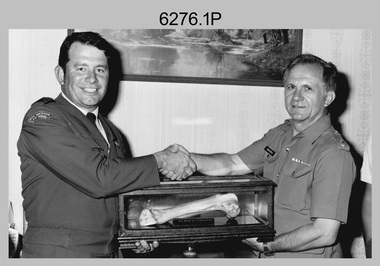 Bendigo Military Museum
Photograph - Bones Day - Army Survey Regiment, Bendigo versus RAAF School of Radio, Laverton, 1984, 1985 and 1988
... The photographs were scanned at 300 dpi. .1) - Photo, black & white, 14th November 1984, RAAF CO WGCDR McCarthy presents ‘the Big Bone’ to Army’s CO LTCOL Jorge Gruszka. .2) - Photo, black & white, 13th November 1985, Trophy presentations L to R: MAJ Daryl Hockings CSM, PTE JB Zahra, unidentified RAAF officer. .3) - Photo, black & white, 13th November 1985, tug-of-war L to R: Peter Lefel, Kerron South, Barry Hogan, DB Zahra, unidentified (x2), Guenther Ebenwaldner, Steve Burke, Mal Paterson. .4) - Photo, colour, 1988, at Bendigo, tug-of-war L to R: Jodi Bowman, unidentified, Frank Savy, Barry Hogan, unidentified (x2), Graeme Spong, unidentified (x2), Mick Duggan, unidentified, Dave Lambton-Young, unidentified (x2). .5) - Photo, colour, 1988, at Bendigo, tug-of-war L to R: Mick Duggan, Dave Lambton-Young, unidentified (x3), Frank Savy (with sign), unidentified, Barry Hogan, unidentified, Graeme Spong, unidentified (x3)....The photographs were scanned at 300 dpi. .1) - Photo, black & white, 14th November 1984, RAAF CO WGCDR McCarthy presents ‘the Big Bone’ to Army’s CO LTCOL Jorge Gruszka. .2) - Photo, black & white, 13th November 1985, Trophy presentations L to R: MAJ Daryl Hockings CSM, PTE JB Zahra, unidentified RAAF officer. .3) - Photo, black & white, 13th November 1985, tug-of-war L to R: Peter Lefel, Kerron South, Barry Hogan, DB Zahra, unidentified (x2), Guenther Ebenwaldner, Steve Burke, Mal Paterson. .4) - Photo, colour, 1988, at Bendigo, tug-of-war L to R: Jodi Bowman, unidentified, Frank Savy, Barry Hogan, unidentified (x2), Graeme Spong, unidentified (x2), Mick Duggan, unidentified, Dave Lambton-Young, unidentified (x2). .5) - Photo, colour, 1988, at Bendigo, tug-of-war L to R: Mick Duggan, Dave Lambton-Young, unidentified (x3), Frank Savy (with sign), unidentified, Barry Hogan, unidentified, Graeme Spong, unidentified (x3). ...These five photographs were taken at Bones Day, an annual sports competition between the Army Survey Regiment and the RAAF School of Radio in November 1984, 1985, and 1988. The two units took turns each year to host the event. The day competition usually comprised basketball, cross country, golf, sailing, squash, softball, tennis, touch football, rifle shooting, tug-of-war and volleyball. The “big bone” trophy comprising a large bone from a beast housed inside a wooden framed glass case, was awarded to the winner of the day competition. The evening competition often included darts, carpet bowls, hookey, quoits and billiards/snooker. The “little bone” (a mounted chicken bone) was the consolation trophy awarded to the winner of the evening competition. The “O.H.A.R.A Rock” seen in photo 6276.2P was awarded to PTE Zahra for the lowest score in rifle shooting. He had to lug it with him for the rest of the evening. The 3-hour bus trip for the visiting unit on their return was typically very raucous. The history of the Bones Day competition is best described in the booklet titled - Bones of Contention Souvenir Program. 1965. Refer to Item 6267. Photo 6276.1P is also published with item 6585.41P.This collection of five photographs was taken at Bones Day, an annual sports competition between the Army Survey Regiment and the RAAF School of Radio, at Bendigo and Laverton respectively in November 1984, 1985, and 1988. The photographs were printed on photographic paper and are part of the Army Survey Regiment’s Collection. The photographs were scanned at 300 dpi. .1) - Photo, black & white, 14th November 1984, RAAF CO WGCDR McCarthy presents ‘the Big Bone’ to Army’s CO LTCOL Jorge Gruszka. .2) - Photo, black & white, 13th November 1985, Trophy presentations L to R: MAJ Daryl Hockings CSM, PTE JB Zahra, unidentified RAAF officer. .3) - Photo, black & white, 13th November 1985, tug-of-war L to R: Peter Lefel, Kerron South, Barry Hogan, DB Zahra, unidentified (x2), Guenther Ebenwaldner, Steve Burke, Mal Paterson. .4) - Photo, colour, 1988, at Bendigo, tug-of-war L to R: Jodi Bowman, unidentified, Frank Savy, Barry Hogan, unidentified (x2), Graeme Spong, unidentified (x2), Mick Duggan, unidentified, Dave Lambton-Young, unidentified (x2). .5) - Photo, colour, 1988, at Bendigo, tug-of-war L to R: Mick Duggan, Dave Lambton-Young, unidentified (x3), Frank Savy (with sign), unidentified, Barry Hogan, unidentified, Graeme Spong, unidentified (x3)..1P to .7P – No personnel are identified. The date is stamped on the back of photos .1P to .3P.royal australian survey corps, rasvy, army survey regiment, army svy regt, fortuna, asr, raaf school of radio, bones day -
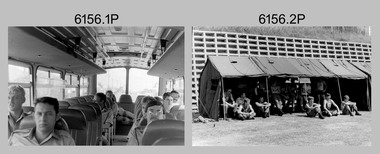 Bendigo Military Museum
Photograph - Army Survey Regiment’s Tug-of-War Team at Simpson Barracks, Watsonia, c1989
... Bones Day verses the RAAF’s the School of Radio and a component of regimental training. Royal Australian Survey Corps RASvy Army Survey Regiment Army Svy Regt Fortuna ASR No personnel are identified. These eight photos of the Army Survey Regiment’s Tug-of-War Team were most likely taken at a competition held at Simpson Barracks, Watsonia circa 1989. The photographs were on 35mm negative film and were scanned at 96 dpi. They are part of the Army Survey Regiment’s Collection. .1) - Photo, black & white, c1989, L to R ...These eight photos of the Army Survey Regiment’s Tug-of-War Team were most likely taken at Simpson Barracks, Watsonia in circa 1989. There is no information available on why the unit sent the team to Melbourne, the occasion, and the winner of this contest. It may have been a military athletics carnival held to commemorate Australia’s First Fleet bi- centenary, noting there was other members of Army Svy Regt on the bus who were not part of this team. The team’s coach was WO1 Ken Slater. Tug-of-War contests were very popular for the competitors and spectators, as they were often held at the Regiment as a component of inter-squadron athletics competitions, Flag Day verses the School of Military Survey, Bones Day verses the RAAF’s the School of Radio and a component of regimental training.These eight photos of the Army Survey Regiment’s Tug-of-War Team were most likely taken at a competition held at Simpson Barracks, Watsonia circa 1989. The photographs were on 35mm negative film and were scanned at 96 dpi. They are part of the Army Survey Regiment’s Collection. .1) - Photo, black & white, c1989, L to R: Neil Jones, WO1 Ken Slater, WO1 Brian Mead, unidentified (x2), Dave Cook, John Lane and Barry Miller. .2) - Photo, black & white, c1989, L to R: Rhys De Laine, WO1 Ken Slater, unidentified, Phil Meagher, unidentified (x6), Dave Cook and Mick Gillham. .3) - Photo, black & white, c1989, L to R: unidentified (x2), Rhys De Laine, Phil Meagher, Neil Jones, John Lane, Dave Cook, Rick Warren, Mick Gillham, unidentified and WO1 Ken Slater. .4) to .6) - Photo, black & white, c1989, L to R: Rick Warren, Dave Cook, John Lane, Neil Jones, Phil Meagher, Rhys De Laine and unidentified (x2). WO1 Ken Slater in foreground. .7) - Photo, black & white, c1989, L to R: Rick Warren, Dave Cook, John Lane, Neil Jones, Phil Meagher, Rhys De Laine and unidentified (x2). .8) - Photo, black & white, c1989, L to R: unidentified (x2), Rhys De Laine, Phil Meagher, Neil Jones, John Lane, Dave Cook, Rick Warren.No personnel are identified.royal australian survey corps, rasvy, army survey regiment, army svy regt, fortuna, asr -
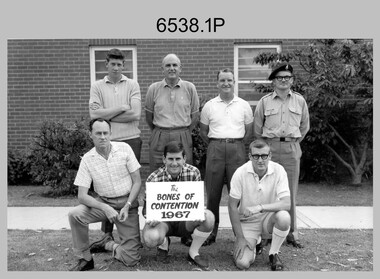 Bendigo Military Museum
Photograph - Bones Day – Army Survey Regiment Verses RAAF School of Radio at Laverton, Victoria, 1967
... Bones Day, an annual sports competition between the Army Survey Regiment and the RAAF School of Radio at Laverton in 1967. The photographs were printed on photographic paper and are part of the Army Survey Regiment’s Collection. The black and white photographs were scanned at 300 dpi. .1) - Photo, black & white, 1967, Golf. ASR Team Back row L to R...Front row L to R: unidentified, Ken ‘Sluggo’ Slater, unidentified (x3). Bones Day – Army Survey Regiment Verses RAAF School of Radio at Laverton, Victoria Photograph Bones Day – Army Survey Regiment Verses RAAF School of Radio at Laverton, Victoria Army Survey Regiment ...These seven photographs were taken at Bones Day, an annual sports competition between the Army Survey Regiment and the RAAF School of Radio at Laverton in 1967. The two units took turns each year to host the event. The day competition usually comprised basketball, cricket, cross country, golf, sailing, squash, softball, tennis, touch football, rifle shooting, tug-of-war and volleyball. The “big bone” trophy comprising a large bone from a beast housed inside a wooden framed glass case, was awarded to the winner of the day competition. The evening competition often included darts, carpet bowls, hookey, quoits and billiards/snooker. The “little bone” (a mounted chicken bone) was the consolation trophy awarded to the winner of the evening competition. The 3-hour bus trip for the visiting unit on their return was typically very raucous. The history of the Bones Day competition is best described in the booklet titled - Bones of Contention Souvenir Program. 1965. Refer to Item 6267.These seven photographs were taken at Bones Day, an annual sports competition between the Army Survey Regiment and the RAAF School of Radio at Laverton in 1967. The photographs were printed on photographic paper and are part of the Army Survey Regiment’s Collection. The black and white photographs were scanned at 300 dpi. .1) - Photo, black & white, 1967, Golf. ASR Team Back row L to R: Graeme Jeffers, CO LTCOL John Nolan, unidentified, Ace Evans. Front row L to R: unidentified (x2), Stan Vote. .2) - Photo, black & white, 1967, ASR Rifle Shooting Team Back row L to R: Ian ‘Lofty’ Turner, Bill Van Mallenstein, Daryl Hockings CSM, Geoff Haynes, unidentified (x2). Front row L to R: Rob Bridge, Con Tsakalos, unidentified UK exchange officer. .3) - Photo, black & white, 1967, ASR Tennis Team L to R: unidentified, Kalen Sargeant, unidentified, Marj Knight. .4) - Photo, black & white, 1967, ASR Squash Team – Back row L to R: unidentified (x2), Bob Williams, Peter Saunders. Front row L to R: L.D. Clayden, Loretta Hall. .5) - Photo, black & white, 1967, ASR Cricket Team: Back row: unidentified, Bruce Whitecross, Wally Herbst, unidentified (x4). Front row: Paddy Strunks, Don Taylor, unidentified (x2), Warren Chadwick. .6) - Photo, black & white, 1967, ASR Basketball Team Back row L to R: Tom Royal, Geoff Wasser, Gordon Lowery. Front row L to R: unidentified, John McCulloch, Ken ‘Sluggo’ Slater. .7) - Photo, black & white, 1967, ASR Tug-of-War Team Back row unidentified (x4), Tom Pattison, Geoff Wasser, Evan Giri. Front row L to R: unidentified, Ken ‘Sluggo’ Slater, unidentified (x3)..1P to .7P –No personnel are identified.royal australian survey corps, rasvy, army survey regiment, army svy regt, fortuna, bones day -
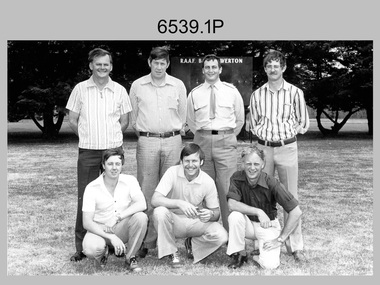 Bendigo Military Museum
Photograph - Bones Day – Army Survey Regiment Verses RAAF School of Radio at Laverton, Victoria, 1977
... Bones Day, an annual sports competition between the Army Survey Regiment and the RAAF School of Radio at Laverton on the 10th of November 1977. The photographs were printed on photographic paper and are part of the Army Survey Regiment’s Collection. The black and white photographs were scanned at 300 dpi. .1) - Photo, black & white, 1977, ASR Golf Team Back row L to R...Front row L to R: Terry Danger, unidentified (x2), Lynn Johnson, unidentified. Bones Day – Army Survey Regiment Verses RAAF School of Radio at Laverton, Victoria Photograph Bones Day – Army Survey Regiment Verses RAAF School of Radio at Laverton, Victoria Army Survey Regiment ...These two photographs were taken at Bones Day, an annual sports competition between the Army Survey Regiment and the RAAF School of Radio at Laverton on the 10th of November 1977. The two units took turns each year to host the event. The day competition usually comprised basketball, cricket, cross country, golf, sailing, squash, softball, tennis, touch football, rifle shooting, tug-of-war and volleyball. The “big bone” trophy comprising a large bone from a beast housed inside a wooden framed glass case, was awarded to the winner of the day competition. The evening competition often included darts, carpet bowls, hookey, quoits and billiards/snooker. The “little bone” (a mounted chicken bone) was the consolation trophy awarded to the winner of the evening competition. The 3-hour bus trip for the visiting unit on their return was typically very raucous. The history of the Bones Day competition is best described in the booklet titled - Bones of Contention Souvenir Program. 1965. Refer to Item 6267.These two photographs were taken at Bones Day, an annual sports competition between the Army Survey Regiment and the RAAF School of Radio at Laverton on the 10th of November 1977. The photographs were printed on photographic paper and are part of the Army Survey Regiment’s Collection. The black and white photographs were scanned at 300 dpi. .1) - Photo, black & white, 1977, ASR Golf Team Back row L to R: Alf Behr, Graeme Jeffers, Lloyd Binion, unidentified. Front row L to R: Ian Marner, Peter Warwick, Roy Morgan. .2) - Photo, black & white, 1977, ASR Squash Team Back row L to R: unidentified (x4), Rob John, Dennis Puniard. Middle row L to R: Kerry Brown, unidentified, Tony Spurling, Errol Fletcher. Front row L to R: Terry Danger, unidentified (x2), Lynn Johnson, unidentified..1P to .2P –No personnel are identified.royal australian survey corps, rasvy, army survey regiment, army svy regt, fortuna -
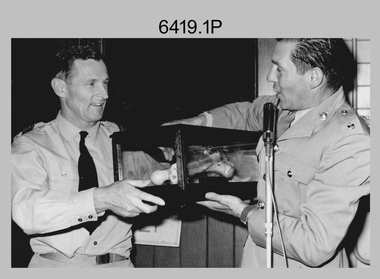 Bendigo Military Museum
Photograph - Bones Day - Army Survey Regiment Versus RAAF School of Radio, 1969
... Bones Day, an annual sports competition between the Army Survey Regiment the RAAF School of Radio in 1969. The photographs were printed on photographic paper and are part of the Army Survey Regiment’s Collection. They were scanned at 300 dpi. .1) - Photo, black & white, 1969. L to R...L to R: MAJ Don Ridge, unidentified CO or representative from the RAAF School of Radio. Bones Day - Army Survey Regiment Versus RAAF School of Radio Photograph Bones Day - Army Survey Regiment Versus RAAF School of Radio Army Survey Regiment ...These two photographs were taken at Bones Day, an annual sports competition between the Army Survey Regiment and the RAAF School of Radio in 1969. The two units took turns each year to host the event and on this occasion was held at the RAAF School of Radio, Laverton. The day competition usually comprised basketball, cross country, golf, sailing, squash, softball, tennis, touch football, rifle shooting, tug-of-war and volleyball. The “big bone” trophy comprising a large bone from a beast housed inside a wooden framed glass case, was awarded to the winner of the day competition. The evening competition often included darts, carpet bowls, hookey, quoits and billiards/snooker. The “little bone” (a mounted chicken bone) was the consolation trophy awarded to the winner of the evening competition. The 3-hour bus trip for the visiting unit on their return was typically very raucous. The history of the Bones Day competition is best described in the booklet titled - Bones of Contention Souvenir Program. 1965. Refer to Item 6267. The winner of the two trophies in 1969 is not known. MAJ Donald Ridge was probably on this occasion was the 2IC of the Army Headquarters Survey Regiment, He was subsequently promoted to the rank of LTCOL was the CO of the unit from 1972 to 1973; and continued as the CO of the renamed Army Survey Regiment from 1974 to 1975. He served from 1946 to 1975.These two photographs were taken at Bones Day, an annual sports competition between the Army Survey Regiment the RAAF School of Radio in 1969. The photographs were printed on photographic paper and are part of the Army Survey Regiment’s Collection. They were scanned at 300 dpi. .1) - Photo, black & white, 1969. L to R: Unidentified CO or representative from the RAAF School of Radio, MAJ Don Ridge. .2) - Photo, black & white, 1969. L to R: MAJ Don Ridge, unidentified CO or representative from the RAAF School of Radio..1P to .9P – no annotationsroyal australian survey corps, rasvy, army survey regiment, army svy regt, fortuna, asr, bones day, raaf school of radio -
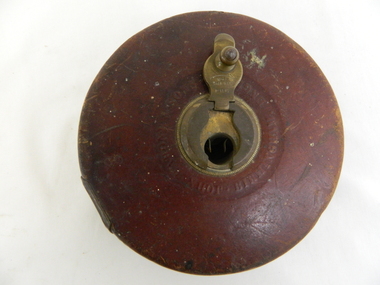 Kiewa Valley Historical Society
Tape Measure, mid 1900s
... Leather cover marked "John R A Bone & Sons Birmingham England" on reverse side "Metallic wired tape R A Bone & Sons"... John R A Bone & Sons...Leather cover marked "John R A Bone & Sons Birmingham England" on reverse side "Metallic wired tape R A Bone & Sons" Retractable metallic wired tape measure within a leather casing. ...This item predates the change of Imperial measure (England -1824) to decimal measure (Europe) in Australia (1970 to 1988). This item was manufactured in England as, was the majority of measuring tool and equipment. It was not until the late 1950s that other countries e.g. United States and Europe provided the same type of manufactured tools for the Australian market. World War II, when Australia had to defend its own boarders that the political push for self sufficiency of manufactured goods started local production. Workers in the Kiewa Valley had always relied on the high quality of tools and manufactured goods coming from England. From the middle to late 1950s migration by skilled workers from a war torn Europe provided the source of manpower for the expansion of the manufacturing industries in Australia.The requirement of an accurate measuring tool has always been critical. This item was used at the time when Australia was using the British Imperial measurements. Accurate measurements by carpenters and other trades people for both town and rural needs was just as critical as for the larger cities. The transition period from Imperial to metric was a period of over four years but it still presented those who had used the Imperial measurements for a longer period in their trades with a dual system of measurement for a longer time(usually up to their retirement) Other nations still using Imperial measurements kept the transition from Imperial to metric alive (the UK and USA still uses Imperial measurements in 2012)Retractable metallic wired tape measure within a leather casing. Length of tape is 66 feet. Brass fittings on casing(winder and back plate)Tape on one side marked in inches and feet and on the other in links. Winder lever marked "66ft No 401" on front and arrow with"wind this way". Leather cover marked "John R A Bone & Sons Birmingham England" on reverse side "Metallic wired tape R A Bone & Sons"wired tape measure, tool, mobile tool, construction tool -
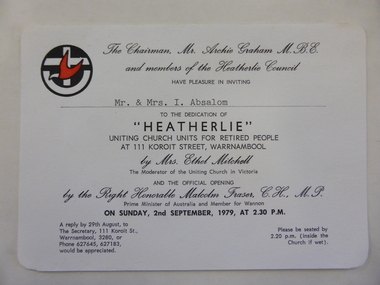 Warrnambool and District Historical Society Inc.
Document - Invitation, Heatherlie Homes opening 1979, Circa August 1979
... Bone) family home in Stawell. Original document, invitation to dedication of "Heatherlie" by Mrs Ethel Mitchell, Moderator of Uniting Church in Victoria and the official opening By the R Hon Malcolm Fraser, PM of Australia and Member of Wannon. ..."Heatherlie " homes have been extended and are still operated under the auspices of the Uniting Church Australia. Invitation retained by Absalom family members for 44 years. "Heatherlie" name originated from owners of wooden house built by EB Phillips, furniture store owner. Name taken from mrs Annie Phillips (nee Bone) family home in Stawell.Original document, invitation to dedication of "Heatherlie" by Mrs Ethel Mitchell, Moderator of Uniting Church in Victoria and the official opening By the R Hon Malcolm Fraser, PM of Australia and Member of Wannon. Significant as "Heatherlie" was a community and government funded building programRectangular white card with rounded corners. Black print with black and red logo, Uniting Church. Typewritten name, Mr. & Mrs. I. Absalom. Varied size print, copperplate, capital letters and typewritten name inserted.Logo of Uniting Churchmr archie graham, mr & mrs i absalom, uniting church, warrnambool, mrs ethel mitchell-moderator, malcolm fraser pm, of australia, koroit street, heatherlie council -
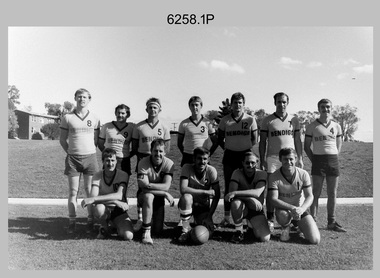 Bendigo Military Museum
Photograph - Bones Day - Army Survey Regiment Versus RAAF School of Radio. Fortuna, Bendigo, c1982
... Bones Day, an annual sports competition between the Army Survey Regiment and the RAAF School of Radio at Bendigo c1982. The photographs are on 35mm negative film. They are part of the Army Survey Regiment’s Collection. The photographic negatives were scanned at 96 dpi. There are additional photos in this set that have not been scanned due to poor quality or low historical value. .1) - Photo, black & white, 1982, Touch Football Team Back Row L to R...Army personnel in background standing L to R: Rick van der Bom, Ian Nelson, Mick Dempster. Bones Day - Army Survey Regiment Versus RAAF School of Radio. ...These four photographs were taken at Bones Day, an annual sports competition between the Army Survey Regiment and the RAAF School of Radio at Bendigo c1982. The two units took turns each year to host the event. The day competition usually comprised basketball, cross country, golf, sailing, squash, softball, tennis, touch football, rifle shooting, tug-of-war and volleyball. The two sports featuring in these photos are touch football and tug-of-war. The “big bone” trophy comprising a large bone from a beast housed inside a wooden framed glass case, was awarded to the winner of the day competition. The evening competition often included darts, carpet bowls, hookey, quoits and billiards/snooker. The “little bone” (a mounted chicken bone) was the consolation trophy awarded to the winner of the evening competition. The 3-hour bus trip for the visiting unit on their return was typically very raucous. The history of the Bones Day competition is best described in the booklet titled - Bones of Contention Souvenir Program. 1965. Refer to Item 6267.These four photographs were taken at Bones Day, an annual sports competition between the Army Survey Regiment and the RAAF School of Radio at Bendigo c1982. The photographs are on 35mm negative film. They are part of the Army Survey Regiment’s Collection. The photographic negatives were scanned at 96 dpi. There are additional photos in this set that have not been scanned due to poor quality or low historical value. .1) - Photo, black & white, 1982, Touch Football Team Back Row L to R: Brian Fauth, Bruce Bowers, Bob Mason, Paul Baker, Danny Galbraith, John Hook, Scott Payne. Front Row L to R: Roy Hicks, Peter Imeson, Alan Glanville, John Gilbert, Wally Chilcott. .2) - Photo, black & white, 1982, Tug-of-War Team Back Row L to R: Cliff Webb, Peter Treble, John Lane, Tom Pattison, Andy Wilson, Rick Warren, Rusty Williams, Brian Paul. Front Row L to R: Brian Fauth, Rick Downie, unidentified, Ken Slater, Rhys De Laine, John Smith, unidentified. .3) - Photo, black & white, 1982, Tug-of-War Team L to R: Peter Treble, Brian Paul, Rusty Williams, Rhys De Laine, John Lane, unidentified, John Smith. Army personnel in background standing L to R: Rick van der Bom, Paul Hopes, Ian Nelson, Mick Dempster, John ‘Flash’ Anderson, Geoff Havelberg, John ‘Stormy’ Tempest, Bruce Gordon, Dan Cirsky, Neil Jones, Gerry Gates, Peter Main, Bob Thrower, Barry Miller, Gill Park. Army personnel in background seated L to R: Roger Pearson, Mick Gillham, Penny Knott, Leanne Shirley. .4) - Photo, black & white, 1982, Tug-of-War Team L to R: Rick Warren, Cliff Webb, Andy Wilson, Peter Treble, Brian Paul, Rusty Williams, Rhys De Laine, John Lane. Army personnel in background standing L to R: Rick van der Bom, Ian Nelson, Mick Dempster. .1P to .4P – No personnel are identified.royal australian survey corps, rasvy, army survey regiment, army svy regt, fortuna, raaf school of radio, bones day
