
Showing 105 items matching " canberra architecture"
-
 Robin Boyd Foundation
Document - Manuscript, Robin Boyd, Imported Archi…
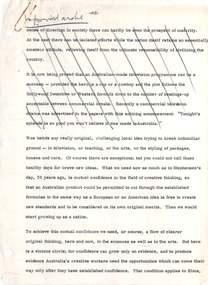
... ... Canberra architecture...architectural development in every community, and describes Canada in these terms. He posits that Australia overall is only at stage two (imported sophisticated), Brisbane/Hobart/Adelaide at stage one. Boyd argues the Australian dream of individual identity is impossible now, to move to stage 3 Australia needs to be encouraged to have confidence in Australian artists of all kinds, allowing creative people to flourish, be themselves. He indicates that Canberra...Confidence in creative thinking Australian national identity four stages in architectural development Canberra architecture John Andrews robin boyd manuscript Typewritten (c copy), pencil edits and additions, quarto, 7 pages - p12-18 Imported Archi… Document Manuscript Robin Boyd ...Boyd argues that Australia needs confidence in creative thinking so our products can cut through established formulas to contribute to our growth as a nation. He outlines four stages of architectural development in every community, and describes Canada in these terms. He posits that Australia overall is only at stage two (imported sophisticated), Brisbane/Hobart/Adelaide at stage one. Boyd argues the Australian dream of individual identity is impossible now, to move to stage 3 Australia needs to be encouraged to have confidence in Australian artists of all kinds, allowing creative people to flourish, be themselves. He indicates that Canberra is close to third stage, with architecture designed by international figures in 1960s but now Australian John Andrews brought out to do an architecturally creative office complex in Belconnen - Canberra, signalling growth of a national identity.Typewritten (c copy), pencil edits and additions, quarto, 7 pages - p12-18confidence in creative thinking, australian national identity, four stages in architectural development, canberra architecture, john andrews, robin boyd, manuscript -
 RMIT Design Archives
Work on paper - Paintings, Academy of Science, Canberra
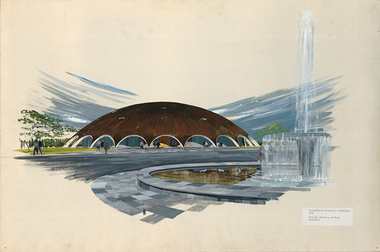
... canberra...Architecture...Architecture. In 1956 six architects were invited to submit plans for the Academy of Science's new building in Canberra and the Academy's building design committee selected Grounds Romberg and Boyd's proposal designed by Roy Grounds. ...Paul Wallace, a well-known Melbourne renderer, drew this perspective of the proposed design, possibly for the competition submission, in 1956. science canberra Architecture RMIT Design Archives design Printed text on attached sticker, 'ACADEMY OF SCIENCE, CANBERRA / 1958 / Grounds, Romberg and Boyd, / Architects'. ...The Shine Dome is one of seven projects that the Royal Australian Institute of Architects has nominated to the World Register of Significant Twentieth Century Architecture. In 1956 six architects were invited to submit plans for the Academy of Science's new building in Canberra and the Academy's building design committee selected Grounds Romberg and Boyd's proposal designed by Roy Grounds. It features a shallow arcaded concrete dome, sheeted in copper and was one of a number of domed buildings that appeared around this time internationally, expressing the optimism of the post-war years. It perfectly reflected the Academy's ambition to champion excellence in Australian science and promote international scientific engagement. Paul Wallace, a well-known Melbourne renderer, drew this perspective of the proposed design, possibly for the competition submission, in 1956.Coloured perspective of the Academy of Science buiding in Canberra.Printed text on attached sticker, 'ACADEMY OF SCIENCE, CANBERRA / 1958 / Grounds, Romberg and Boyd, / Architects'. Printed centre on verso, 'ACADEMY OF SCIENCE CANBERRA GROUND, ROMBERG AND BOYD ARCHITECTS 340 ALBERT STE., MELBOURNE C2'.science, canberra, architecture, rmit design archives, design -
 Robin Boyd Foundation
Book, Trevor Creighton, Peter Freeman and Roslyn Russell, Manning Clark House Reflections, 2002
... Australian architecture... Canberra...Australian architecture Canberra Walsh St library Softcover Manning Clark House Reflections Book Trevor Creighton, Peter Freeman and Roslyn Russell Manning Clark House ...Softcoveraustralian architecture, canberra, walsh st library -
 Narre Warren and District Family History Group
Book, Hotel Inter-Continental, A History of the Treasury: Hotel Inter-Continental, Sydney, 1986
... Architecture...The Mitchell Library...Clive Lucas & Partners...Architects...National Library Canberra...Sydney's Historic Architecture The Mitchell Library Clive Lucas & Partners Architects National Library Canberra Bridge Street Macquarie Street Carruthers Ministry Phillip Street Tram Depot History of the Treasury Hotel Inter-Continental Sydney A History of the Treasury: Hotel Inter-Continental, Sydney Book Hotel Inter-Continental ...History of the Treasury Hotel Inter-Continental Sydneynon-fictionHistory of the Treasury Hotel Inter-Continental Sydneysydney's historic architecture, the mitchell library, clive lucas & partners, architects, national library canberra, bridge street, macquarie street, carruthers ministry, phillip street tram depot -
 Robin Boyd Foundation
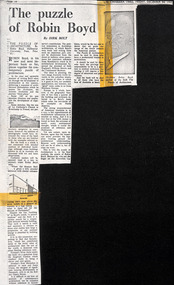
Newspaper - Clipping, The Canberra Times, The puzzle of Robin Boyd, 24.12.1965
... Architecture'. It makes particular note on Boyd's commentary on Canberra....Architecture'. It makes particular note on Boyd's commentary on Canberra. Walsh St library Photocopy of newspaper clipping. ...This is a review of Robin Boyd's book 'The Puzzle of Architecture'. It makes particular note on Boyd's commentary on Canberra.Photocopy of newspaper clipping. The original article is item P1374.42.walsh st library -
 Robin Boyd Foundation
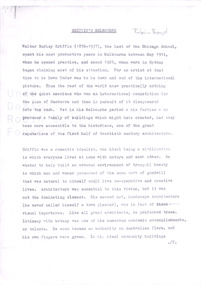
Document, Robin Boyd, Griffin's Melbourne, 1964
... architecture. Walter Burley Griffin Chicago School Melbourne Sydney Canberra A.S. ...Boyd discusses the influence and legacy of the work of Walter Burley Griffin on Melbourne's architecture. Boyd discusses the utopian tendencies of Griffin as well as his temperament and approach to practice. The text goes on to discuss Griffin's exemplary works including the Capitol Building and Leonard House and the ongoing legacy of Griffin's work. Griffin's patented construction system, 'Knitlock', is also discussed with exemplary projects using this system mentioned. Griffin's influence is concluded as initially controversial and jarring to the conservative nature of Melbourne suburbia, but later becomes exemplary work and essential to the progression of Melbourne's architecture.Typewritten, photocopy, 15 pages, A4, 210x297.Signature. Pencil mark up on page 2, 3, 4, 6, 7, 9, 14.walter burley griffin, chicago school, melbourne, sydney, canberra, a.s. eggleston, edward billson, marion griffin, knitlock, capitol theatre, leonard house. -
 Robin Boyd Foundation
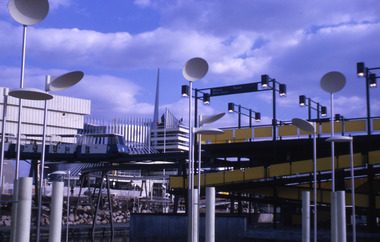
Slide, Robin Boyd, 1967
... The indoor exhibits covered aspects of Australian art and culture, architecture, industrial design and scientific innovation, such as the Snowy Mountains Hydro-Electric Power Scheme, the Parkes radio telescope, the design of Canberra, and the Australian way of life....The indoor exhibits covered aspects of Australian art and culture, architecture, industrial design and scientific innovation, such as the Snowy Mountains Hydro-Electric Power Scheme, the Parkes radio telescope, the design of Canberra, and the Australian way of life. ...Robin Boyd was appointed Exhibits Architect for the Australian Pavilion at Expo ‘67 in Montreal. The garden outside the pavilion featured a sculptural pool, a coral display, animal pool, a pit for kangaroos and Eucalypts and other native plants. The indoor exhibits covered aspects of Australian art and culture, architecture, industrial design and scientific innovation, such as the Snowy Mountains Hydro-Electric Power Scheme, the Parkes radio telescope, the design of Canberra, and the Australian way of life.Colour slide in a mount. Uplights of the British Pavilion (foreground), French Pavilion (background) Expo 67, Montreal, CanadaMade in Australia / 27 / MAY 67M6 / 16 (Handwritten) / 3 (Handwritten)expo 67, montreal, robin boyd, slide -
 Robin Boyd Foundation
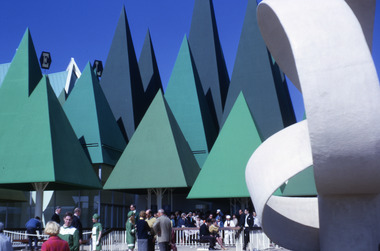
Slide, Robin Boyd, 1967
... The indoor exhibits covered aspects of Australian art and culture, architecture, industrial design and scientific innovation, such as the Snowy Mountains Hydro-Electric Power Scheme, the Parkes radio telescope, the design of Canberra, and the Australian way of life....The indoor exhibits covered aspects of Australian art and culture, architecture, industrial design and scientific innovation, such as the Snowy Mountains Hydro-Electric Power Scheme, the Parkes radio telescope, the design of Canberra, and the Australian way of life. ...Robin Boyd was appointed Exhibits Architect for the Australian Pavilion at Expo ‘67 in Montreal. The garden outside the pavilion featured a sculptural pool, a coral display, animal pool, a pit for kangaroos and Eucalypts and other native plants. The indoor exhibits covered aspects of Australian art and culture, architecture, industrial design and scientific innovation, such as the Snowy Mountains Hydro-Electric Power Scheme, the Parkes radio telescope, the design of Canberra, and the Australian way of life.Colour slide in a mount. Canadian Pulp and Paper Pavilion, Montreal Expo '67, Canada. (Architect: William Kissiloff.)Made in Australia / 31 / MAY 67M6 / 6 (Handwritten) / 42 (Handwritten)expo 67, montreal, robin boyd, slide -
 Robin Boyd Foundation
Slide, Robin Boyd, 1967
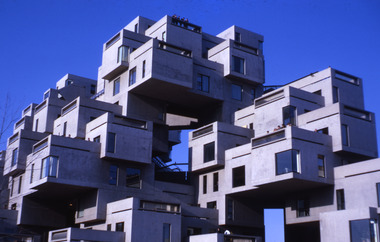
... The indoor exhibits covered aspects of Australian art and culture, architecture, industrial design and scientific innovation, such as the Snowy Mountains Hydro-Electric Power Scheme, the Parkes radio telescope, the design of Canberra, and the Australian way of life....The indoor exhibits covered aspects of Australian art and culture, architecture, industrial design and scientific innovation, such as the Snowy Mountains Hydro-Electric Power Scheme, the Parkes radio telescope, the design of Canberra, and the Australian way of life. ...Robin Boyd was appointed Exhibits Architect for the Australian Pavilion at Expo ‘67 in Montreal. The garden outside the pavilion featured a sculptural pool, a coral display, animal pool, a pit for kangaroos and Eucalypts and other native plants. The indoor exhibits covered aspects of Australian art and culture, architecture, industrial design and scientific innovation, such as the Snowy Mountains Hydro-Electric Power Scheme, the Parkes radio telescope, the design of Canberra, and the Australian way of life.Colour slide in a mount. Habitat 67, Montreal, Canada. (Architect: Moshe Safdie.)Made in Australia / 37 / MAY 67M6 / Encircled 6 (Handwritten) / 24 (Handwritten) / 10 (Handwritten)expo 67, montreal, robin boyd, slide -
 Robin Boyd Foundation
Slide, Robin Boyd, 1967
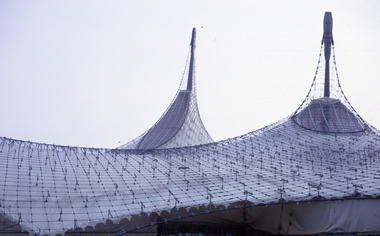
... The indoor exhibits covered aspects of Australian art and culture, architecture, industrial design and scientific innovation, such as the Snowy Mountains Hydro-Electric Power Scheme, the Parkes radio telescope, the design of Canberra, and the Australian way of life....The indoor exhibits covered aspects of Australian art and culture, architecture, industrial design and scientific innovation, such as the Snowy Mountains Hydro-Electric Power Scheme, the Parkes radio telescope, the design of Canberra, and the Australian way of life. ...Robin Boyd was appointed Exhibits Architect for the Australian Pavilion at Expo ‘67 in Montreal. The garden outside the pavilion featured a sculptural pool, a coral display, animal pool, a pit for kangaroos and Eucalypts and other native plants. The indoor exhibits covered aspects of Australian art and culture, architecture, industrial design and scientific innovation, such as the Snowy Mountains Hydro-Electric Power Scheme, the Parkes radio telescope, the design of Canberra, and the Australian way of life.Colour slide in a mount. West German Pavilion, Montreal Expo '67, Canada. (Architects: Frei Otto and Rolf Gutbrod.)Made in Australia / 5 / APR 67M4 / Encircled 27 (Handwritten)expo 67, montreal, robin boyd, slide -
 Robin Boyd Foundation
Slide, Robin Boyd, 1967
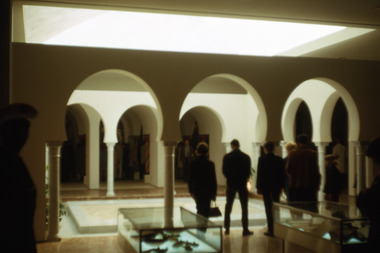
... The indoor exhibits covered aspects of Australian art and culture, architecture, industrial design and scientific innovation, such as the Snowy Mountains Hydro-Electric Power Scheme, the Parkes radio telescope, the design of Canberra, and the Australian way of life....The indoor exhibits covered aspects of Australian art and culture, architecture, industrial design and scientific innovation, such as the Snowy Mountains Hydro-Electric Power Scheme, the Parkes radio telescope, the design of Canberra, and the Australian way of life. ...Robin Boyd was appointed Exhibits Architect for the Australian Pavilion at Expo ‘67 in Montreal. The garden outside the pavilion featured a sculptural pool, a coral display, animal pool, a pit for kangaroos and Eucalypts and other native plants. The indoor exhibits covered aspects of Australian art and culture, architecture, industrial design and scientific innovation, such as the Snowy Mountains Hydro-Electric Power Scheme, the Parkes radio telescope, the design of Canberra, and the Australian way of life.Colour slide in a mount. Tunisia Pavilion, Expo '67, Montreal, CanadaMade in Australia / 28 / MAY 67M6expo 67, montreal, robin boyd, slide -
 Robin Boyd Foundation
Slide, Robin Boyd, 1967
... The indoor exhibits covered aspects of Australian art and culture, architecture, industrial design and scientific innovation, such as the Snowy Mountains Hydro-Electric Power Scheme, the Parkes radio telescope, the design of Canberra, and the Australian way of life....The indoor exhibits covered aspects of Australian art and culture, architecture, industrial design and scientific innovation, such as the Snowy Mountains Hydro-Electric Power Scheme, the Parkes radio telescope, the design of Canberra, and the Australian way of life. ...Robin Boyd was appointed Exhibits Architect for the Australian Pavilion at Expo ‘67 in Montreal. The garden outside the pavilion featured a sculptural pool, a coral display, animal pool, a pit for kangaroos and Eucalypts and other native plants. The indoor exhibits covered aspects of Australian art and culture, architecture, industrial design and scientific innovation, such as the Snowy Mountains Hydro-Electric Power Scheme, the Parkes radio telescope, the design of Canberra, and the Australian way of life.Colour slide in a mount. Cuban Pavilion, Expo '67, Montreal, Canada. (Architects: Vittorio Garatti, Sergio Baroni und Hugo D'Acosta)Made in Australia / 3 / JUL 67M6 / 15 (Handwritten) / Encircled 9 (Handwritten) / 41 (Handwritten)expo 67, montreal, robin boyd, slide -
 Robin Boyd Foundation
Slide, Robin Boyd, 1967
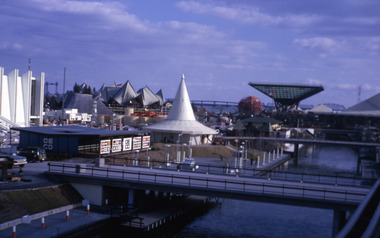
... The indoor exhibits covered aspects of Australian art and culture, architecture, industrial design and scientific innovation, such as the Snowy Mountains Hydro-Electric Power Scheme, the Parkes radio telescope, the design of Canberra, and the Australian way of life....The indoor exhibits covered aspects of Australian art and culture, architecture, industrial design and scientific innovation, such as the Snowy Mountains Hydro-Electric Power Scheme, the Parkes radio telescope, the design of Canberra, and the Australian way of life. ...Robin Boyd was appointed Exhibits Architect for the Australian Pavilion at Expo ‘67 in Montreal. The garden outside the pavilion featured a sculptural pool, a coral display, animal pool, a pit for kangaroos and Eucalypts and other native plants. The indoor exhibits covered aspects of Australian art and culture, architecture, industrial design and scientific innovation, such as the Snowy Mountains Hydro-Electric Power Scheme, the Parkes radio telescope, the design of Canberra, and the Australian way of life.Colour slide in a mount. Ontario Pavilion (rear left, Fairfield & Dubois); Katimavik, Canada Pavilion (rear right, Ashworth Robbie Vaughan & Williams), Expo 67, Montreal, CanadaMade in Australia / 28 / MAY 67M6 / Encircled 24 (Handwritten) / 15 (Handwritten)expo 67, montreal, robin boyd, slide -
 Robin Boyd Foundation
Slide, Robin Boyd, 1967
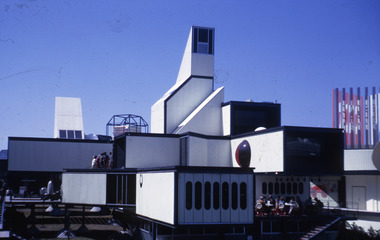
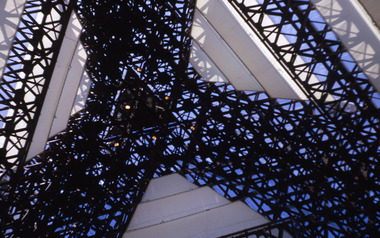
... The indoor exhibits covered aspects of Australian art and culture, architecture, industrial design and scientific innovation, such as the Snowy Mountains Hydro-Electric Power Scheme, the Parkes radio telescope, the design of Canberra, and the Australian way of life....The indoor exhibits covered aspects of Australian art and culture, architecture, industrial design and scientific innovation, such as the Snowy Mountains Hydro-Electric Power Scheme, the Parkes radio telescope, the design of Canberra, and the Australian way of life. ...Robin Boyd was appointed Exhibits Architect for the Australian Pavilion at Expo ‘67 in Montreal. The garden outside the pavilion featured a sculptural pool, a coral display, animal pool, a pit for kangaroos and Eucalypts and other native plants. The indoor exhibits covered aspects of Australian art and culture, architecture, industrial design and scientific innovation, such as the Snowy Mountains Hydro-Electric Power Scheme, the Parkes radio telescope, the design of Canberra, and the Australian way of life.Colour slide in a mount. Expo '67, Montreal, CanadaMade in Australia / 6 / MAY 67M6 / Encircled 38 (Handwritten) / 14 (Handwritten)expo 67, montreal, robin boyd, slide -
 Robin Boyd Foundation
Slide, Robin Boyd, 1967
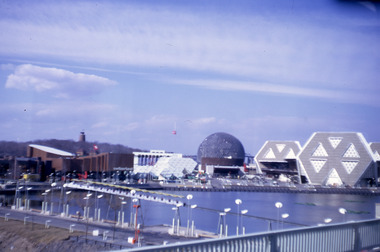
... The indoor exhibits covered aspects of Australian art and culture, architecture, industrial design and scientific innovation, such as the Snowy Mountains Hydro-Electric Power Scheme, the Parkes radio telescope, the design of Canberra, and the Australian way of life....The indoor exhibits covered aspects of Australian art and culture, architecture, industrial design and scientific innovation, such as the Snowy Mountains Hydro-Electric Power Scheme, the Parkes radio telescope, the design of Canberra, and the Australian way of life. ...Robin Boyd was appointed Exhibits Architect for the Australian Pavilion at Expo ‘67 in Montreal. The garden outside the pavilion featured a sculptural pool, a coral display, animal pool, a pit for kangaroos and Eucalypts and other native plants. The indoor exhibits covered aspects of Australian art and culture, architecture, industrial design and scientific innovation, such as the Snowy Mountains Hydro-Electric Power Scheme, the Parkes radio telescope, the design of Canberra, and the Australian way of life.Colour slide in a mount. Man the Explorer Pavilion (on right), Expo 67, Montreal, CanadaMade in Australia / 4 / MAY 67M6 / 23 (Handwritten)expo 67, montreal, robin boyd, slide -
 Robin Boyd Foundation
Slide, Robin Boyd, 1967
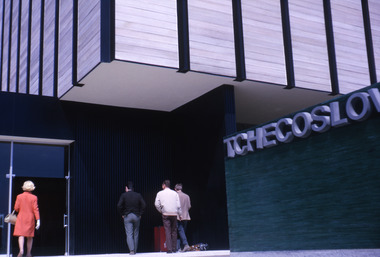
... The indoor exhibits covered aspects of Australian art and culture, architecture, industrial design and scientific innovation, such as the Snowy Mountains Hydro-Electric Power Scheme, the Parkes radio telescope, the design of Canberra, and the Australian way of life....The indoor exhibits covered aspects of Australian art and culture, architecture, industrial design and scientific innovation, such as the Snowy Mountains Hydro-Electric Power Scheme, the Parkes radio telescope, the design of Canberra, and the Australian way of life. ...Robin Boyd was appointed Exhibits Architect for the Australian Pavilion at Expo ‘67 in Montreal. The garden outside the pavilion featured a sculptural pool, a coral display, animal pool, a pit for kangaroos and Eucalypts and other native plants. The indoor exhibits covered aspects of Australian art and culture, architecture, industrial design and scientific innovation, such as the Snowy Mountains Hydro-Electric Power Scheme, the Parkes radio telescope, the design of Canberra, and the Australian way of life.Colour slide in a mount. Czechoslovakian Pavilion, Expo '67 Montreal, CanadaMade in Australia / 11 / MAY 67M6 / 13 (Handwritten) / 28 (Handwritten)expo 67, montreal, robin boyd, slide -
 Robin Boyd Foundation
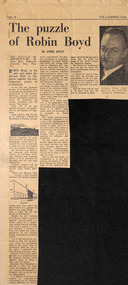
Newspaper - Clipping, The Canberra Times, The puzzle of Robin Boyd, 24.12.1965
... Architecture'. It makes particular note on Boyd's commentary on Canberra....Architecture'. It makes particular note on Boyd's commentary on Canberra. The Puzzle of Architecture Walsh St library Newspaper clipping. ...This is a review of Robin Boyd's book 'The Puzzle of Architecture'. It makes particular note on Boyd's commentary on Canberra.Newspaper clipping. the puzzle of architecture, walsh st library -
 Robin Boyd Foundation
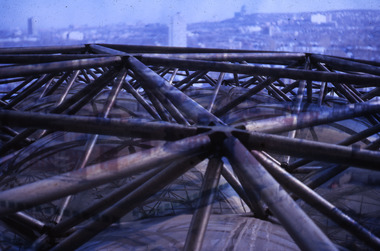
Slide, Robin Boyd, 1967
... The indoor exhibits covered aspects of Australian art and culture, architecture, industrial design and scientific innovation, such as the Snowy Mountains Hydro-Electric Power Scheme, the Parkes radio telescope, the design of Canberra, and the Australian way of life....The indoor exhibits covered aspects of Australian art and culture, architecture, industrial design and scientific innovation, such as the Snowy Mountains Hydro-Electric Power Scheme, the Parkes radio telescope, the design of Canberra, and the Australian way of life. ...Robin Boyd was appointed Exhibits Architect for the Australian Pavilion at Expo ‘67 in Montreal. The garden outside the pavilion featured a sculptural pool, a coral display, animal pool, a pit for kangaroos and Eucalypts and other native plants. The indoor exhibits covered aspects of Australian art and culture, architecture, industrial design and scientific innovation, such as the Snowy Mountains Hydro-Electric Power Scheme, the Parkes radio telescope, the design of Canberra, and the Australian way of life.Colour slide in a mount. Expo 67, Montreal, CanadaMade in Australia / 16 / 67M2expo 67, montreal, robin boyd, slide -
 Robin Boyd Foundation
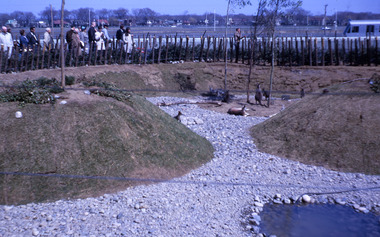
Slide, Robin Boyd, 1967
... The indoor exhibits covered aspects of Australian art and culture, architecture, industrial design and scientific innovation, such as the Snowy Mountains Hydro-Electric Power Scheme, the Parkes radio telescope, the design of Canberra, and the Australian way of life....The indoor exhibits covered aspects of Australian art and culture, architecture, industrial design and scientific innovation, such as the Snowy Mountains Hydro-Electric Power Scheme, the Parkes radio telescope, the design of Canberra, and the Australian way of life. ...Robin Boyd was appointed Exhibits Architect for the Australian Pavilion at Expo ‘67 in Montreal. The garden outside the pavilion featured a sculptural pool, a coral display, animal pool, a pit for kangaroos and Eucalypts and other native plants. The indoor exhibits covered aspects of Australian art and culture, architecture, industrial design and scientific innovation, such as the Snowy Mountains Hydro-Electric Power Scheme, the Parkes radio telescope, the design of Canberra, and the Australian way of life.Colour slide in a mount. Kangaroos, Australian Pavilion Garden, Expo 67, Montreal, Canada. Designed by Robin BoydMade in Australia / 18 / MAY 67M6expo 67, montreal, robin boyd, slide -
 Robin Boyd Foundation
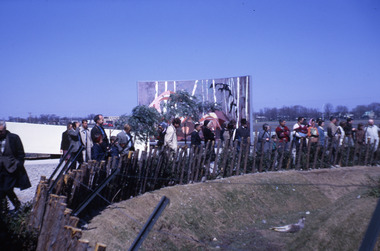
Slide, Robin Boyd, 1967
... The indoor exhibits covered aspects of Australian art and culture, architecture, industrial design and scientific innovation, such as the Snowy Mountains Hydro-Electric Power Scheme, the Parkes radio telescope, the design of Canberra, and the Australian way of life....The indoor exhibits covered aspects of Australian art and culture, architecture, industrial design and scientific innovation, such as the Snowy Mountains Hydro-Electric Power Scheme, the Parkes radio telescope, the design of Canberra, and the Australian way of life. ...Robin Boyd was appointed Exhibits Architect for the Australian Pavilion at Expo ‘67 in Montreal. The garden outside the pavilion featured a sculptural pool, a coral display, animal pool, a pit for kangaroos and Eucalypts and other native plants. The indoor exhibits covered aspects of Australian art and culture, architecture, industrial design and scientific innovation, such as the Snowy Mountains Hydro-Electric Power Scheme, the Parkes radio telescope, the design of Canberra, and the Australian way of life.Colour slide in a mount. Entry to Australian Pavilion (on left), kanagaroo display and Clifton Pugh's large panel depicting kangaroos, Montreal Expo '67, Canada (see also S0115).Made in Australia / 19 / MAY 67M6expo 67, montreal, robin boyd, slide -
 Robin Boyd Foundation
Slide, Robin Boyd, 1967
... The indoor exhibits covered aspects of Australian art and culture, architecture, industrial design and scientific innovation, such as the Snowy Mountains Hydro-Electric Power Scheme, the Parkes radio telescope, the design of Canberra, and the Australian way of life....The indoor exhibits covered aspects of Australian art and culture, architecture, industrial design and scientific innovation, such as the Snowy Mountains Hydro-Electric Power Scheme, the Parkes radio telescope, the design of Canberra, and the Australian way of life. ...Robin Boyd was appointed Exhibits Architect for the Australian Pavilion at Expo ‘67 in Montreal. The garden outside the pavilion featured a sculptural pool, a coral display, animal pool, a pit for kangaroos and Eucalypts and other native plants. The indoor exhibits covered aspects of Australian art and culture, architecture, industrial design and scientific innovation, such as the Snowy Mountains Hydro-Electric Power Scheme, the Parkes radio telescope, the design of Canberra, and the Australian way of life.Colour slide in a mount. Unknown display, possibly at Expo '67, Montreal, CanadaMade in Australia / 16 / MAY 67M6expo 67, montreal, robin boyd, slide -
 Robin Boyd Foundation
Slide, Robin Boyd, 1967
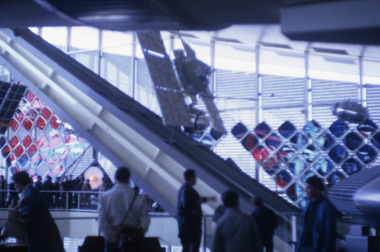
... The indoor exhibits covered aspects of Australian art and culture, architecture, industrial design and scientific innovation, such as the Snowy Mountains Hydro-Electric Power Scheme, the Parkes radio telescope, the design of Canberra, and the Australian way of life....The indoor exhibits covered aspects of Australian art and culture, architecture, industrial design and scientific innovation, such as the Snowy Mountains Hydro-Electric Power Scheme, the Parkes radio telescope, the design of Canberra, and the Australian way of life. ...Robin Boyd was appointed Exhibits Architect for the Australian Pavilion at Expo ‘67 in Montreal. The garden outside the pavilion featured a sculptural pool, a coral display, animal pool, a pit for kangaroos and Eucalypts and other native plants. The indoor exhibits covered aspects of Australian art and culture, architecture, industrial design and scientific innovation, such as the Snowy Mountains Hydro-Electric Power Scheme, the Parkes radio telescope, the design of Canberra, and the Australian way of life.Colour slide in a mount. Space exploration exhibits inside the US Pavilion, Expo 67, Monreal, CanadaMade in Australia / 32 / MAY 67M6expo 67, montreal, robin boyd, slide -
 Robin Boyd Foundation
Slide, Robin Boyd, 1967
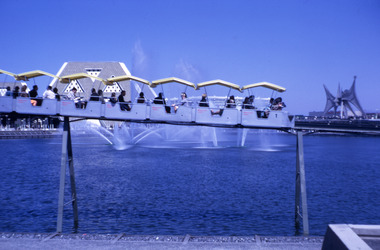
... The indoor exhibits covered aspects of Australian art and culture, architecture, industrial design and scientific innovation, such as the Snowy Mountains Hydro-Electric Power Scheme, the Parkes radio telescope, the design of Canberra, and the Australian way of life....The indoor exhibits covered aspects of Australian art and culture, architecture, industrial design and scientific innovation, such as the Snowy Mountains Hydro-Electric Power Scheme, the Parkes radio telescope, the design of Canberra, and the Australian way of life. ...Robin Boyd was appointed Exhibits Architect for the Australian Pavilion at Expo ‘67 in Montreal. The garden outside the pavilion featured a sculptural pool, a coral display, animal pool, a pit for kangaroos and Eucalypts and other native plants. The indoor exhibits covered aspects of Australian art and culture, architecture, industrial design and scientific innovation, such as the Snowy Mountains Hydro-Electric Power Scheme, the Parkes radio telescope, the design of Canberra, and the Australian way of life.Colour slide in a mount. Train, Expo '67, Montreal, Canada. Alexander Calder sculpture in background.Made in Australia / 9 / MAY 67M6 / Encircled 19A (Handwritten) / 18 (Handwritten)expo 67, montreal, robin boyd, slide -
 Robin Boyd Foundation
Slide, Robin Boyd, 1967
... The indoor exhibits covered aspects of Australian art and culture, architecture, industrial design and scientific innovation, such as the Snowy Mountains Hydro-Electric Power Scheme, the Parkes radio telescope, the design of Canberra, and the Australian way of life....The indoor exhibits covered aspects of Australian art and culture, architecture, industrial design and scientific innovation, such as the Snowy Mountains Hydro-Electric Power Scheme, the Parkes radio telescope, the design of Canberra, and the Australian way of life. ...Robin Boyd was appointed Exhibits Architect for the Australian Pavilion at Expo ‘67 in Montreal. The garden outside the pavilion featured a sculptural pool, a coral display, animal pool, a pit for kangaroos and Eucalypts and other native plants. The indoor exhibits covered aspects of Australian art and culture, architecture, industrial design and scientific innovation, such as the Snowy Mountains Hydro-Electric Power Scheme, the Parkes radio telescope, the design of Canberra, and the Australian way of life.Colour slide in a mount. Possibly interior of a pavilion, Expo 67, Montreal, CanadaMade in Australia / 20 / MAY 67M6 / Encircled 20 (Handwritten)expo 67, montreal, robin boyd, slide -
 Robin Boyd Foundation
Slide, Robin Boyd, 1967
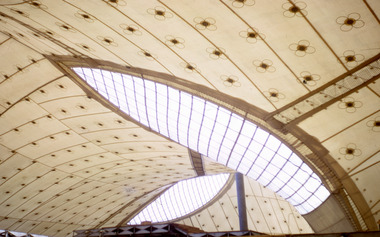
... The indoor exhibits covered aspects of Australian art and culture, architecture, industrial design and scientific innovation, such as the Snowy Mountains Hydro-Electric Power Scheme, the Parkes radio telescope, the design of Canberra, and the Australian way of life....The indoor exhibits covered aspects of Australian art and culture, architecture, industrial design and scientific innovation, such as the Snowy Mountains Hydro-Electric Power Scheme, the Parkes radio telescope, the design of Canberra, and the Australian way of life. ...Robin Boyd was appointed Exhibits Architect for the Australian Pavilion at Expo ‘67 in Montreal. The garden outside the pavilion featured a sculptural pool, a coral display, animal pool, a pit for kangaroos and Eucalypts and other native plants. The indoor exhibits covered aspects of Australian art and culture, architecture, industrial design and scientific innovation, such as the Snowy Mountains Hydro-Electric Power Scheme, the Parkes radio telescope, the design of Canberra, and the Australian way of life.Colour slide in a mount. West German Pavilion, Montreal Expo '67, Canada. (Architects: Frei Otto and Rolf Gutbrod.)Made in Australia / 4 / APR 67M4expo 67, montreal, robin boyd, slide -
 Robin Boyd Foundation
Slide, Robin Boyd, 1967
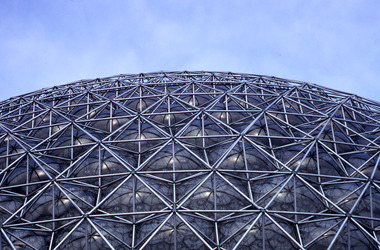
... The indoor exhibits covered aspects of Australian art and culture, architecture, industrial design and scientific innovation, such as the Snowy Mountains Hydro-Electric Power Scheme, the Parkes radio telescope, the design of Canberra, and the Australian way of life....The indoor exhibits covered aspects of Australian art and culture, architecture, industrial design and scientific innovation, such as the Snowy Mountains Hydro-Electric Power Scheme, the Parkes radio telescope, the design of Canberra, and the Australian way of life. ...Robin Boyd was appointed Exhibits Architect for the Australian Pavilion at Expo ‘67 in Montreal. The garden outside the pavilion featured a sculptural pool, a coral display, animal pool, a pit for kangaroos and Eucalypts and other native plants. The indoor exhibits covered aspects of Australian art and culture, architecture, industrial design and scientific innovation, such as the Snowy Mountains Hydro-Electric Power Scheme, the Parkes radio telescope, the design of Canberra, and the Australian way of life.Colour slide in a mount. United States of America Pavilion, Montreal Expo '67, Canada. (Architect: Buckminster Fuller.)Made in Australia / 14 / FEB 67M2 / 22 (Handwritten)expo 67, montreal, robin boyd, slide -
 Robin Boyd Foundation
Document - Manuscript, Robin Boyd, Conflict Along the Style Spectrum, 1971
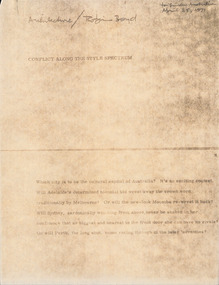
... Canberra represents one end of the spectrum of traditional architectural morals of sophistication and orderliness; Surfers Paradise represents the opposite end of the spectrum, that is extreme Pop, fun and flashiness....Canberra represents one end of the spectrum of traditional architectural morals of sophistication and orderliness; Surfers Paradise represents the opposite end of the spectrum, that is extreme Pop, fun and flashiness. ...Comparison of Canberra and Surfers Paradise as potential cultural capitals of Australia. Canberra represents one end of the spectrum of traditional architectural morals of sophistication and orderliness; Surfers Paradise represents the opposite end of the spectrum, that is extreme Pop, fun and flashiness.Original manuscript of an article published as ‘Trad modern, pop modern’ in "The Sunday Australian", 25.4.1971. Typewritten (p/copy), quarto, 9 pagesTop of page 1 handwritten where and when published, page numbers, minor correctionscanberra, surfers paradise, australian culture, morris lapidus, australian cities, robin boyd, manuscript -
 Robin Boyd Foundation
Document - Manuscript, Robin Boyd, A New Phase in Canberra, 1971
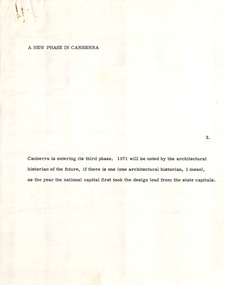
... Canberra... urban planning... walter Burley Griffin... capital Circle... Capital Hill... Campbell park... Australian architecture...Describes Canberra as a city that has minimal architectural character, as it is mainly characterised by its natural landscape and roadways. ...Describes Canberra as a city that has minimal architectural character, as it is mainly characterised by its natural landscape and roadways. ...Describes Canberra as a city that has minimal architectural character, as it is mainly characterised by its natural landscape and roadways. The new phase in Canberra refers to several civic projects that will serve to define Canberra as a national capital.Original manuscript of the article 'A New Phase for Canberra' published in Sunday Australian, 05.09.1971.Typewritten (c copy), quarto, 9 pagescanberra, urban planning, walter burley griffin, capital circle, capital hill, campbell park, australian architecture, harry seidler, robin boyd, manuscript, national capital -
 Robin Boyd Foundation
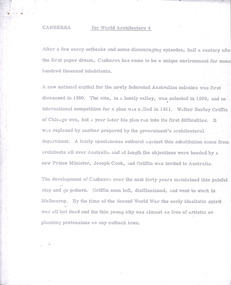
Document - Manuscript, Robin Boyd, Canberra, 1967
... Original manuscript published as 'Canberra Master Plan: Walter Burley Griffin' in World Architecture 4, John Donat (ed.), Viking Press 1967, pp 202-205. ...Boyd outlines the history of Canberra's design and construction. He argues that Canberra's strength is its planning and axially-based landscaping, but that it lacks the buildings which make the Le Corbusier's Chandigarh interesting. Boyd is highly critical of Chandigarh as an urban environment and concludes that for non-architects, planning and connection to nature is more important than buildings.Original manuscript published as 'Canberra Master Plan: Walter Burley Griffin' in World Architecture 4, John Donat (ed.), Viking Press 1967, pp 202-205.Typewritten (p/copy), quarto, 6 pageswalter burley griffin, canberra, john overall, lake burley griffin, oscar niemeyer, le corbusier, chandigarh, city beautiful, garden city, urban planning, robin boyd, manuscript -
 Robin Boyd Foundation
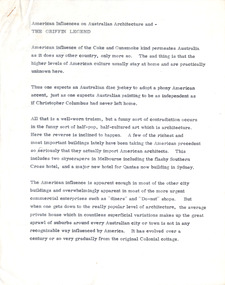
Document - Manuscript, Robin Boyd, American Influences on Australian Architecture and – The Griffin Legend, 10.6.1964
... American Influence Walter Burley Griffin Capitol Theatre Canberra Robin Boyd manuscript Typewritten (c copy), quarto, 6 pages. (Four copies) American Influences on Australian Architecture and – The Griffin Legend Document Manuscript Robin Boyd ...The article celebrates Walter Burley Griffin and the impact he has had on Australian architects. Boyd calls Griffin 'America's greatest ever export to Australia after the T-model Ford'.Original manuscript for an article published in "Australia" (Los Angeles), Vol.2, August – October 1964, pp.13-15.Typewritten (c copy), quarto, 6 pages. (Four copies)american influence, walter burley griffin, capitol theatre, canberra, robin boyd, manuscript
