
Showing 31 items matching " civic uniform"
-
 Glenelg Shire Council Cultural Collection
Clothing - Tie - Portland City Council, n.d
... ... civic uniform...uniform office wear civic uniform Portland City Council tie mens wear Corporate tie, Portland City Council, dark green, narrow blue diagonal stripe, whale logo in balck and white in diagonal rows over tie. ...Corporate tie, Portland City Council, dark green, narrow blue diagonal stripe, whale logo in balck and white in diagonal rows over tie. "PORTLAND' in white beneath slightly larger whale logo, near pointed end of tie.uniform, office wear, civic uniform, portland city council, tie, mens wear -
 Flagstaff Hill Maritime Museum and Village
Clothing - Belt, late 1920's
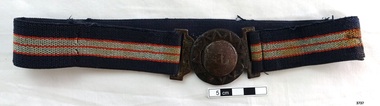
... civic affairs. He had an interest in people and the community They were both involved in the creation of Flagstaff Hill, including the layout of the gardens. After his death (28th March 1970) his family requested his practitioner’s plate, medical instruments and some personal belongings be displayed in the Port Medical Office surgery at Flagstaff Hill Maritime Village, and be called the “W. R. Angus Collection”. This belt is representative of the uniform ...This late 1920’s elastic belt is decorated with an anchor, giving it a nautical theme. It was worn by Dr W.R. Angus during his service as ship’s surgeon on ships "BANESHIRE" and the Australian Commonwealth Line’s T.S.S. “LARGS BAY”, when he worked his passage to the UK and return to Australia for his overseas studies. He was awarded the FRCS (Fellow from the Royal College of Surgeons) in 1928 in Edinburgh, Scotland. The belt was donated to Flagstaff Hill Maritime Village, along with photos of the ship LARGS BAY and of Dr Angus in his ship surgeon’s uniform, by the family of Doctor William Roy Angus, Surgeon and Oculist. ABOUT THE “W.R.ANGUS COLLECTION” Doctor William Roy Angus M.B., B.S., Adel., 1923, F.R.C.S. Edin.,1928 (also known as Dr Roy Angus) was born in Murrumbeena, Victoria in 1901 and lived until 1970. He qualified as a doctor in 1923 at University of Adelaide, was Resident Medical Officer at the Royal Adelaide Hospital in 1924 and for a period was house surgeon to Sir (then Mr.) Henry Simpson Newland. Dr Angus was briefly an Assistant to Dr Riddell of Kapunda, then commenced private practice at Curramulka, Yorke Peninsula, SA, where he was physician, surgeon and chemist. In 1926, he was appointed as new Medical Assistant to Dr Thomas Francis Ryan (T.F. Ryan, or Tom), in Nhill, Victoria, where his experiences included radiology and pharmacy. In 1927 he was Acting House Surgeon in Dr Tom Ryan’s absence. Dr Angus had become engaged to Gladys Forsyth and they decided he further his studies overseas in the UK in 1927. He studied at London University College Hospital and at Edinburgh Royal Infirmary and in 1928, was awarded FRCS (Fellow from the Royal College of Surgeons), Edinburgh. He worked his passage back to Australia as a Ship’s Surgeon on the on the Australian Commonwealth Line’s T.S.S. Largs Bay. Dr Angus married Gladys in 1929, in Ballarat. (They went on to have one son (Graham 1932, born in SA) and two daughters (Helen (died 12/07/1996) and Berenice (Berry), both born at Mira, Nhill ) According to Berry, her mother Gladys made a lot of their clothes. She was very talented and did some lovely embroidery including lingerie for her trousseau and beautifully handmade baby clothes. Dr Angus was a ‘flying doctor’ for the A.I.M. (Australian Inland Ministry) Aerial Medical Service in 1928 . Its first station was in the remote town of Oodnadatta, where Dr Angus was stationed. He was locum tenens there on North-South Railway at 21 Mile Camp. He took up this ‘flying doctor’ position in response to a call from Dr John Flynn; the organisation was later known as the Flying Doctor Service, then the Royal Flying Doctor Service. A lot of his work during this time involved dental surgery also. Between 1928-1932 he was surgeon at the Curramulka Hospital, Yorke Peninsula, South Australia. In 1933 Dr Angus returned to Nhill and purchased a share of the Nelson Street practice and Mira hospital (a 2 bed ward at the Nelson Street Practice) from Dr Les Middleton one of the Middleton Brothers, the current owners of what previously once Dr Tom Ryan’s practice. Dr Tom and his brother had worked as surgeons included eye surgery. Dr Tom Ryan performed many of his operations in the Mira private hospital on his premises. He had been House Surgeon at the Nhill Hospital 1902-1926. Dr Tom Ryan had one of the only two pieces of radiology equipment in Victoria during his practicing years – The Royal Melbourne Hospital had the other one. Over the years Dr Tom Ryan had gradually set up what was effectively a training school for country general-practitioner-surgeons. Each patient was carefully examined, including using the X-ray machine, and any surgery was discussed and planned with Dr Ryan’s assistants several days in advance. Dr Angus gained experience in using the X-ray machine there during his time as assistant to Dr Ryan. When Dr Angus bought into the Nelson Street premises in Nhill he was also appointed as the Nhill Hospital’s Honorary House Surgeon 1933-1938. His practitioner’s plate from his Nhill surgery is now mounted on the doorway to the Port Medical Office at Flagstaff Hill Maritime Village, Warrnambool. When Dr Angus took up practice in the Dr Edward and Dr Tom Ryan’s old premises he obtained their extensive collection of historical medical equipment and materials spanning 1884-1926. A large part of this collection is now on display at the Port Medical Office at Flagstaff Hill Maritime Village in Warrnambool. In 1939 Dr Angus and his family moved to Warrnambool where he purchased “Birchwood,” the 1852 home and medical practice of Dr John Hunter Henderson, at 214 Koroit Street. (This property was sold in1965 to the State Government and is now the site of the Warrnambool Police Station. and an ALDI store is on the land that was once their tennis court). The Angus family was able to afford gardeners, cooks and maids; their home was a popular place for visiting dignitaries to stay whilst visiting Warrnambool. Dr Angus had his own silk worm farm at home in a Mulberry tree. His young daughter used his centrifuge for spinning the silk. Dr Angus was appointed on a part-time basis as Port Medical Officer (Health Officer) in Warrnambool and held this position until the 1940’s when the government no longer required the service of a Port Medical Officer in Warrnambool; he was thus Warrnambool’s last serving Port Medical Officer. (Masters of immigrant ships arriving in port reported incidents of diseases, illness and death and the Port Medical Officer made a decision on whether the ship required Quarantine and for how long, in this way preventing contagious illness from spreading from new immigrants to the residents already in the colony.) Dr Angus was a member of the Australian Medical Association, for 35 years and surgeon at the Warrnambool Base Hospital 1939-1942, Dr Angus served with the Australian Department of Defence as a Surgeon Captain during WWII 1942-45, in Ballarat, Victoria, and in Bonegilla, N.S.W., completing his service just before the end of the war due to suffering from a heart attack. During his convalescence he carved an intricate and ‘most artistic’ chess set from the material that dentures were made from. He then studied ophthalmology at the Royal Melbourne Eye and Ear Hospital and created cosmetically superior artificial eyes by pioneering using the intrascleral cartilage. Angus received accolades from the Ophthalmological Society of Australasia for this work. He returned to Warrnambool to commence practice as an ophthalmologist, pioneering in artificial eye improvements. He was Honorary Consultant Ophthalmologist to Warrnambool Base Hospital for 31 years. He made monthly visits to Portland as a visiting surgeon, to perform eye surgery. He represented the Victorian South-West subdivision of the Australian Medical Association as its secretary between 1949 and 1956 and as chairman from 1956 to 1958. In 1968 Dr Angus was elected member of Spain’s Barraquer Institute of Barcelona after his research work in Intrasclearal cartilage grafting, becoming one of the few Australian ophthalmologists to receive this honour, and in the following year presented his final paper on Living Intrasclearal Cartilage Implants at the Inaugural Meeting of the Australian College of Ophthalmologists in Melbourne In his personal life Dr Angus was a Presbyterian and treated Sunday as a Sabbath, a day of rest. He would visit 3 or 4 country patients on a Sunday, taking his children along ‘for the ride’ and to visit with him. Sunday evenings he would play the pianola and sing Scottish songs to his family. One of Dr Angus’ patients was Margaret MacKenzie, author of a book on local shipwrecks that she’d seen as an eye witness from the late 1880’s in Peterborough, Victoria. In the early 1950’s Dr Angus, painted a picture of a shipwreck for the cover jacket of Margaret’s book, Shipwrecks and More Shipwrecks. She was blind in later life and her daughter wrote the actual book for her. Dr Angus and his wife Gladys were very involved in Warrnambool’s society with a strong interest in civic affairs. He had an interest in people and the community They were both involved in the creation of Flagstaff Hill, including the layout of the gardens. After his death (28th March 1970) his family requested his practitioner’s plate, medical instruments and some personal belongings be displayed in the Port Medical Office surgery at Flagstaff Hill Maritime Village, and be called the “W. R. Angus Collection”. This belt is representative of the uniform worn by ship’s staff in the 1920’s. The belt is also representative of Australian medical students travelling overseas to complete their medical studies. The W.R. Angus Collection is significant for still being located at the site it is connected with, Doctor Angus being the last Port Medical Officer in Warrnambool. The collection of medical instruments and other equipment is culturally significant, being an historical example of medicine, administration, household equipment and clothing from late 19th to mid-20th century. Dr Angus assisted Dr Tom Ryan, a pioneer in the use of X-rays and in ocular surgery. Belt, part of the W.R. Angus Collection. Elastic belt, black, grey and red horizontal stripes. Round black-painted metal fastening on each end with remnants of gold zing-zag border around buckle’s wreath end an anchor impressed into the buckle’s tongue. flagstaff hill, warrnambool, shipwrecked coast, flagstaff hill maritime museum, maritime museum, shipwreck coast, flagstaff hill maritime village, great ocean road, dr w r angus, dr ryan, t.s.s. largs bay, warrnambool base hospital, nhill base hospital, mira hospital, flying doctor, ship medical staff uniform, ship medical staff belt, 1920’s elastic belt with tongue and wreath buckle, tongue and wreath belt buckle with anchor symbol, ship staff uniform, 1920’s belt -
 Glenelg Shire Council Cultural Collection
Photograph - Photograph - Colonel (RTD) Sydney Patterson, M.C., M.I.D, c. 1950
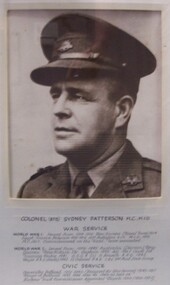
... CIVIC SERVICE Councillor, Portland 1931-1940 (Resigned for War Service) 1945-1957. Mayor of Portland 1935, 1938, 1939-40, 1949-50, 1953-54. Harbour Trust Commissioner, appointed March 1950 (1950-1957). Back: Mr. Stevenson (pencil, centre) Black and white photograph of man in military uniform ...On display in History House.Black and white photograph of man in military uniform, with peaked hat. Badges are pinned to hat and left lapel. ¾ turn to right. Below image is text stating man's identity and positions.Front: Colonel (RTD) Sydney Patterson M.C., M.I.D., War Service World War 1. Served from 1914-1919 New Guinea (Naval Force) 1914. Egypt, France, Belgium 1915-1919, 20th Batalion A.I.F.M.I.D. 1916, M.C. 1917. Commissioned on the Field. Twice wounded. World War 2. Served from 1939-1945 Australia (Darwin) New Guinea, New Britain, etc. Captain 1939, Adj. No. 7 Aust Int. Training Centre, 1941. G.S.O. 3 (O) G. Branch A.H.Q. 1942. Major R.A.E. (Docks) 1942. L.L. Colonel R.A.E. C.R.E 3rd Aust. Dock Group. CIVIC SERVICE Councillor, Portland 1931-1940 (Resigned for War Service) 1945-1957. Mayor of Portland 1935, 1938, 1939-40, 1949-50, 1953-54. Harbour Trust Commissioner, appointed March 1950 (1950-1957). Back: Mr. Stevenson (pencil, centre) -
Port Melbourne Historical & Preservation Society
Book, Sandridge Municipality Reports - Fire Committee, 1861 - 1865
... Fire and Fire Services Local Government - Borough of Sandridge Built Environment - Civic Uniforms William Ramsden HOLMES William MORLEY Thomas SWALLOW Andrew PLUMMER William MARSH James SMITH Thomas HESTER William BACON Thomas OWEN John FOSE (?) ...Sandridge Fire Committee reports for period July 1861 to June 1865, held in large binder. Twenty leaves only. Reports 26.3.63 and 24.8.63 describe Brigade uniforms (contains signatures of Fire Brigade members 1863)fire and fire services, local government - borough of sandridge, built environment - civic, uniforms, william ramsden holmes, william morley, thomas swallow, andrew plummer, william marsh, james smith, thomas hester, william bacon, thomas owen, john fose (?), j r sayle (?), frederick sanderson, henry mcbride -
 Ithacan Historical Society
Photograph, Ithaca's Philharmonic Orchestra, C1951
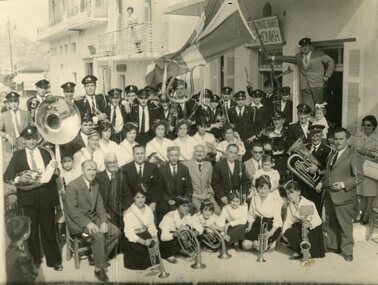
... civic and social, on the island. During the summer months locals and tourists enjoy a variety of musical and cultural events. Founded in 1904, the Ithaki Philharmonic Orchestra is the oldest musical group on the island. The band is a private, non-profit entity and its goal is to offer free musical training to the young of the region and provide them with a broader musical education. The philharmonic orchestra performs concerts and participates in a range of educational, municipal, religious and national day events. A black & white photograph of a brass band of men dressed in dark uniforms ...The local 'philharmonic orchestra/band' playing at a civic/national day function in the 1950s in Vathi, Ithaca. Music plays an important role in many aspects of life, both civic and social, on the island. During the summer months locals and tourists enjoy a variety of musical and cultural events.Founded in 1904, the Ithaki Philharmonic Orchestra is the oldest musical group on the island. The band is a private, non-profit entity and its goal is to offer free musical training to the young of the region and provide them with a broader musical education. The philharmonic orchestra performs concerts and participates in a range of educational, municipal, religious and national day events. A black & white photograph of a brass band of men dressed in dark uniforms and flat hats and women wearing dark skirts and white blouses. In the second row are males in civilian suits. The conductor is standing in the front on the extreme right hand side holding a baton. -
 Alfred Hospital Nurses League - Nursing History Collection
Book - Illustrated book, Narelle Biedermann, Tears on my pillow: Australian nurses in Vietnam, 2004
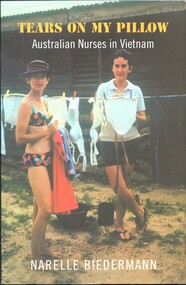
... The back cover has a summary of the book printed on a light brown background, along with three photographs: a nurse on duty (Diane Lawrence) two women in khaki sitting on sandbags, and a woman in uniform holding a young boy (Terrie Roche with 'Rabbit" the young mascot of the Civic Action Team)....The back cover has a summary of the book printed on a light brown background, along with three photographs: a nurse on duty (Diane Lawrence) two women in khaki sitting on sandbags, and a woman in uniform holding a young boy (Terrie Roche with 'Rabbit" the young mascot of the Civic Action Team). ..."Tears on my pillow' describes the nursing experiences of nursing in the Vietnam War using the words, voices and photographs of these Australian servicewomen. These veterans tell tales of femininity interspersed with the reality of the military environment through their stories of trauma, distress, tears and grief that went on for many years, and stories of underwear, fun and the basic things in life.Illustrated book. Front cover has a coloured photograph of two women hanging out laundry (nurses Vung Tau, 1968) Title (yellow ink) subtitle (white ink) and author's name (white ink) are printed over this photo. Title and author's name are printed in dark brown on a light brown background on the spine along with the publisher's mark. The back cover has a summary of the book printed on a light brown background, along with three photographs: a nurse on duty (Diane Lawrence) two women in khaki sitting on sandbags, and a woman in uniform holding a young boy (Terrie Roche with 'Rabbit" the young mascot of the Civic Action Team).non-fiction"Tears on my pillow' describes the nursing experiences of nursing in the Vietnam War using the words, voices and photographs of these Australian servicewomen. These veterans tell tales of femininity interspersed with the reality of the military environment through their stories of trauma, distress, tears and grief that went on for many years, and stories of underwear, fun and the basic things in life.royal australian army nursing corps, vietnam war 1961-1975-medical care, military nursing-vietnam, military nursing-australia -
 Sunshine and District Historical Society Incorporated
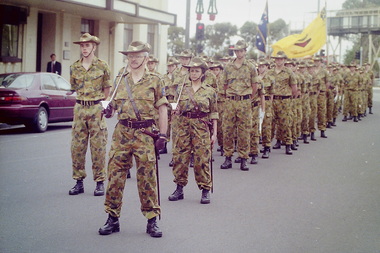
Photograph - 30th Regional Cadet Unit Of Australia Freedom Of The City Of Sunshine Parade 1998 Photographs, The Advocate, 5th December 1998
... civic honour granted by the municipality. The 30th Regional Cadet Unit of Australia (Sunshine) was a community‑based youth cadet organisation active in Melbourne’s western suburbs, particularly Sunshine, St Albans, and Deer Park. It operated independently of the Australian Defence Force cadet structure, though it adopted similar uniforms...civic honour granted by the municipality. The 30th Regional Cadet Unit of Australia (Sunshine) was a community‑based youth cadet organisation active in Melbourne’s western suburbs, particularly Sunshine, St Albans, and Deer Park. It operated independently of the Australian Defence Force cadet structure, though it adopted similar uniforms ...These photographs, taken by The Advocate in 1998, show the 30th Regional Cadet Unit of Australia taking part in the Freedom of the City of Sunshine parade. The images capture the unit marching in full ceremonial order as part of the civic honour granted by the municipality. The 30th Regional Cadet Unit of Australia (Sunshine) was a community‑based youth cadet organisation active in Melbourne’s western suburbs, particularly Sunshine, St Albans, and Deer Park. It operated independently of the Australian Defence Force cadet structure, though it adopted similar uniforms, drill practices, and leadership training.The Freedom Ceremony dates from the medieval times when cities and towns were fortified by walls. Visiting armies had to be granted freedom of entry before being allowed to pass. A trusted military unit would be allowed to march through the city in full ceremonial order, a public affirmation of honour, trust, and the bond between the regiment and the community.30th Regional Cadet Unit Of Australia Freedom Of The City Of Sunshine 555.2devonshire road, hampshire road, city of sunshine municipal offices, sunshine municipal offices, alexandra avenue, sunshine -
 Broadmeadows Historical Society & Museum
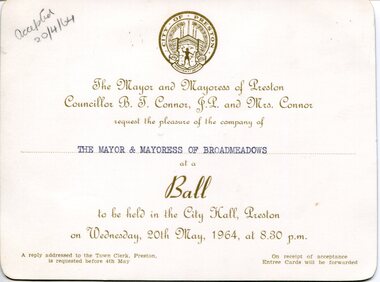
Ephemera - Reception invitation, In Honour of the Birthday of Her Majesty the Queen, 1964
... Civic leadership Social history of Victoria City of Broadmeadows K. Fletcher Recto (printed): “In Honour of the Birthday of Her Majesty the Queen / His Excellency The Governor and Lady Delacombe / request the pleasure of the company of / Councillor R. R. Evans & Miss K. Fletcher / at an Evening Reception / to be held on Friday, the 12th June, 1964, at 8.30 o’clock / Evening Dress or Uniform ...The invitation reflects official civic and vice‑regal ceremonial culture in Victoria during the mid‑20th century. Queen’s Birthday receptions at Government House were significant social and political events attended by local dignitaries and civic leaders.This item has historic and social significance as a tangible record of mid‑20th century vice‑regal ceremonial life in Victoria and reflects the formal conventions, design, and social networks of the period.Cream card invitation with black printed text and crown motif at top centre. Rectangular with rounded corners. Printed on one side (recto); verso blank except for later catalogue label.Recto (printed): “In Honour of the Birthday of Her Majesty the Queen / His Excellency The Governor and Lady Delacombe / request the pleasure of the company of / Councillor R. R. Evans & Miss K. Fletcher / at an Evening Reception / to be held on Friday, the 12th June, 1964, at 8.30 o’clock / Evening Dress or Uniform and Decorations / An answer is requested to the Aide‑de‑Camp in Waiting, Government House, Melbourne” Verso: “WI‑4292” (paper label, top right)queen’s birthday celebrations, government house, melbourne, vice‑regal ceremonies, civic leadership, social history of victoria, city of broadmeadows, k. fletcher -
 Australian Army Museum of Western Australia
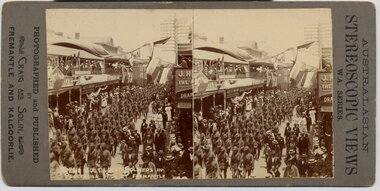
Stereoscopic Image
... Images contain details of uniforms, accoutrements, camp life, civic honours and departure. anglo boer war, peace of vereenniging, emily hobhouse, 1st Contingent WAMI, 2nd Contingent WAMI Photographed and published by Craig and Solin, Fremantle and Kalgoorlie 2nd Contingent Soldiers in Procession, High Street, Fremantle. ...The 1st Contingent departed Fremantle on 7 November 1899 and returned on 29 December 1900. The 2nd Contingent departed 3 February 1900 and returned 8 December 1900. Due to the shortage of khaki material, the 1st Contingent uniforms wore their blue militia tunics, blue puttees and a dark blue puggaree on departure. An Anglo Boer War Service of Reconciliation is held annually on the first Sunday in June at the "Fallen Soldiers" (Boer War) Memorial in Kings Park attended by descendants and representative of all combatant nations. The date selected is the closest Sunday to the date of signing of the Treaty or Peace of Vereeniging (31 May 1902). The culmination of the service is the laying of the Emily Hobhouse wreath.Unique series of stereoscopic images showing both the 1st and 2nd West Australian Mounted Infantry Contingents to the Anglo Boer War. Images contain details of uniforms, accoutrements, camp life, civic honours and departure.2nd Contingent Soldiers in Procession, High Street, Fremantle. Published in Australian Stereoscopic Views, WA Series, Photographed and published by Craig and Solin, Fremantle and KalgoorliePhotographed and published by Craig and Solin, Fremantle and Kalgoorlieanglo boer war, peace of vereenniging, emily hobhouse, 1st contingent wami, 2nd contingent wami -
 Australian Army Museum of Western Australia
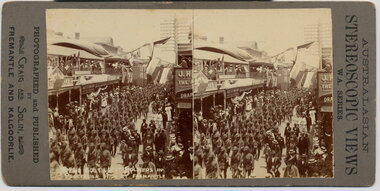
Stereographic Image, 1900
... Images contain details of uniforms, accoutrements, camp life, civic honours and departure. stereoscope, boer war, south africa capetown Photographed and published by Craig and Solin, Fremantle and Kalgoorlie 2nd Contingent Soldiers in Procession, High Street, Fremantle. ...The 1st Contingent departed Fremantle on 7 November 1899 and returned on 29 December 1900. The 2nd Contingent departed 3 February 1900 and returned 8 December 1900. Due to the shortage of khaki material, the 1st Contingent uniforms wore their blue militia tunics, blue puttees and a dark blue puggaree on departure. An Anglo Boer War Service of Reconciliation is held annually on the first Sunday in June at the "Fallen Soldiers" (Boer War) Memorial in Kings Park attended by descendants and representative of all combatant nations. The date selected is the closest Sunday to the date of signing of the Treaty or Peace of Vereeniging (31 May 1902). The culmination of the service is the laying of the Emily Hobhouse wreath.Unique series of stereoscopic images showing both the 1st and 2nd West Australian Mounted Infantry Contingents to the Anglo Boer War. Images contain details of uniforms, accoutrements, camp life, civic honours and departure.2nd Contingent Soldiers in Procession, High Street, Fremantle. Published in Australian Stereoscopic Views, WA Series, Photographed and published by Craig and Solin, Fremantle and KalgoorliePhotographed and published by Craig and Solin, Fremantle and Kalgoorliestereoscope, boer war, south africa, capetown -
 Australian Army Museum of Western Australia
Stereographic Image, 1900
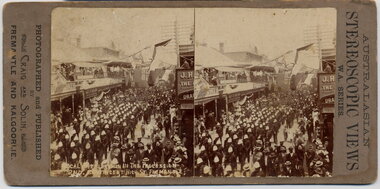
... Images contain details of uniforms, accoutrements, camp life, civic honours and departure. stereoscope, boer war, south africa capetown Photographed and published by Craig and Solin, Fremantle and Kalgoorlie Local Artillerymen in the Procession. 2nd Contingent, High Street, Fremantle. ...The 1st Contingent departed Fremantle on 7 November 1899 and returned on 29 December 1900. The 2nd Contingent departed 3 February 1900 and returned 8 December 1900. Due to the shortage of khaki material, the 1st Contingent uniforms wore their blue militia tunics, blue puttees and a dark blue puggaree on departure. An Anglo Boer War Service of Reconciliation is held annually on the first Sunday in June at the "Fallen Soldiers" (Boer War) Memorial in Kings Park attended by descendants and representative of all combatant nations. The date selected is the closest Sunday to the date of signing of the Treaty or Peace of Vereeniging (31 May 1902). The culmination of the service is the laying of the Emily Hobhouse wreath.Unique series of stereoscopic images showing both the 1st and 2nd West Australian Mounted Infantry Contingents to the Anglo Boer War. Images contain details of uniforms, accoutrements, camp life, civic honours and departure.Local Artillerymen in the Procession. 2nd Contingent, High Street, Fremantle. Published in Australian Stereoscopic Views, WA Series, Photographed and published by Craig and Solin, Fremantle and KalgoorliePhotographed and published by Craig and Solin, Fremantle and Kalgoorliestereoscope, boer war, south africa, capetown -
 Australian Army Museum of Western Australia
Stereographic Image, 1900
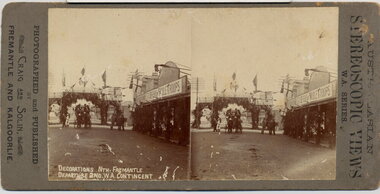
... Images contain details of uniforms, accoutrements, camp life, civic honours and departure. stereoscope, boer war, south africa capetown Photographed and published by Craig and Solin, Fremantle and Kalgoorlie Decorations in Nth Fremantle. ...The 1st Contingent departed Fremantle on 7 November 1899 and returned on 29 December 1900. The 2nd Contingent departed 3 February 1900 and returned 8 December 1900. Due to the shortage of khaki material, the 1st Contingent uniforms wore their blue militia tunics, blue puttees and a dark blue puggaree on departure. An Anglo Boer War Service of Reconciliation is held annually on the first Sunday in June at the "Fallen Soldiers" (Boer War) Memorial in Kings Park attended by descendants and representative of all combatant nations. The date selected is the closest Sunday to the date of signing of the Treaty or Peace of Vereeniging (31 May 1902). The culmination of the service is the laying of the Emily Hobhouse wreath.Unique series of stereoscopic images showing both the 1st and 2nd West Australian Mounted Infantry Contingents to the Anglo Boer War. Images contain details of uniforms, accoutrements, camp life, civic honours and departure.Decorations in Nth Fremantle. Departure of 2nd WA Contingent. Published in Australian Stereoscopic Views, WA Series, Photographed and published by Craig and Solin, Fremantle and KalgoorliePhotographed and published by Craig and Solin, Fremantle and Kalgoorliestereoscope, boer war, south africa, capetown -
 Australian Army Museum of Western Australia
Stereographic Image, 1900
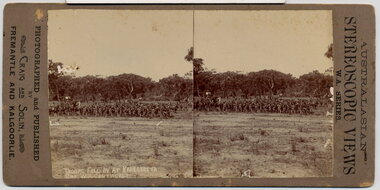
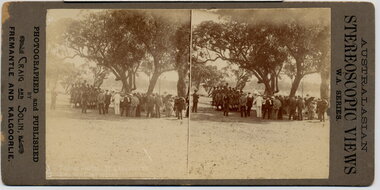
... Images contain details of uniforms, accoutrements, camp life, civic honours and departure. stereoscope, boer war, south africa capetown Photographed and published by Craig and Solin, Fremantle and Kalgoorlie Troops Fall In at Karrakatta. 2nd WA Contingent. ...The 1st Contingent departed Fremantle on 7 November 1899 and returned on 29 December 1900. The 2nd Contingent departed 3 February 1900 and returned 8 December 1900. Due to the shortage of khaki material, the 1st Contingent uniforms wore their blue militia tunics, blue puttees and a dark blue puggaree on departure. An Anglo Boer War Service of Reconciliation is held annually on the first Sunday in June at the "Fallen Soldiers" (Boer War) Memorial in Kings Park attended by descendants and representative of all combatant nations. The date selected is the closest Sunday to the date of signing of the Treaty or Peace of Vereeniging (31 May 1902). The culmination of the service is the laying of the Emily Hobhouse wreath.Unique series of stereoscopic images showing both the 1st and 2nd West Australian Mounted Infantry Contingents to the Anglo Boer War. Images contain details of uniforms, accoutrements, camp life, civic honours and departure.Troops Fall In at Karrakatta. 2nd WA Contingent. Published in Australian Stereoscopic Views, WA Series, Photographed and published by Craig and Solin, Fremantle and KalgoorliePhotographed and published by Craig and Solin, Fremantle and Kalgoorliestereoscope, boer war, south africa, capetown -
 Australian Army Museum of Western Australia
Stereographic Image, 1900
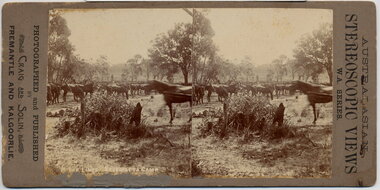
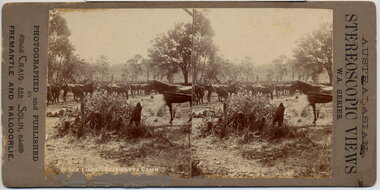
... Images contain details of uniforms, accoutrements, camp life, civic honours and departure. stereoscope, boer war, south africa capetown Photographed and published by Craig and Solin, Fremantle and Kalgoorlie Horse Lines in Karrakatta Camp. ...The 1st Contingent departed Fremantle on 7 November 1899 and returned on 29 December 1900. The 2nd Contingent departed 3 February 1900 and returned 8 December 1900. Due to the shortage of khaki material, the 1st Contingent uniforms wore their blue militia tunics, blue puttees and a dark blue puggaree on departure. An Anglo Boer War Service of Reconciliation is held annually on the first Sunday in June at the "Fallen Soldiers" (Boer War) Memorial in Kings Park attended by descendants and representative of all combatant nations. The date selected is the closest Sunday to the date of signing of the Treaty or Peace of Vereeniging (31 May 1902). The culmination of the service is the laying of the Emily Hobhouse wreath.Unique series of stereoscopic images showing both the 1st and 2nd West Australian Mounted Infantry Contingents to the Anglo Boer War. Images contain details of uniforms, accoutrements, camp life, civic honours and departure.Horse Lines in Karrakatta Camp. Published in Australian Stereoscopic Views, WA Series, Photographed and published by Craig and Solin, Fremantle and KalgoorliePhotographed and published by Craig and Solin, Fremantle and Kalgoorliestereoscope, boer war, south africa, capetown -
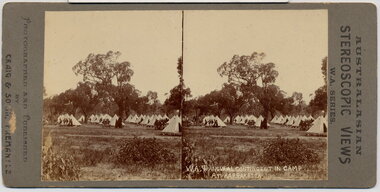 Australian Army Museum of Western Australia
Stereographic Image, 1900
... Images contain details of uniforms, accoutrements, camp life, civic honours and departure. stereoscope, boer war, south africa capetown Photographed and published by Craig and Solin, Fremantle and Kalgoorlie WA Transvaal Contingent in Camp at Karrakatta. ...The 1st Contingent departed Fremantle on 7 November 1899 and returned on 29 December 1900. The 2nd Contingent departed 3 February 1900 and returned 8 December 1900. Due to the shortage of khaki material, the 1st Contingent uniforms wore their blue militia tunics, blue puttees and a dark blue puggaree on departure. An Anglo Boer War Service of Reconciliation is held annually on the first Sunday in June at the "Fallen Soldiers" (Boer War) Memorial in Kings Park attended by descendants and representative of all combatant nations. The date selected is the closest Sunday to the date of signing of the Treaty or Peace of Vereeniging (31 May 1902). The culmination of the service is the laying of the Emily Hobhouse wreath.Unique series of stereoscopic images showing both the 1st and 2nd West Australian Mounted Infantry Contingents to the Anglo Boer War. Images contain details of uniforms, accoutrements, camp life, civic honours and departure.WA Transvaal Contingent in Camp at Karrakatta. Published in Australian Stereoscopic Views, WA Series, Photographed and published by Craig and Solin, Fremantle and KalgoorliePhotographed and published by Craig and Solin, Fremantle and Kalgoorliestereoscope, boer war, south africa, capetown -
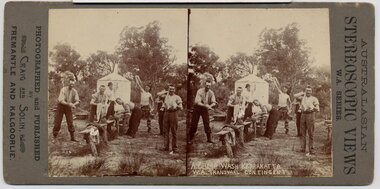 Australian Army Museum of Western Australia
Stereographic Image, 1900
... Images contain details of uniforms, accoutrements, camp life, civic honours and departure. stereoscope, boer war, south africa capetown Photographed and published by Craig and Solin, Fremantle and Kalgoorlie A Camp Wash Karrakatta. ...The 1st Contingent departed Fremantle on 7 November 1899 and returned on 29 December 1900. The 2nd Contingent departed 3 February 1900 and returned 8 December 1900. Due to the shortage of khaki material, the 1st Contingent uniforms wore their blue militia tunics, blue puttees and a dark blue puggaree on departure. An Anglo Boer War Service of Reconciliation is held annually on the first Sunday in June at the "Fallen Soldiers" (Boer War) Memorial in Kings Park attended by descendants and representative of all combatant nations. The date selected is the closest Sunday to the date of signing of the Treaty or Peace of Vereeniging (31 May 1902). The culmination of the service is the laying of the Emily Hobhouse wreath.Unique series of stereoscopic images showing both the 1st and 2nd West Australian Mounted Infantry Contingents to the Anglo Boer War. Images contain details of uniforms, accoutrements, camp life, civic honours and departure.A Camp Wash Karrakatta. WA Transvaal Contingent. Published in Australian Stereoscopic Views, WA Series, Photographed and published by Craig and Solin, Fremantle and KalgoorliePhotographed and published by Craig and Solin, Fremantle and Kalgoorliestereoscope, boer war, south africa, capetown -
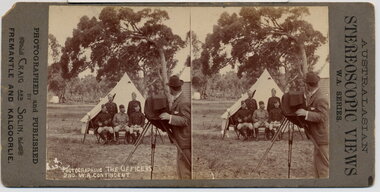 Australian Army Museum of Western Australia
Stereographic Image, 1900
... Images contain details of uniforms, accoutrements, camp life, civic honours and departure. stereoscope, boer war, south africa capetown Photographed and published by Craig and Solin, Fremantle and Kalgoorlie Photographing the Officers. 2nd WA Contingent. ...The 1st Contingent departed Fremantle on 7 November 1899 and returned on 29 December 1900. The 2nd Contingent departed 3 February 1900 and returned 8 December 1900. Due to the shortage of khaki material, the 1st Contingent uniforms wore their blue militia tunics, blue puttees and a dark blue puggaree on departure. An Anglo Boer War Service of Reconciliation is held annually on the first Sunday in June at the "Fallen Soldiers" (Boer War) Memorial in Kings Park attended by descendants and representative of all combatant nations. The date selected is the closest Sunday to the date of signing of the Treaty or Peace of Vereeniging (31 May 1902). The culmination of the service is the laying of the Emily Hobhouse wreath.Unique series of stereoscopic images showing both the 1st and 2nd West Australian Mounted Infantry Contingents to the Anglo Boer War. Images contain details of uniforms, accoutrements, camp life, civic honours and departure.Photographing the Officers. 2nd WA Contingent. Published in Australian Stereoscopic Views, WA Series, Photographed and published by Craig and Solin, Fremantle and KalgoorliePhotographed and published by Craig and Solin, Fremantle and Kalgoorliestereoscope, boer war, south africa, capetown -
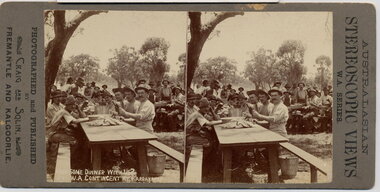 Australian Army Museum of Western Australia
Stereographic Image, 1900
... Images contain details of uniforms, accoutrements, camp life, civic honours and departure. stereoscope, boer war, south africa capetown Photographed and published by Craig and Solin, Fremantle and Kalgoorlie Have Some Dinner with Us. 2nd WA Contingent at Karrakatta. ...The 1st Contingent departed Fremantle on 7 November 1899 and returned on 29 December 1900. The 2nd Contingent departed 3 February 1900 and returned 8 December 1900. Due to the shortage of khaki material, the 1st Contingent uniforms wore their blue militia tunics, blue puttees and a dark blue puggaree on departure. An Anglo Boer War Service of Reconciliation is held annually on the first Sunday in June at the "Fallen Soldiers" (Boer War) Memorial in Kings Park attended by descendants and representative of all combatant nations. The date selected is the closest Sunday to the date of signing of the Treaty or Peace of Vereeniging (31 May 1902). The culmination of the service is the laying of the Emily Hobhouse wreath.Unique series of stereoscopic images showing both the 1st and 2nd West Australian Mounted Infantry Contingents to the Anglo Boer War. Images contain details of uniforms, accoutrements, camp life, civic honours and departure.Have Some Dinner with Us. 2nd WA Contingent at Karrakatta. Published in Australian Stereoscopic Views, WA Series, Photographed and published by Craig and Solin, Fremantle and KalgoorliePhotographed and published by Craig and Solin, Fremantle and Kalgoorliestereoscope, boer war, south africa, capetown -
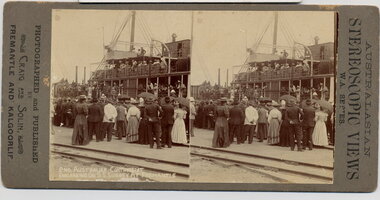 Australian Army Museum of Western Australia
Stereographic Image, 1900
... Images contain details of uniforms, accoutrements, camp life, civic honours and departure. stereoscope, boer war, south africa capetown Photographed and published by Craig and Solin, Fremantle and Kalgoorlie 2nd WA Contingent Embarking on SS Surrey at Fremantle. ...The 1st Contingent departed Fremantle on 7 November 1899 and returned on 29 December 1900. The 2nd Contingent departed 3 February 1900 and returned 8 December 1900. Due to the shortage of khaki material, the 1st Contingent uniforms wore their blue militia tunics, blue puttees and a dark blue puggaree on departure. An Anglo Boer War Service of Reconciliation is held annually on the first Sunday in June at the "Fallen Soldiers" (Boer War) Memorial in Kings Park attended by descendants and representative of all combatant nations. The date selected is the closest Sunday to the date of signing of the Treaty or Peace of Vereeniging (31 May 1902). The culmination of the service is the laying of the Emily Hobhouse wreath.Unique series of stereoscopic images showing both the 1st and 2nd West Australian Mounted Infantry Contingents to the Anglo Boer War. Images contain details of uniforms, accoutrements, camp life, civic honours and departure.2nd WA Contingent Embarking on SS Surrey at Fremantle. Published in Australian Stereoscopic Views, WA Series, Photographed and published by Craig and Solin, Fremantle and KalgoorliePhotographed and published by Craig and Solin, Fremantle and Kalgoorliestereoscope, boer war, south africa, capetown -
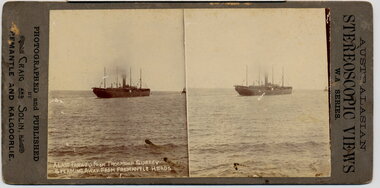 Australian Army Museum of Western Australia
Stereographic Image, 1900
... Images contain details of uniforms, accoutrements, camp life, civic honours and departure. stereoscope, boer war, south africa capetown Photographed and published by Craig and Solin, Fremantle and Kalgoorlie A Last Farewell From Troopship Surrey Steaming Away From Fremantle Heads. ...The 1st Contingent departed Fremantle on 7 November 1899 and returned on 29 December 1900. The 2nd Contingent departed 3 February 1900 and returned 8 December 1900. Due to the shortage of khaki material, the 1st Contingent uniforms wore their blue militia tunics, blue puttees and a dark blue puggaree on departure. An Anglo Boer War Service of Reconciliation is held annually on the first Sunday in June at the "Fallen Soldiers" (Boer War) Memorial in Kings Park attended by descendants and representative of all combatant nations. The date selected is the closest Sunday to the date of signing of the Treaty or Peace of Vereeniging (31 May 1902). The culmination of the service is the laying of the Emily Hobhouse wreath.Unique series of stereoscopic images showing both the 1st and 2nd West Australian Mounted Infantry Contingents to the Anglo Boer War. Images contain details of uniforms, accoutrements, camp life, civic honours and departure.A Last Farewell From Troopship Surrey Steaming Away From Fremantle Heads. Published in Australian Stereoscopic Views, WA Series, Photographed and published by Craig and Solin, Fremantle and KalgoorliePhotographed and published by Craig and Solin, Fremantle and Kalgoorliestereoscope, boer war, south africa, capetown -
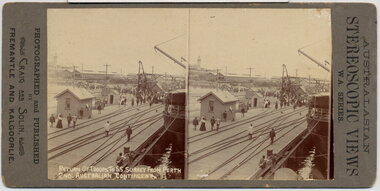 Australian Army Museum of Western Australia
Stereographic Image, 1900
... Images contain details of uniforms, accoutrements, camp life, civic honours and departure. stereoscope, boer war, south africa capetown Photographed and published by Craig and Solin, Fremantle and Kalgoorlie Return of the Troops to SS Surrey from Perth. 2nd Australian Contingent. ...The 1st Contingent departed Fremantle on 7 November 1899 and returned on 29 December 1900. The 2nd Contingent departed 3 February 1900 and returned 8 December 1900. Due to the shortage of khaki material, the 1st Contingent uniforms wore their blue militia tunics, blue puttees and a dark blue puggaree on departure. An Anglo Boer War Service of Reconciliation is held annually on the first Sunday in June at the "Fallen Soldiers" (Boer War) Memorial in Kings Park attended by descendants and representative of all combatant nations. The date selected is the closest Sunday to the date of signing of the Treaty or Peace of Vereeniging (31 May 1902). The culmination of the service is the laying of the Emily Hobhouse wreath.Unique series of stereoscopic images showing both the 1st and 2nd West Australian Mounted Infantry Contingents to the Anglo Boer War. Images contain details of uniforms, accoutrements, camp life, civic honours and departure.Return of the Troops to SS Surrey from Perth. 2nd Australian Contingent. Published in Australian Stereoscopic Views, WA Series, Photographed and published by Craig and Solin, Fremantle and KalgoorliePhotographed and published by Craig and Solin, Fremantle and Kalgoorliestereoscope, boer war, south africa, capetown -
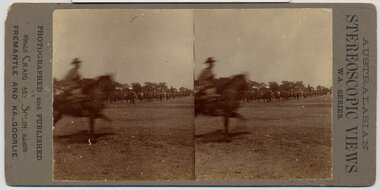 Australian Army Museum of Western Australia
Stereographic Image, 1900
... Images contain details of uniforms, accoutrements, camp life, civic honours and departure. stereoscope, boer war, south africa capetown Photographed and published by Craig and Solin, Fremantle and Kalgoorlie Untitled [Mounted Exercises in Karrakatta Camp]. ...The 1st Contingent departed Fremantle on 7 November 1899 and returned on 29 December 1900. The 2nd Contingent departed 3 February 1900 and returned 8 December 1900. Due to the shortage of khaki material, the 1st Contingent uniforms wore their blue militia tunics, blue puttees and a dark blue puggaree on departure. An Anglo Boer War Service of Reconciliation is held annually on the first Sunday in June at the "Fallen Soldiers" (Boer War) Memorial in Kings Park attended by descendants and representative of all combatant nations. The date selected is the closest Sunday to the date of signing of the Treaty or Peace of Vereeniging (31 May 1902). The culmination of the service is the laying of the Emily Hobhouse wreath.Unique series of stereoscopic images showing both the 1st and 2nd West Australian Mounted Infantry Contingents to the Anglo Boer War. Images contain details of uniforms, accoutrements, camp life, civic honours and departure.Untitled [Mounted Exercises in Karrakatta Camp]. Published in Australian Stereoscopic Views, WA Series, Photographed and published by Craig and Solin, Fremantle and KalgoorliePhotographed and published by Craig and Solin, Fremantle and Kalgoorliestereoscope, boer war, south africa, capetown -
 Australian Army Museum of Western Australia
Stereographic Image, 1900
... Images contain details of uniforms, accoutrements, camp life, civic honours and departure. stereoscope, boer war, south africa capetown Photographed and published by Craig and Solin, Fremantle and Kalgoorlie Horse Lines Karrakatta Camp. ...The 1st Contingent departed Fremantle on 7 November 1899 and returned on 29 December 1900. The 2nd Contingent departed 3 February 1900 and returned 8 December 1900. Due to the shortage of khaki material, the 1st Contingent uniforms wore their blue militia tunics, blue puttees and a dark blue puggaree on departure. An Anglo Boer War Service of Reconciliation is held annually on the first Sunday in June at the "Fallen Soldiers" (Boer War) Memorial in Kings Park attended by descendants and representative of all combatant nations. The date selected is the closest Sunday to the date of signing of the Treaty or Peace of Vereeniging (31 May 1902). The culmination of the service is the laying of the Emily Hobhouse wreath.Unique series of stereoscopic images showing both the 1st and 2nd West Australian Mounted Infantry Contingents to the Anglo Boer War. Images contain details of uniforms, accoutrements, camp life, civic honours and departure.Horse Lines Karrakatta Camp. Published in Australian Stereoscopic Views, WA Series, Photographed and published by Craig and Solin, Fremantle and KalgoorliePhotographed and published by Craig and Solin, Fremantle and Kalgoorliestereoscope, boer war, south africa, capetown -
 Australian Army Museum of Western Australia
Stereographic Image, 1900
... Images contain details of uniforms, accoutrements, camp life, civic honours and departure. stereoscope, boer war, south africa capetown Photographed and published by Craig and Solin, Fremantle and Kalgoorlie Taking Photos at Karrakatta. 2nd WA Contingent. ...The 1st Contingent departed Fremantle on 7 November 1899 and returned on 29 December 1900. The 2nd Contingent departed 3 February 1900 and returned 8 December 1900. Due to the shortage of khaki material, the 1st Contingent uniforms wore their blue militia tunics, blue puttees and a dark blue puggaree on departure. An Anglo Boer War Service of Reconciliation is held annually on the first Sunday in June at the "Fallen Soldiers" (Boer War) Memorial in Kings Park attended by descendants and representative of all combatant nations. The date selected is the closest Sunday to the date of signing of the Treaty or Peace of Vereeniging (31 May 1902). The culmination of the service is the laying of the Emily Hobhouse wreath.Unique series of stereoscopic images showing both the 1st and 2nd West Australian Mounted Infantry Contingents to the Anglo Boer War. Images contain details of uniforms, accoutrements, camp life, civic honours and departure.Taking Photos at Karrakatta. 2nd WA Contingent. Published in Australian Stereoscopic Views, WA Series, Photographed and published by Craig and Solin, Fremantle and KalgoorliePhotographed and published by Craig and Solin, Fremantle and Kalgoorliestereoscope, boer war, south africa, capetown -
 Australian Army Museum of Western Australia
Stereographic Image, 1900
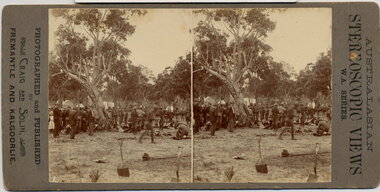
... Images contain details of uniforms, accoutrements, camp life, civic honours and departure. stereoscope, boer war, south africa capetown Photographed and published by Craig and Solin, Fremantle and Kalgoorlie Untitled [Issue of Harness at Karrakatta Camp]. ...The 1st Contingent departed Fremantle on 7 November 1899 and returned on 29 December 1900. The 2nd Contingent departed 3 February 1900 and returned 8 December 1900. Due to the shortage of khaki material, the 1st Contingent uniforms wore their blue militia tunics, blue puttees and a dark blue puggaree on departure. An Anglo Boer War Service of Reconciliation is held annually on the first Sunday in June at the "Fallen Soldiers" (Boer War) Memorial in Kings Park attended by descendants and representative of all combatant nations. The date selected is the closest Sunday to the date of signing of the Treaty or Peace of Vereeniging (31 May 1902). The culmination of the service is the laying of the Emily Hobhouse wreath.Unique series of stereoscopic images showing both the 1st and 2nd West Australian Mounted Infantry Contingents to the Anglo Boer War. Images contain details of uniforms, accoutrements, camp life, civic honours and departure.Untitled [Issue of Harness at Karrakatta Camp]. Published in Australian Stereoscopic Views, WA Series, Photographed and published by Craig and Solin, Fremantle and KalgoorliePhotographed and published by Craig and Solin, Fremantle and Kalgoorliestereoscope, boer war, south africa, capetown -
 Australian Army Museum of Western Australia
Stereographic Image, 1900
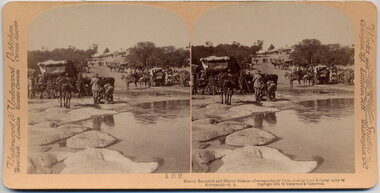
... Images contain details of uniforms, accoutrements, camp life, civic honours and departure. stereoscope, boer war, south africa capetown Photographed and published by Craig and Solin, Fremantle and Kalgoorlie Decorations High Street Fremantle. ...The 1st Contingent departed Fremantle on 7 November 1899 and returned on 29 December 1900. The 2nd Contingent departed 3 February 1900 and returned 8 December 1900. Due to the shortage of khaki material, the 1st Contingent uniforms wore their blue militia tunics, blue puttees and a dark blue puggaree on departure. An Anglo Boer War Service of Reconciliation is held annually on the first Sunday in June at the "Fallen Soldiers" (Boer War) Memorial in Kings Park attended by descendants and representative of all combatant nations. The date selected is the closest Sunday to the date of signing of the Treaty or Peace of Vereeniging (31 May 1902). The culmination of the service is the laying of the Emily Hobhouse wreath.Unique series of stereoscopic images showing both the 1st and 2nd West Australian Mounted Infantry Contingents to the Anglo Boer War. Images contain details of uniforms, accoutrements, camp life, civic honours and departure.Decorations High Street Fremantle. Departure 2nd WA Contingent. Published in Australian Stereoscopic Views, WA Series, Photographed and published by Craig and Solin, Fremantle and KalgoorliePhotographed and published by Craig and Solin, Fremantle and Kalgoorliestereoscope, boer war, south africa, capetown -
 Kew Historical Society Inc
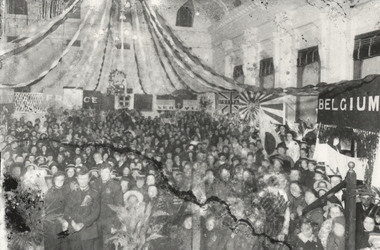
Photograph, Patriotic Gathering, 1914-1918
... civic hall used for a patriotic gathering; during or after World War I. Around the walls of the crowded hall are banners representing some of the allied nations fighting in the war, including France, Britain, Japan and Belgium. Two soldiers, both in military uniform...civic hall used for a patriotic gathering; during or after World War I. Around the walls of the crowded hall are banners representing some of the allied nations fighting in the war, including France, Britain, Japan and Belgium. Two soldiers, both in military uniform ...This photograph was printed from a glass negative held in the Society's picture collection. The original glass negative is part of a set donated to the Society by Ian McKenzie, a professional photographer in Kew. Patriotic gathering, ca. 1914-ca. 1918. A civic hall used for a patriotic gathering; during or after World War I. Around the walls of the crowded hall are banners representing some of the allied nations fighting in the war, including France, Britain, Japan and Belgium. Two soldiers, both in military uniform can be seen at the front left of the photograph. first world war (1914-18), world war 1, glass negatives -
 Bialik College
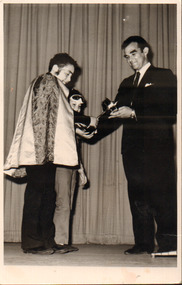
Photograph (item) - Photographs donated by past student and staff member Rochelle Obel, 1970s
... Includes her first day of prep in 1972, Grade 1 1973, Speech Night at Kew Civic Centre, Principal Mieri at Shakespeare Grove. Please contact [email protected] to request access to this record. 1970s uniform events Photograph Photographs donated by past student and staff member Rochelle Obel, 1970s ...Photographs donated by past student and staff member Rochelle Obel, c. 1970s. Includes her first day of prep in 1972, Grade 1 1973, Speech Night at Kew Civic Centre, Principal Mieri at Shakespeare Grove. Please contact [email protected] to request access to this record.1970s, uniform, events -
 Whitehorse Historical Society Inc.
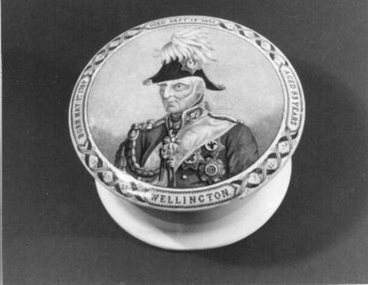
Domestic object - China Dish, Dish with Wellington depicted on lid, C1852
... domestic items containers civic mementoes souvenirs Around edge - 'Born May 1769 - died Sept 14th 1852 - 83 years Wellington' White round china container. Lid depicts Wellington in uniform ...White round china container. Lid depicts Wellington in uniform in the middle with a decorative edging. Edging includes inscriptions Born May 1769, Died Sept 14th 1852, 83 years, WellingtonAround edge - 'Born May 1769 - died Sept 14th 1852 - 83 years Wellington'domestic items, containers, civic mementoes, souvenirs -
 Kew Historical Society Inc
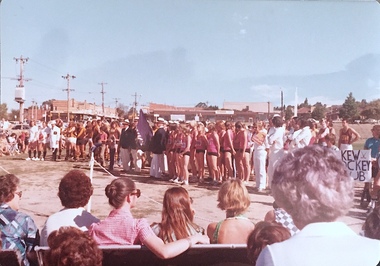
Photograph - Civic event in Stradbroke Park, 1976
... Colour photographic positive (with colour degradation) of sporting teams at a civic event in Stradbroke Park in Kew East in May 1976. The event was officiated by the Mayor of Kew, Cr Alan Hutchinson. Sporting teams in uniform...Colour photographic positive (with colour degradation) of sporting teams at a civic event in Stradbroke Park in Kew East in May 1976. The event was officiated by the Mayor of Kew, Cr Alan Hutchinson. Sporting teams in uniform ...Stradbroke Park. Extent: Kilby Road to Harp Road at Burke Road. Historical Documentation: 1851 - Portion 91 purchased by Edward Glynn; 1888 - The Harp of Erin Estate (which included Section 91) offered for sale; 1896 - The area now known as Stradbroke Park was bisected by a creek that flowed from the Yarra via Hay's Paddock (q.v.) and extended through to Burke Road; 1943 - W.D. Birrell, Town Clerk of Kew, proposed that the creek be filled and a reserve created; 1954 - Entire area designated as 'open space' and named 'Stradbroke Park'. The line of the creek that ran through the Park created a further reserve on the north side of High Street, now known as 'Harrison Reserve'. Existing Condition: The park is largely of mown grass that has mature trees set into it It is possible that a number of these are remnant of the original vegetation, while there are also a number of exotic trees introduced, particularly at the northern end of the park. The southern end is dominated by playing fields. (Source: Sanderson, P 1988. Kew Conservation Study)Colour photographic positive (with colour degradation) of sporting teams at a civic event in Stradbroke Park in Kew East in May 1976. The event was officiated by the Mayor of Kew, Cr Alan Hutchinson. Sporting teams in uniform included: footballers, athletes, cricketers, hockey players. Stradbroke Park is situated on the western boundary of Kew at Burke and Harp Roads.stradbroke park, cr alan hutchinson, team sports -- kew (vic.)
