
Showing 190 items matching " deaths registers"
-
 Glen Eira Historical Society
Document - Caulfield, John
... ... Deaths registers...Photocopy of deaths register No. 149895 in the district of West Hotham for Caulfield, John....Photocopy of deaths register No. 149895 in the district of West Hotham for Caulfield, John. ...Four items about a third John Caulfield. Handwritten research on John Caulfield by Garryowen p662, undated and unsigned. Handwritten research on “Garryowen”- Edmund Finn from ‘Google’. Handwritten notes from Melbourne Benevolent Society showing admission application for John Caulfield and Hannah Caulfield. Photocopy of deaths register No. 149895 in the district of West Hotham for Caulfield, John.caulfield john, ‘garryowen’, finn edmund, deaths registers, melbourne benevolent society, caulfield catherine, caulfield hannah -
Ringwood and District Historical Society
Administrative record - Book, Copy made by E. Pullin, Transcribed Index of Deaths Registered in Ringwood District A-Z 1884-1911, 1884
... Index of Deaths - Registered in Ringwood District A-Z 1884 - 1911; Also a copy of Register of Deaths by E. ...Index of Deaths - Registered in Ringwood District A-Z 1884 - 1911; Also a copy of Register of Deaths by E. ...Index of Deaths - Registered in Ringwood District A-Z 1884 - 1911; Also a copy of Register of Deaths by E. Pullin +Additional Keywords: Pullin, E -
Ballarat Heritage Services
Document - Database, Ballarat Old Cemetery Burials 1848-1856
... Xl Database of burials at Ballarat transcribed by Ian Wilcox and Dorothy Wickham from the death registers at the Office of BDMs. 1168 entries....Ballaarat Old Cemetery burials Xl Database of burials at Ballarat transcribed by Ian Wilcox and Dorothy Wickham from the death registers at the Office of BDMs. 1168 entries. ...Xl Database of burials at Ballarat transcribed by Ian Wilcox and Dorothy Wickham from the death registers at the Office of BDMs. 1168 entries.ballaarat old cemetery, burials -
Whitehorse Historical Society Inc.
Document, Schwerkolt deaths
... Death register entries for Louis Schwerkolt, age 3; John William Schwerkolt, age 1 month; Pauline Schwerkolt, age 1 year....Death register entries for Louis Schwerkolt, age 3; John William Schwerkolt, age 1 month; Pauline Schwerkolt, age 1 year. ...Death register entries for Louis Schwerkolt, age 3; John William Schwerkolt, age 1 month; Pauline Schwerkolt, age 1 year.Death register entries for Louis Schwerkolt, age 3; John William Schwerkolt, age 1 month; Pauline Schwerkolt, age 1 year.Death register entries for Louis Schwerkolt, age 3; John William Schwerkolt, age 1 month; Pauline Schwerkolt, age 1 year.schwerkolt, pauline, schwerkolt, louis, 1855, schwerkolt, john william -
Whitehorse Historical Society Inc.
Document, Deaths Register, 1873 - 1884
... Death Register, District of Box hill, extracts registered by Silas Padgham, Jan 1873 - March 1884 - recording some buried in Air Hill Cemetery....Deaths Register Document Document ...Death Register, District of Box hill, extracts registered by Silas Padgham, Jan 1873 - March 1884 - recording some buried in Air Hill Cemetery.Death Register, District of Box hill, extracts registered by Silas Padgham, Jan 1873 - March 1884 - recording some buried in Air Hill Cemetery.Death Register, District of Box hill, extracts registered by Silas Padgham, Jan 1873 - March 1884 - recording some buried in Air Hill Cemetery.funerals, box hill district -
Stawell Historical Society Inc
Archive, Great Western Cemetery Records. Names of Burials Recorded, 1860
... Death Certificates Inquests Register Map...Cemetery Map Death Certificates, Inquests, Cemetery Register...Death Certificates Inquests Register Map Cemetery Photocopied Lots of Burials at Great Western Black Lever Arch, Plastic Inserts with paper Records. ...Death Certificates Inquests Register MapPhotocopied Lots of Burials at Great Western Black Lever Arch, Plastic Inserts with paper Records. Cemetery Map Death Certificates, Inquests, Cemetery Registercemetery -
 Friends of Ballarat Botanical Gardens History Group
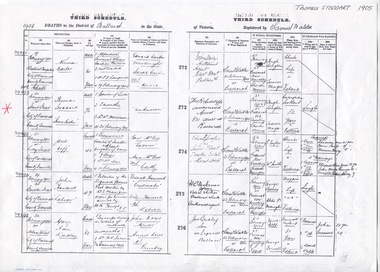
Work on paper - Deaths in the District of Ballarat, Third Schedule, Death of Thomas Stoddart 1905, 1905. Copied 22/2/2010
... Particulars of Thomas Stoddart's death registered....Particulars of Thomas Stoddart's death registered. The Death Certificate gives further perspective on this renowned Ballarat citizen. ...Particulars of Thomas Stoddart's death registered.The Death Certificate gives further perspective on this renowned Ballarat citizen.One page divided into sections with printed headings at the top of the page and listings down the page written in longhand. To be read horizontally.Printed, longhand, top righthand corner, Thomas Stoddart 1905. On the back of the sheet, written in longhand "Obtained 22 Feb, 2010 for FBBG, History Group. thomas stoddart, ballarat botanical gardens, doctor john garner, 10 carrera marble statues, death certificate, friends of the ballarat botanical gardens, sharebroker, miner, john garner collection, gardens, ballarat, stoddart -
Whitehorse Historical Society Inc.
Document, Biography of Dr Francis John Drake, 1/11/1983 12:00:00 AM
... Includes copies of Dr Drake's Marriage Certificate, entry in Register of Deaths and a portrait....Includes copies of Dr Drake's Marriage Certificate, entry in Register of Deaths and a portrait....Includes copies of Dr Drake's Marriage Certificate, entry in Register of Deaths and a portrait. Biography of Dr Francis John Drake Document Document ...A brief biography of Doctor Francis John Drake - medical practitioner and early land owner in the Mitcham area.A brief biography of Doctor Francis John Drake - medical practitioner and early land owner in the Mitcham area. Compiled by Andrew Hillier. Includes copies of Dr Drake's Marriage Certificate, entry in Register of Deaths and a portrait.A brief biography of Doctor Francis John Drake - medical practitioner and early land owner in the Mitcham area. drake, francis john, dr, park road, mitcham, heads road, donvale, mitcham north, whitehorse road, mitcham, elizabeth street, mitcham, station street, mitcham, colombo street, . mitcham, mitcham road, mitcham, doncaster east road, mitcham, mcdowall street, mitcham -
Whitehorse Historical Society Inc.
Document, George King, 6/07/1977 12:00:00 AM
... Copy of entry in Register of Deaths for George King, died Mar 1912....King George Copy of entry in Register of Deaths for George King, died Mar 19 Copy of entry in Register of Deaths for George King, died Mar 1912. ...Copy of entry in Register of Deaths for George King, died Mar 19Copy of entry in Register of Deaths for George King, died Mar 1912.Copy of entry in Register of Deaths for George King, died Mar 19king, george -
Stawell Historical Society Inc
Archive, Great Western Cemetery Records. Names of Burials Recorded, 1860
... Death Certificates Inquests Register Map...Death Certificates Inquests Register Map Cemetery Photocopied Lots of Burials at Great Western Great Western Cemetery Records. ...Death Certificates Inquests Register MapPhotocopied Lots of Burials at Great Western cemetery -
Whitehorse Historical Society Inc.
Document, Rose McClare, 01/01/1872
... Copy of register of Deaths entry for Rose McClare, 30 Dec 1871, infant daughter of Jon and Mary McClare....McClare Rose Copy of register of Deaths entry for Rose McClare, 30 Dec 1871. ...Copy of register of Deaths entry for Rose McClare, 30 Dec 1871.Copy of register of Deaths entry for Rose McClare, 30 Dec 1871, infant daughter of Jon and Mary McClare.Copy of register of Deaths entry for Rose McClare, 30 Dec 1871. mcclare, rose -
 Ringwood and District Historical Society
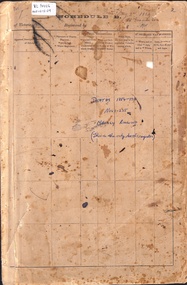
Administrative record - Register, Death Register (Schedule B) for the District of Ringwood: Deaths 1884 - 1911, Numbers 1 - 235
... Death Register (Schedule B) for the District of Ringwood: Deaths 1884 - 1911, Numbers 1 - 235...Original Register of Deaths from which official information was submitted to the Victorian Births Deaths and Marriages Registry. ...A3Deaths Register of Victoria "Schedule B" in the District of Ringwood. Original Deaths Registration Document, handwritten for Ringwood Deaths between 2 May 1884 and 20 December 1911, Registration numbers 1-235. ...Original Register of Deaths from which official information was submitted to the Victorian Births Deaths and Marriages Registry. ...Original Register of Deaths from which official information was submitted to the Victorian Births Deaths and Marriages Registry. A3Deaths Register of Victoria "Schedule B" in the District of Ringwood. Original Deaths Registration Document, handwritten for Ringwood Deaths between 2 May 1884 and 20 December 1911, Registration numbers 1-235. Signed by Postmistress and Deputy Registrar Marianne Thomson. High resolution images of individual pages are available on request from Ringwood and District Historical Society. A searchable pdf of transcriptions of all entries with a cross reference to the individual page image is included as the second media item. -
 Warrnambool and District Historical Society Inc.
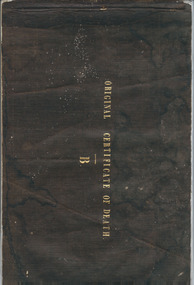
Administrative record - Book, Original Certificate of death 1853-1854, Mid 19th century
... These certificates of death are original and give details of 47 deaths from July 1853 to February 1855 with the deaths mostly from the Villiers district in the Parish or Township of Warrnambool. The deaths have been registered by John Martin Ardlie and the doctors’ signatures include those of Isaac Corney and Berkeley Hutchinson. ...These certificates of death are original and give details of 47 deaths from July 1853 to February 1855 with the deaths mostly from the Villiers district in the Parish or Township of Warrnambool. The deaths have been registered by John Martin Ardlie and the doctors’ signatures include those of Isaac Corney and Berkeley Hutchinson. ...These certificates of death are original and give details of 47 deaths from July 1853 to February 1855 with the deaths mostly from the Villiers district in the Parish or Township of Warrnambool. The deaths have been registered by John Martin Ardlie and the doctors’ signatures include those of Isaac Corney and Berkeley Hutchinson. This booklet is of high significance as many of the deaths recorded herein are not registered anywhere else and some were buried in the Warrnambool Cemetery before official records began. The Warrnambool Cemetery was gazetted in June 1854. The certificates were found in a private house in Warrnambool.This is a bound book with a black linen cover and containing 40 pages. The pages are designed to have the information written twice with one section called the Counterpart and the second called the Original Certificate of Death (Schedule B). The counterpart section was meant to be kept in the booklet and the second section was to be cut out and sent or put elsewhere. The first seven pages have the one Counterpart section and the rest are complete with the two sections. The pages are blue with printed headings for the Registrar of Deaths to fill in. The information on 12 of the pages are incomplete and the entries are handwritten in ink. Front cover: Original Certificate of Death, Bwarrnambool cemetery, early warrnambool death records 1853-1854, john martin ardlie, warrnambool history, isaac corney, berkeley hutchinson -
 Bendigo Historical Society Inc.
Newspaper - Fortuna Articles - "The Lansell Saga", Oct 02 1999
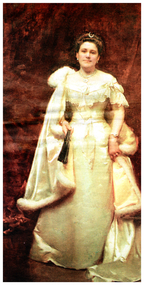
... Bedelia's death was lonely, with her death registered by an undertaker's assistant rather than family. ...Bedelia's death was lonely, with her death registered by an undertaker's assistant rather than family. ...Ruth Hopkins has extensively researched Bendigo Cornish history and has published a book on the subject. Initially unsuccessful, Lansell later prospered by employing experienced Cornish consultants and miners. His return to Bendigo was driven more by public belief in his personal influence than by his mining expertise. He was involved in wage reduction efforts and allowed his mines to flood, causing widespread unemployment among miners and resentment. The story of a coffin being placed as a symbol of miners' animosity is discussed, with the author suggesting it reflected broader discontent, not just disputes over working conditions. Lansell's marriage to Bedelia Mary Mulganney was troubled, marked by her alcoholism and early death, with her will contested by Lansell despite its modest value. Bedelia's death was lonely, with her death registered by an undertaker's assistant rather than family. Edith Lansell (née Bassford)Edith, from a respectable but financially struggling family, became Lansell's housekeeper and later his wife. Their relationship began before marriage, with Edith giving birth to their son shortly after their wedding. Lansell was significantly older than Edith, and their union was met with mixed reactions from family and the public. The document reflects on the lasting impact of Lansell and the miners on Bendigo's history, suggesting that the tragedies and triumphs of these figures are embodied in the Fortuna estate. The author expresses gratitude for the preservation of Fortuna as a symbol of Bendigo's mining era, acknowledging both its glory and its tragedies.Fortuna Article - "The Lansell Saga" - The Weekender Saturday Oct 02 2009 This item contains the following: 11217.26a Colour Photo of Edith Lansell, the housekeeper who became mistress of the house, courtesy of the Bendigo Art Gallery. 11217.26b Part of page 22 - Article "The Lansell Saga"non-fictionbendigo, fortuna, george lansell, edith lansell, edith bassford, bedelia mary mulganney -
 Bendigo Historical Society Inc.
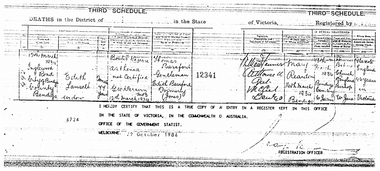
Certificate - Fortuna - Death Certificate of Edith Lansell, 12 March 1934
... Bedelia's death was lonely, with her death registered by an undertaker's assistant rather than family. ...Bedelia's death was lonely, with her death registered by an undertaker's assistant rather than family. ...Theodore Ballerstedt originally purchased the Fortuna site from the Crown in 1857. The firstimprovements at Fortuna were undertaken by the Ballerstedt family and consisted of a small mill and house. At the peak of the mining era (c.1860s) Fortuna was central to the deep alluvial gold mining operations of Bendigo. In 1871 Theodore Ballerstedt sold the house, mine and associated works to George Lansell 'The Quartz King'. During his time at Fortuna, Lansell owned 13 mines and directed a further 73 in Bendigo. Edith was George Lansell’s second wife. His first wife Bedelia was once George’s maid who later fell in love with him. However Bedelia could not handle the wealth, dignitaries or the pressure of George’s success and turned to the bottle which lead to her untimely death. Lansell's first marriage to Bedelia Mary Mulganney was troubled, marked by her alcoholism and early death, with her will contested by Lansell despite its modest value. Bedelia's death was lonely, with her death registered by an undertaker's assistant rather than family. Edith Lansell (née Bassford)Edith, from a respectable but financially struggling family, became Lansell's housekeeper and later his wife. Their relationship began before marriage, with Edith giving birth to their son shortly after their wedding. Lansell was significantly older than Edith, and their union was met with mixed reactions from family and the public. Edith was a strong woman, who raised six children and managed George’s affairs with great success after his death. Fortuna - Death Certificate of Edith Lansell This item contains the following documents: 11217.85a Part of Photo copy of The Death Certificate of Edith Lansell is from the State of Victoria. Edith, a widow lived in Inglewood Road, City of Bendigo. She died on March 12th 1934. She had lived for 46 years in Victoria. 11217.85b Part of Photo copy of The Death Certificate of Edith Lansell is from the State of Victoria. Edith, a widow lived in Inglewood Road, City of Bendigo. She died on March 12th 1934. She had lived for 46 years in Victoria.non-fictionbendigo, fortuna, george lansell, edith lansell, edith bassford -
 Sunshine and District Historical Society Incorporated
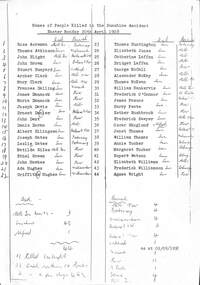
Certificate - Sunshine Rail Disaster death certificates, 1908
... Printed List of Names of People killed in the Sunshine Accident Easter Monday 20 April 1908 Rose Acreman died Melbourne General Queen Vic Buried Footscray Thomas Atkinson died Sunshine Buried Williamstown John Blight died Melbourne General Queen Vic Buried Ballarat Old John Brown died Sunshine Buried Ballarat Old Stuart Bunyard died Sunshine Buried Oakleigh Archer Clark died Sunshine Buried Melbourne New Mary Clark died Sunshine Buried Melbourne New Frances Dalling died Sunshine Buried Warrick James Dannock died Sunshine Buried Kew Maria Dannock died Sunshine Buried Kew Joseph David died Sunshine Buried Melbourne New Ernest Denier died Sunshine Buried Ballarat New John Dent died Sunshine Buried Kew Denis Doran died Sunshine Buried Melbourne Albert Ellingsen died Sunshine Buried Ballarat New Joseph Gates died Sunshine Buried Footscray Leslie Gates died Sunshine Buried Footscray Matilda Giles died Melbourne General Queen Vic Buried Kew Ethel Green died Sunshine Buried Kew John Haekes died Sunshine Buried Kew Ada Hughes died Sunshine Buried Williamstown Griffith Hughes died Sunshine Buried Williamstown Thomas Huntington died Sunshine Buried Footscray Elizabeth Jones died Sunshine Buried Melbourne Catherine Laffan died Sunshine Buried Melbourne Bridget Laffan died Sunshine Buried Melbourne George McCall died Sunshine Buried Kew Alexander McKay died Sunshine Buried Melbourne Thomas McKean died Sunshine Buried Melbourne William Nankervis died Sunshine Buried Melbourne Frederick OConnor died Sunshine Buried St Kilda James Pascoe died Sunshine Buried Ballarat Old Harry Peate died Sunshine Buried Kew Esther Rushbrook died Sunshine Buried Kew Frederick Sawyer died Sunshine Buried Melbourne Oscar Skoglund died Alfred Buried Kew Janet Thomas died Sunshine Buried Ballarat Old William Thomas died Sunshine Buried Melbourne Annie Tucker died Sunshine Buried Coburg Margaret Tucker died Sunshine Buried Coburg Rupert Watson died Sunshine Buried Coburg Elizabeth Williams died Sunshine Buried Melbourne Frederick Williamson died Sunshine Buried Coburg Agnes Wright died Sunshine Buried Kew A3 photocopy of death registered in the District of East Melbourne in the State of Victoria...Sunshine Railway Disaster Disaster Railways Sunshine Railway Station Printed List of Names of People killed in the Sunshine Accident Easter Monday 20 April 1908 Rose Acreman died Melbourne General Queen Vic Buried Footscray Thomas Atkinson died Sunshine Buried Williamstown John Blight died Melbourne General Queen Vic Buried Ballarat Old John Brown died Sunshine Buried Ballarat Old Stuart Bunyard died Sunshine Buried Oakleigh Archer Clark died Sunshine Buried Melbourne New Mary Clark died Sunshine Buried Melbourne New Frances Dalling died Sunshine Buried Warrick James Dannock died Sunshine Buried Kew Maria Dannock died Sunshine Buried Kew Joseph David died Sunshine Buried Melbourne New Ernest Denier died Sunshine Buried Ballarat New John Dent died Sunshine Buried Kew Denis Doran died Sunshine Buried Melbourne Albert Ellingsen died Sunshine Buried Ballarat New Joseph Gates died Sunshine Buried Footscray Leslie Gates died Sunshine Buried Footscray Matilda Giles died Melbourne General Queen Vic Buried Kew Ethel Green died Sunshine Buried Kew John Haekes died Sunshine Buried Kew Ada Hughes died Sunshine Buried Williamstown Griffith Hughes died Sunshine Buried Williamstown Thomas Huntington died Sunshine Buried Footscray Elizabeth Jones died Sunshine Buried Melbourne Catherine Laffan died Sunshine Buried Melbourne Bridget Laffan died Sunshine Buried Melbourne George McCall died Sunshine Buried Kew Alexander McKay died Sunshine Buried Melbourne Thomas McKean died Sunshine Buried Melbourne William Nankervis died Sunshine Buried Melbourne Frederick OConnor died Sunshine Buried St Kilda James Pascoe died Sunshine Buried Ballarat Old Harry Peate died Sunshine Buried Kew Esther Rushbrook died Sunshine Buried Kew Frederick Sawyer died Sunshine Buried Melbourne Oscar Skoglund died Alfred Buried Kew Janet Thomas died Sunshine Buried Ballarat Old William Thomas died Sunshine Buried Melbourne Annie Tucker died Sunshine Buried Coburg Margaret Tucker died Sunshine Buried Coburg Rupert Watson died Sunshine Buried Coburg Elizabeth Williams died Sunshine Buried Melbourne Frederick Williamson died Sunshine Buried Coburg Agnes Wright died Sunshine Buried Kew A3 photocopy of death registered in the District of East Melbourne in the State of Victoria Sunshine Rail Disaster death certificates Death certificates listing the 44 people who died as a result of the railway disaster at Sunshine Station 20th April 1908 Also lists names of those who did at Sunshine Melbourne and Alfred Hospital and place of burial Findings by coroner May and July inquest Certificate Sunshine Rail Disaster death certificates ...Printed List of Names of People killed in the Sunshine Accident Easter Monday 20 April 1908 Rose Acreman died Melbourne General Queen Vic Buried Footscray Thomas Atkinson died Sunshine Buried Williamstown John Blight died Melbourne General Queen Vic Buried Ballarat Old John Brown died Sunshine Buried Ballarat Old Stuart Bunyard died Sunshine Buried Oakleigh Archer Clark died Sunshine Buried Melbourne New Mary Clark died Sunshine Buried Melbourne New Frances Dalling died Sunshine Buried Warrick James Dannock died Sunshine Buried Kew Maria Dannock died Sunshine Buried Kew Joseph David died Sunshine Buried Melbourne New Ernest Denier died Sunshine Buried Ballarat New John Dent died Sunshine Buried Kew Denis Doran died Sunshine Buried Melbourne Albert Ellingsen died Sunshine Buried Ballarat New Joseph Gates died Sunshine Buried Footscray Leslie Gates died Sunshine Buried Footscray Matilda Giles died Melbourne General Queen Vic Buried Kew Ethel Green died Sunshine Buried Kew John Haekes died Sunshine Buried Kew Ada Hughes died Sunshine Buried Williamstown Griffith Hughes died Sunshine Buried Williamstown Thomas Huntington died Sunshine Buried Footscray Elizabeth Jones died Sunshine Buried Melbourne Catherine Laffan died Sunshine Buried Melbourne Bridget Laffan died Sunshine Buried Melbourne George McCall died Sunshine Buried Kew Alexander McKay died Sunshine Buried Melbourne Thomas McKean died Sunshine Buried Melbourne William Nankervis died Sunshine Buried Melbourne Frederick OConnor died Sunshine Buried St Kilda James Pascoe died Sunshine Buried Ballarat Old Harry Peate died Sunshine Buried Kew Esther Rushbrook died Sunshine Buried Kew Frederick Sawyer died Sunshine Buried Melbourne Oscar Skoglund died Alfred Buried Kew Janet Thomas died Sunshine Buried Ballarat Old William Thomas died Sunshine Buried Melbourne Annie Tucker died Sunshine Buried Coburg Margaret Tucker died Sunshine Buried Coburg Rupert Watson died Sunshine Buried Coburg Elizabeth Williams died Sunshine Buried Melbourne Frederick Williamson died Sunshine Buried Coburg Agnes Wright died Sunshine Buried Kew A3 photocopy of death registered in the District of East Melbourne in the State of Victoriasunshine railway disaster, disaster, railways, sunshine railway station -
 Coal Creek Community Park & Museum
Box. Chemist, 1902-1944
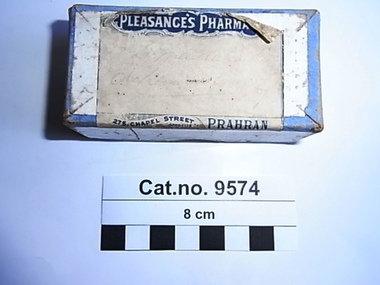
... George Hayward Pleasance also joined George & Charles Maxwell Pleasance in the business from 1917 until his death in 1925. The register was not Gazetted between 1945-47 but Charles Maxwell Pleasance next appeared on the register at 17 Khartoum Street, North Caulfield, 1948-1968 and at 2 Shrimpton Court, Box Hill 1969 -1973. ...George Hayward Pleasance also joined George & Charles Maxwell Pleasance in the business from 1917 until his death in 1925. The register was not Gazetted between 1945-47 but Charles Maxwell Pleasance next appeared on the register at 17 Khartoum Street, North Caulfield, 1948-1968 and at 2 Shrimpton Court, Box Hill 1969 -1973. ...Victoria Government Gazette, January 12, 1917, Medical Act 1915, Part III. – Poisons Act 1915, THE PHARMACEUTICAL REGISTER OF VICTORIA and List of Licensed Dealers in Poisons for 1917.page 130. No. of Certificate : 1704, Date of Registration :10 Feb 1915, Name : Pleasance, Charles Maxwell, Address : 275 Chapel Street, Prahran, Qualifications : Final Exam., Vict., 14 Dec., 1914. No. of Certificate : 600, Date of Registration : 14 May 1879, Name : Pleasance, George, Address : 275 Chapel Street, Prahran, Qualifications : Mod. Exam., Vict., 7 Sept., 1877. No. of Certificate : 1739, Date of Registration : 12 Jan., 1916, Name : Pleasance, George Hayward, Address : 275 Chapel Street, Prahran, Qualifications : Final Exam., Vict., 8 Dec., 1915. George Pleasance was in business alone at 84 Chapel Street Prahran from 1898 to 1906 and at 275 Chapel Street from 1902 – 1915. Charles Maxwell Pleasance joined George in the business from 1916 until George died in December 1929 after which Charles Maxwell Pleasance continued the business alone at that address until 1944. George Hayward Pleasance also joined George & Charles Maxwell Pleasance in the business from 1917 until his death in 1925. The register was not Gazetted between 1945-47 but Charles Maxwell Pleasance next appeared on the register at 17 Khartoum Street, North Caulfield, 1948-1968 and at 2 Shrimpton Court, Box Hill 1969 -1973. Pleasances were a family of homeopaths, Pharmacists and Pharmacy owners in Victoria from the 1870's to at least the 1970's.Small cardboard box with cardboard lid, white paper label with dark blue print, and faded hand written text.On label 'Pleasance's Pharmacy 275 Chapel Street, Prahran (opposite the Arcade)' with faded hand written illegible text. pharmacist, pharmacy, pleasance -
 Flagstaff Hill Maritime Museum and Village
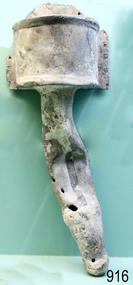
Functional object - Urinal, circa 1825
... deaths. After eleven days, the rescued survivors, all of whom were injured, had been taken to Portland. According to Lloyd's Shipping Register 1837-1839, the Children was built in 1825 at Liverpool and operated by owners Gordon & Co, of London. ...deaths. After eleven days, the rescued survivors, all of whom were injured, had been taken to Portland. According to Lloyd's Shipping Register 1837-1839, the Children was built in 1825 at Liverpool and operated by owners Gordon & Co, of London. ...The urinal was probably situated in the forward part of the ship rather than the stern, being one of two placed on either side of the deck and housed immediately adjacent to the doors into the forward castle, or crew sleeping quarters. The toilets on maritime vessels were (and still are) called the ‘heads’, after the sanitation arrangements common until the end of the eighteenth century. The name was given to the ‘head’ of the ship, forward of the forecastle and around the beak or bowsprit. These first lavatories were floored with grating or nets so the force of the sea could wash them clean, and they were always used on the lee or non-weather side so the effluent fell directly into the water rather than back on board. The Children's wrecking: The barque Children was one of the first vessels to be lost in the Western District. The vessel was wrecked to the east of Warrnambool on 14th January 1838. When it ran ashore in hurricane-force winds, 22 passengers and crew were fortunate to escape being battered to death on the rocks. The Children broke up within 20 minutes, sweeping sixteen of those on board to their deaths. After eleven days, the rescued survivors, all of whom were injured, had been taken to Portland. According to Lloyd's Shipping Register 1837-1839, the Children was built in 1825 at Liverpool and operated by owners Gordon & Co, of London. Registration number 123/1837, James Henty then bought her in 1837 as a three-masted barque of 254 tons, with a hull of “part pitch pine, felt sheathed” and “coppered in 1837” at Launceston, registered number 6/1837. In 1838, the Children, under her master Captain H. Browne, completed a successful round trip from Launceston to London (carrying wool and whale oil loaded in Portland), returning in late November of that year carrying a general cargo including house bricks used for ballast. On the 11th of January 1839, the Children sailed from Launceston for Adelaide, with 24 passengers, 14 crew, and an awkward mixed cargo, including 1500 sheep, 8 bullocks, 7 horses, farming implements, and six whaleboats with associated whaling gear. One account states that when the Children was “put out from port, she was light and badly ballasted”. The vessel immediately encountered four days of hurricane-force storms, eventually clearing on the early morning of the 14th. However, it was too late to take accurate measurements of the sun or stars to establish their position relative to the coast. The Children collided with a limestone stack at the entrance of what is now Childers Cove, and the seas smashed the vessel into pieces within half an hour. All the cargo and 16 lives were lost, including 9 children. The Henty brothers contributed £150 towards a fund for the 22 survivors at a memorial service held in Launceston later that year. It was a major financial setback for James Henty and his brothers, but one from which they recovered. In a submission to the Governor of New South Wales dated 24 March 1840, the Henrys summarised their work over the previous six years of establishing the Portland settlement, stating “Six stations have been occupied, one at Portland Bay three at the open country about 60 miles inland called ‘Merino Downs’ They have erected two houses at Portland Bay and two others at Merino Downs”.The urinal recovered from the Children's wreck is significant as part of the original fittings of the early 19th-century barque. The 1839 wreck and recovered artefacts are examples of the construction methods and materials used in that era and can be used to study the evolution of shipbuilding methods and principles. The wreck of the Children is of state significance as one of colonial Victoria’s earliest and most significant maritime disasters, and one of the first vessels lost in the Western District. This is recognised by its inclusion on the Victorian Heritage Register, VHR No. S116. Little is left on the seabed to mark the tragedy, apart from some of the house bricks intended for the Henty settlement. A lead urinal with a rounded back at the top splash plate with an attached semi-circular receptacle or basin (20cm deep and projecting forward 30cm). At the sides are flanges with bolt holes connecting to a ship's wall. The urinal is drained by a funnel-shaped outlet also made of lead, reducing from a 10cm radius to a joined 5 cm pipe. The urinal was recovered from the wreck of the CHILDREN.flagstaff hill, warrnambool, flagstaff-hill, flagstaff-hill-maritime-museum, shipwreck-coast, shipwreck artefact, the children, lead ship’s plumbing, crew urinal, the ‘heads’, ship plumbing, james henty, portland bay, urinal, ship's urinal, ship’s fitting, ship’s lead plumbing, ship’s toilet, ship’s urinal, children, childer’s cove, port campbell, 1839 shipwreck, james henty and co, henty brothers, captain h. browne, portland -
 Flagstaff Hill Maritime Museum and Village
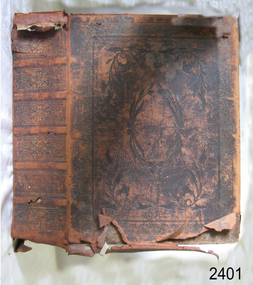
Book - Reference/Bible, Rev. John Eadie, The Holy Bible (with the Commentaries of Scott and Henry 1862), 1862
... By 1862, these Bibles were often sold with added features to appeal to the Victorian middle and working classes, including beautifully illustrated Family Registers for births, marriages, and deaths, a "Biblical Cyclopaedia" at the back, and striking steel-engraved plates, some of which were hand coloured or chromolithographed. ...By 1862, these Bibles were often sold with added features to appeal to the Victorian middle and working classes, including beautifully illustrated Family Registers for births, marriages, and deaths, a "Biblical Cyclopaedia" at the back, and striking steel-engraved plates, some of which were hand coloured or chromolithographed. ...This specific 1862 Bible is a fascinating artifact from the height of 19th-century British industrial printing, combining massive theological authority with an effort to make large-scale Family Bibles accessible to the general public.The Holy Bible with the Commentaries of Scott and Henry 1862 Edited by Rev John Eadie Publisher: W R McPhun Date: 1862non-fictionThis specific 1862 Bible is a fascinating artifact from the height of 19th-century British industrial printing, combining massive theological authority with an effort to make large-scale Family Bibles accessible to the general public.flagstaff hill, warrnambool, shipwrecked-coast, flagstaff-hill, flagstaff-hill-maritime-museum, maritime-museum, shipwreck-coast, flagstaff-hill-maritime-village, book, bible, the holy bible, scott and henry -
 Flagstaff Hill Maritime Museum and Village
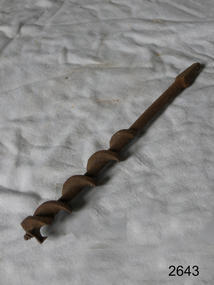
Tool - Auger Bit, William A Ives, 1860-1950
... This continued, until William's death in 1888, when The Hamden Mfg. Company became its successor. Ives also registered the name "Mephisto" trademark name with the US patent office that was to be used in connection with augers, auger bits, machine bits as of June 1st, 1909, appearing on items up until at least 1922. ...This continued, until William's death in 1888, when The Hamden Mfg. Company became its successor. Ives also registered the name "Mephisto" trademark name with the US patent office that was to be used in connection with augers, auger bits, machine bits as of June 1st, 1909, appearing on items up until at least 1922. ...William A Ives worked in New Haven, Connecticut, and surrounding towns of Wallingford and Hamden from 1868 to 1917 and was a prolific inventor of braces and other wood boring tools between 1868 and 1884, when he received a dozen patents for these devices. William A. Ives lived in the New Haven CT area, and his first auger-making activity took place in the town of Hamden. At first in association with the Churchill family who had been manufacturing tools in the area at least as early as 1863. That firm's works had created "Augerville" in Hamden, starting earlier, possibly as early as 1830. Ives became active as part of the Hamden Manufacturing Co. until 1875 (it is thought he may also have started his own business in the interim), and the William A. Ives & amp; Co. was established by 1877. This continued, until William's death in 1888, when The Hamden Mfg. Company became its successor. Ives also registered the name "Mephisto" trademark name with the US patent office that was to be used in connection with augers, auger bits, machine bits as of June 1st, 1909, appearing on items up until at least 1922. It also appears that the trademark was licensed by the Mephisto Tool Co of Hudson New York who continued to manufacture tools under this trademark. Item is significant because its maker was the inventor of the wood auger boring bit and his patent has been used ever since on many different types of bits with little change to the original design.Auger wood screw bit W A Ives Patent Noneflagstaff hill, warrnambool, shipwrecked-coast, flagstaff-hill, flagstaff-hill-maritime-museum, maritime-museum, shipwreck-coast, flagstaff-hill-maritime-village -
 Federation University Historical Collection
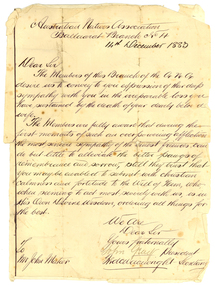
Correspondence, John Gray, Letter of Condolence from ANA to John Mateer. 1883, 14/12/1883
... Register or the National Trust.http://www.ballaratbuildings.com/ana-hall-22-camp-street-ballarat/, accessed 11 October 2013. australian natives' association ana ballarat branch no. 4. ballaarat branch no. 4 gray john gray wainwright fred wainwright mateer john mateer Australian Natives Association Ballaarat Branch No 4 14th December 1883. Dear Sir The members of this branch of the A.N.A. desire us to convey to you expression of their deep sympanth with you in the irreparable loss you have sustained by the death ...The Australian Natives Association (ANA) Benefit Society was formed in 1871 at a meeting of young men in Grimwood's Hotel, Elizabeth Street, Melbourne. The Association was one of many friendly societies that also aimed to promote the moral, social and intellectual advancement of its members. The young founders restricted membership to native-born Australians, but there were no Koories among them. The Australian Natives Association Ballarat Branch (No4) was founded in 1874. The association’s modest building was based in Camp Street and the branch was one of the most active in the colony, playing a key role in Federation. The Ballarat branch of the ANA was wound up in 1957 and the double storey building has since been used as for office space most recently for employment companies such as Tracey Recruitment. Ballarat's ANA Hall has heritage status under the City of Ballarat’s Camp Street heritage overlay HO186, however it is not listed by either the Victorian Heritage Register or the National Trust.Handwritten letter glued onto a lined page. The letter is from the Australian Natives Association Ballarat Branch No. 4, and is written to John Mateer at the time of his wife's death. The letter is signed by John Gray (President) and Fred Wainwright (secretary). Fred Wainwright was the first secretary of ANA branch No. 4. hew as a clerk at Ballarat Town Hall, and presented an essay on Federation of Australian Colonies in 1879.Australian Natives Association Ballaarat Branch No 4 14th December 1883. Dear Sir The members of this branch of the A.N.A. desire us to convey to you expression of their deep sympanth with you in the irreparable loss you have sustained by the death of your dearly beloved wife. The Members are fully aware that during the first month of such an overpowering infliction the most sincere sympathy of the truest friends can do little by alleviate the bitter pangs of remembrance and sorrow, still they trust that you may be enabled to submit with christian calmness and fortitude to the Will of Him, who, when seeming to act most severely wit us, is in His Own Divine Wisdom, ordering things for the best. We are Dear Sir Yours fraternally John Gray President fred Wainwright Secretary To Mr John Mateer australian natives' association, ana, ballarat branch no. 4. ballaarat branch no. 4, gray, john gray, wainwright, fred wainwright, mateer, john mateer -
 Flagstaff Hill Maritime Museum and Village
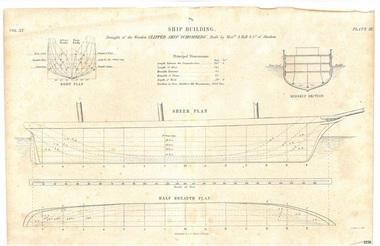
Drawing - Vessel Line Drawing, Ship Building Clipper Ship Schomberg, 1855-1876
... death his son became the sole proprietor of the firm until he sold it in 1876. The draft plan uses the vessel Schomberg as its example ship building plan for demonstration purposes. It is significant for its association with the Victorian Heritage Registered ...This draft plan, a line etching, is of the wooden clipper ship "Schomberg" . It can be assumed from the heading "Ship Building." and the phrase "Built by Messrs. A Hall & Co. of Aberdeen" that the drawing is an example of plans for building a ship, and that the Schomberg ship has chosen to demonstrate this. The plan may have possibly been in a book, as it is made from two well-joined pieces of paper. The original plans would have been drawn up, discussed, reviewed and drawn in more detail before the building of the ship in Aberdeen, Scotland, in 1855. Information on the draft Is as follows: “Principal dimensions: Length between the perpendiculars: 262 feet 6 inches Length of keel 245 feet Breadth extreme: 45 feet Breadth of frame: 42 feet Depth of hold: 29 feet 9 inches Burthen in tons, Builders Old Measurement: 2600 Tons” The publisher firm A & C Black, was founded by Adam and Charles Black in Edinburgh in 1807. Over the years the company has published editions of Encyclopedia Britannica and Whose Who, and reference books, guides and technical books. The printer G Aikman (1788-1865) or his son G Aikman (1830-1905), were both named George. George senior was an early-19th century Scottish printer and publisher. After his death his son became the sole proprietor of the firm until he sold it in 1876. The draft plan uses the vessel Schomberg as its example ship building plan for demonstration purposes. It is significant for its association with the Victorian Heritage Registered shipwreck, the Schomberg. It is an example of a shipo building plan. The Schomberg collection is primarily significant because of the relationship between the objects, as together they have a high potential to interpret the story of the Schomberg. The Schomberg collection is archaeologically significant as the remains of an international passenger ship. The shipwreck collection is historically significant for representing aspects of Victoria’s shipping history and its potential to interpret sub-theme 1.5 of Victoria’s Framework of Historical Themes (living with natural processes). The collection is also historically significant for its association with the shipwreck and the ship, which was designed to be fastest and most luxurious of its day. The Schomberg collection meets the following criteria for assessment: Criterion A: Importance to the course, or pattern, of Victoria’s cultural history. Criterion B: Possession of uncommon, rare or endangered aspects of Victoria’s cultural history. Criterion C: Potential to yield information that will contribute to an understanding of Victoria’s cultural history.Plan; line engraving; draft of the wooden clipper ship 'Schomberg', built in 1855. The drawing on cream paper is made from two well- joined pages. The drawing gives the principal dimensions and labels for the Body Plan, Middle Section, Sheer Plan and Half Breadth Plan. Inscriptions are on the drawing and its rough cardboard storage folder. Publisher: A & C Black. Edinburgh. Printer: G. Aikman sc. EdinborughOn drawing: "SHIP BUILDING" "Draught of the Wooden CLIPPER SHIP SCHOMBERG", Buiilt by Messrs A Halt & Co. of Aberdeen" "Vol XX" "Plate III" "Principal Dimensions""BODY PLAN" "MIDDLE SECTION" "SHEER PLAN" "HALF BREDTH PLAN" "Published by A & C Black, Edinburgh" "G Aikman sc. Edinr" On storage folder: "Receipt Number 381A: "Line engraving draught of wooden ship "Schomberg" "warrnambool, flagstaff-hill-maritime-museum, shipwreck-coast, schomberg, schomberg plan, vessel schomberg, ship building, g. aikman ship plan draftsman, a.& c. black publisher aberdoon, a. hall & co. maker aberdeen, peterborough, clipper ship, captain forbes, black ball line, ship's plan, ship's drawing, line drawing, vessel plan, draft plan, line engraving, vol xx plate iii, a & c black, ship building example drawing, g aikman, 19th century -
 Federation University Historical Collection
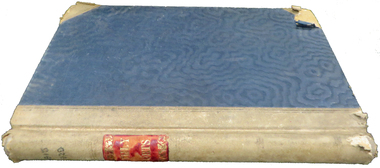
Book - Report Register, Ballarat School of Mines Monthly Reports, 1918-1929, 1918-1929
... deaths. 1915 World War One Staff Enlistments. 1916 Advertisement for Teaching Positions 1917 Enlistment of Colin C. Brittain to the 'Miners' and Engineers'. 1919 Pg 75 - Low student numbers due to the influenza pandemic (Spanish Flu) Pg 76 - Ruby Lonie suffering from influenza (Spanish Flu). 1922 * Page 146 Plaster casts from Victoria & Albert Museum Ballarat School of Mines Monthly Reports, 1918-1929 Book Report Register ...Ledger monthly reports from the Registrar to the Ballarat School of Mines Council. Information includes student numbers, new enrolments, financial reports, reports of Council member and staff deaths. 1915 World War One Staff Enlistments. 1916 Advertisement for Teaching Positions 1917 Enlistment of Colin C. Brittain to the 'Miners' and Engineers'. 1919 Pg 75 - Low student numbers due to the influenza pandemic (Spanish Flu) Pg 76 - Ruby Lonie suffering from influenza (Spanish Flu). 1922 * Page 146 Plaster casts from Victoria & Albert Museumplaster casts, letter, letterbook, ballarat school of mines, monthly reports, principals reports, world war one, student involvement in world war one, aboriginal male skeleton, ralph g. moore, robert a. clinton, ralph ingram moore, japanese warship officers visit, c.h. vale, g.d. evans, geoffrey ballantyne tundbridge, w.j. paterson, new guinea, mica smith schola, mica smith scholarship, nolrfolk island pine, primock mineral specimen donation, e. duncan, e.j. mcconnon, j.r. gordon, j.c. molloy, j.c. molloy death, c. fenner, h.h. smith, w.h. collyer, a.f. tweedie, colin brittain, australian mining corp, w.h. clutterbuck, a.l. ronaldson, thomas hurley, j.c. hurley, alan t. perry, wolfrey henry clutterbuck, miss abrams' commercial classes, norman barker, australian flying corps, l.h. vernon, h.c. smith, rowland c. valentine, repatriation department, returned soldiers, t.h. shattock, returned soldiers league, ina smith, john keith, caledonian society, w.g. coates, percival j. ripper, s.h. mayo, fees in arrears, j.b. robinson, bannerman, stenotype machine, influenza, ruby lonie, pharmacy, ballarat, e.g. vawdry, annie a. jones, lancelot austin, l. stg. p. austin, spanish flu, rubie lonie, pandemic -
 Flagstaff Hill Maritime Museum and Village
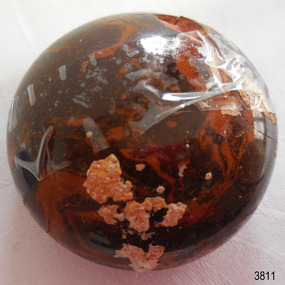
Functional object - Knob, circa 1870s
... death of 52 out of the 54 lives on board. The Loch Ard wreck is historically significant as a large international passenger and cargo clipper ship. It is registered ...This small knob has been manufactured to look like marble. It may have been used as a drawer or door handle, possibly part of the ship's furnishings because it appears to have been broken off its connecting shank. The encrustations on the surface are from being in the sea around 90 years. The knob was recovered from the wreck of the Loch Ard and is part of the John Chance collection. The Loch Ard was a clipper ship built in Scotland in 1873. In 1978 the ship was sailing to Melbourne with 54 people on board as well as a mixed cargo that included items for the 1880 International Exhibition in Melbourne. On June 1st 1878 it was not far from its destination when it crashed into Mutton Bird Island, east of Port Campbell. Only two people survived. The wreck was re-discovered in 1967 and the site is listed as a Historic Shipwreck. (See References and Significance for further information.)This knob is historically significant as it is an example of hardware fittings made and used during the mid-to-late 19th century. This knob is significant for its connection with the John Chance Collection, which is historically significant as an example of artefacts from wrecks that had been lost in the coastal waters of Victoria from thirty to over one hundred years before John Chance and others discovered them. These artefacts are a sample of goods carried as cargo or personal possessions, and of ship hardware of that era. The knob is significant through its connection with the clipper ship Loch Ard (1873-1878), which is historically significant to both Victoria and Australia. The loss of the ship has been described as one of the ‘worst shipwreck tragedies’ and is well known in Victoria for the tragic death of 52 out of the 54 lives on board. The Loch Ard wreck is historically significant as a large international passenger and cargo clipper ship. It is registered on the Victorian Heritage Database VHR S417. The wreck site is labelled as ‘one of Victoria’s most spectacular diving sites’ and the area is a popular tourist site. It is part of Victoria’s Underwater Shipwreck Discovery Trail. Knob or handle; ceramic (faux marble), dome with flat base, brown colour with orange and cream swirls through it, polished surface. Base has two embedded round, rough-edged metal fittings. Encrustations adhere to the polished surface in pleases. Clear tape keeps large broken chip intact. Another chipped area reveals the rough inner surface of the marble.flagstaff hill, warrnambool, flagstaff hill maritime museum, maritime museum, shipwreck coast, flagstaff hill maritime village, great ocean road, john chance, loch ard, knob, handle, door hardware, ceramic, faux marble, vintage, antique, cabinetry, door pull, drawer pull -
 Flagstaff Hill Maritime Museum and Village
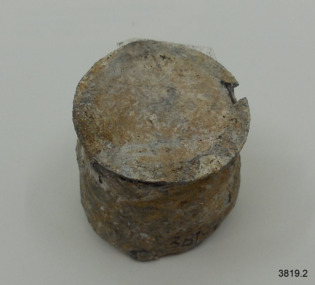
Functional object - Bottle Seal, circa 1843-1878
... death of 52 out of the 54 lives on board. The Loch Ard wreck's historical significance as a large international passenger and cargo clipper ship has been recognised and it is now registered on the Victorian Heritage Database, VHR S417. ...This lead sealing capsule was recovered from the tragic wreck of the sailing ship ‘Loch Ard’. It may have once been on a bottle amongst the ship's cargo, its provisions or the passengers’ personal luggage. It is now part of the John Chance collection. Bottles in the early 19th century were handmade. They were not necessarily uniform in size or shape, so sealing was not always successful. If the bottles were stored they often became contaminated by rats and mice breaking the cork or wax seals, or by insects attracted to the contents if the seal on the bottle leaked. Lead sealing capsules were used from 1843 to overcome this problem. The lead was heated until it was malleable, then moulded by hand to fit over the sealed bottle’s mouth and neck. This was more successful if wire was also used under the capsule for added security (similar to modern champagne bottles). The capsule couldn’t be re-fitted so it was discarded after the bottle was opened. Capsule designs from about 1862 used tin-plated lead foil and often had the inscriptions and trademarks of the content makers on them. Eventually it was found that the lead was toxic. The lead was replaced by tin, aluminium, and later plastic. Today’s home brewers can buy readymade plastic capsules that fit over the bottle then twist to lock it firmly into place and can be re-used. Digs at archaeological sites often reveal lead sealing capsules. These are collected and catalogued. The information gathered from inscriptions, makers’ marks, logos and descriptions of the bottle contents has provided valuable insights into the history and the dating of other items on the sites. This lead sealing capsule was made to seal a handmade glass bottle and is historically significant for representing its invention to solve a preservation and integrity issue with bottle seals in the mid-to-late 19th century. Its design has evolved and is still in use today. This sealing capsule is representative of their historical use of capsules as a tool for dating and interpreting archaeological sites around the world. The sealing capsule is also significant as it was recovered by John Chance, a diver from the wreck of the Loch Ard in the 1960s-70s. Items that come from several wrecks along Victoria's coast have since been donated to the Flagstaff Hill Maritime Village’s museum collection by his family, illustrating this item’s level of historical value. The sealing capsule is also significant for being connected to the wreck of the Loch Ard (1873-1878), which is historically significant to both Victoria and Australia. The loss of the ship has been described as one of the ‘worst shipwreck tragedies’ and is well known in Victoria for the tragic death of 52 out of the 54 lives on board. The Loch Ard wreck's historical significance as a large international passenger and cargo clipper ship has been recognised and it is now registered on the Victorian Heritage Database, VHR S417. The wreck site is labelled as ‘one of Victoria’s most spectacular diving sites’ and the area is a popular tourist site. It is part of Victoria’s Underwater Shipwreck Discovery Trail.Bottle sealing capsule, cylindrical with thin, round top separated from thicker body (taped in place and fragile). Made from grey-white lead, uneven in thickness and shape. Remnants of a thick substance are inside the capsule.flagstaff hill, warrnambool, flagstaff hill maritime museum, maritime museum, shipwreck coast, flagstaff hill maritime village, great ocean road, john chance, loch ard, bottle seal, bottle capsule, handmade bottle, antique bottle, sealing capsule, lead capsule, bottle closure, bottle foil, bottle preservation, bottle finish -
 Flagstaff Hill Maritime Museum and Village
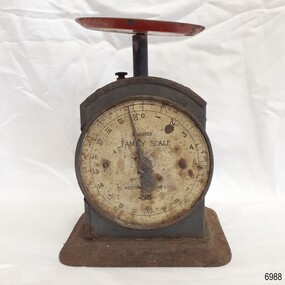
Instrument - Scale, George Salter & Co, Circa 1921
... death of John, the firm became George Salter & Co. The company produced a wide variety of products, including Britain’s first bathroom scale and the first English typewriter. In 1884 the Salter Trademark of a Staffordshire knot pierced by an arrow was registered...death of John, the firm became George Salter & Co. The company produced a wide variety of products, including Britain’s first bathroom scale and the first English typewriter. In 1884 the Salter Trademark of a Staffordshire knot pierced by an arrow was registered ...The Hughes’ Family Scale No. 48 is a spring balance scale. It uses the Imperial measurements of ounces and pounds. There are 16 ounces (OZ) in one pound (LB), and each pound equals approximately 454 grams in Metric measurements. Scales have been used to measure and compare items for value for centuries. A weight was placed on one side of a balance and the object was placed on the other. Adjustments were made to either the weight or the object until the balance was horizontal, which meant that each side was the same weight. The Salter family business began in 1760 with spring makers, Richard and William Salter. In the late 18th century, Richard Salter invented the spring scale, where the weight of an object on the tray of the scale causes pressure on a spring in the scale. The pressure caused by gravity was then measured to calculate the weight of an object. Spring scales are still used today along with the more recent and accurate digital scales. The company began manufacturing in West Bromwich, England, in 1770. The firm was taken over by William’s sons, John and George. In 1824, after the death of John, the firm became George Salter & Co. The company produced a wide variety of products, including Britain’s first bathroom scale and the first English typewriter. In 1884 the Salter Trademark of a Staffordshire knot pierced by an arrow was registered. After over 100 years of manufacturing, the company was bought out by Staveley Industries, which was bought by Weigh-Tronix, and then that company was bought by HoMedics Company in 2004.This scale was made by Salter, the company that invented the balance scale, the first British bathroom scale and the first English typewriter. The scale represents the domestic equipment used for measuring in food preparation over 100 years ago. Modern kitchen scales are still using the same principal, along with scales used in business and industry.Scale; a domestic spring balance scale for measuring weight from 0 to 20 pounds. The scale’s grey metal case has a round white dial on the front with black markings, an arrow indicator and a round shallow metal bowl on a pedestal at the top. The scale is raised on a rectangular metal base with outward-sloping sides. An adjustable screw is on the dome top. The scale is marked from 0 to 20 pounds, with each pound marked in 1-ounce increments. The scale is named the Hughes Family Scale No. 48 and was made in Britain by Salter.“HUGHES’ / FAMILY SCALE / No. 48” “BRITISH MADE” “TO WEIGH 20 LBS BY 1 OZ” “SALTER” above logo [knotted rope with an arrow through loops]flagstaff hill, warrnambool, maritime museum, maritime village, great ocean road, shipwreck coast, hughes, salter, british made, family scale, no. 48, spring balance, scale, weighing instrument, weights and measures, weighing machine, kitchen utensil, baking accessory, domestic equipment, cookware, bakeware, kitchen scale, kitchen accessory, food preparation, recipes, cooking, measuring -
 Flagstaff Hill Maritime Museum and Village
Book - Bible, Thomas Kelly & Sons, The Holy Bible - Douay Bible and Rheims Testament, 1880
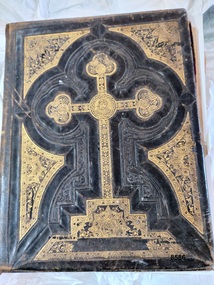
... The Bible includes the Old and New Testaments, approbations from Pope Pius the Sixth and Archbishops of the United States and other countries (including Archbishop Vaughan of Sydney), a Family Register with handwritten notes on births, deaths and marriages from the Kermond family (as well as a description of how they obtained the bible), a Catholic dictionary of the Bible, a history of the Holy Scriptures, a chronological list of heretics (Theological history) and a description of the "Centennial Award - Diploma of Honor and medal of Merit" won by Thomas Kelly (for the "Best Catholic Bible") at the Centennial Exhibition at Philadelphia in 1876. ...The Bible includes the Old and New Testaments, approbations from Pope Pius the Sixth and Archbishops of the United States and other countries (including Archbishop Vaughan of Sydney), a Family Register with handwritten notes on births, deaths and marriages from the Kermond family (as well as a description of how they obtained the bible), a Catholic dictionary of the Bible, a history of the Holy Scriptures, a chronological list of heretics (Theological history) and a description of the "Centennial Award - Diploma of Honor and medal of Merit" won by Thomas Kelly (for the "Best Catholic Bible") at the Centennial Exhibition at Philadelphia in 1876. ...The Douay (Douai) Rheims Bible is an English translation of the Latin Vulgate Bible (which had been the Latin Bible used by the Catholic Church since the 4th century). It was produced by Roman Catholic scholars in exile from Elizabethan Protestant England at the English College of Douai (then in the Spanish Netherlands but later part of France). The New Testament translation was published in 1582 at Rheims where the English College had temporarily located in 1578. The Old Testament was translated shortly afterwards but was not published until 1609-1610 in Douay (which makes it older than the King James version). The completed work was the only authorized Bible in English for Roman Catholics until the 20th Century. Its purpose was to uphold the Catholic tradition in the face of the Protestant Reformation and was produced as an alternative to the several Protestant translations then in existence. Prior to it being published, the Roman Catholic practice had restricted personal use of the Bible, in the Latin Vulgate, to the clergy. Bishop Richard Challoner issued a series of revisions (1749 - 1772) intended to make the translation more easily understandable and subsequent editions (including this one) were based upon this revision. In 1871, an edition of the Douay - Rheims Bible was published by Thomas Kelly & Sons of Philadelphia (and later, New York). Thomas Kelly described himself as a "Publisher, Printer, Binder, Lithographer and Steel Plate Engraver". In 1876, Thomas Kelly won an award (a Diploma of Honor and a Medal of Merit) for "the Best Catholic Bibles and Prayer Books" at the International Centennial Exhibition held in Philadelphia and his firm continued to print editions of the Bible throughout the 1870's but little is known of him after 1880 when this edition was published. This Bible has been in the Kermond family from 1888 until 1984 when Laurence Kermond (its last owner) died. The Kermonds were an old Warrnambool family with ties to the district going back to the mid 1840's. Joseph Kermond's mother, Catherine (1818 - 1895) and her husband John Kermond,, an ex-convict (1809 - 1877), had moved from Tasmania around 1843 and were living in the Warrnambool area in 1844 where their eldest son was born. They had six more children born at Port Fairy (or Belfast as it was then called). Catherine is buried at the Tower Hill cemetery. The last owner of the Bible was Laurence Kermond (1918 - 1984). He was the great grandson of John and Catherine Kermond and was a well known painter who lived in the Merimbula and Paynesville areas of N.S. W. and Victoria during the 1970's and early 1980's. The story of Joseph Kermond finding the Bible on a beach on the Shipwreck Coast near Peterborough on the southern coast of Victoria, Australia is plausible as it was not uncommon for items from shipwrecks to be washed ashore. However this Bible would not have come from the wreck of the Loch Ard as the dates don't align. The Loch Ard was wrecked in 1878 and this Bible was printed in 1880. It appears to have been printed for the Australian market as there is a page (with an engraved portrait) dedicated to the "Most Rev. Roger Bede Vaughan, O. S. B. Archbishop of Sydney, N. S. W.". It may also have been aimed at the Irish immigrants as the four "Family Register" pages are decorated with borders of shamrocks. The donor found the Bible in a box of secondhand books on a market stall in Gippsland and recognised its links to the Shipwreck Coast through the name of previous owners (a well-known Warrnambool name) and the story of it being found on a beach near Peterborough. This Bible is a rare example of Douay and Reims Catholic Bible of the late 19th century that was once a treasured item belonging to the Kermond family - one of Warrnambool's early settlers. It also has a most unusual story attached to it - being found (and rescued) washed up on a local beach and almost one hundred years later, being rescued again from a secondhand book stall.This Catholic Bible is an 1880 edition of a "Douay Bible and Rheims Testament", printed and published by Thomas Kelly of New York. Its full title is "The Holy Bible translated from the Latin Vulgate Diligently Compared with The Hebrew, Greek and Other Editions in Various Languages". It is revised with annotations by the Right Rev. R. Challoner D.D. The Bible has brown leather embossed front and back covers decorated with identical ornate gilt patterns and a central picture of a cross. It has two coloured illustrations and numerous black and white lithographs and engravings including portraits of past popes, events and places from Bible stories and decorative borders. The Bible includes the Old and New Testaments, approbations from Pope Pius the Sixth and Archbishops of the United States and other countries (including Archbishop Vaughan of Sydney), a Family Register with handwritten notes on births, deaths and marriages from the Kermond family (as well as a description of how they obtained the bible), a Catholic dictionary of the Bible, a history of the Holy Scriptures, a chronological list of heretics (Theological history) and a description of the "Centennial Award - Diploma of Honor and medal of Merit" won by Thomas Kelly (for the "Best Catholic Bible") at the Centennial Exhibition at Philadelphia in 1876. The Records section has a note on the Memoranda page written by William John Kennard in 1920.Spine: HOLY BIBLE Title Page: THE/ HOLY BIBLE /TRANSLATED FROM/ THE LATIN VULGATE/ DILIGENTLY COMPARED WITH/THE HEBREW, GREEK AND OTHER EDITIONS/ IN VARIOUS LANGUAGES/ THE OLD TESTAMENT WAS FIRST PUBLISHED BY THE ENGLISH COLLEGE AT DOUAY, A.D. 1600 / AND THE NEW TESTAMENT, BY THE ENGLISH COLLEGE AT RHEIMS, A.D. 1582./ REVISED WITH ANNOTATIONS/ BY THE RIGHT REV. R. CHALLONER D.D./ TOGETHER WITH REFERENCES, AND AN HISTORICAL AND CHRONOLOGICAL INDEX./ NOW CAREFULLY CORRECTED ACCORDING TO THE CLEMENTINE EDITION OF THE SCRIPTURES/ NEW YORK / THOMAS KELLY, PUBLISHER/ 17 BARCLAY STREET. / 1880 Dedication Page: DEDICATION OF THE ORIGINAL EDITION/ TO/ THAT LOYAL, RELIGIOUS AND ENLIGHTENED BODY OF MEN / THE/ CATHOLICS OF THE UNITED STATES OF AMERICA/ IN ADMIRATION OF THE STEADY ZEAL WITH WHICH THEY HAVE KEPTTHE/DEPOSIT OF FAITH/ BEQUEATHED THEM BY THEIR FOREFATHERS/ AND HANDED DOWN, WITHOUT INTERRUPTION OT ADULTERATION, TO THEIR GRATEFUL POSTERITY/ THIS EDITION/ OF THE/DOUAY BIBLE AND RHEIMS TESTAMENT/ IS / WITH GRATITUDE FOR PAST FAVORS AND HOPES OF FUTURE ENCOURAGEMENT/ MOST RESPECTFULLY ENSCRIBED. Handwritten note: ""This Holy Book was found . on the beach . near Peterborough Vic. having been washed ashore . from the wreck of the Loch Ard, (sailing ship) in the year 1888 . By .Joseph . Kermond; and presented to . his mother . Catherine Kermond , who in turn passed it - on . to her youngest . son ; one Jacob Kermond. He in turn presented . it to his son . William John Kermond , (the writer), 23/3/20)" [Original punctuation]flagstaff hill maritime museum and village, warrnambool, shipwreck coast, peterborough, kermond, kermond family, loch ard, bible, douay and rheims bible, catholic bible, thomas kelly and sons publiisher, douai, rheims, holy bible, religious bible, catherine kermond, john kermond, william john kermond' -
 Flagstaff Hill Maritime Museum and Village
Certificate - Certificate of Discharge, 1845 - 1852
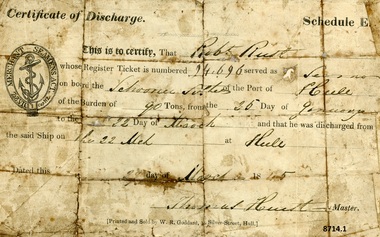
... death on 15th January 1906 aged 82 years. English maritime discharge certificates evolved from simple proof of release in the 1700's to become official service records in the mid 1800's. They were issued at the end of a voyage to confirm a sailor had been released from duty and paid. The Merchant Shipping Act of 1835 introduced the formal registration of British seamen, to allow the Government (Board of Trade) to identify individual seamen for the Royal Naval Reserve. Seafarers who registered...death on 15th January 1906 aged 82 years. English maritime discharge certificates evolved from simple proof of release in the 1700's to become official service records in the mid 1800's. They were issued at the end of a voyage to confirm a sailor had been released from duty and paid. The Merchant Shipping Act of 1835 introduced the formal registration of British seamen, to allow the Government (Board of Trade) to identify individual seamen for the Royal Naval Reserve. Seafarers who registered ...Bob Rust was born in Poplar, London in 1823. He became a merchant seaman and all of his "Certificates of Discharge" (except the first one) show him working out of the London docks. The certificates document his career as an "Able Seaman" between the years 1845 to 1852. He worked on the following ships - Jan 25th - March 22nd, 1845 - schooner "Sisters" out of Hull. 14th July - 30th Nov 1845 - "Caleb Angus" - Port of London to West India Dock, London. 12th Dec 1845 - 14th June 1846 - "Caleb Angus" - Port of London to West India Dock, London. April - 16th Oct 1847 - barque "James Turcan" - discharged at Antwerp. It was noted by Mr Mills (Master) "his conduct was to my entire satisfaction. He is a sober, steady man" 25th Oct - 18th Dec 1847 - Brig "Eclipse" - Port of London. Dec 1847 - Nov 1848 - "Cecrops" - London to Cardiff to Cuba and discharged at West India Dock, London. 2nd Dec 1848 - 9th Feb 1850 (15 months) - "Enterprise" - discharged London. Nb - this was not the "Enterprise" used by John Pascoe Fawkner to enter the Yarra in 1835 or the "Enterprise" that sank in Lady Bay, Warrnambool in 1850 and it was not the "Enterprise" belonging to the British Navy which was used to search for Sir John Franklin's lost expedition and later made two Arctic voyages. It is not noted where Bob Rust sailed to on this voyage, but his Master noted on his certificate that "the bearer is an excellent seaman and a good sail maker". 3rd April - 20th Oct 1850 - brig "Thames" - London to London via Trieste. 30th Oct 1850 - 10th May 1851 - "Elizabeth". 9th June - 10th Nov 1851 - "Lady Rowena" - to Alexandria. 23rd Nov 1851 - 17th May 1852 - "Thames" - Mediterranean voyage to Trieste. Bob Rust was an early settler in Warrnambool. He came to Warrnambool, Australia sometime between May 1852 and 1856 where he was recorded in the Electoral Roll, as a labourer, living in Henna Street. According to family history, he "jumped ship" at Port Fairy (then Belfast) as there are no records of him officially arriving in Australia. His picture and details are recorded in "The Pioneers' Register, Warrnambool Township and Shire 1839-1900 Volume Two". He married Sarah Ann Twaits in 1865 and they had seven children. His wife died in 1876 following the birth of their last child. He doesn't appear to have ever worked as a seafarer once he arrived in Warrnambool but is only recorded as working as a labourer and chimney sweep and (in the 1880's) operating as a "General Storekeeper" and "Produce Merchant" (frequently advertising in the Warrnambool Standard for items such as potatoes, oats and dairy produce from his Henna Street premises). He continued to live in Henna Street until his death on 15th January 1906 aged 82 years. English maritime discharge certificates evolved from simple proof of release in the 1700's to become official service records in the mid 1800's. They were issued at the end of a voyage to confirm a sailor had been released from duty and paid. The Merchant Shipping Act of 1835 introduced the formal registration of British seamen, to allow the Government (Board of Trade) to identify individual seamen for the Royal Naval Reserve. Seafarers who registered were issued with tickets which contained some personal details including name, date and place of birth. As the registration system evolved over time, each merchant seafarer was allocated a unique number which would be retained during their time of service at sea. Bob Rust's number was 27914. It also documented the name of the ship (for each voyage), its tonnage, master and date and place of discharge. Early certificates had separate notes re the seaman's conduct or character but after the early 1850's, these became part of the discharge certificate. This collection of "Certificates of Discharge" include those from the late 1840's (which were smaller in size), several handwritten character references as well as some examples of the newer forms of the early 1850's.Theses certificates are significant examples of the legal paperwork generated by the British government in the day-to-day regulation of working seamen in the late 19th century. They are also significant as they document the career of a working seaman at that time.This is a set of twelve "Certificates of Discharge", two handwritten character descriptions and two "Certificates of Character" issued to Able Seaman Bob Rust primarily between the years 1845 and 1852. They have been issued by the Masters of the ships Bob Rust had sailed on, at the completion of each voyage. They differ slightly in size and layout but most follow a similar format in documenting the name of the seaman (Bob Rust), his ticket number (24696), the name of the ship and its tonnage, the port of departure and discharge (e.g. West India Docks London) and the date of the voyage. Some later certificates also describe the destination of the voyage (e.g. Mediterranean). Two of the documents are handwritten notes by the master of the ship certifying as to the conduct of the seaman and two later documents (from 1851 and 1852) are "Certificates of Character" - completed and signed by the Master on the termination of the voyage. Example of Certificate from 1845 - 1850 - "Certificate of Discharge. Schedule E, 7 & 8 Victoria, c.112. This is to certify, that Robert Rust/ whose Register Ticket is numbered 24696 served as Able Seaman/ on Board the Caleb Angus of the Port of London / of the Burden of 303 Tons, from the 14th day of July to the 30th / day of Nov 1845 and that he was discharged from the said ship on 30th /Nov 1845 at West India Docks London Dated this 3 day of December 1845" Mr Whittle MASTER. Example of handwritten character note - "This is to certify that the/ bearer Robert Rust sailor in the barque/ James Turcan, under my command as able / seaman six months during which time / his conduct was to my entire satisfaction / he is a sober steady man. W B. Mills Antwerp 20th October 1847"flagstaff hill maritime museum and village, shipwreck coast, warrnambool, certificate of discharge, certificate of character, robert rust, bob rust, seaman's certificate of discharge, sisters, caleb angus, james turcan, eclipse, cecrops, enterprise, brig thames, elizabeth, lady rowena, warrnambool pioneer, sarah ann twaits -
 Flagstaff Hill Maritime Museum and Village
Bottle, circa 1899
... death (28th March 1970) his family requested his practitioner’s plate, medical instruments and some personal belongings be displayed in the Port Medical Office surgery at Flagstaff Hill Maritime Village, and be called the “W. R. Angus Collection”. This glazed clay bottle represents early Warrnambool industry. It is also a good example of soft drink containers used in the late 19th and early 20th century and of Australian made products. Bendigo Pottery is Australia’s oldest working pottery. The kilns at Bendigo Pottery are now on the Victorian Heritage Register ...This clay soft drink bottle was made by Bendigo Pottery circa 1899. It was badged for and sold by A. [Alfred] Darby of Henna Street Warrnambool, (between Raglan Pde and Lava St). The internal screw thread in the neck of this bottle allows for an applied ‘blob’ top stopper to be added. The company A. Darby bottled soda water, cordial, lemonade, ginger ale and ginger beer. Darby’s also made cider, lime juice, raspberry vinegar and other specialties. There was a branch of Darby’s cordial factory in Shepparton Victoria. The building has the year 1910 on it and is now the council office. The bottle’s manufacturer, Bendigo Pottery, was established in the 1858 during the gold rush era. The bottle is part of the “W.R. Angus Collection” that includes historical medical equipment, surgical instruments and material once belonging to Dr Edward Ryan and Dr Thomas Francis Ryan, (both of Nhill, Victoria) as well as Dr Angus’ own belongings. The Collection’s history spans the medical practices of the two Doctors Ryan, from 1885-1926 plus that of Dr Angus, up until 1969. ABOUT THE “W.R.ANGUS COLLECTION” Doctor William Roy Angus M.B., B.S., Adel., 1923, F.R.C.S. Edin.,1928 (also known as Dr Roy Angus) was born in Murrumbeena, Victoria in 1901 and lived until 1970. He qualified as a doctor in 1923 at University of Adelaide, was Resident Medical Officer at the Royal Adelaide Hospital in 1924 and for a period was house surgeon to Sir (then Mr.) Henry Simpson Newland. Dr Angus was briefly an Assistant to Dr Riddell of Kapunda, then commenced private practice at Curramulka, Yorke Peninsula, SA, where he was physician, surgeon and chemist. In 1926, he was appointed as new Medical Assistant to Dr Thomas Francis Ryan (T.F. Ryan, or Tom), in Nhill, Victoria, where his experiences included radiology and pharmacy. In 1927 he was Acting House Surgeon in Dr Tom Ryan’s absence. Dr Angus had become engaged to Gladys Forsyth and they decided he further his studies overseas in the UK in 1927. He studied at London University College Hospital and at Edinburgh Royal Infirmary and in 1928, was awarded FRCS (Fellow from the Royal College of Surgeons), Edinburgh. He worked his passage back to Australia as a Ship’s Surgeon on the on the Australian Commonwealth Line’s T.S.S. Largs Bay. Dr Angus married Gladys in 1929, in Ballarat. (They went on to have one son (Graham 1932, born in SA) and two daughters (Helen (died 12/07/1996) and Berenice (Berry), both born at Mira, Nhill According to Berry, her mother Gladys made a lot of their clothes. She was very talented and did some lovely embroidery including lingerie for her trousseau and beautifully handmade baby clothes. Dr Angus was a ‘flying doctor’ for the A.I.M. (Australian Inland Ministry) Aerial Medical Service in 1928. Its first station was in the remote town of Oodnadatta, where Dr Angus was stationed. He was locum tenens there on North-South Railway at 21 Mile Camp. He took up this ‘flying doctor’ position in response to a call from Dr John Flynn; the organisation was later known as the Flying Doctor Service, then the Royal Flying Doctor Service. A lot of his work during this time involved dental surgery also. Between 1928-1932 he was surgeon at the Curramulka Hospital, Yorke Peninsula, South Australia. In 1933 Dr Angus returned to Nhill and purchased a share of the Nelson Street practice and Mira hospital (a 2 bed ward at the Nelson Street Practice) from Dr Les Middleton one of the Middleton Brothers, the current owners of what previously once Dr Tom Ryan’s practice. Dr Tom and his brother had worked as surgeons included eye surgery. Dr Tom Ryan performed many of his operations in the Mira private hospital on his premises. He had been House Surgeon at the Nhill Hospital 1902-1926. Dr Tom Ryan had one of the only two pieces of radiology equipment in Victoria during his practicing years – The Royal Melbourne Hospital had the other one. Over the years Dr Tom Ryan had gradually set up what was effectively a training school for country general-practitioner-surgeons. Each patient was carefully examined, including using the X-ray machine, and any surgery was discussed and planned with Dr Ryan’s assistants several days in advance. Dr Angus gained experience in using the X-ray machine there during his time as assistant to Dr Ryan. When Dr Angus bought into the Nelson Street premises in Nhill he was also appointed as the Nhill Hospital’s Honorary House Surgeon 1933-1938. His practitioner’s plate from his Nhill surgery is now mounted on the doorway to the Port Medical Office at Flagstaff Hill Maritime Village, Warrnambool. When Dr Angus took up practice in the Dr Edward and Dr Tom Ryan’s old premises he obtained their extensive collection of historical medical equipment and materials spanning 1884-1926. A large part of this collection is now on display at the Port Medical Office at Flagstaff Hill Maritime Village in Warrnambool. In 1939 Dr Angus and his family moved to Warrnambool where he purchased “Birchwood,” the 1852 home and medical practice of Dr John Hunter Henderson, at 214 Koroit Street. (This property was sold in1965 to the State Government and is now the site of the Warrnambool Police Station and an ALDI sore is on the land that was once their tennis court). The Angus family was able to afford gardeners, cooks and maids; their home was a popular place for visiting dignitaries to stay whilst visiting Warrnambool. Dr Angus had his own silk worm farm at home in a Mulberry tree. His young daughter used his centrifuge for spinning the silk. Dr Angus was appointed on a part-time basis as Port Medical Officer (Health Officer) in Warrnambool and held this position until the 1940’s when the government no longer required the service of a Port Medical Officer in Warrnambool; he was thus Warrnambool’s last serving Port Medical Officer. (Masters of immigrant ships arriving in port reported incidents of diseases, illness and death and the Port Medical Officer made a decision on whether the ship required Quarantine and for how long, in this way preventing contagious illness from spreading from new immigrants to the residents already in the colony.) Dr Angus was a member of the Australian Medical Association, for 35 years and surgeon at the Warrnambool Base Hospital 1939-1942, He served with the Australian Department of Defence as a Surgeon Captain during WWII 1942-45, in Ballarat, Victoria, and in Bonegilla, N.S.W., completing his service just before the end of the war due to suffering from a heart attack. During his convalescence he carved an intricate and ‘most artistic’ chess set from the material that dentures were made from. He then studied ophthalmology at the Royal Melbourne Eye and Ear Hospital and created cosmetically superior artificial eyes by pioneering using the intrascleral cartilage. Angus received accolades from the Ophthalmological Society of Australasia for this work. He returned to Warrnambool to commence practice as an ophthalmologist, pioneering in artificial eye improvements. He was Honorary Consultant Ophthalmologist to Warrnambool Base Hospital for 31 years. He made monthly visits to Portland as a visiting surgeon, to perform eye surgery. He represented the Victorian South-West subdivision of the Australian Medical Association as its secretary between 1949 and 1956 and as chairman from 1956 to 1958. In 1968 Dr Angus was elected member of Spain’s Barraquer Institute of Barcelona after his research work in Intrasclearal cartilage grafting, becoming one of the few Australian ophthalmologists to receive this honour, and in the following year presented his final paper on Living Intrasclearal Cartilage Implants at the Inaugural Meeting of the Australian College of Ophthalmologists in Melbourne In his personal life Dr Angus was a Presbyterian and treated Sunday as a Sabbath, a day of rest. He would visit 3 or 4 country patients on a Sunday, taking his children along ‘for the ride’ and to visit with him. Sunday evenings he would play the pianola and sing Scottish songs to his family. One of Dr Angus’ patients was Margaret MacKenzie, author of a book on local shipwrecks that she’d seen as an eye witness from the late 1880’s in Peterborough, Victoria. In the early 1950’s Dr Angus, painted a picture of a shipwreck for the cover jacket of Margaret’s book, Shipwrecks and More Shipwrecks. She was blind in later life and her daughter wrote the actual book for her. Dr Angus and his wife Gladys were very involved in Warrnambool’s society with a strong interest in civic affairs. He had an interest in people and the community. They were both involved in the creation of Flagstaff Hill, including the layout of the gardens. After his death (28th March 1970) his family requested his practitioner’s plate, medical instruments and some personal belongings be displayed in the Port Medical Office surgery at Flagstaff Hill Maritime Village, and be called the “W. R. Angus Collection”. This glazed clay bottle represents early Warrnambool industry. It is also a good example of soft drink containers used in the late 19th and early 20th century and of Australian made products. Bendigo Pottery is Australia’s oldest working pottery. The kilns at Bendigo Pottery are now on the Victorian Heritage Register. The W.R. Angus Collection is significant for still being located at the site it is connected with, Doctor Angus being the last Port Medical Officer in Warrnambool. The collection of medical instruments and other equipment is culturally significant, being an historical example of medicine, administration, household equipment and clothing from late 19th to mid-20th century. Dr Angus assisted Dr Tom Ryan, a pioneer in the use of X-rays and in ocular surgery. Earthenware soft drink bottle, part of the W.R. Angus Collection. Glazed clay, 'champ' shape, two-toned colour; caramel from mouth to shoulder, beige on lower section. Inside of neck has an internal thread that could have been sealed with an applied internal ‘blob’ top stopper. Black stamped Maltese cross design emblem on front with each quarter containing text, black oval stamp on back with maker’s details. Bottle was made by Bendigo Pottery of Victoria circa 1899 and sold by A Darby of Henna Street Warrnambool.Maltese cross design, each quarter has text "A. DARBY", "HENNA", 'STREET,", WARRNAMBOOL" Oval stamp” - - - - - -RE BENDIGO POTTERY [EPSO] M - - - - - O” flagstaff hill, warrnambool, shipwrecked coast, flagstaff hill maritime museum, maritime museum, shipwreck coast, flagstaff hill maritime village, great ocean road, dr w r angus, dr ryan, nhill base hospital, mira hospital, flying doctor, department of defence australia, australian army, army uniform, bottle, earthernware soft drink bottle, earthernware bottle, a. darby, henna street warrnambool, soft drink industry warrnambool, bendigo pottery, 1899 soft drink bottle, champ shape soft drink bottle, ginger beer bottle, cordial bottle, blob top, blob stopper, internal stopper -
 Flagstaff Hill Maritime Museum and Village
Newspaper - Bound Compilation of Newspapers July to December 1888, R. Clay, Sons, & Taylor, The Graphic Illustrated Newspaper Vol 38, 1888
... death of former UK Prime Minister William Ewart Gladstone. It also features the serialization of stories by popular authors of the day, such as H. Rider Haggard. Edward Joseph Mansfield was the original, registered...death of former UK Prime Minister William Ewart Gladstone. It also features the serialization of stories by popular authors of the day, such as H. Rider Haggard. Edward Joseph Mansfield was the original, registered ...To understand exactly what this item is, it helps to clear up a common misconception: it is not a book, nor is it a traditional literary novel. Instead, it is a bound volume of The Graphic, a weekly British newspaper that ran from 1869 to 1932. Because newspapers back then were flimsy, readers or libraries would collect six months' worth of weekly issues and have them custom-bound into a hardback volume for preservation.Bound Compilation, The Graphic Illustrated Newspaper Vol 38 Author: Various, Publisher: Edward Joseph Mansfield 1888 Date: 1888 Reddish hardcover with a damaged browns spine, reinforced corners to hardcover gold edging to spine. non-fictionTo understand exactly what this item is, it helps to clear up a common misconception: it is not a book, nor is it a traditional literary novel. Instead, it is a bound volume of The Graphic, a weekly British newspaper that ran from 1869 to 1932. Because newspapers back then were flimsy, readers or libraries would collect six months' worth of weekly issues and have them custom-bound into a hardback volume for preservation.flagstaff hil, warrnambool, flagstaff hill maritime museum, maritime museum, shipwreck coast, flagstaff hill maritime village, great ocean road, book, pattison collection, warrnambool library, warrnambool mechanics’ institute, ralph eric pattison, corangamite regional library service, warrnambool city librarian, mechanics’ institute library, victorian library board, warrnambool books and records, warrnambool children’s library, the graphic illustrated newspaper vol 38, edward joseph mansfield
