
Showing 493 items matching " first nations"
-
 Moorabbin Air Museum
Book - FIRST NATIONS AVIATORS, SQUADRON LEADER GARY OAKLEY OAM et al, 2022
... FIRST NATIONS AVIATORS...FIRST NATIONS AVIATORS...FIRST NATIONS AVIATORS Book FIRST NATIONS AVIATORS SQUADRON LEADER GARY OAKLEY OAM GROUP CAPTAIN JOHN MARTIN BIG SKY PUBLISHING PTY LTD ... -
 Camperdown & District Historical Society
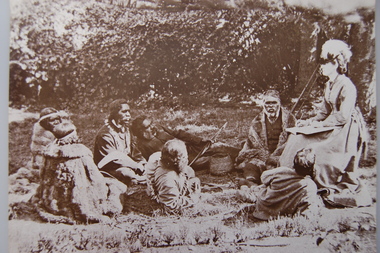
Photograph - Western District First Nations people with Isabella Dawson at 'Kangatong', c1865
... Western District First Nations people with Isabella Dawson at 'Kangatong' ...Isabella grew up at "Kangatong" (1844-1866) in the company of First Nations people and became fluent in their languages. ...Black and white photograph taken at "Kangatong", near Hawkesdale, of seven Western Victorian First Nations people all seated in conversation with Isabella Dawson, seated at right with notebook and pen in hand....Photograph Western District First Nations people with Isabella Dawson at 'Kangatong' ...Isabella Park Taylor, nee Dawson (1842-1929), friend of Western Victorian First Nations people, and student of their languages and customs. Isabella grew up at "Kangatong" (1844-1866) in the company of First Nations people and became fluent in their languages. With her father, James Dawson, she wrote the book "Australian Aborigines" (1881).Black and white photograph taken at "Kangatong", near Hawkesdale, of seven Western Victorian First Nations people all seated in conversation with Isabella Dawson, seated at right with notebook and pen in hand.cdhs, cdhsfirstnations -
 Camperdown & District Historical Society
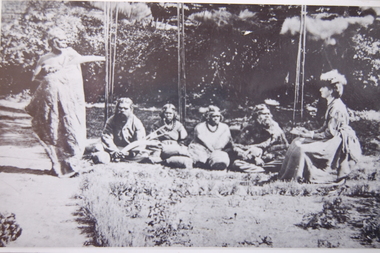
Photograph - Isabella Dawson with First Nations informants, c1865
... Isabella Dawson with First Nations informants ...Isabella grew up at "Kangatong" (1844-1866) in the company of First Nations people and became fluent in their languages. ...Black and white photograph taken at "Kangatong", near Hawkesdale showing group of First Nations people in conversation with Isabella Dawson, seated on right with notebook in hand. ...Photograph Isabella Dawson with First Nations informants ...Isabella Park Taylor, nee Dawson (1842-1929), friend of Western Victorian First Nations people, and student of their languages and customs. Isabella grew up at "Kangatong" (1844-1866) in the company of First Nations people and became fluent in their languages. With her father, James Dawson, she wrote the book "Australian Aborigines" (1881). Black and white photograph taken at "Kangatong", near Hawkesdale showing group of First Nations people in conversation with Isabella Dawson, seated on right with notebook in hand. Standing at left is Kaawirn Kuunawarn (also know as Hissing Swan and King David).James Dawson's daughter, Isabella, learning from the Aborigines on her father's station at "Kangatong" (From the original belonging to Miss M. Turner Shaw of S. Yarra. Copied by A.E. Jackson of Timboon.)cdhs, miss mary turner shaw, kaawirn kuunawarn, hissing swan, cdhsfirstnations -
 Stawell Historical Society Inc
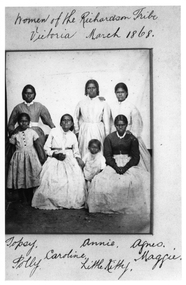
Photograph, First Nations Women of the Richardson Tribe Victoria1868 -- Named
... First Nations Women of the Richardson Tribe Victoria1868 -- Named...First Nation Women of the Richardson Tribe Victoria 1868 Copyright Museum of Victoria printed on back Writing on this photograph is the same as no 5563-1 in records and possible the group is from Carrs Plains....Black and white photograph of a group of First Nation women in European dress. Five adults one younger and one child....First Nations Women of the Richardson Tribe Victoria1868 -- Named Photograph ...First Nation Women of the Richardson Tribe Victoria 1868 Copyright Museum of Victoria printed on back Writing on this photograph is the same as no 5563-1 in records and possible the group is from Carrs Plains.Black and white photograph of a group of First Nation women in European dress. Five adults one younger and one child.Women of the Richardson Tribe Victoria March 1868. Topsy, Annie, Agnes. Caroline Maggie Polly Little Kitty Copyright of Victorian Museum (printed on back)stawell aboriginal portrait -
 Sunshine and District Historical Society Incorporated
Mixed media - Aboriginal, Aborigine, First Nations Objects
... Aboriginal, Aborigine, First Nations Objects...... First Nation...Collection of objects relating to Aboriginal, Aborigine and First Nations. They are commercially available objects....Mixed media Aboriginal, Aborigine, First Nations Objects ...The tee shirt & badge was used at the Albion North Primary School Voting Booth during the 2023 Yes Referendon VoteCollection of objects relating to Aboriginal, Aborigine and First Nations. They are commercially available objects.aborgine, aboriginal, first nation -
Stawell Historical Society Inc
Realia, Three Aboriginal/First Nations artifacts from Carrs Plains
... Three Aboriginal/First Nations artifacts from Carrs Plains...First Nations...Said to be items in photos 0280 and 7159 Highly Significant Provenance considering photographic record and link to Carrs Plains First Nations Leangle is carved Shield, Short Spear with barbs and Leangle with bird and fish carving Three Aboriginal/First Nations artifacts from Carrs Plains Realia ...Said to be items in photos 0280 and 7159Highly Significant Provenance considering photographic record and link to Carrs PlainsShield, Short Spear with barbs and Leangle with bird and fish carvingLeangle is carvedfirst nations -
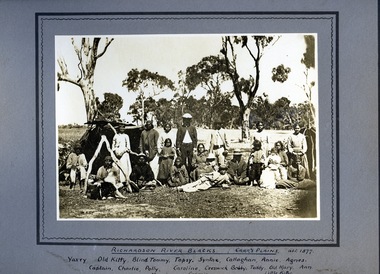 Stawell Historical Society Inc
Photograph, Group of Aboriginal/First Nations people. Carrs Palins 1877
... Group of Aboriginal/First Nations people. Carrs Palins 1877...First Nations...Group of Aboriginal/First Nations people. Carrs Palins 1877 Photograph ...Large group of Aboriginal men and women posing in front of bark hut.Richardson River Blacks Carrs Plains About 1877 Yarry, Old Kitty, Blind Tommy, Topsy, Syntax, Callaghan, Annie, Agnes Captain, Charlie, Polly, Caroline, Creswick Bobby, Teddy, Old Mary, Ann ? ? Little Kitty first nations -
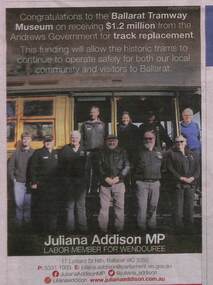 Ballarat Tramway Museum
Newspaper, The Courier Ballarat, "Congratulations to the Ballarat Tramway Museum on receiving $1.2m from the Andrews Government for track replacement.", "First Nations Art on the move", 8/07/2021 12:00:00 AM
... "Congratulations to the Ballarat Tramway Museum on receiving $1.2m from the Andrews Government for track replacement.", "First Nations Art on the move"...Has a photo of 10 people alongside Geelong No. 2 at the time of the announcement. .2 - "First Nations Art on the move" - featuring a photo of a B class tram, by Deanne Gilson (local Ballarat artist) and Thomas Marks. ..."Congratulations to the Ballarat Tramway Museum on receiving $1.2m from the Andrews Government for track replacement.", "First Nations Art on the move" Newspaper The Courier Ballarat ...Set of two Newspaper clippings from The Courier, Ballarat, 8 July 2021 .1 - titled "Congratulations to the Ballarat Tramway Museum on receiving $1.2m from the Andrews Government for track replacement.". Item sponsored by Juliana Addison MP. Has a photo of 10 people alongside Geelong No. 2 at the time of the announcement. .2 - "First Nations Art on the move" - featuring a photo of a B class tram, by Deanne Gilson (local Ballarat artist) and Thomas Marks. Photo by James Morgan.art work, transporting art, b class -
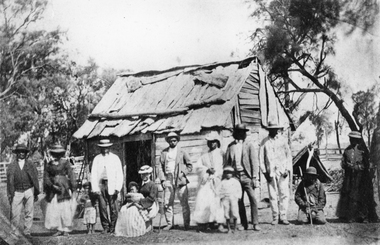 Stawell Historical Society Inc
Photograph, Indigenous or First Nations People at Carrs Plains 1874 Richardson River Tribe
... Indigenous or First Nations People at Carrs Plains 1874 Richardson River Tribe...Photo taken at Carrs Plains in 1874 of Indigenous or First Nation People outside a wood and bark hut. ...Photo taken at Carrs Plains in 1874 of Indigenous or First Nation People outside a wood and bark hut. ...Photo taken at Carrs Plains in 1874 of Indigenous or First Nation People outside a wood and bark hut. In 1861, William Dennis of Carrs Plains Station, a staunch Methodist became Honorary, Aboriginal Protector for the area. One of his main tasks to give Government supplied food and clothing to the Aboriginals. Many district, remaining First Nations People became based at Carrs Plains, and their dead were buried in a cemetery on the station. The cemetery is show on survey map of Wirchilleva Borough, in corner of camping & water reserve near surveyed Bismarck township. In a Protector's report 1869, Dennis wrote that only one male worked regularly on the property, a Bullock driver.Black and white photograph of a wood and bark hut with a group of men, women and children out the front. Richardson River Tribe.Anthony & Lubra, Donald & Affie my ? Herbal? Black Billie Great Rider, Kitty Supulants? Lubra Jonny Callaghan Jr., Four? Supulant? Harry, Blind Tommy & Lubra, 1874 Reproduction rights reserved Copied by State Library of Victoriastawell aboriginal portrait -
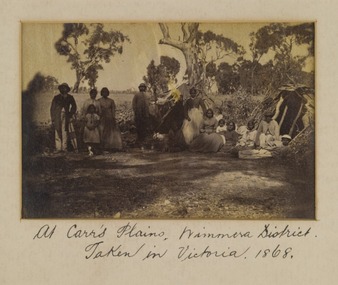 Stawell Historical Society Inc
Photograph, Group of Aboriginal/First Nations people. Carrs Palins about 1868
... Group of Aboriginal/First Nations people. Carrs Palins about 1868...Group of Aboriginal/First Nations people. Carrs Palins about 1868 Photograph ...AboriginalGroup of Aboriginal People in European cloathes in front of two lean toos.At Carrs Plains, Wimmera District. Taken in Victoria 1868 -
Clunes Museum
Book, Fred Cahir, My Country All Gone The White Men Have Stolen It - The Invasion of the Wadawurrung Country 1800-1870, 2019
... FIRST NATIONS HISTORY...FIRST NATIONS PEOPLE - AUSTRALIA...FIRST NATIONS PEOPLE - AUSTRALIA FIRST NATIONS HISTORY WADAWURRUNG COUNTRY THIS BOOK REALLY BEGAN ON THE NULLABORE PLAIN IN 1983 WHEN I WAS CYCLING SOLO ACROSS AUSTRALIA FROM PERTH TO MELBOURNE... ...THIS BOOK REALLY BEGAN ON THE NULLABORE PLAIN IN 1983 WHEN I WAS CYCLING SOLO ACROSS AUSTRALIA FROM PERTH TO MELBOURNE...Soft Cover book , depicts a young Aboriginal women wrapped in a possum skin cloak standing in front of an early topographical map of Port Phillip. 348 pages.non-fictionTHIS BOOK REALLY BEGAN ON THE NULLABORE PLAIN IN 1983 WHEN I WAS CYCLING SOLO ACROSS AUSTRALIA FROM PERTH TO MELBOURNE...first nations history, wadawurrung country -
 Greensborough Historical Society
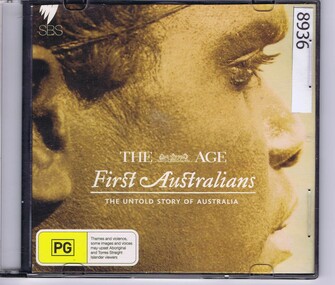
Audio - DVD, The Age, First Australians, The Untold Story of Australia, 2008
... ...First Nations...The white settlement of Australia from a first nations perspective. Based on an SBS program....The white settlement of Australia from a first nations perspective. Based on an SBS program. indigenous australians aborigines First Nations DVD in plastic case First Australians, The Untold Story of Australia Audio DVD The Age ...DVD of First Australian, The Untold Story of Australia. The white settlement of Australia from a first nations perspective. Based on an SBS program.DVD in plastic caseindigenous australians, aborigines, first nations -
 Greensborough Historical Society
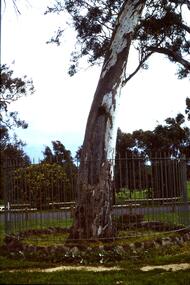
Slide - Photograph, John Ramsdale, Canoe tree: Slide 5, 1970s
... ...First Nations...This tree is known as a canoe or scar tree - a section of bark has been removed by first nations people to make a canoe....This tree is known as a canoe or scar tree - a section of bark has been removed by first nations people to make a canoe. Part of the John Ramsdale collection of slides and audio visual material. canoe tree scar tree First Nations No caption. ...Photograph shows a large gum tree encircled by an iron fence. This tree is known as a canoe or scar tree - a section of bark has been removed by first nations people to make a canoe.Part of the John Ramsdale collection of slides and audio visual material.Colour photograph scanned from slide.No caption. Printed maker's mark on slide "Kodak Kodachrome Slide"canoe tree, scar tree, first nations -
 Camperdown & District Historical Society
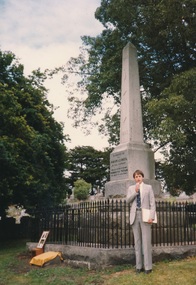
Photograph - Unveiling plaque at the Wombeetch Puyuun Monument in the Camperdown Cemetery, 12/12/1983
... ...First Nations People...At the bottom is the year 1883 which saw the last of the local First Nations people on Country with the death of Wombeetch Puyuun. ...At the bottom is the year 1883 which saw the last of the local First Nations people on Country with the death of Wombeetch Puyuun. ...When he died in February 1883, Wombeetch Puyuun was the last member of the Liwura Gundidj clan still living on Country at Camperdown. The Wombeetch Puyuun Monument was erected by his friend and Guardian, James Dawson in 1885, largely at his own expense. At the top is engraved 1840, which marked the beginning of the demise of the local First Nations people. Below are a boomerang, a club, and a message stick. At the bottom is the year 1883 which saw the last of the local First Nations people on Country with the death of Wombeetch Puyuun. On the base are the words: "In memory of the Aborigines of this district. Here lies the body of the chief, Wombeetch Puyuun, and the last of the local tribes". Dr Ken Coghill (Minister for Aboriginal Affairs) unveiling plaque in front of the Wombeetch Puyuun Monument in the Camperdown CemeteryBack: Dr Ken Coghill unveiling the plaque in front of the Aboriginal Monument in the Camperdown Cemetery Dec 12th 1983cdhs, djargurd wurrung, djargurdwurrung, cdhsfirstnations, first nations people -
 Camperdown & District Historical Society
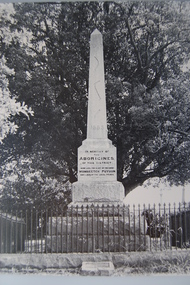
Photograph - Wombeetch Puyuun Monument in the Camperdown Cemetery, 12/12/1983
... ...First Nations People...At the bottom is the year 1883 which saw the last of the local First Nations people on Country with the death of Wombeetch Puyuun. ...At the bottom is the year 1883 which saw the last of the local First Nations people on Country with the death of Wombeetch Puyuun. ...When he died in February 1883, Wombeetch Puyuun was the last member of the Liwura Gundidj clan still living on Country at Camperdown. The Wombeetch Puyuun Monument was erected by his friend and Guardian, James Dawson in 1885, largely at his own expense. At the top is engraved 1840, which marked the beginning of the demise of the local First Nations people. Below are a boomerang, a club, and a message stick. At the bottom is the year 1883 which saw the last of the local First Nations people on Country with the death of Wombeetch Puyuun. On the base are the words: "In memory of the Aborigines of this district. Here lies the body of the chief, Wombeetch Puyuun, and the last of the local tribes".Dr Ken Coghill (Minister for Aboriginal Affairs) unveiling plaque in front of the Wombeetch Puyuun Monument in the Camperdown CemeteryFront of the obelisk "1840-1883 IN MEMORY OF THE ABORIGINES OF THIS DISTRICT. HERE LIES THE BODY OF THE CHIEF WOMBEETCH PUYUUN AND LAST OF THE LOCAL TRIBES".cdhs, djargurd wurrung, djargurdwurrung, cdhsfirstnations, first nations people -
 Camperdown & District Historical Society
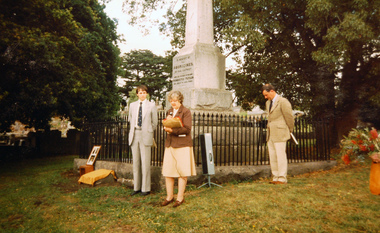
Photograph - Unveiling plaque at the Wombeetch Puyuun Monument in the Camperdown Cemetery, 12/12/1983
... ...First Nations People...At the bottom is the year 1883 which saw the last of the local First Nations people on Country with the death of Wombeetch Puyuun. ...At the bottom is the year 1883 which saw the last of the local First Nations people on Country with the death of Wombeetch Puyuun. ...When he died in February 1883, Wombeetch Puyuun was the last member of the Liwura Gundidj clan still living on Country at Camperdown. The Wombeetch Puyuun Monument was erected by his friend and Guardian, James Dawson in 1885, largely at his own expense. At the top is engraved 1840, which marked the beginning of the demise of the local First Nations people. Below are a boomerang, a club, and a message stick. At the bottom is the year 1883 which saw the last of the local First Nations people on Country with the death of Wombeetch Puyuun. On the base are the words: "In memory of the Aborigines of this district. Here lies the body of the chief, Wombeetch Puyuun, and the last of the local tribes".Dr Ken Coghill (Minister for Aboriginal Affairs) unveiling plaque in front of the Wombeetch Puyuun Monument in the Camperdown CemeteryBack: Dr Ken Coghill unveiling the plaque in front of the Aboriginal Monument in the Camperdown Cemetery Dec 12th 1983cdhs, djargurd wurrung, djargurdwurrung, cdhsfirstnations, first nations people -
 Camperdown & District Historical Society
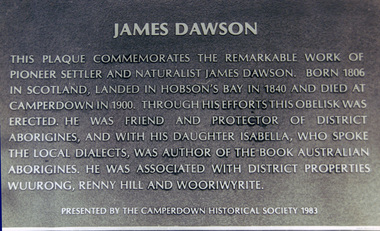
Photograph - Unveiling plaque at the Wombeetch Puyuun Monument in the Camperdown Cemetery, 12/12/1983
... ...First Nations People...At the bottom is the year 1883 which saw the last of the local First Nations people on Country with the death of Wombeetch Puyuun. ...At the bottom is the year 1883 which saw the last of the local First Nations people on Country with the death of Wombeetch Puyuun. ...When he died in February 1883, Wombeetch Puyuun was the last member of the Liwura Gundidj clan still living on Country at Camperdown. The Wombeetch Puyuun Monument was erected by his friend and Guardian, James Dawson in 1885, largely at his own expense. At the top is engraved 1840, which marked the beginning of the demise of the local First Nations people. Below are a boomerang, a club, and a message stick. At the bottom is the year 1883 which saw the last of the local First Nations people on Country with the death of Wombeetch Puyuun. On the base are the words: "In memory of the Aborigines of this district. Here lies the body of the chief, Wombeetch Puyuun, and the last of the local tribes".Dr Ken Coghill (Minister for Aboriginal Affairs) unveiling plaque in front of the Wombeetch Puyuun Monument in the Camperdown CemeteryBack: Dr Ken Coghill unveiling the plaque in front of the Aboriginal Monument in the Camperdown Cemetery Dec 12th 1983cdhs, djargurd wurrung, djargurdwurrung, cdhsfirstnations, first nations people -
 Camperdown & District Historical Society
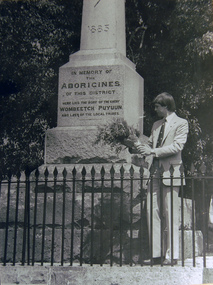
Photograph - Unveiling plaque at the Wombeetch Puyuun Monument in the Camperdown Cemetery, 12/12/1983
... ...First Nations People...At the bottom is the year 1883 which saw the last of the local First Nations people on Country with the death of Wombeetch Puyuun. ...At the bottom is the year 1883 which saw the last of the local First Nations people on Country with the death of Wombeetch Puyuun. ...When he died in February 1883, Wombeetch Puyuun was the last member of the Liwura Gundidj clan still living on Country at Camperdown. The Wombeetch Puyuun Monument was erected by his friend and Guardian, James Dawson in 1885, largely at his own expense. At the top is engraved 1840, which marked the beginning of the demise of the local First Nations people. Below are a boomerang, a club, and a message stick. At the bottom is the year 1883 which saw the last of the local First Nations people on Country with the death of Wombeetch Puyuun. On the base are the words: "In memory of the Aborigines of this district. Here lies the body of the chief, Wombeetch Puyuun, and the last of the local tribes".Dr Ken Coghill (Minister for Aboriginal Affairs) unveiling plaque in front of the Wombeetch Puyuun Monument in the Camperdown CemeteryBack: Dr Ken Coghill unveiling the plaque in front of the Aboriginal Monument in the Camperdown Cemetery Dec 12th 1983cdhs, djargurd wurrung, djargurdwurrung, cdhsfirstnations, first nations people -
 Camperdown & District Historical Society
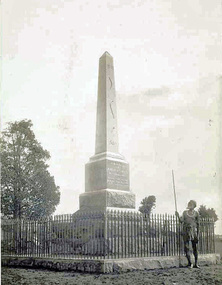
Photograph - Kaawirn Kuunawarn (Hissing Swan) at Wombeetch Puyuun Grave Monument in the Camperdown Cemetery, 1885
... ...First Nations People...At the bottom is the year 1883 which saw the last of the local First Nations people on Country with the death of Wombeetch Puyuun. ...At the bottom is the year 1883 which saw the last of the local First Nations people on Country with the death of Wombeetch Puyuun. ...When he died in February 1883, Wombeetch Puyuun was the last member of the Liwura Gundidj clan still living on Country at Camperdown. The Wombeetch Puyuun Grave Monument was erected by his friend and Guardian, James Dawson in 1885, largely at his own expense. At the top is engraved 1840, which marked the beginning of the demise of the local First Nations people. Below are a boomerang, a club, and a message stick. At the bottom is the year 1883 which saw the last of the local First Nations people on Country with the death of Wombeetch Puyuun. On the base are the words: "In memory of the Aborigines of this district. Here lies the body of the chief, Wombeetch Puyuun, and the last of the local tribes". Standing facing the monument is Kaawirn Kuunawarn (Hissing Swan), Elder of the Kirroe Wuurong tribe.Kaawirn Kuunawarn (Hissing Swan at the Wombeetch Puyuun Grave Monument in the Camperdown Cemeterycdhs, djargurd wurrung, djargurdwurrung, cdhsfirstnations, first nations people -
 Camperdown & District Historical Society
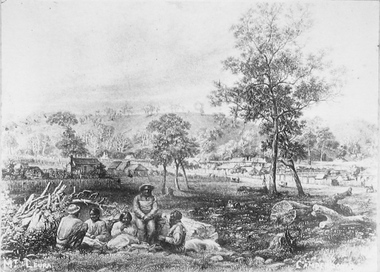
Photograph - Etching of early Camperdown scene, Mt Leura Camperdown, c1850s
... This etching was created of Camperdown c1850s showing a group of First Nations people and early dwellings and native vegetation around Mounts Leura and Sugarloaf. ...Etching of early Camperdown scene showing group of First Nations people in the foreground with early buildings, native vegetation and Mount Leura and Mount Sugarloaf in the background. ...This etching was created of Camperdown c1850s showing a group of First Nations people and early dwellings and native vegetation around Mounts Leura and Sugarloaf. ...This etching was created of Camperdown c1850s showing a group of First Nations people and early dwellings and native vegetation around Mounts Leura and Sugarloaf. Camperdown was surveyed by Robert Dunbar Scott in 1851. First dwelling constructed by David Fenton in 1853 on site of Commercial Hotel. Etching of early Camperdown scene showing group of First Nations people in the foreground with early buildings, native vegetation and Mount Leura and Mount Sugarloaf in the background. On front: Mt Leura, Camperdowncdhs, djargurd wurrung, djargurdwurrung, mount leura, mt leura, mount sugarloaf, mt sugarloaf, cdhsfirstnations -
 Wyndham Art Gallery (Wyndham City Council)
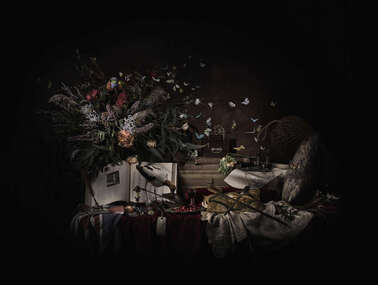
Photograph, Michael Cook, Nature Morte (Colonisation), 2021
... Australian First Nations Art...Each image explores an aspect of the devastating impact of colonisation on Australia’s First Nations peoples, and the global repercussions of environmental degradation. ...Each image explores an aspect of the devastating impact of colonisation on Australia’s First Nations peoples, and the global repercussions of environmental degradation. ...A central tableau is beautifully lit to expose choreographed arrangements of plants, animals, objects and food. Grounded in a photographic aesthetic that echoes Dutch Old Master paintings, they examine the industry and practices that have so effectively brought damage to traditional Aboriginal culture, the natural environment of the Australian continent – and the globe. Each image explores an aspect of the devastating impact of colonisation on Australia’s First Nations peoples, and the global repercussions of environmental degradation. The translation of the French in the title of this series, “Natures mortes” is dead nature. Yet in the simmering emotional register of each image lies an inherent belief in the individual over environment, and the redemptive nature of culture. australian first nations art, photography, colonialisation, environment -
 Wyndham Art Gallery (Wyndham City Council)
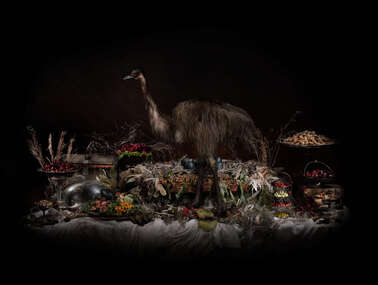
Photograph, Michael Cook, Nature Morte (Aliment), 2021
... Australian First Nations Art...Each image explores an aspect of the devastating impact of colonisation on Australia’s First Nations peoples, and the global repercussions of environmental degradation. ...Each image explores an aspect of the devastating impact of colonisation on Australia’s First Nations peoples, and the global repercussions of environmental degradation. ...A central tableau is beautifully lit to expose choreographed arrangements of plants, animals, objects and food. Grounded in a photographic aesthetic that echoes Dutch Old Master paintings, they examine the industry and practices that have so effectively brought damage to traditional Aboriginal culture, the natural environment of the Australian continent – and the globe. Each image explores an aspect of the devastating impact of colonisation on Australia’s First Nations peoples, and the global repercussions of environmental degradation. The translation of the French in the title of this series, “Natures mortes” is dead nature. Yet in the simmering emotional register of each image lies an inherent belief in the individual over environment, and the redemptive nature of culture. australian first nations art, photography, colonialisation, environment -
 Wyndham Art Gallery (Wyndham City Council)
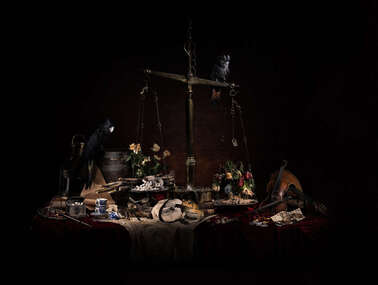
Photograph, Michael Cook, Nature Morte (Blackbird), 2021
... Australian First Nations Art...Each image explores an aspect of the devastating impact of colonisation on Australia’s First Nations peoples, and the global repercussions of environmental degradation. ...Each image explores an aspect of the devastating impact of colonisation on Australia’s First Nations peoples, and the global repercussions of environmental degradation. ...A central tableau is beautifully lit to expose choreographed arrangements of plants, animals, objects and food. Grounded in a photographic aesthetic that echoes Dutch Old Master paintings, they examine the industry and practices that have so effectively brought damage to traditional Aboriginal culture, the natural environment of the Australian continent – and the globe. Each image explores an aspect of the devastating impact of colonisation on Australia’s First Nations peoples, and the global repercussions of environmental degradation. The translation of the French in the title of this series, “Natures mortes” is dead nature. Yet in the simmering emotional register of each image lies an inherent belief in the individual over environment, and the redemptive nature of culture. australian first nations art, photography, colonialisation, environment -
 Wyndham Art Gallery (Wyndham City Council)
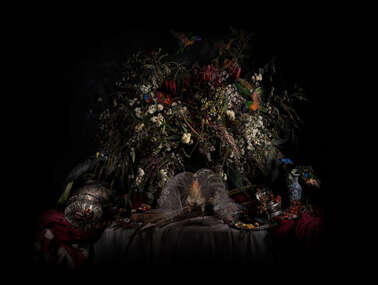
Photograph, Nature Morte (Flora), 2021
... Australian First Nations Art...Each image explores an aspect of the devastating impact of colonisation on Australia’s First Nations peoples, and the global repercussions of environmental degradation. ...Each image explores an aspect of the devastating impact of colonisation on Australia’s First Nations peoples, and the global repercussions of environmental degradation. ...A central tableau is beautifully lit to expose choreographed arrangements of plants, animals, objects and food. Grounded in a photographic aesthetic that echoes Dutch Old Master paintings, they examine the industry and practices that have so effectively brought damage to traditional Aboriginal culture, the natural environment of the Australian continent – and the globe. Each image explores an aspect of the devastating impact of colonisation on Australia’s First Nations peoples, and the global repercussions of environmental degradation. The translation of the French in the title of this series, “Natures mortes” is dead nature. Yet in the simmering emotional register of each image lies an inherent belief in the individual over environment, and the redemptive nature of culture. australian first nations art, photography, colonialisation, environment -
 Wyndham Art Gallery (Wyndham City Council)
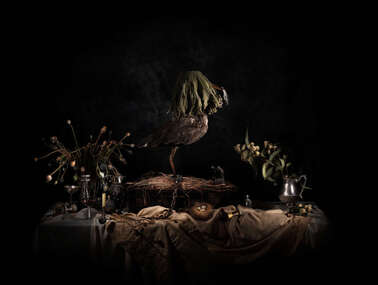
Photograph, Michael Cook, Nature Morte (Veiled Bird), 2021
... Australian First Nations Art...Each image explores an aspect of the devastating impact of colonisation on Australia’s First Nations peoples, and the global repercussions of environmental degradation. ...Each image explores an aspect of the devastating impact of colonisation on Australia’s First Nations peoples, and the global repercussions of environmental degradation. ...A central tableau is beautifully lit to expose choreographed arrangements of plants, animals, objects and food. Grounded in a photographic aesthetic that echoes Dutch Old Master paintings, they examine the industry and practices that have so effectively brought damage to traditional Aboriginal culture, the natural environment of the Australian continent – and the globe. Each image explores an aspect of the devastating impact of colonisation on Australia’s First Nations peoples, and the global repercussions of environmental degradation. The translation of the French in the title of this series, “Natures mortes” is dead nature. Yet in the simmering emotional register of each image lies an inherent belief in the individual over environment, and the redemptive nature of culture. australian first nations art, photography, colonialisation, environment -
 Wyndham Art Gallery (Wyndham City Council)
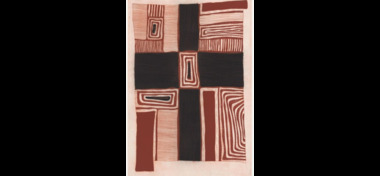
Work on paper, Lisa Waup, refinding tomorrow II, 2024
... Australian First Nations Art...Lisa Waup is a mixed-cultural First Nations artist and curator who was born in Narrm (Melbourne). ...Lisa Waup is a mixed-cultural First Nations artist and curator who was born in Narrm (Melbourne). ...The cross design in refinding tomorrow represents a converging of pathways – pathways of connection that are coming together to ultimately form a whole. The crossroads is a powerful symbol of a moment in time, a positive reminder of the past and a chance to ponder the future. There is movement through time in these designs and a chance that something lost will be found again. I trust that I will always carry with me in my heart, body and spirit, the wisdom of knowledge from my ancestors.Lisa Waup is a mixed-cultural First Nations artist and curator who was born in Narrm (Melbourne). Her multidisciplinary practice encompasses a diverse range of media including weaving, printmaking, sculpture, fashion, and digital art. With a deep connection to the symbolic power of materials, Lisa’s work reflects her personal experiences, family history, Country, and broader historical narratives. Through her practice, Lisa weaves together threads of lost history, ancestral relationships, motherhood, and the passage of time – which culminates in contemporary expressions that speak to her past, present and future. Lisa Waup holds a Master of Contemporary Art from the University of Melbourne and her work is held in both public and private collections in Australia and internationally. australian first nations art, indigenous art, identity, cultural story, women in art -
 Wyndham Art Gallery (Wyndham City Council)
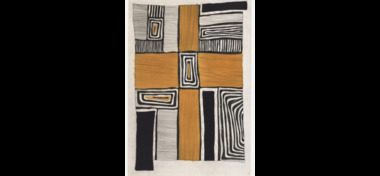
Work on paper, Lisa Waup, refinding tomorrow, 2024
... Australian First Nations Art...Lisa Waup is a mixed-cultural First Nations artist and curator who was born in Narrm (Melbourne). ...Lisa Waup is a mixed-cultural First Nations artist and curator who was born in Narrm (Melbourne). ...The cross design in refinding tomorrow represents a converging of pathways – pathways of connection that are coming together to ultimately form a whole. The crossroads is a powerful symbol of a moment in time, a positive reminder of the past and a chance to ponder the future. There is movement through time in these designs and a chance that something lost will be found again. I trust that I will always carry with me in my heart, body and spirit, the wisdom of knowledge from my ancestors.Lisa Waup is a mixed-cultural First Nations artist and curator who was born in Narrm (Melbourne). Her multidisciplinary practice encompasses a diverse range of media including weaving, printmaking, sculpture, fashion, and digital art. With a deep connection to the symbolic power of materials, Lisa’s work reflects her personal experiences, family history, Country, and broader historical narratives. Through her practice, Lisa weaves together threads of lost history, ancestral relationships, motherhood, and the passage of time – which culminates in contemporary expressions that speak to her past, present and future. Lisa Waup holds a Master of Contemporary Art from the University of Melbourne and her work is held in both public and private collections in Australia and internationally. australian first nations art, indigenous art, identity, cultural story, women in art -
 Wyndham Art Gallery (Wyndham City Council)
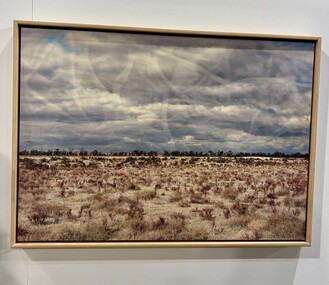
Photograph, Gail Harradine and Belinda Eckermann, Burrundy (Dark) Sky Part 2 (Mali Marrng/Mallee Sky series), 2022
... Australian First Nations Art...She is also the Founder and Director of Turbo Gallery, Rainbow, Victoria. Australian First Nations Art First Nations Photography Cultural story Identity Australian Photography First Nations Burrundy (Dark) Sky Part 2 (Mali Marrng/Mallee Sky series) Photograph Gail Harradine and Belinda Eckermann ...Burrundy (Dark) Sky Part 2 (Mali Marrng/Mallee Sky series) 2022 by Gail Harradine and collaborator Belinda Eckermann explores First Nations Peoples kinship to the land, waterways and sky. This work is part of a significant series that gives form to the invisible and unseen personal, familial and community narrative of connection to landscape. Gail Harradine and Belinda Eckermann’s first-time collaboration merges digital photography, entomological research, electron microscopic imaging and First Nations cultural practices, to explore a shared knowledge and connection to the landscape around Lake Albacutya –Ngalukgutya in Victoria Mallee region. The work fits into the Wyndham Art Gallery curatorial collection theme of First Nations Foregrounding and Futurism: Foregrounding Frist Nations knowing and being as a way to work with place, story and connection; and works to engage with new mediums and forms of artmaking engaging with new technologies and innovation in creative making. Gail Harradine Gail Harradine is a Wotjobaluk, Jadawadjali, Djubagalk artist, curator, and educator. Growing up in Dimboola, Victoria, Gail was nurtured by a staunch family in the heart of Wotjobaluk Country. She has completed eight years of study, including a Postgraduate in Art Curatorial Studies (with Thesis) at Melbourne University and a Master of Arts (Arts Management) with Distinction in 2022 at RMIT. Gail's longstanding arts practice is deeply influenced by family history, identity, kinship, and connection. She is passionate about expanding and reflecting on the concepts of truth and integrity in valuing cultural knowledge. In her work, meaning and memory converge through photography, prints, and painting, using symbolic layers intertwined with dynamic figures and ceremonial landscapes. This creates a world that merges Creation Stories with personal tragedy and triumph. Belinda Eckermann Belinda Eckermann lives and works in Victoria’s Wimmera/Mallee Region. Her current practice is intrinsically tied to her local environment. In 2013, she undertook her Masters in Visual Arts. She currently investigating the native Bardi Grub and Rain Moth and modes of incorporating their natural interventions with their environment into her creative practice. Eckermann has exhibited regularly throughout regional Victoria since 2009 and recently won Best Emerging Artist at the Knox Immerse Festival. She is also the Founder and Director of Turbo Gallery, Rainbow, Victoria. australian first nations art, first nations photography, cultural story, identity, australian photography, first nations -
 Wyndham Art Gallery (Wyndham City Council)
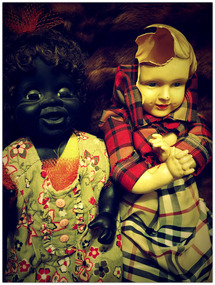
Photograph, Destiny Deacon, Daisy and Heather discuss race, 2016
... First Nations Photography...In 2022, she was the recipient of the Red Ochre Award for Lifetime Achievement at First Nations Arts Awards. In the same year, Deacon’s work was shown at the Australian Embassy in Paris in an exhibition titled Destiny - The art of Destiny Deacon. ...In 2022, she was the recipient of the Red Ochre Award for Lifetime Achievement at First Nations Arts Awards. In the same year, Deacon’s work was shown at the Australian Embassy in Paris in an exhibition titled Destiny - The art of Destiny Deacon. ...The sarcastic title of this work pokes fun at the old fashioned idea that race should not be the subject of polite conversation. Deacon uses a white and a Black dolly to represent the unequal power dynamics that exist within Australian society. The dolls stand in for people who, based on the colour of their skin, experience the impact of racial inequality in vastly different ways. The cracked head of the white doll reveals an empty void. Symbolically violent, perhaps this emptiness suggests the dolls will never be able to fully comprehend one another’s experiences.This work was curated in RACE 2016 at Wyndham Art Gallery. Destiny Deacon (1956–2024) was a descendant of the KuKu (Far North Queensland) and Erub/Mer (Torres Strait) people. She exhibited nationally and internationally since the early 1990s in solo and group shows. Deacon held two major retrospectives, in 2004 and 2020, at the Museum of Contemporary Art, Sydney and at the National Gallery of Victoria, Melbourne respectively. Her 2004 survey show, Walk & don’t look blak, toured to the Metropolitan Museum of Photography in Tokyo, the Tjibao Cultural Centre in Noumea, New Caledonia and Wellington City Gallery in New Zealand. In 2022, she was the recipient of the Red Ochre Award for Lifetime Achievement at First Nations Arts Awards. In the same year, Deacon’s work was shown at the Australian Embassy in Paris in an exhibition titled Destiny - The art of Destiny Deacon. In 2023, Deacon was included in the Sharjah Biennial 15, Thinking Historically in the Present, conceived by the late Okwui Enwezor and curated by Hoor Al Qasimi. In 2024, Deacon's work was exhibited in the 24th Biennale of Sydney, Ten Thousand Suns, curated by Cosmin Costinas and Inti Guerrero. Deacon’s work is held in most major public collections in Australia as well as Tate, London, Museum Moderner Kunst (MUMOK), Stifting Ludwig, Vienna, Austria and Museum Sammlung Essl, Austria.first nations photography, australian photography, australian indigenous art, race, racism, colonisation -
 National Wool Museum
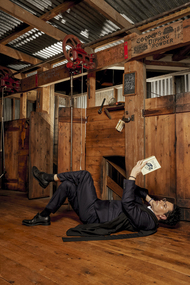
Photograph, Dr Christian Thompson AO, House of Gold - Chapter VI, 2023
... ...First Nations...Dressed in sub fusc, his official uniform as an Oxford scholar, Thompson is a defiant intellectual challenging past and continued misperceptions of First Nations people, while embracing both the intersections of his identity and his ancestral heritage. ...Dr Christian Thompson First Nations Artwork Photography Oxford Heritage National Wool Museum Framed photograph showing a man dressed in an academic gown, laying on their back holding a book. ...This work is from a series centred around the Chinese proverb “to hold a book in one’s hand is to hold a house of gold” in which the artist positions himself within sites of colonial power. Set within the National Wool Museum gallery, the artist references the pose of an exhausted shearer after a long day of arduous labour. However he is reclining while reading The Fire Stick by Wulla Merrii, a novel set against the 1891 Queensland Shearer’s Strike, questioning cultural stereotypes and how they pertain to concepts of work and leisure. Dressed in sub fusc, his official uniform as an Oxford scholar, Thompson is a defiant intellectual challenging past and continued misperceptions of First Nations people, while embracing both the intersections of his identity and his ancestral heritage. Dr Christian Thompson AO is a Bidjara man of the Kunja Nation with Irish and Chinese heritage. His practice spans across video, photography, sculpture, textiles, performance and sound, evolving through a process of auto – ethnography. While employing various modes of research, he connects his own experience to larger social, political, cultural meanings and understandings. His doctoral research and art practice has had a critical impact on International and Australian art, making global history as one of the first Australian Indigenous students at Oxford University. In 2018 he was made an Officer of the Order of Australia for distinguished services to the visual arts and as a role model to young indigenous artists in the Queen’s Birthday honours list.Framed photograph showing a man dressed in an academic gown, laying on their back holding a book. The setting is a reconstructed shearing shed, inside the galleries of the National Wool Museum.dr christian thompson, first nations, artwork, photography, oxford, heritage, national wool museum
