
Showing 1287 items matching " garments"
-
 Whitehorse Historical Society Inc.
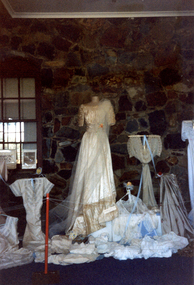
Photograph, Garments Arranged For Display for Museum's Open Day 1989 or 1990
... Garments Arranged For Display for Museum's Open Day 1989 or 1990...Coloured photo of Garments Arranged for Display for Museum's Open Day....museum Open Day Display Coloured photo of Garments Arranged for Display for Museum's Open Day. ...Coloured photo of Garments Arranged for Display for Museum's Open Day.museum, open day display -
 Uniting Church Archives - Synod of Victoria
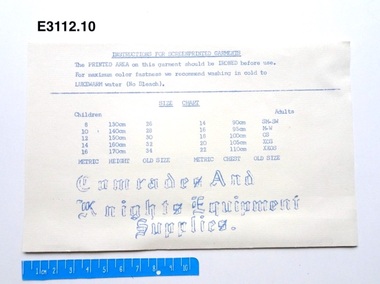
Document - Comrades and Knights Equipment Supplies, Instructions for screenprinted garments
... Instructions for screenprinted garments...E3112.10.1 and E3112.10.2 and E3094.26.1 and E3094.26.2: Four paper documents with instructions for screenprinted garments. ...Methodist Order of Knights Methodist Girls' Comradeship E3112.10.1 and E3112.10.2 and E3094.26.1 and E3094.26.2: Four paper documents with instructions for screenprinted garments. Instructions for screenprinted garments Document Comrades and Knights Equipment Supplies ...E3112.10.1 and E3112.10.2 and E3094.26.1 and E3094.26.2: Four paper documents with instructions for screenprinted garments. methodist order of knights, methodist girls' comradeship -
 Bendigo Military Museum
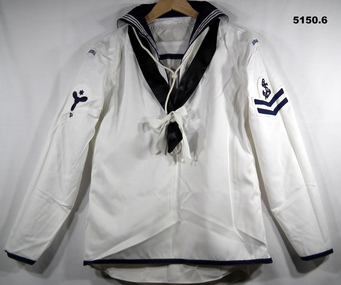
Uniform - UNIFORM, RAN - Summer Ceremonial, Red Anchor/Tailored garments
... Handwritten, black ink, "LS MTP RAYNOR inside on the crown, Tally band - Embroidered gold thread "HMAS DERWENT'", on black band. " RED ANCHOR/TAILORED GARMENTS/ 65% POLYESTER 35% COTTON/ DO NOT BOIL, DRIP DRY, WARM IRON"...Red Anchor/Tailored garments....Uniform UNIFORM, RAN - Summer Ceremonial Red Anchor/Tailored garments. ...Royal Australian Navy - Uniform belonged to LS MTP E Rayner.1. Jumper/Barathea - long sleeve white polyester/cotton fabric with Navy blue collar attached, side zip under arm. Insignia to left sleeve depicting rank. Right side insignia depicts category. 2. Trousers - white polyester/cotton fabric, bell bottom. 3. Shirt - white polyester/cotton fabric, short sleeve, navy blue trim to square neckline. Insignia to left sleeve. 4. Silk - Black polyester black fabric to arrange around the collar. 5. Bow - white cotton tape. 6. Lanyard - white cord to arrange around neck. 7. Lid - white with black "Tally" band, sailors cap with Navy blue tape - chin strap. 1., 2. - Hand embroidered red cotton - "E RAYNER", 7. Handwritten, black ink, "LS MTP RAYNOR inside on the crown, Tally band - Embroidered gold thread "HMAS DERWENT'", on black band. " RED ANCHOR/TAILORED GARMENTS/ 65% POLYESTER 35% COTTON/ DO NOT BOIL, DRIP DRY, WARM IRON"ran, uniform -
 Kiewa Valley Historical Society
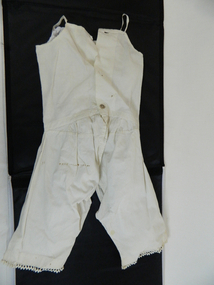
Undergarment Child
... As no manufacturing details are affixed to the garment and taking into account of the relative isolation when the garnet was made it is reasonably to make an assumption that it was made by a local seemstress or by the mother...Garment has sleeveless top with 8mm straps.The top is attached at the waist to the pantaloons. ...No manufacturer's details are on the garment ...As no manufacturing details are affixed to the garment and taking into account of the relative isolation when the garnet was made it is reasonably to make an assumption that it was made by a local seemstress or by the mother Historical significance of the type of garment places it Circa 1930s to 1940s and is fairly rare to find the garment as part of three detailing the physical growth and development of a young child cross reference to KVHS 0248 and KVHS 0240 vest undergarment underwear lingerie child No manufacturer's details are on the garment Garment has sleeveless top with 8mm straps.The top is attached at the waist to the pantaloons. ...part of a three item pantaloon set of a child at different ages of development. As no manufacturing details are affixed to the garment and taking into account of the relative isolation when the garnet was made it is reasonably to make an assumption that it was made by a local seemstress or by the motherHistorical significance of the type of garment places it Circa 1930s to 1940s and is fairly rare to find the garment as part of three detailing the physical growth and development of a young child cross reference to KVHS 0248 and KVHS 0240Garment has sleeveless top with 8mm straps.The top is attached at the waist to the pantaloons. Pantaloons are crutchless extending down the inside of each leg to 17cm from the bottom.The back of the top is fastened by three plastic(not original) buttons. "Ric Rack" has been hand stitched onto the bottom of each leg. The rest of the garment has been machine stitchedNo manufacturer's details are on the garment vest, undergarment, underwear, lingerie child -
 Whitehorse Historical Society Inc.
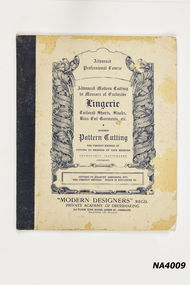
Book - Pattern Book, Advanced Modern Cutting to Measure of Exclusive Lingerie-Tailored Shorts, Slacks, Bias Cut Garments etc
... Advanced Modern Cutting to Measure of Exclusive Lingerie-Tailored Shorts, Slacks, Bias Cut Garments etc....Part of the Till collection NA4003 BOOKS Fashion Advanced Modern Cutting to Measure of Exclusive Lingerie Advanced Modern Cutting to Measure of Exclusive Lingerie-Tailored Shorts, Slacks, Bias Cut Garments etc. Book Pattern Book ...Part of the Till collection NA4003Advanced Modern Cutting to Measure of Exclusive Lingeriebooks, fashion -
 Department of Health and Human Services
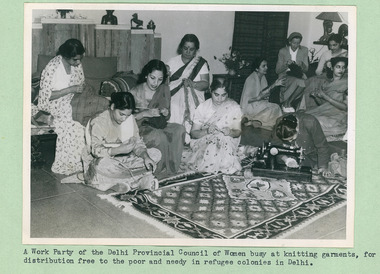
A Work Party of the Delhi Provincial Council of Women busy knitting garments for free distribution to the poor in Delhi India - 2 of 2 photos - Department of Health – National Fitness Office (Sports & Recreation) – Historical Press Release Photo Collection
... A Work Party of the Delhi Provincial Council of Women busy knitting garments for free distribution to the poor in Delhi India - 2 of 2 photos - Department of Health – National Fitness Office (Sports & Recreation) – Historical Press Release Photo Collection ...Department of Health – National Fitness Office (Sports & Recreation) – Historical Press Release Photo - Empire Youth Day & Royals on Tour Collection Department of Health – National Fitness Office (Sports & Recreation) – Historical Press Release Photo - Empire Youth Day & Royals on Tour Collection A Work Party of the Delhi Provincial Council of Women busy knitting garments for free distribution to the poor in Delhi India - 2 of 2 photos - Department of Health – National Fitness Office (Sports & Recreation) – Historical Press Release Photo Collection ...Department of Health – National Fitness Office (Sports & Recreation) – Historical Press Release Photo - Empire Youth Day & Royals on Tour CollectionDepartment of Health – National Fitness Office (Sports & Recreation) – Historical Press Release Photo - Empire Youth Day & Royals on Tour Collection -
 Greensborough Historical Society
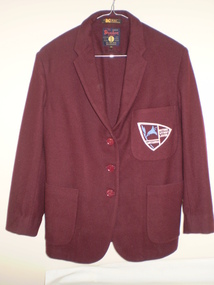
Uniform - Blazer, Watsonia High School Uniform - Blazer WaHIGH, 1985c
... Mina Garments...Maroon school blazer with school crest on pocket Watsonia High School Uniform - Blazer WaHIGH Uniform Blazer Mina Garments ...Blazer from Watsonia High School. The Watsonia High School and Watsonia Technical School were merged to form Greensborough Secondary College for the beginning of the 1990 school year, with the high school campus serving as a senior school for years 11 and 12, and the larger technical school used as a junior campus. It was renamed Greensborough College when the former high school campus was closed in 1992. This land was redeveloped into housing lots.This blazer is part of a small collection of Watsonia High School memorabilia.Maroon school blazer with school crest on pocket Pocket Badge depicted the School Logo and motto "Nothing Without Labour". For standard uniform the thread was white and yellow thread for Prefects and included the word Prefect. watsonia high school, uniform, blazer, mina garment, doctor flannel, school uniform -
 Clunes Museum
Clothing - GARMENTS
... GARMENTS...Nightdress Gloves Knitted Jacket .3 MADE IN WEST GERMANY BY KAYSER .1 SILK NIGHTOWN, CREAM COLOUR, ROUND NECK, CROCHET EDGING ON NECKLINE AND SHOULDER, EMBROIDERED BIRD, FRONT AND BACK .2 KNITTED BABY JACKET, 3 BUTTONS .3 1 PAIR GLOVES, DOUBLE WOVEN COTTON, MADE IN WEST GERMANY BY KAYSER Clothing GARMENTS ....1 SILK NIGHTOWN, CREAM COLOUR, ROUND NECK, CROCHET EDGING ON NECKLINE AND SHOULDER, EMBROIDERED BIRD, FRONT AND BACK .2 KNITTED BABY JACKET, 3 BUTTONS .3 1 PAIR GLOVES, DOUBLE WOVEN COTTON, MADE IN WEST GERMANY BY KAYSER .3 MADE IN WEST GERMANY BY KAYSERnightdress, gloves, knitted jacket -
 Embroiderers Guild, Victoria
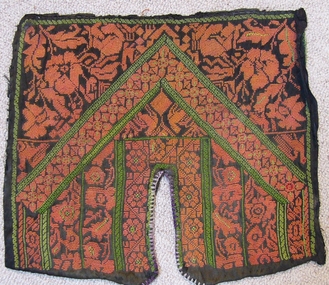
Textile - Bedouin Embroidered Bodice
... ... Garments...The embroidery on the garment has interesting regional features....There are 2 birds (1 each side), which also appear on similar garment fragment No. 834. 2 smaller birds at centre front....The embroidery on the garment has interesting regional features. Embroidery Cross stitch Garments Middle East Black fabric (satin ?) ...Made by a Palestinian woman living in Palestine. The embroidery on the garment has interesting regional features.Black fabric (satin ?) with bands of floral cross stitch in burnt orange, divded by narrower lines of green. There are 2 birds (1 each side), which also appear on similar garment fragment No. 834. 2 smaller birds at centre front.embroidery, cross stitch, garments, middle east -
 National Wool Museum
Textile - Children's Jumper, Kathryn Knitwear, c.1964-1970
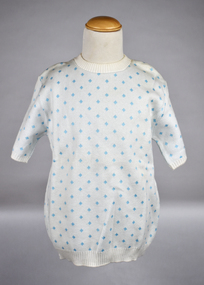
... Several ladies have told me of purchasing garments for their daughters’ glory box, or saving a particular garment after their daughter had grown out of it. ...Closes with three pearlescent plastic buttons at back neck. .2 is a retail tag marked with the style code, and includes generic information on care for garments of different material composition....ON NO ACCOUNT RUB SOAP ON GARMENT. Squeeze suds gently through garment but DO NOT RUB. ...ON NO ACCOUNT RUB SOAP ON GARMENT. Squeeze suds gently through garment but DO NOT RUB. ...Kathryn Knitwear, founded by Robert Blake, manufactured high quality children’s knitwear in Melbourne from the 1940s – 1980s. Robert Blake began manufacturing children’s knitwear in his bedroom in Strathmore using a hand powered machine in the late 1940s. The operation moved to Ascot Vale and Essendon, before eventually establishing a factory in Moonee Ponds in the early 1950s. The business continued to expand, necessitating a move to a new factory in Broadmeadows. By 1962, the Broadmeadows factory was producing an average of 20,000 garments per month, which increased to 24,000 by 1964. Robert Blake’s Son, Brendan recalls that “The Kathryn brand was famous around Australia, anywhere children needed to keep warm and dress smartly. It also won a number of wool fashion awards”, including the 1969 Wool Awards, which was held by the Australian Wool Bureau and published in Women’s Weekly. The Kathryn range was designed for durability, comfort and care, without sacrificing style. They used patterning techniques that increase stretchiness, comfort and fit, as well as integrating decorative elements into the fabric to prevent them from being bulky, uncomfortable or tight. Making longevity of style a priority, Brendan Blake remembers that “there was one particular garment that was in the range for at least thirty years”. He also recalls “In the past, when women have found out that I was associated with Kathryn Knitwear, they would often relate to me the story of a garment they had purchased or received as a gift and, when their child had grown out of it, they would hand it on to another child. Several ladies have told me of purchasing garments for their daughters’ glory box, or saving a particular garment after their daughter had grown out of it. Brendan Blake: “At the peak of their operation they employed approximately two hundred people, mainly women and girls. A family would often seek to send their daughter to work in this company because they knew they would be looked after and safe. One lady wrote to me telling me that working at the Moonee Ponds Factory prior to getting married was the happiest time of her life.” In 1963, workers at the Kathryn factory earned £13 per week, which was 8 shillings and 8 pence higher than the minimum weekly wage for female workers in the textile manufacturing industry (£12 11s 4d). By 1970, the Kathryn Knitwear brand expanded from children’s knitwear into womenswear under the brand name ‘Lady Kathryn’, and for boys and men under ‘Robert Blake’. Continuing to diversify their distribution, they also began exporting ‘Kathryn’ garments to New Zealand, the Pacific Islands, and Japan. ‘Kathryn Knitwear’ was well-known for their early adoption of modern materials and techniques that had broad appeal to their customer base. This is shown in their early use of the acrylic fibre ‘Orlon’ in the 50s and 60s and ‘Superwash’ wool in the 1970s. Many of Kathryn Knitwear’s styles, particularly those that were long running staples of the brand, were available in both wool and Orlon to suit the consumer’s preference. Far from the humble origins of one man in his bedroom with a hand-cranked machine; at its closure in 1980, the Broadmeadows factory of ‘Kathryn’ housed more than 100 machines, including 53 sewing machines and 45 knitting machines. Robert Blake was “a passionate advocate for wool and Australian Made” throughout his whole life. A strong thread that ties through the lifespan of Robert Blake and Kathryn Knitwear is a balance between adopting new innovations without sacrificing the core values of durability, comfort, care and style that had made the brand so well known. Their legacy forms an integral part of both Australian social and manufacturing history.White short-sleeved jumper with all-over pattern of aqua blue diamonds. Blue floated threads slightly show through white on main body, leading to an overall pale blue effect on body, with white collar and cuffs. Closes with three pearlescent plastic buttons at back neck. .2 is a retail tag marked with the style code, and includes generic information on care for garments of different material composition..1) [label stitched into back neck of garment] KATHRYN REGD CREATED BY ROBERT BLAKE .2) [retail tag, intended to be folded in three, printed on both sides] [OBVERSE] KATHRYN Children’s Knitwear STYLE: [blue pen] S/35B SIZE: PRICE: / KATHRYN Garments are… • PRE-SHRUNK • STANDARD MEASUREMENTS • FIT EXACTLY • LAUNDER PERFECTLY / NOW .. KATHRYN GOES TO . . SCHOOL Ask your retailer for SCHOOL PULLOVERS by KATHRYN [REVERSE] WASHING INSTRUCTIONS WOOL Wash frequently to AVOID HEAVY SOILING Wash garment BY HAND, in lukewarm Velvet Soap suds. ON NO ACCOUNT RUB SOAP ON GARMENT. Squeeze suds gently through garment but DO NOT RUB. Rubbing will cause garment to thicken. RINSE AT LEAST TWICE IN CLEAN WATER TO REMOVE ALL SOAP. TO dry, roll garment in a towel to remove excess moisture, turn garment inside out and pull it lengthwise, DRY IN SHADE… AVOID SUNLIGHT. When dry, place brown paper or pressing cloth over garment and press with iron at correct heat. ORLON Wash as wool Lay flat to dry but DO NOT IRON. To keep brushed suits like new, brush frequently with nylon brush supplied. COTTON Wash by hand for preference in Velvet Soap suds. Rinse thoroughly in cold water and remove all excess water before drying on line. Please do not use any harsh detergent or bleach. Designed and manufactured by ROBERT BLAKE Pty. Ltd., MELB. (handwritten in pencil) S35 (untintelligible)/5 / NOW KATHRYN GOES TO SCHOOL Ask your retailer for SCHOOL PULLOVERS by KATHRYNknitwear, children's knitwear, clothing, children's clothing, jumper, manufacturing, fashion textile production, machine knitting, colourwork -
 National Wool Museum
Textile - Baby Romper Suit, Kathryn Knitwear, c.1970
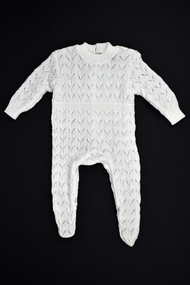
... Several ladies have told me of purchasing garments for their daughters’ glory box, or saving a particular garment after their daughter had grown out of it. ...Size 00 .2 is a retail tag marked with the price and size, and refers to the label sewn into the garment for washing instructions.....2 [Retail Swing Tag] [Obverse] KATHRYN Children’s Knitwear STYLE PRICE [handwritten] $18 SIZE [handwritten] 00 [Reverse] WASHING INSTRUCTIONS Refer to label sewn in Garment Designed and manufactured by ROBERT BLAKE PTY. ...Several ladies have told me of purchasing garments for their daughters’ glory box, or saving a particular garment after their daughter had grown out of it. ...Kathryn Knitwear, founded by Robert Blake, manufactured high quality children’s knitwear in Melbourne from the 1940s – 1980s. Robert Blake began manufacturing children’s knitwear in his bedroom in Strathmore using a hand powered machine in the late 1940s. The operation moved to Ascot Vale and Essendon, before eventually establishing a factory in Moonee Ponds in the early 1950s. The business continued to expand, necessitating a move to a new factory in Broadmeadows. By 1962, the Broadmeadows factory was producing an average of 20,000 garments per month, which increased to 24,000 by 1964. Robert Blake’s Son, Brendan recalls that “The Kathryn brand was famous around Australia, anywhere children needed to keep warm and dress smartly. It also won a number of wool fashion awards”, including the 1969 Wool Awards, which was held by the Australian Wool Bureau and published in Women’s Weekly. The Kathryn range was designed for durability, comfort and care, without sacrificing style. They used patterning techniques that increase stretchiness, comfort and fit, as well as integrating decorative elements into the fabric to prevent them from being bulky, uncomfortable or tight. Making longevity of style a priority, Brendan Blake remembers that “there was one particular garment that was in the range for at least thirty years”. He also recalls “In the past, when women have found out that I was associated with Kathryn Knitwear, they would often relate to me the story of a garment they had purchased or received as a gift and, when their child had grown out of it, they would hand it on to another child. Several ladies have told me of purchasing garments for their daughters’ glory box, or saving a particular garment after their daughter had grown out of it. Brendan Blake: “At the peak of their operation they employed approximately two hundred people, mainly women and girls. A family would often seek to send their daughter to work in this company because they knew they would be looked after and safe. One lady wrote to me telling me that working at the Moonee Ponds Factory prior to getting married was the happiest time of her life.” In 1963, workers at the Kathryn factory earned £13 per week, which was 8 shillings and 8 pence higher than the minimum weekly wage for female workers in the textile manufacturing industry (£12 11s 4d). By 1970, the Kathryn Knitwear brand expanded from children’s knitwear into womenswear under the brand name ‘Lady Kathryn’, and for boys and men under ‘Robert Blake’. Continuing to diversify their distribution, they also began exporting ‘Kathryn’ garments to New Zealand, the Pacific Islands, and Japan. ‘Kathryn Knitwear’ was well-known for their early adoption of modern materials and techniques that had broad appeal to their customer base. This is shown in their early use of the acrylic fibre ‘Orlon’ in the 50s and 60s and ‘Superwash’ wool in the 1970s. Many of Kathryn Knitwear’s styles, particularly those that were long running staples of the brand, were available in both wool and Orlon to suit the consumer’s preference. Orlon was developed by DuPont in the 1940s and became the first commercially successful acrylic fibre in the 1950s and 1960s. The development of Orlon coincided with an increase in availability of washing machines in everyday Australian homes. The great appeal of Orlon was that while wool garments still had to be hand-washed, Orlon’s shrink-resistant nature made it machine washable and dryable. This was a very appealing prospect, especially for the seemingly unending task of cleaning active children’s clothing. Machine washable wool would not be available until the development of the ‘Superwash’ treatment by the Australian Wool Board and CSIRO in 1970. Far from the humble origins of one man in his bedroom with a hand-cranked machine; at its closure in 1980, the Broadmeadows factory of ‘Kathryn’ housed more than 100 machines, including 53 sewing machines and 45 knitting machines. Robert Blake was “a passionate advocate for wool and Australian Made” throughout his whole life. A strong thread that ties through the lifespan of Robert Blake and Kathryn Knitwear is a balance between adopting new innovations without sacrificing the core values of durability, comfort, care and style that had made the brand so well known. Their legacy forms an integral part of both Australian social and manufacturing history.White lacework baby romper suit with long sleeves and legs, and enclosed feet. Closes at centre back with two plastic buttons. Zips open around leg inseam. Size 00 .2 is a retail tag marked with the price and size, and refers to the label sewn into the garment for washing instructions..2 [Retail Swing Tag] [Obverse] KATHRYN Children’s Knitwear STYLE PRICE [handwritten] $18 SIZE [handwritten] 00 [Reverse] WASHING INSTRUCTIONS Refer to label sewn in Garment Designed and manufactured by ROBERT BLAKE PTY. LTD., Melb., Aust.children's knitwear, children's clothing, baby clothing, baby knitwear, clothing, knitwear, romper, jumpsuit, manufacturing, fashion textile production, machine knitting, machine lace, baby clothes -
 National Wool Museum
Textile - Quilt, Domestic Wagga, 1950s
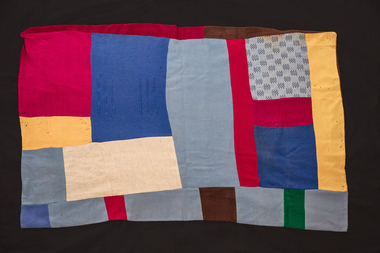
... Domestic wagga, unfilled, consisting of two machine sewn layers of woollen garment pieces both knitted and woven. The front pieces are predominantly red, blue and yellow, the back is mostly brown red and blue....WAGGA/ Maker unknown 154cm long X 90cm wide/ Made of parts of wool garments, knitted and woven........Part of the Running Stitch collection, possibly made in Ballarat handicrafts quilting quilting - history running stitch collection running stitch group handicrafts quilting quilting - history WAGGA/ Maker unknown 154cm long X 90cm wide/ Made of parts of wool garments, knitted and woven..... Domestic wagga, unfilled, consisting of two machine sewn layers of woollen garment pieces both knitted and woven. ...Part of the Running Stitch collection, possibly made in BallaratDomestic wagga, unfilled, consisting of two machine sewn layers of woollen garment pieces both knitted and woven. The front pieces are predominantly red, blue and yellow, the back is mostly brown red and blue.WAGGA/ Maker unknown 154cm long X 90cm wide/ Made of parts of wool garments, knitted and woven.....handicrafts quilting quilting - history, running stitch collection, running stitch group, handicrafts, quilting, quilting - history -
 Bendigo Military Museum
Equipment - UNDERGARMENT PROTECTION, Red China, pre 2005
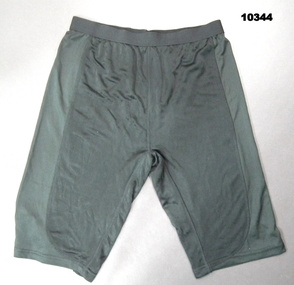
... Refer Cat No 10263. These under garments were for fragmentation protection. This apparel issued to L.Palfrey during Op Catalyst - Iraq. ...Black garment - under wear, elastic waist, elastic legs at end....Lee Palfrey Clothing Under garment Protection Makers printing: “Unisex Pelvic Protective, Anti-microbial Drawers. ...Lee Palfrey collection. Refer Cat No 10263. These under garments were for fragmentation protection. This apparel issued to L.Palfrey during Op Catalyst - Iraq. Aug 2005 - Feb 2006.Black garment - under wear, elastic waist, elastic legs at end.Makers printing: “Unisex Pelvic Protective, Anti-microbial Drawers. Main material: 95% Polyester 5% Elastane. Reinforcements 100% silk. Country of Origin: China” “PO No: 05242” Supplier ID No.: J20.lee palfrey, clothing, under garment, protection -
 Embroiderers Guild, Victoria
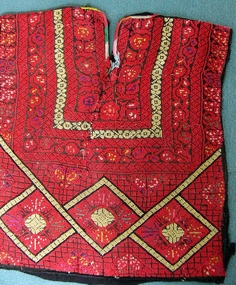
Textile - Bedouin Embroidered Bodice, 20th century
... ... Garments...Bodice - part of garment. Black fabric with red and fawn embroidery, green and white extra stitches....Embroidery Middle East Cross stitch Garments Bodice - part of garment. Black fabric with red and fawn embroidery, green and white extra stitches. ...Probably worked by Palestinian (Bedouin) women in Israel.Bodice - part of garment. Black fabric with red and fawn embroidery, green and white extra stitches.embroidery, middle east, cross stitch, garments -
 National Wool Museum
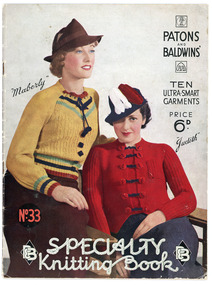
Book, Knitting, Patons and Baldwins' Specialty Knitting Book no. 33
... This knitting pattern leaflet was published by Patons and Baldwins and contains knitting patterns for womens garments....PATONS / AND / BALDWINS' / TEN / ULTRA-SMART / GARMENTS / PRICE / 6D. / "Maberley" / "Judith" / No. 33 / SPECIALTY / Knitting Book...This knitting pattern leaflet was published by Patons and Baldwins and contains knitting patterns for womens garments. Knitting Handicrafts - history Patons and Baldwins (Australia) Ltd Knitting Handicrafts - history PATONS / AND / BALDWINS' / TEN / ULTRA-SMART / GARMENTS / PRICE / 6D. / "Maberley" / "Judith" / No. 33 / SPECIALTY / Knitting Book Patons and Baldwins' Specialty Knitting Book no. 33 Book, Knitting ...This knitting pattern leaflet was published by Patons and Baldwins and contains knitting patterns for womens garments.PATONS / AND / BALDWINS' / TEN / ULTRA-SMART / GARMENTS / PRICE / 6D. / "Maberley" / "Judith" / No. 33 / SPECIALTY / Knitting Bookknitting handicrafts - history, patons and baldwins (australia) ltd, knitting, handicrafts - history -
 National Wool Museum
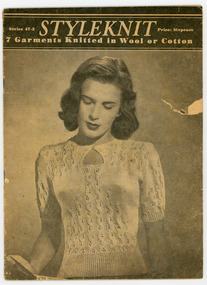
Book, Knitting, Styleknit series 47-2
... It was produced by Styleknit in c.1947 and contains knitting patterns for womens garments....Series 47-2 / STYLEKNIT / Price: Sixpence / 7 Garments Knitted in Wool or Cotton...It was produced by Styleknit in c.1947 and contains knitting patterns for womens garments. Knitting Handicrafts - history Styleknit Knitting Handicrafts - history Series 47-2 / STYLEKNIT / Price: Sixpence / 7 Garments Knitted in Wool or Cotton Styleknit series 47-2 Book, Knitting ...This book was owned by the late Dr Elizabeth Kerr and was donated to the Museum by the executor of her estate, Margaret Cameron. It was produced by Styleknit in c.1947 and contains knitting patterns for womens garments.Series 47-2 / STYLEKNIT / Price: Sixpence / 7 Garments Knitted in Wool or Cottonknitting handicrafts - history, styleknit, knitting, handicrafts - history -
 Bendigo Historical Society Inc.
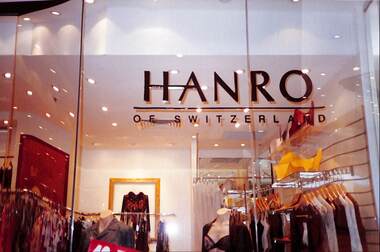
Photograph - Skidmore Collection: Hanro (Australia) Knitting Mills Limited four colour photographs, 2005
... 2005 knitted woman's garments ...Skidmore Collection: Hanro (Australia) Knitting Mills Limited, colour photographs of a display of Handro women's garments on sale in July 2005 in the Wintergarden Building, Brisbane ...2005 knitted woman's garments Hanro 2005 knit garments Skidmore Collection: Hanro (Australia) Knitting Mills Limited, colour photographs of a display of Handro women's garments on sale in July 2005 in the Wintergarden Building, Brisbane Photograph Skidmore Collection: Hanro (Australia) Knitting Mills Limited four colour photographs ...2005 knitted woman's garments Skidmore Collection: Hanro (Australia) Knitting Mills Limited, colour photographs of a display of Handro women's garments on sale in July 2005 in the Wintergarden Building, Brisbane hanro, 2005 knit garments -
 National Wool Museum
Archive - Advertisement, 6/10/1969
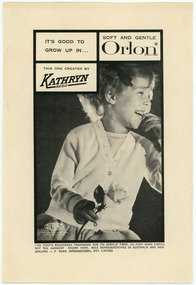
... Several ladies have told me of purchasing garments for their daughters’ glory box, or saving a particular garment after their daughter had grown out of it. ...Text advertises Kathryn knitwear garment made with Orlon acrylic fibre by DuPont. ...DU PONT MAKES FIBRES NOT THE GARMENT SHOWN HERE. SOLE REPRESENTATIVES IN AUSTRALIA AND NEW ZEALAND – P ROWE INTERNATIONAL, PTY. ...Several ladies have told me of purchasing garments for their daughters’ glory box, or saving a particular garment after their daughter had grown out of it. ...Kathryn Knitwear, founded by Robert Blake, manufactured high quality children’s knitwear in Melbourne from the 1940s – 1980s. Robert Blake began manufacturing children’s knitwear in his bedroom in Strathmore using a hand powered machine in the late 1940s. The operation moved to Ascot Vale and Essendon, before eventually establishing a factory in Moonee Ponds in the early 1950s. The business continued to expand, necessitating a move to a new factory in Broadmeadows. By 1962, the Broadmeadows factory was producing an average of 20,000 garments per month, which increased to 24,000 by 1964. Robert Blake’s Son, Brendan recalls that “The Kathryn brand was famous around Australia, anywhere children needed to keep warm and dress smartly. It also won a number of wool fashion awards”, including the 1969 Wool Awards, which was held by the Australian Wool Bureau and published in Women’s Weekly. The Kathryn range was designed for durability, comfort and care, without sacrificing style. They used patterning techniques that increase stretchiness, comfort and fit, as well as integrating decorative elements into the fabric to prevent them from being bulky, uncomfortable or tight. Making longevity of style a priority, Brendan Blake remembers that “there was one particular garment that was in the range for at least thirty years”. He also recalls “In the past, when women have found out that I was associated with Kathryn Knitwear, they would often relate to me the story of a garment they had purchased or received as a gift and, when their child had grown out of it, they would hand it on to another child. Several ladies have told me of purchasing garments for their daughters’ glory box, or saving a particular garment after their daughter had grown out of it. Brendan Blake: “At the peak of their operation they employed approximately two hundred people, mainly women and girls. A family would often seek to send their daughter to work in this company because they knew they would be looked after and safe. One lady wrote to me telling me that working at the Moonee Ponds Factory prior to getting married was the happiest time of her life.” In 1963, workers at the Kathryn factory earned £13 per week, which was 8 shillings and 8 pence higher than the minimum weekly wage for female workers in the textile manufacturing industry (£12 11s 4d). By 1970, the Kathryn Knitwear brand expanded from children’s knitwear into womenswear under the brand name ‘Lady Kathryn’, and for boys and men under ‘Robert Blake’. Continuing to diversify their distribution, they also began exporting ‘Kathryn’ garments to New Zealand, the Pacific Islands, and Japan. ‘Kathryn Knitwear’ was well-known for their early adoption of modern materials and techniques that had broad appeal to their customer base. This is shown in their early use of the acrylic fibre ‘Orlon’ in the 50s and 60s and ‘Superwash’ wool in the 1970s. Many of Kathryn Knitwear’s styles, particularly those that were long running staples of the brand, were available in both wool and Orlon to suit the consumer’s preference. Far from the humble origins of one man in his bedroom with a hand-cranked machine; at its closure in 1980, the Broadmeadows factory of ‘Kathryn’ housed more than 100 machines, including 53 sewing machines and 45 knitting machines. Robert Blake was “a passionate advocate for wool and Australian Made” throughout his whole life. A strong thread that ties through the lifespan of Robert Blake and Kathryn Knitwear is a balance between adopting new innovations without sacrificing the core values of durability, comfort, care and style that had made the brand so well known. Their legacy forms an integral part of both Australian social and manufacturing history.Black and white printed advertisement showing a small child wearing a pale v neck cardigan with scalloped border at the neck and embroidered floral motif holding a white rose. Text advertises Kathryn knitwear garment made with Orlon acrylic fibre by DuPont. Communication regarding this advertisement can be found under NWM-09063[obverse] IT’S GOOD TO GROW UP IN SOFT AND GENTLE Orlon* ACRYLIC FIBRE THIS ONE CREATED BY KATHRYN REGD * DU PONT’S REGISTERED TRADEMARK FOR ITS ACRYLIC FIBRE. DU PONT MAKES FIBRES NOT THE GARMENT SHOWN HERE. SOLE REPRESENTATIVES IN AUSTRALIA AND NEW ZEALAND – P ROWE INTERNATIONAL, PTY. LIMITEDbusiness, business history, manufacturing, knitting machine, fashion textile production, business archives, manufacturing documents, textile industry - history wool marketing, wool marketing fashion textile industry, children's knitwear, children's clothing, knitwear marketing -
 National Wool Museum
Layette
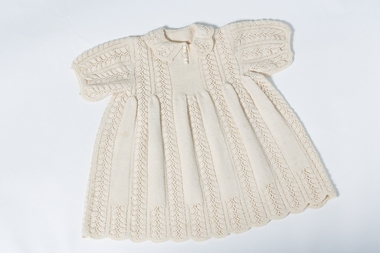
... Married with three children, Vera knitted with one and two ply wool, often using piano wire or bicycle spokes as needles, entering the garments in agricultural shows. This is one of 23 garments donated by her granddaugher, Mrs Glenda Ilsley....Married with three children, Vera knitted with one and two ply wool, often using piano wire or bicycle spokes as needles, entering the garments in agricultural shows. This is one of 23 garments donated by her granddaugher, Mrs Glenda Ilsley. ...Married with three children, Vera knitted with one and two ply wool, often using piano wire or bicycle spokes as needles, entering the garments in agricultural shows. This is one of 23 garments donated by her granddaugher, Mrs Glenda Ilsley. ...The knitter was Vera Neale,1901 - 1990. Married with three children, Vera knitted with one and two ply wool, often using piano wire or bicycle spokes as needles, entering the garments in agricultural shows. This is one of 23 garments donated by her granddaugher, Mrs Glenda Ilsley.The knitter was Vera Neale,1901 - 1990. Married with three children, Vera knitted with one and two ply wool, often using piano wire or bicycle spokes as needles, entering the garments in agricultural shows. This is one of 23 garments donated by her granddaugher, Mrs Glenda Ilsley. The knitter was Vera Neale,1901 - 1990. knitting handicrafts, neale, mrs vera, knitting, handicrafts -
Whitehorse Historical Society Inc.
Pamphlet, Victorian Baby Health Centres
... The Diet of the expectant mother; infant's garments. includes knitting instructions for infant's singlet and modesties...Three leaflets: Advice to expectant mothers; The Diet of the expectant mother; infant's garments. includes knitting instructions for infant's singlet and modesties....The Diet of the expectant mother; infant's garments. includes knitting instructions for infant's singlet and modesties Maternal and Child Health Centres Victorian Baby Health Centres Association Children's Clothing Three leaflets: Advice to expectant mothers; Three leaflets: Advice to expectant mothers; The Diet of the expectant mother; infant's garments. includes knitting instructions for infant's singlet and modesties. ...Three leaflets: Advice to expectant mothers;Three leaflets: Advice to expectant mothers; The Diet of the expectant mother; infant's garments. includes knitting instructions for infant's singlet and modesties.Three leaflets: Advice to expectant mothers; maternal and child health centres, victorian baby health centres association, children's clothing -
 Embroiderers Guild, Victoria
Textile - Bedouin Embroidered Bodice, 20th century
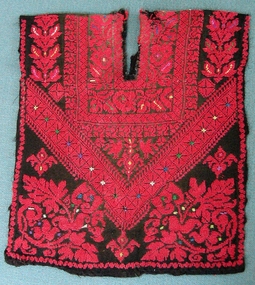
... ... Garments...Part of garment - probably a bodice. Black fabric with red embroidery with some highlights in blue, green and cream cross stitch....Embroidery Middle East Cross stitch Garments Part of garment - probably a bodice. ...Probably worked by Palestinian (Bedouin) women living in Israel.Part of garment - probably a bodice. Black fabric with red embroidery with some highlights in blue, green and cream cross stitch.embroidery, middle east, cross stitch, garments -
 Greensborough Historical Society
Clothing and photograph, Windcheater and photograph, Watsonia High 1989, 1989_
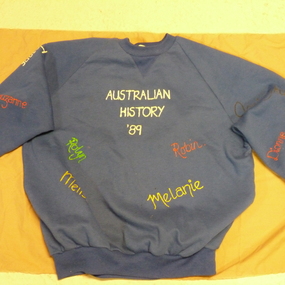
... Students have painted their names on the garment and included an unofficial 'class photo' with the windcheater. ...Painted in white letters on front of windcheater 'Australian History '89'. Scattered on garment are the names of class members....Students have painted their names on the garment and included an unofficial 'class photo' with the windcheater. ...Windcheater presented to Rosie Bray by classmates at Watsonia High, 1989 Australian History class. Students have painted their names on the garment and included an unofficial 'class photo' with the windcheater. Rosie was a mature age student in this class.A token of friendship from Rosie's classmates at Watsonia High.Blue windcheater, size M, accompanied by photograph of students.Painted in white letters on front of windcheater 'Australian History '89'. Scattered on garment are the names of class members.rosalie bray, watsonia high school -
 Emerald Museum & Nobelius Heritage Park
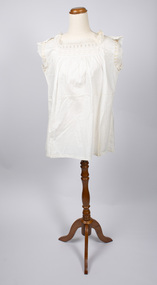
Clothing - Chemise or Camisole, Early 19th century
... The donor was informed at the time of purchase that the garments were over 100 years old....Hand sewn, sleeveless fine woven cotton, loose-fitting garment detailed with deep cream coloured ribbon lace on armholes. ...The neckline is square-shaped and has a broad band of ribbon filled beneath lace detailing. The garment has 2 pearl coloured buttons on-top of the shoulders as openings. ...This type of chemise/camisole is believed to be early 19th century. Its original owner is unknown, but it was purchased in the late 1990s by the donor who later moved to Emerald but, at the time, had a 2nd hand decoration shop in Camberwell when she purchased this as part of a group of garments which included bloomers, lace collars and cuffs, camisoles etc - all of which have been donated to the Museum. The donor was informed at the time of purchase that the garments were over 100 years old.This lovely hand-made cotton and lace camisole is typical of a type of undergarment worn by women inside the home in the early 19th century. Hand sewn, sleeveless fine woven cotton, loose-fitting garment detailed with deep cream coloured ribbon lace on armholes. The neckline is square-shaped and has a broad band of ribbon filled beneath lace detailing. The garment has 2 pearl coloured buttons on-top of the shoulders as openings.female, point d'esprit, lynne findlay collection, camisole -
 Warrnambool and District Historical Society Inc.
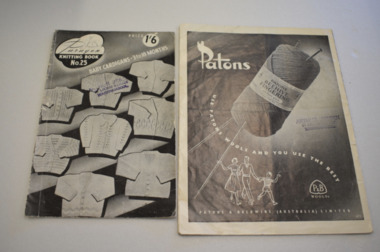
Knitting Pattern Book, Patons, 1940s
... In the early to mid 20th century in Australia many of the woollen garments worn were handmade. Today this is not the case and hand-knitted garments are rare. ...The pages contain instructions for knitting six garments....In the early to mid 20th century in Australia many of the woollen garments worn were handmade. Today this is not the case and hand-knitted garments are rare. ...This knitting pattern book dates from about the 1940s. Garments made with a Fair Isle pattern, especially sleeveless vests for men, were popular at that time. In the early to mid 20th century in Australia many of the woollen garments worn were handmade. Today this is not the case and hand-knitted garments are rare. Miss McClure had a lingerie and babywear shop at 114 Liebig Street before the building was demolished in 1953. This book is of minor interest as an example of a 1940s knitting pattern book and as a memento of Miss McClure’s shop in Liebig Street at that time. This is a booklet of 16 pages. It has a white cover with a red edging and black and white photographs and black printing on the front and back cover. The pages contain instructions for knitting six garments.Fair Isles For the Family Miss McClure Liebig Streetmiss mcclure, liebig street, history of warrnambool, knitting pattern books -
 National Wool Museum
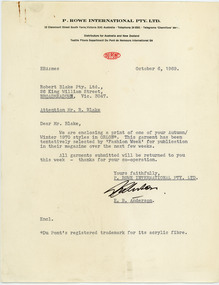
Letter, P Rowe International, 6/10/1969
... Several ladies have told me of purchasing garments for their daughters’ glory box, or saving a particular garment after their daughter had grown out of it. ...The letter confirms the tentative selection of a Kathryn Knitwear Orlon garment to be published in ‘Fashion Week’ as advertising for both Kathryn knitwear and DuPont’s Orlon fibre. ...All garments submitted will be returned to you this week – thanks for your co-operation. ...Several ladies have told me of purchasing garments for their daughters’ glory box, or saving a particular garment after their daughter had grown out of it. ...Kathryn Knitwear, founded by Robert Blake, manufactured high quality children’s knitwear in Melbourne from the 1940s – 1980s. Robert Blake began manufacturing children’s knitwear in his bedroom in Strathmore using a hand powered machine in the late 1940s. The operation moved to Ascot Vale and Essendon, before eventually establishing a factory in Moonee Ponds in the early 1950s. The business continued to expand, necessitating a move to a new factory in Broadmeadows. By 1962, the Broadmeadows factory was producing an average of 20,000 garments per month, which increased to 24,000 by 1964. Robert Blake’s Son, Brendan recalls that “The Kathryn brand was famous around Australia, anywhere children needed to keep warm and dress smartly. It also won a number of wool fashion awards”, including the 1969 Wool Awards, which was held by the Australian Wool Bureau and published in Women’s Weekly. The Kathryn range was designed for durability, comfort and care, without sacrificing style. They used patterning techniques that increase stretchiness, comfort and fit, as well as integrating decorative elements into the fabric to prevent them from being bulky, uncomfortable or tight. Making longevity of style a priority, Brendan Blake remembers that “there was one particular garment that was in the range for at least thirty years”. He also recalls “In the past, when women have found out that I was associated with Kathryn Knitwear, they would often relate to me the story of a garment they had purchased or received as a gift and, when their child had grown out of it, they would hand it on to another child. Several ladies have told me of purchasing garments for their daughters’ glory box, or saving a particular garment after their daughter had grown out of it. Brendan Blake: “At the peak of their operation they employed approximately two hundred people, mainly women and girls. A family would often seek to send their daughter to work in this company because they knew they would be looked after and safe. One lady wrote to me telling me that working at the Moonee Ponds Factory prior to getting married was the happiest time of her life.” In 1963, workers at the Kathryn factory earned £13 per week, which was 8 shillings and 8 pence higher than the minimum weekly wage for female workers in the textile manufacturing industry (£12 11s 4d). By 1970, the Kathryn Knitwear brand expanded from children’s knitwear into womenswear under the brand name ‘Lady Kathryn’, and for boys and men under ‘Robert Blake’. Continuing to diversify their distribution, they also began exporting ‘Kathryn’ garments to New Zealand, the Pacific Islands, and Japan. ‘Kathryn Knitwear’ was well-known for their early adoption of modern materials and techniques that had broad appeal to their customer base. This is shown in their early use of the acrylic fibre ‘Orlon’ in the 50s and 60s and ‘Superwash’ wool in the 1970s. Many of Kathryn Knitwear’s styles, particularly those that were long running staples of the brand, were available in both wool and Orlon to suit the consumer’s preference. Far from the humble origins of one man in his bedroom with a hand-cranked machine; at its closure in 1980, the Broadmeadows factory of ‘Kathryn’ housed more than 100 machines, including 53 sewing machines and 45 knitting machines. Robert Blake was “a passionate advocate for wool and Australian Made” throughout his whole life. A strong thread that ties through the lifespan of Robert Blake and Kathryn Knitwear is a balance between adopting new innovations without sacrificing the core values of durability, comfort, care and style that had made the brand so well known. Their legacy forms an integral part of both Australian social and manufacturing history.Letter from E. B. Anderson from P. Rowe International Pty. Ltd. On behalf of DuPont International to Robert Blake, owner of Kathryn Knitwear. The letter confirms the tentative selection of a Kathryn Knitwear Orlon garment to be published in ‘Fashion Week’ as advertising for both Kathryn knitwear and DuPont’s Orlon fibre. The Advertisement can be found under the accession number NWM-09065.[obverse] P. ROWE INTERNATIONAL PTY. LTD. 12 Claremont Street South Yarra, Victoria 3141 Australia – Telephone 24 6561 - Telegrams ‘Chemfibre’ Me[unintelligible] Distributors for Australia and New Zealand Textile Fibers department Du Pont de Nemours International SA EBA: mes October 6, 1969. Robert Blake Pty. Ltd., 26 King William Street, BROADMEADOWS, Vic. 3047 Attention Mr. R. Blake Dear Mr Blake, We are enclosing a print of one of your Autumn/ Winter 1970 styles in ORLON*. This garment has been tentatively selected by ‘Fashion Week’ for publication in their magazine over the next few weeks. All garments submitted will be returned to you this week – thanks for your co-operation. Yours faithfully, P. ROWE INTERNATIONAL PTY. LTD. [signature] E. B. Anderson. Encl. *Du Pont’s registered trademark for its acrylic fibre.business, business history, manufacturing, knitting machine, fashion textile production, business archives, manufacturing documents -
 National Wool Museum
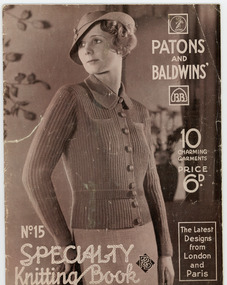
Book, Knitting, Patons and Baldwins' Specialty Knitting Book no. 15
... It was produced by Patons and Baldwins and contains knitting patterns for womens garments....PATONS / AND / BALDWINS' / 10 / CHARMING / GARMENTS / PRICE / 6D. / No. 15 / SPECIALTY / Knitting Book / P&B / The Latest / Designs / from / London / and / Paris...It was produced by Patons and Baldwins and contains knitting patterns for womens garments. knitting handicrafts - history patons and baldwins (australia) ltd knitting handicrafts - history PATONS / AND / BALDWINS' / 10 / CHARMING / GARMENTS / PRICE / 6D. / No. 15 / SPECIALTY / Knitting Book / P&B / The Latest / Designs / from / London / and / Paris Patons and Baldwins' Specialty Knitting Book no. 15 Book, Knitting ...This book was owned by the late Dr Elizabeth Kerr and was donated to the Museum by the executor of her estate, Margaret Cameron. It was produced by Patons and Baldwins and contains knitting patterns for womens garments.PATONS / AND / BALDWINS' / 10 / CHARMING / GARMENTS / PRICE / 6D. / No. 15 / SPECIALTY / Knitting Book / P&B / The Latest / Designs / from / London / and / Parisknitting handicrafts - history, patons and baldwins (australia) ltd, knitting, handicrafts - history -
 National Wool Museum
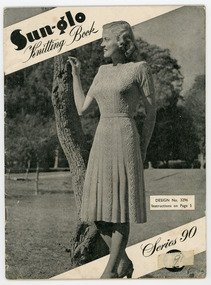
Book, Knitting, Sun-glo Knitting Book series 90
... This knitting pattern book was published by the Alexandria Mills, Sydney and contains knitting patterns for womens garments....Contains photos and patterns for womens knitted garments....Contains photos and patterns for womens knitted garments. Sun-glo Knitting Book series 90 Book, Knitting ...This knitting pattern book was published by the Alexandria Mills, Sydney and contains knitting patterns for womens garments.Knitting pattern book, 24pp. Cover is printed in black and white with a photograph of a woman wearing a knitted short sleeved dress with patterned panels. Contains photos and patterns for womens knitted garments.Sun-glo / Knitting Book / Series 90 / 1'3knitting handicrafts - history, alexandria spinning mills pty ltd, knitting, handicrafts - history -
 National Wool Museum
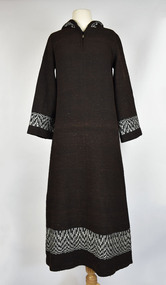
Clothing - Dress, 1979
... It was entered in the ‘evening wear’ category of hand spun and knitted garments. The Warp was commercially brought 2/24 wool. ...There are multiple thick and thin lines of both the silver and black colours mirroring each other as the pattern stretches around the garment. ...It was entered in the ‘evening wear’ category of hand spun and knitted garments. The Warp was commercially brought 2/24 wool. ...This dress was created by Jean Inglis for a competition of garments hosted by the Geelong Handweavers and Spinners Guild at a ski weekend in 1979. It was entered in the ‘evening wear’ category of hand spun and knitted garments. The Warp was commercially brought 2/24 wool. The Weft was hand spun black Corriedale wool. This wool was brought at a sale in Geelong and was hand dyed and spun by Jean. The patter is a ‘Ripple’ variation of a ‘Crackle’ weave completed on Jean’s own Dobby Loom (pictured). Long black dress stretching from the feet, reaching up to a hood at the neckline and down to the hands in the sleeve. The dress is black with a glossy silver pattern in the form of a band around the hood, hands and feet of the garment. In these bands is a wavy pattern of silver and black lines. There are multiple thick and thin lines of both the silver and black colours mirroring each other as the pattern stretches around the garment. wool, weaving, hand spun, corriedale -
 Embroiderers Guild, Victoria
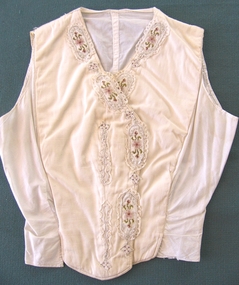
Clothing - Repurposed Vest with Floral Embroidery Inserts, c.1910
... ... Garments...Made from some other garment....Embroidery Garments 1900-20 Cross stitch Vest made of cream cotton, machine stitched with lace edges. ...Vest made of cream cotton, machine stitched with lace edges. Front trimmed with six small cross stitch ovals in floral design. Made from some other garment.embroidery, garments, 1900-20, cross stitch -
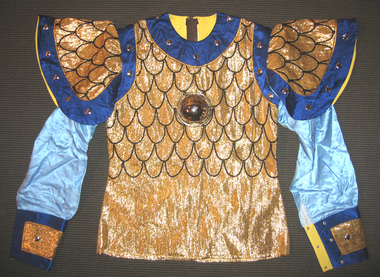 Chinese Museum
processional upper garment
... This upper garment was obtained by Charles Quon, probably from Hong Kong, and used by the Young Chinese League in their processions. ...Upper garment with fish scale decoration in gold with blue trim and a smallstainless steel/chrome half spheres attached to the chest. ...The sleeves have decorated cuffs and small shoulder 'wings'. processional upper garment ...This upper garment was obtained by Charles Quon, probably from Hong Kong, and used by the Young Chinese League in their processions. This is part of a 'fish warrior' costume.This upper garment is significant for its links to the Chinese Young League. The League was formally established on 4 October 1932 to to promote free social intercourse and goodwill among its members and their mutual improvement. Membership was open to all persons, with one or both parents or grandparents born in China. Wives of Chinese members were permitted as members with the same privileges. It was a significant social organisation for Chinese-Australians in Melbourne in the mid to late twentieth century.Upper garment with fish scale decoration in gold with blue trim and a smallstainless steel/chrome half spheres attached to the chest. The sleeves have decorated cuffs and small shoulder 'wings'.young chinese league, melbourne, victoria, australia, processions, costumes
