
Showing 12 items matching " hal porter"
-
 Lakes Entrance Historical Society
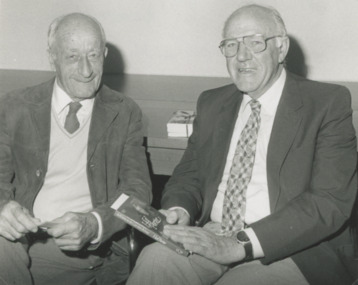
Photograph - The Hal Porter Short Story Competition, Lakes Post Newspaper, 1/11/1995 12:00:00 AM
... The Hal Porter Short Story Competition ...Jack Porter's brother Hal Porter was writer and commentator for The Hal Porter Short Story Competition inauguated to celebrate him as a Bairnsdale boy....Black and white photograph of Jack Porter and Bruce Evans discussing the Hal Porter Short Story Competition Bairnsdale Victoria...Jack Porter's brother Hal Porter was writer and commentator for The Hal Porter Short Story Competition inauguated to celebrate him as a Bairnsdale boy. ...Jack Porter's brother Hal Porter was writer and commentator for The Hal Porter Short Story Competition inauguated to celebrate him as a Bairnsdale boy.Black and white photograph of Jack Porter and Bruce Evans discussing the Hal Porter Short Story Competition Bairnsdale Victorialiterature, social history, people -
 Flagstaff Hill Maritime Museum and Village
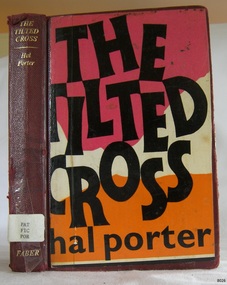
Book - Fiction, Hal Porter, author, The Tilted Cross, 1961
... ...Hal Porter...The Tilted Cross Author: Hal Porter Publisher: Faber and Faber. London Date: 1961 Hardcover bound book with gold embossed titles on the spine, and a pasted-on title on the front cover. ...Hal Porter, author...The book is part of the Pattison Collection The Tilted Cross Book Fiction Hal Porter, author Faber and Faber ...The Pattison Collection: The ‘Pattison Collection’ comprises books and records that were originally owned by the Warrnambool Mechanics’ Institute, which was established in Warrnambool in 1853. By 1886, the Institute had expanded significantly, boasting a Library, Museum, and Fine Arts Gallery. The collection included notable works of art and valuable specimens from various fields, as well as remarkable national curiosities and historic relics relating to the town and district. The Institute later incorporated a School of Design. Despite being popular with the public, the Institute struggled financially and, in 1911, requested that the City Council assume control. In 1935, Ralph Pattison was appointed as City Librarian to establish and organise what was then known as the Warrnambool Library. When the Mechanics’ Institute building was demolished in 1963, a new civic building was constructed on the site, and the Warrnambool Library, managed by the City Council, acquired all the holdings of the WMI. It was during this transition that certain items were separated and designated as the ‘Pattison Collection’, in honour of Ralph Pattison. Over time, the various components of the WMI were distributed among different institutions, including the Art Gallery, Historical Society, and Flagstaff Hill. Some items were also sent to other regional branches of the Corangamite Regional Library, and their exact locations have become difficult to trace. The books at Flagstaff Hill Maritime Village typically bear stamps and markings from Pattison and various other institutions, including the Mechanics’ Institute itself. Ralph Eric Pattison: Ralph Eric Pattison was born in Rockhampton, Queensland, in 1891. In 1920, he married Maude Swan from Warrnambool, and the couple settled in Warrnambool. Pattison accepted the role of City Librarian for the Warrnambool City Council in 1935. Tasked with transforming two rooms in the Mechanics’ Institute into a functional library, he diligently cleaned, sorted, and organised a disordered collection of old books, jars of preserved specimens, and assorted items previously reserved for the city’s museum. Pattison expanded and modernised the library, ensuring it catered to a broad range of interests, including providing reference books for students—a challenging feat in the years following the Depression. He converted the lower level of the building into a library, reference room, and reading room for both members and the public. Books were organised using a cataloguing and card index system that Pattison designed himself. He also prepared the upper floor, establishing both an Art Gallery and, later, a Museum to display the many historical relics collected over the years. Among these treasures was a beautiful antique clock, which Pattison restored and used in his office throughout his tenure. He was known as a meticulous gentleman, recognised for his punctuality, impeccable courtesy, and neat appearance. His restored clock regulated his daily routine and the precise opening and closing of the library’s doors. During 1942 to 1945, Pattison took leave to serve as a Lieutenant in the Royal Australian Navy Volunteer Reserve. A few years later, he converted one of the Museum’s rooms into a Children’s Library, which quickly became popular. In the 1950s, Pattison was appointed to the Victorian Library Board, where he gained further inspiration from monthly conferences in Melbourne. He retired in 1959, after more than 23 years of service, due to having surpassed the working age limit for council officers. Nevertheless, Pattison maintained a strong interest in the ongoing development of the Library until his death in 1969. Warrnambool Public Library: The Warrnambool Mechanics’ Institute (WMI) originated from a voluntary community group in 1863, just six years after the founding of Warrnambool, with its Reading Room opening in 1854. The WMI remained in operation until 1963 and was among the oldest Mechanics’ Institutes in Victoria. Mechanics’ Institutes provided essential public services, including libraries, reading rooms, and spaces for the exhibition and storage of curiosities and local historical relics. In 1886, a Museum and Fine Arts Gallery were added to the WMI, and by the early 20th century, it also featured a billiards room and a School of Art. At this time, it was common for country Victorian Mechanics’ Institutes to have attached museums. Over the years, the Warrnambool Mechanics’ Institute Library was also referred to as the Warrnambool Public Library, the Warrnambool Library, and the Free Library. Early government funding was provided for the “Free Library”. For example, a book titled “Science of Man” was inscribed for the “Warrnambool Public Library” and donated by Joseph Archibald in 1899. Another book, “Catalogue of Plants Under Cultivation in the Melbourne Botanic Gardens 1 & 2, 1883”, was presented to the “Warrnambool Library” and signed by the author W.R. Guilfoyle. In 1903, the Warrnambool Public Library established a Juvenile Department, stocking hundreds of books suitable for young readers. In 1905, the committee updated the book collection by adding 100 new novels and arranging for the latest novels to be included as soon as they became available in Victoria. By July 1911, the Warrnambool Council had assumed management of the Public Library, Art Gallery, Museum, and Mechanics’ Institute, with plans to double the size of the existing building. In 1953, under the stewardship of Mr. R. Pattison, the Warrnambool Public Library’s senior section contained 10,000 fiction books out of a total of 13,000. The children’s section held an additional 3,400 books, equating to one book per head of population and serving around 33 percent of the local reading public. The collection comprised approximately 60 percent reference books and 40 percent fiction, with the library lending out 400 books per day. In 1963, the Warrnambool City Council designated the site of the Mechanics’ Institute building—which included the Public Library, Museum, and Art Gallery—for the new Municipal Offices, resulting in the dispersal of the collections until 1971. The Warrnambool Library subsequently assumed responsibility for the Mechanics’ Institute Library’s holdings on behalf of the City Council. Since the closure of the Mechanics’ Institute, the precise location and composition of the original WMI books and items have become unclear. Additional items have entered the collection over time, including materials from Terang MI, Warrnambool Court House, and Customs House. Many books are now identified as part of the Pattison Collection, named after the librarian who catalogued and numbered them before the Mechanics’ Institute closed. When Warrnambool joined the Corangamite Regional Library, some books and materials were sent to its head office in Colac and later returned to Warrnambool, where they were stored at the Art Gallery for an extended period. Some items subsequently went to the Warrnambool Historical Society, some remained at the Art Gallery, and others were transferred to Flagstaff Hill Maritime Village. The various stamps and labels on the books at Flagstaff Hill reflect the diverse distribution and origins of the collection. The books currently held at Flagstaff Hill Maritime Village date from the 1850s to the late 1950s and include rare and valuable volumes. Many are part of the “Pattison Collection”, named after Warrnambool’s Public Librarian, Mr. R. Pattison.Integration and Significance of the WMI Publication Collection: Many components of the Warrnambool Mechanics' Institute (WMI) publication collection serve to complement and reinforce other important cultural collections in the region, including those held by the Flagstaff Hill Maritime Museum, the Warrnambool Art Gallery, and the Warrnambool Historical Society. Collectively, these collections provide a more comprehensive understanding of the origins and development of the original Warrnambool Mechanics' Institute holdings. The presence and integration of these materials not only enhance the appreciation of the few remaining Mechanics' Institute collections in Victoria, but also contribute to the recognition of similar collections in New South Wales. Examining both the similarities and differences among these surviving collections offers valuable insights into the ways in which the people of Victoria—and the community of Warrnambool in particular—constructed a civic culture centred on adult education, ultimately fostering an informed and engaged citizenry. Local and State Importance: The Warrnambool Mechanics' Institute publication collection is significant at local and state levels. Its value lies in its relationship to other cultural collections, its historical context, and its enduring role in supporting the intellectual and social development of the community.The Tilted Cross Author: Hal Porter Publisher: Faber and Faber. London Date: 1961 Hardcover bound book with gold embossed titles on the spine, and a pasted-on title on the front cover. Inscriptions are on labels on the spine and front loose endpaper, and on a stamp on the fly page. The book is part of the Pattison CollectionLabel with typed text": "PAT FIC POR" Sticker: "Corangamite Regional Library Service" Stamp: "Warrnambool Public Library"warrnambool, shipwrecked-coast, flagstaff-hill, flagstaff-hill-maritime-museum, maritime-museum, shipwreck-coast, flagstaff-hill-maritime-village, shipwrecked-artefact, book, pattison collection, warrnambool library, warrnambool mechanics’ institute, ralph eric pattison, corangamite regional library service, warrnambool city librarian, mechanics’ institute library, victorian library board, warrnambool books and records, warrnambool children’s library, great ocean road, the tilted cross, hal porter -
 Robin Boyd Foundation
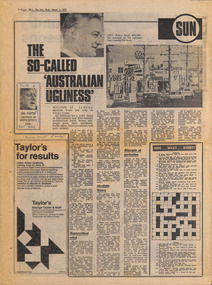
Newspaper - Clipping, Hal Porter, The So-called 'Australian Ugliness', 1-Mar-72
... Hal Porter writes a very disparaging review of the republishes "The Australian Ugliness" by Robin Boyd, first published in 1960. ...Hal Porter...Hal Porter writes a very disparaging review of the republishes "The Australian Ugliness" by Robin Boyd, first published in 1960. ...Hal Porter writes a very disparaging review of the republishes "The Australian Ugliness" by Robin Boyd, first published in 1960. He uses a poem by Kenneth Slessor to contrast the views of Boyd.Some handwritten notes indicating displeasure.walsh st library -
 Flagstaff Hill Maritime Museum and Village
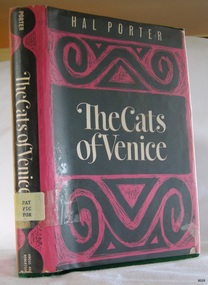
Book, The Cats of Venice
... ...Hal Porter...The Cats of Venice Author: Hal Porter Publisher: Angus & Robertson Date: 1965...The Warrnambool Mechanics' Institute publication collection is of both local and state significance. warrnambool shipwrecked-coast flagstaff-hill flagstaff-hill-maritime-museum maritime-museum shipwreck-coast flagstaff-hill-maritime-village shipwrecked-artefact book pattison collection warrnambool library warrnambool mechanics’ institute ralph eric pattison corangamite regional library service warrnambool city librarian mechanics’ institute library victorian library board warrnambool books and records warrnambool children’s library great ocean road The Cats of Venice Hal Porter Label on spine cover with typed text PAT FIC POR Front loose endpaper has a stamp from Warrnambool Public Library Front loose endpaper has a sticker from Corangamite Regional Library Service The Cats of Venice Author: Hal Porter Publisher: Angus & Robertson Date: 1965 The Cats of Venice Book ...This item is from the ‘Pattison Collection’, a collection of books and records that was originally owned by the Warrnambool Mechanics’ Institute, which was founded in Warrnambool in 1853. By 1886 the Warrnambool Mechanics’ Institute (WMI) had grown to have a Library, Museum and Fine Arts Gallery, with a collection of “… choice productions of art, and valuable specimens in almost every branch and many wonderful national curiosities are now to be seen there, including historic relics of the town and district.” It later included a School of Design. Although it was very well patronised, the lack of financial support led the WMI in 1911 to ask the City Council to take it over. In 1935 Ralph Pattison was appointed as City Librarian to establish and organise the Warrnambool Library as it was then called. When the WMI building was pulled down in 1963 a new civic building was erected on the site and the new Warrnambool Library, on behalf of the City Council, took over all the holdings of the WMI. At this time some of the items were separated and identified as the ‘Pattison Collection’, named after Ralph Pattison. Eventually the components of the WMI were distributed from the Warrnambool Library to various places, including the Art Gallery, Historical Society and Flagstaff Hill. Later some were even distributed to other regional branches of Corangamite Regional Library and passed to and fro. It is difficult now to trace just where all of the items have ended up. The books at Flagstaff Hill Maritime Village generally display stamps and markings from Pattison as well as a variety of other institutions including the Mechanics’ Institute itself. RALPH ERIC PATTISON Ralph Eric Pattison was born in Rockhampton, Queensland, in 1891. He married Maude Swan from Warrnambool in 1920 and they set up home in Warrnambool. In 1935 Pattison accepted a position as City Librarian for the Warrnambool City Council. His huge challenge was to make a functional library within two rooms of the Mechanics’ Institute. He tirelessly cleaned, cleared and sorted a disarrayed collection of old books, jars of preserved specimens and other items reserved for exhibition in the city’s museum. He developed and updated the library with a wide variety of books for all tastes, including reference books for students; a difficult task to fulfil during the years following the Depression. He converted all of the lower area of the building into a library, reference room and reading room for members and the public. The books were sorted and stored using a cataloguing and card index system that he had developed himself. He also prepared the upper floor of the building and established the Art Gallery and later the Museum, a place to exhibit the many old relics that had been stored for years for this purpose. One of the treasures he found was a beautiful ancient clock, which he repaired, restored and enjoyed using in his office during the years of his service there. Ralph Pattison was described as “a meticulous gentleman whose punctuality, floorless courtesy and distinctive neat dress were hallmarks of his character, and ‘his’ clock controlled his daily routine, and his opening and closing of the library’s large heavy doors to the minute.” Pattison took leave during 1942 to 1945 to serve in the Royal Australian Navy, Volunteer Reserve as Lieutenant. A few years later he converted one of the Museum’s rooms into a Children’s Library, stocking it with suitable books for the younger generation. This was an instant success. In the 1950’s he had the honour of being appointed to the Victorian Library Board and received more inspiration from the monthly conferences in Melbourne. He was sadly retired in 1959 after over 23 years of service, due to the fact that he had gone over the working age of council officers. However he continued to take a very keen interest in the continual development of the Library until his death in 1969. Warrnambool Public Library The Warrnambool Mechanics’ Institute (WMI) was formed by a voluntary community group in 1863, within six years of Warrnambool’s beginnings, and its Reading Room opened in 1854. The WMI operated until 1963, at which time it was one of the oldest Mechanics’ Institutes in Victoria. Mechanics’ Institutes offered important services to the public including libraries, reading rooms and places to display and store collections of all sorts such as curiosities and local historical relics. In 1886 a Museum and Fine Arts Gallery were added to the WMI and by the beginning of the 20th century there was also a billiards room and a School of Art. By this time all Mechanics’ Institutes in country Victoria had museums attached. Over the years the Warrnambool Mechanics’ Institute Library was also known as the Warrnambool Public Library the Warrnambool Library and the Free Library. Early funding from the government was for the “Free Library”. The inscription in a book “Science of Man” was for the “Warrnambool Public Library”, donated by Joseph Archibald in 1899. Another inscription in the book “Catalogue of Plants Under Cultivation in the Melbourne Botanic Gardens 1 & 2, 1883” was presented to the “Warrnambool Library” and signed by the author W.R. Guilfoyle. In 1903 the Warrnambool Public Library decided to add a Juvenile Department to library and stock it with hundreds of books suitable for youth. In 1905 the Public Library committee decided to update the collection of books and added 100 new novels plus arrangements for the latest novels to be included as soon as they were available in Victoria. In July 1911 the Warrnambool Council took over the management of the Public Library, Art Gallery, Museum and Mechanics’ Institute and planned to double the size of the then-current building. In 1953, when Mr. R. Pattison was Public Librarian, the Warrnambool Public Library’s senior section 10,000 of the 13,000 books were fiction. The children’s section offered an additional 3,400 books. The library had the equivalent of one book per head of population and served around 33 percent of the reading population. The collection of books was made up of around 60 percent reference and 40 percent fiction. The library was lending 400 books per day. In 1963 the Warrnambool City Council allocated the site of the Mechanics’ Institute building, which included the Public Library, Museum and Art Gallery, for the new Municipal Offices and the Collections were dispersed until 1971. The Warrnambool Library took over the Mechanics’ Institute Library’s holdings on behalf of the Warrnambool City Council. Since the closure of the Warrnambool Mechanics’ Institute the exact location and composition of the original WMI books and items has become unclear. Other materials have been added to the collection, including items from Terang MI, Warrnambool Court House and Customs House. Many of the books have been identified as the Pattison Collection, named after the Librarian who catalogued and numbered the books during his time as Warrnambool Public Librarian in the time before the Mechanics’ Institute closed. It seems that when Warrnambool became part of the Corangamite Regional Library some of the books and materials went to its head office in Colac and then back to Warrnambool where they were stored at the Art Gallery for quite some time. Some then went to the Warrnambool Historical Society, some stayed at the Art Gallery and some were moved to Flagstaff Hill Maritime Village. The various stamps and labels on the books held at Flagstaff Hill show the variety of the collection’s distribution and origin. The books in the collection at Flagstaff Hill Maritime Village date from the 1850’s to the late 1950’s and include rare and valuable volumes. Many of the books are part of the “Pattison Collection” after the Warrnambool’s Public Librarian, Mr. R. Pattison The Pattison Collection, along with other items at Flagstaff Hill Maritime Village, was originally part of the Warrnambool Mechanics' Institute’s collection. The Warrnambool Mechanics’ Institute Collection is primarily significant in its totality, rather than for the individual objects it contains. Its contents are highly representative of the development of Mechanics' Institute libraries across Australia, particularly Victoria. A diversity of publications and themes has been amassed, and these provide clues to our understanding of the nature of and changes in the reading habits of Victorians from the 1850s to the middle of the 20th century. The collection also highlights the Warrnambool community’s commitment to the Mechanics’ Institute, reading, literacy and learning in the regions, and proves that access to knowledge was not impeded by distance. These items help to provide a more complete picture of our community’s ideals and aspirations. The Warrnambool Mechanics Institute book collection has historical and social significance for its strong association with the Mechanics Institute movement and the important role it played in the intellectual, cultural and social development of people throughout the latter part of the nineteenth century and the early twentieth century. The collection of books is a rare example of an early lending library and its significance is enhanced by the survival of an original collection of many volumes. The Warrnambool Mechanics' Institute’s publication collection is of both local and state significance. The Warrnambool Mechanics' Institute Collection is primarily significant in its totality, rather than for the individual objects it contains. Its contents are highly representative of the development of Mechanics' Institute libraries across Australia, particularly Victoria. A diversity of publications and themes has been amassed, and these provide clues to our understanding of the nature of and changes in the reading habits of Victorians from the 1850s to the middle of the 20th century. The collection also highlights the Warrnambool community’s commitment to the Mechanics’ Institute, and to reading, literacy and learning in the regions, and proves that access to knowledge was not impeded by distance. These items help to provide a more complete picture of our community’s ideals and aspirations. As with many Mechanics' Institutes in Australia, the one which operated in Warrnambool was established and overseen for many years by key individuals associated with the development of the city itself. The WMI publication collection is historically significant because of its association with local people, places and the key historical themes in the development of Warrnambool of rural development, industry, farming, education, and community. The collection documents and illustrates the changing interests, focus and tastes of Victorians, especially those in regional cities. Generally the individual items in the collection are not particularly rare, as examples of all probably exist in other public collections in Victoria. It is primarily because there are so very few surviving Mechanics' Institute collections in Victoria, which lends this overall collection its significance. Many items in the WMI Collection have the potential to support further research, both as individual objects and through the collection in its entirety. This material is significant for its ability to assist in the interpretation of the history of the area and adds to the general understanding of the development of the township. Many components of the WMI publication collection complement and reinforce the Flagstaff Hill Maritime Museum Collection, the Warrnambool Art Gallery Collection, and that in the Warrnambool Historical Society, and also contribute to a clearer understanding of the original Warrnambool Mechanics' Institute collections. This will greatly enhance the appreciation of the few surviving Mechanics' Institute collections across Victoria, and also in New South Wales. The similarities and differences between the small number of collections that have survived can provide further insights into how the people of Victoria in general, and Warrnambool in particular, constructed a civic culture of adult learning to foster an informed citizenry. The Warrnambool Mechanics' Institute publication collection is of both local and state significance. The Cats of Venice Author: Hal Porter Publisher: Angus & Robertson Date: 1965Label on spine cover with typed text PAT FIC POR Front loose endpaper has a stamp from Warrnambool Public Library Front loose endpaper has a sticker from Corangamite Regional Library Servicewarrnambool, shipwrecked-coast, flagstaff-hill, flagstaff-hill-maritime-museum, maritime-museum, shipwreck-coast, flagstaff-hill-maritime-village, shipwrecked-artefact, book, pattison collection, warrnambool library, warrnambool mechanics’ institute, ralph eric pattison, corangamite regional library service, warrnambool city librarian, mechanics’ institute library, victorian library board, warrnambool books and records, warrnambool children’s library, great ocean road, the cats of venice, hal porter -
 Heidelberg Theatre Company Inc..
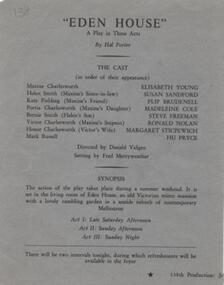
Program Photos Newsletter Articles, Eden House by Hal Porter directed by Donald Vidgen
... Eden House by Hal Porter directed by Donald Vidgen...1971 138 directed by Donald Vidgen city of heidelberg repertory group heidelberg theatre company inc Eden House by Hal Porter directed by Donald Vidgen Program Photos Newsletter Articles ...1971, 138, directed by donald vidgen, city of heidelberg repertory group, heidelberg theatre company inc -
 Flagstaff Hill Maritime Museum and Village
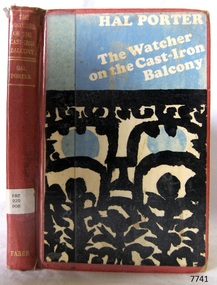
Book, The Watcher on The Cast-Iron Balcony
... ...Hal Porter...The Watcher on The Cast-Iron Balcony An Australian Autobiography Author: Hal Porter Publisher: Faber and Faber ...Warrnambool Shipwrecked-coast Flagstaff-Hill Flagstaff-Hill-Maritime-Museum Maritime-Museum Shipwreck-coast Flagstaff-Hill-Maritime-Village Shipwrecked-artefact Book Pattison Collection Warrnambool Library Warrnambool Mechanics’ Institute Ralph Eric Pattison Corangamite Regional Library Service Warrnambool City Librarian Mechanics’ Institute Library Victorian Library Board Warrnambool books and records Warrnambool Children’s Library Great Ocean Road The Watcher on The Cast-Iron Balcony Hal Porter Label on spine cover with typed text PAT 920 POR Front loose endpaper has a sticker from Corangamite Regional Library Service The Watcher on The Cast-Iron Balcony An Australian Autobiography Author: Hal Porter Publisher: Faber and Faber The Watcher on The Cast-Iron Balcony Book ...This item is from the ‘Pattison Collection’, a collection of books and records that was originally owned by the Warrnambool Mechanics’ Institute, which was founded in Warrnambool in 1853. By 1886 the Warrnambool Mechanics’ Institute (WMI) had grown to have a Library, Museum and Fine Arts Gallery, with a collection of “… choice productions of art, and valuable specimens in almost every branch and many wonderful national curiosities are now to be seen there, including historic relics of the town and district.” It later included a School of Design. Although it was very well patronised, the lack of financial support led the WMI in 1911 to ask the City Council to take it over. In 1935 Ralph Pattison was appointed as City Librarian to establish and organise the Warrnambool Library as it was then called. When the WMI building was pulled down in 1963 a new civic building was erected on the site and the new Warrnambool Library, on behalf of the City Council, took over all the holdings of the WMI. At this time some of the items were separated and identified as the ‘Pattison Collection’, named after Ralph Pattison. Eventually the components of the WMI were distributed from the Warrnambool Library to various places, including the Art Gallery, Historical Society and Flagstaff Hill. Later some were even distributed to other regional branches of Corangamite Regional Library and passed to and fro. It is difficult now to trace just where all of the items have ended up. The books at Flagstaff Hill Maritime Village generally display stamps and markings from Pattison as well as a variety of other institutions including the Mechanics’ Institute itself. RALPH ERIC PATTISON Ralph Eric Pattison was born in Rockhampton, Queensland, in 1891. He married Maude Swan from Warrnambool in 1920 and they set up home in Warrnambool. In 1935 Pattison accepted a position as City Librarian for the Warrnambool City Council. His huge challenge was to make a functional library within two rooms of the Mechanics’ Institute. He tirelessly cleaned, cleared and sorted a disarrayed collection of old books, jars of preserved specimens and other items reserved for exhibition in the city’s museum. He developed and updated the library with a wide variety of books for all tastes, including reference books for students; a difficult task to fulfil during the years following the Depression. He converted all of the lower area of the building into a library, reference room and reading room for members and the public. The books were sorted and stored using a cataloguing and card index system that he had developed himself. He also prepared the upper floor of the building and established the Art Gallery and later the Museum, a place to exhibit the many old relics that had been stored for years for this purpose. One of the treasures he found was a beautiful ancient clock, which he repaired, restored and enjoyed using in his office during the years of his service there. Ralph Pattison was described as “a meticulous gentleman whose punctuality, floorless courtesy and distinctive neat dress were hallmarks of his character, and ‘his’ clock controlled his daily routine, and his opening and closing of the library’s large heavy doors to the minute.” Pattison took leave during 1942 to 1945 to serve in the Royal Australian Navy, Volunteer Reserve as Lieutenant. A few years later he converted one of the Museum’s rooms into a Children’s Library, stocking it with suitable books for the younger generation. This was an instant success. In the 1950’s he had the honour of being appointed to the Victorian Library Board and received more inspiration from the monthly conferences in Melbourne. He was sadly retired in 1959 after over 23 years of service, due to the fact that he had gone over the working age of council officers. However he continued to take a very keen interest in the continual development of the Library until his death in 1969. The Pattison Collection, along with other items at Flagstaff Hill Maritime Village, was originally part of the Warrnambool Mechanics' Institute’s collection. The Warrnambool Mechanics’ Institute Collection is primarily significant in its totality, rather than for the individual objects it contains. Its contents are highly representative of the development of Mechanics' Institute libraries across Australia, particularly Victoria. A diversity of publications and themes has been amassed, and these provide clues to our understanding of the nature of and changes in the reading habits of Victorians from the 1850s to the middle of the 20th century. The collection also highlights the Warrnambool community’s commitment to the Mechanics’ Institute, reading, literacy and learning in the regions, and proves that access to knowledge was not impeded by distance. These items help to provide a more complete picture of our community’s ideals and aspirations. The Warrnambool Mechanics Institute book collection has historical and social significance for its strong association with the Mechanics Institute movement and the important role it played in the intellectual, cultural and social development of people throughout the latter part of the nineteenth century and the early twentieth century. The collection of books is a rare example of an early lending library and its significance is enhanced by the survival of an original collection of many volumes. The Warrnambool Mechanics' Institute’s publication collection is of both local and state significance. The Watcher on The Cast-Iron Balcony An Australian Autobiography Author: Hal Porter Publisher: Faber and Faber Label on spine cover with typed text PAT 920 POR Front loose endpaper has a sticker from Corangamite Regional Library Service warrnambool, shipwrecked-coast, flagstaff-hill, flagstaff-hill-maritime-museum, maritime-museum, shipwreck-coast, flagstaff-hill-maritime-village, shipwrecked-artefact, book, pattison collection, warrnambool library, warrnambool mechanics’ institute, ralph eric pattison, corangamite regional library service, warrnambool city librarian, mechanics’ institute library, victorian library board, warrnambool books and records, warrnambool children’s library, great ocean road, the watcher on the cast-iron balcony, hal porter -
 Flagstaff Hill Maritime Museum and Village
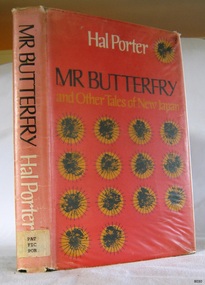
Book, Mr Butterfry and Other Tales of New Japan
... ...Hal Porter...Mr Butterfry and Other Tales of New Japan Author: Hal Porter Publisher: Angus & Robertson Date: 1968...The Warrnambool Mechanics' Institute publication collection is of both local and state significance. warrnambool shipwrecked-coast flagstaff-hill flagstaff-hill-maritime-museum maritime-museum shipwreck-coast flagstaff-hill-maritime-village shipwrecked-artefact book pattison collection warrnambool library warrnambool mechanics’ institute ralph eric pattison corangamite regional library service warrnambool city librarian mechanics’ institute library victorian library board warrnambool books and records warrnambool children’s library great ocean road Mr Butterfry and Other Tales of New Japan Hal Porter Label on spine cover with typed text PAT FIC POR Front loose endpaper has a stamp from Warrnambool Public Library Fly paper has a stamp from Warrnambool Public Library Mr Butterfry and Other Tales of New Japan Author: Hal Porter Publisher: Angus & Robertson Date: 1968 Mr Butterfry and Other Tales of New Japan Book ...This item is from the ‘Pattison Collection’, a collection of books and records that was originally owned by the Warrnambool Mechanics’ Institute, which was founded in Warrnambool in 1853. By 1886 the Warrnambool Mechanics’ Institute (WMI) had grown to have a Library, Museum and Fine Arts Gallery, with a collection of “… choice productions of art, and valuable specimens in almost every branch and many wonderful national curiosities are now to be seen there, including historic relics of the town and district.” It later included a School of Design. Although it was very well patronised, the lack of financial support led the WMI in 1911 to ask the City Council to take it over. In 1935 Ralph Pattison was appointed as City Librarian to establish and organise the Warrnambool Library as it was then called. When the WMI building was pulled down in 1963 a new civic building was erected on the site and the new Warrnambool Library, on behalf of the City Council, took over all the holdings of the WMI. At this time some of the items were separated and identified as the ‘Pattison Collection’, named after Ralph Pattison. Eventually the components of the WMI were distributed from the Warrnambool Library to various places, including the Art Gallery, Historical Society and Flagstaff Hill. Later some were even distributed to other regional branches of Corangamite Regional Library and passed to and fro. It is difficult now to trace just where all of the items have ended up. The books at Flagstaff Hill Maritime Village generally display stamps and markings from Pattison as well as a variety of other institutions including the Mechanics’ Institute itself. RALPH ERIC PATTISON Ralph Eric Pattison was born in Rockhampton, Queensland, in 1891. He married Maude Swan from Warrnambool in 1920 and they set up home in Warrnambool. In 1935 Pattison accepted a position as City Librarian for the Warrnambool City Council. His huge challenge was to make a functional library within two rooms of the Mechanics’ Institute. He tirelessly cleaned, cleared and sorted a disarrayed collection of old books, jars of preserved specimens and other items reserved for exhibition in the city’s museum. He developed and updated the library with a wide variety of books for all tastes, including reference books for students; a difficult task to fulfil during the years following the Depression. He converted all of the lower area of the building into a library, reference room and reading room for members and the public. The books were sorted and stored using a cataloguing and card index system that he had developed himself. He also prepared the upper floor of the building and established the Art Gallery and later the Museum, a place to exhibit the many old relics that had been stored for years for this purpose. One of the treasures he found was a beautiful ancient clock, which he repaired, restored and enjoyed using in his office during the years of his service there. Ralph Pattison was described as “a meticulous gentleman whose punctuality, floorless courtesy and distinctive neat dress were hallmarks of his character, and ‘his’ clock controlled his daily routine, and his opening and closing of the library’s large heavy doors to the minute.” Pattison took leave during 1942 to 1945 to serve in the Royal Australian Navy, Volunteer Reserve as Lieutenant. A few years later he converted one of the Museum’s rooms into a Children’s Library, stocking it with suitable books for the younger generation. This was an instant success. In the 1950’s he had the honour of being appointed to the Victorian Library Board and received more inspiration from the monthly conferences in Melbourne. He was sadly retired in 1959 after over 23 years of service, due to the fact that he had gone over the working age of council officers. However he continued to take a very keen interest in the continual development of the Library until his death in 1969. Warrnambool Public Library The Warrnambool Mechanics’ Institute (WMI) was formed by a voluntary community group in 1863, within six years of Warrnambool’s beginnings, and its Reading Room opened in 1854. The WMI operated until 1963, at which time it was one of the oldest Mechanics’ Institutes in Victoria. Mechanics’ Institutes offered important services to the public including libraries, reading rooms and places to display and store collections of all sorts such as curiosities and local historical relics. In 1886 a Museum and Fine Arts Gallery were added to the WMI and by the beginning of the 20th century there was also a billiards room and a School of Art. By this time all Mechanics’ Institutes in country Victoria had museums attached. Over the years the Warrnambool Mechanics’ Institute Library was also known as the Warrnambool Public Library the Warrnambool Library and the Free Library. Early funding from the government was for the “Free Library”. The inscription in a book “Science of Man” was for the “Warrnambool Public Library”, donated by Joseph Archibald in 1899. Another inscription in the book “Catalogue of Plants Under Cultivation in the Melbourne Botanic Gardens 1 & 2, 1883” was presented to the “Warrnambool Library” and signed by the author W.R. Guilfoyle. In 1903 the Warrnambool Public Library decided to add a Juvenile Department to library and stock it with hundreds of books suitable for youth. In 1905 the Public Library committee decided to update the collection of books and added 100 new novels plus arrangements for the latest novels to be included as soon as they were available in Victoria. In July 1911 the Warrnambool Council took over the management of the Public Library, Art Gallery, Museum and Mechanics’ Institute and planned to double the size of the then-current building. In 1953, when Mr. R. Pattison was Public Librarian, the Warrnambool Public Library’s senior section 10,000 of the 13,000 books were fiction. The children’s section offered an additional 3,400 books. The library had the equivalent of one book per head of population and served around 33 percent of the reading population. The collection of books was made up of around 60 percent reference and 40 percent fiction. The library was lending 400 books per day. In 1963 the Warrnambool City Council allocated the site of the Mechanics’ Institute building, which included the Public Library, Museum and Art Gallery, for the new Municipal Offices and the Collections were dispersed until 1971. The Warrnambool Library took over the Mechanics’ Institute Library’s holdings on behalf of the Warrnambool City Council. Since the closure of the Warrnambool Mechanics’ Institute the exact location and composition of the original WMI books and items has become unclear. Other materials have been added to the collection, including items from Terang MI, Warrnambool Court House and Customs House. Many of the books have been identified as the Pattison Collection, named after the Librarian who catalogued and numbered the books during his time as Warrnambool Public Librarian in the time before the Mechanics’ Institute closed. It seems that when Warrnambool became part of the Corangamite Regional Library some of the books and materials went to its head office in Colac and then back to Warrnambool where they were stored at the Art Gallery for quite some time. Some then went to the Warrnambool Historical Society, some stayed at the Art Gallery and some were moved to Flagstaff Hill Maritime Village. The various stamps and labels on the books held at Flagstaff Hill show the variety of the collection’s distribution and origin. The books in the collection at Flagstaff Hill Maritime Village date from the 1850’s to the late 1950’s and include rare and valuable volumes. Many of the books are part of the “Pattison Collection” after the Warrnambool’s Public Librarian, Mr. R. Pattison. The Pattison Collection, along with other items at Flagstaff Hill Maritime Village, was originally part of the Warrnambool Mechanics' Institute’s collection. The Warrnambool Mechanics’ Institute Collection is primarily significant in its totality, rather than for the individual objects it contains. Its contents are highly representative of the development of Mechanics' Institute libraries across Australia, particularly Victoria. A diversity of publications and themes has been amassed, and these provide clues to our understanding of the nature of and changes in the reading habits of Victorians from the 1850s to the middle of the 20th century. The collection also highlights the Warrnambool community’s commitment to the Mechanics’ Institute, reading, literacy and learning in the regions, and proves that access to knowledge was not impeded by distance. These items help to provide a more complete picture of our community’s ideals and aspirations. The Warrnambool Mechanics Institute book collection has historical and social significance for its strong association with the Mechanics Institute movement and the important role it played in the intellectual, cultural and social development of people throughout the latter part of the nineteenth century and the early twentieth century. The collection of books is a rare example of an early lending library and its significance is enhanced by the survival of an original collection of many volumes. The Warrnambool Mechanics' Institute’s publication collection is of both local and state significance. The Warrnambool Mechanics' Institute Collection is primarily significant in its totality, rather than for the individual objects it contains. Its contents are highly representative of the development of Mechanics' Institute libraries across Australia, particularly Victoria. A diversity of publications and themes has been amassed, and these provide clues to our understanding of the nature of and changes in the reading habits of Victorians from the 1850s to the middle of the 20th century. The collection also highlights the Warrnambool community’s commitment to the Mechanics’ Institute, and to reading, literacy and learning in the regions, and proves that access to knowledge was not impeded by distance. These items help to provide a more complete picture of our community’s ideals and aspirations. As with many Mechanics' Institutes in Australia, the one which operated in Warrnambool was established and overseen for many years by key individuals associated with the development of the city itself. The WMI publication collection is historically significant because of its association with local people, places and the key historical themes in the development of Warrnambool of rural development, industry, farming, education, and community. The collection documents and illustrates the changing interests, focus and tastes of Victorians, especially those in regional cities. Generally the individual items in the collection are not particularly rare, as examples of all probably exist in other public collections in Victoria. It is primarily because there are so very few surviving Mechanics' Institute collections in Victoria, which lends this overall collection its significance. Many items in the WMI Collection have the potential to support further research, both as individual objects and through the collection in its entirety. This material is significant for its ability to assist in the interpretation of the history of the area and adds to the general understanding of the development of the township. Many components of the WMI publication collection complement and reinforce the Flagstaff Hill Maritime Museum Collection, the Warrnambool Art Gallery Collection, and that in the Warrnambool Historical Society, and also contribute to a clearer understanding of the original Warrnambool Mechanics' Institute collections. This will greatly enhance the appreciation of the few surviving Mechanics' Institute collections across Victoria, and also in New South Wales. The similarities and differences between the small number of collections that have survived can provide further insights into how the people of Victoria in general, and Warrnambool in particular, constructed a civic culture of adult learning to foster an informed citizenry. The Warrnambool Mechanics' Institute publication collection is of both local and state significance. Mr Butterfry and Other Tales of New Japan Author: Hal Porter Publisher: Angus & Robertson Date: 1968Label on spine cover with typed text PAT FIC POR Front loose endpaper has a stamp from Warrnambool Public Library Fly paper has a stamp from Warrnambool Public Librarywarrnambool, shipwrecked-coast, flagstaff-hill, flagstaff-hill-maritime-museum, maritime-museum, shipwreck-coast, flagstaff-hill-maritime-village, shipwrecked-artefact, book, pattison collection, warrnambool library, warrnambool mechanics’ institute, ralph eric pattison, corangamite regional library service, warrnambool city librarian, mechanics’ institute library, victorian library board, warrnambool books and records, warrnambool children’s library, great ocean road, mr butterfry and other tales of new japan, hal porter -
 Lakes Entrance Historical Society
Book, Porter, Hal, Bairnsdale' Portrait of an Australian Country Town, 1977
... Porter, Hal...Bairnsdale' Portrait of an Australian Country Town Book Porter, Hal ...An affectionate portrait of the town of Bairnsdale, East Gippsland, Victoria, and its people.explorers, township -
Lakes Entrance Historical Society
Book, Porter, Hal, The Watcher on the Cast-Iron Balcony, 1963
... Porter, Hal...The Watcher on the Cast-Iron Balcony Book Porter, Hal ...A thinly veiled biography reflecting life in the country town, Bairnsdale, Victoria, during the earlier half of the twentieth century.biography, township -
Unions Ballarat
Australian roundup 1790-1950, Broderick, Colin, 1953
... ...Porter, Hal...Australian roundup 1790-1950 Broderick, Colin Tench, Watkin Lang, John Whitworth, RP McKellor, Campbell Couvreur, Jessie ("Tasma") Astley, William ("Price Warung") Barry, John Arthur Favenc, Ernest Becke, Louis Lawson, Henry Dyson, Edward Dorrington, Albert Quinn, Roderic Baynton, Barbara Praed, Mrs Campbell Sorenson, ES Bedford, Randolph Bayldon, AAD Edmond, James Matthews, Harley O'Reilly, Dowell Riemann, HE Simpson, Mary Knowles, Vernon Prichard, Katharine Susannah O'Ferrall, Ernest Robinson, Les Palmer, Vance Lamond, Henry G Idriess, Ion L Casey, Gavin Morris, Myra Trist, Margaret Porter, Hal Edwards, Don James, Brian Porteous, RS ...A series of Australian short stories dating from 1790-1950.The editor, Colin Broderick, was known for promoting Australian literature. Fiction - of national interest. Hardcover, blue cloth paper amalgam; gold lettering on spine; 374 pages.Spine: title and author's name. Ararat Municipal Library stamp appears in several places on the inside of the book. Library loan slip and original card (2423) are located at the back. Last stamped on 20 Nov 1970.btlc, ballarat trades hall, ballarat trades and labour council, fiction - short stories, fiction - australian -
 Bendigo Historical Society Inc.
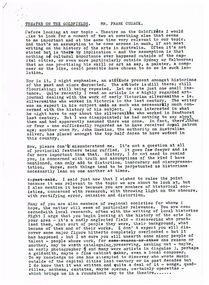
Document - THEATRE ON THE GOLDFIELDS - MR FRANK CUSACK
... ... Hal Porter...ENTERTAINMENT Theatre Bendigo Theatre on the Goldfields Mr Frank Cusack John Hawkins Bulwer Lytton 'Lady of Lyons' The Theatre Royal Gregg Yates Stark Carncross's Royal Exchange Restaurant The Argus The Casion Charles Thatcher Burton's Theatre C H Rignold George Rignold Royal Victoria Theatre The Princess The Criterion Walsh and Fawcett George Fawcett Rowe Fawcett Rowe Lola Montez Henry Coleman Madame Carilly The Advertiser Victoria Reef William Kelly G V Brooke Burralls Assembly Rooms Nicholls Assembly Rooms Royal Hotel Shamrock Concert Hall Bendigo Hotel Billy Heffernan John Crowely Mrs Hancock Miss Urie M Langlaise Sarah Flower Madame Caradine Thatcher the Inimitable Greville Joe Small Fanny Young Frank Varley Hugh Anderson Porter's Stars of the Australian Stage and Screen Abbott Lyceum Theatre Mr & Mrs Robe Robert Heir G W Daniels Bendigo Histrionic Club Carrick Club 'The Old Curiosity Shop' Benjamin Farjeon or B L Farjeon Louis Quatorze Robert Younge Woolridge's Eagle Saloon Fry's Troupe Coleman's Rotunda Theatre Old House Rainer's Ethipian Serenaders Jacobs Mrs Macgowan The Golden Age Foos & Fitzgerald Madame Arnati Gibson Pearsons Harmonic hall London Hotel Little Joe and the Comical Wonder Pick and Shovel United States Hotel John Hunter Kerr Marsh Troupe Lyster Opera Co Miss Avonia Jones Cobb & Co Billy heffernan Shamrock Hotel St James Hall Crowley Royal Princess Theatre Offenbach's Duchess of Gerolstein James Cassius Williamson Maggie Moore Hal Porter Grattan Riggs Co Garner Musgrove George Rignold Bland Holt Harry Rickards London Gaiety Co Alfred Dampier Dan Barry Co Harold Stephen Coghill brothers Paine Waterman & Balfe The Australian Bijou Opera Co Williamson & Musgrove's Royal Opera Co Nellie Stewart The Alfred Dampier Co Ward Lyons Dramatic Co George Darrell William Elton Charles Arnold's Co Masonic Theatre The Capital) The Bendigo Dramatic Society The Bendigo Glee Club The Bendigo Amateur Dramatic Club Bendigo Orchestra Bendigo Liedertafel Alice Crawford Wilson Barrett Co Ernest Toy Emily Dyason Gertrude Alger William Murdoch A C Bartleman Madame Benda Amy and Eileen Castles Erna Mueller Madame Bertha Rossow E A Bindley Kate Samuels Jan Kubelik Two typed copies of notes titled 'Theatre on the Goldfields' by Mr. ...Two typed copies of notes titled 'Theatre on the Goldfields' by Mr. Frank Cusack. Notes mention the early theatres on the Goldfields, the actors, actresses and singers, owners and places where the theatres were. Also mentioned are some of the plays that were performed.entertainment, theatre, bendigo, theatre on the goldfields, mr frank cusack, john hawkins, bulwer lytton, 'lady of lyons', the theatre royal, gregg, yates, stark, carncross's royal exchange restaurant, the argus, the casion, charles thatcher, burton's theatre, c h rignold, george rignold, royal victoria theatre, the princess, the criterion, walsh and fawcett, george fawcett rowe, fawcett rowe, lola montez, henry coleman, madame carilly, the advertiser, victoria reef, william kelly, g v brooke, burralls assembly rooms, nicholls assembly rooms, royal hotel, shamrock concert hall, bendigo hotel, billy heffernan, john crowely, mrs hancock, miss urie, m langlaise, sarah flower, madame caradine, thatcher the inimitable, greville, joe small, fanny young, frank varley, hugh anderson, porter's stars of the australian stage and screen, abbott, lyceum theatre, mr & mrs robe, robert heir, g w daniels, bendigo histrionic club, carrick club, 'the old curiosity shop', benjamin farjeon or b l farjeon, louis quatorze, robert younge, woolridge's eagle saloon, fry's troupe, coleman's rotunda theatre, old house, rainer's ethipian serenaders, jacobs, mrs macgowan, the golden age, foos & fitzgerald, madame arnati, gibson, pearsons harmonic hall, london hotel, little joe and the comical wonder, pick and shovel, united states hotel, john hunter kerr, marsh troupe, lyster opera co, miss avonia jones, cobb & co, billy heffernan, shamrock hotel, st james hall, crowley, royal princess theatre, offenbach's duchess of gerolstein, james cassius williamson, maggie moore, hal porter, grattan riggs co, garner, musgrove, george rignold, bland holt, harry rickards, london gaiety co, alfred dampier, dan barry co, harold stephen, coghill brothers, paine, waterman & balfe, the australian bijou opera co, williamson & musgrove's royal opera co, nellie stewart, the alfred dampier co, ward lyons dramatic co, george darrell, william elton, charles arnold's co, masonic theatre, the capital), the bendigo dramatic society, the bendigo glee club, the bendigo amateur dramatic club, bendigo orchestra, bendigo liedertafel, alice crawford, wilson barrett co, ernest toy, emily dyason, gertrude alger, william murdoch, a c bartleman, madame benda, amy and eileen castles, erna mueller, madame bertha rossow, e a bindley, kate samuels, jan kubelik -
 Sunshine and District Historical Society Incorporated
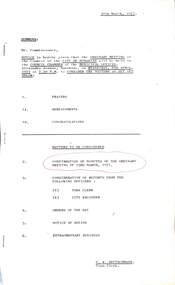
Administrative record - City of Sunshine - Commissioner Mr Alexander Alex George Gillon Collection 1976 - 1982 - Notice of ordinary meeting of the council of the City of Sunshine to be held on 6th April 1977, City of Sunshine, 30th March 1977
... Porter Road...Geelong Road...Orama Street...Duke Street...Cranwell Street...Braybrook...Princess Highway...Francis Street...Brooklyn...Main Road West...Western Highway...Sunshine Jaycees...McKechnie Street Reserve...McKechnie Street...Burns Street Pre-School & Infant Welfare Centre...Albion Pre-School and Infant Welfare Centre...Deer Park Hal...City of Sunshine Alexander "Alex" George Gillon Millbank Drive Kororoit Creek Deer Park Killeen Street Sunshine West Northumberland Road Sunshine North Robinsons Road Station Road Middle Road Maribyrnong Ballarat Road Berkshire Road Emu Road Maidstone Sun Crescent Sunshine Warrs Road Fabian Court Devonshire Road Porter Road Geelong Road Orama Street Duke Street Cranwell Street Braybrook Princess Highway Francis Street Brooklyn Main Road West Western Highway Sunshine Jaycees McKechnie Street Reserve McKechnie Street Burns Street Pre-School & Infant Welfare Centre Albion Pre-School and Infant Welfare Centre Deer Park Hal The Hub Fletcher Chemical Co Somerville Road Westmoreland Road Disraeli Street Cornhill Street St. ...Notice of Ordinary Meeting of the Council of the City of Sunshine to be held on 6th April 1977 Report of the Town Clerk Rates, Sanitary And Interest Abandonments for 1976/77 Recreational Lands Account Fund for Bicycle Track Along Millbank Drive and Kororoit Creek Between Station Road and Billingham Road Deer Park Sports Advisory Committee Noah's Toy Library for Handicapped Children Request for Financial Assistance Commonwealth Bureau of Roads and The Bureau of Transport Economics Creation of Easement Killeen Street Winter Allocation of Grounds to Schools Compulsory Acquisition Lots 43 & 44 Northumberland Road Possession of Land Open Space Agreement Subdivision Robinsons Road M.O.A. Separate Award Qualified Engineers Structure and Role of the Municipal Association of Victoria Loan Borrowings Report of the Chief Health Inspector Prosecution Proceedings Sunshine Magistrates Court Application for Septic Tank Application for Installation of Gas Fired Dry Septic Tank Unit Report of the By-Laws Officer Court Proceedings Parking Infringement Report of the City Librarian Bookmobile Report of the City Engineer Land Use Permit Application Light Industry 84 Station Road Land Use Permit Application Subdivision and Detached Houses Albanvale Estate Land Use Permit Flats 104 Station Road Land Use Permit Flats 28 Middle Road Land Use Permit Application Alteration to Existing Petrol Filling Station to Self Service Ballarat Road Land Use Permit Flats Rose Street Extension of Time Land Use Permit Application Drum Reconditioning Factory 44 Berkshire Road Land Use Permit Emu Road Amendment to Plan Land Use Permit Amusement Parlour Sun Crescent Land Use Permit Flats Lots 1 to 7 Warrs Road and Lots 18 to 22 Fabian Court Land Use Permit Application Flats Lot 4 Devonshire Road Land Use Permit Application Service to Premises and Caretaker's Dwelling Porter Road Cluster Subdivision Land Use Permit Application Single Storey Flats 104 Station Road Deer Park Land Use Permit Application Vehicle Storage and Sale 92 - 96 Ballarat Road Additional Easements Westerngate Estate Consolidation of Title Geelong Road Strata Subdivision 38 Middle Road Strata Subdivision 24 Middle Road Furlong Road Estate Stage 7 Westerngate Estate Stage 1B Quinn estate Closure of Certain Streets to Through Traffic Orama Street & Deer Street Creation of Easement of Way Duke Street to Cranwell Street Princess Highway West - Francis Street Intersection Proposed Widening Station Road Between Main Road West & Western Highway (Ballarat Road) Traffic School Devonshire Road Sunshine Jaycees Replacement of Plant No 14 Mini Moke Provisions of Water Services to McKechnie Street Reserve Tenders for the Supply and Maintenance of Fleet Vehicles Report of the Building Surveyor House of Sunshine Maintenance of Council Buildings Central Library, Burns Street Pre-School & Infant Welfare Centre, Municipal Offices, Albion Pre-School and Infant Welfare Centre, Deer Park Hall, The Hub & Indoor Swimming Pool Council Building Contract Documents Installation of Underground Tank Fletcher Chemical Co Ltd Somerville Road Brooklyn Outbuilding 97 Westmoreland Road Sunshine North House Lot 3 Disraeli Street Cladding of House 8 Cornhill Street St. Albans Cash In Liew Flats 17 St. Albans Road St. Albans Outbuilding 25 Huddersfield Road Deer Park Orders of the Day Account Submitted for Payment as at 15th March 1977 Confirmation of Load with National Bank of Australia Confirmation of Load with the Local Authorities Superannuation Board Proposal to Close Part of Devonshire Road Sunshine Between Bendigo Railway Line and Anderson Road (Throught H.V. McKay Gardens & Chaplin Reserve) Under The Provisions of Section 528 of the Local Government Act 1958 city of sunshine, alexander "alex" george gillon, millbank drive, kororoit creek, deer park, killeen street, sunshine west, northumberland road, sunshine north, robinsons road, station road, middle road, maribyrnong, ballarat road, berkshire road, emu road, maidstone, sun crescent, sunshine, warrs road, fabian court, devonshire road, porter road, geelong road, orama street, duke street, cranwell street, braybrook, princess highway, francis street, brooklyn, main road west, western highway, sunshine jaycees, mckechnie street reserve, mckechnie street, burns street pre-school & infant welfare centre, albion pre-school and infant welfare centre, deer park hal, the hub, fletcher chemical co, somerville road, westmoreland road, disraeli street, cornhill street, st. albans road, huddersfield road, h.v. mckay gardens, chaplin reserve, anderson road, deer street
