
Showing 118 items matching " house cleaning"
-
 Bendigo Historical Society Inc.
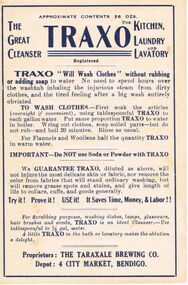
Document - LYDIA CHANCELLOR COLLECTION: 'TRAXO' CLEANING LABEL
... ... house cleaning...DOMESTIC EQUIPMENT Cleaning cleanser Lydia Chancellor collection house cleaning domestication cleaning house work cleaning agents 'Taraxale Brewing ' Bendigo Pethard family Mr. ...A plastic bag containing 'Traxo' cleaning labels'. 'Traxo' cleaning labels. 'The Great Cleanser.' 'Kitchen Laundry Lavatory.' 'The Tarax Brewing Co. Depot: 4 City Market, Bendigo.'domestic equipment, cleaning, cleanser, lydia chancellor, collection, house cleaning, domestication, cleaning, house work, cleaning agents, 'taraxale brewing, ' bendigo, pethard family, mr. george pethard, industry, industries, domestic equipment -
 Glenelg Shire Council Cultural Collection
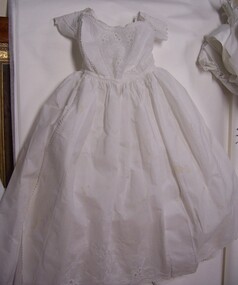
Costume - Costume - Infants Gown, n.d
... Displayed at History House. Item cleaned and starched by Anne Grant in 1993....Displayed at History House. Item cleaned and starched by Anne Grant in 1993. ...Displayed at History House. Item cleaned and starched by Anne Grant in 1993.White cotton and lace. Delicate stitch and cut-out work at hem and bottom third of gown and bodice. Capped sleeves. -
 Bendigo Military Museum
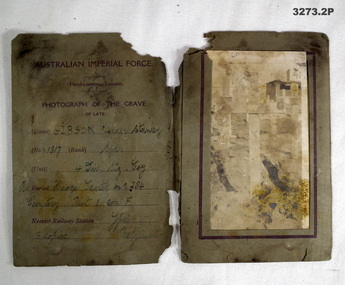
Memorabilia - CARD, WHERE THE AUSTRALIANS REST WW1, Post 1918
... This card was with Cat No 34.2, & 3272.2 when found under a house during a clean up....This card was with Cat No 34.2, & 3272.2 when found under a house during a clean up. Graves photographs 1.) Front top: “Rising Sun” Printed underneath: “ Australian Imperial Force”, GIBSON, Horace Stanley No 1817, SPR, 4th Div Sig Coy. ...“Where the Australians Lie” Horace Stanley GIBSON, Refer Cat No 34.2 for his service details. This card was with Cat No 34.2, & 3272.2 when found under a house during a clean up..1) Card, folded, greyish to hold a photo inside. Re photo of a grave. Inside cover has the details of Horace Stanley GIBSON, No, Rank, where buried. 3rd page has slip in place for photo, rear has details of to whom card is sent. .2) Photo of GIBSON'S grave.1.) Front top: “Rising Sun” Printed underneath: “ Australian Imperial Force”, GIBSON, Horace Stanley No 1817, SPR, 4th Div Sig Coy. Buried, Hooge Crater No 284 Cemetery Plot 1 Row F Ypres, Belgium””graves, photographs -
 Bendigo Military Museum
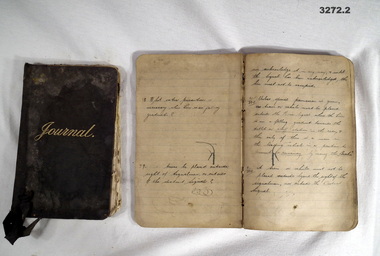
Work on paper - DIARIES WW1, Pre WWI
... These diaries were found under a house during a clean up....These diaries were found under a house during a clean up. Diaries gibson .1) & .2) Both diaries relate to Horace Stanley GIBSON No 1817 AIF when he worked on the Vic Railways prior to the War. ...Horace Stanley GIBSON No 1817 4th Div Sig Coy. KIA. Refer Reg No 34.2 for his service details & war diaries. These diaries were found under a house during a clean up..1) & .2) Both diaries relate to Horace Stanley GIBSON No 1817 AIF when he worked on the Vic Railways prior to the War. Entries are in pen & ink re details of work etc. diaries, gibson -
 Marysville & District Historical Society
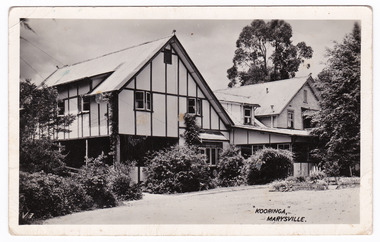
Postcard (item) - Black and white postcard, Valentine Publishing Co. Pty. Ltd, "KOORINGA," MARYSVILLE, 1923-1963
... We have settled in here for a week we may stay/ two I would like you to come for week and it is very nice/ and clean. we had a dance last night H.A.K.B. funny/ and I had a shot at billiards they are playing Bowls/ now while I write this I can hear them clapping mad/ away it is a very long way we were the only car on the road/ 60 mile. You would enjoy yourself house...We have settled in here for a week we may stay/ two I would like you to come for week and it is very nice/ and clean. we had a dance last night H.A.K.B. funny/ and I had a shot at billiards they are playing Bowls/ now while I write this I can hear them clapping mad/ away it is a very long way we were the only car on the road/ 60 mile. You would enjoy yourself house ...A black and white postcard from Kooringa Guesthouse in Marysville. The original house was built in 1914 for Frederick Webb by the Cuzens Brothers. The postcard was produced by Valentine's as a souvenir of Marysville.A black and white postcard from Kooringa Guesthouse in Marysville.V.7. Valentine's POST CARD SENDING YOU GREETINGS FOR ADDRESS ONLY Dear Bloss Herb Lily and Darling Raymond and my darling/ kids. We have settled in here for a week we may stay/ two I would like you to come for week and it is very nice/ and clean. we had a dance last night H.A.K.B. funny/ and I had a shot at billiards they are playing Bowls/ now while I write this I can hear them clapping mad/ away it is a very long way we were the only car on the road/ 60 mile. You would enjoy yourself house is clean old lily it/ is just place for her for a walk or two. Love Mummarysville, victoria, australia, kooringa, frederick webb, cuzens brothers, betha wilhelmina christina unmack, minnie webb, t.e. foster, edgar charles webb, clarence thomas pitman, jacob pitman, sir isaac pitman, caroline anna blood newenham, henry newenham pitman, carrie rosalind persse pitman, reginald william stringer, alice burton pitman, clarence edward pitman, newenham mueller pitman, olive birch, constance may pitman, olive dora blakeney pitman, gwendoline de burch pitman, kooringa guesthouse, lilian may shelton, thomas henry branchflower, wilbur anderson, peter mackey, caroline anna pitman, valentine publishing co. pty. ltd., v.7. -
 The Beechworth Burke Museum
Audio - Oral History, Mrs May Harris, July 2000
... Mrs Harris moved to Melbourne and got work cleaning houses before getting married. Her husband worked on farms, and the couple eventually found their way back to Stanley. ...Mrs Harris moved to Melbourne and got work cleaning houses before getting married. Her husband worked on farms, and the couple eventually found their way back to Stanley. ...This oral history interview was conducted with Mrs May Harris (née Peach), who grew up in the farming town of Stanley, about 9km southeast of Beechworth. Mrs Harris moved to Melbourne and got work cleaning houses before getting married. Her husband worked on farms, and the couple eventually found their way back to Stanley. She describes experiences of illness, particularly her husband and children's experience with asthma and the impact that had on their lives and careers. Mrs Harris talks about local fundraising events in Stanley, particularly what she calls 'Australian Teas', as well as some of the dances and picnics that were major sources of entertainment when she was young. This oral history recording was part of a project conducted by Jennifer Williams in the year 2000 to capture the everyday life and struggles in Beechworth during the twentieth century. This project involved recording seventy oral histories on cassette tapes of local Beechworth residents which were then published in a book titled: Listen to what they say: voices of twentieth century Beechworth. These cassette tapes were digitised in July 2021 with funds made available by the Friends of the Burke.Mrs May Harris' statement explores life in a small farming community alongside some of her life in the city, which might provide an interesting comparison. She discusses the difficulties of facing illnesses in these rural communities, noting the lack of available resources and need to travel to Beechworth. She discusses community events, highlighting both the social aspects and the fundraising aspects.This is a digital copy of a recording that was originally captured on a cassette tape. The cassette tape is black with a horizontal white strip and is currently stored in a clear flat plastic rectangular container. It holds up 40 minutes of recordings on each side.listen to what they say, beechworth, oral history, burke museum, illness, asthma, farming, farm work, rural life, stanley, stanley athenaeum, sinclair's sawmill, sawmill, the great depression, housework, australian tea, fundraising -
 Flagstaff Hill Maritime Museum and Village
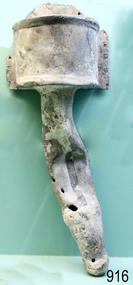
Functional object - Urinal, circa 1825
... housed immediately adjacent to the doors into the forward castle, or crew sleeping quarters. The toilets on maritime vessels were (and still are) called the ‘heads’, after the sanitation arrangements common until the end of the eighteenth century. The name was given to the ‘head’ of the ship, forward of the forecastle and around the beak or bowsprit. These first lavatories were floored with grating or nets so the force of the sea could wash them clean...housed immediately adjacent to the doors into the forward castle, or crew sleeping quarters. The toilets on maritime vessels were (and still are) called the ‘heads’, after the sanitation arrangements common until the end of the eighteenth century. The name was given to the ‘head’ of the ship, forward of the forecastle and around the beak or bowsprit. These first lavatories were floored with grating or nets so the force of the sea could wash them clean ...The urinal was probably situated in the forward part of the ship rather than the stern, being one of two placed on either side of the deck and housed immediately adjacent to the doors into the forward castle, or crew sleeping quarters. The toilets on maritime vessels were (and still are) called the ‘heads’, after the sanitation arrangements common until the end of the eighteenth century. The name was given to the ‘head’ of the ship, forward of the forecastle and around the beak or bowsprit. These first lavatories were floored with grating or nets so the force of the sea could wash them clean, and they were always used on the lee or non-weather side so the effluent fell directly into the water rather than back on board. The Children's wrecking: The barque Children was one of the first vessels to be lost in the Western District. The vessel was wrecked to the east of Warrnambool on 14th January 1838. When it ran ashore in hurricane-force winds, 22 passengers and crew were fortunate to escape being battered to death on the rocks. The Children broke up within 20 minutes, sweeping sixteen of those on board to their deaths. After eleven days, the rescued survivors, all of whom were injured, had been taken to Portland. According to Lloyd's Shipping Register 1837-1839, the Children was built in 1825 at Liverpool and operated by owners Gordon & Co, of London. Registration number 123/1837, James Henty then bought her in 1837 as a three-masted barque of 254 tons, with a hull of “part pitch pine, felt sheathed” and “coppered in 1837” at Launceston, registered number 6/1837. In 1838, the Children, under her master Captain H. Browne, completed a successful round trip from Launceston to London (carrying wool and whale oil loaded in Portland), returning in late November of that year carrying a general cargo including house bricks used for ballast. On the 11th of January 1839, the Children sailed from Launceston for Adelaide, with 24 passengers, 14 crew, and an awkward mixed cargo, including 1500 sheep, 8 bullocks, 7 horses, farming implements, and six whaleboats with associated whaling gear. One account states that when the Children was “put out from port, she was light and badly ballasted”. The vessel immediately encountered four days of hurricane-force storms, eventually clearing on the early morning of the 14th. However, it was too late to take accurate measurements of the sun or stars to establish their position relative to the coast. The Children collided with a limestone stack at the entrance of what is now Childers Cove, and the seas smashed the vessel into pieces within half an hour. All the cargo and 16 lives were lost, including 9 children. The Henty brothers contributed £150 towards a fund for the 22 survivors at a memorial service held in Launceston later that year. It was a major financial setback for James Henty and his brothers, but one from which they recovered. In a submission to the Governor of New South Wales dated 24 March 1840, the Henrys summarised their work over the previous six years of establishing the Portland settlement, stating “Six stations have been occupied, one at Portland Bay three at the open country about 60 miles inland called ‘Merino Downs’ They have erected two houses at Portland Bay and two others at Merino Downs”.The urinal recovered from the Children's wreck is significant as part of the original fittings of the early 19th-century barque. The 1839 wreck and recovered artefacts are examples of the construction methods and materials used in that era and can be used to study the evolution of shipbuilding methods and principles. The wreck of the Children is of state significance as one of colonial Victoria’s earliest and most significant maritime disasters, and one of the first vessels lost in the Western District. This is recognised by its inclusion on the Victorian Heritage Register, VHR No. S116. Little is left on the seabed to mark the tragedy, apart from some of the house bricks intended for the Henty settlement. A lead urinal with a rounded back at the top splash plate with an attached semi-circular receptacle or basin (20cm deep and projecting forward 30cm). At the sides are flanges with bolt holes connecting to a ship's wall. The urinal is drained by a funnel-shaped outlet also made of lead, reducing from a 10cm radius to a joined 5 cm pipe. The urinal was recovered from the wreck of the CHILDREN.flagstaff hill, warrnambool, flagstaff-hill, flagstaff-hill-maritime-museum, shipwreck-coast, shipwreck artefact, the children, lead ship’s plumbing, crew urinal, the ‘heads’, ship plumbing, james henty, portland bay, urinal, ship's urinal, ship’s fitting, ship’s lead plumbing, ship’s toilet, ship’s urinal, children, childer’s cove, port campbell, 1839 shipwreck, james henty and co, henty brothers, captain h. browne, portland -
 Flagstaff Hill Maritime Museum and Village
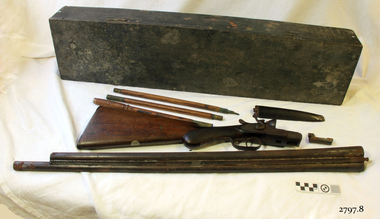
Weapon - Shotgun, Double Barrel, ISAAC HOLLIS & SONS, ca. 1904
... The cleaning rod consists of three separate segments that screw together for use. The shotgun is housed in a black-painted wooden case with a hinged lid showing inscriptions for the maker and Serial Number. ...The cleaning rod consists of three separate segments that screw together for use. The shotgun is housed in a black-painted wooden case with a hinged lid showing inscriptions for the maker and Serial Number. ...The proof marks on the barrels (a crown and letters BV) denote that the shotgun design was made from the year 1904, and that it was nitro-proof tested in Birmingham, England. David Melville Carrison (1895 to 1960) of Port MacDonnell was the previous owner of this Isaac Hollis & Sons double-barrel shotgun. His grandfather, Adam Kerrison Carrison (1833-1903), was an early settler who worked as a fisherman in that once-bustling seaport. His uncle John was a a horse-breaker, a boat hand, and a member of the lifeboat crew, receiving a medal for his part in saving the crew of a French barque. Currently, no connection has been made between the gun, its owner, and the note with the word “Enterprise”: a New Zealand-built, two-masted schooner that was wrecked in Lady Bay, Warrnambool, in 1950. Gun makers, ISAAC HOLLIS & SONS: The Hollis Brothers were first recorded as operating from 11 Weaman Row in 1840, although evidence suggests the business may have commenced before then. Over time, the firm became known as Isaac Hollis & Sons, with claims of its establishment dating back to 1814. This earlier date is supported by records of Richard and William Hollis trading in Bath Street, Birmingham, between 1814 and 1818, which raises the possibility that Isaac and Frederick Hollis were their descendants. The principal brothers involved in the business were Isaac Hollis, born in 1815, and Frederick Hollis, whose birth date remains unknown. Frederick’s life was cut short when he died on 20 December 1839. According to the 1841 census, Isaac Hollis resided in Weaman Row and was listed as a 25-year-old gun and pistol maker. He was married to Emma, who was born in 1821, and together they had two children: Isaac, born in 1837, and Henry, born in 1839. Following Frederick’s death, Isaac continued to operate under the name Hollis Brothers until 1845, after which he renamed the business Hollis Brothers & Co. This entity remained active up to 1848. In 1844, Isaac Hollis entered a brief partnership with William Tranter at 10 & 11 Weaman Row, likely to fulfil a specific contract or to supply parts. This partnership continued until 1849. In 1848, Isaac Hollis formed a partnership with Isaac Brentnall Sheath, establishing the firm of Hollis & Sheath and expanding their operations into 10 Weaman Row. The partnership saw Hollis & Sheath become licensed manufacturers of percussion breech-loading guns, positioning the company as a notable presence in the industry. In 1861, Sheath left the partnership and emigrated to New Zealand, where he conducted several enterprises and was elected as a provincial councillor. He died in Christchurch on 19th May 1897. In 1861, after Isaac Sheath left, the business name became Isaac Hollis & Sons. By approximately 1870, Isaac Hollis and Henry Hollis had assumed responsibility for the daily management of the firm, with Isaac overseeing the overall management and marketing of the company's products, and Henry managing the manufacturing processes. During this period, the company became known for producing large volumes of affordable trade guns and sporting guns, catering to customers in South Africa and the British colonies. In 1870, Isaac Hollis & Sons opened a retail location at 44a Cannon Street in London, and in 1871, it operated at 83 Cheapside Street. Isaac Hollis Jnr passed away in October 1875 in Birmingham at the age of 37, having never married. In 1876/1877, Henry Hollis registered a limited liability company under the name Isaac Hollis & Sons Ltd. However, by 1879, trading resumed under the name Isaac Hollis & Sons, and the London shop moved to 6 Great Winchester Street. From 1932 to 1933, the business operated in London as Hollis, Bentley & Playfair. The final closure of Hollis, Bentley & Playfair occurred in Birmingham in 1953. The shotgun was manufactured by Isaac Hollis & Sons, a firm with a strong reputation for producing firearms. This early 1900s example represents a standard pattern that was produced in large quantities for everyday use. This double-barrel shotgun is 12-gauge, complete with a cleaning rod and a wooden storage box. The firearm has been altered from its original configuration: the right barrel has been cut shorter, resulting in sharp edges at the muzzle, and a metal extension has been fitted to the stock. The cleaning rod consists of three separate segments that screw together for use. The shotgun is housed in a black-painted wooden case with a hinged lid showing inscriptions for the maker and Serial Number. Maker was I. HOLLIS & SONS, Serial Number SN 84245. David Melville Carrison of Port MacDonnell was the previous owner. A handwritten note that had the word 'Enterprise' was with the gun. "I. HOLLIS & SONS". SN on stock “84245”. Badge on both sides “Crown [symbol] / BV”. “Crown [symbol] / NP”, “12G inside Diamond [symbol]”, “NITRO PROOF”, “STEEL 84245” Paper note included with gun, written in felt tip pen “ENTERPRISE”. flagstaff hill, maritime museum, maritime village, warrnambool, great ocean road, shipwreck coast, firearm, gun, double-barrel, shotgun, cleaning rod, gunsmith, smithed, 12 gauge, sn 84245, serial number 84245, david melville carrison, early 1900s, richard and william hillis, herbert & co., herbert & co. london, hollis & sons, isaac hollis & sons, isaac hillis & sons ltd., hollis bentley & playfair., isaac hollis, frederick hollis, isaac brentnall sheath, isaac sheath, william tranter, gun manufacturer, pistol manufacturer, gun and pistol maker, birmingham, military supplies, enterprise, 1904 -
 Federation University Historical Collection
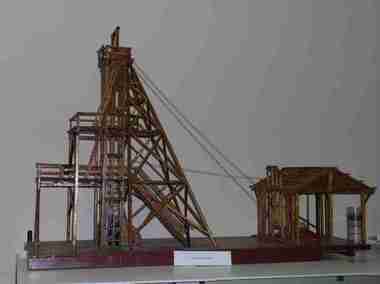
Unknown - Model, Poppet Head Model
... The engine shed houses the winches, which raise and lower the cages carrying the workmen. The winches also control the water-Baling tanks, which are lowered into the pump shaft to clean the water. ...The engine shed houses the winches, which raise and lower the cages carrying the workmen. The winches also control the water-baling tanks, which are lowered into the pump shaft to clean the water. ...The engine shed houses the winches, which raise and lower the cages carrying the workmen. The winches also control the water-Baling tanks, which are lowered into the pump shaft to clean the water. ...This scale model of a mining plant was made by Donald Douglas Mather of Talbot. The engine shed houses the winches, which raise and lower the cages carrying the workmen. The winches also control the water-Baling tanks, which are lowered into the pump shaft to clean the water. The Pump Shaft is part of the main shaft partitioned off for keeping the water down. The old style plant (or cas commonly known poppet legs), were all of timber construction and, when erected, straddled the main shaft. This scale model allows for steel construction, and is set over the shaft to permit an unobstructed view of the operations. The Bad level is where the workmen enter and leave the shaft. The staging platform on the first level is where the trucks and mullock or other material are wheeled out on rails and then tipped to form the mine dump. The top level is to allow for maintenance of plant. Donald Douglas Mather of Talbot worked in mines in Ballarat, and made the model of the poppet head. The poppet head is a replica of those used at many mines in Ballarat. Back in the 1850s Ballarat was a god rush town and many mining claims were made and poppet heads built this is a replica of those poppet heads which are a part of Ballarat's Heritage and a full size poppet head is erected at Sovereign Hill Theme Park in Ballarat. Mining is a huge part of Ballarat's history.A timber poppet head and engine room model. "This scale model - the modern construction of a mining plant - was made by Mr Donald Douglas Mather* of Bonnie Doon, Talbot, Victoria. The engine shed houses the winches, which raise and lower the cages carrying the workmen. The winches also control the water-baling tanks, which are lowered into the pump shaft to clean the water. The pump shaft is part of the main shaft partitioned off for keeping the water down. The old style plant (or as commonly known poppet legs), were all of timber construction and, when erected, straddled the main shaft. this scale model allows for steel construction, ans is set over the shaft to permit an unobstructed view of the operations. The bad level is where the workmen enter and leave the shaft. The staging platform on the first level is where trucks ad mullock or other material are wheeled out on rails and then tipped to form the mine dump. The top level is to allow for maintenance of plant. * Mr Mater, previously of Ballarat, worked for many years as a miner and plant erector" (Old interpretive panel)mining, mather, mining plant, poppet head, engine house, model, donald douglas mather -
Blacksmith's Cottage and Forge
Tin, Stove Polish
... One of the jobs of the housewife was to keep her stove-top looking clean and new, and a rich black colour. This was a source of pride amongst house-proud women, and also ensured a more efficient distribution of heat on their stove-tops for cooking. ...One of the jobs of the housewife was to keep her stove-top looking clean and new, and a rich black colour. This was a source of pride amongst house-proud women, and also ensured a more efficient distribution of heat on their stove-tops for cooking. ...One of the jobs of the housewife was to keep her stove-top looking clean and new, and a rich black colour. This was a source of pride amongst house-proud women, and also ensured a more efficient distribution of heat on their stove-tops for cooking. It was however one of the dirtiest jobs in the kitchen, requiring a lot of elbow-grease as well as a good polish paste. Local. The use of the magpie emblem denotes the emergence of a new nationalism, a pride in being Australian, as distinct from being "British", although Australians continued to see themselves as part of the greater British Empire and subjects of the King.Gold tin with push-in lid, with picture of magpie in black and white on branch. On front of tin: "Magpie" in white letters on a red background. "Stove Polish" in white letters on a blue background. 4 oz. Net. when packed. Made in Australia. On bottom of tin: "Grate & Stove Polishing Paste. Made in Australia." Side inscriptions give instructions for use. -
 Marysville & District Historical Society
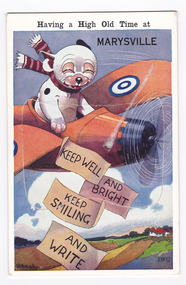
Postcard (item) - Novelty postcard, Having a High Old Time at MARYSVILLE-KEEP WELL AND BRIGHT KEEP SMILING AND WRITE, 1940's-1960's
... clean & beautiful meals/ Ive never eaten so much for years. We/ will be here for 10 days so I should put/ on at least a stone the way Im eating/ love & best wishes to you all from Wm Stacey Postcard has an illustration of a black and white dog with a striped scarf around its neck sitting in an aircraft that is flying over a house in some fields. ...A novelty postcard with pull-out strip of 9 miniature photographs that was produced by the Valentine Publishing Co as a souvenir of Marysville.A novelty postcard with pull-out strip of 9 miniature photographs that was produced by the Valentine Publishing Co as a souvenir of Marysville.Having a High Old Time at MARYSVILLE KEEP WELL/ AND BRIGHT/ KEEP SMILING/ AND WRITE 1902 VALENTINE'S/ MAILING NOVELTY From VALENTINE'S "MAIL NOVELTY" POSTCARD. COPYRIGHT/ PRINTED IN GT. BRITAIN To Dear Mrs Bannan, I was expecting/ you down to meet "my folks" while they/ were over. Sorry you couldnt fit it in/ They went back last Tuesday & we came/ up here on Wednesday. Weve settled in/ to have a restful holiday. its a lovely/ place spotlessly clean & beautiful meals/ Ive never eaten so much for years. We/ will be here for 10 days so I should put/ on at least a stone the way Im eating/ love & best wishes to you all from Wm Staceymarysville, victoria, postcard, souvenir, valentine publishing co, crossways cabaret (image 1), taggerty river (image 2), acheron way (image 3), blacks spur road (image 4), nicholl's lookout (image 5), main street marysville (image 6), sugarloaf bay eildon (image 7), steavenson falls (image 8), cumberland falls (image 9) -
 Federation University Historical Collection
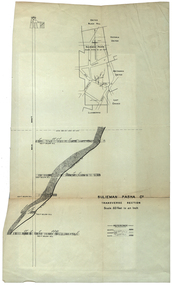
Plan, Sulieman Pasha Co Plan Transverse Section
... house and thirteen chickens disappear down an expanding hole. He then went back to bed, and called the police later in the day. The shaft was 1050 feet deep, and the hole at the surface that developed was 20 feet by 17 feet across, and 20 feet depth. In 1930 it is reported a syndicate had been formed to clean...house and thirteen chickens disappear down an expanding hole. He then went back to bed, and called the police later in the day. The shaft was 1050 feet deep, and the hole at the surface that developed was 20 feet by 17 feet across, and 20 feet depth. In 1930 it is reported a syndicate had been formed to clean ...The Sulieman Pasha is possibly named after the most important Sultan of the Ottoman Empire, Suleiman One, or Suleiman the Magnificent, when the Ottoman Empire was at its peak. Or potentially a number of Ottoman governors, statesmen and military commanders with the same name after, however the spelling is slightly different to the mine name. No Turkish connection was found relating to the formation of the company, and remains unconfirmed. The mine operated from two shafts; No. 1 near the corner of Humffray and Mair streets, and also near where the Welcome Nugget (2217 ounces) was found years earlier; and the controversial No. 2 shaft several blocks south bordering the northern side of the main highway through Ballarat. The company produced 62 666 ounces of gold, the twelfth highest quartz reef gold production for any mine on the Ballarat goldfield. Some crushing figure examples are January-June 1881: 3674 tonnes 1085 ounces; January-June 1885: 2949 tonnes 1281 ounces; July-December 1885: 4459 tonnes 1119 ounces; January-June 1887: 1869 tonnes 730 ounces; July-December 1892: 1450 tonnes 771 ounces; July-December 1896: 4365 tonnes 1372 ounces. Like many mines in the area, gold grades were low. John Watson was noted as mine manager in the 1880s, and John Williams 1890s. The company was re-organised twice increasing the number of shares from 4000 to 24 000, and increasing the capital available. The Sulieman Pasha Company was formed in 1878. David Fitzpatrick was given the honour of turning the first sod of both the No.1 and later No. 2 shafts. The first dividend was given to shareholders in July 1881. The company obtained a prospecting vote (government grant) to start, and was very proud to be the first Victorian gold mining company to pay the funds back to the government. The event was marked by a lavish banquet laid out for ministers and government officials by the company. Leases were purchased to the south in 1885 to the Llanberris Mine boundary, after poor results began accumulating from the small No. 1 shaft. To take advantage of this new land the company planned to sink a second shaft. Initially this was to take place on government land, but the uproar from nearby residents caused the company to purchase land along the Main Road (now Western Highway), and the old Yarrowee Hotel which had occupied the site since the alluvial digger days of the 1850's was demolished. The area had since those days become heavily occupied with a number of shops, houses, a post office, church and two schools in the immediate area. The thought of an underground mine next door drew considerable opposition. The company (before the days of public relations departments) wrote 'most people would have thought that progress as vital as mining would be supported by tradesmen whose business rely on the mining industry. It seems when it comes to mining they are bereft of their senses, and considering the low ebb of mining in Ballarat East, the action of our opponents are unaccountable. (Sarcastically) There are certain engineering difficulties in moving the quartz reefs to a new location, but if we could to appease our opponents we would'. The company also wanted to take over 4 acres of the St Paul's school oval for machinery, but accused the St Paul's Church of wanting extortionate amounts of money upfront, and on a yearly basis for the privilege. It stated the church could not be opposed to mining when several years earlier it had formed its own company to mine the land, only for shareholders to lose their money. In 1886, the company approached the Minister for Mines, and attended heated public meetings on the matter. The local residents, shop owners, and church submitted a 60 person petition to the local council and government authorities. They stated the shaft contravened the mining statutes, which stating no mining could take place within 150 yards of a public building or church. A speech by a resident stated 'mining always comes with glorious pictures of the great benefits which would accrue all parties concerned if their request is granted, but if property is destroyed or depreciated in value, no-one then comes forward and compensates them'. The No. 2 shaft was approved including taking over part of the school oval. In 1888, workers at the company's No. 2 shaft went on strike to try and bring their wages in line with other mines in the district (the No. 1 shaft was operated by tributers). William Madden (26) was killed from a fall of earth underground the same year, while a year later his father John Madden (70) was similarly killed in the Madame Berry Mine elsewhere in the district. In 1897 as the amount of gold being found fell away, it came to light part of the deal to purchase the Yarrowee Hotel site was a 5% royalty on gold found. Shareholders could not understand why they were paying a royalty to the former owners of the property. The mine closed in 1898 due to a lack of gold. In 1902 a boy (age unknown) called Charles Lee was killed from a fractured skull while working to dismantle the Sulieman Pasha plant. The fuss over the No. 2 shaft had a sequel. On the company winding up, the land was purchased by J.S. Trethowan who built a house next to the shaft. In 1907, the shaft caved-in creating a sinkhole immediately at the back of the house. A Mr Chamberlain heard a deep rumbling sound at 5am, and looked out the window to see his fowl house and thirteen chickens disappear down an expanding hole. He then went back to bed, and called the police later in the day. The shaft was 1050 feet deep, and the hole at the surface that developed was 20 feet by 17 feet across, and 20 feet depth. In 1930 it is reported a syndicate had been formed to clean out the old shaft, and re-open the mine. It is assumed this was the No. 1 shaft but no more was found. (https://www.mindat.org/loc-304239.html, accessed 07/08/2019) A transverse section plan of the Sulieman Pasha Mine.sulieman pasha company, plan, mining, united black hill mine, victoria united mine, victoria street, britannia united mine, last chance mine, llanberris mine, ottoman empire, john watson, john williams, david fitzpatrick -
 Marysville & District Historical Society
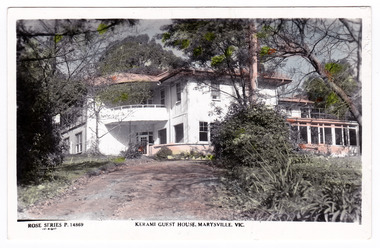
Postcard (item) - Colour postcard, Rose Stereograph Company, KERAMI GUEST HOUSE, MARYSVILLE, VIC, 1913-1967
... My Dear Mother(+ Grandma)/ This is a photo of the guest house/ where we are staying. It is marvellous./ The food is good, the place clean and/ the ??? ...My Dear Mother(+ Grandma)/ This is a photo of the guest house/ where we are staying. It is marvellous./ The food is good, the place clean and/ the ??? ...A colour postcard from Kerami Guest House in Marysville. This postcard was produced by the Rose Stereograph Company as a souvenir of Marysville.A colour postcard from Kerami Guest House in Marysville. This postcard was produced by the Rose Stereograph Company as a souvenir of Marysville.THE ROSE SERIES P. 14869/ COPYRIGHT POST CARD The "Rose" Series/ De Luxe A Real Photograph/ Produced in Australia Published by the Rose Stereograph Co.,/ Armadale, Victoria. Wednesday. My Dear Mother(+ Grandma)/ This is a photo of the guest house/ where we are staying. It is marvellous./ The food is good, the place clean and/ the ??? is very lovely./ We are going for walks and/ spent the morning in the snow/ at Lake Mountain yesterday. The/ children are loving every minute/ of it. (The parents are having a/ good rest). They think this kind/ of holiday is a change from our/ usual touring holidays. Love from us all/ Ken, Olive, ???, Sandra, Jennifer, ???.marysville, victoria, australia, kerami guesthouse, sister elizabeth glover, wood's point road, kerami house, pack road, murchison street, marysville & district tourist & progress association, sister helena brayshay, marion bethia curdie, sister margaret vincent thomas, sister elsie rose beatrice bolam mbe, lesley archibald elinor macgowan, postcard, souvenir, rose series, rose stereograph company, p. 14869 -
 Marysville & District Historical Society
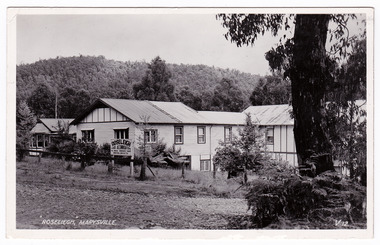
Postcard (item) - Black and white postcard, Valentine Publishing Co. Pty. Ltd, "ROSELEIGH," MARYSVILLE. V.12, 1923-1963
... Pty Ltd as a souvenir of Marysville. marysville victoria australia roseleigh guest house grieve family thomas charles grieve john arthur grieve rose grieve ackerman family mary moyne elise ackerman ken mcleod george peters rose emily pullum beltana rose lillian smith ivy may grieve alexander james ficinus raymond charles smith postcard souvenir valentine's publishing co. pty ltd VALENTINE'S/ POST CARD/ A GENUINE PHOTOGRAPH Thursday/ Dear Douglas/ We are having a very good/ holiday. Yesterday went to the Eildon Weir/ which is worth seeing. This place is very nice/ too stay at, very clean ...A black and white postcard of Roseleigh Guest House in Marysville that was produced by Valentine Publishing Co. Pty Ltd as a souvenir of Marysville.A black and white postcard of Roseleigh Guest House in Marysville that was produced by Valentine Publishing Co. Pty Ltd as a souvenir of Marysville.VALENTINE'S/ POST CARD/ A GENUINE PHOTOGRAPH Thursday/ Dear Douglas/ We are having a very good/ holiday. Yesterday went to the Eildon Weir/ which is worth seeing. This place is very nice/ too stay at, very clean & friendly. We had a/ good trip here & their are some lovely walks./ Flo & I would like to thank you for being so/ thoughtful about our luggage. Its these things/ that make life worth living. I think the strike/ will be over before we come back. If not will/ look you up. Kind regards to Mum Dad & both/ children/ Cheeriomarysville, victoria, australia, roseleigh guest house, grieve family, thomas charles grieve, john arthur grieve, rose grieve, ackerman family, mary moyne, elise ackerman, ken mcleod, george peters, rose emily pullum, beltana, rose lillian smith, ivy may grieve, alexander james ficinus, raymond charles smith, postcard, souvenir, valentine's publishing co. pty ltd -
 Marysville & District Historical Society
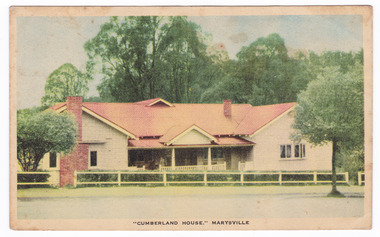
Postcard (item) - Colour postcard, Nucolorvue Productions, 'CUMBERLAND HOUSE," MARYSVILLE, Unknown
... POST CARD NUCOLORVUE PRODUCTIONS, ELWOOD, VICTORIA "Cumberland House"/ Marysville 9.2.49 Dear Mrs Bentley,/ Just a line to let you know/ I arrived at destination yesterday. This is it,/ it looks quite impressive; but of course, they have/ added a little glamor. It is nice & clean...The postcard was produced by Nucolorvue Productions as a souvenir of Marysville. marysville victoria austalia the cumberland the cumberland guest house cumberland house accommodation postcard souvenir nucolorvue productions POST CARD NUCOLORVUE PRODUCTIONS, ELWOOD, VICTORIA "Cumberland House"/ Marysville 9.2.49 Dear Mrs Bentley,/ Just a line to let you know/ I arrived at destination yesterday. This is it,/ it looks quite impressive; but of course, they have/ added a little glamor. It is nice & clean ...A colour postcard of Cumberland House in Marysville. The postcard was produced by Nucolorvue Productions as a souvenir of Marysville.A colour postcard of Cumberland House in Marysville. The postcard was produced by Nucolorvue Productions as a souvenir of Marysville.POST CARD NUCOLORVUE PRODUCTIONS, ELWOOD, VICTORIA "Cumberland House"/ Marysville 9.2.49 Dear Mrs Bentley,/ Just a line to let you know/ I arrived at destination yesterday. This is it,/ it looks quite impressive; but of course, they have/ added a little glamor. It is nice & clean,/ nothing elaborate; but a nice friendly atmosphere./ I have booked in for a fortnight & Im just going/ to indulge in a little laziness. Ive joined/ the library now I'm going to get stuck into a beaut/ murder, this afternoon. Later on, I'll take some/ trips, around the beauty spots. Space is limited here, so/ I'll write later, Cheerio for now. Clive/ Remember me to Sue & Norma.marysville, victoria, austalia, the cumberland, the cumberland guest house, cumberland house, accommodation, postcard, souvenir, nucolorvue productions -
Marysville & District Historical Society
THE TRIANGLE NEWSLETTER-VOL 36 NO 13-APRIL 17 2009
... clean drinking water...australian children's trust...siemans pty ltd...alexandra cinema...mobile vet service...triangle community group dance...the crossways...local contractors our priority says council...marysville community golf & bowls club...triangle distribution & fire relief centre...councillor comment...new community hall for narbethong...free tools...mayor's chair...welcome back flags...advertisements...creative triangle...church notices...alexandra auskick...new beginnings fellowship...anzac day services...for people rebuilding property house...marysville victoria australia valiant volunteers anzacs ww1 anzac day 2009 what's on when narbethong community & tourism group narbethong community meeting black spur inn clean drinking water australian children's trust siemans pty ltd alexandra cinema mobile vet service triangle community group dance the crossways local contractors our priority says council marysville community golf & bowls club triangle distribution & fire relief centre councillor comment new community hall for narbethong free tools mayor's chair welcome back flags advertisements creative triangle church notices alexandra auskick new beginnings fellowship anzac day services for people rebuilding property house numbers alexandra community health in buxton temporary relocation marysville medical clinic public forum men's health merv hughes victorian bushfire appeal grants triangle community sausage sizzle marysville golf course health & wellbeing animal aid marysville-lake mountain fire relief ride dinner marysville community facility gallipoli park THE TRIANGLE NEWSLETTER-VOL 36 NO 13-APRIL 17 2009 ...marysville, victoria, australia, valiant volunteers, anzacs ww1, anzac day 2009, what's on when, narbethong community & tourism group, narbethong community meeting, black spur inn, clean drinking water, australian children's trust, siemans pty ltd, alexandra cinema, mobile vet service, triangle community group dance, the crossways, local contractors our priority says council, marysville community golf & bowls club, triangle distribution & fire relief centre, councillor comment, new community hall for narbethong, free tools, mayor's chair, welcome back flags, advertisements, creative triangle, church notices, alexandra auskick, new beginnings fellowship, anzac day services, for people rebuilding property house numbers, alexandra community health in buxton temporary relocation, marysville medical clinic, public forum men's health, merv hughes, victorian bushfire appeal grants, triangle community sausage sizzle, marysville golf course, health & wellbeing, animal aid, marysville-lake mountain fire relief ride dinner, marysville community facility, gallipoli park -
 Flagstaff Hill Maritime Museum and Village
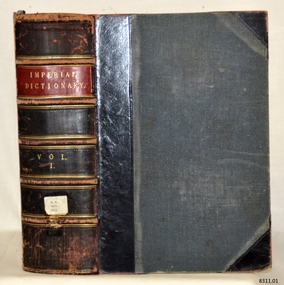
Book - Reference Dictionary/Scientific/Technological, John Ogilvie, The Imperial Dictionary English Technological and Scientific Vol 1, 1861
... houses in Scotland and the UK. Blackie & Son specialized in high-volume, beautifully bound, and heavily illustrated educational, religious, and reference texts. They were pioneers in the "subscription" model of selling books, delivering large works in affordable instalments to working-class and middle-class households. The dictionary proudly boasted over 2,000 finely detailed wood engravings. While many commercial encyclopedias used anonymous workshop artists, The Imperial Dictionary famously utilised the work of Orlando Jewitt (1799–1869). Jewitt was one of the preeminent architectural and scientific wood-engravers of the Victorian era, highly celebrated for his precise, clean...houses in Scotland and the UK. Blackie & Son specialized in high-volume, beautifully bound, and heavily illustrated educational, religious, and reference texts. They were pioneers in the "subscription" model of selling books, delivering large works in affordable instalments to working-class and middle-class households. The dictionary proudly boasted over 2,000 finely detailed wood engravings. While many commercial encyclopedias used anonymous workshop artists, The Imperial Dictionary famously utilised the work of Orlando Jewitt (1799–1869). Jewitt was one of the preeminent architectural and scientific wood-engravers of the Victorian era, highly celebrated for his precise, clean ...The Imperial Dictionary was a massive, progressive undertaking designed to be a bridge between a traditional language dictionary and a comprehensive technical encyclopedia. John Ogilvie built the text upon the foundation of Noah Webster’s famous American Dictionary. However, Ogilvie dramatically expanded it to include thousands of new terms born from the Industrial Revolution. It heavily prioritized the vocabulary of engineering, medicine, manufacturing, chemistry, and the arts, alongside a vast array of distinct Scottish and provincial British terms that Webster had omitted.The Imperial Dictionary English Technological and Scientific Vol 1 Author: John Ogilvie Publisher: Blackie & Son Ltd Date: 1861 Further Information: Black cloth hardcover with a brown leather spine, title lettering in gold. The spine has a Library label with an inscription.non-fictionThe Imperial Dictionary was a massive, progressive undertaking designed to be a bridge between a traditional language dictionary and a comprehensive technical encyclopedia. John Ogilvie built the text upon the foundation of Noah Webster’s famous American Dictionary. However, Ogilvie dramatically expanded it to include thousands of new terms born from the Industrial Revolution. It heavily prioritized the vocabulary of engineering, medicine, manufacturing, chemistry, and the arts, alongside a vast array of distinct Scottish and provincial British terms that Webster had omitted.flagstaff hill, warrnambool, shipwrecked coast, flagstaff hill maritime museum, maritime museum, shipwreck coast, flagstaff hill maritime village, great ocean road, book, pattison collection, warrnambool library, warrnambool mechanics’ institute, ralph eric pattison, corangamite regional library service, warrnambool city librarian, mechanics’ institute library, victorian library board, warrnambool books and records, warrnambool children’s library -
 Flagstaff Hill Maritime Museum and Village
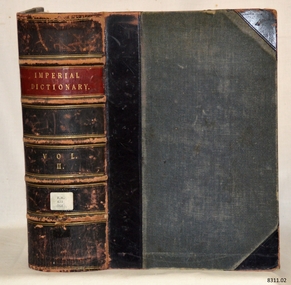
Book - Reference Dictionary/Scientific/Technological, John Ogilvie, The Imperial Dictionary English Technological and Scientific Vol 2, 1861
... houses in Scotland and the UK. Blackie & Son specialized in high-volume, beautifully bound, and heavily illustrated educational, religious, and reference texts. They were pioneers in the "subscription" model of selling books, delivering large works in affordable instalments to working-class and middle-class households. The dictionary proudly boasted over 2,000 finely detailed wood engravings. While many commercial encyclopedias used anonymous workshop artists, The Imperial Dictionary famously utilised the work of Orlando Jewitt (1799–1869). Jewitt was one of the preeminent architectural and scientific wood-engravers of the Victorian era, highly celebrated for his precise, clean...houses in Scotland and the UK. Blackie & Son specialized in high-volume, beautifully bound, and heavily illustrated educational, religious, and reference texts. They were pioneers in the "subscription" model of selling books, delivering large works in affordable instalments to working-class and middle-class households. The dictionary proudly boasted over 2,000 finely detailed wood engravings. While many commercial encyclopedias used anonymous workshop artists, The Imperial Dictionary famously utilised the work of Orlando Jewitt (1799–1869). Jewitt was one of the preeminent architectural and scientific wood-engravers of the Victorian era, highly celebrated for his precise, clean ...The Imperial Dictionary was a massive, progressive undertaking designed to be a bridge between a traditional language dictionary and a comprehensive technical encyclopedia. John Ogilvie built the text upon the foundation of Noah Webster’s famous American Dictionary. However, Ogilvie dramatically expanded it to include thousands of new terms born from the Industrial Revolution. It heavily prioritized the vocabulary of engineering, medicine, manufacturing, chemistry, and the arts, alongside a vast array of distinct Scottish and provincial British terms that Webster had omitted.The Imperial Dictionary English Technological and Scientific Vol 2 Author: John Ogilvie Publisher: Blackie & Son Ltd Date: 1861 Further Information: Black cloth hardcover with a brown leather spine, title lettering in gold. The spine has a Library label with an inscription.non-fictionThe Imperial Dictionary was a massive, progressive undertaking designed to be a bridge between a traditional language dictionary and a comprehensive technical encyclopedia. John Ogilvie built the text upon the foundation of Noah Webster’s famous American Dictionary. However, Ogilvie dramatically expanded it to include thousands of new terms born from the Industrial Revolution. It heavily prioritized the vocabulary of engineering, medicine, manufacturing, chemistry, and the arts, alongside a vast array of distinct Scottish and provincial British terms that Webster had omitted.flagstaff hill, warrnambool, shipwrecked coast, flagstaff hill maritime museum, maritime museum, shipwreck coast, flagstaff hill maritime village, great ocean road, book, pattison collection, warrnambool library, warrnambool mechanics’ institute, ralph eric pattison, corangamite regional library service, warrnambool city librarian, mechanics’ institute library, victorian library board, warrnambool books and records, warrnambool children’s library -
 City of Moorabbin Historical Society (Operating the Box Cottage Museum)
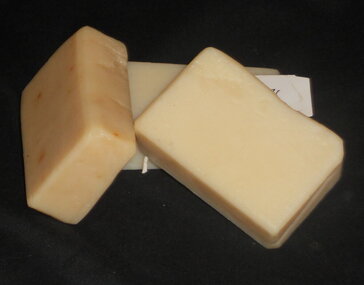
Domestic object - Kitchen Equipment, household soap, c1900
... house. The mixture of fats and water were boiled until all the fats had melted. After a longer period of boiling to insure completion of melting the fats, the fire was stopped and into the kettle was placed another amount of water about equal to the first amount of water. The solution was allowed to cool down and left over night. By the next day the fats had solidified and floated to the top forming a layer of clean...house. The mixture of fats and water were boiled until all the fats had melted. After a longer period of boiling to insure completion of melting the fats, the fire was stopped and into the kettle was placed another amount of water about equal to the first amount of water. The solution was allowed to cool down and left over night. By the next day the fats had solidified and floated to the top forming a layer of clean ...Common soap was made from mixing animal fat with potash a form of the potassium based alkali present in plant and wood material. Early settlers, made their own soap from the waste fats and ashes they saved from their daily work. They did not then have to rely on waiting for soap to be shipped from England and waste their goods or money in trade for soap. In making soap the first ingredient required was a liquid solution of potash commonly called lye. Animal fat, when removed from the animals during butchering, must be rendered to remove all meat tissues and cooking residue before soap of any satisfactory quality can be made from it. To render, fats and waste cooking grease were placed in a large kettle with an equal amount of water. Then the kettle was placed over the open fire outdoors, because the smell from rendering the fats was too strong to wish in anyone's house. The mixture of fats and water were boiled until all the fats had melted. After a longer period of boiling to insure completion of melting the fats, the fire was stopped and into the kettle was placed another amount of water about equal to the first amount of water. The solution was allowed to cool down and left over night. By the next day the fats had solidified and floated to the top forming a layer of clean fat. All the impurities being not as light as the fat remained in water underneath the fat. In another large kettle or pot the fat was placed with an amount of lye solution ( known by experience ). This mixture was boiled until the soap was formed - 6-8 hours - a thick frothy mass, and a small amount placed on the tongue caused no noticeable "bite". The next day a brown jelly like slippery substance was in the kettle and this was 'soft soap' . To make hard soap, common salt was thrown in at the end of the boiling and a hard cake of soap formed in a layer at the top of the pot. But as salt was expensive most settlers used 'soft soap',. The soap could be scented with oils such as lavender for personal use. These 3 cakes of home-made soap are examples of the self sufficiency of the early settlers as they had to be self reliant ,growing food and making and mending their own farm equipment, tools and clothes while establishing their market gardens in Moorabbin Shire3 cakes of home-made, white hard household soap. 1 cake of soap eaten by a brush tailed possum when he entered the Cottage via the chimney 27/4/2014soap making, market gardeners, pioneers, early settlers, moorabbin, brighton, dendy's special survey 1841. kitchen equipment, laundry equipment, bentleigh -
 Greensborough Historical Society
Photograph - Digital Image, Horse and buggy, 1880c
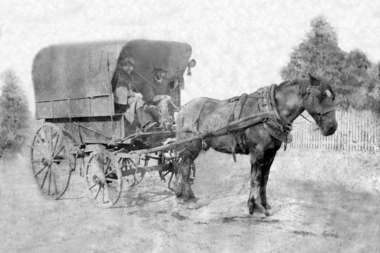
... [Found when cleaning up an old house belonging to a deceased friend/relative of the Partington's]...[Found when cleaning up an old house belonging to a deceased friend/relative of the Partington's] Digital copy of black and white photograph. ...Photograph of unidentified horse and covered buggy. [Found when cleaning up an old house belonging to a deceased friend/relative of the Partington's]Digital copy of black and white photograph. -
 City of Moorabbin Historical Society (Operating the Box Cottage Museum)
Containers, metal 'INGRAM' tooth powder, c1950
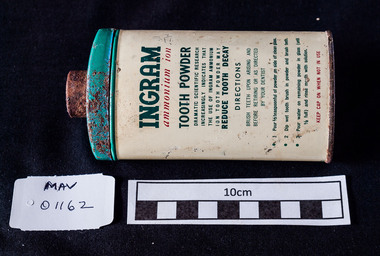
... Ingram Tooth powder was popular with settlers who bought land and houses in the post World War 2 estates in the City of Moorabbin c1950 Ingrams Tooth Powder was used throughout Australia and was popular with the families settling in the post World War 11 Estates in the City of Moorabbin c1950 Front ; INGRAM (T) / ammonium ion / TOOTH / POWDER ............./BRISTOL- MYERS PTY LTD SYDNEY Back ; Instructions for cleaning ...Ingram Tooth powder was popular with settlers who bought land and houses in the post World War 2 estates in the City of Moorabbin c1950 Ingrams Tooth Powder was used throughout Australia and was popular with the families settling in the post World War 11 Estates in the City of Moorabbin c1950A green and white tin that contained 'INGRAM' tooth cleaning powder. lid is missingFront ; INGRAM (T) / ammonium ion / TOOTH / POWDER ............./BRISTOL- MYERS PTY LTD SYDNEY Back ; Instructions for cleaning teeth -
 Orbost & District Historical Society
Photograph - Flood photos, Orbost 1971, 9/10 February 1971
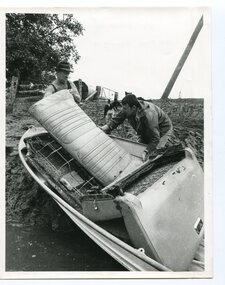
... CLEANING UP. A series of b/w photos from the 1971 record flood in Orbost. 2733.1 A b/w aerial photograph of a farm house with debris around, cattle in the background. ...This series of photos documents some of the destruction from the January 1971 flood at Orbost. This flood was a record Snowy River flood and isolated the district through road and bridge destruction. These photos are significant because they document aspects of the record 1971 flood at Orbost, and are of good quality. A series of b/w photos from the 1971 record flood in Orbost. 2733.1 A b/w aerial photograph of a farm house with debris around, cattle in the background. Inscription: 1971 FLOOD. 2733.2 A b/w photo of 2 people walking towards an upturned vehicle in floodwaters. Inscription: 1971 FLOOD. 2733.3 A b/w photo taken at night time. Five people beside and climbing on a tree which has been uprooted, with water flowing underneath. Inscription: 1971 FLOOD. 2733.4 A b/w photo of a man standing in doorway of the old pumphouse for the Butter Factory. He is leaning out of the doorway and pointing to a mark on the wall (presumably the height of the 1971 flood). Inscription: FLOOD MARKER AT ORBOST BUTTER FACTORY. 2733.5 A b/w photo of a man and woman walking on a road towards a section of the road which has been broken-up by a flood waters. Inscription: 1971 FLOOD HIGHWAY AT SOUTHERN END OF TOWN. 2733.6 A b/w photo of two men with a boat hauled up on an eroded bank. They appear to be loading or unloading car seats. Inscription on back: 1971 FLOOD CLEANING UP. 2733.1 1971 FLOOD. 2733.2 1971 FLOOD. 2733.3 1971 FLOOD. 2733.4 FLOOD MARKER AT ORBOST BUTTER FACTORY. 2733.5 1971 FLOOD HIGHWAY AT SOUTHERN END OF TOWN. 2733.6 1971 FLOOD CLEANING UP. orbost, snowy river, 1971 flood -
 Greensborough Historical Society
Photograph - Photographs, Rosie Bray, Roving Refills at Greenhills Neighbourhood house, 2021c
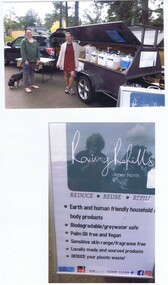
... House. Roving Refills produce and sell their household and body products in the inner northern area of Melbourne. skin care products cleaning products roving refills greenhills neighbourhood house Two colour photographs with order information card Roving Refills at Greenhills Neighbourhood house Photograph Photographs Rosie Bray ...Photographs of publicity and market sales trailer of "Roving Refills", an occasional service at Greenhills Neighbourhood House. Roving Refills produce and sell their household and body products in the inner northern area of Melbourne.Two colour photographs with order information cardskin care products, cleaning products, roving refills, greenhills neighbourhood house -
 Ringwood and District Historical Society
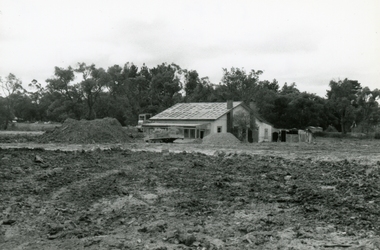
Photograph, East side of Wantirna road between Taurus Restaurant and Dandenong Creek. The land has been raised level with fill, 1989
... house was gone. In the 1950s, the council employed a man with horse and cart to chip and clean the prefabricated gutters. ...house was gone. In the 1950s, the council employed a man with horse and cart to chip and clean the prefabricated gutters. ...Digital photographA week after the photo was taken, the house was gone. In the 1950s, the council employed a man with horse and cart to chip and clean the prefabricated gutters. He lived in this house. -
 Flagstaff Hill Maritime Museum and Village
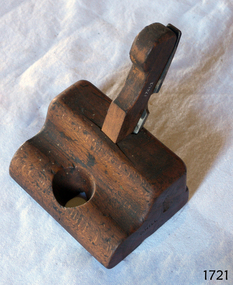
Tool - Router Plane, A Mathieson & Son, Mid 19th to early 20th centuries
... It is a router that houses a plough plane iron instead of a purpose made shoe-type cutting iron. They work fine but rarely give the type of clean surface required for veneer inlays. ...It is a router that houses a plough plane iron instead of a purpose made shoe-type cutting iron. They work fine but rarely give the type of clean surface required for veneer inlays. ...The subject router is commonly referred to disparagingly as the ‘old woman’s tooth’ or ‘hag’s tooth.’ It is a router that houses a plough plane iron instead of a purpose made shoe-type cutting iron. They work fine but rarely give the type of clean surface required for veneer inlays. These types of tools are adjusted by the same hammer-tap tapping method used generally on wooden-bodied planes on the iron or plane body. These tools are effective and practical when used in general carpentry and joinery. Company History: The firm of Alexander Mathieson & Sons was one of the leading makers of hand tools in Scotland. Its success went hand in hand with the growth of the shipbuilding industries on the Firth of Clyde in the nineteenth century and the emergence of Glasgow regarded as the "second city of the Empire". It also reflected the firm's skill in responding to an unprecedented demand for quality tools by shipyards, cooperage's and other industries, both locally and far and wide. The year 1792 was deemed by the firm to be that of its foundation it was in all likelihood the year in which John Manners had set up his plane-making workshop on Saracen Lane off the Gallowgate in the heart of Glasgow, not far from the Saracen's Head Inn, where Dr Johnson and James Boswell had stayed on their tour of Scotland in 1773. Alexander Mathieson (1797–1851) is recorded in 1822 as a plane-maker at 25 Gallowgate, but in the following year at 14 Saracen's Lane, presumably having taken over the premises of John Manners. The 1841 national census described Alexander Mathieson as a master plane-maker at 38 Saracen Lane with his son Thomas Adam working as a journeyman plane-maker. In 1849 the firm of James & William Stewart at 65 Nicolson Street, Edinburgh was taken over and Thomas was put in charge of the business, trading under the name Thomas A. Mathieson & Co. as plane and edge-tool makers. Thomas's company acquired the Edinburgh edge-tool makers Charles & Hugh McPherson and took over their premises in Gilmore Street. The Edinburgh directory of 1856/7 the business is recorded as being Alexander Mathieson & Son, plane and edge-tool makers at 48 Nicolson Street and Paul's Work, Gilmore Street. The 1851 census records indicate that Alexander was working as a tool and plane-maker employing eight men. Later that year Alexander died and his son Thomas took over the business. Under the heading of an edge-tool maker in the 1852/3 (Post-Office Glasgow Annual Directory) the firm is now listed as Alexander Mathieson & Son. By the early 1850s, the business had moved to 24 Saracen Lane. The directory for 1857/8 records that the firm had moved again only a few years later to East Campbell Street, also off the Gallowgate, and that through further diversification was also manufacturing coopers' and tinmen's tools. The ten-yearly censuses log the firm's growth and in 1861 Thomas was a tool manufacturer employing 95 men and 30 boys; in 1871 he had 200 men working for him and in 1881 300 men. By 1899 the firm had been incorporated as Alexander Mathieson & Sons Ltd, even though only Alexander's son Thomas appears ever to have joined the firm. A vintage tool made by a well-known firm made for other firms and individuals that worked in wood. The tool was used for making timber veneers or smoothing a trench in a piece of timber that was then used in some form of cabinet manufacture or wood working enterprise. A significant item from the mid to late 19th century that today is sought after by collectors. It gives us a snapshot of how furniture was made predominately by hand and with tools that were themselves hand made and required considerable skill in their use. Old Woman's Tooth Router Mathieson. Single iron cut down from a larger plane iron. Has Marked A Mathieson & Son also stamped inscription on side G Hill. (owner)flagstaff hill, warrnambool, flagstaff hill maritime museum, maritime museum, shipwreck coast, flagstaff hill maritime village, great ocean road, plane, old woman's tooth, router, hag's tooth router, cabinet making, woodworking tools, a mathieson & sons, cabinet tool makers -
 Flagstaff Hill Maritime Museum and Village
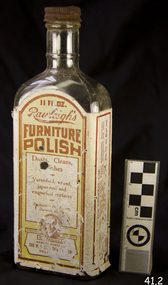
Container - Glass Bottle, W T Rawleigh, 1920s
... The item demonstrates how selling house hold products door to door was pioneered in Australia by the Rawleigh’s company in the early 1900s and is still in existence today. flagstaff hill warrnambool flagstaff hill maritime museum shipwreck coast flagstaff hill maritime village great ocean road bottle rawleigh's furniture polish furniture polish rawleigh's cleaning label of Rawleigh's Furniture Polish Bottle, glass, narrow neck rectangular base with metal screw top. ...W.T. Rawleigh's & Co. manufactured various household products in a factory in Collins Place, Melbourne, between 1930 and 1935. The W.T. Rawleigh Company was an American company started by William Rawleigh in 1889. The company expanded to both Canada and Australia with the Rawleigh company specialising in medicines, remedies, food additives, cleaning products and toiletries. Due to increased demand, Rawleigh’s required a larger factory and thus built the factory in Dawson Street Brunswick Victoria and by 1950 the factory had been extended to include 98,000 square feet of floor space. The Brunswick factory ceased production in the late 1970s and manufacturing was moved to New South Wales. During the peak of production, more than 200 people were employed in the Brunswick factory and several independent sale representatives sold their products door-to-door throughout the country. The ‘Rawleigh’s man’ was a regular door-to-door salesman of inter war and post-war suburban Melbourne. Rawleigh’s products are still in production today.A significant item as it gives a snapshot into domestic life and social norms of the pre and post war period in Melbourne and throughout Australia and New Zealand. The item demonstrates how selling house hold products door to door was pioneered in Australia by the Rawleigh’s company in the early 1900s and is still in existence today.Bottle, glass, narrow neck rectangular base with metal screw top.label of Rawleigh's Furniture Polishflagstaff hill, warrnambool, flagstaff hill maritime museum, shipwreck coast, flagstaff hill maritime village, great ocean road, bottle, rawleigh's furniture polish, furniture polish, rawleigh's, cleaning -
 Eltham District Historical Society Inc
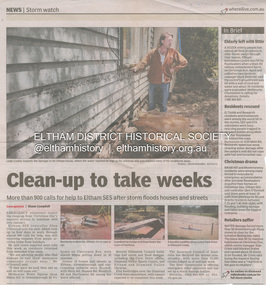
Newsclipping, Shaun Campbell, Clean-up to take weeks, Diamond Valley Leader, December 2011
... A flash flood occurred from significant rain fall and hail, which accumulated along an old waterway with floodwater submerging cars along Valonia Drive then down Grove Street flooding houses, through the Bible Street Reserve where it then submerged Main Road washing away the small railway trestle bridge opposite the reserve then flooding the Judge Book Village before finally entering the Diamond Creek. Widespread damage occured from hail and flash flooding. Fay Bridge Collection Eltham Flood damage floods Floodwater Digital file - scanned from newsclipping on loan Clean ...A late afternoon storm on Christmas Day 2011. A flash flood occurred from significant rain fall and hail, which accumulated along an old waterway with floodwater submerging cars along Valonia Drive then down Grove Street flooding houses, through the Bible Street Reserve where it then submerged Main Road washing away the small railway trestle bridge opposite the reserve then flooding the Judge Book Village before finally entering the Diamond Creek. Widespread damage occured from hail and flash flooding.fay bridge collection, eltham, flood damage, floods, floodwater -
 Eltham District Historical Society Inc
Photograph, Looking west near 942 Main Road, Hurstbridge, c. Oct 1987, 1987
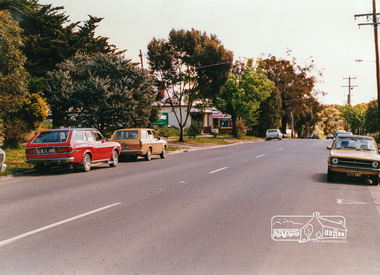
... house next to the milkbar, but that's hidden from view in this shot as it's further back from the road. Date based on other similar display panels visible in images of the Shire of Eltham display at the Eltham Community Festival, 7 November 1987. Shire of Eltham Engineering Department Providing the resources to undertake • Survey, design, consultation • Road construction and maintenance • Bridge construction and maintenance • Street sweeping • Drain and pit cleaning • Traffic engineering installation and maintenance • Garbage collection • Tip management, land reclamation and beautification • Maintenance of community buildings • Provision of community and recreation facilities...house next to the milkbar, but that's hidden from view in this shot as it's further back from the road. Date based on other similar display panels visible in images of the Shire of Eltham display at the Eltham Community Festival, 7 November 1987. Shire of Eltham Engineering Department Providing the resources to undertake • Survey, design, consultation • Road construction and maintenance • Bridge construction and maintenance • Street sweeping • Drain and pit cleaning • Traffic engineering installation and maintenance • Garbage collection • Tip management, land reclamation and beautification • Maintenance of community buildings • Provision of community and recreation facilities Display panel, Eltham Festival, Heidelberg-Kinglake Road, Hurstbridge, Hurstbridge Milk Bar, Infrastructure, Main Road, MM, shire of eltham, Yvonne's Dressmaking and Alteration Service Photo print mounted on card Looking west near 942 Main Road, Hurstbridge, c. ...Yvonne's Dressmaking and Alteration Service at 942 Main Road. Formerly a bakery, the building was demolished in 1990 and is now the site of Hurstbridge Saddlery. The milkbar is down the road, brick wall with a blue sign on it. There's still an older house next to the milkbar, but that's hidden from view in this shot as it's further back from the road. Date based on other similar display panels visible in images of the Shire of Eltham display at the Eltham Community Festival, 7 November 1987. Shire of Eltham Engineering Department Providing the resources to undertake • Survey, design, consultation • Road construction and maintenance • Bridge construction and maintenance • Street sweeping • Drain and pit cleaning • Traffic engineering installation and maintenance • Garbage collection • Tip management, land reclamation and beautification • Maintenance of community buildings • Provision of community and recreation facilitiesPhoto print mounted on carddisplay panel, eltham festival, heidelberg-kinglake road, hurstbridge, hurstbridge milk bar, infrastructure, main road, mm, shire of eltham, yvonne's dressmaking and alteration service -
 Kiewa Valley Historical Society
Iron Hand, circa 1867 to circa 1871
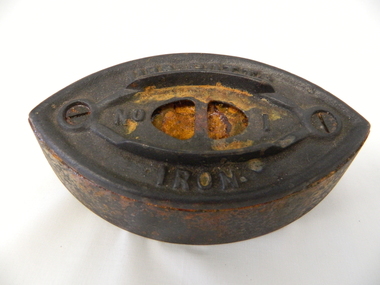
... clean. In the Kiewa Valley the majority of these irons would have been used by mothers or relatives. Men would hardly have used these irons as society labelled this type of activity as "women's work" house hold ironing domestic pressing clothes appliance Mrs Potts No. 1 This double pointed, heavy and solid cast iron, is a Mrs Potts No. 1 type. ...This is size one of three sizes (Mrs Potts) irons available in the late 1800s and early 1900s which were used for (press) ironing clothes etc. using wood or coal based heaters. The majority of these irons would have been placed on top of wood or coal fuelled stoves. They survived longer in isolated outback regions where electricity had not been connected. The weight of these irons was intentionally heavy so as to press the clothes etc. neatly. These irons were used in an era where stiff collars and creases in particular types of clothing was essentially a social requirementHistorically these irons fulfilled a particular function that was the norm in isolated or semi isolated country locations. Cities and larger towns had professional laundry and pressing shops. In smaller towns and homesteads, wives and relatives would use these heavy irons and required strong arms. In middle and higher levels of society these irons would be used by maids or nannies. Their use was a necessity to conform to the social requirements of acceptable appearances that all clothing worn had been "pressed" clean. In the Kiewa Valley the majority of these irons would have been used by mothers or relatives. Men would hardly have used these irons as society labelled this type of activity as "women's work"This double pointed, heavy and solid cast iron, is a Mrs Potts No. 1 type. It does not have a handle. It was used to iron clothes. Open cavity on top for handle (not included) see KVHS 0369 for No. 3 ironMrs Potts No. 1house hold, ironing, domestic, pressing, clothes appliance -
 Kiewa Valley Historical Society
Iron Hand, 1867 to 1871
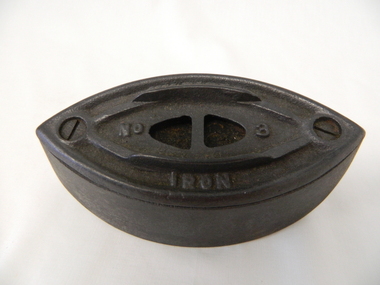
... clean. In the Kiewa Valley the majority of these irons would have been used by mothers or relatives. Men would hardly have used these irons as society labelled this type of activity as "women's work" house hold ironing domestic pressing clothes appliance Mrs Potts No. 3 This double pointed, heavy and solid cast iron, is a Mrs Potts No.3 type. ...This is size one of three sizes (Mrs Potts) irons available in the late 1800s and early 1900s which were used for (press) ironing clothes etc. using wood or coal based heaters. The majority of these irons would have been placed on top of wood or coal fuelled stoves. They survived longer in isolated outback regions where electricity had not been connected. The weight of these irons was intentionally heavy so as to press the clothes etc. neatly. These irons were used in an era where stiff collars and creases in particular types of clothing was essentially a social requirementHistorically these irons fulfilled a particular function that was the norm in isolated or semi isolated country locations i.e., ironed clothes and linen.The iron was heated by using locally acquired wood in a cast iron stove or "pot Belly". It would be placed on top of the stove but not directly in the flames. Cities and larger towns had professional laundry and pressing shops. In smaller towns and homesteads, wives and relatives would use these heavy irons which required strong arms. In middle and higher levels of society these irons would be used by maids or nannies. Their use was a necessity, to conform to the social requirements of acceptable appearances in that all clothing worn had been "pressed" clean. In the Kiewa Valley the majority of these irons would have been used by mothers or relatives. Men would hardly have used these irons as society labelled this type of activity as "women's work"This double pointed, heavy and solid cast iron, is a Mrs Potts No.3 type. It does not have a handle. It was used to iron clothes. Open cavity on top for handle (not included) Note: one end is pointed up to allow the natural weight of the iron to increase the pressure at any of the "hard to press" spots or emphasizing required creases. see KVHS 0368 for No. 1 ironMrs Potts No. 3house hold, ironing, domestic, pressing, clothes appliance
