
Showing 641 items matching " iron work"
-
 Flagstaff Hill Maritime Museum and Village
Iron Work
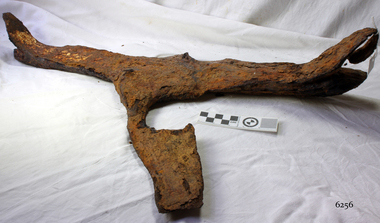
... Iron Work ......iron work...Iron Work. Artefact Reg No S/129. Recovered from the wreck of the Schomberg. ...Badly corroded and brittle. Iron Work ...When the ship Schomberg was launched in 1855, she was considered the most perfect clipper ship ever to be built. James Blaine’s Black Ball Line had commissioned her to be built for their fleet of passenger liners. At a cost of £43,103, the Aberdeen builders designed her to sail faster than the quick clippers designed by North American Donald McKay. She was a three masted wooden clipper ship, built with diagonal planking of British oat with layers of Scottish larch. This luxury vessel was designed to transport emigrants to Melbourne in superior comfort. She had ventilation ducts to provide air to the lower decks and a dining saloon, smoking room, library and bathrooms for the first class passengers. At the launch of Schomberg’s maiden voyage, her master Captain ‘Bully’ Forbes, drunkenly predicted that he would make the journey between Liverpool and Melbourne in 60 days. Schomberg departed Liverpool on 6 October 1855 with 430 passengers and 3000 tons cargo including iron rails and equipment intended the build the Geelong Railway and a bridge over the Yarra from Melbourne to Hawthorn. The winds were poor as Schomberg sailed across the equator, slowing her journey considerably. She was 78 days out of Liverpool when she ran aground on a sand-spit near Peterborough, Victoria, on 27 December; the sand spit and the currents were not marked on Forbes’s map. Overnight, the crew launched a lifeboat to find a safe place to land the ship’s passengers. The scouting party returned to Schomberg and advised Forbes that it was best to wait until morning because the rough seas could easily overturn the small lifeboats. The ship’s Chief Officer spotted SS Queen at dawn and signalled the steamer. The master of the SS Queen approached the stranded vessel and all of Schomberg’s passengers were able to disembark safely. The Black Ball Line’s Melbourne agent sent a steamer to retrieve the passengers’ baggage from the Schomberg. Other steamers helped unload her cargo until the weather changed and prevented the salvage teams from accessing the ship. Local merchants Manifold & Bostock bought the wreck and cargo, but did not attempt to salvage the cargo still on board the ship. They eventually sold it on to a Melbourne businessman and two seafarers. After two of the men drowned when they tried to reach Schomberg, salvage efforts were abandoned.32 In 1975, divers from Flagstaff Hill, including Peter Ronald, found an ornate communion set at the wreck. The set comprised a jug, two chalices, a plate and a lid. The lid did not fit any of the other objects and in 1978 a piece of the lid broke off, revealing a glint of gold. As museum staff carefully examined the lid and removed marine growth, they found a diamond ring, which is currently on display in the Great Circle Gallery.33 Flagstaff Hill also holds ship fittings and equipment, personal effects, a lithograph, tickets and photograph from the Schomberg. Most of the artefacts were salvaged from the wreck by Peter Ronald, former director of Flagstaff Hill. The Schomberg, which is on the Victorian Heritage Register (VHR S612), has great historical significance as a rare example of a large, fast clipper ship on the England to Australia run, carrying emigrants at the time of the Victorian gold rush. She represents the technical advances made to break sailing records between Europe and Australia. Flagstaff Hill’s collection of artefacts from the Schomberg is significant for its association with the shipwreck. The collection is primarily significant because of the relationship between the objects, as together they have a high potential to interpret the story of the Schomberg. It is archaeologically significant as the remains of an international passenger Ship. It is historically significant for representing aspects of Victoria’s shipping history and for its association with the shipwreck and the ship, which was designed to be fastest and most luxurious of its day Iron Work. Artefact Reg No S/129. Recovered from the wreck of the Schomberg. Badly corroded and brittle. warrnambool, shipwrecked-coast, flagstaff-hill, flagstaff-hill-maritime-museum, maritime-museum, shipwreck-coast, flagstaff-hill-maritime-village, schomberg, shipwrecked-artefact, clipper ship, black ball line, 1855 shipwreck, aberdeen clipper ship, captain forbes, peterborough shipwreck, ss queen, iron work -
 Bendigo Historical Society Inc.
Photograph - Lace Iron Work
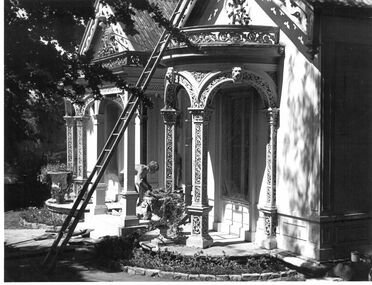
... Lace Iron Work...Black and White photo by A Doney of sandblasting iron lace work on unknown property in Bendigo. Two internal photos of door and arch ways. ...Larger photo of balustrade with verandah pillars in background Photograph Lace Iron Work ...Cast iron lace was made in foundries in most cities. There were 42 such foundries in Melbourne alone. It was cheaper to make than wrought iron. "Pig iron", iron ore, was melted in a blast furnace, mixed with alloys and poured into moulds usually med from sand. The alloys needed a minimum of 2% carbon.Black and White photo by A Doney of sandblasting iron lace work on unknown property in Bendigo. Two internal photos of door and arch ways. Larger photo of balustrade with verandah pillars in backgroundA Doney Bendigobendigo, wrought iron, allan doney -
 Glen Eira Historical Society
Photograph, Beauville Avenue, 9, Murrumbeena, 2001
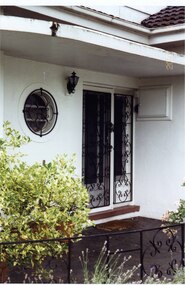
... ...cast iron work...Colour photograph of the front entrance to a white rendered house featuring a porthole style window with a decorative cast iron work grid, a wall light, double cast iron work doors in front of the double glass doors and a meter box. ...The estate is distinguished by its aesthetic values, as is the earlier and comparable Hillcrest Estate, which are formed by a combination of restrained diversity in house styles, with the exception of no. 30 in the emerging International style, and by a landscaped garden environment. murrumbeena houses beauville avenue architectural styles 1930's inter war style a.v. jennings av jennings jennings brick houses beauville estate porches sir albert victor jennings a v jennings construction co beauville estate heritage area glen eira city council architectural features jennings group limited land subdivision gardens beauville historic area porthole windows double doors cast iron work lights glass doors Colour photograph of the front entrance to a white rendered house featuring a porthole style window with a decorative cast iron work grid, a wall light, double cast iron work doors in front of the double glass doors and a meter box. ...Originally labelled "Beauville Estate, Established 1936, Still Thriving 65 years on, 10th March 2001", the Beauville Estate Album contains colour photographs of houses in the Estate. They were taken around the time of the Beauville Estate’s 65th Heritage Celebration held on 10/03/2001 and donated to the Caulfield Historical Society shortly afterwards. Photographer Bev Baxter. See also 2104A-11 and 2104A-12.City of Glen Eira’s Heritage Management Plan Vol 2 p79 (this is p84 of the pdf version) – HO12 Beauville Estate and environs, Murrumbeena: The Beauville Historic Area is important at the State level as the first large housing estate undertaken by the AV Jennings Construction Co, later Jennings Group Limited, Victoria’s largest home builder. It is important also as a very early estate development incorporating a range of features other than houses and including made roads, shops and recreation facilities. In this respect it was the forerunner of the comprehensively planned housing estate of the post war era. The estate is distinguished by its aesthetic values, as is the earlier and comparable Hillcrest Estate, which are formed by a combination of restrained diversity in house styles, with the exception of no. 30 in the emerging International style, and by a landscaped garden environment. Colour photograph of the front entrance to a white rendered house featuring a porthole style window with a decorative cast iron work grid, a wall light, double cast iron work doors in front of the double glass doors and a meter box. Wrought iron balustrading can also be seen edging the porch in the foreground. murrumbeena, houses, beauville avenue, architectural styles, 1930's, inter war style, a.v. jennings, av jennings, jennings, brick houses, beauville estate, porches, sir albert victor jennings, a v jennings construction co, beauville estate heritage area, glen eira city council, architectural features, jennings group limited, land subdivision, gardens, beauville historic area, porthole windows, double doors, cast iron work, lights, glass doors -
 Glen Eira Historical Society
Photograph, Dalny Road, 11, Murrumbeena, 2001
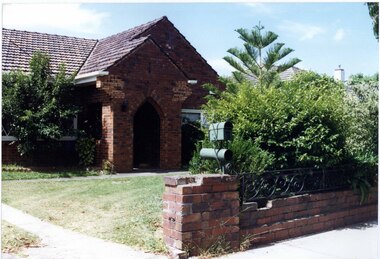
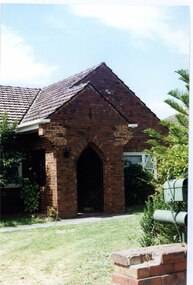
... ...cast iron work...Other features include tiled roof, enclosed porch with an arched entrance and black metal lantern and open window on the left side , garden, drive and a low slightly damaged unpainted brick fence with cast iron work railing in the foreground with a cast iron work letterbox on top....Other features include tiled roof, enclosed porch with an arched entrance and black metal lantern and open window on the left side , garden, drive and a low slightly damaged unpainted brick fence with cast iron work railing in the foreground with a cast iron work letterbox on top. ...Originally labelled "Beauville Estate, Established 1936, Still Thriving 65 years on, 10th March 2001", the Beauville Estate Album contains colour photographs of houses in the Estate. They were taken around the time of the Beauville Estate’s 65th Heritage Celebration held on 10/03/2001 and donated to the Caulfield Historical Society shortly afterwards. Photographer unknown. City of Glen Eira’s Heritage Management Plan Vol 2 p79 (this is p84 of the pdf version) – HO12 Beauville Estate and environs, Murrumbeena: The Beauville Historic Area is important at the State level as the first large housing estate undertaken by the AV Jennings Construction Co, later Jennings Group Limited, Victoria’s largest home builder. It is important also as a very early estate development incorporating a range of features other than houses and including made roads, shops and recreation facilities. In this respect it was the forerunner of the comprehensively planned housing estate of the post war era. The estate is distinguished by its aesthetic values, as is the earlier and comparable Hillcrest Estate, which are formed by a combination of restrained diversity in house styles, with the exception of no. 30 in the emerging International style, and by a landscaped garden environment. Colour photograph of an unpainted variegated brown brick house with decorative brickwork. Other features include tiled roof, enclosed porch with an arched entrance and black metal lantern and open window on the left side , garden, drive and a low slightly damaged unpainted brick fence with cast iron work railing in the foreground with a cast iron work letterbox on top.11murrumbeena, houses, architectural styles, 1930's, inter war style, a.v. jennings, av jennings, jennings, brick houses, beauville estate, dalny road, porches, sir albert victor jennings, a v jennings construction co, beauville estate heritage area, glen eira city council, architectural features, jennings group limited, land subdivision, gardens, beauville historic area, brick features, arches, cast iron work, letterboxes, brick walls -
 Glen Eira Historical Society
Photograph, Dalny Road, 11, Murrumbeena, 2001
... ...cast iron work...Other features include tiled roof, enclosed porch with an arched entrance and black metal lantern, garden and a low unpainted brick fence in the foreground with a cast iron work letterbox on top....Other features include tiled roof, enclosed porch with an arched entrance and black metal lantern, garden and a low unpainted brick fence in the foreground with a cast iron work letterbox on top. Dalny Road, 11, Murrumbeena Photograph Photograph ...Originally labelled "Beauville Estate, Established 1936, Still Thriving 65 years on, 10th March 2001", the Beauville Estate Album contains colour photographs of houses in the Estate. They were taken around the time of the Beauville Estate’s 65th Heritage Celebration held on 10/03/2001 and donated to the Caulfield Historical Society shortly afterwards. Photographer unknown. City of Glen Eira’s Heritage Management Plan Vol 2 p79 (this is p84 of the pdf version) – HO12 Beauville Estate and environs, Murrumbeena: The Beauville Historic Area is important at the State level as the first large housing estate undertaken by the AV Jennings Construction Co, later Jennings Group Limited, Victoria’s largest home builder. It is important also as a very early estate development incorporating a range of features other than houses and including made roads, shops and recreation facilities. In this respect it was the forerunner of the comprehensively planned housing estate of the post war era. The estate is distinguished by its aesthetic values, as is the earlier and comparable Hillcrest Estate, which are formed by a combination of restrained diversity in house styles, with the exception of no. 30 in the emerging International style, and by a landscaped garden environment. Colour photograph of an unpainted variegated brown brick house with decorative brickwork. Other features include tiled roof, enclosed porch with an arched entrance and black metal lantern, garden and a low unpainted brick fence in the foreground with a cast iron work letterbox on top.murrumbeena, houses, architectural styles, 1930's, inter war style, a.v. jennings, av jennings, jennings, brick houses, beauville estate, dalny road, porches, sir albert victor jennings, a v jennings construction co, beauville estate heritage area, glen eira city council, architectural features, jennings group limited, land subdivision, gardens, beauville historic area, brick features, brick fences, arches, cast iron work, letterboxes -
 Glen Eira Historical Society
Photograph, Beauville Avenue, 5, Murrumbeena, 2001
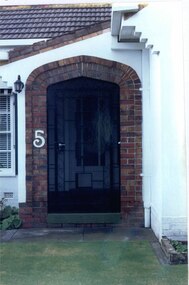
... ...cast iron work gates...The entrance features unpainted brick edging with number "5" on the arched entrance with a black mesh and cast iron work gate. Other features include a tiled roof and stepped brick edging under the eaves....The entrance features unpainted brick edging with number "5" on the arched entrance with a black mesh and cast iron work gate. Other features include a tiled roof and stepped brick edging under the eaves. ...Originally labelled "Beauville Estate, Established 1936, Still Thriving 65 years on, 10th March 2001", the Beauville Estate Album contains colour photographs of houses in the Estate. They were taken around the time of the Beauville Estate’s 65th Heritage Celebration held on 10/03/2001 and donated to the Caulfield Historical Society shortly afterwards. Photographer Bev Baxter. See also 2104A-05.City of Glen Eira’s Heritage Management Plan Vol 2 p79 (this is p84 of the pdf version) – HO12 Beauville Estate and environs, Murrumbeena: The Beauville Historic Area is important at the State level as the first large housing estate undertaken by the AV Jennings Construction Co, later Jennings Group Limited, Victoria’s largest home builder. It is important also as a very early estate development incorporating a range of features other than houses and including made roads, shops and recreation facilities. In this respect it was the forerunner of the comprehensively planned housing estate of the post war era. The estate is distinguished by its aesthetic values, as is the earlier and comparable Hillcrest Estate, which are formed by a combination of restrained diversity in house styles, with the exception of no. 30 in the emerging International style, and by a landscaped garden environment.Colour photograph of the entrance to the enclosed porch of a white rendered, brick house. The entrance features unpainted brick edging with number "5" on the arched entrance with a black mesh and cast iron work gate. Other features include a tiled roof and stepped brick edging under the eaves.murrumbeena, houses, beauville avenue, architectural styles, 1930's, inter war style, a.v. jennings, av jennings, jennings, brick houses, beauville estate, arches, sir albert victor jennings, a v jennings construction co, beauville estate heritage area, glen eira city council, architectural features, jennings group limited, land subdivision, gardens, beauville historic area, porches, lamps, cast iron work gates -
 Glen Eira Historical Society
Photograph - Hopetoun, Hopetoun Street, 2, Elsternwick
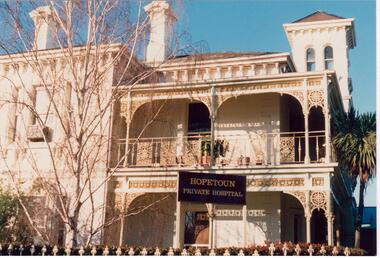
... ... Cast iron work...The photograph shows the hospital tower and cast iron work of the verandah....The photograph shows the hospital tower and cast iron work of the verandah. Hopetoun Private Hospital Hospitals Towers Mansions Architectural styles Elsternwick Hopetoun Street Cast iron work Photograph Hopetoun, Hopetoun Street, 2, Elsternwick ...A coloured photograph of the exterior of Hopetoun Private Hospital, date of photograph and photographer unknown. The photograph shows the hospital tower and cast iron work of the verandah.hopetoun private hospital, hospitals, towers, mansions, architectural styles, elsternwick, hopetoun street, cast iron work -
 Glen Eira Historical Society
Photograph, Beauville Avenue, 10, Murrumbeena, 2001
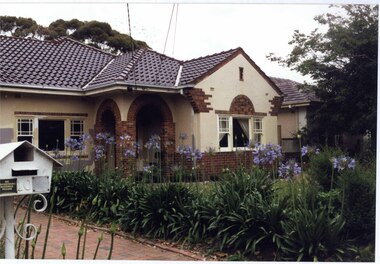
... ...cast iron work...Other features include a porch with two decorative open arches, tiled roof, 2 sets of matching double sashed windows with large square pane within each set, agapanthus lining the brick paved driveway and a cast iron work metal letterbox with number "10" on it. ...Other features include a porch with two decorative open arches, tiled roof, 2 sets of matching double sashed windows with large square pane within each set, agapanthus lining the brick paved driveway and a cast iron work metal letterbox with number "10" on it. ...Originally labelled "Beauville Estate, Established 1936, Still Thriving 65 years on, 10th March 2001", the Beauville Estate Album contains colour photographs of houses in the Estate. They were taken around the time of the Beauville Estate’s 65th Heritage Celebration held on 10/03/2001 and donated to the Caulfield Historical Society shortly afterwards. Photographer Bev Baxter. From Glen Eira’s Heritage Management Plan by Andrew Ward (1996) Vol 2 p63: The inclusion of shops in Murrumbeena Road and a common parkland developed at the rear of the properties were complemented by the construction of a gas display home at No. 10 Beauville Avenue.City of Glen Eira’s Heritage Management Plan Vol 2 p79 (this is p84 of the pdf version) – HO12 Beauville Estate and environs, Murrumbeena: The Beauville Historic Area is important at the State level as the first large housing estate undertaken by the AV Jennings Construction Co, later Jennings Group Limited, Victoria’s largest home builder. It is important also as a very early estate development incorporating a range of features other than houses and including made roads, shops and recreation facilities. In this respect it was the forerunner of the comprehensively planned housing estate of the post war era. The estate is distinguished by its aesthetic values, as is the earlier and comparable Hillcrest Estate, which are formed by a combination of restrained diversity in house styles, with the exception of no. 30 in the emerging International style, and by a landscaped garden environment. Colour photograph of cream rendered house with decorative unpainted brown brick features. Other features include a porch with two decorative open arches, tiled roof, 2 sets of matching double sashed windows with large square pane within each set, agapanthus lining the brick paved driveway and a cast iron work metal letterbox with number "10" on it. murrumbeena, houses, beauville avenue, architectural styles, 1930's, inter war style, a.v. jennings, av jennings, jennings, brick houses, beauville estate, porches, arches, sir albert victor jennings, a v jennings construction co, beauville estate heritage area, glen eira city council, architectural features, jennings group limited, land subdivision, gardens, beauville historic area, brick features, sash windows, paved drives, cast iron work, letter boxes, gas display houses -
 Glen Eira Historical Society
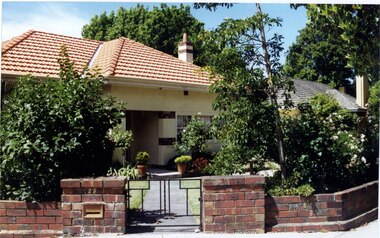
Photograph, Dalny Road, 23, Murrumbeena, 2001
... ...cast iron work gates...Other features include tiled roof, sash windows, concrete path, garden pots, established garden and a low unpainted lighter variegated brown brick fence in the foreground with '23' on the left hand pillar beside the black cast iron work gate. ...Other features include tiled roof, sash windows, concrete path, garden pots, established garden and a low unpainted lighter variegated brown brick fence in the foreground with '23' on the left hand pillar beside the black cast iron work gate. Dalny Road, 23, Murrumbeena Photograph Photograph ...Originally labelled "Beauville Estate, Established 1936, Still Thriving 65 years on, 10th March 2001", the Beauville Estate Album contains colour photographs of houses in the Estate. They were taken around the time of the Beauville Estate’s 65th Heritage Celebration held on 10/03/2001 and donated to the Caulfield Historical Society shortly afterwards. Photographer unknown. City of Glen Eira’s Heritage Management Plan Vol 2 p79 (this is p84 of the pdf version) – HO12 Beauville Estate and environs, Murrumbeena: The Beauville Historic Area is important at the State level as the first large housing estate undertaken by the AV Jennings Construction Co, later Jennings Group Limited, Victoria’s largest home builder. It is important also as a very early estate development incorporating a range of features other than houses and including made roads, shops and recreation facilities. In this respect it was the forerunner of the comprehensively planned housing estate of the post war era. The estate is distinguished by its aesthetic values, as is the earlier and comparable Hillcrest Estate, which are formed by a combination of restrained diversity in house styles, with the exception of no. 30 in the emerging International style, and by a landscaped garden environment. Colour photograph of a cream rendered brick house with unpainted decorative variegated brown brick features including on the porch and chimney. Other features include tiled roof, sash windows, concrete path, garden pots, established garden and a low unpainted lighter variegated brown brick fence in the foreground with '23' on the left hand pillar beside the black cast iron work gate. 23murrumbeena, houses, architectural styles, 1930's, inter war style, a.v. jennings, av jennings, jennings, brick houses, beauville estate, dalny road, porches, brick features, sir albert victor jennings, a v jennings construction co, beauville estate heritage area, glen eira city council, architectural features, jennings group limited, land subdivision, gardens, beauville historic area, chimneys, sash windows, brick fences, cast iron work gates, rendered houses -
 Glen Eira Historical Society
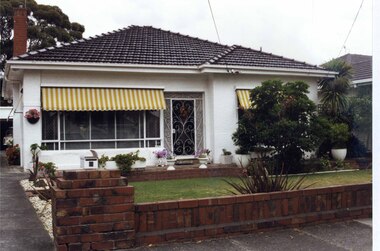
Photograph, Beauville Avenue, 6, Murrumbeena, 2001
... ...cast iron work gates...Other features include a tiled roof, a cast iron work front porch door, garden urns in front of the house and a low unpainted brick fence in the foreground with a car in its garage down the drive to the left. ...Other features include a tiled roof, a cast iron work front porch door, garden urns in front of the house and a low unpainted brick fence in the foreground with a car in its garage down the drive to the left. ...Originally labelled "Beauville Estate, Established 1936, Still Thriving 65 years on, 10th March 2001", the Beauville Estate Album contains colour photographs of houses in the Estate. They were taken around the time of the Beauville Estate’s 65th Heritage Celebration held on 10/03/2001 and donated to the Caulfield Historical Society shortly afterwards. Photographer Bev Baxter. City of Glen Eira’s Heritage Management Plan Vol 2 p79 (this is p84 of the pdf version) – HO12 Beauville Estate and environs, Murrumbeena: The Beauville Historic Area is important at the State level as the first large housing estate undertaken by the AV Jennings Construction Co, later Jennings Group Limited, Victoria’s largest home builder. It is important also as a very early estate development incorporating a range of features other than houses and including made roads, shops and recreation facilities. In this respect it was the forerunner of the comprehensively planned housing estate of the post war era. The estate is distinguished by its aesthetic values, as is the earlier and comparable Hillcrest Estate, which are formed by a combination of restrained diversity in house styles, with the exception of no. 30 in the emerging International style, and by a landscaped garden environment. Colour photograph of a white rendered house with striped yellow and white window awnings. Other features include a tiled roof, a cast iron work front porch door, garden urns in front of the house and a low unpainted brick fence in the foreground with a car in its garage down the drive to the left. The garden beds are also supported by walls of the same unpainted bricks with plants including a palm and succulents.murrumbeena, houses, beauville avenue, architectural styles, 1930's, inter war style, a.v. jennings, av jennings, jennings, brick houses, beauville estate, porches, sir albert victor jennings, a v jennings construction co, beauville estate heritage area, glen eira city council, architectural features, jennings group limited, land subdivision, gardens, beauville historic area, cast iron work gates, striped awnings, outdoor ornaments, brick fences, drives, cars, garages (private), palm trees, brick chimneys -
 Glen Eira Historical Society
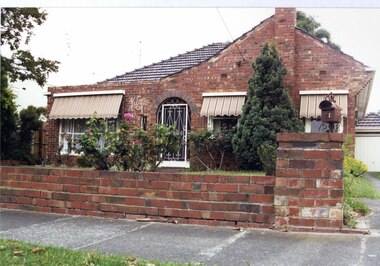
Photograph, Beauville Avenue, 28, Murrumbeena, 2001
... ...cast iron work...Other features include a porch with white cast iron work door, tiled roof, chimney, striped window awnings and low unpainted brick fence with a brown metal letterbox in the foreground beside the driveway. ...Other features include a porch with white cast iron work door, tiled roof, chimney, striped window awnings and low unpainted brick fence with a brown metal letterbox in the foreground beside the driveway. ...Originally labelled "Beauville Estate, Established 1936, Still Thriving 65 years on, 10th March 2001", the Beauville Estate Album contains colour photographs of houses in the Estate. They were taken around the time of the Beauville Estate’s 65th Heritage Celebration held on 10/03/2001 and donated to the Caulfield Historical Society shortly afterwards. Photographer unknown.City of Glen Eira’s Heritage Management Plan Vol 2 p79 (this is p84 of the pdf version) – HO12 Beauville Estate and environs, Murrumbeena: The Beauville Historic Area is important at the State level as the first large housing estate undertaken by the AV Jennings Construction Co, later Jennings Group Limited, Victoria’s largest home builder. It is important also as a very early estate development incorporating a range of features other than houses and including made roads, shops and recreation facilities. In this respect it was the forerunner of the comprehensively planned housing estate of the post war era. The estate is distinguished by its aesthetic values, as is the earlier and comparable Hillcrest Estate, which are formed by a combination of restrained diversity in house styles, with the exception of no. 30 in the emerging International style, and by a landscaped garden environment. See Significance Statement in Glen Eira’s Heritage Management Plan by Andrew Ward (1996) Vol 2 p.79. Available from https://www.gleneira.vic.gov.au/media/4779/heritage_management_plan_volume_2.pdf (Note see p.84 of pdf)Colour photograph of unpainted variegated brown brick house with "Kileen 28" in cast iron on the front wall. Other features include a porch with white cast iron work door, tiled roof, chimney, striped window awnings and low unpainted brick fence with a brown metal letterbox in the foreground beside the driveway. The house has an unusual pitched roof with timber eave on the right side of the house.Kileen / 28murrumbeena, houses, beauville avenue, architectural styles, 1930's, inter war style, a.v. jennings, av jennings, jennings, brick houses, beauville estate, porches, arches, letterboxes, sir albert victor jennings, a v jennings construction co, beauville estate heritage area, glen eira city council, architectural features, jennings group limited, land subdivision, gardens, beauville historic area, cast iron work, house names, kileen, brick features, brick chimneys, striped awnings, brick fences, metal letterboxes, roofs -
 Glen Eira Historical Society
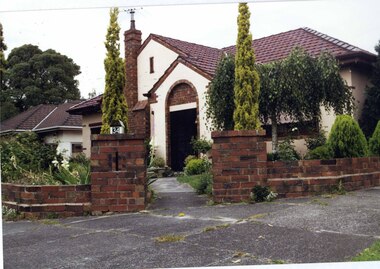
Photograph, Beauville Avenue, 34, Murrumbeena, 2001
... ...cast iron work door...Other features include a wide arched porch, tiled roof, tall brick chimney, cast iron work black porch door, window awnings and low unpainted matching brick fence in the foreground with "34" on the white metal letterbox on top of the right brick pillar beside the concrete pathway leading to the porch. ...Other features include a wide arched porch, tiled roof, tall brick chimney, cast iron work black porch door, window awnings and low unpainted matching brick fence in the foreground with "34" on the white metal letterbox on top of the right brick pillar beside the concrete pathway leading to the porch. ...Originally labelled "Beauville Estate, Established 1936, Still Thriving 65 years on, 10th March 2001", the Beauville Estate Album contains colour photographs of houses in the Estate. They were taken around the time of the Beauville Estate’s 65th Heritage Celebration held on 10/03/2001 and donated to the Caulfield Historical Society shortly afterwards. Photographer unknown.City of Glen Eira’s Heritage Management Plan Vol 2 p79 (this is p84 of the pdf version) – HO12 Beauville Estate and environs, Murrumbeena: The Beauville Historic Area is important at the State level as the first large housing estate undertaken by the AV Jennings Construction Co, later Jennings Group Limited, Victoria’s largest home builder. It is important also as a very early estate development incorporating a range of features other than houses and including made roads, shops and recreation facilities. In this respect it was the forerunner of the comprehensively planned housing estate of the post war era. The estate is distinguished by its aesthetic values, as is the earlier and comparable Hillcrest Estate, which are formed by a combination of restrained diversity in house styles, with the exception of no. 30 in the emerging International style, and by a landscaped garden environment. Colour photograph of white rendered, corner house with unpainted variegated brown brick features. Other features include a wide arched porch, tiled roof, tall brick chimney, cast iron work black porch door, window awnings and low unpainted matching brick fence in the foreground with "34" on the white metal letterbox on top of the right brick pillar beside the concrete pathway leading to the porch. Well-established garden including 2 matching pencil pines.murrumbeena, houses, beauville avenue, architectural styles, 1930's, inter war style, a.v. jennings, av jennings, jennings, brick houses, beauville estate, porches, sir albert victor jennings, a v jennings construction co, beauville estate heritage area, glen eira city council, architectural features, jennings group limited, land subdivision, gardens, beauville historic area, rendered houses, corner houses, brick features, awnings, brick fences, metal letterboxes, trees, cast iron work door -
 Box Hill Historical Society
Photograph - Albion Road
... ...Cast iron work...Built in 1890, the house has iron lace work. There is a metal staircase on the side of the house - "Turriff". ...Houses Victorian style Albion Road Cast iron work Turriff Sim family Photograph Albion Road ...Photograph of two-storey Victorian house at 40 Albion Road, Box Hill. Built in 1890, the house has iron lace work. There is a metal staircase on the side of the house - "Turriff". houses, victorian style, albion road, cast iron work, turriff, sim family -
 Bendigo Historical Society Inc.
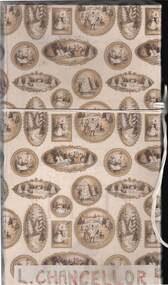
Document - LYDIA CHANCELLOR COLLECTION: CAMEO OF THE PAST
... ... iron work...It contains newspaper articles relating to mainly the local history of Bendigo. (1) A yellow folder containing newspaper and magazine articles about old lace iron work. Newspapers include 'Bendigo Advertiser,' 'The Age' and 'The Australian.' ...BENDIGO History community activities Lydia Chancellor Collection collection iron work old lace iron work building buildings National Trust National Trust of Australia Victorian Branch cast-iron Bendigo buildings place verandahs fittings and materials iron lace 'Toora' 'Women's World ' 'Bendigo Advertiser ' 'Cameo from the Past ' Amy Huxtable Bendigo Chinese goldfields Lydia Chancellor collection 'Victorian Commemoration Year ' 'Within a Year ' Miss Webb Truscott Family Fanny Perry 'Family pictures and memories ' Selina M. ...A box covered with decorative paper and titled 'Cameo of the Past 4.' It also has the title 'L. Chancellor.' It contains newspaper articles relating to mainly the local history of Bendigo. (1) A yellow folder containing newspaper and magazine articles about old lace iron work. Newspapers include 'Bendigo Advertiser,' 'The Age' and 'The Australian.' A white booklet titled 'The National Trust of Australia (Victoria) Ballarat Branch. 'Trust.' February 1965. A quarterly from the National Trust of Australia (Victoria), Como, South Yarra.' A 'National Trust of Australia (Victoria)' report. July, 1967. Postcard and photos of lacing. Dated 1960 - 1971. (11) An orange folder containing articles written by Toora in the 'Bendigo Advertiser. It also includes in a plastic pocket a Toora series titled 'Cameo from the past.' (111) A series of articles written by David Horsfall in the 'Bendigo Advertiser on the Chinese on the goldfields.(1V) In a plastic pocket 'Bendigo Advertiser' articles on Lydia Chancellor. (V) A white booklet titled,' Victorian Commemoration Year 1951.' (V1) A series of 'Bendigo Advertiser' articles titled, 'Within A Home.' ( V11( In a plastic pocket 'Bendigo Advertiser' articles on the Truscott family.' (V111) In a plastic pocket 'The Age' articles written by Fanny Perry on life in early Australia. (1X) In a plastic pocket a general collection of newspaper articles. Sources are the 'Bendigo Advertiser' and 'The Sun.' (X) A small white book titled, 'Family Pictures and Memories,' by Selina M. Deravin. It is in an envelope addressed to Lydia Chancellor and also contains a newspaper article on the poems of Selina Deravin. (X1) A photo of an antique clock. (X11) A leaflet on the life of Janie Houston Cruikshank. (X111) Auction catalogue by order of Miss Marian Jones 1962.bendigo, history, community activities, lydia chancellor collection, collection, iron work, old lace iron work, building, buildings, national trust, national trust of australia victorian branch, cast-iron, bendigo buildings, place, verandahs, fittings and materials, iron lace, 'toora', 'women's world, ' 'bendigo advertiser, ' 'cameo from the past, ' amy huxtable, bendigo, chinese, goldfields, lydia chancellor collection, 'victorian commemoration year, ' 'within a year, ' miss webb, truscott family, fanny perry, 'family pictures and memories, ' selina m. deravin, clock, antique clock, janie houston cruikshank, miss marian jones, auction, 'hollybank' auction -
Glen Eira Historical Society
Article - Archibald Street,|4,|Elsternwick
... ... Cast Iron Work...Article has two coloured photographs and gives brief details regarding home renovation, includes leadlight windows, cast iron fence, slate roof, cast iron lace work and tessellated tiles....Hooker Leadlight Cast Iron Work Plaster Moulds Article Archibald Street,|4,|Elsternwick ...Newspaper article, giving details of forthcoming sale of property at 4 Archibald Street, Elsternwick. It includes a small coloured photograph dated 18/02/05. Two Melbourne Weekly articles on the forthcoming sale of 4 Archibald Street. Details renovation details and reproduced Victorian additions, including modern state of the art facilities. Dated 22/02/06 and 15/02/06. Property Review Weekly dated 10/02/2006, on 4 Archibald Street, Elsternwick. Article has two coloured photographs and gives brief details regarding home renovation, includes leadlight windows, cast iron fence, slate roof, cast iron lace work and tessellated tiles.michelson’s, estate agents, archibald st, elsternwick, timber houses, victorian style, flamm alex, michelson mike, architectural features, penama developments, rossini, flamm oren, l.j. hooker, leadlight, cast iron work, plaster moulds -
 Glen Eira Historical Society
Photograph, Beauville Avenue, 36, Murrumbeena, 2001
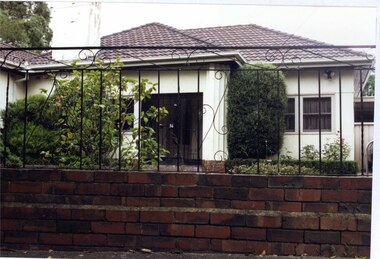
... ...cast iron work doors...The estate is distinguished by its aesthetic values, as is the earlier and comparable Hillcrest Estate, which are formed by a combination of restrained diversity in house styles, with the exception of no. 30 in the emerging International style, and by a landscaped garden environment. murrumbeena houses beauville avenue architectural styles 1930's inter war style a.v. jennings av jennings jennings brick houses beauville estate porches sir albert victor jennings a v jennings construction co beauville estate heritage area glen eira city council architectural features jennings group limited land subdivision gardens beauville historic area arches rendered houses cast iron work doors chimneys cast iron work fences Colour photograph of white rendered house with a wide porch gated by a black cast iron decorative door and a column feature to the right, chimney, tiled roof and a low unpainted brick fence topped by a black cast iron decorative fence in the foreground. ...Originally labelled "Beauville Estate, Established 1936, Still Thriving 65 years on, 10th March 2001", the Beauville Estate Album contains colour photographs of houses in the Estate. They were taken around the time of the Beauville Estate’s 65th Heritage Celebration held on 10/03/2001 and donated to the Caulfield Historical Society shortly afterwards. Photographer unknown.City of Glen Eira’s Heritage Management Plan Vol 2 p79 (this is p84 of the pdf version) – HO12 Beauville Estate and environs, Murrumbeena: The Beauville Historic Area is important at the State level as the first large housing estate undertaken by the AV Jennings Construction Co, later Jennings Group Limited, Victoria’s largest home builder. It is important also as a very early estate development incorporating a range of features other than houses and including made roads, shops and recreation facilities. In this respect it was the forerunner of the comprehensively planned housing estate of the post war era. The estate is distinguished by its aesthetic values, as is the earlier and comparable Hillcrest Estate, which are formed by a combination of restrained diversity in house styles, with the exception of no. 30 in the emerging International style, and by a landscaped garden environment. Colour photograph of white rendered house with a wide porch gated by a black cast iron decorative door and a column feature to the right, chimney, tiled roof and a low unpainted brick fence topped by a black cast iron decorative fence in the foreground. murrumbeena, houses, beauville avenue, architectural styles, 1930's, inter war style, a.v. jennings, av jennings, jennings, brick houses, beauville estate, porches, sir albert victor jennings, a v jennings construction co, beauville estate heritage area, glen eira city council, architectural features, jennings group limited, land subdivision, gardens, beauville historic area, arches, rendered houses, cast iron work doors, chimneys, cast iron work fences -
 Glen Eira Historical Society
Photograph, Beauville Avenue, 39, Murrumbeena, 2001
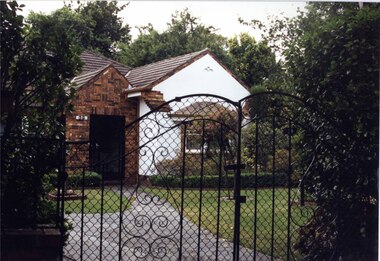
... ...cast iron work door...The estate is distinguished by its aesthetic values, as is the earlier and comparable Hillcrest Estate, which are formed by a combination of restrained diversity in house styles, with the exception of no. 30 in the emerging International style, and by a landscaped garden environment. murrumbeena houses beauville avenue architectural styles 1930's inter war style a.v. jennings av jennings jennings brick houses beauville estate porches sir albert victor jennings a v jennings construction co beauville estate heritage area glen eira city council architectural features jennings group limited land subdivision gardens beauville historic area rendered houses brick features cast iron work door cast iron work gates Colour photograph of white rendered house with unpainted variegated brown brick features. ...Originally labelled "Beauville Estate, Established 1936, Still Thriving 65 years on, 10th March 2001", the Beauville Estate Album contains colour photographs of houses in the Estate. They were taken around the time of the Beauville Estate’s 65th Heritage Celebration held on 10/03/2001 and donated to the Caulfield Historical Society shortly afterwards. Photographer unknown.City of Glen Eira’s Heritage Management Plan Vol 2 p79 (this is p84 of the pdf version) – HO12 Beauville Estate and environs, Murrumbeena: The Beauville Historic Area is important at the State level as the first large housing estate undertaken by the AV Jennings Construction Co, later Jennings Group Limited, Victoria’s largest home builder. It is important also as a very early estate development incorporating a range of features other than houses and including made roads, shops and recreation facilities. In this respect it was the forerunner of the comprehensively planned housing estate of the post war era. The estate is distinguished by its aesthetic values, as is the earlier and comparable Hillcrest Estate, which are formed by a combination of restrained diversity in house styles, with the exception of no. 30 in the emerging International style, and by a landscaped garden environment. Colour photograph of white rendered house with unpainted variegated brown brick features. Features include a large brick porch with decorative cast iron door, tiled roof and decorative cast iron entrance gates.murrumbeena, houses, beauville avenue, architectural styles, 1930's, inter war style, a.v. jennings, av jennings, jennings, brick houses, beauville estate, porches, sir albert victor jennings, a v jennings construction co, beauville estate heritage area, glen eira city council, architectural features, jennings group limited, land subdivision, gardens, beauville historic area, rendered houses, brick features, cast iron work door, cast iron work gates -
 Flagstaff Hill Maritime Museum and Village
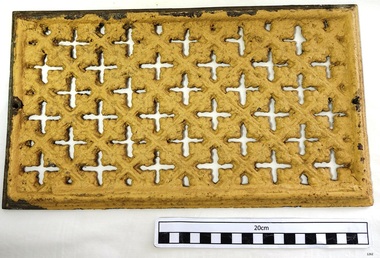
Grill
... ...iron work frame...flagstaff hill warrnambool shipwrecked-coast flagstaff-hill flagstaff-hill-maritime-museum maritime-museum shipwreck-coast flagstaff-hill-maritime-village mettal grill iron work frame grill cover building fitting Grill. ...Grill. Moulded rectangular metal frame with decorative metal work. Has been painted a cream colour. Grill has a hole made in the centre of the 2 short edges, possibly for fixing it into place.flagstaff hill, warrnambool, shipwrecked-coast, flagstaff-hill, flagstaff-hill-maritime-museum, maritime-museum, shipwreck-coast, flagstaff-hill-maritime-village, mettal grill, iron work frame, grill cover, building fitting -
 Blacksmith's Cottage and Forge
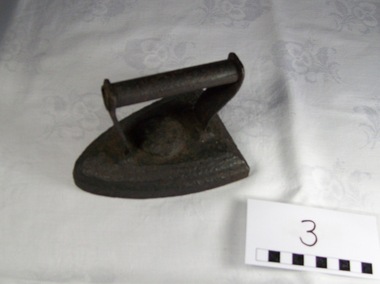
Iron, Flat, 1800 (estimated); 19th. century
... ...iron...work...Source: www.wikipedia.org Local social history, domestic item domestic iron work womens laundry on top plate but not decipherable Black cast iron with handle Iron, Flat ...From the 17th century, sadirons or sad irons (from an old word meaning solid) began to be used. They were thick slabs of cast iron, delta - shaped and with a handle, heated in a fire. These were also called flat irons. Another solution was to employ a cluster of solid irons that were heated from the single source: as the iron currently in use cools down, it could be quickly replaced by another one that is hot. Source: www.wikipedia.orgLocal social history, domestic itemBlack cast iron with handleon top plate but not decipherabledomestic, iron, work, womens, laundry -
 City of Moorabbin Historical Society (Operating the Box Cottage Museum)
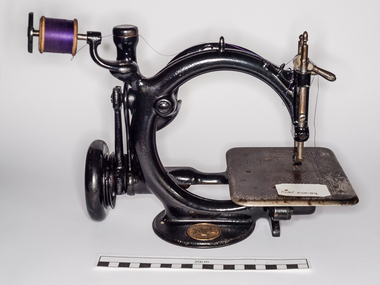
Functional object - Sewing machine, Wilcox & Gibbs, c1870
... ...wrought iron work...The women were skilled dressmakers and craft workers. sewing machines early settlers pioneers moorabbin brighton gibbs james willcox james willcox henry new york america dressmaking mateial machine makers wrought iron work telford england The Willcox & Gibbs badge is located on the rear of the base casting Willcox and Gibbs: Serial No. 158679. ...Willcox and Gibbs: Serial No. 158679. The Willcox & Gibbs Sewing Machine Company was founded in 1857 by James E. A. Gibbs and James Willcox and opened its London Office in 1859 at 135 Regent Street . By 1871 the Company's Chief Office for Europe was at 150 Cheapside, London, this office was later moved (post 1885) to 94 - 96 Wigmore Street, then 37 & 39 Moorgate Street (by 1891 to post 1907) and later 20 Fore Street, London . Right from the initial production the manufacturing of the Company's single thread, chain stitch machine was undertaken by Brown & Sharpe, Rhode Island and this continued up until 1948. A special hand crank mechanism was produced in England for the European market, but the general design of the Willcox & Gibbs remained essentially the same throughout its production. The only major improvement was in 1875 when the glass tension discs were replaced with an automatic tension device which ensured the machine could not get out of adjustment. In addition to the domestic hand and treadle machines the company produced a wide range of industrial models. The Company finally closed in 1973. This Willcox & Gibbs came complete with its wooden carry case. The machine was made in America in the late 1860's but it has the ornate hand crank produced at Coalbrookdale near Telford, England which was, in Victorian times, renown for producing high quality ornate iron castings. This machine has the glass tension discs which were used on domestic models until 1875. The Willcox & Gibbs badge is located on the rear of the base casting and it also has a deep wooden base. The cloth plate has various American patent dates, four dating between 1857 & 1860 relating to J. E. A. Gibbs, three dating between 1860 & 1864 relating to Chas H. Willcox (son of James Willcox), the machine was also licensed under five other patents including the infamous Elias Howe patent of 1846. There are only two English patents one for J. E. A Gibbs and the other for James Willcox. In 1887 a W & G Sewing Machine sold in England for 6 pounds , with its box and bits, at a time when the average wage was less than 10/- shillings per week. The early settlers of Moorabbin Shire had to be self sufficient making their own clothes, tableware, bed coverings, furnishings and equipment. The women were skilled dressmakers and craft workers.Willcox and Gibbs: Serial No. 158679. A single thread, chain stitch Sewing Machine with a special hand crank mechanism produced in England for the European market, and the glass tension discs which were used on domestic models until 1875. This Willcox & Gibbs came complete with its wooden carry case. The machine was made in America c1870 but it has the ornate hand crank produced at Coalbrookdale near Telford, England which was, in Victorian times, renown for producing high quality ornate iron castings. This machine has the glass tension discs which were used on domestic models until 1875. The Willcox & Gibbs badge is located on the rear of the base casting and it also has a deep wooden base. The Willcox & Gibbs badge is located on the rear of the base castingsewing machines, early settlers, pioneers, moorabbin, brighton, gibbs james, willcox james, willcox henry, new york, america, dressmaking, mateial, machine makers, wrought iron work, telford england -
 Orbost & District Historical Society
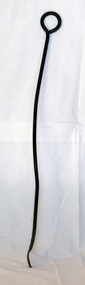
poker
... poker ash-scraper iron-work...Was a Slab Hut display item. poker ash-scraper iron-work Iron poker/ash scraper. Circular loop at top for hanging. ...Was a Slab Hut display item.Iron poker/ash scraper. Circular loop at top for hanging. End is flattened and curved.poker ash-scraper iron-work -
 Glen Eira Historical Society
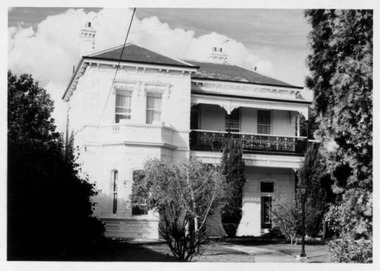
Letter - Orrong Crescent, 84, Caulfield North
... ... Cast iron work...Chesterfield HC North Caulfield Cast iron work Birch S R Architectural styles City of Caulfield Orrong Crescent Architectural features Hart Trevor Houses Filbert Street Verandahs House names 'Bonhurst' 'Historical Caulfield to 1972' Letter Orrong Crescent, 84, Caulfield North ...Two items abut this property: 1/Copy of letter from S R Birch of National Trust Of Australia that acknowledges 84 Orrong Crescent Caulfield North built 1889 has been recorded by the National Trust. Letter sent to owner H C Chesterfield dated 30/01/1974 with cc's to the Town Clerk, City Of Caulfield and Trevor Hart. Address was formerly numbered 120. 2/Data image of one of two black and white photos for GEHS-held photo album 'Historical Caulfield to 1972' p152. Hand noted as 'Bonhurst'.chesterfield hc, north caulfield, cast iron work, birch s r, architectural styles, city of caulfield, orrong crescent, architectural features, hart trevor, houses, filbert street, verandahs, house names, 'bonhurst', 'historical caulfield to 1972' -
Glen Eira Historical Society
Article - Regent Street, 12, Elsternwick
... ... Cast Iron Work...Regent Street Verandahs Cast Iron Work Builders Paterson Christine Elsternwick Tosin Paul Giannaris Christine Biggin and Scott Real estate agents 'Windsor' House names Stavrakis Bill Hoos George Slate tiles Denning Ethel Victorian style Paterson Greg Makvshev E. ...Three documents about this property: 1/A newspaper ad, dated 02/11/2005, gives a description of the home; 2/History of home as a run-down property and on current home owners, and the reasons for the renovations they did are covered in domain article of 09-15/11/2005; 3/Additional information included from Sands and McDougalls lists residents in 1923, 1948, 1960 and 1970 (in Claire Barton's handwriting as researcher).regent street, verandahs, cast iron work, builders, paterson christine, elsternwick, tosin paul, giannaris christine, biggin and scott, real estate agents, 'windsor', house names, stavrakis bill, hoos george, slate tiles, denning ethel, victorian style, paterson greg, makvshev e. -
Glen Eira Historical Society
Document - Regent Street, 17, Elsternwick
... ... Cast Iron Work...Miss Victorian Style Glenhuntly Road Cast Iron Work Smith Herbert R. Windows Mc Namara Wm. ...Two documents about this property: 1/A newspaper article, dated 2009, includes photo and brief description of home’s Victorian features for forthcoming sale. 2/Additional information from Sands and McDougalls, editions 1911, 1913, 1923, 1948, 1960 and 1970 of former occupants of home.elsternwick, stefanis angelos, finney edward. c., regent street, stavrakis bill, gloz i.o. miss, victorian style, glenhuntly road, cast iron work, smith herbert r., windows, mc namara wm. -
 Glen Eira Historical Society
Regent Street, 78, Elsternwick
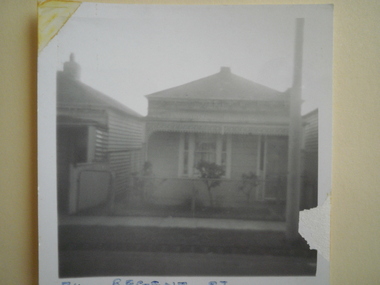
... ...Cast iron work...Regent Street Elsternwick Victorian style Williams Kharla Stavrakis Bill Buxton Real Estate Real estate agents Altman Romana Cheeseman A N Elliott W M C Cope Chas Evans Hy T Evans E Cast iron work Verandahs Three items on 78 Regent Street, Elsternwick., Newspaper advertisement from the Bayside Weekly, 03/2009 for the sale of 78 Regent Street. ...Three items on 78 Regent Street, Elsternwick., Newspaper advertisement from the Bayside Weekly, 03/2009 for the sale of 78 Regent Street. Gives brief description of the house’s interior and exterior features. Includes one colour photograph of the house exterior and two colour photographs of the house interior., Newspaper advertisement dated 08/09/2001, source unknown, advertising the sale of 78 Regent Street. Gives brief details of the house interior. Includes a colour photograph of the house exterior and a colour photograph of the Elsternwick Plaza area., A research note by Claire Barton, dated 03/07/2012, referencing Sands and McDougall editions 1911, 1913, 1923, 1948, 1960 and 1970, giving names of previous occupants of 78 Regent Street.regent street, elsternwick, victorian style, williams, kharla, stavrakis, bill, buxton real estate, real estate agents, altman, romana, cheeseman, a n, elliott, w m c, cope, chas, evans hy t, evans, e, cast iron work, verandahs -
Glen Eira Historical Society
Article - Shoobra Road, 61, Elsternwick
... ... Cast iron work...Shoobra Road Elsternwick Timber houses Biggin & Scott Victorian Style Verandahs Architectural features House names Relough McLean BH Mrs Elsworthy Henry Hastings Dora Mrs German Robert Cast iron work Real Estate Agents Hannaford JC Article Shoobra Road, 61, Elsternwick ...Three documents about this property: Two unattributed newspaper items dated 12/12/2001 and 5/12/2002 includes interior features of interest for forthcoming auction by Biggin and Scott. Handwritten research by Claire Barton via Sands and McDougalls that No. 61 was probably called Relough in 1910 and the name seems to have disappeared by 1923 and 1942 editions.shoobra road, elsternwick, timber houses, biggin & scott, victorian style, verandahs, architectural features, house names, relough, mclean bh mrs, elsworthy henry, hastings dora mrs, german robert, cast iron work, real estate agents, hannaford jc -
Glen Eira Historical Society
Article - SHOOBRA ROAD, 62, ELSTERNWICK
... ... Cast iron work...Victorian style Elsternwick Shoobra Road Fireplaces Ceiling roses Cast iron work Hastings Geo.T. Hastings Mary Mrs Verandahs Biggin and Scott Real Estate Agents Water tanks Article SHOOBRA ROAD, 62, ELSTERNWICK ...Three items on Shoobra Road; 1/Newspaper article dated 02/02/2011, from Melbourne Weekly Bayside, includes three coloured photographs showing renovated home interior and exterior facade. Article notes renovated features and garden highlights, selling agents Biggin and Scott. 2/Handwritten research from Sands and McDougalls edition 1923, 1942, and 1948 giving occupier details, by Claire Barton. 3/Forthcoming auction flyer for 62 Shoobra Road, Elsternwick. Auction date 30/05/2015. Property sold for approximately $2,000,000 by auctioneers HockingStuart.victorian style, elsternwick, shoobra road, fireplaces, ceiling roses, cast iron work, hastings geo.t., hastings mary mrs, verandahs, biggin and scott, real estate agents, water tanks -
Glen Eira Historical Society
Article - Shoobra Road, 53, Elsternwick, 'Linbrae'
... ... Cast Iron Work...Shoobra Road Elsternwick 'Linbrae' Biggin Scott Williams Kharla Stavrakis Bill Architectural Features Architectural Styles Cast Iron Work Real Estate Agents Bryant Samuel Rev. ...Three articles on 53 Shoobra Road: Melbourne Weekly Bayside magazine auction features dated 06/10/2010 and 20/10/2010 giving brief details of interior features and external extras. Articles include four and seven photographs respectively of house interior and exterior. Handwritten research by Claire Barton taken from Sands and MacDougalls editions 1910, 1913, 1923, 1942, 1948 and 1960 dated 30/09/2011.shoobra road, elsternwick, 'linbrae', biggin scott, williams kharla, stavrakis bill, architectural features, architectural styles, cast iron work, real estate agents, bryant samuel rev., bay windows, hestia, house names, appleton bv miss, victorian style, marble, fireplaces -
Glen Eira Historical Society
Document - St. Georges Road, 68, Elsternwick
... ... Cast Iron Work...Belle Vue Young Stephen Locksley Cutts Herbert Robertson David Robertson Ada Edwards Joseph Cording William Rybajzen Jeko Szaul Bullock Hilary Landells Rosalind Brighton Historical Society Architectural Features Houses Land Values Furnishings Brick Houses Verandahs Cast Iron Work Edwards Mrs Document St. Georges Road, 68, Elsternwick ...Two documents about the history and features of this property. A typed report about the ownership and occupancy from 1906 to 1978 of 68 St. Georges Road dated 21/07/1987 researched by Hailary Bullock and Rosalind Landells with handwritten working notes. Two evaluations, one for the house dated 05/05/1954, and one for the furnishings inside the house.st. georges road, george road, elsternwick, frederick sargood estate, sargood f., ripponlea, ring c., wrigley leslie j., belle vue, young stephen, locksley, cutts herbert, robertson david, robertson ada, edwards joseph, cording william, rybajzen jeko szaul, bullock hilary, landells rosalind, brighton historical society, architectural features, houses, land values, furnishings, brick houses, verandahs, cast iron work, edwards mrs -
Glen Eira Historical Society
Document - Roseneath, Nepean Highway, 31, Elsternwick
... ... Cast Iron Work...Kilda Riding Historic Buildings Register National Trust Register National Estate Register Italianate Style Architectural Styles Architectural Features Mansions Brick Houses Verandahs Cast Iron Work Bluestone Bay Windows Land Subdivisions Merchants Judges Leases Councillors Document Roseneath, Nepean Highway, 31, Elsternwick ...A photocopy of a Caulfield Conservation Study conducted in January 1995 by historian Andrew Ward of the house Roseneath named thus by 1904. The document includes a photocopied photograph of the front façade, although the features are unclear. The document, which includes a bibliography, details the history of Roseneath, including owners and occupiers, as well as the architectural features of significance and historical value.ward andrew, millar william, boyle andrew, worthington george, tulloch annie, cross anastasia, meek alex, caulfield, roseneath, elsternwick, nepean highway, mcmillan street, point nepean road, rusden street, cumbernauld, hawthorn road, glenmoore, st. georges road, caulfield south, shire of caulfield, east st. kilda riding, historic buildings register, national trust register, national estate register, italianate style, architectural styles, architectural features, mansions, brick houses, verandahs, cast iron work, bluestone, bay windows, land subdivisions, merchants, judges, leases, councillors
