
Showing 5 items matching " lt-commander jackson"
-
 Bendigo Historical Society Inc.
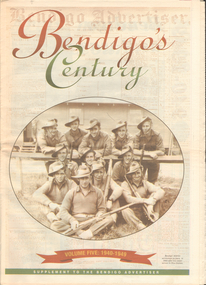
Newspaper - LONG GULLY HISTORY GROUP COLLECTION: BENDIGO'S CENTURY VOLUME FIVE: 1940 - 1949
... ... Lt-Commander Jackson...BENDIGO History long gully history group The Long Gully History Group - Bendigo's Century - Volume Five: 1940 - 1949 Bendigo Advertiser Central Deborah Mine Jackie Lewis Bob Johnson W Landy Ryga Yates Les Johnson Central Nell Gwynne Department of Defence Bendigo Jockey Club 8th Division Robert Menzies Deborah Mine Bendigo Decentralisation Vigilance Committee Cr W H Taylor Bendigo War Funds Organisation The Easter Fair Society Bendigo Agricultural Show Committee Mr E G Ham Mr J V Fairbairn Cr A Staples The Bendigo Chamber of Commerce Richard Hartley Smith Abbott Captain Harley Abbott Bendigo Art Gallery Bill Woodfull Bendigo High School North Deborah Mine Boardwalk Toni Riley Pharmacy Windermere Hotel Cr G A Pethard Coliban System North Deborah Mine Bendigo Pottery Bendigo Trades Hall Council Private Lawrence Burstall Major-General G J Rankin MHR Andrew Dunstan Ordnance Factory Royal Australian Navy HMAS Bendigo SEC Offices MUIOOF YMCA Georger Addlem Fred Addlem Cr A J Anderson Pauline Buvhan Thompson Leslie Thompson Edward Joseph Leonski Bendigo Football League Mr J Dedman William Stephens Forest Street Methodist Church Pte Charles Phillips Pte W E durward Pte T Foley William John Stephens Central Nell Gwynne Air Chief Marshall Sir Arthur Tedder Cr Taylor United Nations Flying Officer R Bruce Tuff Flight Lieutenant Owens Royal Air Force Commonwealth War Workers Housing Trust Scheme Mr S McKinnon Bendigo Decentralised Vigilance Committee Ravenswood Estate John Lienhop MLC Margaret (Peggy) Brennan Strathfieldsaye Shire Council School of Mines Bendigo Base Hospital William George Ashman Ashman's Tailors Bendigo Jockey Club Victorian Football Association Bendigo East Swimming Pool Deborah Anticline Specimen Hill Methodist Church North Deborah Adolf Hitler Benito Mussolini Australian 7th Division Cr Galvin Bendigo War Funds Organisation HMAS Bendigo Lt-Commander Jackson Bendigo Football League Central Deborah Mine Victoria Day Cr Truscott Bendigo Gaol Lansellstowe AWAS Barracks Bendigo Citizens Committee John Cain Snr Ordnance Factory Bendigo Agricultural Society The Duke of Gloucester Duchess of Gloucester Bendigo Tennis Association North Deborah Gillies Famous Pies Aids & Appliance Shop Mrs Georgina Scott Dr J A Neptune Scott Alfred Sisley Corot Daubigney Louis Sonnenberg Gas Employees' Union John Lienhop Soldier Settlement Commission Burnewang Estate King George VI Princess Elizabeth Lt Philip Mountbatten Mr E J W Herbert Ansett Airways Reg Ansett Most Rev Dr John McCarthy Dr Bernard Stewart Michael Giudice Bendigo United Breweries Bendigo Lyric Photo Plays Bendigo Sun Newspaper Shamrock Hotel West Bendigo Progress Association Alan McDonald South Bendigo Football Club Albert Collier J T Webbo Mervyn Tresize State Rivers and Water Supply Commission Eppalock Reservoir Public Works Committee Bendigo Rotary Club John Edgar Bendigo Base Hospital Albert Dunstan Benevolent Home Magetti's Wine Hall Wallace Reef Wine Hall Magetti Family Albert Magetti Lance Galvin Bradford Cotton Spinnings (Victoria) Pty Otd Arthur Syer Stanley Crossman Albert Arthur Dunstan Rev Dr Henry Backhaus City Family Hotel Lyric Theatre Bank of Australasia City Club HotelColonial Mutual Building R Matchett & Co Lansellstowe Leonard Lansell Bendigo Bas Hospital Australian Women's Army Service Mr Hollway Kenworth (Aust) Ltd Foggitt Jones's Bacon Factory Gordon Sayers Sandhurst Trustees Dr John Drowley Alexander Hislop Royal Mint North Deborah Mine Ironbark South Mining Company Central Nell Gwynne Company New Chum Syncline Newspaper supplement titled Bendigo's Century Volume Five: 1940 - 1949. ...Newspaper supplement titled Bendigo's Century Volume Five: 1940 - 1949. Each year has heading of Who's Who, Weather, Sport and Business. Front page is titled Bendigo's Century and has a photo of a group of soldiers in uniform and with rifles. They were district servicemen on leave in 1944. Each year has heading of Who's Who, Weather, Sport and Business. First years are 1940 - 1949 titled Bendigo as it was. It has two photos of women wading through the 1949 Pall Mall flood waters and one of Miners in the crib room of the Central Deborah Mine. They are Jackie Lewis, Bob Johnson, W Landy, Ryga Yates and Les Johnson. 1940 - Army moves in to racecourse, 1941 - Devastating fire at pottery, 1942 - Forces expand, 1943 - Nation's eyes on Bendigo, 1944 - News dawns of D-day landing, 1945 - City cheers the end of the war, 1946 - Celebrations begin in city, 1947 - Gallery gets top paintings, 1948 - Water plan looks good and 1949 - Flood takes a toll on city.bendigo, history, long gully history group, the long gully history group - bendigo's century - volume five: 1940 - 1949, bendigo advertiser, central deborah mine, jackie lewis, bob johnson, w landy, ryga yates, les johnson, central nell gwynne, department of defence, bendigo jockey club, 8th division, robert menzies, deborah mine, bendigo decentralisation vigilance committee, cr w h taylor, bendigo war funds organisation, the easter fair society, bendigo agricultural show committee, mr e g ham, mr j v fairbairn, cr a staples, the bendigo chamber of commerce, richard hartley smith abbott, captain harley abbott, bendigo art gallery, bill woodfull, bendigo high school, north deborah mine, boardwalk, toni riley pharmacy, windermere hotel, cr g a pethard, coliban system, north deborah mine, bendigo pottery, bendigo trades hall council, private lawrence burstall, major-general g j rankin mhr, andrew dunstan, ordnance factory, royal australian navy, hmas bendigo, sec offices, muioof, ymca, georger addlem, fred addlem, cr a j anderson, pauline buvhan thompson, leslie thompson, edward joseph leonski, bendigo football league, mr j dedman, william stephens, forest street methodist church, pte charles phillips, pte w e durward, pte t foley, william john stephens, central nell gwynne, air chief marshall sir arthur tedder, cr taylor, united nations, flying officer, r bruce tuff, flight lieutenant owens, royal air force, commonwealth war workers housing trust scheme, mr s mckinnon, bendigo decentralised vigilance committee, ravenswood estate, john lienhop mlc, margaret (peggy) brennan, strathfieldsaye shire council, school of mines, bendigo base hospital, william george ashman, ashman's tailors, bendigo jockey club, victorian football association, bendigo east swimming pool, deborah anticline, specimen hill methodist church, north deborah, adolf hitler, benito mussolini, australian 7th division, cr galvin, bendigo war funds organisation, hmas bendigo, lt-commander jackson, bendigo football league, central deborah mine, victoria day, cr truscott, bendigo gaol, lansellstowe, awas barracks, bendigo citizens committee, john cain snr, ordnance factory, bendigo agricultural society, the duke of gloucester, duchess of gloucester, bendigo tennis association, north deborah, gillies famous pies, aids & appliance shop, mrs georgina scott, dr j a neptune scott, alfred sisley, corot, daubigney, louis sonnenberg, gas employees' union, john lienhop, soldier settlement commission, burnewang estate, king george vi, princess elizabeth, lt philip mountbatten, mr e j w herbert, ansett airways, reg ansett, most rev, dr john mccarthy, dr bernard stewart, michael giudice, bendigo united breweries, bendigo lyric photo plays, bendigo sun newspaper, shamrock hotel, west bendigo progress association, alan mcdonald, south bendigo football club, albert collier, j t webbo, mervyn tresize, state rivers and water supply commission, eppalock reservoir, public works committee, bendigo rotary club, john edgar, bendigo base hospital, albert dunstan, benevolent home, magetti's wine hall, wallace reef wine hall, magetti family, albert magetti, lance galvin, bradford cotton spinnings (victoria) pty otd, arthur syer, stanley crossman, albert arthur dunstan, rev dr henry backhaus, city family hotel, lyric theatre, bank of australasia, city club hotelcolonial mutual building, r matchett & co, lansellstowe, leonard lansell, bendigo bas hospital, australian women's army service, mr hollway, kenworth (aust) ltd, foggitt jones's bacon factory, gordon sayers, sandhurst trustees, dr john drowley, alexander hislop, royal mint, north deborah mine, ironbark south mining company, central nell gwynne company, new chum syncline -
 Flagstaff Hill Maritime Museum and Village
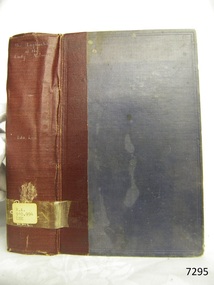
Book, The Logbooks of The Lady Nelson, 1915
... Lt. James Grant made the first documented European discovery of the area later known as Warrnambool in December 1800. This book is also nationally significant for its association with Grant in the Lady Nelson being the first to sail from west to east through Bass Strait, opening up a shorter, faster route to the colony of Port Jackson rather than going all the way south around Van Diemen’s Land. The book is nationally significant for its contents of the logbooks of the journeys of the Lady Nelson under various commanders ...This hardcover book, The logbooks of the 'Lady Nelson' : with the journal of her first commander, Lieutenant James Grant, R.N., by Ida Lee (Mrs Charles Bruce Marriott) was published over 100 years after the Lady Nelson arrived in Australia to navigate and survey this ‘new colony’. Included in the book are sixteen charts and illustrations from the originals in the Admiralty Library, showing the surveyed land and water. The transcribed Contents, below, summarise the trips of the Lady Nelson during this time. Book’s Content PLUS text of the Chart of ‘Part of Bass Strait’ - Chapter 1: The Lady Nelson built with centreboards. Her voyage to Sydney under James Grant. The first ship to pass through Bass Strait. - Chapter 2: Returns to explore the Strait. Her visits to Jervis Bay and to Western Port in 1801 - Chapter 3: Colonel Paterson and Lieutenant Grant survey Hunter River - Chapter 4: Murray appointed commander of the Lady Nelson. His voyage to Norfolk Island. - Chapter 5: Murray’s exploration of Bass Strait. - Chapter 6: Discovery of Port Phillip. - Chapter 7: The Lady Nelson in company with HMS Investigator examines the North-Eastern shores of Australia. - Chapter 8: The French ships in Bass Strait. The founding of Hobart. - Chapter 9: Symons succeeds Curtoys as commander of the Lady Nelson. His voyages to Tasmania, Port Phillip and New Zealand. - Chapter 10: The Lady Nelson in Tasmania. The founding of Port Dalrymple. - Chapter 11: The Estramina is brought to Sydney. The Lady Nelson visits Norfolk Island and Port Dalrymple. - Chapter 12: Tippahee and his four sons are conveyed to New Zealand in the Lady Nelson. - Chapter 13: The Lady Nelson accompanies HMS Tamar to Melville Island. - Chapter 14: The loss of the Lady Nelson Text included with the ‘Chart of Bass Strait’ … “Part of Bass Strait, including the discoveries made by Acting Lieut. J. Murray, commander of His Majesty’s armed surveying vessel Lady Nelson, between November 1801 and March 1802. By command of His Excellency Governor King.” “This chart, which bears Murray’s autograph, shows his explorations of Western Port, Port Phillip and King Island. It should be noted that Flinders Island is named Grand Capuchin. This is one of the charts referred to as "unfortunately missing” in the Historical Records of N.S. Wales, vol. iv. P. 764” The story of the Lady Nelson In 1798 the British Admiralty ordered a cutter of 60 tons to be built along the design of the armed cutter Trial that was developed by Captain John Schanck, with three sliding keels or centreboards that could be individually raised and lowered, for use on the River Thames. The new cutter was to be named Lady Nelson. Philip Gidley King, prior to taking up his appointment as third Governor of the colony of New South Wales, was in England at the time of the Lady Nelson’s fit-out and was aware of the need for such a ship for survey work in the colony in New South Wales. He convinced Captain Schanck, the Commissioner of Transport in England, to construct and rig the Lady Nelson as a brig rather than a cutter, keeping the feature of the three sliding keels, which would be very useful for mapping in shallow waters. The new Lady Nelson was launched at Deptford, England on the River Thames in November 1798, with the official commission to discover and survey the unknown parts of the coast of New Holland (Australia) and establish British sovereignty over the continent. The Lady Nelson sailed from Portsmouth, England on March 1800 under the command of Lieutenant James Grant. She carried an armament of two original and four extra brass carronade carriage guns and set sail as part of a convoy heading to Port Jackson, in New South Wales, New Holland. After a while she continued to sail on her own. Her journey was troubled with problems at times; damaged and broken keels, troublesome crew and leaking topsides between the waterline and the deck due to poor seals. She arrived at the Cape of Good Hope in July and waited for the winter to pass to avoid the strong winds of the ‘Roaring Forties’. While at the Cape, Grant received a despatch to travel to Port Jackson via the newly discovered Bass Strait, rather than the usual route via the tip of Van Diemen’s Land (Tasmania). This also gave him the opportunity to survey the strait on the way. He departed the Cape in October and in December he made his first sighting of New Holland near Mount Gambier in what is now South Australia. A report by Ecclestone in 2012, ‘The Early Charting of Victoria’s Coastline’, mentions that Grant charted and named Capes Banks and Northumberland, and sighted inland hills that he named Mt Gambier and Mt Schanck, the latter after the designer of his ship. Grant then reached the south-western shores of what is now Victoria on 3-4 December 1800, and from Cape Bridgewater he examined the coast eastward to Cape Patton. Although he had not continuously sighted the coast in the vicinity of Port Fairy and Warrnambool, the western part of Victoria became known as Grant’s Land. The Lady Nelson continued eastward and passed through Bass Strait, becoming the first vessel to reach the east coast of New Holland from the west, and arrived at her destination of Port Jackson later in December 1800. Grant, in the Lady Nelson, then left Port Jackson and began survey work. He discovered Port Phillip on Victoria’s coast and explored King Island, he helped establish the first European settlement in Tasmania on the Derwent River, and Port Dalrymple, Newcastle and Port Macquarie. He made several trips from Norfolk Island to Hobart Town. Governor Macquarie sailed on with him to Van Diemen’s Land for a tour of inspection in 1811. Grant helped establish the first settlement on Melville Island in Northern Australia. The Lady Nelson was used to transport cargo, civilians and convicts and to source pigs from Timor. In February 1825 the Lady Nelson sailed again for Timor and never returned. One report said that “Every soul on board, we regret to state, was cruelly massacred, and the hull of the vessel was seen some time after with the name painted on her stern.” The hull was sighted on the island of Babar, which is almost 200 kilometres east of Timor. This particular copy of the book ... This item is from the ‘Pattison Collection’, a collection of books and records that was originally owned by the Warrnambool Mechanics’ Institute, which was founded in Warrnambool in 1853. By 1886 the Warrnambool Mechanics’ Institute (WMI) had grown to have a Library, Museum and Fine Arts Gallery, with a collection of “… choice productions of art, and valuable specimens in almost every branch and many wonderful national curiosities are now to be seen there, including historic relics of the town and district.” It later included a School of Design. Although it was very well patronised, the lack of financial support led the WMI in 1911 to ask the City Council to take it over. In 1935 Ralph Pattison was appointed as City Librarian to establish and organise the Warrnambool Library as it was then called. When the WMI building was pulled down in 1963 a new civic building was erected on the site and the new Warrnambool Library, on behalf of the City Council, took over all the holdings of the WMI. At this time some of the items were separated and identified as the ‘Pattison Collection’, named after Ralph Pattison. Eventually the components of the WMI were distributed from the Warrnambool Library to various places, including the Art Gallery, Historical Society and Flagstaff Hill. Later some were even distributed to other regional branches of Corangamite Regional Library and passed to and fro. It is difficult now to trace just where all of the items have ended up. The books at Flagstaff Hill Maritime Village generally display stamps and markings from Pattison as well as a variety of other institutions including the Mechanics’ Institute itself. RALPH ERIC PATTISON Ralph Eric Pattison was born in Rockhampton, Queensland, in 1891. He married Maude Swan from Warrnambool in 1920 and they set up home in Warrnambool. In 1935 Pattison accepted a position as City Librarian for the Warrnambool City Council. His huge challenge was to make a functional library within two rooms of the Mechanics’ Institute. He tirelessly cleaned, cleared and sorted a disarrayed collection of old books, jars of preserved specimens and other items reserved for exhibition in the city’s museum. He developed and updated the library with a wide variety of books for all tastes, including reference books for students; a difficult task to fulfil during the years following the Depression. He converted all of the lower area of the building into a library, reference room and reading room for members and the public. The books were sorted and stored using a cataloguing and card index system that he had developed himself. He also prepared the upper floor of the building and established the Art Gallery and later the Museum, a place to exhibit the many old relics that had been stored for years for this purpose. One of the treasures he found was a beautiful ancient clock, which he repaired, restored and enjoyed using in his office during the years of his service there. Ralph Pattison was described as “a meticulous gentleman whose punctuality, floorless courtesy and distinctive neat dress were hallmarks of his character, and ‘his’ clock controlled his daily routine, and his opening and closing of the library’s large heavy doors to the minute.” Pattison took leave during 1942 to 1945 to serve in the Royal Australian Navy, Volunteer Reserve as Lieutenant. A few years later he converted one of the Museum’s rooms into a Children’s Library, stocking it with suitable books for the younger generation. This was an instant success. In the 1950’s he had the honour of being appointed to the Victorian Library Board and received more inspiration from the monthly conferences in Melbourne. He was sadly retired in 1959 after over 23 years of service, due to the fact that he had gone over the working age of council officers. However he continued to take a very keen interest in the continual development of the Library until his death in 1969 This book about the logbooks of the Lady Nelson is locally significant for its association with the brig Lady Nelson, in which Lt. James Grant made the first documented European discovery of the area later known as Warrnambool in December 1800. This book is also nationally significant for its association with Grant in the Lady Nelson being the first to sail from west to east through Bass Strait, opening up a shorter, faster route to the colony of Port Jackson rather than going all the way south around Van Diemen’s Land. The book is nationally significant for its contents of the logbooks of the journeys of the Lady Nelson under various commanders and the copies of the charts created from the surveyed information and the new land of Australia was discovered. This book is also significant for its association with the full-size non-sailing replica of the Lady Nelson from Mount Gambier’s visitor centre, which was restored by Flagstaff Hill’s Master Boat Builder in Warrnambool in 2012, and with a ship mode of the Lady Nelson in our Collection The Pattison Collection, along with other items at Flagstaff Hill Maritime Village, was originally part of the Warrnambool Mechanics' Institute’s collection. The Warrnambool Mechanics’ Institute Collection is primarily significant in its totality, rather than for the individual objects it contains. Its contents are highly representative of the development of Mechanics' Institute libraries across Australia, particularly Victoria. A diversity of publications and themes has been amassed, and these provide clues to our understanding of the nature of and changes in the reading habits of Victorians from the 1850s to the middle of the 20th century. The collection also highlights the Warrnambool community’s commitment to the Mechanics’ Institute, reading, literacy and learning in the regions, and proves that access to knowledge was not impeded by distance. These items help to provide a more complete picture of our community’s ideals and aspirations. The Warrnambool Mechanics Institute book collection has historical and social significance for its strong association with the Mechanics Institute movement and the important role it played in the intellectual, cultural and social development of people throughout the latter part of the nineteenth century and the early twentieth century. The collection of books is a rare example of an early lending library and its significance is enhanced by the survival of an original collection of many volumes. The Warrnambool Mechanics' Institute’s publication collection is of both local and state significance. The Logbooks of The Lady Nelson Author: Ida Lee ( Mrs Charles Bruce Marriott) Publisher: Grafton & Co Date: 1915Label on spine with typed text RA 910.994 LEE Inside front cover has a sticker that reads Warrnambool Mechanics Institute and Free Library shipwrecked-coast, flagstaff-hill, warrnambool, flagstaff-hill-maritime-museum, maritime-museum, shipwreck-coast, flagstaff-hill-maritime-village, shipwrecked-artefact, book, warrnambool library, warrnambool mechanics’ institute, warrnambool city librarian, mechanics’ institute library, victorian library board, warrnambool books and records, warrnambool children’s library, great ocean road, the logbooks of the lady nelson, ida lee, mrs charles bruce marriott, captain john schanck, sliding keels or centreboards, lady nelson, british brig hms lady nelson, lieutennant james grant, bass strait discovery, surveying king island and port phillip bay, philip gidley king, survey map -
 Bendigo Military Museum
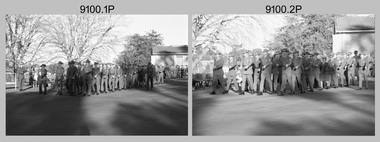
Photograph - Army Survey Regiment – Corps Day Parade, Fortuna Villa, Bendigo, 1989
... L to R: Parade Commander - CO LTCOL John Winzar, Guest of Honour - Bendigo Lord Mayor Councillor Robin Adams, Reviewing Officer - Corps CMDT COL John Hillier. .14) - Photo, black & white, June 1989. L to R: unidentified, LT Marty Lyons, SPR Craig Kellet, unidentified, SPR Tony Jackson...L to R: Parade Commander - CO LTCOL John Winzar, Guest of Honour - Bendigo Lord Mayor Councillor Robin Adams, Reviewing Officer - Corps CMDT COL John Hillier. .14) - Photo, black & white, June 1989. L to R: unidentified, LT Marty Lyons, SPR Craig Kellet, unidentified, SPR Tony Jackson ...This set of 25 photographs were taken at the Corps Day Parade held at the Army Survey Regiment, Bendigo on the 28th of June 1989. The Corps Day Parade was held to commemorate the 74th anniversary of the formation of the Royal Australian Survey Corps. The Parade Commander was CO LTCOL John Winzar and the Reviewing Officer was the Colonel Commandant (honorary appointment) of the Survey Corps - COL John Hillier. The guest of honour was the unidentified Mayor of Bendigo. Refer to Item 9163.13P for more photos taken at the parade.This is a set of 25 photographs of the Corps Day Parade held at the Army Survey Regiment, Fortuna, Bendigo on the 28th of June 1989. The black and white photographs are on 35mm negative film and scanned at 2400 dpi. They are part of the Army Survey Regiment’s Collection. .1) - Photo, black & white, June 1989. Cartographic Squadron marching onto parade ground, commanded by WO1 Stevo Hinic. WO1 Colin Cuskelly at left. RSM WO1 Neville Stone at far left. .2) & .3) - Photo, black & white, June 1989. Headquarters Squadron marching onto parade ground. WO2 Stuart Thaxter at far left. .4) - Photo, black & white, June 1989. Lithographic Squadron marching onto parade ground. Commanded by WO2 Rob Bogumil. Left file L to R: CPL Jim Ash, CPL Roy Hicks, CPL Rob Jones, CPL Stuart Ridge, CPL Chad Hardwick, CPL Peter Breukel, SGT Bob Garritty, SGT Steve Burke. .5) - Photo, black & white, June 1989. Lithographic Squadron marching onto parade ground. Commanded by WO2 Rob Bogumil. Centre file L to R: CPL Penny Knott, SPR Michelle Withers, LCPL Shona Hastie. Left file L to R: CPL Stuart Ridge, CPL Chad Hardwick, CPL Peter Breukel, SGT Bob Garritty, SGT Steve Burke. .6) - Photo, black & white, June 1989. Air Survey Squadron marching onto parade ground, commanded by WO1 Russell ‘Rusty’ Williams. RSM WO1 Neville Stone at far left. .7) - Photo, black & white, June 1989. RSM WO1 Neville Stone issues commands. .8) - Photo, black & white, June 1989. RSM WO1 Neville Stone hands over to 2IC MAJ Bob McHenry at left. .9) - Photo, black & white, June 1989. Officers saluting before taking posts. .10) - Photo, black & white, June 1989. Officers marching to their position to take post. 2IC MAJ Bob McHenry at far right. .11) - Photo, black & white, June 1989. The Reviewing Officer - CMDT COL John Hillier is formally greeted by an unidentified Sapper. Unidentified officer at far right. .12) & .13) - Photo, black & white, June 1989. L to R: Parade Commander - CO LTCOL John Winzar, Guest of Honour - Bendigo Lord Mayor Councillor Robin Adams, Reviewing Officer - Corps CMDT COL John Hillier. .14) - Photo, black & white, June 1989. L to R: unidentified, LT Marty Lyons, SPR Craig Kellet, unidentified, SPR Tony Jackson, unidentified, Maj Neil Taylor, CAPT John Greenwell. .15) - Photo, black & white, June 1989. L to R: unidentified officer, unidentified, LT Steve Hledik, unidentified, SGT Doug Carswell, SGT Brian Colling, SGT Paul ‘Hutch’ Hunter, SGT Graham Johnston, SSGT Rick van der Bom. .16) - Photo, black & white, June 1989. L to R: CO LTCOL John Winzar, Corps CMDT COL John Hillier, Bendigo Lord Mayor Councillor Robin Adams, unidentified (x3), SPR Jeanette Drury-Lane, unidentified (x2), SPR Peter Murphy, SPR Andy Love, WO1 Russell ‘Rusty’ Williams. .17) - Photo, black & white, June 1989. Headquarters Squadron L to R: WO2 Stuart Thaxter, WO2 Mick Flynn, unidentified (x2), RSM WO1 Neville Stone, SGT Chris Edwards, Bendigo Lord Mayor Councillor Robin Adams, CO LTCOL John Winzar, Corps CMDT COL John Hillier. Front rank L to R: unidentified, CPL Mick McConnell, SGT Trevor Poll, CPL Eric Nicholson, remainder unidentified. .18) - Photo, black & white, June 1989. Headquarters Squadron L to R: WO2 Stuart Thaxter, WO2 Mick Flynn, unidentified (x2), RSM WO1 Neville Stone, CO LTCOL John Winzar, SGT Kevin Boehm, Corps CMDT COL John Hillier, LT Craig Hersant. Front rank L to R: unidentified, CPL Mick McConnell, SGT Trevor Poll, CPL Eric Nicholson, remainder unidentified. .19) - Photo, black & white, June 1989. Lithographic Squadron front rank L to R: CPL Jim Ash, CPL Roy Hicks, CPL Rob Jones, CPL Stuart Ridge, CPL Chad Hardwick, CPL Peter Breukel, SGT Bob Garritty, unidentified officer, MAJ Terry Edwards. .20) - Photo, black & white, June 1989. Lithographic Squadron front rank L to R: CPL Jim Ash, CPL Roy Hicks, CPL Rob Jones, CPL Stuart Ridge, CPL Chad Hardwick, CPL Peter Breukel, SGT Bob Garritty, unidentified officer, Bendigo Lord Mayor Councillor Robin Adams, CO LTCOL John Winzar, LT Craig Hersant, WO2 Stuart Thaxter, WO2 Mick Flynn. .21) - Photo, black & white, June 1989. Lithographic Squadron front rank L to R: CPL Jim Ash, CPL Roy Hicks, CPL Rob Jones, Bendigo Lord Mayor Councillor Robin Adams, CO LTCOL John Winzar, CPL Chad Hardwick, CPL Peter Breukel, SGT Bob Garritty, SGT Steve Burke, unidentified officer, Corps CMDT COL John Hillier, LT Craig Hersant, MAJ Terry Edwards. .22) - Photo, black & white, June 1989. Lithographic Squadron front rank L to R: CPL Paul Baker, CPL Terry King, SPR Michelle Evans, CPL Penny Knott, SPR Michelle Withers, LCPL Shona Hastie, SSGT Keith Fenton RE – UK Exchange, Bendigo Lord Mayor Councillor Robin Adams, CO LTCOL John Winzar, LT Craig Hersant, CPL Jim Ash. .23) - Photo, black & white, June 1989. Lithographic Squadron front rank L to R: SGT Frank Lenane, CPL Terry King, SPR Michelle Evans, CPL Penny Knott, SPR Michelle Withers, LCPL Shona Hastie, SSGT Keith Fenton RE – UK Exchange, Bendigo Lord Mayor Councillor Robin Adams, Corps CMDT COL John Hillier, CO LTCOL John Winzar, LT Craig Hersant, CPL Jim Ash, CPL Roy Hicks. .24) - Photo, black & white, June 1989. Lithographic Squadron front rank L to R: unidentified, CPL Paul Baker, CPL Terry King, SPR Michelle Evans, CPL Penny Knott, SPR Michelle Withers, LCPL Shona Hastie, SSGT Keith Fenton RE – UK Exchange, Bendigo Lord Mayor Councillor Robin Adams, Corps CMDT COL John Hillier, CO LTCOL John Winzar, LT Craig Hersant, CPL Jim Ash, CPL Roy Hicks. .25) - Photo, black & white, June 1989. Lithographic Squadron front rank L to R: unidentified, CPL Paul Baker, CPL Terry King, SPR Michelle Evans, Bendigo Lord Mayor Councillor Robin Adams, Corps CMDT COL John Hillier, CO LTCOL John Winzar, LT Craig Hersant.There are no personnel identified. ‘Corps Day 28 Jun 1989’ annotated on negative sleevesroyal australian survey corps, rasvy, army survey regiment, army svy regt, fortuna -
 National Vietnam Veterans Museum (NVVM)
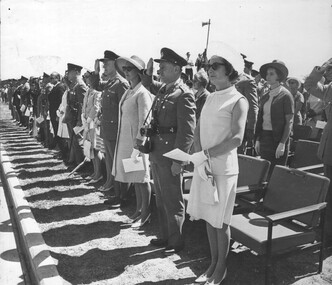
Photograph, Gibbons, Denis, Trooping the Colour 1
... Lt Col C Townsend...Brig O D Jackson...Lt Gen Sir Reginald Pollard...Mr William H Crook (Ambassador of the US)...Gibbons Collection Catalogue...The Royal Australian Regiment...Townsville...Trooping Of the Colour...Mrs Townsend...Mrs Jackson...Lady Pollard...Knight Commander...Photograph D coy 6 RAR Battle of Long Tan John Gorton Lt Col C Townsend Brig O D Jackson Lt Gen Sir Reginald Pollard Mr William H Crook (Ambassador of the US) Gibbons Collection Catalogue The Royal Australian Regiment Townsville Trooping Of the Colour Mrs Townsend Mrs Jackson Lady Pollard Knight Commander of the Most Excellent Order of the British Empire KBE Mrs Crook Prime Minister of Australia J G Gorton MP Denis Gibbons A black and white photograph of Townsville, Queensland 18/08/1968 a portion of the guests at the Trooping of the 6 RAR Colour. ...Denis Gibbons (1937 – 2011) Trained with the Australian Army, before travelling to Vietnam in January 1966, Denis stayed with the 1st Australian Task Force in Nui Dat working as a photographer. For almost five years Gibbons toured with nine Australian infantry battalions, posting compelling war images from within many combat zones before being flown out in late November 1970 after sustaining injuries. The images held within the National Vietnam Veterans Museum make up the Gibbons Collection.A black and white photograph of Townsville, Queensland 18/08/1968 a portion of the guests at the Trooping of the 6 RAR Colour. Right to left Mrs Townsend, Lt Col C Townsend, Mrs Jackson, Brig O.D. Jackson, Lady Pollard, Lt Gen Sir Reginald Pollard KBE CB DSO, the Colonel Commandant, The Royal Australian Regiment, Mrs Crook, His Excellency Mr William H Crook, the Ambassador of the United States of America.photograph, d coy, 6 rar, battle of long tan, john gorton, lt col c townsend, brig o d jackson, lt gen sir reginald pollard, mr william h crook (ambassador of the us), gibbons collection catalogue, the royal australian regiment, townsville, trooping of the colour, mrs townsend, mrs jackson, lady pollard, knight commander of the most excellent order of the british empire, kbe, mrs crook, prime minister of australia j g gorton mp, denis gibbons -
 National Vietnam Veterans Museum (NVVM)
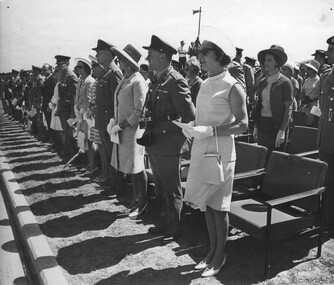
Photograph, Gibbons, Denis, Guests at Trooping the Colour 3
... Lt Gen Sir Reginald Pollard...Mr William H Crook - Ambassador of the USA...Gibbons Collection Catalogue...Trooping Of the Colour...Mrs Townsend...Mrs Jackson...Brig O D Jackson...Lady Pollard...KBE...Knight Commander...Photograph 6 RAR/NZ Townsville Lt Col C Townsend Lt Gen Sir Reginald Pollard Mr William H Crook - Ambassador of the USA Gibbons Collection Catalogue Trooping Of the Colour Mrs Townsend Mrs Jackson Brig O D Jackson Lady Pollard KBE Knight Commander of the Most Excellent Order of the British Empire DSO Army Distinguished Service Order The Royal Australian Regiment Colonel Commandant Mrs Crook Denis Gibbons A black and white photograph of Townsville, Queensland 18/08/1968. ...Denis Gibbons (1937 – 2011) Trained with the Australian Army, before travelling to Vietnam in January 1966, Denis stayed with the 1st Australian Task Force in Nui Dat working as a photographer. For almost five years Gibbons toured with nine Australian infantry battalions, posting compelling war images from within many combat zones before being flown out in late November 1970 after sustaining injuries. The images held within the National Vietnam Veterans Museum make up the Gibbons Collection.A black and white photograph of Townsville, Queensland 18/08/1968. A portion of the guests at Trooping the 6 RAR Colour. (right to left) Mrs Townsend, Lt Col C.Townsend, Mrs Jackson, Brig OD Jackson, Lady Pollard, Lt Gen Sir Reginald Pollard KBE CB DSO, The Colonel Commandant The Royal Australian Regiment, Mrs Crook, His Excellency Mr William H. Crook the Ambassador of the Uunited States of America.photograph, 6 rar/nz, townsville, lt col c townsend, lt gen sir reginald pollard, mr william h crook - ambassador of the usa, gibbons collection catalogue, trooping of the colour, mrs townsend, mrs jackson, brig o d jackson, lady pollard, kbe, knight commander of the most excellent order of the british empire, dso, army distinguished service order, the royal australian regiment, colonel commandant, mrs crook, denis gibbons
