
Showing 35 items matching " marvellous melbourne"
-
 Port Melbourne Historical & Preservation Society
Audio - William THWAITES, Engineer to Marvellous Melbourne, Dr Rob LA NAUZE, David Nicholas, 26 Oct 2015
... William THWAITES, Engineer to Marvellous Melbourne, Dr Rob LA NAUZE...Dr Rob LA NAUZE talks about William THWAITES, Engineer to Marvellous Melbourne Duration 01:08;08 (including meeting preliminaries)...Town Planning William THWAITES Robert D LA NAUZE Dr Rob LA NAUZE talks about William THWAITES, Engineer to Marvellous Melbourne Duration 01:08;08 (including meeting preliminaries) Audio William THWAITES, Engineer to Marvellous Melbourne, Dr Rob LA NAUZE David Nicholas ...Dr Rob LA NAUZE talks about William THWAITES, Engineer to Marvellous Melbourne Duration 01:08;08 (including meeting preliminaries)town planning, william thwaites, robert d la nauze -
Port Melbourne Historical & Preservation Society
Article - "It's still Marvellous Melbourne", 6 Oct 1980
... "It's still Marvellous Melbourne"...From the Woodruff family archives, photocopy of article from 'Melbournewide' Oct 1980 with pics of Jack, Win, Judy, and Ben "It's still Marvellous Melbourne"...Winifred Mary WOODRUFF nee PREST Families WOODRUFF Family Local Government John William (Jack) WOODRUFF Judy DYMOND Ben DYMOND From the Woodruff family archives, photocopy of article from 'Melbournewide' Oct 1980 with pics of Jack, Win, Judy, and Ben "It's still Marvellous Melbourne" Article "It's still Marvellous Melbourne" ...From the Woodruff family archives, photocopy of article from 'Melbournewide' Oct 1980 with pics of Jack, Win, Judy, and Ben "It's still Marvellous Melbourne"winifred mary woodruff nee prest, families, woodruff family, local government, john william (jack) woodruff, judy dymond, ben dymond -
Port Melbourne Historical & Preservation Society
Book, Robert La Nauze, Engineer to marvellous Melbourne - The Life and Times of William Thwaites, 2011
... Engineer to marvellous Melbourne - The Life and Times of William Thwaites...Engineer to marvellous melbourne - The Life and Times of William Thwaites Second edition by Robert D LA NAUZE (signed). ...Archival PMHPS Stamp 1st page, also donor name in ink Engineer to marvellous melbourne - The Life and Times of William Thwaites Second edition by Robert D LA NAUZE (signed). ...Engineer to marvellous melbourne - The Life and Times of William Thwaites Second edition by Robert D LA NAUZE (signed). Paperback produced by Melbourne Water to tell the story of the extraordinary young engineer who oversaw the sewering of Melbourne in the 1880s and 90s. Chrome yellow with sepia photo of aquaduct project 1890sSigned by author on title page. Archival PMHPS Stamp 1st page, also donor name in inkengineering - board of works, built environment - civic, william thwaites, george thwaites snr, elizabeth thwaites, george thwaites jnr, melbourne and metropolitan board of works, mmbw, all england eleven hotel, robert d la nauze -
 Bendigo Historical Society Inc.
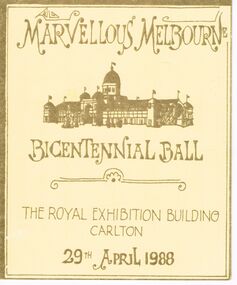
Document - PETER ELLIS COLLECTION: MARVELLOUS MELBOURNE BICENTANNIAL BALL, 29th April, 1988
... PETER ELLIS COLLECTION: MARVELLOUS MELBOURNE BICENTANNIAL BALL...Creamy Coloured Card folded in half. Marvellous Melbourne Bicentennial Ball The Royal Exhibition Building Carlton 29th April 1988. ...Document PETER ELLIS COLLECTION: MARVELLOUS MELBOURNE BICENTANNIAL BALL ...Creamy Coloured Card folded in half. Marvellous Melbourne Bicentennial Ball The Royal Exhibition Building Carlton 29th April 1988. Order of Programme. 8.00pm Arrival 8.30 Welcome to Guests Dancing. 9.30 Dinner Dancing. 10.30 Announcement of Prizes. Addresses Dancing 2.00 am Close Music provided by the Wedderburn Old Timers. Menu Hot Chicken Entrée Selection Cold Meats & Salads Tipsy Cake Dinner Mints & Coffee. Acknowledgements Artwork - The Scriptorium Patricia Barth Hose Glassware Seppelt's Wines Trustees of the Exhibition Building Melbourne Parks and Gardens Proudly sponsored by 3AK.person, individual, peter ellis oam -
 Melbourne Tram Museum
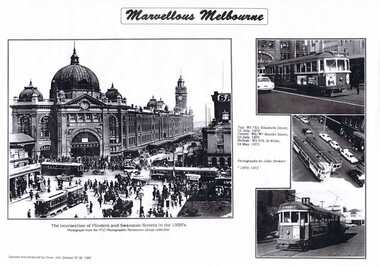
Photograph - Colour Photocopy/photocopies, John Stewart, "Marvellous Melbourne", 1970
... "Marvellous Melbourne"...Black and White photocopy of a poster of Melbourne and trams titled "Marvellous Melbourne", photographs from the PTC Photo archives and John Stewart. ...Produced by Driver John Stewart, No. 36, 1992. "Marvellous Melbourne" Photograph Colour Photocopy/photocopies John Stewart John Stewart ...Black and White photocopy of a poster of Melbourne and trams titled "Marvellous Melbourne", photographs from the PTC Photo archives and John Stewart. Features photo of Cable and electric trams outside Flinders St Station, W5 753 at the Elizabeth city, w6 and W7 at the Bourke St terminus and W2 376 at St Kilda, 1970 and 1973. Produced by Driver John Stewart, No. 36, 1992.trams, tramways, melbourne, flinders st station, tram 753, tram 376, w2 class, w5 class -
 Mont De Lancey
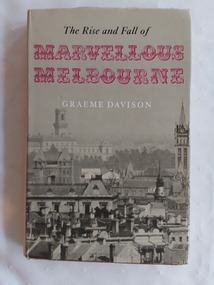
Book, Graeme Davidson, The Rise and Fall of Marvellous Melbourne, 1978
... The Rise and Fall of Marvellous Melbourne...A red hardcover book, The Rise and Fall of Marvellous Melbourne by Graeme Davidson. The red cover has large flourished gold embossed letters MM on the front cover with the title and publisher symbol at the bottom of the spine. ...The Rise and Fall of Marvellous Melbourne Book Graeme Davidson Melbourne University Press ...This book looks beyond public events to discover how the experience of boom and depression touched the lives of ordinary Melburnians at work and at home and reshaped their society and their sense of urban identity.A red hardcover book, The Rise and Fall of Marvellous Melbourne by Graeme Davidson. The red cover has large flourished gold embossed letters MM on the front cover with the title and publisher symbol at the bottom of the spine. It has a grey dust jacket with the title printed in black and red letters at the top front and the author written in white letters below. A full page grey and white cityscape of Melbourne wraps around the jacket. On the inside of the jacket there is a blurb explaining briefly the book's contents. There is a Contents, list of Illustrations, Acknowledgements, Notes and Abbreviations pages. On the back inside jacket are details of the author. Tables, black and white illustrations and photographs are included.non-fictionThis book looks beyond public events to discover how the experience of boom and depression touched the lives of ordinary Melburnians at work and at home and reshaped their society and their sense of urban identity.history melbourne, australian history, melbourne - economic conditions - 1880-1890 -
 Greensborough Historical Society
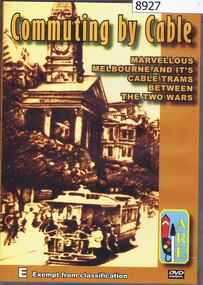
Film - DVD, John Reid, Commuting by cable: marvellous Melbourne and its cable trams between the two wars, 1988
... Commuting by cable: marvellous Melbourne and its cable trams between the two wars...Covers the period between the two world wars 1919-1939. trams c able trams melbourne DVD PAL Region 0 in plastic case with printed iunsert Commuting by cable: marvellous Melbourne and its cable trams between the two wars Film DVD John Reid Association of Railway Enthusiasts Ltd. ...Documentary on Melbourne's cable trams assembled from various sources. Covers the period between the two world wars 1919-1939.DVD PAL Region 0 in plastic case with printed iunserttrams, c able trams, melbourne -
National Vietnam Veterans Museum (NVVM)
Audio - Audio, CD, Marvellous Melbourne Music "Poppas and Rockas"
... Marvellous Melbourne Music "Poppas and Rockas"...Popular music - Australia Starring Gaynor Bunning Marvellous Melbourne Music "Poppas and Rockas" Audio Audio, CD Lyric Electric Recording ...Starring Gaynor Bunningpopular music - australia -
 Narre Warren and District Family History Group
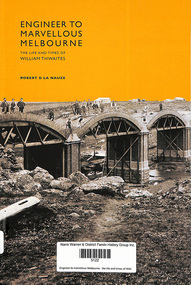
Book, RD La Nauze, Engineer to marvellous Melbourne, 2011
... Engineer to marvellous Melbourne...sewerage sanitary engineering "Engineer to Marvellous Melbourne provides a compelling account of the evolution of Melbourne's water and sewerage systems and the life and achievements of a great Australian engineer who, in triumphing over difficulties, left an enduring impact on Melbourne." -- Publisher website. xiv, 217 p.; 24 cm Engineer to marvellous Melbourne Book RD La Nauze Australian Scholarly Publishing ..."Engineer to Marvellous Melbourne provides a compelling account of the evolution of Melbourne's water and sewerage systems and the life and achievements of a great Australian engineer who, in triumphing over difficulties, left an enduring impact on Melbourne." -- Publisher website.xiv, 217 p.; 24 cmnon-fiction"Engineer to Marvellous Melbourne provides a compelling account of the evolution of Melbourne's water and sewerage systems and the life and achievements of a great Australian engineer who, in triumphing over difficulties, left an enduring impact on Melbourne." -- Publisher website. sewerage, sanitary engineering -
 Surrey Hills Historical Society Collection
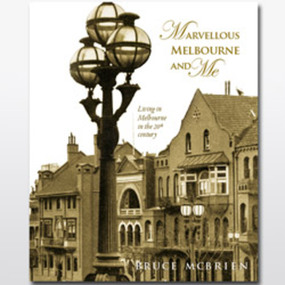
Book, Bruce McBrien, Marvellous Melbourne and Me, 2010
... Marvellous Melbourne and Me...Title page: To Mona / Greetings and Best wishes / from Bruce / August 2010 H25.7 cm; 362p; Marvellous Melbourne and Me Book Bruce McBrien Melbourne Books ...Bruce experienced first-hand life at the top of Melbourne's social strata in the early 20th century. In rich detail, he describes his childhood years living at Harrison House in Spring Street, and paints a vivid picture of inner-city Melbourne in the early to mid- 1900s. His family's social standing gave Bruce a rare perspective on Melbourne life, as illustrated through his many brushes with iconic politicians and celebrities over the years.H25.7 cm; 362p;non-fictionBruce experienced first-hand life at the top of Melbourne's social strata in the early 20th century. In rich detail, he describes his childhood years living at Harrison House in Spring Street, and paints a vivid picture of inner-city Melbourne in the early to mid- 1900s. His family's social standing gave Bruce a rare perspective on Melbourne life, as illustrated through his many brushes with iconic politicians and celebrities over the years.melbourne, social life and customs, australian football - history, history- 20th century -
 Surrey Hills Historical Society Collection
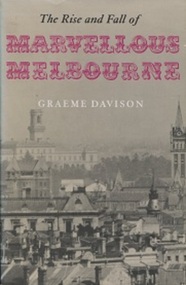
Book, The rise and fall of Marvellous Melbourne, 1978
... The rise and fall of Marvellous Melbourne...The rise and fall of Marvellous Melbourne Book Book Melbourne University Press Graeme Davison ...Includes: Clerical salaries chart p.16|Part 1: The City|Part 2: The Suburbs|Picture of Camberwell Railway Station p. 160 (from Latrobe Pictorial Collection. Graeme Davison is a local resident.Text records how the experience of boom and Depression touched the lives of ordinary Melburnians during the years 1880-1900.Apart from its significance as an academic work, Graeme Davison is a local resident.Text records how the experience of boom and Depression touched the lives of ordinary Melburnians during the years 1880-1900.melbourne - history- 1880-1900, (mr) graeme john davison, depression, graeme davison -
 Greensborough Historical Society
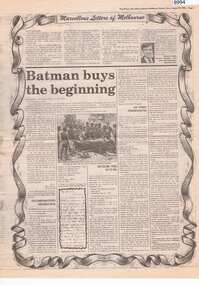
Newspaper - Newspaper supplement, Herald Sun, Marvellous letters of Melbourne 1992, 10/08/1992
... Marvellous letters of Melbourne 1992...Marvellous Letters of Melbourne is a supplement to the Herald-Sun sponsored by Australia Post to celebrate Melbourne's 150th anniversary of incorporation. ...Marvellous Letters of Melbourne is a supplement to the Herald-Sun sponsored by Australia Post to celebrate Melbourne's 150th anniversary of incorporation. ...Marvellous Letters of Melbourne is a supplement to the Herald-Sun sponsored by Australia Post to celebrate Melbourne's 150th anniversary of incorporation. It includes letters submitted by readers and from archives, each with relevance to Melbourne's history. Newspaper supplement, 4 pages, illus.melbourne - history, letters, correspondence, victoria 150th anniversary -
 Melbourne Tram Museum
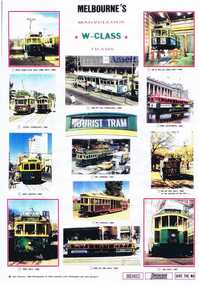
Photograph - Colour Photocopy/photocopies, John Stewart, "Melbourne Marvellous W Class Trams", 1992
... "Melbourne Marvellous W Class Trams"...Colour photocopy reproduced onto an A3 sheet of a series of photographs from Mike Costello, Colin Withington and John Stewart, of 12 photos and one photo of a destination roll showing "Tourist Tram" Titled "Melbourne Marvellous W Class Trams". Features 891, 676, 431, 740, 900, 724, 380, 427, 788, 685, 725?...Copy right John Stewart, printed 1992. "Melbourne Marvellous W Class Trams" Photograph Colour Photocopy/photocopies John Stewart John Stewart ...Colour photocopy reproduced onto an A3 sheet of a series of photographs from Mike Costello, Colin Withington and John Stewart, of 12 photos and one photo of a destination roll showing "Tourist Tram" Titled "Melbourne Marvellous W Class Trams". Features 891, 676, 431, 740, 900, 724, 380, 427, 788, 685, 725?, 243 and 510 around the city. Copy right John Stewart, printed 1992.trams, tramways, melbourne, w class, tram 891, tram 676, tram 431, tram 740, tram 900, tram 724, tram 380, tram 427, tram 786, tram 685, tram 725?, tram 243, tram 510 -
 Robin Boyd Foundation
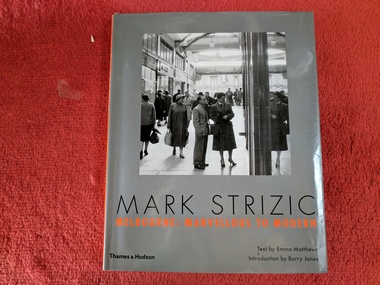
Book, Emma Matthews, Mark Strizic - Melbourne: Marvellous to Modern, 2009
... Mark Strizic - Melbourne: Marvellous to Modern...Walsh St library Hardcover w/ Dust Jacket Mark Strizic - Melbourne: Marvellous to Modern Book Emma Matthews Thames and Hudson ...Hardcover w/ Dust Jacketwalsh st library -
Glen Eira Historical Society
Book - Robertson, Alexander William
... ... Marvellous Melbourne...Billing Mary Billing Williamina Billing Richard Junior Watson Flora Kate Robertson Eva Robertson Nina Robertson Emily Robertson John Australian-German Association Bicentennial Gift to the Nation Ferguson and Urie Crouch and Wilson Tangent Design Midas Printing (Asia) Limited (Ltd) Flats Architectural Features Architectural Styles Auctions Land Sales Land Subdivision Architects Lawyers Judges Coaches and Carriages Businesspeople German Community Victorian Style Grants Voluntary Workers Property Development Construction (events and activities) Gold Mining Theatrical Productions Stairs Stained Glass Settlements Graziers Verandas Cast Iron Work Marble Balconies Bell Towers Towers Bay Windows Panoramic Views Bedrooms Servants Quarters Billiards Rooms Rooms Fireplaces Sculpture Servants Marvellous Melbourne Land Use Depression 1890s Photography Photographers Entrance Hall Domestic Life Cultural Events and Activities Book Robertson, Alexander William ...Contains one item about 'Labassa', called 'Ontario' when owned by Alexander William Robertson: 1/One copy of a thirty-two page colour book, published by the Friends of Labassa and The National Trust in 2004. The book details the history of Labassa (and its owners) as a place for social gatherings and entertaining of Melbourne society of the late nineteenth century, and its letter use as flats and a boarding house. Extensively illustrated with colour photographs, architectural sketches and plans, the book LABASSA: A GRAND VICTORIAN MANSION details Labassa’s architectural significance Please refer to file 1113Y for the other copy of this book. For further information about Labrassa please refer to file 1113.labassa, ontario, sylliott hill, caulfield north, friends of labassa, manor grove, national trust of australia (victoria), balaclava road, orrong road, caulfield, mansions, cobb and co., amatil ltd. (limited), alcoa of australia ltd. (limited), lyall william, mickle john, billing richard annesley judge, robertson alexander william, watson john boyd ii, koch john augustus bernard, hammond victoria, palmer lee, davis kingsley, groenhout chris, worrall bronwyn, balderstone sue, biarujia ian, cassidy darien, davidson rodney ao obe, forge warwick, lewis miles dr., sagazio celestina dr., billing mary, billing williamina, billing richard junior, watson flora kate, robertson eva, robertson nina, robertson emily, robertson john, australian-german association, bicentennial gift to the nation, ferguson and urie, crouch and wilson, tangent design, midas printing (asia) limited (ltd), flats, architectural features, architectural styles, auctions, land sales, land subdivision, architects, lawyers, judges, coaches and carriages, businesspeople, german community, victorian style, grants, voluntary workers, property development, construction (events and activities), gold mining, theatrical productions, stairs, stained glass, settlements, graziers, verandas, cast iron work, marble, balconies, bell towers, towers, bay windows, panoramic views, bedrooms, servants quarters, billiards rooms, rooms, fireplaces, sculpture, servants, marvellous melbourne, land use, depression 1890s, photography, photographers, entrance hall, domestic life, cultural events and activities -
Glen Eira Historical Society
Article - Payneswicke, Gladstone Parade, 13, Elsternwick
... ... Marvellous Melbourne...These are unsourced but sale was in 2014. 2/Newspaper article from Review Weekly, dated 06/05/14, on property details and renovations 3/3 photos of Payneswick in advertising from The Weekly Review, dated 07/05/2014 4/Article from Domain dated 09/05/2014, two photographs of interior, and selling features for forthcoming auction Gladstone Parade Elsternwick Victorian style Architectural styles Mansions Hoffman Paula Hoffman Eugene Forge Suzie Gables Wrought iron work 'Payneswicke' 'Payneswick' Architectural features Marvellous Melbourne Advertisements Land sales Article Payneswicke, Gladstone Parade, 13, Elsternwick ...This file contains 4 items about the 2014 sale campaign for this for this property: 1/Two newspaper ads on Paynewick for the property's forthcoming sale. Includes a brief article on owners who presently own property. These are unsourced but sale was in 2014. 2/Newspaper article from Review Weekly, dated 06/05/14, on property details and renovations 3/3 photos of Payneswick in advertising from The Weekly Review, dated 07/05/2014 4/Article from Domain dated 09/05/2014, two photographs of interior, and selling features for forthcoming auctiongladstone parade, elsternwick, victorian style, architectural styles, mansions, hoffman paula, hoffman eugene, forge suzie, gables, wrought iron work, 'payneswicke', 'payneswick', architectural features, marvellous melbourne, advertisements, land sales -
 Eltham District Historical Society Inc
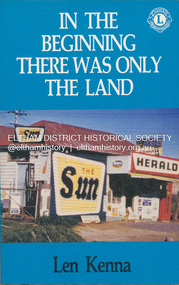
Book, Len Kenna, In the beginning there was only the land, 1988
... ...Marvellous Melbourne...Bundoora Bundoora Hall Hospitals Jane McKimmie Janefield Janefield Church john mckimmie La Trobe University Marvellous Melbourne Mont Park Mont Park Psychiatric Hospital Plenty River william shillinglaw Wurundjeri Yan Yean Reservoir Softback; 227 p. : ill., facsims., maps, ports. ; 22 cm. ...A book, published as part of the Australian Bicentenary Celebrations on the history of the suburb of Bundoora. ... Includes photographs, maps and index. Local history of the outer Melbourne suburb of Bundoora, from the original Wurundjeri people through to its development as a thriving suburb in the 1980s ; section entitled "The Aborigines" (pp.14-21) discusses the traditional way of life of the Wurundjeri people prior to European settlement.bundoora, bundoora hall, hospitals, jane mckimmie, janefield, janefield church, john mckimmie, la trobe university, marvellous melbourne, mont park, mont park psychiatric hospital, plenty river, william shillinglaw, wurundjeri, yan yean reservoir -
Villa Alba Museum
Collection of curtains and curtain accessories
... The materials and workmanship of all items are of high quality, and would have looked magnificent, fulfilling the tastes of the richest inhabitants of Marvellous Melbourne....The materials and workmanship of all items are of high quality, and would have looked magnificent, fulfilling the tastes of the richest inhabitants of Marvellous Melbourne. Collection of curtains and curtain accessories ...In the nineteenth century, Australian interiors reflected European styles and models. In the second half of the century opulent hanging and free-flowing curtains were augmented by elaborate pelmets, fringes, braids, and tie-backs with tassels. In wealthier homes, imported silks and bullion were the fabrics of choice. This set of curtains and curtain accessories, probably originally fromn a drawing room, are believed to have adorned a mansion in Brighton. The curtains are significant for their comparative rarity of survival in Melbourne, and at the same time, are highly representative of opulent colonial taste in interior decor in the boom period. The curtain panels are of high quality materials and in unusually good condition, indicating they were used in a window with relatively little sunlight shining on them. They can be imagined in a grand room with one or more matching dressed windows.Collection of 7 panels of a sky blue and gold figured silk/wool damask curtain set; 6 tiebacks (3 pairs) with bullion tassels; padded and braided silk "rope" for draping; and 2 cards wound with detached braids and bullion fringe from further curtains and decorations which have not survived. The items appear to be the remains of very fine bay window decoration of the later 19th century, almost certainly used in a Melbourne mansion of the boom period, likely in the 1880s. The 3 sets of curtain tiebacks are particularly grand, featuring tassels made with gold ? bullion fringe. The original bright gold ? finish is still evident in the card on which many metres of detached fringe are wound - the inner layers have been protected from oxidation by the outer layers and are still bright. It is not known on what curtain part this fringe was used (it is clear that nothing has been removed from the 7 damask panels surviving). There may have been pelmets or further sets of curtains decorated with the fringe. The materials and workmanship of all items are of high quality, and would have looked magnificent, fulfilling the tastes of the richest inhabitants of Marvellous Melbourne.curtains, curtain furnishings, 19th century, tassels, window furnishings, gold boom melbourne, interior decoration - melbourne, upholstery trimmings, colonial taste-victoria -
Melbourne Tram Museum
Document - PTUA, Public Transport Users Association (PTUA), "Wrong Way Go Back", c1995
... Looks at the then Freeway expansions, City Link, myths from the Road Lobby, solutions - a quality public transport system and Making Melbourne marvellous. Document a summary of a 24 page report with the same title. ...Looks at the then Freeway expansions, City Link, myths from the Road Lobby, solutions - a quality public transport system and Making Melbourne marvellous. Document a summary of a 24 page report with the same title. ...Document titled "Wrong Way Go Back" - The Alternative to Melbourne Freeway Explosion, published by the Public Transport Users Association c1995. Looks at the then Freeway expansions, City Link, myths from the Road Lobby, solutions - a quality public transport system and Making Melbourne marvellous. Document a summary of a 24 page report with the same title. Demonstrates a PTUA publication regarding freeway expansion in Melbourne.Document folded A3 sheet to A4, printed.ptua, freeways, public transport, melbourne -
 Melbourne Tram Museum
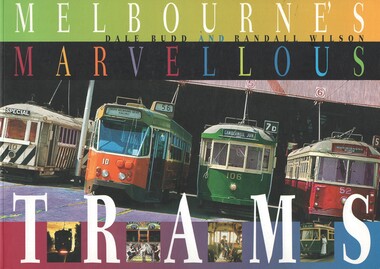
Book, Randal Wilson, Dale Budd, "Melbourne's Marvellous Trams", 1998
... Book - 96 pages + card covers, 5 sections, perfect bound, A4 landscape full colour printed on gloss paper, titled "Melbourne's Marvellous Trams", looking at the history of Melbourne's tram, why, how, culture, economic and relationship to Melbourne and its residents. ...Has a table of content "Melbourne's Marvellous Trams" Book Randal Wilson, Dale Budd Keith Dunstan, Randall Wilson, Dale Budd, Robert Risson ...Book - 96 pages + card covers, 5 sections, perfect bound, A4 landscape full colour printed on gloss paper, titled "Melbourne's Marvellous Trams", looking at the history of Melbourne's tram, why, how, culture, economic and relationship to Melbourne and its residents. Contains a forward written by Keith Dunstan. Written by Dale Budd and Randall Wilson, published by University of New South Wales Press in 1998. Has a table of contenttrams, tramways, melbourne, tramways, tramcars, cable trams, history -
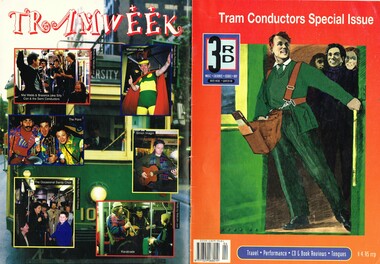 Melbourne Tram Museum
Magazine, The Boite (Vic) Inc, "3rd - Tram Conductors Special Issue", Winter 1998
... Includes a review of "Melbourne's Marvellous Trams" book, Has a number of photos of conductors at work. 2nd copy for donation of Colin Jones....Includes a review of "Melbourne's Marvellous Trams" book, Has a number of photos of conductors at work. 2nd copy for donation of Colin Jones. "3rd - Tram Conductors Special Issue" Magazine The Boite (Vic) Inc Malcolm Just, Paul Bateman, Tanya Wolkenberg, Tom Moore. ...Magazine - 16 pages, colour covers, centre stapled printed on gloss paper, titled "3rd - Tram Conductors Special Issue", Winter 1998, published by The Boite (Vic) Inc - music, culture, arts. Has a number of items about the removal or finishing up of conductors on Melbourne trams with poems or articles written by Malcolm Just, Paul Bateman, Tanya Wolkenberg and Tom Moore. Includes a review of "Melbourne's Marvellous Trams" book, Has a number of photos of conductors at work. 2nd copy for donation of Colin Jones.trams, tramways, conductors, tramways, tickets, poem -
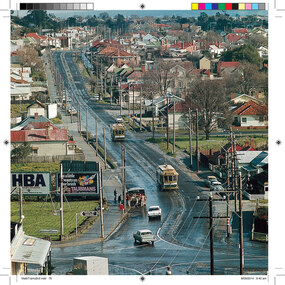 Ballarat Tramway Museum
Newspaper, Herald Sun, "Holding the Line", 8/03/1998 12:00:00 AM
... Newspaper Clipping from the centre page of the Melbourne Herald Sun, Sunday 8 March 1998, pages 44 and 45, featuring photographs and text from the book 'Melbourne's Marvellous Trams" by Dale Budd and Randal Wilson, University of NSW Press. ...Melbourne Mt Pleasant Barkly St Newspaper Clipping from the centre page of the Melbourne Herald Sun, Sunday 8 March 1998, pages 44 and 45, featuring photographs and text from the book 'Melbourne's Marvellous Trams" by Dale Budd and Randal Wilson, University of NSW Press. ...Newspaper Clipping from the centre page of the Melbourne Herald Sun, Sunday 8 March 1998, pages 44 and 45, featuring photographs and text from the book 'Melbourne's Marvellous Trams" by Dale Budd and Randal Wilson, University of NSW Press. Reproduces nine photographs of trams, including cable trams and a ex Melbourne W2 in Denver. In bottom left hand corner is a photo of the intersection of Main and Barkly St. with two Ballarat single truck trams in bound from Mt Pleasant, taken from the Ballarat Fire Station tower in 1971. Also has seven other photo reproductions from the Book itself of various tramway signs. Image is supplied by Randal Wilson in an email of 15/10/2019 Text of email from Randal Wilson of 15/10/2019: Hi Warren We managed to track down a digital version of the photo taken by the late Bill McNiven of the trams on the Mount Pleasant line (page 76 of The Melbourne Tram Book). We contacted UNSW Press, the book's publisher, which provided the following explanation. Apparently, the team there could not find the scan of the slide submitted for the book. However, a member of the team was able to capture a jpg of page 76 of the book. From my recollection of the original photo, the attached image is very close in terms of its reproduction quality. We trust this is of use to you and BTM. Regards Randall and Dalemelbourne, mt pleasant, barkly st -
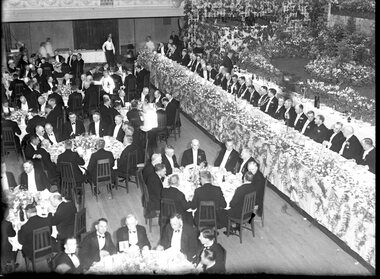 City of Melbourne Libraries
Photograph, Bull, Hugh Jones, 1897-1993, Lord Mayor's Dinner, Melbourne Town Hall
... It is spectacular, dramatic, and luxurious, and perpetuates the proud descriptor of “Marvellous Melbourne” as conferred by London Journalist George Augustus Sala when he visited the city in 1885. ...It is spectacular, dramatic, and luxurious, and perpetuates the proud descriptor of “Marvellous Melbourne” as conferred by London Journalist George Augustus Sala when he visited the city in 1885. ...Photographer notations on slide: "General View Of Lord Mayor's Dinner At Town Hall Nov 1936 B112" Published: The Age, Tuesday 10 November 1936, page 13 Published title: LORD MAYOR'S BANQUET Published caption: The brilliant scene inside the Melbourne Town Hall last night during the Lord Mayor’s banquet. Trove article identifier: http://nla.gov.au/nla.news-article205939431 Description: 700 guests (all men) are seated around numerous tables in the Melbourne Town Hall for the Lord Mayor's dinner in November 1936. Before the stage is a top table of 35 men, all dressed smartly in black dinner suits, with either a black or white bow tie. Many are wearing their medals. The Lord Mayor has on his Mayoral chains, and to his right is the Governor of Victoria, Lord Huntingfield. The stage is heavily decorated with fresh flowers. Research by project volunteer, Louise McKenzie: This image takes up one quarter of the photographic space on page 13 of The Age on 10 November 1936, reflecting the importance of the event and also the sheer dramatics of the image: 700 guests (all men), a top table of 35, and all dressed smartly in black dinner suits, with either a black or white bow tie. Many are wearing their medals. The Lord Mayor has on his Mayoral chains, and to his right is the Governor of Victoria, Lord Huntingfield. Further to his right is a man with an impressive sash across his chest. It is a very animated, and rather informal, moment. Banks of fresh flowers smother the stage, which is decorated in the manner of a terrace at an English stately home. Tables are laden with food, drink and decorations, and the wait staff (men and women) are also formally dressed, in the manner of Downton Abbey. It is spectacular, dramatic, and luxurious, and perpetuates the proud descriptor of “Marvellous Melbourne” as conferred by London Journalist George Augustus Sala when he visited the city in 1885. During its 1880s boom, Melbourne was the second-largest city in the British Empire, after London, and reputedly the richest city in the world. At times the expression was used with some irony, but "...in Victoria’s centenary year, 1934, with the city mired in another depression, a publisher bravely entitled a book of souvenir photographs Marvellous Melbourne, claiming that the subject ‘still finds apt expression in the happy one-time sobriquet’.” This photo seems to reflect an ongoing pride in Melbourne and a desire for it to live up to its descriptor and celebrate its post-centenary era in style. So it is no surprise to find that on page 11 of The Age on the same day, a second photo is to be found – a cropped view of one table – along with a very detailed description of the night, its purpose, and a surprise announcement. But, who was the Lord Mayor in whose honour the dinner was held? In 1934, the Lord Mayor of Melbourne was Cr. Alexander George Wales, (born Richmond, 11 October 1885, died Elsterwick, 31 May 1962). His father was a contractor and quarry-owner, but was blinded in an industrial accident in 1899. Consequently Alexander, then aged 14, left Brunswick State School to become a railway labourer working at a quarry, and in 1903 joined the Commonwealth public service as a clerk and began studying at night school, determined to improve himself. In 1907 he was appointed secretary of the Albion Quarrying Co. (in which the family had an interest), then its managing director and chairman. As the Australian Dictionary of Biography notes, he was instrumental in expanding the company’s interests, "...becoming director of the Hardware Co. of Australia Pty Ltd, the Twentieth Century Building and Investment Society, the Albion Sand Co. and the Geelong Brick Co.”. His public career began in 1914 when he was elected to the Brunswick council. He was mayor 1917-18, and in 1925 progressed to the Melbourne City Council where he remained for 29 years, being a member of most council committees. He served three successive terms as lord mayor (1934-37), was Chairman of the council’s decorations committee for Melbourne’s centenary, president of the Metropolitan Fire Brigades Board (1936), and Chairman of the Public Works Committee (1937-39). In 1936 he was elected to the Legislative Council with United Australia Party support, but later resigned over possible State government contract tender irregularities. Wales received "the customary reward” of a knighthood and was invested at Buckingham Palace by King George VI whose coronation he attended in 1937. He was an early director of what is now Ampol, and helped the development of the petroleum industry in Australia after visiting the USA in 1943 and 1946. He was impressed by that country’s wartime shipbuilding efforts and supported closer ties with the USA. “While president (1947-48) of the Melbourne Chamber of Commerce, Wales was a vocal critic of the Federal Labor Government, ...a staunch anti-socialist ... and a focus for conservative opposition to the Curtin and Chifley governments...” He is described as “a natural leader in business and civic politics,... a powerful force in the Melbourne City Council... opposing democratic reforms such as the creation of a Greater Melbourne Council and the abolition of plural voting, but advocat[ing] the redevelopment of city-owned property like the Eastern and Western markets...” So, this Lord Mayor’s dinner marks the third successive term in office for Governor Cr. A G Wales. The room is filled with powerful and influential men, and provided a platform for the Premier of Victoria, Albert Dunstan (1882-1950, United Country party) to announce that if the City Council would bear half the cost the State Government would build a bridge at Punt Road “at once”. He announced that the Government proposed to have the bridge built by the Country Roads Board, and allow the City Council to pay its share on convenient terms, and further, it would investigate the shared provision of more Yarra bridges. The proposal for the Punt Road Bridge was met with applause as the Yarra River constituted a serious traffic barrier. On 12 November 1936, two days after the Lord Mayor’s dinner, The Age published an article, “Building without a Plan”. It questions the appropriateness of the next Yarra bridge being the one at Punt Road, and encourages a “proper procedure” to look at the provision of additional Yarra bridges as a whole. But in fact this topic had been canvassed back in August when Melbourne City Council’s public works committee had recommended the replacement of the footbridge at Punt Road with a bridge, and if the Country Roads Board would declare this portion of Punt Road, including the river crossing, a State Highway, this could give the Board authority to construct the bridge and allocate the cost. Hence the reference at the dinner to a shared expense. Still an integral part of traffic management today, the Hoddle Bridge carries Punt Road over the Yarra River between Richmond and South Yarra in Melbourne. It is a five-lane road bridge with narrow footpaths on either side. It is of continuous reinforced concrete T-beam construction with five segmental arched spans, supported on transverse piers, and linked by concrete cross-beams. “The piers terminate in a series of tapered concrete pillars with Art Deco-styled steamlined decoration. Each pillar supports a Victorian-style lamp. The infill railings are geometric-patterned painted metal. Construction began in late 1937, and it was opened by Premier Albert Dunstan on 22 December 1938. It replaced an earlier footbridge, which in turn had replaced a punt service. The bridge (originally referred to as Punt Road Bridge) was named after Robert Hoddle, who planned central Melbourne’s Hoddle Grid, the grid of streets which form Melbourne’s central business district. Hoddle arrived in Australia from the UK in 1823 and went on to carry out surveys in NSW and Queensland before arriving in Melbourne in 1837. He designed layouts for both Melbourne and Williamstown, and later Geelong and other Victorian country areas. He was keen that major streets be at least 30 metres wide. ”With remarkable foresight he provided for wide boulevards from the city to the suburbs, but the subdivisions of early speculators in inner suburbs created the bottle-necks of today. After the separation of the colony in 1851, he became Victoria’s first surveyor-general... and advocated the provision of three-chain (60 m) roads and the widening of all existing main roads from one (20 m) to three chains." However, he was met with constant opposition and in 1853, was eased out of office. As a small and interesting aside: Hoddle was appointed auctioneer for the first sale of crown land in Melbourne on 1 June 1837. His commission was 57 pounds 12s 7d. and he bought two allotments for himself at a cost of 54 pounds. After he died his second wife married Richard Buckhurst Buxton, a member of the family which in 1860s Melbourne established the Australian property dynasty of Buxton Real Estate, Becton, MAB Corporation etc. Returning to the dinner and The Age article of 10 November 1836: Another topic of the after-dinner speeches was a reference to the upcoming Armistice Day. “The Minister of Customs (Mr White) said the proximity of Armistice day reminded us that eighteen years ago we had high hopes of prolonged peace.” The term “Armistice Day” was coined after WWI: “At 11 am on 11 November 1918, the guns on the Western Front fell silent after more than four years of continuous warfare. The Germans called for an armistice (suspension of fighting) in order to secure a peace settlement. They accepted the allied terms on unconditional surrender. Therefore on the 11th hour of the 11th day of the 11th month, a minute’s silence is observed and dedicated to those soldiers who died fighting to protect the nation. Originally known as Armistice Day, it was renamed Remembrance Day after World War Two to commemorate those who were killed in both World Wars. Today it refers to the loss of Australian lives from all wars and conflicts, accompanied by the words, "We will remember them, Lest we forget"." There was comment at the dinner about the need to remain firm in supporting the “democratic government in the British Empire to avoid a “plunge into savagery”. There was a grave responsibility on the British people to keep democracy alive, and that could not be done without adequate defence forces... Many weak governments in non-British countries had been swept aside by strong-fisted dictators, who now were the real threat to peace”. With the benefit of hindsight these were very pertinent comments and tragically prophetic. The Melbourne Shrine of Remembrance had only been dedicated two years earlier, at a ceremony attended by the Duke of Gloucester, son of King George V. Over 300,000 citizens attended: one third of the population of Melbourne. It became the location for the Anzac Day Dawn Service. Originally the march travelled from the Shrine into the city, however, in 1936, this was reversed, and the Shrine became the termination point for Anzac Day Marches. Also significant in 1936, was the installation of a statue in the west forecourt of the Shrine: “The Man with the Donkey” (aka 'Private John Simpson and his Little Donkey'). The work is said to represent the “valour and compassion of the Australian soldier”. Its full citation, according to the City of Melbourne City Collection is: West Side of Base: "The / Man with his Donkey / Gallipoli, April 25 to May 19 / in Commemoration / of the valour and compassion / of the Australian Soldier" AFTER LANDING AT GALLIPOLI, SIMPSON, WITH HIS LITTLE DONKEY, WORKED ALONE, DAY AND NIGHT TAKING WATER TO THE FRONT LINE AND CARRYING THE WOUNDED BACK TO THE DRESSING STATIONS. HE AND HIS DONKEY WERE KILLED BY A SHRAPNEL SHELL ON THE 19TH MAY, 1915. SIMPSON WAS MENTIONED IN DISPATCHES BY SIR IAN HAMILTON, COMMANDER-IN-CHIEF OF THE MEDITERRANEAN EXPEDITIONARY FORCE. / Erected by Public Subscription under auspices of the / Red Cross Society. East Side of Base: Private John Simpson." Their summary in background states: "A bronze figure of Simpson and his donkey with a wounded man on the donkey's back on a granite pedestal. Private John Simpson Kirkpatrick’s intrepid and short-lived exploits during the Gallipoli campaign have made him a popular figure of World War One. He has been mythologised to represent the lauded values of the digger, and he symbolises all those who went into battle unarmed. Born in England in 1892, he came to Australia in 1910. He enlisted to make his way back to England, but as a member of the 3rd Field Ambulance AIA was sent to Gallipoli. After just three weeks of bearing wounded soldiers across Shrapnel Gully on the back of his donkey, Simpson was killed by shrapnel fire. Simpson’s story became a powerful propaganda tool for enlistment in Australia, but following the war he was quickly forgotten. With the Shrine of Remembrance nearing completion in 1933, the memory of Simpson was rekindled to commemorate all who gave their lives to help others during the war. One plaque reads: ‘The / Man with his donkey / Gallipoli … / In commemoration / of the valour and compassion / of the Australian soldier’. In 1935, Wallace Anderson’s design for the memorial was selected though a competition organised by the Australian Red Cross. Anderson had served during the war and worked at the Australian War Memorial after his return. His Man with the Donkey was cast in Italy, and after some debate was sited near the shrine. Unveiled 20th June, 1936." The sculptor, Victorian-born William Wallace Anderson (1888-1975), served in France during WWI and afterwards produced a number of bronze war memorials and memorial portraits, predominantly in Victoria. “His most famous work is that of Simpson and his Donkey (1935), which he completed after winning a competition conducted by the Victorian Division of the Australian Red Cross. Anderson’s fee was 350 pounds; the cast, made by the Chiurazzi Foundry, Naples, Italy, cost 40 pounds. The work... has become well known as a symbol of the Anzac tradition.” A debate as to the siting of the statue arose from a strong view expressed by General Sir John Monash that no representation of individual members of the Australian Defence Force be located on the Shrine itself. Hence its location off to the northwest of the forecourt, in a garden of rosemary. And finally we return to the photo of the grand Lord Mayor’s dinner! An article in The Argus of 4 November 1936 refers to “Brilliant Scene at Lord Mayor’s Ball – Hall Becomes a Garden”. So now it becomes clear why the Town Hall, location of the Lord Mayor’s Dinner on 10 November 1934, only 6 days later, is so lavishly decorated. The floral decorations from the Ball are still in place - an early example of “recycling”, which is gratifying to note at a time of Depression. The reporter has captured the scene with enthusiasm: “Hundreds of tiny rose lights, hidden among pink roses, transformed the Melbourne Town Hall into a magical garden last night, when the Lord Mayor and Lady Mayoress (Councillor A. C. Wales, M.L.C., and Mrs. Wales) entertained about 3,500 guests at a ball. His Excellency the Governor (Lord Huntingfield) and Lady Huntingfield were present, while Rear-Admiral and Mrs. Lane Poole and officers from the visiting squadron were among the special guests. The balconies all round the hall were hidden by a white trellis, covered with pink blossoms and greenery. Rosy flowers were issued up every pillar, and great golden lamps, hanging from the door, were seated in greenery and trails of sweet peas. The organ gallery was converted into a terrace garden with stone steps leading to banks of pink azaleas, pink pelargoniums, masses of calceolarias, and the lovely deep mauve and blue of cinerarias. Slender Japanese maples and poplar trees grew from the higher slopes amid thickets of hostas, while a fascinating illusion was created by the lofty conservatory windows, which formed the background, and which were tinted cerulean blue to simulate the sky seen through glass. Large fern baskets hung from the conservatory roof, and the whole scene was enclosed in trellises of blossom. In the entrance palm green shrubs stood like sentinels round the passed floor, and flowers bloomed in misty golds. The long corridor upstairs leading to the council chamber was lined with an avenue of poplar trees in tubs. In the Lower Town Hall great banks of calceolarias and azaleas decked the upper dais, and each supper table was adorned with a different coloured flower with sprays of roses and Japanese maple laid on the snowy cloths. The adjoining supper-rooms were fragrant with the scent of huge bowls of stock in mauve, purple, and pink, while the white walls were covered with palm leaves and flowers. The roof garden below the clock tower was enclosed as a buffet with rose wreathed walls, and flowers were arranged attractively in the Lady Mayoress's rooms." References: LORD MAYOR'S BANQUET. CENTURY MAKERS AT THE M.C.G. BEFORE THE CHANGE. (1936, November 10). The Age (Melbourne, Vic. : 1854 - 1954), p. 13. Retrieved September 4, 2024, from http://nla.gov.au/nla.news-article205939431 'Portrait of Sir George Wales (Lord Mayor 1934-1937)', City Collection, City of Melbourne, https://citycollection.melbourne.vic.gov.au/portrait-of-sir-george-wales-lord-mayor-1934-37/ Graeme Davison, 'Marvellous Melbourne', eMelbourne, https://www.emelbourne.net.au/biogs/EM00906b.htm THE LORD MAYOR'S BANQUET. (1936, November 10). The Age (Melbourne, Vic. : 1854 - 1954), p. 11. Retrieved September 26, 2024, from http://nla.gov.au/nla.news-article205939643 BRILLIANT SCENE AT LORD MAYOR'S BALL Hall Becomes a Garden (1936, November 4). The Argus (Melbourne, Vic. : 1848 - 1957), p. 14. Retrieved September 26, 2024, from http://nla.gov.au/nla.news-article11932746 'Hoddle Bridge', Wikipedia, https://en.wikipedia.org/wiki/Hoddle_Bridge 'Hoddle Bridge', Victorian Heritage Database Report, Victorian Heritage Council, https://vhd.heritagecouncil.vic.gov.au/places/195689/download-report David Dunstan, 'Wales, Sir Alexander George (1885–1962)', Australian Dictionary of Biography, National Centre of Biography, Australian National University, https://adb.anu.edu.au/biography/wales-sir-alexander-george-8951/text15737, published first in hardcopy 1990, accessed online 26 September 2024. Marjorie J. Tipping, 'Hoddle, Robert (1794–1881)', Australian Dictionary of Biography, National Centre of Biography, Australian National University, https://adb.anu.edu.au/biography/hoddle-robert-2190/text2823, published first in hardcopy 1966, accessed online 26 September 2024. BUILDING WITHOUT A PLAN. (1936, November 12). The Age (Melbourne, Vic. : 1854 - 1954), p. 8. Retrieved September 26, 2024, from http://nla.gov.au/nla.news-article205949762 NEW BRIDGE AT PUNT ROAD (1936, August 12). The Argus (Melbourne, Vic. : 1848 - 1957), p. 10. Retrieved September 26, 2024, from http://nla.gov.au/nla.news-article11902131 'The Shrine of Remembrance', Beaconsfield’s Soldiers: https://beaconsfield.org.au/digitalmemorial/shrine-introduction/ 'Shrine of Remembrance', Wikipedia, https://en.wikipedia.org/wiki/Shrine_of_Remembrance Ken Scarlett, 'Anderson, William Wallace (1888–1975)', Australian Dictionary of Biography, National Centre of Biography, Australian National University, https://adb.anu.edu.au/biography/anderson-william-wallace-9362/text16441, published first in hardcopy 1993, accessed online 26 September 2024. 'Man with the Donkey', City Collection, City of Melbourne, https://citycollection.melbourne.vic.gov.au/man-with-the-donkey-aka-private-john-simpson-and-his-little-donkey/ 'Remembrance Day', Australian Army, https://www.army.gov.au/about-us/history-and-research/traditions/remembrance-day Photographer notations on slide: "General View Of Lord Mayor's Dinner At Town Hall Nov 1936 B112".melbourne town hall, mayors, lord mayors, centenaries, bridges, dinners, clothing and dress, festive decorations, dances and balls, eating and drinking, shrine of remembrance, governors, monuments and memorials, 1930-1939, plants -
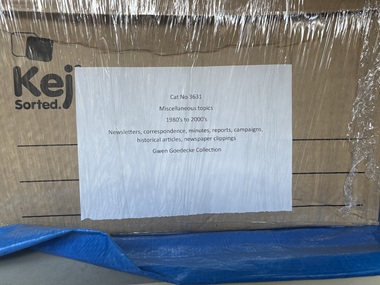 Sunshine and District Historical Society Incorporated
Archive - Gwen Goedecke Collection - Miscellaneous Topics
... | Docklands Task Force - correspondence, information Bulletins on Docklands, Explore Docklands including history and map (all 1991) |Referendum on a Republic (flyer) - information regarding the referendum in 1999 by the Constitution Centenary Foundation |A Whole Year of Celebration (flyer) re Victoria turning 150 years old (1984) From Citzen to Councillor - A Guide for Prospective Councillors (3rd edition (1999) by the Municipal Association of Victoria | PUBLIC FIRST Campaign - a Coalition opposed to privatisation of public utilities - newsletter containing operating principles, organisational roles etc |Environment Victoria - Newspaper 52/53 Forestry in Victoria Western Suburbs Action - by the Conservation Council of Victoria (1984) |Police and Community Youth Clubs - report (1999) Managing Cultural Equity: The Philosophy, Politics and Institutional Behaviours |The Age souvenir pages Melbourne 150' (1992) |PUBLICATIONS|The Australin Municipal journal #64 (June 1985) by the Municipal Association of Victoria| Make Melbourne Marvellous - by the Socialist Alternative Melbourne Collective (The Sam Collective) 1985|Self Help Resource Directory - 2nd edition by a Collective of Self Help Groups (Victoria 1982)|Industrial Waste Project Information Kit (MMBW 1986)|Western Region Environment Commission Minutes July 1985 together with a copy of the Draft Industrial Waste Strategy for Victoria (1985) by the EPA|Interim Directory of Government Departments and Authorities VIC from the Department of the Premier (1979)|National strategies for Managing Hazardous Waste - Conference papers (1985) by the Commonwealth Department of Arts, Heritage and Environment, EPA and the MMBW|The Mt. ...| Docklands Task Force - correspondence, information Bulletins on Docklands, Explore Docklands including history and map (all 1991) |Referendum on a Republic (flyer) - information regarding the referendum in 1999 by the Constitution Centenary Foundation |A Whole Year of Celebration (flyer) re Victoria turning 150 years old (1984) From Citzen to Councillor - A Guide for Prospective Councillors (3rd edition (1999) by the Municipal Association of Victoria | PUBLIC FIRST Campaign - a Coalition opposed to privatisation of public utilities - newsletter containing operating principles, organisational roles etc |Environment Victoria - Newspaper 52/53 Forestry in Victoria Western Suburbs Action - by the Conservation Council of Victoria (1984) |Police and Community Youth Clubs - report (1999) Managing Cultural Equity: The Philosophy, Politics and Institutional Behaviours |The Age souvenir pages Melbourne 150' (1992) |PUBLICATIONS|The Australin Municipal journal #64 (June 1985) by the Municipal Association of Victoria| Make Melbourne Marvellous - by the Socialist Alternative Melbourne Collective (The Sam Collective) 1985|Self Help Resource Directory - 2nd edition by a Collective of Self Help Groups (Victoria 1982)|Industrial Waste Project Information Kit (MMBW 1986)|Western Region Environment Commission Minutes July 1985 together with a copy of the Draft Industrial Waste Strategy for Victoria (1985) by the EPA|Interim Directory of Government Departments and Authorities VIC from the Department of the Premier (1979)|National strategies for Managing Hazardous Waste - Conference papers (1985) by the Commonwealth Department of Arts, Heritage and Environment, EPA and the MMBW|The Mt. ...Letter to Community Activists re Transport needs of Melbourne from the People for Environmentally Sustainable Transport (dated?)| Docklands Task Force - correspondence, information Bulletins on Docklands, Explore Docklands including history and map (all 1991) |Referendum on a Republic (flyer) - information regarding the referendum in 1999 by the Constitution Centenary Foundation |A Whole Year of Celebration (flyer) re Victoria turning 150 years old (1984) From Citzen to Councillor - A Guide for Prospective Councillors (3rd edition (1999) by the Municipal Association of Victoria | PUBLIC FIRST Campaign - a Coalition opposed to privatisation of public utilities - newsletter containing operating principles, organisational roles etc |Environment Victoria - Newspaper 52/53 Forestry in Victoria Western Suburbs Action - by the Conservation Council of Victoria (1984) |Police and Community Youth Clubs - report (1999) Managing Cultural Equity: The Philosophy, Politics and Institutional Behaviours |The Age souvenir pages Melbourne 150' (1992) |PUBLICATIONS|The Australin Municipal journal #64 (June 1985) by the Municipal Association of Victoria| Make Melbourne Marvellous - by the Socialist Alternative Melbourne Collective (The Sam Collective) 1985|Self Help Resource Directory - 2nd edition by a Collective of Self Help Groups (Victoria 1982)|Industrial Waste Project Information Kit (MMBW 1986)|Western Region Environment Commission Minutes July 1985 together with a copy of the Draft Industrial Waste Strategy for Victoria (1985) by the EPA|Interim Directory of Government Departments and Authorities VIC from the Department of the Premier (1979)|National strategies for Managing Hazardous Waste - Conference papers (1985) by the Commonwealth Department of Arts, Heritage and Environment, EPA and the MMBW|The Mt. Cottrell Project - project of the Western Region Commission - a final year thesis (1973)|Gwen's notes and photocopies of articles from a publication Melbourne's Development & Planning |Queen Victoria Hospital / Women's Centre - - newspaper clippings (1980's to 2000's) -correspondence, campaigns -a report by the Ministerial Advisory Committee (2000) |The Crow Collection Association - Ecosa Exchange Newsletters (80's and 90's) - Copies of extracts from Eureka Street, a Jesuit publication, with notations/comments from Ruth Crow (1993) -news articles, correspondence, phamplets, price lists, broad details of subject areas in the Crow Collection (1991) -report to the Committee of Management (1991) by Sheila Byard -article from the Australian Society (1985) on Ruth and Maurice Crow - Plan for Melbourne - parts 2&3 by Ruth and Maurice Crow (1972)john "jack" augustine tighe, gwenyth "gwen" goedecke, mayor -
 Federation University Historical Collection
Letter - Correspondence, Walter M. Hitchcock, Letters from Walter M. Hitchcock concerning a model of a Ballarat tent (and more), 1911, 1911 (exact)
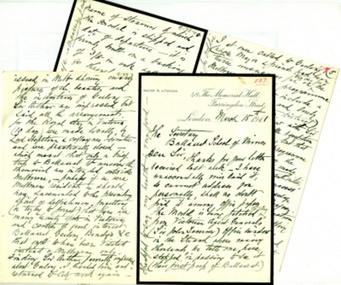
... The Prince himself will be the gainer by such an equitable and enlightened programme, - and come back with all the more favourable views of the marvellous development ever since our family first settled in Geelong in 1850. A far preferable result of such a visit than night after night having Melbourne Banquets and the visiting of its undoubted attractions - whilst all the rest of the State remained unvisited. ...The Prince himself will be the gainer by such an equitable and enlightened programme, - and come back with all the more favourable views of the marvellous development ever since our family first settled in Geelong in 1850. A far preferable result of such a visit than night after night having Melbourne Banquets and the visiting of its undoubted attractions - whilst all the rest of the State remained unvisited. ...The tent model mentioned in the letters was displayed in the Ballarat School of Mines Museum. During the 1960s it was transferred to the Ballarat Historical Society. Two handwritten letters on paper with black mourning edge written by Walter M. Hitchcock to the Ballarat School of Mines, and another written by Walter's brother George M. Hitchcock.Letter transcription follow: Letter from Walter M. Hitchcock regarding the death of James Oddie and early gold mining at Ballarat, 1910 and 1911 48 The Memorial Hall Farringdon St London Dec1/10 The Secretary Ballarat Museum Dear Sir, I am just now sending you this line, i anticipation of further correspondence later on, simply to forward you a Post Card of the 1st mining tent erected 1851 on the site of he then newly proclaimed Township of Ballarat, which, as the sole survivor of the party who built the original, I have had the pleasure in making, and have decided to present it to your museum, Sir Jno Lasenor out Agent General for Victoria came to a Bazaar recently held in London. where I had it on view in the museum from 3 days, - and desired I would allow its [ ? ] exhibited in the first large window of the beautiful new building of the Victoria Agency situate in the Strand. It is there for the past few days and he may wish it to remain a week or two longer, I know of no other exhibition of it to delay it being packed and shipped to my relatives in Geelong (Mr [?] Bright of Hitchock's Firm) who may wish to show it in one of their windows before forwarding it to your museum - I have had an itemised pane glass case made for it with drop down end and [?} it stands on a plateau of moss, to represent grass 32 x 13 x 13 high and chimney 14 1/2 - the case is made 34 x 26 x 20 high inside - I shall have it very carefully packed - tent emptied tools, beds, &c &c in separate packing and insured for 50 pounds - I will send you full details later on. I hope and believe your President will accept it in due time Meantime believe me to be very truly Cat Walter Hitchcock G.F.B. 48 The Memorial Hall Farringdon St London March 15th 1911 The Secretary Ballarat School of Mines Dear Sir, Thanks for your letter received last week – I have unaccountably mislaid it, so cannot address you personally, shall no doubt find it among office papers. The model is being fetched today from Victorian Agent General’s (Sir John [Lavernor?] office window in the Strand where many thousands, he tells me, have stopped in passing to see it (their first peep of Ballaarat). It will be on view at Blackheath (Kent) for a week, then packed and shipped without further delay. I shall enclose in the glass case (which is 26 x 34 x 16 in high) some spare minced moss and gas (smoke) in case in transit the plateau suffers by shaking (though it is well glued down). All the tools, mining appliances, cradle, windlass, &c will be separately packed enclosed – which you can easily place in respective positions. HRH Prince of Wales has graciously accepted a photo of it – and in my letter to him when sending it for his acceptance I said – as he would probably ere long visit Australia as did his grandfather and father, which ought to (and certainly will) include at least a day or two in seeing your beautiful City, and also something of your mines &c instead of the hurried visit of his father (2 hours) when he, as Duke of York, unveiled a statue to the memory of those slain in the sad Boer War, which now is admitted by almost everybody to have been a big political mistake, - though in the future with England’s present wise policy towards that country it will prove for Africa’s welfare. It may interest you to know that when I ascertained that Geelong was not to be visited by the Royal Pair – I went up to St James’s Palace by appointed time the Duke’s private Secy Sir Arthur Bigge – taking with me a specially illustrated paper issued in Melb. showing many pictures of the beauties and industries of Geelong – Sir Arthur was impressed but said all the arrangements for the Royal stay in Victoria (10 days) were made locally, by Lord Hopetoun and collegues and committee, and were practically closed – which meant that only a brief trip to Ballarat to uncover the memorial was intended outside Melbourne. Perhaps if we were Melbourne residents we should have succumbed to the prevailing spirit of selfishness – forgetting (or trying to forget) that there are many beauty spots in Victoria and centres of great interest - Ballarat, Geelong, Bendigo, &c that ought to have been visited instead of Melbourne only. Finding Sir Arthur favorably impressed about Geelong I thanked him and returned to City work again. I at once called to Geelong whose mayor and friends had been twice unsuccessful in trying for the Melbourne functions programme being altered to include a visit to Geelong and lovely spots in the Western District, reporting my interview with Sir A B and his favourable reception of my representations, but that any alteration to the programme of engagements during the Royal visit must be made locally and by the local authorities. This had the desired success for on receipt of my message the Geelong mayor and colleagues again reopened the question and went to Melbourne, resulting in a concession (but what an altogether inadequate one) and they graciously ? consented to the train, on its way with the Duke and Duchess to your city, to stop at the Geelong stn (15 minutes) and so it came about that by a hasty local effort, 3,000 school children, and not a few of the leading people including the Mayor &c were gathered to welcome them in Geelong. The National anthem being sung, an Address read and presented and kindly replied to. Now Ballarat should doubtless has influence. See to it when our P. Of Wales visits Victoria – an unselfish ¬ programme is fixed up – and HRH afforded ample opportunity of visiting leisurely your city, Geelong, Bendigo and other centres of beauty and importance. The Prince himself will be the gainer by such an equitable and enlightened programme, - and come back with all the more favourable views of the marvellous development ever since our family first settled in Geelong in 1850. A far preferable result of such a visit than night after night having Melbourne Banquets and the visiting of its undoubted attractions - whilst all the rest of the State remained unvisited. Such an official mistake must not be made again. I will write you again, stating name of steamer of which the model is shipped and date of departure – it is firmly built on a backing of 3/8 in oak tall uprights so through the 7/8 in plateau and am entrusting the packing be very careful. I expressed firm – so that except possibly any breakage in glass case – it should reach you in due time all right. The top of case will be screwed so that it can be readily removed temporarily to enable my [ ? ] firm to show it in one of their windows. Believe me Yours very truly Captn Walter M. Hitchcock My brother will deliver it on my a/c – all carriage paid. Mt very kind regards to my friend since 1850 Jas Oddie. University of Ballarat Historical Collection Cat. No. 8133.3 & .4 Letter from Walter M. Hitchcock regarding the death of James Oddie and early gold mining at Ballarat, 1911 48 The Memorial Hall Farringdon St London April 20th 1911 My Dear Sir, It is with no ordinary feeling of regret that I received the tidings of the death of my good friend, your fellow citizen for many years, Mr James Oddie. Living at Geelong from March 1850 I came to know him there as carrying on a foundry business in Ashby. With the discovery of gold at Ballarat started off almost of the working people, as well as of all other classes of the male population. Mr Oddie arrived in Ballarat I believe on or about September 1st 1851. My three comrades and I arrived October 1st 1851 – among the many thousands soon gathered within a mile or so of Golden Point – my friend Oddie and I often met. I returning to Geelong after a year mining – my friend on the other hand remaining at Ballarat ever since – a marvellous record, and I am sure his life has been one of unique value to your City in many ways, - his age (87) naturally prepared me for his call home – and only two mails before the news came I received from him on of his kindly chatty letters in which amongst other things – he referred with pleasure to having received from me two 10 x 12 photos – one being of my model and that he was arranging to have it placed in a shop window in your city. I am interested in the fact of your having known each of my three comrades of 1851/52. It was J.M. Garrett and I who got permission to conduct public Sunday morning service in their large Marquee – used all the week for issue of Licenses in the absence of any church buildings, and it being on wet Sundays impossible to have services as usual under the trees – Ballarat then was more like a Gentleman’s Park – than bush country – but the axe soon did its work – and all were felled for our cooking, and hencewith to make our kindling etc. Shafting of holes not being at first done because too shallow – our deepest (at Eureka) was only 115 ft. Bendigo I hear had now mines of 4,000 ft in depth (deeper than our tin or coal mines here). I fortunately have, in excellent state of preservation, my last of 12 licenses dated October 1 1852 and have recently purchased here a Miner’s Right dated 1864, to that when explaining on matters re Gold Licensing I can show sample of each. With kind regards Believe me Yours sincerely Walter M. Hitchcock Geelong June 20/11 Dear Sir, By rail to day through Messrs Bannister I send the model of miner’s tent packed in a case 50 donated by my brother Captain Walter M. Hitchcock of London. This model was made by my brother and represents the tent he worked in on the Ballarat Gold Fields in the year 1851 or 2. In a separate parcel a few extras omitted from the case. Please send me receipts in duplicate, one for my brother, the other for the Customs, Geelong, as being donated to your institution, after some little correspondence it was admitted [??] any payment for duty. You probably have my brother’s address and would like to acknowledge its arrival, direct. I hope it is in good order. I did not open it for show in Geelong, as there would be less risk of breakage on repacking. With kind remembrances. I am Yours Faithfully Geo. M. Hitchcock. A Mr G. F. B. Sharick who is living near my home called in to see my model – he said he knew FM [Fred Martell] and was lately at Ballaratballarat school of mines, frederick martell, fred martell, james oddie, walter m hitchcock, walter hitchcock, f m garratt, george hitchcock, hitchcock, golden point, gold discovery, j m garrett, gold license, j.m. garrett, t.m. hall, george m. hitchcock, f.m. garratt, walter m. hitchcock -
 Flagstaff Hill Maritime Museum and Village
Textile - Wall Hanging, curtain, 1854-1855
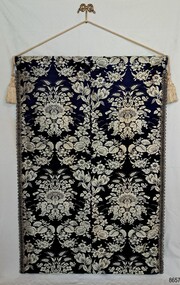
... marvellous Marco Polo. He broke the record time for the passage to Australia, taking only 68 days at sea, and the return journey in only 76 days, a total of 5 months and 21 days. On his second voyage to Melbourne...marvellous Marco Polo. He broke the record time for the passage to Australia, taking only 68 days at sea, and the return journey in only 76 days, a total of 5 months and 21 days. On his second voyage to Melbourne ...The striking fabric of this wall hanging was recovered from the sinking Schomberg. It was originally one of the many curtains adorning the captain’s cabin and ladies’ saloons that attracted first-class passengers to this luxury vessel, built for comfort and speed. The clipper ship was on its maiden voyage, full of passengers emigrating to Australia in 1855. Its commander was Captain James Nicol Forbes, who had been selected by James Baine & Co for his navigation skills, experience, and reputation for breaking sailing records. However, on December 26th, 1855, the vessel became stranded and sank west of Cape Otway, not quite reaching its destination of Melbourne. A reporter explored the Schomberg before its journey; the following detailed description is an excerpt of his article published in a newspaper after the disastrous voyage was announced. “ … descending by a flight of stairs, covered with carpet of a very rich pattern, we came to the saloon passengers’ cabin. This is a noble place, and all that refined taste would suggest has been done to make each berth a miniature palace. The bedding is of the very best material, and the fittings are replete with every convenience. The carpets are of various coloured velvet pile, and the curtains are of satin damask, lined with white satin … The fronts of the berths are highly decorated, and festoons of flowers are painted on the panels … No two berths are furnished with the same-coloured material … the visitor is, therefore, much pleased with the variety which he has to inspect….” (Trove: Shipping Gazette and Sydney General Trade, 31 Dec 1955, p. 283) The curtain material, ‘folded into a single piece and parcelled for protection’, has been passed down through generations of Captain Forbes’ relatives, starting with his half-sister Isabella Jeffrey Nicol. The curtain has remained with the family, although some transition details are incomplete. About a century later, Isabella and Blakiston Robinson’s great-grandson and his wife had the fabric professionally mounted as a wall hanging to showcase the beauty of the woven brocade. Eventually, the custodianship of the curtain was transferred to the donor, who is also a great-grandson of Isabella and Blakiston. He and his wife hung the curtain on the wall of a high-ceilinged room in their home, away from direct light, making it visible for all to appreciate its beauty and significance. In 2024, they donated the curtain for inclusion among the collection of artefacts that help tell the story of the Schomberg and those who sailed on its first and last voyage. The donor’s aunt was highly involved in the family’s history. She had collected and recorded information that dates back to pre-1341. A footnote included in a handwritten letter dated April 20, 1959, from the late Arthur William Rudd, OBE, MA, LLB, husband of another of the donor’s aunts, states, “The curtains you mentioned came from the Schomberg. AWR.” CAPTAIN JAMES NICOL FORBES (1821-1874) and the donor’s family: - Captain Forbes was born in Aberdeen. In his late teens, he moved to Liverpool, a hub for international trade and an emigration port. By the age of 25, he was master of the Prince of Waterloo and later, the Wakefield. He then commanded the Cleopatra for the James Baines Co., which, two years later, transferred him to command the Maria, providing fast and lucrative passage to the gold fields in Ballarat, Australia. James Baines Co. and shipbuilder Thomas Mackay formed the Black Ball Line of clipper ships in 1852. Forbes was appointed master of the largest ship in the fleet, the marvellous Marco Polo. He broke the record time for the passage to Australia, taking only 68 days at sea, and the return journey in only 76 days, a total of 5 months and 21 days. On his second voyage to Melbourne in the Marco Polo the following year, he took 75 days, and 95 days on the return trip. His accomplishment made him famous. James Baines reported that the Marco Polo was the only ship, sail or steam, to do the round trip within 6 months, and it had done it twice. Captain Forbes then took command of the American-built clipper Lightning, one of four built for the Black Ball line. His 19-year-old half-sister, Isabella Jaffray Nicol, was also onboard when he sailed for Melbourne in 1854. During the 77-day voyage, Isabella met Blakiston Robinson, and not long after the ship arrived in Melbourne on July 31, the couple married, with James Nicol Forbes as a witness, on August 16. When Forbes returned to Liverpool, he took a record-breaking 63 days, which has never been bettered. James Baines Co. ordered a new luxury emigrant ship from Alexander Hall of Aberdeen; the Schomberg was the largest sailing ship ever built in Britain. On October 6, 1855, the vessel departed Liverpool commanded by Captain Forbes, with 430 passengers on board, 54 of whom were First Class. It had almost completed its voyage to Melbourne when, on the night of December 26, it ran aground west of Cape Otway. Captain Doran, master of the steamer Queen, responded to the distress signal while on its way to Portland and, with the agreement of his passengers, rescued as many as possible from the Schomberg and returned to Melbourne with them. Captain Helpman, master of the steamer Champion, rescued most of the remaining Schomberg passengers on December 27. On Friday, 28th, Captain James Lawrence was on his way to Adelaide in the steamer Burra Burra, and called past the Schomberg. He reported that the remaining crew were all doing their duties, but the Schomberg was deteriorating on a sand spit and had about 16 feet of water in its hold. That same day, the schooner Jane Elizabeth collected 220 packages of passengers’ luggage to deliver to Melbourne on the 29th. Two steamers also arrived on the 29th with 20 men to collect passengers’ luggage and valuable ship’s cargo items. They were accompanied by water police, customs agents, company representatives and a Lloyds agent. The decision was made to abandon ship on the 30th due to rough and unsafe conditions. The officials and Captain Forbes voyaged to Melbourne, while the seamen remained behind awaiting rescue. Evacuation by sea became too risky, so on January 2, 1856, while the first Mate and Steward remained at the wreck site, the rest of the crew began the 70-mile march to Warrnambool, led by the band. They arrived on January 5th and left for Melbourne on the steamer Champion on January 10th. Parts of the Schomberg wreck ended up in New Zealand. The curtain is important for its connection to the Schomberg, which was unique for being designed and built in Aberdeen, and commanded by an Aberdonian who was the most celebrated clipper captain of the age. The ship was the largest sailing ship ever built in Britain, and reported as the largest vessel that sailed to Australia. The curtain is an example of the rich decorative furnishings available in 1855. The preservation and respect the donor and his family have shown towards the curtain over many decades reflect its important role in telling the family’s history; the journey, the romantic attachment, the family connection to the sea, and travel in gold rush times. The curtain is significant for its connection to James Nocol Forbes, a famous sailing ship commander who broke several sailing records, one of which has never been bettered. This wall hanging, also known as the Schomberg Curtain, was created from a curtain recovered from the stranded luxury ship Schomberg in December 1855. The woven satin damask fabric in blue and cream has been meticulously joined to blend the intricate pattern. The reverse features a soft cream lining. The hems at the top and bottom of the fabric hold wooden rods. The side edges feature decorative braid that has been hand-stitched in place. On the reverse, the bottom hem includes the same braid, which remains unseen from the front, and the centre of the top hem has a hand-worked, unused buttonhole. Each of the hems varies in depth. The curtain was tastefully mounted later to highlight the beauty of the original saloon curtain. A decorative twisted cord of cream silk threads, accented with gold highlights and decorative tassels, was coiled and attached to the ends of the top rod. The elegant display was completed with an ornate gold hook, chosen to complement the wall hanging.flagstaff hill maritime museum and village, great ocean road, shipwreck coast, shipwreck artefact, memorabilia, curtain, saloon curtain, schomberg, wall hanging, decorative object, domestic item, warrnambool, flagstaff hill, maritime museum, maritime village, maritime history, shipwreck, stranding, schomberg curtain, schomberg wall hanging, luxury ship, 1855, damask, silk damask, blue and cream, captain’s cabin, ladies’ saloon, clipper ship, migrant, emigrant, liverpool to australia, captain james nicol forbes, james forbes, captain forbes, bully forbes, james baines & co, james baines, cape otway, aberdeen, prince of waterloo, wakefield, cleopatra, maria, thomas mackay, black ball line, marco polo, sailing record, lightning, isabella jaffray nocol, blakiston robinson, alexander hall, steamer queen, captain helpman, james lawrence, steamer burra burra, steamer jane elizabeth, water police, customs agents, lloyds agent, ship’s band, walk to warrnambool, march to warrnambool, steamer champion, agnes nicol robinson, arthur william rudd obe ma llb -
 Flagstaff Hill Maritime Museum and Village
Medal - Commemorative, Edward William Cole, Coles Book Arcade, Federation of the World, 1885
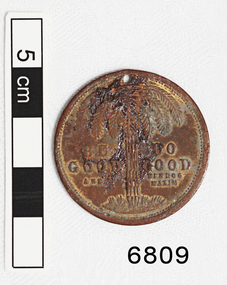
... Cole's Book Arcade, at the time, was known as one of the wonders of 'marvellous Melbourne. it closed in 1929. flagstaff hill warrnambool flagstaff-hill-maritime-museum maritime-museum shipwreck-coast flagstaff-hill-maritime-village medal maxims coles arcade melbourne federation of the world Advertising Token Edward William Cole Book Arcade E W Cole Cole's Book Arcade Obverse: "BE GOOD AND" "DO GOOD" "HINDOO MAXIM" "PURE THOUGHTS" "PURE WORDS" "PURE DEEDS" "PARSES MAXIM" Reverse: "PURE / THOUGHTS / PURE WORDS / PURE DEEDS / PARSEE MAXIM" and below rainbow in tiny letters; "FEDERATION OF THE / WORLD MEDALS / ISSUED / BY E.W. ...The medal was issued by Cole's Book Arcade, with the proverb “Federation of the World, Be Good and Do Good”, circa 1885. This nickel-plated medal is one of a series of medals offering maxims and proverbs issued by E.W. Cole (Edward William Cole), owner of his Book Arcade. He called the medals 'little missionaries for the spread of educative knowledge' According to Sydney Endicott, an employee of Cole, customers were charged three pence for these medals (which he prefers to call tokens) which, when the Arcade was particularly busy, gave them admission to the second-hand books' gallery where the orchestra played. Each medal could be exchanged for thee pence worth of goods, but most were kept. The pierced ones were sometimes worn as pendants or on pocket watch chains. The medals served as perpetual advertisements of the Arcade (Victorian Historical Magazine, February 1962). George Dean suggests that the medals were also given in change at Christmas time, and could be used to operate amusement machines (presumably including the symphonion (clockwork instrument) and hens, although these only required one penny to operate). Cole had his first medal stuck in 1879 and his last one in 1903. The medals were variously gilded, silvered or bronzed, replicating the coinage and then circulating, or plated with nickel or white metal. The metal blanks were usually made of copper or brass, but some might have been bronze; aluminium was also sometimes used. In all, perhaps 300,000 medals were struck, in 97 different types or designs. Only 50 types are known to have circulated according to George Dean's 1988 book "A Handbook on E.W. Cole: His Book Arcade, Tokens and Medals'.The medal is significant for its association with Cole's Book Arcade in Melbourne, established in the 1870s. The unique shop not only had new books, but secondhand books, and many curious and interesting objects and musical treats. Cole's Book Arcade, at the time, was known as one of the wonders of 'marvellous Melbourne. it closed in 1929.Nickle plated bronze medal or token, round, featuring a tree fern and a thought provoking maxim. The medal was issued by E W Cole, Book Arcade, in Melbourne. Obverse: "BE GOOD AND" "DO GOOD" "HINDOO MAXIM" "PURE THOUGHTS" "PURE WORDS" "PURE DEEDS" "PARSES MAXIM" Reverse: "PURE / THOUGHTS / PURE WORDS / PURE DEEDS / PARSEE MAXIM" and below rainbow in tiny letters; "FEDERATION OF THE / WORLD MEDALS / ISSUED / BY E.W. COLE / BOOK ARCADE MELBOURNE"flagstaff hill, warrnambool, flagstaff-hill-maritime-museum, maritime-museum, shipwreck-coast, flagstaff-hill-maritime-village, medal, maxims, coles arcade melbourne, federation of the world, advertising token, edward william cole, book arcade, e w cole, cole's book arcade -
Mission to Seafarers Victoria
Article - Survey, Bronwyn Hughes, The Art of Light: a survey of stained glass in Victoria, December 1990
... Published in the La Trobe Journal No 90, December 2012 History of Brooks, Robinson & Co. maker of most of the windows in the chapel. la trobe journal state library of victoria bronwyn hughes stained glass window Introduction Early Stained Glass in Victoria "Marvellous Melbourne" The Aftermath of the First World War Post-1945: Australian Modernism Conclusion The Art of Light: a survey of stained glass in Victoria Article Survey Bronwyn Hughes ...Introduction Early Stained Glass in Victoria "Marvellous Melbourne" The Aftermath of the First World War Post-1945: Australian Modernism Conclusionnon-fictionIntroduction Early Stained Glass in Victoria "Marvellous Melbourne" The Aftermath of the First World War Post-1945: Australian Modernism Conclusionla trobe journal, state library of victoria, bronwyn hughes, stained glass window -
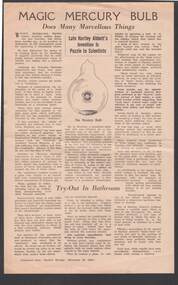 Bendigo Historical Society Inc.
Document - BILL ASHMAN COLLECTION: NEWSPAPER ARTICLE
... SCIENCES Instruments-general scalebuoy Bill Ashman Collection Magic Mercury Bulb Hartley Abbott Scalebuoy Victorian Railways Department Buckingham Palace Auckland General Hospital Melbourne University Mr N Brearley Glamis Castle Lancet Crown Hotel Smith's Weekly Four copies of an article reprinted from Smith's Weekly, November 30, 1940 titled Magic Mercury Bulb Does Many Marvellous Things. ...Four copies of an article reprinted from Smith's Weekly, November 30, 1940 titled Magic Mercury Bulb Does Many Marvellous Things. It mentions the inventor, Hartley Abbott, the use of the scalebuoy by the Victorian Railways. There is a brief explanation of how the scalebuoy works. It was used to treat hard water and was claimed to have certain health benefits. The inventiveness of the Abbott family is also mentioned.sciences, instruments-general, scalebuoy, bill ashman collection, magic mercury bulb, hartley abbott, scalebuoy, victorian railways department, buckingham palace, auckland general hospital, melbourne university, mr n brearley, glamis castle, lancet, crown hotel, smith's weekly -
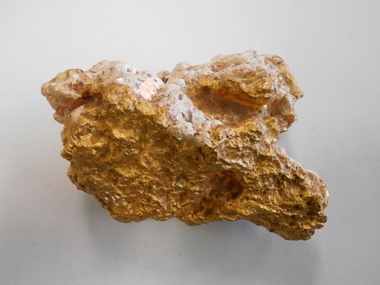 Bendigo Historical Society Inc.
Memorabilia - GOLD NUGGET COLLECTION: THE GEM, 1906
... Melbourne, Vic. : 1862 - 1918, 1935)Saturday 29 December 1906 - Page 33 THE POSEIDON RUSH. It is only about five weeks since this rush was opened by John Porter, but since that time a marvellous change has taken place. ...Melbourne, Vic. : 1862 - 1918, 1935)Saturday 29 December 1906 - Page 33 THE POSEIDON RUSH. It is only about five weeks since this rush was opened by John Porter, but since that time a marvellous change has taken place. ...The Gem The Poseidon Rush. Tarnagulla, Saturday. Article - The Albury Banner and Wodonga Express (NSW : 1871 - 1938)Friday 8 February 1907 - Page 43 The Poseidon Rush. Tarnagulla, Saturday. Several indicators and quartz leaders on the Woolshed Hill have received considerable attention during the last fortnight. In some claims the stone looks very promising, and nice tracings of gold have been obtained. Wragg Brothers struck it rich yesterday. At a depth of 12ft. on the bedrock they discovered a nugget specimen 206oz. in weight, which has been christened the 'Port Arthur. The party also had the good fortune to find two other specimens close, by, one weighing 23oz. 15dwt. and the other 24oz.These were named 'The Twins,' the Wragg Brothers bearing that distinction. In this claim about eight weeks ago the Gem (88oz.) was unearthed. THE POSEIDON RUSH. Article Illustrated - Leader (Melbourne, Vic. : 1862 - 1918, 1935)Saturday 29 December 1906 - Page 33 THE POSEIDON RUSH. It is only about five weeks since this rush was opened by John Porter, but since that time a marvellous change has taken place. The quietness of the bush has given place to a scene of wild excitement, and each week this is intensified by the discovery of large nuggets. When Smith, Rogers and Stephenson picked out their slug on election day, no one dreamed that larger ones were lying only a few feet away, but such was the fact. On Tuesday afternoon two immense slugs, one of which weighed 960 oz., and the other 373 oz., were found in adjoining claims within a few minutes of each other. The finding of these created a scene which it is difficult to describe. "I've got one, “was shouted from the claim of Bert Williamson and T. Stephenson, two men just entering into manhood. They were seen excitedly digging round a lump of gold, one of them with a double-ended pick, the point-of which he broke in his anxiety to unearth it. This slug is nine inches long by seven inches by 43 inches, and is very similar in appearance and size to the big nugget got previously in the adjoining claim. It has been cleaned and smelted, and has yielded 306 oz. of pure gold of the best sample. Before the excitement caused by the discovery of the last nugget had sub-sided, there was a shout from an adjoining claim. Sam Woodall, a Llanelly miner, felt his pick strike a hard yielding sub-stance, and, satisfied that he had struck a nugget, called the attention of his mates to the fact. He soon levered it out of the ground with his pick. Taking it up in his arms he staggered out of the claim with it, and in a minute or two was sur-rounded by hundreds of men who rushed from all over the field to view it, and to feel its weight. It was certainly a magnificent specimen, and the fortunate miners were congratulated on all sides. Its weight was guessed to be a hundredweight, and probably in its then dirty state it would nave turned the scales at that. In a few minutes the crowd was so dense that it was impossible to get a close inspection. The nugget was first taken to Newbridge under escort, then through Llanelly to Tarnagulla, where it was lodged in the Union Bank. It was found that the bank scales were not sufficiently large to weigh the mass. By tying a number of large weights together, and suspending them from a steel bar, a fairly accurate weight was obtained, and it just balanced 80 lb., or 960 oz. The nugget measures 16 in. x 10 in. x 5 in. The party was cheered as it drove up the main street here, and the sight of an armed escort was quite a novelty. The nugget was held aloft in a tin dish for inspection by the crowd. These nuggets were found in the shallow workings, and neither of them were a foot under the surface. The ground is a black loamy soil; there was no appearance of wash whatever, and no one knowing anything of alluvial mining would think of searching for gold in such a spot. All those who have claims on the hillside are breaking out all the dirt in a face from the surface to the reef, which is a mixture of lime and sunstone, and searching for nuggets. The ground is carefully pulverised so that nothing shall be missed. Some are puddling the whole of it, but it is hardly payable. Where the big nuggets are now being found, the ground has been pegged out and abandoned more than once since the rush started, and shares in the claims have been purchased for small amounts. Smith was given a third share in the claim where the first nugget was found for puddling the dirt big lump was discovered, by Woodall, Condron, Brooks and Eva, two of them sold a sixth share for £5 a few days ago to a man named Woods, who only worked a few days and sold out again for 50/. Some fancy prices are now being offered for shares in the claims in the vicinity. Woodall holds a third share, Condron and Brooks three-quarters of a share each, and Eva a sixth share. The largest nugget has been christened "The Poseidon." The names given to the other nuggets obtained previously are as follow: — Wragg Bros., 88 oz. nugget, "The Gem"; Smith and party's 378 oz. nugget, which was unearthed on election day, has been fittingly named "The Federal"; Jackson and Hughes 152 oz.specimen, "The Little. Beu"; Williamson and Stephenson's 373 oz. nugget is said to be called "The Christmas Box." A representative from the (Mines department has been at the bank during, the week taking models for the museums and schools of mines. )A replica of the "Gem" gold nugget that was discovered on 29.11.1906 on the Poseidon Lead at Tarnagulla at the depth of 9 feet. Found on the bedrock by the Wragge Bros. Weight 88 ozs. Value of $126,358 in 2016. (See additional Research.)mining, models, plaster model of victorian gold nugget
