
Showing 103404 items matching " photograph photograph"
-
 Inverloch Historical Society
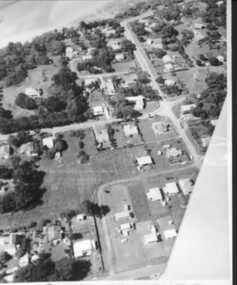
000146 - Photograph - Aerial Photograph - R Young
... 000146 - Photograph - Aerial Photograph - R Young...000146 - Photograph - Aerial Photograph - R Young ... -
 Broadmeadows Historical Society & Museum
Photograph - Group Photograph, Jacana Primary School: Grade 6, 1986
... Photograph...School Photograph...Class photographs from this period not only document the students and staff but also capture broader social and cultural trends—such as the fashion, hairstyles, and classroom dynamics of the era. This photograph...A colour photograph on Matte photograph paper...James Carlin Back: Top left Corner: PH-2127 (blue label) Manufacturer's Mark: Fujicolor Paper A colour photograph on Matte photograph paper Jacana Primary School: Grade 6, 1986 Photograph Group Photograph ...Jacana Primary School, located in Melbourne’s northern suburbs, served the local community for several decades before its closure. By 1986, the school had become a reflection of the area’s growing cultural diversity and suburban development. The mid-1980s were a time of significant change in Australian education, with increasing emphasis on inclusive learning, student leadership, and community engagement. Grade 6 marked a pivotal year for students, often representing the culmination of their primary education and preparation for the transition to secondary school. Class photographs from this period not only document the students and staff but also capture broader social and cultural trends—such as the fashion, hairstyles, and classroom dynamics of the era. This photograph is part of a broader visual history that helps preserve the memory of Jacana Primary School’s role in shaping young lives and fostering a strong sense of local identity. It stands as a reminder of the friendships, learning experiences, and community spirit that defined the school during the 1980s.This 1986 Grade 6 class photograph from Jacana Primary School is a valuable historical record that captures a moment in time within a now-closed educational institution. It reflects the school’s strong sense of community, cultural diversity, and commitment to nurturing young learners during a formative stage of their development. The image also offers a glimpse into the fashion, hairstyles, and social atmosphere of the mid-1980s, making it a meaningful artefact for past students, staff, and the wider Jacana community. Preserving this photograph helps honour the legacy of the school and its role in shaping local identity and childhood experiences.A colour photograph on Matte photograph paperBack: Top left Corner: PH-2127 (blue label) Manufacturer's Mark: Fujicolor Paperjacana primary school, photograph, school photograph, education, 1986, r darren d'angelo, bobbie glen, paul harris, gavin so., clinton paine, ada chong, kelly smith, tabitha headrick, helen papaevangelou, leonie green., annette robinson, deborah lamont, stephen kalenjuk, paul knostenbergs, sharon montebello, stale kasmski, neomi baxter, martin cera, elian jeffrie, david jeffrie, mr. james carlin -
Broadmeadows Historical Society & Museum
Photograph - Team Photograph, Jacana Primary School: Cricket 1986
... Photograph...School Photograph...photograph of Jacana Primary School’s cricket team offers a vivid snapshot of a school that played a foundational role in its local community from its establishment in 1959 until its closure in the early 2000s. The image serves as a valuable archival record, preserving the spirit and identity of the school during a period marked by social and educational transformation in Melbourne’s northern suburbs. Cricket, a sport deeply embedded in Australian culture, was a key component of Jacana Primary’s extracurricular offerings. The photograph...A colour photograph on Matte photograph paper...Jacana Primary School Photograph School Photograph Education 1986 Cricket Back: Top left Corner: PH-2127 (blue label) Manufacturer's Mark: Fujicolor Paper A colour photograph on Matte photograph paper Jacana Primary School: Cricket 1986 Photograph Team Photograph ...This 1986 colour photograph of Jacana Primary School’s cricket team offers a vivid snapshot of a school that played a foundational role in its local community from its establishment in 1959 until its closure in the early 2000s. The image serves as a valuable archival record, preserving the spirit and identity of the school during a period marked by social and educational transformation in Melbourne’s northern suburbs. Cricket, a sport deeply embedded in Australian culture, was a key component of Jacana Primary’s extracurricular offerings. The photograph reflects the school’s emphasis on fostering teamwork, discipline, and community engagement through sport. It also illustrates the inclusive and energetic environment that characterised student life in the late 1980s, a time when schools increasingly embraced holistic education models that valued physical activity and social development alongside academic achievement. As part of Jacana Primary’s visual archive, this image contributes to a broader understanding of how sporting programs shaped student experiences and reinforced community bonds. It stands as a testament to the school’s enduring legacy and its commitment to nurturing well-rounded individuals through meaningful participation in school life.This vibrant 1986 colour photograph of Jacana Primary School’s cricket team captures the energy and pride of a school that stood as a pillar of its community from its founding in 1959 until its closure in the early 2000s. More than just a snapshot, it preserves treasured memories of student life and highlights the school’s strong sporting culture, where teamwork and camaraderie were nurtured through active participation. The image also offers a glimpse into the social atmosphere of the late 1980s, reflecting the inclusive and spirited environment that defined Jacana Primary. As part of the school’s visual archive, it contributes to a deeper understanding of how extracurricular activities like cricket played a vital role in shaping student experiences and fostering lasting community connections.A colour photograph on Matte photograph paperBack: Top left Corner: PH-2127 (blue label) Manufacturer's Mark: Fujicolor Paperjacana primary school, photograph, school photograph, education, 1986, cricket -
 Broadmeadows Historical Society & Museum
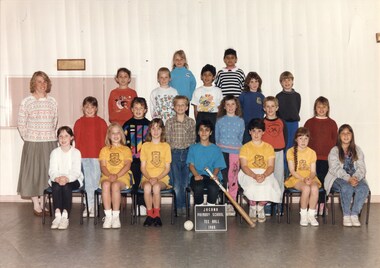
Photograph - Team Photograph, Jacana Primary School: Teeball 1989
... Photograph...School Photograph...A colour photograph on Matte photograph paper...Jacana Primary School Photograph School Photograph Education 1989 Teeball Back: Top left Corner: PH-2127 (blue label) Manufacturer's Mark: Fujicolor Paper A colour photograph on Matte photograph paper Jacana Primary School: Teeball 1989 Photograph Team Photograph ...This 1989 colour photograph of Jacana Primary School’s Teeball team captures a vibrant moment in the life of a school that served as a cornerstone of its local community from its founding in 1959 until its closure in the early 2000s. More than just a team photo, it stands as a valuable archival record, preserving the spirit and identity of the school during a time of significant social and educational change in Melbourne’s northern suburbs. This 1989 colour photograph of Jacana Primary School’s Teeball team holds enduring historical and cultural value as a visual record of a school that played a pivotal role in its local community from 1959 until its closure in the early 2000s. More than a simple team portrait, the image encapsulates the spirit of the school during a period of dynamic social and educational change in Melbourne’s northern suburbs. It reflects the importance of sport in fostering community identity, student engagement, and holistic education. As part of the school’s visual archive, the photograph contributes to a broader understanding of how extracurricular activities shaped student life and strengthened community bonds, preserving the legacy of Jacana Primary for future generations.A colour photograph on Matte photograph paperBack: Top left Corner: PH-2127 (blue label) Manufacturer's Mark: Fujicolor Paperjacana primary school, photograph, school photograph, education, 1989, teeball -
 Flagstaff Hill Maritime Museum and Village
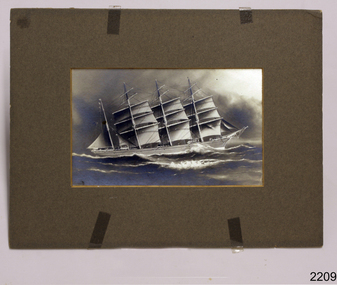
Print - Vessel, Sailing Ship, A.V. Gregory, ca. 1899-1922
... ...Photograph...Photograph...The detailed image of the vessel depicted in this print shows one of the many sail and steam vessels painted by the renowned Victorian marine artist A V Gregory, whose original works are highly valued today by marine collectors. flagstaff hill warrnambool shipwrecked-coast flagstaff-hill flagstaff-hill-maritime-museum maritime-museum shipwreck-coast flagstaff-hill-maritime-village Photograph Photograph of Rowena Gregory Cluny Castle a v gregory rowena iron baque rowena ship co. ...This photograph is a print from an original painting by the Australian marine artist A V Gregory (1867-1957), also known as Arthur Victor Gregory. Gregory lived and worked in South Melbourne. He took over the Gregory Studio owned by his father, George Frederick Gregory, painting actively between 1899 and 1932. He usually signed his works as ‘A V Gregory’. Some of his original works have been sold for thousands of dollars. The four-masted iron barque 'Rowena' was built in 1883 by Barclay, Curle & Co. of Glasgow as the 'Cluny Castle', and renamed about 1890 as 'Rowena' by owners Rowena Ship Co.. After consequent owners, the ship was converted to a hulk in 1922 at Port Adelaide. The detailed image of the vessel depicted in this print shows one of the many sail and steam vessels painted by the renowned Victorian marine artist A V Gregory, whose original works are highly valued today by marine collectors.Photograph of a print, black and white, mounted onto card. It depicts the four-masted iron barque ship 'Rowena', originally named 'Cluny Castle'. The original painting was by marine artist A V Gregory.Painted on bow "ROWENA"flagstaff hill, warrnambool, shipwrecked-coast, flagstaff-hill, flagstaff-hill-maritime-museum, maritime-museum, shipwreck-coast, flagstaff-hill-maritime-village, photograph, photograph of rowena, gregory, cluny castle, a v gregory, rowena, iron baque, rowena ship co., barclay, curle & co, glasgow -
Federation University Historical Collection
Photograph - Geology Student doing work in a paddock, Ballarat College of Advanced Education Student using equipment, Late 1980s
... ...Colour Photograph...Photograph...Ballarat College of Advanced Education is a predecessor of Federation University Geology Student Colour Photograph Photograph Ballarat College of Advanced Education Geology written on the back Large coloured photograph of geology student mounted on cardboard. ...Ballarat College of Advanced Education is a predecessor of Federation University Large coloured photograph of geology student mounted on cardboard.Geology written on the backgeology, student, colour photograph, photograph, ballarat college of advanced education -
 Federation University Historical Collection
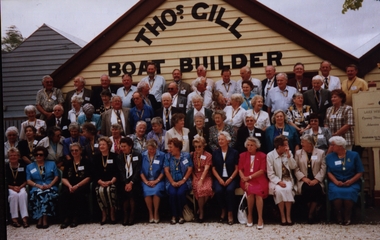
Photograph - Colour, 1949 Ballarat Teachers' College 50th Reunion Photograph, 1999
... photograph...group photograph...colour photograph...ballarat teachers' college 50th reunion photograph group photograph colour photograph 1949 Exies of Ballarat Teachers' College 50th Reunion Ballarat 1999 written on the back Coloured group photograph of those at the Reunion of the 1949 Exies pf Ballarat Teachers' College Ballarat, take in 1999 1949 Ballarat Teachers' College 50th Reunion Photograph Photograph - Colour ...Coloured group photograph of those at the Reunion of the 1949 Exies pf Ballarat Teachers' College Ballarat, take in 19991949 Exies of Ballarat Teachers' College 50th Reunion Ballarat 1999 written on the backballarat teachers' college, 50th reunion, photograph, group photograph, colour photograph -
 Bendigo Historical Society Inc.
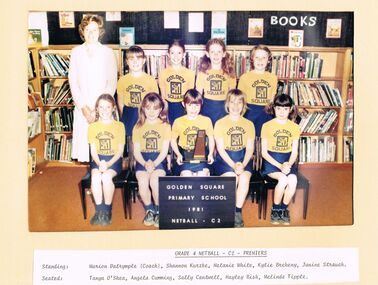
Photograph - GOLDEN SQUARE LAUREL STREET P.S. COLLECTION: PHOTOGRAPH GRADE 4 NETBALL C2 - PREMIERS
... Collection - Photograph - Photograph Grade 4 Netball C2 - Premiers...Collection - Photograph - Photograph Grade 4 Netball C2 - Premiers Marion Dalrymple Shannon Kurzke Melanie White Kylie Breheny Janine Strauch Tanya O'Shea Angela Cumming Sally Cantwell Hayley Bish and Melinda Tipple Coloured photo of the Grade 4 Netball - C2 - Premiers Team of 1981. ...Coloured photo of the Grade 4 Netball - C2 - Premiers Team of 1981. Photo taken in library. The girls are wearing yellow t-shirts with a printed emblem and Golden Square printed on them and dark blue skirts. The coach, Marion Dalrymple is wearing a light pink jacket and a white dress. The names of the girls are: Shannon Kurzke, Melanie White, Kylie Breheny, Janine Strauch, Tanya O'Shea, Angela Cumming, Sally Cantwell, Hayley Bish and Melinda Tipple.education, primary, golden square laurel st p.s., golden square laurel street p.s. collection - photograph - photograph grade 4 netball c2 - premiers, marion dalrymple, shannon kurzke, melanie white, kylie breheny, janine strauch, tanya o'shea, angela cumming, sally cantwell, hayley bish and melinda tipple -
 Bendigo Historical Society Inc.
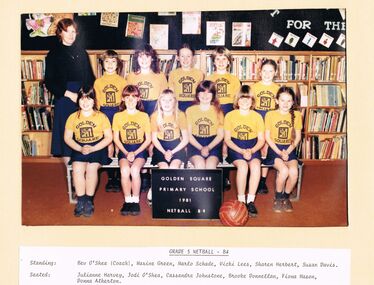
Photograph - GOLDEN SQUARE LAUREL STREET P.S. COLLECTION: PHOTOGRAPH GRADE 5 NETBALL B4
... Collection - Photograph - Photograph Grade 5 Netball B4...Collection - Photograph - Photograph Grade 5 Netball B4 Bev O'Shea Maxine Green Marlo Schade Vicki Lees Sharen Herbert Susan Davis Julianne Harvey Jodi O'Shea Cassandra Johnstone Brooke Donnellan Fiona Mason and Donna Atherton Coloured photo of the Grade 5 Netball - B4 Team of 1981. ...Coloured photo of the Grade 5 Netball - B4 Team of 1981. Photo taken in library. The girls are wearing yellow t-shirts with a printed emblem and Golden Square printed on them and dark blue skirts. The coach, Bev O'Shea is wearing dark blue. The names of the girls are: Maxine Green, Marlo Schade, Vicki Lees, Sharon Herbert, Susan Davis, Julianne Harvey, Jodi O'Shea, Cassandra Johnstone, Brooke Donnellan, Fiona Mason and Donna Atherton.education, primary, golden square laurel st p.s., golden square laurel street p.s. collection - photograph - photograph grade 5 netball b4, bev o'shea, maxine green, marlo schade, vicki lees, sharen herbert, susan davis, julianne harvey, jodi o'shea, cassandra johnstone, brooke donnellan, fiona mason and donna atherton -
 Bendigo Historical Society Inc.
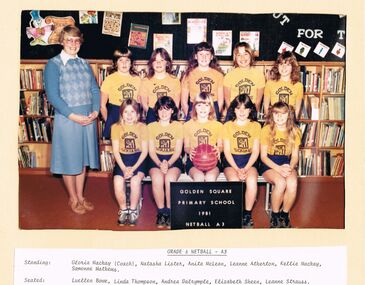
Photograph - GOLDEN SQUARE LAUREL STREET P.S. COLLECTION: PHOTOGRAPH GRADE 6 NETBALL A3
... Collection - Photograph - Photograph Grade 6 Netball - A3...Collection - Photograph - Photograph Grade 6 Netball - A3 Gloria Mackay Natasha Lister Anita McLean Leanne Atherton Kellie Mackay Samonne Mathews Luellen Bowe Linda Thompson Andrea Dalrymple Elizabeth Sheen Leanne Strauss Coloured photo of the Grade 6 Netball - A3 Team of 1981. ...Coloured photo of the Grade 6 Netball - A3 Team of 1981. Photo taken in library. The girls are wearing yellow t-shirts with a printed emblem and Golden Square printed on them and dark blue skirts. The coach, Gloria Mackay, is dressed in blue. The names of the girls are: Natasha Lister, Anita McLean, Leanne Atherton, Kellie Mackay, Samonne Mathews, Luellen Bowe, Linda Thompson, Andrea Dalrymple, holding a ball, Elizabeth Sheen and Leanne Strauss.education, primary, golden square laurel st p.s., golden square laurel street p.s. collection - photograph - photograph grade 6 netball - a3, gloria mackay, natasha lister, anita mclean, leanne atherton, kellie mackay, samonne mathews, luellen bowe, linda thompson, andrea dalrymple, elizabeth sheen, leanne strauss -
 Bendigo Historical Society Inc.
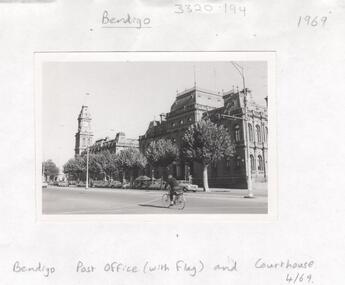
Photograph - LA TROBE UNIVERSITY BENDIGO COLLECTION: BENDIGO
... photograph... photograph...Geoff Pryor history building buildings place photo photos photograph photograph A black and white photograph of the Bendigo Post Office with the flag and the Bendigo Courthouse in April 1969. ...A black and white photograph of the Bendigo Post Office with the flag and the Bendigo Courthouse in April 1969. A man can be seen riding his bicycle in the foreground. Notice the lack of traffic in the street. See 3320.100bendigo, buildings, court house, la trobe university bendigo collection, collection, bendigo, streetscape, pall mall, post office, court house, miss j.c. burnett, mr. geoff pryor, history, building, buildings, place, photo, photos, photograph, photograph -
 National Vietnam Veterans Museum (NVVM)
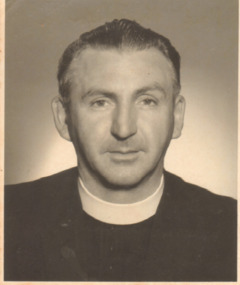
Photograph, A Black and White Passport Photograph of John Aloysius Morgan
... ...Passport Photograph...Photograph...Chaplain-General John Aloysius Morgan 351016 Royal Australian Army Chaplains Department The Companion of the Order of Australia OAM Passport Photograph Photograph Chaplain Morgan vicar military vicar A small black and white passport photograph of John Aloysius Morgan A Black and White Passport Photograph of John Aloysius Morgan Photograph ...This is part of a collection which was donated by Chaplain-General John Aloysius Morgan (351016) who served with the Royal Australian Army Chaplains Department. He served as a Military Vicar of the Australian Defence Force. He was awarded The Companion of the Order of Australia (AOM) in 1976.A small black and white passport photograph of John Aloysius Morganchaplain-general john aloysius morgan, 351016, royal australian army chaplains department, the companion of the order of australia, oam, passport photograph, photograph, chaplain, morgan, vicar, military vicar -
 Sunshine and District Historical Society Incorporated
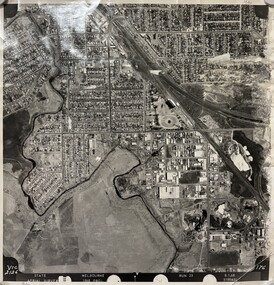
Photograph - Sunshine Aerial Photograph 9th January 1968
... ... Photograph Photograph...Sunshine Aerial Club Aerial Photograph Photograph Sunshine Aerial Photograph 9th January 1968 2 Black & White Sunshine Aerial Photographs dated 9th January 1968 Photograph Sunshine Aerial Photograph 9th January 1968 ...Sunshine Aerial Photograph 9th January 1968sunshine aerial club, aerial, photograph photograph -
 Sunshine and District Historical Society Incorporated
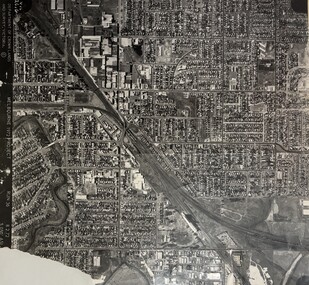
Photograph - Sunshine Aerial Photograph 1972, 1972
... ... Photograph Photograph...Sunshine Aerial Club Aerial Photograph Photograph Sunshine Aerial Photograph 1972 Black & White Sunshine Aerial Photograph 1972 Photograph Sunshine Aerial Photograph 1972 ...Sunshine Aerial Photograph 1972sunshine aerial club, aerial, photograph photograph -
 Broadmeadows Historical Society & Museum
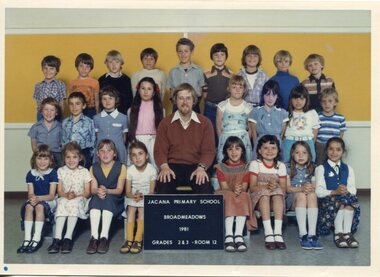
Photograph - Group Photograph, Jacana Primary School: Grade 2 and 3 - Room 12, 1981, 1981
... Photograph...Group Photograph...Class Photograph...Jacana Primary School Education Photograph Group Photograph Class Photograph Grade 2 and 3 Room 12 1981 Back, Top Left Corner: (White label): PH-5009/ (Blue Label): PH-5596 Centre (in pencil) J.P.S., Manufacturers Mark; this paper/Manufactured/ by Kodak Colour Photograph on Matte Paper, with white border Jacana Primary School: Grade 2 and 3 - Room 12, 1981 Photograph Group Photograph ...This 1981 photograph of Grade 2 and 3 students from Room 12 at Jacana Primary School offers a valuable glimpse into the everyday life of primary education in Melbourne’s northern suburbs during a period of suburban growth and demographic transformation. Founded in 1959, Jacana Primary School served the local community for over four decades, providing not only academic instruction but also a vital space for social development and community connection. The image reflects the school’s dedication to creating a nurturing and inclusive environment for young learners in their early years of schooling. It also illustrates the cultural diversity and changing social landscape of Jacana in the late 20th century. As part of the school’s visual archive, this photograph contributes to a broader understanding of how public education supported community cohesion, shaped local identity, and played a formative role in the lives of children and families across generations.The 1981 photograph of Grade 2 and 3 students in Room 12 at Jacana Primary School is a historically significant artefact that captures the everyday realities of early primary education during a period of growth and change in Melbourne’s northern suburbs. It reflects the school’s commitment to providing a nurturing and inclusive learning environment for young children, many of whom came from diverse cultural backgrounds. This image offers insight into the social and educational atmosphere of the early 1980s, including classroom dynamics, fashion, and the evolving demographic character of the Jacana community. As part of the visual legacy of a now-closed institution, the photograph preserves the memory of a school that played a vital role in shaping childhood experiences and fostering community identity across generations.Colour Photograph on Matte Paper, with white borderBack, Top Left Corner: (White label): PH-5009/ (Blue Label): PH-5596 Centre (in pencil) J.P.S., Manufacturers Mark; this paper/Manufactured/ by Kodakjacana primary school, education, photograph, group photograph, class photograph, grade 2 and 3, room 12, 1981 -
 Broadmeadows Historical Society & Museum
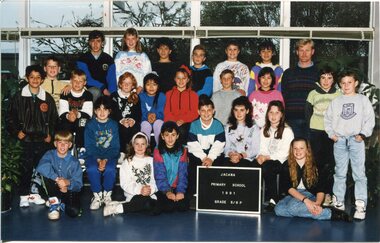
Photograph - Class Photograph, Jacana Primary School: Grade 5/6P, 1991, 1991
... Photograph...Group Photograph...Class Photograph...Payne Grade 5/6P 1991 Back: Top Left Corner: (Blue Label): PH-5500, Centre (in pencil) Colour Photograph on Satin Paper Jacana Primary School: Grade 5/6P, 1991 Photograph Class Photograph ...This 1991 group photograph of Grade 5/6 students and their teacher at Jacana Primary School provides a vivid snapshot of suburban school life in Melbourne during a time of notable social and urban transformation. Established in 1959, Jacana Primary served as a vital educational and community hub until its closure in the early 2000s. More than a place of learning, the school fostered a strong sense of identity, belonging, and shared experience among its students and staff. The image reflects the school’s commitment to nurturing inclusive and supportive environments for young learners. It also subtly documents the growing cultural diversity of Jacana in the late 20th century, as suburban development brought together families from a wide range of backgrounds. As part of the school’s visual archive, this photograph contributes to a broader understanding of how public education helped shape community identity, promote social cohesion, and influence the lives of generations of children and families.This 1991 class photograph of Grade 5/6 students and their teacher at Jacana Primary School is a historically significant artifact that captures a moment in time within a vibrant and evolving suburban community. Taken during a period of considerable social and urban change in Melbourne’s northern suburbs, the image reflects the school’s enduring role as a centre of education, inclusion, and community connection. Jacana Primary School, established in 1959 and closed in the early 2000s, was more than an academic institution—it was a place where children from diverse backgrounds came together, forming lasting relationships and shared memories. The photograph documents the increasing cultural diversity of the Jacana area in the late 20th century, offering insight into how public schools adapted to and reflected broader societal shifts. As part of the school’s visual archive, this image contributes to the historical narrative of public education in Victoria. It highlights the importance of schools as social anchors, fostering identity, cohesion, and continuity across generations. Its preservation ensures that the legacy of Jacana Primary School—and the community it served—remains visible and valued. Colour Photograph on Satin PaperBack: Top Left Corner: (Blue Label): PH-5500, Centre (in pencil) jacana primary school, education, photograph, group photograph, class photograph, andrew martins, karen marks, gunduz tabag, jayson sharman, jodi carroll, freda nguyen, houssein houssein, ross coats, andrew jenkins, debbie miller, tien huynh, lisa schewtschuk, alan stewart, salina leung, carrie lewis, brett chapman, peita anderson, danny borland, belinda norman, rebecca horton, mark layton, vicki bell, nahed elwohamed, shar-rena fitzgerald, mr. b. o'dea, mr. g. payne, grade 5/6p, 1991 -
 Broadmeadows Historical Society & Museum
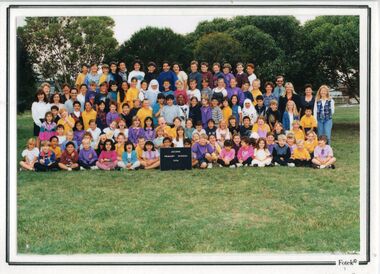
Photograph - Class Photograph, Jacana Primary School: Students and Staff, 1996, 1996
... Photograph...Group Photograph...Class Photograph...Jacana Primary School Education Photograph Group Photograph Class Photograph 1996 Back: Top Left Corner: (Blue Label): PH-1221 Colour Photograph mounted on white card, and laminated Jacana Primary School: Students and Staff, 1996 Photograph Class Photograph ...This 1996 class photo of students and their teachers at Jacana Primary School offers a vivid glimpse into suburban school life in Melbourne during a period of significant social and urban change. Founded in 1959, Jacana Primary played a central role in the community, serving as both an educational institution and a gathering place until its closure in the early 2000s. It was more than just a school—it was a space where students and staff built a strong sense of identity, connection, and shared experience. The photograph highlights the school’s dedication to creating an inclusive and nurturing environment for young learners. It also quietly captures the increasing cultural diversity of Jacana in the late 20th century, as suburban expansion brought together families from varied backgrounds. As part of the school’s visual history, this image helps illustrate how public education contributed to shaping community identity, fostering social cohesion, and influencing the lives of generations of children and their families.This 1996 class photograph from Jacana Primary School holds historical, social, and cultural significance as a visual record of suburban education in Melbourne during a time of dynamic transformation. Capturing students and their teacher, the image reflects the school’s role as a cornerstone of community life from its founding in 1959 until its closure in the early 2000s. The photograph is a testament to the inclusive and supportive learning environment fostered at Jacana Primary, illustrating the school’s commitment to nurturing young minds and promoting a sense of belonging. It also serves as a subtle yet powerful document of the increasing cultural diversity in Melbourne’s northern suburbs, shaped by post-war migration and urban development. As part of the school’s visual archive, this image contributes to a broader understanding of how public education helped shape local identity, foster social cohesion, and influence the lives of generations of children and families. It stands as a meaningful artifact of community memory and educational heritage.Colour Photograph mounted on white card, and laminatedBack: Top Left Corner: (Blue Label): PH-1221jacana primary school, education, photograph, group photograph, class photograph, 1996 -
 Wodonga & District Historical Society Inc
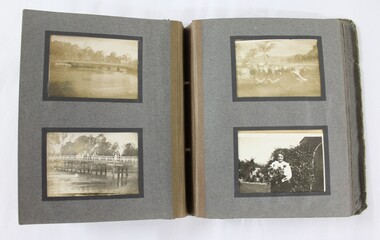
Album - Hamilton-Smith Family Photograph Album - early 1900s
... photograph...family photograph...albumm...photograph...photographs, a wedding dress, maps, and material relating to the world wars. This item has well documented provenance and a known owner. It forms part of a significant and representative historical collection which reflects the local history of Wodonga. It contributes to our understanding of social and family life in early twentieth century Wodonga, as well as providing interpretative capacity for themes including local history and social history. photo photograph family photograph albumm photograph album hamilton-smith wodonga ellwood Grey paper photograph album, front covered embossed with a floral motif. ...The Hamilton-Smith collection was donated by the children of Grace Mary Hamilton-Smith nee Ellwood (1911-2004) and John Hamilton-Smith (1909-1984) who settled in Wodonga in the 1940s. The Ellwood family had lived in north-east Victoria since the late 1800s. Grace’s mother, Rosina Ellwood nee Smale, was the first teacher at Baranduda in 1888, and a foundation member of the C.W.A. Rosina and her husband Mark retired to Wodonga in 1934. Grace and John married at St. David’s Church, Albury in 1941. John was a grazier, and actively involved in Agricultural Societies. The collection contains significant items which reflect the local history of Wodonga, including handmade needlework, books, photographs, a wedding dress, maps, and material relating to the world wars. This item has well documented provenance and a known owner. It forms part of a significant and representative historical collection which reflects the local history of Wodonga. It contributes to our understanding of social and family life in early twentieth century Wodonga, as well as providing interpretative capacity for themes including local history and social history.Grey paper photograph album, front covered embossed with a floral motif. photo, photograph, family photograph, albumm, photograph album, hamilton-smith, wodonga, ellwood -
 The Beechworth Burke Museum
Photograph, 1906
... ...sepia photograph...photograph...photograph shows the Red Rock Site of Cocks Pioneer Gold and Tin Mine Sluicing Company with the view looking east. Cocks Pioneer Electric Gold and Tin Mine company was formed in 1899. By 1909 17,284 ounces of gold and 224 ton of tin ore had been recovered from the mine and it was deemed inadequate and uneconomical to continue. the mine was re-formed in 1914 and carried on large-scale hydraulic sluicing operations. Taken in 1906 this photograph...N.L./ 1906/ (9)/ No. 1 Bed Rock Site Looking East/ Reverse: 1997.2614 A02614 Sepia rectangular photograph printed on gloss photographic paper mounted on board. Photograph Photograph ...Taken in 1906 this photograph shows the Red Rock Site of Cocks Pioneer Gold and Tin Mine Sluicing Company with the view looking east. Cocks Pioneer Electric Gold and Tin Mine company was formed in 1899. By 1909 17,284 ounces of gold and 224 ton of tin ore had been recovered from the mine and it was deemed inadequate and uneconomical to continue. the mine was re-formed in 1914 and carried on large-scale hydraulic sluicing operations. Taken in 1906 this photograph shows the Red Rock Site of Cocks Pioneer Gold and Tin Mine Sluicing Company with the view looking east. Cocks Pioneer Electric Gold and Tin Mine company was formed in 1899. By 1909 17,284 ounces of gold and 224 ton of tin ore had been recovered from the mine and it was deemed inadequate and uneconomical to continue. the mine was re-formed in 1914 and carried on large-scale hydraulic sluicing operations. Sluicing was undertaken in the area from 1900 to 1942 with some short breaks between these periods. The image depicts a location mined by Cocks Pioneer Gold and Tin Sluicing Company (as recorded on the annotation on the card mount). It portrays open cut rocks with a crevice in the center of the image where the sluicing was being undertaken. There is a large timber structure on the left hand side of the picture partially cropped in the frame. The Cocks Pioneer Gold and Tin Mines N.L was one of El Dorado's two largest open cut sluicing mines of the 20th Century. The other was named the Cocks El Dorado Gold Dredging Company. Open cut sluicing involved the use of high-powered hoses which used the centrifugal sand pump system (known as hydraulic sluicing) which broke down the soil which was then processed for gold and other precious metals. El Dorado is located on Reedy Creek and is surrounded by forested country to the north and east. It is 20 km east of Wangaratta in Victoria's regional north-east. John Cock was the son of a Cornish minor who arrived in El Dorado in 1858. Cock founded his gold and tin mining company which ran successfully for many years in the El Dorado region. It was an open cut sluicing company because of the abandonment of underground mining after this was deemed too dangerous. In 1935 Cock's El Dorado Company commissioned the floating dredge which is still visible in El Dorado today. The dredge was built by the Thompson engineering works, Castlemaine, and weighed over 2,000 tones and today has a place on the Victorian Registers of historic buildings. Interestingly, the name El Dorado does not derive from the gold in the region, but from the Barambogie pastoral run completed by William Baker in 1840-1841. Gold was discovered in El Dorado 1854 but the gold was too deep for individual prospectors to find, it required the use of heavy machinery. The search for gold is ingrained into the history of Victoria and therefore, images like this one which portray an open cut sluicing site can reveal important information for society and technology for the date when the photograph was taken. This image is of important historical significance for its ability to convey information about sluicing and the methods used to find gold in the early 1900s. It also shows a location where sluicing was undertook which provides insight into the impact of sluicing on the environment at a time when it was done. This image is important for current research into the history of El Dorado, a small regional location near Wangaratta in Victoria's North East. Therefore, this image has the capacity to be beneficial for research into society and the motivations of those living and working in this region during this period and therefore, has social significance. The Beechworth Burke Museum has additional images relating to gold sluicing and El Dorado which can be analysed and studied alongside images like this one.Sepia rectangular photograph printed on gloss photographic paper mounted on board. Obverse: COCKS PIONEER. G. & T. Sluicing Co. N.L./ 1906/ (9)/ No. 1 Bed Rock Site Looking East/ Reverse: 1997.2614 A02614mining, sluicing, gold, tin, john cock, cocks pioneer, sepia photograph, photograph, beechworth, goldfield, el dorado, gold and tin mine, burke museum -
 The Beechworth Burke Museum
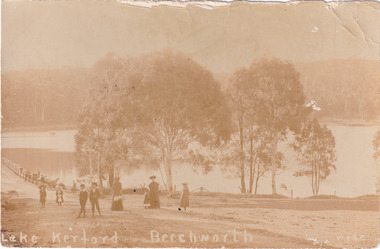
Photograph - Postcard, c1900
... ...sepia photograph...photograph...photograph of Lake Kerferd in Beechworth taken in the late nineteenth or early twentieth centuries. It depicts two women, two young boys and four young girls standing in front of the lake. The women seem to be either the mothers or caregivers of the children. This photograph is significant because it depicts a group of people enjoying a outing at Lake Kerferd. This demonstrates that Lake Kerferd was a place of enjoyment for the people that lived in Beechworth during this time period. Lake Kerferd itself was also Beechworth's main water supply. This makes it very important to the community who lived there. children Lake Kerferd lake sepia photograph ...This is a photograph of Lake Kerferd in Beechworth taken in the late nineteenth or early twentieth centuries. It depicts two women, two young boys and four young girls standing in front of the lake. The women seem to be either the mothers or caregivers of the children. This photograph is significant because it depicts a group of people enjoying a outing at Lake Kerferd. This demonstrates that Lake Kerferd was a place of enjoyment for the people that lived in Beechworth during this time period. Lake Kerferd itself was also Beechworth's main water supply. This makes it very important to the community who lived there. Sepia rectangular postcard printed on paperObverse: Lake Kerferd Beechworth / wade / Reverse: Postcard / 5568 / This space may be used for correspondence / (For Address Only) /children, lake kerferd, lake, sepia photograph, photograph, beechworth, mothers, young girls, young boy, trees, caregivers, victoria, outing -
 Broadmeadows Historical Society & Museum
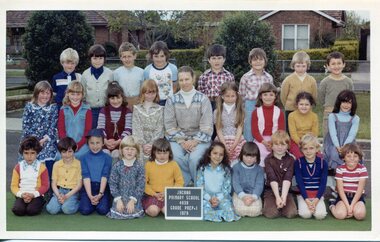
Photograph - Class Photograph, Jacana Primary School: Grade Prep & 1, 1979, 1979
... Photograph...Group Photograph...1979...Class Photograph...Jacana Primary School Education Photograph Group Photograph 1979 Class Photograph Grade Prep & 1 Back, Top Left Corner: (White label): PH-5008/ (Blue Label): PH-5595, Centre (in pencil) J.P.S., Manufacturers Mark; this paper/Manufactured/ by Kodak Colour Photograph on Matte Paper, with white border Jacana Primary School: Grade Prep & 1, 1979 Photograph Class Photograph ...This 1979 group photograph of Grade Prep and Grade 1 students with their teacher at Jacana Primary School offers a valuable glimpse into the early years of education in Melbourne’s northern suburbs during a time of significant suburban development and cultural change. Established in 1959, Jacana Primary served the local community for over four decades, providing not only academic instruction but also a space for social interaction, inclusion, and community building. The image reflects the school’s commitment to nurturing young learners in a supportive and diverse environment. It also illustrates the demographic shifts occurring in Jacana during the late 20th century, as families from varied backgrounds settled in the area. As part of the school’s visual archive, this photograph contributes to a broader understanding of how public education shaped local identity, fostered community cohesion, and supported the development of children during their formative years.This 1979 group photograph of Grade Prep and Grade 1 students with their teacher at Jacana Primary School is a historically significant artifact that captures the early stages of formal education in Melbourne’s northern suburbs during a time of suburban growth and social transformation. Established in 1959, Jacana Primary served as a vital educational and community institution for over four decades, fostering learning, connection, and a shared sense of identity among local families. The image reflects the school’s foundational values—nurturing, inclusivity, and belonging—through its depiction of young learners at the beginning of their educational journey. It also offers insight into the cultural and demographic diversity of Jacana in the late 20th century, highlighting the role of public schools in supporting social cohesion and community development. As part of Jacana Primary’s visual legacy, this photograph stands as a testament to the enduring impact of early education and the school’s contribution to shaping generations of students and strengthening community bonds.Colour Photograph on Matte Paper, with white borderBack, Top Left Corner: (White label): PH-5008/ (Blue Label): PH-5595, Centre (in pencil) J.P.S., Manufacturers Mark; this paper/Manufactured/ by Kodakjacana primary school, education, photograph, group photograph, 1979, class photograph, grade prep & 1 -
 Broadmeadows Historical Society & Museum
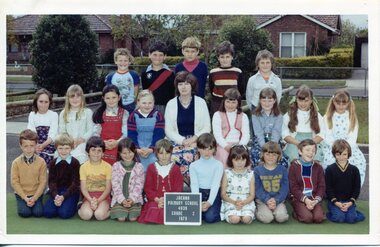
Photograph - Class Photograph, Jacana Primary School: Grade 2, 1979, 1979
... Photograph...Group Photograph...1979...Class Photograph...Jacana Primary School Education Photograph Group Photograph 1979 Class Photograph Grade 2 Back, Top Left Corner: (White label): PH-5009/ (Blue Label): PH-5596 Centre (in pencil) J.P.S., Manufacturers Mark; this paper/Manufactured/ by Kodak Colour Photograph on Matte Paper, with white border Jacana Primary School: Grade 2, 1979 Photograph Class Photograph ...This 1979 group photograph of Grade 2 students and their teacher at Jacana Primary School offers a meaningful glimpse into the everyday experiences of primary education in Melbourne’s northern suburbs during a time of suburban expansion and demographic change. Established in 1959, Jacana Primary served the local community for over 40 years, providing not only academic instruction but also a vital space for social connection and community identity. The image reflects the school’s commitment to fostering a nurturing and inclusive environment for young learners in their early years of schooling. It also highlights the cultural diversity and evolving social fabric of Jacana in the late 20th century. As part of the school’s visual archive, this photograph contributes to a broader understanding of how public education supported community cohesion, shaped local identity, and played a formative role in the lives of children and families across generations.This 1979 group photograph of Grade 2 students and their teacher at Jacana Primary School is a historically significant artifact that captures a formative moment in the educational and social life of Melbourne’s northern suburbs. Established in 1959, Jacana Primary operated for over four decades, serving as a key institution in the local community until its closure in the early 2000s. The photograph reflects the school’s enduring commitment to nurturing young learners in an inclusive and supportive environment. It also offers insight into the cultural and demographic landscape of Jacana during a period of suburban growth and transformation. As part of the school’s visual legacy, this image documents the everyday experiences of students and highlights the role of public education in fostering community identity, cohesion, and continuity across generations.Colour Photograph on Matte Paper, with white borderBack, Top Left Corner: (White label): PH-5009/ (Blue Label): PH-5596 Centre (in pencil) J.P.S., Manufacturers Mark; this paper/Manufactured/ by Kodakjacana primary school, education, photograph, group photograph, 1979, class photograph, grade 2 -
 Broadmeadows Historical Society & Museum
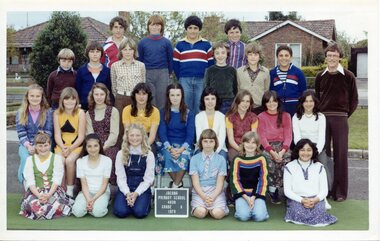
Photograph - Class Photograph, Jacana Primary School: Grade 6, 1979, 1979
... Photograph...Group Photograph...1979...Class Photograph...Jacana Primary School Education Photograph Group Photograph 1979 Class Photograph Grade 6 Back: Top Left Corner: (White label): PH-5012/ (Blue Label): PH-5599, Centre (in pencil) J.P.S., Manufacturers Mark; this paper/Manufactured/ by kodak Colour Photograph on Matte Paper, with white border Jacana Primary School: Grade 6, 1979 Photograph Class Photograph ...This 1979 group photograph of Grade 6 students and their teacher at Jacana Primary School offers a valuable window into the everyday rhythms of school life in Melbourne’s northern suburbs during a time of notable social and urban transformation. Established in 1959, Jacana Primary served as a key educational and social institution until its closure in the early 2000s. Beyond its academic role, the school fostered a strong sense of place, belonging, and shared experience among its students and staff. The image reflects Jacana Primary’s commitment to creating inclusive and supportive learning environments. It also subtly documents the growing cultural diversity of the Jacana area in the late 20th century, as suburban development brought together families from a range of backgrounds. As part of the school’s visual archive, this photograph contributes to a broader understanding of how public schools helped shape community identity, promote social cohesion, and influence the lives of generations of children and families.This 1979 group photograph of Grade 6 students and their teacher at Jacana Primary School is a historically significant artifact that documents the educational and social landscape of Melbourne’s northern suburbs during a period of rapid urban and demographic change. As a visual record of a public school community, the image reflects the values, diversity, and everyday experiences of students and educators in the late 20th century. Jacana Primary School, established in 1959 and closed in the early 2000s, played a foundational role in shaping the identity and cohesion of the Jacana community. The photograph captures not only the individuals present but also the inclusive and supportive environment that the school fostered. It offers insight into the evolving cultural fabric of the suburb, as families from varied backgrounds came together through shared educational experiences. The image is significant for its contribution to understanding how public schools functioned as social anchors—promoting belonging, continuity, and collective memory. It serves as a testament to the enduring impact of local education on community development and the lives of generations of children and families.Colour Photograph on Matte Paper, with white borderBack: Top Left Corner: (White label): PH-5012/ (Blue Label): PH-5599, Centre (in pencil) J.P.S., Manufacturers Mark; this paper/Manufactured/ by kodakjacana primary school, education, photograph, group photograph, 1979, class photograph, grade 6 -
 Broadmeadows Historical Society & Museum
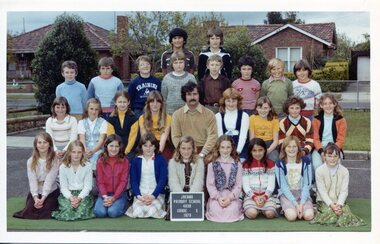
Photograph - Class Photograph, Jacana Primary School: Grade 5, 1979, 1979
... Photograph...Group Photograph...1979...Class Photograph...This 1979 group photograph of Grade 5 students and their teacher at Jacana Primary School offers a compelling glimpse into the everyday life of a suburban Melbourne school during a time of significant social and urban evolution. Founded in 1959, Jacana Primary was a cornerstone of the local community until its closure in the early 2000s, providing not only education but also a strong sense of identity, belonging, and shared experience. The photograph...Jacana Primary School Education Photograph Group Photograph 1979 Class Photograph Grade 5 Back: Top Left Corner: (White label): PH-5011/ (Blue Label): PH-5598, Centre (in pencil) J.P.S., Manufacturers Mark; this paper/Manufactured/ by kodak Colour Photograph on Matte Paper, with white border Jacana Primary School: Grade 5, 1979 Photograph Class Photograph ...This 1979 group photograph of Grade 5 students and their teacher at Jacana Primary School offers a compelling glimpse into the everyday life of a suburban Melbourne school during a time of significant social and urban evolution. Founded in 1959, Jacana Primary was a cornerstone of the local community until its closure in the early 2000s, providing not only education but also a strong sense of identity, belonging, and shared experience. The photograph illustrates the school’s dedication to fostering inclusive and supportive learning environments. It also subtly reflects the increasing cultural diversity of Jacana in the late 20th century, as suburban expansion brought together families from a variety of backgrounds. As part of the school’s visual archive, this image contributes to a broader understanding of how public education helped shape community identity, encouraged social cohesion, and played a formative role in the lives of generations of children and families.This 1979 class photograph of Grade 5 students and their teacher at Jacana Primary School is a historically significant visual record that captures the essence of suburban school life in Melbourne during a period of social and demographic transformation. The image reflects the role of Jacana Primary—established in 1959 and closed in the early 2000s—as a central institution in the community, offering not only education but also a sense of belonging and continuity for local families. The photograph is particularly valuable for its documentation of the cultural diversity emerging in Jacana during the late 20th century, as urban expansion brought together families from varied backgrounds. It illustrates the inclusive and supportive environment fostered by the school, and serves as a testament to the broader role of public education in shaping community identity and promoting social cohesion. As part of Jacana Primary’s visual archive, this image contributes to the collective memory of the school and its impact on generations of students. It holds enduring significance for understanding how schools functioned as social anchors in suburban Melbourne, and how they helped cultivate shared experiences that extended beyond the classroom. Colour Photograph on Matte Paper, with white borderBack: Top Left Corner: (White label): PH-5011/ (Blue Label): PH-5598, Centre (in pencil) J.P.S., Manufacturers Mark; this paper/Manufactured/ by kodakjacana primary school, education, photograph, group photograph, 1979, class photograph, grade 5 -
 Broadmeadows Historical Society & Museum
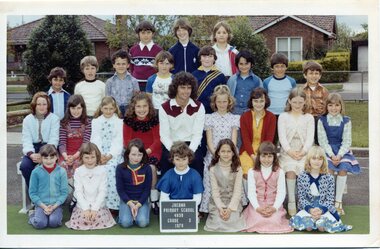
Photograph - Group Photograph, Jacana Primary School: Grade 3, 1979, 1979
... Photograph...Group Photograph...1979...Class Photograph...Jacana Primary School Education Photograph Group Photograph 1979 Class Photograph Grade Back: Top Left Corner: (White label): PH-5012/ (Blue Label): PH-5599, Centre (in pencil) J.P.S., Manufacturers Mark; this paper/Manufactured/ by kodak Colour Photograph on Matte Paper, with white border Jacana Primary School: Grade 3, 1979 Photograph Group Photograph ...This 1979 group photograph of Grade 3 students and their teacher at Jacana Primary School provides a valuable insight into the everyday experiences of school life in Melbourne’s northern suburbs during a period of significant social and urban change. Established in 1959, Jacana Primary played a central role in the local community, serving as both an educational institution and a hub for social connection until its closure in the early 2000s. The image illustrates the school’s emphasis on inclusive and supportive learning environments and subtly reflects the increasing cultural diversity of the Jacana area in the late 20th century, as suburban expansion brought together families from varied backgrounds. As part of the school’s visual archive, this photograph contributes to a broader understanding of how public education shaped community identity, fostered social cohesion, and influenced the lives of generations of children and families in Melbourne’s outer suburbs.This 1979 group photograph of Grade 3 students and their teacher at Jacana Primary School is a historically significant visual record that captures the educational and social character of Melbourne’s northern suburbs during a time of rapid urban expansion and demographic change. As a representation of a public school community, the image reflects the values, diversity, and everyday experiences of students and educators in late 20th-century Australia. Jacana Primary School, established in 1959 and operating until its closure in the early 2000s, played a vital role in shaping the identity and cohesion of the local community. The photograph documents not only the individuals present but also the inclusive and supportive environment fostered by the school. It offers insight into the evolving cultural landscape of Jacana, where families from diverse backgrounds came together through shared educational experiences. This image is significant for its contribution to understanding how public schools functioned as social anchors—promoting belonging, continuity, and collective memory. It stands as a testament to the enduring impact of local education on community development and the lives of generations of children and families.Colour Photograph on Matte Paper, with white borderBack: Top Left Corner: (White label): PH-5012/ (Blue Label): PH-5599, Centre (in pencil) J.P.S., Manufacturers Mark; this paper/Manufactured/ by kodakjacana primary school, education, photograph, group photograph, 1979, class photograph, grade -
Glenelg Shire Council Cultural Collection
Photograph - Photograph - Photograph of a man, n.d
... Photograph - Photograph of a man...Port of Portland Authority archives Port of Portland Authority archives Front: (no inscriptions) Back: (no inscriptions) Black and white photograph of a man. Photograph Photograph - Photograph of a man ...Port of Portland Authority archivesFront: (no inscriptions) Back: (no inscriptions)port of portland authority archives -
 Hume City Civic Collection
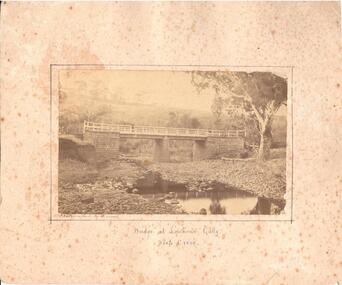
Photograph, c1874 - 1880
... written in ink bottom centre: "Bridge at Lighthouse Gully" / Deep Creek. written LH corner of photograph: Photographed by A. Sinel...The photographer, Alfred Sinel, is listed in the 1874 rate book. bridges sunbury men clothing and dress sinel alfred photographers lighthouse gully deep creek shire of bulla george evans collection written in ink bottom centre: "Bridge at Lighthouse Gully" / Deep Creek. written LH corner of photograph: Photographed by A. Sinel A sepia mounted photograph of a bridge at Lighthouse Gully in Deep Creek. ...A photo of a bluestone and timber bridge across the Deep Creek at Lighthouse Creek. There is a man standing on the bridge. The photographer, Alfred Sinel, is listed in the 1874 rate book.A sepia mounted photograph of a bridge at Lighthouse Gully in Deep Creek.written in ink bottom centre: "Bridge at Lighthouse Gully" / Deep Creek. written LH corner of photograph: Photographed by A. Sinelbridges, sunbury, men, clothing and dress, sinel, alfred, photographers, lighthouse gully, deep creek, shire of bulla, george evans collection -
Federation University Historical Collection
Photograph, Geology Photograph
... Photograph...Colour Photograph...Mt Helen Campus - predecessor of Federation University Geology Microscopes Students Photograph Colour Photograph Large photogrpah of students in the Geology course using microscopes Geology Photograph Photograph ...Mt Helen Campus - predecessor of Federation UniversityLarge photogrpah of students in the Geology course using microscopesgeology, microscopes, students, photograph, colour photograph -
 Federation University Historical Collection
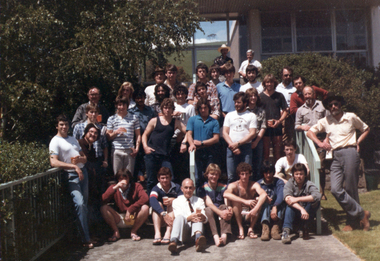
Photograph, Metallurgy Staff and Student Photographs
... Photograph...coloured photograph...Metallurgy course was run at a predecessor of Federation University Metallurgy Lindsay Pattenden Group Photograph coloured photograph School of Mines Ballarat ballarat institute of Advanced Education Ballarat College of Advanced Education Ballarat University College .1 & .2 Coloured group photograph of the Metallurgy students and staff Metallurgy Staff and Student Photographs Photograph ...Metallurgy course was run at a predecessor of Federation University.1 & .2 Coloured group photograph of the Metallurgy students and staff metallurgy, lindsay pattenden, group photograph, coloured photograph, school of mines ballarat, ballarat institute of advanced education, ballarat college of advanced education, ballarat university college -
 Federation University Historical Collection
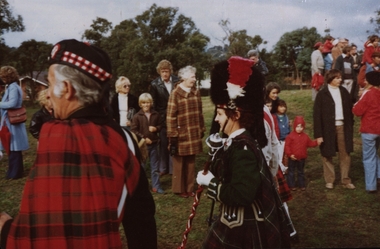
Photograph - Photograph - Colour, Ballarat Ladies' Highland Pipe Band Members with Trophies Drum Major Marching
... photograph...coloured photograph...x Ballarat Ladies' Highland Pipe Band Members with Trophies Drum Major Marching Photograph Photograph - Colour ..."After the war Pipe-Major Duncan McLennan, moved to Ballarat and took up a position as cadet instructor and leader of the Ballarat Highland Pipe Band and the Ballarat Ladies Pipe Band. " (Victorian Historical Journal Vol. 85, No. 1, June 2014)Coloured photograph of Ballarat Ladies' Highland Pipe Band marching. xladies pipe band, ladies highland pipe band, photograph, coloured photograph, drum major, marching, ballarat ladies' highland pipe band
