
Showing 206 items matching " regional women"
-
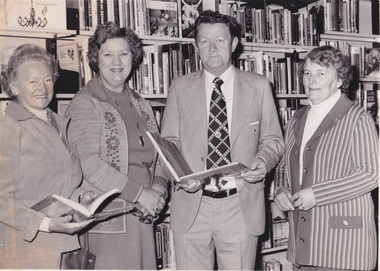 The Beechworth Burke Museum
Audio - Oral History, Jennifer Williams, Mrs Val Mason, 5 January 2001
... ...rural and regional women...While the township of Beechworth is known for its history as a gold rush town, these accounts provide a unique insight into the day-to-day life of the town's residents during the 20th century, many of which will have now been lost if they had not been preserved. listen to what they say beechworth oral history burke museum working women trail blazers farm to plate farm shop paddock to plate woman farmer United Shire of Beechworth rural and regional women Beechworth's first woman shire president women in leadership positions women leaders Australian settlement history settler societies Victorian gold rush heritage tourism culinary tourism regional land use indigo winery farm stay social history Mrs Val Mason / This is a digital copy of a recording that was originally captured on a cassette tape. ...Mrs. Valerie (Val) Mason (1927-2019) was a local sheep farmer, business-woman, Beechworth shire councillor, and mother to five children. With her husband, Charles, Mrs. Mason developed and managed the Big Valley farm estate, at Everton, which is now part of a vineyard and farm stay. Mrs. Mason was instrumental in introducing a 'paddock to plate' philosophy and business model, opening a butcher shop on the farm in 1973. Concerned with improving infrastructure and developing economic opportunities in the region, Mrs. Mason successfully stood as a local council representative for South Riding in the United Shire of Beechworth, and later become the first woman Shire President in 1979. Mrs Mason was a member of the local Business and Professional Women's Club for 37 years. This oral history recording was part of a project conducted by Jennifer Williams in the year 2000 to capture the everyday life and struggles in Beechworth during the twentieth century. This project involved recording seventy oral histories on cassette tapes of local Beechworth residents which were then published in a book titled: 'Listen to what they say: voices of twentieth century Beechworth. These cassette tapes were digitised in July 2021 with funds made available by the Friends of the Burke.Mrs. Mason's story is historically significant for understanding economic and social changes in the Beechworth region during the latter half of the twentieth century. As a council representative, issues such as road and infrastructure modernisation and the transition from traditional government employment sectors, like Beechworth's care institutions, were challenges for local government. As a farmer and local employer, Mrs. Mason's story is testimony to the region's economic diversification as businesses like Big Valley farm shop helped shape the region's contemporary character. Mrs. Mason was among the first women to broach the traditionally all-male Beechworth Council Chambers and her story is socially significant for understanding the changing role of women in rural and regional Australia. This oral history recording offers interpretive capacity for social history themes and may be compared with other oral histories in the Burke Museum's collection. This oral history account is socially and historically significant as it is a part of a broader collection of interviews conducted by Jennifer Williams which were published in the book 'Listen to what they say: voices of twentieth-century Beechworth.' While the township of Beechworth is known for its history as a gold rush town, these accounts provide a unique insight into the day-to-day life of the town's residents during the 20th century, many of which will have now been lost if they had not been preserved.This is a digital copy of a recording that was originally captured on a cassette tape. The cassette tape is black with a horizontal white strip and is currently stored in a clear flat plastic rectangular container. It holds up 40 minutes of recordings on each side.Mrs Val Mason /listen to what they say, beechworth, oral history, burke museum, working women, trail blazers, farm to plate, farm shop, paddock to plate, woman farmer, united shire of beechworth, rural and regional women, beechworth's first woman shire president, women in leadership positions, women leaders, australian settlement history, settler societies, victorian gold rush, heritage tourism, culinary tourism, regional land use, indigo winery, farm stay, social history -
 The Beechworth Burke Museum
Audio - Oral History, Jennifer Williams, Mrs Vanessa McDonald, 9 November 2000
... ...rural and regional women...While the township of Beechworth is known for its history as a gold rush town, these accounts provide a unique insight into the day-to-day life of the town's residents during the 20th century, many of which will have now been lost if they had not been preserved. listen to what they say beechworth oral history burke museum emigration gold rush immigration Victorian gold rush mining families apple orchard forestry forest plantation Little Scotland Stanley twentieth century history regional australia rural australia farming harvest festival great depression dingle range the nine mile australian wildflowers high country wildflowers mothercraft nurse rural and regional women social history Collins Mrs. Vanessa McDonald Building community life Shaping cultural and creative life fruit growers family history changes to land use in regional victoria Mrs Vanessa McDonald / This is a digital copy of a recording that was originally captured on a cassette tape. ...Mrs. Vanessa McDonald was born in Beechworth in 1917. Christened, Agnes Bertha Collins, Vanessa changed her name in 1960. Mrs. McDonald's family's connection with gold mining in the district reach back to the first of Beechworth's gold rushes, when her great grandfather, a Dutchman who adopted the name Charles Collins, arrived in 1851-1852. Mrs. McDonald spent her childhood in the isolated hamlet of Stanley, in the area known as 'Little Scotland', where she recalls helping her mother to raise younger siblings, picking apples and walnuts on the family farm, and roaming the hills for wildflowers. As a young woman Mrs. McDonald attended religious and social gatherings in the local community. In 1940 she went to Melbourne to work as a mothercraft nurse during the Second World War. She met her husband at a Beechworth football match and was married at the Stanley Methodist Church in 1941. The gold diggings known as the 'Nine Mile' became the hamlet of Stanley, after the British Prime Minister, Lord Stanley, in 1858. By the late 1850s, Stanley boasted schools, an athenaeum, a church, a weekly newspaper and several hotels and other civic infrastructure to cater for a growing population. The area attracted large numbers of Chinese miners, whose presence was frequently resisted. Like other early Victorian mining settlements, Stanley was a hotbed of political and racial tensions during the gold rush. One side of the Nine Mile Creek was known as 'Little Scotland’, the other, 'Little Ireland'. A number of Christian denominations built congregations and churches in Stanley, including the Church of England, Methodist Church, the Catholic Church, and Presbyterian Church. Stanley became part of the United Shire of Beechworth in 1871. By 1880 timber was being cut and two sawmills were established by 1887. River-dredged gold mining consumed vast amounts of timber from the forests in the area, and in 1931 the first of several softwood plantations began. This oral history recording was part of a project conducted by Jennifer Williams in the year 2000 to capture the everyday life and struggles in Beechworth during the twentieth century. This project involved recording seventy oral histories on cassette tapes of local Beechworth residents which were then published in a book titled: 'Listen to what they say: voices of twentieth century Beechworth'. These cassette tapes were digitised in July 2021 with funds made available by the Friends of the Burke.Following the decline in the mining and associated industries during the early-mid-twentieth century, the Beechworth district experienced a period of general economic decline. On the east side of the Dingle Range, Mrs. McDonald's father, William Henry Collins, felled timber and the family were pioneer apple orchardists. The establishment of apple orchards in Stanley reflects changes to how land was used and contributes to our understanding of the historical development of rural communities following the gold rush. Mrs. McDonald's recollections are significant for understanding family and social life in a small rural town in years leading up to the Great Depression and prior to the Second World War. This oral history recording may be compared with other oral histories and items in the Burke Museum's collection. This oral history account is socially and historically significant as it is a part of a broader collection of interviews conducted by Jennifer Williams which were published in the book 'Listen to what they say: voices of twentieth-century Beechworth.' While the township of Beechworth is known for its history as a gold rush town, these accounts provide a unique insight into the day-to-day life of the town's residents during the 20th century, many of which will have now been lost if they had not been preserved.This is a digital copy of a recording that was originally captured on a cassette tape. The cassette tape is black with a horizontal white strip and is currently stored in a clear flat plastic rectangular container. It holds up 40 minutes of recordings on each side.Mrs Vanessa McDonald /listen to what they say, beechworth, oral history, burke museum, emigration, gold rush immigration, victorian gold rush, mining families, apple orchard, forestry, forest plantation, little scotland, stanley, twentieth century history, regional australia, rural australia, farming, harvest festival, great depression, dingle range, the nine mile, australian wildflowers, high country wildflowers, mothercraft nurse, rural and regional women, social history, collins, mrs. vanessa mcdonald, building community life, shaping cultural and creative life, fruit growers, family history, changes to land use in regional victoria -
Women's Art Register
Archive (Collection) - Laurene Dietrich Artist Archive
... ... Regional Women...Ageing Community Advocacy Rural Regional Women Mixed Media participatory Archive Laurene Dietrich Artist Archive ...ageing, community, advocacy, rural, regional women, mixed media, participatoryageing, community, advocacy, rural, regional women, mixed media, participatory -
Women's Art Register
Archive (Series) - Dietrich, Laurene. Artist File 1
... ... Regional Women...Ageing Community Advocacy Rural Regional Women Mixed Media participatory Foolscap white archival 4 flap folder or document wallet Archive Dietrich, Laurene. ...ageing, community, advocacy, rural, regional women, mixed media, participatoryageing, community, advocacy, rural, regional women, mixed media, participatory -
Women's Art Register
Archive (Series) - Laurene Dietrich. Duplicate File 1
... ... Regional Women...Mixed Media participatory Ageing Community Advocacy Rural Regional Women Foolscap manilla file Archive Laurene Dietrich. ...mixed media, participatory, ageing, community, advocacy, rural, regional womenmixed media, participatory, ageing, community, advocacy, rural, regional women -
Federation University Historical Collection
Book, University of Ballarat Research + Innovation Digest
... Contents include: * Case studies in keeping food safe, Benu Adhikari * technologies that combat climate change - Alberto Boretti *Learning t lead- leading to learn, Neil Trivett * Depression, diabities and motivation, Mirella Di Benedetto * Valuing Lake Wendouree, Julian Lowe * What's in a name, Laura Kostanski * Optimizing Regional & International Research, John Yearwood * Sport, physical activity and health research, Warren Payne * Climate secrets in the sediments, Peter Gell * Injury prevention and saftey promotion research theme, UB Sports injury centre, Caroline Finch, Men's Sheds & other learning places, Barry Golding * New economy, new work, new qualifications, Erica Smith * Cross-cultural communication in a shrinking world, Georgina Tsolidis * Child Protection & family services reform, Angela Murphy * making a difference for older Victorians, Sally Wellard * Making good (and goodly) profits, jackie tuck * Not too much 'ordinary' about Teh Ordinry, Lorraine Sim * Gaming Machines & regional gamblers * Toe nail clippings revel their secrets, Kim Dowling * Magnificently preserved megafaunal trackways in the Victorian volcanic plans, Stephen Carey * A stuttering start for a stunning outcome, Grant Meridith * Supporting patients & their careres, Anthony Love * Out of Africa and beyond, James O'Meara * Taking a hard look to avoid hard knocks, Caroline Finch and Dara Twomey * Skilling people for business success, Andy Smith * Promoting risk awareness in industry, David Borys * researching China's Rise & Rise, Mike Willis *Sex hormones link to heart disease, Fadi Charchar * Human factors in computer security, Paul watters * Are our rivers up the creek, Peter Gell * Women as managers7 entrepreneurs, Glenice Wood * Revisoning values and norms, Jane Mummery * 'Wimmera" - an epic Poem, Homer Rieth * Recycling, consumerism, climate change and art peactice, marie Purtill * Investing in ecologically sustainable development, Jerry Coursisanos * Indigenous peoples of the goldfields, Fred Cahir * Artists install images of sustainability, Jill Orr * addresing disadvantage& inequality with passion, John Smyth * Breaking up insulin haxamers, Mark Myers...Contents include: * Case studies in keeping food safe, Benu Adhikari * technologies that combat climate change - Alberto Boretti *Learning t lead- leading to learn, Neil Trivett * Depression, diabities and motivation, Mirella Di Benedetto * Valuing Lake Wendouree, Julian Lowe * What's in a name, Laura Kostanski * Optimizing Regional & International Research, John Yearwood * Sport, physical activity and health research, Warren Payne * Climate secrets in the sediments, Peter Gell * Injury prevention and saftey promotion research theme, UB Sports injury centre, Caroline Finch, Men's Sheds & other learning places, Barry Golding * New economy, new work, new qualifications, Erica Smith * Cross-cultural communication in a shrinking world, Georgina Tsolidis * Child Protection & family services reform, Angela Murphy * making a difference for older Victorians, Sally Wellard * Making good (and goodly) profits, jackie tuck * Not too much 'ordinary' about Teh Ordinry, Lorraine Sim * Gaming Machines & regional gamblers * Toe nail clippings revel their secrets, Kim Dowling * Magnificently preserved megafaunal trackways in the Victorian volcanic plans, Stephen Carey * A stuttering start for a stunning outcome, Grant Meridith * Supporting patients & their careres, Anthony Love * Out of Africa and beyond, James O'Meara * Taking a hard look to avoid hard knocks, Caroline Finch and Dara Twomey * Skilling people for business success, Andy Smith * Promoting risk awareness in industry, David Borys * researching China's Rise & Rise, Mike Willis *Sex hormones link to heart disease, Fadi Charchar * Human factors in computer security, Paul watters * Are our rivers up the creek, Peter Gell * Women as managers7 entrepreneurs, Glenice Wood * Revisoning values and norms, Jane Mummery * 'Wimmera" - an epic Poem, Homer Rieth * Recycling, consumerism, climate change and art peactice, marie Purtill * Investing in ecologically sustainable development, Jerry Coursisanos * Indigenous peoples of the goldfields, Fred Cahir * Artists install images of sustainability, Jill Orr * addresing disadvantage& inequality with passion, John Smyth * Breaking up insulin haxamers, Mark Myers University of Ballarat Research + Innovation Digest Book Book ...Black, soft covered book of 48 pages outlining research at the University of Ballarat. Contents include: * Case studies in keeping food safe, Benu Adhikari * technologies that combat climate change - Alberto Boretti *Learning t lead- leading to learn, Neil Trivett * Depression, diabities and motivation, Mirella Di Benedetto * Valuing Lake Wendouree, Julian Lowe * What's in a name, Laura Kostanski * Optimizing Regional & International Research, John Yearwood * Sport, physical activity and health research, Warren Payne * Climate secrets in the sediments, Peter Gell * Injury prevention and saftey promotion research theme, UB Sports injury centre, Caroline Finch, Men's Sheds & other learning places, Barry Golding * New economy, new work, new qualifications, Erica Smith * Cross-cultural communication in a shrinking world, Georgina Tsolidis * Child Protection & family services reform, Angela Murphy * making a difference for older Victorians, Sally Wellard * Making good (and goodly) profits, jackie tuck * Not too much 'ordinary' about Teh Ordinry, Lorraine Sim * Gaming Machines & regional gamblers * Toe nail clippings revel their secrets, Kim Dowling * Magnificently preserved megafaunal trackways in the Victorian volcanic plans, Stephen Carey * A stuttering start for a stunning outcome, Grant Meridith * Supporting patients & their careres, Anthony Love * Out of Africa and beyond, James O'Meara * Taking a hard look to avoid hard knocks, Caroline Finch and Dara Twomey * Skilling people for business success, Andy Smith * Promoting risk awareness in industry, David Borys * researching China's Rise & Rise, Mike Willis *Sex hormones link to heart disease, Fadi Charchar * Human factors in computer security, Paul watters * Are our rivers up the creek, Peter Gell * Women as managers7 entrepreneurs, Glenice Wood * Revisoning values and norms, Jane Mummery * 'Wimmera" - an epic Poem, Homer Rieth * Recycling, consumerism, climate change and art peactice, marie Purtill * Investing in ecologically sustainable development, Jerry Coursisanos * Indigenous peoples of the goldfields, Fred Cahir * Artists install images of sustainability, Jill Orr * addresing disadvantage& inequality with passion, John Smyth * Breaking up insulin haxamers, Mark Myersaborigines, mens shed, wimmera, gambling, megafauna, gell, golding, carey, cahir, purtill -
The Beechworth Burke Museum
Audio - Oral History, Jennifer Williams, Mr Tom Carey, 3/08/2000
... He details important historical events and hardships in the region's history that had a lasting local, regional and national impact, including Australia during war time, economic struggles, and women's and men’s societal roles in a rural area. ...Mr Tom Carey was born in 1940 in Beechworth to family from Beechworth and Woolshed. His family had strong associations with Australia's Gold Rush, with grandparents having followed the rush from town to town, and parents in Beechworth. Tom has strong associations with Beechworth and its surrounds, with his family having some connection to the Kelly Gang. Tom worked in many industries in Beechworth, from the Bridge Road, Price’s Store, tannery, post office, the Kiewa Murray Water Authority, and the Beechworth Council. This oral history recording was part of a project conducted by Jennifer Williams in the year 2000 to capture the everyday life and struggles in Beechworth during the twentieth century. This project involved recording seventy oral histories on cassette tapes of local Beechworth residents which were then published in a book titled: Listen to what they say: voices of twentieth century Beechworth. These cassette tapes were digitised in July 2021 with funds made available by the Friends of the Burke. Mr Tom Carey account of his life in Beechworth and the local area during the 20th century is historically and socially significant to the cultural heritage of the region. He details important historical events and hardships in the region's history that had a lasting local, regional and national impact, including Australia during war time, economic struggles, and women's and men’s societal roles in a rural area. This oral history account is socially and historically significant as it is a part of a broader collection of interviews conducted by Jennifer Williams which were published in the book 'Listen to what they say: voices of twentieth-century Beechworth.' While the township of Beechworth is known for its history as a gold rush town, these accounts provide a unique insight into the day-to-day life of the town's residents during the 20th century, many of which will have now been lost if they had not been preserved. This is a digital copy of a recording that was originally captured on a cassette tape. The cassette tape is black with a horizontal white strip and is currently stored in a clear flat plastic rectangular container. It holds up 40 minutes of recordings on each sideMr Tom Carey/ beechworth, oral history, burke museum, tannery, beechworth council, kelly gang, bridge road, price’s store, post office, the kiewa murray water authority, woolshed, gold rush, carey, tom carey, listen to what they say -
 The Beechworth Burke Museum
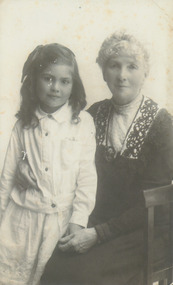
Audio - Oral History, Jennifer Williams, Mrs Margaret Galbriath, 24th May 2000
... She details important historical events and hardships in the region's history that had a lasting local, regional and national impact, including Australia during war time, the Great Depression, immmigration, economic struggles, and women's societal roles in a rural area. ...Mrs Margaret Galbraith was born in Beechworth in 1913 on the 5th February. Her parents immigrated to Australia in 1910 from England. Her father was killed after being thrown from a cart in 1912, and her mother eventually purchased the general store in which she worked from the Ladson family. Margaret has some insights into the local area during the Depression from the perspective of a store owner, as well as the presence of 'tramps' in the town, and Chinese immigrants in the community. She speaks a lot about her mother who was a very strong woman. She retired at 80. Margaret married a Ladson in Melbourne and had children. She lived at 47 Finch Street, Beechworth. This oral history recording was part of a project by Jennifer Williams in 2000 to capture the everyday life and struggles in Beechworth during the 20th century. This project involved recording 70 oral history stories on cassette tapes of local Beechworth residents, which were then published in a book called Listen to What they Say: Voices of 20th Century Beechworth. The cassettes were digitised in 2021 with funds made available by the Friends of Bourke.Mrs Margaret Galbraith's account of her life in Beechworth and the local area during the 20th century is historically and socially significant to the cultural heritage of the region. She details important historical events and hardships in the region's history that had a lasting local, regional and national impact, including Australia during war time, the Great Depression, immmigration, economic struggles, and women's societal roles in a rural area. This oral history account is socially and historically significant as it is a part of a broader collection of interviews conducted by Jennifer Williams which were published in the book 'Listen to what they say: voices of twentieth-century Beechworth.' While the township of Beechworth is known for its history as a gold rush town, these accounts provide a unique insight into the day-to-day life of the town's residents during the 20th century, many of which will have now been lost if they had not been preserved.This is a digital copy of a recording that was originally captured on a cassette tape. The cassette tape is black with a horizontal white strip and is stored in a clear, flat, plastic, rectangular container. It holds up to 40 minutes of recordings each sideMrs Margaret Galbraithlisten to what they say, ladson, oral history, bourke museum, beechworth, galbraith, margaret galbraith, general store -
 The Beechworth Burke Museum
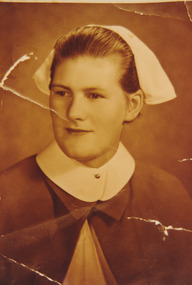
Audio - Oral History, Jennifer Williams, Mavis Jensen, 11 May 2000
... She details important historical events and hardships in the region's history that had a lasting local, regional and national impact, including Australia during war time, economic struggles, and women's societal roles in a rural area. ...Mavis Jensen (nee Knight) was born in Broadford in 1920 and came to Beechworth with her family a year later, so her father could assist his father at Knight's Blacksmith at 1A Camp Street, where the Hotel Nicholas is now located. Mavis Jensen left school at the age of 13 and worked as a kitchen maid at Ovens Benevolent Asylum. She was employed as a ward assistant at Mayday Hills Hospital from 1939 to 1980, except for 1958-59 when she gave birth to her son, Noel. This oral history recording was part of a project conducted by Jennifer Williams in the year 2000 to capture the everyday life and struggles in Beechworth during the twentieth century. This project involved recording seventy oral histories on cassette tapes of local Beechworth residents which were then published in a book titled: Listen to what they say: voices of twentieth century Beechworth. These cassette tapes were digitised in July 2021 with funds made available by the Friends of the Burke.Mavis Jensen's account of her life in Beechworth and the local area during the 20th century is historically and socially significant to the cultural heritage of the region. She details important historical events and hardships in the region's history that had a lasting local, regional and national impact, including Australia during war time, economic struggles, and women's societal roles in a rural area. Her oral history is particularly significant for its insights into developments in psychiatric patient treatment and care in regional Victoria, as well as women's work conditions in the mid-twentieth century. This oral history account is socially and historically significant as it is a part of a broader collection of interviews conducted by Jennifer Williams which were published in the book 'Listen to what they say: voices of twentieth-century Beechworth.' While the township of Beechworth is known for its history as a gold rush town, these accounts provide a unique insight into the day-to-day life of the town's residents during the 20th century, many of which will have now been lost if they had not been preserved.This is a digital copy of a recording that was originally captured on a cassette tape. The cassette tape is black with a horizontal white strip and is currently stored in a clear flat plastic rectangular container. It holds up 40 minutes of recordings on each side.Mavis Jensen /listen to what they say, beechworth, oral history, burke museum, jensen, mavis jensen, psychiatric hospitals, mid-twentieth century psychiatry, regional hospitals, regional mental health care, mid-twentieth century women's working conditions, mayday hills hospital., ovens benevolent asylum, beechworth hospital history -
 The Beechworth Burke Museum
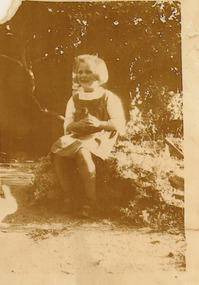
Audio - Oral History, Jennifer Williams, Miss Amy Elizabeth Porritt, 10th February 2000
... She details important historical events and hardships in the region's history that had a lasting local, regional and national impact, including Australia during war time, economic struggles, and women's societal roles in a rural area. ...Amy Elizabeth Porritt was born on the 21st of March 1915 on Atkinson Road, Beechworth to Thomas Frederick Rodan and Maud Isabel Dowling. Her family had strong associations with Australia's oldest continuously operating newspaper, the Ovens and Murray. Both her grandfather and father worked on this newspaper and played a significant role in continuing its operation. Amy was well-known in the Beechworth community and is remembered fondly for her generosity and her love of cats ‘they are all I live for’ she would often say. She was an avid gardener and had a beautiful garden at 47 Finch Street. This oral history recording was part of a project conducted by Jennifer Williams in the year 2000 to capture the everyday life and struggles in Beechworth during the twentieth century. This project involved recording seventy oral histories on cassette tapes of local Beechworth residents which were then published in a book titled: Listen to what they say: voices of twentieth century Beechworth. These cassette tapes were digitised in July 2021 with funds made available by the Friends of the Burke. Miss Amy Elizabeth Porrit's account of her life in Beechworth and the local area during the 20th century is historically and socially significant to the cultural heritage of the region. She details important historical events and hardships in the region's history that had a lasting local, regional and national impact, including Australia during war time, economic struggles, and women's societal roles in a rural area. This oral history account is socially and historically significant as it is a part of a broader collection of interviews conducted by Jennifer Williams which were published in the book 'Listen to what they say: voices of twentieth-century Beechworth.' While the township of Beechworth is known for its history as a gold rush town, these accounts provide a unique insight into the day-to-day life of the town's residents during the 20th century, many of which will have now been lost if they had not been preserved.This is a digital copy of a recording that was originally captured on a cassette tape. The cassette tape is black with a horizontal white strip and is currently stored in a clear flat plastic rectangular container. It holds up 40 minutes of recordings on each side.Miss Amy Elizabeth Porrit / listen to what they say, beechworth, oral history, burke museum, porritt, amy elizabeth porritt, gardener, ovens and murray newspaper, o&m -
 The Beechworth Burke Museum
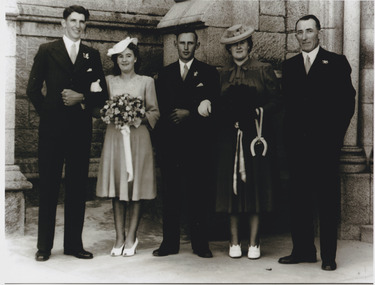
Audio - Oral History, Jennifer Williams, Joan Jessup, 18th May 2000
... She details important historical events, local life, religious matters, and schooling in the region's history that had a lasting local, regional and national impact, including Australia during war time, economic struggles, and women's societal and working roles in a rural area. ...Joan Jessup was born on the 17th November, 1926 at at Nurse Longmore's in High Street, Beechworth. In this recording, Joan recounts her childhood in Beechworth, her personal and working life as a young unmarried woman, and then later her marriage to Albert Jessup and her family life at Murmungee and Beechworth. This oral history recording was part of a project conducted by Jennifer Williams in the year 2000 to capture the everyday life and struggles in Beechworth during the twentieth century. This project involved recording seventy oral histories on cassette tapes of local Beechworth residents which were then published in a book titled: Listen to what they say: voices of twentieth century Beechworth. These cassette tapes were digitised in July 2021 with funds made available by the Friends of the BurkeThis recording of Joan Jessup's life in Beechworth and the local area during the 20th century is historically and socially significant to the cultural, historical, social, and religious heritage of the region. She details important historical events, local life, religious matters, and schooling in the region's history that had a lasting local, regional and national impact, including Australia during war time, economic struggles, and women's societal and working roles in a rural area. This oral history account is socially and historically significant as it is a part of a broader collection of interviews conducted by Jennifer Williams which were published in the book 'Listen to what they say: voices of twentieth-century Beechworth.' While the township of Beechworth is known for its history as a gold rush town, these accounts provide a unique insight into the day-to-day life of the town's residents during the 20th century, many of which will have now been lost if they had not been preservedThis is a digital copy of a recording that was originally captured on a cassette tape. The cassette tape is black with a horizontal white strip and is currently stored in a clear flat plastic rectangular container. It holds up 40 minutes of recordings on each side.Joan Jessuplisten to what they say, joan jessup, beechworth, burke museum, jessup -
The Beechworth Burke Museum
Audio - Oral History, Jennifer Williams, Mr Graeme Gallus, 16 November 2000
... She details important historical events and hardships in the region's history that had a lasting local, regional and national impact, including Australia during war time, economic struggles, and women's societal roles in a rural area. ...Graeme Gallus was born on the Mornington Peninsular in a town called Sommerville, in 1938. His family was born in Germany and came to Australia in 1851. He arrived in Beechworth in 1981 after purchasing a taxi service. He talks about local businesses, government employment, community celebrations and clubs. Miss Amy Elizabeth Porrit's account of her life in Beechworth and the local area during the 20th century is historically and socially significant to the cultural heritage of the region. She details important historical events and hardships in the region's history that had a lasting local, regional and national impact, including Australia during war time, economic struggles, and women's societal roles in a rural area. This oral history account is socially and historically significant as it is a part of a broader collection of interviews conducted by Jennifer Williams which were published in the book 'Listen to what they say: voices of twentieth-century Beechworth.' While the township of Beechworth is known for its history as a gold rush town, these accounts provide a unique insight into the day-to-day life of the town's residents during the 20th century, many of which will have now been lost if they had not been preserved.This is a digital copy of a recording that was originally captured on a cassette tape. The cassette tape is black with a horizontal white strip and is currently stored in a clear flat plastic rectangular container. It holds up 40 minutes of recordings on each side.Mr Graeme Gallussommerville, gallus, graeme gallus, taxi, beechworth, real estate, christmas, lions club -
 The Beechworth Burke Museum
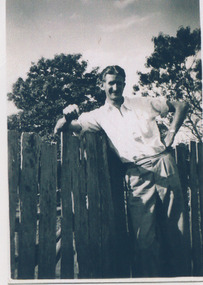
Audio - Oral History, Jennifer Williams, Mr Harry Mason, 13th April 2000
... He details important historical events and hardships in the region's history that had a lasting local, regional and national impact, including Australia during war time, economic struggles, and women's societal roles in a rural area. ...Mr Harry Mason was born in Stanley, Victoria, on the 23rd of July 1925, attending the primary school in Stanley and high school in Beechworth on the mail truck. His family initially moved to the area during the initial Gold Rush period. He moved to Beechworth in 1960. For seven years after school, he worked in the local orchard full time before becoming the local gravedigger, responsible for digging the graves of Beechworth residents and Asylum for 23 years. This oral history recording was part of a project conducted by Jennifer Williams in the year 2000 to capture the everyday life and struggles in Beechworth during the twentieth century. This project involved recording seventy oral histories on cassette tapes of local Beechworth residents which were then published in a book titled: Listen to what they say: voices of twentieth-century Beechworth. These cassette tapes were digitised in July 2021 with funds made available by the Friends of the Burke.Mr Harry Mason's account of his life in Beechworth and the local area during the 20th century is historically and socially significant to the cultural heritage of the region. He details important historical events and hardships in the region's history that had a lasting local, regional and national impact, including Australia during war time, economic struggles, and women's societal roles in a rural area. Mr Mason also discusses agricultural and gravedigging practices of the time as well as what it was like growing up in rural Australia. This first-hand account is imperative to our understanding of life during the last century. This oral history account is socially and historically significant as it is a part of a broader collection of interviews conducted by Jennifer Williams which were published in the book 'Listen to what they say: voices of twentieth-century Beechworth.' While the township of Beechworth is known for its history as a gold rush town, these accounts provide a unique insight into the day-to-day life of the town's residents during the 20th century, many of which will have now been lost if they had not been preserved.This is a digital copy of a recording that was originally captured on a cassette tape. The cassette tape is black with a horizontal white strip and is currently stored in a clear flat plastic rectangular container. It holds up 40 minutes of recordings on each side.Mr Harry Madon /listen to what they say, beechworth, oral history, burke museum, harry mason, stanley, orchard, jennifer williams, asylum -
 Federation University Historical Collection
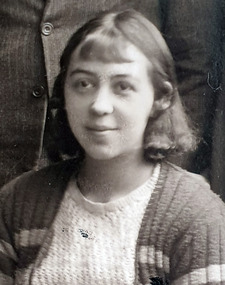
Article - Article - Women, Ballarat Technical Art School: Women of Note; Nornie Gude, Artist, (1915 - 2002)
... women of note...artist...macrobertson scholarship...100 pound per year...national gallery school...1936-1939...sidney nolan...charles bush...first woman national gallery students travelling scholarship...parliament house...regional...Her work is represented in collections at the National Gallery of Victoria, Parliament House, and the Art Gallery of Western Australia, as well as regional collections in Ballarat, Geelong, Castlemaine Art Museum, and Bendigo. nornie gude ballarat technical art school 1931-1936 women of note artist macrobertson scholarship 100 pound per year national gallery school 1936-1939 sidney nolan charles bush first woman national gallery students travelling scholarship parliament house regional collections ballarat geelong castlemaine bendigo national gallery victoria eleanor constance gude Portrait of Nornie Gude while a student at the Ballarat Technical Art School Ballarat Technical Art School: Women of Note; Nornie Gude, Artist, (1915 - 2002) Article Article - Women ...Eleanor Constance (Nornie) Gude was born in 1915 in Ballarat, Victoria to Stella Rehfisch and Walter Gude, musician and violin teacher, and conductor of the St Patrick's Cathedral orchestra and choir in Ballarat. Her parents met when Stella was 27 and the 42-year old Walter was teaching her the violin. Nornie and her sister Gilda were both raised in Ballarat before moving to Melbourne on the eve of World War II. She was accepted into the Ballarat Technical Art School at 15 because of her advanced skill in painting, and trained there from 1931-1936. She won the esteemed MacRobertson Scholarship in art worth £100 a year. She later went on to the National Gallery School from 1936-1939, studying with Sidney Nolan and Charles Bush, and became the first woman to win the National Gallery Students Travelling Scholarship. Gude won many awards for her painting both while at school and throughout her career. Her work is represented in collections at the National Gallery of Victoria, Parliament House, and the Art Gallery of Western Australia, as well as regional collections in Ballarat, Geelong, Castlemaine Art Museum, and Bendigo.Portrait of Nornie Gude while a student at the Ballarat Technical Art Schoolnornie gude, ballarat technical art school, 1931-1936, women of note, artist, macrobertson scholarship, 100 pound per year, national gallery school, 1936-1939, sidney nolan, charles bush, first woman national gallery students travelling scholarship, parliament house, regional collections, ballarat, geelong, castlemaine, bendigo, national gallery victoria, eleanor constance gude -
Federation University Historical Collection
Article - Article - Women, Federation University: Women of Note; Dr Doris Paton, Academic and Aboriginal Elder
... Her work has been presented at conferences including the World Indigenous Peoples Conference on Education, and recognised with several awards including the GippsTAFE Staff Excellence Awards in the Community Development, and Personal Achievement categories, The Wurreker Award for Community Based Employee, and the Parks Victoria Regional Achiever Award. women of note federation university doris paton aboriginal elder academic aboriginal languages monash university gippsland graduate diploma education bachelor of arts master of education phd philosophy victorian aboriginal languages corporation vacl councillor Federation University: Women of Note; Dr Doris Paton, Academic and Aboriginal Elder. ...Dr Doris Paton is an accomplished academic and respected Aboriginal Elder with a passion for the advancement of First Nations People through education, and the reclamation and revival of Aboriginal languages across Australia. She graduated with a Bachelor of Arts (Social Science) from Monash University, Gippsland campus in 1993, and went on to complete a Graduate Diploma Education (Secondary); Master of Education Studies (Aboriginal Education); Master of Education (Aboriginal Education); and a PhD Philosophy (Education). Her skill and expertise have been acknowledged through roles as Director Vice-Chairperson of the Victorian Aboriginal Languages Corporation (VACL) and as Chairperson of the Victorian Indigenous Languages Implementation Reference Group, Victorian Curriculum Assessment Authority, where she developed the framework to accredit “Indigenous Languages of Victoria: Revival and Reclamation”, a VCE accredited subject contributing toward the preservation of Indigenous languages across Australia. A Federation University Council Member since 2020, Doris is also long-serving Director of the Nindi Ngujarn Ngarigo Monero Aboriginal Corporation; and has served on boards for Parks Victoria, the Victorian Aboriginal Heritage Council, and the East Gippsland School for Aboriginal Health Professionals. Her work has been presented at conferences including the World Indigenous Peoples Conference on Education, and recognised with several awards including the GippsTAFE Staff Excellence Awards in the Community Development, and Personal Achievement categories, The Wurreker Award for Community Based Employee, and the Parks Victoria Regional Achiever Award.women of note, federation university, doris paton, aboriginal elder, academic, aboriginal languages, monash university gippsland, graduate diploma education, bachelor of arts, master of education, phd philosophy, victorian aboriginal languages corporation, vacl, councillor -
 Federation University Historical Collection
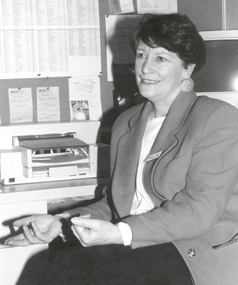
Article - Article - Women, Ballarat School of Mines: Women of Note; Kerrie Cross, Councillor, 1987
... women of note...ballarat school of mines...school council...first female senior vice president...regional...regional director for the Department of Health in the Central Highlands/Wimmera region. She has stated she is particularly interested in the development of SMB as a community college and its increasing accessibility to Technical and Further Education for all groups. . women of note ballarat school of mines school council first female senior vice president regional manager department of community services assistant regional director department of health central highlands wimmera technical and further education for all groups equal opportunity committee Ballarat School of Mines: Women of Note; Kerrie Cross, Councillor, 1987 Article Article - Women ...Kerrie Cross was a member of the Ballarat School of Mines Council from 1985 to 1992. In 1987 she was appointed as the first female senior vice president of the School of Mines Council. She was the President from 1988 to 1991. Prior to this she chaired the equal opportunity committee at the school. Kerrie has been the regional manager of the Department of Community Services and now the assistant regional director for the Department of Health in the Central Highlands/Wimmera region. She has stated she is particularly interested in the development of SMB as a community college and its increasing accessibility to Technical and Further Education for all groups. .women of note, ballarat school of mines, school council, first female senior vice president, regional manager, department of community services, assistant regional director, department of health, central highlands, wimmera, technical and further education for all groups, equal opportunity committee -
Marysville & District Historical Society
THE TRIANGLE NEWS-VOL 34 NO 27-JULY 27 2007
... women of hope...deepest sympathies...marysville girl guide award...2007 murrindindi regional...marysville victoria australia dingo care network diary dates deadline advertising rates marysville cricket club meeting mystic mountains tourism agm murrindindi shire council disclaimer fire calls ceo visiting schedule marysville golf report marysville & district chamber of commerce advertisements marysville medical clinic outreach services church notices mops osaka alexandra library watato children's choir bible quote women of hope deepest sympathies marysville girl guide award 2007 murrindindi regional tourism awards recover your health naturally murrindindi regional tourism assocn agm restaurant advertisements THE TRIANGLE NEWS-VOL 34 NO 27-JULY 27 2007 ...marysville, victoria, australia, dingo care network, diary dates, deadline, advertising rates, marysville cricket club meeting, mystic mountains tourism agm, murrindindi shire council, disclaimer, fire calls, ceo visiting schedule, marysville golf report, marysville & district chamber of commerce, advertisements, marysville medical clinic, outreach services, church notices, mops, osaka alexandra library, watato children's choir, bible quote, women of hope, deepest sympathies, marysville girl guide award, 2007 murrindindi regional tourism awards, recover your health naturally, murrindindi regional tourism assocn agm, restaurant advertisements -
 Federation University Historical Collection
Article - Article - Women, Federation University: Women of Note; Professor Helen Bartlett, Vice-Chancellor Ballarat, 2017 - 2020
... women of note...professor helen bartlett...federation university...vice-chancellor...monash university malaysia...pro vice-chancellor...chief executive...president...monash university gippsland...regional...regional higher education and focus on responding to the needs of its communities. Professor Bartlett was also Chair of the Victorian Vice-Chancellors’ Committee in the year prior to her move to Queensland and worked closely with the Victorian Government as universities shaped their response to the COVID-19 pandemic. women of note professor helen bartlett federation university vice-chancellor monash university malaysia pro vice-chancellor chief executive president monash university gippsland regional universities network university of the sunshine coast victorian vice-chancellors' committee Federation University: Women of Note; Professor Helen Bartlett, Vice-Chancellor Ballarat, 2017 - 2020. ...Professor Helen Bartlett was Vic-Chancellor of Federation University Ballarat from 2017 to 2020. Prior to this she was Pro Vice Chancellor and Chief Executive of Monash University Malaysia from 2013 to 2017, and Pro Vice-Chancellor and President of Monash University’s Gippsland Campus from 2008 to 2012. She is the current Chair of the Regional Universities Network and Vice-Chancellor of the University of Sunshine Coast. Professor Helen Bartlett is an experienced leader and passionate advocate for regional education. Professor Bartlett led a period of transformation at Federation University Australia, enhancing its profile as a multi-campus institution, its innovative approach to regional higher education and focus on responding to the needs of its communities. Professor Bartlett was also Chair of the Victorian Vice-Chancellors’ Committee in the year prior to her move to Queensland and worked closely with the Victorian Government as universities shaped their response to the COVID-19 pandemic.women of note, professor helen bartlett, federation university, vice-chancellor, monash university malaysia, pro vice-chancellor, chief executive, president, monash university gippsland, regional universities network, university of the sunshine coast, victorian vice-chancellors' committee -
Federation University Historical Collection
Book - Book - Scrapbook, Ballarat School of MInes: Scrapbook of Newspaper Cuttings, Book 5, February 1979 - June 1979
... regional touch...ballarat meeting of librarians...refresher courses at smb...spectrum processor for computer centre...randall brown top student for fourth time...gift from mt isa...report urges government stimulus on jobs...unemployment report...certificates awarded to land managers...young jobless: ces to aid smb program...teachers' strike...community association for smb...tafe needs no explanation...smb organises access programs for women...The papers concerned are The Courier, Ballarat, The Australian, The Age over the period of 08/02/1979 to 30/06/1979.. staffing advertisements adult education programs part time courses $2.75m development for smb information sought on former student/staff member smb courses add regional touch ballarat meeting of librarians refresher courses at smb spectrum processor for computer centre randall brown top student for fourth time gift from mt isa report urges government stimulus on jobs unemployment report certificates awarded to land managers young jobless: ces to aid smb program teachers' strike community association for smb tafe needs no explanation smb organises access programs for women safety school on the go keeping women informed of their status course for plant operators Book with deep red and white cover back and front, spiral bound. ...Collection of newspaper articles related to Ballarat School Of Mines.They cover activities and advertisements for staff. The papers concerned are The Courier, Ballarat, The Australian, The Age over the period of 08/02/1979 to 30/06/1979..Book with deep red and white cover back and front, spiral bound. staffing advertisements, adult education programs, part time courses, $2.75m development for smb, information sought on former student/staff member, smb courses add regional touch, ballarat meeting of librarians, refresher courses at smb, spectrum processor for computer centre, randall brown top student for fourth time, gift from mt isa, report urges government stimulus on jobs, unemployment report, certificates awarded to land managers, young jobless: ces to aid smb program, teachers' strike, community association for smb, tafe needs no explanation, smb organises access programs for women, safety school on the go, keeping women informed of their status, course for plant operators -
Federation University Historical Collection
Book - Book - Scrapbook, Ballarat School of MInes: Scrapbook of Newspaper Cuttings, Book 15, June 1982 to October 1982
... The papers concerned are The Courier, Ballarat, The Australian, The Age over the period of 18 June 1982 to 27 October 1982. courses available teaching positions advertised tafe sales and marketing course regional boards face axe the welcome nugget heavy demand for computer classes at smb apprenticeship scheme to cater for 15 new apprentices neil ferguson - educational imbalance tippett receives city award seminar on tertiary education retirement planning urged plumbing apprentices move at smb robert lovell deputy head at smb smb women's access program dorothy jenkins judy mills carol woolman glen sobey finalist in top apprentice for the year waiter training course completed alison shears sally hill jill reid geraldine o'hearn gavindooley peter nunn glen sobey apprentice of the year 1982 statewide building society award to glen sobey secretarial course at smb smb welfare course 112 years of technical education in australia Book with white cover, front, spiral bound. ...Collection of newspaper articles related to Ballarat School Of Mines.They cover activities and advertisements for staff. The papers concerned are The Courier, Ballarat, The Australian, The Age over the period of 18 June 1982 to 27 October 1982.Book with white cover, front, spiral bound. courses available, teaching positions advertised, tafe sales and marketing course, regional boards face axe, the welcome nugget, heavy demand for computer classes at smb, apprenticeship scheme to cater for 15 new apprentices, neil ferguson - educational imbalance, tippett receives city award, seminar on tertiary education, retirement planning urged, plumbing apprentices move at smb, robert lovell deputy head at smb, smb women's access program, dorothy jenkins, judy mills, carol woolman, glen sobey finalist in top apprentice for the year, waiter training course completed, alison shears, sally hill, jill reid, geraldine o'hearn, gavindooley, peter nunn, glen sobey apprentice of the year 1982, statewide building society award to glen sobey, secretarial course at smb, smb welfare course, 112 years of technical education in australia -
Federation University Historical Collection
Book - Book - Scrapbook, Ballarat School of MInes: Scrapbook of Newspaper Cuttings, Book 74, June 1996 to August 1996
... regional takes...administration students placed in workforce...art appreciation through theatre...tenders exceed funding...ray borner to olympic games...shane everard inspiration to all...network caters for chefs...judith beaton and jennifer martin...business studies...master painters' association...innovative businesses...building course for women...The papers concerned are The Courier, Ballarat, The Australian, The Age ad other region papers over the period of 1 June 1996 to 6 August 1996. teaching positions advertised pre-employment courses courses available enrolment for smb courses counselling course may be lost myma rance father son graduate phil allender steve allender building apprentices non payment proposed changes to industrialrelations laws brenda huggins winner of award education is lifelong quest smb graduation night her majesty's 121st food fit for a king tony leonard cuts fall on regional takes administration students placed in workforce art appreciation through theatre tenders exceed funding ray borner to olympic games shane everard inspiration to all network caters for chefs judith beaton and jennifer martin business studies master painters' association innovative businesses building course for women deanne jakiel's win a boon for kooris dr ron wild bright future for smb young workers test their skills melissa cameron michael ronaldson mhr peter morey work skill angela cox geoffrey richards a legacy of design jocelynne scutt - barrister paralympians at smb barry jones - alp tafe cuts hit farmers smb and red lion hotel - hospitality course Book with yellow cover, front, spiral bound. ...Collection of newspaper articles related to Ballarat School Of Mines.They cover activities and advertisements for staff. The papers concerned are The Courier, Ballarat, The Australian, The Age ad other region papers over the period of 1 June 1996 to 6 August 1996.Book with yellow cover, front, spiral bound. teaching positions advertised, pre-employment courses, courses available, enrolment for smb courses, counselling course may be lost, myma rance, father son graduate, phil allender, steve allender, building apprentices non payment, proposed changes to industrialrelations laws, brenda huggins winner of award, education is lifelong quest, smb graduation night, her majesty's 121st, food fit for a king, tony leonard, cuts fall on regional takes, administration students placed in workforce, art appreciation through theatre, tenders exceed funding, ray borner to olympic games, shane everard inspiration to all, network caters for chefs, judith beaton and jennifer martin, business studies, master painters' association, innovative businesses, building course for women, deanne jakiel's win a boon for kooris, dr ron wild, bright future for smb, young workers test their skills, melissa cameron, michael ronaldson mhr, peter morey work skill, angela cox, geoffrey richards, a legacy of design, jocelynne scutt - barrister, paralympians at smb, barry jones - alp, tafe cuts hit farmers, smb and red lion hotel - hospitality course -
 Lara RSL Sub Branch
Photograph, Set 4 photographs. and others for Torquay Light Horse camp, 1940
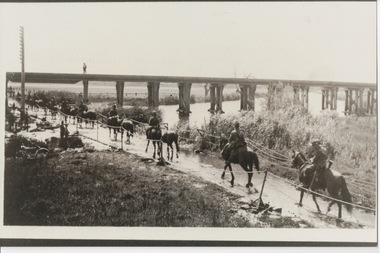
... regional training camps. The camp at Torquay in 1940, commanded by Major General Rankin, was at Divisional strength. By the end of the camp some felt that the Division was ready for active service. Gradually, over the next four years, the Australian Light Horse units were mounted on wheels and tracks and the horses were retired. Six men enlisted at the Torquay camp and another 57 men and women...regional training camps. The camp at Torquay in 1940, commanded by Major General Rankin, was at Divisional strength. By the end of the camp some felt that the Division was ready for active service. Gradually, over the next four years, the Australian Light Horse units were mounted on wheels and tracks and the horses were retired. Six men enlisted at the Torquay camp and another 57 men and women ...These images capture for all time Light Horsemen travelling through Geelong on their way to camp at Torquay for the last Group meeting in Australia . information following - details obtained from .........https://torquayhistory.com/light-horse-brigade/ On Australia Day, 1997, Sir John Young unveiled this plaque on Point Danger, Torquay. Torquay history, Light Horse Training Camp, WW2 Plaque at Pt. Danger Note----- (See images to view plaque) The plaque identifies a significant event in Torquay’s history and the sentiments of ‘change’ for the Light Horse Brigade – from horses to machines. In 1940 the four Light Horse Regiments (4th, 8th, 13th and 20th), some 5000 Light Horse and 2000 horses camped and trained at Torquay. Three other regiments, formerly mounted on horses, were also at Torquay ‘mounted’ on privately owned trucks and cars. Division troops included Artillery, Engineers, Signals, Field Ambulance and other branches of the Army necessary to enable a Division to function. It wasn’t just the sheer numbers of men coming to this little town that made the event significant, it was also the fact that the men of the Light Horse were dramatic, almost glamorous figures and it is easy to see their exploits as some splendid adventure. Horses have played a special role in the story of Australia. They were the only means of transport across this huge country, so it was necessary for everyone to have the ability to ride a horse. When war broke out in 1899 between Britain and the Boers of South Africa (“Boer” was Dutch for “farmer”) Australia sent troops to fight. At first Britain was wary of using untried, unprofessional colonial cavalrymen but soon saw that the slouch-hatted Australian “bushmen” were a match for the fast-moving and unconventional mounted commandos of the Boers. The Australians proved themselves to be expert rough-riding horsemen and good shots. Bush life had hardened them to go for long periods with little food and water. They also showed remarkable ability to find their way in a strange country and use its features for cover, in both attack and defence. By 1914, when Australia joined the war against Germany, there were 23 Light Horse regiments of militia volunteers. Many men from these units joined the Light Horse regiments of the Australian Imperial Force (AIF). Men were given remounts (if not using their own horses) – army horses bought by Commonwealth purchasing officers from graziers and breeders. These were called “walers” because they were a New South Wales stockhorse type – strong, great-hearted animals with the strains of the thoroughbred and semi-draught to give them speed, strength and stamina. On 1st November, 1914, Australia’s First Infantry Division and the first four Light Horse regiments sailed for England in a fleet of transport ships. The first of the Light Horse arrived at Gallipoli in May without their horses. Back with their horses after Gallipoli, they were formidable combatants across the Sinai and Palestine. Some British commanders observed that the light horseman moved with a “lazy, slouching gait, like that of a sleepy tiger” but described how the promise of battle “changes that careless gait, into a live athletic swing that takes him over the ground much quicker than other troops”. They had Light Horse, Torquay, training campdeveloped a reputation as formidable infantrymen. The Turks called them “the White Ghurkas” – a reference to their deadly skill with the bayonet. The Arabs called them “The Kings of the Feathers”. The plume had originally been a battle honour of the Queensland Mounted Infantry for their work in the shearer’s strike of 1891. During WW1 it was adopted by almost all the Light Horse Regiments. It was the proud badge of the light horseman. The most famous of their battles was the attack on Beersheba- the charge of the 4th Light Horse Brigade. Mounted infantrymen and their superb walers had carried out one of the most successful cavalry charges in history – against what seemed impossible odds. They surprised the Turks by charging cavalry-style, when they would normally have ridden close to an objective then dismounted to fight. The fall of Beersheba swung the battle tide against the Turks in Palestine; and changed the history of the Middle East. While 19 men from the Surf Coast Shire served with the 4th Light Horse over the course of WW1, only four were involved in the charge of Beersheba- John GAYLARD, Philip QUINN.(Winchelsea); Wallace FINDLAY (Anglesea); Harry TRIGG (Bambra). After the war, Light Horse units played a key role in the Australian Government’s compulsory military training programme. The Citizen Military Forces (C.M.F.) thrived on the glamour of the wartime Light Horse tradition, ignoring the possibility that motor vehicles would soon replace the horses. When training was no longer compulsory, the C.M.F. regiments declined and horses became more of a luxury during the 1930s depression years of poverty and unemployment. Some regiments were motorised. Then, in 1939, Australia joined Britain in another world war. Training was increased for the militia at both home bases and regional training camps. The camp at Torquay in 1940, commanded by Major General Rankin, was at Divisional strength. By the end of the camp some felt that the Division was ready for active service. Gradually, over the next four years, the Australian Light Horse units were mounted on wheels and tracks and the horses were retired. Six men enlisted at the Torquay camp and another 57 men and women enlisted at Torquay for service in WW2. Those who served in the Militia provided valuable Officers and NCOs and men for the armed services during the war. Each infantry division of the 2nd AIF had a Light Horse regiment attached to it. But the day of the Australian mounted soldier hadn’t quite passed. During World War II, Australia’s 6th Cavalry Regiment formed a mounted unit they called “The Kelly Gang” which did valuable scouting work. In New Guinea, a mounted Light Horse Troop did patrol duty and helped carry supplies. Some fully equipped walers were flown into Borneo for reconnaissance in rugged mountain country. But by the end of the war, in 1945, the horse had disappeared from the Australian Army. References: Australian Light Horse Association www.lighthorse.org.au National Australia Archives Australian War Memorial Surf Coast Shire WW1 memorials www.togethertheyserved.com The Light horse- a Cavalry under Canvas Light Horse, Training Camp, Torquay, WW2 Late in 1939 it was decided to set up a Lighthorse training camp in Torquay to train both men and horses for the battles of the Second World War. Horses, men and equipment came on special trains from all over Victoria and NSW, and as you would expect horseman came from areas such as Omeo and Sale, the Wimmera and the Western District. They arrived at the Geelong racecourse for watering in the Barwon River and then were ridden across the ford at the breakwater and began their 11 mile trek to Torquay. Light Horse, Training Camp, Torquay, WW2 Tent city By the end of January 1940 the camp at Torquay accommodated some 5000 men and 2500 horses of the Second Cavalry Division. The rows of horses, tents and huts near Blackgate Road were quite a sight. While the cavalrymen engaged in exercises on the land and on the beaches, many of the troops took over the Torquay School for special training of men and officers. Mr Bob Pettit local farmer and Councillor for the Barrabool Shire, wrote about the Light horse in the Surf Coast Community News in 1985 saying “They used to travel about the district riding four abreast in one long convoy. To my annoyance they went through my property and shut all the gates behind them. I had certain gates open to let stock in to the water holes and it would take me three -quarters of an hour to follow the horsemen up and put all the gates right again” he continued “the men from the Light Horse were here when the fire went through in March 1940. He recalled an incident when early one morning, as some one blew the bugle, a soldier putting a white sheet on the line frightened the horses. They panicked and ran off in all directions. Six went over the cliff near Bird Rock, five were never found, and the rest were gathered up after nearly a fortnight in the bush around Addiscott and Anglesea" Light Horse, Training Camp, Torquay, WW2, Geelong Parade Geelong parade The training camp culminated in a parade through the streets of Geelong on March 12th 1940. The salute was given at the Town Hall and the troops continued on a route to the You Yang’s for a training exercise. Note-----(see media section for photograph) The Camp was abandoned in mid 1940 as it was deemed unsuitable for training during winter and the cost of a permanent camp could not be justified if it could not be used all year. Historic.......Rare,,,Interpretive.Sepia photographs.set of four ....post card size ....Horses &LighthorsemenNo 1, Lighthorsemen Regiment Geelong 1940......No 2 Light Horse at Breakwater Geelong 1938 to 1940....No 3 Light Horse at Breakwater Geelong 1938 to 1940.....No 4 Light Horse crossing Breakwater camped at Geelong Showgrounds. These markings are on reverse of photographs.light horsemengeelong 1940., world war 2 -
Federation University Historical Collection
Ballarat University College, 1990-1991
... sport physical education p building mariane crawford human movement win tv morning show jo leach ballarat university college space shuttle science faculty michael pilman tourism john sharpham buc logo ivan perrin fred fargher nursing irene sellers Michael Felman Pat Prevatt Irene Sellars Food Technology robert greig Simon BOrrack Student accomodation Peter Ryan Geoff Hendy Enrolments Ross Ramsay Krause Geological Collecttion Broken Hill Geology BUC Tapestry Australian Federation of University Women Cathy Hoffman Neville Gower brewing Shirley Falkinder Graduation Land for WIldlife George Fong Brian Coles Videos of interviews with Ballart University College lecturers with Fred Fargher on WIN TV regional television. ...Videos of interviews with Ballart University College lecturers with Fred Fargher on WIN TV regional television.sport, physical education, p building, mariane crawford, human movement, win tv, morning show, jo leach, ballarat university college, space shuttle, science faculty, michael pilman, tourism, john sharpham, buc logo, ivan perrin, fred fargher, nursing, irene sellers, michael felman, pat prevatt, irene sellars, food technology, robert greig, simon borrack, student accomodation, peter ryan, geoff hendy, enrolments, ross ramsay, krause geological collecttion, broken hill geology, buc tapestry, australian federation of university women, cathy hoffman, neville gower, brewing, shirley falkinder, graduation, land for wildlife, george fong, brian coles -
 Flagstaff Hill Maritime Museum and Village
Book - Fiction, Oxford University Press, That Boarding School Girl, 1926
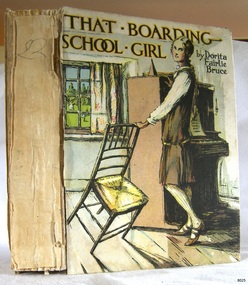
... women during this period. The book is important as a connection to the early township of Dennington, a community distinguished by its established school and church. This association reflects the values the community placed on education and religious instruction. The book’s significance is further enhanced by its relationship with colonial pioneer families in Australia, particularly those from Victoria and the Warrnambool district in southwest Victoria. It is a tangible link to the history and legacy of these early settlers, who were instrumental in shaping the regional ...Sylvia Jean Veronica McCullagh Barr (1914–1998) was a student at the Presbyterian Sabbath School in Dennington, near Warrnambool. In December 1930, she received a book as an award from F. Jones, the Sabbath School Superintendent, recognising her involvement and achievements at the school. Sylvia was the granddaughter of James McCullagh (1831–1911) and Elizabeth Eccles (1831–1909), a pioneering couple in the region. Married in 1856, James and Elizabeth settled at Oak Grove, Yangery, Illowa from 1859, where they lived until their deaths. One of James and Elizabeth’s sons, William McCullagh (1873–1940), married Margaret Jane Russell (1879–1981). William and Margaret also made their home at Oak Grove and raised eleven children there, including Sylvia.The book, “That Boarding School Girl” by Dorita Fairlie Bruce, represents an example of literature accessible to older girls during the early 20th century. It was specifically selected as an end-of-year award, recognising consistent attendance at Sabbath School. Such choices highlight the role of books in supporting the educational and moral development of young women during this period. The book is important as a connection to the early township of Dennington, a community distinguished by its established school and church. This association reflects the values the community placed on education and religious instruction. The book’s significance is further enhanced by its relationship with colonial pioneer families in Australia, particularly those from Victoria and the Warrnambool district in southwest Victoria. It is a tangible link to the history and legacy of these early settlers, who were instrumental in shaping the regional development. That Boarding School Girl Author: Dorita Fairlie Bruce Publisher: Oxford University Press Date: 1926 The front cover and the page opposite the fly page have drawn and coloured illustrations. The cloth-covered, hardcover book includes black and white illustrations and coloured illustrations on the front cover and frontispiece. The front cover illustration shows a teenage irl in a school tunic, standing beside a piano with one hand on the backrest of a tilted chair. Inscriptions are printed on the front loose endpaper and handwritten on the fly page. The book belonged to Sylvia McCullagh. It was awarded to her as a prize in 1930.Handwritten on the top of the fly page: "Sylvia McCullagh Den" [ Den - abbreviation for Dennington] " Presbyterian Sabbath School, Dennington. Prize Awarded to: Sylvia McCullagh. December 1930." "F. Jones, Superintendent"flagstaff hill, flagstaff hill maritime museum and village, warrnambool, maritime museum, maritime village, great ocean road, shipwreck coast, book, warrnambool library, warrnambool mechanics’ institute, mechanics’ institute library, victorian library board, warrnambool books and records, warrnambool children’s library, warrnambool public library, that boarding school girl, dorita fairlie bruce, sylvia mccullagh, sylvia jean veronica mccullagh, sylvia barr, james mccullagh, elizabeth eccles mccullagh, william mccullagh, margaret jane russell mccullagh, oak grove, yangery, illowa, dennington, presbyterian sabbath school, presbyterian sunday school, dennington presbyterian church, book award, book prize, book presentation, f. jones, sabbath school superintendent, 1930 -
 Flagstaff Hill Maritime Museum and Village
Book - Fiction, Mrs Herbert Strang, editor, The Rose Book for Girls, 1916
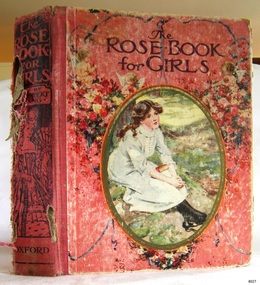
... women during this period. The book is important as a connection to the early township of Dennington, a community distinguished by its established school and church. This association reflects the values the community placed on education and religious instruction. The book’s significance is further enhanced by its relationship with colonial pioneer families in Australia, particularly those from Victoria and the Warrnambool district in southwest Victoria. It is a tangible link to the history and legacy of these early settlers, who were instrumental in shaping the regional ...Alma McCullagh was a student at the Presbyterian Sabbath School located in Dennington, near Warrnambool. In January, around 1928, she received a book as an award from R. Conn, her Sabbath School teacher, in recognition of her involvement and achievements at the school. The exact year of this award is based on available records: in January 1928, Alma was presented with a prize by R. Conn, whereas by 1930, the role of awarding prizes had passed to F. Jones. Alma was probably the granddaughter of James McCullagh (1831–1911) and Elizabeth Eccles (1831–1909), who were pioneering settlers in the region. James and Elizabeth married in 1856 and established their home at Oak Grove, Yangery, Illowa from 1859, residing there until their deaths. One of their sons, William McCullagh (1873–1940), married Margaret Jane Russell (1879–1981). William and Margaret continued the family tradition, making their home at Oak Grove as well. They raised eleven children, with Alma likely being among the youngest of their children.The book, “The Rose Book for Girls”, edited by Mrs Herbert Strang, represents an example of literature accessible to older girls during the early 20th century. It was specifically selected as an end-of-year award, recognising consistent attendance at Sabbath School. Such choices highlight the role of books in supporting the educational and moral development of young women during this period. The book is important as a connection to the early township of Dennington, a community distinguished by its established school and church. This association reflects the values the community placed on education and religious instruction. The book’s significance is further enhanced by its relationship with colonial pioneer families in Australia, particularly those from Victoria and the Warrnambool district in southwest Victoria. It is a tangible link to the history and legacy of these early settlers, who were instrumental in shaping the regional development. In addition, the book is notable for its connection to the McCullagh family, a prominent farming family whose contributions supported the social and economic growth of the local district. This historical association enriches its value, situating the book within the broader narrative of community progress and pioneer achievement in the area, and highlighting its place within a tradition of religious life and community building.The Rose Book for Girls A collection of short stories by various authors Edited by Mrs Herbert Strang Publisher: Henry Frowde, Hodder & Stoughton, London Printer: Morrison & Gibb Ltd., Tanfield, Edinburgh, Scotland, UK Date: 1916 Hardcover book. Deep pink front and back covers, decorated with garlands of pink and white flowers, cupids and blue ribbons. The front has a cameo with a seated girl in white, with a book in her lap. Details on the spine: title, author, publisher and a sketched female in 19th-century dress holding a fan. The fly page shows details of the book and has a black and red sketch of two seated girls, one reading, the other stitching. Twenty-five books are listed on the Contents page, as well as the printer's details. Within the book are several colourful sketches. Inscriptions include the name of the book's previous owner, Alma McCullagh.Front loose-end paper: "Presbyterian Sabbath School, Dennington. Prize Awarded to: Alma McCullagh. January. (year is unreadable, circa 1928) R. Conn, Teacher"flagstaff hill, flagstaff hill maritime museum and village, warrnambool, maritime museum, maritime village, great ocean road, shipwreck coast, book, the rose book for girls, mrs herbert strang, short stories, henry frowde, hodder & stoughton, london, morrison & gibb ltd, 1916, alma mccullagh, james mccullagh, elizabeth eccles mccullagh, ca. 1928, dennington, southwest victoria, warrnambool district, presbyterian sabbath school, presbyterian sunday school, dennington presbyterian church, book award, book prize, book presentation, r. conn, sabbath school superintendent -
 Flagstaff Hill Maritime Museum and Village
Book - Referance Book, W. Lucas Collins et al, Plinys Letters, 1872
... women, and self-educated individuals to engage with ancient history. Second, Church and Brodribb were highly respected classical scholars; their translations of other Roman figures, particularly the historian Tacitus, remained industry standards for generations. (For more information on the Pattison Collection see item 3678 Flagstaff Hill collections) https://victoriancollections.net.au/items/5580c7e72162f114d8b758db flagstaff hil Warrnambool flagstaff hill maritime museum maritime museum shipwreck coast flagstaff hill maritime village great ocean road book pattison collection warrnambool library warrnambool mechanics’ institute ralph eric pattison corangamite regional library service warrnambool city librarian mechanics’ institute library victorian library board warrnambool books and records warrnambool children’s library Plinys Letters Alfred Church & W. ...The subject book is a specific Victorian-era volume designed to bring classical Roman literature to the general public. It is an English overview, paraphrase, and translation of the epistles written by Pliny the Younger (Gaius Plinius Caecilius Secundus), a prominent lawyer, author, and magistrate of Ancient Rome who lived from roughly 61 to 113 AD. Instead of a dry, word-for-word translation, Church and Brodribb provided an accessible narrative that frames Pliny's life through his letters, providing a fascinating window into the Roman Empire.Plinys Letters Author: Alfred Church & W. J. Brodribb Publisher: William Blackwood & Sons Editor: W. Lucas Collins. Date: 1872non-fictionThe subject book is a specific Victorian-era volume designed to bring classical Roman literature to the general public. It is an English overview, paraphrase, and translation of the epistles written by Pliny the Younger (Gaius Plinius Caecilius Secundus), a prominent lawyer, author, and magistrate of Ancient Rome who lived from roughly 61 to 113 AD. Instead of a dry, word-for-word translation, Church and Brodribb provided an accessible narrative that frames Pliny's life through his letters, providing a fascinating window into the Roman Empire.flagstaff hil, warrnambool, flagstaff hill maritime museum, maritime museum, shipwreck coast, flagstaff hill maritime village, great ocean road, book, pattison collection, warrnambool library, warrnambool mechanics’ institute, ralph eric pattison, corangamite regional library service, warrnambool city librarian, mechanics’ institute library, victorian library board, warrnambool books and records, warrnambool children’s library, plinys letters, alfred church & w. j. brodribb, alfred church, w. j. brodribb -
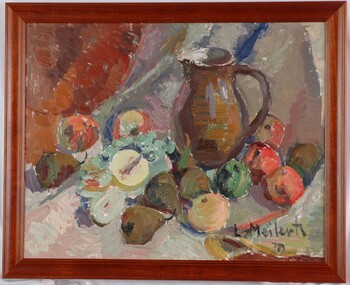 Glenelg Shire Council Cultural Collection
Painting, Ludmilla Meilerts, Still Life, 1970
... She is represented in The State Galleries of Victoria, NSW, Tasmania and Western Australia as well as several regional Galleries. Still Life Female Artists Women Women Artists Front: L Meilerts 70 (lower right, black paint) Still life of fruit and a jog. ...Ludmilla Meilerts, Oil On Board, Botanical Gardens, Circa 1970 Ludmilla Meilerts (1908 - 1997), Botanical Gardens, Melbourne, an impressive work painted with bold brushstrokes and a vivid colourful palette which typifies the artists work. Born in Riga,Latvia in 1908 - After displaying an early talent for art she studied at The Latvian Academy Of Fine Arts graduating in 1940. Later that year she married Otto Meilerts, an Economist, and they moved to Stuttgart, Germany to avoid living under Soviet occupation and then emigrated to Australia in 1948 settling in Melbourne. She worked as a nurse's aid and in a clothing factory to fund the further development of her artistic career achieving considerable early success with her colourful work encompassing portraiture, florals and city and landscapes. She particularly like painting dockland scenes. She was a member of The Victorian Artists Society (VAS) and The Melbourne Society Of Woman Painters And Sculptors. Major prizes include The Dunlop Prize in 1952, Gosford Art prize 1971, Camberwell 1973, VAS Purstitz Gold Medal 1982. She is represented in The State Galleries of Victoria, NSW, Tasmania and Western Australia as well as several regional Galleries. Still life of fruit and a jog. Painted in thick impasto paint, creating a very textured surface. Fruit is depicted in green, brown, apricot, pink and red. Background is abstract. Upper left background is brown, upper centre and right background is in shades of grey, blue and green, with some white. Brown wooden frame.Front: L Meilerts 70 (lower right, black paint)still life, female artists, women, women artists -
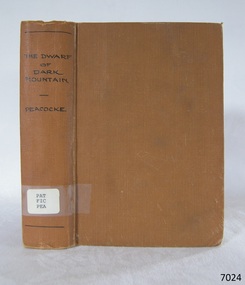 Flagstaff Hill Maritime Museum and Village
Book - Fictional Story, Isabel Maude Peacocke et al, The Dwarf Of Dark Mountain, 1932-1939
... regional realism with its local depiction of landscapes and maritime activities. While The Dwarf of Dark Mountain is not a major classic in global literature, it is a significant piece of Australasian and New Zealand children's literary history. Peacocke was among a key generation of early 20th-century New Zealand women ...The Dwarf of Dark Mountain is a children's adventure novel illustrated by Norman Sutcliffe. Set against the backdrop of the New Zealand bush and rural landscapes, the story follows a group of young protagonists on a mystery-filled adventure centred around a local geological landmark known as "Dark Mountain". Typical of Isabel Maud Peacocke's popular juvenile fiction of the 1930s (such as The Cruise of the Crazy Jane and Cathleen with a C), the book weaves together themes of bush navigation and exploration. The children venture through dense ti-tree scrub and native fern gullies, with the narrative centring around the titular "dwarf" of the mountain blending rural Australian and New Zealand family life with wholesome mystery, moral growth, and outdoor adventure.The Dwarf Of Dark Mountain Author: Isabel Maude Peacocke Illustrator: Norman Sutcliffe Publisher: Ward Lock & Co Date: Further Information: Plain brown/tan cloth binding with the title and author hand-lettered directly onto the spine with no decorative illustration, gilt stamping, or pictorial design. The spine has a Library label with an inscription.fictionThe Dwarf of Dark Mountain is a children's adventure novel illustrated by Norman Sutcliffe. Set against the backdrop of the New Zealand bush and rural landscapes, the story follows a group of young protagonists on a mystery-filled adventure centred around a local geological landmark known as "Dark Mountain". Typical of Isabel Maud Peacocke's popular juvenile fiction of the 1930s (such as The Cruise of the Crazy Jane and Cathleen with a C), the book weaves together themes of bush navigation and exploration. The children venture through dense ti-tree scrub and native fern gullies, with the narrative centring around the titular "dwarf" of the mountain blending rural Australian and New Zealand family life with wholesome mystery, moral growth, and outdoor adventure.warrnambool, shipwrecked-coast, flagstaff-hill, flagstaff-hill-maritime-museum, maritime-museum, shipwreck-coast, flagstaff-hill-maritime-village, shipwrecked-artefact, book, the dwarf of dark mountain, isabel maude peacocke, warrnambool mechanics’ institute, pattison collection, warrnambool library, ralph eric pattison, corangamite regional library service, warrnambool city librarian, mechanics’ institute library, victorian library board, warrnambool books and records, warrnambool children’s library, i. m. cluett., illustrator norman sutcliffe -
 Flagstaff Hill Maritime Museum and Village
Book, Men and Women of The Time
... Regional Library Service...Warrnambool City Librarian...Mechanics’ Institute Library...Victorian Library Board...Warrnambool books and records...Warrnambool Children’s Library...Great Ocean Road...Men and Women...Warrnambool Shipwrecked-coast Flagstaff-Hill Flagstaff-Hill-Maritime-Museum Maritime-Museum Shipwreck-coast Flagstaff-Hill-Maritime-Village Shipwrecked-artefact Book Pattison Collection Warrnambool Library Warrnambool Mechanics’ Institute Ralph Eric Pattison Corangamite Regional Library Service Warrnambool City Librarian Mechanics’ Institute Library Victorian Library Board Warrnambool books and records Warrnambool Children’s Library Great Ocean Road Men and Women of The Time G Washington Moon Label on spine cover with typed text PAT 920 MOO Pastedown front endpaper has sticker from Warrnambool Mechanics Institute and Free Library Front loose endpaper has a stamp from Corangamite Regional Library Service Front loose endpaper has a sticker from Corangamite Regional Library Service Men and Women of The Time A Dictionary of Contemporaries Author: G Washington Moon Publisher: George Routledge and Sons Date: 1891 Men and Women of The Time Book ...This item is from the ‘Pattison Collection’, a collection of books and records that was originally owned by the Warrnambool Mechanics’ Institute, which was founded in Warrnambool in 1853. By 1886 the Warrnambool Mechanics’ Institute (WMI) had grown to have a Library, Museum and Fine Arts Gallery, with a collection of “… choice productions of art, and valuable specimens in almost every branch and many wonderful national curiosities are now to be seen there, including historic relics of the town and district.” It later included a School of Design. Although it was very well patronised, the lack of financial support led the WMI in 1911 to ask the City Council to take it over. In 1935 Ralph Pattison was appointed as City Librarian to establish and organise the Warrnambool Library as it was then called. When the WMI building was pulled down in 1963 a new civic building was erected on the site and the new Warrnambool Library, on behalf of the City Council, took over all the holdings of the WMI. At this time some of the items were separated and identified as the ‘Pattison Collection’, named after Ralph Pattison. Eventually the components of the WMI were distributed from the Warrnambool Library to various places, including the Art Gallery, Historical Society and Flagstaff Hill. Later some were even distributed to other regional branches of Corangamite Regional Library and passed to and fro. It is difficult now to trace just where all of the items have ended up. The books at Flagstaff Hill Maritime Village generally display stamps and markings from Pattison as well as a variety of other institutions including the Mechanics’ Institute itself. RALPH ERIC PATTISON Ralph Eric Pattison was born in Rockhampton, Queensland, in 1891. He married Maude Swan from Warrnambool in 1920 and they set up home in Warrnambool. In 1935 Pattison accepted a position as City Librarian for the Warrnambool City Council. His huge challenge was to make a functional library within two rooms of the Mechanics’ Institute. He tirelessly cleaned, cleared and sorted a disarrayed collection of old books, jars of preserved specimens and other items reserved for exhibition in the city’s museum. He developed and updated the library with a wide variety of books for all tastes, including reference books for students; a difficult task to fulfil during the years following the Depression. He converted all of the lower area of the building into a library, reference room and reading room for members and the public. The books were sorted and stored using a cataloguing and card index system that he had developed himself. He also prepared the upper floor of the building and established the Art Gallery and later the Museum, a place to exhibit the many old relics that had been stored for years for this purpose. One of the treasures he found was a beautiful ancient clock, which he repaired, restored and enjoyed using in his office during the years of his service there. Ralph Pattison was described as “a meticulous gentleman whose punctuality, floorless courtesy and distinctive neat dress were hallmarks of his character, and ‘his’ clock controlled his daily routine, and his opening and closing of the library’s large heavy doors to the minute.” Pattison took leave during 1942 to 1945 to serve in the Royal Australian Navy, Volunteer Reserve as Lieutenant. A few years later he converted one of the Museum’s rooms into a Children’s Library, stocking it with suitable books for the younger generation. This was an instant success. In the 1950’s he had the honour of being appointed to the Victorian Library Board and received more inspiration from the monthly conferences in Melbourne. He was sadly retired in 1959 after over 23 years of service, due to the fact that he had gone over the working age of council officers. However he continued to take a very keen interest in the continual development of the Library until his death in 1969. The Pattison Collection, along with other items at Flagstaff Hill Maritime Village, was originally part of the Warrnambool Mechanics' Institute’s collection. The Warrnambool Mechanics’ Institute Collection is primarily significant in its totality, rather than for the individual objects it contains. Its contents are highly representative of the development of Mechanics' Institute libraries across Australia, particularly Victoria. A diversity of publications and themes has been amassed, and these provide clues to our understanding of the nature of and changes in the reading habits of Victorians from the 1850s to the middle of the 20th century. The collection also highlights the Warrnambool community’s commitment to the Mechanics’ Institute, reading, literacy and learning in the regions, and proves that access to knowledge was not impeded by distance. These items help to provide a more complete picture of our community’s ideals and aspirations. The Warrnambool Mechanics Institute book collection has historical and social significance for its strong association with the Mechanics Institute movement and the important role it played in the intellectual, cultural and social development of people throughout the latter part of the nineteenth century and the early twentieth century. The collection of books is a rare example of an early lending library and its significance is enhanced by the survival of an original collection of many volumes. The Warrnambool Mechanics' Institute’s publication collection is of both local and state significance. Men and Women of The Time A Dictionary of Contemporaries Author: G Washington Moon Publisher: George Routledge and Sons Date: 1891Label on spine cover with typed text PAT 920 MOO Pastedown front endpaper has sticker from Warrnambool Mechanics Institute and Free Library Front loose endpaper has a stamp from Corangamite Regional Library Service Front loose endpaper has a sticker from Corangamite Regional Library Servicewarrnambool, shipwrecked-coast, flagstaff-hill, flagstaff-hill-maritime-museum, maritime-museum, shipwreck-coast, flagstaff-hill-maritime-village, shipwrecked-artefact, book, pattison collection, warrnambool library, warrnambool mechanics’ institute, ralph eric pattison, corangamite regional library service, warrnambool city librarian, mechanics’ institute library, victorian library board, warrnambool books and records, warrnambool children’s library, great ocean road, men and women of the time, g washington moon -
 Flagstaff Hill Maritime Museum and Village
Book, Men Women and Books
... regional library service...warrnambool city librarian...mechanics’ institute library...victorian library board...warrnambool books and records...warrnambool children’s library...great ocean road...Men Women...The Warrnambool Mechanics' Institute’s publication collection is of both local and state significance. warrnambool shipwrecked-coast flagstaff-hill flagstaff-hill-maritime-museum maritime-museum shipwreck-coast flagstaff-hill-maritime-village shipwrecked-artefact book pattison collection warrnambool library warrnambool mechanics’ institute ralph eric pattison corangamite regional library service warrnambool city librarian mechanics’ institute library victorian library board warrnambool books and records warrnambool children’s library great ocean road Men Women and Books Leigh Hunt Label on spine cover with typed text PAT 824 HUN Pastedown front endpaper has sticker from Warrnambool Mechanics Institute and Free Library Front loose endpaper has a stamp from Corangamite Regional Library Service Men Women and Books A selection of Sketchies, Essays, and Critical Memoirs from uncollected prose writings. ...This item is from the ‘Pattison Collection’, a collection of books and records that was originally owned by the Warrnambool Mechanics’ Institute, which was founded in Warrnambool in 1853. By 1886 the Warrnambool Mechanics’ Institute (WMI) had grown to have a Library, Museum and Fine Arts Gallery, with a collection of “… choice productions of art, and valuable specimens in almost every branch and many wonderful national curiosities are now to be seen there, including historic relics of the town and district.” It later included a School of Design. Although it was very well patronised, the lack of financial support led the WMI in 1911 to ask the City Council to take it over. In 1935 Ralph Pattison was appointed as City Librarian to establish and organise the Warrnambool Library as it was then called. When the WMI building was pulled down in 1963 a new civic building was erected on the site and the new Warrnambool Library, on behalf of the City Council, took over all the holdings of the WMI. At this time some of the items were separated and identified as the ‘Pattison Collection’, named after Ralph Pattison. Eventually the components of the WMI were distributed from the Warrnambool Library to various places, including the Art Gallery, Historical Society and Flagstaff Hill. Later some were even distributed to other regional branches of Corangamite Regional Library and passed to and fro. It is difficult now to trace just where all of the items have ended up. The books at Flagstaff Hill Maritime Village generally display stamps and markings from Pattison as well as a variety of other institutions including the Mechanics’ Institute itself. RALPH ERIC PATTISON Ralph Eric Pattison was born in Rockhampton, Queensland, in 1891. He married Maude Swan from Warrnambool in 1920 and they set up home in Warrnambool. In 1935 Pattison accepted a position as City Librarian for the Warrnambool City Council. His huge challenge was to make a functional library within two rooms of the Mechanics’ Institute. He tirelessly cleaned, cleared and sorted a disarrayed collection of old books, jars of preserved specimens and other items reserved for exhibition in the city’s museum. He developed and updated the library with a wide variety of books for all tastes, including reference books for students; a difficult task to fulfil during the years following the Depression. He converted all of the lower area of the building into a library, reference room and reading room for members and the public. The books were sorted and stored using a cataloguing and card index system that he had developed himself. He also prepared the upper floor of the building and established the Art Gallery and later the Museum, a place to exhibit the many old relics that had been stored for years for this purpose. One of the treasures he found was a beautiful ancient clock, which he repaired, restored and enjoyed using in his office during the years of his service there. Ralph Pattison was described as “a meticulous gentleman whose punctuality, floorless courtesy and distinctive neat dress were hallmarks of his character, and ‘his’ clock controlled his daily routine, and his opening and closing of the library’s large heavy doors to the minute.” Pattison took leave during 1942 to 1945 to serve in the Royal Australian Navy, Volunteer Reserve as Lieutenant. A few years later he converted one of the Museum’s rooms into a Children’s Library, stocking it with suitable books for the younger generation. This was an instant success. In the 1950’s he had the honour of being appointed to the Victorian Library Board and received more inspiration from the monthly conferences in Melbourne. He was sadly retired in 1959 after over 23 years of service, due to the fact that he had gone over the working age of council officers. However he continued to take a very keen interest in the continual development of the Library until his death in 1969. The Pattison Collection, along with other items at Flagstaff Hill Maritime Village, was originally part of the Warrnambool Mechanics' Institute’s collection. The Warrnambool Mechanics’ Institute Collection is primarily significant in its totality, rather than for the individual objects it contains. Its contents are highly representative of the development of Mechanics' Institute libraries across Australia, particularly Victoria. A diversity of publications and themes has been amassed, and these provide clues to our understanding of the nature of and changes in the reading habits of Victorians from the 1850s to the middle of the 20th century. The collection also highlights the Warrnambool community’s commitment to the Mechanics’ Institute, reading, literacy and learning in the regions, and proves that access to knowledge was not impeded by distance. These items help to provide a more complete picture of our community’s ideals and aspirations. The Warrnambool Mechanics Institute book collection has historical and social significance for its strong association with the Mechanics Institute movement and the important role it played in the intellectual, cultural and social development of people throughout the latter part of the nineteenth century and the early twentieth century. The collection of books is a rare example of an early lending library and its significance is enhanced by the survival of an original collection of many volumes. The Warrnambool Mechanics' Institute’s publication collection is of both local and state significance. Men Women and Books A selection of Sketchies, Essays, and Critical Memoirs from uncollected prose writings. Author: Leigh Hunt Publisher: Smith Elder Date: 1870Label on spine cover with typed text PAT 824 HUN Pastedown front endpaper has sticker from Warrnambool Mechanics Institute and Free Library Front loose endpaper has a stamp from Corangamite Regional Library Service warrnambool, shipwrecked-coast, flagstaff-hill, flagstaff-hill-maritime-museum, maritime-museum, shipwreck-coast, flagstaff-hill-maritime-village, shipwrecked-artefact, book, pattison collection, warrnambool library, warrnambool mechanics’ institute, ralph eric pattison, corangamite regional library service, warrnambool city librarian, mechanics’ institute library, victorian library board, warrnambool books and records, warrnambool children’s library, great ocean road, men women and books, leigh hunt
