
Showing 4 items matching " royal irish constabulary"
-
 Bendigo Historical Society Inc.
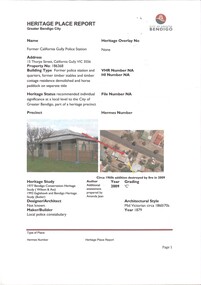
Document - HERITAGE REPORT: FORMER POLICE STATION AND QUARTERS: CALIFORNIA GULLY
... ... Royal Irish Constabulary...HERITAGE Heritage Report - Former Police Station and Quarters - California Gully City of Greater Bendigo Wilson & Ass Butler Amanda Jean Johnson Reef Shafts No 1 & 2 Rose of Denmark Princess Dagmar Bendigo Amalgamated Goldfields Company Captain Frederick Standish Royal Irish Constabulary E Thorpe Campbell Taylor Watson Brown Hosken McKowne McQualter Parker Hicks Eaglehawk Municipal Council Victorian Police Force D Bannear Historic Mining sites in the Sandhurst Eaglehawk and Raywood Mining Divisions Department of Conservation and Natural Resources Joshua Thorpe Thorpe & Co Johnson & Co William Thorn Michael Thomas James Murdock Edward C Brown Francis Youlden Gold Escort Water Police Mounted Police City Police (Melbourne) Geelong Police Gold Fields Police Rural Bench Constabulary The People's Force Robert Haldane N Wild Streets of the Borough of Eaglehawk Police Registration Act William Henry Mitchell Camp Hotel J O C Nieman J M Catarach G W Hosken Margaret Hosken nee McKown Majorie Alice McQualter Kellie Anne McQualter Adam Joseph Doolan Mr Hicks Sands & McDougall Hill George Meeking Howard McEwan Frank A Jinks Stanley McCaig Mrs Eleanor Gordon John L McQualter Mrs Adeline Maher William L Raynor Robert Flack John P Whitehead Miss A Sang George T Linddsay John P Dyer Henry Jackman George A Tibbetts Mrs S A Hosken Mrs Margaret Winifred nee McKowne Chaplin Frank W Wilson C E Wright George Miller G A Sheyhill Basil Hugh Marshall R Miles J H Parker W B Barkla W G Nicholls Les Cartledge Clifford William Cole Charles Basil Farmers Citizens Trustees Co Bev Hanson Seventeen page Heritage Place Report on the Former California Gully Police Station at 15 Thorpe Street, California Gully. ...Seventeen page Heritage Place Report on the Former California Gully Police Station at 15 Thorpe Street, California Gully. It is the former police station and quarters, former timber stables and timber cottage residence demolished and horse paddock on separate title. Report includes a Statement of Significance, Place History (History of the Area), Policing California Gully Goldfields, History of the Buildings, Chronology of Ownership, Rate Books 1858, - 1867 - 1868, 1895 Borough of Eaglehawk Rates, 1922 Voters Roll, 1952 & 1962 Sands & McDougall Directory Thorpe St California Gully, Comparable Examples, Secondary Sources, Description Conservation Policy Guidelines (Specific), Physical Conditions, Physical Description 1, Map of Early Photo Location, Bendigo Parish Plan circa 1870, Certificate of Title 1950 & 1960. Pge 14 has plans, maps and an aerial photo of 15 Thorpe Street. Page 15 has an aerial photo of 15 Thorpe Street, California Gully with Allotment Size. Page 16 & 17 has photos.heritage, heritage report - former police station and quarters - california gully, city of greater bendigo, wilson & ass, butler, amanda jean, johnson reef shafts no 1 & 2, rose of denmark, princess dagmar, bendigo amalgamated goldfields company, captain frederick standish, royal irish constabulary, e thorpe, campbell, taylor, watson, brown, hosken, mckowne, mcqualter, parker, hicks, eaglehawk municipal council, victorian police force, d bannear, historic mining sites in the sandhurst eaglehawk and raywood mining divisions, department of conservation and natural resources, joshua thorpe, thorpe & co, johnson & co, william thorn, michael thomas, james murdock, edward c brown, francis youlden, gold escort, water police, mounted police, city police (melbourne), geelong police, gold fields police, rural bench constabulary, the people's force, robert haldane, n wild, streets of the borough of eaglehawk, police registration act, william henry mitchell, camp hotel, j o c nieman, j m catarach, g w hosken, margaret hosken nee mckown, majorie alice mcqualter, kellie anne mcqualter, adam joseph doolan, mr hicks, sands & mcdougall, hill george, meeking howard, mcewan frank a, jinks stanley, mccaig mrs eleanor, gordon john l, mcqualter mrs adeline, maher william l, raynor robert, flack john p, whitehead miss a, sang george t, linddsay john p, dyer henry, jackman george a, tibbetts mrs s a, hosken mrs margaret winifred nee mckowne, chaplin frank w, wilson c e, wright george, miller g a, sheyhill basil hugh, marshall r, miles j h, parker w b, barkla w g, nicholls les, cartledge clifford william, cole charles basil, farmers citizens trustees co, bev hanson -
 Williamstown Historical Society Inc
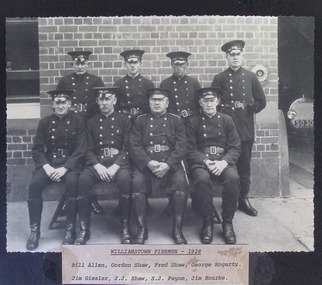
Photograph - Williamstown Fire Brigade members, 1928
... He had been a court recorder at Dublin Castle as a member of the Royal Irish Constabulary. There was a Civil War going on between 1922 and 1923, and George 'had to leave in a hurry.' ...He had been a court recorder at Dublin Castle as a member of the Royal Irish Constabulary. There was a Civil War going on between 1922 and 1923, and George 'had to leave in a hurry.' ...Back row: L-R: Bill Allen, Gordon Shaw, Fred Shaw, George Hogarty; Front row L-R: Jim Giesler, J.J. (Joe) Shaw, Sam J. Payne, Jim (Paddy) Bourke Staff Photograph of Williamstown Fire Brigade. Eight men in uniform, four sitting and four standing, with the brick wall of the Fire Brigade headquarters behind them. This is a group photograph of Williamstown Fire Brigade, 1928. According to his granddaughter, George Hogarty was a member of the Williamstown Fire Brigade in the late 1920s and early 1930s. Later he worked at the Eastern Hill Fire Station. He arrived in Australia from Dublin in January 1923. He had been a court recorder at Dublin Castle as a member of the Royal Irish Constabulary. There was a Civil War going on between 1922 and 1923, and George 'had to leave in a hurry.' He worked as a fireman in various capacities until he died in 1944. (Source: https://collections.museumsvictoria.com.au/items/1689716) williamstown fire brigade members, 1928 -
 Federation University Historical Collection
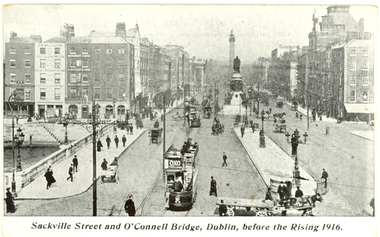
Postcard - Postcards - black and white, Coleman & Co, Dublin before and after the Rising, 1916, c1916
... There were some actions in other parts of Ireland: however, except for the attack on the Royal Irish Constabulary barracks at Ashbourne, County Meath, they were minor. ...There were some actions in other parts of Ireland: however, except for the attack on the Royal Irish Constabulary barracks at Ashbourne, County Meath, they were minor. ...The Easter Uprising took place in April 1916 in Dublin and is one of the pivotal events in modern Irish history. At the end of the Easter Uprising, 15 men identified as leaders were executed at Kilmainham Jail. To some, these men were traitors, to others they became heroes. (http://www.historylearningsite.co.uk/1916_easter_rising.htm, accessed 16 April 2014) Organised by seven members of the Military Council of the Irish Republican Brotherhood,[3] the Rising began on Easter Monday, 24 April 1916, and lasted for six days. Members of the Irish Volunteers — led by schoolmaster and Irish language activist Patrick Pearse, joined by the smaller Irish Citizen Army of James Connolly, along with 200 members of Cumann na mBan — seized key locations in Dublin and proclaimed the Irish Republic independent of the United Kingdom. There were some actions in other parts of Ireland: however, except for the attack on the Royal Irish Constabulary barracks at Ashbourne, County Meath, they were minor. With vastly superior numbers and the use of artillery, the British army quickly suppressed the Rising, and Pearse agreed to an unconditional surrender on Saturday 29 April. Most of the leaders were executed following courts-martial, but the Rising succeeded in bringing physical force republicanism back to the forefront of Irish politics. (http://en.wikipedia.org/wiki/Easter_Rising, accessed 16/04/2014) Sackville Street Dublin is now known a O'Connell Street.Seven black and white postcards showing photographic scenes before and after the Rising in Dublin.chatham family archive, chatham, holmes, ireland, dublin, uprising, sackville street, o'connell bridge, citizen army, liberty hall, henry street, nelson's pillar, post office, arnott's, abbey street, ruins, hotel metropole, the rising, easter uprising, easter rebellion, o'connell, chatham family archive, chatham, holmes, ireland, dublin, uprising, sackville street, o'connell bridge, citizen army, liberty hall, henry street, nelson's pillar, post office, arnott's, abbey street, ruins, hotel metropole, the rising, easter uprising, easter rebellion, o'connell -
 Williamstown Historical Society Inc
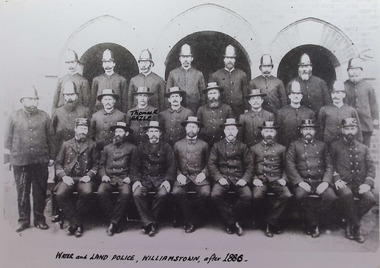
Photograph - Water and Land Police, Williamstown, after 1886
... (Source: Williamstown Chronicle 19 January 1907) Constable Bolger had been a member of the Royal Irish constabulary and served two years arriving in the colony with the Permanent Artillery. ...(Source: Williamstown Chronicle 19 January 1907) Constable Bolger had been a member of the Royal Irish constabulary and served two years arriving in the colony with the Permanent Artillery. ...Top row L-R: ??,??, Thomas Band, ??,??,??, Bolger, ??. Middle Row: Sergeant James Whitcher, ??,??, Thomas Hazle, ??,??, ??, ??, ??; Front row L-R: J. Tuckey, ??, John Watson, ??, ??, ??, ??, ?? This historical photograph captures the Foot Police and Water Police stationed at Williamstown, after 1886. The officers in the back row wearing high white/light-colored custodian helmets represent the Foot Police (Land), while the members seated and standing in the lower rows wearing dark uniforms and caps or flat-brimmed hats represent the Water Police (Sea). Thomas Scott Band came out to Victoria as a second mate on the ship Adair in 1853. In the following year he joined the water police and was stationed at Geelong for a number of years, when he transferred to the Williamstown water police. He retired as a senior constable in 1887 after serving 33 years' service. He died aged 75 in January 1907. (Source: Williamstown Chronicle 19 January 1907) Constable Bolger had been a member of the Royal Irish constabulary and served two years arriving in the colony with the Permanent Artillery. He almost served 30 years service in the police force and died of illness during September 1900 aged 56. (Source: Williamstown Chronicle 15 September 1900) The handwritten text explicitly highlights Thomas R. Hazle (standing in the center row with a dark hat). Hazle was formerly a leading seaman on H.M.S. Nelson, stationed in Victoria, and left the navy in 1886, when he joined the water police and was stationed at Williamstown and South Wharf. He was a senior-constable when he retired during 1911. He died aged 86 on the 15th September 1931. (source: Williamstown Chronicle 19 September 1931) Sergeant James Whitcher gave up sea faring life to join the water police in 1852. He was promoted to the rank of senior-constable in 1881, and to sergeant in 1883, succeeding Sergeant Daly in charge of the station a year afterwards. He retired on 30 June 1892 and died in May 1893. (Source: Williamstown Advertiser Sat 20 May 1893) John Tuckey was born in Tipperary Ireland in 1827 and joined the Victorian Police Force in 1853. He rose to the position of Constable and retired after 29 years of service. He died in 1906, aged 79. (Source: Williamstown Chronicle 12 May 1906). Constable John Watson was born in England in 1850, and when quite a young man enlisted in the Imperial Navy, and after about eight years' service he entered the colonial navy, being for some time connected with the H.M S. Pharos, Victoria, and Nelson, filling the position of instructor on the last-named when a training ship. He joined the Victorian police force in 1880 and has consequently seen over 22 years' service. He died aged 53 during December 1902. (Source: Williamstown Chronicle 20 December 1902). williamstown water and land police, 1886, thomas hazle
