
Showing 8 items matching " rural bench constabulary"
-
 Bendigo Historical Society Inc.
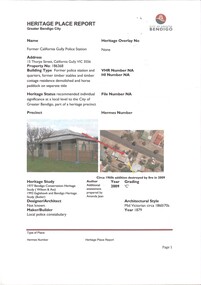
Document - HERITAGE REPORT: FORMER POLICE STATION AND QUARTERS: CALIFORNIA GULLY
... ... Rural Bench Constabulary...HERITAGE Heritage Report - Former Police Station and Quarters - California Gully City of Greater Bendigo Wilson & Ass Butler Amanda Jean Johnson Reef Shafts No 1 & 2 Rose of Denmark Princess Dagmar Bendigo Amalgamated Goldfields Company Captain Frederick Standish Royal Irish Constabulary E Thorpe Campbell Taylor Watson Brown Hosken McKowne McQualter Parker Hicks Eaglehawk Municipal Council Victorian Police Force D Bannear Historic Mining sites in the Sandhurst Eaglehawk and Raywood Mining Divisions Department of Conservation and Natural Resources Joshua Thorpe Thorpe & Co Johnson & Co William Thorn Michael Thomas James Murdock Edward C Brown Francis Youlden Gold Escort Water Police Mounted Police City Police (Melbourne) Geelong Police Gold Fields Police Rural Bench Constabulary The People's Force Robert Haldane N Wild Streets of the Borough of Eaglehawk Police Registration Act William Henry Mitchell Camp Hotel J O C Nieman J M Catarach G W Hosken Margaret Hosken nee McKown Majorie Alice McQualter Kellie Anne McQualter Adam Joseph Doolan Mr Hicks Sands & McDougall Hill George Meeking Howard McEwan Frank A Jinks Stanley McCaig Mrs Eleanor Gordon John L McQualter Mrs Adeline Maher William L Raynor Robert Flack John P Whitehead Miss A Sang George T Linddsay John P Dyer Henry Jackman George A Tibbetts Mrs S A Hosken Mrs Margaret Winifred nee McKowne Chaplin Frank W Wilson C E Wright George Miller G A Sheyhill Basil Hugh Marshall R Miles J H Parker W B Barkla W G Nicholls Les Cartledge Clifford William Cole Charles Basil Farmers Citizens Trustees Co Bev Hanson Seventeen page Heritage Place Report on the Former California Gully Police Station at 15 Thorpe Street, California Gully. ...Seventeen page Heritage Place Report on the Former California Gully Police Station at 15 Thorpe Street, California Gully. It is the former police station and quarters, former timber stables and timber cottage residence demolished and horse paddock on separate title. Report includes a Statement of Significance, Place History (History of the Area), Policing California Gully Goldfields, History of the Buildings, Chronology of Ownership, Rate Books 1858, - 1867 - 1868, 1895 Borough of Eaglehawk Rates, 1922 Voters Roll, 1952 & 1962 Sands & McDougall Directory Thorpe St California Gully, Comparable Examples, Secondary Sources, Description Conservation Policy Guidelines (Specific), Physical Conditions, Physical Description 1, Map of Early Photo Location, Bendigo Parish Plan circa 1870, Certificate of Title 1950 & 1960. Pge 14 has plans, maps and an aerial photo of 15 Thorpe Street. Page 15 has an aerial photo of 15 Thorpe Street, California Gully with Allotment Size. Page 16 & 17 has photos.heritage, heritage report - former police station and quarters - california gully, city of greater bendigo, wilson & ass, butler, amanda jean, johnson reef shafts no 1 & 2, rose of denmark, princess dagmar, bendigo amalgamated goldfields company, captain frederick standish, royal irish constabulary, e thorpe, campbell, taylor, watson, brown, hosken, mckowne, mcqualter, parker, hicks, eaglehawk municipal council, victorian police force, d bannear, historic mining sites in the sandhurst eaglehawk and raywood mining divisions, department of conservation and natural resources, joshua thorpe, thorpe & co, johnson & co, william thorn, michael thomas, james murdock, edward c brown, francis youlden, gold escort, water police, mounted police, city police (melbourne), geelong police, gold fields police, rural bench constabulary, the people's force, robert haldane, n wild, streets of the borough of eaglehawk, police registration act, william henry mitchell, camp hotel, j o c nieman, j m catarach, g w hosken, margaret hosken nee mckown, majorie alice mcqualter, kellie anne mcqualter, adam joseph doolan, mr hicks, sands & mcdougall, hill george, meeking howard, mcewan frank a, jinks stanley, mccaig mrs eleanor, gordon john l, mcqualter mrs adeline, maher william l, raynor robert, flack john p, whitehead miss a, sang george t, linddsay john p, dyer henry, jackman george a, tibbetts mrs s a, hosken mrs margaret winifred nee mckowne, chaplin frank w, wilson c e, wright george, miller g a, sheyhill basil hugh, marshall r, miles j h, parker w b, barkla w g, nicholls les, cartledge clifford william, cole charles basil, farmers citizens trustees co, bev hanson -
 Flagstaff Hill Maritime Museum and Village
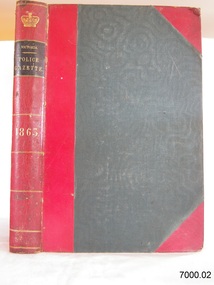
Administrative record - Reference Sociology/History, John Ferres, Government Printer, Victoria Police Gazettes for 1863, 1863
... At that time there were seven distinct, independently operating police bodies in Victoria: the Melbourne and County of Bourke Police, the City of Geelong Police, the Goldfields Police, the Gold Escort, the Water Police, the Rural Bench Constabulary, and the Mounted Police. In December of that year, the Victoria Police Gazette began as an official means of pooling information among these newly unified, uniformed bodies, aimed at essentially solving a communication problem between fragmented police units during the chaotic gold-rush era in Victoria. ...At that time there were seven distinct, independently operating police bodies in Victoria: the Melbourne and County of Bourke Police, the City of Geelong Police, the Goldfields Police, the Gold Escort, the Water Police, the Rural Bench Constabulary, and the Mounted Police. In December of that year, the Victoria Police Gazette began as an official means of pooling information among these newly unified, uniformed bodies, aimed at essentially solving a communication problem between fragmented police units during the chaotic gold-rush era in Victoria. ...The Victoria Police Gazette was a confidential, internal publication of the Victoria Police, issued to inform police officers, court and justice officials, and government departments about matters relevant to policing across the colony. It commenced in December 1853 and was initially published weekly by the Victoria Police. It was distributed each week to city and rural police stations and to government offices and newspaper publishers. Inclusions in this weekly publication were people wanted for questioning in relation to various crimes, prisoners discharged from city or country gaols, extracts from Police Gazettes in New South Wales, South Australia, Queensland, Tasmania, New Zealand, and occasionally overseas countries, as well as extracts from the Hobart Town Gazette listing escaped convicts and the person to whom they were assigned. There was also a "Missing Friends" section, where most people listed were not criminals but were sought by police so relatives, old friends, or government officials could renew contact with them. In addition, there was a record of deserted wives and children, listing the offender's name, birthplace, age, occupation, last known area of residence, likely future movements and known relatives. There was also a section on court lists, warrants issued, appointments and staffing changes within the police service, arrest and discharge records with physical descriptions, and lists of pastoralists with descriptions of their livestock brands.Hard Bound Volume. Victorian Police Gazettes for 1863 Author: Institutional Government Publication Publisher: John Ferres, Melbourne Date: 1863 Further Information: Compilation of Weekly Victorian Police Gazettes for 1863 in a hard bound volume with red spine and red corner reinforcing. Front panel grey coloured lettering in gilt with gilt banding to spine. Inside is twelve issues of the Police Gazettes for 1863.non-fictionThe Victoria Police Gazette was a confidential, internal publication of the Victoria Police, issued to inform police officers, court and justice officials, and government departments about matters relevant to policing across the colony. It commenced in December 1853 and was initially published weekly by the Victoria Police. It was distributed each week to city and rural police stations and to government offices and newspaper publishers. Inclusions in this weekly publication were people wanted for questioning in relation to various crimes, prisoners discharged from city or country gaols, extracts from Police Gazettes in New South Wales, South Australia, Queensland, Tasmania, New Zealand, and occasionally overseas countries, as well as extracts from the Hobart Town Gazette listing escaped convicts and the person to whom they were assigned. There was also a "Missing Friends" section, where most people listed were not criminals but were sought by police so relatives, old friends, or government officials could renew contact with them. In addition, there was a record of deserted wives and children, listing the offender's name, birthplace, age, occupation, last known area of residence, likely future movements and known relatives. There was also a section on court lists, warrants issued, appointments and staffing changes within the police service, arrest and discharge records with physical descriptions, and lists of pastoralists with descriptions of their livestock brands.warrnambool, shipwrecked-coast, flagstaff-hill, flagstaff-hill-maritime-museum, maritime-museum, shipwreck-coast, flagstaff-hill-maritime-village, shipwrecked-artefact, book, victoria police gazette 1862, victoria police gazette, warrnambool books and records, great ocean road -
 Flagstaff Hill Maritime Museum and Village
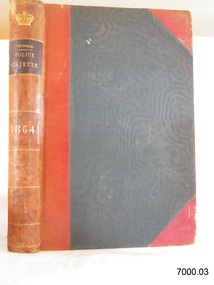
Administrative record - Reference Sociology/History, John Ferres, Government Printer, Victoria Police Gazettes for 1864, 1864
... At that time there were seven distinct, independently operating police bodies in Victoria: the Melbourne and County of Bourke Police, the City of Geelong Police, the Goldfields Police, the Gold Escort, the Water Police, the Rural Bench Constabulary, and the Mounted Police. In December of that year, the Victoria Police Gazette began as an official means of pooling information among these newly unified, uniformed bodies, aimed at essentially solving a communication problem between fragmented police units during the chaotic gold-rush era in Victoria. ...At that time there were seven distinct, independently operating police bodies in Victoria: the Melbourne and County of Bourke Police, the City of Geelong Police, the Goldfields Police, the Gold Escort, the Water Police, the Rural Bench Constabulary, and the Mounted Police. In December of that year, the Victoria Police Gazette began as an official means of pooling information among these newly unified, uniformed bodies, aimed at essentially solving a communication problem between fragmented police units during the chaotic gold-rush era in Victoria. ...The Victoria Police Gazette was a confidential, internal publication of the Victoria Police, issued to inform police officers, court and justice officials, and government departments about matters relevant to policing across the colony. It commenced in December 1853 and was initially published weekly by the Victoria Police. It was distributed each week to city and rural police stations and to government offices and newspaper publishers. Inclusions in this weekly publication were people wanted for questioning in relation to various crimes, prisoners discharged from city or country gaols, extracts from Police Gazettes in New South Wales, South Australia, Queensland, Tasmania, New Zealand, and occasionally overseas countries, as well as extracts from the Hobart Town Gazette listing escaped convicts and the person to whom they were assigned. There was also a "Missing Friends" section, where most people listed were not criminals but were sought by police so relatives, old friends, or government officials could renew contact with them. In addition, there was a record of deserted wives and children, listing the offender's name, birthplace, age, occupation, last known area of residence, likely future movements and known relatives. There was also a section on court lists, warrants issued, appointments and staffing changes within the police service, arrest and discharge records with physical descriptions, and lists of pastoralists with descriptions of their livestock brands.Hard Bound Volume. Victorian Police Gazettes for 1864 Author: Institutional Government Publication Publisher: John Ferres, Melbourne Date: 1864 Further Information: Compilation of Weekly Victorian Police Gazettes for 1864 in a hard bound volume with red spine and red corner reinforcing. Front panel grey coloured lettering in gilt with gilt banding to spine. Inside is twelve issues of the Police Gazettes for 1864.non-fictionThe Victoria Police Gazette was a confidential, internal publication of the Victoria Police, issued to inform police officers, court and justice officials, and government departments about matters relevant to policing across the colony. It commenced in December 1853 and was initially published weekly by the Victoria Police. It was distributed each week to city and rural police stations and to government offices and newspaper publishers. Inclusions in this weekly publication were people wanted for questioning in relation to various crimes, prisoners discharged from city or country gaols, extracts from Police Gazettes in New South Wales, South Australia, Queensland, Tasmania, New Zealand, and occasionally overseas countries, as well as extracts from the Hobart Town Gazette listing escaped convicts and the person to whom they were assigned. There was also a "Missing Friends" section, where most people listed were not criminals but were sought by police so relatives, old friends, or government officials could renew contact with them. In addition, there was a record of deserted wives and children, listing the offender's name, birthplace, age, occupation, last known area of residence, likely future movements and known relatives. There was also a section on court lists, warrants issued, appointments and staffing changes within the police service, arrest and discharge records with physical descriptions, and lists of pastoralists with descriptions of their livestock brands.warrnambool, shipwrecked-coast, flagstaff-hill, flagstaff-hill-maritime-museum, maritime-museum, shipwreck-coast, flagstaff-hill-maritime-village, shipwrecked-artefact, book, victoria police gazette 1862, victoria police gazette, warrnambool books and records, great ocean road -
 Flagstaff Hill Maritime Museum and Village
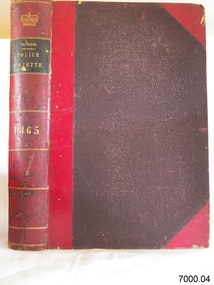
Administrative record - Reference Sociology/History, John Ferres, Government Printer, Victoria Police Gazettes for 1865, 1865
... At that time there were seven distinct, independently operating police bodies in Victoria: the Melbourne and County of Bourke Police, the City of Geelong Police, the Goldfields Police, the Gold Escort, the Water Police, the Rural Bench Constabulary, and the Mounted Police. In December of that year, the Victoria Police Gazette began as an official means of pooling information among these newly unified, uniformed bodies, aimed at essentially solving a communication problem between fragmented police units during the chaotic gold-rush era in Victoria. ...At that time there were seven distinct, independently operating police bodies in Victoria: the Melbourne and County of Bourke Police, the City of Geelong Police, the Goldfields Police, the Gold Escort, the Water Police, the Rural Bench Constabulary, and the Mounted Police. In December of that year, the Victoria Police Gazette began as an official means of pooling information among these newly unified, uniformed bodies, aimed at essentially solving a communication problem between fragmented police units during the chaotic gold-rush era in Victoria. ...The Victoria Police Gazette was a confidential, internal publication of the Victoria Police, issued to inform police officers, court and justice officials, and government departments about matters relevant to policing across the colony. It commenced in December 1853 and was initially published weekly by the Victoria Police. It was distributed each week to city and rural police stations and to government offices and newspaper publishers. Inclusions in this weekly publication were people wanted for questioning in relation to various crimes, prisoners discharged from city or country gaols, extracts from Police Gazettes in New South Wales, South Australia, Queensland, Tasmania, New Zealand, and occasionally overseas countries, as well as extracts from the Hobart Town Gazette listing escaped convicts and the person to whom they were assigned. There was also a "Missing Friends" section, where most people listed were not criminals but were sought by police so relatives, old friends, or government officials could renew contact with them. In addition, there was a record of deserted wives and children, listing the offender's name, birthplace, age, occupation, last known area of residence, likely future movements and known relatives. There was also a section on court lists, warrants issued, appointments and staffing changes within the police service, arrest and discharge records with physical descriptions, and lists of pastoralists with descriptions of their livestock brands.Hard Bound Volume. Victorian Police Gazettes for 1865 Author: Institutional Government Publication Publisher: John Ferres, Melbourne Date: 1865 Further Information: Compilation of Weekly Victorian Police Gazettes for 1865 in a hard bound volume with red spine and red corner reinforcing. Front panel grey coloured lettering in gilt with gilt banding to spine. Inside is twelve issues of the Police Gazettes for 1865.non-fictionThe Victoria Police Gazette was a confidential, internal publication of the Victoria Police, issued to inform police officers, court and justice officials, and government departments about matters relevant to policing across the colony. It commenced in December 1853 and was initially published weekly by the Victoria Police. It was distributed each week to city and rural police stations and to government offices and newspaper publishers. Inclusions in this weekly publication were people wanted for questioning in relation to various crimes, prisoners discharged from city or country gaols, extracts from Police Gazettes in New South Wales, South Australia, Queensland, Tasmania, New Zealand, and occasionally overseas countries, as well as extracts from the Hobart Town Gazette listing escaped convicts and the person to whom they were assigned. There was also a "Missing Friends" section, where most people listed were not criminals but were sought by police so relatives, old friends, or government officials could renew contact with them. In addition, there was a record of deserted wives and children, listing the offender's name, birthplace, age, occupation, last known area of residence, likely future movements and known relatives. There was also a section on court lists, warrants issued, appointments and staffing changes within the police service, arrest and discharge records with physical descriptions, and lists of pastoralists with descriptions of their livestock brands.warrnambool, shipwrecked-coast, flagstaff-hill, flagstaff-hill-maritime-museum, maritime-museum, shipwreck-coast, flagstaff-hill-maritime-village, shipwrecked-artefact, book, victoria police gazette 1862, victoria police gazette, warrnambool books and records, great ocean road -
 Flagstaff Hill Maritime Museum and Village
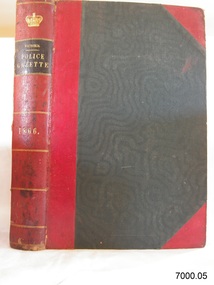
Administrative record - Reference Sociology/History, John Ferres, Government Printer, Victoria Police Gazettes for 1866, 1866
... At that time there were seven distinct, independently operating police bodies in Victoria: the Melbourne and County of Bourke Police, the City of Geelong Police, the Goldfields Police, the Gold Escort, the Water Police, the Rural Bench Constabulary, and the Mounted Police. In December of that year, the Victoria Police Gazette began as an official means of pooling information among these newly unified, uniformed bodies, aimed at essentially solving a communication problem between fragmented police units during the chaotic gold-rush era in Victoria. ...At that time there were seven distinct, independently operating police bodies in Victoria: the Melbourne and County of Bourke Police, the City of Geelong Police, the Goldfields Police, the Gold Escort, the Water Police, the Rural Bench Constabulary, and the Mounted Police. In December of that year, the Victoria Police Gazette began as an official means of pooling information among these newly unified, uniformed bodies, aimed at essentially solving a communication problem between fragmented police units during the chaotic gold-rush era in Victoria. ...The Victoria Police Gazette was a confidential, internal publication of the Victoria Police, issued to inform police officers, court and justice officials, and government departments about matters relevant to policing across the colony. It commenced in December 1853 and was initially published weekly by the Victoria Police. It was distributed each week to city and rural police stations and to government offices and newspaper publishers. Inclusions in this weekly publication were people wanted for questioning in relation to various crimes, prisoners discharged from city or country gaols, extracts from Police Gazettes in New South Wales, South Australia, Queensland, Tasmania, New Zealand, and occasionally overseas countries, as well as extracts from the Hobart Town Gazette listing escaped convicts and the person to whom they were assigned. There was also a "Missing Friends" section, where most people listed were not criminals but were sought by police so relatives, old friends, or government officials could renew contact with them. In addition, there was a record of deserted wives and children, listing the offender's name, birthplace, age, occupation, last known area of residence, likely future movements and known relatives. There was also a section on court lists, warrants issued, appointments and staffing changes within the police service, arrest and discharge records with physical descriptions, and lists of pastoralists with descriptions of their livestock brands.Hard Bound Volume. Victorian Police Gazettes for 1866 Author: Institutional Government Publication Publisher: John Ferres, Melbourne Date: 1866 Further Information: Compilation of Weekly Victorian Police Gazettes for 1866 in a hard bound volume with red spine and red corner reinforcing. Front panel grey coloured lettering in gilt with gilt banding to spine. Inside is twelve issues of the Police Gazettes for 1866.non-fictionThe Victoria Police Gazette was a confidential, internal publication of the Victoria Police, issued to inform police officers, court and justice officials, and government departments about matters relevant to policing across the colony. It commenced in December 1853 and was initially published weekly by the Victoria Police. It was distributed each week to city and rural police stations and to government offices and newspaper publishers. Inclusions in this weekly publication were people wanted for questioning in relation to various crimes, prisoners discharged from city or country gaols, extracts from Police Gazettes in New South Wales, South Australia, Queensland, Tasmania, New Zealand, and occasionally overseas countries, as well as extracts from the Hobart Town Gazette listing escaped convicts and the person to whom they were assigned. There was also a "Missing Friends" section, where most people listed were not criminals but were sought by police so relatives, old friends, or government officials could renew contact with them. In addition, there was a record of deserted wives and children, listing the offender's name, birthplace, age, occupation, last known area of residence, likely future movements and known relatives. There was also a section on court lists, warrants issued, appointments and staffing changes within the police service, arrest and discharge records with physical descriptions, and lists of pastoralists with descriptions of their livestock brands.warrnambool, shipwrecked-coast, flagstaff-hill, flagstaff-hill-maritime-museum, maritime-museum, shipwreck-coast, flagstaff-hill-maritime-village, shipwrecked-artefact, book, victoria police gazette 1862, victoria police gazette, warrnambool books and records, great ocean road -
 Flagstaff Hill Maritime Museum and Village
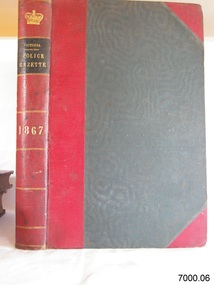
Administrative record - Reference Sociology/History, John Ferres, Government Printer, Victoria Police Gazettes for 1867, 1867
... At that time there were seven distinct, independently operating police bodies in Victoria: the Melbourne and County of Bourke Police, the City of Geelong Police, the Goldfields Police, the Gold Escort, the Water Police, the Rural Bench Constabulary, and the Mounted Police. In December of that year, the Victoria Police Gazette began as an official means of pooling information among these newly unified, uniformed bodies, aimed at essentially solving a communication problem between fragmented police units during the chaotic gold-rush era in Victoria. ...At that time there were seven distinct, independently operating police bodies in Victoria: the Melbourne and County of Bourke Police, the City of Geelong Police, the Goldfields Police, the Gold Escort, the Water Police, the Rural Bench Constabulary, and the Mounted Police. In December of that year, the Victoria Police Gazette began as an official means of pooling information among these newly unified, uniformed bodies, aimed at essentially solving a communication problem between fragmented police units during the chaotic gold-rush era in Victoria. ...The Victoria Police Gazette was a confidential, internal publication of the Victoria Police, issued to inform police officers, court and justice officials, and government departments about matters relevant to policing across the colony. It commenced in December 1853 and was initially published weekly by the Victoria Police. It was distributed each week to city and rural police stations and to government offices and newspaper publishers. Inclusions in this weekly publication were people wanted for questioning in relation to various crimes, prisoners discharged from city or country gaols, extracts from Police Gazettes in New South Wales, South Australia, Queensland, Tasmania, New Zealand, and occasionally overseas countries, as well as extracts from the Hobart Town Gazette listing escaped convicts and the person to whom they were assigned. There was also a "Missing Friends" section, where most people listed were not criminals but were sought by police so relatives, old friends, or government officials could renew contact with them. In addition, there was a record of deserted wives and children, listing the offender's name, birthplace, age, occupation, last known area of residence, likely future movements and known relatives. There was also a section on court lists, warrants issued, appointments and staffing changes within the police service, arrest and discharge records with physical descriptions, and lists of pastoralists with descriptions of their livestock brands.Hard Bound Volume. Victorian Police Gazettes for 1867 Author: Institutional Government Publication Publisher: John Ferres, Melbourne Date: 1867 Further Information: Compilation of Weekly Victorian Police Gazettes for 1867 in a hard bound volume with red spine and red corner reinforcing. Front panel grey coloured lettering in gilt with gilt banding to spine. Inside is twelve issues of the Police Gazettes for 1867.non-fictionThe Victoria Police Gazette was a confidential, internal publication of the Victoria Police, issued to inform police officers, court and justice officials, and government departments about matters relevant to policing across the colony. It commenced in December 1853 and was initially published weekly by the Victoria Police. It was distributed each week to city and rural police stations and to government offices and newspaper publishers. Inclusions in this weekly publication were people wanted for questioning in relation to various crimes, prisoners discharged from city or country gaols, extracts from Police Gazettes in New South Wales, South Australia, Queensland, Tasmania, New Zealand, and occasionally overseas countries, as well as extracts from the Hobart Town Gazette listing escaped convicts and the person to whom they were assigned. There was also a "Missing Friends" section, where most people listed were not criminals but were sought by police so relatives, old friends, or government officials could renew contact with them. In addition, there was a record of deserted wives and children, listing the offender's name, birthplace, age, occupation, last known area of residence, likely future movements and known relatives. There was also a section on court lists, warrants issued, appointments and staffing changes within the police service, arrest and discharge records with physical descriptions, and lists of pastoralists with descriptions of their livestock brands.warrnambool, shipwrecked-coast, flagstaff-hill, flagstaff-hill-maritime-museum, maritime-museum, shipwreck-coast, flagstaff-hill-maritime-village, shipwrecked-artefact, book, victoria police gazette 1862, victoria police gazette, warrnambool books and records, great ocean road -
 Flagstaff Hill Maritime Museum and Village
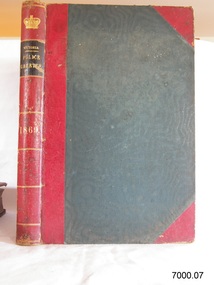
Administrative record - Reference Sociology/History, John Ferres, Government Printer, Victoria Police Gazettes for 1869, 1869
... At that time there were seven distinct, independently operating police bodies in Victoria: the Melbourne and County of Bourke Police, the City of Geelong Police, the Goldfields Police, the Gold Escort, the Water Police, the Rural Bench Constabulary, and the Mounted Police. In December of that year, the Victoria Police Gazette began as an official means of pooling information among these newly unified, uniformed bodies, aimed at essentially solving a communication problem between fragmented police units during the chaotic gold-rush era in Victoria. ...At that time there were seven distinct, independently operating police bodies in Victoria: the Melbourne and County of Bourke Police, the City of Geelong Police, the Goldfields Police, the Gold Escort, the Water Police, the Rural Bench Constabulary, and the Mounted Police. In December of that year, the Victoria Police Gazette began as an official means of pooling information among these newly unified, uniformed bodies, aimed at essentially solving a communication problem between fragmented police units during the chaotic gold-rush era in Victoria. ...The Victoria Police Gazette was a confidential, internal publication of the Victoria Police, issued to inform police officers, court and justice officials, and government departments about matters relevant to policing across the colony. It commenced in December 1853 and was initially published weekly by the Victoria Police. It was distributed each week to city and rural police stations and to government offices and newspaper publishers. Inclusions in this weekly publication were people wanted for questioning in relation to various crimes, prisoners discharged from city or country gaols, extracts from Police Gazettes in New South Wales, South Australia, Queensland, Tasmania, New Zealand, and occasionally overseas countries, as well as extracts from the Hobart Town Gazette listing escaped convicts and the person to whom they were assigned. There was also a "Missing Friends" section, where most people listed were not criminals but were sought by police so relatives, old friends, or government officials could renew contact with them. In addition, there was a record of deserted wives and children, listing the offender's name, birthplace, age, occupation, last known area of residence, likely future movements and known relatives. There was also a section on court lists, warrants issued, appointments and staffing changes within the police service, arrest and discharge records with physical descriptions, and lists of pastoralists with descriptions of their livestock brands.Hard Bound Volume. Victorian Police Gazettes for 1869 Author: Institutional Government Publication Publisher: John Ferres, Melbourne Date: 1869 Further Information: Compilation of Weekly Victorian Police Gazettes for 1869 in a hard bound volume with red spine and red corner reinforcing. Front panel grey coloured lettering in gilt with gilt banding to spine. Inside is twelve issues of the Police Gazettes for 1869.non-fictionThe Victoria Police Gazette was a confidential, internal publication of the Victoria Police, issued to inform police officers, court and justice officials, and government departments about matters relevant to policing across the colony. It commenced in December 1853 and was initially published weekly by the Victoria Police. It was distributed each week to city and rural police stations and to government offices and newspaper publishers. Inclusions in this weekly publication were people wanted for questioning in relation to various crimes, prisoners discharged from city or country gaols, extracts from Police Gazettes in New South Wales, South Australia, Queensland, Tasmania, New Zealand, and occasionally overseas countries, as well as extracts from the Hobart Town Gazette listing escaped convicts and the person to whom they were assigned. There was also a "Missing Friends" section, where most people listed were not criminals but were sought by police so relatives, old friends, or government officials could renew contact with them. In addition, there was a record of deserted wives and children, listing the offender's name, birthplace, age, occupation, last known area of residence, likely future movements and known relatives. There was also a section on court lists, warrants issued, appointments and staffing changes within the police service, arrest and discharge records with physical descriptions, and lists of pastoralists with descriptions of their livestock brands.warrnambool, shipwrecked-coast, flagstaff-hill, flagstaff-hill-maritime-museum, maritime-museum, shipwreck-coast, flagstaff-hill-maritime-village, shipwrecked-artefact, book, victoria police gazette 1862, victoria police gazette, warrnambool books and records, great ocean road -
 Flagstaff Hill Maritime Museum and Village
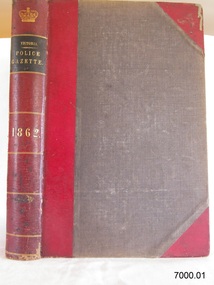
Administrative record - Reference Sociology/History, John Ferres, Government Printer, Victoria Police Gazettes for 1862, 1862
... At that time there were seven distinct, independently operating police bodies in Victoria: the Melbourne and County of Bourke Police, the City of Geelong Police, the Goldfields Police, the Gold Escort, the Water Police, the Rural Bench Constabulary, and the Mounted Police. In December of that year, the Victoria Police Gazette began as an official means of pooling information among these newly unified, uniformed bodies, aimed at essentially solving a communication problem between fragmented police units during the chaotic gold-rush era in Victoria. ...At that time there were seven distinct, independently operating police bodies in Victoria: the Melbourne and County of Bourke Police, the City of Geelong Police, the Goldfields Police, the Gold Escort, the Water Police, the Rural Bench Constabulary, and the Mounted Police. In December of that year, the Victoria Police Gazette began as an official means of pooling information among these newly unified, uniformed bodies, aimed at essentially solving a communication problem between fragmented police units during the chaotic gold-rush era in Victoria. ...The Victoria Police Gazette was a confidential, internal publication of the Victoria Police, issued to inform police officers, court and justice officials, and government departments about matters relevant to policing across the colony. It commenced in December 1853 and was initially published weekly by the Victoria Police. It was distributed each week to city and rural police stations and to government offices and newspaper publishers. Inclusions in this weekly publication were people wanted for questioning in relation to various crimes, prisoners discharged from city or country gaols, extracts from Police Gazettes in New South Wales, South Australia, Queensland, Tasmania, New Zealand, and occasionally overseas countries, as well as extracts from the Hobart Town Gazette listing escaped convicts and the person to whom they were assigned. There was also a "Missing Friends" section, where most people listed were not criminals but were sought by police so relatives, old friends, or government officials could renew contact with them. In addition, there was a record of deserted wives and children, listing the offender's name, birthplace, age, occupation, last known area of residence, likely future movements and known relatives. There was also a section on court lists, warrants issued, appointments and staffing changes within the police service, arrest and discharge records with physical descriptions, and lists of pastoralists with descriptions of their livestock brands.Hard Bound Volume. Victorian Police Gazettes for 1862 Author: Institutional Government Publication Publisher: John Ferres, Melbourne Date: 1862 Further Information: Compilation of Weekly Victorian Police Gazettes for 1862 in a hard bound volume with red spine and red corner reinforcing. Front panel grey coloured lettering in gilt with gilt banding to spine. Inside is twelve issues of the Police Gazettes for 1862.non-fictionThe Victoria Police Gazette was a confidential, internal publication of the Victoria Police, issued to inform police officers, court and justice officials, and government departments about matters relevant to policing across the colony. It commenced in December 1853 and was initially published weekly by the Victoria Police. It was distributed each week to city and rural police stations and to government offices and newspaper publishers. Inclusions in this weekly publication were people wanted for questioning in relation to various crimes, prisoners discharged from city or country gaols, extracts from Police Gazettes in New South Wales, South Australia, Queensland, Tasmania, New Zealand, and occasionally overseas countries, as well as extracts from the Hobart Town Gazette listing escaped convicts and the person to whom they were assigned. There was also a "Missing Friends" section, where most people listed were not criminals but were sought by police so relatives, old friends, or government officials could renew contact with them. In addition, there was a record of deserted wives and children, listing the offender's name, birthplace, age, occupation, last known area of residence, likely future movements and known relatives. There was also a section on court lists, warrants issued, appointments and staffing changes within the police service, arrest and discharge records with physical descriptions, and lists of pastoralists with descriptions of their livestock brands.warrnambool, shipwrecked-coast, flagstaff-hill, flagstaff-hill-maritime-museum, maritime-museum, shipwreck-coast, flagstaff-hill-maritime-village, shipwrecked-artefact, book, victoria police gazette 1862, victoria police gazette, warrnambool books and records, great ocean road
