
Showing 381 items matching " s. ball"
-
 Eltham District Historical Society Inc
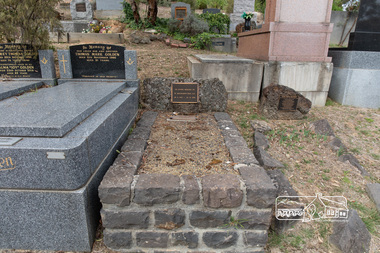
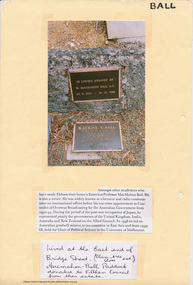
Photograph, Peter Pidgeon, Grave of William MacMahon Ball and Katrine S. Ball, Eltham Cemetery, Victoria, 5 April 2021
... Grave of William MacMahon Ball and Katrine S. Ball, Eltham Cemetery, Victoria......Katrine S. Ball...MacMahon Ball A.C. 29. 8. 1901 – 26. 12. 1986 Also Katrine S. Ball 1st Nov. 1899 to 29th Oct. 1991 Loved wife of Mac. ...Ball Mother of Jenny Grandmother of Bronwyn, David and Michael Much beloved eltham cemetery gravestones Katrine S. Ball William McMahon Ball Born Digital Grave of William MacMahon Ball and Katrine S. ...William MacMahon Ball (‘Mac’ Ball) was Professor of Political Science at Melbourne University from 1949 to 1968, having lectured there since 1923. He became known as an ABC commentator on international affairs from the early 1930s to the early 1960s. Between 1940 and 1944 he was Controller of Overseas Broadcasting (which later became Radio Australia). In 1945, he was political consultant to the Australian Delegation at the conference leading to the establishment of the United Nations, and in 1946 was the British Commonwealth Representative on the Allied Council during the post-war occupation of Japan. Mac and his wife Katrine (plus daughter Jenny) came to Eltham in 1942, and in 1945 moved into an old timber cottage at the eastern end of York Street. With help from Alistair Knox, Sonia Skipper, Gordon Ford and John Harcourt, the house was totally renovated to become an early example of Eltham mud-brick. Mac died in 1986 and is buried in Eltham Cemetery with Katrine. Part of their land backing onto Bridge Street was donated to Eltham Shire Council and is now a reserve called MacMahon Ball Paddock. In Loving Memory W. MacMahon Ball A.C. 29. 8. 1901 – 26. 12. 1986 Also Katrine S. Ball 1st Nov. 1899 to 29th Oct. 1991 Loved wife of Mac. Ball Mother of Jenny Grandmother of Bronwyn, David and Michael Much belovedBorn Digitaleltham cemetery, gravestones, katrine s. ball, william mcmahon ball -
 Linton and District Historical Society Inc
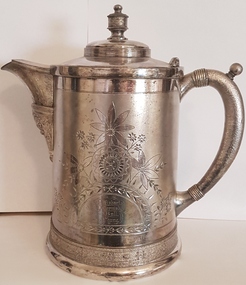
Trophy, Simpson Hall Miller and Co, Water Jug, Linton Fire Brigade, 1885, 1885
... ... S. Ball..."N.F.B.A.D-Ballarat 1885-3rd Prize-Engine practice for 8 men / Won by Linton Fire Brigade / P Wishart D Cornish S Ball J Chung". "Simpson, Hall, Miller and Co. ...Wishart D. Cornish S. Ball J. Chung Trophies Water jugs "N.F.B.A.D-Ballarat 1885-3rd Prize-Engine practice for 8 men / Won by Linton Fire Brigade / P Wishart D Cornish S Ball J Chung". ...Won by Linton Fire Brigade in 1885. (3rd prize NFBAD Ballarat). Found on Linton tip by James Wishart in the 1960s. Mr Wishart donated the water jug to LDHS shortly before his death in 1982.Large, silver-plated water jug, with hinged lid. Flower pattern etched on front and back, with inscriptions."N.F.B.A.D-Ballarat 1885-3rd Prize-Engine practice for 8 men / Won by Linton Fire Brigade / P Wishart D Cornish S Ball J Chung". "Simpson, Hall, Miller and Co. Plate 26".linton fire brigade, p. wishart, d. cornish, s. ball, j. chung, trophies, water jugs -
 Koorie Heritage Trust
Book, Bannister, S, British colonization and coloured tribes, 1838
... S...William Ball...British colonization and coloured tribes Book Bannister, S William Ball ...the whole aborigines subject must soon be taken up by the best statesmen in this country. National efforts alone will turn mischievous squatters into useful settlers, and lead aright the tens of thousands at this moment bursting through every frontier we occupy in Canada, in South Africa, and in all the Australias. without national effforts to correct present oppression, buccaneering in every remote sea must spring out of the indulgence now permitted with impunity to the violent passions of uncontrolled men; and witout national effforts now put forth, to follow up and crown those of the admirable missionaries, the possession of unwatched power will corrupt even them; and the whole work, now calling for your aid, must be done hereafter with lessened means of success and infinitely increased obstacles.p.323; appendices; 19 cm.the whole aborigines subject must soon be taken up by the best statesmen in this country. National efforts alone will turn mischievous squatters into useful settlers, and lead aright the tens of thousands at this moment bursting through every frontier we occupy in Canada, in South Africa, and in all the Australias. without national effforts to correct present oppression, buccaneering in every remote sea must spring out of the indulgence now permitted with impunity to the violent passions of uncontrolled men; and witout national effforts now put forth, to follow up and crown those of the admirable missionaries, the possession of unwatched power will corrupt even them; and the whole work, now calling for your aid, must be done hereafter with lessened means of success and infinitely increased obstacles.colonization. | indigenous peoples. | indigenous peoples -- british colonies. -
 Linton and District Historical Society Inc
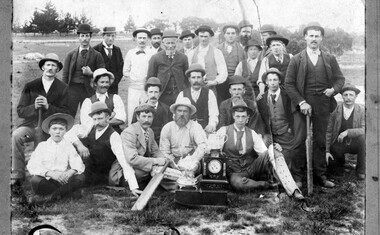
Photograph, Linton cricket team, c.1895-1900
... ... S. Ball...LINTON CRICKET TEAM 1895: STANDING L-R AJ SMITH, S LEWERS, AC CORK, H ADAMS, DR DONALDSON, I CRAINE, J HOGAN, K DONOVAN, R HISSHION, A NICOL, J GODDEN, J ANGUS, J BROWN; SECOND ROW L-R ED NICHOLLS, P ROBERTS, D CORNISH, R CORNISH, J SEMMENS, R HANSEN, J NICOL; FRONT ROW L-R R HISSHION JNR, S BALL, BEN CORNISH, TED NICHOLLS, JAS WEARNE...Nicol R. Hisshion Jnr. S. Ball Ben Cornish Ted Nicholls Jas Wearne Sepia photograph of a group of men wearing sports wear and hats, two with cricket bats, a trophy in front. ...LINTON CRICKET TEAM 1895: STANDING L-R AJ SMITH, S LEWERS, AC CORK, H ADAMS, DR DONALDSON, I CRAINE, J HOGAN, K DONOVAN, R HISSHION, A NICOL, J GODDEN, J ANGUS, J BROWN; SECOND ROW L-R ED NICHOLLS, P ROBERTS, D CORNISH, R CORNISH, J SEMMENS, R HANSEN, J NICOL; FRONT ROW L-R R HISSHION JNR, S BALL, BEN CORNISH, TED NICHOLLS, JAS WEARNESepia photograph of a group of men wearing sports wear and hats, two with cricket bats, a trophy in front.linton cricket team, sports, a. j. smith, s. lewers, a. c. cork, h. adams, dr donaldson, i. craine, j. hogan, k. donovan, r. hisshion, a. nicol, j. godden, j. angus, j. brown, ed. nicholls, p. roberts, d. cornish, r. cornish, j. semmens, r. hansen, j. nicol, r. hisshion jnr., s. ball, ben cornish, ted nicholls, jas wearne -
 Ringwood and District Historical Society
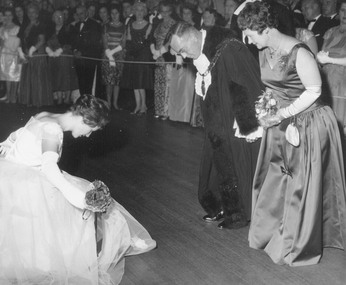
Photograph, Ringwood Mayoral Ball. c1960's
... Ringwood Mayoral Ball. c1960's...Black and white photograph Ringwood Mayoral Ball. c1960's Photograph ...Black and white photographImage shows debutant being presented to Mayor Cr Baxter and Mrs Baxter. -
 Eltham District Historical Society Inc
Folder, Ball
... ...Katrine S. Ball...william macmahon ball Eltham Cemetery Katrine S. Ball Folder of information on William MacMahon Ball, Eltham Ball Folder ...Folder of information on William MacMahon Ball, Elthamwilliam macmahon ball, eltham cemetery, katrine s. ball -
Glenelg Shire Council Cultural Collection
Photograph - Photograph - Portland 150th Anniversary Ball, c. 1984
... ... K S Anderson Wharf... ball...Portland 150th Anniversary K S Anderson Wharf ball celebration Portland 150th celebrations ball which was held in transit shed at K.S. ...In November 1984 Portland marked the 150th anniversary of European settlement and the foundation of the City of Portland. Various events happened in and around Portland, many community led.Portland 150th celebrations ball which was held in transit shed at K.S. Anderson Wharf. Table of guests from left to right: Stella Cugley, Julie Morrow, David Cugley, Mick Morrow, Roy Jennings, Di Jennings, Earl Ross, Marg Ross, all dressed in period costumeportland 150th anniversary, k s anderson wharf, ball, celebration -
 Chelsea & District Historical Society Inc
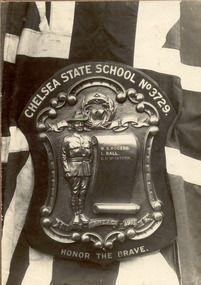
Photograph - Chelsea State School, Honour Roll World War 1, 1914
... CHELSEA STATE SCHOOL No3729 HONOURS W. S. ROGERS L. BALL G. H. McINTOSH 1914 - ANZAC191 HONOR THE BRAVE...Chelsea Education Chelsea Primary School school Chelsea State School Honour board World War One WW1 CHELSEA STATE SCHOOL No3729 HONOURS W. S. ROGERS L. BALL G. H. McINTOSH 1914 - ANZAC191 HONOR THE BRAVE Black and white photo of a plaque that honours soldiers from Chelsea State School. ...Chelsea State School was built on Argyle Avenue and officially opened on 27 January 1915.Black and white photo of a plaque that honours soldiers from Chelsea State School. The plaque has a Soldier standing at attention and a scroll with the names.CHELSEA STATE SCHOOL No3729 HONOURS W. S. ROGERS L. BALL G. H. McINTOSH 1914 - ANZAC191 HONOR THE BRAVEchelsea, education, chelsea primary school, school, chelsea state school, honour board, world war one, ww1 -
 Bendigo Military Museum
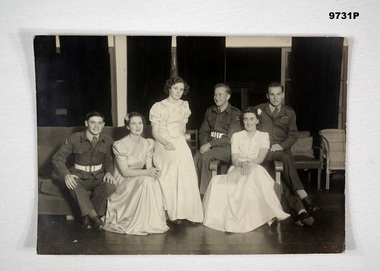
Photograph - PHOTOGRAPH, BENNETTS, 19 Dec 1947
... Handwritten on the back in black ink: 'Taken at Commonwealth O.R.'s Club Ball, held on Princess Elizabeth wedding day. ...Bennetts Collection Alva Bennetts Photograph BCOF Handwritten on the back in black ink: 'Taken at Commonwealth O.R.'s Club Ball, held on Princess Elizabeth wedding day. ...Part of the Bennetts Collection. See catalogue No. 9726P for details of service for "Alva Marie Bennetts".Black and white photograph of three couples seated. men are in uniform and the women in ball gowns.Handwritten on the back in black ink: 'Taken at Commonwealth O.R.'s Club Ball, held on Princess Elizabeth wedding day. From left:- Junior Ward, Dulcie Kerr, Frances Richman, Max Mercier, Alva Bennetts, Bill Napier. Eta Jima 19/12/47'.bennetts collection, alva bennetts, photograph, bcof -
 Embroiderers Guild, Victoria
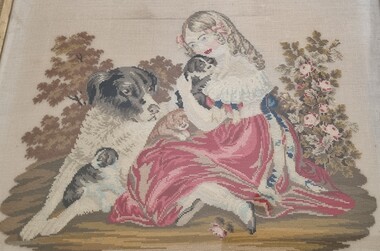
Textile - Berlin Wool Work Embroidered Picture, 19th C
... Embroidered in late 1800's by Mrs Ball in Boisdale or Briagalong NSW. Gifted to donors grandmother Catherine Forbes (nee Landy). ...Embroidered in late 1800's by Mrs Ball in Boisdale or Briagalong NSW. Gifted to donors grandmother Catherine Forbes (nee Landy). ...Embroidered in late 1800's by Mrs Ball in Boisdale or Briagalong NSW. Gifted to donors grandmother Catherine Forbes (nee Landy). Embroidery was originally much larger but cut down by donors mother Enid Clota to fit on her wall.Berlin wool work became popular in the 19th century due to the development of hand-painted charts in Berlin, Germany. Amateur embroiderers could use these charts to stitch the design in a soft wool embroidery thread. The first chart was produced in 1804, and by 1840 more than 14,000 different designs were published. By the mid 1800's they were the most popular embroidery patterns in England and the United States.Framed embroidery depicting a young girl with a dog and three puppies. Stitched in wool using gros and petit point stitches.dogs, child, girl -
 Bendigo Historical Society Inc.
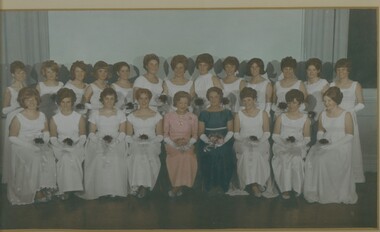
Photograph - MAYORAL DEBUTANTE BALL, 1966-1967
... Mayoral Debutante Ball 1960's, colour group photograph of Debutantes seated with Mayoress Mrs Tom Flood, under glass in a white timber frame with gold moulding. ...PHOTOGRAPH Portrait female group Martin Washington Mayoral Debutante Ball 1960's, colour group photograph of Debutantes seated with Mayoress Mrs Tom Flood, under glass in a white timber frame with gold moulding. ...Mayoral Debutante Ball 1960's, colour group photograph of Debutantes seated with Mayoress Mrs Tom Flood, under glass in a white timber frame with gold moulding. Deframed 2022Martin Washingtonphotograph, portrait, female group -
 Ballarat Tramway Museum
Document - Photocopy, M. Sayers, "The Development of Ballarat's Electricity Supply", 2000?
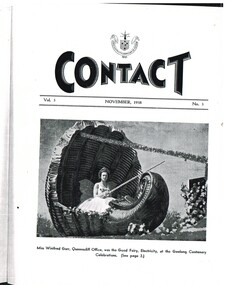
... McKinnon appointed as Tramway Inspector and Mr. C. S. Ball, appointed Senior Traffic Inspector. ...McKinnon appointed as Tramway Inspector and Mr. C. S. Ball, appointed Senior Traffic Inspector. ...2971.1 - Photocopy of the cover of the State Electricity Commission of Victoria Magazine, Contact, Vol 3, No. 3, Nov 1938 . Features Miss Winifred Gurr of the Queenscliff office, as the Good Fairy, Electricity at the Geelong Centenary Celebrations. Has the SEC logo or motif on the top of the cover. 2971.2 - Photocopy of an article in the State Electricity Commission of Victoria Magazine, Contact, Vol 3, No. 3, Nov. 1938 titled "The Development of Ballarat's Electricity Supply". One A3 sheet and one A4 sheet. The article details the SEC's part in the celebration of Geelong's Centenary Celebrations in October 1938. Opened by Mayor, Alderman C. N. Brown. Details the lighting needs for the celebrations, 400kW, the large motor traffic who came to see them, damage due to Gales, public buildings illuminated and the procession. Includes details of the decorated trams - 1500 paper floors and 400 lamps. Has photos of Moorabool St, a decorated Pengelly tram and Power Station. On page 4 is a letter from an American visitor, Dorothy Bradner congratulating the tramways. Record revised 3/4/2019 to add digital images with those from Andrew Cook CD. Images added of pages 22 and 37 Page 22 - image 12 - titled "The Provincial Big Three" - photos of the Managers of the Ballarat, Geelong and Bendigo Regions - Mr. T. A. Farr, Mr. H.N. Hornabrook and T.H. McNaught. Page 37 - image 11 - Staff movements of General Interest - records the retirement of W. White Tramways Inspector Geelong, and appointments - W. J. McKinnon appointed as Tramway Inspector and Mr. C. S. Ball, appointed Senior Traffic Inspector. Each item had a thin strip of paper attached by staple to the top left hand corner, giving the Vol. No. details. trams, tramways, sec, geelong, geelong centenary, power station, decorated trams, letters -
 Wangaratta High School
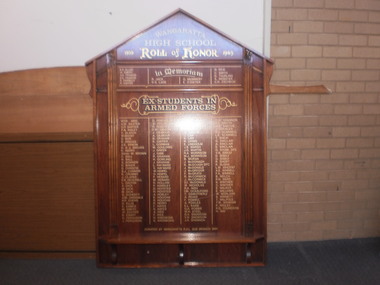
WHS Roll of Honor 1939-1943, 1991
... Barry Sister M. brown C. Ball N. Ball S. Bowker K. Baker D. Christie S.J. Connor K. ...Barry Sister M. brown C. Ball N. Ball S. Bowker K. Baker D. Christie S.J. Connor K. ...Large wooden honour board with gold lettering of the names of students who served in the Australian Armed forces in WWIIWangaratta High School Roll Of Honor 1939-1943 IN MEMORIAM K.E. Allen W. Emery A.H. Francis R. Farrelly R. Gayfer R. Jack D.S. Lade G. Mummery E. O'Dwyer N. Reid C. Smith G. Thurling A. Webster C.H. Zschech EX-STUDENTS IN THE ARMED FORCES W.T.R. Aird A.W. Baxter G.R. Barter F.A. Bailey V. Blatch W. Beeby D. Bunn D. Briggs A.E. Binion D. & J. Bayliss R. Barry Sister M. brown C. Ball N. Ball S. Bowker K. Baker D. Christie S.J. Connor K. Crummy J. Clarke E.E. Deverell L. Dalton A. Dick W. Dick M. Dick G. Doherty A.M. Dinsdale H.P. Evens D. Ellis K. Eames M. emery W. Ecuyer B. Ewart G. Furguson J. Ferguson D. Ferguson W. Fullerton R. Fullerton E.M. Gibson J. Gilmour A. Gilmour B. Graham K. Gayfer L. Gorman M. Goulding J. Green J. Gibb R. Graham H. Gowling J. Graham L. Hayward V. Hayward W. Hempel O. Hempel P. Hebard M. Hebard R. Hollow P. Handley D. Hoystead H. Hoystead A. Hobley K. Holyoak R, Holyoak R. Herry F. Hayes K. Hayes A. Ives F. Ives H. Kneebone K. Kronborg W. Kronborg R. Kronborg M. King J. Knight W. Kirwin J. Law K. Law R. Living E. Lindholm J.S. Marsh J.G. Martin R.A. Morrison M.J. Morrison B. Moran J. McDonagh K. McDonagh DFC J. McDonald J. McGregor F. McGrath R. McCormick J. McCormick D.I. McDonald W. Nicholas R.A. Nish I.M. Ockelford T. Osmotherly A. Peake F. Powell A. Powles E.L. Raine G.A. Robbie W.H. Steel G.V. Snowdon V. H. Showdon J.H. Shannon G.W. Shannon A.L. Smyth W.E. Smythe J. Spencer R.J. Scannell L.E. Scannell T. Sheay G. Sinclair A. Sinclair E. Sinclair G. Stone DFC V.H. Sisely D. Sisely G. Sisely R. Short R. Sloan L.W. Vincent A.E. Winnell F.A. Winnell B. Welch R.H. Ward K. Winther C. Winther T. Walpole T.W. Wenham P. Wigley P.O. Youngson H Way Donated by Wangaratta R.S.L. sub branch 1991 -
 Flagstaff Hill Maritime Museum and Village
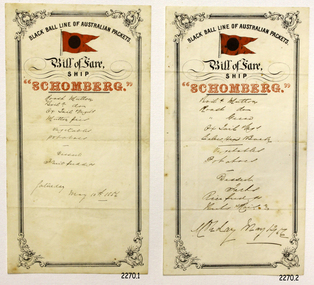
Document - Menu, Bill of Fare ship Schomberg, circa 1855 - May 12 1856
... ball line of australian packets...bill of fare schomberg...menu schomberg 1856...food mid-1800’s...Criterion C: Potential to yield information that will contribute to an understanding of Victoria’s cultural history. warrnambool peterborough shipwrecked coast shipwreck coast flagstaff hill maritime museum flagstaff hill maritime village maritime museum great ocean road flagstaff hill sailing ship schomberg shipwreck schomberg black ball line of australian packets bill of fare schomberg menu schomberg 1856 food mid-1800’s food on ships mid-1800’s menu may 10, 1856 may 12, 1856 Printed on the pages ““BLACK BALL LINE OF AUSTRALIAN PACKETS.” ...A “Bill of Fare” is a menu or list of food offered for a meal. This Bill of Fare from the sailing ship Schomberg is handwritten in pen in hard-to-read script on the printed pages specifically for the Schomberg ship, of the Black Ball Line of Australian Packets. (‘Packets’ were vessels that had a regular trade run of cargo, passengers and mail; the sailing ship Schomberg was designed for long voyages between England and Australia.) These menus posed a puzzle as they have the handwritten dates of, May 10 and 12, 1856, by which time the Schomberg had sunk (she sunk on December 26, 1855). The donor of these pages of Bill of Fare is a stamp collector from Melbourne. He came across the menus in a package that he bought in 1980 at a stamp auction in Tasmania. He decided to give the menus to Flagstaff Hill this year during his annual family holiday in Warrnambool. A 1981 newspaper article about this donation included an interview with Flagstaff Hill’s curator Mr Peter Ronald, who said that the stationery of these menus is genuine. He went on to say that there would have been much stationery printed for use on the Schomberg although she sank on her maiden voyage. These menus could have been written at a dated late because the surplus Schomberg stationery could have been used for menus on other ships. We will probably never be sure of the answer but none-the-less the pages are still connected to the Schomberg. Below is what we believe the menu consists of although some of the writing is indecipherable - - - - - - - - - - - - - - - - - - - - - - - - - - - - - - - - - - - - - (first menu) Roast Mutton Boiled Mutton? Ox Tail Mulligatawny? Or possibly Ox Tail Vegetables? Mutton Pies? ------------------------------- Vegetables Potatoes ---------------------------------- Dessert Fruit Puddings? Saturday May 10, 1856 - - - - - - - - - - - - - - - - - - - - - - - - - - - - - - - - - - - - AND - - - - - - - - - - - - - - - - - - - - - - - - - - - - - - - - - - - - (second menu) Boiled Mutton Roast Mutton? Roast Geese? Ox Tail?? Calves Head Broth? ------------------------------- Vegetables Potatoes ------------------------------- Dessert Tarts? Rice Pudding? ?...Maids?? Monday May 12, 1856 - - - - - - - - - - - - - - - - - - - - - - - - - - - - - - - - - - - - Background of “SCHOMBERG” When SCHOMBERG was launched in July, 1855, she was considered the “Noblest ship that ever floated on water.” SCHOMBERG’s owners, the Black Ball Line (one of three companies by that name), commissioned the ship for their fleet of passenger liners. She was built by Alexander Hall of Aberdeen, UK at a cost of £43,103. She was constructed with 3 skins: one planked fore and aft, and two diagonally planked, fastened together with screw threaded trunnels (wooden rails). Her first class accommodation was luxurious: velvet pile carpets; large mirrors; rosewood; birds-eye maple; mahogany; soft furnishings of gold satin damask; an oak-lined library; and a piano. Overall she had accommodation for 1000 passengers. SCHOMBERG’s 34 year old master, Captain James ‘Bully’ Forbes, had promised Melbourne in 60 days at the launch, "with or without the help of God." James Nicol Forbes was born in Aberdeen in 1821 and rose to fame with his record-breaking voyages on the famous Black Ball Line ships MARCO POLO and LIGHTNING. In 1852 in the MARCO POLO he made the record passage from London to Melbourne in 68 days. There were 53 deaths on the voyage but the great news was of the record passage by the master. In 1954 Captain Forbes took the clipper LIGHTNING to Melbourne in 76 days and back in 63 days, this was never beaten by a sailing ship. He often drove his crew and ship to breaking point to beat his own records. He cared little for the comfort of the passengers. On this, the SCHOMBERG’s maiden voyage, he was going to break records. SCHOMBERG departed Liverpool on her maiden voyage on 6 October 1855 flying the sign “Sixty Days to Melbourne”. She departed with 430 passengers and 3000 tons cargo including iron rails and equipment intended to build the Melbourne to Geelong Railway as well as a bridge over the Yarra from Melbourne to Hawthorn. She also carried a cow for fresh milk, pens for fowls and pigs, and 90,000 gallons of water for washing and drinking. SCHOMBERG also carried 17,000 letters and 31,800 newspapers. The ship and cargo was insured for $300,000, a fortune for the time. The winds were poor as she sailed across the equator, slowing SCHOMBERG’s journey considerably. Land was first sighted on Christmas Day, at Cape Bridgewater near Portland, and Captain Forbes followed the coastline towards Melbourne. Forbes was said to be playing cards when called by the Third Mate Henry Keen, who reported land about 3 miles off. Due in large part to Forbes regarding a card game as more important than his ship, SCHOMBERG eventually ran aground on a sand spit near Curdie's Inlet (about 56 km west of Cape Otway) on 26 December 1855, 78 days after leaving Liverpool. The sand spit and the currents were not marked on Forbes’s map. Overnight, the crew launched a lifeboat to find a safe place to land the ship’s passengers. The scouting party returned to SCHOMBERG and advised Forbes that it was best to wait until morning because the rough seas could easily overturn the small lifeboats. The ship’s Chief Officer spotted the steamer SS QUEEN at dawn and signalled it. The master of the SS QUEEN approached the stranded vessel and all of SCHOMBERG’s passengers and crew were able to disembark safely. The SCHOMBERG was lost and with her, Forbes’ reputation. The Black Ball Line’s Melbourne agent sent a steamer to retrieve the passengers’ baggage from the SCHOMBERG. Other steamers helped unload her cargo until the weather changed and prevented the salvage teams from accessing the ship. Later one plunderer found a case of Wellington boots, but alas, all were for the left foot! Local merchants Manifold & Bostock bought the wreck and cargo, but did not attempt to salvage the cargo still on board the ship. They eventually sold it on to a Melbourne businessman and two seafarers. In 1864 salvage efforts were abandoned after two men drowned when they tried to reach SCHOMBERG. Parts of the SCHOMBERG were washed ashore on the south island of New Zealand in 1870, nearly 15 years after the wreck. The wreck of the SCHOMBERG lies in almost 9 metres of water. Although the woodwork is mostly disintegrated, the shape of the ship can still be seen due to the remaining railway irons, girders and the ship’s frame. A variety of goods and materials can be seen surrounding the wreck, by divers. Flagstaff Hill holds many items salvaged from the SCHOMBERG including a ciborium (in which a diamond ring was concealed in concretion), communion set, ship fittings and equipment, personal effects, a lithograph, tickets and photograph from the SCHOMBERG. These Bills of Fare are significant due to their connection to Flagstaff Hill’s collection of artefacts from the Schomberg, which is significant for its association with the Victorian Heritage Registered shipwreck S612. The collection is primarily significant because of the relationship between the objects, as together they have a high potential to interpret the story of the Schomberg. The Schomberg collection is archaeologically significant as the remains of an international passenger ship. The shipwreck collection is historically significant for representing aspects of Victoria’s shipping history and its potential to interpret sub-theme 1.5 of Victoria’s Framework of Historical Themes (living with natural processes). The collection is also historically significant for its association with the shipwreck and the ship, which was designed to be fastest and most luxurious of its day. The Schomberg collection meets the following criteria for assessment: Criterion A: Importance to the course, or pattern, of Victoria’s cultural history. Criterion B: Possession of uncommon, rare or endangered aspects of Victoria’s cultural history. Criterion C: Potential to yield information that will contribute to an understanding of Victoria’s cultural history. Menu, or Bill of Fare, on cream coloured stationery from the sailing vessel “Schomberg”. Two rectangular pieces of paper, each bears the printed words “Black Ball Line of Australian Packets, Bill of Fare, Ship, Schomberg”, a printed symbol of the Black Ball line (a black ball on a red flag) and a decorative border. Both pages are handwritten, in similar but different sized writing, with a Bill of Fare and a date, Page (1) dated May 10th 1856 and (2) dated May 12th ’56, (Both dates are AFTER the Schomberg sank in December 26th 1855.) Both pages have three fold lines spaced across their width. To be used for the return voyage.Printed on the pages ““BLACK BALL LINE OF AUSTRALIAN PACKETS.” “Bill of Fare, / SHIP / “SCHOMBERG”.” Handwritten list of food, and on one page “Saturday May 10 1856” and on the other page “Monday May 12” warrnambool, peterborough, shipwrecked coast, shipwreck coast, flagstaff hill maritime museum, flagstaff hill maritime village, maritime museum, great ocean road, flagstaff hill, sailing ship schomberg, shipwreck schomberg, black ball line of australian packets, bill of fare schomberg, menu schomberg 1856, food mid-1800’s, food on ships mid-1800’s, menu, may 10, 1856, may 12, 1856 -
 Flagstaff Hill Maritime Museum and Village
Accessory - Badge, Before 1855
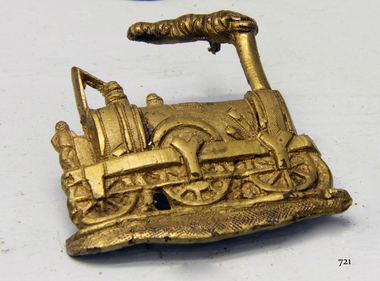
... The shipwreck is of additional historical significance for representing aspects of Victoria’s shipping history and for its association with the first passenger ship, which was designed not only to be the fastest and most luxurious of its day but foundered on its maiden voyage to Australia. warrnambool flagstaff-hill flagstaff-hill-maritime-museum shipwreck-coast flagstaff-hill-maritime-village schomberg shipwrecked-artefact clipper ship black ball line 1855 shipwreck captain forbes ss queen badge Charles Tayleur Great Western Railway Vulcan Foundry Isambard Kingdom Brunel locomoive brooch Gold coloured brass badge depicting an 1840's steam engine or locomotive with the figure of a fireman standing on the back. ...The badge recovered from the Schomberg wreck is believed to depict one of the first steam engines. The engine's design by Charles Tayleur & Co. was to be produced for the Great Western Railway in England. The first nineteen of these locomotives were ordered by Isambard Kingdom Brunel for the Great Western Railway including six 2-2-2 Charles Tayleur locomotives. They were built by Charles Tayleur and Company, which later the Vulcan Foundry. The locomotives were unsuccessful and were rapidly supplemented by the Star Class locomotives ordered by Daniel Gooch once he had been appointed as the Locomotive Engineer. As built, they comprised two groups of three, the first group, was delivered in 1837. This locomotive was the first to run on the Great Western Railway when it was tested on 28 December 1837 from its shed at West Drayton. It was withdrawn in 1843 but was rebuilt as a 2-2-2T tank locomotive and returned to service in 1846, running in this form until 1868. It survived for two more years at Reading as a stationary boiler. It is named after the workshops where it was built, which themselves were named after the Roman god of fire. (Although a supposition, it is possible that the owner was a passenger on the ill-fated Schomberg and that they worked either for the Great Western Railway or the Vulcan Foundry that made the engine in the 1830s.) Wreck of the Schomberg: Schomberg was a large three-masted full-ship rigged wooden ship built in 1855 by Alexander Hall and Co in Aberdeen, Scotland for James Baines' famous Black Ball Line at £43,103. The vessel was 288 feet (88 meters) in length, with a beam of 45 feet (14 meters), a depth of 29.5 feet (8.99 meters) of 2,284 tons. The mainmast was 210 feet (64 meters) high and she carried 3.3 acres of sail. The vessel was constructed with three skins. One planked fore and aft, and two diagonally planked, fastened together with screw-threaded trunnels (wooden rails). The Schomberg is one of only three clipper wrecks in Victorian waters that operated the England to Australia run. While the other two, Empress of the Sea and Lightning, were built by the famous American shipbuilder, Donald Mac Kay. Schomberg was an attempt to build a faster ship than Mac Kay and a vessel fast enough to break the sailing record to Australia. The Schomberg sailed on her maiden voyage from Liverpool on 6 October 1855, under the command of Captain James Forbes, on its maiden voyage to Australia with a general cargo, jewellery, spirits, machinery, and 2,000 tons of iron rails and equipment intended to build the Melbourne to Geelong Railway and a bridge over the Yarra from Melbourne to Hawthorn. She also carried a cow for fresh milk, pens for fowls and pigs, plus 90,000 gallons of water for washing and drinking. She also carried 17,000 letters and 31,800 newspapers. There were approximately 473 passengers and a crew of 105. It was hoped that Schomberg would make Melbourne in sixty days, setting a record for the voyage, but light winds at the equator dashed those expectations. The ship sighted Moonlight Head in southwest Victoria on Christmas Day but through a deadly combination of wind, currents, and unmarked sand spits, the vessel gently ran aground on 26 December 1855 on a spit that juts into Newfield Bay, just east of Curdies Inlet, and the present town of Peterborough. Fortunately, the SS Queen was nearby and managed to save all passengers and crew. The steamers Keera and Maitland were dispatched to salvage the passenger's baggage and the more valuable cargo. Other salvage attempts were made, but deteriorating weather made the work impossible, and within two weeks the Schomberg's hull was broken up and the vessel abandoned. The wrecking of the Schomberg caused quite a public stir, particularly in light of the fact the vessel was supposed to be, the most perfect clipper ship ever built. Captain Forbes was charged in the Supreme Court under suspicion that he was playing cards with two female passengers below decks when his ship ran aground. Despite a protest meeting, two inquiries, and the court proceedings, he was found not guilty and cleared of all charges. In 1975, divers from Flagstaff Hill, including Peter Ronald, found an ornate communion set at the wreck. The set comprised a jug, two chalices, a plate, and a lid. The lid did not fit any of the other objects and in 1978 a piece of the lid broke off, revealing a glint of gold. As museum staff carefully examined the lid and removed marine growth, they found a diamond ring, which is currently on display in the Great Circle Gallery at the Flagstaff Hill Maritime Museum that also displays ship fittings and equipment, and personal effects. Most of the artefacts were salvaged from the wreck by Peter Ronald, former director of Flagstaff Hill.The Schomberg has historical significance as one of the first luxurious ships built to bring emigrants to Australia to cash in on the gold rush era. And is included on the Victorian Heritage Register (VHR S612). The collection of Schomberg artefacts held at Flagstaff Hill Museum is primarily significant because of the relationship between these recovered items having a high potential to interpret the story of the Schomberg and its foundering during a storm. The shipwreck is of additional historical significance for representing aspects of Victoria’s shipping history and for its association with the first passenger ship, which was designed not only to be the fastest and most luxurious of its day but foundered on its maiden voyage to Australia.Gold coloured brass badge depicting an 1840's steam engine or locomotive with the figure of a fireman standing on the back. Smoke is coming from the smokestack. The reverse has three holes, possible where a mounting pin or fastener was attached. The badge was recovered from the wreck of the Schomberg.warrnambool, flagstaff-hill, flagstaff-hill-maritime-museum, shipwreck-coast, flagstaff-hill-maritime-village, schomberg, shipwrecked-artefact, clipper ship, black ball line, 1855 shipwreck, captain forbes, ss queen, badge, charles tayleur, great western railway, vulcan foundry, isambard kingdom brunel, locomoive, brooch -
 Flagstaff Hill Maritime Museum and Village
Functional object - Keg Spigot/Tap, Circa 1855
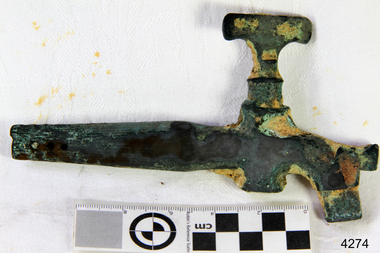
... S 612). The collection is of additional significance because of the relationship between the objects salvaged, as together they help us to interpret the story of the Schomberg. The collection as a whole is historically significant for representing aspects of Victoria's maritime history and its potential to interpret social and historical themes from society at the time of the wreck. warrnambool flagstaff-hill flagstaff-hill-maritime-museum maritime-museum shipwreck-coast flagstaff-hill-maritime-village schomberg shipwrecked-artefact clipper ship black ball line 1855 shipwreck aberdeen clipper ship captain forbes peterborough shipwreck ss queen keg tap brass keg tap None Brass keg spigot valve/tap, Schomberg Artifact Reg No S/94. ...When the Schomberg was launched in 1855, she was considered the "Noblest” ship that ever floated on the water. Schomberg's owners, the Black Ball Line had commissioned the ship for their fleet of passenger liners. She was built by Alexander Hall of Aberdeen for £43,103 and constructed with 3 skins. One planked fore and aft and two diagonally planked, fastened together with screw-threaded trunnels (wooden rails). Her First Class accommodation was simply luxurious with velvet pile carpets, large mirrors, rosewood, birds-eye maple and mahogany timbers throughout, soft furnishings of satin damask, and oak-lined library with a piano. Overall she had accommodation for 1000 passengers. At the launch, the Schomberg's 34-year-old master, Captain 'Bully' Forbes, had promised to reach Melbourne in sixty days stating, "with or without the help of God." Captain James Nicol Forbes was born in Aberdeen in 1821 and rose to fame with his record-breaking voyages on the famous Black Ball Line ships; Marco Polo and Lightning. In 1852 in the Marco Polo, he made the record passage from London to Melbourne in 68 days. Unfortunately, there were 53 deaths on the voyage, but the great news was off the record passage by Captain Forbes. In 1854 he took the clipper “Lighting” to Melbourne in 76 days and back in 63 days, this record was never beaten by a sailing ship. He often drove his crew and ship to breaking point to beat his previous records. He cared little for the comfort of the passengers. On this, the Schomberg's maiden voyage, he was determined to break existing records. Schomberg departed Liverpool on her maiden voyage on 6th October 1855 flying a sign that read "Sixty Days to Melbourne". She departed with 430 passengers and 3000 tons cargo including iron rails and equipment intended to build the Melbourne to Geelong Railway and a bridge over the Yarra from Melbourne to Hawthorn. She also carried a cow for fresh milk, pens for fowls and pigs, 90,000 gallons of water for washing and drinking. She also carried 17,000 letters and 31,800 newspapers. The ship and cargo were insured for $300,000 a fortune for the time. The winds were poor as she sailed across the equator, slowing Schomberg's journey considerably. The land was first sighted on Christmas Day, at Cape Bridgewater near Portland, Captain Forbes followed the coastline towards Melbourne. Forbes was said to be playing cards when called by the third mate Henry Keen, who reported land about 3 miles off. Due in large part to the captain's regarding a card game as more important than his ship, it eventually ran aground on a sand spit near Curdie's Inlet (about 56 km west of Cape Otway) on 26th December 1855, 78 days after leaving Liverpool. The sand spit and the currents were not marked on Forbes's map. Overnight, the crew launched a lifeboat to find a safe place to land the ship’s passengers. The scouting party returned to Schomberg and advised Forbes that it was best to wait until morning because the rough seas could easily overturn the small lifeboats. The ship’s Chief Officer spotted the SS Queen at dawn and signalled the steamer. The master of the Queen approached the stranded vessel and all of Schomberg’s passengers and crew disembarked safely. The Black Ball Line's Melbourne agent sent a steamer to retrieve the passengers' baggage from the Schomberg. Other steamers helped unload her cargo until the weather changed and prevented the salvage teams from accessing the ship. Later one plunderer found a case of Wellington boots, but alas, all were for the left foot. Local merchants Manifold & Bostock bought the wreck and cargo but did not attempt to salvage the cargo still on board the ship. They eventually sold it on to a Melbourne businessman and two seafarers. In 1864 after two of the men drowned when they tried to reach Schomberg, salvage efforts were abandoned. In 1870, nearly 15 years after the wreck parts of the Schomberg had washed ashore on the south island of New Zealand. The wreck now lies in almost 9 metres of water and although the woodwork is mostly disintegrated the shape of the ship can still be determined due to the remaining railway irons, girders and the ship’s frame. A variety of goods and materials can be seen scattered about nearby. There have been many other artefacts salvaged from the wreck include ship fittings and equipment, personal effects, a lithograph, tickets and photographs from the Schomberg. This item was retrieved from the shipwreck site during early salvage efforts on the vessel. And was donated to the Flagstaff Hill collection of Schomberg shipwreck artefacts.This artifact is particularly significant in that along with other items salvaged from the wreck have helped in part to having legislation changed to protect shipwrecks, with far tighter controls being employed to oversee the salvaging of wreck sites. This item forms part of the Schomberg collection at Flagstaff Hill maritime museum. The collection as a whole is of historical and archaeological significance at a State level. Flagstaff Hill’s collection of artefacts from the Schomberg is also significant for its association with the Victorian Heritage Registered Schomberg shipwreck (VHR S 612). The collection is of additional significance because of the relationship between the objects salvaged, as together they help us to interpret the story of the Schomberg. The collection as a whole is historically significant for representing aspects of Victoria's maritime history and its potential to interpret social and historical themes from society at the time of the wreck. Brass keg spigot valve/tap, Schomberg Artifact Reg No S/94.Nonewarrnambool, flagstaff-hill, flagstaff-hill-maritime-museum, maritime-museum, shipwreck-coast, flagstaff-hill-maritime-village, schomberg, shipwrecked-artefact, clipper ship, black ball line, 1855 shipwreck, aberdeen clipper ship, captain forbes, peterborough shipwreck, ss queen, keg tap, brass keg tap -
 Federation University Historical Collection
Book, The Bandsman's Everything Within, 1950
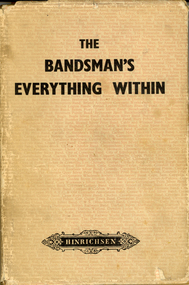
... This book was part of the collection of Frank Wright OBE. hinrichsen bandsman cook wright ball geehl composer mortimer lumb highfield school band besses boys' band black dyke mills band frank wright freeman Signature in blue ink "S. ...This book was part of the collection of Frank Wright OBE.Hard card covered book, 208 pages. Cover is cream, with very small maroon writing and title in black print. At bottom of the page is an ornate bordered title "Hinrichsen". Back cover: Black print on cream. Black print title on spine. Signature in blue ink "S. A. Freeman" in front end paperhinrichsen, bandsman, cook, wright, ball, geehl, composer, mortimer, lumb, highfield school band, besses boys' band, black dyke mills band, frank wright, freeman -
 Federation University Historical Collection
Plan, Burrumbeep, 1884, 16/10/1884
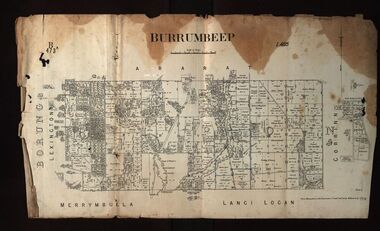
... ball jenkinson ballarat school of mines richard squire squire Verso written in pencil - Plan of Burrembeep Ararat Burrembeep Ararat Town allotment plan for Burrumbeep. Merrymbuela, Borung, Lexington and Langi Logan are neighbouring areas. The plan includes the Burrumbeep Pre-Emptive Right (Roger and Wright); licensed land holders including Stephen Young, John Carroll, William Walsh, Thomas Purcell, Martha M. Bond, Colin Johnson, John Charles Webb, Henry Withycombe, William Henry Barbridge, John Wall, Thomas Flatelly, William Jenkinson, Elisia Radford, V. Radford, Denis Byrne, George Cook. Land holders included Andrew Maloney, Richard Wingfield Harrocks, W. Sporton, Terence Lynch, F. S ...Auctions of Crown land were introduced in the Colony of Victoria from 1851 to encourage settlers to occupy and work the land. Many squatters purchased land at auction at the upset (minimum) price of £1 per acre. In some areas where demand was high, such as the goldfields, the price realised at auction was much more. Land was put up for sale in the study area on the Burrumbeep run in May 1855, on the Lexington run in 1857, and on the Gorrinn run in 1858. (http://www.ararat.vic.gov.au/library/document/thermatics.pdf, accessed 27 January 2015) For 70 years or more, Yalla-y-Poora, Burrumbeep, Edgarley, Mount William and Narrapumelap ranked in the leading wool producers in Victoria. 1 Stud owners at Yalla-y-Poora, Eurambeen, Burrumbeep and Challicum crossed merino sheep with sheep descended from John Macarthur's Camden Park in New South Wales. (http://www.ararat.vic.gov.au/library/document/thermatics.pdf, accessed 27 January 2015) In what was to become the Ararat Mining Division, gold was discovered in May 1854 on the Burrumbeep run at a place that became known as Pinky Point on the Mount William goldfield. By 21 June 1854, between 600 and 1,000 people had arrived. (http://www.ararat.vic.gov.au/library/document/thermatics.pdf, accessed 27 January 2015)\ Town allotment plan for Burrumbeep. Merrymbuela, Borung, Lexington and Langi Logan are neighbouring areas. The plan includes the Burrumbeep Pre-Emptive Right (Roger and Wright); licensed land holders including Stephen Young, John Carroll, William Walsh, Thomas Purcell, Martha M. Bond, Colin Johnson, John Charles Webb, Henry Withycombe, William Henry Barbridge, John Wall, Thomas Flatelly, William Jenkinson, Elisia Radford, V. Radford, Denis Byrne, George Cook. Land holders included Andrew Maloney, Richard Wingfield Harrocks, W. Sporton, Terence Lynch, F. S. Falkiner, A. Millman, H. Morris, George Upham, J. McCLure, S. Fletcher, W. Parker, Thomas Myers, William wright, W.C. Winter, C. Wordman, Oliver A. Winter This plan is associated with former Ballarat School of Mines student Richard Squire (1875-6) Gift of the Squire FamilyVerso written in pencil - Plan of Burrembeep Ararat Burrembeep Araratburrumbeep, corrinn, langi logan, merrymbuela, lexington, ararat, roger & wright, cook, rogers, upham, george upham, ross, parsans, morris, johnson, withycoombe, colin johnson, falkiner, dsporton, john carroll, donald gordon, denis bryne, maurice dooley, martha bond, william harricks, \william wingfield harricks, william l.c. harricks, michael houlihan, thomas purcell, martin ryan, michael cody, fletcher, mccaw, w. parker, j.m. clow, elisia radford, thomas radford, thomas myers, barbridge, e. wilde, j. wall, flatelly, g. wardman, w.c. winter, david ball, jenkinson, ballarat school of mines, richard squire, squire -
 Federation University Historical Collection
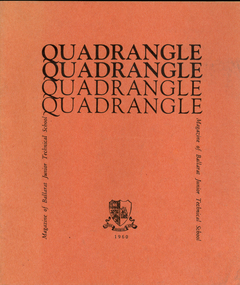
Magazine, J.A. Hoskin & Son, Quadrangle: Magazine of the Junior Technical School Ballarat, 1960, 1960
... Ball Team...Cross Country Team...Basketball Team...Softball Team...Football Team...Swimming team...Cycling Team...Cricket Team...R. Watson...Kelvin Whitford...Bill Heywood...Ken Delayney...Daryl Burt...John Cornish...Ross gray...William Paterson obituary...Ron Kirner...Keith Rash...Air training cadets...I. Pym...C. Antonio...K. Woodyatt...B. Middleton...A. Everett...B. Clarke...D. Riddiford...I. Trembath...J. Myers...L. Goldsmith...P. Chanler...P. Edge...S...Ball Team Cross Country Team Basketball Team Softball Team Football Team Swimming team Cycling Team Cricket Team R. Watson Kelvin Whitford Bill Heywood Ken Delayney Daryl Burt John Cornish Ross gray William Paterson obituary Ron Kirner Keith Rash Air training cadets I. Pym C. Antonio K. Woodyatt B. Middleton A. Everett B. Clarke D. Riddiford I. Trembath J. Myers L. Goldsmith P. Chanler P. Edge S ...The 1960 Quadrangle magazine committee were Kelvin Whitford, Bill Heywood, Ken Delayney, Daryl Burt, John Cornish, John McDonald, Ross Gray, and Messrs I. Chisholm and N. Watkins.Salmon coloured soft covered magazine of 46 pages. Contents include: Villiers Internal Combustion Engine, Geelong, School Song, Death of W.J. Paterson, Old Boys Newsletter (Keith Rash), Pine plantation. Robert Champneys, Air Training Corps, Mothers' Club Images include: R. Watson (headmaster), staff, prefects, tennis court, Peter Trezise, Doug Rash, Wong Chik Min, John Gilbert, John McDonald, Ray Bilney, Denis Moy, John Crawley, Roberto Venier, Reijo Karvinen, Cheetham Salt Works; Graeme Cummins, Gerald Kessel, James Colligan, Alan Everett, David Newman, Air Training Corps, Ken Wach, Athletics team, Tunnel Ball Team, Cross Country Team, Basketball Team, Softball Team, Football Team, Swimming team, Cycling Team, Cricket Team, ballarat junior technica school, ballarat school of mines, whitford, watson, paterson, w.j. paterson, george cornell, franklin, tresize, prefects, tennis court, peter trezise, doug rash, wong chik min, john gilbert, john mcdonald, ray bilney, denis moy, john crawley, roberto venier, reijo karvinen, cheetham salt works, graeme cummins, gerald kessel, james colligan, alan everett, david newman, air training corps, ken wach, athletics team, tunnel ball team, cross country team, basketball team, softball team, football team, swimming team, cycling team, cricket team, r. watson, kelvin whitford, bill heywood, ken delayney, daryl burt, john cornish, ross gray, william paterson obituary, ron kirner, keith rash, air training cadets, i. pym, c. antonio, k. woodyatt, b. middleton, a. everett, b. clarke, d. riddiford, i. trembath, j. myers, l. goldsmith, p. chanler, p. edge, s. riddiford, r. cook, j. holt, k. fellows, d. coldicott, douglas rash, g. angow, n. jones, john dellaca, j. angwin, w. scanlon, m. chung, g. holt, r. bilney, w. carey, r. carmichael, b. mckinnon, n. bedggood, r. robinson, c. cunninham, r. grubb, l. skevington, g. cole, w. whiting, ronaldson-tippett, palmer bros, h. dubberley & son, m.b. john and hatersley limited, h.a. davis motor service, alexandria tea rooms -
 Flagstaff Hill Maritime Museum and Village
Functional object - Bell, Schomberg 1855, Before 1855
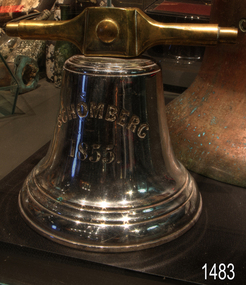
... S 612). The collection is of additional significance because of the relationship between the objects salvaged, as together they help us to interpret the story of the Schomberg. The collection as a whole is historically significant for representing aspects of Victoria's maritime history and its potential to interpret social and historical themes from society at the time of the wreck. Flagstaff Hill Flagstaff Hill Maritime Museum and Village Warrnambool Maritime Museum Maritime Village Great Ocean Road Shipwreck Coast Schomberg silver plated bell mess bell bell stands captain ‘bully’ Forbes alexander hall and son James Baines and company Liverpool’s black ball ...The Rescue and Journey of the Schomberg Bells: This bell was the smaller of two rescued by the crew of the Schomberg following the ship’s wreck in 1855. While the specific purpose of the smaller bell is unknown, it may have served to assemble the crew or signal mealtimes on board. After surviving the shipwreck, the crew carried both bells as they made their way along the coastline. Their journey eventually led them to the home of settler John Manning, located at Hopkins Point near Warrnambool. Manning took possession of the bells and subsequently presented them to two churches in Warrnambool. The smaller bell went to St Joseph’s Catholic Church, while the larger bell went to St John’s Presbyterian Church. After around a year, the small bell at St Joseph’s developed a crack and became unusable. Thomas Manifold imported a replacement bell for the church, and the damaged bell was stored at his farm. Years later, when the property was sold to John Logan, the discarded bell was donated to the old Warrnambool Museum upon its opening in 1886. The Curator, Joseph Archibald, placed the bell on display in the entry. In 1975, it was transferred from the Warrnambool Art Gallery to Flagstaff Hill. The ’Mystery’ of the small bell solved: Despite numerous attempts by the staff at Flagstaff Hill to restore the bell’s lustre, the bell remained dull and tarnished. In October 1986, Director Peter Ronald decided to send the bell for professional advice. The bell was entrusted to Briggs Marine Products, a renowned brass founder established in 1912. Upon examination, the specialists at Briggs discovered the reason behind the bell’s persistent lack of shine: it had originally been silver-plated, but most of the plating had worn away over time. The experts at Briggs then undertook the task of restoring the bell, successfully returning it to a gleaming silver surface. The Sailing Ship Schomberg: Launched in 1855, the Schomberg was regarded as the “Noblest” ship afloat at the time. Owned by the Black Ball Line, it was built for their passenger fleet by Alexander Hall of Aberdeen at a cost of £43,103. The construction featured three skins: one planked fore and aft and two diagonally planked, all fastened with screw-threaded trunnels (wooden rails). The ship’s First Class accommodation was luxurious, boasting velvet pile carpets, large mirrors, rosewood, birds-eye maple and mahogany timbers, satin damask soft furnishings, and an oak-lined library with a piano. Schomberg had a capacity for 1,000 passengers. The ship’s master, Captain James Nicol Forbes—also known as ‘Bully’ Forbes—was only 34 years old at the launch. He had a reputation for setting and breaking speed records on the Black Ball Line’s Marco Polo and Lightning. In 1852, Forbes completed the London to Melbourne journey on the Marco Polo in 68 days, a record at the time, though 53 passengers died during the voyage. In 1854, he sailed the Lightning to Melbourne in 76 days and returned in only 63 days—a record that stood among sailing ships. Forbes was known for driving his ship and crew to their limits, often prioritising speed over passenger comfort. Determined to set new records, he promised to reach Melbourne in sixty days, declaring he would do so “with or without the help of God.” The Maiden Voyage and the Wreck: Schomberg departed Liverpool on 6th October 1855, flying a banner that read “Sixty Days to Melbourne”. The vessel carried 430 passengers and 3,000 tons of cargo, including materials to build the Melbourne to Geelong Railway and a bridge over the Yarra River. Among the cargo were a cow for fresh milk, pens for fowls and pigs, and 90,000 gallons of water for drinking and washing. Additionally, it transported 17,000 letters and 31,800 newspapers. The ship and cargo were insured for $300,000, a considerable sum for the era. Poor winds while crossing the equator delayed Schomberg’s progress. Land was first sighted on Christmas Day at Cape Bridgewater near Portland. Captain Forbes followed the coastline towards Melbourne, but was reportedly playing cards when the third mate, Henry Keen, reported land only three miles away. The ship ran aground on a sand spit near Curdie’s Inlet (approximately 56 km west of Cape Otway) on 26th December 1855, after 78 days at sea. The sand spit and nearby currents were not marked on Forbes’s map. During the night, the crew launched a lifeboat to search for a safe landing spot for the passengers. The scouting party advised Forbes to wait until morning, as rough seas posed a danger to the lifeboats. At dawn, the ship’s Chief Officer spotted the SS Queen and signalled for help. The master of the Queen brought his vessel alongside, and all passengers and crew disembarked safely. The Black Ball Line’s Melbourne agent sent another steamer to collect the passengers’ baggage, and other steamers assisted with cargo salvage until worsening weather forced operations to cease. Notably, a plunderer later recovered a case of Wellington boots, but all were for the left foot. The wreck and its cargo were sold to local merchants Manifold & Bostock, who did not attempt further salvage. They later sold their interest to a Melbourne businessman and two seafarers. In 1864, after two men drowned in their attempt to reach the Schomberg, salvage efforts were abandoned. By 1870, parts of the ship had washed ashore on New Zealand’s South Island. Today, the wreck is about nine metres below the surface. Although most woodwork has disintegrated, the vessel’s shape remains discernible due to the railway irons, girders, and framework. Various goods and materials from the ship are scattered nearby. The bell is particularly significant in that along with other items from the wreck helped in part to having the legislation changed to protect shipwrecks, with far tighter controls being employed to oversee the salvaging of wreck sites. This bell forms part of the Schomberg collection at Flagstaff Hill maritime museum. The collection as a whole is of historical and archaeological significance at a State level. Flagstaff Hill’s collection of artefacts from the Schomberg is also significant for its association with the Victorian Heritage Registered Schomberg shipwreck (VHR S 612). The collection is of additional significance because of the relationship between the objects salvaged, as together they help us to interpret the story of the Schomberg. The collection as a whole is historically significant for representing aspects of Victoria's maritime history and its potential to interpret social and historical themes from society at the time of the wreck. A small ship’s bell. The silver-plated metal bell bears the ship’s name and year of construction on one side and the name and address of the ship’s builders on the other. These details are deeply engraved into the metal and formed in bold, upper-case lettering. The bell has two bell stands: the left and the right. Both stands have an Iron pipe bent into an inverted ‘Y’ shape, with a hole along its length and feet attached to a rectangular metal plate at the other two ends. Feet are bolted to a timber base that has a hole drilled through the centre for mounting. Bell's front; “SCHOMBERG” with “1855” below. Bell's back “HALL & SONS (crack splits letter “N”) / BUILDERS (in italics) / ABERDEEN” (crack splits letter “B”).flagstaff hill, flagstaff hill maritime museum and village, warrnambool, maritime museum, maritime village, great ocean road, shipwreck coast, schomberg, silver plated bell, mess bell, bell stands, captain ‘bully’ forbes, alexander hall and son, james baines and company, liverpool’s black ball line, bell, schomberg bell, ship's bell, small bell, st joseph's church, briggs marine, john manning, john logan, warrnambool museum, briggs foundry, silver bell -
 Flagstaff Hill Maritime Museum and Village
Accessory - Diamond ring, about 1855
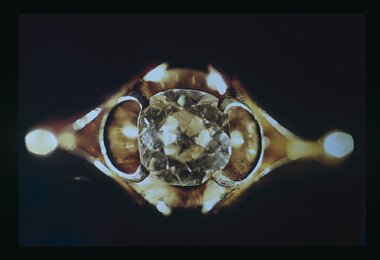
... S 612). The collection is of prime significant because of the relationship between the objects salvaged, as together they help us to interpret the story of the Schomberg. The collection as a whole is historically significant for representing aspects of Victoria's maritime history and its potential to interpret social and historical themes. warrnambool shipwrecked-coast flagstaff-hill flagstaff-hill-maritime-museum maritime-museum shipwreck-coast flagstaff-hill-maritime-village schomberg shipwrecked-artefact clipper ship black ball line 1855 shipwreck aberdeen clipper ship captain forbes peterborough shipwreck ss queen ciborium ring schomberg-diamond schomberg-ring gentleman's ring dress ring A mid-Victorian gentleman's solitaire diamond dress ring with a Brazilian cut diamond (cushion cut), one and one-third carat set within an 18 carat yellow gold ring consisting of four claws within an open scroll setting and a divided scroll shank. ...In 1975, 120 years after the sailing ship Schomberg was wrecked, Flagstaff Hill divers (Peter Ronald, Colin Goodall and Gary Hayden) found an ornate communion set amongst the wreckage. The set comprised a jug, ciborium, lid, chalice and plate. The items, apart from the lid, were then displayed at Flagstaff Hill Maritime Village. The lid had etchings that did not match the chalice and sat in storage for several years. Then in 1978, while the marine concretion inside the lid was being examined, a surface layer came loose and revealed a glint of gold that was assumed to be a piece of brass. The layers of concretion were carefully removed and a ring-like band emerged. Further treatment exposed a 'large faceted stone in an intricate gold setting. Weeks later a detailed examination estimated the value of the ring, known as the Schomberg Diamond, to be $7000. When the Schomberg was launched in 1855, she was considered the "Noblest” ship that ever floated on the water. Schomberg's owners, the Black Ball Line had commissioned the ship for their fleet of passenger liners. She was built by Alexander Hall of Aberdeen at a cost of £43,103 and constructed with 3 skins. One planked fore and aft and two diagonally planked, fastened together with screw-threaded trunnels (wooden rails). Her First Class accommodation was simply luxurious with velvet pile carpets, large mirrors, rosewood, birds-eye maple and mahogany timbers throughout, soft furnishings of satin damask, an oak-lined library with a piano. Overall she had accommodation for 1000 passengers. At the launch, the Schomberg's 34-year-old master, Captain 'Bully' Forbes, had promised to reach Melbourne in sixty days stating, "with or without the help of God." Captain James Nicol Forbes was born in Aberdeen in 1821 and rose to fame with his record-breaking voyages on the famous Black Ball Line ships; Marco Polo and Lightning. In 1852 in the Marco Polo, he made the record passage from London to Melbourne in 68 days. Unfortunately there were 53 deaths on the voyage, but the great news was off the record passage by Captain Forbes. In 1854 he took the clipper “Lighting” to Melbourne in 76 days and back in 63 days, this record was never beaten by a sailing ship. He often drove his crew and ship to breaking point to beat his previous records. He cared little for the comfort of the passengers. On this, the Schomberg's maiden voyage, he was determined to break existing records. Schomberg departed Liverpool on her maiden voyage on 6th October 1855 flying a sign that read "Sixty Days to Melbourne". She departed with 430 passengers and 3000 tons cargo including iron rails and equipment intended to build the Melbourne to Geelong Railway and a bridge over the Yarra from Melbourne to Hawthorn. She also carried a cow for fresh milk, pens for fowls and pigs, 90,000 gallons of water for washing and drinking. She also carried 17,000 letters and 31,800 newspapers. The ship and cargo were insured for $300,000 a fortune for the time. The winds were poor as she sailed across the equator, slowing Schomberg's journey considerably. Land was first sighted on Christmas Day, at Cape Bridgewater near Portland, Captain Forbes followed the coastline towards Melbourne. Forbes was said to be playing cards when called by the third mate Henry Keen, who reported land about 3 miles off. Due in large part to the captain's regarding a card game as more important than his ship, it eventually ran aground on a sand spit near Curdie's Inlet (about 56 km west of Cape Otway) on 26th December 1855, 78 days after leaving Liverpool. The sand spit and the currents were not marked on Forbes's map. Overnight, the crew launched a lifeboat to find a safe place to land the ship’s passengers. The scouting party returned to Schomberg and advised Forbes that it was best to wait until morning because the rough seas could easily overturn the small lifeboats. The ship’s Chief Officer spotted the SS Queen at dawn and signaled the steamer. The master of the Queen approached the stranded vessel and all of Schomberg’s passengers and crew disembarked safely. The Black Ball Line's Melbourne agent sent a steamer to retrieve the passengers' baggage from the Schomberg. Other steamers helped unload her cargo until the weather changed and prevented the salvage teams from accessing the ship. Later one plunderer found a case of Wellington boots, but alas, all were for the left foot. Local merchants Manifold & Bostock bought the wreck and cargo but did not attempt to salvage the cargo still on board the ship. They eventually sold it on to a Melbourne businessman and two seafarers. In 1864 after two of the men drowned when they tried to reach Schomberg, salvage efforts were abandoned. In 1870, nearly 15 years after the wreck parts of the Schomberg had washed ashore on the south island of New Zealand. The wreck now lies in almost 9 meters of water and although the woodwork is mostly disintegrated the shape of the ship can still be determined due to the remaining railway irons, girders and the ship’s frame. A variety of goods and materials can be seen scattered about nearby. The actual lid in which the ring was found has not yet been completely identified and could belong to a coffee pot, sugar bowl or maybe a jug or something similar. Although all survived the wreck no-one came forward to claim the valuable diamond. The Schomberg Diamond is currently on display in the Great Circle Gallery. Flagstaff Hill Maritime Village along with the rest of the communion set. Other artefacts salvaged from the wreck include ship fittings and equipment, personal effects, a lithograph, tickets and photographs from the Schomberg. One of the Schomberg bells is in the Warrnambool Library.The Schomberg Diamond is particularly significant in that it played a crucial part in having the legislation changed to protect shipwrecks, with far tighter control over the salvaging of items from wreck sites. This ring is registered as Artefact S/105 in the Schomberg collection, the Schomberg collection as a whole is of historical and archaeological significance at a State level. Flagstaff Hill’s collection of artefacts from the Schomberg is also significant for its association with the Victorian Heritage Registered shipwreck (VHR S 612). The collection is of prime significant because of the relationship between the objects salvaged, as together they help us to interpret the story of the Schomberg. The collection as a whole is historically significant for representing aspects of Victoria's maritime history and its potential to interpret social and historical themes. A mid-Victorian gentleman's solitaire diamond dress ring with a Brazilian cut diamond (cushion cut), one and one-third carat set within an 18 carat yellow gold ring consisting of four claws within an open scroll setting and a divided scroll shank. Colour is classified as 'J', clarity SII. The setting is handmade. warrnambool, shipwrecked-coast, flagstaff-hill, flagstaff-hill-maritime-museum, maritime-museum, shipwreck-coast, flagstaff-hill-maritime-village, schomberg, shipwrecked-artefact, clipper ship, black ball line, 1855 shipwreck, aberdeen clipper ship, captain forbes, peterborough shipwreck, ss queen, ciborium, ring, schomberg-diamond, schomberg-ring, gentleman's ring, dress ring -
 Flagstaff Hill Maritime Museum and Village
Equipment - Block (sailing), Burrows, Ship Candler, c. 1869
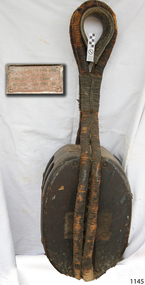
... Ball Line. Master of Lightning, Captain Henry Jones, sailed her to Geelong in October 1869, and whilst docked, he had her loaded with a cargo of wool, copper, wire, tallow and other goods. At about 1 am on 31st October 1869, whilst still docked and fully laden, a fire was noticed on the vessel. Efforts to extinguish the fire were unsuccessful, so she was towed to the "Lightning Shoals" in Corio Bay, where she eventually sank, losing all cargo but no lives. The Lightning is listed on the Victorian Heritage Register (Ref S ...The Lightning was an American-built sailing ship and it is believed the rope block was part of the ship’s rigging or included as cargo. The plaque on the block mentions that the item was, “as supplied by Burrows Ship Chandlers” in 1869. The plaque could also mean that the rope block was supplied by the firm Burrows, Ship Chandler and Shipping Stock, as a replacement block for the Lightning. The American vessel named “Lightning” was a 3-masted, fully rigged extreme clipper ship. She was commissioned by James Baines, of the Black Ball Line in Liverpool, England, during the time of the Australian Gold Rush for the trade of passengers and cargo between England and Australia. Her load listed on early consignments included livestock and animals, including rabbits sent to Thomas Austin of Barwon Park, Winchelsea, Victoria, where the challenging association between Australia's agriculture and the imported rabbits started. The Lightning was built in 1854 by shipbuilder Donald McKay, in East Boston, USA. She was described as spacious and comfortable and regarded as one of the smartest ships of the time. The vessel set many speed records for her voyages and became one of the most famous of racing clippers and one of the fastest ever launched. In 1854, with Captain 'Bully' Forbes and Mate 'Bully' Bragg, Lightning made the return trip from Melbourne to Liverpool in only 64 days, 3 hours and 10 minutes; a record. Captain Enright became the new Master of LIGHTNING soon after this record was established and was regarded as one of the finest mariners in the Australian trade. One of Captain Enright's innovations was to publish a ship's paper called "The Lightning Gazette". What is of additional historic interest is that captain "Bully Forbes" had left the Lightning to captain the ill-fated Schomberg. In 1857, for a very brief time under Capt. Byrne the Lightning was used as a troopship, taking British officers and soldiers, stores and ammunition, to fight in India. In 1859 she then returned to her normal route between Liverpool and Melbourne, apart from 1867 when she made a special trip between Melbourne and Port Chalmers in New Zealand. In 1869 the Lightning was sold to Thomas Harrison of Liverpool, and continued to sail for the Black Ball Line. Master of Lightning, Captain Henry Jones, sailed her to Geelong in October 1869, and whilst docked, he had her loaded with a cargo of wool, copper, wire, tallow and other goods. At about 1 am on 31st October 1869, whilst still docked and fully laden, a fire was noticed on the vessel. Efforts to extinguish the fire were unsuccessful, so she was towed to the "Lightning Shoals" in Corio Bay, where she eventually sank, losing all cargo but no lives. The Lightning is listed on the Victorian Heritage Register (Ref S 415). The vessel is historically significant for being one of the fastest wooden ships ever built. it was notable as the first clipper built in the USA for British owners and as a shipping disaster in Geelong's history. The Lightning spent its whole career carrying cargo and immigrants from England to Australia. Its documented voyages give us a snapshot into shipping history, not only of Australia in the mid-19th century but how the world's commercial transport functioned o promote trade and emigration during this time.Large ship's block, wood, with two wooden sheaves and fibre straps, eye and thimble. The metal plaque attached to the block has an inscription. The block was used on the ship "Lightning".Plaque inscription: "BLOCK OFF THE LIGHTNING / AS SUPPLIED BY / BURROWS SHIPS CHANDLERS / & SHIPPING STOCK CORIO BAY / 1863" (or 1869)flagstaff hill, warrnambool, shipwrecked coast, flagstaff hill maritime museum, maritime museum, shipwreck coast, flagstaff hill maritime village, great ocean road, sailing ship lightning, extreme clipper ship, american clipper ship, record breaking clipper ship, james baines, black ball line, donald mckay shipbuilder, captain ‘bully’ forbes, australian immigration, liverpool to melbourne migration, captain enright, captain byrne, captain henry jones, corio bay geelong, lightning shoals geelong, rabbits introduced to australia, burrows and bascombe, burrows, ship chandler, corio bay, burrow's ship chandlers and shipping stock, -
 Mission to Seafarers Victoria
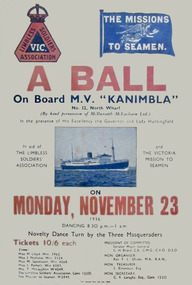
Poster - Digital poster, A ball on board M.V. "Kanimbla", 1936
... ball committee (Major-General Brand) and Mrs. Brand, Admiral Sir Francis and Lady Hyde, Com- mander and Mrs. Smith, the chaplain of the mission (the Rev. F. L. Oliver), Mr. and Mrs. James Kelso, the president of the Limbless Soldiers' Association (Mr. T. S...ball committee (Major-General Brand) and Mrs. Brand, Admiral Sir Francis and Lady Hyde, Com- mander and Mrs. Smith, the chaplain of the mission (the Rev. F. L. Oliver), Mr. and Mrs. James Kelso, the president of the Limbless Soldiers' Association (Mr. T. S ...The motor vessel "Kanimbla" from Mcllwraith, McEacharn Ltd was brand new in 1936 and was used several times for charity balls. "Kanimbla Ball" (Australasian (Melbourne, Vic. : 1864 - 1946), Saturday 28 November 1936, page 12) Over 1,000 people were present at a very successful ball given on board the m.v. Kanimbla this week, to aid the funds of the Limbless Soldiers' Association and the Victorian Mission to Seamen. The ship was gaily decorated with balloons and international code flags, while vases of mixed flowers gave charm to the supper tables in dining saloon. His Excel- lency the Governor and Lady Huntingfield attended by Lieutenant A. W. P. Robert-son, were present, and were received by the chairman of the ball committee (Major-General Brand) and Mrs. Brand, Admiral Sir Francis and Lady Hyde, Com- mander and Mrs. Smith, the chaplain of the mission (the Rev. F. L. Oliver), Mr. and Mrs. James Kelso, the president of the Limbless Soldiers' Association (Mr. T. S. Gray) and Mrs. Gray, and the honorary secretary of the ball committee (Mr. C. R. Laragby) and Mrs. Laraghy. Lady Huntingfield wore a becoming gown of copper-red crepe, with a faint silver stripe. and was presented with a bouquet of deep red gladioli.Padre Oliver had a friendly relationship with the captain of the Kanimbla.Digital copy of a colour poster advertising for a ball on board the MV Kanimbla.m.v. kanimbla, ball, mission to seamen, 1936, mcilwraith mceacharn ltd, frank leslie oliver, lord huntingfield, limbless soldiers association -
 Federation University Historical Collection
Book - Scrap Book, Ballarat School of Mines Scrap Book, 1924 - 1929, c1931
... s. russelll...ballarat technical art school...charles harvey...elliott gower...la gerche...c. curnow...applied art...macroberston scholarship...ballarat school of mines procession...rag...vale park tree planting...smb ball...The scrap books were kept by the librarians and related to topics of interest to the Ballarat School of Mines, its students and its staff. ballarat school of mines martha pinkerton scrap book a.w. nicholson john lynch (junior) mount lyell leslie evans leslie blake evans herald shield for athletics ballarat school of mines museum motor mechanics' classes for ladies farm engineering villers bretonneux carvings trengrove museum port pirrie j.i. simpson reuben s. russelll ballarat technical art school charles harvey elliott gower la gerche c. curnow applied art macroberston scholarship ballarat school of mines procession rag vale park tree planting smb ball pottery classes delineascope mica smith scholarship james peart burma mnies smb excursion to western australia kalgoorlie elsie mckissock war trophies warwick smith spencer street bridge war museum richard j. young alfred mica smith obituary reginald callister john rowell sewerage installation h.h. smith w.h. middleton olive scott dolly whitehead vale park ballarat war museum opening repatriation classes sewerage at the ballarat school of mines australian coals j.p. ellsworth yallourn w.g. walker reunion norfolk island pine mica smith memorial jessice smith harry fern t. henderson bhp john adam ols students' association l.b. curnow laura crouch signwriting excursion port pirrie excursion albert potter pearl fricke technica school sports percy trompf ballarat school of mines battery albert mclean a.d.r. galloway alan douglas richard galloway r.j. young alan ludbrook r. timpe ballarat ironworkers and polytechnic association h. jolly carpentry harold jolly millinery classes phoenix model locomotive s.j. morgan r.d. bannister juvenile industrial exhibition w.h. shaw j.c. winds f.h. davis h.r. worland w.t. magee l. george l. balhausen white flat oval resue from yarrowee creek e. berriman ballarat teachers' college reg mcconnell mount lyell co munro reaper munro reaper model weaving classes mervyn trimmings briquette dust edna findlay jean rogers n. mccallum jessie glass classroom ventilation art metal charles fenner levi molyneux olice scott poster competition kerr grant w.h. steane h. caddy colvin smith claude creelman robert colins stan hillman n.c. heathcote egg collection john alexander nornie gude charles deane graham hopwood roswald john dart max wilson new battery jess hopwood william middleton a.e.c. kerr hand weaving classes m. martin a.h. leeson mona rogerson lorna bailey prospectors classes edwin robinson Kalgoorlie vist railway locomotive 17 December 1954 - Ballarat Junior Technical School Headmaster's Report 05 February 1925 - Ballarat School of Mines Museum closure 25 February 1925 - War Trophies Museum 06 May 1925 - Ballarat's Museum. ...The Ballarat School of Mines was a predecessor institution of Federatin University Australia. The scrap books were kept by the librarians and related to topics of interest to the Ballarat School of Mines, its students and its staff. 17 December 1954 - Ballarat Junior Technical School Headmaster's Report 05 February 1925 - Ballarat School of Mines Museum closure 25 February 1925 - War Trophies Museum 06 May 1925 - Ballarat's Museum. Where is it? Some Interesting Facts 14 May 1925 - White Flat Reserve 21 June 1928 - Ballarat School of Mines Procession 14 March 1929 - Mr A.D.R. Galloway - An Australian Abroad - Tragic end. 1929 - Technical Education 17 October 1929 - Agricultural Engineering 15 February 1930 - Ballarat School of Mines Student Association 20 February 1930 - 61s Annual Meeting of the Ballarat School of Mines 02 June 1930 - R. Young in Belgium and visits battlefields including Hill 60. 19 February 1931 - School Hostel Suggested 14 April 1931 - Frank Pinkerton Obituary 15 October 1921 - Life at Mt Isa (E. Loveland) 18 February 1932 - Discussion on Teachers College (Ballarat Teachers' College) 11 July 1931 - Phoenix Model Locomotive donation to the Ballarat School of Mines 06 May 1932 - The Mt Isa Country 11 Oct 1932 - Death of F.W. Alsopp (former SMB student) 21 January 1933 - Education In Victoria: Will a New Era Open 28 September 1933 - New Teaching System Explained by the Minister 17 February 1934 - Trip to New Guinea (A.F. Heseltine) 19 April 1934 - Early Ballarat - Address by Nathan Spielvogel 30 August 1934 - Ballarat Junior Technical School Tennis Court 23 August 1934 - Welding plant and Battery 17 June 1935 - Men about Town - A.F. Heseltine 21 June 1935 - Vocational Guidance 16 July 1935 - Ballarat School of Mines (history) 03 August 1935 - Men About Town - William H. Middleton 10 August 1935 - A.E.C. Kerrballarat school of mines, martha pinkerton, scrap book, a.w. nicholson, john lynch (junior), mount lyell, leslie evans, leslie blake evans, herald shield for athletics, ballarat school of mines museum, motor mechanics' classes for ladies, farm engineering, villers bretonneux carvings, trengrove, museum, port pirrie, j.i. simpson, reuben s. russelll, ballarat technical art school, charles harvey, elliott gower, la gerche, c. curnow, applied art, macroberston scholarship, ballarat school of mines procession, rag, vale park tree planting, smb ball, pottery classes, delineascope, mica smith scholarship, james peart, burma mnies, smb excursion to western australia, kalgoorlie, elsie mckissock, war trophies, warwick smith, spencer street bridge, war museum, richard j. young, alfred mica smith obituary, reginald callister, john rowell, sewerage installation, h.h. smith, w.h. middleton, olive scott, dolly whitehead, vale park, ballarat war museum opening, repatriation classes, sewerage at the ballarat school of mines, australian coals, j.p. ellsworth, yallourn, w.g. walker, reunion, norfolk island pine, mica smith memorial, jessice smith, harry fern, t. henderson, bhp, john adam, ols students' association, l.b. curnow, laura crouch, signwriting, excursion, port pirrie excursion, albert potter, pearl fricke, technica school sports, percy trompf, ballarat school of mines battery, albert mclean, a.d.r. galloway, alan douglas richard galloway, r.j. young, alan ludbrook, r. timpe, ballarat ironworkers and polytechnic association, h. jolly, carpentry, harold jolly, millinery classes, phoenix model locomotive, s.j. morgan, r.d. bannister, juvenile industrial exhibition, w.h. shaw, j.c. winds, f.h. davis, h.r. worland, w.t. magee, l. george, l. balhausen, white flat oval, resue from yarrowee creek, e. berriman, ballarat teachers' college, reg mcconnell, mount lyell co, munro reaper, munro reaper model, weaving classes, mervyn trimmings, briquette dust, edna findlay, jean rogers, n. mccallum, jessie glass, classroom ventilation, art metal, charles fenner, levi molyneux, olice scott, poster competition, kerr grant, w.h. steane, h. caddy, colvin smith, claude creelman, robert colins, stan hillman, n.c. heathcote, egg collection, john alexander, nornie gude, charles deane, graham hopwood, roswald john dart, max wilson, new battery, jess hopwood, william middleton, a.e.c. kerr, hand weaving classes, m. martin, a.h. leeson, mona rogerson, lorna bailey, prospectors classes, edwin robinson, kalgoorlie vist, railway locomotive -
Marysville & District Historical Society
THE TRIANGLE NEWS-VOL 2 NO 28-SEPTEMBER 16 1977
... s in grand final...buxton red cross bike-a-thon...marysville senior citizens...football club presentation night...thanks...rainfall...indoor bowls...lions night...kindergarten roster...wirreanda debutante ball...marysville victoria australia under 17's in grand final buxton red cross bike-a-thon marysville senior citizens football club presentation night thanks rainfall indoor bowls lions night kindergarten roster wirreanda debutante ball coming events easter quarter horse show narbethong primary school meeting bushwalking marysville golf club fred fiske alexandra high school THE TRIANGLE NEWS-VOL 2 NO 28-SEPTEMBER 16 1977 ...marysville, victoria, australia, under 17's in grand final, buxton red cross bike-a-thon, marysville senior citizens, football club presentation night, thanks, rainfall, indoor bowls, lions night, kindergarten roster, wirreanda debutante ball, coming events, easter quarter horse show, narbethong primary school meeting, bushwalking, marysville golf club, fred fiske, alexandra high school -
Marysville & District Historical Society
THE TRIANGLE NEWS-VOL 3 NO 24-AUGUST 4 1978
... ball...situation vacant...rainfall...marysville indoor bowls...golf associates meeting...football...grand final under 14's...marysville victoria australia shire of healesville election propoganda for sale golf course saga marysville senior citizens community care centre thanks-clare & bruce mcfarland hobbytex party miniture deb ball situation vacant rainfall marysville indoor bowls golf associates meeting football grand final under 14's school news letter letter to editors THE TRIANGLE NEWS-VOL 3 NO 24-AUGUST 4 1978 ...marysville, victoria, australia, shire of healesville election propoganda, for sale, golf course saga, marysville senior citizens, community care centre, thanks-clare & bruce mcfarland, hobbytex party, miniture deb ball, situation vacant, rainfall, marysville indoor bowls, golf associates meeting, football, grand final under 14's, school news letter, letter to editors -
Marysville & District Historical Society
THE TRIANGLE NEWS-VOL 5 NO 23-JULY 25 1980
... s...australian boys' choir welcomes marysville student...happy birthday...meeting community care centre...medical clinics...in hospital...new arrival...think it over...senior citizens...photographer...uniting church...indoor bowls...mountain views home improvements centre...baby sitting...wanted goods for buxton op shop...junior youth club...narbethong ball...marysville victoria australia marysville & district community care centre s australian boys' choir welcomes marysville student happy birthday meeting community care centre medical clinics in hospital new arrival think it over senior citizens photographer uniting church indoor bowls mountain views home improvements centre baby sitting wanted goods for buxton op shop junior youth club narbethong ball shire of healesville service directory marysville golf club debutante ball nutri-metics buxton red cross news situation vacant for sale hoover r.s.l. news greetings & thanks anglican church services-christ church marysville marysville primary school THE TRIANGLE NEWS-VOL 5 NO 23-JULY 25 1980 ...marysville, victoria, australia, marysville & district community care centre, s, australian boys' choir welcomes marysville student, happy birthday, meeting community care centre, medical clinics, in hospital, new arrival, think it over, senior citizens, photographer, uniting church, indoor bowls, mountain views home improvements centre, baby sitting, wanted goods for buxton op shop, junior youth club, narbethong ball, shire of healesville service directory, marysville golf club debutante ball, nutri-metics, buxton red cross news, situation vacant, for sale hoover, r.s.l. news, greetings & thanks, anglican church services-christ church marysville, marysville primary school -
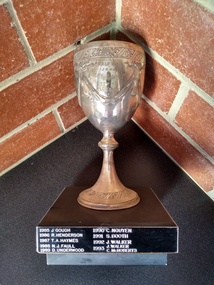 Ballarat Clarendon College
Tropy, Half Mile Cup 1889
... Significant indication of the place of athletics within the school program in the late 1800's. alexander-mccook a-mccook 1889 ballarat-college half-mile-cup gift-of-the-girls-school Inscription on cup face: BALLARAT College / The Gift of the / MASTERS / 1886 Inscription on cup verso: A SNELL / 1st Hurdle Race / 1st / Throwing Cricket Ball Small engraved silver cup Half Mile Cup 1889 Tropy ...Alexander McCook entered Ballarat College in 1889, peer year 1889.Son of Archibald McCook, Ercildoune. Prev SS Burrumbeet VI Form. This cup is attached to a contemporary stand and was awarded during 1985 – 1998 to the champion boy athlete in the Middle School. Significant indication of the place of athletics within the school program in the late 1800's.Small engraved silver cup Inscription on cup face: BALLARAT College / The Gift of the / MASTERS / 1886 Inscription on cup verso: A SNELL / 1st Hurdle Race / 1st / Throwing Cricket Ball alexander-mccook, a-mccook, 1889, ballarat-college, half-mile-cup, gift-of-the-girls-school -
Ballarat Clarendon College
Trophy, 1st hurdle race cup 1886
... A significant indication of the place of athletics within the school program in the late 1800's. archibald-snell ballarat-college athletics 1986 hurdles gift-of-the-masters Inscription on cup face: BALLARAT College / The Gift of the / MASTERS / 1886 Inscription on cup verso: A SNELL / 1st Hurdle Race / 1st / Throwing Cricket Ball Small engraved silver cup 1st hurdle race cup 1886 Trophy ...Archibald Snell, son of E Snell, Avoca, entered Ballarat College 1884, peer year 1887.A significant indication of the place of athletics within the school program in the late 1800's.Small engraved silver cup Inscription on cup face: BALLARAT College / The Gift of the / MASTERS / 1886 Inscription on cup verso: A SNELL / 1st Hurdle Race / 1st / Throwing Cricket Ball archibald-snell, ballarat-college, athletics, 1986, hurdles, gift-of-the-masters, -
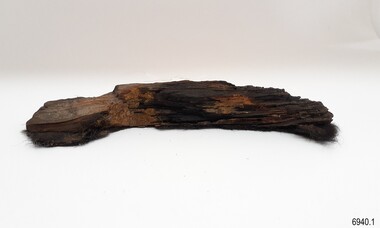 Flagstaff Hill Maritime Museum and Village
Plant specimen - Wood Sample, Alexander Hall and Son, ca. 1855
... S 612). The collection is of prime significance because of the relationship between the objects salvaged, as together they help us to interpret the story of the Schomberg. The collection as a whole is historically significant for representing aspects of Victoria's maritime history and its potential to interpret social and historical themes. Flagstaff Hill Flagstaff Hill Maritime Museum and Village Warrnambool Maritime Museum Maritime Village Great Ocean Road Shipwreck Coast Schomberg 1855 clipper ship Black Ball ...The wood sample is one of two pieces in the Collection from the wreck of the sailing ship Schomberg that were carried on the tides and discovered on a New Zealand beach along the coast. The samples have been positively identified scientifically as part of the timber from the Schomberg. ABOUT THE SCHOMBERG (October 6 to December 27, 1855)- When the ship Schomberg was launched in 1855, she was considered the most perfect clipper ship ever to be built. James Baines Black Ball Line had commissioned her for their fleet of passenger liners. The Aberdeen builders designed her to sail faster than the clippers designed the three-masted wooden clipper ship to be fast. The timber used for the diagonal planking was British oak with layers of Scottish larch. This luxury emigrant vessel was designed for superior comfort. She had ventilation ducts to provide air to the lower decks and a dining saloon, smoking room, library and bathrooms for the first-class passengers. The master for Schomberg’s maiden voyage was Captain ‘Bully’ Forbes. He drunkenly predicted at her launch that he would make the journey between Liverpool and Melbourne in 60 days. Schomberg departed Liverpool on 6 October 1855 with 430 passengers and 3000 tons of cargo including iron rails and equipment intended the build the Geelong Railway and a bridge over the Yarra from Melbourne to Hawthorn. The poor winds slowed Schomberg’s sail across the equator. She was 78 days out of Liverpool when she ran aground on a sand spit near Peterborough, Victoria, on 27 December; the sand spit and currents were not marked on Forbes’s map. The ship’s Chief Officer spotted the coastal steamer SS Queen at dawn and sent a signal. The master of the SS Queen approached the stranded vessel and all of Schomberg’s passengers safely disembarked. In 1975, 120 years after the Schomberg was wrecked, divers from Flagstaff Hill found an ornate communion set at the wreck site along with many other artefacts. In 1978 a diamond ring was discovered under the concretion in the lid of the communion set, which is currently on display. Former Director of Flagstaff Hill, Peter Ronald, had salvaged most of the artefacts from the wreck. This wood sample is significant for its connection with the wreck of the Schomberg, as part of the vessel's structure. It is scientifically important as evidence that shipwreck relics can move a long way for the site of the wreck. The Schomberg collection as a whole is of historical and archaeological significance at a State level. Flagstaff Hill’s collection of artefacts from the Schomberg is also significant for its association with the Victorian Heritage Registered shipwreck (VHR S 612). The collection is of prime significance because of the relationship between the objects salvaged, as together they help us to interpret the story of the Schomberg. The collection as a whole is historically significant for representing aspects of Victoria's maritime history and its potential to interpret social and historical themes.Wood sample with layers of different coloured timber. The sample has holes along a portion of the edge and a fur-like appearance along one side. In places it has the appearance of charcoal. The sample is a piece of the hull from the wreck of the Schomberg. The sample was washed up on a beach on the coast of New Zealand. flagstaff hill, flagstaff hill maritime museum and village, warrnambool, maritime museum, maritime village, great ocean road, shipwreck coast, schomberg, 1855, clipper ship, black ball line, luxury ship, emigrant ship, captain forbes, bully forbes, ss queen, wood sample, new zealand, james baines & co
