
Showing 49 items matching " the french revolution"
-
 Flagstaff Hill Maritime Museum and Village
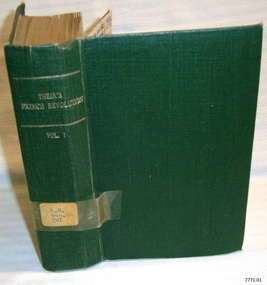
Book, The History of The French Revolution Vol 1
... The History of The French Revolution Vol 1...the history of the french revolution vol 1...The History of The French Revolution Vol 1 Author: Adolphe Thiers translated by G T Fisher Publisher: C Daly Date: 1846...warrnambool shipwrecked-coast flagstaff-hill flagstaff-hill-maritime-museum maritime-museum shipwreck-coast flagstaff-hill-maritime-village shipwrecked-artefact great ocean road book warrnambool library warrnambool mechanics’ institute mechanics’ institute library victorian library board warrnambool books and records warrnambool children’s library the history of the french revolution vol 1 adolphe thiers g t fisher Label on spine cover with typed text RH 944.04 THI Pastedown front endpaper has sticker from Warrnambool Public Library Front loose endpaper has a stamp from Corangamite Regional Library Service The History of The French Revolution Vol 1 Author: Adolphe Thiers translated by G T Fisher Publisher: C Daly Date: 1846 The History of The French Revolution Vol 1 Book ...The History of The French Revolution Vol 1 Author: Adolphe Thiers translated by G T Fisher Publisher: C Daly Date: 1846Label on spine cover with typed text RH 944.04 THI Pastedown front endpaper has sticker from Warrnambool Public Library Front loose endpaper has a stamp from Corangamite Regional Library Service warrnambool, shipwrecked-coast, flagstaff-hill, flagstaff-hill-maritime-museum, maritime-museum, shipwreck-coast, flagstaff-hill-maritime-village, shipwrecked-artefact, great ocean road, book, warrnambool library, warrnambool mechanics’ institute, mechanics’ institute library, victorian library board, warrnambool books and records, warrnambool children’s library, the history of the french revolution vol 1, adolphe thiers, g t fisher -
 Flagstaff Hill Maritime Museum and Village
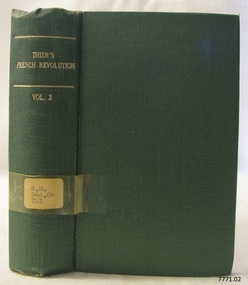
Book, The History of The French Revolution Vol 2
... The History of The French Revolution Vol 2...The History of The French Revolution Vol 2...The History of The French Revolution Vol 2 Author: Adolphe Thiers translated by G T Fisher Publisher: C Daly Date: 1846...Warrnambool Shipwrecked-coast Flagstaff-Hill Flagstaff-Hill-Maritime-Museum Maritime-Museum Shipwreck-coast Flagstaff-Hill-Maritime-Village Shipwrecked-artefact Great Ocean Road Book Warrnambool Library Warrnambool Mechanics’ Institute Mechanics’ Institute Library Victorian Library Board Warrnambool books and records Warrnambool Children’s Library The History of The French Revolution Vol 2 Adolphe Thiers G T Fisher Label on spine cover with typed text RH 944.04 THI Pastedown front endpaper has sticker from Warrnambool Public Library Front loose endpaper has a stamp from Corangamite Regional Library Service The History of The French Revolution Vol 2 Author: Adolphe Thiers translated by G T Fisher Publisher: C Daly Date: 1846 The History of The French Revolution Vol 2 Book ...The History of The French Revolution Vol 2 Author: Adolphe Thiers translated by G T Fisher Publisher: C Daly Date: 1846Label on spine cover with typed text RH 944.04 THI Pastedown front endpaper has sticker from Warrnambool Public Library Front loose endpaper has a stamp from Corangamite Regional Library Service warrnambool, shipwrecked-coast, flagstaff-hill, flagstaff-hill-maritime-museum, maritime-museum, shipwreck-coast, flagstaff-hill-maritime-village, shipwrecked-artefact, great ocean road, book, warrnambool library, warrnambool mechanics’ institute, mechanics’ institute library, victorian library board, warrnambool books and records, warrnambool children’s library, the history of the french revolution vol 2, adolphe thiers, g t fisher -
 Phillip Island and District Historical Society Inc.
Book, WIKOFF, Henry et al, Biographical sketches of Louis Napoleon Bonaparte, first President of France, including a visit to the Prince at the Castle of Ham / by Henry Wikoff ; to which is added, A brief account of the French Revolution of 1848, and an appendix containing poetical and prose writings of Louis Napoleon / by George Grant, 1849?
... Biographical sketches of Louis Napoleon Bonaparte, first President of France, including a visit to the Prince at the Castle of Ham / by Henry Wikoff ; to which is added, A brief account of the French Revolution of 1848, and an appendix containing poetical and prose writings of Louis Napoleon / by George Grant...Biographical sketches of Louis Napoleon Bonaparte, first President of France, including a visit to the Prince at the Castle of Ham / by Henry Wikoff ; to which is added, A brief account of the French Revolution of 1848, and an appendix containing poetical and prose writings of Louis Napoleon / by George Grant Book WIKOFF, Henry George GRANT James M'Glashan ...Book from the Cleeland Bequest - a comprehensive collection of books relating to the History of England, Civil & Military, Religious, Intellectual & Social. Cleeland Bequest. Inscribed: Mrs D..... Richmond .. Sept 16/69 ...... ........napoleon iii, emperor of the french, cleeland bequest -
 Robin Boyd Foundation
Book, Thomas Carlyle, The French Revolution: A History, 1888
... The French Revolution: A History...Anderson' Hardcover The French Revolution: A History Book Thomas Carlyle Chapman & Hall Limited ...HardcoverRed pencil inscription inside front cover: 'A Gerard Anderson [signature] / 'Austral' / 5th Jany '89' Stamped signature on title page: 'A.G. Anderson'french history, french revolution, walsh st library -
 Mrs Aeneas Gunn Memorial Library
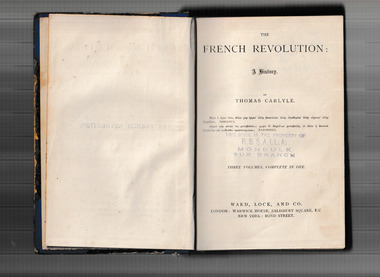
Book, Ward Lock and Co, The French revolution : a history, ????
... The French revolution : a history...French revolution...France...French revolution France - History The French Revolution is a work by Scottish essayist, philosopher, and historian Thomas Carlyle. ...The French Revolution is a work by Scottish essayist, philosopher, and historian Thomas Carlyle. It is a massive, even heroic undertaking - one which hadn't been achieved before and has not since. Carlyle's literary style is unique: written in the present tense first-person plural, A History follows along chronologically as the events of the Revolution unfold with sweeping, apocalyptic grandeur. The reader feels as though he or she were observing, participating almost in, the events occurring on the Paris streets. The reader is carried along day-by-day, month-by-month as the as the inevitable.Index, p.609non-fictionThe French Revolution is a work by Scottish essayist, philosopher, and historian Thomas Carlyle. It is a massive, even heroic undertaking - one which hadn't been achieved before and has not since. Carlyle's literary style is unique: written in the present tense first-person plural, A History follows along chronologically as the events of the Revolution unfold with sweeping, apocalyptic grandeur. The reader feels as though he or she were observing, participating almost in, the events occurring on the Paris streets. The reader is carried along day-by-day, month-by-month as the as the inevitable. french revolution, france - history -
 Bendigo Historical Society Inc.
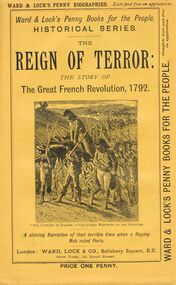
Book - LYDIA CHANCELLOR COLLECTION: REIGN OF TERROR
... ... the French Revolution...A book titled ' The Reign of Terror: The Story of the French Revolution, 1792. A stirring Naration of that terrible time when a Raging Mob ruled Paris.' ...BOOKS Biography french history Lydia Chancellor collection Ward & Lock's Penny Biographies Ward & Lock's Penny Books for the People Historical Series history the French Revolution French history France revolution reign of terror advertisements Paris book books penny books A book titled ' The Reign of Terror: The Story of the French Revolution, 1792. ...A book titled ' The Reign of Terror: The Story of the French Revolution, 1792. A stirring Naration of that terrible time when a Raging Mob ruled Paris.' Published: Ward, Lock & Co., Salisbury Square, E.C. New York : 10 Bond Street. 641 - 656 pgs.(ill.). This book is one of a series of 37 ' Ward & Lock's Penny Book's for the People.' ' Historical Series.' Price one penny. There are also advertisements of note.books, biography, french history, lydia chancellor, collection, ward & lock's penny biographies, ward & lock's penny books for the people, historical series, history, the french revolution, french history, france, revolution, reign of terror, advertisements, paris, book, books, penny books -
 Bendigo Historical Society Inc.
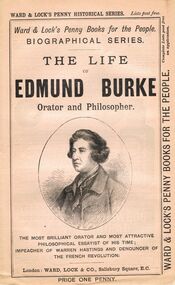
Book - LYDIA CHANCELLOR COLLECTION: THE LIFE OF EDMUND BURKE
... ... the French Revolution...The most brilliant orator and most attractive philosophical essayist of his time; Impeacher of Warren Hastings and denouncer of the French Revolution.' Published London: Ward, Lock & Co., Salisbury Square, E.C. 33 - 48 pgs. ...The most brilliant orator and most attractive philosophical essayist of his time; Impeacher of Warren Hastings and denouncer of the French Revolution.' Published London: Ward, Lock & Co., Salisbury Square, E.C. 33 - 48 pgs. ...A book titled ' The Life of Edmund Burke. Orator and Philosopher. The most brilliant orator and most attractive philosophical essayist of his time; Impeacher of Warren Hastings and denouncer of the French Revolution.' Published London: Ward, Lock & Co., Salisbury Square, E.C. 33 - 48 pgs. This booklet is one of a series of 53 ' Ward & Lock's Penny Books for the People.' ' Biographical Series.' Price one penny. There are also advertisements of note.books, biography, edmund burke, lydia chancellor, collection, famous people, edmund burke, the life of edmund burke, biographies, ward & lock's penny historical series, history, philosophy, the french revolution, ward & lock's penny books for the people, male, person, penny books, biographical series, advertisements -
 Running Rabbits Military Museum operated by the Upwey Belgrave RSL Sub Branch
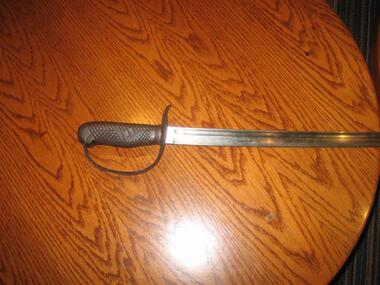
Sword
... Briquette Sword made for French Revolution and Napoleonic wars, c1793...Ammunition 1795 Briquette Sword made for French Revolution and Napoleonic wars, c1793 Sword ...Briquette Sword made for French Revolution and Napoleonic wars, c1793ammunition, 1795 -
 Kilmore Historical Society
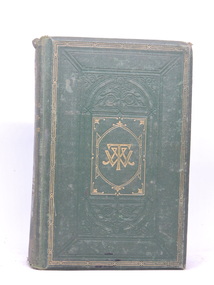
Burlesques, 1869
... The History of the next French Revolution. Cox's Diary. Short stories by W.M. ...The History of the next French Revolution. Cox's Diary. Short stories by W.M. ...Novels by eminent hands. Jeam's Diary. Adventures of Major Gahagan. A Legend of the Rhine. Rebecca and Rowena. The History of the next French Revolution. Cox's Diary. Short stories by W.M. Thackaray.Green cloth-covered hardcover book with gold decoration to front, spine and rear. Faded and marked spine, wear to cover edges and top & bottom of spine. Moderate foxing to pages. Rear cover detaching. 448 pp. Fair condition.P.1 '341', crossed out. Kilmore Mechanics Institute stamp. Title page '29'.adult fiction, kilmore mechanics institute library. -
Unions Ballarat
Military Career of Napoleon the Great - An Account of the Remarkable Campaigns of the "Man of Destiny" (Don Woodward Collection), Gibbs, MS, 1909
... He played a significant role in the French Revolution and other warfare. He was Emperor of France in 1804-14 and for a short time in 1815....He played a significant role in the French Revolution and other warfare. He was Emperor of France in 1804-14 and for a short time in 1815. ...Biography of Napoleon Bonaparte's boyhood, military and political career. Napoléon Bonaparte (1769-1821) was a French politician and military leader. He played a significant role in the French Revolution and other warfare. He was Emperor of France in 1804-14 and for a short time in 1815.Politics and military history - France. Biographical interest - Napoleon Bonaparte.Book; 514 pages. Cover: blue background; gold lettering; author's name and title.btlc, ballarat trades hall, ballarat trades and labour council, bonaparte, napoleon, revolutions - french, biography, warfare - waterloo, military, history - france -
 Federation University Historical Collection
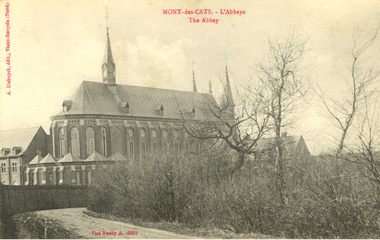
Postcard - black and white, Mont-des-Cats Abbey, c1914
... Anthony was settled in 1650 and lasted until the French Revolution which closed the monastery in 1792. ...Anthony was settled in 1650 and lasted until the French Revolution which closed the monastery in 1792. ...At Mont-des-Cats Abbey a first community of the Hospital Brothers of St. Anthony was settled in 1650 and lasted until the French Revolution which closed the monastery in 1792. In 1826, a new community of Trappists (Reformed Cistercians) was funded, and this congregation has run the abbey ever since. (wikipedia). This card was most probably purchased during an Australian soldier during World War One. A black and white postcard showing a french abbey which is sitting behind a garden in winter.chatham-holmes family collection, france, church, abbey, mont des cats, world war 1, world war, world war one -
 Ballarat Clarendon College
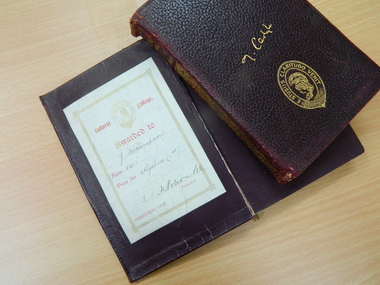
Book
... Titled 'The French Revolution Vols 1 & 2' these books were gifted to John (Jack) Felix Wotherspoon for excellence in Arithmetic and Algebra. ...Titled 'The French Revolution Vols 1 & 2' these books were gifted to John (Jack) Felix Wotherspoon for excellence in Arithmetic and Algebra. ...Titled 'The French Revolution Vols 1 & 2' these books were gifted to John (Jack) Felix Wotherspoon for excellence in Arithmetic and Algebra. Jack was born 24 June 1897 at Beaufort and joined Ballarat College in 1911. Jack left school at the end of 1914 and joined the Navy and served as a wireless operator. Following the war Jack was a draper in Beaufort from 1919 until 1949. Two small maroon leather bound books with maroon end pages; gold lettering on front covers and spine, school crest on front cover and author's signature in gold; Book plate inside front cover of vol 1: Ballarat College / Crest / Awarded to / J Wotherspooon / Form Va I / Prize for Algebra (1st) / A S M Polson / Principal / Christmas 1913 Book plate inside front cover of vol 2: Ballarat College / Crest / Awarded to / J Wotherspooon / Form Va I / Prize for Arithmetic (1st) / A S M Polson / Principal / Christmas 1913jack-wotherspoon, navy, j f wotherspoon -
Unions Ballarat
Edmund Burke (Don Woodward Collection), Kramnick, Isaac, 1974
... In addition, the comments of such men as Tom Paine and Samuel Johnson reflect the way Burke's contemporaries regarded the man who decried both the French Revolution and the rape of India by English adventurers. ...In addition, the comments of such men as Tom Paine and Samuel Johnson reflect the way Burke's contemporaries regarded the man who decried both the French Revolution and the rape of India by English adventurers. ...From back cover: Edmund Burke has long been recognized as the intellectual source of one of the modern world's most influential political ideologies: conservatism. Yet he took an uncompromising stand for the cause of the American colonies and championed the rights of persecuted Catholics in Ireland and England. In this volume, Isaac Kramnick explores the many sides of this fascinating political sceptic. This multifaceted portrait examines the skillful writings and speeches that catapulted Burke into the aristocratic political community. In addition, the comments of such men as Tom Paine and Samuel Johnson reflect the way Burke's contemporaries regarded the man who decried both the French Revolution and the rape of India by English adventurers. The commentaries by modern historians illustrate the profound impact of Burke's dynamic words and actions on his own time and country and the legacy he has left for the modern world. ------------ Burke was a Whig who served in the House of Commons.Political, social and biographical interest - United Kingdom.Book; 180 pages. Front cover: cream/white background; black and white picture of Edmund Burke; white and black lettering on brown background; editor's name and title.Title page: name (illegible). Inside back cover: stamp reading "Book Market, Peter White 212-2478, 711 George Street, Sydney"; in pencil, (a) 3308 (b) 575 (c) PC 82875. btlc, ballarat trades and labour council, ballarat trades hall, burke, edmund, biography, autobiography, politics and government, whig party, political ideology -
 Flagstaff Hill Maritime Museum and Village
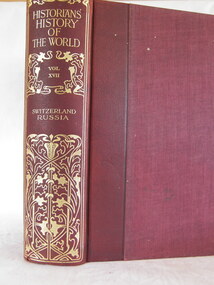
Book - Reference Book/History, The Times Newspaper, The Historians History of the World Vol 17 set 1 - Edited by Henry Smith Williams L.L.D. Published by “The Times” 1908, 1908
... It covers the internal struggles for equality among the burghers (such as the uprisings in Fribourg and the Conspiracy of Hentzi in Bern) and the external pressures leading up to the French Revolution. The volume goes on with transitions into a massive chronological account of the Russian Empire, covering its rise as a global power, It provides historical context for Poland, which at the time of publication (1908) was partitioned among other powers. ...It covers the internal struggles for equality among the burghers (such as the uprisings in Fribourg and the Conspiracy of Hentzi in Bern) and the external pressures leading up to the French Revolution. The volume goes on with transitions into a massive chronological account of the Russian Empire, covering its rise as a global power, It provides historical context for Poland, which at the time of publication (1908) was partitioned among other powers. ...Henry Smith Williams’ “The Historians' History of the World” is a chronological and geographical "tapestry" of human events, these twenty five volumes occupy a very specific and prestigious place in historical research. Volume 17 focuses primarily on the history of Switzerland with concluding sections on Russia, and Poland. The volume concludes the Swiss narrative began in volume 16.The Book is part of a 25 volume set with red cloth bindings and gold filigree design to rib.non-fictionHenry Smith Williams’ “The Historians' History of the World” is a chronological and geographical "tapestry" of human events, these twenty five volumes occupy a very specific and prestigious place in historical research. Volume 17 focuses primarily on the history of Switzerland with concluding sections on Russia, and Poland. The volume concludes the Swiss narrative began in volume 16.flagstaff hill, warrnambool, shipwrecked-coast, flagstaff-hill, flagstaff-hill-maritime-museum, maritime-museum, shipwreck-coast, flagstaff-hill-maritime-village, book, the historians history of the world vol 17 set 1 -
 Wodonga & District Historical Society Inc
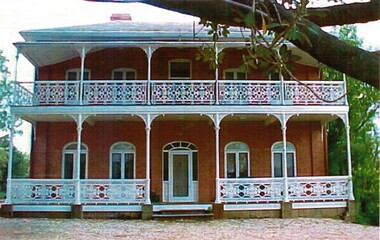
Photograph - de Kerilleau Homestead
... Paul Huon was one of the children of Gabriel Louis Marie Huon de Kerilleau, a French nobleman who fled France during the French Revolution and travelled under a false identity with the Second Fleet in 1794. ...Paul Huon was one of the children of Gabriel Louis Marie Huon de Kerilleau, a French nobleman who fled France during the French Revolution and travelled under a false identity with the Second Fleet in 1794. ...The Huon family were early pastoralists in the Wodonga area. They built the mansion, de Kerilleau in 1870 and named after the family's ancestral estate in France. The original lease of the Wodonga Run was granted to Paul Huon as No. 202 on 7th February 1837, about a year after his cousin Charles Huon had squatted on the land. In August 1849, this run was transferred to Paul's son, William. Paul Huon was one of the children of Gabriel Louis Marie Huon de Kerilleau, a French nobleman who fled France during the French Revolution and travelled under a false identity with the Second Fleet in 1794. The mansion, De Kerilleau was built by William Huon in 1870. It is a solid two storey red brick building with cream brick flat window arches. The main feature of the house is its two-storey cast-iron verandah which has been restored to its original condition. When the Governor, Sir George Bowen, his wife and two daughters needed accommodation overnight after having taken part in the celebration of the railway in Wodonga in 1873, they stayed at de Kerilleau. Sir George planted a Moreton Bay fig tree in the grounds and it still stands today. de Kerilleau is a significant building in Wodonga which has been classified by the National Trust.Coloured photographs showing a variety of features of de Kerilleau homestead.huon family, de kerilleau, de kerilleau homestead -
 Flagstaff Hill Maritime Museum and Village
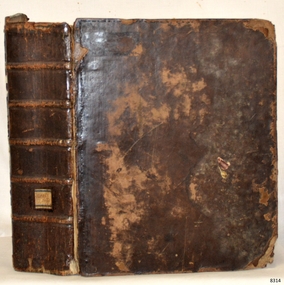
Book - Reference Bible, Mark & Charles Kerr, The Holy Bible 1789 (King James Version), 1789
... The subject edition was printed at a massive turning point in world history the exact year the French Revolution began and George Washington became the first U.S. ...The subject edition was printed at a massive turning point in world history the exact year the French Revolution began and George Washington became the first U.S. ...The subject Bible is an incredible piece of history in the Pattison Collection. A Bible printed in 1789 with a personal handwritten inscription from 1792 is a true artefact of the late 18th century. The information on the book's title page refers to King George III, as Mark and Charles Kerr were prominent Scottish printers and stationers based in Edinburgh. In the 18th century, printing the Holy Bible wasn't something just anyone could do; it required a royal patent granted by the Crown to ensure textual accuracy and high-quality production. The Kerr family held the coveted title of "King's Printers for Scotland" during the late 1700s. Bibles from their press were highly regarded for their clear typography, sturdy leather bindings, and standard-setting quality. Owning an Edinburgh-printed royal edition like the subject publication was a point of pride for families across the English-speaking world.The Holy Bible 1789 Publisher: Mark & Charles Kerr His Majesty's Printers Date: 1789 Further Information : non-fictionThe subject Bible is an incredible piece of history in the Pattison Collection. A Bible printed in 1789 with a personal handwritten inscription from 1792 is a true artefact of the late 18th century. The information on the book's title page refers to King George III, as Mark and Charles Kerr were prominent Scottish printers and stationers based in Edinburgh. In the 18th century, printing the Holy Bible wasn't something just anyone could do; it required a royal patent granted by the Crown to ensure textual accuracy and high-quality production. The Kerr family held the coveted title of "King's Printers for Scotland" during the late 1700s. Bibles from their press were highly regarded for their clear typography, sturdy leather bindings, and standard-setting quality. Owning an Edinburgh-printed royal edition like the subject publication was a point of pride for families across the English-speaking world.flagstaff hill, warrnambool, shipwrecked coast, flagstaff hill maritime museum, maritime museum, shipwreck coast, flagstaff hill maritime village, great ocean road, book, pattison collection, warrnambool library, warrnambool mechanics’ institute, ralph eric pattison, corangamite regional library service, warrnambool city librarian, mechanics’ institute library, victorian library board, warrnambool books and records, warrnambool children’s library, the holy bible 1789, the holy bible -
 Flagstaff Hill Maritime Museum and Village
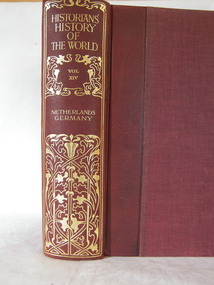
Book - Reference Book/History, Henry Smith Williams, The Historians History of the World Vol 14 set 1 - Edited by Henry Smith Williams L.L.D. Published by “The Times” 1908, 1908
... It covers the decline of the Dutch Republic, the impact of the French Revolution, the Napoleonic era and the Kingdom of Holland. ...It covers the decline of the Dutch Republic, the impact of the French Revolution, the Napoleonic era and the Kingdom of Holland. ...Henry Smith Williams’ “The Historians' History of the World” is a chronological and geographical "tapestry" of human events, these twenty five volumes occupy a very specific and prestigious place in historical research. Volume 14 serves as a bridge between the late early-modern period and the height of the imperial era for two major European powers. It is titled "The Netherlands (concluded), The Germanic Empires."The Book is part of a 25 volume set with red cloth bindings and gold filigree design to rib.non-fictionHenry Smith Williams’ “The Historians' History of the World” is a chronological and geographical "tapestry" of human events, these twenty five volumes occupy a very specific and prestigious place in historical research. Volume 14 serves as a bridge between the late early-modern period and the height of the imperial era for two major European powers. It is titled "The Netherlands (concluded), The Germanic Empires."flagstaff hill, warrnambool, flagstaff-hill-maritime-museum, maritime-museum, shipwreck-coast, flagstaff-hill-maritime-village, book, the historians history of the world vol 14 set 1, henry smith williams -
 Flagstaff Hill Maritime Museum and Village
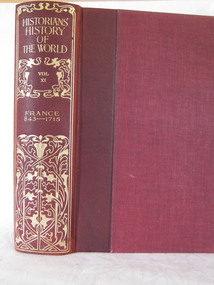
Book - Reference Book/History, Henry Smith Williams, The Historians History of the World Vol 11 set 1 - Edited by Henry Smith Williams L.L.D. Published by “The Times” 1908, 1908
... . The French Revolution is covered with a granular look at the fall of the Bastille, the rise of the Jacobins, and the “Reign of Terror” leading to the eventual execution of the monarchy. .... The French Revolution is covered with a granular look at the fall of the Bastille, the rise of the Jacobins, and the “Reign of Terror” leading to the eventual execution of the monarchy. ...Henry Smith Williams’ “The Historians' History of the World” is a chronological and geographical "tapestry" of human events, these twenty five volumes occupy a very specific and prestigious place in historical research. A warning on Volume 11 if the reader is looking for the history of France (1715–1815) in this specific 1908 edition, ensure you check Volume 12. In some printings of the 1908 set, the numbering of French history was slightly adjusted, and Volume 11 often ends at the death of Louis XIV (1715).The Book is part of a 25 volume set with red cloth bindings and gold filigree design to rib.non-fictionHenry Smith Williams’ “The Historians' History of the World” is a chronological and geographical "tapestry" of human events, these twenty five volumes occupy a very specific and prestigious place in historical research. A warning on Volume 11 if the reader is looking for the history of France (1715–1815) in this specific 1908 edition, ensure you check Volume 12. In some printings of the 1908 set, the numbering of French history was slightly adjusted, and Volume 11 often ends at the death of Louis XIV (1715).flagstaff hill, warrnambool, shipwrecked-coast, flagstaff-hill, flagstaff-hill-maritime-museum, maritime-museum, shipwreck-coast, flagstaff-hill-maritime-village, the historians history of the world vol 11 set 1, book -
 Wodonga & District Historical Society Inc
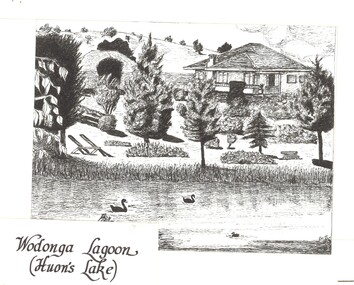
Work on paper - Wodonga Lagoon (Huon's Lake), Des Martin, 1987
... He escaped to England during the French Revolution and enlisted in the New South Wales Corps. ...He escaped to England during the French Revolution and enlisted in the New South Wales Corps. ...Gabriel Louis Marie Huon de Kerilleau was born to a French aristocratic family in 1769. He escaped to England during the French Revolution and enlisted in the New South Wales Corps. He married in Parramatta to Louisa Emmanuel Le Sage. They had five children who took the name of Huon – Elizabeth, Paul, Jean Francois, Aime Augustus and Charles. Paul and Charles were to become the “founders’ of the Wodonga District. In 1824 Hamilton Hume and William Hovell discovered the Hume River, later renamed to the Murray River and the rich land surrounding it. By 1835, squatters began arriving at the Hume River. During the following year, Paul Huon arrived at the Hume (Murray) River, then "taking up" 40,000 acres on the south side of the river bank. To this property he gave the name WOODONGA RUN. Charles Huon, younger brother of Paul, was sent to manage the "Run" until Paul's son, William, became old enough to take over management. Charles Huon built a mud brick home on the eastern side of a rise south of the now Wodonga Creek. Thus was Charles the first permanent settler in the district. He was a great admirer of the English Lord Belvoir hence "Belvoir" was the name Charles Huon gave to the first permanent home on Woodonga Run. By the 1857, residents numbered fifty, and the Government had surveyed a township area, proclaiming it "Belvoir" in the new State of Victoria. However, the residents wanted their own choice of a name for the town. Huon’s first home overlooked a lagoon which was often referred to as Huon’s Lagoon. It has borne several names since then including Lake Huon and Belvoir Lagoon. After much redevelopment and many roles including the location of sporting fields and the Wodonga Golf Course, it is now known as Belvoir Park, a major parkland and recreation area in Wodonga.Donated by Des Martin & Rosemary BoyesPart of a set of original sketches by Des Martin for "A Record of the 150th Anniversary" Celebrations of the Rural City of Wodonga held on 30th October 1986.huon family, belvoir park wodonga, huon's lagoon -
 Federation University Historical Collection
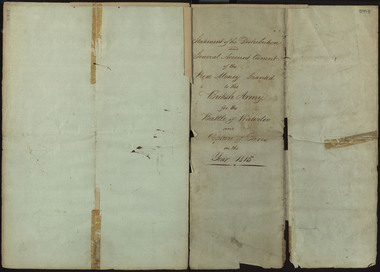
Document, Statement of the Distribution and General Account Current of the Prize Money Granted to the British Army for the Battle of Waterloo and Capture of Paris in the Year 1815, 1815
... The Napoleonic Wars were a period of conflict from 1803-1815, caused by unresolved tensions following the end of the French Revolution. Coalitions of European powers fought against Napoleon Bonaparte and the French army, who were defeated at the Battle of Waterloo on the 18th June 1815, in Belgium. ...The Napoleonic Wars were a period of conflict from 1803-1815, caused by unresolved tensions following the end of the French Revolution. Coalitions of European powers fought against Napoleon Bonaparte and the French army, who were defeated at the Battle of Waterloo on the 18th June 1815, in Belgium. ...The Napoleonic Wars were a period of conflict from 1803-1815, caused by unresolved tensions following the end of the French Revolution. Coalitions of European powers fought against Napoleon Bonaparte and the French army, who were defeated at the Battle of Waterloo on the 18th June 1815, in Belgium. The conclusion of the battle would mark a period of sustained peace for Europe, that would bring with it cultural and technological innovation. This document in illustrative of the prize money awarded to different groups of soldiers following the Capture of Paris, separated into different classes. The first class consisted of General Officers, the second of Field Officers and Colonels, the third of Captains, the fourth of Subalterns, the fifth of Serjeants and the sixth of Corporals, Drummers and Privates. The Commander in Chief of the Army also received £61, 178/3/ 5 1/2. In addition to the money given to these classes, which approximately totaled £486,246 / 18/ 1 3/4, a total of £30,000 was paid to the Bank of England and £7,204 / 16/ 7 1/4 was paid to the Chelsea Hospital, to a grand total of £558,940/ 12/ 3. This money given to the Chelsea Hospital was part of the Army Prize Money Act 1814 (54th Geo. 3 c. 86, 14th July 1814), which when passed through parliament entailed that any prize money unclaimed or forfeited would be paid to the Chelsea Hospital. The Royal Hospital Chelsea is a charitable institution which provides support to war veterans and has existed since the reign of Charles II. The document goes into further details of the payments made to specific regiments, who include members of the British cavalry and artillery, rifleman, staff corps and foreign soldiers enlisted to aid with the campaign. The award of prize money following battle was meant to serve as an incentive for aggression and victory, in addition to helping deter looting of the deceased possessions. A paper watermark '1810' on the handwritten document suggests it is an original, and therefore was probably in the possession of a battle participant, most likely of a higher rank. The provenance of the document is unknown but one possibility is through former Ballarat School of Mines staff member Hester Darby, whose parents were Ernest Darby and Leah Hynam. Her maternal line boasted a Battle of Waterloo veteran. A number of handwritten pages 48 cm. x 34.5 cm. (slightly larger than A3) which has been folded in half, and in half again. When attempts were made to tape the torn document together, one page was taped in the wrong order. The top of the third page aligns with the bottom of the fourth page, the top of the fourth page with the bottom of the third. Corrections to this have been made in the transcript. DESCRIPTION ON DISCOVERY: "BALLARAT - Copy of an historic document of prize money paid after the battle of Waterloo and capture of Paris in 1815 has been found among old papers at the Ballarat School of Mines. The full amount of prize money was stated at "£558,913 10/10." Scores of regiments had their shares varying probably, according to the numbers. The document will be retained in the School of Mines Museum, ... (Age, 21 March 1941)The paper has an 1810 watermark on the paper as well as a watermark for S&C Wise. duke of wellington, waterloo, battle of waterloo, napoleon, napoleon bonaparte, british army, paris, darby, veteran, 1815, prize money, waterloo verterans, hester darby -
 Wodonga & District Historical Society Inc
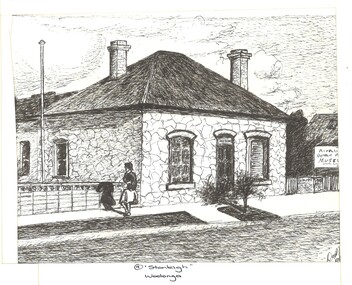
Work on paper - Stonleigh, Wodonga - Home of Paul Huon, Des Martin, 1987
... He escaped to England during the French Revolution and enlisted in the New South Wales Corps. ...He escaped to England during the French Revolution and enlisted in the New South Wales Corps. ...Gabriel Louis Marie Huon de Kerilleau was born to a French aristocratic family in 1769. He escaped to England during the French Revolution and enlisted in the New South Wales Corps. He married in Parramatta to Louisa Emmanuel Le Sage. They had five children who took the name of Huon – Elizabeth, Paul, Jean Francois, Aime Augustus and Charles. Paul and Charles were to become the “founders’ of the Wodonga District. In 1824 Hamilton Hume and William Hovell discovered the Hume River, later renamed to the Murray River and the rich land surrounding it. By 1835, squatters began arriving at the Hume River. During the following year, Paul Huon arrived at the Hume (Murray) River, then "taking up" 40,000 acres on the south side of the river bank. To this property he gave the name WOODONGA RUN. Charles Huon, younger brother of Paul, was sent to manage the "Run" until Paul's son, William, became old enough to take over management. Charles Huon built a mud brick home on the eastern side of a rise south of the now Wodonga Creek. Thus was Charles the first permanent settler in the district. He was a great admirer of the English Lord Belvoir hence "Belvoir" was the name Charles Huon gave to the first permanent home on Woodonga Run. By the 1857, residents numbered fifty, and the Government had surveyed a township area, proclaiming it "Belvoir" in the new State of Victoria. However, the residents wanted their own choice of a name for the town. A battle lasting thirteen years followed over the name of the town until the residents won in 1874 when the Victorian Government dropped the name "Belvoir" and proclaimed the town's name as "Wodonga." A local government Shire formed two years later became the Shire of Wodonga. The Huon name features in the town today including Huon Hill, Huon Creek, Huon Street and the former township and railway siding at Huon. The name "Belvoir" is used today by organisations and locations in Wodonga including Belvoir Park formerly known as Huon’s Lagoon. On 3rd October 1986 the Wodonga community celebrated the 150th anniversary of the first settlement by Charles Huon of the district that was to become Wodonga. These drawings were completed by Desmond Martin as part of a booklet produced to record the event. Stonleigh in Wodonga was once owned by Paul Huon.Donated by Des Martin & Rosemary BoyesPart of a set of original sketches by Des Martin for "A Record of the 150th Anniversary" Celebrations of the Rural City of Wodonga held on 30th October 1986.150th anniversary celebrations, huon family, early wodonga, stonleigh wodonga -
 Wodonga & District Historical Society Inc
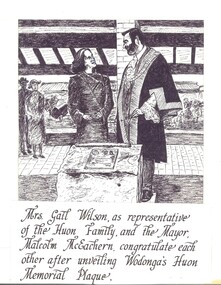
Work on paper - 150th Anniversary Celebrations of the Rural City of Wodonga, Des Martin, 1987
... He escaped to England during the French Revolution and enlisted in the New South Wales Corps. ...He escaped to England during the French Revolution and enlisted in the New South Wales Corps. ...Gabriel Louis Marie Huon de Kerilleau was born to a French aristocratic family in 1769. He escaped to England during the French Revolution and enlisted in the New South Wales Corps. He married in Parramatta to Louisa Emmanuel Le Sage. They had five children who took the name of Huon – Elizabeth, Paul, Jean Francois, Aime Augustus and Charles. Paul and Charles were to become the “founders’ of the Wodonga District. In 1824 Hamilton Hume and William Hovell discovered the Hume River, later renamed to the Murray River and the rich land surrounding it. By 1835, squatters began arriving at the Hume River. During the following year, Paul Huon arrived at the Hume (Murray) River, then "taking up" 40,000 acres on the south side of the river bank. To this property he gave the name WOODONGA RUN. Charles Huon, younger brother of Paul, was sent to manage the "Run" until Paul's son, William, became old enough to take over management. Charles Huon built a mud brick home on the eastern side of a rise south of the now Wodonga Creek. Thus was Charles the first permanent settler in the district. He was a great admirer of the English Lord Belvoir hence "Belvoir" was the name Charles Huon gave to the first permanent home on Woodonga Run. By the 1857, residents numbered fifty, and the Government had surveyed a township area, proclaiming it "Belvoir" in the new State of Victoria. However, the residents wanted their own choice of a name for the town. A battle lasting thirteen years followed over the name of the town until the residents won in 1874 when the Victorian Government dropped the name "Belvoir" and proclaimed the town's name as "Wodonga." A local government Shire formed two years later became the Shire of Wodonga. The Huon name features in the town today including Huon Hill, Huon Creek, Huon Street and the former township and railway siding at Huon. The name "Belvoir" is used today by organisations and locations in Wodonga including Belvoir Park formerly known as Huon’s Lagoon. On 3rd October 1986 the Wodonga community celebrated the 150th anniversary of the first settlement by Charles Huon of the district that was to become Wodonga. These drawings were completed by Desmond Martin as part of a booklet produced to record the event. Donated by Des Martin & Rosemary BoyesPart of a set of original sketches by Des Martin for "A Record of the 150th Anniversary" Celebrations of the Rural City of Wodonga held on 30th October 1986.150th anniversary celebrations, huon family -
 Wodonga & District Historical Society Inc
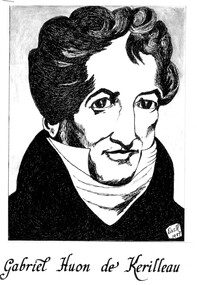
Work on paper - Huon Family Portraits, Des Martin, 1987
... He escaped to England during the French Revolution and enlisted in the New South Wales Corps. ...He escaped to England during the French Revolution and enlisted in the New South Wales Corps. ...Gabriel Louis Marie Huon de Kerilleau was born to a French aristocratic family in 1769. He escaped to England during the French Revolution and enlisted in the New South Wales Corps. He married in Parramatta to Louisa Emmanuel Le Sage. They had five children who took the name of Huon – Elizabeth, Paul, Jean Francois, Aime Augustus and Charles. Paul and Charles were to become the “founders’ of the Wodonga District. In 1824 Hamilton Hume and William Hovell discovered the Hume River, later renamed to the Murray River and the rich land surrounding it. By 1835, squatters began arriving at the Hume River. During the following year, Paul Huon arrived at the Hume (Murray) River, then "taking up" 40,000 acres on the south side of the river bank. To this property he gave the name WOODONGA RUN. Charles Huon, younger brother of Paul, was sent to manage the "Run" until Paul's son, William, became old enough to take over management. Charles Huon built a mud brick home on the eastern side of a rise south of the now Wodonga Creek. Thus was Charles the first permanent settler in the district. He was a great admirer of the English Lord Belvoir hence "Belvoir" was the name Charles Huon gave to the first permanent home on Woodonga Run. By the 1857, residents numbered fifty, and the Government had surveyed a township area, proclaiming it "Belvoir" in the new State of Victoria. However, the residents wanted their own choice of a name for the town. A battle lasting thirteen years followed over the name of the town until the residents won in 1874 when the Victorian Government dropped the name "Belvoir" and proclaimed the town's name as "Wodonga." A local government Shire formed two years later became the Shire of Wodonga. The Huon name features in the town today including Huon Hill, Huon Creek, Huon Street and the former township and railway siding at Huon. The name "Belvoir" is used today by organisations and locations in Wodonga including Belvoir Park formerly known as Huon’s Lagoon. On 3rd October 1986 the Wodonga community celebrated the 150th anniversary of the first settlement by Charles Huon of the district that was to become Wodonga. These drawings were completed by Desmond Martin as part of a booklet produced to record the event.Donated by Des Martin & Rosemary BoyesThree portraits of members of the Huon De Kerilleau Family, pioneers of Wodonga in Victoria. charles huon, huon de kerilleau, wodonga pioneers -
 Ballarat and District Irish Association
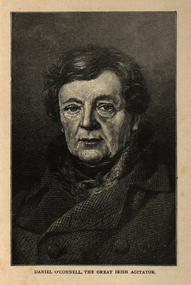
Image, Daniel O'Connell, the Great Irish Agitator, c1864, c1864
... Omer and Douai and what he saw there of the French Revolution left him with a life-long hatred of violence. ...Omer and Douai and what he saw there of the French Revolution left him with a life-long hatred of violence. ...Daniel O’Connell was born near Cahirciveen, Co. Kerry, on 6 August 1775. His wealthy childless uncle adopted him at an early age and brought him up at Derrynane. He spoke Irish and was interested in the traditional culture of song and story still strong in Kerry at the time. He also understood how the rural mind worked which served him well in later years. In 1791 he was sent to school at St. Omer and Douai and what he saw there of the French Revolution left him with a life-long hatred of violence. He read law at Lincoln’s Inn (1794 -96) and continued his studies in Dublin where he was called to bar in 1798. He had soon built up an enormous practice. The 1798 rising and the terrible butchery that followed it confirmed his horror of violence. While he approved of the principles of the United Irishmen, their call for reform and for Catholic Emancipation, he disagreed with their methods. In 1815 O’Connell criticised harshly the Dublin corporation. O’Connell was challenged to a duel by one member D’Esterre. In the exchange of shots D’Esterre was killed and O’Connell vowed never to fight again. O’Connell was soon drawn into political action. Hopes of Catholic emancipation had been raised by promises given while the act of union was being passed. In 1823, O’Connell founded the Catholic Association. The aim of the organisation was to use all the legal means available to secure emancipation. It turned into a mass crusade with the support of the Catholic clergy. All members of the association paid a membership of a penny a month (the Catholic rent). This helped to raise a large fund. The Clare election in 1828 was a turning point. O’Connell, with the support of the forty-shilling freeholders, managed a huge victory against the government candidate. He was well supported by the clergy whose influence on the poor uneducated peasant class was enormous. The polling took place in Ennis at the old courthouse where the O’Connell monument now stands. At the final count, O’Connell was elected by a majority of about eleven hundred votes. The ascendancy party had suffered its first big knock since 1798. The whole country was aflame. The British Government feared a rising and granted Catholic emancipation in April 1829. The franchise was, however, raised to 10 pounds which excluded the forty-shilling freeholders. O’Connell was now the undisputed leader in Ireland and he gave up his practice at the bar to devote his time entirely to politics. At the King’s insistence, O’Connell was not allowed to take his seat until he had been re-elected for Clare. In February 1830, O’Connell became the first Catholic in modern history to sit in the House of Commons. For the rest of his life, he was supported by “The O’Connell Tribute”, a public collection out of which O’Connell paid all his expenses. O’Connell now decided to concentrate on winning repeal of the act of union and getting an Irish parliament for the Irish people. British political leaders feared repeal as they did not fear emancipation. They saw repeal of the Act of Union as the first step in the break-up of the act of union, as the spirit of the repeal movement was revived when the young Ireland writers wrote about it in the Nation. In 1841, O’Connell was elected Lord Mayor of Dublin and in 1843 the subscriptions to his Repeal Association, the Repeal “Rent” came to 48,400 pounds. He now began to organise monster meetings throughout the country. It is thought that three-quarters of a million people gathered on the hill of Tara to hear the man they called the “Liberator”. The government became alarmed at the strength of the Repeal Movement and a meeting which O’Connell had planned for 8 October 1843 in Clontarf, Dublin was banned. Huge crowds were already on their way when O’Connell called off the meeting to avoid the risk of violence and bloodshed. He was charged with conspiracy, arrested and sentenced to a year in jail and a fine of 2,000 pounds. The sentence was set aside after O’Connell had been three months in prison. When he was released he continued with his campaign for repeal. However, a turning point had been reached. The tactics that had won emancipation had failed. O’Connell was now almost seventy, his health failing and he had no clear plan for future action. There was discontent within the Repeal Association and the Young Irelanders withdrew. There was also some failure in the potato crop in the 1840’s, a sign of things to come in the Great Famine of 1845-1847. Aware of the fact that he had failed with his great goal, (the Repeal Movement), O’Connell left Ireland for the last time in January 1847. He made a touching speech in the House of Commons in which he appealed for aid for his country. In March, acting on the advice of his doctor, he set out to Italy. Following his death in Genoa on 15 May 1847, his body was returned to Ireland and buried in Glasnevin Cemetery. [http://www.clarelibrary.ie/eolas/coclare/people/daniel.htm, accessed 13/12/2013]Portrait of a man known as Daniel O'Connell.ballarat irish, daniel o'connell, o'connell -
 Flagstaff Hill Maritime Museum and Village
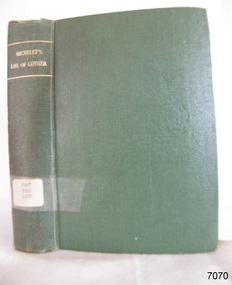
Book - Unconventional Biography, William Hazlitt Jr (Translator), The Life of Luther, 1872
... He is best remembered for his 17-volume Histoire de France (1833–67) and his history of the French Revolution works often criticised as overly emotional and biased against the monarchy, nobility, and clergy, while idealising popular forces and revolutionary upheaval, but which established him as one of France's greatest 19th-century historians. ...He is best remembered for his 17-volume Histoire de France (1833–67) and his history of the French Revolution works often criticised as overly emotional and biased against the monarchy, nobility, and clergy, while idealising popular forces and revolutionary upheaval, but which established him as one of France's greatest 19th-century historians. ...The Life of Luther, written by himself, is not a conventional biography but a compilation of Martin Luther's own words letters, table-talk, and passages drawn from his polemical and dogmatic writings selected, translated into French, arranged in roughly chronological order, and lightly stitched together with narrative commentary by Jules Michelet. It is a biography composed of a series of translations; except for the earliest years, which Luther could not narrate himself, the translator rarely needed to speak in his own voice. The English subject edition is Michelet's French compilation that was first published in Paris in 1835 as Mémoires de Luther, écrits par lui-même and rendered into English by William Hazlitt (1811–1893). The work traces Luther from his peasant origins and monastic life through his ordination, his journey to Rome, his "temptations" and inner spiritual crises, his break with the papacy, his marriage to the escaped nun Katharina von Bora, and his role at the centre of the Reformation, largely in his own recorded voice, framed by Michelet. Michelet composed the work almost entirely in 1828–29, publishing it in 1835. As the translator of Vico's Scienza Nuova, he felt a need at that time to move from theory to application, to study the general in the individual, history in biography, humanity in one man and Luther was his chosen vehicle: a man complete in thought and action, whose entire life, down to its smallest words and deeds, had been recorded.Hard cover book. The Life of Luther Author: M Michelet Translator: William Hazlitt Jr Publisher: Bell & Daldy & Co Date: 1872 Further Information: Green Cloth hardcover with lettering to spine in gilt. The spine has a Library label with an inscription.non-fictionThe Life of Luther, written by himself, is not a conventional biography but a compilation of Martin Luther's own words letters, table-talk, and passages drawn from his polemical and dogmatic writings selected, translated into French, arranged in roughly chronological order, and lightly stitched together with narrative commentary by Jules Michelet. It is a biography composed of a series of translations; except for the earliest years, which Luther could not narrate himself, the translator rarely needed to speak in his own voice. The English subject edition is Michelet's French compilation that was first published in Paris in 1835 as Mémoires de Luther, écrits par lui-même and rendered into English by William Hazlitt (1811–1893). The work traces Luther from his peasant origins and monastic life through his ordination, his journey to Rome, his "temptations" and inner spiritual crises, his break with the papacy, his marriage to the escaped nun Katharina von Bora, and his role at the centre of the Reformation, largely in his own recorded voice, framed by Michelet. Michelet composed the work almost entirely in 1828–29, publishing it in 1835. As the translator of Vico's Scienza Nuova, he felt a need at that time to move from theory to application, to study the general in the individual, history in biography, humanity in one man and Luther was his chosen vehicle: a man complete in thought and action, whose entire life, down to its smallest words and deeds, had been recorded.warrnambool, shipwrecked-coast, flagstaff-hill, flagstaff-hill-maritime-museum, maritime-museum, shipwreck-coast, flagstaff-hill-maritime-village, shipwrecked-artefact, book, the life of luther, m michelet -
 Flagstaff Hill Maritime Museum and Village
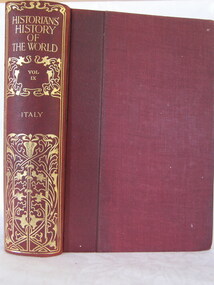
Book - Reference Book/History, Henry Smith Williams, The Historians History of the World Vol 9 set 1 - Edited by Henry Smith Williams L.L.D. Published by “The Times” 1908, 1908
... revolution. It concludes with the 19th-century struggle for Italian unification, featuring figures like Mazzini, Garibaldi, and Cavour. It concentrates on cultural vs political history while other volumes (like those on Prussia or France) focus heavily on wars and kings. ...revolution. It concludes with the 19th-century struggle for Italian unification, featuring figures like Mazzini, Garibaldi, and Cavour. It concentrates on cultural vs political history while other volumes (like those on Prussia or France) focus heavily on wars and kings. ...The 1908 edition of The Historians' History of the World is a monumental work of Edwardian scholarship, representing a specific era of "universal history" where the goal was to synthesise all human knowledge into a single narrative. While previous volumes dealt with the Roman Empire, Volume 9 picks up the story after the "Fall of Rome" and tracks the peninsula’s evolution through the dawn of the 20th century.The Book is part of a 25 volume set with red cloth bindings and gold filigree design to ribnon-fictionThe 1908 edition of The Historians' History of the World is a monumental work of Edwardian scholarship, representing a specific era of "universal history" where the goal was to synthesise all human knowledge into a single narrative. While previous volumes dealt with the Roman Empire, Volume 9 picks up the story after the "Fall of Rome" and tracks the peninsula’s evolution through the dawn of the 20th century. warrnambool, shipwrecked-coast, flagstaff-hill, flagstaff-hill-maritime-museum, maritime-museum, book, the historians history of the world vol 9 set 1, henry smith williams -
 Flagstaff Hill Maritime Museum and Village
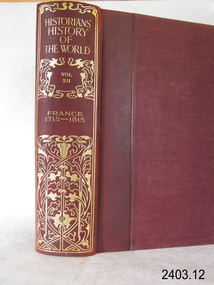
Book - Reference Book/History, Henry Smith Williams, The Historians History of the World Vol 12 set 1 - Edited by Henry Smith Williams L.L.D. Published by “The Times” 1908, 1908
... For Volume 12, this means you are reading the French Revolution through the eyes of the most prominent 19th century historians, woven into a single narrative. ...Henry Smith Williams’ “The Historians' History of the World” is a chronological and geographical "tapestry" of human events, these twenty five volumes occupy a very specific and prestigious place in historical research. This volume continues on with the history of France. The primary focus of Volume 12 is the continuation of the history of France from 1715 to 1815. This century is arguably the most trans formative in French history, and the volume meticulously documents the transition from absolute monarchy to revolutionary chaos and, finally, to the Napoleonic Empire.The Book is part of a 25 volume set with red cloth bindings and gold filigree design to rib.non-fictionHenry Smith Williams’ “The Historians' History of the World” is a chronological and geographical "tapestry" of human events, these twenty five volumes occupy a very specific and prestigious place in historical research. This volume continues on with the history of France. The primary focus of Volume 12 is the continuation of the history of France from 1715 to 1815. This century is arguably the most trans formative in French history, and the volume meticulously documents the transition from absolute monarchy to revolutionary chaos and, finally, to the Napoleonic Empire.flagstaff hill, warrnambool, shipwrecked-coast, flagstaff-hill, flagstaff-hill-maritime-museum, maritime-museum, shipwreck-coast, flagstaff-hill-maritime-village, the historians history of the world vol 12, book, henry smith williams l.l.d -
 Flagstaff Hill Maritime Museum and Village
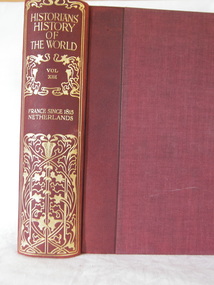
Book - Reference Book/History, Henry Smith Williams, The Historians History of the World Vol 13 set 1 - Edited by Henry Smith Williams L.L.D. Published by “The Times” 1908, 1908
... France (1815–1904.) This section picks up immediately after the fall of Napoleon l following the 1815 Battle of Waterloo. It details the Bourbon Restoration, the July Monarchy of Louis-Philippe, the 1848 Revolution, and the Second Empire under Napoleon III, the Franco-Prussian War, and the subsequent establishment of the “Third Republic” up to the early 20th century. ...France (1815–1904.) This section picks up immediately after the fall of Napoleon l following the 1815 Battle of Waterloo. It details the Bourbon Restoration, the July Monarchy of Louis-Philippe, the 1848 Revolution, and the Second Empire under Napoleon III, the Franco-Prussian War, and the subsequent establishment of the “Third Republic” up to the early 20th century. ...Henry Smith Williams’ “The Historians' History of the World” is a chronological and geographical "tapestry" of human events, these twenty five volumes occupy a very specific and prestigious place in historical research. Volume 13 focuses primarily on the modern history of France and the Netherlands. It specifically covers, France (1815–1904.) This section picks up immediately after the fall of Napoleon l following the 1815 Battle of Waterloo.The Book is part of a 25 volume set with red cloth bindings and gold filigree design to rib.non-fictionHenry Smith Williams’ “The Historians' History of the World” is a chronological and geographical "tapestry" of human events, these twenty five volumes occupy a very specific and prestigious place in historical research. Volume 13 focuses primarily on the modern history of France and the Netherlands. It specifically covers, France (1815–1904.) This section picks up immediately after the fall of Napoleon l following the 1815 Battle of Waterloo.flagstaff hill, warrnambool, shipwrecked-coast, flagstaff-hill, flagstaff-hill-maritime-museum, maritime-museum, shipwreck-coast, flagstaff-hill-maritime-village, book, the historians history of the world vol 13 set 1 -
 Flagstaff Hill Maritime Museum and Village
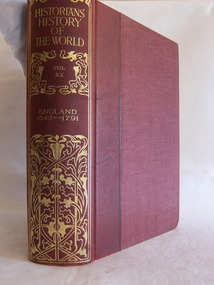
Book - Reference Book/History, Henry Smith Williams, The Historians History of the World Vol 20 set 1 - Edited by Henry Smith Williams L.L.D. Published by “The Times” 1908, 1908
... This volume provides the necessary context for the American and French Revolutions (which follow in later volumes). ...Henry Smith Williams’ “The Historians' History of the World” is a chronological and geographical "tapestry" of human events, these twenty five volumes occupy a very specific and prestigious place in historical research. Volume 20 focuses on the transformation period of England from the outbreak of the English Civil War to the late 18th century.The Book is part of a 25 volume set with red cloth bindings and gold filigree design to rib.non-fictionHenry Smith Williams’ “The Historians' History of the World” is a chronological and geographical "tapestry" of human events, these twenty five volumes occupy a very specific and prestigious place in historical research. Volume 20 focuses on the transformation period of England from the outbreak of the English Civil War to the late 18th century. warrnambool, flagstaff-hill, flagstaff-hill-maritime-museum, maritime-museum, shipwreck-coast, flagstaff-hill-maritime-village, book, the historians history of the world vol 20 set 1, henry smith williams -
 Flagstaff Hill Maritime Museum and Village
Domestic object - Fork
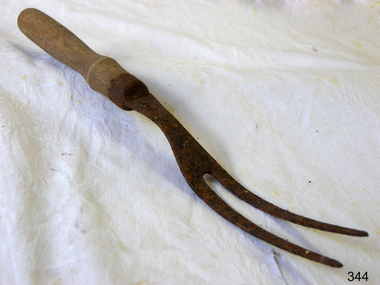
... France, England, and Sweden already by the early 17th century. Spaghetti fork By Lady alys - Own work, CC BY-SA 3.0, https://commons.wikimedia.org/w/index.php?curid=6414948 Spaghetti Fork By Lady alys – Own work, CC BY-SA 3.0, The fork did not become popular in North America until near the time of the American Revolution. ...France, England, and Sweden already by the early 17th century. Spaghetti fork By Lady alys - Own work, CC BY-SA 3.0, https://commons.wikimedia.org/w/index.php?curid=6414948 Spaghetti Fork By Lady alys – Own work, CC BY-SA 3.0, The fork did not become popular in North America until near the time of the American Revolution. ...Naturally, we tend to take commonplace objects for granted, because they have always been there. Yet how many of you actually have thought “hey, where do forks come from?” Well, it takes one trip to China and a 3-year-old laughing at your face because of your desperate attempt to eat with chopsticks to finally appreciate something so ordinary such as a fork. So, where do forks come from? The early history of the fork is obscure. As a kitchen and dining utensil, it is believed to have originated in the Roman Empire, as proved by archaeological evidence. The personal table fork most likely originated in the Eastern Roman (or Byzantine) Empire. Its use spread to what is now the Middle East during the first millennium AD and then spread into Southern Europe during the second millennium. It did not become common in northern Europe until the 18th century and was not common in North America until the 19th century. Carving fork from 1640. Source: Wikipedia/Public Domain Carving Fork from 1640. Source: Wikipedia/Public Domain Some of the earliest known uses of forks with food occurred in Ancient Egypt, where large forks were used as cooking utensils. Bone forks had been found on the burial site of the Bronze Age Qijia culture (2400–1900 BC) as well as later Chinese dynasties’ tombs.The Ancient Greeks used the fork as a serving utensil. Read also: Steven Spielberg to Remake the Classic Musical ‘West Side Story’ In the Roman Empire, bronze and silver forks were used. The use varied according to local customs, social class and the nature of food, but forks of the earlier periods were mostly used as cooking and serving utensils. The personal table fork was most likely invented in the Eastern Roman (Byzantine) Empire, where they were in everyday use by the 4th century (its origin may even go back to Ancient Greece, before the Roman period). Records show that by the 9th century a similar utensil known as a barjyn was in limited use in Persia within some elite circles. By the 10th century, the table fork was in common use throughout the Middle East. Bronze forks made in Persia during the 8th or 9th century.Source: Wikipedia/Public Domain Bronze forks made in Persia during the 8th or 9th century.Source: Wikipedia/Public Domain The first recorded introduction of the fork to Western Europe, as recorded by the theologian and Cardinal Peter Damian, was by Theophano Sklereina the Byzantine wife of Holy Roman Emperor Otto II, who nonchalantly wielded one at an Imperial banquet in 972, astonishing her Western hosts.By the 11th century, the table fork had become increasingly prevalent in the Italian peninsula. It gained a following in Italy before any other Western European region because of historical ties with Byzantium and continued to get popularity due to the increasing presence of pasta in the Italian diet. At first, pasta was consumed using a long wooden spike, but this eventually evolved into three spikes, design better suited to gathering the noodles. In Italy, it became commonplace by the 14th century and was almost universally used by the merchant and upper classes by 1600. It was proper for a guest to arrive with his fork and spoon enclosed in a box called a cadena; this usage was introduced to the French court with Catherine de’ Medici’s entourage. In Portugal, forks were first used at the time of Infanta Beatrice, Duchess of Viseu, King Manuel I of Portugal’s mother around 1450. However, forks were not commonly used in Western Europe until the 16th century when they became part of Italian etiquette. The utensil had also gained some currency in Spain by this time, and its use gradually spread to France. Nevertheless, most of Europe did not adopt the use of the fork until the 18th century. Read also: The 8 Most Famous ‘Functioning Alcoholics’ in History Long after the personal table fork had become commonplace in France, at the supper celebrating the marriage of the Duc de Chartres to Louis XIV’s natural daughter in 1692, the seating was described in the court memoirs of Saint-Simon: “King James having his Queen on his right hand and the King on his left, and each with their cadenas.” In Perrault’s contemporaneous fairy tale of La Belle au bois dormant (1697), each of the fairies invited for the christening is presented with a splendid “fork holder”. The fork’s adoption in northern Europe was slower. Its use was first described in English by Thomas Coryat in a volume of writings on his Italian travels (1611), but for many years it was viewed as an unmanly Italian affectation. Some writers of the Roman Catholic Church expressly disapproved of its use, St. Peter Damian seeing it as “excessive delicacy.” It was not until the 18th century that the fork became commonly used in Great Britain, although some sources say that forks were common in France, England, and Sweden already by the early 17th century. Spaghetti fork By Lady alys - Own work, CC BY-SA 3.0, https://commons.wikimedia.org/w/index.php?curid=6414948 Spaghetti Fork By Lady alys – Own work, CC BY-SA 3.0, The fork did not become popular in North America until near the time of the American Revolution. The curved fork used in most parts of the world today was developed in Germany in the mid 18th century while the standard four-tine design became current in the early 19th century. The fork was important in Germany because they believed that eating with the fingers was rude and disrespectful. The fork led to family dinners and sit-down meals, which are important features of German culture. https://www.thevintagenews.com/2016/08/31/priority-fork-came-italy-european-country-pasta/?chrome=1Serving fork, two prongs, with a shaped wooden handle. Badly rusted.None.flagstaff hill, warrnambool, shipwrecked-coast, flagstaff-hill, flagstaff-hill-maritime-museum, maritime-museum, shipwreck-coast, flagstaff-hill-maritime-village, food, meat, carving
