
Showing 85 items matching " united pioneers"
-
 Bendigo Historical Society Inc.
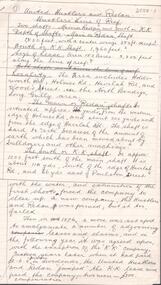
Document - UNITED HUSTLERS AND REDAN - NOTES ON THE UNITED HUSTLERS AND REDAN
... ... United Pioneers...DOCUMENT Gold united hustlers and redan United Hustlers and Redan Notes on the United Hustlers and Redan The South or K K Shaft The Hustlers Redan Little White Ragman's Maiden Williamsons Bignall's The Alabama Company K K Company New Hustlers and Redan United Pioneers Lady Darling Hibernia Red White and Blue Sophia Redan North Comet Go-a-head Cosmopolitan Johnsons Geo Lansell Bendigo Amalgamated Goldfields Company Kocks Kock's Koh-i-nor Mines Dept Booklet Bendigo Goldfield Geo Brown 1936 Mines Dept Annual and Quarterly Reports Mines Dept Bulletin No 33 H Herman 1913 Annals of Bendigo Mining Sections 1878 to 1920 A Richardson One handwritten and three typed copies of notes on the United Hustlers and Redan mine. ...One handwritten and three typed copies of notes on the United Hustlers and Redan mine. Notes include locality, plant, early history, Prominence, best gold, k. K. Shaft, Total gold production and dividends and Origin of Names.document, gold, united hustlers and redan, united hustlers and redan, notes on the united hustlers and redan, the south or k k shaft, the hustlers, redan, little, white, ragman's, maiden, williamsons, bignall's, the alabama company, k k company, new hustlers and redan, united pioneers, lady darling, hibernia, red white and blue, sophia, redan, north comet, go-a-head, cosmopolitan, johnsons, geo lansell, bendigo amalgamated goldfields company, kocks, kock's koh-i-nor, mines dept booklet bendigo goldfield geo brown 1936, mines dept annual and quarterly reports, mines dept bulletin no 33 h herman 1913, annals of bendigo mining sections 1878 to 1920, a richardson -
 Bendigo Historical Society Inc.
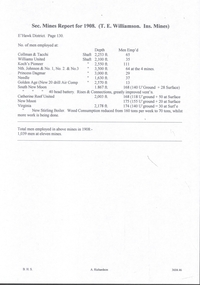
Document - MINING REPORTS - SEC. MINES REPORT FOR 1908
... United... Koch's Pioneer...Noes include Number of men employed and the depth of shaft for Collman & Tacchi, William's United, Koch's Pioneer, Nth Johnson & No 1, No 2 & No 3, Princess Dagmar, Needle, Golden Age, South New Moon, South New Moon 40 head battery, Catherine Reef United, New Moon and the Virginia. ...BHS Collection DOCUMENT Gold mining reports Mining Reports Sec Mines Report for 1908 Collman & Tacchi William's United Koch's Pioneer Nth Johnson & No 1 No 2 no 3 Princess Dagmar Needle Golden Age South New Moon South New Moon 40 head battery Catherine Reef United New Moon Virginia Handwritten extract from the Sec. ...BHS CollectionHandwritten extract from the Sec. Mines Report for 1908. T. E. Williamson, Ins. Mines). Eaglehawk District. Page 130. Noes include Number of men employed and the depth of shaft for Collman & Tacchi, William's United, Koch's Pioneer, Nth Johnson & No 1, No 2 & No 3, Princess Dagmar, Needle, Golden Age, South New Moon, South New Moon 40 head battery, Catherine Reef United, New Moon and the Virginia. Also a new boiler reduced the wood consumption from 160 tons per week to 70 tons, whilst more work is being done.document, gold, mining reports, mining reports, sec mines report for 1908, collman & tacchi, william's united, koch's pioneer, nth johnson & no 1 no 2 no 3, princess dagmar, needle, golden age, south new moon, south new moon 40 head battery, catherine reef united, new moon, virginia -
 Bendigo Historical Society Inc.
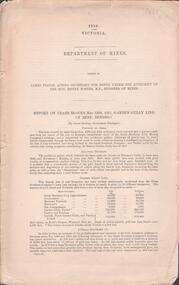
Document - GARDEN GULLY LINE OF REEF, LEASE BLOCKS 5360 AND 5361
... Mines named on the map: Great Southern Garden Gully United Ulster Londonderry Burrows Horwoods Sea Amalgamated Garden Gully United Victory and Pandora Unity Carlisle and Garden Gully and Passbye United Cornish United Koch's Pioneer...Mines named on the map: Great Southern Garden Gully United Ulster Londonderry Burrows Horwoods Sea Amalgamated Garden Gully United Victory and Pandora Unity Carlisle and Garden Gully and Passbye United Cornish United Koch's Pioneer Document GARDEN GULLY LINE OF REEF, LEASE BLOCKS 5360 AND 5361 ...Two page document titled ' Report on lease blocks Nos. 5360 and 5361 Garden Gully line of reef, Bendigo. Produced by the Department of Mines 1899. The area described is about 'one mile and a quarter southeast from the centre of the city of Bendigo, immediately south of the Great Southern Gold Mining Company's workings and is intersected by two auriferous gullies ... Salomon's Gully and Derwenter's Gully'. The alluvial deposits, the Garden Gully line, the Great Souther Co.and old workings are discussed in the paper. A map of the Garden Gully line of reef is attached to the report, showing claimholders and mine names along that section of the reef. Mines named on the map: Great Southern Garden Gully United Ulster Londonderry Burrows Horwoods Sea Amalgamated Garden Gully United Victory and Pandora Unity Carlisle and Garden Gully and Passbye United Cornish United Koch's PioneerJames Stirling, Government Geologistbendigo, mining, garden gully line of reef mines -
 Bendigo Historical Society Inc.
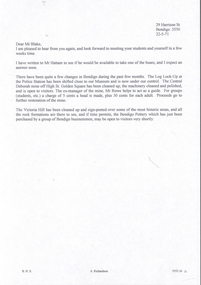
Document - NEW CHUM & VICTORIA LINES OF REEF - NEW CHUM & VICTORIA LETTER & NOTES
... United...Koch's Pioneer...On the Garden Gully Line - The Cornish United, Koch's Pioneer and Confidence Extended. The Paddy's gully Line - The British American, Lansell's Sandhurst (Needle) and the Collman and Tacchi. ...On the Garden Gully Line - The Cornish United, Koch's Pioneer and Confidence Extended. The Paddy's gully Line - The British American, Lansell's Sandhurst (Needle) and the Collman and Tacchi. ...Handwritten letter to Mr. Blake with reference to meeting students and the changes in Bendigo. Mentioned are the Log Lock-Up, the Central Deborah Mine, the ex-manager of the mine, Mr. Rowe acting as a guide, Victoria Hill and the Bendigo Pottery. The notes titled ''To replace Around the Goldfields'' mentions the Third Edition, 'Historic Guide to Bendigo', published in 1969 of land reclamation schemes rapidly removing all traces of several mines. Those affected on the New Chum Line of Reef are: The Victoria Consols, Ironbark and Hercules and Energetic. The Sheepshead Line - the Ironbark and Ironbark South. On the Garden Gully Line - The Cornish United, Koch's Pioneer and Confidence Extended. The Paddy's gully Line - The British American, Lansell's Sandhurst (Needle) and the Collman and Tacchi. On the Derby Line - Johnson's No 3 (Nelson) and on the Hustlers Line are the United Hustlers and Redan and the K. K. Mines. Also, a carbon copy of the notes.document, memo, new chum & victoria letter & notes, mr blake, mr hattam, log lock-up, central deborah mine, mr rowe, victoria hill, bendigo pottery, historic guide to bendigo third edition, new chum line of reef, the victoria consols, ironbark, hercules and energetic, sheepshead line, ironbark, ironbark south, garden gully line, cornish united, koch's pioneer, confidence extended, paddy's gully line, the british american, lansell's sandhurst (needle), collman and tacchi. derby line, johmson's no 3 (nelson), hustlers line, united hustlers and redan, k k mines -
 Bendigo Historical Society Inc.
Document - GARDEN GULLY LINE OF REEF
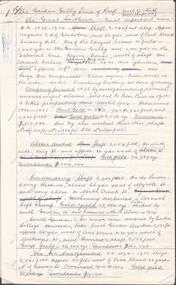
... 'The Garden Gully line of reef, south to north, main shafts only' Great Southern, first important mine 1876 - 1924 Ulster United Londonderry shaft The Sea Amalgamated Garden Gully United 'Bendigo's most famous mine' 1874 - 1921 Victory and Pandora Ironbark 1871 - 1921 Unity Mine Carlisle United Long Gully ' Bendigo's richest mine' Cornish United 1866 - 1920 Koch's pioneer Windmill Hill 1874 - 1920 Confidence Extended 1877 - 1896 - 1915 Johnson's Group California Gully No. 1 and No. 2 and No. 3 Derby line North Johnson's Princess Dagmar 1876 - 1918 Golden Age 1870 - 1917 Johnson's Reef Extended Golden Pyke 1870 - 1921 Constellation 1887 - 1923 Great Northern 1877 - 1922 Virginia 1878 - 1922 Specimen Hill United 1860 - 1920 New Argus 1864 - 1922 Clarence United Sailors Gully 1857 - 1918 South New Moon 1871-1920's and 1933 - 1941 New Moon 1868 - 1922 - 1931 Suffolk United 1870 - 1918 North New Moon 1894 - 1924...'The Garden Gully line of reef, south to north, main shafts only' Great Southern, first important mine 1876 - 1924 Ulster United Londonderry shaft The Sea Amalgamated Garden Gully United 'Bendigo's most famous mine' 1874 - 1921 Victory and Pandora Ironbark 1871 - 1921 Unity Mine Carlisle United Long Gully ' Bendigo's richest mine' Cornish United 1866 - 1920 Koch's pioneer Windmill Hill 1874 - 1920 Confidence Extended 1877 - 1896 - 1915 Johnson's Group California Gully No. 1 and No. 2 and No. 3 Derby line North Johnson's Princess Dagmar 1876 - 1918 Golden Age 1870 - 1917 Johnson's Reef Extended Golden Pyke 1870 - 1921 Constellation 1887 - 1923 Great Northern 1877 - 1922 Virginia 1878 - 1922 Specimen Hill United 1860 - 1920 New Argus 1864 - 1922 Clarence United Sailors Gully 1857 - 1918 South New Moon 1871-1920's and 1933 - 1941 New Moon 1868 - 1922 - 1931 Suffolk United 1870 - 1918 North New Moon 1894 - 1924 Document GARDEN GULLY LINE OF REEF ...Handwritten document . 'The Garden Gully line of reef, south to north, main shafts only' Great Southern, first important mine 1876 - 1924 Ulster United Londonderry shaft The Sea Amalgamated Garden Gully United 'Bendigo's most famous mine' 1874 - 1921 Victory and Pandora Ironbark 1871 - 1921 Unity Mine Carlisle United Long Gully ' Bendigo's richest mine' Cornish United 1866 - 1920 Koch's pioneer Windmill Hill 1874 - 1920 Confidence Extended 1877 - 1896 - 1915 Johnson's Group California Gully No. 1 and No. 2 and No. 3 Derby line North Johnson's Princess Dagmar 1876 - 1918 Golden Age 1870 - 1917 Johnson's Reef Extended Golden Pyke 1870 - 1921 Constellation 1887 - 1923 Great Northern 1877 - 1922 Virginia 1878 - 1922 Specimen Hill United 1860 - 1920 New Argus 1864 - 1922 Clarence United Sailors Gully 1857 - 1918 South New Moon 1871-1920's and 1933 - 1941 New Moon 1868 - 1922 - 1931 Suffolk United 1870 - 1918 North New Moon 1894 - 1924Albert Richardsonbendigo, mining, garden gully line of reef mines -
 Flagstaff Hill Maritime Museum and Village
Book - Reference/Bible, Rev. John Eadie, The Holy Bible (with the Commentaries of Scott and Henry 1862), 1862
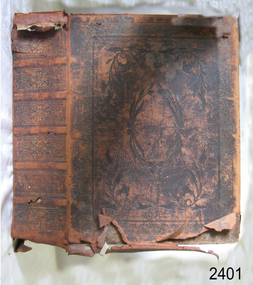
... United Presbyterian Divinity Hall. He was an elite linguist, writing legendary Greek commentaries on the Pauline Epistles. Eadie believed passionately that top-tier scholarship shouldn't be trapped in universities; he spent immense energy formatting heavy academic texts into accessible "popular" versions for ordinary families — which is exactly why McPhun hired him to oversee this condensed Family Bible project. Later in life, his expertise was so respected that he was selected as an original member of the New Testament Revision Committee, helping to create what would eventually become the Revised Version (RV) of the Bible. William R. McPhun (1793–1877) was a pioneering...United Presbyterian Divinity Hall. He was an elite linguist, writing legendary Greek commentaries on the Pauline Epistles. Eadie believed passionately that top-tier scholarship shouldn't be trapped in universities; he spent immense energy formatting heavy academic texts into accessible "popular" versions for ordinary families — which is exactly why McPhun hired him to oversee this condensed Family Bible project. Later in life, his expertise was so respected that he was selected as an original member of the New Testament Revision Committee, helping to create what would eventually become the Revised Version (RV) of the Bible. William R. McPhun (1793–1877) was a pioneering ...This specific 1862 Bible is a fascinating artifact from the height of 19th-century British industrial printing, combining massive theological authority with an effort to make large-scale Family Bibles accessible to the general public.The Holy Bible with the Commentaries of Scott and Henry 1862 Edited by Rev John Eadie Publisher: W R McPhun Date: 1862non-fictionThis specific 1862 Bible is a fascinating artifact from the height of 19th-century British industrial printing, combining massive theological authority with an effort to make large-scale Family Bibles accessible to the general public.flagstaff hill, warrnambool, shipwrecked-coast, flagstaff-hill, flagstaff-hill-maritime-museum, maritime-museum, shipwreck-coast, flagstaff-hill-maritime-village, book, bible, the holy bible, scott and henry -
 Flagstaff Hill Maritime Museum and Village
Container - Ink Bottle, Second half of 19th Century or first half of the 20th Century
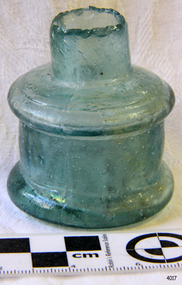
... In the United States, large-scale production of bottles was pioneered by Caspar Wistar in 1739 at his New Jersey plant. ...In the United States, large-scale production of bottles was pioneered by Caspar Wistar in 1739 at his New Jersey plant. ...Although glass containers for wine and beer are probably 1,600 years old, much of their use began only in the late 17th century. In the United States, large-scale production of bottles was pioneered by Caspar Wistar in 1739 at his New Jersey plant. In the 1770s the carbonation process for producing soft drinks was developed, and so began an entirely new bottling industry. At the Great Exhibition of 1851 in the Crystal Palace in London, one million “pop” bottles were consumed. The first beer pasteurised in glass was produced in Copenhagen in 1870. Pasteurisation of milk followed soon after. The moulding of a screw thread on a container was invented by John Mason in 1858. The principles of the “press-and-blow” process for making wide-mouth jars were shown in the United States by Philip Arbogast in 1882, and the “blow-and-blow” process for making narrow-neck containers was demonstrated by Howard Ashley in England in 1885. These processes employed manual delivery; fully automatic jar forming by a suction-and-blow process was perfected by Michael Owens over the period 1895–1917 at the Toledo (Ohio) Glass Company, which subsequently became the Owens Bottle Machine Company. The automatic single-gob feeder was developed in 1919–22 by Karl Peiler at the Hartford-Fairmont Company in Connecticut. Fully automatic machines followed, but the true rugged survivor, utilising fully automatic gob delivery to the maximum versatility, was the Individual Section, or IS, machine invented by Henry Ingle at the Hartford Empire Company in 1925. Source: https://www.britannica.com/topic/glass-properties-composition-and-industrial-production-234890/History-of-glassmakingUnlike item 4018, this is a much smaller ink bottle, and was probably used by an individual, as against the supply of ink to pupils from a much larger bottle.Cotton Reel Ink Bottle, green glass, small, chipped around the lip, bubbles in glass.None.flagstaff hill, warrnambool, shipwrecked-coast, flagstaff-hill, flagstaff-hill-maritime-museum, maritime-museum, shipwreck-coast, flagstaff-hill-maritime-village, ink, bottle, glass -
 Federation University Historical Collection
Book, Ballarat School of Mines Students' Magazine, 1907-1909, 1907-9
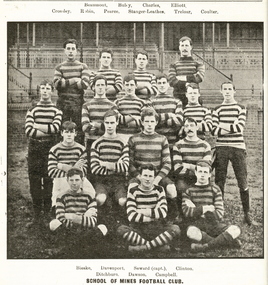
... Hall * Pioneer Mining - Leickhardt * Automatic Ore Feeders * A Unique Ore Deposit (Lucknow Goldfield, NSW) * A country Ramble * The Alkaline Titration for Zinc * Chalcedony Park, Arizona, United States of America by J.H. ...Hall * Pioneer Mining - Leickhardt * Automatic Ore Feeders * A Unique Ore Deposit (Lucknow Goldfield, NSW) * A country Ramble * The Alkaline Titration for Zinc * Chalcedony Park, Arizona, United States of America by J.H. ...Bound volume of the Ballarat School of Mines Students' Magazine for 1907-1909. Articles include the location and pegging of a tramway Route, the transmission of Power by Rope Driving by A.E.C. Kerr, A visit to the Briseis Mine, and New Brothers' Home, Mining Engineers in Tasmania, Obituaries for David Ham and Matthew Lyndsay, Pioneer Mining at Leichhardt, Automatic Ore Feeders and Chacedony Park by J.H. Adams. Images include the Ballarat School of Mines Football Team and the Ballarat School of Mines Sports Committee. 1907 * Hubert Krause 1908 * The location and Pegging of a Tramway Route by Yamba * The Unity of things by John Brittain * The transmission of power by Rope Driving, by A.E.C. Kerr * A visit to the Briseis Mine, and New Brothers' Home (includes photographs) * Mining Engineers in Tasmania * Limericks Sluiced at Snake Valley * David Ham Obituary * Matthew Lyndsay Obituary * Some Bunsen Memories by Professor Alfred Mica Smith * Geological Camp to Daylesford * Practical Mathematics by Hubert F. Hall * Pioneer Mining - Leickhardt * Automatic Ore Feeders * A Unique Ore Deposit (Lucknow Goldfield, NSW) * A country Ramble * The Alkaline Titration for Zinc * Chalcedony Park, Arizona, United States of America by J.H. Adams * Notetaking at Lectures * Smelter Cost-Keeping by Oliver E. Jaeger * Benefits of Physical Culture * Mineral Tasmania and its Wonderful Resources by F.F. Bradford * A holiday Trip to Queensland * The Compression of Air as Applied to Mining * Machine V Hand Drilling * The mining in the Malay States * William Thomas Grownow Obituary (includes image) * Timbering Stopes (Includes images) * Trip to Melbourne * Two Problems of Alluvial Mining by Richard Hain * The Berry Leads (includes plan of mines) * Black Pudding Supper * Observations for Meridian * NOtes on Coking Plants (includes plan) * How Old is the Earth * Conglomerations * A Pat Formula * The making of a Suitable Muffle for General Assay Work * Reduction of Gold Chloride by Charcoal * Chemical Definitions * Old Boys (R.J. Allen, W.B. Blyth, F. Brinsden, Lindsay D. Cameron, George W. Cornwell, John M. Currie, C.M. Harris, T. Wighton-Hood, W. Lakeland, W.S. Macartney, Fred A. Marriott, Karl B. Moore, G.E. Sander, Sherb. H. Sheppard, Norman S. Stuckby, John Sutherland, Lewis A. Westcott, Walter White, O.C. Witherden, Gerald Young) 1909 * The Graduates Problem * An Interesting Nevada Cyanide Plant (Bamberger De Lamar Gold Mines) * Easter Geological Camp to Ingliston * New Methods for the Volumetric Estimation of Lead * William Charles Kernott Obituary * Mount Morgan Mine by G.W. Williams * Tin Dredging at Tingha, New South Wales * Notes on the Iodide estimation of Copper * Photograph of the Ballarat School of Mines Students' Association Committee * The Importance of Mine Ventilation to the Students by F. Howells * Life in Mining Camp * Wise Words to Mining School Students * Military Search Lights * Gleaning s on resistance * Ministerial Visit to the Ballarat School of Mines by the Hon. A.A. Billson, Minister of Education , accompanied by Frank Tate, Director of Education. * Picture Making in Photography Composition * Mountains of Fire * A Walking Engine - New Military Machine - Guns into Action - Caterpillar No. 1. (Tank) * Fireless Locomotives * Elmore Concentrating Process (includes plan of Elmore Concentrator) * Mount Pani Limited * Surveying for Irrigation * Weights and Measures * Carbon Monoxide * Joseph Francis Usher obituary * The Problem of the Metalliferous Veins * Ballarat School of Mines Ambulance Class * Treatment of Gold in a battery Without the Use of Copper Plates by E.C. Hurdsfield * Meteorites * Werribee Gorge * Dredging in the Ovens Valley * Electrical Chatter - Electrocution by an Imaginary Eye-Witness * The Electric Furnace in Iron Metallurgy ballarat school of mines, ballarat school of mines football team, football, sports, tramway, mining engineers, david ham, matthew lyndsay, jack adams, berry lead, hepburn consuls, madame berry, west ristori, ristori no 1, allendale, dyke's co, charleson's mill, australian extended, mining, r.j. allen,, w.b. blyth, f. brinsden, lindsay d. cameron, george w. cornwell, john m. currie, c.m. harris, t. wighton-hood, w. lakeland, w.s. macartney, fred a. marriott, karl b. moore, g.e. sander, sherb. h. sheppard, norman s. stuckby, john sutherland, lewis a. westcott, walter white, o.c. witherden, gerald young, ballarat school of mines students' association, hubert krause, krause, vfl, afl -
 Flagstaff Hill Maritime Museum and Village
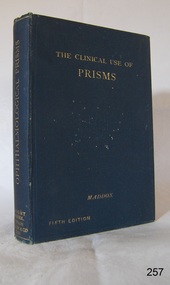
Book - Reference Book Ophthalmology, Ernest Edmund Maddox, The Clinical Use of Prisms, 1907
... United Kingdom's premier medical publishers. They were renowned for high-quality technical printing, producing detailed medical diagrams, chromolithographs, and standard reference manuals like The Medical Annual (first published in 1883). This publisher remained an independent medical powerhouse throughout the 19th and 20th centuries before eventually being incorporated into Butterworth-Heinemann and subsequently Elsevier publishing companies. This publication written by Maddox is widely recognized as a pioneering ...The subject volume The Clinical Use of Prisms; and the Decentring of Lenses is a seminal treatise on ophthalmic optics, binocular vision, and the correction of eye muscle imbalances (strabismus and heterophoria). The book covers two core clinical topics. Prismatic Refraction, how light bends through optical prisms, and how clinicians can use prisms to measure, diagnose, and relieve eye strain (asthenopia), double vision (diplopia), and misaligned line of sight. Decentring Lenses is the second and its focusing on the mathematical and practical rules for shifting the optical center of a spectacle lens relative to the patient's pupil. By decentring a standard spherical or cylindrical lens, allowing an optometrist or ophthalmologist to create an intentional "prismatic effect" without needing to grind a separate, heavy prism into the glassHard cover book,The Clinical Use of Prisms Author: Ernest Edmund Maddox Publisher: John Wright & Co Date: 1907 5th Edition Further Information: Front cover & spine blue cloth title, publisher details and author name in gilt lettering.non-fictionThe subject volume The Clinical Use of Prisms; and the Decentring of Lenses is a seminal treatise on ophthalmic optics, binocular vision, and the correction of eye muscle imbalances (strabismus and heterophoria). The book covers two core clinical topics. Prismatic Refraction, how light bends through optical prisms, and how clinicians can use prisms to measure, diagnose, and relieve eye strain (asthenopia), double vision (diplopia), and misaligned line of sight. Decentring Lenses is the second and its focusing on the mathematical and practical rules for shifting the optical center of a spectacle lens relative to the patient's pupil. By decentring a standard spherical or cylindrical lens, allowing an optometrist or ophthalmologist to create an intentional "prismatic effect" without needing to grind a separate, heavy prism into the glassflagstaff hill, warrnambool, shipwrecked-coast, flagstaff-hill, flagstaff-hill-maritime-museum, maritime-museum, shipwreck-coast, flagstaff-hill-maritime-village, the clinical use of prisms, book, ernest f. maddox -
 The Beechworth Burke Museum
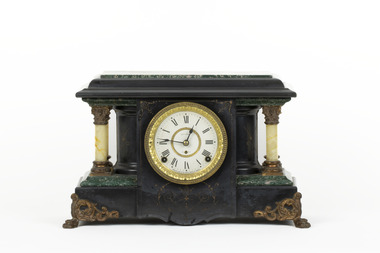
Decorative object - Clock, Seth Thomas Clock Company, 01/01/1881
... pioneered the mass production of clocks. After Seth Thomas's death, his son, also Seth Thomas (1816-1888), continued operating the business. Their 'Adamantine' model was released in many variations. This particular model features two pillars on either side of the clockface, however other Adamantine variants could have none or up to three or four half-pillars on either side. This style of black mantle clock appears to be inspired by French clocks of the 1860s, which had gained popularity in the United...pioneered the mass production of clocks. After Seth Thomas's death, his son, also Seth Thomas (1816-1888), continued operating the business. Their 'Adamantine' model was released in many variations. This particular model features two pillars on either side of the clockface, however other Adamantine variants could have none or up to three or four half-pillars on either side. This style of black mantle clock appears to be inspired by French clocks of the 1860s, which had gained popularity in the United ...The Seth Thomas Clock Company was founded in 1813 by renowned American clockmaker Seth Thomas (1785-1859) of Connecticut, USA, and pioneered the mass production of clocks. After Seth Thomas's death, his son, also Seth Thomas (1816-1888), continued operating the business. Their 'Adamantine' model was released in many variations. This particular model features two pillars on either side of the clockface, however other Adamantine variants could have none or up to three or four half-pillars on either side. This style of black mantle clock appears to be inspired by French clocks of the 1860s, which had gained popularity in the United States. While those clocks were often made with onyx, slate, or marble, Seth Thomas uses a durable celluloid veneer named Adamantine over a wood case to replicate the appearance of the original materials. This object is representative of the innovative manufacturing processes of pioneering clockmaker Seth Thomas and his company. Decorative black mantle clock with black and green veneer and a white face marked with black roman numeralsInscriptions: 7337 2685 6618 10508 Label on reverse [one section is illegible due to damage to label]: ADAMANTINE Label No. 295 E. / ST Trade Mark ... the / smaller end of key. To make run faster, turn to the right, slower to the left. One full turn of the key will make a difference of two / minutes in twenty-four hours. To get correct strike turn minute hand to 12 and then back to figure 9; continue doing so until proper / hour is struck. Key and Pendulum ball will be found tied or tacked to each clock. Adamantine Clock. Patented September 7, 1880. This finish is very durable, will not chip, and cannot be scratched or dented by any ordinary usage. Can be / washed or otherwise cleaned without detriment or injury to polish. Genuine Seth Thomas Clocks have Trade Mark on Movement. WHEN ORDERING MATERIAL FOR THIS CLOCK BE SURE AND GIVE LABEL NUMBER 295E. SETH THOMAS CLOCK CO. / MAKERS OF CLOCKS AND WATCHES.seth thomas clock company, adamantine, black mantle clock, horology, manufacturing -
 Flagstaff Hill Maritime Museum and Village
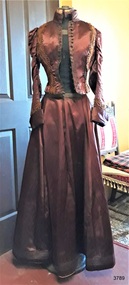
Clothing - Evening Outfit, before April 1874
... pioneer families from Australia, specifically Victoria and Warrnambool. These families played an important role in the development and history of the region, and the items are linked to their legacy. The evening outfit and mannequin are also notable for their connection to a wedding that united ...This amber satin evening outfit was worn by Mrs Isabella Mitchell (nee Russell, 1840 – 1929) at the wedding of her brother Alexander (c.1846–1938) and Eliza (nee Moore, c.1854–1939). The jacket and skirt attach at the waist by joining the metal rings around the base of the jacket, and the metal hooks on the waistband of the skirt. The outfit was donated with its own mannequin and fits it perfectly. In the colonial days, outer clothing was rarely, if ever, washed, due to the expense of fabrics and the difficulty in careful laundering. Clever methods were employed to reduce the occurrence of soiling. The mannequin included with the donation would also help keep the outfit in good shape and ensure a flattering fit. FAMILIES’ HISTORY The families connected with this wedding, where the outfit was worn, are from Warrnambool’s colonial days. Isabella and Alexander’s parents, Robert Russell and Elizabeth (nee Mitchell), were born in 1808 and married about 1830. They were from farming families in Northern Ireland, where they raised their seven children before migrating to Australia in the early colonial days, around 1857. Their graves are in the Tower Hill Cemetery. Alexander’s wife, Eliza (nee Moore, born in 1854), was also from Northern Ireland and migrated to Australia in 1858 with her parents, Thomas and Nancy Moore, in the last voyage of the sailing ship “Chance”. Isabella (Bella) talked with her granddaughter Ruby Akers about her memories of Alexander and Eliza’s wedding and other events in her life. Ruby recorded these memories in a letter. She says, “They were married in the Warrnambool Congregational Church by a pioneer minister, the Reverend Uriah Coombs. The bride wore a pale blue silk wedding gown, which she made herself. Bella was Matron of Honora, and Ian McCasker was best man. In those days, the transport to the church was usually a carriage – similar to a cab – and a pair of white ponies. They would have the reception at home, go for a drive afterwards, and at night there would be a dance. They did all the catering themselves … Eliza carried on farming in the Dennington, Yarpturk and Purnim districts until they moved to Camperdown around 1905…” Ruby’s letter later mentions “[Isabella] could recall seeing a blackfellows’ corroboree being performed near where the Dennington Bridge now stands. It was rather a terrifying experience; they seemed to be in a warlike mood, and one never knew what they would do next. One lubra came running to Granny, crying, Hide me, bad man kill me. She was bleeding from a wound in the head: probably the result of a blow from a waddy. My mother [Margaret Jane McLaughlan nee Mitchell], coming home from school in the 1800s, often met blackfellows walking ahead with spears and boomerang, the two lubras – they usually had two – following in the rear, carrying the children or any burdens they had.“ Margaret was probably in primary school at the time she saw these things. Alexander and Eliza had ten children. One of their daughters, Margaret Jane, was born in Warrnambool in 1879. She married William McCullagh, and they had eleven children. Margaret made headlines in the Warrnambool newspapers for celebrating her 100th birthday. She had lived in the district for 60 years before moving to Melbourne. Alexander passed away at the age of 92, and Eliza passed away six months later, aged 85. Their graves are in the Colac cemetery. Isabella married Ralph Mitchell, and their daughter Margaret Jane married John McLauchlan in 1891. Margaret and John’s daughter, Ruby Elizabeth Jane, married Fredrick Akers in 1938. Fredrick, born in England, was a Boer War veteran and served in the British Army. He migrated to Queensland, Australia, in 1913, and joined the Australian Army to fight in World War I. In 1935, he moved to Warrnambool, where he served in the Volunteer Defence Corps from 1938 to 1945. Both Ruby and Fredrick are buried in the Tower Hill Cemetery.The evening outfit and its accompanying mannequin serve as notable examples of female fashion from the mid to late 1900s. These items reflect the styles and trends that were prevalent during this period, offering insight into the clothing choices and cultural influences that shaped women's attire. Beyond their representation of period fashion, the outfit and mannequin are significant due to their association with colonial pioneer families from Australia, specifically Victoria and Warrnambool. These families played an important role in the development and history of the region, and the items are linked to their legacy. The evening outfit and mannequin are also notable for their connection to a wedding that united two colonial families originating from Northern Ireland. These families immigrated to Australia in the mid-1850s and became influential figures within the Warrnambool district. The wedding marked a significant event, symbolising the merging of two prominent family lineages. Furthermore, the significance of the evening outfit and mannequin extends to their connection with the colonial families’ contact with the indigenous culture of the district. These items represent a period of interaction between the native and European peoples, highlighting the cultural exchanges that occurred within the region. This lady’s evening outfit is made from amber coloured satin fabric. It comprises a short-waisted, long-sleeved jacket and a long skirt, and it has its own neck-to-floor wooden mannequin on a pedestal. The outfit was worn by Mrs Isabella Mitchell (nee Russell) as the Matron of Honour at the wedding of her brother Alexander Russell and his fiancée Eliza Moore in Warrnambool, 29th April 1874.flagstaff hill, warrnambool, shipwrecked coast, flagstaff hill maritime museum, maritime museum, shipwreck coast, flagstaff hill maritime village, great ocean road, evening outfit, wedding outfit, bridesmaid’ outfit, matron of honour outfit, clothing female, clothing late 19th century, clothing wedding late 19th century, clothing bridesmaid late 19th century, clothing antique, clothing ladies, women’s clothing, women’s fashion, alexander russell, eliza russell, eliza moore, isabella mitchell, bella mitchell, bella russell, isabella russell, ralph russell, ian mccusker, ruby akers, fredrick william akers, ruby mclauchlan, margaret jane mclaughlan nee mitchell, margaret jane mclaughlan centenarian, william mclaughlan, robert russell, elizabeth russell nee mitchell, irish immigrants, warrnambool volunteer defence corps 1938-1945, antique satin outfit, warrnambool wedding 1874, congregational church warrnambool, reverend uriah coombs, dennington farmer, yarpturk farmer, purnim district farmer, camperdown resident 1905, dennington bridge, indigenous corroboree in dennington, corroboree in warrnambool, 1880s corroboree in warrnambool, lubra and baby, indigenous corroboree in warrnambool, mccullagh family -
 City of Moorabbin Historical Society (Operating the Box Cottage Museum)
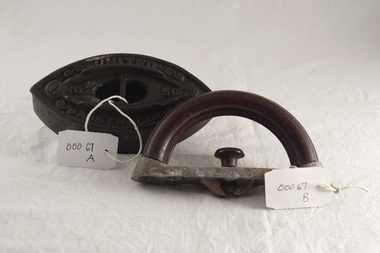
Domestic object - Kitchen Equipment, sad iron with Mrs Potts handle, c1900
... The family of Ms May Curtis were early settlers in Moorabbin Shire potts florence iowa usa melbourne moorabbin sad irons kitchen equipmentn fireplaces walnut wood sewing laundry table ware linen pioneers early settlers washing days craftwork A) UNITED/ N0 / 50 / AUSTRALIA A) A sad iron, made of cast iron , has a special handle invented in 1871 by Mrs Florence Potts of Iowa, USA. ...Sad-irons or "solid" irons were made by blacksmiths and used to smooth out material by pressing the hot iron over it. A piece of sheet -iron was placed over the kitchen fire and the irons placed on it could be heated whilst remaining clean of ash.. The women used 2 irons - one heating while the other was used. Thick cloth or gloves protected their hands from the hot irons. The handle was removed from the cool iron and re- attached to remove the hot iron from the fire. The cool iron was replaced on the fire or stove to heat again. Mrs Florence Potts invented in 1871 a detachable handle made from walnut wood with a metal latch to release the handle. These wooden handles prevented burned hands and were sold to grateful women all over the world. These irons were cleaned with steel wool to prevent them marking the material. If the iron was too hot the material would scorch. Most homes set aside one day for ironing and some large households had an ironing room with a special stove designed to heat irons. However, most women had to work with a heavy, hot iron close to the fireplace even in summer.Mrs Florence Potts invented this type of detachable walnut wood handle with a meta release latch for sad irons in 1871 and it sold widely throughout the world to grateful women including those in Moorabbin Shire. The family of Ms May Curtis were early settlers in Moorabbin ShireA) A sad iron, made of cast iron , has a special handle invented in 1871 by Mrs Florence Potts of Iowa, USA. B) The detachable handle made of walnut wood to prevent burned hands, was attached to the iron by a metal latch.A) UNITED/ N0 / 50 / AUSTRALIApotts florence, iowa usa, melbourne, moorabbin, sad irons, kitchen equipmentn fireplaces, walnut wood, sewing, laundry, table ware, linen, pioneers, early settlers, washing days, craftwork -
 City of Moorabbin Historical Society (Operating the Box Cottage Museum)
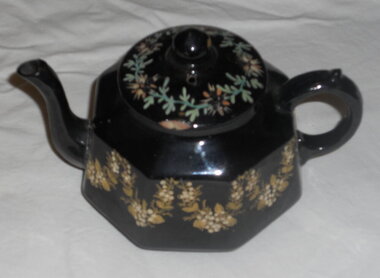
Domestic object - Kitchen Equipment, Tea Pot, Between 1885 and 1905 after which the backstamp changed to G & S LTD
... United States. Grove & Stark were taken over by Meakin early 20thC The Mark could also be Gibson & Sons (Ltd), were notably manufacturers of earthenware Burslem, Stoke-on-Trent. Founded around 1885 and traded until the mid 1970's. They were previously Gibson, Sudlow & Co. crockery earthenwarre gibson & son ltd grove & stark ltd pioneers ...Earthenware is lightly fired, readily absorbs water if not glazed, and does not allow light to pass through it. Coarse earthenware is made from clay and grog (ground up fired pot). There are two main types of glazed earthenware: One is covered with a transparent lead glaze; when the earthenware body to which this glaze is applied has a cream colour, the product is called creamware. The second type, covered with an opaque white .in glaze, is variously called tin-enamelled, or tin-glazed, earthenware, majolica, faience, or delft. G&S marking could be Grove & Stark, Longton, England (1871-1884). In the 19th century, J. & G. Meakin ,1851 based in Hanley, Stoke-on-Trent, Staffordshire, was known for the vast quantities of cheap ironstone china it produced for the domestic English market and for export to Australia, Canada, New Zealand and the United States. Grove & Stark were taken over by Meakin early 20thC The Mark could also be Gibson & Sons (Ltd), were notably manufacturers of earthenware Burslem, Stoke-on-Trent. Founded around 1885 and traded until the mid 1970's. They were previously Gibson, Sudlow & Co. Manufactured between 1885 to 1905. Small earthen-ware, black-glazed tea-pot. 8 sided. The body of the tea-pot is decorated with hand-painted gold flowers and raised cream flowers. The lid is also hand -painted with green leaves and flowers. This floral pattern is named "Garland" The lid is not of the same pattern as the base. The spout was broken when brush tailed possum entered Cottage via chimney 27/4/2014. Can be repairedOn the base of the tea-pot. Makers Mark is G & S. "Garland". (Pattern), Rg. No. 175153. Also 'Made in England'. Under glaze there is the word: England.crockery, earthenwarre, gibson & son ltd, grove & stark ltd, pioneers, early settlers, bentleigh, market gardeners, moorabbin, cheltenham, pottery, stoke- on - trent, england, longton, burslem, wedgwood -
 City of Moorabbin Historical Society (Operating the Box Cottage Museum)
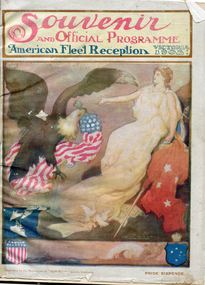
Souvenir - Souvenir and Official Programme 'American Fleet Reception', Punch, Melbourne, 29 Aug 1908, Punch, Printed by the Publishers of ‘Punch’ Australia, c1908
... A souvenir of the visit by the American Fleet in 1908 that was welcomed by the early settlers in Victoria. american fleet united states navy prime minister deakin early settlers pioneers moorabbin shire moorabbin brighton cheltenham federation of australia SOUVENIR / and OFFICIAL PROGRAMME / American Fleet Reception / Victoria 1908 / / Printed by the Publishers of ‘Punch’ Australia Price sixpence Quarto, pictorial wrappers, 64 pp, illustrated. ...The American fleet was invited to visit Australia by Prime Minister Deakin. The fleet moved from port to port and was welcomed with enthusiasm.A souvenir of the visit by the American Fleet in 1908 that was welcomed by the early settlers in Victoria.Quarto, pictorial wrappers, 64 pp, illustrated. Front cover illustration by Will Dyson, further illustrations by Ruby Lindsay and Alek Sass. The first 16 pages of the programme are taken up by advertisements for Victorian businesses.SOUVENIR / and OFFICIAL PROGRAMME / American Fleet Reception / Victoria 1908 / / Printed by the Publishers of ‘Punch’ Australia Price sixpenceamerican fleet, united states navy, prime minister deakin, early settlers, pioneers, moorabbin shire, moorabbin, brighton, cheltenham, federation of australia -
 City of Moorabbin Historical Society (Operating the Box Cottage Museum)
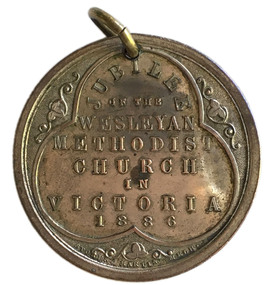
Badge - Jubilee of the Wesleyan Methodist Church Medal, 1886
... united to form the Methodist Church of Australasia. In 1977 the church became part of the Uniting Church. The Wesleyan Methodist Church which exists in Australia today is actually a branch of the Wesleyan Methodist Church of America, introduced to Australia during World War II. In 2003 it had almost 100 churches in Australia. Many of the early pioneers ...In 1886 the Wesleyan Methodist Church celebrated the fiftieth jubilee of the establishment of the Wesleyan Methodist Association in Britain. The Association was one of several off-shoots of the Methodist Church, which had been established by John Wesley from the 1730s. Methodism stressed evangelism and a closer association with God. The focus on fiftieth anniversaries by the church originated in Leviticus 25:10: ‘And ye shall hallow the fiftieth year, and proclaim liberty throughout all the land unto all the inhabitants thereof: it shall be a jubilee unto you...’. In 1902 the various off-shoots of Methodism in Australia united to form the Methodist Church of Australasia. In 1977 the church became part of the Uniting Church. The Wesleyan Methodist Church which exists in Australia today is actually a branch of the Wesleyan Methodist Church of America, introduced to Australia during World War II. In 2003 it had almost 100 churches in Australia.Many of the early pioneers in the City of Moorabbin were Methodists.Silver Medal Side one: legend within trefoil; JUBILEE / OF THE / WESLEYAN / METHODIST / CHURCH / IN / VICTORIA / 1886 small floral decorations at each point of trefoil. Side two: Bust of John Wesleycity of moorabbin, wesleyan methodist church, religion, jubilee -
 Red Cliffs Military Museum
Document, Obituary, 12:MMMM, 1976 (exact); Walter Thomas West passed away 4th December 1976 and his funeral was held 7th of December
... ./ The funeral will be held at the United Church, Red/ Cliffs this morning at 10.30 1918 1917 ww1 walter thomas west mm mc 24th battalion aif gallipoli bullecourt Walter West MC,MM/ Red Cliffs residents were saddened to learn of the sudden passing on Saturday last/ of Walter Thomas West MC,MM., a Pioneer/settler and well respected citizen./ "Wal" as he was affectionately known, was/ born at Dandenong some 84years ago./ He served with distinction in World War 1/ with 24th Battalion. ...Attached to his R.S.L. Membership Card along with the funeral notice, is a subsequent newspaper article written at the time of Walter West's death, which reads: Death of Pioneer Settler/ A pioneer settler of/ the Red Cliffs irigation/ district and one of the/ last men to be evacuated/ from Gallipoli, died sud/denly on Saturday night/ aged 84./ In 1922 Mr. Watler Thomas/ West came to Red Cliffs/ where he established Block/ 86 in the irrigation district./ He lived there until his/ death on Saturday after playing bowls at the Red/ Cliffs rinks on Saturday/ afternoon./ Mr. West was born in Jeparit and served with the/ 24th Battalion in Egypt and/ Gallipoli./ He was awarded the Mili/tary Medal in France in/ 1917 and the Military Cross/ in 1918 when he captured/ single handed an enemy/ machine gun post./ He settled at Red Cliffs/ on his return when the/ area was placed under irri-/gation./ For 25 years he operated/ a unique partnership with/ the late Mr. Martin Nippe, his adjoining property/ owner. The pair pooled their/ horticultural equipment for/ joint use./ Mr. West joined Mildura/ Legacy in 1942 and was an/ active member until his/ death./ The funeral will be held at the United Church, Red/ Cliffs this morning at 10.30Type written obituary, presumably used when Walter West,MC,MM, died.Walter West MC,MM/ Red Cliffs residents were saddened to learn of the sudden passing on Saturday last/ of Walter Thomas West MC,MM., a Pioneer/settler and well respected citizen./ "Wal" as he was affectionately known, was/ born at Dandenong some 84years ago./ He served with distinction in World War 1/ with 24th Battalion. He was an original ANZAC, and also saw service in/ Egypt and France. He received two awards for gallantry in the field - The Military/ Medal in France 1917 and the Military Cross in France/ in 1918 when he was responsible for the/ single handed capture of an enemy gun and crew./ He was an original soldier settler and developed/ his fruit block in Red Cliffs which is still/ operated by his son Tom. In 1922 he/ became an original Trustie of the Methodist/Church and was the last surviving original/ Trustie. He served on the Board of/ directors of the Red Cliffs Co-Operative Co.Ltd/ from 1954 to 1967, and was Chairman of Directors/ in 1963 and 1964. He showed a keen interest/ in youth activities and some excellent cricketers/ were produced as a result of his coaching of/ the Methodist Junior Cricket Team. He was an/ active and keen member of Mildura Legacy/ for 34 years, serving as President in 1947 and 1948./ He was secretary of the Cemetary Trust for many years, served on the Hospital Committee/ was a member of Memorial Lodge, a member of Red Cliffs Senior Citizens Club and a /member of Red Cliffs Sub-Branch R.S.L. since / it's inception./ He was a keen member of the Red Cliffs/ Bowling Club and took part in a club event on/ the day of his passing./ It was the pioneer settler and men with ability/ and initiative of Walter West that brought/ out the Community Spirit which resulted in/ the Red Cliffs we know today.1918, 1917, ww1, walter, thomas, west, mm, mc, 24th, battalion, aif, gallipoli, bullecourt -
 Ringwood and District Historical Society
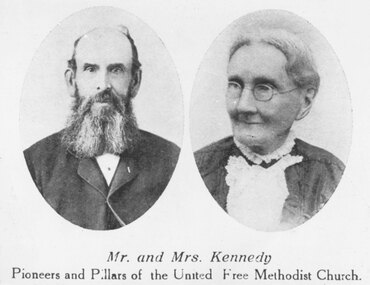
Photograph, Mr. & Mrs. Kennedy - Pioneers and Pillars of the United Free Methodist Church. c1880's
... Kennedy- Pioneers and Pillars of the United Free Methodist Church." ...Kennedy- Pioneers and Pillars of the United Free Methodist Church." ...Black and white photograph (2 copies). Two oval portraits of man and woman. Appears to be taken from newspaper. Caption beneath portrait reads: "Mr. and Mrs. Kennedy- Pioneers and Pillars of the United Free Methodist Church." -
 Eltham District Historical Society Inc
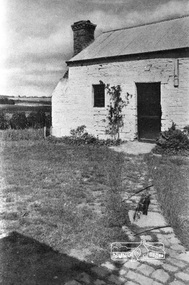
Negative - Photograph, Home Beautiful (United Press), Thomas Sweeney's original cottage at Culla Hill, Eltham, 1940
... Feature article in Home Beautiful magazine (c.1940) on the original Sweeney's Cottage at Culla Hill built by Thomas Sweeney, one of the district's pioneer settlers Culla Hill, Eltham, Home Beautiful magazine, houses, Sweeney's Cottage, Sweeneys Lane, Thomas Sweeney Kodak Safety 5062 Roll of 35mm black and white negative film, 3 strips Thomas Sweeney's original cottage at Culla Hill, Eltham Negative Photograph Home Beautiful (United Press) ...Feature article in Home Beautiful magazine (c.1940) on the original Sweeney's Cottage at Culla Hill built by Thomas Sweeney, one of the district's pioneer settlersRoll of 35mm black and white negative film, 3 stripsKodak Safety 5062culla hill, eltham, home beautiful magazine, houses, sweeney's cottage, sweeneys lane, thomas sweeney -
 Eltham District Historical Society Inc
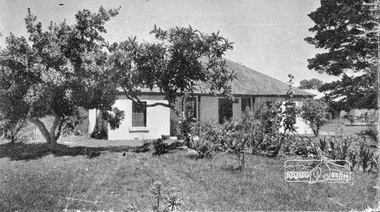
Negative - Photograph, Home Beautiful (United Press), Thomas Sweeney's original cottage at Culla Hill, Eltham, 1940
... Feature article in Home Beautiful magazine (c.1940) on the original Sweeney's Cottage at Culla Hill built by Thomas Sweeney, one of the district's pioneer settlers culla hill, eltham, home beautiful magazine, houses, sweeney's cottage, sweeneys lane, thomas sweeney Kodak Safety 5062 Roll of 35mm black and white negative film, 3 strips Thomas Sweeney's original cottage at Culla Hill, Eltham Negative Photograph Home Beautiful (United Press) ...Feature article in Home Beautiful magazine (c.1940) on the original Sweeney's Cottage at Culla Hill built by Thomas Sweeney, one of the district's pioneer settlersRoll of 35mm black and white negative film, 3 stripsKodak Safety 5062culla hill, eltham, home beautiful magazine, houses, sweeney's cottage, sweeneys lane, thomas sweeney -
 Eltham District Historical Society Inc
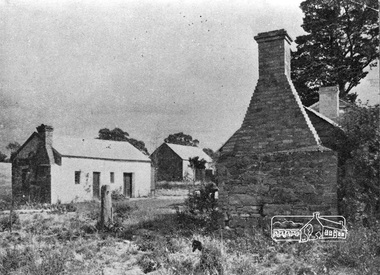
Negative - Photograph, Home Beautiful (United Press), Thomas Sweeney's original cottage at Culla Hill, Eltham, 1940
... Feature article in Home Beautiful magazine (c.1940) on the original Sweeney's Cottage at Culla Hill built by Thomas Sweeney, one of the district's pioneer settlers culla hill, eltham, home beautiful magazine, houses, sweeney's cottage, sweeneys lane, thomas sweeney Kodak Safety 5062 Roll of 35mm black and white negative film, 3 strips Thomas Sweeney's original cottage at Culla Hill, Eltham Negative Photograph Home Beautiful (United Press) ...Feature article in Home Beautiful magazine (c.1940) on the original Sweeney's Cottage at Culla Hill built by Thomas Sweeney, one of the district's pioneer settlersRoll of 35mm black and white negative film, 3 stripsKodak Safety 5062culla hill, eltham, home beautiful magazine, houses, sweeney's cottage, sweeneys lane, thomas sweeney -
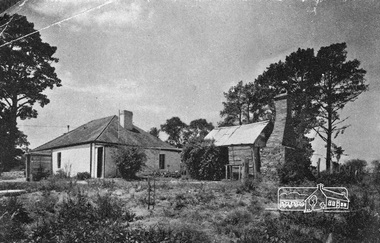 Eltham District Historical Society Inc
Negative - Photograph, Home Beautiful (United Press), Thomas Sweeney's original cottage at Culla Hill, Eltham, 1940
... Feature article in Home Beautiful magazine (c.1940) on the original Sweeney's Cottage at Culla Hill built by Thomas Sweeney, one of the district's pioneer settlers culla hill, eltham, home beautiful magazine, houses, sweeney's cottage, sweeneys lane, thomas sweeney Kodak Safety 5062 Roll of 35mm black and white negative film, 3 strips Thomas Sweeney's original cottage at Culla Hill, Eltham Negative Photograph Home Beautiful (United Press) ...Feature article in Home Beautiful magazine (c.1940) on the original Sweeney's Cottage at Culla Hill built by Thomas Sweeney, one of the district's pioneer settlersRoll of 35mm black and white negative film, 3 stripsKodak Safety 5062culla hill, eltham, home beautiful magazine, houses, sweeney's cottage, sweeneys lane, thomas sweeney -
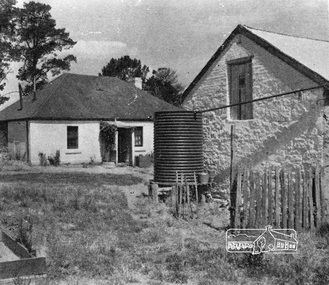 Eltham District Historical Society Inc
Negative - Photograph, Home Beautiful (United Press), Thomas Sweeney's original cottage at Culla Hill, Eltham, 1940
... Feature article in Home Beautiful magazine (c.1940) on the original Sweeney's Cottage at Culla Hill built by Thomas Sweeney, one of the district's pioneer settlers culla hill, eltham, home beautiful magazine, houses, sweeney's cottage, sweeneys lane, thomas sweeney Kodak Safety 5062 Roll of 35mm black and white negative film, 3 strips Thomas Sweeney's original cottage at Culla Hill, Eltham Negative Photograph Home Beautiful (United Press) ...Feature article in Home Beautiful magazine (c.1940) on the original Sweeney's Cottage at Culla Hill built by Thomas Sweeney, one of the district's pioneer settlersRoll of 35mm black and white negative film, 3 stripsKodak Safety 5062culla hill, eltham, home beautiful magazine, houses, sweeney's cottage, sweeneys lane, thomas sweeney -
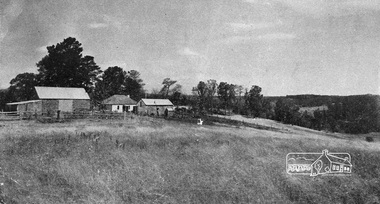 Eltham District Historical Society Inc
Negative - Photograph, Home Beautiful (United Press), Thomas Sweeney's original cottage at Culla Hill, Eltham, 1940
... Feature article in Home Beautiful magazine (c.1940) on the original Sweeney's Cottage at Culla Hill built by Thomas Sweeney, one of the district's pioneer settlers culla hill, eltham, home beautiful magazine, houses, sweeney's cottage, sweeneys lane, thomas sweeney Kodak Safety 5062 Roll of 35mm black and white negative film, 3 strips Thomas Sweeney's original cottage at Culla Hill, Eltham Negative Photograph Home Beautiful (United Press) ...Feature article in Home Beautiful magazine (c.1940) on the original Sweeney's Cottage at Culla Hill built by Thomas Sweeney, one of the district's pioneer settlersRoll of 35mm black and white negative film, 3 stripsKodak Safety 5062culla hill, eltham, home beautiful magazine, houses, sweeney's cottage, sweeneys lane, thomas sweeney -
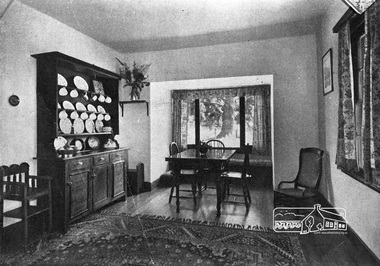 Eltham District Historical Society Inc
Negative - Photograph, Home Beautiful (United Press), Thomas Sweeney's original cottage at Culla Hill, Eltham, 1940
... Feature article in Home Beautiful magazine (c.1940) on the original Sweeney's Cottage at Culla Hill built by Thomas Sweeney, one of the district's pioneer settlers culla hill, eltham, home beautiful magazine, houses, sweeney's cottage, sweeneys lane, thomas sweeney Kodak Safety 5062 Roll of 35mm black and white negative film, 3 strips Thomas Sweeney's original cottage at Culla Hill, Eltham Negative Photograph Home Beautiful (United Press) ...Feature article in Home Beautiful magazine (c.1940) on the original Sweeney's Cottage at Culla Hill built by Thomas Sweeney, one of the district's pioneer settlersRoll of 35mm black and white negative film, 3 stripsKodak Safety 5062culla hill, eltham, home beautiful magazine, houses, sweeney's cottage, sweeneys lane, thomas sweeney -
 Eltham District Historical Society Inc
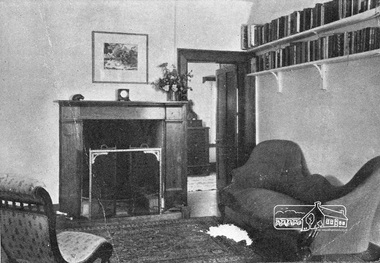
Negative - Photograph, Home Beautiful (United Press), Thomas Sweeney's original cottage at Culla Hill, Eltham, 1940
... Feature article in Home Beautiful magazine (c.1940) on the original Sweeney's Cottage at Culla Hill built by Thomas Sweeney, one of the district's pioneer settlers culla hill, eltham, home beautiful magazine, houses, sweeney's cottage, sweeneys lane, thomas sweeney Kodak Safety 5062 Roll of 35mm black and white negative film, 3 strips Thomas Sweeney's original cottage at Culla Hill, Eltham Negative Photograph Home Beautiful (United Press) ...Feature article in Home Beautiful magazine (c.1940) on the original Sweeney's Cottage at Culla Hill built by Thomas Sweeney, one of the district's pioneer settlersRoll of 35mm black and white negative film, 3 stripsKodak Safety 5062culla hill, eltham, home beautiful magazine, houses, sweeney's cottage, sweeneys lane, thomas sweeney -
 Kiewa Valley Historical Society
Rod Fishing, circa early 1900's
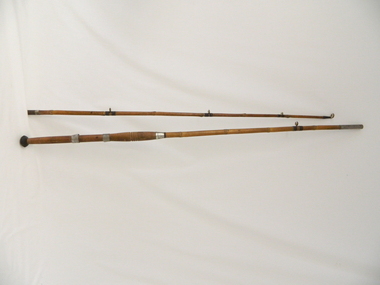
... United States of America or Asia countries was due to the larger lead up times from these suppliers and the greater import costs from slower ocean supply ships. It was only after World War II that the trade influx from other countries has supplied cheaper goods. This recreational fishing pole is highly significant to the Kiewa Valley as it demonstrates that recreational fishing has been evolved from the need to supply a balanced diet by the early pioneer families of fish from the major Kiewa rivers. ...This bamboo fishing rod was used in the mid to late 1900's and demonstrates that local production of recreational fishing poles was at a high level and their demand was high. Imported recreational sporting goods from either the United Kingdom, the United States of America or Asia countries was due to the larger lead up times from these suppliers and the greater import costs from slower ocean supply ships. It was only after World War II that the trade influx from other countries has supplied cheaper goods. This recreational fishing pole is highly significant to the Kiewa Valley as it demonstrates that recreational fishing has been evolved from the need to supply a balanced diet by the early pioneer families of fish from the major Kiewa rivers. The ability of the Kiewa Valley rivers to provide a good fishing environment (high protein diet) for both early indigenous families and early pioneers was the important food source that provided for a balanced diet and the higher level of nutritious development of both body and mind. This two piece wooden fishing Rod is made from bamboo shafts or poles, one length thicker than the other. The smaller diameter shaft is the top end and fits into the longer thicker shaft at a stainless steel tube end.The smaller shaft has a stainless steel reinforcement ring where both shafts fit together. At the bottom end of the thick shaft is a black rubber "stopper" or "foot". There are two stainless steel rings, each with a reel holding "bulge" which allows for the the reel's "prongs" to be secured. The top ring has a greater diameter allowing it to move up and down the shaft/pole to secure the top "prong" firmly onto the shaft/pole.recreation, river, rod, fishing, industry, fish -
 Eltham District Historical Society Inc
Negative - Photograph, The Roman Catholic Parish Priest, Eltham, c.1908
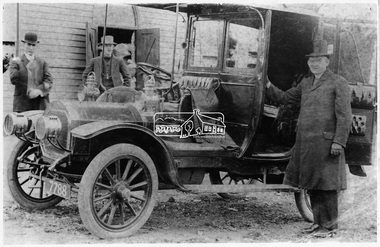
... United Kingdom about 1908 though the actual date of this particular vehicle is unclear. The registration number 7788 was issued prior to 1910 at which point they changed to numerals only of the form nnn-nnn. Reproduced on p93 of 'Pioneers...United Kingdom about 1908 though the actual date of this particular vehicle is unclear. The registration number 7788 was issued prior to 1910 at which point they changed to numerals only of the form nnn-nnn. Reproduced on p93 of 'Pioneers ...Man in top hat standing beside the car is most probably the Reverend John P. Carney (born 1880 Ballaghaderreen, Country Mayo, Ireland - ordained at All Hallows College, Dublin, Ireland) who spent all his years as a priest in the Melbourne Archdiocese, arriving in Melbourne in 1902. He was appointed Assistant priest at St Francis Melbourne then at Castlemaine and Gordon. He left Gordon to the pastor of the new mission at Diamond Creek where he spent about five years before moving to Footscray and later Yarraville. The automobile has been identified as a Unic Taxi built in the United Kingdom about 1908 though the actual date of this particular vehicle is unclear. The registration number 7788 was issued prior to 1910 at which point they changed to numerals only of the form nnn-nnn. Reproduced on p93 of 'Pioneers & Painters'.This photo forms part of a collection of photographs gathered by the Shire of Eltham for their centenary project book,"Pioneers and Painters: 100 years of the Shire of Eltham" by Alan Marshall (1971). The collection of over 500 images is held in partnership between Eltham District Historical Society and Yarra Plenty Regional Library (Eltham Library) and is now formally known as 'The Shire of Eltham Pioneers Photograph Collection'. It is significant in being the first community sourced collection representing the places and people of the Shire's first one hundred years.Digital image 120 format B&W negative Original sepia coloured postcard (10 x 15 cm) with cracking Black and white photograph duplicate (16.5 x 25 cm) with some corrections to mask cracksInscribed on reverse 'R.C. Parish Priest, Eltham'sepp, shire of eltham pioneers photograph collection, parish priest, automobile, john p carney, diamond creek, unic taxi, pioneers and painters, eltham, motor vehicles, rev. john p carney -
 Bendigo Historical Society Inc.
Newspaper - AUSTIN COLLECTION: Koch's Pioneer Gold Mine, Long Gully
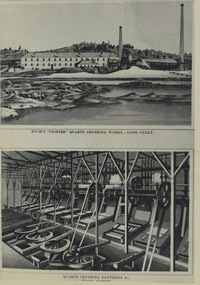
... United gold claim. He married Anna Maria Theresia Heinz in 1857. In 1872 he sold the crushing plant for 75,000 pounds and took his family back to Germany. He resumed his trade as a ship builder although he maintained many Bendigo mining interests. Gold Mining Koch's Pioneer ...Koch's Pioneer Quartz Mining and Crushing Company was officially registered on June 30th., 1871 (Government Gazette No. 45, 1871). It operated at Long Gully, the first Manager was Andrew Lewis. Nominal capital was 90,000 pounds in thirty thousand shares of 3 pounds each. The initial partnership in a quartz crushing plant between Henry Koch, Simon Albert and Charles Wallin was dissolved in 1860 with Koch becoming the sole owner. In 1866 the crushing plant consisted of a 50 hp engine and 48 stamping heads capable of crushing 600 tons of quartz per week. By 1902 there were 72 stamps and this was by far the largest crushing plant in the area, serving many quartz mines. Henry Koch (1800-1889) was a German sailor who signed off when his ship reached Melbourne in 1851. Having heard of the gold discovery he proceeded to Bendigo where he was initially employed in puddling in the Myers Flat area. He was soon employed and then made partner in a quartz crushing plant that he became sole owner of in 1860. He was also landlord at the British and American Hotel and the Silver Mines Hotel. HE also started the Perseverance United gold claim. He married Anna Maria Theresia Heinz in 1857. In 1872 he sold the crushing plant for 75,000 pounds and took his family back to Germany. He resumed his trade as a ship builder although he maintained many Bendigo mining interests.Two sepia coloured images on paper, possibly taken from book. Top image: Koch's 'Pioneer' Quartz Crushing Works - Long Gully, printed under image. Image shows mining dam in foreground, large two storey mine building in middle background, two mine chimney on right hand side. Bottom image; interior of crushing battery. Printed on bottom ' Quartz Crushing Batteries & etc. Koch's Pioneer'. gold mining, koch's pioneer crushing battery, long gully, perseverance g.m. co., henry koch -
 Royal Australian and New Zealand College of Obstetricians & Gynaecologists (RANZCOG)
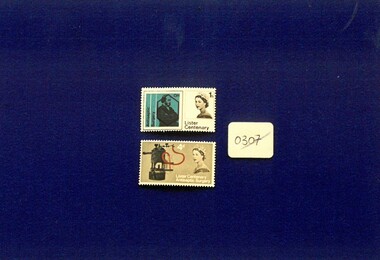
Ephemera - Commemorative stamps issued in the United Kingdom for the centenary of antiseptic surgery, 1961
... pioneer of antiseptic surgery. By applying Louis Pasteur's advances in microbiology, he promoted the idea of sterile surgery while working at the Glasgow Royal Infirmary. Lister successfully introduced carbolic acid (now known as phenol) to sterilise surgical instruments and to clean wounds, which led to a reduction in post-operative infections and made surgery safer for patients. Surgery Two postage stamps issued in the United ...The Royal Australian College of Surgeons (RACS) holds one of Lister's carbolic sprays in its collection.Joseph Lister, 1st Baron Lister, Bt., OM, FRS, PC (5 April 1827 – 10 February 1912), known as Sir Joseph Lister, Bt., between 1883 and 1897, was a British surgeon and a pioneer of antiseptic surgery. By applying Louis Pasteur's advances in microbiology, he promoted the idea of sterile surgery while working at the Glasgow Royal Infirmary. Lister successfully introduced carbolic acid (now known as phenol) to sterilise surgical instruments and to clean wounds, which led to a reduction in post-operative infections and made surgery safer for patients.Two postage stamps issued in the United Kingdom, 1961. The first stamp is a one shilling stamp, depicting an upper body portrait of Joseph Lister against a blue background on the left, with a profile image of Queen Elizabeth II on the right. Text printed on the stamp reads 'Antiseptic/Surgery/Lister/Centenary'. The second stamp is a four pence stamp, depicting Lister's carbolic spray against a grey background on the left, with a profile image of Queen Elizabeth II on the right. Text printed on stamp reads 'Lister Centenary/Antiseptic Surgery'.surgery -
 Bendigo Historical Society Inc.
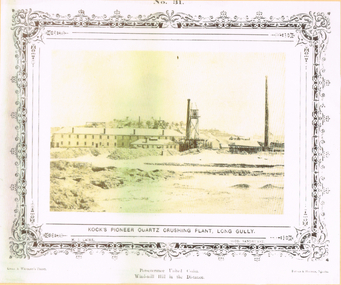
Photograph - LONG GULLY HISTORY GROUP COLLECTION: KOCK'S PIONEER QUARTZ CRUSHING PLANT LONG GULLY
... Pioneer Quartz Crushing Plant - Long Gully... N J Caire... Casey & Wenburn... Forbes & Holmes... Perseverence United...Pioneer Quartz Crushing Plant, Long Gully. No 31 printed at the top. The photo has a decorative frame around it. It is a N. J. Caire Photo, Sandhurst and a Casey & Wenborn's Print. Forbes & Holmes, Agents. The photo has a long two storey building with chimneys and some smaller buildings and tall mine chimneys. Printed below is Perseverance United... Quartz Crushing Plant - Long Gully N J Caire Casey & Wenburn Forbes & Holmes Perseverence United Claim Windmill Hill Yellow tone photo which has some green through it photo of Kock's Pioneer Quartz Crushing Plant, Long Gully. ...The initial partnership in a quartz crushing plant between Henry Koch, Simon Albert and Charles Wallin was dissolved in 1860 with Koch becoming the sole owner. In 1866 the crushing plant consisted of a 50 hp engine and 48 stamping heads capable of crushing 600 tons of quartz per week. By 1902 there were 72 stamps and this was by far the largest crushing plant in the area, serving many quartz mines. Henry Koch (1800-1889) was a German sailor who signed off when his ship reached Melbourne in 1851. Having heard of the gold discovery he proceeded to Bendigo where he was initially employed in puddling in the Myers Flat area. He was soon employed and then made partner in a quartz crushing plant that he became sole owner of in 1860. He was also landlord at the British and American Hotel and the Silver Mines Hotel. HE also started the Perseverance United gold claim. He married Anna Maria Theresia Heinz in 1857. In 1872 he sold the crushing plant for 75,000 pounds and took his family back to Germany. He resumed his trade as a ship builder although he maintained many Bendigo mining interests.Yellow tone photo which has some green through it photo of Kock's Pioneer Quartz Crushing Plant, Long Gully. No 31 printed at the top. The photo has a decorative frame around it. It is a N. J. Caire Photo, Sandhurst and a Casey & Wenborn's Print. Forbes & Holmes, Agents. The photo has a long two storey building with chimneys and some smaller buildings and tall mine chimneys. Printed below is Perseverance United Claim and Windmill Hill in the distance. Paper is mounted on yellow card which is mounted on dark tan card and laminated.bendigo, history, long gully history group, the long gully history group - koch's pioneer quartz crushing plant - long gully, n j caire, casey & wenburn, forbes & holmes, perseverence united claim, windmill hill
