
Showing 194 items matching "10 conclusions"
-
 Bendigo Historical Society Inc.
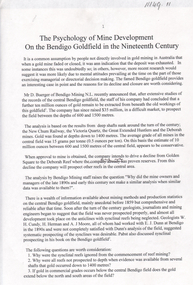
Document - Kangaroo Flat Gold Mine Collection: Psychology of Mine Development on Bendigo Goldfield, 19th century, Bendigo Mining NL, Unknown
... ...10 Conclusions...The size of claims and leases 10. Conclusions...The size of claims and leases 10. Conclusions Document Kangaroo Flat Gold Mine Collection: Psychology of Mine Development on Bendigo Goldfield, 19th century Bendigo Mining NL ...Eleven page paper titled 'The Psychology of Mine Development on the Bendigo goldfield in the nineteenth century'. Initial discussion refers to Mr. Doug Buerger of Bendigo Mining N.L commenting that the central Bendigo goldfield had a 'further ten million ounces of gold' remaining 'to be extracted from beneath the old workings'. Further paragraphs include: 1. Non-development of the synclinal reefs 2. Mining methods 3. Deep mining 4. The age of the owners and managers 5. Capital raising 6. Attitude to innovation - reference to George Lansell and Gustave Thureau 7. Management structures 8. Attitudes to machinery 9. The size of claims and leases 10. Conclusionsbendigo mining n.l., bendigo, mining, gold, kangaroo flat, 1. non-development of the synclinal reefs, 2. mining methods, 3. deep mining, 4. the age of the owners and managers, 5. capital raising, 7. management structures, 8. attitudes to machinery, 9. the size of claims and leases, 10 conclusions, doug buerger, gustave thureau, quartz mining, synclinal reefs, new chum railway, victoria quartz, great extended hustlers, deborah mines, innovation -
 Federation University Historical Collection
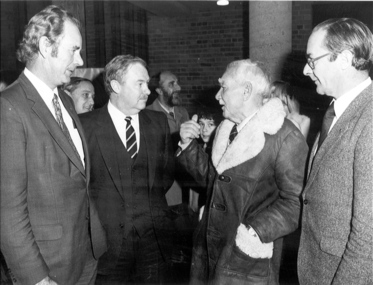
Photograph - Photograph (black & white), Four Principals of the Ballarat School of Mines, June 1983
... 10 January 1917 Richards was hunting for seals when he saw a ship on the horizon. It was 'The Aurora'. Picking up the relieved survivors 'The Aurora' arrived in New Zealand on 9 February 1917 to a hero's welcome. Joyce, Wild, Hayward and Richards later won the Albert Medal for their heroic devotion to duty. Later an inlet on the Antartic continent was named after Richards. Dick Richards wrote the following years after the ordeal "To me no undertaking carried through to conclusion...10 January 1917 Richards was hunting for seals when he saw a ship on the horizon. It was 'The Aurora'. Picking up the relieved survivors 'The Aurora' arrived in New Zealand on 9 February 1917 to a hero's welcome. Joyce, Wild, Hayward and Richards later won the Albert Medal for their heroic devotion to duty. Later an inlet on the Antartic continent was named after Richards. Dick Richards wrote the following years after the ordeal "To me no undertaking carried through to conclusion ...This photograph was taken at the presentation of a bust of Dick Richards to the Ballarat School of Mines. Dick Richards joined the Ballarat School of Mines (SMB) in 1914, and soon afterwards was granted leave to join an expedition to Antartica. In 1915 he sailed from Australia with the Antartic Exploraton Expedition, led by Sir Ernest Shackleton. Dick Richards was the physicist and sled manager for Shackleton's Ross Sea Party - with the task to meet Shackleton on the other side of the continent. When Shackleton planned his transcontinental crossing he decided to use supply depots as loads of supplies were too heavy to pull. The depots would enable Shackleton's party to carry just enough to reach the Pole, relying on the depots which were to be left by the Aurora's crew every 60 miles, stowed in 2 sledge journeys in 1915 and 1916. Dick Richards spent 3 freezing years in Antarctica between 1914 and 1917. Travelling south with Sir Ernest Shackleton Richards' worst experience was when his ship Aurora, tethered offshore, was blown away in a gale leaving Richards marooned for two years with nine other men on the ice floe. The Ross Sea Party arrived in McMurdo Sound aboard the Aurora in January 1915. The going was tough on the sledging trips as the sledges were overloaded. Temperatures were as low as minus 68F. In June 1916 the party crossed on foot to Cape Evans, occupied Scott's Hut (from his Terra Nova Expedition, erected in January 1911) in May 1915, for two months. On 10 January 1917 Richards was hunting for seals when he saw a ship on the horizon. It was 'The Aurora'. Picking up the relieved survivors 'The Aurora' arrived in New Zealand on 9 February 1917 to a hero's welcome. Joyce, Wild, Hayward and Richards later won the Albert Medal for their heroic devotion to duty. Later an inlet on the Antartic continent was named after Richards. Dick Richards wrote the following years after the ordeal "To me no undertaking carried through to conclusion is for nothing. And so I don't think of our struggle as futile. It was something the human spirit accomplished." After returning to Australia Dick Richards resumed his work at SMB as Lecturer in Physics and Mathematics, and developed many pieces of experimental equipment. During World War Two he acted as a scientific adviser in the production of optical apparatus in Australia. In 1946 he was appointed Principal and twelve years later he retired after a total of 44 years service. Dick Richards has been honoured through the naming of a Ballarat School of Mines prize - The R.W. Richards Medal. This medal later became a University of Ballarat prize. It has been awarded annually since 1959 to the Bachelor of Applied Science graduate considered to have achieved the most outstanding academic performance of their course. The award was was introduced to commemerate the long years of service to tertiary education in Ballarat by Mr Richards. See http://guerin.ballarat.edu.au/aasp/is/library/collections/art_history/honour-roll/honourroll_Richards,Dick.shtmlBlack and white photograph featuring 4 men who had serves as Principal of the Ballarat School of Mines. Left to Right: E.J. (Jack) Barker, Peter Shiells, Richard W. Richards, Graham Beanland.ballarat school of mines, dick richards, antarctica, ernest shackleton -
 Federation University Historical Collection
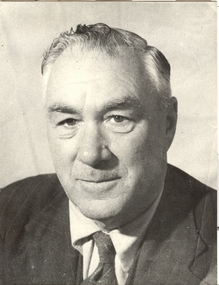
Photograph - Photograph (black & white), Richard W. Richards, c1950
... 10 January 1917 Richards was hunting for seals when he saw a ship on the horizon. It was 'The Aurora'. Picking up the relieved survivors 'The Aurora' arrived in New Zealand on 9 February 1917 to a hero's welcome. Joyce, Wild, Hayward and Richards later won the Albert Medal for their heroic devotion to duty. Later an inlet on the Antartic continent was named after Richards. Dick Richards wrote the following years after the ordeal "To me no undertaking carried through to conclusion...10 January 1917 Richards was hunting for seals when he saw a ship on the horizon. It was 'The Aurora'. Picking up the relieved survivors 'The Aurora' arrived in New Zealand on 9 February 1917 to a hero's welcome. Joyce, Wild, Hayward and Richards later won the Albert Medal for their heroic devotion to duty. Later an inlet on the Antartic continent was named after Richards. Dick Richards wrote the following years after the ordeal "To me no undertaking carried through to conclusion ...This photograph was taken at the presentation of a bust of Dick Richards to the Ballarat School of Mines. Dick Richards joined the Ballarat School of Mines (SMB) in 1914, and soon afterwards was granted leave to join an expedition to Antarctica. In 1915 he sailed from Australia with the Antartic Exploration Expedition, led by Sir Ernest Shackleton. Dick Richards was the physicist and sled manager for Shackleton's Ross Sea Party - with the task to meet Shackleton on the other side of the continent. When Shackleton planned his transcontinental crossing he decided to use supply depots as loads of supplies were too heavy to pull. The depots would enable Shackleton's party to carry just enough to reach the Pole, relying on the depots which were to be left by the Aurora's crew every 60 miles, stowed in 2 sledge journeys in 1915 and 1916. Dick Richards spent 3 freezing years in Antarctica between 1914 and 1917. Travelling south with Sir Ernest Shackleton Richards' worst experience was when his ship Aurora, tethered offshore, was blown away in a gale leaving Richards marooned for two years with nine other men on the ice floe. The Ross Sea Party arrived in McMurdo Sound aboard the Aurora in January 1915. The going was tough on the sledging trips as the sledges were overloaded. Temperatures were as low as minus 68F. In June 1916 the party crossed on foot to Cape Evans, occupied Scott's Hut (from his Terra Nova Expedition, erected in January 1911) in May 1915, for two months. On 10 January 1917 Richards was hunting for seals when he saw a ship on the horizon. It was 'The Aurora'. Picking up the relieved survivors 'The Aurora' arrived in New Zealand on 9 February 1917 to a hero's welcome. Joyce, Wild, Hayward and Richards later won the Albert Medal for their heroic devotion to duty. Later an inlet on the Antartic continent was named after Richards. Dick Richards wrote the following years after the ordeal "To me no undertaking carried through to conclusion is for nothing. And so I don't think of our struggle as futile. It was something the human spirit accomplished." After returning to Australia Dick Richards resumed his work at SMB as Lecturer in Physics and Mathematics, and developed many pieces of experimental equipment. During World War Two he acted as a scientific adviser in the production of optical apparatus in Australia. In 1946 he was appointed Principal and twelve years later he retired after a total of 44 years service. Dick Richards has been honoured through the naming of a Ballarat School of Mines prize - The R.W. Richards Medal. This medal later became a University of Ballarat prize. It has been awarded annually since 1959 to the Bachelor of Applied Science graduate considered to have achieved the most outstanding academic performance of their course. The award was was introduced to commemerate the long years of service to tertiary education in Ballarat by Mr Richards. See http://guerin.ballarat.edu.au/aasp/is/library/collections/art_history/honour-roll/honourroll_Richards,Dick.shtml Black and photo portrait of Richard W. (Dick) Richards, Principal of the Ballarat School of Mines. dick richards, r.w. richards, ballarat school of mines, antarctic explorer -
 Federation University Historical Collection
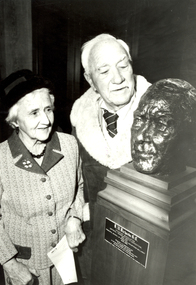
Photograph - Photograph - Black and White, Ballarat Courier, Dick Richards and his sister, Mrs V.S. Greenhalgh with the Bust of Dick Richards, 06/1983
... 10 January 1917 Richards was hunting for seals when he saw a ship on the horizon. It was 'The Aurora'. Picking up the relieved survivors 'The Aurora' arrived in New Zealand on 9 February 1917 to a hero's welcome. Joyce, Wild, Hayward and Richards later won the Albert Medal for their heroic devotion to duty. Later an inlet on the Antartic continent was named after Richards. Dick Richards wrote the following years after the ordeal "To me no undertaking carried through to conclusion...10 January 1917 Richards was hunting for seals when he saw a ship on the horizon. It was 'The Aurora'. Picking up the relieved survivors 'The Aurora' arrived in New Zealand on 9 February 1917 to a hero's welcome. Joyce, Wild, Hayward and Richards later won the Albert Medal for their heroic devotion to duty. Later an inlet on the Antartic continent was named after Richards. Dick Richards wrote the following years after the ordeal "To me no undertaking carried through to conclusion ...Dick Richards joined the Ballarat School of Mines in 1914, and soon afterwards was granted leave to join an expedition to Antartica. In 1915 he sailed from Australia with the Antartic Exploraton Expedition, led by Sir Ernest Shackleton. Most Antarctic enthusiasts know of Ernest Shackleton's attempt to cross the continent, only to be thwarted by the sinking of the ship 'Endurance'. Dick Richards was the physicist and sled manager for Shackleton's Ross Sea Party - with the task to meet Shackleton on the other side of the continent. When Shackleton planned his transcontinental crossing he decided to use supply depots as loads of supplies were too heavy to pull. The depots would enable Shackleton's party to carry just enough to reach the Pole, relying on the depots which were to be left by the Aurora's crew every 60 miles, stowed in 2 sledge journeys in 1915 and 1916. Dick Richards spent 3 freezing years in Antarctica between 1914 and 1917. Richards' worst experience was when his ship Aurora, tethered offshore, was blown away in a gale leaving Richards marooned for two years with nine other men on the ice floe. The expedition, consisting of two teams, were attempting to cross Antarctica from opposite sides, linking up somewhere near the middle. "That was with pretty poor equipment by today's standards, and we did not make it." (Dick Richards) The Ross Sea Party arrived in McMurdo Sound aboard the Aurora in January 1915. The men planned to make two sledging trips to leave supply depots every 60 nautical miles to Mount Hope about 400 miles away. The going was tough as the sledges were overloaded. Temperatures were as low as minus 68F. In June 1916 the party crossed on foot to Cape Evans, occupied Scott's Hut (from his Terra Nova Expedition, erected in January 1911) in May 1915, for two months. On 10 January 1917 Richards was hunting for seals when he saw a ship on the horizon. It was 'The Aurora'. Picking up the relieved survivors 'The Aurora' arrived in New Zealand on 9 February 1917 to a hero's welcome. Joyce, Wild, Hayward and Richards later won the Albert Medal for their heroic devotion to duty. Later an inlet on the Antartic continent was named after Richards. Dick Richards wrote the following years after the ordeal "To me no undertaking carried through to conclusion is for nothing. And so I don't think of our struggle as futile. It was something the human spirit accomplished." Prime Minister Bob Hawke wrote in 1984 'Your incredible journey of almost 2000 miles across the Antarctic Wastelands - involving some 9 months in the field with makeshift equipment - and you're adherence to duty in the face of enormous difficulty, suffering from scurvy, and the death of comrades, will; be an inspiration to your countrymen of the future as it is to us today." After returning to Australia Dick Richards resumed his work at SMB as Lecturer in Physics and Mathematics, and developed many pieces of experimental equipment. During World War Two he acted as a scientific adviser in the production of optical apparatus in Australia. In 1946 he was appointed Principal and twelve years later he retired after a total of 44 years service. Dick Richards has been honoured through the naming of a Ballarat School of Mines prize - The R.W. Richards Medal. This medal later became a University of Ballarat prize. It has been awarded annually since 1959 to the Bachelor of Applied Science graduate considered to have achieved the most outstanding academic performance of their course. (See http://guerin.ballarat.edu.au/aasp/is/library/collections/art_history/honour-roll/honourroll_Richards,Dick.shtml )A man and lady inspect a bust of Richard (Dick) Richards by sculptor Victor Greenhalgh. The scultpure is at the Ballarat School of Mines. The man is Dick Richards, and the woman is his sister and wife of sculptor Victor Greenhalgh. Both Dick Richards and Victor Greenhalgh were former students and teachers at the Ballarat School of Mines. The bust of Dick Richards was Victor Greenhalgh's last work and was cast in bronze after his death. The bust was presented to the Ballarat School of Mines by Mrs V.S. Greenhalgh (widow of the sculptor and sister of the subject). At the presentation Victor Greenhagh's son said "the two men had been friends as well as brothers-in-law, were of similar age, both enjoyed red wine, beer and cricket and both were educationalists, one an artist the other a mathematician."dick richards, r.w. richards, richards, richard w. richards, victor greenhalgh, bust, sculpture, ballarat school of mines, antarctica, ross shore -
 Federation University Historical Collection
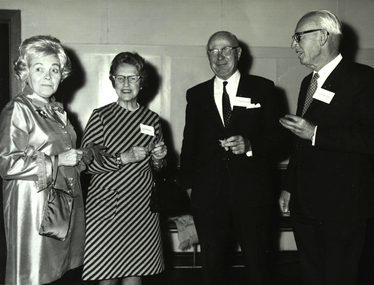
Photographs - 5 black and white, Ballarat Junior Technical School Social Function - 1975, 1975
... Photographer's stamp on back of each photograph. .1) In pencil: "at Centenary Appeal conclusion reception 1975"; "M.B.John, President of (BIAE crossed out) SMB Council; W.J.C.(Bill) North, appeal committee chairman"; 10 - 3. .2) 10 - 4 .3) 10 - 2 .4) 10 - 1 .5) 10 - 5 ...It was opened approximately 110 years after the Ballarat School of Mines (26 October 1870) and 10 years after the opening of the Mt Helen Campus (31 October 1870). a.w. nicholson e.j. tippett m.b. john morgan b. john ballarat junior technical school ballarat school of mines ballarat college of advanced education 1870 founders hall centenary appeal 1978 1981 Photographer's stamp on back of each photograph. .1) In pencil: "at Centenary Appeal conclusion reception 1975"; "M.B.John, President of (BIAE crossed out) SMB Council; W.J.C. ...On 28 March 1981 the Ballarat College of Advanced Education 1870 Founders hall was opened. The hall was erected from the proceeds of the Centenary Appeal, held in 1975. It cost approximately $800,000. The hall commemorates the initiative of the founders of the original Ballarat School of Mines and its "descendants", including Ballarat College of Advanced Education, as well as formal technical education in Australia. The hall plans were to erect a building to accommodate 670 persons in a theatre type seating arrangement and to be used for multi-purpose use by community groups as well as by the College. Construction of the hall commenced in 1978. It was opened approximately 110 years after the Ballarat School of Mines (26 October 1870) and 10 years after the opening of the Mt Helen Campus (31 October 1870)..1) Morgan B. John on left with Bill North right. .2) L to R:- Betty Barrell; W.J.North; John Vernon; A.C.Burrow; Mrs North; Dulcie Burrow; Mrs Webb; K.C.Webb; Geoffrey Barrell .3) L to R:- unidentified; E.J. Tippett; Bert Stohr .4) L to R:- Mrs Handford-Stevens; Mrs Nicholson; J Handford-Stevens; Sir A Nicholson, Mayor of Ballarat .5) L to R:- Bill North; unidentified; S Martin-Brown; unidentifiedPhotographer's stamp on back of each photograph. .1) In pencil: "at Centenary Appeal conclusion reception 1975"; "M.B.John, President of (BIAE crossed out) SMB Council; W.J.C.(Bill) North, appeal committee chairman"; 10 - 3. .2) 10 - 4 .3) 10 - 2 .4) 10 - 1 .5) 10 - 5 a.w. nicholson, e.j. tippett, m.b. john, morgan b. john, ballarat junior technical school, ballarat school of mines, ballarat college of advanced education, 1870 founders hall, centenary appeal, 1978, 1981 -
 Federation University Historical Collection
Document - Outreach Program, Federation University Australia, Regional Schools outreach Program (RSOP) Federation University, 2008 - 2017
... A4 Flyer .10 Bridging Courses and Pathway Programs A4 Flyer .11 FedUni Schools Outreach - Focus on your Future A4 Flyer .12 60 page A4 booklet Regional Schools outreach Program 2008 - 2013 Evaluation Report .13 9 Page A4 Booklet Excite explore Empower - Evaluation of Federation University Australia Regional Schools Outreach Program - Summary of 2008 - 2013 Evaluation Findings and Conclusions .14 Key Dates list 2016 - 2017 .15 Student Guide - Year 10 - Course and Career Options A4 Booklet - 13 Pages .16 Univeristy - Year 10 - Put yourself in the picture A4 Flyer .17 Year 9 Teacher's Guide - Focus on your future - A4 Booklet 13 page booklet .18a Focus on Your Future - Year 9 - Student Workbook 2015 - A4 Booklet 12 pages .18b Focus on your Future - Year 9 - Teacher's Guide 2015 - A4 Booklet 12 pages .19 Focus on their future - Parent's Guide 2015 - A4 Booklet 8 page booklet .20 Focus on your Future - A Parent's Guide 2013 - A4 Booklet 8 Pages .21 The Future is Now - Year 8 - Teacher's Guide 2014 - A4 Booklet 12 pages .22 a & b - The future is now - Year 8 - Student Workbook 2014 - A4 Booklets 12 pages .23 Dream Makers - Grade 5/6 a Parents guide - A5 8 page Booklet .24a & b Stepping Up reach for the stars - Grade 5/6 Parent's Guide - A5 8 page Booklet .25a & b Regional Schools Outreach Program Grade 5/6 Stepping up Workshop - Teacher's Resource - 3 page A4 document .26a & b Stepping up reach for th stars - Student Workbook - A4 12 page Booklet x 2 .27a & b Grade 5/6 Building your Future - A Parent's guide - 4 page A5 Booklet .28 Building your future - Grade 5/6 A Student's Guide - A4 8 page booklet .29 Joining the dots from secondary school to University - Course and career options - Beyond secondary school - a guide to future career options 2013 .30 Later years Students - University - How to Make it Happen 2014 - A4 Booklet 16 pages .31a & b Scholarships and SEAS Applications - Year 12 Guide - 4 page A4 document .32 Student Guide - Later Years - University how to make it happen - A4 Booklet 16 pages .33 Regional Schools Outreach Program - Putting Regional Students in the picture for University - A4 4 page pamphlet ...Regional Schools Outreach Program is a Federation University Program in conjunction with the Australian Government Regional Schools Outreach Program Federation University Student Guide Later Years Scholarships SEAS Special Entry Access Scheme University How to Make it Happen Course and Career Options Building your future Grade 5/6 Stepping Up Parent's Guide Reach for the stars Workshop Teachers Resource Dream makers The future is now Year 8 Teacher's Guide Focus on Your Future Focus on Their future Year 9 Student Workbook Year 10 Put yourself in the picture What do you know about Uni? Key Dates Excite Explore Empower Evaluation Findings and Conclusions Evaluation Report Fed Uni Schools Outreach Bridging Courses Pathway programs I don't know what i want to do. ...Regional Schools Outreach Program is a Federation University Program in conjunction with the Australian Government.1 Student Action Plan A4 Sheet .2 Regional Schools Outreach Program informations sheet A4 .3 VTAC information sheet 2014 A4 .4 Special Entry Access Scheme (SEAS) information sheet A4 .5 Open Days 2014 A4 flyer .6 VCAL snapshot A4 flyer .7 4 page booklet titled University, put yourself in the picture. .8 From High School to University - Making the transistion A4 flyer .9 I don't know what I want to do! A4 Flyer .10 Bridging Courses and Pathway Programs A4 Flyer .11 FedUni Schools Outreach - Focus on your Future A4 Flyer .12 60 page A4 booklet Regional Schools outreach Program 2008 - 2013 Evaluation Report .13 9 Page A4 Booklet Excite explore Empower - Evaluation of Federation University Australia Regional Schools Outreach Program - Summary of 2008 - 2013 Evaluation Findings and Conclusions .14 Key Dates list 2016 - 2017 .15 Student Guide - Year 10 - Course and Career Options A4 Booklet - 13 Pages .16 Univeristy - Year 10 - Put yourself in the picture A4 Flyer .17 Year 9 Teacher's Guide - Focus on your future - A4 Booklet 13 page booklet .18a Focus on Your Future - Year 9 - Student Workbook 2015 - A4 Booklet 12 pages .18b Focus on your Future - Year 9 - Teacher's Guide 2015 - A4 Booklet 12 pages .19 Focus on their future - Parent's Guide 2015 - A4 Booklet 8 page booklet .20 Focus on your Future - A Parent's Guide 2013 - A4 Booklet 8 Pages .21 The Future is Now - Year 8 - Teacher's Guide 2014 - A4 Booklet 12 pages .22 a & b - The future is now - Year 8 - Student Workbook 2014 - A4 Booklets 12 pages .23 Dream Makers - Grade 5/6 a Parents guide - A5 8 page Booklet .24a & b Stepping Up reach for the stars - Grade 5/6 Parent's Guide - A5 8 page Booklet .25a & b Regional Schools Outreach Program Grade 5/6 Stepping up Workshop - Teacher's Resource - 3 page A4 document .26a & b Stepping up reach for th stars - Student Workbook - A4 12 page Booklet x 2 .27a & b Grade 5/6 Building your Future - A Parent's guide - 4 page A5 Booklet .28 Building your future - Grade 5/6 A Student's Guide - A4 8 page booklet .29 Joining the dots from secondary school to University - Course and career options - Beyond secondary school - a guide to future career options 2013 .30 Later years Students - University - How to Make it Happen 2014 - A4 Booklet 16 pages .31a & b Scholarships and SEAS Applications - Year 12 Guide - 4 page A4 document .32 Student Guide - Later Years - University how to make it happen - A4 Booklet 16 pages .33 Regional Schools Outreach Program - Putting Regional Students in the picture for University - A4 4 page pamphlet regional schools outreach program, federation university, student guide, later years, scholarships, seas, special entry access scheme, university how to make it happen, course and career options, building your future, grade 5/6, stepping up, parent's guide, reach for the stars, workshop, teachers resource, dream makers, the future is now, year 8, teacher's guide, focus on your future, focus on their future, year 9, student workbook, year 10, put yourself in the picture, what do you know about uni?, key dates, excite explore empower, evaluation findings and conclusions, evaluation report, fed uni schools outreach, bridging courses, pathway programs, i don't know what i want to do., support services, picture the possibilities, booklet, vcal, snapshot, vce, open days 2014, vtac, student action plan -
 Federation University Historical Collection
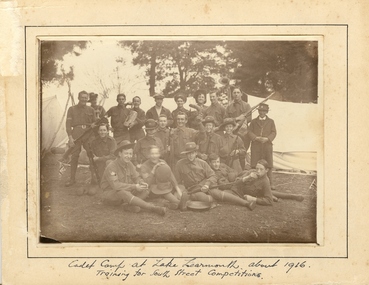
Photograph - Photograph - Sepia, Ballarat School of Mines Cadets, 1916, c1916
... conclusion of World War 1, with the Junior Cadet scheme the first to go, in 1922. Senior cadets and service with the militia was suspended in November 1929. (http://guides.slsa.sa.gov.au/content.php?pid=575383&sid=4788359, accessed 29/10...conclusion of World War 1, with the Junior Cadet scheme the first to go, in 1922. Senior cadets and service with the militia was suspended in November 1929. (http://guides.slsa.sa.gov.au/content.php?pid=575383&sid=4788359, accessed 29/10 ...Field Marshal Viscount Kitchener of Great Britain was invited by Prime Minister Deakin in 1909 to visit Australia and advise on the best way to provide Australia with a land defence. Kitchener’s report echoed the bill, introduced to Parliament in 1909 and supported by the Opposition Labor Party at its 1908 conference, to introduce compulsory military training in peace time (referred to as universal training). On 1 January 1911, the Commonwealth Defence Act 1911 (Cth) was passed as law and all males aged 12 to 26 were required to receive military training. Men were divided according to age, with junior cadets comprising boys 12-14 years of age, senior cadets comprising boys 14-18, and young men aged 18-26 assigned to the home militia defence. The support of schools was vital to the success of the scheme, since the system of cadet training began in the primary schools, with physical training prescribed by military authorities. Junior cadet training was entirely in the hands of school teachers, who had first been trained by military officers. This early training was less military in nature than focused on physical drill and sport. It also acted to inculcate boys with the notions of loyalty to country and empire. At this age, uniforms were not worn, although there were schools with pre-existing uniformed cadet units, who continued to do so. Senior Cadets were organised by Training Areas, administered by Area Officers. If a school had at least 60 senior cadets, they could form their own units. Unlike their junior counterparts, Senior Cadets were issued uniforms, a rifle, and learned the foundations necessary for service in any arm of the defence forces. Boys and men could be exempted from compulsory training if they lived more than five miles from the nearest training site, or were passed medically unfit. Those who failed to register for training were punished with fines or jail sentences, and the severity of this punishment generated some of the strongest opposition to the scheme. While institutions such as the political parties and most churches generally supported universal training, some in the broader labour movement were less enthusiastic, as evidenced in the Daily Herald newspaper’s editorials and letters. Universal military training persisted after the conclusion of World War 1, with the Junior Cadet scheme the first to go, in 1922. Senior cadets and service with the militia was suspended in November 1929. (http://guides.slsa.sa.gov.au/content.php?pid=575383&sid=4788359, accessed 29/10/2015) According to Neil Leckie, Manager of the Ballarat Ranger Military Museum: * Originally 12 – 14 year olds went to Junior Cadets attached to their school. * From age 14 – 17 they were Senior Cadets attached to the local militia unit. * After 1 July of the year a Cadet turned 18, the Cadet left the Senior Cadets and became a member of the Citizen Military Force. * In October 1918 the AIF, Militia and Cadets were renamed to give some connection to the AIF battalion raised in the area. Ballarat saw: 8th Australian Infantry Regiment comprising: * 8th Battalion AIF renamed 1st Battalion 8th Australian Infantry Regiment * 70th Infantry Militia renamed 2nd Battalion 8th Australian Infantry Regiment * 70th Infantry Cadets renamed 3rd B, 8th Australian Infantry. 39th Australian Infantry Regiment comprising: * 39th Battalion AIF renamed 1st Battalion 39th Australian Regiment * 71st Infantry Militia renamed 2nd Bn, 39th Australian Infantry Regiment * 71st Infantry Cadets renamed 3rd Bn, 39th Australian Infantry Regiment Prior to the reorganisation in 1918 the 18th Brigade was the 70th, 71st and 73rd Infantry. It is thought that the 18th Brigade Cadet units in 1920 were those that came from the old: * 69th Infantry (Geelong/Queenscliff) * 70th Infantry (Ballarat/Colac) * 71st Infantry (Ballarat West) * 72nd Infantry Warrnambool) * 73rd Infantry (NW Vic) The next name change came in 1921!Mounted sepia photograph of 21 young males. They are the Ballarat School of Mines Cadets on a training camp at Lake Learmonth. Back row left to right: Harold Wakeling; ? ; T. Wasley; H. Witter; H.V. Maddison (staff); Lieutenant S.J. Proctor, Joe ? ; ? ; B.C. Burrows. Centre left to right: Howard Beanland; ? ; F.N. Gibbs; H. Siemering; P. Riley; ? : E. Adamthwaite. Front row left to right: Albert E. Williams; Francis Davis (RAAF Dec.); A. Miller; W. Shattock; T. Rees From the Ballarat School of Mines Magazine, 1916 "Our Competition Team, 1916 At a parade, held on the 25th August competition teams were called from from the three colleges - Ballarat College, St Patrick's College, and the School of Mines. In each case, a large muster was obtained, twenty-nine volunteering fro the School of Mines. On account of the number in a team being limited to 21, some had to be weeded out. The team decided to have a camp at Learmonth in the vacation for the benefit of training for the coming competitions. The tents, within our baggage, were brought to the Junior Technical School at 10 a.m. on Monday, 11 September. Everything was carted to the station on a lorry, which was very kindly lent by Mr C. Burrow. ... Arriving at our camp, which was in the Park, we first raised the tents. This was done in record time. Three large tents, A.B.C., were pitched one behind the other. We also pitched a smaller one to act as a provisions tent. The provisions supplied by each cadet were placed in this tent. Dinner was ready by 3.30, and was prepared by the three senior non-coms., who also acted as orderlies. Things went alright Monday night, the two senior non-coms. acting as sentries for the first two hours. On Tuesday morning Reville sounded at 7. There was no need for it, however, as nearly all the cadets were up before daylight, owing to their beds being too hard. After physical exercises were gone through we had breakfast. We then had rifle exercises until Messrs A.W. Steane and F.N. King arrived. The former put the team through the table of physical exercises set down for competition work, many valuable points being obtained. The visitors remained for dinner, afterwards returning to Ballarat. Wednesday was uneventful, until the soldiers arrived at about 11 a.m., stopping at the park for lunch. As we handed over the coppers, etc., to them, our lunch was delayed. Two more visitors arrived after lunch, and after taking a few photos returned home. That night we had a "Sing-a-long" in C Tent until "Lights out" sounded at 9.30. After physical exercises ad breakfast on Thursday, we went for a six mile route march round the lake, doing skirmishing on the way. In the afternoon we practised rifle exercises and the march past. A concert was arranged for that night, the chief singers being cadets H. Siemering and W. Shattock. Supper was served at the end of the entertainment. On Friday, Reveille sounded at 6.30 instead of 7, and, as usual, we had physical exercises before breakfast, after which the team went through skirmishing at the reserve. In the afternoon, section drill and the march past were practised. Friday night, being our last night in camp, leave was granted until 10 p.m., "lights out" sounding at 11. Reveille sounded on Saturday at 4.30, the reason being that all kits, tents, etc., had to be packed away ready to catch the 8.15 train to Balalrat. At 7.30 we were all ready to leave for the station. We had a very enjoyable time in the train, each cadet having a chip in at the patriotic songs. On arriving at Ballarat, we found the lorry awaiting us. The luggage was carted to the Junior Technical School, the team following. The team were here dismissed, everyone feeling that he had had a very good time. F.G. Davis"Written in ink on front 'cadet camp at Lake Learmonth about 1916. Training for South Street Competitions. ballarat school of mines, cadets, ballarat school of mines cadets, lake learmonth, world war one, boomerang, camp, cadet camp, h.g. wakeling, harold wakeling, f.g. davis, albert w. steane, f.n. king, h. siermering, w. shattock, francis davis, harold wakeling, t. wasley, h. witter, h.v. maddison, s.j. proctor, b.c. burrows, howard beanland, f.n. gibbs, h. siemering, p. riley, e. adamthwaite, albert e. williams; francis davis, a. miller, w. shattock, t. rees, photography, foto, boxing gloves -
 Bendigo Historical Society Inc.
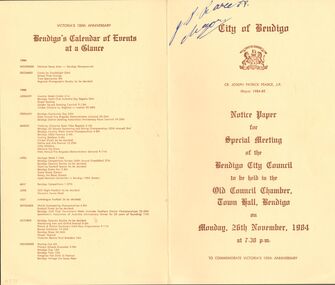
Document - SPECIAL MEETING BENDIGO CITY COUNCIL, BENDIGO TOWN HALL, 26 November 1984
... 10. Invitation extended to visitors to view displays in the Committee Room: - historic photographs exhibited by the Bendigo Regional Photographic Library. - 150th Anniversary display material. - documents from the City of Bendigo Archives. At the conclusion...10. Invitation extended to visitors to view displays in the Committee Room: - historic photographs exhibited by the Bendigo Regional Photographic Library. - 150th Anniversary display material. - documents from the City of Bendigo Archives. At the conclusion ...Notice Paper for Special Meeting of the Bendigo City Council to be held in the Old Chamber, Town Hall, Bendigo on Monday, 26th November, 1984 at 7.30 p.m. To Commemorate Victoria's 150th Anniversary. City of bendigo (picture of City Emblem) Cr. Joseph Patrick Pearce, J.P. Mayor 1984-85. Council Summons You are hereby summoned to attend a Special Meeting of the Council of the City of Bendigo, to be held in the Old Council Chamber, Town Hall, Lyttleton Terrace, Bendigo, on Monday the 26th day of November, 1884, at 7.30pm., for the transaction of the business specified in the Notice Paper. R. J. Burton Acting Town Clerk and Chief Executive Officer. Members of the Council Barkly Ward: Peter David Mansell, J.P., Edna Mary Hall, Richard Anthony Clarke. Darling Ward: Anthony Vincent Duble, Joseph Patrick Pearce, J.P., Norman Francis Quin. Sutton Ward: Michael Anthony Currie, Robert Terrance Cox, Rodney James Fyffe. Acting Town Clerk and Chief Executive Officer: Raymond J. Burton, A.A.S.A., A.A.I.M., A.I.M.M. City Engineer and Deputy Chief Executive Officer: Colin C. Campbell, L.G.E., Dip. C.E., M.I.E. Aust. Deputy City Engineer: Geoffrey N Maguire, L.G.E., Dip. C.E., M.I.E. Aust. Assistant Town Clerk: Martin A. Sheean, A.A.I.V., Dip. Management. Business 1. 2. 3. Declarations under Section 181 of Local Government Act 1958. 4. Notice of Motion - His Worship the Mayor, Cr. J. P. Pearce. 5. Reports: Acting Town Clerk and Chief Executive Officer. (a) Bendigo Regional Photographic Library - Status Report. (b) 150th Anniversary Project - Landscaping Lake Weeroona. (c) Refurbishment of the Bendigo City Hall. (d) 150th Anniversary Year activities in Bendigo. 6. Naturalisation Ceremony. 7. Presentation of 150th Anniversary Flag to representative of the Mall Management Committee. 8. Bendigo's Heritage - Council to meet with Mr. Andrew Ward, Advisor to the Bendigo Heritage Committee. 9. Presentation of Council donation to representatives of the Bendigo Youth Choir and the Bendigo Youth Symphonic Band. 10. Invitation extended to visitors to view displays in the Committee Room: - historic photographs exhibited by the Bendigo Regional Photographic Library. - 150th Anniversary display material. - documents from the City of Bendigo Archives. At the conclusion of the Council Meeting, guests are invited to assemble in the Main Hall of the Town Hall to hear a performance by the Bendigo Youth Choir & the Bendigo Youth Symphonic Band. Notice of Motion At the special meeting of the Bendigo City Council to be held in the Old Council Chamber, of the Town Hall 7.30p.m. 26th November, 1984, I propose to move: re Victoria's 150th Anniversary ''That the Bendigo City Council forward a letter under seal to the Premier, The Hon. John Cain, M.P., advising that the City of Bendigo rejoices Victoria's 150th birthday, that the City congratulates the State Government on the manner in which it has sponsored and co-ordinated the activities. . . Bendigo's Calendar of Events at a Glance 1984 November, December. 1985 January through to and including November. Markings: signature of Mayor Joseph Patrick Pearce.event, official, 150 yrs of victoria, special meeting of the bendigo city council old chamber, town hall, 26th november, 1984 commemorate victoria's 150th anniversary. city of bendigo city emblem cr. joseph patrick pearce, j.p. mayor 1984-85. council summons lyttleton terrace business specified in the notice paper. r. j. burton acting town clerk and chief executive officer. members of the council barkly ward: peter david mansell, j.p., edna mary hall, richard anthony clarke. darling ward: anthony vincent duble, joseph patrick pearce, j.p., norman francis quin. sutton ward: michael anthony currie, robert terrance cox, rodney james fyffe. acting town clerk and chief executive officer: raymond j. burton, a.a.s.a., a.a.i.m., a.i.m.m. city engineer and deputy chief executive officer: colin c. campbell, l.g.e., dip. c.e., m.i.e. aust. deputy city engineer: geoffrey n maguire, l.g.e., dip. c.e., m.i.e. aust. assistant town clerk: martin a. sheean, a.a.i.v., dip. management. business declarations under section 181 of local government act 1958. notice of motion - his worship the mayor, cr. j. p. pearce. reports: acting town clerk and chief executive officer. (a) bendigo regional photographic library - status report. (b) 150th anniversary project - landscaping lake weeroona. (c) refurbishment of the bendigo city hall. (d) 150th anniversary year activities in bendigo. naturalisation ceremony. presentation of 150th anniversary flag to mall management committee. bendigo's heritage - council mr. andrew ward, advisor to the bendigo heritage committee. presentation of council donation to representatives of the bendigo youth choir bendigo youth symphonic band. invitation visitors view displays: - historic photographs by bendigo regional photographic library. - 150th anniversary display material. - documents city of bendigo archives, performance by the bendigo youth choir & the bendigo youth symphonic band. notice of motion at the special meeting of the bendigo city council to be held in the old council chamber, of the town hall. 26th november, 1984, i propose to move: re victoria's 150th anniversary ''that the bendigo city council forward a letter under seal to the premier, the hon. john cain, m.p., city of bendigo rejoices victoria's 150th birthday, city congratulates state government which it has sponsored and co-ordinated the activities. . . bendigo's calendar of events at a glance november1984, to november 1985. markings: signature of mayor joseph patrick pearce. -
 Bendigo Historical Society Inc.
Book - AILEEN AND JOHN ELLISON COLLECTION: BOOKLET - JUST FRIENDS?
... Chapter 10: When should we get engaged? Chapter 11: Looking forward to marriage. Conclusion...Chapter 10: When should we get engaged? Chapter 11: Looking forward to marriage. Conclusion Book AILEEN AND JOHN ELLISON COLLECTION: BOOKLET - JUST FRIENDS? ...Small booklet (48 pages) titled "Just Friends?'' A Practical guide to Boy-Girl Friendships. The booklet was published by the father and Son Welfare Movement of Australia, this is the fifth edition published in 1959. Contents: Introduction - Chapter 1: Should I want to mix with the opposite sex. Chapter 2: Boy-girl Friendships. Chapter 3: Platonic friendships, do they really exist? Chapter 4: Is there anything wrong with sex? Chapter 5: Are sex relations outside marriage wrong? Chapter 6: Can I help falling in love? Chapter 7: Is this love or only infatuation? Chapter 8: Choosing Life's partner. Chapter 9: Problems of Courtship. Chapter 10: When should we get engaged? Chapter 11: Looking forward to marriage. Conclusionbooks, school, sex education -
 Robin Boyd Foundation
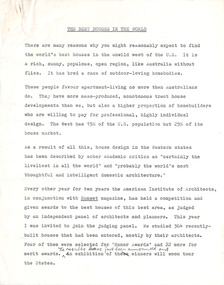
Document - Manuscript, Robin Boyd, The Best Houses in the World, 1965
... conclusions about what is new in planning are drawn. Comparisons are made with the best Australian houses and landscape architecture of 1965. This manuscript of Boyd's weekly newspaper column in 'The Australian' was published with the same title on 31/07/1965. Original manuscript of an article published in The Australian, 16/10 ...Robin Boyd was on the judging panel for the American Institute of Architects, in conjunction with Sunset magazine, "Best houses" in the West Coast USA in 1965. Interesting commententary is given about the 364 houses entered and the award-winning houses. Some conclusions about what is new in planning are drawn. Comparisons are made with the best Australian houses and landscape architecture of 1965. This manuscript of Boyd's weekly newspaper column in 'The Australian' was published with the same title on 31/07/1965.Original manuscript of an article published in The Australian, 16/10/1965.Two copies. One typewritten (c copy), pencil edits and additions. Second typewritten (p/copy). Both quarto, 7 pages.american institute of architects, california, sunset magazine, house design, 1965, landscape design., robin boyd, manuscript, ohm2022, ohm2022_16 -
Victorian Aboriginal Corporation for Languages
Book, RMW Dixon, Australian languages: their nature and development, 2002
... 10. Generic nouns, classifiers, genders and noun classes 11. Ergative/?accusative morphological and syntactic profiles 12. Phonology 13. Genetic subgroups and small linguistic areas 14. Summary and conclusion...10. Generic nouns, classifiers, genders and noun classes 11. Ergative/?accusative morphological and syntactic profiles 12. Phonology 13. Genetic subgroups and small linguistic areas 14. Summary and conclusion ...Very comprehensive technical linguistic introduction to the Australian language family, a follow-up to Dixon?s ?The Languages of Australia? (1980). Numerous maps, isoglosses, tables, comparative grammar, phonology, semantics, etc. 1. The language situation in Australia 2. Modelling the language situation 3. Overview 4. Vocabulary 5. Case and other nominal suffixes 6. Verbs 7. Pronouns 8. Bound pronouns 9. Prefixing and fusion 10. Generic nouns, classifiers, genders and noun classes 11. Ergative/?accusative morphological and syntactic profiles 12. Phonology 13. Genetic subgroups and small linguistic areas 14. Summary and conclusion.Mapslinguistics, language surveys -
 Victorian Aboriginal Corporation for Languages
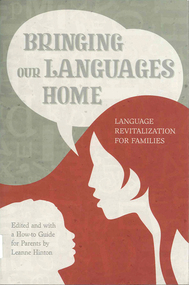
Book, Leanne Hinton, Bringing our Languages home : language revitalization for families, 2013
... 10.Kypriaka Making Choices, Enriching Life /? Aliosha Bielenberg Pittaka 11.Warlpiri About Dad /? Ezra Hale Contents note continued: pt. V Family Language-Learning Programs 12.Kawaiisu The Kawaiisu Language at Home Program /? Julie Turner 13.Scottish Gaelic Taic/?CNSA and Scottish Gaelic /? Finlay M. Macleoid Conclusion...10.Kypriaka Making Choices, Enriching Life /? Aliosha Bielenberg Pittaka 11.Warlpiri About Dad /? Ezra Hale Contents note continued: pt. V Family Language-Learning Programs 12.Kawaiisu The Kawaiisu Language at Home Program /? Julie Turner 13.Scottish Gaelic Taic/?CNSA and Scottish Gaelic /? Finlay M. Macleoid Conclusion ...Contents: I Starting from Zero 1.Miami Myaamiaataweenki Oowaaha: `Miami Spoken Here' /? Jarrid Baldwin 2.Wampanoag How Did This Happen to my Language? /? Jessie Little Doe Baird pt. II Learning from the Elders 3.Karuk Karuk Language and the Albers Basket /? Elaina (Supahan) Albers 4.Yuchi Family Language without a Language Family /? Renee T. Grounds pt. III Families and Communities Working Together 5.Mohawk Our Kanien'keha Language /? Theodore Peters 6.Maori My Language Story /? Hana O'Regan 7.Hawaiian E Paepae Hou 'Ia Ka Pohaku: Reset the Stones of the Hawaiian House Platform /? Kauanoe Kamana 8.Anishinaabemowin Language, Family, and Community /? Margaret Noori 9.Irish Belfast's Neo-Gaeltacht /? Aodan Mac Poilin pt. IV Variations on a Theme 10.Kypriaka Making Choices, Enriching Life /? Aliosha Bielenberg Pittaka 11.Warlpiri About Dad /? Ezra Hale Contents note continued: pt. V Family Language-Learning Programs 12.Kawaiisu The Kawaiisu Language at Home Program /? Julie Turner 13.Scottish Gaelic Taic/?CNSA and Scottish Gaelic /? Finlay M. Macleoid Conclusion 14.Bringing Your Language into Your Own Home /? Leanne Hinton.B&w illustrations, b&w photographs, word listswarlpiri, language revival, language maintenance, language education -
![Book, Chris Cunneen et al, Keeping Aboriginal and Torres Strait Islander people out of custody : an evaluation of the implementation of the recommendations of the Royal Commission in [ie. into] Aboriginal Deaths in Custody, 1997](/media/collectors/52f0758a9821f40464f742c1/items/56c69101400d0c3518d1512f/item-media/56c69101400d0c3518d15130/item-fit-380x285.jpg?cb=6) Victorian Aboriginal Corporation for Languages
Victorian Aboriginal Corporation for LanguagesBook, Chris Cunneen et al, Keeping Aboriginal and Torres Strait Islander people out of custody : an evaluation of the implementation of the recommendations of the Royal Commission in [ie. into] Aboriginal Deaths in Custody, 1997
... Contents: 1: Introduction 2: Data on Aboriginal and Torres Strait Islander over-representation in the criminal justice system 3: Explanations for Aboriginal and Torres Strait Islander over-representation in the criminal justice system PART TWO : CASE STUDIES 4 : Poor Practice Case Studies - 5 : Best Practice Case Studies PART THREE: ANALYSIS OF THE RECOMMENDATIONS AND THEIR IMPLEMENTATION 6: Adequacy of Information -7: Aboriginal and Police Community Relations 8: Responding to Public Drunkenness 9: Police Practices and Procedures 10: Imprisonment as a Last Resort 11: Court Processes, Legislation and Aboriginal Legal Representation 12: Aboriginal Young People and the Juvenile Justice System PART FOUR 13: Conclusion APPENDIXES Appendix 1: The recommendations of the Royal Commission most proximate to reducing the over-representation of Aboriginal people in custody Appendix 2: Methodological issues in determining over-representation Appendix 3: Details of Federal funding related to State agencies for the implementation of the Royal Commission into Aboriginal Deaths in Custody recommendations....Aboriginal deaths in custody criminal justice system b&w illustrations, tables Contents: 1: Introduction 2: Data on Aboriginal and Torres Strait Islander over-representation in the criminal justice system 3: Explanations for Aboriginal and Torres Strait Islander over-representation in the criminal justice system PART TWO : CASE STUDIES 4 : Poor Practice Case Studies - 5 : Best Practice Case Studies PART THREE: ANALYSIS OF THE RECOMMENDATIONS AND THEIR IMPLEMENTATION 6: Adequacy of Information -7: Aboriginal and Police Community Relations 8: Responding to Public Drunkenness 9: Police Practices and Procedures 10: Imprisonment as a Last Resort 11: Court Processes, Legislation and Aboriginal Legal Representation 12: Aboriginal Young People and the Juvenile Justice System PART FOUR 13: Conclusion APPENDIXES Appendix 1: The recommendations of the Royal Commission most proximate to reducing the over-representation of Aboriginal people in custody Appendix 2: Methodological issues in determining over-representation Appendix 3: Details of Federal funding related to State agencies for the implementation of the Royal Commission into Aboriginal Deaths in Custody recommendations. ...Contents: 1: Introduction 2: Data on Aboriginal and Torres Strait Islander over-representation in the criminal justice system 3: Explanations for Aboriginal and Torres Strait Islander over-representation in the criminal justice system PART TWO : CASE STUDIES 4 : Poor Practice Case Studies - 5 : Best Practice Case Studies PART THREE: ANALYSIS OF THE RECOMMENDATIONS AND THEIR IMPLEMENTATION 6: Adequacy of Information -7: Aboriginal and Police Community Relations 8: Responding to Public Drunkenness 9: Police Practices and Procedures 10: Imprisonment as a Last Resort 11: Court Processes, Legislation and Aboriginal Legal Representation 12: Aboriginal Young People and the Juvenile Justice System PART FOUR 13: Conclusion APPENDIXES Appendix 1: The recommendations of the Royal Commission most proximate to reducing the over-representation of Aboriginal people in custody Appendix 2: Methodological issues in determining over-representation Appendix 3: Details of Federal funding related to State agencies for the implementation of the Royal Commission into Aboriginal Deaths in Custody recommendations.b&w illustrations, tablesaboriginal deaths in custody, criminal justice system -
 Sunshine and District Historical Society Incorporated
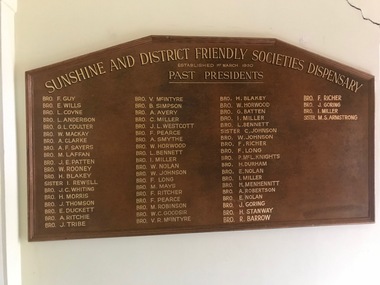
Honour Board - PAST PRESIDENTS of the SUNSHINE and DISTRICT FRIENDLY SOCIETIES DISPENSARY
... This conclusion results from seeing that BRO. W. ROONEY is the 11th listed President, and that the Sunshine Advocate of 10 July 1936 states that he was elected as the new President....This conclusion results from seeing that BRO. W. ROONEY is the 11th listed President, and that the Sunshine Advocate of 10 July 1936 states that he was elected as the new President. ...Friendly Societies originated in the industrial areas of the United Kingdom. The first society in Victoria was formed in 1839 and by 1913 more than half of the Victorian population was insured by Friendly Societies in some fashion. The societies were financed by Members' subscriptions and offered health benefits and other welfare services, before these services were provided by the government. Doctors were paid by the societies to treat members free of charge, and Dispensaries were established to provide members with subsidised quality medicines. The Sunshine and District Friendly Societies Dispensary was established on the 1st of March 1930 with a membership of 896, and it was located in Sun Crescent Sunshine. The membership grew to 1052 within 4.5 years, and the number of prescriptions dispensed in the 6 months prior to November 30,1935 totalled 10,535. The Dispenser was Mr. C. H. Semmens. Most Friendly Societies operated democratically with office bearers changed regularly to prevent power cliques. The Sunshine Dispensary appears to have operated in the same way as the societies that owned it. The Advocate of 10 July 1936 reports that the seven newly elected office bearers or delagates were from the Friendly Societies; A.N.A., M.U.I.O.O.F., P.A.F.S., and G.U.O.O.F. The names of all the seven people can be found on the Honour Board, indicating that they each have served at least one term as President of the Sunshine Dispensary. The health professions and the Labour Governments of the 1940's wanted to see the involvement of Friendly Societies in health care broken. The Commonwealth Free Medicine Plan appears to have been drawing customers away from Friendly Societies Dispensaries in general. The Sunshine Dispensary placed several advertisements in the Sunshine Advocate during late 1950 urging members to remain loyal to it. By the 1980's the increase in entrepreneurial clinics and the availability of take away medicine helped to vastly diminish the involvement of Friendly Societies in health care provision. The 1936 Sunshine Advocate refers to the Sunshine and District United Friendly Societies Dispensary, with the same office bearers as the Presidents on the Honour Board but on which the 'United' is missing from the name of the Dispensary. The 1950 advertisements were placed by Sunshine U.F.S. Dispensary of 23 Sun Crescent. It is thought that all three names refer to the same business, but the writer stands to be corrected. The above is a compilation of information sourced from Sunshine Advocates published in January and July 1936, and in September, October and November 1950. It also draws on an article written by Elizabeth Willis and published online by the the Department of History (University of Melbourne), and on an article written by Mr. Bill Kelly of the Australian Friendly Societies Pharmacies Association, and also on an article by Museum Victoria Australia. Corrections to what has been written are welcome from interested readers.The Honour Board provides a historical record of the Presidents that served 61 terms on the Board of the Sunshine and District Friendly Societies Dispensary. It also provides a reminder that when a government does not adequately look after the welfare needs of its citizens, the people can band together to find ways of helping each other. The Sunshine Dispensary no longer exists, and a more recently established Community Pharmacy which operated in Hampshire Road could not compete against the discount pharmacies that have taken over. These new pharmacies sell a wide range of profitable product lines, as well as dispensing traditional prescription medications.Brown stained wood particle board with picture frame type edging. The board has six straight sides however it is not typical hexagon shaped. The top is composed of three straight short edges to give an almost rounded edge to an otherwise oblong shaped bottom section. On the board in gold coloured lettering are the names of 'brothers' and 'sisters' who served a total of 61 terms as PRESIDENTS of the SUNSHINE AND DISTRICT FRIENDLY SOCIETIES DISPENSARY, which was established on the 1st of March 1930. Eight of the men served more than one term with BRO. I. MILLER serving four terms, and BRO. F. RICHER serving three. The three women SISTER. I. REWELL, SISTER. C. JOHNSON, and SISTER. M.S. ARMSTRONG served one term each. There is no indication of when each person served, but it is believed that the term length was around six months and that the list is in chronological order. This conclusion results from seeing that BRO. W. ROONEY is the 11th listed President, and that the Sunshine Advocate of 10 July 1936 states that he was elected as the new President.sunshine and district friendly societies dispensary, honour board, 1st march 1930, 1/3/1930, sunshine u.f.s. dispensary, semmens, rooney, miller, richer, armstrong, rewell, johnson -
 Ararat Gallery TAMA
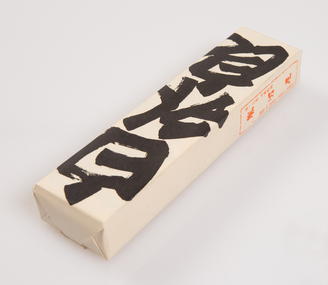
Shiro Uiro, c. 1900s
... 10 Australian and 11 New Zealand public galleries in 1979 and 1980. The touring exhibition comprised 221 objects of traditional Japanese packaging which extended from ceramics, wood and paper to woven fibre containers. At the conclusion...10 Australian and 11 New Zealand public galleries in 1979 and 1980. The touring exhibition comprised 221 objects of traditional Japanese packaging which extended from ceramics, wood and paper to woven fibre containers. At the conclusion ...‘The Art of the Japanese Package’ was an exhibition that toured to 10 Australian and 11 New Zealand public galleries in 1979 and 1980. The touring exhibition comprised 221 objects of traditional Japanese packaging which extended from ceramics, wood and paper to woven fibre containers. At the conclusion of the tour, The Japan Foundation and the Crafts Board of the Australia Council donated the vast majority of the exhibition to the Ararat Gallery for its permanent collection. Combining the natural qualities of bamboo, paper and straw with delicate craftsmanship, these unique objects express Japanese aesthetics as applied through fibre crafts. In Japan, the qualities and traits of natural materials are exploited rather than hidden. The texture of straw, the septa of bamboo are not concealed but lovingly incorporated into the whole. In 1979 Hideyuki Oka, curator of ‘The Art of the Japanese Package’ wrote: “In no way self-conscious or assertive, these wrappings have an artless and obedient air that greatly moves the modern viewer. They are whispered evidence of the Japanese ability to create beauty from the simplest products of nature. They also teach us that wisdom and feeling are especially important in packaging because these qualities, or the lack of them, are almost immediately apparent. What is the use of a package if it shows no feeling?” The descriptions of the featured objects were written by Hideyuki Oka, curator of ‘The Art of the Japanese Package’, 1979.Gift of the Japan-Australia Foundation and the Crafts Board of the Australia Council, 1981Another Kyoto confection, a kind of sweetened rice paste, is simply but strikingly wrapped in a package marked with its name (uiro) in vigorously written characters. Simplicity could hardly be carried further, but, as seen in this ensemble of three separate packages, the effect is altogether engaging. - Professor Hideyuki Oka, curator.japanese art, japanese packaging, tsutsumi, gift giving -
 Ararat Gallery TAMA
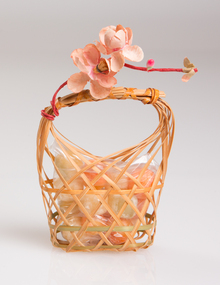
Sekku no Iwaimono, c. 1900s
... 10 Australian and 11 New Zealand public galleries in 1979 and 1980. The touring exhibition comprised 221 objects of traditional Japanese packaging which extended from ceramics, wood and paper to woven fibre containers. At the conclusion...10 Australian and 11 New Zealand public galleries in 1979 and 1980. The touring exhibition comprised 221 objects of traditional Japanese packaging which extended from ceramics, wood and paper to woven fibre containers. At the conclusion ...‘The Art of the Japanese Package’ was an exhibition that toured to 10 Australian and 11 New Zealand public galleries in 1979 and 1980. The touring exhibition comprised 221 objects of traditional Japanese packaging which extended from ceramics, wood and paper to woven fibre containers. At the conclusion of the tour, The Japan Foundation and the Crafts Board of the Australia Council donated the vast majority of the exhibition to the Ararat Gallery for its permanent collection. Combining the natural qualities of bamboo, paper and straw with delicate craftsmanship, these unique objects express Japanese aesthetics as applied through fibre crafts. In Japan, the qualities and traits of natural materials are exploited rather than hidden. The texture of straw, the septa of bamboo are not concealed but lovingly incorporated into the whole. In 1979 Hideyuki Oka, curator of ‘The Art of the Japanese Package’ wrote: “In no way self-conscious or assertive, these wrappings have an artless and obedient air that greatly moves the modern viewer. They are whispered evidence of the Japanese ability to create beauty from the simplest products of nature. They also teach us that wisdom and feeling are especially important in packaging because these qualities, or the lack of them, are almost immediately apparent. What is the use of a package if it shows no feeling?” The descriptions of the featured objects were written by Hideyuki Oka, curator of ‘The Art of the Japanese Package’, 1979.Gift of the Japan-Australia Foundation and the Crafts Board of the Australia Council, 1981japanese art, japanese packaging, tsutsumi, gift giving -
 Ararat Gallery TAMA
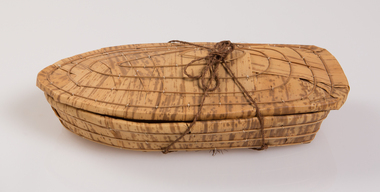
Container for pastries, c. 1900s
... 10 Australian and 11 New Zealand public galleries in 1979 and 1980. The touring exhibition comprised 221 objects of traditional Japanese packaging which extended from ceramics, wood and paper to woven fibre containers. At the conclusion...10 Australian and 11 New Zealand public galleries in 1979 and 1980. The touring exhibition comprised 221 objects of traditional Japanese packaging which extended from ceramics, wood and paper to woven fibre containers. At the conclusion ...‘The Art of the Japanese Package’ was an exhibition that toured to 10 Australian and 11 New Zealand public galleries in 1979 and 1980. The touring exhibition comprised 221 objects of traditional Japanese packaging which extended from ceramics, wood and paper to woven fibre containers. At the conclusion of the tour, The Japan Foundation and the Crafts Board of the Australia Council donated the vast majority of the exhibition to the Ararat Gallery for its permanent collection. Combining the natural qualities of bamboo, paper and straw with delicate craftsmanship, these unique objects express Japanese aesthetics as applied through fibre crafts. In Japan, the qualities and traits of natural materials are exploited rather than hidden. The texture of straw, the septa of bamboo are not concealed but lovingly incorporated into the whole. In 1979 Hideyuki Oka, curator of ‘The Art of the Japanese Package’ wrote: “In no way self-conscious or assertive, these wrappings have an artless and obedient air that greatly moves the modern viewer. They are whispered evidence of the Japanese ability to create beauty from the simplest products of nature. They also teach us that wisdom and feeling are especially important in packaging because these qualities, or the lack of them, are almost immediately apparent. What is the use of a package if it shows no feeling?” The descriptions of the featured objects were written by Hideyuki Oka, curator of ‘The Art of the Japanese Package’, 1979.Gift of the Japan-Australia Foundation and the Crafts Board of the Australia Council, 1981japanese art, japanese packaging, tsutsumi, gift giving -
 Ararat Gallery TAMA
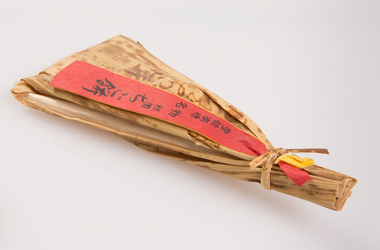
Gion Chigo Mochi, c. 1900s
... 10 Australian and 11 New Zealand public galleries in 1979 and 1980. The touring exhibition comprised 221 objects of traditional Japanese packaging which extended from ceramics, wood and paper to woven fibre containers. At the conclusion...10 Australian and 11 New Zealand public galleries in 1979 and 1980. The touring exhibition comprised 221 objects of traditional Japanese packaging which extended from ceramics, wood and paper to woven fibre containers. At the conclusion ...‘The Art of the Japanese Package’ was an exhibition that toured to 10 Australian and 11 New Zealand public galleries in 1979 and 1980. The touring exhibition comprised 221 objects of traditional Japanese packaging which extended from ceramics, wood and paper to woven fibre containers. At the conclusion of the tour, The Japan Foundation and the Crafts Board of the Australia Council donated the vast majority of the exhibition to the Ararat Gallery for its permanent collection. Combining the natural qualities of bamboo, paper and straw with delicate craftsmanship, these unique objects express Japanese aesthetics as applied through fibre crafts. In Japan, the qualities and traits of natural materials are exploited rather than hidden. The texture of straw, the septa of bamboo are not concealed but lovingly incorporated into the whole. In 1979 Hideyuki Oka, curator of ‘The Art of the Japanese Package’ wrote: “In no way self-conscious or assertive, these wrappings have an artless and obedient air that greatly moves the modern viewer. They are whispered evidence of the Japanese ability to create beauty from the simplest products of nature. They also teach us that wisdom and feeling are especially important in packaging because these qualities, or the lack of them, are almost immediately apparent. What is the use of a package if it shows no feeling?” The descriptions of the featured objects were written by Hideyuki Oka, curator of ‘The Art of the Japanese Package’, 1979. Gift of the Japan-Australia Foundation and the Crafts Board of the Australia Council, 1981An elegant wooden box, fashioned in the style of boxes used for gifts to the emperor some eight or nine centuries ago, is filled with a Kyoto confection called Gion Chigo Mochi. The Gion is one of Kyoto's entertainment districts, chigo are children dressed in ceremonial Buddhist costume for one of the city's numerous festivals, and mochi are cakes of steamed and pounded rice. The name of the confection derives from the style of the bamboo-sheath wrapping, which suggests the figure of a chigo. - Professor Hideyuki Oka, curator.japanese art, japanese packaging, tsutsumi, gift giving -
 Ararat Gallery TAMA
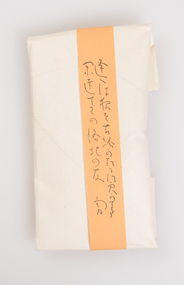
Evening Moon confection, c. 1900s
... 10 Australian and 11 New Zealand public galleries in 1979 and 1980. The touring exhibition comprised 221 objects of traditional Japanese packaging which extended from ceramics, wood and paper to woven fibre containers. At the conclusion...10 Australian and 11 New Zealand public galleries in 1979 and 1980. The touring exhibition comprised 221 objects of traditional Japanese packaging which extended from ceramics, wood and paper to woven fibre containers. At the conclusion ...‘The Art of the Japanese Package’ was an exhibition that toured to 10 Australian and 11 New Zealand public galleries in 1979 and 1980. The touring exhibition comprised 221 objects of traditional Japanese packaging which extended from ceramics, wood and paper to woven fibre containers. At the conclusion of the tour, The Japan Foundation and the Crafts Board of the Australia Council donated the vast majority of the exhibition to the Ararat Gallery for its permanent collection. Combining the natural qualities of bamboo, paper and straw with delicate craftsmanship, these unique objects express Japanese aesthetics as applied through fibre crafts. In Japan, the qualities and traits of natural materials are exploited rather than hidden. The texture of straw, the septa of bamboo are not concealed but lovingly incorporated into the whole. In 1979 Hideyuki Oka, curator of ‘The Art of the Japanese Package’ wrote: “In no way self-conscious or assertive, these wrappings have an artless and obedient air that greatly moves the modern viewer. They are whispered evidence of the Japanese ability to create beauty from the simplest products of nature. They also teach us that wisdom and feeling are especially important in packaging because these qualities, or the lack of them, are almost immediately apparent. What is the use of a package if it shows no feeling?” The descriptions of the featured objects were written by Hideyuki Oka, curator of ‘The Art of the Japanese Package’, 1979.Gift of the Japan-Australia Foundation and the Crafts Board of the Australia Council, 1981japanese art, japanese packaging, tsutsumi, gift giving -
 Ararat Gallery TAMA
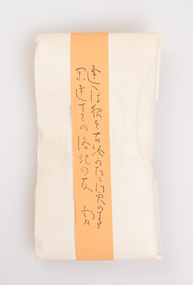
Evening Moon confection, c. 1900s
... 10 Australian and 11 New Zealand public galleries in 1979 and 1980. The touring exhibition comprised 221 objects of traditional Japanese packaging which extended from ceramics, wood and paper to woven fibre containers. At the conclusion...10 Australian and 11 New Zealand public galleries in 1979 and 1980. The touring exhibition comprised 221 objects of traditional Japanese packaging which extended from ceramics, wood and paper to woven fibre containers. At the conclusion ...‘The Art of the Japanese Package’ was an exhibition that toured to 10 Australian and 11 New Zealand public galleries in 1979 and 1980. The touring exhibition comprised 221 objects of traditional Japanese packaging which extended from ceramics, wood and paper to woven fibre containers. At the conclusion of the tour, The Japan Foundation and the Crafts Board of the Australia Council donated the vast majority of the exhibition to the Ararat Gallery for its permanent collection. Combining the natural qualities of bamboo, paper and straw with delicate craftsmanship, these unique objects express Japanese aesthetics as applied through fibre crafts. In Japan, the qualities and traits of natural materials are exploited rather than hidden. The texture of straw, the septa of bamboo are not concealed but lovingly incorporated into the whole. In 1979 Hideyuki Oka, curator of ‘The Art of the Japanese Package’ wrote: “In no way self-conscious or assertive, these wrappings have an artless and obedient air that greatly moves the modern viewer. They are whispered evidence of the Japanese ability to create beauty from the simplest products of nature. They also teach us that wisdom and feeling are especially important in packaging because these qualities, or the lack of them, are almost immediately apparent. What is the use of a package if it shows no feeling?” The descriptions of the featured objects were written by Hideyuki Oka, curator of ‘The Art of the Japanese Package’, 1979.Gift of the Japan-Australia Foundation and the Crafts Board of the Australia Council, 1981japanese art, japanese packaging, tsutsumi, gift giving -
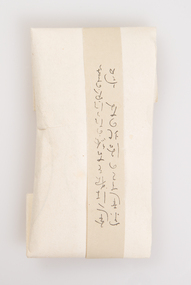 Ararat Gallery TAMA
Evening Moon confection, c. 1900s
... 10 Australian and 11 New Zealand public galleries in 1979 and 1980. The touring exhibition comprised 221 objects of traditional Japanese packaging which extended from ceramics, wood and paper to woven fibre containers. At the conclusion...10 Australian and 11 New Zealand public galleries in 1979 and 1980. The touring exhibition comprised 221 objects of traditional Japanese packaging which extended from ceramics, wood and paper to woven fibre containers. At the conclusion ...‘The Art of the Japanese Package’ was an exhibition that toured to 10 Australian and 11 New Zealand public galleries in 1979 and 1980. The touring exhibition comprised 221 objects of traditional Japanese packaging which extended from ceramics, wood and paper to woven fibre containers. At the conclusion of the tour, The Japan Foundation and the Crafts Board of the Australia Council donated the vast majority of the exhibition to the Ararat Gallery for its permanent collection. Combining the natural qualities of bamboo, paper and straw with delicate craftsmanship, these unique objects express Japanese aesthetics as applied through fibre crafts. In Japan, the qualities and traits of natural materials are exploited rather than hidden. The texture of straw, the septa of bamboo are not concealed but lovingly incorporated into the whole. In 1979 Hideyuki Oka, curator of ‘The Art of the Japanese Package’ wrote: “In no way self-conscious or assertive, these wrappings have an artless and obedient air that greatly moves the modern viewer. They are whispered evidence of the Japanese ability to create beauty from the simplest products of nature. They also teach us that wisdom and feeling are especially important in packaging because these qualities, or the lack of them, are almost immediately apparent. What is the use of a package if it shows no feeling?” The descriptions of the featured objects were written by Hideyuki Oka, curator of ‘The Art of the Japanese Package’, 1979.Gift of the Japan-Australia Foundation and the Crafts Board of the Australia Council, 1981japanese art, japanese packaging, tsutsumi, gift giving -
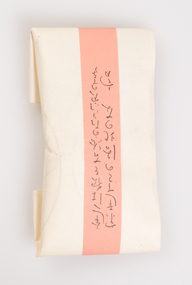 Ararat Gallery TAMA
Evening Moon confection, c. 1900s
... 10 Australian and 11 New Zealand public galleries in 1979 and 1980. The touring exhibition comprised 221 objects of traditional Japanese packaging which extended from ceramics, wood and paper to woven fibre containers. At the conclusion...10 Australian and 11 New Zealand public galleries in 1979 and 1980. The touring exhibition comprised 221 objects of traditional Japanese packaging which extended from ceramics, wood and paper to woven fibre containers. At the conclusion ...‘The Art of the Japanese Package’ was an exhibition that toured to 10 Australian and 11 New Zealand public galleries in 1979 and 1980. The touring exhibition comprised 221 objects of traditional Japanese packaging which extended from ceramics, wood and paper to woven fibre containers. At the conclusion of the tour, The Japan Foundation and the Crafts Board of the Australia Council donated the vast majority of the exhibition to the Ararat Gallery for its permanent collection. Combining the natural qualities of bamboo, paper and straw with delicate craftsmanship, these unique objects express Japanese aesthetics as applied through fibre crafts. In Japan, the qualities and traits of natural materials are exploited rather than hidden. The texture of straw, the septa of bamboo are not concealed but lovingly incorporated into the whole. In 1979 Hideyuki Oka, curator of ‘The Art of the Japanese Package’ wrote: “In no way self-conscious or assertive, these wrappings have an artless and obedient air that greatly moves the modern viewer. They are whispered evidence of the Japanese ability to create beauty from the simplest products of nature. They also teach us that wisdom and feeling are especially important in packaging because these qualities, or the lack of them, are almost immediately apparent. What is the use of a package if it shows no feeling?” The descriptions of the featured objects were written by Hideyuki Oka, curator of ‘The Art of the Japanese Package’, 1979.Gift of the Japan-Australia Foundation and the Crafts Board of the Australia Council, 1981japanese art, japanese packaging, tsutsumi, gift giving -
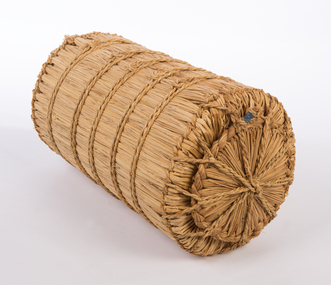 Ararat Gallery TAMA
Rice bag, c. 1900s
... 10 Australian and 11 New Zealand public galleries in 1979 and 1980. The touring exhibition comprised 221 objects of traditional Japanese packaging which extended from ceramics, wood and paper to woven fibre containers. At the conclusion...10 Australian and 11 New Zealand public galleries in 1979 and 1980. The touring exhibition comprised 221 objects of traditional Japanese packaging which extended from ceramics, wood and paper to woven fibre containers. At the conclusion ...‘The Art of the Japanese Package’ was an exhibition that toured to 10 Australian and 11 New Zealand public galleries in 1979 and 1980. The touring exhibition comprised 221 objects of traditional Japanese packaging which extended from ceramics, wood and paper to woven fibre containers. At the conclusion of the tour, The Japan Foundation and the Crafts Board of the Australia Council donated the vast majority of the exhibition to the Ararat Gallery for its permanent collection. Combining the natural qualities of bamboo, paper and straw with delicate craftsmanship, these unique objects express Japanese aesthetics as applied through fibre crafts. In Japan, the qualities and traits of natural materials are exploited rather than hidden. The texture of straw, the septa of bamboo are not concealed but lovingly incorporated into the whole. In 1979 Hideyuki Oka, curator of ‘The Art of the Japanese Package’ wrote: “In no way self-conscious or assertive, these wrappings have an artless and obedient air that greatly moves the modern viewer. They are whispered evidence of the Japanese ability to create beauty from the simplest products of nature. They also teach us that wisdom and feeling are especially important in packaging because these qualities, or the lack of them, are almost immediately apparent. What is the use of a package if it shows no feeling?” The descriptions of the featured objects were written by Hideyuki Oka, curator of ‘The Art of the Japanese Package’, 1979.Gift of the Japan-Australia Foundation and the Crafts Board of the Australia Council, 1981japanese art, japanese packaging, tsutsumi, gift giving -
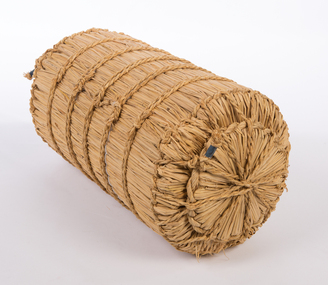 Ararat Gallery TAMA
Rice bag, c. 1900s
... 10 Australian and 11 New Zealand public galleries in 1979 and 1980. The touring exhibition comprised 221 objects of traditional Japanese packaging which extended from ceramics, wood and paper to woven fibre containers. At the conclusion...10 Australian and 11 New Zealand public galleries in 1979 and 1980. The touring exhibition comprised 221 objects of traditional Japanese packaging which extended from ceramics, wood and paper to woven fibre containers. At the conclusion ...‘The Art of the Japanese Package’ was an exhibition that toured to 10 Australian and 11 New Zealand public galleries in 1979 and 1980. The touring exhibition comprised 221 objects of traditional Japanese packaging which extended from ceramics, wood and paper to woven fibre containers. At the conclusion of the tour, The Japan Foundation and the Crafts Board of the Australia Council donated the vast majority of the exhibition to the Ararat Gallery for its permanent collection. Combining the natural qualities of bamboo, paper and straw with delicate craftsmanship, these unique objects express Japanese aesthetics as applied through fibre crafts. In Japan, the qualities and traits of natural materials are exploited rather than hidden. The texture of straw, the septa of bamboo are not concealed but lovingly incorporated into the whole. In 1979 Hideyuki Oka, curator of ‘The Art of the Japanese Package’ wrote: “In no way self-conscious or assertive, these wrappings have an artless and obedient air that greatly moves the modern viewer. They are whispered evidence of the Japanese ability to create beauty from the simplest products of nature. They also teach us that wisdom and feeling are especially important in packaging because these qualities, or the lack of them, are almost immediately apparent. What is the use of a package if it shows no feeling?” The descriptions of the featured objects were written by Hideyuki Oka, curator of ‘The Art of the Japanese Package’, 1979.Gift of the Japan-Australia Foundation and the Crafts Board of the Australia Council, 1981japanese art, japanese packaging, tsutsumi, gift giving -
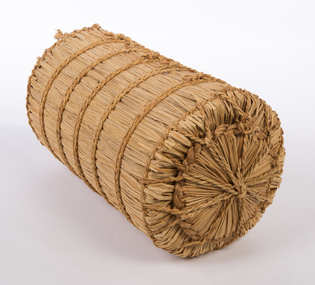 Ararat Gallery TAMA
Rice bag, c. 1900s
... 10 Australian and 11 New Zealand public galleries in 1979 and 1980. The touring exhibition comprised 221 objects of traditional Japanese packaging which extended from ceramics, wood and paper to woven fibre containers. At the conclusion...10 Australian and 11 New Zealand public galleries in 1979 and 1980. The touring exhibition comprised 221 objects of traditional Japanese packaging which extended from ceramics, wood and paper to woven fibre containers. At the conclusion ...‘The Art of the Japanese Package’ was an exhibition that toured to 10 Australian and 11 New Zealand public galleries in 1979 and 1980. The touring exhibition comprised 221 objects of traditional Japanese packaging which extended from ceramics, wood and paper to woven fibre containers. At the conclusion of the tour, The Japan Foundation and the Crafts Board of the Australia Council donated the vast majority of the exhibition to the Ararat Gallery for its permanent collection. Combining the natural qualities of bamboo, paper and straw with delicate craftsmanship, these unique objects express Japanese aesthetics as applied through fibre crafts. In Japan, the qualities and traits of natural materials are exploited rather than hidden. The texture of straw, the septa of bamboo are not concealed but lovingly incorporated into the whole. In 1979 Hideyuki Oka, curator of ‘The Art of the Japanese Package’ wrote: “In no way self-conscious or assertive, these wrappings have an artless and obedient air that greatly moves the modern viewer. They are whispered evidence of the Japanese ability to create beauty from the simplest products of nature. They also teach us that wisdom and feeling are especially important in packaging because these qualities, or the lack of them, are almost immediately apparent. What is the use of a package if it shows no feeling?” The descriptions of the featured objects were written by Hideyuki Oka, curator of ‘The Art of the Japanese Package’, 1979.Gift of the Japan-Australia Foundation and the Crafts Board of the Australia Council, 1981japanese art, japanese packaging, tsutsumi, gift giving -
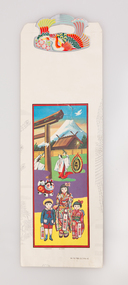 Ararat Gallery TAMA
Gift bag, c. 1900s
... 10 Australian and 11 New Zealand public galleries in 1979 and 1980. The touring exhibition comprised 221 objects of traditional Japanese packaging which extended from ceramics, wood and paper to woven fibre containers. At the conclusion...10 Australian and 11 New Zealand public galleries in 1979 and 1980. The touring exhibition comprised 221 objects of traditional Japanese packaging which extended from ceramics, wood and paper to woven fibre containers. At the conclusion ...‘The Art of the Japanese Package’ was an exhibition that toured to 10 Australian and 11 New Zealand public galleries in 1979 and 1980. The touring exhibition comprised 221 objects of traditional Japanese packaging which extended from ceramics, wood and paper to woven fibre containers. At the conclusion of the tour, The Japan Foundation and the Crafts Board of the Australia Council donated the vast majority of the exhibition to the Ararat Gallery for its permanent collection. Combining the natural qualities of bamboo, paper and straw with delicate craftsmanship, these unique objects express Japanese aesthetics as applied through fibre crafts. In Japan, the qualities and traits of natural materials are exploited rather than hidden. The texture of straw, the septa of bamboo are not concealed but lovingly incorporated into the whole. In 1979 Hideyuki Oka, curator of ‘The Art of the Japanese Package’ wrote: “In no way self-conscious or assertive, these wrappings have an artless and obedient air that greatly moves the modern viewer. They are whispered evidence of the Japanese ability to create beauty from the simplest products of nature. They also teach us that wisdom and feeling are especially important in packaging because these qualities, or the lack of them, are almost immediately apparent. What is the use of a package if it shows no feeling?” The descriptions of the featured objects were written by Hideyuki Oka, curator of ‘The Art of the Japanese Package’, 1979.Gift of the Japan-Australia Foundation and the Crafts Board of the Australia Council, 1981japanese art, japanese packaging, tsutsumi, gift giving -
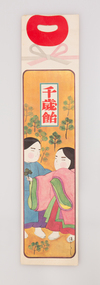 Ararat Gallery TAMA
Gift bag, c. 1900s
... 10 Australian and 11 New Zealand public galleries in 1979 and 1980. The touring exhibition comprised 221 objects of traditional Japanese packaging which extended from ceramics, wood and paper to woven fibre containers. At the conclusion...10 Australian and 11 New Zealand public galleries in 1979 and 1980. The touring exhibition comprised 221 objects of traditional Japanese packaging which extended from ceramics, wood and paper to woven fibre containers. At the conclusion ...‘The Art of the Japanese Package’ was an exhibition that toured to 10 Australian and 11 New Zealand public galleries in 1979 and 1980. The touring exhibition comprised 221 objects of traditional Japanese packaging which extended from ceramics, wood and paper to woven fibre containers. At the conclusion of the tour, The Japan Foundation and the Crafts Board of the Australia Council donated the vast majority of the exhibition to the Ararat Gallery for its permanent collection. Combining the natural qualities of bamboo, paper and straw with delicate craftsmanship, these unique objects express Japanese aesthetics as applied through fibre crafts. In Japan, the qualities and traits of natural materials are exploited rather than hidden. The texture of straw, the septa of bamboo are not concealed but lovingly incorporated into the whole. In 1979 Hideyuki Oka, curator of ‘The Art of the Japanese Package’ wrote: “In no way self-conscious or assertive, these wrappings have an artless and obedient air that greatly moves the modern viewer. They are whispered evidence of the Japanese ability to create beauty from the simplest products of nature. They also teach us that wisdom and feeling are especially important in packaging because these qualities, or the lack of them, are almost immediately apparent. What is the use of a package if it shows no feeling?” The descriptions of the featured objects were written by Hideyuki Oka, curator of ‘The Art of the Japanese Package’, 1979.Gift of the Japan-Australia Foundation and the Crafts Board of the Australia Council, 1981japanese art, japanese packaging, tsutsumi, gift giving -
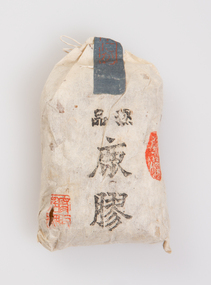 Ararat Gallery TAMA
Bag, c. 1900s
... 10 Australian and 11 New Zealand public galleries in 1979 and 1980. The touring exhibition comprised 221 objects of traditional Japanese packaging which extended from ceramics, wood and paper to woven fibre containers. At the conclusion...10 Australian and 11 New Zealand public galleries in 1979 and 1980. The touring exhibition comprised 221 objects of traditional Japanese packaging which extended from ceramics, wood and paper to woven fibre containers. At the conclusion ...‘The Art of the Japanese Package’ was an exhibition that toured to 10 Australian and 11 New Zealand public galleries in 1979 and 1980. The touring exhibition comprised 221 objects of traditional Japanese packaging which extended from ceramics, wood and paper to woven fibre containers. At the conclusion of the tour, The Japan Foundation and the Crafts Board of the Australia Council donated the vast majority of the exhibition to the Ararat Gallery for its permanent collection. Combining the natural qualities of bamboo, paper and straw with delicate craftsmanship, these unique objects express Japanese aesthetics as applied through fibre crafts. In Japan, the qualities and traits of natural materials are exploited rather than hidden. The texture of straw, the septa of bamboo are not concealed but lovingly incorporated into the whole. In 1979 Hideyuki Oka, curator of ‘The Art of the Japanese Package’ wrote: “In no way self-conscious or assertive, these wrappings have an artless and obedient air that greatly moves the modern viewer. They are whispered evidence of the Japanese ability to create beauty from the simplest products of nature. They also teach us that wisdom and feeling are especially important in packaging because these qualities, or the lack of them, are almost immediately apparent. What is the use of a package if it shows no feeling?” The descriptions of the featured objects were written by Hideyuki Oka, curator of ‘The Art of the Japanese Package’, 1979.Gift of the Japan-Australia Foundation and the Crafts Board of the Australia Council, 1981japanese art, japanese packaging, tsutsumi, gift giving -
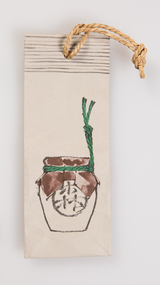 Ararat Gallery TAMA
Bag, c. 1900s
... 10 Australian and 11 New Zealand public galleries in 1979 and 1980. The touring exhibition comprised 221 objects of traditional Japanese packaging which extended from ceramics, wood and paper to woven fibre containers. At the conclusion...10 Australian and 11 New Zealand public galleries in 1979 and 1980. The touring exhibition comprised 221 objects of traditional Japanese packaging which extended from ceramics, wood and paper to woven fibre containers. At the conclusion ...‘The Art of the Japanese Package’ was an exhibition that toured to 10 Australian and 11 New Zealand public galleries in 1979 and 1980. The touring exhibition comprised 221 objects of traditional Japanese packaging which extended from ceramics, wood and paper to woven fibre containers. At the conclusion of the tour, The Japan Foundation and the Crafts Board of the Australia Council donated the vast majority of the exhibition to the Ararat Gallery for its permanent collection. Combining the natural qualities of bamboo, paper and straw with delicate craftsmanship, these unique objects express Japanese aesthetics as applied through fibre crafts. In Japan, the qualities and traits of natural materials are exploited rather than hidden. The texture of straw, the septa of bamboo are not concealed but lovingly incorporated into the whole. In 1979 Hideyuki Oka, curator of ‘The Art of the Japanese Package’ wrote: “In no way self-conscious or assertive, these wrappings have an artless and obedient air that greatly moves the modern viewer. They are whispered evidence of the Japanese ability to create beauty from the simplest products of nature. They also teach us that wisdom and feeling are especially important in packaging because these qualities, or the lack of them, are almost immediately apparent. What is the use of a package if it shows no feeling?” The descriptions of the featured objects were written by Hideyuki Oka, curator of ‘The Art of the Japanese Package’, 1979. Gift of the Japan-Australia Foundation and the Crafts Board of the Australia Council, 1981japanese art, japanese packaging, tsutsumi, gift giving -
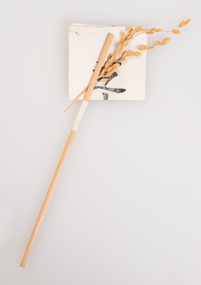 Ararat Gallery TAMA
Decoration, c. 1900s
... 10 Australian and 11 New Zealand public galleries in 1979 and 1980. The touring exhibition comprised 221 objects of traditional Japanese packaging which extended from ceramics, wood and paper to woven fibre containers. At the conclusion...10 Australian and 11 New Zealand public galleries in 1979 and 1980. The touring exhibition comprised 221 objects of traditional Japanese packaging which extended from ceramics, wood and paper to woven fibre containers. At the conclusion ...‘The Art of the Japanese Package’ was an exhibition that toured to 10 Australian and 11 New Zealand public galleries in 1979 and 1980. The touring exhibition comprised 221 objects of traditional Japanese packaging which extended from ceramics, wood and paper to woven fibre containers. At the conclusion of the tour, The Japan Foundation and the Crafts Board of the Australia Council donated the vast majority of the exhibition to the Ararat Gallery for its permanent collection. Combining the natural qualities of bamboo, paper and straw with delicate craftsmanship, these unique objects express Japanese aesthetics as applied through fibre crafts. In Japan, the qualities and traits of natural materials are exploited rather than hidden. The texture of straw, the septa of bamboo are not concealed but lovingly incorporated into the whole. In 1979 Hideyuki Oka, curator of ‘The Art of the Japanese Package’ wrote: “In no way self-conscious or assertive, these wrappings have an artless and obedient air that greatly moves the modern viewer. They are whispered evidence of the Japanese ability to create beauty from the simplest products of nature. They also teach us that wisdom and feeling are especially important in packaging because these qualities, or the lack of them, are almost immediately apparent. What is the use of a package if it shows no feeling?” The descriptions of the featured objects were written by Hideyuki Oka, curator of ‘The Art of the Japanese Package’, 1979.Gift of the Japan-Australia Foundation and the Crafts Board of the Australia Council, 1981japanese art, japanese packaging, tsutsumi, gift giving
