
Showing 6 items matching "1918 boiler"
-
 Flagstaff Hill Maritime Museum and Village
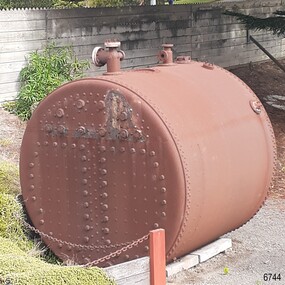
Equipment - Boiler
... ...1918 boiler...boiler. It was manufactured in Dordrecht, Netherlands, possibly in 1918 by 'DeMan & Teveldhuis'. ...Boiler, Scotch Marine Boiler design, cylindrical shape with rivets on the enclosed end, pipe fittings on top and apertures and open pipe ends on the other end.. Possibly manufactured by 'DeMan & Teveldhuis' in 1918...This boiler is an example of equipment used for a steam driven machine. flagstaff hill warrnambool shipwrecked-coast flagstaff-hill flagstaff-hill-maritime-museum maritime-museum shipwreck-coast flagstaff-hill-maritime-village boiler scotch marine boiler steam boiler ship's boiler dordrecht netherlands 1918 boiler Melbourne Steam Club "19 DE MANS & TEVEL-(D?) ...This type of steam boiler is called a Scotch Marine boiler. It was manufactured in Dordrecht, Netherlands, possibly in 1918 by 'DeMan & Teveldhuis'. The only history that we have was that the boiler was found in an unknown paddock. It had an attached tag labelled "Melbourne Steam Club" but never collected by them. It was eventually brought to Flagstaff Hill Maritime Village for display.This boiler is an example of equipment used for a steam driven machine.Boiler, Scotch Marine Boiler design, cylindrical shape with rivets on the enclosed end, pipe fittings on top and apertures and open pipe ends on the other end.. Possibly manufactured by 'DeMan & Teveldhuis' in 1918 in Dordrecht, Netherlands. Inscription embossed on outside of boiler. "19 DE MANS & TEVEL-(D?)HUIS DORDRECHT 18"flagstaff hill, warrnambool, shipwrecked-coast, flagstaff-hill, flagstaff-hill-maritime-museum, maritime-museum, shipwreck-coast, flagstaff-hill-maritime-village, boiler, scotch marine boiler, steam boiler, ship's boiler, dordrecht netherlands, 1918 boiler, melbourne steam club -
 Mission to Seafarers Victoria
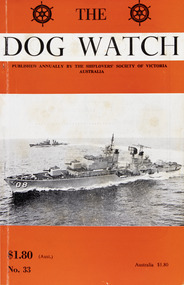
Journal (item) - Periodicals-Annual, Shiplovers' Society of Victoria, The Annual Dog Watch
... Contents Foreword - 5 Editorial - 7 'Sunbeam' and 'Sunbeam 2' - 11 Queer Convoy of the Pacific - 19 Port Phillip Mutinies of the 1850s - 24 Boiler-Room Bedlam - 26 The Nautical Chart - 30 The Challenge of the Sea - 32 Flagstaff Hill Maritime Village - 33 A Wonderful Gift - 34 The Dhow Sailors - 35 My Second Ship - 45 We Star our Voyage - 53 Peril in Ice - 58 L ' Avenir Apprentice - 61 Of Sharks and Such - 71 Submarine Duty 1918 - 75 The 'Samuel Plimosll' - 84 The 'Marco Polo's' Voyage - 85 Tarry Barry -- Keep-Water Man - 95 The Albatross - 99 At Quiet Moorings I Recall - 100 "Oh, But I'm Longing for me Ain Folk" - 104 Remedy for Stowaways - 105 The Little Ship - 106 Comments on 'My First Ship' - 109 Not a Soft Answer - 110 Just a Little Too Much of a Good Thing - 111 Early History of the 'Regina Maris' - 113 The Development of Lakes Entrance - 115 Book Reviews - 119...Contributes to our knowledge of the importance of shipping and places on record those stories of the sea which would otherwise be lost. sailing ships steamships shipping seafaring life shiplovers' society of victoria dog watch Contents Foreword - 5 Editorial - 7 'Sunbeam' and 'Sunbeam 2' - 11 Queer Convoy of the Pacific - 19 Port Phillip Mutinies of the 1850s - 24 Boiler-Room Bedlam - 26 The Nautical Chart - 30 The Challenge of the Sea - 32 Flagstaff Hill Maritime Village - 33 A Wonderful Gift - 34 The Dhow Sailors - 35 My Second Ship - 45 We Star our Voyage - 53 Peril in Ice - 58 L ' Avenir Apprentice - 61 Of Sharks and Such - 71 Submarine Duty 1918 - 75 The 'Samuel Plimosll' - 84 The 'Marco Polo's' Voyage - 85 Tarry Barry -- Keep-Water Man - 95 The Albatross - 99 At Quiet Moorings I Recall - 100 "Oh, But I'm Longing for me Ain Folk" - 104 Remedy for Stowaways - 105 The Little Ship - 106 Comments on 'My First Ship' - 109 Not a Soft Answer - 110 Just a Little Too Much of a Good Thing - 111 Early History of the 'Regina Maris' - 113 The Development of Lakes Entrance - 115 Book Reviews - 119 The Annual Dog Watch Journal Periodicals-Annual Shiplovers' Society of Victoria ...This journal provides the reader with glimpses of the adventures and hardships of a seaman's life. Many of the stories are of sailing ships.Contributes to our knowledge of the importance of shipping and places on record those stories of the sea which would otherwise be lost.Contents Foreword - 5 Editorial - 7 'Sunbeam' and 'Sunbeam 2' - 11 Queer Convoy of the Pacific - 19 Port Phillip Mutinies of the 1850s - 24 Boiler-Room Bedlam - 26 The Nautical Chart - 30 The Challenge of the Sea - 32 Flagstaff Hill Maritime Village - 33 A Wonderful Gift - 34 The Dhow Sailors - 35 My Second Ship - 45 We Star our Voyage - 53 Peril in Ice - 58 L ' Avenir Apprentice - 61 Of Sharks and Such - 71 Submarine Duty 1918 - 75 The 'Samuel Plimosll' - 84 The 'Marco Polo's' Voyage - 85 Tarry Barry -- Keep-Water Man - 95 The Albatross - 99 At Quiet Moorings I Recall - 100 "Oh, But I'm Longing for me Ain Folk" - 104 Remedy for Stowaways - 105 The Little Ship - 106 Comments on 'My First Ship' - 109 Not a Soft Answer - 110 Just a Little Too Much of a Good Thing - 111 Early History of the 'Regina Maris' - 113 The Development of Lakes Entrance - 115 Book Reviews - 119sailing ships, steamships, shipping, seafaring life, shiplovers' society of victoria, dog watch -
 Flagstaff Hill Maritime Museum and Village
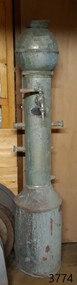
Functional object - Water Boiler, Jackson Boilers Ltd, 1920s
... During World War I, Jackson Boilers Ltd of Leeds performed war work like many other manufacturers at that time. The firm made cases for the explosive picric acid and electroplated fuse hole plugs. In 1918...During World War I, Jackson Boilers Ltd of Leeds performed war work like many other manufacturers at that time. The firm made cases for the explosive picric acid and electroplated fuse hole plugs. In 1918 ...Jackson Boilers Ltd., brass founders, electro platers and sheet metal works made this tube water boiler. It was a fitting in the vessel Reginald M, a small cargo ship built at Port Adelaide in 1922 and named after her builder and first owner, John Murch. The Reginald M was launched at Largs Bay, South Australia, in 1922 to carry cargo around South Australia that included guano, barley, wool, horses, cattle, timber, explosives, potatoes, shell grit, and gypsum. It passed through numerous owners over the years and primarily maintained its purpose as a cargo vessel. In 1975, the decommissioned Reginald M was purchased by Flagstaff Hill Maritime Museum as an attraction. Although restoration efforts were undertaken and maintained for the craft above the water line, deterioration occurred below the surface and resulted in the ship being unsafe for visitors to board. It was broken up and removed from Flagstaff Hill in 2018, but items such as the historical boiler remain in Flagstaff Hill’s Collection. JACKSON BOILERS LTD.: - In 1911, Henry Jackson was the Managing Director at Jackson Boilers Ltd. He had gained around 30 years’ experience as a tin plate worker, plumber and gas fitter at Ilkey in 1881, then at Leeds by 1901. By 1921, he had changed employment from Jackson Boilers to Managing Director of Patent Water Boilers. During World War I, Jackson Boilers Ltd of Leeds performed war work like many other manufacturers at that time. The firm made cases for the explosive picric acid and electroplated fuse hole plugs. In 1918, the firm employed 15 males and 19 females. Jacksons Boilers became very successful throughout the first half of the twentieth century with showrooms and sales offices in Scotland, the Midlands and Southern England. It also had an office in Dublin, Ireland. In the post-war 1920s, the firm’s production included instantaneous water boilers and coffee machines for cafes, restaurants and canteens. Jackson Boilers also began to supply shipping lines with catering water boilers for their ships. The firm applied for a USA patent for the tube boiler in 1930, for the design which appears to have been invented in 1926. A 1971 advertisement adds the credentials, Members of the Catering Equipment Manufacturers’ Association. The tube water boiler was designed specifically for use in a ship's restaurant or dining area and patented by Jackson Boilers Ltd. of Leeds. The boiler is significant as a patented design, illustrating the evolution of maritime, commercial and domestic water boilers that have led to many innervations and improvements in today's boilers that are used in heating and in producing hot water for domestic and catering use. It is also significant as it is one of the earlier boilers the Jackson company made in the early 1920s before they applied for a US patent on their revised design in 1926.Water boiler, free standing Jackson's Tube boiler. A tall metal cylindrical stand with a metal sphere on top and several pipe fittings on the sides. A brass tap with a lever handle is connected to the front. A plaque with maker's details is attached under the tap. Details are also impressed into the cylinder above the tap.Jackson Boilers Leeds Ltd. "JACKSON'S PATENT" . Other details indecipherable. flagstaff hill maritime museum and village, flagstaff hill maritime museum, flagstaff hill, maritime museum, maritime village, warrnambool, great ocean road, leeds, jackson boilers ltd, jackson boilers, henry jackson, brass founders, electro platers, sheet metal works, patent water boilers, leeds manufacturer, tube water boiler, domestic boiler, tube domestic boiler, tube boiler, water heaters, water boilers, self-feeding water boilers, sheet metal work instantaneous water heaters, engineering, allied trades, metal workers, metal trade, food machinery, hospitality equipment, ship equipment, ship water boiler, ship heater, catering boilers, café boiler, restaurant boiler, canteen boiler, catering equipment manufacturers’ association, cema, kitchen equipment, kitchen appliance, war work, world war i, wwi, picric acid, picric acid cases, fuse hole plugs, electro plated fuse hole plugs, reginald m, cargo ship, port adelaide, 1922, john murch -
 Bendigo Historical Society Inc.
Plan - Great Southern Gold Mining Co
... Boilers of the Cornish flue type by Roberts and Sons Bendigo. Winding engine by A. Harkness & Co., Bendigo. The plant was a 'splendid example of workmanship in Bendigo Foundries. The winding engine capable of hauling from more than 4,000 feet.' The company was formed in 1876 and disposed of its assets to Bear Bros. In 1918...Boilers of the Cornish flue type by Roberts and Sons Bendigo. Winding engine by A. Harkness & Co., Bendigo. The plant was a 'splendid example of workmanship in Bendigo Foundries. The winding engine capable of hauling from more than 4,000 feet.' The company was formed in 1876 and disposed of its assets to Bear Bros. In 1918 ...The main shaft was located in Quarry Hill, approximately 120 yards southeast of Gladstone Street and 66 yards from Peel Street. The main shaft was 2,546 feet plus winze of 180 ft. The poppet legs were wooden with a tall row landing brace. Large pithead pulleys. Boilers of the Cornish flue type by Roberts and Sons Bendigo. Winding engine by A. Harkness & Co., Bendigo. The plant was a 'splendid example of workmanship in Bendigo Foundries. The winding engine capable of hauling from more than 4,000 feet.' The company was formed in 1876 and disposed of its assets to Bear Bros. In 1918, the last crushing was in 1924.Great Southern G.M. Co. Plan forms part of the Margaret Roberts Collection.gold mining, gold, great southern gold mine, quarry hill, bendigo -
 Bendigo Historical Society Inc.
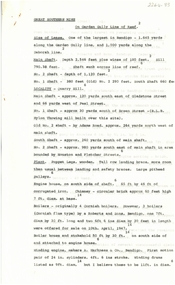
Document - ALBERT RICHARDSON COLLECTION: GREAT SOUTHERN GOLD MINE, GARDEN GULLY LINE OF REEF
... Boilers of the Cornish flue type by Roberts and Sons Bendigo. Winding engine by A. Harkness & Co., Bendigo. The plant was a 'splendid example of workmanship in Bendigo Foundries. The winding engine capable of hauling from more than 4,000 feet.' The company was formed in 1876 and disposed of its assets to Bear Bros. In 1918...Boilers of the Cornish flue type by Roberts and Sons Bendigo. Winding engine by A. Harkness & Co., Bendigo. The plant was a 'splendid example of workmanship in Bendigo Foundries. The winding engine capable of hauling from more than 4,000 feet.' The company was formed in 1876 and disposed of its assets to Bear Bros. In 1918 ...Three-page document detailing information on the Great Southern Gold Mine on the Garden Gully line of reef. The main shaft was located in Quarry Hill, approximately 120 yards southeast of Gladstone Street and 66 yards from Peel Street. The main shaft was 2,546 feet plus winze of 180 ft. The poppet legs were wooden with a tall row landing brace. Large pithead pulleys. Boilers of the Cornish flue type by Roberts and Sons Bendigo. Winding engine by A. Harkness & Co., Bendigo. The plant was a 'splendid example of workmanship in Bendigo Foundries. The winding engine capable of hauling from more than 4,000 feet.' The company was formed in 1876 and disposed of its assets to Bear Bros. In 1918, the last crushing was in 1924.bendigo, mining, great southern gold mine -
 Melbourne Tram Museum
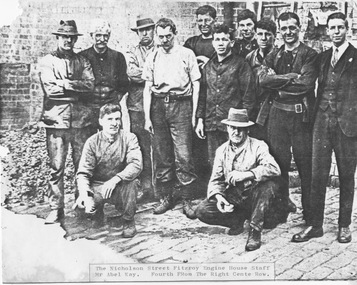
Photograph - Nicholson Street Fitzroy Engine House Staff, c1920s
... They were likely engine drivers, boiler attendants, stokers, ropemen, trackmen or oilers who controlled the steam engines, monitored and repaired the cables and track, and lubricated the machinery. The suited man was likely the engine house engineer and his lapel badge may be that of a returned servicesman from WWI. This could date the photo after 1918...They were likely engine drivers, boiler attendants, stokers, ropemen, trackmen or oilers who controlled the steam engines, monitored and repaired the cables and track, and lubricated the machinery. The suited man was likely the engine house engineer and his lapel badge may be that of a returned servicesman from WWI. This could date the photo after 1918 ...Photograph shows twelve men standing or squatting on a brick pavement in front of a brick building and a pile of rubble. One younger man wears a three piece suit with a tie and a badge on his lapel. The other eleven men are dressed in the workman's clothes of the era. They were likely engine drivers, boiler attendants, stokers, ropemen, trackmen or oilers who controlled the steam engines, monitored and repaired the cables and track, and lubricated the machinery. The suited man was likely the engine house engineer and his lapel badge may be that of a returned servicesman from WWI. This could date the photo after 1918. No reference to Mr Abel Kay has been located.Yields information about the staff of an engine house Black and white photograph with typed note at bottom. Note reads "The Nicholson Street Fitzroy Engine House Staff Mr AbelKay. Fourth from the right. Centre row"engine driver, boiler attendant, stoker, ropemen, trackmen, oiler, engine house engineer, returned servicesman, mr abel kay
