
Showing 8 items matching "23/9/1935"
-
 Victorian Harness Racing Heritage Collection at Lord's Raceway Bendigo
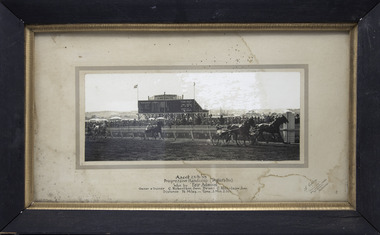
Photograph - Wooden framed photo finish, Fair Admiral, C Robertson
... ...23/9/1935...Ascot 23/9/1935, Progressive Handicap (Trotters Div), Won by Fair Admiral, Owner and Trainer, C Robertson Snr, Driver C Robertson Jnr...Fair Admiral won Vic.Trotters Derby trotting fair admiral ascot c robertson 23/9/1935 charlie robertson c robertson jnr charlie robertson jnr Ascot 23/9/1935, Progressive Handicap (Trotters Div), Won by Fair Admiral, Owner and Trainer, C Robertson Snr, Driver C Robertson Jnr Wooden framed race finish photo Fair Admiral, C Robertson Photograph Wooden framed photo finish ...Fair Admiral won Vic.Trotters Derby Wooden framed race finish photo Ascot 23/9/1935, Progressive Handicap (Trotters Div), Won by Fair Admiral, Owner and Trainer, C Robertson Snr, Driver C Robertson Jnr trotting, fair admiral, ascot, c robertson, 23/9/1935, charlie robertson, c robertson jnr, charlie robertson jnr -
 Ballarat Tramway Museum
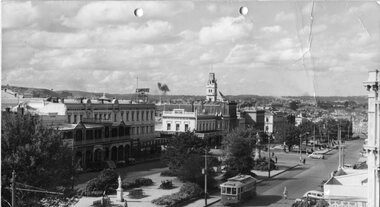
Photograph - Copy photograph, Murray Views, Murray Views Photo No. 29, 1948
... 1935 era. Other cars in the street are also pre-war cars. No Holdens' are easily apparent. From this, the date of the photograph taken is assumed to be post 1946, but before 1948. Reg Item 5543, gives the date of painting of the tram to all green as September 1947. Warren Doubleday 27.11.95 and updated on 14/9/2013. See also Reg Item 5313 for a narrower view of this photo. Wal Jack in item 5313 has dated it as 1948 - note added 23...1935 era. Other cars in the street are also pre-war cars. No Holdens' are easily apparent. From this, the date of the photograph taken is assumed to be post 1946, but before 1948. Reg Item 5543, gives the date of painting of the tram to all green as September 1947. Warren Doubleday 27.11.95 and updated on 14/9/2013. See also Reg Item 5313 for a narrower view of this photo. Wal Jack in item 5313 has dated it as 1948 - note added 23 ...Yields information about Sturt St Ballarat during the late 1940's and the appearance of the trams at the time of the photograph. Photo of Sturt St. looking North East from Town Hall with tram 32 westbound. Tunbridge store (now demolished in photo), Murray Views Photo No. 29, noted on rear with handwritten note on rear. Has two punch holes on top margin. Assumed from notes, taken between late 1947 and 1948. Notes on Photograph of tram 32 passing Town Hall, in Sturt St., westbound Tramcar - has one colour side panels, which were applied to the trams between 1946 and 5/1950. (Car history cards may define the date 32 was painted - see record 5543/ ) Between 1935 and 1946, trams were painted with cream rocker panels and green under the windows as tram 27 is currently painted. From discussions with Kevin Monkhouse (MFBB) on 27.11.95, the car crossing Armstrong St from North to South is a Ford Roadster, of the 1935 era. Other cars in the street are also pre-war cars. No Holdens' are easily apparent. From this, the date of the photograph taken is assumed to be post 1946, but before 1948. Reg Item 5543, gives the date of painting of the tram to all green as September 1947. Warren Doubleday 27.11.95 and updated on 14/9/2013. See also Reg Item 5313 for a narrower view of this photo. Wal Jack in item 5313 has dated it as 1948 - note added 23/3/2012. see attached notes. On rear in ink "29 - Sturt St. Looking East from Doveton St. (WJ)" trams, tramways, ballarat, sturt st., trams, town hall , tram 32 -
 Tatura Irrigation & Wartime Camps Museum
Legal Documents, Obituary of Thomas Hogan, 1927 -1945
... Documents regarding the estate of Thomas Hogan including:|Bankruptcy proceedings of John Micheal Hogan and discharge dated 23/9/1945|Indenture dated 19/5/1927|Creation of Easement on crown allotments 102 & 103 granted to S.R. & W.S.C. dated 5/6/1929|Lease agreement dated 23/12/1930|Lease agreement dated 30/5/1932|Indenture dated 20/5/1927|Indenture dated 31/10/1935|Indenture dated 8/4/1932|Indenture dated 13/7/1927|Indenture dated 24/3/1932|Indenture dated 12/4/1932|Creation of Easement on crown allottment 103 granted to Loo Way and Ah Poy dated 23/12/1929...Documents regarding the estate of Thomas Hogan including:|Bankruptcy proceedings of John Micheal Hogan and discharge dated 23/9/1945|Indenture dated 19/5/1927|Creation of Easement on crown allotments 102 & 103 granted to S.R. & W.S.C. dated 5/6/1929|Lease agreement dated 23/12/1930|Lease agreement dated 30/5/1932|Indenture dated 20/5/1927|Indenture dated 31/10/1935|Indenture dated 8/4/1932|Indenture dated 13/7/1927|Indenture dated 24/3/1932|Indenture dated 12/4/1932|Creation of Easement on crown allottment 103 granted to Loo Way and Ah Poy dated 23/12/1929 Obituary of Thomas Hogan Legal Documents ...Legal documents re the will of Thomas Hogan Legal documents in buff coloured legal envelope with number "561" and "Hogan - Thomas dec'd" written in green on front. Documents regarding the estate of Thomas Hogan including:|Bankruptcy proceedings of John Micheal Hogan and discharge dated 23/9/1945|Indenture dated 19/5/1927|Creation of Easement on crown allotments 102 & 103 granted to S.R. & W.S.C. dated 5/6/1929|Lease agreement dated 23/12/1930|Lease agreement dated 30/5/1932|Indenture dated 20/5/1927|Indenture dated 31/10/1935|Indenture dated 8/4/1932|Indenture dated 13/7/1927|Indenture dated 24/3/1932|Indenture dated 12/4/1932|Creation of Easement on crown allottment 103 granted to Loo Way and Ah Poy dated 23/12/1929 documents, legal, leases -
 Ballarat Tramway Museum
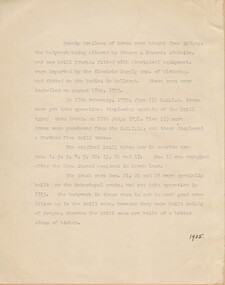
Album - Photo Album, State Electricity Commission of Victoria (SECV), "Photographs of Ballarat Tramways Rolling Stock & Track Reconditioning Works", 1935
... 23 photos, glued to the manila sheets - assembled by the SEC. All SEC photos except as noted below. Each of the photographs have been separately registered, as shown in the table below. Scanned images made of photos. Conservation Notes prepared - within the cataloguing sheet. Inside cover Typed notes, dated 1935, of the early trams of Ballarat, trailers ex Sydney, new trams ex Melbourne in 1930, and a further 5 in 1931. Lists the original Brill trams still in service (9...23 photos, glued to the manila sheets - assembled by the SEC. All SEC photos except as noted below. Each of the photographs have been separately registered, as shown in the table below. Scanned images made of photos. Conservation Notes prepared - within the cataloguing sheet. Inside cover Typed notes, dated 1935, of the early trams of Ballarat, trailers ex Sydney, new trams ex Melbourne in 1930, and a further 5 in 1931. Lists the original Brill trams still in service (9 ...Yields information about the condition of the ESCo tram fleet at the time of the SEC takeover of the operations their appearance, the reconstruction work and trackwork to rehabilitate the system. Demonstrates an important era of the Ballarat Tramways through the SEC preparing an album of photographs. The completeness of the record adds to the significance. Photo Album - comprising folded manila card covers, 11 photo sheets each with two, one with three black and white photos. Has three metal - steel fold back clips holding the sheets together. Folded so that the metal clips are not exposed on the outside. Has the title "Photographs of Ballarat Tramways Rolling Stock & Track Reconditioning Works". Album contains 23 photos, glued to the manila sheets - assembled by the SEC. All SEC photos except as noted below. Each of the photographs have been separately registered, as shown in the table below. Scanned images made of photos. Conservation Notes prepared - within the cataloguing sheet. Inside cover Typed notes, dated 1935, of the early trams of Ballarat, trailers ex Sydney, new trams ex Melbourne in 1930, and a further 5 in 1931. Lists the original Brill trams still in service (9 Number), and a noted on the recent scrapping of No. 11. Also had a note re the Sebastopol cars and the timber quality used in their construction - see hi Res image btm3000h-cover.jpg (added 16-12-2015) Folio Reg. Notes Item No. 1 3001 ESCo 14 see also Reg Item Image 755 for early copy. 3002 ESCo 21 ditto 1354. 2 3003 ESCo 1 ditto 756 3004 ESCo 1 ditto 758 3 3005 SEC 30 1357 and N204 3006.1 Interior photo 3006.2 Interior photo 4 3007 189 1356 and N203 3008 SEC car? 5 3009.1 Track work at Grenville St 3009.2 Track work at Grenville St with 27 in photo. 6 3010 Official party for launch of new rolling stock 1935 - Richards & Co photo 3011 No 30 on ditto - Richards & Co photo 7 3012.1 Interior photo of ex MMTB car 3012.2 ditto 8 3013.1 Track reconstruction photo 3013.2 ditto 9 3013.3 ditto 3013.4 ditto 10 3013.5 ditto 3013.6 ditto 11 3009.3 ditto - City Loop (See note below) 3009.4 ditto - Grenville St It would appear or is possible that folio 5 is out of position relative to No. 10 and 11. This is given the location of the photographs contained and would be more consistent with that of No. 11. Also the silverfish damage to the photographs would be consistent. The folio arrangement has been left as found, although catalogued to the follow style of photographs. Photos not to be taken out of the album unless for photographic copying. Use image files. Handwritten notes re trams history under each photo on sheet 1 in pencil., On front cover in ink "Ballarat Tramway Preservation Society Catalogue No. 601" trams, tramways, ballarat, reconstruction, tramcars, esco, mmtb, new trams -
 Puffing Billy Railway
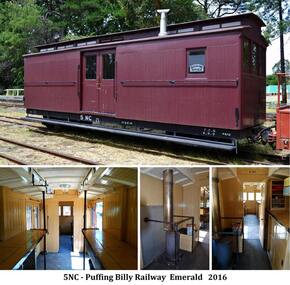
5NC - Brake Van (4 ton capacity), 31/ 7/1914
... Six NC Brake Van / Guards Vans were built by Victorian Railways 1 NC was built in 1909 as NDD and reclassed 1NC in 1910. 2 NC was built and placed into service Nov 1912 3 NC , 4 NC and 5 NC were built and placed into service June / July 1914 6 NC was Built and placed into service in 1919 1 NC, 4 NC and 6 NC were all scrapped by Victorian Railways between 1954 and 1957 Van 5NC - Brake Van (4 ton capacity) In Active Service - Belgrave Station Yard VR Service History: 5 NC *NC 5.VA - 31/ 7/1914 NWS Built new - / 6/1926 - Modified AC Malco 16/11/1932 NWS Into Workshops - 9/12/1932 NWS Out of Workshops (24 days) 23/10/1935 NWS Into Workshops - 19/11/1935 NWS Out of Workshops (28 days) 10/ 8/1939 NWS Into Workshops - 8/ 9/1939 NWS Out of Workshops (30 days) 2/ 6/1944 NWS Into Workshops - 25/ 8/1944 NWS Out of Workshops (85 days) 21/ 4/1949 NWS Into Workshops - 14/10/1949 NWS Out of Workshops (178 days) Dec 2016 - Puffing Billy Register of Rolling Stock NC 5 Brake Van (4 ton capacity) - In traffic ...Six NC Brake Van / Guards Vans were built by Victorian Railways 1 NC was built in 1909 as NDD and reclassed 1NC in 1910. 2 NC was built and placed into service Nov 1912 3 NC , 4 NC and 5 NC were built and placed into service June / July 1914 6 NC was Built and placed into service in 1919 1 NC, 4 NC and 6 NC were all scrapped by Victorian Railways between 1954 and 1957 Van 5NC - Brake Van (4 ton capacity) In Active Service - Belgrave Station Yard VR Service History: 5 NC *NC 5.VA - 31/ 7/1914 NWS Built new - / 6/1926 - Modified AC Malco 16/11/1932 NWS Into Workshops - 9/12/1932 NWS Out of Workshops (24 days) 23/10/1935 NWS Into Workshops - 19/11/1935 NWS Out of Workshops (28 days) 10/ 8/1939 NWS Into Workshops - 8/ 9/1939 NWS Out of Workshops (30 days) 2/ 6/1944 NWS Into Workshops - 25/ 8/1944 NWS Out of Workshops (85 days) 21/ 4/1949 NWS Into Workshops - 14/10/1949 NWS Out of Workshops (178 days) Dec 2016 - Puffing Billy Register of Rolling Stock NC 5 Brake Van (4 ton capacity) - In traffic Historic - Victorian Railways - Narrow Gauge Rolling Stock - NC Brake Van Victorian Heritage Register (VHR) Number H2187 The Puffing Billy Rolling Stock Collection puffing billy 5nc 2'6" gauge victorian railways 5nc brake van 5NC Brake Van (4 ton capacity) made of Timber and wrought iron 5NC - Brake Van (4 ton capacity) Victorian Railways - Newport Workshop ...NC Van The NC guard's vans were originally classed NDD. In the 1910 reclassification they were classified NC. Apart from the windows and height they were externally the same as the NBC vans. Inside there were benches along both side walls. One end was equipped with a small guard's compartment. This had two corner seats, two desks with ticket selling windows and a letter rack. A novel feature was a folding dog cage under one of the benches. Six NC Brake Van / Guards Vans were built by Victorian Railways 1 NC was built in 1909 as NDD and reclassed 1NC in 1910. 2 NC was built and placed into service Nov 1912 3 NC , 4 NC and 5 NC were built and placed into service June / July 1914 6 NC was Built and placed into service in 1919 1 NC, 4 NC and 6 NC were all scrapped by Victorian Railways between 1954 and 1957 Van 5NC - Brake Van (4 ton capacity) In Active Service - Belgrave Station Yard VR Service History: 5 NC *NC 5.VA - 31/ 7/1914 NWS Built new - / 6/1926 - Modified AC Malco 16/11/1932 NWS Into Workshops - 9/12/1932 NWS Out of Workshops (24 days) 23/10/1935 NWS Into Workshops - 19/11/1935 NWS Out of Workshops (28 days) 10/ 8/1939 NWS Into Workshops - 8/ 9/1939 NWS Out of Workshops (30 days) 2/ 6/1944 NWS Into Workshops - 25/ 8/1944 NWS Out of Workshops (85 days) 21/ 4/1949 NWS Into Workshops - 14/10/1949 NWS Out of Workshops (178 days) Dec 2016 - Puffing Billy Register of Rolling Stock NC 5 Brake Van (4 ton capacity) - In traffic Historic - Victorian Railways - Narrow Gauge Rolling Stock - NC Brake Van Victorian Heritage Register (VHR) Number H2187 The Puffing Billy Rolling Stock Collection Brake Van (4 ton capacity) made of Timber and wrought iron 5NC puffing billy, 5nc, 2'6" gauge, victorian railways, 5nc brake van -
 Melbourne Tram Museum
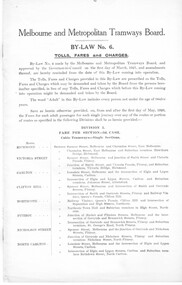
Legal record, Melbourne & Metropolitan Tramways Board (MMTB), MMTB By-Laws, 1922
... Original documents or generally extracts from the Government Gazette. .1 - 16 page foolscap document - side stapled - 30-4-1926 - front page scanned. .2 - 1 page foolscap - 1-9-1926 - scanned .3 - small sheet - 13-10-1926 .4 - 9-12-1926 .5 - 11-1-1927 .6 - 25-1-1927 .7 - 4-5-1927 .8 - 27-7-1927 .9 - 21-9-1927 .10 - 2-2-1928 .11 - 17-4-1928 .12 - 1-5-1928 .13 - 6-6-1928 .14 - 4-7-1928 .15 - 12-2-1929 .16 - 8-4-1929 .17 - 11-6-1929 .18 - 3-7-1929 - includes tourist trips by Motor Omnibuses and the various route details. .19 - not allocated .20 - 12-8-1929 .21 - 7-10-1929 .22 - 11-12-1929 .23 - 28-4-1930 .24 - 24-6-1930 .25 - 27-8-1930 .26 - 8-10-1930 .27 - 5-11-1930 .28 - 12-11-1930 .29 - 1-9-1931 .30 - 1-12-1931 .31 - 15-12-1931 .32 - 1-3-1933 .33 - 15-8-1934 .34 - 22-7-1935 .35 - 9-9-1935 .36 - 24-12-1935 .37 - 7-4-1936 .38 - 13-5-1936 .39 - 19-5-1936 .40 - 9-6-1936 .41 - 19-10-1936 .42 - 21-10-1936 .43 - 2-12-1936 .44 - 12-1-1937 .45 - 8-2-1937 .46 - 26-7-1936 .47 - 29-9-1937 .48 - 7-11-1938 .49 - 23-11-1938 .50 - 22-12-1938 .51 - 18-4-1939 .52 - 14-8-1939 .53 - 13-11-1939 .54 - 9-12-1940 .55 - 7-1-1941 Second copy of the original document By-Law 6 - added 20/7/2019 - from the collection of Robert Green, see htd3096doc.pdf and in good condition....Original documents or generally extracts from the Government Gazette. .1 - 16 page foolscap document - side stapled - 30-4-1926 - front page scanned. .2 - 1 page foolscap - 1-9-1926 - scanned .3 - small sheet - 13-10-1926 .4 - 9-12-1926 .5 - 11-1-1927 .6 - 25-1-1927 .7 - 4-5-1927 .8 - 27-7-1927 .9 - 21-9-1927 .10 - 2-2-1928 .11 - 17-4-1928 .12 - 1-5-1928 .13 - 6-6-1928 .14 - 4-7-1928 .15 - 12-2-1929 .16 - 8-4-1929 .17 - 11-6-1929 .18 - 3-7-1929 - includes tourist trips by Motor Omnibuses and the various route details. .19 - not allocated .20 - 12-8-1929 .21 - 7-10-1929 .22 - 11-12-1929 .23 - 28-4-1930 .24 - 24-6-1930 .25 - 27-8-1930 .26 - 8-10-1930 .27 - 5-11-1930 .28 - 12-11-1930 .29 - 1-9-1931 .30 - 1-12-1931 .31 - 15-12-1931 .32 - 1-3-1933 .33 - 15-8-1934 .34 - 22-7-1935 .35 - 9-9-1935 .36 - 24-12-1935 .37 - 7-4-1936 .38 - 13-5-1936 .39 - 19-5-1936 .40 - 9-6-1936 .41 - 19-10-1936 .42 - 21-10-1936 .43 - 2-12-1936 .44 - 12-1-1937 .45 - 8-2-1937 .46 - 26-7-1936 .47 - 29-9-1937 .48 - 7-11-1938 .49 - 23-11-1938 .50 - 22-12-1938 .51 - 18-4-1939 .52 - 14-8-1939 .53 - 13-11-1939 .54 - 9-12-1940 .55 - 7-1-1941 Second copy of the original document By-Law 6 - added 20/7/2019 - from the collection of Robert Green, see htd3096doc.pdf and in good condition. ...Set of 54 Printed documents - MMTB By-Law No. 6 - detailing Tolls, Fares and Charges and associated amendments - date given is that date shown as the application of the Common seal or approved by the Governor in Council. Printed on various sized sheets. Original documents or generally extracts from the Government Gazette. .1 - 16 page foolscap document - side stapled - 30-4-1926 - front page scanned. .2 - 1 page foolscap - 1-9-1926 - scanned .3 - small sheet - 13-10-1926 .4 - 9-12-1926 .5 - 11-1-1927 .6 - 25-1-1927 .7 - 4-5-1927 .8 - 27-7-1927 .9 - 21-9-1927 .10 - 2-2-1928 .11 - 17-4-1928 .12 - 1-5-1928 .13 - 6-6-1928 .14 - 4-7-1928 .15 - 12-2-1929 .16 - 8-4-1929 .17 - 11-6-1929 .18 - 3-7-1929 - includes tourist trips by Motor Omnibuses and the various route details. .19 - not allocated .20 - 12-8-1929 .21 - 7-10-1929 .22 - 11-12-1929 .23 - 28-4-1930 .24 - 24-6-1930 .25 - 27-8-1930 .26 - 8-10-1930 .27 - 5-11-1930 .28 - 12-11-1930 .29 - 1-9-1931 .30 - 1-12-1931 .31 - 15-12-1931 .32 - 1-3-1933 .33 - 15-8-1934 .34 - 22-7-1935 .35 - 9-9-1935 .36 - 24-12-1935 .37 - 7-4-1936 .38 - 13-5-1936 .39 - 19-5-1936 .40 - 9-6-1936 .41 - 19-10-1936 .42 - 21-10-1936 .43 - 2-12-1936 .44 - 12-1-1937 .45 - 8-2-1937 .46 - 26-7-1936 .47 - 29-9-1937 .48 - 7-11-1938 .49 - 23-11-1938 .50 - 22-12-1938 .51 - 18-4-1939 .52 - 14-8-1939 .53 - 13-11-1939 .54 - 9-12-1940 .55 - 7-1-1941 Second copy of the original document By-Law 6 - added 20/7/2019 - from the collection of Robert Green, see htd3096doc.pdf and in good condition. trams, tramways, mmtb, by laws, appeals, fares, tourist trips, tourist bus -
 City of Melbourne Libraries
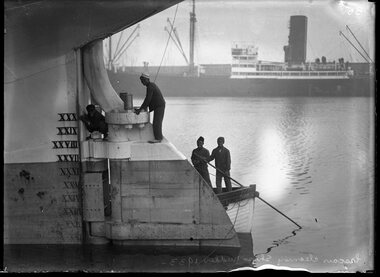
Photograph, Bull, Hugh Jones, 1897-1993, Lascars cleaning ship's rudder
... 1935, June 25). The Age (Melbourne, Vic. : 1854 - 1954), p. 11. Retrieved July 23, 2025, from http://nla.gov.au/nla.news-article204357218 Age (Melbourne, Vic. : 1854 - 1954), Tuesday 25 June 1935, page 11 Wikipedia, Clinker (boat building), https://en.wikipedia.org/wiki/Clinker_(boat_building) Wikipedia, Lascar, https://en.wikipedia.org/wiki/Lascar Wikipedia, History of Southeast Asia, https://en.wikipedia.org/wiki/History_of_Southeast_Asia Wikipedia, Impressment, https://en.wikipedia.org/wiki/Impressment NEPTUNA LEAVES FOR CHINA WITH TOURISTS (1935, June 25). The Herald (Melbourne, Vic. : 1861 - 1954), p. 5. Retrieved July 23, 2025, from http://nla.gov.au/nla.news-article244841163 National Research Institute SPOTLIGHT paper Vol 9...1935, June 25). The Age (Melbourne, Vic. : 1854 - 1954), p. 11. Retrieved July 23, 2025, from http://nla.gov.au/nla.news-article204357218 Age (Melbourne, Vic. : 1854 - 1954), Tuesday 25 June 1935, page 11 Wikipedia, Clinker (boat building), https://en.wikipedia.org/wiki/Clinker_(boat_building) Wikipedia, Lascar, https://en.wikipedia.org/wiki/Lascar Wikipedia, History of Southeast Asia, https://en.wikipedia.org/wiki/History_of_Southeast_Asia Wikipedia, Impressment, https://en.wikipedia.org/wiki/Impressment NEPTUNA LEAVES FOR CHINA WITH TOURISTS (1935, June 25). The Herald (Melbourne, Vic. : 1861 - 1954), p. 5. Retrieved July 23, 2025, from http://nla.gov.au/nla.news-article244841163 National Research Institute SPOTLIGHT paper Vol 9 ...Published: unknown, however, on 26 June 1935 a similar, but not the exact photo in the McKenzie Collection, was published in The Age: Published title: Shipping Victorian Flour to the East Published Caption: Flour and wheat figure prominently in all cargoes carried by ships trading to Chinese, Japanese and Eastern ports. Victorian millers are eager to extend lids outlet for their produce, and every opportunity is grasped. The pictures show Australian labourers unloading from railway trucks some of the 2300 tons of flour which will go into the hold of the Burns, Philp motor ship Neptuna for shipment to Hong Kong, while Chinese seamen are busy cleaning and painting the rudder post of the ship. Hard by the Neptuna, other ships are taking on flour for the East. Research by Project Volunteer, Louise McKenzie: The image was described by Hugh Bull on the rear of the glass plate as – “Lascars cleaning ships rudder 1933”. Basically, a “lascar” is a seaman. Image No. 032 in the McKenzie Collection shows two lascars perched on the rudder of a ship, with two others standing in a rowboat along side. They are dressed in baggy trousers and jackets and wearing caps. Across a very calm dock area is a single funnel ship with on-deck derricks. The rudder of the ship being cleaned is white, with large black roman numbering denoting the depth at which the ship is sitting, depending on whether it is loaded or empty. Whilst the exact photo in the McKenzie Collection has yet to be located in The Age in 1933, the date when it was taken, there is a photo published in The Age on 25 June 1935 which appears to be one of a series of photos taken on the same day, featuring lascars cleaning a ship’s rudder. It bears a striking resemblance to MCK 032, but it is taken from a slightly different angle. The 1935 published photo is a close up of a ship’s rudder being cleaned, with same style of roman numerals in black on the white of the rudder. One lascar is standing on the rudder, one is standing in a small clinker style rowboat, with its characteristic wooden overlapping hull planks, holding a broom; two more lascars are sitting in the bow and stern of the rowboat. The ship being cleaned is in a dock, as a wharf and warehouses can be seen in the background, the water is very calm, and there are two other ships moored nearby – one across the other side of the dock with a black and white hull and derricks on its deck, and one adjacent, with its mooring lines clearly visible. The lascars are wearing caps, baggy trousers and jackets. Compelling similarities therefore exist between the two images. Whilst it is difficult to positively identify the cultural background of these particular lascars in either photo, the newspaper article dated June 1935 advises they are “Chinese”. This is possibly because the ship they are associated with, the Neptuna, is reported to have sailed from Melbourne on this date, bound for Hong Kong. However, the men are probably from South East Asia. Wikipedia describes the term “Southeast Asia” as covering ” … the people of Southeast Asia from prehistory to the present in two distinct sub-regions: Mainland Southeast Asia (or Indochina) and Maritime Southeast Asia (or Insular Southeast Asia). Mainland Southeast Asia comprises Cambodia, Laos, Myanmar (or Burma), Peninsular Malaysia, Thailand and Vietnam whereas Maritime Southeast Asia comprises Brunei, Cocos (Keeling) Islands, Christmas Island, East Malaysia, East Timor, Indonesia, Philippines and Singapore. Additionally, Wikipedia “Lascars” states that “Lascars were sailors from the Indian subcontinent, South East Asia, the Arab world, British Somaliland and lands east of the Cape of Good Hope, who were employed to work on colonial merchant ships. The practice ran from the 16th century to the mid 20th century”. Indian seamen were used as early as the 16th century by Portuguese explorer Vasgo da Gama in his successful voyage to India, and subsequently by Portuguese ships in the 16th and 17th centuries. “Through the Portuguese and Spanish maritime world empires, some Indian lascars found their way onto English merchant ships, and were among the sailors on the first English East India Company (EIC) ships to sail to India.” In the 17th Century “When the English adopted the term "lascar", they initially used it for all Asian sailors on English-flagged ships, but after 1661 and the Portuguese ceded Bombay to England, the term was used mainly to describe Indian sailors specifically. The term "topaze" was used to describe Indo-Portuguese personnel, especially those from Bombay, Thana, Diu, Dammam and Cochin. The term "sepoy" was used to describe Indian soldiers in European service. The number of lascars employed on EIC East Indiamen was so great that the Parliament of England restricted their employment via the Navigation Acts (in force from 1660 onwards) which required that 75% of the crew onboard English-flagged ships importing goods from Asia be English subjects. The restriction arose due to the high rates of illnesses and death among European sailors on East Indiamen, and their frequent desertions in Asia, which left such ships short of crew for the return voyage. Another reason was the frequent impressment of European sailors from EIC East Indiamen by the Royal Navy in times of war“. The term “impressment” colloquially refers to “the “press gang” …”a type of conscription of people into a military force, especially a naval force, via intimidation and physical coercion, conducted by an organized group (hence “gang”). .. The large size of the British Royal Navy in the Age of Sail meant impressment was most commonly associated with Great Britain.”. (Wikipedia – Impressment). By the 20th century these sailors served on British ships under "lascar agreements", which allowed shipowners more control than was the case in ordinary articles of agreement. The sailors could be transferred from one ship to another and retained in service for up to three years at one time. “Lascars served all over the world in the period leading up to the First World War. Lascars were barred from landing at some ports, such as in British Columbia. At the beginning of World War I, there were 51,616 lascars working on British merchant ships in and around the British Empire. In World War II thousands of lascars served in the war and died on vessels throughout the world, especially those of the British India Steam Navigation Company, P&O and other British shipping companies. The lack of Canadian naval manpower led to the employment of a total of 121 Catholic Goans and 530 Muslim British Indians on the Empress vessels of the Canadian Pacific Railway, such as the Empress of Asia and Empress of Japan. These ships served in the Indian Ocean both as ANZAC convoy ships and in actions at Aden. The ships were placed under the British Admiralty as part of Canada's contribution to the war effort and all of the Indian men were awarded medals by the Admiralty, though none of them were delivered. In the 1950s the use of the term "lascar" declined with the ending of the British Empire. The Indian “Lascar Act” of 1832 was finally repealed in 1963. However, "traditional" Indian deck and Pakistani engine crews continued to be used in Australia until 1986 when the last crew was discharged from the P&O and replaced by a general-purpose crew of Pakistanis. The term lascar has been widely used to engender an element of exoticism in literature eg “Sir Arthur Conan Doyle created a Lascar foil to Sherlock Holmes in "The Man with the Twisted Lip" in 1891. Lascars aboard the ship Patna figure prominently in the early chapters of Joseph Conrad's novel Lord Jim. Frances Hodgson Burnett's novel A Little Princess features a lascar named Ram Dass. Also, Caleb Carr portrays two lascars as bodyguards for a Spanish diplomat near the end of The Angel of Darkness. In Wuthering Heights, it is speculated that Heathcliff, the main character, may be of lascar origin." (Wikipedia – Lascar) And what has become of these “forgotten heroes of the World Wars”? The South Asian Heritage Trust, which seeks to commemorate, mark and celebrate South Asian cultures, stories, and communities, published an article in July 2025 entitled – The Lascars: Seafaring Roots of Modern Britain. It particularly honours the role of the 80,000 lascars who served Britain in WWI, and the over 100,000 who served in the British Merchant Navy in WWII, and concludes: “The hardships faced by Lascars were profound. They were often assigned the most dangerous tasks, lived in substandard conditions aboard ships and, even after their immense contributions to the war efforts, many veterans found it difficult to secure the recognition, pensions and rights afforded to other veterans. Many were employed under ‘Asiatic Articles’, which offered less protection and lower pay than their European counterparts. Yet, their legacy endures. The multicultural fabric of areas like East London owes much to these early seafarers and settlers. The East London Mosque, established in 1910, became an important spiritual and community hub. Today, efforts to bring their stories out of the shadows are growing. The Museum of London Docklands features exhibits on their history. Memorials, such as the P&O headstone in Dover for the 22 Lascar crew members of the SS Maloja sunk in 1916 and the careful restoration of the Lascar War Memorial in Kolkata, serve as important reminders of the sacrifices. The journey of the Lascars – from their homelands, along dangerous wartime shipping routes, to the docklands of Britain – is a story of personal courage and of a rich contribution to Britain’s history and identity.” The ship MV Neptuna, mentioned in the 1935 article, had that year been purchased from a German company by Australian-owned Burns Philp, with Australian Government assistance, and it was instrumental in ensuring the shipment of rice from Vietnam to Papua New Guinea. Rice is still a household staple in PNG. Despite it being introduced into PNG more than 100 years ago, the crop has not been sufficiently integrated into the country’s traditional agricultural production system, and today PNG imports still account for nearly 98% of rice. (Spotlight Magazine Sept. 2016) The 1935 newspaper article states that the Neptuna is involved in moving flour for the East. Australian wheat exports began in 1845, but were not regular until the 1870s. New land clearing methods in Australia allowed large tracts of land to be cleared more efficiently – this included the invention of the iconic ‘stump jump’ plough. With the success of the wheat harvests, flour mills began to spring up around the country. By the 1870s, many large country towns had their own mills, with around 500 mills producing flour across the country. Flour exports were an important part of the wheat industry until around the 1930s. After the Second World War, many of Australia’s export partners (which were mainly in the developing nations of Asia) began setting up their own flour industries and the Australian product was no longer in demand. In 1942 MV Neptuna was being utilised for the war effort, and carrying depth charges and other armaments for Australia, when on 19 February it was sunk in a bombing raid on Darwin, and where part of her hull still lies. References: SHIPPING VICTORIAN FLOUR TO THE EAST. (1935, June 25). The Age (Melbourne, Vic. : 1854 - 1954), p. 11. Retrieved July 23, 2025, from http://nla.gov.au/nla.news-article204357218 Age (Melbourne, Vic. : 1854 - 1954), Tuesday 25 June 1935, page 11 Wikipedia, Clinker (boat building), https://en.wikipedia.org/wiki/Clinker_(boat_building) Wikipedia, Lascar, https://en.wikipedia.org/wiki/Lascar Wikipedia, History of Southeast Asia, https://en.wikipedia.org/wiki/History_of_Southeast_Asia Wikipedia, Impressment, https://en.wikipedia.org/wiki/Impressment NEPTUNA LEAVES FOR CHINA WITH TOURISTS (1935, June 25). The Herald (Melbourne, Vic. : 1861 - 1954), p. 5. Retrieved July 23, 2025, from http://nla.gov.au/nla.news-article244841163 National Research Institute SPOTLIGHT paper Vol 9, Issue 7, https://pngnri.org/images/Publications/Spotlight_No_9_Vol_7_-_201609_-_Sofe__Odhuno_-_Rice_Import_Quota1.pdf South Asian Heritage Trust, The Lascars: Seafaring Roots of Modern Britain, July 11,2025 : Royal British Legion. https://southasianheritage.org.uk/royal-british-legion/the-lascars-seafaring-roots-of-modern-britain/ Photographer notations on slide: "Lascars cleaning ships rudder 1933". lascars, ships, 1930-1939, employment, ethnic communities -
 City of Melbourne Libraries
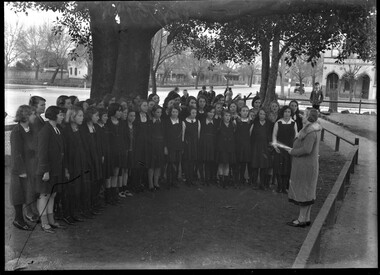
Photograph (item), Bull, Hugh Jones, 1897-1993, Miss Ida Park conducts the North Fitzroy State School Choir
... 1935 - 1999), p. 35. Retrieved September 23, 2025, from http://nla.gov.au/nla.news-article262493757 No title (1935, June 11). The Herald (Melbourne, Vic. : 1861 - 1954), p. 27. Retrieved September 29, 2025, from http://nla.gov.au/nla.news-article244840169 Dine, wine, and watch a stage show (1966, November 16). The Australian Women's Weekly (1933 - 1982), p. 6. Retrieved November 9...1935 - 1999), p. 35. Retrieved September 23, 2025, from http://nla.gov.au/nla.news-article262493757 No title (1935, June 11). The Herald (Melbourne, Vic. : 1861 - 1954), p. 27. Retrieved September 29, 2025, from http://nla.gov.au/nla.news-article244840169 Dine, wine, and watch a stage show (1966, November 16). The Australian Women's Weekly (1933 - 1982), p. 6. Retrieved November 9 ...The pupils of Falconer Street Central School No.3918 in North Fitzroy rehearse with conductress Miss Ida Park for their performance at the Temperance Hall, Russell Street Melbourne with proceeds going to the Lord Mayor’s Fund. The house on the right of the photograph is Jubilee House, 126 Michael Street North Fitzroy and is extant. Photographer notations on slide: Choir At Fitzroy State School 1933 B5 While this photograph appears not to have been published, a photograph taken from a different angle of the same event was published in The Age 21 July 1933. SCHOOL CHILDREN SING IN THE OPEN AIR. “A choir of children at North Fitzroy practise their songs for a Pantomime, to be given in the Temperance Hall for the Lord Mayor's Fund on Wednesday next. On the extreme left is the conductress of the Choir (Miss Ida Park).” Reference: http://nla.gov.au/nla.news-article204368572 Research by project volunteer, Fiona Collyer: Children of The Falconer Street Central School Choral Society, trained by conductress Miss Ida Park, along with dance and gymnastics pupils of Misses Dorothy Gibb and Inez Ellis, performed in the “Cinderella” pantomime at the Temperance Hall in Russell Street, Melbourne on 26 July, 1933. The proceeds went to the Lord Mayor’s Fund. Conductress Miss Ida Park (1904- 1952) lived in the North Fitzroy and Clifton Hill area all her life. She was immersed in the music world of Melbourne and was a member of the Musical Society of Victoria. Ida graduated from Melbourne University Conservatorium with a Bachelor of Music degree in 1929 before departing for London where she studied piano and organ at the Royal Academy of Music. Ida returned to Melbourne in 1931, and billed as “The Gifted Young Australian Pianist”, held pianoforte recitals of classical music at Assembly Hall, Collins Street. She also played the organ for services at St Paul’s Independent Church in Delbridge Street, North Fitzroy and later St Luke’s, North Fitzroy. Ida conducted the children of the Falconer Street Central School Choral Society as they competed in the State School Choral Championships and the 85 children of the Fitzroy City Centenary Choir who sang at Melbourne’s Centenary celebrations of 1934/35. In 1945, Ida married Charles Hazeldine, a tenor and returned digger who had served in two world wars. The pair performed together in many concerts over the years. Tragically, both Ida and Charles were badly injured when struck by a car while crossing Queens Parade Clifton Hill in June 1952, with Ida dying from head injuries at St Vincent’s Hospital soon after. She was 48 years old. Charles wrote on Ida’s death notice - “Called home.” The choir were pupils of Falconer Street Central School No. 3918 in North Fitzroy which was built in 1915 to provide upper primary education for grades 5 to 8 for the area. In 1957 it became Fitzroy High School. In 1992, the Kennett Government swept to power, embarking on a program of fiscal austerity and privatisation of government services. 390 government schools were closed, with the land proposed to be sold to developers. 7000 teachers were sacked: 10% of Victoria’s public school teachers. Auxiliary school staff also lost their jobs. Amongst the first to close was Fitzroy High School. Fearful that the land would be sold, hundreds of students, parents, teachers and local residents occupied the building around-the-clock in four hour shifts and overnight for 14 months, sleeping on gym mats in the principal’s office and administrators’ wing. The blockade was lifted when a arrangement was reached to allow Kangan Batman TAFE to use the school from 1993 until 1998. With the election of the Bracks Government in 1999, and construction of new buildings, Fitzroy High School was reopened in 2004 after a 12 year battle. Temperance Hall, at 172 Russell Street, where the children performed “Cinderella”, was built in 1872 by the Melbourne Total Abstinence Society as a venue for lectures, meetings and alcohol-free community concerts and events. From 1934, Temperance Hall was fitted out as a cinema and renamed the Imperial Theatre, showing popular Hollywood films, before closing in 1939 for renovations and reopening as the Savoy Theatre, Melbourne’s first “Continental” talkies cinema. At this time, Australian cinema programming was dominated by American and British films. The lessees, Continental Film Art Theatre began negotiating for theatre properties in Melbourne, Sydney, Adelaide, Brisbane, Perth and Auckland to screen foreign language films, hoping to present the finest productions from France, Germany, Holland and Italy. At the cost of £6000, the theatre was fitted with the latest Mirrophonic sound and projection system and enlarged to seat 800 patrons with luxurious, ultra modern fittings and furnishings in a colour palette of rust and beige. Instead of usherettes, General Manager Peter Dawson, hoping to bring a sophisticated European atmosphere to the theatre, employed attractive, multilingual “Continental hostesses” to assist guests (not patrons) and answer queries relating to the films. Collectively the hostesses spoke English, French, Dutch, German, Russian and Italian. The Age 20 May 1939- “Atmosphere is a very important part of the theatre's scheme. Ushers in the ordinary sense will not be employed; hostesses will look upon patrons as guests. They will be dressed in full evening dress, and the only indication that they are not guests is the little medallion pinned to their evening dress, on which their names are inscribed.” The hostesses were dressed in evening gowns of olive-green velvet, the full skirts embroidered with gold loops, wine velvet bolero jackets and long white kid gloves with silvery tiaras in their hair. For guests worried that they may not understand the plot, the management assured patrons that- “By means of superimposed English translations on the bottom of the screen, the dialogue is perfectly understandable and the whole witty story can be followed with ease.” The Gala opening of the Savoy Theatre, on 31 May 1939 was attended by a “who’s who” of Melbourne Society, the women wearing beautiful gowns, headdresses and furs. Amongst the guests were former premier Sir Stanley Argyle and Lady Argyle, former Lord Mayor Sir Harold Gengoult-Smith and his wife Cynthia, Field Marshall Thomas Blamey and Lady Blamey and Miss Jessie Brookes. The Vice Consul for France, Monsieur Frank Puaux and his wife attended, Madame Puaux dressed in a black satin gown and a musquash fur cape. She was presented with a beautiful bouquet of scarlet carnations and lily of the valley tied with the tricolour of France. In his speech Monsieur Puaux stated that “from the cultural, linguistic and artistic points of view it was excellent that the Australian public should have an opportunity to see foreign film in the original language.” “Letty” writing in Table Talk magazine described the atmosphere of “Continental” gaiety that had permeated Melbourne - “The Letters of Letty”, Table Talk 8 June 1939 “The “foreign influence” is definitely obtruding itself into the even tenor of Melbourne life these days…. but in the pleasantest manner possible! Included in the great number of Continental people who have recently made their homes here, we have stars of the Russian ballet settling in our midst…. and now… we have been presented with our own Continental picture theatre in the attractive shape of The Savoy, which opened its doors on Wednesday night for the exclusive release of foreign films. One could hardly recognise the old Temperance Hall in its adaptation to the smart, comfortable and thoroughly-intriguing Savoy Theatre. Where once this rather draughty old building stood in Russell Street there now greets us an unmistakable “Continental” edifice, living up to its exterior by sustaining within its walls its overseas’ atmosphere. Indeed, one feels as though one has crossed the threshold into a European city, stepping out of the unmistakably Australian street that is Russell into The Savoy lounge to be greeted by polite “messieurs” from the attractive, Continental-looking usherettes and to gaze upon a film as delightfully French in story and presentation as “La Kermesse Heroique.” But successful though “La Kermesse Heroique” proved on its initial presentation inside the theatre, the debut was no more triumphal than that made by the winning and pretty little French lass who had charge of the booking office outside in the foyer. With her attractive accent and Continental flair for making one “feel at home” she was undoubtedly one of the hits of the night-especially with the susceptible males, who spent very much longer in the lounge than is customary, racking their brains for excuses for making conversation with the attractive Parisienne! Those French girls certainly have a way with them!” The opening film, the 1935 French comedy “La Kermesse Heroique”, (The Heroic Sex) starring Francoise Rosay and Jean Murat (film now called “Carnival in Flanders”) was the winner of the Grand Prix du Cinema Francais as the finest picture of 1936 and described in the advertisement as “The Gay French Comedy of Laughter and Romance” The film is set during the 17th century Spanish occupation of Flanders in the Flemish town of Boom at the time of their annual festival. Hearing news of a pending visit to Boom by the commander, the Duke of Olivares and his army, and fearing rape and pillage, the boorish burgomaster feigns his own death, hoping the Spaniards will bypass the grieving town out of respect. The army arrives and the cowardly men of the town flee. The womenfolk decide on a different approach. Lead by the burgomaster’s beautiful wife Cornelia, they set out to to preserve the peace with grace and hospitality only to find the Spaniards attractive and virile, unlike their own husbands. The Sun newspaper described the film as “Mellow as a Stilton cheese, and as ripely suited to adult taste.” Preceding “La Kermesse Heroique” was a Gaumont British newsreel of King George VI and Queen Elizabeth departing for a tour of Canada and the Soviet documentary “Nine Months on a Drifting Ice Floe” During the war “Continental” films became difficult to source, so the Savoy screened Hollywood movies and held fund raisers for the war effort. After World War Two, the Savoy continued to screen “Continental” films, catering to post-war immigrants from Europe and bohemian Melburnians. In 1953, the Savoy had a wildly popular season with queues winding around the block to see Swedish summer romance “One Summer of Happiness” (Hon dansade en sommar) with its nude swimming scenes. The Chief Commonwealth Censor declined to cut the film on the grounds that although it displayed nudity, it was genuinely artistic. According to Wikipedia, film director Fred Schepisi was first exposed to European films such as “Bicycle Thieves”, “Rocco and His Brothers” and “The Wages of Fear” at the Savoy as a teenager, leading to his long career in filmmaking. In 1955, in response to the massive rise in car ownership, the Melbourne City Council recommended that parking stations be built on every block. The Savoy Theatre and adjacent buildings, which included the Golden Fleece Hotel were demolished in 1963 and replaced with Total House, a Brutalist commercial building consisting of a seven storey car park crowned by a four storey office block, shops at street level, and a basement theatre which housed the Lido Theatre Restaurant-Cabaret from 1965. The building was designed by architectural firm Bogle & Banfield Associates and named for the original tenant of the offices, French oil company, Total Oil Products P/L. The Lido Theatre Restaurant was managed by former Tivoli dancer and promoter David Hamilton McIlwraith, presenting dinner and a glamorous cabaret floor show of showgirls, (some topless) to accompany variety acts by local and international actors, singers, comedians and magicians. The interior of the Lido was opulently decorated in deep, lush green with old world gold trim and chandeliers. Handily, patrons could enter and leave via an elevator, straight from the building’s own car park! A four course gourmet dinner with show and dancing cost $8.00 in 1968. The Lido advertised in 1966 that “Every visitor to Melbourne soon discovers the brightest entertainment spot in the Southern Hemisphere with its million dollar decor, dining delights and spectacular stage productions.” Australian Jewish News - 21 April 1967 - “Superb decor and atmosphere, cuisine and service have been readily recognised as the contributing factors to the excellence of stage presentations, staging, costumes, decor and, of course, the actual choice of artists.” The bedazzling ensemble of 40 high-kicking, feathered and sequinned showgirls were advertised as the “Fabulous Lido girls and the controversial Baretop Lido Goddesses” who were described as “Statuesque Beauty as Nature intended” and “…a host of glamorous gals whose favourite shade is flesh pink.” Some of the acts who performed at the Lido were- -Broken Hill’s own - opera singer June Bronhill -1967. -Versatile singer Lovelace Watkins known as “Black Sinatra - 1967. -“Queen of the five-fingered boogie", honky-tonk and rollicking rag-time pianist, Winifred Atwell - 1967. -New Zealand pop duo, Bill and Boyd -1968. -American actress and soprano Kathryn Grayson -1968. -Denise Drysdale in “Say It With Music” -1968. -“Catwoman” Eartha Kitt -1969. -Internationally recognised female impersonator, Sydneysider Tracey Lee, (Maxwell Richie) billed as "controversial impressionist and singing personality from the famous Carousel Nightspot in Paris". -Frances Faye, American comedienne and show-tune singer and pianist-1969. -“Cry Guy” histrionic singer Johnnie Ray -1970. -Risqué revue “Oh Calcutta!” with some segments and the “four letter” words removed-1970. In 1970, under new management, the Lido was renovated with claret and gold wallpaper, midnight blue ceiling and a computerised fountain with fairy lights and relaunched by “The Tigress from Tiger Bay”, Shirley Bassey. The relaunch was short lived however, as later that year the venue became El Toro Espana, a Spanish restaurant and nightclub offering a four course meal for $4.50 while you watched the floorshow. The venue then briefly became the Red Garter Music Hall Theatre from 1972, then in 1974 the site became the 600 seat Total Theatre comprising of a cinema with a stage for live acts. There were also three bars to choose from - the Crush Bar, the Bleachers and the Snake Pit. Total Theatre had the unusual concept of a live music act, or plays, musicals and magicians followed by a film. In 1975 soprano Suzanne Steele featured, followed by the film “The Voyage” starring Sophia Loren and Richard Burton. In 1975, the Total held a rock film festival showing a Jimi Hendrix documentary, “Monterey Pop Festival”, “Pink Floyd in Pompeii” and more. In 1976, 17 year old Chrissy Amphlett, later of rock band Divinyls, played the role of Linda Lips for nine months in the Australian stage production of R-rated “sexual musical”, “Let My People Come” at the Total Theatre. The Total Theatre closed in 1979 and from 1980 to 2014 the venue became Billboard Nightclub, hosting local and international acts, including INXS, Tina Turner and John Farnham, and in 2009, 18 year old Taylor Swift. The venue is now called 170 Russell and presents hundreds of live local and international acts every year. In 2014, after being under threat of demolition, Total House was listed on the Victorian Heritage Register as “a landmark of post-World War II modernist design and…one of the earliest and best expressions of Brutalist architecture in Victoria”. References: RICHARD CROOKS ARRIVES SCHOOL AGAIN VENUE OF ROYAL VISIT (1939, May 31). The Age (Melbourne, Vic. : 1854 - 1954), p. 17. Retrieved November 21, 2025, from http://nla.gov.au/nla.news-article205629696 AMUSEMENTS. (1933, July 27). The Age (Melbourne, Vic. : 1854 - 1954), p. 12. Retrieved September 19, 2025, from http://nla.gov.au/nla.news-article204378853 https://larzra.wordpress.com/origins/ CONTINENTAL HOSTESSES, (1939, May 31). The Sun News-Pictorial (Melbourne, Vic. : 1922 - 1954; 1956), p. 27. Retrieved November 21, 2025, from http://nla.gov.au/nla.news-article278189387 The Letters of Letty (1939, June 8). Table Talk (Melbourne, Vic. : 1885 - 1939), p. 12. Retrieved October 29, 2025, from http://nla.gov.au/nla.news-article149320966 SAVOY THEATRE (1939, June 1). The Age (Melbourne, Vic. : 1854 - 1954), p. 7. Retrieved September 19, 2025, from http://nla.gov.au/nla.news-article205639035 NEW THEATRE OPENED (1939, June 1). The Argus (Melbourne, Vic. : 1848 - 1957), p. 8. Retrieved September 21, 2025, from http://nla.gov.au/nla.news-article12134234 https://en.wikipedia.org/wiki/Total_House Page [?] TOUCH OF SPAIN (1970, December 18). The Australian Jewish News (Melbourne, Vic. : 1935 - 1999), p. 35. Retrieved September 23, 2025, from http://nla.gov.au/nla.news-article262493757 No title (1935, June 11). The Herald (Melbourne, Vic. : 1861 - 1954), p. 27. Retrieved September 29, 2025, from http://nla.gov.au/nla.news-article244840169 Dine, wine, and watch a stage show (1966, November 16). The Australian Women's Weekly (1933 - 1982), p. 6. Retrieved November 9, 2025, from http://nla.gov.au/nla.news-article44025050 http://jonathanbollen.net/2011/02/26/tracey-lee/ LIDO ‘ART’ (1967, April 21). The Australian Jewish News (Melbourne, Vic. : 1935 - 1999), p. 8. Retrieved November 9, 2025, from http://nla.gov.au/nla.news-article263003136 THE FABULOUS LIDO (1965, October 22). The Australian Jewish News (Melbourne, Vic. : 1935 - 1999), p. 17. Retrieved November 9, 2025, from http://nla.gov.au/nla.news-article262983995 No title (1939, May 31). The Argus (Melbourne, Vic. : 1848 - 1957), p. 6. Retrieved November 21, 2025, from http://nla.gov.au/nla.news-article12134144 #NEW THEATRE OPENED (1939, June 1). The Argus (Melbourne, Vic. : 1848 - 1957), p. 8. Retrieved September 29, 2025, from http://nla.gov.au/nla.news-article12134234 https://en.wikipedia.org/wiki/Tracey_Lee_(female_impersonator) https://citycollection.melbourne.vic.gov.au/35b-40h-image-of-a-model-for-the-total-house-offices-and-car-park-on-russell-street/ https://www.theage.com.au/national/victoria/from-the-archives-1990-s-hundreds-of-school-closures-hit-victoria-20190801-p52cwj.html http://jonathanbollen.net/2011/05/29/the-lido-melbourne/ Photographer notations on slide: primary schools, schools, music, education, choirs, fitzroy, cars, theatre restaurants, venues, films
