
Showing 11 items matching "3rd australian general hospital"
-
 Returned Nurses RSL Sub-branch
Document - Photocopy of a typed account, Australian Army Nursing Service, unknown
... ...3rd Australian General Hospital...Australian General Hospitals and the Hospital ships 'Kyarra' and 'Gascon'. The document includes early personal accounts of the formation of the Service and details of the early days and leading into World War One. Australian Military Nurses Australian Army Nursing Service World War 1914-1918 WWI WW1 Hospital ship Kyarra 1st Australian General Hospital 2nd Australian General Hospital 3rd Australian General Hospital Hospital ship Gascon Cairo Photocopy of a typed document. ...Accounts of the Australian Army Nursing Service in 1914, with particular detail regarding the first three Australian General Hospitals and the Hospital ships 'Kyarra' and 'Gascon'. The document includes early personal accounts of the formation of the Service and details of the early days and leading into World War One.Photocopy of a typed document. There are fifteen pages of typed information and four pages of photographs. The entire document is printed in black ink.australian military nurses, australian army nursing service, world war 1914-1918, wwi, ww1, hospital ship kyarra, 1st australian general hospital, 2nd australian general hospital, 3rd australian general hospital, hospital ship gascon, cairo -
 Returned Nurses RSL Sub-branch
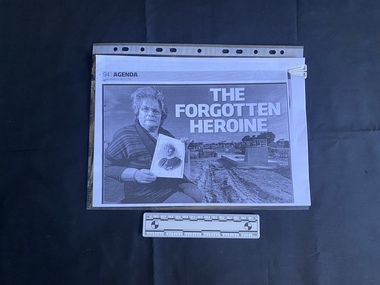
Document - Photocopy of newspaper clipping and related documents, Sunday Herald, The forgotten heroine, 5 December 1914 - May 20 2012
... ...3rd Australian General Hospital...Lee-Archer, Estelle (RRC) listed) Dr Collopy Kildonian Castle London Caulfield Tasmania John Lee Archer Mary Anne Lyons Joseph Lyons Parlianment House Hobart Ross Bridge Alfred Hospital Kyarra 1st Australian General Hospital Swanage Dorset Gallipoli 2nd Australian General Hospital 3rd Australian General Hospital 25th Australian General Hospital 47th Australian Casualty Clearing Station 3rd Australian Casualty Clearing Station 7th Australian General Hospital John Saddington Five photocopied pages held together with a plastic paperclip. ...Newspaper - 'The forgotten heroine' Visitors to New Cheltenham Cemetery in Melbourne would not know that a highly decorated and dedicated nurse was buried there. Her grave is unmarked, there is no reference to her achievements or selfless dedication. Estelle Lee Archer died in 1960, at the Repatriation General Hospital, Heidelberg, age 78 from a perforated ulcer. Margaret Leyden wants the Office of Australian War Graves to recognise that her great-aunt died from war-related injuries and to restore and maintain her grave. Margaret, who never met her aunt, has pieced together her history, including that Estelle's medals, including the prestigious Royal Red Cross 2nd Class for services in support of our ANZACs have ended up in the MAryborough Military & Colonial Museum after they were bought at a second hand shop. Estelle served in seven army units and was in the Middle East, England and France for the duration of World War 1. After the war she continued to dedicate her life to the care of soldiers. Document 1 - digitised copy of 'First Wold War Embarkation Roll' for Estelle Frances Lee-Archer Document 2 - photocopy of 'Austraalian Imperial Force - Nominal Roll' page 7 (Lee-Archer, Estelle Frances listed) Document 3 - photocopy of unknown document (Sis. Lee-Archer, Estelle (RRC) listed) Five photocopied pages held together with a plastic paperclip. Two pages are of a newspaper story, the first showing a full page black and white photo of a seated older woman holding a photo of a woman in nurse's uniform. The second page of the newspaper story has four columns of text with a photo of a war medal and a photo of a standing woman in nurse's uniform beside them. The final three pages are war-time documents.dr collopy, kildonian castle, london, caulfield, tasmania, john lee archer, mary anne lyons, joseph lyons, parlianment house, hobart, ross bridge, alfred hospital, kyarra, 1st australian general hospital, swanage, dorset, gallipoli, 2nd australian general hospital, 3rd australian general hospital, 25th australian general hospital, 47th australian casualty clearing station, 3rd australian casualty clearing station, 7th australian general hospital, john saddington -
 Returned Nurses RSL Sub-branch
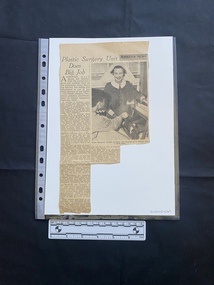
Newspaper - Newspaper clipping, The Herald, Plastic surgery unit does big job, 5 May 1943
... ...3rd Australian General Hospital...Australian Army Nursing Service (AANS) that probably contributes more to human happiness than any other. The unit rebuilds smashed and burned faces and limbs. Sister Margaret Tisdall is sister-in-charge of the AIF Plastic Unit now attached to Heidelberg Hospital and says the work is essential as they help with the restoration of function. Margaret was attached to the 3rd AGH and went to England in 1940, later on to Egypt. where she joined the Plastic Unit when it was formed at the 2nd AGH. World War 2 World War Two WWII Australian Imperial Forces 3rd Australian General ...Few people realise the importance of the Plastic Surgery Unit, a small section of the Australian Army Nursing Service (AANS) that probably contributes more to human happiness than any other. The unit rebuilds smashed and burned faces and limbs. Sister Margaret Tisdall is sister-in-charge of the AIF Plastic Unit now attached to Heidelberg Hospital and says the work is essential as they help with the restoration of function. Margaret was attached to the 3rd AGH and went to England in 1940, later on to Egypt. where she joined the Plastic Unit when it was formed at the 2nd AGH. A newspaper clipping with a large column of text, a small column of text and a large black and white photo of a smiling young woman in nurse's unifom with a patient working on a hand loom.world war 2, world war two, wwii, australian imperial forces, 3rd australian general hospital, 2nd australian general hospital, mary fahle, alfred hospital, e m logan, e i membret, red cross -
 Frankston RSL Sub Branch
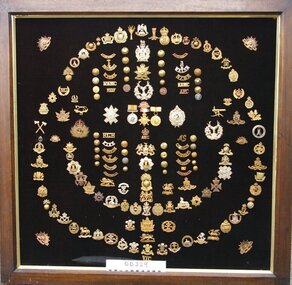
Collection, Military Badges and Insignia
... The collection features a set of three medals as the centrepiece which were awarded to an Australian serviceman, Acting Warrant Officer Alwin Stevens Nicholas, service number 4752 of the 3rd Australian General Hospital, Australian Medical Corp, A.I.F. ...The collection features a set of three medals as the centrepiece which were awarded to an Australian serviceman, Acting Warrant Officer Alwin Stevens Nicholas, service number 4752 of the 3rd Australian General Hospital, Australian Medical Corp, A.I.F. ...Framed collection consisting of a large number of World War 1 era military badges and insignia from Australia, New Zealand, Britain and other countries. The collection features a set of three medals as the centrepiece which were awarded to an Australian serviceman, Acting Warrant Officer Alwin Stevens Nicholas, service number 4752 of the 3rd Australian General Hospital, Australian Medical Corp, A.I.F. The metal badges and insignia are mounted on a black felt cloth background over a wooden backing and housed in a wooden frame. There is no glass front to the frame. for more details about A S Nicholas refer: < https://recordsearch.naa.gov.au/SearchNRetrieve/Interface/ViewImage.aspx?B=7998061 >none -
 Lara RSL Sub Branch
Newspaper, 17th Australian Infantry Brigade, February 22nd 1940
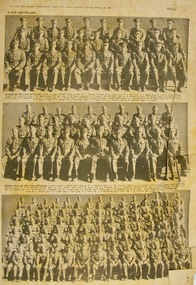
... The Argus 17th Australian Infantry Brigade, Second AIF, Souvenir Supplement, Thursday, February 22, 1940 Page 1 2/5th Battalion - Picture 1 Officers of the 2/5th Battalion; Picture 2 Senior NCO's of the 2/5th Battalion; Picture 3 A Company 2/5th Battalion Page 2 B Company 2/5th Battalion; C Company 2/5th Battalion; D Company 2/5th Battalion Page 3 Headquarters 2/2nd Field Regiment 6th Divisional Artillery; 3rd Battery 2/2nd Field Regiment 6th Divisional Artillery Page 4 Officers, NCO's and men of 2/2nd Field Company, 6th Divisional Engineers; Officers NCO's and men 2/2nd Field Ambulance and 2/2nd Australian General Hospital 6th Divisional Australian Army Medical Corps...The photographs are of national significance as they may reflect the only known photographs of individuals from WW2. aif army 17th brigade second aif 2/5th battalion australian army australian infantry brigade 2/2nd field aumbulance 2/2nd australian general hospital 6th divisional australian army medical corps 6th divisional engineers The Argus 17th Australian Infantry Brigade, Second AIF, Souvenir Supplement, Thursday, February 22, 1940 Page 1 2/5th Battalion - Picture 1 Officers of the 2/5th Battalion; Picture 2 Senior NCO's of the 2/5th Battalion; Picture 3 A Company 2/5th Battalion Page 2 B Company 2/5th Battalion; C Company 2/5th Battalion; D Company 2/5th Battalion Page 3 Headquarters 2/2nd Field Regiment 6th Divisional Artillery; 3rd Battery 2/2nd Field Regiment 6th Divisional Artillery Page 4 Officers, NCO's and men of 2/2nd Field Company, 6th Divisional Engineers; Officers NCO's and men 2/2nd Field Ambulance and 2/2nd Australian General Hospital 6th Divisional Australian Army Medical Corps 4 page newspaper pictures of 17th Brigade, Second AIF 17th Australian Infantry Brigade Newspaper ...The 17th Australian Infantry Brigade was an infantry brigade in the Australian Army. First formed in 1917 during World War I, it did not see any action. Reformed during World War II, before being disbanded in 1946. Today, its name is perpetuated by the 17th Combat Service Support Brigade, which was raised as a logistics formation in May 2006. The 17th Brigade was reformed on 13 October 1939, again as part of the 6th Division, recruited from Victoria. The 17th Brigade fought in the Western Desert Campaign in Libya, the Battle of Greece, the Battle of Wau, the Salamaua-Lae campaign in Papua, and in the Aitape-Wewak campaign in New Guinea. The photographs are of national significance as they may reflect the only known photographs of individuals from WW2.4 page newspaper pictures of 17th Brigade, Second AIFThe Argus 17th Australian Infantry Brigade, Second AIF, Souvenir Supplement, Thursday, February 22, 1940 Page 1 2/5th Battalion - Picture 1 Officers of the 2/5th Battalion; Picture 2 Senior NCO's of the 2/5th Battalion; Picture 3 A Company 2/5th Battalion Page 2 B Company 2/5th Battalion; C Company 2/5th Battalion; D Company 2/5th Battalion Page 3 Headquarters 2/2nd Field Regiment 6th Divisional Artillery; 3rd Battery 2/2nd Field Regiment 6th Divisional Artillery Page 4 Officers, NCO's and men of 2/2nd Field Company, 6th Divisional Engineers; Officers NCO's and men 2/2nd Field Ambulance and 2/2nd Australian General Hospital 6th Divisional Australian Army Medical Corpsaif, army, 17th brigade, second aif, 2/5th battalion, australian army, australian infantry brigade, 2/2nd field aumbulance, 2/2nd australian general hospital, 6th divisional australian army medical corps, 6th divisional engineers -
 Red Cliffs Military Museum
Replica Medals, WW1 & WW11 Medals Awarded to Nathaniel Barclay, (estimated); between 1914 & 1945
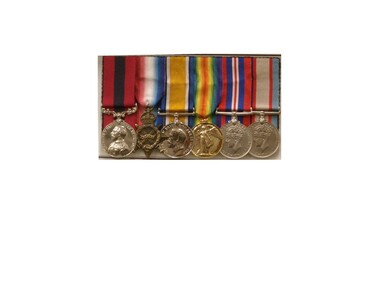
... hospital with pluerisy 12th January 1916. Returned to Australia with enteric per 'Nestor' 9th February 1916.To duty Broadmeadows 4th April 1916. Wmbarked with 4th reinforcements group for the 58th Battalion, 15th Brigade per transport 'Themistocles' 1st August 1916 Returned to England 14th September 1916. Operations France and Flanders from 6th December 1916. To 59th Battalion 29th December 1916. To 5th Division Infantry School 18th February to 28th March 1917 as Lance Corporal. Corporal 7th April 1917. Sergeant 2nd May 1917. To 3rd Southern General...hospital with pluerisy 12th January 1916. Returned to Australia with enteric per 'Nestor' 9th February 1916.To duty Broadmeadows 4th April 1916. Wmbarked with 4th reinforcements group for the 58th Battalion, 15th Brigade per transport 'Themistocles' 1st August 1916 Returned to England 14th September 1916. Operations France and Flanders from 6th December 1916. To 59th Battalion 29th December 1916. To 5th Division Infantry School 18th February to 28th March 1917 as Lance Corporal. Corporal 7th April 1917. Sergeant 2nd May 1917. To 3rd Southern General ...Born 5th October 1895 in Adavoyle, United Kindom Occupation Grocer and later horticulturalist Married after WW1- Wife - Daisy Florence Barclay World War One Staff Sergeant Regimental Number 2139 Enlisted AIF in Melbourne 29th December 1914, having previously served 3 months with the Ulster Volunteers and to camp Broadmeadows, to depot Battalion 29th December 1914. Embarked from Melbourne for the middle East with 3rd reinforcement group for the 5th Battalion, 2nd Brigade, 1st Division, 25th February 1915 per transport 'Runic'. Disembarked Alexandria and to camp Heliopolis, Egypt. Operation Gallipoli from 5th May 1915 with 5th Battalion. Sick with dental problems 2nd Field Ambulance 17th September 1915. To hospital Lemnos 20th December 1915. To Alexandria hospital with pluerisy 12th January 1916. Returned to Australia with enteric per 'Nestor' 9th February 1916.To duty Broadmeadows 4th April 1916. Wmbarked with 4th reinforcements group for the 58th Battalion, 15th Brigade per transport 'Themistocles' 1st August 1916 Returned to England 14th September 1916. Operations France and Flanders from 6th December 1916. To 59th Battalion 29th December 1916. To 5th Division Infantry School 18th February to 28th March 1917 as Lance Corporal. Corporal 7th April 1917. Sergeant 2nd May 1917. To 3rd Southern General Hospital Oxford 4th October 1917. Returned to Melbourne per Transport 'Persic' 12th February 1918. Discharged 14th March 1918. Second World War. Regimental Number V5571 Emlisted in the Australian Military Forces in Royal Park, Melbourne 22nd August 1940 and to 2nd Infantry Training Battalion, Fyansford. Staff Sergeant 24th August 1940. To 2/14th Training Battalion Wangaratta 11th October 1940. To 2/23rd Training Battalion, Wangaratta 18th October, 1940.To Southern Command Training School 26th May 1941.to Camp Bonegilla 15th May 1942. To Camp Caulfield 11th November 1942. Discharged to Reserve Occupation 19th November 1942. Remarks. Awarded 1915-15 Star, British War Medal, and Victory Medal 1914-1919 Awarded Distinguished Conduct Medal as Lance Corporal vide London Gazette 30111 of 31st July 1918. Citation for action on 9th July 1917 during the third Battle of Ypres reads- " For conspicous gallantry and devotion to duty. He rendered invaluable service during operation in carrying important messsages through heavy fire" Awarded War Medal and Australian Service Medal 1939-45 in 1951. Described as 71.5inches tall, medium complexion, blue eyes and brown hair. He died 11th September 1962.WW1 - Distinguished Conduct Medal 1914/15 Star 1914/18 British War Medal Victory Medal WW11 - 1939/45 British War Medal Australian Service Medal 1939/45 All medals with associated coloured ribbons. These are replica medals made in the exact metals as the originals. Also in display is a record of War Service which can be found in the narrative. Noneservice, medal, 1918, citation, ww1, military, gazette, london, ww11, medals, 30111, 31st, july, ypres, distinguished -
 Bendigo Military Museum
Programme - INVITATION, FRAMED, 22.3.1916
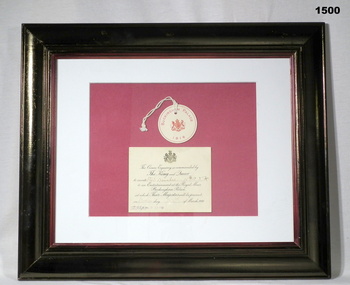
... Embarked for Egypt 2.2.1915, embark for Gallipoli 12.4.1915, WIA 27.8.1915 GSW to left leg severe, admitted 4th Field Ambulance then to Mudros Island, admitted 3rd London General Hospital England 12.9.1915, leg amputated (appears to have been halfway between knee and ankle), embark for Australia 8.5.1916, discharged from the AIF 25.12.1916 medically unfit....Embarked for Egypt 2.2.1915, embark for Gallipoli 12.4.1915, WIA 27.8.1915 GSW to left leg severe, admitted 4th Field Ambulance then to Mudros Island, admitted 3rd London General Hospital England 12.9.1915, leg amputated (appears to have been halfway between knee and ankle), embark for Australia 8.5.1916, discharged from the AIF 25.12.1916 medically unfit. documents - inviation Buckingham palace O’Donahoo In text on back: “Paul O'Donahoo” Framed, wooden, dark lacquer within which is displayed 2 items mounted on red background: 1. ...Robert Raymond O’DONAHOO No 1399 enlisted in the AIF in 2nd reinforcements to 14th Battalion on 19.10.1914 age 21 years 11 months. Embarked for Egypt 2.2.1915, embark for Gallipoli 12.4.1915, WIA 27.8.1915 GSW to left leg severe, admitted 4th Field Ambulance then to Mudros Island, admitted 3rd London General Hospital England 12.9.1915, leg amputated (appears to have been halfway between knee and ankle), embark for Australia 8.5.1916, discharged from the AIF 25.12.1916 medically unfit.Framed, wooden, dark lacquer within which is displayed 2 items mounted on red background: 1. Invitation card with Royal crest from the King & Queen to Pte O'Donahoo, Wednesday 22 March 1916. 2. Red ink, round cardboard disc - Buckingham Palace 1916.In text on back: “Paul O'Donahoo”documents - inviation, buckingham palace, o’donahoo -
 Bendigo Military Museum
Print - PRINT, FRAMED WW1, Reader's Digest (Australia) Pty Limited, 2015
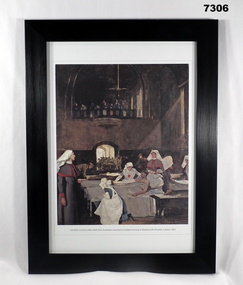
... First Australian wounded at Gallipoli arriving at Wandsworth Hospital, London". 1921. "Served with the Royal Army Medical Corps at 3rd London General Hospital at Wandsworth". 1919 Commissioned to do portrait work for the Australian War Records section. ...First Australian wounded at Gallipoli arriving at Wandsworth Hospital, London". 1921. "Served with the Royal Army Medical Corps at 3rd London General Hospital at Wandsworth". 1919 Commissioned to do portrait work for the Australian War Records section. ...From information book - "Reader's Gigest/ Gallipoli/ 25th Aril 1915 - 9th January 1916/ Centenary Commemorative Prints". Collection of 20 prints Refer Cat No. 7300.Framed print. Print - colour print on paper. Copy of an oil on canvas painting. Depicts a "Hospital ward where several nurses attend a patient in bed", against a background of "beds being made ready in the ward" and "Stretcher bearers carrying in more wounded". Frame - black plastic framing with glass front and MDF board backing with adhered black paper.Details below print - in black ink. "GEORGE COATES (1869 - 1930). First Australian wounded at Gallipoli arriving at Wandsworth Hospital, London". 1921. "Served with the Royal Army Medical Corps at 3rd London General Hospital at Wandsworth". 1919 Commissioned to do portrait work for the Australian War Records section. framed accessories, pprints, ww1, gallipoli, centenary -
 Bendigo Historical Society Inc.
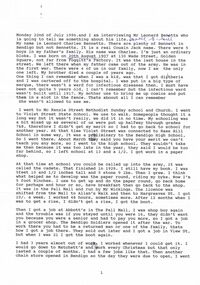
Document - LEN BENNETTS COLLECTION: INTERVIEW TRANSRIPT, 1996
... PERSON Individual leonard bennetts Mr Leonard Bennetts Isabel E Gill Foggitt's Factory McKenzie Street Methodist Sunday School & Church Violet Street State School Raes Hill School Bendigo High School Mr Wickings Allan's Walk Abbott's Boot Shop Matchett's Crofts Gwen Norris Jean Norris John Bennetts Peter Bennetts Army Survey Corp 3rd Tank Transporter Company 2/16th (Australian General Transport Company) A G T Gordon Norris Sylva Evans Reg Ford Hams Jack Thomas Sidy Waight Shamrock Hotel S E C Post Office Dudley House Alexander Fountain The Temperance Hall Sandhurst Trustee Building Fire Station The Hospital Anne Caudle Centre Isobel Gill INTERVIEW: Five typed pages of an interview with Mr Leonard Charles Bennetts on Monday 22nd of July 1996. ...INTERVIEW: Five typed pages of an interview with Mr Leonard Charles Bennetts on Monday 22nd of July 1996. Mentioned are his time as a child, his work, life in the Army, his employment after the Army, changes in Bendigo in his time, and a little about family. Interview recorded by Isobel GillIsobel Gillperson, individual, leonard bennetts, mr leonard bennetts, isabel e gill, foggitt's factory, mckenzie street methodist sunday school & church, violet street state school, raes hill school, bendigo high school, mr wickings, allan's walk, abbott's boot shop, matchett's, crofts, gwen norris, jean norris, john bennetts, peter bennetts, army survey corp, 3rd tank transporter company, 2/16th (australian general transport company) a g t, gordon norris, sylva evans, reg ford, hams, jack thomas, sidy waight, shamrock hotel, s e c, post office, dudley house, alexander fountain, the temperance hall, sandhurst trustee building, fire station, the hospital, anne caudle centre -
 Alfred Hospital Nurses League - Nursing History Collection
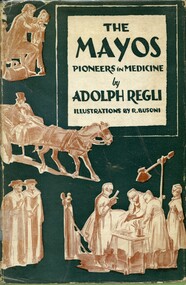
Book - Illustrated book, Adolph Regli 1896-1952 et al, The Mayos - pioneers in medicine, 1942
... On the third page is a printed bookplate: inside a decorative border the words Alfred Hospital Training School for Nurses (above) the hospital logo Melbourne S.1 Awarded to 'Lorna Jessie Gordon' (handwritten) for 'General proficiency 3rd year First Prize' (handwritten) date 'July 1943'. On pages 84 and 197 two sentences have been underlined in lead pencil (references to Australia and New Zealand)....On the third page is a printed bookplate: inside a decorative border the words Alfred Hospital Training School for Nurses (above) the hospital logo Melbourne S.1 Awarded to 'Lorna Jessie Gordon' (handwritten) for 'General proficiency 3rd year First Prize' (handwritten) date 'July 1943'. On pages 84 and 197 two sentences have been underlined in lead pencil (references to Australia and New Zealand). ...This book chronicles the lives and careers of the Mayo family, particularly Dr. William Worrall Mayo and his sons Dr. William (Will) and Dr. Charles (Charlie). It tells the story of how Dr William started practicing in rural Minnesota and how with his sons (Dr Will and Dr Charlie) helped build the Mayo Clinic into a world-renowned institution.Illustrated book with dustjacket. The book has a light green cover with purple print. on the front cover is the letter 'M' inside a circle with a snake coiled around a staff. Title, author's surname and publishers name are printed on the spine. The dustjacket has been covered with a clear protective film. The dust jacket has a dark green background, on the front on a cream square the title, author's and illustrator's names are printed in dark green, there are also four illustrations in light brown ink of doctors in various roles (Rafaello Busoni) Title, auth's and publisher's name are printed on the spine. There is a brown and white photograph of the author on the back of the dustjacket, along with some information about him.non-fictionThis book chronicles the lives and careers of the Mayo family, particularly Dr. William Worrall Mayo and his sons Dr. William (Will) and Dr. Charles (Charlie). It tells the story of how Dr William started practicing in rural Minnesota and how with his sons (Dr Will and Dr Charlie) helped build the Mayo Clinic into a world-renowned institution.wlliam worrall mayo, william james mayo, charles horace mayo, mayo clinic -
 Bendigo Military Museum
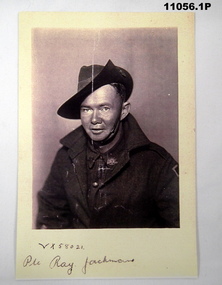
Photograph - THREE BROTHERS, WW2
... The three Brothers, Ron, Ray and Ernie. .1) Raymond Arthur Jackman VX58021 (born Dingee, enlisted Royal Park) on 19.6.1941 in General reinforcements age 27 years, embark for the Middle East 10.9.1941, hospital with Mumps 23.10.1941, rejoin Unit 25.11.1941, embark for Australia via Ceylon 12.3.1942, disembark Australia 4.8.1942, Embark for New Guinea 13.10.1942, Suffers from 2 bouts of Dysentry, KIA at Salamua 11.9.1943. .2) Ronald James Jackman VX145503 (born Dingee, enlist Cowra NSW) on 12.7.1943 age 19 years. Initially enlisted in the CMF on 22.2.1943 No V506796, transfers to the AIF 12.7.1943 in 2/3rd...The three Brothers, Ron, Ray and Ernie. .1) Raymond Arthur Jackman VX58021 (born Dingee, enlisted Royal Park) on 19.6.1941 in General reinforcements age 27 years, embark for the Middle East 10.9.1941, hospital with Mumps 23.10.1941, rejoin Unit 25.11.1941, embark for Australia via Ceylon 12.3.1942, disembark Australia 4.8.1942, Embark for New Guinea 13.10.1942, Suffers from 2 bouts of Dysentry, KIA at Salamua 11.9.1943. .2) Ronald James Jackman VX145503 (born Dingee, enlist Cowra NSW) on 12.7.1943 age 19 years. Initially enlisted in the CMF on 22.2.1943 No V506796, transfers to the AIF 12.7.1943 in 2/3rd ...The three Brothers, Ron, Ray and Ernie. .1) Raymond Arthur Jackman VX58021 (born Dingee, enlisted Royal Park) on 19.6.1941 in General reinforcements age 27 years, embark for the Middle East 10.9.1941, hospital with Mumps 23.10.1941, rejoin Unit 25.11.1941, embark for Australia via Ceylon 12.3.1942, disembark Australia 4.8.1942, Embark for New Guinea 13.10.1942, Suffers from 2 bouts of Dysentry, KIA at Salamua 11.9.1943. .2) Ronald James Jackman VX145503 (born Dingee, enlist Cowra NSW) on 12.7.1943 age 19 years. Initially enlisted in the CMF on 22.2.1943 No V506796, transfers to the AIF 12.7.1943 in 2/3rd Bn then to 2/7th BN 25.4 1944, embark for New Guinea, KIA 12.4.1945 at Aitape. .3) Ernest Alfred Jackman, refer Cat No 10492P for his service details, Cat No 8278 for his RSL Details. Photographs B & W with yellow/brown edging, copies of the originals, portraits of Soldiers in Uniform..1) At the bottom, "VX58021 Pte Ray Jackman" .2) "Vincent Kelly Bendigo" (photographers) .3) "Vincent Kelly Bendigo"photographs, eajackman
