
Showing 50 items matching "807"
-
 Bendigo Regional Archives Centre
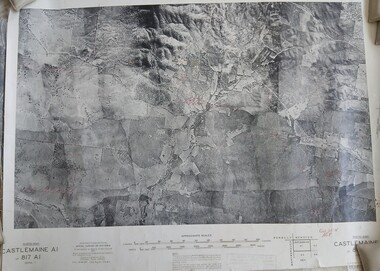
Photograph (item) - Set of 8 1945 B& W Photomaps, mounted on linen, most with geological annotations, as follows: Castlemaine A1, 817 A1, Zone 7, 1945; Bendigo A2 -Eaglehawk Aqueduct, Bullock Creek and Lockwood; Bendigo A4, 807 A4, Zone 7, 1945; Bendigo B1 - Golden Square, Kangaroo Flat, Splitters Creek, Strathfieldsaye Creek, Sheepwash Creek, Spring Gully Reservoir; Bendigo B3, 807 B3, Zone 7, 1945; Bendigo C3, 807 C3, Zone 7, 1945; Bendigo D3, 807 D3, Zone 7, 1945; Huntly C4 - Eaglehawk, Marong, Myers Flat, 1945
... Set of 8 1945 B& W Photomaps, mounted on linen, most with geological annotations, as follows: Castlemaine A1, 817 A1, Zone 7, 1945; Bendigo A2 -Eaglehawk Aqueduct, Bullock Creek and Lockwood; Bendigo A4, 807 A4, Zone 7, 1945; Bendigo B1 - Golden Square, Kangaroo Flat, Splitters Creek, Strathfieldsaye Creek, Sheepwash Creek, Spring Gully Reservoir; Bendigo B3, 807 B3, Zone 7, 1945; Bendigo C3, 807 C3, Zone 7, 1945; Bendigo D3, 807 D3, Zone 7, 1945; Huntly C4 - Eaglehawk, Marong, Myers Flat...Phtotomap Printed aerial photographs mounted on linen Set of 8 1945 B& W Photomaps, mounted on linen, most with geological annotations, as follows: Castlemaine A1, 817 A1, Zone 7, 1945; Bendigo A2 -Eaglehawk Aqueduct, Bullock Creek and Lockwood; Bendigo A4, 807 A4, Zone 7, 1945; Bendigo B1 - Golden Square, Kangaroo Flat, Splitters Creek, Strathfieldsaye Creek, Sheepwash Creek, Spring Gully Reservoir; Bendigo B3, 807 B3, Zone 7, 1945; Bendigo C3, 807 C3, Zone 7, 1945; Bendigo D3, 807 D3, Zone 7, 1945; Huntly C4 - Eaglehawk, Marong, Myers Flat Photograph Set of 8 1945 B& W Photomaps, mounted on linen, most with geological annotations, as follows: Castlemaine A1, 817 A1, Zone 7, 1945; Bendigo A2 -Eaglehawk Aqueduct, Bullock Creek and Lockwood; Bendigo A4, 807 A4, Zone 7, 1945; Bendigo B1 - Golden Square, Kangaroo Flat, Splitters Creek, Strathfieldsaye Creek, Sheepwash Creek, Spring Gully Reservoir; Bendigo B3, 807 B3, Zone 7, 1945; Bendigo C3, 807 C3, Zone 7, 1945; Bendigo D3, 807 D3, Zone 7, 1945; Huntly C4 - Eaglehawk, Marong, Myers Flat ...Phtotomap -
 Moorabbin Air Museum
Manual (item) - Vickers Viscount V 807 Diagrams, Vickers Viscount V 807 Diagrams New Zealand National Airways Corporation Airframe, Oxygen, Refuelling
... Vickers Viscount V 807 Diagrams New Zealand National Airways Corporation Airframe, Oxygen, Refuelling...Ring binder Vickers Viscount V 807 Diagrams New Zealand National Airways Corporation Airframe, Oxygen, Refuelling Manual Vickers Viscount V 807 Diagrams ... -
 City of Moorabbin Historical Society (Operating the Box Cottage Museum)
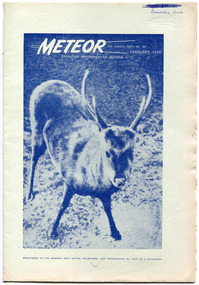
Magazine - Meteor The School Paper 1970 - 11 Editions, Albert J Mullett Government Printer for Education Dept Victoria, 1970
... Issue no 807 - 828 of The School Paper Feb 1970 - Dec 1970, 11 Editions issued for Victorian State School students by Education Department of Victoria ....METEOR / The School Paper / No. 807 February 1970 to No. 817 December 1970 Education Dept of Victoria Signed Amanda Cook ...Issue no 807 - 828 of The School Paper Feb 1970 - Dec 1970, 11 Editions issued for Victorian State School students by Education Department of Victoria . ...Issue no 807 - 828 of The School Paper Feb 1970 - Dec 1970, 11 Editions issued for Victorian State School students by Education Department of Victoria .Issued by the Education Department of Victoria, printed A. C. Brooks, Government Printer, MelbourneMagazines distributed by the Education Department of Victoria to State School Children.METEOR / The School Paper / No. 807 February 1970 to No. 817 December 1970 Education Dept of Victoria Signed Amanda Cook education, victoria, australian history, victorian education department -
 Melbourne Tram Museum
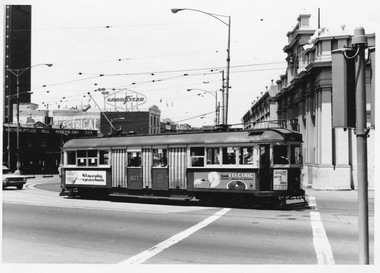
Photograph - W5 807 at Victoria Market, 1960s
... ...807...West Maribrynong bound W5 807 turns rounds corner of Elizabeth and Victoria Streets at the Queen Victoria Market. ...West Maribrynong bound W5 807 turns rounds corner of Elizabeth and Victoria Streets at the Queen Victoria Market. ...West Maribrynong bound W5 807 turns rounds corner of Elizabeth and Victoria Streets at the Queen Victoria Market. All offside weather blinds are down yet some windows are open in the saloons. Yields information about Elizabeth Street tramsBlack and white photograph with ink stamp on rearInk on rear: 'TMSV 332 Flinders St Melbourne 3000'.weather blinds, west maribrynong, 807, w5, elizabeth, victoria street, queen victoria market, saloon -
 Orbost & District Historical Society
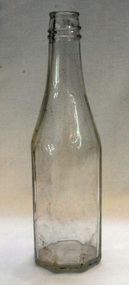
bottle, 1920's
... on base - 807 M161...This is an example of a typical glass container used to hold sauce. container glass-bottle on base - 807 M161 A clear glass bottle with the lower half being.octagonal sided. ...This is an example of a typical glass container used to hold sauce.A clear glass bottle with the lower half being.octagonal sided. It is possibly a sauce bottle and would have had a crown seal.on base - 807 M161container glass-bottle -
Port Melbourne Historical & Preservation Society
Plan - Proposed layout for Murphy's Reserve, Fred Cook, City Engineer, 1948
... Notes in pencil on back, also numeral '807'...Built Environment - Recreational facilities Parks and Gardens Sport - Recreational Grounds City Engineers Fred COOK Notes in pencil on back, also numeral '807' Small (reduced) copy of a 1948 pencil drawing of proposed layout of Murphy's Reserve (original in Port Phillip City Collection) Plan Proposed layout for Murphy's Reserve Fred Cook, City Engineer ...Small (reduced) copy of a 1948 pencil drawing of proposed layout of Murphy's Reserve (original in Port Phillip City Collection)Notes in pencil on back, also numeral '807'built environment - recreational facilities, parks and gardens, sport - recreational grounds, city engineers, fred cook -
Emerald Museum & Nobelius Heritage Park
Domestic object - Ceramic vases, Unknown maker, 1920s-1940s
... Back of VEMU2176.1: '807' Back of VEMU2176.2: '603'...Jock Nobelius Flo Nobelius vase Emerald Victoria Australia Carl Axel Nobelius Back of VEMU2176.1: '807' Back of VEMU2176.2: '603' Two beige ceramic vases with decorative floral engraving. ...Jock Nobelius was one of the sons of Carl Axel Nobelius who established the renowned Gembrook Nurseries.These vases are an example of vases used by the Nobelius family in Emerald in the first part of the 20th century.Two beige ceramic vases with decorative floral engraving. Both have scalloped edges. The first vase is an inverted 'A' shape with a narrow base and wide top and the second vase is 'boat shaped'. Owned by Jock and Flo Nobelius.Back of VEMU2176.1: '807' Back of VEMU2176.2: '603'jock nobelius, flo nobelius, vase, emerald, victoria, australia, carl axel nobelius -
4th/19th Prince of Wales's Light Horse Regiment Unit History Room
Technical Manual, 2 1/2 Ton 6x6, 2 1/2 to 5 Ton 6x4 Trucks Studebaker Models & REO 2 1/2 Ton 6x6 Truck, 1943
... TM 9-807 War Department Technical Manual...Trucks technical manuals Studebaker TM 9-807 War Department Technical Manual Soft covered technical manual 2 1/2 Ton 6x6, 2 1/2 to 5 Ton 6x4 Trucks Studebaker Models & REO 2 1/2 Ton 6x6 Truck Technical Manual ...Soft covered technical manualTM 9-807 War Department Technical Manualtrucks, technical manuals, studebaker -
 Ballarat Tramway Museum
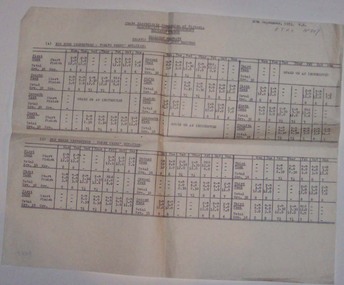
Document - Roster, State Electricity Commission of Victoria (SECV), "Traffic Inspectors Duty Rosters", 30/09/1953 12:00:00 AM
... On top right hand corner in black ink "BTPS No. 807"...Trams tramways Timetables SEC Ballarat Crews Inspectors On top right hand corner in black ink "BTPS No. 807" Typed sheet, carbon copy, giving two forms of rosters for Traffic Inspectors. ...Demonstrates aspects of the Ballarat Tramways management system of Traffic Inspector rosters and that they worked a 38 week. Gives two different arrangements.Typed sheet, carbon copy, giving two forms of rosters for Traffic Inspectors. Titled "Traffic Inspectors Duty Rosters" and dated 30/9/1953 has rosters for (A) - four traffic inspectors - twelve week rotation and (B) for three inspectors - three weeks rotation. Shows the hours of work (all 38 hour week), starting and finishing times, for each day of the week. Did it change with the number of inspectors available? That is with one of the four being on leave. See also Reg. Item 3422 for the 1966 arrangements.On top right hand corner in black ink "BTPS No. 807"trams, tramways, timetables, sec, ballarat, crews, inspectors -
 Lara RSL Sub Branch
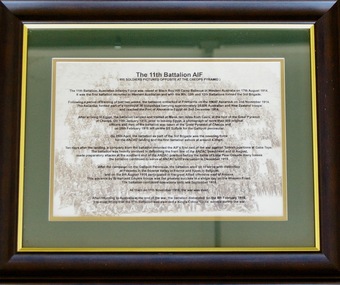
Picture, The 11th Battalion AIF at Cheops
... Rectangular framed print which describes the famous photo of the 11th AIF Battalion posing on the cheops pyramid (Catalogue item 807)...Background watermark of the photo of troops on the pyramid Rectangular framed print which describes the famous photo of the 11th AIF Battalion posing on the cheops pyramid (Catalogue item 807) The 11th Battalion AIF at Cheops Picture ...Details of the famous 11 Battalion photo posing on the Cheops Pyramid at Mena 10 miles from Cairo. Also includes a brief history of the Battalion campaigns. Background watermark of the photo of troops on the pyramid. The Battalion returned to Australia at the end of war and was disbanded on 6th of February 1919. Awarded a Kings colour for its service.Famous photo of the 11th Battalion (800 men) posing on the Cheops Pyramid on the 10th of January 1915.Rectangular framed print which describes the famous photo of the 11th AIF Battalion posing on the cheops pyramid (Catalogue item 807)Printed details of the famous 11 Battalion photo posing on the Cheops Pyramid at Mena 10 miles from Cairo. Also includes a brief history of the Battalion campaigns. Background watermark of the photo of troops on the pyramid11th battalion cairo cheops blackboy hill cheops cairo egypt ypres somme -
 Anglesea and District Historical Society
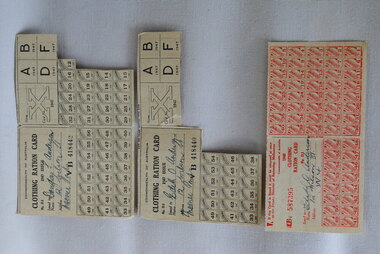
Ration Coupons, H.E. Daw, Government Printer, 1947 to 1948
... Ration cards owned by Edith D Anderson, 12 Wilson St, Moonee Ponds. 807/1 1948 Clothing Ration Card. Rg D1 - printed in red - coupons numbering 1 to 56 (B587395) 807/2 1947 Clothing Ration Card. ...Ration cards owned by Edith D Anderson, 12 Wilson St, Moonee Ponds. 807/1 1948 Clothing Ration Card. Rg D1 - printed in red - coupons numbering 1 to 56 (B587395) 807/2 1947 Clothing Ration Card. ...Ration cards owned by Edith D Anderson, 12 Wilson St, Moonee Ponds. 807/1 1948 Clothing Ration Card. Rg D1 - printed in red - coupons numbering 1 to 56 (B587395) 807/2 1947 Clothing Ration Card. Rg D1 - printed in black - coupons numbering from 33-38, 41-46, 49-54. Also has A - 1947, B1947, D1947, F1947 (B418440) 807/3 1947 Clothing Ration Card. Douglas Anderson, 12 Wilson St., Moonee Ponds. Nos 12 to 56 (B418442)Commonwealth of Australia. Described above - front. Back: If this rationing card is found it must be returned at once to THE DEPUTY DIRECTOR OF RATIONING, Cavendish House, 159 Flinders Lane, Melbourne.ww2, home fronts, ration coupons, rationing -
 National Wool Museum
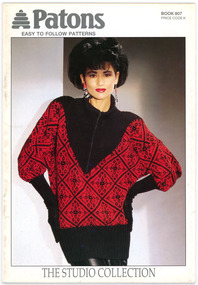
Book - Pattern Book, Patons Knitting Book, No.807, Patons and Baldwins, 1980s
... front: [printed] Patons / EASY TO FOLLOW PATTERNS / BOOK 807 / PRICE CODE K / THE STUDIO COLLECTION...Book Pattern Book, Patons Knitting Book, No.807 Patons and Baldwins ...Forty four page knitting pattern book featuring black and white text and colour images. The colour cover features a woman wearing a black and red knitted jumper.front: [printed] Patons / EASY TO FOLLOW PATTERNS / BOOK 807 / PRICE CODE K / THE STUDIO COLLECTIONfashion, design, knitwear, home made, wool, pattern book, patons -
 City of Moorabbin Historical Society (Operating the Box Cottage Museum)
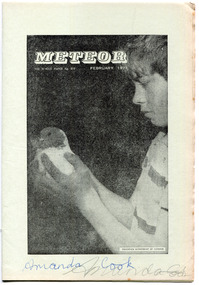
Magazine - Meteor The School Paper 1971 - 11 Editions, Albert J Mullett Government Printer for Education Dept Victoria, 1971
... Issue no 807 - 828 of The School Paper Feb 1970 - 11 Editions issued for Victorian State School students by Education Department of Victoria ....Issue no 807 - 828 of The School Paper Feb 1970 - 11 Editions issued for Victorian State School students by Education Department of Victoria . ...Issue no 807 - 828 of The School Paper Feb 1970 - 11 Editions issued for Victorian State School students by Education Department of Victoria .Issued by the Education Department of Victoria, printed A. C. Brooks, Government Printer, MelbourneMagazines distributed by the Education Department of Victoria to State School Children.METEOR / The School Paper / February 1971 to December 1971 Education Dept of Victoria Signed Amanda Cook education, victoria, australian history, victorian education department -
 Federation University Historical Collection
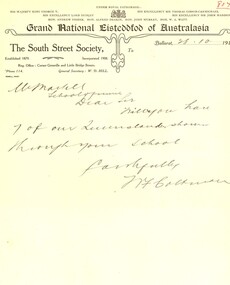
Letter, South Street Society to Ballarat School of Mines, 1911
... .1) written in black ink on lower right " MM 26/5/11" .2) written in red ink on top right "807"...In 1911 the registered offices were located at the corner of Grenville Street and Little Bridge Streets. grand national eisteddfod grand national eisteddfod of australasia south street society south street f.m. coltman coltman w.d. hill ballarat school of mines coronation george v .1) written in black ink on lower right " MM 26/5/11" .2) written in red ink on top right "807" To letters to the Ballarat School of Mines on Grand National Eisteddfod of Australasia Letterhead (South Street Society) .1)Typed letter (Carbon) inviting the Council of the Ballarat School of Mines to a patriotic demonstration to be held at the Coliseum Ballarat on 22 June 1911 to celebrate the coronation of King George V. he letter is signed by W.D. ...The Grand National Eisteddfod of Australasia, South Street Socitey was established in 1879, and incorporated in 1908. In 1911 the registered offices were located at the corner of Grenville Street and Little Bridge Streets.To letters to the Ballarat School of Mines on Grand National Eisteddfod of Australasia Letterhead (South Street Society) .1)Typed letter (Carbon) inviting the Council of the Ballarat School of Mines to a patriotic demonstration to be held at the Coliseum Ballarat on 22 June 1911 to celebrate the coronation of King George V. he letter is signed by W.D. Hill (Secretary) .2) handwritten letter requesting a tour of the Ballarat School of Mines by seven Queenslanders. The letter is signed by F. Coltman.1) written in black ink on lower right " MM 26/5/11" .2) written in red ink on top right "807"grand national eisteddfod, grand national eisteddfod of australasia, south street society, south street, f.m. coltman, coltman, w.d. hill, ballarat school of mines, coronation, george v -
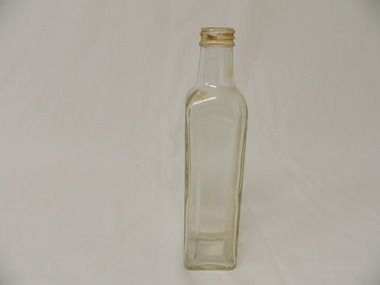 Kiewa Valley Historical Society
Bottle - Coffee / Chicory, 1950's
... Below this and across the middle '1129' and 'M' underneath. '807' is in one corner....Below this and across the middle '1129' and 'M' underneath. '807' is in one corner. Clear glass bottle used for storing coffee / chicory or sauce. ...Coffee / chicory and sauce were stored in bottles bought locally or at a large city store on a shopping expedition. The shape of the bottles changed as did he stopper used to seal it.Historical: Change of bottles - shape, glass, stopper, embossing, use Aesthetic: Display showing embossing and shape.Clear glass bottle used for storing coffee / chicory or sauce. The base is a square. The 4 sides are straight for two thirds of the way up then taper quickly to the neck and then the screw top opening. It is embossed on the base. The base is slightly indented.Base: Common seal: An 'A' with 'G' in the top half (of the A) and 'M' in the bottom half. Below this and across the middle '1129' and 'M' underneath. '807' is in one corner.bottle, coffee, chicory, sauce, household -
 Melbourne Tram Museum
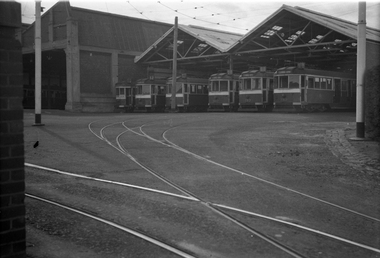
Negative, Wal Jack, 17/05/1942 12:00:00 AM
... Black and white negative, by Wal Jack, of Essendon Tram depot with: W2 class, W5 794. 807, 793 and 782, all with white bumpers and white stripes. ...Trams tramways Essendon Depot World War 2 W5 class W2 class tram 794 tram 807 tram 793 tram 782 Black and white negative, by Wal Jack, of Essendon Tram depot with: W2 class, W5 794. 807, 793 and 782, all with white bumpers and white stripes. ...Black and white negative, by Wal Jack, of Essendon Tram depot with: W2 class, W5 794. 807, 793 and 782, all with white bumpers and white stripes. Photo dated 17-5-42 in the Wal Jack album along with details of the location and the tramcars.trams, tramways, essendon depot, world war 2, w5 class, w2 class, tram 794, tram 807, tram 793, tram 782 -
 Bendigo Historical Society Inc.
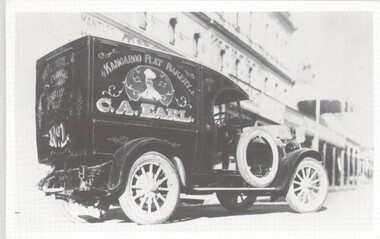
Photograph - HARRY BIGGS COLLECTION: BAKER DELIVERY VAN, 1920's
... On the rear doors of the van is Phone 807 (or 817), and 'No, 1'...On the rear doors of the van is Phone 807 (or 817), and 'No, 1' Photograph HARRY BIGGS COLLECTION: BAKER DELIVERY VAN ...Photograph (proof 23) of a delivery van standing outside the Beehive building in Pall Mall. Painted on the side of the van is: Kangaroo Flat Bakery and a picture of a baker surrounded by ornate scroll work, below this is the name 'C.A. Earl'. On the rear doors of the van is Phone 807 (or 817), and 'No, 1'organization, business, bakery, kangaroo flat bakery, c.a. earl -
 Melbourne Tram Museum
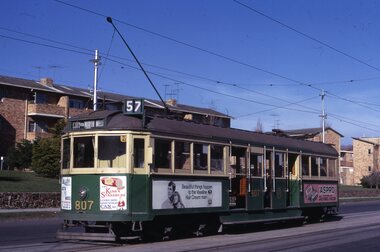
Slide, Keith Kings, 7/07/1969 12:00:00 AM
... 35mm Kodak white cardboard colour slide by Keith Kings of - W5 807, fitted with square windshields on a route 57, City via North Melbourne in Union Road at cnr of Geddes St, 7/7/1969. ...Trams tramways W5 class Union Road Route 57 City via North Melbourne tram 807 Keith Kings stamp and number "56-26", with details of exposure. ...35mm Kodak white cardboard colour slide by Keith Kings of - W5 807, fitted with square windshields on a route 57, City via North Melbourne in Union Road at cnr of Geddes St, 7/7/1969. Trams adverts for Aspro, Vaseline Hair Cream, Kings StrasburgKeith Kings stamp and number "56-26", with details of exposure. in ink "MMTB W5 with square cornered glass windshield, Union Road, cnr Geddes St Ascot Vale 7/7/69"trams, tramways, w5 class, union road, route 57, city via north melbourne, tram 807 -
 Whitehorse Historical Society Inc.
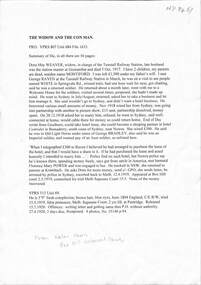
Document, The Widow and the Con Man
... Information from PRO:VPRS 807 Unit 684 File 1633 and VPRS 515 Unit 69...Information from PRO:VPRS 807 Unit 684 File 1633 and VPRS 515 Unit 69 Weaver Dora May Raven George Tunstall Railway Station The account of how Dora May Weaver was duped out of money by George Raven From Helen Harris Box Hill Historical Society The Widow and the Con Man Document Harris, Helen ...The account of how Dora May Weaver was duped out of money by George Ravennon-fictionThe account of how Dora May Weaver was duped out of money by George Ravenweaver dora may, raven george, tunstall railway station -
Melbourne Tram Museum
Newspaper, The Herald, “And Four Were Hurt”, 13/02/1969 12:00:00 AM
... Tram crash Holden St, North Fitzroy Four people were treated at St Vincent's Hospital, tram had no passengers and was on the way to Preston Workshops, possibly tram 907, could be 807...Tram crash Holden St, North Fitzroy Four people were treated at St Vincent's Hospital, tram had no passengers and was on the way to Preston Workshops, possibly tram 907, could be 807 “And Four Were Hurt” Newspaper The Herald ...“And Four Were Hurt” Photos and text from the Herald 13/2/69 showing damage to bus and tram. Tram crash Holden St, North Fitzroy Four people were treated at St Vincent's Hospital, tram had no passengers and was on the way to Preston Workshops, possibly tram 907, could be 807trams, tramways, accidents, collision, holden st, buses, preston workshops, tram 907? -
 Lara RSL Sub Branch
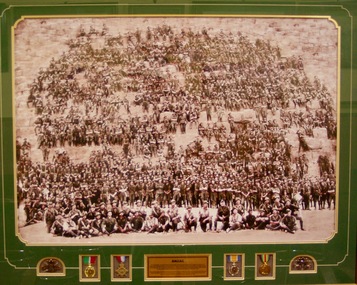
Framed Print, Original photo 28/2/1915
The 11th Battalion, Australian Infantry was raised at Blackboy Hill Camp Bellevue in Western Australia on the 17th of August 1914. Following a period of training of just 2 weeks the Battalion embarked at Fremantle on the HMAS Ascantius on the 11th of November 1918. The Ascantius formed part of a convoy 38 troop ships carrying approximately 35,000 Australians and New Zealanders and reached the port of Alexandria Egypt on the 3rd of December 1914. After arriving in Egypt, the Battalion camped and trained at Mena, ten miles from Cairo at the foot of the great pyramid Cheops. On the 10th of January 1915 prior to leaving Egypt, a photograph of more than 800 original officers and men of the battalion was undertaken at the great pyramid of Cheops on the 28th of February 1915Historical photograph of the 11th Infantry Btn taken on the Cheops Pyramid Mena Egypt on the 28/2/1914Plastic framed print behind glass with plaque medals and two rising sun badgesAnzac and plaque describing the historical significance.11 battalion aif cheop pyramid egypt photo pegan anzac mena hmas ascantius -
 Flagstaff Hill Maritime Museum and Village
Animal specimen - Whale Jaw Bone, Undetermined
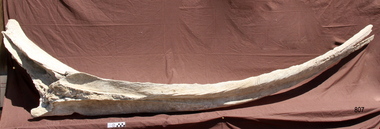
Prior to carrying out a detailed condition report of the cetacean skeletons, it is useful to have an understanding of the materials we are likely to encounter, in terms of structure and chemistry. This entry invites you to join in learning about the composition of whale bone and oil. Whale bone (Cetacean) bone is comprised of a composite structure of both an inorganic matrix of mainly hydroxylapatite (a calcium phosphate mineral), providing strength and rigidity, as well as an organic protein ‘scaffolding’ of mainly collagen, facilitating growth and repair (O’Connor 2008, CCI 2010). Collagen is also the structural protein component in cartilage between the whale vertebrae and attached to the fins of both the Killer Whale and the Dolphin. Relative proportions in the bone composition (affecting density), are linked with the feeding habits and mechanical stresses typically endured by bones of particular whale types. A Sperm Whale (Physeter macrocephalus Linnaeus, 1758) skeleton (toothed) thus has a higher mineral value (~67%) than a Fin Whale (Balaenoptera physalus Linnaeus, 1758) (baleen) (~60%) (Turner Walker 2012). The internal structure of bone can be divided into compact and cancellous bone. In whales, load-bearing structures such as mandibles and upper limb bones (e.g. humerus, sternum) are largely composed of compact bone (Turner Walker 2012). This consists of lamella concentrically deposited around the longitudinal axis and is permeated by fluid carrying channels (O’Connor 2008). Cancellous (spongy) bone, with a highly porous angular network of trabeculae, is less stiff and thus found in whale ribs and vertebrae (Turner Walker 2012). Whale oil Whales not only carry a thick layer of fat (blubber) in the soft tissue of their body for heat insulation and as a food store while they are alive, but also hold large oil (lipid) reserves in their porous bones. Following maceration of the whale skeleton after death to remove the soft tissue, the bones retain a high lipid content (Higgs et. al 2010). Particularly bones with a spongy (porous) structure have a high capacity to hold oil-rich marrow. Comparative data of various whale species suggests the skull, particularly the cranium and mandible bones are particularly oil rich. Along the vertebral column, the lipid content is reduced, particularly in the thoracic vertebrae (~10-25%), yet greatly increases from the lumbar to the caudal vertebrae (~40-55%). The chest area (scapula, sternum and ribs) show a mid-range lipid content (~15-30%), with vertically orientated ribs being more heavily soaked lower down (Turner Walker 2012, Higgs et. al 2010). Whale oil is largely composed of triglycerides (molecules of fatty acids attached to a glycerol molecule). In Arctic whales a higher proportion of unsaturated, versus saturated fatty acids make up the lipid. Unsaturated fatty acids (with double or triple carbon bonds causing chain kinks, preventing close packing (solidifying) of molecules), are more likely to be liquid (oil), versus solid (fat) at room temperature (Smith and March 2007). Objects Made From the Whaling Industry We all know that men set forth in sailing ships and risked their lives to harpoon whales on the open seas throughout the 1800s. And while Moby Dick and other tales have made whaling stories immortal, people today generally don't appreciate that the whalers were part of a well-organized industry. The ships that set out from ports in New England roamed as far as the Pacific in hunt of specific species of whales. Adventure may have been the draw for some whalers, but for the captains who owned whaling ships, and the investors which financed voyages, there was a considerable monetary payoff. The gigantic carcasses of whales were chopped and boiled down and turned into products such as the fine oil needed to lubricate increasing advanced machine tools. And beyond the oil derived from whales, even their bones, in an era before the invention of plastic, was used to make a wide variety of consumer goods. In short, whales were a valuable natural resource the same as wood, minerals, or petroleum we now pump from the ground. Oil From Whale’s Blubber Oil was the main product sought from whales, and it was used to lubricate machinery and to provide illumination by burning it in lamps. When a whale was killed, it was towed to the ship and its blubber, the thick insulating fat under its skin, would be peeled and cut from its carcass in a process known as “flensing.” The blubber was minced into chunks and boiled in large vats on board the whaling ship, producing oil. The oil taken from whale blubber was packaged in casks and transported back to the whaling ship’s home port (such as New Bedford, Massachusetts, the busiest American whaling port in the mid-1800s). From the ports it would be sold and transported across the country and would find its way into a huge variety of products. Whale oil, in addition to be used for lubrication and illumination, was also used to manufacture soaps, paint, and varnish. Whale oil was also utilized in some processes used to manufacture textiles and rope. Spermaceti, a Highly Regarded Oil A peculiar oil found in the head of the sperm whale, spermaceti, was highly prized. The oil was waxy, and was commonly used in making candles. In fact, candles made of spermaceti were considered the best in the world, producing a bright clear flame without an excess of smoke. Spermaceti was also used, distilled in liquid form, as an oil to fuel lamps. The main American whaling port, New Bedford, Massachusetts, was thus known as "The City That Lit the World." When John Adams was the ambassador to Great Britain before serving as president he recorded in his diary a conversation about spermaceti he had with the British Prime Minister William Pitt. Adams, keen to promote the New England whaling industry, was trying to convince the British to import spermaceti sold by American whalers, which the British could use to fuel street lamps. The British were not interested. In his diary, Adams wrote that he told Pitt, “the fat of the spermaceti whale gives the clearest and most beautiful flame of any substance that is known in nature, and we are surprised you prefer darkness, and consequent robberies, burglaries, and murders in your streets to receiving as a remittance our spermaceti oil.” Despite the failed sales pitch John Adams made in the late 1700s, the American whaling industry boomed in the early to mid-1800s. And spermaceti was a major component of that success. Spermaceti could be refined into a lubricant that was ideal for precision machinery. The machine tools that made the growth of industry possible in the United States were lubricated, and essentially made possible, by oil derived from spermaceti. Baleen, or "Whalebone" The bones and teeth of various species of whales were used in a number of products, many of them common implements in a 19th century household. Whales are said to have produced “the plastic of the 1800s.” The "bone" of the whale which was most commonly used wasn’t technically a bone, it was baleen, a hard material arrayed in large plates, like gigantic combs, in the mouths of some species of whales. The purpose of the baleen is to act as a sieve, catching tiny organisms in sea water, which the whale consumes as food. As baleen was tough yet flexible, it could be used in a number of practical applications. And it became commonly known as "whalebone." Perhaps the most common use of whalebone was in the manufacture of corsets, which fashionable ladies in the 1800s wore to compress their waistlines. One typical corset advertisement from the 1800s proudly proclaims, “Real Whalebone Only Used.” Whalebone was also used for collar stays, buggy whips, and toys. Its remarkable flexibility even caused it to be used as the springs in early typewriters. The comparison to plastic is apt. Think of common items which today might be made of plastic, and it's likely that similar items in the 1800s would have been made of whalebone. Baleen whales do not have teeth. But the teeth of other whales, such as the sperm whale, would be used as ivory in such products as chess pieces, piano keys, or the handles of walking sticks. Pieces of scrimshaw, or carved whale's teeth, would probably be the best remembered use of whale's teeth. However, the carved teeth were created to pass the time on whaling voyages and were never a mass production item. Their relative rarity, of course, is why genuine pieces of 19th century scrimshaw are considered to be valuable collectibles today. Reference: McNamara, Robert. "Objects Made From the Whaling Industry." ThoughtCo, Jul. 31, 2021, thoughtco.com/products-produced-from-whales-1774070.Whale bone during the 17th, 18th, 19th and early 20th centuries was an important industry providing an important commodity. Whales from these times provided everything from lighting & machine oils to using the animal's bones for use in corsets, collar stays, buggy whips, and many other everyday items then in use.Whale jaw bone one side, long & curved with advanced stage of calcification off white to grey.None.warrnambool, flagstaff-hill, flagstaff-hill-maritime-museum, maritime-museum, shipwreck-coast, flagstaff-hill-maritime-village, whale bones, whale skeleton, whales, whale bone, corsets, toys, whips, whaleling industry, maritime fishing, whalebone -
 Greensborough Historical Society
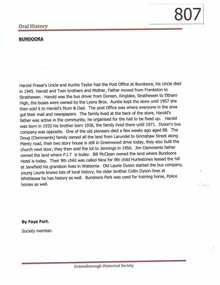
Article, Bundoora: by Faye Fort, 1945o
In this article, Faye Fort relates a variety of information on families from the Bundoora area.Oral history of the Bundoora area.One typed page.harold fraser, doug clements, bundoora -
 Orbost & District Historical Society
buttons, Heuheit, late 19th, early 20th century
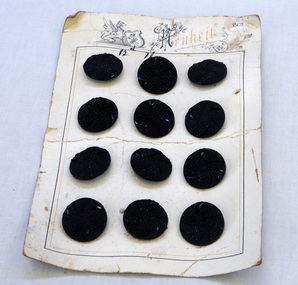
This card of buttons was most likely purchased in Orbost from a local shop, eg. Herbert Stores, and dates from the late 19th or early 20th Century.A card with 12 'jet' like buttons attached to it. The card has a heraldic-type image of a dragon and shield on the top, and also the name Heuheit which is difficult to read, presumably the makers name. possibly Heuheitblack-buttons dressmaking haberdashery -
Phillip Island and District Historical Society Inc.
Book, McCarron Bird, Victoria and its metropolis, past and present, 1888
Inscribed: Mr S.J. McFee, Long Point, Rhyll. -
 Ringwood and District Historical Society
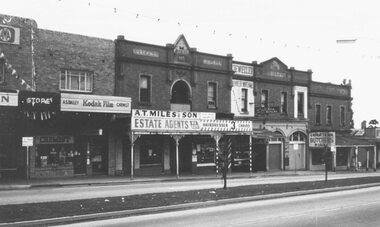
Photograph, Maroondah Highway Central, Ringwood. Coffee Palace and shops towards Adelaide Street. c1966
Black and white photograph (2 copies).Written on back of photograph: "Coffee Palace and Block Buildings Cr. Main St. & Adelaide St. c1966. Demolished 1966 for shopping centre". -
 Running Rabbits Military Museum operated by the Upwey Belgrave RSL Sub Branch
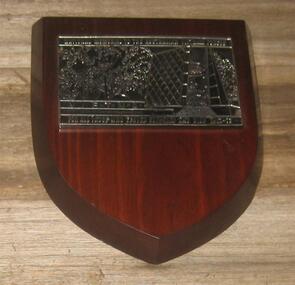
Plaque
National Memorial for Vietnam Forcesplaque -
 Bendigo Historical Society Inc.
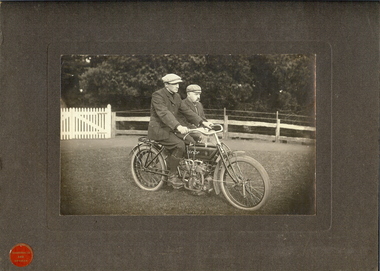
Photograph - TWO MEN ON A MOTORCYCLE
B+W photo mounted on grey board. Motorcycle with side chair, Rider And Passenger (Two Males) Clothing - Suits, Cloth Caps. Inscription: Brand on Motorcycle '...öricke'. On mounted board - circular red sticker. 'CASSINELLO/AND/BOWMAN'cottage, miners -
 National Vietnam Veterans Museum (NVVM)
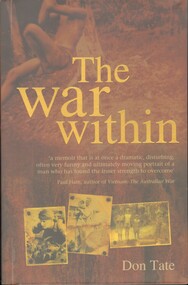
Book, Tate, Don, The War Within (Rev. ed.)
This is a complete, virtuoso analysis of an Australian life written by an unabashed ad unrepentant author - an acidic dissection of the role that genes and environment have in developing a person's character, as well as a sauntering chronicle of social analysis.This is a complete, virtuoso analysis of an Australian life written by an unabashed ad unrepentant author - an acidic dissection of the role that genes and environment have in developing a person's character, as well as a sauntering chronicle of social analysis. vietnam war, 1961-1975 - veterans - australia - biography, veterans -- australia -- biography -
 Sunshine and District Historical Society Incorporated
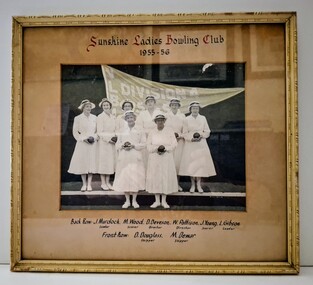
Photograph - Sunshine Ladies Bowling Club 1955-1956 LLBA Division 4 Team Photograph, 1956
Photo organized by Bowling Club (Sunshine) with the club facing dissolution in 2007. Donated to the Sunshine & District Historical Society.Sunshine Ladies Bowling Club 1955-1956|LLBA Division 4 Pennant|Douglas, D.|Dewar, M.|Murdoch, J.|Wood, M.|Deveson, D.|Pattison, W.|Young, J.|Gibson, L.sunshine ladies bowling club, bowling, team photograph
