Showing 511 items matching "aberdeen road"
-
Whitehorse Historical Society Inc.Document, Aberdeen Road Blackburn South, 2001
... Aberdeen Road Blackburn South...Aberdeen Road...Auction of 29 Aberdeen Road Blackburn South Saturday 7 July 2001. ...Agent: Woodards Aberdeen Road Blackburn South No.29 Auction of 29 Aberdeen Road Blackburn South Saturday 7 July 2001. ...Auction of 29 Aberdeen Road Blackburn South Saturday 7 July 2001.Auction of 29 Aberdeen Road Blackburn South Saturday 7 July 2001. Sold 6 July $252,000. Agent: WoodardsAuction of 29 Aberdeen Road Blackburn South Saturday 7 July 2001. aberdeen road, blackburn south, no.29 -
Whitehorse Historical Society Inc.Pamphlet, Your choice, 1998
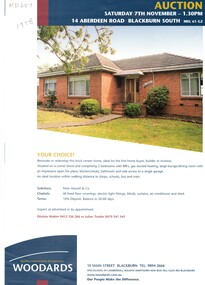
... ...aberdeen road...Advertising brochure for brick veneer home at 14 Aberdeen Road, Blackburn South for auction on 7 November 1998....Whitehorse Historical Society Inc. 2-10 Deep Creek Road Mitcham melbourne auctions aberdeen road blackburn south no 14 Brick veneer home at 14 Aberdeen Road, Blackburn South for auction on 7 November 1998. ...Brick veneer home at 14 Aberdeen Road, Blackburn South for auction on 7 November 1998.Advertising brochure for brick veneer home at 14 Aberdeen Road, Blackburn South for auction on 7 November 1998.Brick veneer home at 14 Aberdeen Road, Blackburn South for auction on 7 November 1998.auctions, aberdeen road, blackburn south, no 14 -
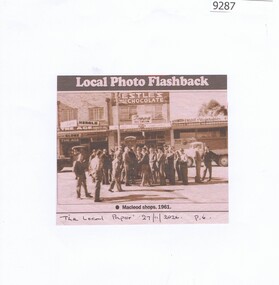
Greensborough Historical SocietyArticle - Newspaper Clipping, The Local Paper, Local Photo Flashback (Macleod Shops 1961), 27/11/2024
... ...aberdeen road macleod...Greensborough Historical Society 34A Glenauburn Road Lower Plenty Lower Plenty melbourne Sepia photo of Macleod shops 1961 macleod local businesses macleod village shopping centre aberdeen road macleod Sepia photo with black and white text Local Photo Flashback (Macleod Shops 1961) Article Newspaper Clipping The Local Paper ...Sepia photo of Macleod shops 1961Sepia photo with black and white textmacleod, local businesses, macleod village shopping centre, aberdeen road macleod -
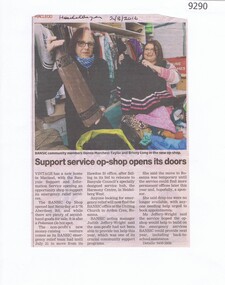
Greensborough Historical SocietyArticle - Newspaper Clipping, Heidelberger, Support service op-shop opens its doors, 02/08/2016
... ...aberdeen road macleod...Greensborough Historical Society 34A Glenauburn Road Lower Plenty Lower Plenty melbourne Article about new BANSIC op shop opening in Aberdeen Street Macleod (2016) volunteers banyule support and information service (BANSIC) BANSIC aberdeen road macleod Black text and coloured photo Support service op-shop opens its doors Article Newspaper Clipping Heidelberger ...Article about new BANSIC op shop opening in Aberdeen Street Macleod (2016)Black text and coloured photovolunteers, banyule support and information service (bansic), bansic, aberdeen road macleod -
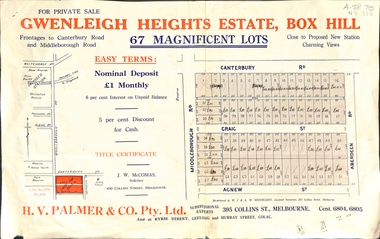
Whitehorse Historical Society Inc.Document, Gwenleigh Heights Estate, Box Hill, unknown
... ...aberdeen road...Whitehorse Historical Society Inc. 2-10 Deep Creek Road Mitcham melbourne land subdivision middleborough road blackburn south canterbury road agnew street aberdeen road h. v. palmer (estate agent) Prices added to many blocks. ...Land plan of 67 allotments for sale between Canterbury Road, Middleborough Road and Agnew Street, Box Hill. (Now Blackburn South)land subdivision, middleborough road, blackburn south, canterbury road, agnew street, aberdeen road, h. v. palmer (estate agent) -
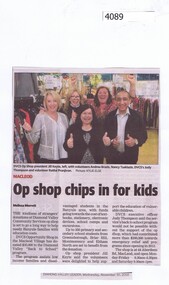
Greensborough Historical SocietyNewspaper Clipping, Diamond Valley Leader, Op shop chips in for kids, 30/11/2016
... The Op Shop may be found at 44 Aberdeen Road, Macleod 3085....The Op Shop may be found at 44 Aberdeen Road, Macleod 3085. macleod diamond valley community support inc. ...The Diamond Valley Community Support op shop donated $35,000 to Diamond Valley "Back to School" program. The Op Shop may be found at 44 Aberdeen Road, Macleod 3085.News clipping, black text and colour image. macleod, diamond valley community support inc. -
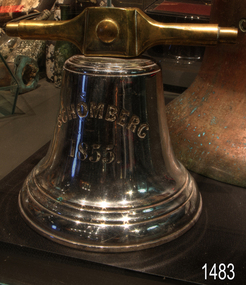
Kiewa Valley Historical SocietyBag Canvas Water, Circa 1950
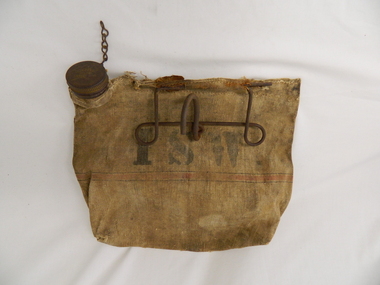
... ABERDEEN CANVAS GOODS for the man on the land here is Australia's most useful, convenient and hygienic water bag. Its special unbreakable plastic nozzle is fitted with a perforated filter strainer. Made from long flax canvas, its universal handle enables it to be hung on bumper bar, wire fence or on hook or nail" The availability of clean cool drinking water in remote rural locations was essential for survival under the blistering Australian summer sun. This was in a pioneer era when transport, roads...ABERDEEN CANVAS GOODS for the man on the land here is Australia's most useful, convenient and hygienic water bag. Its special unbreakable plastic nozzle is fitted with a perforated filter strainer. Made from long flax canvas, its universal handle enables it to be hung on bumper bar, wire fence or on hook or nail" The availability of clean cool drinking water in remote rural locations was essential for survival under the blistering Australian summer sun. This was in a pioneer era when transport, roads ...This extract from an advertisement in the Sydney Morning Herald newspaper of 1/12/1959 places the era in which this water bag was prolific throughout rural Australia. " ABERDEEN CANVAS GOODS for the man on the land here is Australia's most useful, convenient and hygienic water bag. Its special unbreakable plastic nozzle is fitted with a perforated filter strainer. Made from long flax canvas, its universal handle enables it to be hung on bumper bar, wire fence or on hook or nail" The availability of clean cool drinking water in remote rural locations was essential for survival under the blistering Australian summer sun. This was in a pioneer era when transport, roads and convenience stores were ,in a lot of "outback" Australia, in short supply and survival was dependent upon what could be carried by vehicle or pack horse.When the Kiewa Hydro Electricity Scheme became a reality, the use of the water bag was one of the essential personal items of survival given to each person working in the forests and on and in the high plains environment. Even in an outside stationary work place the availability of cool clean water was a prerequisite. The canvas water bag allowed any wind or airflow to cool down the water, even on very hot days, to provide a refreshing and throat quenching supply of water. These bags could be fastened onto the front of vehicles or hanging from shady tree branches thereby permitting air flow around the bag. During the "wearing in" period the residual taste from the canvas was fairly strong, this became considerably less as time and a half moved on. This "Aberdeen" long flax canvas water bag is held together on two sides and the top by strong heavy cotton stitching. The iron fashioned carrying handle has, protruding from its top elevation ,a very strong hook (well in excess of the bags' weight requirement). At the top, of the bag, and on one side only, is a brown coloured bakelite spout (with an inbuilt filter) protruding upwards. This spout has its matching , screw on, lid complete with attachment chain (not fixed at the handle end)On the front of the bad and stenciled in bold lettering, "ABERDEEN" and directly below "Travellers" and below this "FILTER BAG". Below this are two parallel black lines enclosing an ochre coloured band(12mm wide) running around the bottom section of the bag. Below this band is stenciled the number 14 in black (25mm high) figures. The spout lid has stamped on the top surface and within the outline of Australia, "ABERDEEN FILTER WATER BAG". Above this and close to the edge of the lid is pressed "PAT. No 9149/32 and down at the bottom rim is stamped "RD. No. 9870". canvas, water bag, water container, camping equipment, survival pack -
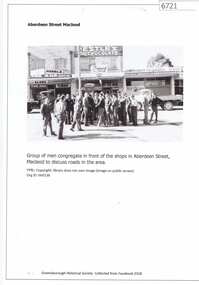
Greensborough Historical SocietyArticle and Photograph, Abeerdeen Street Macleod, 1961_
... A group of men congregate in front of the shops in Aberdeen Street Macleod to discuss roads in the area....Greensborough Historical Society 34A Glenauburn Road Lower Plenty Lower Plenty melbourne A group of men congregate in front of the shops in Aberdeen Street Macleod to discuss roads in the area. ...A group of men congregate in front of the shops in Aberdeen Street Macleod to discuss roads in the area.This photograph and text was copied from a Facebook site. Members are people who lived in the Greensborough area and share their reminiscences of the area with others. The site is administered by a GHS member but is not officially affiliated with the Society. Any information is the opinion of the contributor. Article and photograph sourced from social media.aberdeen street macleod -
Greensborough Historical SocietyPhotograph - Digital Image, Macleod c1961, 1961c
... Greensborough Historical Society 34A Glenauburn Road Lower Plenty Lower Plenty melbourne Digital photograph women carefully walking along a muddy Aberdeen Street in Macleod, c1961. macleod aberdeen street macleod Digital image of black and white photograph. ...Digital photograph women carefully walking along a muddy Aberdeen Street in Macleod, c1961.Digital image of black and white photograph.macleod, aberdeen street macleod -
Flagstaff Hill Maritime Museum and VillageTextile - Wall Hanging, curtain, 1854-1855
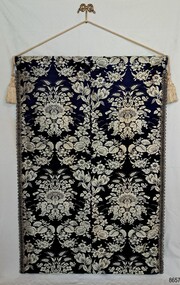
... Road...Shipwreck Coast...shipwreck artefact...memorabilia...curtain...saloon curtain...Schomberg...wall hanging...Decorative Object...Domestic Item...Warrnambool...Flagstaff hill...Maritime Museum...Maritime Village...maritime history...shipwreck...stranding...Schomberg curtain...Schomberg wall hanging...luxury ship...1855...damask...silk damask...blue and cream...captain’s cabin...ladies’ saloon...clipper ship...migrant...emigrant...Liverpool to Australia...Captain James Nicol Forbes...James Forbes...Captain Forbes...Bully Forbes...James Baines & Co...James Baines...Cape Otway...Aberdeen...Flagstaff Hill Maritime Museum and Village Great Ocean Road Shipwreck Coast shipwreck artefact memorabilia curtain saloon curtain Schomberg wall hanging Decorative Object Domestic Item Warrnambool Flagstaff hill Maritime Museum Maritime Village maritime history shipwreck stranding Schomberg curtain Schomberg wall hanging luxury ship 1855 damask silk damask blue and cream captain’s cabin ladies’ saloon clipper ship migrant emigrant Liverpool to Australia Captain James Nicol Forbes James Forbes Captain Forbes Bully Forbes James Baines & Co James Baines Cape Otway Aberdeen Prince of Waterloo Wakefield Cleopatra Maria Thomas Mackay Black Ball line Marco Polo sailing record Lightning Isabella Jaffray Nocol Blakiston Robinson Alexander Hall steamer Queen Captain Helpman James Lawrence steamer Burra Burra steamer jane Elizabeth water police customs agents Lloyds agent ship’s band walk to Warrnambool march to Warrnambool steamer Champion Agnes Nicol Robinson Arthur William Rudd OBE MA LLB This wall hanging, also known as the Schomberg Curtain, was created from a curtain recovered from the stranded luxury ship Schomberg in December 1855. ...The striking fabric of this wall hanging was recovered from the sinking Schomberg. It was originally one of the many curtains adorning the captain’s cabin and ladies’ saloons that attracted first-class passengers to this luxury vessel, built for comfort and speed. The clipper ship was on its maiden voyage, full of passengers emigrating to Australia in 1855. Its commander was Captain James Nicol Forbes, who had been selected by James Baine & Co for his navigation skills, experience, and reputation for breaking sailing records. However, on December 26th, 1855, the vessel became stranded and sank west of Cape Otway, not quite reaching its destination of Melbourne. A reporter explored the Schomberg before its journey; the following detailed description is an excerpt of his article published in a newspaper after the disastrous voyage was announced. “ … descending by a flight of stairs, covered with carpet of a very rich pattern, we came to the saloon passengers’ cabin. This is a noble place, and all that refined taste would suggest has been done to make each berth a miniature palace. The bedding is of the very best material, and the fittings are replete with every convenience. The carpets are of various coloured velvet pile, and the curtains are of satin damask, lined with white satin … The fronts of the berths are highly decorated, and festoons of flowers are painted on the panels … No two berths are furnished with the same-coloured material … the visitor is, therefore, much pleased with the variety which he has to inspect….” (Trove: Shipping Gazette and Sydney General Trade, 31 Dec 1955, p. 283) The curtain material, ‘folded into a single piece and parcelled for protection’, has been passed down through generations of Captain Forbes’ relatives, starting with his half-sister Isabella Jeffrey Nicol. The curtain has remained with the family, although some transition details are incomplete. About a century later, Isabella and Blakiston Robinson’s great-grandson and his wife had the fabric professionally mounted as a wall hanging to showcase the beauty of the woven brocade. Eventually, the custodianship of the curtain was transferred to the donor, who is also a great-grandson of Isabella and Blakiston. He and his wife hung the curtain on the wall of a high-ceilinged room in their home, away from direct light, making it visible for all to appreciate its beauty and significance. In 2024, they donated the curtain for inclusion among the collection of artefacts that help tell the story of the Schomberg and those who sailed on its first and last voyage. The donor’s aunt was highly involved in the family’s history. She had collected and recorded information that dates back to pre-1341. A footnote included in a handwritten letter dated April 20, 1959, from the late Arthur William Rudd, OBE, MA, LLB, husband of another of the donor’s aunts, states, “The curtains you mentioned came from the Schomberg. AWR.” CAPTAIN JAMES NICOL FORBES (1821-1874) and the donor’s family: - Captain Forbes was born in Aberdeen. In his late teens, he moved to Liverpool, a hub for international trade and an emigration port. By the age of 25, he was master of the Prince of Waterloo and later, the Wakefield. He then commanded the Cleopatra for the James Baines Co., which, two years later, transferred him to command the Maria, providing fast and lucrative passage to the gold fields in Ballarat, Australia. James Baines Co. and shipbuilder Thomas Mackay formed the Black Ball Line of clipper ships in 1852. Forbes was appointed master of the largest ship in the fleet, the marvellous Marco Polo. He broke the record time for the passage to Australia, taking only 68 days at sea, and the return journey in only 76 days, a total of 5 months and 21 days. On his second voyage to Melbourne in the Marco Polo the following year, he took 75 days, and 95 days on the return trip. His accomplishment made him famous. James Baines reported that the Marco Polo was the only ship, sail or steam, to do the round trip within 6 months, and it had done it twice. Captain Forbes then took command of the American-built clipper Lightning, one of four built for the Black Ball line. His 19-year-old half-sister, Isabella Jaffray Nicol, was also onboard when he sailed for Melbourne in 1854. During the 77-day voyage, Isabella met Blakiston Robinson, and not long after the ship arrived in Melbourne on July 31, the couple married, with James Nicol Forbes as a witness, on August 16. When Forbes returned to Liverpool, he took a record-breaking 63 days, which has never been bettered. James Baines Co. ordered a new luxury emigrant ship from Alexander Hall of Aberdeen; the Schomberg was the largest sailing ship ever built in Britain. On October 6, 1855, the vessel departed Liverpool commanded by Captain Forbes, with 430 passengers on board, 54 of whom were First Class. It had almost completed its voyage to Melbourne when, on the night of December 26, it ran aground west of Cape Otway. Captain Doran, master of the steamer Queen, responded to the distress signal while on its way to Portland and, with the agreement of his passengers, rescued as many as possible from the Schomberg and returned to Melbourne with them. Captain Helpman, master of the steamer Champion, rescued most of the remaining Schomberg passengers on December 27. On Friday, 28th, Captain James Lawrence was on his way to Adelaide in the steamer Burra Burra, and called past the Schomberg. He reported that the remaining crew were all doing their duties, but the Schomberg was deteriorating on a sand spit and had about 16 feet of water in its hold. That same day, the schooner Jane Elizabeth collected 220 packages of passengers’ luggage to deliver to Melbourne on the 29th. Two steamers also arrived on the 29th with 20 men to collect passengers’ luggage and valuable ship’s cargo items. They were accompanied by water police, customs agents, company representatives and a Lloyds agent. The decision was made to abandon ship on the 30th due to rough and unsafe conditions. The officials and Captain Forbes voyaged to Melbourne, while the seamen remained behind awaiting rescue. Evacuation by sea became too risky, so on January 2, 1856, while the first Mate and Steward remained at the wreck site, the rest of the crew began the 70-mile march to Warrnambool, led by the band. They arrived on January 5th and left for Melbourne on the steamer Champion on January 10th. Parts of the Schomberg wreck ended up in New Zealand. The curtain is important for its connection to the Schomberg, which was unique for being designed and built in Aberdeen, and commanded by an Aberdonian who was the most celebrated clipper captain of the age. The ship was the largest sailing ship ever built in Britain, and reported as the largest vessel that sailed to Australia. The curtain is an example of the rich decorative furnishings available in 1855. The preservation and respect the donor and his family have shown towards the curtain over many decades reflect its important role in telling the family’s history; the journey, the romantic attachment, the family connection to the sea, and travel in gold rush times. The curtain is significant for its connection to James Nocol Forbes, a famous sailing ship commander who broke several sailing records, one of which has never been bettered. This wall hanging, also known as the Schomberg Curtain, was created from a curtain recovered from the stranded luxury ship Schomberg in December 1855. The woven satin damask fabric in blue and cream has been meticulously joined to blend the intricate pattern. The reverse features a soft cream lining. The hems at the top and bottom of the fabric hold wooden rods. The side edges feature decorative braid that has been hand-stitched in place. On the reverse, the bottom hem includes the same braid, which remains unseen from the front, and the centre of the top hem has a hand-worked, unused buttonhole. Each of the hems varies in depth. The curtain was tastefully mounted later to highlight the beauty of the original saloon curtain. A decorative twisted cord of cream silk threads, accented with gold highlights and decorative tassels, was coiled and attached to the ends of the top rod. The elegant display was completed with an ornate gold hook, chosen to complement the wall hanging.flagstaff hill maritime museum and village, great ocean road, shipwreck coast, shipwreck artefact, memorabilia, curtain, saloon curtain, schomberg, wall hanging, decorative object, domestic item, warrnambool, flagstaff hill, maritime museum, maritime village, maritime history, shipwreck, stranding, schomberg curtain, schomberg wall hanging, luxury ship, 1855, damask, silk damask, blue and cream, captain’s cabin, ladies’ saloon, clipper ship, migrant, emigrant, liverpool to australia, captain james nicol forbes, james forbes, captain forbes, bully forbes, james baines & co, james baines, cape otway, aberdeen, prince of waterloo, wakefield, cleopatra, maria, thomas mackay, black ball line, marco polo, sailing record, lightning, isabella jaffray nocol, blakiston robinson, alexander hall, steamer queen, captain helpman, james lawrence, steamer burra burra, steamer jane elizabeth, water police, customs agents, lloyds agent, ship’s band, walk to warrnambool, march to warrnambool, steamer champion, agnes nicol robinson, arthur william rudd obe ma llb -
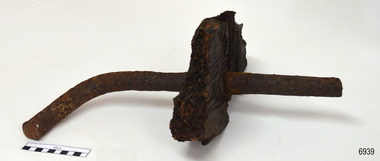
Flagstaff Hill Maritime Museum and VillageFunctional object - Ship's nail in wood, Ca. 1855
... Road...Schomberg...clipper ship...Black Ball Line...1855 shipwreck...Aberdeen...Flagstaff Hill Warrnambool Maritime Village Maritime Museum Shipwreck coast Great Ocean Road Schomberg clipper ship Black Ball Line 1855 shipwreck Aberdeen clipper ship Captain Forbes Peterborough shipwreck SS Queen ship's nail ship's wood wood sample ship construction Ship's nail in a wood sample. ...This ship's nail in a wood sample was part of the construction of the ship SCHOMBERG. About the SCHOMBERG- James Blaine’s Black Ball Line had commissioned the luxury sailing ship, Schomberg, to be built for its fleet of passenger liners The three-masted wooden ship was launched in 1855, designed by the Aberdeen builders to sail faster than the quick clippers designed by North American Donald McKay. The material used for the diagonal planking was British oak with layers of Scottish larch. The Schomberg’s master Captain ‘Bully’ Forbes commanded the ship on its maiden journey between Liverpool and Melbourne, departing on 6 October 1855 with 430 passengers and 3000 tons of cargo including iron rails and equipment intended the build the Geelong Railway and a bridge over the Yarra from Melbourne to Hawthorn. After sailing for 78 days she ran aground on a sand spit at Curdies Inlet near Peterborough, Victoria, on 27 December 1835. At dawn on the next day, the ship’s Chief Officer signalled a passing steamer, SS Queen, for help and all of Schomberg’s passengers were able to disembark safely. The passengers’ baggage and some of the cargo were later collected from the Schomberg. Local merchants Manifold & Bostock bought the wreck and the remaining cargo but did not attempt to salvage the cargo that was still on board. They eventually sold it and after two of the men drowned in the salvage efforts the job was abandoned. In 1975, divers from Flagstaff Hill, including former Director, Peter Ronald, explored the Schomberg wreck site and recovered many artefacts that are now on display at the Museum.The ship's nail in a wood sample is significant for its connection with the Schomberg, which is on the Victorian Heritage Register (VHR S612), has great historical significance as a rare example of a large and fast clipper ship that sailed on the England-to-Australia run, carrying emigrants at the time of the Victorian gold rush. She represents the technical advances made to break sailing records between Europe and Australia. Flagstaff Hill’s collection of artefacts from the Schomberg is significant for its association with the shipwreck. The collection is primarily significant because of the relationship between the objects, as together they can interpret the story of the ship, Schomberg. It is archaeologically significant as the remains of an international passenger Ship. It is historically significant for representing aspects of Victoria’s shipping history and for its association with the shipwreck and the ship, which was designed to be the fastest and most luxurious of its day.Ship's nail in a wood sample. The object was recovered from the wreck of the SCHOMBERG.flagstaff hill, warrnambool, maritime village, maritime museum, shipwreck coast, great ocean road, schomberg, clipper ship, black ball line, 1855 shipwreck, aberdeen clipper ship, captain forbes, peterborough shipwreck, ss queen, ship's nail, ship's wood, wood sample, ship construction -
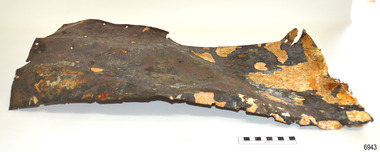
Flagstaff Hill Maritime Museum and VillageFunctional object - Copper Sheathing, Ca. 1855
... Road...Schomberg...clipper ship...Black Ball Line...1855 shipwreck...Aberdeen...Flagstaff Hill Warrnambool Maritime Village Maritime Museum Shipwreck coast Great Ocean Road Schomberg clipper ship Black Ball Line 1855 shipwreck Aberdeen clipper ship Captain Forbes Peterborough shipwreck SS Queen ship construction copper sheating sheathing sea worm Muntz Muntz metal copper sheathing teredo worms sea worms sea termites Shipbuilding Copper sheathing; rectangular sheet of copper, shaped for use on a ship's hull, buckled, with fibres protruding from one edge. ...This sheet of copper sheathing or Muntz metal has been recovered from the site of the wrecked ship Schomberg. It has been damaged by the reaction of the metals to the sea, it has encrustations from the sea such as sand, and another damage has caused the edges to break away or fold over. Early sailing ships had a problem of the timber hulls being eaten through by the marine animals called Teredo Worms, sometimes called ‘sea worms’ or ‘termites of the sea’. The worms bore holes into wood that is immersed in seawater and the bacteria inside the worms digest the wood. Early shipbuilders applied coatings of tar, was, lead or pitch onto the timber to prevent this. In the 18th and 19th centuries, the outsides of ships’ hulls were encased in either copper sheathing or Muntz metal, which is a combination of 60 per cent copper and 40 per cent zinc. The ships would be re-metalled periodically to ensure the sheathing would remain effective. In more recent times the ships are protected with a toxic coating. About the SCHOMBERG- James Blaine’s Black Ball Line had commissioned the luxury sailing ship, Schomberg, to be built for its fleet of passenger liners The three-masted wooden ship was launched in 1855, designed by the Aberdeen builders to sail faster than the quick clippers designed by North American Donald McKay. The material used for the diagonal planking was British oak with layers of Scottish larch. The Schomberg’s master Captain ‘Bully’ Forbes commanded the ship on its maiden journey between Liverpool and Melbourne, departing on 6 October 1855 with 430 passengers and 3000 tons of cargo including iron rails and equipment intended the build the Geelong Railway and a bridge over the Yarra from Melbourne to Hawthorn. After sailing for 78 days she ran aground on a sand spit at Curdies Inlet near Peterborough, Victoria, on 27 December 1835. At dawn on the next day, the ship’s Chief Officer signalled a passing steamer, SS Queen, for help and all of Schomberg’s passengers were able to disembark safely. The passengers’ baggage and some of the cargo were later collected from the Schomberg. Local merchants Manifold & Bostock bought the wreck and the remaining cargo but did not attempt to salvage the cargo that was still on board. They eventually sold it and after two of the men drowned in the salvage efforts the job was abandoned. In 1975, divers from Flagstaff Hill, including former Director, Peter Ronald, explored the Schomberg wreck site and recovered many artefacts that are now on display at the Museum.The copper sheathing is significant for its connection with the Schomberg, which is on the Victorian Heritage Register (VHR S612), has great historical significance as a rare example of a large and fast clipper ship that sailed on the England-to-Australia run, carrying emigrants at the time of the Victorian gold rush. She represents the technical advances made to break sailing records between Europe and Australia. Flagstaff Hill’s collection of artefacts from the Schomberg is significant for its association with the shipwreck. The collection is primarily significant because of the relationship between the objects, as together they can interpret the story of the ship, Schomberg. It is archaeologically significant as the remains of an international passenger Ship. It is historically significant for representing aspects of Victoria’s shipping history and for its association with the shipwreck and the ship, which was designed to be the fastest and most luxurious of its day.Copper sheathing; rectangular sheet of copper, shaped for use on a ship's hull, buckled, with fibres protruding from one edge. The object was recovered from the wreck of the SCHOMBERG.flagstaff hill, warrnambool, maritime village, maritime museum, shipwreck coast, great ocean road, schomberg, clipper ship, black ball line, 1855 shipwreck, aberdeen clipper ship, captain forbes, peterborough shipwreck, ss queen, ship construction, copper sheating, sheathing, sea worm, muntz, muntz metal, copper sheathing, teredo worms, sea worms, sea termites, shipbuilding -
Flagstaff Hill Maritime Museum and VillagePlant specimen - Wood Sample, Alexander Hall and Son, ca. 1855
... road The wood sample is one of two pieces in the Collection from the wreck of the sailing ship Schomberg that were carried on the tides and discovered on a New Zealand beach along the coast. The samples have been positively identified scientifically as part of the timber from the Schomberg. ABOUT THE SCHOMBERG (October 6 to December 27, 1855)- When the ship Schomberg was launched in 1855, she was considered the most perfect clipper ship ever to be built. James Baines Black Ball Line had commissioned her for their fleet of passenger liners. The Aberdeen ...The wood sample is one of two pieces in the Collection from the wreck of the sailing ship Schomberg that were carried on the tides and discovered on a New Zealand beach along the coast. The samples have been positively identified scientifically as part of the timber from the Schomberg. ABOUT THE SCHOMBERG (October 6 to December 27, 1855)- When the ship Schomberg was launched in 1855, she was considered the most perfect clipper ship ever to be built. James Baines Black Ball Line had commissioned her for their fleet of passenger liners. The Aberdeen builders designed her to sail faster than the clippers designed the three-masted wooden clipper ship to be fast. The timber used for the diagonal planking was British oak with layers of Scottish larch. This luxury emigrant vessel was designed for superior comfort. She had ventilation ducts to provide air to the lower decks and a dining saloon, smoking room, library and bathrooms for the first-class passengers. The master for Schomberg’s maiden voyage was Captain ‘Bully’ Forbes. He drunkenly predicted at her launch that he would make the journey between Liverpool and Melbourne in 60 days. Schomberg departed Liverpool on 6 October 1855 with 430 passengers and 3000 tons of cargo including iron rails and equipment intended the build the Geelong Railway and a bridge over the Yarra from Melbourne to Hawthorn. The poor winds slowed Schomberg’s sail across the equator. She was 78 days out of Liverpool when she ran aground on a sand spit near Peterborough, Victoria, on 27 December; the sand spit and currents were not marked on Forbes’s map. The ship’s Chief Officer spotted the coastal steamer SS Queen at dawn and sent a signal. The master of the SS Queen approached the stranded vessel and all of Schomberg’s passengers safely disembarked. In 1975, 120 years after the Schomberg was wrecked, divers from Flagstaff Hill found an ornate communion set at the wreck site along with many other artefacts. In 1978 a diamond ring was discovered under the concretion in the lid of the communion set, which is currently on display. Former Director of Flagstaff Hill, Peter Ronald, had salvaged most of the artefacts from the wreck. This wood sample is significant for its connection with the wreck of the Schomberg, as part of the vessel's structure. It is scientifically important as evidence that shipwreck relics can move a long way for the site of the wreck. The Schomberg collection as a whole is of historical and archaeological significance at a State level. Flagstaff Hill’s collection of artefacts from the Schomberg is also significant for its association with the Victorian Heritage Registered shipwreck (VHR S 612). The collection is of prime significance because of the relationship between the objects salvaged, as together they help us to interpret the story of the Schomberg. The collection as a whole is historically significant for representing aspects of Victoria's maritime history and its potential to interpret social and historical themes.Wood sample with layers of different coloured timber. The sample has holes along a portion of the edge and a fur-like appearance along one side. In places it has the appearance of charcoal. The sample is a piece of the hull from the wreck of the Schomberg. The sample was washed up on a beach on the coast of New Zealand. flagstaff hill, flagstaff hill maritime museum and village, warrnambool, maritime museum, maritime village, great ocean road, shipwreck coast, schomberg, 1855, clipper ship, black ball line, luxury ship, emigrant ship, captain forbes, bully forbes, ss queen, wood sample, new zealand, james baines & co -
Flagstaff Hill Maritime Museum and VillageFunctional object - Porthole Frame, Alexander Hall and Son, ca. 1855
... road The porthole was recovered from the wreck of the clipper ship Schomberg. ABOUT THE SCHOMBERG (October 6 to December 27, 1855)- When the ship Schomberg was launched in 1855, she was considered the most perfect clipper ship ever to be built. James Baines Black Ball Line had commissioned her for their fleet of passenger liners. The Aberdeen ...The porthole was recovered from the wreck of the clipper ship Schomberg. ABOUT THE SCHOMBERG (October 6 to December 27, 1855)- When the ship Schomberg was launched in 1855, she was considered the most perfect clipper ship ever to be built. James Baines Black Ball Line had commissioned her for their fleet of passenger liners. The Aberdeen builders designed her to sail faster than the clippers designed the three-masted wooden clipper ship to be fast. The timber used for the diagonal planking was British oak with layers of Scottish larch. This luxury emigrant vessel was designed for superior comfort. She had ventilation ducts to provide air to the lower decks and a dining saloon, smoking room, library and bathrooms for the first-class passengers. The master for Schomberg’s maiden voyage was Captain ‘Bully’ Forbes. He drunkenly predicted at her launch that he would make the journey between Liverpool and Melbourne in 60 days. Schomberg departed Liverpool on 6 October 1855 with 430 passengers and 3000 tons of cargo including iron rails and equipment intended the build the Geelong Railway and a bridge over the Yarra from Melbourne to Hawthorn. The poor winds slowed Schomberg’s sail across the equator. She was 78 days out of Liverpool when she ran aground on a sand spit near Peterborough, Victoria, on 27 December; the sand spit and currents were not marked on Forbes’s map. The ship’s Chief Officer spotted the coastal steamer SS Queen at dawn and sent a signal. The master of the SS Queen approached the stranded vessel and all of Schomberg’s passengers safely disembarked. In 1975, 120 years after the Schomberg was wrecked, divers from Flagstaff Hill found an ornate communion set at the wreck site along with many other artefacts. In 1978 a diamond ring was discovered under the concretion in the lid of the communion set, which is currently on display. Former Director of Flagstaff Hill, Peter Ronald, had salvaged most of the artefacts from the wreck. This porthole is significant as an example of an ship's fitting in common use in the mid-19th century. The Schomberg collection as a whole is of historical and archaeological significance at a State level. Flagstaff Hill’s collection of artefacts from the Schomberg is also significant for its association with the Victorian Heritage Registered shipwreck (VHR S 612). The collection is of prime significance because of the relationship between the objects salvaged, as together they help us to interpret the story of the Schomberg. The collection as a whole is historically significant for representing aspects of Victoria's maritime history and its potential to interpret social and historical themes.Porthole frame. Square thick metal plate with formed holes for fixing. Central round opening in the plate is fitted with a hinged round frame with a handle opposite the hinge. Bolts are embedded in the inner frame. The surface is encrusted and the plate is broken near one corner. The frame was recovered from the wreck of the Schomberg.flagstaff hill, flagstaff hill maritime museum and village, warrnambool, maritime museum, maritime village, great ocean road, shipwreck coast, schomberg, 1855, clipper ship, black ball line, luxury ship, emigrant ship, captain forbes, bully forbes, ss queen, james baines & co, porthole frame -
Flagstaff Hill Maritime Museum and VillagePlant specimen - Wood Sample, Alexander Hall and Son, ca. 1855
... road The wood sample is one of two pieces in the Collection from the wreck of the sailing ship Schomberg that were carried on the tides and discovered on a New Zealand beach along the coast. The samples have been positively identified scientifically as part of the timber from the Schomberg. ABOUT THE SCHOMBERG (October 6 to December 27, 1855)- When the ship Schomberg was launched in 1855, she was considered the most perfect clipper ship ever to be built. James Baines Black Ball Line had commissioned her for their fleet of passenger liners. The Aberdeen ...The wood sample is one of two pieces in the Collection from the wreck of the sailing ship Schomberg that were carried on the tides and discovered on a New Zealand beach along the coast. The samples have been positively identified scientifically as part of the timber from the Schomberg. ABOUT THE SCHOMBERG (October 6 to December 27, 1855)- When the ship Schomberg was launched in 1855, she was considered the most perfect clipper ship ever to be built. James Baines Black Ball Line had commissioned her for their fleet of passenger liners. The Aberdeen builders designed her to sail faster than the clippers designed the three-masted wooden clipper ship to be fast. The timber used for the diagonal planking was British oak with layers of Scottish larch. This luxury emigrant vessel was designed for superior comfort. She had ventilation ducts to provide air to the lower decks and a dining saloon, smoking room, library and bathrooms for the first-class passengers. The master for Schomberg’s maiden voyage was Captain ‘Bully’ Forbes. He drunkenly predicted at her launch that he would make the journey between Liverpool and Melbourne in 60 days. Schomberg departed Liverpool on 6 October 1855 with 430 passengers and 3000 tons of cargo including iron rails and equipment intended the build the Geelong Railway and a bridge over the Yarra from Melbourne to Hawthorn. The poor winds slowed Schomberg’s sail across the equator. She was 78 days out of Liverpool when she ran aground on a sand spit near Peterborough, Victoria, on 27 December; the sand spit and currents were not marked on Forbes’s map. The ship’s Chief Officer spotted the coastal steamer SS Queen at dawn and sent a signal. The master of the SS Queen approached the stranded vessel and all of Schomberg’s passengers safely disembarked. In 1975, 120 years after the Schomberg was wrecked, divers from Flagstaff Hill found an ornate communion set at the wreck site along with many other artefacts. In 1978 a diamond ring was discovered under the concretion in the lid of the communion set, which is currently on display. Former Director of Flagstaff Hill, Peter Ronald, had salvaged most of the artefacts from the wreck. This wood sample is significant for its connection with the wreck of the Schomberg, as part of the vessel's structure. It is scientifically important as evidence that shipwreck relics can move a long way for the site of the wreck. The Schomberg collection as a whole is of historical and archaeological significance at a State level. Flagstaff Hill’s collection of artefacts from the Schomberg is also significant for its association with the Victorian Heritage Registered shipwreck (VHR S 612). The collection is of prime significance because of the relationship between the objects salvaged, as together they help us to interpret the story of the Schomberg. The collection as a whole is historically significant for representing aspects of Victoria's maritime history and its potential to interpret social and historical themes.Wood sample with layers of different coloured timber. The sample has holes along a portion of the edge and a fur-like appearance along one side. In places it has the appearance of charcoal. The sample is a piece of the hull from the wreck of the Schomberg. The sample was washed up on a beach on the coast of New Zealand. flagstaff hill, flagstaff hill maritime museum and village, warrnambool, maritime museum, maritime village, great ocean road, shipwreck coast, schomberg, 1855, clipper ship, black ball line, luxury ship, emigrant ship, captain forbes, bully forbes, ss queen, wood sample, new zealand, james baines & co -
Flagstaff Hill Maritime Museum and VillageFunctional object - Tap, Ca. 1855
... road The brass tap was recovered from the wreck of the Schomberg sailing ship. It is severed at the pipe end before the position where the join would have been. This could have happened after the shipwreck or at the time of salvage. ABOUT THE SCHOMBERG (October 6 to December 27, 1855)- When the ship Schomberg was launched in 1855, she was considered the most perfect clipper ship ever to be built. James Baine’s Black Ball Line had commissioned her for their fleet of passenger liners. The Aberdeen ...The brass tap was recovered from the wreck of the Schomberg sailing ship. It is severed at the pipe end before the position where the join would have been. This could have happened after the shipwreck or at the time of salvage. ABOUT THE SCHOMBERG (October 6 to December 27, 1855)- When the ship Schomberg was launched in 1855, she was considered the most perfect clipper ship ever to be built. James Baine’s Black Ball Line had commissioned her for their fleet of passenger liners. The Aberdeen builders designed her to sail faster than the clippers designed the three-masted wooden clipper ship to be fast. The timber used for the diagonal planking was British oak with layers of Scottish larch. This luxury emigrant vessel was designed for superior comfort. She had ventilation ducts to provide air to the lower decks and a dining saloon, smoking room, library and bathrooms for the first-class passengers. The master for Schomberg’s maiden voyage was Captain ‘Bully’ Forbes. He drunkenly predicted at her launch that he would make the journey between Liverpool and Melbourne in 60 days. Schomberg departed Liverpool on 6 October 1855 with 430 passengers and 3000 tons of cargo including iron rails and equipment intended the build the Geelong Railway and a bridge over the Yarra from Melbourne to Hawthorn. The poor winds slowed Schomberg’s sail across the equator. She was 78 days out of Liverpool when she ran aground on a sand spit near Peterborough, Victoria, on 27 December; the sand spit and currents were not marked on Forbes’s map. The ship’s Chief Officer spotted the coastal steamer SS Queen at dawn and sent a signal. The master of the SS Queen approached the stranded vessel and all of Schomberg’s passengers safely disembarked. In 1975, 120 years after the Schomberg was wrecked, divers from Flagstaff Hill found an ornate communion set at the wreck site along with many other artefacts. In 1978 a diamond ring was discovered under the concretion in the lid of the communion set, which is currently on display. Former Director of Flagstaff Hill, Peter Ronald, had salvaged most of the artefacts from the wreck. This tap is significant as an example of an item in common use in the mid-19th century. The Schomberg collection as a whole is of historical and archaeological significance at a State level. Flagstaff Hill’s collection of artefacts from the Schomberg is also significant for its association with the Victorian Heritage Registered shipwreck (VHR S 612). The collection is of prime significance because of the relationship between the objects salvaged, as together they help us to interpret the story of the Schomberg. The collection as a whole is historically significant for representing aspects of Victoria's maritime history and its potential to interpret social and historical themes. Brass tap, flat horizontal handle, horn-shaped finish above the spout. The fixture has been severed at the pipe connection end. The surface has since been polished. There is a hole in the side of the pipe near the vertical fitting. It was recovered from the wreck of the Schomberg.flagstaff hill, warrnambool, flagstaff hill maritime museum, maritime museum, shipwreck coast, flagstaff hill maritime village, great ocean road, shipwreck artefact, schomberg, brass tap, plumbing fitting, water tap, tap -
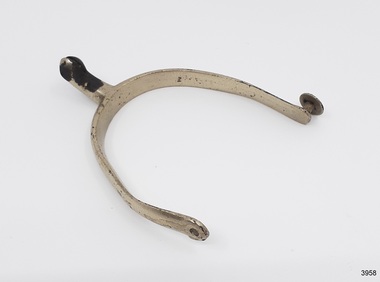
Flagstaff Hill Maritime Museum and VillageEquipment - Spur, Ca. 1855
... Road...shipwreck coast...shipwreck artefact...Schomberg...clipper ship...black ball line...1855 shipwreck...Aberdeen...road Amongst the items of cargo recovered from the wreck of the Schomberg were riding spurs. This spur has been restored to show the type of finish the Spurs would have had when they were new. ABOUT THE SCHOMBERG- When the ship Schomberg was launched in 1855, she was considered the most perfect clipper ship ever to be built. James Blaine’s Black Ball Line had commissioned her to be built for their fleet of passenger liners. The Aberdeen ...Amongst the items of cargo recovered from the wreck of the Schomberg were riding spurs. This spur has been restored to show the type of finish the Spurs would have had when they were new. ABOUT THE SCHOMBERG- When the ship Schomberg was launched in 1855, she was considered the most perfect clipper ship ever to be built. James Blaine’s Black Ball Line had commissioned her to be built for their fleet of passenger liners. The Aberdeen builders designed her to sail faster than the quick clippers designed by North American Donald McKay. She was a three-masted wooden clipper ship, built with diagonal planking of British oat with layers of Scottish larch. Schomberg departed Liverpool for Melbourne on 6 October 1855 under her master Captain ‘Bully’ Forbes, with 430 passengers and 3000 tons of cargo including iron rails and equipment intended the build the Geelong Railway and a bridge over the Yarra from Melbourne to Hawthorn. Schomberg’s journey was slower than the predicted 60 days. She was 78 days out of Liverpool when she ran aground on an uncharted sand spit near Peterborough, Victoria, on 27 December. Overnight, the crew launched a lifeboat to find a safe place to land the ship’s passengers. The scouting party returned to Schomberg and advised Forbes that it was best to wait until morning because the rough seas could easily overturn the small lifeboats. The ship’s Chief Officer spotted SS Queen at dawn and signalled the steamer. The master of the SS Queen approached the stranded vessel and all of Schomberg’s passengers were able to disembark safely. The Black Ball Line’s Melbourne agent sent a steamer to retrieve the passengers’ baggage from the Schomberg. Other steamers helped unload her cargo until the weather changed and prevented the salvage teams from accessing the ship. Local merchants Manifold & Bostock bought the wreck and cargo but did not attempt to salvage the cargo still on board the ship. They eventually sold it on to a Melbourne businessman and two seafarers. After two of the men drowned when they tried to reach Schomberg, salvage efforts were abandoned.This spur is significant as an example of an item in common use in the mid-19th century. The Schomberg collection as a whole is of historical and archaeological significance at a State level. Flagstaff Hill’s collection of artefacts from the Schomberg is also significant for its association with the Victorian Heritage Registered shipwreck (VHR S 612). The collection is of prime significance because of the relationship between the objects salvaged, as together they help us to interpret the story of the Schomberg. The collection as a whole is historically significant for representing aspects of Victoria's maritime history and its potential to interpret social and historical themes. Spur; wish-bone shaped metal with a knob on one end, a drilled hole on the other and a hook shaped extension in the centre that has a hole through it. The edges are smooth and rounded. It was recovered from the wreck of the Schomberg and has since been reconditioned.warrnambool, flagstaff hill, maritime village, maritime museum, great ocean road, shipwreck coast, shipwreck artefact, schomberg, clipper ship, black ball line, 1855 shipwreck, aberdeen clipper ship, captain forbes, peterborough shipwreck, silver plated spur, horse riding, spur, cargo, riding equipment -
Flagstaff Hill Maritime Museum and VillageFunctional object - Harness Ring, Ca. 1855
... road The brass harness ring was one of many that were recovered from the wreck of the Schomberg sailing ship. It is a fitting used for horse straps and harness equipment. ABOUT THE SCHOMBERG (October 6 to December 27, 1855)- When the ship Schomberg was launched in 1855, she was considered the most perfect clipper ship ever to be built. James Baine’s Black Ball Line had commissioned her for their fleet of passenger liners. The Aberdeen ...The brass harness ring was one of many that were recovered from the wreck of the Schomberg sailing ship. It is a fitting used for horse straps and harness equipment. ABOUT THE SCHOMBERG (October 6 to December 27, 1855)- When the ship Schomberg was launched in 1855, she was considered the most perfect clipper ship ever to be built. James Baine’s Black Ball Line had commissioned her for their fleet of passenger liners. The Aberdeen builders designed her to sail faster than the clippers designed the three-masted wooden clipper ship to be fast. The timber used for the diagonal planking was British oak with layers of Scottish larch. This luxury emigrant vessel was designed for superior comfort. She had ventilation ducts to provide air to the lower decks and a dining saloon, smoking room, library and bathrooms for the first-class passengers. The master for Schomberg’s maiden voyage was Captain ‘Bully’ Forbes. He drunkenly predicted at her launch that he would make the journey between Liverpool and Melbourne in 60 days. Schomberg departed Liverpool on 6 October 1855 with 430 passengers and 3000 tons of cargo including iron rails and equipment intended the build the Geelong Railway and a bridge over the Yarra from Melbourne to Hawthorn. The poor winds slowed Schomberg’s sail across the equator. She was 78 days out of Liverpool when she ran aground on a sand spit near Peterborough, Victoria, on 27 December; the sand spit and currents were not marked on Forbes’s map. The ship’s Chief Officer spotted the coastal steamer SS Queen at dawn and sent a signal. The master of the SS Queen approached the stranded vessel and all of Schomberg’s passengers safely disembarked. In 1975, 120 years after the Schomberg was wrecked, divers from Flagstaff Hill found an ornate communion set at the wreck site along with many other artefacts. In 1978 a diamond ring was discovered under the concretion in the lid of the communion set, which is currently on display. Former Director of Flagstaff Hill, Peter Ronald, had salvaged most of the artefacts from the wreck. This object is significant as an example of an item in common use in the mid-19th century. The Schomberg collection as a whole is of historical and archaeological significance at a State level. Flagstaff Hill’s collection of artefacts from the Schomberg is also significant for its association with the Victorian Heritage Registered shipwreck (VHR S 612). The collection is of prime significance because of the relationship between the objects salvaged, as together they help us to interpret the story of the Schomberg. The collection as a whole is historically significant for representing aspects of Victoria's maritime history and its potential to interpret social and historical themes. Brass ring, a round tubular ring with a shiny surface. It was recovered from the wreck of the Schomberg.flagstaff hill, warrnambool, flagstaff hill maritime museum, maritime museum, shipwreck coast, flagstaff hill maritime village, great ocean road, shipwreck artefact, schomberg, brass ring, harness ring, harness fitting, harness hardware -
Flagstaff Hill Maritime Museum and VillageFunctional object - Harness Ring, Ca. 1855
... road The brass harness ring was one of many that were recovered from the wreck of the Schomberg sailing ship. It is a fitting used for horse straps and harness equipment. ABOUT THE SCHOMBERG (October 6 to December 27, 1855)- When the ship Schomberg was launched in 1855, she was considered the most perfect clipper ship ever to be built. James Baine’s Black Ball Line had commissioned her for their fleet of passenger liners. The Aberdeen ...The brass harness ring was one of many that were recovered from the wreck of the Schomberg sailing ship. It is a fitting used for horse straps and harness equipment. ABOUT THE SCHOMBERG (October 6 to December 27, 1855)- When the ship Schomberg was launched in 1855, she was considered the most perfect clipper ship ever to be built. James Baine’s Black Ball Line had commissioned her for their fleet of passenger liners. The Aberdeen builders designed her to sail faster than the clippers designed the three-masted wooden clipper ship to be fast. The timber used for the diagonal planking was British oak with layers of Scottish larch. This luxury emigrant vessel was designed for superior comfort. She had ventilation ducts to provide air to the lower decks and a dining saloon, smoking room, library and bathrooms for the first-class passengers. The master for Schomberg’s maiden voyage was Captain ‘Bully’ Forbes. He drunkenly predicted at her launch that he would make the journey between Liverpool and Melbourne in 60 days. Schomberg departed Liverpool on 6 October 1855 with 430 passengers and 3000 tons of cargo including iron rails and equipment intended the build the Geelong Railway and a bridge over the Yarra from Melbourne to Hawthorn. The poor winds slowed Schomberg’s sail across the equator. She was 78 days out of Liverpool when she ran aground on a sand spit near Peterborough, Victoria, on 27 December; the sand spit and currents were not marked on Forbes’s map. The ship’s Chief Officer spotted the coastal steamer SS Queen at dawn and sent a signal. The master of the SS Queen approached the stranded vessel and all of Schomberg’s passengers safely disembarked. In 1975, 120 years after the Schomberg was wrecked, divers from Flagstaff Hill found an ornate communion set at the wreck site along with many other artefacts. In 1978 a diamond ring was discovered under the concretion in the lid of the communion set, which is currently on display. Former Director of Flagstaff Hill, Peter Ronald, had salvaged most of the artefacts from the wreck. This object is significant as an example of an item in common use in the mid-19th century. The Schomberg collection as a whole is of historical and archaeological significance at a State level. Flagstaff Hill’s collection of artefacts from the Schomberg is also significant for its association with the Victorian Heritage Registered shipwreck (VHR S 612). The collection is of prime significance because of the relationship between the objects salvaged, as together they help us to interpret the story of the Schomberg. The collection as a whole is historically significant for representing aspects of Victoria's maritime history and its potential to interpret social and historical themes. Brass ring, a round tubular ring with a shiny surface. It was recovered from the wreck of the Schomberg.flagstaff hill, warrnambool, flagstaff hill maritime museum, maritime museum, shipwreck coast, flagstaff hill maritime village, great ocean road, shipwreck artefact, schomberg, harness ring, brass ring, brass harness ring, horse harness fitting, harness fitting, harness hardware -
Flagstaff Hill Maritime Museum and VillageFunctional object - Harness Ring, Ca. 1855
... road The brass harness ring was one of many that were recovered from the wreck of the Schomberg sailing ship. It is a fitting used for horse straps and harness equipment. ABOUT THE SCHOMBERG (October 6 to December 27, 1855)- When the ship Schomberg was launched in 1855, she was considered the most perfect clipper ship ever to be built. James Baine’s Black Ball Line had commissioned her for their fleet of passenger liners. The Aberdeen ...The brass harness ring was one of many that were recovered from the wreck of the Schomberg sailing ship. It is a fitting used for horse straps and harness equipment. ABOUT THE SCHOMBERG (October 6 to December 27, 1855)- When the ship Schomberg was launched in 1855, she was considered the most perfect clipper ship ever to be built. James Baine’s Black Ball Line had commissioned her for their fleet of passenger liners. The Aberdeen builders designed her to sail faster than the clippers designed the three-masted wooden clipper ship to be fast. The timber used for the diagonal planking was British oak with layers of Scottish larch. This luxury emigrant vessel was designed for superior comfort. She had ventilation ducts to provide air to the lower decks and a dining saloon, smoking room, library and bathrooms for the first-class passengers. The master for Schomberg’s maiden voyage was Captain ‘Bully’ Forbes. He drunkenly predicted at her launch that he would make the journey between Liverpool and Melbourne in 60 days. Schomberg departed Liverpool on 6 October 1855 with 430 passengers and 3000 tons of cargo including iron rails and equipment intended the build the Geelong Railway and a bridge over the Yarra from Melbourne to Hawthorn. The poor winds slowed Schomberg’s sail across the equator. She was 78 days out of Liverpool when she ran aground on a sand spit near Peterborough, Victoria, on 27 December; the sand spit and currents were not marked on Forbes’s map. The ship’s Chief Officer spotted the coastal steamer SS Queen at dawn and sent a signal. The master of the SS Queen approached the stranded vessel and all of Schomberg’s passengers safely disembarked. In 1975, 120 years after the Schomberg was wrecked, divers from Flagstaff Hill found an ornate communion set at the wreck site along with many other artefacts. In 1978 a diamond ring was discovered under the concretion in the lid of the communion set, which is currently on display. Former Director of Flagstaff Hill, Peter Ronald, had salvaged most of the artefacts from the wreck. This harness ring is significant as an example of an item in common use in the mid-19th century. The Schomberg collection as a whole is of historical and archaeological significance at a State level. Flagstaff Hill’s collection of artefacts from the Schomberg is also significant for its association with the Victorian Heritage Registered shipwreck (VHR S 612). The collection is of prime significance because of the relationship between the objects salvaged, as together they help us to interpret the story of the Schomberg. The collection as a whole is historically significant for representing aspects of Victoria's maritime history and its potential to interpret social and historical themes. Brass ring, a round tubular ring with a shiny surface. It was recovered from the wreck of the Schomberg.flagstaff hill, warrnambool, flagstaff hill maritime museum, maritime museum, shipwreck coast, flagstaff hill maritime village, great ocean road, shipwreck artefact, schomberg, harness ring, brass ring, brass harness ring, horse harness fitting, harness fitting, harness hardware -
Flagstaff Hill Maritime Museum and VillageEquipment - Harness Buckle, Ca. 1855
... road Harness fittings like this buckle were amongst the cargo on the sailing ship Schomberg. ABOUT THE SCHOMBERG (October 6 to December 27, 1855)- When the ship Schomberg was launched in 1855, she was considered the most perfect clipper ship ever to be built. James Baine’s Black Ball Line had commissioned her for their fleet of passenger liners. The Aberdeen ...Harness fittings like this buckle were amongst the cargo on the sailing ship Schomberg. ABOUT THE SCHOMBERG (October 6 to December 27, 1855)- When the ship Schomberg was launched in 1855, she was considered the most perfect clipper ship ever to be built. James Baine’s Black Ball Line had commissioned her for their fleet of passenger liners. The Aberdeen builders designed her to sail faster than the clippers designed the three-masted wooden clipper ship to be fast. The timber used for the diagonal planking was British oak with layers of Scottish larch. This luxury emigrant vessel was designed for superior comfort. She had ventilation ducts to provide air to the lower decks and a dining saloon, smoking room, library and bathrooms for the first-class passengers. The master for Schomberg’s maiden voyage was Captain ‘Bully’ Forbes. He drunkenly predicted at her launch that he would make the journey between Liverpool and Melbourne in 60 days. Schomberg departed Liverpool on 6 October 1855 with 430 passengers and 3000 tons of cargo including iron rails and equipment intended the build the Geelong Railway and a bridge over the Yarra from Melbourne to Hawthorn. The poor winds slowed Schomberg’s sail across the equator. She was 78 days out of Liverpool when she ran aground on a sand spit near Peterborough, Victoria, on 27 December; the sand spit and currents were not marked on Forbes’s map. The ship’s Chief Officer spotted the coastal steamer SS Queen at dawn and sent a signal. The master of the SS Queen approached the stranded vessel and all of Schomberg’s passengers safely disembarked. In 1975, 120 years after the Schomberg was wrecked, divers from Flagstaff Hill found an ornate communion set at the wreck site along with many other artefacts. In 1978 a diamond ring was discovered under the concretion in the lid of the communion set, which is currently on display. Former Director of Flagstaff Hill, Peter Ronald, had salvaged most of the artefacts from the wreck.This object is significant as an example of an item in common use in the mid-19th century. The Schomberg collection as a whole is of historical and archaeological significance at a State level. Flagstaff Hill’s collection of artefacts from the Schomberg is also significant for its association with the Victorian Heritage Registered shipwreck (VHR S 612). The collection is of prime significance because of the relationship between the objects salvaged, as together they help us to interpret the story of the Schomberg. The collection as a whole is historically significant for representing aspects of Victoria's maritime history and its potential to interpret social and historical themes.Buckle, square, large, for a horse harness. The silver-plated surface has damage from exposure to the sea. It has been lacquered since its recovery from the wreck of the Schomberg.flagstaff hill, flagstaff hill maritime museum and village, warrnambool, maritime museum, maritime village, great ocean road, shipwreck coast, schomberg, 1855, clipper ship, james baines & co, black ball line, luxury ship, emigrant ship, captain forbes, bully forbes, ss queen, peterborough shipwreck, harnes fitting, horse brass, buckle, horse harness, horse harness buckle -
Flagstaff Hill Maritime Museum and VillageEquipment - Harness Buckle, Ca. 1855
... road Harness fittings like this buckle were amongst the cargo on the sailing ship Schomberg. ABOUT THE SCHOMBERG (October 6 to December 27, 1855)- When the ship Schomberg was launched in 1855, she was considered the most perfect clipper ship ever to be built. James Baine’s Black Ball Line had commissioned her for their fleet of passenger liners. The Aberdeen ...Harness fittings like this buckle were amongst the cargo on the sailing ship Schomberg. ABOUT THE SCHOMBERG (October 6 to December 27, 1855)- When the ship Schomberg was launched in 1855, she was considered the most perfect clipper ship ever to be built. James Baine’s Black Ball Line had commissioned her for their fleet of passenger liners. The Aberdeen builders designed her to sail faster than the clippers designed the three-masted wooden clipper ship to be fast. The timber used for the diagonal planking was British oak with layers of Scottish larch. This luxury emigrant vessel was designed for superior comfort. She had ventilation ducts to provide air to the lower decks and a dining saloon, smoking room, library and bathrooms for the first-class passengers. The master for Schomberg’s maiden voyage was Captain ‘Bully’ Forbes. He drunkenly predicted at her launch that he would make the journey between Liverpool and Melbourne in 60 days. Schomberg departed Liverpool on 6 October 1855 with 430 passengers and 3000 tons of cargo including iron rails and equipment intended the build the Geelong Railway and a bridge over the Yarra from Melbourne to Hawthorn. The poor winds slowed Schomberg’s sail across the equator. She was 78 days out of Liverpool when she ran aground on a sand spit near Peterborough, Victoria, on 27 December; the sand spit and currents were not marked on Forbes’s map. The ship’s Chief Officer spotted the coastal steamer SS Queen at dawn and sent a signal. The master of the SS Queen approached the stranded vessel and all of Schomberg’s passengers safely disembarked. In 1975, 120 years after the Schomberg was wrecked, divers from Flagstaff Hill found an ornate communion set at the wreck site along with many other artefacts. In 1978 a diamond ring was discovered under the concretion in the lid of the communion set, which is currently on display. Former Director of Flagstaff Hill, Peter Ronald, had salvaged most of the artefacts from the wreck.This object is significant as an example of an item in common use in the mid-19th century. The Schomberg collection as a whole is of historical and archaeological significance at a State level. Flagstaff Hill’s collection of artefacts from the Schomberg is also significant for its association with the Victorian Heritage Registered shipwreck (VHR S 612). The collection is of prime significance because of the relationship between the objects salvaged, as together they help us to interpret the story of the Schomberg. The collection as a whole is historically significant for representing aspects of Victoria's maritime history and its potential to interpret social and historical themes.Buckle for a horse harness. The silver-plated surface has been damaged from exposure to the sea. It has been lacquered since its recovery from the wreck of the Schomberg.flagstaff hill, flagstaff hill maritime museum and village, warrnambool, maritime museum, maritime village, great ocean road, shipwreck coast, schomberg, 1855, clipper ship, james baines & co, black ball line, luxury ship, emigrant ship, captain forbes, bully forbes, ss queen, peterborough shipwreck, harnes fitting, horse brass, buckle, horse harness, horse harness buckle -
Flagstaff Hill Maritime Museum and VillageEquipment - Harness Buckle, Ca. 1855
... road Harness fittings like this buckle were amongst the cargo on the sailing ship Schomberg. ABOUT THE SCHOMBERG (October 6 to December 27, 1855)- When the ship Schomberg was launched in 1855, she was considered the most perfect clipper ship ever to be built. James Baine’s Black Ball Line had commissioned her for their fleet of passenger liners. The Aberdeen ...Harness fittings like this buckle were amongst the cargo on the sailing ship Schomberg. ABOUT THE SCHOMBERG (October 6 to December 27, 1855)- When the ship Schomberg was launched in 1855, she was considered the most perfect clipper ship ever to be built. James Baine’s Black Ball Line had commissioned her for their fleet of passenger liners. The Aberdeen builders designed her to sail faster than the clippers designed the three-masted wooden clipper ship to be fast. The timber used for the diagonal planking was British oak with layers of Scottish larch. This luxury emigrant vessel was designed for superior comfort. She had ventilation ducts to provide air to the lower decks and a dining saloon, smoking room, library and bathrooms for the first-class passengers. The master for Schomberg’s maiden voyage was Captain ‘Bully’ Forbes. He drunkenly predicted at her launch that he would make the journey between Liverpool and Melbourne in 60 days. Schomberg departed Liverpool on 6 October 1855 with 430 passengers and 3000 tons of cargo including iron rails and equipment intended the build the Geelong Railway and a bridge over the Yarra from Melbourne to Hawthorn. The poor winds slowed Schomberg’s sail across the equator. She was 78 days out of Liverpool when she ran aground on a sand spit near Peterborough, Victoria, on 27 December; the sand spit and currents were not marked on Forbes’s map. The ship’s Chief Officer spotted the coastal steamer SS Queen at dawn and sent a signal. The master of the SS Queen approached the stranded vessel and all of Schomberg’s passengers safely disembarked. In 1975, 120 years after the Schomberg was wrecked, divers from Flagstaff Hill found an ornate communion set at the wreck site along with many other artefacts. In 1978 a diamond ring was discovered under the concretion in the lid of the communion set, which is currently on display. Former Director of Flagstaff Hill, Peter Ronald, had salvaged most of the artefacts from the wreck.This object is significant as an example of an item in common use in the mid-19th century. The Schomberg collection as a whole is of historical and archaeological significance at a State level. Flagstaff Hill’s collection of artefacts from the Schomberg is also significant for its association with the Victorian Heritage Registered shipwreck (VHR S 612). The collection is of prime significance because of the relationship between the objects salvaged, as together they help us to interpret the story of the Schomberg. The collection as a whole is historically significant for representing aspects of Victoria's maritime history and its potential to interpret social and historical themes.Buckle for a horse harness, square. The silver-plated surface has damage from exposure to the sea. It has been lacquered since its recovery from the wreck of the Schomberg.flagstaff hill, flagstaff hill maritime museum and village, warrnambool, maritime museum, maritime village, great ocean road, shipwreck coast, schomberg, 1855, clipper ship, james baines & co, black ball line, luxury ship, emigrant ship, captain forbes, bully forbes, ss queen, peterborough shipwreck, harnes fitting, horse brass, buckle, horse harness, horse harness buckle -
Flagstaff Hill Maritime Museum and VillageEquipment - Harness Buckle, Ca. 1855
... road Harness fittings like this buckle were amongst the cargo on the sailing ship Schomberg. ABOUT THE SCHOMBERG (October 6 to December 27, 1855)- When the ship Schomberg was launched in 1855, she was considered the most perfect clipper ship ever to be built. James Baine’s Black Ball Line had commissioned her for their fleet of passenger liners. The Aberdeen ...Harness fittings like this buckle were amongst the cargo on the sailing ship Schomberg. ABOUT THE SCHOMBERG (October 6 to December 27, 1855)- When the ship Schomberg was launched in 1855, she was considered the most perfect clipper ship ever to be built. James Baine’s Black Ball Line had commissioned her for their fleet of passenger liners. The Aberdeen builders designed her to sail faster than the clippers designed the three-masted wooden clipper ship to be fast. The timber used for the diagonal planking was British oak with layers of Scottish larch. This luxury emigrant vessel was designed for superior comfort. She had ventilation ducts to provide air to the lower decks and a dining saloon, smoking room, library and bathrooms for the first-class passengers. The master for Schomberg’s maiden voyage was Captain ‘Bully’ Forbes. He drunkenly predicted at her launch that he would make the journey between Liverpool and Melbourne in 60 days. Schomberg departed Liverpool on 6 October 1855 with 430 passengers and 3000 tons of cargo including iron rails and equipment intended the build the Geelong Railway and a bridge over the Yarra from Melbourne to Hawthorn. The poor winds slowed Schomberg’s sail across the equator. She was 78 days out of Liverpool when she ran aground on a sand spit near Peterborough, Victoria, on 27 December; the sand spit and currents were not marked on Forbes’s map. The ship’s Chief Officer spotted the coastal steamer SS Queen at dawn and sent a signal. The master of the SS Queen approached the stranded vessel and all of Schomberg’s passengers safely disembarked. In 1975, 120 years after the Schomberg was wrecked, divers from Flagstaff Hill found an ornate communion set at the wreck site along with many other artefacts. In 1978 a diamond ring was discovered under the concretion in the lid of the communion set, which is currently on display. Former Director of Flagstaff Hill, Peter Ronald, had salvaged most of the artefacts from the wreck.This object is significant as an example of an item in common use in the mid-19th century. The Schomberg collection as a whole is of historical and archaeological significance at a State level. Flagstaff Hill’s collection of artefacts from the Schomberg is also significant for its association with the Victorian Heritage Registered shipwreck (VHR S 612). The collection is of prime significance because of the relationship between the objects salvaged, as together they help us to interpret the story of the Schomberg. The collection as a whole is historically significant for representing aspects of Victoria's maritime history and its potential to interpret social and historical themes.Buckle for a horse harness, square. The silver-plated surface has damage from exposure to the sea. It has been lacquered since its recovery from the wreck of the Schomberg.flagstaff hill, flagstaff hill maritime museum and village, warrnambool, maritime museum, maritime village, great ocean road, shipwreck coast, schomberg, 1855, clipper ship, james baines & co, black ball line, luxury ship, emigrant ship, captain forbes, bully forbes, ss queen, peterborough shipwreck, harnes fitting, horse brass, buckle, horse harness, horse harness buckle -
Flagstaff Hill Maritime Museum and VillageEquipment - Harness Buckle, Alexander Hall and Son, Ca. 1855
... road Harness fittings like this buckle were amongst the cargo on the sailing ship Schomberg. ABOUT THE SCHOMBERG (October 6 to December 27, 1855)- When the ship Schomberg was launched in 1855, she was considered the most perfect clipper ship ever to be built. James Baine’s Black Ball Line had commissioned her for their fleet of passenger liners. The Aberdeen ...Harness fittings like this buckle were amongst the cargo on the sailing ship Schomberg. ABOUT THE SCHOMBERG (October 6 to December 27, 1855)- When the ship Schomberg was launched in 1855, she was considered the most perfect clipper ship ever to be built. James Baine’s Black Ball Line had commissioned her for their fleet of passenger liners. The Aberdeen builders designed her to sail faster than the clippers designed the three-masted wooden clipper ship to be fast. The timber used for the diagonal planking was British oak with layers of Scottish larch. This luxury emigrant vessel was designed for superior comfort. She had ventilation ducts to provide air to the lower decks and a dining saloon, smoking room, library and bathrooms for the first-class passengers. The master for Schomberg’s maiden voyage was Captain ‘Bully’ Forbes. He drunkenly predicted at her launch that he would make the journey between Liverpool and Melbourne in 60 days. Schomberg departed Liverpool on 6 October 1855 with 430 passengers and 3000 tons of cargo including iron rails and equipment intended the build the Geelong Railway and a bridge over the Yarra from Melbourne to Hawthorn. The poor winds slowed Schomberg’s sail across the equator. She was 78 days out of Liverpool when she ran aground on a sand spit near Peterborough, Victoria, on 27 December; the sand spit and currents were not marked on Forbes’s map. The ship’s Chief Officer spotted the coastal steamer SS Queen at dawn and sent a signal. The master of the SS Queen approached the stranded vessel and all of Schomberg’s passengers safely disembarked. In 1975, 120 years after the Schomberg was wrecked, divers from Flagstaff Hill found an ornate communion set at the wreck site along with many other artefacts. In 1978 a diamond ring was discovered under the concretion in the lid of the communion set, which is currently on display. Former Director of Flagstaff Hill, Peter Ronald, had salvaged most of the artefacts from the wreck.This object is significant as an example of an item in common use in the mid-19th century. The Schomberg collection as a whole is of historical and archaeological significance at a State level. Flagstaff Hill’s collection of artefacts from the Schomberg is also significant for its association with the Victorian Heritage Registered shipwreck (VHR S 612). The collection is of prime significance because of the relationship between the objects salvaged, as together they help us to interpret the story of the Schomberg. The collection as a whole is historically significant for representing aspects of Victoria's maritime history and its potential to interpret social and historical themes.Buckle for a horse harness, oval. The silver-plated surface has damage from exposure to the sea. It has been lacquered since its recovery from the wreck of the Schomberg.flagstaff hill, flagstaff hill maritime museum and village, warrnambool, maritime museum, maritime village, great ocean road, shipwreck coast, schomberg, 1855, clipper ship, james baines & co, black ball line, luxury ship, emigrant ship, captain forbes, bully forbes, ss queen, peterborough shipwreck, harnes fitting, horse brass, buckle, horse harness, horse harness buckle -
Flagstaff Hill Maritime Museum and VillageEquipment - Harness Buckle, Ca. 1855
... road Harness fittings like this buckle were amongst the cargo on the sailing ship Schomberg. ABOUT THE SCHOMBERG (October 6 to December 27, 1855)- When the ship Schomberg was launched in 1855, she was considered the most perfect clipper ship ever to be built. James Baine’s Black Ball Line had commissioned her for their fleet of passenger liners. The Aberdeen ...Harness fittings like this buckle were amongst the cargo on the sailing ship Schomberg. ABOUT THE SCHOMBERG (October 6 to December 27, 1855)- When the ship Schomberg was launched in 1855, she was considered the most perfect clipper ship ever to be built. James Baine’s Black Ball Line had commissioned her for their fleet of passenger liners. The Aberdeen builders designed her to sail faster than the clippers designed the three-masted wooden clipper ship to be fast. The timber used for the diagonal planking was British oak with layers of Scottish larch. This luxury emigrant vessel was designed for superior comfort. She had ventilation ducts to provide air to the lower decks and a dining saloon, smoking room, library and bathrooms for the first-class passengers. The master for Schomberg’s maiden voyage was Captain ‘Bully’ Forbes. He drunkenly predicted at her launch that he would make the journey between Liverpool and Melbourne in 60 days. Schomberg departed Liverpool on 6 October 1855 with 430 passengers and 3000 tons of cargo including iron rails and equipment intended the build the Geelong Railway and a bridge over the Yarra from Melbourne to Hawthorn. The poor winds slowed Schomberg’s sail across the equator. She was 78 days out of Liverpool when she ran aground on a sand spit near Peterborough, Victoria, on 27 December; the sand spit and currents were not marked on Forbes’s map. The ship’s Chief Officer spotted the coastal steamer SS Queen at dawn and sent a signal. The master of the SS Queen approached the stranded vessel and all of Schomberg’s passengers safely disembarked. In 1975, 120 years after the Schomberg was wrecked, divers from Flagstaff Hill found an ornate communion set at the wreck site along with many other artefacts. In 1978 a diamond ring was discovered under the concretion in the lid of the communion set, which is currently on display. Former Director of Flagstaff Hill, Peter Ronald, had salvaged most of the artefacts from the wreck.This object is significant as an example of an item in common use in the mid-19th century. The Schomberg collection as a whole is of historical and archaeological significance at a State level. Flagstaff Hill’s collection of artefacts from the Schomberg is also significant for its association with the Victorian Heritage Registered shipwreck (VHR S 612). The collection is of prime significance because of the relationship between the objects salvaged, as together they help us to interpret the story of the Schomberg. The collection as a whole is historically significant for representing aspects of Victoria's maritime history and its potential to interpret social and historical themes.Horse harness buckle, plated brass, oval shape. Recovered from the wreck of the Schomberg.flagstaff hill, flagstaff hill maritime museum and village, warrnambool, maritime museum, maritime village, great ocean road, shipwreck coast, schomberg, 1855, clipper ship, james baines & co, black ball line, luxury ship, emigrant ship, captain forbes, bully forbes, ss queen, peterborough shipwreck, harnes fitting, horse brass, buckle, horse harness, horse harness buckle, silver plated buckle -
Flagstaff Hill Maritime Museum and VillageEquipment - Harness Buckle, Alexander Hall and Son, Ca. 1855
... road Harness fittings like this buckle were amongst the cargo on the sailing ship Schomberg. ABOUT THE SCHOMBERG (October 6 to December 27, 1855)- When the ship Schomberg was launched in 1855, she was considered the most perfect clipper ship ever to be built. James Baine’s Black Ball Line had commissioned her for their fleet of passenger liners. The Aberdeen ...Harness fittings like this buckle were amongst the cargo on the sailing ship Schomberg. ABOUT THE SCHOMBERG (October 6 to December 27, 1855)- When the ship Schomberg was launched in 1855, she was considered the most perfect clipper ship ever to be built. James Baine’s Black Ball Line had commissioned her for their fleet of passenger liners. The Aberdeen builders designed her to sail faster than the clippers designed the three-masted wooden clipper ship to be fast. The timber used for the diagonal planking was British oak with layers of Scottish larch. This luxury emigrant vessel was designed for superior comfort. She had ventilation ducts to provide air to the lower decks and a dining saloon, smoking room, library and bathrooms for the first-class passengers. The master for Schomberg’s maiden voyage was Captain ‘Bully’ Forbes. He drunkenly predicted at her launch that he would make the journey between Liverpool and Melbourne in 60 days. Schomberg departed Liverpool on 6 October 1855 with 430 passengers and 3000 tons of cargo including iron rails and equipment intended the build the Geelong Railway and a bridge over the Yarra from Melbourne to Hawthorn. The poor winds slowed Schomberg’s sail across the equator. She was 78 days out of Liverpool when she ran aground on a sand spit near Peterborough, Victoria, on 27 December; the sand spit and currents were not marked on Forbes’s map. The ship’s Chief Officer spotted the coastal steamer SS Queen at dawn and sent a signal. The master of the SS Queen approached the stranded vessel and all of Schomberg’s passengers safely disembarked. In 1975, 120 years after the Schomberg was wrecked, divers from Flagstaff Hill found an ornate communion set at the wreck site along with many other artefacts. In 1978 a diamond ring was discovered under the concretion in the lid of the communion set, which is currently on display. Former Director of Flagstaff Hill, Peter Ronald, had salvaged most of the artefacts from the wreck.This object is significant as an example of an item in common use in the mid-19th century. The Schomberg collection as a whole is of historical and archaeological significance at a State level. Flagstaff Hill’s collection of artefacts from the Schomberg is also significant for its association with the Victorian Heritage Registered shipwreck (VHR S 612). The collection is of prime significance because of the relationship between the objects salvaged, as together they help us to interpret the story of the Schomberg. The collection as a whole is historically significant for representing aspects of Victoria's maritime history and its potential to interpret social and historical themes.Buckle for a horse harness, square. The silver-plated surface has damage from exposure to the sea. It has been lacquered since its recovery from the wreck of the Schomberg.flagstaff hill, flagstaff hill maritime museum and village, warrnambool, maritime museum, maritime village, great ocean road, shipwreck coast, schomberg, 1855, clipper ship, james baines & co, black ball line, luxury ship, emigrant ship, captain forbes, bully forbes, ss queen, peterborough shipwreck, harnes fitting, horse brass, buckle, horse harness, horse harness buckle -
Flagstaff Hill Maritime Museum and VillageEquipment - Harness Buckle, Alexander Hall and Son, Ca. 1855
... road Harness fittings like this buckle were amongst the cargo on the sailing ship Schomberg. ABOUT THE SCHOMBERG (October 6 to December 27, 1855)- When the ship Schomberg was launched in 1855, she was considered the most perfect clipper ship ever to be built. James Baine’s Black Ball Line had commissioned her for their fleet of passenger liners. The Aberdeen ...Harness fittings like this buckle were amongst the cargo on the sailing ship Schomberg. ABOUT THE SCHOMBERG (October 6 to December 27, 1855)- When the ship Schomberg was launched in 1855, she was considered the most perfect clipper ship ever to be built. James Baine’s Black Ball Line had commissioned her for their fleet of passenger liners. The Aberdeen builders designed her to sail faster than the clippers designed the three-masted wooden clipper ship to be fast. The timber used for the diagonal planking was British oak with layers of Scottish larch. This luxury emigrant vessel was designed for superior comfort. She had ventilation ducts to provide air to the lower decks and a dining saloon, smoking room, library and bathrooms for the first-class passengers. The master for Schomberg’s maiden voyage was Captain ‘Bully’ Forbes. He drunkenly predicted at her launch that he would make the journey between Liverpool and Melbourne in 60 days. Schomberg departed Liverpool on 6 October 1855 with 430 passengers and 3000 tons of cargo including iron rails and equipment intended the build the Geelong Railway and a bridge over the Yarra from Melbourne to Hawthorn. The poor winds slowed Schomberg’s sail across the equator. She was 78 days out of Liverpool when she ran aground on a sand spit near Peterborough, Victoria, on 27 December; the sand spit and currents were not marked on Forbes’s map. The ship’s Chief Officer spotted the coastal steamer SS Queen at dawn and sent a signal. The master of the SS Queen approached the stranded vessel and all of Schomberg’s passengers safely disembarked. In 1975, 120 years after the Schomberg was wrecked, divers from Flagstaff Hill found an ornate communion set at the wreck site along with many other artefacts. In 1978 a diamond ring was discovered under the concretion in the lid of the communion set, which is currently on display. Former Director of Flagstaff Hill, Peter Ronald, had salvaged most of the artefacts from the wreck.This object is significant as an example of an item in common use in the mid-19th century. The Schomberg collection as a whole is of historical and archaeological significance at a State level. Flagstaff Hill’s collection of artefacts from the Schomberg is also significant for its association with the Victorian Heritage Registered shipwreck (VHR S 612). The collection is of prime significance because of the relationship between the objects salvaged, as together they help us to interpret the story of the Schomberg. The collection as a whole is historically significant for representing aspects of Victoria's maritime history and its potential to interpret social and historical themes.Horse harness buckle, plated brass, two oval shapes joined at a 180 degrees angle on one of the short sides. One ring has a bar between the long sides. Recovered from the wreck of the Schomberg.flagstaff hill, flagstaff hill maritime museum and village, warrnambool, maritime museum, maritime village, great ocean road, shipwreck coast, schomberg, 1855, clipper ship, james baines & co, black ball line, luxury ship, emigrant ship, captain forbes, bully forbes, ss queen, peterborough shipwreck, harnes fitting, horse brass, buckle, horse harness, horse harness buckle -
Flagstaff Hill Maritime Museum and VillageFunctional object - Button, Ca. 1855
... road The metal button was part of the cargo of the Schomberg vessel. Buttons are used for fastening two pieces of fabric together such as trousers, shirts, dresses and other similar items. ABOUT THE SCHOMBERG (October 6 to December 27, 1855)- When the ship Schomberg was launched in 1855, she was considered the most perfect clipper ship ever to be built. James Baine’s Black Ball Line had commissioned her for their fleet of passenger liners. The Aberdeen ...The metal button was part of the cargo of the Schomberg vessel. Buttons are used for fastening two pieces of fabric together such as trousers, shirts, dresses and other similar items. ABOUT THE SCHOMBERG (October 6 to December 27, 1855)- When the ship Schomberg was launched in 1855, she was considered the most perfect clipper ship ever to be built. James Baine’s Black Ball Line had commissioned her for their fleet of passenger liners. The Aberdeen builders designed her to sail faster than the clippers designed the three-masted wooden clipper ship to be fast. The timber used for the diagonal planking was British oak with layers of Scottish larch. This luxury emigrant vessel was designed for superior comfort. She had ventilation ducts to provide air to the lower decks and a dining saloon, smoking room, library and bathrooms for the first-class passengers. The master for Schomberg’s maiden voyage was Captain ‘Bully’ Forbes. He drunkenly predicted at her launch that he would make the journey between Liverpool and Melbourne in 60 days. Schomberg departed Liverpool on 6 October 1855 with 430 passengers and 3000 tons of cargo including iron rails and equipment intended the build the Geelong Railway and a bridge over the Yarra from Melbourne to Hawthorn. The poor winds slowed Schomberg’s sail across the equator. She was 78 days out of Liverpool when she ran aground on a sand spit near Peterborough, Victoria, on 27 December; the sand spit and currents were not marked on Forbes’s map. The ship’s Chief Officer spotted the coastal steamer SS Queen at dawn and sent a signal. The master of the SS Queen approached the stranded vessel and all of Schomberg’s passengers safely disembarked. In 1975, 120 years after the Schomberg was wrecked, divers from Flagstaff Hill found an ornate communion set at the wreck site along with many other artefacts. In 1978 a diamond ring was discovered under the concretion in the lid of the communion set, which is currently on display. Former Director of Flagstaff Hill, Peter Ronald, had salvaged most of the artefacts from the wreck. This button s significant as an example of an item in common use in the mid-19th century and the items carried on ships as cargo. The Schomberg collection as a whole is of historical and archaeological significance at a State level. Flagstaff Hill’s collection of artefacts from the Schomberg is also significant for its association with the Victorian Heritage Registered shipwreck (VHR S 612). The collection is of prime significance because of the relationship between the objects salvaged, as together they help us to interpret the story of the Schomberg. The collection as a whole is historically significant for representing aspects of Victoria's maritime history and its potential to interpret social and historical themes. Button; round metal concave button with four holes. There is a decorative border on the edge and around the holes. The button was recovered from the wreck of the Schomberg.flagstaff hill, warrnambool, flagstaff hill maritime museum, maritime museum, shipwreck coast, flagstaff hill maritime village, great ocean road, shipwreck artefact, schomberg, fastener, button, clothing accessory, clothing fastener, haberdashery -
Flagstaff Hill Maritime Museum and VillageFunctional object - Button, Ca. 1855
... road The metal button was part of the cargo of the Schomberg vessel. Buttons are used for fastening two pieces of fabric together such as trousers, shirts, dresses and other similar items. ABOUT THE SCHOMBERG (October 6 to December 27, 1855)- When the ship Schomberg was launched in 1855, she was considered the most perfect clipper ship ever to be built. James Baine’s Black Ball Line had commissioned her for their fleet of passenger liners. The Aberdeen ...The metal button was part of the cargo of the Schomberg vessel. Buttons are used for fastening two pieces of fabric together such as trousers, shirts, dresses and other similar items. ABOUT THE SCHOMBERG (October 6 to December 27, 1855)- When the ship Schomberg was launched in 1855, she was considered the most perfect clipper ship ever to be built. James Baine’s Black Ball Line had commissioned her for their fleet of passenger liners. The Aberdeen builders designed her to sail faster than the clippers designed the three-masted wooden clipper ship to be fast. The timber used for the diagonal planking was British oak with layers of Scottish larch. This luxury emigrant vessel was designed for superior comfort. She had ventilation ducts to provide air to the lower decks and a dining saloon, smoking room, library and bathrooms for the first-class passengers. The master for Schomberg’s maiden voyage was Captain ‘Bully’ Forbes. He drunkenly predicted at her launch that he would make the journey between Liverpool and Melbourne in 60 days. Schomberg departed Liverpool on 6 October 1855 with 430 passengers and 3000 tons of cargo including iron rails and equipment intended the build the Geelong Railway and a bridge over the Yarra from Melbourne to Hawthorn. The poor winds slowed Schomberg’s sail across the equator. She was 78 days out of Liverpool when she ran aground on a sand spit near Peterborough, Victoria, on 27 December; the sand spit and currents were not marked on Forbes’s map. The ship’s Chief Officer spotted the coastal steamer SS Queen at dawn and sent a signal. The master of the SS Queen approached the stranded vessel and all of Schomberg’s passengers safely disembarked. In 1975, 120 years after the Schomberg was wrecked, divers from Flagstaff Hill found an ornate communion set at the wreck site along with many other artefacts. In 1978 a diamond ring was discovered under the concretion in the lid of the communion set, which is currently on display. Former Director of Flagstaff Hill, Peter Ronald, had salvaged most of the artefacts from the wreck. This button s significant as an example of an item in common use in the mid-19th century and the items carried on ships as cargo. The Schomberg collection as a whole is of historical and archaeological significance at a State level. Flagstaff Hill’s collection of artefacts from the Schomberg is also significant for its association with the Victorian Heritage Registered shipwreck (VHR S 612). The collection is of prime significance because of the relationship between the objects salvaged, as together they help us to interpret the story of the Schomberg. The collection as a whole is historically significant for representing aspects of Victoria's maritime history and its potential to interpret social and historical themes. Button; round metal concave button with four holes. The outer edge and the holes each have a raised rim. The button was recovered from the wreck of the Schomberg.flagstaff hill, warrnambool, flagstaff hill maritime museum, maritime museum, shipwreck coast, flagstaff hill maritime village, great ocean road, shipwreck artefact, schomberg, fastener, button, clothing accessory, clothing fastener, haberdashery