
Showing 14 items matching "aboriginal australians - vietnam war"
-
 National Vietnam Veterans Museum (NVVM)
Film - Film, DVD, 3rd Field Troop Royal Australian Engineers in Vietnam
... Australia. Army. Royal Australian Engineers. Field Troop... 3...Aboriginal Australians - Vietnam War...Field Troop 3 Aboriginal Australians - Vietnam War History of 3rd Field Troop in Vietnam including 4 Aboriginal volunteers 3rd Field Troop Royal Australian Engineers in Vietnam Film Film, DVD Unknown ...History of 3rd Field Troop in Vietnam including 4 Aboriginal volunteersaustralia. army. royal australian engineers. field troop, 3, aboriginal australians - vietnam war -
 Warrnambool and District Historical Society Inc.
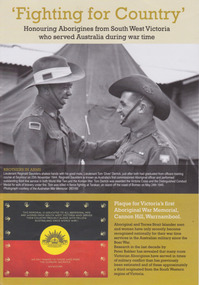
Booklet, 'Fighting for Country' Honouring Aborigines from South West Victoria who served Australia during war time, February 2014
... Several of the soldiers came from the Warrnambool area. aborigines from south west victoria return to country lake bolac eel festival peter bakker world war one world war two korean war vietnam war Front Cover: ‘Fighting For Country – Honouring Aborigines from South West Victoria who served Australia during War Time’ (plus other printed material) Back Cover: Map and List of Service Men and Women of Aboriginal Descent with connections to South West Victoria This is a booklet of ten pages with printed material and black and white and colour photographs and a map. ...This booklet was collated and printed for the 2014 Lake Bolac Eel Festival, ‘Return to Country’. The author, Peter Bakker, has spent several years researching the part played by south western Victorian aborigines and this booklet details the results of this research. Several of the soldiers came from the Warrnambool area.This is a booklet of ten pages with printed material and black and white and colour photographs and a map.Front Cover: ‘Fighting For Country – Honouring Aborigines from South West Victoria who served Australia during War Time’ (plus other printed material) Back Cover: Map and List of Service Men and Women of Aboriginal Descent with connections to South West Victoria aborigines from south west victoria, return to country, lake bolac eel festival, peter bakker, world war one, world war two, korean war, vietnam war -
 Monbulk RSL Sub Branch
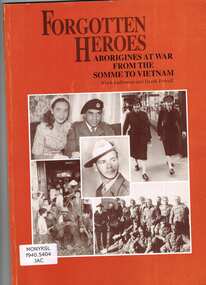
Book, Alick Jackomos et al, Forgotten heroes : Aborigines at war from the Somme to Vietnam, 1993
... Australia - Military forces - Aboriginal members Australia - Aboriginals - Personal histories - Military The involvement of Victorian and New South Wales Aboriginal people in war; World War One; World War Two; Korea; Vietnam; James Lovett; Hannah Lovett; Reg Rawlings; Henry Thorpe; John Firebrace; Dan Cooper; Jackson Stewart; Reg Saunders; Harry Saunders; George Birkett; Bill Egan; Jack Kennedy; Linda (Lester) Nihill; Marge Tucker; Alice Lovett; Connie Alberts; Stewart Murray; Norman Herbert Franklin; Bill Edwards; Lester Marks Harradine; Clarke family; Merv Bundle; Leo Maxwell Muir; Glen James; Graham Atkinson; Pat Owen; Cummeragunga; Lake Tyers; Framlingham; list of Aboriginal servicemen and women; different treatment of Aboriginal people during the war and after; introduction by Terry Garwood annotated separately. ...The involvement of Victorian and New South Wales Aboriginal people in war; World War One; World War Two; Korea; Vietnam; James Lovett; Hannah Lovett; Reg Rawlings; Henry Thorpe; John Firebrace; Dan Cooper; Jackson Stewart; Reg Saunders; Harry Saunders; George Birkett; Bill Egan; Jack Kennedy; Linda (Lester) Nihill; Marge Tucker; Alice Lovett; Connie Alberts; Stewart Murray; Norman Herbert Franklin; Bill Edwards; Lester Marks Harradine; Clarke family; Merv Bundle; Leo Maxwell Muir; Glen James; Graham Atkinson; Pat Owen; Cummeragunga; Lake Tyers; Framlingham; list of Aboriginal servicemen and women; different treatment of Aboriginal people during the war and after; introduction by Terry Garwood annotated separately.Ill, p.88.The involvement of Victorian and New South Wales Aboriginal people in war; World War One; World War Two; Korea; Vietnam; James Lovett; Hannah Lovett; Reg Rawlings; Henry Thorpe; John Firebrace; Dan Cooper; Jackson Stewart; Reg Saunders; Harry Saunders; George Birkett; Bill Egan; Jack Kennedy; Linda (Lester) Nihill; Marge Tucker; Alice Lovett; Connie Alberts; Stewart Murray; Norman Herbert Franklin; Bill Edwards; Lester Marks Harradine; Clarke family; Merv Bundle; Leo Maxwell Muir; Glen James; Graham Atkinson; Pat Owen; Cummeragunga; Lake Tyers; Framlingham; list of Aboriginal servicemen and women; different treatment of Aboriginal people during the war and after; introduction by Terry Garwood annotated separately.australia - military forces - aboriginal members, australia - aboriginals - personal histories - military -
 National Vietnam Veterans Museum (NVVM)
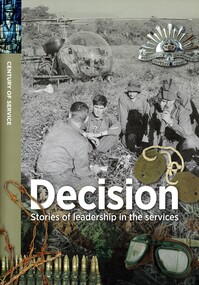
Booklet, Cole-Adams, Jennet. Gauld, Judy, Decision: Stories of leadership in the services - Century of Service
... Australia. Army - Aboriginal troops...Vietnam...World War...Australia. Army - Aboriginal troops Vietnam World War One We all make decisions every day - they shape the lives we lead. ...We all make decisions every day - they shape the lives we lead. In times of war, decision-making can take on a greter signifiance.We all make decisions every day - they shape the lives we lead. In times of war, decision-making can take on a greter signifiance. australia. army - aboriginal troops, vietnam, world war one -
 National Vietnam Veterans Museum (NVVM)
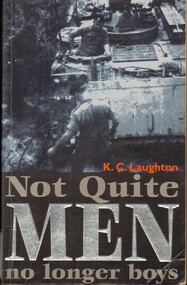
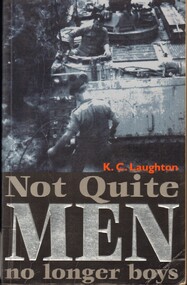
Book, Laugton, K. C, Not Quite Men, No Longer Boys (Copy 1)
... Australia. Army - Aboriginal troops Vietnam Kenny was barely nineteen years old, a wide-eyed Aboriginal kid from the bush, when he left Australia for a tour of duty in Vietnam. From the fleshpots of Saigon to the 'sharp end' clearing mines at Nui Dat, there was a lot to learn for a young man in a strange country, fighting a murky, confusing war. ...Kenny was barely nineteen years old, a wide-eyed Aboriginal kid from the bush, when he left Australia for a tour of duty in Vietnam. From the fleshpots of Saigon to the 'sharp end' clearing mines at Nui Dat, there was a lot to learn for a young man in a strange country, fighting a murky, confusing war.Kenny was barely nineteen years old, a wide-eyed Aboriginal kid from the bush, when he left Australia for a tour of duty in Vietnam. From the fleshpots of Saigon to the 'sharp end' clearing mines at Nui Dat, there was a lot to learn for a young man in a strange country, fighting a murky, confusing war. australia. army - aboriginal troops, vietnam -
 National Vietnam Veterans Museum (NVVM)
Book, Laugton, K. C, Not Quite Men, NoLonger Boys (Copy 2)
... Australia. Army - Aboriginal troops Saigon Nui Dat Kenny was barely nineteen years old, a wide-eyed Aboriginal kid from the bush, when he left Australia for a tour of duty in Vietnam. From the fleshpots of Saigon to the 'sharp end' clearing mines at Nui Dat, there was a lot to learn for a young man in a strange country, fighting a murky, confusing war. ...Kenny was barely nineteen years old, a wide-eyed Aboriginal kid from the bush, when he left Australia for a tour of duty in Vietnam. From the fleshpots of Saigon to the 'sharp end' clearing mines at Nui Dat, there was a lot to learn for a young man in a strange country, fighting a murky, confusing war.Kenny was barely nineteen years old, a wide-eyed Aboriginal kid from the bush, when he left Australia for a tour of duty in Vietnam. From the fleshpots of Saigon to the 'sharp end' clearing mines at Nui Dat, there was a lot to learn for a young man in a strange country, fighting a murky, confusing war. australia. army - aboriginal troops, saigon, nui dat -
 National Vietnam Veterans Museum (NVVM)
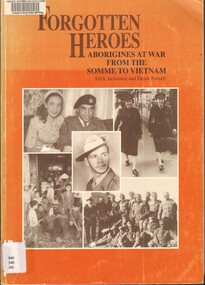
Book, Jackomos, Alick,Fowell, Derek, Forgotten Heroes: Aborigines At War From The Somme To Vietnam
... Aboriginal Australians - Biography Australia - Armed Forces - Aboriginal Australians - History Victorian aborigines distinguished themselves at war overseas and on the home front this century. Many of them came from a long tradition of warriors; their forebears waged war last century on the European settles who had occupied their traditional homelands. Forgotten Heroes: Aborigines At War From The Somme To Vietnam ...Victorian aborigines distinguished themselves at war overseas and on the home front this century. Many of them came from a long tradition of warriors; their forebears waged war last century on the European settles who had occupied their traditional homelands.Victorian aborigines distinguished themselves at war overseas and on the home front this century. Many of them came from a long tradition of warriors; their forebears waged war last century on the European settles who had occupied their traditional homelands.aboriginal australians - biography, australia - armed forces - aboriginal australians - history -
 Uniting Church Archives - Synod of Victoria
Bw photo, Undated
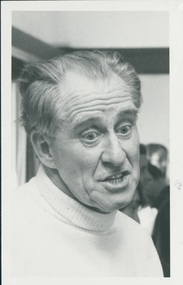
... war in Indochina and conscription in Australia and played an important role in activating congregations to protest against the war. His keen intelligence, knowledge of history and analytical skills demolished the false foundation on which the US and its allies entered the war and he organised medical and social work teams in South Vietnam and Laos to help refugees and displaced persons. In the 1970s Perkins played an important role in ''decolonising'' and devolving power in the Methodist Church missions in Aboriginal...war in Indochina and conscription in Australia and played an important role in activating congregations to protest against the war. His keen intelligence, knowledge of history and analytical skills demolished the false foundation on which the US and its allies entered the war and he organised medical and social work teams in South Vietnam and Laos to help refugees and displaced persons. In the 1970s Perkins played an important role in ''decolonising'' and devolving power in the Methodist Church missions in Aboriginal ...Harvey Perkins was a Methodist minister and a peacemaker throughout his life of service and social activism. He knew the certainty that without justice there can be no peace, within, or between, communities and nations. He was greatly influenced by ''liberation theology'' and framed his life of thought, analysis and action on the teachings of the Bible. He was also a visionary in working closely with Asian churches on ecumenical and social justice issues in a way that anticipated by decades the closer relationships Australia now enjoys with Asia. He understood that any form of intervention altered the power relationship within a community and often challenged the dominant social interests in the post-colonial Asian countries. He knew any form of aid had to empower its recipients and be based on a partnership of equality. In the early 1960s, Perkins was an opponent of the war in Indochina and conscription in Australia and played an important role in activating congregations to protest against the war. His keen intelligence, knowledge of history and analytical skills demolished the false foundation on which the US and its allies entered the war and he organised medical and social work teams in South Vietnam and Laos to help refugees and displaced persons. In the 1970s Perkins played an important role in ''decolonising'' and devolving power in the Methodist Church missions in Aboriginal Australia and the Pacific Islands by analysing power structures and relationships through what he had learnt in Asia. Harvey Perkins and his twin sister, Jean, were born in Tasmania on January 29, 1919, children of Leslie Perkins and his wife, Doris (nee Cook). Leslie was a Methodist minister and Harvey and Jean's childhood was spent in parishes in urban and rural areas of Tasmania and Victoria. The family saw the grinding poverty and desperate human need wrought by the Depression as a ceaseless tide of people came knocking at the door of the local parsonage for help. In 1941, Perkins enlisted as an officer in the Australian Navy and served in the Pacific theatre until 1946. To his children, he explained his justification as being the real threat of invasion but it was a war that altered the direction of his life. On discharge he abandoned his completed studies at Melbourne University in law and commerce and studied for a degree in divinity. He was active in the World Student Christian Federation and in 1949, was ordained into the Methodist Church. A few years later, Perkins travelled to a World Student Christian Federation conference in Canada, on his way to study in Cambridge, and met an expatriate, Jill McCrory. They married in 1953. After Cambridge, Perkins returned to Australia and served as a minister in the Mitcham area of the growing Melbourne outer suburbs until 1956, when he was appointed General Secretary of the Australian Council of Churches and director of the Inter-Church Aid and Refugee World Service. From 1968 to 1971, Perkins worked with the East Asian Christian Conference and then took a position with the World Council of Churches in Geneva with its Commission on Churches Participation in Development. He returned to Australia in 1973 to a position with the Methodist Board of Missions and then returned to the Christian Conference of Asia in 1976 and relocated to Singapore for several years. Before retiring in 1984 he worked with the Uniting Church Board of Social Responsibility. In retirement Perkins continued to work in the Dee Why parish, enjoying preaching, leading study groups and working as a pastor in a local community. Along with his work, Perkins had a lifelong passion for AFL and his beloved team North Melbourne. Wherever he was in the world he could be found fiddling with a short-wave radio to listen to a game. In later years, Perkins developed Alzheimer's and his home became his haven until two weeks before his death. Harvey Perkins is survived by Jill, children Mary, Ro, David, Marguerite, Anna, Harvey and Kate and their partners, 13 grandchildren and two great-grandchildren. Jean died in 1981. (Obituary in the SMH by David Perkins) Head and shoulders portrait of Rev. Harvey PerkinsRev. Harvey Perkinsrev. harvey perkins; methodist minister; christian conference of asia; australian council of churches -
 Uniting Church Archives - Synod of Victoria
BW photo, Undated
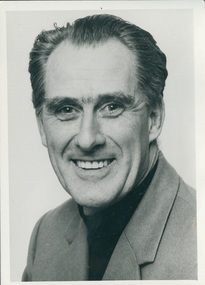
... war in Indochina and conscription in Australia and played an important role in activating congregations to protest against the war. His keen intelligence, knowledge of history and analytical skills demolished the false foundation on which the US and its allies entered the war and he organised medical and social work teams in South Vietnam and Laos to help refugees and displaced persons. In the 1970s Perkins played an important role in ''decolonising'' and devolving power in the Methodist Church missions in Aboriginal...war in Indochina and conscription in Australia and played an important role in activating congregations to protest against the war. His keen intelligence, knowledge of history and analytical skills demolished the false foundation on which the US and its allies entered the war and he organised medical and social work teams in South Vietnam and Laos to help refugees and displaced persons. In the 1970s Perkins played an important role in ''decolonising'' and devolving power in the Methodist Church missions in Aboriginal ...Harvey Perkins was a Methodist minister and a peacemaker throughout his life of service and social activism. He knew the certainty that without justice there can be no peace, within, or between, communities and nations. He was greatly influenced by ''liberation theology'' and framed his life of thought, analysis and action on the teachings of the Bible. He was also a visionary in working closely with Asian churches on ecumenical and social justice issues in a way that anticipated by decades the closer relationships Australia now enjoys with Asia. He understood that any form of intervention altered the power relationship within a community and often challenged the dominant social interests in the post-colonial Asian countries. He knew any form of aid had to empower its recipients and be based on a partnership of equality. In the early 1960s, Perkins was an opponent of the war in Indochina and conscription in Australia and played an important role in activating congregations to protest against the war. His keen intelligence, knowledge of history and analytical skills demolished the false foundation on which the US and its allies entered the war and he organised medical and social work teams in South Vietnam and Laos to help refugees and displaced persons. In the 1970s Perkins played an important role in ''decolonising'' and devolving power in the Methodist Church missions in Aboriginal Australia and the Pacific Islands by analysing power structures and relationships through what he had learnt in Asia. Harvey Perkins and his twin sister, Jean, were born in Tasmania on January 29, 1919, children of Leslie Perkins and his wife, Doris (nee Cook). Leslie was a Methodist minister and Harvey and Jean's childhood was spent in parishes in urban and rural areas of Tasmania and Victoria. The family saw the grinding poverty and desperate human need wrought by the Depression as a ceaseless tide of people came knocking at the door of the local parsonage for help. In 1941, Perkins enlisted as an officer in the Australian Navy and served in the Pacific theatre until 1946. To his children, he explained his justification as being the real threat of invasion but it was a war that altered the direction of his life. On discharge he abandoned his completed studies at Melbourne University in law and commerce and studied for a degree in divinity. He was active in the World Student Christian Federation and in 1949, was ordained into the Methodist Church. A few years later, Perkins travelled to a World Student Christian Federation conference in Canada, on his way to study in Cambridge, and met an expatriate, Jill McCrory. They married in 1953. After Cambridge, Perkins returned to Australia and served as a minister in the Mitcham area of the growing Melbourne outer suburbs until 1956, when he was appointed General Secretary of the Australian Council of Churches and director of the Inter-Church Aid and Refugee World Service. From 1968 to 1971, Perkins worked with the East Asian Christian Conference and then took a position with the World Council of Churches in Geneva with its Commission on Churches Participation in Development. He returned to Australia in 1973 to a position with the Methodist Board of Missions and then returned to the Christian Conference of Asia in 1976 and relocated to Singapore for several years. Before retiring in 1984 he worked with the Uniting Church Board of Social Responsibility. In retirement Perkins continued to work in the Dee Why parish, enjoying preaching, leading study groups and working as a pastor in a local community. Along with his work, Perkins had a lifelong passion for AFL and his beloved team North Melbourne. Wherever he was in the world he could be found fiddling with a short-wave radio to listen to a game. In later years, Perkins developed Alzheimer's and his home became his haven until two weeks before his death. Harvey Perkins is survived by Jill, children Mary, Ro, David, Marguerite, Anna, Harvey and Kate and their partners, 13 grandchildren and two great-grandchildren. Jean died in 1981. (Obituary in the SMH by David Perkins) Head and shoulders portrait of the Rev. Harvey Perkins. Photo taken some years before the photo of him in F524 -9Rev. Harvey Perkinsrev. harvey perkins; methodist minister; christian conference of asia; australian council of churches -
 Uniting Church Archives - Synod of Victoria
BW photo, March 1986
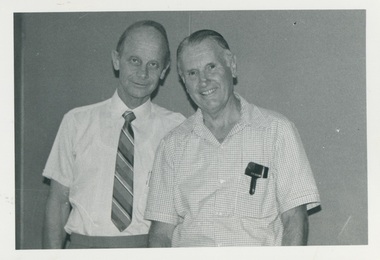
... Vietnam War & Aboriginal rights, although many did not agree with his view. In 1969 Jock was moved to Horsham to take up the role of Separated Chairman of the North-Western District responsible for Circuits, ministers and families for policy issues and pastoral concerns over an area from the South Australian border, up to the Murray and over it to Wentworth and Dareton, up river to Swan Hill and south to Ballarat and Daylesford. ...Vietnam War & Aboriginal rights, although many did not agree with his view. In 1969 Jock was moved to Horsham to take up the role of Separated Chairman of the North-Western District responsible for Circuits, ministers and families for policy issues and pastoral concerns over an area from the South Australian border, up to the Murray and over it to Wentworth and Dareton, up river to Swan Hill and south to Ballarat and Daylesford. ...John (Jock) Corben Lavender Jock was born in Ivanhoe, but spent most of his youth in Northcote where his father was a bank manager, and where he attended primary school, high school and the Methodist church in High Street which became a central point in his life. He took his first job in the dispatch office at McPhersons nut and bolt factory in North Richmond in 1935. After a short time at McPhersons he moved to the Trustees Executors and Agency Company in 1936. While working at the Trustees Jock developed the conviction that his vocation lay with the church. This necessitated studying Matriculation at night school for two years as well as working and studying to become a Local Preacher. The minister at Northcote at the time was the Rev.F.T.Cleverdon who helped him prepare to apply as a candidate for Ordination. Before going to university and Queen’s for his arts degree and theological training, Mr Cleverdon, who was now the minister at Neil Street, Ballarat, offered Jock the opportunity to minister to the small congregation at Brown Hill, Ballarat, which was in his Circuit, and to live with the Cleverdons. He spent a year in Ballarat under the tutelage of Rev.F.T Cleverdon in 1939. Jock was accepted by the 1940 Victorian Methodist Conference as a Candidate for the Ministry and started his studies for his theological training and an arts degree at Melbourne University that year. Because of a shortage of ministers, due to the war, Jock was taken out of Queen’s in 1943 to take charge of two fairly small churches in Caulfield - Hawthorn Road and Bambra Road. Jock was ordained in 1945 & married two days later to Elsie Chipperfield, with whom he had worked at the Trustees Executors and Agency. He had joined the RAAF as a chaplain and was sent to Borneo. Returning to Australia in early 1946, he was then appointed to Orbost for a year, Bracknell in Tasmania in 1948, followed by Reid in Canberra, 1951. The next move was to Portland in 1954. Unfortunately not long after this, Elsie was diagnosed with breast cancer. This necessitated a move back to Melbourne - to Mitcham in 1957. Elsie died in December 1957. This period was a very hard time as Jock had four young daughters but his mother helped out by living in for most of the week until Jock was married to Peg in 1959 and their son was born in 1961. In 1964 Jock was moved to Launceston, his first city church. These years were challenging for Jock as he felt compelled to speak out around social issues, such as the Vietnam War & Aboriginal rights, although many did not agree with his view. In 1969 Jock was moved to Horsham to take up the role of Separated Chairman of the North-Western District responsible for Circuits, ministers and families for policy issues and pastoral concerns over an area from the South Australian border, up to the Murray and over it to Wentworth and Dareton, up river to Swan Hill and south to Ballarat and Daylesford. It was a demanding job but richly rewarding in the relationships made with ministers and their families. In 1971 Jock was elected Secretary of the Methodist Conference and in 1972 was voted President of the Conference. He felt it an honour and a vote of confidence by clergy and lay people The final move was to Geelong in 1976 where Jock was the minister at Wesley until 1983.Jock found Geelong a very satisfying parish in which to finish his active ministry. It was while he was Minister of Wesley Church, Geelong, that the Uniting Church came into being and Jock became the first Chairman of the Barwon Presbytery. There were now two ministers at Wesley – Jock and Alex Peerman, whose joint congregation of St. Giles (Pres) and City Congregational now joined with Wesley to become the City Parish. Jock was very surprised to be elected as the third Moderator of the Uniting Church in Victoria, to take office in 1979/1980 1983 saw retirement to Portarlington several months’ locum in both Canada & Kununurra. When the property at Portarlington became too large to maintain, they moved in 1994 into the current house in Belmont & returned to the Wesley Church here. In the words of Rev. Prof. Norman Young and Rev. Peter Gador-Whyte at Jock’s funeral service: “We are here today to give thanks to God for Jock Lavender; a gentle man of great compassion, humour and humility. We gather to remember the love he shared so generously the faith he lived so graciously, and the hope he expressed both in his preaching and in his presence. As President of the Methodist Conference and Moderator of the Uniting Church Jock held significant leadership roles within the church and did so with great dignity and grace never lording it over people but leading by example with an inner strength and faith that won respect and trust. There was something really special about him that is hard to put your finger on. We have all been blessed by God through Jock. Mr Alexander Kilgour Alex Kilgour was for many years an active elder and layman in the Presbyterian and then Uniting Church. He was involved in many committees at Synod level for many years. He was a Moderator of the Synod of Victoria of the UCA—one of the first laypeople to take on the role in the early years of the UCA. He was for many years Executive Director of the Resources Commission of the Synod. He worked at Mitchell Brushes (the company owned by Ethel and John Mitchell. B&W photograph. The Rev. John C (Jock) Lavender and Mr Alex Kilgour, dressed in shirts, are standing shoulder to shoulder, facing the camera.C&N 19/3/1986rev. jock lavender; mr alex kilgour; methodist, presbyterian, uniting church; synod appointments; moderator -
 Uniting Church Archives - Synod of Victoria
BW photo, Undated
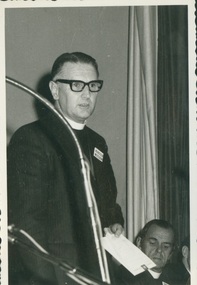
... Vietnam War & Aboriginal rights, although many did not agree with his view. In 1969 Jock was moved to Horsham to take up the role of Separated Chairman of the North-Western District responsible for Circuits, ministers and families for policy issues and pastoral concerns over an area from the South Australian border, up to the Murray and over it to Wentworth and Dareton, up river to Swan Hill and south to Ballarat and Daylesford. ...Vietnam War & Aboriginal rights, although many did not agree with his view. In 1969 Jock was moved to Horsham to take up the role of Separated Chairman of the North-Western District responsible for Circuits, ministers and families for policy issues and pastoral concerns over an area from the South Australian border, up to the Murray and over it to Wentworth and Dareton, up river to Swan Hill and south to Ballarat and Daylesford. ...JOHN CORBEN LAVENDER (Jock) Jock was born in Ivanhoe, but spent most of his youth in Northcote where his father was a bank manager, and where he attended primary school, high school and the Methodist church in High Street which became a central point in his life. He took his first job in the dispatch office at McPhersons nut and bolt factory in North Richmond in 1935. After a short time at McPhersons he moved to the Trustees Executors and Agency Company in 1936. While working at the Trustees Jock developed the conviction that his vocation lay with the church. This necessitated studying Matriculation at night school for two years as well as working and studying to become a Local Preacher. The minister at Northcote at the time was the Rev.F.T.Cleverdon who helped him prepare to apply as a candidate for Ordination. Before going to university and Queen’s for his arts degree and theological training, Mr Cleverdon, who was now the minister at Neil Street, Ballarat, offered Jock the opportunity to minister to the small congregation at Brown Hill, Ballarat, which was in his Circuit, and to live with the Cleverdons. He spent a year in Ballarat under the tutelage of Rev.F.T Cleverdon in 1939. Jock was accepted by the 1940 Victorian Methodist Conference as a Candidate for the Ministry and started his studies for his theological training and an arts degree at Melbourne University that year. Because of a shortage of ministers, due to the war, Jock was taken out of Queen’s in 1943 to take charge of two fairly small churches in Caulfield - Hawthorn Road and Bambra Road. Jock was ordained in 1945 & married two days later to Elsie Chipperfield, with whom he had worked at the Trustees Executors and Agency. He had joined the RAAF as a chaplain and was sent to Borneo. Returning to Australia in early 1946, he was then appointed to Orbost for a year, Bracknell in Tasmania in 1948, followed by Reid in Canberra, 1951. The next move was to Portland in 1954. Unfortunately not long after this, Elsie was diagnosed with breast cancer. This necessitated a move back to Melbourne - to Mitcham in 1957. Elsie died in December 1957. This period was a very hard time as Jock had four young daughters but his mother helped out by living in for most of the week until Jock was married to Peg in 1959 and their son was born in 1961. In 1964 Jock was moved to Launceston, his first city church. These years were challenging for Jock as he felt compelled to speak out around social issues, such as the Vietnam War & Aboriginal rights, although many did not agree with his view. In 1969 Jock was moved to Horsham to take up the role of Separated Chairman of the North-Western District responsible for Circuits, ministers and families for policy issues and pastoral concerns over an area from the South Australian border, up to the Murray and over it to Wentworth and Dareton, up river to Swan Hill and south to Ballarat and Daylesford. It was a demanding job but richly rewarding in the relationships made with ministers and their families. In 1971 Jock was elected Secretary of the Methodist Conference and in 1972 was voted President of the Conference. He felt it an honour and a vote of confidence by clergy and lay people The final move was to Geelong in 1976 where Jock was the minister at Wesley until 1983.Jock found Geelong a very satisfying parish in which to finish his active ministry. It was while he was Minister of Wesley Church, Geelong, that the Uniting Church came into being and Jock became the first Chairman of the Barwon Presbytery. There were now two ministers at Wesley – Jock and Alex Peerman, whose joint congregation of St. Giles (Pres) and City Congregational now joined with Wesley to become the City Parish. Jock was very surprised to be elected as the third Moderator of the Uniting Church in Victoria, to take office in 1979/1980 1983 saw retirement to Portarlington several months’ locum in both Canada & Kununurra. When the property at Portarlington became too large to maintain, they moved in 1994 into the current house in Belmont & returned to the Wesley Church here. Deceased c.2015. Rev. John (Jock) Lavender is pictured standing at a microphone, wearing clerical clothingRev. J C Lavenderrev. john (jock) lavender; methodist minister; uniting church minister; -
 Uniting Church Archives - Synod of Victoria
BW photo, 1980s?
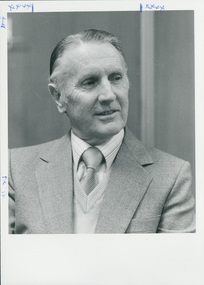
... Vietnam War & Aboriginal rights, although many did not agree with his view. In 1969 Jock was moved to Horsham to take up the role of Separated Chairman of the North-Western District responsible for Circuits, ministers and families for policy issues and pastoral concerns over an area from the South Australian border, up to the Murray and over it to Wentworth and Dareton, up river to Swan Hill and south to Ballarat and Daylesford. ...Vietnam War & Aboriginal rights, although many did not agree with his view. In 1969 Jock was moved to Horsham to take up the role of Separated Chairman of the North-Western District responsible for Circuits, ministers and families for policy issues and pastoral concerns over an area from the South Australian border, up to the Murray and over it to Wentworth and Dareton, up river to Swan Hill and south to Ballarat and Daylesford. ...JOHN CORBEN LAVENDER (Jock) Jock was born in Ivanhoe, but spent most of his youth in Northcote where his father was a bank manager, and where he attended primary school, high school and the Methodist church in High Street which became a central point in his life. He took his first job in the dispatch office at McPhersons nut and bolt factory in North Richmond in 1935. After a short time at McPhersons he moved to the Trustees Executors and Agency Company in 1936. While working at the Trustees Jock developed the conviction that his vocation lay with the church. This necessitated studying Matriculation at night school for two years as well as working and studying to become a Local Preacher. The minister at Northcote at the time was the Rev.F.T.Cleverdon who helped him prepare to apply as a candidate for Ordination. Before going to university and Queen’s for his arts degree and theological training, Mr Cleverdon, who was now the minister at Neil Street, Ballarat, offered Jock the opportunity to minister to the small congregation at Brown Hill, Ballarat, which was in his Circuit, and to live with the Cleverdons. He spent a year in Ballarat under the tutelage of Rev.F.T Cleverdon in 1939. Jock was accepted by the 1940 Victorian Methodist Conference as a Candidate for the Ministry and started his studies for his theological training and an arts degree at Melbourne University that year. Because of a shortage of ministers, due to the war, Jock was taken out of Queen’s in 1943 to take charge of two fairly small churches in Caulfield - Hawthorn Road and Bambra Road. Jock was ordained in 1945 & married two days later to Elsie Chipperfield, with whom he had worked at the Trustees Executors and Agency. He had joined the RAAF as a chaplain and was sent to Borneo. Returning to Australia in early 1946, he was then appointed to Orbost for a year, Bracknell in Tasmania in 1948, followed by Reid in Canberra, 1951. The next move was to Portland in 1954. Unfortunately not long after this, Elsie was diagnosed with breast cancer. This necessitated a move back to Melbourne - to Mitcham in 1957. Elsie died in December 1957. This period was a very hard time as Jock had four young daughters but his mother helped out by living in for most of the week until Jock was married to Peg in 1959 and their son was born in 1961. In 1964 Jock was moved to Launceston, his first city church. These years were challenging for Jock as he felt compelled to speak out around social issues, such as the Vietnam War & Aboriginal rights, although many did not agree with his view. In 1969 Jock was moved to Horsham to take up the role of Separated Chairman of the North-Western District responsible for Circuits, ministers and families for policy issues and pastoral concerns over an area from the South Australian border, up to the Murray and over it to Wentworth and Dareton, up river to Swan Hill and south to Ballarat and Daylesford. It was a demanding job but richly rewarding in the relationships made with ministers and their families. In 1971 Jock was elected Secretary of the Methodist Conference and in 1972 was voted President of the Conference. He felt it an honour and a vote of confidence by clergy and lay people The final move was to Geelong in 1976 where Jock was the minister at Wesley until 1983.Jock found Geelong a very satisfying parish in which to finish his active ministry. It was while he was Minister of Wesley Church, Geelong, that the Uniting Church came into being and Jock became the first Chairman of the Barwon Presbytery. There were now two ministers at Wesley – Jock and Alex Peerman, whose joint congregation of St. Giles (Pres) and City Congregational now joined with Wesley to become the City Parish. Jock was very surprised to be elected as the third Moderator of the Uniting Church in Victoria, to take office in 1979/1980 1983 saw retirement to Portarlington several months’ locum in both Canada & Kununurra. When the property at Portarlington became too large to maintain, they moved in 1994 into the current house in Belmont & returned to the Wesley Church Geelong.Head and shoulders portrait of the Rev. John (Jock) Lavender, wearing suit and tie.Jock Lavenderrev. john (jock) lavender; methodist minister; uniting church minister; -
 Uniting Church Archives - Synod of Victoria
BW photo, 1979
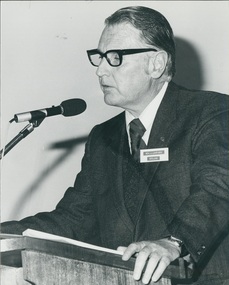
... Vietnam War & Aboriginal rights, although many did not agree with his view. In 1969 Jock was moved to Horsham to take up the role of Separated Chairman of the North-Western District responsible for Circuits, ministers and families for policy issues and pastoral concerns over an area from the South Australian border, up to the Murray and over it to Wentworth and Dareton, up river to Swan Hill and south to Ballarat and Daylesford. ...Vietnam War & Aboriginal rights, although many did not agree with his view. In 1969 Jock was moved to Horsham to take up the role of Separated Chairman of the North-Western District responsible for Circuits, ministers and families for policy issues and pastoral concerns over an area from the South Australian border, up to the Murray and over it to Wentworth and Dareton, up river to Swan Hill and south to Ballarat and Daylesford. ...JOHN CORBEN LAVENDER (Jock) Jock was born in Ivanhoe, but spent most of his youth in Northcote where his father was a bank manager, and where he attended primary school, high school and the Methodist church in High Street which became a central point in his life. He took his first job in the dispatch office at McPhersons nut and bolt factory in North Richmond in 1935. After a short time at McPhersons he moved to the Trustees Executors and Agency Company in 1936. While working at the Trustees Jock developed the conviction that his vocation lay with the church. This necessitated studying Matriculation at night school for two years as well as working and studying to become a Local Preacher. The minister at Northcote at the time was the Rev.F.T.Cleverdon who helped him prepare to apply as a candidate for Ordination. Before going to university and Queen’s for his arts degree and theological training, Mr Cleverdon, who was now the minister at Neil Street, Ballarat, offered Jock the opportunity to minister to the small congregation at Brown Hill, Ballarat, which was in his Circuit, and to live with the Cleverdons. He spent a year in Ballarat under the tutelage of Rev.F.T Cleverdon in 1939. Jock was accepted by the 1940 Victorian Methodist Conference as a Candidate for the Ministry and started his studies for his theological training and an arts degree at Melbourne University that year. Because of a shortage of ministers, due to the war, Jock was taken out of Queen’s in 1943 to take charge of two fairly small churches in Caulfield - Hawthorn Road and Bambra Road. Jock was ordained in 1945 & married two days later to Elsie Chipperfield, with whom he had worked at the Trustees Executors and Agency. He had joined the RAAF as a chaplain and was sent to Borneo. Returning to Australia in early 1946, he was then appointed to Orbost for a year, Bracknell in Tasmania in 1948, followed by Reid in Canberra, 1951. The next move was to Portland in 1954. Unfortunately not long after this, Elsie was diagnosed with breast cancer. This necessitated a move back to Melbourne - to Mitcham in 1957. Elsie died in December 1957. This period was a very hard time as Jock had four young daughters but his mother helped out by living in for most of the week until Jock was married to Peg in 1959 and their son was born in 1961. In 1964 Jock was moved to Launceston, his first city church. These years were challenging for Jock as he felt compelled to speak out around social issues, such as the Vietnam War & Aboriginal rights, although many did not agree with his view. In 1969 Jock was moved to Horsham to take up the role of Separated Chairman of the North-Western District responsible for Circuits, ministers and families for policy issues and pastoral concerns over an area from the South Australian border, up to the Murray and over it to Wentworth and Dareton, up river to Swan Hill and south to Ballarat and Daylesford. It was a demanding job but richly rewarding in the relationships made with ministers and their families. In 1971 Jock was elected Secretary of the Methodist Conference and in 1972 was voted President of the Conference. He felt it an honour and a vote of confidence by clergy and lay people The final move was to Geelong in 1976 where Jock was the minister at Wesley until 1983.Jock found Geelong a very satisfying parish in which to finish his active ministry. It was while he was Minister of Wesley Church, Geelong, that the Uniting Church came into being and Jock became the first Chairman of the Barwon Presbytery. There were now two ministers at Wesley – Jock and Alex Peerman, whose joint congregation of St. Giles (Pres) and City Congregational now joined with Wesley to become the City Parish. Jock was very surprised to be elected as the third Moderator of the Uniting Church in Victoria, to take office in 1979/1980 1983 saw retirement to Portarlington several months’ locum in both Canada & Kununurra. When the property at Portarlington became too large to maintain, they moved in 1994 into the current house in Belmont & returned to the Wesley Church Geelong.Upper body photo of Rev. John (Jock) Lavender (Geelong) speaking at a lectern.Church & Nation 23/5/79, p. 5; Rev. Lavenderrev. john (jock) lavender; methodist minister; uniting church minister; -
 Wodonga & District Historical Society Inc
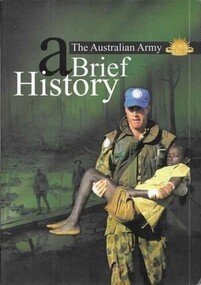
Book - The Australian Army - A Brief History, Austin, Brigadier M and Lever, Major Geoff, 2001
... Australian army from colonial forces and the Aboriginal resistance to European settlement through to the traditions and involvement of the Australian Army today. Australian Military Military History A revised short history of the Australian Army beginning with Aboriginal resistance to settlement; through an examination of the service of colonial forces in the Sudan and Boer Wars; both World Wars, Korea, Vietnam and Afghanistan. ...A revised short history of the Australian Army beginning with Aboriginal resistance to settlement; through an examination of the service of colonial forces in the Sudan and Boer Wars; both World Wars, Korea, Vietnam and Afghanistan. It contains a detailed section explaining the history and traditions of the Australian Army including patches, badges, the slouch hat and the Rising Sun badge.A bound volume of 96 pages featuring an image of an Australian soldier carrying an injured child on the cover. This publication includes 11 maps in colour as well as black and white and colour illustrations.A revised short history of the Australian Army beginning with Aboriginal resistance to settlement; through an examination of the service of colonial forces in the Sudan and Boer Wars; both World Wars, Korea, Vietnam and Afghanistan. It contains a detailed section explaining the history and traditions of the Australian Army including patches, badges, the slouch hat and the Rising Sun badge.australian military, military history
