
Showing 267 items matching "aboriginal melbourne"
-
 Whitehorse Historical Society Inc.
Mixed media - History Talk and Recording, Presland, Gary, Aboriginal Melbourne, 12/10/1996
... Aboriginal Melbourne......Aboriginal Melbourne...The presentation on 'Aboriginal Melbourne' was given by Gary Presland to the Nunawading & Historical Society meeting on 12th October, 1996. ...Presland Gary Nunawading and District Historical Society Aboriginal Melbourne Woi Warrung Bunurong Wurundjeri Customs The presentation on 'Aboriginal Melbourne' was given by Gary Presland to the Nunawading & Historical Society meeting on 12th October, 1996. ...Gary Presland worked for the Victorian Department of Archaeological Survey in the 1980's following a 2 year study of the state of archaeological sites in the Melbourne metropolitan region published in 1983.The presentation on 'Aboriginal Melbourne' was given by Gary Presland to the Nunawading & Historical Society meeting on 12th October, 1996. The presentation included historical photos displayed in Windows Powerpoint. The audio recording is on cassette , which has been digitised and transcribed.presland, gary, nunawading and district historical society, aboriginal melbourne, woi warrung, bunurong, wurundjeri, customs -
Whitehorse Historical Society Inc.
Document, Aboriginal Melbourne, 12/10/1996 12:00:00 AM
... Aboriginal Melbourne...Gary Presland talks about aboriginal Melbourne. Tape at NP 1723....Aborigines Presland Gary Presland talks about aboriginal Melbourne. Tape at NP 1723. Gary Presland talks about aboriginal Melbourne. ...Gary Presland talks about aboriginal Melbourne. Tape at NP 1723.Gary Presland talks about aboriginal Melbourne. Tape at NP 1723.Gary Presland talks about aboriginal Melbourne. Tape at NP 1723.aborigines, presland -
Whitehorse Historical Society Inc.
Book, Aboriginal Melbourne, 1998
... Aboriginal Melbourne...Author's presentation copy to Ted and Valda Arrowsmith. Aboriginal Melbourne Book Book ...Subtitled 'the lost land of the Kulin people.Subtitled 'the lost land of the Kulin people. Previously published as 'The Land of the Kulin', 1985. Author's presentation copy to Ted and Valda Arrowsmith.Subtitled 'the lost land of the Kulin people. aborigines, kulin -
 Victorian Aboriginal Corporation for Languages
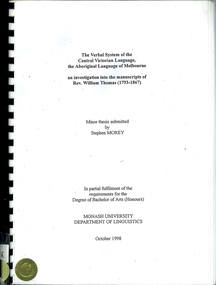
Thesis, Stephen Morey, The verbal system of the Central Victorian language, the Aboriginal language of Melbourne : an investigation into the manuscripts of Rev. William Thomas (1793-1867)
... The verbal system of the Central Victorian language, the Aboriginal language of Melbourne : an investigation into the manuscripts of Rev. ...This data was found to refer mainly to the Aboriginal language of the Melbourne area, described by Blake and Reid (1998) as the Central Victorian Language....The verbal system of the Central Victorian language, the Aboriginal language of Melbourne : an investigation into the manuscripts of Rev. ...This thesis examines and analyses the linguistic data in the papers of the Reverend William Thomas (1793-1867) in the Mitchell Library, Sydney (Thomas MS 214). This data was found to refer mainly to the Aboriginal language of the Melbourne area, described by Blake and Reid (1998) as the Central Victorian Language.word listswathawurrung, wathaurong, boonwurrung, boon wurrung, woiwurrung, thagungwurrung, djadjawurrung, tjapwurrung, wergaia, wemba baraba, wemba wemba, yeti, madhi madhi, ledji, wadi, nari nari, wimmera, ballarat, bacchus marsh, gippsland, mount gambier, wonnin, john green, george augustus robinson, r h mathews, luise hercus, linguistics, sociolinguistics -
 Victorian Aboriginal Corporation for Languages
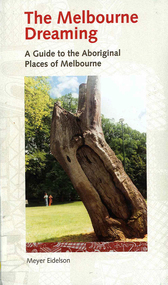
Book, Meyer Eidelson, The Melbourne dreaming : a guide to the Aboriginal places of Melbourne, 1997
... The Melbourne dreaming : a guide to the Aboriginal places of Melbourne...This guide shows Melbourne?s Aboriginal places so that people using it can gain easy access to and a greater knowledge of them. ... dreaming : a guide to the Aboriginal places of Melbourne Book Meyer Eidelson ...This guide shows Melbourne?s Aboriginal places so that people using it can gain easy access to and a greater knowledge of them. Important historical events occurred at some of them. Others are Archaeological sites where there are still physical remains of Aboriginal activity before settlement. Locations have been mapped and Melways references and maps are included.maps, b&w illustrations, colour illustrations, colour photographs, word listswoi wurrung, wurundjeri, boon wurrung, kulin, yarra yarra, yarra river, werribee river, bunjil, waa, moieties, maribyrnong, sacred sites -
 Victorian Aboriginal Corporation for Languages
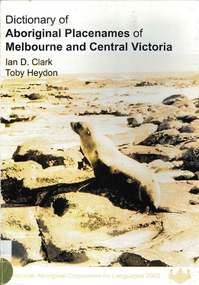
Book, Ian D Clark et al, Dictionary of Aboriginal placenames of Melbourne and Central Victoria, 2002
... Dictionary of Aboriginal placenames of Melbourne and Central Victoria...Daung Wurrung Woiwurrung Dja Dja Wurrung Wathawurrung Wadawurrung Boon Wurrung Jardwadjali Melbourne Yarra Baw Baw Central Goldfields Bass Coast Greater Geelong South Gippsland Surf Coast Yarra Ranges Golden Plains Mornington Peninsula Yarra Ranges Ballarat Frankston Greater Dandenong Queenscliffe Moorabool Boroondara maps, b&w photographs Dictionary including Indigenous and European place names. Origins are given. Dictionary of Aboriginal ...Dictionary including Indigenous and European place names. Origins are given.maps, b&w photographsdaung wurrung, woiwurrung, dja dja wurrung, wathawurrung, wadawurrung, boon wurrung, jardwadjali, melbourne, yarra, baw baw, central goldfields, bass coast, greater geelong, south gippsland, surf coast, yarra ranges, golden plains, mornington peninsula, yarra ranges, ballarat, frankston, greater dandenong, queenscliffe, moorabool, boroondara -
 Victorian Aboriginal Corporation for Languages
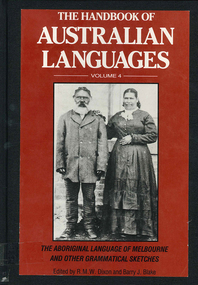
Book, R M W Dixon, The handbook of Australian languages : volume 4, the Aboriginal language of Melbourne and other grammatical sketches, 1991
... The handbook of Australian languages : volume 4, the Aboriginal language of Melbourne and other grammatical sketches...maps, word lists, b&w illustrations, b&w photographs The handbook of Australian languages : volume 4, the Aboriginal language of Melbourne and other grammatical sketches Book R M W Dixon Barry J Blake ...maps, word lists, b&w illustrations, b&w photographs -
 Victorian Aboriginal Corporation for Languages
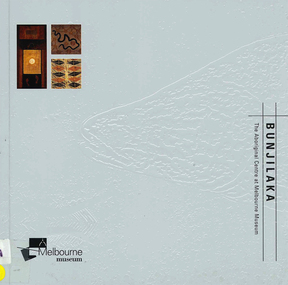
Book, Museum Victoria, Bunjilaka : the Aboriginal Centre at Melbourne Museum, 2000
... Bunjilaka : the Aboriginal Centre at Melbourne Museum...Bunjilaka : the Aboriginal Centre at Melbourne Museum Book Museum Victoria ...Contains information about - Building Bunjilika, Koori Voices, Belonging to Country, Two laws, Suggested Reading, A Note on Terminology, Keeping Places in Victoria, Photo Credits, Acknowledgements.colour photographs, b&w photographs, artworkbunjilaka, victorian keeping places, koori history, victorian history, bunjil, kulin, yorta yorta, wurundjeri -
Koorie Heritage Trust
Book, Museum Victoria, Bunjilaka: The Aboriginal Centre at Melbourne Museum, 2000
... Bunjilaka: The Aboriginal Centre at Melbourne Museum....Australian-Museums-Melbourne-Bunjilaka....Victorian Aboriginal...Bunjilaka: The Aboriginal Centre at Melbourne Museum. Book Museum Victoria Museum Victoria ...This book is a companion volume to the three opening exhibitions in Bunjilaka: It highlights the key objects, themes and stories within the exhibitions.64 P.; plates; 22 cm.This book is a companion volume to the three opening exhibitions in Bunjilaka: It highlights the key objects, themes and stories within the exhibitions.aborigines, australian-museums-melbourne-bunjilaka., victorian aboriginal history-bunjilaka -
Koorie Heritage Trust
Booklet, Aboriginal Affairs Victoria, Conserving Aboriginal places in coastal Victoria, 2000
... Aboriginal Affairs Victoria...Melbourne...Conserving Aboriginal places in coastal Victoria Booklet Aboriginal Affairs Victoria Melbourne VIC : Aboriginal Affairs Victoria ...Preservation of Aboriginal sites on the Victorian coast.40 p. : col. ill. ; 17 x 21 cm.Preservation of Aboriginal sites on the Victorian coast.aboriginal australians -- victoria -- antiquities. | cultural property -- protection -- victoria. | historic sites -- victoria -- conservation and preservation. | victoria -- antiquities. -
Koorie Heritage Trust
Booklet, Deputation and victorian news magazine, Aboriginal Evangelical Fellowship of Australia, 1980
... Aboriginal Evangelical Fellowship, Melbourne...Aboriginal Evangelical Fellowship, Melbourne ...Promotional boklet for assistance and suport for this group.Pp. (8); illus.; folded as issued.Promotional boklet for assistance and suport for this group.religion-evangelical-aboriginals, australian. -
 National Vietnam Veterans Museum (NVVM)
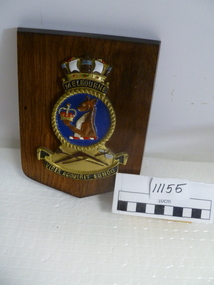
Plaque, Melbourne
... ...Aboriginal...Melbourne...Plaque Aboriginal Melbourne Motto: Vires Acquirit Eundo" Wooden shield with emblem gold bordered ships crown, centre of kangaroo holding royal crown and aboriginal weapons below Melbourne Plaque Plaque Townsend Productions ...Wooden shield with emblem gold bordered ships crown, centre of kangaroo holding royal crown and aboriginal weapons belowMotto: Vires Acquirit Eundo"plaque, aboriginal, melbourne -
Port Melbourne Historical & Preservation Society
Book, Gary Presland, "First People. The Eastern Kulin of Melbourne, Poprt Phillip and Central Victoria", 2010
... The Eastern Kulin of Melbourne, Port Phillip and Central Victoria" This book is, in effect, a second edition of "Aboriginal Melbourne - the Lost Land of the Kulin People" written by Gary Presland 25 years earlier...The Eastern Kulin of Melbourne, Port Phillip and Central Victoria" This book is, in effect, a second edition of "Aboriginal Melbourne - the Lost Land of the Kulin People" written by Gary Presland 25 years earlier "First People. ...COPYRIGHT Gary Presland "First People. The Eastern Kulin of Melbourne, Port Phillip and Central Victoria" This book is, in effect, a second edition of "Aboriginal Melbourne - the Lost Land of the Kulin People" written by Gary Presland 25 years earlierindigenous australians, natural environment, kulin nation, gary presland -
 Federation University Historical Collection
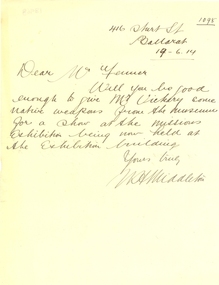
Correspondence, Loan of 'native weapons' from the Ballarat School of Mines Museum, 1914, 16/06/2014
... ...aboriginal weapons...melbourne...ballarat school of mines museum aboriginal aboriginal weapons melbourne exhibition building missions exhibition middleton fenner vickary 46 Sturt Street Ballarat 19-6-14 Dear Mr Fenner Will you be good enough to give Mr Vickary some native weapons from the museum for a show at the missions exhibition being now held at the Exhibition building. ...Handwritten letter relating to the loan of 'native weapons' from the Ballarat School of Mines Museum for exhibition at the Missions Exhibition on the Melbourne Exhibition Building. 46 Sturt Street Ballarat 19-6-14 Dear Mr Fenner Will you be good enough to give Mr Vickary some native weapons from the museum for a show at the missions exhibition being now held at the Exhibition building. Yours truly W. Middletonballarat school of mines museum, aboriginal, aboriginal weapons, melbourne exhibition building, missions exhibition, middleton, fenner, vickary -
Whitehorse Historical Society Inc.
Document, City of Nunawading Bicentennial History Writing Competition, 1988
... Entry in open section of the City of Nunawading Bicentennial History Writing Competition - runner up - 'Aboriginals in Melbourne and Yarra area;' by Nigel Philpoy of Mitcham....Aborigines Philpot Nigel Entry in open section of the City of Nunawading Bicentennial History Writing Competition - runner up - 'Aboriginals in Melbourne and Yarra area;' by Nigel Philpoy of Mitcham. ...Entry in open section of the City of Nunawading Bicentennial History Writing Competition - runner up - 'Aboriginals in Melbourne and Yarra area;' by Nigel Philpoy of Mitcham.Entry in open section of the City of Nunawading Bicentennial History Writing Competition - runner up - 'Aboriginals in Melbourne and Yarra area;' by Nigel Philpoy of Mitcham.Entry in open section of the City of Nunawading Bicentennial History Writing Competition - runner up - 'Aboriginals in Melbourne and Yarra area;' by Nigel Philpoy of Mitcham.aborigines, philpot, nigel -
 Greensborough Historical Society
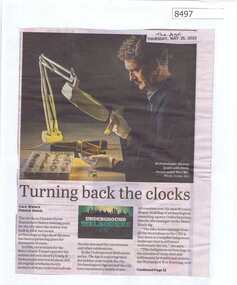
Article - Newspaper Clipping, Cara Waters et al, Turning back the clocks, by Cara Waters and Patrick Hatch, 25/05/2023
... aboriginal heritage sites...melbourne...Results of other archeological digs in the city area are also described by archaeologist Jeremy Smith. aboriginal heritage sites melbourne - history jeremy smith 2 p. ...In 2018, excavations in the vicinity of Flinders Street Railway Station uncovered about 300 aboriginal artefacts which indicated that the site was used for corroborees and other celebrations. Results of other archeological digs in the city area are also described by archaeologist Jeremy Smith.2 p. Article from "The Age" 25/05/2023, text and colour imagesnon-fictionaboriginal heritage sites, melbourne - history, jeremy smith -
Koorie Heritage Trust
Book, Bellear, Lisa, Central Business Dreaming, 2008
... Melbourne (Vic). Indigenous Arts Program. | Art...Aboriginal...Melbourne (Vic). Indigenous Arts Program. | Art Aboriginal Australian -- Victoria -- Melbourne. | Art Aboriginal Australian. | In recognition of Indigenous culture, we (The City of Melbourne) have initiated and supported the only dedicated local government indigenous arts funding program in Victoria. 3-138 P.; ports.; index; facs. ...In recognition of Indigenous culture, we (The City of Melbourne) have initiated and supported the only dedicated local government indigenous arts funding program in Victoria.3-138 P.; ports.; index; facs.In recognition of Indigenous culture, we (The City of Melbourne) have initiated and supported the only dedicated local government indigenous arts funding program in Victoria.melbourne (vic). indigenous arts program. | art, aboriginal australian -- victoria -- melbourne. | art, aboriginal australian. | -
 Vision Australia
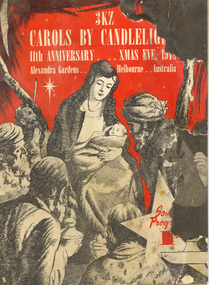
Programme - Text, 3KZ Carols by Candlelight program 1948, 1948
... ...Melbourne Aboriginal Choir...Carols by Candlelight Austin Hospital Red Cross Margot Sheridan Melbourne Aboriginal Choir Max Balderson Ann Boulton Robert Simmons Robert Payne Mary Miller Joan Arnold Rex Barber University String Orchestra Lawrence Warner Coburg Girls Choir 1 volume with photographs and illustrations 3KZ Carols by Candlelight program 1948 Programme Text ...Carols by Candlelight is a Christmas concert held at the Sidney Myer Music bowl. Programs and candle holders were sold, and collections made during the event to raise money for the Austin Hospital and the Red Cross. 3KZ also recorded the concert, which was played on radio on Christmas Day with a phone number to ring to donate. Prior to the Carols program at 10pm, the Red Cross organised an International Peace Pageant of various cultural groups as a prelude to the event.1 volume with photographs and illustrationscarols by candlelight, austin hospital, red cross, margot sheridan, melbourne aboriginal choir, max balderson, ann boulton, robert simmons, robert payne, mary miller, joan arnold, rex barber, university string orchestra, lawrence warner, coburg girls choir -
 Bendigo Historical Society Inc.
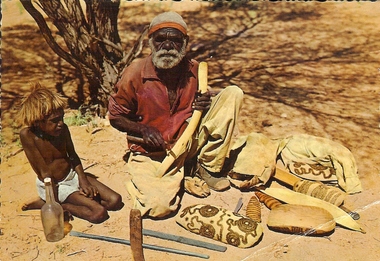
Photograph - BASIL MILLER COLLECTION: ABORIGINAL MAN AND BOY - TRADITIONAL IMPLEMENTS
... Postcard of aboriginal man and boy with traditional implements. Made in Western Germany in perfect colour for John Englander and Co Pty Ltd, Melbourne. ...Postcard of aboriginal man and boy with traditional implements. Made in Western Germany in perfect colour for John Englander and Co Pty Ltd, Melbourne. ...Postcard of aboriginal man and boy with traditional implements. Made in Western Germany in perfect colour for John Englander and Co Pty Ltd, Melbourne. Aboriginal artist at work, Australia.basil miller, aborigines, postcards. -
 Ringwood and District Historical Society
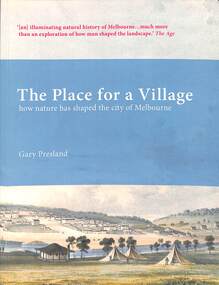
Book, Dr Gary Presland, The Place for a Village - Gary Presland, 2012
... His previous books include Aboriginal Melbourne and For God's sake send the trackers. ...His previous books include Aboriginal Melbourne and For God's sake send the trackers. ...Dr Gary Presland studied history at LaTrobe University, Melbourne and archaeology at the University of London. His major research interests have been in Aboriginal and natural history of the Melbourne area. He researched The Place for a Village as a PdD, in the Department of History and Philosophy of Science at The University of Melbourne. His previous books include Aboriginal Melbourne and For God's sake send the trackers. Gary Presland is a Fellow of the Royal Historical Society of Victoria, an Honorary Fellow at The University of Melbourne and an Honorary Associate of Museum Victoria, where he was the 2001 Thomas Ramsay Science and Humanities Fellow. He is a current Editor of The Victorian Naturalist, published by the Field Naturalists Club of Victoria, since 1884.The Place for a Village won The Victorian Community History Awards 2009 for best publication.How nature has shaped the city of MelbourneHandwritten notation first page - With best wishes, Gary Presland 22 February 2020. -
Whitehorse Historical Society Inc.
Document, Archaeology of Aboriginal sites, 11/04/1984
... Summary of a talk by Gary Presland of the Victorian Department of Archaeology by Joan Roczniok on the archaeology of aboriginal sites in the Melbourne Metropolitan area. Archaeological practices, Aboriginals, whalers, French Island, Keilor site, Main Street, Blackburn, canoe tree, axes, hunting and fishing methods....Aborigines Main Street Blackburn Blackburn French Island Keilor Archaeology Summary of a talk by Gary Presland of the Victorian Department of Archaeology by Joan Roczniok on the archaeology of aboriginal sites in the Melbourne Metropolitan area. Archaeological practices, Aboriginals, whalers, French Island, Keilor site, Main Street, Blackburn, canoe tree, axes, hunting and fishing methods. ...Summary of a talk by Gary Presland of the Victorian Department of Archaeology by Joan Roczniok on the archaeology of aboriginal sites in the Melbourne Metropolitan area. Archaeological practices, Aboriginals, whalers, French Island, Keilor site, Main Street, Blackburn, canoe tree, axes, hunting and fishing methods.aborigines, main street, blackburn, blackburn, french island, keilor, archaeology -
Whitehorse Historical Society Inc.
Document, Melbourne and Metropolitan Archaeological survey, 1/03/1982
... History of Aboriginal occupation of the Melbourne area. Evidence of shell midden refuse associated with their campsites. ...Ministry for Conservation Victoria Archaeological Survey History of Aboriginal occupation of the Melbourne area. Evidence of shell midden refuse associated with their campsites. ...History of Aboriginal occupation of the Melbourne area. Evidence of shell midden refuse associated with their campsites. Evidence of scarred trees and scatters of stone artefacts along major stream systems. It has been established that man was in the Melbourne area 40,000 years ago and that Aboriginal occupation probably continued uninterrupted throughout the extremes of the last ice age, around 20,000 years ago when Port Phillip itself was dry land. Study will take 2 - 3 years. Aims (1) identify areas of potential archaeological importance (2) implement a pilot survey program (3) prepare comprehensive proposals for survey of sites. (4) liaise and establish rapport with municipal authorities in study area.aborigines, wurundjeri, bunurong, australian heritage commission, victoria. ministry for conservation, victoria archaeological survey -
 Victorian Aboriginal Corporation for Languages
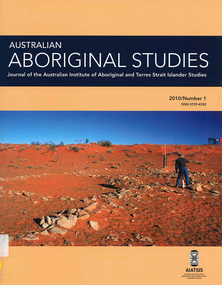
Periodical, Australian Institute of Aboriginal and Torres Strait Islander Studies, Australian Aboriginal studies : journal of the Australian Institute of Aboriginal and Torres Strait Islander Studies, 2010
... Timothy Korkanoon: A child artist at the Merri Creek Baptist Aboriginal School, Melbourne, Victoria, 1846?47 ? a new interpretation of his life and work Ian D Clark (School of Business, University of Ballarat) This paper is concerned with the Coranderrk Aboriginal artist Timothy Korkanoon. ...Timothy Korkanoon: A child artist at the Merri Creek Baptist Aboriginal School, Melbourne, Victoria, 1846?47 ? a new interpretation of his life and work Ian D Clark (School of Business, University of Ballarat) This paper is concerned with the Coranderrk Aboriginal artist Timothy Korkanoon. ...Mediating conflict in the age of Native Title Peter Sutton (The University of Adelaide and South Australian Museum) Mediators have played roles in managing conflict in Aboriginal societies for a long time. This paper discusses some of the similarities and differences between older customary mediator roles and those of the modern Native Title process. Determinants of tribunal outcomes for Indigenous footballers Neil Brewer, Carla Welsh and Jenny Williams (School of Psychology, Flinders University) This paper reports on a study that examined whether football tribunal members? judgments concerning players? alleged misdemeanours on the sporting field are likely to be shaped by extra-evidential factors that disadvantage players from Indigenous backgrounds. Indigenous and non-Indigenous Australian Football League (AFL) players, matched in terms of their typical levels of confidence and demeanour in public situations, were interrogated in a mock tribunal hearing about a hypothetical incident on the football field. The specific aim was to determine if the pressures of such questioning elicited behavioural differences likely to be interpreted as indicative of testimonial unreliability. Mock tribunal members (number = 103) then made judgments about the degree to which a number of behavioural characteristics were evident in the players? testimonies. Under intense interrogation, Indigenous players were judged as presenting less confidently and displaying a greater degree of gaze aversion than non-Indigenous players. These behavioural characteristics are commonly ? and inappropriately ? used as cues or heuristics to infer testimonial accuracy. The paper discusses the implications for Indigenous players appearing at tribunal hearings ? and for the justice system more broadly. Timothy Korkanoon: A child artist at the Merri Creek Baptist Aboriginal School, Melbourne, Victoria, 1846?47 ? a new interpretation of his life and work Ian D Clark (School of Business, University of Ballarat) This paper is concerned with the Coranderrk Aboriginal artist Timothy Korkanoon. Research has uncovered more about his life before he settled at the Coranderrk station in 1863. Evidence is provided that five sketches acquired by George Augustus Robinson, the former Chief Protector of Aborigines, in November 1851 in Melbourne, and found in his papers in the State Library of New South Wales, may also be attributed to the work of the young Korkanoon when he was a student at the Merri Creek Baptist Aboriginal School from 1846 to 1847. Developing a database for Australian Indigenous kinship terminology: The AustKin project Laurent Dousset (CREDO, and CNRS, Ecole des Hautes Etudes en Sciences Sociales), Rachel Hendery (The Australian National University), Claire Bowern (Yale University), Harold Koch (The Australian National University) and Patrick McConvell (The Australian National University) In order to make Australian Indigenous kinship vocabulary from hundreds of sources comparable, searchable and accessible for research and community purposes, we have developed a database that collates these resources. The creation of such a database brings with it technical, theoretical and practical challenges, some of which also apply to other research projects that collect and compare large amounts of Australian language data, and some of which apply to any database project in the humanities or social sciences. Our project has sought to overcome these challenges by adopting a modular, object-oriented, incremental programming approach, by keeping metadata, data and analysis sharply distinguished, and through ongoing consultation between programmers, linguists and communities. In this paper we report on the challenges and solutions we have come across and the lessons that can be drawn from our experience for other social science database projects, particularly in Australia. A time for change? Indigenous heritage values and management practice in the Coorong and Lower Murray Lakes region, South Australia Lynley A Wallis (Aboriginal Environments Research Centre, The University of Queensland) and Alice C Gorman (Department of Archaeology, Flinders University) The Coorong and Lower Murray Lakes in South Australia have long been recognised under the Ramsar Convention for their natural heritage values. Less well known is the fact that this area also has high social and cultural values, encompassing the traditional lands and waters (ruwe) of the Ngarrindjeri Nation. This unique ecosystem is currently teetering on the verge of collapse, a situation arguably brought about by prolonged drought after decades of unsustainable management practices. While at the federal level there have been moves to better integrate typically disparate ?cultural? and ?natural? heritage management regimes ? thereby supporting Indigenous groups in their attempts to gain a greater voice in how their traditional country is managed ? the distance has not yet been bridged in the Coorong. Here, current management planning continues to emphasise natural heritage values, with limited practical integration of cultural values or Ngarrindjeri viewpoints. As the future of the Coorong and Lower Murray Lakes is being debated, we suggest decision makers would do well to look to the Ngarrindjeri for guidance on the integration of natural and cultural values in management regimes as a vital step towards securing the long-term ecological viability of this iconic part of Australia. Hearts and minds: Evolving understandings of chronic cardiovascular disease in Aboriginal and Torres Strait Islander populations Ernest Hunter (Queensland Health and James Cook University) Using the experience and reflections of a non-Indigenous clinician and researcher, Randolph Spargo, who has worked in remote Aboriginal Australia for more than 40 years, this paper tracks how those at the clinical coal-face thought and responded as cardiovascular and other chronic diseases emerged as new health concerns in the 1970s to become major contributors to the burden of excess ill health across Indigenous Australia. The paper cites research evidence that informed prevailing paradigms drawing primarily on work in which the clinician participated, which was undertaken in the remote Kimberley region in the north of Western Australia. Two reports, one relating to the Narcoonie quarry in the Strzelecki Desert and the other concerning problematic alcohol use in urban settings.maps, b&w photographs, colour photographs, tablesstrzelecki desert, native title, timothy korkanoon, merri creek baptist aboriginal school, austkin project, coorong, lower murray lakes district, south australia, indigenous health -
 Mission to Seafarers Victoria
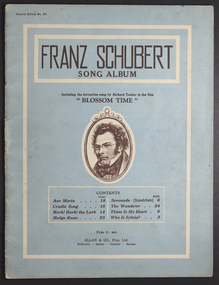
Booklet - Music Score, Franz Schubert Song Album, c. 1950
... Melbourne. Sydney. Adelaide. Bendigo. BACK COVER song and music excerpts advertise another Allan publication: AUSTRALIAN ABORIGINAL SONGS / Collected by Dr H. ...Melbourne. Sydney. Adelaide. Bendigo. BACK COVER song and music excerpts advertise another Allan publication: AUSTRALIAN ABORIGINAL SONGS / Collected by Dr H. ...Commercially printed Song book with blue cover featuring small portrait of composer. Contains words and music scores for 8 songs by Franz Schubert.non-fictionmusic, sheet-music, entertainment, indigenous songs, songs, franz schubert, allan and co music -
 The Beechworth Burke Museum
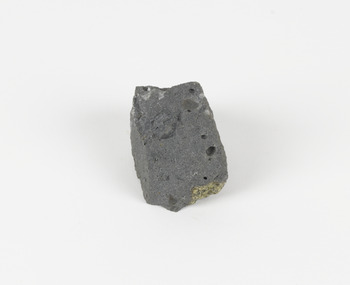
Geological specimen - Basalt (igneous-volcanic) containing Olivine, unknown
... Melbourne. The mountain is an example of a breached scoria cone (a steep conical hill of loose pyroclastic fragments) which was created by a volcanic eruption about 470,000 years ago, a date which may indicate the age of this geological specimen. The volcanic eruptions of Mount Franklin were most likely witnessed by members of the Dja Dja Wurrung Aboriginal...Melbourne. The mountain is an example of a breached scoria cone (a steep conical hill of loose pyroclastic fragments) which was created by a volcanic eruption about 470,000 years ago, a date which may indicate the age of this geological specimen. The volcanic eruptions of Mount Franklin were most likely witnessed by members of the Dja Dja Wurrung Aboriginal ...This particular geological specimen was found in Mount Franklin or Lalgambook in Djadjawurrung, located between Daylesford and Newstead, approximately ninety minutes drive from Melbourne. The mountain is an example of a breached scoria cone (a steep conical hill of loose pyroclastic fragments) which was created by a volcanic eruption about 470,000 years ago, a date which may indicate the age of this geological specimen. The volcanic eruptions of Mount Franklin were most likely witnessed by members of the Dja Dja Wurrung Aboriginal tribe, who referred to this country as the 'smoking grounds'. Mount Franklin and the surrounding area appears to have been a place of considerable religious significance to Aboriginal people, there is evidence which indicates that frequent large ceremonial gatherings took place in the area. Basalt is the most common rock on Earth’s surface, more than 90% of all volcanic rock on Earth is basalt. Basalt is an aphanitic extrusive igneous rock formed from the rapid cooling of low-viscosity lava exposed at or very near the surface of a rocky planet or moon. Specimens are black in colour and weather to dark green or brown. Basalt is rich in iron and magnesium and is mainly composed of olivine, pyroxene, and plagioclase. Olivine is the name of a group of rock-forming silicate minerals with compositions ranging between Mg2SiO4 and Fe2SiO4. Unlike other minerals, Olivine has a very high crystallisation temperature which makes it the first of the minerals to crystallise from magma. As magma cools, the crystals begin to form and settle on the bottom of the lava and form basalts that are abnormally enriched in olivine in the lower part of lava flows. According to H. M. King (on geology.com) "Olivine is thought to be an important mineral in Earth's mantle. Its presence as a mantle mineral has been inferred by a change in the behaviour of seismic waves as they cross the boundary between Earth's crust and mantle". Lava from Mount Franklin and other volcanoes in the area filled valleys and buried the gold bearing streams that became the renowned ‘deep leads’ of the gold mining era. In 1852, as part of the Victorian gold rush, gold was discovered in the immediate area, this gold was created by lava flows during the Newer Volcanic period, which were mined intensively during the nineteenth century. Around 1865 the presence of a deep lead in Mount Franklin was established. Deep lead mining was initially unsuccessful, and it was not until the late 1870s that the Franklinford Gold Mining Company mined at Mount Franklin on a significant scale. A few years later the Mount Franklin Estate Gold Mining Company also struck gold, followed by the Shakespeare and Great Western companies in the mid-1880s. By the late 1880s, however, deep lead mining had ceased in the area. Soon after gold was discovered in 1851, Victoria’s Governor La Trobe wrote to the Colonial Office in London, urging ‘the propriety of selecting and appointing as Mineral Surveyor for this Colony a gentleman possessed of the requisite qualifications and acquaintance with geological science and phenomena’. Alfred Selwyn was appointed geological surveyor in Australia in 1852 which began the Geological Survey of Victoria. In 1853-69 the Geological Survey issued under Selwyn's direction sixty-one geological maps and numerous reports; they were of such high standard that a writer in the Quarterly Journal of the Geological Society of London bracketed the survey with that of the United States of America as the best in the world. During his years spent in Australia, Selwyn collected numerous significant geological specimens, examples of which are held in collections such as the Burke Museum.This geological specimen is an example of basalt and olivine which shows the volcanic lava activity and geographical specific nature of Mt Franklin as a significant volcanic site. According to Agriculture Victoria 'The crater is one of the deepest in the Central Highlands area. It is a major megacryst site with some of the largest known Victorian examples of megacrysts of augite and an orthoclase. The small parasitic mound of Lady Franklin on the western flanks adds to the geological interest of the site'. This specimen also highlights the locality as a significant place for both indigenous activity and Victorian gold rush era mining practices. This specimen is part of a larger collection of geological and mineral specimens collected from around Australia (and some parts of the world) and donated to the Burke Museum between 1868-1880. A large percentage of these specimens were collected in Victoria as part of the Geological Survey of Victoria that begun in 1852 (in response to the Gold Rush) to study and map the geology of Victoria. Collecting geological specimens was an important part of mapping and understanding the scientific makeup of the earth. Many of these specimens were sent to research and collecting organisations across Australia, including the Burke Museum, to educate and encourage further study.An angular, solid hand-sized piece of grey volcanic Basalt with green/brown Olivine phenocrysts along one flat edge.Olivine in basalt / - label is probably / correct. / C. Willman / 15/4/21burke museum, beechworth, indigo shire, beechworth museum, geological, geological specimen, mineralogy, basalt, igneous rock, igneous-volcanic, volcanic geology, volcanic, olivine, olivine specimen, basaltoid -
 Marysville & District Historical Society
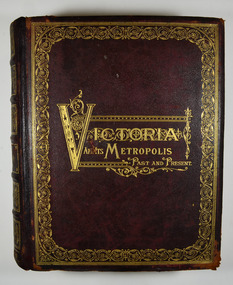
Book - Hardcover book, Alexander Sutherland, M.A, Victoria and its Metropolis-Past and Present-Volume 1, 1888
... A history of Victoria from the time of the discovery of Australia through until 1888. melbourne victoria exploration settlement john batman john pascoe fawkner pioneers colonisation immegration aboriginals discovery of gold democracy burke and wills agriculture manufacturing literature art music drama education science churches history A history of Victoria from the time of the discovery of Australia through until 1888. ...A history of Victoria from the time of the discovery of Australia through until 1888.Hardback. Dark brown cover with the title in gold lettering. There is also a border in gold decorating the outer edge of the front cover. The spine is also decorated in gold along with the title and the volume number.non-fictionA history of Victoria from the time of the discovery of Australia through until 1888.melbourne, victoria, exploration, settlement, john batman, john pascoe fawkner, pioneers, colonisation, immegration, aboriginals, discovery of gold, democracy, burke and wills, agriculture, manufacturing, literature, art, music, drama, education, science, churches, history -
Marysville & District Historical Society
Article (item) - Book Extract, Aboriginal History, Unknown
... aboriginal relics preservation act 1972...camp jungai...rubicon...warrawa college...victorian archaeological survey...hume and hovell...molesworth...broadford...william hamilton...alexandra...mansfield...avenel...tallarook...worrough...john cotton...trawool valley...seymour...pyalong...gold mining...central victoria...strath creek...reedy creek...yea...jamieson...marysville...jordan goldfields...comet mine...wandong...melbourne...The extract also covers current (1991) status of Aboriginal affairs and European settlement of the area. kulin nation woiworung taungurong bunurong watherong jajowrong wurrundjeri-willam waring-ilam-balluk goulburn valley acheron valley upper goulburn district eildon-thornton eildon homestead o'rourke thornton assistant protector thomas yarra valley kilmore mount william jt gellibrand william buckley major mitchell port phillip murray river yorta yorta yowung-illam-balluk waring-illam-balluk ngurai-illam-wurrung kurnai nation protectorate system victoria george robinson chief protector willam thomas james dredge edward parker charles sievewright central board for the protection of aborigines presbyterian mission anglican mission moravian mission wonga munnarin beaning murrin murrin parugean baruppin koo-gurrin acheron river little river acheron run peter snodgrass stephen jones barak dividing range black spur watts river badger creek healesville coranderrk victorian christmas bush aboriginal and torres strait islander heritage protection act 1984 archaelological and aboriginal relics preservation act 1972 camp jungai rubicon warrawa college victorian archaeological survey hume and hovell molesworth broadford william hamilton alexandra mansfield avenel tallarook worrough john cotton trawool valley seymour pyalong gold mining central victoria strath creek reedy creek yea jamieson marysville jordan goldfields comet mine wandong melbourne-albury railway rabbit plague narbethong lord kitchener puckapunyal military camp 1944 decentralisation policy eildon weir hume freeway bypass timber industry australian paper manufacturers mill An extract from a book regarding a brief history of the Kulin nation of the North Central district of Victoria. ...An extract from a book regarding a brief history of the Kulin nation of the North Central district of Victoria.An extract from a book regarding a brief history of the Kulin nation of the North Central district of Victoria. This history covered is both prior to European history and post-European history. The extract also covers current (1991) status of Aboriginal affairs and European settlement of the area.kulin nation, woiworung, taungurong, bunurong, watherong, jajowrong, wurrundjeri-willam, waring-ilam-balluk, goulburn valley, acheron valley, upper goulburn district, eildon-thornton, eildon homestead, o'rourke, thornton, assistant protector thomas, yarra valley, kilmore, mount william, jt gellibrand, william buckley, major mitchell, port phillip, murray river, yorta yorta, yowung-illam-balluk, waring-illam-balluk, ngurai-illam-wurrung, kurnai nation, protectorate system, victoria, george robinson, chief protector, willam thomas, james dredge, edward parker, charles sievewright, central board for the protection of aborigines, presbyterian mission, anglican mission, moravian mission, wonga, munnarin, beaning, murrin murrin, parugean, baruppin, koo-gurrin, acheron river, little river, acheron run, peter snodgrass, stephen jones, barak, dividing range, black spur, watts river, badger creek, healesville, coranderrk, victorian christmas bush, aboriginal and torres strait islander heritage protection act 1984, archaelological and aboriginal relics preservation act 1972, camp jungai, rubicon, warrawa college, victorian archaeological survey, hume and hovell, molesworth, broadford, william hamilton, alexandra, mansfield, avenel, tallarook, worrough, john cotton, trawool valley, seymour, pyalong, gold mining, central victoria, strath creek, reedy creek, yea, jamieson, marysville, jordan goldfields, comet mine, wandong, melbourne-albury railway, rabbit plague, narbethong, lord kitchener, puckapunyal military camp, 1944 decentralisation policy, eildon weir, hume freeway bypass, timber industry, australian paper manufacturers mill -
 Marysville & District Historical Society
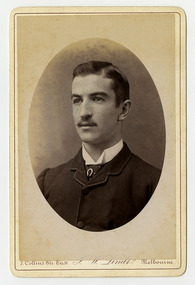
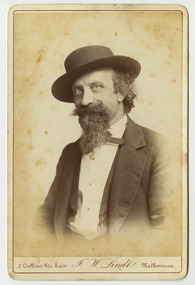
Photograph (Item) - Black and white portrait, John William Lindt, 1870s
... Twelve of this series is included in his 1874 album Australian Aboriginals. John Lindt moved to Melbourne in 1876 where he worked for Batchelder & Co. before opening his own opulent studios at number 7 at the top of Collins Street opposite the Treasury, in 1877. ...A black and white portrait of an unknown man taken by John William Lindt.A black and white portrait of an unknown man taken by John William Lindt. John William Lindt was born in Germany in 1845. At 17 he took a working passage to Australia on a Dutch sailing ship. Taking up work as an itinerant piano-tuner, he traveled amongst towns in Victoria and New South Wales before settling in Grafton in 1863 where he became assistant and apprentice to photographer Conrad Wagner. After a brief return to Germany in 1867 Lindt took over management of Wagner’s studio in 1869. He married Wagner’s daughter, Anna on 13 January 1872. Over 1873-1874, using the slow and laborious wet-plate collodion process, John Lindt produced photographs of the local indigenous people both in their environment conducting actual traditional ceremonies in the Clarence River district, and in his studio. Twelve of this series is included in his 1874 album Australian Aboriginals. John Lindt moved to Melbourne in 1876 where he worked for Batchelder & Co. before opening his own opulent studios at number 7 at the top of Collins Street opposite the Treasury, in 1877. John Lindt's business of this period was wide-ranging, and included portraits, records of Melbourne public buildings and streetscapes, the Botanical Gardens, and Port Melbourne. He was a welcome photographer of members of parliament and other Melbourne personalities, their society and cultural life including the theatre, and was known as a ‘rich man’s photographer’ for those whose families he grouped informally on the lawns in front of their mansions, with servants at the rails of the upstairs balconies. He continued with landscape, producing folios Fernshaw and Watt River Scenery, Victoria ( c.1878-82), Scenery on the Ovens and Buckland Rivers, Victoria (c.1878–82) and Lorne, Louttit Bay and Cape Otway Ranges (1883). Sales of his Black Spur scenery amounted to approximately 25,000 copies printed from the original negatives between 1882 and 1892. John Lindt, in collaboration with Nicholas John Caire, produced a tourist booklet on the area around "The Hermitage" in 1913.7 Collins Str. East/ J.W. Lindt/ Melbournejohn william lindt, conrad wagner, australian aboriginals, batchelder & co, nicholas john caire, anna lindt -
 Marysville & District Historical Society
Photograph (Item) - Black and white portrait, John William Lindt, 1870s
... Twelve of this series is included in his 1874 album Australian Aboriginals. John Lindt moved to Melbourne in 1876 where he worked for Batchelder & Co. before opening his own opulent studios at number 7 at the top of Collins Street opposite the Treasury, in 1877. ...A black and white portrait of an unknown man taken by John William Lindt.A black and white portrait of an unknown man taken by John William Lindt. John William Lindt was born in Germany in 1845. At 17 he took a working passage to Australia on a Dutch sailing ship. Taking up work as an itinerant piano-tuner, he traveled amongst towns in Victoria and New South Wales before settling in Grafton in 1863 where he became assistant and apprentice to photographer Conrad Wagner. After a brief return to Germany in 1867 Lindt took over management of Wagner’s studio in 1869. He married Wagner’s daughter, Anna on 13 January 1872. Over 1873-1874, using the slow and laborious wet-plate collodion process, John Lindt produced photographs of the local indigenous people both in their environment conducting actual traditional ceremonies in the Clarence River district, and in his studio. Twelve of this series is included in his 1874 album Australian Aboriginals. John Lindt moved to Melbourne in 1876 where he worked for Batchelder & Co. before opening his own opulent studios at number 7 at the top of Collins Street opposite the Treasury, in 1877. John Lindt's business of this period was wide-ranging, and included portraits, records of Melbourne public buildings and streetscapes, the Botanical Gardens, and Port Melbourne. He was a welcome photographer of members of parliament and other Melbourne personalities, their society and cultural life including the theatre, and was known as a ‘rich man’s photographer’ for those whose families he grouped informally on the lawns in front of their mansions, with servants at the rails of the upstairs balconies. He continued with landscape, producing folios Fernshaw and Watt River Scenery, Victoria ( c.1878-82), Scenery on the Ovens and Buckland Rivers, Victoria (c.1878–82) and Lorne, Louttit Bay and Cape Otway Ranges (1883). Sales of his Black Spur scenery amounted to approximately 25,000 copies printed from the original negatives between 1882 and 1892. John Lindt, in collaboration with Nicholas John Caire, produced a tourist booklet on the area around "The Hermitage" in 1913.7 Collins Str. East/ J.W. Lindt/ Melbournejohn william lindt, conrad wagner, australian aboriginals, batchelder & co, nicholas john caire, anna lindt -
 Marysville & District Historical Society
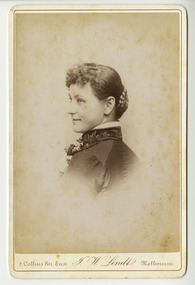
Photograph (Item) - Black and white portrait, John William Lindt, 1870s
... Twelve of this series is included in his 1874 album Australian Aboriginals. John Lindt moved to Melbourne in 1876 where he worked for Batchelder & Co. before opening his own opulent studios at number 7 at the top of Collins Street opposite the Treasury, in 1877. ...A black and white portrait of an unknown woman taken by John William Lindt.A black and white portrait of an unknown woman taken by John William Lindt. John William Lindt was born in Germany in 1845. At 17 he took a working passage to Australia on a Dutch sailing ship. Taking up work as an itinerant piano-tuner, he traveled amongst towns in Victoria and New South Wales before settling in Grafton in 1863 where he became assistant and apprentice to photographer Conrad Wagner. After a brief return to Germany in 1867 Lindt took over management of Wagner’s studio in 1869. He married Wagner’s daughter, Anna on 13 January 1872. Over 1873-1874, using the slow and laborious wet-plate collodion process, John Lindt produced photographs of the local indigenous people both in their environment conducting actual traditional ceremonies in the Clarence River district, and in his studio. Twelve of this series is included in his 1874 album Australian Aboriginals. John Lindt moved to Melbourne in 1876 where he worked for Batchelder & Co. before opening his own opulent studios at number 7 at the top of Collins Street opposite the Treasury, in 1877. John Lindt's business of this period was wide-ranging, and included portraits, records of Melbourne public buildings and streetscapes, the Botanical Gardens, and Port Melbourne. He was a welcome photographer of members of parliament and other Melbourne personalities, their society and cultural life including the theatre, and was known as a ‘rich man’s photographer’ for those whose families he grouped informally on the lawns in front of their mansions, with servants at the rails of the upstairs balconies. He continued with landscape, producing folios Fernshaw and Watt River Scenery, Victoria ( c.1878-82), Scenery on the Ovens and Buckland Rivers, Victoria (c.1878–82) and Lorne, Louttit Bay and Cape Otway Ranges (1883). Sales of his Black Spur scenery amounted to approximately 25,000 copies printed from the original negatives between 1882 and 1892. John Lindt, in collaboration with Nicholas John Caire, produced a tourist booklet on the area around "The Hermitage" in 1913.7 Collins Str. East/ J.W. Lindt/ Melbournejohn william lindt, conrad wagner, australian aboriginals, batchelder & co, nicholas john caire, anna lindt
