
Showing 10 items matching "airfield listing"
-
 Moorabbin Air Museum
Book - Airfield directories, AOPA Airfield Directory 1995
... Airfield listing...Airfield directories Airfield listing Australian coverage WAC series Non directional beacon listing Distance conversion Liquid conversion Airfield directory information Listings/details of all Australian airfields/airports, circa 1995 AOPA Airfield Directory 1995 Book Airfield directories ...Listings/details of all Australian airfields/airports, circa 1995non-fictionListings/details of all Australian airfields/airports, circa 1995airfield listing, australian coverage wac series, non directional beacon listing, distance conversion, liquid conversion, airfield directory information -
 Australian Commando Association - Victoria
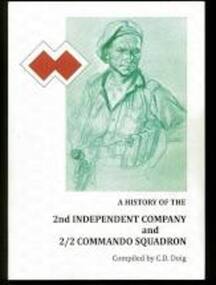
Book, A history of the 2nd Independent Company and 2/2nd Commando Squadron
... airfield and were also driven back. But they were not captured and instead retreated to the mountains where they conducted a very successful and pursued a guerrilla war against the Japanese which lasted for over a year. Following the capture of Timor, the 2nd occupation the company was listed...airfield and were also driven back. But they were not captured and instead retreated to the mountains where they conducted a very successful and pursued a guerrilla war against the Japanese which lasted for over a year. Following the capture of Timor, the 2nd occupation the company was listed ...The history of the No. 2 Independent Commando Company and 2/2 Commando Squadron during World War II – scarce as a 1st edition dated 1986. Having completed its training at Foster, on Wilson’s Promontory, Victoria, the 2nd Independent Company was raised and travelled north to Katherine, in the Northern Territory. However, following Japan’s entry into the war, as with the other independent companies that were sent to the islands off Australia, the 2nd was sent to Timor, where it joined the 2/40th Battalion and the rest of Sparrow Force. Sparrow Force divided itself between west Timor, part of the Netherlands East Indies, and east Timor, which belonged to Portugal. The 2/40th Battalion defended the capital of west Timor, Koepang, and the airfield at Penfui. Most of the independent company moved to the airfield at Dili, in east Timor, and the nearby mountains. Portugal was opposed to the stationing of a Dutch or Australian garrison in case this provoked the Japanese, but despite this opposition, on 17 December 1941, elements of the 2nd Independent Company and Dutch troops landed near Dili. On 20 February 1942 the Japanese invaded the island, attacking east and west Timor simultaneously. The 2/40th Battalion held out for three days, but were overrun and were killed or captured. Similarly, the 2nd could not hold the airfield and were also driven back. But they were not captured and instead retreated to the mountains where they conducted a very successful and pursued a guerrilla war against the Japanese which lasted for over a year. Following the capture of Timor, the 2nd occupation the company was listed as “missing”, the company’s signallers were able to build a wireless transmitter, nicknamed ‘Winnie the War Winner’, and on 18/19 April were able to contact Darwin. At the end of May RAN vessels began landing supplies for the Australians on the south coast of east Timor. These supply runs were very dangerous but they allowed the Australians on Timor to continue fighting. In September the guerillas were reinforced with the 2/4th Independent Company. However, this could not go on indefinitely. In August the Japanese lunched a major offensive against the guerrillas and Japanese reprisals against the civilian population of east Timor reduced their support for the Australians. The 2nd (now named the 2/2nd Independent Company) and 2/4th were withdrawn in December and January 1943 respectively. Although the 2/2nd Independent Company is best known for its time on Timor, it also saw extensive service in New Guinea and New Britain. The independent company reformed at the army’s training centre at Canungra, Queensland, where it was reinforced and reequipped. The company then moved to the Atherton Tableland, where it briefly became part of the 2/6th Cavalry (Commando) Regiment. Due to this reorganisation, in October, the 2/2nd Independent Company was renamed the 2/2nd Cavalry (Commando) Squadron. This name was later simplified to just commando squadron. When this happened though, the 2/2nd was back in action. In June 1943 the 2/2nd sailed from Townsville for Port Moresby and was subsequently flown to Bena Bena, in the Bismark Range in New Guinea’s highlands. Here they supported the 2/7th Independent Company in patrolling the Ramu River area. In the second week of July the 2/2nd moved into position, with its headquarters at Bena Bena and with its platoons’ occupying neighbouring positions. By the end of the month their patrols were skirmishing with the Japanese. The 2/2nd remained in New Guinea until October 1944. After 90 days leave, the squadron reformed at Strathpine in Queensland before sailing to New Britain in April 1945. The 2/2nd landed at Jacquinot Bay on 17 April. The squadron then moved to Wide Bay, in order to support the 13th Brigade of the 5th Division, and was based at Lamarien. Following Japan’s surrender and the end of the war, the ranks of the squadron thinned quickly as men were discharged or transferred to other units. For those who were left, they returned to Australia and in early 1946 the 2/2nd Commando Squadron was disbanded. Includes Nominal Roll Soft Cover without Dust Jacket – 270 pages -
 Bendigo Military Museum
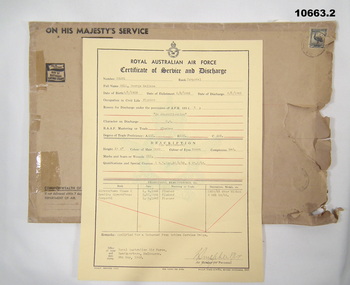
Administrative record - CERTIFICATE OF DISCHARGE, RAAF, 9 May 1946
... listed as 16/2/1943 to 13/9/1944 and then 15/3/1945 to 22/2/1946. Service areas were Milne Bay, Kiriwina, Lae, Aitape, Solomon Islands, Labuan. Discharged with the rank of Corporal in 4th Airfield...listed as 16/2/1943 to 13/9/1944 and then 15/3/1945 to 22/2/1946. Service areas were Milne Bay, Kiriwina, Lae, Aitape, Solomon Islands, Labuan. Discharged with the rank of Corporal in 4th Airfield ...George Wallace Bell No. 53081 (Born England, enlisted Melbourne). Age 33 on 2/4/1942 & was Discharged 8/3/1946. His overseas service is listed as 16/2/1943 to 13/9/1944 and then 15/3/1945 to 22/2/1946. Service areas were Milne Bay, Kiriwina, Lae, Aitape, Solomon Islands, Labuan. Discharged with the rank of Corporal in 4th Airfield Construction Sqd. His civilian service was a Plumber and maintained that through his War service.1. Yellow certificate A4 size. Form information in blue type with inserted data in black type. Headed Royal Australian Air Force. Data includes No, Rank, Dates of service, Physical description, Qualifications and Service history and Sign off from Authority. 2. Brown stamp and addressed envelope.“53081 - Corporal - BELL GeorgeWallace” "On Her Majesty's Service" Addressed to "Mr G.W. Bell, 16 Thomas Street, Mitcham, Vic."raaf, cert of discharge, admin record -
Moorabbin Air Museum
Document (item) - Bryan Ridgeway Collection See Description for list of items
... airfield). Participated in England to New Zealand Air-race 1953 Bryan Ridgeway Collection See Description for list of items Document Bryan Ridgeway Collection See Description for list of items ... -
Moorabbin Air Museum
Document (item) - Roger Alder Collection See Description for list of items
... airfield. Album Various documents, newspaper articles etc on deceased aviation related individuals. Document Roger Alder Collection See Description for list of items ... -
 Chiltern Athenaeum Trust
Photograph
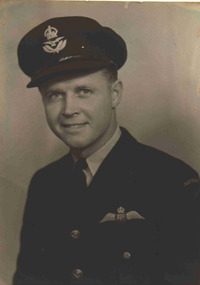
... The Airfield is now used for commercial and private flying and is heritage listed under the National Trust of Australia (W.A.) due to its historical significance relating to WW2 and the remaining artefacts that are still in place presently. ...The Airfield is now used for commercial and private flying and is heritage listed under the National Trust of Australia (W.A.) due to its historical significance relating to WW2 and the remaining artefacts that are still in place presently. ...Photo of Bluey Truscott. Squadron Leader Keith William (Bluey) Truscott was regarded as one of Australia’s most well known WW2 fighter pilot aces. He was born on the 17/5/1916 and died over Exmouth, Western Australia on 28/3/1943 in an Aircraft accident whilst on duty. He initially trained under the Commonwealth Empire Training Scheme In Canada at the beginning of WW2, and later on was posted to Number 452 Squadron England where he flew Spitfires over Europe. He was awarded the distinguished Flying Cross in 1941 for his Air action and bravery. In 1942 he was further awarded the DFC Bar for further outstanding Air action and bravery. He returned to Australia and commanded number 76 Squadron who undertook duties in Papua New Guinea, specifically Milne Bay. When with 76 Squadron they largely flew Kittyhawks. There is a club named after SQN LDR Truscott, called the Truscott Club, at Airforce Base Darwin. There is also a decommissioned WW2 Airfield in the Kimberley’s called after him ( Truscott Air Base). Truscott has more recently been called Mungalu-Truscott Air Base as it is now owned by the traditional people of the Wunambal Gaambera. The Airfield is now used for commercial and private flying and is heritage listed under the National Trust of Australia (W.A.) due to its historical significance relating to WW2 and the remaining artefacts that are still in place presently. Bluey Truscott was also a well known Australian Rules Football player prior to WW2 having played for Melbourne. Photograph of Keith William (Bluey) Truscott in uniform.ww2, bluey truscott, flying cross -
 Sunshine and District Historical Society Incorporated
Photograph - R.A.A.F. Laverton Group Captains 1939 To 1990, Royal Australian Air Force Central Photographic Establishment
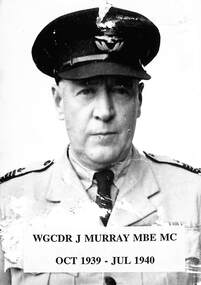
... airfield was decommissioned in 1996, ending flying operations. Much of the site has now been converted into a residential housing estate. The Laverton site contains two Commonwealth Heritage‑listed...airfield was decommissioned in 1996, ending flying operations. Much of the site has now been converted into a residential housing estate. The Laverton site contains two Commonwealth Heritage‑listed ...RAAF Base Laverton (now part of RAAF Williams after the merger with RAAF Point Cook) was one of Australia’s earliest and most important Air Force establishments, operating from the 1920s and playing a major role in training, aircraft testing, logistics, and wartime expansion. The Laverton airfield was decommissioned in 1996, ending flying operations. Much of the site has now been converted into a residential housing estate. The Laverton site contains two Commonwealth Heritage‑listed precincts, Officers’ Mess and the Eastern Hangars & West Workshops precincts.A Group Captain in the Royal Australian Air Force (RAAF) is a senior officer (Rank O‑6) whose core role is to command a base, a large wing, or a major organisational unit, with responsibility for operations, personnel, logistics, discipline, and strategic planning.WGCDR J Murray MBE MC October 1939 to Jul 1940 GP Capt T Marsden. DSO Jul 1940 to Aug 1942 GP Capt J Murray MBE MC Aug 1942 to Aug 1946 GP Capt C Probert Aug 1946 to Aug 1950 GP Capt W Mason Aug 1950 to April 1951 GP Capt I Yeaman OBE April 1951 to April 1953 GP Capt J Martin Feb 1955 to Jul 1956 GP Capt J Lawson OBE April 1953 to Feb 1955 WGCDR D McKendry Jul 1958 to Oct 1960 GP Capt G Thomas OBE RAF Oct 1960 to Dec 1962 GP Capt I Yeaman OBE Dec 1962 to Sep 1963 GP Capt G Graham Sep 1963 to Dec 1965 GP Capt E Jackson OBE RAF Jul 1956 to Jul 1958 GP Capt D Boucher Dec 1965 to Dec 1969 GP Capt A Simpson Dec 1969 to Jan 1971 WGCDR J Fearn Jan 1971 to Jun 1971 GP Capt K. Casey Jun 1971 to Feb 1974 GP Capt K Rogers Mar 1974 to May 1976 GP Capt C Fagan May 1976 to Jan 1980 GP Capt A Furniss AM Jan 1980 to Jan 1981 GP Capt T Holyoake Jan 1981 to Feb 1983 GP Capt B Noonan Feb 1983 to Feb 1985 GP Capt P Newton Feb 1985 to Dec 1986 GP Capt A Spooner Dec1986 to Jan 1988 GP Capt C Makin Jan 1988 to Jan 1990air force, laverton, raaf, r.a.a.f. -
Moorabbin Air Museum
Book - Australian aviation year books, AUSTRALIAN AVIATION YEAR BOOK 1963
... Australian aviation year books Dept of Civil Aviation RAAF Airline operators Aircraft production International airline operators RAN Statistics - Australian air transport services/international air traffic Charter operatore Aerial agriculture Aero clubs & flying schools Helicopters Maintenance workshop Engine representatives Manufacturers & distributors RFDS Aircraft register Aerodromes & airfields Listing of all aviation related activities circa 1963 AUSTRALIAN AVIATION YEAR BOOK 1963 Book Australian aviation year books ...Listing of all aviation related activities circa 1963non-fictionListing of all aviation related activities circa 1963dept of civil aviation, raaf, airline operators, aircraft production, international airline operators, ran, statistics - australian air transport services/international air traffic, charter operatore, aerial agriculture, aero clubs & flying schools, helicopters, maintenance workshop, engine representatives, manufacturers & distributors, rfds, aircraft register, aerodromes & airfields -
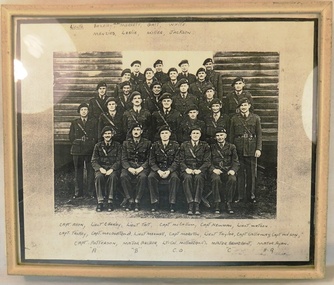 8th/13th Victorian Mounted Rifles Regimental Collection
Photograph, 1941 circa
... airfields at Port Moresby, Milne Bay, Dobadura and Popondetta. The regiment returned to Australia in February 1944 and disbanded as an armoured regiment and retrained as Nos 41, 42 and 43 Landing Craft Companies. They returned to the South West pacific serving at Bougainville, Balikpapan, Lae and Wewak. Historically significant image of officers of armoured regiment drawn from Victoria in early years of WWII, but suffers from poor quality reproduction. 2/8th armoured regiment Above photo:"List ...The 2/8th Armoured Regiment was raised in June 1941 under the command of Lieutenant Colonel W G Hopkins with officers and men selected from the wider AIF in Victoria. The regiment trained in newly arrived M3 General Grant tanks at Puckapunyal before moving north to Singleton, then the Wee Waa plains. The regiment sailed for New Guinea in April 1943 and carried out mobile defence to airfields at Port Moresby, Milne Bay, Dobadura and Popondetta. The regiment returned to Australia in February 1944 and disbanded as an armoured regiment and retrained as Nos 41, 42 and 43 Landing Craft Companies. They returned to the South West pacific serving at Bougainville, Balikpapan, Lae and Wewak.Historically significant image of officers of armoured regiment drawn from Victoria in early years of WWII, but suffers from poor quality reproduction.Framed photocopied photograph, possibly taken from a newspaper, of 26 Officers of 2/8th Armoured Regiment AIF. Names are listed above and below the image.Above photo:"List of names: Lieutenants: - Bazeley,MM, Merrett, Gait, White, Menzies, Leslie, Miller, Jackson" and below photo:- "Captain Ahou, Lieutenants Charley, Tait, Captains McCallum, Newnam, Trickey, MaCourt MM, Moreton, Callaway, Wilson, Patterson Lieutenants Watson, Taylor, Maxwell [A Squadron], Major Archer [B Squadron], Lieutenant Colonel Miller MC [Commanding Officer], Major Broadbent [C Squadron] Major Ryan [Headquarter squadron], A, B, CO, C , HQ"2/8th armoured regiment -
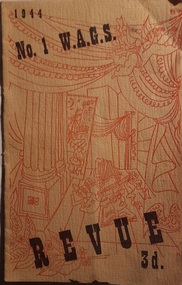 Hymettus Cottage & Garden Ballarat
Work on paper - Programme, No 1 WAGS Review
... airfield was used by the U.S. Army Air Force (USAAF) fighter aircraft and medium bombers. Although an ephemeral item, this programme recalls the importance and types of entertainment sought and performed by those in the services during World War II. RAAF WAGS Ballarat World War II Air Force Australia Entertainment Wireless Air Gunners' School Air Training Scheme A Programme listing ...A Programme listing drama, music, singing and comedy performed by members of the RAAF radio gunnery school Ballarat in WW2.A bi-fold programme stapled into a heavier illustrated card cover.non-fictionA Programme listing drama, music, singing and comedy performed by members of the RAAF radio gunnery school Ballarat in WW2.raaf, wags, ballarat, world war ii, air force, australia, entertainment, wireless air gunners' school, air training scheme
