
Showing 14 items matching "airspeed indicators"
-
 Moorabbin Air Museum
Manual (Item) - Smith Industries Overhaul Manual Mach Airspeed Indicators - 104AMA/JA Series
... Smith Industries Overhaul Manual Mach Airspeed Indicators - 104AMA/JA Series...Smith Industries Overhaul Manual Mach Airspeed Indicators - 104AMA/JA Series...Smith Industries Overhaul Manual Mach Airspeed Indicators - 104AMA/JA Series Manual Smith Industries Overhaul Manual Mach Airspeed Indicators - 104AMA/JA Series ... -
Moorabbin Air Museum
Manual (Item) - Altimeters, Airspeed & Rate of Climb Indicators - general info
... Altimeters, Airspeed & Rate of Climb Indicators - general info...Altimeters, Airspeed & Rate of Climb Indicators - general info...Altimeters, Airspeed & Rate of Climb Indicators - general info Manual Altimeters, Airspeed & Rate of Climb Indicators - general info ... -
Moorabbin Air Museum
Manual (Item) - Manual of Spare Parts for Smiths Airspeed Indicators, Manual of Spare Parts for Smiths Aviation Instruments
... Manual of Spare Parts for Smiths Airspeed Indicators...GAF Second Copy Beige hard-cover book Manual of Spare Parts for Smiths Aviation Instruments Manual Manual of Spare Parts for Smiths Airspeed Indicators ...GAF Second Copy -
Moorabbin Air Museum
Manual - Ansett Boeing 727 operating manuals, Boeing 727 Pilot's Course Notes Navigation and Instruments September 1985
... ...Mach airspeed indicators...Ansett Boeing 727 operating manuals Pitot static system Air data system Pitot static heat Mach airspeed indicators Mach/airspeed warning Altimeters Flight recorders Clocks Attitude director indicator Standby horizon indicator Compass system Horizontal situation indicator Standby magnetic compass Integrated flight system Flight director systems Proximity warning systems Performance data computer Stall warning system Overview of navigation & instruments in Boeing 727 for pilots, circa 1985 Spiral bound book type manual Boeing 727 Pilot's Course Notes Navigation and Instruments September 1985 Manual Ansett Boeing 727 operating manuals ...Overview of navigation & instruments in Boeing 727 for pilots, circa 1985Spiral bound book type manual non-fictionOverview of navigation & instruments in Boeing 727 for pilots, circa 1985pitot static system, air data system, pitot static heat, mach airspeed indicators, mach/airspeed warning, altimeters, flight recorders, clocks, attitude director indicator, standby horizon indicator, compass system, horizontal situation indicator, standby magnetic compass, integrated flight system, flight director systems, proximity warning systems, performance data computer, stall warning system -
Moorabbin Air Museum
Book - Aeronautics, Aeronautics Volume II
... indicator...Instrument flying...Airspeed...Aeronautics Parachutes Instruments & electrical equipment Blind flying panels Radio navigation Flying clothing Engine instruments Navigational equipment Electricity in the cockpit The altimeter Ice formation Airport aids to flight Catapults & assisted take offs Vertical speed indicator Instrument flying Airspeed indicators Air traffic rules Radio beams Air beacons Transatlantic flying Flares & pyrotechnics Cabin equipment Inspection & testing for wireless operators Electrical interference Sextants Hydraulic controls Bad weather flying Bonding & screening Aircraft as disease carriers Overview of aircraft instruments & accessories. ...Overview of aircraft instruments & accessories. No publication date stated, but looks to be around late 1930s/early 1940snon-fictionOverview of aircraft instruments & accessories. No publication date stated, but looks to be around late 1930s/early 1940sparachutes, instruments & electrical equipment, blind flying panels, radio navigation, flying clothing, engine instruments, navigational equipment, electricity in the cockpit, the altimeter, ice formation, airport aids to flight, catapults & assisted take offs, vertical speed indicator, instrument flying, airspeed indicators, air traffic rules, radio beams, air beacons, transatlantic flying, flares & pyrotechnics, cabin equipment, inspection & testing for wireless operators, electrical interference, sextants, hydraulic controls, bad weather flying, bonding & screening, aircraft as disease carriers -
Moorabbin Air Museum
Manual - Ansett Boeing 727 operating manuals, Boeing 727 Operating Manual Section 8 Supplementary Procedures December 1983
... Flight with unreliable airspeed/mach indicators...Ansett Boeing 727 operating manuals Anti icing system Autopilot Electrical Engine Flight controls Fuel system Hydraulics Pneumatics Air conditioning & pressurization Radio Ground proximity warning system Lightning strikes Flight with unreliable airspeed/mach indicators Supplementary overview of various procedures for Boeing 727, circa 1983 Spiral bound book type manual Boeing 727 Operating Manual Section 8 Supplementary Procedures December 1983 Manual Ansett Boeing 727 operating manuals ...Supplementary overview of various procedures for Boeing 727, circa 1983Spiral bound book type manualnon-fictionSupplementary overview of various procedures for Boeing 727, circa 1983anti icing system, autopilot, electrical, engine, flight controls, fuel system, hydraulics, pneumatics, air conditioning & pressurization, radio, ground proximity warning system, lightning strikes, flight with unreliable airspeed/mach indicators -
 Australian Gliding Museum
Machine - Glider – Sailplane, 1949
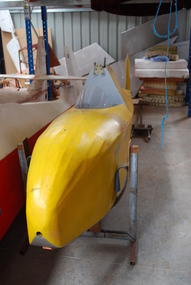
... Instruments include airspeed indicator and altimeter tucked neatly under front edge of the cockpit rim....Instruments include airspeed indicator and altimeter tucked neatly under front edge of the cockpit rim. ...The Hutter H17 is a small single seat glider with a wing span of 9.69 metres, designed in 1934 by Wolfgang Hutter, for flying in the Austrian Alps. Construction of the museum’s example, “Sweetwings” (now registered as VH-GQM), commenced in Perth in 1949. It is one of two Hutter H17 gliders built in Western Australia by N.J. Wynne and A.G. Milligan at the time – the other “Fleetwings” (formerly VH-HDQ and since re-registered as VH-GXV) is located at Millicent, South Australia. Ownership transferred to G.R. Reichelt of Tocumwal New South Wales and later to D.B. Hunt of Thornbury in Melbourne and later Mt Isa, Queensland. It was acquired by Bill Riley of Tocumwal who donated it to the Museum. The glider was last flown on 25 October 1979 at Tocumwal. This exhibit is an example of a 1930s small wood and fabric glider that was designed in Austria for hill soaring. It is a simple design that became a popular choice for home building in the post war years in Australia when gliding as a sport was in recovery. Some examples are still flying.Small single seat glider. Fuselage and wing struts are painted yellow. Wings, rudder and tailplane / elevator are primed with pink dope. It has an open cockpit with small clear Perspex wind screen. Instruments include airspeed indicator and altimeter tucked neatly under front edge of the cockpit rim.australian gliding, glider, sailplane, hutter, sweetwings, fleetwings, reichelt, riley, wynne, milligan -
 Australian Gliding Museum
Machine - Glider – Sailplane, 29/071956
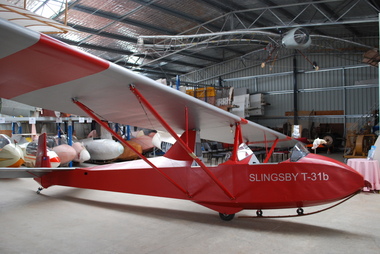
... The instrument panels in both cockpits are fitted with an airspeed indicator, cosim variometer and altimeter. ...The instrument panels in both cockpits are fitted with an airspeed indicator, cosim variometer and altimeter. ...The Slingsby T31 is a two seat training glider that came available in 1951. It is, in effect, a two seat version of the single seat Kirby Tutor. The T31 was marketed by Slingsby Sailplanes both as complete aircraft and kits of parts for assembly. The Australian Gliding Museum’s example (currently registered as VH-GDB) is one of five of this type to grace Australian skies. Three including GDB were assembled in Australia from kits supplied by Slingsby’s in England, the other two were delivered as completed airframes. To date only four remain of which two are airworthy. This aircraft began flying in at Caversham in Western Australia (the then home of the Gliding Club of Western Australia) in July 1956. It was badly damaged in a crash in June 1958. The wreckage was sent to Schneiders in Adelaide for repair. However, the Club decided against having the repairs done, opting instead to buy a new ES52 Kookaburra. After a couple of years, the wreck was purchased by a member of the Waikerie Gliding Club whereupon the glider was rebuilt with some modifications, including a more rounded and better streamlined fuselage nose. It returned to the air in October 1961 at Clare in South Australia. The ownership of VH-GDB passed through a number of clubs, including at Dubbo in New South Wales, Wimmera in Victoria and Pioneer Valley at Mackay in Queensland. Eventually, it came into the hands of Bill Riley of Tocumwal in New South Wales who held it in storage for many years. Riley donated the aircraft to the Museum. It has been restored to airworthiness and is flown at vintage glider rallies and on Museum open days. This exhibit is an excellent example of a Slingsby T31 Tandem Tutor, a type of glider that was used by a number of clubs in the 1950s and 1960s for dual training of pilots to the solo capability.The Slingsby T31b Tandem Tutor is an open cockpit, tandem, two-seater glider with high, pylon mounted two piece wing supported by double, wire braced, steel tube struts. The glider is fitted with a main wheel, rubber-block sprung, wooden nose skid and steel leaf sprung, brass shod tailskid. The basic controls of aileron, rudder and elevator are not supplemented with pitch trim. Wing lift spoilers and both aerotow and winch releases are fitted. The instrument panels in both cockpits are fitted with an airspeed indicator, cosim variometer and altimeter. This red and silver painted wood and fabric covered aircraft is in excellent condition having been restored to full airworthy status by the Australian Gliding Museum. SLINGSBY – T31b (nose – both sides) DB Australian Gliding Museum (rudder – both sides) It has been given Serial Number GFA/HB/12 and is registered as VH-GDBaustralian gliding, glider, sailplane, slingsby, tandem tutor, t31, gliding club of western australia, waikerie gliding club, wimmera soaring club, pioneer valley soaring club -
 Australian Gliding Museum
Machine - Glider – Sailplane, Construction completed 1952
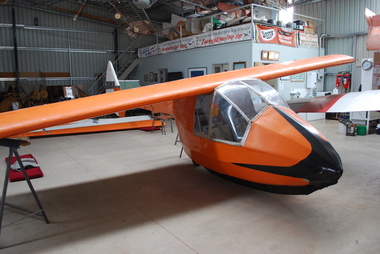
... The instrument panel includes altimeter, airspeed indicator, slip indicator and variometers. ...The instrument panel includes altimeter, airspeed indicator, slip indicator and variometers. ...This unique aircraft was conceived in 1943 as a two seat trainer. A very large part of the design work can be attributed to Jock Barratt and Harold Bradley. The general layout adopted is similar to the Kite I and Kite II single seat sailplanes of Martin Warner and Allan Campbell. Having regard to this heritage, the glider was originally named Kite III but renamed Pelican 2, perhaps because it was the second two seat training glider built by the Waikerie Gliding Club – the first being the Pelican, a reconfigured Pratt Utility glider. Pelican 2 was first flown in 1952 and regularly since then, at least until about 1992. The Pelican 2’s performance was found to be very good for sailplanes of its era and was often used for more advanced flying in addition to training new pilots. Very few changes have been made to the Pelican 2 over the years. The undercarriage was modified after its initial testing to improve the placement of the wheels. The trailing edge of the rudder (originally straight) was rounded adding to the surface area. The twin shoulder tow line bridles were replaced with a belly hook when aviation design rules declared shoulder bridles dangerous and a nose hook has since been added to allow for aero-towing. A unique home grown sailplane design associated with Australian gliding pioneers Wooden 2 seat glider sailplane with fabric covering. Distinctive features include the pod and boom fuselage with side by side seating for pilot and a second person. The canopy of perspex supported by aluminum framing opens with port and starboard segments separately folding upwards and forward. The instrument panel includes altimeter, airspeed indicator, slip indicator and variometers. In addition to the usual controls, there is a trim operated by a small wheel mounted centrally, at head height, on the bulkhead at the rear of the cockpit. Incorporated in the skid under the fuselage pod are two wheels (one approximately midships and the other at the rear end). It has a three piece cantilever wing of approximately nearly 17 metres. The ailerons run almost full length of the outer wing segments. A Gottingen 426 section has been used changing to M6 at the tips. Outer wing segments are joined to the centre section to give about 300 mm of dihedral at the tips. The glider is equipped with airbrakes. The colour scheme consists of orange fuselage with black nose and skid. The tailplane / elevator and rudder are painted white. The wing is predominantly white with an orange leading edge. Registration VH-GFY On each side of rudder – “Pelican II” in black lettering on a rectangle of silver On each side of fuselage pod the letters ‘FY’ On each side of the fuselage, below the edge of the cockpit opening – “WAIKERIE” in black paint. australian gliding, glider, sailplane, kite, pelican, waikerie gliding club, jock barratt, harold bradley, martin warner, allan campbell -
 Australian Gliding Museum
Machine - Glider – Sailplane, 1940
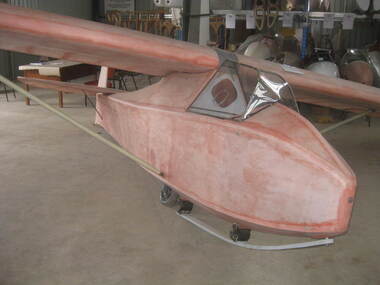
... Wood and fabric single seat glider sailplane with strutted wings and strutted tailplane – features metal framed perspex canopy, central fuselage skid and wheel, small tail skid, instruments include airspeed, turn and bank indicator; variometer and altimeter. ...Also the aircraft provides an insight into gliding technology in Australia in the 1940s. australian gliding glider sailplane coogee tom proctor victorian motorless flight group geelong gliding club Wood and fabric single seat glider sailplane with strutted wings and strutted tailplane – features metal framed perspex canopy, central fuselage skid and wheel, small tail skid, instruments include airspeed, turn and bank indicator; variometer and altimeter. ...The “Coogee” is an intermediate single seat sailplane designed and built by Tom Proctor in 1940. Only one was built. It was first flown at Stuart Hill near Bendigo Victoria in January 1941 and was maintained in flying condition until 1967. The aircraft was flown extensively by the Victorian Motorless Flight Group (now the Melbourne Gliding Club) and Geelong Gliding Club and several subsequent owners. This exhibit is a "one off" Australian designed and built glider similar in some respects to the Hutter H17. Its usage is relevant to the history of gliding in Victoria in the post war years. Also the aircraft provides an insight into gliding technology in Australia in the 1940s. Wood and fabric single seat glider sailplane with strutted wings and strutted tailplane – features metal framed perspex canopy, central fuselage skid and wheel, small tail skid, instruments include airspeed, turn and bank indicator; variometer and altimeter. Metal parts include struts and fairing covering wing joint. All surfaces are pink doped – awaiting painting.australian gliding, glider, sailplane, coogee, tom proctor, victorian motorless flight group, geelong gliding club -
 B-24 Liberator Memorial Restoration Australia Inc
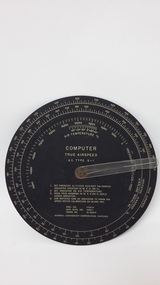
Computer True Air Speed, General Luminiscent Corporation
... AIRSPEED. A.C. TYPE G-1 A list of 4 instructions for use. Spec. No. 27367-A, MFG.DWG. No. 42D531, Order No.42-18049-P GENERAL LUMINESCENT CORPORATION, CHICAGO 2 black discs printed with luminous paint with plastic indicator, used for calculating true air speed. ...Standard crew issue for pilots and flight engineersEquipment supplied crew with a computer to calculate true airspeed.2 black discs printed with luminous paint with plastic indicator, used for calculating true air speed.COMPUTER. TRUE AIRSPEED. A.C. TYPE G-1 A list of 4 instructions for use. Spec. No. 27367-A, MFG.DWG. No. 42D531, Order No.42-18049-P GENERAL LUMINESCENT CORPORATION, CHICAGO -
 Wangaratta RSL Sub Branch
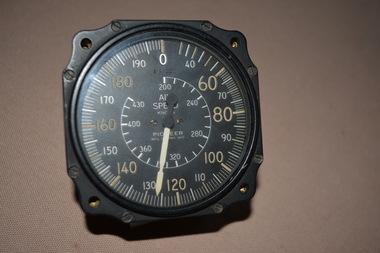
Instrument - Aircraft Air Speed Indicator
... ...airspeed indicator...Aircraft air speed indicator made by Pioneer Instrument Company which specialised in aeronautical instruments. raaf aircraft airspeed indicator ww2 pioneer instrument co Air Speed Pioneer Black painted cylindrical instrument with glass face . ...Aircraft air speed indicator made by Pioneer Instrument Company which specialised in aeronautical instruments. Black painted cylindrical instrument with glass face . There is a side cutout containing metal parts . Air Speed Pioneerraaf, aircraft, airspeed indicator, ww2, pioneer instrument co -
Moorabbin Air Museum
Manual (Item) - Ansett RAAF Altimeters Airspeed and Rate Of Climb Indicators General
... RAAF Publication 414 Ansett RAAF Altimeters Airspeed and Rate Of Climb Indicators General. Manual Ansett RAAF Altimeters Airspeed and Rate Of Climb Indicators General. ...RAAF Publication 414 -
 National Vietnam Veterans Museum (NVVM)
Manual, Royal Australian Air Force, Royal Australina Air Force: Sensitive Maximum Allowable Airspeed Indicator
... Royal Australina Air Force: Sensitive Maximum Allowable Airspeed Indicator...Sensitive Maximum Allowable Airspeed Indicator...Royal Australina Air Force: Sensitive Maximum Allowable Airspeed Indicator Manual Royal Australian Air Force ...This item was donated by Colin Laurence Grey OAM. Colin was the driving force behind many of the displays at the National Vietnam Veterans Museum. He will be remembered for his expertise, and boundless enthusiasm for all things Australian. Colin organised teams of like-minded souls to bring home and restore many important historical aircraft. His success has been recognised and rewarded with an Order of Australian Medal 2000, and he is named in the Worldwide Who’s Who 2014-2015. Colin’s skills as an engineer, tool maker, boiler maker and organiser enabled him to restore steam trains, trucks, tanks, infantry weapons, various aircraft including a MIG-15 jet fighter and his largest project the Consolidated B-24 Liberator bomber. He even replicated two dinosaur skeletons for Museum Victoria. In 1989 Colin joined the fledgling B-24 Liberator Memorial Fund as Project Manager/Restoration Co-Ordinator with the task to build a volunteer organisation that could find the AUD$10m required, source parts and materials for the largest aircraft restoration in Australia. The B-24 program had 10 volunteers, 60 sponsors and an international support network that provided parts, tooling, aviation equipment and political support. Colin’s combined engineering, academic and logistical skills provided the basis for advancing the skills of a very disparate group of volunteers form all walks of life. Colin established links with Centrelink, Corrections Victoria, RMT Uni and the ADF to develop the skills base of many less fortunate individuals of all ages and backgrounds. Colin’s work in this area gained him an AOM (2000). He featured in an ABC Australian Stories program and was awarded a life membership of the organisation. Colin was a founding member and President of the Oceania Aviation Museum Inc. which was instrumental in the historic listing of the joint WW2 USAAC/RAAF facility at Werribee and the Preserve Point Cook Aerodrome Group. Colin developed best practice engineering and fund-raising programs for a volunteer group, the Phillip Island Aquatic Centre. Colin’s constant learning, curiosity, passion and contribution to all things Australian have been an inspiration and a great example to all of us. He will be sorely missed and fondly remembered.A yellow coloured front cover with black information. Near the top reads Australian Air Publication 7531.078-3. Above the RAAF insignia reads Royal Australia Aor Force with the rest of the details of the manula under the insignie. There s a rubber stamp on the cover which reads R.A.A.F. Library etc. There are two metal staples down the left hand side. Also there is a amendment inside the manual.royal australian air force, manual, sensitive maximum allowable airspeed indicator
